New Fiction by Sara Doty: Vermillion
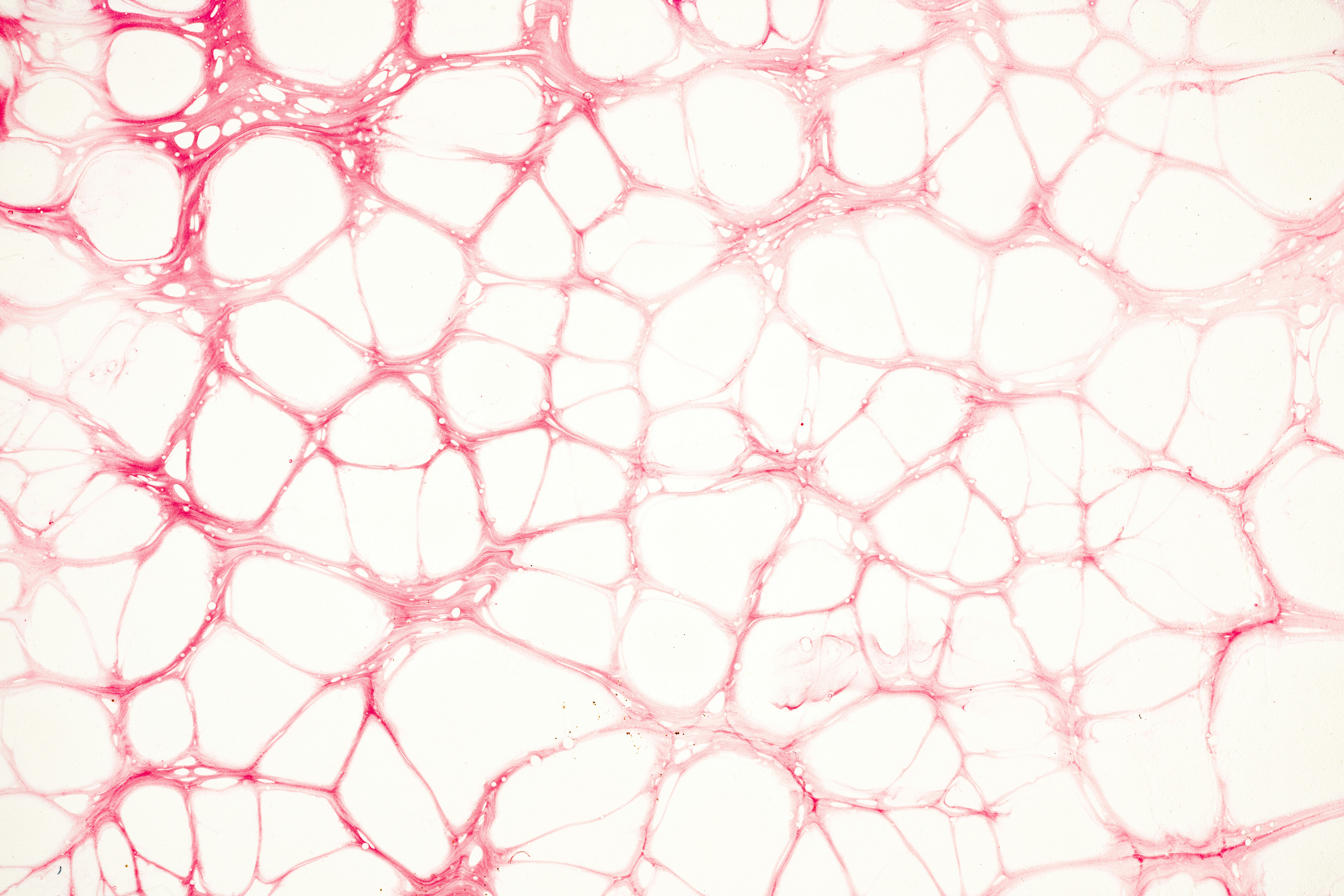
As I acclimated to the heat, I noticed my skin’s weight for the first time. My subcutaneous fat layer pressed against the epidermis, the tissue, and the muscle, pushing them apart. I was nineteen years old when I deployed, nervous, shy, my bun pulled tight like a vice, my scalp raw, a cigarette always between my fingers. I don’t smoke anymore, but it was 2012. Camp Dwyer was a United States Marine Corps forward operating base in Helmand Province, Afghanistan. The FOB had three women for every forty men. My femininity coated me in garish neon. I was alien. My M16 hung around my neck like a piece of onyx jewelry, weighing me down.
We called the living quarters cans. Everything on the base had a titular spine, a framework relationship to metal. My mouth tasted of copper and iron. I swallowed that metal down. My M16 was an aluminum alloy fourth limb. The walls of my can were hard pieces of tin. The sponge of nicotine softened the edge. Cigarettes were all I had to stifle the pressure hemorrhaging up my skull, so pink beneath. My lungs were two hungry, wet mouths.
The cans were rooms, made from shipping containers, protected by snaking concrete bunkers, and the beating heart was a tarp overhang shading a picnic table: the smoke pit. Above the covering were four giant speakers. Speakers were everywhere on the FOB, but above the smoke pit, they were monoliths. If there was an attack, it would always be a calm woman’s voice, calling out from the speakers with a distinctly British accent. It was the voice of god. I sat in the smoke pit alone, or with another lance corporal named Tam, inhaling nicotine like a tobacco automaton, peeling my hangnails to the knuckle. It looked like I was molting. I thought I’d unravel. Soon, I thought, I’d be without skin.
Every dawn, the Salat al-Fajr would cry over the smoke pit, the heat stifling and the air brittle. I longed for Florida as for a lover, the sweet, wet heat, the cicadas rattling, rising up like steam, the trees glowing like saints perfumed in petrichor, oak, and citrus flesh. I dreamed of slash pines and Spanish moss and freshwater springs sunk into the earth like lagoons of cerulean. I thought of wetlands and driftwood. I rolled my eyes into my skull while I worked on my unit’s lot, felt skin barely clinging to tissue, felt it ripe, saw the viridian trees of the peninsula, saw the champagne water. Every night, alone in my can, I removed my clothes and screamed into my fists, the need to remove something, urgent, the desire to bathe in my homeland consuming me like a song. I pulled at my hair. The need to remove something writhed in my body, aching for release.
I served duty once a week on our lot. The Staff NCOIC was normally Staff Sergeant Plumins or Gunnery Sergeant Grady. The NCOIC would be one of the sergeants, Gale, Windcastle, Zabine. My third Saturday in Afghanistan, I was late to duty, and when I made it to our lot, I steeled myself to be corrected. But Gunnery Sergeant Grady told me the heat made him lethargic, too. He had a cleft lip scar and horrible posture. He was the only person in our unit who smoked more than I did.
“You’ve never been late before,” he shrugged, slouching. “Give me ten cigarettes, and we can forget it.”
The next time I stood duty, it wasn’t with Gunnery Sergeant Grady or Staff Sergeant Plumins. It was under Staff Sergeant Bell. He came out of the duty hut when I checked in. None of the sergeants were with him.
“You were late last time. Grady told me—told everyone you gave him cigarettes and he called it even,” he grinned down his nose at me. “Didn’t counsel you. Didn’t do shit,” Bell said.
“Yeah,” I said. “Yes, Staff Sergeant.”
“What would you give me if you were late?”
I said nothing. He raised his eyebrows, as if to say, I’m waiting. My skin along my wrist buckled.
“I’m just kidding,” he laughed and shook my shoulder, letting his hand fall, brushing down my arm. “Don’t take yourself so seriously,” he said before walking back to the hut. I reached my hands into my blouse and shirt, gripping my shoulder.
The months crawled on their bellies, time weeping slowly. Days and nights were marked by the scent of burning garbage. The trash pits burned our waste and fed entrails of black smoke into the oxygen, the plastic liquifying, the rubber melting, the metal screaming and white with heat. We sucked the tainted oxygen into our lungs. The garbage burned. The air was acrid. My body tried to see without my eyes, reach out and feel what I was alive for. My mortality was a cloud hanging above my skull. I didn’t pray to God. I felt covered in an intangible film. The desire to take it off was a chemical burn writhing in me. The urgency to do something was an unbearable itching.
“It was just friendly,” Tam said when I told him about Bell. “Don’t read into it.”
“You didn’t hear him, he was like, ‘What would you give me, huh, huh?” I said, imitating his voice.
“He was joking. You’re doing that thing again,” Tam sighed, dropping his cigarette and grinding it into the sand. In my room that night, scratching did not relieve the skin along my shoulder, so I bit in with my nails and squeezed, dragged them. The skin didn’t tear, it lifted, and I gasped, the relief instant. I peeled the skin off my shoulder like it was damp paper.
The platoon met in the smoke pit every morning to pass word since there were no formations in theater. I was out early that morning when Corporal Ludabaker came and sat beside me. Ludabaker had a strange stare. Tam and I called it the ninety-yard stare. Everyone liked Ludabaker because he had a Combat Action Ribbon. Even Tam liked Ludabaker, and he hated everyone because he was demoted from sergeant to Lance Corporal. We named it the ninety yard stare, because one day we could tell Ludabaker was staring at us even though he was down the dirt road. The stare was remarkable. He didn’t blink, and his eyes were always wide. The ninety-yard stare made me squirm.
Ludabker asked if he could have a cigarette. I slid the pack across the picnic table.
“You’re not as much of a cunt as the others,” he explained in thanks, exhaling smoke. “I like being attached to grunt units. No females.”
I nodded. This was Ludabaker’s fifth deployment. His wide, hard eyes stared. Something dead was in his face.
“You never even shot that rifle,” he giggled his signature Ludabaker laugh, so distinct it was like a scream, like a child’s laugh. It made my skin feel cold even in the awful heat. He gripped my rifle and shook it, lurching me forward because it was slung around my chest.
“The rifle range,” I reminded him, pulling my rifle from his grip. He held on for a second too long, his awful, unblinking stare drilling into me. Corporal Ludabaker had the highest rifle score in our entire command and got an award for it. It made him a darling, especially to the higher ups. Gunnery Sergeant sometimes slipped up and called Ludabaker Jason. It’s like Ludabaker transcended rank because he’s shot his rifle in combat. Everyone loved him. I pulled back again and his grip tightened. Then, he let go.
“Female Marines can’t be grunts, so you’re not a rifleman. That’s the saying right? Every Marine a rifleman. You’re not a real Marine, if you think about it,” he let out his giggle again. “Not really.” I gave a fake laugh, thankful people started coming out of the cans to wait in the smoke pit. Ludabaker was right, that is a saying. There are mantras in the Marines, every cult has them: This is my rifle, there are many like it, but this one is mine. Pain is weakness leaving the body. Marines have thick skin.
Halfway through the deployment, I started writing an instruction manual to other female Marines on how to survive deployment, how to survive womanhood in a place like this. I explained that the skin won’t thicken, but will necrotize into soft, gray filigree in need of extraction. The epidermis can’t hang on, but it cannot simply let go, not all at once, nothing so simple as sliding from silk.
I noticed all my itching and peeling was beginning to show, so I coated my legions in grease. I didn’t pray to god. I walked fast to and from lots. I smoked. I made sure not to annoy Tam. The mountains in the distance were a wash of lavender behind a gray film. The air was getting to me, infused with incinerated garbage. Bell said he liked the smell, inhaled, and showed me his teeth. I filtered through space and time, inhaling garbage, inhaling trash, plastic, hugging my rifle against me, avoiding the other Marines and their eyes, all of it toxic, all of it inhaled, all of it a corpse in the sand, bugs crawling over me, their eyes. I dragged my nails into the soft, loose parts.
Some days, we prepped gear to be transported back to Camp Leatherneck. One day, Gunnery Sergeant told me to help Ludabaker with security for the contracted Afghan workers, who sometimes handled transportation. When it was them transporting and not other Marines, we would babysit them in a security perimeter while the trucks were loaded up. The Afghan men usually just sat in a circle in the shade cast by the huge vehicles. Sometimes, they asked for water.
“Here,” called Ludabaker, waving me over, showing me where to stand. I stopped a foot and a half away from him, but Ludabaker yanked me to him by my rifle. He yanked so hard I stumbled. The sling tightened. Ludabaker held my rifle at the ready, our bodies pressed together because the rifle was slung around me. He held it at the ready. He pulled back the weapon’s charging handle, which inserted a round into the chamber with a soft slam.
My ears rang. This was against the base-wide protocol. Our weapons were to be in condition three- magazine inserted, bolt in chamber. But Ludabaker put me in condition one, round in the chamber.
“That’s not allowed,” I said instantly. Ludabaker let me go.
“That’s not allowed,” he imitated my voice and then laughed his horrible, ringing giggle. “This is why I can’t stand deployments with women.” I felt with my index finger that the weapon was still on safe.
“Don’t,” he snapped, because I was reaching for the charging handle to remove the bullet from the chamber. My eyes roamed over the lot for Gunnery Sergeant. There was a rule about not following unlawful orders. I wished I could quote it from memory. But it was just a bullet in the chamber. He wasn’t asking me to shoot them. The Afghan men did not seem concerned.
“Don’t be soft,” he hissed. “It’s to scare them,” he said, and then turned to call the Afghan men a string of foul phrases. One of the men stiffened. “Sight in, Bradford,” He hissed at me, glee in his mouth but not his wide eyes. The ninety-yard stare bored into me. He let out his horrible giggle. I didn’t sight in because the Afghan men were not armed, they were just sitting together. Ludabaker wasn’t paying attention to me.
“You see that,” he shouted at the men. He called them another slur. “We’re ready for you.”
And then Ludabaker was beside me again, leaning in, at first I thought he was going to seize my rifle again, I could feel his slick arm, wet with sweat, and the biting scent of tooth decay and cigarette smoke and cloves pressed against me, the smell smothering me like a rag.
“Don’t mean it,” he whispered, breath hot on my neck. “Just want to scare them,” he said again and then licked my earlobe.
“Ludabaker,” Gunnery Sergeant barked from across the lot. He was standing outside the duty hut, frowning, hands at his hips, pistol gleaming from his belt in the heat. He watched Ludabaker trot over, and they had words.
I pulled back my charging handle so the round popped out of the ejection port. I put it back in the magazine, my stomach blooming with bile, any minute my breakfast would come up. My hands were not shaking, but there was a tremor working through me, like the rattle of some great thing wanting to be released. I went to a porta-potty and peeled the flesh from my ear, cartilage melting down my blouse without the skin to maintain the shape.
As the months clung on, I decided time worked differently here. I joked to Tam one afternoon that you have to ask yourself the age-old question at night: piss your pants or get raped by a bunker.
“What the fuck are you talking about?” he asked. I looked at him for a long moment, silent. I wanted to tell him women aren’t safe anywhere, female Marines are never safe. But I didn’t speak.
“That girl who claimed she was attacked on Leather Neck, you know she was full of shit, right?” he asked. I didn’t say anything. I didn’t know who he was talking about. “She was mad that the dude didn’t want to date her or whatever. He was an officer. She made that up. You’re doing that fucking thing again, Bradford.”
There were sixty days left to the deployment, an eternity. I was drowning. I wrapped up my flayed parts, gleaming and red, and found myself floating one morning, waiting for the others in the smoke pit. I laughed. The speaker above me crackled, not a prayer, not a warning, just a vague voice.
Staff Sergeant Bell knocked on my door one night, hours past the Salat al-Isha. He didn’t see me sitting across from my door, in the shadow of the bunker, an above-ground tomb of concrete. He had on shower shoes and basketball shorts. I stayed still, waited for him to give up, the acrid taste of bile in my mouth. During my next duty, Gunnery Sergeant Grady taught me how to play gin rummy, said he had a daughter who looked just like me. I told him slaughter rhymed with daughter. I leaned over. There was no skin along my ribs, and my blouse stuck to my sides. I showed him my missing ear. After the skin removal, nothing remained of the cartilage. Nothing was there but a red, melded shell. Gunnery Sergeant twitched. I peeled something back, a bit of scalp. He averted his eyes. The nights felt longer, I couldn’t sleep, I was so busy finding places on my body where skin had buckled over, where it was ripe.
When there were twenty days left in the deployment, I handed Tam a piece of my skin hanging, just after Salat al-Maghrib. Pull, I said. He screamed and fell back, his face twisting from disgust and fear, his M16 in the dirt.
“What’s wrong?’ I asked. I showed him my teeth, there was nothing left there, no lips, my jawbone gleaming. Later, the speakers whirred to life, the British woman telling us Incoming, Incoming, Incoming.
I stayed in bed. Better to stay in bed. Dying in your sleep could be like dreaming of the live oaks and slash pines in Florida, the wink of magnolias in the fragrant, wet air. I peeled off a tricky bit of skin along my spine. Better to stay in bed.
And then, another Salat-al-fajr passed, and I found nothing to peel. There was no skin in need of removal, no skin, nothing to itch or claw.
I stepped from the darkness of my can into a nova bright, weighty sunrise. My discarded skin rested in piles at the foot of my bed, a castoff gown, worn, aged, unnecessary. The sky doused my body resplendent, like a gleaming druid. After months of slow flaying, slow removal, slow metallic wandering, there was new bone growth in the night, red and pink. I wasn’t bound to the desert floor. My muscles calcified into an exoskeleton of pink and red and vermillion. My face was a flayed pink crimson, a livid, earthy scarlet. My hair had grown in the night, past my protruding spine, floating out around my head, my shadow inches under my levitating foot. My lungs were blooming nets of tar reaching from the pink, sultry air beneath them.
I found them in the smoke pit waiting for morning word. They gazed, transfixed in a horror so strong it was like ecstasy. Their eyes bulged, their hearts thundering, their fear momentarily suspending them in space and time as I blazed. Gunnery Sergeant gouged out his eyes with his Allen wrench.
“Behold,” the speakers crackled and thundered. “Be not afraid. Look upon her and be amazed!” I was an unwrapped trumpet blast, an amalgam of every woman that ever stepped foot here, a mosaic of bone and ruby muscle. I didn’t hear their screams as they thrust their hands to their face, their agony a pungent smell I tasted in the air. Their eyes melted into egg white that ran down their faces, their sockets like scoops of cake. The Salat al-Fajr rose like lattice work around the base. The woman’s voice screamed from the speaker, her calm transformed. My shadow was lace on the sand.
“Behold,” the metal speaker shrieked. “Look upon her and be amazed!”