New Fiction by Eugene Samolin: Narcissus Mask
Frame

Olly stood on a chair in his studio with a noose around his neck. “I’ll never love again,” he moaned. He stared at the blank canvas in front of him. I love my paintings, he thought. But they can’t love me back.

The empty canvas whispered: “Olly…”

He sniffed and slipped off the noose, deciding that he’d do the right thing by the canvas and paint it before he died. A last work to say goodbye to the world with. He trudged to his bedroom, tucked under the covers, and drifted off to sleep…


It was night in the forest. He looked around. How did I get here?

The sound of a lullaby echoed toward him from somewhere off in the distance. Now he was moving through the foliage towards it, and he came to a clearing in the woods, where a woman sang the childlike hymn while sitting by a pond which reflected the moonlight.

“Hello?” he asked.

Her song stopped; she turned around, revealing her face. Olly gasped and sat upright in bed. He looked around his darkened bedroom as he regained consciousness and the dream faded from memory. The sound of the lullaby persisted, though, echoing into his bedroom from down the hall.

He untangled himself from his sheets, followed the tune to his studio and switched on the light. A woman strolled around inside the empty canvas, singing the same song that had serenaded him in his sleep.

Olly was astonished. “Hello?”

She turned toward him, revealing a white mask with piercing eyes and red lips over her face. “Hello?”

“How’d you get in there?” he marveled.

“I don’t know,” she said.

“What’s your name?” he asked. “I’m Olly.”

“Olly,” she said slowly. “Sounds familiar. I’m Ella.”

“Ella,” said Olly, scratching his head. “I think I remember you, too. But I’m not sure where from.”

“What do you look like?” asked Ella. “I can’t see you.”

“What can you see?”

“I can see myself,” she said. “Through your eyes.”

“So we’re both looking at you…” Olly pondered. “Can you take off that mask?”

Ella struggled with the mask. “It’s stuck. What’s going on, Olly?”

“I don’t know. But don’t worry—I’m an artist. We’ll figure something out.”


Olly was at the exhibition opening the next day. The portraits of heroes from Greek myth adorned the walls. Orpheus, Aphrodite and Apollo stared into the room. Their eyes twinkled triumphantly, pompously, mocking the frail imperfections of their human onlookers from deified perches of immortality.

“What is it that inspires you to paint?” asked a journalist from the local arts intelligentsia.

“I paint in order to know myself,” said Olly. The journalist scrawled away in her notepad. “With every painting, I reach inside and take a piece of myself and transmute it through my paintbrush and onto the canvas.”

She laughed. “Nice metaphor.”

He nodded in all sincerity. “I’m serious. I picked up the technique by accident when I did my portrait of da Vinci, and apparently he used it on the Mona Lisa to paint a part of his soul onto the paint, and that part is still alive today, looking out at the crowds who come every day to admire and adore her.”

The journalist pointed at Aphrodite. “So, is there a piece of you inside this painting here?”

“As a matter of fact there is. There are several pieces, actually, comprised of both organic and ethereal materials, which—”

“Olly!” bellowed Bruno, lumbering boisterously in. He gripped Olly’s hand and gave it a shake. “Keeping well?”

Olly nodded. “I’ve got a new piece coming along.”

Bruno roared. “A new piece!” He smiled at the journalist. “Good for your head, but not for your soul. I asked about your soul. You, Olly, you. Are you keeping well? How is your soul?”

“That’s the thing I’m saying about this piece. I think I may have raised the transmutation process to a whole new level.”

Bruno laughed incredulously.

“I’m serious, Bruno, there is something about this new portrait. Otherworldly powers are at work.”

“That’s good,” said Bruno. “Now don’t forget, the Art Monthly interview’s next week, yeah?”

Olly lit up. “Yes!”

“Then the Arts Festival fortnight after.”

“Oh, yeah, I forgot about that,” said Olly, beaming. “My mind’s been wandering, lately.”

Bruno clapped him on the shoulder. Rolled up shirt revealed strong biceps, he smiled nonchalantly, unsympathetic to Olly’s mental alienation. “Olly, my good man, step back and smell the roses once in a while, eh?”

Olly nodded. “Okay, I will. Thanks, Bruno.”


Olly burst into the apartment and raced into the studio.

“Olly!” cried Ella happily, and she danced a jig. “You’re home!”

Olly looked at her, still amazed at her appearance in his canvas. He’d half-expected her to not be here when he got home, that she was a figment of his imagination, created by his ego to counterbalance his manic depression and prevent the loss of hope. But here she was, right before his eyes in the canvas, with a mind of her own, completely outside the range of his influence. He looked at her in amazement. “I figured it out,” he said, slinking off his jacket.

“Hooray!” said Ella. “So tell me, what’s going on here?”

“Well, I learned this trick, see, where I can take a part of myself, like an emotion, or an ideal, and transmute it into the paint as it hits the canvas when I’m painting a picture of something, or someone.” He pushed the canvas containing Ella into a position where he’d be able to look at her and another portrait of Orpheus simultaneously. “See that portrait of Orpheus?” he said, looking partially at Orpheus, who was plucking his lute, and Ella, as he said it.

“Wow. Incredible,” said Ella softly.

“I’m going to put you right up next to him so you can hear it.” Olly turned the canvas around and put it against the canvas containing Orpheus so that they almost touched.

“Listen closely,” he said, pressing his ear up to the canvas as he held Ella close to Orpheus. Ever so faintly the music played; Orpheus plucked surreal melodies from his lute.

“Is that real?” asked Ella.

Olly nodded. “As I painted, I channeled my creative juices through a filter of musical inspiration and released them into every brush-stroke on that canvas. And as the painting emerged, I could see those bits of myself, those parts that I had infused into, over and on top of the actual paint, and I listened closely and could hear the basic tone of the lutes sound, the general rhythm of the melodies. And with that feedback it became easier and easier to tap into that same part of myself and get it out and onto the canvas, and so the music emerged.”

“What did you imagine when you painted me?” asked Ella.

“Nothing, that’s the thing, I never painted you. But the other night, I interacted with the canvas you’re now a part of. I loved it, in a way, loved it more than myself, which isn’t much, but it was enough to keep me going another day. Even though it was a canvas and incapable of love, and I’m a human, we were nevertheless equal.”

She walked around in circles in the canvas, processing what he’d said. “You’re brilliant,” she muttered, then she stopped. “So I’m the part of you that loves.” She spread her arms: “The best part of you!”

“I don’t think so,” said Olly.

“You said it yourself,” said Ella. “You put your last shred of love into me. Beyond me, there’s no love left in you.”

Olly searched his feelings. He raised his eyebrows. The pain was gone. And so was the love. There was nothing left of him on the inside. No more creative juices. He was empty. All that remained was his body, his outer shell. He patted his chest to make sure it was there. “You might be right,” he said.

Ella nodded sympathetically. “You must feel horrible right now, without me, without any of the good left in you. But even though it seems to you like you’re all bad, it’s not the way it is, because I’m the better part of you, and I love you more then you love me. See?”

“Are you talking in riddles, now?”

She smiled self-indulgently. “I’m good, aren’t I?”

Olly chuckled. “You are good,” he said, looking up at her shiftily, aware that she was watching him through his own eyes; she couldn’t see the evil expression growing on his face. “But the thing is, Ella, the thing is…everything happens for a reason, yeah? I think the reason this has happened is because, it’s like Bruno said, I need to focus on my soul. Do some soul work. And now that my feelings are gone, and I no longer care, believe it or not, strange though it may seem to you, I think I like it better this way. I freed you, that’s what I did―I freed us, both of us.”

“What are you saying?” she asked.

“I think we’re better off apart. It’s not you; it’s me.”

She was incredulous. “I am you. You are me. Which means that by loving you, you’re loving yourself. And by denying me, I’m denying me.”

He furrowed his brows. “That doesn’t make sense.”

“Trust me, it’s true,” she said firmly. “You’re in denial. And besides, what about me? Spare a thought for me, Olly. What am I to do? Trapped in here, all alone, full of love, nothing to do.” She watched herself through Olly’s eyes as she tried to scratch away the canvas as a way of escape, to no avail.

“It’s not my fault you got trapped in there,” he shrugged. “Besides, you’ll be okay. I’ll take care of you, entertain you, like a pet. We’ll hang out together, I swear.”

She flushed with anger, furious at the turn of events. “It’s your fault!” It took all her will, went against all her instincts, to commit an act of emotional abuse against Olly and deliberately turn away from him and ignore him. As she did so, she lost her sight and simultaneously disappeared.

A lump caught in Olly’s throat. “Hey! Where’d you go?” She didn’t respond, and Olly felt queasy, on the verge of fainting, as parts of his soul were sucked into the empty space left by his unanswered question and forever lost in the void. Some kind of metaphysical connection existed between himself and Ella in the canvas, now. In order for him to be happy, Ella would need to be happy, too.


After a sleepless night, Olly entered his studio and approached the canvas, which he tapped with his finger. “Ella? Come out, come out, wherever you are!”

Silence. “I’ve figured out a way to fix this situation,” he said.

Ella turned around and appeared again. Despite the mask, she was beautiful. “Really?”

“Sure. I don’t know how to get you out, but I think I can transmute the rest of myself into the canvas as well.”

“You would do that for me?”

“I’ve realized that if you’re not real, then I’m crazy. And if you are real, then this way we can live together in perpetual bliss, untroubled by the cares of the world. Either way, it’s a win-win.”

Ella thought about it. “For you it’s a win-win. But I’ll be stuck here, inside the painting,” she said. “And it won’t be true love. We’ll only be loving our self.”

“You’ll be loving me, actually. I’m going to paint myself in as the landscape around you. I’ll be your whole world, your everything.”

“But it won’t be real!”

“Relax. You won’t know the difference. It’ll be like a dream for you, a beautiful dream.” Olly picked up his paintbrush and began filling in the landscape around Ella. He decided to paint her in a clearing in the forest by a pool. As he painted, his body was transported into the canvas. He started with the ground, and as it appeared on the canvas, his feet disappeared from the studio.

“There has to be a better way,” said Ella, panicking. “A way for me to get out of here and become a part of you again.”

“Isn’t this what you wanted?” said Olly. “To be together again?”

“Not at the cost of our identity! Don’t do it, Olly! You’re only trapping yourself.”

“I’ve thought about it,” he said as he painted away his legs into the painting. “And I’m happy to settle for ignorant bliss.” He began painting, singing the lullaby as he did, to help ease Ella into a state of narcosis.

Tears welled in Ella’s eyelashes as she watched herself through Olly’s eyes running around the canvas, looking for a way to escape. Before long the foreground, replete with a deep pond, was finished, and Olly began working on the thick foliage of the forest in the background. His legs had all but disappeared, and all that was left of him was his torso, floating in the air. He sang happily as he brushed away.

Ella couldn’t help forgetting what was going on; the world became more and more like a dream. She began to weep. The tears that fell down her face began to wash away the mask she wore in the painting, and her vision shifted from Olly’s eyes to her own, gradually immersing her into the world of the painting, where it seemed to her as if she was awakening from a dream that she couldn’t remember.

Olly’s arms had disappeared, now, and there was nothing left but his head. He put the paintbrush in his mouth to paint the last of himself into the canvas.

Ella looked around at the forest, dimly aware that something wasn’t right, that she had to do something, to take some action, to get out of here. The distant echo of Olly’s voice singing the lullaby momentarily triggered her memory, and she realized what must be done. She calmly went to the pond and knelt over it, seeing her face for the very first time. As she peered at the reflection peering back at herself in the pond, it all came flooding back, and she remembered how she’d gotten here in the first place, how she’d come to set the trap so she could be free, and it had gone according to plan. She smiled. She was no longer afraid. She leaned into the pond and waited till the final notes of the lullaby were being sung before falling in and immersing herself into the loving embrace of her own reflection.


Bruno swung his convertible around the corner and skidded to a halt out the front of Olly’s building. He grabbed his crowbar, marched up the stairs to Olly’s apartment and knocked. “Olly? You missed the Art Monthly interview, and the Fine Arts Festival. What’s going on?”

The light of the hallway flooded into the darkened apartment as the door burst open and Bruno stepped in. “Olly?” The apartment was silent. He turned down the hallway and marched into the bedroom. Empty.

He went to the studio, switched on the light, and was struck numb by the sight of Olly’s large face, which stared into Bruno’s very core from the reflection of a pond within the canvas.

Bruno clutched at his heart and dropped to his knees as Olly’s penetrating gaze pierced through the shell of Bruno’s frustration and wrenched every last shred of empathy from him. The air caught in his throat, rendering him incapable of breath, and he kneeled there on the studio floor suffocating for several interminably long seconds as his mind grappled with the painting’s incomprehensible beauty. Olly wore a singular look of sublime love that captured everything good in humanity. His eyes twinkled triumphantly, mockingly, from a perch of immortality, down upon Bruno, humbling him into a crumpled lump of self-loathing that trembled piteously on the studio floor.

Try as he might, he was unable to tear his eyes away. Tears came unbidden to his eyes as he saw how impossibly short humanity fell of the ideal represented by the integrity of the young man’s face in the painting. He thought about how he’d used Olly, how he’d taken him for granted, how he’d secretly despised him, when all Olly had ever tried to do was inspire people to build a better world for everyone. He was wracked with a bout of guilt that shuddered over him in heaving sobs, and he was swept away, far away from the present, carried across an ocean of forgotten emotion, and finally washed up on some distant shore, never to be the same again.

Bruno tore his eyes from the canvas and looked back upon the ordinary world, which appeared bland, lifeless, grim in comparison to the timeless splendor of the painting. He wheezed and wiped his tear-stained face with his sleeve as he took the necessary time to compose himself before taking out his phone and calling the authorities. “Hello, police? I’d like to report a missing person.”


Weeks later, Olly’s self-portrait hung on the wall of an expensive restaurant overcrowded with fancily dressed people who chattered gaily.

Looking out from beneath the surface of the pond and into the world beyond, he could see them all, dressed in their cocktail suits and dresses, oblivious to all that lay outside the boundless egotism of their own self-absorption. He heard the timbre of their voices, but the words were all the same: “Olly,” they mocked. “Olly-Olly-Olly-Olly-Olly.” Their faces, too, were unknowable to him—every single one wore Narcissus’ mask.

He called out to them, trying to help them to see true beauty, to know the real love that was here for them in these layers of paint, so they could escape from themselves and not need to hide their true faces behind the grandiose facades they wore. But the water muffled his screams, and the people laughed all the harder at their own wit, their joy increasing inversely in proportion to his suffering. He thrashed about wildly, trying to move, trying to change, trying to do something, but it was no use: he was unequivocally trapped beneath this watery grave, irrevocably framed within the borders of this canvas, immortalized indefinitely with this heroic expression on his face, unable to ever close his eyes, to look away.

He wailed in unfathomable agony, “Ella!” and yearned with all his might for the people he saw to give him even a cursory glance, to take in just a portion of his quintessence, and save him and themselves both. But they were so engrossed in themselves, so taken in by their own quintessences, that even when a pair of eyes chanced to look in his direction, they saw nothing of him beyond the parts that reflected themselves.


New Fiction by Nathan Nicolau: Returns

Apartment Mailboxes

Does anyone knock anymore?

Even at a friend’s house, an office, or my bedroom, I would knock. No one can be too careful. Everyone was out for you. That was what the news told me. That was what was on my mind when this guy just walked into my new apartment unannounced.

“Hey, Cameron—”

He took one look at me and left. No apology. No explanation. I rushed out the door to find him heading for the stairs at the end of the hall.

“I’m so sorry, I—”

“You don’t just walk into someone’s place.”

“I know, I know.”

“You’re lucky I don’t have a gun.”

He shook his head and left. I hope he finds Cameron. Clearly he was willing to die to get to him, unlike me. Maybe it was time for that gun.

My mailbox was surprisingly full today—odd, considering I had just moved in a month ago. Letter by letter, the name ‘Cameron” was on each one. He must have forgotten to change his mailing address, or the post office was just taking its sweet time. With the number of problems I’ve had with the USPS, it would be the latter. I ripped up all the mail and threw it in the garbage.

~

It happened again the following week. My mailbox was full of junk mail and notices all addressed to Cameron. Each one got trashed immediately. Not my problem, Cameron. Better change your address before your paycheck hits my mailbox.

~

Goddamnit. Again this week. But this time, it was double the amount. Thirty letters. Nearly all of them were collection agencies. Cameron needs to stay on top of these things. It had been two months, and Cameron had yet to knock (or barge through) my door. Imagine having this many debt collectors on your ass. Sad.

After my ritual mail trashing, a nice, expensive dinner awaited me to celebrate having no debt. I worked hard to get where I was, unlike some.

~

Whoever this Cameron was, he was on my shitlist.

None of my personal mail was coming through, only Cameron’s debt collectors. A sticky note with my name on it next to my mailbox should seal the deal. They can’t be that incompetent.

~

Tax dollars at work. My mailbox was still overflowing with Cameron’s mail.

The post office never answered my calls. A while later, my phone rang, but it wasn’t the post office. It was a young-sounding woman.

“Is this Cameron?”

“No.”

“Well, I really need to talk to him.”

“Okay?”

“Can you put him on the phone?”

“He’s not here.”

“Do you know how I could reach—?”

I hung up.

~

Illegal or not, I was going to open Cameron’s mail.

Someone had to tell these senders that they were wasting their paper on me. On my kitchen table were two sorted piles: collections and junk—a total of 23 letters for Cameron.

The first letter in the collections pile was from A&A Solutions seeking payment of a late hospital bill totaling $309. Beyond all the basic debt-collector jargon, my hawk-like eyes found a phone number. Someone immediately picked up when I called.

“Thank you for calling A&A Solutions. This is Sylvester on a recorded line. What is your account number?”

I told him my name and my situation.

“Hmm, and you are saying that you are not Cameron?”

“Yes.”

“And you have no relation to him?”

“No. Please change the mailing address.”

“Unfortunately, I cannot do that right now. I will have to put in a ticket for you.”

“That’s fine.”

“Can you confirm that you are not Cameron and that you do not owe $309?”

What the hell kind of a question was that? “Just do as I say, people.”

He did not like that response.

The next letter was from Beswick Collections, this time for $712. No one answered, so I left a voicemail making sure to hammer in that there was no Cameron who lived at this address.

Another letter from The Jones Group was demanding $1,087. It was the same shtick as A&A, but this time it was voice-automated. No one has time for that nonsense. They’re stealing jobs, you know.

The junk mail pile was all pre-approved credit card offers. Some of these offers had high limits, too. Predators, all of them. Cameron’s credit score haunted my dreams that night.

~

Cameron’s laziness was pissing me off. I didn’t like the USPS as much as the next guy, but it’s not hard to change an address. I looked up his name online to attempt to contact him. There were a few Facebook profiles, but my account got terminated when COVID hit, so I couldn’t message them.

Beswick called me back. They said nothing. Literally. There was silence on the other line. This level of incompetence was getting too much. Why did I deserve this? I’m a better person than this scumbag Cameron who probably mooches off welfare. No phone number, no new address, and no picture to identify him. Now what?

~

The USPS worker approached the apartment’s mailroom. She took out one of her earbuds and listened to my problem: my once-clean apartment was now infested with Cameron’s envelopes and you guys needed to do something about it. She put the earbud right back in her ear and walked off.

We should have defunded them.

~

If I mailed a letter to Cameron using my address, would it go to wherever Cameron was?

~

My God, it worked.

~

Cameron responded a few days later.

Sort of. A small white box greeted me in my mailbox. No return address, but it had a name: Cameron’s. Sure enough, it was addressed here but with my name. It was almost strange seeing my name on a piece of mail now. After staring at the package as if it were a foreign language, I opened it to find a clear plastic baggie with a brown wallet inside.

Was I dreaming? Hallucinating? Dead? My finger was on my pulse when looking at the driver’s license inside.

It was my name but not my picture. It must’ve been Cameron. Then again, it could be anyone, but I wanted this to be him. He was so plain looking that he didn’t look real, and with all this talk about AI, he could be. Generic short black hair, flawless tanned skin, and that classic get-me-out-of-the-DMV blank stare. His eyes struck me, though. They were so dark they looked soulless. Pure evil. I knew it.

My first instinct was to use this license as target practice at the range, but I needed it as evidence for suing the daylights out of him. The problem was that the address on the license was mine, which was probably why it was shipped here. It wasn’t much, but it was a start.

~

My phone was about to go into the toilet. People kept calling me, but not just any people—the truest scum of the earth. They didn’t care if I was Cameron or not. It was all about their money. How could they sleep like babies at night pestering me like this?

My phone rang again while cleaning my bathroom, sending me into another blind rage until noticing the caller ID didn’t have a random string of numbers this time. It was someone I actually knew. For once in my miserable life, getting a call from my doctor’s office made me ecstatic.

“Hello!”

From the silence on the other end, my readiness probably shocked the man on the phone. He asked if a certain person was there, and by God, he called me by my real name. Finally. After hearing the dreaded C name for so long, someone finally said my name.

“Yes, this is him.”

“Good afternoon, this is Dr. Cameron—”

My phone made a satisfying plop as it hit the water. Flush. Flush. Flush. My phone’s life blinked away and I was thinking about doing the same at this point. The news he was about to give me could make me end up like my phone, but I shouldn’t care if Cameron wasn’t going to either.

~

Even though my parents told me to do it daily, I prayed for the first time today.

“The world is giving me your battles. Your sins. I’m dying for you, Cameron. All I ask is that you return the favor now.”

I was becoming his Christ. Every day, every waking moment, the letters wouldn’t stop. The calls kept doubling. His name was everywhere around me. Others deserved this torture. Why me? This couldn’t be hell; my family were God-fearing people.

“Why, Cameron? Why?” The makeshift altar on my kitchen table didn’t respond. His driver’s license was face-up on a stacked throne of his letters, totaling at least hundreds. The blank expression on his face mocked me from beyond the grave. His eyes now looked pitch black. Cameron was Satan himself, but why target me? At least I wasn’t a baby murderer.

A knock on the door interrupted my prayer. At least someone had that decency. A flurry of papers shot through the door as I opened it. A lady in a tan blazer and bun was there one second and then gone the next. My trembling legs chased after her.

“Tell me who the hell you are before I call the police!”

“I’m legally allowed to serve. Please reply to your court summons in 20 days, sir.”

“You must be looking for Cameron, right? That’s not me. Please, you need to understand.”

“It’s not that I don’t trust you, it’s just that—”

The next moment, my hands were cuffed. Typically I support the police, but those bootlickers tried to lecture me on how no one should hit a lady doing her job. I wouldn’t say another word without a lawyer; good Americans like me knew their rights.

~

The United States government was setting me up, plain and simple.

Cameron was an experimental psy-op devised by the CIA and ATF to drive me insane. The government was just waiting for me to crack, to see how far they could push a man. It worked. Now that they had proved their experiment a success, they would practice it on a large scale next. Every single person in America was going to have their own Cameron and be driven insane to the point of reckless violence like me. Civil War II was looming, and I had to stop it. I would not wish this upon my worst enemies, not even the political ones.

Some would listen to this and reject it as a brain-dead conspiracy theory. How else could people explain my situation, then? From a good neighbor to sitting in a cold holding cell in less than three months. Explain that! This was a planned, coordinated attack. I may not have proof, but it will come after my inevitable release. I planned to leak the government’s plan to the media, but they were in on this, too. They always were. I had to move out of this beautiful country, my home—a country that was worth having people die for. I had to pick a new home soon before getting put on a No-Flight list. Even North Korea didn’t sound half bad.

~

Thanks to my lawyer, I was able to make bail. Maybe this country wasn’t so bad after all.

My apartment was wiped clean when my shaky hands opened the front door. My furniture, appliances, and altar were all gone. None of that bothered me one bit, though. What bothered me was the man standing in the living room with his back turned to me. He gave me a quick glance. It was him, that bastard.

“Are you Cameron?”

“Have we met before?”

“Can I see your driver’s license?”

“Are you a cop or something?”

He pulled out his license. I swiped it from him and burst out laughing. It had Cameron’s name but my picture.

“CIA or ATF?”

“What are you talking about?”

“Who put you up to this?”

“Let me see your license.”

I yanked out my wallet, but it wasn’t mine. It was the one that got mailed here. Cameron’s? Who knew at this point? It was the only thing in my pocket. He looked at my license and scowled.

“You need to learn how to change your address, asshole. Look at this,” he yelled. A kitchen drawer flew open and out came dozens of letters for Cameron, Cameron, and Cameron. My name. My identity. My new life.

You need to pay your debt and stop getting things you can’t afford. Collectors keep calling me asking for Cameron, Cameron, Cameron. You’re what’s wrong with this country. Why should good people like me take the hit for people like you? And what the hell are you thinking? You don’t just walk into someone’s place!”

He moved his hand carefully to his side but stopped when he saw my body sink to the carpeted floor. I then did the very thing a man shouldn’t do, according to my dad: cry. He put his hand on my back as I put mine on his. It just felt right to do. Our touches felt lovingly like two souls becoming one. Someone might walk in and think we were lovers, which I wouldn’t be caught dead doing, but so be it. When our eyes met, he didn’t have that demonic gaze. They were full of life in front of me, not a blank expression on a piece of plastic. We smiled at each other.

“We need to defund the USPS, don’t we?”

Finally, someone who understood. We carried ourselves out to the hallway. Our bodies tumbled and hit the stone-cold pavement. Speckles of blood painted the grey canvas. Our soulless eyes met. We had a good belly laugh about the gun he was reaching for on his side and my hands wrapped around his throat.

“Does anyone knock anymore?”


New Poetry by Devin Mikles: “Telegram to Mrs. Sargent”

BLUE POWDER SMOKE / image by Amalie Flynn

ONLY MUDDY BOOTS AND HELMETS CAKED RUSTING
ROTTING IN STEAMING GREENHOUSES STICK UP
FROM DECAYED REMAINS CAUSED BY DETESTABLE
HUMAN ANGER VENT BY WORLD POLITICAL
COMPANY FOUNDED ON INORDINATE DESIRE. STOP.
BLUE POWDER SMOKE SIFTS THROUGH THIN LIGHT
RAYS AMONG MANY OTHERS YOUR SON ARRIVED HERE
TODAY SHORTLY AFTER MORTAR FIRE
STOPPED ON PHENOM PHENH. STOP.
PUUUUUUUUUUUUUUUUUUUUUUUUUUUGOD

Devin Alaric Mikles

Colorado Springs, Colorado 1976


New Poetry by Aramis Calderon: “Loyal”

THE DESERT ROADSIDE / image by Amalie Flynn


We saw a stain on the desert roadside.
The moist spot wasn’t from an emptied spit
bottle or a planned checkpoint alongside
the route to stop and relieve the unit.
It wasn’t a bloodstain from a gun fight,
where men and rifles roared and proved their worth.
It was diesel used to compact dirt tight,
to leave no impression of disturbed earth.
I followed my CO. He dug for the bomb.
I did not call for help or special gear.
I failed to think of a prayer or psalm.
I stood with him, too loyal to show fear.
He talked the whole time about his ex-wife,
said she’s the biggest mistake of his life.


New Nonfiction by Fred Cheney: Tracers

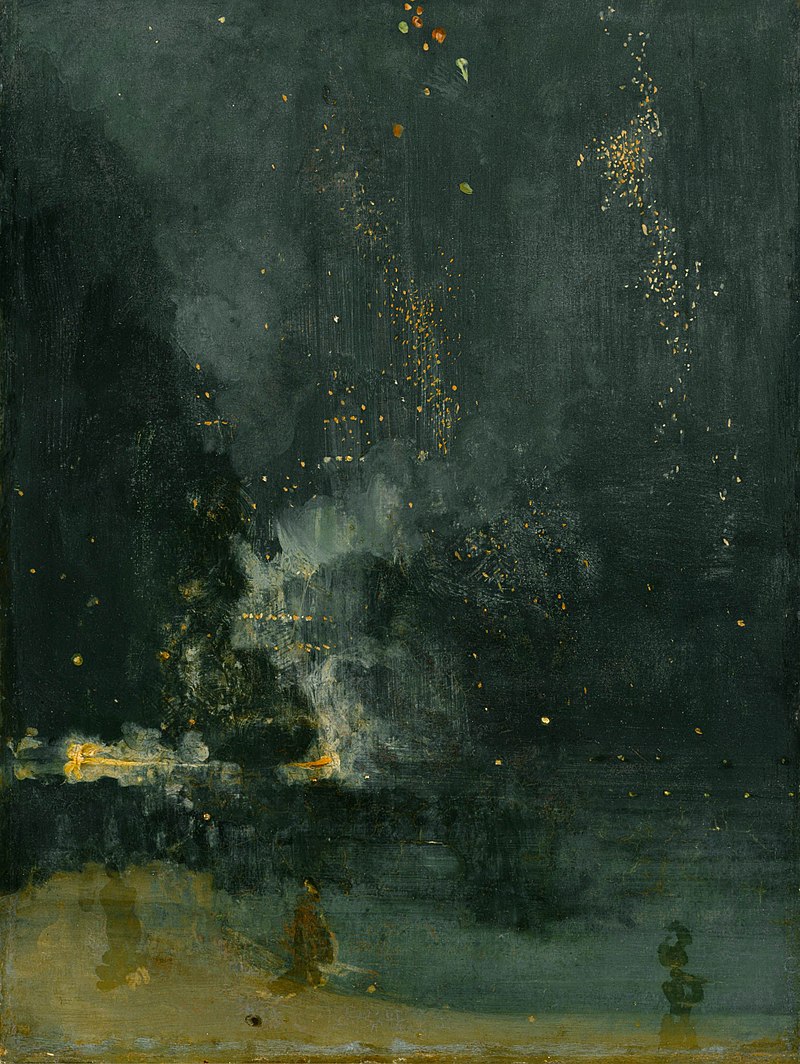
By James McNeill Whistler - http://www.dia.org/the_collection/overview/viewobject.asp?objectid=64931, Public Domain, https://commons.wikimedia.org/w/index.php?curid=127417

I’ve changed all the names in this story except my own. They’re all dead, but … that afterlife thing just might be true.

I’m an old man now, but I was ten or eleven or so in this story. Across the road, lived Ben, six months my senior, and Timmy, six months younger than me. We lived out in the country, without another kid our age for miles. So, we bonded. We bonded by chasing the neighbors’ cows. We bonded by stealing cigarettes from our parents. And we bonded by reading GI Joe comics. Each week one of us would put up the nickel to buy the latest one. When we got a chance, we lied our way into a war movie in Brunswick, usually Audie Murphy stuff. We were fixated on the glories of war.

At the time, Ben and Timmy’s father, Arkie, would get drunk and talk about war. He had fought in the South Pacific. Word was he’d killed 27 men in hand-to-hand combat there. [I wonder why he drank.] Another skill he had was theft—or souveniring, as he called it.  He shipped or brought home on leave an impressive assortment. Helmets, ceremonial flags, swords, maps, and firearms. Had he made a career of the military, I’m positive there’d have been a Sherman Tank over there.

Did I mention firearms? The one that fascinated us most and was most supported in the GI Joe comics and Audie Murphy movies was the BAR—Browning-Automatic-Rifle. And among the things we liked about it from our reading and viewing were TRACERS. These were bullets that left a fiery trail so the soldier could see where his ammo was hitting at night. This was exciting on the pages of a comic. It was thrilling in a movie. And Arkie had a BAR and according to Timmy a bunch of clips with TRACERS written on them.

We knew better than ask him for a demonstration. “You stay the hell away from that war shit. It ain’t good,” is what sober Arkie would have said. However, we weren’t about to stay the hell away from this fixation, and besides … we were sneaky.

I don’t know if the counterpart of carpe diem is carpe nocturn or carpe noches or what, but there came a night for us to carpe … or seize. My parents were going over to Cumston Hall in Monmouth where the players were doing Gilbert and Sullivan operettas that summer. I had made them pay dearly for dragging me to Madam Butterfly two weeks before. So, they made me promise to brush my teeth and go to bed on time. Step 1 of the plan was handed to us. Step 2 came just about as easily, as Arkie nodded off just when it got dark. Ben snuck the BAR out, and Timmy scored three clips that were marked as having one tracer every fourth shell or so. We headed for their back field.

We settled ourselves on a rise with about 120 yards of open field before the tree line and the railroad tracks. We hefted the rifle, and brought it up to our shoulders, practiced bracing our feet. That last didn’t work so well, and I decided that I’d shoot from the hip, just like GI Joe. But I wouldn’t do it one handed because, at about 18 pounds, the gun was too heavy.

We usually did a series of rock-paper-scissors to determine who would go first, but this night Ben played the age card. “I’m oldest. I go first.” Since we’d all get a chance, Timmy and I let him get away with it.

Ben got into a sitting position and mock sighted with his elbows on his knees. Satisfied, he set the adjustment for full-automatic, slapped the clip into the magazine, jacked a shell into the chamber, and released the safety. He took a breath and pulled the BAR tightly into his shoulder. He held the trigger enough time for four or five tracers to launch. Then, he put the gun on safety and prepared to hand it to me.

But I was jumping up and down and slapping Timmy’s back. We were excited beyond belief that it was even better than the comics or the movies we’d seen. Then Ben, reflecting on something new, yelled, “Stop, for chrissake. STOP!” We stopped.

What neither G.I. Joe nor Audie had explained to us was why tracers glowed. It’s a magnesium fire in the bullet, and it burns at about 3500 degrees.

Ben elaborated. “Down there. We set the pickin’ woods on fire.”

Pickin’ was our word then; it was safe to use around adults, and they wouldn’t get on our ass, but we knew what we meant. Timmy and I looked at the tree line and, sure enough, the pickin’ woods were on fire.

I’ve never known that level of fear, before or since. We three were ripping up ferns and tearing down branches that were on fire. We stomped them out. We kicked apart brush piles and jumped on anything that glowed. We gave up our bodies rolling on tufts of flaming grass or even sparks. We had to get those fires out, all of them, or Arkie could easily round his total up to 30.

With our last breath, we felt that we had all the fires out, little and big. We unloaded the BAR and headed for home. They went in their house, and I went across the road to mine.

Since we didn’t have running water then, I couldn’t take a bath or wash my clothes. They were burnt and sooty, so I threw them away. I went to bed without brushing my teeth.

I was asleep when my parents came in all excited about The Pirates of Penzance. The smell in the house dispelled that excitement right away and drew my mother to the trash bin. “These are what Freddie wore today, but they look like they been rubbed with ashes. Look, some are burned through.”

My father took the clothes, sniffed them.  “I’ll get him up.”

The combination of fear and fatigue put me in a truthful state. I didn’t even consider making up a story to cover this. I told the truth, the whole truth.

“Are you sure you got all the fires out?”

I nodded.

“We’ll check.”

So, I put my filthy body into clean clothes, something I was never allowed to do, and my father and I walked past Arkie’s house and down to his back field. I showed him where Ben sat when he shot, and where the fires were. I skipped the part about how pickin’ dramatic tracers are at night. Right about then, I just wasn’t feeling it.

We went behind the tree line and paced back and forth. In somewhere between 30 minutes and three months, Dad said, “Looks like you got it. Good job.”

When we got back to the house, Mom had bath water heated. I stripped down in the middle of the kitchen and washed the grime off.

Dad said, “Now go to bed. We will never talk of this again.”

And I haven’t until now. Everybody’s dead.