New Fiction by Colin W. Sargent: Godwit’s End

Indian Ocean
Photo by Husen Siraaj on Unsplash

A flock of birds with glider wingspans and needle beaks rose from the waves as they began their 7,000-mile journey to the Arctic Circle. Banking away from New Zealand toward the heavens, they had no idea what was in store for them. Nature just whispered it was time to go.

You sleep in the lonely air without ever landing but for a few moments at a lost island in the middle of the Indian Ocean, unseen and unheralded.

*. *. *

BY THE TIME the sun thought about rising, I’d already touched everything that could betray us. The flashlight jittered in my hand like a nervous thought—across the instruments, the synch shaft, the Teflon-coated rotor blades, the hidden places where helicopters decide whether to love you back. The Sea Knight waited, patient and enormous, breathing quietly to herself. She always knew more than we did.

We lifted from the ship in darkness, the sea loosening its grip with reluctance, and climbed to 1,000 feet over Diego Garcia: 1,000 miles south of India, 2,200 miles east of Tanzania, 1,300 miles northeast of Mauritius, 2,900 miles northwest of Australia. The island curved below us like a bare shoulder. It had once been a leper colony, which felt right. Certain places keep only the afflicted.

I was the sandbag—the extra weight, the junior guy, the one who watches too closely because he has nothing else to do. I studied each gauge the way an old man studies soup, suspicious of pleasure. Something was wrong with the aircraft. Or with me. The distinction mattered more than regulations allowed.

The Lieutenant flew with his window open and his gloves off, as if danger were a matter of ventilation.

“Turns are good.”

He signed the yellow form with the finality of a man who believes in himself. He always did.

He was dashing in that careless way—tall, slack, ruined slightly by time and by a wife who’d left him during a tour that lasted three years too long. Since our helo detachment’s mission included distributing mail, he’d even had to deliver his own divorce papers to himself. Good God. Everyone said he was a great pilot and a good man. Everyone except the woman who’d learned him up close.

He pushed us faster than necessary and, without explanation, dipped the cyclic toward the dark side of the island.

“Just curious,” he said.

Coconut palms crowded the water below, leaning inward as if gossiping. We dropped to fifty feet. The air rushed in cool and intimate, lifting the sweat from my skin. Our rotors bent the palms. Sand rose in invisible spirals. The island seemed to inhale us.

Numinous, I thought. The word came uninvited.

“This junk’s choking our intakes.” I was suddenly an expert, though I was nobody’s NATOPS check pilot. Titles matter when fear is aroused. A heartbeat later, in my windscreen, I was eye to eye with a creature from another universe. It looked right into my soul. Before I could react, it slammed with a thud and fell, leaving a smear. A cloak of dark wings followed. “What was that?”

“First bird strike?”

The Lieutenant gestured toward the fronds of the bending palm trees toward a green glass float lodged in the canopy—a blown-glass sphere, heavy and luminous, caught in netting like a secret kept too long. How in blazes had he even seen it? Others glittered nearby, trophies thrown up by storms older than any of us.

“We’ll take that one,” he said.

The hoist whined. Lewis descended, young and golden and eager, hitting the sand running. He climbed the wrong tree with athletic joy, reaching for the wrong prize.

The Lieutenant’s patience broke like a cheap wave. He threw his kneeboard, cursed under his breath, and then—astonishingly—unplugged his radio. Silence rushed in, obscene and total.

He looked at me once, calmly, and then he left the cockpit.

Jumped.

Lowered himself on the 600-pound test cable and left it dangling.

The helicopter trembled in my hands, eighty-five feet of metallic desire and consequence hovering over a forest that would never testify. Sand fed the engines. The warning lights flirted with catastrophe. I thought, not without pleasure, that I was alone in this machine in a way men no longer are.

It was against Navy regulations. A Sea Knight must never be flown by just one pilot—each cockpit seat commands a deadly separate view. I imagined the inquiry: the long green table, the glass of water, the Lieutenant slamming his hand down, his wings of gold under his palm. I imagined leaving them on the beach, inventing a failure elegant enough to be believed. Daylight crept in. So did resolve.

But nothing happened.

The logbook later said no incident. It always does. I was given the second-best float.

Up close the emerald orb was heavy and honest, nearly two feet across, bubbles in its hand- blown glass. It was caught in its net the way a good fish is caught—without tricks and without mercy. The rope was gray and worn, knotted by hands that had known salt and sun. I looked closer at the sphere, so thick and old, dark green like deep water, not the bright green of hope but the green of endurance. It had been knocked and scarred, rolled and carried, and it bore that without complaint. Light slid across its surface the way it does on calm water at dawn, briefly, and then is gone.

The sea had worked on it and found it worthy.

“It’s Japanese,” someone said later. “Pre-war, made from recycled saki bottles. When typhoons rip them free, they cross the whole Pacific. Once one made it to Norway.”

I held it and felt, briefly, like something had made the journey intact.

Some things survive because they know what they’re for.

*. *. *

AFTER THE DEPLOYMENT, I could sum up my life in three sentences. I’d married my one and only love. I’d enjoyed good health. And I’d moved three times. My Navy souvenirs remained packed in the basement in their last resting place behind the electric piano, which had suffered some water damage during a storm.

New Year’s Eve we lost power, and I went downstairs to check the circuit breakers. There was the box, standing in my way, and as I moved it I realized it was time to deal with it. Why had I let this become a monkey’s paw?

At the top of the box was my dress uniform and flight jacket, as carefully preserved as any wedding dress. Below them was a stack of yellowed flight manuals and a paraline plotter.

But no fishnet ball.

Had it been stolen during one of the moves, or had I been fooling myself all along and never really had it?

That night, in my restless sleep, I witnessed the green glass sphere softly plotting a way to break free, rolling on the waves. Only it became Lieutenant Larry’s grinning head, eyes rolled back, with a prognathic grimace.

Why had the Lieutenant done something in peacetime that was prohibited even in wartime? It came to me. At that hidden moment, with no one of any importance watching, in the loneliest place on Earth, the Lieutenant just had to win something.

So now the ball is gone, undocumented and unwatched. Free. It’s really so extraordinary. If you run into it, avoid it at all costs. I’ve let it go.


New Fiction by Sara Doty: Vermillion

skin cells

As I acclimated to the heat, I noticed my skin’s weight for the first time. My subcutaneous fat layer pressed against the epidermis, the tissue, and the muscle, pushing them apart. I was nineteen years old when I deployed, nervous, shy, my bun pulled tight like a vice, my scalp raw, a cigarette always between my fingers. I don’t smoke anymore, but it was 2012. Camp Dwyer was a United States Marine Corps forward operating base in Helmand Province, Afghanistan. The FOB had three women for every forty men. My femininity coated me in garish neon. I was alien. My M16 hung around my neck like a piece of onyx jewelry, weighing me down.

We called the living quarters cans. Everything on the base had a titular spine, a framework relationship to metal. My mouth tasted of copper and iron. I swallowed that metal down. My M16 was an aluminum alloy fourth limb. The walls of my can were hard pieces of tin. The sponge of nicotine softened the edge. Cigarettes were all I had to stifle the pressure hemorrhaging up my skull, so pink beneath. My lungs were two hungry, wet mouths.

The cans were rooms, made from shipping containers, protected by snaking concrete bunkers, and the beating heart was a tarp overhang shading a picnic table: the smoke pit. Above the covering were four giant speakers. Speakers were everywhere on the FOB, but above the smoke pit, they were monoliths. If there was an attack, it would always be a calm woman’s voice, calling out from the speakers with a distinctly British accent. It was the voice of god. I sat in the smoke pit alone, or with another lance corporal named Tam, inhaling nicotine like a tobacco automaton, peeling my hangnails to the knuckle. It looked like I was molting. I thought I’d unravel. Soon, I thought, I’d be without skin.

Every dawn, the Salat al-Fajr would cry over the smoke pit, the heat stifling and the air brittle. I longed for Florida as for a lover, the sweet, wet heat, the cicadas rattling, rising up like steam, the trees glowing like saints perfumed in petrichor, oak, and citrus flesh. I dreamed of slash pines and Spanish moss and freshwater springs sunk into the earth like lagoons of cerulean. I thought of wetlands and driftwood. I rolled my eyes into my skull while I worked on my unit’s lot, felt skin barely clinging to tissue, felt it ripe, saw the viridian trees of the peninsula, saw the champagne water. Every night, alone in my can, I removed my clothes and screamed into my fists, the need to remove something, urgent, the desire to bathe in my homeland consuming me like a song. I pulled at my hair. The need to remove something writhed in my body, aching for release.

I served duty once a week on our lot. The Staff NCOIC was normally Staff Sergeant Plumins or Gunnery Sergeant Grady. The NCOIC would be one of the sergeants, Gale, Windcastle, Zabine. My third Saturday in Afghanistan, I was late to duty, and when I made it to our lot, I steeled myself to be corrected. But Gunnery Sergeant Grady told me the heat made him lethargic, too. He had a cleft lip scar and horrible posture. He was the only person in our unit who smoked more than I did.

“You’ve never been late before,” he shrugged, slouching. “Give me ten cigarettes, and we can forget it.”

The next time I stood duty, it wasn’t with Gunnery Sergeant Grady or Staff Sergeant Plumins. It was under Staff Sergeant Bell. He came out of the duty hut when I checked in. None of the sergeants were with him.

“You were late last time. Grady told me—told everyone you gave him cigarettes and he called it even,” he grinned down his nose at me. “Didn’t counsel you. Didn’t do shit,” Bell said.

“Yeah,” I said. “Yes, Staff Sergeant.”

“What would you give me if you were late?”

I said nothing. He raised his eyebrows, as if to say, I’m waiting. My skin along my wrist buckled.

“I’m just kidding,” he laughed and shook my shoulder, letting his hand fall, brushing down my arm. “Don’t take yourself so seriously,” he said before walking back to the hut. I reached my hands into my blouse and shirt, gripping my shoulder.

The months crawled on their bellies, time weeping slowly. Days and nights were marked by the scent of burning garbage. The trash pits burned our waste and fed entrails of black smoke into the oxygen, the plastic liquifying, the rubber melting, the metal screaming and white with heat. We sucked the tainted oxygen into our lungs. The garbage burned. The air was acrid. My body tried to see without my eyes, reach out and feel what I was alive for. My mortality was a cloud hanging above my skull. I didn’t pray to God. I felt covered in an intangible film. The desire to take it off was a chemical burn writhing in me. The urgency to do something was an unbearable itching.

“It was just friendly,” Tam said when I told him about Bell. “Don’t read into it.”

“You didn’t hear him, he was like, ‘What would you give me, huh, huh?” I said, imitating his voice.

“He was joking. You’re doing that thing again,” Tam sighed, dropping his cigarette and grinding it into the sand. In my room that night, scratching did not relieve the skin along my shoulder, so I bit in with my nails and squeezed, dragged them. The skin didn’t tear, it lifted, and I gasped, the relief instant. I peeled the skin off my shoulder like it was damp paper.

The platoon met in the smoke pit every morning to pass word since there were no formations in theater. I was out early that morning when Corporal Ludabaker came and sat beside me. Ludabaker had a strange stare. Tam and I called it the ninety-yard stare. Everyone liked Ludabaker because he had a Combat Action Ribbon. Even Tam liked Ludabaker, and he hated everyone because he was demoted from sergeant to Lance Corporal. We named it the ninety yard stare, because one day we could tell Ludabaker was staring at us even though he was down the dirt road. The stare was remarkable. He didn’t blink, and his eyes were always wide. The ninety-yard stare made me squirm.

Ludabker asked if he could have a cigarette. I slid the pack across the picnic table.

“You’re not as much of a cunt as the others,” he explained in thanks, exhaling smoke. “I like being attached to grunt units. No females.”

I nodded. This was Ludabaker’s fifth deployment. His wide, hard eyes stared. Something dead was in his face.

“You never even shot that rifle,” he giggled his signature Ludabaker laugh, so distinct it was like a scream, like a child’s laugh. It made my skin feel cold even in the awful heat. He gripped my rifle and shook it, lurching me forward because it was slung around my chest.

“The rifle range,” I reminded him, pulling my rifle from his grip. He held on for a second too long, his awful, unblinking stare drilling into me. Corporal Ludabaker had the highest rifle score in our entire command and got an award for it. It made him a darling, especially to the higher ups. Gunnery Sergeant sometimes slipped up and called Ludabaker Jason. It’s like Ludabaker transcended rank because he’s shot his rifle in combat. Everyone loved him. I pulled back again and his grip tightened. Then, he let go.

“Female Marines can’t be grunts, so you’re not a rifleman. That’s the saying right? Every Marine a rifleman. You’re not a real Marine, if you think about it,” he let out his giggle again. “Not really.” I gave a fake laugh, thankful people started coming out of the cans to wait in the smoke pit. Ludabaker was right, that is a saying. There are mantras in the Marines, every cult has them: This is my rifle, there are many like it, but this one is mine. Pain is weakness leaving the body. Marines have thick skin.

Halfway through the deployment, I started writing an instruction manual to other female Marines on how to survive deployment, how to survive womanhood in a place like this. I explained that the skin won’t thicken, but will necrotize into soft, gray filigree in need of extraction. The epidermis can’t hang on, but it cannot simply let go, not all at once, nothing so simple as sliding from silk.

I noticed all my itching and peeling was beginning to show, so I coated my legions in grease. I didn’t pray to god. I walked fast to and from lots. I smoked. I made sure not to annoy Tam. The mountains in the distance were a wash of lavender behind a gray film. The air was getting to me, infused with incinerated garbage. Bell said he liked the smell, inhaled, and showed me his teeth. I filtered through space and time, inhaling garbage, inhaling trash, plastic, hugging my rifle against me, avoiding the other Marines and their eyes, all of it toxic, all of it inhaled, all of it a corpse in the sand, bugs crawling over me, their eyes. I dragged my nails into the soft, loose parts.

Some days, we prepped gear to be transported back to Camp Leatherneck. One day, Gunnery Sergeant told me to help Ludabaker with security for the contracted Afghan workers, who sometimes handled transportation. When it was them transporting and not other Marines, we would babysit them in a security perimeter while the trucks were loaded up. The Afghan men usually just sat in a circle in the shade cast by the huge vehicles. Sometimes, they asked for water.

“Here,” called Ludabaker, waving me over, showing me where to stand. I stopped a foot and a half away from him, but Ludabaker yanked me to him by my rifle. He yanked so hard I stumbled. The sling tightened. Ludabaker held my rifle at the ready, our bodies pressed together because the rifle was slung around me. He held it at the ready. He pulled back the weapon’s charging handle, which inserted a round into the chamber with a soft slam.

My ears rang. This was against the base-wide protocol. Our weapons were to be in condition three- magazine inserted, bolt in chamber. But Ludabaker put me in condition one, round in the chamber.

“That’s not allowed,” I said instantly. Ludabaker let me go.

“That’s not allowed,” he imitated my voice and then laughed his horrible, ringing giggle. “This is why I can’t stand deployments with women.” I felt with my index finger that the weapon was still on safe.

“Don’t,” he snapped, because I was reaching for the charging handle to remove the bullet from the chamber. My eyes roamed over the lot for Gunnery Sergeant. There was a rule about not following unlawful orders. I wished I could quote it from memory. But it was just a bullet in the chamber. He wasn’t asking me to shoot them. The Afghan men did not seem concerned.

“Don’t be soft,” he hissed. “It’s to scare them,” he said, and then turned to call the Afghan men a string of foul phrases. One of the men stiffened. “Sight in, Bradford,” He hissed at me, glee in his mouth but not his wide eyes. The ninety-yard stare bored into me. He let out his horrible giggle. I didn’t sight in because the Afghan men were not armed, they were just sitting together. Ludabaker wasn’t paying attention to me.

“You see that,” he shouted at the men. He called them another slur. “We’re ready for you.”

And then Ludabaker was beside me again, leaning in, at first I thought he was going to seize my rifle again, I could feel his slick arm, wet with sweat, and the biting scent of tooth decay and cigarette smoke and cloves pressed against me, the smell smothering me like a rag.

“Don’t mean it,” he whispered, breath hot on my neck. “Just want to scare them,” he said again and then licked my earlobe.

“Ludabaker,” Gunnery Sergeant barked from across the lot. He was standing outside the duty hut, frowning, hands at his hips, pistol gleaming from his belt in the heat. He watched Ludabaker trot over, and they had words.

I pulled back my charging handle so the round popped out of the ejection port. I put it back in the magazine, my stomach blooming with bile, any minute my breakfast would come up. My hands were not shaking, but there was a tremor working through me, like the rattle of some great thing wanting to be released. I went to a porta-potty and peeled the flesh from my ear, cartilage melting down my blouse without the skin to maintain the shape.

As the months clung on, I decided time worked differently here. I joked to Tam one afternoon that you have to ask yourself the age-old question at night: piss your pants or get raped by a bunker.

“What the fuck are you talking about?” he asked. I looked at him for a long moment, silent. I wanted to tell him women aren’t safe anywhere, female Marines are never safe. But I didn’t speak.

“That girl who claimed she was attacked on Leather Neck, you know she was full of shit, right?” he asked. I didn’t say anything. I didn’t know who he was talking about. “She was mad that the dude didn’t want to date her or whatever. He was an officer. She made that up. You’re doing that fucking thing again, Bradford.”

There were sixty days left to the deployment, an eternity. I was drowning. I wrapped up my flayed parts, gleaming and red, and found myself floating one morning, waiting for the others in the smoke pit. I laughed. The speaker above me crackled, not a prayer, not a warning, just a vague voice.

Staff Sergeant Bell knocked on my door one night, hours past the Salat al-Isha. He didn’t see me sitting across from my door, in the shadow of the bunker, an above-ground tomb of concrete. He had on shower shoes and basketball shorts. I stayed still, waited for him to give up, the acrid taste of bile in my mouth. During my next duty, Gunnery Sergeant Grady taught me how to play gin rummy, said he had a daughter who looked just like me. I told him slaughter rhymed with daughter. I leaned over. There was no skin along my ribs, and my blouse stuck to my sides. I showed him my missing ear. After the skin removal, nothing remained of the cartilage. Nothing was there but a red, melded shell. Gunnery Sergeant twitched. I peeled something back, a bit of scalp. He averted his eyes. The nights felt longer, I couldn’t sleep, I was so busy finding places on my body where skin had buckled over, where it was ripe.

When there were twenty days left in the deployment, I handed Tam a piece of my skin hanging, just after Salat al-Maghrib. Pull, I said. He screamed and fell back, his face twisting from disgust and fear, his M16 in the dirt.

“What’s wrong?’ I asked. I showed him my teeth, there was nothing left there, no lips, my jawbone gleaming. Later, the speakers whirred to life, the British woman telling us Incoming, Incoming, Incoming.

I stayed in bed. Better to stay in bed. Dying in your sleep could be like dreaming of the live oaks and slash pines in Florida, the wink of magnolias in the fragrant, wet air. I peeled off a tricky bit of skin along my spine. Better to stay in bed.

And then, another Salat-al-fajr passed, and I found nothing to peel. There was no skin in need of removal, no skin, nothing to itch or claw.

I stepped from the darkness of my can into a nova bright, weighty sunrise. My discarded skin rested in piles at the foot of my bed, a castoff gown, worn, aged, unnecessary. The sky doused my body resplendent, like a gleaming druid. After months of slow flaying, slow removal, slow metallic wandering, there was new bone growth in the night, red and pink. I wasn’t bound to the desert floor. My muscles calcified into an exoskeleton of pink and red and vermillion. My face was a flayed pink crimson, a livid, earthy scarlet. My hair had grown in the night, past my protruding spine, floating out around my head, my shadow inches under my levitating foot. My lungs were blooming nets of tar reaching from the pink, sultry air beneath them.

I found them in the smoke pit waiting for morning word. They gazed, transfixed in a horror so strong it was like ecstasy. Their eyes bulged, their hearts thundering, their fear momentarily suspending them in space and time as I blazed. Gunnery Sergeant gouged out his eyes with his Allen wrench.

“Behold,” the speakers crackled and thundered. “Be not afraid. Look upon her and be amazed!” I was an unwrapped trumpet blast, an amalgam of every woman that ever stepped foot here, a mosaic of bone and ruby muscle. I didn’t hear their screams as they thrust their hands to their face, their agony a pungent smell I tasted in the air. Their eyes melted into egg white that ran down their faces, their sockets like scoops of cake. The Salat al-Fajr rose like lattice work around the base. The woman’s voice screamed from the speaker, her calm transformed. My shadow was lace on the sand.

“Behold,” the metal speaker shrieked. “Look upon her and be amazed!”



New Nonfiction by Erick L. Sokn: You Can Never Know for Sure

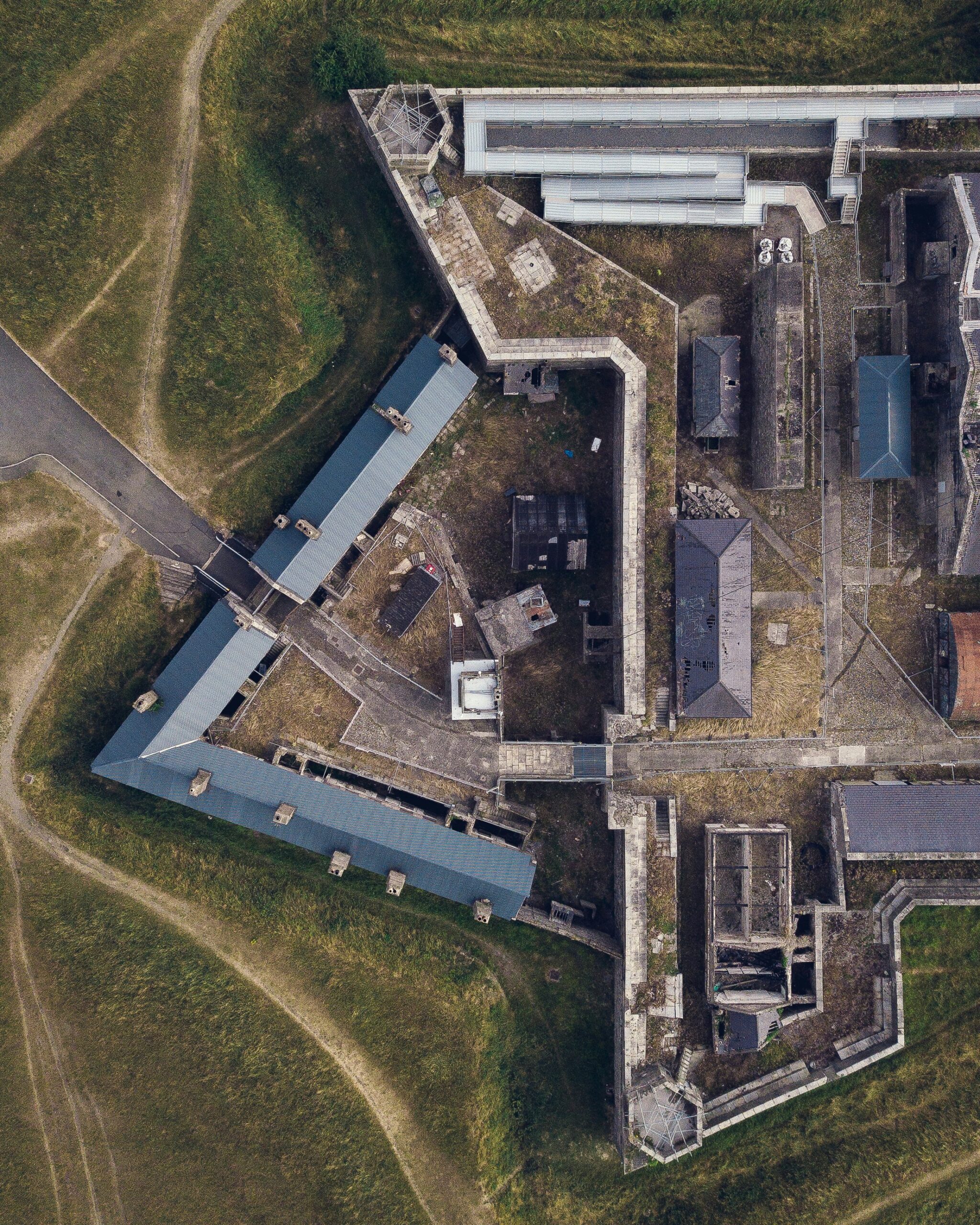
Military Base
Photo by Lucas Miguel on Unsplash


As a military police officer in the 1970s, I responded to multiple shots fired calls, homicides, vehicle accidents, armed robberies, assaults, bar fights and brawls (there is a difference), and many other incidents. I arrested people for rape, homicide, child abuse, armed robbery, and assault. I took handguns, knives, and even one shotgun away from a variety of people in a variety of situations. And I physically subdued—I don’t even know how many—people while doing that job. I was treated twice for injuries I received during my service, had friends spend days in the hospital, and fortunately knew only one who didn’t survive.

I was really pretty good at de-escalating a lot of situations. I was also pretty good at deciding when de-escalation wouldn’t work and taking decisive action to quickly contain a situation. There were so many incidents that it just became a way of life, and I’ve never been able to turn off the situational awareness it embedded in me.

As a squad leader and acting sergeant, often riding solo as we were short on people, I was responsible for the outcome of a lot of incidents. I was frequently the specifically requested backup unit for other patrols. I remember the feeling of adrenaline heightening my readiness heading into multiple situations. For me, the waiting was the hard part—you could feel the tension in your body and learned to control it.

Cops deal with an adrenaline surge at the start of every encounter. They hold themselves in check until the situation clarifies and then push themselves through it and into action. When everything broke loose and I started moving, I never noticed the adrenaline. Once moving, my mind and body seemed to just move as one, flowing with the changing environment.

I learned how a blind rage can be triggered and what it can do once—and released it completely only once. It was during a brawl off-post. We were three MPs in regulation haircuts walking into a bar that didn’t much care for service people, and we stood out right away. We’d already had a few, and Pacheco, a squad member and friend, was more argumentative than he would’ve been sober. The bouncers at the door didn’t want us in their bar. Pacheco took exception to that and started arguing. A bouncer went to push him. He didn’t even finish the motion—I just reacted. While the bouncer’s hands were still moving forward, I used his momentum and helped him through the door and onto the sidewalk, where I was already on top of him. That’s just how tuned my reaction time was back then. I hadn’t planned it. When he moved, I moved. I didn’t think.

The bar emptied behind me. I was still on the bouncer, on the ground. I remember the feeling of weightlessness as several people must have grabbed me from behind and lifted me off him, a clump of his hair coming with. They threw me forward into the parking lot. As I rolled to my feet, I saw the area outside the bar with probably 25–30 people pouring out the door and lining up against us.

I couldn’t see Nick. Nick and I were close; we trusted each other’s dependability and capability completely. I saw Pacheco on the ground with three guys over him, all kicking him. I remember yelling, “They’ve got Pacheco!” and heading toward his location, expecting Nick to still be fine. I was mad. The crowd came at me then. There were just so many in the group between us. I only made a few feet of progress at a time and had to fight for every inch of it. But I let the rage flow and kept fighting forward and to the right, to where I had last seen Pacheco.

I was the only one of our group still on my feet when it was over and the squad cars started pulling into the parking lot. Nick was in the hospital for three days, Pacheco was in for overnight observation, and I—after having my head X-rayed to make sure I didn’t have a fractured skull—was sewn back up and released.

The morning after, the severity of the fight was obvious. My face was swollen and discolored. Both eyes had that deep black-and-blue look you get with a broken nose. My right eyebrow was stitched end to end where a head butt had landed. My ribs, back, and joints were bruised deeply enough that it hurt to move, and both hands were swollen and cut. But I forced myself up and went to the hospital to check on Nick and Pacheco.

We actually took a total of seven of them with us to the hospital. Nick had just completed his Army enlistment, which was the reason we were out to begin with. He was taken to the civilian hospital. He counted the others as they were brought in. Nick went down with a group on him early. Someone in that group had taken out his right knee with a side kick. In a brawl you are fighting all sides at once. You simply can’t avoid everything. Once Nick was on the ground, they had him. Nick and Pacheco thought they could account for possibly one, or at most two. So, the other five were “credited” to me as the minimum I was responsible for—and it’s possible it was all seven. That’s what letting your rage out can do.

Learning what you are capable of makes it difficult to think in the self-righteous terms used by most “civilized men.” The “There but by the grace of God go I” is more like it. The savage nature of man is part of you; it may be buried by modern society and custom, but it’s there nonetheless. And once you uncork that bottle, something in you always knows you can do it again. Maybe that’s why those who serve have trouble fitting into civilian life again.

Personally, I like to think that God needs sheepdogs too—those who know what they are really capable of and are willing and able to meet savagery with savagery when necessary.

There have been times in the business world and interacting with what I would call total assholes that I have wished for a less civilized world again. It has been so tempting to release that part of me sometimes. I guess that’s why they call it exercising restraint.

One incident that bothered me for a long time was pulling the trigger on someone who turned out to not deserve it. He wasn’t even hurt and is still one of the dreams that woke me up night after night for around 15 years—replaying the scene over and over in my head, trying to see what I’d missed. And time and time again, making the same decision to pull the trigger and seeing and feeling everything in stark detail.

My unit and another MP unit had been dispatched to an arms room alarm and were told no one should be in the building, everyone was accounted for. We saw the locks had been cut off, lying on the ground to the right side, and the door stood slightly ajar. Nick and I went through the door, me going first and to the left, Nick following and staying to my right. The arms room was dark, and everything was mostly just shadows and deeper shadows. Second chance vests (the nickname for the first Kevlar vests) did not exist back then. You got one chance. If you screwed up, you died.

We saw the intruder. Nick identified us as Military Police and yelled for him to freeze.

He was just a shadowy silhouette when he turned and started raising his hands toward me, with a weapon in his right hand. We were less than 20 feet apart. Neither of us was going to miss at that range. If I had waited, his weapon would have been level with my chest a fraction of a second later, and it would have been too late. So, I pulled the trigger—center of mass, slow and steady. Everything was in slow motion. I remember the feel of my finger changing shape against the resistance of the trigger, the pressure required dropping as the trigger traveled toward the fire point, concentrating fully on making my first shot count, and knowing I was putting a second round in him right behind the first. I had all the time in the world to stop him before he even leveled on me.

My weapon never even discharged. Just as the trigger was reaching the fire point, I heard the subject yell, “Don’t shoot!” I was able to grab the hammer with my right thumb just as the trigger reached the fire point, and I held it back with the weapon still centered on him while I watched and waited.

It doesn’t get any closer than this—he should have already been dead. I had fired that sidearm many times and knew where the trigger let loose. It was at the release point. I should not have been able to catch the hammer before it fell, but I did.

He still had a weapon in his hand, being raised in the direction of my chest, but the signals were conflicting. I just reacted on my gut. Something in the way he yelled—his tone or the timing, maybe—didn’t match a full-on aggressive action after being surprised, with two weapons pointed at him, mine and Nick’s. That reasoning was not at a conscious level and would take years to work out as the why. It was a very tense second, waiting with the hammer held back, my weapon dead center of mass, his raising toward my chest… the adrenaline surge was off the charts. Pure fear that I might be wrong and allowing him first move. My body screamed for me to finish the shot, to not let him level on me—but my mind insisted I hold.

He was, in fact, raising his arms over his head. It wasn’t until we were next to him that we could identify what he was holding as a nightstick. Black, round, and about 18″ long. But the initial action—while facing me in the dark room, only a silhouette—looked exactly like a firearm being raised into firing position. I remember everything about the scene even today. I had an instant vision of how it would play out, and every fiber of my being was complying with this vision to ensure it became reality. I was totally focused on killing this guy before he could kill me.

And I would have been wrong. An innocent man would have died. A “good guy” with the guts to go in and play hero would have died! In my mind’s eye, I had killed him. Sounds stupid, I know. He’s fine, I’m fine; no harm, no foul. But the mental impact felt like I had killed him—I was that committed to the action. In the recurring dream, nearly every time, the hammer would fall before I could catch it. Very occasionally, I was able to catch the hammer, only to have him be the one who fired once he leveled—and I’d wake up at his muzzle flash.

Pulling the trigger in the arms room has bothered me the most of everything that happened during my time as an MP, even though the other soldier was unharmed. It gave me nightmares for a decade and a half and still pops into my head randomly. It bothered me not because I was willing to kill someone, but because I could be wrong when I did. I guess I always prided myself on making the right choice in tough situations—I had so far—and this proved I could be wrong.

I searched over and over for what I had missed. But in every deep-dive review and in every dream, I always decided pulling the trigger was the right choice. Even when it turned out I was wrong, the initial choice to fire was the correct one. I felt I was still perfectly willing to kill someone if it was necessary—but now I knew I could be wrong in the choice.

I felt unbelievable guilt for starting to pull the trigger on an innocent man—for not correctly identifying the weapon as a nightstick instead of as the barrel of a gun. I also felt significant guilt for not finishing the shot. Finishing the shot was the correct tactical choice given the situation. The decision to grab the hammer was made on instinct instead of objective evidence. It was a risk that should not have been taken under those circumstances.

My training and all evidence said this guy needed to die, and I let him live. Not finishing that shot could have gotten both me and Nick killed. I failed on both sides of the equation. I was wrong to start pulling the trigger when all the facts were in, and wrong to stop the hammer fall with the facts available at the time the decision needed to be made.

The incident taught me that even when all evidence and every data point says the answer is A, the real answer can still be B. Evidence can be wrong, misleading, or incomplete. You still have to decide. You still have to act. The arms room taught me that decision-making isn’t about certainty; it’s about probability, and recognizing when objective evidence runs out and judgment has to take over. If you have the subject-matter expertise and experience, it isn’t a guess; it’s a higher level of thinking, almost at a reflex level—your mind arriving at an answer with reasoning it can’t always articulate in the moment.

Years later, as an engineer, this way of thinking made me more cautious and more able, when needed, to decide a path on incomplete evidence. I didn’t jump to conclusions, but I wouldn’t hesitate to choose.

Maytag was my first job as an engineer. About six months after I was hired, they cut 43% of the engineering staff. I stayed. I went from six projects to twenty-two. I sorted through them and made recommendations on which to keep and which to drop or put on hold.

There was one project that looked fine on paper—all the numbers checked out—but I told them something felt off about it, like I was missing something. The Director of Engineering said he had been having the same feeling, so we shelved it, even though on paper it should have moved forward. My time as an MP taught me that judgment under uncertainty isn’t just about knowing when to act but also when to stop.

On another occasion, we were replacing the metal spinner basket on a washing machine with a plastic version I was designing. The spinner basket size was being increased, which reduced the distance between the basket and the outer tub by about fifty percent. This was done to increase the advertised capacity of the washing machine, making it the largest capacity machine in the industry.

The first prototype basket cost $1 million. We also had to address issues with the outer tub sagging over time from the weight of the water and the transmission cover changing shape when the basket was spinning. Both of these issues reduced clearance even further, and under certain conditions the basket would hit the tub

I was making what I hoped were the final design tweaks to the transmission cover when the Director of Engineering came down to the lab and told me we were at the drop-dead point to release the rest of the capital for launch. I’d only been an engineer for two to three years.

He asked, “Is this going to work?”

I told him, “I think so.”

With that, he approved another $3.8 million in tooling, presses, and other equipment. We didn’t even have a full set of successful testing completed yet. We pulled the trigger—on a $4 million spend—based on an “I think so,” from me, not actual evidence.

And it worked.

High-risk, short-timing projects and judgment calls were a significant part of my engineering career. I learned in the arms room that we never really know for sure if a decision is the correct one in the moment. You can’t know until the final results are in.


New Poetry by J. Raymond Bennett: “Tourniquet” and “Different than Before”

7,902 Miles Away / image by Amalie Flynn

Tourniquet

I learned how to tie a tourniquet
before I could drink a beer. Drunk
with the knowledge of stabbing
a straw into a throat while pimples stole
the evenness of my face. A sucking
chest wound requires plastic and a valve—
things I never learned in high school,
facts more real than arithmetic, one plus one.
Two minutes is the time it takes to bleed out
from arterial spray.

I run out of Mississippi’s while
my imaginary friend dies.
Where is my imaginary grief
to balance out the loss?

My Sergeant scolds my failures, my failures
every time I quoted Robert Frost
in hallways like it mattered
that I could remember words that didn’t smell
of metal and dirt, that didn’t reek
of my own piss. My hands shake
as the count starts anew. I am eighteen
with a fake body pissing blood on a table.
Two minutes to expose the limb and
twist and twist and twist and twist.

A tourniquet is just a tight band.


Different Than Before

You told me about your abortion
by email- click send, fire and forget.

I am 7,902 miles away,
sitting next to people I suddenly hate.

Rising like a pastor about to begin prayer
A eulogy for the child I would never meet

I lift and pin a MSG against the wall
Screaming words that didn’t make sense

We agreed we never wanted kids
But I was two months deep in the desert

7,902 miles away
I was already different than before.