New Poetry by Maurice Decaul

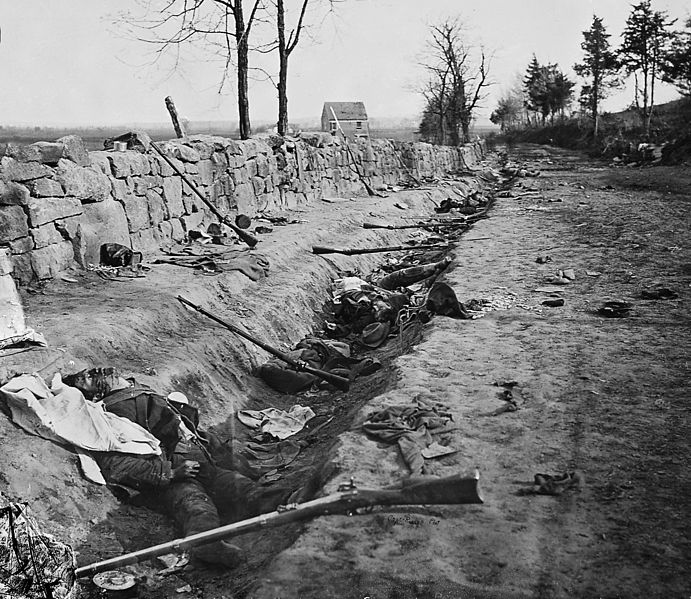
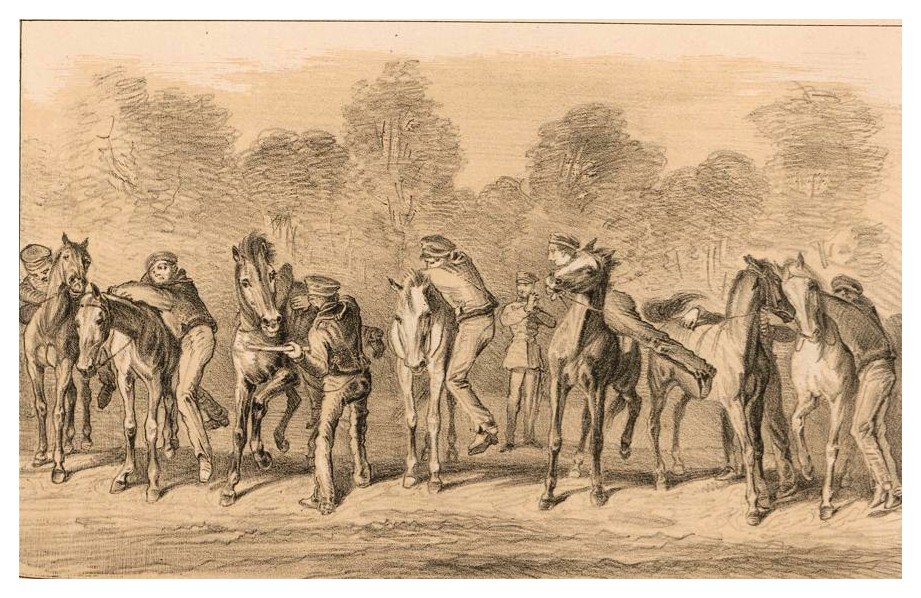
civil war, Chancellorsville, Fredericksburg, slavery, racism

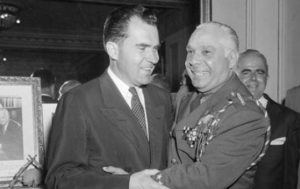
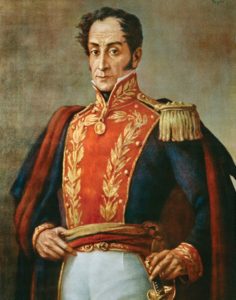
U S Grant on the Disbanding of the Iraqi Army

I heard thunder in the mountains
witnessed soft amber lightening in the clouds
saw in the saplings, & yearling whitetail, promise.

When I reached out to take Lee’s hand
to shake, I noticed also, the newness of his uniform
recognized that my own had been caked by
mud & dirt from my ride, & knew then
those questions which had kept me awake
the awful headaches which
overtook me, were for naught.

We had achieved our grand strategy
while in Richmond, the opponent was mired in tactics.

Magnanimity & benevolence being
my best & softest weapons
I applied them aggressively & fed
those desperate men, twenty-five-thousand
meals. I pardoned them & let them keep
hold of their horses therefore denying
them any excuse to develop into a resistance.

This I did in prudence
not wanting to ask the great General to surrender
instead providing him a means
to retire his army from the battlefield, with dignity.


Blue Ridges

Virginia moon, like a wet breast of an old lover
firm like an unripe doughnut peach, has been playing

hide & come find me with clouds & shadows.
On the night highway, road signs like

men in robes, guard rails like teeth or head stones
deer with their headlights look, stand poised

& ready for martyrdom.
Rain clouds blacken the sky; after it rains, Sairan

give the mountains their name. A blue heron lifts it wings.
Southern faces carry confederate residue

like a disaster or a nude woman, I stare.
When is a plantation no longer a plantation?

On the lake shore, with nutria, turtles, brown recluse
& copperheads, I know, I know these waters.

The small voice in my head says leap
it says, these waters will mask your smell.

How will I live here, in the south?
When my belly warns me, be home by dark.


Charlottesville

A woman sits next to me on the bus
I have nothing to say so I look out the window
& I think, if this was a generation ago

& I chose to ignore or respond to this lady’s
entreaties, I might’ve become like strange fruit
ripening in a southern summer.

I want to throw up.

A brochure reminds those of us unfamiliar
in its quaint, elegant way, that “you” are now
in the rural south where respect & gentility….

I hope this woman doesn’t expect a toothy smile
or a chortle, or that I will step off the sidewalk
or keep on listening to her go on & on.


Aleluya

Flocks of birds, explode like atoms;
cottontails, in coyote scat.


Climate

In the market, we look past each other
even as we both reach for strawberries
Excuse, me.
, excuse me.


*


I have a habit of biting my nails.
I fear being bitten by water moccasins.
I dread country roads during new moons.
Last night, I mistook, the whitetail, for spirits.


*


During afternoon rumbling
wind shouting through fractures in stone
like an invocation from the dead
for hemlocks to sacrifice their branches.


*


Slaves’ tears fall from heaven, floods
our plantation, loosens clay, rounds out pebbles.


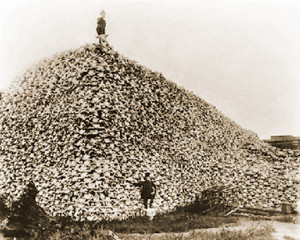
Photo Credit: Matthew Brady


New Fiction from “Still Come Home” by Katey Schultz

The following is an excerpt from Still Come Home, Katey’s novel set in Afghanistan.

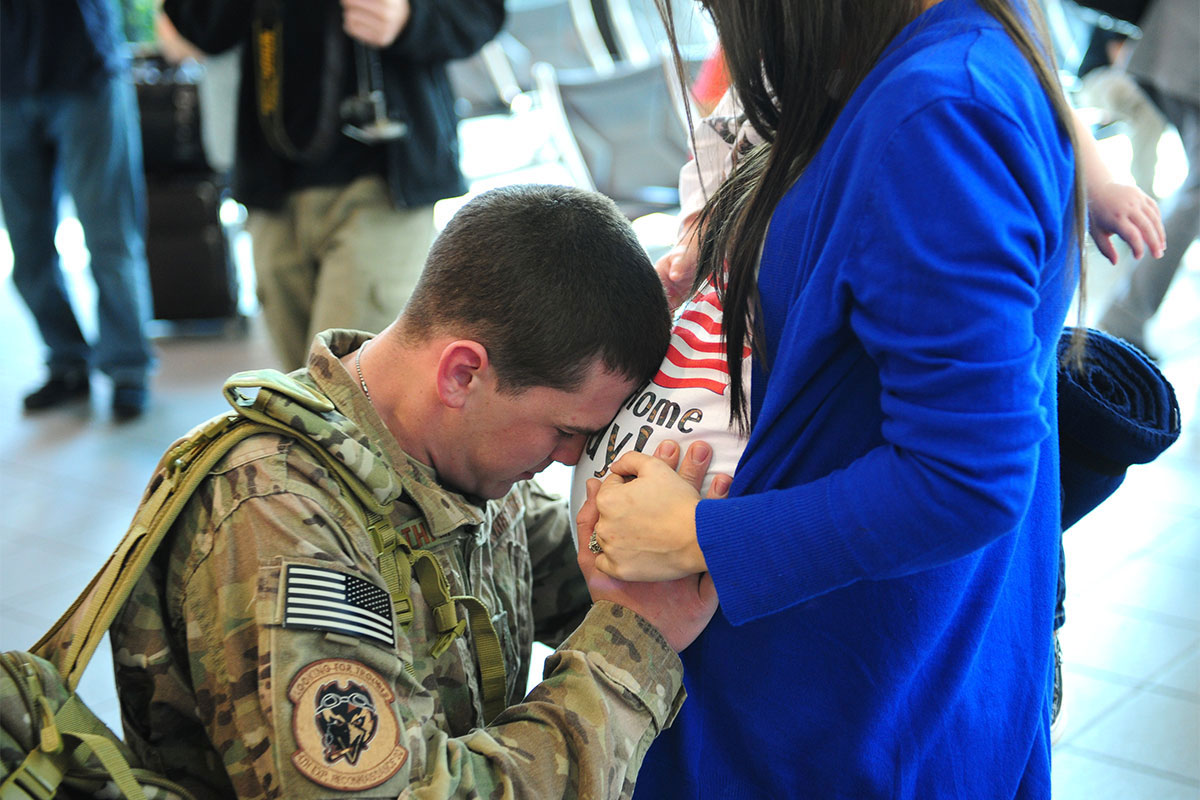
A few weeks ago, it wasn’t the Taliban fighters’ movements that gave them away to Rahim, but their laughter, little jabs of sound punching through the packed heat. Rahim looked up and saw them traversing the slopes above the road. They moved as easily as mountain goats along the edge of distant boulders and, very quickly, they were upon him, telling Rahim and Badria to climb out of the creek bed. It’s not as if the fighters held them at gunpoint. No one threatened or fired; no one suggested that Rahim couldn’t back out. The desert simply offered the fighters and their money, pairing them with this sideline opportunity to ambush deliveries and suspicious non-residents. Rahim had wanted to ask about the Americans. They were nonresidents, but their firepower wasn’t anything two men could take on. Didn’t they still patrol here once or twice a year? But he stayed quiet, shocked by the currency the Taliban promised next. The Taliban’s instructions were clearly given: deter vehicles just enough to get them to turn around and prevent them from entering the valley. Five American dollars paid to each man, per deterred vehicle—more than a month’s income for Rahim and Badria combined. One of the fighters had even waved a bill in the air, like candy, chuckling as he incanted: “In God we trust.” More laughter. “In God we trust.”

All totaled, Rahim and Badria deter four vehicles for today’s work—the van and SUV, one sedan, and a rusty delivery truck bearing a different, unfamiliar logo. French? German? Such odd letters, as haphazard as insect trails in the sand. By the day’s end, Rahim is more than ready for a break. Soft shade. Warm tea. The ease of letting his eyelids close. With shovels and buckets in tow, he and Badria part ways along the loop road and Rahim walks the remaining blocks back home.

As he nears his apartment, Shanaz shouts and waves, insistent on a visit. He avoided her yesterday. Today, he relents. She never cares to listen; rather, to report. It annoys Rahim, if for no other reason than the energy it takes to pay mild attention to her when he’d just as soon be in his own home. Between bursts of pious proclamations, she informs him that Aaseya went to the bazaar by herself yesterday morning. Did he avoid his sister’s gaze? Did she even notice? He is so utterly fatigued—by the day, the circumstances, the endless, endless rope of it all. Even years ago, working in the Mirabad Valley, as beautiful and free as it had felt, it still came at a cost; some sense of fatigue and falling behind Rahim can’t seem to shake.

Finally home, he sets his supplies in the alley near the defunct tap stand, its dusty pipe a mockery. Such uselessness. Such waste. He can recall a few years of his forty on this Earth when Afghanistan wasn’t being invaded. But those times are mostly lost to the fog of childhood or delegated to the realm of family lore. Mostly, when Rahim thinks about his life, he thinks about a spiral—always circling toward the same black hole, always seeing what’s trying to pull him down, helpless against gravity.

He thuds up the mud steps to his apartment and rests for a moment at the top of the stairs. He fills the entryway from top to bottom, his long, gray dishdasha caked in sweat and dust. Linen pants of the same color balloon from his legs. Aaseya glances up from her work slicing cucumbers. Here’s the moment he could tell her he’s not making bricks anymore. That he’s working for the Taliban, but not with them. That in fact, right in their bedroom—pressed into a small wooden box—is a hidden stack of U.S. bills, which may someday very soon be of use. Whether the Taliban pay in rupees or afghanis or dollars isn’t for Rahim to worry about, though if he dwells on it, he knows it means his situation is unsustainable. The money will either run out or bring something bigger to a head. He can’t say when, but he’s seen enough of war to say one of those outcomes is inevitable. For now, he does his job, earns his pay. That’s got to be enough.

Salaam,” Aaseya says.

A dignified man would probably shove her into the wall. Might even ask his brother-inlaw to help plot her execution. But even this thought comes with a wash of fatigue. What can be said of dignity for a man who’s had the unforgivable forced on him? Rahim’s heart pounds in his throat and he remembers nights with General Khohistani as a boy. Aaseya nears to kiss his cheeks in greeting, but Rahim feels frozen. He studies the thin, downy hair along her upper lip. A silk forest of grace, perhaps how forgiveness would feel if it were a place. More: the easy curve of flesh above her mouth, the naive hope her youthful body suggests. The General falls from memory and he leans forward, accepting Aaseya’s welcome.

Salaam,” he replies.

He crosses the room and reaches for a cup on the counter, then sees the water pail is empty. “What’s this?” He frowns. “Shanaz said you’ve been out again and still—not even any water?”

Aaseya looks at her feet. Her restraint in his presence reassures him of his power, perhaps the only thing that remains his own in a country torn to bits. But in truth, he’s never been good at punishment, his thoughts often pulled into poetic frenzy, encouraged by his studies in music and culture as a young boy. All things good and true. All things close to heaven, echoing the divine. He’d just as soon forget the rest and go take a nap. More powerful than any weapon he fires, it’s the tiny salvations that keep him from splitting in two. Like a poem finds its form, he too will find his role.

“I’m sorry,” Aaseya says. “We were only given a small portion.”

Rahim shakes his head, nostrils flaring. He knows the spell his silence casts, the oddity of his own expression with the right side of his nose smooshed slightly off center, the result of an early disobedience Aaseya would never understand. Does she think he’s a fool or ferocious? Most days, Rahim feels too tired to venture a guess. “Tea will be fine,” he says.

Aaseya turns to her small cooking space and jabs at the coals, then sets the kettle on to boil. When the chai is ready, Rahim gulps it quickly. Warm silt slides down the back of his throat. He stares at the empty cup. He’d like more, but feels something beyond thirst. A tightness in his gut nags, some days worse than others. Today it feels like a tiny man is working down there, twisting Rahim’s gullet into knots. He wonders, briefly, if anything could actually soothe that kind of pain. It seems too unpredictable to name. An embarrassment, really. A sign of weakness. Not something he’d ever complain about out loud. Even if the pain had a name, there’s nothing that can be done. He shifts a little with the discomfort and imagines that the tiny man has started to pound pinhead-sized fists into the bottom of his gut. More than water, more than a hot meal, more than a wife, even, he’d love to kill that man and quiet the pain. The first time he felt it he was ten or eleven, as a batcha bazi dancing boy. There were nights when General Khohistani dubbed Rahim the most talented. Such a cursed compliment. Rahim learned to focus inward to get through the initial humiliation of Khohistani’s advances, imagining a rootball in his belly, firey and alive. When he danced for Khohistani, Rahim pretended that the rootball grew, spreading its tendrils upward and out of his throat until his entire body was covered in a knobby shield that protected him from the General’s fondling. Most of the time, the mind-trick worked. But one night, Rahim’s imagination failed. There was only the darkness of Khohistani’s office, the way he entered Rahim from behind. Then Rahim’s slow slump into passivity.

Quite immediately, he understood: his body was like his country; it would survive and it would always be used. But enough of that. The Persian poet Hafiz would say that the past is a grave, the future a rose. Think of the rose.

Aaseya reaches for Rahim’s cup and he feels her fingertips meet the edge of his. As soft as a petal. As un-callused as polished stone. There’s so much she hasn’t seen, but for a young woman quickly cast as a wife—and moreso, a young woman raised under Janan’s worldly idealism—Rahim knows that she’s more savvy than most her age. She returns his mug, refilled, and walks to her cooking space. She appears sluggish, her limbs moving heavily as she mixes half-moons of cucumbers with lemon juice and salt. Rahim leans his back against the wall and rests.

Before long, Aaseya carries their meal into the gathering room and sets the tray on the floor. She smoothes the striped canvas dastarkan and sits across from Rahim. They eat silently, like isolated leopards startled to find themselves in the same den. Rahim watches her chew. The nervous way her fingers clasp each wedge of bread. The calculated flick of her tongue to collect hummus from the corners of her mouth. She could almost be feral, a helpless cub. But there’s restraint in her movement. A careful calculation that Rahim recognizes as a secret withheld. Three years of marriage and still, she makes everything so much more difficult than it needs to be. He understands that Aaseya likes his touch sometimes, a firm, hot hand sifting through the folds of her shalwar kameez. But other times, he presses into her and asks, “God willing?” The pleasant shock of her lips on his. “God’s will is busy,” she said twice this week already, her freedom of refusal a rarity in Imar, in Oruzgan Province, in most of her country. He’s weary of her dismissiveness, too fatigued to press. Would she understand, if he told her? That odd pain in his gut, liminal, almost. Like a ghost. Batcha bazi—dancing boy. Two words he’ll never repeat, though they make this marriage what it is. Being courted under the guise of tradition and honor turned Rahim inward, his poetic fancies blooming into elaborate disassociations—the rootball growing, spinning, cinching down. As frequently as Aaseya denies Rahim’s advances, he has yet to push her into the wall, to grab her throat, to truly punish her. Not after all he’s seen. Besides, with what energy would he muster such violence? He’d just as soon have a day of rest.*

Daylight fades and, with it, the pervasive heat. Something that could almost be called cool settles the dust in their tiny apartment. Rahim rests along a row of low cushions propped against the wall. Every few moments, he brings the lukewarm tea to his lips. His stomach loosens slightly and he exhales, willing his shoulders and neck to release. It’s not like the leather strap of an AK feels so strange. It’s not even that so many hours in the sun each day cause more distress than he’s put up with before. No, this tightness has the twist of a warning. A tired fable. His work with the Taliban will have its consequences. Meantime, Imar continues to destabilize, its inhabitants growing more and more susceptible to bribes or back-knuckled work. “You know what they say,” Badria had told Rahim just last week after the Taliban paid them. “Follow the money to its source.”

But dollars can come from as far away as the markets in Tarin Kowt or Kandahar. They can be plucked from dead bodies or filtered through the hands of Afghan National Army recruits in training. The source of Rahim’s pay could be perfectly legitimate, even if the outcome is not—and what is legitimate, when war has its hands in everyone’s pockets? Morality is for the privileged; honor codes for the elderly still remembering a world that never knew Osama bin Laden. Everything feels like a backwards pact; as though the rest of the world is watching his country try to feed itself with its own hands, then seeing those hands go down the throat, followed by the arms, straight out the asshole and up into the mouth again. The image only exaggerates Rahim’s physical discomfort at the end of this long day. Needles move up his spine and settle like razor blades underneath each shoulder. Too much movement and he could slice himself in two. Maybe then the tiny man could crawl out. Maybe then the only thing that would matter would be those pieces of himself left behind. Pieces still useful enough to save, and isn’t redemption something else entirely? Beyond dollars and roadside bargains? His heart says yes. The poet Hafiz would believe in a world that said yes, too.


About Katey Schultz

Katey Schultz. Photo Credit: Nancy W. Smith

Katey Schultz is the author of Flashes of War (Loyola University Maryland, 2013), which was named an IndieFab Book of the Year and received a Gold Medal from the Military Writers Society of America. She mentors serious writers via distance, including a new craft-based webinar series dispatching from her 1970 Airstream trailer this fall.


On the Subject of Walls

While it’s fallen off the news somewhat, one of Donald Trump’s most conspicuous campaign-trail promises was to build a wall between the U.S. and Mexico. Not only did Trump say that a wall was necessary, but he said that he would get Mexico to build it, conveniently ducking the question of cost to U.S. citizens. This is because the border between the U.S. and Mexico is long, and walls are expensive. Especially the kind of well-built walls that are required to stop crafty humans from getting around them.

Ukraine has a wall of its own. Or, at least, it’s building a wall. Sort of. In September 2014, during the height of Russia’s attempts to intervene in Ukraine, shortly after Russia occupied Crimea and during the beginning of its ongoing incursion into Ukraine’s east, lawmakers developed a plan to create a wall between Russia and Ukraine.

The wall received some coverage in Western Press—not much, but some—because building a wall along thousands of kilometers of territory is a big project, and the wall had a big number attached to it: 4 billion UAH (at 8 UAH to the dollar in 2014, $500 million, now at 26 UAH to the dollar, or about $160 million). The wall was scheduled for completion in 2018, and building commenced. Since then, there have been questions over whether or not it will be completed on time, according to the printed standards. There have been allegations of corruption, as well as questions over whether the planned structure would be capable of accomplishing its military mission of stopping Russian infiltration and military intrusion.

A Wall in Name Only

Based on reporting that I have done, including visits to the wall and interviews with subject matter experts, national security personnel, veterans, villagers living within 10 km of the wall, and online research, if the wall is completed as promised and planned, it will not serve as a significant military obstacle against Russia. Without being able to find any evidence beyond official statements and visual confirmation that something is being built, it’s impossible to decisively state anything. Has money been embezzled? Maybe. It’s Ukraine, so, maybe probably. Is the wall being built to standard? Has every meter of the border with Russia been accounted for? There’s no way to confirm that construction has succeeded or failed.


As of right now, the wall consists of two elements. The first, which looks much like what the wall was supposed to be based on initial projections, are a series of well-developed emplacements near significant border crossing points along major highways. Ukraine’s State Border Service and military units staff and patrol these sections, guarding against sabateurs, infiltrators, and the possibility of a Russian military offensive. Practically speaking, of course, a ditch, concertina wire and double-fences won’t create much more than a brief tactical pause for even the smallest military unit (and no pause for airborne or air assault units)—but (apparently) according to military thinkers and the politicians who give them strategic guidance, something is better than nothing at all.


This reality has given rise to a new story: the idea that the wall will be useful for stopping criminal activity. Smugglers and illegal border crossings will be diminished by the wall, which (along with the security provided by the wall) will help make Ukraine a safer and more law-abiding place. This has some merit to it, although it’s also worth stating that every person with whom I spoke living near the wall viewed it as an eyesore at best, an actual nuisance at worst, and that it seemed (paradoxically) to be increasing smuggling and illegal activity—precisely the opposite of its intended effect.


Notwithstanding the views of its residents, the border area with Russia is startlingly, astonishingly open. When I visited the area north of Kharkiv last in February, I nearly walked into Russia. There was no wall present, though residents were on edge, and warned me (through the Ukrainian who was interpreting) that patrols came by every few minutes looking for people who didn’t have a reason for being there. I assumed that they meant Ukrainian patrols.


As of February 2017, two years after the battle of Debaltseve and three years after the invasion of Crimea, it was still possible to walk into Russia from Ukraine, more or less accidentally.


Why Should We Build a Wall?


 Walls require strength and power, and wealth. They require organization and commitment, and maintenance. They are also the single most noticeable evidence of a nation’s insecurity and fragility. What nation requires walls? What confident people would even think about erecting barriers? A weak nation, filled with anxious and neurotic people. And while this describes Ukraine to a certain extent—with all due respect to my Ukrainian friends, whom I love and respect, and with due respect for the idea of a country called Ukraine, (a) Ukraine as a country lacks significant allies, and has an overwhelmingly powerful enemy on its doorstep while (b) its people are justifiably traumatized by the repeated revolutions and various attempts by Russia and Russian agents to undermine their economy, political autonomy, military, and (writ large) their independence.


Those justifications don’t travel very well when the destination is the U.S.A. Although walls require power, money, and strength to build, they aren’t for the powerful, they’re for the weak, the fragile, the exhausted. Walls exist where there is no energy left to patrol, where one believes that some powerful energy or tendency toward chaos and entropy will, left unwalled, lead inexorably to conquest. This is what certain Americans believe: that a wall with Mexico is necessary, presumably because Mexico is more powerful, and left to its own devices, Mexico’s Mexican inhabitants will swarm over the border and destroy what they find on the other side.


Of course, if U.S. citizens legitimately believed that Mexicans constituted some type of threat, the response to Mexico would be different from wall-building. What Americans fear is not Mexico—it’s the loss of control, it’s not being able to convince others that it is in their best interests to behave according to America’s best interests. In many ways, this has been the story of the millennium, a slow-building narrative since the towers came down on 9/11.


On a psychological level, it seems almost certain that to Americans, the wall with Mexico is a replacement for the Twin Towers. We want to rebuild the towers and protect them from being blown up. We will call the product of this constructive but paranoiac impulse “The Wall with Mexico.” It’s a sad and quixotic impulse, if impossible due to constraints built into the space-time continuum.


But Why Build a Wall at All?


There are good points to be made against the building of walls. They restrict commerce, dampen the flow of accurate firsthand experience between citizens of different countries, reduce the ability of people to communicate, and lead to factionalism, nationalism, and the dangerous kind of international competition.


Walls are a last resort, when one must defend oneself against some foe that cannot be deterred by any other means. They are fixed positions that generate no revenue and require great sums for their upkeep. They can be avoided with the use of airplanes, rockets, and boats. They are as useful and necessary as fixed fortifications (which is to say, not very).


Ukraine’s excuse for building a wall is that it’s hard up for emotionally satisfying ways to thwart Russia. A wall is something that is seen, and can be measured, and will make it more difficult to enter Ukraine from Russia. There are many downsides, but from the perspective of Ukraine, a much smaller country than Russia, and isolated from meaningful alliances, building a wall is something (given that it actually gets built, rather than partially funded while the remainder of the funds designated to build it are pillaged by oligarchs).

For Americans, the question is different. To begin with, it is a more powerful country than Mexico—the most powerful nation in the world, in fact. Its southern border with Mexico is patrolled by drones, security personnel, helicopters, dogs, radar, and automatic detection systems. There is already a fence separating the two. Inside the U.S., it’s very difficult to exist off the grid without eventually running into some electronic or procedural requirement that will establish that one is in the country illegally (whether the people monitoring those systems do anything about it or not is a different question).


Normally, one builds walls under desperate circumstances when no other possibilities are available to solve some critical international question or another. Mexico’s turmoil stems from the illegal drug trade. The drug trade is profitable in part because it is so unpleasant to live in a capitalist society that objectifies its citizens that many U.S. citizens will pay excellent money for drugs that are easily fabricated and refined in Mexico, and in part because the U.S. (despite creating and abetting the conditions by which citizens would want to use drugs in the first place) has criminalized non-prescription drug use, artificially inflating the market to the point where Mexican citizens involved in the trade can afford to build private armies large enough to contend with the government’s military (or simply buy government units wholesale). Rather than build a wall with Mexico, it’d be cheaper and ethically more humane to do something about the drug trade—legalizing and taxing drugs would be an excellent first step.


Ukraine cannot “settle” with a Russia intent on its partition and destruction—Ukraine is left with the unpleasant choice of having to just grit its teeth and do what it can to prevent Russian intrusion. A wall isn’t the best way to do that, and especially when details of the wall’s construction are kept secret. Still, it’s understandable in a way that the U.S. wall with Mexico is not.


Poetry: “Last Night I Prayed for Rain” by Mary Carroll Hackett

solstice moon rising early, joining me
to wait for the short night, long sun.
Last night I prayed for love, for what
there is to be won in the soaking, the drenching,
the washing away. Last night I prayed
to be empty, to be full. The moon fell behind
clouds, behind my wanting, but not before
dropping silver coins into my upraised hands,
not before the flowers around me turned
to say my name in their silver voices, to say You
are empty You are full You are empty You are
full
, just before the lightning started,
just before the storm came.

Last Night I Prayed For Rain originally appeared in Consequence Magazine on April 25th 2017
Photo Credit: Basetrack 1/8


New Fiction: “The List” by Andria Williams

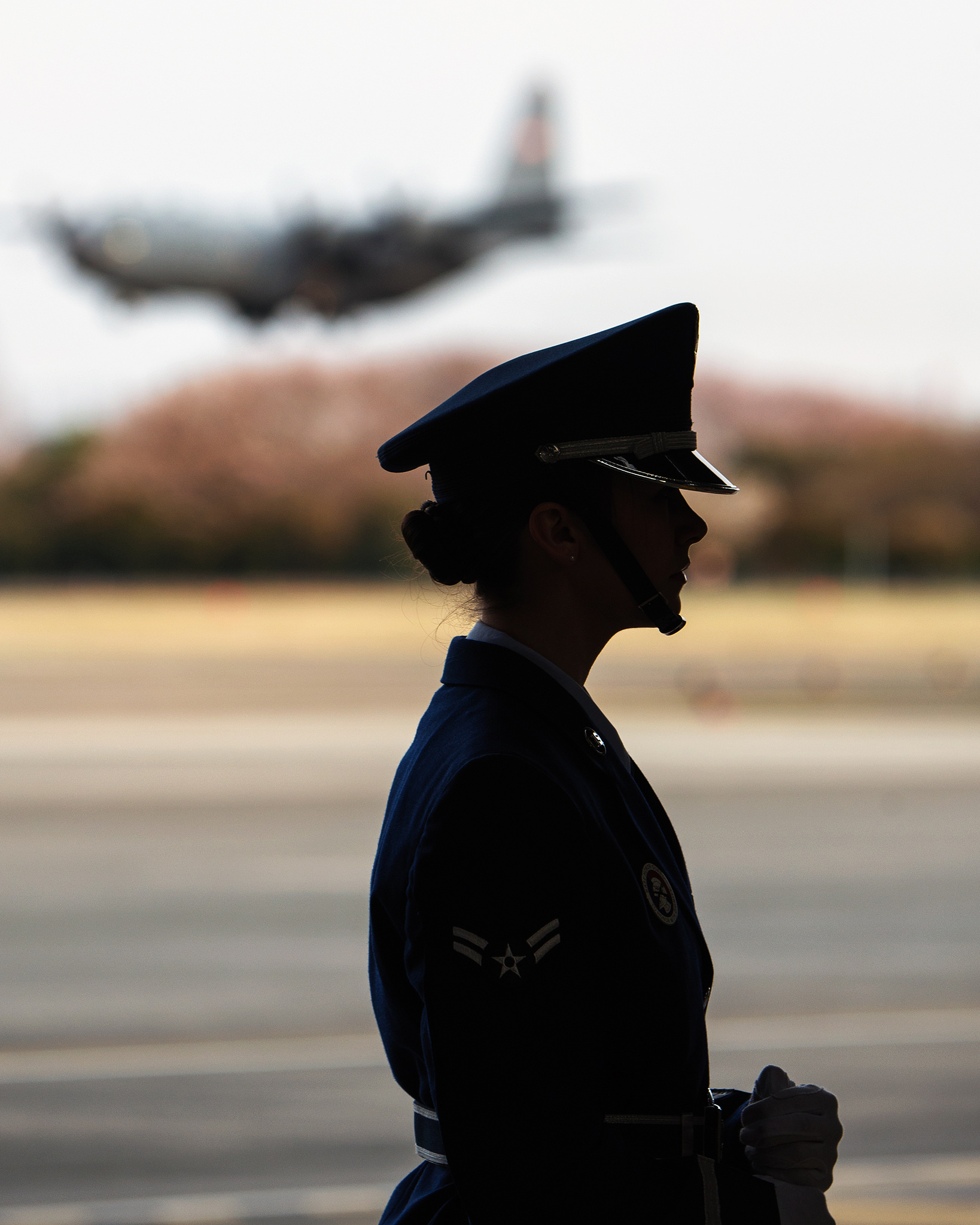
USAF, Air Force, Airman, Women, Marines UnitedAuthor’s note: I began this story in 2013, but eventually set it aside because I feared it would seem unrealistic, or possibly even quaint, to write a story about a Facebook group formed to exploit female service members. This past year, for obvious reasons, I dug it up again.

*

Green cornstalks rolled into the distance under a heavy midsummer sky. From her metal seat, peering out the small window to her right, Captain Jessica Aras watched a lone white jet-trail make its way through amnesiac blue. Then the door to the squadron building clicked open, and she saw Airman Blakely slip in with a Big Gulp sloshing in his hand, which surely he had refilled four times already and would prompt him to make half-hourly trips to the little boy’s room for the rest of the day.

She could understand how a person might drift away from the base on lunch break and have a hard time coming back, especially if that person were a nineteen-year-old male on his first stateside tour of duty after 180 days in Afghanistan. But as he approached her side of the room, the door shutting behind him, he took a leisurely, gurgling sip through his straw, and the ice cubes clattered all at once against their plastic silo. This sound was the death rattle of Jessica’s patience. Just because a tour in southern Illinois lacked urgency did not mean that someone could glide off and install himself for two hours at the mall’s food court. Three times this week Blakely had come in late from lunch, and as she saw her other enlisted folks glance up, she felt a flare of irritation. She was his Captain, and his tardiness seemed a show of public disrespect.

Even though her better judgment told her to take him aside in private, she couldn’t stop herself from standing and calling after him. “Airman Blakely,” she said, “your break ended 45 minutes ago.”

He pulled up mid-slurp and stared at her in startled silence. The straw twitched between his lips. When he lifted his head, the straw came up with it and he held it there as if unsure which would be less polite, to remove it with his fingers or to just let it dangle.

Everyone watched over the tops of their gray cubicles.

“Are we having a misunderstanding, Blakely?” Jessica asked, crossing her arms over the thick fabric of her cammies. He continued to stare, and she blurted, “Were you under the impression that lunch break was a free afternoon at the Chuck E. Cheese’s?”

It was a stupid thing to say; it hardly made sense. Their local mall did contain a Chuck E. Cheese’s, but no one called it “the Chuck E. Cheese’s,” “the” tacked like a small fart onto the front of the name. She glared up at him, this gangly kid almost a decade younger and a foot taller than herself, who a month ago had been pulling military police duty in some village in Afghanistan and now stood before her, red-faced, a florid pimple blooming beneath one nostril, the straw projecting from his mouth like a sprig of wheat, the ice shifting once more, loudly, in his drink.

“I’m sorry, ma’am,” Blakely said. “It won’t happen again.”

And it did not. But in retrospect, this was probably how she first got on the List.

*

Jessica drove home every day with First Lieutenant Steve Hayes, her neighbor and a fellow officer. They both lived in town about fifteen minutes from the base. A coworker once accused them of being too good for standardized housing, and maybe they did think they were; they shared an unspoken aesthetic, she thought, preferring older, quality homes to the base’s sea of new beige construction. Of course, Jessica and her husband Halil liked the larger-than-base-housing backyard for their eighteen-month-old son, Omar, and Halil had a thing for crown molding and pocket doors. Jessica privately thought all these Victorian details were somewhat wasted on bachelor Hayes, whom she imagined hardly noticed them behind the flickering glare of his 78-inch TV and all his weight equipment, but perhaps he liked this side of town for its convenience to St. Louis, where he’d gone to college. He was in an MMA gym there, and he liked the comedy clubs.

Their tours at Bagram had overlapped by a couple of months, so she and Hayes had already known each other when they were assigned to the same security forces squadron in southern Illinois. He was blond, blue-eyed, and corn-fed, and Jessica had kept her distance when she’d first met him in Afghanistan, incorrectly assuming he was a frat-boy type. But he was more self-deprecating than she’d expected, and soon they were watching movies in groups on their off-nights and chowing on more Cinnabon than their perfunctory PT runs could comfortably support. Now that they were stationed here in Illinois, and neighbors, he’d suggested that they carpool together, alternating weeks—this week was her turn to drive. She found she rather looked forward to it. Hayes was single and had no kids, so he’d kept a lot of personal interests and hobbies and did smart things like watch “Meet the Press.” He also had a wise-ass streak she enjoyed.

So here he was, fiddling with her automatic windows and rummaging in his pocket for a toothpick which he popped between his teeth. He’d quit smoking since his return from Bagram, and there was always something in his mouth: gum, a toothpick, hard candy.

She wondered what he’d say about the incident with Airman Blakely: that her irritation was justified, but she should have spoken with the kid alone. Still, she feared that he might say something else, something like, Actually, you were a little bit of a bitch.

Instead, he said, “Did you hear there’s a new food truck opening in town?”

“Yeah?” she said, relieved.

“Rico’s Tacos,” he said, spinning the toothpick between his teeth. “We getting some culture here in town, maybe?”

“I’ll believe it when I see it,” she said. She enjoyed their shared yearning for “culture,” also a frequent point of commiseration for her and Halil.

He chuckled and sat in thought for a moment. “Oh, hey, did you remember?”

“Remember what?” Jessica slowed the car as the rural highway became the main road into town and cornfields gave way to gas stations, strip malls, a high school.

“Taco Tuesday at work tomorrow.” His blue eyes grinned.

“Oh God, I always forget,” she groaned. “Is it poor form if I just bring in a can of black olives?”

“You did that last week, Captain.” He spun the toothpick between his front teeth. “Lead by example. Anyway, the enlisteds like them.”

“The olives?”

“The lunches.” He examined the frayed toothpick, chucked it back through the open window, and pulled a clean one from his pocket. “Aw Christ, now here’s the band.”

The high school band ventured out into neighborhoods every summer to prepare for parade season, and here they were now, marching through the crosswalk to the measured rim-clicks of the snare drums. Their red-faced major, sweating continents into his T-shirt, held his hand to their windshield with grim, flushed solemnity, as if only this gesture kept Jessica from plowing into them all.

While the band crossed, Jessica prodded the bobby pins in her oiled bun, eager to get home and let it down. Her sunlit reflection in the car window showed the flat, rippled waves of hair across the top and sides of her head, like a shower cap made of satin and Kevlar. She liked her hair, its unique monochrome to her light brown skin, and wished it were the first thing people noticed about her. In reality, though, people probably noticed the broad, massed patterns of freckles across her nose and down her cheekbones, just one shade darker than her skin, like shadows through a screen above. She had nothing of her mother’s smooth darkness or her father’s peely ginger flush; and in fact, though she supposed they’d done their best despite their propensity for arguments and alcohol, she did not feel she was much like either of her parents in any way. After state school in Massachusetts she had joined the Air Force, and only her mother was left now, back in Boston near her Cape Verdean relatives, paranoid about “Arabs and Mexicans,” smoking a pack a day.

Jessica said, “I love the band.”

“Really?” said Hayes. “Why?” He squinted at the last of the kids as they marched past the windshield. “Don’t worry,” he shouted out the window at the drum major, “we aren’t gonna run over your goats.”

The drum major stood stoically, resisting the urge to make eye contact, as if he were guarding Buckingham Palace.

Jessica clicked her tongue, chuckling. “Leave the kid alone.”

“Speaking of kids,” He glanced at her, cleared his throat. “You sure ripped that Jiminy Dipshit a new one today.”

“You mean Airman Blakely? Did I?” she said, distressed. “No, I didn’t. I said what needed to be said. He was coming in late every single day.”

“Yeah…” Hayes waited for her to continue.

“He’s only been stateside a few weeks. He was way out at some combat outpost, you know.”

“The hell was he doing out there?”

“Beats me.” Jessica chewed her lower lip. “Do you think he’s having redeployment issues?”

“Maybe he’s just bored.”

“That, too.” Jessica sighed, steering one-handed, her right arm across her lap.

“Those were good times,” Hayes said, meaning when they were in Bagram. She suspected that not all of his times had been good—he’d been tasked to drive convoys for a provincial reconstruction team and admitted once that it scared him—but people chose what to remember. Her own security job had been so boring it felt like psychological torture. She’d pined bitterly for her son Omar, who’d been a year old when she left; cried over videos of him shoving one cereal puff after another into his mouth until his cheeks bulged while Halil and his saint of a mother, who’d spent that year living with them through each of their deployments, laughed.

Jessica pulled up at Hayes’s house and saw the ecstatic face of his terrier jumping again and again in the front window.

“Someone’s happy to see you,” she said, and smiled. He opened the car door, waved, and headed up the walk.

*

“Anybody home?” Jessica called in a singsong, minutes later, through her own front door, because this always made Omar squeal. “Oh, I guess no one’s home. I’ll just go back to work, then.”

Omar tore around the corner at a toddler’s breakneck speed, his legs kicking forward with a sweet, jerky, duckfooted motion as if not all their joints communicated with each other yet. Jessica picked him up, kissed his dark blond curls, brushed cracker crumbs from his cheeks.

The television was on in the large, mostly empty front room, still stacked with cardboard boxes in one corner, and toys tossed about as if one of those boxes had lightly exploded. She glimpsed the green of a baseball field on the screen, tiny figures running and diving, before it switched to a raucous commercial.

“Hello,” Halil said from the couch. “We were just watching baseball and eating Ritz.”

She set Omar down. “How was day care? Was there a good report?”

Halil made room for her. She perched lightly, still in her uniform and combat boots, with a long to-do list ahead of her before she could relax. “He had a good day,” Halil said, and Jessica felt a smile spread across her face, “but he did not finish his lunch.” Halil added, sounding almost sorrowful about it: “He never eats the oranges.”

“Oh, I don’t care,” Jessica said. “How was your day?”

“Not too unusual. I briefed the Colonel,” he said. Halil was on an Intel watch floor, which meant twelve-hour shifts. His eyes looked tired and heavy-lidded.

“Were you nervous?”

“Not too. I don’t really get nervous anymore.”

“Do you feel like people are taking you seriously at work?”

He looked at her curiously. “I think so. Does that surprise you?” He gave a quiet laugh. “I don’t think they say, ‘Oh God, there goes that clown, Halil.’”

“I know. That’s not what I meant. It was more about myself.”

He frowned. “You think people don’t take you seriously?”

“No, I think they do, it’s just” – Omar was climbing her legs now. She swung them up and down while he clung to her shins, and he laughed.

“Well, you scare the living daylights out of me,” Halil joked.

“Yeah, yeah.” Jessica swatted him, unwound Omar from her calves, got up, and headed for the upstairs bedroom to change. Her laced boots felt ridiculously heavy and assertive, out of context, on the carpeted stairs. Omar followed her, wailing. Now that she was home, it was Mama or no one. She handed him her phone to play with while she changed: pried her feet from the hot boots, pulled bobby pins from her hair one by one. Her head was tender from insistent pinning. She rubbed her scalp, pulled her hair through a band, and carried Omar downstairs. He still clutched her phone possessively, so she let him keep it. Halil had tipped his head back on the couch and was dozing. As she gathered ingredients for dinner her phone buzzed, and she pried it from Omar’s hands just long enough to see a message from Hayes. “Don’t let us down, Captain!” it said, with four taco emojis trotting along behind. “Go big or go home!,” and then three American flags. Jessica chuckled and wrote herself a note so she wouldn’t miss it in the morning.

*

The next day at noon, she set a long rectangular tray on the buffet table and peeled back its foil blanket, steam swirling up as if she were performing a magic trick.

Her airmen inched around the table. Rows of warm, gently folded corn tortillas spooned each other beside shredded lettuce cheerful as Easter grass. There was a mound of shimmering ground beef and a lake of thick, grayish beans, sprinkled with authentic-looking cheese. Jessica felt a glow of satisfaction. She had single-handedly taken Taco Tuesday up a notch. She stepped back, clapped her hands lightly together, and said, “Dig in!”

“Goddamn, I love Taco Tuesday!” someone behind her said. “You’re the best, Captain!” She realized it was Hayes and ignored him.

Murmured thanks came from her crew as they filed into line. “I love this place,” Airman O’Donnell said, and because he was not a wiseass like Hayes, she felt nearly dazzled by his effusiveness until she realized that he meant the chain restaurant from which she’d bought the tacos, and not their cinder-block building with its belabored air conditioning and sagging motivational posters. Still, the spread was an accomplishment. It sure beat the previous weeks’ limp tortillas and bags of shredded cheese. People heaped their plates, poured fizzing cups of pop. Someone turned on the stereo.

Airman Mackenzie Stahl, with her severe bottle-black hair and thin overplucked eyebrows, was one of the few who did not seem pleased. Stahl was somewhere around twenty. She always seemed to have such a chip on her shoulder. It had almost startled Jessica when she’d once seen Stahl out with friends at the movie theater on a Sunday afternoon, laughing and carefree in a Loony Tunes sweatshirt and pin-thin jeans. Stahl possessed none of that lightness now. She thunked a jar of watery salsa onto the far end of the table and stalked past Jessica as if the lunch were not an act of generosity but some kind of pitiable dog-and-pony show, as if Jessica were performing an office striptease. From the other side of the room someone muttered, “Where are the olives? We always have olives.”

Truth be told, Jessica felt she’d never quite struck the balance between authority and generosity. The female officers who made the best leaders, who stayed in twenty years or more, seemed to err on the side of toughness and they were often, she hated to admit, the more mannish women. They had odd, inappropriate senses of humor and short, dry laughs; they were overly attached to horses or dogs. Maybe Jessica was finding her own way, a middle ground where she could be both boss and friend, man and woman. Then she overheard airmen Blakely and Stahl at the front of the line.

Stahl asked, “You hear we’re getting a Rico’s taco truck?”

Jessica was about to pipe up Yes! She had heard that! It was the talk of the town!, but Airman Blakely, pouring neon-orange queso from a jar all over the delicate flavors of the more-authentic takeout Jessica had brought, spoke up first.

“What’d you say? Pink tacos?” he asked, grinning.

“Shut up,” Stahl said, laughing.

It was obvious Blakely was trying to be immature. Sure, it was uncouth, but Jessica was in the mood to let things slide. She wouldn’t have given it a second thought if it were not for what followed.

Blakeley widened his eyes at Stahl in mock surprise and whispered in a breathy, innocent falsetto: “What? You mean this isn’t an afternoon at the Chuck E. Cheese’s?”

Stahl pushed him playfully and hissed, “Oh, take it easy, Cocoa Puff!”

At this, several airmen turned toward Jessica and then quickly looked away again. She wondered what this had to do with her.

“Shit,” someone muttered.

And then Jessica realized—her face burning, tears sparking in her eyes—it was a nickname, their nickname for her.

Stahl turned and spotted Jessica, and her whole countenance changed. She ducked her head and, though there was only one tortilla on her plate, made a beeline for her cubicle. Blakely, his face red, did the same.

Jessica felt her body turn hot from her head to her toes. She poked at the pins in her hair, her eyes stinging. It’s okay, she told herself, a habit under stress. It’s okay, this is okay. It’s normal to gripe about your boss behind his or her back. She would not cry over whatever stupid crap some kids from podunk towns said about her when they thought she wasn’t listening. Maybe it meant her group had good camaraderie. But Cocoa Puff, Jesus. There was an edge to it she couldn’t make herself think about. Her stomach turned.

Hayes, oblivious, wandered up with his own plate refilled and gave her a smile. “Hey, kiddo,” he said. “This whole thing is a hit.”

For a split second she wanted to grab his arm and demand of him: Is this really what they call me behind my back? What else do they say about me? And please do not call your Captain “kiddo” in front of the airmen! Instead she stood silently, relieved that, at least, her distress was not noticeable to anyone else.

“You gonna eat anything yourself?” Hayes asked, landing a curved, beef-filled chip on his tongue and crunching loudly.

“Of course,” Jessica said, though she could not imagine actually choking down anything. She turned back to the table full of food: pale-green lettuce dropped here and there, the beef leaking orange-colored oil, her spectacular, now-picked-over tray.

*

For the next few days, there were no incidents. Airman Blakely was nearly tripping over himself to be punctual, returning from lunch with minutes to spare and often with a quarter of a sandwich in hand, as if putting his concern for promptness on display. “Nice touch,” Hayes whispered to Jessica with a smirk. “The sandwich.”

Then the Major called her out of the blue for a meeting. He wanted her to meet him not at his own cubicle, but in one of the small conference rooms at the end of the building, which could not be good. She knew this would be about one of the airmen. At two o’clock she tapped baby Omar’s sweet round nose in the framed photo on her desk, pushed back her chair and walked past the dark, reflective windows, pressing her bun into place.

When she opened the door Major Alvarez was already there, a dewy Diet Coke in one hand. He set it aside, stood to accept her salute, and apologized for interrupting her workday, as if Jessica had been doing something fascinating and totally unrelated to his instructions. Then he said, “We’ve got a little bit of an issue here with some of your men.”

Her heart sank: more than one?

He asked, “Are you familiar with something called ‘the List?’”

Jessica paused, mentally running through what might fit this name: a game show, a movie. Hadn’t there been a self-help book of that name recently, some Christian thing? “No, sir,” she said.

Alvarez sat down and Jessica did also. He said, “One of your airmen came forward yesterday. He said there’s a, a game going around between a couple of the offices.”

“Okay,” Jessica said.

Alvarez cleared his throat. He was a fit man with salt-and-pepper hair who often bicycled to work wearing the sort of giant, iridescent sunglasses favored by those who took both sports and eye health seriously. He linked his fingers on his lap and Jessica saw the ropy tendons in his arms, his remarkably clean fingernails, white moons, the beds a pristine grayish-pink.

“They’re keeping a list of the females in the offices, things they”—he paused delicately—“notice about the females, ideas of what the females might do.”

Jessica could feel her heart accelerate as he explained: The men in question had started a Facebook group, which they joined under decoy names. The site was “organized around sexual requests and gossip,” Alvarez said, “and inappropriate speculation.” Worse, however, the group was linked to another site where service members were apparently posting nude pictures of women—some obviously posed for, but others seeming to have been taken without their knowledge.

She couldn’t help but feel indignant on behalf of her men, in part for the absurd reason that the other squadron involved with whatever this idiotic game was had a much nicer, newer building with perfect air conditioning and sparkling, unchipped bathrooms. The airmen in the other building enjoyed such creature comforts all the time; what excuse did they have to idle their days away, dreaming up lewd nicknames and distasteful scenarios?

“It probably started as blowing off steam,” he said, “but it’s become something more.”

“All right,” Jessica said. She felt almost dizzy and cleared her throat. “Well, what do we do?”

“Airman Wallace, the one who came forward, will allow us to use his account for the next couple of days so we can figure out exactly who is taking part in this.” He scribbled something on a piece of paper and then handed it to her. “Here’s Wallace’s information so you can access the account.”

“His account name is ‘SexualChocolate?’” Jessica snorted, picturing Wallace’s eggy white head, the way he seemed to stroke it into a point when he was thinking.

Alvarez denied himself the chuckle. “We’ll go through it and identify who we can, and compare notes tomorrow,” he said. “But wait until you get home.”

Her protectiveness was replaced by a seeping disgust.  “How many of my men are involved, sir? And what will the disciplinary action be?”

He counted in his head. “Right now I know of ten from your unit, plus fourteen from the other. There will be the typical non-judicial committee and appropriate punishment. And they aren’t all men,” he said, his eyes darting to her and away again as he stood and she did also. “Wallace says at least two of the participants are women.”

*

It was Hayes’s afternoon to drive. Jessica followed him out of the building and across the parking lot, which wavered black in the midday heat. His royal blue Mustang, brand-spanking-new the month before, was waiting. It was more car than anyone needed, with all the bells and whistles, but that was not something she would ever say. Besides, being a grown man with no dependents, he could do what he liked.

“Another day bites the dust,” he said, smiling faintly as they glided through the security gate, waving to Vargas and Swenson on duty. He glanced back in the mirror and switched lanes, his blue eyes light and sun-strained.

Jessica found it hard to keep up conversation, given the day’s revelation. Alvarez had asked her not to speak of it before he took the issue higher up. She wondered if Hayes knew, if he’d heard anything from the enlisted guys. She wondered, yet again, if he knew what they called her behind her back.

“Going into the city Friday night,” Hayes was saying. “Seeing the Cards game with some friends.”

Jessica managed to ask who they were playing. The Reds, he said. Cabrera was coming back in off the injured list, but he wasn’t worried. She saw his eyes in the rearview mirror again, just a flicker, and he drifted back into the left lane.

“Well,” she said, feeling exhausted, “that sounds like fun.” Then she touched his arm. “You’re driving serpentine,” she said.

“Oh, sorry. Old habit.” He shook himself, moved back into the right lane as if out of superstition, forced himself to stay there. The effort made him twitch.

She nodded, looked out the window. There were the cornfields, a half-vacant strip mall with a tanning booth and a Verizon Wireless, a pro-life billboard with a baby in a denim jacket and sunglasses. Sometimes Hayes would joke, “I’ve been wearing this jacket since four days after conception!!!,” which made her laugh.

“I know it’s just a habit,” she said. “But you don’t have to do it here.”

*

Later that night Jessica sat in the green glare of her computer, her heart pounding. She was doing what Alvarez had asked her to: scrolling through the List, jotting down the names of contributors she recognized. None of this was what she wanted to see, and yet it was impossible to look away. She felt as if her mind were unfurling.

There was plenty of tamely inappropriate stuff, shots of service women at BBQs in low-cut shirts, holding beer. Two female airmen Jessica recognized, tongueing for the camera, par for the course. Individual shots of women apparently oblivious to the commentary they’d inspired: She a real ho slept with half the MPs. This one likes it up the ass. Bitch gives the best head in Illinois!!!

She scanned through the page for links to specific pictures, trying to match her people with their aliases. Airman Rick Swenson called himself “Ron Swanson,” she put that together pretty easily. There was Spaceballs, JFK, Matt Holliday. All these losers, she comforted herself, who would be found out, one by one. All she needed to see was there.

Airman Stahl was, optimistically, “Gisele.” And it turned out she was quite active on the site, posting pathetic photos of herself in only lacy black panties, her scant breasts squashed together with her elbows in an uncomfortable contortion. Stahl posted these pictures even though the commentary was sometimes harsh – You look like B-grade Victorias Secret, girl!—or maybe because it was occasionally positive (Super hot, keep ‘em comin sweetheart!). Then again, maybe she was getting money for them.

Jessica learned, too, that Airman Vargas had a real chip on his shoulder about an ex-girlfriend, a former servicewoman he referred to as “the evil bitch” so insistently that anyone wanting to see a picture of her called her that as well. Vargas had uploaded nearly all of the evil bitch’s Instagram account to the web site before she could shut it down. Jessica lingered far longer than she needed to there, riveted in a way that felt both vapid and inevitable. She scanned backwards through the evil bitch’s life, through her parties and posing with girlfriends at clubs (and yes there was a lot of cleavage and her skirt was far too tight, but this was on the evil bitch’s own time and Jessica would have had no jurisdiction); she scrolled past the evil bitch cuddling with a large pit bull, the evil bitch posing with a nephew. The evil bitch dolled up, the evil bitch fresh-faced on a lawn chair. Jessica felt startled when Vargas himself reappeared in this reverse-timeline—she’d almost forgotten he was involved at all, and wanted to shout, Look out, don’t you know that’s the evil bitch?!—he was oblivious, his arm suddenly around the evil bitch’s slim shoulders as if they were on cloud nine.

She thinks she has privacy, Vargas wrote, but joke’s on her! She blocked me from her Instagram means she basically WANTS a war now. Fine evil bitch, you want it you got it! P.S. $$$$$  I got noodies on a film camera, will scan.  $$$$$

BIG MONEY, sonny!

Aw yiss , came the replies.

There was plenty more, things Jessica did not want to see. She found herself scrolling with a sense of distance, seeing all this from the outside. She tried to forget these were her people, that she had failed, that she had allowed such a germ to grow right under her nose—instead this was some unknown airman’s strained, blurry dick before her eyes, some other unit’s men who had paid one of their own to ejaculate on a hooker’s face. There was no way these could be the people she worked with day after day. Good morning, how are you, so-and-so made fresh coffee, there’s softball on Friday—

She had a strange memory of Hayes talking to her one afternoon in the car, something he had seen on Bill Maher, saying—A dick, if you ask me, does not translate well to film. Anyone who thinks otherwise is kidding himself. And Jessica chuckling awkwardly at this non-sequitur, thinking, Where did that come from? But so far, to her relief, Hayes was nowhere to be seen on the List.

And here was Gisele, Airman Stahl, again. A post from a couple of weeks ago:“Cocoa Puff’s Nipples – Black or Pink?!!!”

Jessica felt the blood drain from her face.

Oh please no, she thought.

It was a popular post. People were making guesses. “Black,” “pink,” “vagina-colored,” they speculated, some obviously pleased with their own cleverness. One asked, “Do you think she has splotches all over her WHOLE BODY TOO?

Jessica felt tears spark in her eyes. Her face burned.

But then Gisele/Stahl reappeared and put the guessing game to rest with a heavily cropped photo. It was blurry, taken with a cell phone Stahl had apparently set in her locker, but Jessica could see that the series of three photos were of herself.

The first was taken from behind and was unimaginably awkward: a surprisingly pale figure stepping forward into her PT shorts, the ass a sloping ramp, pocked with minor cellulite. Then it got worse: two frontal shots, the moment before she grabbed a towel, in which Jessica’s torso seemed to make a haunting, disapproving face at the camera. She wished the body had been mercifully headless but there was the lower half of her face, unmistakable, caught in what looked like a moment of mild strain. Her breasts hung dead center in the picture, like two startled, spacey eyes, while her unguarded stomach made its slack and gentle descent towards her crotch. For a moment she could not breathe. It was the worst way to be caught, in that wet, gravid moment between shower and towel, the moment you rushed through because it was so ugly; and there she was, frozen in time, evaluated by countless eyes, judged for the horrors of her normal body. She felt captured. She felt lynched.

PokerFace—OMG this makes me so hot I need to jack off and then kill myself

Holler Uncle —At the Chuck E. Cheese’s?

JFK—KILL ****ME***** FIRST!!

Spaceballs—oh God, I can’t unsee it

PokerFace—Ladies and Gentlemen, you have seen the face of terror.

This, from a particular wordsmith— the existance of the allusive Locker Room Sasquatch has now been prove. Approach with extreme caution!!!!!!! If it comes near you, throw food to it then back away. LMFAO

Yet another—How can she do this to us????? 

The responses ranged from that sort of prudish hysteria—as if the images had been thrust upon them from the outside, by a calculating third party, the pervert in the movie theater or the creep on the bus, and not sought out and encouraged by themselves – to a chuckling, jaded cruelty, a voice that was calm and sexually wise, somehow above the other banter. Jessica didn’t know which was worse, and she couldn’t bear it anymore anyway. She needed to get out of there.

She clicked back to the Facebook page and was about to close out when a new post caught her eye. Unrelated to the main content on the page, it was just a casual conversation between two members. But a sudden suspicion made her read on.

Spaceballs—Hey Matt Holliday you got those tickets for Friday?

Matt Holliday—yeah

Spaceballs— 8 of us right?

Matt Holliday— yup

Spaceballs— What, you didn’t invite Cocoa Puff on the way home? LOL When you gonna bag that?

Matt Holliday— Shut up. You’re an ass

Spaceballs— She’s into you, you know it

Matt Holliday— prolly

This conversation had ended half an hour before. Jessica waited a few more minutes, but nothing else came up. She recalled seeing “Matt Holliday” elsewhere on this page; it was the name of a star Cardinals player and, she now knew beyond a doubt, that it was Hayes’s moniker as well. She began scanning the list frantically for Matt Holliday’s other posts. They were infrequent and rather passive, in occasional response to others. He had not commented on the more illicit items, including the naked pictures of herself. But he had seen them. He’d known about this for some time.

She resolved to click out once and for all, but the cursor in the top bar blinked like a challenge, a dare. SexualChocolate, how are you feeling? it asked, with all the saccharine remoteness of a non-human.

SexualChocolate—YOU ARE ALL FUCKING ASSHOLES she wrote, and closed out of the computer at once.

*

There was no way that she could sleep. She sat up with a glass of wine and tried to calm herself: the List would be shut down the next day. She’d watched it from the outside with a superior glow of knowledge, seen its deathbed tremor. Those boys thought they were so clever, thought they could keep their fun little club on life-support, but it had only a few hours to live. And she had snuck in among them and deceived them, too.

Why had she expected Hayes to snitch on the others, anyway? She and Hayes carpooled to and from work because they lived a block apart; she’d been stupid to think they were friends. They did not get together on weekends or BBQ in her backyard or hang out in bars. But they talked, and something about the way their conversations bookended the day made her feel that these chats were significant; they checked in with each other because being in the military, in their squadron, having done a tour in Afghanistan, was like being in your own little country, a specific world that made you somehow equal. They were the yolk of an egg, she’d once thought, and the white of the egg was all the diffuse civilian-ness around them, the tanning booths and the Dairy Queen and the high school band and all that shit the military made possible for their indulged, beloved, oblivious citizenry to enjoy.

But right now, she hated him. She hated him more than she had hated anyone in her life.

Their service didn’t make them equal. She’d always known that perfectly well, and just sometimes forgot. He’d sat by while people joked about her, while nude pictures of her scrolled before his blue, blue, American, baseball-loving eyes, as if what she didn’t know could not possibly hurt her. But that was the thing, she thought tearfully, feeling bitterness rise up through her body. That was the thing about being a woman: what you didn’t know did hurt you, over and over.

She tried to imagine how things would go from here: The List would be shut down, effective immediately. The transgression would be discussed at work in endless conferences and reprimanding e-mails, and everyone would be very, very serious. They would hold a non-judicial disciplinary committee, and there would be docks in pay, maybe even someone getting held back in rank for a few years. For Hayes, as an officer, the punishment could be severe.

But these were her people, also, and there was a chance she would be punished as well. She was supposed to be in charge of them, to know what they were doing. She’d helped create a culture. Hadn’t she?

*

She didn’t sleep. Hours later she stood by the back door and watched the sun rise in a pink smudge from the direction of the base. A distant cargo plane climbed into the warm, heavy sky. Beneath it swayed the drying cornfields, waving their crinkled arms as if to remind everything above them that they were there.

Halil would be home in a few minutes from his night on the watch floor. When Omar woke up, Halil would toast him a frozen waffle for breakfast and take him to day care before falling finally into bed to sleep the day away.

By then, Jessica would already be at work. Hayes was coming by to pick her up soon, and he was always on time.

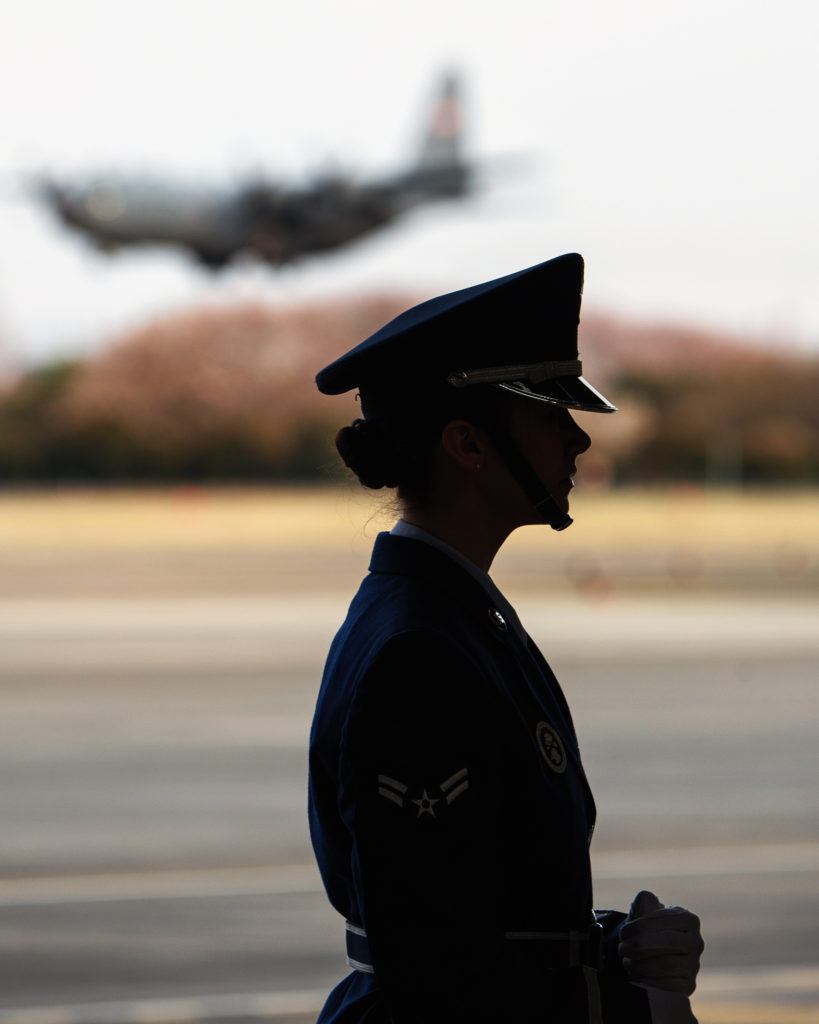
Photo Credit: United States Air Force


In Defense of Writing Modern Epic

At some point during my education, I developed a powerful sense of skepticism toward the Epic. Every literary or cinematic attempt to tell the story of a nation on behalf of the nation ended up oversimplifying distinctions, privileged the powerful over the weak, and trivialized or marginalized individual stories outside the mainstream. I don’t remember whether it was high school or college when this idea metastasized in my consciousness as a kind of intellectual given, but somewhere between having to read Virgil’s Aeneid and watching Saving Private Ryan it occurred to me that big H History did more harm than good.

Timing may have had something to do with it. What was probably unthinkable to someone living in, say 1870s Great Britain was much more logical to a young man in 1990s USA. After the WWII and the Cold War, it felt like stories creating national frameworks were just so much exploitative triumphalism—not worth the effort it had taken to write them.

In the years since then, I’ve seen the U.S. begin its first “post-modern” wars—wars without any particular meaning or significance on a political or individual level beyond whatever an individual decides to ascribe to it. The world has watched as Russia invaded Ukraine, a war that continues to this day, actively affecting millions of displaced civilians and hundreds of thousands on or near the front lines of fighting. The United Kingdom has voted itself out of Europe, while Germany and France have forged an increasingly humane and just path forward for the EU, working together. America, under Donald Trump, threatens to spin away from the rest of the world, or maybe even spin itself apart.

If the world is stable and secure, there is more space for individual storytelling, and individual stories take on a greater significance. But as the center collapses through a combination of inattention, greed, political nihilism and pressure from the extremities, it becomes more urgent to ask the question: if individuals are owed stories, allowed privileged place as the focus of modern novels or cinematic works, should some nations (those without Epics) be allowed to develop stories in order to help justify their existence, too?

The Argument Against Modern Epic

Epic is the purest intellectual form of nationalism—a powerful piece of literary or cinematic art that, in its execution, delivers an aesthetic, emotional justification for a nation’s existence. It always begins with a hero who is struggling to build something from little (or sometimes nothing). Nationhood, and nationality, begin from a position of weakness. The arc of a television series or epic poem or novel moves from weakness to strength—often through war against some specific enemy. The Iliad describes Greek city-states struggles against the Trojans. The Aeneid explains the animosity between Rome and Carthage, as well as its struggles against various other nearby Latin tribes, and the Greeks. An Epic story is therefore an imperial story, whether or not the nation in question achieves empire, or (in the case of civilizations before the modern nation-state) nationhood. Hypothetically, this is not necessarily the case—many tribal societies describe their origins in terms of celestial or supernatural birth.

Anything that founds its argument on the necessity of violent struggle against an enemy should be viewed with extreme skepticism. Violence on an individual and collective level can only be argued in the context of self-defense, and even then, moral purists might argue that peaceful non-resistance is a better way of conducting one’s personal and professional affairs.

Even people who support “pre-emptive strikes” still couch the necessity of attacking another country or civilization in defensive terms—Germany of The Great War, Nazi Germany of World War II, Imperial Japan’s sneak attack on Pearl Harbor, George W. Bush’s U.S. invasion of Iraq and Vladimir Putin’s Russian invasion of Ukraine all required that a significant portion of their country viewed their attacks in defensive terms. No modern nation state wages war purely for territorial expansion—most people instinctively recoil from the idea that violence is to an individual or community’s long-term advantage.

Epic and national storytelling depend on heroes and villains, in-groups and out-groups, appropriate and inappropriate behavior. They create hierarchy, and ways of describing actions that exclude certain types of behavior. They are conservative, nativist, reactionary, and tend to privilege heteronormativity. They can give rise to fascism or national socialism, and taken to extremes, work to oppress individual rights.

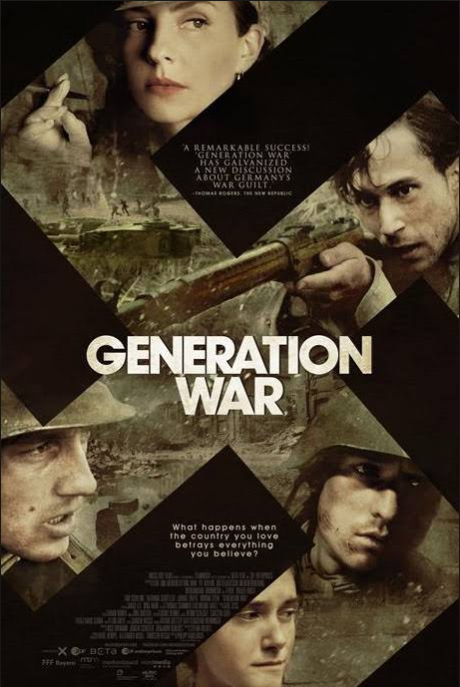
Generation War

In 2013, Germany finally got around to making its own modern WWII mini-series. Inspired by Band of Brothers down to the last name of the two army protagonists (Winter), “Generation War” follows a group of typical Germans during WWII. Its original title in German translates loosely to “Our Fathers, Our Mothers.” It came in for a good deal of criticism by anyone with a hand in WWII who wasn’t fighting for or alongside Germany.

Generation War: the Germany anti-Epic
Germany’s “Band of Brothers” is a dark anti-Epic that follows the birth of modern Germany through the struggle of those citizens who were of fighting age during WWII

When the series came out, those criticisms felt universal in a way that they don’t today. While there was always something to be said for German children and grandchildren getting a say in how they remembered their dying grandparents (caveated by the requirement that they face their crimes in daylight, without flinching). The makers of Generation War did not avoid the worst parts of WWII. the extermination of Jewish people, the extrajudicial murders of civilians and combatants, the basis of modern German guilt.

They did tell the story of WWII from the German perspective. This necessarily grants viewers a feeling that the protagonists deserve to live, a chance to make decent lives for themselves after the war. From this perspective, given that Nazi Germany is defeated, Generation War functions as an Epic, by forging a unified identity through loss.

As already noted, when one encounters this German story from the outside, either in terms of time, or space, or identity, the story quickly becomes problematic, even offensive. I noticed that the U.S. and the U.K. were left out of the story, save throw-away lines about the U.S. having entered the war, the destruction of Germany’s North African Army,  and then about 150,000 Allied soldiers having landed in France. So much for my version of WWII! Generation War occurs almost entirely in or near Russia, on the Eastern Front. So it was for most German soldiers, whose experience of WWII was something that involved fighting Bolsheviks and/or Central and Eastern European partisans.

Meanwhile, the war represents Germany allies very unsympathetically. The two times Ukrainians are seen or mentioned are first as savage auxiliary police who horrify the protagonists by murdering Jewish women and children, and then later as “camp guards.” But this isn’t a Ukrainian version of WWII—it’s German. Didn’t Germans employ many locals to carry out reprisal killing against groups the Nazis saw as undesirable? Of course.

These 6 Ukrainians get around a lot in WWII movies
In German and Russian versions of WWII, there’s always a savage auxiliary policeman beating helpless Jewish women and children, and that policeman is always Ukrainian

The Polish government brought a similar criticism to bear against the series. Watching Generation War it’s not difficult to see why—Polish partisans play a major role when they shelter a major character, who is Jewish. This is important for the purposes of the plot because the Jewish character, Viktor, must keep his identity secret from the partisans, who are far more overtly anti-Semitic than even the creepy SS major (there’s always a creepy SS major hunting and killing Jewish children in WWII stories). Whereas the SS major seems fairly dispassionate about the killing of Jewish people—it’s either his job, or he’s a psychopath, or both—the Poles clearly harbor a personal hatred that transcends professional duty. Were the Poles all serious anti-Semites, moreso than the Germans? Surely not, surely not in any imagining or remembering. Then again, their hands weren’t clean, either, regardless of Poland’s experience of the war as a victim of German and Soviet aggression.

Why Defend Modern Epic

The point of this piece is not just to maintain that Germany has the right to tell WWII (caveated, as stated earlier) from its own perspective. German filmmakers succeeded in making Generation War into an Epic of their defeat, dignifying the characters who reject war and punishing those that don’t. More broadly, the point of this piece is to argue that we live in an era when smaller nations like Poland and Ukraine should also seek to create national Epics that tell their stories, in as expansive a way as possible.

Let’s focus on Ukraine. Portions of Ukraine’s history have been told by Germany, Russia, Poland, and Austria-Hungary. This isn’t sufficient for Ukrainians, and leads to a dangerous sense of national inferiority. Rather than having a central story to which all citizens can look, citizens interested in identifying themselves with nations look outside Ukraine. There is enough history to furnish an epoch-spanning story about the country—yet none exists.

What would such a project look like? A Ukrainian Epic would need to accomplish the following objectives. Firstly, there should be likable (which is to say heroic) characters from different national and historical backgrounds. Jewish, Polish, German, Hungarian, Romanian, Russian, Ukrainian and other groups all helped build modern Ukraine. Second, the story should be written to accomplish the difficult task of giving people from different backgrounds a place to inhabit—something to call their own. Third, the series should begin at some suitable point in pre-history—maybe with the Scyth, or the Hittites—and, over the course of progressive seasons, follow history through to the present time. One way of diminishing the effect of casting certain people as groups or villains would be to use the Cloud Atlas approach. A character who is heroic as a Jewish Ukrainian resisting a Cossack pogrom in the 18th century might return as a Russian during the season that deals with WWI and the capitulation of Kiev to the Bolsheviks. As the seasons approach the present, time would condense, and people would have to be stuck into the roles that they inhabit the season before—until the final season, which would likely detail Euromaidan, and the current conflict with Russia.

All of the more dangerous elements of Epic would be difficulties that filmmakers or writer would need to overcome. But I think that it’s possible to do so, to write or film a great work about and for Ukraine without relying on villainous enemies. To give Ukrainian children in the East and in the West an idea into which they can fit themselves—the idea of people loving and living under difficult conditions, in a vibrant crossroads that often finds itself in defensive wars against more powerful neighbors.


New Poetry by Yael Hacohen

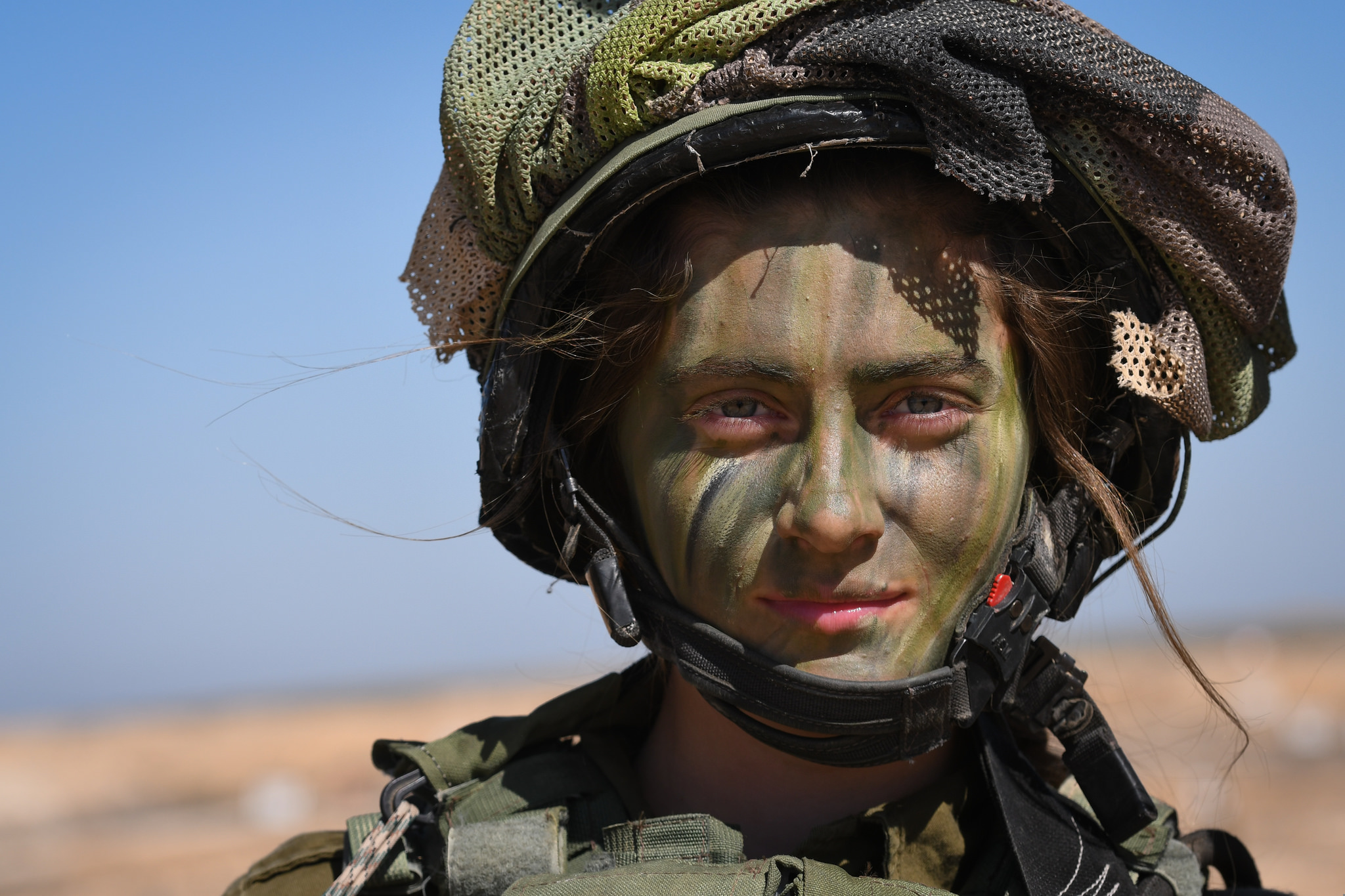
IDF, soldier, military, israel

Fortitude

Seven times I’ve been to the Wall
to scribble my prayers
and fold them into
the seams in the yellow stones.
The walls of Jericho fell on the seventh
so I elbow my way through the crowd
to put my ear to the stones
and hear the horses surround them,
but the wail of sirens drown out the hooves
the herds disperse from the plaza
and I forsake the Wall
to let it stand on its own
an ancient olive tree
straining against its plot in the dirt.


Pre Traumatic

The first time I shot an M-16‎
it was the heat of summer in the Negev. ‎
Gas-operated with a rotating bolt, ‎
five-point-fifty six caliber, ‎
with nineteen bullets a box. ‎
I could shoot like an angel,‎
I could hit a running target ‎
at six-hundred-fifty meters. ‎
I cried the first time.‎
I was eighteen.
Already, my hair in a bun.
You didn’t stand
a chance.‎


Photo Credit: Friends of the IDF


Arms Sales, Cash, and Losing Your Religion

The lucrative Arms Sales market exists in the exact place where rational self-interest intersects with humanist idealism. Much as individuals have a right to exist, countries have a right to exist, and few would contest the prudence of building and maintaining modern weapons by which to protect that right. When a country builds weapons for its own military, and the purpose of that military is to defend, one may argue or object about the extent to which it is wise to train and organize the use of those weapons, but their necessity is comprehensible. Countries, like individuals, have a history of attacking one another.

While building weapons and equipment for self-defense is therefore fairly uncontroversial, selling said arms and weapons to people or nations that will misuse them—or, worse, are already engaged in busily and enthusiastically misusing them—is not necessary or prudent. This is because (1) human life is supposed to have an intrinsic value beyond anything money can buy, and (2) bullets and blasts tear open human bodies in order to spill out guts, blood, shit, and all the strange fluids that lurk beneath every human’s skin, maiming and/or killing them. How one uses weapons, therefore, is one of the most important things in the world, once the decision has been made to produce them for self-protection. Much as a war of aggression is immoral, the sale of weapons that will create the conditions of a war abroad is also immoral. That’s pretty simple. Or… is it?

Leaving Points on the Board

It is, it is simple. Nevertheless, in the ongoing effort to appear balanced, everyone’s favorite “sick man of the old media” The Atlantic recently published an article arguing that “Progressives” should stop allowing political rivals to monopolize weapons sales to other countries. Written by Army veteran of Afghanistan (this means the author knows the effect weapons have on his fellow humans), former Obama policy thinkfluencer, avowed Democrat and (apparently) Friend to America’s Arms Industry Andrew Exum, the piece is titled “What Progressives Miss About Arms Sales.” It offers a logically coherent argument in favor of profitability (political, industrial) over morality.

This argument has been made by many over the years. Readers familiar with the Judeo-Christian-Muslim tradition likely know Satan’s temptation of Jesus Christ during the Son of God’s wanderings in the desert. Whether one is a devout Christian and believes that this was an actual event that occurred and Christ’s refusal to be tempted had the consequence of saving Christian souls by redeeming them from original sin, or one is an atheist and values the story as an allegory for how to resist debasing oneself and exhausting one’s moral and ethical (which is to say, one’s human) credibility, few would argue that actually Satan is the good guy with a smart idea, and Christ is the bad one who’s a dupe and sucker for not choosing all the kingdoms of earth (with their weapons-making industries) over the Kingdom of Heaven.

Christ Tempted by Satan
SATAN: Hey guy sell some weapons to this demon I know he’s a cool dude
CHRIST: That would be wrong
SATAN: Guy you’re leaving points on the board I know this other demon who’ll sell them instead
CHRIST: Oh well in that case

But that’s the piece’s argument, that Christ was a chump. The too-good Progressives are foolishly spurning Satan’s offer of cool, hard cash. They’re damaging America’s weapons industry by shrinking client pools, and eroding America’s ability to exist as chief of the Western hegemony [why American should be chief if it cares more about profitability than people’s lives is a question that goes unposed and unanswered]. These lousy point-missing Progressives are, through their Sunday-School fixation on morality (surely, the naïve morality of a decent if simple child), boxing Democrats out of controlling the Executive branch by letting Donald Trump and Jared Kushner take credit for sweet arms deals (“deliverables,” for those who have any experience working in government, according to Exum, who has). Presumably, it would have been better if President Clinton had been able to score this deliverable.

Exum describes two Progressive objections to selling arms to bad people, what he describes as the strategic objection, and the moral objection. The strategic objection boils down to modern variations of “we gave the mujahedeen weapons to fight the Soviets but then they turned Taliban and used the weapons on us so we should avoid doing that again.” This is a good objection, and reasonable. Exum’s answer is that if we don’t sell arms to bad people, other people will, so we should sell them to (a) maintain our influence with the bad people who want to buy our weapons, and (b) lower the costs of producing said weapons, for ourselves and for the bad people / bad actors. Exum himself calls this answer “quick and dissatisfying,” which is a good assessment, so I’ll just repeat it.

Objection #2 is “moral.” And here’s where I feel really bad for someone who deployed, and saw combat and the consequences of combat, and attended Sunday School as a child, and “has a lot of respect” for the Progressive standpoint (which opposes selling weapons to repressive, totalitarian, religiously intolerant and/or authoritarian regimes). I feel bad because Exum’s answer to moral objections is equally dissatisfying, to the point where one really wonders what compelled him to write and publish such an article.

The first part of his answer poses the sales of weapons to bad actors (in this case the Saudis) as hypothetical: “selling weapons to the Saudis that might be used in Yemen,” is how he characterizes representative Chris Murphy (D-CT)’s objections to the deal. In general, hypotheticals can be good—we’re not selling arms to the Ukrainians because hypothetically they might be used to start WWIII. But the arms deal with Saudi Arabia is unusually clear and—what’s the opposite of hypothetical?—actual. Weapons sold to the Saudis are either the exact weapons being used in Yemen, or weapons used to arm and equip soldiers in Saudi Arabia, freeing different weapons (that would otherwise not have been available) to be used in Yemen (or against rebellious Saudis, or anyone else). There’s no hypothetical about arming and equipping a regime engaged in warfare—you don’t get to choose which bullets Stalin uses to shoot Hitler and which he uses in a pogrom against Jews. It doesn’t work that way. Also, in this specific case, fuck hypotheticals, we’ve had 16 years of killing in the Middle East. “Uh, maybe they won’t drop that specific bomb” is the rhetorical device of a coward.

Greed is actually good
Irrefutable argument

The second component of the argument is even more absurd. According to Exum, when Progressives take a moral stand against arms sales, it’s “leaving points on the board.” This analogy is somewhat confusing; unless there is another context for it with which I am unfamiliar, “leaving points on the board” describes the phenomenon in American football where Team A is penalized during a play in which Team B scores (practically speaking, usually, a field goal). Depending on the context and field position, the correct move for Team B’s coach is to “leave the points on the board” and accept the field goal’s result rather than taking the penalty and continuing to play but “taking the points off the board.” If there is sufficient time, or if the situation is desperate, the coach of Team B could elect to “take points off the board” and accept the penalty instead—if, say, time was running out and Team B needed a touchdown to avoid defeat, or, conversely, if there was plenty of time and the risk was worth it.

Exum’s formulation has the Progressives as Team B—the group which has scored a moral victory while Team A suffers the equivalent of a penalty by being seen to do something every scrupulous adult human knows is bad. Team B then elects to “leave points on the board” rather than use their position of moral advantage for profit. In so doing, though, Team B / Progressives somehow (the analogy does not make it clear) end up losing out to Team A, politically and financially. At best, this analogy is puzzled and incomplete—at worst, it makes a clear case to readers and thinkers that morality is something crafty people use to exchange for money, friendship, or political position.

Ol’ “Joltin'” Joe Namath doesn’t know all that much about arms sales, but he knows that in a clutch situation, you *always* leave the points on the board, always

What happened to arguing that generosity, kindness, and preserving the sanctity of human life were ends unto themselves? Surely, if one is being sincere, those ideals are incompatible with selling weapons to objectively unethical regimes. Wasn’t this the ultimate intellectual lesson of the enlightenment, combined with humanity’s experience with The Holocaust and other genocides in and around World War II? That after the hundreds of millions killed or forcibly displaced through warfare, ethnic cleansing, starvation, and outright genocide that there was ontological, immeasurable value to humanistic, non-utilitarian good, and that this good stood apart from whatever religion one happened to believe?

Collapse of the Democratic Party

Deliberately or not, Exum asserts that political expediency should be the point of human action, rather than an outcome of virtuous individual and/or collective action. This assertion is evil, plain and simple. It has been popular with mainstream or centrist Democrats for most if not all of my adult life, and as far as I can tell, has severely damage the Democrats’ ability to interest voters. By focusing on “deliverables” and “low-hanging fruit,” a certain class of people without any identifiable ideology beyond profit for profit’s sake has systematically bartered away the Democratic Party’s reason for having existed in the first place. The science of politics to them is how a target demographic group polls with a certain political position during an election year—not whether or not the content of that position is ethical.

As a Democratic Socialist, it seems plausible to me that this is simply one more manifestation of the way capitalism distorts and frustrates the will of the people, exploiting their work and the hours of life lived on earth to unethical ends. Pandering to a few million people who happen to be part of the industry pushing weapon systems sales to war criminals makes sense when you’re the CEO of a weapons manufacturing company whose bonus is tied to sales. When you’re a skilled mechanic, you probably care less about what you’re making, exactly, and a bit more about what that thing is being used to do. The capitalist system depends on convincing everyone that participating in the festival of rapacity and shitty unnecessary product-pushing stretching from Silicon Valley to Hollywood, from Hollywood to New York, and then to Washington D.C. is in their best interests. It isn’t!

We live in extraordinary times. Citizens have VIP tickets to the spectacle of hundreds of millions poured into developing and marketing a device for which no clear demand exists while veterans remain homeless. They watch on social media as poorly conceived, Democratbacked charter school initiatives suck funding, teachers, and students out of the public system. They gape in astonishment as a popular Democratic politician stuffs donations from the pharmaceutical industry into his pocket and then votes against the interests of his constituency. And let’s not forget Obama basically robbing taxpayers to bail out the banks.

Why can’t establishment Democrats see how their ethically promiscuous attitude toward selling weapons is exactly what’s turning workers of all colors, ethnicities, nations and gender and/or sexual identifications away from the party, and from America? That losing votes isn’t a function of certain hyper-specific constituency platforms, but rather of conspicuous moral turpitude and blatant hypocrisy? Is the cash from Raytheon that good?

Globalism for Few, Insecurity for Many

The hypothesis floated by George H. W. Bush and Bill Clinton after the Cold War was this: increase the amount of money earned in the developing world, cultivate a middle class abroad and at home, and democracy would flourish. This was a good idea, but it seems to have failed, in part because a “middle class” as we understand it in the U.S. depends on social mobility, and that’s actually been reduced since the collapse of the USSR. Fewer people have more money. Capitalism’s promise of a “better” life has been exchanged for the promise of a more convenient life. Convenience, conveniently, leaves plenty of room to argue for global and local exploitation, slavery, warfare, and all the awful shit most Americans and Westerners probably, if they thought about it, would say they don’t think is something in which they should participate (and certainly not abet).

Without an ethical anchor, without a firm understanding of the difference between good and evil, otherwise known as the difference between generosity and selfishness, one creeps inexorably toward the latter. Either (or both) Real and Allegorical Jesus Christ makes an important and powerful decision to embrace philosophical good not because it’s an easy thing to do—money, power, and dignified employment are seductive. The better the money, the better the job, the better the influence, the more seductive the choice. Important: Jesus spurns this choice, offered by Satan.

And choices that result in people dying in war (especially Americans dying) weigh particularly heavy on Americans’ consciences, more so even than more quotidian choices with equally far-reaching effects. One might think that if the lesson was going to be learned, that Democrats would have learned this lesson after getting us into Vietnam, and certainly after authorizing the use of force in Iraq (they did not). Somehow in spite of history, the American Center-left has slowly but inevitably arrived at the current moment, wherein an Obama Democrat and war veteran who knows what it means to make the argument claims that if we don’t arm and equip a horrific, repressive regime that is actively and enthusiastically murdering its own people as well as everyone with whom it disagrees and can lay hands on—Saudi Arabia, most recently—that China will do so, and we’ll lose money and influence. And oh, right, Democratic squeamishness has made it so that Trump can make this deal with the Saudis instead of the Chinese, and that’s why workers support Trump, because he’s willing to do what’s necessary.

This hedonistic, Satanic view of the world (selfishness and cynicism usually descend into Hedonism, very rarely sublimating into Stoicism) only accounts for one part of the equation (the financial part that we can measure precisely, today) and ignores the probability of any potential negative consequence, even likely negative consequences. But there’s another component—as long as we peddle weapons to bad regimes, we will always—as in, never not—live in a world beset by the type of systemic oppression and repression that only ever get resolved through violence. Regimes like the one ruling Saudi Arabia have a way of murdering their civilians and those of neighbors, then requiring more weapons.

The Piper Gets Paid

Arms sales will make people employed by military-industrial companies and consultancies more comfortable (not as comfortable as they would be if they controlled the means to production but that’s another essay). These people will buy homes, and afford medical insurance, and enroll their children in expensive private schools and universities. It’s a pretty good deal for shareholders with stock in Raytheon or Boeing or Lockheed Martin or Kellog, Brown and Root. Most of all it’s a great deal for the executives who run these companies, and the politicians who benefit from their campaign contributions.

Ultimately, if one is a patriotic American, like myself, one is forced to reconcile injuring or killing other humans with turning a profit. And I’m not sure a few dollars is worth it if it means losing my integrity in the bargain, assuming that the profit is even real. For every multi-year $100 billion dollar contract the U.S. signs with Saudi Arabia or similar execrable, criminal regimes, we dish out well over $100 billion per year fighting the terrorism that happens when the same criminal scum uses these weapons against their rivals in and outside their country. This does not reckon the value of a human life (priceless), nor does it factor in the financial obligations we incur for U.S. veterans of those wars. Ethically and financially, selling arms to regimes that are inclined to use them for bad purposes is a bad deal for the U.S.

And that’s what some people seem to miss about Arms Sales. It’s an easy mistake to make, for those who view financial or political profit as capable of redeeming morally objectionable actions. Progressives would be wise to continue “missing” this point.


John Berger, Max Sebald, Teju Cole: International Men of Culture

I think it was Ousmane Sembene, the Senegalese author and filmmaker, who talked of the writer being the voice of the voiceless. That is still true in all societies. Art should ignite our dreams for a more human world.   –Teju Cole

In a previous essay on the Dictator Novel, I touched on the question of whether we can concurrently have good art and good politics. It remains an open, almost rhetorical, question. The most reasonable response is that we will rarely have anything approaching good politics, but we hope (or take for granted) that we will always have the ability to create and appreciate good art, because of or in spite of an apocalyptic or at least uncertain future [note: I use the terms politics, art, and artist in the broadest possible terms]. An even more relevant question might be how much the artist treats with politics (or, to put it more bluntly, to what extent politics intrudes on art). Some think that the ideal artist should rise above petty, or quotidian, political concerns; others would claim that all art is grounded in some kind of political milieu, whether overt or not. As much as I would like to believe in the possibility of a creative genius who follows her muse isolated from the messy world around her, it is simply not realistic. Paraphrasing Aristotle, there is nothing in human life that is outside of, or untouched by, politics, and that goes for artists and writers as much as farmers, laborers, managers, and secretaries. Even Shakespeare, the ideal artist and writer, was limited by the Tudor and Stuart monarchs, and produced many propagandistic “history” plays to placate them. John Berger, in his book The Success and Failure of Picasso, states that the Cubists (1907-1914) were the last group of revolutionary artists who could at the same time be optimistic and almost wholly unconcerned with politics. Since World War One, no artist has been able to divorce herself, intentionally or not, from the real-world. Utopia is dead. For the foreseeable future, we are all grounded on the earth, condemned to be free, struggling in our various ways to survive, and, if we are able, to create and consume art. Therefore, for me, the important question in examining art is not whether or not it is political, but how politics influences artists and is manifested in their art.

In this essay, I will examine the works of three writers and artists, John Berger, Max Sebald, and Teju Cole, who all share a “family resemblance”. All three are sophisticated, polyglot, cosmopolitan writers who combine wide-ranging erudition and serious-minded aesthetics with a profound sense of humanity and social justice. All three are cross-genre writers, combining fiction, essay, criticism, and memoir; all three employ embedded photographs or drawings to support their prose. They all thoroughly investigate the arts in their stories and essays: Berger focusing especially on painting and drawing, Sebald on architecture, and Cole on photography. They are all self-imposed exiles from their homeland who use their own cross-cultural experience to reflect on the lives and sufferings of others. Politics, on the other hand, is treated differently by the three: Berger was a highly engaged marxist whose politics were central to most of what he wrote; Sebald’s work always deal obliquely or subtly with politics; Cole lies in between these two extremes. All three benefit from being able to live and work where they want, in free societies where politics does not interfere with art; nevertheless, all three extend their perspective beyond artistic solipsism well into the the political project of global justice for all.

John Berger

John Berger died in January 2017 at the age of 90. Originally from London, he had lived in a tiny village in the French Alps for over 50 years and was a highly prolific author of 10 novels, several plays and screenplays, and roughly 50 collections of essays and art criticism. He won both literary and public renown in 1972 when his novel, G, won the Booker Prize, and his popular TV miniseries, “Ways of Seeing”, was broadcast on BBC. Berger donated half of the Booker Prize money to the Black Panther party as a token of support and a way of calling out the racist and exploitative legacy of the Booker foundation, whose fortune was built in the Caribbean slave-working sugar trade. Here is a key paragraph from Berger’s essay explaining his rationale:

Before the slave trade began, before the European de-humanised himself, before he clenched himself on his own violence, there must have been a moment when black and white approached each other with the amazement of potential equals. The moment passed. And henceforth the world was divided between potential slaves and potential slavemasters. And the European carried this mentality back into his own society. It became part of his way of seeing everything. The novelist is concerned with the interaction between individual and historical destiny. The historical destiny of our time is becoming clear. The oppressed are breaking through the wall of silence which was built into their minds by their oppressors. And in their struggle against exploitation and neo-colonialism — but only through and by virtue of this common struggle — it is possible for the descendants of the slave and the slavemaster to approach each other again with the amazed hope of potential equals.

G is a picaresque novel based around a Casanova-like protagonist in pre-World War One Italy. The most memorable sections for me are about the first flight over the Alps, and the dark atmosphere in Trieste before the war. With the rest of the Booker Prize money, Berger spent years researching and writing A Seventh Man, a photography-based book about the struggles of migrant workers around Europe. One of his later novels, To the Wedding, is one of the most heart-wrenching things I’ve read (comparable with other stories of the death of one’s child such as Cry, the Beloved Country, Beloved, and The Child in Time). This beautifully written novel recounts the journey of an estranged husband and wife traveling across Italy to the wedding of their dying daughter.

John Berger, 1926-2017

As good as his novels are, Berger’s essays and criticism are probably his most important and lasting legacy. I have only begun to delve into these, but I have greatly appreciated and enjoyed everything so far. I have already mentioned The Success and Failure of Picasso (1965), which discussed a watershed moment in art history with such depth and persuasion that I was forced to reconsider everything I thought I knew about art (which admittedly was not much in the first place). He summarizes, towards the end:

I have tried to show you, on the evidence of paintings from 1900 to 1952, how Picasso’s imagination and intuitions have always presented him with an alternative to modern Europe: the alternative of a simpler, more primitive way of life. The Cubist period from 1907 to 1914 was the great exception to this. Then, the influence of friends and of other artists led him to believe for a short while in the opposite alternative: that of a more complex, more highly organized, more productive way of life. Except for this Cubist period, his genius has always owed allegiance to the comparatively primitive. It is this allegiance which underlay his self-identification with outcasts in the so-called Blue and Pink periods. It is this which inspired the rage of the Demoiselles d’Avignon. It is this which explains the fancy-dress and magic with which he protected himself after the First World War. It is this which was the secret of the physical intensity of his work in the thirties and early forties when he was painting autobiographically. It is this which is now the excuse for the sentimental pantheism of most of his original paintings (original as opposed to his variations on the themes of other artists) since 1944.

In his Selected Essays (2001) there are many fascinating theories and narratives weaving his erudition and knowledge of every artist in the Western canon with his political activism. As a vegan and animal rights activist myself, I was particularly interested in his “Why Look at Animals?”, which discusses in surprising detail the long and evolving relationship between humans and animals, to the mutual detriment of both. His 2011 book Bento’s Sketchbook uses the story of Spinoza’s lost sketchbook for Berger to demonstrate many of his own sketches and the story behind them. In one episode, Berger tells of how he was kicked out of a museum by an overly zealous private security guard while sketching Antonello da Messina’s “Crucifixion”, because he was not allowed to leave his backpack on the floor.

What is especially striking about Berger’s fiction and non-fiction is the proliferation of incredibly beautiful and powerfully true lines of prose that complement the larger story he is telling. Here, for example, from Bento’s Sketchbook:

The human capacity for cruelty is limitless. Maybe capacity is not the right word, for it suggests an active energy, and, in this case, such energy is not limitless. Human indifference to cruelty is limitless. So also are the struggles against such indifference. All tyrannies involve institutionalised cruelties. To compare one tyranny with another in this respect is pointless, because, after a certain point, all pains are incomparable. Tyrannies are not only cruel in themselves, they also exemplify cruelty and thus encourage a capacity for it, and an indifference in the face of it, amongst the tyrannised.

And another:

To protest is to refuse being reduced to a zero and to an enforced silence. Therefore, at the very moment a protest is made, if it is made, there is a small victory. The moment, although passing like every moment, acquires a certain indelibility. It passes, yet it has been printed out. A protest is not principally a sacrifice made for some alternative, more just future; it is an inconsequential redemption of the present. The problem is how to live time and again with the adjective inconsequential.

Here, from G, at a moment when the protagonist witnesses some of the widespread labor riots in the pre-WWI, pre-Soviet years:

Every ruling minority needs to numb and, if possible, to kill the time-sense of those whom it exploits by proposing a continuous present. This is the authoritarian secret of all methods of imprisonment. The barricades break that present.

Here, from To the Wedding, at the exact moment after the daughter, Ninon, learns that she has AIDS:

All I had to offer, old as the world, God-given, balm for pain, honey for taste-buds, promise for always, silken welcomes, oh to welcome, to welcome, knees turned on their sides, toes extended—all I had has been taken.

And later, after the wedding:

The wedding guests are becoming a single animal who has fed well. A strange creature to find in a widow’s orchard, a creature half mythical, like a satyr with thirty heads or more. Probably as old as man’s discovery of fire, this creature never lives more than a day or two and is only reborn when there’s something more to celebrate. Which is why feasts are rare. For those who become the creature, it’s important to find a name to which it answers whilst alive, for only then can they recall, in their memory afterwards, how, for a while, they lost themselves in its happiness.

Max Sebald

W.G. “Max” Sebald died in 2001 at the age of 57 after having had a heart attack while driving near his home in Norfolk, England. He was from a small Bavarian village near the Swiss border, and lived in England as a professor of literature for most of his adult life. Though he began writing late, publishing only four books in the last ten years before his premature death, his works won him many admirers in the literary world and it is certain that his fame and recognition would have grown. What we are left with, those four novels and a collection of essays, is a unique, powerful, and extraordinarily thoughtful body of multi-genre work. His novels are classified thus only for marketing reasons–they are all similarly constructed pseudo-memoirs of a character, seemingly exactly like Sebald, wandering around Europe and recollecting, often at second or third hand, the stories of places and people he encounters. They all deal indirectly with the paradoxical European legacy of Humanism and inhumanity, in which scientific and cultural development sits alongside constant imperialist war and exploitation. He focuses especially on World War Two and the Holocaust, treating this history in comparably non-traditional ways as, for example, recent Nobel laureates Patrick Modiano and Svetlana Alexievich (in 2001, the Nobel Committee chair said that Sebald, along with Derrida, were two recently deceased authors who were under consideration for the prize).

W.G. “Max” Sebald, 1944-2001

Sebald’s first novel, Vertigo (1990), combines a travel narrative across northern Italy with short vignettes from the lives of Stendhal, Casanova, and Kafka. As the title suggests, one of the main running themes between the four separate narratives is a lingering, unplaceable feeling of dizziness or anxiety; the reasons for these feelings remain unsaid, but it is possible to surmise, especially with the hindsight of Sebald’s later work, that the weight of European history surrounding each of the characters was enough to produce a certain existential dread. To paraphrase Adorno, it is impossible to see the full beauty of a continent and culture that ultimately produced the Holocaust. Venice is a city with such a rich literary history that it is hard to say anything new, but here is how Sebald manages to work in a subtle shade of foreboding:

As you enter into the heart of that city, you cannot tell what you will see next or indeed who will see you the very next moment. Scarcely has someone made an appearance than he has quit the stage again by another exit. These brief exhibitions are of an almost theatrical obscenity and at the same time have an air of conspiracy about them, into which one is drawn against one’s will. If you walk behind someone in a deserted alleyway, you have only to quicken your step slightly to instill a little fear into the person you are following. And equally, you can feel like a quarry yourself. Confusion and ice-cold terror alternate. It was with a certain feeling of liberation, therefore, that I came upon the Grand Canal once again.

While the main character takes a long rest at a resort on Lake Garda en route to his tiny Bavarian village he hadn’t visited in decades, he encounters some of his compatriots, leading to a sentiment I, as an American based in Italy for the last decade, can sympathize with:

I heard Swabians, Franconians and Bavarians saying the most unsavoury things, and, if I found their broad, uninhibited dialects repellent, it was a veritable torment to have to listen to the loud-mouthed opinions and witticisms of a group of young men who clearly came from my home town. How I wished during those sleepless hours that I belonged to a different nation, or, better still, to none at all.

Sebald’s second novel, The Emigrants (1992), more explicitly takes up the theme of exile from one’s country. In four parts, it tells of four characters, all related to the narrator in some personal way, who were all emigrants from the greater German Reich before or during the Second World War. In all of these seemingly true biographies, the narrator only gradually begins to understand the deep secrets and traumas buried in these characters’ past lives, hidden under a veneer of seeming polite normality. In three of the four cases, the characters commit suicide. In the last story, the most powerful in my opinion, the narrator recounts his long friendship with a Mancunian artist and his late realization that he had never asked the necessary question of how the artist had come to live in England without his parents. The artist, based on Frank Auerbach, later showed the narrator a letter written by his mother while she and his father awaited transport to Auschwitz. The very slow and indirect unfolding in which Sebald deals with such a monumental tragedy as the Holocaust is sublimely cathartic.

His third novel, considered the last of the trilogy, is The Rings of Saturn (1995), which is ostensibly a walking tour across Suffolk with long discourses on various historical personages that are somehow connected to the places he visits. In one long section he gives an account of the life of Joseph Conrad, and how much he was affected by the brutal exploitation he witnessed in the Belgian Congo. As is typical in Sebald’s work, there is always as much lurking under the surface of the explicitly stated. In this case, though I don’t recall any mention of the Holocaust by name (though he markedly uses its original meaning of a burnt sacrifice), there seems to be a subtle ongoing dialogue about human capacity for cruelty, even in scientific experimentation. In one example, he says, almost as an unimportant aside to the main story:

Again, the inspector of the Rouen fish market, a certain Noel de Marinière, one day saw to his astonishment that a pair of herring that had already been out of the water between two and three hours were still moving, a circumstance that prompted him to investigate more closely the fishes’ capacity to survive, which he did by cutting off their fins and mutilating them in other ways. This process, inspired by our thirst for knowledge, might be described as the most extreme of the sufferings undergone by a species always threatened by disaster.

Here is another evocative passage during a recurring discourse on Thomas Browne:

The almost universal practice of cremation in pre-Christian times should not lead one to conclude, as is often done, that the heathen were ignorant of life beyond death, to show which Browne observes that the funeral pyres were built of sweet fuel, cypress, fir, yew, and other trees perpetually verdant as silent expressions of their surviving hopes. Browne also remarks that, contrary to general belief, it is not difficult to burn a human body: a piece of an old boat burnt Pompey, and the King of Castile burnt large numbers of Saracens with next to no fuel, the fire being visible far and wide. Indeed, he adds, if the burthen of Isaac were sufficient for an holocaust, a man may carry his own pyre.

Near the end, Sebald concludes the last of many references to the history of the silk worm across Europe with this strangely disturbing passage which is as close to a literary climax as Sebald ever gets:

After all, the Professor added, quite apart from their indubitable utility value, silkworms afforded an almost ideal object lesson for the classroom. Any number could be had for virtually nothing, they were perfectly docile and needed neither cages nor compounds, and they were suitable for a variety of experiments (weighing, measuring and so forth) at every stage in their evolution. They could be used to illustrate the structure and distinctive features of insect anatomy, insect domestication, retrogressive mutations, and the essential measures which are taken by breeders to monitor productivity and selection, including extermination to preempt racial degeneration. —In the film, we see a silk-worker receiving eggs despatched by the Central Reich Institute of Sericulture in Celle, and depositing them in sterile trays. We see the hatching, the feeding of the ravenous caterpillars, the cleaning out of the frames, the spinning of the silken thread, and finally the killing, accomplished in this case not by putting the cocoons out in the sun or in a hot oven, as was often the practice in the past, but by suspending them over a boiling cauldron. The cocoons, spread out on shallow baskets, have to be kept in the rising steam for upwards of three hours, and when a batch is done, it is the next one’s turn, and so on until the entire killing business is completed.

His last book, Austerlitz (2001), seems like a full-length version of one of the biographies from The Emigrants. The narrator tells of his many conversations with the main character, Jacques Austerlitz, over the course of three or more decades in which they randomly meet each other in stations and libraries across Europe. Austerlitz is an architectural historian, and the narrator always recounts his own version of the many precise details about the various buildings and cityscapes they encounter in their mutual peregrinations. The narrative is presented in an even more oblique and unreliable way than Sebald normally uses. For example, a typical line from the narrator could be something like, “Years later, I remembered what Austerlitz told me his landlady had remembered what his mother had told her the night before leaving.” Austerlitz, like the narrator and then the reader, gradually learns of and then reveals the details of his background. He was raised in Wales by a pastor and his wife under the name Dafydd Elias. When his parents died he was told by the headmaster that his real name was Jacques Austerlitz. When he asked what that name signified, he was merely told, “I think you will find that it is the name of a famous battle.” That battle, as well as the Paris station named after it, play a role in the narrative. It is also notable how similar the name Austerlitz is to Auschwitz. The story comes round eventually to the fact that Austerlitz was sent on one of the last refugee boats to England as an infant, and later travels to Prague to discover more about his parents. This haunting novel is a significant work, probably Sebald’s best. Like all his novels, the narrative is supplemented by found photographs that add to or silently comment on the text. One of these is a close-up of Wittgenstein; most often they are anonymous pictures of architecture, signage, or family gatherings. In his introduction to the novel, James Wood writes: “As Roland Barthes rightly says in his book Camera Lucida, a book with which Austerlitz is in deep dialogue, photographs shock us because they so finally represent what has been. We look at most old photographs and we think: “that person is going to die, and is in fact now dead.” Barthes calls photographers “agents of death,” because they freeze the subject and the moment into finitude.” Sebald’s novels as a whole tend to do something similar: to freeze the disturbing history of modern Europe both in order to preserve it, and to help block its return.

Teju Cole

Teju Cole, a Nigerian-American, was born in 1975, making him conspicuous in my comparison as the youngest of the three authors, as well as the one who was most influenced by both of the previous writers. He openly and enthusiastically speaks of Berger’s influence in many public dialogues, including a valedictory celebration of that writer’s life after his recent death. He has dedicated at least two essays to Sebald, including one story of how Cole visited his grave near Norwich, England. Cole’s first novel, Open City, was widely praised and widely noted for following a Sebaldian construct–a narrator, apparently similar to the author, wandering and meditating on modern cityscapes and the history they conceal, and engaging in intellectual but emotionally fraught conversations with friends and strangers along the way. As with most of Sebald’s works, we gradually learn of secret crimes and forgotten traumas that are not-so-neatly hidden away in the subconscious. It is a powerful and important debut novel.

Teju Cole, b. 1975

Cole’s second novel, Every Day is for the Thief, does not appear to be a novel at all except that it is labeled as such. It tells of the narrator’s visit to Lagos after over a decade’s absence. It is partly a travelogue, partly a story of the corruption that has so pervaded Nigerian society as to pervert even human relationships.

Cole is a notable photographer and critic, as well as a popular Twitter writer until finally closing his account. Many of his essays appear in his recent collection Known and Strange Things (2016). This book is divided into three parts on writing, photography, and travel. The whole reveals an almost impossibly thoughtful, erudite, and wide-ranging mind. Every essay is littered with references to poetry, art, history, as well as popular culture. One fantastic review of A House for Mr Biswas is preceded by an essay telling of how Cole came to be invited to a dinner with “Vidia” Naipaul. After the dinner Cole and Naipaul flip through a Mark Twain first edition and laugh together at his witticisms. Naipaul is taken aback when Cole beats him to the punch in comparing them to La Rochefoucauld. Despite this, Cole is unsparing in his appraisal of the Nobel laureate’s personal faults. The essays in the photography section are so well-done as to have captured my interest even though I know nothing of that craft. It has prompted me research many of the named photographs and artists and begin taking more note of photography in general.

I think the best piece in the collection is the strange, short, stream of consciousness essay called “Unnamed Lake”. It was supposedly written in one sleepless night as Cole’s mind wandered variously between the Tasmanian tiger, Derrida, Furtwängler’s version of the Ninth, concentration camps, the Biafran War, and the atomic bomb. The book’s final section on travel is more explicitly autobiographical, personal, and political than Cole’s usual work. In one piece he reflects on a six-month paid residence in Switzerland, in which he walks in James Baldwin’s shoes. He writes of the troubling disconnect between Obama’s rhetoric and his escalated drone killings. He writes of Joseph Kony and the white savior complex. He writes of a trip to the Mexican border and a Berlin-style piece of the wall he brought back. He rewrote the first lines of famous novels as if they were all part of a drone assassination report. Everything he writes makes you think, often long after you’ve finished reading; like the best essays, everything in this collection not only warrants a rereading, but it is essential to do so, which is the greatest praise I can give to a writer.

Conclusion

So where does this leave us in regards to my original question of the relationship between art and politics? I do not have a final answer, and do not think there exists a final answer. Rather, every work by every artist is part of an ongoing dialogue between every other work of that artist, as well as his interlocutors, and the world around her, both past, present, and future. An artist can make politics her raison d’être, like John Berger, or deal with it occasionally or obliquely, per Sebald and Cole. All three artists have benefitted from their personal freedom to create, living and working as they did in countries of the post-war western democracies. I would not say that any of them engage with politics in their art as a result of personal traumas or limitations, but rather due to their sense of humanity and the cold injustice of history. If any of them had been born a few decades earlier, or possibly later, or in another country, they could have possibly been killed or imprisoned for their art. Insofar as all three writers understand this, I would guess that they understand freedom more globally than just their personal ability to create art.

As Geoff Dyer writes in his introduction to Berger’s Selected Essays: “The ‘invasion of literature by politics’ may have been inevitable but Orwell was somewhat grudging about having to forgo the single-minded literary devotion of Henry James in favour of the manifold obligations of pamphleteering (though his distinction as a writer depends precisely on this abandonment). For Berger, there was no tension or regret on this score. Responding to his critics in a letter to the New Statesman (4 April 1953) he insisted that ‘far from my dragging politics into art, art has dragged me into politics’.” What is necessary to the artist, beyond mere survival, is the freedom to produce art. This underlines the fact that whether or not “art” is political, its existence is always predicated on a set of political circumstances that are either more or less “free”, and thus more or less open to art. This counts whether or not the artist subjectively considers politics as something that happens around us without our control, or something we choose to value or fight for. No matter what politics she claims, defending this freedom should therefore be the central preoccupation of the artist.


New Fiction: “Old Wounds” by Therese Cox

poppy, war, casualty, TBI, remembrance

The YouTube walkthroughs have names, like action movies or episodes of a serial TV show. Judgment Day. Suffer With Me. Fallen Angel. Old Wounds. If you were playing, you’d fire up your console, scroll through the list, pick your game, and go. But Tracey Knox doesn’t play. She’s only here to watch. One quick click and SchoolofHardKnox is leading the way through the war.

She’s watched them all, headphones on, grinding through anti-tank fire, lobbing grenades at ditches, clamoring for weapons, hoping there’d be one, just one, with a voice-over and a howzit goin’. How else is she going to hear Geoff’s voice? Flat Michigan vowels with those U.P. dips and stalls: a sound she doesn’t get a lot of in New York. She’s spent hours patrolling these deserts. It’s only grown worse since she lost her job at the architecture firm. There’s nowhere she has to be at 9 a.m. No project manager to look over her shoulder. No more designing cat fences for rich ladies in Connecticut. She is thirty-nine and can do as she likes.

There are thousands of views. Who was Geoff making these walkthroughs for? He didn’t do voice-overs, didn’t narrate, never popped up mid-scene in a Fugazi t-shirt, flashing his tats, to explain strategy. Each episode is like a movie he lived once and forgot about, one long jittery dream that Trace lives over and over.

“Old Wounds.” She likes the sound of that one. He dies too soon in it but it’s badass and medieval to gallop on horseback, brandishing a sword pried from a skeleton’s ribcage. She clicks on the name and lets it roll.

*

It’s Friday night at the Hampton Inn in DC. Tracey Knox is incumbent on a queen-sized bed, surrounded by plugs and remote controls. A screen flickers from her lap, lighting her face in flashes. Her eyes glazed, ears snug under industrial-sized headphones. She’s been dressed in the same clothes for a week straight—baggy cammie trousers bought discount from the Gap, $4.98, an end-of-summer deal, and a faded Jackass t-shirt. She’s skinnier than usual. All week it’s been nothing but sunflower seeds and Arizona iced tea, but then, the anniversary usually has that effect. At the moment she’s knee-deep in a YouTube k-hole and doesn’t care who knows it. Each fresh burst of gunfire grinds her guts with a bad longing. It calls back the barrage of explosions drifting down the hall from under Geoff’s bedroom door. The on-screen desert had been Geoff’s playground. Virtual Sergeant Foley, a stand-in for Dad.

Tracey’s best girlfriend, Constance Lawson, is knocked up and across the room, embedded in a nest of Hampton Inn pillows. They’ve decided to do a girls’ weekend in DC. Just the two of them, like the old days, one last hurrah before Constance, now Connie, becomes an FTM, or full-time mommy.

Connie had planned everything. Two queen beds and an all-you-can-eat menu of reality TV shows and room service mocktails. Right now Connie’s reading to Tracey from an upbeat email. Connie’s writing a book about her experience of IVF, half memoir and half how-to. The future for mommy lit is apparently bright. She’s landed a slick agent on the basis of a sample paragraph and outline and is already in negotiations for a book deal for her WIP.

“What’s a W-I-P?” Tracey asks, slipping off one headphone.

“Work in Progress,” says Connie, who’s superstitious about names for unborn projects.

Tracey, for her part, has no reason to fire up her email on a weekend. She recoils at the memory of the last exchange before HR sent her the marching papers, a “reply all” that should very definitely not have been a “reply all.” Tracey nods, says it sounds promising. She switches to half-listen mode and goes back to the screen.

On her laptop, a menu of a dozen other options pop up, all listed under her brother’s screen name. She’s stopped talking to people online after a Skype with their LA office went balls-up and cost Tracey her job. She’s been living off her severance package above a tire shop in Greenpoint, buoyed by the salary of her Dutch bicycle-parts designing husband, Niels. Her job search is equal parts day-drinking, flirting with bartenders, and experimenting with the font size on her CV. If there’s a café with free wi-fi, she’s freeloaded. Whenever either of her parents, divorced of course, gets her on the phone, Tracey says the same thing: she is pursuing other options.

“Do you think I should come up with a new name for TBD?” Connie asks.

“To be determined?”

“No, no, Trace, T-B-D. The Baby Dance. It’s what the What to Expect When You’re Expecting to Be Expecting book calls sex.”

“Why don’t you just call it sex?”

“Because,” Connie says, “That’s so louche.”

Connie reclines in yoga pants and places her hand on her swollen belly. She balances the phone on top and shows Tracey a new app, plugging in a set of hot pink earbuds. The app’s main feature is the frantic liquid throb of a fetal heartbeat so Connie can eavesdrop on her unborn infant. The baby, in all its amniotic fury, pounding away. It is just a cluster of nerve endings and cells and life pushing blood through its fetal chambers, but listen to it go. The heartbeat hypnotizes her with its systole and diastole, evidence of its miraculous, furious progress. Connie is transfixed in the dull spell, fingers slack on the edges of her iPhone, earbuds shoved in, the better to hear the back and forth of the protean sludge. Tracey tries to ignore it but Connie insists. Through the wire comes a birdlike thrum, frantic and pulsing, the life that is both part of her yet apart from her—primordial—she is life-giving—this baby-to-be, sloshing over and over just for her, the sound (she makes Tracey listen. Listen, Trace!) going mama mama mama oh god.

“But Tracey, don’t you think about it sometimes?”

Sure, Tracey thinks about it sometimes. The possibility of new life. The thing her friends are all doing, the thing she knows Niels wants. It’d be a beautiful baby: half-Dutch, half-red-blooded-American. Niels would have the kid on training wheels in no time. She could forget about the architecture. Embrace the FTM. Make their offspring her avatar.

But Tracey Knox pursues none of those things. She unhooks herself from Connie’s app and slinks back to pole position, head hunched, knees curled, itching to get back to her trance. She’s not even playing the game, a level way worse, just watching virtual violence, eyes glued to the stuttering screen, explosions collapsing around her in bursts of orange and red, choppers snip-snip-snipping the sky above.

Outside the hotel room, DC lurks. Connie had come to grad school here. Tracey, dragging an art history degree behind her, had followed her out and spent a year mopping gallery floors, playing the mistress to a fastidious art buyer who lived in Dupont Circle. DC never spoke to Tracey in quite the same way it did for Connie. When Connie had first suggested it, that if they came to DC, Tracey could visit the grave, Tracey blanked.

“The grave,” Tracey said, nodding. “Right.”

As she fires up the next episode, she thinks maybe she’ll look Danny up again after she gets back from DC, hit him up for a couple of cold ones and ask him more questions about what else he knows about Geoff. Now that she knows the story, or enough of the story. Maybe it’s that she knows too much?

Blood and Gore Intense Violence Strong Language Suggestive Themes Mature 17+ Online Interactions Not Rated by the ESRB

Let’s roll—

She adjusts the headphones so they’re snug and then wham! she’s back at the helm of the war machine, flexing assault muscles and tactical ops, leaping out of choppers as shrapnel rains from tall sheared-off buildings. Jump cuts, jittery exterior shots, implausible musculature and digitized MRAPs. Quick flash of landscape porn, desert mountains and desolate horizons, fade in then fade out, the Ken Burns effect plus amphetamines, amplified and sped up and pumped out, life through the barrel of an assault rifle. She hijacks a chopper and mainlines that view from above—I don’t see, I fly—then whoosh, she’s back at ground level, hand to hand combat, slow sexy focus on metal and skin and tattoo and blood. She swims and she flies with her entourage, industrial war machine overhead in twenty parts glittering. Down below in the rubble it’s all dirt and desert and fumes, the phosphorescence of foreign war, choppers rising up in clusters and scattering.

She’s shooting lasers from what looks like a souped-up staple gun, exuding godlike luster in a landscape of smoke and red sand. She’s busting into hideouts and blowing up bodies, dodging the splurge of vermilion enemy blood, no time even to blow on the smoking gun. Here she is no one, she is cranked up to full speed and smoothed down to her essentials—blood and muscle and armor—kicking down doors, spitting steel. She has no womb, no wounds. Tracey Knox is a killing machine, trained to close and destroy, breach and clear, dismantling all the architecture, trafficking in the invincible.

*

When Geoff Knox came back from his first deployment in Afghanistan, he was full of stories. They weren’t usually what you would think of as war stories but more about things going wrong—stupid stuff, just everyday things: bad latrines and gravity-fed showers and pranks with packages. Over time the Afghan villagers had picked up certain American phrases. Sex was “up-and-down.” Bombs were “bang-bang.” The one word pretty much all of them knew was “killed.”

One day, Geoff said, there’d been a bomb in a neighboring village. The usual shit—IED—and their interpreter—their “terp,” Geoff called him—was off meeting with some village elders. So there’s Geoff, asking around, trying to get a tally of the civilian dead. There was this one kid, maybe eleven or twelve, name of Omar, who spoke some English and was trying to translate. And the kid had told Geoff, “One killed, dead. Two killed, not dead.”

Geoff scratched his head. “Two killed, not dead? The hell does that mean?”

Omar kept saying it. “One killed, dead. Two killed, not dead.” It took Geoff some time to realize that by “killed, not dead,” Omar was trying to say “hurt.” The kid didn’t know the word for “hurt.”

There’s a lesson in that now, Tracey thinks. Every wound, especially in the war, killed you. It’s just that some wounds left you dead, and others left you alive.

I have two siblings, Tracey Knox says. She’ll say it to this day, will say it to the end, whenever anyone asks. I have two siblings, a sister and a brother. One older sister: killed, not dead. One younger brother: killed, dead.

Tracey lost her brother, and her brother was in the war. At thirty-nine years old it was her saddest story. Some days it was her only story. Maybe she should just fix people in the eye and say, My brother died in the war. Or: My brother was killed? She’s always hated the passive voice, hated the linguistic gymnastics she had to do around the topic of her brother, who was dead, and it had nothing to do with just causes. He didn’t die in the war, he died during the war. And that’s as close as Tracey will ever get to telling Connie the truth.

*

After 9/11, Geoff Knox marched up to Lake Superior State University to the fold-out desk. The Army recruiter had been a bemused bruiser who, learning he had an eager fourteen-year-old kid on his hands, didn’t change much about his pitch. Geoff didn’t tell the recruiter about his big sister Tracey, who was living in New York when it happened. The desk was busy that September.

The Soho firm had been Tracey’s first job after architecture school. She’d landed a position with an architecture firm in the city and had been downtown when the planes struck the towers. She got to the eighth-floor window just in time to see the fireball roar through the second tower. Through glass she watched the haggard red stripes of flame rip the steel beams and the confetti of paper and debris that had fluttered out of the twin towers from gaping black maws. She called home, unable to get through till almost midnight, called that night and every night after to talk to their mom and Geoff, trying to describe the scene. What does she remember? The smoke, mostly. There was the smoke, first the black plumes and then the blanket of white ash and then the nauseating waves of air for days after, the rank stink of rent steel and rotting flesh.

As for New York? Vigilance—that was the word on the street. That was the order. Be vigilant. But what did it mean to be vigilant? Semper Vigilans. You’d better know, because you were supposed to be it at all times. If you see something, say something. The city’s nervous system ran on a code. Orange alert. Red alert. Tracey played into the system like the compliant citizen she was trained to be, reduced to stimulus/response. Tracey tried with the subway but she couldn’t be underground. She started taking buses. Goddamn buses. They were inefficient and made her late. But she had to see the world through windows, had to be near the yellow tape so she could press it at the first sign of mayhem and get the fuck out.

The American flag hung in every window. Stars and stripes stabbed into every lapel. Passing strangers on street corners, or sharing an stuffy elevator ride, Tracey looked into their eyes and asked them with her eyes, If I look at you, if I show you my humanity right now, can I stop you from blowing yourself up? Or: If this top floor gets blown to kingdom come, will you hold hands with me? She looked down at a stranger’s hand and pictured its entangled with her own. She pictured their two hands, severed, fingers entwined, lying on a pile of smoking wreckage. She saw the first responders finding their mutilated remains, heard the heavy goods vehicle carting off the load to Fresh Kills, all in the time it took an elevator to climb four floors and the stranger to scratch his nose.

There’d been the thing with the shoe bombs and the nitroglycerin. There’d been the anthrax letters. Investigating, Tracey learned the word cutaneous. Cutaneous, subcutaneous, airborne: it could get you any of those ways. Weeks of tension and indigestion. Ash and aftermath. Couldn’t look at headlines. While Tracey Knox was commuting to work in Soho and coming home to hide in her Tribeca basement bunker, workers ten blocks south were down there shoveling through the rubble. Firemen, policemen, EMTs, contractors and volunteers, picking through smoking wreckage. Deadly particles seeping into skin, latching onto lungs. Outside the Century 21, finding actual human remains. But then somehow, over time, the terror here was wrapped up, boxed, and shunted back to its place over there. Till Ground Zero became just another construction site. Till the whole thing just deteriorated into a cycle of hearsay and fear—whispers and rumors—a ticker tape terror feeding the twenty-four-hour newsroom beast. Till the rumor of war had hardened into the certainty of war. A war that, fifteen years on, would know no end.

There’s a longer history than the story she tells herself. But she still thinks back to that blue-sky morning. The day when, fresh out of Harvard, from the eighth floor of the architectural firm, she watched the towers burn.

Maybe Tracey feels at fault for the stories she has told. But the truth is, it didn’t matter at all what she had or hadn’t said all those years ago. All he had to be was an American citizen, clap eyes on those collapsing towers, and his mind would be made up. He would want to do something for his country. For his sister. For all the usual words. Freedom. Terror. These are laden words. Tracey doesn’t get them, didn’t then and doesn’t now. She understands form and function, angles and AutoCAD, blueprints and markups. Geoff hadn’t seen the things she saw. He lived in a different aftermath. For a while, he put off enlisting. There was that degree he’d decided he wanted after all. He was so close to not being a part of it. That scholarship, Tracey thought, had saved him. But through four years of university, through a trail of tailgates and chemistry lectures and test prep on Red Bull and Adderall, he never forgot the towers. After all, Geoff Knox went off to war.

*

The third tour was to be the last. It is three years since Tracey stood in that moon-drenched kitchen and heard the story of Geoff’s death, and she can’t shake that phone call. Elyssa—it’s always Elyssa who’s the first to know everything—calls to tell her sister the news.

So it’s happened at last. Their brother has died in Afghanistan. The first thing Tracey thinks when she get the news is that it’s not Geoff who’s died. She doesn’t think of her brother dying in Afghanistan. She can’t. She thinks of her brother, alive, in Michigan. She thinks of him back from basic training, planting green plastic army men on the Christmas tree for hide-and-seek the way they used to do as kids. The sniper was always the hardest to find, laying low in the bristles and garland, aiming his plastic gun at this ornament or that: the macaroni candy cane, the cradle in the manger. Or she thinks of her brother with skinned knees and gap teeth, climbing the crabapple tree in their old backyard. Or maybe she’s remembering how he was the last time she saw him, at home on the couch at Thanksgiving, lean and muscled and laconic, eyes glazed after his second tour, dream-weaving his way through Call of Duty while she was trying to talk to him, you know, actually talk to him about his deployment. But she’s hard-wired against accepting such bullshit, that her brother would actually go to Afghanistan and get himself killed, of all things.

All evidence to the contrary—in four days she’ll be carrying that urn—and she refuses to believe Geoff’s mortal. Won’t buy that it’s her little brother who died in the war. She’s going to watch him get hitched to some cute, fake-tanned Michigan chick and raise a crop of cornfed kids. He’ll settle down in some government job, spend his weekends with his buddies at the Joe watching the Red Wings lose, eat red meat and wipe his ass with Foreign Affairs. Such news—her brother dying in Afghanistan—doesn’t register. And as Elyssa keeps talking, the details really don’t line up. In this story, there are no notifying officers, no Army chaplain. There are ER doctors and paramedics. She distinctly hears the word Detroit.

And so when it turns out that her brother dies but it’s not in Afghanistan, that Geoff never went back on that last tour like he said he was going to, when it turns out her brother dies less than a mile down the road from DMC Detroit Receiving Hospital, that he’s died all right, but it’s in a squat with festering walls and peeling linoleum floors, when it happens that Geoff’s been kicked out of the Army and OD’ed on oxycodone, Tracey tries to to piece together the unbelievable story she’s hearing with the scenario she didn’t even know to imagine. And none of it makes sense.

Tracey books the flights from JFK to Toronto, Toronto to Sault Ste. Marie, pronto. She pays way too much for the tickets but what is she going to do, it’s her brother’s funeral. She flies back to Sault Ste. Marie with Niels, who is Dutch and has never been to an American funeral before.

One day after the phone call, just before she flies home for the funeral, Tracey meets up with Danny, Geoff’s war buddy, and gets a debriefing in a Queens sports bar en route to the airport. Tracey rings Danny on their way to JFK because he’s local and he’d once given her his number and said, If you ever need anything, give me a ring. The place reeks of Windex and buffalo wings. Tracey and Niels sit next to Danny at the sticky bar under flickering screens. They bear hug and order a round.

“You didn’t know about Geoff’s TBI?”

Danny blinks at Tracey, then at Niels, dipping a wing in sauce and gnawing chicken from the bone. Know about it? Tracey doesn’t even know what the letters mean. Danny has to spell it out for her. Traumatic Brain Injury.

“Is that like PTSD?” she asks, timid. It’s hard to make herself heard over the din of the bar and the Eagles-Patriots game.

Danny talks, gesturing to his temple with the chicken bone. “After the blast. He was bleeding from the ears, man. It scrambled his brains. He was all messed up. They had to send him off to the unit.”

Tracey doesn’t get it. Danny washes down the gnawed meat with a Rolling Rock and tells all. Things that didn’t make sense before start to make sense. Geoff’s fuzzy details about the last deployment. Her letter, stamped Return to Sender. And the discharge, unearned in Danny’s humble opinion, of Other Than Honorable. Tracey feels her face flush. She hasn’t touched her Jack and Coke. Danny, wide eyed, looks from Tracey to Niels, Niels back to Tracey.

“You don’t know he spent that time on a wounded warrior unit?”

“Geoff’s Humvee got hit with an IED and he didn’t tell you?”

Well, and what if he didn’t? That was always Geoff’s way. If he was sick, he wouldn’t admit it. Wanted to take care of himself, always did, didn’t cry even when he was six and Tracey, who’d more or less brought him up, went off to college. And here’s the big sister, not one but two higher degrees. Graduates from Michigan with honors, goes off to Harvard and can’t tell when her own brother is lying about his last deployment. But why would Geoff do that that to her, to all of them? Who had he been trying to save?

Trace feels sick so they leave the bar early. They hail a cab on the parkway to take them to the airport. Niels loads her luggage in the trunk. Tracey’s eyes are hot with rage. The driver rollercoasters them to the terminal, and all Tracey can think about is their mom. Geoff’s not going to have the military burial, that’s one thing. Their mom had been hysterical about him going off to war in the first place, said she had a premonition. Now the premonition’s come true, so good luck with that anxiety disorder. At JFK Tracey pushes her purse down the conveyer belt, is patted down by TSA, goes with Niels to the gate. There’s that sense of being cheated. There’s that Other Than Honorable. The discharge hung Geoff out to dry, now it’s going to leave their mom without any benefits. Mom’s on disability, their stepdad’s a barely functioning alcoholic, and their dad, their real dad, oblivious in Grand Rapids with his new wife, will be no help at all. Remember when their mom was a successful marine biologist? Remember when Geoff was still alive? Tracey does. That life. What is it now but history?

At the gate, Tracey goes online to find out what’s she’s missing. She learns a lot of really awful vocabulary in the process, like the word repatriate, but she does gain some intel. It turns out when you take the whole foreign war component out of it the whole thing can be over and done in a lot faster than you imagine. The body didn’t die in Afghanistan, so it doesn’t have to be repatriated, it doesn’t have to be flown into Dover on a military plane. A quick trip in a fast ambulance to the ER of DMC Detroit Receiving Hospital doesn’t cost as much, and it’s much quicker. You can place a notice in the paper days later of the general death and keep details quiet. All you have to say is “in a private ceremony” and everyone has to respect that. They won’t ask, you don’t tell. Except when it’s your best friend involved, and you happen to lob her a fib. Then it gets complicated.

He wished to be cremated, so they honored his wishes.

She’d been distraught at the sight of the urn. Who wouldn’t be? She’d always imagined it as an elegant container, a silver goblet with a name engraved, displayed on a mantelpiece. This, though, was decidedly not that. This had been an industrial plastic tub stamped on one side Detroit Crematorium in an inelegant sans serif. The plastic lid screwed on and off. It looked like it held weed killer.

There’d been debate after the ceremony about what to do with the ashes. This was the Knoxes. Of course there was debate. The whole thing was ghoulish, Geoff’s body stashed into a Ziploc in the Detroit Crematorium tub, but Tracey had wanted to give him the honors he deserved. And so the day before she’d flown back to New York, Tracey had unscrewed the lid and made off with a scoop of her brother’s ashes. Is this the story she is supposed to be telling Connie over room service mocktails?

Because there’s the story Tracey told Constance, the story she’d told all her friends. The one about the military burial, about Geoff dying in the goddamn war. And here is Tracey Knox, anniversary number three, stationed for two days in hallowed DC. From the Hampton Inn, Tracey Google Maps the directions: 2.3 miles from that cemetery. That great green ground of tended graves. She ought to do something. She ought to lay it to rest.

*

It’s bone-chill weather, mid-November. Week before Thanksgiving. Tracey is stalking the grounds near Washington Mall alone. She gets to thinking about monuments. You can’t avoid it. Here, Lincoln parked in an armchair on that grand staircase. There, that obscene obelisk, rising up out of the ground like Mother Earth with a concrete hard-on. Tracey takes it in, drinking coffee from a to-go cup, her hands in mittens. A couple of people with clipboards and smiles, college kids, come at Tracey on the curvilinear walkway wrapped in bright red smocks that say Save the Children. Tracey dodges them, staring at her feet as she hurries past. Does she have a few minutes today for saving children? It would seem not. She cannot save children. She couldn’t even take care of her little brother, the one child that had ever been entrusted to her. She let him go into that war. Is the people in the red smocks’ plan to not let the children go fight wars in foreign countries? Because maybe she’d have a few minutes for that.

Tracey pitches her coffee in the trash and keeps walking, hands in her pockets. There’s the packet of ash in her right pocket. She feels its uneven lumps through her mittens. She thinks maybe she’ll find another Knox, a namesake, and scatter the dust there. But so far, no Knoxes, and the mission’s making her sweat.

Tracey dreams, as she walks, about designing a monument for Geoff. Or no, monument isn’t the right word. A memorial. She thinks back to her architecture school days and calls up a quote from Lewis Mumford. “The more shaky the institution, the more solid the monument.” So, a memorial then. She can imagine it. There’s a field lit in a haze. Lemon-colored light. Reeds and grass and stems. There’s a crop of pink and red poppies, swaying and bending. She’d call it “The Poppy Field.” It would be a vast stretch of land designed so you could walk through it. No sign would tell you not to touch the flowers or not to step certain places. You could press the velvet-soft petals of the poppies to your cheek. Or you could stand in the middle of the field and let the wind blow through your hair. You could breathe in the scent of earth, of sweet prairie grass and Queen Anne’s lace. There would be no bodies buried underground. There would be no bodies at all, no ash, and no plaque to tell you what to think about. No why, no when, no who.

What can she say about the evenly spaced rows, the dignified engravings, the markers of moral purpose and patriotism? She can only wonder: Where is my brother? Where was I for him? She is insurgent milling through the manicured lawns. As she walks, she thinks about the memorial she wants to design, the one with the poppy field, and thinks it shouldn’t be called “The Poppy Field.” It should be called “Old Wounds.”

Tracey hadn’t meant to tell Constance, those years ago, an untrue story about her brother’s death. It had started as a story Tracey was telling to herself, a story she could use to comfort herself with, a story that he had died for a just cause. She wasn’t thinking when she typed it into a screen and hit send, and then the whole story had gotten out of hand. Tracey doesn’t know how to say it. That she never flew to DC for the funeral. That there had been no honors, no gun salute. That they’d scattered most of her brother’s ashes in Chippewa County into the St. Marys River between Michigan and Canada. All Tracey knows is, she didn’t tell the real story right away, and at some point—who knows when?—it had become too late. Connie, who has planned the whole weekend, has carved out a grave-shaped space into Sunday, assuming Tracey will want to use the time to visit her brother’s grave in Arlington National Cemetery. And who is Tracey to say that Geoff is not buried there?

That morning, Connie had asked if Tracey wanted company when she went to visit “the grave.” Now, coming back into the hotel room, cheeks flushed from the cold, it’s all Tracey can do is turn to her best friend and say, “Geoff’s not here, Connie.” It’s her attempt to come clean, and Connie misses it entirely. She thinks Tracey is being figurative, that it’s something spiritual. So close to telling the truth, Tracey lets the confession drop. She hangs her coat from the plywood hanger where it swings, the packet of ash still sitting in her right coat pocket.

That night, Tracey crawls into the hard bed and snaps on the bedside light. She takes it out of its drawer, the little green Gideon’s Bible. But all she’s thinking about as she rifles through the tissue-thin pages is Geoff’s copy of The Art of War and how she’d claimed it as her own. Geoff’s secondhand paperback copy, underlined and dog-eared, is the closest she’s come to his idea of a theology. The book’s not with her. She hears Connie’s breathing deepen. Tracey puts down Gideon and opens her laptop. She opens a browser tab and searches Geoff’s username until she finds what she’s looking for. No graphics, no explosions, just a careful set of instructions. She reads through the list for “Suffer with Me.”

Throw a knife at the guard at the post.

Spam the FIRE button when Woods climbs to the first guard post.

Survive enemy RPG blast which causes collateral damage (to buildings).

Her tasks, here, are clear. Destroy enemy chopper with mortar round. Destroy tank with anti-tank mine. Her eye scrolls down to the last lines.

Kill 8 enemies in the clinic.

Collect all Intel.

Do not die.

From The Art of War to Call of Duty, military theory boiled down to one order: Do not die.

And if you do?

Tracey dips her head, plugs in the headphones, goes back down into the Black Ops forest.

*

“All Hunter victors, this is Sergeant Foley. Prepare to engage. We’re taking sniper fire from multiple directions.”

“Prepare to engage, we’re going in! Spin it up!”

The screen is flecked with blurs and drops of crimson. It’s an ambush. She moves forward but with difficulty. The explosions now have ceased to be controlled, now she surges forward with a deep nausea through the exploding mortar and shrapnel. Tracey hears the breath of the soldier come in hard, heavy bursts, so intense she can’t tell if it’s the soldier breathing or if it’s her. A message flashes on the screen: “You are Hurt. Get to cover.” The hands in front of her, her hands, Geoff’s hands, stay set on the gun as they stumble deliriously through the wreckage.

They are under sniper fire. She sees clothes and rags draped on a clothes line, a banner on which something is written in Arabic. Her head jars with every lurch. It feels like she is under fire from the very infrastructure. Her hands don’t leave the rifle. She falls into an alley between a chain-link fence and a corrugated steel shed. The sky is a smudge of smoke and rifle fire, the tracers of bullets garlanding the background. It feels like being drunk, stumbling to find a doorway she cannot find. Gunfire goes off but it’s a muted spray. She can hear Sergeant Foley screaming directions through a walkie-talkie but she can’t move her mouth to answer. Breathe. Breathe. The message flashes again, small, insistent: “You are Hurt. Get to cover.” Geoff does not get to cover. Tracey is spinning with him, stumbling each inch forward. She cannot rescue him, cannot get him to cover. The screen is streaked with fog, her eyes stung with shattered glass, drops of crimson, this is the way the world ends, not with a bang but—

“Trace.”

Tracers, rocket launchers. Connie is saying her name. How long has she been saying it? How long has Tracey been holed up in this hotel room in DC with her pregnant friend? There is nowhere to go. Her neck is clammy with sweat, her heartbeat going like mad, its pulse wild and lone and unmeasured. The screen is flashing but the sound no longer fills her ears. A desert stretches up to her feet, all the way up to the dull upholstery of the olive-colored couch, the beige wallpaper, the styrofoam coffee cups. Her hands, shaking. It would be so easy to snap the laptop shut, but she can’t bring her hands to do it. She’s still waiting for orders.


Photo Credit: the yes man


New Poetry by J.J. Starr

cavalry, Prussian, horse, mount, warConcerning whether or not I am a horse

I strap torso & press arms

to diaphragm with breath

deep the distressed
voice of mistress
mumbles wishes
amid plum trees
& white headlight
bum-rushes the alleyway—

Am I a horse

kicking at its leathers?
How many full rides & how should I count?

Thought made in moonlight appearing
cogent, succinct behind glass
what makes a full ride?

Pulling hard & pulling harder, making iron
break soil, dancing in dirt, hooves
wet, mane draping the strength of a neck—

Am I

if no bit made better a turning
head? No harm but tightened
hips? & if my breast hardened by use?
My rump sheened in sunlight


Am I a horse?


Many hands have made my length
& I’ve never been bought.

Many hands have made
my length. Many hands.


God Between Us & All Harm

Lighted hallway, delighted guest,
the television the
lens of it, lends itself to you.
Trump again, brackish, weighted
eyes dilated, throat-moaning

“The beauty of me is that I’m very rich.”

Beleaguered, who can even remember a face
these days? My grandfather used to say things
like you can drown in a teacup of water
if you fall right. He was gladly on his way out.

Sometimes I see his point:

LSU live tiger-mascot dies of cancer at age eleven
his empty cage strewn with flowers, paper cards
a student says, “”nobody else had a live tiger.”

company shares tumble by 8%
top of the news feed
taking so much light
I’ve forgotten there’s war in Ukraine •

Afghanistan • Iraq • Nigeria • Cameroon • Niger •
Chad • Syria • Turkey • Somalia • Kenya • Ethiopia •
Libya • Yemen • Saudi Arabia • Egypt • India • Iran •
Myanmar • Thailand • Israel • Palestine • Philippines •
Colombia • Armenia • Azerbaijan • China • Bangladesh •
DRC • Algeria • Tunisia • Burundi • Russia • Mali •
Angola • Peru • Lebanon • Mozambique •

where &

& where else?


L asks what I think of the song

Listening with ears pricked upon
to Young Thug’s Wyclef Jean
I cannot be sure where I meet it

when he says let me put it
& I think of course not—but then
fingering the hem of my skirt

do I reject his desire to squirt
his cum on my face slick as a ghost
because I’m honestly or dishonestly

deposed? I want my skin touched—
perhaps it’s how he asks,
telling me to deny my desire to bask

In the wet filth & become
part perversion myself. Because it was me
that morning who told

my beloved to do it & yes, I did want
kneeling deep in the tub looking up
all my skin like a socket, drooling mouth

blossomed, filled like a pocket.
L said to me, You don’t think
about the implication, the intention.

I said, I don’t think
of the gesture as blind contravention
or anything more than body & mess

upon mess in the deluge of sex. I confessed
I want to be seen as a canvass.
She said, I don’t want to be mean,

with the swat of her hand, but
he’s no Jackson Pollack.


Photo Credit: Cesar Ojeda


Tomorrow Ever After: A Kinder Future

Here on Wrath-Bearing Tree we write a lot about ways in which things are imperfect—culturally, politically, institutionally. We often point out examples of things that go wrong. People who lie or use faulty logic to advance unethical or selfish agendas. We focus on negativity in part because we’re combat veterans, and have seen bad consequences of lazy thinking and decision-making. The other thing that units us, if anything, is that we share a basic conviction that things could be better. Especially when it comes to media, and entertainment.

It’s not easy to create ethical and entertaining drama that uplifts at the same time that it provides laughter. Without resort to conflict—usually in the form of sex or violence—stories fall flat. Why consume an account of someone’s perfect day? Few movies manage to leave a majority of their audiences feeling better (rather than exhausted), because it’s very difficult to accomplish this. Recent examples include Hot Tub Time Machine and Safety Not Guaranteed, both of which manage to deliver without relying much on violence or sex.

Violence and sex from the male perspective are hallmarks of most mainstream films. In the fourth week of April, I watched or re-watched four movies: Star Wars: Rogue One, LA Confidential, American Beauty, and the upcoming Tomorrow Ever After. The first three movies are violent fantasies that appear to hate women and poor people, and maybe people in general. Characters in the film earn their punishments in a variety of ways, but those ways all come down to the alienation wrought by dissatisfaction with a society built on sexual exploitation and the urge to destroy. They offer dark visions of human nature, and are at heart nihilistic visions of the past, present, and future.

Tomorrow Ever After is different. In it, the principle conflicts that unfold within and between characters are existential, based on questions about their purpose—they are not transactional or punitive. Conflicts unfold within characters as they grapple with the constraints of living within a patriarchal, capitalist system. In this system (that of our present time—the movie is set in 2015) women are systematically oppressed by men, who are systematically oppressed by a system in which housing is not guaranteed, jobs are difficult to come by, and money is the mechanism by which people and items are valued. In Tomorrow Ever After, this period of human history is referred to as “The Great Despair.”

One of the film’s most impressive accomplishments is its ability to represent the problems posed by money in a realistic, relatable way, while simultaneously making it clear that this situation is unnecessary—ridiculous, even. The film’s satirical touch is so light that it’s almost unseen, but it guides everything, and fills Tomorrow Ever After with humor and optimism. A film about the evils of sexist patriarchy and capitalism sounds like it would be annoying or boring, but this is not the case with Tomorrow Ever After. I suspect that this is because it spends so little time moralizing, and because the director and actors are so good. There are no cynical or clichéd moments where a character pauses to deliver some memorable line, no posturing, no bullshit. Given the conceit about time travel, this is nothing short of extraordinary.

A great movie about caring
In Tomorrow Ever After, the difficulty of providing empathy or compassion to strangers without resorting to sex or the threat of violence generates much of the positive motion in the plot and between the characters—successfully so

The pacing is wonderful. There isn’t a single moment in the film where someone watching is lost or displaced, save for the very beginning (this is to be expected in a movie about time travel). Contrast this with Rogue One, or LA Confidential, or even American Beauty, all of which make themselves known only through repeated screenings, or by reading secondary material. Tomorrow Ever After is not interested in spectacle, nor is it particularly interested in rendering judgment—it is a parable about all of us, and how we live, and so there are no bad characters to murder, no suffering characters that do not themselves possess the means of their own redemption.

The most impressive accomplishment of Tomorrow Ever After, however, that its characters are believably written, and the actors capably bring them to life. Because the conflicts encountered by many characters are all basic and comprehensible, one finds oneself empathizing with everyone in the film. This accomplishment confirms what appears to be Tomorrow Ever After’s chief hypothesis: that when we view each other with empathy, and treat each other with kindness, life becomes much more enjoyable and pleasant. In this way, Tomorrow Ever After functions not only as a morale parable, but also as evidence that its hypotheses are true. After all, if it’s possible to make an film that engages, inspires, and entertains without laser battles, sex, violence used as a vehicle for redemption, or murder—Tomorrow Ever After promises none of these elements—maybe, just maybe, it’s possible to make a better world, too.


Resistance Dispatches: Foreign and Domestic

Women's march, activism, Trump, protest

Every American soldier takes an oath to support and defend the Constitution against all enemies. Since I left the service, I wondered who those enemies truly were. Once, I thought they were those disciples of God in the mountains of Afghanistan. When we went to war, the newsreaders told us that the Taliban buried women up to their necks and crushed their skulls with stone. It was a war on American ideals, because it was a war on women. They locked them away like prisoners, forced them into marriage, scarred their faces with acid. Though I cannot say what this had to do with airplanes pitched into our monuments of commerce and battle, I went to war to fight in the name of women whom I never saw. The closest I ever came was when we killed the men and heard the mothers, sisters, and wives wailing behind the qalat walls. The saccharine thrill of combat turned to lye in my mouth. Only after years of contemplation can I ask myself if I was just another man waging war on women, simply on another front.

When we elected the 45th President, I felt as if the war had followed me home. It seemed like everyone was looking for an enemy. For those who won the election, the enemy occupied the space of the foreign—the sexually aberrant, culturally diverse, economically anathematic to the so-called American Dream. My enemy, on the other hand, was domestic—that man elected President and the bigots he enabled with hate speech.

I welcomed a fight. It was a respite from my self-imposed exile from the people around me. Sharing the beauty, pain, and trials of my time in Afghanistan was like speaking an alien tongue. Gone was the collective purpose that I took for granted in the Army, but now the threat of that man in the high castle galvanized people into action. I also must admit that there was comfort in the tumult and panic—the pain of others seemed to lessen my own—helplessness and isolation were now part of the emotional vernacular. So when the call went out to march on the Capitol, I volunteered. Many of the protesters drew from a well of deep moral wounds, structural oppression, or strength to march. If I am honest, in that moment I approached the Women’s March as a soldier, and this was simply another battle to fight.

Common Defense PAC, Veteran, Women's March
Ksenia V. CPT, USAF (sep.)

I traveled with my friend Ksenia, a former Air Force Captain. We planned to march with Common Defense, an organization of progressive veterans opposed to the new president. On the drive south, she told me that many of the people with whom she served opposed her politics. Many of them cut ties with her when she made public her intention to march. I watched the nude trees outside my window, passing too fast to distinguish branches. So many of my former comrades and fellow veterans also spoke against the protestors. I found people I love on the other side of this new conflict. Would I have to count them among my enemies as well?

Give war a chance, one of them wrote on Facebook.

OPEN YOUR small minds, you whining losers, wipe away your tears, and open your malicious hearts, AND JOIN IN GIVING GOVERNMENT BACK TO THE PEOPLE! wrote another.

At the time, I did not realize that I would have to carry their reputation with me—that others would see me as the same as these angry veterans. I buried my phone in my pocket for the rest of the ride. At rest stops, I watched the nursing mothers in pink hats and elder matriarchs with their signs in windows. These were the people my one-time comrades railed against? I cried in front of my soldiers, fought beside them, triumphed because of them. Would they see my decision to march as a betrayal?

Women's March, Activists
Abuse of power comes as no surprise

I muffled my doubts. When we arrived, I reunited with old friends. We smoked and drank too much, dancing the way the young do because they do not yet understand they will die. To celebrate with people I loved felt novel, like learning how to whistle, and for the first time in years I thought I might name something happiness. Voices too loud from liquor, hands fluttering, and wide eyed, we looked forward to a march, organized by women of color, Muslims, and queer women. It appeared that the organizers had made good on their claims to place intersectionality at the fore.

In the morning, I pinned my medals to my jacket, took up my sign. VETS VS HATE, it read. Demonstrators inundated the subway platforms. Trains passed, one after another, bringing more people. The station choked with bodies, it was almost impossible to move. Cheers coursed through the crowd, amplified by the arched concrete enclosure and I worried if the huddled voices might rattle the station walls apart and bury us alive. There were so many people underground, it was difficult to breathe. Above-ground carried the same sense of unease, the overflowing streets patrolled by national guardsman and police, yet as people gathered, even they were hemmed in and immobilized. I grew up in Alexandria just across the river, and I never saw the streets so full. The place I planned to meet Ksenia and the other veteran protesters was too crowded when I arrived. I looked for her, but I couldn’t move more than a few feet, wriggling through the assemblage. I thought, if we all wanted to, we could take control of the city.

Demonstrators wore the near-ubiquitous cat-eared pink hats, held their signs—their political convictions aloft for the world to see. I too performed my identity, but as a veteran of the War in Afghanistan. Some of the demonstrators looked at me the way I once had looked at Afghans—friend or foe? There were many men there—fleece-clad fathers pushing strollers, boyfriends and husbands clinging to lovers or spouses, waving rainbow flags, but I was the only one who trespassed into the territory of threatening. Being a veteran may have evoked images of violent American Legionnaires at rallies during the election. Man, soldier, medals—symbols of masculinity, patriarchy.

Yes, I’m a veteran, I told them, yes I’m here in solidarity. I could not choose between removing my hat and my medals, or shouting at the top of my lungs I’m one of you. I told myself that it was important to show that those that served were not props for hate. I told myself that this day was never about me. Yet there was something else. Most of the faces around me were white. There was a group of Muslim students, a smattering of people of color, but each of us—all of us, were surrounded. I made calculations—was I using the right speech pattern? Was my posture sufficiently unthreatening? Did my expression say I don’t want any trouble? I’ve been told that I’m too self-conscious, that I should just relax, but anyone who said that never had to live a life of color. I remember one childhood summer in Philadelphia, fleeing from a white teenager brandishing a baseball bat. In Louisiana, I lived on a block where I let all my white neighbors know that I owned guns because they spoke as if blacks still belonged under the lash. They only spoke to my white wife, as if I wasn’t there to hear them—that I served on active duty seemed to make no difference to them.

Yet I was still a man among hundreds of thousands of women. They came to the Capitol because of a misogynist and bigot. Where the sense of urgency brought my friends and me together, at the march, my anxieties might have played off those of the other protesters, creating distance. White or not, that we all feared for our bodies should have been enough. We were all there together, after all.

The rally started—a mixture of cheers, punctuated by bouts of silence from a crowd that appeared uncertain of what to do next. Demonstrators shouted their adoration for celebrity speakers like Gloria Steinem, Michael Moore, and Ashley Judd. Though situated among vital voices from marginalized groups, the biggest voices where white ones. An hour passed, then another. More speakers, musical interludes. Those in attendance looked at their watches, waiting. I looked up at the signs, held aloft like pikes. It’s not Feminism if it’s not Intersectional, one read. I did not know whether this was lip service or a rallying call.

By the third hour, many of those assembled chanted, Let us march, let us march. I too was tired, my back ached from tensing against the shifting crowd. National Guard and paramedics ferried the ill through the throng, parting it for ambulances that crept forward like giant flashing snails. In the shuffle, I found Ksenia. We had been so close the whole time, but could not see one another because of the mob around us. Let us march. The words nearly drowned out the speakers.

Tamika Mallory, one of the national co-chairs took the podium.

“To those of you who have for the first time felt the pain that my people have felt since they were born here with chains shackled on our legs—today I say to you, welcome to my world,” she said.

Moved though I was, those words did not seem to sit well with many around me.

They began again, let us march. I too wanted to move, but the urgency of the narratives told on the stage held me there. Yet another hour passed. Though I am young, years of carrying half my body-weight in body armor and ammunition had ravaged my joints, which started to ache. I cannot imagine the pain of the elderly among us. Impatient voices became angry. Louder they said, let us march. Many did not carry the chant, yet it only took everyone else’s silence for a few to reenact the silencing of people of color, Muslims, and the LGBTQ community. What had they done to earn such ill treatment? It was imperative to stay and listen, yet I am ashamed that I wanted to leave and take to the streets. The anxious current infecting the thousands around me took a hold of me too. The women telling their stories asked of us a mere four hours of our time. The marginalized wait all their lives to be heard, and so many never live to have the chance.

Milennials, protest
The revolution will not be televised

Some booed as the organizers announced each subsequent performer and speaker. They booed before Alicia Keyes arrived on stage, but the cheered when they heard her name. When Janelle Monet performed with the mothers of Eric Garner, Mohamed Bah, and Dontre Hamilton, everyone knew better than to chant or jeer, but it did not stop them from complaining, as if they were waiting too long for a cup of coffee rather than paying tribute to the women on stage. No one booed or chanted when Amy Schumer and Madonna took the stage. Some even yelled for people to lower their signs so they could see the performance.  Madonna said she thought about blowing up the White House, but only a white person had the luxury of saying that without repercussion. I thought of what Tamika Mallory said.

“This is not a concert.”

Ksenia and I broke away to find our group. As everyone set off on the slow walk around the Mall, we left the rally like the recently concussed. I could not reconcile the words I heard on stage with the behavior of the throng. As we made our way to the rendezvous we passed through the crowds. I tried to chant, to rouse the crowd, but few followed my lead. A few demonstrators plugged their ears. Ksenia mused that she was not yet ready to be out as a veteran. Despite everything she suffered, everything she achieved, she felt she could not show the rest of the world who she was. I thought of the entitlement I had to wear my medals. To be a male veteran is acceptable. To be a woman veteran is transgressive. I wondered if blending in was a matter of survival for her, like my own habit of dialect hopping.

Ascending the low hill at the Washington Monument, I saw the immensity of the movement below us. The great swathes of humanity streaming through the Capitol’s marble canyons resembled the masses fleeing strife across Africa and Asia for the unwelcoming shores of the West. Who would dare oppose such a force? Then, if the right wing vilified the biggest humanitarian crisis since World War Two, of course they would also vilify us. The light retreated from the day. Ksenia and I stood there, watched. An immigrant from the Soviet Union. A son of Vietnamese refugees. Vestiges of the last long struggle watching the embers of the next.

We found our group, after everything ended. We spent the night celebrating, commiserating, mourning. The fatigue of the day softened with the comfort of old friends and new comrades. The veterans of Common Defense spoke in practical terms—lessons learned, future collaborations, the long road ahead. Among that small group, I saw the vision for the march that felt so elusive during the rally. Women leading a movement, men in solidarity. People of the First Nations, people of color, Muslims, queer folks, alongside whites—united.

“Veterans issues are women’s issues,” one of the organizers said to me. “When we talk about [Military Sexual Trauma], when we talk about the repeal of [Don’t Ask Don’t Tell], when we talk about women in combat, these are women’s issues. These are veterans issues.”

When I heard this, I felt so short sighted. I understood then, that whatever this movement becomes, we are no longer siloed into labels like Anti-War, Racial Justice, or even White Feminism. The old guard of activism must give way to this generation, a large interconnected spectrum all concerned with justice. We parted ways, and for the first time all day I felt hopeful that we would overcome.

I crossed the city to meet my college friends again. The drive took us across the city. Demonstrators continued marching in ragged informal lines. Trashcans brimmed with discarded signs. I met my friends at Comet, an establishment made famous by a fantastic scandal that began with wild speculation and ended with a deluded man armed with a weapon bent on violence. When I first heard of the so-called Pizza Gate scandal, I could not fathom why so many subscribed to such a spurious narrative. That folly felt little more than a fever dream that night. Protest signs leaned against every wall. Among the patrons, staff, my friends, I felt the relief of taking the first small steps down a long difficult path. Eyes ringed by fatigue from the march, everyone in our party welcomed sleep.

As we departed, the flashing lights of police cars and the garish banners of the Westboro Baptist church greeted us—HOMO SEX IS SIN, Got AIDS Yet? The police scrambled to get between the zealots and the Women’s Marchers. Men yelled, by bullhorn, over the bullhorns. I thought to defy my old habits of resorting to anger. In Afghanistan, anger sustained me, protected me even. A policeman between us, I spoke to one of the men on the picket line. I asked to talk, to tell me why he was doing it on his terms. I told him that we were not so different, both Americans. I served for him to have freedom of speech, I said.

He called me crazy. Someone filmed the exchange, draping us in harsh white light. Another man screamed over my shoulder.

“That guy didn’t ever do shit for his country. He never had to give anything up.” He pointed at the evangelist, “Fuck you buddy.”

“Why am I crazy?” I said.

The man behind me pointed to a black church member.

“There’s some real self-hate going on there.”

The man behind me was white.

Westboro Baptist, Comet, Women's March
Westboro protesters at Comet Pizza

The evangelist ignored the commotion, gaze fixed on me. I remembered—these people protested soldiers’ funerals. Dead soldiers. These wild-eyed men with their long beards activated an old familiar heat in my chest. I moved through the crowd. Music played, and my friends dancing. Beat and rhythm carried through the revelers like the sway of wind through water. Protest signs held aloft like boughs overhead. Rainbow flags like falling leaves. The man with the bullhorn singled people out, women he deemed un-weddable, men he called sexual deviants. They flipped him off, or cursed at him, but they kept their smiles, bodies still moving.

When it came my turn, the bullhorn man jabbed a finger at me.

“You, I know your kind. You’re doomed to hell. Hell waits for you.”

“I’ve been to hell,” I told him. “We had a name for people like you in Afghanistan—munafiqeen.” The false pious.

“Hell,” he went on, “hell for your kind.” I wanted to reach past the policemen, tear the beard from his face. After everything I gave, this is what I defended?

“You motherfucking Taliban.” I screamed back.

A woman chided me.

My anger broke. Present, but not blinding. Cooler now. Around me, that moment of rage did nothing to dampen the mood. Two women kissed. Children cavorted atop patio tables. This was what I hoped to return to after my war ended, yet in that moment I watched as if I never came home.

I drew back into the crowd, tried to unfold the seams of that brief glimpse back into my past. Against what did I swear to defend? Once, it was enemies from without, students of God hiding in the mountains. Yet, the Taliban never sought to destroy America. I learned over there that even the worst of them believed that they were simply defending against invaders. No, America’s real foes were always at home. The bigots, kleptocrats, and the new President among them. We must disabuse ourselves of biases, entitlement, alienation. The road ahead needs cooperation, joy, and compassion. If I am to be ready for the future, I must defend against enemies domestic—at home in my cities and fields. Home in my heart of hearts.


Photo Credit: Drew Pham


Fiction: “Float” by Teresa Fazio

USMC, Marines,

What I really want to say, Alma, is how Remy looked on the beach that first night, his teeth perfect in the glow of the phosphorescent kelp, but I can’t tell him that right now, and maybe after this week, not ever.

This past spring, before him, I spent every Saturday morning running the ridgeline here on Camp Pendleton—rolling hills with the occasional ass-kicking peak. Mountain goat’s paradise. Then afternoons at the beach in Del Mar or a coffee shop in Encinitas. Just reading and people-watching away from the barracks. Saturday nights, while everyone partied, I’d head back to base for the quiet. Didn’t mess with anyone, and no one messed with me. There are enough female Marines around here that I don’t stand out from the
rest of them.

But credit where it’s due, I’ve got Maria to thank for finding me Remy. At first I never wanted to hang out with my admin-clerk roommate. She’s from the air wing. Looked like a lipsticked barracks rat who inspired Porta-John graffiti. Weekends, she’d brush on her thick-paste mascara and call out from her flowered comforter, you never go anywhere, Hugo, you wasting your life inside. She only called me by my last name because our first names are the same. Each week, I told her I was exhausted—blamed it on my lieutenant, the hill sprints we ran Friday mornings, our twenty-five-mile hike. Whatever excuse worked.

I should mention now, Alma, that I’m in a different unit than when I first wrote you. A Marine Expeditionary Unit—a MEU. Maria’s not on the MEU, but I am. I’ll train for another few months, then get on an amphibious ship and go on float. That’s where you plow around the world, doing exercises with the Navy, directing locals to on-the-spot dental clinics, setting up sandbags and radio networks after floods, handing out food. I didn’t mind it ‘til a couple weeks back.

Then came a sermon from our old-lady First Sergeant—the Almighty Senior Enlisted. I was showering after PT, and I heard her telling the ma’am gonna snatch up my snatches. The ma’am snorted her coffee, laughed halfway down the hall. Next thing I knew, all twelve of us females had to cram into the First Sergeant’s office, see her crinkle-lined eyes, the gray wisps in her tousled bed-head. Snatch up her snatches. Her chocha probably hadn’t been touched since Bush’s daddy was in charge. Same fucking safety brief, six different ways. All the males ever get is a reminder to wrap their dicks, but oh no, get a bunch of women in front of the First Sergeant and it’s the full thumping Ten Commandments. Watch your drink. Watch those males. Be careful.

You know I’m not stupid, Alma. I keep to myself. Got my prescription refilled just last week, little blue pill every morning. But the way the First Sergeant talked to us—it pissed me off.

So that Friday, when Maria stank up our room with a cloud of hairspray and laid on again with the you-should-come-out, I said let me get ready, five minutes. If they’re gonna treat us like criminals, I might as well have some fun. I threw on my one crisp white blouse and a pair of blue jeans—you know I clean up nice, though I don’t do much makeup. I smoothed my bun.

“Nuh-uh,” Maria said, waving a hair iron. “You gotta take that shit down.”

“Ugh,” I said, but I did it. This was her turf. I straightened my hair all Wednesday Addams, and she loaned me dangly earrings.

Muy guapa, she said. I shrugged. Let’s go. She raised an eyebrow at my black Vans, but I was in her Civic before she could force me into a pair of her strappy heels.
We drove south of Pendleton and parked on a side street a few blocks from the Oceanside pier. Maria walked us down to a place that served fish tacos; its bar was bumping, and the bass hurt my ears but we moved past it quick. The tables were jammed with jarheads and shrieking women. Maria pointed out the grunts, their farmer tans all tatted up, Pacifico empties laid out like Godzilla’d been through. They hooted like the boys on our old block, Alma, the ones in your pictures: the same shaved heads, inked biceps, running mouths. Your boys had red rosaries, Rangers caps, bandanas. These ones, they wore Polo and board shorts. Didn’t matter what they had on, though. They all thought they papi chulo.

That’s when I spotted Remy. Blue seersucker shirt. That smile. He had high-and-tight hair like the rest of them, no tattoos that I could see. His snaggletoothed buddy looked at Maria, and she was like, um, no. Then she caught Remy staring at me, and bless that girl, she sighed, okay, maybe. We walked over.

Remy’s brown eyes shone friendly and open, like morning coffee. His boys looked sideways at us, but handed over their last two beers from a bucket of ice. “Who’s coming with me for more?” said the broken-grinned guy as we sipped. One of his canines lapped over the other; he smiled at Maria like a disheveled wolf. She’d switched to full-on flirt mode, and she let him lead her away. Remy leaned into me close, asked was I okay here. I nodded, and he looked pleased as we bobbed our heads to the bass. After a half-hour, his restless pack stood up to drink and dance. Remy said, “Why don’t we walk down the pier?” And the bar was loud and he was cute, and I figured I could handle myself. So I said, “Well, okay.”

We walked down worn boards and passed the last fishermen packing their buckets. A country-pop song whistled through the outdoor speakers. You know the cheese restaurants play when they’re trying to get you to have a moment. He asked where I was from and I just said, “South Texas,” not giving anything away. He said he was from East LA, and I was like, “Nuh-uh. I don’t mess with cholos.” His face flashed hurt and he said, “C’mon, I’m not like that.” I looked at the ocean. Then he took my fingers and twined them all cute, and we watched blue kelp light up the waves, and some knot inside of me slipped undone. After a couple of songs, I couldn’t find Maria. I sent her five or six texts, and then Remy said it was cool, he’d drive me home. At first I didn’t want to tell him where I lived, but we got to his truck and of course. DOD stickers. I should have known he was a Marine.

I said, “Listen, you can just bring me to the gate.”

“No, I’m driving you to the barracks,” he said, and the way he almost barked it, I knew he must be an NCO. I didn’t want to ask his rank, though. Because then he’d ask me what mine was, and he didn’t need to know that it’d still be a couple of months ‘til I pinned on Corporal. He let me off in the parking lot and I crawled into bed, still feeling his hand in mine.

Maria slipped in 0500 like normal for a Sunday morning, yawning, said, “Oh, you made it.” Huge Budweiser t-shirt on that she didn’t go out in. Turned out she was actually into that homie with the funky teeth. Remy was his roommate, she said. We should all hang out again. The next Saturday she clucked approval at my Wal-Mart sundress, made me take her flat sandals—again I was like, no heels—popped her stickshift into gear and vamanos down the 5. We wound up at a pizza joint all the officers go to, thick-crust slices and fancy beers.

“How in hell you think I can afford this?” I said.

She pulled into a parking spot. “Don’t worry, they’ll cover us.”

~

At the bar, the boys’ eyes were boozy, but Remy’s lit up when he saw me. Hey chiquita, he said, little hug, kiss on the cheek, like he was more than my brother, but not by much yet. He smelled like orange-pine aftershave. Maria pounded two shots, holy shit, and her boy’s fingers played at the hem of her skirt. The others raised their eyebrows and traded knowing laughs. When Remy jerked his head towards the door, I was glad to escape. We walked past the officers’ Dockers and tans; their sticky children crawled the patio. Bar noises faded down the two blocks to the beach. Surfers dotted the waves. Sunset streaked like those Day-Glo necklaces we always got Fourth of July in Port Isabel. But Alma, the Pacific’s not slick like the Gulf, just freezing and blue with the wind kicked up.

“I’m cold,” I told Remy. “I’m a Texas-turned-California girl, you think we bring sweaters anyplace?”

He tugged his polo shirt striped red-white-blue, said, “Why don’t you take this?” Literally, girl. Shirt off his back.

He turned away from me all modest-like to take it off.

It was then I saw his tattoos.

He had this moto one above his right shoulder blade: full-color eagle, globe and anchor. I got brave and reached out a finger, teasing, said, “Hey, whatcha got there, motivator? Drop and gimme twenty, devil.”

He turned around and smiled, handed me his shirt.

And then I saw the other one. She stared straight at me from Remy’s left pec. Young-ish lady, two dates in script. Did the math real quick: only forty.

He caught me staring.

“My mother,” he said. “Cancer.”

It’s then I knew, Alma, I could be in deeper than I thought.

You remember my papi? The way he held my hands and let me dance on his toes? How he stopped by your house with beers and twenties for his sister, your mom? The bus he took across the border, to and from Reynosa every week?

You remember the year we were eleven? The porch in McAllen, me finding the doll the morning of Mami’s birthday? I was too old for dolls, but Papi had sent it, and I didn’t want to say nothing that’d make him feel bad about not seeing us for a while. Miguel ran around the block, overalls straining, searching for Papi’s balding head. You rounded the corner with birthday balloons. One was shaped like the number three, the other a zero like a frosted donut. You tied them to our porch, your hot pink nails glinting. Your mami brought foil pans filled to bursting. Mountains of arroz con pollo. A huge heart-shaped cake. Soda poured out in Dixie cups.

Then the hysterical phone call, plastic utensils clattering to the floor. The factory workers saying the shootings broke out and he was always mi hermano, mi hombre. Fistfuls of Mass cards in the mail. We were in middle school, thirsty for fights. Swearing revenge in bubble script.

And Mami, who after that death-day did some running away of her own. Worked more and more shifts at the grocery ‘til Miguel and I barely saw her, our homework scrawled on milk crates behind the counter. I don’t know why she moved us out to the edge of the county, insisted we switch to Catholic school. Grief does strange things.

But all I said to Remy was, “My father, too. Shot.” I’d run so fast and so far, I hadn’t spoken of it in a while.

“I’m sorry,” he said, putting it all together, south Texas, shot. “That’s some bad shit.”

“He wasn’t—” I said, trying to explain “—he was a factory worker.”

“I get it,” he said.

I say, “Looks like we both picked a different gang to run with.”

Remy just shrugged. “Mami is over my heart,” he said. “And my brothers have my back.”

He let me put on his shirt before pulling me close. The wind picked up, and sand swirled at my calves. When I looked at him, he kissed me, and I was enveloped in citrus, warm.

I got back to the barracks late that night. Maria made fun of me in the morning, crowing, oh, you’re so in looooove. She was amused that I’d ditched her, I who have always been so conscientious. So I asked her to do me one favor: use her admin-clerk ninja skills to find Remy in the personnel database. Didn’t want a surprise wife or kid on the books.

There were none—but there was a different surprise. Maria untangled that Remy and I are in the same Marine Expeditionary Unit. We’ll deploy together in a few months. For now, his battalion trains in San Clemente, in the hills on the north side of base. And I was right; he’s an NCO. A Sergeant.

The following week felt too long. Up at 0345 every morning to qualify on the rifle range while Maria snored. Then back cleaning weapons into the afternoon. Friday morning came the gas chamber. I held my breath and lifted my mask, mashed it back down, blew hard to clear out the pepper. My eyes watered and my nose stung, and coming out of the hut, I coughed hard. Our section got off early to go clean up. By the time I got out of the shower, Remy had called. He and his boys were grilling at their apartment. Did I want to come over? I slipped the keys in my truck’s ignition before his voicemail even ended. Didn’t tell Maria.

By the time the afternoon traffic let me through, his roommates had headed out to the bars. Remy unwrapped a still-warm tray of drumsticks, poured hot sauce over the charred parts, and levered the caps off two Red Stripes.

We moved to the couch and sat leg to leg. I had to concentrate to keep my knee from jiggling. Coleslaw seeped through our paper plates, and he handed me extra napkins. I wiped my mouth before I spoke.

“I—I think we’re going on the same float in a few months,” I said.

“Are we?” he said, and laughed low and throaty. “Who’re you with, anyway?”
“Electronics maintenance,” I said, “what about you?” though I already knew.

“Fifth Marines,” he said. “Up in San Clemente.”

He sank lower into the couch ‘til our shoulders touched. “Ha. Float,” he said. “If you came along, it might not be so bad.”

“What, sitting on bunks stacked three high, reeking of diesel?” I said. Being with him in the privacy of his apartment was one thing. But in a few months, aboard ship—if we were even on the same ship—everyone would trip over each other. All drama, no privacy. If Remy and I met up on liberty, we’d stand out, start rumors. It wasn’t like California.

“It’d be like a cruise,” he said, “our own little cruise. Seven whole months. Everything included. Rooms. Meals.”

I snorted; he mistook it for a laugh. How would the other Marines view me in uniform, a thousand miles over the ocean, if they knew we were together? God forbid I had to fix his platoon’s gear. Next would come graffiti. Smirks, nods, jokes. The way I used to talk about Maria. And she wouldn’t be on this float to be the lightning rod for their attention.

Remy waved a drumstick under my nose. “Hello,” he said. “Lady with the pretty eyes? You hungry?” I gave a short laugh and put on a smile. “Yeah. Fine. I was just thinking about—our cruise,” I said.

He laughed and described the port calls. Thailand. Australia. Nothing like the gray-browns of the neighborhood. I imagined us snorkeling the Great Barrier Reef. Me in a two-piece and flippers beside his tan chest. His tattoos. His understanding. I tried to settle
into the moment, leaned my head on his t-shirted shoulder. He turned and kissed my forehead.

“Hey, I almost forgot,” he whispered, “you want the grand tour of the place?”

“Uh,” I said. What was I supposed to say?

“Come on,” he said, “I’ll show you.”

He took me by the hand; we walked down a short hall. I still held my Red Stripe. He pushed open the door to his room. Crucifix over a brown plaid bedspread. His Navy Achievement Medal framed on the wall. I poked only my head in. He circled his fingertip on my shoulder, his other hand braced on the doorjamb. His dreamy smile, I saw now, belied a jaw shadowed and set.

I wondered what he’d told his boys. I couldn’t shake thoughts of low-voiced leers, of words scrawled in Sharpie. I hadn’t worked this hard to become the subject of the First Sergeant’s next lecture.

“I, uh—I have to go,” I lied. “I have duty in the morning.” I patted my pocket for my keys, awkward as hell. Remy kept asking if something was wrong. “No, I’m sorry,” I said. “I just have to go.”

~

So, Alma, that was last night. He called me at zero-six, but I didn’t call back. Instead, I went for a run in the ridgeline while Maria slept. I wonder how she handles it all. I’m brave enough for float, but—dammit—not for this. Mist rose from tufts of grass, and I heard the coyotes bay as I dodged their dried shit. I heaved up the trail to the crest of a hill and stood, catching my breath. The Santa Anas blew their smoke as the morning broke hot and bright. I raised one hand to block the sun and scanned the hills for San Clemente.


Float was originally published in Consequence Magazine on March 28th, 2017
Photo Credit: U.S. Pacific Fleet


Dispatch: Istanbul, Spring 2017

I found myself in Istanbul late March on a 17-hour layover; my ultimate destination being a small island off the coast of Venezuela. I figured that while I was in the “Gate of Felicity” I had some obligation not only to explore the city, but to give you a brief snapshot of it as it is in 2017.

I’m not Anthony Bourdain and I don’t work for the Travel Channel. I do not need to tell you “Istanbul is an old city”, you know it is an old city. Nor do I need to tell you that Istanbul used to be Constantinople, as I’m sure you have gathered that as well from any number of documentaries devoted to the place. I need not tell you of my feelings of awe as I gazed at the Hagia Sophia in the following hours, nor do I need to extrapolate on my feelings of warmth— physical and emotional— as I sat in the oldest bathhouse in Turkey (Çimberlitaş Hamam, 1584 C.E.). I also do not need to subject you to my dumbstruck wonder as I stood looking at the giant dome of the Blue Mosque. You can hear about all of these very same places watching Rick Steves or typing “Istanbul” into YouTube’s search bar.

What I do need to tell you is that Istanbul is in trouble— and it finds itself in peril alongside the rest of the country. Nearly three months ago I wrote for Areo Magazine about Erdogan’s “quiet cleansing” of military personnel suspected of disloyalty, and how this purge resulted in the suicide of a Turkish officer on the base where I resided. Since then, I’m afraid to say, the situation in Turkey has not improved.

To be clear, Istanbul still does an excellent job of projecting the facade of modernity. Western visitors— like me— frequent night clubs, hotel bars, and raves to our leisure. We freely enjoy the historical sites. We walk on the cobblestone streets undisturbed, where, it seems, every other business is a coffeeshop that plays smooth Jazz and has wacky furniture. But behind the curtain and through the smoke, one will find signs of the regime’s Islamist authoritarian influence creeping in, “soft” though it may currently be.

Take for example what is happening to Istanbul’s red light district in Karaköy. Like the city of Amsterdam, Istanbul used to be known in part for its legalized prostitution. As far back as the Ottoman empire sex workers in the region enjoyed relative freedom, and it’s been no secret that the beautiful “window women” of the Beyoğlu section are major drivers of male visitors to the city. But under the Erdogan regime’s political blend of nationalism and religious conservatism, state-run brothels are finding that their licenses to operate are not being renewed, and sex workers fear that once they are out on the street they will face violence and harassment.

A second example occurred when my taxi driver was giving me a driving tour through the city. I began to look at the apartments, shops, ancient walls, hospitals, and skyscrapers, and found that what they all had in common were large hanging banners displaying the face of President Erdogan—often in a triumphant pose looking off into the distance. Ubiquitous iconography celebrating “the leader” is a feature common to all burgeoning or well-established dictatorships. In Saddam’s Iraq, for example, a mural or statue of the tyrant was practically on every street. The same was the case in Cuba under Fidel Castro. In North Korea it is still this way. The self-appointed gods demand their tributes and public worship, and it appears that a year after the attempted coups Erdogan is walking this particular well-worn path.

Many citizens of Istanbul and Turkey love their leader so perfectly that they spontaneously hang giant banners of him from their window. It is considered a great honor

I ask my driver what Turkish news is available to an English reader, and he points me in the direction of the state-owned newspaper Yeni Safak. I suppose this is one of the few sources of news he can point me to, seeing as how the regime has forcefully closed down all other dissenting publications. As I begin to scroll through the English version of Yeni Safak’s website, it doesn’t take long for me to find worrisome anti-Western sentiments. One piece floats the accusation that Germany supports terror attacks on Turkey. Another preaches to its readers that Erdogan “thinks only of Turkey’s present and future, not of himself ”, and that the reality for Turkey without Erdogan as president would be the Qur’an and hijab banned.

Beyond the crackdown on sex worker freedom and freedom of the press, there is also a rise in antisemitism in Turkey. The regime regularly treats its Jewish population with suspicion, accusing them of having more loyalty to Israel than to the country in which they reside. Lest you think that this anti-Jewish fervor lies only with the regime and its citizen loyalists, think again. It has become a part of the culture as well. Famous Turkish pop singer Yildiz Tilbe made headlines three years ago when she tweeted “God bless Hitler” and “If God allows, it will again be Muslims who will bring the end of those Jews.” To which the mayor of Turkey’s capital Ankara replied “I applaud you.” According to a 2015 poll conducted by the Anti-Defamation League, 71% of Turks harbor antisemitic feelings.

Mein Kampf for Kids
Mein Kampf has an an enthusiastic following in the former Ottoman Empire. It’s been a bestseller for many years

It turned out I didn’t need any of this foreknowledge of rising antisemitism in Turkey to get a clue, during my brief stay, that it was happening. When I returned to the airport at the end of my layover (a bit more sober than when I left it), I found that every single media shop was selling Mein Kampf on their front shelves beside recent releases. Since seeing a book by Adolf Hitler sandwiched between new Clive Cussler and Lisa Gardner novels isn’t a normal sight (especially when these stores only possessed about 15-20 books in total), I asked one of the managers about why it was there. It turns out the infamous work has been a consistent bestseller in Turkey since its publication in the Turkish language in 2005. That’s twelve years as a bestseller.

Again I should stress that this so far is a rather “soft” form of authoritarianism when compared to past dictatorships like Stalin, Saddam, Mao, etc. A tourist may notice Mein Kampf in the airports and see Erdogan’s face everywhere they turn, but overall they could go through their entire stay in Istanbul without feeling any “dark clouds overhead”. At least for now. My time in the city resembled nothing like, say, Hitchens in Iraq or in Bosnia.

But this is because Turkey is only in the beginning stages of its totalitarian hell ride. The situation will get worse. Much worse. If I were still a gambling man, I would put all my money on it. In mid-March, Erdogan made a statement that “Europeans will not walk on the streets safely” if the attitude of European governments toward the regime does not change; a threat that further isolates his nation from the international community. Human rights activists and journalists should not take their eyes off of this part of the world for a second.


Poetry: “Departure” & “Respite” by Justice Castaneda

cities, hong kong, poetry, departure

Departure


Once upon a time, I know I had a plan.

Going to come back, finish the conversation.

Keep all of the promises,

About how it all connected and why

There was so much there

To dream.


Overwhelming really, even takes the breath away,

Freefalling, I let it subside, and the memories fade;

Lake and Oceanside conversations,

Moments to say

I would never forget or let go.

And I knew I would never come back

So I pretend that I never want to leave.

But I do.


And the coast disappears

And you did as well.

Hidden underneath the fog,

Hiding everything;

The mist came in and set us

Right, and put us all

To sleep.


The trains roll,

And the sirens roar,

Through the morning city;

Urban rooster, setting everything to

Go, and it’s a

Long day ahead.


Relaxed, just

Concentrating on breath.

I leave, I know.

This is what I do.


No permanence,

Or stake to claim or defend.

Just life and the road,

And everyone in between it.

Falling in love in the great cities.


But not all.

Not yet.


Respite


Once I drank

One thousand dollars

In a month.


Bit of beer

And lots of whiskey.

Just to talk myself

to sleep

At night.


And if you’ve been awake

As long as I have

I think you would’ve spent

One thousand-

One.


Photo Credit: Abdul Rahman


The Dictator Novel in the Age of Trump

    “Storytellers are a threat. They threaten all champions of control, they frighten usurpers     of the right-to-freedom of the human spirit.”  Chinua Achebe

Of the thousand and one reactions of horror and shock following the illegitimate victory and first months of the Trump administration, one of the most interesting variations I have heard is: “at least there will be good art.” The hypothesis is that dangerous political years inspire greater art than do times of relative safety. That this is an unverifiable consolation distracts from the obvious point: Why can’t we have good art and good politics?

The Dictator in Context

The installation of Trump as president has prompted endless historical comparisons to various dictators and fascists. As I previously argued here, I firmly believe that Trump hews closely to many of the methods, if not always the ideology (it is apparent that Trump has no agenda beyond his self-aggrandizement), of what Umberto Eco labeled “ur-Fascism. Even before the emergence of Trump I wrote of how the Republican Party’s rejection of democratic principles was ultimately a road to fascism. The difficulty in such definitions is that, like unhappy families, dictators, tyrants, and fascists are all infelicitous in their own unique ways. I would still argue that Trump shares certain characteristics and methods with Mussolini, Idi Amin, and yes, Hitler (this is a serious and relevant historical parallel rather than an ad hominem attack, thus Godwin’s Law does not apply). On the other hand, Trump is also different from every other past dictator since, to give one example, he rose from outside the military or political ranks and was merely a failed businessman and con man who played the reality TV character of a successful businessman. Trump’s peculiar brand of power politics is sui generis, but our understanding of the Trump phenomenon is very clearly rooted in our reading of history and literature.

While it is necessary to explore the parallels to Trump in American history (the closest are Andrew Jackson, whose portrait Trump placed in the Oval Office, and of course Nixon) and European history (there are many; regarding Italian politics, to give but one example, a mixture of Mussolini and Silvio Berlusconi seems apt), I think the most appropriate family resemblance to Trump is found in the Latin American caudillo, or charismatic strongman. The reasons for this include: 1) personal enrichment as the only constant and coherent ideology, 2) the need for constant praise and adulation, 3) the exaggerated chauvinism, misogyny and virility, 4) the carefully controlled image, 5) the promotion of family members and cronies to key political positions, 6) the claims of a singular ability to interpret the “people’s will”, 7) the appropriation of kitsch over culture, 8)the use of the epithet “enemies of the state” for anyone who criticizes or opposes his will, 9) the total disregard of all existing democratic values and institutions, as well as 10) disdain for writers and intellectuals of every stripe (who are always among the first to be persecuted). Many of these traits overlap with more overt right-wing or left-wing ideological positions held by dictators in modern history, but all depend solely on authoritarianism for the sake of power itself rather than any particular ideology. Of course, there are ways that Trump differs from the typical caudillo, such as lack of a popular nickname (the Chief, the Supreme, Generalissimo, etc.) and a glaring lack of exquisitely adorned military uniforms (give him time, though–he might come around). The cult of personality that is another universal trait of caudillismo easily lends itself to each individual dictator giving his name to the political system, i.e. Peronism, Trujillism, Trumpism, Chavism, etc, and requiring personal loyalty to the dictator himself over any other abstract value like the constitution, the laws, or the welfare of the people. The various labels of dictator, tyrant, despot, strongman, autocrat, autarch, president for life, and the corresponding adjectives for the type of government (authoritarian, totalitarian, kleptocratic, oligarchic, etc.) are all, in my opinion, synonyms differing only in context and nuance. The phenomenon of the caudillo is always located in an American (in the general sense of the Western hemisphere) context, and has a history in almost every Latin American country going back 200 years to when Simón Bolívar and José de San Martín threw off the Spanish yoke.

The Myth of the Benevolent Dictator

Are there any upsides to being ruled by a dictator? There is an old chestnut that says “at least Mussolini got the trains to run on time”. This is probably more propaganda than historical fact, even though he certainly did drain the swamps around Rome (finishing a plan drawn up by the Emperor Claudius). Hitler is sometimes given credit for the Autobahn. Stalin gets credit for…(let me get back to you on that one). In fact, it is inevitable that the apologists of any dictatorship will cite the improvement of public infrastructure and massive building projects, as well as the order, stability, and national sovereignty such regimes bring. There is a lot of truth to these claims. After all, even a budding dictator of below average intelligence (like Trump) would quickly figure out that he (because always men) needs to supplement constant state-run propaganda with big visual signs of progress to pacify and distract the little people under his thumb. Likewise with order and stability—if these are the highest ideals of a regime, they are relatively easy to enact by empowering the secret police and suppressing all individual freedoms.

Another occasional positive side effect of dictators is the unilateral protection of the environment, seen for example in the Dominican Republic under the arch-caudillo Rafael Trujillo and his authoritarian-leaning successor, Joaquín Balaguer (Jared Diamond discussed the latter in depth in Collapse: How Societies Choose to Fail or Succeed). Is stopping deforestation and pollution and aggressively protecting natural areas worth tolerating autocratic rule? I think not, especially since we can achieve those goals democratically (as the countries of northern Europe and Costa Rica demonstrate). However practical or progressive a dictator may be in one particular facet of governance, there are always mountains of horrors piled up on the opposite side, clearly disproving the notion that it is ever beneficial for the host country to be under the dictator’s heel. Have there ever been any historical instances of a mostly benevolent dictator?

In the original practice of the Roman Republic, a dictator was summoned only during the most urgent national crises and given complete control of the military and government, but only for six months. This temporal limitation seems like the best way to ward off the universal corruption of power. Kemal Ataturk was the father of the modern Turkish state, liberating it from European militaries after World War One and ushering in centuries worth of reforms in a couple decades. I ranked him here as an overall beneficial dictator, doing the best for his country, with few downsides (one-party rule, authoritarianism) that could not be avoided in that context. Even more exemplary is Giuseppe Garibaldi, the superhumanly heroic leader of Italian Unification. He led from the front in hundreds of battles and dozens of wars over 50 years, always in the name of freedom and what we would today call “human rights”. In his most famous and important campaign, he singlehandedly conquered the southern half of Italy with 1000 men and a few rusty carbines, ruled as a dictator (when the word was still used in the Roman sense) for six months instituting many reforms, before voluntarily handing power to the new king of Italy in the name of national unity, and retiring to farm on his private island. The hardest thing to get right in any transition from dictatorship to democracy is the peaceful transfer of power. That is why early Roman dictators like Cincinnatus, who gave up power and returned to his latifundia, or George Washington, who chose to finish his life as a civilian farmer instead of serving as president-king for life, are so celebrated by later generations (even though Cincinnatus was also violently opposed to the plebian reforms, and Washington was also a slave-owner). It is rare in the annals of history to find leaders uncorrupted by power, or who give up absolute power willingly. That is why the 22nd Amendment to the Constitution, limiting the president to two terms, is so important, and why, at a minimum, there should be term limits for every executive office in every country. Only when a precedent for this has been set in a country can it begin to dream of a time without dictators.

Trump the Would-be Dictator

Trump’s open disdain and flagrant assault on hallowed democratic principles like the rule of law, separation of powers, an independent judiciary, freedom of speech, and freedom of the press is a deeply disturbing spectacle which clearly demonstrates his authoritarianism. Most dictators have their own particular brand, and Trump uses a strange mix of hyper-partisan, hyper-individualistic, privatized pseudo-fascism that prizes winning (though not necessarily violence) as the highest good, and total humiliation for those who are not “winners”. Not exactly Nazi rhetoric, but there is a family resemblance. Dictatorships do not happen overnight. There is a strong case to be made that America has been creeping towards authoritarianism for 40 years, and thus the reasons for the installation of Trump are many and varied (and have little to do with his skills as a politician). Kitsch, another universal trait of totalitarian regimes, is a powerful tool to control and subvert real independent thinking with sentimentality. Milan Kundera famously discussed the role of kitsch in the Communist bloc in The Unbearable Lightness of Being, saying: “When the heart speaks, the mind finds it indecent to object. In the realm of kitsch, the dictatorship of the heart reigns supreme.” Mike Carson has argued on this website how ubiquitous kitsch is in American society.  Maximillian Alvarez has written that even my identification of Trump as a fascist can be seen as a type of counterproductive cathartic use of kitsch.

Trump “the Winner”

No matter the underlying causes of the illegitimate Trump election, even an openly authoritarian president backed by a cowardly Congress cannot unilaterally dismantle 240 years of republican government. Therefore, there are still reasons to be hopeful about the outcome of this constitutional crisis. One is the incompetence and corruption of Trump and his administration. Their conspicuous weaknesses will prevent them from accomplishing some policy goals, and could sooner or later lead to impeachment. Another is the unprecedented unpopularity of Trump (almost every dictator had authentic claims to mass popular support at least in the early years, something Trump certainly lacks) and the highly energized resistance movement by the majority of Americans that will in turn greatly reduce this aspiring tyrant’s capacity to subvert the U.S. Constitution. This counts not only for the big-ticket marches, protests, and lawsuits, but even for a more profound reawakening to the values of civic participation in civil society, and widespread grassroots involvement in things like discussion circles, teach-ins, and reading groups. Indeed, the burgeoning interest and sales of classic dystopian novels like 1984, The Plot Against America, It Can’t Happen Here, and The Handmaid’s Tale, to name four of the most famous, is a sign of these troubled times. As important and relevant as these English language novels are, I would argue that there is a less well-known but even more relevant genre: the Dictator Novel.

The Dictator Novel

The novela de dictadore is a sub-genre with wholly Latin American roots, and drawing on the long history of caudillismo in the former Spanish American Empire. Most of these countries have spent many more years as dictatorships than democracies, and by my rough count there are at least 50 examples in Latin American history of strongmen (yes, all men, though Eva Peron comes the closest to being a strongwoman; it is actually unsurprising that I cannot find any examples of female dictators in world history). The development of the Dictator Novel was a reaction by the writers of Latin America to the endless parade of caudillos preying on their people like wolves guarding flocks of sheep. The first example is the 1845 novel Facundo by Domingo Sarmiento, which is a criticism of Juan Manuel de Rosas of Argentina, the first major caudillo and a model for many subsequent ones. The sub-genre became especially popular since the Latin American Literary Boom of the 1960’s and 70’s.

Mario Vargas Llosa’s 2000 novel The Feast of the Goat recounts the horrific totalitarian regime of Rafael “el Jefe” Trujillo, who made the Dominic Republic into his personal fiefdom from 1930-1961. Vargas Llosa, a master storyteller who won the 2010 Nobel Prize for Literature, was also a political activist who ran for president of Peru in 1990. He is therefore well-placed to write about politics and dictators in Latin America. I first encountered the horrors of the Trujillo regime via Junot Díaz’s The Brief Wondrous Life of Oscar Wao, which I would consider a semi-dictator novel, about how the protagonist is the recipient of a multi-generational curse caused by the rapaciousness (literal and figurative) of Generalissimo Trujillo.

Vice President Nixon and Rafael “the Chief” Trujillo in 1958.

The Feast of the Goat is concurrently told from three perspectives each revolving around Trujillo’s last day before being assassinated. One part is told by Urania Cabral, the daughter of a disgraced official of Trujillo who visits the Dominican Republic for the first time in 35 years. One part recounts the harrowing tale of the conspirators who kill Trujillo and seek to evade capture and torture. The final part enters in the mind of Trujillo himself as he goes through every minute of his final day, interrogating and humiliating ministers, while also revealing his own most humiliating secrets to the reader.

The main character, Urania Cabral, tells her family the story of why she never returned to the Dominican Republic, ending in a harrowing climax at the long-dead dictator’s country mansion: “I don’t think the word ‘kitsch’ existed yet…Years later, whenever I heard it or read it, and knew what extremes of bad taste and pretension it expressed, Mahogany House always came to mind. A kitsch monument.” The tyrant’s horrors reach deep, and continue to haunt long after death.

Trujillo was certainly one of the most prototypical of the caudillos, both by his beliefs and his actions. At one point Vargas Llosa’s version of Trujillo says: “I don’t have time to read the bullshit intellectuals write. All those poems and novels. Matters of state are too demanding.” Then later, echoing every dictator ever, he says to Balaguer, his puppet president and unbeknownst successor: “I’ve always had a low opinion of intellectuals and writers. On the scale of merit, the military occupy first place… Then the campesinos…Then the bureaucrats, entrepreneurs, businessmen. Writers and intellectuals come last. Even below the priests. You’re an exception, Dr. Balaguer. But the rest of them! A pack of dogs.” That these words were put into the Generalissimo’s mouth by a notable writer and intellectual is part of the irony. One can easily imagine Trump expressing the same sentiment, if much less coherently and eloquently.

One of the most nightmarish aspects of living under a dictator is the vague idea that his reign will never end, or will swallow up entire generations like Saturn devouring his children, rendering the future well-nigh hopeless. This is the central theme of the 1975 dictator novel The Autumn of the Patriarch by Gabriel García Márquez, winner of the 1982 Nobel Prize for Literature and the most esteemed Latin American writer. In an unnamed country, the unnamed Patriarch has been the sole ruler for nearly 200 years. The novel is a poetic meditation on the dangers and solitude of absolute power. At the beginning, the superannuated tyrant’s corpse in found in the presidential palace, but his allies, the people, and finally the reader, are led to wonder if this is really the unimaginable death of the eternal leader, or merely one more of his ruses to root out enemies and tighten his stranglehold on power. Absolute power is absolutely corrupting, and frightening to imagine. The lengths to which the dictator must go in order to gain and hold power for decades always leads inexorably to a regime of terror and torture. The Patriarch reminisces about past actions he has taken to defeat one of his foes or increase the awe of the people, but the narrative is not explicit about the details of this dark-side regime. Vargas Llosa’s novel is a much more straightforward prose account of such a regime, while García Márquez’s deals more obliquely and poetically with the nightmare of a never-ending totalitarian ruler.

There are a great many dictator novels, just a few more of which I will mention. The Paraguayan writer Augusto Roa Bastos wrote I, the Supreme (1974) about the first dictator of Paraguay, Dr. Francia (whom Adrian Bonenberger has written about on this website here). Dr. Francia was a populist despot who isolated his country from the outside world, both for trade and immigration, and cracked down on all political opposition and criticism (sound familiar?). Bastos’ novel is widely considered an attack on the Paraguayan dictator Alfredo Stroessner, who ruled for 35 years over a repressive regime and forbid the Bastos to return to Paraguay after the novel’s publication.

Simon Bolivar, “the Liberator”

García Márquez wrote a second dictator novel, The General in His Labyrinth (1989), about the last month of Simón Bolivar, the Liberator of South America whose rule once extended to Venezuela, Colombia, Panama, Ecuador, Peru, and Bolivia. Bolívar has most often been treated as a universal and mythical hero, a portrayal that García Márquez does away with. He shows the Liberator with all his defects, dying prematurely, scheming for a return to power, howling about betrayals by his enemies. It is a powerful meditation on power and death. Likewise, Vargas Llosa wrote another dictator novel, the monumental Conversation in the Cathedral (1969), which describes life in Peru during the dictatorship of Manuel Odría.

While the Dictator Novel has its roots in Latin American history, its impact has spread to other continents. Two examples from Africa are Chinua Achebe’s 1987 Anthills of the Savannah, and Ngũgĩ wa Thiong’o’s 2006 Wizard of the Crow. Both of these novels are excellent works of fiction from two of the most eminent African writers, showing both the horror and black humor that can paradoxically be found in the dictator’s regime. Like the caudillo, the typical African strongman also has a love for buffoonish uniforms, which is possibly the only thing separating Trump from their ranks.

One final aspect of the dictator novel is the constant presence and impact of United States imperialism, whether implicit or explicit. Insofar as the U.S. does intervene in Latin American politics, it is virtually always by means of the C.I.A. and its bag of dirty tricks. For example, the precariousness of the last two years of Trujillo’s regime before his assassination can be directly attributed to loss of American patronage, C.I.A. agitation and material support for the assassins, and threat of invasion by the Marines. Trujillo, originally trained by the Marines himself, always considered himself the United States’ strongest supporter in the Western Hemisphere, and was long treated by the Americans as an important and reliable bulwark against Communism. It is either ironic or just sad that the same organization that is responsible for propping up so many dictators and overthrowing or assassinating so many others in the name of “American interests”, is now one of the principle means of stopping the new would-be American dictator. If Trump had read any dictator novels (even though he is functionally illiterate), he might have been able to understand that waging a war on the entire press as well as the many powerful intelligence communities is the wrong way to consolidate power. It is a war that he will lose decisively, we can be sure, but Trump’s bungling experiment in tyranny have exposed the flaws in the American political system, possibly paving the way for future exploitation by a younger and much more competent aspiring dictator. From now one, we must always be on guard, never taking for granted the inevitable survival of our democratic principles, and never forgetting the lessons of historical and literary cautionary tales.

Conclusion

There is something very disturbing, for me and millions of others, in the fact that we are veering towards an outcome we have been warned against by our literary prophets (not to mention our reading of history), and it is a message people are taking seriously. Two plus two is four, the emperor has no clothes, and the dictator is neither omnipotent nor immortal. For all the comparisons to the Nazi rise to power, one advantage we have as historical latecomers is our awareness of the past, our vigilance against a Reichstag fire-type event, and our will to resist the encroachment of the totalitarian dystopias we have read about. The power of the pen is real—satire and mockery of dictators are some of the best ways for writers to fight for freedom, as is the relentless reportage of the truth for journalists. I do not believe that all art is or should always be political. The artist is free to transcend or vie with the bounds of politics and history in her own search for beauty and meaning. However, there are times when, as Hannah Arendt said about 1933, it is no longer possible to be indifferent. We are living in one of those times when no one, including the artist, can afford to be indifferent.


New Fiction from “The Midnight Man” by David Eric Tomlinson

The Midnight Man book cover design by Sylvia McArdle.

The sousetrap north of the courthouse is one of those expensive, contrived places doing its best to look like a dive—sawdust on the floor, animal pelts on the walls, microbrews on tap—and its patrons have the long-suffering air of parolees waiting out a sentence. Ingrid, the bartender, is a waifish hipster with an obvious piercing problem and a Wile E. Coyote tattoo peek-a-booing from her shirtsleeves, the once purple dye-job in her pageboy haircut paled partway to gray. When Dean bellies up to the bar she takes one look at him and pours off two shots of well whiskey, casually clinking the glasses onto a cocktail napkin placed under his nose.

“On the house.”

“I’m good.”

She turns back to the television balanced on the bar flap. “If you could see your face.”

“Really, I’m okay. Just waiting for someone.”

“Trust me mister, the one thing you are not right now is okay. Those two’ll get you closer to fine.”

Posted behind the carefully antiqued liquor display, tacked amongst the handbills wallpapering the corkboard paneling, is an oversized poster of a puckish Crash Lambeau in three-quarter profile, one eyebrow arched conspiratorially into the camera:

BIG GOVERNMENT IS WATCHING . . .
ARE YOU LISTENING?

WEEKDAYS, KTOK—AM 1000

Dean shouldn’t be here. There are rules about interacting with a witness once the trial has started. Some people might say this is tampering. But there is a thread he has yet to pull all the way through. And it has to do with more than just this case. In what feels like an ancient gesture he cradles one of the whiskeys, rolling it slowly between his palms.

The first two whiskeys burn going down. Dean orders two more.

While Ingrid preps the shots she says, “From here on out you pay your own way.”

There is an empty booth nearby and as he carries the drinks over to it Lambeau’s eyes seem to follow, tracking Dean’s every movement. The TV is tuned, just like every third set in town, to the O.J. Simpson spectacle in Los Angeles. A week or so ago, in what has turned out to be that trial’s most captivating exchange to date, LAPD detective Mark Fuhrman denied using the dreaded n-word. And now, whenever the networks have dead air that needs filling, footage of Fuhrman’s testimony can be seen looping as split-screen accompaniment to the pundit of the moment.

When Aura arrives she stands silhouetted in the doorway, as though bent on some official or even malignant business. Dean waves her over. She has just come from court and looks great in her gray suit and heels. She slides into the seat across from his.

“What are we drinking?”

“Bourbon.” He nudges a drink across the tabletop. “I’m sorry about how Wolfman treated you up there last week.”

“Wolfman?”

“Sorry. Paxton. We all have nicknames in the office.”

She lifts her glass. “To surviving this trial.”

“To surviving.”

They drink. Aura hides her grimace with the back of a hand, eyes shining. “Still running?”

“Every day.”

“I don’t know anybody who does that anymore.”

“I might be burning out. I used to get into this zone, a kind of endorphin dream…”

“I know all about the zone.”

“…where I’d picture this invisible-type barrier between myself and the finish. Or the world, the future. Whatever.”

“It doesn’t have to compute. You were in the zone.”

“Right, so you get it. Well for the rest of that run, my job was to push through the barrier. To see what was on the other side.”

“What was it?”

“That’s the thing. I never broke through.”

“I hope you haven’t asked me here to decipher your dreams.”

He chuckles. “You did a good job against Wolfman.”

“I thought the D.A. was about to shoot your boss.”

“We’d have some hope of winning if he’d gone ahead and done it.” Dean flashes the high sign to Ingrid and she pours two more whiskeys but makes him fetch them himself, which he does. Walking back from the bar he can hear F. Lee Bailey grilling detective Mark Fuhrman: “…use the word BLEEEEP! in describing people?

He’s settling back into the booth when she says, “What’s yours?”

“What’s my what?”

“Your nickname.”

“Tonto.”

Her disappointed face.

“I know,” he winces.

They hear “…Not that I recall, no.”

“Carl wasn’t a monster,” Aura says.

“Neither is Billy.”

You mean if you called someone a BLEEEEP! you have forgotten it?

Aura is trying hard to ignore the television.

“The way you talk about Carl, the way your boss does. It isn’t the Carl I remember. This isn’t the truth of him.”

“A trial has very little to do with truth.”

“There are these things called facts.”

“Facts aren’t sufficient for getting at the truth. We’re about to see a whole boatload of facts in the next few weeks. And in a perfect world they would all be true. But we don’t live in a perfect world. If Wolfman wanted to, or if Macy did, he could hire an expert witness to testify that two plus two equals five. And everyone, basically, would believe him.”

“You’re exaggerating.”

“In my experience, the argument with the least amount of untruth in it is usually the winner. And that’s the best anybody can hope for.”

“The least amount of untruth. Wow.”

I want you to assume that perhaps at some time since 1984 or 1985, you addressed a member of the African American race as a BLEEEEP! Is it possible that you have forgotten that act on your part?

“They can’t execute Billy Grimes without you,” says Dean. “If a family member asks the jury for mercy, most times they’ll grant it.”

“Your boss tells me I’m responsible for Carl’s death. You say I’m responsible for this Billy kid’s life. You two give me too much credit.”

“Answer me this. If Billy gets the death chamber, who’s responsible?”

“How about Billy is?”

“Nice. But it’s out of his hands now.”

“So the district attorney.”

“No. First he has to present the evidence. Then he needs a jury to decide the case.”

“So the jury then.”

“All twelve of them?”

“Sure.”

“Okay. But no. Someone has to carry out the sentence.”

“So the warden.”

“No. He needs someone to administer the injection.”

“So the executioner or doctor or whoever.”

“Which one?”

“What?”

Dean holds up three fingers. “There are three executioners.”

“…you say under oath that you have not addressed any black person as a BLEEEEP! or spoken about black people as BLEEEEP! in the past ten years, Detective Fuhrman?

“Each of them stands behind a cinder-block wall, finger on a button. They wear Halloween masks to hide their faces. And after Billy’s last words everyone will push his button and head happily back home for dinner, secure in the knowledge that he probably wasn’t the one who killed the prisoner.”

“So nobody is responsible,” Aura says.

“This is the genius of capital punishment. Nobody feels responsible because the responsibility is spread so thin. But the genius has a weakness. They can’t do it without you, Aura. During the victim impact testimony you don’t just speak for Carl. As far as the jury is concerned, you are Carl.”

“Stop saying my brother’s name, Tonto.”

“Billy has a son. A son who loves him.”

“I heard,” she sighs. “Are they going to make him testify?”

“There’ll be no point. After Willa has testified, after Billy’s cellmate does . . .”

So that anyone who comes to this court and quotes you as using that word in dealing with African Americans would be a liar, would they not, Detective Fuhrman?

Without warning Aura slides out of the booth.

Yes, they would.

“Wait, just hear me out . . .”

But Aura is already strolling casually over to the television set, where she bends down to tug briefly at the power cord, killing the broadcast. An enormous silence quiets the bar. For what feels like an eternity—five, eight, nine seconds—she stands there, hands on hips, staring down the patrons. She’s the only African American in the place and, aside from Ingrid, the only woman.

As she makes her way back to the booth Aura’s heels clap a hollow clop upon the sawdusted hardwoods. She falls back into her seat.

“Do you believe in evil?”

“I think evil is a failure of understanding,” Dean says.

“I didn’t ask what you think.”

Dean pulls at his neck, loosening the tension clamped along his spine.

“I believe in . . . no. I believe there are evil acts. I believe they happen when people focus on their differences instead of their similarities. But I don’t believe there are evil, inherently, people.”

“Well I sure as hell do. And I want to hear how evil people are reconciled into this kinder, gentler worldview of yours.”

“In, again, a perfect world . . .”

“Jesus Christ, Dean. You sound like a trailer for a B movie.”

“Let me finish. Because in a perfect world I could justify killing Billy. In a place where nobody lied and we understood not just the facts but the truth of every case beyond a shadow of a doubt. Because what this kid has done is horrible, Aura.”

The bar banter is picking back up.

“But people are people,” Dean says, “and people aren’t perfect. Evidence gets manufactured. Eyewitnesses make mistakes, prosecutors bend the rules because they’re just absolutely certain this guy is their killer. People lie to get on a jury, people lie from the witness stand, people lie to seem smarter or stronger or better than they really are. They lie to themselves about their biases, which is the most insidious kind of lying there is. And innocent men die for crimes they haven’t done.”

“Billy Grimes isn’t innocent.”

“It doesn’t matter.”

“It matters,” she pokes herself violently in the chest, “to me.”

“You’re trusting a bunch of guys who put on masks when they get dressed for work in the morning. A man wears a mask because he has something to hide. I know a little about this, Aura. A bank robber wears a mask. A rapist wears a mask. The KKK…”

“Did you really just say KKK?”

“There’s a double standard at work here. You’ll see, what, hundreds of pictures in this trial? Pictures of Carl’s dead and bloated body. Pictures of discrete wounds. Bloodstains and bodily fluids and weapons and hemorrhages. But you’ll never see a picture of someone gasping for air in the death chamber. You won’t see a picture of the guy that swallows his tongue or shits himself or takes forty-seven horrible moaning minutes to die because they punched through a vein and injected the poison into his soft tissue. The guy whose head explodes because one of the executioners was drunk and forgot to wet the sponge in his electric chair. Oops. The guy who’s allergic to the cocktail, his convulsions so intense he snaps his spine like a twig, even with the restraints.”

Aura begins clapping. Slowly, ironically.

“You talk as though you have it all figured out. Righteous Mr. Goodnight against the whole jury-rigged system. Everybody and nobody is responsible.”

“The court wants you to believe the responsibility for Carl’s murder lies solely with Billy Grimes. But it won’t own up to the murder it’s about to commit. It wants you to believe this is as routine as putting the kids down for a nap. But it’s a premeditated, a cold-blooded, a deceptive kind of killing. And you’re being recruited into it.”

“There’s a big glaring error in your logic, Tonto. If everyone is responsible on the other side, who’s responsible on yours?”

“My boss.”

Aura jabs the tabletop with her index finger. “One person.”

“He’s the one making the argument.”

“And why is that? You aren’t smart enough? You’re an Indian, just like this Grimes guy. You apparently understand him better than this Wolfman fellow. Sound pretty convincing to me. So why hasn’t Dean taken the trouble to get that law degree? Find out if he has the chops to save some of these poor wayward souls?”

She has caught him out, seen into Dean, the way he does his clients.

“I’ll tell you why.” She points the finger at his chest. “Because you’re too scared to argue one of these cases.”

“Don’t get back in that witness box with an agenda, Aura. Or . . .”

“You don’t want the responsibility that comes with losing.”

His hands are shaking under the table.

“What are you going to do?”

“You keep asking me that.”

“You keep not answering.”

She lifts her shot glass. “To answers.”

They toast.

“Answers come cheap,” Dean says. “To understanding.”

About The Midnight Man (Tyrus Books/Simon & Schuster 2017)

Oklahoma, 1994. The Waco siege is over; the OJ trial isn’t.

Dean Goodnight, the first Choctaw Indian employed by the Oklahoma County public defender’s office, pulls a new case—the brutal murder of a once-promising basketball star. The only witness is Caleb, the five-year-old son of the prime suspect. Investigating the murder, Dean draws four strangers into his client’s orbit, each of whom becomes deeply involved in the case—and in Caleb’s fate.

There’s Aura Jefferson, the victim’s sister, a proud black nurse struggling with the death of her brother; Aura’s patient Cecil Porter, a bigoted paraplegic whose own dreams of playing professional basketball were shattered fifty years ago; Cecil’s shady brother, the entrepreneur and political manipulator “Big” Ben Porter; and Ben’s wife Becca, who uncovers a link between the young Caleb and her own traumatic past.

As the trial approaches, these five are forced to confront their deepest disappointments, hopes, and fears. And when tragedy strikes again, their lives are forever entwined.

THE MIDNIGHT MAN is filled with joyful, vividly drawn details from the basketball games serving as backbeat to the story. With great compassion and grace, author David Eric Tomlinson explores the issues underpinning one of the most dramatic events in our recent history.

David Eric Tomlinson. Photo Credit: Cadence Tomlinson.

About David Eric Tomlinson

David Eric Tomlinson was born and raised in Oklahoma. He grew up in the manufacturing town of Perry, where, in April of 1995, one hour and eighteen minutes after detonating a truck bomb that killed one hundred and sixty-eight people, domestic terrorist Timothy McVeigh was apprehended. David earned an undergraduate degree in creative writing from the University of California, San Diego, and has worked as an illustrator, copywriter, art director, web designer, usability consultant, product manager, Kenpo karate instructor, and stay-at-home dad. David lives in Dallas, Texas with his wife and two daughters. THE MIDNIGHT MAN is his first novel.


Such Modest Proposals, And So Many

Most schoolchildren in the English-speaking West read Jonathan Swift’s A Modest Proposal in high school or college. Since its publication in 1729, A Modest Proposal has become a staple of English literature, the most recognizable satirical example of hyperbole. A Modest Proposal is often read by students of history, politics, and economics for similar reasons. It is a genre unto itself—the “modest proposal” essay—and is treated as such in many online media publications (Salon, Slate, Jezebel, TNR, The National Review, and… well, all of them, irrespective of political alignment).

Modest John Swift
John Swift, proposer of modest proposals (Wikipedia Commons)

For those people who missed Swift’s original satire, here’s a quick summary. In the early 18th century (really from the 17th-20th century), the Irish, colonized and exploited by England, suffered from extreme poverty. Meanwhile, a growing overseas empire and industrialization helped expand the British middle class, and drove appetite for consumer goods. Swift offers a solution to both issues—the middle class should cultivate an appetite for the flesh of Irish babies, which will alleviate the suffering of poor Irish families.

A Modest Proposal is not modest, nor is it sincere. Swift does not expect people reading it to take his argument at face value, though it is likely that he earnestly hoped his writing would help raise awareness and empathy for poor Irish civilians. The type of person (a person like Swift’s fictional narrator) who would suggest developing a market for baby flesh—breaking humanity’s taboo on cannibalism for sustenance, satisfaction, or profit—would be an immoral monster. But Swift’s ambition isn’t simply to shock with A Modest Proposal, he designs the essay to deliver horror logically, to examine a particular way of thinking about problem solving. The essay derives much of its power through fusing “thinkable” (the expansion of markets and generation of wealth as a way of alleviating human suffering) with “unthinkable” (that market expansion, in A Modest Proposal, is Irish babies).

Because A Modest Proposal communicates its point so effectively, it is widely emulated. A favorite of New York Times Op-Ed columnists and contributors, (as well as bloggers) and many other media publications (as described ealier), the “Modest Proposal” of today is (unlike its inspiration), often quite modest in terms of its ambitions, and respect for the sensibilities of English-language readers. These not-immodest contemporary proposals have lost almost all connection to the original sense of Swift’s intentionally outrageous essay, and function simply as a way of grabbing readers’ attention. They’re a kind of bait-and-switch, where naming the essay in a way sure to draw parallels to Swift’s essay serves as the “bait,” and a justification for maintaining the status quo is the “switch.”

A series of modest proposals
Writers propose modestly, today, when writing modest proposals

One (out of countless) example of a failed “modest proposal” directly inspired by Swift is this Obama-era 2010 think piece that whimsically offered to improve U.S. intelligence-gathering efforts by firing everyone in the CIA and replacing them with out-of-work investigative journalists. Elements shared with Swift’s Modest Proposal: (1) offers to solve two social problems in one stroke, (2) is an unethical and bad idea, (3) clearly forwarded for rhetorical impact rather than as a serious suggestion. Elements it lacks: (1) offers some truly transgressive idea for the sake of exaggeration, amusement, and illustration [journalists are intelligence gatherers, and better at intelligence gathering than the CIA].

Even unconventional proposals (like Noam Chomsky’s 2002 “modest” proposal that the U.S. arm Iran and let them attack Iraq) fall short of actually breaking taboo. In the case of Chomsky’s satirical essay, a much worse thing happened than the invasion of Iraq by a U.S. supplied Iran—the U.S. invaded Iraq itself, destabilizing the area so completely that open warfare in Iraq is ongoing. In fact, Iran has contributed mightily in the struggle against ISIS, in terms of soldiers and material. Chomsky’s vision for possible horror was totally insufficient for the satirical form, and is now a reality in Iraq.

The best or purest recent “modest proposal” to be found is tagged and searchable as a “modest proposal,” but not explicitly titled as such. It is a Clinton-era essay from 1999 by David Plotz that proposes to end school shootings by arming all schoolchildren. Plotz doesn’t spend the time exploring the idea—how useful this would be for the gun industry, and (presumably) would assist the U.S. economy in ways that would create more prosperity, thereby reducing the type of family conditions that often lead to dissatisfaction, mental illness, and murder—but it’s similar in tone and feel to Swift’s satire. It’s also pretty close to a stance actually supported by the NRA in the wake of Sandy Hook. Still, a decent attempt.

What’s stopping writers and thinkers from going beyond Swift’s rhetorical form? It’s not as though the world is essentially more just or equitable than in Swift’s time—on the contrary, knowing what we do about history, a compelling argument can be made that things are worse now then when Jonathan Swift was writing. Sure, there have been advances in technology and science. There have also been catastrophes on an almost-unimaginable scale, such that if one does not learn about them at school, one is inclined to believe that they are hoaxes. The Great Leap Forward, the Holocaust, Holodomor, the genocide of Native American populations in the Americas, the invention and deployment of nuclear weapons, and many other horrific tragedies of the industrial age required the invention of new legal and ethical categories for which Swift and his contemporaries did not have words.

Granted, Not Everyone is a Satirist

One possible reason so many authors and thinkers invoke A Modest Proposal without using the most powerful component of its energy (taboo-busting hyperbole) is that most writers don’t consider themselves satirists. They don’t write to satirize, they write (a column, for example) to advance a serious policy with serious people. In this case, serious writers could be interested in referencing A Modest Proposal to show that they’re well-read. They could also hope to use a portion of A Modest Proposal’s energy to highlight the desirability of their position (which is not eating babies) while affiliating the competing argument with calamity.

Here’s another factor to consider. Pundits and the political/media commentary class tend to come from the ranks of the wealthy, influential and powerful. This offers an incentive for employees of the wealthy and powerful (those working for Jeff Bezos at The Washington Post or the Sulzberger family at The New York Times, for example) to be careful with what they write, and how they write it. One will find criticism of The New York Times and The Washington Post within their own pages, because those media institutions practice journalism (and do so well). Nevertheless, that criticism rarely takes on a disrespectful tone, or one that is strident or moralistic. There are limits.

The Sulzbergers are great patrons of the Democratic Party, and (an assessment based on regular readership of The New York Times) tend to pull for mainstream icons of the Democratic Party including the Clintons and the Kennedys—political families accustomed to chummy relationships with large media organizations. This is just one prominent example from an industry rife with patronage and nepotism, on both sides of the political spectrum. Nepotism and favor happens to be visible to many people who keep track of politics or consume journalism in a way that it isn’t visible in physics or rocket science. Nepotism and favor are also differently useful in politics and journalism. When a political or authorial brand passes from one generation to the next, having a prominent father or mother who can parlay influence into access can make or break a young career in either. Is it any wonder that within two groups who depend on each other for power there tends to be little incentive to write hard-hitting satire that might undermine the position of either?

Social media also makes bold satire difficult by particularizing audiences, and opening satirists up to personal attacks (as well as the potential consequences of those attacks). Although satire is not supposed to care about being criticized, certain topics cannot be satirized without being criticized as offensive. There is a higher standard for satire today, that takes more into account than an essay’s subject (for example, the author’s personal connection to the topic at hand). Besides, media institutions can be destroyed by the wealthy and powerful.

The final criticism of A Modest Proposal and similar satires could be that hyperbole as a rhetorical device has been overcome by the horrors of the 20th century. Satire, no matter how well-intentioned and effectively written has yet to prevent the worst human impulses. From this perspective, if satire isn’t effective, maybe it’s better not to write it.

But I’d tend to disagree with that idea. Here’s an example I wrote of a satirical piece that emulates the intent behind Swift’s argument in A Modest Proposal without imitating the structure. In this case, a man seeks to assuage his fears about terrorism, and in so doing, becomes a terrorist. As a matter of course, the piece (built as a how-to) describes terrorist activity. It’s not great satire, but neither is it awful—and certainly on par with, say, most of what passes for satire in mainstream media today outside Clickhole and The Onion. If it were to go viral and be read by everyone in the U.S., would fewer people become terrorists? Maybe!

Or, to put that better—if it were good enough to go viral, it would almost certainly have a deterrent effect against domestic terrorism, because that’s what great satire does, it makes bad but appealing ideas clichéd, it exposes the ephemerally attractive as flawed and stupid. Anecdotal evidence suggests that clever mockery can do more to make an argument against a given issue or idea stickier and more effective than earnest straightforward appeals. Common sense suggests the same.

Ultimately, what does it matter if satire is ineffective or inefficient? Who said efficiency was the standard of value? Probably a British capitalist eating Irish babies.

Writers Invoking A Modest Proposal Should Be Less Modest

Without innovative, bold, confrontational writing, satire ends up excusing unethical or hypocritical behavior. It is satire’s job to attack the status quo in those ways that the status quo has grown oppressive to humans—regardless of whether or not that attack is successful. Selectively, yes, and constructively, satirists and writers hoping to improve society must do so sometimes through offensive and/or provocative literature.

Absent real satire, the landscape for substantive discussion shrinks until it has been reduced to two agreeable gentlefolk bowing before one another, respectfully begging one anther’s pardon for being so bold as to ask whether the other might be willing to favor them by proceeding through yonder open door.

A Modest Proposal is not extreme, save in comparison with almost all of its recent published descendants. That there are fewer sincere satirical calls for evaluation in political, social, or economic terms at the same time that there are many essays pretending to do so is a commentary on the general comfort many well-educated people feel with the status quo. It’s also a comment on how effective publishing has become at supporting writing that most people find satisfying. That’s almost as bad as a President Trump. And not quite as bad as raising Irish babies to feed the aesthetic tastes of the affluent.


Noble Accounts: American War Stories, American Mothers, and Failed American Dreams

In the social history of our country, the current cultural moment may seem particularly conducive to division, denial and fear. But in his 1962 essay “As Much Truth as One Can Bear,” James Baldwin exposes what he sees as a specifically American character trait: panic at the idea that our dreams have failed, and the complacency that “so inadequately masks [this] panic.” Discussing the great American novelists up to the time of his writing, he elaborates: “all dreams were to have become possible here. This did not happen. And the panic… comes out of the fact that we are not confronting the awful question of whether or not all our dreams have failed… How have we managed to become what we have, in fact, become? And if we are, as indeed we seem to be, so empty and so desperate, what are we to do about it?” In life, as in fiction, this is an incendiary question.

Baldwin posits that “the effort to become a great novelist simply involves attempting to tell as much of the truth as one can bear, and then a little more.” Living as we now do in what some deem a post-truth society, would a novelist hewing to Baldwin’s definition be noble or naïve?

Acknowledging the prominence of war literature in the American canon, Baldwin takes issue with those who idolize the giants– Hemingway, Fitzgerald, Dos Passos, Faulkner– and complain that the younger generation doesn’t live up to their legacy. “It is inane…” he says, “to compare the literary harvest of World War II with that of World War I—not only because we do not, after all, fight wars in order to produce literature, but also because the two wars had nothing in common.”

As Michael Carson discussed on this site, Sam Sacks, in Harper’s, lately took up the question of war literature and the prominence of the first person account. In “First-Person Shooters: What’s Missing in Contemporary War Fiction,” Sacks echoed Baldwin’s characterization of the American public as complacent, pointing out that the tendency to praise modern war writing “ennobles the account while deploring the event.” Returning soldiers, attempting to process or at least to share their experiences through literature, are met with a “disconnected,” “distractable” public. In Phil Klay’s much-praised Redeployment, Sacks observes, “redemption seems to rely on a shared incomprehension of what exactly [the Terror Wars] were about.”

Does incomprehension, then, become the only thing the narrator and the reader have in common? It is personal experience that gives soldier-writers the authority to attempt to write about war, but it is also this very experience that distances them from their audience.

Sacks takes issue with soldiers’ personal accounts as literature. Citing an argument by Eric Bennett, he says, “Nearly all recent war writing has been cultivated in the hothouse of creative-writing programs. No wonder so much of it looks alike.” (I would argue that there’s something of a post hoc fallacy here, and point out that given the opportunity to use the benefits of the Post-9/11 GI Bill, veterans already inclined toward writing might understandably choose to go for an arts degree that would otherwise seem impractical and/or financially out of reach.)

Sacks asks, “What might the novel be capable of—aesthetically and politically—if it broke out of its obsessively curated pigeonholes of first-person experience?” While this is a tantalizing question, some of the best fictional portraits of twentieth-century Americans were necessarily based on such specific “pigeonholes,” isolated as the characters were by madness, geography, oppression, alienation, or a host of other factors. This was true not only for soldiers, but for women in various circumstances, notably that of the “desperate housewife”. This hyper-personal view through which we filtered literature over the last century paved the way for current trends; some dismiss the primacy of first-person accounts, others criticize the rise of “identity politics,” and the cult of the individual perhaps enforces our general cultural narcissism. Certainly the legacy of individuality, while containing elements we can be proud of, contributed to the rise of social media as both useful tool and scourge (depending on who you’re talking to). We hurtle insults; we troll each other; the more civilized and less anonymous among us agree to disagree. Maybe, as Baldwin implied, what unites us is our shared panic.

Failed dreams and illusions littered the ground in mid-twentieth century America. In Fifth Avenue, 5 a.m.: Audrey Hepburn, Breakfast at Tiffany’s, and the Dawn of the Modern Woman, Sam Wasson observes: “With an unprecedented degree of leisure time, and more media access than ever before, the Fifties woman was the single most vulnerable woman in American history to the grasp of prefab wholesale thought, and by extension, to the men who made it.” These living Barbies in their gilded cages, straining against intellectual stultification, lead us to a generation of characters like Maria in Joan Didion’s Play It As It Lays and, much later, Betty Draper in Matt Weiner’s Mad Men. In one episode of that show, a newly divorced mother moves to the suburbs and is regarded as an alien for, among other infractions, taking long aimless walks. “Where are you going?” a housewife asks, seething with disdain and suspicion.

Didion’s Maria is nearly incapacitated by “the unspeakable peril in the everyday… In the whole world there was not as much sedation as there was instantaneous peril.” This is reminiscent of stories of American soldiers in Vietnam, getting stoned out of their minds or slipping into heroin to numb their terror. Maria lives during the same era, but rather than being on her belly in a jungle, or marching in Mississippi facing down guns, riot gear, and water hoses, she is in L.A. on a vast freeway of loneliness, surrounded by drugs, vapidity and self-deception. After her husband leaves her, she sleeps near the pool, though sleeping outdoors strikes her as the “first step toward something unnameable.” Hers is a very specific and isolated terror, perhaps even its own type of war. Can one human being’s abject fear of annihilation be distinguished from another’s? As readers, we may become irritated by the overly personal account, especially when the speaker is perceived as privileged, selfish, or narcissistic. But, says Baldwin, “What the writer is always trying to do is utilize the particular in order to reveal something much larger and heavier than any particular can be.” Sacks thinks recent war writing has it backward, trying to shoehorn the universal into the particular: “The public’s unprecedented disconnection from the fighting in Iraq and Afghanistan—wars waged by a volunteer army and funded with borrowed money—has made it all the more eager to genuflect before the writing that has emerged from these conflicts. As if in response to this public appetite for artistic redemption, veterans have been producing stories of personal struggle that are built around abstract universal truths, stories that strive to close the gap between soldier and civilian.”

Lucia Berlin’s Korean War-era story, “Lead Street, Albuquerque,” depicts a brilliant young artist who avoids military orders by getting his new wife pregnant. After she has the baby, his wife—another Maria—gazes out of the hospital window and smiles, saying, “How come nobody ever talks about this? About dying or being born?”

The next war, Vietnam, would be the first “television war,” and there would then be plenty of talk about dying. But unlike the men his age who are sent to be killed, Maria’s husband, who “hated the baby’s smells,” is above such earthbound matters. (Except, of course, when having sex with his mistress, as he was doing when the baby was born). At the end of the story, the artist abandons Maria when she informs him that she is pregnant again. He leaves behind his rare, caged birds, which Maria gives to a neighbor. The story could be read as a sly take on McCarthy-era fear of artists and bohemians as morally corrupt and un-American, or it could stand on its merits as a depiction of one woman’s reality.

Berlin tells, in an indirect way, a woman’s experience (or non-experience) of a war. Where, I wonder, is the great American “spouse left behind during wartime” novel? The great one written by a female veteran? Sacks reminds us that “There are more than 200,000 women on active duty in the military, but the female experience of warfare has barely been broached.”

What does it mean for our cultural conceptions of “big ticket items” like war, morality, and artistic authority that we live in a country with a long history of women’s voices being silenced? This history strengthens the case for the centrality of personal experience in fiction. Still, Sacks’s characterization makes sense. We, the somatized public, are supposedly at a safe remove from the dangers of war, praising the accounts of those who return without having to comprehend their realities or condone the act of war itself. “Ennobl[ing] the account while deploring the event.”

It strikes me that we do the opposite with certain women’s experiences. Mothering, for example. The “mommy wars”, in fact, have this as a basic tenet: motherhood is an inherently noble pursuit, the most important job you’ll ever have, etc. ad nauseam, but you’re doing it wrong. Here is a kind of symmetry; men can’t physically experience childbirth, and women have not—historically, officially-—been able to experience combat.

Baldwin said that “The multiple truths about a people are revealed by that people’s artists—that is what the artists are for.” This is interesting, given Berlin’s antagonist artist character, obviously not the kind of artist Baldwin was thinking of. Or perhaps he was including such nasty characters? Maybe our dreams have failed: the American dream of what it is to be a mother, an artist, a soldier, a reader, a citizen. Perhaps they have failed because no American is able to fit these notions as neatly as we would like, now or ever. Baldwin also called this nation one “in which words are mostly used to cover the speaker, not to wake him up.” Is panic and its attendant complacency surprising in a country where your youth doesn’t belong to you, nor your body, your time with a new baby, or your privacy? And why shouldn’t our fiction reflect our personal experiences of these failed dreams?


Poetry: “Nostos” by T. Mazzara

USMC, Marines, Boot Camp
Photo by Lance Cpl. MaryAnn Hill

i. the deadweight of a crooked hook

we crossed any strange boundary in our youths. all amongst some hitch in what aught-wise (or maddenin) might normally be tattooed the standard trajectory of a set, masculine life. unvigorous, but then: the word appropriate means the same as mediocre. pretend studs, almost in-step, fat ϗ nasty no-names mistakin stiffness for bearin. ϗ anon on prints of warnin paint. warrin paint. the same color as cowardice. the same shape as the souls what’s glued to the bottom our go-fasters. choked back inglorious tears whilst some anonymous civilian, some nasty-ass non-rate, who’s better’n us (ever-body better’n us), gripped our slow nogs ϗ used a dull set of clippers to scrape our empty pates as bare ϗ bumpy as dead stones or pinging, spoonless, hand grenades arced toward fulfilment. ϗ we gots ourselves poplar pants, but they ain’t pants no more, them’s trousers ϗ they’s medium reg, like we’s come to ken our dicks is medium reg thanks to bein told so at decibel. they smelt new like us. new before the smokies got them clubbed mitts, the size’a halteres, deep in our guts ϗ twisted. what kinda fuckin faggot wears a blouse? a query. landed faster’n what’s a country? borders? them lines ain’t shit but bloody illusions drawn in the sand with dead an’en marked by colored fabric. how could we know patriot might well means the same as a narrow mind, but also might mean diomedes. we can’t know that. not that. not what imperialism tastes like (corned beef hash). not what consequences smell like (bad apples ϗ human shit). certainly not while some leather-faced smokey is spittin agro to get in line for chow now, cover now ϗ align to the right. breathe in that coffee ϗ coffin nail breath, his halitosis insides, his hard grit ϗ his life seemin harder still. that stale tobacco, ϗ man. he’s yellin again. why the hell is he yellin again? all so funny to me, but i never smile. i’s secret grinnin somewhere hid from all my non-buddies ϗ all them bosses. i know the deal. i know the fuckin deal. i grew up with the deal. all them e-g-a tattoos ϗ meat tags at the zero club pool ϗ e-club pool. get on my quarterdeck, push now, ϗ side-straddle hop now, push now. side. straddle. hop. ϗ get the fuck off my quarterdeck. get the fuck off my fuckin quarterdeck.

ii. κλέος ϗ νόστος

we was all after hittin a piece of paper downrange. a mob of bolts flyin back. ϗ goddamn if i wasn’t in love with pinchin that slick trigger. worn smooth by other men’s (boy’s) caresses. i groped her long lines ϗ all that warm when i made her go off. my dearest. my colleen. it weren’t all fucks ϗ blowjobs though. sometimes i failed to give her proper attention. like i missed them trainin me to rapid fire, cuz (near enough for me to see) there was this grasshopper chewin on a leaf of clover like it was his last fuckin meal. focused on that instead of listenin to the pith helmet barkin instructions. yeahyeahyeah. got the general gist that we’s supposed to squeeze that pulsin trigger a bunch of times real fast. when she went off, she kicked a little. though they told us not to, thumbed her into burst just to see if the devil would appear. he didn’t. so i clicked her back to semi. but then wasn’t payin attention when they taught us how to tie a hasty sling cuz a pale paper butterfly decided to tic her hairy feet gainst colleen’s front site post. threesome. nice. nothin means nothin. shot expert. up inside my colleen. but not all did. those most in love with touchin that delicate clit. those most in love with the idea of murder with impunity. i suppose. i’s wrong. we moved on. cease·fire, cease·fire, cease·fire.

iii. bad apples ϗ human shit

our lot. sometimes we found ourselves sawin aggregate with dune-shaped skin on our palms, like rolled wales on a grounded ship beside the atlantic. that remembered firth. only remembered cuz it weren’t there. that remembered us. those slips. those lappings ϗ rage. foam ϗ weather. over there. over where? sensed ϗ yearned. smelled, maybe. ϗ we wiped that same wet salt from fore to clean-shaven jawbone ϗ flicked a spray gainst the loam, ϗ greens, ϗ dust, ϗ olivine, as we handled awkward entrenchin tools under hot-ass darkness ϗ still a threat of rain, like some mofo green god what’s born in a distant country was gonna come over ϗ blanket us in cool water. only, just like the devil, he also never showed. we. erect, or bent. thrust fuckin fightin holes en un humedal, en la vieja florida. this earthen bed, these layers. the frogs built this place. then los españoles. ϗ god, ever swingin dick dissemblin our mom-fuckin father’s fetishized imagination of what tough must be. ϗ all whilst we was shattered to pieces twixt kleos ϗ nostos ϗ there is the covert knowin home was always the better choice. my nostos has perished, but my kleos will be unwilting. foreals tho: we’s all just pansies in the groundwork, down to our heels. our youths in hard-on blossom. but—no homo.

iv. love with the idea of murder

we humped. god, we humped. march. run. march ϗ run. that accordion behavior of a ruck run. with alice on our backs ϗ l-b-e ϗ mags ϗ full canteens. ϗ we became individuals when one amongst us shit his pants cuz he was too afraid to ask for a head call. we grateful for the break afforded us as them smokies took shitpants off the dirt path ϗ did godknowswhat to him out past the treeline. we breathed ϗ drank water ϗ thought of her at the end of the line. goin again. run, motherfucker, run. we was troubled dissimulators all, uncolored, uncouth, middlin claimants to whichever (sweet) mary jane (rottencrotch) we might once have seen. smoked. once. upon a time or actual. then clutchin our shafts, cuz we too are afraid to ask for a head call, we hear ϗ agree with the smokies that we is “out there” ϗ double-timin whilst we “waitin for scotty come beam [us] the fuck up,”—up, up—out some godawful, risin regret: ewe signed the muthafuckin contract, brother. we’s in-step now, clenched in vigor, all together: a single, strainin, sweatin, fist—We—forty inches back to chest. so says that make-shift swagger stick, that cut-off broom handle taped ϗ tapped in time gainst steamin cement til, together, we all trek, bangin heels gainst bitumen blacktop, then out—out ϗ through dun salt—salt ϗ sandy basins, out amongst sallow pines ϗ up in this undeveloped estuary, no sign of civilization anywhere beside the red brick lines of covered ϗ aligned bully buildins ϗ all them pressed uniforms. by the end, we, all us, ever swinginfuckindick, would fuck our mothers ϗ off our fathers (we learned how in hittin skills ϗ on the bayonet course) to wear that scratchy blue tunic, to be diomedes, or don them crossed rifles, or the auric fuckin parrot grippin that big, dirty ball we been stompin over for months, that mud globe what’s stabbed through ϗ through with the deadweight of a crooked hook. a small bit of metal what could stop a ship. but what hook ain’t crooked? doing exactly what it’s meant to. we column left ϗ align right ϗ stand at parade rest as moms ϗ dads (who can’t know we’d kill em just soon look at em) cheer ϗ applaud our crossin the shadow-line. we’s dismissed in the heat, in our blue deltas, in our spit-shined leather dress. we’s discarded for a week’s leave, like droppin’a handful of sharpened crow’s feet on the blacktop, about an hour north’a zabana.


New Poetry by Randy Brown

 PHOTO: Marie-Lan Nguyen. Bust of Homer

Toward an understanding of war and poetry, told (mostly) in aphorisms

Poetry is the long war of narrative.

Poetry, like history, is subjective.

If journalism is the first draft of history, poetry is the last scrap.

Poets set the stage of victory. Just ask Homer: Who won the ball game?

Do not make fun of war poets. A war poet will cut you.

War is hell. Poetry is easier to read. But each takes time.

Any war poem is a final message home.

Poetry can survive fragmentation. Irradiation. Ignorance.

Poetry can cheat death. Poetry has all the time in the world. Poetry will outlast us all.

Poetry is a cockroach.

“History does not repeat itself, but it does rhyme.”—Mark Twain

“Twain didn’t actually say that.”—John Robert Colombo

John Robert Colombo is a poet.

______

Notes: While John Robert Colombo incorporated the popular “history rhymes” quotation—which he then attributed to Mark Twain— into his 1970 work, “A Said Poem,” he later privately reported he was uncertain of its origins. And, despite the poetic construction here, Colombo himself never said, “Twain didn’t actually say that.”

In an 1874 introduction to “The Gilded Age: A Tale of To-Day,” co-written with Charles Dudley Warner, Twain apparently did say, “History never repeats itself, but the Kaleidoscopic combinations of the pictured present often seem to be constructed out of the broken fragments of antique legends.”

History prefers Colombo’s version. So do I.


 PHOTO: Spc. Leslie Goble, U.S. Army. A soldier peeks out of the “Death Star.” The outpost overlooks Combat Outpost Najil and is manned by soldiers 24 hours a day.

the bottlefall at COP Najil

in summer sun, a plastic waterfall cascades,

the emptied residue of our Afghan brothers

encamped along the ridge just across from the fortress

we call the Death Star.


above and below, a Scout Weapons Team buzzes up

and down the valley, TIE fighters searching for a truck

full of fertilizer, a bomb waiting for us

to happen.


we have taught the Afghans well: That water

comes only in bottles. That cowboys don’t

care for the desert. That our brand of war

is sustainable.

_____

Notes: The acronym “COP,” pronounced “kahp,” stands for “Combat Outpost.” A “TIE fighter” is a fictional spacecraft—one that is powered by “Twin Ion Engines”—that first appeared in the 1977 movie “Star Wars.”


the homecoming game, a war sonnet

 PHOTO: Jessica Blanton. Navy Petty Officer Jeff Howard surprises his mother and grandmother at a Falcons Preseason Game at the Georgia Dome. Petty Officer Howard’s mother, Tina, thought he was still in Afghanistan. DVIDS worked with the Falcons to coordinate the emotional homecoming.

Friends and countrymen, lend us your eyes

–the half-time tribute our G.I.s deserve!

For patriots’ love, a gladiatorial surprise:

one family’s tears on your behalf observe!

Our man behind curtains will soon appear

to his kids and young hot wife transported

from Afghanistan to home so dear,

their kiss upon a Jumbotron distorted!

Then, attend these soapful sponsored messages:

Your focus on this spectacle so pure

will wash your laundries and your sins in stages

gentle, scent-free, and all-temperature!

    For we, about to cry, salute our troops—

    their sacrifice played in commercial loops.


three tanka from Des Moines, Iowa

Spring 2016

1.

 PHOTO: Spc. Emily Walter, U.S. Army. Cadets file into a Chinook helicopter to begin the Ranger Challenge, Nov. 3 at Camp Dodge, Iowa. The challenge consists of several tactical training events that test the soldiers’ physical and mental capabilities.

A flock of Black Hawks

thudding through our barren trees

announces March drill.

In springtime, comes the fighting,

but we wait for the Chinook.


2.

With ceremony,

Old Man assembles his troops.

It is Mother’s Day;

sons and daughters are leaving

in order to sustain war.

3.

Conex boxes stacked

in the Starbucks parking lot

bring back memories

of making war and coffee.

I miss the old neighborhood.


Randy “Sherpa” Brown embedded with his former Iowa Army National Guard unit as a civilian journalist in Afghanistan, May-June 2011. He authored the poetry collection Welcome to FOB Haiku: War Poems from Inside the Wire (Middle West Press, 2015). His work has appeared widely in literary print and on-line publications. As “Charlie Sherpa,” he blogs about military culture at: www.redbullrising.com.


New Fiction – “Iqbal” by Dan Murphy

Iraq, war, detainee

Across the eight-lane roadway from the observation post was a gas station where Iraqis waited for days, siblings and cousins trading shifts and standing guard, eyeing the other clans and tribes. Pierstein crouched behind a chest-high wall of dusty sandbags and hugged the shade it created just outside the post’s front entrance, a long piece of floppy plywood propped against the doorway and secured with a string on a nail. Trash tumbled in the road, clung doubled-over to the curbs. He wiped his brow and watched them mill around through the line. They paid no attention to the Detroit chug of turbo-diesels pulling up on Pierstein’s side of the road.

He called back into the OP, “Log run’s up.” His voice skipped off the ceramic floors of the three-story mansion’s interior and wound up the marble-columned atrium to the upper floors, finally muffled out against the sand bags stacked in the window frames. The roof had fortified posts with bulletproof glass, and central Fallujah and its desert environs spanned out unbroken but for minarets and crackling calls to prayer that mingled with smoke clouds from burning garbage.

Pierstein heard Corporal Baylor’s throaty notice to fall out followed by the heavy-laden footsteps of 1st Squad scuffing down the tiled stairway inside.

Pierstein walked out into the nascent daylight as the first truck stationed itself in front of the house next door. The turret gunner swept his weapon outboard, slumped and mechanical. A covered trailer hauling cases of water and rations followed the second truck, and Cullen stepped out of the passenger side.

“Any ice today?” Pierstein asked.

“Negatron, dude. Generator’s still down.”

“Well, fuck our lives,” said Pierstein.

Cullen snapped to attention and saluted, “Fuck our lives, aye-aye.” He let the trailer hitch drop and clang against the frame. “Plenty of piss-warm water though.”

Pierstein’s squad filed out to the trailer. “Got another surprise for you though, Piers.”

“Finally get your dick hard?”

“You’d like that wouldn’t you? Nah, but this might get you up.” Cullen opened the rear door. A gaunt man, blindfolded and soiled, with a patchy beard and big goofy ears sat with his hands zip-tied behind his back so that he had to slouch deeply, his knees crammed into the back of the driver’s seat. A black gash poked out from under the blindfold. His left cheek was a dark pulpy purple and his lower lip was split, the corner of his mouth pinched red and raw. A silty mist swarmed the sunlight passing through the truck around the man’s face. “Think you two have met.” He shrugged.“Sorta.”

The man’s stench cut through the burning garbage and diesel, and Pierstein gagged and turned to his side and spat.

“Yep. This piece of shit smells like straight shit.” Cullen leaned past Pierstein and gave the man hard shove. “Don’t ya, you fucking Muj fuck?” The man was stoic. Pierstein was not impressed.

Pierstein was unsure at first but then recalled the elvish ears from the posters all over the FOB. Iqbal bin Hassan. S-2 said he was the guy behind the scope, shadowing the battalion’s movements throughout the city and pulling the trigger at choice, vulnerable moments. Pierstein recalled the hole where Ben’s face should have been, his battle buddy like a mannequin propped up against a heap of rubble. Pierstein had scrubbed his trousers for an hour but couldn’t get the blood out. He was down to two pairs now. S-2 said a lot of fucking things.

Iqbal’s breath was slow, tidal, though he must have known where they were taking him. It occurred to Pierstein that Iqbal probably knew better than he did. This was a confrontation Pierstein knew he was meant to relish. Another platoon had picked him up three days before, and the CO had come to find Pierstein to tell him They got the son’bitch, but Pierstein was relieved that they would not let him see Iqbal.

Cullen tried to fill the space opposite the open truck door like a valet, peering around, scanning behind the truck and checking the windows of the neighboring homes. Pierstein stared. “That’s him?”

“That’s him,” said Cullen.

Pierstein stepped closer to the truck. He started to reach out to touch Iqbal, looking for a parallel to how Iqbal had reached out and touched them. His heart beat dragged. No cry for blood rushed to face or his fists. Looking at Iqbal, defenseless and whipped, he felt like retreating, like dropping his gear and shutting his eyes.

“That’s the dirty haji fuck right there, bro, fucking Muj motherfucker.” Cullen peered around some more.

Pierstein stepped closer. The diesel hummed, and a gust of wind sprinkled a glittering of sand through the open doors. He watched it collect on Iqbal’s swollen lips. Pierstein let his rifle hang loose and shifted it to his back. The scents of gas and sewage danced back and forth. He could see a thin piece of string tied in a simple knot around Iqbal’s wrist. Too slight to serve a tactical purpose, Pierstein wondered if it meant something, a friend back home or a reminder not to bite his nails. He wondered for a moment if Iqbal ever jerked off during the long hours hunting behind his gun, waiting for a Marine to wander into his aperture, the same way they all did on post. Did he feel guilty about it after? Like he had sullied the mission?

Pierstein pumped his fists, rolling his fingers in and out of a ball, wishing his arms would leap out on their own, but somehow Iqbal’s placidity was contagious, and Pierstein could not find the way to violating it. The failure huddled in his stomach. He tried to believe he would stay as calm as Iqbal was if the roles were reversed and winced the question from his mind, a new failure altogether. It was not like he would ever get his trousers back.

Was it even calm he was seeing in Iqbal? Hard to tell with the blindfold, without knowing what his eyes were doing. His even breaths and slouched posture could just as easily be his body opting out. Probably he had not been allowed to sleep for days. But Pierstein was inclined to believe it was fear that held Iqbal in check, the second-to-second will to not make another mistake, to not invite more pain or abuse, to breathe each breath so that it will leave room for the next. In the three previous days, the man, whoever he was, had learned not to beg or cry, learned only to survive the next minute.

The working party stopped, the drivers, the guys up in the turrets, his squad cradling cases of food and water mid-step, all watching him, all waiting for the show.

“That’s the motherfucker.”

Pierstein heard his squad leader from the house. “That’s him?” Corporal Baylor trooped across the dirt lot from the house wearing only a t-shirt under his flak, arms sinewy and bulging. Baylor didn’t say anything else as he dropped his rifle against Pierstein’s chest and went in. Cullen peered around again for onlookers.

Baylor did not touch Iqbal’s face. Gripping the nape of his neck and shoulder with one hand, he put his other to the spot where abdomen meets oblique, about a fist’s width in front of the kidney. Pierstein watched Baylor’s uppercut land over and over again, ashamed of his relief that someone else was doing his job for him. Iqbal let out a couple involuntary grunts and yelps, but he never cried out. After the fourth or fifth punch, Pierstein looked away and all he heard were muffled gags and impacts like fruit splattering on the sidewalk from fifty stories up.

Pierstein wondered about that: why the gut? Wasn’t the face more satisfying? The one whose effect you could measure and say That spot right fucking there? His blood on your knuckles? The one he will see in the mirror and recall the exact moment he received it–from you–and wince when he turns his head over his pillow and wakes up because of it? Feel it chewing food, dragging on a cigarette, bending his forehead to the ground. Chuck Norris never round-housed dudes in the hip.

When they finally pulled Baylor off Iqbal, he was not throwing punches anymore. He had Iqbal by the collar in a sort of combat conference, practically mounting the guy in a cultural exchange of sweat. It sounded like growling at first and strings of Baylor’s saliva unfurled on Iqbal’s swollen face. It was only when Pierstein and Cullen were pulling him off that Pierstein heard what he was saying to Iqbal, over and over again through his teeth: Baylor.

Later, thinking back on it, Pierstein realized why Baylor had chosen the gut. The face was already bloody and bruised, a pulpy blast zone previously claimed. Baylor wanted agency, and his wrath would not be felt on the face. If he had the time, he would have tattooed his name on Iqbal’s oblique or anywhere else. But all he had was a few seconds, so he claimed his spot.

Free of Baylor, Iqbal crumbled out of the truck and started puking in the gutter, the mealy bile nestling in the bright green household sewage. Somebody said something about a corpsman. They let him linger there a minute unmolested. Pierstein was not sure if this was a deliberate mercy, that Iqbal should have this respite to reflect on his misery and talk it out with someone in his head, or if it was an exhibition in its own right—the dominated bared at the pleasure of its dominator.

Cullen eventually hooked him under the arm pit, said, “Get the fuck up,” and crammed him back in the truck and slammed the door home. Baylor told the squad, “Let’s get these guys out of here.” Pierstein still had Baylor’s rifle, and he watched as Baylor slapped the dust from his hands off on his trousers before reaching for it.


J.M. Coetzee: The Master of Cape Town

South African-born writer John Coetzee is one of the most decorated and celebrated living writers. He has won the Nobel Prize, the Jerusalem Prize, and was the first two-time winner of the Booker Prize. He has written 13 novels, 3 fictionalized autobiographies, and numerous essays and translations. Every one of his works from his first novel, Dusklands (1974), to his most recent novel, The Schooldays of Jesus (2016), is uniquely compelling, difficult, ambiguous, and, for me and many other readers, richly intellectually rewarding.

Coetzee was born in Cape Town in 1940 to white, liberal, middle-class Afrikaans parents who insisted on speaking English at home and sending him to English, rather than Afrikaner schools. He was a sensitive, poetry-loving child in a land of ruddy, big-boned, bullying brutes who maintained violent separation of blacks and whites, all of which gave him a life-long sense of being a foreigner in his own land. It is no wonder that one of the most ubiquitous themes among the many to be found throughout his works is the solitariness of the outsider, and the need for individuality to resist powerful systems of government or societal control.

Coetzee
J.M. Coetzee

He has long had a reputation in the literary world as a writer of austere, inscrutable, almost Platonic prose, and as something of a recluse with no sense of humor. Always a moderately experimental novelist, since approximately 1999, when he won his second Booker Prize for Disgrace, he has adopted a confessional, highly metafictional style of writing which has revealed an intriguing portrait of a renowned author who is wrestling with his legacy, his mortality, and his place in the literary pantheon, while also subtly hitting back at critics and giving academics much more to analyze and debate.

Coetzee is himself an academic, with a Ph.D. in literature (written on Beckett’s novels), and decades of university lecturing in America, South Africa, and now Australia. He is the namesake patron of the J.M. Coetzee Centre for Creative Practice at his current position at the University of Adelaide, and he is well-respected, studied, and taught in the academic world (he has inspired as many monographs and research papers as any living writer). Coetzee once ruminated on his critics by writing that he consoled himself for many years of his early teaching career by telling himself that he was actually a novelist; once he became famous it was frequently claimed that he was just an academic pretending to be a novelist. Either way, his work is indeed steeped in the history of literature and ideas, with widespread intertextuality a key feature. His most important influences are Dostoevsky, Kafka, and Beckett.

The two phases of Coetzee’s career can be roughly divided based on his relationship to South Africa; the first phase lasting through the last years of apartheid and the presidency of Mandela, culminating in the publication of Disgrace in 1999. The second phase is ongoing since his move to Australia, where he has been a citizen since 2002. It seems apparent that Disgrace is the final novel that derives most of its ideological and narrative intensity from the need to resist colonial violence and the pressures of the apartheid state. The “Australian” phase novels and autobiographies are much more focused on literary and ethical concerns. Coetzee was always an opponent of apartheid and the National Party in general, but he chose to deal with politics in his works obliquely, unlike other South African writers and intellectuals, such as Nadine Gordimer. The key quote to help understand this perspective was given in a 1987 interview, during the death throes of apartheid. “In times of intense ideological pressure like the present when the space in which the novel and history normally coexist like two cows on the same pasture, each minding its own business, is squeezed to almost nothing, the novel, it seems to me, has only two options: supplementarity or rivalry.” For Coetzee, the role of literature is too important to allow it to merely supplement politics (which is present history, temporary, and changeable). In his eyes it is necessary for novelists, and artists in general, to create their own reality and history that challenges real-world events on its own terms, and, one assumes, striving for universality and timelessness that are beyond the province of merely history or politics. Coetzee’s first-phase works, often enriched by the reader’s awareness of the landscape of contemporary South Africa, do in fact surpass local politics, reaching the level of literary allegory or fable (I’m thinking especially of the two most important works of this phase: 1980’s Waiting for the Barbarians and 1983’s Life & Times of Michael K), though they still suggest complicity in the systems of violence that are often present in these books.

The second, Australian, phase is characterized by more metafictional experimentation, and a preoccupation with physical mortality and literary immortality. In Elizabeth Costello (2003) the title character is a quintessential Coetzean (he has attained nominative adjectival status) creation: an aging Australian novelist with a prickly personality, a problematic relationship with her surviving relatives, and a set of strong, contrarian opinions despite inner uncertainty.  She first appeared in the short campus novella The Lives of Animals (1999) which presents her two speeches at an American university to accept an award, all within a narrative frame involving her son and daughter-in-law’s reluctant hospitality, and the various (skeptical) reactions to her speeches afterwards. Interestingly, these two speeches were really delivered by Coetzee at Princeton before this book was published, and the whole of this novella was later subsumed into Elizabeth Costello. The most memorable and controversial part of these speeches is when the character compares the modern system of factory farming and the suffering it imposes to the Holocaust. Coetzee is himself a longtime vegetarian and animal rights activist. In a break from his usual fictional renderings of his own ideas, he has written essays and editorials under his own name arguing for the immorality of factory farms and abattoirs, and his concern for animals has featured in some of his other fiction (such as the treatment of dogs in Disgrace). The second novel gives much more substance to the character of Elizabeth Costello’s life and travels, with each chapter featuring other speeches she gave on different continents (and all of which were actually given by Coetzee in real-life, which could be considered an example of literary performance art). Coetzee’s fictionalization of his own life for novelistic ends is an ongoing project (or joke) of his. The last chapter of Elizabeth Costello is a direct homage and appropriation of a Kafka story, where the protagonist finds herself in the afterlife trying to express her inexpressible beliefs before a tribunal in order to gain access to the golden gates. The meta-character of Elizabeth Costello also appeared in Coetzee’s following novel, Slow Man (2005), as well as a short story in which the author’s alter-ego visits her daughter in Nice. Elizabeth Costello is probably my favorite of all Coetzee’s novels due to its fascinating ideas presented with great literary craft and exceptionally intelligent dialogue.

Another recent novel, his most autobiographic, is Diary of a Bad Year (2007), featuring another thinly disguised authorial doppelgänger known as Señor C. The main character, an author whose life and works almost totally align with Coetzee’s, is working on a collection of serious essays about politics and other things called Strong Opinions to be published in a German magazine. One of the most powerful and recurring arguments deals with his horrified reaction to the Iraq War and the use of torture by the Bush regime. The range of the essays is broad and reminiscent of Montaigne. He discusses the relative merits of Tolstoy and Dostoevsky, and also reaches the conclusion that the music of J.S. Bach may be “the best proof we have that life is good.” The most interesting part of the book is the almost Bach-like contrapuntal narrative in which each page of the essays is shared by the story of author’s working relationship with his beautiful, part-Filipina secretary who lives upstairs with her sleazy investment banking boyfriend. Two threads of narrative strands are woven in simultaneously with the essays–the conversations between C. and the woman, and also between the woman and her boyfriend. It is another complicated self-conscious metafictional gambit that Coetzee somehow pulls off successfully, in the end revealing personal stories and opinions that are deeply revealing and anything but banal.

His two most recent novels, The Childhood of Jesus (2013) and The Schooldays of Jesus (2016), both tell the ongoing story (I’m sure we can expect a third part in a few years) of a young boy named David, his guardian Simon, and his adoptive mother, Ines. The setting is an unnamed Spanish-speaking country (or afterlife) where everyone arrives by boat with no memory, everything seems to be vaguely socialistic, and people go about their daily routine with no real problems but also no real passion. These inscrutable novels are highly open to interpretations in what message they may be conveying from the author. This is exactly the point, to my mind. Coetzee in these latest works seems to be trying to set up a stage for universal questions that have always been present in his work, but which results in the raising of even more questions than answers. At its heart, the questions are what is truth, what is happiness, what does it mean to be an individual in a rule-based society, what would a post-historical society look like? Coetzee has apparently drawn heavily on his literary influences with a Beckett-like stage and Kafka-like mysteriousness and inexplicability.

The three novelistic “autre-biographies” of late Coetzee also introduce a fascinating way to subvert a well-worn literary form. Boyhood (1997), Youth (2002), and Summertime (2009) are all narrated in third-person, present tense, and they all present the author in the harshest possible light. The first deals with his time growing up, attending school, and visiting the family farm in rural South Africa in the 40’s; the second covers three years from finishing university in Cape Town to working as a computer programmer for IBM in London in the early 60’s; the third acts as a posthumous series of interviews by a researcher talking to four women and one man the author was close to in the mid-70’s. None of the books say much at all about any of the published novels or even ideas of the great writer; rather, they detail an endless series of personal shortcomings and character flaws, especially his emotional immaturity, selfishness, and sexual ineptitude, of the young man to an almost uncomfortable degree. Of course, it is highly fictionalized and it’s hard to know how much to take seriously and how much is some sort of dark humor, but they make for fascinating reading. The first two books are clearly Künstlerromane in the mold of Joyce’s A Portrait of the Artist as a Young Man. Another obvious precursor is Tolstoy, who also wrote self-criticizing autobiographies called Boyhood and Youth. The confessional spirit of Rousseau and especially Dostoevsky seems ubiquitous in these and all Coetzee’s later works. In all three autobiographical works, it is clear that Coetzee’s holds consistently to his devotion to literature and art as rivals to history even when it is his own personal history.

Dostoevsky’s influence on Coetzee is very overt in one way: he wrote a novel about him. The Master of Petersburg (1994) recounts (mostly invents, actually) a few turbulent months of the Russian writer’s life in 1869, three years after Crime and Punishment was written, and during which time he was writing the lesser-known novel Demons (aka The Possessed). The story is that Dostoevsky returns from exile in Germany to Petersburg to investigate the apparent suicide of his 20-year-old stepson, Pavel. The author stays in his Pavel’s lodgings, starts a relationship with the landlady and (possibly) her young daughter, and interacts with police authorities and the leader of an anarchist group with whom his son was involved. The novel is very evocative of 19th-century Russian literature, and there seems to be some attempts at dry humor or irony that is part of Dostoevsky’s style (he was a great admirer of Gogol). The novel’s style is occasionally reminiscent of the Russian’s work, in the later scenes with the landlady and her daughter, and with the anarchist leader, Nechaev. While real-life Dostoevsky did lose his newborn son with his second wife around this time, the stepson story is wholly invented. Real-life Coetzee, on the other hand, lost his 23-year-old son to a mysterious accident similar to Pavel’s four years before this novel was published. Knowing that fact helps explain how this is one of the darkest and difficult, but also most moving, novels in Coetzee’s oeuvre.

One way in which the common critique of Coetzee as an academic, austere, even pedantic writer rings true is in another of his major influences: poststructuralist philosophy and literary theory. As a lifelong literary scholar and academic himself, Coetzee is obviously steeped in these theories that have more or less dominated university humanities departments since the 60’s. Various themes that can be found in many of his works include the limitations of language, the paradoxes of post-colonialism (including Coetzee’s common theme of awareness and complicity in violence carried out for the sake of others), the subversive role of the author, and the impossibility of locating unambiguous objective truth or semantic meaning. There are entire monographs dedicated to poststructural deconstructions of Coetzee’s work. The French philosophers of Barthes, Derrida, and Foucault figure prominently, as usual. As an example, the novel Foe (1986), a retelling of Robinson Crusoe, is overflowing with poststructural ideas. A woman named Susan Barton lands on Crusoe’s island where she finds the old castaway living with Friday, a mute ex-slave who had his tongue cut out by slavers (or possibly by Crusoe). Crusoe dies en route to England, and Barton hires the writer Daniel Defoe to make the story into a best-seller. It is very easy to see Barton as a representation of feminist critique, and Friday as representing postcolonial theory. The somewhat duplicitous character of the writer Defoe is also interesting; at various points he says things like: “you must ask yourself, Susan: as it was a slaver’s stratagem to rob Friday of his tongue, may it not be a slaver’s stratagem to hold him in subjection while we cavil over words in a dispute we know to be endless?” Curiously, Coetzee returned to this theme in his 2003 Nobel Prize acceptance speech, where he read a short story called “He and His Man” also questioning the nature of fiction by way of the conflicting authorial relationship between Defoe and Crusoe (and Coetzee).

Another novel that is ripe for poststructural analysis is the Booker Prize-winning Life & Times of Michael K. The hero is a very simple (or perhaps autistic, or just severely uncommunicative) black South African (though there are only the faintest explicit references to location or race in the novel) who journeys from the city to the country to help his mother find her childhood farm. She dies en route, and Michael finds himself adrift in a confusing and unforgiving world. He spends a lot of time living rough outside an abandoned farm, before being taken to a camp, where he stops eating and eventually escapes by floating away and walking through the fence. At one point towards the end a medical officer at the camp imagines addressing Michael directly saying: “Your stay in the camp was merely an allegory, if you know that word. It was an allegory—speaking at the highest level—of how scandalously, how outrageously a meaning can take up residence in a system without becoming a term in it.” This is a reference to Derridean deconstruction in the apparent lack of any final meaning to the words that comprise the novel. The novel also plays off the story of Joseph K. in Kafka’s The Trial, where the search for knowledge is always elusive and incomplete. Michael K.’s personal agency and continued survival on his own terms is also paradoxical and subversive of such merely intellectual constructs as deconstruction.

The effects of violence, especially in colonial and imperial societies, is the last major theme I will discuss that runs through many Coetzee novels, figuring most prominently in all throughout the “South African” phase. One of the questions he also raises, and struggles to answer, is how the writer, qua artist, can represent violence and torture without supplementing or becoming complicit in it. This is most apparent in Waiting for the Barbarians. An unnamed magistrate represents an unnamed Empire in a small provincial town at the Empire’s northern edge, beyond which lie nomadic barbarians. The question of torture and its psychological effects is explored in great depth here. In an essay, Coetzee wrote that the writer’s duty is to “establish one’s own authority to imagine torture and death on one’s own terms,” and to refuse to “play the game by the rules of the state.” Resisting the regime is not only the job of real-life dissidents (in apartheid South Africa; the martyred Steve Biko, for example), but also writers by way of their characters’ actions, and how the state-sanctioned violence and torture is dealt with in narrative form. Though the magistrate (and Coetzee) resist the violence and torture of empire, Coetzee always acknowledges the complicity of “ordinary” citizens that make state terror possible. The novel, whose title is taken from a poem about the Roman Empire by Constantine Cavafy (“Now what’s going to happen to us without barbarians? Those people were a kind of solution.). It also evokes the Kafka short story “In the Penal Colony.” This is a powerful allegorical masterpiece that I would recommend as the best place to begin for first-time readers of Coetzee.

I will briefly touch on three other novels from Coetzee’s first phase whose narratives all feature varying types of political (imperial and colonial) violence and implied resistance to it. His first novel, Dusklands, a fusion of two thematically-related short novellas, features his most unsettlingly explicit verisimilar representation of violence; he refined his allegorical and distancing technique in subsequent novels. The first is a tale of a psychological warfare analyst writing a report about effective propaganda in the Vietnam War, involving the campaigns of terror that characterized much of the American effort, and who ends up going mad. In this harrowing excerpt, the narrator ponders the use of the torture and prison camps by Americans in Vietnam: “These poisoned bodies, mad floating people of the camps, who had been–let me say it–the finest of their generation, courageous, fraternal–it is they who are the occasion of all my woe! Why could they not accept us? We could have loved them: our hatred for them grew only out of broken hopes. We brought them our pitiable selves, trembling on the edge of inexistence, and asked only that they acknowledge us…But like everything else they withered before us. We bathed them in seas of fire, praying for the miracle.” It is worth mentioning that Coetzee was arrested, but never charged, for participating in an anti-Vietnam protest while a faculty member in SUNY Buffalo; this is apparently the reason why his permanent visa was later denied, forcing him to return reluctantly to South Africa in 1971. The second tale is of a brutal Dutch colonizer named Jacobus Coetzee who marches inland from Cape Colony on an elephant hunting expedition in the early 18th century. As the first white man in these parts, he “discovers” the giraffe and the Orange River, ends up being humiliated by a “Hottentot” tribe, and returns later to exact vengeance (I am reminded of an ice-cold line from the scientific Vietnam report in the book’s first part: “Atrocity charges are empty when they cannot be proved. 95% of the villages we wiped off the map were never on it.”). In these two stories of imperialism, the theme of complicity (by way of awareness and complacency) in violence becomes personal since one of the characters is an actual, though completely fictionalized, ancestor of the author.

Coetzee’s second novel, In the Heart of the Country, is the story of a white Afrikaner woman on an isolated farm in the Karoo desert. She first imagines her father bringing home a young wife and murdering them both; later, she does commit patricide after her father begins an affair with the young wife of the black farm worker. Afterwards the power relationship between the black worker and the white woman reverses when they are left to survive unaided on the remote farm. It is narrated in numbered paragraphs representing the main character’s lonely and disjointed thoughts.

The final novel I will discuss is Age of Iron, in which an old white South African woman who was a classics professor becomes terminally ill. The novel takes the form of a letter to the woman’s daughter in Canada. She is completely alone and allows a homeless black man to live with her, drive her around, and listen to her one-sided conversations (he rarely speaks). Two young black men, the son of her housekeeper and his friend, are murdered by the police, and the woman protests vehemently but ineffectually (even this harmless, liberal old woman concedes that the system was designed to protect “people like her”, thus conceding her own complicity in the violence) against the state of affairs in the country. It is Coetzee’s most explicit political commentary on South African politics. It is a powerful and thought-provoking meditation on mortality, which also features Coetzee’s first attempts at the confessional style he will later perfect.

Albert Camus said that “the whole of Kafka’s art consists in compelling the reader to re-read him.” This is high praise that can only be applied rarely, though subjectively, in the canons of literature. Borges, Chekhov, perhaps, for shorter fiction. For longer fiction, the universality and depth of human experience captured by Homer, Shakespeare, and Tolstoy makes them the undeniably strongest precursors to their literary inheritors. Below this holy trinity, the slopes of the literary Olympus become more and more populated the farther down one goes. John Coetzee will never be as re-readable as Kafka, nor does he reach the rarified heights of the summit (or of one of his heroes, Dostoevsky); nevertheless, by great imaginative skill and intellectual tenacity he has climbed higher up the mountain than any of his coevals. That is a significant achievement, and a gift to readers like me.


1917: Ukraine’s First Bid to be Independent

Red Until Victory
The Red Revolution created space for independence in Finland, Estonia, Latvia, Lithuania, and – for a time – in Ukraine

This February marks the 100 year anniversary of an event that transformed Europe, brought the US into WWI, and nearly led to the destruction of capitalism. While it seems farfetched from the perspective of our western-dominated consumer-capitalist world order, a union between workers and soldiers—February Revolution, in Petrograd (now St. Petersberg)—toppled Russia’s Tsar Nicholas II and terrified the US and Europe.

These events also led to a (briefly) independent Ukraine. After it declared independence, Ukraine was embroiled in its first war for sovereignty and self-governance.

Military background

It’s impossible to imagine an independent Ukraine or the Russian revolution that made independence possible without WWI. Contemporary discussions of the feasibility of leftist organization or revolution in Europe or the US often overlook the importance of that extraordinarily damaging war to Lenin’s success.

And it didn’t take much war—the workers and soldiers of Petrograd rejected Moscow's authority after a bit more than two years of fighting. Consider by contrast that Germany would not surrender until 1918, and only after pushing Great Britain and France to the very brink of their own capitulation. Germany and Austria-Hungary differed from Russia, of course, in that both of them incorporated democratic mechanisms into their governance—whereas the Russian government was barely changed from that which had resisted Napoleon in 1812.

Critically, too, Russia was not directly attacked by Germany or Austria-Hungary—from the outset, those nations were fighting a war of self-defense, where Russia was the aggressor. Its largely-disenfranchised citizens did not see throwing millions of lives away in the name of "alliance" and land grabs as a good exchange.

Fighting in WWI was bloody, dramatic, industrial. As a country whose industrial base was more thoroughly exploited than others, the blood Russian soldiers shed told more deeply. Brusilov’s Offensive—a battle that lasted from June to September of 1916 that ended in major Russian gains, still entailed millions of killed and wounded on both sides. More than any other battle, Brusilov's offensive was responsible for creating the conditions necessary for an independent Ukraine in both Austria Hungary and Russia.

As Russia's social order frayed, Germany and Austria-Hungary held on along the Western Front, scored important victories against the Romanians and Italians, and slowly fell back along the Eastern Front. While Russia advanced into Austro-Hungarian Galicia (part of modern-day Ukraine), trading heavy casualties for territory, its ctizens grew increasingly disgusted with the war. This disgust took different forms for the Russians, Fins, Estonians, Ukrainians, and Poles fighting for the Russian military.

It also wrecked Austria-Hungary's military and strained their society to the limit. These conditions were perfect for granting constituent populations greater political power and autonomy within Austria-Hungary. So long as groups were working against Russia and Russian interests, they were permitted to go about their business.

So it was that Russia traded battlefield success for social stability. The empire was teetering on the brink of revolution, and when workers and soldiers revolted in Petrograd, the Tsar abdicated his throne. He was replaced by a Soviet-friendly government led by Alexander Kerensky. 

This could have been the end of Russia's problems. Seeking to follow up on victories in 1916, however, and eager to propitiate military committments to France and England, Kerensky pushed the Russian military further. Despite making some progress at the beginning of an offensive operation, when the Germans and Austro-Hungarians counterattacked and the Russians began taking heavy casualties, the offensive halted, then turned into a rout. Rather than unifying his country and quieting social unrest as Kerensky had hoped, the military failure resulted instead in the total collapse of Russian morale.

By June of 1917, moderate socialists declared the “Ukrainian People’s Republic” in Kyiv. In October of 1917, Kerensky's government collapsed, and he was forced to evacuate in front of Bolshevik forces. Lenin signed the Treaty of Brest-Litovsk in March of 1918, bringing Russia's role in WWI to an official end.

Social Background

Ukraine experienced a wave of nationalist sentiment during the 19th and 20th centuries. Many Ukrainians believe that this understanding of themselves as Ukrainian dates back to their national literary and artistic icon, Taras Shevchenko. Shevchenko wrote in Ukrainian in the mid-19th century about a Ukrainian nation. Publishing in Ukrainian was forbidden in Russia then, as was doing anything that could be construed as advocating for autonomy or independence. 

A counter to the “Ukrainians were waiting for a hero to unite them” narrative can be found with Russian historians, who claim that Ukrainian nationalism (like the language) was an invention of the Austro-Hungarians, a 19th-century example of one nation attempting to destabilize another. On its face, it sounds reasonable—Russia has distinct ethnicities, and using them as a lever to undermine Moscow’s authority would be a brilliant plan. It’s also what the Russian empire did with the Kingdom of Serbia, which helped lead to WWI.

There are problems with the Russian reading of history. If Austria-Hungary invented Ukrainian in the mid-late 19th century, then why did Russia ban Ukrainian in the early 19th century? Why was Taras Schevchenko’s poetry, written in Ukrainian, perceived as a powerful tool of subversion to Russian interests? One can’t “invent” a language overnight, nor can one compel people to read or speak a language in sufficient numbers to make rebellion, resistance, or alternate identities feasible. The popularity of Shevchenko’s poetry and the threat with which it was viewed by the Russians offers powerful testimony against some Russians’ claim that Ukraine was a Russian-speaking part of Russia with no sense of itself as having a history or culture separate from Russia.

Furthermore, Austria-Hungary is rarely mentioned in histories as a net exporter of intrigue—the empire’s strengths included administration, bureaucracy, and multiculturalism, but its weaknesses included modern force projection and subterfuge. There was no legion of Austro-Hungarian spies flooding into its neighbors to undermine or destroy native sovereignty.

Still, there is some truth to the Russian claims. Austria-Hungary did not have the same laws restricting publication of books in minority-ethnicity languages as did Russia. So the poetry of Taras Shevchenko was free to spread and germinate outside Russia’s borders, in a way that it wasn’t inside Russian-occupied Ukraine. The free spread of powerful anti-Russian ideas did, then, occur in Austria Hungary—but not because it was part of an Austro-Hungarian plan. Rather, anti-Russian ideas spread because there was a group of people, Ukrainians, with their own distinctive language and culture, and it spread because there was a nearby nation-state that offered Ukrainians freedom of speech, thought, and identity, as well as political opportunity. Austria-Hungary may have given Ukrainians reason to hope for independence, but it did not do so deliberately.

Russia exiled Taras Shevchenko and denied that Ukrainians were a people apart from Russians, while referring to them separately as “Little Brothers” and banning the publication of any literature in the language most “Little Brothers” spoke. Still, the idea spread among Ukrainians that they were a group apart from Russia. This was true for Austria-Hungary as well. Czechoslovakia, Poland, Yugoslavia, Hungary, and western Ukraine all lay within Austria-Hungary’s borders (to say nothing of Austria and Hungary).

Austria Hungary was great at letting people be themselves, but not as good at getting them to cooperate to defeat their neighbors, which is why that Empire isn't there any more

It is worth pointing out here that an expansion of this idea, self-determination, used so effectively as a tool against the Austro-Hungarians, ultimately resulted in the destruction of the British, French, Belgian, Spanish and Portuguese colonial empires.

So while the Allies were encouraging western Ukraine (then called Galicia) to understand itself as separate and distinct from Austria-Hungary, the Austro-Hungarians (who had always seen ethnic minorities as entitled to their own languages and cultures so long as they did not interfere with governance, conscription, or the collection of taxes) were permitting Ukrainian identity to germinate and spread in their own territory. Those western Ukrainians, who saw themselves as part of an entirely different nation that, historically, had extended far into Russia, cooperated with Ukrainians living under Russian occupation.

Political Background

At the same time that the Brusilov Offensive was breaking the Russian military’s morale, wrecking Austria-Hungary’s military capacity to fight, and outraging Russia’s industrial population against the Tsar, many populations were preparing to declare themselves independent. Finland, Estonia, Latvia, and Lithuania all date their modern independence to 1917 or 1918.

The Allies – Great Britain, France, and (as of April 1917) the USA—were in a bind. Ostensibly supportive of Russia as a military ally, they were hostile to Russia’s absolutist monarchy and what they perceived as its unenlightened social order. Supporting movements that promised ethnicities independent, sovereign nations apart from Russia would be in accordance with their ethical logic, but would also assist Germany, their enemy.

While the Allies were deliberating how to respond to Russia’s political situation, Russia was engulfed in flames. Before the Allies could mount an effective campaign to support Russia's Tsar, he abdicated his throne. His successor, Alexander Kerensky, attempted to work with the Allies by continuing Russia’s participation in WWI on the side of the Allies, and ordered an offensive that was turned back by the Germans, who then overran Ukraine and Belarus.

Aftermath

Ukraine's ambitions for an independent state unraveled swiftly after 1917. The provisional Ukrainian governments in Kyiv and in Lviv were both willing to work with the Germans at first. That changed when they learned that Ukrainian independence was not part of Germany's plans for the region, and Germany began cracking down on Ukrainian politicians and nationalists. If Imperial Russia was unable to contain Ukraine’s ambitions for a State, several German divisions had no chance. Nationalism continued to spread, and while the minor German occupying force was enough to enforce a superficial subjection to German rule, it also bought Ukraine time to organize while the Central Powers fought it out with the Allies. It wasn't enough: after Germany’s defeat in 1918, a republic in the West of Ukraine was defeated by a joint French/US/Polish force. Meanwhile, the Ukrainian republic based in Kyiv was steamrolled by the Red Army.

Ukraine did not become legally independent from the USSR until 1991, and continued its status as a de facto Russian proxy until 2014. It is a strange accident that it should have taken nearly 100 years, but in fighting against Russia’s latest invasion, Ukrainians may have finally achieved that for which many of them had hoped 100 years ago—a real nation of their own.


Sebastian Junger with WBT’s Drew Pham on “Tribe”

How can a society so disconnected from its wars welcome back its fighting women and men? What do we lose when we privilege individuality over collectivity? WBT Writer Drew Pham joined in a panel discussion with Sebastian Junger on his book Tribe: On Homecoming and Belonging, alongside Columbia University Professors Beth Fisher-Yoshida, Peter Coleman. Venera Kusari of the Negotiation and Conflict Resolution Program at Columbia moderated.

Watch the recorded discussion below:

Sebastian Junger is the New York Times Bestselling author of The Perfect StormFire, A Death in Belmont, War and Tribe.  As an award-winning journalist, a contributing editor to Vanity Fair and a special correspondent at ABC News, he has covered major international news stories around the world, and has received both a National Magazine Award and a Peabody Award. Junger is also a documentary filmmaker whose debut film Restrepo, a feature-length documentary (co-directed with Tim Hetherington), was nominated for an Academy Award and won the Grand Jury Prize at Sundance.   

Dr. Peter T. Coleman specializes in the field of conflict resolution and sustainable peace. Dr. Coleman holds a Ph.D. in Social-Organizational Psychology from Columbia University, where he today serves as Professor of Psychology and Education. He directs the Morton Deutsch International Center for Cooperation and Conflict Resolution at Teachers College, and is the Executive Director of the Advanced Consortium on Cooperation, Conflict and Complexity at the Earth Institute. 

Dr. Beth Fisher-Yoshida is a faculty member and the academic director of the Negotiation and Conflict Resolution program, Director of the Youth, Peace and Security program and Co-Executive Director of AC4, all at Columbia University. Dr. Fisher-Yoshida teaches classes in conflict resolution and related fields and conducts participatory action research, and research in the areas of conflict and conflict resolution with a focus on intercultural communication, transformative learning and Coordinated Management of Meaning (CMM). She i received her Ph.D. in Human and Organizational Systems from Fielding Graduate University in Santa Barbara, California.


Hierarchy and Americans, A Long Love Affair

We have leaders, in the USA, it's always been that way. I don’t believe in some magical, fairyland communal or egalitarian America that was free from hierarchy. The settlers who occupied the land through Siberia and Asia did so in tribal societies some of which were patriarchies, and some of which were matriarchies. The invading Europeans all arrived from their own feudal or quasi-democratic traditions—they were not free from the assumptions or rules of their parents or grandparents, though they may have loathed them.


The original American settlers – whether the Native Americans or the Europeans – were all people who called someone master, and elevated that person above the rest, for a variety of reasons. They had to, in order to survive.


Even so, after several generations of European immigrants arrived in the late 18th century, and following certain intellectual innovations in political and moral thought in Europe, a choice was made. Many of the colonists decided to create a new system of government, based on the idea that white, male humans all had some inherent dignity apart from their financial responsibilities. While that dignity has often been couched in financial terms, the original statement of human rights—life, liberty, and the pursuit of happiness—is idealistic and totally (by luck or design) abstract.


Those white men revolted against their political masters, the kingdom of Great Britain. They fought British soldiers, German mercenaries, and neighbors who disagreed with them. With the help of France, the pro-humanism white supremicist European colonists won, and the United States of America was born.


Since then, people have extrapolated a great many things from that original idea about human dignity—that it should apply to non-white people, and also that it should apply to women. These notions seem self-evident to most today, but were not at the time. Every one of those social revelations (black humans are entitled to these rights, female humans are entitled to these rights, etc.) depends on a single, overwhelming and revolutionary idea: that government owes something to the people it serves, because it is the people it serves.


In the US, we have yet to reach even an approximation of that ideal. One reason behind this inability to think or view government as belonging to the people is that in word and thought, we consistently place ourselves below elected political representatives.


This problem comes down to an infatuation with hierarchy. No single factor—not the electoral college, not gerrymandering, not money in politics—is more dangerous or damaging to democracy than the tolerance for giving titles and honorifics to people who serve as elected or appointed officials in whatever it is we call the American democratic experiment. “Secretary Clinton,” “President Trump,” “Senator Cotton,” “The Honorable Clarence Thomas.” Our use of titles—our enthusiastic desire to label and categorize damns us as authoritarian collaborators, as servile scum to be used and abused at any and every opportunity.


And abuse by the authorities is precisely what happens in America, routinely. Our elected leadership and their political appointees use and harm us. Who can blame them? We tell them that they’re powerful, and that exploitation is okay. Not just okay: good.


If we want to reform our system, the first thing to do is to strip every politician of their title. Him, her, they – the titles must go. In their place, we should mandate that they be addressed using insulting and offensive nicknames, the more humiliating the better, to be used whenever and wherever possible. The potential criticism that this is what Trump did to be elected might be countered by pointing out that now that he has become elected, he would be subjected to precisely the same obligatory disrespect he has encouraged, which seems like something he doesn't like. 


More precisely, elected and appointed citizens with political power, for their part – members of Congress, judges, the President, members of the Presidential cabinet—should address every U.S. citizen as “sir” or “ma’am.” They must also say, upon greeting an American citizen: “you’re stronger, smarter, and more beautiful/handsome than I am. Because I am weak and stupid and look like shit, like actual dogshit.” If they fail to say this, it should be legal and necessary to kick them—not too hard, but not soft, either. In the ass—like they are a dog, that has annoyed you. When doing so, you (the citizen) must say something like “I’m kicking you with my foot instead of slapping you because one uses one's foot to kick a dog or some other unclean thing. I don’t want to get my hand filthy by touching you.” Elected representatives should address felons convicted of brutal and appalling crimes as “brother” or “sister.” Nonviolent felons should be addressed as "sir" or "ma'am."


Elected representatives should be on a similar social plane as felons. If you don’t agree with me, you’re a coward, a fool, a slave, and you’re destroying our democracy.


Why do our elected representatives need titles? What does it do for them? Is it necessary to remind them that they have power, or responsibility? No, that’s a silly argument, obviously they have power and responsibility. They know that. What they don’t know is that the power and responsibility is totally, completely contingent on their service to citizens. They forget this in the way that they speak to us, in the way that they live, in the influence they wield. They forget this, living in a democratic society, by insisting (institutionally, officially, or personally) that they be addressed by some form of title. That they believe honor or respect is their due as a Senator or Cabinet Member.


Absurd, untrue, obscene.


People in the military understand that they serve the country—they swear oaths to the same. They address civilians as “sir” and “ma’am” in part because doing so preserves the essential hierarchy of violence in America—citizens are above soldiers, politically and socially, and should be. In turn, soldiers are given some tangible benefits, while (in most practical terms) being treated like dogs, made to wear silly uniforms, and subjected to the real prospect of a quick death. We can do the same for elected and appointed representatives, but as the consequences are so much greater for the politicians who can do things like declare war or authorize military intervention, those politicians should be treated with accordingly less respect than soldiers.


I say “soldiers” because the proliferation of titles for different types of soldiers—“marines,” “sailors,” airmen” “SEALs” and soforth is more of this servile and appalling, totally inappropriate impulse to set apart and above. If you’re in the military, you’re a soldier. People who believe otherwise are willing idiots at best, and dangerous radicals at best, attempting to subvert and destroy democracy. Stop using any word other than "soldier," immediately.


Furthermore, as much as Americans secretly despise soldiers—they do, unarguably, despise them, passionately and secretly, as all great passions are secret passions—soldiers are still offered a measure of public respect. Soldiers offer to die, which is pretty generous of them, considering, so they get monuments and speeches. Politicians never offer to die for their country, although we'd all be better off if most of them did—not offer, die, I mean—so we should give none of the tongue-in-cheek, superficial and almost entirely bogus support we say we give to "the troops" to politicians.


“Shitheel” or “Shit-for-brains” would be a good title for people serving in Congress. “Hey Shit-for-brains Cotton. You really have Shit-for-brains.” Whether you agree with Tom Cotton’s politics or not (I don’t, but that’s beside the point), you see the benefit. He remembers that in spite of his representing a constituency, it’s everyone’s duty to tell him what a total, complete, utter disgrace he is for being in politics. If you don’t like my example of Tom Cotton, don’t worry, it applies equally to Tammy Duckworth, someone for whom I have a great deal of respect, whose politics are 100% diametrically opposed to Cotton’s. Basically, pick someone in Congress today—anyone. It works.


Now, I don’t want to peg the title to a specific phrase—“Shit-for-brains” is insulting now, but give it a couple years and people would be trying to make it into a mark of honor or distinction. Really, people in Congress should just be called whatever you call a drunken, stupid, lying, criminal sack of decrepitude. Today it’s “shit-for-brains,” but tomorrow it could be something totally different.


The president would have a worse title, because the president has more power than any single congressperson. When addressing Congress, however, the president would obviously say “brothers” or “comrades” or “collectively, my equal.”


People who work for Congressmen and Congresswomen, as well as those working for a president’s cabinet or the President should not be addressed under any circumstances. They should be ignored, and if anyone hears them speaking, they should be kicked and called a dog, and otherwise belittled. If any of these people acquire prominence simply by working with or for a powerful person—Clinton’s aide Huma Abedin comes to mind as an excellent example of this, as do all of Trump's children and Obama’s former Chief of Staff, Rahm Emmanual—they can be kicked on sight. What happens later in their career does not matter, so that Rahm Emmanual’s becoming Mayor of Chicago does not mean he's suddenly immune to being kicked, or having voting-age citizens scream “you shit, you fucking worthless piece of shit, I own you” while kicking him, so close to Emmanual that spit flies off their mouth and onto his face—no, that just means now he’s Mayor of Chicago, but also these earlier bad things are still happening to him.


Caveat: as a politician you can't hit back or say anything while being kicked or screamed at except "I'm sorry, you're right citizen, I'm sorry." And it better fucking sound sincere.


Some Bullshit Counterarguments, Easily Dismissed


Here are some counterarguments against my wise scheme. Firstly, there could be concern that people elected or appointed to leadership positions would get depressed by getting called bad names or kicked, and do a worse job—especially without any positive reinforcement. I would point out that in the military, especially during training, I and every other soldier in training were subjected to every horrible name one can imagine and worse, and made to know both that we had no right to expect anything, but also that what we were doing was very important. What I saw in training and at the unit level, on a tactical level, was that the very best people did not care about what they were called, and worked very hard to earn the respect of their peers. Only when you got away from that small, personal level, only when you left “the tribe” did things begin to break down, did rank and tabs or awards become more important than actions. In any case, I did not see verbal abuse as dissuading good people from working hard—in fact, it seemed like a stimulant.


Another counterargument could be that using vile language to describe American leadership would encourage citizens to do actual violence to them, or to murder them. This is an excellent point, but not, I think, a counterargument. On the contrary, I believe that if a clever human like Hillary Clinton had been called “Shit-for-brains” or “garbage-taint-scumheart” or whatever else people wanted instead of “Madam Secretary,” it could have helped guide her political evolution in a more productive directin than the trashcan of history, where she and her philosophy have ended up. Ditto Donald Trump, obviously.


In other words, the violence of words would signal in plain language to officials that, in fact, they were, at all times, very close to their end, and that, like the character of Nick the Greek in Lock Stock and Two Smoking Barrels, they’d have to work very, very hard to avoid that actual (rather than threatened) end.


Another criticism could be that this practice or habit would lead to an increase in violence in society overall, and a desire to use harmful language in general. I don’t think this is a valid criticism, because people tend not to enjoy using violence under any circumstances—violence is profoundly unsettling. People who love hierarchy want us to believe that the alternative to hierarchy is violence, but of course that assertion is as hypothetical as the assertion that communism is practical. The requirement to describe elected leadership and their political representatives as “Shit-for-brains” or “Shit-soul” or “Stupid-Fascist-Fuckup-Fucker” would not suddenly result in many people cursing in public all the time. Rather, it would serve as a kind of caution to everyone living in the society: but for the grace of god and hubris, there go I. Furthermore, human decency would protect those elected leaders who truly worked for the people from the worst outrages. Politicians would see that working for the good rather than for each other or themselves would result in ameliorated negative interactions. Rather than curse at them  in public or in private, citizens would just try to ignore interacting with them in general, so as not to hurt their feelings or stop the good work they were doing. This would only happen with the best of them, though. The sign of a great leader would be that people only grudgingly (rather than enthusiastically) made remarks that in other circumstances would be slanderous about their person and personal lives. Good leaders would be allowed to do their good work.


A final counterargument would be that this situation would dissuade people from getting into politics. I disagree—I think it would dissuade all but the most sturdy people from getting into politics, people who do not depend on titles and honorifics to describe their authority as do our cousins in Europe or Asia or Africa.  If you don’t mind getting called every horrible, insulting phrase under the sun—if you don’t mind hearing your mother and father and sister and brother and wife and children abused in the most horrifying, borderline criminal, graphic detail imaginable, politics shouldn’t be for you. If you want someone to address you as “Ambassador such-and-such” or “Secretary so-and-so” or “Mr./Mrs. President,” there are many other countries in the world that will accommodate this type of (to my American thinking) nauseating pander: this should not be how we do things in America. Bowing and scraping and elevating the most servile and precious, the most proud among us to positions of leadership—it is below us, individually and collectively.


Let's choose instead to call our elected leadership and their political appointees what they are: shit-for-brains, asshole-grease. Down with hierarchy, up with democracy!


The Long March Ahead: A Veteran’s Place in Resistance

The day after the election felt all too familiar. It felt like 9/11. Then, as now, that day only promised a long road ahead. The years that followed, I dreaded a war I felt duty bound to fight. I was only twelve on 9/11, but I came from a family a Vietnamese refugees, for whom war and resistance is as much a part of the fabric of our lives as family reunions and weddings. We have always fought for whichever country we called home, Vietnam under the French, both the communist north and American-backed south, and now the United States. My brother and I both fought in Afghanistan, and my family shed no tears when we deployed because for us it was inevitable—we fight.

Before all of that, on 9/11, amidst the anguish and strife, I somehow had the presence of mind to think:

Welcome to the rest of the world, America.

I thought the same thing the day Trump claimed victory. Yugoslavia came to mind that morning. My friend Sara, a Croatian-American writer, likened a Trump presidency to the election of Slobodan Milošević. The hate-speech and ultra-nationalism of the Trump Campaign were the same starting points for ethnic cleansing and genocide in the Yugoslav wars. To many, Yugoslavia was once a paragon of multi-culturalism, but we witnessed a model society descend into conflict distinguished by crimes against humanity. In Love Thy Neighbor, Peter Maas writes that before the Bosnian War started, Yugoslavs thought the brazen inhumanity that occurred would be impossible. They satirized and lampooned the idea of a civil war on national TV. All it took were a few—a small, cursed, hateful few—to throw a once great nation into turmoil.

My wife and I spent the whole day texting, asking, what are we going to do? She told me that she wasn’t going to be one of those Jews that waited in Berlin until the day they put her onto a train; she wasn’t going to just wait and see. Some part of me wondered if we were being irrational, these epigenetic memories of pogroms and falling napalm—surely these nightmares would never come to fruition? We have middle class jobs, a rent-stabilized apartment, we vote in local elections—surely it would never come to violence? I asked myself if everything I worked towards—my art, my family, my dreams—would be cut short by another conflict. The soldier in me yearned for the comfort my M4 carbine gave me in Afghanistan, but I didn’t fight for an America ruled by the rifle rather than the ballot.

I was told by white men in my life to be patient, wait for the smoke to clear because it cannot be as bad as everyone thinks. One man told me that the campaign’s bigotry might subside, that it was only a tactic to get into power. He said that the adult thing to do now was to build bridges, as if my anger at the election’s result was childish—now wasn’t the time to take up arms. I remember thinking that no one would come for him for being the wrong skin color, for saying the wrong thing.

I knew then that resistance was my only option. I struggled with that decision. I wondered if I was just contributing to a deeper division in a country that seemed split nearly straight down the middle. Right wrong or indifferent, we elected Trump president—by action or inaction, we are all responsible. Yet it can’t be just about healing, because the people that brought Trump to power seem to have little interest in bridging the divide given the uptick in hate-speech.

My wife and I took to the streets Wednesday, the ninth of November alongside thousands. We flooded Union Square. A city in despair called out, voices echoing through glass and concrete canyons. Those voices became one. Though we disrupted the organized chaos of Manhattan rush hour, bystanders cheered us from their city buses, honked their horns in solidarity, even joined us. Rain fell, but we were warm. When the night was over, I felt purged of despair. I am wary of emotionally cathartic experiences, because poverty, illness, and war have taught me that catharsis can be a cheap illusion, but I thought I felt something genuine.

That Saturday, I marched again. There were thousands more demonstrators on Fifth Avenue, where veterans had paraded with their flags and patriotic banners just the day before. There was something subdued about the demonstration, contained—police barriers formed a fence between us and pedestrians shopping at upscale retailers or couples leaving from brunch. The mass of protestors stretched for dozens of city blocks—it was hard to see where the huddled bodies began and ended, but there were times when the slogans and chanting stopped, falling into a cowed silence. It had only been a few days, and I worried that the collective passion that compelled us to gather had somehow subsided.

The closer we came to Trump’s tower, the closer the police hemmed us in. A block away, the demonstrators were penned in on all sides by barricades. I speculated on how many of the men and women the NYPD would be called on to enforce the systemic cleansing of the country proposed by Trump and his cohort. How many would relish it? Would I count them among the enemy soon?

It’s just a job, most of the officers said when I asked them why they joined the force.

The black officers laughed when we started chanting, Fuck Giuliani.

I told one sergeant from the Seven-Seven out of Prospect Heights that I was sorry they had to spend their Saturday out here.

“At least it gets us out of Brooklyn,” he said.

When we reached the police blockade below that glaring, obsidian edifice, Trump supporters—young men in their twenties perhaps—heckled the crowd. These men—or boys—were not the white working-class poor, those rust-belt disenfranchised that the new media looked to scapegoat after the election. They were patricians, dressed in expensive oxford shirts and high-end outdoor jackets. I can’t remember what they said; I just remember their smug self-assuredness. While the others around me tried to ignore them, I yelled back. I wore a hat that read Operation Enduring Freedom Veteran, with a Combat Action Badge embroidered at the center.

“Motherfucker,” I said, “why don’t you go down to the recruiting station and put your money where your mouth is.”

While his friends backed down, one of them leaned over the barricade and shouted louder. I didn’t hear what he said over the sound of my own voice responding in kind. As we marched past I slung insult after insult until they were out of sight. I used my status as a veteran to humiliate him, and some part of me is ashamed, because I forgot that I didn’t just fight for my idea of what America should be, but his as well.

By that point, my friends were tired and hungry. Everyone’s enthusiasm had dissipated. As we wriggled out of the pen, street vendors hawked cheap light-up toys out of granny carts and high-school kids took selfies, while an activist festooned with leftist pins and patches performed for a news anchor on the other side of the corral.

Free of the crowd, I watched the spectacle from the perspective of the cameras and passers-by. I remembered that they protested in Yugoslavia too, but tens of thousands had to die before Milošević was brought to justice. Almost everyone hoped for a peaceful resolution—everyone but the ultranationalists who laid their genocidal plans. In Love Thy Neighbor, Maas captured the laments of Bosnians caught unprepared for the violence that would beset them for nearly three years. As I watched the crowd disperse, I wondered if I too would be caught underprepared—outgunned, outmanned, starving. I wondered how many of these women and men around me would be willing to take up arms. Perhaps my greatest asset as a veteran was my capacity for violence, my ability to fight and kill, but the idea dismayed me.

When my train crossed the Manhattan Bridge, my wife texted me.

Traffic is totally fucked on bway/ in the 20s

Good job 🙂

Social media, the news, my friends—they all noticed the stand against hate. The whole country watched—continues to watch those that struggle for equality. I understood then that as a veteran, I am not an asset because of my capacity for destruction. We veterans seeking to fulfill our country’s promise of liberty and justice for all are assets because of our capacity to organize. Going forward, we must exercise and teach our acumen for strategic decision-making, our ability to marshal resources, our ability to lead. If America is to resist the threat of mass deportation, hate crimes, and free-speech suppression, it will need its veterans.

Perhaps the day will come when we must defend our communities against violence, but violence is a tool of last resort. We would do well to remember that organizations like the Black Panther Party, Young Lords, and the American Indian Movement were populated and led by veterans who sought to build community, contrary to the popular narrative that they were terror organizations. Veterans are already standing up to Trump’s vision for America. Organizations like Common Defense are speaking out against misogyny and homophobia, and Veterans for Peace are standing in solidarity with Muslim Americans in their #vetsvshate social-media campaign.

University of Massachusetts Dartmouth Professor and Albert Einstein Institution founder Gene Sharp outlined 198 methods of non-violent action to resist the threat of hate looming before us. For now, mass protests are important to show the country how many of us oppose racism, sexism, and homophobia, but there is more work to be done. What stands out about these methods is that in aggregate they amount to the formation of an alternative society. Nonviolent methods can be performed by any of us, from members of the government to workers and consumers. Sharp’s protégé Jamilia Raqib gave a TED talk on using these nonviolent methods to disrupt and ultimately dismantle tyrannical regimes like Daesh, but they could easily be applied to a Trump autocracy. She says, “The greatest hope for humanity lies not in condemning violence but in making violence obsolete.” Our country needs us again, whether infantry, mechanics, or logisticians—our skills can build that alternative society together.

There is already so much hate in our country, and those of us who fought know that war is not a vicious cycle, but a downward spiral. The challenge before us is not to respond to hate with violence, but to foster a society that values community above enmity. My friend, Ali Dineen, a musician and activist, told me that we should not seek to call our adversaries out; rather we should call them in. I might have asked that Trump supporter to talk instead of berate him. I might have simply asked him what his name was, undoing bigotry is a long process that starts with a conversation. In the coming years I fear that resistance may come to mean armed conflict, and though my soldier’s heart sometimes yearns to fight again, I don’t want to fight my own countrymen. Violence can only deepen the deep divide in America, but making violence obsolete, having a vision for the future that includes our enemies, that kind of resistance can bridge the divide in our country. I spent four years in the Army practicing the art of war; now in revolt, I have the chance to build rather than destroy.

Photo Credit: Ken Shin

Correction: A previous version of this essay stated that Gene Sharp was a professor at NYU.


The Sellout by Paul Beatty: A Review

Shortly after Bob Dylan won the Nobel Prize in Literature, the Booker Prize was awarded to fellow American Paul Beatty for his novel The Sellout. It seems Americans are having a moment in the world of literary prestige, maybe to counterbalance the current political nadir. Dylan was the first American to win the Nobel in 23 years, and Beatty is the first American ever to win the Booker Prize, the pre-eminent prize in Anglophone letters. Originally the Booker Prize had been limited to British writers, then eventually to English language writers from the larger British commonwealth, now to any writer in English. I have read a few handfuls of the past winners and candidates, and I can say that Paul Beatty’s win is well-deserved and ranks among the best of them.

The Sellout is a satire on race in America. It is not only one of the funniest and most intelligent books I have read about race in America (a relatively limited number for me), but one of the funniest and most intelligent books I have read, period. The novel is told by a Black urban farmer with the surname Me in a fictional South-Central Los Angeles slum called Dickens. This impoverished locality, “the murder capital of the world”, was an embarrassment to L.A. and the U.S.A. and was disincorporated by the authorities. One of the central plans of Me is to reconstitute and delineate his hometown of Dickens. He also begins to slyly reinstitute segregation, first on his girlfriend’s bus, then in shops, the library, and the school. After this gambit, crime plummeted and student test results skyrocketed.

The main character was raised and home-schooled only by his father, a prominent psychologist and intellectual who made his son’s life into one long racial sociological experiment. The farm they inhabit takes on Garden of Eden-like qualities, with an impossibly wide-range of exotic fruits that are well-known around town, and delicious enough to make rival gang members put away their Glocks to lick up watermelon juice. One of the members of the local donut shop intellectual club is a Black media impresario named Foy Cheshire, who steals Me’s father’s best ideas to get rich, and calls the main character “the Sellout” for most of the book.

The funniest and most controversial character by far is an aged television actor named Hominy Jenkins, who played a minor role in the old Little Rascals TV series of the 1920-40s. Hominy rejoices at all signs of overt racism, and happily enlists himself as the Sellout’s lazy and unwanted slave. The eventual discovery of this relationship and the resegregation scheme puts the main character behind bars, and eventually in front of the Supreme Court.

There are numerous mentions of real-life African-Americans, often unnamed for legal reasons, throughout the novel, including Barack Obama, Clarence Thomas, Colin Powell, and Dave Chappelle. The novel makes use of the author’s detailed knowledge of Los Angeles, as well as Black pop culture, intellectual culture, language, film and TV, and literature. The plot is very engaging from the first page to the last, as well as being chock-full of new ideas in almost every paragraph. The author never seems to run out of interesting and funny new formulations about race and life in America. It is a very difficult book written with frankness and irreverence, not worried about upsetting any sacred cow or offending overly sensitive readers. It appears at a time when just such blunt discussions of race are needed.

One instance of how biting the book can often be is this passage about all of the miserable cities of the world that rejected Dickens as a potential sister city. The last of these is the Lost City of White Male Privilege:

“The Lost City of White Male Privilege, a controversial municipality whose very existence is often denied by many (mostly privileged white males). Others state categorically that the walls of the locale have been irreparably breached by hip-hop and Roberto Bolano’s prose. That the popularity of the spicy tuna roll and a black American president were to white male domination what the smallpox blankets were to Native American existence. Those inclined to believe in free will and the free market argue that the Lost City of White Male Privilege was responsible for its own demise, that the constant stream of contradictory religious and secular edicts from on high confused the highly impressionable white male. Reduced him to a state of such severe social and psychic anxiety that he stopped fucking. Stopped voting. Stopped reading. And, most important, stopped thinking that he was the end-all, be-all, or at least knew enough to pretend not to be so in public. But in any case, it became impossible to walk the streets of the Lost City of White Male Privilege, feeding your ego by reciting mythological truisms like “We built this country!” when all around you brown men were constantly hammering and nailing, cooking world-class French meals, and repairing your cars.”

In the final anecdote in the novel the main character tells about a long-ago visit to a local comedy club featuring open mic night for black comedians. Halfway through, a white couple walks in and begins joining in the laughter. The comedian confronts the white couple and asks them to leave. “This is our thing,” he says. The main character then expresses regret that he did not stand up for the couple’s right to be there. It’s a serious end to a powerful, nuanced, and funny book. As all satire, it punches up at an entrenched system of power–racism and bigotry, in this case. Most of the blows landed. In "post-racial" America, though, it will take a lot more people punching to topple the system in question. And a lot more people reading and writing and engaging in open dialogue with each other, and defending each other’s rights to live and laugh freely.


Against NATO: The Other Side of the Argument

Since 1989-1991 when every country in the USSR or the Warsaw Pact (save Russia) jumped ship at the earliest opportunity, reasonable people have asked the question: why does the North Atlantic Treaty Organization (NATO) still exist? This essay represents an attempt to understand basic criticisms that exist across the Western and non-Western political spectrum—to take them at face value, and examine them in good faith. The author of this essay believes in the necessity of NATO–its goodness, in fact–so it is an attempt to see things from another perspective.


Speaking with people on the right and left who argue against the North Atlantic Treaty Organization, one encounters two different critical methodologies that arrive at the same conclusion. This is how Americans who support former candidate for US President Bernie Sanders or current presidential candidate Dr. Jill Stein could find common ground with Libertarian candidate Gary Johnson, Republican candidate Donald Trump (and former Secretary of Defense, Robert Gates). It’s also how Americans can find common ground with Russian nationalists, Chinese nationalists, and far-right groups across Europe.


Jumping into a comparision between the two groups' methodologies requires some minor simplification. I don't think this veers into oversimplification, but then, as I view both arguments against NATO as insufficient, that shouldn't be surprising. The motives of the left and the right are very different. As such, their criticisms have different moral weight, and require different types of justification to make sense. The left and right are not "the same" for reaching similar conclusions about why one should not support a European Cold War alliance, but their conclusions do happen to agree. That's important.


Conservative NATO skeptics tend to bring two types of criticism against the organization. The first draws on skepticism over globalization and alliance, and is not unlike the “States Rights” argument one often encounters among this type of thinker. These people view NATO membership as a concession of US sovereignty and agency. Taking part in a mutual defense pact means the US having to defend other countries in ways that run contrary to its own interests. The US loses more than it gains from a military alliance with Europe. The second describes the problem in financial terms: the US cannot afford to spend the money it does on NATO, that money would be better spent almost anywhere else. This second source of concern is similar to the first in that it assumes that the US is somehow being cheated by participating in the alliance—out of sovereignty, agency, or money.

Blue is for safety
NATO as of this article's writing, from Wikipedia (NATO countries in blue)

NATO skeptics on the American left are less concerned about advancing “US” interests, and more interested in expanding a world where people can live free from war. To this type of thinking, the US is itself a source of much or the dominant piece of aggression in the world, and as NATO is subservient to US influence, it should be diminished. The hypothesis here is that a smaller or non-existent NATO would inevitably lead to a more peaceful world. People tend to live harmoniously with one another, much moreso than nations, and reducing any nation-state agency is to the good. This type of thinking also leads people to advocate for the reduction or outright destruction of all nuclear weapons. From this point of view—the humanist or humanitarian—the stronger and larger NATO is, the more likely war becomes.


Leftist criticism of NATO spending resembles conservative criticisms, with both claiming that the money spent on defense could go elsewhere. Whereas conservatives tend to prefer that money spent on alliance flow instead to grow US military capability, liberals or progressives would prefer that money to be invested in education, infrastructure, and science, both domestically and overseas. This leftist tends to believe that lack of education or transportation leads to misunderstanding and violence, and that were everyone to have the same basis of understanding and knowledge, wars could be prevented.


Another possible anti-NATO stance comes from countries hostile to Europe. Countries that would prosper from NATO's wane (China, Russia, etc.), which correctly assess that a militarily unified Europe checks their own territorial or economic ambitions, are natural enemies of NATO. These countries view any alliance of which they are not a part as something to be diminished or destroyed. In a few cases, like that of Serbia, whose territorial ambition NATO buried in the 1990s, hostility could also represent lingering resentment toward having suffered military defeat. It is worth pointing out that people who refer to Serbia as "Yugoslavia" are, as a rule, almost always anti-NATO along these lines.


The final perspective hostile to NATO comes from within the US military establishment. This criticism tends toward the conservative: defense industry spending is a zero-sum game. A country only accumulates so much capital, and conservatives believe that investing in alliance or partnership wastes that capital. While the motivation in this case is financial, the criticism manifests itself as political: these skeptics focus on the possibility of fighting war at the tactical level, independent of strategic considerations, or the diplomatic minutia of whether Russia was somehow tricked or deceived by NATO’s expansion. In all cases, the argument by people like Congressman Dana Rohrabacher (R-48) ends up being reduced support for NATO. This amounts to tacit or explicit acceptance of non-Western agendas.


Across the spectrum, people who have criticisms of NATO should not be viewed as necessarily hostile to American, European, or Western interests. While that is certainly the case in a few circumstances, for the most part, criticisms of NATO end up being reflections of the West’s failure to translate its prosperity into a model that is sustainable in the rest of the world. As few places outside the US and Europe have experienced lasting prosperity under Western models, it’s difficult for the West to dismiss criticisms out of hand.


In the US and in Europe, hostility toward NATO should be viewed as a failure on the part of NATO to communicate its purpose effectively. If NATO and the US were able to describe how and why, specifically, Europeans and North American participants benefit from the security arrangement, it seems unlikely that any morally and logically humanistic citizens of Western countries would see meaningful opposition to NATO, save on the absolute fringe. On the fringe left, people wish to weaken the US and Europe following the hypothesis that strengthening all non-European countries would lead to an increase in global justice. On the fringe right, people wish for there to be absolute US or European power, and see alliances between the two as contrary to the interests of each.


If you believe that peace and prosperity for all humans require a weaker Europe and USA, you see NATO as a problem. If, on the other hand, you believe the USA or Europe should be absolutely powerful, NATO appears wasteful at best, and a threat to your sovereignty at worst. I think you're wrong–but I understand your position.


Why Does the Universe Exist and Other Things We Cannot Know

Philosophy used to be the king of science. Hard to imagine now, but it’s true. Over the last few centuries, however, the divide between science and philosophy has grown larger and more irreconcilable, even while science overwhelmingly surpassed philosophy in importance. Philosophy has become a specialized field for unanswerable metaphysical and ethical questions, while science, the new king of human knowledge, searches for and finds answers. That is the conventional wisdom, anyway. Philosophy, more than a specific field of academia, is something more akin to a way of thinking, questioning the world, and exploring possibilities. In reality, all cutting edge scientific research depends on philosophy. Most theoretical scientists worth their microscopes would readily admit that posing questions, hypotheses, and thought experiments (otherwise known as philosophizing) are the foundation for conducting research. In philosophy, unlike in science or in daily life, questions are the answer, the journey, the raison d’être. As Will Durant wrote in The Story of Philosophy: “Science without philosophy, facts without perspective and valuation, cannot save us from havoc and despair. Science gives us knowledge, but only philosophy can give us wisdom.” 

Despite the opinions of some scientists, there are some questions that concern both philosophy and science, and there are certainly some questions that will likely never be solved even by futuristic science. These two issues are at the heart of two recent books I will review: Why Does the World Exist: An Existential Detective Story (2012) by Jim Holt, and What We Cannot Know: Explorations at the Edge of Knowledge (2016) by Marcus du Sautoy. I strongly recommend both books for philosophically or scientifically inclined readers interested in life’s biggest questions and mysteries.

Why Does the World Exist?

A single question provides the impetus for the first book, whose title says it all: Why does the World Exist? Actually, the title does not say it all–the question should be framed: “why does the universe exist?” This is a question which most likely goes back to the dawn of mankind, to our most primitive myths and religions, and which certainly interested our earliest philosophers. As Holt goes on to show in great detail, it is also a question that has interested virtually every philosopher who ever lived (and not only philosophers but poets, preachers, politicians, and plumbers). There is something so basic, and fundamental, and unanswerable about the question, that anyone with a brain cannot help but give it some serious thought at some point in their life (and in many cases, over the course of their life). Holt points to the 17th century German philosopher and mathematician Gottfried Liebniz as the first one to really formulate and attempt to answer the question, “Why is there something rather than nothing?” 

Spoiler alert: Holt does not conclusively answer the title question, but by the end of the book this lacuna is almost beside the point. It remains an unanswered and (most likely) an unanswerable question. Holt nevertheless travels around universities and cafes in Europe and America to interview ten of the most brilliant minds across various fields that all have a stake in the question. Over half of Holt’s interlocutors are theoretical or cosmological physicists: Andrei Linde, David Deutsch, Alex Vilenkin, Steven Weinberg, Roger Penrose, and John Leslie; the remaining four are two philosophers, Adolph Grünbaum and Derek Parfit, the theologian Richard Swinburne, and the novelist John Updike. Each interview gives new insight from a completely different perspective and set of assumptions. Holt, a philosopher himself, finally does attempt to formulate his own theoretical flowchart that explains how the universe could have come to existence out of nothing. The result is somewhat technical, metaphysical, and probably not terribly convincing, as the author himself might admit, but still food for a good day’s thought.

Why Does the World Exist? is far from a dry recitation of theories and ideas, but rather a lively personal and even emotional journey which invites the reader to think for himself. We travel from place to place with the author, who writes in witty and readable prose. Along the way he fluently provides the commentary on the relevant existential views of virtual every major philosopher in the western tradition, along with abundant references to literature, art, and music. The book is so jam-packed with captivating information that I almost wanted to reread it immediately after finishing–the best praise I can give to a book, especially the philosophical non-fiction variety.

What We Cannot Know is another book which doubles as both a big-picture explanation of science and philosophy and a personal quest for the limits of human knowledge. Marcus du Sautoy is a mathematician whose title at Oxford University is Simonyi Professor of the Public Understanding of Science, a chair he took over from Richard Dawkins. If du Sautoy’s goal is to help the public at large to begin to understand the arcane questions that underpin the latest scientific developments, his book is highly praiseworthy but not completely satisfying. In this book, he sets out the task of exploring the limits of human knowledge in seven specific areas he calls ‘Edges.’ He explains: “They represent the horizon beyond which we cannot see. My journey to the Edges of knowledge to articulate the known unknowns will pass through the known knowns that demonstrate how we have travelled beyond what we previously thought were the limits of knowledge.” Thus, he is interested not just in what we still do not know at the present, but what kinds of questions might be fundamentally unknowable to human science. 

What We Cannot Know

The seven Edges of knowledge du Sautoy discusses are the following: Chaos Theory, the indivisibility of subatomic particles, quantum mechanics, the limits of the universe, the nature of time, black holes, and what came before the Big Bang, the problem of human consciousness, and the troubling mathematical paradoxes surrounding infinity. Typically du Sautoy devotes two chapters to each Edge, with one being a summary of the relevant scientific history leading up to the present, the the second being an exploration of the possibilities for expanding our current knowledge. 

One on hand it’s hard to find fault with such an ambitious and erudite book that just about does everything it set out to do. If I have any qualms at all they are more than likely due to my own significant limitations rather than the author’s. I found it hard to keep track of exactly the main point of each chapter, each of the ‘edges’ that were being discussed at a time. Du Sautoy never gives a concise introduction or conclusion of each area that reinforces what the particular question under discussion was. Because of this, as well as the overly long technical sections, it was hard to maintain narrative focus. Added to the fact that I am much less capable of engaging in scientific and mathematical concepts than in history and philosophy, there were chapters which I found myself struggling to get through–say, the minute consistency of leptons, muons, and quarks and how they are measured. Obviously there were parts that I was more interested in than others, especially the more philosophical parts discussing the limits and origins of the universe (naturally, following Holt’s book), and the debate of human consciousness and free will. Du Sautoy presents a massive, almost overwhelming, amount of information, and looking back, I find that there are very few specific things I remember learning from the book, rather than several general viewpoints I absorbed. If I had the time and patience to reread it, I would doubtlessly glean more than the first reading.

For those who are analytical minded and interested in the cutting edge developments of science and math, What We Cannot Know is a great book to get you started or broaden your base of knowledge. For others who prefer a more speculative, and focused journey into the philosophical history of the investigation of existence, Why Does the World Exist? is probably the best overall summary you will find on the subject.


Last Week This Week 9-25-16

Wrath /ræθ/ noun

            1
:  strong vengeful anger or indignation
 (chiefly used for humorous or rhetorical effect)

            2
:  retributory punishment for an offense or a crime: divine chastisement
        

On WBT

David's review of Mark Thompson's The White War and the particular stupidity of the Italian front in World War One.

With the murders of unarmed black men by police happening over and over and over, with no apparent consequences, it's time to revisit Matt's Letter to America from one year ago, which specifically addresses the murder of young boy Tamir Rice, but is sadly still relevant.

Editor’s Recommendations

American Politics

Whatever your views on Barack Obama, it is hard to argue that he has been one of our most dignified, thoughtful, and well-read presidents. This interview with the historian Doris Kearns Goodwin shows why.

Yet another metaphor for the Donald Trump rolling fiasco: it's like a low-brow piece of punk rock-inspired performance art.

World Politics

Professor Timothy Snyder writes about the long-dead Russian fascist ideologue who provides Vladimir Putin's favorite bedtime reading, and how this relates to the undermining of democracy around the world as Putin's main aim. This involves Trump, obviously.

Alex Tabbarok in The Atlantic makes the strong case for the moral failure of the current system of closed international borders.

War and Art

According to Bryan Doerries, the founder of Theatre of War, Greek tragedies "Don't mean anything. They do something." Is he right? Should returning veterans privilege the emotional over the intellectual?

Free Speech

David Bromwich with an illuminating, original and exhaustive take on the problem of innocence and censorship (a topic often discussed at WBT).


The Italian Front in WWI: Bad Tactics, Worse Leadership, and Pointless Sacrifice

During this ongoing centenary of the First World War, interest in “The War to End All Wars” has returned, especially in the form of articles and essays. In the English-speaking world, this is almost always focused on the Western Front and the battles featuring Britain or the USA (I contributed to this phenomenon with my essay discussing Robert Graves, Goodbye to Christmas Truces). The contributions of nations on other fronts are largely forgotten in this context. How many people even know which side Romania or Bulgaria fought on, or where Galicia is? The Italian Front is also largely unknown in the Anglosphere, except perhaps to note that it is the setting for Hemingway’s A Farewell to Arms. After reading Mark Thompson’s The White War: Life and Death on the Italian Front 1915-1919 (Basic Books, 2010), I learned a great deal about this important historical chapter, and strongly recommend this book to all readers of history.

Ossario di Pasubio
The Charnel-house of Pasubio, towering over the Venetian plain

I have lived in Italy for 10 years, during which time my passion for history and mountains has served me well. I have hiked up dozens of alpine peaks still crisscrossed with trenches, tunnels, and artillery positions. The World War I front is ubiquitous in northeast Italy, stretching over 400 miles across the Dolomites and Julian Alps from Lake Garda to the Isonzo River in Slovenia. When I was in the U.S. Army I participated in a battalion staff ride to the Asiago plateau north of Vicenza to study the battlefield. As an artillery officer myself I was responsible for researching and giving a presentation to the group about the nature of indirect fire during the war. There are many enormous, Fascist-era war memorials and charnel-houses along the front holding the mortal remains of tens of thousands or more of fallen soldiers. I have visited these monumental tombs at Asiago, Pasubio, Monte Grappa, and Caporetto several times each, and it is always a sobering experience. Every town in Italy displays a plaque in the public square with the names of those native sons who died in the wars, a dozen or less in the case of the smallest villages. Unlike America, which has not seen war on its own soil since the 1865, the memories of the two world wars live on in a much more profound way in Italy and all the countries of Europe. In Italy’s case, the ostensible “victory” of the First World War make it the source of a continuing myth of heroism. Here’s the truth: Italy’s participation and conduct in that war was a total disaster that led directly to its two decades of Fascist rule, and subsequent defeat in the next world war.

Bad Tactics

Alpini
Alpini, Italian mountain soldiers still revered today, climbing up steep slopes to their mountain-top positions

One notable recent exception to the general lack of English-language recognition of the Italian front is this fantastic journalism by Brian Mockenhaupt in Smithsonian Magazine. In this article the author mainly discusses the extreme winter hardships of the high mountain fighting in the Dolomites and the feats of engineering by both the Italians and Austrians. Despite repeated offensives, almost all by the Italian side, the front throughout the war stayed remarkably stable in something resembling an even more inept version of the trench warfare of the Western Front. The two main sectors were the high mountainous border between the Trentino and Veneto, especially around the Asiago plateau down to Monte Grappa, and the line of the Isonzo (now Soča) River which nearly aligns with the current border of Italy and Slovenia and is characterized by a plateau called the Carso. The first sector is rightly famous for the unprecedented extremes I mentioned before. Indeed, Mark Thompson says in The White War: “The mountain units had to endure fantastically severe conditions. War had never been fought at such heights before, up to 3,500 metres. Fighting in the Sino-Indian war of 1962 and more recently in Kashmir occurred at even greater altitudes, but the soldiers’ experience on the Alpine front remains unmatched.” As for the feats of engineering, this was probably the single strong point of the Italian war effort from 1915-1918, and one has left traces all over the mountains today from the 52 tunnels carved up into Mt. Pasubio, to the cable cars, vie ferrate, trenches, and explosive mining under enemy positions. Otherwise, both sectors of the front still suffered from the same massive errors of strategic and tactical planning and execution that doomed both belligerent sides to such a brutal and dismal struggle.

Isonzo
The blue-green waters of the Soča (Isonzo) as it flows peacefully today through a verdant valley near Kobarid (Caporetto)

For anyone who has never been in close proximity to artillery shells landing or machine-guns firing, it is hard to imagine the destruction these modern weapons can cause on unsuspecting or unprepared human beings. Imagine men moving up exposed and difficult terrain into unbreachable barbed wire entanglements, then you will have an idea of the fundamental tactical problem of World War One that led to the stalemate of trench warfare. On the Isonzo Front, the Italians fought 12 large battles along the exact same lines over the course of over two years, involving over a couple million soldiers, a million casualties, and absolutely no change of tactics to face the artillery, machine-guns, and barbed wire. The Austro-Hungarians defended this front extremely well for over two years, very undermanned and under-equipped, giving up very little territory, and inflicting more casualties on their enemy than they received most of the time. In The White War, Thompson writes: “The Italians kept coming, wave after wave, across open ground in close-order formation, shoulder to shoulder, against field guns and machine guns. To one Austrian artillery officer, ‘it looked like an attempt at mass suicide’. Those who reached the deserted Austrian line met flame-throwers, tear gas, and machine-gun and rifle fire emanating from hollows and outcrops on the crumpled Carso. When dusk fell, their only significant gain was a hilltop, wrested from the Polish infantry of the 16th Division.”

The 12th Battle of the Isonzo of October 1917, often called the Battle of Caporetto, was the first and only offensive by the Austrians on this front during the war. It was also a massive and unexpected defeat for the Italians that took back a part of the territory ceded to Italy in 1866 and nearly succeeded in forcing Italy to sue for a separate peace treaty. Superior German forces participated and led the way in this victory, including a vanguard company led by a young Lieutenant Erwin Rommel whose initiative caught much larger Italian forces unawares and helped break the poorly defended Italian lines west of the Isonzo. Thompson writes: “Caporetto was the outcome when innovative tactics were expertly used against an army that was, in doctrine and organization, one of the most hidebound in Europe. The Twelfth Battle was a Blitzkrieg before the concept existed.”

The disaster of Caporetto for the Italians led to the long overdue replacement of the inept Supreme Commander Luigi Cadorna, and the consolidation of Italian forces along a much more compact and well-defended line of the Piave River north of Venice. This allowed the Italians to bide their time and build up forces for one last offensive against the by-then completely exhausted and hopeless Austrians. This last battle, with the auspicious name of Vittorio Veneto, supposedly washed away forever the stain of Caporetto and the Isonzo (which seem to have been traumatically erased from Italian memory immediately after the war).

Even for someone who spent two years in combat and is well-versed in military history, the stupidity and callousness of the Italian generals is enraging. Sending millions of courageous young men into uphill attacks without effective artillery backup, aerial support, intelligence, or even wire-cutters for the barbed wire is a way to earn the absolute contempt of your own soldiers, as well as the enemy, as well as posterity. Thompson described the front in this way: “Italian losses were increased by sheer carelessness, born of inexperience and also ideology. Many officers disdained to organize their defenses properly because they thought the Austrians did not deserve the compliment. Only tragic experience would expunge this prejudice.”

And again here: “The troops were unprepared, in every sense, for the conditions they faced. Lacking weapons, ordered to attack barbed wire, struck down by typhoid and cholera, poorly clothed and fed, sleeping on wet hay or mud, the men began to realize that they were ‘going to be massacred, not to fight’. Hardly Garibaldian warriors, rather cannon fodder in a new kind of war.”

On the living conditions at the front that never improved in nearly three years: “Sweat, dust, mud, rain and sun turned the men’s woolen uniforms into something like parchment. Their boots often had cardboard uppers and wooden soles. Lacking better remedies, the men rubbed tallow into their cracked feet. Helmets were in very short supply. The wooden water bottles were unhygienic. The tents – when they had them – leaked. The wire-cutters were almost useless, and unusable under fire: ‘mere garden secateurs’, as a Sardinian officer wrote disgustedly in his diary. Ration parties were often delayed by enemy fire. The only hot meal was in the morning, and so poor that soldiers often rejected most of it. The pervasive stench could, anyway, make eating impossible. The effects of such poor nutrition were evident after three or four days in the trenches, and some units sent out raiding parties for food and clothing in trenches that the enemy had abandoned. The soldiers slept on straw pallets, but there were not enough to go around. Even in the rear, before proper hutments were built, the men lived in tents that quickly became waterlogged and filthy. Abysmal medical care led to ‘a good number of avoidable deaths due to inhuman treatment’. Wounded men were routinely ‘shipped on 20 or 30 km ambulance runs on vile roads and then kept waiting for hours outside hospital’.”

Worse Leadership

How did things get so miserable for the Italian side? The answer is an utter lack of political and military leadership. The only person of leadership during this war who comes out well in reading The White War is General Armando Diaz, who replaced Luigi Cadorna after Caporetto and injected basic competence and caution into the war. I cannot recall in any historical period a supreme commander who combined such unchallenged authority and staying power with such complete incompetence. In any other situation, a leader such as Cadorna would have been quickly killed, replaced, or forced into surrender. The less said about this character, who somehow still has streets named after him in Italy, the better.

Cadorna
Luigi Cadorna

I’ll leave him with two succinct descriptions from Thompson’s book: “Worst of all, Cadorna had discovered a knack for abandoning offensives when Boroević [the very capable Croatian general of the Austrian Isonzo forces] had committed his last reserves. The steely exterior concealed a vacillating spirit.”

“Cadorna’s and Capello’s [another inept general] actions in the Eleventh Battle were so careless and self-destructive that historians have struggled to account for them. In truth, the two men acted fully in character. Cadorna’s battle plans always tended to incoherence, his command often slackened fatally in the course of offensives.”

The other, more complex side of the leadership vacuum was political. Cadorna was only able to consolidate such unchallenged power for so long because he answered only to the monarch, still a position of great power in Italy at that time. The monarch was a figure known as Vittorio Emmanuele III, the grandson of the first king of unified Italy, and a weak-willed and morally suspect character. This king nevertheless enjoyed a long reign from 1900, when his father Umberto was assassinated, to 1946, when he finally abdicated in a quixotic bid to save the institution of the monarchy for his son and for Italy. Fortunately, Italy voted in a referendum to abolish the monarchy and establish a republic, and finally vindicating the true fathers of Italy, Garibaldi and Mazzini. Victor Emanuel was so short (4’11”) that he could not wear a real sword, and so his nickname was “Little Sabre”. Italy engaged in at least five foolish wars during his reign, and he was instrumental in allowing Mussolini’s Fascist regime to violently take control of the government and hold it for 22 years.

D'Annunzio and Mussolini
Mussolini and D’Annunzio in 1925: architects of the reactionary “anti-Risorgimento”. Mussolini paid the poet a yearly stipend from 1922 to his death in 1938 for not interfering in politics.

Before Mussolini, there was the fascinating and nauseating character of Gabriele D’Annunzio, a Decadent poet, for a long time the most famous person in Italy, and a bloodthirsty proto-Fascist. Thompson spends an early chapter explaining the importance of D’Annunzio in making the blustery rhetorical case for Italy’s involvement in a war most Italians did not care about. The poet at least backed up his words with actions, as he was given an army commission and entered himself into many battles on his own authority, seemingly getting a rise out of the abundant bloodshed falling for Italy’s sake. This disturbing character does not come out well in Thompson’s account, and rightfully so, I think.

The last aspect of failed political leadership that needs mentioning is the shameful way Italy’s representatives behaved both before and after the war. The Prime Minister and Foreign Minister before and during most of the war, Salandra and Sonnino respectively, ensured that neither its allies nor its enemies respected Italy’s shameful conduct. Italy was actually a member of a secret defensive alliance with Germany and Austria before the war. Italy did not support its allies at the outbreak of war because Austria’s declaration of war against Serbia was not defensive in nature. The Italians stood on the sidelines for almost the first year of the war, playing both sides to get a better deal for its aggressive territorial claims. Everything about the beginning of World War One was tragically absurd, but Italy ended up being the most unnecessarily and nakedly opportunistic of all the belligerents. It wanted Austria to give up large parts of its territory in Trentino, South Tyrol, and Friuli (including Trieste) in return for Italy’s honoring its alliance. When Austria (who was still Italy’s historical nemesis despite this dubious alliance) balked, Italy obtained a secret deal with the England and France called the Treaty of London that guaranteed it would get all the territory it wanted after the war. In the end, Italy’s disastrous human cost of participation in this war can be placed fully in the hands of just three people, according to Thompson–Salandra, Sonnino, and D’Annunzio.

Pointless Sacrifice

Italy’s total number killed was 689,000, the total number of wounded was nearly 1,000,000, and prisoners and missing in action was also 600,000. A huge majority of them occurred on the 55-mile Isonzo front, and Italy, almost uniquely in this war, was only fighting one enemy. The total casualties of the Austro-Hungarian Empire were over three times higher than Italy’s, but that includes the much larger front against Russia as well as Serbia and Romania. For further comparison, Italy suffered more casualties during 3 1/2 years along its only front than both sides of the entire U.S. Civil War, which was the bloodiest in American history.

Sacrario di Asiago
The War Memorial of Asiago holds the remains of 55,000 soldiers

Again and again, the numbers of men slaughtered in each and every battle was much higher than it should have been given even modest improvements of tactics or basic respect for human life by the officers. At one hilltop near Gorizia, whose importance was only symbolic, Thompson writes: “The conquest of San Michele had cost at least 110,000 Italian casualties over 14 months, including 19,000 dead, on a sector only eight kilometers long.” At one outcropping defended by the Austrians in the Dolomites, wave after wave of Italians were sent into machine-gun fire and “more than 6000 Italians had died on Col di Lana for precisely nothing.” After one of the endless offensives on the Isonzo, Thompson writes of Cadorna: “As for his actual gains on the Carso, they amounted to several villages and a couple kilometers of limestone, won at a cost of 80,000 casualties.” In another nameless struggle: “Five regiments were launched against the lone Habsburg battalion on Hill 383. Outnumbered by 15 to 1, the Austrians still inflicted 50% casualties on the attackers before succumbing.” All of this bloodshed was obviously mind and soul-numbing, not only to the millions of soldiers who were called up, but also for the entire nation, most of whom did not want or care about this war and did not even know why it was being fought.

After the war, Italian politicians once again played disgraceful diplomacy to the abhorrence of allies and enemies alike. Prime Minister Orlando and Foreign Minister Sonnino made absurd claims to places like Rijeka, the Dalmatian coast, Albania, and even Turkey, in order to justify their sacrifice, apparently forgetting that every other country “sacrificed” at least as much, and that Italy’s position on the “winning” side of the war still did not exactly give it the moral high ground. As Thompson writes: “Orlando’s and Sonnino’s zero-sum strategy in Paris dealt a fatal wound to Italy’s liberal system, already battered by the serial assaults of wartime. By stoking the appetite for unattainable demands, they encouraged Italians to despise their victory unless it led to the annexation of a small port on the other side of the Adriatic, with no historic connection to the motherland. Fiume [Rijeka in Croatian] became the first neuralgic point created by the Paris conference. Like the Sudetenland for Hitler’s Germany and Transylvania for Hungary, it was a symbol of burning injustice. A sense of jeopardized identity and wounded pride fused with a toponym to produce an explosive compound.”

D’Annunzio’s thirst for violence and aggressive nationalism was not quenched at the end of the war, and he laid the blueprint for the next several decades of fascist dictators by seizing the port of Rijeka with a small militia and declaring it an independent Italian Regency. After he declared war on Italy itself the Italian navy placed a well-aimed shell in D’Annunzio’s palace, which led to the poet’s quick surrender and flight from the city. Furthermore, the combination of a destructive war and the economic hardships it imposed laid the foundation for future political upheaval. “This enduring sense of bitterness, betrayal, and loss was an essential ingredient in the rise of Mussolini and his Blackshirts.” Thompson further comments: “For many veterans, Mussolini’s myth gave a positive meaning to terrible experience. This is the story of how the Italians began to lose the peace when their laurels were still green.”

An outside observer such as Hemingway, barely 19 years old and on the front for only one month, was able to see the war as “the most colossal, murderous, mismanaged butchery.” Somewhat incredibly, from my experience and what I’ve read, the general opinion about the First World War in Italy is either of forgetfulness or buying into the heroic myth-making of the Fascist regime that wrote the history books in Italy for over a generation. Even if that regime is mostly discredited now (pictures of Il Duce still adorn the mantelpieces of at least a few rustic houses around the peninsula–I have even seen it with my own eyes twice!), the history involved before and during the world wars is too tragic to be accepted. The heroism of the Alpini, rugged mountain soldiers, lingers in the national consciousness more than anything else. Thompson comments that, for all the destruction, World War One was Italy’s “first true collective national experience”, one whose exorbitant cost only led its victims to embrace it even further. It may be that every symbolic “birth of a nation” always only truly comes about through a horrific spasm of violence.

I think this is where the history of one front of one particular war becomes something more universal in the human experience. War is the worst thing humans do. Based on our biological and social development, it is also one of the most complex and psychologically conflicted. The lessons of history always point to the folly of war, but that has rarely stopped opportunistic politicians and greedy businessmen from precipitating the next one, even against the wishes of the majority. In Italy, as Thompson meditates: “The Risorgimento [the national unification movement led by Garibaldi and Mazzini] was libertarian, patriotic, democratic, enlightened, and still unfinished, forever wrestling with its antithetical twin: authoritarian, manipulative, nationalistic, conspiratorial, and aggressive. From 1915-1944, the anti-Risorgimento had the upper hand. Perhaps the two still contend for mastery of Italy’s dark heart.” I would venture to say that in all countries at all times, these two antithetical notions always vie for control of political power, using emotional calls to arms, for the purpose of either the enlightened betterment of all, or the greedy enrichment of a few. We must always heed these two irreconcilable ideas, and always come out on the side that seeks to end whatever war we are in, and oppose the next war.


Punk! Last Week This Week: 9/11 Music Edition

On 9/11–Punk, Protest, and Witness: WBT Editors Choose Their Jams

There was a chance, in 1991, for the US to take a responsible role in leading the world into the 21st century. Rather than do this, we worked instead to profit from former enemies’ weakness. In doing so, in prioritizing our own interests over those of others, we lost an unusual opportunity to build a peaceful world based on trust and collaboration. Ten years later, with America atop an increasingly conspicuous global pyramid scheme, we breathed a collective sigh of relief when we were granted a reprieve from judgment. Rather than face the consequences of our behavior, we doubled down—and, on 9/11/2001, decided to assign blame outside our national borders.

On this, the fifteenth anniversary of our collective moral cowardice, a national giving in to neurotic fear of cultural or individual weakness unbecoming of exponentially the most powerful nation on earth, we recommend listening to the following songs and albums. On your way to work, during lunch, returning home from a profitable (or unprofitable) day at the grind.

Don’t worry, an admission of guilt isn’t weakness—it’s evidence of strength. Like your 2nd grade teacher said, correctly, and many adults seem to have forgotten.

Adrian Bonenberger's Selections

Before 9/11–We saw it coming: Bad Religion Recipe for Hate (1993)

After 9/11: Green Day American Idiot (2004)

Matthew Hefti's Selections

The last solid album release before a generation of teens all lost our innocence still takes me right back to that summer before 9/11, those few carefree months between high school and college. They changed the album and song name after 9/11, but it seems almost prescient: Jimmy Eat World Bleed American (2001)

Whether it be the wars, our apathy towards our nation's poor, or our xenophobia toward refugees, Rise Against is post-9/11 protest punk that comes closest to perfection. Rise Against Appeal to Reason (2008)

Drew Pham's Selections:

After 9/11, Sage Francis lamented the bigotry of our newfound nationalism, and presaged the longest war in American history: Makeshift Patriot (2002)

Himanshu Kumar Suri, otherwise known as Heems, was a student at Stuyvesant High School on 9/11. In Patriot Act (2015), he recounts that day, and the racially charged days that followed. 

Mike Carson's Selections:

James McMurty's 2005 "We Can't Make it Here" pretty much sums up the anger of much of middle America over the last fifteen years and does much to explain our current election. 


And, though this might be cheating, I always think of David Bowie's 1997 "I'm Afraid of Americans" and Warren Zevon's 1978 "Lawyers, Guns and Money" this time of year.


Crazy Horse and the Legacy of the American Indian Genocide

Recent news articles about coal pollution in the Powder River Basin in Montana and Wyoming, and protests against new pipelines in North Dakota by the Standing Rock Sioux caught my eye. I’m an ardent environmentalist, but I’ve never been to and know little about the Mountain West area of the United States. The name of this particular river jumped out at me, however, because I had just been reading about the 1876 Lakota Sioux War and its famous Battle of Little Bighorn, which took place along a stream parallel to the larger Powder River where much of the theatre of war was centered. I thought about how a minor link between past and present symbolized the entire history of the American Indians’ relationship with the United States.

Coal mine in the Powder River Basin

I have always been interested in the story of the American Indians. When I was in the first grade in elementary school, we spent one week preparing a project on American Indians; everyday I had to fight with one other equally keen classmate over who got first rights to the ‘I’ volume of the class encyclopedia set. There was a long article on Indians in this volume with many great pictures and maps showing the locations of all the tribes, and their inexorable migration westward. A couple years later, in 1992, “The Last of the Mohicans” was the first R-rated film I saw in the cinema; I have seen it a couple dozen times since and it remains one of my all-time favorite films. There has always been something powerful in my consciousness, even before I understood it, that the country in which I was born and raised was once populated with a totally different group of people who were gone now–mostly gone, anyway. For a big, year-long historical research project in 7th grade in middle school, I chose the Trail of Tears–the forced death march of the Cherokee tribe from Georgia to Oklahoma to allow for gold-mining on their land. Long before I was politically aware, the innate feeling of tragic injustice moved me, and has continued to inform my historical and political readings to the present day.

My first year of college I took a class on early American history, during which I learned much more about the Pequot War and King Philip’s War. These two wars, beginning in 1634 and 1675 respectively, pitted for the first time New England colonists against local Indian tribes. They were brutal and both sides engaged in what would now be called ‘war crimes’, but by a narrow margin the Pequot and Wampanoag tribes were defeated, dispossessed of their land, enslaved, and driven into extinction (in a case of damnatio memoriae it was even forbidden to mention the name Pequot after the first war). The continual westward push of the European immigrants from the eastern seaboard gave rise to the same theme recurring again and again: frontiers with the Europeans and Indians were established, usually with an official peace treaty between the parties; the growing European population fueled the need for land; encroachment on Indian lands by Europeans started new conflict; Indians were defeated by Europeans, often with the help of rival Indian tribes, and often with extreme cruelty and duplicity. This pattern played out hundreds of times in the 280 years or so from the first English colonies in Virginia and Massachusetts to the “official” closing of the western frontier in 1890 (if we extend this history back to Columbus’ enslavement of the Arawak Indians on his first voyage in 1492 then it becomes almost exactly 400 years; in this essay I will focus only on the American Indians of the United States and not the entire American continent, though the history follows a similar pattern everywhere).

The contours of this long history are only ever taught in American history classes as a broad and tame overview, eliding most of the relevant details, and thus not providing scope for the scale of the tragedy of the American Indians’ plight. Only through independent reading and study, Howard Zinn’s unconventional history book The People’s History of the United States or Dee Brown’s engrossing Bury My Heart at Wounded Knee to name two famous examples, can one come to learn the heartbreaking tale of the American Indian.

Last Fight of the Fierce and Feathered

The last major war in these centuries of conflict between European Americans and American Indians was the 1876 Lakota Sioux campaign, called the Great Sioux War. This is one of the most famous events of all the Indian wars due to the abundance of contemporary sources (though no one bothered to interview or report anything from the Indian perspective until decades later, long after hostilities between Indians and white men were a thing of the past), as well as the well-known protagonists on each side. This war featured the most famous Indian fighter in American history, George Armstrong Custer, and two of the most famous Indian warriors of all time, Sitting Bull and Crazy Horse.

Custer was one of those 19th century American originals who made his name by fighting, first in the Civil War and then against the plains Indians. His total defeat by the Indians at Little Bighorn (known as the Battle of the Greasy Grass to the Sioux) is still the worst loss in American military history in which an entire unit was destroyed in such a short time. The 210 cavalry troops in Custer’s personal detachment of the 7th Cavalry were killed to the last man against a type of foe (Indians) who had never won a war against American forces in over 200 years of near continual, if low-level, conflict. This battle is described in a fascinating, thorough, and even-handed way in Nathaniel Philbrick’s 2010 The Last Stand: Custer, Sitting Bull, and the Battle of the Little Bighorn, which I would highly recommend (as well as his other books In The Heart of the Sea and Why Read Moby-Dick?).

Crazy Horse

Crazy Horse was a warrior leader of the Oglala Sioux tribe, one of five confederated groups that made up the Lakota, or western plains Sioux Indians. Sitting Bull was a chief and holy man of the Hunkpapa, another one of the five tribes. Both of these men shared the characteristics of noble defenders of their people against an unprincipled and perfidious enemy. Crazy Horse, considered strange and incomprehensible even to his own people, was never defeated in battle in hundreds of engagements against the U.S. cavalry and rival tribes. Despite this, even he had to surrender to the U.S. government in order to save his people from starving. In the end he was stabbed in the back by one of these people, and with his death the spirit of resistance of the Indians died. He was never photographed and his final resting place is still secret. One of the best biographies I have read is Mari Sandoz’s Crazy Horse: The Strange Man of the Oglalas, which tells his story entirely from the Indian perspective with a compassionate and poetic touch. There has been an ongoing project in the Black Hills for the last 70 years to carve a sculpture of this great warrior, which will be the largest sculpture in the world when completed. It was originally blessed by one of the leaders of the tribe, but most Indians today feel the monument is a desecration of a sacred mountain in the hills they consider their rightful home.

The original cause of the Great Sioux War was that Custer led a large cavalry march into the Black Hills to cut open a path, which violated terms of the peace treaty between the Sioux and the U.S. government which stated that the Black Hills were property of the Sioux and would never be entered by white men. This path became frequented by gold diggers who had discovered a rich source of mineral wealth. As happened again and again, when Indian land was found to be valuable, treaties were summarily ripped up and war of conquest, displacement, and destruction was visited upon the Indians, who never understood why the white man’s word was not his bond. Offers of millions of dollars to buy the Black Hills were rejected over and over by the Sioux tribes, which led to the government taking the land by force. Today, moral resistance against the theft continues since no Indian has ever taken the money offered by the government for the Black Hills (now sitting in a trust worth $1.3 billion), which have since been extensively mined for over 130 years with the total gold and metal extraction unknown, but probably coming to at least hundreds of billions of dollars. As recently as 2015 Congress passed a defense bill authorizing Native lands in Arizona to be sold without permission to foreign companies for copper mining. To recap, the U.S. government and many private companies have made an enormous amount of money from a small piece of land that was stolen from Indians, who never took any money in return and today survive on unwanted land that they are not allowed to own in abject poverty.

The Economic and Environmental Effects of the Indian Genocide

I am fully aware that genocide is a strong word, the strongest one used by historians in fact. Genocide is the deliberate killing of a large group of people, especially those of a particular ethnic group or nation. I am also quite familiar with the entire centuries-long history of Indian wars and the many individual tragic episodes that comprise it, and I have no misgivings about using the word genocide. Starting from the Pequot War and King Philip’s War to the Trail of Tears to the 1864 Sand Creek Massacre, 1868 Washita Massacre (one of Custer’s proudest “victories”), and the final, painful Wounded Knee Massacre of 1890, the classification of genocide is appropriate. Look up the harrowing details and I’m sure you will agree.

Estimating historical population figures is always tricky, but the typical average estimate for Indian population in the Americas in 1492 (the watershed year) is around 50 million, with high estimates of 100 million; up to 20 million or so has been estimated for the population of the area of the present-day United States. For comparison’s sake, the likely population of Europe in 1492 was probably around 60 million (and for even further comparison, the Roman Empire at its height in the second century CE was around 50 million). This goes to show the general truth that population figures have held steady or grown very slowly for most of human civilization, with the explosion to nearly 8 billion humans building up only for the last two centuries. The current American Indian population in the United States today, on the other hand, is less than 3 million. This number, which has actually grown rapidly in the last couple decades after staying very low for most of the 20th century, shows how there is just a fraction left of the people that used to inhabit the entire continent, while the total non-Indian population of the United States itself has exploded from 0 to 320 million since the 1600s (it goes without saying that disease played the largest part in decimating the Indians, but for those survivors it was an endless campaign of total destruction waged by the white men that drove the Indians nearly to extinction; it is always worth revisiting Jared Diamond’s outstanding Guns, Germs, and Steel demonstrating how Europeans came to wield such power over the rest of the world’s inhabitants).

The surviving Indian tribes remain dispersed almost completely in arid, resource-less lands of the American West, land unwanted by any white man for good reasons. Not only that, the arrangements by which they were herded onto reservations and which govern Indian relations today state that it is illegal for the Indians to actually own their own land, which makes them the only people in the country who are denied property rights, in a land which was all stolen from them in the first place. The irony is stunning and tragic. The biggest issue that raises awareness of the Indians’ plight today is not land or even history, however, but sports teams and school mascots. Most Indians today are not very concerned or offended by the Washington football team using the name Redskins, or by the hundreds of high schools and colleges using Indian names and mascots. They are too busy living in squalor, in third-world conditions in the richest country on Earth, and with little hope to even own their own property or improve their situation.

General Philip Sheridan ordered his soldiers to exterminate the American buffalo, which he thought would kill off the resisting plains Indians

Like all indigenous peoples of the world, especially those of the western hemisphere, American Indians are the best and wisest advocates for environmental protections and the most dedicated fighters against exploitation of natural resources. According to Noam Chomsky, indigenous peoples of the world are the only hope for human survival. From the First Nations of Canada to the Zapotecs in Oaxaca and Mayans in Chiapas to the recently murdered rights activist Berta Cáceres in Honduras to the Amazonian tribes in Brazil and the Guaraní of Bolivia, indigenous peoples are leading the protests against deforestation, new pipelines, new dams, and other wanton destruction that is part of an exploitative capitalist system that does not account for environmental or human costs. As I have already mentioned, the Black Hills sacred to the Sioux are now deforested for timber and dotted with thousands of mines that blight the landscape. The Powder River basin of Montana and Wyoming, scene of the Great Sioux War, now produces 40% of the United States’ coal in super-intensive mining that renders the land into a real-world version of Mordor. The millions of American bison that once roamed the plains were massacred by the white man until there were only a few hundred left, all so that the plains Indians could not survive by their traditional nomadic hunting lifestyle. In 2016, members of the small remaining Standing Rock Sioux tribe are still protesting against new pipelines of dirty tar sands oil and a fracking-derived natural gas pipeline that would cross their land without their permission (or the land they inhabit but cannot own, which is considered public land by the government). If Crazy Horse were alive today he would be one of the leaders demanding political and property rights and environmental protections for his people. The current situation is the result of hundreds of years of principled American Indian resistance to genocide. Perhaps it is time for the rest of us to heed the wisdom and courage of the American Indians, and all indigenous people, and to treat animals as brothers and the land as if it is sacred, and not just an endless resource to be consumed and destroyed.


Last Week This Week 8-28-16

Wrath /ræθ/ noun

            1
:  strong vengeful anger or indignation
 (chiefly used for humorous or rhetorical effect)

            2
:  retributory punishment for an offense or a crime: divine chastisement
        

On WBT

Adrian writes about how deep war memories go in today's Eastern Europe, especially Ukraine

Another one by Adrian discussing the legacy of the British retreat at Dunkirk and its possible modern corollary–Brexit

Editor’s Recommendations

American Politics

Charles R. Pruitt writes on how politics is gutting the equalizing institutions that at one point made the American Dream seem more than a myth: public Ivies

Big brother watches Baltimore and Big Business reaps the bounty, reported in Bloomberg

World Politics

Piece by Anne Applebaum in New Republic that bears revisiting on Ukraine

Wired peers inside the clandestine world of Soviet cartography

A deeper look into Russia's well-oiled propaganda machine

Military

SEAL Team six and a man left for dead

History

The story of the East India Company, the original corporate raiders and a private empire unto itself

Sports and Politics

Old but good during run-up to NFL season and a propos patriotism and the Colin Kaepernik pseudo-scandal

Yuppies

A viral video of yuppie privilege becomes a Chicago neighborhood walking tour


World War Two Never Ended

World War Two never ended. It sounds like the plot of a dystopian science fiction novel, right? Either the bad guys won, or the good guys didn’t win, and either way, history as we know it isn’t right. You can hear the Hollywood producer saying “great premise, kid, get a star to sign on and we’ll run it on Netflix for a couple seasons, see if it sticks.” Or some kind of click-magnet bait-and-switch b.s., like “well, technically Germany only signed a ceasefire…”


This essay is about an astonishing thing that I discovered while traveling in Eastern Europe, where much of the worst killing took place during the World War Two. What I discovered was this: for some people—mostly in Ukraine—WWII is still going on. It never ended.


This first occurred to me as a possibility while traveling with NATO forces in Poland for Foreign Policy. There was an intense moment when the Poles observed German armored vehicles, tanks, and bridging assets crossing the Vistula River. A shadow crossed the faces of Polish Generals and civilians, I saw it happen: it started off as shock, then anger, then, over time, a kind of understanding. The Germans were back, yes, but as partners and allies. In other words—until that intellectual confrontation with the German military in their present-time, World War Two had not ended for the Poles.


About a month later, while interviewing a couple from Luhansk Oblast, the Ukrainian couple mentioned their 91-year-old grandmother. The elderly woman, a supporter of Ukraine, continued living Luhansk after the separatists took over because (like many from her generation in Ukraine’s east) she was simply too frail and poor to pick up and move. Fuzzy on the math, I asked them what she’d seen in her lifetime. Their answer? Holodomor, the Nazi Occupation, the Holocaust, the undeclared war with Poland, the Soviet recapture and plunder of Ukraine, the destruction of Ukraine’s anti-Soviet rebellion by 1954. This was the first thirty years of one human’s life.


Later, conducting analysis on the heavily industrialized east of Ukraine, along the contact line (where millions are at risk of shelling or attacks), I saw many elderly civilians confined to their homes, I became curious. How many people would have known about World War Two from their childhood? I used 1934 as a starting point, because (excluding Holodomor) WWII began for Ukraine in 1941, and I can remember being 7-8 years old pretty clearly. Being 10-15 is even clearer in my mind’s eye. Well, according to numbers from 2014, there should be between 900,000 and 1.2 million Ukrainian citizens alive today who (judging from the things my grandfathers remembered after they slipped into senility) remember WWII. All of them understand that their country is at war. Tens of thousands of them live in the area directly threatened by hostilities.


Memory is a powerful tool. What, whether, and how a thing is remembered determines a lot about whether it stays active in the present. A woman broke my heart in college, and it took me years to get over it. That event was my present. People suffering from PTSD relive the trauma of the stressful event over and over—without medication, often, for the rest of their lives. Which explains why people who are traumatized are at greater risk for alcoholism, drug abuse, and suicide.


So we have a population that grew up suffering under Stalin, the actual (not metaphorical) Hitler, and then Stalin again, which is currently being re-traumatized by Putin’s Russia. This brings us to the reason that World War Two never stopped.


World War Two never stopped because it was a war fought over whether repressive anti-englihtenment totalitarianism would rule Europe and the world, or whether humanism and western values (even those espoused haphazardly as in republican oligarchies like the United States) would hold sway. And while we have said that we won WWII and the Nazis lost, or that the Soviet Union won WWII and the Nazis lost, the truth is, the intellectual and ideological conflict at the heart of WWII never disappeared. On the one hand, it didn’t disappear because the Soviet Union was basically a more enthusiastic and popular if less well organized version of Nazi Germany (especially after 1945, when ethno-linguistic nationalism drove Russian ethnic cleansing)—and the USSR lasted well into the 20th century. So all the places that we neglected to liberate from the Soviet Union were basically places where WWII didn’t have a chance to end, at least until the USSR’s collapse. Because of active wars today, to some of those places (like Ukraine), we might as well have never fought WWII in the first place.


After all, even though we’ve moved on and successfully contained our understanding of World War Two

The Old Woman of World War Two – still traumatized after all these years

to kitsch movies or good-timey-grandpa television series, there are people in every country who still aver that nationalism and race are ethically valid (even necessary) ways of organizing people, that constant war against cultural nor national enemies should inspire praise or enthusiasm rather than anger or condemnation. These people exist in America, and in Russia, in Ukraine, Poland, and Germany. In Syria, Iraq, Afghanistan, and Yemen, and Pakistan, and China and India. In Japan, of all places (proving that even nuclear weapons are not as powerful as human endurance).


We tell ourselves that World War Two ended because we have bad ways of understanding conflict—we speak in legal terms. A declaration of war means that the budget is spent certain ways, and that other types of medals become permissible for killing human beings. War is a state of being, where one lives in more or less constant anxiety that one’s life will be taken, or that one will be hurt so badly that one will wish for death. War is rape, and murder, and looting, and lies—war is everything that’s horrible about humans, brought out from the darkness and celebrated. War is also a legal state of relations between nation-states that become committed to each other’s destruction—between ideas, and ideology.


But World War Two didn’t end. Not in victory for us, nor in defeat for the Nazis, who somehow spread their way of thinking into other countries around the world, their vile attitudes toward religious and ethnic minorities, their appalling lack of humanity and contempt for post-enlightenment human rights. WWII did not end in victory for the Soviet Union, either, because the Soviet Union ended up incorporating the most meaningful platforms of Nazi Germany (ethnic nationalism based around Russia, rather than Germany, and victimizing minorities like Jewish people). For the UK’s part, it lost its empire trying to stand for the things that might prove that it really had won WWII, or at least been on the winning side. Emancipating its former colonies was a decent gesture, but ultimately irrelevant, as Brexit has demonstrated—eighty years after the conclusion of WWII, it’s likely that today’s England would have allied with Hitler’s Germany, or at least managed to stay neutral. From an economic, ideological, and geopolitical position, the only country to come out conspicuously ahead after WWII was the United States of America.

That bus of peace ain't comin', sister, not in your lifetime
The Old Woman of World War Two – still traumatized after all these years

World War Two lives on in the memories of those who survived the Holocaust, in places like the USA, France, Russia, and Israel. It continues in the daily shelling endured by eighty-five-year-old women who live too close to the artificial border of the republics of Donetsk and Luhansk, and who are still drawing water from the wells of their grandparents. The ideas that compelled Europe to tear itself to shreds twice in three decades are still alive and well. The job begun of clearing darkness from Europe, the night of pre-enlightenment thinking, has yet to be completed.


Dunkirk: the Bravest British Retreat

Whatever one might think about the United Kingdom’s recent behavior toward Europe—its antagonism toward the European Union, willingness to undermine international markets, and everlasting search for the best possible deal—you can’t say it didn’t help beat the Nazis. Regardless of their unwillingness to participate in the collective European post-war experiment, you can’t say the UK didn’t help rescue Europe from the night of Nazi totalitarianism. That the UK didn’t stand for European values in Europe’s darkest hour.

An upcoming movie, “Dunkirk,” might change that. “Dunkirk,” which appears to be a movie about the fear of death, seeks to reevaluate the UK’s role in WWII, as well as its role in European affairs. In the current context. It’s possible that “Dunkirk” will cause audiences to question whether the UK is capable of long-term alliance or partnership when its interests aren’t at stake.

Most WWII movies confirm what people already know about WWII—who was good, who was bad, and why it was important to fight. The ideological stakes were unusually clear during WWII and it makes for a great dramatic setting. Few WWII movies communicate any urgent questions about life (a phenomenon called kitsch by some on this site). Instead, WWII becomes a superficial and emotionally vapid garden of thematic consistency, a circus freak-show of predictable actions and reactions. See! Conspicuous bad guys (the Nazis). Marvel! At clear-cut good guys (as told here, the British, the Americans). Cry! For hapless allies in need of rescue (the French and the poor Jewish folk in the Holocaust). Laugh! At dopey enemies who are easily dispatched (the Italians and, paradoxically, the Germans). At the end of the exhibit, a happy ending.

Whenever an established filmmaker decides to tackle an unheroic corner of the war, they take a big risk. Awkward stories don’t fit with audience sensibilities, especially when it comes to WWII. Two of the best WWII movies—The Thin Red Line directed by Terrence Malick, and Cross of Iron directed by Sam Peckinpah—represented big gambles, which impacted both directors in the short term. These movies take unusually honest looks at war, without glamorizing it. Both movies encountered skeptical or hostile critics and audiences when they were released.

Now, the Christopher Nolan who directed Batman has undertaken to tell the story of the British Expeditionary Force’s (BEF) retreat from France. From the West’s perspective, this was one of the most significant actions of the war, and basically guaranteed a Nazi victory when the outcome of the struggle was still very much in doubt. Rather than stay and fight as they had in WWI, pinning down the German flank and giving the French Army time to regroup while landing reinforcements further down the coast, the BEF fled, and essentially doomed the French and continental Europe to four years of Nazi occupation, as well as the Holocaust. Adding insult to injury, barely a month later the Royal Navy bushwacked and sank great portions of the French fleet in North Africa without provocation or warning.

THE HISTORICAL EVENT OF DUNKIRK IS EMBARRASSING

To say that Dunkirk was an embarrassment would be an understatement. By any honest measure of evaluation, Dunkirk was a catastrophe. In other areas, the British fought doggedly to protect their Imperial interests, dedicating extraordinary resources to defend Egypt, Africa, and India. Where France was concerned, though, Great Britain was just as happy to watch its economic and colonial rival burn.

This is not to suggest that there was a British conspiracy to lose France—they committed significant soldiers to keeping the Germans out, and were legitimately hoping to avoid strategic defeat in Europe. This is only to point out that where Britain dedicated itself to fighting Nazi Germany, it did not lose (Egypt, England, India)—and places it saw as expendable (France, Norway, Greece) or where racism was involved (anywhere facing the Japanese), it did. The battle of Dunkirk is filled with incidents of apathy and inattention, missed opportunities, inaction, and half-hearted effort. The only time British officers dedicated their unmitigated attention during Dunkirk was when it came to loading their boats as quickly as possible to return to Great Britain. Had they applied a quarter of the energy expended in leaving France to staying there, it’s entirely possible that World War II could have turned out differently. The French might have had time to rally, as they had in WWI. The Italians might have thought twice about entering the war on the side of Hitler (unknown to many, Mussolini did not actually commit to the Axis cause as a belligerent until 10 June, after the British flight from France).

Many, many things could have turned out differently—had the British not decided (after a week of skirmishing) that it wasn’t worth defending France. Granted, this is counterfactual history (which in clumsy hands can be worse than useless), but Hitler did not cancel the invasion of Great Britain because of the British Army—they had left most of their equipment in Normandy and were viewed as already defeated. It was cancelled because the Luftwaffe and the Kreigsmarine were unable to secure a crossing of the English Channel. Had the BEF been defeated (worst case scenario), the Nazis could not have invaded the UK.

Of course, that’s not how the narrative goes. The way most people read history is that the British barely avoided total destruction at the hands of the Germans—that the German victory was inevitable, so they had to run away. In this context, the retreat was not a disaster, but some kind of miraculous victory. Viewed in its appropriate context, however, the Battle of Dunkirk reads as the version of Monty Python’s Holy Grail where Brave Sir Robin was the only one who survived to tell his version of the encounter with the confused three-headed ogre.

But everyone knows that our grandfathers weren’t pussies. Unlike the current generation of me-first baby-boomer handout-for-free wantniks, our grandfathers were honorable and hard as nails. The ultimate proof of this, beyond teary stories of sandwiches earned by chopping wood, is how they comported themselves in WWII. Our grandfathers, you see—British and American—beat the Nazis. It was the least morally ambiguous war we’d ever seen, and the hardest war, and they were lucky to get to fight in it, and every vet since—from Korea to Vietnam to Iraq and Afghanistan—understands that we owe an unpayable debt to those great, titanic figures looming over our shoulders. And the retreat from Dunkirk is part of that exciting, dramatic story.

CHRISTOPHER NOLAN DOES WELL WITH MORAL COMPLEXITY

Christopher Nolan’s success as the director of the Batman trilogy should not be understated. The Dark Knight is worth watching and rewatching, filled with interesting and well-presented individual and philosophical clashes. And while Batman: The Dark Knight Rises veers into parody, it is still far superior to most of the other superhero offerings of today—it is not superficial in places where the Spider Man franchise has always bowed to temptation, it is not wanton or spuriously violent where Marvel’s Iron Man and Avengers franchises embrace violence as a justifiable means to an end. Nolan may or may not be consciously aware the Hegelian dialectic, inevitable conflict between ideas, and the ways in which competing ideologies twin and intersect and depend on each other for definitional integrity but he espouses those themes with admirable consistency.  If you’re going to make a serious movie about serious heroes, Nolan’s the person to do it. His Batman villains were tasteful and appropriate as these things go (Raz-Al-Gul, The Joker, Two-Face, Bane). The heroes were complex and accessible. This is likely true in part because Nolan’s world is a human world, not supernatural—episodes have logical (if unexpected) explanations. The enemy is not a silly robot or a magic alien—the enemy is us, an exaggerated, intentionally distorted vision of our potential for causing harm to each other, for making mischief on a grand scale.

Hence Nolan’s unique suitability to direct a great WWII movie. The way we read about it in the history books, WWII is basically a superhero fairy tale, starring knowable humans in the heroic roles, and engagingly inscrutable humans as the villains. Our grandfathers don’t (or didn’t if, like mine, they’re dead) talk about what they did, except when they get drunk, and then the stories are a mixture of horrifying and pathetic, comical. In graphic novels and movies, though, as I mentioned earlier, WWII is a morality tale—the good, handsome officer. The loyal sergeant. The conflicted soldier. The bad officer. And—of course—the strong and untrustworthy SS guy to be defeated at any cost. Even—especially—if it means turning into the SS guy. That’s the lesson we learn from WWII movies. Weakness is bad. Killing is necessary. Necessary is good. An elliptical but pleasant logic that generates the same satisfaction in English and in Russian.

There’s another level to Dunkirk, and it’s worth mentioning, because stories go deep when one pulls back the curtains of history. All the significant British and German leadership had direct experience with World War I, and were responding in various ways to that war. The Germans and British leading the fight in and around Dunkirk all recalled what had happened the last time their armies had thrust and parried in a total blind as to what was going on. Both sides had come of age during the age of trench warfare. Both craved certainty, needed to understand their lines—the destruction of which on both sides (deliberate on the part of the German blitzkrieg, unintentional on the part of the Allies) had resulted in an unseen opportunities and great anxiety. In that chaotic tempest, the British and Germans lost their nerve at the same time, in different ways. When the French line collapsed and the German armor started rolling south, flanks exposed, the British leadership continued to decide against an unequivocal and powerful counterattack (which might have defeated Nazi Germany or at least given the beleaguered French a chance to catch their breath) until flight by sea was the only option left. And the Germans chose to allow the Luftwaffe an attempt to destroy the British (not the last time a military would hopefully but unwisely and unsuccessfully entrust operational victory to its Air Force). Both militaries were led by veterans of World War I. Neither were willing to risk everything against one another. Into this decisional vacuum, the British High Command chose flight.

It was possible to accurately and correctly review Fury from its original two-and-a-half minute preview, but Dunkirk’s preview lasts one minute and seven seconds and involves precious little to evaluate save Nolan’s deft use of sound and physical gestures to convey dread. It doesn’t look bad. In another director’s hands, I’d worry that the movie would retread tired tropes like Allied heroism (rather than cowardice) in the face of inevitable Nazi victory and thousands of Nazis killed while stalwart British defenders did their duty. I’d be waiting for that inevitable exemplar, a brave NCO expiring on his dead crew’s hot machine gun having single-handedly saved the British Empire. Knowing Nolan’s accomplishments, I’m hopeful that he’s going to pull a Peckinpah or Malick instead. Contrary to popular belief, humans don’t need unrealistic and ahistorical monuments to psychotic excess—no, humans seem constantly in want of reminding that actions have consequences. The consequences of Dunkirk were simple: France was destroyed, and the Jews annihilated.

EMPIRES ALWAYS FALL

Then, within fifteen years, Great Britain’s empire collapsed anyway. And no matter how much the current British would like to deny it—their history, the world’s history—abandoning one’s allies leads to horror, death, and bloodshed. The USA (mostly) the USSR (some) and China (a little) stepped into the vacuum created when colonialism collapsed, while those nations freed from Great Britain attempted to make their way in the world despite having been intentionally and systematically hobbled. Many of those countries—hundreds of millions of people—suffered through savage, bloody wars of independence, accustomed as they were to the implicit and direct threat of violence behind British rule. One British retreat occasioned its most spectacular retreat of all—that which left the United Kingdom a sliver of its former self, and its citizens pining for independence from Europe.

These sandy beaches are perfect for training. Can't wait to race the Germans in France!
These sandy beaches are perfect for training. Can’t wait to race the Germans in France!

Whatever direction we learn Nolan decided to take Dunkirk—kitschy, hackneyed morality tale or counterintuitive evaluation of a desperate and rather despicable (again, talking about the UK here) Empire on decline, it deserves a well-educated evaluation. The UK—or Great Britain—or England—whatever it’s called—has a long history of interfering with European affairs to its advantage when that interference is unnecessary, counterproductive, or self-interested (Hundred Years War, WWI), then taking off when it’s needed most (Dunkirk, Brexit). This movie is an excellent reminder of that pattern, at a time when we’re watching it unfold again in real time.


Last Week This Week 6-7-16

Wrath /ræθ/ noun

            1
:  strong vengeful anger or indignation
 (chiefly used for humorous or rhetorical effect)

            2
:  retributory punishment for an offense or a crime: divine chastisement
        

On WBT

In case you missed it the first time, check out Drew Pham's fascinating essay Every Soldier a Thread.

Mike Carson wrote about why the nation's capital does not need another war memorial.

Editor’s Recommendations

Fiction

Matt Gallagher has a new short story out in Playboy this month.

Politics

Graham Allison and Niall Ferguson propose a President's Historical Council, which is actually a fantastic idea, as long as Niall Ferguson is not one of the historians.

What is wrong with people who use their children as a mouthpiece for politic opinions? Sam Kriss tells us here.

From Occupy Wall Street to Bernie Sanders, there has been a growing public recognition of the defects of our brand of late American capitalism. But what could replace it? One little part of the answer may be local cooperatives, whose success in Italy is a great model of bottom-up economic solutions. (One of the editors of this website is a member of this Italian coop and can attest to how well it works).

Film

Most reviews of new superhero film Suicide Squad are negative, but they missed the main point: its all about families and divorce.


Last Week This Week 7-24-16: Donald Trump Edition

Wrath /ræθ/ noun

            1
:  strong vengeful anger or indignation
 (chiefly used for humorous or rhetorical effect)

            2
:  retributory punishment for an offense or a crime: divine chastisement
        

On WBT

David James discussed Plato's Republic and how it relates to Donald Trump–namely, what kind of leader and democracy do we really want?

Adrian Bonenberger writes live from Ukraine, where an expected Russian Orthodox Church "March for Peace" might turn out to be something straight out of the Russian dictator's playbook.

Editor’s Recommendations

Trump and Foreign Relations

Speaking of Putin, distinguished historian and expert in Eastern Europe, Timothy Snyder, has written a fascinating, and scary, article about how Putin is an ideal model for Trump.

Franklin Foer at Slate: "Vladimir Putin has a plan for destroying the West, and it looks a lot like Trump." Lots of research and detail here.

The same author earlier this year profiled Trump's new campaign manager, a certain Paul Manafort. The man has apparently worked for two dozen dictators in a long career which is almost unbelievably devoid of humanity or morality of any kind.

Trump as the Republican Party's Frankenstein's Monster

Norm Ornstein and Thomas Mann detail in great depth how the Republican Party laid the groundwork for a no-nothing populist demagogue by waging war on government itself for three decades.

Trump, The Sociopath

Trump's ghostwriter regrets his part in painting a myth shrouding a deeply troubled man.

Trump's Character

There is not enough time in the day to list all the ways Trump is a flawed candidate, but this article does a great job summarizing how much he has faked out the Republican Party for his own egotistical ends.

Matt Taibbi at Rolling Stone with a laugh-out-loud, over-the-top annihilation of everything Trump is and represents. 

Trump Satire

Remember that Christmas classic cartoon, How the Grinch Stole Christmas? It taken't take much changes by College Humor to rework the orange Trump monster into something scarier than the Grinch.

The office of American President is too much power and work for a single person. Donald Trump does not want to do any work but wants to be a figure-head. This ingenious article shows how we can kill two birds with one stone by reforming the American political system. All hail, King Trump!


On Plato, Donald Trump, and the Ship of State

Plato’s most famous work and the foundational text of political philosophy is the Republic. Written in the form of a dialogue between Socrates and other real-life Athenians, the book opens with a discussion about the nature of justice and then proceeds into Plato’s ideas about what an ideal state and its leader would look like. I will argue how these ideas are still relevant nowadays, especially regarding the disturbing state of American politics in which the American people are considering electing for the first time an openly authoritarian leader who is blatantly unqualified for the job. 

Plato, an aristocrat, held a deep antipathy for democracy; he had lived through the defeat of Athens at the hand of Sparta as well as the condemnation of his mentor, Socrates. He blamed democracy for these twin catastrophes. His own ideal state would actually bear strong resemblance to Sparta–a totalitarian state in which a small elite trained for success in battle, the majority were disenfranchised slaves who did all the labor, and all cultural activities were forbidden. Bertrand Russell in his History of Western Philosophy summarized Plato’s Republic as follows:

“When we ask: what will Plato's Republic achieve? The answer is rather humdrum. It will achieve success in wars against roughly equal populations, and it will secure a livelihood for a certain small number of people. It will almost certainly produce no art or science, because of its rigidity; in this respect, as in others, it will be like Sparta. In spite of all the fine talk, skill in war and enough to eat is all that will be achieved. Plato had lived through famine and defeat in Athens; perhaps, subconsciously, he thought the avoidance of these evils the best that statesmanship could accomplish.”

Russell goes on in his criticism, answering the question of how and why Plato could have achieved such greatness despite having, frankly, mostly terrible ideas:

“Plato possessed the art to dress up illiberal suggestions in such a way that they deceived future ages, which admired the Republic without ever becoming aware of what was involved in its proposals. It has always been correct to praise Plato, but not to understand him. This is the common fate of great men. My object is the opposite. I wish to understand him, but to treat him with as little reverence as if he were a contemporary English or American advocate of totalitarianism.”

Plato's Non-Ideal Republic in Practice

Indeed, the millennia of admiration for Plato’s Republic came to a sudden end when Russell’s History and Karl Popper’s The Open Society and Its Enemies were published in the same year–1945. No coincidence that both were written during the Second World War at the height of the destruction wrought by demented dictators and dangerous ideas. Popper’s was perhaps the first, and still most important work, that separates Plato from the humanistic and democratic ideas of Socrates, and shows rather that Plato’s ideal state was a totalitarian one. The overriding theme of the book, which follows the thread of totalitarianism from Plato and Aristotle to Hegel and Marx, is how all these philosophers relied on historicism, a false theory in which history unfolds according the universal laws, to enable dangerous ideas to follow. He accused all of these thinkers of being partially culpable in leading Europe towards the crisis of leadership and war contemporaneous with the book’s publishing. Popper argues instead for a strong defense of the open society, which protects liberal values and institutes reforms without violence. One relevant issue Popper also discusses is the Paradox of Intolerance, which says that for an Open Society to flourish, we must not be tolerant of intolerance (which include the type of hate speech, bigotry, and violent rhetoric that is becoming normalized in Donald Trump's Republican Party). 

The most famous parable from the Republic is that of The Cave, whose premise about Plato’s theory of ideas most undergraduates would be familiar. Much more useful, in my opinion, however, is the parable of the Ship of State. Imagine the state as a ship, whose captain is a skilled stargazing navigator. The citizens are sailors, who may have many various skills but are not qualified to pilot the ship, especially through rough weather. The sailors mock the captain and try to replace him, but ultimately he is the only one with the ability to lead them. In Plato’s view, the captain in a state should be a philosopher-king, wise and trained at birth for his position as total ruler. One sees that democracy and Plato do not mix well–for him, the people were a mob who could not rule themselves.

Let’s bring these analogies into present day America.

As far as I can tell, America is the longest running large democracy in history, though a number of smaller polities, such as Iceland or the old Iroquois Confederation, to name two, are certainly older. For a huge and diverse nation of over 300 million people that has the world’s largest economy and strongest military, the fact that it has survived 240 years and a bloody civil war without ever deviating from a democratic and peaceful transition of power is quite amazing. Unprecedented actually. It was taken for granted when the Founding Fathers drew up the Constitution that Athenian-style democracy could only ever end in manipulation of the mob, or demos, by a demagogue or tyrant. They drew up a system of checks and balances between branches of government in which no person could amass enough power to take over the government, and through which change would necessarily be slow and conservative. This has often frustrated the ability to pass needed reforms, but has also the greater benefit of preserving the system peacefully. 

Past American Presidents

Never in American history, discounting the obvious case of the Civil War, has the original political system drawn up in the Constitution come under threat of being radically altered. Likewise, there has never been a single person in American history who has had the power, or even sought the power, to completely control government in anything even resembling a dictatorship. Out of all the 44 presidents (Grover Cleveland served non-consecutive terms and is counted twice), historians typically agree on Andrew Johnson as the worst. It was certainly Abraham Lincoln’s biggest mistake to name him his Vice President for short-sighted and unnecessary electoral reasons before his reelection, and Johnson’s horrible term had awful ramifications for the next century regarding the reconstruction of the South. Even so, it is hard to find any American president who was unqualified to hold the office, in the traditional sense of having the ability and experience to operate an executive organization with delegated tasks and many moving parts. This has nothing to do with ideology, or even effectiveness, but of basic qualifications for the job before taking office. Several highly successful generals had either mostly good, mixed, or awful administrations (Eisenhower, Jackson, and Grant, for example), but their qualifications were never questioned despite their success or lack thereof. Herbert Hoover is generally considered an awful president mostly due to the Great Depression beginning on his watch, but he was highly successful in his private career and as the head of the U.S. Food Administration during WWI and Secretary of Commerce under two presidents before being elected, and was thus very qualified. Even George W. Bush, whom historians will most likely rank closer to Andrew Johnson than Franklin Roosevelt, governed the second largest state before becoming president. Most presidents have been highly educated and experienced men (obviously all men to date) with military backgrounds and terms as senators, congressmen, or governors. Men who understood something about the world and also how government works at various levels. The most successful presidents have also had temperaments suited for the rigorous stressfulness of this unique position as well as the ability to listen to advisors and learn from mistakes. To have a combination of many of these rare skills is what is wanted in a president, as well as a certain degree of other abstract qualities like intellectual curiosity, integrity, and empathy. 

The Ideal Leader in a Democracy

Basically, I would argue that we want the same thing today as Plato wanted, even if we have different ways of going about it. Even if they will not be philosopher-kings, our leaders should be the best among us, and chosen by an informed electorate. They should be highly skilled at steering the large and unwieldy ship of state even in the rough waters of domestic and international politics. Plato, a member of the hereditary aristocracy and an anti-democrat, thought that these leaders should be bred from birth for the role, with the rest of the people having no say in the matter. There is another meaning of aristocracy, which is merely “rule by the best”, not involving genetics or inheritance but pure merit through earned experience, training, and natural character, and selected for by the majority of citizens. In our democracy, even with the two major political parties nominating candidates for the office of president, there has long been a de facto sorting out of the best qualified candidates. Once again, this has nothing to do with ideology but of basic minimum ability to function in a very complex role. Despite differences in ideas by the parties and the electorate, there has always been a tacit understanding that the winner will uphold the duties of his office and continue to serve in the government for the people.

The Disqualification of Donald Trump

Thus, we have never before in American history been in the position we are currently in–namely, to have a major party candidate for president who is clearly and without any doubt unqualified and unsuited for the office that he seeks. The Republican Party, once a bastion of principled conservatism, respect for law, and personal responsibility, has become so radical and reactionary over the last three decades or so that it has nominated a person who would certainly be the most disastrous, irresponsible, and unqualified president in history, and the closest we have yet come to a dictator, however petty. Trump’s open disregard for the rule of law, free press, and clear lack of basic knowledge of the world and the government he would operate is a disqualification for president. His other temperamental flaws, his proudly open bigotry (the likes of which has not been seen in a major candidate since there was legal slavery), his shocking, world historical level of narcissism and mendacity (unprecedented even for a would-be politician), and other shallow but toxic policy ideas are almost beside the point–any one of these attributes should easily have disqualified Trump from coming anywhere near being an realistic candidate for president, but the ultimate fact that he has none of the necessary tools to meet the minimum standards for piloting the ship of state is the single most important fact. He is not trained or experienced in anything like running the executive branch of the richest and strongest military power on Earth. He has shown no ability to succeed in anything other than making his own name universally known, however he goes about that. He is not a stargazer who can pilot America through bad storms, nor is he someone who should have instant control over soldiers’ lives and nuclear weapons.

The Republican Party, for the first time in American history, has failed in the basic task of nominating a human who is at a basic level of qualification for the office of president. There is no need to get any more into the details of how and why this happened--this article gives a brief summary of how the Republican Party began moving rightward three decades ago and cynically cultivating deep distrust of government itself for its own electoral gain, and this is the result. The most important thing is that Trump be defeated at all costs, and that a strong warning is cried out that never again will We the American people tolerate such a denigration of our hallowed tradition for maintaining a functioning democracy, whatever differences of policy and ideology. I disagree with Plato's sentiment that democracy is a bad thing. It is not a perfect system; it is merely less bad than every other possible system. Its strength, and also its only flaw, is that it ultimately depends on an electorate that votes in the best interests of the peaceful and prosperous survival of the state, and not on a single tyrant who manipulates the mob with promises to solve all problems on his own. Let’s hope that we can continue for at least another 240 years without such a threat and an affront to our great country.


Last Week This Week: 7-17-16

Wrath /ræθ/ noun

            1
:  strong vengeful anger or indignation
 (chiefly used for humorous or rhetorical effect)

            2
:  retributory punishment for an offense or a crime: divine chastisement
        

On WBT

Drew Pham's essay Each Soldier a Thread meditates on the Orlando massacre and how violence effects soldiers long after coming home.

David James reviewed two more recent science books that attempt to answer some of the biggest questions of life, just like the title of Paul Gauguin's masterpiece: Where Do We Come From? Who are We? Where are We Going?


Editor’s Recommendations

Military

General Petraeus is too busy to talk to Nick Turse. Turse wonders: How do generals who lose wars get so busy?

For some reason, War on the Rocks is becoming the publication without peer for delivering skeptical reports on NATO’s efficacy, as well as why people won’t participate in it. The latest installment in their series how to bias people against NATO

Politics and American History

John Quincy Adams was the only person to return to Congress after being President. This article shows how his knowledge of history and deeply held sense of morality made him into an effective leader and someone today's politicians could learn something from.

Bush Jr. has been hesitant to leave his beloved ranch and show his face in public life since his term ended. He insists, however, that history will judge him differently. One recent biography shows why that is probably not the case.

Politics and French History

"The Other Paris" by George Packer. French Muslims struggle to place themselves in a society that seems to reserve liberty, equality, and brotherhood only for it's White, native-born citizens. Packer asks the question, are Paris' suburbs incubators for terrorism?

Just because you are a scam artist like Trump, doesn’t mean you have to advocate inhumanity like Trump. Roger Pearson at Lapham’s Quarterly reveals that the iconoclast and champion of liberty Voltaire would flourish on Wall Street today.

Literary Parody

A Zambian woman writes about her frightening gap year in Cornwall.


E.O. Wilson on Biology as Politics, Culture, and Human Nature

One of the most illustrious living scientists, E.O. Wilson, is still active and writing great books well into his ninth decade. In this article I will review two of his most recent works, The Social Conquest of Earth (2012) and The Meaning of Human Existence (2014).

E.O. Wilson
E.O. Wilson (1929-)
Wilson, a biologist considered to be the world’s foremost expert on ants and sociobiology, is a gifted writer who explains difficult concepts for non-expert readers. My interests have always lain mostly within the humanities–history, literature, and philosophy above all–but reading these two books has opened my eyes in a couple ways. Firstly, that biology strongly determines many of the things often considered as separate and non-overlapping fields of study–history, politics, and the arts, for example. Secondly, that the fields of science and the humanities really would be best served by combining their forces and engaging in joint dialogue and research. I will attempt to explain these in greater detail.

The Social Conquest of Earth is the story of how the most successful and dominant organisms in Earth’s history are the ones that developed eusociality–namely, the social insects of termites, bees, wasps, and especially ants on one hand, and human beings on the other. Eusociality is the term for the systematic cooperation between a large number of organisms in a given species for the benefit of the group over the benefit of individuals. Out of hundreds of millions of years of evolutionary history and the rise and fall of as many different species, this trait of social cooperation has only arisen 20 times as far as experts can tell (mostly species of the aforementioned insects, along with two varieties of shrimp, and two species of naked mole rats that are the only other eusocial mammals besides humans). Wilson spends the rest of the book explaining why it was so rare, why human beings in particular are so unique, and how this relates to the rest of the world’s history.

“The origin of eusociality has been rare in the history of life because group selection must be exceptionally powerful to relax the grip of individual selection. Only then can it modify the conservative effect of individual selection and introduce highly cooperative behavior into the physiology and behavior of the group members.” This is the key point of why social cooperation is so rare, leading to what Wilson calls the iron rule of genetic social evolution: “It is that selfish individuals beat altruistic individuals, while groups of altruists beat groups of selfish individuals.” This is true for all the relevant species, but especially for humans as we will see.

So how did such a trait evolve in the first place? Wilson lists three reasons: “One solid principle drawn from this analysis of the hymenopterans [the ants], and other insects as well, is that all of the species that have attained eusociality, as I have stressed, live in fortified nest sites. A second principle, less well established but probably nonetheless universal, is that the protection is against enemies, namely predators, parasites, and competitors. A final principle is that, all other things being equal, even a little society does better than a solitary individual belonging to closely related species both in longevity and in extracting resources from the area around a fixed nest of any kind.” 

The Social Conquest of EarthA significant part of the book deals with detailed descriptions of ant (and termite and bee) colonies and how they developed socially, which is Wilson’s particular specialty (at one point he mentions nonchalantly how he discovered and named 442 new species of ant). More interesting is how he compares and contrasts these social insects with humans, and describes the evolutionary process by which humans became a uniquely transcendent species. (For another interesting take on what happens when the planet’s two most successful species go head to head, see the classic short story “Leiningen Versus the Ants”, which I remember reading in high school English class).

Wilson describes the development of Homo sapiens as a maze, ultimately random, with each subsequent mutation bringing us closer to our modern form and capabilities. The first necessary adaptation was existence on the land so that fire could be harnessed (this is why highly intelligent dolphins and whales will never develop civilizations). The second necessary adaptation was large body size which allowed for bigger brains and advanced reasoning and culture (this excludes all eusocial insects). The third necessary adaption was the use of grasping hands with soft spatulate fingers that could hold and manipulate objects (this eliminates all large land animals besides the apes). The next necessary step was a dietary shift to a large amount of meat, a much more efficient source of protein that led to both larger brains and more social communities (this also excluded all other apes who are either vegetarian or, like chimpanzees, get only a small fraction of their calories from meat [additional note: I have often written of my vegetarianism and how good it is for people, animals, and the environment; I do not see any disconnect, however, between our ancestors’ adoption of meat into their diet for extra caloric and social development in a very limited world, and our current need to cut down grossly or eliminate meat consumption from our diets for the good of ourselves and life on our planet]). “About a million years ago the controlled use of fire followed, a unique homonid achievement.” This was likely because early human ancestors found cooked meat from animals burned in forest fires, and began to bring the fire with them. “Cooking became a universal human trait. With the sharing of cooked meals came a universal means of social bonding…along with fireside campsites came division of labor.” This maze seems very logical and easy to trace in hindsight, and from here it is relatively easy to trace the rest of human social development.

Wilson comes to some similar conclusions as another biologist Yuval Noah Harari, whose Sapiens: A Brief History of Humankind I reviewed here. For instance, he says “The origin of modern humanity was a stroke of luck–good for our species for a while, bad for most of the rest of life forever.” He spends a lot of time describing how human culture developed to favor group cooperation over individual interests, and how this has affected our history, culture, and even psychology. “An unavoidable and perpetual war exists between honor, virtue, and duty, the products of group selection, on one side, and selfishness, cowardice, and hypocrisy, the products of individual selection, on the other side.” In fact, he comments at length on the tribal instincts of our species which lead to the worst part of our nature, yet has been ingrained in our cultural development over thousands of generations of evolution. “The elementary drive to form and take deep pleasure from in-group membership easily translates at a higher level into tribalism. People are prone to ethnocentrism. It is an uncomfortable fact that even when given a guilt-free choice, individuals prefer the company of others of the same race, nation, clan, and religion…Once a group has been split off and sufficiently dehumanized, any brutality can be justified, at any level, and at any size of the victimized group up to and including race and nation.” What a history of human war and social conflict this sociobiological fact entails.

A portion of the book is spent on laying out the case for the theory of group selection versus the theory of kin selection, which had been the most popular one for four decades. The latter, discussed by Charles Darwin, formally theorized in 1964 by W.D. Hamilton, and popularized by Richard Dawkins in his 1976 The Selfish Gene, states that kinship is the dominant criteria for genetic reproduction. Wilson references a new mathematical model and a variety of examples to show why group selection is actually the more likely reality. Altruism, for example, never fit well in the kin selection model, but it is the basis for Wilson’s theory. Dawkins, a renowned polemicist, did not take lightly to the dismissal of his preferred theory, and it led to quite the biological war of words in the press (here is a summary). I am not equipped to weigh in on what is still a controversial issue in evolutionary biology, but Wilson makes his case very convincingly.

Another fascinating aspect of the book that warrants mentioning is its discussion of how human cultural development differs from other animals. Somewhat surprisingly, Wilson says that we did not invent culture. Our common ancestor with chimpanzees did millions of years ago. “Most researchers agree that the concept of culture should be applied to animals and humans alike, in order to stress its continuity from one to the other and notwithstanding the immensely greater complexity of human behavior.” Accordingly, he mentions how dolphins and whales have culture, shown by their imitative social interactions. He reminds us again, though, why such intelligent creatures did not progress as far as humans in social evolution: “Unlike primates, they have no nests or campsites. They have flippers for forelimbs. And in their watery realm, controlled fire is forever denied.” Culture is especially dependent on long-term memory, a trait which humans possess far above all other animals. Our enlarged brains have made us into storytellers and planners, able to imagine past and future scenarios, invent fictions (a point also highlighted in Harari’s book Sapiens), and delay immediate desires in favor of delayed pleasures. 

The Social Conquest of Earth explores a number of other engaging topics, but in the name of brevity I will conclude my synopsis here (in this New York Times “The Stone” article, Wilson also gives a nice summary of his ideas). I think one of the most important points of the book is the connection between biological development and what we usually think of as humanistic studies. I, for one, will be rethinking much of what I thought I knew about political and ethical philosophy. If we simply trust facts coming from scientific research, we will not need to construct theoretical hypotheses about how human societies developed and invented laws–those of Plato, Aristotle, Hobbes, and Rousseau, for example. Likewise with thorny questions of morality–if we consider that we are social animals who evolved successfully to work together, but that we still maintain the older individualistic impulses that go against the group, it helps to understand why humans behave the way the do. Perhaps Nietzsche was right, but not in the way he intended. We need not use the terms good and evil to characterize human actions–we can assess them as altruistic or selfish. Wilson comments: “Individual selection is responsible for much of what we call sin, while group selection is responsible for the greater part of virtue. Together they have created the conflict between the poorer and the better angels of our nature.”

The Meaning of Human ExistenceThe Meaning of Human Existence is a slimmer volume with a more multidisciplinary approach, but no less ambitious than its predecessor as the title implies. In it, Wilson rehashes some of the same information as before, such as another extended case for group selection theory over kin selection (prompted no doubt by the controversy it stirred up two years earlier). For the most part, though, Wilson attempts to give a brief but comprehensive version of human history and development, and how we can advance as a species by uniting scientific and humanistic studies, and overall being better stewards of our immense, godlike power over the planet. 

Here are some interesting quotes in my opinion that give some flavor of what the book is about:

“The function of anthropocentricity—fascination about ourselves—is the sharpening of social intelligence, a skill in which human beings are the geniuses among all Earth’s species. It arose dramatically in concert with the evolution of the cerebral cortex during the origin of Homo sapiens from the African australopith prehumans. Gossip, celebrity worship, biographies, novels, war stories, and sports are the stuff of modern culture because a state of intense, even obsessive concentration on others has always enhanced survival of individuals and groups. We are devoted to stories because that is how the mind works—a never-ending wandering through past scenarios and through alternative scenarios of the future.”

“What we call human nature is the whole of our emotions and the preparedness in learning over which those emotions preside. Some writers have tried to deconstruct human nature into nonexistence. But it is real, tangible, and a process that exists in the structures of the brain. Decades of research have discovered that human nature is not the genes that prescribe the emotions and learning preparedness. It is not the cultural universals, which are its ultimate product. Human nature is the ensemble of hereditary regularities in mental development that bias cultural evolution in one direction as opposed to others and thus connect genes to culture in the brain of every person.”

“It is tribalism, not the moral tenets and humanitarian thought of pure religion, that makes good people do bad things.”

Both books are highly recommended reading for anyone interested in life’s big questions, which should be everyone. In The Social Conquest of Earth, Wilson opened with a discussion of Paul Gauguin’s masterpiece, “Where Do We Come From? What Are We? Where Are We Going?”, and what led the painter to create such a work. Gauguin lived an interesting life, giving up everything in a quest for truth and beauty (as portrayed in William Somerset Maugham’s great roman à clef, The Moon and Sixpence). The painting reveals the questions which are still central to religion, philosophy, and science; these questions may perhaps never be solved, but Wilson overall gives as good a try as anyone at some likely answers. He ends on a positive, if quixotic, note that if humanity can harness its power for good, we can conquer our gods and demons: “So, now I will confess my own blind faith. Earth, by the twenty-second century, can be turned, if we so wish, into a permanent paradise for human beings, or at least the strong beginnings of one. We will do a lot more damage to ourselves and the rest of life along the way, but out of an ethic of simple decency to one another, the unrelenting application of reason, and acceptance of what we truly are, our dreams will finally come home to stay.”


Each Soldier a Thread

Jalrez Wardak Afghanistan Patrol Guilt

The violence that reached our shores left me at a loss—every attempt to conceptualize these tragedies failed to capture the emotions moving me. I tried to make sense of San Bernardino and Orlando by writing, but after a dozen drafts I realized that failure is at the heart of my shock and sorrow. We bore witness as attacks ravaged Bangladesh, Afghanistan, Iraq, and Turkey. I watched each attack unfold, felt each death defeat me. We fought for Afghanistan, for America, but it was for nothing.

My friends that served in Iraq echoed similar sentiments in the spring of 2014 when Daesh captured swathes of Iraq and Syria. They watched everything they struggled for fall apart. It was a cruel turn to watch ISIS flags fluttering from American Humvees. We were warriors in the world’s most powerful military, but most of us were helpless to act. More than six thousand of our brothers and sisters died, more than fifty thousand wounded—what will their legacy be?

Like many of my brothers and sisters that served in Iraq and Afghanistan, I poured my heart and soul into this war. I knew we were fighting an uphill battle when I joined, but I thought if we fought for the Afghan people, maybe the terrorism they faced wouldn’t come home with me. I failed. I remember reading a Washington Post article about my area of operations—the Jalrez Valley in Wardak Province—mere months after we returned home in the fall of 2011. When we arrived, two girls’ schools thrived just outside our outpost, our Afghan counterparts enjoyed good relations with the locals, and many local villagers helped us fight the Taliban shadow government. One girls’ school is ruined now, the other beset by drive-bys and bombings. The article said Jalrez was named “the Valley of Death.” My Afghan comrades—with whom I broke bread and bled alongside—despair that the population threw their lot in with the Taliban. The valley is theirs now, how long until they seize the province? The nation?

The day after Orlando was warm and sunny—the summer felt garish and irreverent against my frustration. I tried to explain to a civilian colleague what I felt, and she asked me how I could feel responsible for the attack. She said it seemed so removed from my deployment in 2010. Many of us were brought up in the military schooled in counterinsurgency, which taught us that what the “strategic corporal” did on the ground impacted the whole war. Indeed, leaders on the local level like Colonel H.R. McMaster influenced national policy. I learned that war is not just red and blue symbols on a map, but a complex and entangled system that includes every one of us. Each raid, each dollar, each soldier a thread in a web. It connects a rifle to a villager, a villager to a valley, a valley to a nation—each strand leading to another variable, another effect. What implications did losing Jalrez have on the war? I can’t pretend to know what Omar Mateen thought of the war on his family’s country, but if it was mine I would be full of rage and sorrow. I can’t say where those feelings would take me, and maybe that’s why I can’t make Omar into the enemy no matter how hard I try. Every attempt to understand his decisions dropped me into a void. I told my colleague that I couldn’t draw a line from Jalrez to a mass murder, only that I felt responsible.

In a society so divorced from the implications of war and foreign policy, veterans not only bear the physical and emotional costs of war, but shoulder the moral responsibility as well. Only during the Global War on Terror has the term “moral injury” entered into the lexicon of mental health and trauma. One need only look to the International NGO Safety Organization or Team Rubicon to see veterans’ commitment to duty and social responsibility. If one thing can be said of veterans it is our need to act, but there’s something else driving us. In the words of Chris Hedges, war is a force that gives us meaning. Danger makes life simple—survival supplants wardrobe choices and cocktail selections. There is a singularity of purpose and a definition of clarity I have found nowhere else. It joins us irrevocably. Sebastian Junger’s new book Tribe examines the bonds that come from collective hardship in wartime—one woman in the book, Nidzara Ahmetasevic, was evacuated from Bosnia only to make a harrowing return trip back to Sarajevo because it was too hard to keep going while her family suffered. “We were the happiest,” she told Junger. “And we laughed more.”

Like her, I miss much of my war. My brother, an active duty Infantry Sergeant and OEF vet, says he wishes he was back in Afghanistan. He holds out hope for another deployment, another opportunity to get back into the fight. The thought terrifies me, I don’t know what I would do if I lost my little brother. At the same time, another part of me wishes I could go back with him. War gave me camaraderie and meaning, but it was an addiction. Karl Marlantes called combat the crack cocaine of adrenaline highs, with crack cocaine consequences.

I look at the attacks at home and abroad, and I wonder if the source of my despair isn’t the tragedy of each event, but a yearning for combat. We said we were in Afghanistan to win the hearts and minds of the Afghan people, but when fighting season came I savored the fighting. It came to eclipse the desire to build infrastructure, capacity, and governance in Afghanistan. It even eclipsed the beauty of the little girls that welcomed us into their schools. I lost Jalrez because I was too intoxicated by the smell of gunpowder and the power of calling Apache gunships to raze the valley. I kept the Afghans I was supposed to serve at rifle’s length out of fear, alienating them. When I came home I tried to pay penance for my blood lust by working for veterans non-profits and by working with refugees to the U.S. I thought if I could save enough lives, make a big enough difference, then I could eventually make up for leaving Jalrez in chaos. For a while I told myself I was doing good work, making a difference. Then a car would backfire or the neighbors would set off a string of firecrackers—I would break into a sweat, my glands taking me out of reality and back into the fight. After that the pathways addicted to adrenaline reactivated like reopened wounds, a bitter reminder of internal war between my compassion and savagery.

After Orlando, it feels as if there may be no way of erasing my guilt because we brought home the dualism we took to war. In many ways, the contradiction of duty and conscience against violence and war reflects the contradictions in our national narrative. When we invaded Afghanistan and Iraq, we said it was to liberate the oppressed. At first that held true: many Afghans and Iraqis welcomed us, welcomed the opportunity we appeared to herald—though our collective desire for revenge colored the decision to engage in both wars. The product is the despair of a failed enterprise of our own making. We say that all men are created equal, but black Americans are still murdered with impunity. We call for an end to violence in Iraq and Syria, but our only action is to drop bombs. We brought other things home—our police forces mutated into paramilitary organizations, our xenophobia morphed into something that politicians actively encourage to win elections with. Perhaps this will be the legacy of the war on terror that so many of us veterans and countless more civilians suffered for.

My good friend and confidant Kristen is a fellow vet, a Florida native, and identifies as part of the LGBTQ community. In the days following Orlando, she said,

“I fought for them. For the Islamic Republic of Afghanistan. And it’s come to this.” Her tears fell.

I projected all my guilt, all my failure onto those words. In my head, I listed people I left behind in Afghanistan, the people that have to live with my mistakes. My guilt was immobilizing me into inaction, another failure. Kristen said something else.

“Why aren’t we celebrating the resilience of gay communities? Why aren’t we celebrating the lives of the people of color killed in this hate crime?”

I despair because I am complicit. We all are, yet despair and failure alone cannot define us. We must take ownership of our wars and their effects to face the future. We saw the consequences of war because we answered the call. For us, duty doesn’t end when we take off the uniform. We must share our experiences lest we leave the nation deaf and blind. Tomorrow, we build. Leading voices like Phil Klay, call on veterans to make art for the urgent cause of cultivating a more responsible body politic. Our definition of community must shift from the brotherhood of warriors to include voters, fighters, and victims of these conflicts. Then, we avenge the victims of these hate crimes, these terror attacks.

 Then, when we fight it won’t be for nothing.


The Dangerous Rise and Impending Collapse of Homo Sapiens

“If all the insects were to disappear from the earth, within 50 years all life on earth would end. If all human beings disappeared from the earth, within 50 years all forms of life would flourish.”

    Attributed (probably falsely) to Jonas Salk

The good news is that most of the world has finally accepted that global warming is happening and is going to wreak havoc on our climate over the next 100 (or 100,000) years, and that something needs to be done collectively by world governments and industries to stop the worst of the changes from occurring. The bad news is that much of the climate change is already programmed in and will lead to large-scale disaster, and that the global human response, while increasingly encouraging, is still not nearly enough to make a dent in Mother Nature’s coming retribution. In this review, I will discuss two recent books that in different ways discuss how Homo sapiens have come to dominate the earth and its climate, and what this means for the future of our species and the planet. They are Sapiens: A Brief History of Humankind (2014) by Yuval Noah Harari, and Countdown: Our Last, Best Hope for a Future on Earth? (2013) by Alan Weisman.

In the first book, Sapiens, Harari offers some novel takes on how and why modern humans became and remain the kings of the terrestrial castle. Human beings have been around in some form for about 2.5 million years, and even 70,000 years ago anatomically modern humans were insignificant animals. “The most important thing to know about prehistoric humans is that they were unimportant. Their impact on the world was very small, less than that of jellyfish, woodpeckers, or bumblebees…Today, however, humans control this planet. How did we reach from there to here? What was our secret of success, that turned us from insignificant apes minding their own business in a corner of Africa, into the rulers of the world?” 

SapiensHarari spends the first chapter outlining a brief but lively summary of the biological evolution of the many various human species that we used to share the planet with. The key features, all with pros and cons, are our unusually big brains, our upright gait, and our social skills. He describes the consequences of our sudden leap to the top of the food chain 400,000 years ago: “Other animals at the top of the pyramid, such as lions and sharks, evolved into that position very gradually, over millions of years. This enabled the ecosystem to develop checks and balances that prevent lions and sharks from wreaking too much havoc. As lions became deadlier, so gazelles evolved to run faster, hyenas to cooperate better, and rhinoceroses to be more bad-tempered. In contrast, humankind ascended to the top so quickly that the ecosystem was not given time to adjust. Moreover, humans themselves failed to adjust. Most top predators of the planet are majestic creatures. Millions of years of dominion have filled them with self-confidence. Sapiens by contrast is more like a banana republic dictator. Having so recently been one of the underdogs of the savannah, we are full of fears and anxieties over our position, which makes us doubly cruel and dangerous. Many historical calamities, from deadly wars to ecological catastrophes, have resulted from this over-hasty jump.”

In this over 400-page book, Harari, a professor of biology in Jerusalem, continues to pour a wealth of information and theory on the readers without ever losing their interest. In the third chapter, he speculates that interbreeding between various human species was rare, and that Homo sapiens basically wiped out other species, such as Neanderthals and Denisovans, whenever they came into contact, most likely due to intolerance. “In modern times, a small difference in skin color, dialect, or religion has been enough to prompt one group of Sapiens to set about exterminating another group. Would ancient Sapiens have been more tolerant towards an entirely different human species?” Whatever the cause, the result is that Sapiens are left as the only survivors of the genus Homo, and a rare animal without any close relatives. Interestingly, Harari speculates how history might have happened differently had we had to coexist with other humansspecies. “How, for example, would religious faiths have unfolded? Would the book of Genesis have declared that Neanderthals descend from Adam and Eve, would Jesus have died for the sins of the Denisovans, and would the Qur’an have reserved seats in heaven for all righteous humans, whatever their species? Would Neanderthals have been able to serve in the Roman legions, or in the sprawling bureaucracy of imperial China? Would the American Declaration of Independence hold as a self-evident truth that all members of the genus Homo are created equal? Would Karl Marx have urged workers of all species to unite?”

The reason Homo sapiens conquered the world, Harari claims, is above all its unique language. Around 70,000 years ago our ancestors left Africa for a second time and began to colonize the entire planet, a long march which only finished when the first humans reached New Zealand around 800 years ago. After leaving Africa, these Homo sapiens encountered and probably exterminated Neanderthals (and many other large animals), while at the same time developing a remarkable amount of new technologies over the next 400 centuries: boats, oil lamps, bows and arrows, needles, as well as art and the first evidence of religion, commerce, and social classes. This Cognitive Revolution allowed for humans to think and communicate in new and sophisticated ways due to language use. The causes of this mental explosion are unclear, but Harari claims that it was most likely a genetic mutation that came from pure chance. (Compare the biologist E.O. Wilson here: “The origin of modern humanity was a stroke of luck—good for our species for a while, bad for most of the rest of life forever.”) As for language itself, he says that while many animals, including our closest living relatives, the chimpanzees and bonobos, use types of communication mostly for signaling danger or food, human language developed mostly as a way of gossiping. Besides this, he says that a further development of the Cognitive Revolution is the human ability to think and talk about things that do not exist–entire kinds of entities that they have never seen, touched, or smelled. “This ability to speak about fictions is the most unique feature of Sapiens language.” The consequences of this fact were obviously enormous and dominate the rest of the book.

Harari continues to discuss how language ability allowed our ancestors to form larger social groups. “Even if a particularly fertile valley could feed 500 archaic Sapiens, there was no way that so many strangers could live together…Sociological research has shown that the maximum ‘natural’ size of a group bonded by gossip is about 150 individuals. Most people can neither intimately know, nor gossip effectively about, more than 150 human beings.” However, large numbers of strangers can cooperate successfully by believing in common myths, or fictions, which bind the group in ways that gossip cannot. This large-scale cooperation, derived from human language and imaginative thinking, is what led to the crucial cooperation of large numbers of people that gradually formed cities, empires, and conquered the planet. The consequences of this development lead us to the present-day and into the future. “As time went by, the imagined reality became ever more powerful, so that today the very survival of rivers, trees, and lions depends on the grace of imagined entities such as gods, nations, and corporations.”

The next main point in the book is the transition from the long-standing tradition of foraging bands of hunter-gatherers to mostly stable villages of farmers. This happened with the Agricultural Revolution of 12,000 years ago, and led to larger and more sophisticated societies. Harari spends a lot of time discussing the diversity of the ancient (and a few modern) forager bands and how dramatically their way of life differed from the agricultural one. Comparing the two groups, he claims interestingly that “The human collective knows far more today than did the ancient bands. But at the individual level, ancient foragers were the most knowledgeable and skillful people in history.” He speculates that average human brain size has actually decreased since the beginning of the Agricultural Revolution, since survival no longer requires the superb memory and mental abilities from everyone as in the foraging groups. Furthermore, foragers had physical endurance and dexterity that few humans achieve today. He presents us with a plethora of evidence which leads to his most interesting claim in the book, in my opinion: that ancient foraging humans had a happier and healthier life than the subsequent agriculturally dependent ones. The diet was wholesome and varied, the working week was relatively short and free time was much greater, and infectious diseases were rare. Meanwhile, most agricultural societies until quite recently have had to endure constant uncertainty over their crops, little variety of food, much more work, and more unhygienic conditions. This is not a new argument–Jared Diamond wrote an essay with the same conclusions in a controversial 1987 essay “The Worst Mistake in the History of the Human Race”–but it is still surprising and counter-intuitive. How could ancient humans have possibly had better or happier lives than most of their post-Agricultural Revolution descendants? The idea is not so surprising if we consider Rousseau’s idea of the Noble Savage, long thought to be erroneous, or examples such as the paradisal Polynesian tribe described by Herman Melville in Typee, or the many noble societies of American Indians like the Iroquois or the Lakota Sioux.

Harari continues with several chapters detailing the relationship between humans and animals, which has become more and more unequal in favor of the humans since the Cognitive Revolution. Basically, wherever modern humans have lived, extinction of large animals and plants has followed soon thereafter. The First Wave Extinction accompanied the spread of foragers, the Second Wave Extinction, more due to slash and burn agriculture and habitat loss than hunting, accompanied the farmers, and we are currently in the midst of the Third Wave Extinction, caused by our own all-consuming industrial activity. Giving perspective on this tragic history, Harari comments: “Long before the Industrial Revolution, Homo sapiens held the record among all organisms for driving the most plant and animal species to their extinctions. We have the dubious distinction of being the deadliest species in the annals of biology.” This is especially important because “if we knew how many species we’ve already eradicated, we might be more motivated to protect those that still survive.” Besides the outright destruction of wild animal species by humans is the subjugation of domestic animals to the point of tragic absurdity: “It’s hard to avoid the impression that for the vast majority of domesticated animals, the Agricultural Revolution was a terrible catastrophe. Their evolutionary ‘success’ is meaningless. A wild rhinoceros on the brink of extinction is probably more satisfied than a calf who spends its short life inside a tiny box, fattened to produce juicy steaks…The numerical success of the calf’s species is little consolation for the suffering the individual endures.” Later, Harari comments on the current state of industrial farming, in which hundreds of billions of animals are raised in horrific conditions for a short time to be slaughtered for human consumption, calling it “a regime of industrial exploitation whose cruelty has no precedent in the annals of planet Earth…and might well be the greatest crime in history.”

Moving closer and closer to the present, Harari presents us with a long series of historical examples about how human societies have changed and gradually unified, leading to the last of the three revolutions that drive the human narrative–the Scientific Revolution. Around 1500, science led to new knowledge which created new technology and fundamentally changed humans’ relationship to their environment and each other. Harari presents a huge number of case studies in politics, industry, exploration, religion, economics, artistic culture, and science that offer his personal interpretations and opinions on all of these areas. The book overall is abundantly full of intriguing information and details about the long rise of Homo sapiens and what it means for our present and future existence. 

For me, by far the most fascinating chapters are the early ones discussing how Sapiens arose biologically from among many other primate and human species, leading to the Cognitive and Agricultural Revolutions. This is the heart of the book taking us from the beginning of the world until around 12,000 years ago, and therefore the most theoretical, mysterious, and little-known even to people like me who have studied ancient history. As soon as Harari brings the narrative forward into the territory of recorded history, that is, since the first major Mesopotamian civilizations until the present, the book begins to become slightly more and more weighed down by the entropy of the overwhelming number of things discussed and the author’s increasingly over-arching and tendentious claims on all areas of human history and life. That is not to say that the book stops being interesting or that I even disagree with his ideas, but that the best part comes from Harari’s specialized knowledge of biology and the story of early human development. For a large part of the second half of the book, he is clearly less well-versed in the details of modern history and arts, or less concerned with scientific rigor and more with his own opinions. He plays fast and loose with his examples of economics (the 400-year development of capitalism, for example), wars, or historical events and how they relate to his big-picture history of the species. There are few (if any) authors who could successfully pull off such an ambitious and wide-ranging history of our entire species in proper detail from origin to the present, and if Harari falls short on the more recent history of humans that is nothing to scoff at. The philosopher Galen Strawson reviewed the book critically calling it a swashbuckling account, and Bill Gates and Mark Zuckerberg, men with whom I otherwise have little in common, have both included it on their own lists of favorite books (probably more for the final chapters speculating on the future of our species, i.e. artificial intelligence and other things that I have not discussed here, for my own reasons). Overall, Sapiens is a highly worthy book for anyone interested in human life, and it presents so much engaging information in a readable way that this should be recommended reading for any student of the sciences and humanities.


In the second book, Countdown: Our Last, Best Hope for a Future on Earth?, Alan Weisman spends no time discussing the history of the human race except insofar as it relates to the increasing population growth of our species. I am a big fan of Weisman’s previous book, The World Without Us, a long think-piece with a series of interesting case studies about what would happen to different ecosystems if humans suddenly disappeared. Countdown is the sequel, in which for over 500 pages Weisman follows the same pattern with a series of case studies of overpopulation in various countries and possible solutions that have been tried over the last century, and the consequences if we continue on this exponential trajectory. 

CountdownThe format of Countdown is to dive straight into the many local problems arising from an overpopulated world and beat us over the head, chapter after chapter, with the scope of the problem, without ever explicitly connecting the dots between all of the information. We are led to draw our own conclusions, but there is really only one proper inference to make after reading a few chapters of the book: human population growth is out of control and we need to do something about it before we destroy most of the planet’s other inhabitants and resources. 

Such a book obviously does not skirt around controversy but confronts it head-on. Thus, the first chapter brings us straight to Temple Mount in Jerusalem and the Israel-Palestine conflict.  “Arafat’s biology bomb” was the way locals referenced the demographic split of the divided territory. Palestinians have many more children than Israelis and so put more pressure on an already intractable political situation. Weisman discusses the recent history of walls, intifadas, agriculture, religion, and many other things relevant to the conflict, but the simple thesis comes down to the fact that too many humans are trying to live in a small area without enough resources, which is called carrying capacity, an updated version of the old Malthusian argument. This will become a repetitive theme throughout the book as Weisman visits at least 20 countries and interviews hundreds of scientists, politicians, families, and scholars. The book is basically extended reportage based around the author’s own travels and interviews, and he gives few of his own overt opinions in favor of presenting us an overwhelming number of data that leads to the incontrovertible fact that there are too many humans.

Weisman constantly grapples with the question of how many people Earth can reasonably support versus how many people there will be due to the weight of current demographic trends. We are already well over 7 billion, and most estimates say that we will reach 10 billion by 2050, and could peak as high as 15 billion by the end of the century. Paul and Anne Ehrlich, famous for their 1968 book The Population Bomb, have calculated the ideal human population to be 1.5 billion. The Ehrlichs and their younger colleague named Gretchen Daily are the most recurring characters in the book, and it is clear that their decades of work on the population problem has made an great impact on the author. 

The book is fairly bleak, but I cannot imagine it being any other way given the scope of the problem it treats with. Just a few of the many topics covered at a brisk pace are China’s one-child policy, forced sterilizations, different kinds of contraception available in different countries, religious opposition to contraception, agricultural innovation and genetic modification, AIDS, and gorillas. Ultimately, after discussing every kind of recent example of population control on every continent in great detail, Weisman offers no specific solutions, but presents us with a choice: “I don’t want to cull anyone alive today. I wish every human now on the planet a long, healthy life. But either we take control ourselves, and humanely bring our numbers down by recruiting fewer new members of the human race to take our places, or nature is going to hand out a pile of pink slips.”

Countdown is similar to Harari’s Sapiens in its enormous wealth of information across many fields (its impressive bibliography attests to its rigorous research), and its generally negative tone about the rise of humans and our ability to deal with the world we have created. Sometimes the truth hurts, and if it’s necessary for us to realize that we are collectively responsible for the extinction of our closest living relatives and countless other species we cohabited the planet with, and that our ever-growing numbers and unsustainable lifestyles are dooming even our own existence, then these two books should be required reading for every politician, business leader, teacher, and student. We are a problem-solving species and the undisputed rulers of the earth, but the countdown has indeed begun for Homo sapiens and there is no resetting the clock.

overpopulation


Last Week This Week: 6-26-16 (Brexit and Michael Herr)

Since the last time we conducted a wrapup, the following has occurred: NATO finished the largest joint exercises in over a decade, England voted to leave the EU, personal hero to all WBTers (and creative non-fiction pioneer) Michael Herr passed away, and Bernie Sanders pledged to vote for Hillary Clinton, which some had feared would not be the case. For your reading edification:

Michael Carson's essay about Michael Herr, published first in 2014: https://www.wrath-bearingtree.com/2014/02/michael-herrs-teenage-wasteland/

Adrian Bonenberger's final dispatch from Dragoon Ride and Anaconda, the US military's slice of the joint NATO exercises–sadly pro-EU and pro-NATO (given England's decision to exit the agreement): http://foreignpolicy.com/2016/06/21/dragoon-ride-6-what-eastern-europeans-say-as-they-watch-the-u-s-and-german-militaries-head-toward-russia/

Brexit: a tragic split that undermines decades of progress in erasing the national rivalries between European powers, nearly culminating in the end of the world during World War II (which was concluded with the detonation of atomic weapons). Persepective from The Economist, a magazine that has spent years vilifying the EU and deriding the Euro as a viable currancy and now, now that it's really happened, seems to be feeling slightly differently about things http://www.economist.com/news/leaders/21701265-how-minimise-damage-britains-senseless-self-inflicted-blow-tragic-split

Is a simple majority a high enough bar for important decisions in democracies, such as the Brexit vote? This article argues not, especially considering that low voter turnout means that only a third or so of voters generally decide things for the whole country. https://www.project-syndicate.org/commentary/brexit-democratic-failure-for-uk-by-kenneth-rogoff-2016-06


As if the Brexit vote wasn't bad enough for political reasons, it also empowers the type of "leader" who think protecting the environment and addressing climate change is a waste of time. https://www.theguardian.com/environment/damian-carrington-blog/2016/jun/24/uks-out-vote-is-a-red-alert-for-the-environment


Is the Brexit victory a good sign for Trump? Probably not. http://www.slate.com/articles/news_and_politics/politics/2016/06/embattled_whiteness_gave_us_brexit_it_won_t_give_us_president_trump.html


In Laurent Bécue-Renard’s Of Men and War War Is Not Tragic But Embarrassing

Unknown

In The Great War and Modern Memory, Paul Fussell argued that every war is ironic because every war is worse than expected. There is truth to this. Some soldiers do go to war expecting an exciting adventure. Some don’t expect to be killed or even think about their chances of being killed. Some don’t dwell on the fact that they have guns and will have to shoot the enemy. But most do. Most are rational actors with the same evidence we all have at our disposal: namely, war involves violence. So why are they so often surprised when the war they go to turns out to be, well, violent?

Though concerned with what happens to soldiers after war, the question of imagined experience versus actual experience haunts Laurent Bécue-Renard’s powerful documentary Of Men and War. Following several veterans at the Pathway Home, a California facility established to help traumatized veterans find meaning in trauma, Bécue-Renard reveals that the men fighting in Iraq and Afghanistan did not find the experience worse than expected, not exactly—they found it more humiliating than expected. 

According to the documented counseling sessions, many of the veterans at the Pathway Home participated in firefights, staunched the bleeding of ruptured bodies, and helped collect dead bodies. That they did these things should surprise no one. I would be hard-pressed to imagine anybody who did not know these things happen when you bring rifles and bombs to a place with a bunch of rifles and bombs. And, not surprisingly, the Pathway veterans tell very few of these traditional wartime stories. Only a few seem particularly upset by the fact that they had to kill an enemy, or lost a battle buddy or even their own combat injuries. This is not to say that these things did not upset them, only that they do not explain why they are at Pathway Home.

The veterans do, though, tell a whole lot of accident stories. One tells the story of how he kicked in a door and broke the neck of a little boy who was about to open the door. One tells about getting a lifelong disability because he jumped from a helicopter five or six feet to the ground and landed wrong. One tells about watching a tanker pull a gun out of the turret and how the tanker blew his own head off.  Another tells about leaning into a fridge to get his best friend a Monster energy drink and pulling his M-4 trigger and killing his best friend. 

After the release of American Sniper, Americans had a national conversation about PTSD (or what passes for a national conversation in America). In the movie version, American Sniper Chris Kyle’s decision to kill a child and save American soldiers haunts him. But most soldiers would not be haunted by this. This is a straightforward exchange, a decision that involved conscious volition and a commitment to save fellow soldiers. It is the same logic with which we drone bomb and carpet bomb and drop nuclear bombs on cities—horrible, morally suspect, but (for many) a necessary utilitarian sacrifice that comes with war. Moments like this do not haunt the soldiers at the Pathway Home. In the Pathway Home version, the sniper would have tried shooting the boy and shot an American soldier or shot the wrong boy or failed to make the shot and all the soldiers died. That’s what haunts. Accidents haunt.

Kicking in a door and breaking a child’s neck cannot be rationalized. The soldier who did this in Of Men and War—an obviously decent and empathetic man—tries to blame it on bad Iraqi parenting. He tries to blame the boy. He tries to blame it on himself. But it can’t be explained. It can’t be reduced to any schema. It is just stupid and horrible and unfair. The boy is dead and you didn’t mean to kill him. That’s it.  It is a stupid accident. It is humiliating. It sucks. It is impossible to lend meaning to such a moment and such a story because embarrassments like that don’t deserve meaning—they resist explication not through their horror but their arbitrary horror.

In “The Chaff,” a short story by Brian Van Reet, the narrator describes how what troubles veterans is seldom what most would consider traumatic. Instead, the narrator finds himself overwhelmed in civilian life by a trivial moment, an action and event not especially traumatic. The narrator of Matthew Hefti’s novel, A Hard and Heavy Thing, obsesses for years over a practical joke involving a pebble—“the stupid, galling, rebarbative, pestilent, abrasive carking rock”—rather than the actual violence the pebble supposedly caused. The opening line of Phil Klay’s National Book Award winning Redeployment, “We shot dogs,” has similar implications. Soldiers go to war to kill humans. Soldiers (and civilians) do not expect to kill dogs. Soldiers remember the dead dogs, not the person of whatever age or gender they had to kill to save friends or because some Captain told them to (the ending of Klay’s story suggests the multiple moral ironies inherent in such logic). 

From different angles, Van Reet, Hefti, Klay and Bécue-Renard approach the idiosyncratic nature of PTSD—not its horror, not its thousand-yard stare, how war was so much worse than expected, but its very ridiculousness, the awkward and absurd and pathetically embarrassing nature of war. There is nothing dignified about the denizens of Pathway Home. These veterans do not stare into the abyss. They do not see any heart of darkness. They have no access to some existential truth. They have not returned sadder and wiser men. They are simply lost men stuck on what might not have been, how something as silly as forgetting to un-chamber a round or buckle a seatbelt killed their best friend.

Young men and women do not join the military thinking that it will all be a walk in the park and that war’s violence won’t affect them. They are not imbeciles. What soldiers do miss is that the violence they will face is often desperately pedestrian, something that could have happened to them back home, which has no meaning other than the fact that it happened. Wrestling with sheer happenstance is not an easy thing to do for civilians. It is even harder to do with several thousand years of war mythology and sentimentalizing telling you that an accident has a larger meaning when it clearly does not. By immersing us in the experience of the men at Pathway Home, Bécue-Renard’s provocative documentary wrestles with this disconnect. Let us hope the people who send these young men and women to war start wrestling with it too.


Republican Senator’s Ill-Conceived Plan to Block Vegetarian Options in the Military

Across the United States and most of the developed world, there is a growing awareness of the problems caused by overconsumption of meat, and an attendant growth in vegetarians and vegans. One of the many campaigns to help spread awareness and moderate our diets is Meatless Monday. This program, endorsed by many public and private organizations, encourages people to forego meat at least one day a week in favor of plant-based alternatives. The Department of Defense, one of the largest and resource-heavy organizations in the world, is considering adopting the practice in military dining facilities. 

Jodi Ernst, a first-term senator from Iowa and retired lieutenant colonel in the Iowa National Guard, has recently introduced legislation into the United States Senate to actually block the Department of Defense from implementing “meatless Mondays” in military chow halls. She claims that daily meat consumption is necessary to satisfy nutritional needs. This is so facile and disingenuous that only a caveman could defend it. If you actually read the official Dietary Guidelines for Americans, it is suggested to eat less meat and eggs. But for legislators like Ernst, facts and logic cannot get in the way of their gut instinct.

If we dig deeper, it turns out that Iowa is actually the nation’s largest pork- and egg-producing state, and the agribusiness industry contributed at least $200,000 to Ernst’s 2014 Senate campaign. That is a good return investment for an industry whose 2014 sales were $186 billion. Because this isn’t about nutritional needs, obviously–it is about cold, hard cash. Like everything in America. Everyone knows that meat is not necessary for proper nutrition. It has actually been clearly linked to cancer, and the enormous consumption of meat in America has helped create not a healthy and balanced population, but one with an uncontrollable obesity epidemic.

I was in the US Army for four and a half years and spent two years deployed to Afghanistan. In this time of my life I was still a typical American meat-eater. I ate meat nearly everyday while deployed, and I can attest that the quality of the food was low, and it was in no way necessary to offer meat everyday even to highly active soldiers. In retrospect, I wish there had been more variety of food offered in the chow hall like meatless Mondays that would have given me different options and helped me lower my meat intake earlier.

I became vegetarian and then vegan after leaving the army, and I have not eaten any meat or animal products in over four years. I am light and healthy and energetic, and I practice rock-climbing several times a week with better physical performance than I ever felt during many years of army training with a heavily carnivorous diet. Senator Ernst is either ignorant or willfully lying on this issue. Neither is a good look for an elected politician.

Furthermore, Ernst, like all of her Republican colleagues, loves to completely dismiss either that climate change is happening or that it is caused by humans, saying things like “I’m not a scientist.” On every other issue, they are experts, however. On abortion, they are medical experts; on gay marriage, they have a direct line to God; on guns, they are all enthusiastic hunters and potential freedom fighters. It’s all hypocrisy. Everyone who studies the issue knows that not only is climate change the most urgent crisis humans have faced since the last ice age, but that intense industrial meat production is one of the largest single causes of pollution and climate change (I’ve written about climate change here). Factory farms, like the ones that are concentrated in midwestern states like Iowa, are enormously inefficient and harmful to the environment. And that is to say nothing about the ethical question of raising billions of sentient, emotional creatures to live short brutal lives in cramped metal cages, pumped full of steroids and antibiotics before being slaughtered. It has been said, with no irony or exaggeration, that modern factory farms are humanity’s biggest crime.

Senator Ernst was elected on a platform of freedom and her military experience. She deployed to Kuwait as a combat tour. She has also falsely claimed that National Guard duty is the reason she missed over half of the votes in the Iowa State Senate. She thinks these things make her an expert on military matters, and that all military personnel and veterans will support her no matter her policies. As a veteran myself with two years of deployment on a remote outpost in Afghanistan, I can say that most veterans see through self-serving and corrupt politicians quite easily. That is why Bernie Sanders’ top contributors are active duty military members. This is also important because Ernst is one of the people who will be considered for the Republican Vice President nomination because she is a woman and a veteran. Too bad she is also a corrupt fraud like most of her party’s standard-bearers.

The Republican Party, which has long made “freedom” its watchword, does not seem to understand what it actually means. It often tends to conveniently ignore freedom for people that disagree with them. It does not take a political philosopher to realize that freedom does not count if it only means restricting other people’s freedom. The Republican Party, which claims to want “smaller government” while insisting that government should be able to regulate and block the most personal individual choices in people’s lives, has struck again with an absurd logic-bending proposal about people’s most personal individual choices.

Eating is one of the most personal things we do. Just like religion, sexual preference, whether to have a child or not. In all these cases, the supposed party of individual freedom wants to restrict freedom. In the spirit of 1984, the Republicans would operate a Ministry of Freedom that insures everyone eats what they told to eat and prays how they are told to pray. It is hypocrisy, unmasked, not even trying to be masked, in fact. Like many Americans, I’m tired of it and want to change the system. One important way is to follow political campaigns, be active, and vote. Arguably even more important is to vote with your wallet with the products you buy, and get involved and stay involved in local or personal issues that you are passionate about. That is why I do not take it lightly when I see a hypocrite try to spread lies about meat consumption in order to help prop up a hundred billion dollar industry, or spreading lies that it is necessary to eat meat to be healthy when it is clearly the opposite. Veganism is an idea whose time has come as more and more people are learning that it is better for their health and for the planet (and for the animals). Fortunately, people have more freedom to do as they please than people like Senator Ernst realize.


Scrabble Can Build or Break Friendship

My Sunday morning began with a Wall Street Journal article about Scrabble. The story, which featured scrappy young Nigerian players, underdog victories, and applications driving the most rigorous systematic analysis of the game to date, decided that the future of Scrabble lay in defensive play. It was one of the saddest, most depressing articles I’ve encountered this week—and utterly in keeping with social trends toward cynicism and narrow self-interest.

We haven’t always played Scrabble in our house, but it’s always been around. I grew up poor—the kind of poor where you eat meat twice a week, and beans are a good source of protein, and you get invisible Christmas presents, and your black and white television craps out when you’re five years old and you don’t get a replacement until you’re ten—a 12-inch screen. No cable, just antennae, which would pick up signals better in certain areas than in others.

I grew up “poor” rather than “in poverty.” My parents were both well educated artists. Our (small) apartment was filled with books and wooden blocks and board games like Scrabble. And poetry (my mother was a poet) and music (my father was a classical guitarist). Furthermore, during the day, my surroundings were safe and engaging—we lived in a rural area, on the Connecticut shore. There are crucial differences between being poor and living in poverty, and one of the most important is the sense of limitation or despair that attends impoverished conditions—I did not see my world as being bounded or limited by possibility.

Still, the lack of toys, television, and infinite disposable physical energy meant that our family tended to play board and card games or listen to music as a means of recreation. And so as soon as my sister and I were old enough, we played Scrabble with our parents.

The game of Scrabble looks different from different perspectives
Playing Scrabble together opens up space for competition within a framework of cooperation

Our first games weren’t great—low-scoring contests normally won by my father or mother, who'd routinely net over 200 points. Nothing impressive. We rarely exceeded 450 points total. Breaking 100 was considered good for me or my sister. We didn’t know how to play, didn’t know the words, the techniques, the strategies. Too, the game began to grow unpleasantly competitive when I and then my sister reached High School—we became invested in winning, to the detriment of the game itself.

When I hit college, though, Scrabble came into its own as the family game par excellence. This was due to an observation made by a girlfriend at the time. Following a victory of mine, she pointed out that because the group had failed to break 500 points, collectively we had all lost. At first I thought this was motivated by spite. Later, though, she directed my attention to the inside of the box, upon which the rules were printed. Sure enough, the language on the box stated quite clearly that 500 points was the score four average, amateur Scrabble players should reasonably be expected to achieve.

This changed the game for me, and for my family and friends. The implication was clear: playing Scrabble, which I’d always viewed as a winner-take all, zero-sum game, had a team component. If one player scored 496 points and the other three each managed (somehow) to score 1, and that one player won, but the combined total for the game was 499, then collectively, the group had failed to measure up to the “average” for a game of four players: 500. This meant that according to the game’s own logic, while one should be aiming for the best score possible, one should also be looking to ensure everyone else was maximizing their scores, up to a certain point. In other words: Scrabble is a game about competition within a framework of cooperation. The essence of Scrabble is not doing everything one can to defeat one’s opponents, but rather to defeat them within a matrix of collaboration. It would not be an exaggeration to point out that this lesson, which I first understood playing Scrabble as a young man, has been salutary for other areas of my life. Winning a friendly post-prandial competition or losing in a broader winning effort became equally enjoyable pursuits.

Our scores quickly reflected this. From struggling to break 500, my family routinely scored in the 600-750 point range. The winner was the person who played the best words in the best places—but that distinction applied more or less equally to myself, my parents, and my sister. We learned more words through competition, and were able to push the boundaries of the game, while blossoming within its framework. Risking more in the context of succeeding at the game was elevating our individual and collective game to new heights—we weren’t risking less in an effort to dominate, or to win. By cooperating, all of our scores were increasing. All of us were winning. One might view that as sportsmanship.

I’m glad that Nigerian iconoclasts have demonstrated that they can defeat their former colonial occupiers in an equal contest of wits. That seems important on its own, a useful lesson for all who might erroneously believe in an essential cultural or social hierarchy. As an American, I’m not a huge fan of Great Britain—not in the past, not in the present—and usually happy to watch them lose to the people they exploited for so long, under almost any circumstances. I will say this: Scrabble is best as a pedagogical tool encouraging friendship and mutually-supportive growth, not as a means of recreating intellectual trench warfare. I hope these Nigerian Scrabble players continue to win—but also that this victory does not come at the expense of Scrabble’s best and finest attributes: its capacity to encourage a conception of the common good.


Last Week This Week 6-5-16

Wrath /ræθ/ noun

            1
:  strong vengeful anger or indignation
 (chiefly used for humorous or rhetorical effect)

            2
:  retributory punishment for an offense or a crime: divine chastisement
        

On WBT

Drew Pham writes about the burn pit registry, Afganistan and cancer. Make sure to give it a read if you didn’t get a chance already.

burnpits

WBT Friends

Nate Bethea does not care whether veterans support Trump only that Trump supports veterans.

Editor’s Recommendations

Military

Glossing a young Ernst Jünger, Vietnam veteran Karl Marlantes argues that some people love war. Jünger also loved bugs too, like a lot. Not sure what that means for Marlantes’ argument.

Economic Zeitgeist

The good news is that experts are finally admitting that neoliberalism actually exists as an ideology, and that it is most likely dying. The bad news is that we don't know if the system that replaces it will be better or worse.

The living wage, or universal basic income: a fantastic idea that is finally being implemented in some European countries, some local jurisdictions in the US, and one major charity organization. Let's hope that the obvious success these experiments have will help the UBI to catch on everywhere else.

Literature

Why do people not read Henry Miller anymore? Have we become prudes?