World War Two Never Ended

World War Two never ended. It sounds like the plot of a dystopian science fiction novel, right? Either the bad guys won, or the good guys didn’t win, and either way, history as we know it isn’t right. You can hear the Hollywood producer saying “great premise, kid, get a star to sign on and we’ll run it on Netflix for a couple seasons, see if it sticks.” Or some kind of click-magnet bait-and-switch b.s., like “well, technically Germany only signed a ceasefire…”


This essay is about an astonishing thing that I discovered while traveling in Eastern Europe, where much of the worst killing took place during the World War Two. What I discovered was this: for some people—mostly in Ukraine—WWII is still going on. It never ended.


This first occurred to me as a possibility while traveling with NATO forces in Poland for Foreign Policy. There was an intense moment when the Poles observed German armored vehicles, tanks, and bridging assets crossing the Vistula River. A shadow crossed the faces of Polish Generals and civilians, I saw it happen: it started off as shock, then anger, then, over time, a kind of understanding. The Germans were back, yes, but as partners and allies. In other words—until that intellectual confrontation with the German military in their present-time, World War Two had not ended for the Poles.


About a month later, while interviewing a couple from Luhansk Oblast, the Ukrainian couple mentioned their 91-year-old grandmother. The elderly woman, a supporter of Ukraine, continued living Luhansk after the separatists took over because (like many from her generation in Ukraine’s east) she was simply too frail and poor to pick up and move. Fuzzy on the math, I asked them what she’d seen in her lifetime. Their answer? Holodomor, the Nazi Occupation, the Holocaust, the undeclared war with Poland, the Soviet recapture and plunder of Ukraine, the destruction of Ukraine’s anti-Soviet rebellion by 1954. This was the first thirty years of one human’s life.


Later, conducting analysis on the heavily industrialized east of Ukraine, along the contact line (where millions are at risk of shelling or attacks), I saw many elderly civilians confined to their homes, I became curious. How many people would have known about World War Two from their childhood? I used 1934 as a starting point, because (excluding Holodomor) WWII began for Ukraine in 1941, and I can remember being 7-8 years old pretty clearly. Being 10-15 is even clearer in my mind’s eye. Well, according to numbers from 2014, there should be between 900,000 and 1.2 million Ukrainian citizens alive today who (judging from the things my grandfathers remembered after they slipped into senility) remember WWII. All of them understand that their country is at war. Tens of thousands of them live in the area directly threatened by hostilities.


Memory is a powerful tool. What, whether, and how a thing is remembered determines a lot about whether it stays active in the present. A woman broke my heart in college, and it took me years to get over it. That event was my present. People suffering from PTSD relive the trauma of the stressful event over and over—without medication, often, for the rest of their lives. Which explains why people who are traumatized are at greater risk for alcoholism, drug abuse, and suicide.


So we have a population that grew up suffering under Stalin, the actual (not metaphorical) Hitler, and then Stalin again, which is currently being re-traumatized by Putin’s Russia. This brings us to the reason that World War Two never stopped.


World War Two never stopped because it was a war fought over whether repressive anti-englihtenment totalitarianism would rule Europe and the world, or whether humanism and western values (even those espoused haphazardly as in republican oligarchies like the United States) would hold sway. And while we have said that we won WWII and the Nazis lost, or that the Soviet Union won WWII and the Nazis lost, the truth is, the intellectual and ideological conflict at the heart of WWII never disappeared. On the one hand, it didn’t disappear because the Soviet Union was basically a more enthusiastic and popular if less well organized version of Nazi Germany (especially after 1945, when ethno-linguistic nationalism drove Russian ethnic cleansing)—and the USSR lasted well into the 20th century. So all the places that we neglected to liberate from the Soviet Union were basically places where WWII didn’t have a chance to end, at least until the USSR’s collapse. Because of active wars today, to some of those places (like Ukraine), we might as well have never fought WWII in the first place.


After all, even though we’ve moved on and successfully contained our understanding of World War Two

The Old Woman of World War Two – still traumatized after all these years

to kitsch movies or good-timey-grandpa television series, there are people in every country who still aver that nationalism and race are ethically valid (even necessary) ways of organizing people, that constant war against cultural nor national enemies should inspire praise or enthusiasm rather than anger or condemnation. These people exist in America, and in Russia, in Ukraine, Poland, and Germany. In Syria, Iraq, Afghanistan, and Yemen, and Pakistan, and China and India. In Japan, of all places (proving that even nuclear weapons are not as powerful as human endurance).


We tell ourselves that World War Two ended because we have bad ways of understanding conflict—we speak in legal terms. A declaration of war means that the budget is spent certain ways, and that other types of medals become permissible for killing human beings. War is a state of being, where one lives in more or less constant anxiety that one’s life will be taken, or that one will be hurt so badly that one will wish for death. War is rape, and murder, and looting, and lies—war is everything that’s horrible about humans, brought out from the darkness and celebrated. War is also a legal state of relations between nation-states that become committed to each other’s destruction—between ideas, and ideology.


But World War Two didn’t end. Not in victory for us, nor in defeat for the Nazis, who somehow spread their way of thinking into other countries around the world, their vile attitudes toward religious and ethnic minorities, their appalling lack of humanity and contempt for post-enlightenment human rights. WWII did not end in victory for the Soviet Union, either, because the Soviet Union ended up incorporating the most meaningful platforms of Nazi Germany (ethnic nationalism based around Russia, rather than Germany, and victimizing minorities like Jewish people). For the UK’s part, it lost its empire trying to stand for the things that might prove that it really had won WWII, or at least been on the winning side. Emancipating its former colonies was a decent gesture, but ultimately irrelevant, as Brexit has demonstrated—eighty years after the conclusion of WWII, it’s likely that today’s England would have allied with Hitler’s Germany, or at least managed to stay neutral. From an economic, ideological, and geopolitical position, the only country to come out conspicuously ahead after WWII was the United States of America.

That bus of peace ain't comin', sister, not in your lifetime
The Old Woman of World War Two – still traumatized after all these years

World War Two lives on in the memories of those who survived the Holocaust, in places like the USA, France, Russia, and Israel. It continues in the daily shelling endured by eighty-five-year-old women who live too close to the artificial border of the republics of Donetsk and Luhansk, and who are still drawing water from the wells of their grandparents. The ideas that compelled Europe to tear itself to shreds twice in three decades are still alive and well. The job begun of clearing darkness from Europe, the night of pre-enlightenment thinking, has yet to be completed.


Dunkirk: the Bravest British Retreat

Whatever one might think about the United Kingdom’s recent behavior toward Europe—its antagonism toward the European Union, willingness to undermine international markets, and everlasting search for the best possible deal—you can’t say it didn’t help beat the Nazis. Regardless of their unwillingness to participate in the collective European post-war experiment, you can’t say the UK didn’t help rescue Europe from the night of Nazi totalitarianism. That the UK didn’t stand for European values in Europe’s darkest hour.

An upcoming movie, “Dunkirk,” might change that. “Dunkirk,” which appears to be a movie about the fear of death, seeks to reevaluate the UK’s role in WWII, as well as its role in European affairs. In the current context. It’s possible that “Dunkirk” will cause audiences to question whether the UK is capable of long-term alliance or partnership when its interests aren’t at stake.

Most WWII movies confirm what people already know about WWII—who was good, who was bad, and why it was important to fight. The ideological stakes were unusually clear during WWII and it makes for a great dramatic setting. Few WWII movies communicate any urgent questions about life (a phenomenon called kitsch by some on this site). Instead, WWII becomes a superficial and emotionally vapid garden of thematic consistency, a circus freak-show of predictable actions and reactions. See! Conspicuous bad guys (the Nazis). Marvel! At clear-cut good guys (as told here, the British, the Americans). Cry! For hapless allies in need of rescue (the French and the poor Jewish folk in the Holocaust). Laugh! At dopey enemies who are easily dispatched (the Italians and, paradoxically, the Germans). At the end of the exhibit, a happy ending.

Whenever an established filmmaker decides to tackle an unheroic corner of the war, they take a big risk. Awkward stories don’t fit with audience sensibilities, especially when it comes to WWII. Two of the best WWII movies—The Thin Red Line directed by Terrence Malick, and Cross of Iron directed by Sam Peckinpah—represented big gambles, which impacted both directors in the short term. These movies take unusually honest looks at war, without glamorizing it. Both movies encountered skeptical or hostile critics and audiences when they were released.

Now, the Christopher Nolan who directed Batman has undertaken to tell the story of the British Expeditionary Force’s (BEF) retreat from France. From the West’s perspective, this was one of the most significant actions of the war, and basically guaranteed a Nazi victory when the outcome of the struggle was still very much in doubt. Rather than stay and fight as they had in WWI, pinning down the German flank and giving the French Army time to regroup while landing reinforcements further down the coast, the BEF fled, and essentially doomed the French and continental Europe to four years of Nazi occupation, as well as the Holocaust. Adding insult to injury, barely a month later the Royal Navy bushwacked and sank great portions of the French fleet in North Africa without provocation or warning.

THE HISTORICAL EVENT OF DUNKIRK IS EMBARRASSING

To say that Dunkirk was an embarrassment would be an understatement. By any honest measure of evaluation, Dunkirk was a catastrophe. In other areas, the British fought doggedly to protect their Imperial interests, dedicating extraordinary resources to defend Egypt, Africa, and India. Where France was concerned, though, Great Britain was just as happy to watch its economic and colonial rival burn.

This is not to suggest that there was a British conspiracy to lose France—they committed significant soldiers to keeping the Germans out, and were legitimately hoping to avoid strategic defeat in Europe. This is only to point out that where Britain dedicated itself to fighting Nazi Germany, it did not lose (Egypt, England, India)—and places it saw as expendable (France, Norway, Greece) or where racism was involved (anywhere facing the Japanese), it did. The battle of Dunkirk is filled with incidents of apathy and inattention, missed opportunities, inaction, and half-hearted effort. The only time British officers dedicated their unmitigated attention during Dunkirk was when it came to loading their boats as quickly as possible to return to Great Britain. Had they applied a quarter of the energy expended in leaving France to staying there, it’s entirely possible that World War II could have turned out differently. The French might have had time to rally, as they had in WWI. The Italians might have thought twice about entering the war on the side of Hitler (unknown to many, Mussolini did not actually commit to the Axis cause as a belligerent until 10 June, after the British flight from France).

Many, many things could have turned out differently—had the British not decided (after a week of skirmishing) that it wasn’t worth defending France. Granted, this is counterfactual history (which in clumsy hands can be worse than useless), but Hitler did not cancel the invasion of Great Britain because of the British Army—they had left most of their equipment in Normandy and were viewed as already defeated. It was cancelled because the Luftwaffe and the Kreigsmarine were unable to secure a crossing of the English Channel. Had the BEF been defeated (worst case scenario), the Nazis could not have invaded the UK.

Of course, that’s not how the narrative goes. The way most people read history is that the British barely avoided total destruction at the hands of the Germans—that the German victory was inevitable, so they had to run away. In this context, the retreat was not a disaster, but some kind of miraculous victory. Viewed in its appropriate context, however, the Battle of Dunkirk reads as the version of Monty Python’s Holy Grail where Brave Sir Robin was the only one who survived to tell his version of the encounter with the confused three-headed ogre.

But everyone knows that our grandfathers weren’t pussies. Unlike the current generation of me-first baby-boomer handout-for-free wantniks, our grandfathers were honorable and hard as nails. The ultimate proof of this, beyond teary stories of sandwiches earned by chopping wood, is how they comported themselves in WWII. Our grandfathers, you see—British and American—beat the Nazis. It was the least morally ambiguous war we’d ever seen, and the hardest war, and they were lucky to get to fight in it, and every vet since—from Korea to Vietnam to Iraq and Afghanistan—understands that we owe an unpayable debt to those great, titanic figures looming over our shoulders. And the retreat from Dunkirk is part of that exciting, dramatic story.

CHRISTOPHER NOLAN DOES WELL WITH MORAL COMPLEXITY

Christopher Nolan’s success as the director of the Batman trilogy should not be understated. The Dark Knight is worth watching and rewatching, filled with interesting and well-presented individual and philosophical clashes. And while Batman: The Dark Knight Rises veers into parody, it is still far superior to most of the other superhero offerings of today—it is not superficial in places where the Spider Man franchise has always bowed to temptation, it is not wanton or spuriously violent where Marvel’s Iron Man and Avengers franchises embrace violence as a justifiable means to an end. Nolan may or may not be consciously aware the Hegelian dialectic, inevitable conflict between ideas, and the ways in which competing ideologies twin and intersect and depend on each other for definitional integrity but he espouses those themes with admirable consistency.  If you’re going to make a serious movie about serious heroes, Nolan’s the person to do it. His Batman villains were tasteful and appropriate as these things go (Raz-Al-Gul, The Joker, Two-Face, Bane). The heroes were complex and accessible. This is likely true in part because Nolan’s world is a human world, not supernatural—episodes have logical (if unexpected) explanations. The enemy is not a silly robot or a magic alien—the enemy is us, an exaggerated, intentionally distorted vision of our potential for causing harm to each other, for making mischief on a grand scale.

Hence Nolan’s unique suitability to direct a great WWII movie. The way we read about it in the history books, WWII is basically a superhero fairy tale, starring knowable humans in the heroic roles, and engagingly inscrutable humans as the villains. Our grandfathers don’t (or didn’t if, like mine, they’re dead) talk about what they did, except when they get drunk, and then the stories are a mixture of horrifying and pathetic, comical. In graphic novels and movies, though, as I mentioned earlier, WWII is a morality tale—the good, handsome officer. The loyal sergeant. The conflicted soldier. The bad officer. And—of course—the strong and untrustworthy SS guy to be defeated at any cost. Even—especially—if it means turning into the SS guy. That’s the lesson we learn from WWII movies. Weakness is bad. Killing is necessary. Necessary is good. An elliptical but pleasant logic that generates the same satisfaction in English and in Russian.

There’s another level to Dunkirk, and it’s worth mentioning, because stories go deep when one pulls back the curtains of history. All the significant British and German leadership had direct experience with World War I, and were responding in various ways to that war. The Germans and British leading the fight in and around Dunkirk all recalled what had happened the last time their armies had thrust and parried in a total blind as to what was going on. Both sides had come of age during the age of trench warfare. Both craved certainty, needed to understand their lines—the destruction of which on both sides (deliberate on the part of the German blitzkrieg, unintentional on the part of the Allies) had resulted in an unseen opportunities and great anxiety. In that chaotic tempest, the British and Germans lost their nerve at the same time, in different ways. When the French line collapsed and the German armor started rolling south, flanks exposed, the British leadership continued to decide against an unequivocal and powerful counterattack (which might have defeated Nazi Germany or at least given the beleaguered French a chance to catch their breath) until flight by sea was the only option left. And the Germans chose to allow the Luftwaffe an attempt to destroy the British (not the last time a military would hopefully but unwisely and unsuccessfully entrust operational victory to its Air Force). Both militaries were led by veterans of World War I. Neither were willing to risk everything against one another. Into this decisional vacuum, the British High Command chose flight.

It was possible to accurately and correctly review Fury from its original two-and-a-half minute preview, but Dunkirk’s preview lasts one minute and seven seconds and involves precious little to evaluate save Nolan’s deft use of sound and physical gestures to convey dread. It doesn’t look bad. In another director’s hands, I’d worry that the movie would retread tired tropes like Allied heroism (rather than cowardice) in the face of inevitable Nazi victory and thousands of Nazis killed while stalwart British defenders did their duty. I’d be waiting for that inevitable exemplar, a brave NCO expiring on his dead crew’s hot machine gun having single-handedly saved the British Empire. Knowing Nolan’s accomplishments, I’m hopeful that he’s going to pull a Peckinpah or Malick instead. Contrary to popular belief, humans don’t need unrealistic and ahistorical monuments to psychotic excess—no, humans seem constantly in want of reminding that actions have consequences. The consequences of Dunkirk were simple: France was destroyed, and the Jews annihilated.

EMPIRES ALWAYS FALL

Then, within fifteen years, Great Britain’s empire collapsed anyway. And no matter how much the current British would like to deny it—their history, the world’s history—abandoning one’s allies leads to horror, death, and bloodshed. The USA (mostly) the USSR (some) and China (a little) stepped into the vacuum created when colonialism collapsed, while those nations freed from Great Britain attempted to make their way in the world despite having been intentionally and systematically hobbled. Many of those countries—hundreds of millions of people—suffered through savage, bloody wars of independence, accustomed as they were to the implicit and direct threat of violence behind British rule. One British retreat occasioned its most spectacular retreat of all—that which left the United Kingdom a sliver of its former self, and its citizens pining for independence from Europe.

These sandy beaches are perfect for training. Can't wait to race the Germans in France!
These sandy beaches are perfect for training. Can’t wait to race the Germans in France!

Whatever direction we learn Nolan decided to take Dunkirk—kitschy, hackneyed morality tale or counterintuitive evaluation of a desperate and rather despicable (again, talking about the UK here) Empire on decline, it deserves a well-educated evaluation. The UK—or Great Britain—or England—whatever it’s called—has a long history of interfering with European affairs to its advantage when that interference is unnecessary, counterproductive, or self-interested (Hundred Years War, WWI), then taking off when it’s needed most (Dunkirk, Brexit). This movie is an excellent reminder of that pattern, at a time when we’re watching it unfold again in real time.


Last Week This Week 6-7-16

Wrath /ræθ/ noun

            1
:  strong vengeful anger or indignation
 (chiefly used for humorous or rhetorical effect)

            2
:  retributory punishment for an offense or a crime: divine chastisement
        

On WBT

In case you missed it the first time, check out Drew Pham's fascinating essay Every Soldier a Thread.

Mike Carson wrote about why the nation's capital does not need another war memorial.

Editor’s Recommendations

Fiction

Matt Gallagher has a new short story out in Playboy this month.

Politics

Graham Allison and Niall Ferguson propose a President's Historical Council, which is actually a fantastic idea, as long as Niall Ferguson is not one of the historians.

What is wrong with people who use their children as a mouthpiece for politic opinions? Sam Kriss tells us here.

From Occupy Wall Street to Bernie Sanders, there has been a growing public recognition of the defects of our brand of late American capitalism. But what could replace it? One little part of the answer may be local cooperatives, whose success in Italy is a great model of bottom-up economic solutions. (One of the editors of this website is a member of this Italian coop and can attest to how well it works).

Film

Most reviews of new superhero film Suicide Squad are negative, but they missed the main point: its all about families and divorce.


Last Week This Week 7-24-16: Donald Trump Edition

Wrath /ræθ/ noun

            1
:  strong vengeful anger or indignation
 (chiefly used for humorous or rhetorical effect)

            2
:  retributory punishment for an offense or a crime: divine chastisement
        

On WBT

David James discussed Plato's Republic and how it relates to Donald Trump–namely, what kind of leader and democracy do we really want?

Adrian Bonenberger writes live from Ukraine, where an expected Russian Orthodox Church "March for Peace" might turn out to be something straight out of the Russian dictator's playbook.

Editor’s Recommendations

Trump and Foreign Relations

Speaking of Putin, distinguished historian and expert in Eastern Europe, Timothy Snyder, has written a fascinating, and scary, article about how Putin is an ideal model for Trump.

Franklin Foer at Slate: "Vladimir Putin has a plan for destroying the West, and it looks a lot like Trump." Lots of research and detail here.

The same author earlier this year profiled Trump's new campaign manager, a certain Paul Manafort. The man has apparently worked for two dozen dictators in a long career which is almost unbelievably devoid of humanity or morality of any kind.

Trump as the Republican Party's Frankenstein's Monster

Norm Ornstein and Thomas Mann detail in great depth how the Republican Party laid the groundwork for a no-nothing populist demagogue by waging war on government itself for three decades.

Trump, The Sociopath

Trump's ghostwriter regrets his part in painting a myth shrouding a deeply troubled man.

Trump's Character

There is not enough time in the day to list all the ways Trump is a flawed candidate, but this article does a great job summarizing how much he has faked out the Republican Party for his own egotistical ends.

Matt Taibbi at Rolling Stone with a laugh-out-loud, over-the-top annihilation of everything Trump is and represents. 

Trump Satire

Remember that Christmas classic cartoon, How the Grinch Stole Christmas? It taken't take much changes by College Humor to rework the orange Trump monster into something scarier than the Grinch.

The office of American President is too much power and work for a single person. Donald Trump does not want to do any work but wants to be a figure-head. This ingenious article shows how we can kill two birds with one stone by reforming the American political system. All hail, King Trump!


On Plato, Donald Trump, and the Ship of State

Plato’s most famous work and the foundational text of political philosophy is the Republic. Written in the form of a dialogue between Socrates and other real-life Athenians, the book opens with a discussion about the nature of justice and then proceeds into Plato’s ideas about what an ideal state and its leader would look like. I will argue how these ideas are still relevant nowadays, especially regarding the disturbing state of American politics in which the American people are considering electing for the first time an openly authoritarian leader who is blatantly unqualified for the job. 

Plato, an aristocrat, held a deep antipathy for democracy; he had lived through the defeat of Athens at the hand of Sparta as well as the condemnation of his mentor, Socrates. He blamed democracy for these twin catastrophes. His own ideal state would actually bear strong resemblance to Sparta–a totalitarian state in which a small elite trained for success in battle, the majority were disenfranchised slaves who did all the labor, and all cultural activities were forbidden. Bertrand Russell in his History of Western Philosophy summarized Plato’s Republic as follows:

“When we ask: what will Plato's Republic achieve? The answer is rather humdrum. It will achieve success in wars against roughly equal populations, and it will secure a livelihood for a certain small number of people. It will almost certainly produce no art or science, because of its rigidity; in this respect, as in others, it will be like Sparta. In spite of all the fine talk, skill in war and enough to eat is all that will be achieved. Plato had lived through famine and defeat in Athens; perhaps, subconsciously, he thought the avoidance of these evils the best that statesmanship could accomplish.”

Russell goes on in his criticism, answering the question of how and why Plato could have achieved such greatness despite having, frankly, mostly terrible ideas:

“Plato possessed the art to dress up illiberal suggestions in such a way that they deceived future ages, which admired the Republic without ever becoming aware of what was involved in its proposals. It has always been correct to praise Plato, but not to understand him. This is the common fate of great men. My object is the opposite. I wish to understand him, but to treat him with as little reverence as if he were a contemporary English or American advocate of totalitarianism.”

Plato's Non-Ideal Republic in Practice

Indeed, the millennia of admiration for Plato’s Republic came to a sudden end when Russell’s History and Karl Popper’s The Open Society and Its Enemies were published in the same year–1945. No coincidence that both were written during the Second World War at the height of the destruction wrought by demented dictators and dangerous ideas. Popper’s was perhaps the first, and still most important work, that separates Plato from the humanistic and democratic ideas of Socrates, and shows rather that Plato’s ideal state was a totalitarian one. The overriding theme of the book, which follows the thread of totalitarianism from Plato and Aristotle to Hegel and Marx, is how all these philosophers relied on historicism, a false theory in which history unfolds according the universal laws, to enable dangerous ideas to follow. He accused all of these thinkers of being partially culpable in leading Europe towards the crisis of leadership and war contemporaneous with the book’s publishing. Popper argues instead for a strong defense of the open society, which protects liberal values and institutes reforms without violence. One relevant issue Popper also discusses is the Paradox of Intolerance, which says that for an Open Society to flourish, we must not be tolerant of intolerance (which include the type of hate speech, bigotry, and violent rhetoric that is becoming normalized in Donald Trump's Republican Party). 

The most famous parable from the Republic is that of The Cave, whose premise about Plato’s theory of ideas most undergraduates would be familiar. Much more useful, in my opinion, however, is the parable of the Ship of State. Imagine the state as a ship, whose captain is a skilled stargazing navigator. The citizens are sailors, who may have many various skills but are not qualified to pilot the ship, especially through rough weather. The sailors mock the captain and try to replace him, but ultimately he is the only one with the ability to lead them. In Plato’s view, the captain in a state should be a philosopher-king, wise and trained at birth for his position as total ruler. One sees that democracy and Plato do not mix well–for him, the people were a mob who could not rule themselves.

Let’s bring these analogies into present day America.

As far as I can tell, America is the longest running large democracy in history, though a number of smaller polities, such as Iceland or the old Iroquois Confederation, to name two, are certainly older. For a huge and diverse nation of over 300 million people that has the world’s largest economy and strongest military, the fact that it has survived 240 years and a bloody civil war without ever deviating from a democratic and peaceful transition of power is quite amazing. Unprecedented actually. It was taken for granted when the Founding Fathers drew up the Constitution that Athenian-style democracy could only ever end in manipulation of the mob, or demos, by a demagogue or tyrant. They drew up a system of checks and balances between branches of government in which no person could amass enough power to take over the government, and through which change would necessarily be slow and conservative. This has often frustrated the ability to pass needed reforms, but has also the greater benefit of preserving the system peacefully. 

Past American Presidents

Never in American history, discounting the obvious case of the Civil War, has the original political system drawn up in the Constitution come under threat of being radically altered. Likewise, there has never been a single person in American history who has had the power, or even sought the power, to completely control government in anything even resembling a dictatorship. Out of all the 44 presidents (Grover Cleveland served non-consecutive terms and is counted twice), historians typically agree on Andrew Johnson as the worst. It was certainly Abraham Lincoln’s biggest mistake to name him his Vice President for short-sighted and unnecessary electoral reasons before his reelection, and Johnson’s horrible term had awful ramifications for the next century regarding the reconstruction of the South. Even so, it is hard to find any American president who was unqualified to hold the office, in the traditional sense of having the ability and experience to operate an executive organization with delegated tasks and many moving parts. This has nothing to do with ideology, or even effectiveness, but of basic qualifications for the job before taking office. Several highly successful generals had either mostly good, mixed, or awful administrations (Eisenhower, Jackson, and Grant, for example), but their qualifications were never questioned despite their success or lack thereof. Herbert Hoover is generally considered an awful president mostly due to the Great Depression beginning on his watch, but he was highly successful in his private career and as the head of the U.S. Food Administration during WWI and Secretary of Commerce under two presidents before being elected, and was thus very qualified. Even George W. Bush, whom historians will most likely rank closer to Andrew Johnson than Franklin Roosevelt, governed the second largest state before becoming president. Most presidents have been highly educated and experienced men (obviously all men to date) with military backgrounds and terms as senators, congressmen, or governors. Men who understood something about the world and also how government works at various levels. The most successful presidents have also had temperaments suited for the rigorous stressfulness of this unique position as well as the ability to listen to advisors and learn from mistakes. To have a combination of many of these rare skills is what is wanted in a president, as well as a certain degree of other abstract qualities like intellectual curiosity, integrity, and empathy. 

The Ideal Leader in a Democracy

Basically, I would argue that we want the same thing today as Plato wanted, even if we have different ways of going about it. Even if they will not be philosopher-kings, our leaders should be the best among us, and chosen by an informed electorate. They should be highly skilled at steering the large and unwieldy ship of state even in the rough waters of domestic and international politics. Plato, a member of the hereditary aristocracy and an anti-democrat, thought that these leaders should be bred from birth for the role, with the rest of the people having no say in the matter. There is another meaning of aristocracy, which is merely “rule by the best”, not involving genetics or inheritance but pure merit through earned experience, training, and natural character, and selected for by the majority of citizens. In our democracy, even with the two major political parties nominating candidates for the office of president, there has long been a de facto sorting out of the best qualified candidates. Once again, this has nothing to do with ideology but of basic minimum ability to function in a very complex role. Despite differences in ideas by the parties and the electorate, there has always been a tacit understanding that the winner will uphold the duties of his office and continue to serve in the government for the people.

The Disqualification of Donald Trump

Thus, we have never before in American history been in the position we are currently in–namely, to have a major party candidate for president who is clearly and without any doubt unqualified and unsuited for the office that he seeks. The Republican Party, once a bastion of principled conservatism, respect for law, and personal responsibility, has become so radical and reactionary over the last three decades or so that it has nominated a person who would certainly be the most disastrous, irresponsible, and unqualified president in history, and the closest we have yet come to a dictator, however petty. Trump’s open disregard for the rule of law, free press, and clear lack of basic knowledge of the world and the government he would operate is a disqualification for president. His other temperamental flaws, his proudly open bigotry (the likes of which has not been seen in a major candidate since there was legal slavery), his shocking, world historical level of narcissism and mendacity (unprecedented even for a would-be politician), and other shallow but toxic policy ideas are almost beside the point–any one of these attributes should easily have disqualified Trump from coming anywhere near being an realistic candidate for president, but the ultimate fact that he has none of the necessary tools to meet the minimum standards for piloting the ship of state is the single most important fact. He is not trained or experienced in anything like running the executive branch of the richest and strongest military power on Earth. He has shown no ability to succeed in anything other than making his own name universally known, however he goes about that. He is not a stargazer who can pilot America through bad storms, nor is he someone who should have instant control over soldiers’ lives and nuclear weapons.

The Republican Party, for the first time in American history, has failed in the basic task of nominating a human who is at a basic level of qualification for the office of president. There is no need to get any more into the details of how and why this happened--this article gives a brief summary of how the Republican Party began moving rightward three decades ago and cynically cultivating deep distrust of government itself for its own electoral gain, and this is the result. The most important thing is that Trump be defeated at all costs, and that a strong warning is cried out that never again will We the American people tolerate such a denigration of our hallowed tradition for maintaining a functioning democracy, whatever differences of policy and ideology. I disagree with Plato's sentiment that democracy is a bad thing. It is not a perfect system; it is merely less bad than every other possible system. Its strength, and also its only flaw, is that it ultimately depends on an electorate that votes in the best interests of the peaceful and prosperous survival of the state, and not on a single tyrant who manipulates the mob with promises to solve all problems on his own. Let’s hope that we can continue for at least another 240 years without such a threat and an affront to our great country.


Last Week This Week: 7-17-16

Wrath /ræθ/ noun

            1
:  strong vengeful anger or indignation
 (chiefly used for humorous or rhetorical effect)

            2
:  retributory punishment for an offense or a crime: divine chastisement
        

On WBT

Drew Pham's essay Each Soldier a Thread meditates on the Orlando massacre and how violence effects soldiers long after coming home.

David James reviewed two more recent science books that attempt to answer some of the biggest questions of life, just like the title of Paul Gauguin's masterpiece: Where Do We Come From? Who are We? Where are We Going?


Editor’s Recommendations

Military

General Petraeus is too busy to talk to Nick Turse. Turse wonders: How do generals who lose wars get so busy?

For some reason, War on the Rocks is becoming the publication without peer for delivering skeptical reports on NATO’s efficacy, as well as why people won’t participate in it. The latest installment in their series how to bias people against NATO

Politics and American History

John Quincy Adams was the only person to return to Congress after being President. This article shows how his knowledge of history and deeply held sense of morality made him into an effective leader and someone today's politicians could learn something from.

Bush Jr. has been hesitant to leave his beloved ranch and show his face in public life since his term ended. He insists, however, that history will judge him differently. One recent biography shows why that is probably not the case.

Politics and French History

"The Other Paris" by George Packer. French Muslims struggle to place themselves in a society that seems to reserve liberty, equality, and brotherhood only for it's White, native-born citizens. Packer asks the question, are Paris' suburbs incubators for terrorism?

Just because you are a scam artist like Trump, doesn’t mean you have to advocate inhumanity like Trump. Roger Pearson at Lapham’s Quarterly reveals that the iconoclast and champion of liberty Voltaire would flourish on Wall Street today.

Literary Parody

A Zambian woman writes about her frightening gap year in Cornwall.


E.O. Wilson on Biology as Politics, Culture, and Human Nature

One of the most illustrious living scientists, E.O. Wilson, is still active and writing great books well into his ninth decade. In this article I will review two of his most recent works, The Social Conquest of Earth (2012) and The Meaning of Human Existence (2014).

E.O. Wilson
E.O. Wilson (1929-)
Wilson, a biologist considered to be the world’s foremost expert on ants and sociobiology, is a gifted writer who explains difficult concepts for non-expert readers. My interests have always lain mostly within the humanities–history, literature, and philosophy above all–but reading these two books has opened my eyes in a couple ways. Firstly, that biology strongly determines many of the things often considered as separate and non-overlapping fields of study–history, politics, and the arts, for example. Secondly, that the fields of science and the humanities really would be best served by combining their forces and engaging in joint dialogue and research. I will attempt to explain these in greater detail.

The Social Conquest of Earth is the story of how the most successful and dominant organisms in Earth’s history are the ones that developed eusociality–namely, the social insects of termites, bees, wasps, and especially ants on one hand, and human beings on the other. Eusociality is the term for the systematic cooperation between a large number of organisms in a given species for the benefit of the group over the benefit of individuals. Out of hundreds of millions of years of evolutionary history and the rise and fall of as many different species, this trait of social cooperation has only arisen 20 times as far as experts can tell (mostly species of the aforementioned insects, along with two varieties of shrimp, and two species of naked mole rats that are the only other eusocial mammals besides humans). Wilson spends the rest of the book explaining why it was so rare, why human beings in particular are so unique, and how this relates to the rest of the world’s history.

“The origin of eusociality has been rare in the history of life because group selection must be exceptionally powerful to relax the grip of individual selection. Only then can it modify the conservative effect of individual selection and introduce highly cooperative behavior into the physiology and behavior of the group members.” This is the key point of why social cooperation is so rare, leading to what Wilson calls the iron rule of genetic social evolution: “It is that selfish individuals beat altruistic individuals, while groups of altruists beat groups of selfish individuals.” This is true for all the relevant species, but especially for humans as we will see.

So how did such a trait evolve in the first place? Wilson lists three reasons: “One solid principle drawn from this analysis of the hymenopterans [the ants], and other insects as well, is that all of the species that have attained eusociality, as I have stressed, live in fortified nest sites. A second principle, less well established but probably nonetheless universal, is that the protection is against enemies, namely predators, parasites, and competitors. A final principle is that, all other things being equal, even a little society does better than a solitary individual belonging to closely related species both in longevity and in extracting resources from the area around a fixed nest of any kind.” 

The Social Conquest of EarthA significant part of the book deals with detailed descriptions of ant (and termite and bee) colonies and how they developed socially, which is Wilson’s particular specialty (at one point he mentions nonchalantly how he discovered and named 442 new species of ant). More interesting is how he compares and contrasts these social insects with humans, and describes the evolutionary process by which humans became a uniquely transcendent species. (For another interesting take on what happens when the planet’s two most successful species go head to head, see the classic short story “Leiningen Versus the Ants”, which I remember reading in high school English class).

Wilson describes the development of Homo sapiens as a maze, ultimately random, with each subsequent mutation bringing us closer to our modern form and capabilities. The first necessary adaptation was existence on the land so that fire could be harnessed (this is why highly intelligent dolphins and whales will never develop civilizations). The second necessary adaptation was large body size which allowed for bigger brains and advanced reasoning and culture (this excludes all eusocial insects). The third necessary adaption was the use of grasping hands with soft spatulate fingers that could hold and manipulate objects (this eliminates all large land animals besides the apes). The next necessary step was a dietary shift to a large amount of meat, a much more efficient source of protein that led to both larger brains and more social communities (this also excluded all other apes who are either vegetarian or, like chimpanzees, get only a small fraction of their calories from meat [additional note: I have often written of my vegetarianism and how good it is for people, animals, and the environment; I do not see any disconnect, however, between our ancestors’ adoption of meat into their diet for extra caloric and social development in a very limited world, and our current need to cut down grossly or eliminate meat consumption from our diets for the good of ourselves and life on our planet]). “About a million years ago the controlled use of fire followed, a unique homonid achievement.” This was likely because early human ancestors found cooked meat from animals burned in forest fires, and began to bring the fire with them. “Cooking became a universal human trait. With the sharing of cooked meals came a universal means of social bonding…along with fireside campsites came division of labor.” This maze seems very logical and easy to trace in hindsight, and from here it is relatively easy to trace the rest of human social development.

Wilson comes to some similar conclusions as another biologist Yuval Noah Harari, whose Sapiens: A Brief History of Humankind I reviewed here. For instance, he says “The origin of modern humanity was a stroke of luck–good for our species for a while, bad for most of the rest of life forever.” He spends a lot of time describing how human culture developed to favor group cooperation over individual interests, and how this has affected our history, culture, and even psychology. “An unavoidable and perpetual war exists between honor, virtue, and duty, the products of group selection, on one side, and selfishness, cowardice, and hypocrisy, the products of individual selection, on the other side.” In fact, he comments at length on the tribal instincts of our species which lead to the worst part of our nature, yet has been ingrained in our cultural development over thousands of generations of evolution. “The elementary drive to form and take deep pleasure from in-group membership easily translates at a higher level into tribalism. People are prone to ethnocentrism. It is an uncomfortable fact that even when given a guilt-free choice, individuals prefer the company of others of the same race, nation, clan, and religion…Once a group has been split off and sufficiently dehumanized, any brutality can be justified, at any level, and at any size of the victimized group up to and including race and nation.” What a history of human war and social conflict this sociobiological fact entails.

A portion of the book is spent on laying out the case for the theory of group selection versus the theory of kin selection, which had been the most popular one for four decades. The latter, discussed by Charles Darwin, formally theorized in 1964 by W.D. Hamilton, and popularized by Richard Dawkins in his 1976 The Selfish Gene, states that kinship is the dominant criteria for genetic reproduction. Wilson references a new mathematical model and a variety of examples to show why group selection is actually the more likely reality. Altruism, for example, never fit well in the kin selection model, but it is the basis for Wilson’s theory. Dawkins, a renowned polemicist, did not take lightly to the dismissal of his preferred theory, and it led to quite the biological war of words in the press (here is a summary). I am not equipped to weigh in on what is still a controversial issue in evolutionary biology, but Wilson makes his case very convincingly.

Another fascinating aspect of the book that warrants mentioning is its discussion of how human cultural development differs from other animals. Somewhat surprisingly, Wilson says that we did not invent culture. Our common ancestor with chimpanzees did millions of years ago. “Most researchers agree that the concept of culture should be applied to animals and humans alike, in order to stress its continuity from one to the other and notwithstanding the immensely greater complexity of human behavior.” Accordingly, he mentions how dolphins and whales have culture, shown by their imitative social interactions. He reminds us again, though, why such intelligent creatures did not progress as far as humans in social evolution: “Unlike primates, they have no nests or campsites. They have flippers for forelimbs. And in their watery realm, controlled fire is forever denied.” Culture is especially dependent on long-term memory, a trait which humans possess far above all other animals. Our enlarged brains have made us into storytellers and planners, able to imagine past and future scenarios, invent fictions (a point also highlighted in Harari’s book Sapiens), and delay immediate desires in favor of delayed pleasures. 

The Social Conquest of Earth explores a number of other engaging topics, but in the name of brevity I will conclude my synopsis here (in this New York Times “The Stone” article, Wilson also gives a nice summary of his ideas). I think one of the most important points of the book is the connection between biological development and what we usually think of as humanistic studies. I, for one, will be rethinking much of what I thought I knew about political and ethical philosophy. If we simply trust facts coming from scientific research, we will not need to construct theoretical hypotheses about how human societies developed and invented laws–those of Plato, Aristotle, Hobbes, and Rousseau, for example. Likewise with thorny questions of morality–if we consider that we are social animals who evolved successfully to work together, but that we still maintain the older individualistic impulses that go against the group, it helps to understand why humans behave the way the do. Perhaps Nietzsche was right, but not in the way he intended. We need not use the terms good and evil to characterize human actions–we can assess them as altruistic or selfish. Wilson comments: “Individual selection is responsible for much of what we call sin, while group selection is responsible for the greater part of virtue. Together they have created the conflict between the poorer and the better angels of our nature.”

The Meaning of Human ExistenceThe Meaning of Human Existence is a slimmer volume with a more multidisciplinary approach, but no less ambitious than its predecessor as the title implies. In it, Wilson rehashes some of the same information as before, such as another extended case for group selection theory over kin selection (prompted no doubt by the controversy it stirred up two years earlier). For the most part, though, Wilson attempts to give a brief but comprehensive version of human history and development, and how we can advance as a species by uniting scientific and humanistic studies, and overall being better stewards of our immense, godlike power over the planet. 

Here are some interesting quotes in my opinion that give some flavor of what the book is about:

“The function of anthropocentricity—fascination about ourselves—is the sharpening of social intelligence, a skill in which human beings are the geniuses among all Earth’s species. It arose dramatically in concert with the evolution of the cerebral cortex during the origin of Homo sapiens from the African australopith prehumans. Gossip, celebrity worship, biographies, novels, war stories, and sports are the stuff of modern culture because a state of intense, even obsessive concentration on others has always enhanced survival of individuals and groups. We are devoted to stories because that is how the mind works—a never-ending wandering through past scenarios and through alternative scenarios of the future.”

“What we call human nature is the whole of our emotions and the preparedness in learning over which those emotions preside. Some writers have tried to deconstruct human nature into nonexistence. But it is real, tangible, and a process that exists in the structures of the brain. Decades of research have discovered that human nature is not the genes that prescribe the emotions and learning preparedness. It is not the cultural universals, which are its ultimate product. Human nature is the ensemble of hereditary regularities in mental development that bias cultural evolution in one direction as opposed to others and thus connect genes to culture in the brain of every person.”

“It is tribalism, not the moral tenets and humanitarian thought of pure religion, that makes good people do bad things.”

Both books are highly recommended reading for anyone interested in life’s big questions, which should be everyone. In The Social Conquest of Earth, Wilson opened with a discussion of Paul Gauguin’s masterpiece, “Where Do We Come From? What Are We? Where Are We Going?”, and what led the painter to create such a work. Gauguin lived an interesting life, giving up everything in a quest for truth and beauty (as portrayed in William Somerset Maugham’s great roman à clef, The Moon and Sixpence). The painting reveals the questions which are still central to religion, philosophy, and science; these questions may perhaps never be solved, but Wilson overall gives as good a try as anyone at some likely answers. He ends on a positive, if quixotic, note that if humanity can harness its power for good, we can conquer our gods and demons: “So, now I will confess my own blind faith. Earth, by the twenty-second century, can be turned, if we so wish, into a permanent paradise for human beings, or at least the strong beginnings of one. We will do a lot more damage to ourselves and the rest of life along the way, but out of an ethic of simple decency to one another, the unrelenting application of reason, and acceptance of what we truly are, our dreams will finally come home to stay.”


Each Soldier a Thread

Jalrez Wardak Afghanistan Patrol Guilt

The violence that reached our shores left me at a loss—every attempt to conceptualize these tragedies failed to capture the emotions moving me. I tried to make sense of San Bernardino and Orlando by writing, but after a dozen drafts I realized that failure is at the heart of my shock and sorrow. We bore witness as attacks ravaged Bangladesh, Afghanistan, Iraq, and Turkey. I watched each attack unfold, felt each death defeat me. We fought for Afghanistan, for America, but it was for nothing.

My friends that served in Iraq echoed similar sentiments in the spring of 2014 when Daesh captured swathes of Iraq and Syria. They watched everything they struggled for fall apart. It was a cruel turn to watch ISIS flags fluttering from American Humvees. We were warriors in the world’s most powerful military, but most of us were helpless to act. More than six thousand of our brothers and sisters died, more than fifty thousand wounded—what will their legacy be?

Like many of my brothers and sisters that served in Iraq and Afghanistan, I poured my heart and soul into this war. I knew we were fighting an uphill battle when I joined, but I thought if we fought for the Afghan people, maybe the terrorism they faced wouldn’t come home with me. I failed. I remember reading a Washington Post article about my area of operations—the Jalrez Valley in Wardak Province—mere months after we returned home in the fall of 2011. When we arrived, two girls’ schools thrived just outside our outpost, our Afghan counterparts enjoyed good relations with the locals, and many local villagers helped us fight the Taliban shadow government. One girls’ school is ruined now, the other beset by drive-bys and bombings. The article said Jalrez was named “the Valley of Death.” My Afghan comrades—with whom I broke bread and bled alongside—despair that the population threw their lot in with the Taliban. The valley is theirs now, how long until they seize the province? The nation?

The day after Orlando was warm and sunny—the summer felt garish and irreverent against my frustration. I tried to explain to a civilian colleague what I felt, and she asked me how I could feel responsible for the attack. She said it seemed so removed from my deployment in 2010. Many of us were brought up in the military schooled in counterinsurgency, which taught us that what the “strategic corporal” did on the ground impacted the whole war. Indeed, leaders on the local level like Colonel H.R. McMaster influenced national policy. I learned that war is not just red and blue symbols on a map, but a complex and entangled system that includes every one of us. Each raid, each dollar, each soldier a thread in a web. It connects a rifle to a villager, a villager to a valley, a valley to a nation—each strand leading to another variable, another effect. What implications did losing Jalrez have on the war? I can’t pretend to know what Omar Mateen thought of the war on his family’s country, but if it was mine I would be full of rage and sorrow. I can’t say where those feelings would take me, and maybe that’s why I can’t make Omar into the enemy no matter how hard I try. Every attempt to understand his decisions dropped me into a void. I told my colleague that I couldn’t draw a line from Jalrez to a mass murder, only that I felt responsible.

In a society so divorced from the implications of war and foreign policy, veterans not only bear the physical and emotional costs of war, but shoulder the moral responsibility as well. Only during the Global War on Terror has the term “moral injury” entered into the lexicon of mental health and trauma. One need only look to the International NGO Safety Organization or Team Rubicon to see veterans’ commitment to duty and social responsibility. If one thing can be said of veterans it is our need to act, but there’s something else driving us. In the words of Chris Hedges, war is a force that gives us meaning. Danger makes life simple—survival supplants wardrobe choices and cocktail selections. There is a singularity of purpose and a definition of clarity I have found nowhere else. It joins us irrevocably. Sebastian Junger’s new book Tribe examines the bonds that come from collective hardship in wartime—one woman in the book, Nidzara Ahmetasevic, was evacuated from Bosnia only to make a harrowing return trip back to Sarajevo because it was too hard to keep going while her family suffered. “We were the happiest,” she told Junger. “And we laughed more.”

Like her, I miss much of my war. My brother, an active duty Infantry Sergeant and OEF vet, says he wishes he was back in Afghanistan. He holds out hope for another deployment, another opportunity to get back into the fight. The thought terrifies me, I don’t know what I would do if I lost my little brother. At the same time, another part of me wishes I could go back with him. War gave me camaraderie and meaning, but it was an addiction. Karl Marlantes called combat the crack cocaine of adrenaline highs, with crack cocaine consequences.

I look at the attacks at home and abroad, and I wonder if the source of my despair isn’t the tragedy of each event, but a yearning for combat. We said we were in Afghanistan to win the hearts and minds of the Afghan people, but when fighting season came I savored the fighting. It came to eclipse the desire to build infrastructure, capacity, and governance in Afghanistan. It even eclipsed the beauty of the little girls that welcomed us into their schools. I lost Jalrez because I was too intoxicated by the smell of gunpowder and the power of calling Apache gunships to raze the valley. I kept the Afghans I was supposed to serve at rifle’s length out of fear, alienating them. When I came home I tried to pay penance for my blood lust by working for veterans non-profits and by working with refugees to the U.S. I thought if I could save enough lives, make a big enough difference, then I could eventually make up for leaving Jalrez in chaos. For a while I told myself I was doing good work, making a difference. Then a car would backfire or the neighbors would set off a string of firecrackers—I would break into a sweat, my glands taking me out of reality and back into the fight. After that the pathways addicted to adrenaline reactivated like reopened wounds, a bitter reminder of internal war between my compassion and savagery.

After Orlando, it feels as if there may be no way of erasing my guilt because we brought home the dualism we took to war. In many ways, the contradiction of duty and conscience against violence and war reflects the contradictions in our national narrative. When we invaded Afghanistan and Iraq, we said it was to liberate the oppressed. At first that held true: many Afghans and Iraqis welcomed us, welcomed the opportunity we appeared to herald—though our collective desire for revenge colored the decision to engage in both wars. The product is the despair of a failed enterprise of our own making. We say that all men are created equal, but black Americans are still murdered with impunity. We call for an end to violence in Iraq and Syria, but our only action is to drop bombs. We brought other things home—our police forces mutated into paramilitary organizations, our xenophobia morphed into something that politicians actively encourage to win elections with. Perhaps this will be the legacy of the war on terror that so many of us veterans and countless more civilians suffered for.

My good friend and confidant Kristen is a fellow vet, a Florida native, and identifies as part of the LGBTQ community. In the days following Orlando, she said,

“I fought for them. For the Islamic Republic of Afghanistan. And it’s come to this.” Her tears fell.

I projected all my guilt, all my failure onto those words. In my head, I listed people I left behind in Afghanistan, the people that have to live with my mistakes. My guilt was immobilizing me into inaction, another failure. Kristen said something else.

“Why aren’t we celebrating the resilience of gay communities? Why aren’t we celebrating the lives of the people of color killed in this hate crime?”

I despair because I am complicit. We all are, yet despair and failure alone cannot define us. We must take ownership of our wars and their effects to face the future. We saw the consequences of war because we answered the call. For us, duty doesn’t end when we take off the uniform. We must share our experiences lest we leave the nation deaf and blind. Tomorrow, we build. Leading voices like Phil Klay, call on veterans to make art for the urgent cause of cultivating a more responsible body politic. Our definition of community must shift from the brotherhood of warriors to include voters, fighters, and victims of these conflicts. Then, we avenge the victims of these hate crimes, these terror attacks.

 Then, when we fight it won’t be for nothing.


The Dangerous Rise and Impending Collapse of Homo Sapiens

“If all the insects were to disappear from the earth, within 50 years all life on earth would end. If all human beings disappeared from the earth, within 50 years all forms of life would flourish.”

    Attributed (probably falsely) to Jonas Salk

The good news is that most of the world has finally accepted that global warming is happening and is going to wreak havoc on our climate over the next 100 (or 100,000) years, and that something needs to be done collectively by world governments and industries to stop the worst of the changes from occurring. The bad news is that much of the climate change is already programmed in and will lead to large-scale disaster, and that the global human response, while increasingly encouraging, is still not nearly enough to make a dent in Mother Nature’s coming retribution. In this review, I will discuss two recent books that in different ways discuss how Homo sapiens have come to dominate the earth and its climate, and what this means for the future of our species and the planet. They are Sapiens: A Brief History of Humankind (2014) by Yuval Noah Harari, and Countdown: Our Last, Best Hope for a Future on Earth? (2013) by Alan Weisman.

In the first book, Sapiens, Harari offers some novel takes on how and why modern humans became and remain the kings of the terrestrial castle. Human beings have been around in some form for about 2.5 million years, and even 70,000 years ago anatomically modern humans were insignificant animals. “The most important thing to know about prehistoric humans is that they were unimportant. Their impact on the world was very small, less than that of jellyfish, woodpeckers, or bumblebees…Today, however, humans control this planet. How did we reach from there to here? What was our secret of success, that turned us from insignificant apes minding their own business in a corner of Africa, into the rulers of the world?” 

SapiensHarari spends the first chapter outlining a brief but lively summary of the biological evolution of the many various human species that we used to share the planet with. The key features, all with pros and cons, are our unusually big brains, our upright gait, and our social skills. He describes the consequences of our sudden leap to the top of the food chain 400,000 years ago: “Other animals at the top of the pyramid, such as lions and sharks, evolved into that position very gradually, over millions of years. This enabled the ecosystem to develop checks and balances that prevent lions and sharks from wreaking too much havoc. As lions became deadlier, so gazelles evolved to run faster, hyenas to cooperate better, and rhinoceroses to be more bad-tempered. In contrast, humankind ascended to the top so quickly that the ecosystem was not given time to adjust. Moreover, humans themselves failed to adjust. Most top predators of the planet are majestic creatures. Millions of years of dominion have filled them with self-confidence. Sapiens by contrast is more like a banana republic dictator. Having so recently been one of the underdogs of the savannah, we are full of fears and anxieties over our position, which makes us doubly cruel and dangerous. Many historical calamities, from deadly wars to ecological catastrophes, have resulted from this over-hasty jump.”

In this over 400-page book, Harari, a professor of biology in Jerusalem, continues to pour a wealth of information and theory on the readers without ever losing their interest. In the third chapter, he speculates that interbreeding between various human species was rare, and that Homo sapiens basically wiped out other species, such as Neanderthals and Denisovans, whenever they came into contact, most likely due to intolerance. “In modern times, a small difference in skin color, dialect, or religion has been enough to prompt one group of Sapiens to set about exterminating another group. Would ancient Sapiens have been more tolerant towards an entirely different human species?” Whatever the cause, the result is that Sapiens are left as the only survivors of the genus Homo, and a rare animal without any close relatives. Interestingly, Harari speculates how history might have happened differently had we had to coexist with other humansspecies. “How, for example, would religious faiths have unfolded? Would the book of Genesis have declared that Neanderthals descend from Adam and Eve, would Jesus have died for the sins of the Denisovans, and would the Qur’an have reserved seats in heaven for all righteous humans, whatever their species? Would Neanderthals have been able to serve in the Roman legions, or in the sprawling bureaucracy of imperial China? Would the American Declaration of Independence hold as a self-evident truth that all members of the genus Homo are created equal? Would Karl Marx have urged workers of all species to unite?”

The reason Homo sapiens conquered the world, Harari claims, is above all its unique language. Around 70,000 years ago our ancestors left Africa for a second time and began to colonize the entire planet, a long march which only finished when the first humans reached New Zealand around 800 years ago. After leaving Africa, these Homo sapiens encountered and probably exterminated Neanderthals (and many other large animals), while at the same time developing a remarkable amount of new technologies over the next 400 centuries: boats, oil lamps, bows and arrows, needles, as well as art and the first evidence of religion, commerce, and social classes. This Cognitive Revolution allowed for humans to think and communicate in new and sophisticated ways due to language use. The causes of this mental explosion are unclear, but Harari claims that it was most likely a genetic mutation that came from pure chance. (Compare the biologist E.O. Wilson here: “The origin of modern humanity was a stroke of luck—good for our species for a while, bad for most of the rest of life forever.”) As for language itself, he says that while many animals, including our closest living relatives, the chimpanzees and bonobos, use types of communication mostly for signaling danger or food, human language developed mostly as a way of gossiping. Besides this, he says that a further development of the Cognitive Revolution is the human ability to think and talk about things that do not exist–entire kinds of entities that they have never seen, touched, or smelled. “This ability to speak about fictions is the most unique feature of Sapiens language.” The consequences of this fact were obviously enormous and dominate the rest of the book.

Harari continues to discuss how language ability allowed our ancestors to form larger social groups. “Even if a particularly fertile valley could feed 500 archaic Sapiens, there was no way that so many strangers could live together…Sociological research has shown that the maximum ‘natural’ size of a group bonded by gossip is about 150 individuals. Most people can neither intimately know, nor gossip effectively about, more than 150 human beings.” However, large numbers of strangers can cooperate successfully by believing in common myths, or fictions, which bind the group in ways that gossip cannot. This large-scale cooperation, derived from human language and imaginative thinking, is what led to the crucial cooperation of large numbers of people that gradually formed cities, empires, and conquered the planet. The consequences of this development lead us to the present-day and into the future. “As time went by, the imagined reality became ever more powerful, so that today the very survival of rivers, trees, and lions depends on the grace of imagined entities such as gods, nations, and corporations.”

The next main point in the book is the transition from the long-standing tradition of foraging bands of hunter-gatherers to mostly stable villages of farmers. This happened with the Agricultural Revolution of 12,000 years ago, and led to larger and more sophisticated societies. Harari spends a lot of time discussing the diversity of the ancient (and a few modern) forager bands and how dramatically their way of life differed from the agricultural one. Comparing the two groups, he claims interestingly that “The human collective knows far more today than did the ancient bands. But at the individual level, ancient foragers were the most knowledgeable and skillful people in history.” He speculates that average human brain size has actually decreased since the beginning of the Agricultural Revolution, since survival no longer requires the superb memory and mental abilities from everyone as in the foraging groups. Furthermore, foragers had physical endurance and dexterity that few humans achieve today. He presents us with a plethora of evidence which leads to his most interesting claim in the book, in my opinion: that ancient foraging humans had a happier and healthier life than the subsequent agriculturally dependent ones. The diet was wholesome and varied, the working week was relatively short and free time was much greater, and infectious diseases were rare. Meanwhile, most agricultural societies until quite recently have had to endure constant uncertainty over their crops, little variety of food, much more work, and more unhygienic conditions. This is not a new argument–Jared Diamond wrote an essay with the same conclusions in a controversial 1987 essay “The Worst Mistake in the History of the Human Race”–but it is still surprising and counter-intuitive. How could ancient humans have possibly had better or happier lives than most of their post-Agricultural Revolution descendants? The idea is not so surprising if we consider Rousseau’s idea of the Noble Savage, long thought to be erroneous, or examples such as the paradisal Polynesian tribe described by Herman Melville in Typee, or the many noble societies of American Indians like the Iroquois or the Lakota Sioux.

Harari continues with several chapters detailing the relationship between humans and animals, which has become more and more unequal in favor of the humans since the Cognitive Revolution. Basically, wherever modern humans have lived, extinction of large animals and plants has followed soon thereafter. The First Wave Extinction accompanied the spread of foragers, the Second Wave Extinction, more due to slash and burn agriculture and habitat loss than hunting, accompanied the farmers, and we are currently in the midst of the Third Wave Extinction, caused by our own all-consuming industrial activity. Giving perspective on this tragic history, Harari comments: “Long before the Industrial Revolution, Homo sapiens held the record among all organisms for driving the most plant and animal species to their extinctions. We have the dubious distinction of being the deadliest species in the annals of biology.” This is especially important because “if we knew how many species we’ve already eradicated, we might be more motivated to protect those that still survive.” Besides the outright destruction of wild animal species by humans is the subjugation of domestic animals to the point of tragic absurdity: “It’s hard to avoid the impression that for the vast majority of domesticated animals, the Agricultural Revolution was a terrible catastrophe. Their evolutionary ‘success’ is meaningless. A wild rhinoceros on the brink of extinction is probably more satisfied than a calf who spends its short life inside a tiny box, fattened to produce juicy steaks…The numerical success of the calf’s species is little consolation for the suffering the individual endures.” Later, Harari comments on the current state of industrial farming, in which hundreds of billions of animals are raised in horrific conditions for a short time to be slaughtered for human consumption, calling it “a regime of industrial exploitation whose cruelty has no precedent in the annals of planet Earth…and might well be the greatest crime in history.”

Moving closer and closer to the present, Harari presents us with a long series of historical examples about how human societies have changed and gradually unified, leading to the last of the three revolutions that drive the human narrative–the Scientific Revolution. Around 1500, science led to new knowledge which created new technology and fundamentally changed humans’ relationship to their environment and each other. Harari presents a huge number of case studies in politics, industry, exploration, religion, economics, artistic culture, and science that offer his personal interpretations and opinions on all of these areas. The book overall is abundantly full of intriguing information and details about the long rise of Homo sapiens and what it means for our present and future existence. 

For me, by far the most fascinating chapters are the early ones discussing how Sapiens arose biologically from among many other primate and human species, leading to the Cognitive and Agricultural Revolutions. This is the heart of the book taking us from the beginning of the world until around 12,000 years ago, and therefore the most theoretical, mysterious, and little-known even to people like me who have studied ancient history. As soon as Harari brings the narrative forward into the territory of recorded history, that is, since the first major Mesopotamian civilizations until the present, the book begins to become slightly more and more weighed down by the entropy of the overwhelming number of things discussed and the author’s increasingly over-arching and tendentious claims on all areas of human history and life. That is not to say that the book stops being interesting or that I even disagree with his ideas, but that the best part comes from Harari’s specialized knowledge of biology and the story of early human development. For a large part of the second half of the book, he is clearly less well-versed in the details of modern history and arts, or less concerned with scientific rigor and more with his own opinions. He plays fast and loose with his examples of economics (the 400-year development of capitalism, for example), wars, or historical events and how they relate to his big-picture history of the species. There are few (if any) authors who could successfully pull off such an ambitious and wide-ranging history of our entire species in proper detail from origin to the present, and if Harari falls short on the more recent history of humans that is nothing to scoff at. The philosopher Galen Strawson reviewed the book critically calling it a swashbuckling account, and Bill Gates and Mark Zuckerberg, men with whom I otherwise have little in common, have both included it on their own lists of favorite books (probably more for the final chapters speculating on the future of our species, i.e. artificial intelligence and other things that I have not discussed here, for my own reasons). Overall, Sapiens is a highly worthy book for anyone interested in human life, and it presents so much engaging information in a readable way that this should be recommended reading for any student of the sciences and humanities.


In the second book, Countdown: Our Last, Best Hope for a Future on Earth?, Alan Weisman spends no time discussing the history of the human race except insofar as it relates to the increasing population growth of our species. I am a big fan of Weisman’s previous book, The World Without Us, a long think-piece with a series of interesting case studies about what would happen to different ecosystems if humans suddenly disappeared. Countdown is the sequel, in which for over 500 pages Weisman follows the same pattern with a series of case studies of overpopulation in various countries and possible solutions that have been tried over the last century, and the consequences if we continue on this exponential trajectory. 

CountdownThe format of Countdown is to dive straight into the many local problems arising from an overpopulated world and beat us over the head, chapter after chapter, with the scope of the problem, without ever explicitly connecting the dots between all of the information. We are led to draw our own conclusions, but there is really only one proper inference to make after reading a few chapters of the book: human population growth is out of control and we need to do something about it before we destroy most of the planet’s other inhabitants and resources. 

Such a book obviously does not skirt around controversy but confronts it head-on. Thus, the first chapter brings us straight to Temple Mount in Jerusalem and the Israel-Palestine conflict.  “Arafat’s biology bomb” was the way locals referenced the demographic split of the divided territory. Palestinians have many more children than Israelis and so put more pressure on an already intractable political situation. Weisman discusses the recent history of walls, intifadas, agriculture, religion, and many other things relevant to the conflict, but the simple thesis comes down to the fact that too many humans are trying to live in a small area without enough resources, which is called carrying capacity, an updated version of the old Malthusian argument. This will become a repetitive theme throughout the book as Weisman visits at least 20 countries and interviews hundreds of scientists, politicians, families, and scholars. The book is basically extended reportage based around the author’s own travels and interviews, and he gives few of his own overt opinions in favor of presenting us an overwhelming number of data that leads to the incontrovertible fact that there are too many humans.

Weisman constantly grapples with the question of how many people Earth can reasonably support versus how many people there will be due to the weight of current demographic trends. We are already well over 7 billion, and most estimates say that we will reach 10 billion by 2050, and could peak as high as 15 billion by the end of the century. Paul and Anne Ehrlich, famous for their 1968 book The Population Bomb, have calculated the ideal human population to be 1.5 billion. The Ehrlichs and their younger colleague named Gretchen Daily are the most recurring characters in the book, and it is clear that their decades of work on the population problem has made an great impact on the author. 

The book is fairly bleak, but I cannot imagine it being any other way given the scope of the problem it treats with. Just a few of the many topics covered at a brisk pace are China’s one-child policy, forced sterilizations, different kinds of contraception available in different countries, religious opposition to contraception, agricultural innovation and genetic modification, AIDS, and gorillas. Ultimately, after discussing every kind of recent example of population control on every continent in great detail, Weisman offers no specific solutions, but presents us with a choice: “I don’t want to cull anyone alive today. I wish every human now on the planet a long, healthy life. But either we take control ourselves, and humanely bring our numbers down by recruiting fewer new members of the human race to take our places, or nature is going to hand out a pile of pink slips.”

Countdown is similar to Harari’s Sapiens in its enormous wealth of information across many fields (its impressive bibliography attests to its rigorous research), and its generally negative tone about the rise of humans and our ability to deal with the world we have created. Sometimes the truth hurts, and if it’s necessary for us to realize that we are collectively responsible for the extinction of our closest living relatives and countless other species we cohabited the planet with, and that our ever-growing numbers and unsustainable lifestyles are dooming even our own existence, then these two books should be required reading for every politician, business leader, teacher, and student. We are a problem-solving species and the undisputed rulers of the earth, but the countdown has indeed begun for Homo sapiens and there is no resetting the clock.

overpopulation


Last Week This Week: 6-26-16 (Brexit and Michael Herr)

Since the last time we conducted a wrapup, the following has occurred: NATO finished the largest joint exercises in over a decade, England voted to leave the EU, personal hero to all WBTers (and creative non-fiction pioneer) Michael Herr passed away, and Bernie Sanders pledged to vote for Hillary Clinton, which some had feared would not be the case. For your reading edification:

Michael Carson's essay about Michael Herr, published first in 2014: https://www.wrath-bearingtree.com/2014/02/michael-herrs-teenage-wasteland/

Adrian Bonenberger's final dispatch from Dragoon Ride and Anaconda, the US military's slice of the joint NATO exercises–sadly pro-EU and pro-NATO (given England's decision to exit the agreement): http://foreignpolicy.com/2016/06/21/dragoon-ride-6-what-eastern-europeans-say-as-they-watch-the-u-s-and-german-militaries-head-toward-russia/

Brexit: a tragic split that undermines decades of progress in erasing the national rivalries between European powers, nearly culminating in the end of the world during World War II (which was concluded with the detonation of atomic weapons). Persepective from The Economist, a magazine that has spent years vilifying the EU and deriding the Euro as a viable currancy and now, now that it's really happened, seems to be feeling slightly differently about things http://www.economist.com/news/leaders/21701265-how-minimise-damage-britains-senseless-self-inflicted-blow-tragic-split

Is a simple majority a high enough bar for important decisions in democracies, such as the Brexit vote? This article argues not, especially considering that low voter turnout means that only a third or so of voters generally decide things for the whole country. https://www.project-syndicate.org/commentary/brexit-democratic-failure-for-uk-by-kenneth-rogoff-2016-06


As if the Brexit vote wasn't bad enough for political reasons, it also empowers the type of "leader" who think protecting the environment and addressing climate change is a waste of time. https://www.theguardian.com/environment/damian-carrington-blog/2016/jun/24/uks-out-vote-is-a-red-alert-for-the-environment


Is the Brexit victory a good sign for Trump? Probably not. http://www.slate.com/articles/news_and_politics/politics/2016/06/embattled_whiteness_gave_us_brexit_it_won_t_give_us_president_trump.html


In Laurent Bécue-Renard’s Of Men and War War Is Not Tragic But Embarrassing

Unknown

In The Great War and Modern Memory, Paul Fussell argued that every war is ironic because every war is worse than expected. There is truth to this. Some soldiers do go to war expecting an exciting adventure. Some don’t expect to be killed or even think about their chances of being killed. Some don’t dwell on the fact that they have guns and will have to shoot the enemy. But most do. Most are rational actors with the same evidence we all have at our disposal: namely, war involves violence. So why are they so often surprised when the war they go to turns out to be, well, violent?

Though concerned with what happens to soldiers after war, the question of imagined experience versus actual experience haunts Laurent Bécue-Renard’s powerful documentary Of Men and War. Following several veterans at the Pathway Home, a California facility established to help traumatized veterans find meaning in trauma, Bécue-Renard reveals that the men fighting in Iraq and Afghanistan did not find the experience worse than expected, not exactly—they found it more humiliating than expected. 

According to the documented counseling sessions, many of the veterans at the Pathway Home participated in firefights, staunched the bleeding of ruptured bodies, and helped collect dead bodies. That they did these things should surprise no one. I would be hard-pressed to imagine anybody who did not know these things happen when you bring rifles and bombs to a place with a bunch of rifles and bombs. And, not surprisingly, the Pathway veterans tell very few of these traditional wartime stories. Only a few seem particularly upset by the fact that they had to kill an enemy, or lost a battle buddy or even their own combat injuries. This is not to say that these things did not upset them, only that they do not explain why they are at Pathway Home.

The veterans do, though, tell a whole lot of accident stories. One tells the story of how he kicked in a door and broke the neck of a little boy who was about to open the door. One tells about getting a lifelong disability because he jumped from a helicopter five or six feet to the ground and landed wrong. One tells about watching a tanker pull a gun out of the turret and how the tanker blew his own head off.  Another tells about leaning into a fridge to get his best friend a Monster energy drink and pulling his M-4 trigger and killing his best friend. 

After the release of American Sniper, Americans had a national conversation about PTSD (or what passes for a national conversation in America). In the movie version, American Sniper Chris Kyle’s decision to kill a child and save American soldiers haunts him. But most soldiers would not be haunted by this. This is a straightforward exchange, a decision that involved conscious volition and a commitment to save fellow soldiers. It is the same logic with which we drone bomb and carpet bomb and drop nuclear bombs on cities—horrible, morally suspect, but (for many) a necessary utilitarian sacrifice that comes with war. Moments like this do not haunt the soldiers at the Pathway Home. In the Pathway Home version, the sniper would have tried shooting the boy and shot an American soldier or shot the wrong boy or failed to make the shot and all the soldiers died. That’s what haunts. Accidents haunt.

Kicking in a door and breaking a child’s neck cannot be rationalized. The soldier who did this in Of Men and War—an obviously decent and empathetic man—tries to blame it on bad Iraqi parenting. He tries to blame the boy. He tries to blame it on himself. But it can’t be explained. It can’t be reduced to any schema. It is just stupid and horrible and unfair. The boy is dead and you didn’t mean to kill him. That’s it.  It is a stupid accident. It is humiliating. It sucks. It is impossible to lend meaning to such a moment and such a story because embarrassments like that don’t deserve meaning—they resist explication not through their horror but their arbitrary horror.

In “The Chaff,” a short story by Brian Van Reet, the narrator describes how what troubles veterans is seldom what most would consider traumatic. Instead, the narrator finds himself overwhelmed in civilian life by a trivial moment, an action and event not especially traumatic. The narrator of Matthew Hefti’s novel, A Hard and Heavy Thing, obsesses for years over a practical joke involving a pebble—“the stupid, galling, rebarbative, pestilent, abrasive carking rock”—rather than the actual violence the pebble supposedly caused. The opening line of Phil Klay’s National Book Award winning Redeployment, “We shot dogs,” has similar implications. Soldiers go to war to kill humans. Soldiers (and civilians) do not expect to kill dogs. Soldiers remember the dead dogs, not the person of whatever age or gender they had to kill to save friends or because some Captain told them to (the ending of Klay’s story suggests the multiple moral ironies inherent in such logic). 

From different angles, Van Reet, Hefti, Klay and Bécue-Renard approach the idiosyncratic nature of PTSD—not its horror, not its thousand-yard stare, how war was so much worse than expected, but its very ridiculousness, the awkward and absurd and pathetically embarrassing nature of war. There is nothing dignified about the denizens of Pathway Home. These veterans do not stare into the abyss. They do not see any heart of darkness. They have no access to some existential truth. They have not returned sadder and wiser men. They are simply lost men stuck on what might not have been, how something as silly as forgetting to un-chamber a round or buckle a seatbelt killed their best friend.

Young men and women do not join the military thinking that it will all be a walk in the park and that war’s violence won’t affect them. They are not imbeciles. What soldiers do miss is that the violence they will face is often desperately pedestrian, something that could have happened to them back home, which has no meaning other than the fact that it happened. Wrestling with sheer happenstance is not an easy thing to do for civilians. It is even harder to do with several thousand years of war mythology and sentimentalizing telling you that an accident has a larger meaning when it clearly does not. By immersing us in the experience of the men at Pathway Home, Bécue-Renard’s provocative documentary wrestles with this disconnect. Let us hope the people who send these young men and women to war start wrestling with it too.


Republican Senator’s Ill-Conceived Plan to Block Vegetarian Options in the Military

Across the United States and most of the developed world, there is a growing awareness of the problems caused by overconsumption of meat, and an attendant growth in vegetarians and vegans. One of the many campaigns to help spread awareness and moderate our diets is Meatless Monday. This program, endorsed by many public and private organizations, encourages people to forego meat at least one day a week in favor of plant-based alternatives. The Department of Defense, one of the largest and resource-heavy organizations in the world, is considering adopting the practice in military dining facilities. 

Jodi Ernst, a first-term senator from Iowa and retired lieutenant colonel in the Iowa National Guard, has recently introduced legislation into the United States Senate to actually block the Department of Defense from implementing “meatless Mondays” in military chow halls. She claims that daily meat consumption is necessary to satisfy nutritional needs. This is so facile and disingenuous that only a caveman could defend it. If you actually read the official Dietary Guidelines for Americans, it is suggested to eat less meat and eggs. But for legislators like Ernst, facts and logic cannot get in the way of their gut instinct.

If we dig deeper, it turns out that Iowa is actually the nation’s largest pork- and egg-producing state, and the agribusiness industry contributed at least $200,000 to Ernst’s 2014 Senate campaign. That is a good return investment for an industry whose 2014 sales were $186 billion. Because this isn’t about nutritional needs, obviously–it is about cold, hard cash. Like everything in America. Everyone knows that meat is not necessary for proper nutrition. It has actually been clearly linked to cancer, and the enormous consumption of meat in America has helped create not a healthy and balanced population, but one with an uncontrollable obesity epidemic.

I was in the US Army for four and a half years and spent two years deployed to Afghanistan. In this time of my life I was still a typical American meat-eater. I ate meat nearly everyday while deployed, and I can attest that the quality of the food was low, and it was in no way necessary to offer meat everyday even to highly active soldiers. In retrospect, I wish there had been more variety of food offered in the chow hall like meatless Mondays that would have given me different options and helped me lower my meat intake earlier.

I became vegetarian and then vegan after leaving the army, and I have not eaten any meat or animal products in over four years. I am light and healthy and energetic, and I practice rock-climbing several times a week with better physical performance than I ever felt during many years of army training with a heavily carnivorous diet. Senator Ernst is either ignorant or willfully lying on this issue. Neither is a good look for an elected politician.

Furthermore, Ernst, like all of her Republican colleagues, loves to completely dismiss either that climate change is happening or that it is caused by humans, saying things like “I’m not a scientist.” On every other issue, they are experts, however. On abortion, they are medical experts; on gay marriage, they have a direct line to God; on guns, they are all enthusiastic hunters and potential freedom fighters. It’s all hypocrisy. Everyone who studies the issue knows that not only is climate change the most urgent crisis humans have faced since the last ice age, but that intense industrial meat production is one of the largest single causes of pollution and climate change (I’ve written about climate change here). Factory farms, like the ones that are concentrated in midwestern states like Iowa, are enormously inefficient and harmful to the environment. And that is to say nothing about the ethical question of raising billions of sentient, emotional creatures to live short brutal lives in cramped metal cages, pumped full of steroids and antibiotics before being slaughtered. It has been said, with no irony or exaggeration, that modern factory farms are humanity’s biggest crime.

Senator Ernst was elected on a platform of freedom and her military experience. She deployed to Kuwait as a combat tour. She has also falsely claimed that National Guard duty is the reason she missed over half of the votes in the Iowa State Senate. She thinks these things make her an expert on military matters, and that all military personnel and veterans will support her no matter her policies. As a veteran myself with two years of deployment on a remote outpost in Afghanistan, I can say that most veterans see through self-serving and corrupt politicians quite easily. That is why Bernie Sanders’ top contributors are active duty military members. This is also important because Ernst is one of the people who will be considered for the Republican Vice President nomination because she is a woman and a veteran. Too bad she is also a corrupt fraud like most of her party’s standard-bearers.

The Republican Party, which has long made “freedom” its watchword, does not seem to understand what it actually means. It often tends to conveniently ignore freedom for people that disagree with them. It does not take a political philosopher to realize that freedom does not count if it only means restricting other people’s freedom. The Republican Party, which claims to want “smaller government” while insisting that government should be able to regulate and block the most personal individual choices in people’s lives, has struck again with an absurd logic-bending proposal about people’s most personal individual choices.

Eating is one of the most personal things we do. Just like religion, sexual preference, whether to have a child or not. In all these cases, the supposed party of individual freedom wants to restrict freedom. In the spirit of 1984, the Republicans would operate a Ministry of Freedom that insures everyone eats what they told to eat and prays how they are told to pray. It is hypocrisy, unmasked, not even trying to be masked, in fact. Like many Americans, I’m tired of it and want to change the system. One important way is to follow political campaigns, be active, and vote. Arguably even more important is to vote with your wallet with the products you buy, and get involved and stay involved in local or personal issues that you are passionate about. That is why I do not take it lightly when I see a hypocrite try to spread lies about meat consumption in order to help prop up a hundred billion dollar industry, or spreading lies that it is necessary to eat meat to be healthy when it is clearly the opposite. Veganism is an idea whose time has come as more and more people are learning that it is better for their health and for the planet (and for the animals). Fortunately, people have more freedom to do as they please than people like Senator Ernst realize.


Scrabble Can Build or Break Friendship

My Sunday morning began with a Wall Street Journal article about Scrabble. The story, which featured scrappy young Nigerian players, underdog victories, and applications driving the most rigorous systematic analysis of the game to date, decided that the future of Scrabble lay in defensive play. It was one of the saddest, most depressing articles I’ve encountered this week—and utterly in keeping with social trends toward cynicism and narrow self-interest.

We haven’t always played Scrabble in our house, but it’s always been around. I grew up poor—the kind of poor where you eat meat twice a week, and beans are a good source of protein, and you get invisible Christmas presents, and your black and white television craps out when you’re five years old and you don’t get a replacement until you’re ten—a 12-inch screen. No cable, just antennae, which would pick up signals better in certain areas than in others.

I grew up “poor” rather than “in poverty.” My parents were both well educated artists. Our (small) apartment was filled with books and wooden blocks and board games like Scrabble. And poetry (my mother was a poet) and music (my father was a classical guitarist). Furthermore, during the day, my surroundings were safe and engaging—we lived in a rural area, on the Connecticut shore. There are crucial differences between being poor and living in poverty, and one of the most important is the sense of limitation or despair that attends impoverished conditions—I did not see my world as being bounded or limited by possibility.

Still, the lack of toys, television, and infinite disposable physical energy meant that our family tended to play board and card games or listen to music as a means of recreation. And so as soon as my sister and I were old enough, we played Scrabble with our parents.

The game of Scrabble looks different from different perspectives
Playing Scrabble together opens up space for competition within a framework of cooperation

Our first games weren’t great—low-scoring contests normally won by my father or mother, who'd routinely net over 200 points. Nothing impressive. We rarely exceeded 450 points total. Breaking 100 was considered good for me or my sister. We didn’t know how to play, didn’t know the words, the techniques, the strategies. Too, the game began to grow unpleasantly competitive when I and then my sister reached High School—we became invested in winning, to the detriment of the game itself.

When I hit college, though, Scrabble came into its own as the family game par excellence. This was due to an observation made by a girlfriend at the time. Following a victory of mine, she pointed out that because the group had failed to break 500 points, collectively we had all lost. At first I thought this was motivated by spite. Later, though, she directed my attention to the inside of the box, upon which the rules were printed. Sure enough, the language on the box stated quite clearly that 500 points was the score four average, amateur Scrabble players should reasonably be expected to achieve.

This changed the game for me, and for my family and friends. The implication was clear: playing Scrabble, which I’d always viewed as a winner-take all, zero-sum game, had a team component. If one player scored 496 points and the other three each managed (somehow) to score 1, and that one player won, but the combined total for the game was 499, then collectively, the group had failed to measure up to the “average” for a game of four players: 500. This meant that according to the game’s own logic, while one should be aiming for the best score possible, one should also be looking to ensure everyone else was maximizing their scores, up to a certain point. In other words: Scrabble is a game about competition within a framework of cooperation. The essence of Scrabble is not doing everything one can to defeat one’s opponents, but rather to defeat them within a matrix of collaboration. It would not be an exaggeration to point out that this lesson, which I first understood playing Scrabble as a young man, has been salutary for other areas of my life. Winning a friendly post-prandial competition or losing in a broader winning effort became equally enjoyable pursuits.

Our scores quickly reflected this. From struggling to break 500, my family routinely scored in the 600-750 point range. The winner was the person who played the best words in the best places—but that distinction applied more or less equally to myself, my parents, and my sister. We learned more words through competition, and were able to push the boundaries of the game, while blossoming within its framework. Risking more in the context of succeeding at the game was elevating our individual and collective game to new heights—we weren’t risking less in an effort to dominate, or to win. By cooperating, all of our scores were increasing. All of us were winning. One might view that as sportsmanship.

I’m glad that Nigerian iconoclasts have demonstrated that they can defeat their former colonial occupiers in an equal contest of wits. That seems important on its own, a useful lesson for all who might erroneously believe in an essential cultural or social hierarchy. As an American, I’m not a huge fan of Great Britain—not in the past, not in the present—and usually happy to watch them lose to the people they exploited for so long, under almost any circumstances. I will say this: Scrabble is best as a pedagogical tool encouraging friendship and mutually-supportive growth, not as a means of recreating intellectual trench warfare. I hope these Nigerian Scrabble players continue to win—but also that this victory does not come at the expense of Scrabble’s best and finest attributes: its capacity to encourage a conception of the common good.


Last Week This Week 6-5-16

Wrath /ræθ/ noun

            1
:  strong vengeful anger or indignation
 (chiefly used for humorous or rhetorical effect)

            2
:  retributory punishment for an offense or a crime: divine chastisement
        

On WBT

Drew Pham writes about the burn pit registry, Afganistan and cancer. Make sure to give it a read if you didn’t get a chance already.

burnpits

WBT Friends

Nate Bethea does not care whether veterans support Trump only that Trump supports veterans.

Editor’s Recommendations

Military

Glossing a young Ernst Jünger, Vietnam veteran Karl Marlantes argues that some people love war. Jünger also loved bugs too, like a lot. Not sure what that means for Marlantes’ argument.

Economic Zeitgeist

The good news is that experts are finally admitting that neoliberalism actually exists as an ideology, and that it is most likely dying. The bad news is that we don't know if the system that replaces it will be better or worse.

The living wage, or universal basic income: a fantastic idea that is finally being implemented in some European countries, some local jurisdictions in the US, and one major charity organization. Let's hope that the obvious success these experiments have will help the UBI to catch on everywhere else.

Literature

Why do people not read Henry Miller anymore? Have we become prudes?


The Burn Pit Registry

burnpits

It started with a cough none of us could get rid of. Sure I smoked. Lots of us smoked but the non-smokers had it too, even the fitness nuts that worked out all day. We all had that cough. Whatever refuse we had, we burned in a shallow pit at the center of our outpost. We burned expended radio batteries, the non-rechargeable lithium ion kind, dirty mattresses, and food waste. Anything that might benefit the enemy, we burned. Anything we didn’t want, we burned.

I didn’t think much of it over there until my wife said that my cough worried her. Running was always hard, but it was harder when I came home. Before we deployed, I thought that the men who fell out were weak. It pissed me off when other platoons passed us during runs because we had to slow down or circle back to pick up a straggler. When we came back from Afghanistan, the number of men who couldn’t keep up increased. Some of them used to be PT studs.

Our unit’s physician assistant wrote about as many prescriptions for sleeping pills and anti-depressants as asthma inhalers and sleep apnea machines. We made fun of the contraptions. Darth Vader masks for the mouth-breathers, the booger eaters, the sham-masters—we thought they wouldn’t mind since they were sure to receive high disability ratings from the Army and VA. I coughed and hacked all the way through post-deployment leave, into winter holiday leave. I cut back on smoking but it continued. I had to take one of my wife’s inhalers because running in the cold weather burned my lungs hard and closed up my throat the same way a bad allergic reaction might. Fuck it, I thought. I still maxed out my PT test. I thought I was just fine—cough or no cough.

Other things seemed more immediate. The men in my platoon all left the Army, or left Fort Polk for other units. The anti-depressants the Army prescribed made me erratic and impotent, straining my marriage. I went off my meds and drank as much as I could get away with. That year at Mardis Gras in New Orleans I watched the parades while sipping from a box of wine with a straw in it. I spent too much money, to the point that I had to ask my mother for extra cash so I could go out and party. I cheated on my wife. I got an article fifteen for mishandling property. I tried to kill myself.

Despite everything my wife stayed with me and kept me together. Despite the suicide attempt, the article fifteen, the adultery, and the alcohol, I left the Army with my rank and an honorable discharge.

There isn’t one singular reason that drove me towards self-destruction; like the war I fought the true answers are complex and messy. I will say that one component of my condition was the guilt I felt over the violence Afghan civilians endured because of the fighting I willingly participated in. I failed in Afghanistan. Trash wasn’t the only thing we burned while we were there.

After a string of failed interviews and a souring experience working with veterans non-profits, I found out that there was a resettlement agency where I could help refugees, many of them Afghan. Maybe this would be atonement, at least in some part. I took a position as a casework volunteer as soon as I could.

I languished for three seasons without a paying fulltime job. From our apartment in Brooklyn every morning I climbed the steps to the elevated subway track at Myrtle Ave. It was nice in the warm months, but as time passed and the bills stacked up, my breathing became labored, and my heart pounded in my ears. The colder it got, the harder it was—but I chalked this up to bad nutrition, lack of exercise and the stress of watching our savings account shrivel and wither.    

The volunteer work at the resettlement agency was hard and thankless, but it was one of the few good things I did, even if it was as simple as advocating for a client at the food stamps office or processing paperwork. Sometimes the refugee families even thrived, although most didn’t—the odds were always stacked against them. They were like my parents in many ways, just trying to get by so my generation had a chance to prosper.

I told my parent’s story to clients every time they seemed to lose hope or when the obstacles seemed insurmountable. Eventually they became engineers, and owned a house in the suburbs, I said. I left out being house poor, the domestic violence, and abandonment. It didn’t fit the American Dream. An Afghan family with two girls comes to mind—everyone in the office wished they would one day have everything they wanted from life. It was hard enough for the family to adjust to American life and make ends meet without the childhood blood-cancer that afflicted one of the girls. She had a smile that made my heart bleed, but she didn’t have a single hair on her head, and fatigue from her treatment protocol meant she was conscious for precious few hours during the day. I remember the resettlement supervisor had to find an affordable apartment close to a cancer treatment center—apartments near NYU or Memorial Sloan Kettering were an impossibility. Can you imagine refugees in Murray Hill or the Upper East Side? So they settled in the Bronx near Montefiore, but far from everything else. I remember holding that little girl in my arms carrying her up and down the steps to their fourth floor walkup. I sang Boats and Birds by Gregory and the Hawk to her.

 If you'll be my star

I'll be your sky

You can hide underneath me and come out at night

When I turn jet black

And you show off your light

I live to let you shine

I live to let you shine

When I held her, face on my shoulder for a pillow, her arms limp at her sides, I knew that I was responsible for her illness. Maybe I didn’t drop any depleted uranium bombs, or institute the practice of burn pits, but I didn’t do anything to stop it. I was only a teenager on 9/11, but I wanted revenge. As an adult, I didn’t vote responsibly, or stage any substantive protest—I wore my convictions as a fashion accessory. If I couldn’t atone for those things that I was only indirectly responsible for, how would I ever atone for the things that I did? I remember that day well because after I carried her down the steps to the bus stop, I needed to sit down and rest. I caught a flu that wouldn’t go away, and if I so much as walked at a brisk pace, my heart beat in my ears again. That family left New York City for better prospects in a state with better jobs and lower rent.

A few weeks later my flu persisted, and I developed a painful abscess. Every passing day stairs were harder to climb, my breath harder to catch. By then, I knew no amount of cough syrup or acetaminophen could shake the fevers, so I went to the VA hospital’s ER, hoping they would give me some medicine and send me on my way. I expected to spend a few hours there, I knew how slow hospitals could be, but the doctors had to call a hematologist to get a second opinion on my labs. Even the nurse commented that my blood looked so thin she didn’t need a microscope to know that I was anemic. I panicked. I was supposed to be in good health. Anemia seemed serious. When the doctor finally came back, he said he was almost positive that it was cancer. Those labored steps, that unending flu, my heart beating in my ears—it was leukemia, a cancer of the blood that begins in the bone marrow.

My wife and I lived from moment to moment during those months, living on a shoestring. We applied for disability and Medicaid to make ends meet. I was ashamed; I never thought I would need Medicaid. Some days our budget was so tight and the chemo was so difficult that I wished I died in Afghanistan.

Our friends were there at first for us at first, but by the end most stayed away. I don’t blame them—it’s hard to be giving all the time. After I reached remission, friends I hadn’t seen in a long time would say, look at all your hair, or you look so healthy, but it felt like they were saying I’m glad it’s over, let’s not talk about it. I don’t blame them, but like a fellow survivor said to me, cancer is like a criminal record that follows you around for the rest of your life.

A friend of a friend had leukemia too—he didn’t go to war, he never smoked, never smelled a burn pit his whole life. Just bad luck I guess. After chemo and a failed bone marrow transplant, his doctors attempted a new radical procedure using a modified HIV virus that taught his immune system to kill the cancer cells in his body. From all accounts it was a difficult battle. The procedure took a heavy toll, but once it was done he was cured. Although the doctors said there wasn’t a single cancer cell left in his body, he died anyway. Pneumonia. After destroying his defective lymphoblasts, his immune system was too exhausted to fight off a simple infection. It happened so fast. I only knew this man through stories my friends told about him, and the one email I sent his way offering him my moral support. I knew that he was an artist. I knew that he loved his son. That is all I will ever know of him, that friend of a friend. How many people disappear like him? How many become unremembered names, night, and fog?

I don’t know what happened to that Afghan girl I sang to, I only know that our war trash didn’t disappear when we burned it. We sowed the air with poison. Afghanistan and Iraq’s capacity to treat victims of American burn pits dwindles with each day the war continues, especially as the security situation deteriorates. Only in 2013 did the VA recognize burn pit related illnesses, more than a decade after the war started. At least my name will be recorded in the Burn Pit Registry. It is a pyramid of human maladies—a dozen different cancers, Chrohn’s disease, COPD, hypertension, hepatitis, chronic bronchitis, infertility, lupus, the list marches on. Who will list the names of that little Afghan girl, and everyone like her, still dying?


Last Week This Week 5-29-16

Wrath /ræθ/ noun

            1
:  strong vengeful anger or indignation
 (chiefly used for humorous or rhetorical effect)

            2
:  retributory punishment for an offense or a crime: divine chastisement
        

On WBT

Two articles for Memorial Day: The first is in memory of some good soldiers who died in Mosul (and an extended attack on Christopher Hitchens). The second is an eloquent argument for reason over passion in dangerous times (with an extended discussion of the writings of Tiziano Terzani).

Editor’s Recommendations

Memorial Day

Benjamin Fountain goes off on chickenhawks and channels his inner-Bitter Bierce in this Memorial Day fusillade.

Turkey

Erdogan is drunk on power. If interested, check out WBT’s take on the problem of Erdogan and free speech.

Retribution and Remorse

“Richard Weisman, a sociologist at York University in Toronto, says that in his research of different legal systems, he frequently encountered the view that “remorse is weakness.” Expecting a defendant to show remorse, he says, amounts to “a ritual of humiliation.”

The NY Review of Books looks at how our judges have failed us. 

"Thus, a gap seems to exist between what we as victims want and what third parties decide for us. When we have been slighted, we tend to our own needs rather than pursuing punishment, but when we make decisions on behalf of someone else, we prefer an eye-for-an-eye strategy. This finding calls into question our reliance on the putative impartiality of juries and judges."

"Restorative justice can be a noble goal, but it does not speak to…anguish, which could not be assuaged by public apologies or rectified by community service. Nor can this approach take the place of punishment for most criminals. In fact, restorative-justice programs actually increase the power of the state by adding yet more layers to an already crowded and overworked judicial bureaucracy, subjecting those in trouble with the law to extraordinary levels of social control."

Sentencing without Remorse

Technology

Coders are increasingly becoming like dog trainers, and less like gods, as programs become smarter. Unrelated news, Adrian began hyperventilating and sweating about 1/3 of the way through this article.


Last Week This Week 5-22-16

Wrath /ræθ/ noun

            1
:  strong vengeful anger or indignation
 (chiefly used for humorous or rhetorical effect)

            2
:  retributory punishment for an offense or a crime: divine chastisement
        

On WBT

Adrian on Paraguay, the racial utopia that wasn't and America's bloodiest war.

Editor’s Recommendations

Politics

Trump is not a Fascist. He is the first American version of the quintessential Latin-American caudillo.

An interview about American exceptionalism with the always interesting Andrew Bacevich.

Military

Band of Brothers? Sex crimes and cover-up in the 101 Airborne.

The Afghan who saved Marcus Luttrell has been left high and dry by the "Lone Survivor," and now claims things went down differently than in the book.

A new book from Sebastian Junger. We have let veterans down, he argues, because we hate ourselves. 

Modernity 

Two very different articles about different sides of the world detailing a similar sad movement toward extremism and violence.

Fiction

A nice essay on the superb Annie Dillard and returning to the books we love. 


The Bloodiest American War Many Americans Have Never Heard Of

The title, which I selected myself, is a trick. Most citizens of the United States of America know their war history. There's even a popular television brand dedicated to educating US citizens about war, and their country's role in it. So while it may surprise some to learn that the greatest loss of life during a single battle occurred in World War I rather than the Civil War or World War II, it is not as though people are unaware of those three wars, or the basic context: North versus South, Allies versus Germany, Allies versus Nazi Germany.


But “American” refers to the Americas, as a whole. And there’s one war of which few outside South America have heard. A war that occurred during the modern era, and was unlike anything seen during recorded, post-enlightenment history, before or since. While the scope and scale differs from that of the first and second World Wars, the loss of life and culture is comparable in relative terms–even, perhaps, exceeds that inflicted on Germany at the end of that conflict.


This war shares something else in common with World War II–a type of dictator that one sees only occasionally in the world. A visionary tyrant, a leader inspired by some overarching idea that compels everyone around him (or her) to attempt a drastic overhaul of society along moral, ethical, or scientific lines.


The Paraguayan War (or “The War of the Triple Alliance”) pitted Paraguay (substantially larger then than it is today) against Brazil, Argentina, and Uruguay. It was a battle of ideologies—on one side, a group of countries (the Triple Alliance) made up of what we would now call repressive authoriatrian regimes. On the other, Paraguay, which was run by an absolutist dictator. Something that all the participants had in common was that all had recently declared their independence from Spain or Portugal as a consequence of the Napoleonic Wars, and were coming into their own as nation-states.


Paraguay had a population of 525,000 at the war's outset. The combined population of the Triple Alliance was around 11,000,000. Paraguay was the aggressor, attacking Uruguay, Brazil, and then Argentina in succession until all three nations were united. The war lasted from 1864-1870, and by its end, Paraguay was completely defeated. 70% of the male population of Paraguay died, including its dictator. Paraguay lost large swaths of its territory to Brazil and Argentina, and its population decreased by over half. It took decades for the small country to recover.


This type of destruction is rare in modern warfare—a harrowing of one’s enemies so deep that it creates generational disruption. It seems that quite apart from Paraguay’s role of aggressor in the war, a source of hatred for Paraguay and unwillingness on the part of the Triple Alliance to negotiate with them was the nature of Paraguay’s dictatorship, and its history. The Triple Alliance all had similar forms of government—authoritarian aristocracy-based systems, recently liberated from a similarly aristocratic Europe, run primarily by European elites drawn from the country that had originally colonized them (Spain in Argentina's case, Portugal in the case of Brazil). They all condoned slavery to varying degrees.

crackpot or creative genius
Attempted to create in Paraguay a racial utopia based on Rousseau’s ideas

Paraguay was different–almost unique in world history. In the wake of its independence from Spain during the Napoleonic wars, Paraguay was ruled by a heavily centralized government that obeyed the despotic but charismatic progressive leader Jose Gaspar Rodriguez de Francia. De Francia closed Paraguay's borders and instituted a radical set of social and political reforms, ruling until his death in 1840. Following that, his successor and acolyte (a nephew) Carlos Antonio Lopez ruled from 1842 until he died in 1862. While slavery was not abolished until after the fall of the dictatorship in 1870, it operated somewhat differently than in neighboring countries, in that after 1842, children of slaves were automatically emancipated upon reaching the age of 25.


De Francia and his successor, Carlos Antonion Lopez, took long views of Paraguay's development. Under their harsh direction, Paraguay industrialized, fielded a series of schools that catapulted it to the highest level of education in South America at the time, achieved independence in terms of food production, organized their military along European (Prussian) lines, and created the country's first constitution. They also attempted to create in Paraguay a—wait for it—real racial utopia based on enlightenment (Rousseau, specifically) principles, wherein whites could not marry one another, but were compelled to marry darker-skinned people. Paraguay was run by nepotistic despots, but was less nation-state than an aspiration toward just and equal society. Its leadership seemed legitimately to desire a distinct, enlightened culture wherein elitism occurred only through a honest competition. When de Francia died, for example, he'd doubled Paraguay's wealth–furthermore, it was discovered that he had neglected to collect his full salary, several years' worth of which he returned to swell Paraguay's coffers. The nepotistic aspect of the Paraguayan state seemed more a product of access to education and ideological committment than any egotistical desire on the part of de Francia to perpetuate his blood in leadership roles.


When the dictator’s nephew’s son (Francisco Solano Lopez) took over in 1862, he opened the borders and began a serious attempt to organize the smaller South American nations into an alliance that would be capable of resisting larger neighbors like Argentina and Brazil. Lopez also fell in love with the bad-ass Irish wife of a French officer–this heroine subsequently moved to Paraguay and bore multiple children. The first country Lopez sought to influence was Paraguay’s neighbor Uruguay—this country had (at the time) a government friendly to Paraguay's, and enthusiastic about creating a bulwark against South America’s traditional powerhouses. Uruguay also controlled access to the Atlantic Ocean, key to expanding trade.


Brazil had other ideas. They succeeded in replacing Uruguay’s pro-Paraguay government with a pro-Brazil government, backed by a Brazilian invasion, and Lopez decided the time was right to push back. Despite its small population and relative lack of equipment, Paraguay's militarized society was able to mobilize large portions of its population quickly, and Lopez took the upper hand against its much larger but less-well organized northern neighbor and its Uruguayan puppet. Following a setback against Brazil's superior navy in 1865, and a rebuke from Argentina, Paraguay expanded the war to include its southern neighbor. After this year, the war became a series of catastrophes for Paraguay, punctuated by the occasional defensive victory.


For more details on Paraguay’s earliest days of development as an independent nation (which itself offers several fascinating historical lessons and much intellectual food for thought), I recommend the Wikipedia articles that form the backbone of my own research, here, here, and here. Suffice it to say, Paraguay’s racial and social utopian dream (or nightmare) was destroyed by Brazil, Argentina, and Uruguay working in concert whose superior equipment and population told in the long run. Lopez led a guerilla war but was killed in 1870 in the jungle, his family's dream in ruins. Still, as with many such widespread and creatively ambitious social experiments, the legacy of Paraguay’s innovations live on. Paraguay has one of the most homogenous populations in South America—in part a product of that early intermingling of Europeans with black, native, and mixed-race populations—and an unusually long life expectancy (especially given their poverty), along with relatively broad education and literacy rates.


I'm not sure what lesson to draw from the Triple War. On the one hand, I'd like to think that real dialogue between different ideologies and nations should be possible. On the other hand, that "dialogue" always seems to find its purest expression through warfare. And one cannot discount that it's always the purest, most radical believers in progress (the Hitlers, the Stalins, the Lopezs) that seem to initiate these struggles.


We live in a day and age when people casually employ terms like "fascist," "communist," and "dictator," (as I have to a certain extent in this essay), and extrapolate a great deal from those words' associations. Jose Gaspar Rodriguez de Francia lived a frugal life that he seemed unattached to, so much so that his substantial inheritence went to enriching Paraguay. Nevertheless, his nephew's son was a belligerent war-hawk who brought ruin to his neighbors, and, ultimately, to Paraguay itself. I wonder–countries, societies like that of  newly-independent, 19th century Paraguay don't attempt to mask their intentions–they telegraph them to the outside world. The tyrant, the dictator, boldly and proudly tells all who will listen: "this is how society should be–this is how *all* society should be." Are there any nations today that can honestly claim to resemble tiny Paraguay, dreaming of dominion?


Last Week This Week 5-15-16

Wrath /ræθ/ noun

            1
:  strong vengeful anger or indignation
 (chiefly used for humorous or rhetorical effect)

            2
:  retributory punishment for an offense or a crime: divine chastisement
        

On WBT

Adrian argues that you shouldn't stop talking to people just because they like Trump.

WBT Friends

Adrian's 2nd piece about enduring Ranger School for Task and Purpose.

Editor’s Recommendations

Military

The Afghan who saved Marcus Luttrell has been left high and dry by the "Lone Survivor," and now claims things went down differently than in the book–this is long but must-read.

Suicides linked to SEAL training.

Humanities

Why is philosophy important in schools? These two articles demonstrate why we need more than STEM education from K-12 and beyond.

http://www.irishtimes.com/life-and-style/people/is-this-on-the-exam-the-pressing-need-for-philosophy-in-schools-1.2627951

http://bigthink.com/paul-ratner/teaching-students-philosophy-will-improve-their-academic-performance-shows-study

Revisiting an old controversy with Irving Howe's 1991 essay on The Value of the Canon, and what constitutes aesthetic value in the arts.

Politics

President Obama has belatedly come down in support of an idea that will make our elections, and our democracy, stronger and more open: Election Day as a Federal Holiday.

Slate's Rebecca Onion discovered Reiff 


Last Week This Week 5-8-16

Wrath /ræθ/ noun

            1
:  strong vengeful anger or indignation
 (chiefly used for humorous or rhetorical effect)

            2
:  retributory punishment for an offense or a crime: divine chastisement
        

On WBT

Carson reviews David Rieff's In Praise of Forgetting—find out why it might be worthwhile to think about the merits of forgetting.

Forgetting

WBT Friends

Peter Molin at Time Now reviews Matt Hefti's A Hard and Heavy Thing.

Editor’s Recommendations

Advocacy

Pennsylvania courts and a Philadelphia jury did something bold and rare, and if others would follow suit, maybe our police forces would be less corrupt. 

All Art is Propaganda 

Why be an artist and write short stories no one reads when you can write short stories that shape how an entire country thinks? An essay at the Times wonders at how the gutting of news agencies has made us susceptible to not only Trump but pretty much anything. This response at the Post calls BS on the piece's literary and journalistic tropes and says there's nothing interesting or new to see here.   

Fascinating interview with Adonis, the celebrated Syrian poet, about the Syrian Civil War, Daesh, East vs. West, and the Holocaust.

Robots 

An AI “robo-investor” that takes annoying human meddling (and ethics!) out the stock market – surely a profitable advance to humankind (published March 31, discovered and read this week) 

Politics

Trump has become the Republican nominee, short some kind of convention fuckery, or him striking a cynical deal with party leadership—and Don Cheney says he’s got the Trump-man’s back (Donald, don’t go hunting with him!). 

A great look at how the Democratic Party could really fail against Trump.


David Rieff’s In Praise of Forgetting: Historical Memory and Its Ironies

ForgettingIn At The Mind’s Limits, a series of essays reflecting on his time spent in the Nazi concentration camps, Jean Améry predicted that in one hundred years the murder of millions, carried out by “a highly civilized people,” will be lumped with countless other 20th century horrors and submerged in a general “Century of Barbarism.” Victims like Améry “will appear as the truly incorrigible, irreconcilable ones, as the anti-historical reactionaries in the exact sense of the word.” And history will be, perversely, the prime agent of this (and his) erasure.

Améry was not wrong. As David Rieff points out in his illuminating study, In Praise of Forgetting: Historical Memory and Its Ironies, by 2045 the last survivors of Nazi atrocities will be dead. Whatever moral or intellectual satisfaction Améry might have obtained from remembrance of his atrocity will pass on to people who were not victims, people who, no matter how well-intentioned, manipulate Améry’s memories and experiences to their own social, political and cultural ends (like me, right now). “The verb to remember,” Rieff argues, “simply cannot be conjugated in the plural except when in reference to those who lived through what they communicate.”

Despite this, the collective memory industry is booming. From Washington DC to Saudi Arabia groups of concerned citizens and respectable thinkers recreate the past in their own image, projecting grievances and “the memory of wounds” into the future out of a mistaken belief in memory’s ability to prevent future crimes (take, for example, the ongoing 1916 Irish centenary or Russia’s 70th Victory Day anniversary military chest-thumping). Relying heavily on “highly questionable notions of collective consciousness,” Rieff contends, these groups have turned memory into a “moral and social imperative,” an imperative that has become one of the “more unassailable pieties of our age.” Rieff finds this notion justifiably—and demonstrably—absurd.

And yet, even if he is right, very few would find it anything less than irresponsible to contemplate the obvious, if terrifying, alternative—forgetting. Rieff just does that. Rieff’s In Praise of Forgetting covers a remarkable amount of ground in less than 150 pages—from Australia’s Anzac Day ceremonies and First World War Gallipoli campaign to W.B. Yeats and Ireland’s Troubles to the 9/11 Memorial and Al Qaeda—while glossing an even more remarkable number of scholars and poets for evidence of the ways in which memory is used and abused. Is it time, he wonders, that we dispense with Santayana’s famous adage about remembering the past for Nietzsche’s “active forgetting”?

Important to this counterintuitive argument is Rieff’s notion of progress. Very much like the English philosopher John Gray—who appears often in In Praise of Forgetting—Rieff does not really believe in progress, at least not in the traditional sense. Where many governments today consciously and unconsciously assume teleological and Whiggish constructions of the historical record—that we are the culmination of history rather than its contingent byproduct—Rieff’s understanding of history is less palatable perhaps but infinitely more pragmatic and productive. In this version, when progress is made, it comes through ugly compromise, what John Gray describes as a “modus vivendi among civilizations,” necessary in a world where particular cultural values are, unfortunately, incommensurable. 

According to Rieff, nothing impedes this type of progress more than paeans to collective memories that cannot logically exist, and which idealize a perfect rationality that humans clearly do not possess. Rieff adroitly interrogates the overreaching claims of historians like Avishai Marglit who call for some kind “of shared moral memory for humankind” to combat the “biased silences” in the historical record. Rieff compares such thinking to that of those who in the human rights communities “insist that there can be no lasting peace without justice.” Not true. History, Rieff asserts, “is replete with outcomes that provided the first while denying the second.” To Rieff, the memory community could stand to grow up a little in this respect— giving up on utopian dreams of perfectly remembered pasts for the rough and tumble politics of strategic forgetting.

But the target of Rieff’s argument is less professional historians like Marglit, who often qualify their arguments, acknowledging the dangers of memory obsessions (e.g.., Confederate memorials or Bin Laden’s “crusader armies”), and more the memory industry, whose uncritical interpretations have turned experiences like Améry’s into self-validating tourist kitsch and perpetuated violence in places like Ireland for seventy years. Rieff’s book takes for granted what academics have long been wary of acknowledging—that the majority of human beings have little use for the subtleties of critical history. What they do have use for is the banalities of historical platitudes and the mysticisms of collective memory. Cases in point: Joan of Arc’s current incarnation as the enemy of immigrants in France, Mel Gibson as Scotland’s national hero and any promise to make “America Great Again.”

Memory for memory’s sake should not be laughed at (at least not always). Rieff witnessed firsthand in the Balkans how each side used often-valid historical grievances to justify the continuation of violence. My own time working with Iraqis from 2006 to 2007 in Mosul taught me something similar. And in an U.S. election cycle dominated by grievance, it is perhaps time we start taking forgetting seriously, and not simply its consequences but also its inevitability and practicability. The alternative, the continued privileging of memory, of starry-eyed assumptions about the redemptive possibilities and inherent morality of remembrance, carries with it its own dangers, dangers we would be foolish to dismiss as third-world barbarisms.

Of course, such talk of forgetting will have its critics. Anyone who has studied race in America well knows how silence and amnesia can perpetuate violence too. And movies like the sublime Son of Saul prove that there are ways to remember the Shoah and other atrocities that don’t descend into kitsch. Yet, after watching Son of Saul on my computer, advertisements proliferated in my web browser. They all asked the same thing: that this Passover, I think about investing in Israel Bonds. This surprised me. After reading Rieff’s In Praise of Forgetting, it shouldn’t have. Memory is not sacred. It is not above the present. It is not above the politics of the now. Whatever your thoughts on forgetting, it would be criminal to exchange one self-satisfied piety for another—to forget that the victims of history can be and often are persecuted by those who consider themselves the most competent and thorough of historians. 


Last Week This Week 5-1-16

Wrath /ræθ/ noun

            1
:  strong vengeful anger or indignation
 (chiefly used for humorous or rhetorical effect)

            2
:  retributory punishment for an offense or a crime: divine chastisement
        

On WBT

Many people enjoyed watching a video of ISIS fighters getting blown up this last week. If this enthusiastic vouyerism made you even the slightest bit uncomfortable, you might be interested in this essay which wonders at the definition of barbaric. 

Modernism of Isis

Editor’s Recommendations

Advocacy 

Want to know how your police can avoid lawsuits and avoid admissions of guilt in the wake of an unlawful shooting of a young black man? It would appear your city just needs to fork over $6 million, the current going rate

Rev. Daniel J. Berrigan dies at 94. In an age where Ted Cruz is often mistaken for the voice of U.S. religion, take the time to reflect on a poet and a priest who saw things differently.

Masculinity 

Behind every good man is a better woman: An unsigned feature essay written by Harper Lee on the murder of the Clutter family in Kansas recently surfaced in a publication written for FBI professionals. Truman Capote would later use her material in his book IN COLD BLOOD, only later to say Harper Lee was a mere research assistant. 

It's now apparently okay for U.S. presidential canditates to make fun of a woman for being a woman. That means it's time to dust off  Klaus Theweleit's Male Fantasies

Race

“Whatever white people do not know about Negroes reveals, precisely and inexorably, what they do not know about themselves”—people often forget that what James Baldwin had to say about white people was just as important if not more important than what he had to say about black people. 

An intuitive and depressing series of revelations about company diversity initiatives and how they don’t work well.

Politics

Can whomever wrote this deeply misguided piece be fired twice? 

Do you know who Trump's new campaign manager is? If not, don't worry, half the world's would-be dictators have only good things to say about him. 

The Ultimate Nature of Reality

A very difficult read about reality that will require you to channel your inner Berkeley.


Last Week This Week 4-24-16

Wrath /ræθ/ noun

            1
:  strong vengeful anger or indignation
 (chiefly used for humorous or rhetorical effect)

            2
:  retributory punishment for an offense or a crime: divine chastisement
        

On WBT

David James weighs in on the German government's decision to prosecute comedian Jan Böhmermann and tells us why it's perfectly okay to mock a dictator.

Gollum Erdogan

WBT Friends

Matthew Komatsu reviews Brian Castner's new book, All the Ways to Kill and Die. My favorite line: "If there is risk inherent to the structure of All the Ways We Kill and Die, it is that its polygamous marriage of imagination, memoir, and reportage runs the risk of throwing off a genre-monogamous reader." Based off of the rest of the review, this is a risk I'm willing to take.

Adrian Bonenberger writes for Forbes on Ukrainian pilot Nadiya Savchenko and Putin's latest mistake. 

Editor’s Recommendations

Advocacy

Congratulations to The Marshall Project, for their recent Pulitzer Prize. If you are at all interested in racial and criminal justice, subscribing to their daily Opening Statement newsletter is a necessity. 

Politics 

An article decrying how smug and condescending liberals have become, and if we're honest in our introspection, the editors at WBT can't claim innocence of the same vice at times. 

Bill Moyers discusses the problem of stone-age brains trying to figure out democracy (and perhaps proves the point of the above Vox link—you decide). 

The New York Times on how Clinton could win the nomination and lose the election

Masculinity 

Remember the God-awful Tucker Max? Well, supposedly he's moved on from humiliating women and now wants to raise a family. Read Amber A'Lee Frost at the Baffler to find out whether "Dick-Lit" has truly changed its ways.

A former professor of Adrian's writes about class fragility in America, and the comment section is BRUTAL.

Birthdays

Friday was Shakespeare's birthday. Read our favorite Shakespeare scholar, Stephen Greenblatt, on why Shakespeare's "cakes and ale" were always subversive and how Shakespeare's plays have become an unlikely weapon against the Taliban in Afghanistan.

Fiction

Viet Thanh Nguyen's The Sympathizer wins the Pulitzer Prize! Check out WBT's take on the The Sympathizer's literary and historical importance (with respect to war literature) and then buy the book

Prince

Prince passed away. In his honor, grab some pancakes and check out Prince's favorite Dave Chapelle skit


How to Mock a Dictator (and Get Away With It)

The German government, a coalition of Angela Merkel’s conservative Christian Democrats and the center-left Social Democrats, has decided to allow prosecution of one of its citizens, a comedian named Jan Böhmermann who read a poem which mocked Tayyip Erdogan, the President of Turkey. This is because there is a law in Germany’s penal code that forbids insulting foreign leaders. The decision was made by Merkel despite protests from her coalition partners. Thomas Oppermann, the leader of the Social Democrats, said: “Prosecution of satire due to lèse-majesté does not fit with modern democracy.” Even Merkel admitted that the law should be changed and that Parliament will do so in the next session. It should be obvious that there are some important issues at stake in this case.

I have previously written about Freedom of Speech here (about the Espionage Act and government secrecy) and here (about Charlie Hebdo and terrorism). I am not an absolutist when it comes to Freedom of Speech; I think that it is not permitted when speech comprises credible threat of violence against a person. Insults and mockery, on the other hand, however offensive they may be, are fair game. Giving offense is not a crime, nor is bad taste; they are both protected by freedom of speech.

I like to think of freedom of speech as the first among equals within the “First Amendment suite” of universal human rights that are the backbone of any free society: Freedom of Speech, Religion, the Press, Free Assembly, and Free Petition of Grievances. Without these most basic protections, no society can be considered free. When these rights are impinged upon, a society becomes less free.

My concern in this case is not for Germany. There is no doubt that Germany is a free, but imperfect, society (there has never existed a perfect society). The fact that the left-wing and right-wing opposition in Germany are in agreement with the Social Democrats that prosecution of Mr. Böhmermann is the wrong decision shows that Germany is not turning into an authoritarian state. Merkel herself clearly said she would try to eliminate the ridiculous law that allows for such prosecution. The problem is not with Germany. The problem is with Turkey.

Turkish President Erdogan has ruled his country for the last 14 years–the first 11 as Prime Minister and the last three as President. For the first few years he was widely praised as a reformer and modernizer who could bridge East and West. Turkey was in discussions with the European Union about potential membership from around 2004-2009. This candidacy stalled ostensibly due to a series of major problems with human rights that were far below EU standards: there was reported to be a lack of freedoms of expression, thought, conscience, religion, assembly, and press; there is also a lack of impartial judiciary, children’s and women’s rights, and trade union’s rights. This does not count to lingering problems of the oppressed Kurdish population, the Cyprus question, and the ongoing official denial of the 1915 Armenian genocide. Since the EU integration process was suspended, there has been a clear move in Turkey even further away from these reforms and more towards authoritarianism.

I have previously written about the legacy of Kemal Atatürk here. While I am highly skeptical of any consolidation of power into the hands of a single person–a dictator or autocrat–there have been historical cases in which the situation called for such a person in order to make otherwise impossible reforms. Atatürk is one such case of the rare benevolent dictator. Other historical examples can be counted on just one or two hands, and the assumption should always be that these necessary dictators give up power as soon as possible (for example, when Garibaldi conquered the Kingdom of Naples in 1860 and began implementing constitutional reforms, before voluntarily and peacefully giving the territory to the newly united Kingdom of Italy six months later). One of the lessons of history is clearly that all power corrupts (another theme I have discussed here). If we look critically at the career of Tayyip Erdogan, we can easily follow the path he has led towards authoritarianism, with no apparent sign of his giving up any power during his lifetime. He has moved away from his early reforms towards crushing all opposition and making laws according to his own personal diktat. 

The tragedy of Turkey is that it has the potential to be a great country with a free society. It has no need of a dictator. It is similar to Russia in both these regards. But power corrupts. And when certain men (because it’s always men) hold power for too long, they begin to see conspiracies and threats around every corner, and they tighten their control of state institutions and limit any lingering freedoms already existing in the country. These men are always afraid of armed uprisings or military coups d’état, but what is just as dangerous in their minds is mockery. When a dictator consolidates his power, writers, comedians, artists, poets, and intellectuals of all stripes are immediately placed under surveillance, exiled, imprisoned, or shot. This is because dictators cannot stand the idea of anyone openly making fun of them, even if it’s a joke about their facial hair. Only the dictator sees a real potential threat from a joke by a poor comedian about the dear leader’s whiskers. In this case, Erdogan has followed the dictator’s operating manual to the letter.

It has long been troubling that a law exists in Turkey that forbids criticism of any kind against Kemal Atatürk. The existence of such a law is itself an affront to freedom of speech and historical inquiry. I respect the achievements of Atatürk, but no leader, living or dead, is free from criticism from his subjects or posterity. The danger of such a law has been made manifest in new laws clamping down on criticism against Erdogan, and the complete disregard for freedom of speech and the press that now seems to plague Turkey. Erdogan has ruthlessly pursued prosecution of anyone expressing any criticism of him, such as a Turkish doctor who posted an (admittedly uncanny) comparison between his President and Lord of the Rings villain Gollum.

Erdogan is now taking his game one step further by exploiting a little-known German law to pursue a case against a German comedian who mocked him on German television. This comes at a key time in which European governments are relying on Turkey to stop the influx of refugees through Turkey into Europe so as to appease the growing right-wing xenophobic parties gaining steam around the continent (and the world). Erdogan, always a wily operator, will take advantage of this deal to demand that European governments import his version of press controls in return for cooperation on refugees. 

America is by no means a perfect society, but at least it has probably the strongest tradition of freedom of speech and of the press in the world (even if the limits are constantly being tested). In how many other countries in the world can you imagine a comedian not only mocking a sitting president to his face for 20 minutes on live television, but even living to tell about it. That is what happened with Stephen Colbert and President Bush in 2006, and happens everyday of the year with other comedians, writers, or just normal citizens on social media. As I have explained, jokes and speech are allowed to be offensive or in bad taste. My freedom of speech allows me to publicly disagree with what someone said, but not to silence them. The only exception is violence or threat of violence. When America talks about exporting freedom, this is what is meant. It takes a combination of strong leadership and a willing populace to gain such freedoms in the first place. It is unfortunate that the former is lacking in Turkey today, though we can hope that the latter still has a vote in the matter.


Last Week This Week 4-17-16

Wrath /ræθ/ noun

            1
:  strong vengeful anger or indignation
 (chiefly used for humorous or rhetorical effect)

            2
:  retributory punishment for an offense or a crime: divine chastisement
        

On WBT

David James reviews Roy Scranton's Learning to Die in the Anthropocene and Adrian Bonenberger argues memorizing policy does not magically make you a good leader.

Learning to Die in the AnthropocenePolicy-e1460692412148-vintage

Editor’s Recommendations

Advocacy

538 comes in with the numbers to show that government transparency does more than hold public officials accountable. The release of the Laquan McDonald video finally inspired the citizens of Chicago to get rid of one of America's worst prosecutors, but it also seems to have decreased gun violence in the short term. WBT's Matt Hefti wrote about our shared guilt for Laquan McDonald's death last year.

Aviva Stahl's "Why Young Sex Criminals Get Locked Up Forever" explains the bizarre and ineffective world of civil commitments for sex offenders.

Politics 

With Bernie Sanders and Britain's Jeremy Corbyn leading a growing socialist zeitgeist (or at least a massive reappraisal of the social contract), George Monbiot at The Guardian has written a lengthy and informative article on the history and pervasive worldwide influence of Neoliberalism, quite possibly the source of all our current problems.

A piece at Slate, possibly influenced by David's recent piece on Alexander Hamilton, discussing how the popularity of the Hamilton musical might affect changes to the proposal of putting a woman on the $10 bill. For some reason, the proposal is only to put a woman on the back, and it's not clear why Andrew Jackson is still occupying our money.

Excerpt in Foreign Policy from a book by David Rieff examining American culture. This chapter discusses kitsch in the Holocaust Museum. Amazing.

Technology 

The most famous and controversial Utilitarian philosopher, Peter Singer, discusses the ethical problems presented by Artificial Intelligence.

Fiction

Fascinating article in The Paris Review by a man who has actually created an online version of Borges' Library of Babel, and a discussion of the many interesting consequences which still spring from this king of short stories.


Not Quite Ready to Die in the Anthropocene

maxresdefault

(Originally published at The Hooded Utilitarian)

The recent Paris Climate Conference has been called the last best chance for the leaders of the world, nations and multinational corporations, to agree upon a framework that can somewhat mitigate and limit the compounding effects of climate change. Some have commented that a best-case scenario for such an agreement would still not prevent a future of unbearable heat and widespread famine, drought, war, and mass migrations; a total failure to reach a feasible agreement, like the previous iteration in Copenhagen in 2009, would mean much, much worse: no less than the end of human civilization as we know it and the extinction of huge numbers of plant and animal species, possibly including homo sapiens. Roy Scranton, in his new book Learning to Die in the Anthropocene: Reflections on the End of a Civilization, cleaves to the latter option as the most likely scenario, and this slim volume is dense with big history, scientific nitty-gritty, and philosophical reflections.

Scranton opens the book by invoking his experience as a soldier in the Iraq War, driving and patrolling through Baghdad and pondering the collapse of a once-bustling ancient city into chaos and violence. Back home in the States and safe once again, he witnessed the similar breakdown of order and imposition of martial law in New Orleans after Hurricane Katrina. Scranton connects these localized disaster zones of social breakdown with the future fate of the planet and the human race when climate change accelerates and worsens. He cites a litany of military planners, economists, and scientists to draw his indisputable and alarming conclusion: “Global warming is not the latest version of a hoary fable of annihilation. It is not hysteria. It is a fact. And we have likely already passed the point where we could have done anything about it.” Sobering words.

Over the next four chapters, we are treated to a God’s eye view, in the style of Spinoza’s sub specie aeternitatis, of geological eras, the rise of homo sapiens, the evolution of energy and industry, the seemingly intractable conundrum of the greenhouse gas effect, the near impossibility that the nations and leaders of the world will come to a working solution that will fix things, and the universality of violence in our primate species. Scranton presents well-researched and argued points on an impressive range of topics with a concise and continually compelling sense of conviction.

The fifth and final chapter, entitled “A New Enlightenment”, is the most original, interesting, challenging, and vexing part of the book. Scranton opens with an epigram from the Epic of Gilgamesh, one of the oldest pieces of literature on earth which was rediscovered by chance only 150 years ago. The epic tells of the adventures of the powerful king Gilgamesh and his wild companion, Enkidu, as they unite their opposing forces against the gods themselves, forcing the gods to strike down Enkidu. Gilgamesh becomes distraught over the death of his friend and wanders the earth seeking a way to conquer death. Frustrated in the end, Gilgamesh curses the futility of existence. His experience lives on, though, and offers, as Scranton says, “a lesson in the importance of sustaining and recuperating cultural heritage in the wake of climate change.” It also represents “not only the fragility of our deep cultural heritage, but its persistence.” For the author, the specter of climate change is such a monumental problem that we have no hope of solving it; rather, we should focus on maintaining and deepening our humanism and protecting our rich cultural legacy in order that we will both have a softer descent into the envisioned post-apocalyptic future, and that this rich heritage painstakingly accrued over millenia may be rediscovered one day by our survivors in order to rebuild a new civilization. Our study of philosophy, the ancient classics, and Shakespeare, as rewarding as it may be, creates something of a non sequitur when used as a transition to the idea that our unfortunate inheritors will be fighting for resources and survival in a post-apocalyptic world where life will revert to that pre-state existence invoked by Hobbes: “No arts; no letters; no society; and which is worst of all, continual fear and danger of violent death; and the life of man solitary, poor, nasty, brutish, and short.”

Learning to Die in the Anthropocene is a far-reaching, erudite, and cultured book with a bleak view of humanity and its future. The author draws upon a wide variety of philosophical ideas to make his point, from Heraclitus (“Life, whether for a mosquito, a person, or a civilization, is a constant process of becoming…Life is a flow.”), to Hegel (“The human being is this Night, this empty nothingness which contains everything in its simplicity.”), to Heidegger (“We fall into the world caught between two necessities, compelled to live, born to die, and reconciling them has forever been one of our most challenging puzzles.”). More than any schools of thought, though, it seems like the author subscribes on some level to the Stoicism of Epictetus, Seneca, and Marcus Aurelius when he says “Learning to die means learning to let go of the ego, the idea of the self, the future, certainty, attachment, the pursuit of pleasure, permanence, and stability. Learning to let go of salvation. Learning to let go of hope. Learning to let go of death.” This echoes once again the oft-repeated quote by Montaigne that “to philosophize is to learn how to die.” In both the title of this book and the many references to “learning to die”, I think we could easily substitute the phrase “philosophizing” without losing any significance; for Scranton envisions a dying world in which we will all need to become philosophers if we are to hold onto our humanity.

Fear of death is universal among humans and many of the higher mammals. It likely spawned our myths as well as our art. It is only the philosophers who do not avoid it or fear it, but look it clearly in the face. This is true of Democritus, Socrates, Epicurus, the Zen Masters, the Bodhisattvas, Hume, Schopenhauer, Wittgenstein, and many others who have spent their lives contemplating death not as a morbid fascination but as a means to improving and perfecting their own lives. If it is difficult for most people to attain such peacefulness of mind even after a lifetime of meditation, it is even more unfathomable to find any comfort in the inconvenient truth that the Earth will be rendered uninhabitable in a few million years, and that the cold death of the universe will follow in its wake a few billion years later. The cycle of life and death does not occur on an individual level, or even that of an entire species; it includes planets, stars, and the universe itself. Numerous other books, films, and stories, including Learning to Die in the Anthropocene, discuss this tragic reality in one way or another; Alan Weisman’s The World Without Us, Asimov’s “The Last Question”, Ingmar Bergman’s The Seventh Seal, Lars Trier’s Melancholia, Lucretius’ On the Nature of Things, and the Samurai manual Hagakure, which Scranton read in Iraq as a way of dealing with the pervasive and daily dance of death.

Everything in the book springs from the idea that global warming is a problem too big for humans to deal with based on the total lack of realistic and practical alternatives we have to stop it. On this point, I fully understand the enormity of the problem, the almost complete lack of political and corporate will to change our entire world economic system and sacrifice short-term profit, and the bleakness of the future we therefore guarantee for ourselves; but I do not, and cannot, fully endorse the complete resignation of the search and struggle for solutions that the author advocates. On the merits, I have no issue with any of his conclusions except for his certainty of failure in the face of global warming. I am by no means hopeful about the state of the climate and the geopolitical effects that my children will witness, but I think that is exactly why pervading pessimism must give way to de rigueur active optimism for the sake of our survival. The current Paris Climate Conference will be not the last best chance, but the first great step to further increase momentum towards a global solution to the extremely daunting but not impossible crisis we face. If that means a change away from neoliberal capitalism towards a more sustainable future, as Scranton alludes to, so be it.

Overall, the book is exceedingly ambitious and almost too wide-ranging for its own good, and it feels like the solution offered by the author in the face of a crisis he goes to great lengths to explain renders the conclusion relatively feeble and unconvincing. It is not really a work of philosophy as much as a cri de coeur over the indispensability of philosophy and the humanities as a way of securing “the fate of humanity itself.” I do believe, along with the author, that a deep sense of compassion and humanism are necessary to continued civilization, but so is collective action. My grasp of philosophy helps me cope with the thought of my and the world’s eventual annihilation, but my appreciation of human craft, art, technology, and collective potential to solve problems tells me that we will not go gently into that good night.


Last Week This Week 4-10-16

Wrath /ræθ/ noun

            1
:  strong vengeful anger or indignation
 (chiefly used for humorous or rhetorical effect)

            2
:  retributory punishment for an offense or a crime: divine chastisement
        

On WBT

Adrian Bonenberger reviews Martin Ford's Rise of the Robots

rise-of-the-robots-side

WBT Friends:

AWP '16 has come and gone, with no less than eleven events focused on war writing. Peter Molin at Time Now (and moderator of two of these events) put together a list beforehand. See what you missed.

Editor’s Recommendations

Criticism

Old but intriguing story by Edward Said about his invitation to discuss Israel and Palestine with Sartre, Beauvoir, and Foucault. It did not go as he expected.

“The bogus populism of the commodity—its warm-hearted refusal to rank, exclude, and discriminate—is based on a blank indifference to absolutely everyone.” A spirted critque of a society without criticism from everyone's favorite Christian Marxist, Terry Eagleton.

Journalism

The largest and most consequential leak of private information ever—a peak behind the curtain of the ultra-wealthy who rule our world, and an eloquent counterargument to people who say the wealthy are effective at self-regulation

Is a Cashless Society an Observed Society

Military

Longform reporting by Sam Laird on veterans growing medical marijuana to help their fellow vets.  

An ex-Ranger multiple combat tour vet takes a long look at military recruiting in schools, and doesn't like what he sees.

Is Marine Maj. Mark Thompson guilty of sexual assault or not? The Washington Post talks to the man himself

Advocacy

95-year-old attorney Elaine Fischel explains why she helped defend Japanese war criminals in court after World War Two: “We sent our lawyers there to defend the enemy and I don’t think any other country would do that. To me, it was an example of the United States at its best.” 

Fiction

A short story by Margaret Atwood, “Death by Landscape" 


Rise of the Robots – Downfall of Humans?

What purpose does our economy serve—why do we seek greater profit? What does profit do for an individual, an institution, or a civilization? Does capitalism work in the way we imagine—and if not, what should we do about it?

rise-of-the-robots-side

On its surface—literally, on the cover—Martin Ford’s 2015 book Rise of the Robots would appear to be an unambitious, objective socio-economic look at one relatively small niche of the economy: that portion which has been automated by machines we call “robots.” From the very first page, however, it becomes clear that Ford’s ambitions extend well beyond describing life as it is today, or even simply extrapolating the likely consequence of developing better Artificial Intelligence and robotics. Rise of the Robots is far more important than its publishers and reviewers give it credit (and they give it quite a good deal of well-earned credit): it claims that the economy as we know it is going to be the engine by which humans develop themselves out of jobs, which, according to the logic of capitalism, means humans will soon have no purpose or use. In other words, if true, Rise of the Robots is also the most accessible, well-researched, and exhaustively documented argument against market-driven capitalism the world has ever seen.

Humanity’s greatest crimes have come about through misbegotten attempts at progress. Racial, economic or religious Utopias like Mormonism, the USA, Israel and other more extreme examples like China, Soviet Russia, ISIS and Nazi Germany inevitably require that some suffer or die so that others can prosper. Furthermore, human-driven climate change, the exhaustion of underground water sources and the poisoning of Earth’s environment all occurred so that people might drive reliable automobiles, avoid starvation, eat healthily, keep the hot part hot and the cold part cold and live without fear in places that see excessive temperature or hostile climates.

Ford claims the following: the automation of our economy is one such well-meaning catastrophe, and it is already more or less inevitable. He observes that whereas the means never existed before to make human labor obsolete, we are fast approaching a time when that is possible—and that the time it will take to make it possible is decreasing (we’re making more progress, faster, than ever before). Technological innovation will, at last, make almost all forms of human labor obsolete. His evidence for this is compelling—that, in the last 15 years, most of the traditional manufacturing and industrial jobs once held by humans have been replaced by robots. Not just in America, either—overseas as well, in those places that manufacturing and industrial jobs fled during the 1970s, 80s, and 90s. In other words, basic manufacturing isn’t coming back to America, it’s no longer an option for humans. Ford then goes on to provide convincing and compelling evidence that this change is already underway in other fields, including (among many others) that of journalism, the medium in which you’re probably reading this right now.

So, reading Rise of the Robots, one is quickly convinced that Ford is correct, and our obsolescence as a species is inevitable. The robots are coming for most jobs—and, at some point, your own, whether you’re a bureaucrat, a lawyer, a lab technician, a writer, in retail, a pilot, a soldier, a farmer, a banker, an investor, or a manager, to name some of the possible jobs humans can now hold but won’t in the future. In fact, all but the most skillful, capable humans will find themselves locked out of the job market, leaving room only for the most capable or those who happen to be sufficiently wealthy or happen to be entrepreneurs when the job market closes, permanently.

He offers some possible and sensible paths ahead for legislators and intellectuals, but all face many deep cultural and economic challenges from those who stand to profit from automation. The strongest businesses today, the engines of America’s economy, would hardly approve of “a living wage” for all American citizens, let alone global citizens. Universal health care is panned as absurd—the notion that anyone could gather sufficient political willpower in the USA to lay the framework for our inevitable and near post-human labor market is risible.

Paradoxically, the very moment at which it will be too late to predict or control our dependence on robot labor will also be the moment at which it will also become irreversible. And when one considers humanity’s spotty track record with empathy toward the sick, poor, weak or vulnerable (humans, in this future scenario), it seems unlikely that those devices designed by the most profit-minded among us will have motivation or inclination to preserve the lives that made them possible. 


Week in Review 4-3-16

Wrath /ræθ/

noun

            1
:  strong vengeful anger or indignation
 (chiefly used for humorous or rhetorical effect)

            2
:  retributory punishment for an offense or a crime: divine chastisement
        

On WBT

Michael Carson on Hamlet and History

Eugène_Ferdinand_Victor_Delacroix_018

WBT Friends:

One of our own editors, Matthew Hefti, wrote a novel called A Hard and Heavy Thing, which is structured as a fictional suicide letter. If you haven't read it yet, you're missing out. 

Novelist, MFA Professor, and sometimes blues musician Garry Craig Powell with a very fascinating broad survey of how famous writers have incorporated philosophy into their fiction, and a comparison of American and British writers.

Editor’s Recommendations

Criticism

On Literary Hub this last week, Dustin Illingsworth wrote a risky essay about actual suicide letters as a literary genre to be analyzed, studied, and even enjoyed. Is he bold and ultimately correct? Or does the essay go too far in its voyeurism and exploitation of writers who suffered from depression or mental illness? 

An excellent review of what appears to be another great book on the burgeoning zeitgeist field of the intersection between capitalism, human extinction, and the Anthropocene, with mentions of similar books by Naomi Klein, Elizabeth Kolbert, and Roy Scranton, and the obligatory Gilgamesh reference. 

Politics

What if the presidential primary were a history exam

Mohamed Amin Chaib is a Belgian, and he also happens to come from a moderate Muslim family. Growing up, his older brother was always there for him and “wouldn’t hurt a fly.” Now, if Mohamed wants to see his older brother, his only chance is to watch horrifying propaganda videos of his older brother brutally murdering innocent people for ISIS or praising the recent terrorist attacks in Belgium. Mohamed can’t bring himself to watch the videos, but he can bring himself to publicly denounce a member of his own family and the radical beliefs his brother has embraced. 

Advocacy

Just last week, the United States 5th Circuit Court of Appeals granted a last-minute stay of execution to John Battaglia, whose attorney had abandoned him on competency claims. The federal court of appeals ruled that all the Texas courts were wrong in denying Battaglia relief, and that he is entitled to new counsel and a hearing to evaluate what the federal court called “colorable claims of incompetency.” With its ruling coming after Battaglia had exhausted appeals in Texas and all petitions for pardon or clemency, Battaglia’s eleventh-hour reprieve demonstrates we’re still all-too-ready to execute the mentally ill without providing them adequate representation. 

The ACLU is currently suing the Louisiana Public Defender’s Office for failing to provide adequate representation to indigent defendants, and the Louisiana Public Defender’s Office is welcoming and assisting with the lawsuit brought against them. As Louisiana continues to abdicate its responsibility to protect its citizens’ Sixth Amendment rights under the Constitution, they continue to try to execute those same citizens. The whole system is in a crisis. Since 2000, 54 new inmates have been sentenced to death row, but 58 inmates have had their cases overturned. When more people have been freed from death row because of wrongful convictions or sentences than have been put on, it’s time to acknowledge our obsession with death results in anything but justice. 

Fiction

R.I.P. Jim Harrison, a unique American storyteller. Here's a great interview with him in the Paris Review.

Baseball

With Opening Day (yes THE Opening Day) arriving this week (FINALLY!), The Isthmus out of Madison, WI profiled Commissioner Emeritus Bud Selig, who has returned to his home state of to teach some lucky students at the University of Wisconsin’s flagship campus. 


Wrath-Bearing Tree Review 3/27/16

"But I have always held that, if he who bases his hopes on human nature is a fool, he who gives up in the face of circumstances is a coward. And henceforth, the only honorable course will be to stake everything on a formidable gamble: that words are more powerful than munitions." 

This Week on WBT:

Adrian Bonenberger on Bernie Bros and American Privilege:

https://www.wrath-bearingtree.com/2016/03/our-american-privilege/

The Bernie Bro?
The Bernie Bro?

WBT Friends:

Carson on Trump and neocons at Salon: http://www.salon.com/2016/03/12/trump_would_be_as_bad_as_bush_a_commander_in_chief_who_respects_the_military_does_not_order_soldiers_to_commit_war_crimes/

Editor’s Recommendations

Cultural Criticism

Trump is Loki: http://thebaffler.com/blog/donald-trump-trickster-god

We are Patrick Bateman: http://www.nytimes.com/2016/03/27/theater/in-hindsight-an-american-psycho-looks-a-lot-like-us.html

Advocacy

Life in solitary with a homicidal cellmate: https://www.themarshallproject.org/2016/03/24/the-deadly-consequences-of-solitary-with-a-cellmate?ref=hp-1-122#.o7ZedJ5Kq

On Georgia's new felony driving law: https://theintercept.com/2016/03/23/georgias-felony-driving-law-targets-blacks-latinos-undocumented-immigrants/

Politics

Why the kids aren't all right with Clinton: http://www.rollingstone.com/politics/news/why-young-people-are-right-about-hillary-clinton-20160325

Fiction

John McCain is a communist sympathizer: http://www.nytimes.com/2016/03/25/opinion/john-mccain-salute-to-a-communist.html

Supposedly a good war story is a fascist-killing war story: http://www.huffingtonpost.com/bernardhenri-levy/writers-and-war_b_9547584.html


The Enduring Legacy of Alexander Hamilton

It has come to my attention that there exists an award-winning Broadway musical based on the life of Alexander Hamilton. Additionally, I recall an announcement a few months ago by the Secretary of the Treasury, Jack Lew, that a woman will be chosen to appear on our paper currency for the first time ever in 2020, replacing or “sharing” the $10 bill’s Alexander Hamilton. There has been a long-running campaign by activists to force the Treasury Department to consider featuring a woman on paper currency. America is one of the only developed countries that has never featured a single banknote adorned with a woman’s face. One of the campaigning groups, Women on 20s, recently had an open election on which woman should be honored, with the winner being the ex-slave heroine Harriet Tubman. I fully endorse this selection, and one of my other top choices would have been another ex-slave Sojourner Truth, a formidable speaker and advocate for freedom and universal rights. These choices highlight both the rich and checkered history of America and its diversity more than any of the current ex-President standard-bearers. 

Big-Picture History of Early America

From the beginning there were two very large opposing stake-holders in the new nation, which was only formed out of compromise between the two: northern industrialists and merchants, and southern agrarian slaveowners. This otherwise irreconcilable opposition was infamously ignored in the U.S. Constitution, all but guaranteeing that the issue would eventually be settled by force of arms, as was the case nearly a century later with the Civil War. After the initial presidency of Washington, who was basically neutral and above party politics, and the brief tenure of John Adams, the southern states held sway for the next several decades. For over 40 years from the presidencies of Jefferson to Jackson, the interests of the slaveholders were protected in the name of (ironically) individual freedom and state sovereignty. America itself was largely built and enriched with free labor on the backs of slaves. Like all systems of violent exploitation, this was one that could obviously not be sustained forever, and the cracks began to show in the 1840s, growing wider and wider until the southern states finally declared war out of economic and political desperation.

But who should we choose to replace on our currency?

After Washington, Adams, Jefferson, and Madison, Alexander Hamilton was probably the most important founding father of the United States, and the only one to not serve as president. He was also the only one who was fully a self-made man, being born illegitimately in the West Indies to a Scottish trader and a French mother, and rising in the ranks to Washington’s aide-de-camp due to his political and journalistic talent alone. He was by far the most important contributor to the Federalist Papers, the series of essays that had profound influence in pushing America towards ratifying the stronger federalist constitution it still abides by today. He was the architect of the capitalist economic system that America maintains today, just as Jefferson was the architect of a much-changed democratic system. Both systems have pros and cons and are not mutually exclusive, though they have been politically opposed since the early days of the republic. Jefferson’s system of democratic individualism was good for the agrarian southern states and the rapidly expanding western states. The name has always been somewhat a misnomer, as the franchise was initially reserved to wealthy white landowners, and only gradually to all white men, to the emancipated male slaves (in theory if not in practice), and, in 1920, to women. That political operatives are still trying to suppress and buy votes in any way possible in 2016 shows an inherent weakness of democracy itself and the limitations of the high-minded Jeffersonian project.

Hamilton, as the leader of the Federalist party, was an enemy of Jefferson, and his political project did not long survive his 1804 death by duel (killed by Aaron Burr after being instrumental in blocking Burr from becoming U.S. President in 1800 and New York governor in 1804). His economic system, as we will see, was placed on much firmer ground and lives on today in our banking and capitalist wealth. Hamilton’s system allowed for corruption and concentration of wealth, which came to fruition quickly, and especially in the years of the industrial robber barons, almost as great as any ever seen. The financial centers of the east coast allowed the capitalists to effectively control the entire country economically, even if the southern “democrats” long held political power. The wealth and population of the North powered it to a win the war of attrition over the Southern slave states. At this point, the economic and democratic systems of Hamilton and Jefferson converged, combining both their positive and negative attributes. The democratic franchise was expanded, but the economic might of the industrial north also gained more political power, which it has arguably held, with ups and downs, to the present day.

Alexander Hamilton was the Architect of America’s Economic Might

This lead it to become the wealthiest nation in the world by 1880 and continuing to the present day, with no short-term end of this reign in sight. At the same time, the overall wealth of this America was only grudgingly granted, after countless worker uprisings and hard-fought union activism, to its middle and  lower classes. The out-of-control inequality finally caught up to the capitalist classes with the Great Depression, which swept in Franklin Roosevelt’s New Deal and a 50-year window of rising middle-class prosperity. Even this was achieved in spite of the continuing undemocratic discrimination against Blacks, which had never seen the economic or political freedom promised by the Emancipation Proclamation and the defeat of the Confederacy. 

One of the biggest changes in the public discourse in the last few years has been the widespread realization, distilled in the Occupy Wall Street movement, of the unacceptable state of income inequality. America’s economic system has reverted back towards the corruption and concentration of wealth planned by Hamilton, and championed ever since by the J.P. Morgans and John Rockefellers of yesteryear to the unaccountable Wall Street banks and multinational industries of today. Thomas Jefferson was a deeply flawed human who was nevertheless America’s most cultured and intellectual president ever, and the visionary of its flawed and imperfect democracy. Alexander Hamilton was also a deeply flawed human who was one of the most influential forces in establishing America’s powerful, unprecedented, and very imperfect economic system. 

On the other hand, Jackson is easily the most dubious of all the current monetary placeholders on moral grounds. Even if Washington, Jefferson, Madison, and all the other southern president were actual slaveowners, Andrew Jackson was certainly one of the most violent and racist of all our presidents. He was a well-known warrior and killer of Native Americans in countless wars, was a notable slave-trader, and is single-handedly responsible for some of the most horrific episodes in American history against the Natives. 

Both Jefferson and Hamilton represent the good and bad potential of America itself and its uneasy relationship with democracy and money. In this latest political campaign season of populism and rising economic inequality, the best we can hope for is for the best aspects of both systems to be more fully realized with the consent of the citizens. Maintaining a functioning democracy that prioritizes justice and fairness is not easy, but is still very possible in an imperfect but hopeful America. Jackson represents the worst of these tendencies combined.

Conclusion

That should be sufficient grounds to select Andrew Jackson as the first paper currency representative to be demoted to living just in history books rather than in our daily monetary transactions. The symbolism of replacing him with a woman would be stronger than with any other, not to mention the fact that choosing the $20 bill itself gives a greater place to the cause of sexual equality. It is not only a more valuable bill than the $10 but also in much greater circulation. If we also consider the relevant fact that Jackson detested and fought vigorously against the very idea of a National Bank and national currency, while Hamilton was the strongest earlier proponent of both, it makes more sense to keep Hamilton at least for a time and get rid of Jackson immediately. 

America is also one of the few western countries that honor politicians and presidents above all on its currency and public facilities; you will therefore find a noticeable dearth of cultural, literary, intellectual, scientific, or philosophical names in these places. Why not Mark Twain, Herman Melville, or Walt Whitman; or Harriet Beecher Stowe, Emily Dickinson, or Louisa May Alcott; or Ralph Emerson, John Dewey, or William James; or Rachel Carson, Rosa Parks, or Phillis Wheatley; or Louis Armstrong, Ella Fitzgerald, or Duke Ellington? Any of these and a host of others are all more interesting and culturally relevant than the handful of tired, flawed ex-presidents. I do support Harriet Tubman, in any case, as a great choice to adorn the $20 bill.


The Unusually Literal World of Bowe Bergdahl

Military hyperbole is at the heart of Serial’s second season. Sarah Koenig has gambled that she can take a simple premise—man walks off a base in Afghanistan, is captured by the Taliban—and make it representative. Of the war, of the world, of human nature. The season has discussed how Army private Bowe Bergdahl came to leave his post in Afghanistan, was captured by the Haqqani network (a savage affiliate of the Taliban), and the military’s efforts to rescue him. Its focus was procedural as well as institutional, describing the military’s bizarre, byzantine, and unrecognizably convoluted legal and social skeleton. The season’s sixth episode, “5 O’Clock Shadow,” extended that focus to the military’s extreme linguistic habits.


It’s difficult to imagine a world without metaphor or hyperbole. Try it—try visualizing a day wherein everything everyone said to you and everything you said to someone else, was understood as a verifiable truth claim. Conducted properly, the exercise results in confusion, absurdity, and a bewildering breakdown of communication. While metaphor and hyperbole aren’t necessary for communication, we rely on these linguistic devices to describe thoughts or emotions that involve some discomfort, and as most people’s lives involve discomfort—in work, in love, or in one’s fragile ambitions—metaphor, analogy, and hyperbole become a kind of language within a language.


Bergdahl WindmillsThis is doubly true in the military. When one considers the context, it’s not surprising—the military, and especially the Army (or Marine) infantry consists of a more or less constant indoctrination into the ideas that (1) a soldier is part of a collective, with limited value as an individual and (2) one should expect to get hurt very badly or die, and that so long as this occurs within a military-sanctioned action against one’s enemies, that injury or death is desirable. Citizens of countries that have Western humanism and individualism at their cultural heart will find these thoughts incomprehensible at best—and those citizens who become soldiers of their humanist nation’s militaries therefore take this linguistic tendency to speak in metaphor and hyperbole to dramatic extremes.


In “Five O’Clock Shadow,” Koenig made much of Bergdahl’s disillusionment when a prominent and high-ranking sergeant in his unit claimed that soldiers had joined the military to “rape, kill, pillage, and burn,” a claim that was not immediately disputed by others present. Apparently, Bergdahl took the sergeant’s statement at face value, and statements like it. This became evidence to Bergdahl that his unit’s leadership was unscrupulous.


Most people with military experience—and especially experience in the combat arms, where euphemism and hyperbole are most necessary for psychical well being—understand that the military is filled with hyperbole. The easiest example of this (described by Army veteran Nate Bethea for Task & Purpose’s Serial Podcast) is a popular way of saying that one is angry with a peer or subordinate: “I’m going to cut off his head and shit down his neck.” The correlation between American soldiers or officers promising this horrible and primitive manner of execution and actual executions carried out? A perfect 0.


Establishing that people don’t mean everything they say, in or outside the military, is one important component to see how Koenig understands Bergdahl. Another point is that the military itself is filled with double standards that could be (and in the case of Bergdahl, were) interpreted as hypocrisy. Hence Bergdahl’s conclusion that the official fixation on unit uniform standards (or standards in general) was arbitrary and unreasonable—a fixation with which every soldier in post-9/11 combat has had to struggle. The same sergeant was quoted in “Five O’Clock Shadow” as viewing unshaven soldiers in the same light as the Vietnam-era unit that committed the My Lai massacre. To Bergdahl, this was another confusing example of hyperbolic rhetoric, but to the sergeant, the statement was intended to be taken at face value.


Bergdahl concluded that the military’s priorities were honorable and decent, and that it was his unit’s leadership that was intentionally or foolishly misinterpreting rules, regulations, and intentions in Afghanistan. Bergdahl concluded this because he apparently had difficulty interpreting metaphor and hyperbole, and was unable to reconcile the difference between ideal and real. This quintessentially human struggle, in Bergdahl’s case, appears to have been insurmountable.


The seventh and eighth episodes of Serial elaborate on Bergdahl’s literal-mindedness, and assign it a definition that fits it into the spectrum of mental illness: schizotypal personality disorder, a form of schizophrenia. In other words, Bergdahl’s behaved like a crazy person because… he was a crazy person.


I have argued elsewhere that Bergdahl should never have been in the military to begin with, and that due to his uniquely unsuitable temperament, those officers responsible for adjudicating Bergdahl’s case should view his crime with mercy and compassion. These episodes make it very clear that Bergdahl was never fit to serve in the Army infantry—from a social standpoint, as well as from a literary and linguistic one.


Proposal for Primary Reform: Demote Iowa and New Hampshire

Many Americans have been noticing, with more frequency, the inconvenient truth that our democratic system, by design, is actually not very democratic. The design was planned originally by the Founding Fathers who created the country–many of them owned actual slaves, and neither they nor women nor men below a certain economic class were allowed to participate. Even then, the Electoral College was thought up as a further check by the elites against any occasional rabble-rouser elected by the people but not approved by the elites. That the people have three times voted for a president (1876, 1888, and 2000) yet witnessed the losing candidate inaugurated shows that the system has worked as designed. Among the other quirks that hinder true democracy (such as gerrymandering, voting restrictions, limited voting dates, the existence of the Senate, and others that I have previously discussed in my post Republican Reactionaries and the Road to Fascism), the entrenched system of the two-party primary elections needs amended. I will propose one simple incremental change to somewhat ameliorate the representation of our country: get rid of the nauseating quadrennial ritual of the Iowa caucus and New Hampshire primary.

Possible Solutions    

There are many solutions to reforming the primary system, which in itself would be just one small step towards a more democratic system as a whole. Many of these ideas have been proposed and discussed for a long time, but never adopted. They include the national primary (hold every state’s primary election on the same day), the Delaware plan (hold four groups of primary dates starting with the smallest states and ending with the largest), and many variations of a random rotating primary state order. I ask myself why New Hampshire (which awards only 20 “delegates” for Republicans and 24 for Democrats) has about 1000 times more power in selecting candidates than the most populous state of California (which awards 172 Republican delegates, and 546 for Democrats). Why does California, for example, not hold its primary until June when the candidate has almost always already been chosen by much smaller states? California has almost 40 million people, or 12% of the entire nation, and it is obviously very diverse (only 40% white). For that matter, why do Texas, New York, and Florida (27, 20, and 20 million people respectively) not all hold earlier primaries, perhaps together on the same day as California, to allow a much wider and more diverse set of people choose candidates?

It bears mentioning one more time that political parties were in no way prescribed by the Constitution and were famously warned against by George Washington; yet there has been a de facto rule of the two-party system since Washington retired back to his slave plantation at Mt. Vernon. I have not done any thorough research on how political parties have chosen their candidates, but I think it is safe to say that it has always been as fraught with corruption as it is today (compare Thoreau’s 1849 “Civil Disobedience”, in which he discusses how unrepresentative candidates are chosen by elites and how he is stuck paying taxes for slavery and war against Mexico, neither of which he supported). As for the current system, things are still apparently mostly decided upon by party elites in proverbial smoke-filled rooms, with the voters expected to do nothing more than conform and foot the bill.

The Iowa Caucus    

Let’s move on to Iowa. American elections go on much too long (they’re virtually eternal at this point) and cost much too much (we could literally feed and educate the starving people of the world for years with the cost of a single American election). Much of the early time and money is dedicated to the strange spectacle of the non-binding caucus of Iowa voters. It is a caucus, not an election, because you have to arrive and participate in the nominating process for hours instead of simply casting a quick ballot. It is non-binding because delegates are allowed to change the candidate they support before the party’s convention. 

I will grant that it is very difficult to create and maintain a perfect political system, and if we agree that democracy is the best, or least worst, system, then the participatory caucus system of elections may not be in itself a bad thing. Regardless, it does not work for federal elections in a country of 320 million people. Iowa is a state of three million people (less than 1 percent of the nation), and its population is 92% white and much more rural than most of the country. In other words, it barely resembles America as a whole (which is only 63% white and mostly urban). Every four years, would-be candidates spend months and months (years in the case of a Mitt Romney or Hillary Clinton), building up party infrastructure in Iowa and pandering to its local power brokers. Issues like ethanol subsidies, which enrich Iowa’s farmers, become centrally important. 

After all this electioneering, one might think the actual results would be of public interest. The Republican Party, in a rare case of common sense, declares a winner based on actual votes. I can easily see that 186,847 people participated in the Republican Iowa caucus and that the winner received just over 51,000 votes. The Democratic Party, on the other, still has not released the vote count over one week later, and it’s unsure whether they ever will. I have no idea how many people voted in the Democratic caucus and how many actual votes each candidate got. All we know is that Clinton received 700.47 “state delegate equivalents”, and Sanders received 696.92. I have no idea how these numbers were arrived at, nor how one can split a delegate. Furthermore, the Democratic Party awards something called “superdelegates”, of which it is estimated that Clinton received six and Sanders zero. What are they and why are they estimated? It seems that this party did not think the whole election was controlled and undemocratic enough, so these superdelegates are a combination of party officials and elected office holders who get to have a bigger vote than a normal person. It’s like when the dad’s vote counts for two in the family council, because the idea that the kids had a real vote was just a farce. That seems to be what the Democratic Party thinks about its voters.

The New Hampshire Primary

Let’s now discuss New Hampshire, the first actual primary election in the nation. New Hampshire is somehow even smaller and less representative than Iowa. Its population is a mere 1.3 million (less than half of one percent of the nation, and less than the population of every borough of New York City except Staten Island), of which 94% is white, and it is also more rural than much of the country. The voters of New Hampshire are famously libertarian-leaning and standoffish in giving their support to the revolving door of candidates that barge into every little diner in the state every four years. The media and candidate attention given to the New Hampshire primary is as much as every other primary in the nation combined. Why does such a small, homogeneous state continue with such outsized influence?

Voter Activism, Apathy, and Moderation

I did a perfunctory search about the origins of this current primary system, and it seems that it has been in place since 1968, when protests at the Democratic Convention caused the party elites to exert more control. You know, because why would people be protesting instead of accepting the candidate chosen by the elite to maintain the status quo?

There is plenty of blame to go around for the enduring corruption and general weaknesses of American-style democracy: the corporate media, the always-reactionary Supreme Court, high party functionaries, the entire “power elite” as C. Wright Mills called it. The most blame goes to the individual citizen voter, however. As imperfect as it is, our system still allows us to create from scratch a new government every four years. All it takes is moderate interest in actual issues that will affect our daily lives to enable such an outcome–a scenario I realize is straight out of science fiction.

Another benefit of widening the primary net will also make would-be candidates work slightly harder to appeal to a wider electorate, thus, in theory, even slightly moderating the tone of our political discourse. How does it help American democratic representation if the candidates to lead the country are always chosen by a very small, older, mostly white, mostly rural set of voters? There are many ways to reform our democracy, but demoting Iowa and New Hampshire’s primary place is one step in the right direction.


Bernie Sanders Wins in Iowa!

Photo Credit: J. David Ake, AP. Senator Bernie Sanders and his wife, Jane.

Regardless of what the official results might say, Bernie Sanders won the night in Iowa. The margin reported by most media outlets shows Hillary Clinton at 49.8% and Sanders at 49.6%, but there have been enough reports of shenanigans, voter fraud, and missing results from various precincts to call into question the value of the caucus process in showing the people’s choice for the Democratic nominee. What is abundantly clear, however, is that Bernie Sanders is no fringe candidate. The showing by the Sanders campaign in Iowa could be exactly what Bernie Sanders needs to shake and bake right past Hillary Clinton in the race to be the Democratic Party’s nominee.

So without further ado, here are the top three reasons why Bernie Sanders was the real winner in the Iowa Caucus.

Bernie Sanders Has All the Momentum

Clinton gained nothing of value, and Sanders won the surprise of pundits and coverage from the mainstream media machine. Bernie Sanders was expected to lose, but his campaign is energized and Clinton’s campaign is scared. She may have won by 0.02% according to most mainstream reports, but Hillary Clinton won a Pyrrhic victory, and it’s one she will not easily recover from.

Sanders and Clinton virtually tied, and Iowa’s delegates are not awarded on a winner-take-all basis, so the tie goes to the candidate who exceeded expectations, clearly Sanders. At the Democratic National Convention, Sanders and Clinton will receive the same number of delegates from the state of Iowa, so Sanders has lost nothing. Clinton, on the other hand, has lost the air of invincibility that carried her months ago.

Bernie Sanders will now move into New Hampshire as an even stronger favorite. Sanders is out of the gate garnering nearly 50% of the vote in Iowa when just months ago Sanders was in single digits in the polls. A tie in Iowa and a win in New Hampshire just may give Sanders the momentum he needs to gain the backing of more establishment Democrats.

Bernie Sanders Showed the Nation that Hillary Clinton Can Lose

Ruth Marcus asked the perfect question when trying to decide who won the tie: “Which campaign was celebrating Monday night, and which was trying to figure out what went wrong?” Hillary Clinton has long been the presumptive nominee, and the mainstream media has viewed Bernie Sanders as nothing more than a modern-day Ross Perot. Far from being an outlier to shake up the political conversation, Bernie Sanders demonstrated his mass appeal and ability to contend.

At best, the media made it seem like Bernie Sanders was simply pulling Hillary Clinton further left, but he had no chance to actually win the nomination. In Iowa last night, Bernie Sanders showed the world that Hillary Clinton can be beaten. Considering many have shied away from Bernie Sanders because they view him as unelectable, the clear fallibility Clinton exhibited in her “win” will do nothing but give reluctant Sanders supporters the push they need to really feel the Bern.

Bernie Sanders Established Himself as the Voice of the Future

In a bit of an ironic turn, the old white man gained the most votes from the younger and more progressive generation. Among the Democratic voter age groups, Sanders pulled the following overwhelming numbers:

  • Under 25: Sanders won 86% of the vote.
  • 25-39: Sanders won 81% of the vote.
  • 31-39: Sanders won 65% of the vote.

Just as the younger voters carried Barack Obama in crushing Hillary Clinton’s presidential dreams, there is no reason younger voters won’t do the same for Bernie Sanders. John Cassidy summed it up perfectly in The New Yorker: “When you are so heavily reliant on support from older voters, it is tricky to project yourself as the voice of the future.”

The thing is, Sanders wants voters to have the power—as they should. As such, he’s demonstrated integrity no one in our younger generation has ever seen from a politician, refusing to take money from PACs and big businesses. His reward has manifested itself in broken fundraising records that show no sign of slowing. His fundraising has come from individual donors, which means far more voters are personally invested in Bernie Sanders than in any other candidate. Win or lose, it shows that there is hope yet for our system of democracy.

Matt Shuham wrote in The Indypendent, “In a post-Citizens United era…the Sanders camp is placing a bet that rarely pays off in American politics: that absent mega-donors, PACs or the support of a party establishment, the machinery of public opinion can run on conviction alone.” Even with a technical loss in Iowa, Sanders won the Iowa caucus. In a democratic-republic in which the voting public shows up en masse and ensures the system runs on conviction alone and not on the whims of mega-donors and media moguls, everyone wins.


A Response to A Defense of Moderate, American Socialism

This essay is a short response to the great recent analysis on Socialism in America by my colleague on this website, Adrian Bonenberger. I was looking for ways I could critique his points but it is hard on the merits, I guess because we share more political opinions than I might had thought. Here are a few of my comments that variously qualify as minor quibbles, or just my own comments expounding on what he has written.

We agree that Bernie Sanders is the best candidate for President, and without ennumerating all the specific reasons why, it is enough to realize that he offers the best policies on basically every pressing issue as well as the most consistently honest and incorruptible character–a rare mix in politicians today or at any time. As a proudly self-identified Democratic Socialist, we can place him in the company of such men as Albert Einstein, Mahatma Gandhi, Martin Luther King, Jr., and Nelson Mandela (not to mention other Very Intelligent People such as Pablo Picasso, Bertrand Russell, Oscar Wilde, George Bernard Shaw, Helen Keller, Marie Curie, Jean-Paul Sartre, Noam Chomsky, Charlie Chaplin, John Lennon, and many others–much better overall company than J.P. Morgan or Donald Trump, in my opinion). We also agree that Socialism has long been a highly pejorative word in America, especially since the first Red Scare in 1918, rising in popularity during the Great Depression, and being finally blacklisted and virtually outlawed for good during the Red Scare after WWII for the next six decades. The time has finally come when Socialism is no longer a dirty word, but is increasingly becoming accepted as a positive and possibly essential solution to many of America’s biggest problems.

On Education, I agree that it is more important that education is universally available than who supplies it. I am not against private school, and I actually work at one. I believe, though, that public school should not only be available but free for everyone. In an America where even education and our great university system has been corporatized and privatized, this is an important point. Schools and universities produce our future citizen-voters, our innovative ideas, and our culture. Contra your point, I do not know of any philosophers who have seriously claimed that ignorance is better than knowledge. Ignorance very truly does lead to either dictatorship or, something only slightly less malign, a system of plutocratic control by a tiny fraction of the richest citizens. The great John Dewey, perhaps the most influential American philosopher in the fields of education and democracy, argued that that a working democracy could not exist without an educated populace.

On Regulation, I think you hit the nail on the head. One of the biggest complaints, and weaknesses, of Libertarians is that Government restricts freedom with too many burdensome regulations. Obviously no government is perfect or without corruption, but as you say, the regulations in large part exist because the status quo ante gave us things like child labor, poisoned food (see Upton Sinclair’s The Jungle), poisoned air (compare pictures of 1970’s L.A. to 2016 Beijing), poisoned water (look up Cuyahoga River fire), wage slavery, even real slavery. Socialism fought for and delivered solutions to some of these problems (and some other more minor ones like weekends and public holidays), but many more remain.

On Taxation, I would just like to add that while our tax dollars are often misspent, they also buy things like highways, trains, space exploration, the Internet, a working postal system, a strong military that has kept foreign countries from our soil for 200 years, national parks, and many other things I can’t think of off the top of my head. The thing I’ve never been able to understand is that most people who can afford to pay taxes to support their society do everything they can to avoid paying taxes to help their society. This is due to pure greed and selfishness. It is well-known that the top tax rate during America’s most prosperous decades ever was above 90%, and the economy and the middle-class grew together. As the top tax rate declined to a low point of 28% (with an effective rate much lower for the rich, a large part of whose wealth is not taxable), the middle-class has shrunk and the economy has become unstable. There are different conclusions to be drawn about tax data, which can always be skewed in any direction you want it to go really. The point is that taxes are necessary to guarantee a working society for everyone, so if you accidentally pay a tiny fraction of someone else’s school tuition or hospital bill by mistake then you have to live with that gross unfairness. If you don’t like it, move to a tax-free country like Somalia and see if you like it better. I do not think that raising taxes on the rich is a panacea, but it is a great first step.

On the Free Handouts and Lazy Freeloaders point, I would like to add that this is probably the most pernicious and also most difficult to dispel myth, and the one that keeps many misinformed people voting against their economic interests. It is in the interest of the rich to appeal to people’s innate prejudice or racism in order to pit the middle class against the poor instead of themselves. We all know the myth of the lazy black people, which has caused ignorant white people to blame supposed “welfare queens” and policies such as affirmative action for all their problems. If it weren’t black people, it would be immigrants. There is always someone else to blame rather than the real culprits, even while working-class whites, now deprived of union protections that made the country more prosperous now are increasingly depending on welfare. The fact is that the biggest freeloaders and welfare queens in America for the last 40 years have been Oil companies like Exxon and Shell, Arms producers like Raytheon, Wall Street banks like Goldman Sachs and JP Morgan, multinational corporations like Walmart, Chemical and Agricultural giants like Dow and Monsanto, Airline producers like Boeing, and many other fabulously profitable and destructive companies that enrich shareholders while robbing the people and denuding the planet.

On Socialism as Totalitarianism, I would just like to add a small point about the nature of socialism. It helps to imagine it not as a monolithic idea, but, like Capitalism, a gradable ideology that can become as moderate or as extreme as it is allowed by the political situation. To those who say that it is an unworkable and naive system, it already works well in many countries around the world, including the United States. “Socialist” Norway, for example spends 20% of government revenue on social projects while in the USA its 18%. For the total economy, somewhere around 35% is socialized in the USA while its somewhere around 45% in “Socialist” France. I can tell you, by the way, that life in Norway and France is good, as it is in “Socialist” Italy where I live. Not perfect, but good. Socialism in America today is so appealing especially because we have drifted so far into unregulated and predatory capitalism that socialism becomes a moderate ideology which can bring “balance to the force”, as it were. Life is not “good” for a huge growing number of working poor in America who are being exploited by a capitalist system which cares nothing for them, and where income inequality has grown so extremely out of control that literally the richest 62 individuals in America are worth as much as the bottom 50% (that’s 160 million people, by the way). Socialism in the Soviet Union or China was really not socialism at all, but an extreme totalitarian oligarchy that simply continued the ancient traditions of despotism in those countries after overturning the old regime. Left to its own largely deregulated devices, Capitalism in America and the world has evolved into an extreme neoliberal oligarchy that aspires for even more power and money than the planet’s resources can supply. Like a deadly virus, it must be stopped before killing the host. Whether that happens with relatively mild socializing reforms and limits, or with a more traumatic revolutionary overthrow of the current system, modern capitalism will be brought down. I hope it is something closer to the former, only because the latter brings with it a much higher probability of violence, anarchy, and a worse system than before.


Wrath of UCMJ: Against Crushing Bowe Bergdahl

Americans have become jaded by injustice. Wealthy and elitist citizens like Robert Durst and John du Pont bully, rape, and kill their way through life like Godzillas, law enforcement seemingly powerless to stop or even slow them. Meanwhile, poverty-stricken communities are treated like hostile territory, and then get to watch as their citizens are routinely treated worse than we treated Afghan Taliban sympathizers on combat patrols. It goes beyond simple racism, too—the recent hit series Making a Murderer features an impoverished white man systematically framed and—frankly—fucked over by both the local law enforcement community and its criminal justice system. And the success of podcast Serial’s first season owed as much to its producers’ skill as to a boundless cultural appetite for true crime stories where the criminal is the justice system. Enter the case of Bowe Bergdahl.

In late December, 2015, the Army announced that Bowe Bergdahl would face charges of desertion and “misbehavior in the face of the enemy” during a Court-Martial. The stakes are high—Bergdahl faces Dishonorable Discharge (loss of money and benefits) and a lot of prison time. Is hanging Bergdahl up by his toes the right move? While I believe he’s guilty, and think he’s a snake who deserved the misery he endured when he chose to walk off-post in 2009, I don’t believe the Uniformed Code of Military Justice (UCMJ) should destroy Bergdahl. Actually, although every time he speaks on Serial I hope the Court-Martial panel finds him guilty and maxes his punishment, upon reflection, and considering the broader situation with how justice works in the military and society, I conclude that the court should go easy on Bergdahl. Justice and mercy are rarely the same. There’s precedent for military mercy, though, and in an unusual place for an institution dedicated to enforcing strict standards for its leaders: General Officers.

Petraeus as CIA Director
I was a fan of General David Petraeus, and have positive personal feelings toward him as a leader. His punishment for divulging sensitive information was either a great precedent for mercy or a travesty of justice

What happened in March of 2015 is the most prominent example of this phenomenon that I can remember. General (retired) David Petraeus was offered a plea-deal to avoid prison time for allowing his biographer unfettered and unauthorized access to classified material (in espionage terms, a potential “honey pot” scheme). Whether one respects Petraeus, the work he did in the military and afterward as Director of the CIA, it’s difficult to see how his crime could warrant such light punishment, especially given the sentence delivered to Chelsea Manning. Petraeus received what was, by all accounts, a slap on the wrist. This type of approach is normal when it comes to higher ranking officers found guilty of misconduct.

Views on Bergdahl and his legal predicament metastasized in 2014, mostly for political reasons. For conservatives, the trading of five Taliban was tantamount to Chamberlain ceding the Sudetenland to Hitler. To Progressives, getting Bergdahl back was an act of mercy. Then, members of Bergdahl’s unit (veterans and active duty) broke their silence, condemning him as a traitor and deserter, and the discussion focused on the deaths and injuries Bergdahl’s act caused. Obama walked away from what he thought had been a political triumph with egg on his face, while an angry lynch mob clamored for the firing squad or the hangman.

A couple years ago my old Brigade Commander in the 173rd, then-Colonel James H. Johnson, III, lost a rank and was forced to retire (keeping all of his benefits) after furnishing his Iraqi lover’s father with tens of thousands of dollars of contracts, engaging in bigamy, and some other hanky-panky that would actually be hilarious if it hadn’t happened in real life.

Because the argument over what should or shouldn’t happen to Bergdahl has become intensely politicized if you’re a non-vet, and personal if you’re a veteran of Afghanistan (and the closer you get in time and in space to the corner of Paktika Province, where Bergdahl deserted, the more personal and emotional it becomes), it might seem like this is one of those scenarios where there is no answer – perfectly suited for adjudication by justice. But there is an answer, and a solution. Here’s how this needs to go down.

To begin with – it was good to get Bergdahl back. Regardless of his actions, he’s an American soldier, and the military doesn’t (and shouldn’t) let its members languish in prison – Afghan, Iranian, Mexican, wherever. Trading five or five hundred Taliban to get Bergdahl back was worth it. By the numbers, we’ve been absolutely destroying the Taliban since 2001 – I can confirm that this is what I saw on both of my deployments to Afghanistan, 2007-08 to Paktika Province, and 2010-11 to Kunduz Province, Taliban getting bombed, shelled, mortared, and machinegunned when they stupidly came close enough to one of our forts, blundered into one of our ambushes, or blunderingly ambushed us when we had jets, artillery, or helicopters close by (as good commanders almost always did).

I sympathize with people who expressed fear that the 5 released Taliban would join up with ISIS or the Taliban or some other rag-tag group of fighters that could not withstand a single day against the concentrated power of America’s military. The Taliban and ISIS seem scary, and do horrible things in places that are far away. To those conservatives who live in constant terror that one of these anally fed five early-2001 former Taliban commanders, hungry for vengeance, will track them down and wage jihad on their patio: don’t worry! Those Taliban are way more scared of you than you are of them. They’re horrible shots. And if we ever want to kill them, we can. The trade to get Bergdahl back is not more reason to hate the soldier, even if it seems we could have got him back for less.

It was good for us to retrieve Bergdahl. But the military has placed itself in a bind. If Bergdahl doesn’t receive serious punishment, some say, his trial risks turning UCMJ into farce.

Bergdahl Eating Some Good Food-Chow
Bowe Bergdahl Heroically Eats Food in the Captivity He Heroically Heroed Himself Into

As painful as it will be for veterans to hear, especially those personally invested in his adjudication, he should be allowed to separate with benefits, owing to the unusual and special nature of his case, and the fact that he’s quite clearly out of his mind and always has been. The most important jury—the jury that really matters (members of the military community) already knows that Bergdahl’s a deserter, a coward, and a man with no honor. That is already a fact, based on the facts as reported in venues like The New York Times as well as Bergdahl’s own testimony on Serial’s second season (although subsequent episodes reveal that Sarah Koenig believes that Bergdahl’s attempts to escape from the Taliban are exculpatory and mean that he was heroic rather than cowardly, this well-intentioned but ultimately hypothetical argument is not compelling). Bergdahl admits (to an opportunistic Hollywood producer) during Serial’s first episode that part of his motivation in leaving OP Mest was to indulge a narcissistic fantasy with himself as a cinematic protagonist on par with Jason Bourne. Bergdahl wasn’t a posturing intellectual who (as it turned out) created far more problems than he resolved—he was crazy. And the military never should have let him wear a uniform.

Bergdahl should keep his benefits, lose his rank (he is not a sergeant, and his appearing as such dishonors all non-commissioned officers), and face a fine and reprimand, as did Brigadier General Jeff Sinclair (who admitted to having mistreated a subordinate with whom he claimed he was having a consensual sexual relationship). This will be bad for Bergdahl, but good for the military. After all, he’s immediately recognizable to almost everyone in the military-veteran community—every time he were to enter a VA clinic or hospital, he’d face a stony silence and turned backs. He is a pariah. The best thing that the military can do is make that most powerful of gestures—conditional mercy. Something must be done, nobody who’s served would argue that he should be released from his choice scot-free, this is an absurd and childish claim. But what? Given the way the military handles high-ranking officer misbehavior, what should be done with Bergdahl isn’t much.

The military of today uses rules that were designed for a draft military, where desertion was (and remains – see Afghanistan’s military’s problems with desertion) a major issue. For America’s volunteer military, composed of (mostly) healthy young men and women, the problem with many young soldiers is keeping them engaged while they’re not in dangerous areas. Restraining action is very different from compelling it – and the stories that infantrymen tell themselves and each other are how to get the Medal of Honor, not how to shirk or avoid the mad minute. I don’t know about Iraq, I was never there, but in Afghanistan, it was all about getting out and after the enemy as much as possible. Our military should not feel threatened by desertion – the idea of honorable service among soldiers is sufficient to compel good behavior. In other words, people serve because they want to, not because they’re afraid of punishment, as they were in the past. Unless, of course, those soldiers are unhinged, as Bergdahl clearly was (and is).

Apart from the military not needing to enforce this archaic rule about desertion and misbehavior (although it seems prudent to keep the rules on the books) because soldiers and veterans will enforce it anyway as a matter of course, the best reason not to punish Bergdahl severely is the one I’ve been making throughout, which is that the military rarely does so in a meaningful way when it comes to its officer leadership. A great deal has been made of how Bergdahl may have been responsible for the deaths of those searching for him, and for endangering the mission in Afghanistan. So let’s take the case of the Air Force Major General Carey, in charge of 450 ground nuclear missiles, or about 100 times what it would take to kick World War III off in style. What happened when (I could not make this up if I wanted to) he started drinking heavily, fraternized with two “suspicious women,” and ended up on a three-day bender while on an official trip to Moscow in 2012? What happened to the guy who was casual around the apocalypse?

He was removed from his position, reprimanded, and moved to other positions of responsibility. No loss of rank, no fine. Just—a little hangover.

If we want to be real about justice in the military, in America, it’s time to stop jumping at every opportunity to squash people whose lives are already miserable, and can only be made marginally worse. It’s time to treat ourselves more seriously, and use the rules equally—not to pretend that money or power or influence can keep us from that ultimate justice, which is death in a casual and uncaring universe. Bergdahl has already suffered enough, and will suffer more without the military lifting a finger. He’s a marked man, now—he will never be able to live a life free of fear that one of his comrades won’t track him down and beat him, or worse. Moreover, a brotherhood of which he desperately wanted to be a part has forever turned its back on him. Why rub salt in the wound? Give him an OTH discharge, treat him for the wounds he incurred in Taliban captivity, tighten up recruiting standards, and be done with it. That’s essentially what’s already been done with so many General Officers. Time to show a little mercy to the common man, even if the common man happens to be a one-of-a-kind nut-job like Bowe Bergdahl.


Bryan Hurt: The Next Ambassador to France

Bryan Hurt Headshot
Bryan Hurt, Author of Everyone Wants to Be Ambassador to France. Image Copyright Emma Powell

In a literary culture full of “McPoems” and hand-wringing over the homogenization of literature because of a supposed surplus of MFA programs, Bryan Hurt breaks the mold. He’s as educated as any creative writer out there, having studied under such luminaries as T.C. Boyle and Aimee Bender in the University of Southern California’s PhD program in Creative Writing. He has also done his fair share of instructing in the MFA world.

Despite—or perhaps because of—Hurt’s background in formal creative writing programs, his stories are utterly unique. The stories in Everyone Wants to be Ambassador to France hold all the quirk and hopeful humanity of George Saunders’s best work while somehow capturing the inner sadness of works by Raymond Carver, who is no stranger to young MFA students learning the form. Except in Bryan Hurt’s narrative in which a sad and lonely man puts all his belongings on the lawn priced to sell, no one dances on that lawn for the man; instead they beat him up. Even in light of the comparisons and allusions, Hurt’s stories are uniquely his own. I’m certainly not the only one who thinks so, as Hurt’s collection was awarded the Starcherone Prize for Innovative Fiction.

Hurt refuses to shy away from impactful and relevant issues, but he does it with humor, aplomb, and no small amount of grace. Take the story “Contract.” The story’s form takes that of an actual legal contract with all its enumerated points and subpoints. The protagonist is a CEO condemned to sacrifice everyone he loves—as in, actual blood sacrifice—to appease the shareholders who make his job possible. Bryan Hurt simultaneously creates a contract with the reader through deft metafictional analyses (e.g., “9.4… [T]he story has made certain promises to its readers…10.10…There was only ever one way this story was going to end…”) and eviscerates the upward-mobility-at-all-costs mindset of corporate America, all while making astute readers laugh out loud at word-play and absurdities that—coming from Hurt—don’t seem so much absurd as they seem like an insightful look at what makes us all tick.

Bryan Hurt masters the art of subtext in both form and content. In the opening story, Hurt packs an entire analysis of ages-old patriarchal influence in love and marriage into fewer than four pages. “The Beast of Marriage” affirms what Jack Kerouac wrote approximately sixty years ago: “Boys and girls in America have such a sad time together…” But in Hurt’s collection, it’s not just boys and girls in America. It’s boys and girls on their honeymoon in France. It’s also a lonely boy missing a girl from his basement, where he builds his own dwarf star and mini-universe and becomes something of a god in his own right. It’s also a lonely astronaut missing his father while he walks on the moon. It’s also illicit lovers riding in a car that drives itself.

Both hilarious and heartbreaking, Bryan

Bryan Hurt Book Cover
Everyone Wants to be Ambassador to France by Bryan Hurt

Hurt’s stories ask the big questions. In “Panic Attack,” Hurt’s narrator muses, “What’s going to be okay? Are we going to make more money? Be less stuck? Be less tired?” But with the entire collection, Hurt implicitly asks bigger questions like, will everything get better? Are we doomed? Hurt won’t explicitly tell you the answer to those questions, but his narrator does tell us what kind of story he wants, which—as a gift to us—is exactly the kind of story that Bryan Hurt writes: “I want a story that answers yes to all of these questions. A story that’s definitely not a real story because it tells me that things will get better.”

And in an age like this—with fear and terror dominating the media—who even wants real stories anymore? Or put another way, who doesn’t want stories that tell us things will get better? Plus, as Bryan Hurt writes with his tongue planted firmly in his cheek, “Berets are cute…French is cute. There’s nothing more American than being cute.”


Matthew J. Hefti holds a BA in English, an MFA in Creative Writing, and he is currently pursuing his JD at the University of Wisconsin Law School. He is a military veteran, having served two combat tours in Iraq and two combat tours in Afghanistan as an explosive ordnance disposal technician. Among other publications, his words have been seen in Pennsylvania English; War, Literature and the Arts; Vol. 1 Brooklyn, and Chad Harbach’s MFA v. NYC. His debut novel, A Hard and Heavy Thing (Tyrus / F+W) is now available where books are sold.


Star Wars: The Force Awakens–It Will Be Watched

maxresdefault

By Adrian Bonenberger 

I wrote a long essay about Lindsay Graham’s candidacy a few months ago, when Craig Whitlock broke the story about Graham’s sleazy and disingenuous military service (I choose my words very carefully—no enlisted man or officer who’s had to struggle for promotion can view Graham’s career and retirement with anything other than disgust). I revised it about a month ago, updating it to reflect his ongoing unsuccessful candidacy, and his apparent lack of interest in taking responsibility for a matter any honorable man would have sought to resolve before it became an issue. My hope was to bring attention to the fact that Graham himself still draws pay as a retired Air Force Colonel, which is outrageous, and also as further evidence that neither the military nor Congress can be trusted to police themselves when it comes to the obvious conflict of interest inherent to having appointed officers of the executive branch, legally beholden to the office of the President, serving as representatives of the citizen electorate.

Boring, boring shit. So boring I’m annoyed I had to summarize it in a paragraph. And I don’t blame you for being annoyed with me at having made you read it. Long story short—dictatorship, venality, corruption, blah blah blah. Fuck it.

Instead of slamming you with 2,500 words about how our democracy is basically doomed, let’s talk about the new Star Wars instead. I recently watched Episode VII—The Force Awakens and feel compelled to discuss it in candid terms, for your edification. There will be no spoilers in this discussion of the movie. I’ve listened to the experts discuss SWTFA, I’ve read the positive reviews. It’s time to deliver a counterbalance to the predictable parade of pander coming out of the usual corners.

Background on me, and how I interact with this movie franchise: I’m a longtime fan of Star Wars, an easy get. I saw Star Wars when it first aired on network television, and Empire Strikes Back and Return of the Jedi in theaters. I had a few of the toys growing up as a kid. Never read the books, nor did I read many comic books beyond the few that somehow ended up in Branford’s public library. I have never worn a character costume for any reason. I’m aware of the role-playing game but never played it. My friends and I played the video games during the high school years, and then later in college.

I didn’t hate Attack of the Clones. I like movies, and the Star Wars franchise is clearly capable of delivering great movies (Star Wars, Empire Strikes Back) as well as others that are… less great (Return of the Jedi), mediocre, or bad. Albert Burneko wrote about this phenomenon more gracefully than I could have, as usual, for Deadspin.

Outside Star Wars, I like satire and noir and comedy. Hitchcock, and Herzog. I loved The Thin Red Line and Dr. Strangelove and Paths of Glory. Starship Troopers was a great satire of what it would be like to live in a fascist society. I’m not a goddamned hater! I’m not!

I didn’t love The Force Awakens.

More context, since no matter what I say now, forever, people will point me out as the white man who stood up and said “it was a good mediocre movie.” Not a prudent place, tactically, to be, in other words, in a movie with a powerful female lead and strong minority supporting characters. On a scale of 1-10, 1 being bad and 10 being great, here’s my take on all other Star Wars movies:

I Phantom Menace: 4/10

II Attack of the Clones: 4/10

III Revenge of the Sith: 5/10

IV Star Wars: 10/10

V Empire Strikes Back: 9/10 [many would invert the SW/ESB rating here]

VI Return of the Jedi: 8/10

Overall, I’d give The Force Awakens 6/10, putting it a lot closer to Revenge of the Sith than Return of the Jedi. It was entertaining, it gave me chills and brought tears to my eyes with the music, sound effects, and deft introduction of major plot points I’d seen in my childhood. The story wasn’t bad! But it wasn’t great, which is what I was hoping for. It could have been great, too. You can see it trying to be great, almost making it, and being dragged down by—I don’t know what. Marketing? Disney? Interference? Politics?

Here are the three major problems I had with The Force Awakens. Every intelligent human with whom I’ve spoken, Democrats and Republicans both (so I feel like I’m on solid footing), old fans and new, all agreed with me on the following basic points:

ONE

The world that was built so deftly, so economically in Star Wars and Empire Strikes Back (and so clumsily in the prequels) is confusing in The Force Awakens. Consider the first five minutes of Star Wars for a moment—a movie that is itself a master class in storytelling. The audience learns that (1) there’s an Empire and a Rebellion—the political order of the world is comprehensible [side note—I learned what a “rebellion” was as a child from the movie, when my parents explained the dynamic to me]—and (2) who the good and bad guys are, what they look like, how they behave. When Darth Vader and Storm Troopers capture and storm a tiny ship, killing its soldiers and capturing its cargo, a princess, everything (sounds, visuals, music, action) balances harmoniously for the audience. Whether or not one is interested in the larger story, it is impossible to deny that the essential conflict has been established, definitively and authoritatively. Having established so much, so clearly, the filmmaker is able to efficiently build the world out further in a myriad of ways. Stormtroopers in Mos Eisley represent a threat, which Obi Wan, described as a wizard, neutralizes using some kind of magic called “The Force.” Han Solo, a mercenary, is seen as reliable in part because he doesn’t care for the Empire. This basic world building moment in the beginning of Star Wars is obeyed, reinforced, and becomes a touchstone of sorts, to the point where even in a later movie, understanding where a character stands vis-a-vis the Empire says things about that character—like with Han’s assessment that Lando Calrissian has “no love for the Empire,” which sets, Calrissian up as an essentially good character.

In The Force Awakens, there are (ulp) three groups. The Resistance seems like the inheritor (both in terms of weaponry, ideology, and personnel) of The Rebellion, and good characters affiliate themselves with it. The First Order seems like the heir (both in terms of weaponry, ideology, and personnel types) to The Empire’s legacy, and evil characters affiliate themselves with it, including the movie’s primary antagonists. Now—though it’s rarely seen and little explained, apparently the third part of the galactic order at this point is—The Republic! Not “The Old Republic,” which was the government of the prequels, but something that seems to be allied with The Resistance, rather than The First Order—neither powerful enough to keep The First Order in check, nor so weak that they can be easily defeated at the outset. In any case, The Republic plays a passive role in the film, are described rather than seen, for the most part, and its presence raises more questions than it answers.


So at the end of the first film, here’s what I know: Resistance good, like Rebellion. First Order bad, like Empire. Republic—no idea. Don’t know where they are, what they look like, what they do. And this brings up serious questions that interrupt one’s easy enjoyment of the film. We know First Order doesn’t like Republic, and Resistance seems to like Republic, but why is the Resistance not part of the Republic? Who are they resisting? What are the basic relationships like in the film?  In episodes IV-VI, everything was clear: Rebellion versus Empire, Light side of the force versus Dark side, and people torn between those two ideologies. In episode VII, I really could not tell you what motivates people to make choices based on their “side.” Which leads up to the second great flaw with this movie:

TWO

Lack of character driven plot. A movie that gets this right succeeds, and those that have trouble establishing or following character motivations fail. The character with the strongest and most clear motivation in The Force Awakens is Kylo Ren, one of the primary antagonists. If you don’t think this is a problem, you should. Without giving anything away in the movie, I’m going to rate each of the primary characters in terms of character unity and plausibility of action, also on a scale of 1-10, 1 being laughably absurd, 10 being perfectly reasonable:

Han: 9/10. A great performance worthy of the character and its actor.

Leia: 7/10. Not as much for General Leia to do as one might have hoped. Despite feminism raves about the film, the old and diminished star of the first series proves that especially in Hollywood, nothing is as powerless, ultimately, as a woman ravaged by time.

Kylo Ren: 10/10. Some people disputed this characterization of the first movie’s antagonist, but the character was logical and compelling, and acted in ways that one would not expect. Given the weight placed on the actor’s role and the character’s significance in the movie and series, it is impossible to imagine a better character here.

Captain Phasma: 4/10. An absurd character, totally unnecessary. There were opportunities for Phasma to kick ass in a couple scenes that would have increased the Stormtrooper Captain’s menace—instead, Phasma was the punchline of pointless jokes. Wearer of the silver suit, deliverer of vacuous lines. Why?

Chewie: Was never really a fan of Chewie but he does his thing in this movie, only, as with other elements of this movie, in a slightly imperfect fashion

Finn: 5/10. Extremely mediocre, almost perfectly mediocre character. If I had to get rid of one character, it would be Finn. I tried to imagine the movie without Finn, and it immediately improved. A big part of this is the character’s inexplicably contradictory compulsions. Just a flat, superficial character whose decisions at every point are surprising, because he’s never adequately fleshed out.

Rey: 9/10. Pretty much carries the movie. Only thing that prevents her from rising to full on 10/10 Luke Skywalker status is her lack of effort—at no point does one doubt that she will prevail, she cruises through her challenges, which makes for a somewhat boring and anticlimactic finish. Also, her motivations are obscure and aestheticized in a way that Ren’s are not. I don’t know why a whiney Luke trying to get off Tatooine in Star Wars works where confident, capable Rey does not–but it’s just not the same. I suspect that an unwillingness to test the female character, to risk “demeaning” or “diminishing” her and her capabilities were to blame for the difference here.

Poe: 8/10. There was not enough Poe in this movie, and those places where Poe occurred, he wasn’t used to full effect. I believe this is because Poe and Finn could or should have been the same character—Poe is just the part of Finn that can fly X-Wings well. Together they’d be a far more interesting character, although their being separate characters raises the possibility of something truly revolutionary: Star Wars’ first openly gay protagonists.

Side note—the actors all did great work in the movie (or at least I thought so). Finn wasn’t poorly acted—on the contrary you can see John Boyega working like crazy to give the character life—nevertheless, one can only do so much with a mediocre draw.

THREE

Rushed plot. There are four or five parts in the movie I remember where one scene jumps to another without any idea of why it’s happening or how it’s connected to the action—places that, in Star Wars and Empire Strikes Back are explained by the characters behaving logically given what the audience knows about them, or according to plot points that have been seeded beforehand. A great example of this is how Obi Wan’s ghost speaks to Luke throughout the end of Star Wars—“use the force, Luke!”—then (the precedent has been established) manifests himself to Luke at the beginning of Empire Strikes Back  and instructs Luke to seek master Yoda in the Degobah system. Luke then says Degobah and Yoda five or six times before he actually flies there. When Luke departs and arrives, the audience isn’t thinking “where’s Luke headed off to, now?” or “Degobah—where’d that star system come from? And who’s this weird alien?” At various points during The Force Awakens, I found myself thinking “why are we here now, rather than somewhere else? And what’s up with f***ing Finn, what he’s doing makes no sense, again.” Those places where the plot flagged in the original trilogy was often carried by the characters’ powerful motivations, or the overall context of the universe (the first two gripes)—in VII, those places the plot drags or becomes confused, there’s not much to rescue it from itself. It’s nowhere near as bad as in the interminable Phantom Menace, but neither is The Force Awakens as clean and tight as its predecessors.


A final issue this trilogy will face is less definite, and much harder to describe. Apart from the legacy of the previous films and the weight of expectations from the comic books, television shows, video game, card traders and literary worlds that sprang up to satisfy peoples’ curiosity, these films have to contend with the powerfully positive nostalgic legacy of the original trilogy. Things are already shaping up to be interconnected and contextually subtle in ways that are suitable for contemporary society, but fundamentally disappointing as light entertainment. In the original series, a young man confronts his father, and is able to transcend the bad choices his father made, while wrestling to adhere to a strict moral code. Audiences are both more sophisticated and less rational today than they were in the 1970s and early 80s (a consequence in part of decreasingly consistent cultural mores, for better and for worse, but in the context of this movie, for worse), and there have been a glut of ambitious movies that foundered on their own desire to create complicated and clever, knowingly self-referential stories that satisfy everyone.

This movie is most laudable in part precisely because it goes so far out of its way to create a new mythology for the current social climate. After all, the original trilogy is basically a story for white European men. Women have long bemoaned the lack of fully realized female characters who can respond to (rather than mindlessly fulfill) gender expectations, and have found a hero in Rey. Some have claimed that the original trilogy is explicitly racist in its handling of both Lando Calrissian and Darth Vader, and African Americans will likely be pleased with the inclusion of a heroic black character who owns his black-ness (and, possibly, in future films, his homosexuality) (Finn). Hispanic fans may feel burned by the relative lack of Poe, who is, as mentioned earlier, a character with great potential, sadly underused. Others saw earlier movies’ treatment of native societies like the Ewoks and Gungans as exploitative and condescending at best, and racist at worst—there is almost nothing to be seen of earlier episodes’ willingness to rely on racist or prejudicial tropes to be seen in The Force Awakens. The only overt examples of discrimination in The Force Awakens were (1) the aforementioned reluctance to give old women consequential roles outside ceremonial leadership functions and (2) the usual terrified insistence on binary cisgender roles in sex—homosexuality is unseen (unless Finn and Poe end up shacking up in later movies, which would be a good step in the right direction—clearly the two have a powerful and inexplicable immediate intimacy, seen in their few scenes together, and Finn’s character is such a cipher in terms of motivations that it’s not at all implausible to imagine him developing in that direction).

Overall, the movie did a much better job at living up to the promise of the original trilogy than the prequels. The prequels were so bad without serious rationalization or bizarre if entertaining conspiracy theories that it’s a minor miracle the franchise survived, and that Hollywood was willing to gamble on further movies. I am hopeful about Star Wars’ long term prospects, based on this first, long-awaited sequel to the original trilogy. I’m also hopeful that Disney is confident enough in both its brand and the power of the original trilogy to allow real challenge to the characters, and enable them to grow. The series is overdue for a big winner, and Rey certainly seems strong enough to carry a powerful storyline.


Matthew Hefti’s A Hard and Heavy Thing

A Hard and Heavy Thing by Matthew Hefti

It’s not a suicide note; it’s a love song. 

AmazonBarnes & Noble


It’s Still Not Enough: Comments on the Paris Climate Accord

The long-awaited Paris Climate Accord has been finished and is widely reported to be the most successful and ambitious international climate agreement ever. The most important and cited number from the agreement is the goal of limiting the warming of the planet to 1.5 degrees Celsius above pre-industrial levels. This is ambitious and a better result than even many of the most optimistic observers had predicted. It’s still not nearly enough.

The 1.5 degree figure is enormously out of whack with the actual national plans submitted by each of the signatory nations, which would allow out least 2.7 degrees of warming even if all measures were implemented (and that is, of course, a significant “if”). Add to the fact that the conference was heavily influenced (and partly sponsored) by fossil fuel industries and that the words “fossil fuels”, “coal”, or “oil” appear anywhere in the document, and you can see that there are at least a few reasons to be skeptical of the positive press the agreement has received.

Among committed environmental activists, there are mixed reviews about the Paris Climate Accord, and different schools of thought about the necessary solutions to save the world from becoming one big, real-life Mad Max movie. While reasonable people would obviously agree that the results of the conference are better than nothing, no one who studies environmental issues thinks the agreement is anything more than a toothless statement of non-legally-binding promises that continue to explicitly put profit and national interest above the livability of our planet.

Naomi Klein has written one of the most talked about and controversial books about global warming causes and solutions in her recent book This Changes Everything: Capitalism vs The Climate. As stated in the subtitle, she claims that the cause of our problems is the system of global capitalism itself, and the solution is to usher in a new system that values local environmental sustainability over the endless, all-consuming, and all-destroying system economic growth at all costs. It is a compelling argument, and I’m sure that she is right on some level.

Bill McKibben, a leading environmental activist who is responsible for galvanizing opposition to the infamous Keystone XXL pipeline (which was defeated), comments that the terms of the Paris agreement are only a starting point which should give activists renewed vigor and moral imperative to hold international leaders to their words. Basically, to refuse to let the politicians and industries off the hook for weak, slow, and unenforceable promises to pollute slightly less than usual.

Real change always comes from a combination of bottom-up activism and top-down leadership. This is especially the case for such an enormous world-wide problem as warming climate, which will create the biggest and most dangerous environmental changes our species has witnessed in the last 70,000 years or so (since a huge volcanic eruption almost wiped us out and led to a genetic bottleneck in the last wave of migrations out of Africa). Top-down leadership exists or increases only in direct proportion to the amount of activism and public outcry that force political leaders to act. Their natural impulse is generally not to act, or to act only for the benefit of themselves or the most deep-pocketed lobbyists; in order to keep up and increase the momentum for better national and international climate policies, environmental organizations and activist groups must put more and more pressure on politicians to uphold their promises. The success of the Keystone pipeline campaign was symbolic as a turning point for activists to see real-world results and to begin to turn the narrative against the use of fossil fuels. Other examples include the protests and kayak blockade of Shell’s latest arctic drilling rig before it was set to explore for oil under the Arctic Ocean (the project was cancelled, along with all future explorations in the frozen ocean due to the changing political and economic calculus away from fossil fuels), and the ongoing battle against natural gas fracking by citizens who refuse to accept polluted drinking water and daily earthquakes for a few cents of savings at the gas pump. It goes without saying that people are responsible for their own elected leaders, so if our politicians do not lead on climate change or even acknowledge its existence, it is on us to vote for new ones who do promise to lead (this obviously eliminates any Republicans from being worthy of consideration in America). For interested readers, here are just a few actions one can take to affect climate change and lower your ecological footprint.

On Eating Ecologically

Besides becoming a vocal activist or voting once every two years, there are various things people can and must to turn the tables away from catastrophic warming. The bottom-up part of the equation goes beyond just turning off lights when you leave the room. It will require real sacrifice and a totally altered sense of priorities by those of us most responsible for pollution and global warming in the rich industrialized nations. One example is change of diet. Meat consumption must be reined in dramatically. This is not an option, but a necessity. When even that paragon of steroid-induced, action-film machismo who is Arnold Schwarzenegger starts saying that people need to eat less meat, you know it is beyond debate. Global livestock production is an enormous contributor to global warming through methane and nitrogen emissions, not to mention being a hugely inefficient use of our resources. It takes something like 100 times the amount of grain and water to produce one kilo of meat than it does to just eat the grain. I have been strictly vegan for several years (I wrote about the reasons why in greater deal here), and many other people will have to give up meat and animal products as much as possible in order to make real progress towards a more sustainable future.

On Saving (and Spending) Money Ecologically

Another massively important thing you as citizens and consumers can do besides voting every couple years is become actively interested and involved in how you spend your money. That could mean moving your bank account away from a big name-brand corporation that invests in things like fossil fuel development and arms producers towards small, local credit unions or other ethical choices. In Italy, there is a very good bank called Banca Etica that I use, and there are similar options in other countries if you look. Food shopping is a daily event where you can make a big impact. Switching to organic fruits and vegetables, buying local products as much as possible, and generally not buying anything from multinational name brand companies has a two-fold effect: it helps the environment and the economy (which is linked, obviously), and it takes away money from the companies who contribute most to environmental destruction. For example, organic produce ensures that soil-killing fertilizers and fauna-poisoning pesticides are not used, as well as helping to resist the forest and soil-killing monocultural agriculture practices that have boomed in the post-war decades.

On Being a More Ecologically-Minded Consumer

If you are buying wood products, look for the FSC label which helps ensure that that forestry is done on a sustainable basis. If you must eat seafood, look for the MSC label which helps protect against overfishing (but, again, best to avoid all fish). Inform yourself in general about what you buy so that you are not contributing in some small part to things like the massive destruction of the rainforest in Indonesia and other countries for the sake of palm oil. Do not buy products with palm oil at all, which means cutting Nutella from your guilty pleasures. If you look, there is always a better option available, and savings of a few cents do not outweigh the ruination of natural habitats. In many respects, your dollar is more powerful than your vote, so use it properly. Without even mentioning the big tickets items (such as investing in green energy, green cars, and green houses), these are just a few indicative examples of what individuals can do in their daily lives to help inch gradually towards a collective global solution.

Do you know anyone who has been personally affected by a hurricane, flooding, forest fire, or drought in recent years? That answer will increasingly become yes for everyone as these events become more common, more powerful, and more destructive in the coming years, decades, and centuries. I want to live, and for my children to live, in a world where those existential threats are as minimized and controlled as possible, even if they are in large part locked in due to warming that has already occurred. This is no longer a drill, an option, or a belief; it is an imperative by us humans who have created these changing conditions. The Paris Conference agreement is undoubtedly a positive first step, though it is already a couple decades too late. It is also a weak and tentative first step that needs to quickly become a leap. It goes without saying that this is the death knell for the fossil fuel economy; if it means we also have to find a more sustainable alternative to rampant global capitalism, so be it. Nothing can continue to grow unimpeded forever, neither an interconnected world economy nor, if we do not take the proper steps to increase momentum after the historical Paris Climate Accord, a species like homo sapiens.


Facile and Frequent: Our Ignorant Social Media Debates

Our online debates on social media are facile and frequent

By Matthew J. Hefti

I can’t count the number of variations I’ve seen on this meme on social media. It has reached the point where I feel compelled to write about it, which means the ignorance it encourages has sufficiently annoyed me.

I’m a vet, I have a lot of vet friends, and I have a fair handful of police friends. Many people in the vet and law enforcement communities are pro-gun to the extreme. I also live in Wisconsin, which is largely rural and has elected one of the most right-wing governors in the country three times; thus, many in my state hold the general conservative position of “guns-for-everyone!” that will be prevalent in the population of any largely rural state such as mine. Many of these friends are thoughtful in explaining their position on weapons, and I enjoy the back and forth of debate with them, though we often disagree.

I also go to a progressive law school and have a lot of progressive and liberal friends, so I get plenty of insightful and pragmatic arguments for varying levels of gun control, along with a healthy dose of optimism that we could drastically reduce gun deaths in this country if we abandoned the irrational and inarticulable fear that holds power over so many of us.

One problem with social media debate on gun control.

With meme and arguments such as the one above, however, I think people always forget that we’re the United States, there are 48 contiguous states, and we have freedom of movement.

If you ban guns in Chicago, people can still—with no problem at all—drive less than an hour north to Wisconsin, load up on whatever weapons they want with no problem, and then head back down to Chicago. And in that case—when only a single locale reasonably restricts guns—sure, only criminals will have guns in that locale.

But the whole idea of saying national gun control wouldn’t help ameliorate the problem of gun deaths (to include accidental, suicide, familial, etc.) because it doesn’t work in isolation with a single locale like Chicago or California is an absolutely absurd and simplistic non sequitur.

In order for any gun control to be effective, it has to be at a national level. And to cynically believe nothing will help—to believe that restricting semi-automatic handgun sales, conducting buybacks, restricting ammo sales, and reasonably restricting other weapons with no purpose but to kill is a fruitless exercise not worthy of consideration simply ignores the laws of human nature and economics.

If you restrict supply, fewer people will have weapons. If you restrict the supply, the price of a weapon will go up. The price of illicit weapons will go up even further. At a certain point after enforcement and restrictions begin, it stands to reason that handguns and semi-automatic, high-capacity rifles and any other weapon designed for the sole purpose to take human life will become prohibitively expensive for run of the mill criminals.

If weapons are prohibitively expensive, common sense says that access decreases, which will drastically reduce gun homicide rates. Reducing weapon access will reduce suicides, as studies have shown time and again. Reducing weapon access, creating stricter registration requirements, and requiring greater safety features will naturally reduce accidental and domestic gun injuries and deaths.

So stop saying that because gun control didn’t work in Chicago or because it didn’t work in California, it won’t work in the United States. It’s cynical, it’s unhelpful, and it’s based on narrow views and willful ignorance. These narrow and willfully ignorant positions exemplify the anti-intellectual ideation so prevalent in the United States, a country which actually banned federal funding for the CDC to study the problem.

Because, you know, who wants to learn more? Who would want to have more information to make better decisions? Who would actually want to rely on empirical data gathered by reputable academic agencies without bias whose only concern is gathering and compiling raw data?

Unfortunately the answer is, “Not the United States.” At least not writ large.

I want more information. I want thoughtful solutions. I want well-funded research to address any societal woe.

I don’t want dialog or rights restricted. But I also believe every right comes with inherent tensions. Free speech isn’t unlimited (unless you’re a corporation or an individual at the top of the oligarchy). The right to be free from search and seizure isn’t unlimited. The right to remain silent is not unlimited.

It is not unreasonable to carry on a dialog about how best to limit Second Amendment rights to strike the proper balance between liberty and societal interests. It is unreasonable to perpetuate ignorant memes that foreclose any meaningful and intelligent debate. So stop. Stop making facile arguments, and stop posting stupid memes that further divide us, the United States.

Matthew J. Hefti is the author of A Hard and Heavy Thing (Tyrus / F+W 2016). It’s the perfect size for a stocking-stuffer. A thick, hard, and heavy stocking stuffer. Matthew has a BA in English, an MFA in Creative Writing, and he’s working on his JD. After 12 years as an explosive ordnance disposal technician and 4 combat tours, he has thrown a lot of lead down range. He does not want to kick in your door to take your guns. He does, however, want you to stop posting stupid memes, whatever your political persuasion may be.


Republican Reactionaries and the Road to Fascism

Republican Reactionaries

The Utilitarian philosopher John Stuart Mill wrote the following lines in his great work On Liberty: “A party of order or stability, and a party of progress or reform, are both necessary elements of a healthy state of political life.” Mill, a Member of Parliament with the Liberal Party, was a proponent of almost unlimited personal and economic freedom–a platform that is actually a traditionally conservative one, and which has some parallels with Libertarianism. The problem with the Republican Party is that has not been fulfilling its role as the party of order and stability for quite some time (let’s say the Eisenhower years, which were really just eight years of very moderate Conservatism sandwiched between four decades of Liberal dominance). It has degenerated into a radical party that wants to conserve nothing except the sundry privileges accumulated to its business allies, at the expense of a majority of its own members and the population at large. Due to the unfortunate fact that America only sustains two political parties, that one of them has become a completely disordered mess is creating huge ramifications for every aspect of public policy and the general welfare. Let us discuss in greater detail the specifics of the problem and some possible solutions.

Disclaimer: I do not consider myself conservative on any issue except regarding the environment, and I am strongly against almost every aspect of the current Republican Party platform. On the other hand, I do not by any means consider myself a supporter of the Democratic Party and I think the stink of political corruption wafts from them almost as much as Republicans. It does happen that I find much more overlap with some Democratic policy positions than their rivals, but for the most part, given the limitations of the aforementioned two-party political system, I believe it imperative that Republican power and control remain as limited as possible at least until its existential crisis abates. I will state my reasons for this below.

Though I am not myself a conservative, I actually want the Republican Party to fix itself and solve many of the problems besetting it; I am not afraid of Conservatism, but I am afraid of even more political power falling into the hands of a deeply radical and reactionary party that is fighting hard to reject the reality of the modern world and to deny truth, even in its scientific and purely objective forms. Even though it does not hold the office of the President (though within the Executive branch it is likely that a large majority of legal and law enforcement personnel are in fact Conservative), the Republican Party controls the other two-thirds of the Federal Government (both Houses of Congress and the Supreme Court) and roughly that proportion of state and local governments. My argument is not that it is inherently bad in a democracy that one party should control a majority of political power at any given time. In a true democracy this should be a common enough event and one which can be reversed at any time if said party loses favor with enough citizens. In those cases, the voters oust that party as a referendum on its actual governance. Soon enough, the tables inevitably flip and it happens in reverse.

No, my argument, rather, is two-fold: (1) The way political power is allocated is actually deeply anti-democratic (due to the corrupt process of gerrymandering districts in Congress; the Electoral College for the Presidency; and the unelected, life-serving terms of the Supreme Court); and that (2) the Republican Party is not upholding its role as the conservative party of order and stability, à la Mill, but increasingly committed to tapping into the negative emotional space that bubbles under the surface of society from whence springs fascism and authoritarianism.

Looking again briefly at my first point, both parties are equally to blame for the undemocratic nature of American politics, as are voters themselves for not demanding change (this will be the only time I will cite the common mainstream media canard that “both parties are equal;” they are not, as we will see, except for the not altogether insignificant lengths to which they both go in corruption and cheating to win–it must be said, however, that Republicans are much more successful in the latter). It is a result of several factors, including pure luck, that the latest beneficiary of the gerrymandering lottery was the Republican Party, which happened to have a good election result in a low-turnout midterm election of 2010, which came directly after the decennial census, and thus gave more redistricting power to that party for the next decade (until the next census, which will again benefit one or the other of the two parties).

Quick note on voter turnout: Obama was elected in 2008 with an overall voter turnout of 57% of the voting-age population, and that is the highest percentage since the 1960s! In the off-year midterm elections the percentage of voting-age population has held steady at around 37% also since the 1960s. Keep in mind that the entire House of Representatives, one third of the Senate, nearly half of state governors, and similarly high numbers of state legislatures are all elected during these midterm years, which means that barely over one third of population ever cares to have a say in creating a representative government when there is not a president on the ballot. Voter apathy and ignorance is a plague on democracy, and the fact that only just over half of citizens bother to cast a vote is beyond shameful. As for the Republicans, it is well-known and readily admitted by them that they benefit from lower voter turnout. To this end, they actively conspire to reduce voter turnout by any means necessary, especially in places with higher populations of minorities, students, and other groups that generally vote for Democrats. A few of their tools in the lowering of voter turnout toolkit include: requiring only certain types of ID for voting wherever possible, limiting the places where people can obtain these IDs, limiting the time of voting to a single Tuesday in November when people are working and which is difficult, especially for poorer people, to take time off work to vote. Election Day should be a national holiday as it is in many other democracies (here is a petition, for example, calling for the President to make Election Day a national holiday), and at a minimum expanded to an election week so everyone has a convenient opportunity to exercise their constitutional right to vote.

To further illustrate the extent of undemocratic elections and gerrymandering, consider connections between the following facts: Obama was elected twice with over 51% of the national popular vote each time, yet Republicans took control of Congress in 2010 by a huge margin, despite receiving one and a half million less votes than Democrats. Then, Republicans held control of Congress in 2012 despite receiving about half a million less votes than Democrats. That half-a-million-vote deficit somehow earned Republicans 38 more seats in the House of Representatives, and the explanation is gerrymandering. In Pennsylvania, Obama won by 5 percent, but Republicans somehow still won 13 out of 18 House seats; in Ohio, Obama won by 2 percent but Republicans somehow still won 12 out of 16 House seats; in North Carolina, Democrats won 51 percent of the total votes but only 4 out of 13 House seats. It is the same story in many other states and, with a few exceptions, has benefitted mostly Republicans.

The problem is compounded if we consider the highly undemocratic nature of the Senate, in which, for example, a senator from Wyoming represents something like 200,000 people while one from California represents something like 20,000,000 people, and where even a minority of 40 percent of these already unrepresentative senators can block legislation from proceeding. This is just a brief outline of a few of the systemic problems afflicting the increasingly sickly nature of American “democracy,”, and it is something that highly troubles me. You see, the best guarantee of a continuing free and open society is a well- or at least moderately -functioning democratic apparatus, but some of the trends have been moving away from this, and this is by design of political operators. When democracy breaks down, it has the potential to enter a downward spiral exploited by demagogues and to end up somewhere no one intended originally: a dictatorship, fascist or otherwise.

For my second point, the Republican Party will receive fully 100 percent of my accusation, which is the following: The Republican Party has abdicated its role as the conservative protector of order and stability in a de facto, if not de jure, binomial political party equation. The winds of political change and fortune have always blown hither and thither in modern states, with periods of reform or even revolution followed by periods of relatively ordered, if not perfect or universally free, stability and order. I am of the belief that revolution is highly counterproductive unless it happens in a society already ruled by a heavy-handed dictator or where rights are so trampled on or non-existent as to drive the people to desperation (witness the beginnings of the Syrian Civil War, for example). This is not the case in America or in any other Western country. I also believe that, so long as things remain imperfect in our society (which will be for the foreseeable future), the best course of action is incremental but constant reform in order to improve the healthy functioning of all aspects of society for the largest number of people.

Therefore, so long as things are not perfect and there exists no immediate threat of dictatorship, I see no need to fight for the preservation of order and stability that is the raison d’être of traditional Conservatism. On the other hand, I very much want the opposing side of the political spectrum to be represented by pragmatic and reasonable persons who clearly embody the case for Conservatism as a bulwark against violent revolution, in the tradition of Burke or some other such theorist following in the wake of la Terreur. I understand that there is a certain intellectual case to be made for Conservatism, though I personally find it distasteful to follow its logical consequences, which is that the status quo will not improve and perfect our society, but rather, it will only hinder and further corrupt it. I also think the nature of Conservatism is itself arbitrary and hypocritical, in that it makes choices about what to conserve and what to do away with; such choices often spring from personal greed and short-term gain. I respectfully decline the intellectual allure of Conservatism, with the key word being “respect”. I understand and sympathize with my fellow liberal-minded and progressive reformists of the following quotations: John Stuart Mill, again (I previously wrote on Mill’s Utilitarian philosophy here), who said in a debate with a Conservative MP in 1866, “I did not mean that Conservatives are generally stupid; I meant, that stupid persons are generally Conservative. I believe that to be so obvious and undeniable a fact that I hardly think any honorable gentleman will question it;” Mark Twain, who said, “Conservatism is the blind and fear-filled worship of dead radicals;” Franklin Roosevelt, who said, “A conservative is a man with two perfectly good legs who, however, has never learned to walk forward;” and John Kenneth Galbraith, who said, “The modern conservative is engaged in one of man’s oldest exercises in moral philosophy; that is, the search for a superior moral justification for selfishness.” (Quick aside on the last quote: it cannot be denied the influence of the charlatan philosopher of greed and selfishness Ayn Rand on Republicans; the newest Speaker of the House, Paul Ryan, has repeatedly cited his dogmatic belief in her creed, and he is one of many).

In all of these quotes there is, in my opinion, more than just a grain of truth, but it is perhaps the humorist Twain who said it best (just as the comedians of today are the ones doing the most to expose political hypocrisy and idiocy): Today’s Republican Party not only worships dead radicals, the foremost being Ronald Reagan, but its members have become thoroughly radical and reactionary themselves. Radical in the sense that they want to completely upend a system which has been incrementally built up over decades, especially since the New Deal of FDR, by extreme and sweeping measures; and reactionary in the sense that they want to radically change the system to return to the status quo ante, which basically means to go back to a time when the government was weaker and indifferent to the suffering of huge numbers of citizens, and when industrial barons had a free hand to monopolize and control most of the economy. This is to say, the state of the world directly before Europe’s great failed experiment with fascism. The combination of radical reaction is the most dangerous I can think of in a political party, and one which leads to state or corporate fascism (compare these quotes by Mussolini: “Fascism is reaction” and “Fascism should more appropriately be called Corporatism because it is a merger of state and corporate power.”) Here is an abbreviated list of examples of the Republican platform that reveal it as the furthest thing from a conservative party of order and stability, but rather one that has become wholly hypocritical, corrupt, logically inconsistent, radical, reactionary, xenophobic, anti-science, and anti-humanistic:

One: 97 percent of scientists agree, but the Republicans stand alone even among the Conservative parties of other developed countries in rejecting the existence of climate change or completely discounting even the possibility that it has been even partially caused by human activity. A conservative position should be to protect and conserve the planet and its people and resources as much as possible, no matter the cause or extent of the problem. Nowhere in the preservation of order and stability is it called for to totally deny reality. This one is easy, but of the utmost importance given the lengths to which Republicans go to protect the outdated fossil fuel economy at the cost of the future inhabitability of our planet.

Two: Through the efforts of past activists and the policies of a few prescient politicians (both Roosevelts, to name two), America built up a large, prosperous middle class that enriched the whole society and ensured relative peace and prosperity more than had previously been seen. A conservative position would be to maintain the policies that had helped build up and protect the majority of America’s workers and society. The Republicans, rather, have long since become economic radicals favoring policies that take from the middle and lower classes to benefit the rich, all under the guise of the now widely-discredited but still spouted ideology of “supply-side economics.” At one time, even thoroughly “establishment” Republicans like George H.W. Bush (probably also the last non-reactionary Republican) called out this hoax of a policy as “voodoo economics”, but today the belief is as much an article of faith as any that you will find in the Republican platform. Any number of changes to the tax code advocated by Republicans will all make the fabulously rich even richer at the expense of the now-shrinking middle class and the growing and perpetually undiscussed lower class (which we’re told is not supposed to exist in America).

Three: A truly conservative party would seek to protect the individual freedoms that are enshrined in the U.S. Bill of Rights, but on all sides these freedoms are perverted and exploited for corrupt political gains. Freedom of Speech, the most sacred of our rights, has been, in a gross twist of logic, expanded by the Supreme Court to include money itself, in the case of political donations. This, in a very real sense, makes Freedom of Speech not free at all, but very expensive and weighted towards the rich and powerful whose agenda is further enrichment and preservation of an unjust system. A true conservative would want to preserve the sanctity of “one person one vote,” even when it goes against her interest, but in reality the radical anti-democratic apparatchiks have enabled money to further corrupt the already (as we have seen) undemocratic system of American politics by allowing unlimited money to flow into endless campaigns by highly vested billionaires. Just as a Wyoming and California Senator are highly unrepresentative by definition, now every politician has become exponentially more unrepresentative, seeing as they are free to completely ignore the will of most of their natural constituency in favor of a handful of wealthy donors and corporate interests. This is in no way a conservative system. It is one that is on the road to something far worse than merely corrupt democracy: a corporate plutocracy the likes of which have been unseen in this country since before WWII (the most egregious example being the reactionary billionaire Koch brothers, the wealthiest men in America taken together, buying up elections, politicians, think tanks, universities, anything they can get their hands on, in order to achieve complete corporate control over government). Incidentally, as stated earlier, Mussolini would not recognize a meaningful distinction between “corporate plutocracy” and fascism as he understood it.

Four: a conservative party would theoretically continue its protections of individual rights in the case of personal choices that do not come under the purview of the government in any case: personal issues like couples’ reproduction rights, everything involving an individual’s sexual life, and personal drug use. Counter-intuitively for the party of supposed “liberty” is that Republicans overwhelmingly concentrate their rhetorical (if not legislative) energies on the non-issues of abortion, gay marriage, and a disastrously counter-productive “Drug War”, even while saying at the same time that they do not want the government involved in their lives. It is an improbable twist of logic to say that government should be as small and weak as possible while simultaneously calling for it to mass regulate the most personal and individual choices humans can make in life. For those so-called conservatives opposed to regulating drugs on the basis of its expanding the bureaucracy, the drug war as waged now has the secondary consequence of necessitating a massive police, intelligence, and diplomatic apparatus that rivals counter-terror efforts. This sort of circular logic (we need to fight the drug war to keep bureaucracy small and insurance costs down so we need to spend billions of dollars on a big bureaucracy to fight the drug war) is characteristic of America’s hypocritical, mendacious, small-minded and ill-conceived conservatism.

Five: Republicans never stop insisting that they want “smaller government” (there is an influential power-broker and tireless advocate for tax cuts named Grover Norquist who once disturbingly said he wanted a government so small that he could “drown it in a bathtub”) while at the same time not realizing that the military is one of the biggest and most expensive components of the government. True conservatism would advocate a strict imposition of order and stability, especially regarding foreign policy and the threat of war. In reality, most Republicans are loudly, stupidly, and thoughtlessly in favor of war whenever and wherever possible, disregarding that war itself is the biggest and oldest creator of disorder and instability. To pile on the madness, many of these people are what are known as “chickenhawks”: politicians who always want to demonstrate America’s martial prowess, despite never having served in the military and not caring at all for troubled veterans or any drawbacks to endless war-making.

The issue at its heart, like most of these, is not conservatism, but of who profits and benefits. The Republican Party, as much as it talks about social non-issues as mentioned above, is, in fact, wholly owned and controlled by corporate interests, one of the most significant of which is the oft-cited but still very real “military-industrial complex.” Former President Bush and Vice President Cheney (two infamous chickenhawks, by the way) may have helped their friends, families, and allies to profit greatly from an illegal war (Iraq, Afghanistan, and now Iraq again), but that does not make them conservative. It just makes them corrupt and immoral.

Six: In the same vein, even if war were necessary (as it very rarely may be), a conservative would want to at least protect and reward its own combatants. Republicans, however, have without question or reservation paid untold and unknown amounts of taxpayer money into the hands of private arms producers and contractors, but cannot seem to even take care of its own veterans, many of whom are deeply troubled and impoverished, using every opportunity to deny benefits for one reason or another—blaming servicemembers and veterans for creating their own problems is the usual conservative canard. The Department of Defense is by far the biggest and most expensive war machine in the world, and Republican claims of fiscal conservatism are washed away in a flood of rampant waste, fraud, and abuse that envelops the nearly $1 Trillion-a-year Defense industry. The Department of Veterans Affairs on the other hand, like many government agencies, has been willfully underfunded by Republican budget scribes in order to create a problem where none existed before (the same fiscal strategy taken with the US Postal Service, as well). The result—for veterans or federal workers or any of the other tens of millions of Americans directly dependent on federal jobs, contracts, or support—is disastrous at an individual level of homeless, injured, unemployed, and suicidal veterans and their families.

Seven: America has long built up, concurrently with its middle class, an enviable education system, including world-class universities, that has benefitted society as a whole, both in America and around the world. Conservatives should ideally want to preserve this seemingly wonderful and unpolitical network of classrooms and laboratories for tomorrow’s leaders in every field. Republicans, on the other hand, have fully and unabashedly inflamed and empowered the anti-intellectual potential that exists on the margins of every society from ISIS all the way up to Europe and America. In doing so, the Republicans long been at work behind closed doors, slashing funding for public schools and universities, doing their best to gut political opposition to their platform while empowering the type of lazy satisfaction with stupidity and ignorance that one always sees in countries beset by dictators. All the while, they have looked the other way while tuitions skyrocketed due to lack of public funding and student debt skyrocketed due to increased tuition, locking whole generations of young people to lifetimes of debt servitude to private lenders. Moreover, they have made education itself into a political battlefield and actively vilified teachers who protested the short-sighted change of focus and funding for schools. This is in keeping with the modern-day know-nothingism of the Republican Party, whose politicians decry science, public education, and academic “elites” at every opportunity even while most of them have themselves attended Harvard or Yale.

There are numerous other examples to be made (private prisons, unions, roads, trains, infrastructure, oil subsidies, renewable energy, gun violence, systemic racism, minimum wage, unequal pay between the sexes, immigration, agricultural subsidies, free trade, health care, the lobbyist/politician revolving door, post offices, national parks, capital punishment), but I think I have made my point clear for the time being. As I said, I am deeply troubled by the series of events that has led to the current iteration of the Republican Party as it is reported on a daily basis in the (corporate, for-profit) mainstream news. The level of fear-mongering, especially after the Paris attacks, and open racism and calls for violence is so rampant to enable the rise of unquestionably fascist Republican candidate Donald Trump. I will restate that I do not by definition support the Democratic Party for its own sake, or hold them to be innocent of all the charges leveled against the Republicans above, but their moderate level of corruption pales in comparison to the cyclopean walls of corruption and reaction built by the recent Republicans.

The Republican Party has not only shown its inability to properly govern the country during the Bush administration, but it is currently showing its inability in the many states where it controls the levers of government to enact its deeply reactionary policies. It is only an undemocratic system which has allowed this in the first place, but it also goes against the desires and economic interests of a huge majority of citizens themselves, both conservative and otherwise. The danger is that further control by this irresponsible and radical group of power-brokers will entrench and further worsen the situation to the point that we will cease to live in even an ostensible democracy, but rather, we will wake up one day in something like a dystopian vision of a technologically, culturally, or politically fascist state. The solution, as always: more interest, engagement, and activism by citizens and voters, and not just once every four years but on a daily and local basis. We get the government we allow.


It’s All So Familiar; It’s All So Heartbreaking

Laquan McDonald Entry and Exit Wounds DiagramToday, November 24th, 2015, Jason Van Dyke was charged with first-degree murder in the slaying of Laquan McDonald in Chicago, Illinois. We all should be charged for the same thing. I won’t argue with anyone who wants to call Jason Van Dyke a bad apple, but the problem is larger than that.

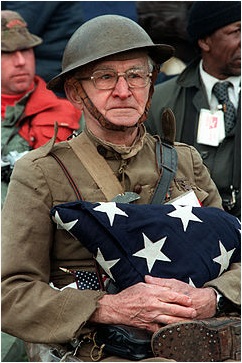
The problem–the problem that led to the death of Laquan Mcdonald–extends to Jason Van Dyke’s police department, whose officers allegedly went into a Burger King and erased the surveillance video. It extends to the Mayor’s office and to the State’s Attorney’s office, who were dilatory in bringing charges. It extends to our legislatures who have shielded our law enforcement officers with cloaks of qualified immunity, impunity, and legal invincibility. It extends to our courts, all the way up to the Supreme Court, for eviscerating the Fourth Amendment rights of the citizens.

The problem extends to each and every single one of us who wants to claim citizenship in a democratic republic.

Laquan McDonald is on all of us. 

We are a society. We have a culture. We share a nation. We call ourselves the United States of America. We pride ourselves on our democratic ideals. We claim exceptionalism. Equal protection under the laws. A government of the people and by the people. Just as we as a nation cannot absolve ourselves for the slaughter of innocents overseas when we send our troops to war, we can’t abdicate our own responsibility for the death of Laquan McDonald or any of the others unjustly harassed, abused, or murdered in our name.

All it takes to file criminal charges in this country is probable cause, a bar so low in our courts that if it were not so tragic it would be laughable. It took over a year to charge Jason Van Dyke with first-degree murder despite the fact that clear video evidence showed far more than probable cause that he committed first-degree murder when he opened fire on a juvenile, a teenager who was moving away from him, a kid who made no threatening gestures toward Jason Van Dyke. He opened fire and he kept firing. Laquan McDonald fell to the ground and Jason Van Dyke kept firing.

It was memorialized in video. Evidence exists. Probable cause exists. As a society, we should be expected to seek justice for whomever was responsible for the death of Laquan McDonald. But we didn’t. We delayed, and justice delayed is justice denied.

It took 400 days to charge Van Dyke in the shooting of Laquan McDonald. 

Jason Van Dyke gunned down Laquan McDonald on October 20th, 2014. A judge, in response to a journalist’s Freedom of Information Act request, ordered the video of the shooting released to the public by November 25th, 2015. 400 days.

400 days have gone by since Laquan McDonald breathed his last while he lay bleeding in the streets from sixteen bullet holes, with all the bullets being fired by one sworn to uphold the law and protect and serve the public.

400 days. The State’s Attorney, she’s an elected official. She’s a politician. The video had been requested by the public for a year. When the courts finally forced the city to release the video of the slaying as unrest continued to grow, she waited until the day the video was released to press charges.

#BlackLivesMatter –Laquan McDonald’s life mattered. 

If Laquan McDonald had been arrested for shooting and killing someone, if the roles were reversed, he would have been put in jail and charged as soon as the courts were open for business. He would have been denied bail. He would have been assigned to an overworked public defender who could not possibly be expected to provide effective assistance of counsel with the immorally low funding and staffing in the public defender’s office. Laquan McDonald would either be coerced into pleading or he would have a mere formality of a trial before he was sent to prison or death row. No one would blink, because that is how our country operates. That is the status quo.

Instead, Jason Van Dyke is a white police officer who has a thin blue line to erase video tapes for him. He is a white police officer who has the strongest unions and political lobbies behind him. He is a white police officer who works in the executive branch of our government, hand in hand with the attorneys responsible for charging decisions and prosecutions. He is a white police officer who has 400 days to prepare a defense, to prepare his family, to practice those magic words, “I feared for my life.”  He is a white police officer who may have never been charged in the first place if a journalist didn’t fight for that video to be released, who may have never been charged had that video not forced the hand of the State’s Attorney in her own self-interested political game.

We are all complicit; we are all responsible for change. 

Plenty of people will spill words indicting Jason Van Dyke, but plenty of right-wing racists will instead blame the victim and say that if Laquan McDonald weren’t a “thug,” if he had just followed the directions of police, if he had just not committed any crimes in the first place, he would still be alive. Their logic will rest on the idea that anything short of unflinching obedience to the State, anything short of complete purity of spirit (and skin) deserves the sentence of death with no trial.

Plenty of people will blame a police culture that encourages officers to shoot first and ask questions later, yet plenty of others will write op-eds about a non-existent war on police.

Plenty of people will march in Laquan McDonald’s memory to honor him and to protest the sad truth that our government—and thus, the majority of our citizenry—cares less for the lives of black people and other people of color than it does for the white majority, yet many will point to the red herring of black on black violence.

Plenty of people will scream out in anguish because they aren’t heard when they say, “Black lives matter,” but—sadly—plenty of people will scream out in anger and denial to drown them out. Plenty of people will miss the point entirely; and to protect their own fragile psyches, to continue living in denial, or to maintain their own status quo, they will cry out, “All lives matter.”

It’s all so familiar, and it’s all so heartbreaking. So many words will be spilled about the blood we continue to spill, and most of them will be pointing the finger at someone else. So few will hold up a mirror and say, “How am I complicit?” The truth is, we are all to blame.

We live in a culture of fear in which we demonize “the other.” We live in a culture of violence in which we use guns in misguided efforts to solve or prevent our problems. We live in a culture in which we are at war with each other—black lives vs. blue lives, liberals vs. conservatives, extremist evangelicals vs. everyone, and the list goes on.

We live in a culture in which we voice outrage over the blood spilled in our streets, in our movie theaters, and in our schools; yet, we do nothing about it. We live in a culture in which we are all given one vote, we are all given voices, and we continue to either not use them or we waste them to maintain the status quo. The status quo is not acceptable.

My heart absolutely breaks for Laquan McDonald and for his family. And my heart breaks for us all.


     Matthew J. Hefti is the author of A HaA Hard and Heavy Thing by Matthew Heftird and Heavy Thing (Tyrus / F+W).


Are We Still Charlie Hebdo?: The Growing Dissonance between Extremism and Free Speech

I started preparing this essay a month or two ago to collect my thoughts about the after effects of the Charlie Hebdo attacks and how the limits of free speech are being tested as extremism and intolerance increase in Europe and America. Now, the latest attacks in Paris on November 13th have made me reevaluate my original thoughts and given them new urgency, but have not substantially changed my views. The key issues I will discuss are the nature of Daesh, the refugee crisis, climate change, media hypocrisy, right-wing extremism, and free speech. These are complicated issues, obviously, with many interwoven factors at play, and I will do my best to make sense of the situation as I see it.

Let’s begin with a brief look at what Daesh is (one thing I have learned from philosophy is that linguistic terminology matters; I don’t like the term ISIS because it was chosen by them and it disparages the ancient Egyptian goddess and Roman cult figure Isis; the term used by the French government and Secretary of State John Kerry is “Daesh”, which is more useful because it delegitimizes the group and they hate it). From what I can gather, the purpose of this self-declared Islamic Caliphate is to gain and hold as much territory as possible in order to establish a haven for what they consider pure Islam, all while making incessant war against neighbors and non-Muslims until their awaited apocalypse. For brevity’s sake, an apocalyptic death cult that happens to follow the words of the Koran literally. This long article in The Atlantic by Graeme Wood does a good job explaining the rationale behind the erstwhile Caliphate. One of the conclusions is that, despite how it looks from Western eyes, Daesh is a very reasonable and consistent group of people; it just happens that their reasons and consistency spring from a bloody and black-and-white ideology deriving from 7th century Arabia. Up to now, Daesh has seemed content to wage war only in its own neighborhood of Syria and Iraq. Unlike al-Qaeda (which was responsible for the Charlie Hebdo attack), Daesh is not primarily a terrorist organization but an actual government, however illegitimate and doomed to failure. (It is also highly relevant that the two groups have long been feuding for the soul of Islamic jihad, and are in no way allied). The attacks in Paris could have two possible interpretations: Daesh is branching out to international terrorism for the first time, either out of desperation after recent setbacks or to further their apocalyptic aims; or, the attacks were claimed by Daesh only after the fact, and were actually carried out by desperate European-based sympathizers who were unable to reach Syria themselves. As far as its origins, it is not too hard to trace the rise of extremism wherever violence and instability holds sway. Four years of a bloody civil war in Syria, combined with over a decade of bloody war in Iraq, created the perfect conditions for an organization such as Daesh to thrive. One of the lessons of history is that, in spite of some rare exceptions, periods of violence and revolution do not suddenly end in peaceful and stable governments.

If we are to attach blame to the creation of Daesh, it must be said that the US and its allies bear no small part of it. First and foremost for the illegal and disastrously managed war in Iraq, but more indirectly from the decades of unquestioned alliance and support for Saudi Arabia, a country which has almost single-handedly allowed the extreme Wahhabi sect to spread and produce jihad across the Middle East and the World (the US has an extremely long history of supporting authoritarian regimes in the name of business; Saudi Arabia is different from many of the historical examples in that the support continues today with virtually zero public backlash). There is enough blame to go around, however; do not think that I absolve the dictators and mullahs and imams who have themselves actually done the most killing (it is almost too obvious, but I don’t want to come under the familiar charge of being anti-American just because I point out the facts). The Saudi royal family, the Iranian Ayatollah and Revolutionary Guards, Israel and its increasingly hardline and rightward skew, the Palestinians who resort to violence and terrorism, Russia, and Britain and France and the greedy and racist colony legacy they created all play a part in brewing up the toxic sludge that represents the modern Middle East.

One group that does not bear any responsibility whatsoever for the Paris attacks or the existence of Daesh are refugees. Syria had a population of around 22 million before the war, and nearly half of these have been dislocated by force or desperation. At least four million have found shelter abroad, mostly in refugee camps in the neighboring countries of Turkey, Jordan, and Lebanon. There are another three million refugees from Iraq trying to escape Daesh (figures here). The refugees seeking shelter from wanton violence and destruction of homes are not themselves terrorists trying to kill Westerners. As we will see, the big political winners from terrorism, besides the terrorists themselves, are the far-right political parties that wallow in and cater to extremism and xenophobia of any kind. This includes the French National Front, which will probably see yet another surge of support for its anti-immigration and Islamophobic platform. Every country in Europe and the Americas has a political party of this sort, which have generally grown both more popular and mainstream as the wars and and subsequent refugee crisis have grown in inverse proportion to economic stability: UKIP in the UK, Lega Nord in Italy, the Republicans in the US,  Dutch Freedom Party in the Netherlands, Pegida in Germany, Golden Dawn in Greece, True Finns in Finland, Jobbik in Hungary (which has been instrumental in physically stopping the largest numbers of refugees into the EU), and several others all follow the same rancorous script. Though these parties are comparatively small in some cases, they have an outsized voice and influence on the public and political discourse, which they help to poison. They must be denounced loudly and immediately as soon as they use hatred fear, and intolerance of other races and religions to further their selfish political and economic ends. It is encouraging to see, now almost a week after the latest Paris attacks, that there has in fact been such a large pushback against extremism. It must continue unabated, however.

On a deep level, if Europe and America want to ameliorate both the immediate and long-term situation in the Middle East, one of the two best things they can do is to accept many more refugees (as in, all of them). Countries like Germany and Sweden are acting responsibly and charitably in the refugee crisis. Every other country leaves something to be desired after setting extremely low thresholds for asylum applications and doing as much as possible to discourage refugees (and immigrants in general). It is not only the only moral and humanist solution to such a tragedy, but the best way to economic and political security. After all, no country benefits by having a failed state and terrorist breeding ground on its doorstep. In addition, Europe and the US should do much more to provide assistance to internally displaced refugees in Syria and Iraq, and create safe zones. Whatever is being done is not even remotely enough. It goes without saying that if the Middle East is ever to emerge from its miasma of retributive violence into something vaguely resembling the more modern liberal democracies that most of you (readers) enjoy, it will need a strong and educated middle-class. Not only does this generally not exist now, but every month of war, destruction, and privation over a huge swathe of this territory is preventing entire future generations from the possibility of ever attaining a peaceful and prosperous life. This is very important and typically gets lost in the fog of war and apathy.

Digression on Climate Change: It is well-known that there will be a crucial international conference on climate change in Paris next month in which virtually every nation in the world will attempt to come to an agreement on how to combat the warming of the planet. The stakes were already high enough, considering the consequences of continued indifference in the face of climatic upheaval, but the terrorist attacks in Paris occurring less than a month before the conference raises the pressure even more. It has long been well-known and documented by scientists and historians that environmental issues like deforestation, drought, overpopulation, and resource scarcity heavily contribute to human conflict. Before the outbreak of a genocidal killing spree in Rwanda in 1992, for example, the population carrying capacity was at the absolute limit, meaning that way too many people were competing for not enough resources (Jared Diamond discusses this and related issues convincingly in his book Collapse, which I reviewed here). In Syria, it should be noted that there were four years of extreme drought which ruined farmers and forced more people into overcrowded cities, all prior to the peaceful uprising by restive Syrian citizens against a repressive and indifferent government. It was only after months of peaceful protests and brutal government suppression that the real civil war started, and we know well that peaceful moderates do not long survive in bloody civil wars. Thus, the conditions were ripe for the formation of a group like Daesh. Though climate change’s very existence is denied by Republicans in America, Democratic candidate Bernie Sanders recently spoke for the growing number of people who not only accept the reality of the crisis, but see the direct link climate change has on political and military conflicts. Lest you still see this as just a liberal fantasy despite overwhelming evidence, the Pentagon and military leaders in America and NATO see climate change as an immediate risk to national security as well.

Voltaire said, or is supposed to have said, something along the lines of “Though I hate what you say, I will defend to the death your right to say it.” This can be seen as an early defense of the right of Freedom of Speech, later adopted in the new country of America as the First Amendment to the Constitution. Although it would appear to be an unlimited right, it has been challenged over the years and its limits have often been tested. Nowhere are the limits pushed and tested as much as in the face of intolerance and violence, or the mere threat of violence.

Let’s now take a trip back in time and revisit the Charlie Hebdo massacre in Paris of January 2015. Besides the murders themselves, an act of outrageous maliciousness, I was troubled by the reaction to the event by the media and the world at large. It need not be said that violence and murder are inexcusable under any circumstances; I say this anyway because it has been discussed around the edges of the event that because Charlie Hebdo mocked Islam and drew pictures of Mohammed, such a tragic outcome was somehow expected or even preordained. The mindset that produces such thought is one lacking in critical thinking skills, perspective, empathy, and intelligence. I can understand the series of causes and effects that can produce mass murderers, religiously motivated or otherwise. The killers were Muslim outsiders in a secular society that limited their economic possibilities, and often expressed prejudice against them, even by the government. They were also of Algerian descent, like a majority of France’s Muslims, which can only remind us of the lingering effects of the long and brutal Algerian war which ended only two generations ago. To understand broader context is not to excuse or even sympathize with violence of any kind. Most of the world’s peaceful Muslims will agree. Though they are often just as disenfranchised or economically limited as the killers, yet they do not curse the world and go on murderous sprees.

Another troubling thing about the media coverage and public outcry of the Charlie Hebdo murders is the total saturation of the news coverage itself and the unprecedented knee-jerk support for Charlie Hebdo by politicians who would condemn the magazine in their own country, and support for France by many of the same politicians who would never come close to supporting France’s culture of free speech. Thinking back to the worst massacres that we have witnessed in the last few years, there are several that stand out in my mind as even more appalling than Charlie Hebdo. One is the 2011 Norway massacre where a white right-wing Christian terrorist single-handedly killed 77 people and injured hundreds more in two separate attacks on the same day. Most of the victims were children and teens at a summer camp. Though this prompted an outpouring of sympathy and condemnation from around the world, there was not nearly as much as there was after the Charlie Hebdo killings, nor was there a show of solidarity in Oslo by world leaders and a viral slogan. Even more disturbing and tragic are the continued massacres and atrocities by the Nigerian jihad group Boko Haram (by far the deadliest terrorist group in the world), and specifically an attack only four days before the one on Charlie Hebdo in which thousands of people were reportedly murdered, with subsequent information saying that perhaps it was “only” a few hundred people instead (though no reporting has ever been able to confirm). This was an event mentioned in the world news, but quickly forgotten by most people even more quickly than they forget about the weekly school shootings in towns across America. A third incident which happened only three weeks before Charlie Hebdo was the massacre at a school in Peshawar, Pakistan, by the Taliban which killed 145 people, 132 of which were young children. There are two possible reasons why Charlie Hebdo was a much bigger deal for people around the world, much more well-known and publicized in the media, and attracted much more sympathy than the other three massacres I mentioned which were all much more violent: Charlie Hebdo’s victims were white Europeans who were killed in the name of free speech by French-Algerian Muslims, which means that white and non-white people from all across the political spectrum had reason to be shocked and angered. In the Norway massacre the victims were also white Europeans, but the perpetrator was counter-intuitively (according to the narrative we are used to hearing from the media) a white European male as well, thus diminishing the duration and strength of the shock and public outcry, while the Boko Haram attack four days before Charlie Hebdo was already out of the news cycle by the time of the Paris attack, most obviously because even though the terrorists were also African jihadists, the victims were black Africans, thus diminishing the sympathy and interest by a large segment of the western media and population that now openly condemns racism but still engages in it; likewise with the Peshawar attack perpetrated by the infamous Taliban on schoolchildren. This troubling comparison tells me that to much of the media and large parts of western society black and brown lives matter less, and that white terrorists are written off as exceptions while Muslim terrorists are seen as a representation of the entire world population of Muslims. The way these type of events are shown in the media is both a cause and an effect of these biased opinions.

One more bit of hypocrisy is the fact that the Charlie Hebdo attack was clearly and unambiguously an act of terrorism in which 12 people were killed in Paris, but many more people are killed every week by the US government in drone strikes, which must feel like terrorism to the people who live in fear. We know that missiles are rained down on supposedly high-value targets in uninteresting and out-of-the-way places like Pakistan and Yemen without any due process or guarantee that innocent men, women, and children will not be killed (they may be a majority of the victims for all we know, though all males are officially classified as “military-aged males” and assumed to be guilty). A detailed report by The Guardian has concluded that US drone strikes in Pakistan and Yemen killed a total of 1147 people in hundreds of failed attempts to kill just 41 men. When a missile blows up houses and cars full of people and kills at least as many as the Charlie Hebdo attack, that seems like terrorism to me. And such violence is likely to create many more terrorists than were possibly killed in the original attacks (a fact conceded by former Air Force drone operators themselves), thus increasing the probability of more strikes such as the one on Charlie Hebdo in the future (and just as such attacks are likely to make more and more westerners see all Muslims as enemies or terrorists).

The Charlie Hebdo attack prompted the trendy show of solidarity “Je suis Charlie” by millions around the world, which is not a bad thing in itself, but I am afraid that much of the solidarity was a superficial and knee-jerk response to the tragedy, not one which examined the sources and possible solutions to the set of circumstances that led to this attack and could lead to more in the future. From my personal point of view as a long-time resident in Europe, people across Europe as a whole are somewhat more thoughtful about such tragedies than the American people as a whole were after 9-11, but the fact that we have witnessed wars and terrorism in the past 14 years since then has created for many people a perspective either more empathetic or more cynical. At the same time Europe is still in the midst of economic troubles which have helped fuel the rise of a slew of right-wing xenophobic and anti-Islamic parties in every country, a large number of Europeans are also seeing that the absolute protection of free speech and tolerance is the only way to peacefully maintain an increasingly multicultural and globalized society. The question of tolerance is one that has not always been correctly understood or handled by either political leaders or citizens. There are limits to both tolerance and free speech, though it is admittedly difficult to tease out these limits, especially when faced with real-world tragedies that prompt unthinking reactions.

Just as there was a media double standard during the Charlie Hebdo massacre, likewise for the November 13th Paris attacks. The scale is much greater in the latter case, with at least 136 deaths and hundreds more injured. But the reaction was similar in that Daesh itself conducted other attacks on civilians in other countries within 24 hours of the Paris attacks, but with little reporting by the media and little interest by the public. 26 people were killed in two suicide bombings perpetrated by Daesh in Baghdad, while 43 people were killed and hundreds wounded in two suicide bombings perpetrated by Daesh in Beirut. Neither of those have the high death toll of Paris, but does it matter? After all, as I have shown, “only” eight people were killed in Charlie Hebdo attack but that was a bigger news story by ten or hundredfold than greater massacres of the same time in other countries. Some of this is cultural, and the fact that Paris is a central city in Western civilization, and one that many Western people have visited and feel a connection to. But still, does that matter? I love Paris as much as anyone, as well as free speech, and I hate terrorism and any kind of violence, but that does not make me feel more rage and frustration in either the case of Charlie Hebdo or the November 13th attacks as the ones in Beirut, Peshawar, Nigeria, Baghdad, Oslo, or the weekly school shootings in America. My rage and frustration is the same, and comes from the same source, directed at the same cause. I do not think Islam is the root of the problem, nor do I think that closing borders and blocking asylum and aid for refugees is the solution. These are just two of the ways I have complete and fundamental difference of opinion with the intolerant bigots in our own countries (such as my very own Congressional Representative in South Carolina, a Republican named Jeff Duncan, who blamed refugees and Muslims for the attacks before the blood had even congealed on the streets of Paris, or every single Republican presidential candidate and most of the Republican state governors).

Let’s look at some more case studies in tolerance and intolerance. Germany’s chancellor Angela Merkel once declared the idea of multiculturalism in Germany to have failed. I do not know if she was just trying to appeal to her conservative voters, but such a statement is irresponsible and untrue. This idea that immigrants cannot be integrated into a society only feeds the xenophobic bigots who have now become quite vocal and strong in most European countries. The fact that the rise of these groups has coincided with economic recession and unemployment is in fact no coincidence. Blaming outsiders is an appealing message to certain types of people who feel economic strain and see a threat to their traditional way of life. That does not mean that it is the fault of the immigrants, who are almost always under much more economic strain than their detractors, but of the political and economic elite who create the conditions that the people will either succeed or fail in. Whatever she meant by citing the failure of multiculturalism, Merkel has at least proven to be a courageous leader in leading the way for European countries accepting refugees. It is still not enough.

On the other hand, the right-wing nationalist and xenophobic parties have been spreading hate and intolerance. They grow stronger when people become fearful of violence and terrorism. It is well-known that toxic public discourse and intolerant speech by political leaders directly leads to violence by their troubled followers. It happens time and time again that some misguided soul takes out murderous aggression on an innocent party that had been vilified by some right-wing hate-monger. This point cannot be stressed enough. One clear limit to free speech exists at the first instance of violence, the threat of violence, or even the mere hint of violence. This goes not just for physical violence but for anything that qualifies as unnecessarily extreme aggression, intimidation, emotional bullying, etc. There is a paradox of tolerance, which is that one must be intolerant of intolerance in order to maintain a civil and open society (I have previously discussed this paradox at greater length here).

Let me indulge in a thought experiment, and let us imagine a growing fringe political party that doubles as a hate group. One of their keys beliefs is that beards are evil and unwelcome in their country. While this is a ridiculous position to hold, it is merely an opinion that happens to be small-minded and wrong (my sense of morality tells me that opinions can sometimes be wrong just as facts can). An invisible line is crossed, however, when the anti-beard group’s legitimately free speech turns to calls for violence, retribution, or even economic and social sanctions for people with beards. This is intolerance that cannot be tolerated in an open society, since it operates outside the bounds of civility and freedom from fear and violence that are the foundation a free society is built upon. In other words, though I hate what the anti-beard group says, I will defend their right to say, but only insofar as it is exercised as one particular opinion and way of life but not as a call for violence and intolerance against others who do not hold that opinion or other varying attribute (such as religion, sex, sexuality, skin color, or facial hirsuteness).

I would further argue that a fully democratic nation whose voting citizens are composed almost wholly of illiterate idiots is always preferable to a nation ruled by the most benevolent dictator but where freedom of speech is limited. The limits of democracy are seen insofar as its demos, or people, take active and informed interest in the decisions of the nation. So in the former case, though the ignorance or indifference of a sufficiently high percentage of voting citizens in a democracy could easily lead down the road to fascist dictatorship, the fact that it was firstly and presently still democratic weighs conclusively in its favor. This shows the promise and the limitations of democracy: nothing is guaranteed except what the citizens enable; everything is possible; but it can still be corrupted by propaganda and the preying on of the basest human emotions of hate, greed, and intolerance.

In the years after 9-11 in America, the people made the mistake of allowing fear and the illusion of security eclipse their freedoms. There is still much work to do to dismantle the security and surveillance state that was erected during those years of democracy in its lowest ebb. Similarly in Europe, leaders feel pressure from the right-wing parties that scream for closed borders and a stop to immigration, and for added security measures that will sacrifice hard-won freedoms for an illusion of safety. It must not be. Just as free speech must be protected at all costs, Western countries must not give in to the fear that terrorists aim to create. As Franklin Roosevelt famously said, “We have nothing to fear but fear itself.” That is still true in that our society remains fundamental strong, free, and open, and there is nothing that terrorists can do to change that other than make us fear them so much that we remake our society in their image, and waging more endless wars of their choosing.

Wise men are able to say things that echo long after they are gone, and it’s the same once again with Voltaire, one of my favorite Parisians, who said, “Those who can make you believe absurdities, can make you commit atrocities.” It was hard to miss the fact that one of the six Paris attacks was on a theatre on Voltaire Boulevard. Though this could be coincidental, it is not hard to imagine the attack planners targeting such a symbol of everything they hate: music and drama, philosophy, satire, reason, and enlightenment. The quote applies quite easily to the insanity that is Daesh, but let’s not hesitate to look at our own recent past. European civilization is easily the bloodiest in history, and that is why it is crucial for us to remember our own past in order to forge a new future.

Let me close with the words of another wise humanist and antiwar activist, Bertrand Russell, whose message to the future (which is the present for us) was the following: “The moral thing I should wish to say to them is very simple: I should say, love is wise, hatred is foolish. In this world which is getting more and more closely interconnected, we have to learn to tolerate each other, we have to learn to put up with the fact that some people say things that we don’t like. We can only live together in that way — and if we are to live together and not die together, we must learn a kind of charity and a kind of tolerance, which is absolutely vital to the continuation of human life on this planet.”


Killing is Easy

Killing is the easiest thing in the world, easier than sex. Easier than raising a family or bringing a child into the world, or building a house. Easier than painting or writing or music. Killing is easier than sleeping.

Before November 13th I couldn’t have told you how 9-11-2001 felt. Watching the attacks in Paris, the killing, I remembered helplessness and a physical desire for vengeance, like fourteen years were gone. As I texted, instant-messaged, and emailed friends in the affected zone, desperate for news of their safety, I felt alternately overwhelmed by great sadness and murderous rage. It was clear then, as it is now, who was responsible for the injustice. And I wanted payback.

For those who have not felt the call to kill in the name of humanity and justice, it is a godly thing. Reading through the initial reports, I choked back tears, heading—where else?—to the gym, hoping to direct this urgent compulsion toward the noble desire for blood somewhere, anywhere else. On the stationary bicycle and then at the weight machines watching the President express solidarity for France, I fantasized about my phone buzzing with news from a friend in the military calling me back into service. In the interests of honesty, I must admit that this fantasy involved him telling me that the time had come to clean the Middle East once and for all. From the Indian Ocean to the Mediterranean, and then the vast Atlantic Ocean off North Africa, we would impose the final, drastic justice this situation demanded. That’s what I felt.

That’s what the ISIS terrorists in Paris must have felt reading news of defeat after emasculating defeat for their movement in Sinjar, in Syria, and in Iraq. We have to do something, and the time has come to martyr ourselves. They must have believed that they were correct to act, and enjoyed the doing of the deed. Killing is the easiest thing in the world.

That seems to be what Francois Hollande was feeling when he implicitly committed France to military action against ISIS, saying, among other similar things: “It is an act of war that was committed by a terrorist army, a jihadist army, Daesh, against France,” and “we will lead the fight and it will be merciless.” As the attacks in Paris unfolded, I felt the same way.

And that’s the end of civilization. It’s popular to joke about France and Europe being weak, now, being militarily incompetent in the aftermath of WWII, but things are stable in Europe and mostly safe as a result of progress, the horror our grandfathers felt when they saw the red gurgling aftermath of their deeds stain their hands, uniforms, and relationship with the natural world. Until 1945, Europe and Eurasia had been by orders of magnitude the most violent place in the world. Mechanisms for killing on an industrial scale never imagined anywhere else were pioneered in the USA and perfected in Europe. When it comes to violence, Europeans are not just masters—historically, they transcended mastery, elevating it first to the realm of art, then, later, incorporating it. It took us seventy years to suppress the natural European inclination toward violence on a level that would make even a hardened ISIS fighter’s stomach turn and head spin—seventy years, which, in the balance, doesn’t seem like enough by half.

The end of civilization is when one acts based on feeling, and especially that low, barbaric feeling to hurt or murder. I know, because I felt it last night—can still feel it in waves. In Afghanistan, over 26 months, the two infantry units I was with killed hundreds of Taliban, Haqqani and Al Qaeda operatives (over 1,000?), taking 15 deaths in return—killing is easy. But what gives me and people like me our reason for being in the liberal West—the evolution of liberal arts education, pioneering human and then civil rights, the components that make us superior to ISIS terrorists, dogs, spiders, and lizards, is that we aspire to be reasonable—we are capable of thinking out the logical conclusion of our actions, and acting differently given different stimuli, acting generously and altruistically although our bodies may tell us that killing or hurting would be more satisfying. This was the lesson the West drew in the aftermath of World War II, on the bodies of so many Germans, Russians, Japanese Ukrainians, Polish, French and more—enough bodies to make Syria again three times over. This is the lesson I drew from war, as well. Killing is easy, but it only leads to more killing. And there’s always more blood than you know. Blood that’s sticky, and gets everywhere.

No, people who believe that France and Europe are weak because they do not act sufficiently violently for their tastes (a) don’t know the region’s extraordinarily bloody history, and (b) don’t believe in biology. Civilization and modern western society—cultural constructs that encourage cooperation and altruistic behavior—are fragile things, to be nurtured and protected at all costs. They’re the product of peace—in times of war, people become callous, cease caring about others, wantonly indulge in the brief satisfaction of vendetta. Small acts of humanity and grace become acts of heroism.

After finishing my time at the gym and hearing from most of my friends, I returned home, showered, and headed out to dinner with a photojournalist friend to discuss the night’s events, process what I was feeling. Fielding phone calls on the drive into the city, drinking beers over Turkish kabab, then calling other friends on the way back home, I was able to stabilize the urge to hurt and hate, to ameliorate it with that greatest benefit of living in a developed, safe, modern country—generosity.

Even though it feels now like hurting the people responsible will provide satisfaction, will solve the hurt, logic as well as a brilliant, counterintuitive moral imperative unearthed by Christianity instruct us that the answer in this situation is to open our arms wider, to “turn the other cheek” to the despicable insult, rather than to deliver injustice for injustice, which other cultural traditions and tribal societies would demand. The parasites that are ISIS feed on blood and violence. Let us, by our actions, demonstrate our moral and intellectual superiority. History instructs that we can go down a very different path—we could, if we desired, exterminate them—but then, wouldn’t we just be descending to their primitive, animalistic level?

Some reactionaries in European and Western society would have us do precisely that—would turn Europe back into the brutes they were 70 years ago, or would indulge America’s more recent penchant for “shock and awe.” This is a popular anti-intellectual idea on the right: we should do what feels good, and to hell with civilization. To beat the thugs we must become thugs ourselves. Here’s one such confused hot-take. Suffice it to say, if someone is advocating for violence, that person is not civilized, nor do they support humanistic values like charity, magnanimity, and (ultimately) the precious elements that separate humans from apes or lower forms of animals. They are the enemy.

On the other side are people who over-intellectualize the problem, and would stifle any action-those of the extreme left, who have already begun stating their belief that one should experience a similar emotional reaction to the bombing of Baghdad as one does to the terrorist attack on Paris. As a humanist, I am more sympathetic to a call for widespread empathy than I am to kill (empathy is harder than killing), but it is unsympathetic at best (and inhuman at worst) to claim before the bodies are cold that one must feel for all humans or for none at all. It is a truism among this group that Westerners don’t react to tragedy outside their community (this type of reaction is already common on Facebook and Twitter), as though feeling for anyone besides oneself were a bad thing if one does not immediately think to feel for everyone. Insisting that others should have to always feel empathy for everyone all the time (that they should behave like bodhisattvas or saints) or never at all (that they should behave like sociopaths) exhibits an interesting symmetry, but doesn’t seem like a useful or productive philosophical or human stance, although I suppose it must make the claimer feel satisfied on some level or they wouldn’t do it.

For the 95% of Westerners affected by the tragedy who aren’t on the extreme left or right, it is okay to feel something about this tragedy without needing to take on the problems of the world. If you have a personal connection to Paris, as many do, rage or grief is perfectly natural. If you don’t have a personal connection to Paris but do to the event, rage or grief is perfectly natural. And in either case, regardless of how one’s natural and appropriate feelings on the subject (I certainly felt like exerting violent vengeance on behalf of a city in which I have lived, visited often, and to which I have longstanding and deep cultural ties), the next step is to divorce thought from feeling, and to act in keeping with our cultural, humanist heritage: reasonably.

This means collectively and individually helping other humans (the refugees of war, the migrants, the aspirational and the cursed), because it’s within our power to do so. We of the developed world are not infected with that ideological disease one finds so often among the mad, the disaffected, and those living in chronic poverty—the cultural imperative to kill—as are these ISIS psychopaths. No—let us this once demonstrate our laudable willpower and the unquestionable superiority of our civilization by letting the sword fall from our hand—let us show our strength by not doing what is easy, and easier for Americans and Europeans than anything else (for we are the best at that easy task of killing)—let us show the world mercy. Otherwise we risk losing what was bought with an ocean of our own blood.


The Importance of Identity

I’m writing this on the eve of Veterans Day, an annual observance in America that becomes both less and more important to me with each passing year. It’s important to view days or periods of time as special; I’m not sure when that began, and I assume there was originally a religious or superstitious connotation to “special days,” but now the special days with which one identifies form an important part of one’s identity.

In thinking about Veterans Day, and what it means to me, I have to admit that many days feel like “Veterans Day” in America. Part of that is my friend circle—as someone who is interested in affairs that affect veterans, I’m constantly encountering them on social media, as well as in the news. It helps that identifying as a veteran is seen, now, as a largely apolitical gesture, and one that is fairly unbiased when it comes to race, religion, sex, or gender (individual experiences will vary on this point, but I’m speaking broadly). In general, veterans tend to feel appreciated in US society. And when they don’t, they let people know.

Being a “veteran” is different from being a part of any other special interest group, especially ones involving birth. Nevertheless, being a veteran is similar in that few civilians know or understand what they’re getting into when they join the military. One goes through basic training and advanced training, and the point of it all is to strip you of your identity as a citizen—to make you simultaneously less and more. Once you join the military, you have become something that you never were as a civilian—part of a unified collective—and once you leave, you are stripped of that collective. Even the people who misbehave, the anti-authoritarians (as I was), the renegades, the individualists—even they are not unaffected by the curious taking off of identity, of returning to what one was before the military changed you—this is a large part of what it means to be a veteran—to know loss, to understand what it means to have been part of a special team.

Not every group in America does feel appreciated, or even safe, necessarily, within the identity that has been assigned to them. I’m currently lecturing a course at Yale called “Memoir and the War on Terror, which has been in the news recently because certain minority groups do not feel safe on campus—intellectually, culturally. The source of the problem some students have with Yale clearly has roots in the Black Lives Matter movement, and it is eliciting the usual spectrum of responses. The left, broadly, supports what appears to be a valid concern on the part of students who do not want to be confronted by crude caricatures of their cultures. Yet all over the right, there exists much handwringing over liberal fascism and the thought-police, moderately described by Conor Friedersdorf of The Atlantic and less moderately by people writing for Breitbart and other right-wing sites.

Academia is not crumbling; it’s not under attack; our freedom is secure. What’s happening, near Veterans Day (conveniently for my meditation on that which makes me special and unique in terms of social identity beyond my being special and unique by virtue of my chemical and physical composition), on the Yale campus and at the University of Missouri, is that people are engaged in dialogue. There have been threats, intimidation, and strong language, but unlike in many areas on earth, there haven’t been gunfights or brawls. There’s been language.

When my father was graduating from Yale in the Spring of 1970, there were protests on New Haven Green tied to a murder trial of the Black Panthers. Someone called out the Connecticut National Guard. My father remembers smelling tear gas on campus—the Green is beside Old Campus, where most freshmen live at Yale. Tanks and uniformed soldiers were on the streets. Kent State loomed at the forefront of people’s memories, where students had been shot. That was a protest.

Today, some students don’t feel safe and are congregating, are meeting with professors, and—sometimes—are shouting. There are no tanks, no soldiers, no riot police. No tear gas. The Silliman Master, whose wife provoked this firestorm with a (as Friedersdorf points out) fairly rational, defensible, unintentionally incendiary email, stands (in a prominent YouTube video) in the middle of a group of students—despite being yelled at, he remains calm; his life and safety are not in danger.

We’ve come a long way, collectively, since the days of Vietnam. Veterans of Vietnam came home to an almost-non-functional VA, and were alienated by veterans of WWII and Korea, as well as by segments of the US population. Society itself was in turmoil, everywhere. Today, Veterans of the War on Terror are accepted despite their participation in a war that makes even less sense than Vietnam. Veterans come home to parades, a less-broken VA, and an appreciative (or, at least not a hostile) population. Veterans have it good.

And society has it good. Things aren’t perfect, but they’re far better than they were forty, fifty years ago. The events unfolding at Yale and on other college campuses today are products of integration and products of a democratic society wherein people can speak up and speak out. That’s a good thing.

I’m pleased with what is happening on college campuses and proud that being a veteran of the United States of America’s armed forces is part of my identity. Life isn’t perfect—it never was, and it never will be—but so far, we’re doing it better than just about anyone else in the world.


Do Nazis Dream of WWII Dystopian Future Pasts?


Do Nazis Dream of Dystopian Future Pasts?

The tired, simplistic, bargain-basement Cold War narrative of WWII sucks and it’s time we got over it. According to my eighth grade history teacher, the USA won WWII by beating the Nazis and the Japs. If we hadn’t beaten them, they would’ve conquered the world. That’s how the story goes, and many board games and video games embrace it. It’s comforting, comfortable bullshit. That version of history—the $59.99 version where you get to kill the bad Nazi colonel or fight buddies multiplayer with antique weaponry—ignores basic facts that are widely available outside academia. Chief among those facts is the near-pathetic weakness of Germany and Japan heading into WWII, as well as the wholesale aggrandizement of our intervention and participation in WWII in ways that make us feel good about ourselves but also totally distorts how war looks and how reality worked and works.

Being honest about how WWII went down and what was actually at stake is important because history is important, and shapes how we evaluate our surroundings, our present, our acts and actions. This, as it turns out, is the thematic heart of Phillip K. Dick’s science fiction dystopian novel “The Man in the High Castle.” Dick, at his best when using strange and challenging scenarios to interrogate the relationship between individual and society, contrives an alternate reality where America loses WWII when the Germans develop and drop A-bombs, forcing us into negotiated surrender, occupation, and servitude. The novel—and the series—is an incredibly subversive take on how history operates, both in the logic of the story, and in the logic of our own reality.

Amazon (not one to shy away from a sexy narrative featuring Nazis) has taken what was in Dick’s hands an interesting meditation on the nature of perception and put together a mostly-faithful rendition that promises to entertain and educate viewers with a cautionary tale about what it feels like to live under a totalitarian dictatorship in America. I watched the first couple episodes using my Prime membership. And I was mostly impressed.

The series is set in a counterfactual past—it seems to be the 1960s—and begins with a shot of two men in an old-timey movie theater (the younger of which is Joe Blake, who promises to be a major character in the first season) watching a lousy piece of fascist, pro-status-quo propaganda. This is a subtle nod to you, the viewer of the show. Films go on to play a big role in the series, as well as peoples’ reactions to film—in fact, the single greatest threat to the “Nazi” led reality is a series of subversive films showing a reality in which the Allies win, and the Nazis and Japanese lose. Both in Dick’s novel and the series, this is an honest and accurate idea of how Hitler seems to have viewed narrative—a fact echoed in “Inglorious Basterds,” Tarantino’s masterpiece that deals with similar themes. People watching the film of Allied victory in World War II are transported, blissfully and tearfully watching and re-watching footage, in moments that are reminiscent of our own reactions to this type of video on Memorial and Veterans Day, on the History Channel. Where “The Man in The High Castle” takes flight, however, and removes itself from just another nostalgic retread celebrating victory of freedom over tyranny is in its secondary or tertiary level, wherein the critique ends up being not of the Nazis, but of ourselves and our consumption of narrative history.

The series is filled with these double-scenes, moments that have special resonance on multiple levels, which is true to Dick’s vision and the intention of his fictionalized world. Things in dystopian Nazi-America are a bit shoddier than they should be, given the timeframe. There’s a great deal of factory labor that’s put front and center in the series as part of the economic backdrop to the Nazi-occupied society, and much of the show feels like noir. If the Nazis had won, the show claims implicitly, things would be worse in America than they are today.

But not that much worse. Noah Berlatsky noticed this same phenomenon, watching the show earlier this year. In a review for the Atlantic, he found the show to be subversive in its claim that life would have been crummier, lousier, but not *fundamentally* worse than it has been for our real actual selves. There are no lines for food, no dead people lying in the streets. Gangs of Nazis and Japanese police chase down pro-democracy “resistance” advocates, but the people who keep their heads down and work hard are rewarded. It’s not difficult, in other words, to imagine that if there were a group of pro-Nazi, pro-imperial Japanese agents running around today with films showing how in *their* reality Hitler and Hirohito won, our own government would be clamping down on their activities, and would view them as a direct threat. Would our real police be shooting them down on the streets? Well—people who are devout followers of that violent brand of Islam sweeping the Middle East aren’t exactly treated with hospitality when the US security apparatus gets their hands on them.

Suburbia in Nazi-America is inhabited by Nazi party members and functionaries, but apart from kids having to wear silly school uniforms, things are about the same. Kitschy television shows the type of which people consumed in the 1950s and 1960s are on the air, but with a Nazi twist. There seems to be a functioning interstate system (Eisenhower is, after all, said to have been inspired by Hitler’s autobahn, so this is not totally surprising).

In the Midwest, the truck Joe Blake is driving blows a tire, and he gets help from a Nazi policeman who offers him help and part of a sandwich. During the exchange, Blake spots a tattoo on the policeman’s arm, and the policeman self-identifies as a veteran of the war against Nazi Germany—then claims not to even remember what they’d been fighting for. White flakes are falling from the sky, and Blake asks the trooper what they are. The policeman cheerfully volunteers that “Tuesdays they burn cripples, the terminally ill… [they’re a] drag on the state.” In this series (and in the book), people in the south and Midwest have adapted easily and enthusiastically to Nazi rule.

The resistance, on the other hand, is made up of (frankly) irritating ideologues who rant about “freedom,” which, presumably, is the kind of thing Moderate Syrians wanted in 2011, or the kind the West enjoys today—contextual freedom. “The Man in the High Castle” deserves huge credit for showing the resistance critically, and giving them real weight, real complexity, rather than simply having them be the sympathetic heroes to whom everyone is accustomed. Even though many of the resistance freedom fighters don’t know what freedom actually is, it doesn’t stop them from expressing willingness to die for the idea—to “do the right thing,” as Joe Blake says. Thus the show subtly but undeniably reinforces the notion that perhaps the world we see today—the real world—is not as we imagine. This is not what our noble ancestors fought for.

Interesting side-note—in Europe, when you talk with people it seems like everyone’s family was in the resistance in WWII. I’ve always found that fascinating, like, if everyone’s grandparents were all in the resistance, how did the Germans conquer so much territory? But I digress.

So far, the series has decided to portray the Nazis and Japanese as brutal if thuggish occupiers, with an incredibly sophisticated and all-encompassing intelligence-security apparatus. The Nazis are recognizably Nazis—tite uniforms, imposing architecture, annoying habits, and superior military-aviation technology. The Japanese, on the other hand, turn out to be eastern spiritualists who do martial arts on the side and are in the logic of the show (and the book) presented as morally superior to the Germans. Gone are the massacres they carried out against whites, Chinese, and “inferior” people in the Greater East Asian Co-Prosperity Sphere—in this show, they are unwilling puppets of the Germans, occupiers almost in name only.

Which is where the show’s deviation from the book and challenge to History as we know it begins to get really interesting—in the logic of the show, Hitler is the one who insisted on détente with the Japanese at the end of World War II, and who insisted on peace. Hitler, in other words, is the peace-bringer. In the world of the show, Goebbles and Himmler are jockeying to replace Hitler as the Fuhrer, and that’s seen as a bad thing.

Another decision that’s sure to bring the show in for criticism is its handling of Jewish characters. One of the main characters in the book (and thus far in the show) is a Jewish worker with artistic aspirations named Frank Fink. To begin with, he produces “degenerate” art, which is an odd confirmation of Nazi propaganda (he appears in the logic of the show’s world to be guilty of the thing that Nazis expect him to be guilty of). Then, he’s captured and presented with what appears to him to be a dilemma—save his girlfriend, or save his family.

And this is where things get really strange, in the show. The audience, at a certain point, understands that it doesn’t matter what Fink chooses—his girlfriend is already being tracked by the Nazis. A member of the resistance, Randall, warns Fink that if he gives her up, he’ll sacrifice his soul, a point that is reinforced to the audience because viewers know that whether Fink gives her up or not is completely irrelevant to her fate. The Japanese don’t know this either, though, so they threaten to kill Fink and his sister and her family, for being Jewish. The Japanese claim not to be racists like the Nazis (as already described) in the sense that presumably their racism is directed toward other Asians, and not based on religious discrimination, so it doesn’t matter to them whether they kill Frank or not. But they do end up killing the family—Fink’s sister, his niece, and nephew, with an improved form of Zyclon-B gas. It’s an accident, bad timing. The Japanese apologize, which is a neat bit of Holocaust-logic—this is how occupied people are treated, and especially Jewish citizens, as essentially expendable.

In return, Frank’s character swears vengeance in the police station. “If you need Jews, you know where to find me,” he says, enraged and embittered at the Japanese decision to kill his family (as they promised to do if he did not give over the useless information, which he refuses to do). The Japanese police chief looks him in the eye and says “I know.” Because it’s a totalitarian society! OF COURSE they know that he’s Jewish, and where to find him. The governments know almost everything about almost everyone in their societies—much like the totalitarian governments imagined in 1984. It’s also worth pointing out that the entire city where this takes place is under imminent threat of being destroyed by a hydrogen bomb wielded by the Nazis.

The decision to use a Jewish character to unpack complicated philosophical questions of causality and moral agency is dangerous and potentially offensive—maybe even certainly offensive. Because to do so puts the viewer in the role of Holocaust victim—and the dystopian future imagined by Dick (and revisited by this series) means, if there are still Jewish people alive in America or anywhere, that the Holocaust is ongoing. It also makes the subtle point that we like or should like Frank Fink, which implies that we ourselves are in a sort of cultural Holocaust, an annihilation of identity, which is an interesting thought experiment but one that doesn’t seem like it’s welcome yet in popular culture.

Another way in which the series may provoke controversy is that the basic premise—that America could have lost World War II under any circumstances—plays on bad history. Our narrative of the war overplays German and Japanese strengths while underplaying the Allies’ economic and military might. Here’s the truth: Germany and Japan were doomed to lose World War II in almost EVERY reality. Their military accomplishments despite that fundamental weakness were extraordinary, but testify more to the astonishing incompetence of American, French, British, Chinese and Russian political leadership and bad generalship early on than to any advantage enjoyed by the Nazis or Japanese. In The Man in the High Castle, the Germans have developed the Atomic bomb before America—we now know that, despite provocative History Channel specials to the contrary, the Germans were nowhere near the bomb, although one of their scientists (Werner Heisenberg) got about one third as far as the entire Manhattan project with a hundredth of their budget before crapping out due to bad math. On top of this, the fact that WWII happened at all is due largely to greedy and grabbing western politicians who fucked over Germany at the end of World War I, hamstrung earnest diplomatic efforts at rapprochement during the depression, and manifested an almost-willful desire to misunderstand Hitler’s intentions in the mid- and late- 1930s. Knowledge of Nazi strengths versus Soviet and Allied strengths leads one inexorably to the conclusion that our dimension must be the only one in which the Nazis weren’t crushed before 1943—it’s a minor miracle they lasted until 1945.

An accurate characterization of Germany and Japan in WWII is not that they almost won—it’s that they almost lost, over and over again, until finally they didn’t not lose. That’s the true history of World War II. We fucked around and fucked things up until we decided, kind of, to sort things out, then lazily and shittly continued fucking off and underestimating the Nazis and Japanese until we eventually didn’t lose, as we were always going to.

Sorry mom’s dad and dad’s dad. It’s the truth.

The real genius of Dick’s novel, and of this series, is that there was and is a fascist threat in America, and it’s going on every day. Where a physical dictatorship of Hitler and Mussolini (and, later, Stalin) was defeated, the result of that defeat was not freedom, actually. What we got is the corporate dictatorship we enjoy today, the anti-intellectual monopoly that began with LBJ and Nixon and the squares of Philip K. Dick’s day. These happy Eichmann-types have been replaced by well-meaning, bright-eyed Hillary Clinton supporters, Jeb Bush (wait does anyone support Bush?) workers, and the hordes shouting Donald Trump or Ben Carson’s name. They’re people developing apps or leveraging synergies in New York City or Palo Alto, California in order to make a couple bucks peddling the escapist farce that a human life should be so easy and predictable that one must never encounter anything unpleasant or inconvenient. They’re the social, corporate, cultural and technological fascists who will doom and damn our country more certainly than David Semel will direct himself into a box of unmet expectations from which he cannot escape by the beginning of Season Three.

End the series by (no later than) Season Two, David Semel. Don’t you screw us again.

After indulging in a fantasy where one gets to rebel vicariously against Nazis in an alternate universe, viewers may consider a more modest rebellion of not supporting the shittiest cast of Democratic and Republican candidates since Rutherford B. Hayes. Otherwise, the future dystopia imagined in this series has already come to pass.


Letter to US #2: It’s Up to You


ClevelandPoliceShootBoy-02282_82751777_238396_1706x1280

Dear NRA Members, 2nd Amendment lovers, Fraternal Order of Police members, legislators, judges, voters, prosecutors, federal agents, state agents, municipal agents, county sheriffs, veterans of foreign wars, and anyone else who gives even a scintilla of a—

Pardon me. Let me start over. This needs to be bigger than that. This needs to be more inclusive than that. This needs to look at US all as a unit, the idea being that we’re all in this together. To that end—

Dear US:

I have a few things to say. First things first: This piece is not reporting. It is not an academic treatise. It is not a thoughtfully-crafted essay. It is—plain and simple—a rant. I intend to do the time-consuming work that needs to be done to create a well-researched and well-crafted essay, but I feel this cannot wait for all of that. I need to address it now. So feel free to focus on inconsequential details when tearing this apart, but I’m telling you up front I don’t purport this to be anything but an angry rant by a crusty vet, written in haste in the middle of the night. I guess it’s also something of a proposal or a call to action, because I do not believe we are doomed.

The impetus: Two “independent experts” (I’m skeptical of both their independence and their expertise) determined that Tim Loehmann—rookie cop with the twitchy trigger finger in Cleveland—and Frank Garmback—veteran cop who has seen Ronin one too many times—were perfectly justified in screaming to a stop mere feet from a little boy, jumping out without hesitation, and opening fire to assassinate the child before they even had time to shout out a warning.

Their excuse? They couldn’t know if the gun was real. They feared for their lives.

This is not meant to pillory Tim Loehmann or Frank Garmback; I’m sure there will be plenty of words thrown around the internet doing that dirty work. I would also bet that they were trained poorly and molded and raised in a toxic culture. I have no doubt they too are products of their systems, and they likely aren’t “bad apples”—unless you want to label the entire department bad apples, which might actually be defensible, but it doesn’t make them outliers.

I want to address the fact that this is a systemic problem, i.e., a broken system creates the problem. And I want to go larger; like, who’s in charge here, anyway? Because someone made the system. The government made the system. Well, who made the government?

The death of Tamir Rice is my fault. And it’s your fault. It’s the fault of all of us in the US. You see, the people make the government. We allowed it to happen, and we continue to allow it to happen. We allowed the courts to eviscerate our Constitutional rights against unreasonable searches and seizures and our due process rights protecting our lives and property. A shooting is a seizure. And a police shooting is the State taking a life without affording the victim due process of law. Then, when our courts slowly eroded any protections we had against police power, we did nothing about it. We stood by and we failed to lobby our legislators to fix what the courts continue to get wrong. We’re generally apathetic. If we’re not apathetic when it comes to protecting our own rights as citizens, we’re certainly not effective.

With so many people acting as stakeholders in this problem—with so many of us at fault—I could write specific questions for all of US to inquire as to what this interest group or that interest group will do to change it. But we have to start big. This can’t wait. Too many young black men are dying; and with every prosecutor that fails to bring an indictment, with every jury that acquits, and with every judge bound to follow bad precedent, the police have more power and more leeway to pull the trigger whenever they fancy, without fear of consequence.

(As an aside, I don’t know why any legitimately responsible police officer would be afraid to do their jobs due to the YouTube effect. We can have people saying they can’t breathe, dying at the hands of police on the side of the street for selling loosies; we can have young boys, not even old enough to shave, getting blasted at the playground without warning; and we can have mentally ill person after mentally ill person call the police for help only to have the police shoot and kill him when they finally arrive—we can have all that and indictments still don’t come down from the people claiming to be able to indict ham sandwiches. So I really can’t understand when police claim they are scared to do their jobs because of what might happen to them if they have a violent encounter. Police have the most powerful unions and lobbyists in the country, they have the prosecutors in their corner, and the courts have given them free reign; police have nothing to fear if they are defecating on the law they’re sworn to uphold, so they certainly have nothing to fear when they do their job responsibly.)

If you slept through high school civics, let me explain that no one can stop disaster on slippery slopes created by judges except legislators. Which means no one can stop disaster on slippery slopes except voters. Except we all know that’s not true, because voters have about as much power to change our course as a sailboat in outer space. The only thing that talks in this country is money, especially after Citizens United. And the only people that legislators will even give the time of day are wealthy lobbyists. But that too can change.

As voters we can stop anything we want to stop. We can fix anything we want to fix. We can change the entire course of the country in a single election day if we’d just set aside our apathy and cynicism for a single day. But in order for that to happen, we need a little imagination. We need to recognize that things are not OK. We need to have faith that things can improve, because without that faith nothing will.

We have a problem. We get the police we deserve, and the police we have shoot people with impunity.

So let’s go there. Let me ask a serious question of US—all of us; i.e., those of us with the NRA stickers on our big trucks; the quiet and responsible families who fill their freezer with their hunted game; the loudmouth, abrasive, foolish, and willfully-ignorant open-carry demonstrators; the picketers, protestors, and pot-smokers; the hobbyists and lobbyists; both the city-dwellers and participants in the great white flight; those still stuck in urban centers and impoverished minorities in in the rural south who must make herculean efforts to cast a ballot; the gun show organizers, sellers, and attendees; the veterans who like to go to the range to blow off some steam and remember the good ol’ days; the veterans who never want to touch a gun again; the hippie liberals who want to gut the right to bear arms like a cleanly shot buck; and all the people who love to defend the modern courts’ interpretation of the 2nd Amendment:

What are we going to do about it?

And not just, “What are we going to do about Tamir Rice?” But what are we going to do about Jason Harrison, James Boyd, John Crawford III, Antonio Zambrano-Montes, Walter Scott, and a multitude more whose names don’t make the national headlines? What are we going to do about police officers—of any race—having the power to shoot anyone they please with impunity, simply by reciting the magic words: “I feared for my life” and then hiding behind their union and their case law written by either elected or politically appointed judges?

What are we going to do about the systemic problem?

Does it not scare the ever-living hell out of you that a police officer can ambush you with gunfire, killing you dead, and then walk away with nary a scratch or a reprimand, simply because he saw what he believed to be a gun?

I need everyone to focus—particularly you Second Amendment people, because you can’t ignore this one. This one directly implicates your beloved practices, e.g., lawful behavior, open-carry.

I need all of US to stretch our imaginations.

These are all imperatives: White people, don’t get reflexively defensive because you get uncomfortable when people point out the very real and very damaging white privilege we enjoy. Those who cry “race baiting,” don’t get reflexively defensive because people point out our country’s sordid history of racism and apartheid. Police, conservatives, and closet racists, don’t get reflexively defensive when people say that black lives matter—because guess what; they do. They matter. Instead of getting defensive and becoming willfully-ignorant to the plight of others, I truly think we can make a difference to show that black lives matter, to show that we can’t tolerate this kind of policing.

White people, I want you to imagine this. (People of color don’t need to imagine it; it’s a real fear they live with every day.) White people, I want you to really try to bring that brain of yours to the next imaginative level. Imagine this plausible scenario of a young white child, roughly the same age as Tamir Rice when he was gunned down by agents of his government. (Well, the scenario is plausible up until the end; spoiler alert: white kids don’t have to fear getting shot up by the police in the neighborhood park.)

Now Visualize.

You buy your son a pellet gun for his 12th birthday. Not even into high school yet, but he’s responsible, and he needs to learn how to use his weapon wisely and safely. You take him out to the woods and you two plunk away at squirrels, and it’s great bonding time. One day your son asks if he can go out himself and look for some grouse or rabbits or something. You say sure, because you trust him. He’s your son, and besides being a sweet kid, he’s pretty mature for his age.

So he walks into the woods from the park in your town, and he goes and legally hunts some small game, and he learns the beauty of the woods. He communes with nature, just as you taught him. After an hour or two, he emerges from the tree line. He strolls across an open field, making a beeline back to your shared home, which is not far from the park and the woods.

He is carrying his weapon, which is real, unloaded, and perfectly legal. You see, in Cleveland, where you live, it is legal to open-carry weapons, even handguns.

(As a side note, that’s even more proof that you Second Amendment people have real clout in our political machinery, clout which could be put to good use—good use like changing police use-of-force laws. Until the Second Amendment people wielded their clout, Cleveland did have an open-carry ban until 2010, but the Republican legislature—supported and lobbied by none other than the NRA—usurped the home rule authority of municipal governments and decreed that the open carrying of weapons in the middle of the city was a matter of statewide concern that warranted legislation to allow open carry in all cities. The state legislators effectively prohibited municipalities from drafting and enforcing their own ordnances banning the open carrying of deadly weapons. So for, like, the past five years or something, everyone in Cleveland, indeed everyone in Ohio, has been operating under some of the most liberal open-carry laws in the country. Now before conservatives get confused, liberal in this context means permissive. In Ohio, not only is it legal to open carry long guns, it is legal to open carry handguns, and it has been legal for five years—more like nine, but of course there was litigation—which means Loehmann and Garmback should have known that. And if they didn’t know that, they should have. The Cleveland Chief of Police put out a memo to his entire division just last year to make sure his police knew that they could not detain individuals for open carrying, ensuring that it was crystal clear to his police officers that open carrying a weapon—even if it caused alarm to others—was legal activity that could not even support a charge of disorderly conduct.)

Your son though—he’s daydreaming. He’s thinking of how basketball season is just around the corner. He can actually smell the leaves changing color, and he gets this crazy feeling in his stomach when he thinks of the rut, which will be here in no time at all.

Your son, the kid you take hunting and fishing, the kid whose games you go to, the one whose diapers you changed, the one you want to inherit the world from you: well, he has his head so far in the clouds that he doesn’t even see the cop car that peels around the corner at a rate of speed much higher than twenty-five miles per hour. Your boy is kicking rocks on the ground when he finally looks up. By now, the cop car is so close to him, he flinches because he doesn’t know if this car will run him over or not. He sees his short life flash before his eyes.

But then he can breathe. He will live after all. He relaxes when the car stops in time. He exhales and is about to give a sheepish wave to the police officer stepping out of the car. But then his head cocks to the side just a little bit. The breeze catches his dirty blond hair, and the golden strands flutter. Your son suddenly feels as if he has been punched, but he doesn’t know why. He doesn’t even feel the second punch, because he is dead. He has been shot three times by police before he even knew that they were there for him.

I know it’s hard to imagine. It’s hard for me to imagine as well. It’s hard for me to imagine not because I lack empathy and not because I can’t appreciate the pain of others, but because I don’t believe that the parents of little white boys and girls have to worry about anything like that in any city in America. But parents of black children do have to worry about that.

Forget your politics for, like, a solid minute. If you could please, please put your twelve-year-old self into a park in Cleveland, and look at the world through the eyes of Tamir Rice or someone just like him.

A beautiful autumn day, rosy cheeks after a trek in the woods, the excitement of a good hunt, the casual carry of a perfectly legal item, and your son lies on the pavement of the park, his blood running out of his body. The police don’t help him. Though a child who has been shot three times and is on the ground dead or dying poses no threat, they render no aid.

Your daughter—your oldest—she sees from the corner where she was talking to a friend. She tries running to help your son. Her blond ponytail whips back and forth as she runs to help her brother. But the police grab her. They won’t let her near your son, though his blood soaks into the ground.

So doesn’t that terrify you? I mean the courts have spoken, but you, you are reasonable, right? Do you think it is reasonable that police can just run around shooting law-abiding citizens and then simply hide behind the claim that they saw a gun while chanting the sacred police mantra, I feared for my life?

If you don’t think it’s reasonable—and I most certainly do not think our current police use-of-force laws are anywhere near reasonable—then you must do something about it. No one can do it for US, we have to do it ourselves.

This isn’t about Loehmann or Garmback. This is about an entire society, an entire society that places little value on life and even less value on black or brown life.

Focus one last time. Imagine the image of your son, head cocked, blond hair caught in the wind, embarrassed and sheepish look on his face. Imagine a split-second shift in his eyebrows. He now looks confused. Imagine his hair soaking up the blood that’s pooling under his body.

Now imagine you are now yourself again, but with this new knowledge of the world that you hadn’t imagined before. You can’t forget this image—this image of your son dying, dead. Yet in your life that no one ever talks about in the news, you as a parent get to see expert after expert talk about the men who assassinated your son; you get to hear them prattle on about how justified those men were. You get to hear how absolutely reasonably those men were acting when they drove a two-thousand-pound car within feet of your young son before shooting him dead within two seconds. After all, they saw a gun. They feared for their lives.

Isn’t it just maddening?

I think it is. And we’re the only ones who can do anything about it.

I’m out.

-MJH

P.S. You’ll be hearing more from me on this. I guarantee it.


Why Black Literature Matters

 “The Thankful Poor”, Henry Ossawa Tanner, 1894

Last month in The Atlantic, Egyptian writer and activist Alaa Al Aswany wrote an excellent essay on How Literature Inspires Empathy. He gives an example from a sentence in Dostoyevsky’s The House of the Dead (“He, also, had a mother”) to show how a single word makes the reader see a criminal and prisoner in a whole new light. As Al Aswany explains, “the role of literature is in this ‘also’. It means we’re going to understand, we’re going to forgive, we’re not going to judge. We should understand that people are not bad, but they can do bad things under particular circumstances.” Later, after mentioning how Anna Karenina and Madame Bovary help us sympathize with and not judge those titular unfaithful wives, he writes “Literature gives us a broad spectrum of human possibilities. It teaches us how to feel other people suffering. When you read a good novel, you forget about the nationality of the character. You forget about his or her religion. You forget about his skin color or her skin color. You only understand the human. You understand that this is a human being, the same way we are. And so reading great novels absolutely can remake us as much better human beings.” There is a case to be made that Dostoyevsky is not an author who always aspires much empathy in his readers (especially when compared to his counterpart Tolstoy). Likewise, it is impossible to claim that reading literature always improves the reader, which is just not the case.

My main interests of study and research have always been history, philosophy, and literature. I have two degrees in history, which helps me learn about and understand the world. Philosophy helps me think about the world, sometimes too abstractly, as it is and ought to be. But literature is a way of feeling, understanding, and connecting with humanity in all its various guises on a personal and emotional level. It is a continuation of the oldest human activity of storytelling. I would argue that not only is literature at least as important as the other arts and sciences, including history and philosophy, but, at its best, it is one of the central things that symbolizes our shared humanity and, in the process of both absorbing old and creating new literature, shapes us as human creatures.

One reason for this is that, despite some self-appointed guardians of what constitutes high culture (or snobbish protectors of an exclusive and immutable “canon”), literature is and always has been primarily a form of popular entertainment appealing to people from all walks of life. We think of Shakespeare, rightly, as an almost godlike literary creator central to Western literature; in reality, a large part of his plays just barely survived in written form only through the foresight of two contemporaries who produced the Folios. If not for this, Shakespeare might today be known only to scholars as an Elizabethan playwright whose enormous popularity was due mostly to the lower and middle classes enjoying his over-abundance of wittily crude sexual jokes and double entendres.

According to my own rough formulation, all literature can probably be grouped into two categories based on the motives of both author and reader: escapism, and edification. Most genre literature falls under escapism–fantasy, science fiction, mystery, thriller, historical fiction, romance, western, travel, etc. The somewhat smaller range of books that intend to represent broad universal truths, dig into a particular philosophical discourse, or teach some important life lesson to the readers about the world fall under the category of edification–these are usually the “classics” that are reread by every generation of reader. It is important to note that there is overlap between the two categories; that is, every type of escapist “genre” literature has its own exemplars of great literature due to the skill and depth of the writing. Tolkien is considered the greatest of the fantasy writers, and his work transcends that genre and becomes something valuable and worthy for all readers (I don’t know if the Harry Potter series can be seen the same way since I have never read it; readers can let me know in the comments section). Similarly in science fiction, Asimov is one of the writers who pushed the boundaries of his genre into something greater and more universal. Most of Jane Austen’s novels are basically simple romance (just like all Shakespeare’s comedies), but that does not mean they are not also edifying literature in some capacity. I do not intend to attempt any wider comparisons on this theme of two types of literature, but I would be interested to read about other examples that come to mind (once again, you can let me know in the comments section).

Coming broadly around from this digression to my main point, literature can do many things, and one of the most important of these, to my mind, is to inspire empathy–something which has never been overly abundant in the world but which there can never be too much of. Because of the unique merits of literature, it has a power to reach people on a raw or emotional level that is rare in other media. In the most extreme end of the spectrum, it can cause readers to be so affected as to kill themselves in droves, as with Goethe’s The Sorrows of Young Werther. It can convey the feeling of shared humanity, such as Prince Andrei felt while mortally wounded on the field of Borodino in War and Peace. It can make us understand the lives of people who are totally different from us, and who we would otherwise never know anything about. This is especially true of the books by people who in the past were never represented in literature due to political and social circumstances– slavery, colonialism, poverty, and other exploitations. Chinua Achebe’s Things Fall Apart is considered the first important modern novel by an African writer, which shows the African rather than the European perspective of a Joseph Conrad or a Graham Greene. A similar example is the Kenyan writer Ngugi wa Thiong’o’s novels Weep Not, Child, The River Between, and A Grain of Wheat, which describe the hardships of colonial Kenyan life and the Mau Mau rebellion in a much different way than the more idealized European vision of a Karen Blixen.

A writer does not have to be one of the excluded minorities or oppressed in order to write about them. Alan Paton was a white liberal South African who worked for penal reform in his country and founded the South African Liberal Party (which was outlawed by the Apartheid regime). His book Cry, the Beloved Country tells the story of a poor Zulu priest who makes a Dantean journey to Johannesburg to look for his missing sister and son. It is one of the most emotionally charged books I have read, and a book that cannot fail to create a strong sense of empathy in the reader for the injustices of racism in South Africa (and, by extension, the whole world).


“Black Lives Matter” is a new civil rights movement for Black people in America after the seemingly endless cases of police murder and injustice that have recently proven the existence and depth of entrenched systemic racism in the America of the First Black President. The reactionaries and enablers of injustice that have decried this movement say that it foments violence (it does not) or disregard for White people’s lives (it does not). Despite the unique promise of its founding, America is a country whose relatively short history has had more than its share of horrific and unforgettable injustice. After decades or even centuries of hard-fought activism slowly bending the arc of history towards justice, much of the past has indeed been forgotten or misrepresented. In school textbooks, I fear that much of the true history is at least partially white-washed, if not completely elided. The two grossest examples are the 400-year genocide of the Native Americans, and the 300-year terror regime of Black slavery. Both of these things allowed the United States to grow into the wealthy and powerful country it is today, and the latter’s influence on the society and politics of 21st century America is still quite strong and cannot be forgotten, diminished, or excused. For every romantic apology for the South (such as the novel and film Gone With the Wind) or for every apologist who claims that slavery was “not so bad” for the slaves, there must be someone who refutes them immediately with the truth. If someone claims that things are fine for Black people now because of the Civil Rights Act and Affirmative Action, they need to understand that such relatively feeble legislation has barely put a dent in the centuries of heart-breaking brutality and relentless economic exploitation.

Luckily, there is a strong recent tradition in America of Black literature which tells stories that could never have been told even 100 years ago. For anyone doubting that White privilege is real or that Black Lives have not mattered as much as White Lives in America, I would recommend some of these books more than any history book. Zora Neale Hurston’s Their Eyes Were Watching God, Toni Morrison’s Song of Solomon and Beloved, James Baldwin’s Go Tell It on the Mountain, Ralph Ellison’s Invisible Man, and Alice Walker’s The Color Purple. I was thinking mostly of fiction–novels, specifically–as the focus of this piece, but there are numerous examples of literary non-fiction–especially autobiographies–that are worth reading and have lessons to teach: Maya Angelou’s I Know Why the Caged Bird Sings, Richard Wright’s Black Boy, Anne Moody’s Coming of Age in Mississippi, Barack Obama’s Dreams from My Father. More than the superficiality of film and the flatness of art and photography, the depth of characterization, psychology, tragedy, and emotion contained in such literature can do more to create awareness of the joy and tragedy of human lives and inspire deep and long-lasting empathy for other people.

In Al Aswany’s article, he comments that “I don’t think literature is the right tool to change the situation right now. If you would like to change the situation now, go out into the street. Literature, to me, is about a more important change: It changes our vision, our understanding, the way we see. And people who are changed by literature, in turn, will be more capable to change the situation.” There is often a strong connection between writers and political activism, which has been especially clear in the case of writers coming from traditionally suppressed minority backgrounds; James Baldwin was a lifelong fighter for social and racial justice, and Alice Walker famously declared that “Activism is my rent for living on the planet.”

In a time when Liberal Arts and humanistic studies are coming under criticism for not being apparently linked to “real-world” skills, and budgets for education are being cut across the board, we need to ask ourselves if there are things important in society beyond profit-making. Is nation-building and money-making the most important thing in society, more than the lives of people it exploits? Are some people in society just a means for others and not an end in themselves? How can we enrich our culture and society to be not only good citizens but empathetic fellow humans? Reading literature is no panacea, but is certainly something that can do no harm. Only in such a world where we understand and feel compassion for people outside our own circle can a statement such as Black Lives Matter be both a true assertion and a reality. Where kids and teenagers are not murdered by the police for no reason other than that they were Black, where refugees and immigrants would be universally welcomed rather than treated like lower life forms. Only in a more empathetic world of shared humanity is this possible.


Letters to Us: #1. May All Those Who Labor Find Rest

Letters to Us:

#1. May All Those Who Labor Find Rest

2015.09.06

Labor Day

Dear America,

You inspire me into a coma.

I’m sorry; that was rude. I should have called you the United States of America, the United States, the U.S.A, or simply, the U.S. It’s just that I really needed to make sure that I got your attention, and I wrote the salutation rather thoughtlessly, and—as so many of us often do—I almost forgot there was more to the Americas than one country. I’ll have to remember to write an apology for my rudeness to Canada, Mexico, and all of the remaining 32 sovereign nations to our south.

Sorry for the digression. I’m trying to Tweet, update my Facebook status, comment on my friend’s hot Instagram photo, draft my Fantasy Football team, check my Fantasy Baseball team’s pitching status, and write this letter to you for a think-piece website I share with some friends. Understandably, I sometimes get distracted. I suppose I don’t need to tell you that though, because—of course—but for you, I wouldn’t have so many different entertainments demanding my attention. So forgive me and let me start over.


Dear US,

You inspire me into a coma.

It’s not that I don’t think you’re exceptional; you absolutely are. You are the unquestionable number-one-ranked country in a number of categories, which include the following, et alia: the highest number of citizens incarcerated by the government; the highest number of homicides by gunfire; the highest amount of money spent in support of global warfare; and, of course, the highest number of lists on which we were voted the “Most Racist Country.” See, e.g., this linked list and this linked list and this linked list.

We’re exceptional alright, so don’t take this the wrong way. I mean, my biggest wish in this country is for everyone to realize just how exceptional we are.

But those are all topics for another letter, and trust me, there will be plenty more. I feel like there is so much that needs to be said between us. I mean, I know I wasn’t born here, but I am documented. And I did go to war for your on four separate occasions. I know—I hate it when I play that card too; it’s just that I could really use the diplomatic US to grant me an audience, so I can get some things off my chest.

I mean, please at least send a rep or whatever.

Maybe “get things off my chest” takes the wrong tone, especially if you’re a conscientious and thoughtful representative of the US who has already made it this far.

It’s just that I didn’t expect it from you, US. You’re busy after all. Sometimes, it seems you have a say on everything that happens around the world. From Israel and Iran to Ukraine and Russia. How do you find the time?

And the funds! From whence dost thou procure thy coin? Surely occupying no less than 74 sovereign nations with a standing army isn’t cheap.

To be honest, I didn’t expect you to read more than the title and the first 250 words. I gambled and decided not to write a click-bait headline to disingenuously draw you in. I resisted the urge to seed my piece with gifs and memes to keep your attention, even though I know that’s how most US citizens take in the massive bits of disparate information necessary to steadfastly opine on every single issue on the planet.

I really can’t express how happy I am that you’ve stuck around this long—I don’t take it for granted, and I have nothing but gratitude for the way the literate US enables speech for so many.

I mean, like—as an aside—the literate US should enable speech for all, yet the literate US only enables speech for some, typically US privileged whites.But, I know how it is. Even the literate US can fall victim to the hive-mind, taking shortcuts and using heuristics to determine which books are worth reading, which candidates are worth considering, which neighborhoods are ripe for policing, and which public policies we should all embrace, because the choice is so obviously and unquestionably common sense.

Haha. Jk lol.

I’m just playing.

Except I’m serious. LMFAO.

But you know all that already. You are vast and diverse, US; you know that fixing what’s broken is harder than it looks.

You see, with all the different experiences and cultures and colors and communities within this, our own US, it’s not coming up with the answers to complex problems that’s so difficult—problem-solving has always been the one of the two fortes of which we’re most proud, the other being power-projection. No, the great US has solved some of the most complex problems of all time, so it can’t be that.

I propose to you, US, that the real problem with US citizens is that so few of us will admit there’s a problem to solve. But I don’t have to tell you that, and I won’t. We’ll just stick to celebration of the workers of the world.

Sorry if I abandoned post on the primary subject of labor like a Bergdahl in Afghanistan. My true aim of this letter really is to wish a happy Labor Day to all.

Today is a day to celebrate all those who raised their skinny fists at The Man in the late 19th Century, striving in all earnestness with nothing more than a collective voice to win increased wages, reduced hours, and improved working conditions for common people toiling at common jobs as they went about the business of living their real lives.

Yet, here we are over a century later and what do we see in every US community? We see a massive service industry fueled by workers who can’t afford groceries, and those laborers are likely the very people who spent their Labor Day actually performing labor, just to stay alive.

A trade union plumber is making emergency calls because a water line broke right before the garden party. A certified electrician is sweating under his hard hat as he climbs toward the sky in his boom truck bucket to bring power back to an affluent section of the suburbs.

Likely in a Target somewhere, a liberal carries her guilt with her like luggage. She tries to make small talk with the young black woman behind the register. The woman, with all her Samsonites in tow, asks how the young worker is doing. When the cashier responds, “I’d be doing better if I were at the barbecue with my family right now,” the lady tsks and shakes her head, mumbling in shame about what a shame it is that the store made the young worker come in on a holiday.

In a Walmart somewhere, two young men in casual suits—not white seersuckers, of course—argue over which brand of bloody Mary mix to buy for the brunch they’re attending at their parent’s lake house—lake mansion, really. They would not usually go to a Walmart—they’ve seen the websites that show the kind of people that frequent Walmart, and these two young men are not those kinds of people. It just so happens that everything else is closed, and they have the choice of either shopping at Walmart or at a gas station where everything will cost 10% more, for the convenience. The young men were likely sent by their father to get charcoal and wood for the K1000HS Hybrid Fire Freestanding Grill with Side Burner, which he got at a steal at just under $21,000 last Labor Day. But because the Federalist Society young men are likely hungover and a bit dried out from the blow the night before, they forget why they’re there, and that’s how they end up arguing about the bloody Mary mix, eventually spilling it all over the waxed linoleum floor.

All that is to say, in a Walmart on this Labor Day, a single mother is cleaning up spilled bloody Mary mix for $18K per year, which actually only turns out to be about $15.5K after she pays her sister-in-law $50 a week to watch the youngest of three while mom’s at work. All she can think about as she pushes the bloody mix on the floor back and forth the white strings of the mop is this: 40 hours a week and I still can’t make my rent. Who could at 10 Gs below the poverty guideline? Smh, man. Smh.

I could go on telling you these things forever. This happens in every US community to which I’ve traveled. I have so many things I want to tell you, US, re our current labor situation and what needs to happen before every US worker can have a happy Labor Day, but with so many distractions in US media right now, I thought making a list would help keep me organized, because, well, I’m a list person. (But I’m not exactly a listicle person.)

Before all US workers can enjoy a happy Labor Day, I propose the following theses:

I.       All we who earn must—if we are to live in a civilized society—agree that nutritious food, clothing, housing, and responsible care for the children who will succeed us are all basic human rights of the highest moral order.

a)      Nutritious food is necessary to eat to fuel our bodies, our temples, the machines by which we carry ourselves through the world.

b)      Clothing houses our bodies, our temples, and clothing is the necessary minimal protection to guard our bodies from vulnerability, shame, and the necessary, but dangerous elements of the natural world, e.g., sunlight, heat, rain, and wind.

c)      Nothing less than clean and stable housing is adequate to protect against nature’s fiercest onslaughts and natural predators. Nothing less than clean and stable housing is adequate to facilitate life-sustaining activities, e.g., sleeping, eating, and procreating. Safe shelter fulfills the most basic of animal instincts; even the beasts of the forest have their caves.

d)     Our children are the most promising and precious raw material we have at our disposal as we work toward constructing a better, more compassionate, more civilized, and more cooperative US population. Taking care to raise our children well is more than life sustaining; it is species sustaining.

II.    Those of us who refuse to work when we are able may not eat. This truism also applies to all other life-sustaining human rights.

a)      Just as God helps those who help themselves, the US government should help all of her citizens maximize their human potential through lives well lived. A well-lived live balances the pursuit of individual physical, spiritual, and relational fulfillment with selfless service to the collective US and to the world writ large through regular legal labor of the mind, body, or soul. Therefore, the US government should encourage all US citizens to labor—to the extent that each citizen is willing and able—with the purpose of maximizing our human potential to serve others. The US government should mandate that all US employers limit time demanded of US workers with the purpose of maximizing our human potential to pursue physical, spiritual, and relational fulfillment.

b)      This is not to say that those who will not work will not eat, find clothing, or secure shelter, but if a human being is capable of performing labors of the body, mind, or soul and yet refuses to work to earn daily bread—daily bread being all that we need to sustain our lives and preserve the dignity of our souls—then that human being has rejected the means by which daily bread might be procured and enjoyed. Thus, they have no right to the fruits of another’s labor. I can think of no compelling case to the contrary.

c)      Those who toil for their own rewards are entitled to a fair bounty of those rewards. Whereas basic human rights will trump fairness in every single situation in which all else is equal, we are all ingrained with a sense of justice from the divine. Rewarding those who refuse to work with the rewards of those who toiled to earn the rewards offends our divine sense of justice.

d)     All of us who are unable to work remain inherently valuable, containing the spirit of the divine. It is true that those of us who will not work forfeit our right to enjoy the fruits of labor, but those of us who are unable to work must be shielded from accusations of sloth. US society, if it is to be at all civilized, must care for those of us who are unable to work.

III. Those who will work shall not go hungry.

a)      All those who are able and willing to contribute to the collective US through any legal mode of labor have the basic human right to the resources necessary to exist, i.e., to facilitate life-sustaining activities. Rephrased, those who would toil and contribute to US society do not deserve to die simply because US employers would prefer to increase profit margins.

b)      All those of us who are able and willing to contribute to the collective US through any legal mode of labor have the basic human right to the resources necessary to exist. Rephrased, we who toil and contribute to US society do not deserve to live our lives fearing death from starvation, from the elements, from nature’s predators, or from criminals simply because our time and honest effort do not command the same compensatory value as the time of the more fortunate.

c)      If a citizen would give 40 hours of her God-given breaths each week to labor in the service of another, she should—at the very least—be paid enough to secure shelter, put nutritious food in the bellies of her children, and clothe the members of her family according to the seasons.

IV. If the government will not protect the worker’s basic right to life by regulating mandatory and indexed living wages for all workers, the government bears the responsibility of sustaining the lives of her citizens.

a)      If the US adult would work but still cannot eat, the US government should provide the US worker and her dependents with enough nutritious food to fill both her own belly and the bellies of every single one of her children.

b)      If the US adult will work but still cannot find shelter, the US government should provide the US adult and her dependents a safe and clean shelter that is adequate to provide privacy in times of bodily vulnerability and security during hours of rest.

c)      If the US adult will work but might still go naked, the US government should provide the US adult and her dependents with clean clothing that is adequate to both maintain dignity for those desiring modesty and to protect the worker’s bodily temple from each season’s elements.

That’s probably a good start anyway. Consider the Wrath-Bearing Tree my Castle Church door. .

I figured, US, we could start with the really common-sense stuff. I mean, since this is really my introduction letter, I figured covering anything controversial might be off-putting for US citizens simply trying to enjoy the holiday.

Really, when it comes down to it, I just wanted to start a conversation. With Labor Day upon us, this seemed like a perfect day to celebrate what should be the inalienable rights of any governments’ citizens; especially those in our own exceptional US.

Therefore, I won’t beg you to recognize the importance and vitality of #BlackLivesMatter, I won’t plead with you to recognize that we can simultaneously support the safety of our police officers while wanting them to be held accountable when they murder young people of color with impunity.  I won’t yet berate you with statistic after statistic to get you to acknowledge the evils of mass incarceration, i.e., The New Jim Crow. I won’t badger you about our inhumane immigration policies, I won’t dog you about our protracted and fruitless Forever Wars, and I won’t hound you about all the real problems you’re ignoring, like this one. Those are all topics I can cover another day, and you better believe I plan to do so.

Because, you see, I’m going to keep writing these letters until I’ve said all I need to say or until all US citizens collectively change our US into what we could be. One thing I’m not going to do: I’m not going to simply give up hope and abandon the idea that we can be better. I still believe the entire US can be great, but we need to confess our collective sins, and US citizens need to learn to work. More than that, we need to learn to work together—for the common good of the entire US.

peaking of working together, I suppose it’s customary to greet people on a holiday weekend with some form of acknowledgment of the reason for the season. I blew that one a long time ago—i.e., the greeting part of it, not the acknowledgment part—but I believe some clichés have value. One cliché that has value is this: better late than never. To that end, even though the sun has already disappeared beyond my western horizon, Happy Labor Day, US!

All the best and with plenty of hope,

Matthew J. Hefti

P.S. Feel free to write back; you know how to get in touch with me. Just use #WriteBack, and I’ll do the same.


* * *

Matthew J. Hefti is the author of A Hard and Heavy Thing, Tyrus Books / F+W (2016). He is one of two student administrators for the University of Wisconsin Law School’s Unemployment Compensation Appeals Clinic. He loves fighting The Man on behalf of his indigent brothers and sisters in his community, currently Madison, WI.