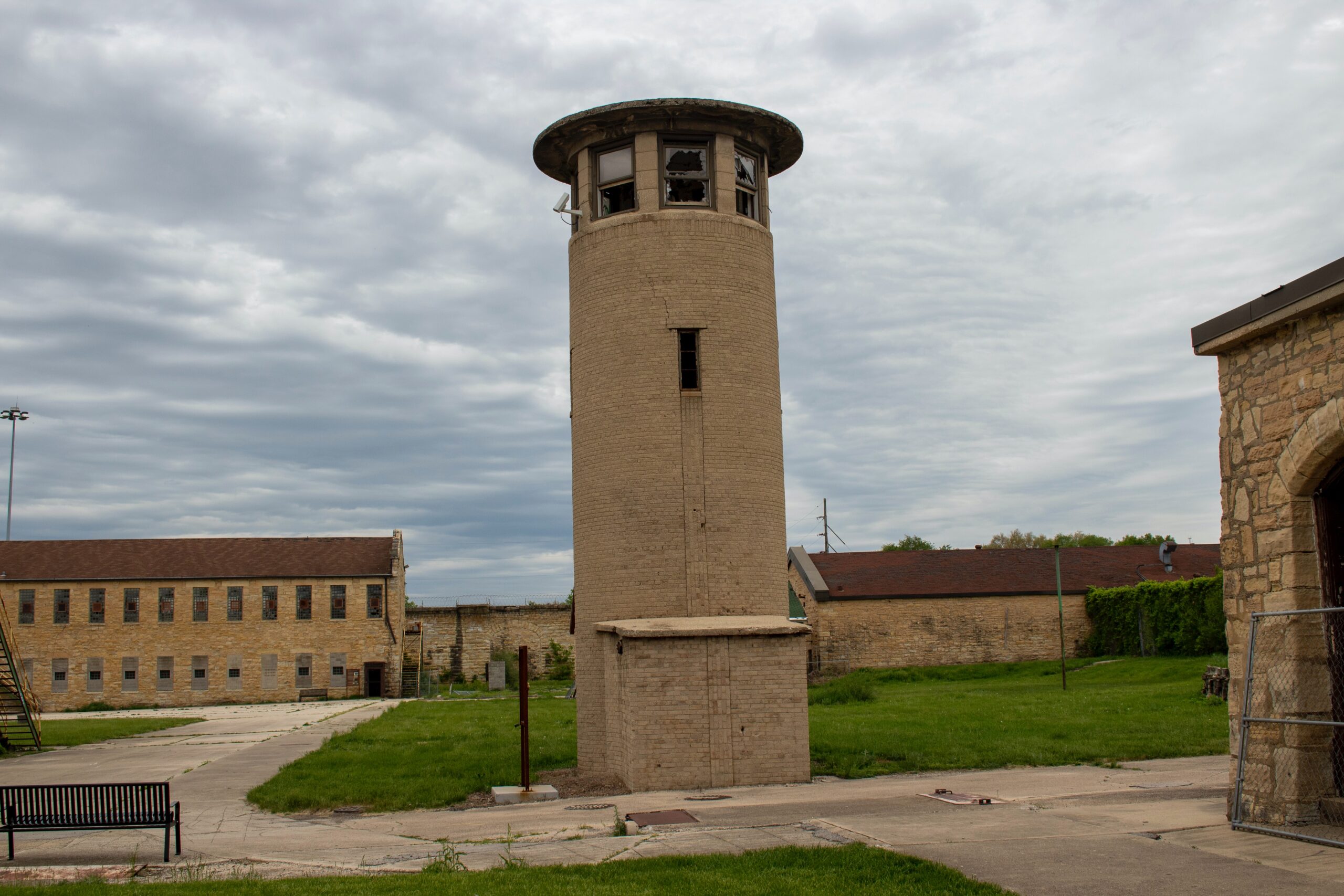
The twelve-foot chain link capped with concertina wire said, Whoever you are, you aren’t welcome. The penitentiary sprawled on a barren hill in a forgotten tract in Connecticut, far from houses or schools or the next town. It was 1990, the dirt and rutted parking lot empty. Maximum security didn’t pull many visitors, and this would be my first time inside. I recognized no fear, not at first.
I remembered waiting as a boy in a lot outside another penitentiary. I perched in the passenger seat of the state car my father drove, the black 1950 Chevy with the siren and flashing light. Dad exited the facility smiling. The men inside fashioned signs for the Rhode Island Forest Service and were likely paid very little. The work, Dad said, was always good, always professional, and always on time.
Great oak trees surrounded that old place.
Here, there were no trees, no flowers, not a planted bush. A twilight overcast pressed down as I made my way to a squat, concrete-block building that appeared to be the welcome center, beyond which crouched the penitentiary, a low mean spread of menace which housed two thousand inmates. I explained to the officer hovering behind dark, inch-thick glass what I was there to do. He grunted.
He asked for a driver’s license and peered into the worn briefcase Dad had gifted, checking for anything an inmate might want as a weapon. He dropped the license into a drawer and extended a laminated pass through a small hole in the glass, and with the sweep of an arm, he motioned to a steel gate through the chain link.
Dad had been a hard man. While he never came clean about his earliest days, I realize now he was aware a ghetto kid like he had been, loose with brawlers on a drunk through Providence speakeasies, could have landed in a prison making signs. Possibly he smiled as he left that Rhode Island penitentiary because he felt lucky.
He’d floundered as a student and dropped out at sixteen to do piecework in a factory where he poured out work with speed. A threat to more senior men and making hardly any money, he turned back to finish school. And throughout the Depression, without support except an immigrant father’s scorn, Dad bulled a path through college. He worked a year and enrolled in school the next.
He died a decade before I entered Osborn Correctional.
I flinched as the steel gate clanked shut behind. I crossed a dirt yard on cracked asphalt to an officer in a head-to-toe black uniform, and I flashed my laminated pass.
“Wait here.”
His glower said, Forget it. We have more to deal with than you.
“Screw ‘em,” Dad would say, “whoever the hell they are, whatever the bastards do. Sometimes, you’ve got to stand and be counted.”
Black uniform ordered me through a second, heavier steel gate where more guards lurked behind more dark glass. My Harris tweed jacket, the worn briefcase, and the evening hour said who I was.
I’d been warned about the guards.
The second steel gate clanked shut behind me. My stomach churned. Will anyone open these doors when I want out?
There seemed to be no laughs in this dwelling, only these cold mothers and their freaking gray walls.
“Why you here?” a voice barked from behind the glass.
“I teach in the college program.”
Books won’t help thugs, Mister, I was ready for him to say.
He gestured down the wide hall.
“Take a right down there and go till you find a guard.”
Still no waste of words.
I did what he said and took a right into an enormous, extended corridor. Voices blasted off the walls and concrete floor. Inmates exited a room far ahead, most of them bulked up bodybuilders in identical tan shirts and tan pants. They thundered toward me four abreast, one pack after another. I stepped faster and avoided eye contact.
They ran over 225. I was an Ivy League poster boy in tweed and corduroy. Their faces said, Who’s the punk? Who invited him?
What had I expected? I’d joked the inmates might have two heads and keep cobras as pets.
A woman at a party asked why anyone would teach in a prison. Wasn’t the place dangerous?
I said teacher-pals declared prison the best experience they’d had in a classroom and didn’t say more. Their conviction was absolute and I bit. They’d crossed a bridge they hadn’t supposed was there and learned something, though they didn’t say what.
Bedlam grew as more streamed from what was maybe the dining mess. Masses of them, and too many to count. They howled.
What am I doing in this place?
I showed my pass to a guard I found. I said I taught the English course. He smiled and proceeded down one more hall to a room assigned to Jacobson.
“Is this experience new for you?” he asked.
The guard seemed curious, not at all prickly. He wished me the best.
Inmates passed and nodded to the new guy. They smiled.
I thought, I must be in a different institution.
The room that was mine had an immense oak desk and a matching oak chair. I wasn’t going with that; I wanted no barricade. I took a plastic chair-desk from the front and turned it to the other chair-desks in neat rows facing the front, the oak desk and chair and the blackboard behind me.
I tried not to think what men had done to end in maximum security. Murder, pedophilia, armed robbery, rape, the worst crimes were the most likely. A section of my brain spat images of fiends.
Get a grip. You can’t teach fiends. Dad drank with Tommy Pelligrini, a man rumored to be in the Providence mafia. Tommy wore a navy suit and a modest tie. His memory seemed to quiet my mind.
I understood little, nonetheless, about the actual men I was teaching. I’m certain I looked grim. I picked fingernails and fooled with the marriage ring on my finger. Men were finding seats. I rooted in my briefcase for a pen, a pad of paper, for nothing. My back had a knot the size of a golf ball.
Would I recognize anyone? I scanned the roster.
An inmate asked a question and I gave a too brief answer. I didn’t initiate conversation like I usually did in a new class.
I glanced at my watch and a voice inside chirped, You’ve crossed scarier roads than this, boyo. A buddy remarked once on my cool in a crisis and my son, Morgen, cracked: “Dad’s good in a crisis. It’s ordinary life that gives him trouble.”
He was ribbing, though I hoped tonight he was right.
I counted twenty-three men in all. Half, I would learn, had killed someone. Most had spent their childhoods in fractured homes, abandoned by fathers whose savvy might have pointed to a better pathway.
The men sat in four straight rows, seats directed at the teacher like we had in grade school. I didn’t ask them to form a circle because I planned to hog the talk tonight. They were black men except one, everybody in a tan uniform with a buzz-cut. White people can’t tell one black person from another, a smart observer said.
The single white sat in a far corner. Outside, darkness had fallen and inside it wasn’t bright. He wore deep-ink shades. What lay in wait there?
I’d memorize their names and offer that much consideration.
Now. Let’s go.
I called the roll and scribbled a note when a man responded. One had red hair. A coffee-colored inmate displayed freckles. One was Goliath, a second a featherweight. Another wore a bandana. Still another had a sweeping scar on a left cheek.
I went one by one, up a row and down the next. I used the scribbles and named each inmate correctly. Bodies straightened. The room perked. Two mentioned how little respect they received in Osborn and others nodded.
The next would be easier, I thought. I would describe in general terms what we’d read and their writing would analyze in coming weeks: American writers from Irving to Twain to Baldwin to Tobias Wolff, with a handful of accessible poets.
I started to speak and couldn’t get the words out. My hands shook and my voice fluttered. Fear had taken a public walk. I stopped. I couldn’t teach like this.
A hand shot up three seats away. The Goliath, maybe in his twenties and close to three-hundred pounds, a football player once, I bet. He plowed holes for running backs.
Head down, he waved a hand, hesitant.
“Can . . . can I say something?” He spoke with a stutter.
“Sure,” I said.
He held a beat, reluctant to say what he wanted to say.
“You . . . you seem nervous.”
“You got that right.”
The room exploded. Laughter, every single man, belly laughter, even No Eyes behind the ink shades.
Without a prompt except my fear, the men spilled their first hours in Osborn, last week or years before. The shakes, the diarrhea, the sleeplessness, the stares into the dark, the dread, the guards, the threat they might not live.
They did their best to talk me back from where I’d shrunk. They’d been there. They understood. Don’t be ashamed. We managed. You can too.
***
I’m old. I forget names. Days are shorter and they fly too soon. I admit it was a tiny episode in a prison, years ago, hardly worth a mention.
The moment stays.
We are you, they said. We are you. These men who were like the mill kids I grew up around, only older, and in more serious trouble. Men who brought me back to my brawling father.
They weren’t foreign. They weren’t strange. For a moment, they saw me as I was. Like them, afraid. They were me.
I came from no fractured home, I hadn’t been abandoned by my father, I hadn’t ever been so continually disrespected. Yet here I was, at a bridge my father knew.
And there they were too, waiting.
New Nonfiction by Bettina Rolyn: “Why Did the Chicken Cross the Road?”
I have come to do a writing residency at the Museum of Loss and Renewal in Molise, southern Italy, in a remote mountain village to escape the distractions of Berlin. Just as every writer does when they go off for a residency, in this case, with the added burden of Covid having prevented me from escaping myself for eleven months straight. I had been fighting the need to flee from myself for years, yet Covid closed my usual escape route outwards and made me turn inwards. And towards depression. It wasn’t just the desire for Mediterranean sun but the name of this residency that got my attention: Loss and renewal. I am working on a memoir about my three-and-a-half-year stint in the US Army as an enlisted soldier during the early years of the American wars in Afghanistan and Iraq, but it was not proceeding smoothly. For over two years, I reread my journals, wrote up notes and insights in fits and starts, fought back various pains, and despite writing fifty-thousand words, it wasn’t moving forward after the bleak winter of lockdowns and isolation. I decided to focus on one chapter during my trip to southern Italy.
I arrive at the Museum of Loss and Renewal on a hot afternoon in July and after getting settled in my room, the curators show me around the little town. In the morning, I awake to the sound of tractors passing in the street below, the neighbor’s chickens clucking, and roosters crowing as the village comes to life.
There have been periods of my life where every day, I consider my own death. Should I stay, or should I go now? Suicide is on my mind a lot. I can’t remember the first time I thought about killing myself, but I was surprised to discover in my “self-research” that already as an angst-ridden teenager, I had written about it in my journals.
Watching the cult classic Harold and Maude as a teenager, I was less interested in the age gap between the titular characters and more in Maude’s status as a Holocaust survivor and Harold’s fixation on death by suicide. I spent several years in high school consuming every story and image I could get my hands on about the Nazi era. Photos of dead bodies, emaciated prisoners, piles of teeth, glasses, and shoes—it all fascinated me.
The iconic movie It’s a Wonderful Life, traditionally aired on TV every Christmas, was also part of my childhood.The pivotal scene, of course, is where James Stewart’s character wants to kill himself by jumping off a bridge because of the impending financial ruin of his community bank until his guardian angel intervenes. This is what crisis looks like: suicide as a solution to our problems arises naturally in the human mind. Despite the taboo on discussing it and for its potential contagiousness, I’d like to think that I came up with the idea all on my own sometime around the age of nine or ten when I began contemplating my existence. You cannot contemplate life without death; being without non-being.
***
The curators of the residency have a well-stocked library and leave the novel The Original of Laura (Dying is Fun) by Vladimir Nabokov out on the table, somehow reading my mind. The book of notes for a work-in-progress was posthumously published by the author’s son Dmitri, who wrote the introduction. Nabokov—who likes the em-dash as much as I do—always held a curious fascination. He also spent fifteen years writing in Berlin and lived a life of displacement; the loss of his homeland and the themes of sex and death echo in his work. In this story, the main character is an obese cuckold scholar who resorts to the pleasurable erasure of himself, a process that occurs in his imagination but fictionally appears real. “The process of dying by auto dissolution afforded the greatest ecstasy known to man.” By the end of the book, he claims, “By now I have died up to my naval some fifty times in less than three years and my fifty resurrections have shown that no damage is done to the organs involved when breaking in time out of the trance.”
I have suffered uncountable imaginary deaths. Sometimes by my own hand, other times in perfectly acceptable, nay, even understandable ways. Cancer is a top contender—even as loved ones die for real around me from the disease. There isn’t a pain, bump, ache, odor, or other bodily irregularity or phenomenon that I don’t suspect of being cancer at some point.
Although my ten-year-old self wasn’t familiar with French philosophy, later, when I read that Albert Camus says in The Myth of Sisyphus, that the most fundamental question of philosophy is whether to commit suicide, I thought, “Well, duh.” Camus concludes that the most urgent of questions is the meaning of life because whatever higher purpose we ascribe to our lives will determine whether we will live (not kill ourselves) or even die willingly (in war) for that meaning.
***
In college, I took a seminar called “Theories of the Good Life,” where we read, among other texts, Victor Frankl’s famous book about finding meaning in life. He wrote it after surviving the Nazi death camps. He was already working on suicide prevention amongst students in Vienna before he was sent to Auschwitz, where his new wife and family were murdered. Later, he developed “logotherapy” and “existential analysis” wherein he identified three main ways of finding meaning in life: making a difference in the world, having particular experiences, or adopting particular attitudes. A helpful attitude may be, “The universe is fundamentally good.” Or, “Every human being brings something unique to the world.” I was down with that.
***
In the military, which I’d joined at the age of twenty-five seeking to “make a difference,” I hoped to deploy and was prepared to die honorably, heroically even. I fantasized about stepping on a landmine in Afghanistan. I would welcome either death or to at least be rid of my right leg, which had been giving me so much pain during my enlistment. But because of the leg and back troubles, I instead was medically discharged.
With each episode of depression and crisis—when my suicidal ideation usually appears—I’m surprised at what challenges tear apart my ability to withstand the strain of existing in this human body, one that comes with so many pains and issues. One common denominator is that I have a tunnel vision of self-absorption and a warped sense of my place in the world. A combination of “I don’t matter” and, “I am the center of this universe of pain.” The first such experience as an adult happened while I was in the pressure-cooker of army basic training. I had been under the special “tutelage” of a female drill sergeant who informed me that I was a piece-of-shit soldier one too many times. I snapped and believed her. I wanted to die. I considered how best to do so, and settled on our rifle marksmanship training, when we were given live ammunition. But I also wanted to take her out with me. There was even a moment when she crouched behind me on the firing line, ostensibly to help me make it through the test with a malfunctioning rifle and I could have turned around and shot her. I did not. Perhaps it was that spark of anger at her and the army for putting us both in this situation that got me through the ordeal with no-one the wiser about what had transpired in my head. By now, I have envisioned my own death in a million ways. Preferably an accident, but that’s a fine line to walk. I used a lot of energy imagining my demise, and here Nabokov’s description of Philip’s exercise in Laura is apt: “Learning to use the vigor of the body for the purpose of its own deletion, standing vitality on its head.”
***
According to the various spiritual and religious beliefs toward suicide, it is considered either a sin, self-defeating, or ineffective. In the view of the world and afterlife that I was raised with, I knew suicide was frowned upon. It does not solve a problem; instead, it takes away the ability to solve it, ridding our souls of our body—which we need to live out this incarnation on earth. Later I learned the line, “Suicide is a permanent solution to a temporary problem.”
In much of the literature I have read about near-death experiences, when people return to earth and report on what they learned in their “preview” of the afterlife, the stories are similar. They say that souls who die by suicide are often tortured while stuck in between heaven and earth in a sort of purgatory. They are unable to comfort those left behind nor move on to higher spiritual realms—for how long differs based on theology. Now, that’s a bummer. This belief that our souls are eternal (and reincarnate) and the attitude that there’s no quick fix to end it all kept me alive for a long time, but it did not prevent me from turning to such thoughts when in crisis. I have come to view the siren call of release from earthly chains now more as an indicator of how bad my situation has become. It’s time to make necessary adjustments—even major ones that make other people unhappy, and also cause me to lose face. I must cancel plans, disenroll from school, seek help from professionals.
***
In 2012, I volunteered on a crisis and suicide hotline. I was contemplating a career change from linguist in the defense industry to therapist in the helping professions and wanted to get a taste for the job. Before being let loose on the lines, we trained in the Carl Rogers method of unconditional positive regard and learned that the fundamental goal of the hotline was to preserve life. One policy was that as hotline listeners—that’s what we were called—we would not accompany people while they killed themselves. We were trained to intervene, by—in the most extreme cases—calling 9/11 and sending the authorities to the caller’s house while we had them on the phone. This only happened once or twice during my tenure.
Figuring out how to answer people’s concerns and know what to say was anxiety-inducing. I sweated through one hundred logged hours of answering the phones in a dank hospital basement in suburban Virginia, though the amount of time I spent on actual calls was probably only one-third of that. Those thirty hours were enlightening. Hunched over in a booth, organs on high alert as I strained to hear my way into the pain of another soul, I learned how a suicidal crisis goes in waves or cycles. The trick is to remove the means to implement the urge and ride out the wave to safety.
During my hotline training, I also learned that in the US, more people kill themselves with guns than die in car accidents or homicides and I changed my views entirely on the second amendment. I learned compassion but also just how frustrating people who are in need can be. I was having a good year in many ways and ended by making a major decision to go to Europe to theological seminary and not study counseling. But a year or two later, amid a toxic relationship-induced crisis, I learned that it’s difficult to do the trick of de-escalating on oneself, or rather, only possible to a point.
***
In late 2016, after deciding to take a year break from pursuing ordination into the priesthood after three years of seminary, I was searching for something to do for a year and processing a breakup. I decided to finally visit Spain for a week and check that off my bucket list, and on the descent into Madrid, we hit turbulence. It was the worst I’d experienced in all my years of flying. As the plane shook back and forth, up and down, and people cried out—I was perfectly calm and ready to die. I have done everything I came here to do, I thought as my stomach jumped up to my throat. I have traveled the world and followed my major impulses (to serve in the military and go to seminary). If this plane crashes, I won’t have any regrets. And it was true, but it was also because I had ended a life chapter but wasn’t yet ‘out of the woods’ to even see that I had been in a wood, much less a dark one. It took another year of wandering and contemplating the truth that although I had religion, as the expression goes, the more theology I got, the less I wanted to be a priest. A year of suicidal depression followed, and I realized I wouldn’t go back to be ordained anytime soon.
In his esoteric lessons held in Berlin in February, 1913, the Austrian philosopher and mystic Rudolf Steiner said that God is real and active where we see the destructive powers of nature; in autumn storms, in all shattering and disintegrating of things. I sat and watched the seasons pass outside my window and existed, being crushed by the manifestation of the divine. Slowly, once I let go of the idea of needing to do something meaningful in a foreordained, meditative, and godly way, moments of happiness returned.
When describing the difference between the “normal” everyday life versus the “esoteric” and supersensible one that can be accessed through meditation, Steiner issues a warning: “Exoteric life takes place in the world of cognition. We know something because we confront an object, look at it and make mental images of it. This changes the moment we meditate.” In advising the seeker of spiritual wisdom through meditation, Steiner cautions that “We shouldn’t immediately make ideas about what approaches us in this world [of supersensible reality]. We should just open ourselves, listen and feel what wants to stream into our soul.” In my case, however, I am not a very regular practitioner of meditation except for three years of attempting to know ‘higher worlds’ in seminary training. I already sense my mind’s existence astride the boundary of the exoteric and esoteric, between mental cognition and psychic reality. One in which often-unwilled thoughts of my own death are what stream into my soul, taking up an inordinate amount of “space.” When I opened the door further to this supersensible world, disorientation, depression, and death awaited. One evening last year, my ear began to hurt, and I thought immediately, “Oh, it must be some terrible disease and I will soon die.” I see signs in hypochondria. I read into my symptoms the hope that the journey is almost over. The plane is about to crash.
Steiner continues: “We must preserve absolute equanimity with respect to spiritual experiences, just as we should remain calm in everyday life with respect to all events, ideas, etc. so that we don’t get excited or upset.” Great tip, Rudolf. When not describing the intangible world, Steiner does offer some practical advice for how to practice such equanimity, and it involves disciplining our soul’s capacities for thinking, feeling, and willing. This much I have learned is true—there are ways to mitigate the inner emotional turbulence; but I have also learned to sense when I am in danger of being dragged down by an external situation, one that inevitably involves other humans. Why did the frog cross the road? …
Because it was stapled to the chicken.
***
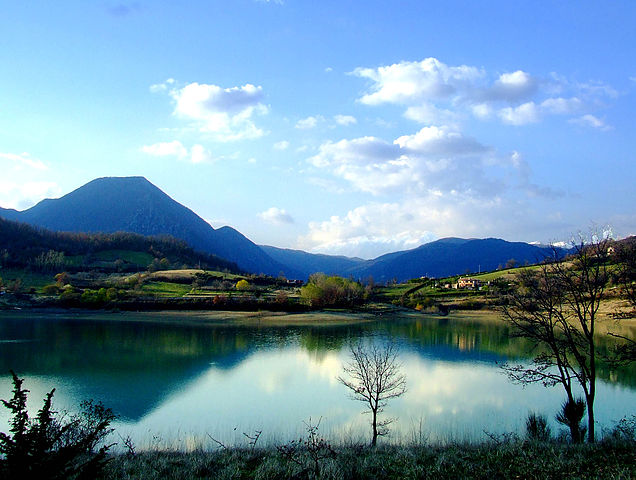
Sitting in my room in the village overlooking the Mainarde Mountains of Molise, I look down at my swollen fingers, the instrument of my intended work and they look foreign to me. No, not quite, they resemble my mother’s leathery hands which are slightly swollen from arthritis and seventy-five years of work, but mine are now also covered in an angry rash of hives. The left hand has red bumps full of liquid bubbling up from my swollen flesh like poison ivy burns. Slowly bursting from the pressure after a few days, my body’s juices ooze out of my finger like maples being tapped for their syrup. The itching on my hands and legs is maddening, coming in waves, triggered by even a slight mountain breeze upon my skin. Even many weeks later, the itching returns like the echoes of a bad dream. The first day I arrived at the residency, I must have encountered the cause of this reaction, but I have no recollection of what it might have been.
I have been in this situation before. In 2013, once I abandoned my career in the US defense industry and decided to attend seminary in southern Germany. First, I stopped by the eastern Mediterranean following an invitation to visit some pastors from my church who were holding an inter-religious peace camp in the hills of Galilee. After one night sleeping underneath the pine trees with the youngsters, I awoke with what I thought were mosquito bites all over my hands, feet, and face. When they quickly turned into these oozing, itching sores, I saw the Kibbutz doctor who told me about the pine processionary moth. I was the only afflicted party in our group. This miraculous creature of the genus “Thaumetopoea,” species “pityocampa” has microscopic urticating hairs in its caterpillar stage, which cause harmful reactions in humans and other mammals. The internet tells me that “The species is notable for the behavior of its caterpillars, which overwinter in tent-like nests high in pine trees, and which proceed through the woods in nose-to-tail columns, protected by their severely irritating hairs.”
Although the name pityocampa comes from “pine and larva,” the word pity seems most appropriate to me now. Pity-evoking is the only word for a skin rash. It’s hard to hide and catches the eye. You can’t help but be moved by either disgust or pity, in the best case. I am so full of self-pity it is literally oozing out of me. Did the pity come from feeling unattractive due to these angry hives swelling my limbs, or was it always there and just now coming to expression?
There are certainly many things that I am angry about but do not say. There are truths I want to shout out to the world that are unsightly and unpleasant about what I have done and experienced in my life. I am trying to write them in the form of a memoir, but I’m blocked. In the meantime, my skin will reveal it as literal and metaphoric markers and warnings. These are expressions of my attitude towards the world I’ve encountered.
***
One morning on the mountain, I read the introduction to The Original of Laura. In it, Dimitri describes how his father’s downward spiral to death started with falling in the Swiss mountains while pursuing his hobby of lepidoptery, the study of butterflies. In the cooling late afternoon of that same day, I found myself walking up the hill to the last house in the village on the left, where I had intended to visit Clara, an elderly woman recently widowed earlier in the year. She said to stop by anytime and meant it, but once I finally got myself up the single road, past the village’s old houses, to ring at her door, she wasn’t home. Later she told me she was picking out her husband’s gravestone. I followed the road upwards on its rough-hewn sun-bleached cobblestones, which ran parallel to one of the many stone walls that crisscrossed the mountainside.
During World War II, the Americans came through here on their way north from Sicily, having beaten back the fascists in bloody battles throughout southern Italy. They fought the Germans here in the Gustave Line, which practically runs right through the village, in the winter of 1943/44. They even built a road still named after “the Americans” to access the remote mountains of Molise in the slimmest part of Italy’s boot. The curators tell me about a Scotsman who fought against the Germans in southern Italy but upon returning home met an Italian from this village, and so returned to Italy for good. He stayed on the hill for the rest of his ninety-two years. That’s one way to deal with the aftermath of war.
Along the white stony path, I found myself chasing butterflies to capture them with my iPhone camera, far from civilization, and contemplating the purchase of a house in this village that I had just left. There are many empty houses in the towns of the region. Many of the children of families who’d lived here for generations having long since moved to the big cities of Europe, though some continue to return to build more energy efficient houses or move to lower altitudes, where the winters are milder. The house I looked at came with a plot of land, upon which fig trees already grew. The idea of having an orchard and chickens providing fresh eggs daily and growing my own food in the garden captured my imagination.
If I wandered off the path here, I had been warned there might be shells, unexploded ordinance, and other nasty surprises like scorpions and wild boars awaiting me. I had seen the boars already, hurtling through the underbrush uprooting everything in their path—hard to miss—but also the seemingly invisible moths and caterpillars which caused me grief. As I wrote and searched through my journals—trying to put them in some meaningful order in my memoir—plumbing the depths of my memory, I found undiscovered ordinances of thoughts and feelings, a seemingly endless supply of trauma and suicidal ideations that I had confided to my journals but otherwise hidden from those around me, and even myself for so many years. I had been mentally living a life on the edge for decades, where thoughts of suicide would lie waiting behind every bush, stone, boulder, or obstacle in my path. Whenever I was challenged and felt like I had no more choices out of a bad situation, I had thoughts of ending it all. And now I was stumbling upon them in my journals and wondering how I’d even made it this far without hurling myself off some cliff.
The rugged beauty of this landscape appeals to me because it is not just pretty, or quaint, or touristy, but real. Molise is beautiful in its wildness. It wasn’t always quite so wild. It has been worked, yet it is a work in progress as the re-wilding of this region takes over. My hosts explained how over the past fifty years, nature has been slowly reclaiming these hills and hiding the many stone walls and paths that had been cleared over generations for small plots of land to be cultivated. In the photos of the area at the WinterLine War Museum in the nearby town of Venafro, the landscape looks vastly different. There is history here, but there is still potential amongst the rocky terrain and partly deserted villages. People like me are coming here in search of something quieter and safer, like the curators of the Museum who created such a residency for artistic reflection. Some things look better with the passage of time; others just appear different.
I imagine a life where I live in the house that I saw for sale in the village. I have chickens in the yard and a garden, and I harvest figs. If I had chickens—whose lives I would worry about preserving—and a plot of land to care for would the incessant thoughts of my own mortality fade? Keeping busy certainly is one way of keeping the hounds of existential angst fed and quieted for a while.
***
I wrote a children’s story about chickens once. I wrote it mostly in my head and like Nabokov, whose characters in Laura never get fully fleshed out, my chickens never saw the light of day on a page. They were inspired by real ones my sister kept in Pittsburgh for a few years. Her young children loved to chase them around the small backyard. Every night the hens went into their plastic coop, but one night, as my sister later relayed, several of them managed to flee into the uppermost branches of a tree in their yard. She had to chase them around in the dark for what seemed like an eternity, so intent they were upon staying in danger.
In my story, these imaginary hens escape their coop and have an adventure in the big city. The story began thus: Miffy, Laurel, and Hilary lived in the small backyard of a big house in a big city. Their coop was opened every day, and they had free range in the yard to search for tasty bugs and juicy caterpillars. They often flew up and roosted on the boughs of the big pine tree next to the house—especially when they got tired of being chased and hugged by their small human friends. From the tree branch, they could see into the big house. From high up, they could see over the fence into the neighbor’s yard. They could also hear the shouts, whoops, cries, laughs, and bits of conversations about life out in there in the big city. One day, Miffy—she was always the one starting such debates—said to Laurel and Hilary: “What do you suppose it’s like out in the big city?” And so off they went, out into the wilds of urban America, encountering curious raccoons, venomous vipers, pensive pigeons, and friendly foxes who share with them how to stay alive in the big, scary, cityscape. Eventually, they return home, safe and sound.
Is it too obvious to say this story is an allegory? That I long to return to the heavenly coop is a simplification. I am not a mere chicken. I yearn for a sense of meaning in my life. Having pursued it in various external titles, roles, and institutions for years, I am on my own now.
***
There are many ways to deal with suicidal thoughts; the stigma attached to seeking help for mental health issues is thankfully disappearing. I also know from other friends and acquaintances, not just myself or suicidal exes, that while so many of us remain depressed, we are not alone in our suffering. We often need other humans to assist us with getting through the worst of the wave of crisis. Other times, we are being called to connect with our purpose. The Quaker theologian Parker Palmer writes about his depression in Let Your Life Speak: Listening for the Voice of Vocation—the title itself giving away the key to healing—and connects our ability to hear and thus speak the truth of our selves with maintaining our mental health.
My dad used to tell jokes around the dinner table. Here’s one I remember: A man goes to a psychiatrist and explains that he thinks he is chicken feed. They work together for months until finally, the man comes to understand that he is not chicken feed. Just as he’s saying goodbye, he says, “Wait, Doc, I have one last question. I know that I’m not chicken feed. You know that I’m not chicken feed, but what about the chickens?”
When do we label ourselves something like “suicidal”? Once you tell someone that you’ve had thoughts of suicide, they never look at you the same way again. After my formative experience in the military where I was constantly overworked, muscle fatigued, sleep-deprived, harassed, and pushed over the threshold into suicidal ideation (all without deploying!), I learned to be wary of having everything taken from me or “giving my all.” It still happens that things become too much, but I remain protective of my internal and external resources, most importantly my soul resources. I try to avoid situations where I might be stuck in a situation that I do not desire; I always have an escape route. My life depends upon it.
Rudolf Steiner also said, in the same lecture given in Berlin almost 100 years ago, quite helpfully that the Gods protect those unprepared for what lies on the other side of the threshold of the visible world by giving us pleasure and enjoyment in creative activity in the physical world. So here I stay, on the haptic side of the line of consciousness and immateriality: writing, eating, and when possible, making merry. Besides writing out the truths of my life and turning hives into literary hay, I’ve learned to let the imaginary chickens save my life. Creatively sending the hens out on adventures or calling them home to roost again. Just getting to the other side can be enough. This is an attitude that Victor Frankl would endorse.
New Fiction by Michael White: “Eid Mubarak, Merry Christmas”
My eagerness propelled me up the airplane steps. Eleven years to the day. Well, technically eleven years and a day. We assembled for the meandering trip to Afghanistan on September 11, 2012 but didn’t take off until September 12. Close enough. I was finally on my way to join the fight.
The takeoff forced me back into my seat. Pushed the still recent news of Todd forward. “Fuck, I don’t want to die.”
Sergeant Murphy, my perpetually pissed off platoon sergeant, veteran of the invasion and surge in Iraq, was already asleep in the seat next to me. His slight snore grew in intensity.
I thought of an old friend’s dad almost eleven years ago watching footage of the initial combat in Afghanistan. “We’ll kick their ass and be home in a month.,” he had said.
*
Almost eight months later, with a few weeks to go in our nine-month deployment, my company was preparing to shut down the small combat outpost near the Pakistani border that had served as our home and frequent target for attacks. We’d be turning it over to our Afghan counterparts. Obama’s surge in Afghanistan was over. The official line was we had created enough space for the Afghan military to operate. They were now prepared to take a leading role. At the soldier level, we saw things differently. Sometimes when our base was attacked, our Afghan partners wouldn’t fire back. They didn’t always know when an ammo resupply would come. We joked about how they’d pilfer everything they could from the bases we turned over. Then they’d sell it and desert before getting whacked by the Taliban or Haqqani.
Meanwhile, we had some surplus ammunition that we decided to use for training exercises before we left the base. This included a hand grenade familiarization training. Familiarization training is an ambiguously valuable phrase. For our grenade chucking platform, we used a dirt ramp built up the interior side of the base’s HESCO wall. It was normally used as a battle station for an armored vehicle to return heavy weapons fire when the base was attacked.
First Sergeant Gholson was supervising the lobbing. Gholson was a freak. He ran ultra-marathons and was unusually strong for his wiry frame. He was a creative problem solver, he cared, and was a sarcastic dick. A model first sergeant. I walked up the ramp after my soldiers had familiarized themselves. It was a warm, sunny spring Afghan day. Gholson handed me a grenade.
“Try not to fuck it up.”
“Fuck you, dickhead.”
I prepped the grenade. Picked out a particular bush I didn’t care for. I wound back and lobbed the grenade. Gholson and I braced for impact. We waited the customary amount of time. Waiting. Waiting. Then an explosion of laughter from Gholson.
“You dumbass! You forgot to pull the second safety pin.”
“Fuuck, still a cherry huh?”
“Here, toss this one at it.”
I prepped, then double checked this was one was ready to go. I found the same bush I didn’t like, and let it go. We braced for two explosions. The grenade bounced in the wrong direction. A single explosion near a different defenseless bush.
“We uh, we don’t have to call that in for EOD right.”
Gholson paused. “Eh, fuck it. We’re on our way out.”
*
They celebrated as they rushed away from the objective. The men scrambled along rocky ridgelines, moving south and east as quickly as possible while nursing injuries. The six men occasionally shook their rifles against the night sky.
“You got it on film, yeah?” The youngest of the group asked a more seasoned veteran.
“Yes, yes. Now keep moving. We’re not safe yet.” He replied, eyeing the dark sky.
The younger one smiled. He picked up his limping pace. The smile turned to a grimace as pain shot through his right leg.
The donkey in the group bayed. The noise broke the night quiet. The donkey was saddled with rockets and ammunition. It hadn’t complained before.
“What’s that?” A third man driving the donkey asked the group, or the donkey. He paused to crane his head skyward. Farther ahead, the cameraman continued pushing his younger companion.
The donkey’s baying quickened. Its handler perked his own ears toward a faint whistle.
*
The sun woke me. I felt a rock in my back through my body armor. I struggled to place myself and why I was tucked in the cracks of a craggy hilltop. My ears were ringing, my body ached, and my watch read 6:30 am on October 29, 2012. The day after Eid’s culminating celebration.
Right. The previous night’s “celebration” came rushing back.
I stood and looked down on the ridgeline below. The five bodies lay in the same position as we’d left them last night. They didn’t smell. At least not from about a hundred meters away. At least not yet. I wondered again how someone had survived the bomb blasts.
*
We finished our patrols early on the final day of Eid celebrations. Eid al-Adha. We called it Big Eid because there are two Eids. The first celebrates the end of Ramadan. The second is a multiday celebration of sacrifice and family, our interpreters explained. Abraham was ready to sacrifice his son. His son was prepared to die.
These days Afghans sacrifice goats, sheep, and cows. “Bismallah.” Allah’s blessing is sought before the sacrifice. Sons are no longer at risk of cold blooded murder. The purpose instead is to share. To welcome others into your home. On the final day of celebrations, the sacrificial meat is shared with family, and friends, and the poor. According to our interpreters, it was the Muslim version of Christmas. It sounded less commercial, more selfless, to me.
Whatever it was, I was glad to have an evening off. Finally, no second patrol for the night with its necessary preparations and debriefs cutting into any downtime. Just a short morning walk from our company’s small combat outpost for my platoon to a nearby village. We enjoyed some Eid chai with the locals wearing their best manjams. They invited us to chai with smiles. Their fingertips were a deep copper red from a fresh dip in hentai dye. A couple rocked socks with their sandals. Which was a first over here. It somehow looked classy. They seemed happy to share the day’s tradition with us, but I wondered what role our weapons played in that invitation.
We’d been in theatre for over a month. We had launched at least two patrols a day from our small combat outpost near the Pakistani border. The only contact we’d made with the enemy were the roadside bombs they left for us. We were getting restless. It was clear from those bombs the enemy was watching us. We had no way of striking back.
That night, I settled into my small plywood-walled room to enjoy my first deployment movie. Goodwill Hunting. An old favorite. Something I could relax to. Shortly after winding down, there was a thundering crack that shook my room and me out of complacency. My heart rate spiked. I rushed to throw on my body armor and helmet.
A loud patter of dueling machine gun fire began. I grabbed my rifle as I ran out of my room and into the night. The sky was alive. Tracers on machine gun rounds streaked through the dark toward and away from our base.
I ran to the tower my platoon was responsible for manning. I felt as alive as the night sky. The tower was on the corner of the base closest to the ridge that appeared to be the source of the incoming fire. The previous unit had named it Rocket Ridge.
Inside the tower, Private Kilgour was working the .50 caliber machine gun. Sheer joy lit up his face. He was physically illuminated by the bright orange muzzle flash. I could make out fuzzy green movement on the ridgeline through my night vision goggle. The thud of each .50 round coursed through my body. The echoes of the machine gun in the tower went beyond noise. It was the only thing I could hear or feel. It felt like my heart rate was matching the rhythm of the rounds. The pungent metallic odor of gunpowder was all around me. I loved it.
I sent a status report over the radio to the company headquarters as I ran to my platoon’s other battle station. My ears rang so hard I couldn’t hear the response. Sergeant Lyons was directing automatic grenade launcher fire toward the ridge. I asked what he saw. He pointed out barely visible figures moving along the ridgeline.
I popped off a few rounds fully aware the ridgeline was outside my rifle’s range. It still felt good. “We train hard, so we’re prepared when we it’s time to fire our weapons in anger.” Our battalion commander repeatedly said. I wasn’t angry. I was ecstatic.
A couple rushed hours later, I stepped over the last round of concertina wire that surrounded our base. The night air felt different on this side. The mountainous horizon was the same, but the sky seemed bigger, more open.
An F-15 had been in the air nearby during the attack. From thousands of feet in the air, the pilot dropped two 500-pound bombs on six men and a donkey hurrying toward Pakistan. None of our guys had been injured during the attack. It was a clean win. My platoon was dispatched to investigate the blast sites. Despite the late hour and waning adrenaline rush, there was still a sense of excitement in the air.
We scrambled up and over rocky ridgelines and craggy hills not quite tall enough to be mountains. They were tall enough to cause a sweat in the cool night air. It felt good this night. The loose shale shifted underfoot as always. For once, I didn’t mind.
Things got even better when the Company headquarters radioed to say they’d seen a heat signature with the company drone. They thought it could be a wounded enemy hiding because he couldn’t keep up during the escape. The map grid headquarters sent threw off our planned route. It meant a lot more climbing. I briefed my squad leaders on the change of mission. We moved out with a fresh determination.
We were winded when we hit the final spur before the heat signature’s grid location. I directed a machine gun team to higher ground for overwatch while First Squad got on-line to assault through the objective. They advanced deliberately. My heart pounded. I braced for confrontation. First Squad approached the suspect bush.
“Stand down, stand down.” The team leader called over the radio. “It’s a fucking goat.”
I deflated. No last-minute encounter with a live one after all. I sent a quick update to headquarters. Their disappointment was clear in the curt response over the radio.
We knew we were close by the sharp chemical smell in the air. There was a slight metallic taste as we grew closer.
“Two Four Bravo, set up on the hilltop at 3 o’clock.” I sent the machine gun team to another high point.
The rest of us turned our headlamps on as we climbed the hill. Better to be thorough. No one else would be coming so soon after those bombs dropped. Debris littered the hill on the way up. A sandal here. A piece of tactical vest there. Scattered across the slope by the whims of explosive force. We hit the first body where the slope levelled off to a long ridge. The explosion had blown his pants off. The exposed legs were so thin I struggled to understand how they propelled him up and down mountains while attacking us. “We need F-15s for these guys?” I thought.
When we flipped him over, his eyes were wide open but unfocused. The flat gray eyes confirmed death more than the charred hair, the blood, or the gaping wounds. Our biometric scanners couldn’t register his irises. We were under strict orders to collect their biometrics. My soldiers dripped water onto eyeballs to lubricate them. Rigor mortis had set in. With some of the bodies, it took two soldiers to pry fingers back to snap them onto the equipment’s fingerprint scanner.
Sergeant Murphy watched as two of our soldiers wrestled with a stiffened arm.
“They think this shit is cool now. Like they’re too hard for it to matter. But one day, when they decompress, this shit is going to come back. Everyone up here tonight will talk to the battalion therapist. I don’t give a shit if they say they don’t need it.”
“Yeah, that’s a good call.” I agreed. I didn’t have anything meaningful to add. It was unspoken, but I knew he meant I should talk to the therapist too.
We systematically exploited the first blast site. The pants had been blown open on every body. Explosions behave in mysterious ways. Stephens, my radio operator, photographed the bodies—under clear no funny business orders. Cellphones, wallets, and notebooks were sealed in ziplock bags. Labelled by body and location. I sent a report to headquarters that site one exploitation was complete. Site two was about a hundred meters further south.
We followed a narrow, elevated path leading toward the second site. We walked in a file. My eyes were forward. Someone else was more observant.
“Nine o’clock, we got a live one.”
The shock registered as immediate action. I turned to my left, raising my rifle in concert. I had flipped on my rifle’s infrared laser without thinking. Through the narrow green tube of my night vision goggle I saw a body lying flat on the ground about fifteen meters away. The head was raised. He was staring straight at me.
What the fuck.
Within seconds the body was covered with infrared lasers. The head turned slowly. Proof of life. Bombs and their mysteries. I tensed the finger on my rifle’s trigger. I scanned the body and surrounding area as quick as I could. His life was in my fingertip and the next words I spoke. I saw no weapon on him or in the immediate vicinity. His arms were down at his sides. Under the fuzzy green of my night vision it was just a body with a head staring at me.
“Hold your fire.” I announced.
The lasers remained trained on the body. A fuzzy green figure lit up in a morbid lightshow of narrow bright green beams.
“Tell him to put his hands up,” I said to my interpreter.
Sergeant Murphy raced up to me. “I should probably call this in.” I said.
Sergeant Murphy’s eyes remained fixed on the man, this mystery, this terrible miracle of life. He shifted as he spoke. “Roger, sir.”
We looked at each other and back at the man. I paused.
“Stephens,” I called. He hustled over. Passed me the handset.
“X-Ray this is 2-6, can you put on Choppin’ 6 actual, over.”
“Standby 2-6.”
The body was moving. Lifting himself upright. SFC Murphy and I raised our rifles in unison.
He raised his hands above his head.
“2-6 this is Choppin 6 actual.”
“Choppin 6, we have one EWIA, break. Appears unarmed, break. Condition unclear, I think he’s messed up, break. We’re currently about 15 meters away, over.”
Silence.
I imagined Captain Tallant in the monitor filled plywood walled operations center in a hurried discussion with First Sergeant Gholson.
The silence dragged. It was broken with a question.
“2-6, Choppin 6, are you sure he’s alive?”
Was that an innocent or targeted question? Radio traffic wasn’t built for ambiguities.
“Roger.”
“Positive?”
I drew a deep breath.
“Roger, he is staring right at me.”
Another pause.
“Roger, we’ll work with Battalion on extraction.”
*
“Fuck, fuck, fuck, fuck. I don’t want to die.” He thought. He then worried that thought was too loud.
“Please don’t see me, please don’t see me. I just wanted to have a little fun.”
He had crawled away from his weapon and gear once he’d heard voices. Whatever adrenaline had carried his wounded body this far had been knocked out by the two explosions. All he could manage was to crawl a few meters closer to Pakistan, still miles from its safe harbor.
“Are they laughing? These godless heathens!”
He stewed in anger and fear. Then the voices grew closer. Worry overtook anger. He saw a line of armed men less than twenty meters away. Then a voice shouted something unintelligible. The line halted. In the blink of eye everyone was facing him with rifles raised.
“Fuck. This is it. This is how I die.”
*
“What are they waiting for?”
*
After we confirmed that he was unarmed, I approached him with Sergeant Murphy and Favre, the platoon medic. When I looked in his eyes, I realized I had never seen sheer terror manifested before. His eyes darted back and forth assessing us as threats and the whites were prominent beyond reason. We were surrounding him, strapped with weapons and body armor. Everyone around him had been killed by massive explosions. He must have heard us laughing about the dead and already bloated donkey as the group ringleader.
“I am here to help.” Favre said. He began assessing for injuries. Once Favre’s hands touched his body his eyes darted back and forth. The whites of his eyes grew another size. They slowly returned closer to normal as Favre treated his wounds. It seem like he was slowly realizing these Americans weren’t a bunch of bloodthirsty, Muslim-murdering animals after all. His name was Mahmoud.
“I swear I didn’t really know these men. This was my first attack. I swear. It was supposed to be fun.” My interpreter relayed.
We didn’t believe him. I figured Battalion would eventually get some actionable intel out of him. It seemed like the right choice as a medical helicopter flew him away. I wasn’t aware of the conversations being had back at headquarters.
Battalion said they wanted us to overwatch the bodies that night, in case their buddies came to collect their friends and anything incriminating. That didn’t make much sense. How would they know these guys were dead and where they were? And there had been helicopters flying around all night. But whatever, we were too tired to walk back that night anyway. I directed the rest of the platoon to the machine gun teams overwatch position. We settled in among the rocky hilltop for a few hours of sleep between guard rotations.
Third Platoon arrived energized and carrying body bags the next morning. They laughed at the donkey, and all the missing pants. We laughed together, but I felt they were partial intruders. They weren’t carrying the full night before into this day.
Sergeant O’Keefe, Third Platoon’s wisecracking Mexican-Irish platoon sergeant, walked straight up to me.
“Hey, sir,” he said in his usual casual tone. “The battalion commander called the CO after you reported homeboy wasn’t dead. He said, ‘why the fuck did they call up he was alive.’” O’Keefe barked his signature laugh. “Hope your officer eval don’t suffer.” He laughed again.
“Oh, by the way, some locals are coming out to collect the bodies. CO agreed to it with a village elder to show respect for them Islamic burial rites.”
We walked Third Platoon around the blast sites. We pointed out the mystery head at the second site, perfectly intact but missing a headless body. We divvied up the evidence to carry back. Third Platoon graciously volunteered to lug the recoilless rifle. As we chatted among the bodies, a stream of villagers emerged from a dry wadi leading toward the ridge.
*
The conversations among the villagers were quiet as the group wound through the wadi.
“It was good of the elder to host us for goat and sheep last night.” Mansoor said as he looked at Haji Ghul leading the procession of his villagers.
“Yes, yes, very good. I spent all my money on gifts for the kids, and fresh robes. We had no money left for good meat,” Abdul responded.
“Inshallah prosperity will come.” Mansoor replied.
“Inshallah.”
“I am surprised the Americans are allowing us to come for the bodies. It wasn’t always this way.” Mansoor said.
“Yes, this too is good. Though I do not know these men.”
“Allahu Akbar.”
The conversation ended as the curving wadi opened to a view full of soldiers on a ridgeline.
*
They were all still wearing their best Eid clothes. The couple of villagers I’d shared chai with the day before recognized me. They smiled as they waved. Sergeant O’Keefe started passing out body bags. I began speaking with the village elder.
He disavowed the attack. Swore the villagers knew nothing of it, or any of the men. “They are from Pakistan. They were running to Pakistan.” He said. He was solemn, and genuinely appreciative we were letting them collect the bodies. “Even though these are very bad men, it is very important they be given a proper Muslim burial. We are truly grateful for the opportunity. Dera manana.” For one of the first times in country, I didn’t sense a hidden motive. In most conversations, I could tell something was being withheld, if I wasn’t being outright lied to. This was genuine.
I watched the villagers place the bodies and parts in body bags and on top of the wicker bedframes they’d carried. Their best holiday clothes and their objects of rest collected bloodstains. A deeper red than the hentai on their fingertips. Their smiles remained.
*
When the villagers finished, we began the long trek back to base. The sun was up and warm. It was still early in the day. I was so tired I had to reach back to my time in Ranger school to keep moving and issuing orders.
“That was a hell of a night, huh?” I posed to Sergeant Murphy as we walked back.
“My wife is going to be so pissed.” He responded.
“Huh?”
“We were on the phone when we got attacked. I’d been telling her this deployment was safe. I ran out with the phone still connected.”
“Damn, that sucks.”
I wasn’t prepared to respond to that. I couldn’t shake Mahmoud’s eyes. The smiling villagers lining up to collect bodies. The day after their Christmas. No gifts to return. Assembled for a morbid collection.
We were heading home. The return walk was largely downhill. But I felt heavy. My body armor was dragging down on my shoulders. I was weary beyond the lack of sleep. It was both a physical and mental challenge to raise my legs for each step. Something had changed. I needed time to place it.
Several months later and a few weeks before we left our outpost, a village elder informed us of a death. An old man. He made a living selling the casings from rounds ejected during firefights. He was carrying a sack of casings when he triggered something. An improvised bomb buried by the Taliban or maybe an old Russian mine. The wounds proved fatal. A villager heading toward the mountains to gather rock and sticks came across his body.
I was eating lunch in our small cafeteria when Gholson walked up with an odd grin. “It wasn’t an IED, it was a new UXO.” Gholson said.
I finally made the connection. A fresh unexploded ordinance. Maybe a grenade. I looked down at my tray of mini pizzas and fries. I pushed it away.
“You’re uh, you’re not gonna say anything right?”
“Ha! What do I get out of it? Relax, I’m joking. Your secret is safe with me. Besides, maybe it was the Russians.”
“Ok, cool.” I said, staring at my tray.
*
“So, did you kill anyone?” My high school friend Mike asked.
I was gathering with a few hometown friends about a month after returning to the states. We stood in Mike’s driveway deep frying wings and drinking beers.
Mike would never deploy. Never even join the military. He’d failed out of college but landed on his feet selling used cars. The auto industry and demand had recovered from a few years back. Business was booming. Life was good back home. But when Mike logged onto Call of Duty, if he was the friend of a real-life killer, the war could be real enough for him.
His interest in a greater than a decade -long war came down to a single issue: how many dudes did you kill? In Mike’s mind, Afghanistan and Iraq were where Americans got paid to kill people. Like so many Americans, these conflicts occurred in the background. A novelty addressed with a “thank you for your service.”
My hands reached for the rifle that had been slung across my chest for nine months. I felt empty, alone. Powerless. My authority, my purpose, was nowhere to be found.
“So, did you kill anyone?” Mike repeated as he leaned toward me eyebrows raised.
“Mike, come on man,” Geoff interjected.
“Nah, it’s all good. I knew if anyone would ask it would be Mike.” I took a long swig to finish my beer. Mike could be an idiot sometimes, but he didn’t mean anything by it. “Not me personally man. But my unit, we got six and a donkey in one night.” I reached for a new beer.
“Oh, woulda been cooler if it was you.” He didn’t bother hiding his disappointment.
I was still seeing the terror fade from Mahmoud’s eyes and bloodstained Eid clothes. In place of the cold beer, I felt the heft of a grenade in my hand on a warm spring day.
New Fiction by L.W. Smolen: “Dirty-Rotten”
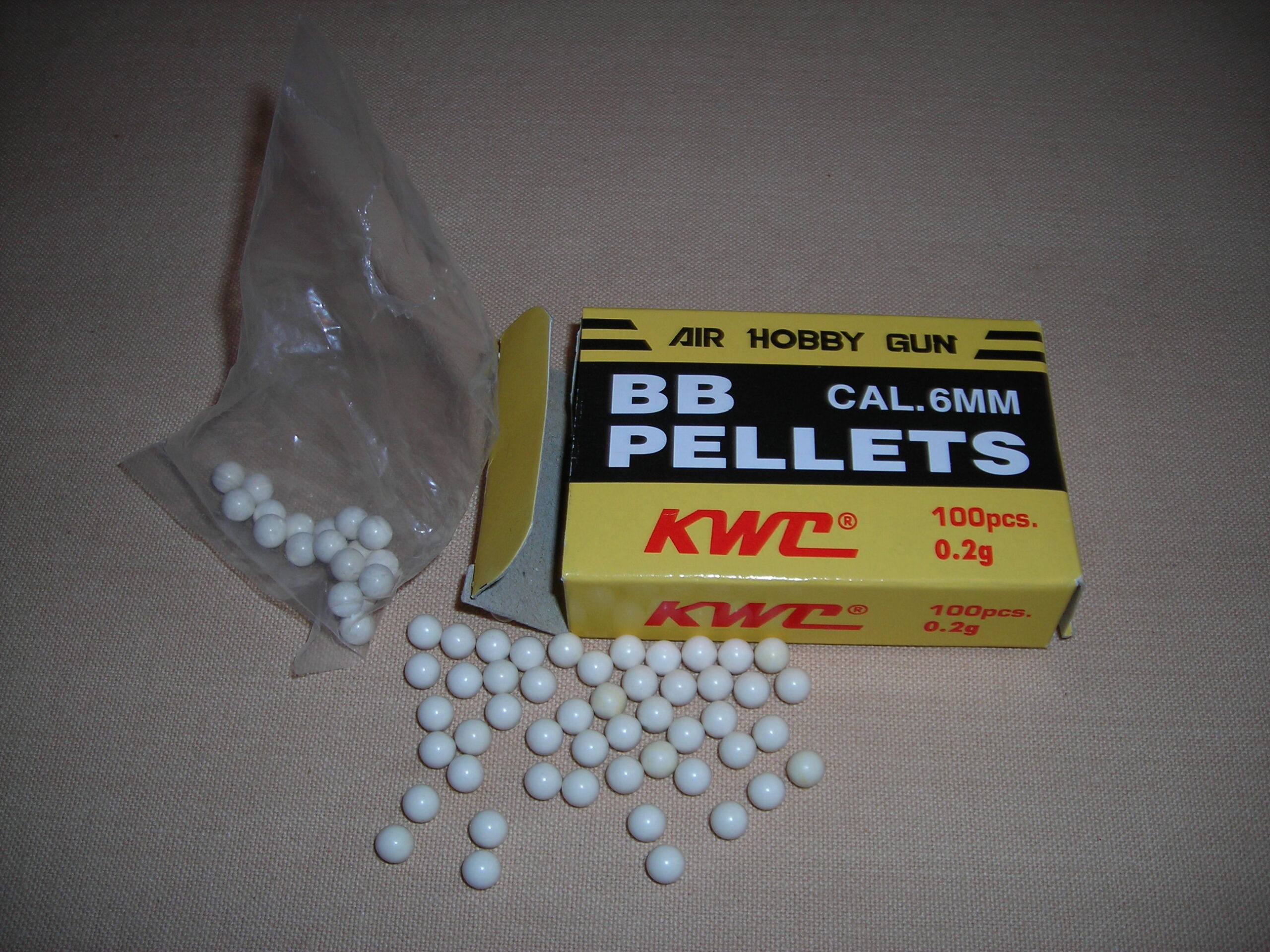
Where mom and dad and me used to live in the Haight, from the brush in the empty lot across his street, with a BB gun, I shot a big, scary German Shepherd guard dog – right in his gonats. Wasn’t my gun. Was a big-kids’ dare. The oldest one told me, “You’re just a dweeb fourth-grader. His tail’s always in the way. Only time you can get him’s when he lifts his leg to pee. You’ll get two, three seconds and that’s it.” So I held my fire. I waited for the Shepherd to pee, and I got him! One shot. They went, “Jeeze! The kid did it!”
I don’t know what I thought would happen when I shot the Shepherd. It yiped and yiped and skidded all around on its rear. I dropped the gun and I ran. Could hear the dog blocks away. It was awful. The big kids knew where I lived and they told my mom. Said I stole their gun.
They took ‘em both – the Shepherd’s owners did – both his gonats. The Shepherd never charged his fence or growled or barked after that – just wagged and smiled and let me pet him sweet – like he never knew it was me shot him. Like he never knew at all – just smiled and wagged, but always wanted me in particular to pet him and let him lick my hand. Nobody else. Just me. He never acted like he knew what hit him, but it was like forgiveness anyhow – forgiveness I never deserved on the dark side of the moon.
Later, coupla times, I brought the Shepherd special gizzard treats and he used to go nuts and spring his front paws up on top of his fence double-happy and smile to see me just like he knew the way how dogs know and do things, like he knew how my heart was hurting – like he knew all along I shot him.
After a while, I couldn’t stand it. Couldn’t look him in the eye. Couldn’t stand – didn’t deserve his happy dog-love – my false, trigger-happy truth stuck festering inside me.
Finally, I quit going even down that street. The big kids said I was a jerk for taking the dare and called me a dirty rotten, little gonat-snatcher twirp and worse – and it’s all true.
New Poetry from D.A. Gray: “Cactus Tuna”; “We Return from the Holy Land. God Stays”; and “Reverse Run”
FARMER OF ROCKS / image by Amalie Flynn
Cactus Tuna
A semi-sweet taste
of watered-down nectar
bleeds out from the prickly
pear nestled PUT_Aon a crown of thorns.
In the desert you once
sneered over rifle sights
at the farmers drawing PUT_Arakes over the sun-
baked ground, and now, PUT_Aas atonement
you’re a farmer of rocks
and what comes with them.
Stained fingers tear through
leathery skin. Sometimes you
forget you’re standing
alone in a cactus patch PUT_Ared trickling down.
Grace is not this –
living on what grows where
nothing had a right to grow,
seeds fine as sand PUT_Ahide between teeth.
And crows, refusing to starve,
land unafraid, pick through
the rinds, eat, take flight
scatter seeds on rocky places PUT_Aand among thorns
even on tops of walls,
and maybe it’s resilience PUT_Aor spite
something finds purchase here.
We Return from the Holy Land. God Stays.
The mystery is often in the gaze of men
and women waiting for the sky to speak.
We used to spend days in the desert
waiting until the sky whistled and then
we wished we hadn’t.
Someone’s former
home, now sharp edges of cinderblock
cut upward through our soles. We kept
walking through the desert; everything
radiated, catching us in the crossfire.
* * * * *
We spend days in the Hill country
beneath a blistering sun, a clean sky,
traces of blue that have faded,
burnt off but for the edges by noon.
‘Say something,’ we shout in our minds,
looking up as if it’s God. Eventually
the sky speaks in the language of wind,
fear fills our hearts. Still, we knew
it would be this bad, yet wanted so much
to feel something – until the moment we did.
Run in Reverse
In dreams the ball bearings and nails and flame
are sucked backwards out of the truck, along
with the screams, and the shrapnel enters
The IED, a makeshift paint can half buried in sand.
The boy’s face heals, his body slides back
into the passenger seat and after a momentary
glare at this pained country he turns and smiles
at the driver. It’s a calm hundred-degree morning
and the Baghdad street is filled with shoppers
carrying bags, laffa bread, eggplants poking
out the top, Turkish vendors serving doner kebab,
their angry looks toward the truck
have softened now and they’re joking.
***
Some days walking with my wife, I turn,
walk backwards just to say something silly.
It’s that moment that seems truest. She is
looking at what’s to come just beyond my shoulder,
no regrets about the past, and I’m trying to hold
on to what we left, moving against my will
into the future blind, the scene I’m trying
to make sense of, moving farther away.
New Fiction from Thomas Mixon: “Strong Feelings of Sympathy and Horror”
A little stoned, on the screen porch facing the invisible grunts of New Hampshire spring peepers. Something night, something woods, something long sleeve. Lou looks down into mostly darkness. They can barely see the plaid pattern. One of Alex’s, figures. You can swear off a person, but still wake in the middle of the night wearing her damn shirt you swear you didn’t go to bed in. You can be a person, listening to thawed frogs, little creatures literally frozen the month before, and only hear her voice, though it’s been two months since she’s been gone, only taking half her clothes.
The two of them made it through the pandemic, the election, Lou’s own thaw, cracked egg, the fucking whirlwind of body and mind and for once in their fucking life not having to deal with it alone, coming out stronger on the other side, all those cliches. Alex going back to school, Lou moving north for her, buying a house neither could afford separately, making fun of the debt, together, making fun of work, leaving work, making fun of the Olympics, fuck you Intel, fuck you AI, fuck you 2032, working off a little laptop in the forest, tall trees on all sides swaying in the wind like they’re bound to fall, but they don’t, or, OK they do sometimes, but not on the house, far away. The turbulence of the 2020s transitioning to perpetual hurricunt of the new decade, tyfool, all puns but no groan, Alex gone.
Gone over such a stupid thing, compared to everything before. Lou gives the finger to complacency, somewhere in the nearby vernal pools, with one hand, undoes the buttons on Alex’s flannel with the other. They open the door and throw the shirt into the yard. Half-dressed and shivering, they root around in the dark for the rest of their ex’s wardrobe, tossing pants and hats out the windows. Living up here, can’t even have a proper blowup scene, end of a dirt road, no chance of anyone driving by and wondering why the mess. Had they broken up in Mass, they could have given the suburbs the expected show. But no, they were fucking bulletproof, made it through everything, only to lose it after all the hard things. Now it’s all soft things, mud, rain, hurt by flannel, hurt by others’ smiles, smiling back, pretending to everyone at their new job that they are this quirky and fun kid who happens to be in their mid-thirties. It’s cool. Yeah, I love New Hampshire. No, not born here. Why’d I come? You all have the best maple syrup. Change the subject. Hey, look at my new piercing!
#
The unicopters paused over the New Hampshire State House, longer than planned. There were just under 200 in the sky, hovering quietly above the gathered, applauding, crowd. They had left from Hanover that morning; another crowd, a set of speeches, the procession of the chosen students, standing before the doors of each aircraft as they opened automatically. June, the semester had just ended, the passengers mostly undergrads heading home. These models could make it safely to Michigan, to the west, the Carolinas, down south; all autonomous, all single occupancy, electric, and irritatingly plastered with Live Free or Die, on the sides.
That they had to pass over the State House first, before scattering to their destinations, was ridiculous, political, unnecessary. The design had come from two Dartmouth grads; for years they had tried to get the state to invest, no luck. New Hampshire only kicked in a little bit, at the end, once it was clear these things were special, were getting buzz. The state stamped their motto at the last minute, so the football field still reeked of paint, as everyone waved the unicopters off.
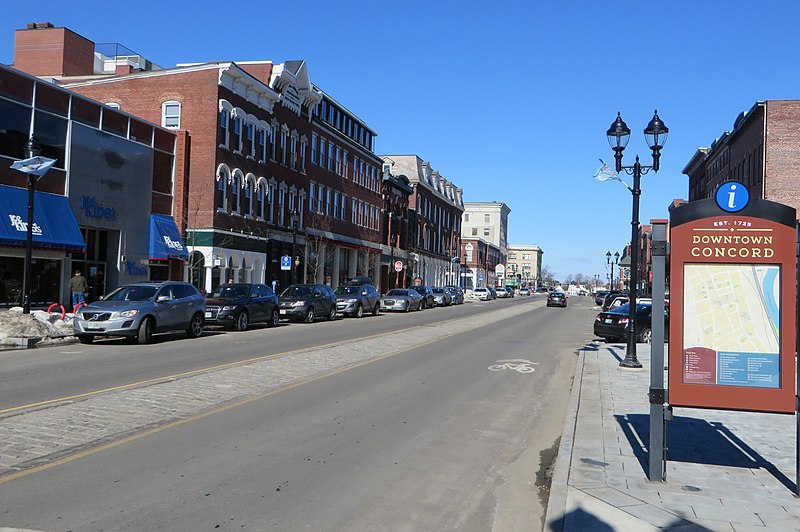
Downtown Concord was a mess of closed streets and temporary grandstands, so Lou drove in from the east, parked in a strip mall lot across the Merrimack River, and walked along the Route 9 bridge toward the ceremonies. They wished they had a hat, even one of Alex’s, lost to the forest; it was hot and stupidly muggy. They wished their camera worked; their phone was cracked and stupidly old. Mostly they wished they could have thought of a good reason not to attend. They were not, and had no desire to be, a real journalist. But, they had forty pages of magazine to fill by end of summer, and this little show was sadly the biggest thing in New Hampshire.
At least since the legislature passed the latest round of abortion restrictions, at the end of their spring session. A month ago, GOP clowns barely containing their glee, emboldened by the new governor, leaning in to the fucking circus mentality of the campaign, egging on the protestors, begging for a pie in the face, wearing chunks of banana cream on their foreheads for days, defiance kink, ringmaster high. The opposition did their best, showed up, filed lawsuits. But it wasn’t looking good.
Lou passed a small band of them, protestors holding signs, snakes in the shapes of uteri, Margaret Atwood-inspired bonnets, homemade everything. The demonstration was being kept far back from the festivities; even most of them stopped chanting, when they saw the first of the copters take its place downtown, waiting with the clouds, for the others.
A small square past Storrs Street. Eagle something? Atrium? Umbrellas, brick, a good enough view of the sky without Lou needing to push further on, close enough to the action.
Of course, in retrospect, it was still too close. The swarm of machines dipped in unison. Just a little bit; the cheering turned to one collective gasp. Then faint clapping again, as they all ascended back to their original altitude. Hmm, didn’t think that was part of the program. Lou tried to check their phone; stupid thing, too slow. Then the things dipped again, but seemingly at random. The little vessels jerked groundward, then back up. Something wasn’t right. No one was clapping anymore.
The Republican Speaker of the House found a microphone, started asking people to remain calm and – wasn’t able to finish his sentence. The unicopters started plummeting, on the crowd, on the State House, on the street. There were explosions, fragments of bone and tar, screams. Lou was knocked down some steps as the crowd ran. They dragged themself as far as they could to the side, under the lone umbrella that hadn’t yet been overturned. They covered their head and heard the parade of impacts, all down North Main, panicked footfalls of those separated in the confusion, survivors moaning and circling tragedy in real time. They stayed down until someone (a medic? not in uniform) shook their arm. Lou swatted the hand away, limped past people running in all directions, until they reached the highway, crossed the median in a daze, stupidly, and sat with their back against the guardrail, facing away from the disaster, toward the river.
#
By the time their leg feels good enough to cross the bridge back, they’ve forgotten which lot they’ve parked in. To Lou, it seems at least an hour must have passed since the mayhem, yet firetrucks are still streaming in, the echoes from shouts and glass breaking still bouncing off, one can see even from the river, an unrecognizable downtown.
It may as well be a different country, the other side of the Merrimack, though. Plenty of cars in all the lots, people walking into stores. Lou’s got the vague sense they should call someone, but no names pop into their head, let alone a string of digits. They follow a family into Books A Million, hypnotized by the group’s normal gait, the unfazed parents, the unpretentious children.
When they see a photo of the newest iPhone on one of the magazines, amongst the periodicals, they get the bright idea to look at their own phone. Still unsure who to dial, Lou tries someone named Mary it looks like they tried to call fourteen times this morning. Line disconnected, odd. They then pick a name at random from their contacts, Lionel. No luck either, but wow the guy’s timbre is soothing, on his voicemail. Lou’s lucky it’s one of those long ones, where the person must be wonderfully eminent, conscientious, and leaves a ton of info, who else to reach out to in case of something urgent. Considerate, beautiful. They are murmuring into the device, mindless appreciations, without hearing the beep, not realizing they are leaving a message.
They see someone wearing a “Tamra” name badge, in a Books a Million polo, watching them with concern over the racks.
“Excuse me, where is Lionel.”
“Lionel? Are you lost?”
“It’s just, he’s got a, very sonorous.”
“There’s no Lionel working here.”
“Tamra though, that’s a pretty name…”
And then they pass out.
#
Smell of burnt coffee, Bates Motel cushioning. Must be in the cafe section.
Lou shifts from slumped to sitting, unnecessarily dusts themself off. Tamra is holding a phone.
“There’s no need, I’m fine.”
“Er, you fainted.”
“I haven’t eaten.” Lou blinks, scans the cafe menu without taking in the words.
“I wouldn’t,” Tamra warns. “But, water.”
She’s back in second, somehow, with a glass of mostly cubes, and a little piece of paper.
“What’s that?” Lou asks, chewing the ice.
“From the community board.” Tamra hands them a card. “If you need it.”
Lou reads aloud. “Crisis Center of Central New Hampshire.”
“You can use my phone if you’re in trouble.”
“I was, it was.” They look around for a TV. It’s a cafe, not a sports bar, so. “Are we, under attack?”
“OK I’m definitely calling the police.”
Lou scoffs. “I think they’re busy.”
Tamra hesitates, puts the phone away, looks out the front window. “It’s awful.”
“Yeah, I slept bad before, so, this will be fun.”
“Wait, you were there?”
“Barely, I was lucky.”
“Um you look like shit.”
“Um yeah it was a fucking horror show.”
“Sorry, I mean, sorry. You just, I wasn’t sure.”
“If I looked like shit?”
“No, you do.”
“Thanks.”
“You kept saying something about Lionel.”
Nice voice, Massachusetts, Cultural Council. Ah, all coming back now. “Someone I used to work with.”
“Yeah. I thought like, abusive boyfriend, and…” Tamra trails off.
“Not quite, or, never.”
“You’re not in trouble?”
“I think I just strained, pulled something.”
“Or, you know, PTSD.”
“Time will tell, Tamra. I’m Lou.”
“I already know. I’m crazy.”
“Crazy like clairvoyant crazy?”
“Almost. I remembered your septum piercing.”
Lou lifts their hand to their nose. Barbell still there, no tearing.
“Where?”
“Aren’t you, working at NOM now?”
“Interesting, it’s, not that big a publication…”
“I flip through every page of every magazine we get.”
“Is that your department or something?”
“Nope, just control freak type thing.”
Lou tries standing. Nope. “Do you still have a copy?”
“Blah, it was last month, so no,” Tamra says, sitting down. Finally.
This is nice. “That’s OK,” Lou says, instead.
“You don’t have one?”
“I do, plenty. I was just going to tear my photo out.”
“What! You looked cute.”
“It’s insane, that they’d do a profile on me.”
“I think sweet, you looked cute.”
“I was just supposed to be the tech grunt, website content.”
“K, you already get a promotion then?”
“Sort of. The Editor, she just, up and left.”
“For real, forever?”
“Absconded to Massachusetts.”
“Smart lady.”
“Mary, yeah, that’s who Mary is.”
“You’re doing that mumbling thing, again.”
“You said I was cute, two times.”
“You were, are.”
“Sorry. I’m mad with power.” Lou stands, stable enough.
“I like it.”
“I don’t. I think I’m the new Editor.”
When Lou leaves, they’re still holding the Crisis Center card, Tamra’s number penned on the back.
#
The details on the malfunction are released within days. It may not be a malfunction. A young postdoc fellow at Dartmouth, Cindy, is being held in federal custody. Suspicious syntax in her code, an unusual amount of commented sections. She says it’s poetry. But officials are wary. They have avoided releasing anything thus far, but today a few sections were leaked to the press.
nh failure / experiment that only ends / with everyone pretending / autonomy means just for men
sycophants pull down / their pants to check who’s hardest / whose dick swells most for hurting girls / who’s the best bad bill / filer the granite state / has yet to spawn
i wish the adamantine beasts / below the flying blades / meet some sunny day / and crushed concrete / is indistinguishable / from their meat
Oof. That last one. Sounds damning, but, what does Lou know about verse?
They are looking up the word “adamantine,” when the first submission comes in. It arrives from the contact us link on NOM’s website. Lou still doesn’t have access to all Mary’s folders, inboxes, and has been dreading getting a complaint via the generic comment box, or a question they have no idea how to or if to respond to.
The submission’s not a complaint. It’s, more poetry. From someone “South of Manchester but with a White Mountains ethos.”
They say calamities insist
The weakest parts of us
Fall from our souls
And leave remaining
Only our best
To wrest the metal
Back in place.
This time, we rest
Only when our roads
Sparkle with a diamond
Shine, and we remember
Them, the blessed,
Who gave their lives
Without knowing why,
So we could attest
To undivided spirit,
Present, stressed,
Yes, but unbroken.
Lou is thinking, that was, sincere? Then they get another submission. And another. Some with real names attached, others anonymous. Lou wants to write each back, make sure they know they’re writing to a quarterly mostly food magazine. But, they make a new folder on the desktop, arrange them by time received, start playing with the layout, for a few, just in case.
By the end of the week, they have more than enough to go cover to cover. It would be a departure, but Mary’s run a few pages of poems before, when no new restaurants were opening, when the magazine couldn’t feasibly do another feature on the same corn maze or apple orchard it had already covered extensively, multiple times during previous seasons.
The question still remains, is sincerity enough? There are some obvious bad ones, but the majority seem, just fine, maybe a little trite, but how original can you be about a bloodbath that’s captured the entire country’s attention? Lou could get away with this, devoting an entire issue to these remembrances, these little poignancies, in honor of everyone injured or dead. Lou needs to get away with this, they’ve got literally nothing else. Accounts locked, Mary missing; shit, this is really how it is.
They send an email to the lawyer representing Cindy, why the hell not. Maybe she’ll elaborate on her leaked lines. Certainly not expecting an exclusive, her freshest criminal justice metaphors, not to NOM, at least. But, Lou’s thinking of a front cover. If they could get permission to use something from the villain (plaintiff…) herself, that would definitely get some attention, sell some ad space for the fall.
They make a call. Tamra answers.
“I was wondering how long you’d take.”
“Tell me everything you know about poetry.”
#
Turns out, not much. But, Tamra suggests an outing. Flyer she’s seen tacked to the Books a Million community board, picture of a peace sign, open mic night in Warner, thirty minutes north or so, at a cafe called Warless, local poets promised.
Warner, interesting. Lou may not be a reporter, but some easy searches show that’s where Cindy grew up, graduated high school from, a decade ago. If she wasn’t being held in federal prison, who knows, maybe the kind of place she’d hang out, congregate with rural creatives, farm type beatniks.
While Lou’s driving up there, Lionel calls.
“Please tell me you are not still in New Hampshire.”
“I am still in New Hampshire.”
“Come back to civilization, Lou!”
“Don’t you know I’m very important now.”
“How bad was it?”
“Twisted ankle. Lots of smoke. Things I can never unsee.”
“Jesus, Lou. I really thought, when Alex left.”
“I’d rather not say, the mortgage, a lot.”
“Mass real estate is insane.”
“Yeah I’m stuck here. Got a date, though.”
“Hot damn! Go get em, tiger.”
“Tyger, tyger, burning bright…”
“Impressive. All the readings I invited you to.”
“I know. I’m late to the game.”
“Poetry is very serious, Lou, not a game.”
“I’m headed to an open mic night, right now.”
“For your date?”
“Yeah, work maybe, too.”
“Good luck, have fun.”
“If I need some like, line break, advice…”
“You call me. You call me if you need to escape south, also.”
“I did call you, your voicemail saved me, I think.”
“I’m not kidding. Your state is devolving.”
“They just copy Texas, Alabama, we’ll get a heads-up.”
“Do you think that kid fucked with the code?”
“Fuck if I know, Lionel. I wouldn’t blame her, though. Is that OK?”
“Suffering aside, in a vacuum, lots of people would agree.”
“New Hampshire’s worse that devolving.”
“Seriously I know some well-off jerks, love to have you, however long Lou.”
“New Hampshire’s a fucking hole, a black hole, it for real sucks in all the loonies nearby, your state, the Berkshires aren’t all Tanglewood and roses.”
“I know, there’s a new gun shop, down the road from the Norman Rockwell museum.”
“Idiots in Vermont, idiots in western Maine, pent up rage from worse people in better states than mine, who come here, to fulfill their worseness.”
“I pray for women, every day.”
“Gonna take more than prayers, Lionel.”
“Amen. Have a fun time tonight.”
#
Warless Cafe is attached to the back of the town’s Unitarian Universalist church. Lou meets Tamra outside, little hug, both squeeze onto a bench near the order counter. Inside, the place is packed, mostly because it’s small, probably thirty people or so. Lou’s steadying their coffee as the barista keeps walking past, delivering drinks. Tamra’s balancing a BLT on a plate, on her lap, it falls, she lets out a big sigh and eye roll.
They talk briefly between poets reading elegies very similar to the ones Lou’s received since the tragedy. Maybe it’s the setting, this unsubtle conscientious objector vibe in here, lots of protest photos on the wall, that makes each recitation feel tired. Like, how terrible how terrible the wounds, but also how strong how strong we must be, we must not meet violence with violence, we must acknowledge the pain, but seek counsel with our better angels.
You know. No details of the shards of glass and human flesh bouncing past the bystanders’ faces. Where’s the poem like that? For sure, it would kill the mood in here, but Tamra already seems bored. Maybe Lou’s paying too much attention to the acts? They try to ask Tamra about the bookstore, or her life, or anything. Is she still mad about the BLT? Wasn’t this her idea, what else did she expect from a small town? Lionel wouldn’t be caught dead in here. It’s nothing great, but again, it never promised to be, the cafe name is a bad pun, should be a warning, right off.
Lou’s about to suggest maybe they go out for drinks, real drinks, somewhere else, instead. But then the barista passes them again, delivering nothing but himself to the microphone stand. He’s about to speak, puts a finger up, behind the counter briefly, dims the lights, giddily reappears. A ham, yeah, so Lou’s expecting something very melodramatic. But the guy starts performing a, poem? Something, from memory, or he’s making it up on the spot. It sounds, a lot like Cindy. Bits about the hopelessness of men, how they’re the dregs, some strange metaphors involving sediment, gathering up useless matter, setting it ablaze. It doesn’t make a ton of sense, it contradicts itself. It has hushed the crowd. Even the what-seems-to-be regular knitting club clique near the back, stop their work, listen.
The barista excoriates the state. Begs for annexation from Canada, Mass, New York, anyone. He speaks of his hometown and the shame, the shame of still being here, and strangely the people here, in this very hometown, are nodding their heads. At the end, he references Cindy’s last name, in a long list of names, of those working towards disMENbering the status quo, misquotes her leaked code:
anyone defending / autonomy for men / is good as dead / already
When he’s done, the lights go back up, it’s intermission, Joan Baez on the speakers. He thanks the other barista, is about to make someone a latte, does a double take. He walks right up to Lou, bends down, peers close at their face, rummages through the book rack near the entrance, comes back to the bench holding the previous month’s pages of NOM.
“Please don’t do a feature on us.”
“Jesus, if I knew a nose ring would, do this.”
“I beg you. The food is terrible.”
“Wouldn’t know, you knocked my date’s sandwich over.”
He appears to notice Tamra for the first time. Gives her the once over.
“I may have saved you from diarrhea, for real.”
“Refund, apology?”
Tamra is standing up, is adjusting her bag as she gives a weird wave.
“Soooo I should be heading back.”
“You sure?”
“Yeah, I’ll call.”
“Um OK.”
She leaves. The barista sits down next to Lou, who is still processing the goodbye.
“That’s some shitty customer service.”
“I’m not kidding, the bread’s stale.”
“I kind of do now, wanna write something.”
“This is me, imploring you.”
“We’re technically a lifestyle publication…”
“The owner, he’s delusional, cheap.”
“…with merely a heavy focus on food.”
“So NOM, like Not Only Meals?”
“North of Manchester.”
“That’s classist as fuck.”
“You’re rude as fuck.”
“I’m Zeke, I’m sorry, where’s your friend?”
“My date, probably blocking my number.”
“Could be worse, in federal prison.”
“You know Cindy?”
“Know her? We were practically the same person.”
“So you should be locked up, too?”
“Maybe, if anyone would publish me.”
“That why you never left home?”
“Low blow. I did move out, last year.”
“You stayed here, though, in town.”
“Yeah. Cindy was always way smarter.”
“She’s on trial for conspiracy.”
“Wait here.”
Lou shouldn’t. Zeke seems like a tool, Tamra’s stormed off, they already have enough material for the fall issue, last thing they need are angry musings from a semi-eloquent hick.
What Zeke brings back to the bench, though, aren’t poems. They’re pictures. The first ones he pulls out he says aren’t the best; it’s Cindy being presented with medals, trophies, in various auditoriums, in her teen years.
“She was, is, a genius. Math bowl, debate, spelling bees.”
He shows Lou more. The good ones. Photos of Cindy writing in the hallway of some school building, head down, in a notebook. Apart from the awards photos, and a few with her laughing next to an awkward looking younger Zeke, she is alone. She is jotting down something furiously, or gazing off into a distant space. She is walking her dog in the dark, lost in thought. She is in her car, arms straight out, but chin thrust to the roof, exasperated. She is someone New Hampshire was bound to lose, one way or another. She is presented first place ribbons, pinned to her by quote reasonable men, who denounce very obvious evils, like the Confederate flag, but who then, since they are so quote reasonable, take their self-assessed moderate cred, and come up with quote sensible voting restrictions, laws for female bodies, lower taxes to make the schools quote earn their place in the community. They were going to lose Cindy. They have her in custody, but they’ve lost her.
#
The state loses Lou, too, shortly after Zeke gives them the albums.
They accepted the photos, the good ones, decided to scrap the poem content, publish a whole issue with portraits of Cindy inside. They left Warless, Warner, tried to call Tamra, had no luck, emailed Cindy’s lawyer again. Zeke swore he had permission, owned the copyright, everything was taken with his camera, but Lou wanted to make sure.
A week went by, nothing from the lawyer, simplistic texts from Tamra, she saying no no all is good, just busy, maybe in a couple weeks? The New Hampshire Legislature, in a special session held in honor of their fallen colleagues, doubled down on the abortion law, no exemptions for incest, rape. Then, they passed a real Rumpelstiltskin of a state terrorism bill, everyone who read it said it couldn’t pass federal muster, everyone who didn’t read it chanted its talking points, loved it, considered it law already.
The lawmakers must have directed the state troopers to their positions, as well, comprehensive strategy, scary version of safety. Lou hadn’t been keeping up with the local news. They were stressed, they were picturing overturned cars as they showered, as they slept. They were out of weed.
Down to Massachusetts, since it still wasn’t legal in New Hampshire. As they crossed from Nashua to Tyngsboro, they noticed the brown and yellow Dodge Charger, not hiding at all, parked right behind the Bienvenue! Lou assumed they were being paranoid, pulled into the gas station instead, but sure enough the state trooper pulled out, as soon as the first NH plate to leave the dispensary did, crossed over the border, lights on. Oh fuck that. They tried Methuen, same thing, even goddamn Salisbury, little beachbum Salisbury had a cop on the north side of Lafayette, ready to pounce.
They couldn’t go more east, the ocean, didn’t feel like going more south, so headed back towars Concord only to collect their things and call Lionel, to ask for his wealthy friends’ numbers.
#
A little stoned, in the basement of a retired college president’s harborfront villa, Boston, board member of the Humanities something. Lou gets an email from Cindy’s lawyer. No, the defendant does not authorize any use of her writing or likeness, for any popular culture publication. Furthermore, the defendant has no idea who any person named Zeke is, strongly advises that any purportedly consensual images be immediately destroyed. Anything less than full cooperation will result in…
Lou zooms in on the photos, the ones with Zeke and Cindy together. Shit, of course those are photoshopped. Of course they almost went to press with the collected works of a stalker as their total content. Of course they try Mary again, line still disconnected, decide to leave a rabid voicemail on a completely rando person’s number.
They could reinsert all the mediocre poems, still make the printer’s deadline, but they draft something for NOM’s website, instead.
The resignation is not necessary, will not be read by many. Lou types up their account of the devastation. It lacks sentiment, dwells on the lone umbrella left to them to shield their body, their head, from debris. They work themself into a sweat, remembering. They take off their shirt, it gets stuck on their septum piercing. They yank the cotton and accidentally rip the ring out. It bleeds, it hurts, Lou curses, Lou cries. Lou takes a picture of their own, uploads the wound underneath their homepage statement. They google “great disaster” and find this, from a 1912 New York Times op-ed:
“…the hundreds and hundreds of people who have sent us verses about the loss of the Titanic…may be moved to share our own wonderment at the audacity they showed in attempting to deal with such a subject. For very few of those hundreds and hundreds of people had any other excuse for trying to write, other than the fact that the great disaster had excited in them strong feelings of sympathy and horror. They all took it for granted that, being thus moved, their verses would give poetical expression to their emotions.”
And then, below the picture of their inflamed nostrils, they list the names, actual and fake, of every person who sent the magazine some stanzas. Just the names, no comments about or excerpts from their work. They close their laptop, dial Alex.
“Why are you calling me.” No pleasantries, icy. She left in winter and forever wrapped the season around her.
“We’re both on the mortgage,” Lou says, throwing up in their mouth a little.
“We had an agreement.”
So did we, Lou wants to say. “I left, I’m never setting foot in New Hampshire again.”
“Good, don’t blame you.”
“You must know someone in real estate.”
“I’ll get on it, this weekend, Lou.”
“Handle it, everything.”
“That’s fair, thanks.”
“Just take care of it Alex.” Also, I still love you, but better to be all business, aloud, and romantic on all the silent frequencies, where it doesn’t count for shit.
“Fine, Lou, but I’m not splitting –”
“And don’t ever call me again.”
“What? You called me –”
They hang up. Another edible. They ruin the retired college president’s towels. They make good on their word; in the future, they don’t so much as cross the Ipswich River. Cindy is found guilty. Zeke moves back in with his parents. Tamra takes off for Burlington. Lionel passes away, respected and loved. There’s another attack, another draft. Warless in Warner goes up for sale, is turned into a tanning salon. Unicopters become ubiquitous, but are called something else, and look different. Amateurs write banal but mostly harmless rhyming couplets. A few idiots are prosecuted for incitement. Many idiots are not prosecuted for upholding the “law,” denying human rights because a bunch of doofs wrote down their discrimination and got some other doofs to sign it. The UN is ignored. The Supreme Court’s expanded, but it doesn’t go well, it gets worse. A lot is ricocheted, lobbed through the air without much force, returns stronger than anticipated. A lot of people don’t like this, a lot do.
On the next major anniversary of the sinking of the ship, the New York Times reprints the op-ed Lou found. With every tragedy, more and more of us investigate our mood, as if that mattered. We pencil our enthusiasm, wonder how a thing could happen, wonder at the pieces put together, afterward, as if our words were stone, and supported anything, except their own created tension.
New Nonfiction: Review of Christopher Lyke’s “The Chicago East India Company”
Gravitational lensing – as half-remembered from an article I read years ago, as confirmed courtesy of a recent Wikipedia dive – takes advantage of the presence of massive objects to shape the path of light coming from objects on the far side relative to the viewer. A sufficiently large star, for instance, could be used by Earth-bound astronomers to “see” far beyond what they otherwise could by bending rays of light coming from distant bodies. The basic physics behind the principle was known to Newton and Cavendish, and a multinational effort just after World War I confirmed many of Einstein’s theories about gravitational lensing. It may be our best bet for obtaining direct visual evidence of habitable exoplanets in other solar systems.
Christopher Lyke’s The Chicago East India Company (Double Dagger Press) is a sufficiently large star. A collection of short stories and vignettes based both on the author’s time in uniform and career as a teacher, the book takes on a refreshing and encouraging role, despite the sometimes-laden and harrowing subject matter of surviving combat and finding purpose in a bureaucratic education system.
I’ll return to the “sufficiently large star” concept in a moment.
The writing throughout TCEIC is, as one would guess, taut and clean, in the sense that there are no wasted words or characters or stories. There’s a physicality that guides the collection, present in spare but efficient vignettes – whether character portraits like “Canton”’ or meditations on events as in “Another Ginger Ale Afternoon” – but on full display in the longer pieces like “Life in the Colonies,” which amplifies the corporeal experiences of a jungle excursion by examining the personal and political context surrounding it. The sensory descriptions also ground what could be otherwise ephemeral introspection, and this balanced duality continues throughout the book.
In “These Are Just Normal Noises” the monotony of a foot patrol drags on for more than four pages but the writing never falters. Not a word is unnecessary in building to the tension of the impending incident. Every description – of the “kohl-lined eyes and dyed-red beards” on the men and women encountered in the village, or the “riverbed…the tall grass that covered the ground…the ditches and small stonewalls” – seems at once familiar and extraordinary. The connection back to the world entices, but endangers:
We pulled them from thoughts of Chicago and the L and the weekend festivals that they were missing. A soldier remembered the way a girl had spoken to him and how she seemed cool and like the river that glided through the valley below him. We pulled them from this and back to the mountain, to a path or a rocky outcrop at which to point a gun.
We know it’s coming, right? The ambush, the firefight, the attack – we’ve seen this before. The description continues, though, hard and unrelenting, and the agony of a withdrawal delayed by wounded vehicles and drivers, another couple hundred words detailing the by-now familiar yet still deadly blow-by-blow, but “It must have been only a minute since the fight began.” We feel that minute stretched over two pages and the exhaustion weighs heavy on us.
A similar burden falls on our shoulders when we read “Solon,” perhaps the most memorable story in the book. An unnamed teacher – though likely the same man whose travails we’ve been following the whole time – ventures from the demanding and unfulfilling classroom to the football field, coaching a team of students unaccustomed to winning and not far removed from the soldiers he once served alongside. Hopes are raised, then tempered; this is no Hollywood story of a team defying all the odds, though the growth and depth of the kids is much more realistic. Dreams are dashed, not by death but by an injury sufficient to upend what would be, in a scene meant to inspire, the rags-to-riches career of the honest and likable young Darnell. The teacher unspools, seeing the players set beside soldiers set against football players from his own suburban youth in Ohio, and spins out of control:
…he knew that the team he was coaching was bad, and that it wasn’t their fault. They were in a system that prevented them from being slightly more than terrible. And if it were a movie maybe an emotional director would have the poor kids win. But in reality, if they played one another his boys would probably get hurt…He didn’t blame the suburban boys, they didn’t hate the city boys, they just knew they’d beat them to death and wanted to, because they wanted to beat everyone down. That’s what they were trained to do, and bred to do, and would do. It wasn’t malice so much as inertia. They’d smile uncynically and help our boys up after cracking their ribs.
I found no morals here, because every time I tried to connect the Ohio players to Afghanistan or the Chicago players to the insurgents or reversed the roles or asked Who would be who in the war zone the futility of that line of questioning stopped me. War is not football, football is not war, but both deserve our attention for their consequences.
The other stories – “No Travel Returns”; “The Gadfly”; and the title piece – contain just as much depth of characterization and breadth of plot, maybe even more so. As readers we recognize the central character – sometimes first-person narrator, sometimes third-person participant, even as a literal bystander in “Western and Armitage,” when he spends less than a page delivering a gut-punch and denouement at the scene of a traffic accident – that Lyke inhabits and uses to bring us along on a journey that doesn’t end. “None of it ended,” he says in protest to the idea that stories need resolution. But compared to many combat or redeployment stories about the hopelessness of such an idea, I feel like there’s something to look forward to here.
TCEIC arrived at an opportune time for me as a writer. Full disclosure: Christopher Lyke founded and runs Line of Advance, a military- and veteran-focused literary website that has hosted much of my work, and even more work from many other writers. LOA sponsors the Col. Darron L. Wright Award for military and military-adjacent writers. They’ve amassed enough groundbreaking and stunning writing to publish Our Best War Stories (Middle West Press), with hopes for a second volume. LOA has been a great and generous home for my own writing, and I was excited to read more of Lyke’s own work, if only to see into the mind behind a mainstay in the vet writing constellation.
Getting civilians to care about “The Troops” has been far easier than getting them to care about veterans. Wave a few flags, drop a few parachutists into a football game or two and they will stand for the anthem and mouth the affirmations they’re expected to. It’s American tradition – dating back to the Newburgh Conspiracy, the Bonus Army, and burn pit legislation – to celebrate war and forget the vet.
The writing in TCEIC embodies an antidote to that malaise, not in building overly optimistic bridges across the civil-military gap, but in reminding those of us in the vet writing communities that this kind of storytelling still matters, and will continue to matter. As major combat deployments to Afghanistan and Iraq fade in the general consciousness – if it were ever really there, short of jarring news announcements – and attention shifts elsewhere, spaces like LOA and books like The Chicago East India Company serve to focus our efforts. The longevity of a website that allows for creative expression gives hope. The straddling of worlds in TCEIC – connecting the experiences and people in a combat zone miles and years away to the experiences and people in contemporary and ongoing America – gives us that sufficiently large star. We can use its presence to bend the light and see habitable planets beyond the terrestrial profusion of “typical” war stories, the kind you see in Hollywood if at all, and imagine literary planets where authors with military memories can explore stories beyond combat, can continue “writing things that aren’t just bang bang stories,” as Lyke puts it in an interview with Phil Halton, and maybe one day bring along a few of those civilians to populate these new worlds.
The Chicago East India Company by Christopher Lyke is available for purchase here.
New Poetry from Tanya Tuzeo: “My Brother, the Marine;” “My Brother’s Shoebox;” and “My Brother’s Grenade”
WAR HAS DONE / image by Amalie Flynn
my brother, the Marine
the recruiters come weeks earlier than agreed—
arrive in alloy, aluminum with authority,
military vehicle blocks our driveway
announcing to the neighborhood
they’ve come for a boy here
who will have to go—
though he sits at the top step
and cries
i follow them,
strange convoy to Staten Island’s hotel
where all the boys are corralled—
farmed for war, becoming weapons
of mass destruction
when before they picked apples
at family trips upstate
a hotel lobby—last stop before using lasers
to blow off golden domes,
silence muezzins in the crush
of ancient wage and plaster—
Hussein’s old siberian tiger left thirsty,
watches other zoo animals
being eaten by the faithful—
just like a video game
i clamp onto my brother
beg him not to go, we could run away
he didn’t have to do this—
recruiters quickly camouflage me,
am dragged outside—my brother lost
did not say goodbye
or even look at me.
my brother’s shoebox
the room across the hall is inhabited again,
home now from another tour
like sightseeing from a grand canal
where buildings are art
and storied sculptures animate street corners—
my brother returns a veteran.
i want to remember who this person is,
or at least, find out what war has done.
he leaves with friends to drink—
that is still the same,
later tonight
he might howl at our parent’s window
or jump on my bed until the sheets froth,
uncaring and rabid.
but i don’t wait for him to come home
and begin searching the room
that is his again.
it is simple to find
where people hide things—
a shoebox under his bed
that wasn’t there all these years
furrowed by sand
and almost glowing.
i open to find drugstore prints,
rolls of film casually dropped
for a high school student to develop—
silver halide crystals take the shape
of shattered skulls
goats strung and slit
a school made of clay
blasted in the kiln of munitions
“KILL ZONE” painted across its foundation—
each 4×6 emulsion a souvenir
of these mad travels,
kept to reminisce and admire.
my brother’s grenade
my brother’s room in our family vacation home
has embossed wallpaper, indigo or violet
depending on the light that filters through the mountains—
and his grenade in the closet.
i saw it looking for extra blankets,
thought it was an animal resting in eiderdown
kept by my mother in one of her tempers
but it didn’t move
and so
i picked it up.
inhumanity held beneath iron’s screaming core—
a pleasant weight,
like the egg i threw across the street
detonating onto the head of boy
who said i kissed him but i didn’t,
is it like that for my brother?—
fisted mementos of thrill?
seasoned by cedar sachets,
neatly quilted metal shimmered as i turned it
forbidden gem, his holy relic—
i placed it back in the closet and began making dinner,
said nothing.
the slender pin preserves this household
where our family gathers
unknowing a bomb is kept here—
my brother roasts a marshmallow
until it catches fire, turns black,
plunges into mouth.
New Poetry from Sam Ambler: “Gnats” and “Made Him Strong”
OUR STRUGGLING LIMBS / image by Amalie Flynn
GNATS
Evening fire sparking over Sutro’s rim,
igniting cirrus dragons drifting away from the sun.
Jules and I, enthralled.
Sitting placid on the stoop outside our home.
Cuddling.
They swarm out of the alley from behind.
Catching us. Latching hold onto each
of our struggling limbs.
Like gnats they buzz: “Faggots!” Stuff socks in our mouths.
Drag us to dark playgrounds, the depth of sandboxes.
Fists in our faces. Cleats. Blood. Pipes.
Bone splinters under their boots.
Cold chains gird my torso. Handcuffs biting wrists.
One yanks my hair back: “Look what happens to motherfucking queers!”
They rip Jules’ pants apart. Jules’ teeth buried in cotton.
Fingers splayed, broken. Knees popped out of sockets.
Ass opened.
Laughing. Noses dripping.
One forces my eyelids like a glassless monocle.
Jagged bottle crammed past Jules’ sphincter.
Jules passing out.
Leather circling around. Beating shafts of meat.
Ejaculating on Jules. Laughing.
Jules coughing. Crawling.
As they flit past his sod-bed,
Jules swats at gnats.
MADE HIM STRONG
From an early age, he knew he was not, could not be,
like other boys. He was fine with that. It made him strong.
New Nonfiction from Patricia Contaxis: “Luminous Things”
It is late October and the season is turning. The morning chill is not the surface cool of fog, the chill you feel in summer here at Point Reyes National Seashore, but the deeper cold of coming winter as the hemisphere tilts farther from the sun, a cold that settles in to ground, rocks, trees, and your body. I am on Trail Patrol, carrying my usual pack and a radio strapped to my hip belt.
Volunteering for Trail Patrol with the National Park Service was a gift to myself, to celebrate my coming retirement. For sixteen hours each month, I rove the park freely. My pack includes supplies for visitors in need—extra food and water, a medical kit, everything needed for an unexpected night out—and I’m trained to warn against hazards they may not realize. The park calls this preventive search and rescue. I’m also encouraged to share my continuing education as a naturalist, which the park calls interpretive work. I might explain leash laws to a visitor with a soft start-up, an offhanded invitation to view, say, the small, camouflaged snowy plovers nesting in the sand above the wrack line. When a dog tears through the nesting area, it destroys the nests. When a plover is frightened off-nest, it won’t return and the chicks won’t hatch. Over time there won’t be any more plovers. On a good day you can see the light turn on in a visitor’s mind.
I’ve only had to use my training in wilderness first aid once on Trail Patrol, to recognize that a horseback rider, who was diabetic and nine miles off piste at the end of the day as the sun was going down, needed rest, water, to stay warm, and have some food available while I drove into town for help.
My assignment each shift is to choose a route through these seventy-one thousand acres of wonder: a peninsula of coastal ridge jutting out ten miles at its widest point, bordered by wild beaches; a hot spot for migrating birds; home to wild, free-roaming tule elk, to bobcats, and one shy mountain lion. As I wander the actual landscape, an internal world opens to me, maps itself onto the wild and familiar terrain of Point Reyes. And on this particular day, I am forced to take account. At the trailhead I call in my location and planned route. The radio squawks back: “Copy. Have a good day.”
*
In the slanted morning sun, I walk through a corridor of orb weaver spiderwebs. Beaded with dew, they glisten and wink at me as I pass. I feel charmed, delighted by them. Then I climb the first rise, noting the effort it requires, and feel the first frisson of fear. Twice in the last few years, an episode of exhaustion has overtaken me while hiking, as if someone pulled a plug and all my vital energy drained. Both were brief. A drink of water, a bit of food, and they passed. But these are not things I felt in my younger body. Walking the long, deep quiet of Point Reyes, I feel more alone than in my usual daily life, a solitude that harkens to a much bigger, far longer solitude.
I enter a valley whose steep walls prevent me from hearing the ocean on the other side of the ridge. Within the valley sound is amplified. My boots thudding on the rutted, hard-packed trail remind me of a saying both chastening and reassuring: You are not the only pebble on the beach.
Rabbit, raven, spotted towhee, and quail. A downy woodpecker, vociferous and hardworking. Rounding a bend, there is a gorgeous, healthy coyote. A big one, close to fifty pounds. Coyote sightings this close up are not common in the park, in my experience. In three decades I have only seen coyotes from my car as they slinked across the road ahead of me and disappeared into underbrush or foraged in a field far from the road. This one has staked out a gopher hole, snout down, back curved, still as death. I wait and watch. The coyote leaps into the air and pounces, missing its mark. It swings its head toward me. I could feel that I am seen. A chill. Sharp intake of breath. And then it faces forward, trots away so swift and smooth, it is as if it were skating.
In late morning I climb the rise that will take me out of the valley and begin the long descent to the beach. I have warmed up through the morning’s hike and acclimated to my pack. I feel loose and strong. A thought surfaces that I am deep into the park, hours away from any possible rescue, which is true, factual, but not imminently relevant. I take a moment to check my surroundings in case my intuition is ahead of a situation I haven’t completely registered. But I see no actual danger. I keep walking.
I decide to note my fears as I would note thought and breath while meditating. I list them as they float through my mind:
~ I’ll meet a dangerous human. (Possible.)
~ I’ll be stung by a bee and go into anaphylaxis. (I carry an EpiPen.)
~ My hip or back will go out, and I won’t be able to walk.
~ I’ll stumble and break a leg or arm.
~ I’ll fall down a cliff.
~ I’ll choke on my sandwich, and no one will be with me to squeeze my diaphragm and blow it out. (This one made me laugh at myself a little.)
~ My heart will give out.
There it is. My father did not live to be my age. He died of a broken heart. Stroke. Heart attack. Years of heart disease claiming his every breath. I was twenty when he died and have lived most of my life without him. But his decline haunted me, and as I approached the age at which he died (he was sixty), some subtle thought line worked its way out, as if entering a narrows in a small skiff, the disturbance of the waters increasing, my grip on the gunwales tightening. And then I was through. Slight disorientation from a future foreclosed to the usual unknown: bright, hectic, and sweet.
Still, something lingers. The visceral shock—unfathomable, really—held in the body that we are here and then we are not. I am sixty-three now. I’m retiring. I’m happy. I’m writing and playing music. I am in love. My father was none of these. The radio squawks, a ranger calling dispatch to check a license plate and VIN number before issuing a parking ticket.
*
At noon I reach Coast Camp. A large group of high schoolers is packing out after a week-long service project of trail restoration. They trudge in knots of chatting, bumping magnetism, edging me to the side of the trail. I seem invisible to them. I walk to a picnic table and slide my pack off, enjoy the lightness. I sit on the table, eating my sandwich while watching a dark-eyed junco flit from campsite to campsite. A song sparrow supervises from a post and then from an unused grill. The sun is directly overhead in a clear sky. I can feel its warmth on my arms and face and on my back, where it dries my park-issue khaki shirt, damp from carrying a pack all morning. After lunch I amble down a wide cut through the coastal bluff that leads to the beach. Halfway down the gentle descent is a broad-canopied eucalyptus with a rope swing on which my daughter played all the many times we camped here when she was a child. On the beach a wide wrack line tells the story of a stormy night. But the surf is mild now, a gentle lap followed by a longer, quiet interval. At the shore sound surrounds you, even the sounds of an easy tide and amiable breeze. Climbing back to camp, sound resumes its directional quality, comes at me from identifiable points, and the air around me feels different, heavier, ground-stilled.
The junco and sparrow have moved on, also the high schoolers. I have the place to myself, and I sit on the picnic table a while, gazing at an outcrop of sandstone halfway up the western slope of the coast ridge. It is enormous. Sections have weathered into shapes like ramparts and parapets, looking like a medieval castle. I can still remember the rush of joy I felt the first time I saw it, thirty-one years ago. It was 1987, the year my wife and I moved to the Bay Area. It was our first hike in Point Reyes. The castle loomed above us, standing alone, as it does, on a dry flank sparsely dotted with rubble and low scrub. We were on the upswing of a ten-mile loop from ridge to beach.
*
The radio crackles, then falls silent. Sometimes the radio helps me feel less alone, but sometimes it reminds me of how alone I am, how far from base, as I ramble into the peninsula. There are dead spots in the park, places where radio repeaters cannot penetrate. In the months following the death of my wife, I took to this landscape like the balm of Gilead. I was fifty-six years old and full of pent-up vigor that wanted to spend itself on these hills, quick-stepped and blind, all motion and breath. It was as if movement through this landscape would scrub my grief, rinse my hot, swollen eyes with the cool waters of wonder and awe and possibly, if ever again, promise.
In those days, not so many years ago, I walked fast. I pushed my thumping heart ahead of me to its limit. It was as if I dared it to break. “Go ahead,” I might have said. “Try it!” I traveled light: an ultralight pack, a small bottle of water, my EpiPen, a map. Nothing like the pack I carry on Trail Patrol. Fear was not part of my landscape, inner or outer, then. I may have been too exhausted for fear, my shock and grief having wiped out a wide swath of emotional range. I was just doing everything I could to feel alive. I kept moving.
My mind cleaved, in the aftermath of my wife’s death, into an altered, bifurcated state I both inhabited and observed. On the one hand, I was a small creature standing on the crust of an empty world in a vast, cold universe, completely alone, with a galactic wind whistling around me. On the other hand, it seemed the natural world had been lit from within, and I was transfixed by that glow evident everywhere I looked. I moved through the world—pushed myself through it, really—to keep seeing the next luminous thing. All objects sentient. All events sacred.
*
The radio squawks again, another parking violation and also a call for maintenance to repair a utility shed near the lighthouse. I take up my pack and hike along the base of a low escarpment. Soon I enter a riparian clutch, singular and unexpected, an oasis in this otherwise dry expanse of low coastal scrub. And then I am out along the exposed bluffs. I spot the red bandana of a northern flicker and watch it for a while. Further along a pair of red-tailed hawks hovers over the pale-blond hills, hunting. I stand still a long time, watching. They hover and dive, hover and dive. They pop up, glide, circle round, and return to the same spot. After a long, long time, they catch nothing.
A group of three hikers pass me. The women are in shorts and sneakers. The man carries a light day pack. They’re in their late sixties, a few years older than I. Trim and fit, swift and chatty. They blow past me with cheery hellos and disappear over the rise.
The red-tails move south. Two ravens catch up to the hunting pair. They dog the hawks, fly over the hunting ground, circle out over the beach bluffs, and swoop in again. I stand in the shade of a tree and watch.
At the Sculptured Beach trailhead, I size up the path. It’s a steep trail along a narrow drainage down to the beach. My companion on this particular day of Trail Patrol—inchoate fear—organizes itself into questions. What if I can’t make it back up? What if I get hurt on the beach and the tide comes in? Are there bees?
I hesitate at the trailhead. I imagine how I would feel back at my car at the end of the day if I allow myself to get this far and then turn away out of fear. Turn away from something new. I have never been to Sculptured Beach. My radio has been quiet all this time. I am out of range.
I force myself to continue down the trail. It briefly winds down a scrub hump and then narrows precipitously through a cut in the coastal bluffs, a corridor with cliffsides that are sheer and very close. The trail becomes a section of rough steps cut with long plateaus and inhumanly high risers. Turning sideways, I step down from one riser to the next. The weight of my pack forces a harder landing than I would like. I hesitate on one for a moment, for no reason, really, perhaps an intuition, when a terrible crash comes from my left. I freeze. Sudden as a lightning strike, something passes in front of me. It is too fast. I cannot comprehend. My mind is wiped clean. An explosion of fear racks my body. I feel as if I am inside an enormous bell that has been hammered. And then I see the three deer. They had leapt from the sheer cliffside on my left, onto the path before me, and then up onto the cliffside to my right. I could have touched them, they came that close. One after another. Pow! Pow! Pow! Having descended the cliff to my left, they could not stop and wait for me to pass. They committed. By chance, we crossed one another’s paths at that very moment, a miracle in a world of a thousand trillion encounters. The deer bound up the cliff in a few jumps. Once near the top, they pause to look at me. Three young does. Tails erect, ears like radar saucers. One ear twitches.
My adrenalated body feels wispy, as if cool air were blowing through holes in my existence. I feel like a ghost. We stare at one another, having cracked open time. I laugh. When else had I seen such a thing? Joined by these three wild characters that are poised on the hillside, looking over their shoulders at me, we are line breaks in a poem, something sudden and new, cheeky and fresh in the seconds before leaping up and over the ridge top.
New Fiction from Mike McLaughlin: “For the Truth is Always Awake”
Krieger’s father left Salzburg late in life. He had never married and had no close family to speak of. After thirty years a banker, he yearned for something else. A friend in the Austrian foreign ministry proposed that he try Siam. The consulate in Bangkok could use a man with his keen mind, he said, to help smooth out difficulties they often encountered in Southeast Asia finance. The elder Krieger leapt at the chance.
Within a month of his arrival, in addition to taking well to the work, he struck up a quite reasonable arrangement with a young Siamese stenographer. Things went very well indeed. So well that two months later the young woman informed him he would become a father the following spring. To the astonishment of his peers, Krieger was elated. He and the girl were married at once. From the start the man felt neither distress nor regret. His pleasure and pride in this new life was boundless.
And for the child, Lukas Udom Dumarradee Krieger, the boy’s delight was the equal of his parents. His life was a happy one. To him the disparity in ages was no more unusual than night following day. And if he had ever been troubled by the thought of a father nearly too old to catch a ball by the time the boy was able throw one, he had never been heard to say it.
After completing his education at the Lutheran missionary school in Sukhimvit, young Krieger entered the ministry. Principally from deference to his father, but also for his yearning to be of service to others. To do so not only with faith, but from the orderliness his family and his education had instilled in him. And while his intentions were true and his efforts genuine, he never quite felt settled in it, and so he left the Lutheran monastery for the Buddhist one.
*
A child of two faiths, Krieger had spent countless hours in the library of his home. Studying and reflecting upon the works devoted to the ideals of his mother and that of his father.
There was an ornate glass cabinet with all the volumes of the Pali Canon, the vast compendium of Siddhartha Gautama’s teachings. They were the foundation upon which Theravada Buddhism was built. A wedding gift to his parents, it awed him as boy. A living wall of wisdom, to guide and inspire.
On an ornate bookstand his father kept a New Testament printed in German. A heavy tome indeed, it had been in the family for generations. The cover was of hard black leather and etched with gold leaf. The pages were thick, their texture smooth, with large print and beautifully wrought images depicting the teachings of Jesus.
And beside that was a volume of similar dimension, this one in Latin. A reprint of the Versio Vulgata, translated from the Greek edition centuries before. And next to that was the King James edition, in – as the saying went – the King’s own English.
And adjacent to it all, naturally, was Martin Luther’s Disputatio pro declaration virutis indulgentiarum. The epochal list of ninety-five theses through which he outlined the faults, the hypocrisy underlying the system through which sinners could bribe their way out of Purgatory for their sins, or for those of deceased relations. In contrast were Luther’s assertions that prayer, penance, acts of selflessness and generosity were the path to salvation.
Salvation he declared, was not to be purchased, but to be earned.
What intrigued the boy, what drew his attention and held it, was the principle of a faith forever seeking to define itself. A natural conclusion to draw, given the vast body of works his predecessors had written across the ages. As true for Buddhism as for Christianity, he reasoned, even though the first preceded the second by centuries. Every teaching, every tale an instruction on the necessity for virtue in work and in thought. Each being another step along the path.
With no small irony, due more to the latter than the former, young Lukas embraced the tenets of Buddhism. These being, in essence, the freeing of oneself from the distractions of the world. The temptations. The burdens. The suffering. To surrender the transient. To surrender even the self. Embracing samsara, the ever turning wheel of life. The ongoing, seemingly endless cycle of birth to death to rebirth. Turning, changing, turning again.
The acolyte’s task was to reflect and see beyond these machinations.
To transcend.
To achieve supreme enlightenment, beyond the body and the physical world.
To achieve nirvana.
Yet as it was with all faiths, there were varying schools of thought on how this was to be accomplished.
One counseled that nirvana was accessible to those who helped those around them. Choosing to address the present, with its attendant suffering and chaos, and helping those in need.
Another advocated a more detached approach. To turn one’s mind inward. Away from the strife and the fleeting pleasures of the world. To read and meditate in a realm of pure silence and peace.
Thus, a monk in a town or a city would observe that living among a great populace was ideal – while a monk in a rural monastery would perhaps disagree. Reasoning that such undisciplined places undermined true spiritual work. And a monk living in utter isolation, alone in the deepest forest or atop the highest mountain might very well dismiss them all.
Reflecting on the disparity between the three, Krieger began imagining himself a fourth monk, sitting placidly on the surface of the moon. Gazing down upon them all – and believing that all three were correct. To the puzzlement of his peers, he enjoyed the conundrum.
And with all that said, as his Lutheran father was fond of saying, “Uncle Martin is just around the corner.” Affirming that one needed only the scripture to guide him – or, in the boy’s case, more than one. At the center of all, he reasoned, Buddha’s teachings and those of Jesus were in harmony.
A disciple of truth is always awake.
Blessed are the merciful, for they will be shown mercy.
Let the disciple always be awake and let his mind always delight in compassion.
Blessed are those who mourn, for they will be comforted.
Let your light shine before others, and so let them see your good deeds.
Blessed are the meek, for they will inherit the earth.
Overcome anger by love.
Overcome evil by good.
Clear enough.
Reasonable enough.
And certainly, neither required an industry to help him in his work.
And so the young Krieger vowed to do what he felt was right. The right thoughts. The right acts. The right goals. To follow the Noble Eightfold Path as well as the Beatitudes. Unconcerned which side of the argument he was on. Certain that the question was meaningless. Content to live virtuously. Never knowing if he was successful, merely doing the best he could. Hoping, if he was lucky, to compare notes in the end with those most blessed. Those most redeemed. Those most enlightened.
*
From floor to ceiling, every shelf in the monastery library was filled with books. Many were handwritten, bound in covers decades or centuries old. Every one of them was testament to a faith that arose millennia before the boy was born.
Early in life he learned that the wisdom every book sought to impart could not be absorbed directly. Often it was not their literal meaning of the words that mattered, but what they implied. Creating a context which the reader was invited to perceive, not by what the words said, but what they did not.
From the beginning he found this maddeningly vague. After a full and frustrating week, he felt himself no better informed than he was at the start. He would shift in his seat and sigh, turning a page so loudly that the novices beside him – each required not to utter a word – would look up with concern.
That said, here and there were morsels that caught his eye. Each time he found one, he would spend hours, sometime days pondering it as jeweler would consider a single facet of a gem. Marveling at the quality that made each unique in the tapestry of life, as a singular grain of sand would be among its fellows on a beach. And in each, he found value – a fresh sense of worth every time.
And yet…
And yet with every volume he completed, he would study the thousands more throughout the hall, and he would blink. His blinks became sighs, which soon became groans. He strained to stifle them but with every book he returned to its place and every new one he brought down, his groans became more frequent. More heartfelt.
How many pages, he wondered, were truly needed to expound on the transcendent? To what length must one strive to explain the inexplicable to another seeking to make the ascent himself? How many different ways did one need to expound upon a life well lived?
The principles were plain enough to him. To be modest and kind. To live simply. To always practice kindness and compassion. To do good purely for the sake of doing so, even if these acts went unwitnessed. Fundamental principles all, which in essence explained themselves. To do otherwise, he knew without hesitation, was wrong – and certainly nothing in the any of the texts, from the short to the winding and windy – which were most of them – declared otherwise.
Again and again he would hear his father’s kind voice turning hard, as it always did when his vast patience had been exhausted.
“Was ist das verdammte endergibniss??”
What is the damned bottom line??
*
On a bright morning in spring, Krieger and a fellow acolyte had been tending to the flowering plants in the circular garden. It was in the southwest corner of the monastery, so arranged as to receive the most sunlight.
The garden was an ornate set of concentric rings, each a series of curving teak boxes, four feet in height. Together the boxes formed the rings, with gaps in each wide enough for the visitor to pass through. These gaps were set at irregular intervals, permitting the visitor to enter, walk the length of the perimeter, turn inward to the next row, and continue. To ponder and reflect among the lotuses and orchids, the tulips and frangipanis. Together they formed arcs of harmony, with a reflecting pool at the center.
It was amidst this spectacle of elegance that the two of them had been working. Carefully watering the plants, giving more or less as each required. Trimming away dying petals. Removing weeds that appeared daily, seeming to sprout faster than they could be removed. The work itself as much a turning wheel as the cycle of the flowers themselves.
Young Krieger was all of twenty, the other a few years younger. They had been in earnest discussion, reviewing and pondering the teachings of their masters. Krieger had been about to make further comment, but he fell silent instead.
The other boy frowned.
“Are you not well?” he asked.
Krieger looked down, shaking his head.
“What is it?” the boy persisted.
Krieger gritted his teeth, his eyes shifting this way and that, seeking to grasp an idea, yet it kept eluding him.
“Well,” he began carefully. “It has just occurred to me that a life devoted purely to reflection upon selflessness could…”
The boy studied him, waiting for the rest.
“It could, in essence, be…”
The silence stretched, until resolve asserted itself.
“…a selfish act.”
Frowning, the boy replied, “You cannot mean that.”
“I do,” Krieger replied, sighing.
“But how could that make sense?” the other persisted.
“Well…”
He hesitated again, thoughtfully scratching his shaven head.
“Well, consider this. Here we meditate. We reflect. We lead simple lives.”
“Yes, certainly.”
“We dedicate ourselves to taking the higher path.”
“Yes?”
“And, therefore, you and I dedicate ourselves to ourselves.”
“Well…” the boy answered, cautiously.
“And by so doing,” Krieger persisted, “We free ourselves. We shed every element of self we can conceive of, and in so doing, we are to achieve true enlightenment, correct?”
“Of course,” the other answered, his good cheer gone now.
“Well – to me, it would seem that this in itself is selfish. Committing so utterly to the path at the dismissal of all else. I am not certain how better to express it, but often – too often – that is how it seems to me.”
The boy’s frown deepened.
“But…what you are saying – the two cannot be reconciled.”
The son of the Austrian banker and Thai stenographer stood straight, studying the sky.
“’Der glaube ohne werke ist tot.’”
The boy blinked.
“From the Book of James,” Krieger went on.
The boy shrugged.
Krieger sighed.
“In the Christian Bible.”
The boy shrugged further.
“’Faith without works is dead.’”
“But,” the boy replied, ever more confused, “Here we do both.”
Krieger sighed and bent back to the flowers.
“The doors of the monastery are open to all,” the other persisted.
“Yes, they are.”
“We tend to the poor.”
“I know.”
“We tend to all.”
“I know.”
“In spirit and in body.”
“Yes. Perhaps you are right.”
“And yet you believe that a life of pure selflessness is wrong.”
“Of course,” Krieger admitted, his voice low, his eyes distant.
“But – that is madness.”
Krieger nodded, yet he smiled and looked up.
“And that is beauty of it, do you not think?”
The other boy had been about to reply when he realized they were not alone. The eldest of the monks had appeared from behind them. A short slender man with eyes a striking blend of green and copper. Of all the elders, he was known to listen the most and say the least.
Krieger swallowed.
He had not heard the monk approach. It was as though the man had materialized from the air.
Clearing his throat, he said cautiously, “Would you not agree, Master?”
As if unaware of their presence, the man examined the stone wall behind them. The worn prayer wheels mounted before it. The brass cylinders a faded red, the symbols a faded gold. The yellow and the orange banners on the wall above them, stirring gently in the breeze.
He cleared his throat and spoke slowly, his voice coarse as gravel.
“That is for you to decide.”
He studied Krieger a moment.
“Often, when one must ask the question, one already sees the answer.”
Turning away, he added a parting thought.
“Where do you think you shall find it?”
*
The elders took notice of his distress, but they said nothing. Saying little as a rule, they could go days, even weeks without speaking – yet they saw all.
One morning as Krieger began his reading, he was startled by a touch on his shoulder. He turned to see the old monk smiling down at him, beckoning wordlessly for him to follow.
On the far side of the temple was a sunlit room, and at the center was a table with a small rug on the floor before it. On the table sat a fishbowl, and when the monk told him to kneel, Krieger found himself at eye level with the lone goldfish within.
photo by Britta Hansen
“Find yourself there,” the monk whispered gently.
Puzzled, the boy remained, embracing a challenge even greater than the thousands, perhaps millions of words placed before him every day. The man departed, leaving the fish to study the newcomer, until it lost interest and ignored him.
The minutes grew to hours as Krieger studied the fish and the glass between them. It was perfectly transparent and smoother than any he had ever seen. So clear it mirrored him with exceptional clarity. Back and forth, his focus shifted from his reflection to the fish to himself again. Yet as the day wore on he found himself nodding off, fatigued from the task. The task of doing, in essence, nothing.
When the supper gong sounded, he was startled. His mind had drifted so far into this silent narrow world, peopled only by himself and the swimming creature, that he had lost all track of time. Only now did he realize it was dusk, and the room alive with the crimson of a perfect sunset. Resolve surrendering to hunger, and devotion to exasperation, he gave up.
A full day was gone…and he had learned nothing new.
He began to rise, preparing his apology for having failed.
Then he froze.
As he had moved to stand, he observed movement behind the glass. Not from the fish but a muted shift between light and dark along the far side of the bowl. Not the curved surface closest to him, in which he had interminably studied his reflection, but on the one beyond. Another reflection. A ghostly image of himself, parallel to the first. Distorted in ways captivating and haunting. The colors were muted, the shadows devoid of detail, and his reflection not only spectral but inverted.
As he had begun to rise, his distorted twin lowered itself, head first. Seeming to vanish into the pebbles at the bottom of the bowl. As he reached his full height, all that remained of his other was the reflected orange of his robe.
Stunned, he quickly sat again, haunted yet pleased as his reverse image rejoined him.
Mesmerized, they studied each other until the light was gone.
He had found what he sought – only when he ceased looking.
He left the monastery the following day.
*
He traveled widely, devoting his energies to, of course, works and prayer. Stopping countless times to help where help was welcome. With the families and individuals he encountered, he planted and harvested. He helped mend old homes and build new ones. Giving such comfort as he could to the sick, and especially the dying. Offering his blessings at a wedding here, the birth of a child there.
He began in the south and soon was on his way, far to the northwest. Venturing up through communities along the banks of the Mae Nam Ping. Going even further, well into Burma, up along the Salween River. Turning east again, he traveled ever deeper into the interior. Drawn by the remoteness of it all. Savoring it. He had spent his childhood in Bangkok, often within sight of the gulf. The increasing isolation of the north pleased him no end.
He took immense pleasure in traveling among the peoples across the Khorat Plateau, well to the east of Siam’s fertile river valleys. The mountainous landscapes awed him, and the clear air and breezes refreshed him.
His travels fell into a pattern. He would stay a while in one place or another, a guest in homes or out in the open, and push on. One morning as he left a Laotian monastery, the amused abbot told him that this was a legacy of his father – the sense that wherever he stood, he hadn’t gone far enough.
*
By the start of the war, he was fifty-four years old and healthy indeed. A monk both inspired and patient. Benevolent yet firm when the occasion required. Humble yet brave. Forgiving yet determined. Kind yet strong. Imbuing in all his thoughts and his deeds the tenets of the Eightfold Path.
Of the Eight Virtues comprising the path through the ceaseless wheel of life and beyond, he was most devoted to Right Livelihood and Right Effort. He spoke six languages by now and had broadened and sharpened his skills to be of exceptional help to all. To help those he met not merely survive but to lead healthy and prosperous lives.
He was the very essence of a hale and strong phra s̄ngḳh̒.
*
When Japan unleashed its flood of terror across the east, Siam – now become Thailand at the stroke of a pen – seemed to be spared the worst. The Thai government, willingly or not, was guided by the Chomphon Por, their inspired albeit fascist-leaning prime minister. With his acquiescence – and the theoretical endorsement of their young King Mahidol, still at school in Switzerland – the Japanese occupation of Thailand was more formality than conquest.
After an opening battle that lasted only hours, an uneasy peace was declared. Yet the principal goal of their conquerors was to flay the British in Burma and on to India – the crown jewel. Relations between the nations warmed considerably when the Japanese pledged to help the Thai regain territories long lost to the Burmese.
Asia was still Asia.
On a perfect dawn, three months after Thailand’s one-day war, Krieger sat cross-legged on the Bangkok waterfront, enjoying a cup of tea and savoring his return to the capital.
He visited his father’s grave at the Lutheran cemetery, not far from his childhood home, and spent several days with his ailing mother. She could have remarried after his father’s death, but had chosen not to. Embracing her son, she declared that her greatest joy in life had been giving her love to two men only. She did not require a third.
Meditating now, his back against a warehouse on the Phunkatta piers, refreshed by the sun and breeze off the sea, he was distracted by the sound of approaching Japanese soldiers.
It was a patrol – of sorts. Four bored privates followed a sergeant who looked disappointed the war had fled from him. Their noses wrinkled and their heads were half-turned from the stench of fish left too long in the sun. Disinterested in the yelling and sweating fishermen as they unloaded their morning catch. The soldiers drifted by, as though the breeze were the only incentive they had.
The last one stopped and looked down at the monk. Krieger nodded respectfully, his offering bowl sitting empty before him. The private paused to dig from his pocket a satang coin and drop it in the bowl. Krieger pressed his hands together, fingertips aimed to the heavens, and bowed in gratitude. The private began to do the same when the sergeant clamped a hand on his shoulder and with a snarl shoved him to the front of the line. After scowling at the monk, the man moved on.
The preceding night had been cool and, having slept in an untended patch of grass beneath the stars, the monk welcomed the dawn. He savored the sunlight as it warmed his face and drove the chill from his bones.
And so it was at that moment, as he sat meditating on the pier, that he saw the bearded and starving American stagger up the ramp from the rusting tug that had just barely made it to dock. The boat’s barge was redolent with a stench that exceeded all others combined. It sat so low in the water it appeared to remain afloat through faith alone. The ascent to the dock was steep indeed, and the man climbing it was so fatigued the monk saw he was close to collapse.
The patrol would return in minutes, Krieger knew. He finished his tea and stood, realizing for once, that the wretched of the earth had come to him.
New Poetry from Shannon Huffman Polson: “On Orthodox Easter in Mariupol”
BETWEEN THE CRACKS / image by Amalie Flynn
On Orthodox Easter in Mariupol
We finished our jelly beans
red and yellow, purple, green,
the last bite of chocolate, unaware
that over in Mariupol
on this most holy day
sleepless mothers cradle children
on a steel factory floor.
Christ is Risen!
But in Mariupol people lie crushed,
the crossbeam too heavy,
cold factory chimneys rising cruelly
against the grey sky.
Nobody steps in from the crowd
to carry the cross.
There is no crowd
but circled tanks
in Mariupol.
Where is the Risen Christ
in Mariupol?
Outside the factory
mud is drying, small flowers
pushing up
between the cracks,
the birds returning, unaware
that inside people wait
in darkness,
the factory made for steel,
not people—
they sit
in vigil,
waiting.
New Poetry from Nidhi Agarwal: “The Goddess Incarnates;” “Cow Dust Hour;” and “Emancipation”
WEIGHT OF DUSK / image by Amalie Flynn
THE GODDESS INCARNATES
At midnight, on a seat of five skulls
I worship the slayer of illusions,
The Maharaja (King) gifted me thirty – three
Acres of rent – free earth, (1)
I have planted seeds of your devotion (Bhakti)
In the soil of my bones to perform corpse rituals.
The world calls me mother – crazy and love – mad,
Your status comes alive in my skeleton,
Oh, Mother Kali! Tell me
If the Goddess incarnates.
– Ram Prasad Sen
COW DUST HOUR
I dwell on the ferocious cremation grounds
Yearning for my Mother Kali!
She carries waxing gibbous on her forehead,
The Sun grows larger in her right pupil,
The Moon drips from the two corners of her left eye,
She burns the demons in the catacomb of her three eyes.
You cannot carry her consort in your palm,
He keeps her love and fury in the ocean of his heart.
I am restless, this longing to meet my
Mother will swallow me.
Oh, Mother! I have transposed to a ghoul
Your disciples are my friends now.
They claim,
Between the day and night –
When twilight rises to the throat of the sky,
The hours of Sun and darkness make love,
There is no period of half – light,
I will meet you at,
The time of Union.
EMANCIPATION
My eyes brim with the weight of dusk,
Emotions conflagrate in my heart
Burning the corpse without fuel.
This dawn I am returning to my house
To constellate my belongings.
The entrance is clouded by the
Scattered scars of my childhood,
Every drawer is sealed with the secrets of
My disappointments.
Today, I let go of my failures and rise
From the floor,
As soot rises from the throat.
With every effort to clean the house
My spine travels to the nucleus of my brain
Showing me the way to the bedroom.
At the bedroom’s door,
I stand startled by the view.
The Mother Goddess is coming together
With the God of Mountains,
Consuming my form and liberating me
From prison.
New Nonfiction: “Survivor’s Paradox” by Chris Oliver
When I first saw the photo of David Spicer in a 2009 Army Times, I was excited to recognize my friend there on the page staring back at me. The picture was closely cropped around his face, but I could tell he was in his dress uniform when the picture was taken. I could see the globe and anchor on his high collar. There was no smile, except in his eyes. Marines don’t smile, but David sure looked happy to be one. David and I were friends while growing up: grade school, middle, and high school. He always talked about being a Marine, and he joined up before he even graduated. The picture was lined up with half a dozen others, all servicemen and women, their faces inside their own individual boxes, names and ages typed out neatly beside. Above all of the pictures in a much larger and darker font than the rest was a headline. It read: “Photos of the Fallen.” My initial excitement evaporated as I looked back at the picture of David. Underneath his name and age was another block of text: “KIA, Helmand Province, Afghanistan.”
As most high school kids do after graduating, we went our separate ways in life. Even though we had both enlisted in the military around the same time, I had heard nothing else about David until I saw the picture. In that moment, we were jarred back together in recollection and sorrow. I had known others that had been killed in the War on Terror, even served with some. But this was the first time I had grown up with someone who had been killed in combat. I saved that issue of Army Times, folded it neatly, and tucked it away in the back of a notebook. On the first page of the notebook, I wrote David’s name and the date of his death. Beneath the inscription I added the names of others I had fought beside in Iraq but didn’t make it home. In the years that followed, anytime I heard of a friend’s passing in Afghanistan or Iraq, I wrote the name down. One by one, the names kept coming. A guy named Cota who I knew from Basic Training in Fort Knox. A Sergeant named Rentschler I knew while stationed in Germany. Sometimes months would pass between names, at times only weeks, but the list kept growing. The wars in faraway lands kept chewing up friends and acquaintances. I had more than one turn in the same meat grinder, and during these deployments I would lose men who were as close, and at times, closer than my own family. Brothers. Slowly and deliberately I inscribed each letter until the page bore their names with honor. The names sat together, unified without regard to color, race, or creed. Melo. Sherman. Tavae. Edens. Morris.
As days turned to weeks and months and years, the list kept growing but much slower. The fog of pain surrounding the list would slowly lift and I began to look at the names with less sadness and more admiration and respect. I began to understand their loss as a by-product of conflict and war. It didn’t matter if we believed in the reasons or politics of the wars, we would always honor their memory. In early 2015, it had been close to five years since my last combat deployment and I retired from service. The list had stopped growing altogether. The notebook was put up, tucked away along with the rest of my war memories. Hidden, to be looked upon only through a haze of whiskey and tears. At some point the ink used to write the names began to fade.
Now, with quite a few years since my retirement, most of the men I served with have gotten out of the Army and moved on with their lives, as have I. Though my part in the war is done, or should be, I am still fighting. There is still a war raging. There is still death. New names to add to the list. I find I can’t add these names though, as the deaths are much harder to accept. I don’t know if they belong next to the others.
I find out in the same ways, while doing the same things. Someone from an old unit will call out of the blue. Maybe a message on social media.
“Did you hear? Chad Golab just died.”
“How?” I hope the answer is a vehicle accident, or a robbery gone wrong. Murder. Anything other than what it really is, but deep down I already know what happened to Chad. The caller’s reply comes easily in a matter of fact way.
“Shot himself.”
Slowly the story is told. There is little emotion given with the caller’s words and I give none in return. We are both well versed in giving and receiving horrible news, numb to tragedy. At least, on the outside. Inwardly I feel sick. I flashback to a memory from years earlier in Mosul. I see Chad Golab leaning against a wall out of breath. He had just sprinted across an open area through a hail of bullets and rocket propelled grenades. He wore a smile from ear to ear. He was laughing. So very alive. I can’t believe that the man I saw in that moment was the same one who was found outside of a convenience store in the front seat of his car, dead from a self-inflicted gunshot. But it was.
The same types of calls and messages have continued at a steady pace, to the point that I dread seeing the name and number of an old Army buddy pop up on the caller ID. Each time a call comes I learn yet another person who made it back from “over there” decided they had had enough. The question of “Why?” always lingers in the air, drifting along searching for an answer. The answer never comes, only more of those horrible phone calls. More names. More questions. I’m angry. I feel a deep sorrow and love for these men. I also hate them. I hate them for what they have done to themselves and the unfair enigma they have left behind for us all. We cry for those who have gone before us, yet they are the very ones who have created our pain. What sense can be made of this?
Why did they do it? Why? We will never know what only they knew. We are left to guess in wonder. And mourn.
After these calls of notification are over, my mind floods with more questions than answers. Deep down inside, my old wounds, the ones which don’t leave visible scars, fester once again. The wounds never fully heal and the pain they create is always there, subdued, yet constant. The hard, built-up crust covering these wounds is ripped away and the pain returns in full force, always stronger than before. I sit with hot embers burning away at my gut, wishing for one more chance to talk with these men. The chance for one more conversation. I want to ask them questions and I need them to answer me. What has caused their pain to be so great they decided to leave this world behind? What was the whole point? Why did we work so hard to keep each other safe when there was so much harm surrounding us? Why end it now? You made it home! You made it back to mom and dad and wife and child and friends! Why now? I want to tell them I’m sorry. Sorry for their pain. Sorry for my anger and hate. Of course, I am left to render my own conclusions, more a meditation in pain than an answer.
War is a journey, a journey with many paths and roads moving different directions to different places. In my own experience the trip begins and ends at the same destination. Home. Or at least whatever place each person finds most dear. It might not even be a place. It might be a person or activity. This “thing,” whatever it may be, is what the warrior turns to when things are at their absolute worst. It’s what they turn to after they have been away from home for months and it’s hot and it’s only going to get hotter and they are carrying 80 pounds of extra weight up the same fucking hill for the one thousandth time and someone they have never met tries to kill them and instead kills their best friend who was standing right next to them and then they have nothing to look forward to except that they get to do it again tomorrow. And the next day. And the day after that. When you go through days like that, there has to be something that keeps you going, makes you say, “I’m going to make it out of here.” And then, finally, one day, you do make it out. Make it back home. Everyone cheers and is happy and claps their hands and you smile and you are truly glad to be home. Home in a physical sense. In body. Your mind however is still in turmoil, still back in the desert or on the side of a mountain, stuck at a crossroads with no idea which direction to take. I think everyone who experiences war travels down the same road passing the same intersections. There are no signs to follow. No light to show the way through the darkness. Each intersection is a question which needs to be answered to make sense out of the senseless experience of war. The questions are impossible to answer. No one ever makes it completely back, but you can make it most of the way. Maybe these people, these guys like Chad, never make it far enough back. They take a wrong turn and lose their way. They get caught at a spot between the Hell of war and the comforts of home. The division becomes blurred by expectation and guilt and shame. Months of constant fear and excitement mixed with boredom and hate has made them question reality. Their loved ones are foreign beings. The precious people who occupied every waking thought and dream and fantasy are happy to see their soldier. Glad they are home. Home safe and in one piece. They give hugs and shake hands and have no idea the soldier is still fighting. Still “over there”.
Of course, the soldier is glad to be home too. But home is different now, not at all like he remembers. His family and friends, like the soldier, have changed. His fantasies were a lie. He wants to talk about the war but can only do so with those who will understand. Only his brothers in arms will do. The one’s he laughed and cried with and got blown up with, and shot at people with. Killed people with. They are gone now. They live across the country or are out of the Army, working at a home store or drawing disability from the VA. Some are buried and forever seared into the soldier’s mind. The soldier wants to talk to the dead the most. The situation is an ocean of impossibility. They miss home while they’re at war but find they miss war when they get home. To them, salvation can only be found at the bottom of a bottle or inside of a gun barrel.
I don’t know if it does any good to sit here and ponder these questions or make half-hearted attempts to understand why my brothers have killed themselves. Wondering why they have survived so much only to give in at the last minute. I won’t stop though. I can’t stop. I can only keep asking the questions. And wait for the phone to ring.
New Fiction from Kena Ramirez Dillon and Francisco Martinezcuello: “Veterans Motorcyle Manual”
Lee Harkness was supposed to meet this guy Smitty at a bar called Marty’s on 14th Street at a specified time. Lee was late because it was his first time in Dallas. He had trouble finding the address.
“You’re late,” said Smitty.
“No shit,” said Lee.
“Relax, have a drink.” The guy backed right off, told him to relax—it was okay to be late.
Lee sat in the booth across from him. Lee had never seen a real gangster before. Smitty had a flat wooden face. His expression didn’t change, even when he talked. Smitty got up and walked to the bar. He was short—a lot shorter than Lee—not short like a dwarf, just short. Smitty got them each a shot and drank his in one swallow. Lee sipped his.
Smitty handed Lee a photograph. “Keep it,” he said. “That’s Reggie. His real name is Reginald. Sounds like he’s some smart guy that went to college or something, doesn’t it, but he’s not. Well, actually, maybe he went to some college for a while, but he’s stupid. His name should be Judas. That windbreaker—he’ll be wearin’ that.
“He ratted on my brother, Tim, just to save his own skin.” According to Smitty, Timmy got his knees broken—never been the same. They called it capping, and Smitty didn’t know then what it meant, but he did now. “Reggie says he saved Tim’s life—kept them from wasting him. That’s bullshit. Timmy kept a little money out of his collections. Reggie found out about it. I told Reggie I’d take care of it and he said OK. Then he ratted. Nobody does that to me.
They had six shots of bourbon each, then a few beers. They both got drunk, but Lee felt good—together.
The guy Smitty was all broken up about his brother. Lee had a brother—ten years older—sold cars—pretty wife, very pretty, and a little girl—took Lee in for over a year after his first arrest, then threw him out, for nothing.
They never discussed the job itself. He thought this guy Smitty would ask stuff like had he done this before or go over the plan, the details. Lee was prepared for that—prepared to tell about his experience—but he didn’t get the chance.
* * *
Lee did have the necessary qualifications. He was trained to kill and he had. When he was on active duty in Afghanistan he didn’t see a lot of action but had seen some. There was one horrible time when his unit got ambushed and he lost three of his close buddies. Somehow, he got through it. His unit was attacked, starting with rockets fired at their unit. At first, all Lee and his buddies could do was defend themselves and try to stay alive. Most of them did. The enemy just kept coming, but the unit was in their station and had a lot of powerful stuff to fight back. After it was all over, they went out to make sure the enemy was gone. They found twelve bodies, which to Lee looked just like his buddies. They didn’t have uniforms or anything, but they were all just young guys like Lee.
After the battle they could have some counseling and Lee signed up for that. He told the chaplain that the worst part was when they had to go out and look for bodies. The chaplain asked him if he thought he had done anything wrong and Lee had said, “No, I believe in everything we are doing and what our country stands for and how important it is for the people in Afghanistan to be independent and free, but it was still hard to take.”
It was necessary to park his car at his mother’s trailer in Albuquerque. She made him nervous, talking all the time.
“You need to call your brother. Talk to your brother. You look tired. Are you taking drugs? Why are you here? Why do you need to leave your car here? You never call; then, all of a sudden, you show up and expect me to be glad to see you. I don’t even know where you live.” She went on and on.
He looked away. She looked older and tired, yet somehow she was holding it together. Like today she had lipstick on, but it ran into her new wrinkles. She was actually wearing a dress, white with lumpy shapes of random sizes. The pattern reminded Lee of the side of a cow. Apparently she had a job somewhere now. He tried to imagine who would hire her.
“Are you listening to me?” she said. He looked up. “I’m telling you about on the bus yesterday. I saw her get on and kept my eye on her the whole time. She wasn’t even sitting near me. I knew she was one of them. She didn’t move, but I forgot to watch her reflection in the window across from her seat. That’s how she did it. I should have known. She got off the bus and I looked down and my purse was open. I never leave my purse open, and twenty dollars was gone. Those Puerto Ricans can do that. They don’t even have to be in the room.”
She’d straightened out a little. It seemed there was no man around; she wasn’t drinking, but she still talked too much, and she was still crazy.
***
His mother said that Rosemary had been asking about him. “Tell her I can’t see her right now,” he said. “I have to go and do a job. I’ll call her as soon as I do the job.”
“What job?”
“Never mind. Just tell her what I said. She won’t ask.”
photo by Andria Williams
Rosemary never asked him anything. That’s why he liked her. She just talked about herself and he didn’t listen, but the sound of her voice calmed him. He liked to lie next to her and shut down so only the sound of her voice was left.
From the trailer park he took a local bus into Albuquerque and then another bus to Dallas, arriving in Dallas by Greyhound, as instructed. The Greyhound was supposed to be AIR-COOLED. “Doesn’t that mean,” he asked, “that, perhaps, it should be cooler inside the bus than outside?”
“That depends on the outside temperature,” said the driver, who had a bad attitude.
Lee knew he couldn’t push the driver’s face in; he couldn’t even argue with him. “Keep a low profile,” the guy who hired him had said, and Lee needed the money. So he had to sweat it out, which literally meant he had to sweat on the bus all the way from Albuquerque. He stayed in the motel in Dallas for two days watching television until Smitty called.
He didn’t even let the maid in. “Suits me,” she said.
Reggie Johnson was putting on his white windbreaker. “Will you be warm enough in just that?” asked his wife.
“It’s just a short meeting with some guy,” he said, giving her a quick kiss. “It’s still summertime, for Christ’s sake. I won’t even be out of the car. Be home in time to tuck the kids in.”
As agreed, Reggie parked his black BMW under the third streetlight on Oak Avenue north of Lincoln and waited. He had told Smitty to set up a meeting with the assistant police chief. He hoped Smitty hadn’t screwed it up. If all went well, they would control the whole east side, with the cops in their pocket. He shuffled his newspaper to study the standings in detail. The Yankees were three games behind Boston with twenty to play. They would make a run for it. If the odds were right, he liked the bet. Personally, he gave New York an even chance. Boston always faded.
Lee had the pistol in his left hand, hidden under a coat draped over his right arm. The guy Reggie was just sitting in the car, in his windbreaker, reading the newspaper. From behind the car, Lee walked casually up to the driver’s side window until the gun was pointed at Reggie’s left ear. All he had to do now was pull the trigger.
Reggie turned suddenly. “Where the hell did you come from?” He looked at the coat over Lee’s arm.
“Um,” said Lee, “Could you tell me the time?”
“Yuh, sure. It’s seven-thirty. Jesus, you scared the shit outta me.”
Lee walked away from the BMW. He left Reggie to wait for a meeting that would not happen. In the middle of the bridge, he stopped and looked around, then he dropped the pistol into the river. He watched it fall and make a small splash. He wouldn’t be getting the ten grand. He would be getting nothing. His gun was gone. The bus was late and it was hot, but he didn’t sweat on the ride back to Albuquerque. He relaxed, watching the desert go by. One time he saw wild horses, off in the distance—at least he saw the cloud of dust they made. He decided it was definitely wild horses.
When he got back to his mother’s trailer, the first thing she said was, “I got to feed the squirrels.” They sat on the front step of the trailer and held peanuts out. Squirrels came and took peanuts out of Lee’s hand. Nervously, they would take three each time, putting one in each cheek and then somehow stuffing the third one in their mouths.
He looked at his mother. She smiled. She had the same black and white dress on. He decided it looked okay on her. She even had on a necklace, just a silver circle on a chain, which sort of matched her soft gray hair.
A squirrel grabbed a peanut. “Funny critters,” he said.
“Sure are,” she said. “What put you in such a good mood all of a sudden?”
“Nothin’” he said. It was dusk, that time when the birds call each other. “It’s been a rough week—but it’s over.” He handed a squirrel his last peanut. “Mind if I stay here a while?”
“Suit yourself,” she said.
“I’ll protect you from those Puerto Rican women.”
“Who?”
He took the photo Smitty had given him out of his pocket. “See this guy?” He handed it to his mother. “I thought maybe he looked a little like my father.”
“What are you talking about? You never even seen your father.”
“I know, Ma, but you know, he looks about the right age to be.”
“Yeah, well, your father did have a jacket like that, but he didn’t look anything like this guy.”
Lee took the picture back and tore it in half. “Well, anyway, yesterday, I saved this guy’s life.”
“Really?”
“You could say that.”
* * *
He went to see Rosemary. He lay next to her and listened to what she had been doing since he saw her. It took a while.
“Are you glad I’m here?” he said.
“Yes,” she said.
“You know, I couldn’t do that job, so I’m broke.”
“That’s okay.”
“But I saw wild horses and found out something important.”
“What’s that?”
“I found out who I am. It’s not the person I thought I was.”
“That doesn’t make a lot of sense, Lee.”
“Yes, it does, Rosemary. It makes sense.” He reached for her hand.
New Poetry from Jeffrey Kingman: “Matriarch,” “Josephine Marcus Earp,” and “Marching: Sophia Duleep Singh”
OCCASION THE BELLY / image by Amalie Flynn
MATRIARCH
ninth great-grandchild
spits up peas
seventh and fourth
declare themselves winners
I bundle the children into categories
high-shouldered daughters gobble minutes
trikes in the hallway
my sidewinding wisdom
laughs into a hanky
why is it I depend on the perpetual
tweed skirt
try reading
a mother
nursing triplets
attagirl
I suppose getting it right doesn’t matter
pull the flowers from the earth
an isolated pea is a tiny thing
JOSEPHINE MARCUS EARP
cowboys were the bad guys PUone cow hides behind the last one
it was a bad sum PUinaccuracies plus chickens
instead traded on horse hooves
kicked up dust and stray dogs
she wanted to be PUtaken seriously
staked instead a vagabond
her husband’s posture straight to the sky PUpointing now to the headboard
the tombstone didn’t think of her
left with her own version
they rifle through the undergarment drawer PUfor the sheriff’s girl
MARCHING: SOPHIA DULEEP SINGH
voice rattles
a high window
the lyric ricochets
then straightens PUUUUUto the upper register
breath comes
from the diaphragm
for the belters
on occasion PUUUUUthe belly
trailing skirts out of fashion
wives sing wild
wrapped in bedsheets
to jump from a crawling baby PUUUUUUUUUUUUUUis not a dance
talk of a women’s parliament
words are for lemmings
feet do the work
until the pointlessness is stiff limbed
dogged bobbys
the street scuffle an avant-garde PUUUUUUUUUUUUUUUUUUUballet
she fell down during the struggle
mud on her dress
New Poetry from Laura King: “Orange”
MY ACIDIC PAST / image by Amalie Flynn
ORANGE
It’s June, and a few stubborn ones
still hang on the trees.
We stand on the back of the pickup to pluck one—
so easy to peel, this old girl the sun has sugared
since December’s sharp tang.
Now it’s sweet as honey, sweet as candy,
sweet as that boy child
who wrapped himself up in his binkie,
his raw thumb firm against his upper palette,
who sat on the stairs facing the wall
because I’d snapped at him again.
Why was I upset all the time?
Though everyone forgives me, no one forgets
my acidic past; bright orange, raw rage.
New Nonfiction from Leah McNaughton Lederman: “Man of Steel”
There’s a solid history of stupid when it comes to fireworks at our family cabin at the corner of Pennsylvania, Maryland, and—as Dad called it—West by-golly-stand-up-and-smile-when-you-say-it Virginia. When we spent weeks of our summers there in the eighties, Dad developed his own sort of bird call: “Careful!” The mountains put him on edge.
In his defense, between the creek, the pool, the fire, the road, the wasps, the bears, and the cottonmouths—and being completely off the grid, forty-five minutes from the nearest emergency room—there was a variety of creative deaths and injuries available. We knew where Dad was when we heard “Careful,” and headed in the opposite direction with our handfuls of bottle rockets.
He always showed up a few days in, and we knew without asking he wouldn’t stay long. My grandmother and uncle had both lamented, over the years, that his trips to the cabin had become less frequent since his return from Vietnam and, back when he still drank, he drank more when he was there. He explained it in simple terms: “I went camping for a year, once. That’s enough for me.”
On her own in the Appalachians with seven kids, Mom used to hand out packets of gunpowder snaps just to get us out of her hair, and we set to snapping them on each other’s bare skin or combining several snaps into one giant snap and throwing it in the fire. My cousins liked to play “who can hold the firecracker the longest,” a game with no discernible winner.
We hadn’t grown out of it and weren’t any smarter three decades later, in the summer of 2010. Our extended households arrived by the carload in the days before the Fourth of July each year, turning the yard into a parking lot. We were there not just to blow things up but to rebuild the cabin, on account of snow having caved in its roof.
Children spilled out from their hours-long imprisonment and sprawled into the surrounding woods to make sure everything was still there: the creek, the pool, the fire, the road, the wasps, the bears, and the cottonmouths. Inevitably one of them discovered an unsuspecting toad and the cousins all fought over who was going to “rescue” it. I joined my siblings barking orders to leave the thing alone so that it could limp away gratefully, albeit bedraggled and panting. Our aunts and uncles had said the same thing to us when we spent summers there leaving hapless amphibians in our wake.
In the midst of all the unloading, my brother Asher crouched near the fire he’d somehow already built, lighting bottle rockets that would flash across the creek. Grandchildren materialized from behind boulders and dropped down from trees, leaving behind half-erected tents and protesting parents, toppling themselves and each other in their frenzy to see which uncle was going to do what next.
The extent of pyrotechnic safety was a quick headcount to ensure the littlest kids were accounted for and seated behind a boulder. Asher and the oldest nieces and nephews took their places behind the behemoth slab of sandstone we’d always called “Grandfather’s rock,” and began their assault. One after another, bottle rockets zipped across the creek and burst, miniature contrails marking their trajectory up the opposite slope and crisscrossing through the trees like a stringboard.
Each explosion drew more cheers from the younger children, and competition between the bottle-rocket-lighters led to the epic discovery that bottle rockets did in fact explode underwater. The submerged blast made a “thworp” sound like a muffled whale fart followed by a satisfying “bloop” as bubbles burst to the surface. Cheers exploded from all directions, each time.
The smoke bombs were next. The grandkids lined up, each year another one old enough to light their first, and tossed a different colored ball into the rushing waters. Tightly coiled smoke unraveled behind each one, releasing a stream of color. The air in the valley was heavy with moisture that had nowhere to go, so the purples, yellows, reds, and oranges mixed and swirled together, creating a sunset you could walk into.
Those first few days, we filled that valley with gunpowder and with the noise of power drills and hammering. The cabin got a second story and the new roof’s trusses were up. Then on July Fourth, my oldest brother Jim started preparations for his annual fireworks show in the field across the street. With nieces and nephews fetching him tools and beers, he installed an impromptu fence, muttering to himself about safety precautions as he adjusted scraps of lattice fencing and particle board.
There couldn’t be a repeat of last year, when a mortar zipped over the heads of a dozen-odd grandchildren, over the cement pool, and exploded directly above the cabin’s front porch where Grandmother was seated. She’d clapped her hands and asked, “Have the fireworks started?”
This year, Mom planned to sit with Grandma in the relative protection of the car to watch the show.
Dad showed up at dusk and immediately harangued a group of feral grandchildren charging past, “Careful!” My nephew stopped to give him a quick squeeze around the waist then zipped off just as quickly. Dad’s arms were still raised in a startled half hug as he looked down at the little-boy-shaped stamp of mud across the front of his khaki shorts.
“Welp, that didn’t take long,” he said, brushing away the mud.
I snagged a baby wipe from my sister-in-law’s diaper bag and offered it to him. “It’s Maryland. If you’re not dirty in the first five minutes, you’re not doing it right.”
“You know, a little mud never hurt anybody.” He took the wipe and dabbed at his shorts. “We’d spend weeks in the jungle in Vietnam. You know, ate there, slept there, shot and got shot there. Got to a point where the only difference between us and the mud was that we had skin.”
He laughed and handed back the soiled wipe, which I held by the corner and dropped in the cabin’s garbage can before joining my little boy for the fireworks. He and most of the kids were on blankets on the ground, trading glowsticks.
Dad situated himself on the bench just as Jim lit the first of the cakes and occasionally during the show he’d let out an appreciative “Whoa ho ho!” More often, though, he was signaling passing cars to slow down, or repeating “careful” to any grandchild who moved.
The truth was, he didn’t much care for fireworks. He’d seen enough of them for a lifetime during the Tet Offensive, a period of time that supplied a great number of his regular nightmares and the piece of shrapnel from a mortar lodged “Forrest Gump style” just below his butt. He’d stayed in the field the night he was wounded so as not to leave his men. Together they watched the fireworks displays and shot back with their own.
The morning after the Fourth of July, I was washing dishes when Dad came into the cabin. Outside, grandchildren shrieked with glee while bottle rockets discharged at random intervals. Here and there something bigger would go off, and neighbors up and down the road answered with their own explosions. Dad didn’t speak but groaned quietly as he eased himself on to the musty couch and opened his bible, spreading it across one knee. It was a familiar pose. This time, though, he didn’t run his hand down the length of the page while he read. He stared at the book, but he never turned the page.
He’d been on patrol with his platoon north of Quang Tri when there was a tremendous boom. He told me it was like “a thunderclap on steroids.” The earth shook beneath their feet and a gigantic fireball plumed in the distance. They were sure it was a nuclear bomb, and spent the next few hours in the dripping, humid jungle convinced they would never see their homes again. A few hours passed before they learned it was the explosion of 150 tons of munitions at the ammo dump in Dong Ha, about eighty miles away. They were in the clear. Still, Dad didn’t much care much for abrupt, random explosions.
Unless he was the one doing the exploding. Later that afternoon, I joined him back by the fire with my sister Cori and brother Peter. Grandkids swarmed, all waiting their turn to light the next thing. My niece Channin batted at the military-grade mosquitos and groaned when she found the can of bug spray empty.
Dad grinned. “Eh, just chuck it in the fire.” He crossed one arm across his chest and with his other hand, he smoothed his moustache. Starting with his thumb and forefinger pinched in the middle, he ran them towards the opposite ends of the handlebars.
Channin, wary but obedient, tossed in the can. Immediately, we all took backwards strides and found cover behind trees or rocks. Cori shooed the younger grandchildren towards the cabin, promising them bubbles.
I locked eyes with Peter, the man who’d once put leeches on his ears and called them earrings, and the look on his face reflected mine: This is bad. Also, There’s no way I’m going to miss this. Dad stood off to the side of the footpath, the same amused look on his face as when he watched me parallel park: something was about to go wrong and it was going to be funny when it did.
When the can blew, about a quarter of the fire went with it, exploding logs into ember-riddled splinters on a ten-foot trajectory towards the creek. The mini boulders circling the firepit were dislodged and lolled aimlessly in the surrounding sand. After checking ourselves over for shrapnel, we erupted into frenzied cheers and applause. Dad laughed so hard his face was one big crinkle, and then he let out another one of those “Whoa, ho hos!”
Across the fire, I looked at Pete. He was grinning, and when we made eye contact again, he clenched his teeth and raised his eyebrows in a “Can you believe that just happened?” face. We were relieved when Mom rang the dinner bell.
On the day after the annual fireworks show, we blew up watermelons. Why we had declared that war, no one knew. As with most of my brothers’ absurd, and generally-just-plain-stupid ideas—like “Bottle Rocket Badminton”—it was a collective effort.
The boys would huddle together with screwdrivers, hatchets, and cordless drills in hand, discussing geometry and the laws of buoyancy. It took a lot of planning to stabilize the fruit on a makeshift platform so that, after they’d bored holes into it and stuffed it with mortars, it could float downstream without turning over and extinguishing the wick. We couldn’t do it in the yard on account of the exploded bits attracting wasps—a lesson we’d learned the hard way.
“We used watermelons for bayonet practice in Basic Training,” my dad said to me once when I was a teenager. I was doing my best to cut up a watermelon, struggling to pull the blade through its reluctant innards. His arms crossed, he leaned back against the counter and watched with his head tilted to the side, those bushy eyebrows raised, assessing my work. He told me to be careful and then continued, “They mimic the suction of a human body. In the movies, they show ‘em just hacking away at someone with a blade, but it’s not like that. There’s a lot of pressure to pull against.” He snagged one of the pieces I’d already carved and took a bite. “That’s why they use watermelons.”
Once my brothers had constructed the watermelon-stabilizing platform, we began our procession back to the creek, an assortment of cousins and siblings and grandchildren, all of us rating our favorite explosions from previous years. Whoever’s job it was to set the thing in the creek had to get away real fast, which is why we usually left it to Peter. The wick hissed in response to his lighter and we held our breath while he skittered back to shore like a water spider.
The mortar ignited, and the blast lifted the bulbous fruit into the air for a dazzling moment before the rind ripped open and fleshy pink innards plopped all over the stream and the opposite slope. We lost our damn minds. Jumping and hollering, belligerent high fives everywhere. Jesse threw back his head and shouted, “I hate you, watermelon!”
I loved the watermelon war as much as anyone else, for the pure absurdity of it and because blowing up fruit is surprisingly satisfying. Every time, though, I’d watch the chunks of watermelon careening downstream, swirling with the current, and I’d think about the suction of a blade through watermelon, just like the suction of a blade through a human body, exposing pink flesh.
The next morning, my two-year-old son, RP combed the yard for spent bottle rocket sticks, yelling “Boom!” all the while. It was his first word. Even when I stepped inside for coffee, I knew where he was from his onomatopoeic shouts.
Blankie in hand, he marched over to my Dad, bellowing, “BOOM!” He threw his arms in the air for emphasis. Dad’s eyes lit up and he repeated the motion, answering with his own sonorous “BOOM!” much to his grandson’s delight. Finally, someone who understood.
“I’ve seen that gesture before,” Dad said, smiling. He leaned in a little closer to my little boy. “Means something’s about to go ‘boom’.”
RP stared up at him, grinning, and proffered a handful of spent bottle rockets.
“No thanks,” Dad said.
Unfazed, RP toddler-stomped off in search of someone willing to make things explode. I lingered near Dad, waiting for the story I knew was coming. It was so good my siblings and I often retold it to each other.
“So this one time,” he began, taking a step closer to me and already smiling at his own story, “I was getting dropped off to deliver supplies to some South Vietnamese troops. The pilot sets me down in this little field and the second we land, the guys on the ground start jumping up and down, yelling and doing this”—he repeats RP’s signature movement—“you know, ‘boom.’ Turns out, I was standing in a minefield.”
This was the point in the story where I would raise my eyebrows in surprise.
“I try to get back on the chopper,” he went on, “but the SOB pilot has also put together what’s going on, and he takes off.”
“What did you do?”
“Well, I couldn’t stay out there in the open, it was getting dark. They’re all just watching me, the South Vietnamese guys.” He crossed his arms. “So, I take out a cigar, light it, and walk out of the minefield.”
I scoffed in disbelief and delivered the wows like it was the first time I’d heard it. Dad had even included the story in his letter to the VA requesting compensation for his PTSD and asked me to look over the whole thing for spelling and grammar. I was sixteen at the time.
Every time he told it, at this point, a shadow passed over his face. “The pilot came back to pick me up the next day and I told him I’d rather walk. I guess I can’t blame him for abandoning me in a mine field, but I do. I hitchhiked back.”
The story was finished but Dad lingered, looking at something on the ground and scratching his face in thought. “They all figured I was some kind of man of steel, those guys.” He chuckled on his way past me towards the fire.
No matter how many times he told us that story, he always left out what he’d admitted to the VA in that letter: “I still wake up shivering from that one.”
He stopped about halfway down the path and turned. “You comin’?”
By about the third day of being in the mountains, it was time for a resupply. Most of the grandkids went with my mom and sister to get the Amish Coffeecake and sage sausage in Grantsville, plus a stop at the candy store. My husband and older brothers had driven to Morgantown for lumber to install the cabin’s new stairs.
I stayed behind to get RP down for an overdue nap, then busied myself tidying the front yard, clearing away random tools, old juice boxes and the damp, discarded clothing that I found everywhere—were any of the children wearing clothes? I gathered the towels littered around the concrete pool and began folding. The jumbled terrycloth carried the sun-warmed scent of uncut grass and campfire that was Maryland.
I loved the quiet moments here more than anything, this rare off-the-grid place that allowed me—perhaps forced me—to be nowhere else. The trees were the same trees my father and uncles had climbed; my great-grandfather’s feet walked through this same grass. The valley enveloped me with a sense of belonging.
“Hello there, Sugar Wee,” Dad said, coming out of the cabin. He held a can of pop in one hand and with the other he batted away a loose slab of insulation hanging above the door. He walked slowly towards the wooden bench out by the road, stopping to give me a squeeze around the shoulders. The uneven ground hurt his leg, and with that chunk of metal wreathed in scar tissue, he did a lot of groaning when he moved around. It wasn’t unusual for me to see him stiff-backed in his chair at one or two in the morning when I came in from having campfire beers. He took Vicodin when he was in Maryland.
My brother-in-law Doug and three nephews came rounding the bend in the road, returning from one of their fishing trips at Youghiogheny Lake just down the road. A little town, Guard, sat at the bottom of it after being flooded by a dam. In dry years, you could see the foundations of old buildings rising out of the stinking mud like crustacean braille. Apparently, it made for good fishing holes. The late morning sun glinted on the poles slung over their shoulders. Their tackleboxes, swinging like pendulums, marked the air with invisible grins to match the boys’ happy faces.
Dad didn’t greet them. He whirled around and took quick, choppy steps back to the cabin. Every muscle in his face was taut as though holding fast whatever was inside him, threatening to spill out. He disappeared inside and moments later, through one of the loosened tarps, I caught a glimpse of him seated on the second floor, his head in his hands.
When the fireflies came out at dusk, the kids, pockets filled with candy, made their way back to the fire for s’mores. Dad was seated once again on the wooden bench, looking out at the street. I tugged on a jacket and brought his McNaughton-plaid scarf out to him. Even in the summer, valley evenings were cool.
He acknowledged me by scooting over to give me space, though the bench had plenty, and he thanked me for the scarf, which he spread across his lap so that he could rub the edge between his fingers. We sat quietly together. Eventually he spoke, and his words had a soft, rounded edge to them that I wasn’t used to.
“You know, my whole life I used to go fishing with my dad. Almost every day when we were here. When I first got to Vietnam and saw the streams out there, I thought about him, how nice it would be to have him fishing with me.”
I hardly remembered my grandfather. I used to stare at his waders hanging from the basement ceiling at grandma’s house, suspended in the air like some disembodied fisherman, and wonder how someone could wear boots that were taller than I was. No one had the gumption to take them down.
“I didn’t like streams so much anymore, after Vietnam,” Dad continued. “No cover. And I saw a lot of dead bodies floating in them.”
A truck went by with a boat hitched to it. We waved, and the driver raised his hand in casual, relaxed acknowledgement. I studied the rolling gravel disturbed by the heavy tires. I knew the story from dad’s VA letter. He had been on the radio and didn’t know a VC was creeping up behind him. His platoon sergeant shot the enemy soldier and the body tumbled into the nearby creek bed. I often remember this young VC floating face down in the water with his hair streaming, he wrote.
I stayed silent, giving Dad his room to speak. Another car had driven past, this one earning a “Slow down,” before he finally said, “When I saw those boys coming down the street with their dad and all their gear, I went upstairs and wept. I just—I don’t know. The thought hit me like a ton of bricks: I haven’t been fishing in fifty years.”
Laughter bounced around the campsite, but the weight of his statement settled heavy in the air between us; the space between his words steeped in grief, some sense of loss he hadn’t recognized before and was confronting for the first time.
It made sense: Fishing was being surrounded by nature, waiting for the bite; war was being surrounded by nature, waiting for the bullet. Sitting silently in the outdoors would be torture for him. My mother told me that while hiking along the creek together, early in their marriage, Dad had looked into the dense forest and whispered, “This is a good place for an ambush.”
Another car drove by, and even though the guy waved, Dad kept his hands folded in his lap. His head was tilted up and his gaze lingered where the sky met the trees. His eyes were glassy.
He’d never hidden that he only showed up at the cabin during our summers out of obligation and that he’d rather be anywhere else. Some years he didn’t even come. I didn’t know what Dad’s childhood there in the mountains looked like and, to my memory, he’d never said a single positive thing about the place, this parcel of land that had been in the family for a century, and never tired of telling us about the time his cousin dunked him in the pool—“I almost drowned!”
But we’d all almost drowned each other in the pool, fought like cats and dogs as children. Hell, a few times even as adults. It didn’t stop us from loving the place.
The image of Dad as a little boy fishing with his father rolled around in my thoughts for the rest of the evening. It was like getting a peek at the little town of Guard when the lake was dry—it was still there, had been there our whole lives, but it had been covered over.
I had sometimes wondered what it would be like if he came to the lake with us or dipped his feet in the creek; what it would be like to take a walk with him down the road where the sun peek-a-booed through the crisscrossed fingers of trees a hundred feet high. Maybe it would release something in him, a cache of fond memories would flood back to him and he’d recaptivate the self that had explored the forests and hiked through the creek, turned up rocks to find salamanders and crayfish. But he didn’t do any of these things, and I mourned for an irretrievable part of him that I had never known.
The next morning after his cup of coffee, Dad announced that he was leaving early to beat the traffic. For most of us, packing up meant an hours-long ordeal of haranguing children, overloading trunks and backseats with soggy clothes and rumpled sleeping bags, stuffing cans of bug spray and kitchen pots in odd corners. Dad dipped into the cabin for a few minutes and emerged carrying his red overnight bag in one hand.
A few kids had unzipped from their tents and shuffled around in the grass waiting for their cousins to wake up. He kissed their heads on the way to his truck and placed the crisp-looking bag in the spacious, empty backseat. It seemed lonely there. I wondered if he’d think about fishing on his way home, or the things that kept him from fishing. With the driver side door open, he raised his hand in a generic wave to anyone in the vicinity, then started up the truck and drove away.
New Poetry from D.A. Gray: “Our Backyard Apocalypse”
EARTH SLIP THROUGH / image by Amalie Flynn
Backyard Apocalypse
We set small bowls of sugar water
on the garden’s edge. Bees were scarce
since the freeze which had almost finished
what the pesticides had started. Still,
some survived. PUT_CHARAWe studied the blossoms
of plants, the parts we’d ignored before,
of squash, and peppers, and eggplant
and others. We moved pollen from one
bloom to the next with fine paintbrushes,
working early while the roof still blocked
part of the sun. PUT_CHARAIt was unseasonably hot
that year, much like other years,
and we walked on the cracks that formed
in the dirt. PUT_CHARAWas a time when the sweat
of our brow, the smell of our bodies,
made us keep our distance, wanting
showers before contact. PUT_CThen, something changed .
We began to walk, dirty hand in
dirty hand, lingering in our dry
garden even when the heat rose.
There was so much more to lose.
We could feel the earth slip through
our fingers, still we held tight,
we would carry all that we could.
Poetry from Eric Chandler: “Hetch Hetchy”
THERE’S A DROUGHT / image by Amalie Flynn
Hetch Hetchy
There are two signs on
The towel rack.
One says, “cozy” and explains that
The towel rack
Heats your towels.
It’s next to the switch
That fires up
The electricity to the towel rack.
That fires up
The coal fired power plant.
The power plant
Sends up the gas.
Is the drought because the power plant
Sends up the gas?
Either way, there’s a drought.
I looked down through that gas at the
Hetch Hetchy reservoir.
White bathtub rings surround the low
Hetch Hetchy reservoir
Because of the drought.
The second sign on
The towel rack
Says they won’t launder what’s on
The towel rack.
Only what they find on the floor.
All the water in the city comes from
The Hetch Hetchy.
They’re conserving water from
The Hetch Hetchy.
They hope you won’t mind.
Enjoy your hot towels.
“Hetch Hetchy” previously appeared in Eric Chandler’s book Hugging This Rock
New Poetry from Lisa Stice: “Water Cycle”
SMALLER WE ARE / image by Amalie Flynn
Water Cycle
No matter where we are, the oceans
meet us in some form. PUT_CHARAAAAAAAAI am small
and my daughter (who is only eight) –
is even smaller PUT_CHARAAand still, our dog is smaller
yet, then there are those microscopic zoe-
and phytoplankton PUT_CHARAAAAAand the not so micro
fish that eat them and so on PUT_CHARAAAAAAAAAAAand once again,
oil casts a poisonous rainbow on the Pacific.
Optimism is difficult to catch these days—
evasive like a baitfish PUT_CHARAAAAAAit’s so small, and we’re
so small, and the smaller we are (like my daughter
who is eight), the more we truly believe PUT_CHARAAAAAAAAAAAAAAAAAAAthis can’t
happen again.
New Poetry from Ben Weakley: “Beatitudes I,” Beatitudes II,” “Beatitudes III,” “Beatitudes IV”
THE BROKEN SKIN / image by Amalie Flynn
Beatitudes I.
The Lord blessed us with knowledge. Twin curses, good and evil.
Why else plant the luscious tree there, where we were bound
to find the fruit? The purple and shivering flesh never lacks
in spirit. The ache and growl of our naked bellies are the price
for the moment’s delight. So, we gorge and the juice drips
sticky down our chins. Let angels have the eternal heaviness
of paradise; ours is the moment. The act, willful and with intent.
Advised of the penalties. Done poorly. Knowing
this kingdom cannot last. Looking beyond the gardens
for a more convincing view of heaven.
Beatitudes II.
Are we not also blessed, we who praise PUT_the clear night and its silence?
Betrayed by the absence of stars, we mourn PUT_a billion-years’ light no longer burning.
We whimper at the withered grass burning, PUT_the breathing forest burning, the one PUT_CCCCgreat and living ocean boiling and burning.
You who created time, who is before all things, who will remain after the ruin, PUT_will you be waiting for us in the cool garden?
Will we lie down with you in the dew-damp grass? PUT_Will we be comforted?
Beatitudes III.
Are the meek blessed tonight in their bundled and stinking shelters PUT_beneath frozen bridges? Are they blessed with patience in their waiting
for the Lord of compassion? For the Lord that suffers with?
They suffer together. Their children will inherit the suffering PUT_of generations,
the split lip of submission, the broken skin of the earth.
Beatitudes IV.
Blessed. From a word that meant blood.
Latin for praise. Blood and praise to the hungry; they are weak.
Blood and praise for the thirsty. For those who bathe
in fetid water. PUT_CCCCCCWhat are words
to those who hunger in a gluttonous world?
To those who thirst beside the brackish rivers,
choking on garbage? We say, wait for righteousness
to come from above. But they have starved
in their flesh so that our spirits could be filled.
Poetry by Amalie Flynn + Images by Pamela Flynn: “#150,” “#151,” “#152,” “#153”
Flow #150
SPIDER / 150
Thick in Louisiana swamps
Atchafalaya Basin
Hot cypress shooting out
Stretching in that bayou
Where pipelines
Pumping black gold oil
Cross across the swamp
Like spider veins.
Flow #151
TRACKS / 151
How I find tiny cuts
The skin of my inner
Thighs outer lip my
Labia
Cuts from his finger
Nails small bloody
Crescents
Like beetle tracks.
Flow #152
SPOIL / 152
Or deep in a swamp
How oil companies
Create canals
Push earth into piles
Push mud into banks
These spoil banks or
Dams
That block blocking
Water so it cannot
Flow.
Flow #153
CLAM / 153
The sky is full of trees
Now after
After he hits me over
The head
With a pipe metal pipe
Hard on
The crown of my skull
Bone and
Suture cracking like a
Clam shell.
Pattern of Consumption is a year long project featuring 365 poems by Amalie Flynn and 365 images by Pamela Flynn. The poetry and images focus on the assault on women and water.
New Fiction from M.C. Armstrong: Excerpt from Novel ‘American Delphi’
Note: M.C. Armstrong’s new novel, ‘American Delphi,’ will be out October 15, 2022 from Milspeak Books. It has been hailed as “riveting, wise, and wonderful.” Please feel free to pre-order here, or purchase wherever books are sold.
—
From ‘American Delphi’ by M.C. Armstrong
“How do you tell the world that your brother is a psychopath?”
“You don’t,” my mom said. “Get away from the screen and journal about it.”
She took this black and white notebook out of her grocery bag and handed it to me like it was supposed to be the answer to all of my problems. So here I sit, notebook and pen in hand, being a good girl while Zach is standing in the kitchen literally jumping up and down about how the world is ending and how America has more cases of the virus than any other country on the planet and how he saw a video of somebody fall off a motor scooter in Indonesia and watched the guy’s face go black before vomiting blood and dying right there by his scooter and you would think, by listening to my brother describe the story, that he was talking about a corgi or some Australian getting playfully punched by a kangaroo on YouTube. But this is somebody dying and for Zach it’s like the best thing that’s ever happened. It’s like it’s confirming all of his theories about apocalypse and totally justifying all of the whips, knives, guns, and fireworks he’s been collecting in the closet of his crazy-ass bedroom upstairs.
“Buck says the virus is the medicine,” Zach said, getting up in my face and breathing his hot breath all over me.
Buck London is Zach’s special friend. Buck’s an old man who just moved into Orchard Chase and smells like mothballs, and I can tell from Zach’s smell that he’s been spending way too much time with Buck.
“Get away from me,” I said. “You’re not practicing social distancing.”
“We are the virus,” Zach said.
“You are the virus,” I said.
“Nobody is the virus,” mom said, tossing a salad with a bunch of lettuce, tomatoes, cucumbers, avocado and falafel (feel awful). Mom said we should use the plague as an excuse to go vegan, but there goes Zach behind her back, just standing, smiling at me as he’s shoving disks of salami into his mouth. It’s like he’s proving this psychopathic suicidal point by eating meat while mom is making a salad, and I said: “NINA!” because I call Mom by her name when she won’t listen. But by the time Nina turns around, Zach’s pretending like he’s tying his shoe and I’m taking a picture of this journal just in case he kills someone someday.
*
Mom said her biggest fear is that I end up a “twentysomething grandma” like Tanya Purtlebaugh. Mom’s entire life seems organized around making sure that I don’t end up like Mrs. Purtlebaugh, but I said “seems” because Nicole, Tanya’s daughter, did just have a baby at seventeen and Nicole’s two years older than I am and her mother is exactly seventeen years older than Tanya which makes her mother thirty-four and that’s only three years younger than Mom which, if you do the math (which I do), it’s pretty clear: Tanya Purtlebaugh is not a “twentysomething grandma.” In other words, Mom’s entire mission in life right now (and she’s succeeding) is keeping me from having sex so I don’t basically have a ME which, if you think about it (and I do), is really sad and it makes sense why she lies and covers up by blaming it all on a “twentysomething grandma” who’s not actually a twentysomething grandma.
Mom doesn’t want me to see what she calls “the elephant in the room”: Her biggest fear is actually another ME. I am the elephant. Mom is afraid she’s like the virus and has passed on all her bad decision-making to me and when I told her, in the fall, that I didn’t want to play tennis in the spring or take any “private lessons” with Pastor Gary, she flipped out because she basically wanted to ensure that I was constantly quarantined in clubs and sports and stupid boring activities where I was sweating and bickering with other girls instead of having “idle time” with boys, but look at everything now. What happened to the tennis team? Same thing that happened to track, soccer, drama, ballet, baseball, archery, karate, and everything else—canceled.
Everyone’s in their room by themselves except Nicole with her screaming mixed-race baby, but guess who’s used to being alone? The elephant in the room, that’s who.
*
“This is like a taste of being old,” Mom said as we drove to the grocery store, Zach riding shotgun, me in the back.
“Nina,” Zach said. “Please tell us exactly what you mean because I wasn’t listening.”
“Okay, Zachary,” Mom said. “I mean this is what we’ve been looking forward to all day, isn’t it? Our one chance to get out of the house, where nothing is happening, just so we can listen to some music in the car and see a few people at a store. Think about how many old people don’t have soccer practice, piano, or archery.”
I’ll give Nina credit: she made me see things differently for a second. There was an old black woman covered in a clear plastic bag in the produce section picking through apples really slowly, and I felt bad because the one place where this old woman gets to go is now invaded with danger, and we are the danger, and I wonder how long until she gives up and has some granddaughter teach her over the phone how to have groceries delivered to her front door by a drone?
“Off your phone!” Mom said to Zach as we passed by the meat shelves which were picked totally clean of everything except the meatless meats. So much for America using this crisis to wean itself off fossil fuels and diseased beef.
“Look!” Zach said.
Passing by a little mirror near the cheap sunglasses, I saw my stupid, long witchy nose. I hate my nose.
“Look!” Zach said.
“Look at what?” I said.
I put my palm up to my nose as if to smash it back into my head. We wheeled past the glasses and down the coffee aisle so Mom could get her “medicine” when Zach showed me a picture from MIMI of the socially distanced sleep-slots for the homeless of Las Vegas, a parking lot that had basically been turned into a dystopian slumber party for all these Black Americans who live in this city with a hundred thousand empty hotel rooms. But because we are America, we force the poor people to sleep in a parking lot, and there was this woman in a white hijab or bonnet standing over the homeless like she was some kind of monitor to make sure the poor were keeping their distance. Or who knows? Maybe she was nice and asking them if they were okay, or if they wanted soup. What was not okay was the way psychopath Zach was grinning as he was thrusting the screen in my face.
“Why are you smiling?” I said.
“He’s smiling because he’s alive,” Mom said, sweeping three bags of Ethiopian coffee into our loaded cart, and Mom’s answer would have been totally perfect if it weren’t for one thing: IT’S HER ANSWER. NOT HIS! MY BROTHER IS SICK!!!
*
I have a wasp in my room because my window won’t seal. But a wasp is just a bee, so his brain is as big as a flea, which means he won’t fly through the crack, and there’s a yellow jacket on the other side of the window, and he’s just a bigger bee, so he’s dumb too. He doesn’t know he just has to fly in the little slit if he wants to see his friend or fly a little higher to show his friend where the opening is so he’ll stop going crazy and bouncing off the walls. Instead, the yellow jacket just hovers and buzzes while the wasp goes nuts and it’s actually kind of funny. I think the yellow jacket is pretty much watching TV, and the wasp is his show for the night, and I guess I am, too, and it’s like the birds have stopped quarreling and are now laughing like a sitcom audience, like the birds know everything.
What do the trees know?
‘American Delphi’ by M.C. Armstrong, October 2022. Cover art by Halah Ziad. Milspeak Books.
There goes my brother running through the grass. Wonder where the psychopath is going with his big backpack. It’s like a scene from a movie. The psychopath with his backpack loaded with knives and fireworks walking through this totally dystopian, suburban wasteland of saggy porches and American flags towards this half-moon that looks like a lemon wedge while Toast, the Kagels’ new corgador, rams up against the invisible fence with his special red cowboy bandanna around his neck, and how can I tell my brother’s a psychopath, you might ask? God. Just look at him baiting Toast by charging the invisible fence. You can totally tell Zach loves electrocuting Toast, and you know what they say about boys who are cruel to animals. Zach is totally toasting Toast so I open up my window and scream at him to stop and when I close it back up the wasp is gone.
Mom’s right. This is what it must be like to get old. I have to take my sunset walk and “get my steps in.” I walked by Aria’s house and then the Kagels. I called Toast to the edge but I didn’t taunt him like Zach. We just sort of looked at each other, mirroring one another. Toast blinked. I blinked. Toast tilted his head. I tilted my head. Toast looked right. I looked left. Then I noticed at my feet some magenta letters. Maybe they were mauve. I don’t know. The words on the sidewalk were written in this pinkish chalk and it wasn’t the first time I’d seen the graffiti. For the last two weeks the parents of all the little kids have been outside drawing pictures of daisies and birds and smiley sunshine faces with their kids, and Zach and I are too old for that, but some of the older kids have been using the chalk to say other things or to mark their times on their bike races since they’re being forced to exercise outside for the first time in their lives and they’re actually having fun with it, but this graffiti wasn’t like that.
This was different:
Go Vegan.
I walked a little farther and read in yellow:
Media Lies.
A little farther in blue:
Big Pharma Kills.
A little farther in red, white, and blue:
Government Lies.
And then in white:
Black Lives Matter.
And after that it was back to magenta:
The Truth is a Virus. The Truth Leaks. Spread Truth.
And I was like, okay. How do you do that?
How do you spread truth?
I kept walking. Now, in purple, but with the same handwriting, they said We Need Change. And I’m like, okay. Duh. But then, near the turnoff from Cedar to Byrd—right where you could see this big stack of logs against the side of Buck London’s house—there was one more phrase before I turned around and it said: American Delphi.
I was pretty much across the street from Buck’s, staring at this dark green holly bush he has in front of his house and this stuffed armadillo everyone can see on the chipped paint planks of his porch, but because of the huge prickly holly bush, you can’t really see anything else. I couldn’t tell if he was sitting on his porch in his underwear smoking a cigar with a one-eyed cat in his lap, or if he was inside on his couch looking at naked pictures of girls. I have no idea why Zach spends so much time with Buck, and I have no idea what American Delphi means.
But I am going to find out.
New Fiction from Andria Williams: “The Attachment Division”
The Bureau for the Mitigation of Human Anxiety
They were the survivors, they should have been happy, they should have been fucking thrilled (the President accidentally blurted that on a hot mic few years back, everyone quoted it until it was not even that funny anymore, but that’s what she’d said, throwing up her hands: “I don’t get it. They should all be fucking thrilled”), but three decades of daily existential dread had taken its toll. The evidence was everywhere: fish in the rivers poisoned not by dioxin runoff now, but by Prozac, Zoloft, marijuana, ketamine. There were drugs in the groundwater and the creeks and the corn. Birds were constantly getting high, flying into windshields, Lyfts, barbeque grills, outdoor umbrellas, the sides of port-a-potties. The different types of thunks their bodies made, depending on the material they struck, were the subject of late-night talk show jokes.
As for humans, the pills weren’t enough, the online therapy, in-person therapy, shock therapy, exposure therapy, clown therapy, none of it. The suicide rate hit twenty percent.
It was Dr. Anton Gorgias—still alive, now, at one hundred eight, and very active on Twitter—who initially proposed, and eventually headed, the Bureau for the Mitigation of Human Anxiety. The leaders of fifty-six nations came together to declare a worldwide mental-health crisis. Ironic, really, because the climate problem had been mostly been solved (the U.S being third-to-last to sign on to the Disaster Accords, just before Saudi Arabia and Equatorial Guinea. Thank God we even did, Steph sometimes marveled. She was twenty-seven; people just ten or twenty years older than she was would often tell her she was lucky to have missed the very first years of the Wars; she’d think, yes, it had all been a real joy, thank you). Nothing could be reversed, but they could buy themselves some time, maybe even a few hundred years. That was in Sweden—of course it was Sweden—and so Minnesota was the first U.S. state to grab the ball and run with it, copying its spiritual motherland with only a smidge less efficiency.
Twelve states had Bureaus now, with more in the queue. But those states all looked to Minnesota, where the successes were measurable: suicide down by seven to nine points, depending on the study; people rating their daily satisfaction at a respectable 6 out of 10. It had once been two. Remember that, Stephanie’s local director had told them in training. We brought it up to six. It used to be two.
Using combinations of genomic scanning, lifestyle analysis, and psychological evaluation, people could pinpoint their main source of anxiety and apply for its corresponding relief branch. The only hitch, at this point, was that each person could apply to only one branch. It was a budget and personnel thing, Steph explained when asked; the Bureau had its limits like anything else. People did not like being told they had to choose, but their complaints made Steph feel a little defensive. What more could people ask of a government agency? “At least we allow you to be informed,” she’d pointed out to her parents, her sister, Alex, anyone who took issue. She was cribbing from the Bureau’s original slogan, “It’s the Most Informed Decision You’ll Ever Make.”
“Yeah,” quipped Alex, in the recent last days before their breakup, when he claimed Steph was getting too sensitive, too cranky, too obsessively hung up on the death of her dad. “We should all be fucking thrilled.”
People complained about other aspects, too: registration was a bitch, the waiting period took at least two years and there was mandatory yearlong counseling, but, again—the numbers didn’t lie. “It Used to Be Two” was now printed on the sides of bus stops, above the seats on the light rail.
*
2. Never Laugh in the Presence of the Pre-Deceased
Steph worked for a small subset of Mortality Informance called the Attachment Division. The Attachment Division was tailored to people with anxiety caused by the prospect of loss: that their significant other might pass away before they did. This was what kept them up at night, what woke them with gasping nightmares. They wanted to know that they would die first, because the opposite horrified them. They could choose to be informed—if indeed they would be first to go—either six months or three months before their partner.
True, plenty of people registered for the program as newlyweds and then rescinded their applications a few years later, submitted them elsewhere. But Stephanie still liked this niche, this branch of the Bureau, for its slightly less self-involved feel, its unabashed sentimentality, the gamble its applicants were willing to make for love. A person had to put aside a bit of their pride to work for the Attachment Division. It was not considered one of the sexy branches. It was the Bureau’s equivalent of an oversized, well-worn cardigan sweater.
I am a Mortality Informant, my work is an honor and a responsibility, it is not sad. Each day I do my job with compassion and, above all, professionalism. I am on time, clean, and comforting, but never resort to intimacy. I remember that a sympathetic nod goes a long way. I do not judge or discriminate based on a Pre-Mortal’s appearance, race, creed, economic status, or any other factor. I will never contact a Pre-Mortal on my caseload outside of work for any reason. I remember always that I, too, will die.
She recalled her classmate Devin, the first day of training, raising his hand and asking how the Attachment Division defined “intimacy.” Steph tried to get his attention, jabbing her finger silently at its definition on page four of their brand-new handbooks to spare him the embarrassment of asking something obvious, but he asked anyway. It turned out that “intimacy,” for a Mortality Informant, encompassed almost everything, other than 1) helping someone if they collapsed, and 2) the required shoulder squeeze upon first releasing information. They’d practiced The Shoulder Squeeze in the same Estudiante A/Estudiante B setup she remembered from high school Spanish, reaching out a straightened arm, aiming for “the meat of the shoulder.” “One, two,” the instructor had called, briskly clapping her hands. “One, two. Fingers should already be prepared to release on the two.”
“You could probably squeeze a little harder,” said Devin, diligent in his constructive criticism. “But that could just be me. I like a lot of pressure.” They practiced with classmates taller, shorter, and the same heights as themselves.
*
3. Nils Gunderson, Neighbor
Steph settled onto a green metal bench across the street from the address she’d been given, swiped her phone, and logged into her Bureau account to access the file, waiting as it loaded. A long page of text came up. Mortality Informants like herself were required to read their cases’ backgrounds first, before viewing the image, to help prevent involuntary first impressions (which, it turned out, were unpreventable).
She jiggled her foot as she scanned, her flat shoes slapping lightly against her heel. Even a year and a half into the job, she was always nervous, right before. She’d been assigned to tell whoever came up on her screen —as professionally as she could, and because this was what they had requested, they had signed up for the program themselves — that in three months they would be dead.
The top line read, in bold, NAME: NILS GUNDERSON.
“Shit,” she muttered. It wasn’t that this name made anything worse, necessarily, but that it represented, to Steph, something particular. A man named “Nils Gunderson” would be what she thought of as one of the Old Minnesotans. A lot of them had moved out of the Cities the last few decades, but she – perhaps because she was not one, or only partially one (on her mom’s side), her late father having been relocated to Minnesota from Thailand as one of thousands of the state’s climate refugees – had a soft spot for the ones who’d braved the rapid change and stayed, the folks who loved their city and weren’t freaked out by the people from all over the world who’d come, out of necessity, and often reluctantly, to live in it. She scrolled down: Nils Gunderson was forty-four years old, married to Claire, worked a desk job for the utilities company. Mother, Edna, still alive; father, Gary, dead of a heart attack at fifty. Four sisters, alive also. An adopted brother from Ghana, interesting. Thirteen cousins around the state. A large family, the traditional sort that believed in upward mobility, that had reproduced with diligence, steadily, starting in Sweden or wherever five generations back, and then came here and just kept it up, moving through the world as if it all made sense, as if the world were bound to incrementally improve simply because they believed or had been told it would, naming their children things like Nils Gunderson. (Although it was worth noting that Nils Gunderson, himself, did not have children.)
She tapped “Open Photo.” But when she saw his face she gave a small jump, not because of anything alarming about the image itself, but because, surprisingly, she recognized him. He was the man who walked his cat past her apartment every night. He was someone she, casually but genuinely, liked.
The Bureau tried to prevent matching caseworkers with anyone they knew. Each time a name came in it was scanned against the lists Steph had provided: her mom and brother, extended family, ex-boyfriend Alex (newest name on her list), former bosses. But she hadn’t known this man’s name, and couldn’t list him. And so while it hadn’t happened until now, here she was, confronted with the face of a familiar person. Her phone buzzed with the drone update: he was ten minutes out, headed home from work now.
*
So now she knew that the man who walked his cat past her apartment in the evenings had three months left to live. It would have been a sad piece of information even if she did not have to deliver it herself.
“Walking the cat” was an energetic phrase for her neighbor’s nightly routine. He and the cat strolled, really, in no hurry, stopping often, Nils Gunderson smoking, following the gray tabby which wore a red halter and leash. Stephanie had seen him just the night before, in fact, as she’d hip-nudged shut the door of her car, a cloth bag of groceries in each arm. He was shy and polite, middle-aged, always slightly rumpled-looking, dressed in the way of a person who was not entirely proud of his body and embarrassed to have to select clothing for it. He wore, usually, an oversized gray t-shirt with the writing worn to nothing, baggy cargo shorts; his white legs slabbed into sandals that were themselves slabs. He had a way of answering her “hello” with a head motion that was both a nod and a duck, replying “How’s it going” so quietly she could hardly hear him–as if he were almost-silently, in a disappearing voice, reading the disappearing words on his shirt– then glancing fondly down at his halter-wearing cat as if glad for the distraction of it. He didn’t carry a phone, which was unusual. Maybe along with the cat and the cigarette that would have been too much. The cat’s name was Thor. Stephanie knew because she’d hear him try to chuck it up like a horse sometimes, a click of his tongue and a little jiggle of the leash: “Let’s go, Thor.”
Thor, who matched his owner with a slight chubbiness, did not go. Thor moved along the sidewalk with excruciating distraction, sniffing every crack in the pavement as he came to it as if solving a delicate mystery, inspecting each tuft of grass or weedkiller-warning flag (“No, no,” the man said with gentle concern, tugging it away, though he must have realized the flag was a joke, pesticides had been banned for two decades). It must take a world’s worth of patience to walk that cat three blocks, Stephanie thought. Or maybe this was the only opportunity the man had to smoke, and he was relieved not to hurry. Smoking was illegal indoors now, even in your own home, and you needed a license– one pack a week, but of course people still got cigarettes other places.
She hadn’t, all this time, known Nils’s name. But because she saw him almost daily she also saw him on the worst day of her life: the evening, six months before, when she’d gotten the phone call, at work, that her father had died. Frantic, numb, she’d only just texted Alex to tell him, and she pulled up in front of the apartment and couldn’t park her car. The space was too small. In and out and in and out she tried, yanking the wheel, blind with tears, and the man with the cat, walking by, seeing her struggle, paused to direct her into the space. She remembered him in her rearview mirror, waggling his fingers encouragingly, holding up his hand, Good,Stop. His supportive, pleased thumbs-up when she finally got the car passably straight. And then she whirled out of the car and rushed toward her apartment, toward the blurry form of Alex who had come out to take her in his arms with the gorgeous, genuine sympathy of some kind of knight – Alex had held her and cried; he had loved her father, too — and she’d almost collided with the man-with-the-cat, who noticed, suddenly, her stricken, tear-streaked face, and said, quietly: Oh.
Just “oh.” With a slight step back, and so much empathy in his voice, sorrow at having misjudged the apparent triumph of their situation. There was an apology in the oh, and she had felt bad later that she hadn’t been able to reply, to say something stupid like No worries or even just thank him; she’d jogged forward in her haze of grief, her heart still revving helplessly, her stomach sick, while the man quietly tugged the cat’s leash and walked away.
In winter, of course, she saw Nils and his cat far less. The cat would not have wanted to stroll in a driving January rain. But after she got back from her dad’s funeral, and started to readjust to life, slowly, and notice the things she had noticed before, she liked spotting them. There was something endearing about the pair, the cat’s refusal to move quickly or in a straight line, the man’s attendant humility, his lack of embarrassment (in a neighborhood of joggers, spandexed cyclists, Crossfitters) at being an unathletic forty-something male out walking a cat.
Of course, the smoking, the lack of fitness might have contributed to Nils Gunderson’s situation. Because there he was, looking back at her out of his profile photo with an almost hopeful expression, as if he were waiting for her to speak so he could politely respond. She’d never had the opportunity to study him the way she now could, in the picture: gray-blue eyes, a slightly hooked nose, the gentle roll of a whiskered double chin cradled by what looked like the collar of a flannel shirt, a fisherman-style sweater over that. She flicked to her badge screen and held it loosely on her lap, closed her eyes a moment, preparing herself with the first line of the creed on a loop in her mind, because it was the most soothing to her. I am a Mortality Informant, my work is an honor and a responsibility, it is not sad. I am a Mortality Informant, my work is an honor and a responsibility, it is not— Her phone buzzed and she opened her eyes, glanced down, saw the newest drone update that he was two miles away, expected home in four minutes. He was driving a gray Honda Civic, and would be alone. Please activate recording device, the message concluded, and Good Luck.
The capitalized “Good Luck” always struck her as slightly odd, as if she were about to blast into space. But, glancing back down at Nils Gunderson on her phone screen, imagining him coming home to his wife—Claire, she read, was a librarian, Jesus; it is not sad—and his cat, she did feel a sudden drop in her stomach that could have been described as gravitational, or maybe it was just the gravity and density of the information she held, about to pass through poor Nils’s unshielded, unprepared rib cage like molecules of uranium, changing him almost as much as his real death would. His death, according to her notes, would occur on September 8th, three months from today.
She pressed her recording button (“for quality control”) and took a deep breath. She would be compassionate and professional and punctual and clean and non-intimate. It was the best she could do.
*
That morning, not for the first time, she had typed a resignation letter, then deleted it. She’d just had to tell a nineteen-year-old that her fiancée would die of a sudden, aggressive leukemia; that an 80-year old woman would lose her husband of 57 years. (Parents were exempted from the program until their children were at least 18, or else the whole world would have gone into chaos.)
“We’re not all suited to the job,” her friend Erica had said over the phone. “You know all the lifers are on drugs.” Erica had quit the main Mortality Informance branch (not the Attachment Division) after eight years; now she had her Master of Fine Arts in creative writing and worked for a chocolate company, writing inspirational quotes for the inner foil wrappers. “Everything is for the best!” she’d write. “Kathy N., Lincoln, NE.” Or, “Don’t forget to giggle! — Lisa P., Detroit, MI.” One night Steph and a very tipsy Erica had amused themselves by brainstorming the least inspirational quotes they could come up with. “Imagine opening your chocolate to find: ‘Shut up.’ – Jenny, Topeka, KS,” Erica had laughed, wiping her eyes. “Or: ‘Yes, it’s probably infected.’ – Marsha, Portland, ME.”
“There are jobs out there,” Erica had promised her, “that are so easy, you could cry. You don’t have to make life so hard on yourself.”
And here was his car now.
*
Nils Gunderson parallel-parked, smoothly, a quarter of a block away, fumbled with something in the passenger seat for a long time—a backpack, Stephanie saw as he stepped from the car, hoisting it over one shoulder—and finally made his way in her direction up the sidewalk. He was slightly duck-footed; maybe this was more pronounced in his work khakis and brown shoes. There were light creases of sweat across the top of each khakied thigh.
Stephanie stood, patted her dark bun, smoothed her skirt, gathered her small shoulder bag and phone. She wore a butter-yellow shirt because she thought it a comforting color. The skirt, pale brown and A-line, was “sexy as a paper bag,” Alex had said: joking, she knew, but screw him anyway, she wasn’t supposed to look sexy at her job. He acted as if she should go out the door in a black leather miniskirt and stilettos, like some dominatrix angel of death.
Halfway across the street she was interrupted by a group of college-age kids, sprinting, shouting a breathless “Move!” and waving her out of the way. She knew what they were doing, playing a new game everyone was obsessed with, where they scanned their locations into their phones at surprise moments, and then their friends had ten minutes to get there and catch them. She heard people talking about it everywhere she went. They’d win virtual cash which they spent on an imaginary planet that they’d build, meticulously, from the first atom up. People spent months on their planets and were devastated when they lost; a guy had been shot over it in Brainerd the week before, and the game itself was causing traffic problems, accidental hit-and-runs, a lady’s small dog had been clipped right off the end of its leash by a speeding Segway. Steph jumped back as the three men plowed forward, one, at least, calling “Sorry” over his shoulder. “Hope your imaginary planet is awesome,” she snipped. Alex had been getting into this game; sometimes his phone went off at three a.m. and he’d dash out the door almost desperately. He had started to sleep fully dressed, even wearing his shoes. If she slowed him down by talking as he made for the door, he’d get crabby, in this weird, saccharine tone where she could tell he was trying to moderate his voice because he knew it was, at heart, an absurd thing to get irritable over. He was aware of that at least. So she’d started pretending to stay asleep. Then, once he left, she’d toss and turn angrily, obscurely resentful of this idiotic game. She was glad all that was over now, Alex and his dumb game, even though he had named his planet after her, which was sweet. And last night she’d been tossing and turning anyway, but because he wasn’t there, and she’d ended up fishing his basketball sweatshirt with the cutoff sleeves out of the back of her closet and wearing it to sleep— sweet Jesus. Was there no middle ground?
She had to catch up to Nils Gunderson. He was almost at the front door. “Mr. Gunderson,” she called, trotting the last few steps in her flat, unsexy shoes. He turned, a quizzical smile crossing his face—not one of recognition, in the first instant, but because she was a small, non-threatening female person calling after him—and then growing slightly more puzzled as he placed her.
“Mr. Gunderson, may I speak to you for a moment?”
“I – sure,” he said. “Wait. You – you live a few blocks that way.” He pointed.
“I do. Please come over here, if you would.” She gestured to the grassy strip alongside his building, wishing there were a bench closer by. It was good to have a place where people could sit down, but she didn’t want to lead him all the way back across the street.
He followed her a few steps, as she asked him to verify his name, address, date of birth. He answered so trustingly, his grayish-blue eyes patient, politely curious, that she could hardly stand to see (as she flashed her badge) the dim knowledge gathering around their edges and then intensifying. She told him, in the plain language she’d practiced hundreds of times, that she was a Mortality Informant, reminding him gently that he had signed up for this program, had requested notification three months before his death, that he would pass away long before his wife, and that was why an Informant had been sent. No, she could not tell him when his wife would die, but it was far into the future. He paled before her eyes, she could see it happen, his mortality crashing in on him like the YMCA wave pool he’d later tell her he’d loved as a child, arms outstretched, staggering backwards, chlorine, briefly, in his nose and throat–the exhilaration of having cheated death, which he was not cheating now. Steph placed one hand on his thick shoulder and gave it a squeeze, one, two. She was prepared for him to cry, to ask why so soon, so young, even his dad had made it to fifty; to tell her in shock to go away, fuck her, fuck the program, he wished he’d never heard of it: some people got very upset. They wanted this information in the abstract, but not the real, or they didn’t want the moment of receiving it. Several mortality informants had been punched or kicked. Devin had once been chased three blocks. Now they had an emergency button on their phones that could call for backup.
But he surprised her. “Thank God,” he said, his voice choked, overwhelmed. “Oh, thank God, thank God.”
*
It was close to eleven p.m. when she heard him. Windows cracked, crickets singing through the warm St. Paul night, and then suddenly a wail from street-level that sounded agonized, almost otherworldly. Somehow Steph suspected it was him even before she went to peek. From her second-story brick apartment she saw Nils Gunderson’s large figure hunched on the bench below, the cat sniffing thoughtfully at a crushed cup.
I will never contact a Pre-Mortal on my caseload outside of work for any reason.
The wail was followed by distinct, repetitive sobs; someone cycling down the street glanced over, pedaled on.
I remember always that I, too, will die.
“Fuck,” she muttered. She yanked off Alex’s old basketball sweatshirt with the cutoff sleeves and threw it onto the couch. Strode out the door and down the wooden stairs in her baggy, checked pajama pants and ribbed tank top.
When she stood next to him, he looked up, his face swollen, tear-streaked, awful.
“You can’t do this,” she said, crossing her arms over her chest, self-conscious of her braless state. “I’m not supposed to talk to you.”
“I’m not doing anything,” he said. “I come to this bench every night.” She glared at him and he added, automatically, “I’m sorry.”
For a moment they both stood, staring at the black, puddled street. There’d been a late afternoon rain. Four young men raced by on bikes, whooping, phones in their hands, the thin tires splitting the puddles in two like bird-wings.
“That is the dumbest game,” Nils Gunderson said, and before she could stop herself Stephanie let out a dry chuckle. He looked at her gratefully. Tapped his shirt pocket. “Smoke?”
She hesitated. The first week of training they’d had to swear off cigarettes, alcohol, weed, opiates, anything that might dull or heighten their sensitivity to other people. The database bounced them from liquor stores and dispensaries. Their mornings began with fifteen minutes of guided meditation on their phones, setting their intentions for the day. Their intentions, it turned out, were always to be compassionate, professional, punctual, clean, and non-intimate. Meditation annoyed her. She recalled Alex coming out of the shower one morning, a towel around his waist, and spotting her meditating (she’d cracked one eye just a sliver when she heard the door); grinning, tackling her, teasing her until she turned the phone face-down and just let it drone on. That had been a fun morning.
Nils held out a cigarette.
“Yes, please,” she said.
He scooted over and she sat down beside him. He lit her cigarette. The nicotine wrapped her brain in the most welcome hug, tight, tighter, like a snail in a shell. God, now she craved a drink.
Nils talked. He was worried about his wife. The librarian, Claire. “She’ll be so lonely,” he said.
“When you signed up for this program,” Steph said, rallying her work-voice though she felt worn out, “there was an unselfishness to your act. Remember that.”
“Okay,” he said. “That makes me feel better. Talk about that a little more. I mean, if you don’t mind.”
Steph took a drag, exhaled. If she could just smoke all the time her job would be a lot easier. “We’ll have a team of grief counselors, a doctor, and after-care staff at your home within minutes of your passing. Claire won’t be left alone until her family can get there. The best thing you can do when you feel it happening is to quietly go lie down. It’s less upsetting for everyone.” Steph looked at him, his bleak expression heavying his face. She could see him imagining his own, undignified death, gurgling facedown in a cereal bowl, slumped in the shower while water coursed over his beached form. She repeated, “Remember that, just go to the bedroom and lie down.”
“She has a sister in Sheboygan,” Nils began.
“We know. We have it all on file.”
“Will you be one of the people there with her?” He’d suddenly developed the ability to cry silently and abundantly, like a beautiful woman in a film. Tears ran down his cheeks. He picked at his bitten thumbnails, weeping.
Steph shook her head. “It’s a separate team. My job was only to inform you.”
“I won’t be able to sleep tonight.”
“I can put in a request for something to help you sleep, but only for the next few nights. We don’t want you sleeping away the last three months of your life. Try to enjoy yourself, Nils. Go on a vacation. Sit outside. Re-watch your favorite movies, go to restaurants.” She thought of her friend Erica and her chocolate-wrapper slogans. “Remember to giggle. Watch the sunrise. Have a lot of sex.” That was not from a chocolate wrapper; that was what happened when she winged it. She should never wing it. “If you can. I mean, maybe not tonight. Give it a week or so.”
He glanced at her, tear-streaked. “Have sex with Claire, you mean.”
“Well, of course. That’s what I meant.”
“Just checking. I don’t know what kind of advice you guys give. You’re all so smug,” he added after a moment, but in a sad voice, almost to himself, and it would turn out this was as insulting as he got.
“We’re really not,” Steph said.
“Should I tell her?”
“I can’t make that decision for you.”
They sat for a while; Steph accepted another cigarette. The cat rubbed against her pajama pants, his back arched, tail upright and quivering. She reached down to pet him. His fur was slick and soft as a seal’s.
“That one time I helped you park,” Nils began.
Steph looked at him.
“You were crying,” he said. “I felt terrible. I didn’t even notice until after you got out of the car.”
“It’s not your fault. I mean, I was in a car. You probably couldn’t see my face clearly. You were being nice by helping me out.”
“I just remember giving you this really stupid thumbs-up, and I was still holding it when you almost ran into me. Just grinning with my thumbs up, like a fucking idiot.”
“It was a really tight parking spot.”
“What were you crying about?”
Now her own eyes were stinging. “My dad,” she said after a minute. “I’d just found out he died.”
“Oh.” There it was again, Nils Gunderson’s oh. Steph’s vision swarmed. Nils said, “I’m really sorry to hear that.”
“Yeah,” said Steph, an edge of bitterness to her voice. “Car accident. Can’t really be prepared for something like that.”
“He wasn’t in – in the program? Like I am?”
She smiled bleakly. “He didn’t believe in it.”
Nils nodded, looked out at the street again. “I’m wondering if it was a mistake. For me, I mean.”
Steph hesitated. “Everything always works out for the best,” she said, and then stopped. “No, that’s bullshit. It’s total bullshit. Sometimes things just don’t work out at all. Sometimes people die and it’s just fucking sad.” His mouth dropped slightly and she sped up: “But I don’t think that’s the case with you and Claire. I mean, that any part of this is bullshit. I think – I think you’ve had a wonderful life together and you’ve done right by her. And that signing up for this program was the right thing to do.” She rallied: “It was the most informed decision you could have made. I believe that. I do, Nils.”
“Thank you.” He wiped his face on both arms. Droplets glittered on the hair. “That was really nice of you to say. Will you meet me here tomorrow night?”
She tossed her cigarette onto the pavement – also illegal, she didn’t care right now – and Nils ground it out with his shoe. “I can’t,” she said.
As she got up, scuffing back toward her apartment in flip-flops, he called: “What department did you sign up for, anyway? For yourself?”
She was honest: “I didn’t sign up for any.”
*
4. The Confession
But he was back out by the bench the next evening, a large, forlorn form in the dark, this time standing and looking directly up at her building. He was holding something in his hands. Steph waited him out, tried to do the crossword puzzle in the Strib, made a cup of tea, dumped it in the sink. If this kept up, she would certainly lose her job before she could make any decisions herself about it. “Jesus fuck,” she said finally, flip-flopping downstairs.
He immediately apologized in a voice so hoarse she could barely hear him. “I’m sorry, but I need your help. I made something. I was wondering if you would listen to it for me, tell me if it’s okay.” He added ominously, “It’s the most important thing I’ve ever made.” He thrust the package toward her. It was wrapped in newspaper and he had triangled the corners, taped them. If he’d had a bow he probably would have put one on. “What are you wearing?” he blurted. “Do you play basketball?”
Steph’s cheeks flared as she fingered the edge of the sweatshirt, which went down to her knees. “Oh. It was my boyfriend’s. Ex-boyfriend’s. I shouldn’t be – I shouldn’t be wearing it.”
Nils’s eyes widened, wet. “Did he die?”
“God, no. It’s not like I – make people die,” Steph said, and then she started to laugh, an odd, cathartic laugh, one hand over her eyes. She realized she hadn’t laughed all day. She wheezed until she half-bent over, holding her waist with the other arm. The thought of herself as some cursed being, walking around while people dropped away like playing cards – it was too much. “I’m sorry, I’m sorry,” she said, waving her hand, getting control of herself. She was not supposed to laugh in the presence of the pre-deceased.
But he was chuckling, too, tears blinking on the edges of his eyelids. He was laughing simply because she was laughing, out of some empathetic impulse. For a split second she wanted to hug him. She could probably get away with a shoulder squeeze. Lord knew she was royally fucking this up already. Instead she pinched her nose, took a deep breath, looked down at the item as he handed it to her. “What is it?” she asked.
“It’s just – things I wanted to tell Claire. Things I want her to know about me. I feel like, after all this time, she should know everything about me. Before we’re parted forever.”
“Maybe not forever,” Steph tried, regretting it the moment it came out.
He brightened. “You think so?” Whispered: “Do they teach you something in school the rest of us don’t know?”
“No,” Steph said. “I’m sorry. Why are you asking me for advice on your – your recording? I’m not, like, a writer or artist or anything.”
“But you’re honest. I can tell. And I want you to be honest with me, tell me if you think it’s any good. Promise me you’ll listen to it,” he said.
“There’s a chance people shouldn’t know everything about somebody else,” she cautioned.
He shook his head. It was the most emphatic thing she’d seen him do. “That’s not true,” he said, nearly defiant. “This is me and Claire we’re talking about here.”
*
Back upstairs, she tugged open the newspaper to reveal a memory stick tucked up against a pack of Marlboro Reds. She smiled in spite of herself, cracked the window.
The file was enormous. He had talked for twelve hours straight: indoors, perhaps while Claire was at work; outside, voices in the background, cars swishing past. Initially, he was quite poetic. He must have been a reader, Steph thought, to marry a librarian.
He talked with a low urgency, but slowly, clearly, his voice growing drier by the hour. Steph, sitting with a notepad and pen, initially tried to jot helpful notes.
“My first memory,” Nils was saying, his voice strong at this point, “is of my own foot. I must have been six or seven months old. I remember looking at it in my crib, grabbing it, marveling. I think I found my foot beautiful. The toes were lined up in descending order like small pearls, the nails pink as areolas.”
Steph frowned. “Shifting point of view,” she scribbled. “A baby wouldn’t be able to make these comparisons.” Then she crossed it out. “Which foot?” she wrote. She crossed that out, too.
Nils roamed on, through his toddler years, a dog bite, falling off a tall piece of playground equipment, the disappointment of the local pool shutting down for water conservation (Steph didn’t even remember public pools – a startling idea, to have your body in the same water as a bunch of strangers’), accidentally wetting his pants in first grade, his first memorable, puzzling erection a year or so later, and how his mom had spanked him afterward. He didn’t think the two were related, but he couldn’t be sure. “Maybe more positive memories,” Steph suggested.
“Dad used to tell me I was a quitter,” Nils was saying, two hours later. “I quit four jobs in high school. I quit the football team because half the guys were assholes. I quit lunchtime Spanish club. There are forty-six books in our house I’ve never read, Claire. Forty-six. You’ve read all of them. I didn’t make it to Grandma Clark’s funeral. I’m a failure in so many ways. I feel like I’ve never stuck with anything except you, Claire. You’re the only thing worth sticking by.”
Steph noted the time and wrote, “Sweet.”
“And Thor,” Nils amended. “I’ve stuck by Thor.” He went on a brief tangent of memories about the cat, charming particularities of its behavior. “Good!” wrote Steph. Smiley-face.
“But,” the recording went on, “I’m still ashamed. If I’m being really honest, Claire, I’m ashamed. Because I’ve had so many secret thoughts in my head. Do you ever wish we could know each other’s thoughts, Claire? What would happen to the world if we could all be inside each other’s heads?”
Steph yawned, a cigarette dangling from her left hand. It was the middle of the night but she couldn’t seem to stop listening. Outside, crickets sang.
“The thing is, Claire,” Nils went on, “you’re so good. I’ve realized I’m not as good and I wish I could find a way to make it up to you. I know you don’t sit there at the library checking out every guy who walks in but I look at girls all the time. I mean like all kinds of girls and women. I can’t help it. Teenage girls, older women. I can’t help but notice their bodies in their clothes. Sometimes I think about them later. And I know that’s so hypocritical because I’m no Ricardo Lee myself [an action-movie star]. I’ve never even taken very good care of my feet. I should have made my feet look better for you. I should have lost weight for you, Claire. Sometimes I thought about it but I could only stick to a diet for, like, three hours. I have no self-control.”
“Don’t be so hard on yourself,” Steph wrote.
“Sometimes, when we’d make love, Claire, I’d picture someone else. Rhonda Jones [a prominent Black actress]. Remember that movie where she had sex with Ricardo Lee? I would think about that a lot when we’d make love. Just the way her breasts bounced. I would picture them and it would help me, you know, get there.” Steph felt her nose crinkle. “And sometimes I would picture your sister. Not Marla: Kate. When we went on that beach vacation to Ocean City I felt terrible because that was some of the best sex of our lives and I was picturing Kate in her orange bikini most of the time. You were always so self-conscious about your small chest but it never really bothered me. The only thing I really should have been feeling, every day with you, was gratitude. You know?” Nils was crying now and Steph, at a loss, had turned to doodling swirls in the margins of her notepad. “That’s the part that just kills me. Why did I waste any of you, Claire? You’re precious to me. The only thing I ever should have felt was gratitude.”
Steph clicked on the screen: there were still five hours remaining. She closed the computer. It was nearly time for her to go to work. She was going to be a mess. She had only four cigarettes left and she felt too sick even for coffee. She turned the shower as hot as she could, briefly pondered her own smallish breasts, washed her hair three times to get the smoke out, braided it down her back, changed into fresh clothes, and drove to work.
*
5. Feedback
Nils waited two evenings, respectfully, before returning to the bench. “I didn’t want to rush you,” he said. He was composed, even a little eager, but slightly puffy through the face. He had freshly showered and shaved and was wearing a polo shirt, and the overall impression was that he had been sort of scraped, steamed, and stuffed. It made him look both less tired and more so at the same time. “I’m trying to look better for Claire,” he explained. “I even brushed Thor.” The cat did look sleek.
“Have you told her yet?” Steph asked.
“No. I’m waiting a little longer.”
“That must be hard,” she said, as if it were the only hard thing about the situation. When his eyes began to water she changed the subject. “Your recording,” she said.
He brightened. “What did you think? I decided to call it The Confession. Because that’s what it is. The truest thing I’ve ever told anyone.”
“Yeah,” said Steph. “I think—I think you should definitely not give it to Claire.”
Nils’s face changed utterly with confusion. “What?”
“It’s just – I think you want to leave her with the best possible memories of you. With – with this,” she said, indicating his hair, his shirt. “These are the last memories of you she’s going to have for her entire life. I think you want them to be positive, you know?”
“But it’s the truth,” he said.
Steph made a small irritated sound. “Lots of things are the truth,” she said. “Think about Claire–”
“All I ever think about is Claire.”
“Apparently not,” said Steph, and then apologized. “You shouldn’t give someone a confession they can’t respond to. It’s – unethical. She’d be stuck with just your words here, and who knows exactly how she’d interpret them? Which ones she’d focus on? What if she doesn’t hear all the times you’re telling her you love her, and just thinks endlessly about the other stuff? Why do you need to confess, anyway? I hate to break it to you, but nothing on this recording is that bad. It’s just – it’s just kind of inappropriate. You know?”
“But it’s the truth.”
“Yes, you keep saying that, but this is your marriage and your life, Nils. Do you really want it to be some kind of social experiment, or do you want it to be warm and loving and meaningful? Don’t shoot yourself in the foot here. You want – you want Claire to feel like she made a good decision with her own life,” Steph blurted helplessly. “That she made the best possible decision.”
Nils stood quietly a moment, seeming to shrink slightly into himself. “And you think she didn’t,” he said.
Steph felt a wash of shame. “That’s not what I meant to say.”
“No, I understand,” he said, not accusingly, but as if reeling with the thought. He spoke slowly, almost as if in wonder. “When I expressed my truth, it became clear to you that I was not Claire’s best decision.”
How many ways, Steph wondered, am I going to be forced to hurt this man? “I think giving her this recording is not the best decision,” she said. “I think you were probably a great decision.”
He nodded to himself, his eyes brimming again. “Well, thank you for listening to it,” he said. “And for your time. I know I took a lot of your time and energy. I feel bad about that. I took a lot of your emotional energy.”
“Don’t feel bad,” said Steph, exhausted.
“It was really helpful to talk to you,” Nils said. He began to shuffle down the street, looking defeated. Thor, gleaming like a tiny streetlight, followed. Then Thor stopped, and Nils stood two feet from Steph making encouraging kissy sounds, and the cat started up again. And then stopped. And then started, and then stopped. Nils tried to gaze up at a tree. I am going to actually die right now, Steph thought.
But she wasn’t. Or, at least she didn’t think she was.
*
6. The Game
For the next few weeks, Steph was careful not to encounter Nils. She grocery-shopped on Saturday mornings, instead of after work, and she did not go outside during his walking hours. It helped that there were weeks of heavy rain, shining in intermittent sunlight, the gutters constantly steaming as if they breathed. It was not ideal weather for Thor to stroll in.
When her termination notice came, she was not surprised. She wondered, briefly, if Nils might have reported her, but her supervisor produced drone images: she and Nils smoking on the bench. There had been a brief investigation, agents sent to Nils’s apartment. Loyally, unaware of the photos, Nils claimed that Steph had refused to speak to him outside of work and never had; Steph smirked at his sporadic attachment to truth. Her supervisor, noting her smirk, reminded her that there was nothing funny about being a Mortality Informant, and that was why it was necessary that she now seek another career.
“Maybe there’s sometimes something funny about it,” Steph said.
Her supervisor told her to pack up her desk.
*
September 8th nagged at Steph on her wall calendar; her eye flicked to it again and again. When the morning came, hot and bright, she found herself unable to sit still. She circled want ads in the paper – low-paying jobs working with the disabled, or small children – and finally went for a run. She passed Nils’s street but could discern nothing out of the ordinary; cars lined both sides, as always, and there didn’t seem to be any more or less than usual. She found herself running faster and faster, the steamy air filling her lungs, her heart pounding frantically and ecstatically until it seemed to fill her whole chest and body and vision and mind. She reached a bench at a park half a mile away and bent over, gripping its metal back, nearly hyperventilating. Her mind was filled with an enormous, pulsing red. It bloomed and bloomed as if trying to push her eyeballs out. Steph dropped to her knees. The ground was muddy and gritty beneath them, pungent, slightly cool. The tiny rocks in it hurt. She tried to spit on the ground, but hit her own thigh.
“Miss?” an unfamiliar male voice asked. “Are you alright?”
She looked up.
“Are you part of The Game?” he asked. “Are you looking for John?”
It took her a moment to parse this. “No,” she said. “I’m not. I was just jogging. Just a little out of shape.” She added, with manufactured effort to pass the nausea, “Good luck with your Game!”
She wasn’t really out of shape, but the man took her word for it and politely moved on. Besides, he was looking for John. When Steph’s vision had cleared, she walked slowly toward home, hand on her cramping ribcage, small spots still dancing around the corner of her eyes. Just go lie down, Nils, she thought, as if she could send him a message with her mind. Just go lie down.
When she got home, she staggered, exhausted, into her tiny bedroom, laid on her back the bed, and balled her fists into her eyes. She was soaked with sweat, small pebbles spattering her knees like buckshot. She no longer had access to her work files, of course, but she imagined the notification that would have popped up: CASE CLOSED. Her chest tightened again and she rolled onto her side, reaching back to yank hard on her ponytail, a habit she had in moments of grief. It was almost enough to shock her out of any emotion, that pull, hard and fast.
She must have fallen asleep, because when she opened her eyes again the sunlight was slanted, descending. She sat up, clammy, rubbed the pebbles from her knees. Wiped her eyes. She would find a new job, buy groceries, call her mom. When she stood, she let out a small sigh, which sounded like oh.
New Nonfiction from Sari Fordham: “Mending”
Our pre-WWII house has two small bedrooms, a tiny closet in each. I feel virtuous when I fit my clothing into one, leaving my husband Bryan’s clothes to migrate between our daughter Kai’s closet and the hall’s. Once upon a time, an American family fit easily into this house. Perhaps they even kept a car in the garage.
I buy The Life-Changing Magic of Tidying Up by Marie Kondo with the intention of paring down my belongings to their essential. I donate and donate. I learn to fold my clothes into origami shapes, but the deeper lesson, to accumulate less, is a harder one to master. Never before in human history have so many beautiful things cost so little. We can’t seem to resist. When the poppies bloom, Kai runs out to pick the prettiest ones. She’s indifferent to their fates—a swift wilting in jam jars of water—because it is the acquisition that fills her heart with joy. I feel the same thrill when the dress I ordered arrives in the mail.
The actual cost is in Bangladesh, where the dress is sewn by women earning too little. Count also the water used to grow the cotton, the pesticides sprayed onto the plants, the insects killed by the pesticides, the dyes thrown into a river, the coal or gas powering the factory, the energy spent on transportation, the plastic the dress is wrapped in, the box used to mail it to me, the tree the box came from. The clothing industry accounts for eight percent of greenhouse gases.
When my favorite pair of jeans gets a hole, I fold them into an origami rectangle and perch them in the back of the drawer. Jeans are the staple of my teaching wardrobe, but I draw the line at worn out knees. One must have standards. I would toss them, but they have been kind to my post-baby body.
Enter mending and Sashiko stitching. Without the stunning picture—white circles stitched onto navy fabric—I wouldn’t have clicked on the how-to article. In the Little House books, Mary mended, while Laura explored the prairie. I never wanted to be Mary. Yet here I am, intrigued by the artistry and simplicity of fixing your own clothes.
I borrow a book on visible mending from the library, and Bryan volunteers a pair of his old jeans for the patch. When I invite friends to a mending party, they’re enthusiastic. Mending! How quaint! They do not, however, bring clothes to fix—because who mends anymore?—but they bring other tasks and we talk and laugh and when everyone leaves, I’m still mending. I’m enchanted with my progress, which is slow. When the patch is finally finished, the jeans look better than they did when they were new. The stitches travel boldly across one leg and are visually interesting. The reward circuit of my brain, the one activated by pretty things, is pleased with this outcome. More pleased, even, than when buying something new.
Mended socks, by Sari Fordham
I become the house mender, a position I hadn’t realized our family needed. I fix the hole in Kai’s sweater and then embroider a heart on it. When the dog chews our couch cushion, I announce that I can mend it. The couch is brown, and I first sew as much of the tear together as I can with matching thread. Then I use red fabric for the patch, and red thread to sew it into place. I am satisfied with my choices, which is fortunate since the dog chews another hole in the couch. He does this five times before we wise up and buy bitter tasting spray. Then, I mend the hole the dog chews in Kai’s bedspread. I mend Kai’s stuffed snail. I mend Bryan’s shirt. I mend a second pair of my jeans. I mend my sweatpants. And then, I get serious: I start darning socks.
I have purchased a vintage Speedwever on eBay and wonder aloud if mending is just another excuse to buy things. “If you use it, it’s not,” Bryan says. The 1950s Speedwever is a tiny loom that makes darning faster and more aesthetically appealing. Though measuring quickness is relative. “I don’t know why it’s called speedy,” Kai says. “If it were really speedy, it would work like this,” and she makes gestures that remind me of an electronic typewriter.
“It’s okay to be slow,” I tell her.
*
I’m darning at a time when humanity has both slowed down and gotten busier. The pandemic has arrived in the United States. Everyone I know is baking bread. I repair socks. I have a pile with holes. In the evening, hands busy with darning, I call my friend Youngshil in South Korea and we first gossip about old friends and then we sit with our fears. What do you say? Well, we say a lot. We compare our worries and the responses of our respective countries. “After this is over,” she says.
“Yeah,” I say. “You’ve got to come visit.”
When I hang up, I feel hopeful, grounded by a web of connections. It’s the same web that makes things like viruses spread faster and the planet heat up. Connectivity is vice and salvation. Bryan and I have joined our local branch of 350.org. We’re learning the granular details of legislative bills, making phone calls, writing letters, meeting representatives, and amplifying the efforts of environmentalists in other places. If the Earth is to avert disaster, systems must transform. Climate change is a global problem and we can only fix it together.
I repair a hole in the heel of my sock and understand how trivial my efforts are. Okay, do this because it feeds your creativity. Do this to remember the nobility of small things. I thread the needle again, and pull the thread through the colorful fabric of my sock. I tell Bryan that I’m preparing for the apocalypse, and without irony, he nods.
New Poetry from Virginia Schnurr: “Touchstone” and “Valentine for Lewis Carroll”
VALENTINES IN ME / image by Amalie Flynn
TOUCHSTONE
My child’s fairy-tale quilt is frail:
the wizard ripped, the prince bald,
the fairy’s wing clipped.
Only the wishing well and frog prince survived
camp, college, the conception of my grandchild.
My eldest daughter wants the irreparable
repaired for her daughter, Maeve Arden,
named after a Shakespearean forest.
No longer willing to stitch painted pomp
I sketch a new quilt: a forest where the snake waits,
the dark trips, death lives behind every mushroom:
reality feelingly persuades me what I am.
My cataracts removed, I have a grander vision for Maeve’s covering.
I add the fool with his
books in running brooks, tongues in trees.
Absolute in my giving
savvy to the darker side of things
my needle pokes the sweet uses of adversity.
VALENTINE FOR LEWIS CARROLL
Purchased by an old woman
for her grandniece
I’m a blue plastic Valentine bag.
I have on me
a rabbit from Wonderland
whose creator liked
little girls without pubic hair.
I sit all year
on a doorknob
awaiting the day of hearts.
I’m singular,
not a carelessly covered box
but reusable.
My child places
her carefully labeled
valentines in me.
Unfortunately, this year
will be my finale.
My rabbit will hop off
offended by the onset
of hair.
New Fiction from Eddie Freeman: “Gideon’s Thesis”
Gideon, a senior majoring in journalism at the University of California, Santa Cruz, fidgeted nervously. He wanted to write a senior thesis that could be turned into a podcast or miniseries. He had researched the criminal conviction of Moses West. West was imprisoned for murder. It wasn’t hard to connect his arresting officer to a far-right group. Gideon had written West, and West had written back. Dr. Sandel spent four minutes reading Gideon’s outline, before placing it aside.
“I don’t think you have the resources to research an investigation that took place in Los Angeles. I strongly encourage you to focus on a local issue,” Dr. Sandel said.
*
A few weeks later, Gideon attended a party. He tried and failed to keep the attention of a woman by making up a rap about a feather in her hair. Gideon found a seat on an outside couch which featured unique stains. A man, who introduced himself as Rainbow, inhaled a blunt and passed it to Gideon.
“Have you heard about Tyler Rosenthal?” Rainbow asked.
Gideon shook his head.
“Tyler’s dad is hella fucked up corporate leader. Tyler was going to expose his corruption, and his father had him committed,” Rainbow said.
The two men locked eyes. Rainbow knew that Gideon had been placed on earth to uncover such a story. Rainbow wore a sleeveless black t-shirt, marked with bleach and a pair of green army pants. He smelled as though he had not bathed in weeks. His disregard for surface concerns allowed him to see a person’s true destiny.
*
Relative to other campuses, UCSC was not huge. It was easy for Gideon to find Tyler on Instagram. Gideon was unsurprised when he recognized a woman named Drea in a number of Tyler’s pictures. Drea and Gideon had worked on a group project together during Gideon’s freshmen year. Gideon still had her number. She answered the third time he called her.
“Have you heard about Tyler Rosenthal?” Gideon asked.
“I know he took a leave of absence last year, for mental health reasons.”
“I want to bring his story to wide audience. Who should I talk to?” Gideon asked.
“Tyler didn’t go out much, but he lived with a guy named Riccardo.”
*
Ricardo agreed to meet in the apartment he once shared with Tyler. He was a tall, skinny, Latino man, with neatly combed wavy hair that stopped at his shoulders. He wore all white.
“At first Tyler was a little socially awkward. Like, he helped a woman on the bus with her bag without saying anything. He thought he was being helpful, but I could tell she was freaked out. He slowly turned into the worst roommate ever. One time he made a steak, and left it untouched in his room for days. Bugs feasted. He would stay up all night talking to himself, saying crazy things, like admonishing Owen Wilson for immoral behavior. I started seeing this woman Sarah. The first night she came over, she said Tyler was too high, and we had to take care of him. I told her it was fine, it was normal for Tyler. Sara stayed awake with him all night. In the morning, she used his phone to call his mom. His mom flew in from the East Coast. I heard he’s getting treatment and doing better,” Ricardo said.
“What do you know about the role corporations, specifically the Divinity Hospital Group, played in poisoning Tyler?” Gideon asked.
“Nothing. I know literally nothing about that,” Ricardo said.
Gideon had been using his phone to record their conversation. He turned it off.
“You can speak to me. I assure you, I know how to keep my sources safe,” Gideon said.
“I agreed to talk to you, because I wanted to encourage people to speak out. I wished I helped him sooner,” Ricardo said.
*
Gideon presented Dr. Sandel with a transcript of his conversation with Riccardo, and a summary of the research he had conducted into The Divinity Hospital Group. Gideon had listed dozens of times the group had engaged in questionable corporate practices.
“If you give me enough time, I know I can prove Tyler was poisoned by his father,” Tyler said.
“You can write about Tyler Rosenthal for your thesis project. But don’t mention
The Divinity Hospital Group. If you have to write about D.H.G, keep it to one paragraph, maximum,” Dr. Sandel said.
*
Gideon spent months working on his project. Gideon’s older brother, Joseph, had trained as an electrician shortly after graduating high school. Joseph had been working for the state since he was twenty-one. He bought a house when he was twenty-four. Gideon had always thought he was smarter than his brother. Their mother thought Gideon was smarter than Joseph as well. Gideon would use his thesis to prove that he could change the world, even if he never achieved financial stability.
Gideon presented Dr. Sandel with forty-five pages. His work detailed the role The Divinity Hospital Group played in the opioid crisis. He described instances in which doctors working for the D.H.G. had used medical implants which had never completed the proper trails. He told the story of a public hospital owned by the D.H.G. that closed under sketchy circumstances. Bernie Sanders had made a comment. Gideon was proud of the way he argued the C.F.O. of the D.H.G. was not above poisoning his own son. Gideon felt he had done the best he could. Dr. Sandel needed a week to read it. He summoned Gideon to his office.
“I am recommending that you take the senior exam instead of working on a thesis. I am no longer willing to work as your thesis advisor,” Dr. Sandel said.
*
Gideon took the senior exam. He graduated. He found a job as a cook and continued to live in Santa Cruz. He was listening. He firmly believed the town had one great story to give him before he moved away.
He attended a party where he drank beer out of plastic cups and hung out in the backyard to avoid the noise projects playing inside. He started talking to a woman, Sophia Turpin, who he vaguely knew from school. She was a journalism student, a senior. She was working on her senior thesis.
“I am focusing on the lives of undocumented college students. These people don’t have financial aid and their parents typically aren’t in positions to help. They have to try and make it the best they can.”
Sophia took out her phone and played some oral testimonies.
“You’re brilliant and your project is brilliant. I know Dr. Sandel, if you need help talking to him,” Gideon said.
“Sandel has approved of my project. Most of the work is done,” Sophia said.
“I want to help you in any way I can. Can I have your phone number and address?” Gideon asked.
Sophia shared her contact information, likely because she was drunk.
*
Gideon visited her apartment the next day. He was eager to express his sober enthusiasm in person. Sophia’s roommate answered the door.
“Sophia isn’t here,” her roommate said.
“I know she is working on her senior thesis, but that is something I need to help her with. I am Gideon.”
“She isn’t here.”
The door closed. It is possible Gideon heard the word weirdo.
Gideon texted Sophia around ten times that week. He rode his bike past her place sometimes, but refrained from knocking on her door. Eventually, Gideon decided that he could share his thoughts on undocumented students without Sophia’s help. He spent two weeks writing twenty-five pages. He listed Sophia Turpin as the first author. Underneath Sophia’s name, he wrote, with special thanks, Gideon White. He printed the work out, visited his old campus, and placed the work in Dr. Sandel’s mailbox.
Two weeks later, Gideon received an email in his student account from Dr. Sandel. Sandel wanted to meet.
Dr. Sandel sat behind his desk. The thesis which Gideon had written, and attributed to Sophia, rested in front of him.
“Your actions constitute plagiarism. If you were working as a journalist you would be fired. If you were still a student, you would be expelled,” Dr. Sandel said.
Sandel talked and talked. He was a bald man in his forties. He wore a dress shirt. He appeared older than he was, maybe from the strain needed to keep a university job combined with his lack of interest in fashion. Gideon realized Dr. Sandel did not know how to change the world either.
For a couple of months, Gideon worked at the restaurant, and spent his free time binging TV shows. He gave some money to a group helping immigrants from Afghanistan. He received an email from his mother about a Santa Cruz woman who helped people volunteer with the elderly. I know you want to change the world, his mother wrote.
The woman’s name was Janis Brown. She had broad shoulders and long gray hair. The first time Gideon and Janis met, he found her to be a mix between a high school principal and an ex-biker. The Harley lady who wanted to live straight. She arranged for Gideon to visit a woman named Ethel. Ethel no longer recognized the face of her children. They lived far away.
Gideon met Ethel inside of her senior care facility. Everyone in her unit had memory issues. He had to pass through a locked door to enter.
She sat in a room with twenty other seniors. A Lifetime movie played on TV.
“Where are we going?” Ethel asked.
“We’re just hanging out,” Gideon said.
“It would be nice to go somewhere.”
They sat for ten minutes.
“Where are we going?” Ethel asked again.
Gideon texted Janis. He asked if he could give Ethel a ride in his car.
Insurance companies aren’t going to dictate how we care for one another, Janis wrote back.
Gideon slowly helped Ethel out of the building. None of the employees stopped him. He had to give her step by step instructions on how to get in the front seat. First her butt went down, then her feet went inside, next the seat belt.
He drove to the down town strip. Families were eating dinner outside. People of all ages were walking around. Ethel stared at the scene and her face lit up. Gideon knew he had changed the world for one person.
New Poetry from Marc Tretin: “Justin Alter, Slightly Drunk, Addresses Maya, Who Is In Egypt” and “Maya Ricci Alter After Excavating A Pyramid South Of Zairo”
HOT WIRES SCALD / image by Amalie Flynn
JUSTIN ALTER, SLIGHTLY DRUNK, ADDRESSES MAYA, WHO IS IN EGYPT
Now as I am hungover and queasy
stumping about the tilting house
and sappy as my face is green,
Maya, your sculpture of Qetesh,
that goddess of sex and ecstasy,
whose torso of clear pink plastic
has a heart made of puzzle pieces
dangling from wires that run to an
automated external defibrillator
normally used to shock
a rapid cardiac rhythm
back to normal, stares at me with eyes
filled with both desire and despair.
Though feeling embarrassed
I touch the pink nub you meant
to be her clit and a soft whirr starts, then
puzzle pieces spin so fast they tear, and scatter
and the bare hot wires scald
the insides of her perfect breasts.
I pull the plug, but the smell of burnt plastic
fills our bedroom despite the open windows.
Why do you have to be gone so long?
MAYA RICCI ALTER EXCAVATING A PYRAMID SOUTH OF CAIRO
As I stooped beneath the
standing sun within the
meter-by-meter carefully
measured order of this
archeological dig and
brushed pottery shards
and papyrus crumbs through
a sieve to sift out the sand,
the heat’s strong hands
touched me like a half-
wanted lover, whose warmth
is too familiar with my
body to refuse and that’s
why when Jamaal, the site
boss said, “You look
overheated.
Cool off in my trailer.”
“Yes,” I said, knowing I
wanted to betray Justin
but not knowing why, so
after we had sex and while
I was thinking how can I
use this experience,
I saw Jamaal shave with
a straight edge then I saw
the dead-on right image for the God Set,
a cave-sized skull made of razor blades,
entered by stepping
over teeth made of sharp knives
into total darkness
except for a weak light
piercing this skull
through one of its eyes
and in that eye is a web
and tangled in its threads
are Zipporah and Justin.
Their faces, formless rags.
Their bodies sucked out hulks.
New Fiction from J. Malcolm Garcia: “Viraj”
Viraj sat in a room behind the motel reception counter, eating a bowl of bhaat with his fingers when the desk bell chimed. He set the bowl down and opened the door. A man in a heavy green coat stood at the counter. His pale blue jeans hung off his waist and he tugged them up. He had a wide, bearded face and smiled easily, but Viraj thought his eyes looked tired. A small, leashed brown dog stood beside him and sniffed the floor. The man whistled a high, sharp note, and the dog looked at him, ears perked, and sat.
“May I help you?” Viraj asked.
“Do you have a room for the night?”
“Yes,” Viraj said.
“Do you allow pets?”
“Yes.”
“OK.”
“I’ll need to see your ID and credit card,” Viraj said.
The man reached into a pocket and withdrew a worn leather wallet held together by duct tape. Opening the wallet, he slid his driver’s license and a Visa card under a plexiglass sneeze guard that Viraj installed at the start of the coronavirus pandemic.
“Is your dog a pet, or do you have him for emotional support?”
“What do you mean?”
“If it’s for emotional support, I won’t charge you a deposit.”
“I was in Afghanistan,” the man said.
“I see,” Viraj said after a moment. “Army?”
“No, I was a contractor. But sometimes there wasn’t a difference.”
Something in the tone of the man’s voice made Viraj uneasy, or perhaps he just felt bad for him. He didn’t know.
“I’m sorry,” he said.
He examined the driver’s license. Billington, John Donald. Colorado. He entered the credit card number into a computer.
“Where are you from?” the man asked.
Viraj glanced at him but didn’t answer. Was he one of those America First people? Around town he had begun seeing “American Owned” signs in the windows of other motels. Some guests had come into his motel only to leave when they saw him behind the counter. He didn’t feel anger as much as contempt. How ignorant some of these Americans are! he thought. He was just an infant when his father, frustrated with the low salary he earned as a history teacher in Hyderabad, India, brought Viraj and his mother here to McAllen, Texas, near the Mexican border. They moved in with his father’s older brother, Madhav, who operated a Motel 6. With his contacts, he helped Viraj’s father become a manager at the Grand Star, a motel just two blocks away. The family made a home of two rooms on the first floor where they still lived. Viraj’s father always wore a dhoti and his mother wrapped herself in a sari, and they continued to speak Hindi to each other and to Viraj but he would answer them in English. After school, Viraj helped his mother clean rooms. He collected bedding and damp towels, and carried them to a laundry room, sometimes tripping on blankets trailing on the ground. His father worked the front desk. In those days, Viraj thought of the Grand Star as a warren of mysterious rooms within which anything was possible.
“Are you from India?” the man asked.
“Yes, I am,” Viraj said.
He pushed the driver’s license and credit card under the sneeze guard. The man put them in his wallet.
“How long have you lived here?”
“Since I was very small.”
When he was a senior in high school, Viraj’s father suffered a stroke. Viraj began filling in for him and managing the motel with his mother. As the months passed, the hopes for his father’s full recovery faded. Now the family patriarch spent his days in a wheelchair staring out at the parking lot behind the motel, and Viraj’s mother had to help him eat. He could speak only a few words. Viraj thought his parents would move back in with Uncle Madhav so he could continue with school. However, Madhav told him this was not possible. It is your job as a son to care for them, not mine, he said. Viraj considered attending college at night but too many guests arrived in the evenings for him to take time off. He considered other options but the routine of managing the day-to-day operations of the motel soon became as much a part of his life as breathing. The plans he had made for school assumed the vagueness of dreams he had difficulty remembering. His mother told him that when he had a family he could fulfill his ambitions through his children, as she and his father had hoped to do with him.
After Viraj turned eighteen, Uncle Madhav introduced him to the daughter of an Indian friend. They married and Viraj brought his new wife whose name was Meera to the motel where they lived in a room next to his parents. She helped his mother clean after guests had checked out. Viraj and Meera tried to have children but she was unable to conceive. He told her it was God’s will and she agreed but he knew she felt ashamed. She told him he was wasting his time with her. He took her to a doctor who prescribed antidepressants. She began spending more time away from the motel—where she didn’t say, and Viral didn’t ask. Her unhappiness was another trial. He didn’t know what to say without burdening himself further so he said nothing. When she didn’t come back one night, he wondered if she was at peace and if so, how she had found it.
“I stopped in India on a layover and spent about twenty-four hours in New Delhi,” the man said. “Not enough time at all to see it.”
“In New Delhi, no, it would not be,” Viraj said.
“Do you go back and visit?”
“No,” Viraj said. “I am the manager here now and work all the time.”
He printed a receipt for the room and asked the man to review and sign it and to write the make, model, and license plate number of his car in a box next to his signature. He looked out the glass front doors at the heavy, gray sky and saw his mother pulling weeds from a pot that had once held geraniums. Uncle Madhay had scolded him for not replacing the dead flowers. Remove the pots, he told him, or plant something. What would your father think? Viraj agreed but did nothing. He doubted his father would care at this point so what did it matter? Viraj checked-in guests. Let his mother worry about the pots.
Across the street, cars pulled into the Waffle House. Next door, people streamed in and out of the Shell convenience store. A woman and a boy walked from sunlight into shade. On slow days like today, Viraj read books about ancient India that belonged to his father. His mother would check on him and he would feel her beside him peering over his shoulder as he read. He heard his father’s labored breathing in the other room. I am fine, mother, he would tell her. After she left, he continued to read until his eyes grew tired. Putting the book down, he stared into space. Sometimes, he would go through his father’s closet, change into a dhoti and then return to his chair. He imagined being a physician in the time of the Gupta dynasty, when advances in medicine helped create India’s golden age. In another life, Viraj thought, he might have worked with the celebrated fifth-century physician and surgeon Sushruta. In another life he might have been him. Instead, he had this life.
“You’re in room 201, around to the back,” Viraj told the man.
The man nodded, leaned down and patted the dog’s head. Then he straightened up and waited while Viraj put a plastic card key in an envelope.
“Thank you,” he said.
He tugged on the leash and the dog stood.
“Did you know that from the Middle Ages to around 1750 some of eastern Afghanistan was recognized as being a part of India?” Viraj asked.
“No, I didn’t.”
“It was,” Viraj said. “There was an Afghan who died in 1576 on behalf of an Indian king fighting the Mughal Empire. His name was Hakim Khan Sur.”
“I didn’t know that either,” the man said.
He turned to leave. The dog walked beside him, its nails clicking on the white tile floor. Viraj watched them get into a dented Toyota hatchback checkered with mud, and drive toward the rear of the motel. He looked out the door for a long moment. Then he took a pen and wrote “Hakim Khan Sur” on a Post-it. He put the pen down and walked around to the man’s room. The dog barked when he knocked, and the man opened the door without removing the chain lock. Viraj noticed a green duffle bag on the floor and a bottle of water and a vial of pills on the night table. The dog sat bolt upright beside the man and growled. Viraj stepped back. He offered the man the Post-it.
“I wrote down the name of the Afghan who died fighting the Mughals,” he said. “Hakim Khan Sur.”
The man looked at it and Viraj had the impression he didn’t remember their conversation.
“Hakim Khan Sur,” he repeated. “In case you want to Google him. You can tell me when you check out what you have learned.”
“Thank you.”
“I live here with my mother and father,” Viraj said, “l like to read history books about India.”
“I appreciate your trouble,” the man said.
He folded the Post-it.
“Google him. You will see I come from a great country.”
The man stared at Viraj.
“He was a very important person.”
The man nodded. Viraj walked away. He had not gone far when the man shouted, “I can’t help you.” Viraj paused but didn’t reply or look back. He felt the man staring at him. He had been to Afghanistan. Viraj knew about Hakim Khan Sur. He thought that was interesting. He had assumed the guest would think so too, and would see they had something in common. Now, he felt foolish. He knew he would not see him in the morning.
Viraj returned to his station behind the counter. He wondered if he should read or just go to bed. He knew all there was to know about the golden age of ancient India. He often had dreams of that time as if he had lived in the fifth century, and he would remember them the next morning. He didn’t know if that was a good thing. Maybe he read too much. Maybe this evening he would just sit with his mother and father and clear his mind, accept the silence as his own, captive to the slow pace of a quiet night.
New Nonfiction from Fabrizia Faustinella: “Infinitesimal Possibilities”
You are in the stairwell, standing with a few of your fellow medical students, waiting for that door in the basement to be unlocked. The smell of formalin and paraffin emerge from the hallway below, penetrating your nostrils. You take shallow breaths, which adds to your slight anxiety. Your heart rate rises just enough for you to be aware of it and makes you uncomfortable. Your stomach growls. It must be hunger. You decide to eat that fruit bar which you’ve been keeping, just in case, in your white coat’s right-side pocket. The fruit bar is filled with blueberry jam. Maybe not a good choice considering what’s waiting for you, but you could not have known. The sweet, artificially flavored concoction melts in your mouth combined with the acrid taste of the preserving chemicals which impregnate the air. Your mouth fills with saliva. You feel somewhat nauseous. You hear the footsteps of the anatomo-pathology assistant, the dull thumping sound of his prosthetic leg on the hard floor, unmistakable, accompanied by the jingling of a large ring of keys. He opens the door. The students, alerted by the noise, start walking downstairs with a mix of apprehension and excitement. Someone bumps against your shoulder, and a piece of that fruit bar you’re still nibbling on falls. You pick it up with a Kleenex, the blue jam smearing on the step. You notice the purple undertone of the stain on paper. Your jaw clenches.
Everybody enters the large, windowless, high-ceiling basement room, artificially lit with tubular neon lights. Several metal tables are lined up, each with a white sheet on top. Instruments of dissection and sewing material are neatly placed on movable carts: saws, scalpels, forceps, scissors, knives, bone cutters, needles, thread. Against the walls, to the right and to the left, two large wooden cabinets hold many jars of human body parts.
The students are divided in small groups. You are the only one assigned to go to a certain examining table. You notice that under the white sheet on that table, there isn’t much. Usually, you can make out the shape of the corpse, thin, large, tall, short. Occasionally, a hand may stick out, and you are able to guess if that’s a woman or a man, young or old. This particular heap seems too small to be of any significance. Is this a joke, a prank? Did the assistant place a tiny pillow under the white sheet just to break the tension, for a change, to make you laugh? Then the sheet is removed.
This is not a joke; this is not a prank; this is not insignificant. This is a corpse. The corpse of a baby. You see a beautiful baby boy lying on the cold steel table, naked, belly up, limbs spread, limp. You are told that it is a newborn. You think you have never seen a newborn that beautiful. A plump little body, with a round little belly. A head full of dark, glistening hair. His eyelids closed and hiding underneath are big, almond-shaped eyes. Thick eyelashes. Peaceful lips. A face so serene and healthy looking, you would have thought he was just sleeping, unamorino dormiente, if it wasn’t for the strange bluish skin discoloration and the purple bruises on his scalp and on his puffy cheeks. You feel the sour taste of the fruit bar in the back of your throat.
What happened to him?
This is what happened: he was found in a dumpster a few hours earlier, wrapped in a blue blanket after his teenage mom, who had managed to conceal the pregnancy all the way to term, suffocated him with a pillow. The teenage mom apparently gave birth to this baby all alone, by herself. You don’t know anything about the life of that young woman or the circumstances of that conception. You are left to speculate all the different case scenarios, but then you realize that it all comes down to two possibilities: young, consensual love or the other option. Either way, a tragic unfolding of events ensued, leading to the suppression of a newborn life and the derailing of the mother’s. So many promises, so much potential, all shattered.
It didn’t have to end like that.
You wondered what would happen to the girl. Maybe she would be sent to a correctional facility for minors, a reformatory, to be re-formed. A word with Latin root, like in re-shaped, formed again, changed. You pray for her to stay sane and keep it together during the process of re-formation. You wonder what will happen to the amorino dormiente. Who will claim his little body? Will he wake up in heaven? You cringe at the idea that there might not be such a thing.
The autopsy room still haunts your dreams. At night, in your mind, you often walk down those steps with a sense of dread. You get lost in the dark basement hallway, lights flickering, nobody around, the footsteps of the assistant echoing in the distance. He never hears you calling out to him, asking him to wait for you. You don’t hear your voice either. It swells up in your chest, but you can’t push it out. You want to leave, but you open the wrong door. Inside, you see dreadful, unspeakable things: maimed bodies, severed heads, chopped limbs, putrefying corpses. You wake up in a sweat, and you are so relieved that it was just a dream.
But was it just a dream? After all, the forensic pathologist took you with him on rounds to teach you how to recognize firsthand the signs of strangulation; a bullet entry wound from an exit wound; a blunt blow to the head; the differences between asphyxiation and a natural death; the various stages of decomposition. The more you think about it, the more you remember, the more you can see those bodies, although, somehow, the faces are often blurred. Victims of violent crimes, their lives abruptly ended. All possibilities disintegrated.
Then you start thinking about the others. Those who died of incurable diseases or curable diseases that went untreated. You remember that young woman, with pink nail polish and masculine features, which got you perplexed. She died of an arrhenoblastoma, a rare type of ovarian cancer in which the tumor cells secrete male sex hormones, causing virilization, the appearance in females of male physical characteristics. She had the only case of arrhenoblastoma you have ever seen throughout your clinical career. You think that it could have been you on that metal table and how unfair it was that she had to die so prematurely and so painfully. You think how terrible it must have been for her to fight the puzzling changes with the pink nail polish and the eye shadow and feminine clothes. You also think how horrible it is that those very organs destined for reproduction, for the survival of the species, can kill you in so many different and ugly ways. Mother Nature betrays you, punishes you, keeps you under her thumb. And yet you still have to show her, if not love, respect. Your rebellions are futile. She has no mercy.
Some of those you saw on the tables died of self-suppression to keep life from happening to them, to stop the thinking and the feeling.
You’ll never forget that middle-aged man who jumped off a building, with a problem list that went like this: “anxiety disorder, unspecified; housing problems; economic problems; occupational problems; other unspecified problems related to psychosocial circumstances; problems related to social environment; unavailability and inaccessibility of health-care facilities; post-traumatic stress disorder.” You wondered what was the trauma that sent his life spiraling down. Were his parents still alive? Did they witness the demise of their own child? Did they cause it? How many times did they hope things would get better? Did anybody try to help him?
Then again, that twenty-three-year-old girl who died of an overdose, not accidental, whose medical record documented she was a “victim of sexual assault when young, marijuana smoker, Chlamydia infection, Gonorrhea infection, Syphilis, major depressive disorder, recurrent, severe, with psychotic features, schizoaffective disorder, foster care when young, problems related to primary support group, legal problems, poverty, homelessness, P3G3A0” (three pregnancies, three births, no abortions). You asked yourself what happened to her children, and you thought that the same cycle of destruction must have already been ignited.
Then there are those you didn’t see but you heard of. There was that seventeen-year-old boy who hid himself in a cargo container on a ship sailing from a port in North Africa, looking for a better life somewhere in Europe. He was found dead, dehydrated, asphyxiated, when the container was finally opened upon arrival to its destination. Would his loved ones ever learn what happened to him? Would they at least get his body back? You wondered whom and what life he had left behind. You wondered what he was running away from. You wondered how he must have felt when the air started to run out, when the container got too hot, when the water was down to the last drop. Did he ever give up the hope of surviving? Could that have been you in that predicament? You found yourself holding your breath.
***
Infinitesimal vs. infinite.
Incalculably, exceedingly, or immeasurably minute; vanishingly small vs. limitless or endless in space, extent, or size; impossible to measure or calculate, countlessly great; immense.
Infinitesimal, like a number that is closer to zero than any standard real number. Infinite, like the infinite mercy of God.
The Infinite-Infinitesimal is the difference between those who are mainstream and those who are at the margins, those for whom the sky is the limit and those who have no sky, those with lives full of promise and those with no promise at all. All ripped away from them sometimes right at the beginning, sometimes early on or barely halfway through.
You find it puzzling that words with an identical root can mean something radically different, even opposite; that a minor change in the letters at the end can cause a catastrophic reversal in meaning. You are unsettled when you realize that life behaves very much the same way; how a shift in circumstances can subvert everything; and how easy it is to be derailed, left behind, forgotten.
***
You often find yourself thinking of the amorino dormiente and his young mother.
You wonder what could have become of her and her little boy if she had help and support, if she was given the chance of welcoming him with open arms and raising him with love.
She could have been happy and proud of her little boy.
He might have been the one to save her. He might have been the one to save us all.
New Poetry by Michal Rubin: “I Speak Not Your Language” and “Omar Abdalmajeed As’ad of Jijlya”
MAN AND LAND / image by Amalie Flynn
I speak not your language
I, born from the womb of
my mother’s remembrances
wrapped in the cocoon
of her story
PUT_CHARACTERS_HEREAAAAAAAAAAyou, amongst the trees, the earth PUT_CHARACTERS_HEREAAAAAAAAAAbelow littered with unpicked olives PUT_CHARACTERS_HEREAAAAAAAAAAthe story of Hagar and Yishmael PUT_CHARACTERS_HEREAAAAAAAAAAis your womb
my skin a scroll,
an epic of what was
my skin like tombstones
etched with numbers
PUT_CHARACTERS_HEREAAAAAAAAAAthe remains of the broken down PUT_CHARACTERS_HEREAAAAAAAAAAhome in the arid field pasture PUT_CHARACTERS_HEREAAAAAAAAAAyour diary PUT_CHARACTERS_HEREAAAAAAAAAAcarved in the stone
PUT_CHARACTERS_HEREAAAAAAAAAAYou laugh in pleasure PUT_CHARACTERS_HEREAAAAAAAAAAyour small act of defiance PUT_CHARACTERS_HEREAAAAAAAAAAyour urine naturally marks your PUT_CHARACTERS_HEREAAAAAAAAAAterritory which PUT_CHARACTERS_HEREAAAAAAAAAAI have marred
I feel its warmth running down
my sweaty shirt
my tongue tied in shame
PUT_CHARACTERS_HEREAAAAAAAAAAyou are telling your story
I speak not your language
and it’s 2pm
the radio announcer
reads out names of
lost relatives,
maybe they have survived
PUT_CHARACTERS_HEREAAAAAAAAAAyours, they live in a tent PUT_CHARACTERS_HEREAAAAAAAAAAsomewhere PUT_CHARACTERS_HEREAAAAAAAAAAwithout radio announcements PUT_CHARACTERS_HEREAAAAAAAAAAyou guard the stones PUT_CHARACTERS_HEREAAAAAAAAAAthat have survived
Omar Abdalmajeed As’ad of Jiljilya
Haaretz newspaper reports 3am Omar Abdalmajeed As’ad is stopped by Israeli soldiers on his drive home, after spending time with friends.
the moon is smiling, oblivious to the rattled
heart thumping against the white shirt
buttoned tightly over a late-night dinner
of rice and maybe thick lamb stew
3:05am The soldiers demand that As’ad step out of his vehicle. They argue with him for 15 minutes.
Hebrew and Arabic mingle in a snake-like dance
or a sword fight with only one sword
and one victor
always
the same one wins
3:20 am The soldiers walk As’ad to an abandoned yard, where they handcuff him, lay him on the ground, gag him and blindfold him.
the rancid aroma of cumin and cinnamon, the
leftover flavor of friends, permeates the thick
gag with a terrifying intimacy of living in a dream
of dying on the cold dusty ground
3:35am Soldiers lead two more detainees to the yard. One of them notices As’ad is lying still on his stomach.
his full stomach is pressed against the small pebbles
as 78-year-old skin surrenders to the indentations
branding As’ad
declaring the kinship of man and land
as the almost full moon still is in oblivion
3:45am Two more detainees are brought to the yard. No one is handcuffed apart from As’ad.
his hands bound to each other clutch fleetingly
moments stored in his wilting veins
toddlers joyfully
squealing love making
lamb stew sweetness of pistachio-
filled baklawa
4am The soldiers free one of As’ad’s hands and leave the yard.
not bound together the hands no longer harbor
As’ad’s stored moments
they “rest” upon the spillage of his life
leaving handprints
branding the earth
the kinship of land and man
4:09am One of the detainees calls a doctor after noticing As’ad is unresponsive and his face has turned blue.
no flickering of the moonlight to mark
the moment As’ad’s blindfolded eyes dimmed
the absence of air bluing
the wrinkled face
stillness
4:10am A doctor arrives at the yard from a nearby clinic and tries to resuscitate As’ad.
the white shirt ripped dusted
with the land no longer white
and new hands part the sea
of stillness in a futile effort
to infuse life into
this body an empty vessel
zip tie on its wrist
4:20am As’ad is brought to the clinic and medics continue to treat him.
neon flares no more moonlight
frenetic world life-sustaining measures violent
clanking desperation against As’ad’s bare chest
desecrate the holy stillness
of dying at dawn
4:40am
The doctor pronounces As’ad’s death
One commander will be
rebuked
two subordinate company and platoon commanders will be
dismissed
After Captain Short returned from his training with the Australians, he scheduled himself to take leave the following week, which meant he’d be gone all of May. While I waited for him to go, I didn’t do shit except play Axis and Allies with the guys and cook for everyone.
Until this morning, that is. At about oh-three-hundred, I jumped out of my bed to the sound of gunfire and a helicopter. When I ran outside, I found Sargent Doran and a few of the soldiers peering over our northern Hesco barriers through their Nods. The noise was coming from Shahr-e Safa, and I darted to the Tracker in my truck to see if there were any blue icons on the screen. There weren’t.
Short came over to me, dazed and confused. “What’s going on, Lieutenant?”
“I think it’s the Colors,” I said without hiding the enthusiasm in my voice. If I was right, this was exactly what we needed. No use in relying on a mismatched team of weekend warriors to exterminate the enemy when we could depend on the most elite fighting units ever developed. Maybe the Colors had caught some Taliban traveling through Shahr-e Safa. More dead Taliban meant a securer Jaldak. If Taliban were staying over in Shahr-e-Safa, maybe the Colors could also tell us who was hosting them—or being forced to host them. I called Zabul Base, but they didn’t know what was going on.
While our soldiers geared up and started the engines, Zabul called back a few minutes later and told us to stand down. Thirty minutes later, I got a message confirming it was the Colors, and I asked for more information on the nature of their mission and who they’d engaged—maybe they killed the Dad—but they had nothing else to share. I called Dickson later in the morning, but he said he didn’t know about any operation in my area either.
Around oh-eight-hundred, our mixed patrol of Cobra soldiers and Jaldak police walked into Shahr-e Safa and up the beaten path to the top of the hill. Instead of running up to us asking for candy, the children avoided us this time, and the ones who came out of their huts were crying.
“What happened?” I asked a cop.
Rocky translated. “He says the U.S. came in helicopters and murdered six men from the village last night.”
“Murdered?” I said.
“Martyred,” he said, before immediately correcting himself again. “They were killed when the U.S. broke into the compounds of the men and shot them.”
“The men they killed lived here?”
“Yes, sir.”
“They lived here?”
He confirmed again with the cop. “Yes, sir. They lived here with their families. They were part of the Dad’s team.”
What the fuck? “Where’s Ghani?” I scanned the crowd and the mud huts looking for the man we’d so often relied on to provide us with Taliban intel—nowhere.
“Sir, this is very bad,” Rocky said. “An Afghan’s home is his sanctuary. It’s a terrible message you’re sending to the people here. You need to tell your people to stop raiding homes at night and killing villagers.”
Un-fucking-believable. We’ve been living next door to six Taliban families this whole time.
On our way up the hill, two women burst out of a nearby hut and ran over to us, with crying children following after them. They tore the heads of their burqas off and began screaming and yelling. Two of the cops stood between them and us, and Short kept walking forward. I drifted toward the women, though. One was old—a mother of the dead, I assumed—and the other was younger than me. The old one shouted and wailed at the cops and me, wagging her finger as tears ran down her face. I didn’t need to speak Pashto to understand the vulgarity streaming out of her mouth. And then she stopped to spit on me. It hit my forehead and began rolling down my cheek, and I wiped it off with my sleeve and headed back toward the front of the patrol.
My stomach ached as I remembered marching with Freeman through Kakaran and the home of Abdul Kabir and the Dad, listening to their mother yell at us and our police. That had been satisfying, rewarding almost. But this was different now. Here I felt guilty and sick. But why? The men we’d just killed were no different from any of the others who’d tried to kill us. Or the ones who murdered their fellow Muslims in the streets.
And then it hit me—no matter how justified the killings were, we shouldn’t have been here. Our patrol shouldn’t have been taking a victory lap. Spiking the football right in the villagers’ faces. Taking a self-congratulatory tour of the destruction we’d caused. Freeman would have known better than to come and do this today. He would have sent the cops instead and brought the village elders back to talk. I should have known our presence now would feel like a spit in the face.
When we got to the top of the hill, close to where the groundbreaking ceremony for the well had been, Short approached a village elder. It was Razaaq—the father of Naney the pedophile—and he asked what we could do to help in the aftermath.
I wished we could have killed his son, too.
I walked to the well and looked up at the top of the tower where the solar panels used to sit.
Fucking bastards.
Even though I knew what would happen, I pulled the lever on the faucet beside the well and watched as nothing flowed out of it, symbolizing my failure. I headed over to Doran and Lane.
How could we have been so close to the motherfuckers? For almost a year, I’d slept next door to a village of insurgents. These guys weren’t Taliban from Pakistan traveling through the area, forcing villagers to feed and host them—they were our fucking neighbors. After eight years, we hadn’t even “cleared” the village beside our base. “Clear, hold, build” my ass. And if there were six Taliban living in Shahr-e Safa, guys whose children I’d spent a year throwing candy to, how many lived in the other villages in Jaldak? Jesus Christ, they’re everywhere. They’ll never leave this place.
“It’s pretty fucking hot, LT,” Lane said.
“Yeah, pretty fucking hot.”
“We gonna be out here for a while?”
“Look, dude, I don’t know. Pull security.”
He made a face and headed off.
I walked back to Rocky, lost in my own fog of disgrace. “Let’s get names of the Taliban killed,” I said as I handed him my notebook.
I watched as he stopped a policeman and talked to him for a while, writing in the notebook. When he returned, I scanned the list of names but didn’t recognize any of them. Across the way, I noticed that Short was still talking to Naney’s father.
“The police are saying the U.S. who came in the helicopters stole a bunch of weapons and explosives from the men they killed,” Rocky said.
“Stole?”
“I mean confiscated.”
Fuck this.
Rocky turned to leave, but I grabbed his shoulder. “They were bad guys, Rocky. Taliban. If they had guns and explosives and—”
“It doesn’t matter, sir.” He pointed to a boy standing beside his older brother, both of them crying. I got the message.
I surveyed the mud huts on the slope of the hill we’d just hiked up. These were the people we’d been trying to make life better for? The people we fed and provided running water for and whose children we built schools for? The people who’d never told us about the six Taliban living in their village—the village that neighbored us?
But why would they tell us? These men were their sons and fathers.
This is fucking hopeless.
By now, Short was done talking to Razaaq, and we headed back down the trail to the highway, where I put myself on the south side of the patrol. The side away from the woman who’d screamed and spit on me on our way up. But there was no escape—more women came out of another hut and started in on me and the cop beside me, wailing and cursing in Pashto, more orphaned children behind them. Their bare faces streaked with tears, they made wide menacing hand gestures whose meaning I could only guess at. I could feel their hatred just like I could feel the heat of the sun.
Fuck all this.
At the road, Ghani was waiting for us. I ran to him, and Rocky scurried along after me.
“Did you know these men?” I demanded.
There was a pause.
He said something to Rocky. “Yes, for many years.”
I glared at Ghani, the crooked bastard. All this time I’d thought he was the kind of guy we needed to save this place from Taliban, but he must have only been using us because he hated Zahir. Not because he hated Taliban.
“Why?” I stepped forward, my face close to his “Why not tell us?”
Rocky didn’t hesitate. “He knew them well, sir. They were part of his clan.”
Ghani just stared back at me sheepishly.
I wanted to spit on him. Instead, I turned and walked down the driveway as our crooked fucking cops opened the wire gates for us.
All this work for the sake of the women and children and this was the result? A police force corrupt to the core and a well that didn’t work and a generation of fatherless sons and daughters? Sons who would grow up to join the Taliban and kill us if we were stupid enough to still be around? Daughters who would be forced into marriage as soon as they menstruated? Imprisoning their faces behind those suffocating burqas for their entire godforsaken lives?
Why the fuck are we still in this place?
The people would never support the police as long as we were here. But if we left now, the Taliban would replace the police force we did have. Every man and woman who died in this country for the sake of this war would have died in vain. None of it would mean anything, to anyone. Vietnam all over again.
What a tragic fucking joke.
I kept walking, leaving the wailing and cursing behind. If only till the next time.
*
Back at base, we debriefed in the Toc even though it was hotter inside than out and there were just as many flies.
“You see how empty the whole place was?” Kilgore said.
“The elder I talked to said just about everyone’s left, and tomorrow they’ll all be gone,” Short said.
I slapped a fly on my arm. “The business owners and the villagers?” I grabbed the flyswatter from my desk and waited for the next one.
“Everyone. They’re all afraid of U.S. in helicopters coming to kill their sons and husbands again.”
“Well, if their sons and husbands are fucking Taliban trying to kill us, stealing solar panels—”
“God, you really got a hard-on for that solar panel thing, don’t you, LT?”
Kilgore laughed.
“If they’re fucking Taliban, they ought to die,” I said, glaring at him, knowing that I wasn’t going to bother trying to explain to him the complicated truth I’d just learned. The fact that we’d just given every child in that village a once-in-a-lifetime experience that would shape their decision-making for the rest of their lives. The invaders had just killed their fathers and brothers, and they’d gladly take up arms against us as soon as they got the chance. The truth that killing more bad guys could never be the answer to winning this war.
New Nonfiction by Carol Ann Wilson: “Live Oaks”
‘Tis a fearful thing
to love
What death can touch.
To love, to hope, to dream,
and oh, to lose . . .
by Judah Halevi
12th century philosopher and poet
June 1991. I’m half-way up a seventy-foot rock facing at Camp Hale, Colorado, my body pressed against the hard, cool granite. My fingers search for purchase on what feels like a polished surface. I’m ascending one of the rock towers the Tenth Mountain Division, a unit of 15,000 men, scaled when preparing for mountain and winter warfare during World War II. CIA secret operatives trained here, too, including Tibetan freedom fighters in the late 1950s and early 1960s. Inside me, my own war rages. I took the lead instructor, David’s, suggestion that I climb blindfolded, because I trust him. But under normal circumstances, even trusting an experienced instructor, I wouldn’t climb this giant slab for love or money.
These are not normal circumstances. Yet, a niggling bit of fear keeps me vigilant, which puzzles me, since I know nothing can possibly hurt me now. I’m invulnerable to pain or injury, my heart and soul already shredded. Why would my body matter? My greatest fear is trying to live life as usual when I see only a void in my present and future. Living at all these past few weeks since my sister’s death is hardly bearable. Caught, as I am, in limbo, between life and death. If Susan is dead, how can I be alive? We were so close. Attached at the heart, we liked to say. Yet this little inkling of fear causes me to wonder if something in me wants to win this battle, this struggle for meaning in my life, something to live for.
The shock of the diagnosis, stomach cancer that had metastasized, was all the greater because we’d thought it a benign tumor. That “we” included the surgeon. Like thinking your feet are on solid ground, only to feel that ground fracturing into an infinite abyss, taking you with it. When the doctor told me, I could only stare at him as my whole body began shaking. My teeth chattered, top hitting hard against bottom, jarring my vision, making my words stutter. The shaking wouldn’t stop. A nurse led me to a bed and piled hot blanket after blanket on me. Still I shook.
This hard, bare surface threatens to defeat me, but my fingers find a tiny crevice I can use to pull myself upward. I rest for a moment, surprised by the comfort this small indentation brings. My breath slows, and I begin searching for the next fingerhold.
Through a harness, I’m attached to a rope that’s anchored at the top of this cliff. It will save me from crashing to the ground below, but it will not save me from a terrifying experience of dangling in space, far above the ground—my particular nightmare. Nor will it keep me from bashing against the rockface.
Suspended. That’s how I felt in those early hours of the morning, alone in the deserted Spokane airport. No bustle, no aroma of coffee brewing, not even the airline desks were open. Only a gray emptiness occupied the space. My brother’s call had come only a few hours earlier, fueling my need to get to the closest airport, find the first flight available, get back to my sister, because she was going downhill, and quickly.
A month ago, I was in Idaho as part of a team reviewing the state’s teacher preparation programs, a trip that had been scheduled for months. Susan and I had talked about whether I should go. Since we thought we had months ahead of us, given the doctor’s prognosis of possibly a year, we agreed I should honor the commitment. I did so reluctantly, weeping all the way to the airport. Our brother, Bruce, was with her, our mother on her way from Florida, and I would be back in a week. We all thought it would work out for that short period.
My foot explores the available area up a notch, in synch with my fingers, to push and pull simultaneously. Actions that could be in opposition with each other, as they are deep within me. But here on the rock, they work in concert, and I’ve gained a few more inches.
Our team had been in Moscow, Idaho when Bruce called in the middle of that dark night. A colleague borrowed a car and drove me to the nearest airport, sixty-eight miles away. We arrived about 2:00. I found a phone booth and called Bruce to tell him I was getting the first flight out, at 6:30. In a voice low and contained, he said, “It doesn’t look good.”
We agreed I would call every hour to check on Susan’s status. I stayed in the phone booth, close to the phone that was my link to Bruce—and to Susan.
My fingers find another tiny indentation and tug to test. The rock crumbles and I pull my hand back, then feel around for another. I hear voices above me, encouraging me on. “You’re really close! Take your time but keep on coming!”
Finding a few more indentations, I hear a voice say, “We’re here if you need us to pull you this last bit.”
At 6:00, I phoned again, the last call before I was to board the flight. Bruce’s voice sounded far away, as if it were coming from some foreign place. “Susan died, minutes ago,” my brother told me. It was ten days, not even close to a year, after her surgery.
My fingers investigate the surface area within reach, find a place to grip, and with a final thrust from my feet and pull of my fingers, I feel someone’s hand touching mine. Balancing against the rock, I take the hand and, with a grunt and a push, I plant my feet on solid ground.
Pulling off my blindfold, I greet my belayers, one of whom gives sweaty me a hug. “Congratulations! You did it!” she says. I smile and hug her back before she says, “Now you can rest until you’re ready to rappel back down.”
I look at the rope and the huge sturdy rock around which it is tied. The anchor. My anchor. It will help me make it back safely to the ground below, to thank the people who have been rooting for me, classmates, friends, and the trustworthy David. But will it help in my effort to climb out of this grief, or at least to accommodate its accumulation?
I hadn’t been particularly excited about this week-long Outward Bound course, the culminating component of a year-long community leadership program. But I’d loved the rest of it, the seminars, the community projects, the other twenty-four people in the group, the coordinators and seminar leaders. Still, knowing some of the Outward Bound activities would include heights, I wasn’t sure I could participate. But when the time came, just four weeks after Susan died, I figured, what the hell? What difference does height make now?
It makes no difference. As I prepare to rappel down, I listen to the belayer review my instructions. Holding the guide rope in my left hand, my right hand ready to work the rope and the carabiners to control the rate of my descent, I step off the cliff backwards. Strangely, it feels like the most natural thing in the world. I am descending and in a controlled way. I know how to do this. I walk myself down the sheer rockface, sans blindfold. It’s exhilarating.
Back on the ground, I join a group of classmates and instructors who cheer and pat me on the back. Then we turn our attention to others making their way up the rock.
We were surrounded by rock formations, some accumulations of dirt, dust particles and magma, some resulting from layers of sediment and sustained pressure. I remember thinking of my own pressure, my own accumulation of grief and heartache. Susan’s death had ignited all that and more. The accumulation, I see now, had threatened to crush me. Would there be a metamorphosis for me, I wondered, as there had been for some of these formations?
While suspended on the rockface, I’d begun to think about what had brought me to that point of despair and hope. Then, with my feet finally on the ground, my mind settled on a particular day, fifty-five years ago, on a landscape populated not with rocks, but with trees.
1966. A November afternoon, outside a small cement-block house near a Florida bay. Wind rustled dead sycamore leaves across a sleeping lawn. It gusted through the trailing Spanish moss growing in the towering live oak’s branches, and soughed through places where songbirds sought refuge from storms. The tree’s limbs plunged to the ground before sweeping upward toward a low gray sky.
Ron and I drifted across the expanse of lawn and sand we called our yard. In our early twenties and married four months now, our hands entwined, we moved slowly, dreamlike. Ron seemed pensive though, distant from his usual buoyant self.
He paused and I paused, too. Looking into my eyes, his own seemed pools of uncertainty, of puzzlement. My breath held itself while I waited for him to break the silence. He did so, slowly, as if he were considering every word.
“I’ve been having strange feelings lately,” he said. “They’re not like anything I’ve felt before, and I can’t seem to get rid of them.”
His tone sent a chill down my spine. “What kind of feelings?” I wanted to know.
“Disturbing ones. Like something bad is going to happen. I can’t think of a way to describe it other than that expression ‘like somebody’s walking over my grave.’”
He ran his hand over his military-short, sandy brown hair before continuing. “I’ve always thought that saying was ridiculous, but now I know what it means. Or worse, how it feels.”
A chill spread throughout my entire body. Fear darted through me like a small animal and, for moments, I couldn’t conjure words, only images—Ron in his flight suit, in his officer’s uniform, in planes—all part of his jet pilot training. There was such danger in all of that, and worse, danger lurking in his almost-certain posting to Vietnam.
Pushing these perils away was a constant in my life. Dislodging the fear with thoughts of his love of flying, the thrill he found in each stage of the training, his sense of duty, all were essential for restoring my peace of mind, so capricious those days. But this? Was this his own grave he was thinking of?
Ron’s voice slipped through my thoughts. “Why don’t you call your dad? To see if he’s alright. If he’s still planning to come for Thanksgiving.”
I was reluctant to leave him, even for a moment. But I turned to walk toward the house and, as if the wind had timed it, a blast hit my back just as my fear found a new target— Dad. My dad who was alone and lonely, with a difficult divorce from my mother only a couple of years behind him. My dad, whose health wasn’t great after two heart attacks some seven years ago. My dad who meant the world to me, with whom I’d always felt a visceral bond.
Twenty-three years into a troubled marriage, my parents separated, then divorced. Wrenching for me, that parting, because it meant parting with Dad, who returned to his small business in the Florida panhandle, our family home during my early years. My mother stayed in Colorado, the place she loved, and where I was in college. But less than two years later, when Ron and I married and moved to Pensacola for the first phase of his flight training, we were only three hours from Dad.
Dialing my father’s number, I tried to push every trace of panic from my mind, not wanting him to hear it my voice. When he answered on the second ring, he sounds strong, expectant. A surge of happiness buoyed me.
“Ron and I wanted to check to see if you’re still planning to come for Thanksgiving,” I said.
“You bet I am,” he assured me. “Do you think I’d miss your first Thanksgiving dinner as the cook?”
I grinned at the phone as I told him Ron and I both had to work on Friday—me at my uninspiring receptionist job and Ron on aircraft carrier landing practice. Dad was fine with that since he could stay just the night.
“A couple others will be here,” I told him. “You remember Steve, Ron’s close friend from college?”
“Sure. Best man at your wedding,” he said.
“Yep. He’s in flight training, too, in helicopters, in the Army. Stationed in Texas. He’s coming over for the weekend to see us and some other friends.”
“That’s great! Who’s the other?”
“John, a newer friend in prop training here.” He and Ron met during the first phases of training and became instant friends. “You’ll like him, too,” I said.
I remember the relief of talking with Dad, how the light-hearted exchange cheered me. Even so, deep down, I knew it was only a momentary respite from the vague but ever-present unease, an abstraction of a war that could instantly come too close, too vivid, if I let it. War. Constantly in the news, often the topic with Ron and friends. Sure, I knew there was a slight chance Ron wouldn’t have to go, that John and Steve could be assigned elsewhere. But the odds were against it. Yet, I still clung to a slim hope.
That dinner was all I’d hoped it would be. I roasted a turkey, prepared mashed potatoes, sweet potatoes, and green beans. The day before, I baked a pumpkin pie. So much work, but my anticipation of the day kept me at it. Excitement in preparing my first holiday meal in my own home interlaced itself with the anxiety of wanting everything to be just right for that singular gathering.
Sitting at the table before the spread I’d conjured, the fragrance of roasting turkey not yet a memory, with my father, husband, and two men whose friendship I treasured, I savored their compliments and light banter. Steve had been a part of my life almost as long as Ron had, since the two were virtually inseparable in their college years. My dad seemed happy getting to know Steve a little better, and he took to John, as well. Ron, he’d always loved.
Leaning forward, light dancing in his eyes, he said, “Seems like you three have us covered in the air. Jets, choppers and props.”
“Yes, sir, I think we do,” John said, raising his glass to Ron and Steve.
Dad was hooked, wanting to know all about flying helicopters and planes.
Flying. The war. We all knew the risks. Sometimes I thought the higher the risk, the heartier the humor in how these three military pilots found ways to make light of danger. In some odd way, I found that reassuring. Joking and laughing could turn a gale into a soothing breeze for me.
I watched my dad and my three pilots smiling and relaxing together. The winds that evening were all warmth and affection.
It was a leap from Thanksgiving dinner to work the next day. Since we had only one car, Ron dropped me off at the office on his way to the base.
At work, the huge office building seemed a ghost town with most people off for the holiday. But someone had to answer the phones, and that someone was low-ranking me. Being a receptionist for a large corporation that made chemical fertilizer wasn’t my idea of rewarding work, but it was all I could find for the short time before we moved for Ron’s next phase of training.
I tackled a stack of filing when the ringing phone broke the silence, surprising me. I was surprised even more when I heard my Aunt Rubye’s voice.
“Carol, I hate to tell you this,” she said in her soft, southern syllables. “Your daddy had a little accident on his way home. He’s at the hospital in Crestview. He passed out driving home, and his truck went off the road,” she said. “Someone from the hospital called me since I’m still his emergency contact.”
“But is he okay?” I asked, desperate for a reassuring answer.
“They said nothing’s broken, but they’re keeping him for tests. Can you get away from work? Do you have some way to get over there?”
I thought for a moment. I could take the bus. Company phones be damned.
I remember staring out the window of the Greyhound, willing the bus to go faster. My eyes took in the passing lives oaks, welcoming the sight of those trees with their almost continuous gift of green. They shed for only a short time in the spring, when their leaves replace themselves. The oaks seemed a hopeful sight, contrasting blatantly with leafless sycamores, cypress and dogwood trees. Those bare branches reflected the starkness and anxiety I felt deep inside— moss clinging to those tree limbs like the worry hanging on my heart.
I inspected the other passengers reading, sleeping, or gazing out the window. They seemed remote, as if I were seeing them through the wrong end of binoculars.
At last we reached Crestview.
The details of how I found the hospital and Dad’s room have blurred, but the image of him in that hospital bed, pale and out of place has never dimmed.
He wore the ubiquitous faded green hospital gown; a blanket covered all but his shoulders. An angry gash on his forehead, possibly from where it hit the steering wheel, accentuated his pallor. Despite that, his face lit up when he saw me, his smile a salve for my anxious self. But his vulnerability took my breath away.
Leaning over to give him a kiss, I felt his warm skin and noted his shallow breathing. He started to speak, but instead began coughing. When the cough subsided, I ask how he was feeling.
“Woozy, I guess. This cough takes over every now and then and saps the little strength I have.”
He told me that the doctor on duty said he had too much sugar in his system, which is what caused him to black out. He had late-onset diabetes. “I think I’ll be okay if I rest a while,” he says.
His pale, injured face, his unsteady voice punched holes in my heart. His vulnerability was mine, too.
That day brought another twist. Given the holiday, the small-town hospital was understaffed and had no one qualified to read the film. Someone in DeFuniak Springs, thirty miles away, could, but the hospital couldn’t spare anyone to take it, so the nurse asked me.
I did as she requested, but on those bus rides, the bewildering string of events pushed my thoughts in a direction I’d been trying to avoid. My mind latched on to old Mrs. Harper, my childhood friend’s grandmother. Mrs. Harper was the first person I knew to die.
As a nine-year old, I had no frame of reference for such a situation. Our family, and the community in general, didn’t discuss difficult matters. Perhaps that was why it made such an impression on me.
I could easily call up the front parlor the day of Mrs. Harper’s viewing. How strange it felt to walk into that dimmed room where my friend and I had spent so many happy hours playing with our tea sets and dolls. The casket rested in front of the bay window at the far wall, the dark, heavy draperies a backdrop to the somber scene. The room felt foreign, and I felt an intruder. I stayed close to the doorway; the thought of seeing Mrs. Harper’s body filled me with dread, and I could not make myself look.
After that, I avoided funerals. Even the thought of going terrified me, made me feel as if I were sinking into the cold dark with the dead.
Ron arrived with the evening. His presence and firm hug reassured me in a way I’d been hungry for all day. Some of the day’s strangeness dissipated as I watch Dad and Ron together.
“Are you feeling any better?” Ron asked.
Dad smiled. “Not enough to dance.”
The warmth of their interaction comforted me until the nurse returned to say visiting hours were over. I kissed Dad goodnight and promised to be back first thing in the morning.
Drained, I slumped in the seat of our little Volkswagen bug as Ron drove us through the thick southern darkness. I saw a few stars through the clouds, but no moon. The cold outside was damp and pierced to the bone. I felt the darkness inside me and the cold settling around my heart. I tried to speak but my words turn to sobs.
“It’s going to be alright.” Ron said. “They’re taking good care of him and you’ll see him in the morning.”
I nodded, but all I could do was cry. I knew I’d never felt that kind of gut-wrenching, uncontrollable weeping. Bending forward, my whole body shook as tears flooded my face. I felt I was drowning in them. Something dark and unfamiliar consumed me.
Finally in my warm bed, exhausted, I fell into a deep, dreamless slumber. I wanted that escape from the nightmarish day. I wanted my life to return to normal. I wanted my dad to be well.
From the depths of sleep, I heard the phone ring. Fighting my way back to consciousness, I looked at the clock, registered that it was midnight and knew immediately what was behind the ringing. Ron handed me the receiver and put his arms around me. I heard only fragments . . . a heart attack . . . sparked by pneumonia not detected.
For months after, fog shrouded my memory. In the midst of that devastating loss, some images stood out: my dad’s funeral in the little church where, as a child, I attended Sunday School, the ride to the cemetery, the emptiness of his house, the endless details to attend to.
My anger seemed endless, too—anger at the world, at the fates, at luck, at whatever took my dad away. And anger at those who tried to tell me I would be okay, because I couldn’t imagine how I would. Anger at those who told me it was part of God’s plan. Anger because I wanted no part of their god.
Anger was an animating force, but I ran out of the energy to sustain it. I didn’t know how to grieve, how to accept what had happened. I can now see I knew only how to push the hollowness away, not realizing how temporary that would be.
Bob Wilson, 1963, Golden, CO
In October, 1968, we’d been in Southern California several months, and Ron was set to go to Vietnam. Steve had been there a month, and John had left a couple of weeks ago. I remember the night before John shipped out. Ron and I were with him and others at El Toro’s officers’ club. A surprisingly festive atmosphere infected our group, and we danced, laughed, and drank as if there were no tomorrow.
Margaritas were favored. After John finished one, he’d slam the bottom of the glass on the tabletop in such a way that the cup would break cleanly from the stem.
“Maybe that’s not a good idea, John,” someone said. “You could cut yourself.”
“What the hell,” John shouted. “I’m going to war.”
Soon everyone was trying it, broken margarita glasses piling up on our table, the glitter of little glass shards sprinkled around like stardust. Caught between visions of stardust and thoughts of John leaving, I watched him break another. The moment the cup parted from the stem, something cracked inside me.
Ron’s departure was quieter, with the two of us spending the afternoon at the beach, then having dinner at home. We talked about the future, about when his commitment to the Marines would be over, and what we wanted to do with our lives.
I remember how Ron suggested I return to Colorado for the spring semester and work on that degree in English literature I longed to finish. He knew how much I needed my time to be productive; how working in the bank’s accounting department was interesting, but only held a space for something more important, something useful. And that without my feeling useful, the bare branches inside me would languish in waiting for their leaves to reappear.
When the time came for him to go, he gathered me into his arms. “I’m already looking forward to being back home with you,” he says. “It’s only thirteen months, and then we have the rest of our lives together.”
I knew I couldn’t trust myself to speak. He told me he wanted me to be happy. That if something happened to him, he hoped someday I could be with someone else. Maybe someone like Steve.
“But I don’t want someone like Steve,” I said. “I want you.”
He smiled, kissed me, and then he was gone.
Carol and Ron Meridian
Our letters sustained us. We planned for the future, chose a simple, elegantly shaped china pattern, and exchanged news of close friends. I wrote about Kimmy, our beloved Siamese cat, and my work in the bank’s accounting department.
What I didn’t tell was breaking the beautiful opal ring he’d sent, how the opal cracked when I slugged an overly friendly coworker when doing inventory in the bank’s vault or how the myth about opals bringing bad luck played out for that guy.
Ron’s letters brought news of his life there, how he sometimes sat around in the drab rainy weather, bored, waiting for the clouds to clear enough for him to fly. At one point he recounted a recent scramble in which his wingman scored a direct hit on a camouflaged truck. A huge secondary explosion indicated it had been loaded with ammunition.
But he also wrote that he hated working targets in that place, the Ashau Valley. “It’s right on the Laotian border and is surrounded by five-thousand- foot mountains. The NVA [North Vietnamese Army] holes up in the mountains and puts up a hail of fire when you fly near one of their hideouts—and you always pass near one when pulling off a target.”
This letter shook me, just as the one in which he told me about the big rocket attack on Chu Lai. His jet, which he’d named Jefferson Airplane, took a hundred-twenty-two-millimeter rocket and was blasted to smithereens. But when it happened, he was in Japan, part of a group flying new aircraft back to Chu Lai.
His letter reminded me that A-4 Skyhawks, those small, nimble jets that carried only the pilot, always flew in pairs. I’d heard more A-4s were shot down than any other jet. That wasn’t something I wanted to know.
I did want to know what his life was like, what he was experiencing, but knowing so much left me full of fear–my stomach in knots and my mind spinning out the worst scenarios. Trust his optimism, I told myself. I thought that would get me through his tour. Knowing that in a few months I would return to Colorado and to school also helped. Meanwhile, I distracted myself with work, my cat, and friends. And I counted the days.
Ron had been in Vietnam only two and a half months that November of 1968 when he wrote telling me to meet him in Hawaii for R&R, the rest and recuperation leave military personnel usually got half-way through their tour. He’d been approved for an early one, hoping that meant he would get a second. Not common, but possible, and Ron loved trying to beat the odds.
I arrived in Honolulu before Ron. The soft, warm air greeted me, and so did a young Hawaiian woman, who placed a lei of lavender flowers around my neck, welcoming me to the island.
Standing at his gate and inhaling the flowers’ fragrance, I felt the minutes doing a slow dance, out of time with my eager self. I’d had too much waiting those last months. I wanted to see Ron. I wanted to hear his voice, its warmth and wonder. I wanted to touch him, to remember he was real. And then, there he was.
We had candlelit dinners under the stars, walks along the beach, playful dunking in the waves, and we held each other tightly in the night.
Our visit to the USS Arizona Memorial at Pearl Harbor turned somber despite the sparklingly beautiful day. Lush foliage met deep blue water, blossoms asserted their splendor as we listened to the guide tell us about that December day when more than a thousand sailors and Marines died. When our small tour group entered the compact submarine on display, I felt I was entering a metal trap. The air close, the contrast to the outside complete. A sense of foreboding stirred in me, which I tried to push away.
Later, in our hotel room, Ron seemed pensive. When I asked what he was thinking, his reply took me aback. “I don’t know if I should talk about this,” he said.
My antenna started to rise. “Please tell me.”
After a long moment, he said, “I guess being at that memorial today stirred it up again.”
Taking a deep breath, he told me, “Most of the guys are great. They know the power of their aircraft, and they take great care with what they do.” He rubbed his forehead and continued. “But some of what I’ve seen troubles me. War itself is more than troubling, but some things make it even worse.”
He spoke of incidents, of bombs and napalm dropped by accident or carelessly, of attitudes, arrogance. Of how Al, a pilot who went through training with him, dropped napalm in error on a village, with horrible repercussions for the people, but little for himself. Of how Al tried to brush it off. Matters both vague and specific weighed on his mind.
“I didn’t know I was signing up for this, and I don’t know what to do about it.”
“I know you’ll do what you think is right,” I said. His words lay in a lump in my stomach. “Just take care of yourself. Be careful.”
“I’ll do my best.”
Will that be enough? I wondered. But I did not say it. Seeking reassurance, my thoughts turned to my brother, who had been a Marine and in Viet Nam. On the ground, he’d been in the midst of horrific action and had made it through. And three uncles had fought in World War II, in dangerous situations. All survived. But this war seemed different. Exactly why were we there? Yet, I wanted to believe there was a purpose.
The week flew by. On New Year’s Day we had to part. Ron’s flight left before mine, so we headed for his gate. I tried to be cheerful, to think about new beginnings, but it didn’t feel like a new beginning with our week at an end. Ron, who could read me well, saw through my efforts.
“Everything will be okay,” he told me. “We’ll have another week together in a few months, and after that, it’ll be no time before I’m home.”
That encouragement made a smile possible as we said our goodbyes. But it lasted only until Ron boarded his flight. When I could no longer see him, I was overcome with a sense of despair. That strange, uncontrollable sobbing I knew in Florida, driving home from the hospital that night in our VW bug overtook me. Was this a premonition? The thought that it might be terrified me. I couldn’t stop the racking sobs, yet I had to catch my flight. Knees weak, body trembling, I made my way to the gate, vaguely aware of people’s stares. But I didn’t care.
In January, 1969, only weeks after the Hawaii trip, I moved back to Colorado. Kimmy and I lived with my mom, the three of us settling into a comfortable routine. My classes stimulated and the professors encouraged, and I felt cheered knowing I was making good use of a difficult time. One blustery February day, I returned from class to the ringing phone. The surprise and delight of hearing Ron’s voice were short-lived.
“I have some bad news.”
“What is it?” I asked, my breath on hold.
His words tumbled out, “It’s John. His plane was shot down south of Da Nang. He didn’t make it.”
Reeling, I thought of John, his mischievous grin, his blue eyes, the mountain of broken margarita glasses. Stardust.
I felt broken, too, as if someone had shattered my inner being and shards floated inside me, stabbing my heart. How to think of John dead? I tried to hold together for Ron, but once the receiver was back in its cradle, grief took over.
During that long month after Ron’s call, I found it difficult to focus on my studies. I welcomed new leaves clothing branches in tender green, the fragrance of early lilacs, and air teeming with bird song. Spring signals a new beginning, or so I thought at the time.
The last evening of spring break, my brother and I went to a club in Denver’s Larimar Square to hear a Dixieland jazz band. Revelers jammed the club that Friday evening, but we found a table and ordered drinks. Sound assaulted us—jovial patrons bantering in high decibels, glasses clinking, and strains of “Basin Street Blues” flavored the cacophony. Bruce and I joked and tried to talk above the noise.
A waiter approached, and I thought he was checking on our drinks but, instead, he looked at me and asked, “Are you Carol Layton?”
When I nodded, he told me I had a phone call. I was puzzled. Only our mother knew we were there. My insides knotted as I followed the waiter, but I told myself it couldn’t be anything serious.
The twenty-minute drive home seemed an eternity. My mind spun. My muscles tensed. I tried to breathe as I gripped the steering wheel.
In the living room, my mother sat across from two Marines in uniform. They stood when I entered, and I sank into a corner of the sofa. I knew.
“We’re very sorry Mrs. Layton,” one said, his eyes meeting mine.
My world had ended, yet the other man continued, “Your husband had been flying close air support, protecting his fellow Marines. His Skyhawk came under enemy fire and went down. It all happened quickly. He wouldn’t have suffered.”
The first one again, “Your husband was a brave man,” he said. “A hero.”
No. This was just a script, I thought. My whole body rejected the very notion. A chasm opened and I was falling. But I was frozen and couldn’t feel, couldn’t think. But I knew. I didn’t want to know. But I knew.
Morning came. It took everything I had to drag myself from bed. The day dark, rain poured from the heavens, matching the leaden feeling in me. Scooping out cat food, I heard the phone ring. I was surprised to hear my sister’s voice. In college in Pensacola, she had no phone. Mom and I had wondered how to get in touch with her.
“Carol, are you alright?” Susan asked, concern flooding her words.
“Oh, Susan,” I answered. “No.” Forcing the words, I told her about Ron, about the Marines who were there last night.
I could almost feel her listening. In my mind’s eye, I could see her long, dark hair framing her face, a look of total focus signaling she was taking in every word.
“But are you okay?” I ask. “Why are you calling?”
“I dreamed about Dad last night,” she said. “He was worried about you. He said I should call.”
The days did pass but, too often, I had to force myself into them. Every movement felt as though I were pushing through molasses. My mother was distraught, the light and fire in her eyes had given way to a somber dullness. She loved Ron deeply. His open-hearted, fun-loving nature and his caring for me won her over early in our dating days. He was drawn to her adventurous spirit, a reflection of his own. She felt her own grief, yet she tried to comfort me. Now I realize how shattered she was, both by his death and by my loss.
The military allowed me to request an escort for Ron’s body home, and I chose Steve. With John, then Ron, dead, I wanted Steve out of Vietnam. Two long weeks elapsed before he arrived. But, finally, he did.
Steve called before he came to the apartment, and I could hardly wait to see him. When I opened the door, he opened his arms, and I stepped to fill them. Bound even more tightly through loss, we held each other for a long moment. For an instant, I told myself, when I open my eyes, it will be Ron holding me. Then I felt the disservice to Steve and held him for who he was, my cherished friend, and Ron’s.
Steve’s presence was a comfort. His steadiness steadied me, though he was hurting, too. But there was little he could do when we went to the funeral home and I saw the casket holding Ron’s body. A flag arranged across its curved surface, it was not to be opened. The words of the telegram flashed before me. “Remains are not viewable.” As if I were a feather pulled by gravity, I sank to the floor.
In the mortuary chapel, I sat beside Steve in a special curtained section with Ron’s family and my mother and brother. Despite the somberness of the chapel, inexplicably I felt giddy. I wanted to say something outrageous, defy what was happening. But I suppressed those urges and glanced at Steve. Something in his eyes suggested he was battling the same impulses. Was this a symptom of denial? Or maybe an acknowledgement of Ron’s own impish nature?
I was barely aware of the ride to the cemetery in the funeral limousine that smelled, nauseatingly, of lilies, but I was glad for the clear day. Jets flew in formation overhead and guns fired three volleys. I was numbed by the ceremony, by seeing the casket again, by the jets and the guns. A lone bugler played “Taps” as two Marines removed the flag, folded it, and handed it to me. A confusion of feelings hit me. That flag represented Ron’s death, and I wondered if it was worth it. Yet, I knew I would keep it forever.
Finally home, my mother and I spotted several large boxes by the door. I open one to find the china Ron ordered while in Japan.
A letter from Ron came, too. His clear, bold handwriting told me, “Today is ‘over-the-hump’ day. My tour is exactly one-half over. Now everything is downhill.”
The emotionally fraught days brought a sense of relief when Steve’s orders sent him, not back to Vietnam, but to Monterey, California for his remaining months of service. We stayed close through phone calls and visits. He voiced concern for me and, looking back, I can see why. I’d lost my bearings, felt untethered. Lacking the ability to focus, I dropped my courses, determined to take them up again in the fall at the Boulder campus.
For the most part, my professors showed kindness and understanding. One took me under his wing and advised me on a course plan. He asked me to be his undergraduate assistant in the fall, which encouraged me in a way nothing else had. Another asked me to marry him. Repelled and disoriented, I thought he was untethered.
One day when Bruce and I were out, we saw a funny little car. “What’s that?” I asked.
“It’s a dune buggy,” Bruce said. “It has a Volkswagen engine and a fiberglass frame. I know a guy who makes them.”
“I want one,” I decided on the spot.
My dune buggy was a frosty purple with a yellow and white striped canvas top that folded down. I took it to a nearby area where people rode and jumped motorcycles. Speeding up and down the steep hills, I pressed to see how high off the ground I could get. Danger was nothing to me. What did it matter if I got hurt, or worse? Bruce told me, “I’m not riding with you if your main purpose is to catch air. That’s crazy.”
He was speaking of more than the dune buggy. He knew I was truly uncoupled. I respected his wishes, when he was with me. But when I was alone, I sailed through the air undaunted. It wasn’t a jet, but I welcomed the sense of danger. With each jump, I tried for more air.
Against Bruce’s advice, my neighbor Annie, a young teacher who’d become a good friend, and I decided to drive the dune buggy the thousand miles to California. At the time, I couldn’t understand Bruce’s concern. I’d driven across vast parts of the country alone during Ron’s various phases of flight training. And because Annie I planned to visit friends in my old neighborhood and then go north to Monterey to see Steve, I thought our plan reasonable.
On the way, we drove through Phoenix to visit John’s parents, with whom I’d been in touch. Bunny and Jim Meyer lived outside Phoenix in a modest home.
Annie and I stayed only a few hours, but they were tender, poignant hours. Bunny, Jim, and I shared stories about John and looked at photographs. A deep ache filled me, seeing these shattered parents, seeing myself reflected in them. But, unlike them, I ranged between shattered and defiant. I couldn’t push away the reality of Ron’s death, but neither could I let myself give in to what it meant. I didn’t know how to make a place for the pain, how to let it in, how to accept it. It was too big, too horrible to fully acknowledge, and so I didn’t. I knew, though, I was trying to fool myself, for when I saw someone in a crowd who even remotely resembled Ron, for an instant, I believed it was him, that it wasn’t my husband in that closed casket. Then, crushed again, I’d come to my senses.
Annie and I drove across a desert that was searingly hot and empty. Sometimes it seemed as if we were the only humans for miles. Sagebrush, cacti, and small hills were our only companions, the sage infusing the air with its earthy-mint scent. The dryness and emptiness of that land was a metaphor I didn’t want to recognize, yet I felt as if I were looking in a mirror. A vast blue sky contained only a few small drifting clouds. I wondered, was I drifting toward something, or was I just drifting?
We shared the driving, Annie and I, stopping at the occasional gas station to change drivers and get cold drinks. At one stop, we saw a sign telling us there would be no services for thirty miles. Annie, the more practical of us two, asked the attendant if he would look at the engine given it hadn’t been running all that smoothly.
“Do you think we can make it to Palm Springs?” she asked.
“Probably, if you don’t push too hard,” he said. “Maybe stop every now and then and give it a rest.”
Knowing we were heading into a long stretch without services, Annie suggested we get a bucket of ice to put on the passenger side so it could cool the air coming through the vents. A kind of air-conditioning.”
“Great idea,” I agreed. “We can put some drinks in, too. What shall we get?”
We looked at each other, chuckled, and bought a couple of six-packs of beer. Then we were off again, floating down the highway on waves of heat our bucket of ice mitigated. Annie opened a can of Coors, handed it to me, and opened one for herself. We laughed and sang to the cacti, “We all live in a yellow submarine, yellow submarine . . .”
Before we were half-way through our beers, the buggy gasped to a stop, giving me just enough warning to pull to the side of the road. Since there was nothing to do but wait till someone came along, I raised my beer can to Annie, then to my mouth. The malty liquid slid down my throat, and I relaxed into our wait.
Waiting wasn’t a problem. Time stretched in all directions, as did the vast openness. Heat waves danced in the distance. But for Annie and the beer, I had nothing to respond to in that moment. I had nothing that mattered anyway, that could fill the untethered vastness, the emptiness inside me. Would I find my way out of my desert? I wondered if there were an oasis to be found. I wondered what an oasis would look like for me.
In the distance, I saw shapes moving toward us, and as they came closer, I realized it was a military convoy—eight huge trucks, with big brown canvases covering the back sections. My mind didn’t know whether to recoil from the military reminder or welcome the likelihood that soldiers would help us.
When they spotted us on the side of the road, tall, blond Annie and small, dark me leaning against the buggy, both of us in colorful sundresses, the whole convoy stopped. One of the soldiers jumped out and walked toward us.
“This is a heck of a place to break down,” he said, grinning and eyeing the beer cans in our hands. “Want me to take a look at the engine?”
“Yes, please,” I said. “Thank you!”
He walked back to his truck to tell the driver what was going on. The driver seemed to have radioed the other trucks, because several men climbed out of the vehicles and walked over to where we were standing.
While two soldiers conferred over the buggy’s engine, several others chatted with Annie and me. They couldn’t believe we’d driven the vehicle all the way from Denver, or that we’d wanted to. Just like my brother. In minutes the engine was running again, but they turned down our offer of beer. Not while on duty.
“You should be okay now,” one of them told us. “But just in case something happens, we’ll escort you to Palm Springs.”
The image of our entourage–the little purple buggy chugging along behind two huge dirt-brown Army trucks and in front of six others, still makes me smile. In Palm Springs, saying our appreciative goodbyes to our unlikely rescuers, I understood the world could still offer surprise and kindness—its own kind of oasis.
The trip proved a welcomed adventure, a timely distraction, given the various places we went, from San Diego to Hollywood then me to Monterey, and despite the numerous times the dune buggy broke down. Looking back, I realize it also marked the beginning of the longer search for myself.
Carol with Dune Buggy
I decided to fly to Monterey to see Steve. Greeting me at the small airport, he seemed more relaxed than the last time I’d seen him. Over seafood lunches, he talked about how much he liked this part of California yet was thinking of what would be next. I wasn’t surprised his mining engineering degree had nothing to do with it. “I’d like to keep flying,” he told me. “Maybe cargo planes.”
That evening, while he mixed gin and tonic, I turned the television to the news. War protesters filled the screen, some carrying signs— “Give Peace a Chance.” Next President Nixon began speaking, and I moved to change the channel. But when I heard him say “Vietnam,” I froze, remembering his campaign promise to end the war.
He said, as he’d said before, that we wanted to end the war honorably. But then something shifted. I listened as the president told the world that from now on, the U.S. would begin handing over military defense efforts to the Asian nations themselves. He pledged to complete withdrawal of the first 25,000 troops by the end of August.
It took only a moment to register, “But it’s too late,” I cried. “Why now? Why not earlier?”
Steve hurried across the room and put his arms around me. Gasping from what felt like a gut punch, I moaned, “Why not sooner? Why couldn’t this have come sooner?” A seed I’d barely noticed took root. What did Ron die for? The question only magnified my loss.
I treasured my time with Steve, cherished our years of shared history and that we cared deeply for each other. We were united in our grief for Ron, and that was a powerful bond. Yet, when he embraced me, the unbidden thought returned: it was Ron holding me. And there was confusion in my mind that Ron wanted me to be, not just with someone like Steve, but with Steve himself.
Back in Colorado, I began searching for an apartment in Boulder, dumbfounded when one landlord said she refused to rent to widows. But eventually I found the perfect apartment, a one-bedroom full of light and within walking distance of campus. With each other for company, Kimmy and I settled into our new lives.
I threw myself into the coursework, relieved to be doing something challenging, focusing my energy. And I was beginning to realize a need to make up in some way for Ron’s absence in the world. Finishing my degree would be a start.
One class, Oral Interpretation of Literature, a requirement for English lit majors, involved performing prose and poetry as spoken word, vocally expressing the meaning of a piece, as classmates critiqued performances. The professor handed out short selections for the first readings.
My turn came, and I read Robert Frost’s “Nothing Gold Can Stay.” After I read, a student asked, “How do you feel about this poem?”
Puzzled by her question, I told her that I liked it, I liked Robert Frost.
“I ask because the feeling of the piece didn’t come through to me,” she said. “Could you read something with more emotion next time? Maybe Amy Lowell’s ‘Patterns.’”
“That’s a good suggestion,” the professor concurred.
I didn’t know the poem but agreed to give it a try. I was stunned when I found it, this poem about a young woman waiting for her lover, her fiancé, only to learn he’s been killed in battle. Though taken aback, I felt I had to read it—if I could.
The next week, as I read, I tried to evoke the scene—a noble-woman walking on a patterned garden path, observing patterns in her richly-figured dress and the garden, thinking of her lover to whom she was to be wed in a month, and the letter she has hidden in her bosom. She longs for him to free her from the stays that hold her in—to make love to her. I focused only on the words, I couldn’t let myself dwell on their meaning. Entering the final stanzas, I intoned:
In Summer and in Winter I shall walk
Up and down
The patterned garden-paths
In my stiff, brocaded gown.
. . . . .
Gorgeously arrayed,
Boned and stayed.
. . . .
For the man who should loose me is dead,
. . . .
In a pattern called war.
Christ! What are patterns for?
The professor asked me to read it again, with more feeling. I looked at the poem, then at him. “I can’t.”
His puzzled look asked for an explanation. “My husband is dead,” I whispered, “in this pattern called war.”
In the stunned silence that followed, I realized I couldn’t loose the stays on my emotions. If I did, they would consume me. Instead, I pulled them tighter. I wondered if I would ever be able to loose them.
On May 4, 1970, during a demonstration at Kent State University, National Guard fatally shot four students. One a young woman on her way to class; another, a young man shot in the back. The shock and horror of it jettisoned any denial of my growing aversion to the war. I joined with students across the nation boycotting classes. One professor dropped my semester grade to a B; I later learned her brother worked for the State Department. I joined every anti-war protest I could. To the bumper sticker, “America. Love It or Leave It,” I said loving it is not enough. Loving it will not prevent unnecessary war, unnecessary death. And I asked, why can’t we learn from what we’ve lost?
Later in the fall, Steve completed his commitment to the Army and took a job in Dallas. He was happy to be flying cargo planes, and he reconnected with a woman he’d dated before he went to Vietnam. Ron and I had met her before Steve shipped out. I liked her, and what I liked best was that Steve seemed happy.
With a full class load, I was home writing a paper for my Shakespeare class when the phone rang. It was Wayne, Steve’s older brother. I heard him say, “I wanted to tell you myself, knowing how close you and Steve were.”
Were? I thought. “What’s happened?” A too-familiar chill seeped through my body as I tried to take in Wayne’s stumbling words.
“His plane went down outside of Dallas,” he said. “Mechanical failure. Steve died.”
He told me he would call when he knew more. “I’m so sorry, but I thought you would want to know right away.”
But I didn’t want to know. I didn’t want to know that Steve, my dear, caring, friend, was gone. Steve, who loved Ron, who loved me and whom I loved, was dead. I wondered, how many times can a heart break?
I mumbled condolences and placed the receiver back in its cradle. Reaching for Kimmy, who was rarely far from my side, I stroked her soft fur. Holding her close, I felt her warm little body breathing in and out, her gentle purr like a small engine. I closed my eyes and was in the Volkswagen again, driving through the cold Florida night and the darkness I could not name—and my father dies. Ron calls from Vietnam to tell me about John. Two Marines stand in my living room. Wayne calls . . . until I was the only one left from Thanksgiving dinner.
For years I avoided Thanksgiving. I made sukiyaki for family and friends, traveled to San Francisco where Susan and I ate Indian food in a lovely restaurant by the Bay. I went to the movies.
There were other men in my life, men I was attracted to and cared for, men who cared for me and I stayed with for years. But it seemed I could let myself care only so much. I didn’t make the commitment needed for a truly close and lasting connection, I didn’t allow myself to be vulnerable. And so, I kept leaving those relationships.
For the twenty years after my dad died—and then John, Ron, and Steve within the next three years— through therapy and reflection, I worked to chip through the barriers I’d erected. And like water that slowly carves new canyons, time, with its gentle assurances began to help me open.
Then, Susan died. Unimaginable, unthinkable, yet there it was. Two decades after that Thanksgiving dinner, her death broke my heart completely. Her death cratered me, broke me wide open to the grief of all those losses. I was completely defenseless and floundering.
That was when I found myself on the rockface searching for hand holds. It may have been there that I first realized my love for her and the joy I felt when she was alive were worth the heartbreak when she was gone. From there I believe I began to open enough to chance grief again. Open enough to let David, that trusting and trustworthy Outward Bound instructor in, to eventually become my life partner.
In our early years together he and I went on week-long backpacking trips in southern Utah. We carried everything we needed on our backs and hiked deep into canyon country. When it rained, we found an overhang. On clear nights we slept under the stars. When we encountered a swift river, we found solid sticks to balance us as we crossed. On those outings, we took life as it came, and it was a lesson for me, one that took a near-lifetime to learn.
Carol and David-Ticaboo Canyon-2003
Fifty-four years after that Thanksgiving dinner, my first as the cook, I visit that small cement-block house near a Florida bay where Ron and I lived. It has changed slightly. It looks more weathered, a little worn, and the carport sags slightly. But the sky is as I remembered, the gray sky and the Spanish moss hanging from live oak branches.
Those live oaks are larger, fuller now. Rooted in salty soil where little else thrives, they do. They shed their leaves many times, only to replace them again and again. Their graceful branches bend toward the earth before turning skyward for the light.
I’m grateful for what they’ve taught me, the greatest lesson that Susan’s death finally opened me to. Their ability to endure, through storms, through the years, always offering refuge to birds seeking it. The storms I’ve experienced, the many deaths of loved ones, have battered and tested me. But most importantly, what I finally learned was, like those strong, supple branches, rather than resist, to move with the force of the wind, to live more fully by opening myself to all of life’s dimensions.
These many years on, my heart open and hopeful, I can see myself with Ron, walking across the expanse of lawn and sand we called our yard—and the house where once I made Thanksgiving dinner for four men I adored. I can, finally, welcome that memory.
How does loss shape our lives? Does it cause us to falter or to muster resolve to give the world at least some of what was lost to it? Does the absence of a dear one affect us in equal measure to their presence in our lives? Life after a death changes in countless ways, impossible to predict. Yet, for many of us, some things are inevitable. We flail. We search. We hope. And in our yearning, we turn toward the light.
Susan at Hastings School of the Law circa 1979
New Review from MaxieJane Frazier: “Mapping Fault Lines in Kate Schifani’s Cartography”
Kate Schifani’s memoir, Cartography, maps faulty practices and question of fault over her year serving in Iraq as an advisor and logistician to the Iraqi military. In her dangerous deployed experience, she excels in her ill-defined, nearly impossible advisory role while serving during the context of the “Don’t Ask, Don’t Tell” repeal that personally affected her as a gay woman. The everyday events she details build to bigger questions about the U.S. role in the Middle East and our country’s culpability for its impact on Iraq.
Schifani’s gritty, no-bullshit narrative places her voice within the scope of widely varied war literature such as M.C. Armstrong’s The Mysteries of Haditha, Brian Turner’s My Life as a Foreign Country, Teresa Fazio’s Fidelis, and even Tim O’Brien’s classic novel The Things They Carried. A confident and unforgettable narrator, Schifani brings us down to the paperclips, dried-up Wite-Out, government pens, and the Saddam lighter in her desk drawer sketching the details of a convoluted conflict. Cartography leaves us grappling with the figurative (and sometimes literal) fragmented remains of the people the American military should have been protecting: Iraqi citizens acting as interpreters for the U.S. military; innocent Iraqis caught in the midst of this conflict; American servicemembers’ and their families’ lives disrupted by seemingly unnecessary deployment; the LGBTQ+ members of the armed forces, and more.
Cartography is a series of connected, chronological essays that highlight the Catch-22-esque absurdity of Schifani’s experiences in Iraq which waver between outlandish cultural differences with her Iraqi counterparts to painful dissonance with her homophobic American peers. Keeping her sexual identity hidden in an inevitably misogynistic, hyper-sexual deployed environment leads readers to question if there is anywhere that this young Air Force captain does not face threats. The Air Force sends “a B-52 aircraft maintenance officer serving here as a logistician embedded with two dozen Green Berets” or as she puts it, “the least qualified person for this job” as an advisor to Iraqi military. She only mentions her career experience and barely highlights the possibility that these men will not listen to a young woman. Reading how she earns respect is one of the most satisfying aspects of this memoir.
We bump along early in the account through humorous stories of a forklift that turns only one direction and outdated Iraqi gym weight loss equipment that jiggles the user on a 1950s belt. Then she shifts us into more serious and heart-stopping moments as the humor behind her experience dissipates. The absurdity never changes. The worst of Schifani’s many meetings with the Iraqis she advises happen in the middle of the night, and we are like a film audience begging characters not to check out a noise in a horror movie. But she unfailingly performs her mission in the hours of darkness and pre-dawn hours, bumming rides when they lose transportation, and coming up with successes against all odds. She finds mattresses and air conditioners and all sorts of items the Iraqi military needs, even as the American people she works with marvel at her ingenuity. The tension in Cartography builds with such a subtle trajectory that we find ourselves longing for her tour to be finished, for her to leave this unpredictable and unwelcome deployed mission, because the bigger shoe feels constantly ready to drop.
Military readers will recognize the tightwire act Schifani negotiates of gender discrimination from all fronts during a deployment where she’s making an impact and doing her job surrounded by men and hiding the fact she is gay. Already, only a few years after her experience, we’re coming to believe things are better for women and for gay servicemembers. They probably aren’t.
In a theme common with so many other women writing about the military, Schifani explores the sense of indoctrination into an outdated boys’ club mentality. Military units, especially deployed units, flatten out individuality and make juvenile, worn out jokes about “no homo” and “your mother” along with a table-top, full-size poster “of a woman entirely naked except for a pair of shoes and a bandolier that sits between her obviously augmented breasts” unquestioned, common practices. Schifani’s masterful dialogue is one of the best places we witness this smart, capable woman navigating the discrimination bombarding her from all sides. One exchange between an Army lieutenant colonel, embarrassed and unbudging, ends with her quiet victory, only marred by the overheard “Motherfucking air force cunt waltzes in here with some haji motherfucker and tells me how to fucking count.” The stream of obscenity trailing down the hall after her feels as if it could sum up most capable young women’s military experience. But we can tell Schifani shrugs off this and most of the rest of the hostility she faces. She saves her emotions for when they matter most.
Cartography wins us over in the details as if Schifani has drawn out a treasure map with dashed lines of her experiences drawing the relatively unscathed pathway through the landmines of her deployment. Still, we dread what we’ll find when we reach “X” marks the spot. Yet, every time a sentence begins with “We shouldn’t be allowed to,” Schifani joins a chequered and popular lineage of military people doing what it takes to complete their mission while skirting around the more restrictive rules. O’Brien’s young soldiers giggle over tossing a smoke grenade between them and Fazio’s deployed boyfriend cuts deals to obtain air conditioners from the logisticians, to name just a few instances. We know there is a long history of military stories about people shouldn’t have done something, but they do it anyway. With Schifani, we learn it’s a way of life.
Schifani becomes competent at something other than her Air Force trained career path and, though she wouldn’t say it outright, damn good at her job in a way that constantly surprises her immediate superiors but that seems second nature to her. She makes the phone calls, listens in meetings, and comes up with “the goods” when everyone seems to expect her to ignore the requests. In a quiet way, she proves her gender and sexuality have nothing to do with her outstanding performance.
If the book is a map of experiences, the sense of place and movement is hard to follow in a reader’s head, mostly because her deployed location was surely classified or adjacent to a classified compound. We drive off places with Schifani, but we’re not always sure what is part of her compound, what is out in the unprotected space beyond the compound walls, and what locations are important to pay attention to. When she takes us to a partially built building as the narrative is coming to a close, we’re not sure if it’s in her compound. Knowing the layout and proximity of this scene is essential to the plot. At this building, her story abruptly ends. While Schifani could be enacting the sudden way the U.S. ended the mission at her location, readers might wonder what she means when she says in those final lines “I think I did this.” How metaphorical is her intent?
Schifani’s memoir is a vivid book that places readers in a combat zone for a glimpse of the mind-numbing dullness punctuated with moments of paralyzing fear, the circular nature of huge bureaucracy, and the thrill of life that wavers on and off a razor-sharp edge of uncertainty. In a palimpsest of individual experience, she maps fault lines in the U.S. military Middle East involvement through the ingrained cultural narratives of misogyny from the American military and from the Iraqi people.
Cartography is a must-read to understand more about deployed military experiences. The unspoken questions are just as important as her richly rendered narrative—who lets this situation happen? Who allows both the Iraqi and American soldiers act toward this woman? Who thinks any of this is normal? And, finally, who is at fault?
Schifani offers a quiet and clear criticism of our role and influence in Iraq, questioning her own culpability for what happens in the country. As she might say herself, after her deployed experience there, Insha’allah.
New Fiction from John P. Palmer: “Lasting Impacts”
Johnny felt the oak floor tilt sharply below him. He had no idea what was happening or why, and he was frightened.
The tilt was steep, so steep that he felt himself sliding, then falling. He wanted to cry, but he was so terrified that he couldn’t make a sound. Suddenly he fell right off the floor and landed on the next oak floor right below the one he was falling from.
As he was landing on it, that floor tilted in the opposite direction, and he began sliding again, uncontrollably in that direction.
He fell again, to another floor, and that floor tilted back. His fear intensified. Finally he was able to cry out, but the see-saw tilting and sliding wouldn’t stop! Worse, the room began to spin, and Johnny was totally disoriented. The falling and sliding and spinning sensations were new to him; he wasn’t hurt, but he was more terrified than he had ever been. He couldn’t stop crying.
As he slid downward from level to level across the tilting, sloping floors, Johnny looked up and saw his father laughing, and that frightened him even more. This man was his father; he wasn’t supposed to be a man who made floors tilt and who made Johnny fall from one tilted floor to another. But there he was: Johnny was falling from sloped floor to sloped floor, and his dad was laughing while Johnny was crying.
*
The memory of this trauma haunted Johnny for years. When he was a toddler, he woke up after having nightmares that his crib was tilting and he was sliding back and forth on it.
When he was six years old, Johnny woke up at 4AM from a completely different nightmare. In this one, his dad was grinning at him. That was all — it was just a grin, but in his dream Johnny saw it as menacing, and he couldn’t get back to sleep. It rekindled the old nightmares from his infancy.
When his mother woke up, she saw his bedroom light on. “Johnny,” she asked, “Why do you have your bedroom light on, and what are you doing up so early? What happened?”
Johnny knew his mom loved his dad, and so he didn’t feel free to say anything. He knew she would pooh-pooh the nightmare. After some hesitation, he mumbled, “I had a nightmare.”
“What happened?” she asked again.
Johnny wouldn’t tell her.
*
Johnny’s dad died at the age of 43; John was only 15.
John missed his dad, but not a whole lot. They had never been close. His dad was a respected man in the community, and he did many of the usual fatherly things with John, but there was always a barrier between them. John had always been a little afraid of him. John didn’t think about the nightmares of his infancy or childhood very often, if at all, but they had affected him.
One day shortly after John turned thirty, he spent an entire day closeted in his office at work. He didn’t answer knocks on the door, he wouldn’t answer the telephone, and he didn’t go to lunch with his co-workers. He just sat at his desk all day, talking with his dad, trying to imagine a day-long visit and conversation. It wasn’t until then that he realized his dad had grown up the middle boy in his own family, not particularly well-loved and maybe even half-rejected by the rest of his family. Only then did he begin to understand that his dad was shy about showing emotions and had never learned how to give or show love to his son. And John realized, finally, that his dad had loved him deeply but didn’t know how to do it. He felt at peace with his dad.
At least he thought he did.
Many years later, his older sister and he were talking among some friends when she mentioned that alcohol had been banned from their house as they were growing up. She and John laughed about the religious conservatives in their neighborhood, but his sister added, “No, there was another reason. Dad had some men over one night and they all got drunk. Mother threatened to leave him and said he was never allowed to have alcohol in the house again.”
That night John understood. And felt sad. And missed his dad… again.
He understood that during that drunken party, his dad had been tossing him in the air and laughing with his drunken friends. John’s nightmare of sliding on tilting, sloping floors wasn’t a nightmare at all; it had been real. Up and down, up and down, and around and around. The world really had been spinning and falling away from him.
John tried to talk to his dad again that night. He tried to forgive his dad, “I know it wasn’t malicious, Dad. I know.”
And he wept silently.
New Fiction from Colin Raunig: “What Happened in Vegas”
Since getting back from deployment, Frank had gone soft. He was still a massive block of muscle, but the edges had rounded. Too much time off. Too much food and booze. He saw it in his reflection of the Vegas penthouse suite window that overlaid the view of the pre-dawn casino lights that blighted out the stars and blazed like a midnight sunrise. Frank had woken up too early and couldn’t go back to sleep—he couldn’t sleep well after he drank.
On deployment in Iraq, Frank’s body had been perfect. The life was perfect for it. Go on patrol, work out, eat, sleep, do it again. Just what the body needed. Out on patrol, while Frank sat in the Humvee or ran through a door or while he stood there and the guys loaded him up with extra ammo belts and gear, a tucked away part of both Frank’s body and mind would be waiting for the point when they, together as a pair, would return to the FOB and he would go to the gym. When he would swap cammies for his issued olive green Marine Corps PT gear and a gallon jug of water and leave the plywood box of his bunk for the one with the stacks of weights.
Frank would slide the weights onto the bar and into each other with a clang, position himself horizontally on the bench and beneath the bar as he readied himself for the energy transfer of metal to muscles. The results spoke for themselves: in the mirror and in the eyes of his fellow Marines, who oorah’d his massive frame starting day one of boot camp. The bodies who had observed him, and he them.
So many of those bodies, on deployment, had been hurt, disfigured, lost. So many minds of those bodies, from deployment, had been hurt, disfigured, lost.
Not Frank, though. No. He was all right, just hung over and tired and not out of shape, but slipping.
If Frank hit the hotel gym now, he could get in a full workout before Cameron woke up. Cameron, whose streak at the craps table the night before had gotten them two nights comped, was sprawled out on the couch–pants on, but no shirt–his half-belly half-hanging over his belt line, the tattoos on his torso like scars across his body.
Frank put on his PT gear, grabbed his room key, and slipped out the door.
*
Frank and Cameron walked side-by-side, just narrow enough to manage the busy Vegas sidewalks. The sun baked them. Frank’s muscles were alive with a buzzing soreness, but he hadn’t done quite enough in the gym to burn off the effects of the night before. As he walked, he stared at his flip-flopped feet through his wraparound sunglasses. He thought of how his toes had their own little toe lives, every one of them.
Frank had met Cameron and his raspy, high-pitched Texas drawl at boot camp. They had been together ever since—after boot camp, infantry training, all the liberties out town, deployment, and, now, leave, in Vegas. From cradle to grave, literal or figurative–one way or another, everyone, eventually, left the Marines.
It was Saturday and was their second to last day of a long weekend in Vegas. Tomorrow, he and Cameron would drive back to Camp Pendleton, just north of San Diego. After getting back from Iraq, Frank made a quick stop to see his parents and some high school friends in Oklahoma, then went right back to the unit. Back to his routine. But then Cameron cashed in on the promise Frank had made on deployment. Frank wasn’t much of a Vegas guy, but he was Cameron’s friend, and he kept his promises.
Frank made his Vegas promise the night after a squad from a nearby platoon had been out in a Humvee and hit an IED. In an instant, four died. They were alive and then they weren’t. This was halfway into Frank and Cameron’s 12-month deployment. The next evening on base, as the sun went down and they waited for their mission, Frank and Cameron smoked cigarettes and drank Rip It, which would get them through the night and were the sole vices that Frank allowed his body–they helped keep him alive.
That night, Cameron, his face and helmet a shadowy blur in the dwindling light, grabbed Frank by his flak jacket.
“I swear to fucking God, when we get back, we’re going to Vegas,” Cameron, desperation in his voice, had told Frank. “You’re coming with me. And don’t you die before we make it back. Or I’ll kill ya.”
“Okay,” Frank said.
Doing so, Frank knew, meant that he couldn’t die, so, the next morning, when they got back from patrol, Frank hit the gym with a vengeance, pushing weights he had never pushed before, trying to take not just the energy from the metal, but their very essence, and make it his. An IED could tear through flesh and bone, but not iron.
After a while of making their way down the Vegas strip, Cameron stopped walking and looked out over a small blue man-made lake. On other side of the lake was the Bellagio hotel, a tower of smooth concrete and tinted windows. It was built as if specifically to view from the spot where Frank was standing.
It stood in stark contrast to the charred remains of the buildings in Iraq, the ones militants had burned or bombed or the ones the United States had burned or bombed. When Frank had driven by them in the back of the Humvee, they all looked the same: charred and black. Just as the bodies had been equally burned, so much that it was hard to believe they had once been alive and human. They might have been mothers, fathers, daughter, sons; they might have been Suni or Shiite or American. But to Frank they just were as they looked: charred black over bone.
“What the fuck?” Cameron said.
“What?” Frank replied.
“Where are the fountains?” Cameron asked. “There are supposed to be fountains.”
“Where?” Frank asked.
“Where? Right fucking there. In the lake.”
“All the time?” Frank asked.
“I don’t know,” Cameron said, upset. “I just know they are supposed to be here. And I don’t fucking see any.”
Frank grunted in response to Cameron.
“Hey,” Cameron said.
Frank looked down at Cameron. Most everyone was shorter than Frank, Cameron especially. “What?” Frank replied.
“The fountains,” Cameron said, incredulous.
“Must have just missed them,” Frank said.
Cameron reached over the side of the wall and tried to touch the water of the lake. “The fountains restores youth to those who bathe or drink from it,” Cameron said.
“We’re only twenty-two,” Frank said.
Cameron, not able to reach the water, stood back up. “Whatever,” Cameron said. “People pee in there, you know.”
Frank wondered if Cameron was talking about himself. Cameron had built up Vegas over deployment for so long that there was no telling how far he would go to achieve his vision of what it was to be here. There was Cameron’s luck at craps the night before. And the woman whose hotel room he stayed at the night before that. Who knew what tonight would bring.
“Oh, look at the beautiful toes!”
Frank was surprised by a man who was bent over and looking at his feet. All Frank could see of the man was his headful off frizzy hair, like a brown brillo pad.
“They’re wonderful! They are such little treats!”
Frank was confused. Cameron jumped back.
As the man stood up, two people in black came walking towards Frank, one short, one tall. The short one Frank could take. The tall one, too.
As Frank sized up the situation, and looked at the man again, who was standing now, he registered the hair, the bronze skin, the light in his eyes, a gold silk shirt over white pants, the joyfully high register of his voice, when Frank realized who it was: it was Richard Simmons.
“Is everything ok?” the shorter man whispered into Richard Simmons’ ear, eyeing Frank at the same time.
Richard Simmons looked at Frank while he responded to his body guards. “Oh, I was just saying hi to these boys,” Richard said.
*
The Bellagio Baccarat Bar and Lounge was a cool reprieve from the hot strip, though just as bright. The pillars were made of white and gold marble, the chairs red velvet, and there was a glass statue that looked like a blue mix of a bouquet of flowers and jellyfish and gold flames made of glass that shot towards the sky. Richard greeted the hostess by name and kissed her once on each cheek. He was directed towards a set of closed oak sliding doors, which, when opened, revealed a large, circular marble table in the middle of a room. A large blue and purple chandelier hung over it.
Frank, who felt severely underdressed, was the first to sit at the table, which had about twenty chairs surrounding it. He sat in one. Cameron sat on his left, Richard on his right. A woman in a dark blue suit and wearing rectangular glasses sat to Richard’s left. The bodyguards were nowhere to be seen.
Frank couldn’t really believe he and Cameron were here. With Richard Simmons.
A waitress appeared at the table, dressed in black and her thin, blonde ponytail pulled back.
“So, what’ll it be?” Richard asked the table. “It’s on me! It’s the least I can do, for what you did.”
Neither Frank nor Cameron had told Richard they were in the military, but they looked like they were, and they were.
It had been four years since Frank enlisted, right after high school in central Oklahoma. In high school, Frank had developed a smaller version of his current ox-like breadth as a freshman in high school, and had quickly been recruited by nearly every coach. He had accepted his fate with casual grace, excelling at varsity football, wrestling, and baseball, pleasing his coaches and classmates and teachers, if not himself. The glory of the field was nice, but he wanted something more. When colleges tried to recruit him, he balked at their offers. He wasn’t ungrateful, just uninterested.
Frank didn’t know what he was interested in–until one fateful school lunch in fall of his senior year. After Frank got his food and as he walked to find his table with his lunch tray, his eyes locked with the Marine Corps recruiter that stood by a table with an olive green drop cloth over it. The recruiter wore his dress uniform was built like a bulldog. His eyes widened at the spectacle of Frank. Frank walked over. As Frank stood there and pawed his two meatball subs off of his lunch tray, the recruiter spoke to Frank, using words like: Honor
Loyalty
And the phrase the Marine Corps was known for:
Semper Fidelis—always faithful.
These words stuck with Frank. They were the words Frank would use to tell his parents when he told them his plans. Once Frank joined, they were all the words he needed to not quit and stay the course and get ready for war and, by doing so, staying faithful with his fitness. As a Marine, Frank got bigger, faster, fitter. The Marines always use a guy like Frank. And smaller guys like Cameron could use a friend like him, too.
And it had been nearly four years since Frank had enlisted for a four-year contract. In a few months now he would have to decide whether to stay or go. Same with Cameron. Frank didn’t know what he would do. He wasn’t sure what Cameron would do, either. Cameron was the type to stay in the Marines forever. Or maybe not. Frank had a hard enough time weighing the intentions of himself, let alone others. If he and Cameron went their separate ways, then so be in. Everything eventually ended, one way or another.
But Frank did know what he wanted to drink. “Jack and Coke for me,” Frank said to the waitress.
“Make it two,” said Cameron.
“Make it four,” said Richard.
The waitress disappeared and left the four of them at the table. They all sat there in silence.
“Well, thank you, Mr. Simmons, for having us,” Cameron said. Frank was surprised with Cameron’s politeness.
“Mr. Simmons!” Richard said, delighted, “Mr. Simmons is my dad’s name, and he didn’t like being called Mr. either. I had to call him Sir.”
“Really?” asked Cameron.
“Not Dad. Sir. The one thing I have in common with the military. Well, one of the things.”
“Oh yeah?” said Cameron.
“You both know, like I do, the importance of being fit. I’m fit,” he repeated, bringing both his arms so that his biceps were parallel to the floor.
Richard did look fit. His arms were tanned and toned, with a small amount of loose flesh that could be excused given his age, and the fact that he also seemed to be on vacation. The Jack and Cokes couldn’t have helped, but then Frank was having them, too. This was Vegas, after all.
Richard gestured with his hands and scanned the room while he talked. “60 years old and I don’t feel a day over 30. I have my gym still. In LA. I can’t move like I used to, but I can keep up with most people. And it’s fun! I put on some music and we all have a ball. But that’s the first thing I noticed about you, how fit you are. But made in the real world, not just the gym.”
Frank was suddenly made aware of how much time he had spent in the gym.
Cameron motioned to Frank with his thumb. “Frank’s the real fitness freak.”
Richard looked at Frank. “The strong, silent type, I can tell,” said Richard. “Frank, what’s your routine?”
Richard turned towards Frank and looked up to meet his gaze. Frank and Richard were sitting so close to each other that Frank thought he could see himself in the pupils of Richard’s eyes, in the black mirrors of his pupils. Frank grew shy under the intensity of Richard’s gaze and looked away.
The waitress returned.
“Oh, thank you!” Richard said to the waitress, who put the tray of drinks on top of marble table closest to Richard’s assistant, who began passing them around. The drink Frank had thought was for Richard’s assistant was also for Richard.
After they all got their drinks, Richard lifted his two glasses in the air. “To the troops!” Richard said. Frank and Cameron lifted their glasses in the air and after they all clanked them together, they drank.
“Bench,” said Frank, in response to Richard’s previous question. “Deadlifts, clean, pullups, dips, all that.”
Richard was drinking when Frank responded and was initially confused by, then registered, the response, both with deliberate movement of his eyebrows.
Now that he had answered Richard’s question, Frank took a sip of his Jack and Coke. It went down smooth. He had drank way too many of these over the past couple of weeks.
“Wow, and all the military training you do, too,” Richard said.
Frank nodded. “70 pound rucks, not to mention the gear. Jumping out of trucks, hiking, running, sprinting up stairs, night missions. Really takes its toll on the body. All the stuff in the gym helps with that. But I’m kind of taking a break now. We just got back from deployment two weeks ago.”
“Two weeks,” Richard said. “So you really just got home, didn’t you?”
Richard made eye contact with Frank again, and, as Frank met it, he was suddenly struck with a familiar feeling.
Frank had never particularly followed the career of Richard Simmons, but Richard had been popular enough at the prime TV watching age of Frank’s youth that it would have been almost impossible to avoid his presence. Frank remembered the clips of people who were desperate in their situation, those who felt hopeless to make any meaningful change in their lives. Those were exactly the kind of people who Richard had wanted to help, who Richard sought out and went into their homes and sat right next to them and looked right into their eyes with genuine concern–the same genuine concern that he looked into Frank’s–and took their hands into his as he told them everything was going to be all right. And afterwards, for many people, it was. Their lives became better. Simply because they had met Richard Simmons.
Frank broke Richard’s gaze, grabbed his drink with his right hand, and took a long sip.
The waitress soon walked into the room again, holding another tray full of Jack and Cokes. Frank didn’t remember anyone ordering another round. Richard flagged her down even though she was already heading to the table. Once the drinks were again passed around, Richard gave the waitress his phone and asked her to take a picture of them.
After she took the picture, and after they finished their second round of drinks, but before they all departed, Richard asked for Frank’s and Cameron’s number, and he texted the picture to them.
When Frank received the text and looked at the picture, he looked at Richard, whose mouth and eyes were open and joyous as he stared into the camera and now met Frank’s gaze. Richard looked happy.
Cameron, who looked as he always did for the pictures they took on deployment, had a blank face, one devoid of emotions, except for the emotion he used to look hard. It was the face that Frank would put on when they were geared up and ready to go out on patrol or when he was at the gym and about to put up serious weights.
But that’s not the face that Frank had in the picture. He had the tinge of a smile and his face was relaxed. Frank didn’t look as in shape as he would have liked, but, like Richard Simmons, he looked happy, too.
*
“Do you think he’s gay?” Cameron asked.
Frank and Cameron sat on black leather seats in the back of stretch yellow Humvee that had been promised to Cameron over the phone.
After drinks with Richard Simmons, Frank and Cameron went back to their hotel, but not before Richard asked them to meet up later that night. While Cameron began to shake his head, Frank said they would think about it, and they departed. When they got back to their hotel, Frank watched Cameron lose money at blackjack, then slots, then they went together to the hotel buffet and ate plates of meat and potatoes. When they were done, they went back to the room to freshen up, then Cameron called the number for Larry Flynt’s Hustler Strip Club, which sent the stretch yellow Humvee they were now sitting in.
“Who cares?” Frank replied to Cameron’s question. “Why does it matter?”
Cameron fiddled with the power windows of the limo.
“It doesn’t,” Cameron said. “I’m just asking, damn.”
“Well, if it doesn’t matter, then it doesn’t matter.”
“He did ask us to go dancing with him tonight.”
“He was just being nice,” Frank said.
“Whatever,” Cameron grunted.
“What’s that supposed to mean?” Frank asked.
“Nothing,” Cameron said. He stared out the window.
Frank hadn’t been to very many strip clubs. He didn’t like to party like Cameron and the guys. They let Frank off easy because he looked like he could beat them up, which he probably could, even though he had never tried.
Most male Marines looked like Cameron, only a little taller, and lived a similar lifestyle. Pudge on top of muscle. They balanced a steady supply of cigarettes, alcohol, dip, energy drinks, burgers and fries, with pull-ups, running, cross fit, the weight room, and protein shakes. They looked like it, with thick necks and torsos that were tough, meaty, and tattooed.
Not Frank. There was no balance, only exercise. Not a drop of ink to found on him or alcohol in him. The other Marines would make fun of him for it if they weren’t so impressed or scared or jealous. The saying was “every Marine a rifleman,” the rifle their weapon of choice. Frank was a rifleman, too, but his body was the weapon. And the fortress. An impenetrable shell. But that wasn’t why Frank worked out. He did it to feel whole. It didn’t quite work, though, so maybe there was something to way Cameron did things. He’d give it a try, at least.
The stretch limo dropped Cameron and Frank off under a giant open rooftop that was held up by green fluorescent pillars. They were ushered through the front door and entered a long, black hallway that lead to a black door. On Cameron’s suggestion, they got the VIP pass, which gave them two free drinks and a lap dance, and they went through the door and into the club.
Frank entered the club behind Cameron. As soon as he did, he was overwhelmed by it all: the ivory white bar the sea of white leather chairs to his left, the poles everywhere, the pulsing hip hop.
A hand touched Frank’s elbow. He turned and was met with the steady gaze of a blonde woman. Her skin and hair glistened under the light. She gestured to his right ear, which he bent down towards her.
“Vanessa,” she said.
“Frank,” Frank replied.
“Do you want a dance?”
“Okay.”
She took him by the hand and began leading them up the stairs to the second floor. Frank looked for Cameron, who stood by the bar sipping his drink and watched as three of Vanessa’s coworkers gathered around him and contended for his attention.
When Frank got upstairs he was led to a booth, where Vanessa began to give him his dance. She stood in front of him and danced and then began to straddle him. He was allowed to touch her torso as she danced for him, which he did, with both hands. While she danced, he couldn’t help but notice her perfect hair and makeup, her slim and toned muscles and abs. And that look. The perfect combination of seduction and admiration, as if he was perfect.
Frank wondered what she had done to get everything so perfect as she did. And he wondered what she would do when it was no longer perfect anymore, when her body or mind wasn’t able to do this anymore, from age or exhaustion. When Vanessa got to that point, would she think that she best used her time now, or that it used her? Will she consider her life over, or that it had just begun?
Toward the end of the latest song, Vanessa leaned over so that her hair draped over him. She again spoke into his right ear.
“You’re body’s so hot,” she said.
Frank was excited despite himself–he liked women, but this was nothing but a transaction, and he knew it.
Out of the corner of Frank’s eye, he saw Cameron leading a petite brunette by the hand past Frank and Vanessa and into a back room.
Vanessa stopped dancing. She stood up, flipped her hair, and asked if Frank wanted to continue. Frank said yes. Vanessa said they should go into the back room. When she answered how much it was, Frank said that they should just stay where they were. She walked away and came back with a credit card reader. It was still too much money, but Frank swiped his card, and she started her routine all over again.
At the end of her next dance, Vanessa again asked Frank if he wanted to go into the back room. Frank said no. She asked if he wanted another dance. Frank said no. She said thanks, smiled, and walked downstairs.
Cameron was still in the back room, so Frank went downstairs and to the bar. Frank didn’t want to leave Cameron, but didn’t want to spend any more money on dances. He went to the bathroom and checked his phone. He had two missed phone calls from Richard Simmons. Frank looked at the time. It was nearly midnight. Frank shot a text to Cameron to ask him where he was. Cameron didn’t respond. Frank then thought of calling Richard back, but it was late, and his phone was almost dead.
When Frank got out of the bathroom, he saw a phone charging station next to the bathroom and attached to the wall. He swiped his card in the charging station and hooked up his phone. As he stood there, Vanessa and a co-worker walked by him and down a hallway. Neither of them seemed to notice Frank. In fact, no one did. Frank was in a bubble he could stand in, safe from the obligation of interaction. He would stay here.
From the hallway that Vanessa and her co-worker had walked down, a red head walked towards him. She glanced nervously from one side of the hallway to another. Her hair and makeup was overdone and she walked in heels and a black coat that came down to her knees. She held a sparkling black bag in the crook of her right arm and continued to shift her focus from one point to another as if she was scanning for something she had lost. Then her focus settled on Frank.
Frank looked away, but it was too late. She was headed right for him.
“Hey,” she said. She stood right next to Frank.
“Hey,” he replied.
“Sandra,” she said.
“Frank,” Frank replied.
She held out her phone, whose screen was black. “My phone is dead,” she said. “Would you be able to call me an Uber? I can pay you.” Before Frank had a chance to respond, she opened her bag, stuck her hand inside and pulled out a stack of one-dollar bills that were carefully folded in half. She held them out to Frank. “That should cover it,” she said.
Frank took the money, put it into his pocket, and touched the screen of his phone to bring up the Uber app.
“Where are you going?” he asked, and when she told him, he told her how long until the driver would arrive. She thanked him and then they both stood there, both of their bodies facing each other, but neither making eye contact.
Sandra began to shake her head as she looked at the ground. “I just failed my audition,” she said. She glanced at Frank then back at the ground as she used her right hand to put her hair behind her ears. “They want me to lose twenty pounds and to get work done. I mean, I could lose some of the weight, but I won’t get surgery. I didn’t have to do any of this shit in Portland.”
“I’m sorry,” Frank said.
They both looked at each other now.
“It’s different here, in Vegas,” she said. “The competition. The standards. Everyone wants you to be something you’re not.”
“I think you’re beautiful,” Frank said to her. He meant it.
“Thanks,” Sandra said. She said it like she had heard it a thousand times before.
Frank didn’t know what to say anymore. “Don’t let them change you,” he said. He had heard someone say that once.
Sandra touched his arm. “Thank you,” she said. She smiled and looked at him sincerely. “What are you in Vegas for?”
“Just got back from Iraq,” Frank said. “Here for some R & R with my buddy.”
Sandra instantly threw her arms around him. Frank, surprised, kept his arms by his side. Sandra let go and stepped back and looked sheepish, as if she had violated his personal boundaries. “Welcome back,” she said.
“Thanks,” Frank said.
Franks’ phone buzzed in his hand and when he looked at it, he saw that Sandra’s ride was here. She hugged him again and thanked him, and this time he hugged her back.
“Thank you for helping me,” she said into his ear, as she still embraced him. He inhaled the smell of her hair and perfume. “You’re so sweet.”
Frank was moved by her comment, and found Sandra attractive. This, whatever it was–he didn’t want it to end.
“Can I come with you?” Frank whispered.
Sandra looked neither surprised or offended. She shook her head. “Not tonight,” she said.
“Okay,” Frank said.
Sandra hugged Frank quickly again and left. Cameron still hadn’t come downstairs yet. It was just past midnight. Frank remembered the two missed phone calls from Richard Simmons. He figured it was too late now to call back.
Frank stood at the bottom of the stairs for another twenty minutes or so as he waited for Cameron to come down, and when he didn’t, he ordered an Uber for himself back to the hotel.
After the Uber, arrived, a black Honda Accord, Frank sat in the back. He pulled up the picture that Richard had texted him. Frank looked at Richard’s face again, the one where he had thought Richard looked so happy.
But when Frank looked at the picture now, he looked into Richard’s eyes as they looked back at him and saw the sadness that no amount of acting happy could hide.
As the Uber driver drove and talked to Frank about NBA basketball, Frank tried calling Richard Simmons. The phone rang and rang and then went to voicemail.
*
Frank woke up early the next morning, hung over. He walked to the windows and looked out as the rays of the sun took over duties from the lights of the strip. Cameron was passed out on the sofa, shirt on, but no pants. Frank hadn’t heard him come back last night.
Frank put on some clothes, grabbed his room key and phone, and slipped out the door. He was on the Vegas strip in minutes. At this hour, the streets were deserted, except for the occasional pairs of older couples or friends who walked with purpose. Frank took his time– check out time wasn’t for hours. His muscles were calling for the workout he was sure to miss that day, but he tried to ignore their signals and the ones that called for food and water. He kept walking. He had spent too much time in his life sealed off, untouched by the secrets the wide world had to offer.
Frank took in the sights. The tall hotels. The fake pyramid and fake Eiffel tower. The people. He tried to think of the contrast between this and the streets of Iraq, but nothing came to him. When he thought of Iraq, he thought of working out, or of waiting to work out. Sometimes of bodies and the minds of bodies. Of the charred and black. But when his mind went to that, he thought of working out again.
Frank’s phone buzzed. He took it out of his pocket and saw that it was Richard Simmons. He answered.
“Hello, Frank,” Richard said to him. He sounded disappointed. Frank and Cameron had blown off Richard’s invitation last night. Frank didn’t want Richard to be upset.
“Hi,” Frank said.
“I know it’s early, but I woke up early. I had trouble sleeping.”
“I’m up early, too,” Frank said. “I’m sorry about last night. We did appreciate your invitation.”
“What are you up to?” Richard asked.
“I’m out walking the strip.”
“Oh, you are?” Richard asked. He sounded less disappointed now. “Where?”
Frank looked around him as he held the phone to his ear. “I don’t know. By some hotels.”
“Are you hungry?”
“I could eat.”
“Come to the Bellagio. They’ll send you to my room. How does that sound?”
“Okay,” Frank said.
When Frank got to the lobby of the Bellagio, an open expanse of marble ceilings and floors, and rainbow colored decoration, he looked for a hotel clerk to speak to. Frank realized he didn’t know where Richard’s room was. Someone tapped him on the shoulder, and he turned to see a man in a burgundy coat and white gloves.
“Are you here for Richard Simmons?” the man asked.
“Yes,” Frank said.
“Right this way,” the man said. He stepped backwards and to the side and extended his right arm in the direction of where he wanted Frank to walk.
When Frank got to Richard’s room, the door was slightly ajar. Frank walked in. Richard sat alone with his back to the window, facing the door, and at the head of a glass dining room table in a yellow chair. When Richard saw Frank, he gave a tired smile. He wore a red sequin tank top and white pants.
“Frank. Come in.”
The place setting for Frank was at the head of the table opposite Richard. In the middle of the table, there was enough food for a platoon: French Toast, muffins, eggs, bacon, potatoes, prime New York steak, smoked salmon on bagels, carafes of coffee and orange juice. Richard hadn’t touched the food yet. Frank took his seat.
“I got a little of everything,” Richard said.
“I can see that,” Frank replied.
“Shall we?” Richard asked, and gestured towards the food. A genuine glow lifted his face and body.
Frank dug in. He put enough on his plate for at least two. Richard then got some food for himself, a small portion of eggs and potatoes and bacon. While Frank ate, he poured rounds of coffee and juice and water for himself.
Frank was done almost as soon as he began. Frank then looked at Richard, who ate his food gently and took his time. This was in sharp contrast to Frank, who, now aware of that fact, was embarrassed, but tried not to show it. Richard didn’t seem to notice, and was focused on the simple act of eating. Frank got some more food and ate it slowly enough that he wouldn’t finish before Richard did.
“How was it?” Richard asked. Frank was in the last chews of his second round of food.
Frank wiped his face with his napkin. “Really good, “Frank said. “Thank you.”
“Of course,” Richard said. He cupped his coffee cup with two hands, brought it to his face for a sip, then put it down. “Did you have a nice night?”
“We went to a strip club, actually,” Frank said, who wanted the words back as soon as he said them.
Richard must have sensed Frank’s embarrassment and waved away his concern. “It’s Vegas. I’d be worried if you didn’t go to a strip club.”
“I was worried to tell you, actually,” Frank said.
“There’s nothing you’ve seen that I haven’t. And I’ve seen everything. Did you have a good time?”
Frank thought about it.
“I don’t know,” Frank said. “Maybe not.”
Richard gave a slight nod and a little shrug of his shoulders. He understood.
“What about you?” Frank asked.
Richard rolled his eyes and smiled as if he had already explained it to Frank. “Oh, I found the party, but the party didn’t find me, if that makes sense.”
It didn’t, really, to Frank, but he nodded anyways. Frank was deeply aware of the bounty of food he currently held in his stomach. He wasn’t going to throw up, but he was worried he might burst.
“Do you ever get tired of it all?” Frank asked Richard.
Richard put down his coffee cup. He was curious about Frank’s question. He put both of his elbows on the table in front of him and gestured with his hands to the majesty of the room around him. “Of this?” Richard asked. He meant it sincerely.
Frank felt bad, that he had overstepped. “No, sorry,” Frank said.
“Oh, I can get tired of this,” Richard said. “It’s marvelous at first—and it is marvelous—but after a while it just becomes normal. So then you look for something new to give you the feeling that the first marvelous thing did. After a while, when you get tired of all that, you just want what was normal to begin with.”
“And are you tired of it now?” Frank asked.
Slowly, Richard swiveled around in his chair and looked out the penthouse window. Down below was the small, blue man-made lake. “Sometimes yes, sometimes no. Sometimes yes, but then I take a break, and then I’m good again. But the breaks have gotten longer over the years.”
“I think I’m getting to that point,” Frank said. “Of being done.”
“How old are you?”
“Twenty-two.”
“Ha!” Richard’s laugh rang out like a shot. He continued to laugh as he swung around in his chair. When he faced Frank, he covered his mouth with one hand and waved towards Frank with the other, as if trying to apologize for his behavior. Frank couldn’t help but feel a little embarrassed. Richard’s laugh trickled down into a sniffle.
“I’m sorry,” Richard said. “I’m sorry.”
“It’s okay,” Frank said.
“I wasn’t laughing at you,” Richard said. “I just –”
“It’s okay.”
Richard stood up, walked over to Frank, and sat in the chair that was to Frank’s immediate left. He looked in Frank’s eyes, with the same gaze that had cast Frank into a spell the day before.
“You’ve been through a lot, haven’t you?” Richard asked.
Frank looked at Richard and nodded. “And so have you,” Frank said.
Richard was surprised by Frank’s comment. He looked away from Frank and furrowed his eyebrows, not in disapproval of Frank, but in reaction something that only he could see. Richard stood up, walked over to the window, and looked out it. He stood there for a while.
Frank thought of when he had typed “Richard Simmons” into YouTube last night, when Cameron was in the shower, getting ready for the strip club. The first YouTube result was an hour long video of Richard dancing with a roomful of people, titled, “Sweatin’ to the Oldies.” Frank clicked on it and it was what he had expected: Richard and a roomful of his followers, all in leotards, dancing to the oldies. Frank exited the video and clicked on the second result, which was one of Richard’s David Letterman’s appearances.
In the video, Richard wore a turkey costume made of red and yellow feathers. The audience howled their approval of his costume, and Richard basked in their approval. Letterman smirked. Richard seemed to purposely annoy Letterman and Letterman responded by making fun of Richard–this was their routine. Richard then wanted Letterman to give him a kiss on the cheek, then he stood up in his red and yellow feather outfit and walked over to Letterman to try, and Letterman stood up carrying a fire extinguisher and sprayed Richard with it. Richard yelled at Letterman to stop but Letterman continued spraying him. The audience went wild. The video ended.
Frank felt conflicted by the video. Fitness wasn’t about celebrity. It was about fitness. Frank worked out to get strong and to look strong.
But then that wasn’t fully true. He worked out to kill. He worked out to distract himself from killing and dying and death and the charred and the black. Frank worked out to save himself. And while it was true he would eventually leave the Marines, one way or another, it wasn’t true that the Marines would leave him. Once a Marine, always one.
Maybe it was similar for Richard. His body would only allow him to work out for so long. But whatever happened, he would always be Richard Simmons.
Richard continued to stare out the window. Down below, Frank knew, were the fountains that he hadn’t seen.
Frank’s phone buzzed in his pocket. He pulled it out. Cameron was calling him. Frank let it go to voicemail.
Frank looked at Richard. “Hey, what’s up with those fountains?” Frank asked.
“What do you mean?” Richard asked.
“Do they work?”
“Yes,” Richard said.
“Yesterday when Cameron and I went by they weren’t on. And they’re not on now, too.”
“Well, they start only after a certain time. Four o’clock, something like that. What time is it now?”
Frank looked at his watch. “Nine A.M.,” he said.
“We’d have to wait for a while then.”
“I’ll be gone by then,” Frank said.
Richard, still looking out the window, nodded.
“I’ve never seen them,” Frank said. “In person, I mean. I’ve seen them on YouTube or whatever.”
Richard whirled around on his heels. “You’ve never seen them?!”
“No.”
Richard walked quickly past Frank and in the direction of his bedroom. “Frank, what are we going to do with you? Hold, please.”
Richard slammed the bedroom doors shut behind him. Frank heard Richard’s muffled talking. After a few minutes, Richard opened both doors at the same time. He was glowing. “I’ve got good news!” Richard said. He started walking.
“They’re going to turn on the fountains?” Frank asked.
Richard pointed at Frank. “Bingo,” Richard said. Richard walked past Frank towards the window. Frank followed.
“How’d you do that?” Frank asked.
Richard put out both his arms and shrugged his shoulders like aw shucks. “One of the perks.”
Frank walked to the window and stood next to Richard so that they were shoulder to shoulder. They both stared out the window and onto the lake below.
“Any second now,” Richard said.
“Okay,” Frank said.
“What about your friend?” Richard asked. “Should we stop the parade and invite him?”
Frank stayed silent for a few moments as he thought of his response.
“Cameron doesn’t like fountains,” Frank replied finally.
“Oh,” Richard replied. “Oh, okay.”
As Frank and Richard waited for the fountains to come, Frank could see both of their reflections in the mirror.
Richard, who looked through the window with anticipation, seemed tired, but content. Compared to the one Frank had seen in the YouTube video on Letterman, his face was older, obviously, not quite as full of youth and vigor. But it was Richard’s.
Frank then looked at himself and his rounded edges. He didn’t look like he used to. But he looked like who he was. He looked like Frank.
Suddenly, from the blue lake below, two circles of fountains of water shot up from the lake, then, in the middle of both those circles, two towers of water shot up into the sky, so high up, that they seemed like they would never come down again.
Richard gasped.
Frank looked at his own reflection. “Don’t be scared,” he said.
New Poetry by Scott Hughes: “Still”
THE FAULT LINES / image by Amalie Flynn
STILL
I never thought of you
as a hopeless romantic; this was news to me.
Are you still meditating? Meditate
on this:
You can take the Mulholland Highway across
the ridges of two counties
and stay high a long time.
We parked there once in your subcompact
in love and unconfined.
From the afternoon shade of a scrub oak
I remember the ridge route home,
the silhouettes of Point Dume and your profile
in the afterglow.
Since then I have been a jack of all trades
and a master of nothing:
unremarkable, unsubstantial, undignified;
unresolved, unremembered, unconceivable;
unqualified, unpublished, unreadable.
I looked for you in the county beach campgrounds
where you went with surfers from your high school.
I looked for you in all the places I heard you were in love.
I looked for you where rumors sent me.
I looked for you in the hills of Northridge
where we walked around the fault lines.
I looked for you among the barstools
from Venice to Ventura.
I looked for you in old Beach Boys songs.
I looked for you in stacks of photographs.
I looked for you in the bottom of a glass.
I looked for you stranded after a concert.
I looked for you at the Spahn Ranch.
I looked for you in the bittersweet words in books.
I looked for you in unsold manuscripts.
I looked for you in the margins of old college notes.
I looked for you in every woman who looked at me.
I looked for you in dharma talks.
I looked for you in shrines.
I looked for you in my next life.
I don’t think my karma is right.
Forty years on the hard roads of two counties
and I am
still.
New Fiction from Benjamin Inks: “Jack Fleming Lives!”
Okay—let me set the record straight. It started as a bunch of rumors first, before we lost control of it. But it really started as a stupid word game at a mission briefing.
“Your porn name!” LT began. “Pet’s name and the street you grew up on.”
He was keen on figuring out everyone’s combination. Mine was Bella Tulane. Not bad if I was a chick. We got some other good ones: Snickers Calhoun, Georgie Wilder, Sherry Potts. Then this quiet, young private comes in and LT demands his info.
“Uh. Jack Fleming,” the kid says, and our jaws drop.
There is a moment of silence before LT says, “My God, that’s a handsome name,” bringing fingertips to temples like it’s too much for his brain to process.
“Jaaack Flemmming,” Sergeant Kim tries it out, and sure enough, it’s as smooth on the lips as it sounds in the ears. A phonetic Adonis.
Jack Fleming Lives! A modern Adonis
Rivera starts slow clapping like this kid just did something Silver-Star worthy. And it wasn’t just Rivera; we were all possessed by the garish weight this name carried.
“Jack Fleming could be an American James Bond,” I say.
“Very classy, indeed,” LT agrees. “The type of name that’ll wine and dine you—before taking you back to its apartment for a tender pounding.”
This poor kid spoils our fun by telling us that Jack is a fluffy white Maltese, and Fleming is a residential byway in meth-town USA. We get a few more jokes out of it and then stop laughing when the captain comes in so we can all shout “at ease” at the top of our lungs. Captain throws a pen at Rivera, who’s the loudest, and we’re once again reminded that people will most likely try to kill us on our next mission passing out rice and beans.
*
We go about our business the next few days with no mention of Jack Fleming, that glorious gem we’d tripped over only to neatly rebury in the dirt for being too beautiful for any one man to possess. Like any good improv joke, it was kind of a one-time deal. Outside of that briefing room it wouldn’t have made much sense.
Then the Battle of Jowgi River happens. You might have heard of this one: Taliban down a Black Hawk and decide to ambush the rescue party. You haven’t? Well, we get out there; it’s outside our AO, but we’re available so we go. These pararescue guys are dug in on the wrong side of the river. They had already recovered the pilot’s remains and incinerated the bird, and they’re taking heavy fire by the time we arrive, trying to decide if they should risk getting wet running or just fight their asses off. And Rivera—crazy sonofabitch—starts laying down 240, and he is just on-point, I mean—we’re watching bodies drop while these PJs are stringing a rope across the river to exfil. I’m surprised Rivera didn’t burn the barrel off—he was just rolling in brass by the end. So, the PJ guys get away, and they come up on our net flabbergasted.
“Who’s the maverick on the 240?” they ask. “We want to know the name of the man who saved our lives.”
Rivera is just all pink. I mean, we respect the hell out of these guys, shit—most of us wanna be these guys, or Rangers or SF or what have you.
“Aw, geez,” Rivera says, twisting his foot like a schoolgirl. “Tell ‘em . . . tell ‘em Jack Fleming did it. Yeah, Jack Fleming is a machine-gun Mozart.”
It made us laugh pretty good.
And that was just about the birth of it. We can blame it all on Rivera. If he wasn’t such a humble prick . . . You see, he set the precedent. Anyone did anything cool afterwards—Jack Fleming got the credit.
—Jack Fleming shot and stopped a VBIED, though it was really Kim
—he CPR-revived a choking baby; LT did that one
—unearthed and snipped an IED
—rendered aid to an Afghan cop with a sucking chest wound
—befriended a pugnacious village elder
—attended Mosque with a terp and locals
—found multiple weapons caches
—got all our confirmed kills
The list goes on. Anything even remotely noteworthy, we all just said Jack Fleming did it. Why? Fuck, I don’t know. We were bored, I guess. Even I caught two dudes at 0300 pushing an IED in a wheelbarrow and said Jack Fleming spotted them. Saw them clean and green through an LRAZ atop a cliffside OP. Called it in; got put in for a medal. Though back at the FOB and outside of official paperwork, me getting these guys was a rumor added to the growing list of miracles performed by one Jack Fleming. For some reason this felt more meaningful than another stupid ribbon for my Class A’s.
*
Now I first started to suspect we had opened Pandora’s gossip-box when my little cousin serving in Iraq’s drawdown messages me on Facebook. My deployment had ended, and I was back in Fayetteville being pulled around the mall by my preggers wife Christmas shopping. So, I check my phone while she’s checking juicers or salad spinners or some such nonsense, and there it is.
[Hey Cuz! You ever serve with a Jack Fleming? Might have been around during your rotation?]
My first instinct—apart from laughing my ass off—is to push this farce as far as I can before coming clean with the truth.
[Fuck yes, I did! Jack Fleming is the goddamn patron saint of mayhem! You know how many lives he saved by being so deadly? No one wanted to do shit for ops without Jack Fleming covering our six!]
Now, what he says next causes me to pause. Maybe I feel chills, too.
[Well, he’s here in Iraq! Must have volunteered for another deployment. I haven’t met him, but it gives me peace of mind knowing he’s out there.]
So, once we get home from x-mas shopping, I call up LT, Kim and Rivera and tell them we might have a little problem on our hands.
*
We figure it’s highly improbable that our collective imagination gave birth to some sort of phantom Fleming—if that’s what you’re thinking. More likely there’s some poor bastard in Iraq who just so happens to be named Jack Fleming. Some unwitting private who we just turned into a wartime legend. You hear our rumors, then you pass a fit-looking kid at the FOB rockin’ Fleming nametape, and you think: could it be?
We figure it’s probably best just to let this one run its course. We’ve seen a few shenanigans in our time. For a hot minute, after this one episode of Family Guy, everyone was shouting Roadhouse! at anything requiring the least amount of physical effort. Well, we stopped saying roadhouse after so long, so we figure we’d all stop with the Jack Fleming bullshit, too.
But uh. . . man. Was I ever wrong on that account.
*
We get sent out to endure us some more freedom, this is over a year later, mind you. Different crew, but still got Rivera, Kim, and LT is now a captain.
We land in country eager to meet our ANA counterparts and quickly realize the whole Jack Fleming thing has turned somewhat cultish. Beyond your desert-variety war stories. I’m talking mythic proportions. You can’t so much as take a shit without seeing graffiti about an impossible sniper shot made by Jack Fleming. You hear people in the chow hall chatting about orphans he carried out of a fire or the high-risk livestock he helped birth. Stranger stuff than that, stuff people have no right believing in. How he shot an RPG out of the sky. That there’s really three Jack Flemings, triplets who enlisted at the same time. One Jack Fleming donated a kidney to another Jack Fleming who got shot—I mean, it’s just getting bizarre. Kim comes up and swears he saw a Jack Fleming morale patch worn by some Navy Seal types. Apparently, it’s a cartoon face of a sly 1950s-era alpha male: Ray-Ban sunglasses, a dimpled chin and slicked-back hair. An acronym in gold underneath: WWJFD?
Even the ANA are hip to the Fleming mania. We’ll be sitting before heading out on a patrol, and they’re rattling off Pashto: “Something, something, something—Jack Fleming!—something-something-something,” and they all start laughing.
The more this goes on, the more I rue the day we ever discovered the name.
*
It’s worse for Rivera. While it annoys me, it terrifies him. Maybe it’s his strong catholic morals, prohibitions against lying and all that, or maybe he feels more responsibility because—as I said—he started all this.
“I’m freaking out, man,” he says. “I can’t eat. I can’t sleep. I’m not worried about getting schwacked by the Taliban, I’m worried about what people are going to do when they find out we’ve been stealing our own fucking valor.”
“Wait now,” I say. “Do you really think people believe in Jack Fleming?”
“The other day I saw two local national kids huddled over a drawing book. I approached with a smile expecting to see Ninja Turtles or some shit, but—no—it’s a custom-made Jack Fleming coloring book. Someone designed it and ordered up a plethora online. They’re all over Afghanistan, man!”
“Okay,” I say. “But what can we do? This is bigger than us now.”
“We have to put Jack Fleming to bed.”
“Yes, but how?”
“I don’t know. But it has to be huge . . .
“We’re going to have to kill Jack Fleming.”
*
So, we put on our murdering-hats and spend an inordinate amount of free time scheming how to pull it off. It sort of feels like trying to kill King Arthur. You can’t just make up lore; these things unfold organically.
And then OP Tiger Eye gets overrun. Now, I know you’ve heard of this one. It had been hit once or twice before, yet from what I gather it was a fairly chill place to kick back and survey the land. Well, the boys up there at the time get ejected, practically tumble down the mountain. A Taliban flag flies up the pole. Prudent thing to do would be to send out a drone, forget we were ever up there. Well, when QRF responds they light up the mountain with indiscriminate 50-cal, just as an f-you on their way out. This starts up a damn-near four-hour firefight neither side wants to break from. OP Tiger Eye is a landfill by the end of it. We take some casualties, and there’s even an MIA who never made it off the mountain. Real fog of war shit. It’s the perfect opportunity we need to kill Jack Fleming.
*
We spread the seeds of hearsay far at first, and it’s amazing how quickly it doubles back to us. Any FOB we visit outside of our AO we circle up and gab about Jack Fleming’s untimely demise. We write in Sharpie on DFAC tables:
Jack Fleming, KIA OP Tiger Eye.
God rest his beautiful soul
And you know what? It takes. Better than we could have hoped. A little too well. People go into public mourning. FOB Fleming gets erected. I’m seeing little candle-lit vigils outside of MWR hooches. It seems the only thing we did by killing Jack Fleming was to further cement his legacy. Looking back, I’m not sure why we expected a different outcome. Course, everyone present at OP Tiger Eye claims “It’s not true. Jack Fleming wasn’t even there. Which means . . . he’s still alive!” This—I guess—is how a series of counter-rumors gets started. Kim tells us that he heard from a Marine out in Helmond that his terp heard from a jingle truck driver that Jack Fleming secretly married a war widow and now lives peacefully with the local population out in Mazār-i-Sharīf. Luckily, these marriage rumors are branded conspiracy and most go on believing Jack Fleming perished.
*
We edge closer to heading home and it becomes increasingly clear we must do the right thing and shatter the Jack Fleming mythos. People can’t go on believing something that doesn’t rightly exist. Also, Rivera will probably need psychological counseling. Not for PTSD, but he can’t live with these lies any longer. They’re corroding his insides.
A soft-spoken ANA sergeant approaches and asks if we know Jack Fleming’s wife and children back in the States, and Rivera starts trembling like he’s about to spontaneously combust.
“Please tell his family,” this sergeant says to me, “that we are praying for God’s peace to surround them during this sorrow.”
“That’s such a kind sentiment, Hakim. I’ll make sure they know!”
And Rivera stares me down with the look a man makes right before he stabs you in the fucking face. I tell him it just wasn’t the right time or person.
We decide the “right time” is conveniently our last day in country. Captain—formerly LT—holds an emergency formation, a “family meeting” as he calls it. The ANA form up, too, and Rivera, Kim and I march out, somewhat informally.
Kim starts us off. “We wanted to say a few words about . . . Jack Fleming.”
Heads lower in reverence.
Kim looks at me, looks at Rivera. No one wants to be the one to squeeze the trigger. Rivera stands in awe before this humble formation of both Afghan and American soldiers. Hard-working people, a little rough around the edges, who believe in a better world so much that they’re willing to die for it.
“Fuck it,” I say, using aggression to hype me up. “Listen here, men. You people need to know that Jack Fleming is nothing but a big, fat—”
“American hero!” Rivera practically pushes me over shouting this. He looks left, he looks right. “And Afghan hero,” he says. “A hero to two nations. And I’m proud to have served with such a man. But he wasn’t extraordinary. He was just like you and just like me. Having Jack Fleming on our side didn’t give us a superhuman advantage out there. He was a simple man who only wanted to do his best. And his best was pretty damn good. He wanted to be good. As we all aspire to be. And I think you know that deep down we all have the capacity to be our own Jack Fleming.”
The formation ends in mass applause. We’re clapping, some are crying. As this goes on, Kim leans into Rivera and says, “So, I’m pumped and all, but what happens when we get back and the president wants to award nine posthumous Medals of Honor to Jack fucking Fleming?”
Rivera bites his lip. “We’ll cross that landmine when we come to it.”
New Poetry by Chris Bullard: “All Wars Are Boyish”
THE MELTDOWN MEADOW / image by Amalie Flynn
All Wars Are Boyish
Autopilot on self-destruct,
we went joy riding on tanks
into the thermal wasteland.
The static of roentgens played
like parked ice cream trucks
on the detection equipment.
Playgrounds went incendiary
as squalls of cluster bombs
skipped over the pavement,
but our camo HAZMAT suits
insulated us from the acts
we had been ordered to take.
They were on the run, maybe,
or counterattacking. We took
rations beside a napalm campfire.
Jets among the sweep of stars,
scorched amphibians peeping
in the meltdown meadow,
what more could a kid ask for,
except dinosaurs? They were
already working on them in the lab.
New Fiction from Nancy Stroer: “Move Out”
I drum the steering wheel of the rental car with the flats of my palms. It’s the opening riff of a song by Yaz. It takes three notes, four—that blossoming into a fanfare of electronic horns, and I’m a teenager in the 80s driving these same roads in Ingrid’s crap Toyota, bellowing along.
“Don’t make a sound, move out,” I serenade the interior of the rental car. I stop. No one moves out without some battle-rattle, no matter how much duct tape they’ve applied to their loose parts. With soldiers, who the uninitiated think of as following orders without hesitation, news of moving out is often accompanied by a fair amount of bitching and moaning. It’s human nature to resist change, even good change. Inevitable change.
I picture myself as a nineteenth century woman, children clinging to my long skirts. My husband has just returned from the saloon where he’s swapped lukewarm beers with a prospector recently returned from California. “We’re goin’ West,” my husband announces, gold dust sparkling in his eyes.
“Men!” I grunt to the womenfolk over our respective washtubs later. “Are not the rational sex!” Even as the other women snort in agreement, though, I am picturing myself astride a horse, leading a wagon train, encountering endless prairies, mountain vistas, cultures unknown. I’d be sweaty, sure. I’d be worrying about the kids’ educations and about snakes camouflaged against their basking rocks. Nonetheless, I allow myself a frisson of excitement.
Had it been common in nineteenth century white America—or anywhere, anytime, really—for the woman to be the one who badgered her husband to pick up and go? To keep moving, moving? This was true for me, so it must have been true for others.
What happened to those people—women or men—when they finally ran out of road?
When, after years of maneuvering around the planet, the road finally ended or worse—they landed back where they started, like I had? I’d tried to stay ahead of this day. If I moved far enough, fast enough, I thought I could outrun it. For thirty years my husband and I had always managed to wrangle one more job overseas—but not this time, and probably never again. My husband jokes about the heel marks I gouged into the floor of Heathrow Airport as he dragged me across it for the last time.
Rental cars are like modern day covered wagons, I tell myself as I drive. I love the snug, Little House on the Prairie feel of them—pristine, reliable. Chock-full of everything you need. Adventure awaits! But the built-in sat nav on this one is getting on my nerves. I learned how to navigate the old-fashioned way, in the Army. By wandering, map in hand. Boots on the ground. Even when I was a teenager, we picked unfamiliar roads and drove wherever they took us. There was nothing for teenagers to do but drive, nothing to look at but kudzu pulling down power lines and old porches. But that habit of open-ended exploration has stood me in good stead over the years. Nowadays people are at the mercy of cars and phones and satellites that tell them what to do, where to go, what to listen to. In the olden days we drove endlessly, listening to music. We prided ourselves on discovering new music and mixed cassette tapes ourselves, glued to WUOG if you were trying to bag the latest indie band, or to 96 Rock in Atlanta, waiting for that pregnant pause between DJ prattle and the beginning of our favorite songs so we could pounce on the record button. There are hundreds of channels on this radio, or whatever you call it, feeding me nothing but the songs it thinks I want to hear. Delayed gratification, always a scarce commodity in America, this land of plenty, is a complete goner.
When I realize I’m enjoying song after song with never a moment of dissonance, I search for the off button. I find it, eventually, on the steering wheel. This car is taking me backwards, not forwards. Its fancy time machine runs in reverse and that is not where I want to go.
I know cars, for crying out loud. I was a maintenance officer. But in England I live—lived! Shit!—two blocks from the doctors’ office, two blocks the other way to the dentist. The kids walked out the back gate to their schools, joining the mass migration of other children, parents and grandparents and strollers, dogs on leashes, boyfriends and girlfriends tethered to each other, tethered to their devices, but walking—to the supermarket, to cafes and restaurants and pubs. To church if I wanted to, which I didn’t. But I could.
I walked in Turkey. I walked and rode my bike in Germany. In Japan I rode my bike to work, frogs leaping like synchronized swimmers into the rice paddies as my front wheel shushed them out of the way. People in suits sweeping in front of their businesses as a team—everyone clearing a gentle path for the day to follow.
But here people get in their cars to drive two blocks. They have to—there aren’t any sidewalks, no bike paths, no walking trails. They roll their windows up to keep the climate inside their cars perfectly adjusted to their exacting specifications. Never a bug or a bead of sweat allowed. No careful curl blown by the wind. All safe and certain, which is nice but also the gateway to complacency.
“You couldn’t just stay in England?” My extended family is happy to have me back on American soil but they know me. They worry about me. They have this westward ho idea of me, that all the world is mine and I can go where I want and do what I want for as long as I want. They don’t know the complexity of visas and immigration, or that it might not be moral to think of other countries as unconquered territory. When I try to explain that exploration opens minds, their kind faces remind me that experiences are always filtered through default settings—settings that usually have to be adjusted back at the factory. I do not want to be reminded of this. I am even more perplexed than they are, and also angry, that I could not just stay in England.
Unfortunately, I also like my husband. The wagon train wouldn’t be the same without him singing nonsense songs to pass the time and cooking up a mess of beans at the end of the day. We’ve spent hours with the real estate agent this week but now he’s back at the generic hotel, drinking a beer that’s trying too hard to be something it’s not—beer with grapefruit essence? what the hell?—and watching home and garden shows while I look at more houses. He doesn’t argue that I should just pick one perfectly fine house and be happy. He knows me, too. He knows I need to go see one more, then one more after that, and as many more as I need until I’m utterly exhausted.
What if God was one of us? asks a road sign.
Sanctuary of Jesus Christ of Jefferson Road, two miles.
Fresh Peaches!
Fresh peaches and sanctuary at the same roadside stand? I’m cross-eyed from the monotony of three house models per curated subdivision, carved out of the unspoiled open areas of my youth. Kute kountry kitchens opening onto family rooms. Family rooms opening onto treated redwood decks, overlooking other redwood decks. Every mile unfurling a growing dread that I will never find a home to return to in this state of my birth.
The Day of the Lord is coming! Are you ready?
Hell is hotter than summer in Georgia!
Best Price for Firewood! One by one, the signs mark the approach of either outcome—pull over, or don’t pull over and suffer the consequences. I’ve just looked at the last house on my list and have nowhere else to go, so I pull over.
The rest stop isn’t more than a collection of sheds and gravel but I know it from the free-standing marquee that announces, Prepare thy chariot and get thee down. Mine’s the only chariot pulling in. I don’t want church, even if it’s the only unique thing, the only structure I find with any character, for miles. At their core, all world religions are the same, and pretty good. In practice I find them suffocating. Controlling in unique ways. On the other hand, a real Georgia peach straight from the orchard is not something you can get just anywhere. A pure, good thing. I get myself down from my chariot and head for the produce stall, squinting against the sun. Besides the peaches there are tomatoes, cantaloupe and sweet corn, a dollar an ear. Jars of preserves and honey and piccalilli for considerably more than a dollar. I want all of it but they only take cash. That, at least, is like Europe and Asia. I open my wallet as the sleepy teenager weighs out some peaches and I ask, “Which one’s the church?”
He points to the largest shed, which has a cross over the doorway, a couple of two-by-fours nailed at right angles. In England, a cathedral soars—soared—over our town. It squatted on medieval haunches over a crypt from Anglo-Saxon times. The windows glowed as darkness fell, as the organ and the choir celebrated Evensong. On Friday afternoons in Ankara the men left me in their shops—utterly alone and surrounded by carpets and ceramics and gold—and went to wash their feet as the muezzins called them to prayer. Next to our house in Misawa, the old farmers, themselves bent at right angles from a lifetime of planting rice, kept company with the millet gods at the tiny kibi jinja tucked into the woods. I never had the slightest urge to join any of them, but none of these neighborhood protectors were faking it. Their actions were authentic to them.
My eyes take a second to transition from blazing sun into the dim of the shed and when they do I see a man sitting on a metal folding chair at the end of the room, otherwise empty except for a stack of other folding chairs, and a kiddie pool in the corner. A shaft of sunlight comes through a gap in the roof and beams directly onto his bowed head.
I’m not sure what I’m supposed to do—clap to awaken the gods? Bless myself with water from the pool? But he looks up just then and says, “You ought to wash those peaches first. The fuzz can be unpleasant.”
“Yes, sir,” I say. I wonder how he knows what’s in the paper sack. “Is there a hose somewhere?”
He nods towards the pool. “You can use the baptismal font.”
“Business a little slow during the week, I guess.” It feels strange but also sanctifying, washing peaches in a blue plastic oval with cartoon mermaids swimming on the bottom. The comedian Eddy Izzard has a bit where she compares the Church of England to fundamentalist religions. “Cake—or death?!” the church ladies threaten, while forcing a cup of tea on people after Sunday services. Cake or death. Cake or death. Is this glorified shed for real, or just an idea it has about itself as so much of America seems to be? I want to feel it in my heart but will run at the first sign that I’ve been lured there by peaches, only to be ambushed by proselytizers. Georgia is full of realness, and also full of traps. This has never changed.
My husband and I have seen the bylaws of Homeowners’ Associations this week, page after page of requirements for what can and cannot be planted in your own front yard. I picture the garbage cans along a German street on pickup morning, each precisely aligned with the others. Japanese rock gardens; bonsai trees tightly bound by tradition. All enforcements of ideas, all of which made me claustrophobic. In contrast: the kapıcı of our apartment building in Ankara mowed straight across the rose bushes with an electric hedge trimmer, laughing and joking with the kapıcıs from other buildings up and down the street, as they first maimed and then watered their own rose bushes from garden hoses, splashing water on the leaves with no care whatsoever that they’d be scorched in the relentless sun. Was that the inşallah approach to gardening or just carelessness?
How does a person find a true place in this joint? And by joint I mean the entire planet. There are so many rules, some of them good but never all of them in the same place at the same time. And oh, how I’d cried at the sight of those orderly ranks of garbage cans every week, even as they irritated the shit out of me, as the day of our departure from Germany approached. I wanted to get out of the car and shove them all off the perpendicular, mess them up. I’d gone to Germany as a young soldier; I left as a young married woman. So much had changed during those eight years, so it wasn’t that I couldn’t handle change. I could. I was black belt qualified at rolling with the changes. And Germans drove me crazy with their incessant pressure to conform. They were interested in Americans, at least, bless their scarred, soul-searching hearts, but because I looked like a stereotypical German, I guess, they wanted to bind me with all the Regeln, spoken and unspoken. In Japan and Turkey there was no chance of being mistaken for a native, and therefore, we could fuck up with more or less impunity but would never fit in. There were different rules for foreigners. In England, we might have looked like we belonged but it was made clear to us, in large ways and small and non-stop even after fifteen years of hearing the question, “How long will you be here?” that the asker wanted to know when the door would finally be hitting us on the asses on the way out. Whether they should bother to speak to us at all after the end of the conversation.
Americans, the nomadic (colonial) types, the military types (come to conquer or occupy) were the best I’d ever met at forging tight personal bonds—that were then raggedly severed as they rotated to their next duty stations. No one ever said a definitive goodbye. They said, maybe next time! Except next time, if there was one, was a whole ‘nother thing. I had left too many pieces of my heart in too many places now. I should keep moving forever, like a shark, or I should never have left. I never felt at home in a place until I was just about to leave it.
“Business is always good,” the man says from his folding chair sedile. As some people age their appearances morph into the universal. Men and women begin to resemble each other. This man was probably a light-skinned Black guy, but he could have been white. The kid outside at the produce stand is definitely a Black kid. Black farmers are a thing out here in the Georgia countryside, unlike in Germany or England. And these days Asian people, and people from Central and South America, pop up everywhere, with properly slurry, twangy Southern accents. This has always been the case, but has actually improved in my absence. “Not many make time for the Lord on a work day, but you can learn a lot, sitting here in the quiet.”
“Um,” I say, feeling self-conscious. I love to find a treasure at an unplanned destination. Are Black and white Georgians more comfortable with each other now, or less? I wonder if I can speak honestly with him about what I’m thinking. Whether my rambling confessions would be welcome, or an intrusion on his more than likely hard-earned solitude.
“You’d always be welcome here.” His eyes are honest but gentle. He is looking at me.
Tears spring to my eyes like they did at the Immigration desk in the Atlanta airport. A woman, golden-skinned, dark-eyed, stocky and stern and not to be joked around with, stamped my passport with gusto and looked me dead in the eyes as she handed it back. “Welcome home,” she said, welcoming me to a club she felt certain of. As if she didn’t know how uncertain I felt. She couldn’t know that no one ever says that to me anywhere else.
I shake the excess water from two of the peaches onto the concrete slab of the floor although I don’t like to be sloppy in public. I saw an American guy at the Tokugawa shrine in Nik-ko, utterly disregarding the procedures for washing first one hand, then the other. He’d taken hold of the dipper with his unclean meat hooks; rinsed his mouth and then spit back into the communal trough. The memory still jerks me awake at night. “Would you like a peach?” I ask the old man.
“Don’t mind if I do,” he says. I’m not fooled by how picturesque he is. It’s not like I’ll be doing my weekly grocery shopping with the disinterested teen outside. An eight dollar jar of piccalilli is a bijou idea I have about living in Georgia again. No, I’ll be driving to Publix with everyone else in the…public. And I won’t be hanging out with this guy on his rusting chair, hanging on every reminiscence of his Alice Walker-type childhood. I’ll be eating a ham sandwich at my desk for lunch, just like I’ve done in every country I’ve ever lived in except Turkey. Pork products were a little hard to come by there.
I go to the car to finish my peach. Maybe the old guy was fine with swirling the peaches in holy water but I can’t bring myself to wash my hands in it. I’ve got wet wipes in my purse, still on the passenger seat. Car unlocked. No one will rob you out here, but that has been true everywhere we’ve lived. Or maybe I’m utterly unaware that my guardian angel comes dressed in the Kevlar of privilege.
My phone rings. “Where are you?” Behind my husband I hear the hum of the hotel air conditioner and I shiver. I hate air conditioning. It’s hotter in Georgia than almost anywhere but I am always cold here.
“Eating a peach,” I say. “I don’t know what else to do.”
“The little strings will get stuck in your teeth.” He’s a Midwesterner, which is why he is so charmed by Georgia. It’s one of the reasons he’s so charmed by me.
“Already there,” I say, sucking on my incisors. I’ll have to floss later. “It’s a metaphor.”
“Huh?” My husband, tolerant but bemused as always, is not so secretly looking forward to hanging up the harnesses after so many decades on the trail. He can’t wait to mow grass according to the height requirements set forth by the Homeowners Association. He’ll bring brownies to the doorsteps (or more likely, some charred thing off the grill) and commiserate about the people with too many gnomes in their yard. He doesn’t actually care about the gnomes or the height of the grass, but he is and always has been completely cool with the inevitable.
“You fight everything,” he says. It’s true. It’s a character flaw, or a malabsorption of Army nutrients. I’m the pioneer who leads with her chin. “Just come back to the hotel.”
“Not yet,” I say. I sit in the hot car, one foot grounded on the gravel parking lot, the other hovering over the gas pedal. The brake. I don’t want any more peaches and eventually I get too hot. I throw the pit on the ground and close the car door for the return trip to the charmless hotel – so I can drink a craft beer that’s trying a little too hard, and swim in the rectangular chlorine pool.
New Poetry by Rochelle Jewell Shapiro: “Each Night My Mother Dies Again”
FALLS ON NIGHT / image by Amalie Flynn
EACH NIGHT MY MOTHER DIES AGAIN
Each night the phone rings— Your mother has passed. Each night I expect to be relieved, but night falls on night.
Each night she is the mother who makes waffles,
batter bubbling from the sides of the iron, the mother
who squeezes fresh orange juice, and serves soft-boiled eggs
in enchanted egg cups. Each night I squint into her face
as she carries me over the ocean waves, her arms my raft.
Each night she refills Dr. Zucker’s prescriptions
for diet pills and valium. Each night she waters her rosebushes
with Dewar’s. Each night I see her hands shake,
her brows twitch. Each night she adds ground glass
to the chopped liver, rubbing alcohol to the chopped herring.
Each night she puts a chicken straight on the lit burner
without a pot. Each 2:00 a.m., Mrs. Finch from 6G phones— Sorry to say your mother is naked in the hallway again. Each night my mother is strapped into her railed bed
at Pilgrim State, curled into a fetal position,
her hands fisted like claws.
Each night she calls to me
from her plain pine coffin, calls me
by the name she gave me, the name
she hasn’t forgotten.
New nonfiction from Rebecca Rolland: “A Letter to My Ten-Year-Old Daughter
“Something terrible happened today.”
“At my school?” you asked.
“No,” I replied. “But at a school, yes.”
You asked how far away it was. You sat and blinked hard. You asked whether you would be safe. You reminded me that a similar thing had happened before, a week ago, or ten days ago, you couldn’t remember. You asked if a person could be shot and still live.
I sat with you and answered your questions. I tried to be as honest as I could.
But what I didn’t tell you was that I had looked at the photos of the dead children and their teachers and saw in them your face, saw your upturned smile in their smiles, saw their hope and happiness and honor-roll certificates and thought of you. What I didn’t tell you was how ashamed I felt having to have this conversation, how I couldn’t in all honesty promise you safety, not when there were active shooter drills and active shooters.
And what I didn’t say was how I write about empathy, teach empathy, but how empathy without compassionate action is never enough. It’s not enough to feel the pain of others if we simply sit with that pain. It’s not enough to have conversations that stay in our individual homes; that don’t become broader conversations, and concrete acts in the world.
What I didn’t tell you was how much a generation of mothers and fathers and grandparents and relatives are hurting, with the images of those dead on their hearts, and how much more the relatives of the dead are hurting, the lives of their loved ones become statistics. The number of children lost to gun violence, the number of shootings since the start of the year: all these statistics may be true. But they don’t always help us see those children: the boy who wanted to spend the summer swimming, the girl proud of her grades, the gymnast who wore a bright pink bow and stared at the camera, confident of life ahead.
What I didn’t tell you was how I can’t bear, as part of this generation, to leave you and all the children your age with this crisis, a problem referred to as simply “intractable,” as if gun violence were like the weather, and simply existed, no matter what.
Before this letter, I wanted to write about how to talk with children about gun violence, about how to assure them they are safe, but stopped. You are not safe, not completely; this we know but cannot say. You are not protected from the horrors of this world.
And as I think about all the other families across this country, and all the other children and teachers fearful to go to school, I want to make one critical distinction. Yes, we need to sit with our children, to hear them out, to answer their questions as honestly, with as much care, as we can. Yes, we need as much patience as we can muster, and care, and time. But we need to do more than sit in the face of this overwhelming terror and death. We need the empathy to feel the pain of others, and then the empathy to take action for change. We need to promise our children they will be safer, not only because of our empathy, but because of the concrete changes we decide on collectively. We need to be able to face our children and, out of love and honesty and respect, tell them we will do more than empathize. Across the political spectrum, we must gather together, in horror and pain and grief, and then, we must model for our children that we can act.
New Nonfiction from Dr. Anthony Gomes: “The Gun Culture in America: Will There be a Light at the End of the Tunnel?”
To fathom the Gun Culture and gun-related violence in the US, it is important to understand The Second Amendment (Amendment II) to the United States Constitution, which protects the right of the people to keep and bear arms. It was adopted on December 15, 1791, as part of the first ten amendments contained in the Bill of Rights. The Second Amendment was based partly on English common law¾the right to keep and bear arms and was influenced by the English Bill of Rights of 1689. Sir William Blackstone described this as an auxiliary right that supported the right of self-defense and resistance to oppression, in addition to the civic duty of every citizen to act in defense of the state. It originated during a turbulent period in English history during which the authority of the King to govern without the consent of Parliament, and the role of Catholics in a country that was becoming Protestant was challenged. Ultimately, James II, a Catholic, was overthrown in the Glorious Revolution, and his successors, the Protestants William III and Mary II, accepted the conditions that were codified in the Bill. One of the issues the Bill resolved was the authority of the King to disarm its subjects, after James II had attempted to disarm many Protestants and had argued with Parliament over his desire to maintain a standing (or permanent) army. The bill stated that it was acted to restore “ancient rights” trampled upon by James II.
There have been several versions of the Second Amendment. As passed by Congress and preserved in the National Archives, the amendment states: “A well-regulated Militia, being necessary to the security of a free State, the right of the people to keep and bear Arms, shall not be infringed.” The Supreme Court of the United States has ruled that the right belongs to individuals, while also ruling that the right is not unlimited and does not prohibit all regulation of either firearms or similar devices (Epstein, Lee; Walk, Thomas G. September 18, 2012). State and local governments are limited to the same extent as the federal government from infringing this right.
Early English settlers in America (Hardy, p. 1237; Malcolm, Joyce Lee (1996). p. 452, 466), viewed the right to arms and/or the right to bear arms and/or state militias as important for one or more of these purposes (in no particular order):
enabling the people to organize a militia system.
participating in law enforcement.
deterring tyrannical government; (Elder, Larry; July 3, 2008)
repelling invasion.
suppressing insurrection, allegedly including slave revolts; (Bogus, Carl T, Roger Williams,1998)
facilitating a natural right of self-defense.
Excepting for the last, none of the other purposes hold sway today.
THE NATIONAL RIFLE ASSOCIATION (NRA) AND ITS ROLE IN THE POLITICS OF GUNS
The NRA was founded in 1871 in New York by William Conant Church and George Wood Wingate. It is headquartered in Fairfax, Virginia and had 5 million members as of 2017. The NRA advocates gun rights and informs its members regarding gun related bills since 1934. Since 1975, the organization directly lobbies the presidential candidates, the US Congress and Senate for and against gun legislation. According to Center for Responsive Politics, nearly 90% of NRA donations went to Republican candidates. The NRA spent $54.4 million in the 2016 election cycle, almost all of it for or against a candidate but not a direct contribution to a campaign. The money went almost entirely to Republicans. Of independent expenditures totaling $52.6 million, Democrats received $265! The NRA’s largest 2016 outlay was the $30.3 million it spent in support of Donald Trump for President. (Mike Spies and Ashkley Balcerzac, OpenSecrets, November 9, 2018). According to ProPublica and the Federal Election Commission, most of the money went to support the Republican Presidential candidate and Republican Congressional races in 2020. Undoubtedly, the NRA is one of the most powerful lobbies in Washington that rates political candidates targeting candidates that are for gun control. Essentially, it uses the Second Amendment as cover to promulgate gun dissemination and profits on gun sales, much at the cost of gun deaths of Americans.
Guns are displayed at Dragonman’s, an arms seller east of Colorado Springs, Colo.
THE IMPACT OF NO-ACTION ON GUN-CONTROL ON YOUNG HIGH-SCHOOL AMERICANS
Since the Columbine High School shooting on April 20, 1999, in Littleton, there have been 229 U.S. school shootings not including misfires or instances in which a shooter was stopped before inflicting deaths or injuries. In 2022 alone there have been 212 mass shootings. On May 14, 2022, a racist attack at a Buffalo, New York, supermarket by an 18-year old gunman took the lives of 10 people and left three more injured. And just only 10 days later, an 18-yeard old gunman killed 21 people including 19 children at an elementary school in Uvalde, Texas. It was the deadliest school shooting in America since Sandy Hook.
There is no purpose in reviewing these ghastly events; however, to mention just two that touched me the most since these were only children, is what happened on December 14, 2012, in Newtown, Connecticut at the Sandy Hook Elementary School, and on May 24th in Uvalde, Texas.
There is no doubt that Adam Lanza, the mass killer of Sandy Hook was mentally deranged, but without guns he would be unable to go on a killing spree of innocent first-grade children. Although the states of Connecticut and New York passed stricter gun laws, despite President Obama’s highly emotional appeal and repeated appeals after other gun shootings, the US Congress and the Senate did nothing. To me this was and remains unconscionable and speaks of total inhuman cowardice of politicians in front of the world at large. Besides, most of these politicians are of the Christian faith who flaunt their Judeo-Christian faith and the greatness of our western civilization. I have wondered where Christ fits in this equation!
On the night of October 1, 2017, Stephen Paddock of Mesquite, Nevada fired more than 1,100 rounds on a crowd of concertgoers at the Route 91 Harvest music festival on the Las Vegas Strip in Nevada, leaving 58 people dead and injuring 851. He was found dead from a self-inflicted gunshot wound. This incident was the deadliest mass shooting in the United States committed by a single individual whose motive remained unclear. As usual it reignited the debate about guns and guns laws. This time around the attention was focused on bump-stocks used by Paddock to convert his semi-automatic rifles to fire at a rate of a fully automatic weapon. The usual pictures on TV; the mourning, the flowers, the prayers, President Trumps visit to the injured, but NO action whatsoever!
And it happened again: On February 15, 2018, a 19-yesr old Nikolas Cruz opened fire with a semi-automatic gun at the Marjory Stonerman Doughlas High School in Parkland, Florida killing 17 and wounding 14 others, five with life-threatening injuries. Apparently, he purchased the semi-automatic weapon a year ago when he was only 18. It is ironic that the legal age to purchase alcohol in the US is 21 years, whereas a semi-automatic weapon can be purchase at the age of 18! As usual we saw the same pictures on TV: students running helter-skelter, parents crying, TV and newspaper correspondents saying and writing and asking the same questions all over again, and politicians offering prayers and condolences.
Mental health has been often used as a scapegoat. Yes, indeed these killer individuals could have significant psychiatric issues, that need to be dealt with, but without a gun and a semi-automatic moreover, they couldn’t kill. Yes, they might stab some, and even kill some with a knife or whatever else, but the overwhelming number of killings with a semi-automatic wouldn’t occur. Mentally deranged people are all over the world, but they don’t go killing innocent people at random, because they don’t possess guns! Furthermore, it is difficult to determine which medical condition is associated with a desire for mass killing, and young people with mental disorders unless institutionalized are well known to stop their medications for a variety of reasons.
It seems these killings of young people, and the after-emotions have become routine, and in a few days all of this drama disappears from the radar, until another killing surfaces. All of this despite the fact that the majority of Americans favor some gun control. Today, as before, parents all over the US agonize over the safety of their children. It is ironic that instead of passing sensible gun reforms, some elected politicians and lawmakers would prefer to further militarize our schools by arming teachers.
Our politicians and gun advocates can take the examples of several countries in the world, in particular Australia, where the current homicide rate is the lowest on record for the past 25 years. In 1996, after a mass shooting in Tasmania in April of that year, Australia passed the National Firearms Agreement. In the Tasmania killing, known as the Port Arthur Massacre, a 28-year-old man, armed with a semi-automatic rifle, shot and killed 35 people, and injured 18 others. Under the 1996 law, Australia banned certain semi-automatic, self-loading rifles and shotguns, and imposed stricter licensing and registration requirements. It also instituted a mandatory buyback program for banned firearms. (Eugene Kiely, The Wire, October 4, 2017).
What can be done to prevent gun violence in America?
1: Ban on the purchase of all semiautomatic and automatic weapons, bump stocks, and high-capacity magazines. These are military style weapons and need not be used for hunting or protection.
2: Strict background checks and uniform gun-laws nationwide. There is high rate of gun violence in Chicago despite strong gun laws; however, guns in Chicago come from Indiana.
3: Increase age limit for gun purchase to 21.
4: Better attention and alertness to mental health issues. However, this is a difficult problem to deal with in our multi-faceted culture and our dysfunctional health care system.
4: Campaign finance law in the US changed drastically in the wake of two 2010 judicial opinions: the Supreme Court’s decision in Citizens United v. FEC and the D.C. Circuit Court of Appeals decision in SpeechNow.org v. FEC (Campaign Finance Historical Timeline, 2011). In a nutshell, the high court’s 5-4 decision gave a green light to corporations and labor unions to spend as much as they want to convince people to vote for or against a candidate.
Our corrupt political system based on lobbies and campaign contributions by individuals, PAC’s, super PCC’s, and corporations should end forthright. Each individual should be able to contribute an X amount, and the pool of public money should be divided equally both in local and presidential elections.
5: Regarding the Second Amendment it is important to recognize that at a time when the English Bill of Rights of 1689 was written England had no standing army. And when the Second Amendment was adopted on December 15, 1791, as part of the US Constitution, the US had gained freedom from British colonialism and imperialism just 15 years before, and consequently feared a foreign invasion. Furthermore, it is important to recognize that we have the largest and most sophisticated military the world has ever seen, and we don’t need guns in individual citizenry to protect us from a foreign invasion. Those amongst us who feel threatened by our own government, should keep in mind that their guns and militias are no match to our government military forces. Thomas Jefferson believed that unless every generation had the right to create a new constitution for itself, the earth would belong to “the dead and not the living”. (Thomas Jefferson to William Plumer, 1816.)
These arguments in no way means that we should take away guns for self-protection, sport and hunting. One can well understand that for rural America gun ownership for sport is part and parcel of their culture.
These changes would go a long way in asserting our humane values and our democracy and shall not deprive any person in the pursuit of life, liberty, and property without due process of law.
Hardy, p. 1237. “Early Americans wrote of the right in light of three considerations: (1) as auxiliary to a natural right of self-defense; (2) as enabling an armed people to deter undemocratic government; and (3) as enabling the people to organize a militia system.”
Malcolm, Joyce Lee (1996). To Keep and Bear Arms: The Origins of an Anglo-American Right. Cambridge: Harvard University Press.
Bogus, Carl T.; Professor, Roger Williams University School of Law (Winter 1998). “The Hidden History of the Second Amendment”. U.C. Davis Law Review. 31: 309–408.
Michael Roberts: Parkland School Shooting 208th Since Columbine: The Tragic List. Westword, February 15, 2018.
Mike Spies and Ashkley Balcerzac: The NRA Placed Big Bets on the 2016 Election and Won Almost All of Them. OpenSecrets, November 9, 2018.
Emily Stewart: Trump blames Florida school shooting on Russia investigation. VOX, February 18, 2018.
Eugene Kiely: Gun Control in Australia, Updated. The Wire, October 4, 2017
Campaign Finance Historical Timeline. Archived from the original on2011-07-24
Thomas Jefferson to William Plumer, 1816. ME 15:46
New Fiction from Adrian Bonenberger: “Fort Mirror”
Getting posted to Fort Mirror was a death sentence. The most coveted of all postings, soldiers jockeyed for the honor, begged superiors to send them to the fort on patrols or did what they euphemistically called “drug deals” to get assigned to units deploying soon. You went there, you died. Or you didn’t. Some people got hurt. Many of the people who spent time at Fort Mirror came away unharmed. Others went mad.
Officers were the worst. Ambitious young men and women subjected themselves to demanding and physically exhausting trials, hazed themselves brutally just for a chance to deploy to Fort Mirror. Knowledge of which units were headed where was highly sought after. If based on rumor and forward planning at headquarters it looked like there was a 20% chance a particular unit was going to Fort Mirror, that was considered quite good, and the officers lined up to serve. Over time, officers became conniving, wheedling things, strong from their training, ruthless in their networking. Most of them (save for the luckiest who knew somehow they were going to Fort Mirror) lost themselves completely trying to get there.
But Fort Mirror was worth it. That’s what everyone said. People knew that at Fort Mirror whatever else happened, the enemy would attack in strength—they’d come in the night, from some direction nobody thought possible. Or they’d come during the day in overwhelming numbers, and it was all hands on deck, fighting from one side of the fort to the other with a box of hand grenades to share on those occasions the enemy attacked at the place defenses were strongest, and still got in, punched their way through, although the base commander had anticipated that very move.
People went to Fort Mirror because catastrophic, once-in-a-decade attacks were bound to happen. Soldiers and officers went there in pairs, with their best friends, each knowing that the other would likely die, and it would be a formative tragedy. Each man secretly believed it would be the other who perished. Sometimes, a man went to Fort Mirror to die, and formed a friendship with a soldier or officer whom they believed would make it through, thereby keeping their memory strong. It actually played out that way a few times. A few times it played out the opposite, with the person who went there to die living, and the person who went there to live dying unexpectedly.
Those were the glory years for Fort Mirror. Rumors spread from the military to the writers obsessed with military affairs. Journalists began showing up to write stories and record television spots, to film for documentaries. This furthered the fort’s fame, spreading its name far and wide among those paying attention. The more that soldiers and officers were recorded or written about at Fort Mirror, the greater the numbers of ambitious young soldiers and officers clamoring to join units going or staying there. To a certain type of man, this notoriety was reassuring, knowing not only that one would perform brave valorous feats, but that afterwards, there was a reliable chance that one might read an article about it in the newspaper, see themselves on television.
For the career minded, Fort Mirror became a rite of passage. Promotion was assured for those who could deploy there and turn it to their advantage. Many junior officers went on to distinguished careers after serving at Fort Mirror, likewise with the sergeants. Medals for bravery were handed out there like pieces of candy at Christmas. Every other year or so, a soldier or officer would earn the highest honor their country had to give.
*
The military hierarchy hated Mirror. Its existence repudiated so much of what the war was said to be about in the generals’ press releases. It was the grain of truth in the myth of the war, it was the persuasive argument justifying some new barbaric action. Academics wrestled with it as a problem, conceding that its being an outlier to their models spoke to some more essential lesson about conflict. Meanwhile outside of government and the military, few had heard of Fort Mirror—and that’s because few had heard of the war, in spite of the journalists writing stories about it, in spite of the television spots and occasional documentaries. Even though there was no specific awareness of Fort Mirror, it’s safe to say that without it, the war as a phenomenon would not have been possible.
Operations at Fort Mirror were sometimes mission driven, but they were never metrics-driven or data-driven. It had not been optimized for search results, there were no subheds partitioning it into sections or dragging readers’ eyes from one section to the next. It had no keywords. Its reading level could not be assessed. It was not hyperlinked or back-linked to other pages. Its domain authority score could not be established.
In terms of its layout, Fort Mirror was not exceptional. It consisted of walls, and an entrance, and guard towers, and a dining facility; all the things you’d expect a fort to have. Still, because of the terrain on which it had been built, part of Fort Mirror extended onto a flat plateau—a brooding section that seemed to gaze out at the surrounding countryside like a man lost in thought. There was a second, lower section at the base of the plateau. A trail cut into the stone cliffside centuries before by some farsighted builder or military commander connected the two positions and had been expanded and fortified over the decades. In its whole, Mirror was remarkable, a shining, demented visionary, a Castle Frankenstein or one of Frank Lloyd Wright’s lesser-known experiments; a part of its surroundings, and also totally apart from them, impossibly alien.
When the military arrived they stationed artillery and mortars on the plateau, and had a place to land helicopters full of food, mail, and other sundries needed to keep a fort going. Around 300 soldiers lived at the fort at a time though occasionally the number would grow for bigger operations.
The terrain deserves more consideration. Because of its appearance in various print and broadcast media across various seasons, it’s possible to get a sense of the place, but in spite of widespread coverage, descriptions of it conflict and can even at certain points as was the case in a feature in The New York Times and another in Der Spiegel, explicitly contradict each other. In some recollections the plateau on which the fort was founded grew out of a hill within a valley, ringed by foreboding mountains. In others, the plateau jutted out above a deep river that cuts through what appear to be plains, or emerged from buildings in a town or bazaar. It was compared favorably and unfavorably with a decayed New England industrial center, hollowed out by offshoring. Others saw in it the mountains and rivers of Central and Eastern Europe. One thing that everyone agreed on, in describing the milieu in which Mirror occurred, was that the weather in the place varied wildly, with sunny calm often replaced with no warning by torrential downpours. Fog, too, often obscured the fort, rendering it vulnerable to attack, but also difficult to detect.
There were several Observation Posts or “OPs” higher in the hills, manned by soldiers and local constables in groups of 8-12, total. The precise number of OPs varied between three and five, depending on the goals of the commanding officer. At first the OPs were named for cardinal directions, but over time, took on the names of soldiers who fell in fighting. One was even named for a heroic local constable who sacrificed himself during a particularly desperate action, unexpectedly saving the lives of eight soldiers. This act of love was seen as something of an exception to an unspoken rule to acknowledge the local residents as little as possible; in general, places were named only for military soldiers or officers, or cultural signifiers or signposts from home. Locals had their own names for things. They even had their own name for the fort, though it was deployed as trivia and assigned no particular importance, save to the occasional soldier or officer who thought taking local matters seriously ameliorated their complicity in the war, or because it reminded them of a spouse or partner.
*
The oddest thing about Fort Mirror, and the thing that most people remarked on when they first arrived, was that every inch of the fort was covered in mirrors of the sort one might find on the local economy. The walls were covered with mirrors outside and inside. Instead of windows, there were mirrors, instead of paintings, mirrors, instead of doors, great opaque slabs of reinforced glass, in which one could see one’s own reflection and that of one’s surroundings. The outside of the fort was draped in mirrors which were affixed by metal wires or placed into stone or wooden fittings designed for the purpose. This was true of the lower and upper portions of the fort, with the exception that the mirrors hung in the lower part of Fort Mirror were in general larger and heavier than those above. Some suggested that this was owing to the difficulty of porting larger mirrors up the cliffside; prior to air travel there was no easy way to bring mirrors up from the surrounding valley to the plateau.
When mirrors were damaged by the fighting, as they often were, they were quickly replaced. Mirrors had been built into and onto the fort long ago—more credulous soldiers said that this was done by special operations during the initial phase of the war, but the special operators who had seized the fort from enemy forces maintained that the mirrors had been there when they arrived. Earlier accounts from militaries of other, older armies, had also described the fort as having been draped in mirrors or “reflective glass,” and hypothesized that it had at one time been the residence of a great king or emperor.
One officer developed a friendship with a popular and well-educated interpreter, “Johnny,” who said that the fort was a place of great religious significance. According to him the fort was on very old ground, perhaps predating monotheism—perhaps, indeed, contributing to it in some obscure way. The local villages all regarded the fort with dread and superstition, and the fort and its occupants played significant roles in myths of the sort still regularly encountered in distant rural areas even in the 21st century. Furthermore, the fort factored into local religious stories, which attested to its durability, as myths of a certain power and endurance were always incorporated into orthodoxies rather than destroyed. Every time the enemy attacked, they would leave behind new mirrors to replace the ones they’d damaged. With time, it became a tradition among soldiers as well, with new units bringing new mirrors of all shapes and sizes, and purchasing quantities on the local economy at a significant mark-up.
In the arts, Fort Mirror inspired many essays and fictional stories focusing on its construction and layout, and the effect that living there produced on many soldiers and officers. Journalists helped lead the way by writing about it in public, and always seemed eager to consider its significance in terms of what to them was a unique experience. There was invariably a part in every article or video where the author or narrator would show how little most soldiers and officers cared about living among their own reflections, as well as how odd and disorienting it was to new arrivals. Many soldiers and officers took it upon themselves to understand the significance or consequences of living on Fort Mirror through graphic novels, fiction, memoir, movies, video games, and art.
“I wake up in the morning blinded by the light of thousands of suns, trapped in a funhouse maze of my agonized and distorted, shattered body,” wrote one reporter, “while a sergeant walked by me in flip-flops to the showers, totally oblivious, as if this were the most normal thing in the world. A mortar boomed in the distance, and as I dropped to the ground, he reached the bathroom and opened the mirror, then disappeared nonchalantly inside as an explosion burst a few hundred meters to our south…”
It was a strange place. Legends grew up about and around it over the years within the military, though you truly had to have lived it to understand many of them. Some soldiers fell in love with local women, others, with each other; others still, with the idea of escaping Fort Mirror, which while one was posted there was almost impossible. Some went mad sitting in their barracks rooms, at night, flicking a small flashlight on and off, staring at themselves in the mirror-walls, wondering about what they might have done differently during the previous day’s patrol, or how they’d perform on the upcoming operation. It was said that one could see the past in the mirrors, dead soldiers from wars long past or from actions just months old. Perhaps those who died within Fort Mirror’s walls were doomed to walk within forever. A persistent but idiosyncratic story was that one could see the future in the mirrors, given credence by the many soldiers who experienced professional success in their subsequent civilian lives. Another story concerns a distinctively squat and strong-willed but disliked colonel, who disappeared from the fort, but who was subsequently reported roaming the mirrors of the fort too many times and by too many different sources for it to have been coincidence.
*
One might think that there would be some taboo against breaking mirrors while posted to the fort. There is some truth to this, to deliberately destroy a mirror needed some justification. If, for example, one broke a mirror accidentally, firing at a perceived foe, this was permissible. To destroy a mirror in order to “liberate” the image within was also viewed as understandable, though officially it was frowned upon and never encouraged. Breaking mirrors out of an instinctual desire to wreck or destroy was also dissuaded even though soldiers and officers caught doing it were rarely punished. As with all things Mirror, justice bent toward mercy and understanding when it came to acts of violence.
Adjusting the mirrors — changing their orientation or marking them with paint or markers — was something that inspired instinctual revulsion by all, soldier and local alike. Soldiers caught changing the mirrors in any way would be transferred out from the unit after a quick investigation to determine the facts. Locals caught changing the mirrors in any way were never seen again.
Another notable characteristic of the fort was that having struggled so mightily to be posted there, as soon as a soldier or officer would leave, they’d be filled with a burning desire to see the place closed. They justified this desire by explaining that no more people should die or be injured in so pointless and strange a place. Meanwhile, the soldiers and officers who’d yet to deploy to Fort Mirror maintained that this was bitter jealousy, that Fort Mirror veterans wanted to hoard all the glory for themselves; that they only wanted to close the fort so that nobody else could get medals, so they’d be the only ones who were special.
Would the war ever end? Would the soldiers stop flowing into Fort Mirror, fighting desperate battles at night or in the day? Would the junior officers stop competing for posts there, stop gazing into Mirror’s walls to regard their square-jawed future political campaigns? Would journalists stop writing nuanced pieces balancing the reality of the war with the idealism of the energies that had brought the military to occupy the fort in the first place? Would the timeless myth, whispered among the oldest locals, ever come to pass: that someday a line of light would appear in the middle of the fort’s mirrors and all the mirrors of the world, accompanied by the thunder of countless horses hooves, before the people of the mirror world burst their magical reflective confines to enter our own world? And what would happen if they did?
New Fiction from Terry Sanville: “The Metallic Sound of Rain”
Just about every afternoon the wind came up suddenly, stirring the dust that blew through the screens of our company’s orderly room.
“Get moving, Gorski,” the First Sergeant commanded.
“Got it, Top.”
I jumped up from my desk and ran outside. Metal awnings protected each of the screened openings into our building from Vietnam’s roasting sun. Metal supports propped up each awning. I ran along the outside walls and knocked out the supports. One by one the awnings crashed down onto the sides of the building, sounding like metal dumpster lids being slammed shut. Similar sounds came from throughout the battalion as other company clerks did the same.
I barely made it back inside before the rain came. It thundered against the roof and protected window openings, insistent, wanting to get in, to invade our sticky-hot refuge.
Before I could close the front door, a jeep with two mud-spattered MPs and a third man pulled up. The MPs got out and hauled Private Kelly into the front of our office. He wore leg irons and handcuffs.
The First Sergeant came forward as the MPs unshackled their charge. One of them handed Top a sheaf of papers. “First Sergeant, we’re returning Private Kelly to your unit.”
“Why? I thought he’s supposed to stay in LBJ until the end of September?”
“They’ve had a bit of a problem at the jail,” the MP said and grinned. “The prisoners rioted and started beating up whites and torching the place.”
“I’m supposed to feel bad about that?” Top said, a scowl creasing his Black face.
“Well, First Sergeant, no disrespect but it seems like it was a race thing.”
“That’s not what I heard. So what has Private Kelly been doing for the past two months?”
The second MP grinned. “The guards said he’s been making concrete tire stops.”
“That explains his burnt skin. And they wonder why they riot.” Top scribbled his signature on the papers then turned to me.
“Put him back with Sergeant Johnson’s ship platoon.”
“You sure, Top? Remember what happened?”
“Just do it.”
“Got it, Top.”
I made a note on my desk pad to make the appropriate entry in the next day’s Morning Report, and set off with Kelly to hit supply then get him situated in his hooch.
Small with tight features, Kelly walked with a limp that I didn’t remember him having before he got thrown into Long Binh Jail, or “LBJ” as we called it.
“You okay, Kelly?” I asked.
“I’ve been better.” He fingered dark bruises that covered his sun-crisped forearms.
“You’ve gotta stop messing up, man. You’re racking up so much bad time in the stockade they may never let you leave Nam . . . or the Army.”
Kelly looked at me, a grin splitting his face below impish eyes. “Ah Gorski, you know me. What fun is it to color inside the lines?”
“It’s gotta be more fun than making concrete tire stops in the blistering sun.”
“You would think . . .”
I tried getting serious. “Now look, Sergeant Johnson is not gonna be pleased to see you back after you busted up Simmons.”
“That cracker had it comin’. Honestly, I didn’t know a bar stool could do so much damage. But he got an early out because of it, right?”
“Yeah, they sent him back to the world to piece his face back together.”
“There ya go . . . a happy ending.”
Yeah, a happy ending. I couldn’t imagine Kelly having one. But then he always seemed to bounce back, find some new way to stick it to the Army, to rail against authority, our very own Cool Hand Luke. Kelly was an artist who could paint and draw just about anything. I still have a pencil drawing he did of me sitting at my desk pounding out Morning Reports.
One day our Commanding Officer had told him to paint a three-foot-tall color portrait of the cartoon Little Devil, our company’s mascot, on the bulletin board outside the orderly room. Kelly did a beautiful job of capturing the character’s mischievous nature, but with a couple added features: the devil’s hand that grasped the pitchfork had its middle finger extended; and a huge boner stretched the little guy’s shorts. The GIs loved it. The CO, a non-lifer Lieutenant from Boston, laughed when he saw it. Top was not amused.
From the supply hooch we retrieved Private Kelly’s personal belongings that had been stored there during his latest incarceration. His hooch stood empty since Johnson’s ship platoon was finishing up its 12-hour shift, unloading freighters at Newport on the Saigon River. I wasn’t sure what was worse, unloading ships in the broiling sun or making concrete tire stops.
Kelly stretched out on his bunk and pulled his cap over his eyes.
“Now look,” I said, “just lay off the booze and relax for a while. Johnson is gonna be really pissed. And Simmons’ friends will want to beat the shit out of you.”
“Don’t worry, Gorski. I’ll stay out of their way. I think I’m ready to go home, had enough of this place.”
“Good, that’s good.”
We all had enough of that place.
For a while, Kelly seemed to toe the line, worked as a stevedore during the day and occupied a corner of the dayroom at night, sketching and painting from snapshots he took with his battered Polaroid camera.
“My Mama gave me this camera when I went away to art school,” he told me. “New York City felt like heaven to this country boy . . . the clubs, the chicks, and the music. One night I even caught Dylan in Greenwich Village singin’ A Hard Rain’s Gonna Fall. I started drinkin’ heavy and poppin’ ludes. But it didn’t hurt my art and I seemed to fit in.”
“Yeah, well you definitely don’t fit in here,” I said. “There’s no room in Nam for real art.”
“You got that straight.”
Slashes of rain hit the dayroom’s metal siding, sounding like someone flinging handfuls of buckshot at us. I thought about Kelly’s first fuck-up with our company. He’d just arrived in-country and Top gave him the job of manning the arms room that held all of our Army-issued weapons and the officers’ personal ones. On a rainy afternoon, Kelly sipped booze from his pocket flask while messing around with the CO’s chrome-plated Thompson machinegun. He laid a finger on its trigger and promptly put a neat row of bullet holes through the armory’s roof. Top thought we were under attack. He would have beaten the crap out of Kelly if the CO hadn’t intervened.
But this time weeks passed without incident. Then Sgt. Johnson reported Kelly AWOL after he failed to return to duty from lunch.
“That mother fucker’s probably downtown Saigon, screwing his brains out and shootin’ up on Tudo Street.”
“Don’t think so,” I replied. “Kelly’s afraid of needles. But the screwing part I can believe. Typical messed-up Irish Catholic.”
“I don’t give a crap how messed-up he is. I want him out of my platoon.”
“You’ll have to talk with Top and the CO about that.”
Sgt. Johnson scowled and joined the rest of his crew outside the mailroom, lined up and waiting for Gibbons to open the window and start passing out letters and packages from back in the world.
Kelly returned after three days, his neck covered in hickeys, and made a beeline for the first aid station and a shot of penicillin. The CO gave him an Article 15, a minor form of court martial, for going AWOL. He docked Kelly’s pay for two months and extended his time in Vietnam by two weeks, that latter punishment being the worst.
But Kelly stayed in Johnson’s platoon, kept a low profile, and gradually became a short-timer like me.
“So, what are you gonna do when you go back to the world?” I asked Kelly about two weeks before his scheduled departure.
His eyes sort of glazed over and he shook his head. “Don’t know. I hate the way Nam has wore me down. New York seems like some faded dream, and Tennessee and the folks’ place might as well be on another planet.”
“You could go back to school on the GI Bill?”
“Can’t see myself sittin’ in a classroom, or even an artist’s studio.”
Kelly seemed to fold in on himself and I shut up, not wanting to worsen his downer. Most of the GIs, including myself, just focused on getting the hell out of Nam. But poor Kelly felt tortured thinking beyond that, with few answers in sight.
About a week before his scheduled freedom bird flight out, Kelly went AWOL, or missing in action, or something I didn’t know how to code for the Morning Report. A monsoon had hit the company area and the rain sound on the orderly room’s metal roof felt like living inside a snare drum. Outside, a deuce-and-a-half squished to a stop and Sgt. Johnson’s platoon off-loaded.
Johnson entered the office, rainwater streaming off his poncho, and pushed through the half door in the front counter. “I need to see Top.” His whole body trembled and his face had a grayish, almost ghostly tinge to it.
“He’s in his office. Go on back.”
After a minute, Top yelled, “Gorski, get in here, and bring a note pad.”
When I entered the office, Johnson sat staring at the floor, a puddle forming at his feet.
“Sgt. Johnson, tell me what happened . . . and do it clearly ’cause Gorski’s gonna write it down.”
“Sure, Top. Well it was a couple of hours before end of shift and the crew was topside, takin’ a smoke break. But Kelly wasn’t with ’em.”
“Had you seen him earlier?” Top asked.
“Yeah, right after lunch he was down in the hold with the rest of ’em, hookin’ cables to cargo pallets.”
“Did he normally go off by himself?”
“Yeah, sometimes. But he’s so damn short that I didn’t figure he’d go AWOL again.”
“No, that doesn’t make sense. So what happened next?”
“Well, I checked the hold where the crew was workin’, figgerin’ he might be in the shadows down there. But I couldn’t spot him, so I started to move forward.”
“And? Come on Johnson, spit it out.”
The sergeant shook himself and sucked in a deep breath. “Found Kelly sittin’ on the bow rail, just starin’ upriver. I yelled at him and he turned and grinned at me. That son of a bitch even waved.”
“Come on, Johnson. This is the last time. Get on with it.”
“Sorry, Top. I heard loud voices from where the crew was hanging out, like somebody arguing. I turned toward them, just for a moment, not even a moment. When I turned back, Kelly was gone.”
“What do you mean, gone?”
“He wasn’t there, Top. Nobody was there.”
“What did you do?”
“I ran forward and looked over the rail. It must be forty or fifty feet to the water. Nothin’ . . . no ripples, no bubbles coming up. Ya know, the river is like coffee with cream; ya can’t see shit below the surface.”
“So what did you do?”
“I hollered at the crew and we hauled ass off the ship and down to the launch ramp. We yelled at a couple of Vietnamese boatmen paddlin’ their canoes, gave them a few piasters and commandeered their boats. Jenkins and I took off upriver and Corporal Lynch and Days headed downriver. We checked everything along the banks, both sides for hundreds of yards. Nothin’.
“When we got back I notified the Port Command and clued them in on what happened. They said Kelly was probably tangled up in crap on the river bottom and would never be found.”
“Is that it?”
“Yeah, Top. That’s it.”
The three of us sat there for a few minutes, not speaking. My mind drifted to images of that freighter and the mocha-brown Saigon River, its mud concealing the wreckage of conflict over the decades, and now maybe one Irish Catholic body. That night in the dayroom, the guys talked about Kelly, with many of them guessing that he got away and had a girlfriend or maybe even a wife and family in Saigon that would hide him from the MPs.
The next day I cleared out his wall and footlockers and stowed the personal belongings in the supply hooch. But I kept a half dozen of his paintings, rolled them up and shoved them into a cardboard tube I got from the mail clerk. They’re framed now and hang on the walls of my writing studio, my man-cave where not even my wife ventures. And every time I hear the loud bang of a dumpster cover, I think of the assault of rain on the roof, that metallic rattle that takes me back to Long Binh Army Base and the misfit artist who stayed behind.
New Fiction from Brian Barry Turner: “Death Takes a Temporary Duty Assignment”
Death had narrowed his search of potential candidates down to two soldiers, both with high kill counts. Qualified applicants were always military men assigned to the line. Death had been a knight under Robert the Pious. His predecessor had been a Centurion under Augustus. Snipers, artillerymen, and pilots were ineligible, too much separation from the butchery. Intimacy and closeness were necessary for a harvester of souls.
Blackburn and Rojas. Each man had seen the whites of enemy eyes before pulling the trigger. Death had brushed shoulders with each of them, literally and figuratively.
Death sat beside his laptop computer, his bony finger pressing SEND on the last of his 555,000 emails: intercessions, near death experiences, and miracles forwarded to him by God. “Finally,” he said as he rose and grabbed his scythe, “I’m all caught up.”
Death had been granted a two-hour Temporary Duty Assignment to pick a successor. Having completed his thousand-year tour of duty, he had extended for three more years to clear up a client backlog. The twentieth century had been a busy time for the Grim Reaper, perhaps the busiest in history. With the invention of the cell phone and internet, the incumbent Death received a constant barrage of text messages and emails which—considering his birth 400 years before the printing press—he managed adroitly.
As a spirit operating outside the bounds of space and time, Death’s job granted him near omnipresence: only a fraction of a second later he was standing within a concertina-lined forward operated base in Northern Iraq. He checked his watch—1300 hours.
Invisible to the Living, Death strode through Task Force Warrior’s Tactical Operating Center, spotting Sergeant Major Muerte haranguing a long-haired private. “Sergeant Major,” he said to himself as he stepped into Muerte’s body, “I hope you don’t mind me possessing your soul for a tick.”
The private reeled as Muerte’s Aztec hue shifted to a bloodless pallor and his face, previously the picture of health, deflated. Staring through opaque eyes, Muerte—now Death— snapped his fingers, and his scythe instantly appeared in his pale hand.
The private straightened up, eyes trained on the razor-sharp scythe. “No need for that,” he said, backing out of the TOC, “I’ll cut my hair, Sergeant Major.”
Scythe in hand, Death, now Muerte, walked around Warrior Base, finally locating Charlie Company’s first sergeant. He had little time to dawdle.
“I need to speak with Sergeants Blackburn and Rojas, First Sergeant.”
Staring at the large Scythe, the square-jawed first sergeant hesitated. “What about, Sergeant Major?”
“A promotion.”
“A promotion? To what?”
“The Angel of Death.”
“Oh…” he said, exhaling in relief. “I thought I was getting transferred.”
Located in a derelict guard house, Muerte’s office was the epitome of military austerity—desk, two chairs and a laptop computer, the antithesis of Death’s Victorian-era quarters. Muerte set his Scythe against a bullet-riddled wall and took a seat behind his computer. He logged onto his email and sighed at the 300,000 unread messages in his inbox. He downloaded Blackburn’s file.
Just as Muerte was about to call in his first candidate, the report of a mortar round rocked his office. With less than ninety minutes to conduct his interviews, he couldn’t afford any distractions. Within an instant he was outside Warrior Base’s perimeter standing beside a truck occupied by three insurgents and a mortar.
Upon seeing the now manifested scythe-wielding, eight-foot tall skeleton draped in a black robe, the insurgents’ faces froze in silent screams. “Do you mind?” he said in perfect Arabic. “I’m conducting interviews.”
“Malak al-Maut![1] Malak al-Maut!” yelled the driver as he stomped on the gas, covering Death’s robe in a brume of powdered dust.
Transposing himself back into Muerte’s body, he checked his watch. 77 minutes. Barely over an hour left to select a candidate for a thousand-year tenure of abject grief and hopelessness. He’d kill for more time.
Sergeant First Class Blackburn stood in his doorway as Muerte reviewed his file, “You asked for me, Sergeant Major?”
“Take a seat, Blackburn.”
Standing a portly 5’ 2”, Blackburn’s stature was exacerbated by his unusually long arms which necessitated his wearing gloves to protect his dragging knuckles. Blackburn took a seat across from Muerte and reached for a pack of cigarettes.
“Mind if I smoke?”
“Be my guest,” said Muerte, “Can I bum a square off you?”
Blackburn offered Muerte a cigarette from his sausage-shaped fingers. Muerte took a deep drag, relishing the tobacco, tar, and carbon monoxide as it entered his lungs. Cigarettes and Death. Death and cigarettes—like ham and cheese to the Living.
Muerte gazed at his laptop. “It says here you killed 22 insurgents.”
“23, Sergeant Major.”
“No, Sergeant, 22. One was shot by friendly fire.”
“Oh…”
Muerte leaned back in his seat and took a deep drag, sizing up Blackburn’s homuncular appearance. “What does that mean to you, to kill 22 men?
“Are you with JAG?”
“No, I’m not with JAG.”
Blackburn’s eyes darted around the room. “I don’t know if I should answer that.”
“Anything you say here stays in this room.”
Blackburn leaned across the desk. “I’m the Angel of Death,” he whispered.
“Say again?”
“I’m the Angel of Death.”
“You’re the Angel of Death?”
“Yes, Sergeant Major.”
Muerte was taken aback by Blackburn’s hubris. Boasting was bad form even among the Living.
“That’s awfully presumptuous, isn’t it?”
“Presumptuous?”
“Can you answer two million emails in a single day?”
“No, Sergeant Major.”
“Can you answer three million phone calls a day?”
“No, Sergeant Major.”
“How about travel? Can you be in a million places at once?”
“No, Sergeant Major.”
Muerte stood. “Thank you, Sergeant. I’ve heard enough.”
Blackburn offered a handshake, but Death politely refused. He hadn’t come to collect Blackburn, only to interview him.
Muerte returned to his chair and checked his in-box. 700,000 unread emails. Never a moment’s rest. Death gave the Rojas file a quick look. Just as he was about to call him in he heard a truck turn sharply into Warrior Base’s entrance. He rolled his eyes, “Here we go again.”
Materializing beside a pick-up packed with explosives, Death killed the engine. He had dominion over the Living and all forms of technological devices, including internal combustion engines. Few were aware of this.
The suicide bomber sat motionless in the driver’s seat, horrified by the cloaked figure towering over the hood of his truck. Death walked to the driver’s side and tapped his bony finger on the glass. The suicide bomber rolled down his window.
“Kinda busy right now,” Death said in Arabic. “You mind coming back later?”
The suicide bomber nodded and put the truck in reverse.
Death returned to Muerte’s body. 1,200,000 unread emails in his inbox. He’d give his soul for a personal assistant. He checked his watch—30 minutes. He was out of time.
“Next!”
Sergeant First Class Rojas entered Muerte’s office. Five-foot ten with a rail thin physique, Rojas looked like he’d be ground to powder by a sandstorm. His freckled face was capped by a thatch of red hair. Death smiled at his surname. Rojas.
“You summoned me, Sergeant Major?”
Muerte motioned for Rojas to take a seat. He stared at his laptop, then turned to Rojas. “25 insurgents. It says here you killed 25 insurgents.”
Rojas sat silently, running his hand over his ginger brush cut.
“How does that make you feel, to kill 25 men? “
“Are you with JAG?”
“I’m not with JAG,” Muerte said. “Why does everyone keep asking me that?”
“It’s a loaded question. If I said I felt nothing I’d be a sociopath. If I said I enjoyed it, I’d be psychotic.”
Muerte chuckled. “You Living, always putting labels on your own agency.”
“Living?”
“I’m not here to diagnose you.”
“Honestly?” said Rojas as he straightened up. “Part of me felt good to kill those men.”
“Good?’
“Yes. They were trying to kill me, but I killed them first. I suppose it’s primal.”
Muerte leaned back in his seat, “Please elaborate.”
“It felt good, but I don’t get any joy out of taking another man’s life. I simply did what had to be done.”
“And that is?”
“Bring my men home. Those men I killed, they have families, but so do the soldiers in my platoon.”
“So, in a way,” Muerte said, closing his laptop, “you view death as simply a consequence of your chosen profession.”
“Yes, Sergeant Major. And I take that profession very seriously.”
Muerte ruminated on his words, sizing up the freckly-faced, red haired non-commissioned officer. There was no doubt about it. He’d found his replacement.
“Congratulations,” Death said as he rose and offered a handshake. “You’ve got the job.”
Rojas stared at Muerte’s pale fingers. “Job?” Rojas asked as he rose and offered his hand in return.
“Yes, a job,” supplemented Muerte. “But I must warn you, the workload will kill you.”
Bleating thing without wool
Thunder without sound
Ghost of wooded peaks, of constricted arterial waters
There is a dog inside the heart, voice bursting
Interminable silence, blown-open iris
Over organs buried deeper in the earth
where capillaries of roots still bleed orange dust
Leave me be, hot tongue of fireflies, PAAAAAcracked pharynx of ice
Do not ask me to slip PAAAAAdown among green nerves of water-weed PUT_CAAAAAAAAwhere the flesh of the sky
is unmoving and fruitless
The moon still hovers in its surgeon’s coat
But do not try to satisfy the dead
who hold on with claws like desperate fevers
Leave my sutured skull of empty ivory forever
But pity me; put an end to this much hurt
PUT_CAAAAI am love, I tell you
and all the quick wings accumulating
as restlessly as the breaths
PAAAAAAthat were once inside
these wheel-crushed, wind-scattered leaves
New Poetry by Kevin Honold: “A Brief History of the Spanish Conquest”
RADIANT AS NOON / image by Amalie Flynn
A Brief History of the Spanish Conquest
Tell me again of that fabulous
kingdom where a single
ear of corn is more
than two strong young men can carry, where cotton
grows untended, in colors never dreamed of,
to be spun by gorgeous slaves
into garments that lie
cool as cornsilk against the skin and shine
radiant as noon.
*
How sordid and predictable history can be.
Within sight of the prize
but out of ammunition, they
lowered three men down the volcano’s throat
to fetch sulfur for gunpowder. PUT_CAAAAAAAAAAAAAAAAAAAAThis
was the vision
prefigured in the prophet’s eye:
three men curled in a basket peering
back across the centuries,
their dewy starving faces so
desperate with hope
as they dissolve in a yellow mist,
felons set adrift.
*
North by west toward the cities of gold,
the soldiers in rags walked half-bent
with hunger and dysentery, nursing
grievous wounds sustained in hit-and-run attacks
by moss-troopers talking Choctaw.
Beside the mother of rivers, the horses sickened and died
but the soldiers, being less reasonable,
proved less destructible.
At disobedient towns they dragged out
chopping blocks to punish malefactors
and departed in a shower of ash, their legacy
a heap of severed hands slowly
clutching at flies.
*
But the much-sought golden cities sank below the horizon
like the tall ships of fable. For the Spaniards,
the age of miracles ended
somewhere in southwest Arkansas. The palaces of silver
turned Outlaw Liquor Barns, Triple-X Superstores,
the stuff of vision a mustard-colored mix
of smoke, dust, emissions
from riverside refineries and coal
plants along the Mississippi where squadrons
of John Deere combines like barn-size locusts
roll in drill order over the dry land,
half-effaced by squalls of chaff.
At night the fields burn.
Stray flames browse the blackened
shoulders of the interstate,
crop the stubble beneath the billboards.
*
In the state park south of Hot Springs
I fell asleep in a chair in the heat and woke
to a titmouse perched on the toe of my boot
with that peculiar weightlessness
shared by birds and planets
and I searched without hope for my place in the book.
Buzzards killed time there, their shadows
slipping across the iron ground
like fish in a shallow pool
while Time gaped PUT_CAat the spiders that battened PUTon the flies that
swarmed the rotten
windfall apples.
*
Tenochtitlan.
At the imperial aviary, we found
a pair of every kind of bird in the world:
parrots and finches in profusion, brooding vultures,
egrets, ibis is sacramental scarlet.
Seahawks stooped and banked
through that hostile truce and we marveled
at God’s prodigality, His exuberant
inventiveness, then piled tinder
to burn the thing to the ground.
Flames sheeted over the soaring
lattice dome like the fleet
shadows of clouds. For a time,
the structure smoldered,
a hissing wickerwork steaming as it cooled.
Here and there, a bird crashed the skein of ash
like a rogue comet bursting
the flaming ramparts of the universe.
Charmed in place, we held our breath,
beside ourselves, like couriers
trapped in a snowglobe, blinded PUT_CAAAAAAAAAAin a tempest of embers,
astonished at the work of these hands,
the everyday miracle of destruction.