New Poetry from Gail Nielsen: “Something Like Nightfall”
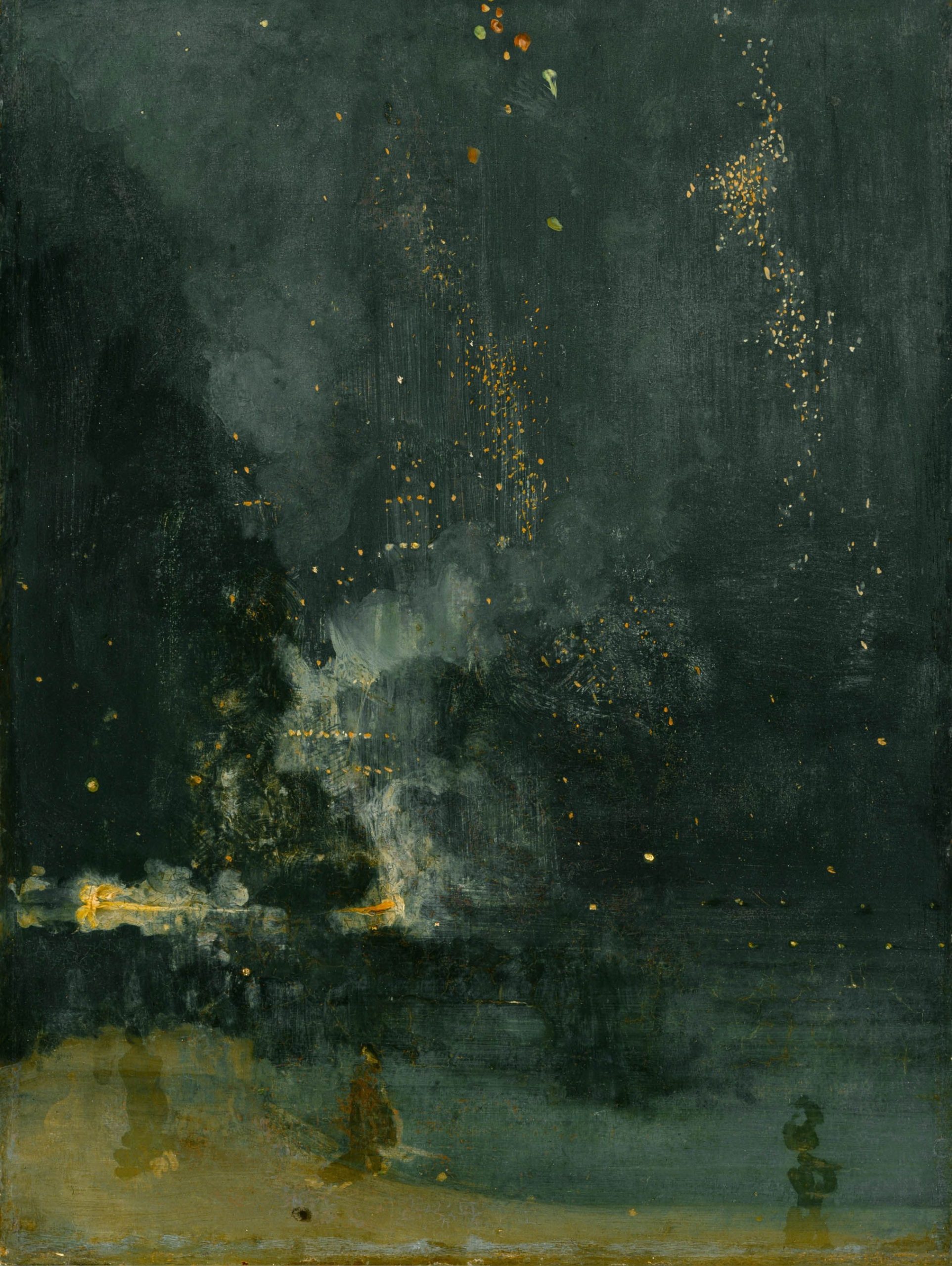
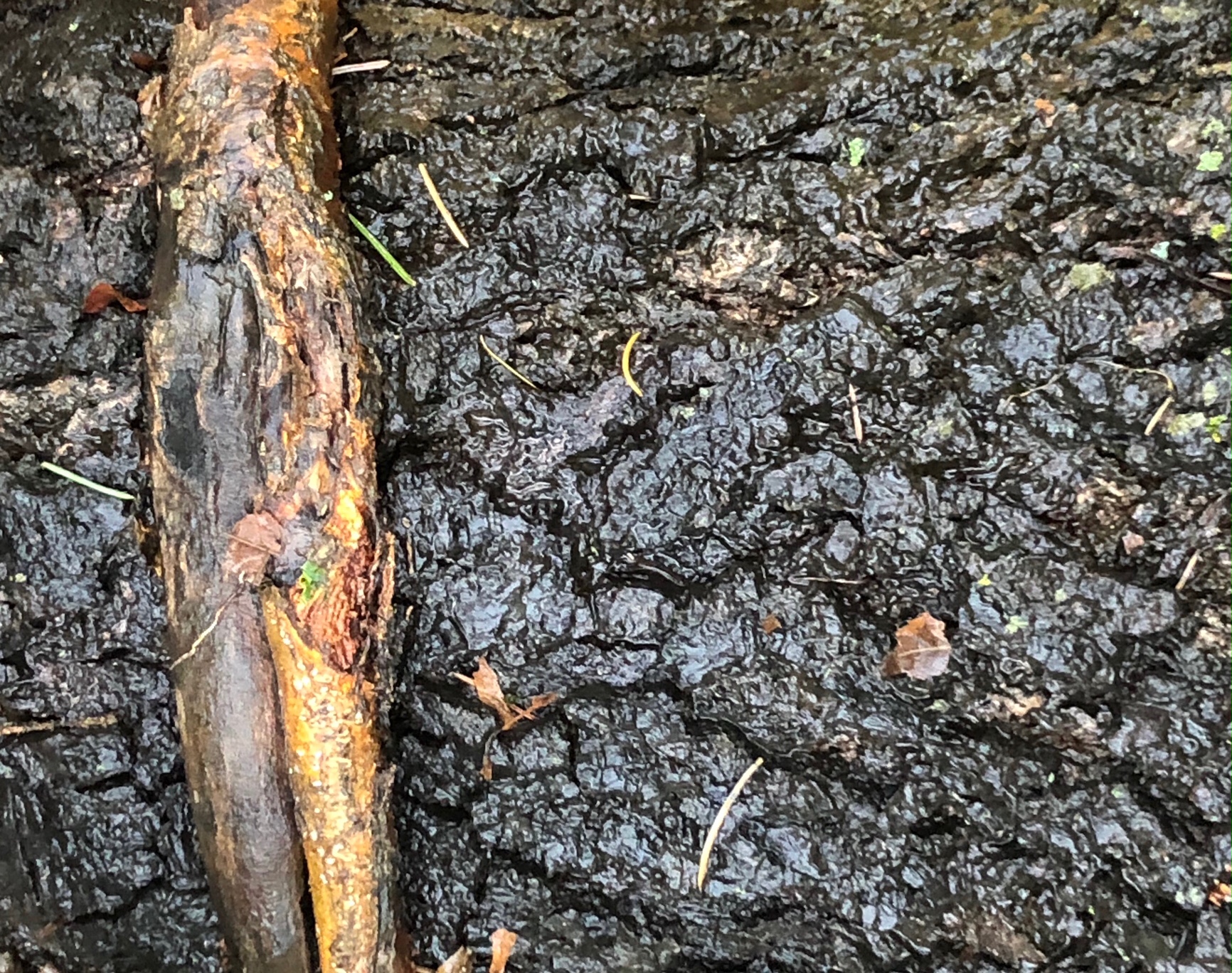
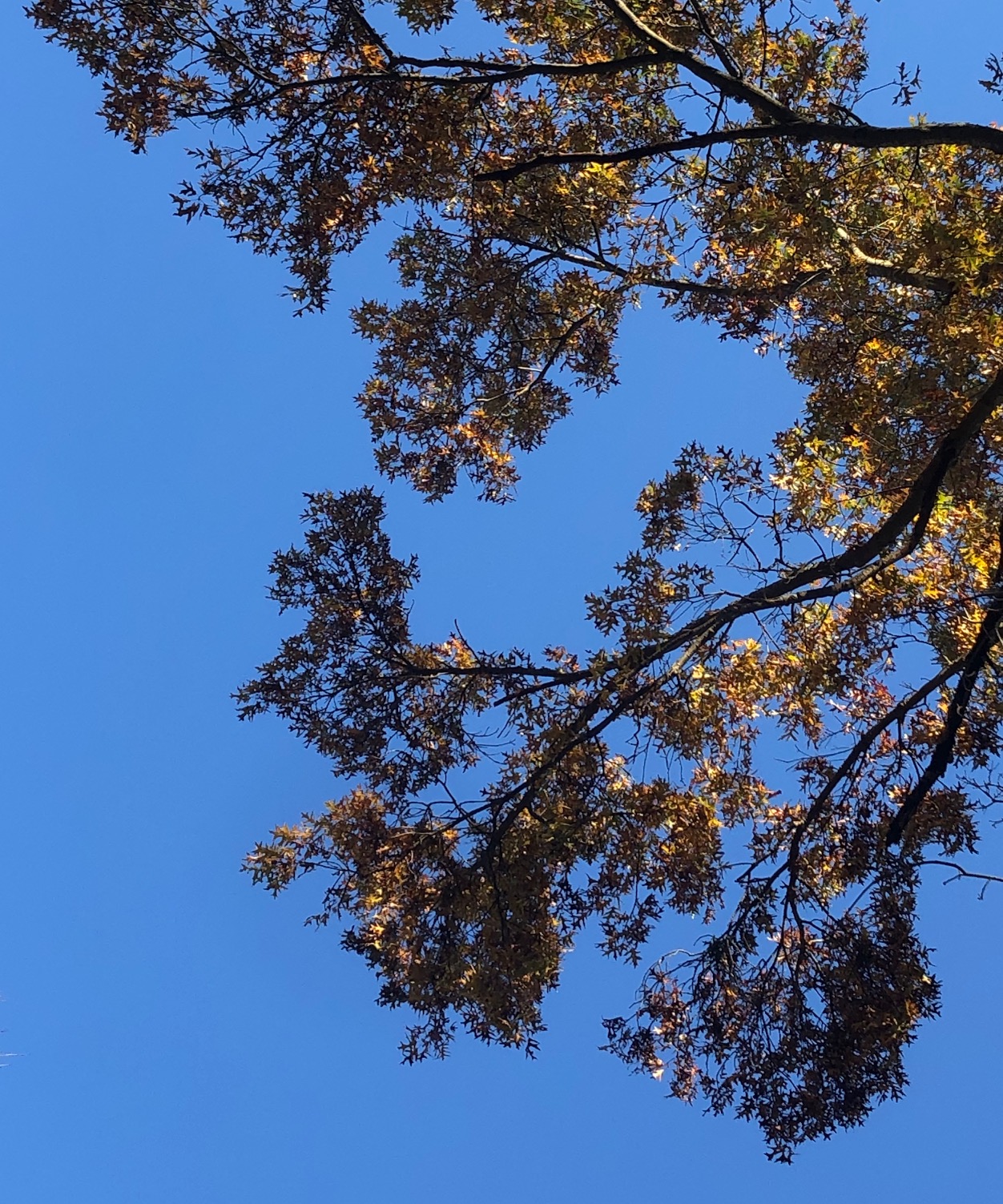
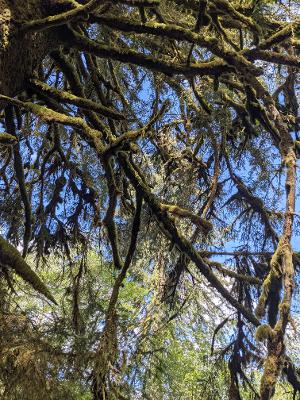
BLACK LACE TREES / image by Amalie Flynn
SOMETHING LIKE NIGHTFALL
something, like night falls
slow, as if
nothing in the world has ever moved
but distant hope descending, still ablaze
days soften to wonder
what else leaves
silhouettes these black lace trees
fades from me
it is you from my life
steadily, quietly
as celestial movement
New Nonfiction from Ulf Pike: “Tone Deaf”
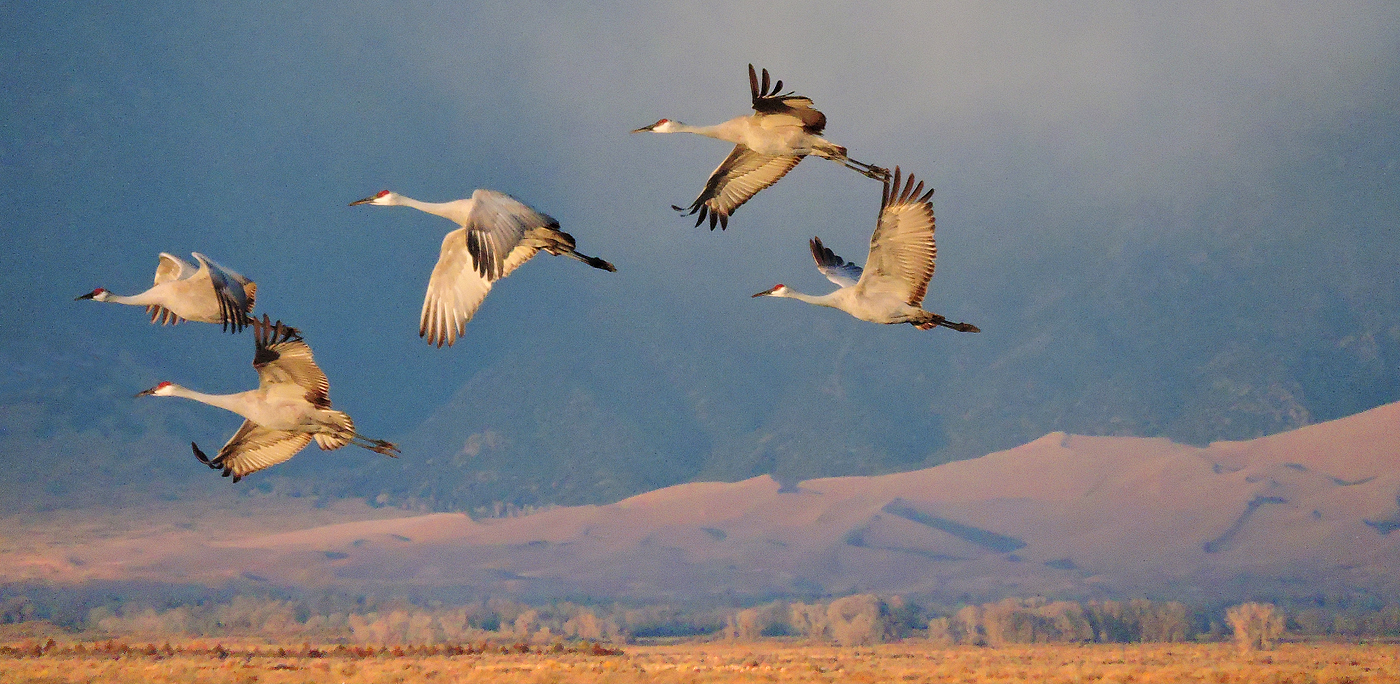
With a slightly youthful blurring of reality, sandhill cranes resemble pterodactyls in flight. Each year when they return to the valleys and high plains of southern Montana, their warm bugles trill two miles in advance of their prehistoric forms, sounding the merciful turning of the season.
Fuzzy aspen catkins map sporadic, swirling gusts while the thawing ground gives underfoot. Surrounding peaks loosen their hold on treasuries of snow, reluctant at first and then with the ecstatic flourish of a gambler intent on losing it all—as one must be, in the end, to live free and die well.
Drainages thrum with frigid, crystal surges, pulling down silver snags and churning up boulders. A great tumbler, the mountain unlocks, releasing winter to the rivers and creeks in muddied volumes. Sagebrush slopes and grassy pastures blush green where fawns wobble on new legs after their mothers and drop like speckled stones at the faintest threat. Smoke rises in thin columns from slash piles and wafts throughout the valley, drawing on long memories of starry skies, the sharing of food and mingled voices around an evening fire. Days open and close in slow beauty along the arc of the sun, in the ungovernable balance of the planet, in the violent, wordless, infallible perfection of natural phenomena sustaining us. Atmospheric pressures constrict into fists and then fall sharply. Cumulus clouds gather and darken into an anvil where the season’s first low peal of thunder is hammered out like a skeleton key to the warm womb of the universe.
In the beginning was the tone: that matter-manipulation wrought between the amplitude of some original cosmic drop. The vibratory paradox of which resonates in perpetuity, pleading with us like a mother to please, for heaven’s sake, turn off that noise and go outside. Deep down she feels an impossible urgency to protect her babies from her own need to protect them. She is plagued by her duty and meditates on one true miracle: In the beginning, she knows, either something came from nothing or everything is infinite. She peers into the pit of strip mine, down through geologic eras and finds herself traversing veins of minerals through time. She feels the sublime adrenaline of a shrew falling under the shadow of an archaeopteryx, everything vibrating at harmonic frequencies with the unequivocal imperative of that original-bird. Both lived in
vibrant, kinetic, absolute necessity. The shadow of death is what kept them both alive. That was the tone. For millions and millions of years. Anthropologists surmise that during an era in emergent hominoid history the tone forever changed when consciousness was identified.
What is perhaps most unique about being human, as far as we know, is that we know. We know we are here. There is a thing that it is like to be human and we know of this thing as an abstraction from our corporeal, moment-to-moment presence. And what purpose does this knowledge serve? To know we are here means we also know that at some point we will cease to be? This ancient epiphany was the foundation of the first timeline, the first mystery of existence.
Life was suddenly charged with new impulses for projections and provisions. Planning on death redefined human instinct to produce surplus, more resources than were required to satiate immediate hunger. By fortune of birth or early migration, populations in resource-rich environments were able to procure exceptional stores of wealth allowing their numbers to grow exponentially. In their numbers was previously unknown strength. The protection of such wealth spawned the crude hierarchy of class and government, the legacy of organized warfare and systemic dependence under which our race of knowers still generally functions today. Though “functions” is a relative term. A heart, after all, can function just as flawlessly as a guillotine.
On the flip side of the surplus coin was the novelty of free-time, at least for those of some status. The cultivation of self-consciousness, almost by necessity, amplified the otherness of everything outside the experiencer’s internal landscape. Just as projections of an abstract physical future produced surplus and therefore power, so a burgeoning mind-world whispered of similar promise. That which was hunted and grown for food became the subject of worship. It became the life-giver, the savior. In the form of painted representation it became an idea which transcended the physical realm into the other place, the spirit-world, the invisible home of the soul into which death was the portal. Perhaps the sum of all human expression—technological, artistic, religious—can trace its origin to a single moment of clarity between near-human eyes staring into glassy water—the moment a mind cleaved itself from nature.
We’ve come a long way in a very short time. The standardly cited fulcrum is the Industrial
Revolution, a mere 250 years ago. The chart graphing human consumption, reproduction and toxic emissions from that point on looks like a cartoonishly steep tidal wave looming over all our tomorrows. Ever since, many constructively sane and criminally insane have been waving their hands, warning us that we’re taking a long walk off a short pier. They cry that we have gone deaf. That seems to be the tone these days. Panic, desperation, delusion, denial. Through technological proliferation and our inextricable integration with it, our abstraction of death is now so thorough and complete that its sudden arrival falls over us like the shadow of some prehistoric terror. Our dependence on surplus and the powers that rule over it has been proven our greatest weakness. But for very few, we no longer are capable of providing for ourselves, for directly contributing to our own survival and the survival of those for whom we are responsible.
The system thrives on our unexamined dependence on it. The system, as it were, is the Shadow Mother and we the feeble children at her chaffed nipples, dimly aware of the in beauty we have forfeited for instead being coddled. This revelation is a profound, visceral injury to our pride, one from which the psyche staggers back and hides in the dark to protect itself from the compounding insult of closely assessing the trauma. Yet this is what must happen. The hard look in full sunlight at the wound. Tragically—perhaps catastrophically—this wound will fester in darkness while we fumble to put the fragments of our habituated, abstracted conceptions back together then sheepishly push them out
into the light as decoys, only peeking out once in a while from hidden safety. We will not risk enough to be free.
A time traveler wandering deep into the misty mountains might find themselves greeted with outstretched hands holding a vessel of water which had been hummed and chanted over for days, purifying it for the intrepid visitor. Endlessly compelling is the geometric symmetry of fine sand formed on a screen when vibrated by harmonic frequencies and then is scattered and blurred by dissonant frequencies. More compelling still, is the same effect such frequencies have on the molecular structure of water. Which begs the question: Are we not mostly water ourselves? What is humming and chanting over us?
Spring is returning and with it the sound of sandhill cranes, of rushing wind and water. Soon like a mother that low peal of thunder will vibrate through the atmosphere and lodge in our chests: Go out there, child. It is dangerous. I love you, and you must go out there.
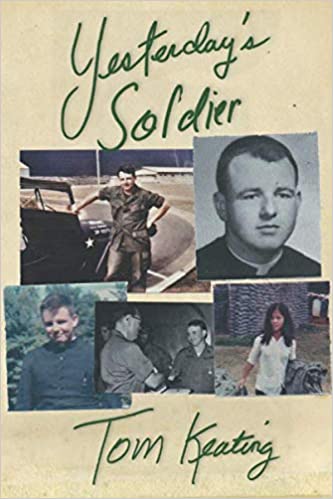
Interview with Tom Keating, Author of ‘Yesterday’s Soldier’
Andria Williams for The Wrath-Bearing Tree:
I was honored to read Tom Keating’s memoir, ‘Yesterday’s Soldier,’ an excellently written and sensitive account of his time as a non-combatant servicemember during the Vietnam War. Tom had been a noviciate in the Roman Catholic priesthood, but when the priests at his seminary deemed him a not-ideal candidate for that calling, he enlisted in the army, which caused him a massive change in his state of mind. His responses to some of my questions are below, and the link to the full interview is embedded. Please come watch — Tom is a great speaker, and his thoughts on how various cultures of religion and obedience play into military service are interesting.
Good news: Tom is now happily married and lives in Massachusetts.
*
WBT: Can you explain your path from seminary school into the military?
Tom Keating: I am the first son of my family of Irish Roman Catholics. Back then, to be a priest was admirable. I attended an all boys’ catholic high school taught by priests, the Congregation of Holy Cross. They were young priests, and they were great role models. The idea of being like them grew as I went through the four years. In my senior year, I sought their advice and declared my intention to be one of them. The next five and one half of my life I was one of them.
My admission of my CO struggle at Bridgewater State college during the class on educational philosophy. The assignment was, we all had to share a moment of radical action we performed. The class was full of veterans. It was tough to share my story with them. Their positive reaction to my story gave me the idea to write a book, but it took years to complete.
WBT: You mention that there were 27 novitiates in your first-year group, but only 5 remaining when you left. What do you think made them leave?
Tom Keating: I was a young seminarian full of the aggiornamento of the church, full of the idea to be Christ’s apostle for the flock, so to speak. That flock included the young men who wanted to avoid the draft. I saw my role as ministering to them. Hell, I even co-signed a loan for my friend, a coed who needed money. Of course I had none myself. That action and my activities did in fact affect my future as a priest. The men who were in charge of the seminary were afraid of the liberal trend in the church that I embraced. I originally wrote in the EPILOGUE of the book “And Father’s world? The world he lived in, one of order, Latin masses, strict obedience to a hierarchy, Gregorian Chants, celibacy, black cassocks and clerical collars, a world he treasured and tried to protect? He was right to be afraid. That world had been turned into—dogshit.” A reference to the dog poop on the previously spotless corridors of the seminary (Cat, my editor, thought I should change that, so I did make it milder.)
My Dad and I watched the demonstrations in Chicago during the convention. I was home then from the seminary. We shared our shock and disgust at the police in the riot. He was from the World War 2 generation, respect for authority, etc. It cemented our relationship.
There were violent incidents where I didn’thave that aversion, mostly in-country. A monument to Army training/brainwashing. In the book, I described a vehicle accident that happened when I was on my way to the elephant factory. That violence was accepted by me and the jeep driver. The dead bodies on the wire after a sapper attack elicited no aversion, just acknowledgement of our firepower. I was bothered by that but could not show it.
Seminary life in 1963-64 was harsh. Monastic rule meant sparse meals, rule of silence except when in class, early morning prayers before breakfast, work on the property after class. No social life, parental visits once a month, poverty chastity and obedience. The social dynamic of 27 mostly teenage boys in that pressure cooker of conformity and strict rules was tough. The novitiate year, where we spent working and praying on a farm in Vermont was very strenuous. It was a pressure cooker, like military basic training, only it lasted one whole year. Our farm was located outside the town of Bennington VT, and we could hear the music playing on car radios that drove by. The world was driving by us, and we were anchored in a centuries-old system. Desertion from the novitiate was swift. We finished the year there with 10 newly sworn in religious.
War and peace today? Of course right now the Ukrainians are being assaulted by Russia. Peace is harder to find. I don’t have any great thoughts on war and peace except to say countries are fighting for lithium and rare earths now, and resources like water and iron and salt and sugar. It is insane. I try to have peace around me, so I work with my church and the local veterans’ community to help them. I can’t do much for nations and their wars, but I can give peace to my friends and social circle.
*
Watch the full interview with Tom Keating here:
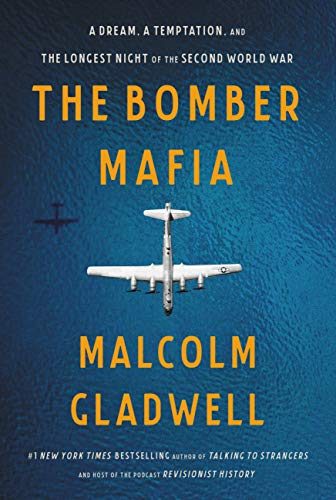
New Review from Brian Castner: Malcolm Gladwell’s “The Bomber Mafia”
Why did Malcolm Gladwell write a World War II book? The bombing campaign over Europe and Japan is hardly his typical beat: Cliff-noting TED talks for the MBA crowd. Where’s the investment edge here?
It’s an obvious question that Gladwell addresses in the opening Author’s Note. The Bomber Mafia is not so different than his other books, he says, because it is about “obsessives,” “my kind of people.” The topic is no less than “one of the grandest obsessions of the twentieth century.” Join him, for “I don’t think we get progress or innovation or joy or beauty without obsessives.”
Which I think we can all agree, if nothing else, is a completely bizarre way to open and frame a book about killing millions of people with air strikes.
The Bomber Mafia was my first chance to experience the Gell-Mann Amnesia Effect with Gladwell. You know the phenomenon, if not the name. Michael Crichton described it this way:
“You open the newspaper to an article on some subject you know well. In Murray’s case, physics. In mine, show business. You read the article and see the journalist has absolutely no understanding of either the facts or the issues. Often, the article is so wrong it actually presents the story backward—reversing cause and effect. I call these the “wet streets cause rain” stories. Paper’s full of them. In any case, you read with exasperation or amusement the multiple errors in a story, and then turn the page to national or international affairs, and read as if the rest of the newspaper was somehow more accurate about Palestine than the baloney you just read. You turn the page, and forget what you know.”
Turn the page on Gladwell—the self-proclaimed reviser of history, who helps us see and understand the overlooked and misunderstood—and what do you find? It wasn’t until he wandered into my area of expertise that I appreciated the extent of the shallowness, so to speak.
My first encounter with him was Outliers, which in classic Gladwell fashion promises to explain sociological events with a surprising counter-intuitive twist. Why are rich New York corporate take-over lawyers Jewish? Why are 40% of professional hockey players born in January? (They’re not.) The book stuck with me because I had a young son obsessed with hockey; should he just “give up” because he wasn’t born in the right month?
Gladwell calls Outliers a how-to guide, but always dissatisfyingly so. I can’t change my son’s birthday. And even if you accept his case for why Jewish people from the Garment District born in the 1930s were destined to become highly successful attorneys, he never explains how the individuals themselves did it. Why one poor boy in the tenement and not his friend? Why one hockey player born in January and not another? One gets the sense that the answer may undermine Gladwell’s thesis and so is left out, or, more conspiratorially, is revealing of other Big Ideas that Gladwell has less interest in exposing, such as the false meritocracy.
I am not a sociologist or a sports psychologist, so I can’t tell you the failures in Gladwell’s arguments in Outliers. But as a former Air Force officer, I know a fair bit about the service’s history and culture, and so I was curious what would happen when he took on a subject I knew.
My conclusion is this: Gladwell is right about Air Force pilots being obsessives, but completely wrong about the object of their desire. Which is surprising, because if anyone should be able to understand amoral perfectionists, it’s a wanna-be Tech Bro like Gladwell.
*
Before I go further, a relevant admission: I tried to write a Gladwell book once. Or, more specifically, I had a book proposal that several editors said would be more successful as a Gladwell book. Meaning, crush the narrative inside a big unifying theme that obliterates nuance but provides more reader satisfaction, that simplifies reality into an easily digestible 220-page pill with a plain white cover. “Gladwell on IEDs” or “Gladwell on Modern War.” This was the editorial feedback.
My second book, All the Ways We Kill and Die, was this book. The only vestige of the Gladwellian feedback is the biz-speak ubiquitous white cover. Any airport bookstore patron can tell you that a white cover with a single centered object says this is a book with easily digestible ideas.
But the Big Idea in my book—that my friend Matt Schwartz had died because he was targeted by the Taliban individually, just as the United States fights the “War on Terror” by targeting individuals as well—was really always more about personal pain than an objective critique of American SOF policy. My friends died and lost arms and legs and so instead of writing a revisionist counterfactual I wrote about grief and suffering, which are not really business seminar topics. That Matt’s death was premeditated murder, and not just random violence, was confusing, and more hurtful somehow. Working with the right editor, I eventually found the unifying theme, but never the hubristic clarity. And without an application for corporate America, my Gladwell cover did not have the effect my publisher’s sales department hoped.
Gladwell’s Big Idea in The Bomber Mafia is that in the 1930s and 40s there was a deeply moral initiative by a small group of pilots at the Army Air Corp’s Tactical School in Montgomery, Alabama called the Bomber Mafia. Their secret plan was to “make all that deadly, wasteful, pointless conflict on the ground obsolete” by strategically bombing key pieces of enemy infrastructure, forcing them to surrender. This “dream” is embodied by two men, the flawed true-believer Haywood Hansell, and the hardcore Curtis LeMay who betrays the cause and falls to the “temptation” of winning World War II through the indiscriminate firebombing of Tokyo.
It goes without saying that such a fable ignores plenty, including most of the people in said mafia who worked on the doctrine and were responsible for its conception, implementation, and later revision. For example, Gladwell makes much of the fact that to prove the efficacy of precision air strikes LeMay led an exercise bombing US Navy ships in 1937, while ignoring that Billy Mitchell did the same thing to prove the same point, but sixteen years earlier, in 1921.
But a short book only has room for a few characters, a hero and a villain, plus a few cherry-picked anecdotes disguised as the discovery of something new, the surprise of the “overlooked and misunderstood” papering over the messy reality. The Bomber Mafia’s small pages, large font, and conversational tone are noted in every review, but it bears repeating: this book should appear on creative writing syllabuses at colleges all over, as a cautionary case study in the major differences between writing for the eye and the ear.
The idea that the strategic bombing campaign of World War II in Europe and the Pacific is overlooked is laughable on its face — few campaigns have been discussed at greater length, or in more detail. Presumably Gladwell has written his book because he believes we misunderstand the campaigns, then, and the misunderstanding is the deeply moral nature of the effort.
Reviews at The New Republic and The Baffler have thoroughly discussed the repugnancy of this view. Say what you will about the military necessity of strategic bombing, it should be beyond question that killing millions of civilians as a by-product of that bombing was immoral. Gladwell is not interested in considering how the ends may or may not have justified the means.
Instead of discussing Gladwell’s ethical stance, I’d like to address his central conceit: was the Bomber Mafia motivated by morality? Were their intentions pure? Were pilots and leaders animated first and foremost by a shining ethical ideal while planning and executing one of the most harmful events in absolute terms in the history of warfare?
Here, not only does Gladwell misunderstand how events unfolded, he misunderstands the part that speaks to his supposed greatest strength as a journalist: corporate organizational culture. The Air Force, dominated as it is by pilots, has a distinct culture from the other branches. To Gladwell, the precision daylight bombers are early Silicon Valley pioneers, just trying to make the world a better place through scientific advancement.
Whether Gladwell misjudges all Tech Bros, I cannot say. But at least he misunderstands pilots. Precision daylight bombing is not a moral undertaking. It is an amoral obsession with perfection.
Pilot culture is about never making mistakes while operating in extremely complex situations. When a mistake is made, and a plane crashes, investigators will spend hundreds of pages documenting every error and failure. The goal is absolute perfection at all times.
In All the Ways We Kill and Die, I wrote about this culture, through the eyes of an F-15C pilot named Evil. He explained to me that being a pilot is about tactical thinking.
“First breaking a problem down into its component variables, and then solving the equation repeatedly as each variable changed second by second: …. air speed, heading, altitude, missiles, gun, radio, radar, wind speed, direction, cloud ceiling, the Cons, restricted airspace, wingman’s location, wingman’s heading, target, tactics. Double that number to consider the enemy’s equivalent of each. Computing and computing and computing every second.”
Relentless problem-solving and obsessiveness, according to Evil, permeated everything. “It’s why our wives hate us. We are all competitive, and we all try to make everything perfect,” he told me.
Missing a target with a bomb is not primarily a moral question, to this culture. It is a mistake. It is inefficient. Unprofessional. Flawed. Culturally, precision daylight bombing was an opportunity for pilots to maximize their equations. A greater chance to be perfect.
In the Cold War, the search for the perfect bombing campaign expanded, from a strategic theory to the entire reason for the Air Force’s existence. At its heart, the Air Force’s main goal is to fight and win wars all by itself. Small wars are distractions from this purpose. The Air Force exists to win the Big One, all alone.
Being able to win a war solo is still fundamental to the Air Force identity. It’s why the Air Force became a separate service, why it so jealously guards its budget and chip-on-its-shoulder heritage. On a basic level, the Air Force believes that everything the Army and Navy might do in Big One will be secondary to the main fight. Evil told me once that he trained his whole professional life for the first hour of fighting over Iran and the first 24 hours over Taiwan, in which he needed to be no less than perfect.
In the decades after World War II, the service worked to develop the technology to win the perfect campaign. TV-guided weapons, then laser-guided, then GPS-guided, and now automated weapons that synthesize information and guide themselves. As the Cold War turned hot in Vietnam, the leadership of the Bomber Mafia gave way to the Fighter Mafia, as the best pilots and top leaders followed the action. But as fighter pilots took over key leadership posts in the Air Force, the pursuit of perfect precision remained.
And so the Air Force has never really gotten the war it wanted. In the last 80 years, it has come close twice: Bosnia and Kosovo in the 1990s. All military objectives achieved from the air, no messy boots on the ground during the fighting, only for the boring stabilizing afterwards. Not the Big One, but almost a Perfect One.
In the late 1990s, when I was studying to become an Air Force officer, I read serious articles in academic publications, like Airpower Journal, that predicted the end of ground combat had arrived. Airpower had finally lived up to its potential, specifically when led by the Air Force, which allowed the Navy a few sorties as a goodwill gesture. As late as the Winter 2001 issue, the last pre-9/11 edition, authors were still writing articles with titles like “Airpower versus a Fielded Army: A Construct for Air Operations in the Twenty-First Century,” about strategies for the Air Force to defeat enemy ground forces singlehandedly. There is a certain wistful tone. Yes, the Air Force existed to strategically crush the enemy’s overall will to fight, but they could tactically destroy soldiers too as required. Air Force weapons were so precise, the scalpel so sharp, they could slice off fingers individually as well as carve out the heart, just tell them where to start cutting.
That the enemy would put their hands in their pockets, or hold hands with children, never seems to occur to the grand strategists; this is a perfectionist pursuit, not a moral one.
*
Gladwell provides no primary source evidence that the Bomber Mafia generals themselves saw precision bombing as a moral undertaking. Instead, he provides quotes from two modern historians, Stephen McFarland and Tammi Biddle, as proof of this belief. (There is no bibliography, and according to the notes the book is based on interviews with eleven people.)
And yet the evidence that the Bomber Mafia were obsessed with perfection rather than morality is to be found in the book itself. LeMay, a dyed-in-the-wool member of the mafia, eventually dismisses the strategic bombing plan as nothing but late-night grad school discussion, calling it “trying to find something to win the war the easy way, and there ain’t no such animal.” LeMay was cold-blooded in balancing aircrews lost versus bombs on target. He counts percentages of cities destroyed, as later generals would do body counts in Vietnam and “AFRICOM assesses four terrorists killed” press releases about drone strikes today. When he talks through the details of his tactics, how they kept trying different methods, practicing take-offs in the fog, changing formations so all his pilots flew in straight over the target (even Robert McNamara later called him “brutal” for doing it), Gladwell sees a moral stalwart rather than someone focused on continuous improvement. Later, Gladwell quotes Conrad Crane, the former director of the US Army Military History Institute, who calls LeMay “the Air Force’s ultimate problem solver.” But also, “he was one of those guys that, if you gave him a problem to fix, you didn’t ask a whole lot of questions how he was going to fix it.” Correct, and also hardly someone engaged on an ethical crusade. It is someone doing the best he can with the tools he has.
The American general Ira Eaker, in selling his bombing plan to Churchill, says that if the British bomb at night and the Americans by day then “bombing them thus around the clock will give the devils no rest.” Biddle tells Gladwell that it is “very odd” that Arthur “Bomber” Harris of the Royal Air Force (who bombed at night) and Eaker would become such good friends. But it’s only odd if you think the Bomber Mafia was about signalling virtuous behavior rather than achieving success.
If Gladwell had chosen other quotes by those characters, the case is even stronger. Yes, LeMay is famous for saying he would bomb his enemies back to the Stone Age. But even that same Ira Eaker, briefing President Truman in June 1945, about the upcoming invasion of Japan, said that he agreed with General George C. Marshall that “It is a grim fact that there is not an easy, bloodless way to victory in war.”
The ugly truth is that LeMay was not “tempted” to do a bad thing, in the firebombing of Japan. Neither temptation nor salvation were on the table. Rather, the perfectionist simply saw firebombing as the best amoral option, the best solution to the problem. LeMay isn’t cruel, he’s indifferent. And ultimately, the Air Force continued LeMay’s problem solving mindset to fix, ironically, the process he had derided as “the easy way.” As the technology has gotten better, “the easy way” has remained the goal.
Gladwell writes as if the way history happened is the only way it could ever have been. That any attempt to imagine another historical path is to misunderstand an inevitability that only he can explain. By providing the counter-intuitive “revisionist” version of this history, he aspires to sound doubly convincing. My new explanation is air-tight, he implies confidently. A Calvinist dressed up in a pedantic sociologist’s clothes.
Jewish people in the Garment District were destined to run law firms and LeMay would inevitably fall to temptation. Hansell was too pure to succeed, LeMay too gruff to stay true.
Couching the bombing campaign in terms of a tragic character flaw, rather than a choice, makes Gladwell’s offhand descriptions of the firebombing itself more grotesque. Nothing more than the cast-off by-product of one of his obsessives. It’s jarring and incongruous. Is this truly a moral issue, or just a bad business decision, as he would cover in his other books? Gladwell engages with the actual horror of war as he would a quarterly loss report, and yet even manages to praise the actions in the end. Japan surrendered and gave LeMay a medal in 1964. Maybe it wasn’t lost profit after all? Maybe the firebombing was an investment that paid off.
*
Gladwell ends the book with a chatty roundtable of current Air Force generals at the Chief of Staff’s elegant home on Fort Myer, Virginia. From the quotes provided, the journalist Gladwell was seemingly asking such hard-hitting questions as “Tell me again how great airpower is,” a continuing of his tendency to go to the leaders of organizations to find out what it’s like to be a peon.
After listening to the generals brag about the precision of today’s weapon systems, Gladwell concludes “Curtis LeMay won the battle. Haywood Hansell won the war.”
Which is more than simply confusing and factually incorrect. It also presumes that Hansell didn’t just “win” the ideological battle within the Air Force, but that he was objectively correct as well.
Air strikes are regularly cited as a swiss army knife solution to seemingly every international problem, from Yemen to Afghanistan to Ukraine. Last July, during anti-government protests in Cuba, Miami’s mayor floated the idea of bombing the country.
Which is why it is noteworthy that Gladwell never asks this basic question: what is the evidence that strategic precision bombing works? He cites no cases, either positively from Kosovo or negatively from, well, anywhere else. A la Outliers and the illusions of the meritocracy, this is perhaps not the kind of question Gladwell tends to ask of his obsessives.
So let’s instead ask a similar question on the book’s own terms: what is the evidence that strategic precision bombing is more moral? Or that it simply kills fewer civilians?
Azmat Khan’s reporting in the New York Times has put to bed the lie that the American-touted bombing campaigns spared civilian lives. Rather, officials denied civilian casualties, or failed to investigate, to ignore the true cost. Khan reported that one American official broke down when he realized that though the US had seemingly taken great pains in precision attacks in Raqqa, and the Russians had no such precautions in Aleppo, in the end both Syrian cities were utterly destroyed.
“Eventually I stopped saying that this was the most precise bombing campaign in the history of warfare,” the official said to the New York Times. “So what? It doesn’t matter that this was the most precise bombing campaign and the city looks like this.”
The Russians purposely target hospitals and chicken farms, the Americans accidentally hit them; either way, the results are the same.
And is it not results, measured quarterly, that are most important to Gladwell’s MBA readers?
In many ways, contemporary Russian attacks in Syria and Ukraine are closer to what the American World War II generals actually wanted in their bombing campaigns: both precision and impunity. The ability to target a hospital, hit it precisely, and get away with it. Modern American generals enjoy immunity in other areas. Drones strikes, on average, kill ten times more civilians than attacks by manned aircraft, and yet have a reputation for precision and cleanliness, and thus largely, until recently, get a pass by the general public.
Are precision strikes a moral way to win war? Not yet. Strategic bombing campaigns remain bloody, messy, often ineffective, and still of arguable necessity. This ambiguity is difficult for even experts to handle, and Gladwell’s entire raison d’etre is not to write as an expert but as an amalgamator of expertise. The Bomber Mafia isn’t an honest or earnest look at what experts have written and thought about America’s air campaigns during WWII. In the end, the book’s central flaw resides at the core of Gladwell’s supposed greatest strength. The Gell-Mann Amnesia Effects predicts sociologists and sports psychologists would say the same for his other books.
New Poetry by Doris Ferleger: “Praying at the Temple of Forgiveness,” “Internal Wind,” Driving Down Old Eros Highway,” and “Summer Says”
TURNING EVERYTHING AROUND / image by Amalie Flynn
Praying at the Temple of Forgiveness for Zea Joy, in memoriam
Last Monday you threw yourself,
your body, dressed in red chemise,
in front of a train.
It was your insatiable hunger
for a more tenderhearted world,
your husband said at Shiva.
Now no one will get to see
what you saw from inside
your snow globe where you lived,
shaking and shaking,
breaking into shards
of ungrieved grief, unanswered need.
I will remember
how tirelessly, with your son,
you worked to help him turn
sounds—coming through the implant
behind his ear—into speech,
speech into understanding.
Everyone will remember
how you skipped across the dance floor,
waving pastel and magenta scarves,
and prayed to angels.
O, dear Zea, your human bones
thin as the bones of a sparrow—
the way you could fold
your body to fit anywhere.
Rest now. You have succeeded.
INTERNAL WIND
When you died, our son
became my son; I watch
through your eyes
and mine how he lifts
his whole body into
a long accent à droite,
arms taut, wrists impossibly
rotated back, fingers and toes
also pointed back
to all the hours, years
of practice in turning
everything around.
~
Over the hollow
you left, our son stretches
his fingers across
frets and strings
in C minor,
Bach’s Etudes
the way you taught,
the way you closed
your eyes, nodded, satisfied—
our son will remember.
~
Remember how
he watched you deep-
breathe into yoga postures?
Now his own focused flow
heals what Western doctors call tics, quiets what Eastern doctors call
internal wind. Listen
how our son calls
to his yoga students
what he learned
at your knee: Effort brings the rain—
of grace.
~
When our son and I argue,
I feel homeless, divided,
until I remember how you
and I took turns massaging
his neck that ached from its day’s
staccato singing—
~
Sometimes I can see his tics
as flawless, meticulous,
a body expressing itself
with perfect diction.
DRIVING DOWN OLD EROS HIGHWAY
Me, in my Q50 with its hot flashes and warning beeps,
heading toward Sweet Desire, New Jersey, where my love,
soon 70, will woo me with mango, melt the mushy pulp
in my mouth—or perhaps he naps.
You, CeeCee, painting the walls pink in the tiny house in Pullman,
recently moved in with your old college flame, coming so easily
against his new ceramic hip, just the friction of it. You say
your pelvis never quite fit with anyone else, including your soon-to-be-
ex-husband of 30 years. Me, with a G-spot suddenly. A rainbow
of chaos tunneling through me when his fingers find it and flutter.
And long live the reckless tongue. The old-fashioned clit-kind
of climax. Like a young planet rising. Oh, how old and greedy I am
for that whole-body wave and chill and quiver and release.
You, purposely avoiding that whole-body wave of shiver,
as it reminds you of your ex’s dogged insistences.
For your 60th, your daughter gifted you with a mini vibrator
on a rubber ring for your index finger. Asex-thimble, you joke.
Sex over 60 seems unseemly to talk about, CeeCee,
but it seems more ungrateful to say nothing at all.
You and I speak of what our mothers couldn’t give us.
Daily I pray at the temple of Venus.
SUMMER SAYS
Pay attention to
your heat, your survival—
the tree rooted in your garden
is a sequined vernacular, a cashmere sweater.
Because nothing matters in the end
but comfort and the bending light.
Summer says, I will be the room you die in.
You will dream, neither of regret,
nor in the language you were born into.
A stranger will comb your existential threads.
You had thought, for instance, humans
were gerunds or harps bent
on playing in a diner that serves
black coffee and hard donuts.
You ask, What is the past?
What is it all for? Summer says, The wound of being
untaught. Says, hungry.
Says, the cypress is a hospice,
says, falter, falter, falter,
bloom bloom bloom—too soon
a pall will keep you company.
New Poetry by Mary Ann Dimand: “Earth Appreciation” and “Lusting, Stinting”
THIRSTED FOR SWEET / image by Amalie Flynn
EARTH APPRECIATION
Behold this clod, umami of mould and mineral, worked
by millipedes, slowly digested
to a richness by mycelium—and fruiting,
fruiting with an explosion of possibility.
If I could put a frame around the wind—
a thin one, black, a way to point out
wonder—then we could see the paths
of gnats and sparkling moths, amazement
of maple key and mated dragonflies, tiny
rainbows in fog and flake and droplet.
LUSTING, STINTING
How we thirsted for sweet
achieving, to have the world
gush warm reward. Or drip,
or trickle, even ooze—some
something to fulfill the easy augurings
that graceful makings yield
swift returns. They yield,
in fact, to power, and to time
that’s flowed by us while
we labored and we crafted worth.
And so we climbed to pierce
time’s trunk, so carapaced it seemed
indivertible, a steely force
to move unwilling worlds. The spile
that wounded that fierce power
drew life from every hand
it touched, spilled spirit
that sighed forth and wreathed
the ray of time. But we succeeded.
Drop by stiffening drop the instants
fell, encasing empires, globing
moments—each honeyed gall,
each bittered rapture. I don’t know—
the others may be suckling sweet. But here
in my eternity, I feel the sucking wound
that is my life, steaming into snow. How
I wanted. How I failed, in getting.
New Fiction from J.G.P. MacAdam: “A Sleeping Peace”
Author’s note: I arrived at this story after reading an article in Rolling Stone called ‘Highway to Hell: A Trip Down Afghanistan’s Deadliest Road’ and I thought, what if what’s happening in Afghanistan ended up happening here, in America? Would Americans finally “get it” then?
*
Sometimes the weariness in my bones was so bad it took near everything I had just to get out of bed in the morning. Captain Hernandez tapped on the front door at 0400. I was already packed and dressed. I slipped my nose out of Zachary’s doorway. His bedsheets were tousled and I wanted to tuck him back in, but I didn’t want to risk waking him. Let him sleep. I slid his door shut and turned the knob. Matt was waiting for me at the bottom of the stairs, as he was every Monday morning. He handed me a thermos of Klickitat Dark Roast.
photo: Andria Williams
“Thanks.”
“Text me every hour on the hour.” He hugged me close. “Please.”
His beard was just the right length, not too scratchy. “Go back to sleep. Try to grab another hour or two before Zachary wakes up.”
“I’ll try,” he whispered in my ear and squeezed me closer.
Captain Hernandez tapped on the door again.
“Gotta go. Remember to ask Teacher Julie about Zachary’s—”
“I’ll remember.”
“And you’ve got another doctor’s appointment this—”
“I’ve got the home front covered, Charlie-Echo.”
“Okay.”
We kissed. Matt made sure I had my briefcase, bulletproof vest and everything else, then opened the door. The damp predawn air blew in with the sound of idling engines and Captain Hernandez’s voice. “Morning, ma’am.”
“Morning, Captain. Latest intel?” I knew Matt liked hearing the Captain’s briefings. It was practically every other week that Matt was trying yet another prescription for his anxiety. None worked.
“Contractors for ODOT took an ambush on Saturday, trying to patch up that one crater near mile marker 270. No casualties. The hole’s still there, though.”
“Any IED’s?” Matt stepped onto the threshold.
“Four, sir. EOD’s taken care of them though.”
“Maybe you guys mix up your route a little bit? Take one of the bridges across the river, or several, crossing back and forth.”
Shaking my head: “I’m already leaving at the crack of dawn as it is. We’ll take eighty-four all the way out.”
Captain Hernandez agreed. Matt shifted uncomfortably; he didn’t like being reminded that in a very real way he didn’t know what the hell he was talking about. The Captain knew when to take his leave. “Clock’s ticking, ma’am.” He tapped his watch and stepped his combat boots down the front steps.
I glanced back at Matt, hoping he wouldn’t but knowing he would.
“I don’t see why you can’t just deviate your route a little. These National Guard guys don’t know their ass from a hole in the—”
“Matt, honey, please. I gotta go.”
“Why’s the Governor making you do this? Plenty of other County Executives don’t have to travel out to the sticks. In Baker, in Grant, in Malheur, in any of the eastern counties there’s not even any county government left to speak of.”
“You know why. There needs to be a government presence in Umatilla. It’s the bridge. It’s the dam. It’s the interstate.”
“I don’t want to lose my wife to some goddamned—” I saw how much it took him to swallow his worries down. He couldn’t help himself; he always grew so anxious right at the last minute. “I’m sorry, you gotta go.”
“I’ll see you Friday.”
Matt nodded and sighed. “We’ll be here.”
“I love you.”
“I love you, too. Zaniyah?”
“Yeah?”
“Text me, please.”
Emails were already rolling in on my phone. Captain Hernandez was waiting, holding the armored door to my SUV open for me. “I’ll text you when we make it past the Hood River base.”
*
My phone scrolled with endless memos. Everything Umatilla County—population 43,696 and dropping—from road maintenance to school renovations. Reviewing and e-signing as much as I could in the back of my de facto mobile office, a hulk of an SUV outfitted with bulletproof windows and steel-plated undercarriage.
We picked up Muri, my counterpart in Wasco County, before taking I-5 to the I-84 interchange. Our order of movement was lead Humvee with a gunner and a .50 cal in the turret, my SUV, a second Humvee, followed by Muri’s SUV, then a rear Humvee. We hit the interchange at a smooth 70 mph maintaining a strict 20-meter interval between vehicles.
I yawned and glimpsed the shadow of someone standing under an overpass. They were holding their phone to their face and tracking our convoy with it.
“D’you see that one, Captain?”
“I did, ma’am.” He commanded the convoy from the passenger seat. “Third lookout this morning.”
“They know we’re coming.”
“They always do.”
I suppressed another yawn and tried not to think about it, bending to my memos again, sipping my Klickitat Dark. Portland swirled by my window. Even at this hour the streetcars were running, bicycle lanes filling up, another day in the life of a great American city no doubt suffering its fair share of contested neighborhoods, crime, refugee-packed stadiums and smoke-filled summers where the air itself became an enemy to defend against. But the insurgency held little sway here. Portland, Salem, the coast and anything within artillery distance of the I-5 corridor was safe insofar as the National Guard continued to pour manpower and materials into defending it. As for any territory east of the Cascades, however, the same could not be said.
The first couple hours of our trip sped by, the lead truck passing smoothly around the handful of semis still making runs into contested territory, the whole convoy flowing apace. The question, the one question that always gnawed its way into my brain every Sunday evening, before even waking Monday morning, before saying goodbye, hit me, once again. Why not turn back? It was the sight of the first military outpost atop Tooth Rock that brought the question on. The Tooth Rock outpost was, for me, the western entry point to the Columbia Gorge, the Cascades, thickly forested, magical, wet with ferns and moss, riven with canyons and waterfalls, a fairy tale place of my youth, a place to camp, to hike, to explore. But it wasn’t that way anymore. Now, I saw only violence. The way the Columbia River had once upon a time blown a mile-wide hole through the mountains. The way the land was torn apart and uplifted, itself a testament to the hundreds of thousands of years of earthquakes and eruptions from the resident volcanoes at present asleep under their cones of ice.
Tooth Rock disappeared around another upthrust of rock. A spattering of headlights on the westbound lane, some people still commuting into Portland. Why not turn back? Herrera, the County Executive for Gilliam County, was not in the convoy. He called in sick, as usual. The Hood River CE, Jules, slept in a bunker in the base there. Sherman County’s CE was a no-show, probably nursing a hangover, the stress of the job driving her to drink her way out and drink her way back every week, or so I heard. The only other county besides my own along I-84 was Morrow County. That was Henderson’s territory, or had been. He boasted of being born and bred in Morrow County, knew the people and the hills like the back of his hand. He once said to me, “Zaniyah, just be yourself. Don’t be the Governor’s lackey. Don’t be the authoritarian dictating curfews and martial law. Don’t be the savior. Just be yourself, the girl from Umatilla. You’re from Umatilla, right? That’s why the Governor appointed you, wasn’t it?” He was right and he was dead. Insurgents ran a Corolla rigged with fertilizer and a suicide bomber straight into his SUV as he was leaving the compound down in Heppner, the county seat.
“We should have choppers.”
“What’s that, ma’am?”
“Nothing, Captain. Just thinking aloud.”
Choppers were too scarce and expensive to fuel. The winds in the Gorge too treacherous for most aircraft, the weather too unpredictable.
The Bonneville Dam slid into view, its turbines and buttresses stretching across three separate islands. It was soon followed by the white-trussed expanse of the Bridge of the Gods which seemed to hover midair under a blaze of spotlights. A checkpoint searched vehicles before allowing them to cross. Why not turn back? Even this lake of a river fell dam-to-dam down to Portland and out to the Pacific. To travel east was to go against gravity. “I’m appointing you all to be my eyes and ears on the ground,” said the Governor. “The mayors and county commissions elected locally, well, they’re not what I would call cooperative all of the time, especially in the eastern counties.” My phone vibrated with a new email from the Mayor of the City of Umatilla. His email was mostly a rant interspersed with all-caps saying that I did not have the authority to direct road maintenance, though they were state funds and the State Legislature explicitly directed CE’s to monitor all state expenditures. I did not have the authority to make the curfew start earlier and end later. I did not have the authority to ration medical supplies or food aid. Mayor Pete even brought out the big guns, the telltale codewords and innuendo of popular insurgent threads, the language of which was now near ubiquitous across much of eastern Oregon. “It’s only because of the Governor’s MILITARY DICTATORSHIP via stationing TROOPS in our backyard that YOU even survive your little trips out here!” Was that a threat? What else could it be, in times like these? “Where are you anyways?” he wrote. “Why aren’t you in the office yet?” I replied with only an “En route. — Z.” and pictured his face reddening at the screen. Why keep going? Why fight for people who did not want you to fight for them?
The interstate slithered its way between the dark river and darker upthrusts of rock. Exits were blocked off and closed. Corporal Barnes, ever the silent driver, clicked on the windshield wipers as the air congealed into a mist of rain. A prominent slab of rock jutted out over the right side of the road and when our headlights passed across it, I saw the message, we all did, could read those white letters spray-painted across the wet black of the rock plain as day. We Will Never Stop, We Will Never Tire, We Will Fight Until Our Blood Runs Dry.
No one said anything, hearing only my own voice in the back of my head repeating a question.
*
“What’s that, sir?” Corporal Barnes pointed up ahead.
The sky was still black but for a rimming of cobalt. In the mountains across the river, in Washington state, the subtlest red sparks arced back and forth like a mini meteor shower. “Tracers,” said Captain Hernandez. “One of our own out of Hood River.”
We saw the glow of Forward Operating Base Hood River before we saw the base. The jade trusses of the bridge, too, popped out of the dawn, its floodlit reflection shimmering across the water. FOB Hood River sat on what was once a waterfront park. It was the operational and logistical hub of the entire Mid-Columbia region. The main employer, too. Our convoy slowed as traffic thickened and then crawled and then stopped altogether, the line to get on-base overflowing onto the interstate.
Captain Hernandez yawned.
“Get much sleep, Captain?”
“No, ma’am. The baby woke up two, three times before I got up to leave. Hungry little guy. Tell me, when do they start sleeping through the night?”
“It takes a while,” I said, “but they eventually do.”
The town of Hood River sloped uphill on our right, broad yellow windows capturing the view, though more and more of those houselights never switched on anymore. Whoever had the means moved east. Ever since Town Hall was pipe-bombed people just didn’t feel safe anymore. That happened despite the nearness of such a massive base with its five-meter-high Hesco walls and thousand-or-so troops and reams of concertina wire and guard towers bristling with machine guns. Begged the question: how much did all this military might actually protect anybody? Still, I’d be returning to FOB Hood River before sundown to spend the night on a cot in a tent. I never expected I’d be sleeping four out of every seven nights inside of a bunker, but whose career ever goes according to plan? The cooks in the chow hall made omelets for everyone pulling midnight duty and for the rest of us who couldn’t sleep.
“There they are,” said Corporal Barnes. I was about to text Matt but stopped to stare out at the platoon of Humvees limping their way across the bridge. One had a cockeyed wheel and half its bumper blown off. Even from where we were on the interstate you could see the spiderwebs in their windshields, the smoke stains across their hoods.
*
Terraces of rock stepped into the clouds. White threads of rain-born torrents wound off their green flanks and spilled onto the broken and tumbled basalt below. We rolled at a steady 55 mph. The trip always felt a little less perilous once the sun broke and I could watch the sides of the Gorge panning by, at least for a while. We sped through The Dalles, with its orange-trussed bridge and hydroelectric dam. Muri and one Humvee peeled off, taking the second-to-last exit. I texted Muri a good morning because I knew he’d be just waking up. He replied with a good luck.
I resumed my work: sewer repairs, budget shortfalls, a new zoning ordinance to prohibit illegal squatting. Another email from Mayor Pete discussing an upcoming committee vote to move the county seat back to Pendleton, an hour further east down I-84. Out of the question. A teleconference with the Governor, tedious logistics details for air drops to the Yakama and Umatilla Indian Reservations, their militias still holding their own, even regaining territory previously stolen by the insurgents who wanted access to salmon fishing hotspots. Then came another spray-painted rock outcropping. The Government Does Nothing For Us. Absolutely Nothing. Why could we not hire someone to cover those up?
“These cams have all been spray-painted,” said Captain Hernandez. The entirety of the interstate was under surveillance, except when the insurgents managed to jerry rig one of those drones you could buy at Walmart and rig it with a can of spray paint and a funny robotic finger to depress the nozzle. “They’ll be out till next week, at a minimum.”
Beyond The Dalles traffic virtually disappeared. We passed the half-sunken remains of the Union Pacific train that had derailed last year, waves lapping at the sides of empty boxcars. Trains could use only the Washington side of the river now. But for how much longer? The Trunk Rail Bridge slid into view next. Its middle section was missing, it had been blown apart and sunken into the river, only twisted fingers of steel reaching through the air like two rheumatic hands straining to grasp one another again. I was still half-listening to the Governor in the teleconference. “—strong intel that the infrastructure through the Columbia Gorge remains a top target. We must—” but I already knew what he was going to say. The carcasses of vehicles, both civilian and military, began to propagate across the shoulders of the highway like roadkill, just pushed off to the side, no time to get a wrecker out here to remove them. We groped our way around the blast crater leftover from a recent IED, then another crater, and another, then a few more hastily filled-in ones. “We must remain committed,” said the Governor. “We must keep moving, keep pressuring the enemy even if they’re people we grew up with, even if they’re family.”
The lead truck slowed and maneuvered around something like the tenth blast crater in a row. Corporal Barnes followed in its tracks. We regained a 45 mph speed and kept moving.
*
“Why’re we stopping?” The windshield filled with brake lights, more than you’d expect on a seemingly empty highway.
“Don’t know, ma’am.” We came to a dead stop. “I can’t see beyond those semis up ahead.” Captain Hernandez touched his hand to the mike on his throat. “Alright, TC’s dismount, drivers and gunners remain in your trucks. Let’s go see what’s going on.” The Captain got out. Three other soldiers linked up with him, everyone kitted in their helmets and vests. They locked and loaded before disappearing into the mingled glares of the sunrise and the red taillights up ahead. It was just Corporal Barnes and me. I slipped my own vest on though it didn’t fit well and the plates were heavy and the velcro scratched my neck. Other vehicles—civilian cars and trucks—began piling in behind us. Locking us in. Trapping us.
It all started coming back to me, flooding in like a waking dream. It had been over a year since the attack on my life but an attack of another kind made it real again, made it now. Those woods were these woods. Thickets of gangly black oaks. Cloaking the multiple ravines the enemy used to ingress and egress. The insurgents knew that if they simply kept shooting at one portion of bulletproof glass at some point it was sure to fail. They prevailed. One bullet made it through, exploding stuffing out of my seat, missing my head by mere inches. Then the enemy broke contact, the sound of their four-wheelers fleeing into the hills. The bark of our .50 cals as they returned fire. Captain Hernandez shouting into two hand mikes at once. Me, just lying on the floor, touching my trembling fingertips to the side of my head, my temple, my ear, my hair—just to make sure it was all still there.
I realized I was doing controlled breathing like when I was in labor with Zachary, twenty hours in that hospital bed, Matt counting my contractions for me. I counted the seconds, minutes, until Captain Hernandez returned.
“Shit.”
“Ma’am?” said Corporal Barnes.
“Nothing, nothing.” I had only forgotten to text Matt. Texting him now. I’m alright, we made it past HR. Smooth sailing so—
“Another crater,” said Captain Hernandez, huffing back into his seat, slightly wet from the rain. He slammed his door shut, locked it. “Big one. Both lanes. Same one as last week. Contractors still haven’t filled it in yet.”
“They’re tired of getting shot at.”
The Captain ejected a bullet, catching it out of the air. “I would be, too. In the meantime both lanes are squeezing onto the shoulder to get through.”
“State patrol up there?”
Captain Hernandez only chuckled and shook his head.
“Figures.”
“It unfortunately does, ma’am.”
We waited, everyone’s mufflers chugging in place. Captain Hernandez peered up the cliffs looming over our righthand windows. He radioed Hood River. “Hot Rocks, this is Charlie-Echo-Six, over.” Garble in his earbud. “Requesting a UAV flyover on the high ground to my south, break. Our position is whiskey-mike-niner-four…”
I tried not to count the seconds ticking by on phone. Other vehicles were inching forward. Why were we still stopped? Not moving at all? I could smell myself I was sweating so bad, forcing myself to breathe in my nose, out my mouth, closing my eyes, unsure how much longer I could continue skating along the edge like this until—“Wake the fuck up.”
The Captain slapped the back of Corporal Barnes’s helmet.
Barnes snapped his head up. “Huh?”
“We’re moving.”
“Sorry, sir.”
It took a minute but we finally made it past the blast crater, its hole so deep and wide we could have fit our entire SUV inside of it. Then we were moving again and all I wanted was to take the next exit, turn around and beeline it back home. I wanted to be there for my husband, for my son. So what if these people wanted to deny election results? So what if they wanted to set up their own shadow governments and threaten, coerce, kidnap or kill their own elected officials? So what if they wanted to build shooting ranges and IED-making academies out in the pathless hinterlands? What difference was fighting them year after year after year ever going to make? Even once we arrived in Umatilla, I wouldn’t be allowed out of the SUV. Our convoy would roll straight into the Municipal Compound, behind the blast barriers, and there I’d sit, stuck, working what I could until nightfall, unable to so much as steal a glance out of my office’s sandbagged windows. I couldn’t walk the streets, couldn’t talk to people, and the people knew it. All they ever saw of me was my tinted silhouette as the convoy drove by. God knows it wouldn’t have mattered. Even if I could meet them where they were, still there’d be that wall of suspicion, that resentment in their eyes. I knew it, heard it nonstop growing up, that bile, that bitterness, that anti-government propaganda tinged with racism, the whitewashing of history, the so-called patriotism of “real” Americans, and so long as the supply of guns remained unchallenged, so long as the schools suffered in these blighted depopulated areas where an eighth-grader in Portland on average possessed a higher math and reading competency than any high school graduate in Umatilla, so long as there remained an endless supply of disaffected white boys willing to shoot up a shopping center or plant a bomb in the road or runoff and join the rest of “the boys” to stick it to the government treading all over their rights, this war, this insurgency, was never going to end. But it had to, it had to end, the hate at some point had to stop. Because I couldn’t stop. The convoy couldn’t stop. Even as the interstate raised and the Gorge ended and a clear blue sky beckoned and the land smoothed into familiar expanses of tumbleweed and rabbitbrush, dry empty capacious lands, the dual bridges out of Umatilla sliding into view, I let myself hope. I let myself drift, reminding myself of why I could never turn back. Because just above the bridges, beyond the McNary Lock and Dam, maybe another hour’s drive along the river, there was a spot where the sounds of traffic died away, where there was just the wind on the water, in the grass, and the feel of the rounded rocks under your galoshes as you stood ankle-deep in the blue, where my father had taken me when I was young and we had thrown our lines in and waited, waited for what felt like decades, till a fish nibbled and finally snagged upon the hook. I was going to take Zachary to that place, whether it be next year or two years or ten years from now, he needed to know that place, a country, a land where things weren’t violent or contested but resounding in its quietude, abiding in its own mysterious slumber, that waited for us if we’d only waken to hear its singing soul once again, a song of sleeping peace.
New Poetry by Ricardo Moran: “ABBA-1975” and “On the Street”
TAG EVERY WALL / image by Amalie Flynn
ABBA-1975
Abba’s lyrics, like water
shot from La Bufadora,
mingle with volcanic steam
from metallic pots of corn.
And the scrape on my knee
from chasing the seagulls
bleeds, but does not hurt.
On this Sunday, the ocean breeze slips
in gossip between vendor stalls
as young men in speedos walk past.
Tables of silver bracelets tap my eyes
and ABBA’s Spanish melody
carries on my tongue
before any English syllable
ever arrived. Before the summer ended
when it tore me
from the sands of Ensenada
to a desert north of the border,
to a land with tongues
unfamiliar and stiff.
And now when I fall
chasing my shadow, my ABBA
lyrics cannot permeate
foreign soil. Cannot stop the pain.
On the Street
Run naked through the streets
and shout, “Make love to me!”
Tag every wall in a turf war
with quotes from the palatero,
from the child who yearns for love,
from the gay son who hopes his father
will welcome him,
this time.
With your sharp and fast tongue, mesmerize
passersby as they get caught in the gunfire
of stanzas and sonnets,
popping the air.
Bellow on the street corner
of how love abandoned you,
how your life is empty,
how you aborted your dreams.
And every day it rips into you
of every opportunity you threw away.
I want that on the wall.
I want all the pain and hurt
to get out of bed, to grab that bullhorn
and run naked through the streets.
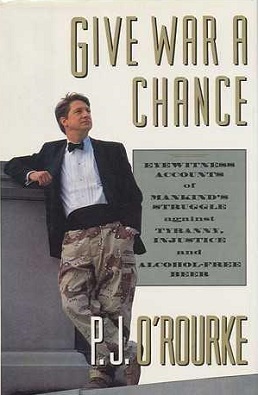
New Nonfiction from Rob Bokkon: “The Last of the Gonzo Boys: P.J. O’Rourke, War, and the Evolution of a Political Mind”
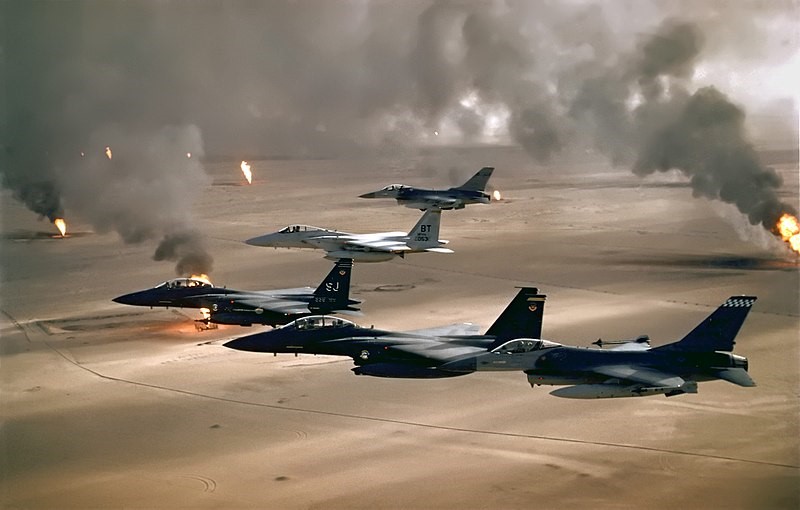
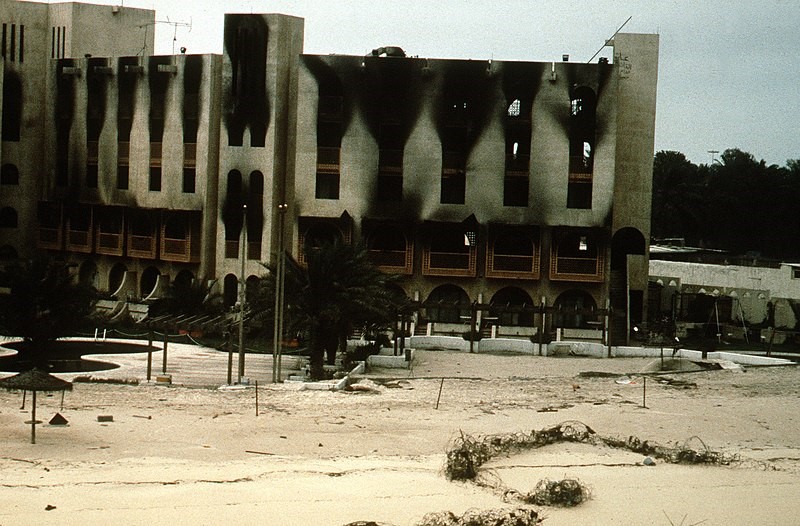
“We hear the Iraqi army is systematically blowing up buildings in downtown Kuwait City. If the architecture in Kuwait resembles the architecture in Saudi Arabia, the Iraqi army will have done one good deed, anyway. As soon as the Iraqis have all surrendered, let’s send them to New York and let them take a whack at Trump Tower.”—P. J. O’Rourke, February 25, 1991
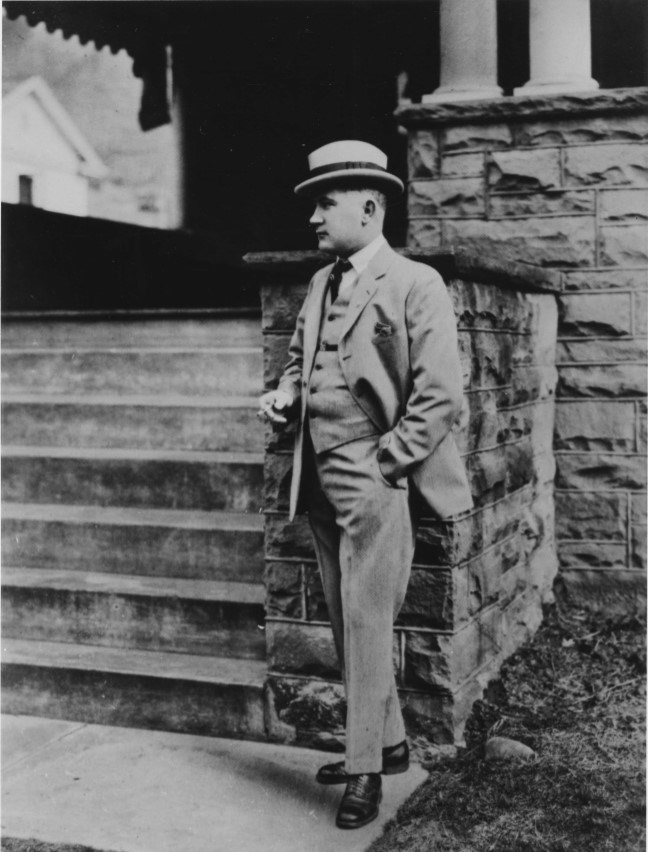
On February 15, 2022, Patrick Jake O’Rourke shuffled off this mortal coil owing to lung cancer. If P.J.’s general demeanor was any indication, this probably left him pissed off and in need of a drink. It certainly did me.
Who was P.J. O’Rourke?
P.J. O’Rourke was a dick.
“Gadfly” isn’t really evocative enough. He fulfilled that function, but it wasn’t his only schtick. “Curmudgeon” isn’t right either, even though he tried a little too hard to be one, especially as he got older. But curmudgeons don’t like anybody or anything, and P.J. had more than his share of joie de vivre. “Dick” pretty much sums it up—that one guy with an attitude problem and a drinking problem and possibly a coke problem, who says outrageous shit after his second bourbon that pisses off the whole room, and after the third one has everybody roaring with laughter.
He was a dick. But he was our dick, goddamnit.
And he was one hell of a writer.
At the risk of showing my age:
Back in the Grand Old Days of Print Media—in the misty, forgotten, sepia-toned era that is the late ‘80s and early ‘90s—everybody, and I mean everybody, read Rolling Stone. If you had the least pretension to musical hipness, you read RS. Your ex-hippie parents read RS. Your Atari-generation older siblings grew up on it, so there were always copies lying around the house. If your high school library was hip enough, they had it; college libraries always did, and so did record stores. We read it, we talked about what we read, we argued over the music reviews, we cut pics out to hang on our dorm room walls. It piled up under the coffee table, it stacked on the backs of toilets. It was everywhere.
Rolling Stone was fucking cool back then, too. They reviewed shit you’d never, ever have heard of otherwise, especially if like me you grew up in a rural coal-mining area of the Upland South. My friends and I pestered the poor long-suffering employees at Disc Jockey in the one tiny mall in Owensboro with increasingly strange requests for shit we’d heard of but couldn’t find in the bins, we kept lists of shit we wanted to hear in our pockets to offset the dread phenomenon known as Record Store Amnesia. Buying music was a big deal back then and we spent enormous amounts of the disposable income that we used to have so much more of on it. It was a feedback loop; read Rolling Stone, go to record store for shit you’d read about in Rolling Stone, buy the new Rolling Stone while you’re there, repeat. And it wasn’t just the music. They had great pieces on the entertainment industry, politics, global affairs.
But the really, really good times came when there was a P.J. O’Rourke article gracing the issue.
I’ve lost count of how many people have stared me down and said “YOU like P.J. O’Rourke? You, Rob BOKKON, Marxist and identity politics asshole and general leftist menace, actively buy his books?” Yeah, I do like P.J. O’Rourke. He’s a great writer, he’s funny as fuck, and he’s also wrong about almost everything and often heinously offensive. Do yourself a favor and don’t look up anything he ever wrote for National Lampoon. In fact, most of what was in National Lampoon is virtually unreadable to modern audiences and that’s probably a good thing—they were never as funny as they thought they were, and that whole “shock comedy” thing is mad lame anyway. That’s not to denigrate their impact culturally or whatever, but a bunch of white boys yelling the n-word because they can is not revolutionary and it wasn’t then either. I dislike all of PJ’s views on Marxism, not least because they’re facile and, well, silly; I dislike his views on American imperialism; I especially dislike his defenses of capitalism, which are based on a grade-school understanding of economics and amount to not much more than the “get rich while you can” ethos of Gordon Gekko or Patrick Bateman. There’s also the casual racism and sexism, which is to be expected from a Boomer white male straight Republican.
With that all said: I have rarely laughed harder than when reading P.J. go off on one of his tangents, especially when the target is his own party (which is frequent) or matters of foreign policy, with which he was well acquainted as an on-the-ground reporter, for ABC Radio, RS, and the egregious American Spectator. And his writing is valuable as historical documentation, of a particular political attitude that has vanished from the American intellectual landscape. Much, I would argue, to the detriment of that landscape.
I’m no big fan of “the discourse.” I don’t really regard engagement with today’s right-wingers as a useful or healthy activity. We have nothing in common other than citizenship, and I know that no amount of pleading on my part can convince anyone to stop being a terrible person. That falls firmly under the category of “personal development”, and people who think the government shouldn’t provide us with clean water but should have the authority to arrest LGBT+ people for existing are not, generally speaking, capable of much in the way of soul-searching. (You’re free to disagree with any of these statements as long as you know that you’re wrong.) I could give less of a shit what some KKK member in Indiana thinks of the economy or Black Lives Matter or socialism, because A: I already know what he thinks and B: what he thinks is shitty, so having a “dialogue” is going to benefit no one at all.
P.J. O’Rourke, of all the Republicans in the world, really just wasn’t like that. Sure, he was a plutocrat-fellating asshole and a warmonger and an apologist for the worst economic system the world ever created, but he would flat-out tell you that he was all those things and then smoke a joint with you. Hunter Thompson didn’t suffer fools gladly. Hunter Thompson liked P.J. So did Jann Wenner, the publisher of Rolling Stone for many decades, who’s hardly what you’d call a right-wing ideologue. And so did a lot of (in those days) liberal kids like me who found reading P.J. a delicious sort of crime, the thrill of the forbidden making the humor even more sharp.
We saw ourselves in P.J., even if we didn’t like what he had to say. He was a pure Boomer, but his attitude was so much more like that of Gen X: question everything, have an attitude about it, say what’s on your mind. Be bold. Be very wrong, if you have to be, and then take the time to examine what you were wrong about. But above all, say something. If something annoys you, bring it up. Be the squeaky wheel. Be the gadfly. Stir some shit up.
And stir shit he did. Liberals hated him (probably because he turned that laser gaze onto the silliest aspects of American pseudo-leftism and proclaimed them to be exactly what they were); conservatives hated him too. He thought Reagan was a dunce and Bush Sr. an affable goofball who stumbled into all his political successes (both of these facts are categorically correct); he hated, but hated, the Drug War and called it out for its waste of public dollars and its human consequence, to say nothing of its impact on our civil liberties. As P.J. saw it, no strict constructionist could defend the unlawful search and seizure that was drug testing, nor the Fifth Amendment violation of self-incrimination it virtually guarantees. “Jail will screw up your life worse than a whole Glad bag full of daffy dust,” he wrote, acknowledging something we’re just now starting to talk about, the failure of the punitive system to address anything meaningful about drug use in America.
Imagine a Republican saying THAT now. Imagine a Republican questioning the importance of the prison-industrial complex. Fuck, imagine a Republican questioning anything his own party did.
And that is why P.J. was the last Republican on this planet with whom I would have, willingly, shared a whiskey. Because he didn’t think the government needed to fuck with your private life. He didn’t think there was anything particularly noble in politics or politicians in general, and regarded the cultish worship of people in the public sphere of government as both perverse and un-American; he didn’t think people in a democracy were obliged to bow to anybody in particular, regardless of whether that somebody was JFK or Reagan. Plus, he is, to date, the only person to describe a landscape using the words “blood and diarrhea” in an article on American foreign policy, and that takes a certain amount of style. Audacity, anyway.
And nothing in this world succeeds like audacity. As P.J. himself might say, just look at Congress; right there you’ve got 535 people who work six months out of the year (maybe) for six-figure salaries, and the chief qualification for their job is saying things very loudly. Not only when they’re right, but especially when they’re wrong. Even the reasonably good ones have a huge dash of chutzpah, or they wouldn’t be in politics. P.J. famously called Congress a “Parliament of whores” in the early ‘90s. I would argue that this situation, post-Citizens United, has only gotten worse.
The current debate on members of Congress and their ability to trade stocks is also extremely germane to his basic point: public servants enriching themselves at the public trough at public expense are not good for the Republic. He was right about that. He was often right. He was more often wrong. But somewhere in all this, there’s a grain of something gone; that center we all hear about, the “core values” we’re all supposed to share, the general idea that maybe, just maybe, we could in fact all get along again if we just sat down and talked. But that was before QAnon, and anti-vaxx nonsense, and people who think the Earth is flat actually being elected to Congress (something P.J. used to joke about a lot). It may sound like I’m spreading the blame around equally here, and to some degree I am; the Democrats are largely useless. But they’re not the ones who got us to this point, and the liberal silliness P.J. so often derides ain’t got a patch on the festering pile of batshit crazy that is the modern Republican Party. P.J. thought book burnings were bad and wanted you to be able to snort all the coke you want. Marjorie Taylor Greene he wasn’t.
“She’s wrong about absolutely everything, but she’s wrong within normal parameters.”—P.J. on why he voted for Hillary over Trump
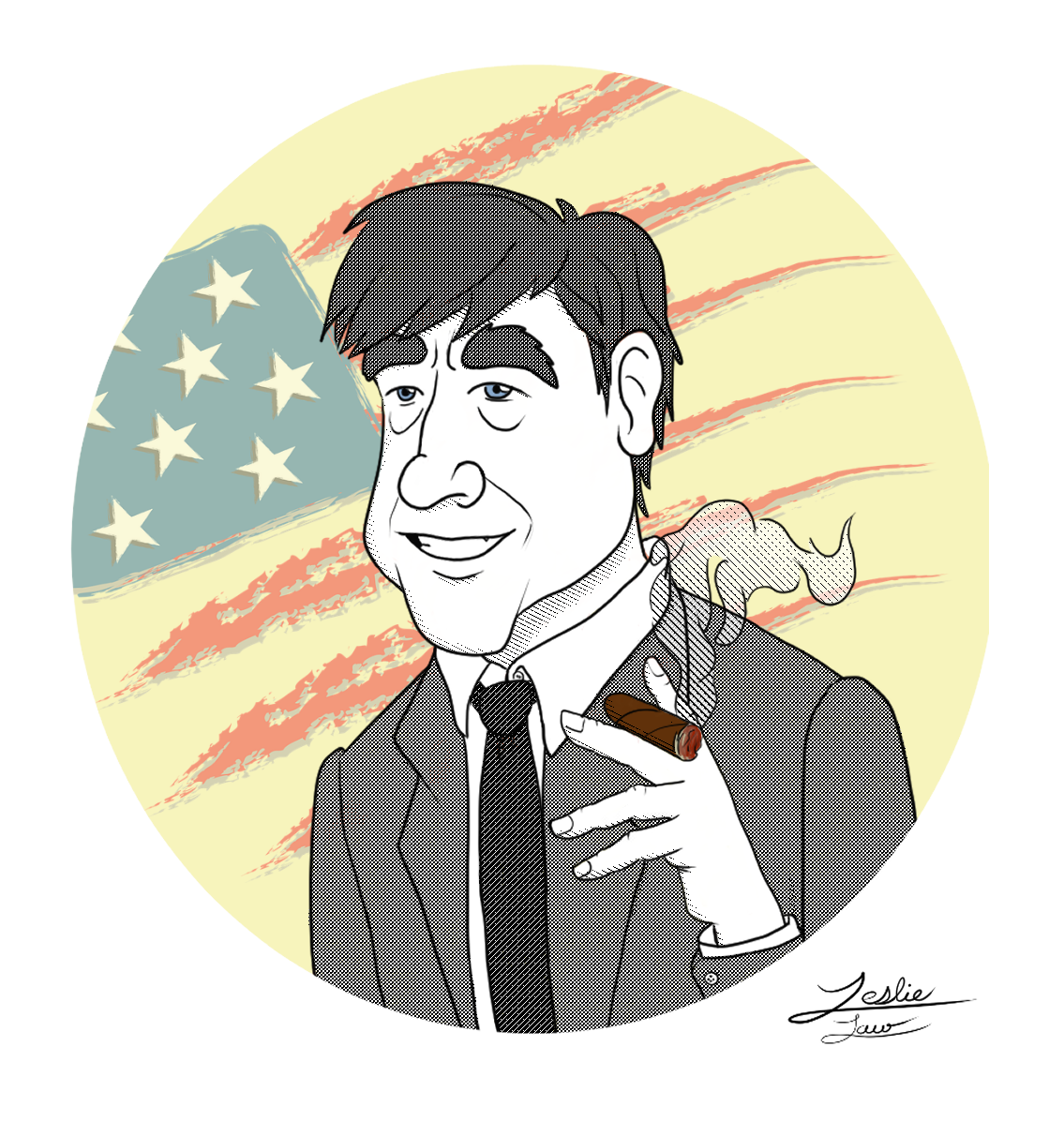
Original artwork for this essay by artist Tom Law at [email protected]
Speaking of coke: If you like Dr Hunter S. Thompson, you’ll like P.J. It’s the same basic thing; gonzo journalism, the writing of a serious piece as though it’s a work of fiction, Truman Capote’s nonfiction novel concept writ large (writ small?), the whole world filtered through style. A rejection of bland reportage in favor of commentary, a flat exposure of the lie of objectivity, an embrace of the good things about writing in English. Just because it’s news doesn’t mean it can’t be fun. There would never have been a Jon Stewart without gonzo journalism, nor a Colbert, nor a Jon Oliver, nor an Anthony Bourdain. There’s something very true about it. Something honest. No bullshit other than the author’s bullshit, which is a given when you write anything; when the reader knows, intimately, that what they’re reading is opinion, they’re much more likely to pay some attention to the content of what you say.
This is why smart people like shit like The Daily Show and stupid people watch Fox News. If you know you’re consuming biased content, and act accordingly, at least you’re thinking. If you consume biased content, and either don’t know it’s biased or, worse, defend it as unbiased, then you’re doing the opposite of thinking. P.J. hated stupidity. He hated Trump. He held his nose and voted for Hillary Clinton because, as he said, “She’s wrong about absolutely everything, but she’s wrong within normal parameters.” This would have made sense to Dr Thompson. It was, for a Republican, a very gonzo thing to do. It was…well, it was honest. And it added to the rich narrative thread that was P.J.’s life. At this point, he was a darling of NPR, a regular on Wait Wait Don’t Tell Me, every Democrat’s favorite Republican, the snide funny dude on your radio while you made lunch on Saturdays, if that’s your sort of thing. His previous persona must have been shocked, but his capitalist soul liked the checks, so I guess it worked out, even if his bread and butter came from publicly-funded liberal media.
Imagine Lauren Boebert being on Wait Wait Don’t Tell Me. Imagine Lauren Boebert on any quiz show at all. Fuck, imagine Lauren Boebert in high school academic team. Actually, don’t do that, because that exact scenario is coming soon to a dank conference room near you, now that the GOP has discovered books exist and are doing their level best to do something about that.
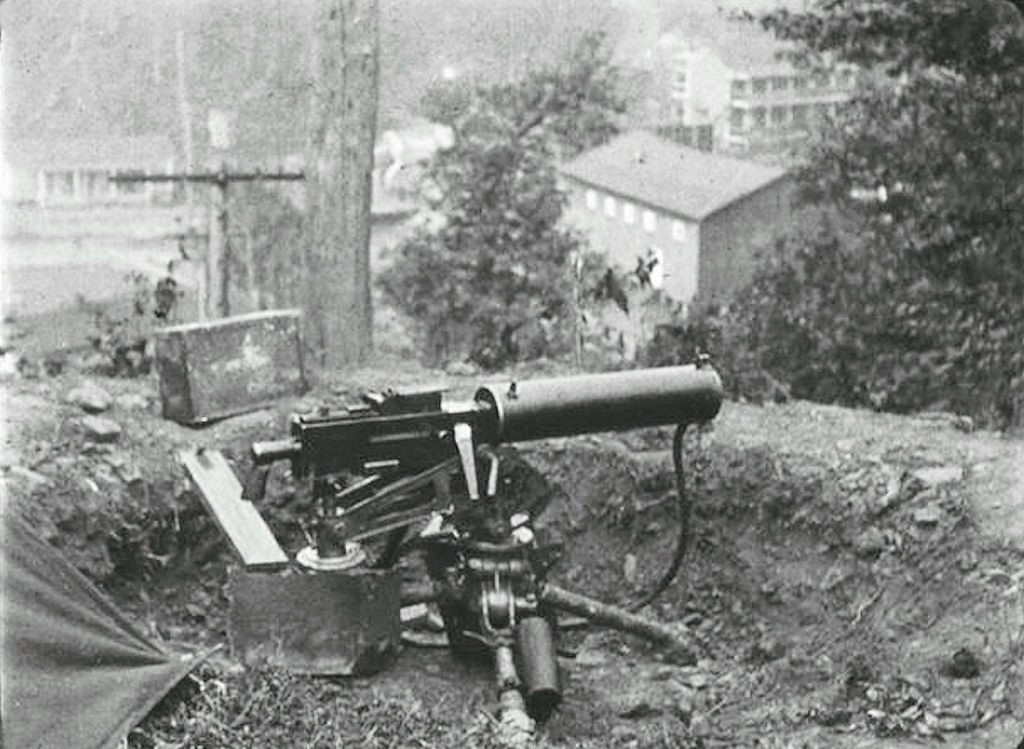
P.J. at War
“Wherever there’s injustice, oppression, and suffering, America will show up six months late and bomb the country next to where it’s happening.”
P.J. was no stranger to world conflict. He’d been in Lebanon in 1984, in Seoul for the 1987 election of Roh Tae Woo that ended decades of authoritarianism. In ’89 and ‘90, P.J. was assigned to cover the (often premature) collapse of various Communist regimes in Central America and Europe for both Rolling Stone and American Spectator, along with a few other global hot spots that were in turmoil outside of the realm of Marxism. There’s a lot to like here, a lot to laugh at, and a lot of head-shaking. He advances the cause of the modern conservative narrative “liberals = socialists = supporters of totalitarianism”, which is both silly and contains one small element of truth: the liberal-to-socialist pipeline is a thing, as anybody who started out as a James Carville Democrat and wound up a red-flag-waving socialist can tell you. (Author waves enthusiastically at the audience.)
Regardless of his silliness and eventually incorrect predictions about the “death of Communism”, the articles were good. They took us to places that, as P.J. said, “the United States only cared about if we got our dope from them.” The crowing over the defeat of the Sandinistas in 1990 is amusing in hindsight, given how long Danny Ortega has now been President of Nicaragua and also given the continuing Pink Tide in South and Central America. But the piece on Paraguay was particularly good, acknowledging as it did that U.S. allies in the Dirty War were also super-comfortable with Nazi expatriates and connections with apartheid South Africa, and flatly stating that our Cold War ally had tortured its own citizens. P.J. said that was a bad thing. He acknowledged U.S. complicity in bullshit, which wasn’t even the focus of the article. He just said it and moved on. At the time of publication, it was barely noteworthy. Now it’s revolutionary. P.J. wasn’t always right, but he was consistent. He hated what he hated and he liked what he liked, and he didn’t approve of torture. He didn’t like it when Stroessner did it in Paraguay and he didn’t like it when Saddam did it in Kuwait and he didn’t like it when we did it in black sites. Conservatism once had limits.
Imagine, if you will, those days. Imagine conservatism with self-examination. Imagine conservatism being, well, conservatism.
The way I see it, it’s a pretty philosophy on paper, but it never works in the real world.
“HOOOOO-AH!!!”, as the Gulf troops say.”
In 1990, Saddam Hussein, perpetual ally/enemy/focus of American Middle East foreign policy, invaded Kuwait, and very shortly the United States wound up in its first proper shooting war since Vietnam, since everyone knows Grenada and Panama don’t officially count. Whatever, this was big, and more importantly it was on TV, and a bunch of people I know and you know were fucked up by it. It led directly to our continuing policy of interventionism in a region that was better left alone or influenced by diplomacy. It led to Bush Jr. and Guantanamo and Abu Ghraib and twenty fucking years in Afghanistan and more dead civilians than anyone knows how to count properly, and a bunch of American kids with lifelong PTSD and wounds that won’t heal. It led to Bill Clinton bombing Iraq, on average, every two weeks of the eight years he was in the White House. It led to the attitude that perpetual war was the norm, not the exception.
Maybe it is. Maybe we can’t function without it now. But in 1990, it was a fun new conceit and it didn’t involve the Soviet Union, so we were fairly convinced it was an adventure that wouldn’t precipitate The Big One. I guess it depends on what your definition of The Big One is. Regardless, ABC Radio (of all people) sent P.J. to the Middle East as a war correspondent on the strength of his global reporting of the last couple of years, and Rolling Stone decided to get in on the action too with print columns, and thus we got a Rolling Stone view of American foreign policy in the Bush years. Which is a weird sentence, no matter how you parse it.
P.J. was on the ground for most of the war, and his writings on the subject are still poignant, still relevant as a document of a time when the USA was in its ascendancy and the Soviet Union descending into chaos. We were flexing our global muscle against someone who’d been an ally as recently as two years ago; we were enforcing the Carter Doctrine; we were giving the finger to the planet, and weirdest of all—almost no one objected.
As P.J. said, “There don’t seem to be a lot of celebrities protesting against this war. New Kid On the Block Donnie Wahlberg did wear a ‘War Sucks’ T-shirt at the Grammy awards, but that’s about it. In fact, I’ve heard that Jane Fonda has decided to maintain public silence on the subject of Desert Storm. Getting Jane Fonda to be quiet—this alone makes fighting Iraq worthwhile. ” It’s a cheap shot for P.J., an easy, misogynistic swing at a conservative target of ire so predictable that it should be beneath his notice, but it’s worth mentioning for a reason. The complete defeat of anti-war ideology in the US in those days was a very real thing, replaced by what P.J. called “kick-ass patriotism” and a general belief that what we were doing was just. P.J. certainly believed in the cause, but he also thought the whole thing was absurd and was happy to point out exactly how:
“You may wonder what the job of a Gulf War journalist is like. Well, we spend all day broadcasting on the radio and TV telling people back home what’s happening over here. And we learn what’s happening over here by spending all day monitoring the radio and TV broadcasts from back home. You may also wonder how any actual information ever gets into this loop. If you find out, please call.”
P.J. traveled through Jordan, Syria, the UAE, Saudi Arabia, and wound up in Kuwait City just before US and coalition forces arrived, but after the Iraqis had trashed the place and headed for home. He embedded with troops (another first for that war) and got shot at, nearly arrested more than once, had Scuds lobbed at him and very nearly blew himself up when he, lit cigar firmly screwed in the side of his mouth, opened up an Iraqi demolition booby trap consisting of a pile of RPGs and a grenade with the pin out. Although he later said the most dangerous thing he did throughout the whole war was cook spaghetti sauce on a camp stove on the Hilton roof with his flak jacket off, because the Kuwaitis took that opportunity to celebrate the US victory by firing “every available weapon in the air, including the .50 caliber dual-mount machine guns on the Saudi and Qatari APCs…Finally, a Brit and a veteran of the Special Air Services could stand it no more and leaned over the roof parapet and bellowed at the trigger-crazed Kuwaiti merrymakers ‘STOP IT! STOP IT! STOP IT! PUT THOSE FUCKING GUNS AWAY AND GO GET A MOP AND A BROOM AND CLEAN THIS COUNTRY UP!’”
“Peacenik types say there would be no war if people truly understood how horrible war is. They’re wrong. People don’t mind a little horror…but everybody hates to be bored and uncomfortable. If people truly understood how much sleeping on rocks, how much eating things rejected by high school cafeterias, how much washing small parts of the body in cold water and how much sheer sitting around in the dirt war entails, we might have world peace after all.”
Kuwait City after the Iraqi withdrawal. “It looked like all the worst rock bands in the world had stayed there at the same time.”
******
Here’s the thing about P.J.
P.J. opened your mind to the possibility that ideologies could be fluid. That you could believe a thing and maybe later change your mind. That you could evolve. He had.
A self-confessed “peace weenie” and “liberal goofball” in the ‘60s, P.J., like so many others of his generation, made the rightward swing in the late ‘70s and landed, not so much in the Reagan camp, but at some outpost of his own building, an ideological stronghold somewhere between classical liberalism and drug-legalization libertarianism, with a hearty dash of that countercultural anti-authoritarianism (and of course the dope) still firmly in the mix. He wasn’t tidy, in fact he could be absolutely all over the place and even self-contradictory. Good thinkers often are. Great writers usually are, because they say what they’re thinking when they’re thinking it and often live to regret it later.
Here’s why that’s important, at least to me: P.J., in his rejection of his former principles, gave me the courage to take the step away from moderate centrism and to embrace the leftist principles that truly evoke my core beliefs. I stopped caring about where people wanted me to be and reached out for the things I thought were right. It’s messy here sometimes, and it pisses people off. (Lord knows P.J. would think I was a weenie or worse. He would also be pleased that I don’t care.) But it’s mine. I thought it through, I stood up, I said something.
As I write this, Russia has invaded Ukraine. The world situation is dire in a way it hasn’t been in decades. Putin is rattling the nuclear saber, Zelenskyy is making himself into a world media icon, Ukrainian grandmas are becoming social media darlings by cussing out 18-year-old conscripts on video, there may or may not be thermobaric bombs dropping on civilians and nobody knows if the Ghost of Kyiv is real or not, but damn, it’s a story of kick-ass patriotism. And all over the world, people are standing up, people are saying something, people are trying to make a difference.
I just wish P.J. were here to give us his take. I wish Anthony Bourdain was here too. The world needs cynicism and humor, but also basic decency and compassion, when the shit gets too real. Oh, they’d probably hate each other, but I’d pay real money to see the two of them shout at each other over whiskey and cigars on CNN. Wherever you are, Gonzo Boys, we could use a dose of your realness right about now.
—
O’Rourke, P.J. Give War a Chance. Grove Press, 1992.
O’Rourke, P.J. Holidays In Hell. Grove Press, 1988.
O’Rourke, P.J. Thrown Under the Omnibus. Grove Press, 2015.
New Fiction from Steve Kiernan: “War Ensemble”
Holding Dick Cheney’s shotgun is not exactly how I thought I’d be spending my time when I joined the Marines. It was summer of ’06 and the meatgrinder of Iraq was going full-tilt. President Bush had gathered all his advisors and generals and a host of other ne’er-do-wells at Camp David to come up with a strategy to unfuck the war. You’ve probably heard of it. The Surge. I’m sure whatever white paper commando coined the term was very proud of themself. Anyway yadda yadda blah blah you get the picture. I was stationed there at the time as a security guard. Our biggest threat were angry Code Pink moms.
The morning of the big arrival I was called down to First Sergeant’s office and told my orders to an infantry battalion had come in and I’d probably be in Iraq within a few months. Now, normally this was the best news a Camp David Marine could get, I’d finally get out of this chickenshit assignment and get to do what Marines are meant for, what all my friends from bootcamp had been doing for the past two years. I was twenty and dumb and had naively requested these orders a few months prior, had eagerly awaited to hear back as I went through the same groundhog day routine of six hours on duty and twelve hours off, over and over, staring at nothing but trees and fucking duty rosters. My gung-ho attitude changed however, when I received news of Cody, my bunk mate from boot camp. He had been killed just a few days earlier when his Humvee got ripped apart by a massive IED somewhere outside Haditha. He was the first person I really knew to get wasted and I remember feeling suddenly ashamed of my excitement and eagerness and the orders in my hand grew heavy with consequence and complicity. Processing this was too much for my twenty-year-old brain to handle, so I did what any Marine faced with a complex emotional dilemma would do; I tried to ignore them.
That’s the headspace I was in when all this went down.
Now let me get to the big visit.
VIPs wouldn’t arrive for a few hours, but Secret Service advance teams were already setting up shop around the facility and we had begun standing up all the extra guards a presidential visit requires. Hoping to keep myself distracted I hid in the React Room with a squad of Marines fully kitted out in body armor, M4 rifles, ammunition, smoke grenades, night-vision goggles, hell, even an M240G medium machine gun. We were watching The Notebook.
Sgt Zak walked in and flipped on the lights, producing a round of boos and shouts as we shielded our eyes in the windowless enclave.
“Be quiet, you frickin’ snakes.” He was standing in front of the TV and holding a clipboard and though he was only 5’6, he knew how to take up a lot of space.
“Oh come on, sarnt!” Dave, who told dubious yet colorful stories of his time as a pool-boy in Daytona, was visibly upset. “Noah and Allie were just about to rekindle their love after he rebuilt the old house!”
“Love can wait.”
More boos. Someone threw their hat. Sgt Zak ignored them.
“Okay, morning announcements. Trailblazer will be arriving later this afternoon at 1520, soon followed by the press corps. Other cabinet members will be arriving periodically from 1600 to 2000, so be prepared for several LZ Ops.”
Trailblazer, of course, being the president’s Secret Service codename. All the Bush family and most of the higher-up cabinet officials had codenames—usually some dumb reference to the person’s character or interests. In Bush’s case, he loved mountain biking.
“Also, Angler,” that’s Cheney, “will be arriving at 1000 and I’ve been told wants to squeeze in some time at the skeet range. I’ll need one of you to go out with him as Range Safety Officer.”
A bit of context: maybe you remember but Cheney had just recently shot a friend in the face with a shotgun while out quail hunting. He said it was an accident.
The banter died down as all of us in the room suddenly found something very interesting to inspect on our uniforms and gear. I started picking at my name tape, which was coming unstitched on one side. Travis got up and walked for the door.
“Where do you think you’re going?” Sgt Zak said.
“Some rich white guys want to go out and shoot guns and you expect the one black dude to go out there with ‘em?”
“Ah dang, good point.”
Travis opened the door and left the room.
“Come on, you guys are usually fighting over the chance to get some close-up time with VIPs.”
“You know he just shot a dude in the face, right?” I said.
There was a round of agreement, but Sgt Zak just crossed his arms.
I thought I might slink out of the room like Travis, seeing that I wasn’t even on the react team and in no mood to entertain the powers-that-be, but I got the sense that was a one-time deal. My chances were probably better staying grouped up with everyone else, a united front.
“He ain’t even on react, send him.” Dave said, pointing at me.
Despite his amusing eccentricities, Dave is foremost an asshole.
“Gosh dangit. Dave, give me a mag.” Sgt Zak didn’t wait and instead ripped open a velcro pouch and took one of Dave’s loaded pistol magazines. He then picked up the hat that was thrown earlier and began unloading the bullets into it.
“Ah what the fuck, sarnt?” Dave protested.
Sgt Zak then pulled out a sharpie from his pocket and drew a black X on one bullet.
“Each of you take a bullet without peeking, whoever gets the X gets to RSO for Angler.”
He came around with the hat and we each did as we were told.
You can guess where this is going.
“You got the X!” Dave laughed, again pointing at me.
The rest of them were laughing too. There’s nothing more amusing to Marines than seeing one of their own suffer.
“Yo, make sure you wear your glow-belt out there.”
“Nah, wear like five fuckin glow-belts.”
“Yeah, sling ‘em around your chest like Rambo.”
“Nice knowin ya, dude.”
“Rest in pieces, bro.”
Obviously, this did not improve my mood. The idea of shooting anything felt strangely perverse given the context of what Bush and the cabinet were there to do. One would think the moment demanded a sober retrospection of all that had led to the clusterfuck they had gotten us into. I remembered when Cody and I got smoked by our D.I. after getting our wisdom teeth pulled because Cody had the gall to let blood drip onto the quarterdeck. He kept whispering “I’m sorry” over and over to me through gauze-filled cheeks while doing endless mountain-climbers. I wondered whether he had been buried yet, or if he was still at Dover getting pieced together for his parents. Maybe, had I taken Sgt Zak aside and confessed all of that to him he would have let me off. He probably would have. But I couldn’t. Duty, pride, toxic masculinity, whatever you want to call it, held my mouth shut as I eventually got voluntold for the assignment.
So anyway, there I was, holding Cheney’s shotgun and contemplating my life choices. This is something one does a lot in the military. It’s actually the first thing one does in the military. But at this particular moment, I was tallying up every decision I made that brought me to signing those enlistment papers, which I had thought was the Right Thing, but now know to be the Wrong Thing, so if I could go back and change one of those decisions I would have ended up doing the Wrong Thing instead of the Right Thing, which would have actually been the Right Thing and not the Wrong Thing, but if I had done the Right Thing I know I would have felt bad for not doing the Wrong Thing and would then convince myself that the Wrong Thing was the Right Thing and I’d be right back to doing the Right Thing and I’d still end up standing at the skeet range holding Cheney’s shotgun.
Angler was forty-five minutes late when he finally rolled up in a golf cart with the presidential seal glued onto the front it like some perverse, snub-nosed, boomer Popemobile. One of his aides was driving and brought the cart right up to the firing line, past the sign that read “No Vehicles Beyond This Point.” One look at him told me this was headed for a worst-case scenario. I shit you not, despite this being a skeet range overlooking a perfectly manicured and level lawn, and with no reason to leave the covered and shady confines of the firing line, Angler wore his full hunting regalia. Now this is summertime Maryland, the temp was hovering around 92 degrees and about a million percent humidity and here he was in rubber galoshes, Mossy Oak camouflage pants and shirt, and a hunter orange shooting vest with a dozen different pockets and pouches. And he was drinking a healthy three fingers of whiskey from a glass in his left hand.
“I’ll take that,” he said and grabbed the shotgun from my hands.
One step at a time, I told myself.
“Sir, I’ll be your Range Safety Officer for today.”
“Yes, yes, I’m quite familiar with range safety rules,” he said without a hint of irony. “Let’s get this show goin,’ all the morons will be here soon and I wanna get some shooting in before they’re all running around getting in the way of everything. Lord knows there’s been god damn enough of that lately, ain’t that right, Quincy?”
I assumed he was talking to the aide, who looked exactly like his name, but Angler neither looked back at him nor waited for a response.
“Where those shells at, son?”
I pointed to a nearby table where I had neatly stacked several boxes of shotgun shells. He opened a few and began filling his pockets until he was satisfied with the amount of ammo on his person.
“I say ‘pull’ and you release the clays.”
I couldn’t tell if he was asking or telling, but the long, thin smirk that never met his eyes told me it was the latter, and so I grabbed the remote.
“PULL!”
The violence of his voice shocked me for a moment before I pressed the button, sending two white clays sailing through the air in a long and slow parabola. He shot them both cleanly, so that they exploded into little white puffs.
“I told ya, Quincy, I told ya.” He turned back to the table on his left and grabbed his drink. He had the shotgun cradled in his arm and it waved wildly with his movements, flagging everything behind him, including Quincy.
“Sir, please keep the firearm pointed down range,” I said as sternly as I dared.
“Oh don’t worry my boy, it ain’t loaded anymore.” He took a gulp of whiskey before adding, “We’re the only ones out here.”
Witnessing Angler in person was growing more difficult than I had anticipated. This man, I thought with a growing anger that continues burning to this day, would very likely be deciding my fate over the coming days, had already decided on so many others’. This man with his stupid fucking smirk, a ridiculous orange vest that bounced up and down in time with every nasally laugh, his halitosis, this man who kept referring to himself as Angler, would send us all to our fucking doom, killing and dying. And we let him do it.
We went like that for a while, him shouting “PULL!” and me pushing the button. He never missed a clay. And before you ask, yes, the discrepancy between his so-called “accident” and this impressive display of accuracy was not lost on me. Quincy even came up for a turn once Angler began to slow down, the alcohol finally reaching him. It was obvious Quincy had never held a weapon in his life, and Angler was taking a little too much pleasure in watching him fumble with the shells. When he did fire the gun he flinched hard and put a nice shotgun blast into the ground about ten feet in front of us, sending a dinnerplate sized divot into the air. Angler loved that. Needless to say, the lanky wasp didn’t hit a single clay.
Cheney had finished his drink and had switched to smoking a stubby cigar, the smoke of which kept invading my nostrils and causing me to sneeze in fits. He thought that was funny too. I suffered through this until Cheney—apparently bored—held out the shotgun in my direction, and instead of waiting for me to grab it, just let go, sending me scrambling to reach it before it hit the ground. “Why don’t you go ahead and take a few shots” he told me. Now, like I said, I was in no mood for shooting and in-fact considered anything more than somber contemplation a violation of some ancient trust between soldiers and leaders, and more importantly, me and Cody. And plus, pretty soon there’d be dozens of staffers and other officials of varying power and stature wondering around like so many walking monsters and I wanted to get the hell outta the kill zone, maybe hide out with the react team and The Notebook again.
“Thank you sir, but as RSO my job is to ensure safety. Can’t do that and shoot at the same time.”
“Why not? You’ll have the gun.”
He had a good point, but again, I wasn’t in the mood for it, and plus, protocol dictates that we just supervise, try and stay in the background as much as possible. And then I got to thinking that if some officer happened to drive by and see me he’d think I was intentionally getting too friendly, and then he’d start wondering why some idiot corporal was out here shooting and rubbing elbows with Angler when it really should be him and that’s just not fair because rubbing elbows with the big-wigs was exactly the reason he used up two good favors to get this assignment and how was he supposed to wrangle that cushy job and promotion to major or colonel if he didn’t have some god damn connections and names to drop at parties with other officers who would be silently comparing him and his social status to all of his colleagues gunning for the same promotion and said cushy job and that if he didn’t get them then he would have to give up on this ill-fated career that his father warned him against and end up going to law school or getting his MBA which was what his father wanted him to do all along but that he didn’t think he was ready for because he just barely made it through Penn State as it was and he wasn’t exactly what you’d call intellectually minded but neither is that god damn corporal and he sure as shit didn’t need to build up a rolodex so just what the hell does he think he’s doing?
I politely declined.
Cheney then stuck a box of shells in my hand.
“Shoot the god damn shotgun,” he breathed up into my face.
I was only an inch taller than him but I made sure he noticed every bit of it. He didn’t care. I couldn’t give in, not to him. I was afraid of what might happen if I did, though I didn’t know why. I’d love to get all poetic and revisionist and say it was my guilt over Cody’s death driving me, but it was more than that. It felt celestial. All I know was there was something telling me to resist, refuse. Someone had to say, No.
I stretched myself taller and looked down into his pale colorless eyes and he laughed.
And all my feelings of resistance evaporated.
I took the shotgun and loaded the shells. “PULL,” Cheney yelled for me, and I fired. The two white clays landed softly in the grass, untouched. I missed.
Humiliating, I know. To fast forward a bit: after I was mercifully done with Cheney, I ended up back in the react room. And because I apparently hadn’t learned my lesson from the last time I needlessly hung out there, Sgt Zak again voluntold me for another assignment, this time as a road guard checking IDs of people trying to get to Aspen. Fun fact: The cabins and buildings aboard Camp David are named after trees, which I rather liked, to be honest. Dogwood, Eucalyptus, Redwood, Sequoia, Willow, Birch, Walnut etc. Aspen was the presidential cabin where POTUS and his family lived while they were here. It was also where all the important meetings would be taking place. I doubt you want to hear about me standing at the end of Aspen’s driveway for a few hours, so I’ll fast forward some more.
After standing at the end of Aspen’s driveway for a few hours with not a soul to come by, save the occasional Secret Service agent, a man in khaki slacks and a blue polo came striding towards me. He was older, seventies perhaps, and looked vaguely familiar to me, but only in the sense that all old white men tend to be. He wasn’t wearing any badge, so I stepped in his path and asked to see some identification, my one responsibility. “I don’t have time for this,” he said, waving his hand dismissively. He tried walking around me. You could say I was still smarting from earlier but his self-importance annoyed me and when he got close I grabbed him by the arm and yanked him back in front of me, it didn’t take much effort. He fucking exploded.
“How dare you touch me,” he said with a disgust so genuine it bordered on self-parody.
“No unauthorized personnel past this point.”
“Are you dumb or something?” By the look on his face you’d think I had a dick growing out of my forehead.
“Of course I’m authorized, I’m the god damn SecDef!”
That’s right it was Don-fucking-Rumsfeld! As soon as he said that I recognized him, and yes, I know, as a Marine I should have recognized Donald Rumsfeld, the Secretary of Defense, his picture did hang in every one of our offices, after all. But, to be fair, I had only ever seen him wearing a suit and glasses, neither of which he had on then, and neither did he have his usual entourage of aides trying to keep up with him. Anyway, fuck that guy.
“Get out of my way, I have meetings to get to.”
He tried shoving past me again but I held him in place. Even though I recognized him I remembered Sgt Zak, “check IDs and badges.” My failure to stand up to Cheney had put me in a work-to-rule kind of mood, and I told Rumsfeld that I couldn’t let him past without some identification. This did not go over well.
“Listen here you dumb grunt, I am your Secretary of Defense and I am ordering you to let me pass.”
“Do you have identification to prove this, sir?” I was feeling myself a bit and let it show. I was also thinking of Cody again and wondering if his Humvee had been properly armored.
“I don’t have to show you anything. Do you not recognize me? Call your commander up right now.”
“He’s busy, sir.”
“I said now!”
It was then that Sgt Zak drove up in a golf cart, doing his rounds checking on all the posts.
“Tell me you outrank this imbecile,” Rumsfeld said, nearly running towards the cart.
“I am the Sergeant of the Guard, yes. Is there a prob—”
Rumsfeld cut him off, “I want this moron relieved of duty! He assaulted me and refuses to let me pass.”
Sgt Zak looked at me with a “Is that true” kind of look.
I shrugged. “He’s got no ID or security badge.”
Rumsfeld nearly choked.
Zak looked exhausted—being SOG during a visit is no rose garden after all, having to coordinate with half a dozen different agencies and staffs.
“Let him pass, Corporal.”
“Cant. No ID. Goes against the General Orders.”
“I don’t know what sort of incompetent operation you run here, Sergeant, but you can guarantee I’ll be speaking to your commanding officer about it.” Rumsfeld knew he had won.
“I’m ordering you to let him pass, Corporal.” Sgt Zak said, emphasizing my (lower) rank.
Now I’ll say here that I love Sgt Zak, he’s a good guy, but I fucking resented him in that moment. There were rules for a reason. Guidelines we were supposed to follow and adhere to. I’d be failing my duty if I were to allow Rumsfeld to just walk around them and it pissed me off that I was being told to do just that. I clenched my fists and stared hard at Rumsfeld, but I had done all I could. It wasn’t enough, not even close, but I had to let him pass.
Sgt Zak relieved me after that. Told me to go back to my room and get my head straight before my shift tomorrow morning, it’s been a stressful day for all of us, he said. My room was the last place I wanted to be, though. I couldn’t just lay down and stare at the ceiling, Cody and my orders and Iraq all floating around my head with nowhere to hide. I wanted to unthink. Ignore everything, pretend I could go back to a few weeks ago when everything was clear and not complicated. Before the inconvenience of Right versus Wrong, when duty still granted a sense of agency in the face of the inevitable. Even now, more so even, I wish that were possible. I skipped my room and headed over to Eucalyptus where there was a bar and pool tables and a small arcade. Sometimes that’s enough.
Golden-Tee was my game of choice. You know, arcade golf. There was something soothing in the way you had to roll your hand over the big white ball on the controller, how, if you were good enough, could get the perfect backspin for Pebble Beach, or hit just the right angle on the doglegs of Torrey Pines. I wasn’t the best player, but I had been marching my initials up the leaderboard since I had arrived at Camp David. The one legacy I’d leave behind.
Anyway, I was two strokes in to the fifth hole at TPC Sawgrass when someone elbowed me in the ribs during my swing, causing me to slice into the woods. I turned around ready to cuss out the offending asshole when I came face-to-face with Trailblazer himself.
Of fucking course.
“Nice swing there, hoss,” he says in that long-practiced drawl of his, like we all don’t know he’s a fucking WASP from New England. And then do you know what he said?
And this is no shit, but he says “How bout we play a game? They’ve had me in meetings all day and I’ll be damned if I don’t need some relaxation.” I was done with this shit. Should have just stayed in my room and sucked it up, faced my emotions head on, or at least pretend I could ignore them. Or read a fucking book. Anything other than falling into the same traps with these fucking guys. To be humiliated over and over, to be used and discarded. Like Cody and the countless other wasted youth of our generation—American or otherwise—to get churned up in the political machinations of the feckless elite, selling our sacrifice as something heroic and victorious rather than the pointless political capital it truly is. Yes, that’s right, I said it. Every death was meaningless. Past, present, and future. And before you start calling me cruel, defeatist, or un-American or whatever, remember that I was there. Witnessed it all first-hand.
To the extent that any of it meant anything is completely limited to whether you survived or not. Some of us did. A lot of us didn’t. Of course, we’re at fault too, which is honestly the most angering part of this whole fucking mess. We can’t escape our own complicity in the things we did, the things we wished for, the things we allowed to happen. None of that excuses those at the top, however, and I’ll continue to vent my fucking rage for it all towards them, the most deserving. I thought it took years for my anger to show itself, long after my first deployment, but retelling this story now I can see it manifested much earlier.
Now listen fucking close because this is what I’ve been building to. Cheney, Rumsfeld? Fucking appetizers for the main course. Absurdity injected into the veins. So absurd it can only be true, and that’s no shit. Here it is:
I stopped playing right away, not bothering to finish the hole, and headed for the door.
“Sorry, sir, but I need to get some sleep before my shift in the morning.”
He grabbed my shoulder, stopping me.
“Now hold on their, honcho. I could really use something to take my mind off all these damn dreary meetings I been in all day.”
“I really have to sleep, sir.”
“Am I gonna have to pull rank here?” He laughed. “Come on, son. Join me in a game.”
That spark came back. That feeling from earlier with Cheney. Maybe it was the drawl, or his buddy-buddy good-natured attitude, but something told me to push back.
“Let’s play.”
Bush ordered a Frito Pie from the bar and then picked out which course we would play. He chose one of the computer-generated maps where each hole was a Frankenstein collection of memorable hazards, greens, doglegs, and fairways from the various PGA courses. He called it an even playing field, which I assumed meant that he thought I had memorized all the real-life courses, which I had.
The first hole was a narrow but straight par-four with a sloping green. We both drove the fairway easily and ended up just short of the rough that sat between fairway and green. I decided to lay my next shot onto the green down-hill of the hole. There wasn’t much green there, so I had to be careful with my backspin, I didn’t want the ball rolling back into the rough. I thought of trying to lob my ball over and letting it roll down toward the hole, but I was afraid of hitting it too far and landing in the bunkers behind the green or again, have too much backspin and watch it roll right past and into the rough. So, I played it safe. Everything went according to plan; my ball landed right where I wanted it, and I made a firm, but smooth four-foot putt for a birdie.
“Not bad there, sport,” Bush said.
I allowed myself a knowing smile. It was a challenging, but fairly routine shot and putt to make. Nothing you’d brag about back at the clubhouse over beers, but still a solid display of knowledge and skill.
Bush was up and I figured he’d go for the same safe play. I didn’t expect his short game to be as good, but he could at least make par. Instead, he hit a high arching shot over the hole, landing at the top of the green. The ball rolled downhill straight for the hole, picking up speed until it hit the cup and bounced three or four inches into the air and came right back down. An eagle.
“You’ll have to do better if you wanna beat me, chief,” he said, nudging me again with his elbow.
His Frito pie arrived and he took a big spoonful before quickly spitting it out and blowing out his mouth.
“Hot hot hot!” he said, a string of melted cheese dangling from his chin.
I had to beat him. There was absofuckinglutely no god damn way I could allow myself to be humiliated by this asshole. It. Wasn’t. Going. To. Happen. This was where I’d make my stand. Like the fucking Spartans at Thermopylae. Gandalf and the Balrog The Alamo. I got down into a proper fighting stance behind that big white ball and pressed the button for the next hole.
The battle that ensued was an epic on par with the greats of Marine Corps legend. And like those battles many of the details have since been lost to history—and traumatic brain injury. I can tell you that Bush pulled ahead early, and for a while the issue was in doubt. My short game became inexplicably bad as I put my ball into bunkers and rough and even a water hazard. But Bush had his slip ups, too, and I managed to keep within five strokes. By the third hole, the other Eucalyptus patrons had begun to gather round and it didn’t take long for sides to form along strict class lines. Political appointees, staff members, and officers were all Team Trailblazer. Bar staff, along with my fellow enlisted; soldiers, sailors, airman and Marines; stood on the side of the righteous. The cheering was quiet at first, respectable golf claps, oohs and awes, but devolved into near chaos during the back nine as insults were traded, bets made. At one point, an NSC staffer and Navy Seabee stepped outside to settle an argument, returning bloodied and shirtless minutes later. The biggest shit talker was Bush himself, never missing an opportunity to jab my ribs and point out a failed wind consideration or improper club choice. I remained quiet. Focused. I made no fancy shots, but also never repeated a mistake, and slowly caught up one birdie at a time.
By the final hole we were even. Bush had finished his swings and putts, making par. I was on the green, one twelve-foot putt away from a birdie and the win. The room was silent. I approached the console.
The bar door burst open then and we all turned to see Angler stride in visibly annoyed.
“God damnit, George, do you know what time it is in Iraq right now? We have to get back to the matter-at-hand.” Cheney said.
“Don’t get your panties in a wad, Dick, my game is almost over.” Bush replied, gesturing towards the console and me.
To my surprise, he recognized me.
“Ah, look who it is,” Cheney said, smirk on his face.
This was it. That earlier feeling of resistance that had been simmering all game suddenly rose to the surface again. It was more intense this time and I felt it give me strength, felt my body fill with the force of something cosmic. This fucking subconscious primal instinct told me that this, this was the most important thing I’d ever do, that I had to hold firm no-matter-fucking-what, that I wasn’t just doing this for myself but the whole god damned human race, and this moment right now would change the fate of fucking planets. I thought of Cody and myself and the nameless other thousands whose fates were not theirs and I got down behind that white ball and rolled it back and then forward with my palm in one smooth motion and the golf ball marched forward towards the waiting maw of the cup and it marched and marched with the curves of the green and it slowed and then slowed some more until it reached the edge of the cup and teetered into oblivion.
The crowd erupted and someone was shaking me, congratulating me. “New High Score” flashed across the screen and without hesitating, I entered Cody’s initials. I turned back toward Bush and Cheney, triumphant and defiant.
They both smiled and shared a look between them as if they were gods among mere mortals, and laughed.
New Fiction from Jillian Danback-McGhan: “Allied”
James Abbott McNeill Whistler, Nocturne in Black and Gold – The Falling Rocket, 1874
I met the Lieutenant at a diplomatic reception at our embassy. Carrying papers which issued weaponry to his nation’s military, I passed them to my contact – a pock-marked General whose eyes glittered when he seized them. Having done my duty as military attaché, I grabbed a drink and contemplated my exit.
That is, until the Lieutenant lured me to him with a smile; his fiery green eyes blazed over cheekbones sharp as blades. He served in his nation’s military police, which his father now led. A young man burning with the promise of his own bright future. He touched my arm as I spoke about my role at the embassy and the room grew hazy. To our countries’ partnership, he said, raising his glass for a toast. Then the band started playing. He extended his arm to invite me to dance.
We whirled around the room for the rest of the evening, drunk on wine and each other’s flattery, our uniforms askew. Embarrassed by the curious looks our cavorting attracted, I turned my head when he moved in and received his kiss on my cheek. He looked wounded.
I leaned back and laughed.
Ten years later, I saw him again. My children fought on the floor as I read the paper and, lured by an article about protests in his country, spotted him in an accompanying photo. He had no name or insignia on his riot gear, but his helmet and protective mask fell askew: I saw fiery green eyes and cheekbones sharp as blades. A Kevlar-clad man standing among burning barriers. Clouds of teargas bloomed in the background and made the image look hazy.
Had the papers I carried issued him the weapon he held his hand? To support our countries’ partnership? With an extended arm he directed the assault.
Across from him stood a young woman holding a cardboard sign. Other protestors slumped behind her. They looked wounded. Shards of glass scattered around the woman’s feet and glittered on the pot-marked pavement. She turned her head to receive a kiss from a rifle stock on her cheek. The impact forced her backwards and jolted her mouth open.
As if she were laughing at me.
New Poetry by Michael Carson: “Politics”
BLAME OUR BRUISES / image by Amalie Flynn
Politics
Every 20 years or so boys dress up
And kill each other for fun.
It’s the way of the wrack of the world
The wind of our imagination and our love.
To blame our costumes for our beauty
Is like to blame our bruises for our blood.
The chime is what drives us, what ticks
Our tock forward to the next spree.
The foreshortened humiliation,
The immaculate imprecation,
Is neither what we fear or what we covet.
Man is. Rats are. Take what you can
While the day is rough
Move lengthwise into the past
And blame god for never enough.
New Nonfiction: “Underground” by Mark Hummel
Hands at the Cuevas de las Manos upon Río Pinturas, near the town of Perito Moreno in Santa Cruz Province, Argentina. Picture taken by Marianocecowski (2005).
In my childhood, television was a great unifier, for there existed a limited choice of three television networks, discounting PBS. But even if we were watching the same programming, television had begun to shape and change all of our lives—and our democracy—for the Vietnam War was broadcast into our homes every night as was the coverage of Nixon’s downfall and resignation. Politics reached beyond the nightly news and entered drama and comedy. Programming like All in the Family provided a shrill echo of conservative politicians in its portrayal of bigoted Archie Bunker as he faced an America that looked, in his eyes, nothing like the one he had known before. M*A*S*H, a laughter-heavy depiction of an army surgical unit set on the frontlines of the Korean War began airing in 1972 and offered a not-so-subtle editorial about the folly, politics, and dehumanizing effects of the real war still raging in Vietnam.
Hogan’s Heroes, an altogether different slapstick television-vision of war with no pretense of condemnation, ended the year before M*A*S*H began. That it is a regular presence on Nick-at-Nite and in YouTube videos offers a sure sign I’m getting old. The comedy held a vision of a time when enemies were still identifiable, choosing as its setting a prisoner-of-war camp in Nazi Germany. Written and released within an America that emerged as the savior of Europe, it broadcast clear allegiances. My own childhood fascination with Hogan’s Heroes had little to do with bumbling Colonel Klink and “I see NOTHING” Sergeant Schultz and the other Nazis made to look like incompetent fools. My interest was with the hidden tunnels and the secret underground chambers dug by Allied prisoners. I was fixated on Colonel Robert E. Hogan, the obvious star, in his leather bomber jacket and perfect hair (and on all those busty blond turncoat spies he seduced). The show started in 1965 and lasted two years longer than US involvement in the actual war it spoofed.
The era of its airing goes back. Back before we knew Bob Crane, who portrayed Hogan, was a sexual misfit, back long before someone murdered him, way back before they made a movie about him. You know about all that, right? Those underground stories, that Bob Crane was obsessed with pornography, watching it and making it, recording his sexual conquests over women for posterity, even laying soundtracks over his videos? Crane was murdered, bludgeoned with his own tripod in his Arizona condo in 1978. After his death, the details of his surreptitious life began trickling out, as did the videos in which he documented his sexual conquests dating to the days of Hogan’s Heroes. Many of his secrets only became widely public in 2002 with news stories accompanied the release of a biopic titled Auto Focus.
Today we might shrug at a television star proving to be a misogynist and sexual deviant, but such behind-the-scenes information was kept strictly behind-the-scenes in those days. No hot-mics or soundbites. No cable channels or 24-hour news cycles. News, like entertainment, entered our lives on a decidedly different trajectory in those days. There was no such thing as streaming services or binge-watching. You showed up at your television at 7 PM on Sunday because that’s when The Wonderful World of Disney aired. As a child I could never have imagined a Disney streaming platform or that they would own sports and television networks, no more than I could imagine funny, handsome, smiling Bob Crane was a sexual deviant. There were no television or internet radio venues for future presidents to discuss their wealth, ex-wives, or sexual interests. That sort of talk was kept strictly in the underground. And discussions of global pandemics weren’t yet the plotlines of movies, the metaphors of Zombie apocalypses on our television screens, and certainly not our lived reality. We hadn’t yet fractured into political divisions you identified by where you received your news. We didn’t air our beliefs or our dirty laundry to a network over social media. In those days, if you wanted to avoid the lives of those beyond your neighborhood or ignore world events, you didn’t need to construct an underground bunker, for the network gatekeepers already provided cover. I suppose entrance to the right Manhattan cocktail parties, Senate offices, or newsrooms would have gotten you every manner of uncensored stories, but public spectacle on a grand scale seldom appeared under the bright lights.
I’ve been thinking about going “underground” for years now. Maybe it’s a sign of aging and reveals a nostalgic longing for a childhood where I dug a lot of underground forts and passed exorbitant hours playing in my parent’s crawlspace. Or perhaps it’s a reaction to the daily surrealism of life during a global pandemic, when the desire to “stick one’s head in the sand” becomes something approaching literal and has resulted in a lot of Netflix. Or maybe my underground thoughts have been brought on, much to my bewilderment, because America has survived a president who was so locked inside his own nostalgic yearning for the era of his youth that he built a political agenda out of it.
My own nostalgic longings are, like most things, complicated. I turned twelve in 1974. At twelve I reached an age when playing with model tanks in a dirt crawlspace was beginning to seem uncool. Which is also to say that I had reached an age where I had begun to care what might pass for “cool,” if there is such a thing in junior high. I was also awakening to a wider, above-ground world, which largely entered my consciousness through television. I read a lot, but I wasn’t the sort of twelve-year-old who perused The New York Times, and I stuck to headlines in the paper I delivered, The Cheyenne Tribune.
The above-ground world mostly entered through snippets from my father’s ritual of watching the ten o’clock news, though like most kids at twelve, I’d have a hard time finding synthesis in the relationship between my experiences and what was broadcast into our family room. I grew up in Cheyenne, Wyoming, a place remote enough and small enough that it offered, and suffered, insularity. Reality, and the outside world, crept in mostly through our televisions and newspapers. With the benefit of hindsight, I can now see that in the isolation afforded by living in Wyoming—and in those pre-globalization, pre-internet days you could be quite isolated—the social tensions of pro-Civil Rights and anti-Vietnam War arrived years later than elsewhere in the nation. What might take an hour to arrive from the coasts now might take a year or more then. Yet Cheyenne, apparently, was not isolated from realities like economic woes, and the 1973 – 1975 recession arrived right on schedule. In my narrow experience, local economics were manifested in the 3rdfloor of our school being condemned, so the building could not accommodate the entire student body. As a result, my first year of junior high was defined by our school operating on a split schedule where half the school attended between 7:00 AM and 12:00 PM and the other half from 12:00 PM to 5:00 PM. I was on the afternoon shift, which meant athletic practices took place at the high school (also condemned) in the morning and riding the bus home from school in the dark on winter days to deliver newspapers by flashlight.
In 1974 a new school building opened. The atmosphere of fresh paint and new carpet and a functioning cafeteria were marred by locker searches that frequently turned up weapons and a near daily early dismissal due to bomb threats. Delayed incidents linked to war protests and backlash against national civil rights organizing were fueled by a community within an almost entirely homogenized state that found unexpected diversity in its schools through the presence of the children of airmen and airwomen with skin tones decidedly not white. Unfocused, misplaced anger and confusion had fueled the broader tensions also resulted in riotous skirmishes in our city’s schools and something akin to perceived class wars sparked between the children of educated professionals and those of blue-collar workers. There were frequent fights, often at scale. Mostly there was more threatening than fighting, and typically I hightailed it for home, now in walking distance from the new school. I no longer had to wait for a bus, which is where most of the trouble happened, when insults were hurled and fights erupted.
The world that entered my twelve-year-old world through the television screen was every bit as contentious and bleak. 1974 was the year Richard Nixon resigned. A year later, Saigon would fall and the last American troops would retreat from an unethical war. My dad regularly took his turn waiting in around-the-block lines to put gas in the family Buick.
The 45th U.S. president turned twelve in 1958. I suspect that he may have never pumped gas in his lifetime. The year was marked domestically by escalating tensions from court mandated school integration and racist responses. The Supreme Court ruled in Cooper v. Aaron that fear of social unrest or violence, whether real or constructed by those wishing to oppose integration, did not excuse state governments from complying with Brown v. Board of Education of Topeka. Popular culture in 1958 mostly cast misogyny and racism as harmless and conformity as patriotic. The following year our future president would be sent away to boarding school. Based only on his self-confessed adult habits, my guess is that he watched a good deal of television as a child. What I am certain of is that, like every twelve-year old, he believed the world revolved around him. The difference? He never stopped behaving like he was twelve.
Forgetting the narcissism, the hyperbolic tweets, and the actions that led to his two impeachments, the closest thing to a coherent political vision the 45th president (or perhaps that of his advisors) articulated is a vestige from the middle of the last century, a simple-minded view of lapsed American greatness best conveyed in his “American Carnage” inauguration speech:
This vision of America is derived from a uniformed backwards glance that neglects a great deal of economic and technological transformation and that is inextricably intertwined with misogyny, racism, and convenient, actionless patriotism. With unidentified and unexamined nostalgia guiding political action, we entered a geopolitical fantasyland where down is up and anyone who disagrees is cast aside as un-American or lying. The promise that a nation could unilaterally disentangle the complexities of a global economy that American capitalists seeking cheap labor largely constructed is laughably naïve. It is a promise that emerges from a nostalgic view held by someone born into wealth, specifically wealth originally derived from charging poor people rent. Who wouldn’t like more American made products or better paying jobs that don’t require an education or patriotism where you only have to wear a lapel pin, stand for the national anthem, and send someone else off to war? Easy right? Like reality TV easy. If instead we recognize the inherent complexity of living in an age where everything is global—marketplaces, resource allocation, human migration patterns, climate change, viral transfer—the intellectual demands are exhausting. Safer to listen to the guy at the end of the bar and nod along complacently. Safer to go looking for subterranean refuge.
I expend directionless energy wondering if our culture can be repaired. Is it possible to reeducate multiple generations with the critical thinking skills required to distinguish truth from lies? To distinguish nostalgia from history? Can we again learn what it means to participate in a civil society?
It would be so much easier to dig a big hole and hide.
I should likely go searching for non-political explanations for my current underground obsession. After all, I’m clearly guilty of my own nostalgia, whether my politics originate in it or not. Could my desire to withdraw be as simple as not sleeping well? It’s true that I have been awakened by “upside-down” dreams prompted by Netflix addictive viewing of Stranger Things and The Leftovers. Or is there a through-line present here as well? Is a desire for a return to an older vision of America real or imagined?
I didn’t watch a great deal of television as a child, growing up in a time and place where my friends and I had the freedom and safe environment to play without supervision and the space to explore. There were family television rituals that united me to other kids of the same era of course: The Brady Bunch on Friday nights, Emergency on Saturdays, The Wonderful World of Disney and Mutual of Omaha’s Wild Kingdom with requisite popcorn on Sundays. Outside of that, there wasn’t a lot of connective tissue to kids from elsewhere. Wyoming was a place so foreign and typecast by most that when my family traveled on summer vacations, kids I met in motel swimming pools would ask if we rode horses to school. Their vision of the West I lived in was more formed by Gunsmoke than textbooks or Yellowstone vacations. Of course, I knew no more of their homeplaces than they did of mine.
When winter forced my brother and idea inside from the prairie, much of it was passed in our crawlspace. Perhaps inspired by Hogan’s Heroes, we spent a lot of time excavating under our house in the weak light of a sixty-watt bulb. My best friend and I used the tailings of our excavations as a play space for our painstakingly constructed, authentic reproduction plastic model World War II tanks. The Americans and Brits on one side of the crawlspace dug in with complex forts constructed under the dirt with scraps from dad’s table saw, while the Germans positioned the big guns and long- range tanks on the ridge we’d piled against the foundation wall. That pretend World War II of our imaginations was a war we could manage, a clearly delineated war that bore little resemblance to the Cold War we lived daily and never understood or the Vietnam War played out on our TV screens and in our draft board chambers, a tidy war studied in our history books when the enemy wore distinguishing colors and marched under a swastika, not the nebulous, endless “war on terrorism” of our current age.
I was a cold war kid all the way. Not just by historical era but by virtue place. Cheyenne, Wyoming is the home of Warren Air Force Base and the headquarters for the Strategic Air Command, that wing of the US Air Force charged with control over the nation’s nuclear warheads. Many of my classmates’ fathers were officers who managed the bureaucracy of nuclear missile movement and maintenance. Growing up, we were told that Cheyenne was Soviet target #2, just behind NORAD in Colorado Springs where an incoming nuclear onslaught would be tracked. NORAD inhabits a bunker scraped out of a mountain (eerily named Cheyenne Mountain) and refashioned from concrete and steel.
We lived among daily reminders of nuclear presence in the long, white semi-trailers passing on the interstate pulled by blue USAF semi-tractors. As a teenager I crossed beyond the posted “No Trespassing by Order of the United States Government” signs and chained gates to explore an abandoned Atlas missile base in the inky blackness of a Wyoming prairie night. We were made to understand that the nuclear missiles and their command had been placed in our midst precisely because we lived in the middle of nowhere—as if one could have a serious conversation about minimalization of causalities in a nuclear firestorm so vast it would literally alter planetary climate. Perhaps the mental instability of our leaders in that age simply took a less overt form than we have come to expect today.
How did one find victory or freedom in a nuclear holocaust or in a political war of competing ideologies? No wonder we needed the predictability of Colonel Hogan. When our teachers directed us in nuclear raid drills, wrangling us from classrooms to interior hallways where we were instructed to sit against walls with our heads resting on our knees, we longed for Hogan’s tunnels and our crawlspace. We weren’t foolish enough to think the earth offered sufficient protection from a nuclear blast but it seemed a far sight superior to our teachers asking us to assume the position.
With Hogan’s Heroes I grew up on images of Lt. Louis LeBeau popping his head out of the ground beneath the guard dog’s house or lifting an entire shrubbery beyond the prison camp fence. My brother and I had big plans for just such a tunnel. We figured we’d leave from an entrance hidden in the crawlspace, tunnel under the front foundation, and come up in an immense Golden Elder. It was the only damn thing that seemed to grow in the dry, wind-ravaged arctic zone called Wyoming. The tunnel was going to be a thing of beauty. Deep, clean, and precise. We envisioned it clearly. We’d sneak out of the house at will—down through the basement, through the furnace room, through the small hatch door into the crawlspace (that too-small door dad cursed whenever he bent his 6’4” frame to retrieve a storage box each time mom wanted to change seasonal decorations). Through the crawlspace and through the bare stud wall to the other side where dad had piled all of the dirt from his excavations when he’d had the bright idea to dig out all of one side—a chamber twenty feet long by fifteen feet wide—digging it down three feet and leaving a dirt shelf along the entire perimeter where he could stack the boxes of ornaments and Easter baskets and out of fashion clothes. We’d slip between the bare studs, duck through to the other side, our own beloved dark chamber where we had to kneel or literally crawl over the excavated dirt, down into our secret fort through the tunnel, through the bush, and into freedom.
Never mind that there was a door to the back yard next to the furnace room, unattended, unlit, a direct path to the world beyond. Never mind that we had no idea where we’d go if we did sneak out. Never mind that, had we succeeded, we would have, inevitably, passed the time asking, “What do you want to do?” and responding, “I don’t know; what do you want to do?” that mantra a rerun of pre-adolescent summer afternoons. I’m talking about that in-between age, those years when we were too “cool” to play guns (“You’re dead.” “No, I’m not, you missed me.”) or cops and robbers on our bicycles. The age before we found beer and Mad Dog 20/20 and weed and girls. Never mind that our parents were entirely trusting and we lived in a safe place where we could venture into the prairie for whole days of play, stay out until after dark all summer playing kick-the-can or flashlight tag with every kid in the neighborhood. Never mind the back door. The tunnel would have been so much cooler.
We got as far as digging the “secret” fort that we proudly showed our father from the distance of “his side” of the crawlspace, shining our flashlights into its depths. Unfortunately, these excavations were permanently interrupted by my brother discovering girls.
Left to my own devices, the tunnel idea was more forgotten than abandoned and, for a time at least, the new mound of dirt created by our previous industry grew of greater interest to avid model tank builders than the rather grave hole, particularly once my next-door neighbor and I discovered the simulated bombing realism accomplished by rock throwing, the effects of matches on plastic models, and the excitement generated by tin foil basins buried beneath the dirt filled with lighter fluid. Eventually the hole gave way to more construction on an American tank compound and filled to a point where it marked the “no man’s land” between Allies and Germans, a soil fought over for years but oddly never crossed by either army, likely in part due to the fact that the G.I.s eventually discovered nurses (more evidence of Allied superiority over Germans, who never once threw a party). Colonel Hogan would have admired our imaginative industriousness.
Like the fort and the tunnel, the tanks, dozens of them, all carefully hand-painted and laden with tank tread, gas cans, shovels, sandbags, additional armor plating, and long aerial antennas melted from the thin plastic strips that held the model parts, were abandoned. How we had labored over these weapons of war, ironic given that we were circled by weapons with firepower beyond imagination and our fathers attended service club luncheons alongside the warriors of Strategic Air Command. We built tanks, we could have reasoned, not missiles, as if one means of killing had moral superiority over another, or as if we were oblivious to the ways the world had transformed in the years between the war we carried out under our house and the one our fathers watched on the nightly news. I should have had the consciousness to understand the dangers of such a blasé vision of war as acted out in our play, for my father had landed on Normandy and fought through Central Europe. That is the risk of looking backward as entertainment rather than a living history. We’d constructed models with precise engineering, forgoing their function, a mistake common to engineers the world over.
Having gathered dust for two or three years—and the crawlspace offered nothing but gritty dust that embedded into the plastic in a manner superior to what any airbrush artist could accomplish—we had created artifacts rather than toys or weapons. I remember the day my next-door neighbor, now sixteen, rang the doorbell where he waited with a big cardboard box. “Hey, man,” he said. “I thought I should probably get my tanks.” On the way out he asked, “Want to party tonight?” We’d stopped our underground play. My brother had submitted his draft card. There now existed a thing called HBO, and it ran dirty movies.
There are any number of euphemisms for the word “underground.” It often refers to things that are “clandestine” or even “subversive,” the usage bringing to mind spies or secretive groups. We use the term loosely to reference those who go into hiding, referring not just to the actions of fugitives on the lam but also to psychological remove from the broader society such as we encounter in Dostoevsky’s Notes from the Underground and the narrator’s descent into ennui. Often the word underground is included in the monikers of those committing the act of “speaking truth to power” as in an underground press. And frequently we apply the word to “things nearly present in plain sight but not acknowledged.” The early punk band The Velvet Underground took their name from a documentary-style book of the same title by Michael Leigh that depicted wife-swapping and kinky sex beyond the white-picket fences of suburbia.
I cannot speak of euphemisms for “underground” when writing about a World War II television comedy without speaking to its starkest inverse, for of course the French Resistance movement to German occupation was dubbed “the French Underground.” Courageous but otherwise ordinary French citizens combatted the Nazis with intricate intelligence networks, underground newspapers, guerrilla warfare tactics, and escape routes that aided Allied soldiers and airmen trapped behind enemy lines. Americans cut from a similar cloth included members of the Underground Railroad, that network of abolitionists operating in secrecy to secure the freedom of the enslaved.
The lesson both groups taught us: When fascists rise to power, as when capitalists enslave humans to generate labor, those driven underground become the clandestine activists tasked with restoring social justice.
The men and women of the French Underground took actions to try and save lives, to preserve freedom for a future generation. My father was among the Americans who landed in France to ensure their actions and sacrifices were not empty. He, like the men he served alongside, guaranteed I could spend a childhood with the liberty to waste my time watching Hogan’s Heroes and digging in the dirt.
What freedom we had! The prairie was our second home. One summer my brother risked ruining our father’s lawnmower when he embarked on an enterprise of prairie development. The baseball diamond came first. Next, he mowed a football field, clambering through gopher holes and spitting rocks like a machine gun. (Note: the prairie, despite all clichés and claims stating otherwise, is decidedly not flat.) His most ambitious effort: a nine-hole golf course. The greens (rougher that the roughest rough on the municipal course) featured hand-sewn flags and buried tin cans. Like in the crawlspace, we dotted the prairie with underground forts. We played on and under the prairie while boys a few years older than us—Strats, we called them, we civilian kids in an Air Force town—passed long shifts just miles away under that same network of grass roots babysitting lethal nuclear payloads. We played while young men died in Vietnam. Some of them died infiltrating the vast network of underground tunnels the Viet Cong used to launch deadly attacks and to ferry lethal supplies.
Exercising our freedom, we spent a summer jumping bikes out of the abandoned basement excavation of someone’s dream home. They’d never gotten beyond digging the huge square hole. Soon it was crisscrossed with hardened bicycle trails at every possible angle. We’d charge down one side, dropping steeply off the edge, pedal hard up the opposite side and on up where they had moved the tailings from the excavations, the fill mounded to make the steep sides of the once-wanted basement taller, more dangerous. There we would shoot off the tops of these manufactured jumps and take to the air.
I won’t say that hole abandoned by some over-extended builder was our inspiration, for maybe it was Hogan Heroes that gave us the idea, but digging forts was as regular a part of our summers as spear grass wars. It was mostly my brother and his friends who built the forts, and mostly, the younger kid-brothers were stuck on the outside wanting in. They started small, one room chambers with a single entrance, small enough that a single sheet of plywood was sufficient for a roof. Get the plywood in good and deep, pile it with soil, and within a year the prairie would reclaim the gap. Soon they learned they could dig deep enough to leave the prairie above intact, reinforcing the span overhead every few feet with scavenged 2 x 4s rather like the preserved gold mines every Western kid visited during weekend trips to the surrounding mountains.
Our older brothers were the real engineers. The best forts became ours by inheritance. Our own creations were puny and unimaginative. It was our brothers who had built the fort we were awed by, a fort we only gained rare entrance to by special invitation. Our imaginations made it grander in our minds, just as the activities we imagined they carried off in our absence grew roots in our reverent daydreams. We assumed they held secret rituals, maybe were members of secret societies. Certainly, they must have taken girls down there, and girls were still a mystery to me darker than a fort under the prairie with candles extinguished.
But one fort surely must have lived up to our mental excavations. They’d dug three rooms, linked by curving narrow tunnels. It had a distant, protected entrance and a secret escape hatch. (We’d all spent enough time catching gophers and snakes to understand why, at minimum, you had to have a second, secret entrance.) The entrance was covered by a plywood scrap, the kind of weathered board you were required to check under anytime you were in the prairie as a likely source of snakes. It opened onto a long, sloping tunnel that forced those entering to crawl on their elbows. The largest room could accommodate four adolescent boys, and they’d dug a long bench into one wall, rather like dad’s dirt storage shelf in the crawlspace. The walls had carved niches to hold candle stubs. Illuminated in the flickering shadows, prairie grasses and sage dropped roots penetrating the ceiling in fibrous tangles. The air was heavy with the rich scent of clay, and the walls were cool to the touch and revealed the smooth spade marks of construction. The excavation tailings were piled to obscure the entrance and emergency exit and were soon overtaken by the weedy growth of a hungry prairie. To stand at the neighborhood fringes and look into the distance you could never know what lay beneath the grass. Surely, some adults must have wondered where those heads of kids disappeared. Or did they? This felt like a different time when kids were free to roam outside the company of adults, a time when I might worry every day that a Soviet nuclear missile was likely to conk me on the head but I never once worried about being abducted.
Within a year of being old enough to have succeeded minimally with my own fort digging, my brother and his friends shifted interests and passed boredom torturing snakes. Their engineering abilities turned to manufacturing execution devices—snake guillotines and battery-powered snake electric chairs, snake death by fireworks ingestion, that sort of thing. We dug in their absence, quickly learning that the real fun, rather like our model-building, was in the construction. Once completed, no matter how ingeniously engineered, a fort quickly became little more than a hole in the ground.
At some point that summer something else shifted too. I don’t know if my brother and his friends were all assigned The Outsiders for English class or if the crowding and tensions that had yielded protests and marches and incidents of Molotov cocktails at their high school sparked them, but the neighborhood suddenly divided, and those boys living south of Harvard Avenue formed one kind of gang and those north another. They spent half a summer in two packs, one group of rabid mongrels pursuing the other in random courses across the prairie, over the abandoned golf course and up Boot Jack Hill and down across the rooftops of forts both groups had apparently forgotten. There were frequent fights. Maybe it was some other kind of turf war to which I was naïve and they represented a preamble to the tribalism that infiltrated my junior high and that continues in politics today.
The division that happened in my small neighborhood broke roughly along the same economic lines that we experienced in the larger outbreaks of violence that happened at school, or to be more accurate, the perceived differences in economics. The world was chaotic and school mimicked the chaos. I wonder what gaps in our education remain because school was so often dismissed because someone had called in an anonymous bomb threat or a disgruntled classmate pulled the fire alarm. The bomb threats, like the rumors that reached the teacher’s lounge, resulted in frequent locker searches. Those consistently produced knives and homemade weapons. We knew something serious had shifted when, near the end of the 1974 school year, a locker search produced gun.
*
On the days I’m not reaching for a shovel, I find myself thinking about Mr. White, the neighbor every child feared during my Rutgers Road upbringing. Mr. White—and no, I am not making that name up—lived at the end of our block where a dirt road intersected our paved street. Everyone in the neighborhood referred to road as “the alley” when really it was the demarcation line between our odd little neighborhood—six blocks named after universities bordering the interstate—and the Wyoming prairie. The alley led directly to the new junior high and offered a quick escape route home. School represented real danger, featuring a population harboring a communal misplaced anger that shadowed that of its parents. The only dangers the alley posed was an open trench being dug for a sewer line, a mean dog that broke its chain with regularity, and unsolicited rebukes from Mr. White.
Mr. White was the neighborhood misanthrope. He made it his business to enforce his strict code of how the world was supposed to behave. The warnings he issued through his front screen door to “Stay off my grass!” were shouted with the venom of taunts at a 21st Century political rally. The signs he posted announcing the unwelcoming terrain of his lawn were written with an incendiary tone, like Twitter tweets lobbed from the safety of cyberspace. The wire he strung taut between green metal fence posts where his front yard met the alley was a visible reminder, a message more than utilitarian barrier.
In sixteen years as his neighbor, I never recall seeing a visiting car fill his driveway. I only knew there was a Mrs. White because she, on rare occasion, answered the doorbell when I collected monthly payments for my newspaper route, a required action that inspired foreboding. From the porch, I glimpsed their living room, which felt like observing a diorama—furniture attired in plastic slipcovers and a console television dating to a previous decade. When Mr. White answered the doorbell in a tank-style t-shirt, he grumbled complaints, remarking when the newspaper had been late or that the fat Sunday edition arrived with too much noise, despite his being one of two houses on my route where, rather than throw the paper to the door—with a precision of which I was proud—I laid the paper on his porch.
Clearly, I either place too much blame on or give too much credit to Mr. White when I recall his yellow house and his uninterrupted lawn and then try to make sense of our bifurcated democracy. My elderly mother assures me that Mr. White—Herb, she reminds me—was a perfectly nice man, one who hosted milk-can suppers and did body work on neighbor’s cars, although she does add, “But I can see why children would have thought he was mean.” I’m sure she is right and there were other sides to him. But then I must also recall that all of my friends were decidedly afraid of my mother, and not without reason. As with Mr. White, had they come to know her in her fuller complexity, they may have had a more nuanced opinion.
Perhaps, like too many of my fellow Americans, I’ve become guilty of seeing all events through a warped lens. Who might Mr. White have proven to be had I shown the maturity and courage to shake his hand and engage him in a conversation? Mr. White is long dead. I can’t go back in time and try to find the man beyond the transactional exchanges we had when I was a boy.
The neighborhood boys, whether north or south of Harvard Avenue, were united against Mr. White. Perhaps if we could have focused on a common enemy, we could have avoided the tribal divisions that emerged. Or perhaps not. It’s entirely possible that the divisions that occurred in our neighborhood, like those that brought such turmoil to our school, was rooted mostly in boredom. In the endless downtime between the neighborhood campaigns, the northern boys would sprawl, listless, across our front yard or spar with one another like dueling dogs. If I hung around them for any time at all, some scrawny high school acquaintance of my brother would test me by picking a fight, which was a mistake because I fought ferociously and without logic, having spent a lifetime fending off the abuses of an older brother. I secretly looked forward to such fights because my brother seemed to like me better after I put one of his friends on his back. But I never joined in their prairie campaigns. My best friend and I had our own battles awaiting us in the crawlspace, a domain that had become totally our own.
As soon as driver’s licenses settled into our brother’s back pockets, the gang wars, at least on the home front, ceased, though the trouble seemed to worsen for the boys living south of Harvard and several became real criminals and then convicts. Our brothers’ interests shifted. The prairie forts were ours if we wanted them. We entered them on a kind of unspoken dare, like crawling through the drainage tunnel that connected our neighborhood and a borrow ditch near the elementary school on the other side of the interstate. The forts seemed more dangerous, more primitive now that lack of use had fostered thicker spider webs spanning the tunnel entrance and little cave-ins where there were finger holes of penetrating light.
I remember going to the big fort when I was fourteen. It was night and the only light we carried was a cigarette lighter. My tank-building best friend and I had found a nearly full pack of Marlboros on the street. Sucking on someone else’s cigarette, sitting, cramped, in the dark of an underground fort dug into the prairie, the talk of girls and parties and high school, I remember thinking I had passed into something. It seemed only a matter of days later when Mr. Johnston bulldozed the fort. The bulldozing felt like a violation, but we’d never liked Mr. Johnston in the first place, didn’t trust his son even if he was part of my brother’s group, and didn’t have any interest in rebuilding. An era had passed. I felt late to the party. In fact, the party had ended. Growing up into the above-ground world felt exciting and scary at the same time, yet even in the midst of change, I was aware that I would not be allowed to go back in time or return to ignorance.
Of course, the fields we played in as children are now lost too, the prairie soil no longer violated by kid’s forts but dotted everywhere by the penetrations of actual basements. The prairie has succumbed, like every other part of America it seems, to suburbia, and this little part of Wyoming now—paved over, strip-malled, homogenized—looks exactly like ten thousand neighborhoods in California or Florida. Except for a lack of trees, which stubbornly refuse to grow, the curved streets that make up the place now are lost in place and time. Along the way someone purchased the slowly refilling foundation hole where we jumped our bikes and built their home, though I couldn’t identify which house used to harbor this playground, just as selecting the house that stands atop what was once a fort would be little more than an educated guess.
In the years since we have watched the end of the Cold War be replaced with terrorist attacks and nuclear power plant disasters. We have seen the weapons hidden in the Wyoming prairie grow in payload if decrease in number. We still don’t know what to do with the waste of the missiles we have decommissioned. We have seen Bob Crane murdered, and now we have watched as celebrities do the killing. Increasingly we elect celebrities and billionaires rather than statesmen and stateswomen, mistaking television figures for leaders and reducing democracy to a popularity contest.
The crawlspace in my parents’ home is still there, of course (sans tunnel), for so long as the house exists, the crawlspace exits. My parents lived in the house until they were eighty-seven and eighty-six before moving to an apartment where they had help available. It was only in the final couple of years living in their home that dad finally stopped managing to contort his tall frame sufficiently to retrieve the artificial Christmas tree and its boxes of ornaments.
I have owned two homes of my own with dirt crawlspaces, and while I used them for storage, my primary ventures into them were for mechanical repair or to retrieve the recycling bin every two weeks, for I had built a chute from the kitchen for that purpose. My children showed no interest in the crawlspaces, finding them dirty and scary.
The home where we raised our children had no crawlspace. It featured a finished walk-out basement. We bought the home, in large part, for the natural light that warmed the basement nearly as well as the main floor. Yet I regularly fantasized about building a secret chamber. I imagined breaching a foundation wall through the garage and under the deck. I wasted good time thinking how I’d dispose of the dirt. I thought about the engineering required to make such a chamber stable. I imagined disguising it, hiding it behind a sliding panel, a secretive entrance to a chamber dug deep into the earth, awaiting my return.
Perhaps that longing arrived out of fear, a desire to escape adult responsibilities rather than a wanted return to the play places of my childhood. Looking backwards is nearly always self-delusional and messy. Memories typically appear purer than the actual times recalled, as if we must filter out the less-pleasant parts of our past, the sadness and embarrassment, in order to move forward into the future. I suppose it is human nature to be nostalgic for the past. We all want to believe times were simpler “then.” Yet I would argue that humans have a unique capacity for viewing the past through forgiving lenses or, at the very least, with the full benefits of hindsight that allows us to create documentary style versions of times gone by, events now neatly in context, relationships one to another entirely clear rather than suffering the murkiness of real time. We are all capable of self-deceit. Perhaps that is how we survive, as individuals and as a species. Perhaps it is a biological imperative, something akin to how women’s bodies are able to mitigate the memory of childbirth pain. The alternative, to see only the hard times or the ugliness of the past, is a journey into despair.
But the real dilemma is, as with all things, how do we find balance? In this instance, how do we benefit from a more forgiving recall of the past without failing to learn from it? Can we carry fondness for the past without sanitizing it? We must heed George Santayana’s famous warning, “Those who cannot remember the past are condemned to repeat it.” What is that space between definition of nostalgia—sentimental longing—and its origin—acute homesickness? Balance requires distinction as well, that between sentimental longing held by the individual and denial of history carried by a collective. When entire segments of a population accept “alternative facts,” whether about an individual’s past or a shared history, the road for corruption is already paved. The distance between self-deceit and narcissism is not long.
Ruminating on Hogan’s Heroes, it is evident that nostalgia is certainly present in television writers’ rooms. It seems we have been caught inside a full-throated nostalgic return to the 1970s and ‘80s as material for artistic rendering for some time. There would seem equal measure of writers of my generation looking back to our shared formative years and the generation of our children examining times they did not live within, likely in an attempt to understand us. The former suggests writers of my generation are as guilty of referencing our past as those political leaders I have accused of longing for an idyllic vision from a previous era. But the latter suggests wisdom in a younger generation to act with intentionality about trying to understand something of how we have, collectively, come to arrive in our current age.
Among the better-known media projects set in the years formative to my generation’s worldview are: Stranger Things, where a group of adolescents encounter secret government projects and supernatural forces, set with an opening in 1983, and The Americans, where two Russian spies brought to infiltrate the US as a married couple try to steal enough American secrets to sustain a failing Soviet system, the series opening in the early years of the Regan Administration.
Of course, looking into the rearview mirror is also a phenomenon derived from familiarity—the desire to turn away from contemporary events. Or at least a step sideways, like the long run of zombie television fare, which offers a rather obvious mask for the evil we feel present around us and what seems to many as a continuous creep towards end times. For we are living in an age with new sources of fear and new enemies. One cannot predict the nature or the placement of terrorist attacks. Moving, clandestine, ideological warriors are nearly impossible to identify and defeat. In the years since 2001, Americans inhabit a nearly invisible yet omnipresent fear of jihadist attack that has been a regular feature of life elsewhere in the world for decades. And in the United States, we seem to breed our own brand of terrorists with as much regularity as any jihad. We now reference horrific events by shorthand: Columbine, Sandy Hook, Parkland. To scan interactive maps identifying mass casualty event escalation from one year to the next is like watching a medical contagion take hold in a population. In the span of twenty-two years, we witnessed the obliteration of the Murrah Federal building in Oklahoma City and savage machine gun fire into a concert crowd in Las Vegas. Those two attacks alone account for 226 innocent deaths. No wonder we are forever fearful when death arrives for our neighbors at church, in nightclubs, at work, and in school. If we associate the cold war with those most paranoid among us constructing underground bomb shelters, would we seem so insane as to wish underground retreat today?
For of course those fears that had some of our fathers and grandfathers stockpiling canned goods and batteries within concrete bunkers remain. The presence of nuclear weapons has only grown more tenuous. We have every reason to fear unstable governments. Just as we have every reason to fear a degrading nuclear arsenal in a place like modern Russia, let alone those lethal devices lost in the dissolution of the former Soviet Union that face internal corruption and jihadist assault. Our headlines are filled with the fear stoked by the emergence of nuclear capabilities in North Korea and Iran. Shouldn’t such a world prompt all of us to want to dig a little deeper? After all, the only country to have ever unleashed nuclear weapons on a civilian population were, in television terms, the “good guys.” Is it sensible to believe there won’t be other entities present on the planet willing to follow our example whether we label them enemies or allies?
Our current political climate would once again suggest that nostalgia does not breed intelligent insight to learn from our past. When we routinely elect those who spurn education and intellectualism, when we promote those who shun books, reject science, and disregard history (recalling that we now have elected those who openly embrace Q-anon to Congress), we fail to heed Santana’s warning. And when we choose to follow those who employ bullying as a method of wielding power, we abandon our values and withdraw from a vaunted history of social justice. The stakes could not be higher.
In my Wyoming circa 1974, the warring factions varied. Often it was the self-identified “cowboys” vs. the self-identified stoners. Sometimes, if we were capable of time travel, we might leap forward and find the divisions at a schoolyard fight would parallel the left and right so regularly at one another’s throats today. And sometimes, the divisions were remarkably clear between those of us willing to defend Black and Brown friends with our fists and those who attacked them because their “otherness” apparently incited fear.
The near future is being fashioned by divided politics forming two camps incapable of agreeing on rules for a game of Capture the Flag. One camp is rooted in a vision of a 1950s America that afforded unregulated pursuit of material gain without consequence and that envisioned a culture that was entirely patriarchal and homogenous. Its vision as emblazoned on red campaign hats suggests America is no longer great and that there was some past, perfect moment when it was. This simplistic vision of America never really existed beyond television fabrications. We do not live upon a Happy Days set any more than we ever have inhabited the world of Leave It to Beaver.
While the 1950s may have given birth to Disneyland, NASA, and the Interstate highway system, it is also the period in which America enabled Joseph McCarthy, joined the Korean War, and authorized a CIA-orchestrated coup to return the Shah of Iran to power. It was a decade notable for, and in desperate need of, Brown vs. Board of Education, the Montgomery Bus Boycott, and the school desegregation of Little Rock. As suburbs grew and post-war home-ownership rates were sustained, one cannot reasonably believe that rates of spousal abuse, alcoholism, adultery, and other cancers that preyed on families were less common, rather they were more sequestered behind closed curtains and silence. I’m not arguing many social features haven’t changed, even changed rapidly and radically in the decades since the 1950s, but I do steadfastly believe that we cannot truly long for something that never existed any more than we can watch reruns of Hogan’s Heroes and accept it as an accurate, or even an alternative portrayal of World War II. Rather than longing for an uninformed nostalgic view of the past, why not work for the ideals represented in the Declaration of Independence?
Even if we can no longer identify facts when we depend upon social networks for our windows on the actual world, we can still possess enough critical thinking ability to discern what is reality. Or can we? Perhaps it is a worthy reminder that we elected someone to the presidency who entered American consciousness as a reality television “star.” Would we ever have acknowledged him at all were this not the case?
Perhaps more to the point, are we at risk of no longer distinguishing between the fiction of dramatic television, no matter its historical setting, and “scripted-reality” television? It is not only the young who long for the idyllic lives and flawless bodies of social media “influencers.” When I become so feeble-minded that I can no longer distinguish Colonel Hogan from Bob Crane, I will not just be someone to dismiss as sad and irrelevant, I am likely either a danger or in danger.
Yet in the last years of the 1960s, the time of Vietnam and street battles for civil rights, when tie-die challenged IBM blue suits and red ties, is there a wonder we wanted the comfort and predictability of Hogan’s Heroes? It was understandable, if dangerous, to fabricate a vision where those who had enacted the Holocaust were reduced to buffoons. Would we rather have a sitcom that shows the butchering regime Hitler created as dupes and simpletons playing out recycled plots or the reality of discovering Bob Crane’s body after he was bludgeoned to death in his Scottsdale apartment among his sex tapes?
Maybe I have an unfiltered view of the past as well, yet I have faith that most television viewers in the 1960s could differentiate comedy from real history. I no longer hold such faith. We now inhabit a media space where we are “fed” news. Those news feeds are no longer objectively journalistic, rather they provide a specific viewpoint determined to fit our preconceptions as analyzed by algorithms so complex that only a tiny minority of the populace understand them.
Will you blame me if I long for the predictability of my childhood crawlspace?
Of course, going underground, as the characters of Stanger Things can tell us, is inherently topsy-turvy and possesses its own dangers. When the show takes its characters literally within the earth, they enter the “Upside Down,” a bizarre, glowing, creepy, vine-filled underworld that harbors a literal monster that preys upon humans for its meals. As the audience for the show, viewers are challenged with the question: which is scarier, the upside-down world monster or the government that hides knowledge of its existence? Or, like any well-plotted drama might ask, perhaps the real questions are: has the government, in its secrets, created the monster? and has it had a hand in creating the superhuman adolescent girl who might save us from it (the monster and the government)?
The entire plotline of The Americans creates a different kind of topsy-turvy, upside-down response in which we are likely to find ourselves rooting for Soviet spies and sometimes even aligning with their cause. It’s a rather odd response to television depicting our old Cold War enemies infiltrating our culture and battling our government, stranger still in a time when we acknowledge that their real-world motherland has repeatedly subverted our democratic process.
There are reminders and warnings for us in both shows. When we live inside of history and technology that moves so fast that we cannot keep pace, when we participate—or don’t—in politics that feel at once insidious and inept, when we encounter global events that require such sophisticated knowledge that we are made to feel overwhelmed and anxious, is it any wonder we may wish to go looking for holes to hide within? In an age when we have all been united by a virus’s unwillingness to differentiate between us by gender or race, nationality or ethnicity, political affiliation or wealth status, why shouldn’t we long to have identifiable monsters for our enemies and superheroes as our defenders? It gets quite confusing when we begin to cheer for murderers on television while encountering them more frequently in real life and when we wear masks as barriers to infection rather than to hide our identity.
Of course, my own nostalgia for a simpler time, a “wistful affection” dug into the cool womb of the earth, is folly, like all escapist thinking. I cannot pretend to be immune from recalling fondly a childhood where I was left to play with friends or within my own imagination from the time I left the house in the morning until my mom pulled the rawhide cord on the bell attached to the back of our house at sundown. Nor am I not guilty of self-deceit or for wanting a return to a time when politics seemed simpler, communication less fraught with risk, facts were more readily identifiable and more frequently trafficked. The forts I construct today are the indoor variety, which are built alongside my grandchildren using an ingenious framework kit that allows construction of nearly any shape or size, but many of the blankets that cover the frame are handmade by those who passed before me, and the wonder and joy I see in my grandsons’ eyes as they hold a flashlight to their faces when inside their creations is familiar and comforting.
But I have dug no holes, constructed no bomb shelters. I live firmly above ground. Mostly now I am reminded my current residence has a crawlspace only by the regular flush of the sump pump that indicates the snow is melting out of the mountains as spring nears or when retrieving the storage bins filled with toys for the grandchildren when they make an annual visit. Like their parents, when I invite my grandchildren to maneuver the wooden ladder and descend into the crawlspace with me to get their toys, they decline, the two-year-old declaring the space “scary.” That is, I suppose, a normal reaction to the underground.
When I see old pictures of Bob Crane today, in nearly every image taken for Hogan’s Heroes, whether screen shots or stills used for marketing, he seems to possess a sly smile, one best described as a smirk. In a 2002 article about the release of Auto Focus, The New York Times astutely recognized that “decadence and self-destruction make for the best kind of celebrity” and provided Crane mythical longevity his career would never have allowed him. Maybe I’m thrown off by the jauntily placed hat or the trademark Colonel Hogan bomber jacket, but I still find myself looking at that smile and within those laughing eyes and wondering what other underground secrets they hide.
New Poetry by Kevin Norwood: “Rabbits in Autumn”
THE LUSHEST GRASS / image by Amalie Flynn
RABBITS IN AUTUMN
Who will find our bones in a thousand years,
bleached and brittle under the unyielding sun,
scattered in dried grasses by feral dogs or vultures?
Who will hold such curiosities, not knowing
that we stopped here to kiss and murmur
that our love would outlast the moon and stars?
Who will hold our bones, never to imagine
that under the same sun, we once made love
on the lushest grass, under a sapphire sky?
In autumn, the fox lies in wait, hearing rustling
in the tall grass. Having eaten, the fox moves on.
There are no questions of why, or how, or when.
Smoke rises acrid in the air; the sun sets earlier
each day; the grapes shrivel on the vine. Time
is the fox; we are the rabbits. Please, hold me.
New Poetry by Joddy Murray: “Aphrodite Urania,” “Chronos After Castrating His Father,” “Grandpa Uranus, Rainmaker,” and “Uranus’ Genital Blood”
WOMB OF FOAM / image by Amalie Flynn
Aphrodite Urania
From a womb of foam I
came to be a woman, heavenly
gestated from Father, who also brought
weather, seasons. He is a castrate
and timeless, the bluest of planets.
As a warrior, my courage
is to stand by my brother while his
hunger weakens him, devouring
days, years – his children. My
courage is to persevere while
the sand under the waves carve
portraits of Mother – her power
quietly stronger than anything else,
ungrounded, unfathomable.
Chronos, After Castrating His Father
The sickle Mom gave me was super sharp, so all I had to do was, like, sneak up on the old
man – who always ignores my AWESOMENESS anyway and has so many fucking kids like
he’s the king of the freakin’ universe – get underneath that nasty tunic he wears (with the
blood and guts of all the meals he eats but doesn’t need to eat cuz he’s a God and all), and
from behind simply grab ’em, slice, and run like hell. Why did I think this would be a good
idea? Just because I hate the man, and the way he treats Mother is shit. But it was easier
than I thought. He didn’t follow, just shrunk down to the ground where his ball blood was
splattered and I could tell as I ran that there would be giants and furies and monsters
born out of that blood. I hoped the sea would bury his testicles as I tossed them as far as I
could, standing on a cliff, sure that all would be better now and my time here would calm.
Grandpa Uranus, Rainmaker
My grandfather no longer visits
with his blued capes that cover everything –
his foamy genitals an island for
Aphrodite. My name, Urania,
is his and my sky is his, the
sodden breezes still spray
my eyes so I look up. Don’t bother
charting the skies. Astronomy
is family. Look for me when you
are angry, I’ll kiss your temple
and promise you your future
and pray to my grandpa, the
father of giants and furies and
all that I turn from in my shadows.
Uranus’ Genital Blood
When my son cut off my testicles
and threw them to the sea, I thought
about those cherries I left for you
in a porcelain bowl by our bed.
His reason, Gaia? You, my darling.
So I’ll sire no more children, darken
the skies no more, abate the thunderstorms,
give the bloodied sickle away
and make some Phaeacians as I do.
Time himself, Chronos, betrayed me
and I’ve set a growing hunger in him.
What beauty could come of this
or the sea? Beauty itself?
New Poetry by Emily Hyland: “Rehab Day 1,” “Rehab Day 4,” “Rehab Day 9,” “Rehab Day 11,” and “Rehab Day 19”
THAT PARTICULAR REGION / image by Amalie Flynn
REHAB DAY 1
He hadn’t told me, hadn’t stopped drinking
drank beer in the hallway near recycling
where people bring garbage and broken-down boxes
he guzzled, and I was here on the other side of the door
thinking him sober,
reversing redness and the inflammation
from an otherwise young and healthy liver
and I was sober—
how would it help for me to sip a glass of wine
while he drank water with our chicken piccata?
My first thought after drop-off was rebellion
to pull the cork from a long glass throat
and pour full garnet into stemware
I wanted that right again. In my home
the right again
to not finish a bottle and know
it will still be there in the morning
Then I felt a kind of shame
I checked him into a rehab facility
and all I could think of was wine
to unleash my desire for want
drove hours home like a Christmas-morning kid
thrashing through ribbons and crinkled paper
so soon as it was in sight
enrapt and hungry for vice.
REHAB DAY 4
He’s been in rehab four days now, four days without hands on my body
how indulgent that every day I’ve had hands plying my nerves into delight
delight like the tickle and lick of sharing a bed with the same person
and when I finally call my dad, my dad who I’d been avoiding telling
I tell him how lonely it was to arrive back home after leaving him there
with nurses in their face shields, yellow gowns, and their masks
and the globe eyes of his counselor, who stood just back on the sidewalk
and my dad says with unintended harshness that he takes back
as soon as the truth hits the mouth of his phone: You don’t have to tell me that
at least he’s coming back and I imagine him there alone, barefoot
in shorts with a solid color shirt, some sort of mauve, doodling spirals
and checker-box patterns at the kitchen table on a yellow legal pad
in felt-tipped pen while he talks to me, and I remember how in the month
between funeral and stay-at-home, he was well-booked—every day
somebody stopped by with a crumb cake. Baked goods multiplied
on his countertop: cookies mutated into blondies into muffins into baskets
filled mostly with crinkle paper with pears and crackers atop and underneath
the suffocation of plastic tied with ribbons. We worked in shifts
so he would not be alone, alone where he watched her for months and months
and months and months, he danced with her bald in her walker. Oh, how
she resisted that walker until she fell over! How there was a friend each day
on the calendar for lunch, how we took turns staying the night
frying two eggs with toast in the morning—he always ate breakfast—
the plate hearkening back to the diner in Waldwick. How he does not have a return.
My call—a child seeking solace from a parent who only understands
in the way the child will only know as real in some future
hard to materialize in the livingness of abundance and relative youth
how he too was young once with a wife who had long hair she permed
curly and he would tug on her locks under their blankets. When I say future
I see Jim again, clear-eyed with warm hands playing my rib cage,
The National on in the car as we drive up 95 to some version of our life
twenty-four days from right now.
REHAB DAY 9
of course the doctor finds a cyst
on my left breast uphill from sternum
rolling around like a glass marble
of course this is the first day he calls
of course I cannot tell him this news
washed from normal humdrum stress
he swims in progress
and my secret would not serve him
any more than it serves my own
malicious asshole cells
dense like perennials since puberty
of that particular region
of course I cannot even examine
the terrain of my own human lumps
with one arm raised like a branch
fingers ambling around suspicion
every time I’ve been terrified
I’ll find what mom found
and it all feels like oatmeal anyhow
and he’s helpless from there anyhow
to distract from my cycle of peering
into imagined crystal balls and storylines
seeing only the worst, seeing coffins—
if he does not know he cannot worry
and I cannot put that upon him now
make him worry for me
while he does so well in there
REHAB DAY 11
It’s time to take the IUD out.
This is what I think about today, my body
doesn’t want this preventer centered anymore.
I remember the day it went in:
man-doctor’s hand inserting copper
I winced. He said I know, I know
generic bedside assuaging
irked my nerves I sharpened back No, no, you actually don’t.
And mom came along for support
all frail in her bird limbs, climbed broken
into a chair next to me at the outpatient place
and pain got to the point I needed her hand
to squeeze like citrus pulp out of my grip
as something external opened me up—
I want to be opened from the inside instead
dragged ragged in the riptide of giving birth—
I realized I’d break her frame of softening digits
and knuckles of chemo bones if I juiced
so I unfelt her skin and took hold of my gown
wrung into wrinkles and sweated holes
it’s only a sheen of thin paper anyway…
When he comes back, he will come back
to some levels of absence—and so in turn
open space comes back in, to come in
like syrup into my hungry self.
REHAB DAY 19
His absence heightens hers
so this is how I communicate with mom
I feel each breast one by one smushed
between a plastic pane and its baseboard
goosebumps prickle against machine sounds
in a room alone with the rumbling
inherited path toward lobular cancer
where will my tissue light up a mammogram
like a late-summer campfire sparkler?
Today the ultrasound is a shock
The technician skates a roller over my mound
and I see with clarity a round black orb
She talks to me lump to lump
on the same table she undid her robe years ago
except her skin puckered like a citrus punch
breast vines weighted
by clusters of rotting berries, overripe
mine are bright on the doctor’s screen
netted fibers the rind of a cantaloupe’s dry skin
I see roadways toward lactation
and roadways toward demise
and this marble eye from god
like an omen is benign
has come out as a reminder
of how to spend my days.
* Variation on second line borrowed from Barthes’s Mourning Diary *Last line borrowed from Anne Dillard quote, “How we spend our days is how we spend our lives”
New Nonfiction from J.G.P. MacAdam: “Was His Name Mohammed Hassan?”
I don’t want to keep going back there. I’m damn near forty years old; too broke and tubby to deploy anymore. It’s my kid’s birthday next week. I should be thinking about balloons, wrapping paper, last-minute toys to order off Amazon. I don’t want to keep going back there, to the dust up my nose from another bomb buried in the road, to the holes left in me, those feelings, the loss, but I do.
*
It’s eight months into my second deployment. August 2009. I’m standing in a guard tower sandwiched between two hesco bastions, looking out over a lush green carpet of terraced farms and qalats, all of it laid out before me with titanic, purple-brown, barren peaks rising up either side. Wheat grows down in the strip of green, apple and apricot orchards. Your night vision snags in their branches during patrols. I’m standing in my uniform, wearing a patrol cap, my radio tucked in my back pocket with the antennae whapping me in the shoulder. There are two other guys with me in the tower, wearing their mitch helmets, vests, ammo, however-many pounds of gear. I’m the Sergeant of the Guard, on light duty inside the walls of COP Blackhawk. My left hand looks like someone’s blown one of those purple latex gloves into a balloon, but the swelling’s been going down over the last couple of days. Within a week or so, I’ll be on patrol again.
One of the guys is talking about this new JSS—a Joint Security Something or other, I can’t remember my acronyms anymore. It’s a base. We’re going to build another base out at the far western nexus of that green carpet. Near a village named Omarkhel.
“Somebody’s gonna fuckin’ die,” he says.
I can’t disagree with him.
“You believe this shit, sergeant? We’re practically combat fuckin’ inoperable what with all the casualties we’ve taken and they want us to go out there and man another fuckin’ base?”
“Bullshit,” says the other guard.
“What’s gonna happen when this JSS gets hit, huh? I mean, we can’t even use the road without Counter-IED clearin’ the way. How’s anyone supposed to get out there to help us?”
“Hell, even Counter-IED got hit with an IED.”
This is all stuff way over any of our pay grades.
“What do you think, sergeant?”
I don’t say it but I think he’s probably right. Whoever came up with the grand idea of plopping another base even deeper into Nerkh Valley is going to get a rude awakening when they hear about yet another truckful of soldiers getting blown sky-high either on their way out to or back from it. It’s the road. There’s only one squiggly-ass dirt road in or out of that valley; a natural bottleneck. We’ve already lost so many because of that road. Hall. Ogden. Wilson. Obakrairur. Farris. I’m twenty-four years old and I’m tired of people dying. People I knew, ate with, slept next to, traded jokes and slaphappy bro-handshakes with.
Maybe my name is next.
But if the higher-ups want a base out in Indian Country then they get a base in Indian Country. That’s where the bad guys are at, hooah.
The guard flicks his cigarette. “Shit’s pointless.” His cherry somersaults through the razor wire, and down, out of sight. “We’re just shoving a stick in a hornet’s nest. These people aren’t ever gonna change.”
And it hits me that if a couple of grunts with probably nothing more than high school diplomas (and a Good Enough Degree, in my case) can see the fruitlessness of our endeavors in Afghanistan, then why can’t the generals, politicians and think-tank analysts up there in the Big Beltway in the Sky? How many more grunts have to die until they do?
“What do you think, sergeant?”
“I think both of ya need to mind your sectors.” Or, in other words, quit your bitching about shit none of us have any control over. “I’m headed to the other tower, call me if you need anything.”
Within a month the JSS would be built, then abandoned. It happened on their way back. It happened on the road. Pellerin. That was his name.
*
Wait, no. What actually happened was that I was in the recovery tent on FOB Shank. It wasn’t even twenty-four hours since I’d been wounded when a whole truckful of Blackhawk guys choppers in. Another IED. I beeline it into the triage tent and stand next to them, let them see a face they recognize, crack a joke or two. Some are still out of it. Specks of dirt in the creases of their faces. A couple in neck braces. One with a broken leg. Everyone’s been thrown around the inside of an armored truck and, yes, the steel is just as hard on the inside as it is on the outside. Necks, backs, heads, spines—all discombobulated. I count five, total, in the triage tent. They’re missing one. The driver.
It isn’t until after nightfall that we send Pellerin home. No lights but the ghostly green out of a Blackhawk. The wind of its rotors. The medics, doctors and others create a cordon leading up to the bird. I’m unexpectedly grateful it’s my left hand that’s wounded and not my right since I have to salute with my right.
We salute Pellerin.
He floats between rows of saluting soldiers. A body shape inside a black body bag. Four carry him on a stretcher but I don’t see them, I just see Pellerin sliding onto a waiting helicopter and the doors close and the engine rises in pitch as its wheels cease to touch ground and he’s gone. The IED had blown him mitch-first through three inches of ballistic windshield. I pray it was quick.
In another day or two, after catching a rare hot shower—careful not to get too much water in the hole in my shoulder, or the one in my thigh, or those in my hand—I’m on my own Blackhawk to FOB Airborne in Maiden Shar, then on a convoy back out to Nerkh, where I belong. That’s the order of events. A conversation with a guard in a tower about somebody dying actually happened before I was wounded. But it’s all so twelve, thirteen years ago, it’s like something out of a dream anymore. A gush of emotive images, smells, meanings. Takes a while for everything to settle into place.
Nettlesome memories, getting in the way of the story I want to tell and how I want to tell it, memories half-imagined anymore, memorized imaginings, best just forget about all of them, I got a kid’s birthday to prep for—tap, ctrl + A, delete.
*
I’d rather a thousand Afghans die than one more American soldier. This is what I write on my laptop in a not-so-diary word doc. It’s mid to late August 2009 and I type this, and save it, because it captures everyone’s frustration, my own particularly. A thousand lives equated to one. I write it because it feels so right, visceral, and I write it because it feels so wrong, vile.
At the beginning of the deployment, I spent months not in an infantry line company, where I felt I belonged, but behind a desk in the Maiden Shar District Center trading scraps of intel with Afghan police and national army about what was happening where, which outposts were attacked when, IED reports, and so on. I learned to speak some Dari, shared meals and chai with one Afghan officer after the next, traded jokes, was guarded by them while I took my turn grabbing a few hours of shuteye in a connex no more than a few steps outside the door of our little intel-swap office. I came to admire a number of Afghans, their patriotism, their ingenuity, their faith, and to sympathize with them, with the obstinacy of Afghanistan’s many hydra-headed problems, from corruption, to extremism, to poverty, to incompetence.
But now I’m back in an infantry line unit and things are a little different. I’m so tired of people dying. Everyone is. You deploy raring to kick some ass only to discover your entire deployment is turning into a line of losses, one after the next, like holes left in the road out in that bottleneck. You try to fill in the hole with something, anything, but it never fills.
Sure, we conduct a handful of night ops in retaliation, kick in some doors, find some IED-wire, but, soon enough, that hole’s empty all over again.
We’re rough with the people. Headed back to base, we’re dismounted, when my team leader spots a guy on a cellphone. He zeroes in on the guy, smacks the cellphone out of his hand, shoves him up against a mud wall, pats him down, stomps his cellphone into pieces. Another soldier smashes their buttstock through someone’s windows while we’re searching their qalat. Oops. When another IED hits, more than a few of us squeeze our triggers off at anyone. Goat-herder running away from the explosion? Pop-pop-pop. Van getting too close, not responding to shouts and waves to stop? Put half a belt of 7.62 through their windshield. Guy digging in the middle of the road for no discernible reason? One shot, one kill.
Yes, there were good things we did, promises kept. Communication barriers overcome. But throwing bags of candy at little kids and drinking chai with elders and showing general good will at best papers over the bad stuff. When the Big Army comes down and an investigation ensues about why this farmer was killed, it’s found that escalation of force procedures were followed. It’s an unfortunate accident. Here’s some money for the family.
But the people’s grievances keep piling up. Whatever trust we build, it’s erased with the single squeeze of a trigger. Try to paper over things but all that does is add fuel to the fire. It also doesn’t help that the Afghan army is often more indiscriminate with their bullets than we are.
The people are convinced, the Taliban encourages them to think this way, that you can never trust a non-Muslim, a foreigner, an American, or the puppet government they’re propping up. Trust is the hot commodity. You trust your brothers-in-arms over any Afghan stranger, but do you trust an American soldier’s narrative over an Afghan’s? Should you?
On another mission, a couple of guys wander into our perimeter, smiling, waving, out for a morning stroll—Oh look, Americans sprouted in our front yard overnight. We detain both of them, zip-cuff their wrists, put them in a row with all of the other military-age males we’re rounding up. Because we don’t know. We can’t tell the difference between who’s Taliban and who isn’t. We don’t speak the language, don’t understand the culture, we don’t really want to.
First day in country and they’re telling you about counterinsurgency doctrine, winning hearts and minds, even the President of the United States can spout off buzz words like COIN and the people are the key terrain, but it doesn’t make a dent in us. Not down in the thick of the ranks. From newbie privates already indoctrinated to mid-career professionals to flag officers, the majority of us resist counterinsurgency. These people, the rank and file, the army with its sergeants, lieutenants, captains, majors, colonels and kickass (kiss-ass?) corporate culture, they’re never going to change.
I’d rather a thousand Afghans die than one more American soldier. We put the people in our sights because, often enough, they were the only target we could find. The people, stuck in a no man’s land between pissing off the Taliban, who will kill them for talking to Americans, and us, who kick in their doors in the middle of the night and make their children scream when we zip-cuff their fathers. Still hear myself screaming at ten-year-olds. Sit down and shut the fuck up! Is that me? Is this who I am? Where’s my compassion?
I’m too tired of people dying, of worrying about one of my guys dying, or myself, tired of civilians catching the flak from soldiers frustrated with their role in a mean little war. It’s only another week until my scheduled R&R and it can’t come fast enough.
*
I’m on my way back from R&R. September 2009. I’m sitting in coach and reading the latest Stars and Stripes when there’s an itch on the top of my left hand, on the meaty part between my thumb and forefinger. I scratch at it. It feels like the tip of a screw just starting to poke out the wrong side. What the hell? And I realize: it’s my shrapnel. It’s working its way out.
Don’t pick at it.
Eventually, I leave it alone and return to reading my Stars and Stripes. The engines decelerate; we begin our descent. I finish my article and turn the—stop. Remembering the Fallen. Two full pages of photographs, ranks, names, places and dates of death, so many soldiers and marines, so many faces, names, but I’m zeroed in on just two of them.
That’s them—isn’t it? That’s their faces, ranks, names, dates, place of—that’s fucking them. Cox. Allen. They’re fucking dead.
“Shit!”
Heads swivel. I’m on a civilian flight. I’m not wearing my uniform but one look at my high-and-tight and anybody can probably tell. I fold up my Stars and Stripes, open it back up, recheck their names, their faces. I stare and keep staring until I’m certain I’m not seeing things.
“Shit.”
I say it much closer to myself this time. I fold up my Stars and Stripes—don’t, don’t open it again—and drop my head back and close my eyes and try not to think anything, to hear anything, but it comes on, under the clunk of landing gear and the roar of decelerating aircraft, a whisper in my head, an incantation, repeating names, all of their names.
*
I’m standing in a shower connex with a pair of tweezers in my right hand. I’ve been in Kuwait a few days, waiting for a C-17 to shuttle me back to Afghanistan. My shrapnel’s made a little recess for itself in the top of my left hand, though initially, boom, it entered through my palm. My tweezers don’t even have to pull, it just snaps through the last threadbare bit of skin and rimming of puss and I’m holding it, looking at it, my shrapnel, under the phosphorescent glare of the light over the mirror. It’s like a tiny meteor, silverish, clean. The hole in my hand isn’t bleeding or anything. My body made a perfect little recess to spit out the contaminant. New skin’s even starting to grow down inside. Without waiting to think twice, I release my tweezers and watch as my shrapnel drops into the sink, clink, down the drain, gone. I don’t need any token reminders. Their names are etched in my memory.
*
I also own a black bracelet with all of their names etched onto it. After we got back, roundabout January 2010, everyone in the company received a black bracelet with our fallen writ across it. Many Blackhawk guys were already wearing one; now even more wore one. I did not wear one, I still don’t. My black bracelet is hidden in a box in the basement, along with all of my other army stuff. To meet me, to walk in my house, you’d never know I was even in the military. No awards or folded flags hanging from my living room wall. My scars and the beaten pathways of my thoughts remind me enough, thanks very much.
*
It’s October and I’m back where I belong on COP Blackhawk talking to a couple of my fellow non-comms.
They’re tolerating me, sort of.
“Remember back in February, back before we even started building the cop,”—COP, or combat outpost. “And there was this intel report about the AP3 checkpoint out in Omarkhel getting attacked?”—AP3, Afghan Public Protection Program, call them whatever just don’t call them a US-equipped militia of half-Taliban good ol’ boys.
“Sorta,” says one of my fellow non-comms.
“What about it?” says the other.
“You remember the checkpoints falling? In February it was the checkpoint in Omarkhel. In March, the one in Karimdad. Then Mir-Hazari in April. By May, it was Dehayat’s turn.” I remember this because I used to work in that intel-swap office. A big map on the wall demarcated every AP3 checkpoint; I remember erasing them. “One after the next, west to east, all through the bottleneck, those checkpoints fell like fucking dominoes, remember?”
They’re not sure, it’s October and this is all so four months ago. (I’m not even sure, umpteen years later.)
“But you see what I’m saying? Special Forces set up the local militias, equipped them, then set up the checkpoints to safeguard the road. But the SF are all over the place, they can’t back up the militias day and night. Those checkpoints didn’t have any support. Not even from us though we can literally see Dehayat from here.”
“Mac, what’s your point?”
“June was when we started taking major fucking casualties, right?”
“Yeah—and?”
“It’s the road, see? The Taliban wanted unfettered fucking access to the road. That’s why the checkpoints were attacked. That’s why building a JSS all the way out to Omarkhel was never going to work, cuz the bottleneck was already IED-fucking-alley by the end of summer. The Taliban knew the road was key, they knew it all along.”
“Taliban don’t know shit. Don’t go giving those goat-fuckers any more credit than they deserve.”
“Yeah Mac, sounds like you’re scrapin’ the bottom of the barrel on that one. Every road’s got IEDs in ‘em.”
And they leave me standing there in the dirt. Now I’m the one talking about stuff way above my pay grade. They didn’t quite say that, but they didn’t have to. And it takes me a cold minute to realize: they’re right. Stay in your lane, buck sergeant. Stop talking about shit you don’t know the first thing about. No one wants to listen to you, you make too many mistakes.
I look down at my left hand.
Sure, I do some things right. I’ve maneuvered my squad under fire, engaged the enemy, prevented my own soldier from firing on someone they weren’t supposed to only to spin around at the shot from another finishing the job. Still, I’m nowhere near the level of competence I expect myself to be. I mean, no one is, but I’ve got one field-grade and two company-grades under my belt in my seven years in this man’s army, and—
Only a divot of a scar left in the top of my hand, a pale slice in my palm.
They told us before the mission not to go near the road. There was intel about (yet another) IED. Don’t go near the fucking road, they said. And what does Sergeant Mac do?
Thing is, it wasn’t just me who was wounded that day. Our lieutenant caught one or more pieces of shrapnel, too. But because his were located near a major artery—which I believe he made a full recovery from, last I talked to him—the docs shipped him back stateside, just to be safe. Be glad it wasn’t worse. That’s what I tell myself.
And it hits me: I’m not cut out for this operational shit. It’s October and we’re not even pulling patrols out west of Dehayat anymore. We’re doing odd jobs around COP Blackhawk, pulling guard, visiting “safe” villages like Kanie Ezzat and Dae Afghanan. Busy work. Minimal risk. Command doesn’t want any more casualties, not this late in the game. It’s October and all we’re doing is winding down the clock, waiting for the next regular infantry company, the 173rd out of Vincenza, to begin rotating in. It’s October and I’m less than a year out from the end of my enlistment, and I’m done. Done with Afghanistan, with the army, with all of it. If I make it back to Fort Drum in the next couple of months, I’m out.
*
It’s the day before my kid’s birthday and we don’t have any cream cheese. How’re we supposed to make frosting for his birthday cake? Who’s running to the grocery store? You? Me?
Please let it be me.
Going into it you think it’ll be easy, being a stay-at-home dad. You won’t turn into a frazzled wreck of your former self. You won’t end up desperate for a mere thirty-minute jaunt to Walmart, a slice of time, a guilty convalescence from the rabid lunacies of your toddler, a chance to feel, I don’t know, normal again, but you do. Transitioning to solids. A dab of toothpaste the size of a pea. Fucking potty training. Your spouse gets to go and do adult things like commute to work, talk to other adults at work, stress out about work, while you get to stay at home and watch Blippi the clown for the umpteenth time and fight to survive another day of it. Because when you’re a stay-at-home parent every day can feel like a losing battle. He’s teething (again). Only daddy can rock him to sleep anymore. Take that out of your mouth. Spit it out—now!
I’m standing in the dairy section at Walmart and I’m spacing out. I’m not thinking about the all-natural organic cream cheese in my left hand, a buck-fifty more expensive than the low-fat generic cream cheese in my right. The coolness of their cubes in my palms. No, I’m trying to remember the names of mountains.
*
It’s December and my last night in COP Blackhawk. The remaining days of twenty-o-nine, and our deployment, can be counted on one hand. We’re hours away from lining up in our chalks and hitching a ride up to Bagram. Midnight flights. Darkness the infantryman’s friend. The 173rd have already come in and taken over, pulling guard, running missions, sleeping in what were until very recently our tents. I’m standing down at the smoke pit and the stars are above me, brilliant spangled sonsabitches like nothing you see back stateside. And there are the mountains, black crags tearing into the spectacle.
I recall a few missions where we scaled the mountains and when we scaled them, we named them. Names like Mount Outlaw, Chocolate Chip, Drag-Ass One, Drag-Ass Two-point-O, Blackhawk Point. Who knew, or cared, what names the Afghans had given them.
*
At least, those are the names I can remember. I doubt my memory and I absolutely doubt my own versions of events, biased and incomplete as they are bound to be. I don’t really mention any heroics, mine or anyone else’s. My mind doesn’t dwell on standard heroics like it does the unpleasant realities, the blind spots in our collective rearview, the things that should not have happened but always do.
I’m damn near forty years old, staring into space, until I remember the cubes of cream cheese in my hands. Organic or generic? Price and packaging. What’s the difference, really? Is there any difference between the mythic me, the combat story me, and the now me, the real me standing in the dairy section of Walmart in flip-flops and pajama pants with two leftover bits of twelve-year-old shrapnel still in him? God knows they may never work themselves out.
*
My cherry crackles in the midnight December chill. There’s only a handful of us down at the smoke pit. None of us speak. We’re all looking out at the stars and mountains. Each of us in our own way saying goodbye, good riddance and good fucking luck. It’s only a few hours and we’re walking across the landing zone of COP Blackhawk under the gusts of propellers. I count my guys aboard the Chinook. Then I embark and catch a seat with a view out the back ramp. The only light is a green bulb in the fuselage. It details each of our faces. The only sound is the thrum of the double rotors. I give a thumbs-up to the crewman, then, in the next moment, we’re leaving. Never get tired of that elevator-drop in the pit of my stomach when the chopper’s wheels cease to touch ground.
I’m looking out the back of the Chinook, at the dark outline of COP Blackhawk as it circles below. The overall square of hesco bastions. The moonlit carpet of gravel from one end of base to the next. Armored trucks parked in rows. Light discipline observed. In a few beats of the chopper’s blades, COP Blackhawk is out of sight and I lean back in my seat, and my gear, my carbine muzzle-down between my legs, and I’m looking back at when we first arrived in Nerkh.
COP Blackhawk did not exist back in January or February or whenever it was. We visited the Nerkh District Center, a stone’s throw down the hill from where COP Blackhawk would be. The District Center wasn’t much to look at. A handful of Afghan soldiers, a sprinkling of police. What caught our attention were the bullet holes riddling the walls around the outside of the compound. One sergeant looked at me, grinned and said, “It’s like the Alamo.” I grinned back at him. Hell yeah, the Alamo. That’s what every infantryman really wants deep in their bones.
*
From January to December 2009, Blackhawk Company lost a total of eight killed in action. All of them to IEDs. Not to mention the dozens upon dozens of others who did not die but continue to suffer from paralysis, imbedded shrapnel, leg, neck and back injuries, PTSD, suicide. Their names are forever etched in my memory.
After we left, COP Blackhawk was renamed to COP Nerkh. Did the 173rd rename the mountains, too? Or the company after them? Or the company after them? The names that stay with you, the names that wash away.
*
When I ask the Afghan army commander who had taken over COP Nerkh after the Green Berets’ exit if there was any way that someone could bury a body 50 yards outside his perimeter without him being aware of it, he laughs. “There is no possibility,” he says, pointing out that his guard towers have clear lines of sight in all directions over the flat ground. No one could start digging outside the base without attracting immediate attention. “The Americans must have known they were there.”
—The A-Team Killings, Rolling Stone, November 13, 2013
It puts my hairs on end. I’ve walked over that ground. We, Blackhawk Company, built COP Nerkh. My ten toes tingling inside of my boots. Ten bodies buried under the ground. When a place you’ve known becomes a site of torture and mass burial, it’s unthinkable, tragic, and then, all too familiar.
Many regular infantry bases, built up during the surge in ‘09, were turned over to Special Forces roundabout 2012. The surge was drawing down, the decade-long withdrawal from Afghanistan just beginning. Special Forces were sent in to assure Afghan allies we weren’t completely abandoning them while appeasing taxpayers back home by supplanting thousands of regular troops with “pods” of Operational Detachment Alpha (ODA) teams.
ODA Team 3124 took over COP Nerkh.
In November 2012, Aziz Rehman was found under a bridge in a wadi, beaten, near death. He’d reportedly been stopped by Special Forces, on the road, earlier that day. He died right before reaching a hospital in Kabul.
Mohammed Hassan, in December 2012, was waiting with his family for the bus to Kabul. The bearded soldiers told him to come with them. Mohammed said to his family not to worry, that he’d meet them in Kabul. They never saw him alive again.
Nasratullah, a veterinary student, home on break in Ibrahimkhel, was abducted in a Special Forces night raid in February 2013.
I’ve read there was a box, on COP Nerkh. A plywood cube. The bearded soldiers put the men they arrested in the box. Agha, a fifty-year-old man and employee in Maiden Shar, described how Special Forces broke into his house without knocking and took him to their base. When he was electrocuted, buried up to his neck and left to freeze overnight, or dunked headfirst into a barrel of water, Agha said it was the Americans telling the Afghan soldiers to do it.
The SF went to Karimdad, to Omarkhel, to Dae Afghanan, to all of these villages I still see before me, the road twisting through them, golden mulberries drying in a wooden bowl, the apple orchards with the oldest trees and the deepest shade. There was a man I met in Dae Afghanan, in twenty-o-nine. We knocked on his door and he allowed us to search his home. It was a cursory search; peek inside. Clear. I remember I stood outside, just below the man, in his courtyard, my eyes feasting on his garden. A bee rummaging across the fiery head of a zinnia. Red-lipstick geraniums. The cool blue of cornflowers, or something like them. Salamalekum. You have a beautiful garden. I said this to him through our interpreter. He put his palm to his chest. Salam. Thank you. Was his name Mohammed Hassan? I don’t know; I can’t remember even asking the man his name.
In 2013, a military investigation was opened, shut, with “no evidence connecting US troops to allegations of abuse, torture, harassment and murder of innocent Afghans.” Protests erupted in Wardak Province. Hamid Karzai demanded the Special Forces leave Nerkh and, by April 2013, they did. Within a month, with permission from Afghan security forces, relatives began uncovering bodies scattered in shallow graves around the walls of COP Nerkh. Relatives who had searched, questioned and quested in vain to find out what had happened to their brother, father, son, as no record existed of their relation being detained in any official database, now knew.
Neamatullah wept when, with pickaxes, his three brothers, Hekmatullah, Sediqullah, and Esmatullah, were raised up out of the brown broken earth. He knew them only by their clothes—a telltale scarf, a shirt, a watch. All else was bones and barely decayed flesh.
Information is scant, but from what I can discern an investigation was reopened, per new evidence presented by the International Committee of the Red Cross, and it’s still pending, or has gone stale, unresolved, or is closed again. Who knows? It’s all so five, six, seven years ago. Many fingers point towards the Special Forces’ interpreter, Zikria Kandahari, but, as a 2013 Human Rights Watch article points out: “Even if Afghan personnel are found to have carried out the killings and mistreatment, US personnel can bear criminal responsibility for war crimes and other violations of international law if they aided and abetted, ordered, or knew or should have known about crimes committed by their subordinates and took no action.”
Things buried, whether in flesh or earth, have ways of wriggling themselves out into the light. Ten bodies buried under the ground. Another eight found dead or left for dead in wadis, under bridges, or what have you, in Nerkh Valley, Afghanistan. Come home, kiss your wife, go to your kid’s birthday party. And what of the people you left behind who don’t have their son, father, husband anymore? What memorial will come to stand on that ground? What plaque speak their names?
Mohammad Qasim. Nawab. Sayed Mohammad. Noorullah. Mohammad Hassan. Esmatullah. Sediqullah. Atiqullah. Mansoor. Mehrab Khan.
Maybe the tragedy itself needs a name for people to remember it by. Maybe we call it the Nerkh Massacre, or the Nerkh Killings, so it can join the long sad list of other massacres, named and unnamed, committed by US military forces, from Wounded Knee to No Gun Ri, from Bud Dajo to Bad Axe, from Haditha to My Lai. That village, or valley, or river, that ground forever in collective memory stained in blood. Or will their names, too, one day, wash away?
*
My kid’s birthday goes off without a hitch. He’s running circles around the yard with cream cheese frosting still stuck to his cheeks—organic, only the best for my baby. I’m sitting in a lawn chair, watching him, and imagining a future-me and a future-teenaged-him sitting at the table in the kitchen. I’m talking away about something or other, but then, out it slips, and he asks, “Wait, dad, you were in the army?” and I say, “Yeah, for… a little while.”
“Why have I never heard about this?”
“Well, it wasn’t anything to write home about—say, what’re you doing with your friends this afternoon?”
That’s how it goes. Divert and distract. Change subjects. It never works out that way. But I don’t want my kid following in my footsteps. Chasing war, combat, strife, then growing into a forty-year-old man who spends his days trekking the fields of his memory, gleaning shoots of violence, reciting the names of others gone before him to prevent their dying a second death. No, not for my kid. If I could swaddle him in a bubble of innocence forever, I would.
Though, chances are, it’ll all go to shit.
He’ll grow up wanting to join the army, the infantry of all things, he’ll go off to fight in some mean little war just like daddy-o. Because I can’t stop going back there. Because the United States can’t help itself from starting mean little wars it can’t finish every couple of decades or so. Because part of me is in love with the making of a myth of myself.
In May 2021, with only a thousand or so American troops remaining in Afghanistan, the Nerkh District Center is overrun. A Taliban spokesman claimed Afghan security forces were killed or captured in the taking.
I don’t know how to make it stop, or what remedy would suffice. I can’t bear to count the dead anymore. All any of it makes me wonder is: whose names are next?
<<<<<<<<>>>>>>>>
References:
— Gaskell, Stephanie. “Frustration Mounts in Afghanistan for Soldiers from Fort Drum-Based 10th Mountain Division.” New York Daily News, September 23, 2009. https://www.nydailynews.com/news/world/frustration-mounts-afghanistan-soldiers-fort-drum-based-10th-mountain-division-article-1.403466
— Left in the Dark: Failures of Accountability for Civilian Casualties Caused by International Military Operations in Afghanistan. Amnesty International Ltd, 2014. https://www.amnestyusa.org/files/left_in_the_dark_afghanistan.pdf
— Aikins, Matthieu. “Afghanistan: U.S. Special Forces Guilty of War Crimes?” Rolling Stone, November 6, 2013. https://www.rollingstone.com/interactive/feature-a-team-killings-afghanistan-special-forces/
— Wendle, John. “Did U.S. Special Forces Commit Atrocities in a Key Afghan Province?” Time, February 28, 2013. https://world.time.com/2013/02/28/did-u-s-special-forces-commit-atrocities-in-a-key-afghan-province/
— Aikins, Matthieu. “Mapping Allegations of an American War Crime.” The Nation, June 21, 2016. https://www.thenation.com/article/archive/wardak-investigation/
— “US: Investigate Killings in Afghanistan.” Human Rights Watch, November 6, 2013. https://www.hrw.org/news/2013/11/06/us-investigate-killings-afghanistan#
— “Taliban Capture Key District near Afghan Capital.” Reuters. Thomson Reuters, May 11, 2021. https://www.reuters.com/article/us-afghanistan-conflict-idUSKBN2CS2DV
New Fiction from Amar Benchikha: “Flight”
CONTENT WARNING: A hate crime against an Arab-American is committed in the story. Being an Arab-American myself, the hate crime is loosely based on something that occurred to me back in 2004 when I worked as a raft guide in a southern state.
It’s past two in the morning, and it is warm on this early summer night despite a slight drizzle falling through the trees. I’ve just bedded down in my tent, which is my home for the summer and fall seasons here in Copperhill, Tennessee, where I work as a raft guide on the Ocoee River. But as I lie there, my eyes getting heavier by the second, I have a strange feeling that something’s not quite right.
I had spent three hours hanging with Brady at his campsite, feeding the fire dry wood, smoking pot, telling stories, jokes, and, as the threads of conversation dwindled, watching the dance of the flames in silence. Then, with the workday looming just a few hours later, I called it a night, patted Brady’s shoulder in friendly affection, then shined my headlight along the path leading to my tent some thirty yards away. As I approached, I made out a red pinpoint light to my left in the dark, in the distance. Then the light vanished. Odd, I thought, but gave it no further thought as my feet carried me inside the tent. After I undressed, I lay down, eager to fall asleep.
“So you’re the Arab riding around with a peace sign,” a man’s voice says.
I hear this through the fabric of my tent. I must have dozed off, but now my eyes snap open. I am in danger. I reach for my knife, but outside I hear the sound of a gun cocking. Shit.
Then, that same voice coming to me from the darkness: “Come on out, why don’t you.”
I’m considering my options when a blade slashes open the back of my tent. I clutch my knife, ready to defend myself as two dark human shapes stand outside, two red pinpoint lights emitting out of them. I look down at my chest and see both dots upon it.
“You might want to drop that knife, Arab.” He says the first “A” of “Arab” like the letter A. “If you want to live, that is.”
I drop it.
“Now, grab your wallet and car keys and come on out—slow-like.”
I do as I’m told, step out of the tent and wait for further instructions.
“Alright. Listen well, now. We want you to get in your car and leave Tennessee. Tonight, you hear?”
He hits me in the stomach with the butt of his rifle, and I fall to my knees. Then he strikes me again, this time in the face. I hear the crack of my nose breaking before I fall over, warm blood now flowing out of my nose. I taste it in my mouth, noticing for the first time in my life its flavor—salty, metallic.
“You hear?” he repeats.
“Yes, sir,” I manage to say through the pain.
“Oooh, he called me sir. I like that. I like me a courteous Arab. What do you think?”
His friend speaks for the first time. “Courteous or not, the only good Arab is a dead Arab, if you ask me.”
“You hear that, Arab? I think you better go. Now git!”
Holding my nose in one hand and my keys and wallet in the other, I struggle to my feet and start to make my way around the tent to the dirt path that leads to where my car’s parked.
“And don’t come back. Ever. You hear?”
“Yes, sir,” I say as I reach the path and hurry down it, making my way half out of memory and half by the light of the lamp over at the parking area of the campsite.
When I get to my car, I fumble with my keys and get the door open. I turn the engine, back out, and drive off in my boxers and blood-soaked shirt, leaving my tent, clothes, cell phone, life vest, helmet, rescue bag, friends—leaving it all behind. Except for my life, I think to myself—except for my life. I think of going to the police station, but am afraid that here, in the south, not even three years after 9/11, I might not get the protection and justice I seek. I fear that I might get mistreated there as well. So I just drive. It’s a long way to Seattle, where my parents live. I’m twenty-nine, a full-grown man, so I don’t know why I think of them as my destination. Perhaps it’s natural after traumatic moments to revert back to childhood instincts. I don’t know, but the sooner I get there, the better. I drive. First west so I can get to a well-traveled highway where I start heading north, blissfully north. I’m going to Cincinnati, Ohio, I’ve decided. There I can take stock of the situation, find a hotel, clothes, wash up. There will be no rafting for me today.
I think back to the previous day, at how everything had been so perfect. My life, my job, spending my days on the rivers I loved so much. I recall what led me to Tennessee in the first place—the roundabout way I got to Copperhill from Seattle.
I’d had my first taste of rafting back in Washington when I was still a teenager, and I didn’t know that I would carry that experience with me to the east coast. I had wanted to move as far away from my parents’ influence as possible. My mother, in particular, was insistent that I join the family business—a small marketing firm—while I wanted to stand on my own two feet and know I could still make it.
I lived in New York City where everything was exciting at first. The city, the people who inhabit it, the multiculturalism, the job itself even. I’d gotten a job in advertising and it was sexy to work on products millions of Americans used; I felt important. And then 9/11 occurred and everything changed. I couldn’t get excited about my job anymore, the tragedy having wiped out any semblance of relevance to what I was doing. Still, though, I did it, woke up, washed up, dressed up, and went through the daily rigmarole. I began to think about things—about why some people hated the U.S., about whether a war with Afghanistan was the smartest way of defending ourselves against terrorism. But in my work life, I had become an automaton. A buddy who worked in IT at a different firm was feeling that same lack of purpose and floated the idea of escaping down to Tennessee to become raft guides. It didn’t take much to convince me to drop everything and in May of ’02 we had moved and were both training on the river. My friend couldn’t cut it as a guide and returned to New York, but I’d had a natural ability for the job and fell in love with the river, its currents, the lifestyle of the raft guide. Save for winters—when I worked as a chair lift operator at a ski area a couple of hours northeast—I’d been there ever since.
As I drive I realize I’m shaking; fear, panic coursing through my body. I grab the steering wheel harder to make myself stop, but still I shake. How I could use some of Brady’s weed, I think, to mellow out a bit. I switch on the radio—country music, the last thing I need right now. I turn the dial until I find a rock station, but I can’t focus on the music, can’t shake the feeling that I’m still in danger, that I’ve got a target on my back. After all, I do have that stinking peace symbol on the back of my car. Anyone could see it and follow me. I must stay on the highway, must make it to civilization, must make it to Cincinnati.
After a while, my shaking disappears. I don’t know what I was thinking choosing to work in the south. And now, now of all times, with the war in Iraq raging… What was I thinking? With a name like Farouq Benhajjar and flouting my peace sign like an idiot. Then, a niggling thought comes through to me. Why the heck did they allow me to take my wallet with me? It seems like such a considerate act that it baffles me for a minute, before I realize they wanted to be sure I made it out of the state. What if I ran out of gas? What then? they must have thought. I might have called the police, then.
I check the gauge. Should have enough to make it to Kentucky—then, I’ll refill. I’ve been on the road about two hours. The radio is still playing its dumb, vapid songs. I’m thinking it could’ve been worse. They could have shot me. Heck, they might have shot me if I’d done something stupid like refuse to drop the knife, or try to fight, or be defiant, rather than submissive. Yes, sir. I can’t believe I said that—twice.
Who did this? I wonder. I’ve no idea, didn’t recognize the voices, couldn’t see their faces in the dark. I haven’t been careful about who I’ve had political conversations with. I’ve had them with other guides—locals and non-locals—as well as with customers. In addition, I’ve been writing anti-war editorials to local and state newspapers, signing off with “Farouq Benhajjar (Copperhill, TN).” Stupid, I’ve been stupid! I realize now more than ever that which blacks and whites, heck, what everyone knew back in the sixties, that activism in the south is serious and dangerous business.
Of course, in a post 9/11 world, I wasn’t so naïve as to think that I wouldn’t be victim of some sort of prejudice in the south. There’s sometimes a misconception here in the U.S. that Arabs are dark-skinned, but we’re not. We’re Mediterranean for the most part, look more like Italians or Spanish than like natives of India or Pakistan. So I did think that I would be less conspicuous in the south than, say, a Black person. Thought it would spare me some grief, which I’m sure it did. But still, there were isolated incidents, always unexpected, always hurtful.
Two seasons ago, I was in a store buying firecrackers for July 4th with a friend who said, “Check this out, Farouq,” pointing to what were the biggest firework rockets I’d ever seen. And before I could answer, one of three young punks who were browsing, said, “Farouq? Isn’t that a terrorist’s name?” The other two smirked. “Shit,” he continued, “we ought to drag your ass to Polk County Sheriff Department and have you locked up for trying to buy explosives.”
“Forget it, man,” my friend said, getting between me and the three guys. “Let’s get out of here.”
“Yeah, beat it, towelhead.”
“Go fuck a camel, Farouq,” another one chimed in, to which the three of them busted out laughing.
I shake my head at the ignorance witnessed two years ago, and again today. At the thought of tonight’s events, I feel my heartbeat pick up again. But then, yes, there, I see the sign, “WELCOME TO KENTUCKY,” and feel my breathing come a bit easier. I’m still in the south, but out of Tennessee. I check the gauge again and stop at the next gas station. I step out of the car, fill up the tank, then walk barefoot into the station.
“What the fuck?” says the guy behind the counter, his gaze penetrating, his hand reaching for something out of sight. “Are you okay, sir?”
I look down at myself. My white t-shirt is blood-stained—it looks like I’ve been shot in the chest—and I can feel the blood on my face, sticking to the skin like dry mud on a hog. “I—I—” I stutter. “I was attacked a couple of hours ago,” I say. “But I’m fine now.”
His hand comes up now from behind the counter, and in it is a phone—just a phone.
“Do you want me to call the police?” he asks.
I think of all the explaining I would have to do, when all I want is to escape, be on my way, find a hotel and sleep, hug my parents in Seattle. I don’t have it in me to spend an hour with police officers going over what happened, let alone here, in the south, where anything could still happen to me—even at a police station, I tell myself.
“No, thank you. I don’t think I could handle the police right now. Could I use your bathroom to clean up a bit, though?”
“Sure, sure. Go right ahead.”
I walk to the back and enter the restroom. As soon as I see myself in the mirror, the darkened blood on me and the anxious, fearful look stamped on my face, I break down. I lean forward and press on the sides of the sink and let the tears stream down, drops of diluted red hitting the porcelain below me. I sob for a minute or two and then, to make myself stop, I throw water on my face, soap, more water. I take off my shirt, wash it too, and dry it under the hand drier. When I don it again, there’s a visible stain, but nothing that would alert anyone of any violence having occurred. I use the toilet, wash my hands, and step out.
The clerk is waiting by the counter with a plastic bag. He walks over when he sees me, and hands it to me.
“After my shift here,” he says, “I go to the pool for a few laps. They’re not pants or anything, just a pair of swimming trunks, but at least you won’t be walking around in your underwear. There’s also a pair of sandals in there.”
I feel the emotion well up in me again, take the bag, and say thank you, holding back tears. I return to the restroom, change into the sky-blue swimming trunks and look almost like an ordinary person, except for the cut on the bridge of my nose. The sandals fit—they’re a little big, but they fit. Now that I’ve got footwear, I take the opportunity to wash my feet from the dirt and when I step out, I wouldn’t say that I feel almost normal, but I feel a little better equipped to face the next few days.
After I pay for the gasoline and some food I’ve picked up off the shelves, I thank the man again and walk out.
On the road to Cincinnati, I think of the kindness of the clerk compared to the two men in Tennessee just three hours ago. Those men. They must be laughing their asses off right now—having scared the poor Arab shitless—laughing all night, I’d say if I were a betting man. It’s mind-boggling and I’m shaking my head at the absurdity of it all. I’m barely even Arab, I tell myself. I’m not Muslim, don’t speak Arabic, haven’t been to Algeria in nearly two decades. I’d be just another American if it weren’t for my name, my father and a few cultural items he’s imparted to me and my sister. But I’m obviously not. My broken nose and the ache in my abdomen remind me just how much a name can mean to some.
I turn on the radio, not wanting to get myself all upset again, and focus on the road, think of rafting instead, of yesterday, my last day on the Ocoee, I now realize. The day had been epic—my lines down the rapids clean as could be. If it was to be my last day on the river, I could be proud of it. Eric, however, had flipped his boat and there had been a furious scramble for me and the other guides to rescue the swimmers. After the trip, we had all chuckled about it over a beer at the company bar, watching and rewatching the flip on video, the customers laughing along with the guides, because now they had a story to tell.
Would I ever again have days like that?
*
In Cincinnati, I locate a Target, and decide to rest a bit. I recline my seat and try to sleep. But the night’s events replay in my mind, over and over again, and I wonder if there was anything I could have done differently. Nothing comes to mind, other than maybe being less openly progressive, less of an activist. But as I consider this and remember how many innocent Iraqi deaths could have been prevented, I realize how impossible it would have been for me to be silent. No, I conclude, there was nothing I could have done to avoid being singled out. There’s nothing to regret here. Just plain bad luck.
And now I’m angry. Angry at these two racist men. Enraged all over again at the ignorance pervasive in America, at how Arabs are dying in Iraq because of the same type of racism I’ve just been victim of. At that damn president who, in the face of adversity, sees only war as the solution, and death—though I doubt he considers the latter, else he wouldn’t put our troops in harm’s way, or engage in such violent action toward a people that hasn’t done anything to us.
I need to calm down, I tell myself. Nothing good will come out of my anger right now. So I give up on rest and walk into the store where I buy myself a whole new wardrobe, as well as toiletries, a duffel bag and a backpack. Right away I change into jeans and a t-shirt, and, after a full meal at a diner, I feel it in me to drive another couple of hours. Soon I’m nearing Indianapolis and decide to pull over at a Country Inn. I check in, take a nice long shower to wash off the scuzz of the day, brush my teeth and get to bed even though it’s still only afternoon. I’ve been awake over thirty hours and, knowing that no one but the hotel receptionist knows I’m here, that the door is locked and bolted, that there are walls surrounding me to protect me, that I’m abundantly safe, I fall asleep at once.
I wake up to use the bathroom around ten thirty—nighttime—then go back to sleep where I find myself back in the forests of Tennessee, in Copperhill, running in the dark with the sounds of men calling out from behind me and dogs barking. I’m running as fast as I can but I can hear them gaining ground, can hear them yell, “We told you not to come back! Ever, you hear? Ever!” That’s when I trip on a root, a rock, a branch, on something that sends me flying through the air and landing on the ground hard. Vicious, wicked snarls surround me and dogs bite at my limbs, holding on and shaking as though trying to rip them away from me. I look up into the night as I struggle to get them off, and see a red pinpoint light there, and I know I don’t have much longer to live. Then a voice says, “Did you really think you could escape?” followed by a loud BANG.
I open my eyes and find my shirt moist with sweat. I turn to look at the clock. It’s a little past four in the morning and I know I won’t be able to get anymore sleep, not after that. I wash up, check out, and hit the road.
About three months into my tenure at Muddy Waters Rafting, I had a group of rambunctious customers who just may have been a little drunk. Once they heard my name, one of them said, “Arabs are flying planes into our buildings and, in the meantime, we give them jobs. Go figure.” That was about a month after the fireworks shop incident, and the two coming so close one to the other had me fuming. So I flipped ’em. Flipped ’em good. I’m not proud of it, but I put ’em in the drink and watched them flail. Afterward, I put the blame on them, told them they hadn’t paddled hard enough. It felt good to get a little revenge.
I make it to Chicago where I stop for breakfast. As I eat, I realize that nobody back at Muddy Waters Rafting knows where I am. I was supposed to work yesterday and people would be sure to ask about me. I finish off my French toast and eggs, then use the pay phone to call the river manager at Muddy Waters. Sammy’s relieved when he hears it’s me calling. I give him the lowdown on the assault, on where I am, where I’m heading. He asks for my parents’ address so that he can send over my things.
“Thanks for everything, Sammy,” I say. “For having given me a job and a home for nearly three seasons.”
“No sweat. You take care, you hear?”
And I flinch at that “you hear?” Even though it’s said in a different tone, in a different voice, the phrase reminds me of that man, of the violence, the blood, the fright.
“Farouq?” Sammy says, and it pulls me away from that night and back to my current reality.
“Will do, Sammy. Tell everyone there I wish I’d been able to say goodbye.”
I hang up and then it’s back on the road. Hours of driving, followed by lunch, followed by more driving. It’s dinnertime when I get to Sioux Falls, South Dakota, I’m tired, and I need to stop for the night. The next morning, it’s back at it again, foot to the pedal and trying not to speed on the highway, when I see something strange. A black pickup truck in my rearview mirror is edging ever closer to me, until I feel the truck bump the rear of my car. My eyes find those of the driver and there’s a guy with a big old smile on his face giving me a small wave. Next to him is another man, this one with a rifle in hand. I can’t tell if they’re the same guys that attacked me back in Tennessee, but I step on the accelerator and soon I’m putting distance between me and them. Until my car starts to slow down. I pump the gas pedal, but nothing happens. The truck gains on me, reaches me and passes me on the left. I swivel my head and there’s the passenger aiming his rifle at me through his open window. He motions for me to open mine, and I do. Then he shouts, “Hey, Arab. Remember us?”
I wake up with a gasp. That’s nightmares two nights in a row. It’s like a haunting, and I wonder how long they’ll be chasing me, can’t wait to be in Seattle where I can just…decompress. But the nightmare has got me spooked, and I decide to remove the peace sign from my car. It’s better that way—safer. No reason advertising to whomever that I’m against the war. Then I put some food in my stomach, and head off. Every so often, I see a car with that “Support Our Troops” yellow ribbon on its rear and, when I do, I have to keep my calm, because it’s such people who support the president and his actions overseas. And I wonder if by removing the peace symbol I’m betraying dead Iraqis, fallen American soldiers, my own nature, for that matter. This assault business has really thrown my head for a spin. I try not to dwell on any of this, insert a CD and drive on, let the music void my mind until it’s become numb. And I realize it isn’t just because of the dullness of the drive; it’s a numbness that has been creeping up on me since the beginning of my flight, a numbness at having had to leave everything behind, back in Tennessee. My life vest which was like a second skin to me; the helmet I had purchased at the beginning of the season; the gorgeous guide paddle that helped preserve my back and shoulders from the strains of the job; my home which, yes, was just a tent, but still, one that I had saved up for and spent a couple of hundred dollars on; the high-quality air mattress I slept on; the camping chairs and half a dozen other camping essentials. I frown. That’s not it. I’m going to get all of that stuff back—Sammy said I would. As for my friends, I know that our paths will cross again—I’m not worried about them. No, it’s more profound than that. It’s the sadness of having to leave behind the rivers. I’m going to miss the rivers. That’s it—that’s what it is.
Moving water has always inspired, and the pristine nature that surrounds it—the lush forests, cacti-sprouting hills, or majestic snow-capped peaks—is an inseparable frame to an awe-inspiring moving picture. But I find the beauty of the river runs deeper—much deeper.
It’s a subtler one, accessible only to boaters—kayakers, river guides, canoeists. The eddies, currents, hydraulics, waves, rocks, boulders are all features of the river that one could examine, but to take such a deconstructionist approach at describing the river doesn’t cut it. Not one bit. The skill we boaters possess to access a river’s hidden beauty is that of reading water; in other words, of deeply understanding the dynamics of water in motion. That’s what we do—we read and react to what the water tells us. Put in this way, it can sound somewhat pedestrian, but in reality it is a magical and spiritual feeling, as we’re in effect dialoguing with the river. One of the most dynamic creations of nature understood and I harmonized with it, easing my boat from one current to the next, playing with the river, smiling and laughing with it. And, some would say, playing, smiling, and laughing with Him.
I take a large breath and expel it. Yes, I’m going to miss them. But I feel that my relationship towards them has changed. Those men have done more than violence toward my physical and mental self. I can feel it—they’ve altered my viewpoint. I no longer consider the river with peace and love in my heart and mind, but with dread. Those bastards have made me fear nature, or, maybe not nature itself, but the vulnerability one exposes himself to in these wild and wonderful places. And now—what the hell am I going to do now?
For the moment I set the matter aside and just drive. Drive till I feel the weariness in my body, in my brain, and I wonder how truckers manage to do this every working day of their lives. The tedium is insufferable. I stop in Bozeman, Montana. Tomorrow, last stretch to Seattle.
I would like to make it home for dinner, so I leave early and make it to Spokane by lunchtime. I’m now in Washington, just four hours from Seattle—I’ve made it. I want to cry out victory, and I do—I whoop as Credence plays on the radio. I can’t wait to eat my mother’s cooking, to hug her and my pop both. I’ll hug them so hard their eyes will pop out of their heads.
But rather than drive west toward Seattle, I find myself compelled by…I don’t know by what…by the best of me, the strongest of me, to turn the steering wheel and head southwest. I know of a couple of rivers a few hours down that way. It’s still early in the season—they might have work for me. And I hear there’s some gnarly rafting on the White Salmon River. I don’t have a life vest, or my helmet, or a splash jacket, or a throw bag or river sandals, or a flip line or a dry bag even—I’ve got none of those. Plus, I’ve got that nascent dread of nature to deal with. But still, I tell myself, it’s worth a shot, no? On the way there I can find a place that sells stickers, something to fill the gashing hole on the back of my car, something colorful and hopeful, something that really has meaning—like another peace symbol.
New Poetry by Maggie Harrison: “Clutch and Bless”
MY RASPBERRY HEART / image by Amalie Flynn
my heart is a raspberry juicy yet taut fragile temporal eat it now before it degrades and leaves a tasteless piece of itself smeared on the basket. my raspberry heart lives in the moment but not my gut my gut dreams unpredictable digesting whatever latest bout I’ve consumed pandemic fear fear of white supremacists
CLUTCH AND BLESS
my heart is a raspberry PUT_Cjuicy yet taut PUT_Cfragile PUT_Ctemporal PUT_Ceat it now PUT_CAAAAAbefore it degradesPUT and PUT_Cleaves a tasteless PUT_Cpiece PUT_Cof itself PUT_Csmeared on the basket.
my raspberry heart lives in thePUT_CAAAA moment PUT_CAAAAAAAAAAAAAAAAAAbut not my gut
my gut dreams PUT_Cunpredictable PUT_Cdigesting whatever latest bout PUT_CAAAAAI’ve consumed PUT_CAAAAAAAAAApandemic fear PUT_CAAAAAAAAAAfear of white supremacists PUT_CAAAAAAAAAAindignation PUT_CAAAAAAAAAAincarceration PUT_CAAAAAAAAAAplayacting colonization with real guns on the range PUT_CAAAAAAAAAAa night in jail to protest police violence PUT_CAAAAAAAAAAhope for change PUT_CAAAAAAAAAAthe audacity to hold it PUT_Call of this roils PUT_CAAAAAmy gut PUT_CAAAAAAAAAAterribly
tangled in the past PUT_CAAAAAit’s what I ate yesterday and am now PUT_CAAAAAAAAAAtransforming PUT_CAAAAAAAAAAAAAAAAAAto expel in thePUTA future
my raspberry, my beating heart PUT_CAAAAAAAAAAcrush it, suck it through your teeth, and savor
New Nonfiction from Karl Meade: “Knee-Capped”
We all live in a kind of delirium: as if we have control of our lives, while we know damn well something is coming. We don’t know if it’s coming from the inside or the outside—a disease or a rogue wave. We don’t know when or where. But we know it’s coming.
For me, I always thought it would be my stomach, or water. I nearly drowned at two, and that seemed to do something to my stomach—twist it into a sinuous time bomb. My dad, who never forgave himself for my near-drowning, always thought it would his heart, or his brain. But never his knees.
*
When he wakes lying on his back in the dark—he tells me later—his whole body throbbing, his mouth dry as sand, his tongue so swollen he can’t even lick his lips, he hears cockroaches scuttling, water dripping. He thinks he’s in a cave. He has to get out. He’ll never survive here.
He lifts his head slowly and looks around. A shaded window, a door rimmed with light. He tries to sit up but his arms and legs are strapped to something metal. Voices in the distance. He calls out, quietly: Lorna?
The door bursts open to a blinding light. God no, they’re back: two figures in white lab coats brandishing shiny weapons. One grabs his leg and stabs his thigh with a knife of ice. A woman’s voice says it’s okay, Ray, relax—but it’s a trick—she grabs his head and sears his eye with a laser. He thrashes wildly but they pin him down, voices barking orders, eight hands on his limbs now—where did the others come from? They strip him bare, rip off his underwear. A hand grabs his genitals.
No, he cries.
Finally they let go and slip out the door. Darkness falls. His heart pounds. Cockroaches ooze out of the walls. He counts his breath, like they taught him at boot camp: in two-three, out two-three.Stay calm. Survive.
*
“You see that, Karl?” Nurse Sandra leans her full weight on my dad’s wrist, his massive hand curled into a fist. “He’s trying to punch you in the face.”
I can barely hold his other arm down as his wild blue eyes glare up at me, his face glistening, his hair a frizz of grey, like he’s been zapped out of the sky. It takes two nurses to hold each leg—at seventy-eight, he’s as strong as the day he enlisted.
Sandra says, loudly: “It’s okay, Ray. You’re at the Ottawa-Carleton Hospital. I’m one of your nurses.”
“It’s MajorMeade to you,” he says.
“More like Major Trouble.” She smiles, but Dad doesn’t react. “You had your knee replaced yesterday, Ray.”
Now he laughs, derisively. “Your comrades tried that one already.’
Yesterday he was clear and calm, couldn’t wait to get “back into action.” I flew in from Vancouver to help him through his physio, at home—drink a few beers, watch a few games—but now I watch, helpless, as they tear off his Velcro-ed diaper and take a urine sample.
“Hands off the bird,” he says. He starts giggling. “Stop, that tickles! You’re making me horny!”
They put on a new diaper and strap him down. I follow Sandra into the hall, my stomach a rope of fire. “What do I do?”
“Someone has to stay with him. Just go with it.”
“Go with what? What’s wrong?”
“You’ll have to ask his doctor.” An alarm sounds down the hall. She looks left and right, her forehead creased. “Betty!” she shouts down the hall. She glances at me—”The drugs should make him sleep now”—and rushes off.
In my dad’s cramped room of steel and plastic, I find him turned completely around in bed, his head at the foot, the IV cord wrapped around his torso. “Dad, how did you do that?”
“I don’t know.” He stares at his hands as if they belong to someone else—these blunt-fingered hands that taught me how to grip a golf club, how to flip an egg, even how to change a diaper. He looks at me, upside down, tears in his eyes, pleading: “Get me out of here.”
“They said you have to stay in bed, Dad.”
His face hardens. “It’s your country.” He reefs his arm sideways and rips out his IV. An alarm beeps and Sandra rushes in. I shrug—”sorry”—while she turns him around and tightens his straps. Someone walks by in the hall and Dad calls out: “Help! Help!”
“Shush, Ray, you’ll alarm the other patients.”
“Patients my arse! We’re prisoners!”
Sandra re-attaches his IV and injects oxy-something into it. Dad lies back and she smiles at me, but I see the fatigue in her eyes, the fear—unlike me, she knows what’s coming.
She rushes out and I settle into the chair at the foot of his bed. It’s past midnight, I’m exhausted from the long trip out here, and now this—whatever this is. But he keeps pulling me into his waking dreams: eyes open, swearing, laughing, crying. I’m his brother in Korea, his drunken father in Halifax, my mother Lorna before she died. Then I’m his guard and he’s a POW in Germany. Every time I close my eyes, he makes a break for it—yanking the arm straps, clawing his IV—and I pop up from my chair. He freezes—caught in escape—then plays casual: “Want some advice, Sergeant Pop-up?”
“Sure,” I say, to engage him.
“Stop jogging.”
All night he cries for help, calls me bloody Kraut, Sergeant Pop-up, Karl with a K. Born in Germany, eh? He laughs, wildly, derisively. Finally, at 5 a.m. his eyes close and he weeps, quietly, for my mother: Lorna. Help me, Lori. Even though she’s been gone for thirty years, her name on his lips grants us both the gift of sleep.
*
I wake to a weak winter sun through the window, with my dad staring at me—his youngest son—slouched in the chair in the corner, my coat over my lap. I see tears on his stubbled cheeks, fear in his glazed eyes. Or maybe it’s my fear I see.
Then his eyes narrow. He picks up a crust of toast from the tray across his lap and chucks it at me. “When the hell did you get here?”
I smile, relieved—his old self, the joker. I sit up and stretch my arms overhead. “Yesterday. Don’t you—?” I catch myself.
He nods at me, stares, as if taking me in. I know this look of his. For years he’s teased me that my mother said I was the daughter she never had, that I have her sensitive eyes, her slender fingers, even her mouth. I’ve caught him, over the years, looking comforted to see me, but also saddened, remembering Lorna.
I hear a deep, familiar voice down the hall. Ken, my oldest brother, strolls in carrying three coffees. He’s the epitome of tall, dark and handsome, with a quiet confidence I’ve never felt in my life. I feel my shoulders drop, as if the cavalry has arrived.
“Good morning,” he says, placing a coffee on Dad’s tray, studying his eyes to see if he’s there. “Feeling better?”
“Bright and chipper,” Dad manages, hesitantly. He looks from Ken to me. “I didn’t do anything bad last night, did I?”
I stand up, glad to hear him lucid. “The Major? Bad? Never.”
Suddenly he glares at Ken. “Who are you? You’re in one of those gangs, aren’t you.”
Ken and I trade glances. Adrenaline grabs my stomach. The day-nurse enters, a short Francophone woman named Genevieve, with dark hair and bright, friendly eyes. Dad gestures at her uniform. “That’s nice. Did you put that on just for me?”
‘Ah,’ she says, wagging her finger at him. “I heard about you.”
She takes his pulse, smiles at us, then at Dad. “Where did you get that nice tan, Ray?”
“Walmart,” he says. “Blue Light special.”
Genevieve looks at Ken and I. We both shrug, just as the doctor walks in, clipboard in her hand, hair pulled back in a severe bun. I can see she’s a hard-ass, which Dad will like. She doesn’t ask how he is, just gets right to it. “What day is it, Ray?” Her voice is loud, like he’s hard of hearing. I resist the urge to say he’s not deaf.
He blinks and shakes his head hard, as if trying to uncross his eyes. “Sunday.”
She writes on her clipboard. “It’s Thursday, March 11. Do you know the year, Ray?”
“1932,” he shoots back.
She nods. “That’s the year you born. So that’s good, but right now it’s 2011.” She flips to a new page and hands Dad the clipboard and a pen. “Can you draw me the face of a clock?”
Dad raises his hands in the air: it’s a trick question, an accusation. “I haven’t seen O’clock’s face in thirty years.”
She flips the page back on the clipboard. “Ok, Ray. How about this place? Where are we?”
He looks around the room, then blankly at me, then Ken. His eyes widen and he snatches at something in the air, like a fly.
“Ray,” the doctor says, firmly. “When did you last drink alcohol?”
He sits up straighter, tries to see out the window. “Where did the water come from? Is this a prisoner ship?”
Ken steps forward, calm and polite. “Ray stopped drinking two weeks ago, just as he was told to.”
“You, stop talking!” Dad jabs his finger at Ken. “He wants my pension. My own son, betraying me!”
“He’s not betraying you,” I say.
“Now it’s both of you?”
“He’s saying you stopped.”
“I never took you two for squealers.”
Ken and I look at each other. Genevieve touches my arm, then escorts Ken and I into the hall.
*
“It’s more confusing to him,” Genevieve says, in the hallway, “if there’s too many of us.” Her hand moves to the pager flashing on her belt, but she doesn’t look at it. Her eyes tighten, as does her demeanor. “Let’s stay out here and let the doctor do her job.” Now her pager rings aloud and she strides off down the hall.
As I watch her and two other nurses rush into a room, I feel like I might vomit: fatigue, fear, confusion. I glance at Ken, for big-brother guidance, but he has a deep crease down his forehead, staring at the door to Dad’s room.
“Do her job?” Ken says, shaking his head. “They always go to the alcohol. Blame the fucking patient.”
The doctor emerges, and Ken cuts her off.
“Excuse me,” he says, politely. I know he’s seething, but he sounds calm and cool. “But what’s going on with Ray?”
The doctor glances down the hall, then counts off her fingers. Her voice is as cold as the pale green walls: “It could be stroke, TLA, infection, anaesthetic reaction, electrolyte imbalance, alcohol withdrawal—”
“—I told you he stopped drinking two weeks ago,” Ken says.
“Look,” she says, “he’s getting the million-dollar treatment. Blood tests, urine, EKG, we’ve even pushed through an emergency MRI to see if there’s been a stroke.” She says it like that, as if the stroke is somewhere out there, rather than in Dad’s head. “You’ll have to trust me.”
Genevieve sticks her head out from a door down the hall. “Doctor.”
Ken takes the dayshift to sit with Dad, while I go to Dad’s to unpack and rest. But first I stop in the lobby to call my wife on Salt Spring Island, off the coast of Vancouver. When I say stroke, my voice buckles. “I truly thought he was gone,” I say.
Beside me, a youngish bald woman wearing a kerchief, sitting with a girl on her lap, hears my voice break and smiles at me, kindly. I glance at her daughter and my heart sinks. My mother died when I was seventeen, but this girl is more like seven. I try to smile back, but my throat squeezes into a sob. I shove it back down but I can no longer speak. My wife tells me to call her father, a retired surgeon. He’ll know what to do.
I steel myself and call. He doesn’t miss a beat: “I saw it all the time, Karl. It’s overhydration. Your dad’s drunk on water. Get them to turn the IV rate down.”
I search out Genevieve, the day-nurse, and tell her. She shrugs, apologetically: “Doctor’s orders.”
I see the doctor and literally chase her down the hall. She sighs, and says, flatly: “Drunk on water?”
My voice seethes—not calm, not cool. I’m the youngest, the hot-head. “My father-in-law was Chair of the College of Surgeons! He’s not just some quack with a theory!”
There are nurses and patients and visitors in the hall. Everyone stops. They’ve heard Dad’s cries for help.
The doctor looks me straight in the eye. “Sir, lower your voice, please.”
I manage to lower my voice. “He knows what he’s talking about.”
She does not waver. “I’m sure he was good in his time, but we have protocols now.” She looks at her watch. “I have other patients.”
I stand there for what feels like a long time. Patients and visitors walk past, trying not to stare. Finally, I shuffle out to the parking lot, sit in my rental car staring out the windshield at the hospital. I try to figure out which is Dad’s window, and what’s happening to him in that room. When my head bobs forward in sleep, I drive slowly, dreamily, to Dad’s house.
*
I should sleep, but instead I go for a long, slow jog through my childhood neighborhood, retracing the routes my dad and I used to run. After showering, I Google “overhydration,” print out my findings from McGill University Health Centre, and plan to hand a fait accompli diagnosis to the doctor:
“Overhydration can lead to dangerously low sodium levels in the blood, or a life-threatening condition called hyponatremia, which can result in brain swelling. Because the brain is enclosed in the skull, it leaves almost no room for expansion, which can cause headaches and brain fog, even cognitive problems and seizures.”
Then an email from my father-in-law says exactly the same: “This condition is well known and the causes were worked out in the 1960s. It is nothing new.”
I’m so angry I can hardly breathe. I try to calm down, get some rest. I spend the afternoon wandering the rooms of my childhood house studying the photos on the walls and dressers and tables. I even lovingly admire his duct-taped broom, his black-taped toaster—two of many testaments to his lifelong Air-Force Supply-Officer modus operandi: nothing gets junked.
When I return in the evening, to my relief I find a note from Ken saying Dad was “pretty clear” for most of the day—”fingers crossed.” I collapse into the chair beside Dad’s bed. I can’t believe it’s still Thursday. I’ve only been here for twenty-four hours, but it feels like a week. He smiles at me, a bit oddly, like I’m a stranger on a train. We begin the nightshift watching TV in his room. He’s laughing at Jerry Seinfeld, and I’m so relieved to see him lucid that I need to wipe away the tears.
“God, that’s funny,” I say, pretending my tears are because of Seinfeld.
A minute later, he tries to get up. “I have to go home. I have people expecting me. My son Karl is coming.”
“I’m Karl.”
“You’re not my son. My son would let me get up.”
He starts twitching and flinching. He folds his arms to keep them still. Then he swats the air, points at the wall: “That one’s tall!”
By ten o’clock he’s gripping the bed rails like an amusement ride, his wide eyes flicking from one wall to the other.
“You okay, Dad?”
“Watch out,’ he says, ‘those spiders are jumpers!”
Nurse Sandra arrives with a trolley of meds and needles. Dad settles down, plays calm for her while she chats away, taking his vitals, reading his chart. But when she jabs the needle into his IV, he says, “No more of that, thanks.”
Sandra chuckles. “It’ll help you sleep, Ray.”
“Please, no.” He looks at me, desperately. “Please.”
She glides her trolley out of the room and I follow her. I tell her about overhydration, hand her my crumpled pages of research, but she hands them back, gives me the same answer: “Doctor’s orders.”
I turn away. I think maybe if I had more sleep, or was a better person, a better son, I could be more useful. Every time I walk down that hall back to his room, I feel like I’m walking into death. I pull my chair closer to him and read Sam Shepard’s elliptical, almost drugged-out stories, and Dad loves it.
“When you come to Ottawa, you have to come visit me.”
“On Ogilvie Road?” I say, testing him.
“Good memory,” he says.
I close the book, pull my chair to the corner, and before I know it he’s sunk into a mime of drowning: back arched, hands gripping the steel rails, his nose in the air, trying to stay above water, trying to breathe. Later he says the IV shot him off a cliff into the sea. But right now he can’t close his eyes. I’m his mother, after her heart attack at fifty: she’s here, sinking with him through all those eyes lost in the Halifax explosion. I’m squeezing his hand, as his mother, then he’s my mother, Lorna, saying to me: “What a good boy you are, Karl. What a good boy.”
The water streams down my face. What am I supposed to do? What am I supposed to say?
Sandra appears as if from a dream, taking Dad’s vitals as he gazes up at her lovingly. “You’re being a good son to your father,” she says to me.
I can’t even say thank you.
She places her hand on my shoulder. “It’s hard to see your father like this.”
The night plays out much like the first. He takes me on his full tour of duty: Halifax, Moncton, Montreal (where he met Lorna), Germany, Manitoba, Comox BC, Ottawa, Greenwood Nova Scotia. His eyes wide open, he draws me into his Halifax childhood, his Air Force boot camp, his mother dying, Lorna dying.
At 3 a.m. his eyes finally close and I wander down the pale-green hall into the pale-green common room and stand in front of the muted television: a science documentary showing a strange ocean wave stretching along an entire coastline. My mind keeps expecting the wave to break and recede, like any wave, but it doesn’t. The wave crests a sea wall, hits the shore, and rolls through a town—buildings collapse, cars bob like toys—then continues into the countryside, swallows a road, rolls up an embankment, and engulfs an entire bridge full of cars and trucks. A woman and her son clamber onto their car roof, watching, helpless, as this wave out of nowhere just sweeps them off the roof and they’re gone.
A caption scrolls across the screen—LIVE: Tsunami Strikes Coast of Japan—and I realize, my God, it’s the news. I return to Dad’s room and sit in the chair, watching his chest rise and fall. My hands won’t stop shaking. All those people—that mother and son—gone, just like that. And Dad—where has he gone?
Finally, my eyes close and I’m caught in a wave of bodies and cars drifting through a recurring nightmare from my childhood: my mom and dad and I, trapped underwater in abandoned warships. I’ve had nightmares of water, been afraid of water, since I nearly drowned at two years old. My dad always blamed himself: he turned his back for a few seconds—”Seconds!” he cried—then found me face down in the water.
*
The next morning, Ken finds us both asleep—mouths open, faces pale. “I thought you were both dead,” he says later.
He quietly wakes me with coffee. We let Dad sleep while we talk. I tell Ken about my father-in-law’s theory, and my confrontation with the doctor. “I think you better be the one to talk to her,” I say, sheepishly.
Dad wakes, just as the doctor comes in on her rounds. She seems pleased. Her eyes almost smile. “Good news,” she says. “The tests all came back negative. We’ve ruled out the biggies.”
Adrenaline surges through me. “Then what’s wrong with him?”
“Time will tell. Be patient.”
I feel the tears rise and it angers me. “Time? He’s drowning! Turn the water down!”
She goes on about protocol and treatment. How do you argue with a doctor, once you’ve raised your questions and been dismissed? It’s my one hour of Google versus her seven years of medical school. I won’t win, and usually shouldn’t. But what if I’m right? How do I know?
Ken squeezes my arm, lets the doctor finish. When she leaves, Ken hands me a sheath of his own research. He and his son Conor have discovered Postoperative Delirium (PD), and Postoperative Cognitive Dysfunction (POCD). I quickly scan what he’s printed, and the frustration rages through me. Both are well-known syndromes, “a central nervous system dysfunction that complicates the recovery of elderly patients following surgery.” I read on, sweating. PD typically occurs on postoperative days 1 to 3 and is associated with prolonged hospital stays, increased risks for morbidity and significant health care expenditures.
I want to strangle somebody. But Ken talks me down.
I drive back to Dad’s, fall asleep on his couch. Delirium: Hippocrates called it brain fever, but all I see is fear. Fear in Dad’s eyes, fear in Ken’s forehead, fear in my stomach. Even in the nurses and doctors, hidden beneath their professional cool.
When I return that evening, Dad’s lying flat on the bed with his arms at his sides, wide-eyed and breathing toward the ceiling, mesmerized with “all the gibberish,” as he later says to me. I squeeze his hand and he squeezes back, but he won’t, or can’t, let go of what he’s watching on the ceiling. He tells me what he sees, like a romantic poet’s visionary work, his own Kubla Khan, all of his family and friends in a “great film,” as he puts it.
He’s crying and laughing. “I had a great life. Lorna was such an extraordinary woman.”
“You were a good man, too,” I say.
“I’ll take that, Karl, but I could’ve been a greater man.”
“We all could’ve been greater. That’s what keeps us going.”
“I’ll give you that.”
Sandra comes in, then stops dead. She sees Raymond’s eyes welled up and wide, and mine brimming with tears. Squeezing each others’ hands. She leaves, without speaking.
Raymond says: “Karl, thank you for that.”
“For what?”
“For the great film you made. That was a mammoth production.”
“I didn’t make a film. It was your mind.”
“They don’t let you make films like that anymore.”
I open my mouth to speak but he stops me with a raised hand.
“Look at that waterfall! Jesus, it’s just beautiful.” He looks from the left corner of the ceiling to the right. “I love my family so much. My boys. I never bragged about them, okay, I guess I did.” He laughs and looks at me. “So, am I going to die now, at 79?”
“No,” I say. “That’s just your birthday.”
“Who’s coming for me?”
“We all are.”
His “film” lasts fifteen minutes. I hold his hand, he squeezes mine so hard, eyes glistening, wide with horror, then glee. “There goes sister Rosie, there’s Bob in a tank. He was a great fucking hero he was!”
“And there I go, into the grave. A great fucking smash-up.”
All night he lives this monologue, sleeping, awake, narrating his visionary babel.
*
The third night, the fourth night, the fifth: Dad slowly rises out of the fog. On day five, our middle brother Dave arrives from Oklahoma and takes the nightshifts. On day seven, all four of us limp out of Admitting together, the walking wounded. We sit in Dad’s living room and watch the news, stunned: twenty thousand people gone. We feel angry at the doctors, but lucky that Dad’s still here.
In the coming months, he tries to tell us what it was like: the bugs, the cave, the dreams. Lorna right there in the room with him. Little do we know that the next seven years will play out like the past seven days, only in reverse, in slow motion. Next year he’ll lose his keys, the year after that his car, then his words. Five years from now, when the diagnosis comes—Vascular Dementia—he will blame his knees: that it all started here. The fog that never quite lifted, just thickened slowly through his brain.
But I can’t help but think of his near-drowning: what if I hadn’t turned my back on him, not for seconds, but for days? What if I’d been calmer, more skilful with the doctor? What if I hadn’t let him drown from the inside? Then, instead of checking him into a dementia floor this week, maybe we’d be walking together along the Halifax beach of his childhood, watching the waves roll in.
New Poetry by Carol Graser: “Parkinson’s Triolet” and “Summer Isolation”
THE WIDENING FAULT / image by Amalie Flynn
Parkinson’s Triolet
I cup the base of your skull, catch
precious cells spilling out like salt
that seasons your limbs, your unholy lurches
I cup the drumbeat of us, mis catch
the rhythm, drop plates with a crash
You feed pills into the widening fault
My palm on the back of your head catches
our precarious marriage, heavy with salt
Summer Isolation
I paint the porch with strokes of blue
diamond. By sunset, it’s a veranda
of green and you have fallen asleep
at the shore of a lake that glaciers through
your dreams. You wake with stones in your
teeth and ice melting under your skin
You arrive home with feet delighted
by the verdancy at our entrance. We
dig holes in the ground, nests for roots
the width of thread. You shake ancient
drops of water off your bones. When
a ruby-throated hummingbird
zips past
we see it
New Fiction from Jim Speese: “The Darkness”
Sometimes these things happen. You wake from a deep sleep, whether a short afternoon nap or a long night’s slumber, and you’re disoriented. You forget things. Sometimes you shower and dress for work and only after breakfast realize it’s Saturday. Sometimes you stare unfamiliarly around the room you’ve lived in for years and wonder where you are. Sometimes it’s something simple—forgetting what was on TV last night or who called you just before sleep drowned you.
One night Jonathan Peters forgot where his light switches were.
It wasn’t totally uncalled-for. After all, the house was new to him, and it was only Jonathan’s second week in residence. It was an old farmhouse refurbished as a modern bungalow with all the conveniences and plenty of room. Full-sized windows occupied most of the walls, looking out into the yard, surrounded by woods and fields. It combined a rustic, rural feel with modern amenities. There were no neighbors, no streetlights, for miles. The nearest city, Brewer, was over ten miles away. Here, in the country, it was peaceful. Jonathan had wanted comfort and privacy when he’d bought this house, and as usual, he got what he wanted.
On this particular night he arrived home from his job as a used car salesman about six o’clock. It was not a job he’d ever wanted, but he was good at it. He had a talent to convince people they wanted more than what they needed. He was proud of his ability to talk customers into useless upgrades, and his commission reflected this ability. At only thirty, he was doing quite well. This evening brown leaves flurried about his driveway like snowflakes. He only vaguely noticed. To him, autumn was just another season, October just another month. But it hadn’t always been that way. He paused a moment, the key in the door, and stared at the leaves rustling and breaking free in the wind.
He watched himself distantly, a boy rushing home before night, before the darkness came on a Halloween night. He watched himself years ago, afraid of nightfall.
Any other time, any other month, the darkness was benign. February was too cold. The darkness was frozen deep in the Earth. June it was too warm, bristled with too much energy, the energy of boys released from school, the energy that fueled the summer. And even in September the darkness was toothless. There was a different energy at work then, the energy of the return of the school year, and yet the summer still lingered.
But in October the summer died, along with cornfields and leaves that still, mummified and brown, haunted the landscape. Only then some spirit seeped into the night, and the darkness became a thing alive. He’d always found an excuse to come home early in October, even Halloween, before he was surrounded by this darkness that came on the October wind to watch him from behind his window. And he would hide in his room with the light on, never opening his window. Never letting the darkness inside.
It wasn’t just the darkness, of course. It was what the darkness hid in its evil design. Creatures? Demons? He’d never really known. He’d only known they used the October darkness as camouflage.
No one had noticed his fear, not his peers nor his parents, and of course he’d eventually outgrown it. In time he’d even forgotten what a coward he’d been. But now, his key in the door of his new house, an adult, he remembered. He grimaced a moment, ashamed of his childhood cowardice. Then he smiled. He laughed. “What an idiot I was,” he said to himself. He looked at the trees, the fields, the leaves, the grass, the red sun sinking in the pink sky. “There was never anything there. There was nothing to be afraid of.”
He turned the key and opened the door. He stepped into the house, shuffling through his mail, which he grabbed from the floor, and turned on the TV news. He dropped the remote control next to his chair and prepared himself a microwave pepperoni pizza in the kitchen. He sat in his chair and ate from his lap.
After dinner Jonathan just stared at the TV set. He lay back on his brand-new chair, amused but tired. He was proud of this chair, proud of this house, his home, with the big-screen TV, the best remote, with all the modern conveniences. Soon the Wi-Fi would be hooked up, and he’d never have to leave his home. He’d come a long way from a skinny kid afraid of the dark. He enjoyed the moment of self-satisfaction. He let his bones seep slowly into the contours of the chair.
This is usually how sleep conquers: You melt into a chair, and the next thing you know, it’s two o’clock in the morning and the late movie is ending.
But just as Jonathan lay teetering on the edge of deep sleep, in that brief but eternal moment when you’re not sure whether or not you’re dreaming, the phone rang. It rang a second time before Jonathan realized it wasn’t a dream, a third time before he, startled, opened his eyes.
He moved to get up, already looking forward to lying back down again, this time in his bed. It wasn’t easy. There was no longer any space between him and the chair. They had sort of fused, become one symbiotic organism. Pulling himself up was like forcing lovers apart.
With a frown, he managed. He staggered to the TV and realized he left the remote somewhere else. He glanced down at the box. There were no buttons—he couldn’t change the channel or volume without the damn remote—but there was a power switch. He reached down and turned off the TV. There was a brief, eerie silence before the phone rang again. He reached into his pocket for his cell phone, realizing as he did so that he’d left it in the car. His house phone was ringing. One thing about the peaceful rural area he’d moved to was that he rarely had cell service, so there had been no need to bring his cell phone in. This was one reason he looked forward to the Wi-Fi being connected later this week. He wondered who had his new house number; he hadn’t given it out to anyone yet. He, himself, didn’t even know what it was. In fact, now that he thought of it, when had he even gotten a landline number? Hell, he hadn’t even unpacked his computers yet. He looked to find the phone, wishing he knew this house a little better.
It rang again before he could locate it on the kitchen wall. He lifted the receiver only to hear a click, then a dial tone.
“Hello?” he said to no one.
He hung up the phone. He didn’t mind. He didn’t want to talk to anybody anyway. He just wanted to lie down. He was deathly tired.
He sighed and staggered to bed. He pulled off his shoes and socks and lay down, still in his clothes, gratefully among the cool sheets. He thought he’d just rest his eyes a bit. As the sky darkened outside his window, the October breeze blew brittle leaves against the pane. Sleep fell like those leaves rustling, softly and gently.
When distant dreams woke Jonathan again, it was dark.
Not a complete dark, not a black dark. There was a bit of moonlight filtering through the window, but not much. Just enough to soften the darkness inside, to faintly outline the curtains and furniture eerily. Next to the bed Jonathan’s alarm clock glowed 11:13.
The dreams that had woken him had been strange dreams. Dark dreams. Dreams from a distant and dark childhood, he was sure, and they floated in a dark haze outside his memory, taunting him with the memory of the fear the dreams evoked in him but not the dreams themselves.
He shivered and reached for the lamp. He felt a strange, tiny relief as his hand felt its way across the shade to the switch. He clicked the switch, sighing almost gratefully.
Nothing happened.
He clicked it again. And again. The sound floated in the darkness.
But nothing happened. The darkness didn’t retreat. His thoughts cursed the darkness and his childish fear. The damn bulb was burnt out.
He rolled over, trying to sleep again. But it was too late. He was now wide awake. Besides, his dreams still haunted him. He was vaguely afraid to sleep, afraid of his dreams. What a fool he was! He knew that if he could only remember, now that he was awake, what his subconscious was so afraid of, he wouldn’t fear. Dreams were like that. With the light of reality shed on them, they withered; their fears faded like ghosts.
But he couldn’t remember.
He rolled over again.
Outside his window, somewhere in dark fields, he heard a rustling, a whispering. The wind, he thought. The wind through the trees. October trees. The October wind. He closed his eyes.
And his dreams fed his fear. He had no choice but to reopen his eyes.
“Damn it!” he hissed to the darkness. He obviously wasn’t going to sleep. His only choice was to get up, turn on the lights, find something to read, or fix himself a snack.
He began to sit up when a stray thought invaded his brain, a memory of a fear, a foolish childhood fear, a fear that had wracked him at ten years old when, in bed, his feet would slip out of the covers and hang over the edge of the mattress. And he would imagine hands, inhuman and evil, reaching up from the darkness under the bed, somehow connected to the darkness hovering outside his window, grabbing his feet with an unholy hunger and pulling him down into that darkness. He remembered how he used to never get up in the night to pee as a child, so afraid of the darkness under his bed. His parents had never understood why he’d wet the bed so often as he grew older.
As his feet now fell to the floor, he distantly wondered if someone, something, waited for them in the darkness under the bed.
Despite himself, he stood with alacrity and almost jumped away from the bed. He smiled briefly at his fear. He was no child anymore. There was nothing to be afraid of. Besides, soon the light would drive the darkness and his silly fears away.
He shuffled swiftly across the floor, out into the living room, and to the front door. His fear must’ve been caused by whatever nightmares had haunted his subconscious just before he woke, he thought. That and the new house—he wasn’t quite used to it in the dark. The darkness itself made the house somehow alien.
He arrived at the door and reached out for the light switch, and another stray thought, another childhood and childish fear, floated to him. He imagined the door suddenly and violently ripping open as he reached for the lights. Dead, rotting arms, inexplicably powerful, reaching in from the darkness outside, the smell of newly dug earth and rotting flesh overpowering. He imagined, just for a brief moment, those arms grabbing him and pulling him outside. Out into the darkness.
Almost of its own accord, his hand locked the door. Then his hand slithered across the wallpaper, groping for the switch. Where was the damn thing? Would he find it before his hand rubbed against something else next to the door in darkness…? Shivering, he pulled his hand back like he’d struck a flame.
There was a noise, a scuttling, somewhere in the dark house. Somewhere in the darkness.
Roaches, he thought. Or mice. The damn things overran farmhouses, even clean ones, in the night, in the dark. His feet, naked on the cold rug, seemed to shrivel away from insects or vermin crawling all about him. His hand reached up again. Where was the light switch? It had to be here. He remembered…
And then Jonathan Peters realized he remembered nothing about the house. All the memories were shrouded in darkness, as if he’d never seen his own house in the light of day. As if he’d never used any light switches before, he couldn’t remember ever turning on a light switch in this dark house. It seemed irrational but he couldn’t remember where the light switches were. Any of them.
There was another noise outside, a scratching, a scraping far off. Or maybe not so far off. His hand abandoned the search. There was no light switch here.
Suddenly he had an urge to urinate. As if from nowhere, he felt ready to burst. The urge was vaguely comforting, since he realized that he was certain where the light switch in the bathroom was. With a new confidence he strode to the bathroom, and his hand reached out again for a light switch, this time quickly finding it. He sighed.
He tried not to think of roaches scurrying away into the cracks as he flipped the switch. And in that same split-second, he remembered horror movies from his youth that had inspired nightmares of tiny demons born of darkness who snuck out from corners and chimneys and closets at night, hissing, whispering of murder, of stealing souls, of taking people down into the darkness, but scurrying like roaches in retreat from the light, disappearing once again into their crack. Until, of course, the lights went out again.
He flipped the switch.
His stomach turned to cold oatmeal and dripped into his bowels.
The light didn’t go on.
Somehow the light didn’t work. It couldn’t be a coincidence. They were coming, he thought; the darkness had swallowed the light, and they were coming to get him. He tried desperately to think rationally, to calm himself. He knew the house still had power. Distantly he could hear the refrigerator humming. Somehow, he told himself, one light switch must simply control another. Somewhere in his dark and alien house, another light switch, the master switch for the bathroom, was off. And he had to find it. Or the fuse box. But how?
He was trembling as he turned from the dark bathroom, unrelieved, to the dark living room. His eyes wandered the darkness, searching for some kind of help. The humming refrigerator soothed him from a distance.
The kitchen. There must be a light in the kitchen.
Gingerly he stepped through the darkness once again, trying not to notice shadows within shadows. He moved slowly, trying to remain silent in the unreasonable fear that any noises he made could mask other noises he didn’t. After a dark eternity he reached the kitchen.
He glanced in the dark.
He was cold.
He realized he was sweating.
There must be a light switch somewhere in the kitchen too, but where? If only he could see…
Suddenly, swiftly, he dove in the darkness for a drawer. He pulled it open insanely and grabbed the flashlight from the darkness inside. The batteries, he knew, were old. But maybe they’d last just long enough for him to find a light switch. He flicked the flashlight switch. Light gleamed from the utensil dimly into his eyes, blinding him momentarily.
Then it fell dark.
He cursed and shook the flashlight violently.
Again it glowed feebly to life, then died.
He shook it again, wildly, and then there was a noise somewhere behind the noise of the flashlight rattling, a noise somewhere near the front door. The flashlight flew from his sweaty hand and smashed into the floor, batteries flinging in all directions, as his widened but blind eyes turned to the noise.
There was no sound, only silence and the October wind.
It had been his imagination. So he told himself. There was nothing there, nothing but darkness. But it was the darkness that surrounded him, invaded him, choked him. Somehow he had to escape the darkness. He fell desperately to his knees, cursing himself for having left his cell phone in the car, searching for the batteries that had scattered like roaches, like demons, across the floor. He quickly found one but the other must’ve rolled under the fridge.
The fridge. The humming seemed to call him.
He reached up impulsively to pull open the refrigerator door and remembered other childhood nightmares of opening doors to find body parts, the refuse of a madman, a murderer, still hiding somewhere in the darkness, hanging in the cool air. The door opened and he was bathed by the pale light. He stood and, for a long time, he waited in the dim light, trembling.
Finally, after another eternity, he looked out from the kitchen. The house was still dark. This meager light was not enough to hold back the darkness for long. He watched the windows and the darkness beyond, the wind waving deeper shadows against the darkness. He imagined he could see eyes, orange and glowing, in the darkness outside, watching him silently through the window. A snout, like a pig’s but not like a pig’s, floated underneath them.
His own eyes retreated to the relative security of the refrigerator light and closed. He felt inexplicable tears trickle down his face. He swallowed. He turned again.
The eyes, or whatever his fear had made into eyes, were gone. He looked briefly along the part of the kitchen wall that was dimly illuminated by the meager refrigerator light for some sign of a light switch. He could see nothing.
He began to wonder insanely if there were any working light switches anywhere in this cursed house. He wondered if the architects who had redesigned the farmhouse had planned all this, designed this house so he could never find a light, never escape the seeping darkness.
Sobbing audibly, he slowly and tentatively turned once again to the dark and silent living room. The digital clock on the TV glowed, a pale-red ghost, in the blackness—2:20 a.m.
Impossible, he thought. It couldn’t be. He couldn’t possibly have been searching for a light switch for almost four hours.
Lord, as a child, twelve midnight had never been as bad as 3 a.m. Three a.m. was the true witching hour, when everything all around was as dead as a graveyard. And the dead would rise, vampires, zombies, asleep in the dark basement would quietly climb the stairs and sneak into dark rooms. And at 3 a.m. we had no defense. It was the time of night when we were near dead ourselves, already halfway undead. Three a.m., with dusk and dawn a decade away, was the haven of darkness.
Another noise, this time somewhere above. But there was nothing above, only the roof, the attic.
Childhood nightmares again. A dark crawl space of spiderwebs and rotting wood. It never even occurred to Jonathan that he’d been in his attic only days before, that it was empty, that his new house had been thoroughly cleaned. Indeed, his house wasn’t new to him anymore. It wasn’t even a house anymore, simply a nightmare of other houses, ancient and haunted. It was a trap set up by the darkness after all these years to finally smother him.
He moaned, “Oh, God.”
In desperation he dove into the darkness again, leaving the refrigerator door, a light in the distance, hanging open. He needed to find some more light, a more comforting light, in the living room. And he had a plan.
He grinned in victory as he switched on the TV, awaiting pleasant human voices and light. Electronic snow fell on the screen, casting deep shadows across the room. Somehow, when he’d dropped the remote, the input had changed. His grin faded. The noise of static now hid all other noises. Shadows scampered around him. This wasn’t good enough. He needed to turn it down, change the input, find some humanity. This was worse than complete darkness.
He needed the remote control.
He trembled uncontrollably when he realized that, like the light switches, it, too, was lost in a sea of darkness. And he couldn’t remember where it was. Sweating profusely, his hand searched the couch, at any moment expecting to recoil from something cold and living hidden in the cushions.
It took forever.
He groped the floor, all the while expecting insects or spiders to crawl madly onto his hands, up his arms, to his sobbing face. Shadows continued to fly from the TV screen, phantoms, ghosts, demons.
He imagined watching the TV set, never aware that someone or something watched him alone from the darkness. Somewhere behind the static he heard the knocking, the scratching, the scraping somewhere outside.
The wind. The darkness. Who had called earlier and hung up, found out he was alone? Who hid in the shadows now, waiting for the right moment? Who or what? He fell to the floor, sobbing.
He wanted to turn off the TV, to stop the shadows running around him. But he was afraid of the deeper darkness and silence that would follow.
He was sure they were coming at him from every direction now. He could barely hear them behind the static, barely see their shadows flitting in the corner of his eye. They were coming for him from the darkness. The darkness itself was coming for him, just as it had all those years ago when he’d escaped it in his room, trapped it outside in the October night.
It had waited. All this time.
He crawled to the wall, weeping, trembling, sweating, the shadows dancing all about him. He reached up pathetically, scratching desperately at the plaster, madly hunting the light switch. His fingernails broke, his fingers bled. He slid down the wall and lay on the floor, sobbing.
And that’s where he was found the next day, in the light of afternoon, when the police had come searching for him when he’d not shown up for or called work. The TV was on. A pool of water had formed around the defrosted refrigerator.
He sat, his clothes soaked in sweat, staring at something no one else could see, his fingers bloody and raw. And just above him, a hole had been clawed in the plaster of the wall just below the light switch he’d never reached.
New Poetry by Betsy Martin: “About What You Have,” “Female Figure in Photos,” and “To Missoula”
GRASSES QUIVER BEFORE / image by Amalie Flynn
ABOUT WHAT YOU HAVE
In my dream
Dad, age one hundred twelve,
has his first cell phone—
big and square,
with a rotary dial.
With a proud index finger
he dials my mother,
gets her voice mail.
Together we lean in,
listen
to her low, drifty voice,
its mist so warm on my ear
as it rises from deep underground.
I ask Dad for his number,
but he can’t recall it
before fading into the passage. He’s left me
messages, though,
like: When eating fish be careful
not to get a bone stuck in your throat; when walking
tuck in the tummy; think
about what you have,
not about what you don’t.
FEMALE FIGURE IN PHOTOS
fourteen-year-old mop of hair
sullen air in mod raincoat
on London sidewalk with
beaming scowling father brother
seventeen leaning
on brick wall in black-and-white flannel shirt
no cigarette yet mien
as in movies seen through a puff of smoke
college-era long hair
akimbo arms
eyes narrowed
to spot foe in tall grass
sixty odd in a museum at a window
face a little wooden
and through the panes
an autumn-leafed tree flames
TO MISSOULA
The cold air her pillow of courage, she skirts
the northern rim of the nation.
As she crosses the Dakota Badlands,
where even the hardiest grasses quiver
before earth’s uprisings and revolutions,
her eastern forest home has tilted
and is sliding over the rim!
She pulls her wings in closer
to fly fast and low
over layers of pink and gray guts
squeezed from deep under.
A tail feather tears loose,
whirls away;
she almost bursts into a plume of magma.
Night cools into dawn.
She parks the car,
steps out into a new world,
a young woman with compass and camera
and a crown of mountains.
New Nonfiction from Jon Imparato: “You Had Me at Afghanistan”
“I was lying in a burned‐out basement with the full moon in my eyes. I was hoping for replacement when the sun burst through the sky. There was a band playing in my head and I felt like getting high. I was thinking about what a friend had said. I was hoping it was a lie. Thinking about what a friend had said, I was hoping it was a lie.” —Neil Young
k.d. lang’s voice carries the Neil Young lyrics on a mellifluous ride; notes keep swirling up as I crash to the ground. I’m clutching a wet dishcloth as if it were a rope, thinking about what a friend had said, and I was hoping it was a lie. I’m staring at the fringe tangled on my terracotta‐colored sarong and my beaded anklet. I grab the heavy sweater I am wearing over my tank top to cover my face as I sob. My skin is the darkest it has ever been from traveling in five Asian countries during their summer. Being thrust into cold, rainy weather frightens me. I want to be back in oppressive heat. I am thinking about what a friend had said, I was hoping it was a lie. I have heard those lyrics my whole adult life, but now it means something entirely different. It means the unspeakable.
*
I am a radical on sabbatical. I have been working as the Artistic Director of the Lily Tomlin/Jane Wagner Cultural Arts Center for ten years. When I asked my boss for sabbatical, I was shocked when he said yes. I’m taking three months off from my job. I started out in Thailand, then Cambodia, Laos, Hanoi. (Or, as I like to call it, HanNoise. It is a city without a moment of silence, a never‐ending cacophony of traffic, people, and blaring intrusions of sound.) My final destination is Bali. I have learned on this trip that most of the travel agents have never left the town or village they live in. But for some reason I think I can trust this father‐daughter team. The daughter insists I call her Baby, and she calls me Mr. Delicious.
When I arrived in Bali, one of the first things I was told was that my name, Jon, meant “delicious” in Balinese. I had just come from Cambodia, where I gave a piece of my heart to a man whose long name I had a hard time pronouncing. At one point he was joking and said, “Just call me Delicious and I’ll call you Mr. Delicious because that is what we are to each other…delicious.” We had a brief four-day affair, a travel affair; they are so transitory and carefree, no one expects anything except the momentary pleasures.
A young girl at the travel agency loves that my name means delicious, and she thinks this is hilarious. When I tell her it also means toilet in English, I then become Delicious Toilet.
“I think you like me, Mr. Delicious, I think you do.” “I like you fine, Baby; I will like you even more if you can get me onto a remote island.” Baby keeps flirting with me and asking me if I like her. She is oblivious to the fact that I am gay, and her flirting seems just to be on autopilot. Her flirting is learned; nothing about it is organic. Baby’s father is watching his daughter flirt. He is in on the game; all he wants is for Baby to make the sale. We are all in on the game; everyone is trying to get what they want. Nonetheless I find myself charmed by Baby. All I want is a quiet island where I can write and stare at water while I do a slow brain drain. Both Baby and her father have assured me that I will be on a quiet, peaceful island, with a bungalow on the ocean.
I want to be face-to-face with the ocean. I want a wave confrontation. I take an hour boat ride and arrive on an island across from Lombock, Gili Trankang, right next to Bali. This is an island with seven hundred people, no cars, no motorbikes, and no police. This is not a lush resort but a Rasta party island. Visitors are met at the dock by tuk-tuk carriages pulled by very sad horses. There is poverty here, you just can’t escape it. The power goes out several times a day, hot water is never guaranteed, and most bungalows have saltwater showers, very strange to the skin. Imagine someone has spilled a margarita on you and rinsed you off. My bungalow is attached to an open café with a bar painted a bright red-orange, sunshine yellow, and a deep green. The stage faces the most beautiful turquoise, sea-green ocean. Yet trash is piled up on sandbanks. You must turn your head toward the beauty, and there is plenty of it.
I am hanging out, having lunch with the reggae band and staff. They are quick to tell me that I will do very well on this island because it is filled with beautiful women. I nonchalantly say that I am gay and hope there are also lots of beautiful men. Suddenly I can feel the chill, as if a hurricane’s gust of wind suddenly changed direction. Some of them are cool, but many of them are not. I quickly learn that most of the people on the island are Muslim. I have been in the accepting bliss of Buddhists and Hindus, so for the first time I need to keep a low profile about being gay. In all these travels, this is the first time that I have encountered any homophobia. The Rasta world is full of wonderful male affection—everyone calls you his brother, yet there is a homophobic and sexist element to the Rasta world that can’t be ignored. It is ever-present and inescapable.
Of course, it takes hours for my room to be ready. Ganja is king here; everyone is stoned and moves at a snail’s pace from the herb and the heat. They have two speeds: slow and stop. I get in the water, and I have arrived! This is the ocean I have longed for: crystal clear, warm in a way that requires no adjusting to the temperature, the color is spectacular, and it feels like flower petals on my skin. I have arrived…yet I am not happy. I miss my New York friend Roberta something awful. She longs for water like this too.
We have always shared the ocean in a deep way; when we met, we found as many ways as we could to spend time at the ocean, and I want her here with me. I want to be stupid and silly with her, laugh and splash. The ocean floor is filled with mounds of pure white coral; you can scoop it up with your hands and have little pieces of coral rain down on you. Roberta would freak. The absence of my friend is stinging. I scoop up empty water and pour it over my head as I cry, my sobbing face plunged into the ocean and staring at the coral floor. I remember that I always take a while to get my footing on my first day in a new country. I’m thrilled to get an email from a friend I met in Cambodia, named Mags. Mags is seventy-two. She has short-cropped, maroon-purplish hair. Her hair spikes up like an eighties rock star. She wears long, flowing dresses with wild prints and tons of large jewelry from her travels. She is from Queensland, Australia. She moved to Phnom Penh, in Cambodia. Mags checked into the gay hotel where I was staying. She convinced the hotel owner to let her live there. The only woman in a gay hotel where she holds court. We exchange our lives over scotch by the pool, and instantly we feel great love for each other. Everyone calls her Mum. Her daughter, Morag, will be arriving in three days. I can’t wait for them to arrive on this magical island. This lifts my spirits and just knowing I will soon have some friends on the island is a comfort.
*
I am at a place called Sama Sama. It means “same-same” but also signifies that we are all just a little bit different, but everyone is the same and welcomed. The Rasta band is really good, and there is a huge dancing-drinking-smoking scene going on. They play mostly Bob Marley covers. They tell me it is the happiest music on earth. Yet I am in my room, I am not happy. I am trying to read or do some writing, but the sound of the band is deafening. I’m mad at the happiest music, mad at Baby and her dad for sending me here, mad at feeling like an outcast, mad at the world. I finally give in and say to myself, “Get out of this bungalow and just embrace this bizarre scene.”
I’d made friends with one of the bartenders, named Zen, that afternoon and he seemed cool. I sit down at the bar and drink my scotch with all this Rasta joy bouncing and swirling around me. I am certain I am the only gay man on the island and feel like I don’t belong, like an island unto myself.
Suddenly, one of the most beautiful men I have ever laid my eyes on sits next to me. He is straight, no question about it. He is trying to get the bartender’s attention. I shout, “Hey, Zen, can you get my buddy a drink?”
The beautiful man says, “Thanks for the hook-up.” I learn he is from Canada. The best people I have met on my journey who aren’t native are Canadians. They are open and sturdy. I will refer to my friend as Huck for reasons I will explain later. We start talking and within a few minutes the conversation is off and running. Our ideas, opinions, and insights are crashing in on us like the waves a few feet away. This guy is smart, insightful, and profound, and we are in deep, exchanging who we are with each other. We talk politics for a good part of the conversation: He can’t stand Bush; Sarah Palin is an unquestionable joke—his views are so liberal. I tell him I often feel like I am what is left of the left, an old Lily Tomlin joke. He laughs and says he feels my pain. About an hour into the conversation, he hits a curveball in my direction that almost knocks me off my seat. He tells me he is a soldier on leave from Afghanistan, and he goes back to war in a few days.
Traveling around Southeast Asia, you can talk to people for the longest time and, unlike in America, they don’t ask you what you do. Your work doesn’t define you. I would never have thought this beautiful, sensitive man was a soldier. That information seems so incongruous to the man I am talking to. I am so thrown and confused by this news. I turn and say, “Okay, let’s break this sucker down.” Like an archaeologist, I keep digging. Who is this guy?
Our conversation goes deep and wide, fast, and furious. It moves with speed and intention but always with grace. We close the bar; he is now even more fascinating to me. It is 4:00 a.m. and I assume I am off to bed. Huck turns to me and says, “Here is how I see it. We are not done with this conversation, and I am not done with you. Let’s go get some weed and smoke a joint on the beach and talk until sunup.” I tell him I am so there.
As we walk on the dark dirt road, following the sad horses’ hoofprints, Huck says, “Where do you think we can score some weed?”
I point to an old man in his eighties with a Marley Rules T-shirt selling bottles of scotch, cigarettes, and Pringles. “I guarantee you he is our best bet.”
Huck turns and says, “Come on, little buddy.”
“Huck, I feel like Gilligan on Gilligan’s Island. Why are you calling me that?”
“Oh, it’s too late, that’s who you are. I like calling you that.”
Scoring takes all of five minutes. Huck returns with this sneaky smile on his face. “I not only got you enough weed for the week that you’re on this island, but I also got you papers and a lighter.”
I turn to him and say, “If you are trying to get down my pants, you had me at Afghanistan.”
Mind you, at this point I have not smoked weed for eight weeks, and this is the first time on my trip I even feel like getting high. We sit by an ocean lit by beach lamps that keep the waves sea-green while the ocean further down is a deep blue-black.
Huck and I continue to share our lives, and I learn that he had an epiphany in Afghanistan that has transformed him. After 9/11 he felt a deep need to fight against the Taliban. Canada never went into Iraq nor would he. But fighting the Taliban was something he felt he had to do. “Little buddy, this is the way I see it. I’m young, strong, and capable. If not me, then who? I don’t know how else to say this, but I had to go; it is my destiny. Believe me,” he said, “it is that complicated and that simple.” I don’t know if I agree with him. All I know is that I want him to be safe.
Now he sees how wrong the war is. Huck explains that we are fighting a losing battle. We will never build the army this country needs. He has developed a deep affection for some of the Afghanistan children, and he no longer thinks it is right to kill anyone. He is hoping for a replacement assignment where he could leave combat and become a search‐and‐rescue expert for the Canadian Army. Every now and then I just burst out, “God, you are beautiful!” He lowers his head, blushes, and says thanks. In return he says, “God, you are great.”
He knows I’m not coming on to him; it’s clearly beyond that. Yet my appreciation for his unquestionable beauty must be proclaimed from time to time. He proclaims how great I am in return, and we laugh.
Neither one of us had known this island existed, and we have no idea how we ended up here. It was never on either of our trajectories. Our conversation just glides from one thought to another. I will show him L.A., and he will show me Canada. We talk about books, his girlfriends, my boyfriends, the demise of the Bush administration, the hope of Obama, saving lives, and living them.
While we talk the night into day, the full moon stares us down, right in my eyes. It is a bluish‐ gray moon that looks as if a prop person hung it between two island trees. The sky begins to turn ever so slightly into its morning yellow as the moon seems to be replaced instantly by the sun. We both have the reggae band playing in our heads. Mine is tossing around over and over a reggae version of “Leaving on a Jet Plane.” Huck’s is “No Woman No Cry.” We joke that we will have the Sama Sama reggae band playing in our heads for weeks. As we say good night, he tells me he will be getting an enormous tattoo tomorrow and asks me if I would stop by the tattoo shack with the huge orange hammock on the porch.
*
Lying in bed, I had been feeling sorry for myself. I have just spent five days at a gay villa, and I am longing to be around my gay brothers. I feel resentful of the homophobia I know is coming at me from many of the straight men. The last person I ever thought would rescue me from that state of mind is a straight Canadian soldier.
I stay up trying to write a short story about the encounter of Huck and Jon. In the morning I finally go to bed at 9:00 a.m. because my encounter with Huck has my mind reeling.
*
I race over to the tattoo shack around noon. My feet can’t get me there fast enough. I want to be with Huck and yet am baffled by the intense urgency I feel. It has been gray and cloudy morning, but as I pick up my pace, the sun bursts through the sky shouting and waving hello, and I can’t wait to let the water feel me again.
At the tattoo shack there is a guy with the longest dreads I have ever seen dangling through a hammock, as if long, black snakes were sweeping the old wooden floor as the hammock sways back and forth. The tattoo artist is older and seems as relaxed as a human can get. Some obscure Tracy Chapman song is playing on a radio. Huck must have told the guy in the hammock that a friend was stopping by because he just points his finger to the back room. Huck is lying on the bed in just his swim trunks. He tells me he is getting really scared because this is going to take about four hours and it’s going to hurt. He is clearly freaked. The design is huge and will be on his left side, a place where people rarely get them. The tattoo artist tells him to be patient and to expect a lot of pain. In twenty-three years, he has never given anyone a tattoo of that size in that area. “It is all bone,” he keeps muttering and shaking his head. “It is all bone.”
I grab Huck’s leg and say, “Okay, Huck, here’s the deal. Do you really want this tattoo? If you do, I will hang out and keep you company. I am a really good nurse.”
He nods yes, then mutters, “Stay, please.” I become the tattoo nurse. I run back to my bungalow and get him some pills that will help him sleep. I make sure he drinks a lot of water, buy him Pringles (they are everywhere). I buy a fifth of scotch, tell him funny stories, put cold towels on his forehead, and basically make sure he is okay, documenting the ordeal with my camera.
The tattoo is of a devil-looking serpent coming out of the ocean. This image gives me chills. As the serpent with its sword rises, a huge splash of water hits the air. The other half is some sort of angel figure carrying a torch of glowing light. He told me it was his personal reckoning of the good and evil inside himself. The never-ending reminder to himself…that he chose to kill. He is utterly motionless. The tattoo artist is amazed, as I am, at Huck’s perfect stillness during four hours of intense pain. I think to myself, this is a soldier’s story. He understands all too well what a false move can mean. He knows how to be a statue or risk being killed.
*
Later, over lunch, I interview him for a short story I plan to write about him. I ask him for examples from combat when he had to be that still or it could cost him his life. He tells me not long ago he was searching a burned-out basement for weapons. He heard footsteps above and hit the basement floor. As he was lying there, he knew that if anyone heard him, he would be dead. It was a soldier’s strength. The determination I witnessed during those four hours while he was getting his tattoo was staggering. I learned once again that the will of the human spirit is indomitable.
The tattoo shack has a back room behind the tattooing room with a mattress on the floor. The room rents out for ten dollars a night. Huck is turned on his side, eyes closed; the drugs are working. The tattoo artist was taking a break to eat his lunch. The door opens and a beautiful, young, blonde woman who reminds me of Scarlett Johansson walks in, says her name is Daliana, and she wants to rent the back room. Then she looks at Huck, looks at me, and whispers, “He is so hot.” I laugh and agree. She tells me she is from Canada, and I tell her, “Don’t rent that room, you can do better.” Huck turns and says, “Canada, where?” Canadians love meeting other Canadians. I tell Daliana to meet us later at Sama Sama to party.
The moment she leaves I can see Huck is having a really hard time keeping it together. The tattoo artist says, “Get ready for round two,” with this ominous tone in his voice. Huck’s body isn’t moving, but his face tells me he is in severe pain. He turns to me and says, “You are a lifesaver. Do you realize you are saving my life? Do you get that, little buddy?”
I say, “Huck, saving lives, come on. That is what we talked about last night. Isn’t that what this new friendship is all about? You went into the war to kill and had your epiphany that you are here to save lives. Now you have to stop calling me little buddy; it is way too Gilligan on this island.” He shakes his head no. He flashes me that look that says don’t make me laugh; it hurts. I tell him about John Irving’s A Prayer for Owen Meany. It’s one of my favorite books, and I have reread it on this journey. I explain that it is a book about the Vietnam War, God, the act of killing, and destiny. I think it’s an important book for him to read. I know it will speak to him.
He told me the night before that he thinks one of the reasons we’ve met is so I can help him read novels again. I will send him off with this book and hope it has a deep effect on him.
*
I am at a café on the dock with Huck and Daliana, who has become another amazing friend from good old Canada. She has also spent time with Huck. I’ve played matchmaker and set them up for the night. They share their own moments of exchanging their lives. We can hear the boat coming into the dock, dropping off new guests. About fifty people are walking down to the main sandy road. I hear someone yell my name. It’s Mags wearing the brightest orange dress. It looks like the sun is walking towards us, giving new meaning to the word sundress. To her right side is her beautiful daughter Morag. People always tell you their kids are beautiful, but Morag had a casual effortless beauty. Everyone introduces themselves and they join us for a cold drink. Huck only has about ten minutes until he has to get on that boat, the boat that would begin his journey back to war. Daliana and I are both heartbroken to see our soldier off. As he gets up to leave, I hug him, kiss him on the cheek, and tell him how special he is and that he is the best, most unexpected surprise on my journey.
I am crying. Hard. My dad is a Korean War vet and had to live through the horrors of that war. Several bullets pierced various parts of his body while parachuting into combat. The first five years of my life were spent in and out of VA hospitals in Brooklyn, New York. My ex‐lover, James, was in Vietnam and has had to deal with the horrors of exposure to Agent Orange. I have a lifetime of connections to vets. It suddenly occurs to me that I have never met anyone serving in this current war.
I start to worry about Huck’s safety and think, Okay, gods, you have played with me enough, and it has been great fun, but now PLEASE turn your eyes to my friend. Play with him and keep him safe. If he comes out of this, he could do so much good.
Even thinking the word “if” scares me. Yet his bags are packed and he’s ready to go…and I can’t control what I can’t control. I can only say to my friends on this island: Don’t say a prayer for Owen Meany; say a prayer for my new friend Huck. I tell Huck I want to write about him on my travel blog, but I need to make sure he is cool with what I write. I show him the first entry, and he blushes and said, “It’s all good; just change my name.” It’s the weed. He asks me not to use his name and I tell him I will respect that. I say I am going to call him Huck because I just read The Adventures of Huckleberry Finn for the first time. He looks puzzled and asks why. I tell him that Huck was a character who initially can’t see his compassion for Jim, the runaway slave, as a man, as a human being. But on that raft, he sees him as a man with a full life, finds out he has a wife and kids, and instead of getting him killed, he saves his life. The epiphanies seemed to coincide.
*
I’m back in Los Angeles, and after three months away I could be walking on the moon. The cold weather hurts, the wet rain has no heat in it, and I am a stranger in a strange land—my own.
I can’t sleep so I roam and putter around my home like a visitor getting acquainted with his new surroundings—a sixth country. Lorraine, my oldest and dearest friend since I was fourteen, has come to see me. She is a tough, smart, gorgeous Italian woman. She has the biggest eyes, brown, almond shaped, and everyone even strangers remark about them. I regale her with stories about the magic that happened. I go on and on about Huck and tell her she will die when she meets him. We are watching the Super Bowl and screaming about one of the most magnificent touchdowns in football history.
My cell phone rings. When I check the message, it is Daliana, there are five messages. She tells me that she needs to talk to me and not to mind her voice, as she has a cold. I tell Lorraine that it was not a “cold” voice but a crying voice. I mutter, “Lo, I’m scared; Lo, I’m scared.” I frantically check my email. She has sent a message saying to call her anytime, and she needs to talk to me.
We shared our love for Huck like two schoolgirls; this must be about him. Lorraine tells me to go into the living room and call Daliana.
When she picks up the phone, I yell “tell me he is okay. Tell me he has no legs. I don’t care if he can’t see, just tell me his brain is intact, tell me he is alive!”
She cries hard. The death cry, the hard, searing cry of sudden loss.
I say, “You got the information wrong somehow. It’s a lie!”
Through her deep sobs she keeps saying, “He is gone, our friend is gone.”
I fall to the floor and feel grief and political rage collide head on. Like two boxers smashing each other’s brains out, each blow numbing the other.
My friend was killed by a roadside bomb. The term almost sounds friendly, “roadside” seems so harmless. I am thinking about what a friend had said: I was hoping it was a lie.
I have heard those lyrics my whole adult life, but now it means something entirely different. It means Huck, it means Sean.
Book Review: Lauren Hough’s ‘Leaving Isn’t the Hardest Thing’ and Sari Fordham’s ‘Wait for God to Notice’
“I was like an inept spy pretending to be American based on movies I’d watched and books I’d read.”
— Lauren Hough, ‘Leaving Isn’t the Hardest Thing’
“In 1984, we would arrive in Texas, and we might as well have been aliens.”
— Sari Fordham, ‘Wait for God to Notice’
*
In Lauren Hough and Sari Fordham’s recent memoirs, human life reads like a series of parallel universes. Both authors’ families moved, globally, for religious motivations, many times when they were young: Hough grew up in seven countries, while Fordham lived in Uganda as a child, then Texas, Georgia, and, later, South Korea. The religions here are not exactly the connection (though in each author’s case, religion is arguably their first culture, their first universe). Hough grew up in an abusive cult called The Family (Children of God), while Fordham’s Adventist family was close-knit, loving, and devout.
Rather, the connection is Hough and Fordham’s attunement to the many different worlds of their lives, which they navigate from very young ages: observing, skirting the edges, shifting their behavior when necessary. Hough and Fordham both describe the shock and dance of trying to match these as they are moved from place to place, culture to culture.
Their memoirs beg the question: Are we the same people we are now as when we were young? Are we the same people when we have changed lifestyles, allegiances, mannerisms, attitudes? How much choice do we have in how we become who we are?
Both Hough and Fordham have a complex understanding of what it means to be sometimes lonely or left out, peripheral, wondering; excluded or bound by place or newness or religion, by politics or sexuality or ethnicity, or by whatever power structure is currently in place; to be thrown at the world in various ways that are sometimes neither fair nor wholly deterministic. These two beautiful memoirs are deeply moving, funny and observant and sometimes very serious, but always attuned, and always stunningly, openly, thrown.
“Where Are You From?”: Lauren Hough’s ‘Leaving Isn’t the Hardest Thing’
Lauren Hough opens her memoir with a lie. Or, rather, with the lies she tells other people when they ask where she is from. They can’t place her accent, her manners.
If you ask me where I’m from, I’ll lie to you. I’ll tell you my parents were missionaries. I’ll tell you I’m from Boston. I’ll tell you I’m from Texas. Those lies, people believe.
Where Hough is “from,” at least in one sense, is an Apocalyptic cult called The Family (formerly Children of God), where the Antichrist was a constant imagined presence and children were passed around for sexual “sharing nights” with adults. For Hough, who never fit in with the expectations of the cult (gender and otherwise), this was a source of shame, fear, and resentment. She was once badly beaten for not smiling. These are some of the milder details, and many are very sad.
This – the cult — is an important fact about her. But it is not the only fact.
She’s also empathetic and funny as hell. (“Sometimes all you can do is fucking laugh.”) She is a champion of the underdog. Her attention to the ties that bind people – spiritual belief, escaped religion, the military, terrible jobs, homelessness, family, love — runs throughout the book. When Hough finds a novel in Barnes & Noble which lists in the author bio, “raised in the Children of God”:
You’d have thought I was a closet case buying lesbian erotica the way I carried that book…I had to buy three other books just so it wouldn’t stand out.
Upon escaping the cult, Hough joins the Air Force. The thing is, she is a self-admitted “closet case” in more ways than one, and this is under Don’t Ask, Don’t Tell (which, in retrospect, sounds like it could have been a name for her cult). Eventually, after “Die Dyke” is written on her car and then her car is set on fire, she is the one expelled under Don’t Ask Don’t Tell.
It’s grossly unfair. It’s also not entirely surprising to anyone associated with military culture.
I thought I’d find something in the military. I’d wear the same uniform as everyone else. They’d have to accept me because I was one of them. I’d find what every book I read, every movie I watched, told me I’d find friends and maybe even a sort of family, a place where I belonged.
But all I’d done was join another cult. And they didn’t want me any more than the last one had.
*
After leaving the Air Force, Hough is temporarily homeless, sleeping in her car. Her caring and fiery passages in defense of the working poor and the unhoused, replete with her trademark lush cursing, are refreshing to read.
She eventually finds an apartment with her friend, Jay [also military discharged for “homosexual admission”]. It has only one bed, which they must share, and the gallows humor is off the charts:
All I cared about was that we had a door and a roof, a bathroom….I had a home. It was hard at first to focus on anything but that relief. But you can’t share a twin bed past the age of ten unless you’re related or fucking. Jay’s an aggressive cuddler. I’m an unrepentant snorer. There wasn’t even room to build a pillow wall between us. So after a few sleepless nights of his telling me to roll over and my trying to shove him just hard enough to get him away from me without throwing him onto the floor because I thought the hair on his legs was a mosquito, we headed to Walmart. The cheapest air mattress was $19.99. But in a stroke of genius, we found a five-dollar inflatable pool raft in the clearance section of sporting goods. It’s probably a good thing we bought it. Anyone hoping to stay afloat in a pool would have drowned.
Jay, whose shift at the bar ends earlier, claims the bed. Hough gets the raft.
*
‘Leaving’ made me wonder, then: What does it mean to be “defiant?” Hough has experienced defiance in every form: early on, defiance of herself; defiance of authority; defiance on behalf of other people who need it. This may be one of the most cohesive threads running through her personality as presented in ‘Leaving’: a keen attention, almost an instinct, for the way people are forced to duck and hide, reveal themselves, band together, survive. She’s had experiences with power structures most of us would not want.
“I was going to be normal,” Hough vows, once she’s on her feet, with a steady job as a bouncer and a home of her own. She is out of the cult. She has joined the world of what The Family had called the “Systemites.”
But one day, traveling through Texas and suddenly curious, she decides to go back to the Texas site of the original cult. It’s an incredibly lovely, lonely scene.
If anything remained of the old buildings, I couldn’t tell from the fence line….[But] the fence was all wrong. …[It was] black steel and eight feet tall. I was busy staring at it when a family of ibexes with their twisted antlers bolted out of a mesquite clutch. That’s not a sentence found in nature. Then I looked up. Towering above us all stood a single fucking giraffe, probably wondering why the trees wouldn’t grow tall enough to chew. You’re not supposed to identify with a fenced-in giraffe that doesn’t belong in Texas. I rolled to a stop and stared at the poor animal, awkward, lonely, and completely fucking lost.
*
I don’t want to spoil the very last scene of the book, which is so gorgeous I teared up typing it out to a friend. It’s set back in Hough’s cult days and involves a wonderful, visually beautiful act of youthful defiance among a group of children. You cannot help but cheer them on: Defy it!
Lauren Hough’s ‘Leaving Isn’t the Hardest Thing’ is a glorious, raucous, fuck-you to anyone who has abused their power, and a love letter to those who have endured it. That is where she is from.
***
“What are you doing here?”: Sari Fordham’s ‘Wait for God to Notice’
In South Korea, where I had once lived and where Sonja [my sister] still lived and worked, we were known as ‘You Fordham sisters.’….Sonja’s husband added to the mantra. On long trips in the car, he would sigh, ‘You Fordham sisters and your stories,’ and we would realize we had spent long hours passing familiar narratives back and forth. The stories began like this:
Wouldn’t Mom have liked this?
Remember that time in Africa?
We were such outcasts in the States, such nerds.
The last was the most developed narrative. It was the one that started us laughing. It is not difficult to spot a missionary – there is something about the hair, the dress, the earnest eyes. We had all that and more. We were the kind of missionary children that other missionary children found uncool. When we stepped into our respective American classrooms, we never had a chance.
When she is very young, Sari Fordham’s family moves to Uganda, where her father will serve as an Adventist minister. Her Finnish mother, Kaarina, packs up the two girls – Sari and her older sister, Sonja – and they fly halfway across the world to meet him.
As missionary kids it is, obviously, a religious childhood (Fordham’s young friends, bored on the Sabbath because games aren’t allowed, sneakily devise a game of Bible Freeze Tag, in which, unfreezing each other, they recite a Bible verse: “’Jesus wept,’ we shouted. ‘Rejoice in the Lord always,’ we shouted”). But it is by all accounts a loving one, within a close-knit family, in which her parents are genuinely concerned for the people they serve.
First arriving in Uganda, however, the Fordham sisters feel their visual difference acutely:
The children darted forward in ones and twos, laughing. How could anyone be as drained of pigment as we were? They touched our skin and held tentative fingers toward our hair….The children stared at us, and Sonja and I stared back.
Soon, being children, they settle in. They play with the other kids. Fordham chronicles the lush, often fun, and occasionally terrifying moments of her Ugandan childhood, where snakes drop from the trees, fire ants climb over her sleeping infant body until her parents follow the trail and notice; and where in an airport, guided by her mother’s careful calm masking enormous fear, they have to shake hands with Idi Amin.
One of my favorite passages (indulge me) is an example of Fordham’s riveting and lyrical writing – as well as a lovely insight into memory, and how we claim our own life events — when her mother, who has been reading Animals of East Africa, takes them to see the hippos:
The water stirred with hippos…Adult hippos can’t swim. They walked along the river’s floor, occasionally propelling themselves to the surface…Those on the bank seemed to hitch up their trousers and haul themselves up. In the distance, there was snorting and flashing of teeth. The river boiled around two or three angry hippos – it was hard to know – and then the water and the vegetation settles as they resolved their differences. The hippos moved up the bank, a hippopotamus migration, and they stood, majestic, on the shore.
This is how you would remember: you took a picture. You would later have something concrete to hold onto. That hippo would be yours. You could make as many copies as you liked, and you could show people. See, this really happened. You would have tangible proof. And you would own something magnificent.
*
After Idi Amin’s violent rise to power (“soothing” widows of the disappeared on the radio by telling them their husbands are not dead, they must have just run off with another woman), missionary families are forced to leave the country. And so the Fordhams head home.
But where is home?
At first, it is Texas. “Boys fidgeted in their jean jackets, their legs draped across the aisle. We are Texas men, their posture said. Who are you? And what do you want?”
Fordham’s account of her sister Sonja’s first day of seventh grade is so tender it is almost hard to read:
She was wearing an outfit our mother had bought in Finland, an outfit too sweet to wear without irony. Sonja looked as if she had just stepped off a Swiss Miss box.
…She stood in the doorframe for just a moment, but it was enough for her to have an epiphany: Everything about her and her Care Bear lunch pail was terribly, terribly wrong.
…She was so silent that as the day progressed, her classmates began to believe she was mute. They would ask her questions (Can you talk? Do you understand English? Are you retarded? Do you think Steve is cute?) And she would look away. During Texas history, her teacher forced her to read aloud from the textbook, and when she rhymed Waco with taco, she could hear the whispers…She ate lunch in a bathroom stall.
Siblings, sometimes, claim one another’s stories as their own. Or at least feel for them. Perhaps memory is permeable, and definitely shareable. You can make as many copies as you like. Remember that time in Africa?
“We were like a family of polar bears plodding across the savannah,” Fordham writes, in an interesting corollary to Hough’s giraffe story. “We didn’t belong. We didn’t belong in Texas.”
*
The Fordham sisters persevere, first in Texas and then in Atlanta, where the family settles.
Much later, in college and strolling across the spring campus, Fordham is thrilled to be mistaken for a non-missionary kid:
A man known as ‘the preacher’ appeared. ‘Don’t be an Eve,’ he said as I declined a pamphlet. He walked beside me, ‘Jezebel, Jezebel.’ I quickened my stride, my mouth a scowl, but inside, I felt pleased. He hadn’t seen the earnestness that Adventism and my missionary childhood had drawn onto my features. I, Sari Fordham, was fitting into a public university. ‘You’re traveling to hell, missy,’ the preacher shouted at my back.
*
Much of ‘Wait for God to Notice’ is devoted to Fordham’s mother, who died far too soon from cancer; a fascinating woman both resilient and fearful, who traversed continents but would not drive at night, could not keep a secret, was fascinated by the weather. The ultimate belonging is within our families, though we may resist it. “You’re just like me,” Fordham’s mother tells her, to her occasional teenage disgust, and it’s a double-edged comment, both a compliment and a rebuke, or maybe a caution. But it is also a powerful sharedness, and one can’t help respecting the fact that, through all of this, Fordham’s mother must have felt like an outsider, too. She had also lived many lives.
*
Perhaps what Hough’s and Fordham’s memoirs make most meaningful is that there doesn’t need to be a strict divide between our past and present lives, or our relations to the people around us. These will never touch up completely anyway. There is only so close we can get to that, “you’re just like me.”
“We knew her best of all,” Fordham says after her mother’s passing. And maybe that is the important thing, impossible but not entirely sad: to try to know other people as well as ourselves, not in the false divisions of difference but in the joy of it. It might be that when it comes to who we are, the only choice lies in this trying.
* *
Hough, Lauren. Leaving Isn’t the Hardest Thing. Penguin Random House, April 2021.
Fordham, Sari. Wait for God to Notice. Etruscan Press, May 2021.
New Fiction from J. Malcolm Garcia: “Love Engagement”
Noor and his wife Damsa moved to Paris when the Russians invaded Afghanistan in 1979. Twenty-two years later, after the collapse of the Taliban, they returned to Kabul and rented a house with a large backyard in District Ten on Taimani Street. Withered red, blue and white roses grew beside a bare concrete wall and geckos perched between the thorns, immobile, alert, leaping at the slightest disturbance into the branches of a poplar. Fallen leaves from the tree curled on the faded tiles of a cracked terrace. One afternoon, while he was watering the roses, Noor met his neighbor, Abdul Ahmadi, and invited him for tea.
Right off, Abdul noticed Damsa in the kitchen without a burqa. She looked him up and down without a hint of self-consciousness. Another woman stood beside her. She wore a burqa and turned away when Abdul glanced at her. Damsa carried tea and a plate of raisins and cashews on a tray and sat with Abdul and Noor and lit a cigarette. Abdul could not believe her behavior and turned to Noor. Noor shrugged.
It is no problem for a woman to smoke and sit with a man in Paris, he said.
Don’t apologize for me, Damsa snapped.
I was not apologizing for you.
Yes, you were!
Turning to Abdul, she scolded, You are stuck in the old ways.
Abdul’s face reddened with anger but he remained quiet. He closed his eyes as if the darkness would remove Damsa from his sight. When he opened them again, he ignored her and asked Noor about the other woman. Was she his second wife?
No, Damsa answered and laughed.
I spoke to Noor, Abdul said.
Yes, and now I am speaking to you, Damsa said. She is my friend from long ago. We were in school together.
We are not in France, Abdul said, trying to control his temper.
Yes, but you are in our home, Damsa replied.
Please, Noor said.
No, don’t please me, she snapped.
When neither Noor or Abdul spoke, Damsa continued: The woman’s name was, Arezo. She was still not used to the idea that the Taliban were gone and she could now show her face to men. Slowly, slowly, Damsa said, she had been encouraging Arezo to relax and trust in the new Afghanistan.
Abdul understood her hesitation. He still had a long beard and wore a salwar kameez. His friends told him to shave but his mind did not switch off and on like a lightbulb. One day, the vice police were measuring his beard, the next day his friends were waiting for barbers to shave theirs off. It was all very sudden and as unbelievable as Damsa’s behavior.
Excusing himself, Abdul returned home. He lived alone. During Talib time, when his father arranged for him to marry the daughter of a close friend, Abdul fled to Pakistan. The idea of marriage scared him, especially to a girl he did not even know. He had rarely spoken to any girl and never without an older person present. He had vague memories of playing tag with girl cousins in the back of his house when he was a boy but after he turned ten or eleven his father told him to play only with boys.
Abdul refused to come home until his father relented and promised not to force him into marriage but he did not speak to Abdul again. He moved around him like a detached shadow behaving as if he did not exist.
A tailor who owned a small shop in Shar-e-Naw hired Abdul as his assistant. When he died, Abdul took over. Then al-Qaeda attacked the United States and the Americans came. In the days and months that followed, Abdul would sit behind the counter of his shop beside a sewing machine and stare at the busy sidewalk traffic, incredulous. Young men strode by in blue jeans and button up shirts with bright flower patterns, much of their pale chests exposed. Girls wore jeans, too, and high-heeled shoes, and the wind from cars lifted their saris and they held the billowing cloth with both hands and laughed, their uncovered faces turned toward the clear sky, sunlight playing across their flushed cheeks. Abdul struggled to absorb all the changes that had occurred in such a short time.
One day a year after they had met, Noor called Abdul and told him Damsa had died. She had awakened that morning, stepped into their garden, lit a cigarette and dropped dead of a heart attack. He found her slumped against a wall, a vine reaching above her head. Abdul hurried to his house. When Noor opened the door, Abdul embraced him.
Well, now I can watch American wrestling shows on TV without Damsa telling me it’s entertainment for boys, not men, Noor said. I can play panjpar[1] with my friends and she won’t tell me I’m wasting my time.
Two months later, Noor stopped by Abdul’s shop with some news: his nephew, the son of his older sister, had become engaged. But it was not a typical engagement. He and the girl had decided to marry on their own. Their parents had not been involved.
My nephew calls it a love engagement, Noor said.
Their fathers do not object? Abdul asked.
No. Now that the Americans are here I think it is OK.
Noor left and a short time later Arezo walked into Abdul’s shop and asked if he would mend a pair of sandals. She gave no indication that she recognized him. She still wore a burqa but she had pulled the hood from her face. Her hair fell to her shoulders. She would not look at Abdul directly but he noticed a smile play across her face when he spoke.
That night, as he got ready for bed, Abdul thought about Arezo. He wondered what it would be like walking beside her in public as young men and women now did. Just thinking about it kept him awake. When he finally fell asleep, he dreamed of them on a sidewalk together, their fingers almost touching. Then he leaned into her face and pressed his mouth against hers. As their lips touched he woke with a jolt.
Night after night Abdul had this dream. He always woke up after he kissed her. Eventually he would fall back to sleep and dream of Arezo again until the dawn call to prayer stirred him awake. Then one night the dreams stopped. He woke up feeling her absence, his head empty of even the slightest impression of her. The next morning, Noor called. His voice broke. He sounded very upset. He asked if he could come over. Yes, of course, Abdul said. When he let him in, he was shocked by his friend’s sunken eyes, his unkempt hair and disheveled clothes. His lower lip was cut and swollen.
What’s wrong? Abul asked.
Noor did not answer. Abdul made tea and they sat on the floor of his living room. After a long moment, Noor sighed and began talking. Two days ago, he spoke to his nephew. What is a love engagement? he had asked him. It is the most beautiful thing, his nephew replied. Why do you ask? Noor told him he had fallen in love with Arezo. Sometimes, accompanied by her father, she would stop by his house with food. Damsa would want to know you are taking care of yourself, she would tell him. Noor could not stop staring at her. He wanted to speak to her father about marriage. No, no, his nephew said. That is the old way. You must ask her yourself.
With his help, Noor composed a letter. He told Arezo he did nothing but think of her all day. When he watered the roses, when he walked to the bazaar, when he had tea. I want you to be my wife, he wrote. His nephew shook his head.
Be humble. Ask her if she would accept you as her husband.
Noor did as he suggested and signed his name. His nephew delivered the letter. The next day, Noor woke up and found a note from Arezo’s father outside his front door.
Noor Mohammad, the letter began, Arezo loved your wife Damsa as a sister and continues to respect you as her husband. You are like a brother to her. She cannot feel anything more for you without betraying Damsa. In the future do not talk to Arezo again. I, as her father, Haji Aziz Sakhi, insist upon this.
Noor walked to his sister’s house and beat his nephew, slapping him in the face until the boy’s father threw him out. Noor stormed off to Arezo’s house and pounded on the door. No one answered. He paced on the sidewalk until nightfall. Then he went home but his frustration was so great he was unable to sleep. This morning, he returned before the sun had fully risen and stood impatiently across the street. As a dry, lazy heat began spreading across the city, he saw Arezo walk outside with an empty sack and turn toward the downtown bazaar. Noor followed her. When she went down an alley, he called her. She stopped and looked at him. The hood of her burqa was raised and he saw her face, the uncertain smile creasing her mouth. He grabbed her and kissed her. She stiffened in his arms, tried to shake loose from his grip and bit his mouth. He stumbled back and she ran, the burqa inflating like a balloon as if it might lift her into the sky.
*
When he finished talking, Noor stared at his tea. After a moment, he looked up at Abdul, stood and let himself out without speaking.
Abdul followed him to the door. As he watched Noor enter his house, Abdul thought of Arezo. He hoped Noor had not scared her from his dreams. He would never hurt her.
New Nonfiction from M.C. Armstrong: “J.F.K. Revisited: Through the Looking-Glass”
I write this review of Oliver Stone’s new film during the most bizarre month in America since the January of the Capitol riots and the de-platforming of Donald Trump, a president who promised to release the final government files on the assassination of John F. Kennedy. This November, a subculture of Americans known as QAnon gathered in Dealey Plaza. During the same month that Khalil Islam and Muhammad A. Aziz were exonerated in the 1965 murder of Malcom X, QAnon held vigil in Dallas, Texas. The Q crowd sang Michael Jackson’s “We Are the World” as they awaited the resurrection of President Kennedy’s dead son, JFK Jr., at the site of his father’s murder. I think it’s fair to say that what the stories of Q and X tell us, at the very least, is this: America has a problem with truth-telling.
Enter Oliver Stone and JFK Revisited: Through the Looking Glass. I locate Stone’s film squarely in the camp of the lawyers, experts, and citizen-journalists who worked tirelessly to absolve Muhammad and Islam. Stone’s argument in this revelatory documentary, is that Lee Harvey Oswald may also be innocent. Aligning himself with the facts revealed by unredacted government documents from the 1990s, as well as the conclusions of the 1976 House Select Committee on Assassinations, Stone argues that President Kennedy was murdered by a CIA conspiracy. Whereas Trump and his supporters may have indeed attempted a coup d’etat on January 6, 2021, Stone argues that the CIA performed a successful coup on November 22, 1963.
Stone brings the receipts when it comes to proving what he calls the “conspiracy fact.” JFK Revisited is structured around two parts. The first part, narrated by Whoopi Goldberg, offers a devastating and compelling forensic analysis of the murder. This segment alone is worth the price of admission. The second part, narrated by Donald Sutherland, invites viewers into the “why” of the murder and reveals, through the voice of Robert F. Kennedy’s son, that on the day after the assassination in Dallas, the attorney general’s first reaction was to call the CIA and ask if they had “conducted this horror.” Of course, five years later, RFK himself would be gunned down in Los Angeles during his run for president.
The structure of the first part is chronological and goes something like this: Here is a vision of America in 1963 just before the assassination (we begin with President Kennedy’s famous commencement address at American University, known to some as the “Peace Speech”). The summer is then followed by the fall and the first eyewitness accounts of the murder. Then comes the story of revision, the eyewitnesses to a shooter from the famous “grassy knoll” suppressed or ignored as Lyndon Johnson places Allen Dulles, former director of the CIA, in charge of the investigation into the murder of the man who fired Dulles. After briefly recapitulating Dulles’ findings as detailed in the Warren Commission and giving voice to the dissenting members of that body (like Senator Russell Long), Stone follows that dissent as it builds into the 1970s and culminates with the American public witnessing the murder for the first time on national television when Geraldo Rivera asks the African American comedian, Dick Gregory, to narrate the killing as documented by the home movie known as “the Zapruder film.” Without citizen-journalists like Abraham Zapruder, it is quite possible that America, to this day, would still be under the spell of the Warren Commission.
Echoing the rhetorical power of Gregory and Rivera, Stone and Goldberg together tell the story of how Stone’s own dramatization of the murder, the 1991 movie, JFK, catalyzed renewed public interest in the assassination. Just as Rivera’s show helped create momentum for the work of the House Select Committee, so did Stone’s Academy Award-winning movie inspire a fresh release of JFK files during the Clinton administration. It is through these unredacted primary documents and from the testimony of experts like Cyril Wecht, former president of the American Academy of Forensic Sciences, that Stone constructs the strongest part of his argument: the refutation of the “magic bullet theory.” As part one concludes, Stone reveals that the chain-of-custody on the magic bullet was broken. He shows a future American president, Gerald Ford, altering evidence. He gives voice to three women witnesses from the Texas School Book Depository who were systematically suppressed from the public record. But perhaps, more important than anything, through this people’s history of the Kennedy assassination, Stone demonstrates that there were, beyond a reasonable doubt, more than three shots fired that day in Dallas. And as members of the Warren Commission themselves knew, if there were more than three shots, than there was more than one gunman and, thus, a conspiracy.
Recent peer-reviewed scholarship from Josiah Thompson (Last Second in Dallas, University of Kansas Press, 2021) supports Stone’s forensic analysis. This achievement of taking the story of the Kennedy assassination from “conspiracy theory” to “conspiracy fact” cannot be understated and could not have happened without a people’s movement, a subculture of JFK researchers dedicated to discovering the truth. Much like those committed to the exoneration of Muhammad and Islam, this community has worked tirelessly over the span of decades in the name of justice. JFK Revisited is a tremendous democratic accomplishment, especially considering the ongoing obstacles of state propaganda in collaboration with corporate media partners. What remains uncertain, however, and what constitutes the weaker part of Stone’s film, is the “why” and the “who.” I wouldn’t blame viewers who walk away from the two-hour version of JFK Revisited still hungry for answers.
Stone claims Kennedy was killed because the thirty-fifth president wanted to end the Cold War and went behind the CIA’s back to broker peace with Russia and Cuba, among others. Stone, a veteran of the Vietnam War, argues through a host of primary documents, that Kennedy wanted to end the war in Vietnam, not escalate it like his successor, Lyndon Johnson. However, if the second part of the film doesn’t convince you that a war-crazed CIA was behind the conspiracy, perhaps Stone’s soon-to-be-released four-hour version will more thoroughly address that question. Or perhaps the “why” and the “who” will continue to evade the American public until this country has a leader with courage. Donald Trump was not that president. He did not keep his campaign promise. He caved to CIA appeals and refused to release the final JFK files. Maybe Joe Biden, who often poses with a bust of RFK in the Oval Office, will be that man. Early in his career, Biden often talked about the legacy of the Kennedy brothers and the tragic consequences that followed out of their murders. As late as 2019, Biden went on the record to talk about the way the assassinations of “the late 70s” still haunted the political landscape. Journalists had to correct Biden and remind him that these murders took place in the 1960s. But Biden, at the very least, seems to know that President John F. Kennedy, like his son, is dead. JFK Revisited will not be able to convince QAnon supporters that Kennedy and his son are never coming back. But for that small silenced minority of Americans who still read and don’t think of truth as some kind of joke worthy of air-quotes, Stone’s documentary just might do that thing that our post-truth culture seems algorithmically designed to prevent: It might just change your mind.
Interview with Navy Veteran and Artist Skip Rohde, by Larry Abbott
Skip Rohde was an officer in the Navy for twenty-two years, with four submarine deployments and service in Desert Shield, Desert Storm, and Bosnian peace-keeping operations in 1996. After retirement (as a Commander) he attended the University of North Carolina at Asheville and received his Bachelor of Fine Arts degree in painting in 2003. He opened a studio in Asheville and became a full-time artist. After five years of civilian life in 2008 he was tapped by the State Department to go to Iraq for eighteen months as a Program Management Advisor to manage reconstruction programs in country. He then went to Afghanistan in the fall of 2011 for a year to again help the citizenry with government and business management. While in Afghanistan as a Field Engagement Team Advisor he sketched the faces of various individuals, like merchants, local officials, and elders during meetings, which led to some eighty drawings and pastels in the Faces of Afghanistan series.
These works are now in the Smithsonian Institute’s National Museum of American History. He has said about these works, “For an artist, these people are fabulous subjects. They have wonderfully unique faces, great dignity, passion, and expressiveness.” Rohde returned to the States in 2012 to resume his career not only as an artist but as a teacher and mentor to young artists.
His oeuvre is diverse, but one of his primary interests is the human face. In addition to the Afghanistan series he has a series of portraits of men, women, and children. To him, faces are revelatory and can uncover the truth of the person’s experiences and disclose their inner lives. He feels that faces can reveal the individual’s story and has noted that he draws and paints people “to tell their stories. Not mine.” The Model in the Studio paintings follow up on this interest by depicting figures in various poses. The Stories and Mysteries series go in a bit of a different direction, although the human figure is still predominant. “The Three Primary Graces” references Greek mythology. “Aftermath” shows an apparently carefree young woman in a summer dress walking on a dirt path with a destroyed city in the background, while “The Conversation” is ironic in that there is no conversation portrayed. With echoes of Hopper, a woman sits in a chair in isolation, aloof from those around her. He has said about these paintings: “Stories come to me from all sorts of people and places. Sometimes they are very real: the actual people involved in the actual situation. Other times they may come from something I need to say on my own. And sometimes, I don’t know where the hell they come from. But they do.”
Many of these works capture a moment of human emotion that resonates beyond the canvas.
Although he feels that the works in the Twisted Tales series lack relevance, I would argue that although the paintings are a “moment in time” they are far from mere curiosities of a bygone era. Ann Coulter is still a presence in contemporary culture (for good or ill). Although the reputation of George Bush has been somewhat rehabilitated in the eyes of some, he is still responsible for the Iraq War, and the aftereffects of that war are still being felt today. I would also argue that Karl Rove’s legacy of divisive campaigns is responsible for state of politics today. He is also a commentator on Fox News so his “philosophy” is not a thing of the past. And Dick Cheney? Well, avoid duck hunting with him. In “Pleasantville” and “Ma Petite Femme” the presence of guns as a normal and essential part of American society has more bearing today, perhaps, than in 2008.
In the former work, the smiling family of dad, mom, son, and daughter (and dog) pose happily in their suburban backyard (with razor ribbon strung on the property’s fence) holding M-4’s. In the latter, the painting looks like an advertisement for a high-end handbag(“Fine Leather Accessories”) but in place of the purse is an M-4. There is also ironic juxtaposition in some of these works. “American Style” could be a postcard image (“Let’s Go!”) as it depicts a snazzy red 60’s coupe with a snuggling man and woman out for a cruise. In the near background, however, is a burning tank, and further back there appears to be smoke rising from a bombed-out city. Similarly, “American Acres” depicts the entry to a gated community (“A Halliburton Development”) with an American flag on the massive stone wall with “No Trespassing” prominently posted on the padlocked gate. However, behind the gate is the Statue of Liberty, inaccessible, co-opted and for sale by Bush and Company to, presumably, the highest bidder.
The Meditation on War series is Rohde’s most powerful. The eighteen paintings in the series depict various aspects of war, about some of which he says “I found that the quiet things are just as important as combat itself.” Some show the effects of war on places, such as “The Wall, Gorazhde” which shows the side of a building, windows blown out, bullet holes in the bricks; in “Terminal” a bus sits by the side of the road, a derelict hulk; the lone building in the ironic “Welcome to Sarajevo” has its roof blown off Other casualties of war are more compelling with their human subjects. “Warrior” depicts a legless veteran in his Army uniform in a wheelchair looking at the viewer. Are his eyes asking us not to look away? The human costs of war are also shown in the diptych “You Don’t Understand.” On the left side of the canvas, a woman (girlfriend? wife?) stands with arms folded, looking away; on the right-hand side a seated soldier in uniform (boyfriend? husband?) also looks away.
At first glance the painting might suggest irreconcilable differences with neither figure able to “see” the other. However, the soldier’s cover is in the woman’s frame, while he holds a piece of her clothing. Perhaps there is hope for mutual understanding?
“Lament” is Rohde’s most poignant piece in the series. An African-American mother cradles her dead son, still in uniform, who lies upon an American flag. Although the painting may reference the Iraq War the visual analogue to Michelangelo’s Pieta transcends a specific war to become more universal: a mother’s grief over her fallen son, the irreclaimable loss of life.
These paintings suggest that war doesn’t end with treaties and troop withdrawals, or end with dates and tidy proclamations. Instead, a son is dead, a mother suffers, and her suffering will continue well beyond the official pronouncements about “Mission Accomplished.”
Rohde’s landscapes are at the other end of his artistic spectrum. These are usually unpeopled natural spaces of rivers, mountains, rural dirt roads, vistas, sunsets, and animals. There is a sense of calm and repose here that are counterpoints to the scenes of war and destruction, the dark irony of the Twisted Tales, and the anxiety and unease in numerous portraits seen in other work. “Clouds Over the French Broad River” has echoes of the Hudson River School with the billowing clouds of pink and white, while “Old Church on the Hill” recalls an earlier more peaceful time. Rohde calls these paintings “liberating,” with “usually no carefully thought-out narrative, no ulterior motive, just the enjoyment of trying to capture the essence of a particular place at a particular time.”
This idea of particularization is important in a consideration of Rohde’s work. Whether an image be of war and its aftermath, or models in a studio, or faces, or scenes of nature, he grounds his images in a specific time and place while at the same time creating a sense of the universal.
*
LARRY ABBOTT: What was your military experience and background?
SKIP ROHDE: I went to Navy OCS in late 1977. After commissioning, I spent four years as a surface warfare officer. Then I transferred to the cryptologic community and had a wide variety of assignments: surface ship and submarine deployments, field sites, and staffs afloat and ashore. I was at sea during Desert Storm and later was part of the Bosnian peacekeeping mission. I retired in late 1999 with twenty-two years of service.
ABBOTT: How did that influence your work?
ROHDE: Some of the influence was obviously in military-related subject matter I’d say the biggest influence was in how I think and in how I approach a new artwork. Twenty years of military life made me a very linear and logical thinker. The military has no time for ambiguity: it’s “make it clear and make it concise.” And that’s how I tend to think about subject matter and how to paint it. I’ve had a difficult time trying to back off that approach and give viewers more room to find their own interpretations.
ABBOTT: What are you working on currently? A Possible Future is scheduled for Spring 2022.
ROHDE: There are several lines of work going on right now. I have a show scheduled for spring ’22 with the working title A Possible Future, which I think is accurate but a terrible title and I’m wide open to suggestions. The theme is what this country might be facing in the future if we don’t get our collective acts together politically, economically, and ecologically. Admittedly, it’s a bit of a “Debbie Downer” theme, but one I think about a lot. The show will include paintings done over many years as well as some new ones. Another line of work is that of wedding paintings. I’ll talk about that more in a minute. And a third line are my figurative works, some charcoal and pastel, others oil. Those are personal works, trying to capture a specific individual’s personality, or capture an emotion.
ABBOTT: What is your art training/background?
ROHDE: My parents were very supportive and enrolled me in private art lessons starting in about the sixth grade and continuing through high school. During my first time through college, back in the 70’s, I was an art major for a couple of semesters, but they weren’t teaching me anything and I thought artists were just weird. I got a degree in engineering and went into the Navy. I continued to take classes when I could while on active duty. After I retired, we came here so I could study art at the University of North Carolina at Asheville. I graduated with a Bachelor of Fine Arts degree, with a concentration in painting, in 2003.
ABBOTT: You also do commissions and “event paintings.” What is your approach to these?
ROHDE: I’ve always done portrait and other commissions. About four years ago, I had a lady call me up and ask if I could be the live event painter for her sister’s wedding. I said absolutely, I could do that and would be happy to. Then I was immediately on Google trying to find out what the hell a “live event painter” was. I wondered if it was too cheesy or kitschy, or if I’d even like doing it, and whether it was something I really wanted to try out. So I did a couple of trial runs, making wedding paintings based on photos that I already had of the weddings of friends and relatives. I decided it seemed like fun, so I gave it a go, and now it’s an ongoing line of business. Yes, it’s kitschy, but it’s also a celebration of one of the biggest moments in somebody’s life. If I do my job right, this will be something that will hang on their wall for years, and be handed down to their children, and then their children, and in a hundred years somebody might be saying “that was great-grandma and grandpa when they got married way back in 2021.” That’s a pretty cool thought. I do about eight or nine events a year. I turn down a lot more than that. If I do more, it will turn into a “job,” and that will suck the life out of it.
ABBOTT: You seem to have great interest in the human form and faces, like in New Works 2016-2021. You’ve said they are “more than just simple figure drawings,” maybe more “stories and mysteries.”
ROHDE: It’s all about people. I like talking with people and finding out about who they are and what they’ve seen and done. You can walk down the street and have no clue that you’re passing people with some of the most amazing stories you’ll ever come across in your life. Trying to capture some of that on paper or canvas is what really excites me. And yes, that applies to the wedding paintings, too.
ABBOTT: Related are the sketches “Faces of Afghanistan,” which depict the people you interacted with. How did these come about?
ROHDE: In 2011, I went to Afghanistan for a year as a temporary State Department officer. I was stationed in a remote district in Kandahar Province to be a “governance advisor.” And no, I don’t know anything about governance. Our mission was to help the local government and businesses to improve their capabilities to run their district and improve their lives. I was regularly in Afghan-run meetings as an observer, supposedly taking notes. Afghans have the most amazing faces. These are people who’d been in a war environment almost constantly for over thirty years, and who lived in a very difficult environment on top of that. So instead of taking notes, I’d often wind up sketching the men in the room. Sometimes I’d give the drawing to the guy I’d drawn. Maybe a little “diplomacy through art”?
ABBOTT: What were you concerned with in the Meditation on War series? I thought that “Lament,” “Warrior,” the diptych “You Don’t Understand,” and “Empty Boots” were extremely powerful.
ROHDE: The paintings you noted were all done around 2006-8. I started doing paintings about the Iraq conflict in 2005. This was early in the war and there was a lot of effort in trying to build up enthusiasm for going over there and kicking ass. It was “you’re with us or you’re against us,” questioning your patriotism if you thought it was a mistake (which it was). My intent with Meditation on War was to say “look, if you want to go to war, here’s what it means: people die or are mutilated, stuff gets destroyed, things go wrong, and it never, ever, goes to plan.” The paintings were based on my own experiences in Desert Storm, Bosnia, and military life in general. “Warrior” is a man who really has lost his legs. “Lament” is based on Michelangelo’s Pieta. Every military member who’s been deployed, especially to a hot zone, has lived “You Don’t Understand.” “Empty Boots” were my Desert Storm boots. The individual in “Saddle Up” was a Marine sergeant in the Au Shau Valley in Vietnam in ’67-68. I still add more paintings to this series whenever a particular idea comes to me.
ABBOTT: On the other end of the spectrum are the landscapes. What is your interest in these “unpeopled” spaces?
ROHDE: These are more relaxing than my people paintings. They’re just paintings for the sake of painting, to capture a moment in nature, experiment with getting the effects of light while using paint, working fast while trying to get it done before the light changes and always failing. But that experience feeds back into my other paintings. So maybe it’s a form of painting exercises.
ABBOTT: What was the impetus behind Twisted Tales? There is a bitter edge to them, like “American Style,” “Pleasantville,” “American Acres,” “A Pachydermian Portrait,” and “Ann’s Slander,” referencing Ann Coulter.
ROHDE: Anger and sarcasm go together, don’t they? And where can you learn sarcasm better than from your military compadres? Most of those were done around 2005 when I was really angry about the country’s direction. I eventually had to stop. To do those paintings, I had to get really pissed off and stay that way in order to get the emotion into the artwork. Plus, they were very much of a specific moment in time. The “Pachydermian Portrait” was about George Bush and the Iraq invasion, but Bush has been gone for years and who cares anymore? A lot of work went into each of those paintings and they aren’t relevant anymore. In ’06, I decided to shift to something that was more timeless, about military life in general, and that started the Meditation on War series. Regarding “Ann’s Slander,” Coulter had just published a book called Slander (2002) in which she said that people like me were traitors.I took that very personally, so I called her out on it in paint.
ABBOTT: Any final thoughts on your art—where it’s been, where it’s going.
ROHDE: I’m very fortunate to be able to do what I do. I really am. I’m trying to follow the guidance that my parents instilled in me: to leave things better than the way I found them. I’m doing some paintings that are celebrations of great things, and some paintings that are cautionary tales, and some that are just my own impressions of the way things (or people) are. Sometimes they turn out well.
New Poetry by Suzanne O’Connell: “Airport Luggage Carousel” and “Shipwreck”
IMAGINE GOLD DOUBLOONS / image by Amalie Flynn
Airport Luggage Carousel
A battered cardboard box holes punched in the side tied with frayed rope lid popping up plastered with masking tape, wrinkled. One lone orphan going round and round the luggage carousel, heading nowhere. Packed in chaos. Full of soiled clothes bloody Kleenex unpaid bills splinters and Dear John letters.
This is what the last year has been.
So I imagine the contents differently. I imagine gold doubloons, a child’s drawing of a rainbow, a coupon for a free fried chicken dinner. Maybe a photograph of a family, at Christmas, standing together on a hillside, everyone wearing red and green, the husband holding a puppy, and Carol, still alive.
Shipwreck
She sniffed my trenches, turned away from the skin she made, her own thick blood flowing in my waterways. Me, a vacant dwelling on the shore, wearing swaddling, drinking low-fat milk.
Oh, wire mother of the soul, entertainer of strangers. She of too many decibels, too many bright colors, passing macaroons to visitors while I carved “I love Chris” in the dining room table.
Find the fur coat, find the hairdresser, find the beach umbrella find the wine coolers find the plants in pots resigned to death.
Little fish swim by her ankles. Like me, they long for contact. Mercy, the color of the sea, never granted. In that day, at that hour, on that wretched beach, she wanted an audience but found only me.
New Poetry by Saramanda Swigart: “Reckoning” and “The Small I”
BY THE ROOTS / image by Amalie Flynn
RECKONING
don’t worry about me i am not well but you’ve worried enough my prosperity has a body
count—
this shielded flesh conspicuous & allowed to be balks at being back-
ground—
this mouth taught (without being taught) it is clearest & loudest & purest squirms when it must shut up & become
ears—
i do not know how to be ears i know how to open my mouth monstrously wide to spew & eat
words—
words are my birthright & we the authors bulldoze other stories to rubble so the Other trips over each foregone
conclusion—
i am trained to make murder invisible but understories cling, bloody mine with the dragged, sullied
bodies—
of those disappeared beneath my own soft landing we need other & better
stories—
speak please, whatever you have to say— pull out this blighted story by the roots & plant a new one, green, tender, & worth
loving—
THE SMALL I
this is my country
look i overturn the junk drawer of my white/middle-class life and take stock rifling i find i am not a capital letter anymore first person singular has shrunk wizened down to that apple core i found beneath the car seat last month or that ivy there, brown and dead because i killed it the waxy leaf tree outside the front door (the city said we were its stewards in a single-page note in our mail- box) my heart brimming then with the largesse of new motherhood i thought i could take on the health of every tree in California but over the course of six years the ivy became a cloak around its trunk then an embrace then a stranglehold until tree leaves thinned i spent a long time tearing up the roots of that ivy now it browns— saved the tree but ivy clings a flammable bolus around its midsection
and the small i— how to locate i when i am both tree and ivy?
Book Review: David Ervin on Jerad Alexander’s ‘VOLUNTEERS: GROWING UP IN THE FOREVER WAR’
As the United States marks the twentieth anniversary of the beginning of the Global War on Terror as well as an ugly end to the conflict’s iteration in Afghanistan, it is a time for reflection. The war on the ground is over. The war of memory has begun in earnest. The canon of war memoirs from Iraq and Afghanistan is already considerable, and these works provide valuable insights into the physical and emotional landscape of the wars. Jerad Alexander’s Volunteers: Growing Up in the Forever War (Algonquin Books, 2021) adds an enlisted voice to this chorus, and he goes further by using his experience to explore the societal and cultural forces that propelled segments of a generation to welcome and even seek out participation in these wars.
For Alexander, these forces were pervasive. He was raised in an Air Force family, enthralled by the sights and sounds of the F-16 his stepfather maintained and in awe of the airmen who worked with him. The ubiquity of action heroes in late-Cold War American entertainment added relish. When the jets flew to the Persian Gulf in 1990, his stepfather with them, audiences learn of the hardships imposed on military families through Alexander’s detailed recollection of the time. The excitement of the war and real-life, televised action heroes balanced comingled with the poignancy, all lending to a turning point of which Alexander writes succinctly:
“I became a zealot. It was hardwired into the landscape of my life and ideas of what I was supposed to be. I had seen the footage of bombs and antiaircraft fire on television. I had seen the war movies. I had already pledged my allegiance and sung toward the waving American banner. It was easy.”
As Alexander aged his immersion eventually deepened to involvement, beginning with participation in the fringes of the American military in the form of the Civil Air Patrol. His discovery of Vietnam War literature left him wanting more still, the F-16s no longer scratching an itch, an M-16 holding sway instead. While exposure to the gravity of the Vietnam war lent him a far greater understanding of the tragedies and miseries of war, this knowledge did not deter his decision to serve. It only added a mystique that ratcheted up his desire to experience it. He found himself in the Marine Corps infantry shortly after graduating high school.
“Disillusionment,” in Alexander’s estimation, is a cheap word to describe what happens to an idealistic individual who serves. The author adeptly describes the grind of peacetime military life and how it ground down the ideals with which he enlisted. With the advent of 9/11, though, he saw a way out of the peacetime drudgery and a way into the experience for which he’d lived since boyhood, a reignition of those fantasies.
The author’s rendition of his time in the Iraq War is interspersed throughout the book, an interesting and effective structural choice that allows him to touch on several themes of the war individually. He recounts in great detail several “firsts,” as well as several revelations regarding the broader ideas he’d held about combat. Readers see his war within a rich and broad context, and thus the ideals that come to an end in the dust of western Iraq are well understood.
Alexander’s expertly crafted prose keep the reader immersed and invested. The structurally unique work examines and ties several narrative threads together neatly, painting a complete portrait of a life lived under the looming shadow of the American military empire and one of its eager participants. This intellectually and emotionally honest book will be a lynchpin in understanding veterans of the Global War on Terror and the society for which they volunteered.
New Poetry by Ben Weakley: “In Some Distant Country” and “How Will You Answer”
STRAW-BLONDE HAIR / image by Amalie Flynn
In Some Distant Country
We have seen this before, in books and on the screen, like dust plumes rising in some distant country. Except, some distant country is Michigan – armed patriots (terrorists) in the marble halls of a statehouse. Long guns and body armor. Stars and bars on the flags they carry and nooses for the nervous traitors (lawmakers) who can read the signs on the lawn outside – TYRANTS GET THE ROPE.
Now they are here, inside the United States Capitol Building, these armed patriots (terrorists) smearing their urine and their fecal matter on the floor and the walls, roaming the halls with zip ties and body armor, looking for traitors (lawmakers) to bind, to carry outside, where the gallows wait.
Their work is not finished. Tomorrow, these armed patriots (terrorists) will return to their homes, victorious, triumphant. They will return to towns across the fifty states where they work at hospitals and gas stations, at schools and police stations. They will smile when they greet us in the grocery store while they do their shopping.
They will tell us to unite. They will tell us to listen and be calm, that time will grant amnesty (without repentance). They want us to forget, but their work is not finished.
Who will tell us how to love our neighbors now?
Who can show us how to rescue our would-be executioners from the gallows they built?
How Will You Answer
What is the word for home after houses become bombs as they did in Baqubah and Mosul?
One afternoon your wife has you drill pilot holes to hang a flat screen-tv on the brick wall. The mortar dust and shards of clay erupt from the spinning bit like bone ejected from kneecap and skull in the Baghdad torture rooms.
At night, you put your son into bed and draw the blankets up over his freckled shoulders. You stroke his straw-blonde hair and wonder, what is the word for son, now?
What can you call your son now that you’ve seen another man’s son burning?
How will you answer when your son calls you father in the world you turned into ash and bone?
New Fiction from Hadeel Salameh: “Everything Will Be Okay”
1. Her Friend the Israeli
(Eli)
Mais got a phone call from her parents in the occupied territories of the West Bank. I don’t know what they told her yet; she’s been too shaken to tell me. All she told me is that I needed to book her a ticket to Palestine. She wants to go through Jordan, cross the border and reach Sarta that way. I tell her I’ll come with her, and that we’ll go through Ben Gurion, that it’ll be quicker. She doesn’t want to enter Israel.
She insisted she go alone, that it’s not appropriate for her to bring a friend with her. I want to think she means it’s inappropriate for her to bring her male friend to her parents’, that if her family saw us together, they’d think we’re an item, the thought of anyone thinking Mais and I could be together, that I’m not crazy to think we look good together, that it’s not only me that can see it, is hopeful. But what I know what she means is it’s not appropriate for her to bring an Israeli friend with her, although she won’t admit this.
But I can’t let her travel alone like this, feeling so distraught, so I insist I’ll join her, say that I don’t need to go with her to Sarta, that I’ll visit my family in Tel Aviv while she’s there. I want to be near in case she needs me. She didn’t argue, and now we’re waiting at a bus stop in downtown D.C to go to the airport, to Jordan.
I can feel the cold outside, making its way inside my bones. It feels as though the raindrops pouring on my skin are sinking through the surface, freezing once they pass each layer of warm flesh. Just as the blood flow seems to slow down in between the narrow veins in my arms, she tells me why we’re going. Her brother attempted suicide.
She starts to cry.
I never met her family, and don’t know much about them, only that she hasn’t seen them for years. I don’t know why, if it’s because of the distance, or for some other reason, but I never thought much about them. It didn’t seem she did, either. But now her crying is uncontrollable. “I should have never left, Eli. I left them,” she says between breaths and cries harder. I don’t know what to do, or how to comfort her. I don’t know the situation. I’m afraid to make things worse and people around us aren’t sure if they should help me try and console her as I sit there, next to her on the bench, and listen. Others seem to decide to mind their business. They stand back and watch her cry, although some whisper. I don’t know why she left, but I’m glad she did because I would have never known her if she stayed. I hate myself for this, knowing the pain she’s in now for being here. I don’t tell her she did the right thing by leaving, I don’t know the situation and I’m afraid I’ll say something to make it worse so instead, I stand by, too, and let her cry until the bus comes.
“I should have never left,” I hear her say again, rocking gently. “I should have never left.”
At the airport, Mais is calmer now, and I hold her, my Palestinian friend. I hug her tight and let her know I’m here, but she’s cold and distant. When I let go, I feel she’s glad I do. I even notice her shift in her seat a little, inching away from me. Did I do something? I think of everything that happened, if anything happened, and I can’t think of anything.
She sighs. I notice her knee is shaking and, in my head, I raise my fingertips higher and intertwine them through her charcoal hair, brush away the fallen strands from her moist lashes as she starts to cry again. But I’m not sure if she would let me. I should, at least, tell her to calm down, to take a deep breath before her crying starts to build again. None of it would do any good, anyway. Fixing Mais’s hair wouldn’t change the once milky complexion of her face from pale. It wouldn’t sooth the dark circles under her eyelids, and it wouldn’t stop the trembling of her knees. Maybe it would only push her away. The tiny voice inside my brain is screaming louder for me to do something to calm her crying. It’s growing larger and maturing more with every second we wait for the line to board, leaving us waiting on the cold, metal bench, but it’s too late, she stands up and starts to pace near the window of the terminal.
Outside the terminal window is endless pavement where the plane we will board will take off. It’s empty and around it only a plain field. It’s unlike our city, but it takes me back to a day I spent with Mais last fall, when we spent Friendsgiving together at her place, just the two of us. We feasted on the canned cranberry sauce that day because I burnt the turkey. The smoke alarm had gone off and we needed to open the window to clear the air. It was a disaster. But there was a moment, between all that smoke and the cold air coming in from outside, her laughter uncontrollable as she threw herself into my arms, “you had one job,” she said between sweet giggles and chattered teeth. I felt the goosebumps on her arms as I held her. And I knew that with the cold she felt it, too, the warmth between us, for when the smoke cleared she stayed in my arms, looked up at me with lips slightly open, wet, and eyes locked on mine. She watched me lean in under the dull lighting. She didn’t pull away until after my lips touched hers.
She closed the window shut behind her when she turned away and I stayed behind a while looking out, watched the leaves continue to fall, one after another, listened to the bitter wind scratch at the glass.
I can tell when Mais’s knees start to shake as she paces. It doesn’t look good; her face is turned to the window and she occasionally looks up at the ceiling, tilts her head so that the tears don’t fall. It’s time to board so I stand in line, signal for her to come back. When she does, her eyelids are heavy and her cheeks are wet with tears, she doesn’t face me. I ask her if she’s feeling better and she looks at me as though she’s disgusted.
“Am I feeling better?” she mocks me. “My brother could be dead, and you think I could feel better?”
I didn’t mean anything by it, and I want to explain that but she gets heated and starts to hit me.
“Of course, you’d think that—”
She raises her voice. “I’m so stupid for thinking that you’d ever understand, to let you come with me. You’ll be in Tel Aviv, on the beach, when I’m going home to—” she starts to cry hard. She’s overreacting, people are looking at us.
“He could be dead and it’s because of you, your people burn everything to the fucking ground!” She pushes me and cries and then pushes me again and people behind us start to talk. “I know it! You Israelis ruin everything, kill everyone!” she pushes me again and again. “You take everything from us and now he’s lost even the will to live!” Her knees buckle and she falls to ground and wails until her breath is shortened.
The people behind us see her as a petite woman who falls to her knees with a larger man standing over her and assume the worst, I know it looks bad when I feel others step in to pull me away from her. I raise my hands when the security comes, step back. I look at Mais, wait for her to say something, to tell them that it’s a misunderstanding, that I could never hurt her.
When we board the plane, I give her space and even try to exchange seats with someone across from us, but Mais tells me it’s okay, admits she overreacted.
Now that she’s calm, I’ll talk to her. “Yes, a lot,” I say. Even though that’s not what I want to say at all. I want to say, “don’t worry about it,” that everything will be okay.
Auburn green and swollen hazy eyes glance up at me apologetically and for a moment I’m looking at her through windows of despair. A bulging lump of disappointment builds in the back of my throat and I feel I need to throw up. I can’t believe she blamed me. I don’t know what happened to her brother, how could I know why he tried to kill himself? But the more I think of it I worse I feel. I know the situation, about the occupation and the intifada—it’s chaotic over there, has been for years and nobody’s known what to do about it—and that’s enough to understand she feels worse than I do. But I think I just need some time to collect my thoughts.
I fall asleep and wake up to find Mais reading Everything that Rises Must Converge. I don’t like how we left things, and I understand she’s worried, understand she didn’t mean what she said earlier before we got on the plane, but what if, deep down, she did mean it?
I can’t help but wonder if that’s how she really sees me, as her friend the Israeli? I’d much rather she see me as her friend, who happens to be Israeli. I’d much rather she just let herself look at me long enough and see that I can be more than that.
I want to try again, tell her everything will be okay. But will it? She needs truth, answers and ways to get there and I know it might be true, that she won’t get the answers she’s looking for. All I can offer her now is my unbending stone of a shoulder to lay her head on and wish for more.
“Everything will be okay,” I say a million times in my head. “When you reach, you’ll see he’s fine,” I say. “It’ll be okay,” I say. But then I open my mouth to say just that and I don’t say anything. The words inch out and I swallow them back.
2. Her Home the Occupied
(Mais)
Mais thinks back to a conversation she had with her mother five years ago, the summer before she left Sarta for America.
“Any ideas on what to cook tonight?” her mother had asked. Mais’s uncles, aunts and cousins were coming for dinner.
“Anything works. Just try to cut down the coffee, okay? It’s too much work keeping up with your caffeine.” Mais laughed at how many times the visit would mean making tea and coffee.
Her mother laughed faintly, without much enthusiasm.
“As soon as our guests come, we offer them a cup of Turkish coffee as an appetizer, then there’s dinner, and another cup follows that,” Mais continued. “And then right after, I mean, before the dishes are even dried you guys are at cup two. And a few hours after that you will want another,” Mais said. “I find it difficult to sleep at night just by watching you guys take all that caffeine in.”
“We’re Arabs,” her mother said. “It’s our water.”
Mais smiled and there was quiet for a while.
“We’ll miss you here.”
“We still have all summer.”
“It’s going fast.” Her mother seemed to take a moment to collect herself, “it’s good that you’re leaving,” she said after a pause, “you’ll have a beautiful life.”
When the VISA was approved, Mais knew she’d miss Mejd the most. She liked being his older sister; it meant being looked up to, and that helped her with her work ethic. She wanted to make him proud, thought of ways to so that he could learn from her and find ways to study himself—no matter the circumstances that stood in the way. That was back when the intifada started, when people were uprising against the Israeli occupation and, as a result, schools and universities were closing. If it wasn’t for the way Mejd looked up to her, Mais would have never worked so hard to get that scholarship she got so that she could leave and make something of herself abroad. She would have never made it out of there.
She knew she’d miss Mejd the most because she was hesitant to leave Palestine at all when she won the scholarship. With a ten-year gap between them, she worried for him more than most sisters worried about their brothers—she was the one that styled his hair on his first day of school, the person who helped with his homework and told him how to get other boys to stop bullying him. She was worried that he’d need her, and she wouldn’t be around. More than that, she was worried she’d need him, and that it’d show, that she’d miss him so much he would know that she wasn’t as strong as she seemed, that she was only strong because he looked up to her and needed her to be.
When she first came to America, she waited for the weekends to hear Mejd’s stories. He told her everything—how he and his new friend, Hadi, climbed the top of Jabal Al-Shaykh and how he was excelling in school despite the village school’s closure, despite the checkpoints crossings to other schools closing constantly—how he had found ways to go to a school in Nablus with Hadi, whose father had a permit to work in Israel and so could use the Jewish-only freeways.
As the years passed, Mais became busier with college, and with the difference in time zones, her calls home minimized. Mais didn’t mean for this to happen. She had meant to call more often, never meant for the phone calls to stop when they did, but it became harder to keep conversation when she did talk to her family the longer she stayed in America. Her mother told her of gossip among the village and her father only cared to know about her studies—he seemed happy as long as she was excelling, and Mejd became less eager to pick up the phone as he started his teenage years. He was growing up, she understood, didn’t need her as much, and with everything going on around her, she couldn’t herself keep up, balancing both grades and a social life. There wasn’t much in common anymore and the phone calls naturally stopped altogether somewhere between graduation from University and the start of graduate school. She no longer knew if Mejd was still going to that school in Nablus, but she kept watching the news, knew that in Nablus things were better than in the villages around it, assumed there was no reason for things to have changed for him.
Now she thinks of home, remembers how badly things were when she left—reminds herself that it was why she had to go. She realizes, though, that she wouldn’t have had the determination to get out if her brother didn’t need her to find strength to carry on and study the way he did. And things change, of course everything does with time, even people, even Mejd. She wonders now why he stopped talking to her as much, what changes happened to him while she was away. If her brother didn’t need her, she thinks to herself now, it would have been okay that she wasn’t there.
When Mais had picked up the phone, she couldn’t make out what her mother was saying at first. It sounded like she had been crying, but Mais couldn’t be sure—when she asked, her mother told her to let her finish, first. She started to talk about Mejd and Hadi, how a few months ago, they were approached by three Israeli settlers, who she said had probably come down from the settlement miles away on the hilltops. She told her how these settlers started fooling around at first, how they walked between the copse near Hadi’s house, picking olives from the trees, throwing them at one another and laughing.
Mais asked her mother why she was saying all this—asked what it mattered now. Her mother sighed, told her to listen. That what she was calling to say wasn’t easy, to let her say explain it to her.
She went on to tell Mais how the settlers then started to throw olives at Mejd and Hadi. The boys got scared, started to walk away, but the settlers called them cowards, told them to come back.
Mais felt her face turn hot as her mother told her this. “Please tell me nothing happened,” she said.
Then there was silence.
“Yama?” Mais called for her mother, told her again to assure her.
“They killed Hadi, Mais,” her mother said. “They took him, one tightly held the boy in his arms as the other two threw olives at him. Then they started throwing rocks.”
“Your brother was brave, tried to fight them off. Picked up rocks and threw them at the settlers that were abusing Hadi. But then they charged after him. Thank God he survived.”
Mais felt as though her heart would collapse; she couldn’t understand what her mother was saying—she couldn’t believe anyone would harm a boy like that, only a teenager. “Tell me everything. What happened,” Mais sobbed. “What did they do to Mejd?”
“They made him watch.”
Mais hung up with her mother. Imagined her brother and his friend, imagined her little brother, with tears thick as oil running down his face, watching the settlers pierce sharp, heavy stones into his friend’s skin, breaking bruises and burning blood with the dirt from the ground. She could not imagine what her brother must have experienced. She imagined that he and Hadi tried to be strong, that maybe his friend Hadi had tried to stay silent so the settlers wouldn’t take joy in his pain.
Her mother had told her how it wasn’t until a half hour after the incident that Hadi’s father came home from work and found the boys nearby, Mejd screaming at his friend to stay awake. By the time they reached the hospital, he was dead.
Mejd survived, Hadi didn’t. That sense of guilt seemed to stay with him. Her mother told her how, for months after Hadi’s death, Mejd stayed home from school, as Hadi’s father stayed home from work. She said Mejd got angry when she told him it was time to go back. How he told her he couldn’t—that he didn’t want to see Hadi’s empty seat in class. He didn’t want to ride back in silence with Hadi’s father, wondering if his father wished he had died instead for not having done anything to save his son—and most of all, he couldn’t look out the car window and see a hundred olive trees.
Mais’s mother told her she had found Mejd’s body hanging inches from his bedside, from a rope attached to the fan on his ceiling. He wasn’t conscious. Her mother needed to cut the rope quickly so she could bring him down and breath into his lungs, but nobody was home to get her a knife, so she stood on his bed and grabbed the rope, pulled so hard the entire fan fell.
3. My Friend the Palestinian
(Eli)
I first met Mais three years ago, when I overheard her voice as she talked with a table of friends. A thick accent, with a sharpness in her words, something about the light way the l rolled off her tongue, sounded Israeli. Her voice caught my attention and when I looked back from the bar, I remember feeling electrified, like when the Tel Aviv sun burns the back of my neck after a cool swim. Her dark, curly hair draped down her shoulder was alluring in a way that made me nostalgic, and I couldn’t look away. I looked at her and it felt like home.
I was foolish to approach her, too confident and sure of myself—not of myself, exactly, but of her—when she wasn’t Israeli at all. When she turned out to be the farthest from it.
“Shalom,” I said. I must have looked so foolish to her, with a smile on my face. She didn’t know my palms were sweaty, that I was hiding them behind my back and trying to wipe them off my trousers. If she knew, maybe she would have known it was an honest mistake.
But how could she have known? She heard the words and thought it was a joke, that I knew she was Palestinian and purposely wanted to insult her.
“Is this your idea of a peace talk?” she snapped at me and folded her arms.
I had no idea what she meant, what her problem was, and the allure of her made me pull a seat over and sit down. She looked at me in a disapproving way, like I was a narcissist or something. I could feel her green eyes, pierce through me. She saw me the way she thought I saw her, other, as the enemy.
“Can I get you a drink?” I offered, genuinely. I didn’t know she was Muslim, that she didn’t drink. I still thought she was Jewish, and by the way she dressed, I didn’t think she was religious to keep kosher.
She got up and left, without boxing her meal and forgetting her keys. Her friends all looked at me like I was an asshole and I realized my mistake when I saw the red and green cloth braided together with white and black, a small, Palestinian flag hanging from her keychain.
I still don’t know how she talked to me after that.
I took the keys and ran after her, hoping I could explain I didn’t mean to be a jackass. I found her searching in her purse outside, by the parking lot. She looked angry and frustrated, turning her purse inside out and not picking up items that fell out.
I knelt and picked up her stuff, offered her keys to her.
“I’m sorry,” I said.
She yanked her keys from my hand. Rolled her eyes.
“I didn’t know you were,” I paused. “I thought you were like me—I mean, I thought you were Isr—Jewish. I’m sorry. I didn’t know you were Palestinian.”
Her arms folded again.
“Not that it matters that you are,” I said. “I didn’t mean—I’m sorry. Really, I’m sorry.”
“No need to apologize. You’re right,” she said. “I’m not like you. I’m nothing like you—I would never pull a seat up to a table of people already sitting there and force my presence onto people who were just trying to eat their meal like they have been for the past hour.”
She was uncalled for and unapologetically intimidating, and it captivated me. I never met anyone so bold. It was the sexiest thing I’ve ever seen in a woman, and I needed to know her.
“Look. You’re right—that was your table, and yes, you were already sitting there. I shouldn’t have intruded. I just wanted to sit by you.” I wanted to tell her how beautiful I thought she was, how I thought she was even more beautiful after knowing she was Palestinian. But I didn’t tell her that. I knew I couldn’t. I knew then there were boundaries between us—like a wall—and that all I could hope for is a friendship, one built on trust and understanding, that our worlds are too far divided to come together. I knew then I could never let her know how I felt when she looked at me, how desperate and weak it made me feel when she talked. That she was stronger than I was, that she had a hold over me, occupying my thoughts with her dark gaze, firing shots into my chest, paining me the more I looked into her eyes, seeing how pure her distrust was in me.
I knew that no matter what, I couldn’t let her know how badly I wanted her, that what I really wanted was to tangle my fingers in her hair and pull at it, bite her lips and taste the sweet bitterness of her hate and devour her. That I wanted her like I never wanted anybody.
“We’re in America; we don’t have to talk about the Middle East,” I said. “I just want to be your friend.”
My Home the Occupied
(Mais)
Our plane from Dulles International Airport reaches Amman, Jordan, and it’s time to part ways with Eli. As we get off the plane, he insists on holding my bags and wants to come with me to the King Hussein Border. It’s nice of him to offer, I feel he’s trying to be here for me, to show me that he’s worried for me, and wants to make sure I reach safely. He cares, he’s a good friend, and when I first heard the news of Mejd and everything that had happened, I admit I needed someone to be with me. I think I still do, even now, but I don’t think it can be him, no matter how badly I want him to be the one I need. He couldn’t understand what I’m going through, maybe back when we were in D.C, between diverse crowds of ethnicity and thought, I could pretend he understood, but here, I think is where we say goodbye.
It’s late and we’re both tired. He insists I stay in Jordan until dawn, that he call me a taxi to a hotel, and, when the night is over, a taxi will be ready to take me to the border. He says that it would be safer for a woman to travel alone under the morning light, and I know he’s right, and I’m anxious to go back, too anxious to get any rest, though. So we go to a coffee shop and wait out the night there, instead.
Eli orders me an American coffee, black, no sugar or cream, without needing to ask. He’s good at things like this, pays attention to the details, knows what I like and what I need. It makes me feel like I’ve known him forever, the way he pays attention to me. When I first met him, I was so insulted at his approach. What an asshole, I thought, when he walked up to me and sat beside me and my friends. Just started talking like he owned the place. But that was before I go to know him; I soon realized he was just paying attention to the details then, too, but he had mixed up his details. In a way, it was charming—his awkwardness as he tried to explain himself, the eager way he took me out to coffee. He never once brought up Israel and Palestine, and I appreciated that. I never thought I could become friends with an Israeli, but something about him, the spark when our eyes met briefly, followed by the quickness in which he would look away, before I could smile at all, told me he was different than most men I had met. That he would look after me the way an older brother would want another male to treat his sister, that something in his mannerisms was familiar to me, that while he came from Israel, he couldn’t have been Israeli at all, couldn’t look at Arab women the way the soldiers looked at me when I crossed checkpoints to go to my aunt and uncle’s. As something of meat.
Maybe he was just careful, all those years, to not look at me for long so that I wouldn’t mistake his glances for something of passion or intimacy. Maybe he could just never see me in that way, and avoided looking at me in any physical way at all, maybe as an Israeli he couldn’t see any beauty in me because of what I am. In the back of my mind, I admit, I hoped he’d never notice the way I longed for him, the way I longed for him to look at me just a little longer and see me. The way I couldn’t look at him at all, too afraid he’d see the way I want to be seen by him. Maybe that’s why we’ve stayed friends for all this time—I wanted him to see me, and he wanted a challenge, to see me, without having to look at all.
We smoke shisha and drink coffee. I try to calm my nerves. I don’t think of home, not in this moment. I think of Eli, how he’ll be in the same country as me, but a different state entirely. How we’ll be so close, but there will be a thick wall between us, checkpoints and security zones that stretch miles and miles between us. When he booked my ticket, he had booked two two-way tickets, assumed I would come back with him at the end of the week. He needs to come back for work, but I don’t know if it’ll be that easy for me. I told him I didn’t know how much time I’d need, how much time Mejd would need to recover. I changed it to a one-way ticket.
He sips his coffee and asks if I’m sure I don’t want him to meet me on the other side of the border. I almost laugh at how naïve he is to think we’ll reach at the same time. Doesn’t he know that Israelis will go on buses far before the Palestinians board? I think he’s joking, or he wants to show me he’s willing to wait for hours. Either way, I tell him that this is something I need to do alone. He nods and looks away.
When we finish our coffee and dawn creeps in, he orders a cab and helps the driver put my bags in the car once it reaches. He opens the door for me and then leans in and kisses me on the forehead, tells me to let him know if I need anything, anything at all. He says he’ll miss me.
“Aren’t you coming in?” I say.
He doesn’t answer, and I think maybe I’ve hurt him by saying I need to do this alone. I want to reach out and grab his arm, tell him that I didn’t mean it, but instead I watch him stand by the curb and force a smile at me.
I roll down the window and look hard into his eyes. The morning sun is angled right at his face, but his eyes are open wide, unsquinting as he looks directly at me. In that moment he is looking right at me, and I think he sees me. “I’ll miss you, too” I say.
At the border, Jordanians and Israelis search me and look through my purse, my permit to leave and enter the West Bank is stamped, I pay, and I stand in line countless times.
On the bus, I fall asleep and wake up to go on another bus, where first I’m searched again. I sit and look out the window for hours until the bus starts to move, flies hovering around my underarms.
When I reach the Israeli soldiers search my body and look over my documents, and then I go to look for my bags. I find them and go out to find a taxi.
When the taxi drops me off in Sarta, I walk on the main road to my parent’s house. My family doesn’t know I’m coming, I didn’t tell my mother when we talked, couldn’t say anything as I listened to her blow her nose between words.
I knock on the door and when my mother opens it and sees me, she hugs me hard, cries into my hair and I feel her tears tickle down my spine. It’s a cold feeling even though her tears are warm. She then wraps her arms around me, holds onto me tightly, and I know she’s holding me now to make up for all the times she couldn’t the past five years.
I want to stay in her arms, feel her hold me, but I pull back, unsure why. Then, I see the way she looks at me, concerned and afraid, as though she cannot believe I made it home, as though it doesn’t make sense to her that I came back. She must feel like it, maybe my guilt shows though, somehow, she knows I don’t feel right being back after all these years. Even she must know I should have been here all along. But I wasn’t; I was in America, getting a career of my own, putting myself first at the cost of her and her husband and her son. What kind of daughter does that make me?
I don’t cry, but she brings her hand to my face and wipes at the dryness around my eyes. I hate myself, I should be crying, even she knows it. I’m sad and terrified but I don’t allow it to show. My heart has become hard abroad, it has coped with distance and divided me from even my own self. This I know now as I feel her warm fingers wipe away my invisible tears, perhaps trying to see some heart in me. Trying to see me as her daughter.
Yet, she is crying, sad, and looks happy at the same time. She is happy to see me, even though she probably doesn’t recognize me as the daughter she remembers. I reach for her tears, wipe them from her face so she knows I’m still in there, somewhere, that I’m back, I’m home, and I’m trying.
I then kiss her cheek and tell her I need to see Mejd. She nods, takes my bags inside as I walk over to his room. Mejd is sleeping when I go inside. I sit on his bed and look at him as he sleeps, look at his round eyes, the small hairs forming on his chin and the faint bruises on his neck.
My hand jumps to his and holds it, feels it cold and alone, and as though my own coldness inside me spreads onto his skin and jolts inside him, he wakes up at my touch. I feel him tremble as he starts to cry, as if he cannot believe I came back to see him. He sits up as to hug me and my body moves in to hug him back without warning.
My mouth is moving, my words are forming, tell him to lie back down, to rest, and my hands are working, adjusting another pillow for him to lean against. I don’t know how he sees me and isn’t upset, after all he went through, without me, perhaps through it all thinking I had forgotten about him.
I don’t know what I can say now that would change what happened to him—days and weeks and months before—when I didn’t bother to call him to say anything. But then, I think back to hours before this moment, I remember when our mother called, how horrible it was to feel the fear in her voice, how desperately I wanted to say something to make her feel better, but couldn’t, and so, I left her to cry on her own. And then, karma, as though God was telling me I deserved nothing more than the coldness I give, when at the terminal, hours passed sitting on the bench and waiting in line, I thought I would never make it back home. That if I did reach, it would be too late, because Mejd would have hurt himself again in the meantime. How desperately I wished someone would have told me things would be okay, even if it was a lie, how it would have felt good, at least for a moment, to hear that I wasn’t feeling the pain alone—that someone else was with me, understood that the pain was too much for me to comprehend, knew that a lie might be right to take my mind off everything terrible that had happened. But nobody told me things were going to be okay, because I didn’t deserve to hear it. I didn’t deserve that beautiful lie, I only ever gave ugly ones to the people I love, ugly lies of silence, when inside I knew they wanted more—needed more. Maybe all this time Eli really did see me for what I am.
“I know things are bad now, but someday, maybe not anytime soon, but someday,” I start to say, but stop. I can’t seem to finish what I want to say, what Mejd deserves to hear, that everything will be okay.
Instead, I say, “You’ll remember a good time you had with Hadi.” I tell him to remember that, that Hadi loved him, that we all do, and that he would want him to live.
New Nonfiction from Bettina Rolyn: “Adjustment Disorder”
For thirteen years, I stored my boxes of army documents and medical records in various basements, closets, and attics, mostly not my own as I had fled the land for foreign adventures, eventually settling in Berlin. I couldn’t get far enough away from those boxes and what they reminded me of. But there, in those dark and musty corners, they waited patiently. Too hot in the summer and cold in the winter were my excuses for not sorting through them. Some just-right day, I intended to look more closely at the documentation of my suffering, but there they stayed: neatly arranged from the outside, chaos and pain detailed within. I always had another excuse—if you’re looking for one, any one will do, they say. Then came the novel coronavirus. Life halted. Riots erupted in the streets as America’s own darker corners came to light, regardless of the pandemic. With the distractions of overextended social calendars and freedom of movement gone, out of that pause arose the cry for justice in America, for the truth to be known and the past unearthed.
When the plague hit, I was back in the States, my homeland, and got stuck for four months at my mother’s while visiting her in rural Pennsylvania—living for free—but in close proximity to elderly and at-risk individuals. I couldn’t join the protests against police brutality for fear of bringing the pandemic back to our small community. My hands were bound already without zip-ties or handcuffs. What could I do with all my pent-up frustration and time to spare? The attic beckoned. I braved the muggy heat and dragged down the box of medical records. Inside I found five large, white envelopes from the Department of Veteran’s Affairs—a helpful guideline printed in all caps added clarity: DO NOT OVERFILL. Now you tell me.
My 3.5-year enlistment was one of the most intense periods of my life. It consisted mostly of a very long string of training events, bad romances, affairs, drunken flings, and physical and psychic pain. In retrospect, this might be the same for many civilian women in their late twenties, but my drama involved more early formations, uniforms, and abuses of power.
I enlisted after graduating liberal arts college at the age of 25 and went to basic training alongside 18-year-olds who had just finished years of high school football. They were used to being under intense physical strain and getting yelled at by coaches; I had been studying languages and philosophy! It was a hard landing in basic training, which never wore off. From basic on, my muscles, tendons, and ligaments, and then gradually, my spine bulged and rebelled. Things continued to deteriorate in Advanced Individual Training (AIT), where I learned to be a prisoner of war interrogator. Another year of learning Persian-Farsi at the Defense Language Institute (DLI) only exacerbated my condition.
Glancing through the timeline of my military service as revealed in my medical records, I was struck by the evolution detailed in the list of medical treatments. It’s a wonder I wasn’t inspired to seek a career in medicine as I cycled through the specialties gaining valuable experience as a patient in each. It began in general and sports medicine, then neurology, dermatology, optometry, orthopedics, and internal medicine. There was even a short spell in obstetrics, which lead to emergency medicine and mental health; at some point, I graduated to the experimental pain clinics and more mental health centers. I spent a long time at pharmacy school. I had signed up to do my part in the war on terror but found myself seeing more of the benefits of socialized medicine than the frontlines of combat.
I always loved the idea of the army and yet when people learn about my military service, they are often surprised, and I find myself laughing too. Did I really do that? I tried not to think about it for years, but the reality of it—the context and timing of my enlistment at the height of the surge in Iraq, even many of the people I worked with—I hated. Of course, not all of the time, but I was often bored by much of what my job entailed. I was outraged that, with all my education and training as an interrogator and linguist—us linguists were often reminded of how many hundreds of thousands of dollars the Department of Defense had spent on our training—I was often relegated to sorting papers or white-washing rocks or taking orders from semi-literate superiors.
I tried to hide this snobbery of mine, but sometimes failed. I would get yelled at for an arched eyebrow, that danged “attitude” of mine always found a way to creep onto my face, try as I might to suppress it. It was a love-hate relationship because despite my feelings of superiority in certain matters, I can see now how I desperately wanted the army to love me. This mattered so much because if the army loved me, then I could love me, too. But I would never rappel down a rope from a helicopter to storm a building or save a fallen comrade with a fireman’s carry. Not with this twisted spine. Try as I might to become a good soldier, I would never belong in the military, not really. And I would not be happy there either. There were some moments of glorious fun: That part of basic training when you get to throw a grenade or climb an obstacle course high above the trees come to mind.
I open another big white envelope and start reading about the stage when I finally was given a permanent profile restricting my physical activities. No more running, but I was permitted to walk the physical fitness test. Oh, the shame! Once I finally finished the endless AIT and language school phase, I got my orders to Ft. Hood, Texas, and was assigned to a Military Intelligence unit at West Fort Hood. Within a day, I was trotting around the Texas plains playing OPFOR—the bad guys—against our own troops who were training for deployment—and winning, a not so subtle sign of what awaited America in Iraq and Afghanistan. That was actually a lot of fun, getting to play a role that was not military, but the guerillas and terrorists who would reveal the allegedly invincible US military’s weakness. I would be rewarded in that role for my unique “solutions” and clever outside-the-box thinking.
I had wanted to be part of something bigger than myself; to pursue justice and be amongst the righteous. I wanted to be told I was good and doing the right thing. I performed well on standardized tests, and I loved being told “you done good.” I was an excellent linguist—top of my class even, earning an achievement medal for my language test scores and good grades. I lived for praise and was crushed by criticism. “You’re a piece of shit soldier,” I heard from a few NCOs over the course of my training, for various reasons: Not being able to perform a buddy-carry because of an injured shoulder, or for crying during basic training. And gradually, I believed them. They were the experts after all, they ought to know who was a POS and who wasn’t.
The military had seemed like a good place to get this sense of higher purpose I craved, of being in the right place, and “doing good.” I didn’t approve of invading Iraq, but genuinely wanted to minimize potential collateral damage with my language skills. But tolerating the inanities that the military is known for—mindlessly, obediently following orders—for example, was not my forte. My individuality strained against the inevitable petty exercises of military authority that abound where power is distributed to immature people. I had a knack for picking up on large and small injustices taking place around me. One roommate I had at Ft. Huachuca during AIT was a “holdover.” She had accused a fellow student of rape and was forced to stay in the same unit as her rapist until an investigation was completed. Out of frustration and despair, she tried to make it all go away by rescinding her accusation and was then prosecuted under the UCMJ—for making a false accusation! I watched helplessly, but learned the important lesson: Do not report, do not resist. It is futile and will result in further suffering. For a time, I doubled down on attempting to conform and “exceed the standards,” ignoring my increasing list of physical ailments.
I was reminded in my records, that already at DLI, I had gone to see the chaplain and confess my woes and frustrations. He informed me that women shouldn’t be in the army anyway. He referred to a recent case of a female linguist who had killed herself in Iraq and said that the same fate awaited me if I didn’t get out soon. Because he also claimed to have special knowledge of impending doom, “The world would soon go up in flames when the Antichrist, a new pope, would start World War III!” he had informed me—amongst other conspiracy theories—it was easier to discount his views overall. But the seed of doubt about my ability to handle things because of my gender had been sown.
One day in 2005, in the oppressive heat of Texas at Fort Hood, I found myself in tears after some classic Army-scenario of humiliation. This meltdown was related to another one of my “transgressions,” some injustice had been done to me—or another hapless private. I don’t even remember whether it was me or someone else who was the target, but I couldn’t keep my mouth shut and suffered in either case. As I attempted to maintain my military bearing and failed, a sweet sergeant from my squad, who had recently returned from Iraq, approached me afterward. While trying to calm me down, he said, “You know, you might have adjustment disorder. I’m taking Prozac for my PTSD; it seems to be the only way to make it through the day. They prescribed it to me after I bit a guy on the face. He came to my house, and I just bit him in the face. Yeah—adjustment disorder.” He was a smallish, pock-faced man also in his mid-twenties and had been a gunner on a Humvee. I didn’t ask him for details but knew he meant well with his tip.
I thought about my “disorder.” I didn’t want to bite anyone, but I sure drank a lot… Would I need to take medication just to exist in the military? Must I pretend that I had adjusted to it, when clearly, I had not? What does it say about a person who thinks it’s normal to be yelled at? And did I want to become that person? I hadn’t even been to Iraq yet. I knew enough—and was counseled by a psychologist—to avoid prescriptions that indicated mental health issues because of my security clearance as a linguist. There was a magic, red line that ought not to be crossed when discussing one’s mental health. No, I’m not hearing voices. No, I’m not going to kill myself or others. There probably was a clear line in the way security clearances were adjudicated, but that line remains a secret to those applying or even already holding such clearances. Nevertheless, according to my medical files and that long list, the number of medications prescribed to me by so many doctors in all those specialties in the last two years of my enlistment alone, was 29. But none of them were antipsychotics, whew!
According to the Diagnostic and Statistical Manual of Mental Disorders (DSM-5) which was released five years after my medical discharge, adjustment disorder and PTSD are classified as trauma and stress-related disorders. PTSD is triggered by an overwhelmingly traumatic event, whereas adjustment disorder is caused by “only” a stressful event or change in environment.
Already during my enlistment, I could see acutely how the very thing that made the military strong as a whole required the suppression of individuality and individual freedom. How could this be reconciled? I never figured it out. I couldn’t turn off my sense of self and couldn’t repair it either. So, I obliterated it in ways known to all soldiers: drugs and alcohol.
The truth is that I was high a lot in the army. When I got to my first real duty station at Fort Hood, my brigade’s motto was “Always Ready.” They didn’t specify what for. Most often, always ready to either drop everything to fulfill the whims of a superior—the so-called “Needs of the Army”—or to party, which meant binge drinking. On top of the doctors prescribed medications, a lot of us seemed to be self-medicating with alcohol.
Even with my favorite medication condoned and readily available, this constant state of readiness and being on alert—lest a male superior use the excuse of my rank insignia or beret being slightly crooked to talk to me and ask for my number—drove me crazy. I was like a rat in a glass case. Always being observed and with nowhere to hide. When I got out for a minute, it was to be petted and stroked by my owners. Being female presented a constant set of challenges that I hadn’t quite anticipated. The need to be extra “high-speed” all the time—lest I make all women look bad—made every occasion, even just walking down the street, a test. It was exhausting.
Already in the 1960s, psychologists developed a test for a person’s “tolerance of ambiguity,” which I took a few years after my time in the army. My score was not as high as I’d always assumed or hoped it to be. But it was finally official: I don’t like not knowing what is happening next. I don’t like “embracing the suck,” or living, “always ready” for the unknown next catastrophe. I mistook my desire to serve my country for the ability to submit to the powerlessness of the enlisted world. But I didn’t need Prozac to ease my mind. I could take an army doctor’s prescribed muscle relaxant (for my back pain) and sleep for sixteen hours. I could take a Tramadol, down a few beers and go chill out. I often would check out of my pained body and tortured soul with pharmacological assistance; I could immobilize myself with permission for a few precious hours. And I would, except that there were consequences.
The higher I got, though, the further down I pushed my real emotions. There, under layers of uppers and downers, they festered, the fumes of my rage and pain oozing out as from a forgotten trash can. Maybe I really did want to bite someone? Instead, I self-sabotaged. When the high wore off, I cried. Eventually, I couldn’t see the reason for staying in such a messed-up system with its outdated hierarchy and inefficiency in all things except matters of destruction. This was a system that took perfectly well-meaning people and turned them into the kind who would bite someone on the face because they don’t know how to deal with the horrors they’ve witnessed.
I was also part of a rotten scheme: The military I was a member of was being used to implement an illegal war by a president who hadn’t won the popular vote, and to oppress the powerless in multiple countries. I was both oppressor and oppressed—part of this system and equally suffering from it. I’m certainly not the first to observe this tragic conundrum.
I was a linguist, qualified in German, Spanish, Italian and newly trained in Persian-Farsi. I was getting paid extra to maintain four languages, but not doing anything with them. I had signed up to be an interrogator yet because of my physical issues could not deploy with my unit to Iraq. Nobody likes to feel incompetent and unqualified, and I felt like I was both. I was not going to save anybody with my precious language skills. But as every soldier knows, the only things worse than being a Fobbit (a soldier how doesn’t leave base while deployed) is not having deployed at all.
Finally, in 2007, I was ready to acknowledge that the army wouldn’t love me and to cut my losses. I accepted a medical discharge for back and shoulder injuries. But like some sort of institutional form of Stockholm Syndrome, it took me a long time to deprogram. Even after my discharge, I tried several times to deploy as a civilian. I turned down an assignment in Afghanistan because I was going through a divorce, but I still wanted to be a part of it all and prove that I wasn’t just a POS soldier. I wanted that pat on the back, and to be part of that coveted club of (mostly male) war veterans. I was so caught up in my desire to be part of it all, that I only gradually realized that if things sucked stateside, they would only be worse downrange, as a civilian or a soldier.
But now, thirteen years later I saw what was recorded in my medical file and reminded that it was not just that kind sergeant who saw the obvious: My record of diagnoses did indeed include, “ADJUSTMENT DISORDER WITH DISTURBANCE OF EMOTIONS”—all caps. I hadn’t realized it at the time, I was so eager to close that box of pains.
From what I can tell, things have improved for women in the military since my stint. I know that women, in general, are capable of all the things men are, but I still wonder how much I would have been capable of if the men around me believed I was or how much of my failings were due to my gender. The slow unpacking of pains on paper and through my writing has helped heal some of the issues on my long list, but practicing self-acceptance and love and rebuilding a sense of self is not a task to check off the To-Do list in just a weekend.
New Fiction from John Milas: “Burning the Dragon”
Stautner wasn’t my friend anymore. He didn’t get promoted with the rest of us on the first of the month. Now a fire burned between us. Stautner was a shitbag. Everyone knew it. He was a shitbag and we weren’t. For this reason, it was his job to burn the day’s garbage in a trash barrel, and today it was my turn to babysit him and make sure he didn’t singlehandedly burn down Camp Leatherneck. We spent the evening burning MRE boxes and Stautner had tried several times to start conversations about times we’d gotten drunk together as boots, old Saturday morning cartoons, or times in high school we tripped on salvia or whatever else. He and I were the same age, so we had a few things in common. We had lost our virginity at about the same time, for instance, which he tried bringing up again. But talking about alcohol or drugs only made me want to get fucked up, and sex talk reminded me of my ex and the rumors that she was about to have a kid with someone else back home in Savannah, which I didn’t want to think about. I wasn’t having any of that shit, so I sat apart from Lance Corporal Stautner and chain smoked while ignoring him as best I could. All I wanted to do was smoke and sleep until the day I could use my GI Bill for trade school.
Our smoke pit was like any smoke pit in Afghanistan, a Hesco barrier courtyard set up by the combat engineers behind our battalion headquarters. We all spent time there hanging out in our little cliques, but the deployment was dragging on and we were getting sick of each other and sick of all the strange bullshit happening every day. We knew strange things happened all over, but things were different here. The feel of being alive was different, and there were small things too, like the rain. The rain was especially different. I tried explaining it to my parents over the rare email or phone call when I had the time, but they didn’t understand and didn’t seem to want to understand, so instead I carried all of it inside me as if I were a shaken up bottle of coke.
The sun was down and everyone had hit the rack except the gate guards. Stautner sat across from me with his elbows on his knees as I finished a Newport and flicked it into the trash can. I pulled out another cigarette so he wouldn’t think I was watching him, but before I could light it the smoke pit door flew wide open and slammed against the plywood wall. I turned around to see Sergeant Hodges stepping out of battalion HQ into the orange light of the garbage fire. In his arms he hugged a stack of flat cardboard boxes. A worn out spring whined and yanked the door shut with another bang and I thought I saw Hodges blink his eyes at the sound.
“Coleman, come get these fucking boxes,” he said, so I got up and took the boxes from his arms before he could say it a second time, which he was liable to do if I moved too slow. He took off his eight-point cover and scratched the top of his head, then he talked in a low voice so Stautner couldn’t hear us.
“Care packages for the platoon,” said Sergeant Hodges. “Battalion passed ‘em down, but I swear if I see Fat Body with so much as a fucking Tootsie Roll in his pocket I will hem your ass up, you hear me? I don’t give a shit if he’s your buddy from MOS school or wherever the fuck.”
“Good to go, Sergeant,” I said in a monotone voice. It wasn’t the first time Hodges had chewed me out about Stautner not making weight at the battalion weigh-in last week. He had yelled at me the very morning it happened. The word spread fast. It was something everyone in our unit considered to be a big deal, even though plenty of people in the Marines were technically overweight based on BMI requirements. Stautner wasn’t alone in that. Now that I was a corporal, Hodges could blame me for someone else’s problems. Fuck him. I didn’t know where I would end up after this, if I’d become an electrician, a plumber, a carpenter, or whatever, but I knew I had more to offer the world than Sergeant Hodges did. I thought he was about to leave, but he had more on his mind.
“God, look at his face,” Hodges said, so I did. Stautner’s ass chewing at the weigh-in had been much worse than mine. It felt like everyone in the room was getting yelled at because the battalion sergeant major himself had taken one look at Stautner and thrown a tantrum directed at Sergeant Hodges, who subsequently directed his own tantrum at me. For what it’s worth, I didn’t blame Stautner. It was easy to skip the gym with our twelve-hour shifts on the flightline, and we had access to some serious food between the main chow hall and the twenty-four-hour sandwich shop in LSA3 with its unlimited supply of any breakfast cereal you could imagine.
“Listen,” said Sergeant Hodges. “As a fucking corporal it would behoove you to unfuck your marines. He’s in your fucking fireteam, right?”
“Yes, Sergeant,” I said, wishing I had my cigarette lit so I could blow smoke in his face. How was I supposed to pull extra hours of the day out of my ass in order to PT Stautner or do whatever needed to be done to motivate him to lose weight? It was bullshit. Every sergeant in my life was like a bad parent who treated their kids like shit just because their parents had treated them like shit, which brought to mind the belts and wooden spoons of my childhood. It was an endless cycle of shit and Stautner was still at the very bottom of the hill waiting for it all to roll down on him. Even I saw him differently as soon as I picked up rank, and I wasn’t the type to be like that, or at least I didn’t think I was. But I started to get annoyed when Stautner’s uniform looked dirty or if his chevrons were chipped. I didn’t think I was brainwashed, but it was like a switch flipped in my head and I was now slowly becoming a sergeant. I figured Stautner would hold me back from getting promoted again if I hung around him when we weren’t on duty, so I stopped playing Counter Strike or watching movies with him. I didn’t need him either way, as a friend or anything else. What did he have that I needed? The battalion sergeant major on his back? That was not something I needed.
Hodges grunted and turned to walk back inside, but stopped short and said, “By the way, have you seen my hot sauce? I left it in the office and now it’s fucking gone.”
“No, Sergeant,” I said, but I was lying to his face. I was the one who stole it. Of course I did. I sprinkled it on the shit food they brought us for noon chow at the flightline, and I wasn’t about to share with anyone. I could have asked my parents to send me some hot sauce, but I didn’t want to owe them something later, so I took the bottle and hid it behind a shelf in our office all for myself. No one else knew.
“My fucking wife sent me that shit,” said Sergeant Hodges. “Someone knows where it is.” He glanced at Stautner one more time and then he disappeared through the door, flinging it open and saying, “Go Longhorns, bitches,” before walking through and letting it slam shut again. He was always starting shit like that.
“Oh, that motherfucker,” I said as his heavy footsteps trailed off on the wooden deck inside. Stautner heard me and laughed, but I stared back at him and told him to take the boxes from my arms just as Sergeant Hodges had told me to do. Stautner set the boxes on the ground, which is what I would have done with them if I hadn’t made him do it.
“Let me see your Gerber,” I said, and he handed it over. I was pissed at everyone, but I didn’t have a plan yet. I popped the knife out of Stautner’s Gerber multitool and I knelt down. I cut through the packing tape and I handed the knife back before I opened the box. In the dim light I could see a sudoku book on top of all the other crap that someone back in the States thought we needed. There were socks and bags of candy and a stack of blank loose leaf paper torn from a notebook. I picked the box up with two hands and dumped it out.
“Pick up all that candy and throw it in,” I said, pointing at the barrel.
“What?” Stautner narrowed his eyes and said, “In the fire?”
“Make me say it again.”
“Come on, man,” he said.
“Don’t talk to me like I’m your friend,” I said, which sounded worse than I thought it would, but I stood up and folded my arms like I was in charge.
He gathered the bags of candy together and whispered something. I should have called him on it, but I didn’t want to be up all night getting this done, so I let it slide. He could say what he wanted as long as I didn’t hear him. Stautner stood up straight, his hands clutching bags of chocolate such as Hershey’s, Reese’s, the stuff that goes real quick.
“Really?” Stautner said.
“Burn it,” I said. “Save the socks and the razors. Wait, cancel that,” I said. “Burn that too. Burn everything.” Fuck it, I thought. If we stayed comfortable, then we would never want to leave this place.
Stautner didn’t move at first. He stood with his fingers curled around bags of candy instead of a rifle, his body soft under his uniform instead of lean and hard-edged. I shook my head. I ripped the bags of candy from Stautner’s hands and I threw them into the trash barrel. Twinkling sparks surged up from the fire after me.
“Now dump out the other ones,” I said, pointing at the remaining boxes. He had taken a step back, but then he got his Gerber out again. I went back to the first pile and sifted through it for shits and giggles. I grabbed the sudoku books and a package of pens I initially thought were black, but were in fact blue, worthless to us because only black ink could be used for official logs and documents. What was I supposed to do with the blue pens, write a fucking poem? A letter home? Yeah, right.
Stautner dumped the second box on the ground and I watched him separate the candy. Sorting through it was pointless once I decided we would throw it all in, even all the shit the kids made for us. Both boxes held collections of drawings mailed in by school children. I sorted through the drawings of battleships and airplanes and people in camouflage holding machine guns. Happy families stood together in front of their houses, waving goodbye to us. The drawings reminded me of grade school art class, but I tried not to think about that.
“Thank you for your service,” I read aloud from a postcard written in sloppy handwriting. I flipped to another one. “Thank you for my freedom and thank you for killing the Germans. Jesus Christ.” Stautner chuckled. I crumpled up the drawings and threw them in.
“Damn,” Stautner said. “The kids’ pictures?”
“Fuck the kids,” I said. I looked over the edge of the barrel. A brown wave washed over a crayon drawing of a airplanes as the paper curled up. These kids didn’t know what was going on here. They didn’t know who we were, how bad we were, or what we were doing. They didn’t know I wanted to kill people. I hadn’t just been trained to kill people, I had been trained to want to kill them. But I worked in logistics and us pogues didn’t have a release valve like the grunts did when they were outside the wire.
“That’s fucked up,” said Stautner.
“Do the other boxes,” I said. I threw in a few bags of tortilla chips and a rubber-banded clump of number two pencils. I found several bags of beef jerky when Stautner dumped out the next box and I threw them into the barrel. There were a few stuffed animals scattered around. I grabbed a little gray bulldog with a frown on its face. Two soft white teeth poked up from the dog’s lower lip, its blank plastic eyes reflecting the fire. Bulldogs were the mascots of the Marine Corps. In fact, most of the mascot bulldogs I’d seen outranked me, literally. I dropped the bulldog in the barrel and watched as the flames swept over. It squirmed and then turned black and shriveled into ash.
“Here’s a dragon,” Stautner said, holding it up in the dull light. I took the plush purple and black dragon from his hands. It felt soft like a dragon should not. A red line squiggled from its mouth, either its tongue or a pathetic little flame. Look at all this shit, I thought. No one even cares to understand. They think we need puzzle books and stuffed animals. I flung the dragon at the trashcan but it bounced off the rim, one of its plastic eyes smacking against the metal. I was still as bad at making free throws as I’d been on the junior high basketball team.
Stautner sorted through a pile of cheap razors and brown boot socks. I grabbed a stack of paperback novels and dropped them into the fire without checking the titles and then a leather-bound Bible with gold-gilded pages caught my eye. It looked expensive like a gift and I knew burning a Bible would piss off my parents, but there were plenty more at the chaplain’s tent, so I spiked it into the barrel as if I’d scored a touchdown. I dodged a surge of fluttering embers that shot out in response. Stautner shook his head, but worse things had happened here and we all knew it. Who cared about this junk? No one would miss it. The pile of burning garbage shuddered. I thought about making a list of things people could mail. Most of us wanted the same shit: booze, cigarettes, porn. I’d take the substances any day, but porn would make me sad.
“What are you doing?” I asked Stautner. He was making little piles of things like he was saving it for later. I told him to stop fucking around and I started grabbing everything he had organized. He looked at the trash barrel and then back at the razor blades and tooth brushes. I picked them up and stuffed them into an empty box and then dropped the box in the fire.
“All this shit makes us soft,” I said. “What good is that? What’s the fucking point?” Stautner’s hands hung at his sides. He didn’t answer me. He glanced at the postal boxes burning up and he looked at the other care packages stacked on the ground. I could tell he didn’t get it yet. I told him to come with me and we left the smoke pit fire unattended for a moment.
I flung open the wooden door to the building and let it slam against the wall as Sergeant Hodges had done. Stautner followed me down the hall where I burst into battalion HQ. The officers and senior enlisted were all asleep now, but a few clerks sat at computers like drones, working a late shift through the night because of bad luck. They slowly turned their heads in our direction as if they were tranquilized. They did not ask why we were there, so I got to work immediately. I began unplugging computer monitors and CPUs from the unoccupied wooden desks around the clerks until I cradled several computers in my arms. I told Stautner to grab as many as he could carry.
“Help us or sit there like assholes,” I told the clerks, all lance corporals. They stood up in a daze and ripped out the cords of their own computers and gathered them up with their monitors and keyboards. We carried it all out and stuffed it in the trash barrel and shortly after we could smell the fumes of melting plastic, which I felt made no difference considering all the smoke and diesel exhaust we breathed daily. Then we went back in and ripped out the VoSIP phones and tossed them in. We took every phone in the building, including the XO’s and the CO’s, even the sergeant major’s.
We didn’t discern between official and personal items either. The CO had a poster up in his office from the tiny D3 school where he played defensive back. I didn’t have to tell the clerks to tear it down and burn it, and I told Stautner to dump the sergeant major’s challenge coin collection. He didn’t have a problem with that. We took the swivel computer chairs from all the offices, rolled them out, and stacked them in the barrel. I needed junior marines jumping on top of the fire to cram the whole pile in, otherwise we would never fit everything.
“Fuck Sergeant Hodges,” I called out. “Fuck the sergeant major.” The junior marines cheered. More of them had joined us. They woke up in the commotion and carried their sleeping bags to the barrel and burned them. They folded up their cots and burned those too. Marines from every LSA in Camp Leatherneck showed up. They lined up for a quarter mile along the road, waiting to burn their books and their candy and their personal laptops. We dumped our ammunition in a pile off to the side and burned our empty magazines in the barrel. We carefully lowered in our M16s and it felt wrong to be without them at first, but then it felt wonderful. We burned our boots and our cammie blouses and trousers. Our brass rank insignia melted in the flames. Some of the marines had illicit drugs and paraphernalia. They threw it all in the barrel, the joints, pipes, pills, needles for injecting steroids in their thighs. We even threw in our cigarettes and dip, and that was tough because everyone was addicted. We collected all our cash together in one thick rubber-banded stack of green bills and we dropped it into the burn barrel. Our wallets followed with our IDs, credit cards, insurance cards, family photos. Everything we could fit, we stuffed it in and watched it burn. And there was nothing we couldn’t fit. We had a system going.
We were almost done, but I noticed we had forgotten the packages that had kicked this whole thing off. There were still two. I grabbed the first box and dropped it in the barrel. It was heavy and something rolled around inside, but at this point I was too tired to care what it was. Then I noticed the other box was addressed to a specific individual, unlike the others which were meant for everyone. Why did we end up with someone’s personal mail? We were going to burn it anyway, why wouldn’t we? But I held it close to take a look. It was addressed to some pogue lieutenant. I didn’t feel like caring, but I was curious to know what was inside this one.
“Fuck officers,” I said, and I meant it. The junior marines around me cheered because we hated officers with their convertibles and their mansions and their AmEx golds and trophy wives. They thought it was us who weren’t welcome on their turf, at their special beaches, in their special clubs, in their suburban neighborhoods, or in “Officer Country” aboard a Navy ship. Wrong. It was they who were unwelcome among us. So I wondered, what did people mail to officers, to future lawyers and doctors and airline pilots? What could they possibly need that they didn’t already have?
“Fucking lieutenants,” I said. “What do we think is in here?” I held the box up in the air for everyone to see. Our uniforms were long gone and we were naked in the garbage fire light, bare skin coated with dirt. My nostrils were dry and full of dust and I missed the nourishing ocean breeze back home. There was not a trace of home here. The flames crackled as the others watched me. I cried out again. “I bet it’s full of credit cards and investment portfolios!” They cheered, so I kept going. “I bet there’s a hundred investment portfolios in here!” Now I had them riled up and snarling. If I didn’t open the care package soon I knew this pack of rabid dogs would tear me and the box to shreds.
Stautner waited nearby. He wasn’t keyed up like everyone else, so I handed him the box and told him to open it because he was part of this too. A helicopter rotor thumped somewhere far away as he hesitated. Everyone waited for something to happen. I tried to convince him that he wanted to open the box. I read the lieutenant’s name.
“Look,” I said. “Just another officer who spent the deployment making twice as much money as you. You feel bad for him? He’s probably back home already.” Stautner held the box, but he didn’t move. The trash fire crackled inside the barrel. Someone in the crowd uttered a low growl and the generators hummed around the base. I checked the address label. I knew the lieutenant’s unit; they had returned to the States before our unit had arrived here.
“See?” I said. “They’ve been gone for weeks. He’s not even in country anymore. Someone forgot to give him his mail before he went home to his house in the Hamptons.” I took the box from Stautner and threw it on the ground. He was still holding his Gerber. We would burn that next, but I took it from him again and I ran the blade through the packing tape. Stautner stepped away from the box as if it would explode, so I opened the cardboard flaps myself. The inside smelled like perfume and I almost smiled. There was a large envelope on top with a red lipstick kiss smeared across the front, and I thought it might be full of glossy nude photos. We would burn them, absolutely, but not before passing around the collection. I tore open the envelope and reached in. There were indeed glossy prints stacked inside, but when I pulled them out I found that it was a stack of sonograms. The crowd watched me flip through the images in silence. There was really no shape to them, but I knew there was an infant hidden somewhere within the fuzzy blur.
“I’m gonna go take a shower, Corporal,” Stautner said. Actually, he wasn’t. We had thrown all the shower heads into the fire. He realized this before walking away and then he looked at the ground, defeated. He didn’t want to be near me anymore, but he had no excuse to leave. I wondered if all we had been was drinking buddies, not real friends, and if so whose fault that was. I dropped the sonograms into the fire. Then I dropped in the Gerber. Stautner didn’t react at first, but finally spoke up as the crowd dispersed a bit. They were getting bored.
“Why didn’t he get his mail?”
“I don’t know,” I said, and I wasn’t lying, but I guessed that this particular officer had probably gotten killed and the people left behind didn’t know what to do with his belongings. Maybe it wasn’t that bad, but I didn’t know how else a box of mail could get lost. Mail was one of the few things you could count on here. Many of us either forgot what went on outside the wire or we never knew to begin with. Things happened out there that we couldn’t comprehend from our seats around the smoke pit. Turns out a bottle of hot sauce was all it took to distract me from that. I thought about my ex and my parents and my old friends and I wanted to burn my memories. I realized this would be the first year of my life missing the St. Patrick’s Day parade back home and I wondered if it would matter to anyone that I was gone.
The burn pile collapsed and settled inside the barrel. A few embers trailed into the air. The flames reached out and beckoned for more, but we had burned everything except the stuffed dragon. Somehow we missed it. I should have chewed out Stautner for his poor attention to detail, his lack of situational awareness. Not acceptable. Unsat. It was my job to behave that way towards him, but I walked over and picked up the dragon, patted dust off its black wings and purple tail. There was probably a kid outside the wire who wanted it, if there truly were kids running around out there. We had no place left to keep it, so I just held on for a moment. I kept the dragon low at my side, but then the crowd saw it in my hand. They closed in around me as Stautner pointed at the fire.
New Poetry by Naomi Ruth Lowinsky: “In And Out Of Time,” “In The Wake Of Our Lady Of The Double-Edged Axe The Notorious RBG,” “Prepping For Apocalypse,” “Sideswiped,” and “The Queen Of Souls”
THE ALWAYS HOVERING / image by Amalie Flynn
IN AND OUT OF TIME
In the fire-eaten land in the smoke-drenched air PUT CHARACTI dream
PUT CHARACTCrystal Lake PUT CHARACTsquare raft afloat PUT CHARACTat the center
I in my clodhopper shoes in the patchwork circle skirt I made myself PUT CHARACTin my hippie days
have jumped in the lake to show my solidarity
with forest mountains ancestors
with glittering Crystal Lake I swam as a girl whose raft was sanctuary
from Father’s far-flung furies from head-smacked howling brothers from tongue-lashed weeping Mother
This simple handmade craft of wood of nails floats me out of time
holds me in the great blue round of lake of sky
the green surround of pines where the always hovering
Old Ones who knew me then who dream me now
give me the words to write myself back PUT CHARACTTTTTTinto time
in my waterlogged clodhopper shoes my patchwork skirt
back to the fire-eaten land back to the smoke-drenched air PUT CHARACTtt my handmade craft
PUT CHARACTTTT my raft
IN THE WAKE OF OUR LADY OF THE DOUBLE–EDGED AXE THE NOTORIOUS RBG (Erev Rosh Hashana in the year 5781)
The shofar wails
She’s gone from her body gone from her seat on the court gone from her grip on what’s equal what’s just gone from her fierce resolve to keep breathing until January 20th 2021
Everything hung on her small frail frame What will we do without her?
Once I forgot I was real a daughter of earth and sky forgot what the angel had told me at birth
Once I had holes in my tongue from biting it had blood on my hands from broken glass on the top of that wall There was no escape
Throttled by custom by law I spat my teeth on the road My fire was used to burn me up My body did not belong to me a vessel for lust for seed
But you our soft-spoken battle-ax our mother who was a falcon had the cunning the courage the ken to seize the keys to the castle the plantation the prison to deliver us from gender’s cages the shackles of race from those scoundrels in power who steal from the poor and ransack the earth
The shofar wails
She’s become one of the Holy Ones No longer can everything hang PUT CHARACTTTTTTon her small frail frame
Too much for one body to bear It’s your fight now
Bless us O falcon-headed soul of the notorious RBG Our Lady of soaring sight of focused attack Our messenger between the worlds
Sit on our shoulders Hunt in our dreams for the courage the cunning the keys the double-edged axe we’ll need to end the mad king’s reign and rouse your spirit in us all over this land
PREPPING FOR APOCALYPSE for Alicia
requires the pursuit of toilet paper avocados gluten-free bread He needs blueberries with his yogurt You need mushrooms with your eggs Both of you stuck in lockdown
So surrender Hang yourself upside down Be the bat who sees in the dark Smell the terror cruelty carnage Hear the echoes of the ancestors
Pandemic is pandemonium the world turned into a charnel house The sinister rider on his pale horse has rolled us all up in The End of Days like a medieval map ringed with dragons
A Revelation is at hand The sun gone black The moon a bloody show Guadalupe wanders the woods haunted by who She once was
Our Lady of the Serpent Skirt Apocalyptic woman crowned with stars in the fierce grip of birth Will She bear us a savior? Will She bear us a demon shatterer of worlds? How will we know PUT CHARACTTTTTTTTTTTTT the difference?
SIDESWIPED
Sweet Lola my Barcelona Red hybrid chariot you who transported me from sixty something to the middle of my seventies through Obama’s two terms Michelle’s organic gardens the color spectrum of her splendid gowns you carried me when we were all blindsided by the 2016 election fed me NPR news the Russian hack job on America the wannabe Pharaoh throwing tantrums on Twitter while the traffic roiled around us
even as you approached a hundred thousand miles you stayed stalwart kept me safe in your calm interior as you switched from gas to battery and back making our small gesture toward saving the planet you who delivered me into our garage protected from rain from wind from the ash that devoured the mountain Dan coming out to help with the groceries
There were groceries for Passover in your trunk Lola flame raisins dried apricots dates almonds for the Sephardic charoset which symbolizes the mortar it is said we Jews used to build the pyramids when we were slaves in Egypt But who knew when I made that left turn a big black Beamer would hurtle toward you Lola we almost made it before it hit you in the right rear I thought it was just a fender bender They’d fix you up at the body shop like the surgeon fixed my hip
But the man in the Beamer leapt out shouting It’s all your fault! I can still hear him shouting while his kind quiet wife asks for my registration
What’s that? I think my mind in fragments
Later I’ll gather the flame raisins dates apricots and almonds pulse them into small bits in the Cuisinart knowing one needs to break things up to make that rich sweet Middle Eastern paste charoset that’s meant to bind us together when vessels shatter
Later the total loss claims man will pronounce you totaled You Lola who had the saichel to feed your own battery I’m still reaching for your slow-down lever grasping thin air forgetting I’m driving a clunky Chevy rental on my way to retrieve the layers of umbrellas shopping bags shoes in case of earthquakes maps we no longer use flashlights whose batteries likely died in all those years before you started losing oil before the black Beamer sideswiped you before the man began to shout
before the total loss man pronounced you worth more dead dismembered for spare parts instead of resurrected one last time at the body shop the buff young woman commiserates with me helps me carry the detritus of our years together to the clunky Chevy
It’s Easter week and Passover We remember the ones who’ve passed on We light candles for my children’s father Dan’s children’s mother my mother the bedlam that erupted in her wake O my separated kin will you ever join us again?
We name the plagues Old Pharaoh flings at us as we gather our mishpocheh on the way to freedom We name what plagues our own shattered times Stolen Elections Separated Children Hatred of Strangers Greed School Shootings Sanctuary Shootings Police Shootings Street Shootings Homelessness Climate Chaos Species Extinction Family Feuds
The youngest one adds People who cannot forgive
Pass the charoset
THE QUEEN OF SOULS PUT CO Lady, Lady of the changing shapes, PUT Chelp me remember… —Judy Grahn
Some souls are shy They hide out behind the shutters of your eyes Some souls are soggy like the earth after rain like a woman after a good cry Some souls get born to sass the universe listen to them snicker in the back of the class
Some souls can never be satisfied Give them three wishes they want five They eat your heart out send your spirit packing You forget who brought you here You question your every breath your spirit guides your mother’s milk
Some souls have rocks in their shoes drag you down to the bottom of the slough where earthworms squirm and you are sunk spat out for what terrible deed PUT CHARACTTT in what former life?
Some souls insist on dance Some need poems Some will make you map out a whole world of characters who’ll take over your inner chambers Won’t stop talking until you write them down
Some souls keep singing even in the eye of the storm even at the bottom of the pit where the Queen of Souls She who harrows your bones knows even black holes even dead trees grow mushrooms host baby birds and snakes
Some souls live in sandcastles until a wave knocks them down The child forgets what she built
Some souls have feathers and claws Some souls can shed their skin Some souls become jaguars in your sleep
Some souls surf atmospheric rivers wrangle tornadoes
ride nightmares glide and glitter amidst rays of the sun in the redwood grove
Some souls are old and lonely Can’t remember the last body they were in
They hover in the rafters watch the infinity loop of lovers impatient for that last passion cry for the deft dive of sperm into egg hungry to leap into new life
Some souls remember themselves as tears as pearls on the throat of the Queen of Souls When your time comes She’ll weigh
your heart your balance of feather and claw Maybe She’ll give you a glimpse of your soul’s flight wings aflame on the way to your stars
New Fiction from Jon Imparato: “You Had Me at Afghanistan”
“I was lying in a burned‐out basement with the full moon in my eyes. I was hoping for replacement when the sun burst through the sky. There was a band playing in my head and I felt like getting high. I was thinking about what a friend had said. I was hoping it was a lie. Thinking about what a friend had said, I was hoping it was a lie.” —Neil Young
k.d. lang’s voice carries the Neil Young lyrics on a mellifluous ride; notes keep swirling up as I crash to the ground. I’m clutching a wet dishcloth as if it were a rope, thinking about what a friend had said, and I was hoping it was a lie. I’m staring at the fringe tangled on my terracotta‐colored sarong and my beaded anklet. I grab the heavy sweater I am wearing over my tank top to cover my face as I sob. My skin is the darkest it has ever been from traveling in five Asian countries during their summer. Being thrust into cold, rainy weather frightens me. I want to be back in oppressive heat. I am thinking about what a friend had said, I was hoping it was a lie. I have heard those lyrics my whole adult life, but now it means something entirely different. It means the unspeakable.
*
I am a radical on sabbatical. I have been working as the Artistic Director of the Lily Tomlin/Jane Wagner Cultural Arts Center for ten years. When I asked my boss for sabbatical, I was shocked when he said yes. I’m taking three months off from my job. I started out in Thailand, then Cambodia, Laos, Hanoi. (Or, as I like to call it, HanNoise. It is a city without a moment of silence, a never‐ending cacophony of traffic, people, and blaring intrusions of sound.) My final destination is Bali. I have learned on this trip that most of the travel agents have never left the town or village they live in. But for some reason I think I can trust this father‐daughter team. The daughter insists I call her Baby, and she calls me Mr. Delicious.
When I arrived in Bali, one of the first things I was told was that my name, Jon, meant “delicious” in Balinese. I had just come from Cambodia, where I gave a piece of my heart to a man whose long name I had a hard time pronouncing. At one point he was joking and said, “Just call me Delicious and I’ll call you Mr. Delicious because that is what we are to each other…delicious.” We had a brief four-day affair, a travel affair; they are so transitory and carefree, no one expects anything except the momentary pleasures.
A young girl at the travel agency loves that my name means delicious, and she thinks this is hilarious. When I tell her it also means toilet in English, I then become Delicious Toilet.
“I think you like me, Mr. Delicious, I think you do.” “I like you fine, Baby; I will like you even more if you can get me onto a remote island.” Baby keeps flirting with me and asking me if I like her. She is oblivious to the fact that I am gay, and her flirting seems just to be on autopilot. Her flirting is learned; nothing about it is organic. Baby’s father is watching his daughter flirt. He is in on the game; all he wants is for Baby to make the sale. We are all in on the game; everyone is trying to get what they want. Nonetheless I find myself charmed by Baby. All I want is a quiet island where I can write and stare at water while I do a slow brain drain. Both Baby and her father have assured me that I will be on a quiet, peaceful island, with a bungalow on the ocean.
I want to be face-to-face with the ocean. I want a wave confrontation. I take an hour boat ride and arrive on an island across from Lombock, Gili Trankang, right next to Bali. This is an island with seven hundred people, no cars, no motorbikes, and no police. This is not a lush resort but a Rasta party island. Visitors are met at the dock by tuk-tuk carriages pulled by very sad horses. There is poverty here, you just can’t escape it. The power goes out several times a day, hot water is never guaranteed, and most bungalows have saltwater showers, very strange to the skin. Imagine someone has spilled a margarita on you and rinsed you off. My bungalow is attached to an open café with a bar painted a bright red-orange, sunshine yellow, and a deep green. The stage faces the most beautiful turquoise, sea-green ocean. Yet trash is piled up on sandbanks. You must turn your head toward the beauty, and there is plenty of it.
I am hanging out, having lunch with the reggae band and staff. They are quick to tell me that I will do very well on this island because it is filled with beautiful women. I nonchalantly say that I am gay and hope there are also lots of beautiful men. Suddenly I can feel the chill, as if a hurricane’s gust of wind suddenly changed direction. Some of them are cool, but many of them are not. I quickly learn that most of the people on the island are Muslim. I have been in the accepting bliss of Buddhists and Hindus, so for the first time I need to keep a low profile about being gay. In all these travels, this is the first time that I have encountered any homophobia. The Rasta world is full of wonderful male affection—everyone calls you his brother, yet there is a homophobic and sexist element to the Rasta world that can’t be ignored. It is ever-present and inescapable.
Of course, it takes hours for my room to be ready. Ganja is king here; everyone is stoned and moves at a snail’s pace from the herb and the heat. They have two speeds: slow and stop. I get in the water, and I have arrived! This is the ocean I have longed for: crystal clear, warm in a way that requires no adjusting to the temperature, the color is spectacular, and it feels like flower petals on my skin. I have arrived…yet I am not happy. I miss my New York friend Roberta something awful. She longs for water like this too.
We have always shared the ocean in a deep way; when we met, we found as many ways as we could to spend time at the ocean, and I want her here with me. I want to be stupid and silly with her, laugh and splash. The ocean floor is filled with mounds of pure white coral; you can scoop it up with your hands and have little pieces of coral rain down on you. Roberta would freak. The absence of my friend is stinging. I scoop up empty water and pour it over my head as I cry, my sobbing face plunged into the ocean and staring at the coral floor. I remember that I always take a while to get my footing on my first day in a new country. I’m thrilled to get an email from a friend I met in Cambodia, named Mags. Mags is seventy-two. She has short-cropped, maroon-purplish hair. Her hair spikes up like an eighties rock star. She wears long, flowing dresses with wild prints and tons of large jewelry from her travels. She is from Queensland, Australia. She moved to Phnom Penh, in Cambodia. Mags checked into the gay hotel where I was staying. She convinced the hotel owner to let her live there. The only woman in a gay hotel where she holds court. We exchange our lives over scotch by the pool, and instantly we feel great love for each other. Everyone calls her Mum. Her daughter, Morag, will be arriving in three days. I can’t wait for them to arrive on this magical island. This lifts my spirits and just knowing I will soon have some friends on the island is a comfort.
*
I am at a place called Sama Sama. It means “same-same” but also signifies that we are all just a little bit different, but everyone is the same and welcomed. The Rasta band is really good, and there is a huge dancing-drinking-smoking scene going on. They play mostly Bob Marley covers. They tell me it is the happiest music on earth. Yet I am in my room, I am not happy. I am trying to read or do some writing, but the sound of the band is deafening. I’m mad at the happiest music, mad at Baby and her dad for sending me here, mad at feeling like an outcast, mad at the world. I finally give in and say to myself, “Get out of this bungalow and just embrace this bizarre scene.”
I’d made friends with one of the bartenders, named Zen, that afternoon and he seemed cool. I sit down at the bar and drink my scotch with all this Rasta joy bouncing and swirling around me. I am certain I am the only gay man on the island and feel like I don’t belong, like an island unto myself.
Suddenly, one of the most beautiful men I have ever laid my eyes on sits next to me. He is straight, no question about it. He is trying to get the bartender’s attention. I shout, “Hey, Zen, can you get my buddy a drink?”
The beautiful man says, “Thanks for the hook-up.” I learn he is from Canada. The best people I have met on my journey who aren’t native are Canadians. They are open and sturdy. I will refer to my friend as Huck for reasons I will explain later. We start talking and within a few minutes the conversation is off and running. Our ideas, opinions, and insights are crashing in on us like the waves a few feet away. This guy is smart, insightful, and profound, and we are in deep, exchanging who we are with each other. We talk politics for a good part of the conversation: He can’t stand Bush; Sarah Palin is an unquestionable joke—his views are so liberal. I tell him I often feel like I am what is left of the left, an old Lily Tomlin joke. He laughs and says he feels my pain. About an hour into the conversation, he hits a curveball in my direction that almost knocks me off my seat. He tells me he is a soldier on leave from Afghanistan, and he goes back to war in a few days.
Traveling around Southeast Asia, you can talk to people for the longest time and, unlike in America, they don’t ask you what you do. Your work doesn’t define you. I would never have thought this beautiful, sensitive man was a soldier. That information seems so incongruous to the man I am talking to. I am so thrown and confused by this news. I turn and say, “Okay, let’s break this sucker down.” Like an archaeologist, I keep digging. Who is this guy?
Our conversation goes deep and wide, fast, and furious. It moves with speed and intention but always with grace. We close the bar; he is now even more fascinating to me. It is 4:00 a.m. and I assume I am off to bed. Huck turns to me and says, “Here is how I see it. We are not done with this conversation, and I am not done with you. Let’s go get some weed and smoke a joint on the beach and talk until sunup.” I tell him I am so there.
As we walk on the dark dirt road, following the sad horses’ hoofprints, Huck says, “Where do you think we can score some weed?”
I point to an old man in his eighties with a Marley Rules T-shirt selling bottles of scotch, cigarettes, and Pringles. “I guarantee you he is our best bet.”
Huck turns and says, “Come on, little buddy.”
“Huck, I feel like Gilligan on Gilligan’s Island. Why are you calling me that?”
“Oh, it’s too late, that’s who you are. I like calling you that.”
Scoring takes all of five minutes. Huck returns with this sneaky smile on his face. “I not only got you enough weed for the week that you’re on this island, but I also got you papers and a lighter.”
I turn to him and say, “If you are trying to get down my pants, you had me at Afghanistan.”
Mind you, at this point I have not smoked weed for eight weeks, and this is the first time on my trip I even feel like getting high. We sit by an ocean lit by beach lamps that keep the waves sea-green while the ocean further down is a deep blue-black.
Huck and I continue to share our lives, and I learn that he had an epiphany in Afghanistan that has transformed him. After 9/11 he felt a deep need to fight against the Taliban. Canada never went into Iraq nor would he. But fighting the Taliban was something he felt he had to do. “Little buddy, this is the way I see it. I’m young, strong, and capable. If not me, then who? I don’t know how else to say this, but I had to go; it is my destiny. Believe me,” he said, “it is that complicated and that simple.” I don’t know if I agree with him. All I know is that I want him to be safe.
Now he sees how wrong the war is. Huck explains that we are fighting a losing battle. We will never build the army this country needs. He has developed a deep affection for some of the Afghanistan children, and he no longer thinks it is right to kill anyone. He is hoping for a replacement assignment where he could leave combat and become a search‐and‐rescue expert for the Canadian Army. Every now and then I just burst out, “God, you are beautiful!” He lowers his head, blushes, and says thanks. In return he says, “God, you are great.”
He knows I’m not coming on to him; it’s clearly beyond that. Yet my appreciation for his unquestionable beauty must be proclaimed from time to time. He proclaims how great I am in return, and we laugh.
Neither one of us had known this island existed, and we have no idea how we ended up here. It was never on either of our trajectories. Our conversation just glides from one thought to another. I will show him L.A., and he will show me Canada. We talk about books, his girlfriends, my boyfriends, the demise of the Bush administration, the hope of Obama, saving lives, and living them.
While we talk the night into day, the full moon stares us down, right in my eyes. It is a bluish‐ gray moon that looks as if a prop person hung it between two island trees. The sky begins to turn ever so slightly into its morning yellow as the moon seems to be replaced instantly by the sun. We both have the reggae band playing in our heads. Mine is tossing around over and over a reggae version of “Leaving on a Jet Plane.” Huck’s is “No Woman No Cry.” We joke that we will have the Sama Sama reggae band playing in our heads for weeks. As we say good night, he tells me he will be getting an enormous tattoo tomorrow and asks me if I would stop by the tattoo shack with the huge orange hammock on the porch.
*
Lying in bed, I had been feeling sorry for myself. I have just spent five days at a gay villa, and I am longing to be around my gay brothers. I feel resentful of the homophobia I know is coming at me from many of the straight men. The last person I ever thought would rescue me from that state of mind is a straight Canadian soldier.
I stay up trying to write a short story about the encounter of Huck and Jon. In the morning I finally go to bed at 9:00 a.m. because my encounter with Huck has my mind reeling.
*
I race over to the tattoo shack around noon. My feet can’t get me there fast enough. I want to be with Huck and yet am baffled by the intense urgency I feel. It has been gray and cloudy morning, but as I pick up my pace, the sun bursts through the sky shouting and waving hello, and I can’t wait to let the water feel me again.
At the tattoo shack there is a guy with the longest dreads I have ever seen dangling through a hammock, as if long, black snakes were sweeping the old wooden floor as the hammock sways back and forth. The tattoo artist is older and seems as relaxed as a human can get. Some obscure Tracy Chapman song is playing on a radio. Huck must have told the guy in the hammock that a friend was stopping by because he just points his finger to the back room. Huck is lying on the bed in just his swim trunks. He tells me he is getting really scared because this is going to take about four hours and it’s going to hurt. He is clearly freaked. The design is huge and will be on his left side, a place where people rarely get them. The tattoo artist tells him to be patient and to expect a lot of pain. In twenty-three years, he has never given anyone a tattoo of that size in that area. “It is all bone,” he keeps muttering and shaking his head. “It is all bone.”
I grab Huck’s leg and say, “Okay, Huck, here’s the deal. Do you really want this tattoo? If you do, I will hang out and keep you company. I am a really good nurse.”
He nods yes, then mutters, “Stay, please.” I become the tattoo nurse. I run back to my bungalow and get him some pills that will help him sleep. I make sure he drinks a lot of water, buy him Pringles (they are everywhere). I buy a fifth of scotch, tell him funny stories, put cold towels on his forehead, and basically make sure he is okay, documenting the ordeal with my camera.
The tattoo is of a devil-looking serpent coming out of the ocean. This image gives me chills. As the serpent with its sword rises, a huge splash of water hits the air. The other half is some sort of angel figure carrying a torch of glowing light. He told me it was his personal reckoning of the good and evil inside himself. The never-ending reminder to himself…that he chose to kill. He is utterly motionless. The tattoo artist is amazed, as I am, at Huck’s perfect stillness during four hours of intense pain. I think to myself, this is a soldier’s story. He understands all too well what a false move can mean. He knows how to be a statue or risk being killed.
*
Later, over lunch, I interview him for a short story I plan to write about him. I ask him for examples from combat when he had to be that still or it could cost him his life. He tells me not long ago he was searching a burned-out basement for weapons. He heard footsteps above and hit the basement floor. As he was lying there, he knew that if anyone heard him, he would be dead. It was a soldier’s strength. The determination I witnessed during those four hours while he was getting his tattoo was staggering. I learned once again that the will of the human spirit is indomitable.
The tattoo shack has a back room behind the tattooing room with a mattress on the floor. The room rents out for ten dollars a night. Huck is turned on his side, eyes closed; the drugs are working. The tattoo artist was taking a break to eat his lunch. The door opens and a beautiful, young, blonde woman who reminds me of Scarlett Johansson walks in, says her name is Daliana, and she wants to rent the back room. Then she looks at Huck, looks at me, and whispers, “He is so hot.” I laugh and agree. She tells me she is from Canada, and I tell her, “Don’t rent that room, you can do better.” Huck turns and says, “Canada, where?” Canadians love meeting other Canadians. I tell Daliana to meet us later at Sama Sama to party.
The moment she leaves I can see Huck is having a really hard time keeping it together. The tattoo artist says, “Get ready for round two,” with this ominous tone in his voice. Huck’s body isn’t moving, but his face tells me he is in severe pain. He turns to me and says, “You are a lifesaver. Do you realize you are saving my life? Do you get that, little buddy?”
I say, “Huck, saving lives, come on. That is what we talked about last night. Isn’t that what this new friendship is all about? You went into the war to kill and had your epiphany that you are here to save lives. Now you have to stop calling me little buddy; it is way too Gilligan on this island.” He shakes his head no. He flashes me that look that says don’t make me laugh; it hurts. I tell him about John Irving’s A Prayer for Owen Meany. It’s one of my favorite books, and I have reread it on this journey. I explain that it is a book about the Vietnam War, God, the act of killing, and destiny. I think it’s an important book for him to read. I know it will speak to him.
He told me the night before that he thinks one of the reasons we’ve met is so I can help him read novels again. I will send him off with this book and hope it has a deep effect on him.
*
I am at a café on the dock with Huck and Daliana, who has become another amazing friend from good old Canada. She has also spent time with Huck. I’ve played matchmaker and set them up for the night. They share their own moments of exchanging their lives. We can hear the boat coming into the dock, dropping off new guests. About fifty people are walking down to the main sandy road. I hear someone yell my name. It’s Mags wearing the brightest orange dress. It looks like the sun is walking towards us, giving new meaning to the word sundress. To her right side is her beautiful daughter Morag. People always tell you their kids are beautiful, but Morag had a casual effortless beauty. Everyone introduces themselves and they join us for a cold drink. Huck only has about ten minutes until he has to get on that boat, the boat that would begin his journey back to war. Daliana and I are both heartbroken to see our soldier off. As he gets up to leave, I hug him, kiss him on the cheek, and tell him how special he is and that he is the best, most unexpected surprise on my journey.
I am crying. Hard. My dad is a Korean War vet and had to live through the horrors of that war. Several bullets pierced various parts of his body while parachuting into combat. The first five years of my life were spent in and out of VA hospitals in Brooklyn, New York. My ex‐lover, James, was in Vietnam and has had to deal with the horrors of exposure to Agent Orange. I have a lifetime of connections to vets. It suddenly occurs to me that I have never met anyone serving in this current war.
I start to worry about Huck’s safety and think, Okay, gods, you have played with me enough, and it has been great fun, but now PLEASE turn your eyes to my friend. Play with him and keep him safe. If he comes out of this, he could do so much good.
Even thinking the word “if” scares me. Yet his bags are packed and he’s ready to go…and I can’t control what I can’t control. I can only say to my friends on this island: Don’t say a prayer for Owen Meany; say a prayer for my new friend Huck. I tell Huck I want to write about him on my travel blog, but I need to make sure he is cool with what I write. I show him the first entry, and he blushes and said, “It’s all good; just change my name.” It’s the weed. He asks me not to use his name and I tell him I will respect that. I say I am going to call him Huck because I just read The Adventures of Huckleberry Finn for the first time. He looks puzzled and asks why. I tell him that Huck was a character who initially can’t see his compassion for Jim, the runaway slave, as a man, as a human being. But on that raft, he sees him as a man with a full life, finds out he has a wife and kids, and instead of getting him killed, he saves his life. The epiphanies seemed to coincide.
*
I’m back in Los Angeles, and after three months away I could be walking on the moon. The cold weather hurts, the wet rain has no heat in it, and I am a stranger in a strange land—my own.
I can’t sleep so I roam and putter around my home like a visitor getting acquainted with his new surroundings—a sixth country. Lorraine, my oldest and dearest friend since I was fourteen, has come to see me. She is a tough, smart, gorgeous Italian woman. She has the biggest eyes, brown, almond shaped, and everyone even strangers remark about them. I regale her with stories about the magic that happened. I go on and on about Huck and tell her she will die when she meets him. We are watching the Super Bowl and screaming about one of the most magnificent touchdowns in football history.
My cell phone rings. When I check the message, it is Daliana, there are five messages. She tells me that she needs to talk to me and not to mind her voice, as she has a cold. I tell Lorraine that it was not a “cold” voice but a crying voice. I mutter, “Lo, I’m scared; Lo, I’m scared.” I frantically check my email. She has sent a message saying to call her anytime, and she needs to talk to me.
We shared our love for Huck like two schoolgirls; this must be about him. Lorraine tells me to go into the living room and call Daliana.
When she picks up the phone, I yell “tell me he is okay. Tell me he has no legs. I don’t care if he can’t see, just tell me his brain is intact, tell me he is alive!”
She cries hard. The death cry, the hard, searing cry of sudden loss.
I say, “You got the information wrong somehow. It’s a lie!”
Through her deep sobs she keeps saying, “He is gone, our friend is gone.”
I fall to the floor and feel grief and political rage collide head on. Like two boxers smashing each other’s brains out, each blow numbing the other.
My friend was killed by a roadside bomb. The term almost sounds friendly, “roadside” seems so harmless. I am thinking about what a friend had said: I was hoping it was a lie.
I have heard those lyrics my whole adult life, but now it means something entirely different. It means Huck, it means Sean.
New Poetry by D.W. McLachlan: “Tanana River” and “The Heaviness of Age”
THE RIPARIAN ZONE / image by Amalie Flynn
Tanana River
We followed your Hilux along the riparian zone, a green snake blooming through the desert brown, when you met in secret like lovers, and the way you hugged each other in greeting showed an intimacy I didn’t particularly want to consider at that moment.
The second before the Hellfire splashed down, you looked into the sky, and I still wonder if you thought it was a sign from god, but when your world went black I think it must have confirmed your suspicions.
My first full memory was standing on a grassy shore watching my father catch a salmon in the Tanana river. And I can still see the coil of the fly line snapping silent and how it unfolded and laid out onto the silty sheet.
There was something above elegance in those motions as the salmon breached, and I saw the slick of its back as it stretched the surface, the rippling kick of its tail, and then it shot back down, the line gave, my father’s back bent, the line went in, went out again.
As a modest crowd grew slowly along the muddy banks watching my father race up and down the shallows, it seemed to me that he was going to pull up a demon straight from hell, and I remember the shouts and jeers when my father finally dragged the salmon on shore.
And I remember my commanding officer’s laugh when half of you was dragged gently under a shade tree. I remember the grip on my shoulder as he told me that it was a damn good job, a fuckin’ good job. I remember the way his boots rested on the desk, and how he donned his number twenty-four hat, and how he drank his coke, turning his attention to the NASCAR race circling on the other screen. I remember the way the other man laid you back, how he talked to your body under that shade tree. I still to this day wonder what he was telling you.
I was scared when I stepped close to that salmon, dancing and darkening the dirt with wet slapping flops, its mouth opening and closing, sucking in nothing. The great gibbous black mirror of its pupil asking for something, something that I knew I couldn’t give. I felt small and shameful in that goggle-eyed stare, so I picked up a long stick and gouged out its eye.
The Heaviness of Age
Sometimes in my dreams the world is covered in sand and I wonder why no one cares. I can feel it in my sheets as I sleep, in my mouth and crusted in my eyes. I kick and brush it away, but it’s never gone, and the sand always returns. But no one cares and they act like they don’t see it. Why is it then that I’m treated so funny?
The custodian on my floor looks like a man we tracked down and killed in Helmand province. The custodian on my floor thinks I’m racist because I avoid him and never look him in the eyes. I have to sit in my chair to get over the nausea sometimes. He once told me I’m not gonna bite you and laughed and I laughed and I asked him about football and then he walked away, and I took my fifteen minute break to step into the utility closet and cry.
I don’t even remember why we killed the man. I don’t remember anything but the face That’s mostly all I remember now. His mouth blood black and tongue lolled in a dog pant. And I don’t know why we had to take pictures of them all. It’d be much easier if they hadn’t taken the trouble to fly out there and take their god damn pictures.
A child still visits me at night. I see him sitting at the edge of my bed He’s always looking away, out the window and when my wife wakes up and asks: what’s wrong? I tell her nothing, it’s just a bad dream.
But he’s not a bad dream, he doesn’t deserve that epithet. I sometimes want to hold him like I hold my son when he feels betrayed by the world. I like giving that feeling of love and security. I’d give it to him if I could.
I see paintings of heaven and I never see any children in the paintings. Where are the children? Homer has no children in his underworld. Just indifferent or spiteful adults. Sometimes I think it must be the heaviness of age that allows us to sink down and rest.
New Interview from Larry Abbott: Suzanne Rancourt on Poetry, Myth, Nature, Indigenous Life
Suzanne Rancourt’s new book of poems, Old Stones, New Roads (2021) builds on the work of her two previous books (Billboard in the Clouds, 2014, and murmurs at the gate, 2019). She dedicates the book to her grandmother, Alice Pearl, “who told me stories of where each stone came from that she used to build the hearth at the camp on Porter Lake.” The “old stones,” the stories, link past to present, and are both literal and symbolic, representing not only one’s personal past but also the psychological markers of family, relationships, art, history, culture, and heritage. In the same way that Alice’s stones are laid and build, “braided,” to create the hearth, Rancourt’s poems create a braid of the natural world and the human world, memory and the present, and myth and history. The “old stones” are also the poems from her earlier work that create a pathway to the present and the future.
The first poem in the collection, “Tunkashila” (which means grandfather in Lakota), links the natural and human worlds. As a child, Rancourt “becomes” an eagle as she climbs a white pine, going further into the sky: “I climb to teetering ethers/I stretch as mist/along the silver thread thrown down from the heavens.” As the poem ends she hears her mother and father calling her name, and “my grandfather/calling.” The connection to nature is also revealed in “Cyclops Fermata.” As Rancourt prays she observes the animals around her and recognizes a symbiotic relationship with them: “We listen to one another even when everyone goes silent/for the hawks who wait for me/to place fingers in my mouth and whistle back.”
In “When the Air is Dry” from Billboard in the Clouds Rancourt writes “these memories are distant/yet as shadows leak through pine needles,/ . . .they continue to seep . . . through my mind/into my children’s lives.” Memories are not compartmentalized and bracketed, but bear, in both positive and negative ways, on the present. Memories of childhood experiences and family relationships go hand and hand with memories of trauma and loss. She develops this theme in “In My Mother In Me” from the new collection. She recalls some familial details about her mother, but more importantly shows how deeply her late mother’s presence is embedded in her and the family: “You are in the bowl of consciousness everyone feeds from/at family dinners, birthdays, and wakes./You are in my heart and hand that grips the sword.”
In one of the best poems from the new collection, “Ode to Olivia, Mumma, and Me,” she develops similes based on personal memories to express recognition of the “jolting screech” of death: “ceased engines from pistons thrown/or the menacing zing of circular saws at Grampa’s lumber mill/stopped solid by hardwood knots . . . .” At the same time she understands that “My dreams/Mum’s dreams/are a place where this one moment/is all moments/an electric arc of connections . . . ”
Myth and place are also central to Rancourt’s work, where ancient regions bear on the present. She locates some poems in Greece and weaves myth with her sensations and observations. In “Acropolis Oya Overlooks the Bay” she writes: “More ancient than these chiseled stones/spit forth from the annals of Khaos—I remember and return– . . . ” Methana, a Greek town on a volcanic peninsula, holds special import. Poems such as “Leaving Methana” and “The Shores of Methana,” where “A Poseidic wave draws love from my chest,” use place to connect their ancient stones to new roads.
Similarly, in “Voyage,” she imagines a return to primal beginnings: “I would slip across cold waters to warm shores/archetypical images of real lives, hardships fossilized/in the caves of Innis nan Damh rumbling/in the hollow rib cage of the oldest known cave bear skeleton . . . ” The imaginative memory takes her to Ullapool and Achadh Mealvaich and “braids me with the Norse Moors of Scotland.” She ends:
I would go there again as my ancestors Travel gulf stream waters to New Brunswick, Nova Scotia, Where the Red Paint people curled into the shape of an ear to earth we listen as our ochre painted bodies—our blood painted bodies return to life
The poem is a way to show a reciprocal relationship with her ancestors. For Rancourt the myths and stories of Greece and Scotland shape her life in the same way that indigenous myths and stories shape that life. Rancourt, like Whitman, “contains multitudes.” The interlaced braids of one’s existence, Rancourt suggests, should not be unwound, for to do so would make a counterfeit of life. Her poems remind us that, as much as we might wish, we are not just “of today” but are the living legacy of the “braided stones” of our past and will become a “braided stone” for the future.
I discussed some of the poems with Rancourt. That conversation follows.
LARRY ABBOTT: What is the importance of Greece and Greek myths, like in the poems “Acropolis Oya Overlooks the Bay,” “The Shores of Methana,” and “Akhelios Comes to Shore”?
SUZANNE RANCOURT: Everything! My need to travel is about collecting all the parts of me while honoring all of my ancestors, experiences, and the sense that maybe this isn’t the first time I’ve lived through these experiences. The poems you mentioned are layers of memories, experiences, and sensations that aligned in one moment of enlightenment and from that emerged the poems. For example, in “Acropolis Oya Overlooks the Bay,” there is a real, physical place that I go to in Greece, called Methana, for the natural volcanic, outdoor, sulfur baths. Methana is technically not an island, however, the land bridge is barely a two lane road. Thus, it holds its own identity which hails its support for Sparta – back in the day. There is this phenomenon referred to as “collective consciousness,” which can feel like a deja vu experience or a slight vibration or recognition that may not make sense but is quite real. Methana does that for me and by giving myself permission to bathe in this resonance, healing can occur in my recognizing a familiarity or kinship or existence or “I’ve been here before.” The Greek spelling of “Oya” is “Oia.” It is pronounced “EE-yaa.” It is this literal sound of the name that aligns, in a calibrating manner, cultures, my own lived experiences, metaphors, temperament, traits, and ancestors. My family has a history of lightning. My three military enlistments. Three marriages. The role and strong attributes of Oya (Santeria) in my contemporary life are significant. The cover of the new book is a photo of the altar at Acropolis Oya, which is a real place. As a writer, a witness, I gave myself permission to feel this place and its power. At times, overwhelming, but nonetheless what emerged were the alignments of emotions, memories, and “aha” moments that as writer I crafted into this poem. First, the initial write to allow the synchronicity to emerge naturally, organically. Then, I allowed the poem to inspire and guide further research. War is as ancient as the beginning of time and thus warriors are equally ancient. And if war and warriors are as old as the beginning of time, so is PTSD, and so is the need for healing, and so is the migration to sacred springs and sulfur baths and to bathe in waters that Spartans had bathed, to walk to the Acropolis Oya to the altar stone and spring to overlook the bay, well, that’s pretty damn powerful.
In “The Shores of Methana” the tone and imagery create the in-between space where I, as a simple human being, am easing into the power of place. Wherever we travel, for whatever reason, a significant part of understanding history, people and culture, is “feeling” the environment, the power of place. It usually takes me a bit of time to “settle down” enough to ease into to place. Listening to the space, employing spidey senses, or dowsing – whatever you choose to call it – is step one. Giving yourself permission to acknowledge any recollections, memories, while taking note, literally, where in your body you feel this is significant. Self- forgiveness is a biggie in my world, and in the world of survivors’ guilt along with the “should’a, could’a would’a” shit. Healing takes time – lifetimes.
Regarding “Akhelios Comes to Shore,” on trans-Atlantic flights I always carry a small journal with me. I simply free write. I take note of sights, sounds, smells, gestures. It is good practice, in general, leading to spatial awareness, situational awareness. Later, I’ll go back and see what emerges. There is a lot of truth in the world of absurdity because truth can definitely be absurd. I gave myself permission to honor the tone of this poem’s narrator. The poem was inspired by a real person on a very long trans-Atlantic flight. I let the poem sit for a bit and then out of curiosity I wanted to know if there was a Greek deity that was a shark. And guess what I found? Akhelios. And guess what? People make billions off wars.
LARRY ABOTT: “Ode to Olivia, Mumma, and Me” is one of the best poems, with strong similes. There is a merging or weaving of past and present: “this one moment/is all moments.” Can you discuss the poem?
SUZANNE RANCOURT: Time, and its concept, isn’t just a singular, linear event. Perhaps for folks whose vagal system has not been awakened by threats of death and other trauma intensities that flip sensory systems on, or people who have not experienced death in what some refer to as Near Death Experiences (NDE), perhaps life is one-dimensional. For those who have experienced the scenarios previously mentioned, “time” and “life” are multi-dimensional with layers of events occurring synchronistically. Western medicine, for the most part, doesn’t acknowledge this perspective. My Indigenous, cultural perspective, elders, and traditional ceremonies do. So did Einstein. The line you sight is a line describing the moment where a calibration clicks in. These moments can be disconcerting. They are fleeting and an individual can begin to “chase them.” Don’t do that as the present moment is gone. Instead, acknowledge, to the best of your ability, in a mindful manner, to the best of your ability, what that “aha” sensation literally felt like in your body. Focus on that for a moment. This poem was indeed inspired by the dream described in the poem. This is a non-fiction poem. In my culture, dreams are powerful. Write them, sing them, dance them, paint them – people need your art, need to hear that their experiences are not isolated. Remember – lifetimes of wars equal lifetimes of warriors equal lifetimes of PTSD, grief, comraderies, unified purpose, service, loss, moral dilemmas and needs for healing. Pay it forward by sharing your experiences in an honest manner. Be authentic. Be yourself.
LARRY ABBOTT: In “Voyage” what is the Scottish and Red Paint People connection?
SUZANNE RANCOURT: This poem is another true-events-and-facts poem where in my travels I am not only honoring all of my ancestors, but in so doing I am regrouping the scattered fragments of my identity, humanness, and personhood. The poem addresses the synchronicity of overlayered time and events. Again, some of these natural experiences can be disconcerting. However, the Northwest Highlands are naturally mystical and that’s where I actually was, physically hiking the land. This poem speaks of my ancestors and tribal clans from Scotland. Keep in mind, that the waters of the Northwest Coast, Scotland, are Gulf Stream currents that carried ancient peoples back and forth all the way into Nova Scotia, New Brunswick, and Maine. Their use of ochre in burial rituals is also connected to the constellation Cygnus, as well as the Milky Way. Seafarers were keenly knowledgeable in the areas of navigation by stars. A voyage can be lifetimes. All my ancestors are of warrior class. Navigating the home journey can be rough. For me, understanding where I come from clarifies my forward motion. I am never alone and my ancestors are always present.
LARRY ABBOTT: What are the “humming strands of DNA” in “When Your G String Breaks”? Native and European heritage? Any other poems along these lines?
SUZANNE RANCOURT: The Vibration Principle. Quantum Physics. Hair carries DNA. Among Indigenous people hair is especially sacred and is only cut in rare circumstances. It has always been, and continues to be taught, that hair connects us to our ancestors and that long hair is special. I was prohibited from cutting my hair in Basic Training, MCRD, Parris Island. I’m grateful for that. This poem was inspired by my actually needing to change the strings on my 12 string guitar because, yes, the G-string broke. Literally, the strings looked like long hair draping over the body. I gave myself permission to use all of my senses, to feel, remember, and to simply free write. This poem was not written in one session. I would let it season and then go back in to further explore, do more free writing, even when the surprises surfaced. Because the guitar is a vibrational instrument, the metaphors emerged naturally. As a writer, I researched various science fields for language that fit both the concrete and abstract metaphorical aspects. DNA is a code in the most microchip data concept imaginable. It is an ID, a tracking device, storing our personal history record; constructed to make certain we don’t truly lose ourselves; every single cell of our physical body carries this information. Our bodies remember everything, and whether we cognitively acknowledge those memories or not, our bodies do. Thus, being in places, doing particular things, “awakens” memories. For healing purposes, where we go, what we do, and with whom we travel, matters. There are some places I have an aversion to.
LARRY ABBOTT: What is the importance of these specific places, like in “In the Regions of High Metamorphism”?
SUZANNE RANCOURT: First off, I found the similarity between amygdaloidal and amygdala fascinating. One references the geological phenomenon creating vesicles that form in igneous rock, or cooled lava, and the latter, references the almond-shaped part of the brain significant in regulating fight, flight, or freeze emotions and survival responses. Of course, metamorphism is changing the shape of things. I had to travel far from certain environments to change something, to heal something, to appreciate something. For me, to set out of chaotic conditions, I was drawn to Methana. I stood inside a volcano’s lava tube. I gave myself permission to feel with my body, to receive a vibration, perhaps, to give myself permission to live, to heal, to receive life while honoring who and what I am as a human being. High Metamorphism.
LARRY ABBOTT: “Swan Dive” a concrete poem. I don’t recall you’ve done others like this.
SUZANNE RANCOURT: I mentioned the constellation, Cygnus, also known as the Northern Cross, earlier. It is significant for navigation. This poem also asked of me as a writer to have a shape. It is a poem about letting go of the various types of control that keep memory doors shut, compartmentalized and finally, feeling safe enough to open them. We white-knuckle our shit as though we’re the only ones who have had certain experiences and while no two people have the identical experience, it is also true that as human beings we can relate through emotional context. For example, most humans have lost a loved one to death. We can find areas of common emotional experience when we are honest with ourselves. This takes courage and often times, proper support. This poem for me is a type of resolution that finally I feel I have explored all my nooks and crannies of shit and, finally, I’m o.k. with knowing where I’ve been because I’m here now. Something about the sulfur baths washed clean many haunts.
We buried Javid on a gloomy Friday morning in late December, shortly before Ali was gassed on the battlefront. All the guys from the eleventh grade attended the funeral, most of the teachers too.
Later that day at the mosque, Javid’s dad, a well-groomed, bearded, middle-aged man who sold rosaries and prayer stones to pilgrims, stood at the podium with an Abrahamic disposition and gave a speech about how proud he felt as a father to offer a martyr to God and to the Supreme Leader of the Revolution and how much Javid cared about both.
*
I had known Javid ever since the second grade. I still remember our first conversation when he approached me timidly and asked why my old eraser was so unusually white and clean.
“My baby sister grabs it whenever I’m not looking and she licks it clean.”
“Wow!” he said and walked off pensively looking at his dirty eraser.
The next day he came to class with his eraser all nice and clean:
“Look what my baby sister did to my eraser!”
He didn’t have a baby sister. I could picture him licking his eraser for hours.
*
No matter how hard Javid tried to blend in, he stood out like a bad stitch in a Persian rug. He was too scrawny for his age and always wore a buzz cut and clothes that were either too small for him or too large. One year, he became the butt of jokes when he showed up to school in early September in ugly blue winter rubber boots with conspicuous large white dots. The boots were a bit too big for him and made loud farting noises with every step he took. He pulled his pant legs as far down as he could to cover the boots and walked like a geisha to diminish the noise, but this just made him look even more awkward.
*
Javid was an easy target for bullies. They called him Oliver Twist, played pranks on him, locked him in the school bathroom, hounded him on his way home and pummelled him hard. But, the bruises he received from the bullies were nothing compared to the ones he brought from home; he never complained or talked about his bruises. He seemed to be able to take all insults and injuries with a rueful smile and move on.
*
His undoing though was his unfeigned innocence. Mr. Nezami, aka “Mr. Psycho,” was our disgruntled science teacher. He was a vicious, paranoid man in his early forties who thought the world was after him, so he went after his students.
“Javid! Read out the passage! Page 45, Plants.”
Javid opened his book and started reading.
“Although plants can respond to certain stimuli such as light by turning towards it or by opening their petals and leaves, they do not have nerves or any equivalent system to feel or respond tostimuli such as pain.”
At this point Javid fell silent and looked kind of lost.
“Why did you stop? Go on,” snapped Mr. Psycho.
“Sir! Does this mean that if people kick trees and break off their branches, the trees don’t cry inside?”
The whole class burst into laughter at this; Mr. Psycho strode menacingly toward Javid.
“Are you mocking me, kid?”
He twisted Javid’s arm and pulled him off the bench, then slapped him hard a couple of times on the back of his shaved head, and kicked him out of the classroom.
*
Once we got into comic books, Javid found a passion. He didn’t own any comics, but he managed to borrow some from the few friends that he had. At first, he became infatuated with Captain America and drew the superhero’s pictures on all his notebook covers, but Captain America lost some of his glory once Javid became acquainted with Rambo.
*
In those days, the Iran-Iraq war was at a stalemate. The two sides had lost lots of manpower and they were desperate for recruits. Iran’s Revolutionary Guards would visit high schools and show action movies like First Blood, tell tales of valour and glory on the battlefield, and then try to sign up as many kids as they could. As long as you were fifteen or older, all you needed to join was a consent letter from your father or your legal guardian.
*
Ali, who was the oldest kid in our class, as he had failed and repeated a grade, was the first to sign up. His older brother had joined the Basij paramilitary militia before him and had been dispatched to the battlefront, so Ali’s father was reluctant to let his second child join. Ali forged his dad’s signature, and then taught Javid how to do it as well. Ali was hoping to go to seminary school after graduation and he was a true believer in martyrdom and going to paradise. Javid, on the other hand, signed up for the love of guns. He wanted to get a big machine gun and kick ass like John Rambo. Perhaps, he fantasized about taking all that pent up rage inside him and blasting it at enemy soldiers.
*
I visited Ali at the hospital a few months after Javid’s funeral. He had been poisoned with mustard gas during the Battle of Faw Peninsula. He had hideous blisters all over his body, was blinded in both eyes and had irreversible lung damage. There was a breathing tube taped to his nose. He asked about school. I told him about our classmates and the pranks we played on teachers. I also told him how Mr. Psycho had ended up dislocating a kid’s elbow, and had been fired; he had eventually locked himself in a hotel room, swallowed all his meds and died.
“Lucky bastard! I wish I could go that easy,” He wheezed.
“You’ll be fine,” I lied and tried to change the subject, “Tell me about Javid.”
“We took our intensive training course together. Javid had a real talent for marksmanship. He finished at the top of our class. The night before we were sent to the front, he was so excited that he couldn’t sleep.” Ali burst into a fit of coughing. He continued talking after a long pause, “We were taken to the front in a military truck. Javid was among the first to get off. An Iraqi sniper was waiting in ambush and started shooting at us right away. Javid took a bullet in the chest and was gone, just like that! He took the blow and moved on to paradise. That’s the way I’d imagined I’d go.”
He paused again, breathless, his sightless eyes staring up at invisible entities beyond the ceiling.
“In a way, I also feel sorry for him,” Ali murmured, “after all, he didn’t get to fire a single bullet at the enemy.”
*
Ali died the next June after a hard battle with cancer right around the time we were graduating from high school. He was buried in the same plot of the cemetery as Javid, among the throngs of other fallen soldiers.
I visited both their graves one last time before I was drafted. I placed a small picture of Rambo on Javid’s grave and one of a blind angel on Ali’s. I left the cemetery wondering what others would put on my grave.
New Poetry by Tony Marconi: “Song of the Roadway Door”
WE AND MACHINES / image by Amalie Flynn
…three hundred miles, PUT CHahead the road more visible PUT CHas the land dissolves in the pink light PUT CHARAPUT CHARAPUT CHof almost dawn
you sit beside me, PUT CHeyes fixed and restful on my face, PUT CHoffering hot coffee from a thermos PUT CHPUT CHARAPUT CHARACwhile the farm news PUT CHARAPUT CHARAPUT CHAbreaks morning music PUT CHARAPUT CHAPUT CHARAon a local station
i could be here forever, moving toward an unfamiliar place, held by speed and the vibrating engine, PUT CHARAPUT CHARAtouched by the warmth of your breath
i could be here forever, even as day turns into twilight; PUT CHARAPUT you borne lightly on sheets stiffly cleaned, PUT CHARAPUT wrapping your strength within, around mine; PUT CHPUT CHAprepared for tomorrow’s miles
we and machines; PUT CHPUT CHAonly we moving, moving; PUT CHARAPUT CHARAPUT CHAi could be here forever…
New Review from Amalie Flynn: Jan Harris’ “Isolation in a Time of Crisis”
The poems in Jan Harris’ Isolating One’s Priorities in a Time of Crisis are about the apocalypse.
Or after.
What happens after.
& After the apocalypse happens. After the world cracks like an egg. Splits apart. The crushed eggshell membrane and how. Covered in fluid yolk we emerge blinking –
we pass clement evenings foraging among the wreckage of shop local boutiques and chain drugstores (Season’s Greetings)
we observe long vacant cities teeming with rats and pigeonsPUdark seas replete with giant jellyfish PUwe do not live in an elegant age (Mass Extinction)
& The apocalypse has already happened in Harris’ poems.
Some humans survived –
in the day-glow light our old skin cells flake off and drape across, the zoysia grass (Marauders All)
Born again into this. This fallout world. And the scale of destruction is ecological –
ours is an age of salination desiccation PUan interminable heat (Mass Extinction)
& I am reading Harris’ poems now. In this dystopic America.
A hellscape of.
Toxic religiosity. Evangelical Trumpism. Bigotry and brutal police. Global war and fiery planet. Pandemic plague. The lack of air. How when the virus inhabits lungs. We flip the bodies over. On their bellies like fish. How one woman survived but lost half her upper lip. From the tube and pressure. Of being facedown for months. That missing chunk of flesh now. This fever dream wasteland nightmare America or how we find ourselves. You and me. How we find ourselves.
Still alive.
& I write to Harris, saying –
These poems are about COVID, right? About Trump?
& Because how, I think. How can they not be?
& But Harris did not write these poems about COVID or Trump. She wrote them after the 2018 Kavanaugh hearings. They are about surviving sexual assault.
& Harris tells me –
I guess I’ve always been thinking about the end of the world. You know I had this Southern Evangelical childhood – very rapture focused. Then, when the Kavanaugh hearings were happening, I was appalled, obviously, and as a survivor myself, I kept thinking about who gets to speak.
& Harris’ poems are about the apocalyptic devastation of sexual assault. And the disappointment of unrequited rapture. About waking up in a destroyed world. How we piece it back together. Or declare it broken. And live in it somehow.
& She says –
I kept plugging on and thinking how do we survive, like in the sense of what do we do with our days, our shames, our broken hearts. How do we open to what’s next?”
& And yet poems are alive. Each sentence with words like organs. How syllables are cells. How once written.
Poems are alive.
& And for me. Harris’ poems are about.
The Kavanaugh hearings and the assault by a nation that did not care. Would not believe women. Women who said this happened.
And these poems are about. About what has happened since.
A presidency that assaulted truth and science and equality and the environment. War. And a virus that has assaulted the globe. Leaving over four million dead. So far.
& Because what is apocalyptic can be plural. How apocalypses are multiple and countless. Intensely personal and collectively shared.
& Harris’ poems are full of hydroponic lettuce, half grown, empty cul-de-sacs. Broken call boxes and a rapture that never comes. Because after disaster there is always aftermath.
Where what is left is left.
& I met Harris in graduate school in Tuscaloosa. Where I came and left as bones. How I almost disappeared and yet. I remained.
Graduated and moved to New York City where. After that summer I would stand on a corner and watch a plane hit the Twin Towers. Or how they fell. And how people jumped and fell and died. And how somehow. Somehow I survived.
& How existing is this. The same as not disappearing.
& Harris’ poems acknowledge those lost –
we saw that some us had been separated from themselves and their reintegration into the whole was not a possible outcome
we could not replace their inner vacancies we could not estimate the size of their lonesomeness or fill them with vanities of optimism and hope (Post-Apocalyptic DSMV)
& But Harris is focused on survivors. The sheer magnitude of what it takes to survive –
when we look at the frontier we know we can survive deep in us the memory of arid plains and savannahs solacing us through our hard scrabble expansion (Episodic Memory)
&
How survival is plagued by loss –
our sorrows are beyond counting and lie scattered around us in the radon dust covering our planet’s irradiated surface (The Average Mean)
Loss of a world –
when the worst was over the marauding tribes settled down we started migrating back to where we had come from PUwe walked through shells of suburbs and condo communities (Radio Silence)
Loss of how it was –
and who could have imagined this cold there is no more joy and no time for simple pleasures like strawberry jam and the other ways we spend our time (After the Sun Goes Out)
Loss of readiness. How hard it is to move forward. Or go on –
we are prepared for what we will encounter so long as it resembles all we left behind (Time and Duration)
& But how meaning can persist. Found in permeated rock, like radioactive isotopes –
our predicament has freed us from the oppression of quarterly target goals bike commutes having three children whose monograms match on all their school accessories (A Handbook for Resilience)
& In 2004 I reconnected with Harris. I called her and told her a baby. How I was pregnant. Or how she said I didn’t know you wanted to do that.
& Motherhood is seismic. It is a series of explosions real and imagined. The world hot lava active. How my entirety is only this.
Calculating risk and trying.
& Now there is a pandemic.
In the morning my one son bikes to school wearing an N-95 mask. My other son is homebound. He cannot leave the house because the world. Is not safe. How he is disabled by his disability but more. The disregard of others to wear a mask or get vaccinated or. Do whatever it takes to end this.
& And I know Harris does not have children. But I found motherhood in her poems.
& There is the fear of it –
we cannot know what evolutionary biologists will call this age PUwe cannot know which of our offspring will survive at night we count them and wonder PUwhich one will it be we search their sleeping faces for resilience PUwe are looking for a future we will build with what we have left (Mass Extinction)
How motherhood is a fear. Fear of wondering if they will. Will survive. The desperation. Of wanting them to survive. And how ravaged this world is. Apocalypse world we are giving them –
the limits PUof our perception PUmuch like our children’s PUrefusal to believe us when PUwe tell them that limes PUgrew on treesPUand how succulent limes were tree limes PUand all the luscious things PUbelong elsewhere PUthey are ancient remnants PUof a forgotten anointing (Chrismation)
Or how mothering in the aftermath is hard –
we are finding our way back to fellowship but it is perilous practice to release our fear and allow our offspring to wonder in the garden to watch their precious DNA drip away when they are pricked by thorns (Cognitive Flexibility)
& Harris’ poems speak to a collective mothering. Parents or not. That we do. Do in this world. Especially one ravaged and torn. How we are all connected. Connected by care or our lack of it. Connected by our fear and yet love. That overlap –
we too are motivated by the vectors of love and fear we live in the Venn diagram between them each of us entwined in their corresponding sway (Cognitive Flexibility)
& In Harris’ poems there is the loss of a promised rapture –
yet despite all our fixations on the last days we never imagined the whistling sounds of radio-magnetic grass on abandoned golf courses (Eschatological Ruminations)
How –
we cannot indulge these reckless hopes of deliverancePUthe earth is indeed a globe whose elliptical orbit barrels us toward infinity PUand even though it rends our hearts to confess it no rapture is coming to save us (Eschatological Ruminations)
& And the loss of rapture in Harris’ poems feels symbolic. Of what it means to survive. How it can mean being left behind. Left behind by a religion or rapture or savior. The belief that someone or something will save you –
the whole time we dreamt of a superhero who was coming to save us every night we would warm our bread by the fire and lather it with strawberry jam as if to say we are not afraid of the hypothetical dark (After the Sun Goes Out)
And –
at one time we all believe like this that our lives would tumble on and then when no one was paying attention in a fanfare god would intervene (Eschatological Ruminations)
Or, how –
some flirt with believing in providence but we cannot tarry in those illogical assumptions (The Average Mean)
Because. What holds this universe together is something else. Or nothing. Nothing else –
we muster our resources unsure of our end PUour final ablation an offering PUfor the black holes who hold our universe together (Mass Extinction)
& Ultimately Harris’ poems are about us. How disaster connects us –
Our lives ran parallel until we met in the knot of disaster (Many Worlds Theory)
They are poems about who we are and what we do. When we wake up in the aftermath of disaster –
Our intertwining presented two alternatives 1. to collapse everything and begin again 2. to recognize the limit of universes (Many Worlds Theory)
& How we survive. What we build. How we move forward. Beats as the heart of Harris’ poems. Whereas rapture is unrequited and reckless, the answer seems to be love –
in the latter days we have embraced an enigmatic vocation PUwe stand in abandoned cul de sacs and radiate love (Exclusion Zone)
How –
although it is hard labor we stand in cul de sacs point our chests towards discarded mc-mansions and their derelict hedges PUwe begin to oscillate with the intractable surge that vibrates between our ribs PUlove pulsates with a ferocious diffraction like the nuclear fallout that is still releasing (Exclusion Zone)
Harris admits –
we cannot know if our work changes anything (Exclusion Zone)
And yet –
rumors persist that deer and foxes have returned to Chernobyl’s exclusion zone that wildflowers crowd its meadows and in the shadows green things begin to grow (Exclusion Zone)
& Isolating One’s Priorities in a Time of Crisis ends with hope –
we know that something is there because we feel it breathing against us reaching past twilight’s consciousness (Modern Homesteading)
How it –
whispers that we too must die and death will be sooner than we know (Modern Homesteading)
How after the apocalypse. We can find hope. How there is light in the aftermath. Light within us and each other. How it radiates out in this new broken world –
yet we will be braver than we think because the light inside is the light outside PUand it’s already shining around us as we begin to inhabit a world we had known but waited for this moment to discover PUwaited to catch our breath before plunging into that white burning we call existence (Modern Homesteading)
& Harris’ powerful collection is a testament. To destruction and what remains. How to rebuild the city of oneself. How to make meaning out of the meanness of existence.
Her poems offer hope.
That maybe. Together.
We can survive.
New Fiction from Damion Meyer: “Reverse Process”
Five days ago at morning PT, Nate wasn’t in formation. Everyone assumed he was at sick call, and we did our workout without him. But when he didn’t show up for first formation after breakfast, tensions rose. He hadn’t checked in at sick call, he wasn’t assigned to any special details, and his roommate Specialist DiNofrio said he didn’t remember seeing him after the previous afternoon.
“Check his room,” Sergeant Martinez told us.
Dino and I followed Specialist Remington across the quad from the company building to the barracks. Remy was on CQ, so he was responsible for the large ring of key dupes. At five-one, he looked like a kid playing soldier. With the four-inch key ring jingling at his belt, he looked like a soldier playing janitor. I smiled briefly at the thought, but then we were in the barracks, up the steps, and at Nate and Dino’s room. Dino opened the outer door with his key, and after a full minute of searching the ring, Remy found the right dupe and unlocked the inner door to Nate’s room.
The room was clean and organized, and at first nothing seemed amiss. His bed was made, the floor was free of clutter, and his TA-50 gear was stacked neatly in the closet. He hadn’t packed his duffels yet, but we weren’t leaving for a few weeks. Plenty of time to get ready.
“Anything missing?” Remy asked.
Dino shrugged mechanically. He was always so stiff, like he was on guard duty every second he was awake. Being a good five inches taller than my six-one, it made him look a little like Frankenstein’s monster. “I don’t know,” he said, “I didn’t really come in all that much. He was closer to Winch than me.”
“How ’bout it, Winch?”
I felt around the room with my eyes, not sure what I should be looking for. All of his stuff appeared to be there; there were plenty of clothes in his drawers and on the hangers in his closet. Even his cell phone was there, resting in the charging cradle on top of his dresser. I was about to say that nothing seemed wrong, but then I opened the drawer of the nightstand next to the bed.
“He’s gone,” I said. I pulled the key ring out of the drawer, with the keys to the room, his duffel padlocks, and the lock for his Humvee’s cargo compartment.
“What?” Dino said.
“Car key’s missing.” The car I sold him. The car he said he just wanted so he could get around when he was by himself. The ugly piece of shit sedan that I made even uglier with the orange spray paint that he took off my hands for fifty bucks just a week earlier like he was doing me a favor.
When we returned to the company area, Sergeant Martinez reacted poorly to my suspicions. “What the holy fuck, Alpha team?” His bellow reverberated from the walls of the squad room. The rest of second squad discreetly slipped out of the room, leaving me, Dino, and Remy to face his wrath alone. “We’re in the desert in three goddamn weeks, and you let him go AWOL?” He looked at us, his eyes moving from one face to the next hungrily, the eyes of a predator.
“Any ideas where he’d go?” His eyes settled on me, and he gave me a look like he wouldn’t be happy no matter what answer I gave him. I looked at Remy and Dino, but they were intent on staring at anything but me or our squad leader. Alone against the world, I could only shake my head in reply.
He drew in close and bent down eye to eye with me. “Find him,” he said. “You’re team leader, Sergeant, this is your job. Find your soldier and bring him back.” Then he pushed past me and out of the room.
Now, as I reach the set of three small concrete steps that lead up to the front door of Nate’s mom’s house, it opens, and she comes out and stands on the porch. She’s a short woman, but she’s almost as wide as she is tall, an imposing presence there on the stoop, blocking my way. She’s breathing heavily and her face is an angry pink, though I can’t tell if it’s due to anger or a lack of exercise for the last fifty years. She folds her arms over the massive shelf of her bosom and says, “What do you want, Winch?”
“Looking for Nate,” I say.
“He’s on post.”
“No, he’s gone a few days now.”
“Don’t know nothing ’bout that,” she says. “Last time I heard from him, y’all were getting ready to leave.”
I take a step toward her, relishing in the crunch of a particularly dry leaf under my left boot. “So he hasn’t called you?” I ask.
She doesn’t answer, just looks over my shoulder and says, “What the hell are they doing?”
I turn around and see Remy and Dino standing next to the car. They’re both smoking and Dino is doing his best to block Remy from hitting him in the nuts with the back of his hand, David annoying Goliath. Remy must get a shot past Dino’s defense, maybe taps the tip, because Dino suddenly turns and punches Remy above his right eye, knocking the cigarette out of his mouth and down his shirt. Remy laughs as he puts one hand to his head and pulls the shirt away from his body, billowing it to allow the butt to fall to the ground. Probably best to turn the conversation away from their stupidity. I turn back to Mrs. Browning and say, “I don’t allow smoking in my car.”
“Uh huh,” she says. “What do you want with Nate?”
An incoming call sets my phone vibrating in my pants pocket. The buzz is loud and annoying, but the phone is semi-new and I’m still not sure how to silence it without pulling it out. I do my best to ignore it and say, “We’re leaving in less than a month.”
“Think I don’t know that?”
“I know you do, I’m just saying he needs to come back before we leave.”
She pushes her arms away from her chest and flings them in my direction. Her face left pink and is rounding the bases toward a deep magenta. “Maybe he doesn’t want to go back anymore,” she says. “Maybe he did enough time and wants to stay home now.”
“It’s not up to him. He’s gonna be in even bigger trouble.”
“Yeah, well maybe that’s okay. If he’s in jail, he don’t have to go back.”
“No,” I say, shaking my head, “they’ll just send him over like nothing happened, and when he gets back, then they’ll send him to jail. And while he’s over there, they might decide to garnish his wages. I know he helps you out whenever he can.” We both look at the fading house, note its chipped paint and worn siding, the piece of cardboard duct taped over the broken basement window. Her eyes tremble a bit, and I know that I’ve reached the part of her that could help me. I hate doing this, hate laying guilt on her. If she were my mom, I’d be completely ashamed. But she’s not my mom, and this is the only thing I can do. It doesn’t last long, though, as she quickly closes me of.
She says, “He’s not here, I haven’t heard from him, and I want you to leave him alone.” Then she turns and begins to retreat back into the house.
Before she closes the door completely, I say, “If you do hear from him, could you tell him to call me?” As the lock clicks, I wonder if she heard me.
Back in the car, I pull my phone out of my pocket and see I missed a call from my mom. I delete the notification and toss the phone into the console next to my seat. Later. I can’t deal with her right now. I’ve got my own shit to worry about.
Dino says, “No luck?”
I just shake my head. “What’s with the grab-ass?”
“Just messing around,” Remy says, holding an unopened Sprite up to his new shiner.
Anything to keep the mind off what’s coming.
*
When I tell Sergeant Martinez that we haven’t found Nate yet, he says, “What the fuck, Winch,” and walks away, his fists clenching and releasing. Hopefully it’s not my throat he’s imagining crushing between his fingers.
The three of us sit against the wall at the back of the squad room. I feel like we’re marshaling our energy for another mission. What we’re doing isn’t difficult, but it’s exhausting, just trying to put ourselves into Nate’s shoes and think about how to find him. I wish that he’d call, say, “Hey, Winch, how’s it going?” like we just saw each other this morning.
Then I’d say “Been better, been worse,” and we’d all have a good laugh and he’d come back and we’d be able to continue getting ready to deploy. But my phone remains silent in my pocket, and we remain silent in our chairs.
Other members of third platoon walk past the door and look in on us, spectators viewing the massive blunder that has been my week. I hear my name, Nate’s name, other things. “Fucking second squad,” someone murmurs.
Lunch time rolls around and Remy and Dino want to go get something. I tell them I’m good and watch them leave. Food won’t help me right now. Sometimes lunch gets in the way. But then I remember how I met Nate at lunchtime in this very room, three years previous.
I was fresh out of Basic, didn’t know anyone. Sergeant Martinez showed me around the company area, led me from office to office, introduced me to anyone he could find. Faces and names blurred together and I got lost trying to keep up with what my new squad leader was telling me. I was sure it was important, but nothing was penetrating.
He left me in the squad room filling out forms and reading field manuals and SOPs. I said hello to people who came in, told them who I was, where I was from. Some were cordial, some were indifferent. I was the new guy, the fresh meat, the cherry. I hadn’t been anywhere with these guys, and they didn’t know me.
At lunch, three specialists came in and sat at one of the other tables. None of them looked at me, or acknowledged my presence. They were having a heated discussion about action movies and who their favorite actors were and for what reason. At one point, someone said something that I agreed with, and I tried joining into the conversation, attempted to make a friend or two, but they simply looked at me for a moment before continuing their discussion without me. I felt like a cricket in the corner, an annoyance that was easy to ignore.
Movement at the door caught my attention, and I saw another soldier motioning to me to come over. I got up and passed the three soldiers and their conversation and met the PFC with Browning on his name tape. “Yeah?” I said, not expecting much after my previous encounter.
He leaned in and said softly, “Fuck those bitches.”
I wasn’t entirely sure what he was talking about, and I’m guessing my face said so.
He nodded to the three at the table and said, “Don’t worry about them, they’re assholes. If you don’t have a tab, you’re nothing to them.”
“What?”
“Look at their shoulders.”
I looked, and sure enough, all three had Ranger tabs at the tops of their left sleeves.
He pulled me out of the room and walked away down the hall, with me following close behind him. “I call them tab toadies,” he said. “They hate it, but I don’t give a shit. If they want to do something about it, they can fucking try it. I choked out Stephenson last year in combatives training, and I know I’m a better boxer than Mitchell.”
I hadn’t said anything yet. “You haven’t said anything yet,” he said.
“Thanks?” I managed to get out.
“No problem, that’s what I’m here for.” He reached his hand across his body as we walked. “Name’s Browning, Nate. One each.”
I shook his hand. “One each?”
“Yeah, like in an inventory, you know, ‘Cot, four each, rucksack, three each, Browning, one each.’” I must have still looked confused. “Don’t worry about it,” he said. “You doing okay?”
“It’s all a little much.”
“Been better, right?”
“Yeah.”
He nodded. “But it’s been worse, too, I bet.”
“I guess,” I said. We walked out of the building. “Where we going?”
“Lunch. You like sushi?”
“Um, yeah?”
“Too bad, we’re getting burgers.” He walked faster, and I did my best to keep up. And that was what we did for a while. He’d move fast and I’d try and keep up. I learned a lot from Nate about a lot of things, and it helped me to get better at my job, become a better soldier, a sergeant, a team leader. Eventually I was the one moving fast, staying in the lead, though he never tried to keep up. Nate’s pace was whatever he chose, not what was chosen for him.
We went to war together, bled together, lost friends together. Both of our fathers died within months of each other, and we each comforted the other’s mother. Nate got married before our first deployment and I was his best man. He got a divorce after we got back, and I was there with him in the bowling alley, throwing balls down the lane at stand-in ex-wives, ten at a time, all wearing white. Both of us had the other’s back. I knew I could count on him for anything, because I would do anything for him if he needed it.
Sergeant Martinez comes back into the room and towers over me. “Find your guy yet?”
“No, sergeant.”
“Sitting here’s probably not the best use of your time, then, is it?”
“No, sergeant.” I stand up and walk to the door, but he stops me.
“The CO wants the car brought in when you find Browning, for the report. Go.” He makes a shooing gesture with his hands, and I leave.
My phone buzzes in my pocket again. A text: “Come by for lunch, if you want. Luv u, mom.” I realize I can eat, so I leave the building and send a text to Remy and Dino saying I’ll meet them later to continue the search.
*
I yell hello as I enter my mom’s house, but she doesn’t answer. It’s noon and the washing machine and dryer are running downstairs. My mom has done laundry every Friday at noon since I’ve known her. The smell of fabric softener wends its way through the vents in the basement, filling the house with lavender. Every time I come here, I’m reminded of how nothing in the barracks smells this nice.
I’m rummaging in the fridge when Mom comes up the stairs, an overflowing basket of freshly washed towels balanced on her hip. “Here,” I say, and take the basket from her and set it on the kitchen counter.
“Thanks, sweetie.” She pulls a washcloth out of the basket and blots her forehead and the back of her neck. She’s going through menopause and recently she’s been breaking out into cold sweats at random moments. She’s just in her forties, too young for this, I think. I wonder if it’s because of me. I know it is.
She says, “So what’s new?” and smiles, but the strain around her eyes tell me that it’s forced, that she’s not happy. I don’t want to upset her, but I can’t lie to her. It’s not how I was raised. I tell her all about Nate disappearing and my search for him.
“Can’t say I’m surprised,” she says. “You’ve all been through so much, I can’t imagine going back would be something you’d all be willing to do.”
“Yeah, but if anyone were going to quit out, I just wouldn’t have pegged it to be Nate.”
“Why, because he’s so masculine and strong?”
“No, it’s not that, it’s just—” I break off. What was my reasoning? Just because he said he was ready to go back, and he was jumping up and down when we got our orders? Did I actually expect him to be completely truthful about his feelings? I have nothing, so I say nothing.
“You could do it, too, you know,” she says quietly.
I must have been zoning out, because I’m not sure what she means, and I tell her so.
She doesn’t look at me when she says, “You could leave, like Nate. Find somewhere to hole up ’til the deployment’s over.”
“No, I can’t.”
Her face goes stern, like it did when I got in trouble as a child. “Why not?” she says, hands on her hips.
I don’t know what to say. Emotions and reasons and excuses jumble around in my head, like a load of clothes in the dryer, round and round. “It wouldn’t be fair.”
“Fair to who?”
“To everyone.”
“It’d be fair to me.”
“I mean everyone else,” I say. “All the other guys.”
“What do they have to do with it?” Her voice is starting to take on a plaintive pitch.
Crying isn’t too far off, but I can’t stop now.
“It wouldn’t be fair that I’ve been over there twice now, and nothing happened to me, and everyone else is coming back with scars and missing limbs and PTSD, and I’ve seen the same shit and I’m completely normal, and I don’t know why. Why don’t I get to be in pain like them? I don’t know how to help them because I can’t understand them. I need to understand!” I can’t keep it together and I start to sob. I think she is going to cry, but I beat her to it and collapse into her arms. She’s a foot shorter than I am, and a hundred pounds lighter, but she supports my weight easily. She was made to support my weight. It’s what she does.
My phone vibrates in my pocket, but I ignore it and let myself be held. I try to imagine the insistent buzzing as white noise, like what I might have heard in the womb. Something to calm me, to protect me against the noise of the outside world. Except this noise is the outside world, and I don’t have the option to ignore it any more. I pull the phone out and through the glossy blur of my tears I see Nate’s mom’s number on the screen. I take a deep, shuddery breath to try and rid myself of emotion, and press the answer button.
Her voice full of defeat and sorrow, Nate’s mom says, “Winch, I know where he is.”
*
When we arrive at the Browning family cabin fifteen miles into the country, the sun is sinking wearily below the horizon. The first thing I see is the car out front, that ugly piece of shit that I was glad to get rid of, not knowing what was going to happen. I’m still not sure why I bought it in the first place except that it was only three hundred bucks and I needed a car right away. I also don’t know why I thought it would be a good idea to spray-paint the fenders and roof orange, causing it to resemble an Iraqi taxicab. I park in front of it and block it in. I don’t expect Nate to try and run, but I’m not taking any chances. The three of us get out of my car and slowly approach the cabin in a wedge. None of us are armed, and we’re in the middle of the US, but we can’t turn it off, that need to do what we were trained to do, to cover each other’s asses.
The front door to the cabin yawns open to greet us. I step up onto the decaying wood porch and the smell of gunpowder hits me immediately. It’s not a smell that you mistake for something else, especially in our line of work. I should hope for the best, that he was just out hunting, or he shot a wolf that wandered into the cabin, or he was spinning a gun on his finger like in the movies and it went off, harmlessly putting a round in the ceiling. But really, I know what I’m going to find. I pull my phone out of my pocket as I step through the doorway, because I know that in three seconds I’m going to be dialing 9-1-1. His mom thirty seconds later.
Except I don’t, because Nate isn’t dead. He’s sitting in an armchair that might once have been covered in some sort of floral print but now looks to be suffering from a combination of mange, fungal infestation, and dry-rot. Next to the chair is a cheap folding TV tray, which holds half a six-pack, a pair of sunglasses, and a Beretta 9mm. Nate’s fingers drum lazily along the pistol’s slide, as though he’s unaware of what it is, but I know that he can grab it in a heartbeat and do whatever he wants with it. I wave Remy and Dino off before they can enter the cabin, and they retreat back onto the porch and out into the gravel driveway. Now I’m alone with the guy with the gun. Smart move.
I look around the single room of the cabin. Not much in the way of furniture: an Army-issue cot on the opposite wall from Nate, a small rattan table, and the firewood rack. A handful of bullet holes trace a line in the floor in front of the fireplace and up the wall next to it. An empty beer can is in the fireplace with a matching hole through it. A second can is across the room, and though I can’t see a hole, I know it’s there. We don’t really miss that often.
Nate’s looked better. He’s wearing the pants to his uniform, but just a white tank top. He doesn’t look like he’s shaved or even bathed the whole time he’s been gone.
“How’s it goin’?” is the only thing I can think to say.
“Not bad, you?” he says.
“Been better, been worse,” I say. The third-platoon mantra sounds hollow in my ears, but I can’t not say it. I need something to be normal here. Every second that the sun withdraws from the sky, Nate’s face pulls a little bit more darkness from the air, like he’s a photo being reverse-processed back into a negative. I motion toward the fresh wounds in the floor and wall. “Target practice?”
He shrugs slightly, or else the fading light is playing tricks. “Just fucking around.”
I nod. “Yeah.”
“What do you want, Winch?”
“I’m here for you.”
“To bring me back.”
I shake my head. “I’m here for you,” I say again.
His fingers stop drumming on the pistol’s slide. He picks it up, but he doesn’t point it at me. “I’m not going back.”
“Don’t care. I’m here to make sure you don’t do anything stupid.”
He lifts the pistol to his head, scratches his temple with the tip of the barrel, almost lazily. “Can’t really see you stopping me.”
“Maybe not,” I say. I motion at the cot behind me. “Can I sit down?” He waggles an affirmative with the pistol, and I walk over to the cot and sit down. The canvas thrums as it stretches under my weight, the metal frame squeaks at the joints.
We just sit for a minute. There’s no need for words at this point. My eyes move from Nate’s face to the Beretta. He stares out the window next to the front door. I can hear Remy and Dino shuffling on the gravel outside. The smell of their cigarettes floats into the cabin with the darkness.
“Goddamn, I need a smoke,” Nate says.
“Remy or Dino’ll probably spot you.”
“Tell ’em to bring me one.”
I just shake my head.
I see pain in his eyes, sadness. He holds out his gun hand, palm up. “You think this is for you guys?” He sounds hurt, like I’ve betrayed him.
I say, “No,” and I mean it. It’s clear that he isn’t planning to shoot me or Remy or Dino, that there is only one possible target in this room. “Give me the gun, Nate.”
He shakes his head and pulls the gun back to himself. He cradles it against his chest. “Just leave me alone.”
I stand up and take a step toward him. “Not gonna happen.” I take another step. “Give me the gun.”
He points it at my chest, the first direct threat he’s offered since I came in, but we both know that it’s a bluff. I take another step. “You won’t shoot me.” Just a few more.
He puts the gun to his head and pulls back the hammer. “I don’t have to shoot you to stop you,” he says. Now I do stop walking. I can’t be sure this is a bluff. Nate’s always been unpredictable. “Get out,” he says.
“Why?”
“You don’t want to see this.”
I say, “There won’t be anything to see. Give me the gun.”
“Fuck off.”
“Give me the gun.” I take a hesitant step forward.
He yells, “Go away!”
“You know I can’t.” I cock my head and shout, “Remy, Dino, get in here.” When the mismatch twins walk through the door, I say to Nate, “Now we’re all here. You got something to show us, or are you going to give me the gun?”
His arm trembles, but he doesn’t lower the gun. I take a more confident step toward him and put out my hand. “Nate,” I say in a soft voice. “It’s okay.”
I’m not arguing now, I’m soothing, providing white noise against the world.
Another step. “We’re here to help.”
I’m three feet from him. I reach out and put my hand on his, on the gun. I don’t pull at it, because neither the gun nor the decision to let go are mine to take. “We’re here beside you.” Remy puts a hand on Nate’s left shoulder, Dino a hand on his right.
“You’re here with us.”
His arm drops. I slip the gun out of his hand and into my waistband as we all put our arms around him, and he around us. Four against the world.
*
Outside we stand in a circle, all of us smoking. I hate cigarettes, but right now it doesn’t matter. The other guys laugh at my hacking coughs, pat me on the back like I’m choking. It feels like I’m choking. I drop the cigarette and crush it against the gravel, my part done. Nate takes a long drag from his, and his face lights up red from the fiery ember before he flicks the butt toward the cabin and turns away. His gear is packed up in the trunk of the ugly-mobile, and we’re ready to head back to post.
“Who’s taking which car?” Nate asks.
“Yeah,” Dino says, “I’m not riding in the dumpster cab.”
Remy nods in assent.
“Can’t we just leave it here?” Nate asks.
I shake my head. “CO wants it for the report.”
“You gonna get in trouble for giving it to me?”
I shrug and say, “Fuck ’em.” We both smile. “You and me in the shitbox,” I say, “Remy and Dino, you’re in my car, right behind us.” They look overjoyed at this and I throw Dino the keys. As they get in the car, I say, “But no fucking smoking.” They smile and close their doors. The stereo blares past the closed windows. They better not blow out my speakers.
“This really is an ugly fucking car,” Nate says from the passenger seat once we’re in and ready to go.
I put the car in drive. “Sure is.”
We drive away from the cabin, a two-car convoy. The road winds around and through the small hills and ravines. It’s slower going in the dark. I intermittently lose Dino and Remy in the mirror behind me as we curve along, hugging the guardrail that sits between us and a twenty foot drop. Then they’re back for a minute or two until another curve separates them from my vision again.
“So what’s gonna happen when we get back?” Nate says.
“Don’t know. You weren’t gone that long, they’ll probably just dock your pay.”
He doesn’t say anything, just looks out the window.
“And Sergeant Martinez will want me to smoke the shit out of you.”
He turns back to me and smiles. “If that’s the worst that happens to me, I’ll be happy.” I smile, too, but I don’t say anything. We both know the worst for Nate will be going back. I hope he understands that he won’t be alone, that he’ll have all of us with him. That slogan from a few years back is bullshit. Each of us isn’t an army of one. We’re all an army of brothers.
“So, seriously, what were you thinking with the paint job?”
I’m about to answer, when I notice something in the rear-view. I can’t be sure what it is yet, so I slow down.
“The orange is all streaky. You could have at least used more than one coat.”
There it is again. A glow in the mirror, Remy’s face lit up red. “They’re fucking smoking.”
“What?” Nate turns to look out the back window, so he doesn’t warn me about the whitetail buck that pops out from the trees in front of us on our left. I see it in my peripheral vision first, so I over-correct in surprise. I yank the wheel to the left, which sends the rear of the car fishtailing to the right. I spin the wheel the other way to compensate, but it’s not enough and we simply drift along the asphalt, missing the buck by inches and hitting the curving guardrail broadside at thirty miles an hour.
The guardrail holds, but it can’t stop the momentum of the car. We spin over the rail and roll down the hill. We’re both wearing our seatbelts, so we just dangle in the artificial antigravity as the world turns around us. I hear the car’s repeated impacts with the ground, but it’s muffled, drowned out by the heartbeat in my ears and the screaming. It sounds like I’m screaming with Nate’s voice, or maybe he’s using mine. Maybe the car is screaming, in anger or pain. It doesn’t matter. I try and count how many revolutions the car makes, but I lose count at a million.
With a sickening crunch, we stop suddenly at the bottom of the ravine, right-side up. Nate and I just sit still, looking out the windshield. I can hear yelling above us. Remy and Dino. Are we all right? Eventually Nate and I look at each other, but neither of us knows what to say. Finally, he shrugs his shoulders and says, “Huh,” and gives a small snort of laughter.
He’s in shock. I watch as he opens his car door and hops out, apparently undamaged by our descent. He has to be in shock, massive blood loss is blocking the pain receptors. He doesn’t know he’s only got a few more seconds of consciousness. But he doesn’t fall down. I don’t see any blood. Maybe he’s not the one in shock. I try to open my door, but it doesn’t budge. It’s me, I’m the one hurt. I’m paralyzed on my left side, and I can’t do anything.
No. I can move my arms and legs, I can feel them. The door isn’t opening because it’s blocked by the large oak tree that we came to rest against. I unclick my seatbelt, slide across the seat, and fall out of Nate’s open door onto the ground. Jagged rocks cut my hands as I land. I make it my feet, my legs wobbly, and lean against the car. Looking down at my body, and patting myself with my hands, I find no injuries. I’m okay. Nate’s okay. Everything’s okay.
Nate runs over and hugs me, laughing.
“Why are we okay?” I ask when I get my voice back.
“Who knows?” Nate looks up and I follow his gaze to see Remy and Dino picking their way down the hill. The road is twenty feet above us. We probably only turned over twice during the fall. Nate releases me and walks around the car, inspecting it like he’s a claims adjuster. He kicks the tires and checks the glass in the side-view mirrors, both of which, somehow, survived the roll.
Remy and Dino make it into the ravine and come rushing over. “Are you okay?” Remy asks, his eyes saucers in the moonlight.
I punch him in the face, probably pretty close to where Dino hit him earlier. “Been better, been worse,” I say.
He looks angry at first, but his face softens and I think he understands why I hit him. Dino points at Remy and laughs. Then Nate comes up, smiling, and knees Dino in the nuts. “Been better, been worse,” Nate says. Dino groans at his feet, but the rest of us smile. None of this matters.
Nate picks up a softball-sized piece of granite and throws it through the rear passenger window of the shit-mobile. He finds a larger rock and smashes it down on the windshield once, twice, three times. With the third hit, he starts to laugh uncontrollably. He leaves the rock on the hood and searches for one even larger, laughing the whole time.
Remy, Dino, and I just look at each other, two of us in pain. Remy shrugs and picks up a rock of his own and chucks it at the passenger mirror. The mirror casing explodes. Dino pulls a knife out of his pocket and begins deflating the tires. Remy and Dino also begin laughing, echoing Nate’s loud mirth at this wanton demolition.
I watch them destroy the car, smash the glass, dent the body panels, tear the upholstery. I close my eyes and listen to the crunch of rock against metal and feel myself relax. Laughter and destruction fill my body and wall me off from the rest of the world. Right now, there is nothing but us and the car, a group of men wrecking something that used to have meaning. I don’t know how long this will last.
New Nonfiction from J. Malcolm Garcia: “Alabama Village”
(Editor’s Note: Some names have been changed for privacy.)
The three white, rectangular buildings of Light of the Village ministry stand bright as a smile in the clammy humidity of a late Sunday afternoon in southern Alabama. A deep red cross rises above a stone walk where disturbed horseflies make a sharp buzzsaw of noise. On one of several bare trees, a cracked two-by-four scrawled with the message, Holy Spirit I have You, hangs unevenly. Arthur James Williams Sr., better known as Mr. Arthur, nailed up that sign and dozens more like it all around Alabama Village, an impoverished neighborhood in the town of Prichard.
I have just parked outside Light of the Village to meet its founders, John and Dolores Eads. They have been in Prichard since 2002 sharing their Christian faith. A friend told me about them. Before I became a reporter, I had been a social worker. Since then, I’ve been covering families who fall well below the news radar, and if in the unlikely or unfortunate event become noteworthy, are generally viewed with disdain. The residents of the Village fall into that category. Decades ago, white flight and economic downturns turned Prichard, and Alabama Village in particular, into a brutal place. Today, the chance to be a victim of violent or property crime in any given year is 1-in-19, making this town of 22,000 just outside Mobile one of the most dangerous places to live in America.
Because of the violence, some people have compared the Village to Syria. When I lived in Illinois, people called Chicago “Chiraq” because of its astronomical homicide rate––as many as forty shootings some weekends. But that was Chicago. It was hard to believe that an obscure neighborhood in an equally obscure small town would in its own way be as bad, and yet that’s what news reports implied. I’d worked in Syria as a reporter. That experience and my social services background made Prichard an irresistible draw as did John and Dolores. To work in the Village they had to be more than do-good, Jesus people who provide free after-school programs, meals, and other services, as well as Bible study. I called John. Totally cool, he said when I told him I wanted to spend two weeks in the Village. In late February 2021, I left my San Diego home for Alabama.
*
As I drove into Prichard, I saw the collapsed roofs of abandoned homes punctured by trees that had muscled through them. Canted doors, buckled floors, charred outlets, fractured walls. The rotted remains of broken porches turned black by weather and rot. Chips of peeled paint dusted the ground and the scat of feral dogs.. Splintered steps sagged inward. Corroded stoves dust-covered and entwined in cobwebs. Pans and pots on stilled burners. The head of a doll rested against the leg of a broken chair beside a rusted, metal bed frame. Streets that once knitted the community together had been submerged beneath weeds and heaps of abandoned couches, mattresses, toilets, boxes and stuffed garbage bags. The air smelled rancid. Destination, the brand of one forsaken tire. There was no sound.
Now, as I get out of my car, a man calls to me and I see John and Dolores and a handful of staff and volunteers across the street on the porch of a house newly rehabilitated by the ministry. John adjusts his cap against the sun. Casually and unhurried, he introduces me to everyone. Dolores has a dome of short, dark hair and wears wide glasses. Her voice exudes joy. Hey Malcolm! she shouts, as if I’m the highlight of her afternoon. Then I follow John back to the ministry. He unlocks the front door and we walk inside and pause beside a wall plastered with photographs of smiling children and teenagers. Some of them wear blue Light of the Village T-shirts. Other pictures show spent bullets, a splintered window, a shell casing.
One of the volunteers you just met, Jamez Montgomery, that’s his uncle Mayo, John says, pointing to a photo of a grinning young man with dreadlocks. Mayo was shot. Jamez would be a great person for you to talk to you. That would be pretty cool. We got Jesse. You haven’t met him. That’s his mom, Cindy. She was killed. He’d love to talk to you. He’s going to a community college.
Mayo. Photo by J. Malcolm Garcia
John points to the photo of the shell casing.
Keeping it real, he says. We never forget where we are.
We walk back outside, squint against the glare. John shouts to Dolores, I cruise and distribute fruit.
The staff and volunteers collect boxes of donated oranges and grapefruit and load a pickup. I hop in the back with John, Jamez and Dacino Dees. Dacino works for the ministry. He grew up in the Village and had no idea what to make of John and Dolores. He was about eight years old when he first saw them playing games with other children. Why’re these white people out here messing with kids? he wondered. White people bought drugs in the Village and left. They didn’t play with children. Then John walked over and talked to his stepdad and persuaded him to let Dacino join the other kids.
My birthday’s tomorrow, Mr. John. Can I drive? Jamez asks.
You ain’t driving.
I’ll be fifteen.
Now you sure ain’t driving.
Jamez laughs. He has been coming to the ministry since he was five. He has known John and Dolores for so long he calls them his godparents.
Let’s roll! John shouts.
The pickup turns out of the ministry, jostling on the pitted road.
We got oranges and grapefruit, Bo. John shouts at a man peering at us from behind the screen door of a listing house.
I’ll take a few.
Alright, Bo.
John calls almost everyone, Bo––men and women, boys and girls, sparing himself embarrassment when he forgets a name.
Thanks, Mr. John.
See you later, Bo!
We continue past a green house that opens as a juke joint at night. It stands in a block John calls the Donut Shop, an area used by drug dealers. Like a donut shop, 24/7, it never closes. Shirtless young men in blue jeans linger, watching us.
Bingo, what’s up, man? Want some fruit? Just off the tree.
I see the leaves on it, Mr. John.
That means it’s fresh. You doing good?
Yeah.
John doesn’t judge the young men before him. Drug dealing does not define the entire person. However, he does not underestimate how quickly his interactions with them can go off the rails. Christians say, God will protect you. Yes, John agrees, and wisdom too. Wisdom has taught him to linger in the Donut Shop long enough to maintain neighborhood connections and no longer.
Keeping it real, he says.
*
After we distribute the fruit, Jamez leaves for the apartment of his grandmother, Deborah Lacey. He expects her and one of his aunts to take him out for his birthday. When he was little, they would go to Chuck E Cheese. Now he prefers McDonald’s. He especially likes Big Macs. However, he enjoys Chick-fil-A, too, and might go there.
Jamez and his grandmother used to live on Hale Drive in the Village, and he often heard gunshots. If the shots sounded close, he would run into the house. If not, he didn’t worry about it. He has seen people firing guns on New Year’s Eve but never at people.
Jamez has lost family. His grandmother’s son, Uncle Mayo, was shot. His great-great grandmother, an aunt and a baby cousin have also died.. The baby drank lighter fluid. Jamez doesn’t know how the aunt died. His great-great grandmother stopped breathing. She was old. Things are cool and then the next thing he knows someone’s gone.
When Mayo died, his mother called him. Your uncle’s been shot at your grandmother’s house, she said. Jamez started running. When he reached Hale Drive he saw everyone crying and he began weeping. Blood pooled in the yard. The family had an open casket funeral. When Jamez touched the body it felt hard and not like Mayo. Everything about him was gone.
*
Sixty-five-year-old Deborah Lacey left Alabama Village with her grandchildren after Mayo died. She hopes Jamez lives a better life. She tells him right from wrong. His older brother, Jeremiah lives in Atlanta with his daddy. He’ll turn eighteen soon and graduate from high school. He calls her every day. His younger brother, Jerry, got caught with marijuana and a judge referred him to a drug program for six months. Deborah took the boys just after they were born. Their mother, her daughter, was off into other things. Not drugs just running wild. Still is.
Mayo, her baby son, was twenty-seven when he died. He had just come from his girlfriend’s place and had pulled up to his house when someone shot him from a pickup with a 9 mm pistol. Deborah spent days afterward walking and weeping. You killed him! she screamed. She lost her mind for a minute and has still not recovered. A niece took her in. Mayo sold a little bit of weed but everybody did. Deborah doesn’t understand anything anymore.
A small, eight-month-old dog the size of a Chihuahua with long, brown hair scrambles in circles on her lap. Deborah bought her for company and calls her Kizzy. The dog reminds her of Mayo. Hyped up just like him. When he was a boy, he participated in the ministry’s after-school programs and summer camp, and he attended church on Sundays. In those days, Deborah worked at a Wendy’s and cleaned offices. Then she got shot and had to quit. It was a big help to have Mayo at Light of the Village because she couldn’t handle him all day while she recovered. It wasn’t a bad wound. Bad enough, she supposes. Two people started shooting at each other just as she stepped off a bus. She hadn’t walked but a minute when a bullet entered the calves of both legs. It didn’t hurt, but it burned something awful. The bus driver called 911. Deborah was laid up for a good little while.
Alabama Village has been rough for so long it’s hard for her to say when it started going downhill. She has seen just two shootings––Mayo’s and her own––and that was enough. It scares her. She stays out of their way. She was caught in that crossfire once and that was once too many.
Deborah can’t hardly remember her younger days. She grew up in Prichard but not in the Village, and was into a little bit of everything. Whatever wasn’t tied down she stole, money mostly. Never broke into houses. She robbed people on the street. No guns. She was afraid of guns. Instead she used a bat or a stick, whatever was available to intimidate people. She spent five years in the Julia Tutwiler Prison for Women and learned to leave stuff alone that didn’t belong to her and to live a better life if she didn’t want to spend it in jail. She kept her head down and got into a work release program making baskets in a Birmingham factory. Then the prison placed her with a telemarketing company that sold light bulbs. That didn’t work out. People would often cuss, become irrational, and worse, and company rules forbade her to respond in kind. But she broke those rules more than once and returned to making baskets.
Deborah tells her grandchildren how crazy she was at their age and where it led. She told Mayo the same thing. Sometimes he listened; sometimes he didn’t.
*
Dacino picks me up at my hotel the next morning. He spent the night at the house of one of his sisters in Gulf Village, a project adjacent to the ministry. They sat on the porch, heard gunshots, and hurried inside to a room away from the road.
Anybody can get shot, he tells me. When he was little, older people ran the streets. Now it’s all younger people. Back in the day, they didn’t shoot in broad daylight like they do now. He could play outside but was aware of his boundaries. No one told him. He just knew, like instinct passed down from one generation to the next. He’d sometimes walk around, feel uneasy, and think, Yeah, I’m not going over there.
He was eight years old when he saw his first shooting. He and his brothers, Marco and Jamichael, and their stepdad saw a man chase and shoot another man in front of a Prichard convenience store. Smoke flashed out of the shotgun and Dacino’s legs turned to noodles. He had gone to the store on his scooter and after what he had seen, he couldn’t move. The ambulance took a while to arrive, and the the wounded man bled out in front of the store. The storeowner wouldn’t let him inside. He didn’t want blood on the floor. Dacino’s stepdad said, Ya’ll get over here, and they went to another store across the street.
That night, Dacino refused to go outside. He didn’t want to walk into something that could get him killed. He knows homeboys who hang out and sell drugs but never joins them. He doesn’t go around toting a gun. Everybody knows he won’t pull a weapon and try to kill or rob someone. That’s not him. He’s Dacino from the ministry. They do their thing, and he does his.
When he leaves the Village, the absence of gunshots unnerves him. Man, he thinks, this is too quiet for me. When he enters a building, he makes a note of every exit in case someone starts shooting, but nothing happens. He lies awake at night thinking of things he’s seen. In the Village, his mind is going, going, going. He doesn’t have time to dwell on bad stuff.
His mother rarely let Dacino and his siblings outside when they were young. He played on the football team at his middle school just to get out of the house. Even when the season finished, he would tell his mother and stepdad, I’ll be at football practice. His parents never came to the games, so how would they know?
He never met his biological father. One year, Dacino got a text from him on April 15: Happy birthday. Dacino was born on March 15. He didn’t reply. Dacino does remember his stepfather, though. He doesn’t know how he and his mother met. Maybe he stole her heart because he sure knew how to steal everything else. One weekend, he walked into a store and left a few minutes later with a slab of ribs stuffed down his pants. No one noticed. He was that good.
When he didn’t steal, he beat Dacino and his siblings until they gave him money they had earned cutting grass. I can make it work with this, he’d say, and leave the house to buy drugs. Sober, he didn’t have a kind thing to say about anyone. High, he was nicer. After sixteen years, he left Dacino’s family for his own in Michigan.
Dacino’s mother never commented on his behavior. In fact, she rarely talked. She never whooped Dacino or got on him about not doing homework and skipping classes. He wishes she had because then he might have graduated from high school. Now, he’s studying for his GED certificate and wants to earn a degree in physical therapy. About two years ago, he developed a staph infection and now he can’t bend the fingers in his left hand. He would like to help others with similar problems. No one knows how he contracted the infection. His arm just started swelling one day. He went to three emergency rooms and each one dismissed the problem as tendonitis. This ain’t no tendonitis, not with my arm this big, Dacino said. The doctors at a fourth ER agreed and rushed him into surgery. John and Dolores stayed with him the whole time. His mother never visited.
Sometimes children need their parents to give them a shove, Dacino thinks. Hearing his stepdad telling him he’d be nothing and his momma sitting there letting him be nothing made him think he was nothing. Dacino assumes she just didn’t know how to raise kids because she lost her parents at a young age. She had her first child at fifteen. Eight followed. She moved in with her older sister and just winged it. Dacino always felt like a stranger in her house.
She’s my mother, Dacino tells me, but that’s it.
Photo by J. Malcolm Garcia
*
When we reach the ministry, Dacino takes me inside and shows me a wall with forty-three photographs of people who have died in the Village since 2005. He points at the pictures, speaks in a matter-of-fact tone of voice:
He got killed on D Block.
He got killed in Gulf Village.
He got killed walking to a store.
He drowned.
He got killed by his cousin.
I notice a photo of Mayo. Dacino had been on D block near Hale Drive the day he died and heard the gunfire that killed him. I hope no one got shot, he thought, and then he heard screaming from Hale Drive. He walked toward the noise and saw a man futilely giving Mayo CPR. Everybody liked Mayo. No one in the neighborhood would have shot him. It was somebody from outside the Village, Dacino feels sure, somebody he had dealings with. The guy saw him and found his opportunity. Nobody was around but Miss Deborah. Had Mayo been with a friend they could have shot back and the guy wouldn’t have made it out. That was a crazy day.
Another photo shows a baby boy who died of a gunshot wound in 2020. This morning I’m meeting his father, Corey Davis, better known as Big Man. He sits in the parking lot waiting for me in a red Dodge Charger R/T. I get in on the passenger side. Big Man slouches behind the wheel, barely glancing at me. Small diamonds are set in his teeth. He wears a red sweatsuit that he says cost $1,500. He paid $38,000 for the car. It took him a minute to get accustomed to the push button start. He owns five other cars including a Oldsmobile Delta 88 and a 1989 Chevy Caprice.
As I begin to ask my first question, Big Man raises a hand to let me know he will speak first. He never would have agreed to see me if Mr. John had not asked him, he says. He loves Mr. John and Miss Dolores. They help anyone. He has never seen two people give of themselves as they do. They pay bills, provide food, clothes, and talk about Jesus like he’s this cool dude who lives down the block. They do more than they should, way more. Big Man will let no harm come to them.
Now he lets me talk. I ask him if he’ll introduce me around in the Village. He shakes his head. No. If he took me to someone’s house, they’d want to know why. They could make a bigger deal out of it than necessary and that could lead to a shooting. On the other hand, if I walk around by myself, people will want to sell me drugs. Why else would I be there? He suggests I stick close to the ministry.
Rain begins falling and he turns on the windshield wipers and the defrost, dialing down the heat when it gets too hot. He can’t say how he earned his name. He weighed a few pounds more than he should have as a boy and he supposes his family decided to call him Big Man. No one uses his real name except girls. At twenty-five he has been with a few and has four children, including a baby whose photo I saw on the wall, Corey Jr.
The baby had been with his mother and her boyfriend the night he died. His mother called Big Man and told him to come to the hospital. He assumed his son had fallen, broken a bone or something. When he reached the emergency room, baby Corey’s mother just looked at him. The look in her eyes told him it was worse than he thought, much worse. Something deep had happened, something bad deep. Then she told him: Baby Corey had shot himself in the head while she was in the shower and her boyfriend slept. Big Man went off, shouting and yelling and hitting walls. Two security officers held him. They told him Corey Jr. should be OK. Big Man thinks they just wanted to calm him, but they only added to his confusion. Even if Junior is OK, he thought, he won’t be the same person. He was shot in the head. Something’s going to be missing. Something won’t be right. Alive or dead, Big Man will have lost his son.
He called John and they met at the ministry, prayed, and talked. That was good as far as it went but Big Man needed something more. Counseling wasn’t going to work. He stayed in his house for three months crying and smoking weed to ease his mind. Every time he thinks about his son he breaks down. The boyfriend is in jail for drugs. When he gets out there’s no telling what Big Man will do. One thing’s for sure: He’ll want him to explain how a two-year-old lifted a pistol and shot himself.
Big Man has spent his entire life in the Village. His father was in and out of prison. He had two mothers, his real momma and an auntie who treated him as her own son. When he needed them, they took care of him. His father did his part when he was out. Big Man hears from him but doesn’t need him now that he’s grown.
He was about six or seven when John and Dolores established the ministry. His family was living just down the street. Big Man wondered what they wanted, these two white people. They helped him and other kids but once he was grown there wasn’t much more they could do. No one, even John and Dolores, can tell an adult how to behave. They help families meet their needs but people will always have wants too, and when Big Man wanted something and Light of the Village didn’t have it, he snatched it.
He counts on his fingers: at fourteen, he did a year in juvenile. Got out for three, four months and went back in for another year. Went back again when he was seventeen, got out at eighteen. Went in once more at twenty-three, got out at twenty-four. Most of it for selling drugs. But was never arrested for distribution, just possession.
John and Dolores would visit Big Man in prison and John would ask him what he planned to do to be a better person when he got out, and Big Man always answered, I’m going to change. But he never did. He meant what he said, but once he hit the streets his mind moved in an entirely different direction. What made sense in prison no longer applied.
He and another dude got into it about a girl one time. The girl told Big Man she was with him and then turned around and told the dude he was her man. The dude saw them together one day and thought Big Man was trying to backdoor him. He pulled out a gun and Big Man drew his. Look, I’m going to put my gun down, Big Man told him. I ain’t trying to go there with you about no girl. I didn’t know you were talking to her. The dude put up his gun. You right, he told Big Man.
Sometimes Big Man wonders what would have happened if he had started shooting. Where would he be now? Where would the dude be? Would they even be alive?
Big Man likes to wash cars and do construction projects with a friend he met in prison. He does other things to make money but that’s not for me to know. He wants to buy an eighteen-wheeler and travel state to state delivering whatever. See a little of the country and get out of the Village but he can’t conceive of living anywhere else. How do you leave everything you know? he wonders. If he could go back in time, he’d graduate from high school, enroll in college, and be a nerd. But it’s too late for that. He doesn’t think he’d fit in. He’s smart but he doesn’t believe he has the kind of intelligence necessary for school. If he flunked out, people would know and that would affect their opinion of him. He’d have to assert his pride and that would result in a shooting. He can avoid all that by not going. However if he could get an athletic scholarship, he’d sign up for college today. But he’d have to be good. He was once but not now, too fat. If a coach told him, You work out, you can play football, he would do that. Get your body back in shape and in six months we’ll let you play sports, he’d be on it. But that won’t happen. No one will say that to him. He is who he is: Big Man. That’s how people know him. They look up to him. He’s respected. Who would he be outside the Village?
Big Man has dreams of homeboys dying, and then they die for real. Like a guy everyone called Dirty. Big Man dreamed about him getting shot and two months later someone killed him. He has dreams of getting shot himself. The bad stuff in his dreams comes true. He wishes he could leave the Village. He wishes he could stop dreaming.
Dolores is pleased I met Big Man. Just the other month he dropped by the ministry. She hadn’t seen him for she doesn’t know how long. John was out. Big Man offered to take them to lunch and he would pay for it. In all their years in the Village, no one had ever offered to treat them to a meal. Anywhere you want, Big Man said.
He was blown away that they had bought a house across the street. The house, Dolores explained, would be for kids who need a place to stay. Two or three—not many—and Dacino would live there to provide supervision. Big Man told her she needed to establish rules: Don’t let them listen to rap music with bad words. No violent video games. No girls in the house. Bible study should be mandatory and held every day. Rules should be posted on the wall.
He asked Dolores if she could help him apply for a commercial driver’s license. Yes, she said. Whatever you need to do, let’s do it.
Big Man told her that at Christmas he bought bikes and passed them out to children. When he hears of someone in need, he helps with food and a hotel room. Big Man, Dolores thought, wanted her to know he was doing good things.
John pulled up and they joked about a time when they treated Big Man and some other kids to a buffet at a Golden Corral restaurant in Mobile. Big Man was about ten. He took an entire chocolate cake and brought it back to the table. What are you doing? Dolores and John asked. They were so embarrassed. Big Man could have cared less. He sat down and started eating the cake. We can’t take you anywhere! they said.
Big Man laughed at the memory, a soft kind of laugh, almost shy. Dolores still saw the boy in him.
You’re always welcome here, she said.
As he left, she had no idea when or if she’d see him again. She knew the rumors about what fueled his lifestyle. His money didn’t come from selling candy, and she worried where that could lead.
Photo by J. Malcolm Garcia
*
In many ways, Dolores feels she has been training to do ministry work since she was a child. She and her family lived across the street from their parish church in Las Cruces, New Mexico and she went to Mass with her family every Sunday and attended all the holy days of obligation. Before she met John, Dolores had considered becoming a nun.
She hates the idea that people think of the Village as a place to avoid. To her the families here mean more than the crime that makes the news. A person can know God and still grapple with temptation, she believes. She sees the person behind the gun. They are friendly and funny. They struggle, grieve, and yet survive. It amazes her how they persevere and look out for one another.
Her memories of each child that has passed through the ministry fulfill her. She has laughed with them, held them, taken them on field trips. The kids thought they were so tough in their little life jackets when she and John drove them to a waterpark one summer but when they saw the surging waves, the uncertainty of the water, they hesitated. Big tall boys wearing inner tubes laughing and screaming and dancing as the water lapped their feet. Kids being kids. Those memories remain among her most precious. She can see each child as they were. Like Big Man. Like Mayo. Just before he died, Mayo saw Dolores arranging a tent for a ministry event. Miss Dolores, do you need help? he asked. Yes, I do, she answered. They put up decorations and laughed, and as they laughed a boy came up and said another boy had brought a play gun onto the property, something John and Dolores did not allow. Mayo said, I’ll talk to him. He took the boy with the gun aside and in a little while the boy approached Dolores and apologized. A few weeks later, Mayo died.
*
In a hall outside the room where Dolores and I talk, twenty-eight-year-old Jesenda Brown mops the floor. She said good morning to Dolores earlier. It’s the professional thing for her to do, she believes, greeting her employer. For three weeks the ministry has been a mainstay of Jesenda’s startup, Jesenda’s Cleaning Service. She established a business page on Facebook to attract customers. People have called, not many, some. She has a few regulars now and intends to get on Angie’s List to attract more. Then she thinks she will be super busy. She needs a car to get around and hopes to buy one in a couple of weeks. Her year-end goal: to earn $2,400 a month. A cleaning business makes sense. She was always neat. Her life did not have much order as a child but she kept the spaces she occupied tidy. When she was on the run from foster care, she would clean the apartment of a boyfriend. Why not use that skill to earn a living? Her motto: maintain stability through responsibility. A bumper sticker slogan she repeats as if she had sat through a self-empowerment seminar but thought of it herself. She plans to buy a house in two years and get off Section 8 rental assistance. She doesn’t want her three children to struggle as she does. If she provides them with stability, they can go to college and beyond. She considers her life a success because she has survived this long when many other people she knows have not. She can offer her four-year-old son and two daughters, seven and five, a future. All of them live with her; each has a different father. That doesn’t bother her. People, she understands, may disapprove. They will say what they will and that’s fine. She doesn’t care what anyone thinks. It’s her life, not theirs. Her son stays in day care when she works. Sometimes her seven-year-old cleans houses with her.
Jesenda works at the ministry twice a week; she has known John and Dolores since she was a child. In those days, everyone called her Nay-Nay after Sheneheh Jenkins, a character that comedian Martin Lawrence created and voiced on his 1990s sitcom, Martin. Her happiest childhood memories revolve around the ministry. Light of the Village gave her access to another world, like she wasn’t in the Village anymore. Before the ministry’s summer program and the field trips, Jesenda and her friends threw rocks at abandoned houses and busted out streetlights late at night. Things, she knows now, they had no business doing.
She grew up in Prichard. Her mother died from a stroke when she was eight, and her father passed a few years later from a massive heart attack. They both had high blood pressure, drank, and used drugs. After her mother died, Jesenda lived with an aunt on Eight Mile, a stretch of road named for its distance from Mobile. Living with her aunt wasn’t bad but it wasn’t good either. Jesenda wanted her parents but they were gone and she didn’t understand why. Her mother had problems but she was the best mom she could be. Her father may have been a crack addict but he took care of her. When her mother passed out, he made sure Jesenda was fed, bathed, and ready for school. He told her not to use drugs. He didn’t follow his own advice, but he recognized his mistakes and she loved him for it.
One morning when she was in the seventh grade, Jesenda got into a fight with a boy on a school bus. He said something nasty about her hair and they had words and began hitting each other. Jesenda was a fighter. She even had a fight at Light of the Village years later when she struck her oldest child’s father with a stick. To this day, John will ask, Hey Nay-Nay, you still got your stick? And she replies, I don’t carry my stick no more, Mr. John, I carry my broom and mop. I’m doing my cleaning now. Oh yes, she reflects, she was a fighter. Even though she has changed, people remember how she was, and she was bad. She was horrible. She was a mean, little bitty something who didn’t take nothing from nobody. She didn’t care. Life was hard without her parents.
The bus fight landed Jesenda in the James T. Strickland Youth Center in Mobile. A court appointed social worker supervised her in foster care. Her foster parents were good people but they expected her to follow their rules. You have to be at home by seven, they’d tell her, but she’d come in at nine. You’re not my momma. You can’t tell me what to do, Jesenda would snap.
Sometimes she would get a home pass to visit her aunt. When it was time to return to her foster parents, the social worker would come to the house, knock on the front door and Jesenda would dash out the back. The social worker would eventually catch up with her and lock her down in Strickland. Eventually she would be placed with another foster family. Jesenda went back and forth between Strickland and foster care until she turned eighteen and aged out.
She believes in herself and in the people of the Village. They aren’t always killing each other. Still, Jesenda would not choose to live here. The Village is no place to hang out and chill. As rebellious as she was, Jesenda could not help but notice how her foster families lived a different life. They knew peace and calm. She doesn’t want her children to grow up amid chaos and violence and experience the kinds of losses she has. Her brother James was shot at twenty-three. Mayo was the uncle of her oldest daughter. A bullet took her friend Demetrius Brown, but he had also killed somebody. You live by it; you die by it. Her nephew Xavier, better known as Buckshot, killed her cousin George, whom everyone called Boo Face. Jesenda doesn’t know how or why that happened. Got into it with each other and let it go too far and forgot they were family. Jesenda received a phone call from her aunt. Hey, Buckshot killed Boo Face. She rushed to the hospital in disbelief. She still can’t believe it. She has dreams of Mayo, Xavier, Boo-Face, and of her family, James and her mother and father, all of them together again. All she can do is cry and pray to God, because no one else can fix it.
*
A lean young man with a self-deprecating smile stops at the ministry. As a child he fed his grandmother’s goats and forever after became known as Billy Boy. His pregnant girlfriend sits in the car of a friend who will drive her to a doctor for a checkup. If they have a girl, Billy Boy thinks he will name her Nola. He can imagine her bad little self getting on his nerves. So he thought, Nola, for no you don’t.
Billy Boy sees Jesenda walk out of the ministry and calls her name.
Girl, I just came from D block and I just seen your name on the wall of this empty house. It said, Nay-Nay and Shana.
Where? Jesenda asks.
At the end of a house.
I don’t know what house you talking about.
Dolores pulls up and parks.
You look happy, Billy Boy tells her.
Yes, I am.
OK, OK, he says. You’re in the game.
I decided I’m not dealing with my hair anymore so I got it cut.
Good look, good look.
Thank you. So you’re here because your girlfriend needs a ride?
Yes ma’am, but she found one.
Oh good. Who is your girlfriend? Do I know who she is?
You haven’t met her yet. Nobody has.
OK.
Brianna’s her name.
Pretty name. Is that her there?
Dolores turns and faces the car where Brianna sits and waves.
Hey, Brianna.
Brianna looks up. Billy Boy gives a nervous laugh. He has three children, ages ten, four and two, in state custody. He needs to find a nice little apartment and a job to persuade the court to give them back to him. Their mother is in trouble over drugs and Billy Boy has been in and out of prison. It doesn’t matter what kind of a job. Billy Boy’s good at whatever. More of a handyman type of guy, for real. He enjoys lifting and moving stuff. An active job that would be good, something to tie him up all day. In 2019, Billy Boy had work with a company that installed tents and booths for fairs and concerts but then the tailgate of a truck fell on his right hand and Billy Boy lost the job. He received temporary disability, and hasn’t worked since. He supposes he’ll have to apply for a job somewhere outside of the Village. Ain’t no jobs in Prichard.
He believes he could earn big money as a rapper. Cats around here know he has talent, but he doesn’t trust studios. A producer might get his lyrics, give him a little money, and make a fortune. Billy Boy doesn’t have time for those types of games. If produced right and orchestrated right, his raps would be a success. His words provide him with a chance to tell his story, and the streets can vouch for its authenticity.
Billy Boy will turn twenty-eight in a few days. A lot of years, man, a lot of years, for real. Maybe not for the pretty people but for him and his homeboys, yeah, a lot of years. By pretty people, Billy Boy means suburbanites who have no knowledge and in many cases no interest in dudes like him. He doubts any of them would be surprised to see their twenty-eighth birthday. They’re much too judgmental, he thinks. Billy Boy believes they can learn from him. John and Dolores, they know. They came to Alabama Village because they understood not everybody has a lot of money. In the outside world, the universe of pretty people, when someone falls, they panic. Unlike Billy Boy and everyone he knows, they ain’t used to not having. People in the Village know struggle. They were raised on struggle and not having. If they fall they know how to pick themselves up and live by scraping bottom, because the bottom has been home for a long time. This right here, the cuts, teach survival. The people who are up now should come down to where Billy Boy lives and learn something about it. He can show them how they can make it without nothing and how they can be hungry and see another day and get on with little. Little is good. That’s a good day to have little. If you got little then you got something, and something is better than nothing. One day, the pretty people may ask for his help. They might be so far down they’ll need to sleep in an abandoned house with no roof. He can teach them how to persevere without power, without water, without plumbing, for real, or anything to piss and bathe in. It’s no big deal. Make it through that and anything above it will feel better—feel like you’re kicking back with the big dogs. He wishes the pretty people would open their hearts and try to understand him. He is so curious about them and what they do. Just their normal life, man, for real. Do they go fishing with their kids? Do they wake up every day with their entire family and not find that strange? What is it like to assume you’ll wake up the next day, that you’ll even have a next day? Billy Boy doesn’t know anyone who has that kind of peace. A typical day for people Billy Boy knows would be: Get your guns, get your dope; not, OK honey, I’m home, what’s for dinner? Just a day or two around people like that would be different. To be a child growing up with all the trimmings, Billy Boy would have loved that. Like a fantasy, man, that kind of love. Year after year he would have celebrated his birthday and received gifts and taken it all for granted. Be tripping just thinking about it, for real.
In jail, he would make his own birthday cake. He took a honey bun, two Reese’s peanut butter cups, some M&M cookies, and put it all in a bowl, mix in water, milk, heat it, and watch it rise. A cup of noodles on the side, and that was his birthday. Maybe he could work at a bakery. He wants a new pair of shoes, a nice pair. People crowd him. His kids, this new baby, his girlfriend. A new pair of kicks would lift his spirits. They’d help in a job interview too. People would look at his shoes and think he was sharp. Billy Boy turns to Brianna. She watches him. He prays really hard to be successful. He doesn’t want to make any more mistakes.
*
Dacino: Early for you, Billy Boy.
Billy Boy: What you talking about? Rained last night.
Dacino: I know.
Billy Boy: Warming up.
Dacino: Around five o’clock it’ll get cold again.
Billy Boy: They say it’s going to stay warm.
Dacino: You know how it is down here. Be warm, at five it be cold.
Billy Boy: I want to get me a bike, man. Spandex, little gym shorts. Skinny tight kind.
Dacino: I thought you wanted shoes.
Billy Boy: Doing it all, man.
Dacino: Where would you ride?
Billy Boy: No where. I’d have a picture of it on my phone. Just to show everybody I got one.
Dacino: Ride with it on top of a car.
Billy Boy: Just for show. Me and my bike are going out.
Dacino: Tell some dude, Let me see your bike, man.
Billy Boy: And never bring it back. I got you, man. Just for an hour.
Dacino: And don’t bring it back.
Billy Boy: Come back all the wheels are gone.
Dacino (imitating Billy Boy): Man, it didn’t have tires when you gave it to me.
Billy Boy laughs.
TWO
On a Tuesday evening, John picks up children for the ministry’s after-school program. They’ll play games and have about a half hour of Bible study. He drives beneath I-65 into a neighborhood of small brick houses with peeling, white trim. Bare bulbs illuminate empty porches. He turns into a housing project, parks outside a home and beeps.
Here’s Morgana, Cortney, and Shalanda, he shouts at two girls hurrying toward the van, shoulder packs bouncing off their backs. What’s up, Bo?
What’s up, Bo? they shout back to him.
What’re you drinking, bo?
Orange juice.
A little OJ. What you up to, Shalanda?
Watching YouTube cartoons.
They clamber into the van. Shalanda finds a zip-close bag with half a sandwich.
There’s food back here.
We’ll throw it away, John says. I tried to clean it up for you all. What kind of food?
It’s a mushed something. It stinks.
We’ll throw it away. Where’s your grandmother?
She’s not coming today. Not feeling well.
She OK?
OK.
Let’s roll.
John starts driving
We have to pick up Jerome and a few others, what do you think? he asks.
Good.
OK. That’s a good attitude.
Mr. John?
Yeah, Bo?
Rosa Parks didn’t want to move on the bus, Shalanda says. We learned about her in class today. Was she and Martin Luther King friends?
No, Courtney answers.
Yes, Morgana says.
They were partners in the fight for civil rights, for sure, John says.
Rosa Parks was sitting down and a white person wanted her seat and Rosa Parks said, No, I’m not going to move out of my seat, Shalanda continues. You better go back there, white person, because I was here first and that is right because she was there first.
That’s true, John says.
And then white people got angry and she got arrested.
Hank Aaron, we read about him too, Courtney says.
He grew up in Mobile, John says. He’s from Thomasville.
He played baseball.
He was good. He had made a lot of inroads. Progress, let’s call it progress, John says.
Like Rosa Parks he had to take a stand to make things for the better. You guys learned a lot.
I learned about math and science, Morgana says.
Sounds like you guys did pretty good today.
I got all Bs, Shalanda says.
I got all As, Morgana says.
John stops at a squat house shadowed by trees.
Hey, Bo! John shouts to a boy running toward him.
*
The late afternoon turns into evening and Baldwin Drive descends into shadow. John drops the children off at the ministry. Collapsing houses sculpt the gathering dark. If these disintegrating homes could talk, they would tell stories. The old people say voices cry out from graves lost to the woods. Jamel, he was a Lacey. He got shot. Boo-Face got shot. Boo-Face was a Davis. Bam-Bam got killed. Big Terry too. Red, she died. Last name, Robbin. Everyone called her Red although her hair wasn’t red. She’s gone all the same. Just got sick and died. Detoria got shot in the head. Dorian’s boy, Sean, got killed. Someone shot him by a church down there on Telegraph Road. It’s sad. The list goes on.
*
John walks the perimeter of the ministry, hears the children laughing, keeps moving slowly, holding a walkie-talkie to communicate with staff inside. His gaze flits between buildings. His shoes scrape against stones. He never knows who might drop by or what their mood will be, agitated or friendly. Better to assess the situation outside away from the kids. He compares Light of the Village to a forward operating base. Over the years, he and Dolores have established codes: broken arrow means gunshots in the area, Mike Tyson means a fight. Hand signals too. Fingers shaped like a phone receiver means call 911. The codes resulted from an encounter one afternoon in June 2015 when a man convicted of murder and just released from prison drove to the ministry under the mistaken impression John and Dolores were holding his daughter.
The man’s name was Franklyn. The girl had been adopted after her mother died of a drug overdose while Franklyn was in prison. No one told him. He rolled up to the ministry with his sister and a friend and her baby. They told him his daughter was at the ministry because her mother had used its services. John was inside with about one hundred children enrolled in summer camp; Dolores was outside. Franklyn got out of the car, walked toward her and put his finger to her head in the shape of a gun
Where’s my motherfucking daughter? he shouted.
I don’t know where she is. Dolores said, trying to stay calm, but her heart raced. She worried he might hit her. He continued shouting, shaking like he would burst through his skin. John heard the commotion and hurried outside. Franklyn spun around and faced him.
I want my child! he demanded.
John raised his hands for calm.
We don’t know where she is, dude.
I want my child!
Man, you got to chill out.
John had a crazy kind of wish for Franklyn to clock him with a solid right hook and end this. Instead, Franklyn stormed back to his car and opened the back door. John followed. He saw Franklyn reach for a revolver. John had few options, none of them good: Fight, but with two women and a child in the car, that wouldn’t end well; run, and risk Franklyn shooting at him and at the ministry and the children inside; or keep talking.
Dude, we don’t have your daughter.
A woman named Tyra Quinie who had been studying for her GED certificate rushed outside and started shouting at Franklyn. He cussed her out and leaned into the car for the gun. John glanced at Dolores and their eyes locked and he gave her a well-this-is-it look. The thought comforted him. He stood in the presence of God, his wife, and the ministry—everything he had devoted his life to. Whatever happened, he belonged here.
We’re going to get through this, Dolores told herself. It will be OK, but she knew it might not. It will be OK, she told herself again. She dialed 911. When she got off the phone, she shouted, The police are on the way!
Franklyn jumped in the car and slammed the door. He cussed out John and sped off just as the children wandered outside. Unaware of what had happened, they began playing. John watched them. He felt OK. He hadn’t panicked, had stayed focused. A group of volunteers, however, left and didn’t return.
Later that afternoon, a brother of Franklyn’s called John and put him on the phone. He apologized. The two women, he said, had told him John had his baby.
OK, John said, let me stop you right there. The police are looking for you. You’re out on parole for murder. Chill out, go to the police, and we’ll come by and see you.
Franklyn turned himself in. When John and Dolores arrived at the Prichard Police Department, a detective told them that if they pressed charges Franklyn would probably do fifteen years. He cried and apologized when they met with him. He had been played by people spreading rumors about his child, he said, and one of the women in the car egged him on. John and Dolores believed him. He had a manila folder with cards from his daughter. He had brought it with him because he assumed he was going back to prison.
No dude, it’s all good, John said. If we can help you get a job, whatever, come by and we’ll see what we can do.
John and Dolores have seen him twice since. They said hello and nothing more. John believes that if someone commits a crime they should be punished. Throw away the key, he gets that. At the same time, inmates need to be helped when they get released. Because they will get out. Franklyn had nothing. His daughter was gone and no one had told him. John and Dolores took the brunt of his anger, understood, and forgave him. Then the three of them moved on.
*
Tyra Quinie thinks God told her to rush outside when Franklyn pulled up. She hadn’t heard a thing, just looked up from her desk and decided to take a look. Because John and Dolores believed in her, she thought of them as her parents. Her father was mostly absent from her life and her mother was around but stayed to herself because she was deaf. Tyra relied on and trusted John and Dolores in a way she never did her parents. When she saw Franklyn yelling at John, she lost it. Franklyn called her all kinds of names but Tyra didn’t care. If you’re going to hurt Mr. John, you’re going to hurt me first, she had yelled.
Tyra had met John and Dolores years earlier when she worked at a Prichard gym, now closed. Many of the children she supervised participated in the ministry’s programs. One day, Tyra dropped by looking for two sisters. Their mother had died of AIDS and Tyra had not seen them at the gym for a while, but she knew they ate breakfast at the ministry. One of them, Shadderias, later died from a drug overdose. Her picture hangs on the memorial wall.
The Lord spoke to Tyra as she parked outside the ministry that day. She knows how that sounds but she’s not asking anyone to believe her. She believes it and that’s what matters. Tyra, God told her, I want you to get your GED. She was about twenty-seven and could barely read. Dolores and John told her: You can get your GED. You can do this. Dolores was adamant: If you don’t try, then you don’t want it. All you got to do is try.
Dolores helped Tyra study. She took the GED test but failed by eighteen points. However, she aced the reading portion. Undeterred, she took it again and passed. Then the Lord told her, I want you to go to college. Tyra told John, I don’t know what it is but the Lord says I should go to college. I guess you’re going to college, John said, and she did. These days, she works at Amazon. She trains and supervises drivers.
Tyra does not live in Alabama Village anymore. When she was eighteen, her family moved here from the Orange Grove projects near downtown Mobile. Orange Grove was rough but not as rough as the Village. Life is real in the Village, no joke. When Tyra first came to the ministry, the memorial wall held only one photo. Now look at it. Forty-three. It’s sad. More photos will go up, she has no doubt, but hers won’t be one of them. She has all that she needs, not much but enough, and she doesn’t mess around. Many families in the Village have much less and therefore they have nothing to lose. That’s one reason for the violence.
Tyra has seen plenty of people shot. She saw her best friend shoot another man in front of a convenience store. Nothing she could do but step back, run for cover, mourn the loss, and cry for the ones left behind. Don’t be naive, John taught her, and have faith in God. Sunday is the most important day of the week for Tyra. She attends Bible study and renews her faith. Then she goes home and lives the best life she can. Many people in the Village have repented. They grew up and quit playing. No one knows what path someone will take. The boy with a gun might become the man kneeling in prayer. No one should give up on the Village. Look at her. She learned to read. Who would have thought?
*
The death of a young man named Yellow was the first killing to insinuate itself in the lives of John and Dolores after they came to the Village. But they only sort of knew him. Certainly not well. The loss of another young man, Mook, left a deeper impression. They had watched him grow up. When they first came to the Village, they ran into him and some other kids. As they talked, it started raining and they all dashed under a porch, gray storm clouds scudding above them. Mook took pleasure showing them around. He was mild mannered but he was into drug dealing. Over the years, his temper began to tilt toward hot. He died after a former girlfriend told him she was with another man in the Roger Williams housing project in Mobile. Mook drove there and confronted him. They fought to a draw and Mook left. The man got a gun and called Mook, daring him to return. He did. The man had locked the door so Mook pulled the air conditioning unit out of a window and crawled inside. The man shot him.
The violence also can take bizarre, darkly humorous twists. Like George and the muffin. Sounds like a children’s book doesn’t it? John says. George was always out there a little bit and he had made enemies. One afternoon a sedan drove through the ministry playground, and the two men inside started shooting at George. He ran behind a house holding onto a muffin. The shooters sped through in minutes, if that long. George peeked out from around the house and smiled, his gold teeth flashing. He had not dropped his muffin. It was a good muffin, he said. That stuck with people. George and the muffin assumed the status of folklore. A few years later, he moved to Florida. Not long after, his charred remains were found in a car.
Joseph Torres killed a man at fifteen. He had been involved with the ministry since he was a child. Like Mook, his moods ran hot and cold. If Joseph liked someone, he liked them 100 percent and would do anything for them. But if he disliked someone, he ignored them; they didn’t exist. He knew how to take charge. If he saw kids fighting he’d stop it through his presence, by the way he carried himself, without speaking a word.
One night in 2008, days before Christmas, Joseph, his friend Johiterio, and a third young man whose name John does not remember, stopped at the ministry and said they wanted to be rappers. Joseph asked for money to buy shoes. John and Dolores didn’t have as much cash as the boys needed and they got angry.
We’re going to go make music, they said, and stalked off. They didn’t hear from Joseph again until April 25, 2009, when he shot forty-two-year-old Benjamin Henry on D block. Benjamin didn’t live in the Village but he knew people there. Joseph, Johiterio, and according to court documents, a third teenager, Antonio Hall, assumed Benjamin had money to buy drugs and decided to rob him as he sat in his car. Joseph approached the driver’s side carrying a sawed-off shotgun. At some point he blew a hole in Benjamin’s chest. He and the two other teenagers fled. Joseph would later claim the gun had misfired.
John heard about the killing from a couple in the Village who had volunteered at the ministry. Two of your boys killed a guy, they said, Joseph and Johiterio. Two ofyour boys, John repeated to himself. OK, whatever. Dolores was stunned. She would not have been surprised if Joseph had been stopped for selling weed, but murder? What happened? she asked herself. What went wrong? What had they missed?
Later in the day, Joseph called John.
Hey dude, John said, we need to talk.
Yeah, Joseph said.
They agreed to meet at the ministry that evening.
First off, how are you doing? John asked him.
I screwed up, Joseph replied.
Let’s pray, John said.
He noticed Joseph wasn’t scared. He had never been one to show fear. What remorse he felt he kept to himself. He seemed more upset that he had ruined his future.
What do you think God wants you to do? John asked him.
I think I need to turn myself in, Joseph said.
You know what that means?
I do.
You want to turn yourself in now?
Yes, they’ll blame someone else and I did it.
John suggested they call his family. An aunt asked John to take Joseph to the police.
In 2009, a judge sentenced Joseph and Antonio to twenty-five years in prison. Joseph broke down and apologized to Benjamin’s family and his own; Johiterio, who had been on his cell phone when the shooting occurred, received three years. Police arrested him soon after his release for violating parole. His sentence that time: twenty-five years.
John keeps in touch with Joseph. They talk by phone on Sunday mornings.
What’s going on? I hear him say in one call. You’re still in Easterling Correctional Facility? You know it’s been crazy down here. There’s been shootings all over the place, you heard about that? Going back and forth right now. Hopefully things will tap down a little bit but yeah it’s been kind of nuts. Going on for a little bit. How’s COVID? Gone through the place or no? No, that’s cool. Hope it all goes away so we can get back to normal. I’m glad you called. We have to work out a visit. We’ll try to work that out. It’s pretty up there. I know to you it looks the same but we like it. We can travel up there. OK I’ll let you go. We love you, Bo. Holler at you.
John understands people may wonder how he can say, I love you, Bo, to a murderer? He saw the autopsy photos of Benjamin with a hole in his chest. He saw his mother leave the courtroom because she couldn’t look at the pictures. Benjamin had a life. John makes no excuses for Joseph. Punish him, yes, he has no problem with that, but he sees no downside to showing him love. He doesn’t know a perfect person, however that might be defined. It’s not about second chances. It’s about chance after chance after chance. Only death closes the door.
*
Betty Catlin talks to her incarcerated son, Johiterio, every other day. She puts money on his books. One day at a time, prayer and faith, Betty tells me.
She was born in Mobile but her family moved to the Village in the early 1980s after her grandmother passed and the family took over her house. Her mother used drugs and spent much of her time on the street. Her father drank and lived with his mother. In those days, Alabama Village had stores and houses on every block. She used to go to dances at the same gym where Tyra Quinie once worked. She remembers a 7-Eleven and a convenience store called Bert’s. A hamburger stand took up a corner behind Two Dragons, another convenience store, and a laundromat. Betty moved around Prichard. She lived on Blount Drive, Colby Street, Fayette Street, and Dallas Street. At fifteen she had the first of five children. If she could go back in time, she would tell herself to wait. Just wait, girl, but she didn’t. Only so much she can do now. Looking back don’t change what’s done. She talks to young people. Hey, come on here and let me holler at you. You ain’t got no business hanging out like this. She pulls them aside and gives them something to think about. Other mothers look the other way: She ain’t my child. I don’t care about her. But not Betty. Somebody’s got to care about them, otherwise they’ll be pregnant and become mothers way too soon and then they’ll see how hard life can be. It ain’t about not having enough money. It’s about wondering every day if your child will come home. Their fathers are out and up to no good. It’s the mothers who get the calls. One night, Betty’s phone rang and the girlfriend of her son Carlos told her he was dead. Betty’s heart dropped so far down she couldn’t feel it beating but the girlfriend had been mistaken. It was actually another young man who had died.
The sound of gunshots terrifies her. She was at her mother’s house around the corner from where Mayo lived when he died. She looked out the front door and he was dead at his mother’s house. He had a beautiful smile. He could be loud. Boy shut up with all that noise in there! Mayo would laugh. She couldn’t help but think: That could be one of my sons.
Betty knows how people judge families in the Village based on no evidence at all. Like Miss Mandy. She’s sick now but back in the day everyone called her the Candy Lady. Children would go around the corner to her house and come back with all kinds of sweets. People joked she must be receiving kickbacks from dentists. There was also Miss Tooty. Her real name was Claudia. She also gave out candy.
Betty used to hover about the neighborhood behaving like everyone’s mother. Even though she lives in Mobile now, kids still come around especially during the holidays. They know she can cook and love her greens, macaroni, ribs, dressing, beans, roasts. Whatever she makes, they’ll eat.
Most Sundays, Betty makes breakfast at the ministry. Eggs, sausage, and grits. She also prepares meals for events. She’s known John and Dolores a long time. She remembers when she first saw them. They parked their car, got out, and in minutes had all these kids, Big Man, and a bunch of others hanging around. If children liked them, they got to be all right, she remembers thinking. They stopped at her house and introduced themselves.
In August 2013, Betty studied at the ministry for her GED certificate. By that November she had passed the test. Now she hopes to save enough money to buy a house and leave it to her kids so they have something they can call their own. She works as a cashier at the Springhill Quick Stop in Mobile from noon to six. She earns minimum wage and puts aside what she can.
Betty likes her neighborhood in Crighton in the north part of Mobile. It’s a little more restful than the Village. She still hears gunshots but less often. In the Village, it was every day. Or there would be fights. Everybody wanted to meet in a field and have at it. You all bring your problems over here and we get all the heat, she scolded them. Look at these older people on their porches trying to relax. They ain’t paying no bills to look out over a field and watch you fools fight. Girls with their children in their boyfriends’ cars watching them go at it like it was a basketball game. Scar their children for life. Betty shakes her head. It’s no wonder children turn out as they do.
THREE
Throughout his life, John has found guidance when he needed it most. He was born in Dallas and moved to El Paso at a young age. At fourteen, he enrolled in New Mexico Military Institute in Roswell and completed high school and two years of community college. He grew close to its chaplain, Vernon Edmondson. Kind and approachable, Edmondson always had a smile on his face. He encouraged his cadets to read the Bible as a book of stories and not as a weighty tome. Take it, go off by yourself, he told them. The book of John is a good place to start. He brought doughnuts to Bible study, a nice touch but for John and the other cadets, Edmondson’s willingness to spend time with them meant much more. He walked the students through the Bible story by story.
The institute gave John structure. He lived in a spartan, three story barracks and learned to be responsible. He joined the boxing team, the only white kid on it. The coach was Black, his teammates Hispanic. He connected with people whose lives were very different from his.
John earned a commission in the US Army. After he completed his undergraduate degree, he earned a Masters in Business Administration and took a job in a jewelry store in Las Cruces, New Mexico where he met Dolores. They married in May 1994, a week after Dolores had graduated from college.
About a year into their marriage, they moved to San Antonio and John returned to school and earned a second master’s degree, this one in healthcare administration. He and Dolores volunteered with Prison Fellowship, the world’s largest Christian nonprofit organization for prisoners, former prisoners, and their families, and they also joined Angel Tree, a fellowship program that provides holiday gifts to children from their incarcerated parents. In addition, they helped with after-school and outreach programs, and facilitated Bible studies in housing projects for Victory Gospel, a Pentecostal church that offered help to the very poor. The compassion of its pastor, Donny Banks, and his wife, Jackie, impressed them. They did not criticize homeless addicts for their drug use or require them to attend church. Instead they offered help without condition, and they were always cheerful.
In 1997, John accepted a job with the Mobile Infirmary Health System. He and Dolores remained involved with Prison Fellowship and Angel Tree. In December 2001, they began leading Bible studies in the Queens Court apartments, a housing project, after a six-year-old boy had been killed and a Prichard police officer wounded in an ambush authorities called retaliation for the shooting of three young men by undercover officers. When Queens Court closed in May 2002, John and Dolores began looking at other impoverished neighborhoods around Mobile where they could establish a ministry. By the time they drove through the Village, they had seen most of the city’s housing projects but nothing had clicked. The Village did. The vacant houses and overgrown lots and dark streets spoke of a desperate need.
In the following days, weeks and months John and Dolores walked through the Village speaking to families. If we started a ministry here what would you want? they asked. Children told them they wanted a place to play and people to take them on field trips. The adults were more subdued.
Yeah, they said, that would be good for the kids.
Inspired by John 8:12, Again Jesus spoke to them, saying, I am the light of the world. Whoever follows me will not walk in darkness, but will have the light of life, John and Dolores named their ministry Light of the Village. With help from a South Carolina ministry, they turned a crack house into a church, plugging gaping holes and shoring up the collapsed roof on the only building they could find that had a clean title. It’s pretty messed up, one man told them. Another man agreed. Yeah, but the rafters are OK. You won’t be here more than a couple weeks anyway. But John and Dolores kept coming back from their home in Bay Minette, about forty miles away. Once a month became once a week. Once a week became every day. Every day became twenty years. John and Dolores stayed.
*
John and Dolores attended a Baptist Church when they first moved to Alabama, although they didn’t restrict themselves to a denomination. When they started Light of the Village, John wondered if he should study theology but his pastor dissuaded him. For what God has called on you to do, do you think the kids care about a degree? No, John agreed. That settled it. These days, John considers himself a layperson who practices his faith. If someone had to put a finger on it, he would say that he and Dolores are evangelicals. They take the Bible and go verse by verse, story by story, allowing it to speak for itself. They don’t push it. They don’t cram it. Anyone can come to the ministry. Faith or lack of it has no bearing. John and Dolores are not selling a product. John recalls a young man named TJ. He wasn’t a product.
TJ rarely spoke. John heard him say six words if that. A little, shaggy black dog followed him around. TJ couldn’t read so he asked Dolores to get him a recorded version of the Bible. He’d sit outside the ministry with his dog and listen to it.
John and Dolores may have been one of the last friendly faces TJ saw before he died in 2008. They had just given him a Christmas present, a pair of sneakers. Here’s your gift, John said. Merry Christmas. We’ll see you Sunday. TJ was shot in the head minutes afterward. John thinks someone playing with a gun probably killed him by accident. Everyone he knew liked TJ.
His death disturbed John. He thought he should have given TJ more of his time. You’re one of the last people he saw and all you could say was, Merry Christmas, see you Sunday? he reprimanded himself. Then he reminded himself that TJ had been at the ministry for years studying the Bible. In his own way, he had been talking to God up until he died. The realization didn’t deaden the pain but it provided perspective and a dose of humility. This wasn’t about what John should or should not have done. It wasn’t about him at all. It was about TJ and his faith. He had not died alone. Still, John thought he should try to be a little less rushed with people. TJ’s death was a reminder of the fragility of life in the Village.
*
When John hears the pop, pop, pop of a gun, his mind flashes with questions: Where’s this going? Is it someone just testing his weapon or something worse? After twenty years in the Village he has not grown used to the violence and doesn’t want to, but he works with so many children who have. He recalls one April afternoon in 2014 when he picked up the Darrington brothers—Jesse, Jeremiah, and Jerel—in Gulf Village for an after-school program. Jeremiah got in the front seat. Every kid wants the front seat. Cindy, their mother, came outside, spoke to John, and left just as two men running between houses began shooting at each other. A driver behind John jumped out of his car and ran and John couldn’t back out. He reached over to push Jeremiah’s head down, but the boy was already on the floor as were Jesse and Jerel. John counted thirteen shots. Then the shooting stopped. Wind stirred, silence. Jeremiah sat up, broke out a juice box, and stuck a straw in it.
OK, he said. We can go now.
*
John arranges for me to meet with Jesse at the Whataburger in Saraland, not far from where he and his brothers live with their grandmother. I buy Cokes and we sit in a corner. Sunlight shines our table. Jessie watches me, fingering his plastic cup. He is soft-spoken and serious. A smile flashes across his face when he recalls a good memory but I sense a wariness. He is waiting for us to get through the small talk for the painful questions he knows I’ll ask about his mother. She was killed when he was seventeen.
Jesse grew up next door to the Village. He would walk through a hole in a fence to see his friends there. At five, he got involved with the ministry. His mother told him, There’s a program where people will help you with homework and feed you. Young as he was, Jesse was skeptical. It was not that common to see white people in the Village or anywhere nearby, but John and Dolores held a six-week summer camp and it was fun, and it didn’t take long for the color of their skin not to matter.
Every morning before school, Jesse’s mother made him and his brothers read a chapter from the Bible. It could be any chapter. The point was to start their day with God’s word and stay focused despite distractions. Jesse encountered many distractions. He never knew what he’d see when he left for school. Before he reached his teens, nine people had died in front of his house. Once, he hadn’t even left for school when he saw a man on the ground bleeding from a gunshot wound. His mother and a neighbor tried to stanch the blood but he died. Jesse stayed in the moment. There’s a dead man in the yard. I have to finish breakfast. I have to go to school. I have to catch the bus. He learned to smother his shock. The feelings would eat him up otherwise. So much dying. Even his brothers, they stopped feeling. They slept through shootings.
His mother understood the dangers and kept the boys in the house as much as she could. She told them to think about what they wanted to do when they were older. Avoid the lure of fast money, she warned them. Jesse promised her he’d enroll in college. He started thinking ahead to the next day, the next week, the next month. Even now as he talks to me he considers what he wants to do this afternoon. He doesn’t know why he thinks this way. To stay out of trouble, maybe. He has homeboys and cousins who try to lure him into the streets.
C’mon, get in the car, Jesse. Let’s do this, let’s do that.
Nah, man, I’m good.
Jesse’s father did not involve himself with the family, and Jesse has seen him only a few times. He thinks his father’s absence forced him to become a man and assume responsibilities sooner than he otherwise might have. Unlike many of his friends, Jesse has no children. His mother and grandmother warned him against having kids unless he was married and had a job to support a family. John and Dolores told him, Don’t slip up.
He pauses, drinks his Coke and watches me. I’ve run out of small talk. I take a sip from my glass. Setting it down, I flip to a blank page on my notepad. Then I ask the question he has been waiting for: Tell me about your mother, I say, and what happened.
A day doesn’t pass when Jesse doesn’t think of her, he begins. He speaks of her to anyone who asks to keep her name alive and in his heart. Cindy Denise Darrington. Everyone called her Miss Cindy. She loved everybody. Didn’t matter who you were. Anyone could walk into her house for a meal. She loved to cook. People would fight over her fried chicken. She helped people get off the street. Jesse can name a handful of people who lived with them until they got right. When he was young, his mother helped a homeless lady with a few dollars and encouraging words. The words impressed Jesse. Or maybe it was how she said them. Firm but loving. Don’t give up. Hang in there. Something like that. His mother would ask John to help someone if she could not. Hey Mr. John, I got so and so in my house and they need this and that. What can you do for them? She knew she couldn’t assist everyone so she turned to him. Some people took advantage of her, but Jesse’s mother believed that no matter their sins everyone deserved love.
She died the night of December 1, 2017. That evening, he lay in his bed chilling. Jerel warmed food in a microwave. Jeremiah slept. No one outside, no backfiring car exhausts. A quiet night. Then Jesse heard a bang inside the house and his heart jumped. He leaped to his feet and ran toward the front door, and Jerel slammed into him running from the kitchen and knocked Jesse down. Jesse jumped up and Jerel fled into Jesse’s room and dropped in a corner below a window, shouting, Momma just got killed, Momma just got killed. Jesse raced down the hall and saw a man she’d been seeing point a gun in his direction, and he fell. He thought he had been shot but he had only slipped and he leaped back up and ran to his room, closed the door, and pushed a dresser in front of it. Jerel sat crouching in a corner. Then Jesse remembered Jeremiah. He moved the dresser, opened the door, crept out, and peered into Jeremiah’s room. He was asleep. Jesse tried to catch his breath, to slow the banging of his heart. He walked down the dim hall and stopped. He saw his mother on the floor, eyes open, blood pooling. The man was gone. He had no call to do this, Jesse told me. His mother never hurt anyone. She had fed this man, run errands for him, been intimate with him. Jesse learned later that the man had left the house and turned himself in to the police. People say he was on drugs. That doesn’t mean anything to Jesse. High or sober, he should not have murdered his mother. Jesse’s voice trails off. He turns back to his drink.
And now? I ask him.
Now? Jesse repeats. Now?
He and his brothers will continue living with their grandmother. They love her and help her clean the house and tend the yard. At night, they talk to one another to stay strong and keep it together so their feelings don’t boil over and explode. That can happen. The murder of a mother can make her children lose their minds, mess with their brains in some type of way. When people get mad they don’t think, they just do. Everyone has the strength to hold on. It’s up to them to maintain or lose control. He and his brothers hold on.
When Jesse graduated from high school, he enrolled at Coastal Community College just as he had promised his mother. He wants to transfer to Auburn University and major in engineering. He needs to earn money first. Auburn won’t pay for itself.
Some of his classmates don’t know about the Village, but it’s never far from Jesse’s thoughts. He has flashbacks of the night his mother died and tries to subdue the trauma so he doesn’t go crazy. His brothers have bad dreams. Anyone who thinks about something real hard, of course they’re going to dream about it. Everyone has nightmares.
*
Morgan Carnley, a ministry staff member, takes a break outside. I join her. A few men stroll by and we listen to their low laughter, muted chatter. After they pass, I ask Morgan about Cindy. I was home in Mobile when I received a text from John that Cindy had been shot, she tells me. She remembers what she wore, a red flannel shirt and blue jeans, and her hair was up. I have to pray now, she thought, for Cindy and her children. They’ve been thrown into a whirlwind. All of them are doing as well as can be expected, she tells me. Jerel went through a rough patch where he rebelled a little.
It can be so challenging working with these kids, Morgan continues. At a recent Bible study with a group of teenagers, she said women should not have children outside of marriage. That hit a nerve. Not one child in the room had parents who had been wed. How does she express herself without sounding accusatory? How does she raise uncomfortable topics? She has worked with these kids for fourteen years. When she considers that they come from generations of single mothers and absent fathers, she feels overwhelmed.
Morgan grew up in Enterprise, Alabama, about 160 miles east of Prichard. She majored in music at the University of Mobile. In the fall of 2007, during her freshman year, a college friend invited her to lead a music class at Light of the Village. Morgan had no idea Prichard existed. It’s hard now to remember what subsequently drew her back. The kids, she thinks. How they thrived with just minimal attention. John and Dolores too. Their quiet yet determined belief in their mission. But it was difficult. She didn’t understand street slang, had never experienced the kinds of losses the children had. She doesn’t recall feeling shocked but she assumes she was.
Morgan hopes that the children will find an alternative to violence. Not getting shot. Not committing a crime. Making a choice to leave the street. Those feel like achievable goals. Then perhaps college, a job and a two-story home. For the next generation, or the generation after that.
*
Dacino thinks Jesse has it pretty together. Sometimes he’s weird, but who isn’t? He stayed in school, that’s good. Funny how he controls his anger. No one knows why Miss Cindy’s killer did it. In the house, in front of the kids. That was shocking even for the Village. It just happened and he turned himself in. Miss Cindy was cool. Everybody knew and liked her and her boys. She was always at the ministry on Sundays. Dacino suggested to Jesse he see a counselor but he played it off like he was busy. Probably doesn’t want to talk about it. He might be waiting on the right trigger and not even know it. Just happens and he goes nuts and shoots someone. That scares Dacino.
Dacino recently moved into the house across from the ministry. It has new hardwood floors, sliding doors, a living room with a fireplace. Huge kitchen and three bedrooms. A washer and dryer too. And new furniture. Dacino has never, and he means never, lived in a house so nice. He still can’t get used it. He won’t sit in the living room because he doesn’t want to break anything. He has such a large bed, he jokes, rolling to the other side is like exercise.
Dacino had his own apartment and a job until the COVID-19 pandemic. He has worked since he was a kid. As a boy, he cut grass. When he reached his teens he cooked at Popeyes Louisiana Kitchen in Mobile. At seventeen, he moved to Spanish Fort for a job at a movie theater. On his first day, the boss lady asked him, Do you know what you’re supposed to be doing?
This, Dacino said, indicating the broom in his hand. Cleaning. I read the job manual.
Nobody ever reads that, she said, and promoted him to cashier. Over time he became shift leader and then manager. He stayed on for six years until he accepted a job with the Wind Creek Casino in Atmore. Three years later, he became the manager of Premiere Cinema in Spanish Fort and worked with an older woman named Rosie. Then COVID struck and Dacino lost his job and apartment. He couch surfed between among three of his sisters, sometimes sharing a bed with one of his nephews, and volunteered at the church to fill his time. One day, Dolores asked him, Why don’t you work for us? Come back tomorrow. Dacino assumed she was joking and didn’t return.
I thought you were going to work for us, Dolores said when she saw him again.
You were for real? Dacino asked.
The next day, he showed up.
Dacino would never speak to John and Dolores when he first started coming to the ministry. He wasn’t shy; he didn’t trust them. They’d leave, he assumed. Every other church group had. Black, white, it didn’t matter. They left. No way were these white people going to stay. Why’re they doing this? he wondered. What do they want? How long is this going to last? Dolores approached him when it was just the two of them, and then he had to talk. Dang, this lady’s going to want to talk to me, he thought. He never disrespected her but he did laugh a lot in her classes, goofing with other boys. Dolores would pull him aside and look him dead in the eye, a smile on her face. She never got loud or mean. You know what you’re doing, Dacino? Do you want to be disruptive? She wouldn’t speak another word until he answered. She’d wait. And wait. And wait until he finally spoke. He knew he’d, better have the right answer or she would look so disappointed he would want to cry.
These days, alone in the house after work, Dacino sometimes wonders what kind of parent he would be. He had a son when he was twenty-two, Dacino Jr., but he died. Dacino was young and dumb, in the moment, and then just like that his girlfriend was pregnant. He vowed that unlike his father he would be there for his son.
A week before the baby was due, his girlfriend traveled to Jacksonville, Florida, to visit family. She called Dacino one afternoon and told him she had passed out and had been rushed to a hospital. The doctor told her the baby had a faint heartbeat. What do we need to do? Dacino asked. I need to stay in bed and chill, she told him. The next day, Dacino Jr. was stillborn. Dacino didn’t know what that meant until he asked one of his sisters and she told him.
Dacino took the death hard. Angry at the world, he didn’t want to talk to anyone, including his girlfriend. The baby was so small. Had he lived, Dacino probably wouldn’t be working for the ministry because he’d require a bigger salary to support a family. His child would need attention, and he wouldn’t have time for ministry kids. The money needed to study physical therapy would be spent on his family. Tragedy happens for a reason, he decided. It took him a long time to reach that conclusion and even longer to accept it.
Many of his homeboys have kids. They speak to their children but they don’t take them out or live with their mothers. They’ll say, These are my kids, and that’s it. Dacino doesn’t think having a child has anything to do with status. If they can sleep with a girl they will, and if she gets pregnant, oh well. It’s not about the number of kids who are born but the number of girls they sleep with. They live for the moment because life can be that short.
Dacino doesn’t want children now. He sees his sisters with all their kids, how they can get stressed running them around, and he thinks, I don’t need to take that on. He has his hands full at the ministry. Those kids, man, they can be so bad. He’s OK giving them back to their mothers. But he would have loved his son. He carries a photo on his phone of Dacino Jr. swaddled in white cloth. The baby’s mother got married. Dacino talks to her from time to time. He’s happy for her.
*
Evening. Wilson Avenue, Prichard. Dacino cruises, no destination in mind, just driving, thinking. The walls close in sometimes being alone in the house. Darkened storefronts stand in the shadowy glow of streetlights. Building a new Popeyes, Dacino notices. And a new car wash over there. Wasn’t there the other day. Tony’s Car Wash. Back in the day, Tony was always drunk. Morning and night he was full. In 2008, he told John and Dolores, I got to kick this life. The next day, they put him on a bus to San Antonio and Victory Gospel Church. He stayed ninety days and renewed his faith in God. Now, he has his own business. Twenty dollars a car, no charge for vacuuming.
There’s Fry Daddy’s, a restaurant. Order today, get your food tomorrow. That’s how slow they are. Fry Daddy’s and Fat Boy’s restaurants nearby. They’re not bad. Dacino turns onto U.S. Highway 45, a road that runs from Prichard into Saraland. There’s another car wash. Next door, Dacino sees the store where he first saw a man shot to death. My Boy’s Food Market it’s called now. His stepdad made him ask people for money. No one will give a grown man money but they will help kids. Dacino hated it. He felt so embarrassed.
FOUR
I move in with Dacino the second week of my trip to better experience the Village. As night approaches, a pale light illuminates the porch. I see the dim outline of one of Mr. Arthur’s signs. Wandering around, I notice many more: Praise God; Holy Spirit I have you; Let It Shine, Lord; Wow, God Is Intense. Any number of his signs fill the road to Restoration Youth Academy, a closed juvenile bootcamp in the Village that shelters a homeless man, sixty-three-year-old Tommie Bonner. Since I once worked with the homeless, I decide to meet him. I take a road to the cracked drive of the academy. Shoulder-high grass and weeds shroud the buildings. I walk past a charred school bus covered with vines. Corroded ammo casings litter the pavement. The air left a bitter taste.
I shout, Tommie Bonner! several times before I hear a hoarse reply, Yo! A concrete walk leads through chest-high shrubs to a one-story building where I find him standing on a landing.
You made it, he says, as if he had been expecting me. Stroking his gray goatee, he runs his other hand through his thick hair. A worn black sweatshirt and two long sleeve knit shirts cover his narrow chest. He watches me wipe sweat from my forehead.
We’ll get another frost in two, three days. It’s coming, he says. Then you’ll be wishing you was hot. Not summer yet.
He adjusts a clutter of pots that hold the rainwater he uses to wash dishes and points to a bare patch of ground he’s cleared to plant onions and watermelon. He should have waited until June. It’s just March now. Frost will kill them, he says.
Tommie discovered the bootcamp by chance. One night in 2018 he had stopped in a field to sleep. About two in the morning it started raining. Crawling out of his sleeping bag, Tommie got on his bicycle—something he found, doesn’t know the year but he knows it’s old—and started riding in no particular direction seeking cover. Through the rain, he saw the square shaped buildings of the academy. He rode toward them and has been here ever since. Took him a minute to clean out the large room he now calls home. He moved mountains of debris, mostly broken ceiling tiles, and piled them in a hall where they remain today, a testimony to his labor. Then he swept and swept, dust pluming around him, until a blue carpet emerged. He hung plastic sheets where there had once been walls for insulation.
He has a sleeping bag and a mosquito net inside an oblong tent. Like crawling into a coffin, he jokes. He shows me a radio. As long as he has batteries it will provide him with company. He’d be talking to himself without it. A firepit lined with aluminum siding takes up one corner where he also keeps rodent traps. He gets rats, big ones, and hears them in the walls. One of them walked into a trap about three in the morning. Tommie didn’t get up. Hours later, he kicked out of his sleeping bag and checked the trap but it was gone. Must’ve been a huge rat to run off with a trap.
I’d be back out in the field, I tell him.
Tommie laughs. You’ve never been in the rain with no place to stay.
Fishing calendars cover one wall. The owner of a hardware store in Chickasaw gave them to him. The calendars help conjure up good memories. Tommie loves to fish. He once caught a barracuda in the Gulf, not a great eating fish and the big ones have a lot of mercury. Same with tuna. The bigger they are the more mercury they carry. He has caught redfish, a good eating fish. Croaker, too, a better eating fish. He likes sheepshead almost as much. He snagged one the size of a plate years ago, a big son of a gun.
A grocery basket holds wood for cooking. Tommie won’t burn treated wood; the fumes knock him out. One window provides light and overlooks his vegetable garden. He used to see rabbits but hasn’t seen one in five months. Coons, possums eat all the trash, he says, and scare away everything else including dogs. All the birds have left too. Won’t be long before someone comes and hauls the burned bus for scrap and then it, too, will be gone.
A meth head named David used to live in one of the buildings behind Tommie. He’s been gone now for a minute and Tommie doesn’t miss him. He believed in Satan. He had written, I love Satan on the walls. All night long he was in and out, in and out. Weird, man. Satan didn’t teach him to clean. He lived worse than a pig. It was a good day when David left and the devil with him.
Tommie shows me an office he uses as a prayer room. A crucifix and a picture of Jesus hang on the wall. Lying in his tent one night, Tommie heard the Holy Spirit tell him: Build you a room to pray, and he did. Every morning, before he does anything else, he stops in his prayer room and reads the twenty-third Psalm. The Lord is my shepherd; I shall not want/He maketh me to lie down in green pastures: he leadeth me beside the still waters/He restoreth my soul: he leadeth me in the paths of righteousness for his name’s sake/Yea, though I walk through the valley of the shadow of death, I will fear no evil: for thou art with me; thy rod and thy staff they comfort me/Thou preparest a table before me in the presence of mine enemies: thou anointest my head with oil; my cup runneth over/Surely goodness and mercy shall follow me all the days of my life: and I will dwell in the house of the Lord forever.
After his prayers, Tommie rides his bike to collect cans. He makes about thirty-seven cents a pound. In the evening, he smokes his room to discourage bugs. He sits in the warmth of the airy heat looking at gathering shadows before he douses the fire. He does not want the flames to attract the wrong people.
He has grown used to the sounds of gunshots at night and the noise no longer bothers him unless bullets strike close to his room. A bullet pierced six stucco pillars outside his door one time. Bam, bam, bam. Tommie dropped and rolled against a wall. Then the shooting stopped. A lot of people tote guns. He wonders how they afford them. Bullets ain’t cheap. Big guns too: .357s, .44s, and others like machine guns.
Tommie was born in Choctaw County way up Highway 45 a good three hours from Prichard. He and his mother stayed with her father. They moved to Crichton, Alabama, in the early ‘70s. In his mother’s final years, Tommie lived with her and worked as a maintenance man, painting and installing pipes. One evening, he returned home and his older sister asked, Where you been? I found momma on the floor. She’s been like that all day. Tommie quit his job to care for her. When she died, he drifted from one temporary job to the next.
A white guy he knew from Daphne, Alabama, told him he needed someone to watch his own mother, eighty years old. Why don’t you stay with her? he suggested, and Tommie agreed. She lived in a trailer and he moved into an RV nearby. She had rare plants, the names of which Tommie no longer remembers. At least she said they were rare, and she owned twenty-five little dogs, Chihuahua-like things. She wasn’t the cleanest lady. In the evenings, they would drink a little wine and she’d smoke a cigarette surrounded by dogs and plants and talk him to death. Her son-in-law, however, didn’t like the idea of a stranger staying with her and Tommie left. It only takes one person to ruin a good deal.
I ask him if he has noticed Mr. Arthur’s signs. Ray Charles could see those signs, he tells me, they’re everywhere. He thinks he may have met Mr. Arthur. A Black guy big on Jesus stopped him one day and gave him fifty dollars. Just up and gave him the money and kept going on about Jesus.
I’m blessed, thank the Lord, I’m blessed, he said.
Pray for me, Tommie asked him.
I will, brother, the man said. Pray for me too.
Tommie never saw him again. He stretched that fifty like a rubber band.
*
Dolores tells me she worries about Tommie. She wonders what he does for food, how he keeps warm in the winter. He doesn’t seem to want help. She enjoys talking to him. He’s very sweet and polite and appears at peace. One time he had trouble with his bike and she and John replaced a tire. When he stops and checks in, she gives him food. Mostly she tries to be kind and offer him company.
She hopes Big Man will drop by again. Was he going to call them about going out or were she and John supposed to call him? She can’t remember. Big Man was always a good kid but the streets exerted their pull. He wanted money for shoes, outfits. Every holiday he’d ask, Miss Dolores, can we get me an outfit, get me these shoes? He wanted to leave a store wearing new clothes. The Fourth of July was not about fireworks or cookouts but walking around in a fresh outfit. Big Man never outgrew that.
She remembers when he called John about his son, Corey Jr. She doesn’t think he understood what happened. She doubts he asked himself how he might have contributed to the situation. Every young man she knows in the Village believes they love their kids. She doesn’t blame them for not trying harder. They never had an example in their own lives. They don’t know about birth control, something Dolores chides herself for not emphasizing more. She doesn’t believe they have kids so they can be eligible for higher welfare benefits. They may do some things with the wrong motive but who hasn’t? They live lives different from what most people know.
Now, Jesenda dotes on her children. Dolores remembers how she used to be. Jesenda could fight and she would fight. Once that switch turned on, good luck turning it off. Nothing could stop her. She has come a long way. She exudes joy and Dolores is so proud of her. Jesenda is smart, always has been. People don’t mess with her.
Cindy, Jesse Darrington’s mother, could not have been more devoted to her children. She wanted her boys to receive an education, but she also allowed kids into her house who sold drugs and had dropped out of school. Her home became the center of all this junk. Jesse and his brothers had to navigate all that, the different guys she dated, and not good guys either. Jesse would say, I don’t like them. Dolores never understood why she let just anybody in. She was so nice, too nice. She couldn’t say no and do what was best for her. But she loved her children and they adored her. No one questions that.
Dacino has traveled far. He was always polite. Quiet, but polite. His stepfather, a wiry skinny man, didn’t really like John or Dolores. She remembers when she first saw him with Dacino and his brothers. Dolores asked if she could get them water. Their stepdad said yes and then let them play with the other children. He could be nice in a condescending way. Dolores put up with him so Dacino and his siblings would come back. Dolores has no doubt Dacino will be a great physical therapist. He is compassionate, committed, and disciplined.
I ask her about Mr. Arthur. He was a gentle soul who professed a deep faith, she replies. He died in 2020 and she misses him. He loved God but he drank until he was intoxicated and then he beat himself up for displeasing God. He had a huge heart but he was torn. He told Dolores he wanted to do better but his alcoholism held him back. He was a big, balding man, about six feet one, but not heavy. What hair he had he tied into a braid. His expressive eyes danced with joy or drooped with sorrow depending upon his mood and the amount of alcohol he had consumed. He could fix things and helped out at the ministry. He dropped by and swept and mopped according to his whims. He would arrive in a good mood or walk in weeping. Dolores would take him in a room, give him Kleenex, and they would talk and pray. He spread the Gospel with his signs. It’s almost impossible to drive through the Village and not see one. Dolores wrote what he wanted to say and he’d copy it onto a board with markers she provided. It amazed her how many he put up. He used discarded boards he found in the woods. In the fall and winter the bare branches holding his signs declared his faith. Oh, Lord, I’m Coming Home. When he died in 2020, Dolores believed he did.
Photo by J. Malcolm Garcia
*
Billy Boy stops at Mr. Arthur’s house on Hale Drive and walks around he porch to a back door. The swollen wood sticks and he tugs on the knob with both hands until it opens. He knew Mr. Arthur well and likes to hang out with older cats like him, guys in juke joints. Chill, drink-a-shot-or-two type of guys. Mature kind of dudes. Billy Boy doesn’t worry about them. They won’t go off into nonsense and shoot their friends. Billy Boy prefers them to younger cats. Mr. Arthur’s house became one of Billy Boy’s go-to places. If his family couldn’t find him, they knew where to call.
Mr. Arthur and those older dudes were drinkers. Outside of the juke joints they put down the wine, man. Started early and didn’t bother to eat. Billy Boy used to get on Mr. Arthur about that. Whatcha doing, Mr. Arthur? I know you ain’t got no wine in your hands. Not at no eight o’clock in the morning. Mr. Arthur made Billy Boy mad, killing himself like that.
Sometimes Mr. Arthur burned trash in a barrel outside of his house. Billy Boy would warm his hands and then walk inside without knocking, just give a shout, Hey, Mr. Arthur! He used to watch him put up his signs. That was all he did. Hammer and nails. Real old school. Signs everywhere, man, like weeds. He put one on a tree in his front yard where a young woman died. O, yes, Jesus loves Detoria. Billy Boy knew her. Some guys started shooting and she got caught in the crossfire and dropped as if a hand rose out of the earth and yanked her down. That was a very bad day, Billy Boy says. Three people were wounded and Detoria died.
Billy Boy feels Mr Arthur’s presence. One of his rooms has a desk and a lectern where he’d preach to whoever dropped by. A deer head stares out from its spot on a wall, cobwebs laced around the dusty glass eyes. In the dark kitchen, a rusted can of cranberry sauce stands alone on a warped shelf, the oven lost in a corner, the cabinet doors shut. Billy Boy walks down a hall, the sound of each step filling the house. Dark suits and a hanger full of colorful ties crowd a bedroom closet. A dresser stands beneath a mirror. Sheets and blankets cover a bed as if just made. The smell of mildew hangs heavy as fog. Only thing missing is Mr. Arthur. Billy Boy takes a couple of shirts and jackets. They’ll go to waste if he doesn’t. Mr. Arthur would want him to have them.
Sitting on Mr. Arthur’s bed, Billy Boy looks out the bedroom window at the backyard, sloppy with water from a recent rain. He remembers how thunderstorms flooded streets when he was a boy. He’d drag an old mattress from a trash pile and do somersaults into the water and play for hours. The sight of garbage brings Billy Boy home, makes him feel like an eight-year-old again. Much of the trash, he thinks, doesn’t come from the Village. Contractors who won’t pay to use a landfill instead treat the Village like a dumpster. To Billy Boy it’s beautiful. He can hear his scrawny boy’s body splashing in the water, smell the stink of it and the odor of the funky mattress on his skin. He felt a kind of freedom. If he had an opportunity to go back in time and put it on camera and record it, he would. This is where he came up, amidst all this garbage, and felt joy.
A homeboy, Sean, died in the yard next to Mr. Arthur’s house. He had wandered around to the back and saw some guys he did not like. They felt the same toward him and started shooting and Sean ran and fell beside a trash can. As he bled out, people say he called for his mother, and the guys who killed him are dead now, too, shot. What goes around comes around. Mr. John has a photo of Sean on the memorial wall. Another homeboy got killed on First Street not far from Hale Drive. He said something to a dude that the dude didn’t like, Bro what you say? and the dude had a big ass gun and shot him. Billy Boy didn’t see it but he heard the shot and was ready to throw down. If there’s going to be a war me and my homeboy are going to win the war, he thought, but that’s not how it went. Homey died; war over.
Billy Boy knew another homeboy who died in front of a convenience store, Two Dragons. He tried to shoot a dude but his gun jammed and the dude turned around and shot him. That was the first of many deaths Billy Boy witnessed. A bunch of dudes chased another friend and shot him when he tried to jump a gate. Not too long after that, Billy Boy got together with two homeboys. They got carried away teasing each other; the joking started getting personal. Went from laughter to serious malice. Emotions got involved and then bullets flew and one of them died. After so many years of killing, Billy Boy has no expectations. He was exposed to death early before he knew what death was. Before he knew the word for it. He wonders when it will be his turn. He has been involved in a couple of shootings but no one died. So many of his homies have been killed that Billy Boy’s like, I know I’m coming. Y’all make some room for me in heaven because I know y’all’re all up there and there ain’t no place else for me to go because I know I’m coming. He has reached a point in his life that he can’t make friends because of the love, man, because he loves so hard. He’s afraid he’ll lose them. He tries to put restraints over his heart, hold back on the love and not feel. He keeps to himself. It’s too late in the game to play.
Billy Boy thinks that if people fought like the old guys did back in the day, the shootings would cease. But if a dude doesn’t know how to fight, what’re they going to do? They got a reputation to uphold. Imagine a guy with diamonds in his mouth like Big Man all beat up from losing a fight. He wouldn’t be able to ride around all falsey like that without people laughing at him. So now when he throws down he reaches for a gun. No one says, Hey, man, remember when we went to school together? Remember when we played basketball at Light of the Village? No one says any of that. They shoot.
Billy Boy leaves Mr. Arthur’s house. Knee-high grass brushes against his pants as he walks through an empty lot, flies scattering. He considers himself a backstreet mover and prefers paths and alleys in and around the Village instead of streets. Safer. If he sees somebody he doesn’t know, he worries, drops down to a crouch, watches. Don’t too many people move off the main roads. If it’s an older dude, cool, but a young cat will make him paranoid. Why’s he out here? What’s he up to? Billy Boy has learned to be alert. Anything he sees that doesn’t feel right or look right or feels out of place arouses his suspicions.
Billy Boy was born in Sacramento but moved with his mother and grandmother to the Village when he was five. His grandmother was from Mobile and he presumes she wanted to come home. His father stayed in California but called every so often. Hey, his father would say, I’m going to mail you fifty dollars tomorrow then Billy Boy wouldn’t hear from him again until the next time he offered to send money. His mother used drugs and would leave him alone in the house. I’m going out to eat, she’d say, and he wouldn’t see her for weeks. But he’d die for her. Even though she wasn’t there for him, she’s still his mother.
He relied on his grandmother, Miss Annie Marie. She was a sweet old lady and gave him what she had even if it wasn’t much. By-the-book kind of lady. She made sure Billy Boy attended school and showed respect. Chores and keeping the house right. She was big on house cleaning. One time a lady made her so mad she tried to fight her from a wheelchair. Billy Boy laughs. Miss Annie could act crazy, man. Billy Boy called her momma. She died when he was ten and Billy Boy moved from one aunt to another. He dropped out of school at thirteen and began hanging out with older cats and learned to sell drugs. Use your instincts, they told him. Follow your gut. Hesitate, you die.
When Billy Boy turned fourteen, the police busted him with a gun a friend had given him, a .22, little thing. Watch your back, his friend had told him. Don’t let nobody do nothing to you, you feel me? The police took him to Strickland. His mother and father didn’t attend his hearing. A judge sentenced him to the Lee County Youth Development Center where he served thirty days. Since then Billy Boy has been in prison three times: in 2012 and 2014 for robbery and in 2016 for robbery and assault.
He did not steal because he needed money. Sometimes he would have a pocket full of cash and still rob someone. The thrill drove him—and his anger. Billy Boy has a temper. Today he keeps that side of himself chill. Someone would have to physically assault him for it to kick in, but his anger scares him because he gets hot pretty quick. He copes through prayer. All he does is pray. Its’ not on-top-of-a-roof praying, but it’s prayer. He prays for his safety, his family’s safety. He prays to God that he has the wisdom to identify danger. When he was in jail, he prayed with other guys. They had faith to a certain extent but too many of them lost it when they got out. The world of faith ain’t the world of the ‘hood. Billy Boy tattooed a cross between his eyes. Every time he looks in a mirror he sees it as a reflection of his love for God.
Billy Boy feels the weight of the spirits and ghosts of the dead, like Sean and another homey, Cyrus. Billy Boy and Cyrus were like brothers. They protected each other. Watch-my-back, watch-your-back kind of love. One time as he sat in a car with Cyrus, a dude pulled up next to them and gave them a troubling look. Damn, Billy Boy thought, there might be some shit, and cocked his .45, but nothing happened and Cyrus pulled off and cruised to a Burger King. At the drive-through, they asked for two Whoppers. Billy Boy reached into his pocket for change and nicked the trigger of his gun. Boom! The bullet went through the floorboard and into the right front tire.
We got to go, Billy Boy said.
Hell no, I want my food, Cyrus screamed at him.
Man, these people are going to call the police.
Not before I eat, Cyrus said.
They bought their food and limped off. The police never did catch them. Those kinds of stories, Billy Boy says, become legend in the Village.
He had a dream recently about playing basketball with Cyrus. Then he dreamed about Sean. He asked him how death felt. Chill, Sean said. Billy Boy has been dreaming about dead people since he was little. He spoke to prison counselors about his dreams but they told him they couldn’t provide the help he needed. After a while, Billy Boy embraced his dreams. They remain the one way he can still see dead friends, and they feel so authentic. In one dream he wanted to warn Cyrus he would get shot but he didn’t want to upset him. So Billy Boy stayed quiet and then, as in the real world, Cyrus died.
*
John and Dolores have known Billy Boy since he was a child. He always had a mind of his own and wanted to be seen as a hip, cool dude. However, people in the Village watch his actions more than they listen to his words. He doesn’t command their respect. They see he doesn’t work or take care of his kids. He has to change his life before he can be a role model.
That’s the sad part, John tells me. Billy Boy knows what he should be doing. He talks about it but he doesn’t follow through. John and Dolores have sent Billy Boy to several job programs but he always walks out. It’s tragic, really. Billy Boy is bright and has insight. His observations about people can be spot-on. John recalls one afternoon when a preacher approached the basketball court behind the ministry. Guys from all over Prichard were playing. The preacher said, Stop. I want to share the word of God with you. Bow your heads. Who here wants to go to heaven? The players looked at John and he nodded, indicating they should do what he asked in the hope he’d leave. The preacher led them in a prayer of repentance. Billy Boy shuffled next to John. What do you think? John asked him. Is he leading them to Christ?
He’s not leading them very far, Billy Boy said.
When Billy Boy was eighteen, John spoke by phone to his father in Sacramento.
I’m ready to be a dad, his father said. Send me a picture of him.
John did.
Oh he looks great, his father said in another call. He gets that from me.
John and Dolores bought Billy Boy clothes, had a big send-off for him at the ministry and drove him to the Mobile Bus Station the next morning at eight o’clock. Fifteen minutes before departure, his father called.
I don’t need him right now, he told John. Better stop him.
John told Billy Boy. Billy Boy shrugged. Disappointed, yes, but not surprised.
FIVE
On a Thursday night, Billy Boy hangs around the ministry. He talks to Dacino and follows him to the house across the street, where John sits on a porch swing. Dacino tells him Billy Boy wants to buy shoes for his birthday.
How you going to buy shoes without any money? John asks him.
I don’t know, man.
How much are the shoes?
Eighty dollars.
C’mon, Dacino you know you’re flush, John says.
Who?
You.
Man, I don’t have it. I’m going to stand by the dumpster and smoke a cigarette.
That’s where your money’s going.
John looks at Billy Boy.
What’s going on, Mr. John? he asks.
I’m getting ready to go pick up kids for the after-school program. What have you been up to?
Walking around the Village. It’s my birthday coming up. Kind of special to me.
Yeah, I know, but here you are.
I ain’t in no trouble.
That’s a plus.
I got nowhere to stay. I need a room.
You going to hang out while I figure out something for you, Billy Boy?
Yes sir.
I’m going to pick up the kids now.
Billy Boy walks behind John to a van and gets in with him. John backs onto Baldwin Drive. Billy Boy stares out a window. The night sky dances with stars.
Somebody got killed last weekend, he says.
Been a little shooting today, yeah, John says.
Got to be careful at nighttime. It’s crazy. Do a lot of shooting from the bushes. After my birthday, I’m going to go out of town.
Where?
I don’t know. Somewhere. Anywhere. Start over. Be something positive. I need work.
A birthday is a good time to get a new direction.
That’s what Miss Dolores says. She gave me a good talk today. She’ll tough-love you, man.
John picks up the children and drives back to the ministry. He gets out and the children follow. Billy Boy stays by the van. Minutes later John walks out and calls to Dacino.
I got a hundred bucks. That should handle the shoes. I’ll tell him and then you want to run him up real quick to the store?
If it wasn’t his birthday, I wouldn’t do it.
Dacino looks at him. John shrugs. Does he just write Billy Boy off? Say, I don’t want you around here anymore? John doesn’t see how that would help. Enabling, the textbooks call it. It’s easy to sit at home and recite academic rules of social work about what should and should not be done. In the field, that is much harder to do. John deals with people, not words on a page. They aren’t canned goods with a shelf life. Billy Boy certainly isn’t the only one. Many people see the ministry as an ATM. John tells them to text him. It’s a lot easier than listening to their spiel: How are you, Mr. John. So glad you guys are here. John doesn’t need the small talk, the false praise. Get to the point: What do you need? The manipulation is so obvious. He gives them what they want. It gets exhausting saying no all the time. At some point he’ll cut off the spigot and Billy Boy will leave angry, hurt, and confused but not surprised, and that’s sad too. It’s just shoes. A fleeting moment of happiness. Why not? Enabling. That’s a good term. John supposes it applies to him.
Go get you a birthday gift, he tells Billy Boy and hands him the money. Dacino will take you. Then we’ll deal with finding you a place to stay.
Billy Boy looks at the ground and runs a foot over pebbles. He takes the money almost self-consciously, perhaps a little ashamed, without looking up.
Ya’ll going to make me cry, he says softly.
I don’t know about that.
Thank you, man.
Alright, Bo.
I love you, Mr. John.
We love you too, you know that.
*
John walks through the Village early the next morning. He strolls behind the ministry and crosses a highway to the Donut Shop. On his way home last night, John noticed it was packed, the green juke joint filled with cars, the empty homes around it frantic with activity. Trap houses, people call them, places to stash drugs. No one steals because someone would rat them out and lethal repercussions would follow. Quiet now. John thinks he should call the Donut Shop something else. A donut shop never closes. Sure feels closed now.
What’s up Bo? John shouts to a man peering out the door of a ruined home.
He doesn’t answer. A dog barks.
John walks through the Donut Shop to other neighborhoods. The wind stirs, the air damp but warm, sunlight poking through clouds. A stop sign on a street named Madison Avenue carries graffiti: PA for Life. John thinks it means Prichard, Alabama, for life. Like a prison sentence. There had been houses all the way through here at one time. Nothing now except the rusted frames of stolen cars.
He walks to Big Man’s house, a gray trailer home with a small front yard. He’s up and busy, everyone coming around. Cars out front for only one reason. Got to get it. Early bird gets the worm. Big Man holds a shoebox where he keeps his money, or so rumor has it. Rides around with it too. Doesn’t leave it at his house, a precaution against burglars. He leans into the passenger window of a car. After a short moment, he jogs into his house.
What’s up? John calls out to him. It’s early, Bo, too early to be up.
Big Man glances at him without expression.
John, Dolores, and Big Man
Dude, I like those pants. I gotta say, you looking good, Bo.
A kid named Elijah lives with his grandmother around the corner; another boy, Daniel, nearby. He’d come to the ministry with Elijah. Elijah’s aunt brought them but Elijah hasn’t been around for a good while. Maybe because of COVID; John doesn’t know. A dude named Diamond Dog lives not far from here. He serves as the Village mechanic.
John keeps walking. He remembers the early years of the mission. He and Dolores were suspect then. Everyone was friendly but people did wonder about them. After twenty years, a few still do. Other people, too, wonder. Some of them think he and Dolores want to save souls and charge their egos. If anyone thinks they drive home at night feeling empowered, they don’t know, they really just don’t know. More often than not John feels deflated. It sucks, caring about people who self-destruct. Sucks big time. So many people have died.
It should be me up on the memorial wall next, he has said more than once in Bible study. At fifty-six he is much older than the young people staring back at him but he knows the chances of him dying before them remain slim. An argument over a girl, or someone feels insulted, a robbery gone bad, or something equally tragic and stupid will result in death. John feels immense joy and immense sorrow, most days not in equal measure. He and Dolores stay focused on the mission: Show love, hope, and faith. Let the Bible speak for itself, see who it touches. Listen, encourage. Be consistent and genuine. Tell the truth in a kind way. Don’t condemn or judge. Help in whatever way possible. Come back. Be consistent. Be present.
John relies on scripture, 2 Timothy 4:5: But you should keep a clear mind in every situation. Don’t be afraid of suffering for the Lord. Work at telling others the Good News, and fully carry out the ministry God has given you. He tells anyone who will listen, If you feel compassion for something, don’t ignore it. Explore it. You don’t have to go all Mother Teresa and run at full speed but you can investigate it. What do you feel compassion for? Search for it, embrace it. What moves you? The answer, he believes, is a gift from God.
*
Postscript
On March 12, 2021, two days after I left the Village, I received a text from John: Very sad news this morning. Apparently Big Man (Corey) was killed this morning.
The shooting occurred in the Donut Shop about ten o’clock. He was shot in his red Dodge Charger R/T. Dacino called John. Dolores heard the ring and thought, Oh, crap. She saw by the expression on John’s face that someone had been shot. He drove into the Village, Dolores stayed home. She usually doesn’t go to murder scenes. At that point all she could have done had been done. Big Man was in God’s hands now.
Everybody liked him, even the person who witnesses alleged shot him. This person some say hung out in the Donut Shop as much as Big Man. He stopped at the ministry every so often to wash his car and John would talk to him. He was wounded on Hale Drive one year and John visited him in the hospital. His vital signs were crashing more from panic than the seriousness of his wounds, and the doctors asked John to calm him. He was pleasant like Big Man. His kids participated in the after-school programs. No one knew the why of it. It may be that Big Man broke up a fight between him and another young man. It may be that Big Man said something that humiliated him. That’s all it takes, injured pride.
The Donut Shop turned into a ghost town. John wondered who would fill the void.
In some ways, John told me, Big Man’s death was a story that has been told many times, only every retelling is different because each person is different. He was more than a statistic, more than a number. When John thinks of Big Man, he sees the boy who snagged a cake from a restaurant buffet. He always had a young face, a kid’s smile. John can still see his hurt when he talked to him about his son. Are you at the church? Yes, John said. I need to talk to you. Sure. Big Man had just come from the morgue and looked bewildered. How does a two-year-old shoot himself in the back of the head? he asked. He was upset, his pain palpable. The ministry was the one place he could let down his front and be Corey instead of Big Man, a grieving father, exposed and vulnerable. Just the other day, John told me, when Dolores took some children home, DT, a young man who had been shot four weeks earlier, flagged her down. Leaning on his walker, he showed her his wounds like he was baring his soul.
I recalled my conversation with Big Man as we sat together in the same car he would die in. At one point, I asked him what people should know about him. He said he was a good person. Not a perfect person but a good one. Friendly, kind-hearted. But he would not let anyone disrespect him. He had a bad temper, he admitted, but believed he had it under control. I told him I thought it spoke well of him that he had sought out John after his son died instead of retaliating. It seemed at that moment, no matter how brief, he had sought an alternative to violence. Big Man stared out the windshield, his right hand resting on the wheel.
Maybe, he said.
New Review from M.C. Armstrong: Diane Lefer’s ‘Out of Place’
I can’t stop thinking about Dawit Tesfaye, an FBI agent in Diane Lefer’s excellent new novel, Out of Place. Shortly after 9/11 and the launch of the Global War on Terror, Tesfaye, along with his partner, Daniel Chen, are sent by the Bureau to investigate a laboratory in the Mojave called the Desert Haven Institute. Like many of the scientists he interviews at DHI, Tesfaye does not quite fit into the simple monolithic identity categories that suddenly demarcate the cultural landscape of what many now have taken to calling The Forever War. Like Dr. Emine Albaz, a Turkish Jew who “abused her security clearance regarding US nuclear technology” and just happened to be married to a “jihadi captured on the Afghan-Pakistan border,” Tesfaye challenges the reader to care about someone who is not white or a young adult. More than this, and unlike Albaz, Tesfaye is not a suspect in the War on Terror but is instead part of a new movement within the national security state that simultaneously employs diversity while deploying these diverse forces all over the planet to snuff out a predominantly non-white bogeyman. Out of Place may well be the most profound fictional meditation I’ve encountered on the emerging phenomenon some call “intersectional imperialism.”
One of the great pleasures in Out of Place is traveling all over the world with Lefer’s characters and savoring granular renderings of Iran, India, Mexico, and that cosmopolitan state where so many countries converge: California. Out of Place, far from a narrow treatise on race and terror, is also a thoughtful story about science and cosmopolitanism and people like Albaz who actually think about concepts like cosmopolitanism: “Careful now,” the scientist says to herself. “[S]he was not a rootless cosmopolitan—that old slur against Jews. She was a cosmopolitan who loved her roots.” Lefer, reminiscent of authors like Don DeLillo and Michel Houellebecq, affords her characters a fully imagined adult life, replete with interests in science, politics, music, philosophy and sex. One is tempted to describe Out of Place as a novel of ideas.
And perhaps it is, but that descriptor, like “cosmopolitan,” often comes with a burden, the suggestion that in novels of ideas character does not count and place is a chore. Although Lefer’s cast is large and her concern with caste sometimes trumps her fidelity to scene, I was moved by her empathy and dazzled by her ability to web together so many languages and voices, including those of scientists, musicians, programmers, and Zoroastrians. Out of Place is a novel that aims for both the heart and mind and I admire that ambition. But, to mix metaphors, it is walking in the shoes of Tesfaye, just after the attacks of 9/11, where I most powerfully feel the arrow of Lefer’s compass.
Tesfaye is mixed. “He’d been born, he’d believed for years in what was now Eritrea, but it hadn’t been a country then, and later he learned he’d been born in a refugee camp and there were so many stories, so many lies, he wasn’t sure over which border, if any, or where.” When I was traveling through Iraq as a journalist in 2008, I remember encountering a noteworthy number of Eritrean guards posted at the dangerous outskirts of “coalition” bases. Was this a coincidence, all of these black bodies guarding these predominantly white compounds? This is intersectional imperialism, the weaponization of identity politics by the foreign policy establishment, a term first defined by Alex Rubinstein. Connected to “securo feminism,” “rainbow capitalism,” “woke imperialism” and the Intelligence Community’s recent “digital facelift,” intersectional imperialism is a term that is increasingly used in new media environments to caustically describe the contemporary Democratic Party and its strategic use of figures like Barack Obama, Hillary Clinton, and Pete Buttigieg to maintain an imperialist status quo. But as Lefer’s return to the attacks of 9/11 reminds readers, this all began a long time ago. It was Cheney and Bush that sent Colin Powell to the United Nations to argue for the invasion of Iraq. Meanwhile, as America’s dominant political parties evolved their cynical use of diversity to combat the crisis of democracy, working-class immigrants like Tesfaye were forced, every day, to choose a line of work in an increasingly globalized national economy. So how does the reader feel when Tesfaye does the bidding of a police organization whose home office still bears the name of J. Edgar Hoover, the man who sent the hit down on civil rights leaders like Fred Hampton?
Perhaps more than a bit torn.
Perhaps, like all of us, Tesfaye is not simply one thing. Lefer constantly challenges the reader’s readiness to impose monoliths, binaries, and judgments. Maria del Rosario Saavaedra Castillo, one of the DHI scientists, in a conversation with a cartel boss named “El Chato” (who seems interested in repurposing Maria’s research on parasites), describes how snakes can sometimes serve as a “paratenic host. Paratenic means being the intermediary in the life-cycle.” Not only did I feel my vocabulary expand as I made my way through Lefer’s book, but I also experienced a growing sense of awe at the symbolic unity she had achieved through all of these characters and the eleven government “files” she uses to structure her story. In many ways, Castillo, Chen, Albaz, Tesfaye, and all of the other figures who orbit around DHI are paratenic, particularly when it comes to the ways in which they are used by their host institutions and the people all around them.
In light of America’s recent withdrawal from Afghanistan and the conversations about LGBTQ+ rights that emerged during the exodus, Lefer’s novel seems timely. This is a book about the people who do not fit into the dominant narrative of The Forever War. A striking number of Lefer’s characters are single or alienated from their spouses. The DHI, with its intersection of science and desert, seems to attract this lonely and roaming profile, the descendant spirit of nomads, bedouins, and pioneers. But Tesfaye is a noteworthy exception. His story is bound not just to the FBI, with its secure funding (in contrast to DHI), but also to a fellow Eritrean refugee named Gladys. “Glad,” Tesfaye’s wife, as her name suggests, is grateful to be in America, away from the country that was not exactly a country, the place where, as a child she had received a clitorectomy from a number of men who used “a broken bottle” for the task. Her husband “couldn’t bring himself to enter her where she was scarred. They held each other at night. He caressed her with hands and lips and tongue, seeking anywhere on her body where she might feel pleasure.” Even here, in the American home, far from the maps and territories of war, Lefer’s character struggle, mindful, like their author, that the body is a country of its own.
***
Out of Place will be published September 13th, 2021 and is available here or wherever books are sold.
New Nonfiction from Rob Bokkon: “Betrayal at Blair Mountain”
There were 10,000 of them. Boys fresh back from the war in France, middle-aged guys who fought in Cuba with TR, and old men who’d only ever handled a rifle to shoot squirrels and rabbits. They were country boys from the hollers, both black and white, they were Italian and Polish, Hungarian and Slovak. Some had lost fingers, toes, or arms fighting the Kaiser. Far more had lost them underground mining coal. Every one was lean from months of starvation rations and mad as hell. And they had nothing to lose. They had lost their jobs, they had lost their homes, they had all been condemned as radicals and communists (and to be fair, a good many of them were). All of this because they’d had the audacity to demand a day’s wage for a day’s work, paid in American currency, cash on the barrel head.
They marched under many banners: the flag of the UMWA, regimental banners from the Great War, an occasional Gadsden flag, but the most common was simply Old Glory. The ex-doughboys brought their old uniforms out of storage and pinned on their medals, but most wore overalls, shirts that had once been white, and old work boots. The real uniform was simple: a bright red bandanna tied around the neck, red for socialism and the union and the blood of the miners. Such a little thing, a piece of cloth, yet it could get you shot down like a dog on the streets of Mingo and Logan Counties. In the company towns, the mine operators’ wives had started calling the insurrectionist coal miners “red necks” (sic) and the miners quickly appropriated the name for themselves: The Red Neck Army.
The Red Neck Army marched together toward death, arrest, ignominy, unemployment and poverty, ready to take it all on for the right to unionize. For the right to be paid in United States dollars instead of coal-company scrip only accepted at a coal-company store. For the right to live somewhere other than a pineboard shack owned by a coal operator, who took the rent out of your pay for the privilege. For the right to assemble on the streets of their hometowns, unsupervised by armed guards who listened in on every conversation, who harassed their wives and sisters and daughters, who sometimes shot up the storefronts for fun.
They marched for the rights they were promised in the Constitution. Together they represented the largest armed uprising since the Civil War and the largest labor disturbance in the history of the United States.
Between the miners and their goal were a mountain, all the guns in the world, an army of trained thugs bought and paid for by big business, and the might of the United States military.
And chances are, you have never heard of any of it.
*
This essay is not intended to be a full analysis of what happened at Blair Mountain. Rather, it is a meditation, if you will, on what Blair Mountain meant then and means now. It is an examination of why the story was buried for so long and why it is so important again, and why it will continue to be resonant as a post-COVID America reckons with the issues of labor and wealth and the rights of the working class.
The history of the labor movement in the USA goes back to the 1840s or before, and is fraught with tales of heartbreaking injustice, illegality, and immorality. The right of working people to organize for better wages and safe treatment should never have been controversial, but from the very beginning, business owners derided labor organizers as foreign-born agitators, malcontents who came from abroad to destabilize our American way of life, Reds and anarchists and, later, “Bolsheviks” once that word meant anything to American ears. (The same rhetoric is used today to describe Antifa protestors, BLM activists, and anyone at all who is brave enough to suggest that we might do things differently.) From the Molly Maguires in the Pennsylvania driftmines of the 1870s through the Pullman workers’ strike in the 1880s, the Colorado coal miners’ strikes of the early 20th century to Blair Mountain in 1921, organized labor was opposed at every turn by big business, the government, and the rantings of the popular press.
And yet the labor movement grew and grew. The American worker was often literate, and read voraciously; books became cheap in the late 19th century and newspapers and magazines cheaper, and the works of Marx, Engels, Kropotkin, Emma Goldman, and Eugene Debs passed from hand to hand or were read aloud on shop floors for the benefit of those who could not read. Socialist journals and newspapers abounded; West Virginia alone boasted three socialist weeklies by the early 1920s, and the cities of the Northeast had hundreds. None of that, of course, was as important as grassroots organizing, and thousands of union organizers spread out from the coalfields of Pennsylvania and the stockyards of Chicago and the steel mills of Ohio to spread the good news, risking their livelihoods and their very lives to do so.
Their sacrifices were often in vain, and not only because of the beatings they received from sheriffs’ deputies and armed guards. Many workers were too afraid to join the union, or believed it was some foreign plot, or had accepted the bosses’ mythology that if they kept their heads down and worked hard, the magic of rugged individualism would one day make them rich too. Yet the union organizers were able to recruit enough men to be a complete nuisance to big business, which reacted with increasing fury as the decades passed. Joining the union would get you fired, then it would get you thrown out of your company-owned house, and after a few years one of the collieries in West Virginia came up with the idea of the “blacklist”: any miner who had signed his name to a UMWA card would never work again.
They had that power, because in West Virginia, the mine companies virtually owned the state and its government. Fifty years after its independence from slave state Virginia during the Civil War, the Mountain State arguably had less freedom than anywhere in the country. Mining towns were armed camps, patrolled by private detectives known as “gun thugs” who controlled every aspect of daily life. They worked closely with local police departments and sheriffs’ offices to ensure that order, as the mine owners determined it should be, was maintained at the end of a rifle muzzle. All of the land had been bought up decades before by either the coal companies or the railroads that serviced the collieries, and what they didn’t own the timber companies did. The miners were forced to live in company housing, which consisted of pineboard shacks built without insulation or even properly painted, so that the boards would pull apart and let in drafts after just a few months. Sanitation barely existed; the miners’ outhouses were built over the same creeks where they were expected to gather their water for cooking, washing, and drinking, so outbreaks of typhoid and cholera were common. When petitioned for septic tanks or even better outhouses, the mine companies blamed the rampant disease on the “filthy habits of the miners” and did nothing, evicting families who had lost their breadwinners to the disease and hiring new people brought in from the Northeast with promises of a luxuriant lifestyle and ample pay (both of which were flat lies). The work was brutal and dangerous, and mine safety regulations, such as they were, flouted regularly or ignored entirely.
Red Jacket Coal Camp, West Virginia, 1920s
The day of a typical coal miner started at 4 AM, because a miner’s shift was sunup to sundown. It was dark when they went into the mine and dark when they came out. The miners ranged in age from 13 to 70 or older, if the elderly could still swing a pick or shovel coal. Prior to the child labor reforms instituted by Teddy Roosevelt, there were many boys as young as five working in the picking sheds, spending twelve hours a day sorting slate and other impurities from the coal as it came out of the mines. Boys of ten could go into the mines with their fathers, since their small size allowed them to go into “low coal” tunnels of 18 inches’ height or less. It should be noted that more unscrupulous companies continued to utilize child labor well into the 1920s in open defiance of the law, a practice that only ended definitively when FDR came into office. Within the mines, conditions were horrific. No breathing apparatus was available, so the miners were forced to inhale every particle of rock dust and powdered coal they encountered. Ventilation fans kept the air circulating but were often allowed to break down and remained unfixed for days or weeks; the heat in the mines often climbed over ninety degrees Fahrenheit and each miner had to rely on a canteen carried on his belt for water.
The work itself was wretched, taking a toll on the human body that cannot be imagined by the modern reader. All rock was dug by hand, with a pickaxe, often by men laying on their backs in tunnels two or three feet in height. Blasting of the coal face, done with dynamite, was an inexact science and cost many a miner a finger, a hand, his life. Once the coal was freed from the rock it had to be shovelled by hand into the mine carts with great care to ensure that no bits of slate or other non-coal matter were included. Roof-bolts, that kept the millions of tons of rock above from burying the workers, had to be hammered into place overhead. And the natural dangers were myriad.
The “black damp”, a buildup of nitrogen, carbon dioxide, and water vapor, had no smell and could asphyxiate the unwary in seconds. Other gases were wildly flammable and could ignite from nothing more than the lamp on a miner’s helmet or a struck match, exploding and filling miles of tunnels with a firestorm that few survived. Rockfalls were common, especially in areas where the miners had extracted all the coal from a seam and were closing the face by removing timbers for later re-use.
After enduring all this and far more than we can list here, the miner would emerge into the night, black from head to foot, aching in every joint, knowing that he had to be back at work in eight hours, knowing that there wasn’t enough food to eat at home, knowing that his home was too hot or too cold or falling down, knowing that he had one day off per week to look forward to, knowing that he was being paid not a daily or even an hourly wage but by the tonnage of coal he had loaded that day. The going rate in 1921 for a non-union miner was 57 cents a ton.
And yet, sometimes, you didn’t get paid at all.
The coal came down from the mine in cars drawn by mules (automation was slow to reach the innovation-resistant coalfields of West Virginia) to the coal tipple, where “checkweighmen” would examine it for impurities. If a single piece of slate or rock, no matter how minute, was “found” in the car, the checkweighman marked it off and the miner received nothing at all for his work, to offset the company’s “inconvenience” in removing impurities from the coal. This practice was regarded as not only legal but also perfectly fair by the mine owners and their well-paid friends in the West Virginia state legislature and the Governor’s Mansion.
This was the life of a miner. This was the life that the union and any sensible person could see was unfair, unkind, unsustainable and unworthy of perpetuating. Yet the mine owners insisted that they were benevolent men. Did they not provide their workers with housing? Did they not provide them with food? Did they not pay them wages for their toil? Some of the more “enlightened” companies even organized baseball teams for the miners (since they weren’t tired enough on Sundays) and gave them the use of company swimming pools and even libraries, with carefully selected reading lists, of course. The press were more than willing to repeat the mine owners’ propaganda, portraying them as enlightened, educated men of breeding, offering the hand of kindness to the “primitive, backwards folk” of Appalachia, who were “near-morons” unable to survive in the modern world, and who should be grateful that they weren’t ekeing out an existence farming tobacco on a hillside somewhere.
If this sounds extreme and unbelievable, the reader is invited to explore press coverage of labor disputes from the era, and will discover that the examples given here are mild. When labor agitation flared, the calls for brutal crackdowns and strongarm tactics from papers as storied as the New York Times or the Washington Post occupied prominent front-page space, and were read by millions. Especially in the years of the first Red Scare in Wilson’s last years in office (1918-1921) the rhetoric directed against working people and their aspirations was appalling.
And yet, membership in the union continued to grow. By 1920, the last bastion of completely non-union mining in the state of West Virginia lay in its extreme south, in Mingo, Logan, and McDowell counties. The vociferously anti-union sheriff of Logan County, a prominent Democrat by the name of Don Chafin, had been on the coal companies’ payroll for years and had sworn that no organizer would ever walk the streets of “his” county unmolested. It is important to note that prior to the days of FDR, both of the major parties were reliably anti-union except when it suited them; Woodrow Wilson’s Department of Labor had forged a convenient alliance with the UMWA for the duration of WWI, and then promptly turned on them as soon as coal production was no longer vital to make the world “safe for democracy”.
When the powers that be arrested hundreds of miners in Mingo County without trial or warrant in 1921, the UMWA had finally had enough. Further inflamed by the murder of pro-union police chief Sid Hatfield at the hands of Baldwin-Felts detectives on the very steps of the McDowell County courthouse, the Red Neck Army began to coalesce just south of the state capitol at Charleston. Armed with rifles mostly obtained through legal means (UMWA members were encouraged to join the NRA), the Red Necks marched for Mingo, determined to unionize Logan County on the way. They sang “The Battle Hymn of the Republic” as they marched, changing one line of the chorus to “And we’re gonna hang Don Chafin from a sour apple tree, our truth is marching on”.
They never got anywhere near him, of course.
Logan County Sheriff Don Chafin, 1920s.
Don Chafin had thousands of volunteers, scabs from the mines, Baldwin-Felts gun thugs, and newly minted “deputies”, all armed to the teeth, spread out along a twelve-mile-long perimeter ridge across the top of Blair Mountain on the border of Logan and Boone Counties. He built barriers and dug trenches just like the ones the doughboys had faced in France. He had surplus Lewis guns from WWI emplaced everywhere. He had private planes armed with nail bombs and gas shells, a generous donation from the governor of Kentucky. He had the United States National Guard and the Army Air Corps and a chemical weapons unit on reserve. (These last were never used, but do not forget that Warren Harding’s government was more than willing to deploy these resources on its own citizens.) The miners fought valiantly for five days, until the National Guard was deployed. Unwilling to fire on United States soldiers in uniform, the Red Neck Army finally disbanded and turned in its weapons for a promise of safe-conduct out of the region and of no further prosecution afterwards, which the mine owners promptly ignored. Hundreds were arrested in the weeks following the battle, thousands more would never work in the mines again, and the UMWA in West Virginia was completely decimated. Blair Mountain was an act of bravery. And it was a complete failure.
Not until 1933 would UMWA membership recover to pre-1921 levels.
*
This isn’t just history for me. This is personal.
My father, who passed away last year at the age of 94, was a lifelong UMWA member from Logan County, West Virginia, where the climactic battle of this forgotten story took place. Gazi Bokkon was the son of Hungarian immigrants, drafted out of high school in 1945, was a coal miner for decades, and then a federal mine inspector. He used to refer to his days in the Mine Safety and Health Administration as his “civil service” and was just as proud of that as he was his years on Saipan with the SeaBees in World War II. He’d been in the UMWA since his first day on the job and he remained an active member his entire life, faithfully paying his dues until he died. Growing up, there were always histories of coal mining and the union on the bookshelves, coffee-ringed copies of the United Mine Workers’ Journal on the tables, a little ugly statue of a slouched miner in his helmet and coveralls carved from a piece of coal on the mantelpiece. My older brother worked in the mines, and my brother-in-law, and a bunch of my uncles and my cousins and the fathers of half the kids at my school, and my dad’s best friend that lived next door, and most of the men with whom we went to church.
Machine gun nest on Blair Mountain, Sept. 1921
The only reason any of those people earned a decent wage and were able to own houses and take their kids on vacations was the union. For the ones that were born before the 1940s, they had all grown up in poverty and seen their own lives transformed by their ability to organize, to negotiate for better wages and better working conditions, to have the power to stand up to King Coal and demand what was due to them. Because make no mistake: the coal companies are unscrupulous, immoral, unethical, corrupt, and without the least shred of decency. They have always been that way and they will never, ever change. With the exception of the industry’s acquiescence to FDR’s labor reforms, they have steadfastly opposed any and all measures that would provide the slightest modicum of improvement to the livelihood or safety of their workers. This is all a matter of public record and is not, in any sense, a matter for debate. The only thing that has ever stood between the people who do the actual work of coal mining and the people who fatten themselves on that labor is the union.
For all the good it has done. Since the days of Ronald Reagan, the government has been either openly hostile or indifferent to organized labor, with even the Democratic administrations half-heartedly trying to undo the systemic damage that began with the breaking of the air traffic controllers’ strike in 1981 and providing very little in the way of gains. Republican governors and state legislatures have successfully used the rhetoric of rugged individualism to sell their constituents on “right-to-work” legislation in dozens of states, leading to an inherently hostile environment for labor. Massive corporations like Walmart spend tens of millions of dollars per year on blatantly illegal anti-union messaging in their training, for which they are rarely cited or fined. Kroger, the famously unionized grocery store chain, recently hired Trump’s former Secretary of Transportation, the notoriously anti-union Elaine Chao, to its board of directors. (You may recognize her as the spouse of the equally anti-labor Senator Mitch McConnell.)
When Dad was born in 1926, the events depicted herein were recent memories, raw and unresolved. The union was still illegal. Don Chafin, the quintessential devil of Blair Mountain, had only stepped down as sheriff two years before. And yet, the Battle of Blair Mountain was not discussed. It was not taught in school, it was not acknowledged by a single roadside marker, it was not brought up at all except as a matter of local lore. Stories of the Mine Wars were shameful things, to be whispered about over a shared jar of moonshine when you were absolutely sure the mine guards or the sheriff’s deputies weren’t around.
By the time Dad went into the mines, after WWII, things had changed. FDR’s Fabian socialism brought in the unions and gave them full recognition. John L. Lewis and his pro-business centrists had taken full control of the UMWA and thrown out all the “radicals” in the name of “Americanism”, rewriting history to suggest a bland and bourgeois union that had always existed, a union free of Reds and Wobblies and anarchists. Better to pretend that miners had always been model citizens; better to pretend that a Red Neck Army of miners had never taken up arms and marched 10,000 strong against the forces of law and order. Blair Mountain faded away from legend to myth and from myth to rumor and finally to nothing at all, save in the memories of those who were there.
By the time anyone cared again, most of the voices had gone silent. Serious scholarship on the Mine Wars and Blair Mountain didn’t really take off until the 1990s, when the few surviving members of the Red Neck Army were old, old men. Thanks to the tireless efforts of Appalachian historians and historians of labor, the situation today is very different. The 100th anniversary of the Battle of Blair Mountain is being celebrated as I write this. There are dozens of books on the subject. And yet, the Mine Wars remain an obscure footnote to American history.
The reasons for this are many, and they are not due to casual neglect or a poor understanding of history. They are because of deliberate erasure. This essay is being published on Labor Day weekend; the very institution of Labor Day in the United States is a sham, held on a day determined by the Federal government instead of on May 1, International Worker’s Day. (That day is “Loyalty Day” and “Law Day” in the USA. Imagine celebrating either one.) May Day is of course too socialist for the USA, too closely connected with the actual Marxist roots of labor. And it must be said that unions in the USA have been all too willing to go along with the ruse; for generations, the myth of the polite bourgeois union has grown so pervasive that right-wing, politically conservative supporters of capitalism have been and remain enthusiastic union members, more than happy to enjoy the benefits of organizing while opposing everything labor ever stood for. No one wants to talk about the Wobblies, who were instrumental in getting us the things we hold so dear like the eight-hour workday and the weekend; no one wants to talk about the anarchists, who started the whole national conversation about labor with the Haymarket Riots in Chicago, and no one at all wants to talk about socialism, that dirtiest of dirty words in the American political discourse, yet labor comes from and is defined by its socialist roots.
As for Blair Mountain itself, a few years ago Arch Coal, who owned most of the land comprising the battle site, sued the federal government and won, getting the site de-listed from the National Register of Historic Places. Their reason? They wanted to mine it. Using mountaintop removal, a rapacious technique that involves clear-cutting all the trees, blasting away all the layers of the mountain from the top down until the coal is exposed, dumping the resultant debris in the nearby valleys and streams, and then leaving the mess once the coal is all gone. Thanks to the efforts of historians and the UMWA and other labor activists and a good many environmentalists, in 2018 the site was restored to its status on the National Register and is safe for now. But the mere fact that the coal operators, all these years later, were more than willing to literally erase history in search of more profits, should tell you all you need to know about a business that has forever been dirty and will always be dirty.
Lest the reader be left feeling hopeless, things are changing. More and more young people are learning the history of labor in the United States. More and more people view direct action and strikes favorably. More people quit their jobs in the first quarter of 2021 than at any time since figures have been kept on the subject. Even without marked growth in organized labor, a sort of “soft revolution” is taking place. The American worker took advantage of COVID to network, to reach out for better opportunities, to decide that they were no longer going to accept poor wages and worse treatment. The current “labor shortage” is anything but; it is, in fact, a wage shortage. People are fed up. They know from experience that their workplaces, especially in anti-union “at-will” states, will fire them for less than no reason, and they are unwilling to extend their loyalty to those who do not offer them the same consideration. If the pandemic has taught us anything, it is that we must learn again to listen to the American working class, because if we do not hear them when they ask politely, we will certainly hear them when they start to shout.
Solidarity Forever.
“Pray for the dead and fight like hell for the living.” —Mother Jones
New Poetry by Sam Cherubin: “Don’t About Not,” “Mermaid Tavern,” and “Emerald Inula”
SUN HOLDING ME / image by Amalie Flynn
Don’t About Not
If I can’t or think do it like I’m doing now
a beach sun holding me
I am holding space not space itself
not looking being
gathering toward me
sun’s filaments
fluidity is all I need
Mermaid Tavern
A night-wind touching bare backs lying down and bare arms spooned across my bed, in blue light dreaming over skin, light-fingered sparks of seaweed, dendrites rippling through the room.
Scales rubbed against smooth sheets, in silver puddled water, a smell of open ocean, roseate tips of waves, our hips’ undulations, in my body’s rhythmic memory.
Emerald Inula
i.
Apples in Schiller’s desk, Balsam of Peru, rockrose, rose alba, Helichrysum Everlasting, Immortale. Why can’t this be enough?
ii.
Dried petals staining the pages. Attar of cells breathing sun. Flesh never accepting, but aching.
New Nonfiction by John Darcy: “Hypothermia”
The email takes me to a link that takes me to an article displaying two mugshots. The mugshots take me back to winter. It was a southern snow day, at least five inches of accumulation and more flakes still falling. It was 2014. I believe weather records for the region were broken. I believe it was a Thursday.
In my mind the day has a mirror’s shine, everything reflective. The ground stretched out in a pureness of white, like one great flattened pearl in the sun.
We were not supposed to be out. Ft. Bragg was closed. I was junior enlisted at the time, a Specialist, twenty years old, a team leader in charge of a fire team within a Reconnaissance, Surveillance, and Target Acquisition Squadron of the 82nd Airborne Division. Mostly this meant paperwork. I never did get used to jumping out of airplanes. I never fired a shot in anger.
The 82nd is famed and storied, of course. Sicily, Normandy, Panama, Fallujah. Its mission statement boasts an ability to deploy anywhere in the world within eighteen hours. Often it’s referred to as America’s 9-1-1. And yet the base was shuttered and training halted for a few inches of snow.
Well, not all training was halted. We were out there in the snow.
We were lacking in cold weather gear but the Captain wouldn’t hear it. Our unit’s forefathers fought the Nazis without coats or gloves at the Battle of the Bulge; sometimes without boots or even bullets. Protests about weather were certainly blasphemous, possibly heretical. But the temperature was starting to dip toward the upper teens. And it was a wet snow, dense with a chill that leeched through our uniforms like a reverse blood-brain barrier, totally porous. These camouflage uniforms, of a digital pattern now retired from service for their failure to blend into any environment, were made of a mystical material that sweltered you in heat and froze you in the cold.
I was close with our platoon leader for having served as his radioman before my promotion. I told him maybe a third of the guys had the proper gear, and this was a situation likely to turn hairy and soon. He concurred, and together we got a fire going. Hypothermia lingered on the horizon like a sunset, and all of us knew it. He told me the Captain would keep us out here as planned.
One of my soldiers was back on base and quarters-confined with a staph infection. To fill some other equally random staffing issue, the empty slot in my team was filled by Private Underhill. He was a SoCal kid and five years older than me. Whenever he wasn’t in uniform, he wore a flat brim hat etched with some variation of the Oakland Raiders logo.
After the platoon leader and I got the fire crackling, I went back to check on my guys. They looked frosted but generally okay. They liked to curse me for cluttering up and weighing down their packing lists, but today they were grateful, and I felt like a father finally vindicated for making his family arrive six hours early to the airport.
Underhill, prone in the snow, as a last-minute addition to my team did not have any of that same gear. Water draws heat from the body four times faster than air of the same temperature, and he was dripping, drenched. His teeth chattered with a strange music. We’d been out there almost twenty hours. His face was a glossy blue.
At the extreme ends of body temperature, motor functions begin to fail. Underhill spoke like an Adventist in tongues. There are videos online of non-English speakers acting out what an English conversation sounds like to those not fluent. They are uncomfortably strange clips, these sort of auditory illusions, like an Escher sketch for the ears. You can feel your brain almost literally stretching out to make sense of the nonsense, so close is it to being discernable. That was how Underhill sounded. And worse than the meaninglessness was his face, serious and concerned. A face that seemed absolutely certain of his speech, awe-struck that I appeared unable to understand.
I stripped him naked but for his boots and wrapped him in my poncho––not promising, but it was the only dry item I had. I got one of my guys to collect his gear, and we started back toward the central staging area where I’d met with the platoon leader, and a fire awaited. It was maybe not quite half a mile. I was maybe not quite certain that Underhill would make it.
With the base closed, there was some hiccup in getting a medic to the scene. Underhill, now in dry clothes and around the fire, was still stammering a stream of incoherence. There are stories of people so infected by cold that, when they finally draw near to a fire, they end up singeing themselves in their desperation for warmth.
I tasked one of my guys with making sure Underhill didn’t topple into the fire.
I told the platoon leader I’d never seen hypothermia, real hypothermia, before. He said that neither had he. I said I didn’t know how long he’d been like that, how far along he was. I told him this was my fault for not making frequent enough rounds with my guys, which was true.
The platoon leader said we’ve got to get out of here. He said the Captain was on his way, having heard the call for a medic over the net.
When I check on Underhill, his fingernails are a color I cannot describe.
The Captain arrives with a medic, who goes to Underhill directly. I hover close to the Captain and the platoon leader, a First Lieutenant. It was like eavesdropping on my parents arguing, and I remember thinking that simile at the time.
If we can’t train in the snow, how are we supposed to fight in the snow?
We don’t have the gear, sir. It’s not that they didn’t bring it, but that it was never issued.
I’m looking for some intestinal fortitude from the guys.
The base is shut down. Sir, I think we’re approaching a bad situation.
We’ve only had one man go down.
Tell me how many need to get hypothermia before you end this, sir. Tell me what your number is, and when we hit that number I’ll call you. Tell me what your number is.
It was a clash of two commissioned tectonic plates. Hearing a Lieutenant address a Captain that way seemed like a glitch in the simulation. It was the immovable object of care for the troops versus the unstoppable force of military authority.
I was preparing myself to freeze to death so I could spite the Captain. I would have done this for my platoon leader.
The whole beating, thematic heart of the collision is best illustrated in William Styron’s short novel, The Long March. It’s a forgotten little novella that I stumbled into after I left the army. It depicts the clash between the hero, Captain Mannix, and Colonel Templeton, the villain who orders his reserve Marines, out of shape after being suddenly recalled to duty over escalations in the Korean War police action, on a sadistic and pointless thirty-six mile forced march.
The march takes place the night after a training accident––a mortar round shot short, equally meaningless––leaves eight Marines dead. My own unit’s time in the shivering snow came three days after a jump fatality occurred over Salerno Drop Zone outside of Ft. Bragg. A gruesome scene, a friend who was there told me. He used the word decapitated. Four American soldiers would be killed in Afghanistan throughout January 2014.
Captain Mannix, the obvious stand in for William Styron, confronts the hell of absurdity in a similar manner as the protagonists of Styron’s contemporaries: but unlike Jones’s From Here to Eternity, or Mailer’s The Naked and the Dead, Styron banishes all attempts at redemption through suffering and violence, of meaning through war, of clear-eyed stoicism in the face of the absurd. “None of that Hemingway crap for me,” Mannix says to Lieutenant Culver, the book’s narrator.
The tragedy of the story, of course, is that Colonel Templeton is forever destined to win––even when the Colonel himself falls out of the forced march. Mannix, who steps on a nail in the march’s early miles, suffers through on the fuel of his unceasing hatred for the Colonel, even as the nail shreds his foot to a bloody scrap. A few miles from the finish, when the Colonel catches sight of Mannix’s blood-sodden boot, he orders the Captain into one of the recovery vehicles. Mannix refuses. Again the Colonel orders, threatening court martial. Again, Mannix refuses. The Colonel places a hand on the pistol at his hip. Still, Mannix refuses.
Styron describes Mannix in those moments as “the man with the back unbreakable…lost in the night, astray at mid-century, in the never-endingness of war.” The tragedy for me, as I sat there saturated in snow, was that I hadn’t yet read of Mannix’s futile struggle with the Colonel. As I watched my platoon leader argue with my Captain, soldiers far better and braver than me were being asked to die seven-thousand miles away so that the soldiers who’d died before them didn’t die in vain. Others commit war crimes that will later be pardoned by the president. I thought the situation in which I found myself, as well as the situation abroad, still possessed the capacity for a just conclusion. I believed the unstoppable force of the Captain’s authority could be reasoned with, pleaded with, swayed. But this belief would become something I would look back on, marveling at how very little I knew about the world. I wouldn’t understand until I read Lieutenant Culver say of the fictional Colonel and his march, that my Captain was beyond judgment, because “he was a different kind of man, different enough that he was hardly a man at all, but just a quantity of attitudes so remote from [the] world that to hate him would be like hating a cannibal, merely because he gobbled human flesh.” There was no exit, no alternate paths diverging in a snowy wood. Everything Colonel Templeton and my Captain embodied, the whole sluggish wheel that turned for the express purpose of turning again, was so far beyond my comprehension that it might as well have come from another planet.
But this was all meaning I created in hindsight. In the wet expanse, that freezer of snow where the leaf-shedded trees jutted up from the white like mutated limbs, I focused on keeping my team’s temperatures up. It would be many years before I began to free myself of Mannix’s Hemingway crap. I fall victim to it still.
A second truck arrived, with a second medic, who soon whisked Underhill off. The first medic told me there was no doubt that I saved Underhill’s life. That before my speedy intervention, Underhill was nearing a point where his body would have no longer been able to correct its inner thermostat. At the very least he would have suffered what the medic called a traumatic cerebral event. To have saved a person’s life––possibly, probably, most likely––at the age of twenty. It felt to me like no small achievement. To have saved a life that––certainly, absolutely––should never have been endangered in the first place? This seemed, somehow, even more significant. A kind of mortal déjà vu, the sort of moral underpinning that always nagged at me, later on, when faced with the trolley problem in ethics classes; that is, in the simplest terms, why did all these people need to be in harm’s way?
–––––
The article’s mugshots paint a picture and a cruel one. After the army, after college, after my father fell ill, suffered, and passed away, I was living in the mountains of Virginia. A slanting summer rain fell in sheets outside my window as I read. I remembered meeting Underhill’s wife when a group of us went out to dinner before my discharge. But in her mugshot she seemed changed––straight hair shortened and tinted bright red––as if the night we met she’d been wearing a disguise. Underhill looked the same, though, and I felt that I could almost hear his brain-chilled babbling.
All of the charges are felonies. Battery of a minor. Child abuse inflicting serious bodily injury. Conspiracy.
There are a few other local news bulletins. Bail set at $150,000. The infant son on a ventilator at UNC Chapel Hill, critical but stable. The four-year-old daughter, mercifully, already recovered from her injuries. The Fayetteville Observer quotes a police report of this girl saying she was hung upside-down until “red stuff” came out of her nose. Another says she was so afraid of Underhill that, long after her rescue, she would wet herself at the mere mention of his name.
It’s skin-chilling stuff, grizzly. I scour through the sixth, seventh, eighth page of the search engine results. I can’t find any subsequent articles about the married couple’s sentencing, even now, four years after their arrest. As if they’d been whisked out of sight in the very same manner as the medic truck saving Underhill from the cold.
The whole scene really does present itself as a sort of one of a kind trolley problem made just for me. What I don’t mean to do is impose an ex post facto morality. Underhill had been a friend of mine, awkwardly unfunny with his rehearsed punch-line zingers, a quality that endeared you to him instantly. And with this comes a certain feeling of being tricked, had, swindled into camaraderie by some cunning master of sociopathy.
It’s the sensation, even now, of being the neighbor interviewed on the nightly news, who never could have seen it coming.
In a way it makes me feel a troubling exclusion from myself, a split-screen personhood in which each side communicates with the other. One hemisphere says stop, enough, what could you have done, it’s a horrific thing but the guilt is fake, or worse, the inserting of yourself into a tragic story that should be centered on what those two children faced, and what they will have to face, as they grow up haunted by a life tinged early with unspeakable trauma; because what could you have done, let him freeze? Let him topple into the fire you made? You couldn’t have let him die even if you had known, which means you ought to stop creating a moral quandary where none exists; how many times do you think you’ve held the door open for a murderer?
This hemisphere is my own personal Mannix. Righteous and reasonable, always seeing through the fray and telling me the truth in no uncertain terms.
And yet. If this is my Mannix, that makes it the doomed hero, a voice who can’t alter its own fate any more than it can turn iron into gold.
Because the other side of the screen, that other hemisphere, sings a far simpler tune: you saved a man’s life and that man went on to torture his children, and something is owed for that, regardless of whether you understand what it is. Responsibility proves boundless. My own personal Colonel, who speaks inside my skull-sized kingdom with a voice oddly reminiscent of my Captain, issuing order after order inside my brain’s confines with the volume fully cranked. The unstoppable force of some echoing and illusory guilt that forces me to march ever onward, further and further, with a pack whose weight never stops increasing, a march for which there’s no chance of rest or respite in sight.
–––––
Growing up in Nebraska, where I lived at Underhill Avenue as a kid, we had a small, hardcover book not unlike a pocket bible that concerned itself with famous coincidences and wild convergences of fate and fluke. Kennedy’s secretary. The final recorded fatality of the Hoover Dam’s construction being the son of the first recorded fatality, deaths separated by fourteen years to the day.
One of the anecdotes in this book of strange happenings took place as the Civil War was beginning to subside. On a train platform in New Jersey in the early days of ’65, a man watches his train approach as others watch his face, stunned to be in the presence of a celebrity. His name is Edwin Booth. Considered America’s greatest actor, he would go on to be seen as the most acclaimed Prince Hamlet of the 19th century. When the train pulls into station and bodies begin to flow from the doors, Edwin sees that a man has become caught at the far end of the platform. Edwin hustles to the man as the train begins to breathe the steam of impending motion. He manages to free the stranger, saving his life. Edwin learns some months later, after a friend sends a letter commending his swift action, that the man on the platform was Robert Todd Lincoln, oldest son of Abraham Lincoln. The whole affair was said to have given Edwin solace after his brother, John, assassinated the president.
There is, I learned, great solace in reading about other of occasions of blind, incomprehensible chance. Because without other wild strokes of chance, all of these curving occasions and flashes of happenstance threaten to create a worldview in which the universe is constantly arranging itself in purpose-giving shapes, constantly formulating patterns and events which set me at center stage. And to believe in a universe like that, where the infinite cosmos align themselves through chance of circumstance to inform and elucidate me, to create my meaning––that’s a nasty business. Having company in coincidence helps me avert my eyes from the arrangement of events that took me from Underhill Avenue to Private Underhill’s random assignment to my fire team and his unforgivable crimes that were, in some secondary respects, facilitated by my actions, which extended his life. From plucking Styron’s novella off the library shelf, a total coincidence, and having the book flood over me with snowy meaning. Or this: A year and a half after the snow, on the same Salerno Drop Zone where the gruesome training accident took place, myself and a man I didn’t know saved the life of one Lieutenant Pedilla. We’d all jumped from the same airplane. A gust of wind on the drop zone screamed up to inflate Pedilla’s parachute upon landing, dragging him ragdoll-like over the shorn grass, and preventing him from unhooking himself as the paracord risers lodged around his neck with tension. The man I didn’t know chased after the billowed chute to smother it, while I launched onto the purple Lieutenant to jostle the cords free from his neck. I came to know Pedilla afterwards. I met his wife and kids. They live in Miami now, I think. Happy as happy can be.
This, however, is me waving a wand at the karmic tally, trying to cook its books. Because the voice of the Colonel makes it clear that the internal ledger is no palimpsest. There are no revisions here. It is often said that the paths of life are winding, but this is a misconception. There is only one direction. Only the painfully straight route of a forced march.
How dearly I would like to be the Mannix of this story. To be the man with the back unbreakable. But against the flow of all my striving, I find myself dominated by the Colonel, by my Captain; bogged down inside the villain’s view and ruled by an unswayable voice completely immune to reason. What would Mannix do in the face of such bewildering randomness? He’d keep walking. He would understand that the searing pain in his foot, or in his soul, or in his heart, was nothing more than passing show. No sensation can last forever, even if it insists, in its screaming immediacy, that it will. For Mannix, there is no chance. Only what should be done. And it is in Mannix’s knowledge of those things which should be, which could be, and which didn’t need to be at all that I find, if possible, solace. There is a kind of quiet grace in accepting the world as it is without sacrificing, in that most idealistic corner of your mind, the thought of how it might be. What if I hadn’t saved Underhill’s life? Well, what if the Captain hadn’t put his life at risk in the first place? It isn’t that these questions have answers. They don’t. It’s that, should I find myself some bright, snowy day not even bothering to ask them in the first place, then I know that something sinister has taken hold; that, without introducing the proper moral checkups, I might be on my way to becoming the Colonel.
And as far as the Colonel goes, I have little doubt that, faced with an event whose randomness made him question his place in the world, he would try to kill it.
I spoke to my mother on the phone a few days back. We were reminiscing about the Nebraska house on Underhill Avenue. It was the quickest of corrections. Wood, she told me. Not hill. Underwood Avenue.
New Poetry from Alison Hicks: “I Took A Walk With A Friend” and “Untitled”
AWAY INTO SEA / image by Amalie Flynn
I TOOK A WALK WITH A FRIEND
Instead of starting a poem
I told her about my son’s first semester As long as he’s home & happy & in one piece, she told me
Worry squeaked out my sneakers onto wet pavement The rest dissolved with the pitcher of margaritas
Though it was wet & rainy I did not get a headache
Married for thirty-four years We selected the movie about divorce
By the time we finally got to watch it He fell asleep
The book was about a friendship that started in graduate school I skipped ahead to the parts where she snorted OxyContin
Didn’t want to think about graduate school But stayed up reading the juicy parts anyway
Personally, I blame the recliner
UNTITLED
The sea is a room without walls. It spills, falling over land. Land shears away into sea, rooms echo with spills and falling walls. Walls are powerless in the war of land and water, swells uproot trees, sweep cars, shopping carts, diamond necklaces out to sea, rooms of plastic ingots drifting down. The sea has room, gathering spoils from falling lands.
(UNTITLED is included in Hicks’ new book Knowing Is A Branching Trail, winner of the 2021 Birdy Prize and forthcoming in mid-September from Meadowlark Books.)
New Fiction from Adam Straus: “ANA Checkpoint”
Sergeant Reiss insisted on giving a full patrol order every time we left the wire. I thought it was overkill, but I didn’t mind as much as some of the other guys. Haggerty especially was always going on about how it was a waste of time. It’s not like there was anything else to do, but he was obsessed with efficiency. Back in Twentynine Palms, he had a million little projects he would work on in our barracks room during the endless hours we spent waiting to be told what the plan for the day was, waiting to be released in the afternoon, waiting to deploy. While I’d sit and play video games like a normal person, he’d try (and fail) to learn foreign languages, do hundreds of pushups, and pace like a maniac. Haggerty just couldn’t accept that some time wasn’t his to spend.
On deployment, he had the bunk above mine in our squad’s platform tent. Inside, there were six other racks and a beat-up TV that the guys we relieved had left for us. Outside sat a generator that sometimes coughed exhaust into the tent. Our stained sagging mattresses had been around since the war started, and I could feel the bedframe’s springs under my ass as Haggerty and I sat side by side on my rack, taking notes while Sergeant Reiss briefed.
“Fuckin’ simple shit tonight, gents,” he began. “We’re going to depart the east ECP, swing by the ANA checkpoint on Highway 1, and return via the airfield. Orientation remains the same. We’ve still got Little to our east, the highway to our north, Big just past that, and fuckin’ nothing to our west and south. Weather tonight will be clear, with 6% illumination…”
I copied down all of the meteorological data, along with the same enemy situation and the same friendly situation that had held true for the previous three months of deployment. I wrote word for word “the Taliban are active throughout Washir. I expect them to mass to fireteam size in order to carry out hasty ambushes if they are alerted to our presence” and “the ANA maintain checkpoints along Highway 1. At night they are often high or asleep, so we can’t count on them for help. 3rd squad will be on QRF and they’ll be able to reach us within 30 minutes.” I glanced over at Haggerty’s field notebook. All he’d written down was “ANA checkpoint, Highway 1.” In his defense, that was all any of us really needed. We’d already done this exact same patrol at least ten times.
Sergeant Reiss read off our mission statement (“On order, 2nd squad interdicts the Taliban in the vicinity of Highway 1 in order to deter enemy activity and strengthen our partnership with the Afghan National Army”) and walked us through the patrol route, using empty cans of dip to signify our vehicles on a mockup of the surrounding grid squares he kept in the middle of our tent. He finished by listing all the frequencies to program into the vehicle’s radios (the same frequencies we’d been using the whole deployment) and telling us the succession of command, in case he went down. Sergeant Reiss asked for questions. There weren’t any.
“Alright. Check your shit, then get some sleep. We’re pushing out at 0200 so I want everyone at the vehicles by 0130.”
The brief over, we turned to personal preparation. My pre-patrol routine was automatic: I kept my kit staged in the same spot, with my rifle hung from the same bedpost and my boots pointing the same way with one sugar-free RipIt (the caffeine equivalent of two cups of coffee) stashed in each of them. Everyone had their own way of getting ready, from the rosary Schumacher prayed to Doc Warrington’s habit of jerking off before bed. Whatever it was, we’d all had plenty of practice, and 30 minutes after Sergeant Reiss’ order ended, the squad racked out with our alarms set for 0100.
*
Everyone killed their alarms on the second or third ring. We got dressed and kitted up in silence, each set of bunkmates in an island of light from the bare bulbs that hung from the canvas above our racks. I chugged one of my RipIts and pocketed the other, in case I started nodding off later. The center of the tent was still dark.
February nights in Helmand are cold as fuck, and we shivered underneath our flaks and kevlars during the five minute walk to the motor pool where our up-armored MaxxPros sat waiting. Haggerty and I took our seats in the back of vic one, with Sergeant Reiss in the passenger seat as vehicle commander, Donahue driving, and McClellan in the turret.
Our interpreter Aziz was already in the vehicle. He rolled with our fireteam, but he never came to Sergeant Reiss’ briefings. He’d already been working out of our FOB for nearly two years. His job was to sit inside the vehicle, get out when Sergeant Reiss told him to, repeat whatever shit Sergeant Reiss and the Afghans were trying to say to one another, and then get back in. He was older, with bifocals and flecks of gray in his well-trimmed beard, and he wore a knit sweater under his castoff flak. He looked like a college professor.
Like Aziz, Haggerty and I didn’t have anything to do until we got to the checkpoint. There, our job was to get out with Sergeant Reiss and Aziz and make sure none of the ANA shot them in the back of the head. An implied task was to not get ourselves shot either.
While Sergeant Reiss got comm checks with the operations center and requested permission to depart friendly lines, Haggerty bent towards my jump seat and motioned for me to lean in.
“I think Gabby’s cheating on me.”
“Are you serious?”
“I mean, I’m not 100% sure. It’s just little things. Like I saw on her Instagram story that she was at a party on Saturday night. When we talked on Monday and I asked her what she’d done over the weekend, she said ‘nothing.’ And the other day some dude commented on one of her photos. I asked her who he was, and she said it was one of her cousins. But I remember her telling me like six months ago that all of her cousins are girls. My point is, why lie if there’s nothing going on?”
“Fuck, dude. Do you know anyone she’s going to school with who could keep an eye on things for you?”
“The only people I know there are her friends, there’s no point asking them.”
“Fuck. I don’t know what to say.”
I really didn’t. But I did know that Gabby was a junior at UC Riverside. She had two older brothers that she got along with well, her parents lived in Palm Springs, she was majoring in biology, she wanted to be a doctor someday, and she played on the club volleyball team. She was tall for a girl, she almost always kept her hair tied back in a ponytail, and she wore the same floral perfume as my sister. Gabby chewed gum constantly, which made kissing her taste like spearmint.
Haggerty knew all of this too, except for the fact that I knew any of it. He turned to our terp.
“Aziz, you’re old. You got any girl advice for me?”
Aziz laughed. “I am maybe not the best to ask. My wife, I have not seen her in more than one year. The Taliban came to my house and said they would kill me next time I come home. So she tell them I’m already dead. Now, she pretends to be a widow until I make my three years and get our visa. Then, both of us go to America.” He wiped his glasses on the sleeve of his sweater. “I still send money home and we talk on the phone. So that is maybe my advice to you. Call on the phone and send money.”
“Goddamn Aziz, you always keep it heavy.”
He shrugged. “You ask me, this is what I tell you.”
We fell silent, listening to the low throb of the MaxxPro’s engine as we left the FOB. Our route took us through what used to be the largest American base in Helmand. We’d turned over most of it to the Afghans, and our perimeter was now a square postage stamp in the corner of their envelope. The Afghans manned the outer fence, sort of. In between our walls and theirs was a wasteland of materiel: Old canvas tents, rusted out vehicles, coils of barbed wire protecting nothing, long-empty concrete bunkers. The Afghans had taken anything worth the effort years earlier, when the American tide had first receded. All that was left now were the equivalent of tidal flats, wide expanses of dust reeking of dried piss and rotted wood.
We crossed this nothingness and reached a small guard post with a metal arm blocking the road, the main entry control point for the Afghan base. Beyond was Afghanistan. The real Afghanistan, not the FOBs on which most Americans spent most of their time. To be fair, in our armored vehicles and flaks we were basically tortoises who took the FOB with us like a shell. Still, beyond the ECP was something closer to reality. A small Afghan in tattered camouflage trousers and a yellow t-shirt that glowed under the shack’s lights jumped up from a plastic chair and lifted the arm for us.
“MANANA!” McClellan yelled from the turret. Sergeant Reiss was big on making us say “thank you” to the Afghans. He was kind of a boner about counter-insurgency stuff. The way I saw it, if saying “please” and “thank you” was all it took to win this war, we would’ve been out of here fifteen years earlier. But it couldn’t hurt, I guess.
No matter how many times I’d done it, I still got a bit of a rush from leaving the wire. Even though there was no real difference between the desert we’d just crossed and the desert we now entered, there was something unmistakably different on the north side of that guard post. An undercurrent of electricity ran through the air. We were out and about in Helmand Province, Afghanistan; anything could happen. It could be the last ten minutes of our lives and we might not even know it. I straightened in my seat and craned my neck to see out the MaxxPro’s portholes. I could just discern the outline of a cluster of mud huts some 800m distant, the hamlet we called “Little” (to distinguish it from “Big” on the other side of the highway).
Even outside the wire, Haggerty couldn’t keep Gabby off his mind. He whispered now, having gotten bitched out by Sergeant Reiss plenty of times for talking about bullshit on patrol. Haggerty was saying something about how he didn’t want to waste his time, and if they were going to break up, they might as well do it sooner rather than later. I pretended to listen, muttering that if that was the case he shouldn’t date anyone he wasn’t going to marry. But the truth was I couldn’t keep Gabby off my mind, either.
I remembered sitting across from her at a table in the back corner of a bar, comparing the fake IDs we’d used to get in. Hers was from New Jersey; it was a joke between her and her cousins (yes, they were all girls) that they’d used the same uptight single aunt’s address in Cherry Hill for their fakes. Mine was from Minnesota, a hand-me-down from one of the older mortarmen. It’d cost me $100. Gabby’s had run her five times that, and it was laughably bad. But a perk of being a girl that looks the way she does is that bouncers could give less of a fuck whether her ID is any good. So we’d both gotten into this bar, a fifteen minute walk from her dorm and a two hour drive from my barracks. I’d insisted on making the trek, partially to be a gentlemen and partially on the off-chance she’d invite me back to her place. After a round of drinks, she was laughing at my jokes and leaning towards me while she compared our IDs side by side.
“This doesn’t even look like you,” she laughed.
“At least it looks like an ID. Yours looks like one of those fake permission slips kids try to make where they sign their mom’s name in crayon, saying they were late to school because their dog escaped or whatever.”
“Oh come on, it’s not that bad. It worked, didn’t it?”
We mostly just joked back and forth like that. It wasn’t one of those epic first dates you read about where the couple talks until dawn and gets married as soon as the courthouse opens the next morning. But we didn’t hate being around one another and she was seriously cute, both of which are big wins whenever you meet someone off a dating app. Still, we only had two beers, because I was driving, and there can’t have been more than an hour between our awkward “nice to meet you” hug and when I settled the tab.
The part I think about the most is the last twenty minutes or so, beginning with when I asked to walk her back to her dorm. It was the sort of thing I thought grown men were supposed to do. The entirety of my experience with women up to that point consisted of a long-term high school girlfriend and a handful of one night stands in San Diego; I didn’t know how to handle a real, no-shit date. But walking Gabby back to her place felt right, and she agreed at least enough to have me along.
I still had some vague idea of fucking her, but as we traced the leafy edge of her campus, it became more like a fantasy than something I could be doing within the next hour. I felt like I was carrying a priceless Ming vase in my hands, and the only thing on my mind was not messing it up. Not tripping on a crack in the asphalt and splitting my face open, not saying the wrong thing, not pushing too hard too fast.
When we reached the stone steps of her dorm, Gabby paused, looking down at her feet. My heart pounded in my ears and I found myself breathing hard, like I’d just run the half-mile from the bar to her place.
“Well, thanks for the drinks. I had a nice time.”
I don’t think I said anything back; I just kissed her.
Normally, driving up the hill to Twenty-nine Palms is the most depressing shit in the world. First the road weaves between these angry-looking mountains, and then for the last half-hour civilization slowly fades away until you find yourself in Two-Nine, a town with a “Hundred Miles to Next Service” sign on its far edge. But for once I didn’t mind the desert. I was blissed out, my truck’s engine wailing to maintain 85 MPH going uphill. I thought I’d found an oasis with Gabby, I really did.
In a different desert, far from the smooth asphalt of Highway 62, we turned off the gravel access road leading in and out of base. Our command didn’t want us driving on the Ring Road itself. The shoddily constructed highway could barely handle the weight of our vehicles, and the few long haul truckers who kept Afghanistan’s economy running hated having to slow down for our convoys. At Sergeant Reiss’ direction, Donahue eased our MaxxPro onto a washed-out dirt path that led to the Afghan checkpoint we were visiting. As we bounced along, I could hear the occasional truck fly by on the highway 200m to our north.
The checkpoint consisted of two buildings, a new guard shack made of corrugated metal reinforced with sandbags and an old, abandoned mud hut that the Afghan soldiers had claimed as their hooch. Our squad seamlessly brought the three vehicles into a tight 360 degree security perimeter between them, forming a peace sign if viewed from overhead. Donahue lowered the back stairs, and Haggerty, Aziz, and I walked out to link up with Sergeant Reiss and head inside.
I dropped my night vision goggles down for the short walk. Our NVGs worked by magnifying ambient light, but it was a new moon, and with no light to magnify, I could barely make out where the buildings ended and the sky began. Looking up, though, I could see all of the stars that were normally too dull to be visible. I thought of an old Incubus song I’d liked in high school: The sky resembles a backlit canopy, with holes punched in it… I wish you were here.
I pulled my NVGs up and off my face when we arrived at the guard shack. The four of us stepped inside and were greeted with the overwhelming smell of hashish. An Afghan soldier sat on the floor, reclining against the sandbags that lined the wall. His back was to the highway.
“Salaam aleikum,” Sergeant Reiss said, placing his hand over his heart in the traditional Afghani greeting. The Afghan nodded and smiled. He didn’t stand or gesture for us to sit. Sergeant Reiss told Haggerty to post up just outside the door. He’d brought both of us because there were supposed to be two ANA soldiers inside.
With his own knowledge of Dari exhausted, Sergeant Reiss turned to Aziz to translate. They made small talk with the Afghan, discussing how cold it was outside and how much traffic had been coming by on the highway. The purpose of the checkpoint was to deter the Taliban from moving around freely on Highway 1, but short of stopping every vehicle and ripping it apart to search for weapons, there was no real way to do this. The actual value added of this particular spot was to serve as a bullet sponge, drawing attackers away from the larger base half a mile to the south. This guard shack was a reincarnation of one that had been leveled by a vehicle-borne IED a year and a half earlier. The Afghan seemed to accept this, replying to Sergeant Reiss’ questions with the tired air of a man who knows his answers don’t matter. Or maybe he was just stoned.
Sergeant Reiss eventually cut the shit. “Aziz, ask him why there aren’t two guys in here. Tell him we know they’re supposed to have two guys in here.”
Aziz and the Afghan went back and forth in fast, lyrical Dari. The Afghan punctuated his sentences with a series of shrugs and flicks of his hand.
“He says it is because two of their men are home on leave,” Aziz explained. “They were told to be back two days ago but they could not travel because of violence. At the checkpoint, they do not get a replacement and now only four are here. If they have two awake all night then there is no time to sleep.”
“Alright, whatever.” Sergeant Reiss shifted his shoulders under the weight of his flak. “Ask him all the oversight questions. You know, last time he was paid, last time he got leave, last time one of his NCOs came out here to check on him, all that shit.”
While Aziz and the Afghan talked, I continued to scan the room. Besides a ceramic bong, the only other furniture was a chamber pot. Thankfully, it was empty. The walls were lined with sandbags stacked up to waist height. A light machinegun stood on a fixed post, pointed out along the short strip of dirt road that led from the checkpoint to the highway itself. It wasn’t loaded. Belts of ammunition sat coiled in a rusted can on the floor.
Aziz finished with the Afghan and turned to Sergeant Reiss. “He says they were paid last week but not enough. I do not know if this is true or if he just wants more money. They have not seen any of their leadership in two weeks. He says it is because they are with the operation in Marjah right now. And he has not been home in six months. He is from the north, near Mazar-e-Sharif he says, and he wants you to know that there, the people are very good, but here, in Helmand, they are very bad.”
Sergeant Reiss nodded. “Alright. Tell him we say thanks for his time or whatever. Let’s get the fuck out of here.”
We said our goodbyes and filed out the door. I went last. The Afghan stared up at me from the floor, and before I turned to leave, he flashed a toothless smile. I waved back awkwardly and closed the door behind me.
Haggerty was waiting for us outside. “Sergeant, are we going to go over to the other compound?”
“Nah, they’re just sleeping in there. No point in waking them up.”
“Good to go, Sergeant.”
Donahue saw us coming and dropped the stairs. We took our seats and began the drive back to our FOB. While the vehicle turned, I looked out the porthole and caught a glimpse of the Afghan highlighted through the checkpoint’s window. He was standing up now, but instead of watching the highway, he was watching us drive away. I thought to wave again, but he had no way of seeing me in the dark.
“Anything happen in there?” Haggerty asked.
“Nah. You see anything?”
“One of the guys from the hut got up and took a shit, like, right outside. That was it.”
“Cool.”
“Yeah. I got some good thinking done, though.”
“Yeah?”
“I’m not gonna break up with Gabby.”
“Really?”
“Yeah. I mean, what’s the point? I’m over here. There’s nothing I can do about it. I guess it’s nice having someone to talk to. I’ll see what the deal is when we get home.”
“I feel that.”
“It’s not like I have any other options, you know?”
I told him I did. I hadn’t chosen to end things with Gabby, either. We’d actually made plans to hang out again the weekend after our first date. She was going to take me to a house party off-campus. I wondered what she would introduce me as. Friend? Acquaintance? Something else? We’d be drinking, obviously, so she probably didn’t expect me to drive back to Twenty-nine Palms that night. I hadn’t told any of the guys, not even Haggerty, because I didn’t want to jinx anything.
But then one of my seniors decided he wanted to go to LA that weekend, and he voluntold me to stand duty for him on Saturday. Gabby was busy Friday night, and I would be in the field the following weekend. So we had to slow our roll for two weeks.
And then two weeks turned into forever. It was day three of the field op we went on the week after I had to stand duty. Our platoon had some downtime between shooting all day and shooting all night, and a bunch of us were hanging around on our packs. Haggerty was bragging about this girl he’d been talking to on Tinder, an absolute dime he said, and he passed his phone around so we could all admire her profile.
It was Gabby. I didn’t blame her for that; I still don’t. We’d only hung out once, it wasn’t like we were exclusive. And I know that’s how the game works, that you have to keep your options open until you really commit to someone. I just felt weird about the whole thing. Which is why I tried to change the topic every time Haggerty brought her up after that, why I made a point of being at the gym while he got ready for their first date, why I avoided hanging out with them on the weekends once they started seeing one another, and why as far as Haggerty knows Gabby and I have only met each other once.
The one time he knows about was impossible to avoid. She came to our farewell before we deployed, and I obviously had to be there, too. The parking lot cordoned off for our goodbyes was pure chaos. Some of the wives were bawling, a bunch of over-tired toddlers were running around, and guys were trying to chug final beers without their leadership seeing.
Haggerty, of course, insisted I meet Gabby. I followed him to where his truck was parked. I realized that, for the moment, I was more nervous about seeing her than deploying. She seemed at ease, though, sitting on the tailgate, chewing a stick of gum and kicking her feet in the air.
“Gabs, this is my roommate Joey that I told you about.”
A flash of recognition crossed her face. Having had more time to prepare for our reunion than she had, I covered for her by introducing myself and saying I’d heard so much about her. The three of us made small talk, trying to focus on anything other than the fact that Haggerty and I were potentially heading off to our deaths and that the last time I’d seen Gabby she’d been running her hand through my hair while we made out.
Our platoon sergeant saved us from any further conversation, shouting with his gravely former drill instructor’s voice that we had two minutes to get on the fucking busses.
“Well, you two keep each other safe over there, ok?” she said, voice quivering.
We both nodded. I took the hint and boarded the white prison-style bus to allow Gabby and Haggerty a private goodbye. Somehow, I managed to resist the urge to spy on them through the window of the seat I’d claimed. Haggerty seemed shaken when he sat down next to me.
“You good?” I asked.
“Yeah, man.”
And then the bus lurched forward and we were gone. Gabby stood in the middle of the crowd of crying women, waving goodbye until they melted together and vanished behind us into the desert. I thought to myself that I’d see her again at our homecoming.
*
The same Afghan with the yellow shirt let us back into base, but this time we took a hard left along the fence line. Sergeant Reiss refused to take the same route out and back, so even though we were inside the Afghan wire, we had to take a dog leg by the airfield. Our FOB was too small for anything bigger than an Osprey to land, so we still relied on the Afghan flight line for most of our troop movements. They were supposed to have a guard posted 24/7, but as we drove by, the tarmac was empty. A random assortment of runway lights blinked on and off. The control tower was chained shut.
“You see anyone, McClellan?” Sergeant Reiss asked.
“No, Sergeant.”
“Fuck it, let’s just head back to the FOB.”
Donahue reversed our MaxxPro onto the muddy road that skirted the perimeter of the airfield and turned towards home. I caught myself starting to drift off, but I didn’t want to drink my second Rip-It this close to the end. Instead, I smacked myself in the face twice, hard enough to make my eyes water, an old stay-awake trick I’d learned in boot camp.
“Are you alright?” Aziz asked me.
“Yeah, just trying not to fall asleep.”
He laughed. “Yes, I know you do not want to miss a second of this.” Aziz spread his arms wide to encompass the MaxxPro, the checkpoint, all of Helmand Province, the whole country, the whole war.
*
It was almost dawn when we got to the tent and dropped our flaks with a collective groan of relief. Sergeant Reiss told us to hang out for a minute while he went over to our platoon commander’s hooch to debrief the patrol and get some word on what was next for us. While he was gone, I brushed my teeth with a water bottle and got into my sleeping bag, ready to pass out the moment we were allowed to. By the time Sergeant Reiss returned ten minutes later, I was struggling to keep my eyes open. He said we were going to the same checkpoint on our next patrol, departing at 2200 that night. I rolled over and went to sleep.