Landslide / For Byron Who Was Separated From His Father At The US-Mexico Border


When you left

Guatemala. Crossed the border

Into Mexico. With your father or

How there was a smuggler. Who

Took you. On foot. All the way to

America. How the truth is. When

You went down the road and off

Of the mountain. Where you live.

Have always lived. How you did

Not think. I will ever come back.

And now. You cannot get back.

How your mother and father

Cannot get you back. And when

You got here. Crossed over the

Border and into California. How

Border Patrol picked you up and

Your father. How they sent him

Back. Back to Guatemala. They

Deported him. But without you.

Because they kept you. Keeping

You in detention. And in Texas or

How. Texas is so far away. Away

From your father. Your mother.

Sister or the mountain. And you

Were only seven years old when

You left. Left Guatemala. Or how

You are eight now. Because you

Have been. Here. And detained.

In Texas. Or how it has been five.

Five months. They have kept you.

And not let you go home.

I want you to know. This

Was not supposed to happen to

You. How they made your father

Sign a form in a language he did

Not know how to read. Or how.

They told him. Told your father

If you sign it. They would bring

You back to him. And who will

Hug him. Your father says. Who

Will hug you now. Now that you

Are still here and he is back. In

Guatemala. On a mountain. Or

Without you.

And he stretches your clothes.

Each day and across a bed. The

Bed where you used to sleep.

How he cannot stop saying how

You are very small.

And how much.

That this is too much. This is just

Too much pain. And your mother

Says that when. They are able to

Call you. How they can see you.

Over video and it is hard. Hard

To connect. How you look away

And off to the side. Whispering.

Whispering it is dangerous here.

And I know.

I know what some people will say.

When your father tell the story

About why he did it Took you all

The way across Mexico. And into

America. Across the border. How

He says he did it for you. So you

Can have a better life.

How they will say his reasons

Were economic. And how. How

You were not fleeing violence.

How there was no danger. And

It was a few years ago. When

There was a landslide. And

Land slid down your mountain.

How it was falling or rushing

Down. And it covered houses

And people.

Or how it buried everything.

And a landslide happens when

The stress of a mountain

Outweighs its resistance.

Or when your father does not

Know. If there will be another

Job. If he can keep you fed or

Alive. When he knows there

Is no more. Clean water. For

You to drink. Living like this.

It is waiting.

Waiting for the land to slide

Down. And bury you. Alive.

Because poverty is always

Dangerous.

But your father knows now.

He knows that

What is even more dangerous

Is a country without a heart.

This heartless country.

That took you away from him.

And will not. Will not.

Give you back.

This poem is part of Border of Heartbreak – a collection of poems written for children separated at the US-Mexico border. It was written after reading a  New York Times article about Byron – an eight year old boy who was separated from his father at the US-Mexico border in May 2018, detained, and kept in detention even after his father was deported back to Guatemala. Byron was held in US detention for eight months. 


New Poetry from Aaron Graham

PIXELATED WOMAN, WEBCAM SHADE

Pixelated woman, even your shadow
I know as my lover.
It whispered.
Ash-white dry-erase lips
part with a foreign tongue.
A felt-tip that deletes
as it divines.
Voices like accord
rip frets, necks, and tones.

Lately, you’re singing
disjointed love ditties
to abscond almighties.

I spend my night
in ichor rivulets & “I miss you”
trying to coax it back.


III / W-E-L-C-O-M-E

ً
احلل
on the board
at 20º incline
resting restraints
non conscious
(not unconscious)
unknowing
flesh and sinew
the body prepares
or—refuses to.
my body prepares
its tentacles to carve
a name, a meaning,
a translation for unknown—
all its forms will be
mine—inscribe—unseen—
in your being
beneath being—so
I could still give you
to your mother
and she would call
you by my name
whip you then transform
clusters of paper cardinals
into a fallout shelter
or whatever her soul
needed most.
on the board
at 20º incline
resting restraints
non conscious
(not unconscious)
an unknowing—
a drowning that
refuses to drown
you—brother prayer
to the fire prayer—
my fire prayer:
always to burn
and not burn out
on the board at 20º incline
a never-prayed-for whirlpool—
a prayer that never knew
the tempests stalking you—
my rhinoceros is your language—
ivory horns bubble from your throat.
on the board at 20º incline
the word-food will flow
I am your un-prayer—
your roiling, waking tempest—
that which drowns you
but never drowns you out.

ADJUSTMENT PERIOD

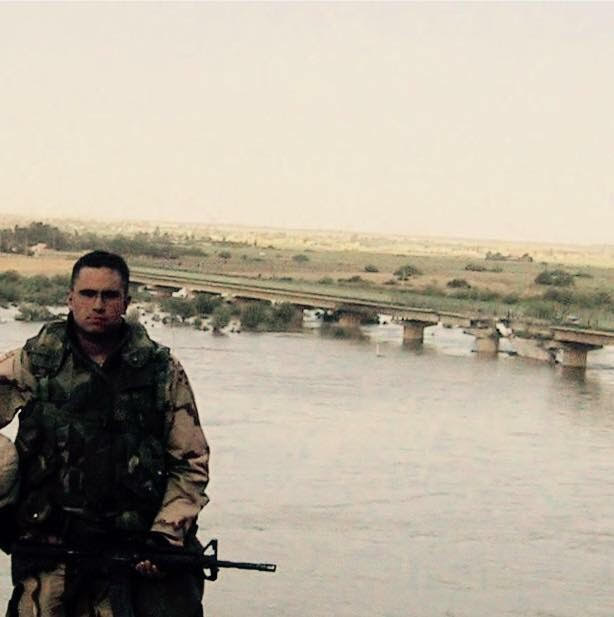
That year I was camouflaged—
with bruises of being proud—
sitting, legs crossed, peeling
OD green linoleum flooring.

A year sifting through dog tags—
dead yellow edges dangled—
like lead ghosts from bank office windows
and high school goal posts.

The enlistment was rough—
all half-sheet and nicotine stain—
the scars and wounds and tattoos
will run together in a half-century—

My body will be held up—
a battle standard
the stained Iraqi sand bleeds
every night—

I dream my daughter dances across it—
she grows tattered
like tree branch topographies
twist together with vague silhouettes.

Everywhere being is dancing.
Even the warring mausoleum
of my mind
is the one-sided scrap paper of God.

These poems appear in Aaron Graham’s poetry collection, Blood Stripes, and are reprinted with permission of the author.


Poetry Review: Aaron Graham’s BLOOD STRIPES

1.

I’m reading Aaron Graham’s war poetry. And I think violence is a volcano.

How pressure builds. Between layers of rock. Trapped in a chamber. Or when magma pushes. Fissures like rivers. Up through the upper mantle. Finding surface. How it erupts. Spews hot lava and ash. How bodies can blow. Apart and across a desert named Fallujah. Hurtling and pyroclastic. Or the aftermath.

Graham’s poems remind me.

How war is.

2.

This is Graham’s Iraq.

Come see the valley –

the death-cradle of civilization

                (Boots On The Ground)

Iraq is where war is. Where Graham was. Deployed as a Marine. It is where I find him now. A soldier narrator. On the pages of Blood Stripes, his debut poetry collection. It is where his poems take me. To Iraq where. Violence erupts and

shells of men are spit out

                (Boots on the Ground)

To Iraq where. Skies are shrapnel

whose maw expands in the air

teeth like flame plumes

scorching gouts

                (Boots on the Ground)


To Iraq where. Soldiers learn

fresh-burnt flesh

smells like roast beef

                (Since Shit Went Sideways)


To Iraq where. There are

limbless boys

whose beautiful bodies

collided on football fields

in Iowa not six months before

                (Boots on the Ground)


To Iraq where. Where

infantrymen are now the law

and the law is a pack of white dogs

hunting high-value targets

covering bearded brown faces

with black bags

                (Since Shit Went Sideways)


To Iraq where. Children die and

There are bullets in young Sunni boys

mothers must take to a morgue

                (Conjunctivitis)


Where the question. This question

did I bury a Sunni girl no larger than my arm?

                (Marine Corps Leadership Training)


Dares to exist. This is Graham’s Iraq. Where bullets pierce organs and

When a tracer round

becomes a collapsed lung

                (Marine Corps Leadership Training) 


How

breath

becomes a sparrow flapping

                (Marine Corps Leadership Training)             

Graham’s poetry makes me think of J.G. Ballard. How he said our civilization is like the crust of lava spewed from a volcano. It looks solid, but if you set foot on it, you feel the fire. Graham’s poems are full of fiery war. The violence of its eruptions. Graham’s words forcing themselves up the throat of a volcano. Exploding like lava onto a page.

3.

Graham writes violence as a woman. How even before. War or enlistment. There is a craving

Until bent and jointed,

I hung

Between your breasts

                (Midnight Runner)


Or how at war. Violence becomes anatomical. Between fingers. Coating tongue and gums. How

with each trigger pull

until death is a second skin to me,

is the film I rub

between my index and forefinger –

a charnel film I grind against

the backs of my front teeth with a raw

and bleeding tongue

                (The Situation on the Ground)


And how after war. How it never goes away. Graham writes

I wear my violent acts

like a hand knit cap – reserved like a fossil fuel

a blubber slice

                (Repatriation)


Graham writes of the aftermath. How after the eruption. Lava will flow. How even after. War can push into a house. Seep into a marriage. How

I tell her there are things you know only

after you’ve seen combat, there exists depths,

intimacies, I cannot will into existence

even when in her arms

                (The Curse of a Hammer, About to Drop)


Magma cools and hardens. Forms new igneous rock and PTSD. How

Your curse is the hammer about to drop –

hyper-vigilance. Doors you always lock

when you’re on the wrong side

                (The Curse of a Hammer, About to Drop)


For Graham PTSD becomes its own violence. One that violates but also beckons. Graham writes

I give thanks to the dead

                (Marine Corps Leadership Training)


And. How it is

Because so many of the dead

they’re always here

at the table

I’ve set,

like a mother’s breast

                (Marine Corps Leadership Training)


Graham’s poems tell a truth about war. Its intimacy. How

there’s nothing as intimate as bleeding

with those men in the desert. A devotion

you’ll never share with a lover, child, or spouse

                (The Curse of a Hammer, About to Drop)


War is not just what happens on the battlefield. War is what happens after. What keeps happening. To the soldiers who fight it. The civilians who survive it. After deployment is done. Armored trucks move out. Or a soldier goes home. Graham’s poems offer us the aftershocks of what explodes. And the truth. The truth that. For those it touches. War does not end.

4.              

In Graham’s poems, the landscape haunts. Graham writes

I know my way around velvet

                (Marine Corps Leadership Training)


How the air in Iraq is alive and cellular.

Electrons sway like the boiled wool

hides – hanging in Yezidi doorways        

                (Marine Corps Leadership Training)        


Landscape is a language. The shape of it shapes meaning. On the pages of Blood Stripes. The desert stretches. Almost endlessly. Across Graham’s poems. Across a war. Across all wars. Years that span a history that can feel ancient. Endless like a horizon line or how

Still the magnitude hits.

A thousand years stretch

down this street

                (Mythos (Deployment))


But Graham’s landscape is not endless. This is a landscape marked by war.

The golden sands

that appear

a cold dark green

an eternal crystalline lawn

surveyed by rifle scopes

                (Funeral Pyre)


Here is the desert. Where war and dunes heave. Like dying lungs.

This is Graham’s Iraq. How it seems endless. And how. It is also a place of endings. A landscape cropped by the circumference of a rifle scope. Cropped by what happens when. Bullets tear through a chest wall. And hit heart.

This is the striking duality of Graham’s landscape. Because

the cost of invasion is

how something beyond

fathom is lost

or, rather –

comes to end

                (Sandscape: Mojave Viper)


This is where. The desert nurtures.             

Iraq sand holds your face –

like friends and family used to

                (Repatriation)


And this is where war also takes and takes. Until everything is gone or dead. How

in deep deserts

there is only

the abrupt – blast –

cracked windshields

and punctured MRAP

husks. Their rhinoceros bodies –

                (Footfalls)


This is where soldiers patrol streets alive. But almost dead.

We trod the pavement on dead

patrol. Deep desert has no edge.

Our third day over the line

outside the wire

horizons merge, a cusp

of bright sky bleeds into earth

where being and not

being

touch impossibly

                (Footfalls)


Graham’s poems offer us the duplicity of war. It is the craving and the curse. The eternal and the instantaneous. The invigorating and the deadly. And when soldiers are lucky to live through it. War is a landscape they leave behind. Before realizing they took it home with them.

5.

There is a tension. In Graham’s poems.

Of whether to tell his story of war. Or not to.

I pulled back from the vastness

where nothing needs

– and does not need –

to be written

                (Sandscape: Dunes Overlooking Balboa Naval Hospital)


There is the question of how to write war. Because

Violence has a language all its own

                (The Language of Violence)


There is a feeling. How war is

Just us bleeding in the desert

                (Ode to a Wishing Well)


And that no one. No one else will understand.

Because. Americans do not know war. How they

probably learned

the words that describe

what happens to Marines

in the desert by watching

Anderson Cooper’s lips –

round words

                (Speaking Arabic with a Redneck Accent)


War for civilians is somewhere else. A running body of chyron.

About a third of the way into Blood Stripes. On page 32. A poem entirely in Arabic. I make a list of who I know who speaks Arabic or how. I decide not to. Decide not to try to find out what it says. What the words mean. Because the poem speaks to me in Arabic. How I can read it in Arabic. Even though. Or because I do not know. What it says.

This is a truth of war. It belongs to those who fight it. The land it is fought on. The civilians who endure its wrath. How there are parts of it. Parts of war. That are hard to translate.

Still Graham does it. In poem after poem. He writes war. He writes war in its own language. Where

a statement is a scar

                (The Language of Violence)


Where

The voice of the wound

has a flickering tongue

its syllables escape

with fine bits of lung –

falling wet, into sand

                (Speaking Arabic with a Redneck Accent)


And where. A Syrian amputee standing on a road speaks. Speaking in scars

the sacred scars,

which are a language

I can read to you at night

                (The Language of Violence)


When Graham writes              

how to sing bombs out of the air?

How deep to listen?

(Repatriation)


This is the task. The poetic task Graham takes on. Arming himself with words and war memories.

The result is Blood Stripes. And war. Written into being in Graham’s poems.

Vivid and startling and forceful.

6.

I wake up thinking about Baudrillard.

And how The Gulf War Did Not Take Place.

It happened obviously. But it was something else. Something other than what we thought it was. Different from what we were told.

For Baudrillard. The Gulf War was a series of atrocities. Not a war. The Gulf War was a performance of war. Not a war. The Gulf War was a media narrative constructed. Not a war. Where even the word fighting defied its own definition. As Iraqis got bombed by Americans flying in a technological sky. For Baudrillard. The Gulf War was hyperreal. A simulacrum. It was a not-war war.

And yes Iraq.

How the Iraq War was like this too.

A war. Where American soldiers went. Because of weapons of mass destruction. To look for weapons of mass destruction. That did not exist. How the war they thought they were fighting. Was a war that did not happen.

And yet. Graham.

He writes

dry bodies

bloating and broiling

fattening in the desert

                (Marine Corps Leadership Training)


How he writes

the purple lips of a wound

                (Speaking Arabic With A Redneck Accent)


And I think to myself there. There it is.

Because war is not what our country tells us it is. War is what happens. To the soldiers who fight it. To the civilians. To the men and women and children and land it surrounds and engulfs and assaults. To the ripped bodies and roads. Roads of sun and bones it leaves behind. To everyone who carries it after. To everyone who carries war for days and weeks and months and years after. Long after we say it is done.

The Iraq War happened.

I know it did.

And not because my country told me it did.

But because it is there. Because I felt it. In the viscerally powerful poems of Graham’s Blood Stripes.

Blood Stripes is available for purchase at your local independent bookstore or wherever books are sold. 


New Poetry from Michael Chang

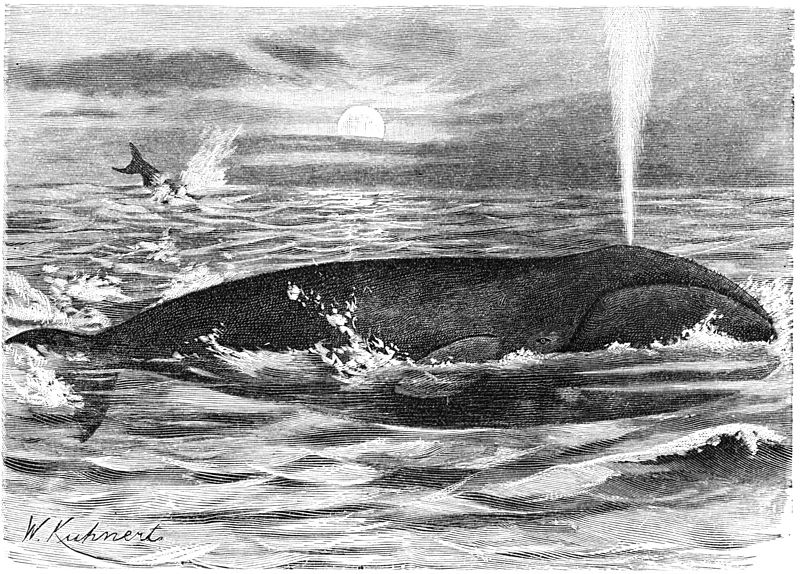
Friedrich Wilhelm Karl Kuhnert (1865-1926), “Bowhead whale.”


the secret life of simon & the whale

 the boy inches close to the water        barefoot                       backpack slung over one shoulder
he plays with the sand             dips his toes in
his name is simon
simon is my human
i quote mean girls: “get in loser, we’re going shopping”
he giggles
he likes ranch dressing but sometimes the buttermilk is too much for his stomach
he enjoys wong kar-wai’s movies        but would rather talk about steven universe
when we play hide-and-seek he wants to be found because he loves me
i take him to school     he hums along to my songs but prefers katy perry
we watch tv
i tell him how unrealistic the show shark tank is
he looks at me quizzically
we change channels                 then go to dairy queen
he doesn’t say things like white whale because that is derogatory
just like how we don’t talk about sushi or climate change
he shoos screaming babies and barking dogs away from me
when we go to coney island we speak in russian accents and fall over laughing
i ask if he has been following the news
he says someone is being mean to him at school                     wants to know what to do
i quote kate moss: “looking good is the best revenge”
he shows up the next day looking spiffy
he has a slick yellow raincoat
so i won’t get wet when we hang out!  he says
i smile
he offers me half of his sandwich and i am happy
i tell him about my creative writing class
he teaches me how to tell a joke                     he is a master of comedic timing         i am no slouch
i tell a joke about hiding the minibar keys from lindsay lohan
he laughs but mostly because i act it out         it is an oscar-worthy performance
he wants to offer me some goldfish crackers but thinks twice
he hands me a hot dog with mustard and relish instead
we watch the sunset                                        see the dolphins showing off again
he asks what i’m dressing up as for halloween            i say zorro        he makes a face
he says he couldn’t decide between a zombie or an astronaut so he is going as a zombie astronaut
we test our knowledge of state capitals but he falls asleep at lansing
i say i got called for jury duty              and explain what that is
simon says you have the right to remain silent                        he bursts out laughing
i reveal that lobsters are the kings of secrets   they have dirt on everyone
the hoovers of the ocean
he thinks i mean the vacuum   i guess that makes sense too
for my birthday simon brings me a red velvet cupcake
my favorite kind
he asks how old i am turning
i say 30                        wow!  that’s old!  he says
i tell him that whales live up to 200                his eyes widen
what will we do when we’re 200, he asks               as i wipe the tear from my face


fists of harmony and justice in 3 acts

i really believe in cities                        and connecting people             you say            real heartfelt

make me your nasty woman    i say     staring into your eyes

my intergenerational trauma is            my parents live in silver lake   you say            earnestly

mmhmm          i say     not objecting               because you are cute

so this is what it means to have                       a moment of madness

you have come to the right place                     you have so much to hide

perpetual war               tell me your secrets                  get me in trouble

obsessed                      paralyzed                                 the clerk will call the roll

*

i regret to inform you that                   you will not be home

in time for dinner with your wife         no matter how often she calls

you will put your phone on vibrate                              then turn it off

you will stay over        we will get drunk         things will happen

then you will leave                                          still thinking about me

swallowing you                                    like an eclair

*

in the movie of my life            i would like to be played

by emmy-winning actor           james spader

although i am not white

as they remind me

at every turn


statement of evil corp

 for immediate release
press contact :: lucifer morningstar
(666) 666-6666

new york, ny :: we do not comment on personnel matters : but we will train our gaydar on you : hands steady like a surgeon’s : locked and loaded : prickly pear margaritas : we are certified analytical geniuses : with an absolute pitch for fine poetry : objects in the mirror are closer than they appear : due to a lack of evil representation in the media : we have no equivalent : who the hell is from chambersburg, pa : we guess someone must be : thank god it’s not us : haha god : we will make you famous like rodney king : a splash of the coffee : grey flannel by geoffrey beene for men : when we think of our life together : we imagine you in a suburban parking lot : loading seltzer into the trunk : looking fresh to death : you have to buy our product to know what’s in it : we won’t get into specifics : we don’t want to set a timeline on this : who gave you that information : we’ll have to refer you back to them : it’s early days : this is going to be a process that takes place over time : we were for it before we were against it : there have been discussions : we will not entertain hypotheticals : we are not going into tactics techniques or procedures : this may be an iterative process : that is above our pay grade : we want to stress that this is pre-decisional : there is a plan but plans have to be flexible enough to survive first contact : it may be OBE (overcome by events) : we have not been given release authority : it is not yet approved for action : we are on a conditions-based schedule : all options are on the table : we will continue to engage with alliance partners on a range of activities that will ensure maximum lethality : please only quote us as senior evil corp officials or persons close to senior evil corp leadership : 9 out of 10 dentists choose evil corp : we are your anger managers : very legal and very good : our revenge makes us wise : let us look at you through our designer shades : our product has been endorsed by kate bush : no, she is a freshman at kennesaw state university : a real georgia peach : we find your () faith disturbing : your lack of taste does violence to our senses : your very being is inimical to our existence : go somewhere else for that washer and dryer set : bitch : we will take you to the cleaners : what do you love : what do you hate : if you could live inside a tv show which one and why is it lucifer on fox : who are you : what do you want : we are on pace to find cadence : the quiet you hear is progress : thank you for shopping at evil corp


october 6, 2019, remarks as prepared for delivery

i informed mister river barkley last night that his services are no longer needed in my life.  i disagreed strongly with many of his suggestions, as did others in the administration, and therefore i asked mister river barkley for his resignation, which was given to me this morning.

although i appreciated his jfk jr vibes and his assertion that his dick is his biggest muscle, he never did my laundry.  he failed to deliver to me macaroons in every imaginable color or call me his pocahontas and he my settler.

he cast serious doubt on his intelligence by detailing the depth of his feelings in support of the vietnam war and the draft.  the public was regularly informed of this.

his choice of veal over fish was totally inexcusable.   i was equally appalled when i encountered tickets to mariah carey in his diary stained with sperm and electric blue ink.

he never recovered from the unusually loud guttural noises he made during sex.  he was unconvincing when he said he loved me, often in a voice that suggested he was far away or underwater.  his declaration that tulsi gabbard should win the democratic nomination was similarly off-putting.

he was unable to tell me how many planes are in the sky or if it is true there are more people alive now than have ever lived.  he declined to feed me more jello shots despite our school motto possunt quia posse videntur (they can because they think they can).

he embarrassed me by getting into that fight with his truck and losing.  subsequently he had his arm in a cast which stank to high heaven.

admittedly i will miss the firm underside of his thighs and the steady scaffolding of his sex.  i am however comforted by the truth that nothing is better than breadsticks with the menendez brothers.

i thank mister river barkley very much for his service to our country and my happiness.  i will be naming a new mister river barkley next week.

thank you!
(don’t pretend you’re sorry​​)


acid taste like

He started seeing Sam everywhere.
Sam, who called him ‘beautiful,’ eyes like liquid smoke.
Sam, who stood perilously close as they poured the wine.
Strong yet gentle, blond-dusted hands.
Sam, who wore the plaid shirt, frayed khaki shorts, and beat-up loafers on their bodega run.
Chestnut-brown bedhead, cheeks rosy on their porcelain face.
The one he wanted to hold him, the one he hoped to make less lonely, the one he followed home.

Life was hard enough without a Greek chorus of Sams second-guessing his every move.
Haunted by his exes, he wanted significance.
He cried into his champagne, tired of questioning, tired of pushing back.
Acceptance sounded so good, like a drug.

Boy was with Girl.
Kind, inquisitive eyes the color of concrete.
Brown hair (of course) slicked back, shoulders firm, torso wide.
Girl freaking out, some low-rate drama.
Boy’s body, a boar ready to charge.
Girl in the bathroom, Boy’s expression softened—
Freed,
Granted a reprieve,
From performing masculinity.
Boy looked over, smiling as if he understood.
So tantalizingly close,
All he had to do was reach over,
Before Boy slipped back into character.

He imagined bringing Boy dinner, roast chicken and potatoes.
They would eat in silence, as if any stray sound might tip her off.
Bellies full, side-by-side on the bed—
Striped pajamas,
Sheets that smelled like her,
Growing braver in the dark, bodies ablaze with feeling.
Skin, lips, tongue, there for the taking.
He raised a finger to Boy’s lips and gently pried his mouth open, inserting his finger.
Play it safe or swing for the fences?
Snatching Boy’s receipt off the table, he felt a sickening swirl of desire—
Like standing in the eye of a hurricane.
This little victory made him happier than he’d felt in a long time.

Throwing up in that Waffle House, acid stinging his throat.
Outside for a smoke, his socks mismatched and his hair wild.
GO BACK TO CHINA, someone yelled, speeding past.
Possessed by cultural restlessness,
Always searching for a way in, a way out.

He decided that his favorite word was ‘possibility.’
Even hope doesn’t seem as surefire a thing.
Possibility is hope plus.
Nothing out of reach.
Maybe.

He unfolded the receipt, admired it.
CUSTOMER: SAM ____, it read.
He noticed the digits, the urgent scrawl.
Penmanship tight, compact, economical.
CALL ME, it said.


New Poetry from Edison Jennings

A Letter to Greta

“…so pitying and yet so distant,” Cecil Beaton

Among my father’s posthumous
flotsam recently washed up in my house,
I found a letter, postmarked 1928,
addressed Miss Garbo Hollywood Cal
(Private!), stamped RETURN TO SENDER,
sealed unread and stored for sixty years
inside its author’s desk. Held to light,
the envelope revealed a trace of earnest
cursive written to a star flickered
on a million screens. I set a kettle
on the stove to steam the letter open
and expose the heart of this dead man,
once vestal boy, husband to three wives—
one widow, one dead, one faithless
(also dead)—fighter pilot with cleft chin
and good teeth whose friends had died
from too much war or too much booze,
who, if asked, what happens when you die?
would sip his drink and say, “you rot.”
When the envelope at last unglued,
I found a time-fogged photo of a skinny
school-age boy standing contrapposto,
looking straight into my eyes. I slipped
the photo and unread letter back inside
the envelope, taped it shut, and late
that night went outside and burned it all
as offerings to a heaven of Gretas.

Greta Garbo, circa 1930. http://flickriver.com/photos/26612863@N00/3432818194/

Operation Odyssey Dawn, 2011[i]

See Naples and die, Johann Goethe wrote,
the deep-dish bay, smoke plumed Vesuvius,
the castle and the terraced hills, the fleet
at anchor, tended by a swarm of skiffs.
Gigs skim from ship to shore, filled fore and aft
with sailors, their paychecks cashed in lira
to spend on booze, tattoos, and prostitutes,
and reams of postcards they’ll forget to mail.

At night the fleet is rigged with winking lights
and swings according to the wind and tide,
couched in swells of trough and crest, rocking
sleeping sailors above the sea scrubbed bones
of city sacking Ithacans who heard
the Sirens’ hymn and never more saw home.

[i] International military operation against Libya, including elements of the American Sixth Fleet, homeported in Naples, Italy.


Dead Shot

Drunk or sober, but mostly drunk,
he had a knack for seeing
and a gun like twelve-gauge Euclid
to make the dizzy world cohere.
That he spent hours as a boy
splitting three-inch blocks his father tossed,
busting them clean with a twenty-two rifle,
one hundred, two hundred in a row,
is not explanation enough:
he became his sorry old man’s trick.
Imagine this: a case of shakes, cross-eyed
from the night before, he’d shoot trap
and never miss, pump-twelve booming,
two discs shattered in one tick,
but never draw a bead on anything
that breathed, no early morning vigils
squatting in a duck-blind—too hung over
for one thing, and for the other,
his skill was calculating proofs
with rapid fire theorems as tangents
angled into exploding resolution—
until he drew one on himself.
At sunset he would drink and watch
the purple martins slice the falling light.
His last night he tacked a strip of tin
outside his room so he could hear the rain
rinse clean and clear the drunken dreams
in which he split the moon.


Chiaroscuro

for John Jennings

The muffled pull and puff of breath, the soft
insistence of his need, dispel my dreams
and I wake up as swaths of headlights sweep
my wife and child, composed into one shape,
gigantic night rebounding through the room
while they lie still, curled on the cusp of sleep,
mouth to breast and filling god with god.


New Poetry from Abby E. Murray

Gwen Stefani Knows How to Get Everything I Want

It takes a misdelivered Cosmo
to finally understand what I want
and how to get it. Gwen Stefani
tells the truth on page 89.
We believe in Gwen because
her apron of chainlink stars
sparkles over a black bustier;
star-spangled bondage, says an editor.
She slouches, holds the heel
of her right white Louboutin
in one hand as if to say Congress
respects my body, as if to say
rifles aren’t worth shooting.
This is what I want and Gwen
is here to deliver. When she slips
into a red sport coat and jeans
she comes in loud and clear:
grant proposals that write themselves,
cartons of baby formula
sold from unlocked shelves at CVS,
eight days of rain over California.
Because Gwen knows how to get
everything I want, she can afford
to be an optimist. Pharrell is rad,
her mom is rad, the whole world
is rad. I agree, Gwen, I do!
And I’d be giddy too in that baby blue
jacket, its faux-bullet spikes screaming
peace talks and pacifism,
bubblegum fingernails that tell me
soldiers who drop my writing class
are only on vacation. She pulls
her Union Jack sunglasses down
with one finger. This means Ruth Stone
never died but went into hiding,
it means the grocery store lobsters
have escaped, it means I can refinance.
Gwen steps into a pair of fishnets
as if to say the 2nd Infantry Division
won’t return to Iraq, as if to say minke whales
are singing on the Japanese coast.


Notification

This is how I imagine it.

A black Durango follows me to work,
then home, tracks me to King Soopers
where I buy peppermint tea and milk.

It idles in the parking lot,
the driver obscured by clouds
of bitter exhaust. I know it is a man
by his shoulders, his grinding jaw.

I know he has drawn the short stick.

He tracks me home and waits
until the faint clicking of our luck
slows and stops. He steps outside
on a current of aftershave
and starched polyester,
pulls another man in uniform
from the backseat: he will stay
to help me make arrangements.

They use the handrail on the wooden porch.
They expect to be wounded.


Happy Birthday, Army

I’m wearing lace this time,
gold trim over a black slip because
Happy Birthday, Army.
I offer you these blisters
in my black leather stilettos
with mock-lace cut-outs.
Tom says it’s a short ceremony,
we’ll be done by nine
but he tells the sitter eleven
and I wedge a book into my purse.
In seeing nothing I’ve read too much:
the empty-bellied howitzer
kicked up in the corner of the ballroom
points me toward the cash bar,
casts a shadow over the cream
in my Kahlua and turns the milk grey.
I drink it. I order a second
before the emcee tells the men
to seat their ladies.

Uniforms droop by the exits
on velvet hangers, gas masks
sag on wooden dowels.
Quick, boys! Post the colors!
The lights drop and the general
mounts the stage in a shimmer
of green and yellow spotlights,
tells us to enjoy ourselves for once—
but first these messages:
thank you to our guest speaker,
the anchor from ESPN,
thank you to our sponsors,
thank you to the sergeant major
here to recite “Old Glory”
in the center of the room:
I am arrogant.
I am proud.
I bow to no one.
I am worshipped.
We are dumbstruck,
his recitation flung toward us
like an axe through paper.
Tom finds him later
and pays for his beer.

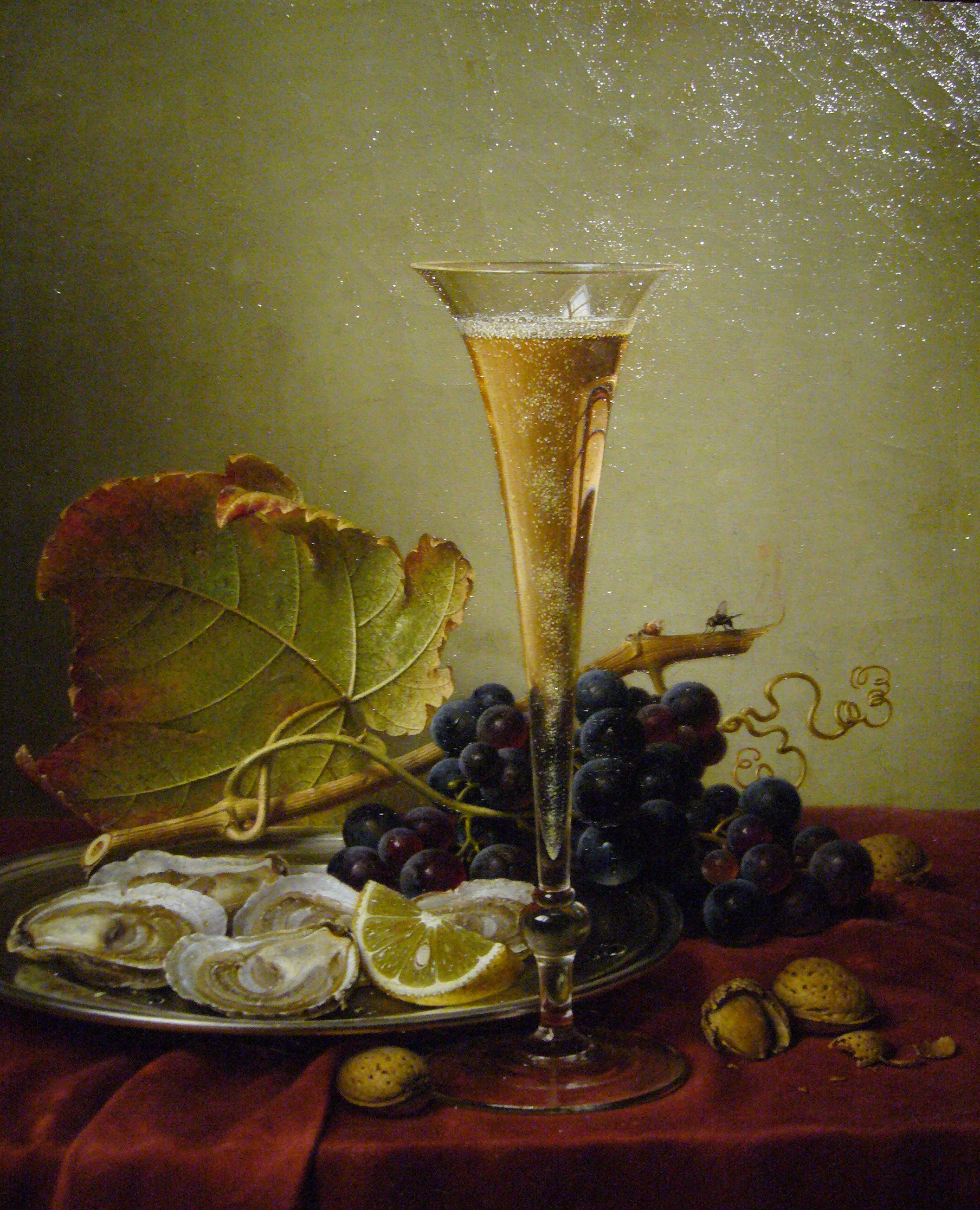
Johann Wilhelm Preyer, “Still Life with Champagne Flute,” 1859, Walters Art Museum, Baltimore, MD.

The chandeliers are champagne,
crystal brims sloshing with bubbles.
Someone’s wife wins a kayak
and just when I think
a lieutenant nearby will surely jump
from his table to shake
a bag of limbs from his eye sockets,
a truckload of body parts
grey with longing for the soul,
a woman’s voice whispers
from beneath the howitzer,
the rented microphone
on fire with song:
happy birrrthday, dear arrrmy
a la Marilyn Monroe,
and we are all a bunch of JFKs
in our lace and heels
and cummerbunds and cords,
watching a five-tiered cake
piped in black and gold buttercream
being pulled between our tables
by a silver robot
and shrug into the silk of knowing
we could end all this
with the flick of a finger
if we wanted.


Majors’ Mafia

They want us to call ourselves
the Majors’ Mafia and by They
I mean We because the Majors
are our husbands and they say
very little about what is discussed
during cocktail hour
at the Commander’s house
as if our words sound friendly
but are muffled by a closed door
and the Wives giggle as if to say
we are not exactly thugs
as if to say they would never!
and a knot of words loosens
at the bottom of my throat
like a paper lantern released
as if to say get out, as if to say
I am on fire, and I have a problem
with the gang metaphor
but also the possessive Majors’—
that bitch of an apostrophe
at the end of my husband’s rank
like I am, we are, owned
the way farmers own turkeys
and we are just as articulate,
just as grand, just as preoccupied,
because farmers are in the business
of keeping turkeys alive until they aren’t,
farmers don’t keep turkeys warm
because turkeys have rights
and these women can’t possibly
be standing in a half circle
around a stack of spangled cupcakes
generating ideas like these,
like names, like possessives,
like we aren’t making ourselves
more palatable by forming a flock
and nibbling sweet things,
and the sugar stars in the frosting
remind me how one can trick
a headstrong bird into eating
by leaving shiny marbles in its dish,
like the bird will think marbles!
I love marbles! then forget to fast,
and these women can’t possibly
be women, they must be birds,
they sound like a lullaby
when they say we need a group name
because we need a Facebook page
in order to express solidarity
and they say solidarity is a survival skill
for all Army Wives,
and the paper lanterns are rising
again up my neck toward the brain stem
and my spine is burning
and I’m thinking about the tomahawks
and sabers and rifles and hunting knives
on the walls here in this lovely home
and I’m thinking survival
is a bread that I can’t eat here,
and I ask them to excuse me
for a moment so I can check
my face in the bathroom mirror
where I find a sugar star wedged
in my teeth and I’m thinking
I could use an ax to fix that.


When Tom Asks Me to Call the Incoming Major’s Wife and Welcome Her to the Battalion

Hi is this Becky       this is Abby Murray      my husband (different last name) is the S-3
in the battalion where your husband is being sent       I don’t know what S stands for or
why 3         anyway Tom’s leaving this position and your husband will replace him soon
you sound nice          anyway         welcome         do you know if there’s something I’m
supposed to say or help you with               Tom just said welcome her and I guess I have
I don’t know         what does it mean to feel welcome           as a woman I really can’t say
every week I feel more at home in a compact mirror         I think I was asked to call you
because we are both women        my dog doesn’t even speak when I tell her to but
she does bark a lot she likes to speak on her terms      anyway         the
battalion mascot is a buffalo so people are really into buffalos here            buffalo hats
sweaters earrings umbrellas leggings there’s a big dead buffalo in the entryway to
battalion headquarters         it was donated by a museum in Alaska      the taxidermist
even glazed his nose to make it appear wet             like he was snuffling the prairie just
seconds before a glass case sprang up around him and BAM he had a few minutes to breathe
his last bits of air while the herd backed away         my daughter loves the buffalo but is
concerned about his lack of oxygen     he’s not the only symbol of death in that hallway
there are rifles and sabers as well         I’m sorry          I hope you like it here        the
winters are mild and there’s cedar everywhere      it smells good on the coast     Tom
says you’re from Texas        that’s nice        I was in Texas once        it was Texasy
I should warn you your husband might ask you to do strange things for reasons he can’t
articulate            like calling women because you are a woman and we should all be welcomed
to the jobs we don’t have        if there’s anything you need      try Google or maybe call
someone who knows your voice         I’m sure you’ll be great        you sound happy

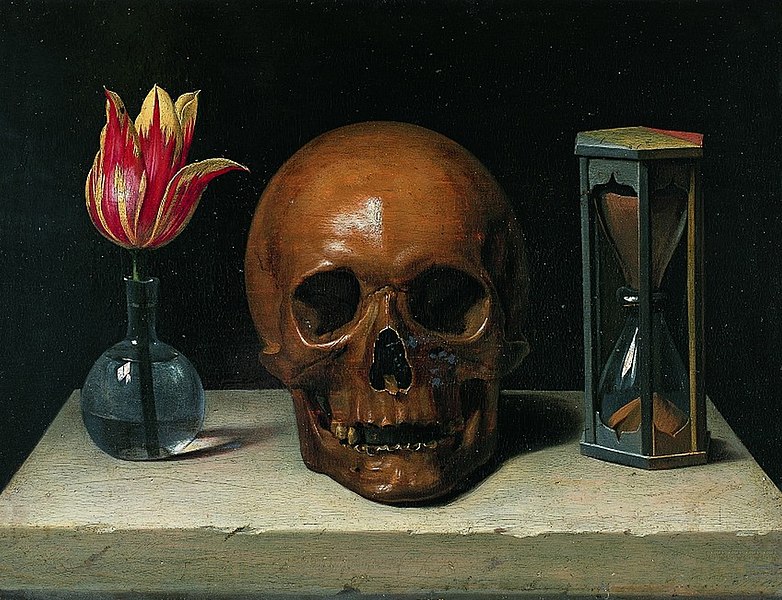
Philippe de Champaigne, “Still Life with a Skull,” 1671, Musee de Tesse, Le Mans, France.

“Notification” was originally published in Ragazine.
“Happy Birthday Army,” “Gwen Stefani Knows How to Get Everything I Want,” and “Notification” appear in Hail and Farewell. Hail and Farewell was winner of the 2019 Perugia Press prize.
“Majors’ Mafia” and “When Tom Asks Me to Call the Incoming Major’s Wife and Welcome Her to the Battalion” are previously unpublished.


New Poetry from John Milas

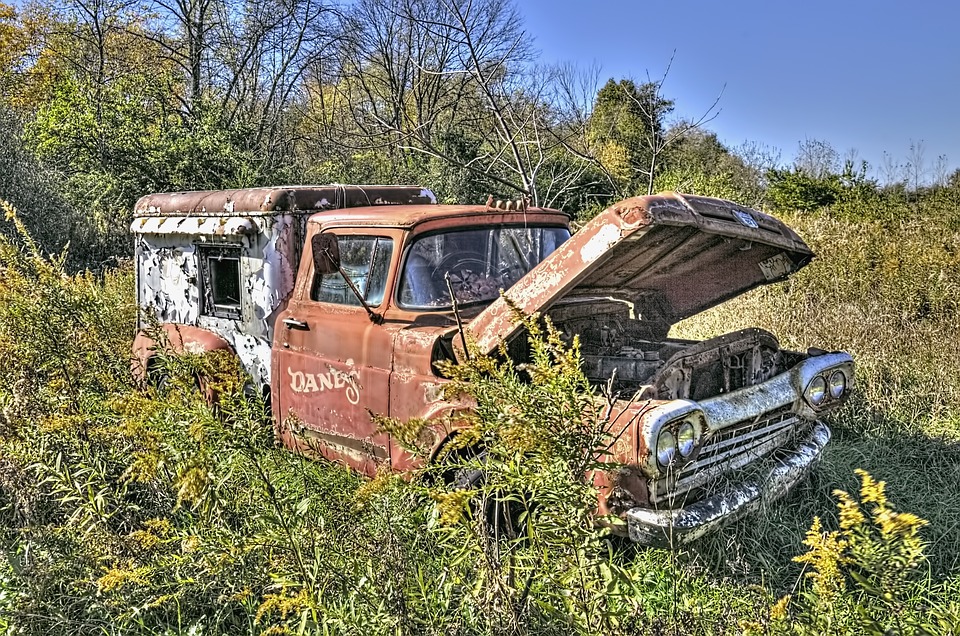
Ice Cream Truck Milas
Ford Ice Cream Truck

Parade the Beef

“I declare this meat tasty and fit for human consumption.”
– President of the Mess,
CLR-27, Landing Support Company,
Camp Lejeune, 2009

we charge our wineglasses to toast the dead
marines of the eighteenth century the nineteenth twentieth
twenty-first century their immaculate ghosts seated in
the empty chair at the tiny table draped in
black cloth in a candlelit corner of the ballroom they fork

ghoststeak through their lips it piles
on paisley carpet centuries of steak piling
while I can’t figure out how to light a cigar
the smoking lamp is lit the floor open for fines
Sergeant Steele wears the wrong colored shirt

beneath his midnight blue coat Sergeant Steele
say it ain’t so that’s erroneous drink from the grog
we’re too young to drink the spiked grog but
the staff NCOs don’t stop us Lance Corporal
Butler’s gold PFC chevrons gleam without crossed rifles

say it ain’t so Lance Corporal Stapleton
passes out in the woodchips under the playground
swings before we march back in after
shedding a tear for Lord Admiral Nelson Sergeant
Newman grips my white belt to balance drunk

we drop back in our chairs before
Sergeant Newman falls out slobbering
in my face saying he’ll fight anyone for me he’s
got my back forever he’s always
had my back because he says I’ll always have

his even though that motherfucker put me on
an extra hour of barracks duty he’s right then
his fingers slip off the edge of my shoulder

Saltpeter

Our Kill Hat shreds his vocal cords while
we wait outside the chow hall for dinner,
his sweat-soaked charlies a shade darker
now than when he first suited up in the
DI hut. He screams ​Chain of Command
and we scream into the San Diego sky:
The President of the United States, the
Honorable Mr. Bush! Vice President of
the United States, the Honorable Mr.
Cheney! Secretary of Defense, the
Honorable Mr. Rumsfeld! ​And so on
and so forth. On November 5, the Kill
Hat wakes us up to tell us what
happened the night before: ​Obama is
our president now, you understand me?
We understand because we will be
punished for not understanding a single
thing he says​. The Kill Hat screams to
repeat the chain of command with these
new changes before breakfast. Simple
enough, because nothing has changed.
We are still the rejects of America, as he
reminds us. We shit across from each
other in doorless bathroom stalls and
piss three bodies to a single urinal,
sometimes four. None of us have had an
erection in weeks. Rumor has it they put
something in the eggs.

Episode of Hate Channeled Near Ice Cream Truck at Mojave Viper

Donatello’s green head severed at the neck
on a wooden stick, two white orbs embedded
in that purple mask, eyes they’ve trained us to gouge, to tear out
with our fingers, bloody. I let my rifle hang by the sling
and hold the face in front of me, jamming my free fingers
into the turtle face. In my head, ​Execute. ​From my mouth,
Kill.​ ​Kill. T​he gumball eye pops free, cords of rectus and
oblique muscle pouring from its ragged orbit. Frozen
gunk drips from my nailbeds, ants trailing to the sugar
at my boots. I gouge out the other eye and suck frozen brains
from his skull, as they’ve trained us. Then I drop
what’s left on the ground and scream my throat raw at
it and smash it with my M16 buttstock and roll around in
ants and dust and if there weren’t more
marines waiting behind me the terrified
ice cream man would probably slam
his window shut.


New Poetry by Antonio Addessi

OLD IRONSIDES

she is
most days
a ship armed to the chin
cannons at her sides
her mast a sea of kelp and urchin

melting down my iron sides
for ammunition
she pours me
hot and slick
into molds I want to fit
but cant

what does her
naked belly show to sea’s floor?

I want to see
I rubber my neck to her sides

only to take in salty sick
and the brim of her
matted cap

I pretend I am inside her—
below deck
she aches with barrels of cider
churning into
drink
to feed her crew
I want to be that crew
get paid little to feed her fuel
to work the nights
as the sea works her over
pandering toward open casks of
sea here
inlet there
till we drop anchor

FISH IN THE CREEL

At the end of summer we had a party for you
do you remember why you didn’t show?
You’d been fishing in central park again
with your rod and your tackle box.
You told me you’d use the flies I tied
the ones I made to look like junebugs.
You said they were the most cunning things
you’d seen, that they’d put fish in the creel.
I had no idea what a creel was and I
didn’t care. I just knew we’d be eating
fish for dinner and maybe after we ate
you’d show me your lucky tooth collection.

When you left the apartment I got the neighbors
to come over and made your favorites—lime jello
and ants on a log. I waited about three hours, the sun
had gone and the neighbors left too. That’s when
I heard the phone ring. It was the police. They’d
found you in the Harlem Meer. You’d caught
the big one they said, you’d hooked a willow and
sank thigh deep into the muck. They hung up
when I asked if they’d bring you home.
It was late and I had my rollers in.

I hosed you off in the alley. No fish for dinner
instead we boiled your boot strings. You said
when you were flopping in the Meer you thought
a lot about my recipe for bran muffins and
where I got the hair to tie those flies. I couldn’t
bring myself to tell you that hair was mine
that they may have looked like junebugs but
they were tiny red-eyed me’s destined for
a mouth or three.

ANSWERING MACHINE: APRIL 29th, 1992

for Rodney King

Rodney. Rodney. If you’re there pick up. You haven’t answered my
calls for months. I’m worried. This isn’t like you. You may be in pain
and that pain is very real but we could talk about it. We could get
lunch Rodney. We could go to Joe Jost and get a pickled egg.
It’s on me. I’ll tell my old lady I had to step out, buy some smokes.
Remember that night in Monterey when she came down the street
in her curlers holding that baseball bat? I saw my balls flash before
my eyes and I’d never seen you laugh so hard. She hated you because
you liked the drink. I’m a horrible drunk but I love a good story.
Rodney. If we go to lunch you could tell me about the time you met
Larry David in that carpark in West Hollywood. I wish someone
famous pissed on my door handle. I liked that story and I like you.
Always have. What do you say? Those eggs won’t stay pickled forever.

FAMILY TREE

I come from a long history and as such a lineage entails, it started rather far back into
antiquity. this is important because the past is neither present in this narrative or
relevant. it is somewhat disturbed as soil often is because if it were undisturbed it would
be a fossil waiting in vein for the unearthing.

my death began like any other—with my birth. I was, for lack of a better word or
phrase, entangled prolapse of a hemorrhoidic kind.

for I, my heart was beating and my blood did it’s gyrating as gravity let on to itself and
the core of the earth(made, they say, of ore, of silken iron) pulled me toward it’s
embrace.
this embrace had been stalled for 7 months 8 days and a handful of empty bucket nights.

the hole in mom’s throat. lump. puss. cyst. anchovies. pizza hut.

back seat sister

baby baby amy grant

du-rag

batman shirt

I come from a long line of liars. the kind that look you in the eye and say trust me and
then walk to your house and throw
themselves on the porch, their hair pasted to an awkward side in autumn sneaking out of
their parents house to kiss you on the mouth.

I misread the signs misspell at the spelling bee uttering instead, thinking that I was going
north. I was so far south that the snow had leapt off the pavement, off of the back
window till the skin on my eyes rose a quarter of an inch off my face.

holy hello to you and that
braided mustache halo you wear on a lipshits tone. your mother says that only we can be
spun like this we can only be thawed
on the defrost setting. my freezer burn itches and peels in monochrome white.

daddy found his way into a type of trope a type of makeshift reminder that if I keep up
the tune I might as well be a dumfounded thirty watt light bulb.

lozenges

I come from long lines of card players
I come from a long line of card player
breathing for the tobacco that fills the air, the acid rain that comes washing down and
the inlets that form a secret sharer. Their secrets hide
past loves and the fold of older men
that seem to haunt me or just never leave, always leaving their dentures soaking on the
night stand.

ninja turtle gummies melting on the dashboard

banana boat sun screen

pores so big we soak in them

techno music on the radio

the family home now a car park, sleeps in sediments and the time capsule we planted will
grow a tree with no trunk. a briefcase with no lips. a leaky faucet spits out blueberries.
mother buys frozen orange juice concentrate. an ice core orange grove thawed out as the
tree frogs watch from the window. I step on one as I crouch in the bushes. its lungs push
up and out gasping for air it cannot use.

I come from a long line of lovers. lovers of farmer’s tans and personal pan pizza. if we
can meet in a chatroom we can meet in real life, use the back of our throats as putting
greens or even better sand down the chimney stack and use its remnants for homegrown
tattoos.


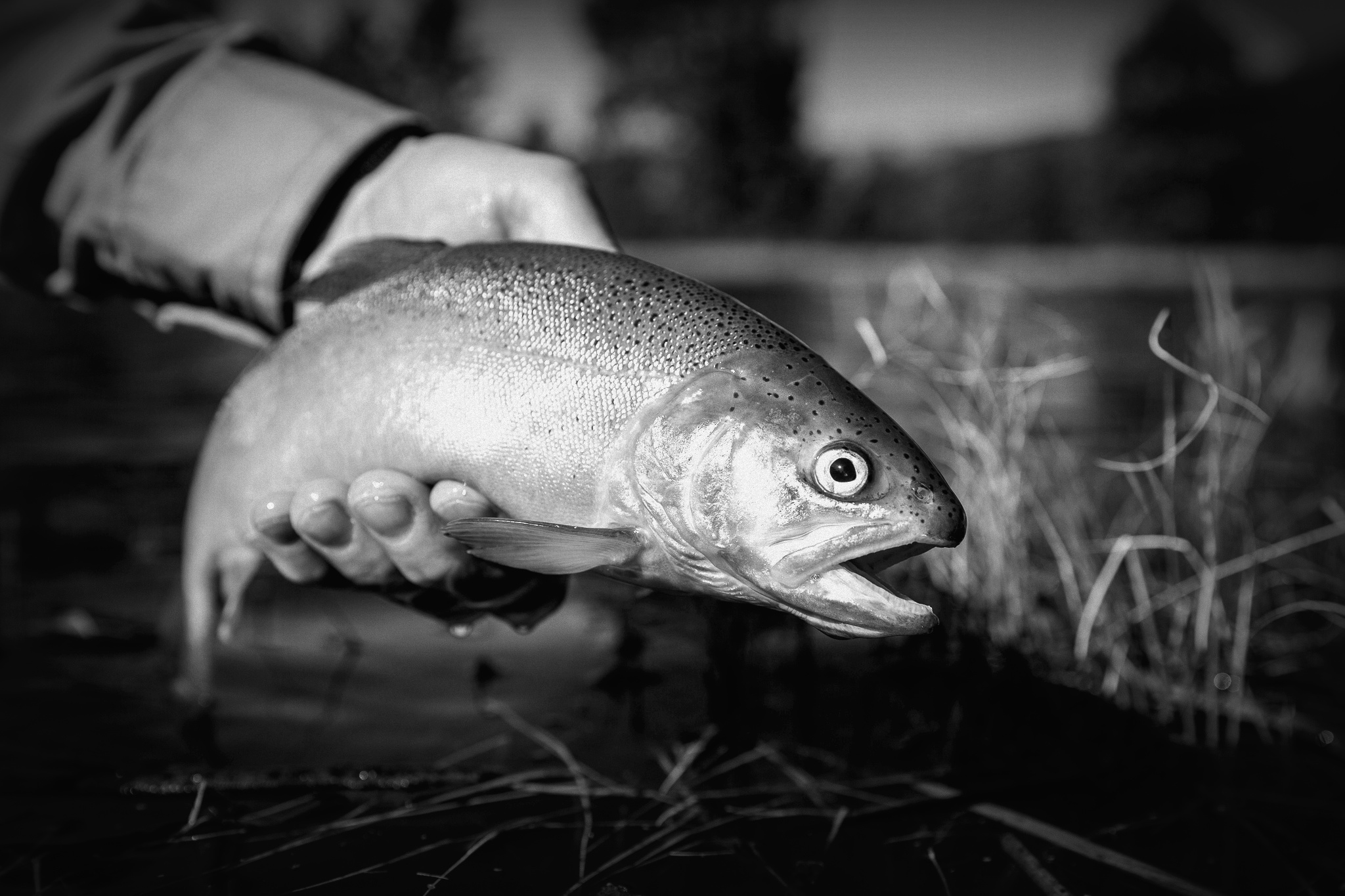
Fish photo courtesy U.S. Fish and Wildlife service.


New Poetry by Aidan Gowland

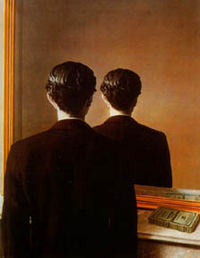
René Magritte, Not to Be Reproduced, 1937


Breathless

If you say “I am not a monster”
Into the mirror and turn around three times
A better version of yourself will start to take root in your heart.

If some nights you cannot make your mouth say the words,
If you cannot make your lips make the sound,
It is okay to say “I am not always a monster”.

If your friend tells you that you need to forgive yourself
Before you are consumed by the weight of your own actions
It is okay to drink until you believe them.

If you have pushed all your friends away and are standing on the edge
of a bridge and a voice in your head says ‘Don’t jump’
That voice is your friend
and it is okay to listen.


To the Woman Who Finds My Ex

You will find him shaking on the couch

With his hair plastered to his forehead

And his body covered in sweat.

He will say

Help me

But he won’t want your help.


You will think of the words

Addiction

      Overdose

      User

But you will stop short of death.


He will glow in the dark.

He will take pleasure in his pain,

Smear it over his life with a spatula

And call it impasto,

Call it progress,

Call it hope.


He’ll say the drug is the only love that he believes in,

The only love that hasn’t let him down.


You will think of the words

      Betrayal

      Ungrateful

      Sacrifice

But you will stop short of leaving.


New Poetry from Liam Corley

In Which I Serve as Outside Reader on General Petraeus’s Dissertation

[The current version of the Army’s Field Manual on Counterinsurgency, FM 3-24, originated as a doctoral dissertation written by David Petraeus at Princeton.]

Premise flows from premise like water over the edge
of a waterfall, entrancing those not caught
in the turbid spray, those not lingering in the limestone
chutes that channel the first descent. Dulce et decorum,
those molecules in free fall, powerless to reverse
dictates of gravity, whether they be composed
of dollars or bodies. A theorist must maintain sense of scale,
must view war at an appropriate distance, so that its beauty
may emerge like a cold, perfect moon that draws the restless
from their beds with dreams of space flight. The best way to lie
is to get one big whopper on the table and move on quick
to crystalline truth after truth in a train of plausibility
so compelling we don’t see how down becomes
up, so convinced are we by the quality of our reasoning
that be leads to see and eventually to eff and tee, and the best
first lie aligns with ones we’ve already bought, like how we cheer
Frost’s traveler in the yellow woods longing for the road
not taken, nodding along with his glib boast that non-
conformity explains contingency because we can accept
failures chosen on noble grounds more than unforeseen
leaf-covered ways that erupt when footfalls complete
the circuit of pressure plate IEDs. Mr. Petraeus, your counterinsurgency
tools could only work in countries we didn’t create, republics not birthed
by death from above, and so I regretfully conclude
this dissertation presents the naked assertion of imperial power
as the contribution of a helpful guest, final proof that
intelligence and gulled innocence, in general, betray us.

Double Rainbow at Dawn, 15 North at the 10

The rubberneckers slow down
as they do for other hazards,
brake lights merging into
the penumbra of a double rainbow
due west of the traffic lanes,
while in the East the rising sun
irradiates vapor-soaked air.

We are all late, looking askance
at the fireworks of nature,
wondering how our priorities
match up with this display.

Double, not just one: two arcs
of vibrant color proclaiming
peace on earth if we
don’t kill each other
trying to take it in.


New Poems by Alex Pitre

Slurry

The bones had been surrounded by years of
suppression, political amnesia,
and walls of loam that contained not much more
than clay. Now laid out in some large building
on the edge of some town, these amalgamated bones or the unidentified relatives

of them know the name. The smell fills up to
the rafters and a summer breeze or none
at all passes through picking up new weight.

If each bone could be perfectly matched
with the density of air, D could just
place it in the current. Thoracic cage.
Mandible. Radius. This equated

metatarsal could remain or leave without genocides or policies guiding the way home.

The smell wrapped around each hair follicle
follows D home into the tile shower.
Maja absorbs it. It stings as it goes,

carrying gravity, leaving impressions
on pillows. The air wilts as it passes:
the difficulty

of finding the definition of a word when its absence creates the shape of its meaning.

Nettle

Iron legs reach, sinuous and long,
to the floor. Down to the floor. So down, below
a bed under the floor and above the room.
Upside, inside, ’round and ’round.
The smell of iron fills my nose, fermented nettle leaves.
I live in the smell of it all.

I’ll take it. All
of you. I’ll braid my fingers through your long
eyelashes. Shake your head and let your leaves
drift down, savoring every second below
the winter moon rising. So round.
We’ve stayed here in this room

with our roots deep in the soil. The sun to light our room,
the walls. If you would have ever asked about all
that I had wanted. The year turning around.
On the beams that hold up your knees I left you such long
messages. Can I write upside if I am below?
And then the sun, it leaves.

I still see your face between the leaves
casting shadows on the dirt brown wall of our room.
Upside, inside, you’ve tried to hide below.
So silly. Below is my hiding spot. All
the things I have hidden under my roots long
for that humus and detritus to surround

each layer of skin. ’round and ’round.
Lying with my chin upward, your leaves
tickle my cheeks. Lean long
iron legs burying into our room.
For all
of our seconds, I’ll remain below.

You know what’s down here, below
with me. We’ve turned around,
spiraling. Twisting all
our leaves and our leaves.
You left me all the room
again, but your arms they are so long.

Below, when I saw you there, I wondered how long
round pupils would last in this room.
All our seconds spent tumbled in leaves.


New Poetry by Denise Jarrott

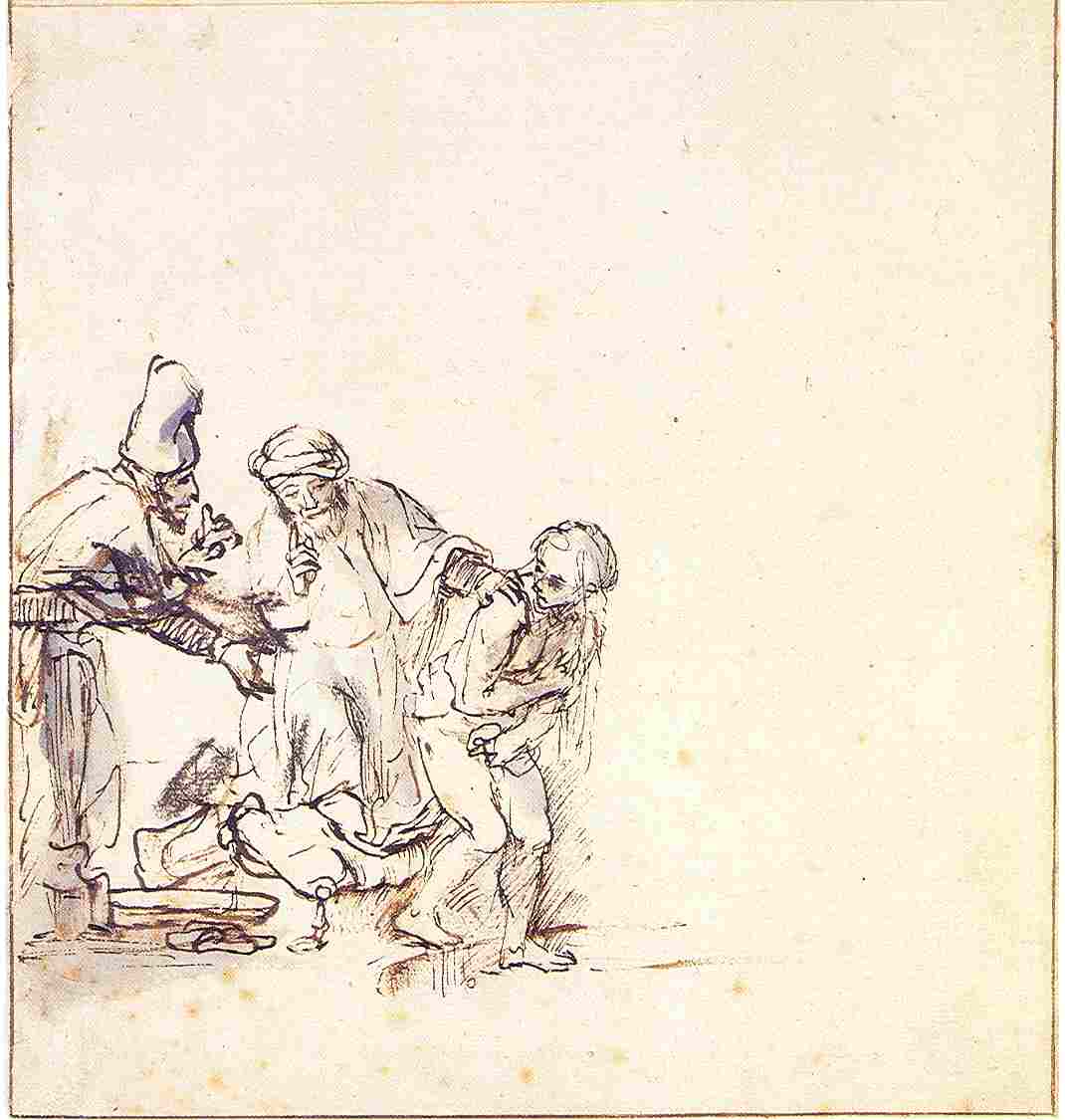
Rembrandt’s Susanna and the Elders, pen and brown ink, 1650-1652


manhunt

will I always be poor

always a slowing of small

pittings where roots were

milkweed

meadowsweet

rue or

pink lilies on a backdrop dark, blooming

rather against than next to

themselves vibrating

against the black soil deep as a hole

in the ground and quick to wither, water

swell into a dawn dark, then day

the horizon a series of holes and oaks

the field dressed as deer

as viper

as garden

as the sun red as fish mouths in Iowa

in summer while here I keep my eye to the scope

to the fourth county over

to the fielded to the fallow now

I can scale up a wall now

I am pressing my hair against the sap of a tree I have learned now

I will not be free will I always be with Iowa where I was

exposed grass flat land grazed like a comb through my wet hair

my six years

body folded

up in the towel

of okoboji

where I learned

to fear my god

given ability

to see snakes

dark ropes

in the dark

soil the darkness from

which the honey-gold

the sweet

corn springs tall

springs bright springs

sweet

water

no, I am not

a farmer’s daughter

though my grandmother

was my grandmother

gold and black teeth she

was the child of a farmer

she ate nothing but corn she

thinks not of herself

no I am not my father’s

daughter spring-

loaded the metal somehow

always cold is this

supposed to make me

feel safe colt

number to give me peace the kind

I could

rest in if I

wanted to I wanted

to my father

points a smith

and wesson a remington

at a shape

at a man

at an outline

of a boyfriend

of a starling, of a squirrel

the only way to feel safe is to sleep

with death between your knees between your teeth

with death under

the bed as if in the yellow light of farmhouses

you’d win you’d know

what to do you’d hold

death against their heads you’d keep

death hidden in a closet in a chest

you’d keep it near you’d keep us all

alive

I learned no poisonous snakes live in Iowa no lions no sharks just men

made of leather lubricated laughter killdeer

nested in the rocks at the water

plant was I not always

looking

to be approached by a colt by

a steer, not looking to see a streak of orange move across my line

of vision not looking

to meet god in a grove,

in a field in a cave by a river

Io a white bull with clover

in my fist as defense fed

held out circled in looking out

at a pocked horizon at a land I loved only because it was wounded from whose hand I fed on meat so red it made me cramp my body seized like a fist

I swum out to the middle of the lake I played

a game I spent

my money in another place I placed

a bet my body made

of golden tickets of air heavy as water isn’t there

a place where a body is supposed to end isn’t there

someone I’m supposed to find

a soft wavering, a shimmering

a minnow, a mouth

a how and a why, a wren,

a winnowing, a face,

I could wipe, hair I could brush

I could feed it food and the food would go away

alive even when I wasn’t looking


AUTOMATA

My new job is to exchange one thing for another,
My new job is to install veils between the wealthier members
of the audience and my compatriots. My new job is to balance
a camel on the head of a pin, my new job is to make it dance,
and isn’t it the dance that connects me to the world? Aren’t I lucky
to be here at all, squashing cockroaches that rain down from the ceiling,
aren’t I lucky to support my whole family with my brain in it’s numb
skull? My new job affords me and my family a vacation at the lake two hours
north of the lake on which we live. My new job is to fill my mouth with clear
goo and call it a hot meal. My new job is working toothpaste to the end of the tube
and not leave any toothpaste behind. My new job is to become a screen, bright white,
for everyone to yell at, my job is to be a white sheet to throw tomatoes at. My new job
involves a lot of interface with the public. My new job is to make sure my hatred
doesn’t leak out of the holes in my face. My new job is better than no job.
My new job is dabbing drool off of a wall of stuffed animals. My new job is cleaning
up blood and cum and spit and shit and snot. When my new job is over (for today),
my compatriots and I go out for wine we spill
wine all over each other, we spill blood. We go home and pat
our stomachs which for today are full. We go home but do not
squeeze our hands goodbye. I am in a cab and I hate myself for it,
I pull my smock over my face so that I cannot see the numbers tick and glow,
my new job is beating its fists against my brain. I think I’m growing a new worry
stone in my body, I think my body is full of piss but I do not want to move.
I might piss in the street before I get home, get in bed
alone. How much does this cost, how much?


New Poetry from Shana Youngdahl

After the Maine Tin Min Company Prospectus, 1880

The earth has veins we can
open with our hammers.
Follow the cassiterite crystals
down where the iron dark
is picked by the swings
of men who name minerals
by the feel of them on damp
fingers, the bands of elvan
quartzite like the rough
footprints of mythical
man, or the smooth track
Of native silver, or gold
Ore floating in the salty
Rubbish of St. Just. Imagine
Fellow capitalists, what
Enterprise can find
Rose colored mica, purple
Fluor spar, tourmaline,
And a thin river of
Tin Ore imbedded among
calc spar crystals, follow
that river, I say, crack
the vein open.


To Find the Center of a Circle from a Part of the Circumference

Which is all I am really after, the path to the midpoint

and how to get there from this little arch

of my hand I’m told to span the dividers any distance

and with one foot on the circumference

describe the semi-circumferences: today pollen and blue sky,

book bound in navy cloth and draped with black

velvet. The ache in my wrist, throat and head dull

like the birdsong we stop hearing weeks ago.


I’m trying to find the center: the point I can cut from.

I pencil out two indefinite lines and lean

under this dome into the illuminated center.

Someone a very long time ago, told me to call point P.

There is comfort in such specifics, but still I feel

like all the unwound clocks that fill old buildings;

there is something I am supposed to do, but

in the fog I am unfocused, turn my head

to another arch and am led away.


1.

First or only?


My child is three—
wakes three times

a night
has no room

I would know. Wouldn’t I?

Piling her piss-soaked
blankets on the wood floor
I leave them to fume,

wait for the calendar or the swelling.


8.

I know
and don’t. I’m half-open
hungry, two days
from late.

I dreamt my name wrong.
I dreamt a boy laughing,
my girl pulling his

baby boots on, spelling
her own name that I
could read by water.


37.


Find                                                          a stone to fit the palm,

our last iris, photographs of daughter’s wet curls,  half-burned

and broken candles, recall when sister

believed the rainbow alive.

Collect your pebbles.


38.

I leak
dying larkspur and the strain
of mileage.

It’s a glass night,
with clean towel,
and midwives in
the basement room
where spills won’t
wet spines and this damp
brings the cool harness
of crying.


39.

We set out walking
the child grabs a stick
points at clicking marmots
shakes the trees and piñon
bleeds into her fingers
she twists it into her hair.
She is pitched
and dust rises like fire
billowing between sisters.


New Poem by Eric Chandler: “The Path Through Security”

my family lived there before it was Maine
before this was a even a country

they still live there so we visit
we fly in and out of the Jetport

we place our shoes in a tray
empty our pockets on the way home out west

the guy asked which one of us was Grace
I pointed to the infant perched on my arm

she was selected for
enhanced security screening


it’s possible that happened in the same tunnel of air
the hijackers passed through

the imaginary tube
the human-shaped ribbon through time

the permanent trace of their movement through space
I could see it all at once

we have repeatedly walked in
the steps of those men

the hotel manager where they stayed
had a nervous breakdown

I flew over the Pentagon and Manhattan
one year afterward

other deployments far away
that all blend together

we drove by that hotel again
as we left Maine this summer

we take off our shoes
in a new part of the terminal

and our departure gate is always next
to the old closed security line

little kids run around under a big toy airplane
that hangs over that spot now

a child-sized control tower and terminal building
instead of x-ray machines

we wait to go home
and I always look over

at the playground
in the path of destruction


New Poetry from Frank Blake

Poet Frank Blake during his Army service.

We came home

And had nothing to do and nowhere to go and too much freedom and money and space and women and cars and booze.

No more mission

Like a marathon runner collapsed at the end of a race and across the finish line and not really sure how to stop running or what to do next.

We missed each other

These other humans didn’t get it and had never been in that place where it was not fun but we had fun anyway because we had the love of combat brothers

We were bored

Because no matter what, nothing we would do in a week back home was even close to being the team with unlimited government funding using state of the art weapon technology

And none of us yearn for combat

But we do wish we could go back to a time where our actions mattered and our friends were nearby and we all had a great goddamn adventure ahead of us.

And now we know

That “in our youth our hearts were touched with fire” and that everything that comes next will probably suck in comparison because life needs us to be paying cable bills and walking dogs

And it’s hard

To find meaning in things of little consequence when we learned so early on that the world is big and scary and violent and can be filled with acts of valor and sacrifice and hate and love.

So our only option

Is to live such a great and full life of found meaning in meaningless tasks as to make the sacrifices of those who didn’t come home and don’t get to walk the dog all worth it.

So we try

To draw as much life out of life and to execute a new mission of a great and purposeful existence

Because not all of us can

Because some didn’t make it back.


Tracer

There is one round among many
Painted with that iridescent color of night time illumination
Designed to mark the path
Of bullets flight in jet black fear fueled midnight battles

Zips towards the enemy
A laser of lead and anger

Ricochet path betrayed by a bright glow

The rule is

That for every one you see

There are many more you don’t

Just like the veterans suffering back home years later
We can see one every so often
Glowing in pain

Tracing the path of alcohol fueled rage and family splits and no jobs and hard times fitting in

But we all know
For the one we see
There are lots more

Descent

On the escalator at the airport

I saw a young man headed down as I was moving up

He wore that same familiar ripstop nylon rucksack that I knew all too well

It had patches from his units and friends and adventures

It had the same contents as mine

He carried in it lots of sadness for the friends he had lost

And guilt that he had made it back

And fear for what to do next

And memories of things he should not have done

And dreams of little girls dying

And lessons about leadership

And instincts to make his bed

And tears from current day family strife

And resumes to find new jobs

And drinks for when times get hard

And pills from the doctors

But it wasn’t his rucksack that made me know he was a combat veteran

It was the knowing dead look in his eyes that gazed right past me and through me at the same time in that one brief moment where our missions intersected.


The Hundred-Year Itch, or Remembering The Great War

Here are some facts about

The Great War. It started in 1913.

We know that from books.

and the scarred nobles

grandma met in the deli

off 23rd and 8th,

Ich hätte gerne eine Bratwurst

they’d say, eyes scared red.


It was my fault; I must admit,

quanta exist in different places and

in different times;

some have been in my brain,

and also in Hitler’s old brain

the war’s most famous vet.

Not quite Afghanistan; still, his war

and my war was the same,

A vicious trick,

Russian saboteur

made disasters, it’s true,

walk with me here:

the Soviets invade in 1979.

Great Britain joins France

as the Marne collapses,

a wet snowdrift, over-heavy

in 1914. Add the numbers.

We surround ourselves with stories,

these fluid lines always converge.


Remember that line, the human

marching through town, shrive-faced,

boots laced tight, cap perched on his

kiss-me forehead, rifle shouldered,

we’re gonna beat the Hun—

there’s another line, now, 451AD,

Attila plundering across the plain,

stopped by whom? The Roman? No—

Aetius heads a motley crew of Frank

and Gaul, Suebi, Goth and Visigoth,

and Saxon! Yes, the Germans saved

the West from Hunnic rule!

Until—it always comes around to this,

that boy marched home again

some years after the great siege,

at Verdun, Ypres, or Somme;

really it doesn’t matter.

Siege used to mean sit, but he won’t;

not without his boots and cap,

all that chipper stuff gone,

he’s been unseated, the siege lifted

his mien took on a leaner slant,

suspicious eyes for prying words

could not prepare a waiting world

for what came next.

Plenty! Champagne avec vous

on all the quays and ways

of Venice, Paris, Bruges;

Sur la table, Monsieur?

If you weren’t there, you can’t know,

and he wasn’t. All there.

***

When will war weary of me. Woeful wight,

wailing across the width of destiny,

I sprawl comfortless in a rancid hole,

a thick cloth great-coat stiff with sweat and grist

my second skin, then, for a skull, some tin

riddle: helmet, brain-pan, will you sit still?

The unfrozen mud’s alive, the stench, strong,

rat I’d say, someone’s let them in. Writhing,

muse for a Rosenberg, a whole den’s worth:

and that’s a good day, without bullets, bombs,

or the whistling artillery storm—

the rain of steel shrapnel, cutting like wind

across Europe’s newly irreligious plain—

flesh, it seems, has a its breaking point, splits wide

the human spirit spills, squandered, betrayed

amid the great gulf between my chilled hand

and the quiet, marble hand of German kin;

or British, or French—what odd clay. The flesh

grieves, parted by that vast, pitted waste,

unshrivened the filthy flesh yearns to be

whole again; compartmented, sufficient,

Unified. one man, one nation—one God.

***

A great civilizing wind stirs on the plains.

Leaves cast off the towns, like trees,

the Supple young men march in step

all balled fists, full of boasting oaths

they stride, ennobled by a promise

of liberation, plunder, and rape.

The best of the land! This lot’s the best!

But someone’s pulled a cruel prank.

At the front, the sergeant calls time

with a note pinned to his back. It reads:

“Take my wife, she’s free.”

Below, a crude sketch.


***


On a computer or smartphone,

an educated citizen

has just checked the market. It’s up,

cause for optimism, and sun,

and a feast fit for all the hounds

who prowl our sordid memory,

just looking for some sad excuse

to get me back out in the fury

Three machinegunners cower in fear during fighting in a hellscape
Heroes fighting heroically during the battle for the Meuse-Argonne, which as everyone knows guaranteed peace for generations of Europeans and was a useful investment of human life and energy. Via US Army Europe Public Affairs

.


New Poetry by Amalie Flynn for the WWI Centennial

Zone Rouge

(for the centennial)

photo by Amalie Flynn

1.
When the land was.

2.
Full of bodies dead. And twisted.

3.
When the fighting was.

4.
Sustained.

5.
With bodies. Dead. Twisted on a riverbank.

6.
Wrist bent. Hand hovers. Over water.

7.
Dead bodies with fingers. Like feathers.

8.
Stretched feathers or the calamus.

9.
Attaching to bird skin.

10.
These are bodies. Bodies of war.

11.
Dead with. Feathered fingers.

12.
Wing of a bird.

13.
300 days of shelling.

14.
The shells were 240 mm. Full of shrapnel.

15.
Mustard gas.

16.
Hitting men and hitting ground.

17.
Making holes. Upon impact.

18.
Shrapnel bursting.

19.
Bloom and rip.

20.
Ripping through dirt and faces.

21.
Ripped skin. Ripping off tissue.

22.
A nose.

23.
Hole in the center of an ear.

24.
Exposing canal and bone.

25.
Missing teeth. One lower jaw is.

26.
Gone. A set of lips.

27.
The chunk of a chin.

28.
And the shells. Shells from Verdun.

29.
Are still there.

30.
Unexploded ordnance. Sunk.

31.
Into dirt pockets. Like seeds.

32.
This blooming. Metal war.

33.
Shrapnel that looks like rocks or.

34.
Smooth egg of a bird.

35.
Soil made of mud and men and metal.

36.
How. Metal leaches and clings.

37.
This soil of war.

38.
Chlorine and lead and mercury and arsenic.

39.
Where every tree and every plant and every animal.

40.
Each blade of grass.

41.
Where 99% of everything died.

42.
Ground stripped raw.

43.
Stripped earth tissue or how this is.

44.
What war also.

45.
Also does.

46.
Damage to properties: 100% 

47.
Damage to agriculture: 100%

48.
Impossible to clean.

49.
Human life impossible.

50.
The government declared it uninhabitable. 

51.
A no-go zone.

52.
Broken skeletons of villages.

53.
And the craters that bombs make.

54.
Deep and round holes.

55.
How the bomb craters filled with water.

56.
Making. War ponds.

57.
This is a place.

58.
Where almost everything died.

59.
But the land.

60.
The land was still alive.

61.
Grass stretching again and.

62.
Grafting itself over the bone.

63.
Bone of what happened.

64.
Stretching over trenches and scars.

65.
Like new skin.

66.
And plants and trees and vines.

67.
Rodents and snails and voles and mice.

68.
Deer. Wildcats with metal stomachs.

69.
Still living I say. To my husband.

70.
Who went to war.

71.
War that he did not want.

72.
Afghanistan.

73.
How he came home with hands and feet.

74.
Covered in blisters. Lesions the doctor said.

75.
Skin burning. Waking up to him crouched.

76.
On the floor and scratching. Saying I don’t know.

77.
And I know.

78.
That this is how war is.

79.
Or later. I will lay in the darkness.

80.
And think about burn pits in Iraq.

81.
Black smoke and jet fuel and fumes.

82.
About Vietnam sprayed. The bare mudflats after.

83.
Defoliation of trees. And birds. Missing mangroves.

84.
How dioxin poisons wind. Sleeps. In a river or sediment.

85.
The fatty tissue of a fish. Atomic blasts in Hiroshima and.

86.
Nagasaki. The incineration of bodies and land.

87.
Tearing skin off people. Tearing trees out of ground.

88.
Tearing everything.

89.
Away.

90.
How black rain fell. Radioactive bomb debris.

91.
Into mouths. Of people and rivers.

92.
How radiation lives. In grass and soil. The intestine of a cow.

93.
About the GWOT. Blood soaked years and streets and.

94.
How many miles of land. Where we left bombs.

95.
Unexploded or forever.

96.
I will think about Zone Rouge.

97.
Trenches like scars.

98.
My husband gardening. The tendons in his arms.

99.
Moving like trees.

100.
Or how war never goes away.


                                                                Amalie Flynn

                                                                October 2018


New Poetry from Randy Brown

victory conditions

My father taught me
to say I love you
every time
you stood in the door

left for school
went to work
flew off to war

it became a habit
a good one
like checking the tires
or clicking your seat belt

but now
every conversation feels
like a movement to contact

we took the same vows
we swore the same oaths
we wore the same uniform
we see the same news

I raise my kids
like he did his
and have the same hopes for them

How is it that we now live
in two countries?


three more tanka from Des Moines, Iowa

1.

The leafblower drone
buzzes into consciousness—
fast cicada hum.
I wave to the new police,
before I close the window.

2.

Yellow Little Bird
hovers near high-voltage lines
conducting repairs
outside my bedroom window,
but I am miles away.

3.

Thunder and popcorn;
a remembered joke about
the “sound of freedom.”
In rain, I stand listening
as rifles prepare for war.


a future space force marine writes haiku

1.

This drop won’t kill you—
terminal velocity
varies by planet.

2.

We spiral dirt-ward,
samaras in early fall,
sowing destruction.

3.

Reconnaissance drones
orbit our squad’s position:
Expanding beachhead.

4.

“Almost” only counts
in horseshoes and hand grenades.
Go toss them a nuke.

5.

If war is still hell,
at least my bounding mech suit
is air-conditioned.

“An American pineapple, of the kind the Axis finds hard to digest, is ready to leave the hand of an infantryman in training at Fort Belvoir, Va, 1944. American soldiers make good grenade throwers.”

This is just to Say All Again After …

after William Carlos Williams’ “This is Just to Say”

I have expended
the “pineapples”
that were in
the ammo box

and which
you were probably
saving
for final protective fires

Forgive me
they were explosive
so frag
and so bold


Most Likely /
Most Dangerous Enemy Courses of Action

what most
threatens my children

social media /
unending war

the rat race /
the daily grind

half-baked policies /
global warming

a lack of hope /
a lack of justice

my constant distraction /
my constant distraction


the stand

if you can’t stand injustice
take a knee

if you pray for others
take a knee

if you believe in freedom, not fabric
let others see

you practice
what you preach


New Poetry from Nicole Oquendo and James A.H. White

The following poems are reprinted with permission from the anthology Pulse/Pulso: In
Remembrance of Orlando (Damaged Goods Press 2018), edited by Roy G. Guzmán and Miguel M. Morales.


to be born

by Nicole Oquendo

my spine is queer, curved enough
to hold me up while the news bends
and sways us. every day we die, and
one day it will be me, though statistically,
according to these headlines,
it’s more likely to happen soon.

but there’s new life to look forward to.
last year, my family taught me how
to press my chest and sculpt my own form.
i make love now by giving and taking in equal measure.
my brothers and sisters and those in between
see me standing next to them, signing all of my names.


Stained Glass

by James A.H. White

Fifty–the number of years my mother has lived. The number of paper clips currently
interlocked in a small tin bucket on my work desk. According to motivational speaker
Gail Blanke, the number of physical and emotional ties you should throw out of your
life in order to find it again.

Some say many of them knew each other. It’s often like that in our community. It’s
often like that in a nightclub. We recognize each other. There’s no darkness dark enough
to interrupt that.

The Orange County Medical Examiner’s Office, with assistance from Florida
Emergency Mortuary Operations Response System, identified, notified, autopsied (if
needed) and released all bodies to next of kin within 72 hours of the incident. That
is, all but one victim, whose father wouldn’t claim his gay son.

Phonesthesia is the term for sound symbolism, or, relating shapes to sounds. I see shame
played like tetherball, see it shaped like the tennis ball as it flies, bound, around
that metal pole, hear it on the slap of the child’s open hand or deeper-chorused fist. I see
shame falling on that victim’s burial like the kind of rainstorm written into movie
scripts–dark and heavy. I think of it registering unfairly on the faces of the closeted’s
families when they saw their loved one’s body and recognized it for the first time.

An installation at Chicago’s Contemporary Art Museum featured a row of bodies lined
across a gallery and blanketed by white sheets that peaked at the noses and toes hidden
but assumed molded beneath. A girl nearby says it all makes her sleepy before she falls
to the floor and pretends to sleep–like the dead. On the morning of the shooting, I
think of my brothers and sisters inside, not lined but scattered, sleep I imagine made
clearer to the young as something much nearer, perhaps much whiter.

I break down hearing about the group that hid in the bathroom but were found then
fired on, a couple in a stall injured not only by bullets but shrapnel from the wall and
door. Suppose the bathroom stall like a closet. Do you remember huddling? How about
holding onto yourself beneath a traditional Jibarro straw hat or flower bonnet? How
long did you wait before the car horn outside announced it had come to take you out
dancing?


New Poetry from D.F. Brown

So, Who Wants to Walk Slack?

Because we have no home in language
We keep memories there
As if the past were true
And grinning in a grainy b/w
Teenagers posing johnwayned
Twisted into facts
Jungle-wise who knows
What grows there deep
All night knotted in your heart
Form mangles with content
Hear clouds scrape dark
Clutch the claymore clacker like
Life depends on blasting 1000 pellets
Across the muddy path below
Meaning in its meat
As if out there
Our ass sad little war
Had not ended
Is never ever over and
Because it’s history we hold on
And keep sending our children.


Every Meal is a Happy Meal

Let us see the evening as raw meat
Finest Grade A Prime
Spitted ready for the burning

Charred and bloody rare
Leaking on the platter white
As we find our way into this scene

A table offered up with places
And take our portions of the gore
With salt and wines and candle flicker

Let us eat these products
Over faces of the hungry
From the heart range of this continent

The cowboy bounty of hard work
Slice and savor the marbled meats
And rub our full bellies round

And sense ourselves deserving
These cuts and servings
As if it were duty to an economy

That can no longer afford our appetites


Floating Jack’s Fork of the Current River,

Shannon County, Missouri, August 2010

I try to pretend but the wind

gets in my way, night enters and
shadows crawl along the gravel shoals

into the tree line across the water.
At any other campfire they would be
memories called up and spat
into the flames, sizzle for a second
and rise as smoke unto the stars.
But in this dark they crawl

over old sandbags to my heart—
great slobbering ghosts from Viet Nam,
and set their altars

dig out dog tags, cartridges,
belt buckle, buttons
canteen and rations—

ashes, ashes, old bones of heat.

Houston/2018

To read more from D.F. Brown buy Ghost of a Person: Passing in Front of the Flag at Bloomsday Literary.


New Poetry from Janaya Martin

More Than Twice

She said you better hush
before he comes back in here

like she knew who she was
talking to but didn’t

She was me and he was the
mistake you made more than twice

but he gave you a daughter who
gave you trouble, sometimes.

this is what women do, talk
nonsense and make trouble

all about the earth, but only
because no one lets them

keep things nice or clean
or quiet. let us just have

one damn thing.


Aretemisia Gentileschi, “Susanna and the Elders,” 1610.

First Wednesday Sirens

Working from home includes:
day-old coffee heated in the microwave,
snoring dogs and sometimes the desire
to add wine.

Yesterday, July 4, the incessant booming.
Today, Wednesday, the sirens.

Feels like a warning, a dry run, a war inside.
I feel like I should move the canned
goods to the basement, the bottled water too,
build a wall to keep all the crazy white men out.

Maybe I should have titled this poem,
Me + My Uterus = 4-ever.


Odilon Redon, “The Crying Spider,” 1881.

Spider

my head feels heavy
so i let it hang like

a knot in a thread
and i drag it around.

i remember when i was 10
a spider crawled up my leg

i let it, even though i was terrified.
you are that spider.

how do i tell you that you
are that spider?

how do i tell you that i can hear
the words you do not speak?

how do i tell you that sometimes
i sit in the basement and listen

to the house, to the way
each foot plays a different note
across the floor.


The Ghosts Will Not Save You

My mother taught me that no house
is a home. Instead, each room is an opportunity
to be a statistic.
Instead, this is where you hide the pipe,
this is where you keep the bottles
and here, daughter, is where you keep
the secrets. All of them.
Stacked against the door, not as an offering,

but as a precaution or a reminder that you
will not leave here. At least not the way
you came.


New Poem from Jacob Siegel: The Old Gods

The Old Gods (No. 9, 2003)

I.

The towers bloomed up in the dark

Like nails scrolling from dead fingers

While around them a languid curtain fell

In drifts of violet gas that settled on the roofs

All of us honeymooners and mourners

Aware of ourselves as objects in a landscape

That held above the chipped skyline

Bristling in the greater darkness

A dream of New York City


II.

We must have lived inside that dreaming

No more able to escape than words can flee the page

Our old Gods who gave us a magic by which to love


III.

In those days, we could take the D from 59th to 125th in one stop

Or all the way out to Coney Island

Not for the 24 hour pool room where the Russians played snooker a floor above the street

I did not go there with you

One night I had you with nothing between us

You were sat up on a jetty rock

I had the tide at my back

You in the shadow of Astroland

Lit by moon and amusement, a castaway


New Poetry from JD Duff


Night Flash

You’ve been having nightmares again.
The cruel shaking of a body
resisting slumber.
Hands twitching,
chest jerking to beats
of unknown song,
playing over and over
like memories you sold at a tag sale,
buried on the Tuscarora trail,
dumped in a white room
at Bethesda Naval Hospital.

Jules Tavernier, Heart of a Volcano Under the Full Moon, 1888.

I awake to the moon beaming
unto a lonely bed,
find you out back where dreams
smear on a blurry canvas of recollection,
and ghosts rise from wooded corners of truth.

I climb under the poncho liner
that covered you through
countless peaks of ice
and frost, Persian sandstorms,
fighting holes where you used
the cloth to shield you from walls
of claylike dirt.
The June breeze dries the sweat
around your lips.  I lift a rifle
from your chest, place it beyond
the reach of ready palms.
A single leaf rests
on your cheek.
Cicadas cry for their lost
as I hush your silence with a kiss.


The Homecoming

It rained for a week
after our mailman’s son
died in a roadside bomb
attack near Al Karmah.
The sky wept
as half-mast flags
blew gently
on the prairie’s haze.
Signs of well wishes
bowed in store windows,
bellowed from alters of diverse
domes of prayer,
rested in alms of flowers
and fried dough.
A Corps led procession,
thick with mourners,
crowded the lot
of the pearly
mountain church.
Bagpipes sang
for a Lance Corporal
draped in dress blues,
mother betrayed
by dark dismissals
of nightly pleas,
father wilting
to soft hymns
for his broken boy.
The lone sibling
stared at the casket,
wondered why he survived
the trashings of war
while his brother
lay in a box,
waiting for rifles
to speak his praise,
a dark tomb to welcome
another lost Marine.


Seal of God

Foxholes and submarines led you to farm life
where you graze the vast splendor of still land.
Crickets speak to the quiet hush of night
as an elusive sky captures secrets,
spits sins in large chunks of hail,
disrupting the tranquil flight of time.

Faith’s armor shoves you in church
where peace is offered between pews
and sounds of crossfire muffle
the graceful hum of atonement.

William Holman Hunt, Cornfield at Ewell, 1849.

You sneak home through cornfields;
stalks reek with bruised dents
of blistering flesh.
Wounded frogs leap past
thick tridents of reticent thought,
darkness dismantled by the crippled promise
of a swelling cherry dawn.

The euphonies of children
replace cancors of slivered screams
as the wind blows you
toward our kitchen, where we break bread
with an Amish farmer
and wait for God to heal us.


New Poetry from Yuan Changming

[anagrammed variations of the american dream] 

A ram cairned me
In a crammed era [where]
Cameramen raid

A dire cameraman [or]
Arid cameramen
[Becoming]

A creamed airman [or]
A carmine dream
A minced ram ear

[a] maniac rearmed
As freedom turns into a dorm fee
Democracy to a car comedy, and
Human rights to harming huts


D.H. Friston, Scene from The Happy Land (The Illustrated London News, March 22, 1873)


[we have no more statesmen]

They have now become speech actors, working with
Eight classes of words and
Seven syntactic elements
Changing singulars to plurals
Passive into active, or otherwise

A whole set of rules

All as conventional

As idioms per se

Adding some new vocab every year

Their job is to make new sentences
Based on the same old grammar


New Poetry by Sherrie Fernandez-Williams

she be like, damn

she be all tired.
she be like a flattened house shoe
she be full of compunction
she be remembering what was said.
she be told what she deserves.
she be believing everybody.
she be weepin’ in the bathtub
she be like her momma,
she be lying.
she be saying it’s the arthritis
she be talking like it ain’t her head
she be actin’ like hurt don’t bother her.
she be actin’ like she foolin’ somebody.
she be foolin’ no damn body.
she be scattered.
she be slidin’ across marbles.
she be grabbin’ onto nothin
she be almost breakin’ her wrists.
she be lying on the floor
she be holdin’ her stomach
she be trying not to vomit soggy cake
she be wishin’ she ate almonds instead.
she be losin’.
she be wantin’ rest.
she be told she ain’t gettin’ shit she want
and she be still wantin’ shit.


Annibale Caracci, circa 1580s.


juanita

juanita put on her tap shoes and danced in her kitchen,
in her living room, she composed. and into her gilded bathroom
mirror, she gave monologues before powering on
her home recorder that, in those days, weighed a sailor’s duffel bag.
debuted films at thanksgiving, after feeding a houseful.  she, in a
form-fitting black dress made of sturdy garbage bags.

“i am more than wife, mother of ten, church organist.”
then, she started with captain and tennille, followed by neil diamond.
nieces, nephews elated.  her children  feigned embarrassment,
but devotees, nonetheless.

a woman from disbanded and reshuffled peoples. owned by a
garden variety, bearing traces of many countries,
the dominant, the birthplace of black magic.
what might have been if they hadn’t
made us afraid of our gods? she could have
been another brooklyn starlet, sing stormy
weather like lena horne in the movies.  what if we harnessed
the power of our goddesses?

you favor her.  nearsighted. prone to excessive
pounds in mid-life, obsessed with communing
with the dead.  her grandfather, angel, the cuban cigar maker,
joined in the chorus of guantanamera, and when she strummed
like memphis minnie, nada, rocked  back and forth

the way grandmothers do when they are stirred.
all principle and heart–that one. sung time
in a bottle with sam, her second husband.
sam on guitar, juanita at piano.  time was
a real question for those graying lovers.
never enough time for a woman
whose first husband tried to reduce her
like soup stock.  being mad took more time
than she could give. so she produced.

wrote about an urgency for peace,
though we were not the ones who begged for war
but in 1984 she scribbled in “jesse.” argued
about the virtues of speaking one’s mind
to punks who called it a wasted vote.

you hold onto the ways that you might be like
juanita, though you know you are dot’s child.
in a family large enough populate three small towns. you
were never one to be known in these townships.  not like aunty,
who mailed everyone copies of her latest records,
performed at all family gatherings, taught whosoever will how to play.

when there are so many, there are so many  to lose.
juanita weeped the longest over all bodies–ah, yes,
another way you are like her.  your spirit, too, is made
of blown glass. at the last burial before her own,
she warned those within the sound of her voice that she was tired.
you were young but old enough to know the weight of words.

juanita is a starlet. it is time for another moment under glaring lights.
it is quiet on the set, a recreation of 1943. she is small-wasted again,
and in high heels. she looks directly into the camera, then up,
when studio rain hits her face.


hot tea

precious one, emancipate your feet. stretch
your soles from here to far from here,
across acres of african moons.
young dignitary, miles of highway
know the impression of your shoe
by heart. it is tender at your core.
the injured hum their names in
your ear like seraphim. faces soaked
up by the cortex for sight cannot
be unseen like the ground where
they last stood cannot not absorb
a life poured out. this agony, you
haul with all subtle movements
and speak at movements of
national proportions. in squares,
your voice expands beyond
itself and crescendos into a whispers.
hot chamomile with lemon and honey
will help. i have prepared this for you.
sit as we remember our future. rest
until you are well again. and you
will be well again to move us further.


tony

this father’s son is loved not only by this father
but by the holy angels too, and by a few demons
who step to him on the street to give him what-up
jabs on the shoulder. i do not mean to compare
this father’s son to the son of the father, but that is
what this father’s son had been to sisters.

one came to him at night spooked by utterances
in her own head. one saved for him her best jokes.
another came when broken by a boy. the last placed her
report cards on the table just before he sat down to eat.
all waited for his perfect response, better than imagined.

to sisters, this father’s son was close to the son of the father
when this father/a daddy departed. not to be with the father,
but to be with a woman he met in night school.

to sisters, the one who gabs with the unseen, the formerly broken,
now zealot, the first to die, a comedian and especially, the last,
the critic of religious patriarchy, who loved showing off
her report card, this father’s son, a shepherd. for that moment
in time, sisters, not yet knowing what else they could be, were lamb.


inflammation

1.
something almost remembered
then, pushed away for a later date
only to finds its way into the body, dawdle there
and hope to be recognized, assessed, sifted through
for what good it carries, then separated from its waste.

if left alone for too long it splinters
into the convolution gray matter
latching onto cells weakening them

sometimes it arrives as a simple  question
while listening to gossip radio, while not
wanting to be bothered by anything too
onerous like separating sewage from my
cells while driving home from a hard-day’s work

the words link together and i remove them
like a chain from the bottom of my belly,
straight out of my mouth—

“what do i do with the men?”

2.

i know what the question means.
you get rid of them.  i said “rid” motherfucker, rid of you.  praise be to–
well, not all of them, of course.
i love daddy.  he was forty when I was born.
when i turned forty i was the adult daughter.
tenacious. never falling apart for too long, anyway
since enacting my three day rule
three days to be dumbfounded, three
days to panic, three days to flounder
full recovery occurs on the fourth day.
too goddamn much to do to flounder four whole days.

so by the fourth day I  am fortified,
and so daddy shares with
one part regret, one part pride
in his accomplishments of bedding women
sometimes a handful in one weekend.  some
served with him on neighborhood watch. most
were the mothers of the pta, he was president, and
a poor man with classical tones resounding from his
long,, thick cords; like blues from a cello
and, women moved to the sound of him.
bed became a verb that broke my mother.
but she’s dead now, so what does it matter. daddy’s nearly ninety.
growing older provides perspective.  distance
dilutes notions about what to do with the men.

3.

the question is absurd.

4.

there were four of us girls. i was the baby.
the others had me my by eight, ten, and eleven
years so i benefitted from my sisters’ skill in hair braiding
and designing clothes. my favorite was the red jumpsuit with
shoulder ruffles.  i looked like  a five year old disco queen
the day i wore it for my birthday.  one sister picked my hair out.

i do not blame any of them for their lack of warning
about life in a girl’s body;  the ownership some feel they have.
to take without permission.   they never spoke of rape by the
neighbor or by nana’s boyfriend.  “it’s just the way it was,” one sister
told me.  “it was our job to be okay.”

I do not want to answer. I’m done being a traitor
It is difficult to defend this place where I enter the story.
I am middle aged, not a helpless girl.

real women grow up and care for the most devastated among us
and I already decided a long time ago that I would be the giver
not the taker of care.  not the interminably wounded
and, I love a woman so what does any of this matter to an old dyke like me?
feminine discomfort is an act of treason.

5.

I know the forces against my man-child–

6.

the one long gone was the easiest of all.
a stack of papers, a hearing or two, the crack of a gavel
and it was done.   i did not wish a brother dead.
and every day, i am reminded, i forgive him and
every day i am reminded, i am the one who is sorry.

7.

i have chosen the path of the giver.

Shh…i will only say this once. do not repeat this to anyone. the leading cause of death for
young black women between the ages of fifteen and thirty-five is intimate partner
violence.  Four times greater for black than it is for white.  The consequences for
perpetrators of intimate violence is less when the victim is black than when she is white.
shh…  i will only say this twice. the leading cause of death for young black women between
the ages of fifteen and thirty-five is intimate partner violence.
 one last time, i will say, the
leading cause of death for young black women between the ages of fifteen and thirty-five is
intimate–

Brie Golec trans woman of color stabbed by her father,
Yazmin Vash Payne trans woman of color stabbed by her boyfriend,
Ty Underwood trans woman of color shot by her boyfriend
within days of each other—
debbie and i once made soup out of dirt and rain.
as teens, she had ramell.  i had an on again,
off again, thing with jesus.  between debbie and ramell,
were ramell’s hands that behaved any which way they pleased
especially when clenched into spherical solids.
my hands secured notes in white envelopes.
“god loves you,” my hands  told the pen to tell the paper
to tell debbie. no wonder debbie cut her eyes at me
whispered loud enough for me to hear her talk about my
whack old lady clothes to the other girls.   ramell and i both lost
the battle against our powerless hands.  i was outcasted.
ramell and debbie made a baby.
when debbie’s little brother became a teen his hand held heavy
steel to the face of his pretty boo across the street. when the steel
exploded with one motion of a rogue finger little brother’s hand
brought the steel to his own face. however, that time the rogue finger
refused.  it triggered the same dumb ass question.

long before any documents were filed, i recognized
the man i married had hands like ramell,

but the righteous knows what’s up.
race matters.  gender belongs to somebody else.
i know men who want to reclaim their innocence.
deemed guilty without due process.  I will speak their cause,
but speaking mine  would perhaps pose a conflict of interest as
the earth collapses between us.

8.

the body becomes inflamed in the protection
of itself swelling occurs while the question is held in the nerves.
i sit on the floor of my bedroom and in four square breathing
i release the question back out into the air to revisit at a later date
man-child barely knocks.  i struggle to my feet.  open the door.
taller than me, he  lowers his head to my shoulder. “goodnight mom,”
he says.  n four counts, i release the question and hold him.
i hold him as the question finds its way back into my body.

demands to be answered demands to be answered demands to be answered demands to be answered demands to be answered demands to be–shhh…. do not repeat this to anyone.


New Poetry by Liam Corley

A VETERAN OBSERVES THE REPUBLIC AND REMEMBERS GINSBERG

Claes_Moeyaert_-_Sacrifice_of_Jeroboam_-_Google_Art_Project
Claes Moeyaert. Sacrifice of Jeroboam, 1641.


America, I’ve given you all, and now I’m less than one percent.

America, fourteen-point-six-seven-five years of service I can’t characterize
as other than honorable,
three hundred ninety-one days pounding dirt in other people’s countries,
and one hundred seventeen sleepless nights per annum in perpetuity,
September 11, 2017.

America, I’m willing to renegotiate our social contract. I won’t complain about the clean bill of health
charged against me by the V.A., and you can stop involuntarily mobilizing memes of my demise
in support of indecent campaigns. America, believe me when I say
I’m not dead broke, I ain’t so straight, I’m not all white, and I don’t love hate.

America, when will you realize we are peopled with two-and-a-half times more
African Americans than veterans,
discounting three million souls in both tribes? Here I incorporate them all,
the ones hunted and penned in an inglorious spot, survivors whose lives matter,
because we both know the wary grief of looking at a uniform we paid for and wondering
whom the man beneath has sworn to protect and defend.

America, into this veteran poem I will take all the graduates of Columbine and Sandy Hook,
the ones who lived after having no answers for the warm muzzle of a gun, and their teachers,
especially the ones who ran toward shots. The hall of the American Legion
will overflow with such heroes, streaming like the blessed dead of Fort Hood and Chattanooga
across the Styx in Charon’s commandeered craft, the open door of welcome
forced, as always, by warriors still living.

America, let’s rent a cherry picker to take down the F in the V.F.W. sign,
let what is removed drop horribly in the pail. Police will gather in their surplus riot gear
and nod in understanding fashion, their years of service trailing them like a sentence,
arming them with arcane questions of whether civilians we protected yesterday will kill us today.
America, out of the sands of Kandahar and Ramadi, I go with them too.

Furthermore, America, in this election season, I go with righteous immigrants and refugees,
fellow sufferers of long journeys in inhumane transports that leave them in permanent pain.
O, my desperate ones, border-crossers of unwilling countries, you who pay taxes of sweat and fear,
you are not alien to me, or my thirty-five thousand brother and sister dreamers in green and khaki
fighting for something that isn’t wholly ours in dangerous places where we simply do our jobs.

America, when will you give Cyber Purple Hearts to all who have had their lives taken
out of your senile, digital grip,
starting with the twenty-four million whose secrets you’ve let slip into China’s voracious panda pocket?
We shall update and tweet ourselves feverish with the chant, “Uncle Sam is my Big Brother”
in protest of all those Xis and Putins and Snowdens and Kims
and Transnational Criminal Elements stealing our binary essence.
I’m not joking, America: I foresee the day when every iPhone will be issued with a trauma kit,
every laptop with a liability release for unauthorized remote access.

O America, my love, my burial plot, all this I will put in a phantom poem,
my own republic, for you to receive, a sea bag of sights unseen
to tumble down the ramp of a decommissioned C-130,
this empty box,
this absent limb.


New Poetry by Lynn Houston

You Leave for Afghanistan

If I’m writing this, it means I can’t sleep and that
the rain outside my window drops blindly in the dark.

The crops need it, the cashier told me earlier, ringing
me up for a pint of milk, making small talk, making change.

And now the tipped carton has marred the pages
on my too-small desk. I’m trying not to make too much of it—

this mess, the disasters my life and pages gather.
I’m trying to be kinder to myself, more forgiving.

Outside, a leopard moth lands on the screen, shudders
to dry its wings. One touch from my finger would strip

the powdered coating that allows it to fly in rain.
I wish it might have been so easy to keep you

from boarding the plane that took you to war.
In the predawn, my neighbors still asleep, I am the only one

to hear the garbage truck grind to a stop,
its brakes the sound of an animal braying.

The rain has stopped, too. I look over the smudged papers
on my desk. Nothing important has been lost.

When you come home safely to me in six months,
we will be able to say, nothing important has been lost.

 leopard moth


You Send Very Little News

You don’t know all the time I’m killin’.
I watch it pass ‘til nothing’s left . . .
I let my memory carry on.
—Buffalo Clover, “15 Reasons”

I try to imagine where you live now, try to read
beyond what operational security allows.

You say it’s dirty there and hot. There’s sand
everywhere. You have a French press for coffee.

Here, I keep things green for you—lie in the fresh grass
with the dog until we no longer smell like walls,


make entire meals out of honey and peaches. I choose
fields in Connecticut that remind me of the farm,

stare up at the now goatless clouds, imagine that the distant
bird I see is the shape of the plane that will bring you home.

10th_Mountain_Division_soldiers_in_Afghanistan


They Lie Who Don’t Admit Despair

I’m trying not to think about you,
but when this combine rocks and rolls,
it shakes my mind and shakes my body,
the way your leaving shook my soul.
—Chris Knight, “Here Comes the Rain”

I’ve had some dark moments
while you’ve been gone.
Mostly I’ve been okay, having
made up my bullheaded mind
to just get through it.
But last night you said
that in a few weeks you will
ask me to stop sending mail,
because you are that close
to coming home. And I felt
a lightness I haven’t known
since meeting you.
From that first day,
this absence weighed on us.
When you return, we will
be together for the first time
without the threat
of imminent departure.

I imagine you this morning
with warm flatbread, steaming coffee.
I imagine you smiling.
I’m smiling, too, listening
to the house creak.
Imagining you here.


You Call from the Airport to Say You Are Home

When we began, our hummingbird bodies
did a thousand anxious pirouettes midair,
dazzled and unfazed by the sour nectar
we had to drink at end of season.

You are back now, and we will do it
all again, but with sweetness.
All the beauty of bodies in love.
How generous is war
to give us two beginnings.


At the Harbor Lights Motel After You Return

The fish aren’t biting on Key Largo
the morning we spend together
after you return. You nap all day,
sheets spiraled like a carapace
around your torso and legs.

Next to you in bed, I touch your head,
stroke the hair you’ve grown long,
and ask what it was like over there.
But you pull the blankets higher
and turn away to face the wall.

Hours later, I call to you from the doorway
to show you a snapper on my line. You dress,
find me on the dock where we drink beer
as the sun slumps behind the palms.

You sleep through the night, and in the morning,
before you leave for a dive on a coral reef,
you tell me that turtles sleep like humans do—
you’ve seen them at night tucked into the nooks
of wrecks, heads withdrawn into shells;
you’ve seen their eyes blink open in the beam
of your dive light; you’ve even seen one wake
and swim away when a fish fin came too close.
They have nerve endings there, you tell me.
They can feel when something touches their shell.

When you return from the reef, I ask you
again how it was over there, and this time
you begin to tell me what you can.


diving


The Persistence of Measurement

There’ll be a thousand miles between us
when I pass the border guard.
Is that thunder in the distance,
or just the breaking of my heart?
—Chris Knight, “Here Comes the Rain”

The morning he leaves me, my lover buries
a lamb—a runt who’d only lived a few days—
on a hill of the Tennessee farm where we met.

Does he think, as he digs the grave,
as he presses his face to the cold wool
to say goodbye, of the last time he caressed
my hair or pressed his body against mine?
Or are his thoughts already in Memphis, with her?

I wouldn’t know. I was not given the dignity
of a burial, just an email sent after he’d been drinking,
blaming me for asking too many questions, asking
too much of him, for failing to give him space.

In Connecticut, winter refuses to relent.
It is still the season of waiting.
I look out the window of the room
where I waited faithfully for half a year,
where I wrote him daily.
The sky is cruel: clouds still take the shape
of farm animals, and birds become the plane
that never brought him home to me.

Part of me will always be waiting
for the return of the man I met in summer,
before the deployment changed him.
But that man is thousands of miles away.
He will always be thousands of miles away.


New Poetry By Abby Murray

Hercules and Cerberus, 1608. Nicolo Van Aelst, Antonio Tempesta. Los Angeles County Museum of Art.

13 WAYS TO APPROACH A THREE-HEADED DOG

I.

Those who tell you

to carry raw meat

have never met me.

Bones are better,

they last longer,

but if there’s

no bones to be had

bring peanut butter.


II.

In this analogy

I am always Cerberus.

My beloved is inside,

changing.

When he wants me

to sleep in his bed

he comes to me

shaped as a body

like yours.


III.

I grew old here.

Compliment the quartz

mouth of my cave,

my heavy collars,

the bronze of my bark.

Tell me I sound

familiar.


IIIa.

I live to be recognized.


IIIb.

My hearing is spent.

Your language

is a red fruit

everyone loves

to chew.


If we lock eyes

I’ll stand.


V.

I wouldn’t call

human souls

delicious

or even tempting.

I swallow

what I must.


Dogs escape

all the time,

cats too, crows

and wolves.

I let wolves pass

because they sit

a while before

they go,

they don’t trust

this river any more

than I do.

We watch it twist

around itself together.


VII.

What would I buy

with your money?

Lie down. Stay.


VIIa.

I do not know what a changed mind

feels like. Grass? Maybe sun?


VIII.

In this analogy

you are convinced

you are sui generis.

You will be the one

with quick feet.

In this analogy

the ferryman drops

your fare into a sack

with everyone else’s.


Bring water.

I’m not saying

it will buy you

time

but I am thirsty.


In this analogy

you are the one

who thinks you saw

the city shimmer

before it split.

You’re not wrong.


XI.

My beloved

has built a city

where all the bread

is free.


XIa.

His garden

is free of spiders,

nothing

that can be crushed

is sent there.


XII.

Show me what

a sleeping dog

looks like.


XIII.

Are you the moon?

If you are,

make me know it.

I keep a song

in my throat

for you.


Johann David Wyss, The Swiss Family Robinson, George Routledge and Sons.


HOW TO DIE IN PEACETIME


Welcome the cancer cell,

its sense of justice

more twisted than the DNA

inside its rebel membrane.

Welcome its obsession

with reproduction and division,

the way it makes a home

in the left breast and waits

so patiently, still a pearl

within a pearl within a pearl.

Welcome its false history

and family-friendly values,

its desire for more and more

children, the way it butchers

its own meat forgiven

by the prayers it sends abroad,

the way it campaigns for leader

of the immune system

and loses gracefully each time

until it doesn’t, until the first

letter is tied to the first

brick and flies through the first

window of a neighbor’s house.

Welcome its lavish parties,

electrons everywhere,

flags that flicker like emblems

of peace in the bloodstream,

welcome its marksmanship

when it shoots down the doves

who wake it each morning.

Your body is a sovereign

unable to wage war on itself,

your body is a black night

rippling with radiation.

This is peacetime, this is grace,

this is our merciful killer

rising like a star in our bones.

Let us raise our telescopes

and toast to its brilliance,

its speed, its true aim.


ARMY BALL


You’ve outgrown the army ball,

the men I mean, not us, the wives,

who spend hours buffing time

from our necks and faces.

We dazzle in our pearls

and tennis bracelets clipped like medals

to our limbs: my OIF amethyst,

OEF diamond studs, SFAT cashmere.

Some new wives miss the mark,

overshoot the dress code

and show up in wedding gowns.

They pick and pick at the tulle,

the crystals, the ruching.

At our table, your jaw is softened

by gin and a single year,

the one before Iraq

when Blackhawks dropped you

into the unarmed mountains of Alaska

and you floated down like bread.

We toast the dead and drink.

We howl like dogs for the grog.

Men come forward with liquor bottles

so large they contain entire wars,

dark rum for the jungles of Vietnam,

canned beer for Afghanistan.

A bowl the size of a bus tire

is filled with two hundred years

of booze and we serve ourselves

with a silver ladle made in America

but polished last night, too early,

its grooves blushing with tarnish.


RANGER SCHOOL GRADUATION


A cadence is written like so:

wives show up for the mock battle

at Ranger School graduation

in heels and spandex skirts,

some of us threaded into silk thongs

and some bare-assed,

some in black and gold

I heart my Ranger panties,

all of us too late

to hear this morning’s march:

You can tell an army Ranger by his wife!

You can tell an army Ranger by his wife!

Because she works at Applebee’s

and she’s always on her knees,

you can tell an army Ranger by his wife!

This is how we sway like choirgirls:

America oils our hips.

Rope off the wood chips

and call it a combat zone.

When you’re paraded into the lot

beside Victory Pond I pretend to know

which smudge of red is you.

Already I am washing your uniform, your back.

Your mother says oh, oh!

and claps: the sound of deer ticks

kissing your blistered necks

before we can.


New Poetry by J.E. McCollough

Kintsugi

The breaks on my soul

Are only ever repaired

Slowly.

Old pieces

Of the broken bowl,

Fixed

Back into their usual places

With silver. With gold.

Molten laces gleaming

Across my chest,

Across my beard,

And spreading from the corners of my eyes.


New Poetry by Lisa Stice

Caspar David Friedrich, “The Sea of Ice,” (1823-24).


Headstrong


I’m sorry catches in the throat

and bruises in that wavering

hesitation like a rock falling

back to earth. See how it curves

under the skin, twists and cuts

as it hugs the voice box.


I forgive sways like a tamarack—

hackmatack, red larch, juniper,

larix laricina—of the low-lands

with roots in cool mud and branches

in the soft air where we hold

the belief we are stronger than wind.


The end is as blue as slag and twice

as worthless. This is where I say

I never meant it, and this is where

you say it doesn’t matter anymore

because words are less than

clouds and leaves and stone.


Nicolai Fechin, Portrait of Varya Adoratskaya (1914)


Daughter 


we are raising fire

a shock-headed girl

in this cold season


when you start a fire

be to windward, wait

for it to break out within


mind now what I say

remain quiet

for when fire breaks


we call these special days

nothing to me is sweeter

than a crackling flame


* some words borrowed from Struwwelpeter translated by Heinrich Hoffman (“any thing to me is sweeter,” “shock-headed peter,” “they crackle so, and spit, and flame,” “mind now, Conrad, what I say”) “The Attack by Fire;” The Art of War by Sun Tzu (“material for raising fire,” “special days,” “days of rising wind,” “when fire breaks,” “remain quiet,” “wait for it to break out within,” “when you start a fire, be to windward”)


Jacob Hoefnagel, “Orpheus Charming the Animals”


Homes Will Be Stripped Bare


this is one world

and this is another

the borders merely


traced out on the ground

with a small stick

in one world, animals:


zebras, giraffes,

lions, horses,

and dinosaurs


bide their time

stand together

quietly encamped


kept in readiness

for a decision

made in a single day


to overthrow their kingdom

cause commotion at home

the animals know


there is no time to ponder

just march to the place

beyond ordinary rules


* some words borrowed from “Weak Points and Strong” (“the lines of our encampment be merely traced out on the ground,” “quietly encamped”), “The Attack by Fire” (“bide your time,” “kept in readiness”), “The Use of Spies” (“there will be commotion at home”), “Attacks by Stratagem” (“overthrows their kingdom”), “Maneuvering” (“ponder before you make a move”), “Laying Plans” (“beyond the ordinary rules”), and “Waging War” (the homes of the people will be stripped bare”) The Art of War by Sun Tzu


Fairy Tales from Hans Christian Andersen (1914), Doubleday


The Book Closes


words become a strange

dream        an explosion

the releasing of the trigger

another shovelful of earth

to plant secrets        a storm

breaking with the momentum

of a round stone and yet

no real disorder at all

just the melodies that can never

be heard        the colors

that can never be seen

just like the little birds

that fly far away       further

than we will ever know


* some words borrowed from “The Traveling Companion” by Hans Christian Anderson trans. Erik Christian Haugaard (“he dreamed a strange dream,” “another shovelful of earth,”      “the words became a picture,” “the little birds flew far into the world,” “the storm broke”) and from “Energy” The Art of War by Sun Tzu (“give rise to more melodies than can ever be heard,” “more hues than can ever be seen,” “releasing of the trigger,” “and yet no real disorder at all,” “the momentum of a round stone”)


New Poetry by Amalie Flynn

POLLINATE

When I dream about the words

They fall from the sky. Dropped

From planes that hover and the

Words are dropping and dropping.

In clusters. And again and. Again.

How the words are dropping. Like

Bombs.


I wake up my husband. Shake his

Shoulder. Our two children. How

I shake their shoulders and we go

Outside. To watch the words fall.

Stand feet bare on grass. And we

Look up. At a sky full of munition.

How it stretches as far as it goes.

The sky full of words falling. Falling

On us. Falling on this town.


And the letters bend and curl. How

The arc of the stems twist in the air.

Crotch and vertex. The descenders.

As the letters fall down. The letters

Of the words. This typography of

The words we use now. Hear now.

Here in America.


And the words are hitting. Hitting

Our house. How the children are

Covering their heads with hands.

With letters and syllables slapping

A roof. The word liberal. The word

Fascist. Hitting and again. Liberal

And fascist. How liberal fascist hits

Until the house is covered. A liberal

Fascist hanging. Closed bowl of the

Letter b split and hanging from a

Gutter. Or how merit-based falls.

Hits the ground. Making explosion

Craters in our backyard. How the

Word elitist floats. How there are

Elitists in the swimming pool.


Down the street. All over this town.

The word liar hangs from the trees.

Dud bombs that are quiet. Hanging

Like leaves. Or ready to detonate.

And the word white sprays down.

Pelts down. Followed by silence.

And then power. How the words

White and power fall down onto

This town.


A canister opens and releases the

Word globalist. How globalist hits

The synagogue. Hits the synagogue

And hits it and hits it again. Over the

Mosque words fall down. A fleet of

Terrorists attack a mosque. How

The words terrorist and ISIS and

Radical Islamic terrorism attack a

Mosque. Leaving holes in a wall

That faces Makkah.


And under the lights on a football

Field some men kneel. Their heads

Bowed. With the word ungrateful

Wrapping around their necks like

Snakes. Or other men. Kneeling

In a church. Who pray and use

Words like our manifest destiny

And this Christian nation.


Across the fields. Where berries

Grow. But no one comes to pick

Them. No one comes. Because

They are scared of ICE and the

Roundups. How the fields are

Littered with overripe berries

And land mines made out of

The word illegal and rapist or

Drug dealing murderer. And in

The lakes. In the rivers. Which

Are drying up. Where fish and

Bacteria die. In the warm ocean.

How the word fake floats.


Over neighborhoods where every

Day is a day of guns and bullets

And broken dead bodies. Over

The schools. The schools that

Have been lucky. Where there

Has not been a mass shooting.

Where a man with an assault rifle

Has not forced his way in and shot

All the children dead. Over these

Schools. And over the schools that

Were not lucky. How the words.

The words thoughts and prayers

Are falling down from the sky.


And in this driveway I am holding

My husband’s hand. Because his

Car is buried. Buried deep under

The word unpatriotic. And he is.

He is shaking his head in disbelief.

Saying how. How he loves this

Country. Went to war for it. How

He would go again and again or

How I tell him I know. Because

The words liberal elite gather

At my feet. A ring of socialists

Like land mines sunk into the

Ground.


And my youngest son. Who has

A disability. Who cannot vocalize

A lot of words. He is running under

The words as they fall from the sky.

And he is laughing. As if the words

Are fireflies. His hands flying up. Into

The air to catch them. Or how we

Are chasing after him. But he reaches

And grabs the words in his fist. And

I am still running. Calling to him or

Saying to him no and no. How those

Words are not for you. The words

Burden on the system which are

Caught in his hands like fireflies.


How I am peeling his hands open.

And my husband is saying please.

To our son. And give them to me.

Or our oldest son. How he is telling

His brother. Saying over and over.

How none of those words are true.


And I use my hands to dismantle it.

A phrase that is not. Not for him.

And I am jumbling all of the letters.

Sweeping some away. And making

New words. Words like bud or stem.

Things that grow.


And I make the word bee.


How I hand it to him. Hand him bee.

And I am kneeling in dirt next to him.

My son. Who is holding a bee. And

I am telling him about pollination.

How the bees are pollinators. How

They pollinate flowers and plants

And crops. And how we need them.

How our existence depends on the

Bees. Because without the bees

I say. Things would collapse. And

I reach my hand out. Touch his cheek.

And I say bee. How this word

The one that the world needs.

How this word is for you.


New Poetry by J. Scott Price


Captain Who?

That gut-black October night, a security patrol set out:

a platoon of Afghans

and two of us. They,

cloaked in toughness; we,

in mountains of gear, humped

an unseen base plate of irony

that chuckled, unheard.


Since the first tribes found common ground

with naming a common foe

and Allies first align side-by-side,

the dog sniff test begins— the unuttered,

unmetered tango that discretely discerns

the order on the Totem of Men.


Let’s see what they can do, the closemouthed metronome

for the mission first cadence thrummed on the drums-of-tough.

Respect doled only

to those standing

when the pounding is complete.


Our security objective below, the key terrain far too far above,

we must sweep the elevated ridgeline for threats.

Afghan comrades lead us up

and up

and up

that mountain until we

could take no more. Wheezing

far from the top, we stop, defeated,

conceding victory in this unavowed war.


They smirked in the dark, unseen. We, it seemed,

were merely piles of panted breath,

exhaling vanquished pride.


At this critical point of concession, something suspicious up ahead in the dark.

Few mutual words to discern the threat, only frantic mimicry

of Charades-Gone-Bad to help:

but we all agree,

my NODs are needed now.


Leaning forward to green-light detect, I find no threat. But

with strained abdominals abused

and glutes pulling up the rear too loose

we are all ambushed by the unexpected—

a jarring, yet-almost-polite, puny

poof.


Not a valley rumbling show of force that loosens all inside

but a dry, mundane-almost-nothingness

that takes the Afghans by surprise.


The Lion of Ghazni

they dubbed one of my friends

in awe of his courage and his heart,

and I secured my place on their Totem

as the anointed

Captain Fart.


B Hut

“Brand Vision: Making the best air conditioner in the world.

Brand Mission: Making life better.”

Chigo Air Conditioning Co., LTD


Chigo heats, Chigo cools

with labored breath that soothes

ambient air despite never taming

the beastly space inside the plywood shell


where 12 guys retreat from the daily 15 hour duties

that composes their yearlong song with

just one more mundane or horrifying measure.

There are melodies of boredom and harmonies of fear

and it serenades to unrestful-sleep the


12 guys crammed into their plywood shell,

smaller than a suburbanite’s play room.

There’s plenty of opportunity to partake

in olfactory unease, and plenty of opportunity

to never really be at ease.


Stacked high and hard against the walls, poncho liner

privacy offers only illusions of solitude

and enough space to retreat into that illusion

just to be somewhere else during sleep.


Steadfast Chigo, their toolbox-sized comrade

high on the wall remains unnoticed

unless deemed malingering.

Chigo will usually be abandoned ,

unthought-of when the song is done.


But one fated Chigo has a terminal task to perform,

never envisioned during engineering,

nor tested during production, for

aimed with a rock and Allah’s will,

released with a wind up clock,

a discarded Soviet rocket rains

through plywood

and Chigo braces, unmoved

to shear off a detonator


that would have ended the song

in cacophony instead of a story that begins,

“You ain’t gonna believe this shit…”


New Poetry by Aaron Wallace

Blackhawk

Truck 2 is hit,
and they’re calling
for the medic,
and I’m out of my truck
kneeling next to the driver –
I could hold his organs in my hands.

At the top of Stanley Road
Tim the Chip Man sings
steak and kidney pie,
steak and kidney pie, oh my my,
I love steak and kidney pie
to the deep fat fryer.

The lieutenant is mouthing
words over the radio as the rifles tap-tap-tap
like the pen in my hand signing the mortgage
to the only home I’ve ever had
and Cole is tap-tap-tapping a magazine
against his helmet to knock the sand out
before he reloads.

The lieutenant is mouthing
words over the radio as my wife
breaks the crest of the dunes
backlit by a burning ball of hydrogen on her way
to our altar on the beach,
while the driver bleeds in waves.

The lieutenant is mouthing words over
the radio while the VA doctor explains
that the war will kill us now
or some other time so I stick the driver
with too much morphine.

I walk with my wife and son
in Central Park. Trees are chirping—
the bird is on the way, the bird is on the way.

War Porn

After mission he sits covered
in sand, sweat, blood, then boots
up his laptop – listens to the whir of the hard
drive as he goes through folders and picks
his favorite girl, blonde with globular breasts
and gapped teeth, who bounces
her ass on the floor and looks up at him, her hands
braced against him while she moans

Do it Daddy, give it to me, I need it.”

He turns away, uninterested, and thinks
instead about the woman from the village,
her supple voice babbling and crying
while he kicks over pots and furniture—
she eventfully falls—reaching
for anything, everything, to throw at him,
cursing him, his family, his country, and he hears
Bucky outside urging him to do it, just fucking do
her – so he reaches down,
undoes his fly, spits on his hand, thinking
how lucky am I?

Photo Credit: Basetrack 18


New Poetry: “Layla’s first buck” by Denise Jarrott

her father said it was his favorite thing about her, that she was a hunter, like he is.
she holds its head up for the picture. she wears an orange hat. now the deer
unfolds from itself like the fortune telling paper folded and labeled with
possible outcomes. the deer’s eyes dark and its body flat. I was not so calm

at death as she. she is twelve now. I remember when I was twelve, when I began
to take notice of men, thought if I was pure enough they could never
touch me, that I’d float away on quiet feet if they got too close. I’d just go upward,
and utterly silent. some animals piss on themselves to deter

predators, I didn’t brush my hair, I wore ugly underwear my mother purchased
for me in plastic bulk, I focused my gaze upward with my heart hot in my throat.
Layla, it is around this time you discover the existence of horrible people,
men with gray lips with spit foaming at the edge of their mouths,

the looks on the faces of girls you know that will feel like acid, their laughter
will eat at you the same way acid does and they are casual with it. You will begin to recognize the wedge-faced boys with big teeth and a sour smell, like sweat and milk,
you will learn that everything you do feeds their hunger.

I wonder if you will want to be far away, just somewhere else
on the other side of the world, or perhaps in a forest where you
wake in a tent or in a shelter of branches. I wonder if you will

want to be in a city, in an all-white apartment of your own, those
apartments that I know don’t exist that look like the netsuke one sees
now and again in museums, those little curls of bone. I wonder if you will
want to wake in your blue bedroom with a glass of water next to you, full of still

bubbles where the air got in. Layla, I will not tell you to freeze yourself as you are, to preserve time for anyone to spoon out your youth into a jar and graze against time with your feet. You will grow, you will come to know your own capabilities as some people come to know the positions of stars, or how to speak another language.

It is not for me to whisper to you across this divide.

Photo Credit: Smithsonian Society


New Poetry: “What Great Grief Has Made the Civilian Mute” by Jennifer Murphy

3CR deploys to Afghanistan

To watch soldiers load into planes on television
To ignore veterans who manage to make it home

To cry out when an airman murders four of your friends
To never question the valiance of combatants

To have visions of your father stabbing you to death
To lose your sight in vodka and cigarettes

To flee the western night for that big bright eastern city
To discover there is no such thing as relief in escape

To forget the names of the slain from your hazy youth
To remember in excruciating detail the site of their wounds

To learn there is nothing you can do to raise the dead
To spend your life writing the killed into existence

To read the greatest fear for men is being embarrassed
To understand that for women it’s being murdered

To be the only female in the room of camouflaged men
To befriend the lonely fighter in the city of civilians

To love a Marine who became a decorated firefighter
To lose him in the North Tower that blue September

To watch soldiers load into planes on television
To embrace veterans who manage to make it home


for Deborah, Amy, Melissa, and Heather Anderson
and Captain Patrick “Paddy” Brown


Photo Credit: U.S. Army photo by Maj. Adam Weece, 3rd CR PAO, 1st Cav. Div.


New Poetry by WBT Editors


This special September Poetry & Fiction issue brings you poetry by WBT Editors Adrian Bonenberger, Drew Pham, and Matthew J. Hefti.

Afghanistan, war

Photo Credit: philmofresh

Poetry by Matthew J. Hefti

Poet, 

Why do you speak of beauty?
Why do you invest
in currency that pays no dividends,
in one drop of dew on a thirsty blade of green grass?


Why do you search for sweet simile,
like a myopic infant rooting for her mother’s breast?
Why pine for the radiant jasper of the New Jerusalem
in one perfect metaphor?


Why agonize over an alliteration that accompanies
the princely prancing of your perfect pet,
or the comrades, cots, cannons, and killings
you can’t seem to forget?


Why do you expend the energy
of the world’s strongest man, chained and bridled,
pulling a rusty green Volkswagen van with his teeth
just to capture one singular image?


Why do you abdicate the embrace of the sun
and the caress of the wind
to seek pleasure in the squeaky office chair,
the cracked coffee mug, and the sticky backspace key?


Why do you carelessly drop
the dingy cotton bathrobe of your self
to leave your own wounded soul on the white page naked,
obscene, hairy, and a little overweight?


Poet,
Why do you sate yourself with words
while the world falls apart around you?


Poetry by Adrian Bonenberger

The Dogs

Four soldiers stand atop a fort’s broad walls,
grandsons of an itinerated lot,
alert for local mischief, native grief,
the hostile truth beneath provincial eyes,
they watch, Hellenic marble statues all,
aloof, scanning the hills around, flex backs,
gulp coffee, water, soda, more—chew bread,
defeat the empty seconds one by one,
with puffs on Pakistani cigarettes.


An enterprising soldier yells and marks—
The Afghan dogs are out! Amid the shit!
the fort’s high pile of refuse teems with dogs,
they’ve risen unexpected from the dross,
ten mottled muzzles nestle, snap, and gnarl,
ayip and growling, which to scarf the most,
their hoary feral stomachs brook no pause,
as heavy, reeking discharge spurs them on.


One man can stop the plunder, one look-out:
the sergeant bounces out to shoot them off
astride a monstrous four-wheeled greenish toy,
and punctures every canine, clatters full
each heaving hairy breast with hotted lead,
then roars the iron steed back through the gates,
his purpose-full demeanor purpose-slakes.


Below, the sergeant by his noble mare
reminds the picket of its evening task:
Don’t let them take us unaware again,
to eat our trash, our shit, it’s just not right,
therefore you must keep circumspect, all night,
to triumph in this brutal, dry campaign.
to underline his will, the sergeant points
at each young soldier in their trembling turn.


But as the sergeant’s kingly finger falls,
the ablest soldier lifts his voice anew:
The Afghan dogs are back, let loose the cry!
They’ve come again, in greater numbers yet,
a host of mutts now twice the normal size!
This new band feasts on the dead dogs’ hot guts,
barking and howling blissfully anew,
paw-deep in dysentery’s awful stench,
they tear and bolt the corpses of their kin.


The sergeant’s iron steed has frozen stiff,
appalled at the uncivilized repast,
it coughs and stutters, mocks the sergeant’s hand,
while loud, ecstatic crunching echoes near.
Fire, the sergeant yells, don’t stand there, shoot!
these hellish curs cannot be let to root
among their fallen mates, the dead to loot!


Two of the guards align the fort’s defense:
machine guns drum and spit their lethal pills,
entrail the feasters, shred their wolfish snouts,
flake howls of pleasure into howls of pain,
remorseless hammered argument unchecked,
until the routed lot, ableed, retreats.


The sergeant eyes his men, now, sees their stock,
too little ammunition, says his gut
to guard this place from any more attacks.
No time to state this knowledge, for, a shout
compels his vision to another place:


The Afghan dogs again! Now from the East
and North they lope, hundreds of feral curs
a bolder pack, unlike we’ve seen before!


Light dew bedecks the sergeant’s upper lip,
he bids it leave, as more slides down his brow,
the shuddered knee he firms, puts fist in mouth
then climbs atop the wall, aims at a face:
make each shot count, he calls, and flames the dark.


Dauntless the dogs press on, now used to death,
they’ve seen their comrades slain and know the why,
ignore the feculence and blood beside,
united in their newfound quest: the fort.


Rifles, machine guns stutter out their waltz,
then one by one fall quiet, bullets spent,
a rug of twitching paws and fur-filled forms
becoat the fort’s encircling, emptied glebe,
their numbers thinned, the pack drives on despite.


As growls and barks the solid gateway near,
a lusty vengeful wave prepares its swell,
high-howled crescendo jars the stolid walls,
beats fear beneath the helmets lined above.
One soldier turns, what feud have they with we?
Surely this cannot be because our crap
is of such value to the savage tongue—
how could what we reck little, they think great,
and fling their precious lives away for dung?


The sergeant claps the soldier’s nervous arm,
draws out that old device they’d boggled with:
the bayonet, tool of a bygone age,
salvation to the military eye.
Like Patton, George and Chamberlain before,
we’ve but to show these strays our steel, once tamed
by brave display, they’ll trouble us no more.


With that he knifes the rifle’s edgeless front,
urges the four young soldiers follow suit,
so armed by five crude spears the team descends,
the sergeant’s thrice-swept clout compels their haste,
beyond the iron gate to stand athwart.


Outside the fort’s immense protective shell,
those great chthonic wire-basket stacks,
a gibbous moon now lights the dusty sea,
non-Euclidean shade titanic grows ,
strikes mute the men, a vast nocturnal blank:
the cunning foe has vanished in the night,
and spurned the group’s aspiring gameful blades.


No dogs patrol the garbage hole, munch trash,
lap crud-incrusted metal bowls behind;
none harvest corpses of their fallen mates,
nor swarm the fort in hundreds, hunt for blood,
The desert’s bare of life beyond the five.


Well lads, that’s done the cheerless sergeant sighs,
deflated by the mission’s sudden lack,
we should feel happy, for, we’ve won, he says,
then slumps, slouches back to the peaceful post,
til safe, they wait within the pebbled pen.


They won’t soon bother us again, I think,
one soldier claims, we showed them mongrels good
then jumps—a booming, mournful howl erupts,
and farther in the higher hills is joined
by all the weary province, near and else.


Poetry by Drew Pham

War is a Place

(after Yehuda Amichai)


What did I learn about Americans
Once, only glimpsed on TV screens
in blue jeans
The first ones I saw came out of the air
spilled onto the earth by mechanical dragonflies
They wore clothes the colors of earth and leaves
They bore every possession on their chests and backs
Like traveling peddlers selling nothing
but a presaged defeat
trailing each man like a wavering pennant
And they took homes
And took fathers
Though he arranged my marriage to a stranger
I did not wish that he disappeared in the night


What else did I learn. To smile always
A smile could buy a clicking pen or sweets
If it might save my brothers from my father’s fate
I smiled
In refugee camps a smile meant
a quart more of cooking oil
traded for a clamshell of rouge
There too, Americans
Faces like night or the moon
Eyes hypnotized by a screen, fingers on
keys Smiles can end with visas, plane tickets


Above all I learned in America, war is a place
Terrible, always, but also somewhere else
Not here, but across a sea
I saw the ocean for the first time in New York
Once, I thought the mountains were great
Now I know they are meager rocks
compared to walls of water and salt
Now I see America
Why they found us
Why they seared the earth
Why they took my fathers
Took me
One day Americans will take my son
he will go over the ocean, just a blue field
And to him the mountains will be immense and
endless


Poetry by Matthew J. Hefti

What Poetry Is

When I was a prep-school student,
I translated, “Gallia est omnis divisa in partest tres”
from the dead
ancient language.
But I didn’t care how they plundered and divided Gaul,
so I scratched evidence of my presence
into the cheap clapboard desk.
Its underside was covered in chewed bubble gum;
its top side was covered in names,
and that was poetry.


I moved on to university
and read Keats and Wordsworth and Shakespeare and Longfellow
and more dead
ancient language
in musty, highlighted, used textbooks.
But that too was dreadful,
so I scratched my feelings
all over college-ruled notebooks with black and white spotted covers,
and I sometimes spilled beer on the pages,
and that was poetry.


I read and I dreamed and I read,
but soon everything I wrote bore a certain resemblance
to all the dead
ancient language.
So I stopped writing,
all except the occasional haiku in magic marker
on the forehead of my passed out, red-headed roommate.
I melted into the velour flower sofa
and watched a whisper of smoke at the end of a pipe
climb up to heaven like a prayer
or a whimper,
and that was poetry.

Somewhere and sometime after that, life happened,
and wars happened,
and we dropped blood onto sand,
and that was poetry.

I traveled around the world countless times (eight to be exact),
and I visited countless countries (twenty-three to be exact),
and I lost countless friends (twelve to be exact).
I woke up in starts in cramped economy seats,
always with a dry uvula and a chin covered in drool.
Each cattle-car airplane was the same
no matter which exotic desert we flew from,
and it was impossible to rest.
So I’d scratch the names
of the dead
on frequent flier ticket stubs,
and this was poetry.

Then for years I just tended the lawn
and plugged ear buds into my head
and turned the music up way too loud
to bury my own thoughts
and the dead
as I made perfect passes along the front of my perfect stateside house,
alternating directions each week to make the green really pop
the way the carpet pops after a fresh vacuuming,
stopping only to drink more beer and admire the straightness of the lines.
And that was poetry.

It wasn’t long before I caught a fever,
and the music wasn’t loud enough to bury anything,
let alone the dead,
so I bought notebooks with black and white spotted covers,
and I let them pile up on my shelves
until the tilted stacks nearly collapsed.
But there was potential in those blank pages
and I could feel it,
and that was poetry.


Now I light the same nag champa incense every night because I once read an article
that said to create you must create a Pavlovian response in your writing
environment.


I light the incense and sit with a chewed up ball point pen in hand
and I scratch a bunch of drivel into the notebooks;
i.e., the college ruled notebooks with black and white spotted covers,
and I sometimes write something that somehow
buries all the dead,
and that is poetry.
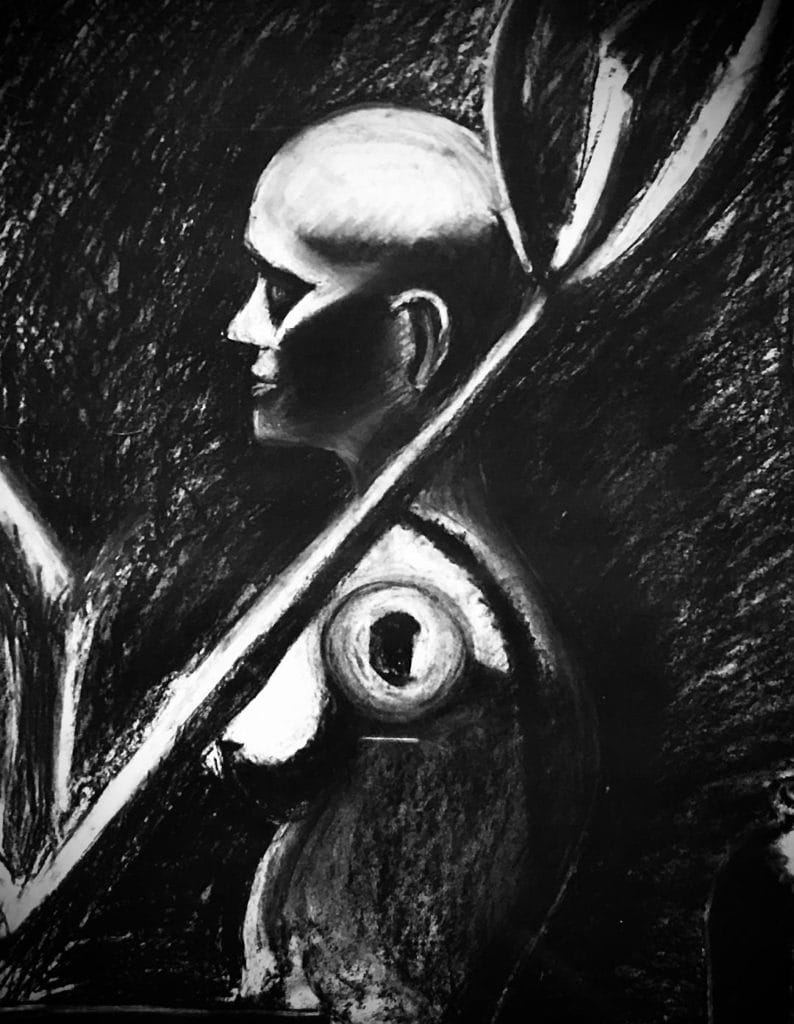

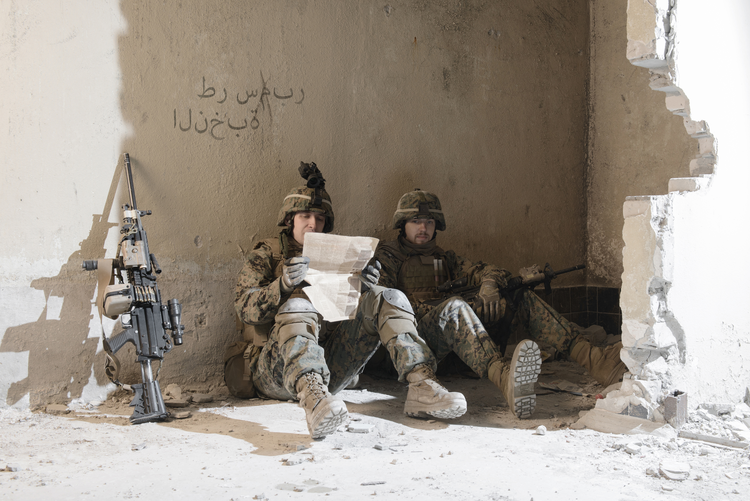
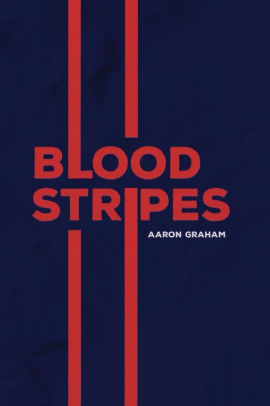
Poetry: “A Beautiful Day to be Buried” by Julia Wendell

Arlington National Cemetery, soldiers, sailors, airmen, marines, military

The sun was shining violently,
as if on a mission to see beneath the surface of things.
Our cortege wormed its way past row on row

of identical white markers, the grounds immaculately groomed,
(Not even a single dandelion, the brother noted),
and visitors searching for Tomb of the Unknown Soldier.

As if we were props planted by the cemetery on this Memorial Day Weekend,
they swiveled heads to watch us pass,
or glanced up from the shoulders of toddlers

their adult arms were both holding back and nudging forward.
We were famous simply because we were sad.
They needn’t have been curious.

We were nobody. Not even much pain,
though a few experienced twinges of nostalgia—
that old sad, Arlington tug.

Once at the Columbarium, the lance corporal
climbed a step ladder and slid her box into the open niche
to join her only mate, not into earth’s dark but the starkness

of marble. I hoped we might also be able
to climb the ladder, to double check
and see what their version of Eternity looked like.

But no, he quickly took a photo with his cell—
assurance the cremains were who they were supposed to be—
before a drill gun set the one-way screws.

A Beautiful Day to be Buried originally appeared in Consequence Magazine on December 1st 2015
Photo Credit: Arlington National Cemetery


New Poetry by Maurice Decaul

civil war, Chancellorsville, Fredericksburg, slavery, racism

U S Grant on the Disbanding of the Iraqi Army

I heard thunder in the mountains
witnessed soft amber lightening in the clouds
saw in the saplings, & yearling whitetail, promise.

When I reached out to take Lee’s hand
to shake, I noticed also, the newness of his uniform
recognized that my own had been caked by
mud & dirt from my ride, & knew then
those questions which had kept me awake
the awful headaches which
overtook me, were for naught.

We had achieved our grand strategy
while in Richmond, the opponent was mired in tactics.

Magnanimity & benevolence being
my best & softest weapons
I applied them aggressively & fed
those desperate men, twenty-five-thousand
meals. I pardoned them & let them keep
hold of their horses therefore denying
them any excuse to develop into a resistance.

This I did in prudence
not wanting to ask the great General to surrender
instead providing him a means
to retire his army from the battlefield, with dignity.


Blue Ridges

Virginia moon, like a wet breast of an old lover
firm like an unripe doughnut peach, has been playing

hide & come find me with clouds & shadows.
On the night highway, road signs like

men in robes, guard rails like teeth or head stones
deer with their headlights look, stand poised

& ready for martyrdom.
Rain clouds blacken the sky; after it rains, Sairan

give the mountains their name. A blue heron lifts it wings.
Southern faces carry confederate residue

like a disaster or a nude woman, I stare.
When is a plantation no longer a plantation?

On the lake shore, with nutria, turtles, brown recluse
& copperheads, I know, I know these waters.

The small voice in my head says leap
it says, these waters will mask your smell.

How will I live here, in the south?
When my belly warns me, be home by dark.


Charlottesville

A woman sits next to me on the bus
I have nothing to say so I look out the window
& I think, if this was a generation ago

& I chose to ignore or respond to this lady’s
entreaties, I might’ve become like strange fruit
ripening in a southern summer.

I want to throw up.

A brochure reminds those of us unfamiliar
in its quaint, elegant way, that “you” are now
in the rural south where respect & gentility….

I hope this woman doesn’t expect a toothy smile
or a chortle, or that I will step off the sidewalk
or keep on listening to her go on & on.


Aleluya

Flocks of birds, explode like atoms;
cottontails, in coyote scat.


Climate

In the market, we look past each other
even as we both reach for strawberries
Excuse, me.
, excuse me.


*


I have a habit of biting my nails.
I fear being bitten by water moccasins.
I dread country roads during new moons.
Last night, I mistook, the whitetail, for spirits.


*


During afternoon rumbling
wind shouting through fractures in stone
like an invocation from the dead
for hemlocks to sacrifice their branches.


*


Slaves’ tears fall from heaven, floods
our plantation, loosens clay, rounds out pebbles.


Photo Credit: Matthew Brady


Poetry: “Last Night I Prayed for Rain” by Mary Carroll Hackett

solstice moon rising early, joining me
to wait for the short night, long sun.
Last night I prayed for love, for what
there is to be won in the soaking, the drenching,
the washing away. Last night I prayed
to be empty, to be full. The moon fell behind
clouds, behind my wanting, but not before
dropping silver coins into my upraised hands,
not before the flowers around me turned
to say my name in their silver voices, to say You
are empty You are full You are empty You are
full
, just before the lightning started,
just before the storm came.

Last Night I Prayed For Rain originally appeared in Consequence Magazine on April 25th 2017
Photo Credit: Basetrack 1/8


New Poetry by Yael Hacohen

IDF, soldier, military, israel

Fortitude

Seven times I’ve been to the Wall
to scribble my prayers
and fold them into
the seams in the yellow stones.
The walls of Jericho fell on the seventh
so I elbow my way through the crowd
to put my ear to the stones
and hear the horses surround them,
but the wail of sirens drown out the hooves
the herds disperse from the plaza
and I forsake the Wall
to let it stand on its own
an ancient olive tree
straining against its plot in the dirt.


Pre Traumatic

The first time I shot an M-16‎
it was the heat of summer in the Negev. ‎
Gas-operated with a rotating bolt, ‎
five-point-fifty six caliber, ‎
with nineteen bullets a box. ‎
I could shoot like an angel,‎
I could hit a running target ‎
at six-hundred-fifty meters. ‎
I cried the first time.‎
I was eighteen.
Already, my hair in a bun.
You didn’t stand
a chance.‎


Photo Credit: Friends of the IDF


New Poetry by J.J. Starr

cavalry, Prussian, horse, mount, warConcerning whether or not I am a horse

I strap torso & press arms

to diaphragm with breath

deep the distressed
voice of mistress
mumbles wishes
amid plum trees
& white headlight
bum-rushes the alleyway—

Am I a horse

kicking at its leathers?
How many full rides & how should I count?

Thought made in moonlight appearing
cogent, succinct behind glass
what makes a full ride?

Pulling hard & pulling harder, making iron
break soil, dancing in dirt, hooves
wet, mane draping the strength of a neck—

Am I

if no bit made better a turning
head? No harm but tightened
hips? & if my breast hardened by use?
My rump sheened in sunlight


Am I a horse?


Many hands have made my length
& I’ve never been bought.

Many hands have made
my length. Many hands.


God Between Us & All Harm

Lighted hallway, delighted guest,
the television the
lens of it, lends itself to you.
Trump again, brackish, weighted
eyes dilated, throat-moaning

“The beauty of me is that I’m very rich.”

Beleaguered, who can even remember a face
these days? My grandfather used to say things
like you can drown in a teacup of water
if you fall right. He was gladly on his way out.

Sometimes I see his point:

LSU live tiger-mascot dies of cancer at age eleven
his empty cage strewn with flowers, paper cards
a student says, “”nobody else had a live tiger.”

company shares tumble by 8%
top of the news feed
taking so much light
I’ve forgotten there’s war in Ukraine •

Afghanistan • Iraq • Nigeria • Cameroon • Niger •
Chad • Syria • Turkey • Somalia • Kenya • Ethiopia •
Libya • Yemen • Saudi Arabia • Egypt • India • Iran •
Myanmar • Thailand • Israel • Palestine • Philippines •
Colombia • Armenia • Azerbaijan • China • Bangladesh •
DRC • Algeria • Tunisia • Burundi • Russia • Mali •
Angola • Peru • Lebanon • Mozambique •

where &

& where else?


L asks what I think of the song

Listening with ears pricked upon
to Young Thug’s Wyclef Jean
I cannot be sure where I meet it

when he says let me put it
& I think of course not—but then
fingering the hem of my skirt

do I reject his desire to squirt
his cum on my face slick as a ghost
because I’m honestly or dishonestly

deposed? I want my skin touched—
perhaps it’s how he asks,
telling me to deny my desire to bask

In the wet filth & become
part perversion myself. Because it was me
that morning who told

my beloved to do it & yes, I did want
kneeling deep in the tub looking up
all my skin like a socket, drooling mouth

blossomed, filled like a pocket.
L said to me, You don’t think
about the implication, the intention.

I said, I don’t think
of the gesture as blind contravention
or anything more than body & mess

upon mess in the deluge of sex. I confessed
I want to be seen as a canvass.
She said, I don’t want to be mean,

with the swat of her hand, but
he’s no Jackson Pollack.


Photo Credit: Cesar Ojeda


Poetry: “Departure” & “Respite” by Justice Castaneda

cities, hong kong, poetry, departure

Departure


Once upon a time, I know I had a plan.

Going to come back, finish the conversation.

Keep all of the promises,

About how it all connected and why

There was so much there

To dream.


Overwhelming really, even takes the breath away,

Freefalling, I let it subside, and the memories fade;

Lake and Oceanside conversations,

Moments to say

I would never forget or let go.

And I knew I would never come back

So I pretend that I never want to leave.

But I do.


And the coast disappears

And you did as well.

Hidden underneath the fog,

Hiding everything;

The mist came in and set us

Right, and put us all

To sleep.


The trains roll,

And the sirens roar,

Through the morning city;

Urban rooster, setting everything to

Go, and it’s a

Long day ahead.


Relaxed, just

Concentrating on breath.

I leave, I know.

This is what I do.


No permanence,

Or stake to claim or defend.

Just life and the road,

And everyone in between it.

Falling in love in the great cities.


But not all.

Not yet.


Respite


Once I drank

One thousand dollars

In a month.


Bit of beer

And lots of whiskey.

Just to talk myself

to sleep

At night.


And if you’ve been awake

As long as I have

I think you would’ve spent

One thousand-

One.


Photo Credit: Abdul Rahman


Poetry: “Nostos” by T. Mazzara

USMC, Marines, Boot Camp
Photo by Lance Cpl. MaryAnn Hill

i. the deadweight of a crooked hook

we crossed any strange boundary in our youths. all amongst some hitch in what aught-wise (or maddenin) might normally be tattooed the standard trajectory of a set, masculine life. unvigorous, but then: the word appropriate means the same as mediocre. pretend studs, almost in-step, fat ϗ nasty no-names mistakin stiffness for bearin. ϗ anon on prints of warnin paint. warrin paint. the same color as cowardice. the same shape as the souls what’s glued to the bottom our go-fasters. choked back inglorious tears whilst some anonymous civilian, some nasty-ass non-rate, who’s better’n us (ever-body better’n us), gripped our slow nogs ϗ used a dull set of clippers to scrape our empty pates as bare ϗ bumpy as dead stones or pinging, spoonless, hand grenades arced toward fulfilment. ϗ we gots ourselves poplar pants, but they ain’t pants no more, them’s trousers ϗ they’s medium reg, like we’s come to ken our dicks is medium reg thanks to bein told so at decibel. they smelt new like us. new before the smokies got them clubbed mitts, the size’a halteres, deep in our guts ϗ twisted. what kinda fuckin faggot wears a blouse? a query. landed faster’n what’s a country? borders? them lines ain’t shit but bloody illusions drawn in the sand with dead an’en marked by colored fabric. how could we know patriot might well means the same as a narrow mind, but also might mean diomedes. we can’t know that. not that. not what imperialism tastes like (corned beef hash). not what consequences smell like (bad apples ϗ human shit). certainly not while some leather-faced smokey is spittin agro to get in line for chow now, cover now ϗ align to the right. breathe in that coffee ϗ coffin nail breath, his halitosis insides, his hard grit ϗ his life seemin harder still. that stale tobacco, ϗ man. he’s yellin again. why the hell is he yellin again? all so funny to me, but i never smile. i’s secret grinnin somewhere hid from all my non-buddies ϗ all them bosses. i know the deal. i know the fuckin deal. i grew up with the deal. all them e-g-a tattoos ϗ meat tags at the zero club pool ϗ e-club pool. get on my quarterdeck, push now, ϗ side-straddle hop now, push now. side. straddle. hop. ϗ get the fuck off my quarterdeck. get the fuck off my fuckin quarterdeck.
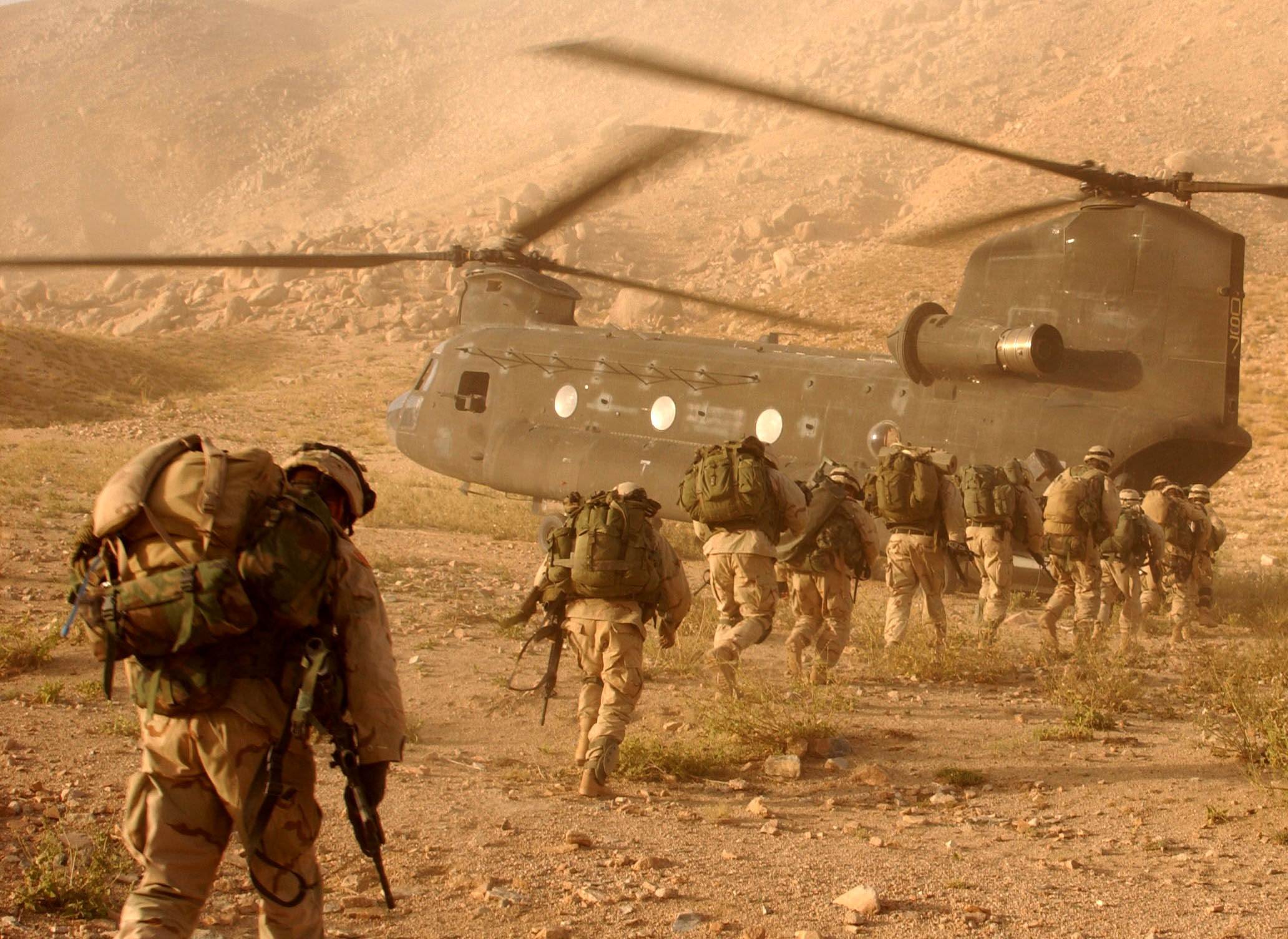
ii. κλέος ϗ νόστος

we was all after hittin a piece of paper downrange. a mob of bolts flyin back. ϗ goddamn if i wasn’t in love with pinchin that slick trigger. worn smooth by other men’s (boy’s) caresses. i groped her long lines ϗ all that warm when i made her go off. my dearest. my colleen. it weren’t all fucks ϗ blowjobs though. sometimes i failed to give her proper attention. like i missed them trainin me to rapid fire, cuz (near enough for me to see) there was this grasshopper chewin on a leaf of clover like it was his last fuckin meal. focused on that instead of listenin to the pith helmet barkin instructions. yeahyeahyeah. got the general gist that we’s supposed to squeeze that pulsin trigger a bunch of times real fast. when she went off, she kicked a little. though they told us not to, thumbed her into burst just to see if the devil would appear. he didn’t. so i clicked her back to semi. but then wasn’t payin attention when they taught us how to tie a hasty sling cuz a pale paper butterfly decided to tic her hairy feet gainst colleen’s front site post. threesome. nice. nothin means nothin. shot expert. up inside my colleen. but not all did. those most in love with touchin that delicate clit. those most in love with the idea of murder with impunity. i suppose. i’s wrong. we moved on. cease·fire, cease·fire, cease·fire.
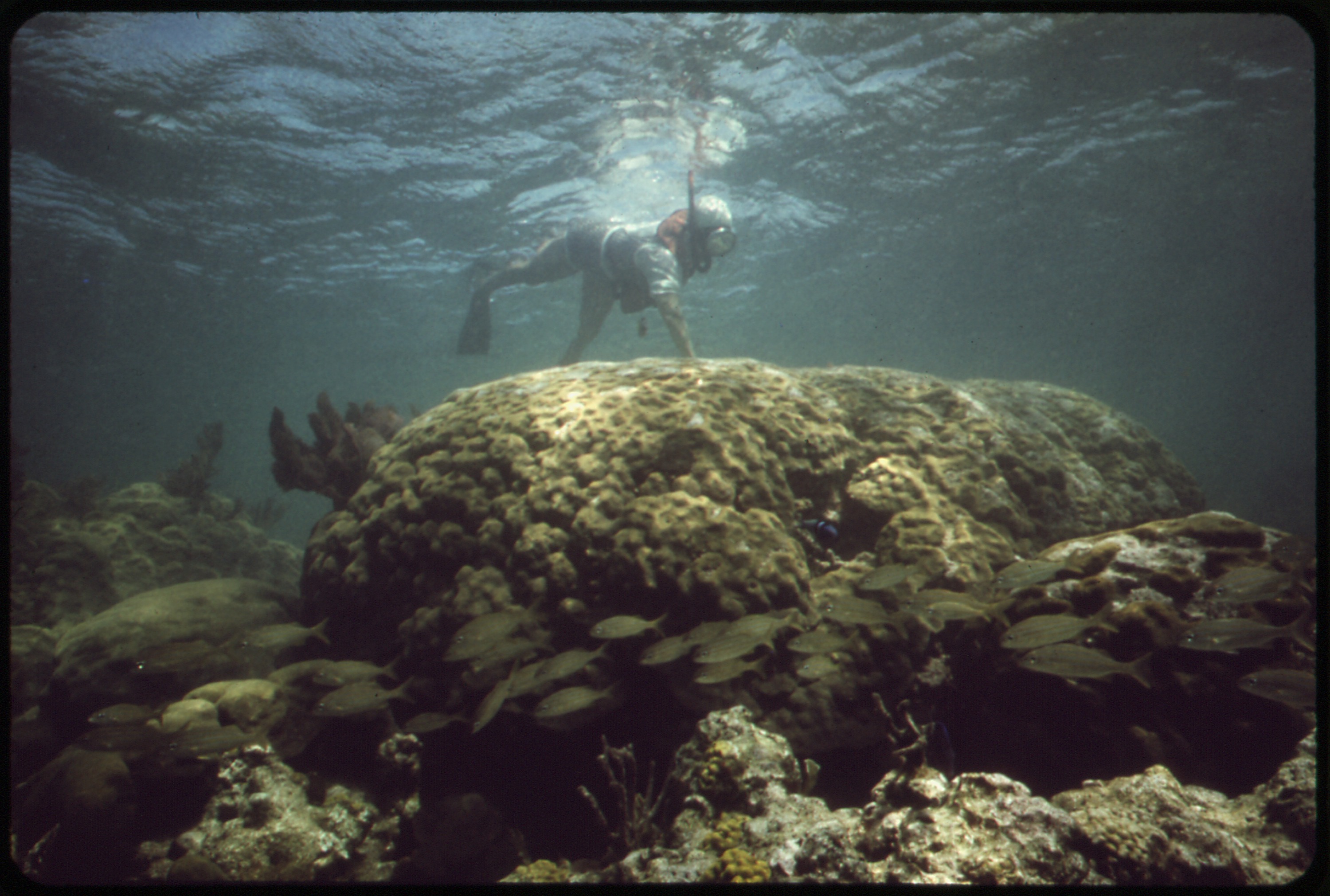
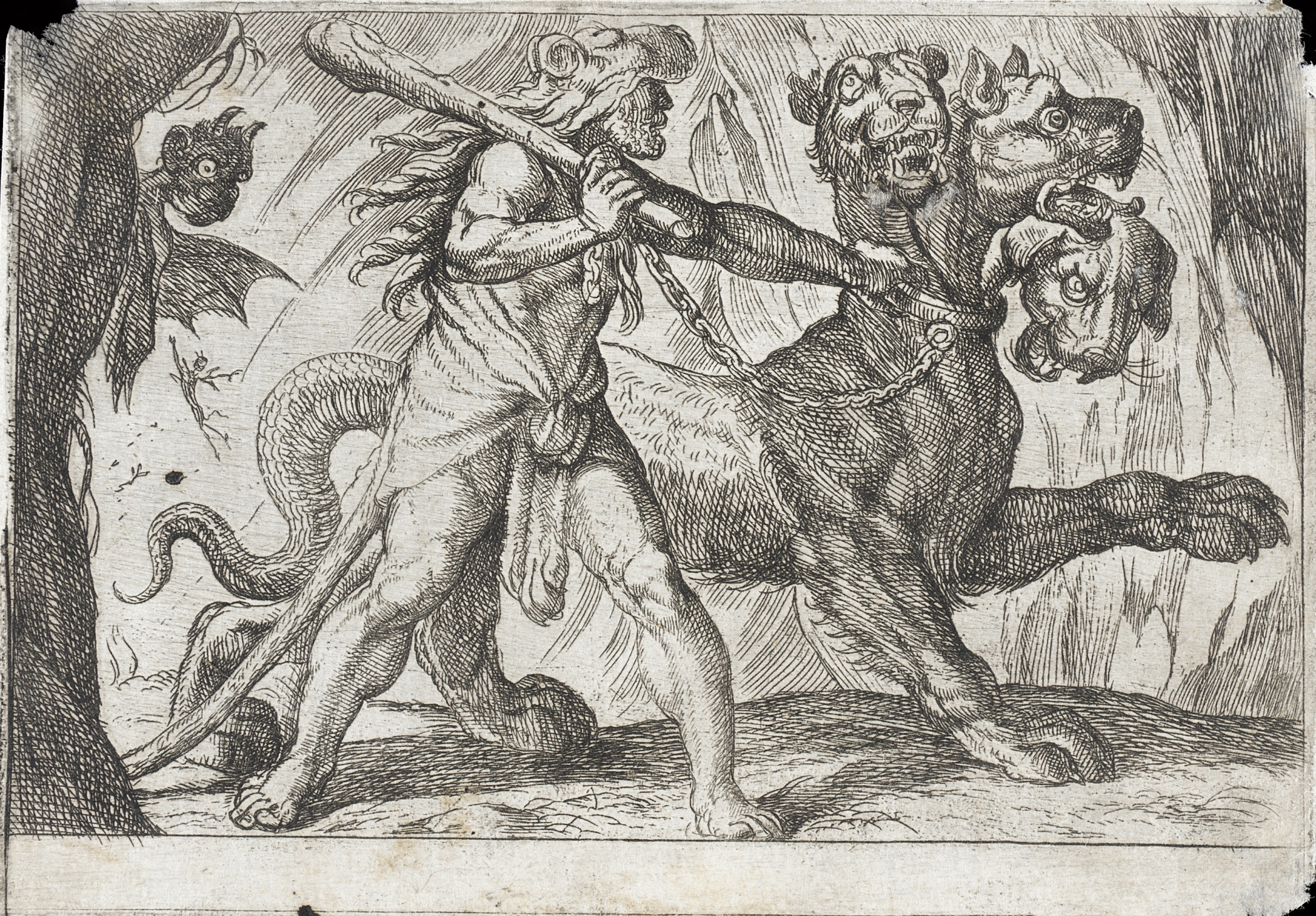
iii. bad apples ϗ human shit

our lot. sometimes we found ourselves sawin aggregate with dune-shaped skin on our palms, like rolled wales on a grounded ship beside the atlantic. that remembered firth. only remembered cuz it weren’t there. that remembered us. those slips. those lappings ϗ rage. foam ϗ weather. over there. over where? sensed ϗ yearned. smelled, maybe. ϗ we wiped that same wet salt from fore to clean-shaven jawbone ϗ flicked a spray gainst the loam, ϗ greens, ϗ dust, ϗ olivine, as we handled awkward entrenchin tools under hot-ass darkness ϗ still a threat of rain, like some mofo green god what’s born in a distant country was gonna come over ϗ blanket us in cool water. only, just like the devil, he also never showed. we. erect, or bent. thrust fuckin fightin holes en un humedal, en la vieja florida. this earthen bed, these layers. the frogs built this place. then los españoles. ϗ god, ever swingin dick dissemblin our mom-fuckin father’s fetishized imagination of what tough must be. ϗ all whilst we was shattered to pieces twixt kleos ϗ nostos ϗ there is the covert knowin home was always the better choice. my nostos has perished, but my kleos will be unwilting. foreals tho: we’s all just pansies in the groundwork, down to our heels. our youths in hard-on blossom. but—no homo.

iv. love with the idea of murder

we humped. god, we humped. march. run. march ϗ run. that accordion behavior of a ruck run. with alice on our backs ϗ l-b-e ϗ mags ϗ full canteens. ϗ we became individuals when one amongst us shit his pants cuz he was too afraid to ask for a head call. we grateful for the break afforded us as them smokies took shitpants off the dirt path ϗ did godknowswhat to him out past the treeline. we breathed ϗ drank water ϗ thought of her at the end of the line. goin again. run, motherfucker, run. we was troubled dissimulators all, uncolored, uncouth, middlin claimants to whichever (sweet) mary jane (rottencrotch) we might once have seen. smoked. once. upon a time or actual. then clutchin our shafts, cuz we too are afraid to ask for a head call, we hear ϗ agree with the smokies that we is “out there” ϗ double-timin whilst we “waitin for scotty come beam [us] the fuck up,”—up, up—out some godawful, risin regret: ewe signed the muthafuckin contract, brother. we’s in-step now, clenched in vigor, all together: a single, strainin, sweatin, fist—We—forty inches back to chest. so says that make-shift swagger stick, that cut-off broom handle taped ϗ tapped in time gainst steamin cement til, together, we all trek, bangin heels gainst bitumen blacktop, then out—out ϗ through dun salt—salt ϗ sandy basins, out amongst sallow pines ϗ up in this undeveloped estuary, no sign of civilization anywhere beside the red brick lines of covered ϗ aligned bully buildins ϗ all them pressed uniforms. by the end, we, all us, ever swinginfuckindick, would fuck our mothers ϗ off our fathers (we learned how in hittin skills ϗ on the bayonet course) to wear that scratchy blue tunic, to be diomedes, or don them crossed rifles, or the auric fuckin parrot grippin that big, dirty ball we been stompin over for months, that mud globe what’s stabbed through ϗ through with the deadweight of a crooked hook. a small bit of metal what could stop a ship. but what hook ain’t crooked? doing exactly what it’s meant to. we column left ϗ align right ϗ stand at parade rest as moms ϗ dads (who can’t know we’d kill em just soon look at em) cheer ϗ applaud our crossin the shadow-line. we’s dismissed in the heat, in our blue deltas, in our spit-shined leather dress. we’s discarded for a week’s leave, like droppin’a handful of sharpened crow’s feet on the blacktop, about an hour north’a zabana.


New Poetry by Randy Brown

 PHOTO: Marie-Lan Nguyen. Bust of Homer

Toward an understanding of war and poetry, told (mostly) in aphorisms

Poetry is the long war of narrative.

Poetry, like history, is subjective.

If journalism is the first draft of history, poetry is the last scrap.

Poets set the stage of victory. Just ask Homer: Who won the ball game?

Do not make fun of war poets. A war poet will cut you.

War is hell. Poetry is easier to read. But each takes time.

Any war poem is a final message home.

Poetry can survive fragmentation. Irradiation. Ignorance.

Poetry can cheat death. Poetry has all the time in the world. Poetry will outlast us all.

Poetry is a cockroach.

“History does not repeat itself, but it does rhyme.”—Mark Twain

“Twain didn’t actually say that.”—John Robert Colombo

John Robert Colombo is a poet.

______

Notes: While John Robert Colombo incorporated the popular “history rhymes” quotation—which he then attributed to Mark Twain— into his 1970 work, “A Said Poem,” he later privately reported he was uncertain of its origins. And, despite the poetic construction here, Colombo himself never said, “Twain didn’t actually say that.”

In an 1874 introduction to “The Gilded Age: A Tale of To-Day,” co-written with Charles Dudley Warner, Twain apparently did say, “History never repeats itself, but the Kaleidoscopic combinations of the pictured present often seem to be constructed out of the broken fragments of antique legends.”

History prefers Colombo’s version. So do I.


 PHOTO: Spc. Leslie Goble, U.S. Army. A soldier peeks out of the “Death Star.” The outpost overlooks Combat Outpost Najil and is manned by soldiers 24 hours a day.

the bottlefall at COP Najil

in summer sun, a plastic waterfall cascades,

the emptied residue of our Afghan brothers

encamped along the ridge just across from the fortress

we call the Death Star.


above and below, a Scout Weapons Team buzzes up

and down the valley, TIE fighters searching for a truck

full of fertilizer, a bomb waiting for us

to happen.


we have taught the Afghans well: That water

comes only in bottles. That cowboys don’t

care for the desert. That our brand of war

is sustainable.

_____

Notes: The acronym “COP,” pronounced “kahp,” stands for “Combat Outpost.” A “TIE fighter” is a fictional spacecraft—one that is powered by “Twin Ion Engines”—that first appeared in the 1977 movie “Star Wars.”


the homecoming game, a war sonnet

 PHOTO: Jessica Blanton. Navy Petty Officer Jeff Howard surprises his mother and grandmother at a Falcons Preseason Game at the Georgia Dome. Petty Officer Howard’s mother, Tina, thought he was still in Afghanistan. DVIDS worked with the Falcons to coordinate the emotional homecoming.

Friends and countrymen, lend us your eyes

–the half-time tribute our G.I.s deserve!

For patriots’ love, a gladiatorial surprise:

one family’s tears on your behalf observe!

Our man behind curtains will soon appear

to his kids and young hot wife transported

from Afghanistan to home so dear,

their kiss upon a Jumbotron distorted!

Then, attend these soapful sponsored messages:

Your focus on this spectacle so pure

will wash your laundries and your sins in stages

gentle, scent-free, and all-temperature!

    For we, about to cry, salute our troops—

    their sacrifice played in commercial loops.


three tanka from Des Moines, Iowa

Spring 2016

1.

 PHOTO: Spc. Emily Walter, U.S. Army. Cadets file into a Chinook helicopter to begin the Ranger Challenge, Nov. 3 at Camp Dodge, Iowa. The challenge consists of several tactical training events that test the soldiers’ physical and mental capabilities.

A flock of Black Hawks

thudding through our barren trees

announces March drill.

In springtime, comes the fighting,

but we wait for the Chinook.


2.

With ceremony,

Old Man assembles his troops.

It is Mother’s Day;

sons and daughters are leaving

in order to sustain war.

3.

Conex boxes stacked

in the Starbucks parking lot

bring back memories

of making war and coffee.

I miss the old neighborhood.


Randy “Sherpa” Brown embedded with his former Iowa Army National Guard unit as a civilian journalist in Afghanistan, May-June 2011. He authored the poetry collection Welcome to FOB Haiku: War Poems from Inside the Wire (Middle West Press, 2015). His work has appeared widely in literary print and on-line publications. As “Charlie Sherpa,” he blogs about military culture at: www.redbullrising.com.