New Nonfiction by Fred Cheney: Tracers
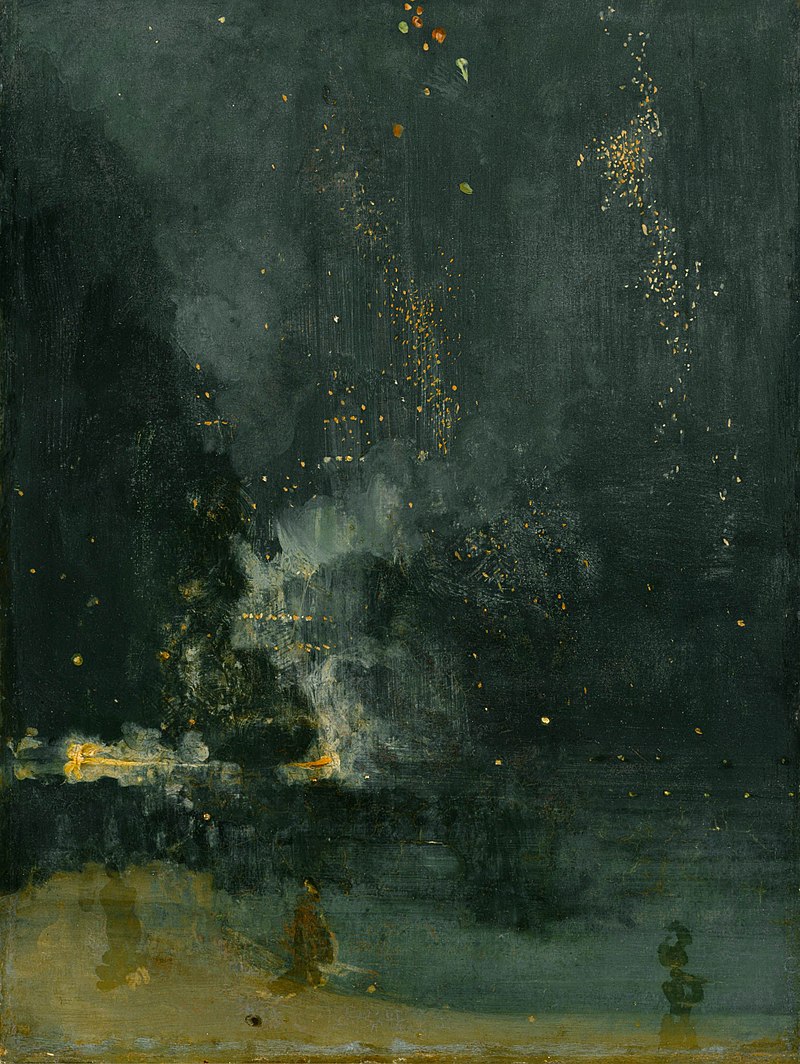
By James McNeill Whistler - http://www.dia.org/the_collection/overview/viewobject.asp?objectid=64931, Public Domain, https://commons.wikimedia.org/w/index.php?curid=127417

I’ve changed all the names in this story except my own. They’re all dead, but … that afterlife thing just might be true.

I’m an old man now, but I was ten or eleven or so in this story. Across the road, lived Ben, six months my senior, and Timmy, six months younger than me. We lived out in the country, without another kid our age for miles. So, we bonded. We bonded by chasing the neighbors’ cows. We bonded by stealing cigarettes from our parents. And we bonded by reading GI Joe comics. Each week one of us would put up the nickel to buy the latest one. When we got a chance, we lied our way into a war movie in Brunswick, usually Audie Murphy stuff. We were fixated on the glories of war.

At the time, Ben and Timmy’s father, Arkie, would get drunk and talk about war. He had fought in the South Pacific. Word was he’d killed 27 men in hand-to-hand combat there. [I wonder why he drank.] Another skill he had was theft—or souveniring, as he called it.  He shipped or brought home on leave an impressive assortment. Helmets, ceremonial flags, swords, maps, and firearms. Had he made a career of the military, I’m positive there’d have been a Sherman Tank over there.

Did I mention firearms? The one that fascinated us most and was most supported in the GI Joe comics and Audie Murphy movies was the BAR—Browning-Automatic-Rifle. And among the things we liked about it from our reading and viewing were TRACERS. These were bullets that left a fiery trail so the soldier could see where his ammo was hitting at night. This was exciting on the pages of a comic. It was thrilling in a movie. And Arkie had a BAR and according to Timmy a bunch of clips with TRACERS written on them.

We knew better than ask him for a demonstration. “You stay the hell away from that war shit. It ain’t good,” is what sober Arkie would have said. However, we weren’t about to stay the hell away from this fixation, and besides … we were sneaky.

I don’t know if the counterpart of carpe diem is carpe nocturn or carpe noches or what, but there came a night for us to carpe … or seize. My parents were going over to Cumston Hall in Monmouth where the players were doing Gilbert and Sullivan operettas that summer. I had made them pay dearly for dragging me to Madam Butterfly two weeks before. So, they made me promise to brush my teeth and go to bed on time. Step 1 of the plan was handed to us. Step 2 came just about as easily, as Arkie nodded off just when it got dark. Ben snuck the BAR out, and Timmy scored three clips that were marked as having one tracer every fourth shell or so. We headed for their back field.

We settled ourselves on a rise with about 120 yards of open field before the tree line and the railroad tracks. We hefted the rifle, and brought it up to our shoulders, practiced bracing our feet. That last didn’t work so well, and I decided that I’d shoot from the hip, just like GI Joe. But I wouldn’t do it one handed because, at about 18 pounds, the gun was too heavy.

We usually did a series of rock-paper-scissors to determine who would go first, but this night Ben played the age card. “I’m oldest. I go first.” Since we’d all get a chance, Timmy and I let him get away with it.

Ben got into a sitting position and mock sighted with his elbows on his knees. Satisfied, he set the adjustment for full-automatic, slapped the clip into the magazine, jacked a shell into the chamber, and released the safety. He took a breath and pulled the BAR tightly into his shoulder. He held the trigger enough time for four or five tracers to launch. Then, he put the gun on safety and prepared to hand it to me.

But I was jumping up and down and slapping Timmy’s back. We were excited beyond belief that it was even better than the comics or the movies we’d seen. Then Ben, reflecting on something new, yelled, “Stop, for chrissake. STOP!” We stopped.

What neither G.I. Joe nor Audie had explained to us was why tracers glowed. It’s a magnesium fire in the bullet, and it burns at about 3500 degrees.

Ben elaborated. “Down there. We set the pickin’ woods on fire.”

Pickin’ was our word then; it was safe to use around adults, and they wouldn’t get on our ass, but we knew what we meant. Timmy and I looked at the tree line and, sure enough, the pickin’ woods were on fire.

I’ve never known that level of fear, before or since. We three were ripping up ferns and tearing down branches that were on fire. We stomped them out. We kicked apart brush piles and jumped on anything that glowed. We gave up our bodies rolling on tufts of flaming grass or even sparks. We had to get those fires out, all of them, or Arkie could easily round his total up to 30.

With our last breath, we felt that we had all the fires out, little and big. We unloaded the BAR and headed for home. They went in their house, and I went across the road to mine.

Since we didn’t have running water then, I couldn’t take a bath or wash my clothes. They were burnt and sooty, so I threw them away. I went to bed without brushing my teeth.

I was asleep when my parents came in all excited about The Pirates of Penzance. The smell in the house dispelled that excitement right away and drew my mother to the trash bin. “These are what Freddie wore today, but they look like they been rubbed with ashes. Look, some are burned through.”

My father took the clothes, sniffed them.  “I’ll get him up.”

The combination of fear and fatigue put me in a truthful state. I didn’t even consider making up a story to cover this. I told the truth, the whole truth.

“Are you sure you got all the fires out?”

I nodded.

“We’ll check.”

So, I put my filthy body into clean clothes, something I was never allowed to do, and my father and I walked past Arkie’s house and down to his back field. I showed him where Ben sat when he shot, and where the fires were. I skipped the part about how pickin’ dramatic tracers are at night. Right about then, I just wasn’t feeling it.

We went behind the tree line and paced back and forth. In somewhere between 30 minutes and three months, Dad said, “Looks like you got it. Good job.”

When we got back to the house, Mom had bath water heated. I stripped down in the middle of the kitchen and washed the grime off.

Dad said, “Now go to bed. We will never talk of this again.”

And I haven’t until now. Everybody’s dead.



New Fiction by Nancy Ford Dugan: “Flow”

So, Abe, the pleasant guy who buzzes you in every week at the bubbled-roof tennis facility, takes your thick wad of cash (he appreciates exact change) and makes the usual small talk: weather, recent professional tennis matches, how he’s doing fixing up the fixer-upper he just bought in Queens, etc.

Lately, you’ve also been discussing updates on when the tennis club is scheduled to permanently close. The date keeps shifting, but it’s imminent.

He’ll lose his job. You’ll lose your precious hour of weekly tennis.

Today, you notice for the first time a large swelling at Abe’s neck. Behind the plexiglass, you suppress a gasp and try not to gawk. You glimpse. It’s protruding like an Adam’s apple, but halfway down his neck and on the side.

Is it new? Is it painful?

Should you tell him?

Is he blithely unaware?

Or is he fully aware and ignoring it?

Or is he aware and already undergoing medical treatment to deal with it, to keep it from growing, to keep it from consuming all of his neck and possibly his friendly, dark-eyebrowed face and even his shaved head?

Your long-time tennis partner would know what to do, and whether you should bring it up with Abe. She was raised down south and has impeccable manners.

But she’s in Egypt for a climate change conference and to see the pyramids. Or so she says. You imagine she is a perfect spy or a radical activist. She is tiny, nondescript, unassuming, and so soft-spoken no one has a clue what she is saying. She is traveling despite all the warnings and articulated dangers associated with travel for someone her age during what is hoped to be a waning phase of the pandemic.

If you wait for your tennis partner to return (in a few weeks) to consult on how to handle Abe’s situation, it may be too late for Abe. And it will be solely on you if Abe dies before her return from her high-risk trip because you neglected to mention the large swelling attacking his neck.

Abe is functioning fine. He’s busy juggling multiple phone lines, multiple demands for coveted weekend court time. Not knowing what to do, you wave at him through the plexiglass, he smiles back, and you wander to your court, fully masked for action.

You and your tennis partner have been playing with face masks on for several months now; they fog up eyeglasses, pinch behind ears, cut visual perspective horizontally and vertically, and muffle attempts at conversation. On the other hand, there is the possibility that wearing masks while exerting and running could improve lung capacity.

After ten minutes on the court with the young local pro, you are huffing and exhausted. So much for lung capacity. Fifty more minutes to go. During the expensive lesson, you want to make every costly minute count. But you are distracted. You hit the ball wide or long or inaccurately into the sloping net.

Is the distraction due to concerns about your partner’s long, potentially dangerous trip? The amount of extra money you have to pay for a lesson while she’s away?

Or is it all due to thoughts of Abe’s neck growth? To wondering if it will intensify or expand to the size of a yellow tennis ball, while you are selfishly hitting one instead of helping him? What will Abe’s neck look like when your lesson is over?

Will the growth turn yellow? Will that mean it is full of pus?

Why aren’t you racing off the court to beg Abe for the love of God to go immediately to an urgent care center (there’s one only a few blocks away) to address his neck issue?

***

You are unaccustomed to the steady onslaught of briskly and accurately placed balls the pro provides. He plucks the balls nonstop from a jam-packed grocery cart and smacks them at you.

You are accustomed to a sluggish weekly pace with your tennis partner, filled with rambling delays between points as she collects loose balls and places them in odd arrangements at the back of the court. You imagine she is plotting to overthrow a government on a continent oceans away, beyond this smooth, immovable, and bright blue deco surface. You impatiently pace, wait, and sometimes perform jumping jacks until she is finally ready to successfully hit her serve with the intensity of ten thousand suns. Or she hits it directly into the net.

From his side of the court, the agile-legged pro speaks liltingly about flow. “Where is your flow?” he asks. “Don’t rush your shots. Get your arm back early. Get it! I like that one. Pivot! Run up to the net. Keep your wrist steady.”

You have heard these commands, especially about wrist and flow, nearly every time you take a lesson when your tennis partner is unavailable and your back-up options (a sturdy friend from college, a hard-hitting former work colleague) don’t pan out.

Your wrist is the size of a pencil, so what’s a woman to do? It doesn’t wobble on return of serve since you have time to prepare. But impromptu, at the net, it dips. Some might say it collapses. You start mumbling your “Grip!” mantra to yourself under your multiple masks. It helps you focus and slightly improves the wrist flailing.

As for flow, some days you have it and some days you don’t. But honestly, how can you flow when a young man’s neck might now be the size of a Buick while you, a masked idiot, gambol all over your side of the court and contend with an unreliable wrist?

You associate the word “flow” with menstruation, something you have not had to worry about for quite some time. Years ago, at a Long Island party where everyone discussed furniture, you were introduced to a much older, wizened man. Over the course of your very brief conversation, he chose for some reason to confide in you that he only dated women who still “flowed.”

At the time, you silently wondered:

  • Who invited this guy to the party and why? And who uses the word flow in this manner, much less in party patter with a stranger?
  • How does he screen for flow status upfront, before dating anyone? Does he require a doctor’s note? Does he check out bathroom cabinets? Does he ask women directly? Do they punch him in the nose as he deserves and as the woebegone look of his nose implies?
  • Has he incorrectly assumed you no longer flowed, or God forbid that you were interested in dating him?
  • You have a gorgeous and smart friend, a mother of twins, who went through early menopause in her thirties. If he had met her “post-flow” would this presumed Viagra user find her lacking? Chopped liver?

Now you wonder why couldn’t that guy have a tennis ball affixed to the side of his creased neck instead of poor, young Abe? Abe, who hasn’t even finished fixing up his house.

In fury, you use your two-handed backhand to nail a deep, perfect shot down the line past your lilting-voiced pro. He’s unable to return it. He smiles broadly at you and says, “Nice!”

Flow or no flow, for a moment, you’ve still got it. And it feels so good to hit something.

Maybe Abe just needs some drainage.

Maybe your tennis partner will return safely and virus-free from Egypt.

Maybe the tennis club will stay open.

All unlikely.

But, maybe, and it’s a long shot, a very long shot, maybe you will learn finally to go with the flow.

But, then again, why start now?