New Nonfiction by Karie Fugett: Excerpt from Alive Day
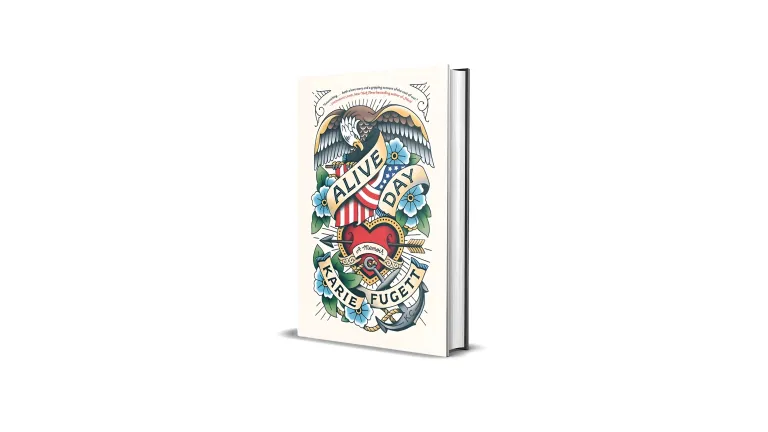
 

Alive DayExcerpted from ALIVE DAY. Copyright © 2025 by Karie Fugett. Used with permission of The Dial Press, New York. All rights reserved.

Chapter 5: Alive Day

March 13, 2006

Dillon crawled in circles on the carpet, the TV behind him glowing with reports of destruction and death. Though it had been only days since the boys left, it felt much longer.

“Three people died in Iraq yesterday,” Brittany said as she watched the news and flipped through a People magazine, her gaze switching from page to screen and back. “I wonder how long it takes them to call the families.”

“How can you watch that shit?” I asked as I passed through the room.

“If I don’t know what’s actually happening, my brain just makes stuff up and that’s always worse. Oh no!” Brittany jumped out of her chair and ran to her son. “That’s not for you, baby boy.” She took a picture frame from his hand, then picked him up over her head to sniff his diaper. She kissed him on the cheek and placed him in his playpen.

“You just haven’t found good enough distractions,” I said. Cleve’s unit had been sent to fight the Battle of Ramadi. It was dangerous: fighting in the streets, virtually no law and order. Cleve called it the most hostile place in Iraq. His unit’s job was to secure the city center, and it was very likely that someone would die or be wounded. “Cannon fodder,” I once heard someone call units like Cleve’s. The units that were young. Uneducated. Replaceable. Expendable. The idea that these men were simply pawns, meant only to put a barrier between the enemy and the higher-ranking Marines who were considered more valuable, made me sick. I was starting to wonder if this had been part of our country’s plan all along: let poor people struggle to survive so that when the time comes, they can be lured into the military by the promise of food and healthcare and shelter in exchange for using their bodies to protect the rich and powerful.

Watching the news was like watching the sun set: the result was inevitable. Someone in Cleve’s unit was going to get hurt. Someone would die. The news reported seven service members had died in Iraq since the day our husbands deployed. I knew because Brittany was keeping me updated. Watching all the world’s pain and suffering on a tiny screen from the safety of my home has always been difficult for me, a reminder of how small I am, of how little power I have. There was nothing I could do about any of it. If something was going to happen to Cleve, something was going to happen to Cleve. For my own sanity, I needed to focus on things I could control.

I sat down at the computer Brittany kept in her bedroom and wiggled the mouse. The screen came to life. Firefox still had all the tabs I’d pulled up the day before: Monster.com, Coastal Carolina Community College, a list of things to do in the area. I had even looked up guitar lessons. I’d wanted to learn to play since childhood. Lessons were too expensive, but a girl could dream.

“How are those distractions working out for you?” Brittany asked that night with a smirk on her face. She was sitting across the dining room table from me, eating a bowl of macaroni and cheese. Brittany had tried to avoid thinking about the war during her husband’s first deployment, but it didn’t work. She wasn’t convinced I’d be any more successful at it than she’d been.

“Shut up,” I said. “How long before they can contact us, though, for real?”

“Last time, it was sometime in the second week. They’ll probably have computers. I’m not sure if they’ll have Myspace, but they had AIM last time.”

While I waited, I wrote Cleve letters. I mailed him a letter every day so that once they started arriving, he’d have something each night to cheer him up. I printed off pictures of him and placed them around my room, including one under my pillow. At night, I would pull it out and stare at it, wondering where he was, what he was doing, and if he was okay. Boredom and loneliness have a way of making time stretch. Com- bine the two, and you might be stuck in a single moment forever. This deployment had only just begun, and it already felt unbearable. On the fifth day, he finally called.

“It’s not pretty out here,” he said. “I sure miss those pretty eyes of yours.”

“I miss you, too. Are you okay?” I could hear voices in the background.

There was a long pause before he answered. “Yeah, I’m fine. Y’all doin’ all right?”

“Yeah. I think there’s a lag. Something’s wonky. Our power got turned off a couple days ago, but we—”

“Yeah. It’s always like that,” he interrupted. “Ah. That sucks.”

“What, your power was turned off?” he said.

“The lag is so annoying.” I laughed uncomfortably. “But yeah, the power’s fine now. We figured it out.”

There was another long pause, then Cleve said, “Okay, good. We’ll get paid soon. It’ll be more ’cause I’m deployed. Help Brittany with bills or whatever you need.” He’d given me access to his bank account before he left, and because we chose not to live in on-base housing, he had some extra money from getting married that he insisted I use while he was gone. We’d talk about money again when he got back.

I waited a second until I was sure he was done.

“Thanks, babe. I applied to a bunch of jobs, too. I also applied to the dental hygiene program. Then I’ll be the moneymaker taking care of you.”

Pause. “You goin’ to be my sugar mama?” Pause. “I can be your sugar mama.”

Pause. “Hey. Gotta run,” he said. “I love you. I’ll try to call ev . . .” “Oh, okay. I . . . damn it, this lag. I love you, too.”

Pause. Cleve laughed. “Bye, baby.”

Cleve called every day at first, sometimes multiple times a day, and he always seemed relieved when I answered. I learned to keep my phone on me so I didn’t miss him. When I slept, my cellphone sat next to my pillow with the volume turned all the way up. By the end of the second week, Cleve called less, and when he did, he didn’t say much.

“I’m just busy s’all,” he said when he called for the first time in four days. I’d asked him if anything was wrong. His answer made sense—of course he was busy—but it didn’t explain the shift in tone. There was a heaviness I couldn’t pinpoint. Something was being left unsaid. He’s at war, I told myself. 7is isn’t about you. But I couldn’t help feeling like something else was going on. The way we’d gotten married left me feeling insecure. I’d wondered from the moment he proposed whether he’d felt obligated to do it because I was living in my car. I wondered if he regretted making such a huge decision so hastily. I heard an explosion in the background, but he didn’t react.

“Well, I love you,” I said, and he said it back. “When will you call again?”

“I dunno,” he said, and that was that.

When I told Brittany I was feeling insecure, she was careful but honest.

“You need to take care of you,” she said. We were drinking beers on her bed. We’d just put Dillon to sleep. “I know him, and he’s going to take care of himself.”

When I asked her what she meant, she shrugged and shook her head. “I didn’t expect to be close to both of you. I just want you both to be happy.”

Brittany and I had become inseparable in the few months since we’d met. We did everything together. We did each other’s laundry. We cooked each other food. We cried and laughed together almost every night over bottles of wine. She was the closest friend I’d had in years. But despite our budding relationship, she’d known Cleve longer than me. She was conflicted about who she should be most loyal to.

“I need you to promise me you won’t say anything to him,” Brittany said quietly.

“I won’t,” I promised.

“Well, you aren’t the first girl he’s brought here.” “What do you mean?” My heart was starting to race.

She sighed and took a swig of her beer. “He proposed to his ex like six months before you two got together. She said no and they broke up, or maybe they weren’t even actually together, the story changed a few times, but I’m pretty sure they keep in touch. That’s all I know for sure,” Brittany said. She exhaled. “You okay?”

When I tried to respond, I just cried. Cleve hadn’t mentioned this ex before, even though he’d asked her to marry him not long before he messaged me on Myspace. I was already afraid he’d only wanted to marry me because he felt bad that I was living in my car, and now I wondered if he was looking for any wife at all to get the extra benefits from the military. I wondered if he even loved me. Was I just a rebound? “I know he loves you. It’s not that,” Brittany said. “I don’t know what

it is, really. He’s just . . . Kinsey. You know how guys are.”

I knew how guys were. I thought about the twenty-year-old who took my virginity when I was sixteen; the shadowy figure who molested me when I was six; the Tampa men; the married pilots who were always trying to hook up with the young flight attendants. Now Cleve was keeping secrets from me, possibly even using me as a rebound. What is this game I’m playing? I wondered. Where is the rule book?

“What do I do?” I asked, but I already knew what I would do if I had to.

I could feel the instinct I’d learned from my parents kicking in: I wanted to run. I was already going over escape plans in my mind before Brittany could answer. But I didn’t have a lot of options. Cleve was financially supporting me until I could find a job.

“I don’t know,” she said. “But I’ll help no matter what you decide.” Two days later, the phone rang. When I picked up, silence. “Hellooo?” I said a second time.

“I just don’t know what I’m doin’ in this life anymore,” Cleve said finally.

A knot grew in my chest. It was happening, I thought. He could have been talking about anything, but I knew in my gut he was gearing up to say getting married had been a mistake. He’d been so quiet with me, and now the news about his ex. Something just wasn’t right. Unsure of how to respond, I waited to see if he’d say anything else. When he didn’t, I asked if he was okay.

“Some days I feel like this is it, ya know? Like, maybe I’m not comin’ back this time. This is my destiny or some shit,” he said.

That was not what I’d expected. I’d been so distracted by what Brittany had told me and by how quiet he’d been that I almost forgot where he was. I grappled with asking about the other girl. Who is she? Do you call her, too? I wanted answers, but I decided to wait. He needed me to comfort him.

“Please don’t say that,” I said. “Just get through the next few months. Then you’ll be home with me, and this will be behind you. I’ll take care of you,” I said. “I love you.”

“Thanks,” he said. “I’m just all in my head. It’s fucked-up out here.” “What can I do?” I asked.

“Just somethin’ I have to deal with on my own,” he said. There was a prolonged pause and a deep sigh, and then, “I don’t think I can keep doin’ this relationship.”

There it was. So quiet. A whisper, almost. Infuriatingly quick and straightforward.

“What do you mean?” I asked. “Please don’t say that.”

“We shouldn’t have gotten married, Karie,” he said. “I messed up.”

I begged him to take it back. It was the war, I tried to convince him, something in that hot, foreign place, something temporary that was clouding his judgment.

I pleaded. I begged. All he could say was sorry. I cried into the phone for too long, then heard a sigh and a click. I spent the rest of the day in bed, crying and cursing at pictures of him. What was it about me that made me so easy to leave?

When I woke up the next morning, I decided I wouldn’t let the sadness

keep me from being productive. If there was one thing I’d learned from moving so frequently as a child, it was how to adapt quickly. I pulled myself together and began planning my next move. Brittany said I could live with her no matter what happened with Cleve, and I was grateful. I had some interviews lined up, and to my surprise, I’d been accepted to the dental hygiene program at the local community college. The plan seemed solid. I could breathe now.

“What a mess,” Brittany said one night as we sat on our back porch, drinking wine and smoking cigarettes. “The boys changed in Iraq last time. Who knows what will happen with Nick and me.” Nick was Carson’s first name. Everyone except for spouses called the guys by their last names. Brittany shook her head, rolled her eyes, and took a sip of wine. “He hardly even pays attention to his son. It’s probably because I had him when he was deployed. There’s no connection there. Nick left when I didn’t look pregnant at all, then boom, he comes back to a baby screaming in the back room.”

“I’m sorry,” I said. I’d gotten the sense that she felt stuck. I knew what that was like. I had felt that way for most of my life. “I’m glad we found each other.”

She raised her wineglass. “It’s hard not to be bitter sometimes. I was dragged out here for love, then left in the dust of war.” She took a drag of her cigarette. “You know Nick and I met in high school? He chased me. I kept saying no, but finally I gave in. I fell hard after that. Life is crazy. Now it’s two years later, I have a baby, and I’m the one waiting.” I thought about Brittany—the way her shoulders slumped, the way her hair hung stick-straight at her shoulders, her calming voice, her half

smile. She was only twenty years old and already so tired, so resigned. “You think this is a phase?” I asked. “Maybe they’ll go back to nor-

mal after they get out?”

She shook her head, her hair glowing the color of wheat under the porch light, june bugs winding in the air and slamming their bodies into the sliding glass door as if they’d been drinking, too—clink, clink . . . clink.

“Who knows? The best thing we can do is look out for ourselves and each other and hope they get their shit together.”

I nodded. “Cheers to that.”


Cleve called back, apologizing. He still wouldn’t promise anything about the future of our marriage, but he did say he loved me. There was a lot of silence, then he said, “Burns shot himself in a porta-john yesterday.”

Suddenly the space between us seemed infinite. “My God. Cleve. I’m sorry.” I felt like such an asshole for acting like my own issues were life-or-death when he was across the world fighting a war. “I wish I could hug you.”

“I . . .” he gasped. “I had to clean out his fuckin’ body. I had to put him in a . . . I had to put him in a fuckin’ body bag,” he sobbed.

Helplessly, I listened as Cleve’s sobs turned to wet, heavy breaths, then to silence. And then he had to go.

Cleve was a big dude: six foot three and 225 pounds. I’m not sure I had ever seen a man cry, so it was difficult for me to imagine his eyes producing tears, his large male body heaving as he fought to catch his breath.

Over the next three days, Cleve called at least twice daily, always ending with I love you. This time, I tried not to overanalyze the conversations despite my insecurities. Meanwhile, Brittany and I made care packages for Cleve and Carson. We filled two boxes with snacks, socks, drinks, and anything else we could think of that might cheer them up, including Listerine bottles filled with whiskey.

“Military wives’ trick,” Brittany said. “You don’t think someone’ll notice?” “They didn’t last time . . .”


It was April Fools’ Day when I got a message on Myspace from Cleve’s brother, Nathan. He was the only person in his family who knew Cleve and I had gotten married, but we rarely spoke, so I knew something was up. The message was quick and to the point: Cleve’s hurt. if you don’t know, call me.

The nausea was immediate. I yelled for Brittany to come as I dialed the same number I’d memorized in high school. She pushed the door open with Dillon on her hip.

“What’s going on?”

The phone was still ringing. I put my hand over it and whispered, “Cleve’s hurt.”

“Oh my God! Hurt hurt or is he . . .”

I waved my hand at Brittany and mouthed, Hold on! Hold on! Someone was picking up the phone. It was Nathan, thank God, but he didn’t have much information. The military was looking for me because I hadn’t had an address or phone number to give them when we submitted paperwork for my military ID. Cleve was alive, but his foot was hurt bad enough that he might lose it. A bomb, Nathan thought. While his parents were mostly scared for their son, they were also upset about the marriage. They had only found out about it when the Marine liaison called them trying to find me. They didn’t want to talk to me. I was okay with that.

I stayed up through the night smoking cigarettes and telling stories about Cleve with Brittany as if he’d died. The military liaison officer called me the next day. He didn’t give me much information. He confirmed Cleve was alive and well. An improvised explosive device had hit his Humvee, and his foot was severely injured. He was in Germany, getting ready to be flown to the States. He’d be at Bethesda Naval Hospital in less than twenty-four hours. He gave me an address and a phone number.

“Is there anything else I should know?” I asked. “Sorry, ma’am, that’s all the information I have.” “Will I have a place to stay in Bethesda?”

“Yes, ma’am. Someone will meet you at the hospital with all that information.”

“And I just call that number when I know I’m coming?”

“Yes, ma’am, so they can meet you. We have someone there all hours.”

“Well.” I paused to be certain I had no more questions, biting at my thumb’s cuticle as I thought. I couldn’t think of any. “Okay, then. Thanks so much.”

“Very welcome.”

I closed my phone, tucked it into my back pocket, turned to Brittany, and shrugged. She’d been standing next to me, listening to the phone call.

“That’s it?” she said. “Thaaaat’s it.”

“It’s really just his foot?”

“I guess so? I’m not sure that guy really knew what happened.

Sounded like he was passing on info from a piece of paper.” “Damn. This is crazy town.”

“Right? Cleve was hit by a bomb. At war. After only three weeks. I mean . . .” I shook my head, mouth agape.

“Well, I can drive you so you don’t have to fly,” she said. “I want to see him, anyway.”

“Can I hug you?” I asked.

She looked at me like, Well, obviously, and opened her arms.


Cleve called during our drive to Maryland. It was quick. He’d been flown from Ramadi to Baghdad, then Baghdad to Germany. In Germany, doctors performed surgery on his leg to stabilize him for the flight back to the States. He said he’d be in Maryland a few hours before me.

“I’m okay,” he said. “They got me, but I’m okay. I love you.”

That should have confirmed that he expected and wanted me to come be with him, but I couldn’t shake the words I can’t do this anymore. I wondered whether he felt obligated to call: wounded men are supposed to call their wives. It didn’t matter now. Whether he liked it or not, I was coming. I’m gonna love the shit out of you until you love me back, I thought.

Brittany and I arrived at Bethesda Naval Hospital sometime after midnight. The hospital was asleep except for the liaison officer who waited for us, his office a fluorescent sore in an otherwise low-lit and shadowy space. I was delirious from lack of sleep, too many energy drinks, and the anticipation of seeing Cleve again. The liaison officer— who introduced himself as Addair—was just a little older than me, in his early to mid-twenties. He was tall and thin with piercing hazel eyes, a sarcastic attitude, and a subtle limp. I wondered if he always worked in the middle of the night or if he was only there for me. He handed me a stack of paperwork to fill out. I’d had a headache for hours now, and the brightness of the paper, the tiny words covering each page, made me feel like my head might pop. Brittany sat patiently in the corner, holding Dillon, who’d fallen asleep on the ride over.

“What’s all this for?” I asked, gesturing to the forms.

“Just some red tape,” he said. “Non-medical attendant pay, info we’ll give to the Navy Lodge where you’ll be staying, stuff like that.”

The military would pay one non-medical attendant, or a primary caregiver, just under two thousand dollars a month as long as the patient had to be away from their duty station (in our case, Camp Lejeune) while receiving treatment. I got stuck on the word month. The dental hygiene program started in four months. I wondered for a moment if I’d still be able to go, then shooed the thought away. Cleve. I’ve got to get to Cleve.

When I finished, Addair told us the baby wasn’t allowed in Cleve’s room. Because he’d just gotten back from Iraq, he could be contaminated with who knows what, and it wasn’t safe.

“I don’t mind waiting,” Brittany said. She kissed Dillon on the head. “As long as he’s asleep, I’m fine.”

Though I hadn’t known Brittany long, she’d shown me a kind of friendship—one of kindness, patience, and selflessness—that I hadn’t found in many people before. I put my hand on her shoulder, careful not to wake Dillon. “Thank you. Seriously.”


Addair’s and my footsteps echoed in the hospital lobby as we made our way to the elevator. When we reached Cleve’s room, Addair instructed me to put on a yellow paper gown, a mask, and gloves. I opened the door. A lamp in the far corner draped the room in soft light. Cleve was in the bed closest to the door. At first, I thought he was asleep. I was afraid to walk toward him, afraid of what he would say when he realized I was there. But then, he moved. His eyes opened, and he turned to look at me. For a split second, his face was blank, and I swore he was mad and would tell me to leave. But then, he smiled.

“There she is.” He reached out his good arm—the other had been hit by shrapnel and was being held by a giant piece of foam that looked like Swiss cheese—for a hug, and my uncertainty melted away. “Come here. I missed those freckles of yours.”

I walked over to him and kissed him on the forehead. “What the hell did you let them do to you? I told you to be safe,” I said.

He looked down at his leg. “War takes what it wants, I guess. I was just along for the ride.”

It was apparent he was high on pain meds. His movements were a little too fluid, his words slurred.

“Can I see it?”

“Sure. They got me good,” he said, lifting the sheet from his left leg. It looked like something you might find at a butcher shop, a large chunk of bloody meat wrapped in what looked like cellophane. I gasped.

“They said your foot. That’s your whole damn leg.”

“Oh, yeah. The whole damn thing. They put rods in my thigh before I left Germany. The bottom half ’s goin’ to take a little more time to figure out, but they said I should keep it.”

Addair walked into the room.

“I hate to break this reunion up, but it’s well past curfew, and I need to get you and your friend checked in to your hotel room. Visiting hours start at eight in the morning. You can continue catching up then.” “Aw, come on, Addair. You can’t give a broken man some time with

his wife?” Cleve said.

I smiled.

“Trust me, you’ll have plenty of time together in the next few months,” Addair said. There was that word again. Months.

“Will we be going back at all before then? Are people usually here that long?” I asked.

“It depends on the injury,” he said. He looked at Cleve and made a clicking noise with his tongue. “I’m no doctor, but I’d get comfortable if I were you.”

I sighed. I would have to forget about college, at least for now. “Okay,” I said, nodding. “I’ll get comfortable, then.”

As Addair left the room, he tapped his hand on the wall and said, “Happy Alive Day, man,” over his shoulder. Later, Cleve would tell me that every wounded service member celebrated what they called an alive day. It was the day they almost died at war but survived—the day they were given a second chance. I wondered what Cleve’s alive day meant for me.


New Interview with Karie Fugett

Karie Fugett

I was first introduced to Karie Fugett through her gorgeous, heart-wrenching 2019 Washington Post article “Love and War,” where she detailed her husband Cleve’s injury in Iraq, which ultimately led to an amputation, addiction to his prescribed painkillers, and multiple overdoses—including one that ended his life. Karie was widowed at age 24. I was taken with her story, her vulnerability in laying her grief bare, and also with her willingness to call out the institutions that failed Cleve as a wounded veteran and her as a full-time caregiver.

After several years spent writing and advocating (and navigating a pandemic and a few other things), Karie published her memoir, Alive Day, this spring with The Dial Press. She was gracious enough to speak with me from the airport on the way to a book event. We chatted about military life, caregiving, writing, parenting, politics, pandemics, the fickle publishing industry, and, of course, her marvelous book.


Lauren Kay Johnson: Congratulations, first of all! Huge accomplishment. It’s been a long time coming for you, right? This has been in the pipeline for quite a while.

Karie Fugett: It has been. I haven’t been writing it, like, every day since I started thinking about it or anything, but I did start thinking about it pretty seriously in like 2012. I didn’t know what I was doing, and at that point I was just kind of trying to record memories and practicing putting memories into scenes and just learning how to do creative writing. And then from there it started to get bigger and bigger.

Lauren Kay Johnson: What was it initially that got you started writing? It sounds like you were doing some blogging during Cleve’s experiences. Did that kind of naturally transition into just writing to process?

Karie Fugett: Yes, I hadn’t really written before that other than, like, moody middle school poetry. Nothing serious. Just emotions. And then when I was in the hospital, I met some other caregivers. A couple of them were writing blogs. We were able to keep in touch that way, and keep tabs with what each of us were going through. So I jumped on that bandwagon and very quickly found that it was a really great outlet for a lot of the things that I was feeling, because being in the hospital was really isolating. And even when I met other caregivers they would be moved to different hospitals, sometimes they’d be sent back home for a while, would be moved to different bases. So it wasn’t like we saw each other every single day, and this was kind of a way for us to keep in touch. And also to just feel like we were being heard, because we were in this weird situation that I had never heard of. All these things I was seeing. I was like, Oh, my God! I didn’t know that people lived like this. This is crazy to me. It kind of helped me blow off some steam. Keep in touch with people. When I didn’t have therapy, it was kind of my therapy.

Lauren Kay Johnson: So was there a moment where you realized—You were kind of writing for yourself, and then there was a shift to Hey, there’s something here beyond me, whether as a means of sharing information or finding human connection, getting your voice out in the world. Was that a cognitive shift for you?

Karie Fugett: When I first started writing it was just kind of a diary-type thing honestly, and the only people who were reading it were other caregivers, people that I knew. But after a few months, it was crazy; I would get up to 10,000 views a day. I was getting all these followers and emails. This was after a year or two. It just kind of blew up. And then there was a military spouses’ website [that] offered to feature my blog on their website along with a few other military wives. And I was like, Oh, people are interested in what’s happening here!

I wasn’t familiar with essays, op-eds, whatever. I just immediately was like, maybe I should write a book about it. But I really didn’t know what I was doing or take it that seriously. [I] just noticed people were paying attention, and that there might be something to the story.

Lauren Kay Johnson: The gestation period for a book is much longer than the gestation period for a baby.

Karie Fugett: For sure. I mean for me, anyway. I feel like I have some friends that are like, “Book idea!” And then a few months later they’re turning in a manuscript. But I’m not like that.

Lauren Kay Johnson: Oh, I hate those people.

Karie Fugett: I do too. I really do.

Lauren Kay Johnson: Mine was 12 years. And same thing: not, like, actively working on it eight hours a day every day, but the thinking about it, and the writing, and the rewriting, and the submitting, and then the rewriting again, and then submitting and rewriting, and then the crying and banging my head against the wall and wondering what I’m doing with my life.

Karie Fugett: Right. There was a lot of existential dread, staring at walls, not doing anything productive. Probably more of that than writing If I’m being honest.

Lauren Kay Johnson: So how does it feel now that it’s out in the world? How is this first—not even a month. It’s still really new for you. How has it been?

Karie Fugett: It feels like a relief at this point. There’s so many unknowns. How are people going to respond? Especially with a memoir—is someone I write about going to recognize themselves, even though I changed all these details, and are they going to be upset? Which did happen once already, but I survived it, and it was fine. So now, a month out, people generally are responding well to it. And even the ones who don’t; it’s fine. We’re continuing on with our lives. It’s really not that big of a deal.

I guess for a long time it was like that was the peak for me. It just felt like this really, really big deal, which also came with a lot of stress. And also I was unsure if I was even going to be able to finish it. There were points where I was like, Nope, not happening. I cannot do this. I’m burning it all. I’m gonna go be a flower farmer and hide in the country somewhere. But I did it! So, I’m proud of myself. I feel relieved.

Right now I’m just kind of giving myself permission to relax for a minute. Because, too, after writing this, it became very clear to me that I haven’t had a lot of time to relax in my life, and part of that, especially recently, is self-imposed. So I’m like, you don’t always have to be productive, Karie! You don’t always have to be proving yourself. I’m taking a lot of naps right now and trying to spend time with my daughter. Thinking about where I want to live, maybe a business that I want to own.

Lauren Kay Johnson: Good for you. You have earned that, absolutely. Not that anyone needs to earn the right to take care of themselves and sleep. You mentioned that there were points where you felt like, Ahhh! And I don’t want to put words in your mouth, but I imagine—I mean, this is such emotionally wrought content that you’re writing about. And living it was such a huge part of your life—physically, mentally, emotionally. And then in writing it, you have to go back there in so many ways. Can you talk a little about what that process was like? You discovered I have this book thing, and then you got into the writing of it. What did that feel like once you actually kind of comprehended what that meant

Karie Fugett: It depended on the chapter or the story that I was writing. Sometimes it was a lot of fun. The parts in the book that are funnier or sillier or weirder I really enjoyed. The moments of joy between me and my husband I enjoyed thinking about in writing, because it felt like there wasn’t that much of it in the story, because all this other stuff was going on. And learning how to write creatively was really cool to me. I love turning memories into scenes and writing characters.

But then there was a lot for me, especially from my childhood and when I was younger, that I realized I was still carrying a lot of shame over. Decisions I made that I blamed myself for; I just really wasn’t letting go of those things. I think it forced me to really look at those things again and think about them in a way that I hadn’t really. I’d been pushing it away and just too afraid to look at it. That was one of the reasons why it took so long, because there were certain parts of my life that I felt very stuck and wasn’t sure how to go there again. Luckily the end result—once I was able to do that, get it on paper and get past it—was actually very healing. I was able to forgive myself. I think I was able to visualize this—the word journey kind of makes me cringe—but in this journey that I went on and have a better understanding of why I made the choices that I made. And also it helped me remember I was a kid. I was so young. I think, as adults, sometimes we remember our past decisions. We hold on to them because that’s still who we are, still a decision we would make, and we carry that shame with us.

Overall I think it’s been good for me. It’s helped me forgive myself, view myself with more compassion, and let go, which has helped a lot with this compounded trauma from over my life.

Lauren Kay Johnson: I always talk about memoir as, like, a really long, in-depth self-therapy session. It’s often not comfortable to go back into those spaces and dig through the skeletons in your closet. But if you can do that effectively, not only does it make for compelling writing, vulnerable writing; it also can have that catharsis. And it sounds like it had that effect on you, too?

Karie Fugett: It did. And what’s funny is that when I went to the MFA program—I think, when nonfiction writers, memoir writers, especially once you’ve been doing it for years, they really want to emphasize the craft of it. And as soon as you start talking about how it can be therapeutic, they get a little weird about that conversation for some reason. But I really think that’s a huge part of the process. Because if you’re going to access what you need to access for it to be a story that connects with people, you’re going to have to dig into some things that otherwise you could have ignored for the rest of your life. And that does something to you. That can change you if you’re honest with yourself and are willing to look at those things square in the face and analyze them and try to figure out what happened and try to understand yourself and the people around you, beyond the action.

And that was the other thing—looking at people in my life that maybe upset me in the past and really sitting down and thinking: Why were they acting the way they were? What was going on in their life that caused them to treat me the way they did.

Lauren Kay Johnson: You mentioned you were so young. You and Cleve both were in your early twenties going through this horrific experience, and an experience that put so much weight on both of your shoulders to just kind of, like the military says, suck it up and deal with it, figure it out. You carried this expectation that it was your job to be a caretaker, and you were doing your duty. You were doing your service to this country in taking care of Cleve, and he was doing his duty fighting, getting injured in the line of duty, and then focusing on recovery. Can you talk more about that that dynamic, and particularly what that meant, being so young and feeling the weight of that, and being in this community where everybody was trying to do this impossible thing?

Karie Fugett: I was 20 when he was wounded. So, I’d only been an adult for a couple of years. And then I find myself in this situation—because of decisions that I made, but in this situation that is still just what I did not expect. And at that point, because I was married to him, it felt less like decisions I was making, and I was just sort of being told what to do. Which in some ways at that age, because I didn’t know what I was doing anyway, was a relief. I’m like, just tell me where to go! I don’t know what I’m doing right now. Then I would end up in these situations, though, because I was just sort of blindly following.

You know how you hear stories about people following a GPS into a lake? How did you not see the lake? That’s how it felt. Like: go right, go left, go backwards. And you’re just trying to please these people that are kind of scary and intimidating and control your paycheck and your housing and everything in your life and just seem way smarter than you. So, why would you ever question what they’re saying? But months go by, and suddenly you’re looking around, and you’re like, something is not right. How did I get here? And not having the brain—literally not having the brain cells—to figure out how to get back out of it. Who to ask, what to ask. Especially when it came down to PTSD, TBI, and addiction. Where does one end and one begin, and how do you fix it? How do you even have time to think about it when you’re worrying about a leg that is infected or being amputated. It was just . . . it was a lot.

I think at the time I was just kind of following my orders. And then, by the time I was thinking something’s wrong, I was so in it that I just kept following. It really took a couple of years before I started getting angry, but at that point it was kind of too late. He was overdosing. At that point I was like, He’s going to die. He almost died. What is going on?

Lauren Kay Johnson: That’s in so many ways representative of the way that the military operates. It’s this “We’re gonna tell you what to do!” You’re joining the community; your life is dictated by us, and there’s not a lot of encouragement of free will. They set it up in this environment and then if you get into uncharted territory—like you were in relatively early in the post-9/11 conflicts—there’s not a manual for how to handle that. There’s resources available, but it requires proactivity to seek them out and advocates to help connect you with the right resources, and that all just sounds like it wasn’t there in any kind of accessible manner for you.

Karie Fugett: I don’t know if it’s still the case, but there was this sort of underlying assumption that if you told them too much was wrong, you could get in trouble, and it was hard to know where the line was. Like, if you say you’re addicted—What kind of details can I give you before you start saying it’s my fault? There was this underlying thing that we kind of knew they were there to help us—mostly. But if we said the wrong thing they could absolutely ruin our lives. So it was scary to really be open and vulnerable and really talk about how bad things felt.

Also, you just want to prove yourself. You want to prove that you’re strong enough, capable. At least that’s how I felt. My husband did, too. He wanted to prove he’s a Marine. He joined the Marine Corps. He can handle it. He’s fine. He wasn’t fine, nor was I, and by the time we realized neither of us were fine it was an absolute chaotic mess.

Lauren Kay Johnson: One of the things I loved about your book is we get all of that raw emotion, and the sense of overwhelm, and also the call to do your duty and to support this person that you love however you can. It’s heavy stuff, but you do have these moments of levity. And a lot of that is based around really beautiful relationships that you’ve had in your life, the kind of transient life that you’ve led through childhood and the military. Not in the traditional military sense; you weren’t moving around from base to base, but you were hospital to hospital, in kind of these micro communities. Can you talk about the role that that friendship has played in your life, particularly your healing process?

Karie Fugett: It was huge. Not just friendships, but mentorship later on. Really, when I think about the moments in my life where I saw a beam of light, hope that I could get out of this darkness that I was in, it always involved someone being in my corner helping me out of it. I don’t think there’s any point where I saved myself on my own. I’m not going to discredit myself and say that I didn’t make decisions and work hard and all of that. But all along the way, I just got so freaking lucky with human beings who were just dropped into my life and were exactly what I needed in that moment. Everything from during the deployment—The wife that I lived with while they were deployed, she was just exactly who I needed to help get my feet wet in this military wife life. Even though it was only a couple of months, all the things that you hear about military wives, how they’ll drop everything for each other, how they bond so quickly—it’s all true, at least with her. As soon as we started connecting, it was like, this is my best friend; we’d do anything for each other. I’m helping raise her baby while our husbands are overseas. It just happened so quickly, and she, without question, packed her baby in the car and drove me to DC [to be with Cleve in the hospital].

I’ve needed to crash on people’s couches because I just could not do the basic things it takes to survive for periods of time. And I just needed someone to take care of me for a little bit. The [military] widows—They came into my life right when I needed them. I needed to feel less alone. I needed to see other people doing things that I was afraid to do. It’s all been relationships.

Even once I got to college, it was the teacher who was the mentor and said that she saw something in my writing. I really just saw myself as a high school dropout. I felt like a wannabe. I wasn’t sure if I had it in me to do this, and I could tell that she was serious. That was huge for me.

Lauren Kay Johnson: Reading the book it felt like, in a lot of ways, where the military in an ideal world was supposed to be there to support you, it was these relationships that were meeting that need. And also you give a big shout out to nonprofits that have historically really filled that gap in care and support, both financially and emotionally.

Karie Fugett: Yes, those nonprofits keep people alive. End of story. There’s a point in the book where I’m talking to someone about moving. And he’s like, “Oh, you might as well just go through the nonprofit because it’s gonna take longer if you go through the military.” I wrote that casually. People bring that up so much now, though; they’re like, “I cannot believe they were like, let’s just dump it on the nonprofit!” But everything did take really long. And a nonprofit, they’d be like, what do you need? Sign your name on this piece of paper, and we’ll process it in a couple of days. They understood that there were real urgencies and they were really quick to respond. They, at least back then, really didn’t ask a lot of questions. They just wanted to help, and it was huge.

Lauren Kay Johnson: Particularly thinking about the moment that we’re in right now, where people are in need of extra support in a lot of ways. If folks read your book and they’re like, “I want to do something!”—What is your call-to-action for them? Is there a nonprofit that you would direct them to? Somewhere where they can get informed and provide support?

Karie Fugett: I actually think that the smaller nonprofits I prefer, the local nonprofits. Especially these days when it feels like there’s so much going on, it feels very big and hard to know how to help. For me, personally, what I’ve realized is when you’re trying to question how you can make a difference, you should look at your own community. There’s veterans everywhere. There’s probably a nonprofit in your community, or a VA, VFW, something like that. Reach out to them and see what they need and start there. None of us can fix everything, but it’s those community-level things that I think individuals can make the biggest difference at. And they’re the ones who really need that help.

Lauren Kay Johnson: I’ve been following you for a while, since the Washington Post piece. One of the things that I connected to on your journey, because it paralleled mine in a lot of ways, is thinking about writing a memoir, writing about your life, when your life is still very much being lived and comes with these big shifts in external things and personal things that inevitably change your perspective—like becoming a parent and going through a global pandemic. All these big things. Did you feel that as you were writing? Since this has been a pretty long haul for you, did you have an experience where you felt like, I want to maintain the original rawness of this, but now I have this older, wiser perspective where I can reflect back. Were there things you changed, things you added?

Karie Fugett: I definitely did probably feel the biggest shift during COVID, partly because of the pandemic, but also because I was pregnant with my first and only child. So those were two sort of monumental things. I was in Oregon. We were isolating. My kid’s dad—we had a farm, I had to stay in an apartment 45 minutes away. We weren’t able to be together a lot. So I literally isolated by myself for days and days and days at times.

It was weird. My baby shower was via zoom. It was all weird. So, I wasn’t writing. I was just sitting around thinking, I’m never going to write this because it felt like my brain was changing. It just felt like there was no way my brain was going to be able to do it ever again. And then I came out the other side, and I was changed, and having to continue writing this thing.

Interestingly enough, though, once I was able to get back to it and I realized, oh, my brain can make sentences again, and I started to get into the groove, it was actually easier. I don’t know if it was that I had been sitting around by myself obsessing over this for two whole years—because at that point I had already sold it, too. I sold it February 25th or something, 2020, and then I went to Kenya March 4th, and then everything started to shut down while I was overseas, and it was terrifying. But then I came back and was talking to movie producers, and everything was this big, cool, exciting thing. Then everything started to shut down, and then I got pregnant, and then I got depressed, and then I was just like, Do you want your money back? Because I’m not going to write this book. There’s no way I can do this. It just felt so impossible.

But my editor was like, No, just take two years off. There’s a pandemic, and the whole industry is completely fucked right now. It’ll be fine. So I did that, and worried the whole time. And then when I came out the other end, it was actually easier to write some of it. What I was saying earlier about how writing it helped me forgive myself in a lot of ways, let go of a lot of shame—I think having a daughter also helped with that. I looked at her, and I was like, Oh, my God! I was a baby once. I started to think about all the mistakes she’s going to make, and all of the things that she’s going to regret at some point. And it was just like, I’m still going to love you unconditionally. Nothing you could do could ever make me stop loving you. And then I realized, why can’t I give myself that? All of us deserve that. So that took some of the weight off and allowed me to write some of the things that felt really hard before that to even just admit and put on paper.

I will say, too, at that point, because I was a mom, I wasn’t overthinking it, either. I was just like, I’m breastfeeding, and I’m writing a book, and there’s a pandemic. Take it or leave it. I sent it to my editor. She ended up loving it, and I was like, Are you sure? So yeah, having a kid will definitely change you. So will a pandemic, apparently.

Lauren Kay Johnson: I feel like we should get a panel together of people who have had a book project interrupted by the pandemic and having kids. That’s two major, epic universal shifts. It’s weird.

Karie Fugett: It is. Even the way it affected my book publication. When it was originally sold, they were like, this is the next Educated. This is the next Wild. They were really blowing it up, and it went to auction with 15 editors. It got a huge advance for what it is. It made no sense to me, but they were really blowing it up. Producers were calling. It felt like this really big thing. The pandemic just squashed the shit out of it. And part of it is because memoir kind of just fell in popularity and was replaced with things like romance, fantasy.

Lauren Kay Johnson: Because life sucks! Nobody wants to read about real life!

Karir Fugett: Right? Who wants to read about my depressing-ass life when they could be reading about fairies having sex? That’s basically what it came down to. And I think, too, TikTok really blew up and that started to shape the industry in a way that nobody expected. So, just that timeline—selling it and then publishing it five years later and seeing how the book industry can morph in a matter of years based on politics and pandemics and social media.

Lauren Kay Johnson: Yes, the political realm is a whole other layer of that too. There’s so much pummeling us all the time. It’s so hard to rise above the noise. There was a bit of a buffer time for you to kind of recalibrate your expectations, and also you had a few other things going on in your life, like raising a small human. Are you happy with how things turned out? Do you wish those producers would call you back?

Karie Fugett: I mean, I do. You know, everybody’s motivated by something. Some people are motivated by money. Some people are motivated by popularity. For me, I think I’m motivated by feeling like I was successful at doing whatever I did. The problem with that, though, is my idea of success is, like, best-of-the-best-of-the-best, which is ridiculous. I’ve never been able to be the best of the best, and to hold myself to that standard is insane. But it’s just hard for me to accept less than that, always, even though it’s easier now that I’m getting older, because I know it’s ridiculous.

But yeah, there was definitely a moment I could see what was happening in the industry. The publishing industry pushes books, right? They choose what’s going to be the next big thing, at least to an extent. They’re going to put all their resources behind certain books and not others. I could tell that mine was being bumped down on the list, and it hurt. I was like, Oh, God, I probably wrote it wrong! I’m a shitty writer. I knew it! I started to beat myself up. I ended up talking to my agent and editor about it, and they helped me understand that the industry is different. And this is just how things are now. Wild and Wrangled, that cowboy romance series—That’s the hot shit at our press now, and that’s fine. That’s what people want.

Lauren Kay Johnson: Is that your next project, in that realm?

Karie Fugett: I’m not saying that I didn’t think about it. I was like, Well, how much money do you all get for that? Sounds really fun. Well, not fun—I would be totally awkward with it. But, like, low stakes. You just write it and have a nice sleep that night. That’s not my experience with the memoir.

I will say, though, after a month or so I am happy with it. I mean, did I expect it to be more successful? Do I get bummed when I go into a bookstore and it’s not there? Sure. However, I have gotten so many messages from people saying how much it meant to them, for all different reasons. And even just saying, like, this is my favorite book this year. What more could I ask for? That’s such a huge deal to me, even if it’s just a couple of people. I’m also trying to remind myself where I came from, and none of this was anything within the realm of possibility for me at one point. Mostly I just feel really lucky.

Lauren Kay Johnson: Is there a particular message or element of your story that you hope people will latch onto or take away from reading your book?

Karie Fugett: I’m thinking about how we might be going war again soon. And the way that there tends to be very specific views on what a soldier is or what a soldier’s wife is, and [people] kind of put them in this box. I hope that the people who read this, especially the ones who have never been in the military, when they think about going to war, that they are now thinking about who is being sent. That it’s a very specific population in our country. And of course that’s not everybody, but it is true that recruiters go into poorer towns. They go into places with military bases. They go into places where they have a higher chance of recruiting people, and you’ll have a higher chance of recruiting people if they need things like healthcare and housing and livable wage, because then they don’t have access to that otherwise.

If we do end up going to war, I just hope people remember that it’s just kids. It’s these kids that often didn’t have other options. And they’re trusting their government to take care of them and then sending them to these bullshit wars. And their only options are to either do it or to say fuck you, and then go back to where they came from, where they didn’t have any options. That’s what I’m thinking about a lot right now. I’m angry about it. I’m sad. I hope that people who read it humanize the people fighting.

Lauren Kay Johnson: One of the lines that that really stuck with me is: “Cleve had to sign up for war to get the things he needed to live.” That just says so much. It was fascinating to me—fascinating in a horrible way. It’s a cyclical thing: You look at people who join the military, and they’re much more likely to join if they have a relative who served as well. Parents and siblings. While you didn’t fit that exact mold, your dad was in the military as well.

Karie Fugett: And my grandfather.

Lauren Kay Johnson: And your grandfather! And part of the motivation was to be able to support a family. But then it also ended up not being compatible with family life. So, there’s this weird push-and-pull dynamic that happens in there too.

Karie Fugett: Yes, there is. And that’s actually something I didn’t even really recognize until I started getting closer to the end of the book and started really probing, like, what am I trying to get across? Because I had a lot of things that I was like, You need to hear this! You need to know this! I need to say this! But then I was trying to distill exactly why I needed people to hear this, and I started doing more research and looking at the history of this war and the history of the military. I didn’t know that there are certain communities where recruiters don’t go. I just thought they went everywhere. They were at my school, so I just assumed they’re in all the schools. It’s not true. Some schools, kids never see a recruiter. It’s just not part of their life. That blew my mind. And then things like the ASVAB [military aptitude test]—certain schools make kids think that they have to take it, even though they don’t. I have a lot of friends who went to schools like that, where they were like, “Everyone, go to the cafeteria and take the ASVAB!” And they thought they just had to.

That’s another example of the major difference between the haves and have-nots—people who have access to all the things they need to survive pretty easily and then people who know growing up their whole life, I’m not going to be able to get that unless I make the right decision. That could lead individuals down paths that they otherwise never would have had to go down. That’s one of the things I learned about myself when I was writing the book, too. I was like, Okay, what decisions could I have made? And I’m thinking of the other decisions, and those very easily could have just ended up down some other crappy path. You’ve got these kids that are like, here’s three options that all suck, pick one.

Lauren Kay Johnson: Or maybe you don’t know the extent of the suck of them. You’re making decisions based on the knowledge that you have at that particular time of your life—which as a 17-year-old is not generally a ton of worldly knowledge. Especially when the story that you’re getting is from a recruiter or from a particular news channel. The value of stories like yours is in presenting another perspective and a rounder picture of what that means. I consider myself fairly informed when it comes to military and veterans’ issues, and I learned a ton from your book. I just want to say how much I appreciate all that you shared, being willing to be vulnerable. It blows my mind some of the things, like having to fight for the disability rating. I knew on some level that is a fight for a lot of people, but Cleve’s in particular. It just seems so asinine that you had to justify that these were service-connected things. I was getting so angry reading it, and I think that’s a good thing. I want people to get angry.

Karie Fugett: Yeah, I do, too. I think one of the best moments that I’ve had since writing it is the first reader who wrote me, like: I don’t know anyone in the military. I have no experience with the military. I’m not connected to the military at all. And I picked this up for XYZ reason, and I wasn’t really even sure if I’d like it. But she was like, I have a whole new perspective on people who serve. I have new respect for them. I didn’t realize how privileged I was to be completely detached from it. That “why” that I was searching for—this is why, so that people like this can have access to this world and have a better understanding of the military industrial complex, the way certain groups of people just kind of get sucked into it. And how, in my opinion, that’s all part of a bigger plan. They know what they’re doing. If everyone had healthcare, if everyone had enough money to live, if everyone had a beautiful home, who the fuck would join the military? Very few people.

Lauren Kay Johnson: We wouldn’t need a warrior class.

Karie Fugett: No, especially not grunts. Cannon fodder, honestly. They know that these are people with no education. Their purpose is to have a gun, be a body on the ground. They need as many of those as possible that aren’t going to ask a lot of questions and are just going to do as they’re told and hopefully even feel excited about it. And proud of it. It takes a certain sort of person from a certain background. That’s depressing. I started to get so depressed the more I researched it. I was so clueless when I was in it.

Lauren Kay Johnson: It is depressing, and it’s kind of one of those unspoken secrets of America. You reveal that in such an emotional—and just human—way. And then also the because the carryover of that into the promises that are made when people make this commitment to be that cannon fodder that are then not always upheld. There’s barriers in the way of getting access to benefits.

Karie Fugett: Fucking take care of them well, without them having to beg for it.

Lauren Kay Johnson: I don’t think that this was explicitly mentioned in your book, or if it was in an article, but you can’t get remarried and maintain your survivor’s benefits. Is that correct?

Karie Fugett: Correct. And now that I have a daughter, too, it just puts me in a weirder position. Because it’s a lot of money. [It’s] one of the things that me and another widow were talking about, how fucked up it is. People have argued with us like, well, why would they keep giving you money if you get remarried? There’s a lot of different reasons I just don’t think that it should depend on whether or not you’ve got another man in your life. It just feels very sexist, because widows are more often than not women. So that’s usually who it’s affecting. But not just that; these are women who very often are widowed so young, and during that time that they were adults, they were focusing their lives around their husband’s work.

I just had military wife, very young, at a reading come up to me, and she was like, “How do you prioritize yourself when you’re a military wife?” I didn’t really have an answer, because I also just feel like that’s something that women in general struggle with, especially once you become a mother and you’ve got all these other things going on and it’s so easy to prioritize literally everything but yourself. So, you have to constantly just choose it, I guess.

But anyway, you’ve got these women who are that young. Their whole life has been about supporting their husband, and then their husband died. Their sense of purpose, everything went with it. And now they are starting from square one. Do they go to school? Do they start a business? Do they, whatever? But how many years does it take for them to do that? And then you add in the grief and any trauma that was involved. Therapy costs money! Even with health insurance, it costs money. And I guess in my opinion, as long as I have to be in therapy for the shit I went through. Y’all can pay me.

Lauren Kay Johnson: I mean, that’s a significant chunk of your life and your soul that was dedicated to the military.

Karie Fugett: And it takes a long time to get back on your feet. I would argue that just now I’m starting to feel normal-ish, or like my own person. I found my own path. But it took so much work to get to this point, to where I feel stable enough. I finally feel like I think I’m gonna be okay.