New Fiction by J. Malcolm Garcia: Pleasantries
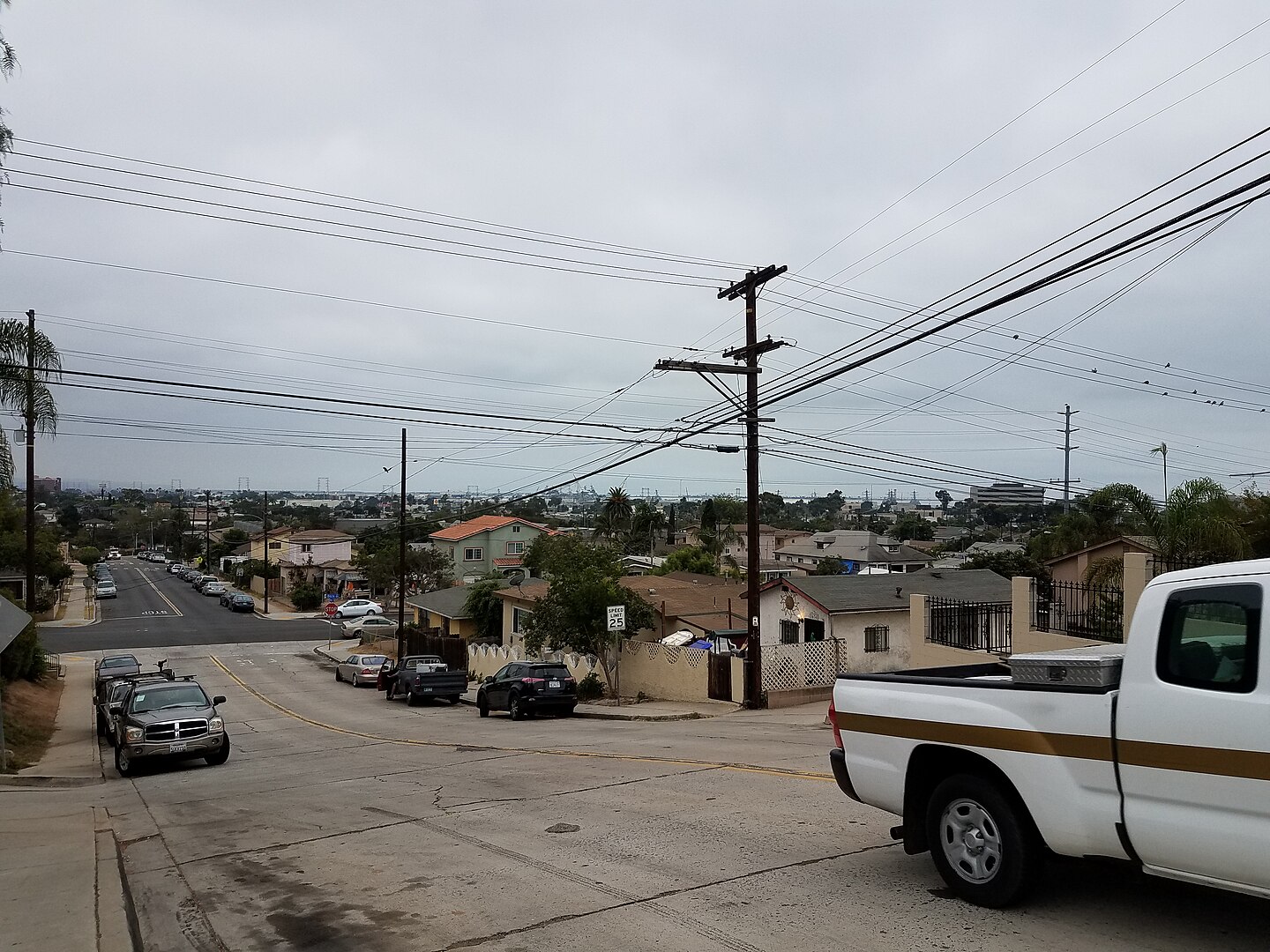
San Diego

Wasi couldnt sleep. He looked at the wall clock: four in the morning. He rubbed his stiff neck, wincing at a dull, persistent headache. He sat up in the dark, kicked off his blankets, stretched, and looked out the window to guess what the coming day would be like, sunny or cloudy, but he saw only stars, which he thought predicted a cloudless day. He listened to the rising chorus of birdsong as he felt the back of his head. The gauze bandage had come off in his sleep, and he touched a bare patch of warm skin and the tight line of ten stitches with the tips of his fingers. He was conscious of the wound, its need for protection. His naked scalp beneath the gauze, its exposure now with the gauze off. Healing will take time, the doctor had told him.

He walked into the bathroom, chips of paint from the water-stained ceiling sticking to his bare feet. He opened a drawer in the fractured vanity, pulled out a square piece of gauze, covered the stitches, and taped it as the nurse had done. Then he took two ibuprofen. Mindful of the doctors warning not to get the stitches wet, he washed his face and body with a washcloth instead of showering. He held a plastic baggie against the gauze with one hand to keep the wound dry while he shampooed and rinsed his hair. Glancing out the bathroom window, he noticed the stars had dimmed. Light frayed the farthest reaches of sky.

Coming into the kitchen, he adjusted the cracked blinds above the sink. He heated water for green tea, and put two slices of bread in the toaster. By the time he finished eating, the sun had risen, revealing a clear blue sky—just as he had thought—and he put on sunglasses and walked out of his apartment, pausing to put a mask over his nose and mouth. Shirts and pants hung over railings above him and he heard the voices of people from Syria and Iraq, who like him were refugees placed in the apartment complex by Interfaith Ministries of San Diego.

He opened a gate to the sidewalk and waited for a garbage truck to pass. It stopped and picked up a black trash bin with a mechanical arm, dumped its contents into the hopper behind the cab, and set it down. The noise bothered him. Wasi pressed a hand against his bandage to make sure it was secure and hurried across the street. A small dog yapped at him from behind a fence and its owner screamed at it, but the dog ignored her and the noise vibrated up Wasis spine until he thought he might burst. He clenched and opened his fists. The humid air weighed on him and fallen palm leaves, gray and dry on the sidewalk, broke underfoot and that noise, too, bothered him. 

He walked a few blocks into a neighborhood of single-story, ranch-style homes and noticed an elderly man sitting in his kitchen by an open window. The man waved. Wasi hesitated, and then waved back. In Kabul, he had done his best to avoid his neighbors. They would often stop and ask him what sort of work he did that took him from his home for weeks, sometimes months, at a time. Construction, he would answer. A company out of Dubai. It has a big project in Ghazni. He presumed some of his neighbors didn’t believe him, perhaps because they would overhear him speaking English when he received calls from the Americans at Bagram Air Base, and mention their suspicions to the Taliban. How else did the insurgents suspect him of being an interpreter? The pipe bomb he found outside his house one morning had malfunctioned, sparing him. He knew he had been lucky, but he also was certain he had been found out.

I see you every morning, the old man shouted.

I walk before I go to work, Wasi said. I drive for Lyft. Its good to walk because Ill be sitting most of the day.

Im stuck in the house because of COVID. 

Are you sick?

No. Just social distancing.

Wasi removed his sunglasses and mask to show his face and not be rude.

I used to have a lot of business at the airport but now it is too slow, he said.

COVID, the old man said.

Yes, Wasi said, COVID.

He knelt to tighten the laces on his left shoe. The old man watched him.

What happened to your head?

Wasi looked up and then returned his attention to his shoe.

Im sorry but I noticed the bandage. 

Accident, Wasi said, standing up.

I see. Something fell on you.

Yes, Wasi said. Something fell on me. 

Where are you from?

Why?

The old man shrugged and smiled.

Yours is not a Southern California accent. 

Does it matter?

Not at all. Im sorry if I upset you.

Afghanistan. I was an interpreter for U.S. forces but I had to leave. The Taliban found out about me and it became too dangerous for me.

I am sorry.

I miss my country. In Afghanistan, the Americans paid me seven hundred dollars a month. I thought that was so much money but here it is nothing. Where are you from?

Touché, the old man said and laughed. Im from here. I’ve lived in San Diego all my life. I’m retired now. My grandparents were Japanese. They emigrated from Japan to Hawaii, where my mother and father were born. When they married, my parents moved here. My grandparents spoke about Japan all the time.

The old man pushed up from his chair and stood.

Do you mind if I walk with you? I cant stay in the house all day, every day. My wife wants me to, but I cant just hate sitting here around.

Wasi shrugged. He preferred to be alone but he did not want to be impolite. He waited and put on his sunglasses and mask again. He recalled Kabul’s winters, when he would cover his nose and mouth with his hands to warm his face. He would stand still, watch his breath spread like gray smoke from between his fingers.

After a moment, the old man walked out the front door.  He paused on the porch and removed a mask from his pocket. Wasi pressed his bandage. He again felt the bump of stitches beneath the gauze and the warmth of the wound. The old man approached him, stopping a few feet away. 

Im Mark Sato, he said. Id shake your hand but we aren’t supposed to with the pandemic.

No problem, thank you. Wasi covered his heart with his right hand and bowed. Good morning. I am Wasi Turtughi.

Good morning, Mark said.

He put on his sunglasses and mask.

No one can see our faces, he said. We could be anybody.

Wasi started walking and Mark fell in behind him. Wasi listened to his steps, the steady pace of his shoes striking the pavement, and when he couldnt take it anymore he stopped and told Mark he would prefer to follow him. 

I think you walk faster than me.

I dont think so.

Please, Wasi said, waving him forward.

From time to time, Wasi and Mark got off the sidewalk to keep their distance from other pedestrians. They said hello, raised their hands, and some of those they met did the same while others hurried past or crossed to the other side of the street. When they reached the end of the street, Mark paused to decide which direction to take. I always go left, Wasi said. They began walking up a hill. A canyon of dry brush stood off to one side. Wasi leaned into the hill and stared into dry, rocky streambeds choked with weeds. Someone had used chalk to write, We Miss Seeing Our Neighbors and Smile This Will Be Over Soon, on the sidewalk. He stopped walking when Mark sat on a guardrail to catch his breath.

Do you always do this hill? Mark asked him. Its steep.

Every day, Wasi said. It reminds me of Kabul. Just a little. The mountains outside the city and the fields beneath them where wed fly kites and play fútbol.

Voices rose from the canyon. Three young men sauntered down one of the streambeds. They fanned out in a clearing and began throwing a Frisbee. They did not wear masks. They cursed without concern about who might hear them, mocking one another when one of them missed a catch. Wasi stiffened and felt his heart race. His breath got short and he couldnt move. Then he stood and told Mark he had to leave. Without waiting for an answer, he began walking back the way they had come. 

What is it? Mark asked, hurrying after him.

Wasi didnt answer. He pulled his mask down to his chin and wiped his face and sucked in air as if he had been holding his breath. He kept walking, finally stopping by a tree. A wrinkled, faded flyer with a picture of a lost cat hung nailed to the rough bark. Black and gray tabby. Whiskers. Call 619-874-2468 if you see her. Reward. Mark wheezed behind him. Leaning forward with his hands on his knees, he sucked in air.

What is it? he gasped.

I recognized those men, Wasi said, their voices. 

What about them?

I was walking last week, this walk, Wasi said. No one was around so I took off my mask. Id gone up and then down the hill. I followed a nice little side street. Then I heard people running behind me. I thought they were joggers. I moved over expecting them to go by and I started putting on my mask. They started shouting, You fucking Arab! and thats all I remember. I woke up in the hospital. A doctor told me I had been hit in the back of my head with something very hard, maybe a pipe or a bottle. I had a concussion.

Mark stared at his feet. He wanted to say, Im sorry, an automatic response he knew would mean nothing. But he was sorry, sorry and grateful that these same men had never assaulted him on those rare days when he left the house. They might have. Many people blamed China for the pandemic. They considered—more like accused—every Asian person of being Chinese. They were someone to hate. Mark knew they wouldn’t care that he was born in San Diego. He would be Chinese to them because they would need him to be.

Im sorry, he said finally, unable to think of anything better to say.

Afghans are not Arabs, Wasi said.

I’m sorry, Mark said again. Do you want to call the police?

No. I spoke to the police in the hospital. They said it would be difficult, too difficult to catch them without a witness because I did not see their faces.

I’m sorry.

I want to go home.

They began walking. It was hard for Mark to believe that such horrible people played Frisbee. Nothing was what it seemed. Poor Wasi. Mark felt bad for him while at the same time he could not escape a sense of relief that so far he had been spared.

When they reached his house, Mark stuck his arm out to shake Wasis hand and then stopped.

Sorry, he said. I always forget.

In Afghanistan, if we want something to happen, we say, Inshallah. It means, If God wills. Inshallah, these strange times will pass.

He covered his heart with his right hand, bowed, and said goodbye.

Mark watched him leave. Tomorrow, he would probably see Wasi again taking his daily walk. He would wave and say, Good morning, but he would keep his distance and not ask to join him. He did not want to catch Wasi’s bad luck. There would be no harm in saying hello, however, no harm in being pleasant.


New Poetry by Luis-Lopez Maldonado: “Virus Como Chocolate” and “Pancho Villa, Cesar Chavez y Luis Lopez Madonado”

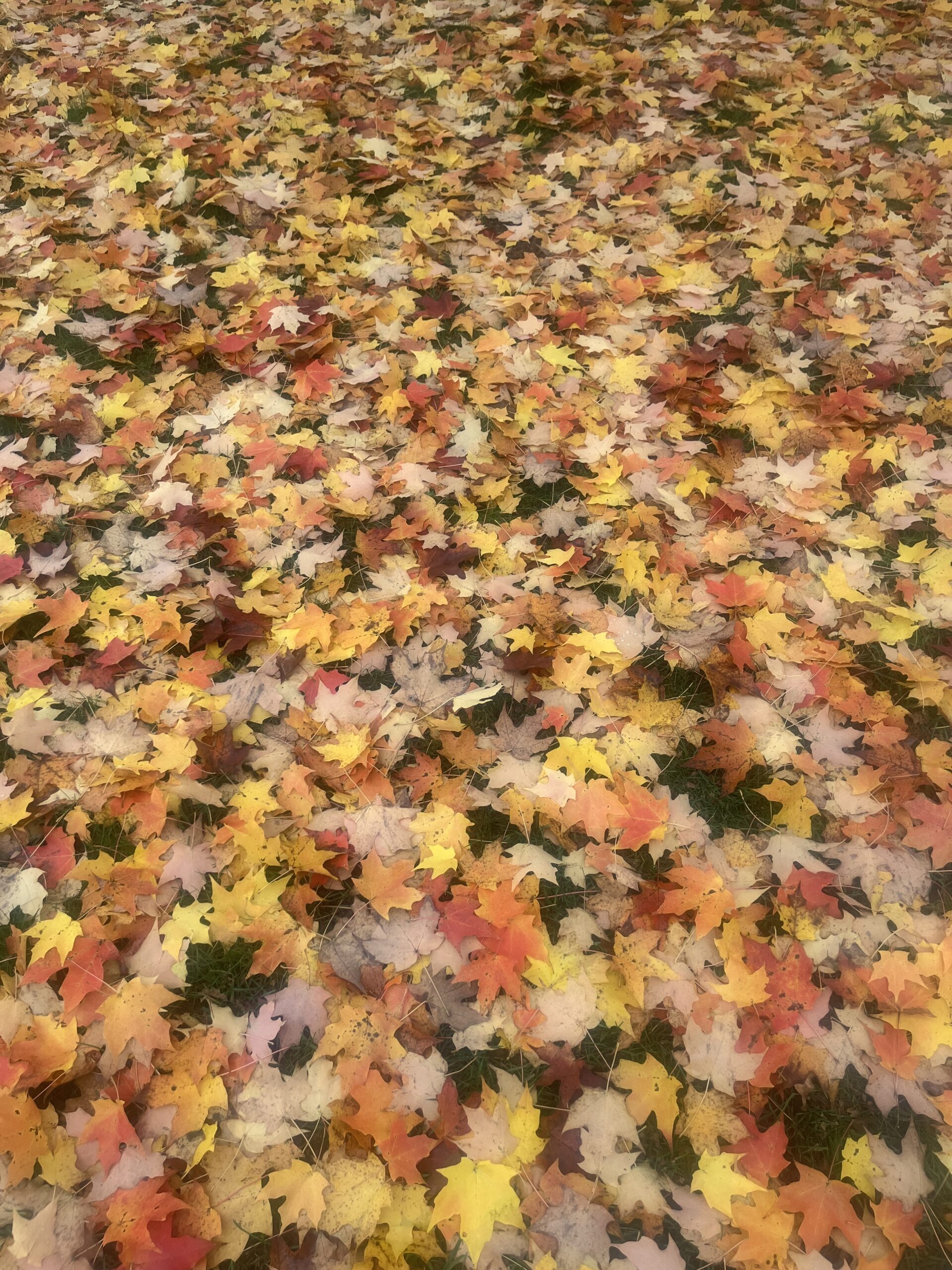
YELLOW ORANGE RED DEAD / image by Amalie Flynn

Virus Como Chocolate

In the Dead of Summer I wake to every color but the black in my eyes the dry in my mouth the fake justice tattooed on a flag stars in drag locked-up in a box at the top-left: you see, we will continue to smile even without teeth without peace without the privileged never leaving our sheets because rainbow rainbow rainbow rainboi

In the Dead of Summer cotton linen nylon shut my mouth and I cannot swallow cannot sing cannot moan and on hospital beds others foam facetime the new normal birds running into the windows into reflection into sanitized jail where you cannot pass Go and collect $200 cannot stop it from coming and claiming what’s already dead: expiration date dripping off forehead dripping into IV bag into a collapsing body

You see, because China because virus because Trump the greatest country in the world is dumping dumping bodies like trash because no masks no beds no ventilators no vaccine: and winter into spring into fall into lockdown and I can’t tell the difference between water and chocolate anymore


Pancho Villa, César Chavez y Luis Lopez-Maldonado

Race floats back and fourth between us
because Amerikkka is still wrong, still shooting
our people from behind, raping us from behind,

pushing us to the side, brown bodies bruised like bats,
our lungs lives livers struggling to survive in the streets
whites claim as only theirs. Green trees turn

yellow orange red dead, and still we are the only immigrants
in this country no-where-togo-no-where-tohide-no-where-todie.
Siguemos peleando su batalla hermanos compadres.

Popular kulture is peachy as puke, candidates like Trump
trying to build a wall in our land to keep us out,
calling us rapists drug lords thieves and illegals:

But my tongue will never hide behind brown lips and I will
continue yelling fuckyou’s and chupa mi verga güey! I will
stand tall, gold crucifix wrapped around brown throat
and fist up towards heaven, pounding the sky with orgullo.


New Review from Amalie Flynn: Jan Harris’ “Isolation in a Time of Crisis”

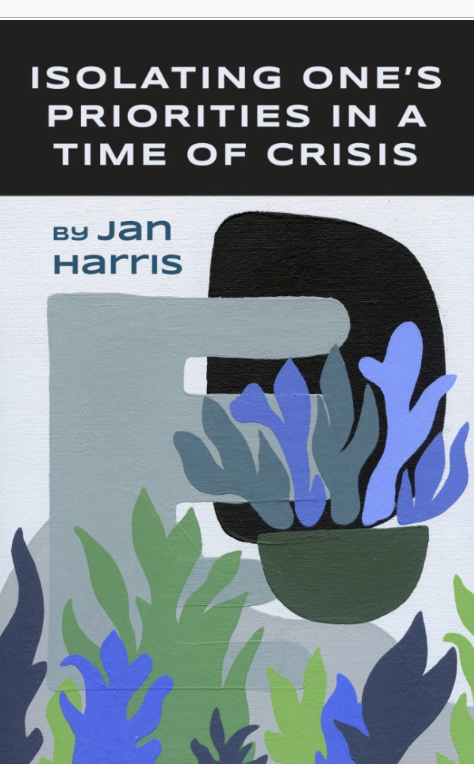
The poems in Jan Harris’ Isolating One’s Priorities in a Time of Crisis are about the apocalypse.

Or after.

What happens after.


&
After the apocalypse happens. After the world cracks like an egg.
Splits apart. The crushed eggshell membrane and how.
Covered in fluid yolk we emerge blinking –

we pass clement evenings foraging among the wreckage
of shop local boutiques and chain drugstores
(Season’s Greetings)

we observe
long vacant cities teeming with rats and pigeons PUdark seas replete
with giant jellyfish PUwe do not live in an elegant age
(Mass Extinction)


&
The apocalypse has already happened in Harris’ poems.

Some humans survived –

in the day-glow light
our old skin cells flake
off and drape across, the zoysia grass
(Marauders All)

Born again into this.
This fallout world.
And the scale of destruction is ecological –

ours is an age of salination
desiccation PUan interminable heat
(Mass Extinction)


&
I am reading Harris’ poems now. In this dystopic America.

A hellscape of.

Toxic religiosity. Evangelical Trumpism. Bigotry and brutal police.
Global war and fiery planet.
Pandemic plague. The lack of air. How when the virus inhabits lungs.
We flip the bodies over.
On their bellies like fish. How one woman survived but lost half her upper lip.
From the tube and pressure. Of being facedown for months.
That missing chunk of flesh now.
This fever dream wasteland nightmare America or how we find ourselves.
You and me. How we find ourselves.

Still alive.


&
I write to Harris, saying –

These poems are about COVID, right?
About Trump?


&
Because how, I think.
How can they not be?


&
But Harris did not write these poems about COVID or Trump.
She wrote them after the 2018 Kavanaugh hearings.
They are about surviving sexual assault.


&
Harris tells me –

I guess I’ve always been thinking about the end of the world. You know I had this Southern Evangelical childhood – very rapture focused. Then, when the Kavanaugh hearings were happening, I was appalled, obviously, and as a survivor myself, I kept thinking about who gets to speak.


&
Harris’ poems are about the apocalyptic devastation of sexual assault.
And the disappointment of unrequited rapture.
About waking up in a destroyed world. How we piece it back together.
Or declare it broken. And live in it somehow.


&
She says –

I kept plugging on and thinking how do we survive, like in the sense of what do we do with our days, our shames, our broken hearts. How do we open to what’s next?”


&
And yet poems are alive.
Each sentence with words like organs.
How syllables are cells.
How once written.

Poems are alive.


&
And for me. Harris’ poems are about.

The Kavanaugh hearings and the assault by a nation that did not care.
Would not believe women. Women who said this happened.

And these poems are about.
About what has happened since.

A presidency that assaulted truth and science and equality and the environment.
War. And a virus that has assaulted the globe. Leaving over four million dead.
So far.


&
Because what is apocalyptic can be plural.
How apocalypses are multiple and countless.
Intensely personal and collectively shared.


&
Harris’ poems are full of hydroponic lettuce, half grown, empty cul-de-sacs.
Broken call boxes and a rapture that never comes.
Because after disaster there is always aftermath.

Where what is left is left.


&
I met Harris in graduate school in Tuscaloosa.
Where I came and left as bones.
How I almost disappeared and yet.
I remained.

Graduated and moved to New York City where.
After that summer I would stand on a corner and watch a plane hit the Twin Towers.
Or how they fell.
And how people jumped and fell and died.
And how somehow. Somehow I survived.


&
How existing is this.
The same as not disappearing.


&
Harris’ poems acknowledge those lost –

we saw that some us had been separated
from themselves and their reintegration
into the whole was not a possible outcome

we could not replace their inner vacancies
we could not estimate the size of their lonesomeness
or fill them with vanities of optimism and hope
(Post-Apocalyptic DSMV)


&
But Harris is focused on survivors.
The sheer magnitude of what it takes to survive –

when we look at the frontier we know we can survive
deep in us the memory of arid plains and savannahs
solacing us through our hard scrabble expansion
(Episodic Memory)


&

How survival is plagued by loss –

our sorrows are beyond counting and lie scattered around us in the radon dust covering
our planet’s irradiated surface
(The Average Mean)

Loss of a world –

when the worst was over the
marauding tribes settled down we started migrating
back to where we had come from PUwe walked through
shells of suburbs and condo communities
(Radio Silence)

Loss of how it was –

and who could have imagined this cold
there is no more joy and no time for
simple pleasures like strawberry jam and
the other ways we spend our time
(After the Sun Goes Out)

Loss of readiness.
How hard it is to move forward.
Or go on –

we are prepared for what we will encounter
so long as it resembles all we left behind
(Time and Duration)


&
But how meaning can persist.
Found in permeated rock, like radioactive isotopes –

our predicament has freed
us from the oppression of quarterly
target goals bike commutes having
three children whose monograms
match on all their school accessories
(A Handbook for Resilience)


&
In 2004 I reconnected with Harris. I called her and told her a baby.
How I was pregnant. Or how she said I didn’t know you wanted to do that.


&
Motherhood is seismic. It is a series of explosions real and imagined.
The world hot lava active. How my entirety is only this.

Calculating risk and trying.


&
Now there is a pandemic.

In the morning my one son bikes to school wearing an N-95 mask.
My other son is homebound. He cannot leave the house because the world.
Is not safe.
How he is disabled by his disability but more.
The disregard of others to wear a mask or get vaccinated or.
Do whatever it takes to end this.


&
And I know Harris does not have children.
But I found motherhood in her poems.


&
There is the fear of it –

we cannot know what evolutionary biologists will call this
age PUwe cannot know which of our offspring will survive
at night we count them and wonder PUwhich one will it be
we search their sleeping faces for resilience PUwe are looking
for a future we will build with what we have left
(Mass Extinction)

How motherhood is a fear.
Fear of wondering if they will.
Will survive. The desperation.
Of wanting them to survive.
And how ravaged this world is.
Apocalypse world we are giving them –

the limits PUof our perception PUmuch like our
children’s PUrefusal to believe us when PUwe tell them that limes PUgrew on trees PUand
how succulent limes were tree limes PUand all the luscious things PUbelong
elsewhere PUthey are ancient remnants PUof a forgotten anointing
(Chrismation)

Or how mothering in the aftermath is hard –

we are finding our way back to fellowship but it is perilous practice
to release our fear and allow our offspring to wonder in the garden
to watch their precious DNA drip away when they are pricked by thorns
(Cognitive Flexibility)


&
Harris’ poems speak to a collective mothering. Parents or not.
That we do. Do in this world. Especially one ravaged and torn.
How we are all connected. Connected by care or our lack of it.
Connected by our fear and yet love.
That overlap –

we too are motivated by the vectors of love and fear
we live in the Venn diagram between them
each of us entwined in their corresponding sway
(Cognitive Flexibility)


&
In Harris’ poems there is the loss of a promised rapture –

yet despite all our
fixations on the last days we never imagined
the whistling sounds of radio-magnetic grass
on abandoned golf courses
(Eschatological Ruminations)

How –

we cannot indulge
these reckless hopes of deliverancePUthe earth
is indeed a globe whose elliptical orbit barrels
us toward infinity PUand even though it rends our
hearts to confess it no rapture is coming to save us
(Eschatological Ruminations)


&
And the loss of rapture in Harris’ poems feels symbolic.
Of what it means to survive.
How it can mean being left behind.
Left behind by a religion or rapture or savior.
The belief that someone or something will save you –

the
whole time we dreamt of a superhero
who was coming to save us every night
we would warm our bread by the fire and
lather it with strawberry jam as if to say
we are not afraid of the hypothetical dark
(After the Sun Goes Out)

And –

at one time we all believe like this that
our lives would tumble on and then when
no one was paying attention in a fanfare
god would intervene
(Eschatological Ruminations)

Or, how –

some flirt with believing in providence but we cannot tarry in those illogical
assumptions
(The Average Mean)

Because.
What holds this universe together is something else.
Or nothing. Nothing else –

we muster our resources unsure
of our end PUour final ablation an offering PUfor the black holes who
hold our universe together
(Mass Extinction)


&
Ultimately Harris’ poems are about us.
How disaster connects us –

Our lives ran parallel until we met in the knot of disaster
(Many Worlds Theory)

They are poems about who we are and what we do.
When we wake up in the aftermath of disaster –

Our intertwining presented two alternatives
1. to collapse everything and begin again
2. to recognize the limit of universes
(Many Worlds Theory)


&
How we survive. What we build. How we move forward.
Beats as the heart of Harris’ poems.
Whereas rapture is unrequited and reckless, the answer seems to be love –

in the latter days we have embraced an enigmatic
vocation PUwe stand in abandoned cul de sacs and
radiate love
(Exclusion Zone)

How –

although it is hard labor
we stand in cul de sacs point our chests towards
discarded mc-mansions and their derelict hedges PUwe
begin to oscillate with the intractable surge that vibrates
between our ribs PUlove pulsates with a ferocious
diffraction like the nuclear fallout that is still releasing
(Exclusion Zone)

Harris admits –

we cannot know if our work changes
anything
(Exclusion Zone)

And yet –

rumors persist that deer and
foxes have returned to Chernobyl’s exclusion zone that
wildflowers crowd its meadows and in the shadows
green things begin to grow
(Exclusion Zone)


&
Isolating One’s Priorities in a Time of Crisis ends with hope –

we know that something is there because we
feel it breathing against us reaching past twilight’s
consciousness
(Modern Homesteading)

How it –

whispers that we too must
die and death will be sooner than we know
(Modern Homesteading)

How after the apocalypse.
We can find hope.
How there is light in the aftermath.
Light within us and each other.
How it radiates out in this new broken world –

yet we
will be braver than we think because the light inside
is the light outside PUand it’s already shining around
us as we begin to inhabit a world we had known but
waited for this moment to discover PUwaited to
catch our breath before plunging into that white
burning we call existence
(Modern Homesteading)


&
Harris’ powerful collection is a testament.
To destruction and what remains.
How to rebuild the city of oneself.
How to make meaning out of the meanness of existence.

Her poems offer hope.

That maybe. Together.

We can survive.