New Fiction by Adrian Bonenberger: “King Tide”

We’d been expecting the fascists for a few days but they’d gotten hung up on Newark. Usually they moved fast. Camden had gone quiet just a week after the government had evacuated from Washington, D.C. to some secret location. Then, abruptly, the fascists flowed south, a growing mob of pickup trucks and tractor trailers bristling with guns, fuel, flags, and ammunition: to Richmond, although Baltimore was closer; finally hastening back northward after wrecking that old city, the capital of The Confederacy. Each of those cities had fallen in weeks, carved into pieces and starved, capitulating before the threat of fire and murder that appeared to have come anyway, in spite of surrender. Here and there the cities of the South and Midwest still stood, but were cut off — separate from each other, separate from us, isolated by long stretches of forest and strip malls patrolled by men in multicam holding AR-15s and shotguns, lines of utility vehicles across tracts of the largely deracinated terrain.

The suburbs across the river in New Jersey were filling up with refugees and transients, huddled between the homes of New Yorkers who could afford to live outside the city. Hedge fund managers, software engineers, salesmen, bankers, cops, lawyers, university faculty handed out blankets and food at first. Then later they became stingy, alert to any word of crime. These people were of the city but not in it — their loyalty, dubious. The thousands and later hundreds of thousands fleeing the fascists were bound for sadness and tragedy, driven from homes that would likely never be seen again. Once the center began to crumble, none but the bravest returned to their previous lives, and the bravest were not those running headlong from the hatchet and gunfire.

Many of us still half-believed the whole thing was a joke taken too far, a mass hallucination or something illegal rather than outside the law, a matter for police or maybe the FBI. Even after D.C. and Richmond and Camden we felt that it would be stopped somewhere, by others. Certainly not by us. Psychologically we were in the denial stage of grief, preparing, though far too slowly for what was coming. In that moment they had laid siege to Newark. While we’d been waiting for the fascists to mount their inevitable northern push, the push had happened; like a bullet, or a hypersonic missile, they’d moved too fast for us to track.

This sent us into a frenzy of preparation. The George Washington Bridge came down, and the Tappen Zee. All week, tens of thousands of anxious eyes stared round the clock at the western approaches to New York. But once news from Newark slowed, it was almost a week before we saw the first movement from our perch in Manhattan, across the Muhheakunnuk River.

I’d dropped out of my fifth year at Muhlenberg college to join the 1st People’s Revolutionary Corps. Academics came slowly to me so college was taking more time than it should have. My dad didn’t believe much in getting a bachelor’s degree. He’d done fine for himself in construction without one. But it was important to my mom that I graduate from college. That’s how I ended up at Muhlenberg instead of the Army or Marines like my dad wanted. As far as I knew, my folks supported the fascists. I hadn’t heard from them in months.

Now I was in a reserve detachment of scouts stationed at an observation post (or OP) in what used to be called Washington Heights. We’d renamed it Canarsee Hill. The OP overlooked the Muhheakunnuk. Mostly we were watching to the northwest but just before the weekend, Smith, another scout, who had come down from Yonkers, spotted men moving on the bluffs opposite us due west. Smith called Vargas over to the telescope to confirm.

Vargas was our leader, though our unit’s military hierarchy was still inchoate. We didn’t have ranks, we were all volunteers and organized in a broadly egalitarian way. He was our leader because he’d been (or claimed to have been) an Army Scout during the 1990s, and had definitely been in the fighting that first broke out south of here. He seemed to know his business and we respected him for his quiet competence and willingness to teach us basic fieldcraft. His crypto-reactionary loyalties and remarks we overlooked with trepidation.

“That’s them all right,” he said, his flat, battered mug pressed squinting and grimacing against the telescope. Vargas’s life hadn’t been easy since leaving the military, and in addition to a scar running across his face from eye to cheek, his nose had been mashed in a fight and never fixed. He motioned to me. “Take a look kid. See how they move? That’s discipline. They’re out of range but they’re spaced out, two by two. Way you need to remember to do things. Understand?”

In the round, magnified slice of world across the river, there they were: camouflaged shapes hunched over, moving tactically in pairs. One would stop while another moved, rifles up and at the high ready, in both pairs, presenting an appearance of constant motion and menace, rippling like a snake.

“Here, you’ve had enough,” Vargas said, taking back his position. “Ok: total 8 troops, that’s a squad… one tactical vehicle. Looks like an M-ATV. Must be another back there somewhere, or a technical. Smith, you report that up to HQ yet?”

Smith gestured at the radio. “It’s offline. I think the batteries are dead.”

“Christ,” Vargas mumbled. “Well call them with your phone. Look this is important. Tonight get new batteries from the command post.”

“I’ll get the batteries,” I said, wanting to impress Vargas. Also my girlfriend, Tandy, lived down near 180th. It wasn’t far off the way to her place, an excuse to drop in and get some home cooking.

“You think we’ll see some action?” Smith said.

“Action, action, all you want is action,” Vargas said. “If you’d seen what I did in DC, you wouldn’t be in such a hurry to get your gun on. But yeah, if there’s one thing the fascists mean, it’s action. Sooner or later.”

Verrazano Narrows Bridge at dusk, low angle, distant end terminating in cloudsThe Revolutionary Corps at that point was mustered mostly from New England and the suburbs of NYC itself. It hadn’t seen fighting in the winter and spring since the contested election. Smith and most of the others (myself included) hadn’t been there in D.C. when the fascists had made it almost to the White House and a motley, improvised group of citizens, soldiers, and loyal law enforcement had gone street to street pushing them back so the government could escape. Vargas was there — he’d been someone’s bodyguard. Who — a Senator — a woman from New York? The Midwest? What was her name… It doesn’t matter any more, though at the time it was an interesting anecdote…

Like everywhere, New England had seen violence when the fascists rose up, but nothing like what happened on the West Coast, the South, or the mid-Atlantic. Up in New England things had been resolved quickly. There weren’t enough fascists to make a go of it outside New Hampshire, and those fascists who did rise up in New Hampshire were brutally repressed after their comrades were defeated in Boston, Springfield, and Hartford. Enough police forces and national guard units had refused to betray their oaths to the Constitution, enough of the democratic revolutionary spirit remained within the breasts of New England men and women, that the reactionaries there had floundered and failed early — spectacularly so, even.

Whether they did so as part of a plan or not, what the fascists of New England accomplished was to tie northern pro-democracy states up with fighting internal enemies instead of helping their neighbors. We didn’t know that at the time, but at moments when swift and decisive help might have forestalled great bloodshed, the attention on potential local foes consumed everyone’s attention. It wasn’t long before a second wave of those enemies would appear at their borders, a howling, hostile army.

But in most other places the fascists had translated their quick offensive into victory more often than not and with surprising scope. Perhaps they sensed their vulnerabilities lay in us being able to organize our superior strength in manpower and industry. They’d been chewing the national and most state governments up since January, keeping the legitimately elected authorities and their forces on their heels, hitting them over and over where they least expected it. In our region Philadelphia and Pittsburgh had time to brace and fortify, so the fascists ran at Camden with full strength — wiped it nearly off the map. In their haste to capture Newark, they’d surrounded nearly 22,000 anti-fascist volunteers there, the entire 3rd People’s Revolutionary Corps. Most evenings one could see flashes and hear the fascist artillery thumping in the distance.

Smith and Boucher and a few of the other guys had been excited to see the fascists arrive. To them it meant taking part in a battle. Boucher, a Marxist from New London, compared them to the Germans outside Moscow. Morale was high, and Vargas didn’t do much to pour cold water on it.

A few hours after reporting their scouts up to higher, we’d observed several armored fighting vehicles and a tank maneuvering on the bluffs. The fascists put up a couple drones and tried to fly them across the river, then sent them high into the air when they realized we were outside the drones’ range. What struck me more than the size of the group was its cohesion, and its audacity. They moved up to a point and acted. They didn’t ask for permission or wait for orders from higher. We had armored fighting vehicles, we had tanks, just like them. We didn’t have artillery — only the Army had artillery — but we had drones. Seeing the fascists there, flying their black and white flag with a blue stripe down the middle, made me nervous. They’d reduced the space between them and us to that narrow band of water on which so much depended. A free and diverse New York City, the heart of our revolution, was exposed and vulnerable. How had this happened?

A half hour or hour later, further down the river, the fascists launched a motorboat. Vargas told me to observe its progress through the telescope and report movement to him as it crept across the sun-dappled surface. The boat circled wider and wider, seeing how close it could come to our lines. At the middle of the river at the apex of its approach it abruptly beelined for the city. An old red “MAGA” flag was visible on its stern, flapping in the wind. The boat’s three occupants wore tactical vests and helmets; one was scanning our side with a sniper rifle, another was piloting, and the third was talking on a portable radio, probably doing to us what we should’ve been doing to them.

I appreciated their daring. They presented a confident, professional air, like they were straight out of a movie or video game about the Navy SEALs. They knew exactly what to do. Slapping across the water at high speed, these fascists, veterans of the bigger battles to the south, were getting down to business, getting it done.

We were far enough upriver from the source that we saw the boat tossed high into the air, tumbling end over end from the explosion before we heard the shot and the boom. No forms emerged from the wreckage, and the boat sank slowly into the river. This was the first time I’d seen our side fire first. I was glad we had.

***

Shortly after the fascists had turned their attention to Richmond, while New England, New York, and Pennsylvania were wrestling with their own fascist problems, New York City had declared itself a free city. Run by an alliance of Democratic Socialists, progressive Democrats, anarchists, and independents, the historic agreement put an end to strikes and labor walk offs, stabilized a questionable police force, and, in short, unified and anchored what we all hoped would be a fresh start for the city and maybe for America, too. Hopes were high for a nonviolent revolution ushering in the promise of a full, meritocratic democratic polity.

Many people left the city, but many more came, attracted by the promise of a just new world. One of the first things we did was rename things: The Hudson River became The Muhheakunnuk, or “River that flows two ways,” in the original Lenape. Madison Avenue became Liberty Avenue. Rockefeller Plaza, Veblen Plaza. Trump Tower became Mohican tower, for the indigenous Mohican peoples. And soforth.

Where we could reduce the damage done by naming places and things for white European settler colonialists who caused real and literal ethnic cleansing and genocide, we remedied as best we could. While the fascists were shooting and murdering, we were getting resolutions passed in bipartisan committees. As the shitlib pro-government forces were fighting desperate retrogrades, we were setting up a new way of compensating labor on the blockchain: Hours (pronounced “ours”) of labor were our new, profession-blind currency. A person worked the hours they did and were rewarded based on that flat rate, digitally, plus a small bonus in consideration for specialty labor or difficult labor nobody wanted to do. My daily wages, for example, were 14 ½ Hours per day: 12 Hours for the 12 hours of work I did for the militia, plus a 2 ½ Hour bonus for the hazardous nature of my work (though I had, up until that point, done little hazardous duty — that would change soon).

What a sound and simple system; what a fair and just means of compensation. I’d never seen anything like it, and haven’t since, though home ownership and other realities of adult life have given me a better appreciation for modern economies than I had in my youth.

The People’s Council of New York had compensated those New Yorkers who had stayed in the city with Hours on a prorated basis for the dollars and real estate it confiscated in order to trade with external partners, and signed an alliance with its neighboring states, the state of New York, and the federal government. Everyone was relieved it hadn’t come to shooting. Putting nearly 120,000 people under arms, such as myself, made the city by itself one of the largest standing armies on the territory of the former U.S.A. We were all proud of what we’d accomplished in such a short amount of time.

***

At the end of our shift, I took the spent batteries from our radio and headed down to HQ. The arrival of the fascists had sent everyone into a frenzy of activity and worry. When I poked my head into the command tent, I caught our commander, a woman who had flown C-17s for the Air Force, yelling at our XO for the comms situation. I saw that there weren’t any fresh batteries to be had, then made a swift retreat from the scene so as not to contribute to the man’s confusion and embarrassment.

“Where’s the RTO,” I asked one of the guards who was vaping and lounging outside the entrance.

“Over there,” he said, gesturing upslope toward another tent about 50 meters away. I walked over, passing three soldiers setting up some sort of fortified machinegun position.

“Look downhill at the road. Now look at the sandbags. Now look at the barrel of the gun,” the first soldier was saying. “Aha! Aha! Now do you see the problem? Move the machinegun around, like so… now you see more problems. Do it again!”

Scenes like this were common. None of us had more than a week’s training — it wasn’t even formal training, more like pre-basic. While there were more leftist veterans than many had probably thought before the war, in general the stereotype of veterans as moderates or pro-fascist was pretty true. A small group of sympathetic veterans were running round-the-clock training ranges up in Connecticut and Long Island, and NYC’s soldiery was permitted to access this as part of our agreement with our neighbors.

At the signals tent, I found the commander’s radio operator fiddling with two banks of battery rechargers. “You need to get these up to your position ASAP, the CO’s on the warpath about bad comms and using smartphones,” he said.

“I’ll be back in six hours,” I said, and left the heavy green blocks on the black recharger alongside several others, while the recharge status blinked red.

Next I headed north to Tandy’s building, a fin de siècle mansion that had been converted to high-ceilinged apartments, and was now housing for students and workers. It was a 10 minute bike ride from our positions, or a 25 minute jog, easily accomplished if the sirens signaled an attack.

I checked my Hours on my phone which promptly updated on the hour with my day’s work, plus the bonus for military service. Then I stopped at a bodega for provisions. One of the best-managed parts of the city was its city-wide revolutionary food cooperative. Food came in from upstate and Connecticut, and was rationed. There was enough of it on any given day, but hoarding was strictly forbidden so what was available was whatever happened to be on hand, often local produce.

The proprietor of this bodega was an Iraqi man who’d immigrated to the U.S. after the war there, Ahmed. Together with his family he supervised the bodega’s co-op labor, and had a keen eye for organizing. He greeted me when he saw me walk in, much as he greeted everyone in uniform.

“My friend, thank you for protecting us! You must be hungry: what would you like? Eggs, corn from Poughkeepsie, sausage? Please, take what you need, eat, stay strong and healthy! And say hello to your beautiful girlfriend! You’re a lucky man!”

Ahmed may or may not have known me, but he certainly seemed to know me, and that was appreciated in a strange city. I picked up a couple sausages, a quart of milk, and a half dozen eggs. There wasn’t any cheese, so I had to hope Tandy or one of what she called her “mates” had some at their place. Then, in the back, I procured a glass bottle of Long Island red wine.

“Five and one half Hours,” Ahmed said. “Did you hear our forces repelled a fascist invasion today? Maybe you were part of that?”

He was talking about the boat. “We spotted them,” I said. “It wasn’t anything serious.”

“Please, it wasn’t serious, you sound like me when I was in the Iraqi Army. I helped liberate Mosul from ISIS, you know. It’s never serious. Until you’re in the hospital!” He raised his shirt, and pointed at several scars near his abdomen. “Here, take some chewing gum, free. It helped me stay awake during long nights. When you don’t have your girlfriend around,” he said, winking conspiratorially.

Tandy was still at class when I arrived. James, a PhD candidate in Political Science at Columbia greeted me at the door and when he saw what I was carrying he invited me in, shepherding me to the kitchen where Vince, a militiaman from Danbury, Connecticut, gladly took my contribution to the dinner. “You’re always welcome here,” Vince said, “when you have food and wine!

 This was one practical way in which being a militia volunteer translated into good social standing, but I didn’t lord it over people, just showed up with what I had and got whatever amounted to a single portion in return.

This particular collective was mostly students, so my portion was usually appreciated, in spite of my taking part in what was a violent endeavor. Only the most radical students felt that in defending our political ideals, I was participating in an immoral and unethical war, but even they sat down to eat with me. The main course was a cabbage- and barley- based soup with my eggs and sausages as a garnish— again, no cheese — food wasn’t in short supply, but the variety had significantly diminished thanks to the war. The Californians and Midwesterners were probably eating great.

Seven of us sat around a small round table. I was briefly the center of attention as I talked about the motorboat reconnaissance, and the arrival of the fascists. Before I offered my eyewitness account, I was treated to another more outlandish product of the rumor mill I’d first encountered at Ahmed’s: the fascists, I heard, had attempted a crossing in force, and were driven back only by the killing of their general in the lead boat. I was glad to correct the record.

My much more prosaic account of the fascists’ arrival was held up to the various perspectives present at the meal. Some felt as my fellow militiamen did, that this was an opportunity to strike back while the fascists were few, that we should take the fight to them. Others that the fascists were too strong — that they’d make their way across the river sooner or later and so we should head up to Canada while we still could. Most held the opinion that nonviolent resistance was the way to resolve this, that fighting would only lead to more fighting, that perhaps the situation could be resolved through discussion and diplomacy. Reports of atrocities, this last group dismissed as liberal, pro-government propaganda.

The apartment’s owner, who also owned the building and had been well liked and admired before the war for his egalitarian and attentive approach to ownership, asked why we couldn’t come to some accommodation with the fascists.

“Let them have their wretched dystopian hell. Let them live in the rot that accompanies dictatorship, fascism, and all abominable authoritarian places,” he said. “Give them the land they have and tell them not to come any further.”

“What about our comrades in Newark?” said one of his tenants, Jenny, a black girl whose parents had moved to New York City from South Carolina in the 1960s for work. Jenny worked at a small factory sewing uniforms for the militia, and was one of the more prescient of us when it came to the threat of the fascists, and the importance of fighting. “If we abandon those like us in the South, or in Newark, why did we abstain from voting for Biden? If we don’t fight for our convictions, to help each other, shouldn’t we just join the fascists?”

“I voted for RFK Jr.,” said the former apartment owner to good natured jeers and boos, “I voted for RFK Jr. and I’d do it again” he yelled, with similar good-natured energy. Here, having voted for RFK Jr. was far less objectionable than voting for “Genocide Joe Biden,” which was tantamount to heresy.

Vince spoke in the lull that followed the yelling. “Anyway the fascists have started and they won’t stop. The real choices are Canada — assuming they don’t roll up there next — or fight. Fight or flee and hope someone else beats them. They’ll chase us to the end of the earth, they’ll never halt. Might as well be here.”

“They’ll negotiate when they’re punched out,” said Christina, a journalism student at City University of New York and one of the more moderate people in the collective. She was a bit older, in her 40s, and had been a public school teacher during an earlier life that hadn’t quite worked out on Long Island, near one of the Hamptons. “If we make a deal they agree to — ceasefire, a demarcation of borders — they’ll just rearm and keep going. These people are always the same — Hitler, Genghis Khan, Putin, Alexander the Great. Read history. They stop when they’re stopped, which is when they die. Because they know stopping means dealing with the violent energies they’ve unleashed, and they want to be fighting external enemies, not internal enemies.”

“It would have happened sooner or later,” added Jenny. “The moderates, the Democrats and shitlibs spent the years since the end of the Cold War selling everything as fast as they could, and supporting global racism and genocide. They’re as responsible for creating this movement as anyone else.”

Sometimes I wished I was confident and practiced in my public speaking, like the students. My first day with the unit I’d brought this line of reasoning, about Biden and the Democrats and the shitlibs, to Vargas, and he’d scoffed at what he called my naiveté.

“What happened in D.C. was, when they couldn’t get to the people they said they were mad at — the government, the globalists — the fascists made do with the vulnerable. They headed right for the poorest neighborhoods on their way out of the city and just about wrecked them,” he’d said. “As bad as Biden and the Democrats were over the years, I’ve never saw the suburbs where most of his supporters lived reduced to a smoking ruin, their inhabitants murdered, captured, or fled.”

I didn’t mention that perspective here at the table. It didn’t seem like the time or the place for it. Besides I wasn’t sure what I thought about it all. Sometimes in describing the fascists as intolerant of other viewpoints and dogmatic in their application of violence, I thought maybe we were guilty of that, too, in some ways. Certainly nothing like what the fascists did, but still… when I thought about our project, sometimes I questioned its wisdom or justice.

“You’ll never convince me violence is the answer,” said James. Soft-spoken and charismatic, when he spoke, people listened. His father was a first-generation immigrant from Cuba, and his mother, a Chinese immigrant. They’d met in Flushing, Queens, a real American love story. “Violence begets violence. Without anyone to fight, the fascists will fight each other. Ultimately they’ll lose interest in the cities and fall to quarreling among each other. You’ll see.”

We did see, just not in the way James meant. But those dark days were yet to come.

***

After dinner I waited around for Tandy, but she still hadn’t come home. After an hour, still restless after the day’s events, I decided that rather than hang around and look desperate, I’d put in some volunteer time. It was still too early to get the batteries. I picked up my rifle and wandered down to the Muhheakunnuk. It was summer, and the weather wasn’t bad. Ideal for nighttime strolling provided one had the proper identification so one wasn’t accidentally shot.

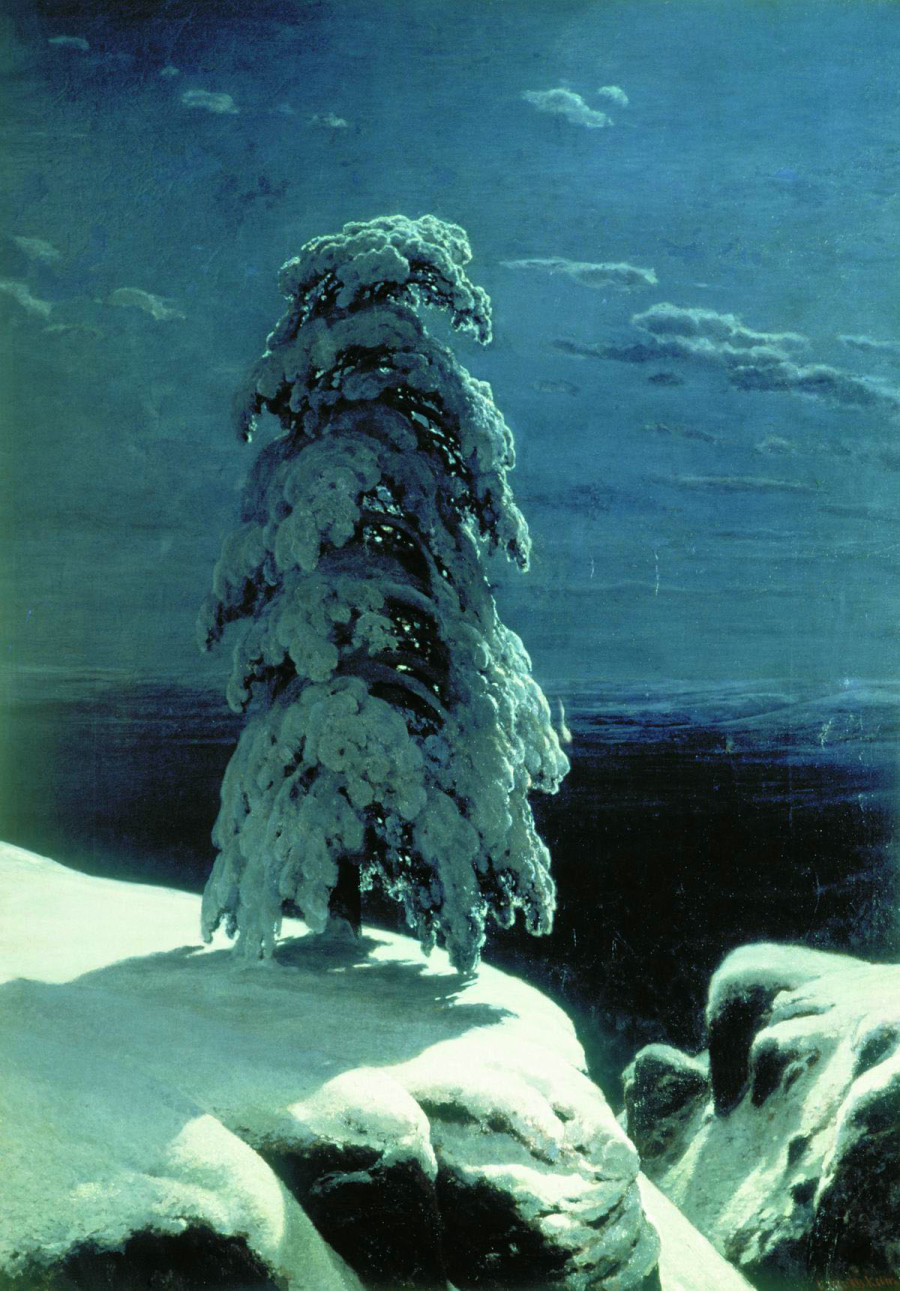
At the river’s edge I stopped and stared at what remained of the George Washington Bridge. The moon illuminated the ruined structure’s contours, rendered its demise somehow more tragic, more human. Its skeletal wreckage jutted up from the river’s calm surface, like ancient ruins. In places, the bridge had twisted as it fell, partially damming the river’s flow. Now it resembled nothing so much as a memorial to America, the ruins of a vision for peace and prosperity that could not last forever, because nothing in this universe ever does.

Destroying the GW made sense from the perspective of guns and firepower; the fascists had an edge in that department owing to personal stockpiles as well as those seized by various police and traitorous military units, but weapons require people, and they had far fewer volunteers than we did. In spite of their military successes, their victories over larger but poorly-led, poorly equipped units, everywhere they went they engendered fear and hatred, an occupying force that looked and talked like your racist neighbor. The strategy, then, was to attrit them, draw them into the cities, grind them down until there weren’t enough of them to the point where we could start pushing back. Of course as I mentioned earlier the hope at that time was that some disaster or calamity or miracle would forestall our having to fight them at all.

The fascists fielded excellent soldiers and combat leaders. Their units moved quickly and punched hard, and wrecked or absorbed local and state law enforcement organizations wholesale. Their units hung together well, and were led (mostly competently and capably) by veterans and former police officers.

Further down toward the bay loyalist Army units kept the Verrazano intact and were fortifying our side. I didn’t understand the logic behind keeping that bridge but taking out the much larger GW and Tappan Zee. Maybe the destruction was partly for the symbolism. The fascists claimed to stand for law and order and tradition, and part of how it had all started (insane as it sounds to say it now looking back over the great Golgothas we made for each other during the fighting) was over statues and names. What was an iconic bridge between New York and New Jersey, named for one of America’s founders, if not a statue, a monument to an idea like traffic, interstate commerce, a community based on trust and the exchange of goods?

Then again, it was also a symbolic loss for us—if we couldn’t control the George Washington Bridge, what did that say about our long term prospects? Vargas said slowing the fascists down was our best shot and the people who were placed in charge of our efforts at first — people who as time would demonstrate were not up to the effort — were a little too enthusiastic about doing so, and less enthusiastic about actually preparing us for what came next.

Loyalist Army units had sealed the Lincoln Tunnel, which was similar to blowing it. The decision had been made with some procedure for removing concrete in mind, but when you walked down near midtown and saw the familiar entrance, saw the white and gray spill as though trolls had melted the world’s biggest marshmallow, it was hard imagining that tunnel ever working again.

From the bones of the fallen GW, I walked south for 5 minutes until I came to one of our fortified positions, down near the water, forward and downhill from HQ. It was crewed by my unit, but not one from the scouts, conventional infantry. We all had the same challenge and password. I didn’t know this group, but stopped in to chat about the motorboat, ask if they’d seen any other movement. They hadn’t. Didn’t have thermal scopes down here, were worried about night landings and infiltration. I was shocked — I thought frontline positions would have thermals for sure.

“One every 5 positions,” said the duty sergeant. “We rely on them and tracers to figure out what’s happening. Moonlit night like tonight, seems unlikely we’ll see any more action. Especially considering the tide.”

I asked why the tide was significant. Prior to the war I hadn’t spent much time near the ocean.

“Oh, a full moon corresponds with high tide. This particular high tide is what they call a “king tide,” get them in winter and summer,” the sergeant said. “Higher water means a longer distance to cross, and stronger currents. Groups trying to cross in boats would be pulled far upriver or downriver of where they were hoping to cross — maybe even swept out to ocean.”

“You think the fascists know that?”

“Oh, I’m sure of it… they’re mostly country folk, people who know things like the tides, and hunting. No that’s not going to throw them. Sad to say it. That’s the sort of thing our generals would probably fuck up.”

We stood there quietly in awe of the sergeant’s demoralizing statement, one we both felt to be true, the GW’s shredded metal beams and cables clanking and squealing upriver. A rumble of artillery in the distance and flashes of light roused us from our reverie.

“Won’t be much longer. No way they can hold out without reinforcements.”

“How do you know? How do you know they won’t grind the fascists up street by street and block by block?”

The sergeant gestured toward the southern end of Manhattan. “Brother works at one of the fish markets. Buddy of his is a fisherman, solid American and New Yorker, told him he’s been in touch with fishermen out of Newark. Apparently they’re getting pummeled. Never seen the fascists put so much work into destroying a city.”

“You think we should move down, try to help them?”

In response, the sergeant now nodded up at the GW’s ruins. “Not part of the plan. Anyway, we barely know how to hold a defense. Most of the guys here have never fired their rifles, it’s all we can do to point them in the right direction. How are we supposed to move to the attack?”

For this question and all the others, I had no answers. I’d joined the movement, I was a scout, and all I knew was that if the fascists wanted a fight, we ought to give it to them. Even then I sensed that simply to accommodate their desires would be a mistake. I looked out at the river, to where the boat had been earlier. The fighting would get so much worse in the days and months to come, far worse than almost anyone could imagine. But on that day, the thing that I noticed was the water — how high it had come up the pier — how close we were to it, lapping at the moorings and the concrete stairs, closer to our boots than it had ever been. And what terrible creatures teemed beneath its opaque surface!

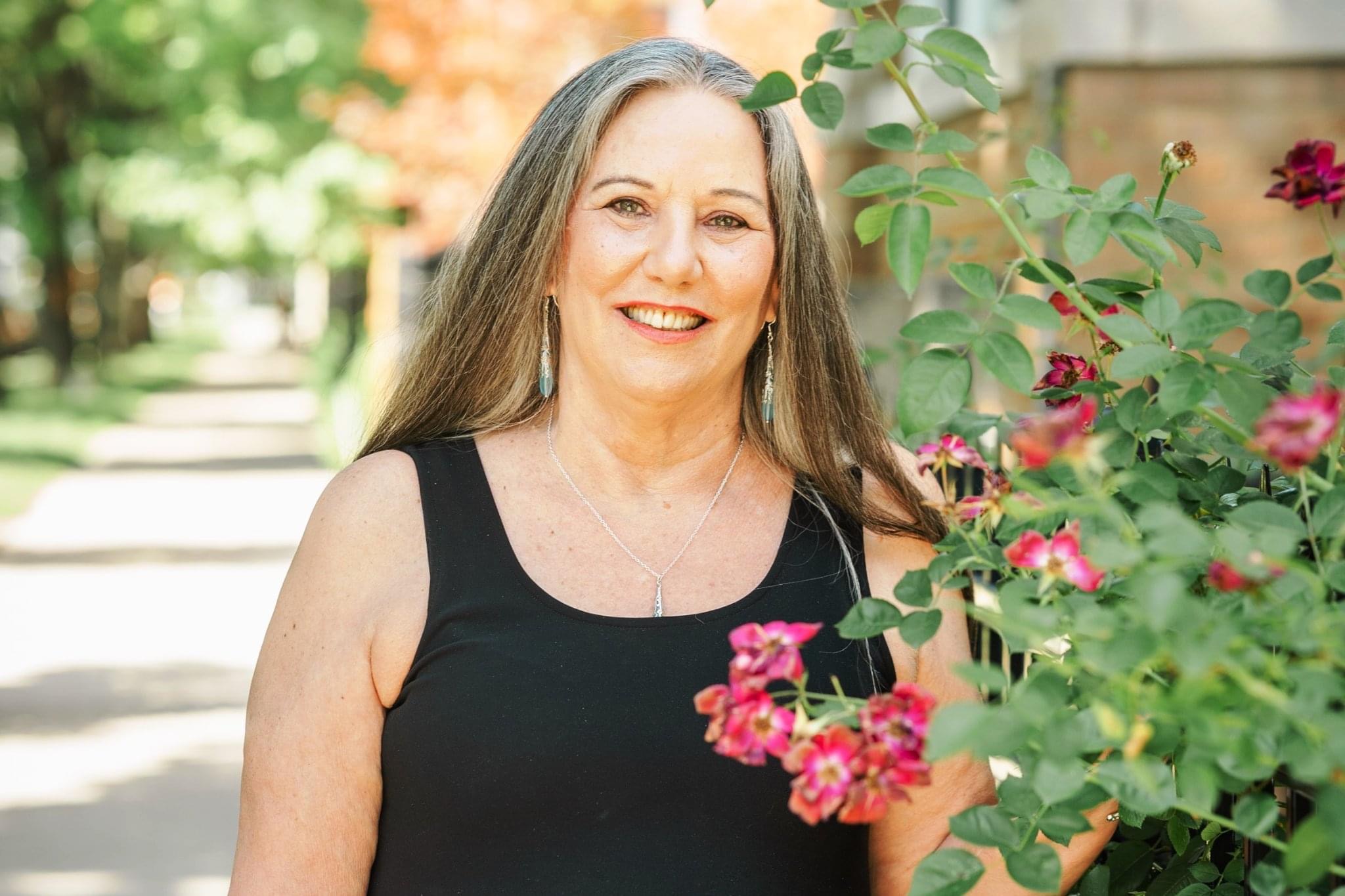
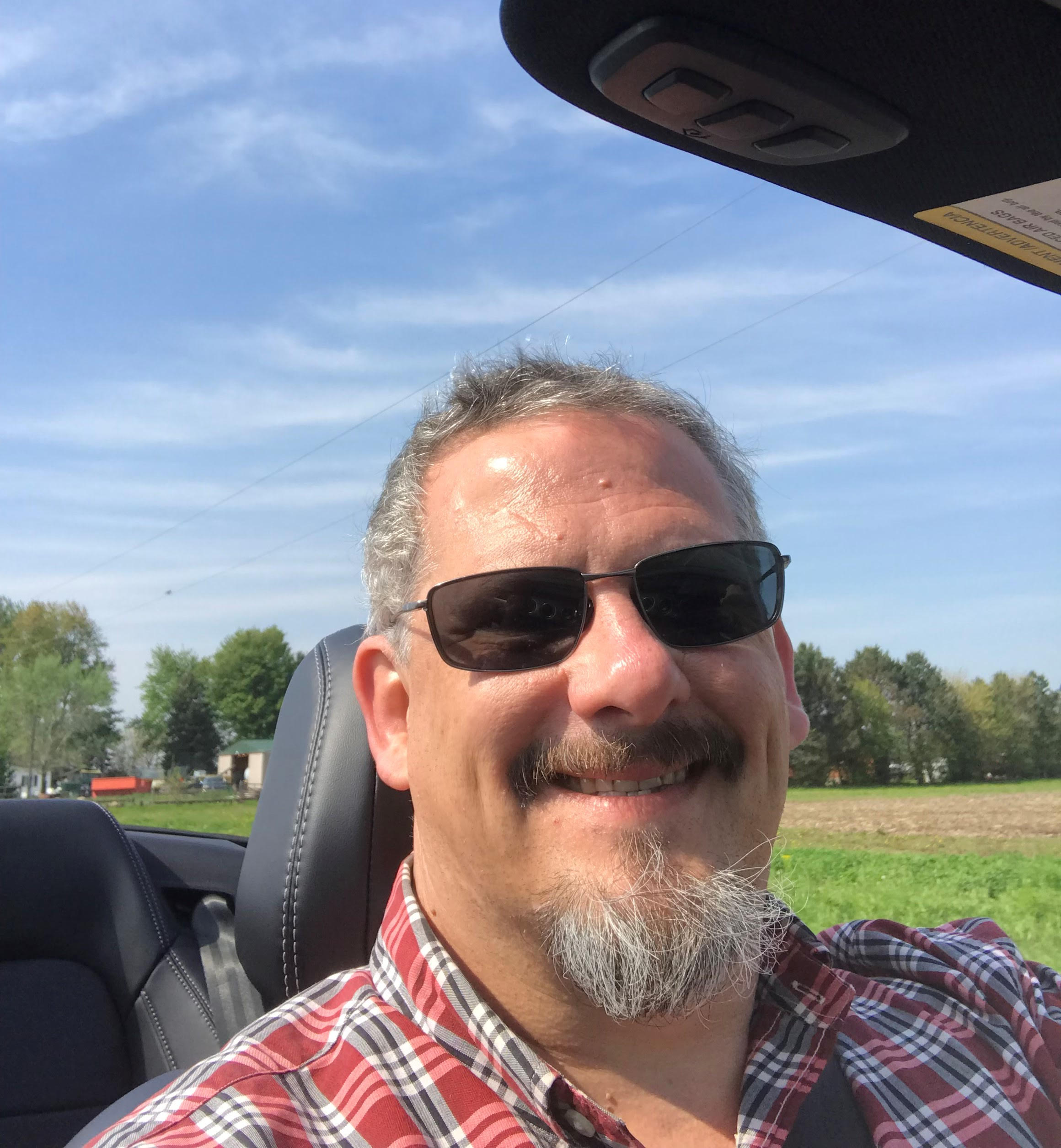
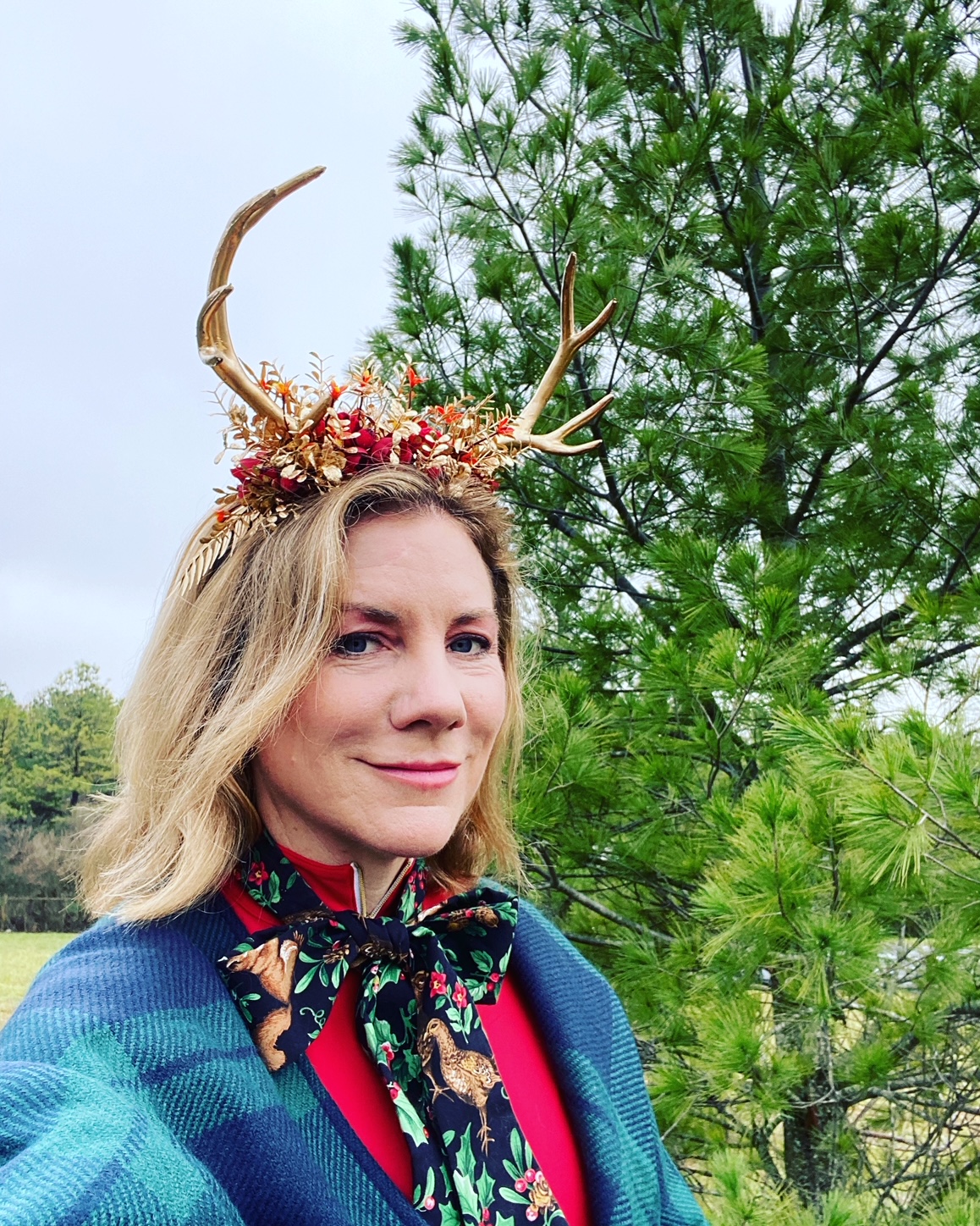
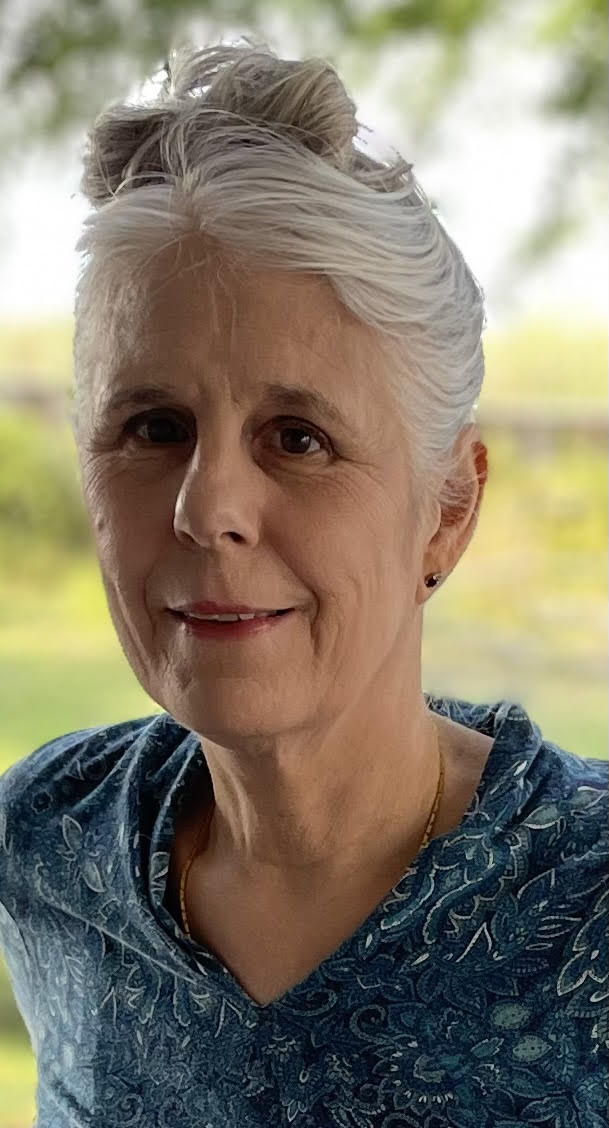
So Say We All and Wrath-Bearing Tree Collaborate!
In collaboration with So Say We All‘s Veterans Writing Division, founder Justin Hudnall and The Wrath-Bearing Tree‘s Andria Williams had the privilege of serving 21 veterans, active-duty servicemembers, and veteran family members over 2023 by providing four masterclasses followed by an intensive creative writing workshop.

We would like to thank our masterclass teachers, Abby Murray, Halle Shilling, Peter Molin, and Andria Williams for their inspired presentations on the aspects of craft; all of our wonderful participants; and California Humanities for supporting veterans in the arts.

So Say We All and The Wrath-Bearing Tree are proud to showcase a portion of our cohort below. We look forward to reading much more from them in the coming years.

***

***

Connie Kinsey: “The Letters”

In the old gray shoe box with the tattered red lid is four years’ worth of letters.  Most of them are addressed to my mother, but some are addressed to me. Many are written on onionskin and sealed in the familiar FPO airmail envelopes brightly colored red, white and blue. They crinkle and crackle when you touch them. My dad wrote these letters during his four tours of Vietnam–the first in 1966 and the final one in 1972.  

Those years he was away were hard on us all, but of course he took the brunt of it.  He left everything behind.  We missed him.  

He missed everything.

Those letters have been around the world, carted from base to base, and stored in one closet or another since the 1960s.  I have not read all of them yet.  I have not read most of them.

My mother gave me the letters with a warning.  To use her words, there are some pornographic parts. I imagine there might be. He was a young man away from the woman that almost sixty years later he would refer to as the love of his life. 

That’s not the reason I can’t bring myself to read them. I think I’m prepared to see my dad as a fully human male with a healthy sex drive. That might have been difficult when I was a teenager, but in all of those letters he is younger than I am now. Much younger.  The men he led much younger yet.

What I’m not prepared for are the spaces between the words -the things he doesn’t write about — the booby traps, the snipers, the dead bodies, the leeches, the cold c-rations straight from the can. At least, I don’t think he wrote about them.  But I don’t know.  Not yet.

I know of these abominations because I hang out in Vietnam veterans’ groups on Facebook. I never post. I just read. It’s research. The guys know I’m lurking there – I asked permission. I want to know what my dad, what they, went through, but I also don’t want to know. It’s like watching a horror movie while peeking through fingers.

My father, Captain Conrad L. Kinsey, always said the Marine Corps took him as a poor boy and turned him into an officer and a gentleman.  I’m quite sure there was nothing gentlemanly about Vietnam.  But he survived when so many didn’t. 

I adored my father. Most folks did. He was the officer and gentleman he wanted to be since seeing his first Marine in dress blues as a poor 9-year-old boy in Michigan. He had fulfilled a dream and took his oath seriously.

My dad was a commanding officer who lost thirteen of his men in a horrific battle on May 10, 1968, at Ngok Tavak near Chu Lai.  It was Mother’s Day.  They weren’t able to retrieve the bodies. That battle haunted him. Gave him nightmares.  Landed him in a psychiatric ward decades later.

A group of the survivors formed and held reunions every five years in Branson, Missouri. My father finally attended when a group of forensic anthropologists went to Vietnam and retrieved the bodies of his men.  Until they came home, he just couldn’t go. 

After his death, I was invited to attend what turned out to be the last reunion. It was held six months after his funeral.

I ended up drinking too much with a group of men who thought my father a fine gentleman and referred to him as their best commanding officer ever. I cried a lot, but I laughed a lot too.  I have a photograph of four of us – me and three older men, though not older by all that much, our arms around one another’s shoulders, broad smiles on our faces. 

They were able to say to me what they’d never said to their commanding officer.  I was able to ask them questions I’d never been able to ask my dad.  

We bonded that night.  I’m still in touch with some of them. 

It was an important weekend in my life and my grief.  Talking to those men helped me heal from my dad’s death. It had seemed as if the whole world just went on when mine was collapsing.  But those men that night – they remembered, and we remembered the man, the Marine, Captain Conrad L. Kinsey had been.

He’s been gone seven years now. His death was sudden and unexpected though his wounds never healed. He had severe post-traumatic stress disorder.  His experiences branded his heart, brain, and body.  Vietnam, Ngok Tavak and the thirteen who didn’t come home, especially, affected every experience he would have until the Sunday evening we found him dead. 

I’m writing a book of my experiences and his during the Vietnam war. I was young and having an idyllic childhood in Hawaii and then moody teen years in North Carolina. He was doing four tours in hell. Incorporating his letters into this book is important. I must read them.

I must.

*

Author’s note:

The 50th anniversary of the official end of that terrible terrible war is coming up soon – May 7, 2025.  It will be three days short of the 57th anniversary of the battle that broke my father. 

It’s time for me to begin. I can handle my dad’s sexuality, but I am not sure I can handle the unwritten words that became his post-traumatic stress disorder.  

I once had someone dear to me and eight years older say, “Vietnam was not a factor in my life.”  He said it as if tired of hearing my stories, tired of hearing my dad’s stories, bored by us both. I was stunned. He was the right age to serve but had a lucky draft number.  What privilege to have lived through such an era without it leaving a mark. How insolent and insular. 

Vietnam was a heavy load for my family – my father so much more than the rest of us, but we were scarred too. I cry when I open that box of letters. I will cry when I read the letters.  I hope to smile too.  To hear his voice as I read.  But the unknown of what’s in that box haunts me and I’m afraid to begin.

But…Semper fi, Daddy, Semper fi.  You rest in peace now.

– Connie Kinsey

***

George Warchol, “Service in the Middle”

Some inspire movies and books,
and others wind up in the news.
But for defenders with wrenches or keyboards in racks,
publicity wrecks our Service in Quietude.

And somewhere between the snipers and spies
are the middling faithful and true.
But no one tells stories about the comms guys,
they’re complex and they’re boring too.

Such as “Italy Went Dark” and the “Smurf Attack”
And “The Air Traffic Control System in Afghanistan is Down Again” too.
But the clever fixes among cables, and packets, and stacks…
They’re cool! But they would not interest you.
They say “All gave some, and some gave all”
and that’s true In Arms, sisters, and brothers.
But the defining phrase for answering the call, is
“Less than some; More than others”

Shep’rding the Team and The Job carried out,
that’s full time, and full effort, and much of what Service to Nation is all about.
But the pow’rs demand our grind and our continual waiting hurry,
“Waste yourself in OUR Way of Attainment! Or Be FOREVER Unworthy!”

“Climb the ladder, collect and achieve,
Stripes and baubles and slash up the sleeve!”
“Fill the reports with heroic deeds!”
“Promote!” “Promote!” MAKE them believe!

And like promotes like and after evil doth enter,
the Teeth of the Grinder do harden and render
Honesty’s kernel as powder in blender,
seeking to crush and to force The Surrender.

But instead, I’m finding my place in creative belong,
buoyed among words and not stripes.
And I’m finding my voice in verse and in song,
and in my choices towards effort, and living, and life.

And coming to terms with all that’s gone past,
I at last come to seek My Own Peace.
My Terms. My Service. My Sorrows. My Joys.
My ways to meet my own Needs.

I’ve done things you can not,
and you’ve done things I could never.
But the greatest of treasures, of gifts to be caught,
Is finding ourselves…and keeping ourselves together.

*

George Warchol, “Give and Get”

Give it up.
Give it up and get going.
Let it go,
and get on your way.

Listen up
and teach yourself freedom.
Write down your story,
you’ve got so much to say.

Lift your head.
Don’t abandon yourself.
Find your starting ground,
and don’t you retreat.
Just hang on.
I promise I’ll be there,
I’ll catch you.
Just try to stay on your feet.

Put it down.
It’s too much to carry.
Talk it out.

Don’t bury it deep.
Begin to trust
and be
just
a little less wary.
Let us help you begin to see.

To see something different
from all that you’ve known.
To perceive there is more
than your bearing alone.

See that we,

that we want you with us.

You have done so much good.
You are worthy of trust.

Just get up.
Get up and get going.
Begin to move.
Please, just shuffle your feet.
There’s still light ahead.
And there’s still movement showing.
And there’s still a good chance
for some kind of peace.

Everyone suffers.
But not all the time.
Not forever. Not always…

But always for some of the time.

And If redemption be needed,
then know that suffering need not be without value.
Grind the growth from it.
Squeeze it for purpose.
If nothing else,
it shapes us for something more.
Perhaps to fit us for more acts of tomorrow.

From the middle I can only tell you of what I see.
But from in front of it,
I can look back,
and tell something,
of what it means
against the background
of former,
forged ideas,
and
old,
cold,
hard,
sharpened facts.

Get in front of it.
We must put this behind.
Get in front of it.
We must stop wasting time.
Get in front of it.
We are not going alone.
Get in front of it,
and tell it to push you home.

You can watch George’s beautiful reading of his work here.

*

***

Mariah Smith — No One Left Behind

“Every man is guilty of all the good he did not do.” – Voltaire

I’d already been awake for a day and half when the bombs went off.  Physically, I was in a hotel room in the Willard Intercontinental in Washington DC, but mentally, I was outside the gates of the Kabul International Airport, in the crush of scared and desperate people, trying to guide a number of Afghan families through the mob that surrounded it. My friend Dee, an Afghan American, who I had served with in Khost Province in 2007, was doing the same for her cousins and aunts and uncles. She was the one who texted me first, the instant after the explosion at the airport gate, and moments later the pictures started flooding in. The images were live-streamed into my brain, becoming indelible memories, through the phone screen my eyes had been glued to since August 15th 2021, the day the Taliban entered the city. The pictures showed people running holding their children, covered in dirt and soot from the blast, torn and bloodied clothing littering the streets. A thousand dropped and crushed water bottles. Dee called me on WhatsApp a few minutes later as we tried to get accountability of the Afghans we had been communicating with. In the end all we could do was cry wordlessly together at the futility and the anger we felt.

Hanging up the phone, I closed my eyes in exhaustion for a few minutes and let the despair wash over me. There had been very little sleep the past 9 days. The King sized bed in the quiet hotel room threatened to swallow me. The same hotel room where I had put on a dress and good earrings the previous day, pinned my hair up, and walked into a meeting where I asked for, and received $250,000 from Boeing’s veterans group to help fund our evacuation efforts. Until a week ago, I had never done any fundraising before and now we were asking for six figures at a time. Instead of sleeping I got up, walked into the marble bathroom, brushed my teeth, splashed water on my tear streaked face, put on a ball cap to cover my unwashed hair and went downstairs to the conference room where the others were. There was more work to be done. 

The first interpreter I ever worked with was named Joseph, or that was the name he used when he was with our unit. He joined our platoon of MPs a few days into the Iraq War in March of 2003. He recalled being a teenager when Saddam invaded Kuwait in 1990/1991 and the US kicked off Desert Storm. When the US returned again 12 years later, he immediately volunteered to help. One night, all of us lieutenants were called to the bombed out building on Tallil Air Base that we were using as a temporary command post to meet our interpreters. The first one wouldn’t shake my hand, informing me of his religious restrictions against touching women. I was the only female officer in the company. Joseph stepped forward and shook my hand warmly, his kind smile and direct eye contact dispelling the embarrassment and irritation I had felt the moment before. War was new to all of us at that time. We were excited – we felt like we were going on a big adventure. None of us knew it would dominate and sometimes consume the next almost 20 years of our lives. 

I don’t know what we would have done without Joseph. It wasn’t just that he could speak the language and we couldn’t. He showed a group of inexperienced Soldiers what a war is like for the people whose home is where it is being fought. What was at stake. What to do when you encounter children on the battlefield, the elderly, the injured citizens. All the realities none of us had lived before but would live many times over in the years to come.

In the years that followed there were more deployments including three tours to Afghanistan. And right around the time I was done with the Army, America had decided it was long past done with Afghanistan, we started negotiating with the Taliban and set a timeline to leave. I will never forget the sadness on General Miller’s face in one of the last televised interviews of units pulling out. He sat on a concrete perimeter barrier and talked to the reporter, no inflection in his voice, only fatigue, perhaps hiding the regret and disagreement he felt with the decision. One of the younger Soldiers who was interviewed said she hadn’t even been born yet when the Towers fell on 9/11. 

Downstairs in the conference room of the Willard, 18 years after that first meeting with an interpreter, I was trying to make things right. A dozen other grim, exhausted people, most of them fellow veterans, sat in a horseshoe formation of tables behind laptops. Many were from other non-profits like ours, No One Left Behind. The tables were littered with Redbulls and spitters. Messages continued to pour in from people who were working inside the airport grounds, those on the streets where the bombs went off, and other veterans from all over the country trying to find and help their interpreters. A congressional committee staffer who was also an Army 82nd Airborne veteran like me, texted: “Hey – are you hearing that the Kabul airport is shutting down? The gates are all being closed and nobody else is being allowed in?”

We had been talking and sharing information all week. Those of us in that conference room had a direct connection to US troops on the ground inside the airport. I had just heard that the Marines were bulldozing shut the gate that had been bombed, welding them closed behind earthworks. After the bombs, no one else was getting in. 

“Yep, it’s true.” I confirmed. 

“WTF?! Blinken and Hicks told Senators this afternoon on their call that ops would continue at least until the 31st.”

“We are struggling to even get American Citizens on the airfield right now.” I told him about the earthen berms being erected to block access to the airport, all while American citizens waved their passports and Afghan interpreters desperately waved their visa paperwork outside the razor wire. “Everything I have seen is indicating we are done evacuating. They lied.” I set my phone down, disgusted at the way we were leaving our allies. Not even the Senate Intelligence Committee was getting straight answers.

A few hours later I watched in furious disbelief as the President addressed the country from the Oval office, a row of American flags behind him. He praised the bravery of the orderly withdrawal and reiterated the rightness of ending the War in Afghanistan. The group of us volunteers stood in front of the TV with our arms crossed, numbly watching the canned and false message being peddled. It was a pathetic attempt to try and spin the gigantic cluster fuck we had watched unfold over the past ten days into something resembling a strategic plan. I couldn’t believe anyone would buy his empty statements. Did they even care about the scale of suffering that was happening on the ground in Afghanistan? The senior leaders at the State Department sure didn’t seem to. As the US prepared to abandon the embassy in Kabul some US employees in the visa office burnt all of the Afghan passports and documents they had custody of. These were the golden tickets for the Afghans who had earned a Special Immigrant Visa to the US through their work with the American military or government. Although the burning was ‘standard procedure’ for preparing to abandon an embassy, in this case to the enemy, this action further sealed the fate of those who were so close to making it out yet still trapped.

Someone switched off the TV, and we walked to Old Ebbits Grill, a Washington DC institution. We ordered some much-needed alcohol. One of the other volunteers arrived a few minutes after the first wave of us, spotted my Old Fashioned on the table, asked if he could taste it, and knocked it back in one swallow, cherry and all, before his ass even landed in his chair. The table shrieked with hysteria tainted laughter. We were all a little unhinged from the horror of the past several days. 

For almost two years, I’ve tried to think of a coherent way to talk about those two weeks in August 2021 and the months that followed. It was both the worst thing I’ve ever witnessed and some of the most moving work I’ve ever been a part of.  

In April and May of 2023 No One Left Behind was contacted by a team from Japanese public TV. They wanted to do a story on our organization along with the Afghan women who had been part of the female tactical platoon (FTPs, they were called in short). This consumed my life for a month but ended up being very cathartic. One of the themes of their show was moral injury among veterans. “The Japanese people do not have the experience with this. The generation that fought in WWII never spoke of it and there have not been conflicts since. We also do not want them to forget what is happening to the Afghan people.” At the time of this writing I am still waiting for the documentary to be released. I don’t know what angle they will take the story. Although I came to trust the production team, both women close in age to me, I have to recognize that they are from a different country and I don’t know how they will paint the United States and our involvement in Afghanistan. I still hold a security clearance for work, and I held this in my mind every time they interviewed me. Although I was mostly open with them, I was not able to fully share the depth of the doubt and anger I was feeling at my own country’s clumsy and sometimes arrogant involvement in a 20 year war that we lost. It was hard to even put it in writing for this essay. In a way it feels like treason. 

“Tell us the story of the skinny, scared woman again.” The Japanese camera woman zoomed her lens towards me. They must have asked me half a dozen times, referring to a story I had told them about searching Afghan women on a compound that Special Forces raided along with our ANA partners. My job was to search the women on the compound and this particular young woman was likely in her 20s as I was. As I searched her for weapons, in her own home, that I had invaded I was struck by how malnourished and frail she felt under my hands. Although I was gentle, I stood behind her with my boot between her two sandled feet and felt the fragility and lightness of her body, ashamed of my own camouflaged and armored presence restricting her movement and how easily I could have hurt her if that had been my intent. 

I think they liked this story because it drew a stark contrast between the American soldiers and the Afghan people whose country they were occupying. But that was the opposite of the Afghans in the military and government we had worked with. We were working collectively for a better future. And then that was snatched away from all of us. I say snatched, but it was years of poor strategy, a rotational plan that didn’t work, a lack of focus, and a misunderstanding of the durability of the Taliban. When we lost and were cut off from our friends in the most chaotic, traumatizing way possible, all we wanted was to be able to be with our friends again and help them live safely. It wasn’t about the differences, it was about our common humanity. 

“Tell us about your PAIN and the GUILT” the camerawoman and interviewer would say. Emphasis on these sad words. Each interview led to a request for another, often revisiting the same topic 6 or 8 times. They wanted to hear more about my deployments in Afghanistan, hoping for a good shoot ’em up story I regretted and I think they were a little disappointed in the relative calmness of my deployments. Although they wanted the Japanese people to know the Afghans stuck under Taliban rule were still suffering, with few options, we didn’t talk much about the withdrawal itself. 

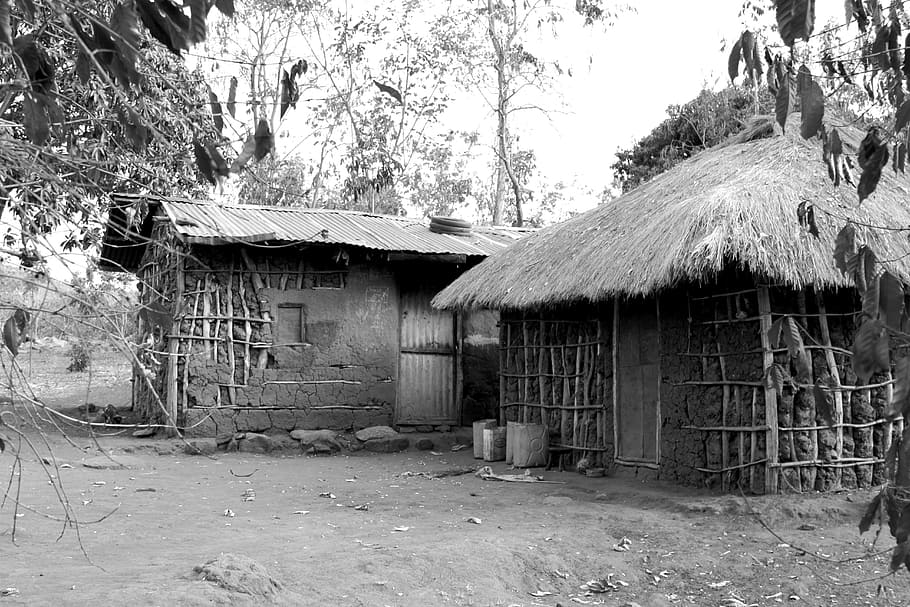
I met Efat when we interviewed her for the Japanese public TV show. She had been a female police woman, a job she loved. Now she was trapped at home. During our interview she cried helplessly and the feeling of watching a strong woman in such despair was gut wrenching. How do you help someone keep hope alive in these circumstances? I felt very helpless and grateful for the friends that have been able to leave. What does Efat have to look forward to? She was the one who made me confront, most clearly the reality for women left there. When I interviewed her, her surroundings looked like a mud walled compound with little furniture inside and a small assortment of basic kitchen implements. She told us they had sold a majority of their possessions in order to live. She was dressed in a loose black robe with a black scarf ready to wind over her hair if she stepped outside. The way she sobbed softly tore at my heart. There was nothing I could do or say to help or that made anything better in any way. How terrible to be trapped so completely in your own country, after having lived a different life of relative freedom as a young adult.

No One Left Behind continues to evacuate people out of Afghanistan, mainly through funding their travel to Pakistan while they wait to finish processing at the US embassy in Pakistan. We set a goal to help 1000 leave in 2023 and we met that goal on 30th of June. We set a new goal of 2000 and we made that goal also in late October. There are still so many people trying to help, but it will really take a change in US and international policy to allow everyone who needs to leave Afghanistan to make it to safety.  The overwhelming need makes our efforts feel like a drop in the bucket. 

It was almost nine months after the evacuation when Latifa and har family arrived at Dulles airport in May of 2022. They had been waiting in Iceland for the past 4 months while their US visa was finished. Latifa was the primary applicant, which was less common for the woman to be the primary applicant, less than 10% . After having NOLB consume my life for almost a year, and to be overwhelmed by the amount of people reaching out that we couldn’t yet help evacuate, I realized it became important for me to help one person, one family, and to see what the experience was actually like for a new family arriving. This felt like it was as much for my redemption and well-being as it was for theirs. They came to live with me, making progress in starting their new lives though they still feel the wounds of the country they left and the life they lost that is now no longer possible in their native land.

The night after I left the Williard back in August of 2021, the night after the last US plane left the airfield in Afghanistan, I was at a black tie event in Virginia horse country where I live now. It felt surreal, rich horse people in the most beautiful part of Virginia and that night I felt very removed from it, like a disoriented witness. I was still fully immersed in the violence and tragedy of what I had seen.  I felt like I had been deployed, even though I hadn’t left DC. At one point I started to tear up, overwhelmed, and my date walked me out to the large balcony where we watched the guests dancing, brightly lit through the plate glass windows, while we were shadowed in the summer night, the music from inside competing with the sounds of frogs and crickets. Teenage girls in their homecoming and prom dresses, jumped about joyfully on the dance floor in small groups or with their parents. The stark contrast between their safety and inhibition and what girls their own age had just gone through and what their lives in Afghanistan would be like now. 

This is the story I wish I wasn’t telling. I wish our war had ended differently. After investing all that time and lost lives and lives forever changed, our country’s leaders had us walk away in the most humiliating way possible and leave our friends behind in a near hopeless situation. However, our work with No One Left Behind continues. While we are still helping people depart Afghanistan on the Special Immigrant Visa program we are also very focused on helping them restart their lives here in America. And this is where my faith in my fellow citizens remains strong. The kindness and generosity by regular people we have seen extended to these newly arrived Afghan refugees is incredible to witness. Restarting a life and a career in a new country is exceptionally challenging and so many Americans have stepped up to help in a thousand different ways. For a period of time after the withdrawal I was hyper focused on the horror and unfairness of what had happened to so many Afghans and how it affected the veteran community. But now my focus has shifted more to the good we are able to be part of.

***

Reinetta Vaneendenberg — A.O.R.

Letter from Hotel California 1 epistolary
The Hall of Valor 3 prose
Vet Killed by Granby ST Hit/Run 4 newspaper reportage
Obituaries 5 newspaper reportage
Collateral Damages of A.O.R. Ambiguities 6 scratch-out poem
Crossing Granby Street 8 poem encased by fragments
++++++++++

28/8/2017 Hotel California haha (same as before)

Dear Liz,
A volunteer is typing this for me since my hands are bandaged. His name is Jonathan and
he’s here allot getting new legs and his gut fixed. Sometimes we play backgammon like you and
I did that year in the sandbox. I move pieces with my good finger.
It was great talking to you last night. I’ve been thinking about you allot today. You—in a
good place now, with a room of your own at the veteran house. It’s ok to accept the room and the food and the clothes. You’re a vet and all that is for vets. Not everyone can be lucky like me and spend a year at Hotel John Hopkins in lovely Baltimore.

Last night when we talked you were mad again about the AOR crap but we couldn’t do
anything. It’s over and done with and over and done. Listen hear, you and I aren’t responsible for the 10,000 dead from 9/11 and its wars,
so you need to let that go.

Take those five fuckin “Xs” off your fuckin hat. Sailors don’t count our kills or anyone
else’s. Shake your red hair free. We did the best we could with the crappy equipment and
leadership. Like Nam, man: who’s the enemy? Our interpreter, Fahad? A kid? A fruit vendor? Congress sucks! How can they tell us who’s a threat? When we can or can’t shoot? They’re a million miles away. In fuckin DC.

I must a got all stirred up after our call because I had that same dream again last night, the one with you standing in your battle dress, head down and walking, not watching where you’re going and I’m yelling “Liz! Look out! LIZ!” But you keep walking. I keep yelling. I wake up sweating, crying. You always had rotten situational awareness. I guess that’s why we made it as battle buddies.

We had good war-fighting skills. The rules of engagement said when we could shoot. The
area of responsibility—the lines for bullets, bodies and bags were clearly drawn on maps,
directives, messages for Afghanistan, Iraq. I don’t know why we were sent where we oughtn’t to of been. Boundaries are boundaries.

You’re right it was a set up because there was no way we could have guessed that little
girl had a bomb in her dolly basket.

Have you heard about the lieutenant? Someone came by saying the Navy was not
promoting her because of the explosion. I don’t think it was her fault that we went where we weren’t ‘supposed to and her being in the navy not the army. I agree with you that w

I don’t think it was her fault that we went where we weren’t ‘supposed to be’ and her being in the navy not the army. I agree with you that we were setup because Fahad didn’t go with us and he always wanted to be with us everywhere.

The sandbox is a strange place for sailors. Don’t you think so? How can our Navy not
promote a young officer who is eating the same crap we had to and live like we had to and the Elephants keep changing the AOR and ROE? At least she didn’t get hurt. She got home in one piece to her wife and kids.

Jonathan’s nice, a handsome dude. Maybe you could have coffee with him when you
visit. I know you come from blue blood but not all guys are like those
Our families are so fucked up. Mine tries but they don’t understand, even my dad who
did Vietnam. They returned to disdain and us as heroes but are forgotten a month after returning anyway. None of it is anyone’s responsibility. Hope you get this litter at your new address before our next call.

The docs say I’m doing ok and can see you whenever you come up from Norfolk. I’m
sorry for the mix up last time. I had the dates wrong. And here you rode the bus all day. Sorry.

Time is jumbled between surgeries and meds. You know what I mean—you have allot of meds to. I was in OR for reconstructing surgery the day you came. I don’t see much that they can do— nine fingers got blown off and all the operations won’t bring them back—but those doctors go figure they always have an idea how to make a bad thing better. Next operation is to make the whole in my gut better.

The only good things in my life are you and Jonathan as friends. The rest is crap. Look
forward to your weekly call. Same time same station.

So, now I really have to go because Jonathan has to go to PT. Remember when that
meant physical training, a chance to burn off some steam? Now it’s pain and torture.
I asked him to sign this for me so you’d know it was really from me but he laughed.

Just believe it’s from me,
your battle buddy,
Mary

The Hall of Valor
lists all
6906
U.S. military who have died during the Global War on Terror
in Operation Enduring Freedom, Operation Iraqi Freedom and Operation New Dawn.
This Hall of Valor is a searchable database
by name, operation, month and year. It can also sort
by death date, oldest to newest or newest to oldest.

Viewed 3DEC2017: thefallen.militarytimes.com


VET KILLED BY GRANBY ST. HIT/RUN
NORFOLK
Dispatch reported an anonymous call 2:12 p.m.,
28 August 2017, about a hit-and-run at Granby Street and Thole Street
intersection in the Suburban Acres area of Norfolk. The caller said a
person was hit by a compact brown car. An emergency crew was on
scene within 4 minutes of the call, followed by an ambulance 3
minutes later.

There were no identifying documents found on the victim. She was
pronounced DOA at DePaul Hospital.

Police found no witnesses.
The victim has been identified as Elizabeth C. Stanton, 37, a U.S.
Navy veteran. Burial services pending.
Anyone with information about this accident is asked to call Norfolk Police Investigations.


obituaries
Elizabeth C. Stanton
NORFOLK – 37, Funeral
service: 8 a.m. Monday, on
Sept. 11, 2017, Virginia State
Veterans Cemetery, Suffolk.


Collateral Damages of A.O.R. Ambiguities

Area of Responsibility inside outside
the enemy outside inside
ordersdogtagsdufflebagI.D.cellphonesmokes
Iraq on the Way Back
Domino Theory
burqa door-to-door
An improvised explosive device I.E.D.
is a hidden bomb Blows up patrol
convoy missing body parts Balad
Bagram Air Base Afghanistan
we don’t know where the leg is Politicians
make up rules of engagement R.O.E.
tasty fish eggs grow into the child as I.E.D. who will lead us
hightechhighbodycount out-foxed
push meds push to keep/up with them
Ramstein Air Force Base Germany
VA Hospital amputations prosthetics thumb
Hand Calf Legs Charles C. Carter Center for Mortuary
Affairs, Dover Air Force Base, Delaware
Warmonger body armor/MadeinChina/budget hearings
re-take, re-deploy, re-calibrate
Fall of Berlin,Hanoi,Fallujah.
HailMaryFullofGrace
It has been 16 years

Senator, Is the 22-Veterans-Per-Day Suicide Rate Data Reliable?
Do you have stats for correlation with
Homelessness? Alcoholism? Drug abuse?
VA Failure rates? CPTSD? TBI ? 

See: the Latin cida, killer
S u i cide me
Fr a t ri cide us
G e n o cide them
CNN reports an increased rate of blue-on-blue violence as military kill their own
By the book By the book
6 Bythebook
6 Bythebookbythebook t hebookCP
9 By book T
0 ook S
2 ok D
nobook
Allah M.C.
Mission Co
Com
Comp

black body bagsbagbags

Black
Hawk

W
a
r

She charged the crosswalk as if rushing the landing zone,
right arm propelled red pony-tailed floppy head.
Hot wash rose from swampy beach traffic.
I saw her as a unit, an interruption across my line of sight.
The uniform of a street person, I presumed, with time to
look during the long light. I turned up the AC.
Flicked the auto-lock.
Black wool beret, with five white Xs pinned on it.
Hawaiian shirt, glaring blue, green, yellow
Camouflage pants, too big or her now too small.
Black mocs like clown shoes, pale heels peeking out,
as if her feet had lost the mass for boots.
She was closing on the sidewalk, focused on the mark—
When the light turned, I shifted the Vette into first
just as horns blasted.


Reinetta Van explores identity and historical perspective issues in hybrid forms. Her work has appeared in The War Horse  and anthologies Sisters in Arms: Lessons We’ve Learned and Things We Carry Still: Poems and Micro-Stories About Military Gear. Van ([email protected]) scribbled A.O.R.’s first draft June 12, 2017, and hopes to express someday why this piece sticks in her craw. You can hear her read from her work here.

***

Tom Keating – REMF

Richie handed me a bandolier.

“Another fucking waste of twelve hours,” he said. The green cloth pockets each held a magazine filled with eighteen rounds for the M16 battle rifle slung on my shoulder. It was almost 1800 hours, and we were going on perimeter guard duty till 0600 hrs. the next morning. Ninety-eight degrees, and our jungle fatigues were soaked with sweat.

We loaded up the truck in the company area for perimeter guard duty, which we were assigned to do every couple of weeks. Twelve hours sitting in a hot, wet, smelly sandbagged bunker on our sector of the Army base perimeter. Twelve hours of boredom.

“I’d rather be typing the fucking monthly fuel consumption report,” I replied. “This sucks, again.”

“Can it, you two, and get on the truck,” yelled Sergeant Hollis, the sergeant of the guard for this shift.

The twelve of us climbed on the open truck, wearing helmets and heavy, sweaty flak vests, our rifles slung on our shoulders. The truck drove out to the perimeter along the dirt road behind the tall, barbed-war fence of our base. Two small Vietnamese villages were just four hundred meters from the fence, and the locals who lived there would come into the main gate each day, get checked by MPs, and then go to work on our base as cooks, laundry workers, and housemaids.

The combat troops called us REMFs, rear echelon motherfuckers; support troops that made the war possible with our typing, driving, computer programming and other work skills needed in a modern Army. We do the paperwork that feeds the war with everything from body bags to bullets. Our base and living quarters the grunts (infantry) call luxury. We had beds, daily hot chow, plenty of water and in some cases, air-conditioned offices.

Most of the soldiers assigned to this logistics base were trained to be Army administrative types. Some, like me, who were trained for infantry, were assigned as clerks or typists when we arrived. The Army marches on paper. I knew I lucked out with this assignment, instead of being in combat.

Every couple of weeks we were pulled from our offices, trucks and repair shops and thrown together for bunker guard duty, strangers to each other. The truck arrived at our bunker’s situated on large earthen berms on the perimeter near one of the gates into our base. The truck stopped, and Sergeant Hollis got out, walked to the rear, and said,

“Kearney, Philips, Richie and Denton, you four here, in bunker number one.”

We hopped off the truck. Someone handed us our weapons, flares, ammunition for the M60 machine gun, extra canteens, and a box of C-rations. Richie carried two rolls of toilet paper. The truck drove down to the next bunker. We waited while Philips picked up a stone and threw it into our bunker.

“Hope ole snaky aint in there today.”

Cobras loved our bunkers; they provided shade for the cold-blooded reptiles, who also enjoy the rats that live there, too. We threw stones in the bunker to let Snaky know we’re coming in. Sure enough, he slithered out, an eight-foot-long cobra. The snake turned and retreated into the brush near the barbed wire. Philips threw in another rock and waited. Nothing. We carefully entered the bunker, our home for the next twelve hours. There were no bushes or tall grass around our bunker. Defoliant sprayed every week made sure of that.

I set the machine gun on its bipod, positioned it out the center bunker port. We took off our helmets and flak vests, and settled in. The heat and stink inside the bunker was unbearable. Richie and Denton went outside behind the bunker to smoke some weed. Philips and I took the guard position, looking out at the villages.

Philips said he was a truck mechanic for the 350th TC (Transportation Company). A short, stocky fellow, he speaks with a hillbilly accent. “Kearney, where you from?”

Before I could reply Richie came back in. Richie was tall and lanky. He shoved his glasses up higher on his large nose and announced, “Put on your gear, the sergeant is coming to check, and he’s got the ELL-TEE with him.”

We put on our helmets, shirts and vests and waited. Sergeant Hollis called us together outside the bunker. Lieutenant Nack, the officer of the guard this shift, stood behind the sergeant. Nack’s tailored fatigue was dark with sweat. Hollis was an experienced soldier who had fought in Korea. He gave us our instructions.

“Okay, you guys know the drill. Two on two off, two hours. Kearney, I want you on the machine gun. Richie, check the commo line. You are Reno 4. Do it now.”

Richie picked up the field phone handset, pressed the key and said, “Bravo One, Reno 4 commo check.” Richie put the receiver down. “We’re good to go, Sergeant.”

Sergeant Hollis replied, “Okay. Do that at least once an hour. Me and the lieutenant will do another check later tonight and bring more water. Anything else, Lieutenant?”

Nack stepped forward. He wore the custom fit new model body armor jacket that zipped up the front. “Stay alert, men. Keep your eyes open tonight, Intel says we are sure to get hit by Charlie.” He stepped back. Nack worked in the finance office, probably hadn’t fired a weapon since Basic Training or whatever reserve officers went through. They turned and got back in the Jeep and left.

Philips asked as he took off his gear, “Kearney, you think the EL-TEE was just bullshitting about an attack?”

“I don’t know,” I replied, “It is the big Chinese New Year festival, I would expect them all to be celebrating, not fighting.” We settled in, looking for movement in front of us.

Denton and Richie relieved us two hours later. The sun was almost gone, so Phillips and I went outside, where it was cool, the air fresh. Trucks and Jeeps kept coming and going out of the gate near our bunker. Philips used the piss tube alongside the bunker, and I sipped warm water from my canteen. Just then the field phone chirped. Richie picked it up.

“Reno 4.” His eyes got large, and he looked over at me.

“Roger, yellow alert. Reno 4.”

Yellow alert meant some shit was going down. We hustled back into the bunker. I drew back the cocking lever of the M 60 and put my shoulder against the stock. I looked out the port. Richie and Denton picked up their rifles. Denton looked confused. He didn’t know what to do with the rifle. I looked over and said,

“Denton, put the magazine into the rifle, then pull the charging handle. Put your selector switch off safety to fire. Richie, give him a hand.” These guys were clerks and typists, not infantry. Finally, their rifles were locked and loaded. We waited. I saw the gate being closed; Vietnamese workers on the post being hustled out of the gate as it closed. A Military Police Jeep pulled up to the gate, with an M60 machine gun mounted and manned. Damn!

“We have to check the claymores to be sure the wires are okay. Who wants to go with me?” Philips nodded his head. “Okay. Denton and Richie, eyes front. If you see anything move, shoot it. We’ll be right back.”

The two of us exited the bunker and found the claymore wires leading from the bunker. We followed along in the fading light all the way to the mines which were thirty feet in front of the bunker. Everything looked okay, the wires attached to the blasting caps, positioned “FRONT TOWARD ENEMY.” We ran back to the bunker. I heard a rumble, like thunder. The phone chirped again. Richie answered,

“Understand. Red alert. Reno 4.” Richie hung up and relayed the news. “The VC are attacking Bien Hoa Air Base, and we may be next! Holy Shit!” We were jacked up with adrenaline and fear. The booms were louder, closer. The stutters of a machine gun could be heard. The field phone chirped again. I picked it up.

“Reno 4,” I said into the handset.

“Reno 4, stand by. Victor Charlie spotted in the village 400 meters your front. TAC air on the way. Get low in your bunker.”

“Reno 4.”

“Get down,” I shouted, “TAC Air!” Everyone crouched down below the sandbag wall of the bunker. We heard the roar of an F4 Phantom jet, and two large explosions. The F4 Phantom roared away. I cautiously looked over the sandbag port. The villages were gone, just smoke and fire. Nothing was moving in front of us. I looked over to the gate, the MP Jeep was gone, replaced by an Armored Personnel Carrier (APC). Before I could process this, we heard more firing and some small explosions, grenades most likely. Then it got quiet. The firing stopped. Nothing moved. The phone chirped again. I picked it up.

“Reno 4.”

“Reno 4, stand down from Red alert. Alert status now yellow. alert status yellow.” The sergeant arrived shortly after we relaxed. ELL-TEE wasn’t with him. I told him our situation.

“Sergeant, we went on red alert,” I looked at my watch, “60 minutes ago, just got word to stand down to yellow. TAC Air blew up the villages to our front. All weapons locked and loaded.”

“Okay, Kearney. Stay alert. This may go on all night.” Hollis drove over to the next bunker.

I turned to the guys. “Let’s get back to the guard schedule: two on two off, two hours. Stay alert. If you think you are gonna fall asleep, move around, take deep breaths. Me and Philips will take the first watch.”

Philips and I looked out the bunker towards the destroyed village. Damn! the jet just blew it away! There were people there earlier. I hope they got out before the bombs. Jeesus! No movement at all. We could hear the chatter of machine gun fire and explosions far down the perimeter on our left. The APC roared away towards the fighting. We were alone in the darkness.

“Kearney, I’m scared.” Said Philips.

“Me, too,” I replied. The lights at the gate cast some in front of our bunker. Richie and Denton were napping outside. The sounds of battle diminished. We started to relax. After forty minutes I was fighting the urge to close my eyes and sleep when Philips whispered to me.

“Kearney, I see somebody moving!”

“Where?” I jerked alert.

“Over to the left, see it?”

I slowly turned left, and yes; someone was slowly crawling towards bunker two on our left. A sapper! I turned to my right and saw someone else crawling towards us. Two sappers! They got through the wire somehow and were about forty feet away.

“Philips, ” I whispered, “you fire right, I fire left. Go!”

I fired my M16 four times at the guy. Bunker 2 must have seen the sapper too and fired their M60 machine gun. The red tracer rounds bounced off the ground in front of the crawlers. The sapper on the right got up on his knees to fire a B40 rocket at our bunker, just as Philips hit him. He fell back, and the rocket went sailing over our position and exploded behind us. Denton and Richie were now wide awake.

“Jee-sus! You got them,” shouted Denton.

“Keep looking,” I said. “There may be more.” My heart was pumping fast. My vision had sharpened. I scanned in front and on both sides, even looked behind us. But there wasn’t anyone else.

My infantry training told me to go out and check the bodies. I ran, crouched, to the first body. He was deformed by the rounds he took from me and the M60 from bunker two. His right arm was missing. Picked up his rifle and slung it on my shoulder. I checked him for papers, found some.

The B40 rocket guy was twenty feet away. Philips’ shot had blown his head apart. I wanted to throw up, but I held it in. I picked up his launcher and the rockets he carried. No papers on him. I ran in a crouch back to the bunker. I threw up outside the bunker entrance, then went in and picked up the phone.

“Bravo One, Reno 4.”

“Reno 4.”

“Weapons fired. Two enemy Kilos. No Whiskeys, (Army code for dead and wounded), two weapons recovered.”

“Roger, Reno 4. Continue alert.” We could hear some explosions and rapid firing along the perimeter, but it was quiet near us. Philips looked at me, his eyes were wet.

“I shot deer and squirrels back home,” he said. “But these were men! Jeesus! I don’t want to do that again, Kearney.”

“I know,” I said. “It is fucking awful, but they were going to kill you and me and Denton an’ Richie. We didn’t have a choice.”

“Shit,” said Denton, “I wanna get outta this fucking bunker and this fucking country.”

“Shut the fuck up, Denton, you just got here,” said Richie. “You aint going anywhere for a year. Kearney’s right, it was us or them.”

Philips went outside, still upset. Denton and Richie took over the guard. I stayed in the bunker. I was suddenly hungry, feeling lightheaded as the adrenaline left me. I could not relax, though.

Time passed, and we heard no more shooting. When the sun came up, smoke was rising from the village. The two enemy bodies were still there in front of our bunkers, flies feasting on them. We heard no battle noise, just a few random rifle shots somewhere down the line. Sergeant Hollis and Lieutenant Nack were coming down the access road in the jeep. Hollis stopped the Jeep, and I went out to meet him and Nack. I nodded at Nack. No saluting officers near the wire.

Sergeant Hollis said, “Situation, Kearney.”

“Sergeant, all quiet. No further attack on this section since 2300 hrs. Two dead sappers out front, I policed their weapons and some papers taken from their bodies.” I pointed at the two weapons and the papers tucked in the corner.

Nack looked startled. He scowled at me, “Specialist, who told you to take the weapons and papers?” Hollis rolled his eyes, very slightly.

“Sir,” I said, “that’s SOP, disarm the enemy dead and check for any intel. They told us that at Fort Jackson.”

“Oh, you were infantry,” he snarled.

“Yes, sir.”

“Well, You should have left the weapons there and notified me.” He wanted credit for the weapons capture. It would look good on his record, and maybe a medal. He took a small note pad from his breast pocket and a pen.

“I need your name and your unit and commanding officer.”

“Sir, Specialist 4th Class Kearney, I am an administrative aide to General Stark at headquarters supply, fuel division.” Nack looked surprised. That brought him up. He didn’t want to fuck with one of the general’s boys. He put the notepad back in his pocket.

“Okay. Sergeant, take charge of the weapons and documents, and contact the engineers to remove the bodies.”

“Yes sir.” He went into the bunker and retrieved the weapons. “Kearney, I’ll make sure you get credit for the captured weapons.” Nack threw an angry look at the Sergeant as Hollis put them in the back of the Jeep and climbed behind the wheel.

“Thanks, Sergeant,” I replied.

“Good job, men. Your relief is on its way.” The Lieutenant said as he hopped back in the Jeep. Hollis drove away as the field phone chirped. I picked it up.

“Reno 4, Alert status Yellow.”  I turned to the guys, who were tired, dirty, and still jacked up on adrenaline.

“Alert Yellow, we can relax.” Then we heard the truck coming to bring us our relief. It was 07:00hrs. I took off my flak vest and sucked my canteen dry. Phillips had recovered somewhat and smiled at me. I could hardly wait to get back to those fucking fuel consumption reports.


Tom Keating is a Vietnam Veteran who kept a journal during the war in Vietnam, which enabled him to publish his memoir, Yesterday’s Soldier: A Passage from Prayer to the Vietnam War. He has also published in The Veteran, the Military Writers Society of America’s Dispatches, The Vietnam Memorial 40th Anniversary Tribute, 0-Dark-Thirty from the Veterans Writing Project, the Microlit Almanac from Birch Bark Editing, and The Wrath-Bearing Tree. He lives west of Boston with his wife Kathleen. You can hear him read from his work here.

***

Nancy Stroer – What Do You Expect?

The Rooster’s nose was his most salient feature, curved and sharp as he strutted and preened in front of formation. It was an act, but the Rooster snapped his barnyard into submission without apology.

He told me, “Ma’am, I need you to take all the females to the clinic.”

There’d been a rash of pregnancies in the barracks. Okay, maybe two in as many months, but this was the Rooster nipping his birds into line.

“It’s like we’re running agot-damn brothel on the female floor,” he said after he’d dismissed the soldiers. Other company leaders remarked, variously:

“These females got to learn how to keep their legs closed.”

“Put males and females together and what do you expect?”

What did I expect? I expected to get along as a woman in a man’s world. I knew how things worked and I expected I’d do fine with that, having grown up with three brothers, playing sports, all of this occurring in the broader context of a world run by men. I didn’t think about any of this in so many words back then. I didn’t know that I was a Guys’ Girl, a term my young adult daughters use now with a curl in the corner of their mouths.

Back in the olden days of “Don’t Ask, Don’t Tell” (unless it’s super-juicy), the NCOs were ranting the same old litany to a sexual but sex-free god, repeated in NCO meetings and formations and ad hoc conversations near the filing cabinets. Sex was a given, a right, for some, and a loaded weapon for others. Male soldiers wanted to have sex, were going to have sex. The women had to expect to receive that attention whether they wanted it or not. And they should expect it, but not want it. If they wanted it, they must appear not to; otherwise they’d get a reputation in the Barracks Bicycle. Those were the expectations.

No one expected birth control talks for the male soldiers. Two of the guys were walking around, looking kind of sheepish at times, kind of proud at others. There was much slapping of shoulders and good-natured cussing.

I processed information differently in those days. I was so young, still surfacing from the dreamworld of adolescence to find myself drowning in the patriarchy, except I thought I was swimming just fine. The only other female officer to process it was pregnant herself but married and therefore did not count on the Tally of Concern. Maybe her PT game was a little weak, but she managed to get her hair done. She was decorative but ran the supply warehouse with confidence and competence. She was a Black woman, with a team of mostly non-white soldiers. Her operation was a bit intimidating to me, and maybe secretly to the Rooster, too, because his beak was out of her business. And sure, the commander was a woman but she was an androgynous little elf and we left her alone because to engage with her in conversation was to invite a deluge of unwanted information about her irritable bowel syndrome.

There was righteous sex (guys going to the Red Light district), and sex that was out of control (women daring to have sex in their barracks rooms). The NCOs moralized about the need for guys to get laid and the impact of single women getting pregnant on The Mission. Everyone laughed at the idea of the unsexy having sex. I recognized the double and triple standards, but still bought all the tangled lines.

Maybe these young female soldiers don’t know about birth control, I thought. They couldn’t all be the dirtbags the sergeants said they were, just getting pregnant to get out of the barracks and straight to the head of the line for military housing and priority spots at the child development center. Maybe they were just waking up as humans, too.

Imagine my surprise, then, to find the women gathered in the clinic lobby not looking contrite or curious but sullen and angry. I didn’t quite get their mood. “Don’t you want to be in charge of when you get pregnant?” I asked them. Surely they’d joined up to be all they could be. Capricious childbearing would shoot their career trajectories out of the sky.

Standing next to me, Johnson swung her swollen belly to face me. She was small and quiet. Curls framed her brown face. “Cute” is a diminutive way to describe her, but she was diminutive. She was objectively cute. I didn’t know her, since she worked in the supply warehouse where women made up about a quarter of the workforce, in contrast to my operation across the parking lot with the mechanics, where the air was heavy with secondhand smoke, AC/DC, the ping of wrenches and tool boxes across concrete floors. All the women watched each other, though, and my general impression of the ones in the supply warehouse was that they were as quietly competent as the pregnant female officer who ran their show. They were organized, and a little disparaging of the men who worked there because they clowned around too much. A bit dismissive of me as too rough and ready. Too accommodating of the Rooster and his ilk. Maybe they found us too white, and therefore suspect. This insight is a late add. I’m sure I didn’t think too much of the racial dynamics at play in those days but my memories are fully colorized now.

So cute little Johnson rounded on me and said through clenched teeth, “I’ll have as many children as I got-damn well want,” and I had no response. It was an astounding, revelatory moment. Of course she was right. Of course she was outraged at the Rooster’s overreach. A woman of any marital status can have as many children as she got-damn wants. A Black woman might justifiably feel more ferocious about this than anyone. Johnson’s withering stare — those soft cheeks pulled into a parentheses of disdain — was an emotional heart round.

In a flash I melted into a puddle of shame, remembering how my father made me return a pair of cargo pants when I was fifteen because they were “too revealing.” The second pair was so baggy I had to take them in at the waist which, in my newly self-conscious opinion, made my butt look even bigger. This was the first time I’d been told explicitly to hide my assets. I did not wear my new cargo pants and, among other things, I stopped volunteering to go to the board in health class, no longer wishing to show my work. Or anything else.

Might as well disappear my whole body, starve it into its preadolescent shape. Or maybe to eat and drink to keep up with the boys. Or go on whack diets to have something to talk about with the girls. Or to do all the sports and sweat and swear and carry the mortar plate on ruck marches and be considered just another one of the guys.

Didn’t matter. I wasn’t one of them. The male soldiers still vied to run behind me in formation. Let me hitch myself to that ride, they’d say.

They left me notes under my car wiper blades and lewd sculptures on my desk. They backed me into the corners of quiet offices. They turned up at my house at odd hours. It was easiest to laugh them off, to call them the assholes they were, to put them all in their proper places, and keep my business to myself.

I had expected Army men to misunderstand me. My religious father with his Master of Fine Arts, who had enlisted as a medic in the days of the draft so he could control his fate, told me as much when I was insisting that I’d be able to control my fate, too. “It’s different now,” I said, “and I’ll be an officer.” But there are lots of ways to kill a person without firing a shot and on my very first day in my very first unit, my very first platoon sergeant took one look at my left hand and said, “We got to get you married, ma’am. An unmarried officer is going to cause trouble.” I hadn’t expected a welcome like that at all.

And here was Johnson with her soft round cheeks and her rounder belly, unashamed of the truth of the matter: that even she, this actual cherub of a woman, had had sex and now she was having a got damn baby and she didn’t give a flying fuck what I or Rooster or anyone thought about her marital status or any of her choices. Johnson’s comment was a two-by-four up the side of my head, and it woke me all the way up, right there, even though I still didn’t know what to do with the information.

I’ve heard many white veterans say that they got to know, and become friends with, people of color for the first time when they were in the military. But did we really get to know each other? Did we just laugh with them at company picnics or did we allow ourselves to be slugged, as I was by Johnson’s verbal pugil stick, into the bleacher seats? It was a risk for her to say what she said to me, and a gift. I can only think that she was so angry she couldn’t keep her thoughts to herself. Which at the time made me stop caring what the men thought, and to crave insight into what the Black women, the enlisted women, the queer women — all the ones operating outside of the narrow parameters of an acceptable life for a female soldier — were thinking behind their shuttered mouths. When someone rounds you on the convulsive truth, it’s hard to hear but it is a gift, and Johnson taught me to grab with both hands.


Nancy Stroer grew up in a very big family in a very small house in Athens, Georgia. She holds degrees from Cornell and Boston University, and served in the beer-soaked trenches of post-Cold War Germany. Her work has appeared in Stars and Stripes, Soldiers magazine, Hallaren Lit Mag, The Wrath-Bearing Tree, and Things We Carry Still, an anthology of military writing from Middle West Press. Her debut novel, Playing Army, is forthcoming from Koehler Books in 2024. She reads from her work here.

***

It was such an honor and a pleasure to work with these talented writers. Thank you for supporting So Say We All and The Wrath-Bearing Tree.


Founded in 2009, So Say We All is a 501c3 literary and performing arts non-profit organization whose mission is to create opportunities for individuals to tell their stories, and tell them better, through three core priorities: publishing, performance, and education.

In addition to the programs made available to the public, SSWA offers education outreach programs specifically targeting communities who have been talked about disproportionately more than heard from in mainstream media. Creative writing and storytelling courses are offered in partnership with social service organizations such as The Braille Institute, Veteran Writers Group – San Diego, PEN USA, Southern California American Indian Resource Center (SCAIR), the homeless residents of Father Joe’s Village and Toussaint Academy, San Diego Public and County Library branches, and more.

The biggest hurdle for someone with a story that needs to be told is knowing where to begin. So Say We All’s purpose is to answer that need, to be a resource that listens to all facets of its community regardless of the volume at which they speak.

Justin Hudnall received his BFA in playwriting from New York University’s Tisch School of the Arts. He currently serves as the co-founder and Executive Director of So Say We All, a San Diego-based literary arts and education non-profit. In a prior career, he served with the United Nations in South Sudan as an emergency response officer. He is a recipient of the San Diego Foundation’s Creative Catalyst Fellowship and Rising Arts Leader award, SD Citybeat’s “Best Person” award of 2016, and is an alumni of the Vermont Studio Center. He produces and hosts the PRX public radio series, Incoming.


New Fiction from Cameron McMillan: “Call Me Nobody. Let Me Live.”

I can still see his smile as I settle into my desk and the normal morning wave shuffles in. First comes the pinstripes of the best and the brightest, carrying their expertise and experience like an expensive briefcase by their side, letting it swing around for all to see. They speak of exotic and noteworthy places all the same, making no distinction between a Washington and a Baghdad. Their presence and self-importance is ballooned by the special assistant that seemingly exists to fan the flames of their egos, oohing and awing with every detail of the important missions the guests recount, and gesticulating at the carefully placed references to impressive figures they dealt with on their travels. I tap on my keyboard to log into my computer and listen in on the personal odysseys of guests’ respective self-declared, world-saving pilgrimages. I place my second coffee next to the cheap frame at the corner of my desk and there it is, the smile.

Like every morning, I peer over at it and see the sparkle of Mulligan’s teeth above the sand-caked filth of our fatigues. I try not to smell the smoke or taste the dust, as I know that leads down a dark road littered with smoke, fire, and demons. That I cannot stand. So, instead, I distract myself from the tightening in my chest with a gulp of the warm brew and some shuffling of papers. I blink hard and take a deep breath as the final straggling dignitary drones on about the misfortunes of his delayed connecting flight and the plights of business class. I think he’s a former ambassador turned senior fellow of some kind with an expertise in economic development or the like. Just for kicks, I look at the special assistant’s schedule to find the reason for the wayward ambassador’s troubles. In block letters, I see the title of the conference he has been invited to attend: DIPLOMACY AND BUSINESS SYMPOSIUM: ADDRESSING POVERTY IN THE GLOBAL SOUTH.

The worn down dirt roads and begotten mud huts along the banks of the Euphrates replace the calendar on my screen. The smell of wretched decay, sewage, and wastewater penetrates through the windows of our M-RAP. I hear the laughter of the little girl who chases a deflated and torn soccer ball down the trash-filled alleys of Al Baghdadi. She waves at our convoys as we pass by until, one day, she follows the ball onto an unexploded mortar cache that sends her flying high into the sky and litters her tiny bones and flesh across the same roadway.

“I’m Dean Miller’s 9 a.m.”

I look up to see another suit standing above my desk. This one is slim and powder blue, matching the relatively young man in it. He does not look at me. Instead, he is glued to his phone, which must contain urgent emails that will assuredly save little girls from blowing themselves up playing soccer. I begin to say that I am not a receptionist, but bite my tongue as I look at his expensive watch and down at his polished shoes. He’s never been near Al Baghdadi or any town like it. Instead, I give him a smile and lead him to the Dean’s office where they commence a discussion about their understandings of the harsh realities of intra-state conflict and prospects for resolution after sucking down their French-press and marveling at the Indonesian artwork on the Dean’s wall. From their air-conditioned haven, they will save the world, for they know war and violence.

Walking back to my desk, I try to guess the blue suit’s age. He looks as old as D’Angelo was when he died. Early thirties. D’Angelo played guitar and had a Harley at home. He showed me a picture of his kids once, but I can’t remember if it was one girl and two boys, or two girls and one boy. That’s about all I can remember about him. I didn’t know him well, but our few interactions were cordial enough. I wasn’t there when the IED ripped apart his legs into a mangled mess, either, but I heard on the radio that he was still alive when they put him in the medevac chopper. He bled out somewhere over Al Anbar province. I look back at the frame on my desk, focusing on the American flag we’re holding in front of a row of Hescos on our second week in country. We’re wearing boonie caps and our full combat load, flaunting our weapons, ammo, and Kevlar. I wonder if it was one of the boys or one of the girls who was handed the folded flag at D’Angelo’s funeral.

General Lee lies on its side aftrer surviving a buried IED blast in 2007. The Stryker was recovered and protected its Soldiers on more missions until another bomb finally put it out of action. Photo by courtesy of C-52 of 3/2 Stryker Brigade Combat Team
see: http://www.army.mil/-news/2008/06/06/9708-general-lee-rides-again/

The computer bings and I look at my email to see an announcement about a new security studies fellow. I scroll through and skim the highlights. Army. Lieutenant Colonel. West Point. Intelligence officer. Always intelligence officers. Sometimes pilots or JAG lawyers. But no grunts. That must be the unwritten rule in the veteran’s affairs office down in admissions and financial aid. I imagine a not so distant reality where the security studies fellow conducts an intelligence briefing. He details the security of a road in the Hit district of Al Anbar and deems it free of IEDs. He declares it safe for travel by convoy and foot patrol. He stands in front of a PowerPoint presentation in a faraway headquarters in Kuwait or Qatar. That’s that, and so, off D’Angelo goes.

*

It’s 10’oclock now and all the suits have filed off to their respective conferences and meetings. With the fanfare died down, the stream of faculty trickles in. The pinstripes of the best and brightest are replaced with the tweed of the wise and prognostic. Reading some of their bios on the website, one wouldn’t be alone in mistaking them as manifestly prophetic. A well respected professor of gender studies decides to engage is some small-talk with an associate dean behind my desk. I can’t help but overhearing as I sort through expense reports of faculty research trips to Italy and Montenegro. They discuss her recent book on women in the US military and consider branding techniques to effectively showcase it on the website. The dean suggests a meeting with marketing.

“It’s remarkable work, Kathleen. The section on women in combat arms units was so inspiring.”

I hear the creak of Carhart’s door flying open from her chu as the clash of metal pierces through the silent air of the desert night. Thompson runs out as he pulls up his OCP trousers by the belt and holds his rifle in his left hand. He swivels his head from left to right and scans the surrounding compound before he runs off and disappears from the moonlight. I hear Carhart’s screams. But it’s more than screams, like the unrelenting howl of a wounded animal about to die. I walk into her room and see her sobbing on the floor, cradled into a ball, and notice the blood on her sheets and the gash above her eye. I follow the procedure. I get her to medical care, notify the commander, and pester him into opening an investigation. I tell her she can trust me. I promise her justice. “No probable cause” is the official finding. Three months later, we stand in the same rank of formation and watch him get promoted to first sergeant. I check my phone to see the last time she responded to one of my calls or texts since we got home. Three months ago, “don’t worry about me.” The second try at a sober living home hadn’t worked out. I hope she’s alive.

Professor Goff is next, the director of security studies, who is even more ancient than the academic institution itself. Carrying himself with a purposely relaxed gate and attitude, he emanates purported knowledge my way. He’s wearing his usual attire, knee-length khaki shorts, a wrinkled polo shirt, and his all-weather Birkenstocks. What’s Professor Goff up to today, I wonder, as he plods along the hallway towards the dean’s office. Pasted on the front page of the school’s website, I see the usual overbearing text and logo advertising “Great Power Symposium: Deterrence and Conflict in a Polycentric World.” Professor Birkenstocks is the headliner, calling all of the future national security leaders that roam the halls to be blessed by his presence in the large auditorium. I roll my eyes and take another sip of coffee. I think of the professor’s book about Iraq that launched him into the stratosphere of academia’s giants. It’s about Al Anbar Province, where my friends and I served, and deals with the Marines who “bore the brunt of the fighting.” I look up an op-ed of his from 2003. He’s arguing in support of the invasion. I find another from 2007 where he explores the logic and efficiency of the surge. He says losses are inevitable. I remember Mulligan’s obsession with reading. Sci-fi and flash fiction, I think it was. I see his smile. Don’t do it, I think. More coffee.

The dean comes out to greet Professor Goff with the normal platitudes and mutual self-congratulation. It’s almost noon and I decide to leave for my daily walk around the quad before eating lunch. I like to sneak away from my desk for fifteen minutes to breathe fresh air and see the finely cut grass. I see a group of undergraduates playing ultimate frisbee outside and try to guess their age. Probably 20 or 21. With some quick math, I realize that Mulligan would be a junior if he lived long enough and his GI Bill paperwork went through. The undergrads laugh as they toss the frisbee back and forth and I see Mulligan’s grin. I hear him chuckle as the older guys in the platoon mess with him. Thankfully, that’s how I remember him, smiling. I’m grateful I wasn’t there when they found his body. Blasted brains and blood all over his chu. His left hand still gripping the trigger well. No note. Nothing. Just Mulligan smiling one day and his own rifle in his mouth the next. I’m glad that I’m left with his smile.

Heading back into the school, I pass the framed awards and photographs that line the halls of the entrance to honor famed alumni who went on to shape world events. They include a Chairman of the Joint Chiefs, an ambassador, and a head of the World Bank. I see the students scurrying about, cramming articles, academic journals, and other forms of knowledge into their brains as quickly as they can. I look back at the pictures and wonder which one of them will be on the wall next. I wonder if anyone in the building has taken the time to look at the picture on my desk, at Mulligan. I think of all the current, former, and future leaders of geopolitics that roam the halls around me that could benefit from having known him, from having known his smile. Maybe it would make the world a better place. Maybe not. The idea brings a poem to mind, but I’m not sure why. The author escapes me. It says, “Call me nobody. Let me live.”


New Fiction from Peter Obourn: “Wild Horses”

Lee Harkness was supposed to meet this guy Smitty at a bar called Marty’s on 14th Street at a specified time. Lee was late because it was his first time in Dallas. He had trouble finding the address.

“You’re late,” said Smitty.

“No shit,” said Lee.

“Relax, have a drink.” The guy backed right off, told him to relax—it was okay to be late.

Lee sat in the booth across from him. Lee had never seen a real gangster before. Smitty had a flat wooden face. His expression didn’t change, even when he talked. Smitty got up and walked to the bar. He was short—a lot shorter than Lee—not short like a dwarf, just short. Smitty got them each a shot and drank his in one swallow. Lee sipped his.

Smitty handed Lee a photograph. “Keep it,” he said. “That’s Reggie. His real name is Reginald. Sounds like he’s some smart guy that went to college or something, doesn’t it, but he’s not. Well, actually, maybe he went to some college for a while, but he’s stupid. His name should be Judas. That windbreaker—he’ll be wearin’ that.

“He ratted on my brother, Tim, just to save his own skin.” According to Smitty, Timmy got his knees broken—never been the same. They called it capping, and Smitty didn’t know then what it meant, but he did now. “Reggie says he saved Tim’s life—kept them from wasting him. That’s bullshit. Timmy kept a little money out of his collections. Reggie found out about it. I told Reggie I’d take care of it and he said OK. Then he ratted.  Nobody does that to me.

They had six shots of bourbon each, then a few beers. They both got drunk, but Lee felt good—together.

The guy Smitty was all broken up about his brother. Lee had a brother—ten years older—sold cars—pretty wife, very pretty, and a little girl—took Lee in for over a year after his first arrest, then threw him out, for nothing.

They never discussed the job itself. He thought this guy Smitty would ask stuff like had he done this before or go over the plan, the details. Lee was prepared for that—prepared to tell about his experience—but he didn’t get the chance.

* * *

Lee did have the necessary qualifications. He was trained to kill and he had. When he was on active duty in Afghanistan he didn’t see a lot of action but had seen some. There was one horrible time when his unit got ambushed and he lost three of his close buddies. Somehow, he got through it. His unit was attacked, starting with rockets fired at their unit. At first, all Lee and his buddies could do was defend themselves and try to stay alive. Most of them did. The enemy just kept coming, but the unit was in their station and had a lot of powerful stuff to fight back. After it was all over, they went out to make sure the enemy was gone. They found twelve bodies, which to Lee looked just like his buddies. They didn’t have uniforms or anything, but they were all just young guys like Lee.

After the battle they could have some counseling and Lee signed up for that. He told the chaplain that the worst part was when they had to go out and look for bodies. The chaplain asked him if he thought he had done anything wrong and Lee had said, “No, I believe in everything we are doing and what our country stands for and how important it is for the people in Afghanistan to be independent and free, but it was still hard to take.”


It was necessary to park his car at his mother’s trailer in Albuquerque. She made him nervous, talking all the time.

“You need to call your brother. Talk to your brother. You look tired. Are you taking drugs? Why are you here? Why do you need to leave your car here? You never call; then, all of a sudden, you show up and expect me to be glad to see you. I don’t even know where you live.” She went on and on.

He looked away. She looked older and tired, yet somehow she was holding it together. Like today she had lipstick on, but it ran into her new wrinkles. She was actually wearing a dress, white with lumpy shapes of random sizes. The pattern reminded Lee of the side of a cow. Apparently she had a job somewhere now. He tried to imagine who would hire her.

“Are you listening to me?” she said. He looked up. “I’m telling you about on the bus yesterday. I saw her get on and kept my eye on her the whole time. She wasn’t even sitting near me. I knew she was one of them. She didn’t move, but I forgot to watch her reflection in the window across from her seat. That’s how she did it. I should have known. She got off the bus and I looked down and my purse was open. I never leave my purse open, and twenty dollars was gone. Those Puerto Ricans can do that. They don’t even have to be in the room.”

She’d straightened out a little. It seemed there was no man around; she wasn’t drinking, but she still talked too much, and she was still crazy.

***

His mother said that Rosemary had been asking about him. “Tell her I can’t see her right now,” he said. “I have to go and do a job. I’ll call her as soon as I do the job.”

“What job?”

“Never mind. Just tell her what I said. She won’t ask.”

photo by Andria Williams

Rosemary never asked him anything. That’s why he liked her. She just talked about herself and he didn’t listen, but the sound of her voice calmed him. He liked to lie next to her and shut down so only the sound of her voice was left.

From the trailer park he took a local bus into Albuquerque and then another bus to Dallas, arriving in Dallas by Greyhound, as instructed. The Greyhound was supposed to be AIR-COOLED. “Doesn’t that mean,” he asked, “that, perhaps, it should be cooler inside the bus than outside?”

“That depends on the outside temperature,” said the driver, who had a bad attitude.

Lee knew he couldn’t push the driver’s face in; he couldn’t even argue with him. “Keep a low profile,” the guy who hired him had said, and Lee needed the money. So he had to sweat it out, which literally meant he had to sweat on the bus all the way from Albuquerque. He stayed in the motel in Dallas for two days watching television until Smitty called.

He didn’t even let the maid in. “Suits me,” she said.


Reggie Johnson was putting on his white windbreaker. “Will you be warm enough in just that?” asked his wife.

“It’s just a short meeting with some guy,” he said, giving her a quick kiss. “It’s still summertime, for Christ’s sake. I won’t even be out of the car. Be home in time to tuck the kids in.”

As agreed, Reggie parked his black BMW under the third streetlight on Oak Avenue north of Lincoln and waited. He had told Smitty to set up a meeting with the assistant police chief. He hoped Smitty hadn’t screwed it up. If all went well, they would control the whole east side, with the cops in their pocket. He shuffled his newspaper to study the standings in detail. The Yankees were three games behind Boston with twenty to play. They would make a run for it. If the odds were right, he liked the bet. Personally, he gave New York an even chance. Boston always faded.

Lee had the pistol in his left hand, hidden under a coat draped over his right arm. The guy Reggie was just sitting in the car, in his windbreaker, reading the newspaper. From behind the car, Lee walked casually up to the driver’s side window until the gun was pointed at Reggie’s left ear. All he had to do now was pull the trigger.

Reggie turned suddenly. “Where the hell did you come from?” He looked at the coat over Lee’s arm.

“Um,” said Lee, “Could you tell me the time?”

“Yuh, sure. It’s seven-thirty. Jesus, you scared the shit outta me.”

Lee walked away from the BMW. He left Reggie to wait for a meeting that would not happen. In the middle of the bridge, he stopped and looked around, then he dropped the pistol into the river. He watched it fall and make a small splash. He wouldn’t be getting the ten grand. He would be getting nothing. His gun was gone. The bus was late and it was hot, but he didn’t sweat on the ride back to Albuquerque. He relaxed, watching the desert go by. One time he saw wild horses, off in the distance—at least he saw the cloud of dust they made. He decided it was definitely wild horses.

When he got back to his mother’s trailer, the first thing she said was, “I got to feed the squirrels.” They sat on the front step of the trailer and held peanuts out. Squirrels came and took peanuts out of Lee’s hand. Nervously, they would take three each time, putting one in each cheek and then somehow stuffing the third one in their mouths.

He looked at his mother. She smiled.  She had the same black and white dress on. He decided it looked okay on her. She even had on a necklace, just a silver circle on a chain, which sort of matched her soft gray hair.

A squirrel grabbed a peanut. “Funny critters,” he said.

“Sure are,” she said. “What put you in such a good mood all of a sudden?”

“Nothin’” he said. It was dusk, that time when the birds call each other. “It’s been a rough week—but it’s over.” He handed a squirrel his last peanut. “Mind if I stay here a while?”

“Suit yourself,” she said.

“I’ll protect you from those Puerto Rican women.”

“Who?”

He took the photo Smitty had given him out of his pocket. “See this guy?” He handed it to his mother. “I thought maybe he looked a little like my father.”

“What are you talking about? You never even seen your father.”

“I know, Ma, but you know, he looks about the right age to be.”

“Yeah, well, your father did have a jacket like that, but he didn’t look anything like this guy.”

Lee took the picture back and tore it in half. “Well, anyway, yesterday, I saved this guy’s life.”

“Really?”

“You could say that.”

* * *


He went to see Rosemary. He lay next to her and listened to what she had been doing since he saw her. It took a while.

“Are you glad I’m here?” he said.

“Yes,” she said.

“You know, I couldn’t do that job, so I’m broke.”

“That’s okay.”

“But I saw wild horses and found out something important.”

“What’s that?”

“I found out who I am. It’s not the person I thought I was.”

“That doesn’t make a lot of sense, Lee.”

“Yes, it does, Rosemary. It makes sense.” He reached for her hand.


New Fiction from M.C. Armstrong: Excerpt from Novel ‘American Delphi’

Note: M.C. Armstrong’s new novel, ‘American Delphi,’ will be out October 15, 2022 from Milspeak Books. It has been hailed as “riveting, wise, and wonderful.” Please feel free to pre-order here, or purchase wherever books are sold.

From ‘American Delphi’ by M.C. Armstrong


“How do you tell the world that your brother is a psychopath?”

“You don’t,” my mom said.  “Get away from the screen and journal about it.”

She took this black and white notebook out of her grocery bag and handed it to me like it was supposed to be the answer to all of my problems. So here I sit, notebook and pen in hand, being a good girl while Zach is standing in the kitchen literally jumping up and down about how the world is ending and how America has more cases of the virus than any other country on the planet and how he saw a video of somebody fall off a motor scooter in Indonesia and watched the guy’s face go black before vomiting blood and dying right there by his scooter and you would think, by listening to my brother describe the story, that he was talking about a corgi or some Australian getting playfully punched by a kangaroo on YouTube. But this is somebody dying and for Zach it’s like the best thing that’s ever happened. It’s like it’s confirming all of his theories about apocalypse and totally justifying all of the whips, knives, guns, and fireworks he’s been collecting in the closet of his crazy-ass bedroom upstairs.

“Buck says the virus is the medicine,” Zach said, getting up in my face and breathing his hot breath all over me.

Buck London is Zach’s special friend. Buck’s an old man who just moved into Orchard Chase and smells like mothballs, and I can tell from Zach’s smell that he’s been spending way too much time with Buck.

“Get away from me,” I said. “You’re not practicing social distancing.”

“We are the virus,” Zach said.

“You are the virus,” I said.

“Nobody is the virus,” mom said, tossing a salad with a bunch of lettuce, tomatoes, cucumbers, avocado and falafel (feel awful). Mom said we should use the plague as an excuse to go vegan, but there goes Zach behind her back, just standing, smiling at me as he’s shoving disks of salami into his mouth. It’s like he’s proving this psychopathic suicidal point by eating meat while mom is making a salad, and I said: “NINA!” because I call Mom by her name when she won’t listen. But by the time Nina turns around, Zach’s pretending like he’s tying his shoe and I’m taking a picture of this journal just in case he kills someone someday.

*

Mom said her biggest fear is that I end up a “twentysomething grandma” like Tanya Purtlebaugh. Mom’s entire life seems organized around making sure that I don’t end up like Mrs. Purtlebaugh, but I said “seems” because Nicole, Tanya’s daughter, did just have a baby at seventeen and Nicole’s two years older than I am and her mother is exactly seventeen years older than Tanya which makes her mother thirty-four and that’s only three years younger than Mom which, if you do the math (which I do), it’s pretty clear: Tanya Purtlebaugh is not a “twentysomething grandma.” In other words, Mom’s entire mission in life right now (and she’s succeeding) is keeping me from having sex so I don’t basically have a ME which, if you think about it (and I do), is really sad and it makes sense why she lies and covers up by blaming it all on a “twentysomething grandma” who’s not actually a twentysomething grandma.

Mom doesn’t want me to see what she calls “the elephant in the room”: Her biggest fear is actually another ME. I am the elephant. Mom is afraid she’s like the virus and has passed on all her bad decision-making to me and when I told her, in the fall, that I didn’t want to play tennis in the spring or take any “private lessons” with Pastor Gary, she flipped out because she basically wanted to ensure that I was constantly quarantined in clubs and sports and stupid boring activities where I was sweating and bickering with other girls instead of having “idle time” with boys, but look at everything now. What happened to the tennis team? Same thing that happened to track, soccer, drama, ballet, baseball, archery, karate, and everything else—canceled.

Everyone’s in their room by themselves except Nicole with her screaming mixed-race baby, but guess who’s used to being alone? The elephant in the room, that’s who.

*

“This is like a taste of being old,” Mom said as we drove to the grocery store, Zach riding shotgun, me in the back.

“Nina,” Zach said. “Please tell us exactly what you mean because I wasn’t listening.”

“Okay, Zachary,” Mom said. “I mean this is what we’ve been looking forward to all day, isn’t it? Our one chance to get out of the house, where nothing is happening, just so we can listen to some music in the car and see a few people at a store. Think about how many old people don’t have soccer practice, piano, or archery.”

I’ll give Nina credit: she made me see things differently for a second. There was an old black woman covered in a clear plastic bag in the produce section picking through apples really slowly, and I felt bad because the one place where this old woman gets to go is now invaded with danger, and we are the danger, and I wonder how long until she gives up and has some granddaughter teach her over the phone how to have groceries delivered to her front door by a drone?

“Off your phone!” Mom said to Zach as we passed by the meat shelves which were picked totally clean of everything except the meatless meats. So much for America using this crisis to wean itself off fossil fuels and diseased beef.

“Look!” Zach said.

Passing by a little mirror near the cheap sunglasses, I saw my stupid, long witchy nose. I hate my nose.

“Look!” Zach said.

“Look at what?” I said.

I put my palm up to my nose as if to smash it back into my head. We wheeled past the glasses and down the coffee aisle so Mom could get her “medicine” when Zach showed me a picture from MIMI of the socially distanced sleep-slots for the homeless of Las Vegas, a parking lot that had basically been turned into a dystopian slumber party for all these Black Americans who live in this city with a hundred thousand empty hotel rooms. But because we are America, we force the poor people to sleep in a parking lot, and there was this woman in a white hijab or bonnet standing over the homeless like she was some kind of monitor to make sure the poor were keeping their distance. Or who knows? Maybe she was nice and asking them if they were okay, or if they wanted soup. What was not okay was the way psychopath Zach was grinning as he was thrusting the screen in my face.

“Why are you smiling?” I said.

“He’s smiling because he’s alive,” Mom said, sweeping three bags of Ethiopian coffee into our loaded cart, and Mom’s answer would have been totally perfect if it weren’t for one thing: IT’S HER ANSWER. NOT HIS! MY BROTHER IS SICK!!!

*

I have a wasp in my room because my window won’t seal. But a wasp is just a bee, so his brain is as big as a flea, which means he won’t fly through the crack, and there’s a yellow jacket on the other side of the window, and he’s just a bigger bee, so he’s dumb too. He doesn’t know he just has to fly in the little slit if he wants to see his friend or fly a little higher to show his friend where the opening is so he’ll stop going crazy and bouncing off the walls. Instead, the yellow jacket just hovers and buzzes while the wasp goes nuts and it’s actually kind of funny. I think the yellow jacket is pretty much watching TV, and the wasp is his show for the night, and I guess I am, too, and it’s like the birds have stopped quarreling and are now laughing like a sitcom audience, like the birds know everything.

What do the trees know?

‘American Delphi’ by M.C. Armstrong, October 2022. Cover art by Halah Ziad. Milspeak Books.

There goes my brother running through the grass. Wonder where the psychopath is going with his big backpack. It’s like a scene from a movie. The psychopath with his backpack loaded with knives and fireworks walking through this totally dystopian, suburban wasteland of saggy porches and American flags towards this half-moon that looks like a lemon wedge while Toast, the Kagels’ new corgador, rams up against the invisible fence with his special red cowboy bandanna around his neck, and how can I tell my brother’s a psychopath, you might ask? God. Just look at him baiting Toast by charging the invisible fence. You can totally tell Zach loves electrocuting Toast, and you know what they say about boys who are cruel to animals. Zach is totally toasting Toast so I open up my window and scream at him to stop and when I close it back up the wasp is gone.

Mom’s right. This is what it must be like to get old. I have to take my sunset walk and “get my steps in.” I walked by Aria’s house and then the Kagels. I called Toast to the edge but I didn’t taunt him like Zach. We just sort of looked at each other, mirroring one another. Toast blinked. I blinked. Toast tilted his head. I tilted my head. Toast looked right. I looked left. Then I noticed at my feet some magenta letters. Maybe they were mauve. I don’t know. The words on the sidewalk were written in this pinkish chalk and it wasn’t the first time I’d seen the graffiti. For the last two weeks the parents of all the little kids have been outside drawing pictures of daisies and birds and smiley sunshine faces with their kids, and Zach and I are too old for that, but some of the older kids have been using the chalk to say other things or to mark their times on their bike races since they’re being forced to exercise outside for the first time in their lives and they’re actually having fun with it, but this graffiti wasn’t like that.

This was different:

Go Vegan.

I walked a little farther and read in yellow:

Media Lies.

A little farther in blue:

Big Pharma Kills.

A little farther in red, white, and blue:

Government Lies.

And then in white:

Black Lives Matter.

And after that it was back to magenta:

The Truth is a Virus. The Truth Leaks. Spread Truth.

And I was like, okay. How do you do that?

How do you spread truth?

I kept walking. Now, in purple, but with the same handwriting, they said We Need Change. And I’m like, okay. Duh. But then, near the turnoff from Cedar to Byrd—right where you could see this big stack of logs against the side of Buck London’s house—there was one more phrase before I turned around and it said: American Delphi.

I was pretty much across the street from Buck’s, staring at this dark green holly bush he has in front of his house and this stuffed armadillo everyone can see on the chipped paint planks of his porch, but because of the huge prickly holly bush, you can’t really see anything else. I couldn’t tell if he was sitting on his porch in his underwear smoking a cigar with a one-eyed cat in his lap, or if he was inside on his couch looking at naked pictures of girls. I have no idea why Zach spends so much time with Buck, and I have no idea what American Delphi means.

But I am going to find out.


New Fiction from Andria Williams: “The Attachment Division”

  1. The Bureau for the Mitigation of Human Anxiety

They were the survivors, they should have been happy, they should have been fucking thrilled (the President accidentally blurted that on a hot mic few years back, everyone quoted it until it was not even that funny anymore, but that’s what she’d said, throwing up her hands: “I don’t get it. They should all be fucking thrilled”), but three decades of daily existential dread had taken its toll. The evidence was everywhere: fish in the rivers poisoned not by dioxin runoff now, but by Prozac, Zoloft, marijuana, ketamine. There were drugs in the groundwater and the creeks and the corn. Birds were constantly getting high, flying into windshields, Lyfts, barbeque grills, outdoor umbrellas, the sides of port-a-potties. The different types of thunks their bodies made, depending on the material they struck, were the subject of late-night talk show jokes.

As for humans, the pills weren’t enough, the online therapy, in-person therapy, shock therapy, exposure therapy, clown therapy, none of it. The suicide rate hit twenty percent.

It was Dr. Anton Gorgias—still alive, now, at one hundred eight, and very active on Twitter—who initially proposed, and eventually headed, the Bureau for the Mitigation of Human Anxiety. The leaders of fifty-six nations came together to declare a worldwide mental-health crisis.  Ironic, really, because the climate problem had been mostly been solved (the U.S being third-to-last to sign on to the Disaster Accords, just before Saudi Arabia and Equatorial Guinea. Thank God we even did, Steph sometimes marveled. She was twenty-seven; people just ten or twenty years older than she was would often tell her she was lucky to have missed the very first years of the Wars; she’d think, yes, it had all been a real joy, thank you). Nothing could be reversed, but they could buy themselves some time, maybe even a few hundred years. That was in Sweden—of course it was Sweden—and so Minnesota was the first U.S. state to grab the ball and run with it, copying its spiritual motherland with only a smidge less efficiency.

Twelve states had Bureaus now, with more in the queue. But those states all looked to Minnesota, where the successes were measurable: suicide down by seven to nine points, depending on the study; people rating their daily satisfaction at a respectable 6 out of 10. It had once been two. Remember that, Stephanie’s local director had told them in training. We brought it up to six. It used to be two.

Using combinations of genomic scanning, lifestyle analysis, and psychological evaluation, people could pinpoint their main source of anxiety and apply for its corresponding relief branch. The only hitch, at this point, was that each person could apply to only one branch. It was a budget and personnel thing, Steph explained when asked; the Bureau had its limits like anything else. People did not like being told they had to choose, but their complaints made Steph feel a little defensive. What more could people ask of a government agency?  “At least we allow you to be informed,” she’d pointed out to her parents, her sister, Alex, anyone who took issue. She was cribbing from the Bureau’s original slogan, “It’s the Most Informed Decision You’ll Ever Make.”

“Yeah,” quipped Alex, in the recent last days before their breakup, when he claimed Steph was getting too sensitive, too cranky, too obsessively hung up on the death of her dad. “We should all be fucking thrilled.”

People complained about other aspects, too: registration was a bitch, the waiting period took at least two years and there was mandatory yearlong counseling, but, again—the numbers didn’t lie. “It Used to Be Two” was now printed on the sides of bus stops, above the seats on the light rail.

*

2. Never Laugh in the Presence of the Pre-Deceased

Steph worked for a small subset of Mortality Informance called the Attachment Division. The Attachment Division was tailored to people with anxiety caused by the prospect of loss: that their significant other might pass away before they did. This was what kept them up at night, what woke them with gasping nightmares. They wanted to know that they would die first, because the opposite horrified them. They could choose to be informed—if indeed they would be first to go—either six months or three months before their partner.

True, plenty of people registered for the program as newlyweds and then rescinded their applications a few years later, submitted them elsewhere. But Stephanie still liked this niche, this branch of the Bureau, for its slightly less self-involved feel, its unabashed sentimentality, the gamble its applicants were willing to make for love. A person had to put aside a bit of their pride to work for the Attachment Division. It was not considered one of the sexy branches. It was the Bureau’s equivalent of an oversized, well-worn cardigan sweater.

I am a Mortality Informant, my work is an honor and a responsibility, it is not sad. Each day I do my job with compassion and, above all, professionalism. I am on time, clean, and comforting, but never resort to intimacy. I remember that a sympathetic nod goes a long way. I do not judge or discriminate based on a Pre-Mortal’s appearance, race, creed, economic status, or any other factor. I will never contact a Pre-Mortal on my caseload outside of work for any reason. I remember always that I, too, will die.

She recalled her classmate Devin, the first day of training, raising his hand and asking how the Attachment Division defined “intimacy.” Steph tried to get his attention, jabbing her finger silently at its definition on page four of their brand-new handbooks to spare him the embarrassment of asking something obvious, but he asked anyway. It turned out that “intimacy,” for a Mortality Informant, encompassed almost everything, other than 1) helping someone if they collapsed, and 2) the required shoulder squeeze upon first releasing information. They’d practiced The Shoulder Squeeze in the same Estudiante A/Estudiante B setup she remembered from high school Spanish, reaching out a straightened arm, aiming for “the meat of the shoulder.” “One, two,” the instructor had called, briskly clapping her hands. “One, two. Fingers should already be prepared to release on the two.”

“You could probably squeeze a little harder,” said Devin, diligent in his constructive criticism. “But that could just be me. I like a lot of pressure.” They practiced with classmates taller, shorter, and the same heights as themselves.

*

3. Nils Gunderson, Neighbor

Steph settled onto a green metal bench across the street from the address she’d been given, swiped her phone, and logged into her Bureau account to access the file, waiting as it loaded. A long page of text came up. Mortality Informants like herself were required to read their cases’ backgrounds first, before viewing the image, to help prevent involuntary first impressions (which, it turned out, were unpreventable).

She jiggled her foot as she scanned, her flat shoes slapping lightly against her heel. Even a year and a half into the job, she was always nervous, right before. She’d been assigned to tell whoever came up on her screen —as professionally as she could, and because this was what they had requested, they had signed up for the program themselves — that in three months they would be dead.

The top line read, in bold, NAME: NILS GUNDERSON.

“Shit,” she muttered. It wasn’t that this name made anything worse, necessarily, but that it represented, to Steph, something particular. A man named “Nils Gunderson” would be what she thought of as one of the Old Minnesotans. A lot of them had moved out of the Cities the last few decades, but she – perhaps because she was not one, or only partially one (on her mom’s side), her late father having been relocated to Minnesota from Thailand as one of thousands of the state’s climate refugees – had a soft spot for the ones who’d braved the rapid change and stayed, the folks who loved their city and weren’t freaked out by the people from all over the world who’d come, out of necessity, and often reluctantly, to live in it. She scrolled down: Nils Gunderson was forty-four years old, married to Claire, worked a desk job for the utilities company. Mother, Edna, still alive; father, Gary, dead of a heart attack at fifty. Four sisters, alive also. An adopted brother from Ghana, interesting. Thirteen cousins around the state. A large family, the traditional sort that believed in upward mobility, that had reproduced with diligence, steadily, starting in Sweden or wherever five generations back, and then came here and just kept it up, moving through the world as if it all made sense, as if the world were bound to incrementally improve simply because they believed or had been told it would, naming their children things like Nils Gunderson. (Although it was worth noting that Nils Gunderson, himself, did not have children.)

She tapped “Open Photo.” But when she saw his face she gave a small jump, not because of anything alarming about the image itself, but because, surprisingly, she recognized him. He was the man who walked his cat past her apartment every night. He was someone she, casually but genuinely, liked.

The Bureau tried to prevent matching caseworkers with anyone they knew. Each time a name came in it was scanned against the lists Steph had provided: her mom and brother, extended family, ex-boyfriend Alex (newest name on her list), former bosses. But she hadn’t known this man’s name, and couldn’t list him. And so while it hadn’t happened until now, here she was, confronted with the face of a familiar person. Her phone buzzed with the drone update: he was ten minutes out, headed home from work now.

*

So now she knew that the man who walked his cat past her apartment in the evenings had three months left to live. It would have been a sad piece of information even if she did not have to deliver it herself.

“Walking the cat” was an energetic phrase for her neighbor’s nightly routine. He and the cat strolled, really, in no hurry, stopping often, Nils Gunderson smoking, following the gray tabby which wore a red halter and leash. Stephanie had seen him just the night before, in fact, as she’d hip-nudged shut the door of her car, a cloth bag of groceries in each arm. He was shy and polite, middle-aged, always slightly rumpled-looking, dressed in the way of a person who was not entirely proud of his body and embarrassed to have to select clothing for it. He wore, usually, an oversized gray t-shirt with the writing worn to nothing, baggy cargo shorts; his white legs slabbed into sandals that were themselves slabs. He had a way of answering her “hello” with a head motion that was both a nod and a duck, replying “How’s it going” so quietly she could hardly hear him–as if he were almost-silently, in a disappearing voice, reading the disappearing words on his shirt– then glancing fondly down at his halter-wearing cat as if glad for the distraction of it. He didn’t carry a phone, which was unusual. Maybe along with the cat and the cigarette that would have been too much. The cat’s name was Thor. Stephanie knew because she’d hear him try to chuck it up like a horse sometimes, a click of his tongue and a little jiggle of the leash: “Let’s go, Thor.”

Thor, who matched his owner with a slight chubbiness, did not go. Thor moved along the sidewalk with excruciating distraction, sniffing every crack in the pavement as he came to it as if solving a delicate mystery, inspecting each tuft of grass or weedkiller-warning flag (“No, no,” the man said with gentle concern, tugging it away, though he must have realized the flag was a joke, pesticides had been banned for two decades). It must take a world’s worth of patience to walk that cat three blocks, Stephanie thought. Or maybe this was the only opportunity the man had to smoke, and he was relieved not to hurry. Smoking was illegal indoors now, even in your own home, and you needed a license– one pack a week, but of course people still got cigarettes other places.

She hadn’t, all this time, known Nils’s name. But because she saw him almost daily she also saw him on the worst day of her life: the evening, six months before, when she’d gotten the phone call, at work, that her father had died. Frantic, numb, she’d only just texted Alex to tell him, and she pulled up in front of the apartment and couldn’t park her car. The space was too small. In and out and in and out she tried, yanking the wheel, blind with tears, and the man with the cat, walking by, seeing her struggle, paused to direct her into the space. She remembered him in her rearview mirror, waggling his fingers encouragingly, holding up his hand, Good, Stop. His supportive, pleased thumbs-up when she finally got the car passably straight. And then she whirled out of the car and rushed toward her apartment, toward the blurry form of Alex who had come out to take her in his arms with the gorgeous, genuine sympathy of some kind of knight – Alex had held her and cried; he had loved her father, too — and she’d almost collided with the man-with-the-cat, who noticed, suddenly, her stricken, tear-streaked face, and said, quietly: Oh.

Just “oh.” With a slight step back, and so much empathy in his voice, sorrow at having misjudged the apparent triumph of their situation. There was an apology in the oh, and she had felt bad later that she hadn’t been able to reply, to say something stupid like No worries or even just thank him; she’d jogged forward in her haze of grief, her heart still revving helplessly, her stomach sick, while the man quietly tugged the cat’s leash and walked away.

In winter, of course, she saw Nils and his cat far less. The cat would not have wanted to stroll in a driving January rain. But after she got back from her dad’s funeral, and started to readjust to life, slowly, and notice the things she had noticed before, she liked spotting them. There was something endearing about the pair, the cat’s refusal to move quickly or in a straight line, the man’s attendant humility, his lack of embarrassment (in a neighborhood of joggers, spandexed cyclists, Crossfitters) at being an unathletic forty-something male out walking a cat.

Of course, the smoking, the lack of fitness might have contributed to Nils Gunderson’s situation. Because there he was, looking back at her out of his profile photo with an almost hopeful expression, as if he were waiting for her to speak so he could politely respond. She’d never had the opportunity to study him the way she now could, in the picture: gray-blue eyes, a slightly hooked nose, the gentle roll of a whiskered double chin cradled by what looked like the collar of a flannel shirt, a fisherman-style sweater over that. She flicked to her badge screen and held it loosely on her lap, closed her eyes a moment, preparing herself with the first line of the creed on a loop in her mind, because it was the most soothing to her. I am a Mortality Informant, my work is an honor and a responsibility, it is not sad. I am a Mortality Informant, my work is an honor and a responsibility, it is not— Her phone buzzed and she opened her eyes, glanced down, saw the newest drone update that he was two miles away, expected home in four minutes. He was driving a gray Honda Civic, and would be alone.  Please activate recording device, the message concluded, and Good Luck.

The capitalized “Good Luck” always struck her as slightly odd, as if she were about to blast into space. But, glancing back down at Nils Gunderson on her phone screen, imagining him coming home to his wife—Claire, she read, was a librarian, Jesus; it is not sad—and his cat, she did feel a sudden drop in her stomach that could have been described as gravitational, or maybe it was just the gravity and density of the information she held, about to pass through poor Nils’s unshielded, unprepared rib cage like molecules of uranium, changing him almost as much as his real death would. His death, according to her notes, would occur on September 8th,  three months from today.

She pressed her recording button (“for quality control”) and took a deep breath. She would be compassionate and professional and punctual and clean and non-intimate. It was the best she could do.

*

That morning, not for the first time, she had typed a resignation letter, then deleted it. She’d just had to tell a nineteen-year-old that her fiancée would die of a sudden, aggressive leukemia; that an 80-year old woman would lose her husband of 57 years. (Parents were exempted from the program until their children were at least 18, or else the whole world would have gone into chaos.)

“We’re not all suited to the job,” her friend Erica had said over the phone. “You know all the lifers are on drugs.” Erica had quit the main Mortality Informance branch (not the Attachment Division) after eight years; now she had her Master of Fine Arts in creative writing and worked for a chocolate company, writing inspirational quotes for the inner foil wrappers. “Everything is for the best!” she’d write. “Kathy N., Lincoln, NE.” Or, “Don’t forget to giggle! — Lisa P., Detroit, MI.” One night Steph and a very tipsy Erica had amused themselves by brainstorming the least inspirational quotes they could come up with. “Imagine opening your chocolate to find: ‘Shut up.’ – Jenny, Topeka, KS,” Erica had laughed, wiping her eyes. “Or: ‘Yes, it’s probably infected.’ – Marsha, Portland, ME.”

“There are jobs out there,” Erica had promised her, “that are so easy, you could cry. You don’t have to make life so hard on yourself.”

And here was his car now.

*

Nils Gunderson parallel-parked, smoothly, a quarter of a block away, fumbled with something in the passenger seat for a long time—a backpack, Stephanie saw as he stepped from the car, hoisting it over one shoulder—and finally made his way in her direction up the sidewalk. He was slightly duck-footed; maybe this was more pronounced in his work khakis and brown shoes. There were light creases of sweat across the top of each khakied thigh.

Stephanie stood, patted her dark bun, smoothed her skirt, gathered her small shoulder bag and phone. She wore a butter-yellow shirt because she thought it a comforting color. The skirt, pale brown and A-line, was “sexy as a paper bag,” Alex had said: joking, she knew, but screw him anyway, she wasn’t supposed to look sexy at her job. He acted as if she should go out the door in a black leather miniskirt and stilettos, like some dominatrix angel of death.

Halfway across the street she was interrupted by a group of college-age kids, sprinting, shouting a breathless “Move!” and waving her out of the way. She knew what they were doing, playing a new game everyone was obsessed with, where they scanned their locations into their phones at surprise moments, and then their friends had ten minutes to get there and catch them. She heard people talking about it everywhere she went. They’d win virtual cash which they spent on an imaginary planet that they’d build, meticulously, from the first atom up. People spent months on their planets and were devastated when they lost; a guy had been shot over it in Brainerd the week before, and the game itself was causing traffic problems, accidental hit-and-runs, a lady’s small dog had been clipped right off the end of its leash by a speeding Segway. Steph jumped back as the three men plowed forward, one, at least, calling “Sorry” over his shoulder. “Hope your imaginary planet is awesome,” she snipped. Alex had been getting into this game; sometimes his phone went off at three a.m. and he’d dash out the door almost desperately. He had started to sleep fully dressed, even wearing his shoes. If she slowed him down by talking as he made for the door, he’d get crabby, in this weird, saccharine tone where she could tell he was trying to moderate his voice because he knew it was, at heart, an absurd thing to get irritable over. He was aware of that at least. So she’d started pretending to stay asleep. Then, once he left, she’d toss and turn angrily, obscurely resentful of this idiotic game. She was glad all that was over now, Alex and his dumb game, even though he had named his planet after her, which was sweet. And last night she’d been tossing and turning anyway, but because he wasn’t there, and she’d ended up fishing his basketball sweatshirt with the cutoff sleeves out of the back of her closet and wearing it to sleep— sweet Jesus. Was there no middle ground?

She had to catch up to Nils Gunderson. He was almost at the front door. “Mr. Gunderson,” she called, trotting the last few steps in her flat, unsexy shoes. He turned, a quizzical smile crossing his face—not one of recognition, in the first instant, but because she was a small, non-threatening female person calling after him—and then growing slightly more puzzled as he placed her.

“Mr. Gunderson, may I speak to you for a moment?”

“I – sure,” he said. “Wait. You – you live a few blocks that way.” He pointed.

“I do. Please come over here, if you would.” She gestured to the grassy strip alongside his building, wishing there were a bench closer by. It was good to have a place where people could sit down, but she didn’t want to lead him all the way back across the street.

He followed her a few steps, as she asked him to verify his name, address, date of birth. He answered so trustingly, his grayish-blue eyes patient, politely curious, that she could hardly stand to see (as she flashed her badge) the dim knowledge gathering around their edges and then intensifying. She told him, in the plain language she’d practiced hundreds of times, that she was a Mortality Informant, reminding him gently that he had signed up for this program, had requested notification three months before his death, that he would pass away long before his wife, and that was why an Informant had been sent. No, she could not tell him when his wife would die, but it was far into the future. He paled before her eyes, she could see it happen, his mortality crashing in on him like the YMCA wave pool he’d later tell her he’d loved as a child, arms outstretched, staggering backwards, chlorine, briefly, in his nose and throat–the exhilaration of having cheated death, which he was not cheating now. Steph placed one hand on his thick shoulder and gave it a squeeze, one, two. She was prepared for him to cry, to ask why so soon, so young, even his dad had made it to fifty; to tell her in shock to go away, fuck her, fuck the program, he wished he’d never heard of it: some people got very upset. They wanted this information in the abstract, but not the real, or they didn’t want the moment of receiving it. Several mortality informants had been punched or kicked. Devin had once been chased three blocks. Now they had an emergency button on their phones that could call for backup.

But he surprised her. “Thank God,” he said, his voice choked, overwhelmed. “Oh, thank God, thank God.”

*

It was close to eleven p.m. when she heard him. Windows cracked, crickets singing through the warm St. Paul night, and then suddenly a wail from street-level that sounded agonized, almost otherworldly. Somehow Steph suspected it was him even before she went to peek. From her second-story brick apartment she saw Nils Gunderson’s large figure hunched on the bench below, the cat sniffing thoughtfully at a crushed cup.

I will never contact a Pre-Mortal on my caseload outside of work for any reason.

The wail was followed by distinct, repetitive sobs; someone cycling down the street glanced over, pedaled on.

I remember always that I, too, will die.

“Fuck,” she muttered. She yanked off Alex’s old basketball sweatshirt with the cutoff sleeves and threw it onto the couch. Strode out the door and down the wooden stairs in her baggy, checked pajama pants and ribbed tank top.

When she stood next to him, he looked up, his face swollen, tear-streaked, awful.

“You can’t do this,” she said, crossing her arms over her chest, self-conscious of her braless state. “I’m not supposed to talk to you.”

“I’m not doing anything,” he said. “I come to this bench every night.” She glared at him and he added, automatically, “I’m sorry.”

For a moment they both stood, staring at the black, puddled street. There’d been a late afternoon rain.  Four young men raced by on bikes, whooping, phones in their hands, the thin tires splitting the puddles in two like bird-wings.

“That is the dumbest game,” Nils Gunderson said, and before she could stop herself Stephanie let out a dry chuckle. He looked at her gratefully. Tapped his shirt pocket. “Smoke?”

She hesitated. The first week of training they’d had to swear off cigarettes, alcohol, weed, opiates, anything that might dull or heighten their sensitivity to other people. The database bounced them from liquor stores and dispensaries. Their mornings began with fifteen minutes of guided meditation on their phones, setting their intentions for the day. Their intentions, it turned out, were always to be compassionate, professional, punctual, clean, and non-intimate. Meditation annoyed her. She recalled Alex coming out of the shower one morning, a towel around his waist, and spotting her meditating (she’d cracked one eye just a sliver when she heard the door); grinning, tackling her, teasing her until she turned the phone face-down and just let it drone on. That had been a fun morning.

Nils held out a cigarette.

“Yes, please,” she said.

He scooted over and she sat down beside him. He lit her cigarette. The nicotine wrapped her brain in the most welcome hug, tight, tighter, like a snail in a shell. God, now she craved a drink.

Nils talked. He was worried about his wife. The librarian, Claire. “She’ll be so lonely,” he said.

“When you signed up for this program,” Steph said, rallying her work-voice though she felt worn out, “there was an unselfishness to your act. Remember that.”

“Okay,” he said. “That makes me feel better. Talk about that a little more. I mean, if you don’t mind.”

Steph took a drag, exhaled. If she could just smoke all the time her job would be a lot easier. “We’ll have a team of grief counselors, a doctor, and after-care staff at your home within minutes of your passing. Claire won’t be left alone until her family can get there. The best thing you can do when you feel it happening is to quietly go lie down. It’s less upsetting for everyone.” Steph looked at him, his bleak expression heavying his face. She could see him imagining his own, undignified death, gurgling facedown in a cereal bowl, slumped in the shower while water coursed over his beached form. She repeated, “Remember that, just go to the bedroom and lie down.”

“She has a sister in Sheboygan,” Nils began.

“We know. We have it all on file.”

“Will you be one of the people there with her?” He’d suddenly developed the ability to cry silently and abundantly, like a beautiful woman in a film. Tears ran down his cheeks. He picked at his bitten thumbnails, weeping.

Steph shook her head. “It’s a separate team. My job was only to inform you.”

“I won’t be able to sleep tonight.”

“I can put in a request for something to help you sleep, but only for the next few nights. We don’t want you sleeping away the last three months of your life. Try to enjoy yourself, Nils. Go on a vacation. Sit outside. Re-watch your favorite movies, go to restaurants.” She thought of her friend Erica and her chocolate-wrapper slogans. “Remember to giggle. Watch the sunrise. Have a lot of sex.” That was not from a chocolate wrapper; that was what happened when she winged it. She should never wing it. “If you can. I mean, maybe not tonight. Give it a week or so.”

He glanced at her, tear-streaked. “Have sex with Claire, you mean.”

“Well, of course. That’s what I meant.”

“Just checking. I don’t know what kind of advice you guys give. You’re all so smug,” he added after a moment, but in a sad voice, almost to himself, and it would turn out this was as insulting as he got.

“We’re really not,” Steph said.

“Should I tell her?”

“I can’t make that decision for you.”

They sat for a while; Steph accepted another cigarette. The cat rubbed against her pajama pants, his back arched, tail upright and quivering. She reached down to pet him. His fur was slick and soft as a seal’s.

“That one time I helped you park,” Nils began.

Steph looked at him.

“You were crying,” he said. “I felt terrible. I didn’t even notice until after you got out of the car.”

“It’s not your fault. I mean, I was in a car. You probably couldn’t see my face clearly. You were being nice by helping me out.”

“I just remember giving you this really stupid thumbs-up, and I was still holding it when you almost ran into me. Just grinning with my thumbs up, like a fucking idiot.”

“It was a really tight parking spot.”

“What were you crying about?”

Now her own eyes were stinging. “My dad,” she said after a minute. “I’d just found out he died.”

“Oh.” There it was again, Nils Gunderson’s oh. Steph’s vision swarmed. Nils said, “I’m really sorry to hear that.”

“Yeah,” said Steph, an edge of bitterness to her voice. “Car accident. Can’t really be prepared for something like that.”

“He wasn’t in – in the program? Like I am?”

She smiled bleakly. “He didn’t believe in it.”

Nils nodded, looked out at the street again. “I’m wondering if it was a mistake. For me, I mean.”

Steph hesitated. “Everything always works out for the best,” she said, and then stopped. “No, that’s bullshit. It’s total bullshit. Sometimes things just don’t work out at all. Sometimes people die and it’s just fucking sad.” His mouth dropped slightly and she sped up: “But I don’t think that’s the case with you and Claire. I mean, that any part of this is bullshit. I think – I think you’ve had a wonderful life together and you’ve done right by her. And that signing up for this program was the right thing to do.” She rallied: “It was the most informed decision you could have made. I believe that. I do, Nils.”

“Thank you.” He wiped his face on both arms. Droplets glittered on the hair. “That was really nice of you to say. Will you meet me here tomorrow night?”

She tossed her cigarette onto the pavement – also illegal, she didn’t care right now – and Nils ground it out with his shoe. “I can’t,” she said.

As she got up, scuffing back toward her apartment in flip-flops, he called: “What department did you sign up for, anyway? For yourself?”

She was honest: “I didn’t sign up for any.”

*

4. The Confession

But he was back out by the bench the next evening, a large, forlorn form in the dark, this time standing and looking directly up at her building. He was holding something in his hands. Steph waited him out, tried to do the crossword puzzle in the Strib, made a cup of tea, dumped it in the sink. If this kept up, she would certainly lose her job before she could make any decisions herself about it. “Jesus fuck,” she said finally, flip-flopping downstairs.

He immediately apologized in a voice so hoarse she could barely hear him. “I’m sorry, but I need your help. I made something. I was wondering if you would listen to it for me, tell me if it’s okay.” He added ominously, “It’s the most important thing I’ve ever made.” He thrust the package toward her. It was wrapped in newspaper and he had triangled the corners, taped them. If he’d had a bow he probably would have put one on. “What are you wearing?” he blurted. “Do you play basketball?”

Steph’s cheeks flared as she fingered the edge of the sweatshirt, which went down to her knees. “Oh. It was my boyfriend’s. Ex-boyfriend’s. I shouldn’t be – I shouldn’t be wearing it.”

Nils’s eyes widened, wet. “Did he die?”

“God, no. It’s not like I – make people die,” Steph said, and then she started to laugh, an odd, cathartic laugh, one hand over her eyes. She realized she hadn’t laughed all day. She wheezed until she half-bent over, holding her waist with the other arm. The thought of herself as some cursed being, walking around while people dropped away like playing cards – it was too much. “I’m sorry, I’m sorry,” she said, waving her hand, getting control of herself. She was not supposed to laugh in the presence of the pre-deceased.

But he was chuckling, too, tears blinking on the edges of his eyelids. He was laughing simply because she was laughing, out of some empathetic impulse. For a split second she wanted to hug him. She could probably get away with a shoulder squeeze. Lord knew she was royally fucking this up already. Instead she pinched her nose, took a deep breath, looked down at the item as he handed it to her. “What is it?” she asked.

“It’s just – things I wanted to tell Claire. Things I want her to know about me. I feel like, after all this time, she should know everything about me. Before we’re parted forever.”

“Maybe not forever,” Steph tried, regretting it the moment it came out.

He brightened. “You think so?” Whispered: “Do they teach you something in school the rest of us don’t know?”

“No,” Steph said. “I’m sorry. Why are you asking me for advice on your – your recording? I’m not, like, a writer or artist or anything.”

“But you’re honest. I can tell. And I want you to be honest with me, tell me if you think it’s any good. Promise me you’ll listen to it,” he said.

“There’s a chance people shouldn’t know everything about somebody else,” she cautioned.

He shook his head. It was the most emphatic thing she’d seen him do. “That’s not true,” he said, nearly defiant. “This is me and Claire we’re talking about here.”

*

Back upstairs, she tugged open the newspaper to reveal a memory stick tucked up against a pack of Marlboro Reds. She smiled in spite of herself, cracked the window.

The file was enormous. He had talked for twelve hours straight: indoors, perhaps while Claire was at work; outside, voices in the background, cars swishing past. Initially, he was quite poetic. He must have been a reader, Steph thought, to marry a librarian.

He talked with a low urgency, but slowly, clearly, his voice growing drier by the hour. Steph, sitting with a notepad and pen, initially tried to jot helpful notes.

“My first memory,” Nils was saying, his voice strong at this point, “is of my own foot. I must have been six or seven months old. I remember looking at it in my crib, grabbing it, marveling. I think I found my foot beautiful. The toes were lined up in descending order like small pearls, the nails pink as areolas.”

Steph frowned. “Shifting point of view,” she scribbled. “A baby wouldn’t be able to make these comparisons.” Then she crossed it out. “Which foot?” she wrote. She crossed that out, too.

Nils roamed on, through his toddler years, a dog bite, falling off a tall piece of playground equipment, the disappointment of the local pool shutting down for water conservation (Steph didn’t even remember public pools – a startling idea, to have your body in the same water as a bunch of strangers’), accidentally wetting his pants in first grade, his first memorable, puzzling erection a year or so later, and how his mom had spanked him afterward. He didn’t think the two were related, but he couldn’t be sure. “Maybe more positive memories,” Steph suggested.

“Dad used to tell me I was a quitter,” Nils was saying, two hours later. “I quit four jobs in high school. I quit the football team because half the guys were assholes. I quit lunchtime Spanish club. There are forty-six books in our house I’ve never read, Claire. Forty-six. You’ve read all of them. I didn’t make it to Grandma Clark’s funeral. I’m a failure in so many ways. I feel like I’ve never stuck with anything except you, Claire. You’re the only thing worth sticking by.”

Steph noted the time and wrote, “Sweet.”

“And Thor,” Nils amended. “I’ve stuck by Thor.” He went on a brief tangent of memories about the cat, charming particularities of its behavior. “Good!” wrote Steph. Smiley-face.

“But,” the recording went on, “I’m still ashamed. If I’m being really honest, Claire, I’m ashamed. Because I’ve had so many secret thoughts in my head. Do you ever wish we could know each other’s thoughts, Claire? What would happen to the world if we could all be inside each other’s heads?”

Steph yawned, a cigarette dangling from her left hand. It was the middle of the night but she couldn’t seem to stop listening. Outside, crickets sang.

“The thing is, Claire,” Nils went on, “you’re so good. I’ve realized I’m not as good and I wish I could find a way to make it up to you. I know you don’t sit there at the library checking out every guy who walks in but I look at girls all the time. I mean like all kinds of girls and women. I can’t help it. Teenage girls, older women. I can’t help but notice their bodies in their clothes. Sometimes I think about them later. And I know that’s so hypocritical because I’m no Ricardo Lee myself [an action-movie star]. I’ve never even taken very good care of my feet. I should have made my feet look better for you. I should have lost weight for you, Claire. Sometimes I thought about it but I could only stick to a diet for, like, three hours. I have no self-control.”

“Don’t be so hard on yourself,” Steph wrote.

“Sometimes, when we’d make love, Claire, I’d picture someone else. Rhonda Jones [a prominent Black actress]. Remember that movie where she had sex with Ricardo Lee? I would think about that a lot when we’d make love. Just the way her breasts bounced. I would picture them and it would help me, you know, get there.” Steph felt her nose crinkle. “And sometimes I would picture your sister. Not Marla: Kate. When we went on that beach vacation to Ocean City I felt terrible because that was some of the best sex of our lives and I was picturing Kate in her orange bikini most of the time. You were always so self-conscious about your small chest but it never really bothered me. The only thing I really should have been feeling, every day with you, was gratitude. You know?” Nils was crying now and Steph, at a loss, had turned to doodling swirls in the margins of her notepad. “That’s the part that just kills me. Why did I waste any of you, Claire? You’re precious to me. The only thing I ever should have felt was gratitude.”

Steph clicked on the screen: there were still five hours remaining. She closed the computer. It was nearly time for her to go to work. She was going to be a mess. She had only four cigarettes left and she felt too sick even for coffee. She turned the shower as hot as she could, briefly pondered her own smallish breasts, washed her hair three times to get the smoke out, braided it down her back, changed into fresh clothes, and drove to work.

*

5. Feedback

Nils waited two evenings, respectfully, before returning to the bench. “I didn’t want to rush you,” he said. He was composed, even a little eager, but slightly puffy through the face. He had freshly showered and shaved and was wearing a polo shirt, and the overall impression was that he had been sort of scraped, steamed, and stuffed. It made him look both less tired and more so at the same time. “I’m trying to look better for Claire,” he explained. “I even brushed Thor.” The cat did look sleek.

“Have you told her yet?” Steph asked.

“No. I’m waiting a little longer.”

“That must be hard,” she said, as if it were the only hard thing about the situation. When his eyes began to water she changed the subject. “Your recording,” she said.

He brightened. “What did you think? I decided to call it The Confession. Because that’s what it is. The truest thing I’ve ever told anyone.”

“Yeah,” said Steph. “I think—I think you should definitely not give it to Claire.”

Nils’s face changed utterly with confusion. “What?”

“It’s just – I think you want to leave her with the best possible memories of you. With – with this,” she said, indicating his hair, his shirt. “These are the last memories of you she’s going to have for her entire life. I think you want them to be positive, you know?”

“But it’s the truth,” he said.

Steph made a small irritated sound. “Lots of things are the truth,” she said. “Think about Claire–”

“All I ever think about is Claire.”

“Apparently not,” said Steph, and then apologized. “You shouldn’t give someone a confession they can’t respond to. It’s – unethical. She’d be stuck with just your words here, and who knows exactly how she’d interpret them? Which ones she’d focus on? What if she doesn’t hear all the times you’re telling her you love her, and just thinks endlessly about the other stuff? Why do you need to confess, anyway? I hate to break it to you, but nothing on this recording is that bad. It’s just – it’s just kind of inappropriate. You know?”

“But it’s the truth.”

“Yes, you keep saying that, but this is your marriage and your life, Nils. Do you really want it to be some kind of social experiment, or do you want it to be warm and loving and meaningful? Don’t shoot yourself in the foot here. You want – you want Claire to feel like she made a good decision with her own life,” Steph blurted helplessly. “That she made the best possible decision.”

Nils stood quietly a moment, seeming to shrink slightly into himself. “And you think she didn’t,” he said.

Steph felt a wash of shame. “That’s not what I meant to say.”

“No, I understand,” he said, not accusingly, but as if reeling with the thought. He spoke slowly, almost as if in wonder. “When I expressed my truth, it became clear to you that I was not Claire’s best decision.”

How many ways, Steph wondered, am I going to be forced to hurt this man? “I think giving her this recording is not the best decision,” she said. “I think you were probably a great decision.”

He nodded to himself, his eyes brimming again. “Well, thank you for listening to it,” he said. “And for your time. I know I took a lot of your time and energy. I feel bad about that. I took a lot of your emotional energy.”

“Don’t feel bad,” said Steph, exhausted.

“It was really helpful to talk to you,” Nils said. He began to shuffle down the street, looking defeated. Thor, gleaming like a tiny streetlight, followed. Then Thor stopped, and Nils stood two feet from Steph making encouraging kissy sounds, and the cat started up again. And then stopped. And then started, and then stopped. Nils tried to gaze up at a tree. I am going to actually die right now, Steph thought.

But she wasn’t. Or, at least she didn’t think she was.

*

6. The Game

For the next few weeks, Steph was careful not to encounter Nils. She grocery-shopped on Saturday mornings, instead of after work, and she did not go outside during his walking hours. It helped that there were weeks of heavy rain, shining in intermittent sunlight, the gutters constantly steaming as if they breathed. It was not ideal weather for Thor to stroll in.

When her termination notice came, she was not surprised. She wondered, briefly, if Nils might have reported her, but her supervisor produced drone images: she and Nils smoking on the bench. There had been a brief investigation, agents sent to Nils’s apartment. Loyally, unaware of the photos, Nils claimed that Steph had refused to speak to him outside of work and never had; Steph smirked at his sporadic attachment to truth. Her supervisor, noting her smirk, reminded her that there was nothing funny about being a Mortality Informant, and that was why it was necessary that she now seek another career.

“Maybe there’s sometimes something funny about it,” Steph said.

Her supervisor told her to pack up her desk.

*

September 8th nagged at Steph on her wall calendar; her eye flicked to it again and again. When the morning came, hot and bright, she found herself unable to sit still. She circled want ads in the paper – low-paying jobs working with the disabled, or small children – and finally went for a run. She passed Nils’s street but could discern nothing out of the ordinary; cars lined both sides, as always, and there didn’t seem to be any more or less than usual. She found herself running faster and faster, the steamy air filling her lungs, her heart pounding frantically and ecstatically until it seemed to fill her whole chest and body and vision and mind. She reached a bench at a park half a mile away and bent over, gripping its metal back, nearly hyperventilating. Her mind was filled with an enormous, pulsing red. It bloomed and bloomed as if trying to push her eyeballs out. Steph dropped to her knees. The ground was muddy and gritty beneath them, pungent, slightly cool. The tiny rocks in it hurt. She tried to spit on the ground, but hit her own thigh.

“Miss?” an unfamiliar male voice asked. “Are you alright?”

She looked up.

“Are you part of The Game?” he asked. “Are you looking for John?”

It took her a moment to parse this. “No,” she said. “I’m not. I was just jogging. Just a little out of shape.” She added, with manufactured effort to pass the nausea, “Good luck with your Game!”

She wasn’t really out of shape, but the man took her word for it and politely moved on. Besides, he was looking for John. When Steph’s vision had cleared, she walked slowly toward home, hand on her cramping ribcage, small spots still dancing around the corner of her eyes. Just go lie down, Nils, she thought, as if she could send him a message with her mind. Just go lie down.

When she got home, she staggered, exhausted, into her tiny bedroom, laid on her back the bed, and balled her fists into her eyes. She was soaked with sweat, small pebbles spattering her knees like buckshot. She no longer had access to her work files, of course, but she imagined the notification that would have popped up: CASE CLOSED. Her chest tightened again and she rolled onto her side, reaching back to yank hard on her ponytail, a habit she had in moments of grief. It was almost enough to shock her out of any emotion, that pull, hard and fast.

She must have fallen asleep, because when she opened her eyes again the sunlight was slanted, descending. She sat up, clammy, rubbed the pebbles from her knees. Wiped her eyes. She would find a new job, buy groceries, call her mom. When she stood, she let out a small sigh, which sounded like oh.


New Fiction from Eddie Freeman: “Gideon’s Thesis”

Gideon, a senior majoring in journalism at the University of California, Santa Cruz, fidgeted nervously. He wanted to write a senior thesis that could be turned into a podcast or miniseries. He had researched the criminal conviction of Moses West. West was imprisoned for murder. It wasn’t hard to connect his arresting officer to a far-right group. Gideon had written West, and West had written back. Dr. Sandel spent four minutes reading Gideon’s outline, before placing it aside.

“I don’t think you have the resources to research an investigation that took place in Los Angeles. I strongly encourage you to focus on a local issue,” Dr. Sandel said.

*

A few weeks later, Gideon attended a party. He tried and failed to keep the attention of a woman by making up a rap about a feather in her hair. Gideon found a seat on an outside couch which featured unique stains. A man, who introduced himself as Rainbow, inhaled a blunt and passed it to Gideon.

“Have you heard about Tyler Rosenthal?” Rainbow asked.

Gideon shook his head.

“Tyler’s dad is hella fucked up corporate leader. Tyler was going to expose his corruption, and his father had him committed,” Rainbow said.

The two men locked eyes. Rainbow knew that Gideon had been placed on earth to uncover such a story. Rainbow wore a sleeveless black t-shirt, marked with bleach and a pair of green army pants. He smelled as though he had not bathed in weeks. His disregard for surface concerns allowed him to see a person’s true destiny.

*

Relative to other campuses, UCSC was not huge. It was easy for Gideon to find Tyler on Instagram. Gideon was unsurprised when he recognized a woman named Drea in a number of Tyler’s pictures. Drea and Gideon had worked on a group project together during Gideon’s freshmen year. Gideon still had her number. She answered the third time he called her.

“Have you heard about Tyler Rosenthal?” Gideon asked.

“I know he took a leave of absence last year, for mental health reasons.”

“I want to bring his story to wide audience. Who should I talk to?” Gideon asked.

“Tyler didn’t go out much, but he lived with a guy named Riccardo.”

*

Ricardo agreed to meet in the apartment he once shared with Tyler. He was a tall, skinny, Latino man, with neatly combed wavy hair that stopped at his shoulders. He wore all white.

“At first Tyler was a little socially awkward. Like, he helped a woman on the bus with her bag without saying anything. He thought he was being helpful, but I could tell she was freaked out. He slowly turned into the worst roommate ever. One time he made a steak, and left it untouched in his room for days. Bugs feasted. He would stay up all night talking to himself, saying crazy things, like admonishing Owen Wilson for immoral behavior. I started seeing this woman Sarah. The first night she came over, she said Tyler was too high, and we had to take care of him. I told her it was fine, it was normal for Tyler. Sara stayed awake with him all night. In the morning, she used his phone to call his mom. His mom flew in from the East Coast. I heard he’s getting treatment and doing better,” Ricardo said.

“What do you know about the role corporations, specifically the Divinity Hospital Group, played in poisoning Tyler?” Gideon asked.

“Nothing. I know literally nothing about that,” Ricardo said.

Gideon had been using his phone to record their conversation. He turned it off.

“You can speak to me. I assure you, I know how to keep my sources safe,” Gideon said.

“I agreed to talk to you, because I wanted to encourage people to speak out. I wished I helped him sooner,” Ricardo said.

*

Gideon presented Dr. Sandel with a transcript of his conversation with Riccardo, and a summary of the research he had conducted into The Divinity Hospital Group. Gideon had listed dozens of times the group had engaged in questionable corporate practices.

“If you give me enough time, I know I can prove Tyler was poisoned by his father,” Tyler said.

“You can write about Tyler Rosenthal for your thesis project. But don’t mention
The Divinity Hospital Group. If you have to write about D.H.G, keep it to one paragraph, maximum,” Dr. Sandel said.

*

Gideon spent months working on his project. Gideon’s older brother, Joseph, had trained as an electrician shortly after graduating high school. Joseph had been working for the state since he was twenty-one. He bought a house when he was twenty-four. Gideon had always thought he was smarter than his brother. Their mother thought Gideon was smarter than Joseph as well. Gideon would use his thesis to prove that he could change the world, even if he never achieved financial stability.


Gideon presented Dr. Sandel with forty-five pages. His work detailed the role The Divinity Hospital Group played in the opioid crisis. He described instances in which doctors working for the D.H.G. had used medical implants which had never completed the proper trails. He told the story of a public hospital owned by the D.H.G. that closed under sketchy circumstances. Bernie Sanders had made a comment. Gideon was proud of the way he argued the C.F.O. of the D.H.G. was not above poisoning his own son. Gideon felt he had done the best he could. Dr. Sandel needed a week to read it. He summoned Gideon to his office.

“I am recommending that you take the senior exam instead of working on a thesis. I am no longer willing to work as your thesis advisor,” Dr. Sandel said.

*

Gideon took the senior exam. He graduated. He found a job as a cook and continued to live in Santa Cruz. He was listening. He firmly believed the town had one great story to give him before he moved away.

He attended a party where he drank beer out of plastic cups and hung out in the backyard to avoid the noise projects playing inside. He started talking to a woman, Sophia Turpin, who he vaguely knew from school. She was a journalism student, a senior. She was working on her senior thesis.

“I am focusing on the lives of undocumented college students. These people don’t have financial aid and their parents typically aren’t in positions to help. They have to try and make it the best they can.”

Sophia took out her phone and played some oral testimonies.

“You’re brilliant and your project is brilliant. I know Dr. Sandel, if you need help talking to him,” Gideon said.

“Sandel has approved of my project. Most of the work is done,” Sophia said.

“I want to help you in any way I can. Can I have your phone number and address?” Gideon asked.

Sophia shared her contact information, likely because she was drunk.

*

Gideon visited her apartment the next day. He was eager to express his sober enthusiasm in person. Sophia’s roommate answered the door.

“Sophia isn’t here,” her roommate said.

“I know she is working on her senior thesis, but that is something I need to help her with. I am Gideon.”

“She isn’t here.”

The door closed. It is possible Gideon heard the word weirdo.

Gideon texted Sophia around ten times that week. He rode his bike past her place sometimes, but refrained from knocking on her door. Eventually, Gideon decided that he could share his thoughts on undocumented students without Sophia’s help. He spent two weeks writing twenty-five pages. He listed Sophia Turpin as the first author. Underneath Sophia’s name, he wrote, with special thanks, Gideon White. He printed the work out, visited his old campus, and placed the work in Dr. Sandel’s mailbox.

Two weeks later, Gideon received an email in his student account from Dr. Sandel. Sandel wanted to meet.

Dr. Sandel sat behind his desk. The thesis which Gideon had written, and attributed to Sophia, rested in front of him.

“Your actions constitute plagiarism. If you were working as a journalist you would be fired. If you were still a student, you would be expelled,” Dr. Sandel said.

Sandel talked and talked. He was a bald man in his forties. He wore a dress shirt. He appeared older than he was, maybe from the strain needed to keep a university job combined with his lack of interest in fashion. Gideon realized Dr. Sandel did not know how to change the world either.

For a couple of months, Gideon worked at the restaurant, and spent his free time binging TV shows. He gave some money to a group helping immigrants from Afghanistan. He received an email from his mother about a Santa Cruz woman who helped people volunteer with the elderly. I know you want to change the world, his mother wrote.

The woman’s name was Janis Brown. She had broad shoulders and long gray hair. The first time Gideon and Janis met, he found her to be a mix between a high school principal and an ex-biker. The Harley lady who wanted to live straight. She arranged for Gideon to visit a woman named Ethel. Ethel no longer recognized the face of her children. They lived far away.

Gideon met Ethel inside of her senior care facility. Everyone in her unit had memory issues. He had to pass through a locked door to enter.

She sat in a room with twenty other seniors. A Lifetime movie played on TV.

“Where are we going?” Ethel asked.

“We’re just hanging out,” Gideon said.

“It would be nice to go somewhere.”

They sat for ten minutes.

“Where are we going?” Ethel asked again.

Gideon texted Janis. He asked if he could give Ethel a ride in his car.

Insurance companies aren’t going to dictate how we care for one another, Janis wrote back.

Gideon slowly helped Ethel out of the building. None of the employees stopped him. He had to give her step by step instructions on how to get in the front seat. First her butt went down, then her feet went inside, next the seat belt.

He drove to the down town strip. Families were eating dinner outside. People of all ages were walking around. Ethel stared at the scene and her face lit up. Gideon knew he had changed the world for one person.


New Fiction from J. Malcolm Garcia: “Viraj”

Viraj sat in a room behind the motel reception counter, eating a bowl of bhaat with his fingers when the desk bell chimed. He set the bowl down and opened the door. A man in a heavy green coat stood at the counter. His pale blue jeans hung off his waist and he tugged them up. He had a wide, bearded face and smiled easily, but Viraj thought his eyes looked tired. A small, leashed brown dog stood beside him and sniffed the floor. The man whistled a high, sharp note, and the dog looked at him, ears perked, and sat.

“May I help you?” Viraj asked.

“Do you have a room for the night?”

“Yes,” Viraj said.

“Do you allow pets?”

“Yes.”

“OK.”

“I’ll need to see your ID and credit card,” Viraj said.

The man reached into a pocket and withdrew a worn leather wallet held together by duct tape. Opening the wallet, he slid his driver’s license and a Visa card under a plexiglass sneeze guard that Viraj installed at the start of the coronavirus pandemic.

“Is your dog a pet, or do you have him for emotional support?”

“What do you mean?”

“If it’s for emotional support, I won’t charge you a deposit.”

“I was in Afghanistan,” the man said.

“I see,” Viraj said after a moment. “Army?”

“No, I was a contractor. But sometimes there wasn’t a difference.”

Something in the tone of the man’s voice made Viraj uneasy, or perhaps he just felt bad for him. He didn’t know.

“I’m sorry,” he said.

He examined the driver’s license. Billington, John Donald. Colorado. He entered the credit card number into a computer.

“Where are you from?” the man asked.

Viraj glanced at him but didn’t answer. Was he one of those America First people? Around town he had begun seeing “American Owned” signs in the windows of other motels. Some guests had come into his motel only to leave when they saw him behind the counter. He didn’t feel anger as much as contempt. How ignorant some of these Americans are! he thought. He was just an infant when his father, frustrated with the low salary he earned as a history teacher in Hyderabad, India, brought Viraj and his mother here to McAllen, Texas, near the Mexican border. They moved in with his father’s older brother, Madhav, who operated a Motel 6. With his contacts, he helped Viraj’s father become a manager at the Grand Star, a motel just two blocks away. The family made a home of two rooms on the first floor where they still lived. Viraj’s father always wore a dhoti and his mother wrapped herself in a sari, and they continued to speak Hindi to each other and to Viraj but he would answer them in English. After school, Viraj helped his mother clean rooms. He collected bedding and damp towels, and carried them to a laundry room, sometimes tripping on blankets trailing on the ground. His father worked the front desk. In those days, Viraj thought of the Grand Star as a warren of mysterious rooms within which anything was possible.

“Are you from India?” the man asked.

“Yes, I am,” Viraj said.

He pushed the driver’s license and credit card under the sneeze guard. The man put them in his wallet.

“How long have you lived here?”

“Since I was very small.”

When he was a senior in high school, Viraj’s father suffered a stroke. Viraj began filling in for him and managing the motel with his mother. As the months passed, the hopes for his father’s full recovery faded. Now the family patriarch spent his days in a wheelchair staring out at the parking lot behind the motel, and Viraj’s mother had to help him eat. He could speak only a few words. Viraj thought his parents would move back in with Uncle Madhav so he could continue with school. However, Madhav told him this was not possible. It is your job as a son to care for them, not mine, he said. Viraj considered attending college at night but too many guests arrived in the evenings for him to take time off. He considered other options but the routine of managing the day-to-day operations of the motel soon became as much a part of his life as breathing. The plans he had made for school assumed the vagueness of dreams he had difficulty remembering. His mother told him that when he had a family he could fulfill his ambitions through his children, as she and his father had hoped to do with him.

After Viraj turned eighteen, Uncle Madhav introduced him to the daughter of an Indian friend. They married and Viraj brought his new wife whose name was Meera to the motel where they lived in a room next to his parents. She helped his mother clean after guests had checked out. Viraj and Meera tried to have children but she was unable to conceive. He told her it was God’s will and she agreed but he knew she felt ashamed. She told him he was wasting his time with her. He took her to a doctor who prescribed antidepressants. She began spending more time away from the motel—where she didn’t say, and Viral didn’t ask. Her unhappiness was another trial. He didn’t know what to say without burdening himself further so he said nothing. When she didn’t come back one night, he wondered if she was at peace and if so, how she had found it.

“I stopped in India on a layover and spent about twenty-four hours in New Delhi,” the man said. “Not enough time at all to see it.”

“In New Delhi, no, it would not be,” Viraj said.

“Do you go back and visit?”

“No,” Viraj said. “I am the manager here now and work all the time.”

He printed a receipt for the room and asked the man to review and sign it and to write the make, model, and license plate number of his car in a box next to his signature. He looked out the glass front doors at the heavy, gray sky and saw his mother pulling weeds from a pot that had once held geraniums. Uncle Madhay had scolded him for not replacing the dead flowers. Remove the pots, he told him, or plant something. What would your father think? Viraj agreed but did nothing. He doubted his father would care at this point so what did it matter? Viraj checked-in guests. Let his mother worry about the pots.

Across the street, cars pulled into the Waffle House. Next door, people streamed in and out of the Shell convenience store. A woman and a boy walked from sunlight into shade. On slow days like today, Viraj read books about ancient India that belonged to his father. His mother would check on him and he would feel her beside him peering over his shoulder as he read. He heard his father’s labored breathing in the other room. I am fine, mother, he would tell her. After she left, he continued to read until his eyes grew tired. Putting the book down, he stared into space. Sometimes, he would go through his father’s closet, change into a dhoti and then return to his chair. He imagined being a physician in the time of the Gupta dynasty, when advances in medicine helped create India’s golden age. In another life, Viraj thought, he might have worked with the celebrated fifth-century physician and surgeon Sushruta. In another life he might have been him. Instead, he had this life.

“You’re in room 201, around to the back,” Viraj told the man.

The man nodded, leaned down and patted the dog’s head. Then he straightened up and waited while Viraj put a plastic card key in an envelope.

“Thank you,” he said.

He tugged on the leash and the dog stood.

“Did you know that from the Middle Ages to around 1750 some of eastern Afghanistan was recognized as being a part of India?” Viraj asked.

“No, I didn’t.”

“It was,” Viraj said. “There was an Afghan who died in 1576 on behalf of an Indian king fighting the Mughal Empire. His name was Hakim Khan Sur.”

“I didn’t know that either,” the man said.

He turned to leave. The dog walked beside him, its nails clicking on the white tile floor. Viraj watched them get into a dented Toyota hatchback checkered with mud, and drive toward the rear of the motel. He looked out the door for a long moment. Then he took a pen and wrote “Hakim Khan Sur” on a Post-it. He put the pen down and walked around to the man’s room. The dog barked when he knocked, and the man opened the door without removing the chain lock. Viraj noticed a green duffle bag on the floor and a bottle of water and a vial of pills on the night table. The dog sat bolt upright beside the man and growled. Viraj stepped back. He offered the man the Post-it.

“I wrote down the name of the Afghan who died fighting the Mughals,” he said. “Hakim Khan Sur.”

The man looked at it and Viraj had the impression he didn’t remember their conversation.

“Hakim Khan Sur,” he repeated. “In case you want to Google him. You can tell me when you check out what you have learned.”

“Thank you.”

“I live here with my mother and father,” Viraj said, “l like to read history books about India.”

“I appreciate your trouble,” the man said.

He folded the Post-it.

“Google him. You will see I come from a great country.”

The man stared at Viraj.

“He was a very important person.”

The man nodded. Viraj walked away. He had not gone far when the man shouted, “I can’t help you.” Viraj paused but didn’t reply or look back. He felt the man staring at him. He had been to Afghanistan. Viraj knew about Hakim Khan Sur. He thought that was interesting. He had assumed the guest would think so too, and would see they had something in common. Now, he felt foolish. He knew he would not see him in the morning.

Viraj returned to his station behind the counter. He wondered if he should read or just go to bed. He knew all there was to know about the golden age of ancient India. He often had dreams of that time as if he had lived in the fifth century, and he would remember them the next morning. He didn’t know if that was a good thing. Maybe he read too much. Maybe this evening he would just sit with his mother and father and clear his mind, accept the silence as his own, captive to the slow pace of a quiet night.


New Fiction from Colin Raunig: “What Happened in Vegas”

Since getting back from deployment, Frank had gone soft. He was still a massive block of muscle, but the edges had rounded. Too much time off. Too much food and booze. He saw it in his reflection of the Vegas penthouse suite window that overlaid the view of the pre-dawn casino lights that blighted out the stars and blazed like a midnight sunrise. Frank had woken up too early and couldn’t go back to sleep—he couldn’t sleep well after he drank.

On deployment in Iraq, Frank’s body had been perfect. The life was perfect for it. Go on patrol, work out, eat, sleep, do it again. Just what the body needed. Out on patrol, while Frank sat in the Humvee or ran through a door or while he stood there and the guys loaded him up with extra ammo belts and gear, a tucked away part of both Frank’s body and mind would be waiting for the point when they, together as a pair, would return to the FOB and he would go to the gym. When he would swap cammies for his issued olive green Marine Corps PT gear and a gallon jug of water and leave the plywood box of his bunk for the one with the stacks of weights.

Frank would slide the weights onto the bar and into each other with a clang, position himself horizontally on the bench and beneath the bar as he readied himself for the energy transfer of metal to muscles. The results spoke for themselves: in the mirror and in the eyes of his fellow Marines, who oorah’d his massive frame starting day one of boot camp. The bodies who had observed him, and he them.

So many of those bodies, on deployment, had been hurt, disfigured, lost. So many minds of those bodies, from deployment, had been hurt, disfigured, lost.

Not Frank, though. No. He was all right, just hung over and tired and not out of shape, but slipping.

If Frank hit the hotel gym now, he could get in a full workout before Cameron woke up. Cameron, whose streak at the craps table the night before had gotten them two nights comped, was sprawled out on the couch–pants on, but no shirt–his half-belly half-hanging over his belt line, the tattoos on his torso like scars across his body.

Frank put on his PT gear, grabbed his room key, and slipped out the door.

*

Frank and Cameron walked side-by-side, just narrow enough to manage the busy Vegas sidewalks.  The sun baked them. Frank’s muscles were alive with a buzzing soreness, but he hadn’t done quite enough in the gym to burn off the effects of the night before. As he walked, he stared at his flip-flopped feet through his wraparound sunglasses. He thought of how his toes had their own little toe lives, every one of them.

Frank had met Cameron and his raspy, high-pitched Texas drawl at boot camp. They had been together ever since—after boot camp, infantry training, all the liberties out town, deployment, and, now, leave, in Vegas. From cradle to grave, literal or figurative–one way or another, everyone, eventually, left the Marines.

It was Saturday and was their second to last day of a long weekend in Vegas. Tomorrow, he and Cameron would drive back to Camp Pendleton, just north of San Diego. After getting back from Iraq, Frank made a quick stop to see his parents and some high school friends in Oklahoma, then went right back to the unit. Back to his routine. But then Cameron cashed in on the promise Frank had made on deployment. Frank wasn’t much of a Vegas guy, but he was Cameron’s friend, and he kept his promises.

Frank made his Vegas promise the night after a squad from a nearby platoon had been out in a Humvee and hit an IED. In an instant, four died. They were alive and then they weren’t. This was halfway into Frank and Cameron’s 12-month deployment. The next evening on base, as the sun went down and they waited for their mission, Frank and Cameron smoked cigarettes and drank Rip It, which would get them through the night and were the sole vices that Frank allowed his body–they helped keep him alive.

That night, Cameron, his face and helmet a shadowy blur in the dwindling light, grabbed Frank by his flak jacket.

“I swear to fucking God, when we get back, we’re going to Vegas,” Cameron, desperation in his voice, had told Frank. “You’re coming with me. And don’t you die before we make it back. Or I’ll kill ya.”

“Okay,” Frank said.

Doing so, Frank knew, meant that he couldn’t die, so, the next morning, when they got back from patrol, Frank hit the gym with a vengeance, pushing weights he had never pushed before, trying to take not just the energy from the metal, but their very essence, and make it his.  An IED could tear through flesh and bone, but not iron.

After a while of making their way down the Vegas strip, Cameron stopped walking and looked out over a small blue man-made lake. On other side of the lake was the Bellagio hotel, a tower of smooth concrete and tinted windows. It was built as if specifically to view from the spot where Frank was standing.

It stood in stark contrast to the charred remains of the buildings in Iraq, the ones militants had burned or bombed or the ones the United States had burned or bombed. When Frank had driven by them in the back of the Humvee, they all looked the same: charred and black. Just as the bodies had been equally burned, so much that it was hard to believe they had once been alive and human. They might have been mothers, fathers, daughter, sons; they might have been Suni or Shiite or American. But to Frank they just were as they looked: charred black over bone.

“What the fuck?” Cameron said.

“What?” Frank replied.

“Where are the fountains?” Cameron asked. “There are supposed to be fountains.”

“Where?” Frank asked.

“Where? Right fucking there. In the lake.”

“All the time?” Frank asked.

“I don’t know,” Cameron said, upset. “I just know they are supposed to be here. And I don’t fucking see any.”

Frank grunted in response to Cameron.

“Hey,” Cameron said.

Frank looked down at Cameron. Most everyone was shorter than Frank, Cameron especially. “What?” Frank replied.

“The fountains,” Cameron said, incredulous.

“Must have just missed them,” Frank said.

Cameron reached over the side of the wall and tried to touch the water of the lake. “The fountains restores youth to those who bathe or drink from it,” Cameron said.

“We’re only twenty-two,” Frank said.

Cameron, not able to reach the water, stood back up. “Whatever,” Cameron said. “People pee in there, you know.”

Frank wondered if Cameron was talking about himself. Cameron had built up Vegas over deployment for so long that there was no telling how far he would go to achieve his vision of what it was to be here. There was Cameron’s luck at craps the night before. And the woman whose hotel room he stayed at the night before that. Who knew what tonight would bring.

“Oh, look at the beautiful toes!”

Frank was surprised by a man who was bent over and looking at his feet. All Frank could see of the man was his headful off frizzy hair, like a brown brillo pad.

“They’re wonderful! They are such little treats!”

Frank was confused. Cameron jumped back.

As the man stood up, two people in black came walking towards Frank, one short, one tall. The short one Frank could take. The tall one, too.

As Frank sized up the situation, and looked at the man again, who was standing now, he registered the hair, the bronze skin, the light in his eyes, a gold silk shirt over white pants, the joyfully high register of his voice, when Frank realized who it was: it was Richard Simmons.

“Is everything ok?” the shorter man whispered into Richard Simmons’ ear, eyeing Frank at the same time.

Richard Simmons looked at Frank while he responded to his body guards. “Oh, I was just saying hi to these boys,” Richard said.

*

The Bellagio Baccarat Bar and Lounge was a cool reprieve from the hot strip, though just as bright. The pillars were made of white and gold marble, the chairs red velvet, and there was a glass statue that looked like a blue mix of a bouquet of flowers and jellyfish and gold flames made of glass that shot towards the sky. Richard greeted the hostess by name and kissed her once on each cheek. He was directed towards a set of closed oak sliding doors, which, when opened, revealed a large, circular marble table in the middle of a room. A large blue and purple chandelier hung over it.

Frank, who felt severely underdressed, was the first to sit at the table, which had about twenty chairs surrounding it. He sat in one. Cameron sat on his left, Richard on his right.  A woman in a dark blue suit and wearing rectangular glasses sat to Richard’s left. The bodyguards were nowhere to be seen.

Frank couldn’t really believe he and Cameron were here. With Richard Simmons.

A waitress appeared at the table, dressed in black and her thin, blonde ponytail pulled back.

“So, what’ll it be?” Richard asked the table. “It’s on me! It’s the least I can do, for what you did.”

Neither Frank nor Cameron had told Richard they were in the military, but they looked like they were, and they were.

It had been four years since Frank enlisted, right after high school in central Oklahoma. In high school, Frank had developed a smaller version of his current ox-like breadth as a freshman in high school, and had quickly been recruited by nearly every coach. He had accepted his fate with casual grace, excelling at varsity football, wrestling, and baseball, pleasing his coaches and classmates and teachers, if not himself. The glory of the field was nice, but he wanted something more. When colleges tried to recruit him, he balked at their offers. He wasn’t ungrateful, just uninterested.

Frank didn’t know what he was interested in–until one fateful school lunch in fall of his senior year. After Frank got his food and as he walked to find his table with his lunch tray, his eyes locked with the Marine Corps recruiter that stood by a table with an olive green drop cloth over it. The recruiter wore his dress uniform was built like a bulldog. His eyes widened at the spectacle of Frank. Frank walked over. As Frank stood there and pawed his two meatball subs off of his lunch tray, the recruiter spoke to Frank, using words like:
Honor

Loyalty

And the phrase the Marine Corps was known for:

Semper Fidelis—always faithful.

These words stuck with Frank. They were the words Frank would use to tell his parents when he told them his plans. Once Frank joined, they were all the words he needed to not quit and stay the course and get ready for war and, by doing so, staying faithful with his fitness. As a Marine, Frank got bigger, faster, fitter. The Marines always use a guy like Frank. And smaller guys like Cameron could use a friend like him, too.

And it had been nearly four years since Frank had enlisted for a four-year contract. In a few months now he would have to decide whether to stay or go. Same with Cameron. Frank didn’t know what he would do. He wasn’t sure what Cameron would do, either. Cameron was the type to stay in the Marines forever. Or maybe not. Frank had a hard enough time weighing the intentions of himself, let alone others. If he and Cameron went their separate ways, then so be in. Everything eventually ended, one way or another.

But Frank did know what he wanted to drink.  “Jack and Coke for me,” Frank said to the waitress.

“Make it two,” said Cameron.

“Make it four,” said Richard.

The waitress disappeared and left the four of them at the table. They all sat there in silence.

“Well, thank you, Mr. Simmons, for having us,” Cameron said. Frank was surprised with Cameron’s politeness.

“Mr. Simmons!” Richard said, delighted, “Mr. Simmons is my dad’s name, and he didn’t like being called Mr. either. I had to call him Sir.”

“Really?” asked Cameron.

“Not Dad. Sir. The one thing I have in common with the military. Well, one of the things.”

“Oh yeah?” said Cameron.

“You both know, like I do, the importance of being fit. I’m fit,” he repeated, bringing both his arms so that his biceps were parallel to the floor.

Richard did look fit. His arms were tanned and toned, with a small amount of loose flesh that could be excused given his age, and the fact that he also seemed to be on vacation. The Jack and Cokes couldn’t have helped, but then Frank was having them, too. This was Vegas, after all.

Richard gestured with his hands and scanned the room while he talked. “60 years old and I don’t feel a day over 30. I have my gym still. In LA. I can’t move like I used to, but I can keep up with most people. And it’s fun! I put on some music and we all have a ball. But that’s the first thing I noticed about you, how fit you are. But made in the real world, not just the gym.”

Frank was suddenly made aware of how much time he had spent in the gym.

Cameron motioned to Frank with his thumb. “Frank’s the real fitness freak.”

Richard looked at Frank. “The strong, silent type, I can tell,” said Richard. “Frank, what’s your routine?”

Richard turned towards Frank and looked up to meet his gaze. Frank and Richard were sitting so close to each other that Frank thought he could see himself in the pupils of Richard’s eyes, in the black mirrors of his pupils. Frank grew shy under the intensity of Richard’s gaze and looked away.

The waitress returned.

“Oh, thank you!” Richard said to the waitress, who put the tray of drinks on top of marble table closest to Richard’s assistant, who began passing them around. The drink Frank had thought was for Richard’s assistant was also for Richard.

After they all got their drinks, Richard lifted his two glasses in the air. “To the troops!” Richard said. Frank and Cameron lifted their glasses in the air and after they all clanked them together, they drank.

“Bench,” said Frank, in response to Richard’s previous question. “Deadlifts, clean, pullups, dips, all that.”

Richard was drinking when Frank responded and was initially confused by, then registered, the response, both with deliberate movement of his eyebrows.

Now that he had answered Richard’s question, Frank took a sip of his Jack and Coke. It went down smooth. He had drank way too many of these over the past couple of weeks.

“Wow, and all the military training you do, too,” Richard said.

Frank nodded. “70 pound rucks, not to mention the gear. Jumping out of trucks, hiking, running, sprinting up stairs, night missions. Really takes its toll on the body. All the stuff in the gym helps with that. But I’m kind of taking a break now. We just got back from deployment two weeks ago.”

“Two weeks,” Richard said. “So you really just got home, didn’t you?”

Richard made eye contact with Frank again, and, as Frank met it, he was suddenly struck with a familiar feeling.

Frank had never particularly followed the career of Richard Simmons, but Richard had been popular enough at the prime TV watching age of Frank’s youth that it would have been almost impossible to avoid his presence. Frank remembered the clips of people who were desperate in their situation, those who felt hopeless to make any meaningful change in their lives. Those were exactly the kind of people who Richard had wanted to help, who Richard sought out and went into their homes and sat right next to them and looked right into their eyes with genuine concern–the same genuine concern that he looked into Frank’s–and took their hands into his as he told them everything was going to be all right. And afterwards, for many people, it was. Their lives became better. Simply because they had met Richard Simmons.

Frank broke Richard’s gaze, grabbed his drink with his right hand, and took a long sip.

The waitress soon walked into the room again, holding another tray full of Jack and Cokes. Frank didn’t remember anyone ordering another round. Richard flagged her down even though she was already heading to the table. Once the drinks were again passed around, Richard gave the waitress his phone and asked her to take a picture of them.

After she took the picture, and after they finished their second round of drinks, but before they all departed, Richard asked for Frank’s and Cameron’s number, and he texted the picture to them.

When Frank received the text and looked at the picture, he looked at Richard, whose mouth and eyes were open and joyous as he stared into the camera and now met Frank’s gaze. Richard looked happy.

Cameron, who looked as he always did for the pictures they took on deployment, had a blank face, one devoid of emotions, except for the emotion he used to look hard. It was the face that Frank would put on when they were geared up and ready to go out on patrol or when he was at the gym and about to put up serious weights.

But that’s not the face that Frank had in the picture. He had the tinge of a smile and his face was relaxed. Frank didn’t look as in shape as he would have liked, but, like Richard Simmons, he looked happy, too.

*

“Do you think he’s gay?” Cameron asked.

Frank and Cameron sat on black leather seats in the back of stretch yellow Humvee that had been promised to Cameron over the phone.

After drinks with Richard Simmons, Frank and Cameron went back to their hotel, but not before Richard asked them to meet up later that night. While Cameron began to shake his head, Frank said they would think about it, and they departed. When they got back to their hotel, Frank watched Cameron lose money at blackjack, then slots, then they went together to the hotel buffet and ate plates of meat and potatoes. When they were done, they went back to the room to freshen up, then Cameron called the number for Larry Flynt’s Hustler Strip Club, which sent the stretch yellow Humvee they were now sitting in.

“Who cares?” Frank replied to Cameron’s question. “Why does it matter?”

Cameron fiddled with the power windows of the limo.

“It doesn’t,” Cameron said. “I’m just asking, damn.”

“Well, if it doesn’t matter, then it doesn’t matter.”

“He did ask us to go dancing with him tonight.”

“He was just being nice,” Frank said.

“Whatever,” Cameron grunted.

“What’s that supposed to mean?” Frank asked.

“Nothing,” Cameron said. He stared out the window.

Frank hadn’t been to very many strip clubs. He didn’t like to party like Cameron and the guys. They let Frank off easy because he looked like he could beat them up, which he probably could, even though he had never tried.

Most male Marines looked like Cameron, only a little taller, and lived a similar lifestyle. Pudge on top of muscle. They balanced a steady supply of cigarettes, alcohol, dip, energy drinks, burgers and fries, with pull-ups, running, cross fit, the weight room, and protein shakes. They looked like it, with thick necks and torsos that were tough, meaty, and tattooed.

Not Frank. There was no balance, only exercise. Not a drop of ink to found on him or alcohol in him. The other Marines would make fun of him for it if they weren’t so impressed or scared or jealous. The saying was “every Marine a rifleman,” the rifle their weapon of choice. Frank was a rifleman, too, but his body was the weapon. And the fortress. An impenetrable shell.  But that wasn’t why Frank worked out. He did it to feel whole. It didn’t quite work, though, so maybe there was something to way Cameron did things. He’d give it a try, at least.

The stretch limo dropped Cameron and Frank off under a giant open rooftop that was held up by green fluorescent pillars. They were ushered through the front door and entered a long, black hallway that lead to a black door. On Cameron’s suggestion, they got the VIP pass, which gave them two free drinks and a lap dance, and they went through the door and into the club.

Frank entered the club behind Cameron. As soon as he did, he was overwhelmed by it all:  the ivory white bar the sea of white leather chairs to his left, the poles everywhere, the pulsing hip hop.

A hand touched Frank’s elbow. He turned and was met with the steady gaze of a blonde woman. Her skin and hair glistened under the light. She gestured to his right ear, which he bent down towards her.

“Vanessa,” she said.

“Frank,” Frank replied.

“Do you want a dance?”

“Okay.”

She took him by the hand and began leading them up the stairs to the second floor. Frank looked for Cameron, who stood by the bar sipping his drink and watched as three of Vanessa’s coworkers gathered around him and contended for his attention.

When Frank got upstairs he was led to a booth, where Vanessa began to give him his dance. She stood in front of him and danced and then began to straddle him. He was allowed to touch her torso as she danced for him, which he did, with both hands. While she danced, he couldn’t help but notice her perfect hair and makeup, her slim and toned muscles and abs. And that look. The perfect combination of seduction and admiration, as if he was perfect.

Frank wondered what she had done to get everything so perfect as she did. And he wondered what she would do when it was no longer perfect anymore, when her body or mind wasn’t able to do this anymore, from age or exhaustion. When Vanessa got to that point, would she think that she best used her time now, or that it used her? Will she consider her life over, or that it had just begun?

Toward the end of the latest song, Vanessa leaned over so that her hair draped over him. She again spoke into his right ear.

“You’re body’s so hot,” she said.

Frank was excited despite himself–he liked women, but this was nothing but a transaction, and he knew it.

Out of the corner of Frank’s eye, he saw Cameron leading a petite brunette by the hand past Frank and Vanessa and into a back room.

Vanessa stopped dancing. She stood up, flipped her hair, and asked if Frank wanted to continue. Frank said yes. Vanessa said they should go into the back room. When she answered how much it was, Frank said that they should just stay where they were. She walked away and came back with a credit card reader. It was still too much money, but Frank swiped his card, and she started her routine all over again.

At the end of her next dance, Vanessa again asked Frank if he wanted to go into the back room. Frank said no. She asked if he wanted another dance. Frank said no. She said thanks, smiled, and walked downstairs.

Cameron was still in the back room, so Frank went downstairs and to the bar. Frank didn’t want to leave Cameron, but didn’t want to spend any more money on dances. He went to the bathroom and checked his phone. He had two missed phone calls from Richard Simmons. Frank looked at the time. It was nearly midnight. Frank shot a text to Cameron to ask him where he was. Cameron didn’t respond. Frank then thought of calling Richard back, but it was late, and his phone was almost dead.

When Frank got out of the bathroom, he saw a phone charging station next to the bathroom and attached to the wall. He swiped his card in the charging station and hooked up his phone. As he stood there, Vanessa and a co-worker walked by him and down a hallway. Neither of them seemed to notice Frank. In fact, no one did. Frank was in a bubble he could stand in, safe from the obligation of interaction. He would stay here.

From the hallway that Vanessa and her co-worker had walked down, a red head walked towards him. She glanced nervously from one side of the hallway to another. Her hair and makeup was overdone and she walked in heels and a black coat that came down to her knees. She held a sparkling black bag in the crook of her right arm and continued to shift her focus from one point to another as if she was scanning for something she had lost. Then her focus settled on Frank.

Frank looked away, but it was too late. She was headed right for him.

“Hey,” she said. She stood right next to Frank.

“Hey,” he replied.

“Sandra,” she said.

“Frank,” Frank replied.

She held out her phone, whose screen was black. “My phone is dead,” she said. “Would you be able to call me an Uber? I can pay you.” Before Frank had a chance to respond, she opened her bag, stuck her hand inside and pulled out a stack of one-dollar bills that were carefully folded in half. She held them out to Frank. “That should cover it,” she said.

Frank took the money, put it into his pocket, and touched the screen of his phone to bring up the Uber app.

“Where are you going?” he asked, and when she told him, he told her how long until the driver would arrive. She thanked him and then they both stood there, both of their bodies facing each other, but neither making eye contact.

Sandra began to shake her head as she looked at the ground. “I just failed my audition,” she said. She glanced at Frank then back at the ground as she used her right hand to put her hair behind her ears. “They want me to lose twenty pounds and to get work done. I mean, I could lose some of the weight, but I won’t get surgery. I didn’t have to do any of this shit in Portland.”

“I’m sorry,” Frank said.

They both looked at each other now.

“It’s different here, in Vegas,” she said. “The competition. The standards. Everyone wants you to be something you’re not.”

“I think you’re beautiful,” Frank said to her. He meant it.

“Thanks,” Sandra said. She said it like she had heard it a thousand times before.

Frank didn’t know what to say anymore. “Don’t let them change you,” he said. He had heard someone say that once.

Sandra touched his arm. “Thank you,” she said. She smiled and looked at him sincerely. “What are you in Vegas for?”

“Just got back from Iraq,” Frank said. “Here for some R & R with my buddy.”

Sandra instantly threw her arms around him. Frank, surprised, kept his arms by his side. Sandra let go and stepped back and looked sheepish, as if she had violated his personal boundaries. “Welcome back,” she said.

“Thanks,” Frank said.

Franks’ phone buzzed in his hand and when he looked at it, he saw that Sandra’s ride was here. She hugged him again and thanked him, and this time he hugged her back.

“Thank you for helping me,” she said into his ear, as she still embraced him. He inhaled the smell of her hair and perfume. “You’re so sweet.”

Frank was moved by her comment, and found Sandra attractive. This, whatever it was–he didn’t want it to end.

“Can I come with you?” Frank whispered.

Sandra looked neither surprised or offended. She shook her head. “Not tonight,” she said.

“Okay,” Frank said.

Sandra hugged Frank quickly again and left. Cameron still hadn’t come downstairs yet. It was just past midnight. Frank remembered the two missed phone calls from Richard Simmons. He figured it was too late now to call back.

Frank stood at the bottom of the stairs for another twenty minutes or so as he waited for Cameron to come down, and when he didn’t, he ordered an Uber for himself back to the hotel.

After the Uber, arrived, a black Honda Accord, Frank sat in the back. He pulled up the picture that Richard had texted him. Frank looked at Richard’s face again, the one where he had thought Richard looked so happy.

But when Frank looked at the picture now, he looked into Richard’s eyes as they looked back at him and saw the sadness that no amount of acting happy could hide.

As the Uber driver drove and talked to Frank about NBA basketball, Frank tried calling Richard Simmons. The phone rang and rang and then went to voicemail.

*

Frank woke up early the next morning, hung over. He walked to the windows and looked out as the rays of the sun took over duties from the lights of the strip. Cameron was passed out on the sofa, shirt on, but no pants. Frank hadn’t heard him come back last night.

Frank put on some clothes, grabbed his room key and phone, and slipped out the door. He was on the Vegas strip in minutes.  At this hour, the streets were deserted, except for the occasional pairs of older couples or friends who walked with purpose. Frank took his time– check out time wasn’t for hours. His muscles were calling for the workout he was sure to miss that day, but he tried to ignore their signals and the ones that called for food and water. He kept walking. He had spent too much time in his life sealed off, untouched by the secrets the wide world had to offer.

Frank took in the sights. The tall hotels. The fake pyramid and fake Eiffel tower. The people. He tried to think of the contrast between this and the streets of Iraq, but nothing came to him. When he thought of Iraq, he thought of working out, or of waiting to work out. Sometimes of bodies and the minds of bodies. Of the charred and black. But when his mind went to that, he thought of working out again.

Frank’s phone buzzed. He took it out of his pocket and saw that it was Richard Simmons. He answered.

“Hello, Frank,” Richard said to him. He sounded disappointed. Frank and Cameron had blown off Richard’s invitation last night. Frank didn’t want Richard to be upset.

“Hi,” Frank said.

“I know it’s early, but I woke up early. I had trouble sleeping.”

“I’m up early, too,” Frank said. “I’m sorry about last night. We did appreciate your invitation.”

“What are you up to?” Richard asked.

“I’m out walking the strip.”

“Oh, you are?” Richard asked. He sounded less disappointed now. “Where?”

Frank looked around him as he held the phone to his ear. “I don’t know. By some hotels.”
“Are you hungry?”

“I could eat.”

“Come to the Bellagio. They’ll send you to my room. How does that sound?”

“Okay,” Frank said.

When Frank got to the lobby of the Bellagio, an open expanse of marble ceilings and floors, and rainbow colored decoration, he looked for a hotel clerk to speak to. Frank realized he didn’t know where Richard’s room was. Someone tapped him on the shoulder, and he turned to see a man in a burgundy coat and white gloves.

“Are you here for Richard Simmons?” the man asked.

“Yes,” Frank said.

“Right this way,” the man said. He stepped backwards and to the side and extended his right arm in the direction of where he wanted Frank to walk.

When Frank got to Richard’s room, the door was slightly ajar. Frank walked in. Richard sat alone with his back to the window, facing the door, and at the head of a glass dining room table in a yellow chair. When Richard saw Frank, he gave a tired smile. He wore a red sequin tank top and white pants.

“Frank. Come in.”

The place setting for Frank was at the head of the table opposite Richard. In the middle of the table, there was enough food for a platoon: French Toast, muffins, eggs, bacon, potatoes, prime New York steak, smoked salmon on bagels, carafes of coffee and orange juice. Richard hadn’t touched the food yet. Frank took his seat.

“I got a little of everything,” Richard said.

“I can see that,” Frank replied.

“Shall we?” Richard asked, and gestured towards the food. A genuine glow lifted his face and body.

Frank dug in. He put enough on his plate for at least two. Richard then got some food for himself, a small portion of eggs and potatoes and bacon. While Frank ate, he poured rounds of coffee and juice and water for himself.

Frank was done almost as soon as he began. Frank then looked at Richard, who ate his food gently and took his time. This was in sharp contrast to Frank, who, now aware of that fact, was embarrassed, but tried not to show it. Richard didn’t seem to notice, and was focused on the simple act of eating. Frank got some more food and ate it slowly enough that he wouldn’t finish before Richard did.

“How was it?” Richard asked. Frank was in the last chews of his second round of food.

Frank wiped his face with his napkin. “Really good, “Frank said. “Thank you.”

“Of course,” Richard said. He cupped his coffee cup with two hands, brought it to his face for a sip, then put it down. “Did you have a nice night?”

“We went to a strip club, actually,” Frank said, who wanted the words back as soon as he said them.

Richard must have sensed Frank’s embarrassment and waved away his concern. “It’s Vegas. I’d be worried if you didn’t go to a strip club.”

“I was worried to tell you, actually,” Frank said.

“There’s nothing you’ve seen that I haven’t. And I’ve seen everything. Did you have a good time?”

Frank thought about it.

“I don’t know,” Frank said. “Maybe not.”

Richard gave a slight nod and a little shrug of his shoulders. He understood.

“What about you?” Frank asked.

Richard rolled his eyes and smiled as if he had already explained it to Frank. “Oh, I found the party, but the party didn’t find me, if that makes sense.”

It didn’t, really, to Frank, but he nodded anyways. Frank was deeply aware of the bounty of food he currently held in his stomach. He wasn’t going to throw up, but he was worried he might burst.

“Do you ever get tired of it all?” Frank asked Richard.

Richard put down his coffee cup. He was curious about Frank’s question. He put both of his elbows on the table in front of him and gestured with his hands to the majesty of the room around him. “Of this?” Richard asked. He meant it sincerely.

Frank felt bad, that he had overstepped. “No, sorry,” Frank said.

“Oh, I can get tired of this,” Richard said. “It’s marvelous at first—and it is marvelous—but after a while it just becomes normal. So then you look for something new to give you the feeling that the first marvelous thing did. After a while, when you get tired of all that, you just want what was normal to begin with.”

“And are you tired of it now?” Frank asked.

Slowly, Richard swiveled around in his chair and looked out the penthouse window. Down below was the small, blue man-made lake. “Sometimes yes, sometimes no. Sometimes yes, but then I take a break, and then I’m good again. But the breaks have gotten longer over the years.”

“I think I’m getting to that point,” Frank said.  “Of being done.”

“How old are you?”

“Twenty-two.”

“Ha!” Richard’s laugh rang out like a shot. He continued to laugh as he swung around in his chair. When he faced Frank, he covered his mouth with one hand and waved towards Frank with the other, as if trying to apologize for his behavior. Frank couldn’t help but feel a little embarrassed. Richard’s laugh trickled down into a sniffle.

“I’m sorry,” Richard said. “I’m sorry.”

“It’s okay,” Frank said.

“I wasn’t laughing at you,” Richard said. “I just –”

“It’s okay.”

Richard stood up, walked over to Frank, and sat in the chair that was to Frank’s immediate left. He looked in Frank’s eyes, with the same gaze that had cast Frank into a spell the day before.

“You’ve been through a lot, haven’t you?” Richard asked.

Frank looked at Richard and nodded. “And so have you,” Frank said.

Richard was surprised by Frank’s comment. He looked away from Frank and furrowed his eyebrows, not in disapproval of Frank, but in reaction something that only he could see. Richard stood up, walked over to the window, and looked out it. He stood there for a while.

Frank thought of when he had typed “Richard Simmons” into YouTube last night, when Cameron was in the shower, getting ready for the strip club. The first YouTube result was an hour long video of Richard dancing with a roomful of people, titled, “Sweatin’ to the Oldies.” Frank clicked on it and it was what he had expected: Richard and a roomful of his followers, all in leotards, dancing to the oldies. Frank exited the video and clicked on the second result, which was one of Richard’s David Letterman’s appearances.

In the video, Richard wore a turkey costume made of red and yellow feathers. The audience howled their approval of his costume, and Richard basked in their approval. Letterman smirked. Richard seemed to purposely annoy Letterman and Letterman responded by making fun of Richard–this was their routine. Richard then wanted Letterman to give him a kiss on the cheek, then he stood up in his red and yellow feather outfit and walked over to Letterman to try, and Letterman stood up carrying a fire extinguisher and sprayed Richard with it. Richard yelled at Letterman to stop but Letterman continued spraying him. The audience went wild. The video ended.

Frank felt conflicted by the video. Fitness wasn’t about celebrity. It was about fitness. Frank worked out to get strong and to look strong.

But then that wasn’t fully true. He worked out to kill. He worked out to distract himself from killing and dying and death and the charred and the black. Frank worked out to save himself. And while it was true he would eventually leave the Marines, one way or another, it wasn’t true that the Marines would leave him. Once a Marine, always one.

Maybe it was similar for Richard. His body would only allow him to work out for so long. But whatever happened, he would always be Richard Simmons.

Richard continued to stare out the window. Down below, Frank knew, were the fountains that he hadn’t seen.

Frank’s phone buzzed in his pocket. He pulled it out. Cameron was calling him. Frank let it go to voicemail.

Frank looked at Richard. “Hey, what’s up with those fountains?” Frank asked.

“What do you mean?” Richard asked.

“Do they work?”

“Yes,” Richard said.

“Yesterday when Cameron and I went by they weren’t on. And they’re not on now, too.”

“Well, they start only after a certain time. Four o’clock, something like that. What time is it now?”

Frank looked at his watch. “Nine A.M.,” he said.

“We’d have to wait for a while then.”

“I’ll be gone by then,” Frank said.

Richard, still looking out the window, nodded.

“I’ve never seen them,” Frank said. “In person, I mean. I’ve seen them on YouTube or whatever.”

Richard whirled around on his heels. “You’ve never seen them?!”

“No.”

Richard walked quickly past Frank and in the direction of his bedroom.  “Frank, what are we going to do with you? Hold, please.”

Richard slammed the bedroom doors shut behind him. Frank heard Richard’s muffled talking. After a few minutes, Richard opened both doors at the same time. He was glowing. “I’ve got good news!” Richard said. He started walking.

“They’re going to turn on the fountains?” Frank asked.

Richard pointed at Frank. “Bingo,” Richard said. Richard walked past Frank towards the window. Frank followed.

“How’d you do that?” Frank asked.

Richard put out both his arms and shrugged his shoulders like aw shucks. “One of the perks.”

Frank walked to the window and stood next to Richard so that they were shoulder to shoulder. They both stared out the window and onto the lake below.

“Any second now,” Richard said.

“Okay,” Frank said.

“What about your friend?” Richard asked. “Should we stop the parade and invite him?”

Frank stayed silent for a few moments as he thought of his response.

“Cameron doesn’t like fountains,” Frank replied finally.

“Oh,” Richard replied. “Oh, okay.”

As Frank and Richard waited for the fountains to come, Frank could see both of their reflections in the mirror.

Richard, who looked through the window with anticipation, seemed tired, but content. Compared to the one Frank had seen in the YouTube video on Letterman, his face was older, obviously, not quite as full of youth and vigor. But it was Richard’s.

Frank then looked at himself and his rounded edges. He didn’t look like he used to. But he looked like who he was. He looked like Frank.

Suddenly, from the blue lake below, two circles of fountains of water shot up from the lake, then, in the middle of both those circles, two towers of water shot up into the sky, so high up, that they seemed like they would never come down again.

Richard gasped.

Frank looked at his own reflection. “Don’t be scared,” he said.


New Fiction from Benjamin Inks: “Jack Fleming Lives!”

Okay—let me set the record straight. It started as a bunch of rumors first, before we lost control of it. But it really started as a stupid word game at a mission briefing.

“Your porn name!” LT began. “Pet’s name and the street you grew up on.”

He was keen on figuring out everyone’s combination. Mine was Bella Tulane. Not bad if I was a chick. We got some other good ones: Snickers Calhoun, Georgie Wilder, Sherry Potts. Then this quiet, young private comes in and LT demands his info.

“Uh. Jack Fleming,” the kid says, and our jaws drop.

There is a moment of silence before LT says, “My God, that’s a handsome name,” bringing fingertips to temples like it’s too much for his brain to process.

Jaaack Flemmming,” Sergeant Kim tries it out, and sure enough, it’s as smooth on the lips as it sounds in the ears. A phonetic Adonis.

Jack Fleming Lives! A modern Adonis

Rivera starts slow clapping like this kid just did something Silver-Star worthy. And it wasn’t just Rivera; we were all possessed by the garish weight this name carried.

“Jack Fleming could be an American James Bond,” I say.

“Very classy, indeed,” LT agrees. “The type of name that’ll wine and dine you—before taking you back to its apartment for a tender pounding.”

This poor kid spoils our fun by telling us that Jack is a fluffy white Maltese, and Fleming is a residential byway in meth-town USA. We get a few more jokes out of it and then stop laughing when the captain comes in so we can all shout “at ease” at the top of our lungs. Captain throws a pen at Rivera, who’s the loudest, and we’re once again reminded that people will most likely try to kill us on our next mission passing out rice and beans.

*

We go about our business the next few days with no mention of Jack Fleming, that glorious gem we’d tripped over only to neatly rebury in the dirt for being too beautiful for any one man to possess. Like any good improv joke, it was kind of a one-time deal. Outside of that briefing room it wouldn’t have made much sense.

Then the Battle of Jowgi River happens. You might have heard of this one: Taliban down a Black Hawk and decide to ambush the rescue party. You haven’t? Well, we get out there; it’s outside our AO, but we’re available so we go. These pararescue guys are dug in on the wrong side of the river. They had already recovered the pilot’s remains and incinerated the bird, and they’re taking heavy fire by the time we arrive, trying to decide if they should risk getting wet running or just fight their asses off. And Rivera—crazy sonofabitch—starts laying down 240, and he is just on-point, I mean—we’re watching bodies drop while these PJs are stringing a rope across the river to exfil. I’m surprised Rivera didn’t burn the barrel off—he was just rolling in brass by the end. So, the PJ guys get away, and they come up on our net flabbergasted.

“Who’s the maverick on the 240?” they ask. “We want to know the name of the man who saved our lives.”

Rivera is just all pink. I mean, we respect the hell out of these guys, shit—most of us wanna be these guys, or Rangers or SF or what have you.

“Aw, geez,” Rivera says, twisting his foot like a schoolgirl. “Tell ‘em . . . tell ‘em Jack Fleming did it. Yeah, Jack Fleming is a machine-gun Mozart.”

It made us laugh pretty good.

And that was just about the birth of it. We can blame it all on Rivera. If he wasn’t such a humble prick . . . You see, he set the precedent. Anyone did anything cool afterwards—Jack Fleming got the credit.

—Jack Fleming shot and stopped a VBIED, though it was really Kim

—he CPR-revived a choking baby; LT did that one

—unearthed and snipped an IED

—rendered aid to an Afghan cop with a sucking chest wound

—befriended a pugnacious village elder

—attended Mosque with a terp and locals

—found multiple weapons caches

—got all our confirmed kills

The list goes on. Anything even remotely noteworthy, we all just said Jack Fleming did it. Why? Fuck, I don’t know. We were bored, I guess. Even I caught two dudes at 0300 pushing an IED in a wheelbarrow and said Jack Fleming spotted them. Saw them clean and green through an LRAZ atop a cliffside OP. Called it in; got put in for a medal. Though back at the FOB and outside of official paperwork, me getting these guys was a rumor added to the growing list of miracles performed by one Jack Fleming. For some reason this felt more meaningful than another stupid ribbon for my Class A’s.

*

Now I first started to suspect we had opened Pandora’s gossip-box when my little cousin serving in Iraq’s drawdown messages me on Facebook. My deployment had ended, and I was back in Fayetteville being pulled around the mall by my preggers wife Christmas shopping. So, I check my phone while she’s checking juicers or salad spinners or some such nonsense, and there it is.

[Hey Cuz! You ever serve with a Jack Fleming? Might have been around during your rotation?]

My first instinct—apart from laughing my ass off—is to push this farce as far as I can before coming clean with the truth.

[Fuck yes, I did! Jack Fleming is the goddamn patron saint of mayhem! You know how many lives he saved by being so deadly? No one wanted to do shit for ops without Jack Fleming covering our six!]

Now, what he says next causes me to pause. Maybe I feel chills, too.

[Well, he’s here in Iraq! Must have volunteered for another deployment. I haven’t met him, but it gives me peace of mind knowing he’s out there.]

So, once we get home from x-mas shopping, I call up LT, Kim and Rivera and tell them we might have a little problem on our hands.

*

We figure it’s highly improbable that our collective imagination gave birth to some sort of phantom Fleming—if that’s what you’re thinking. More likely there’s some poor bastard in Iraq who just so happens to be named Jack Fleming. Some unwitting private who we just turned into a wartime legend. You hear our rumors, then you pass a fit-looking kid at the FOB rockin’ Fleming nametape, and you think: could it be?

We figure it’s probably best just to let this one run its course. We’ve seen a few shenanigans in our time. For a hot minute, after this one episode of Family Guy, everyone was shouting Roadhouse! at anything requiring the least amount of physical effort. Well, we stopped saying roadhouse after so long, so we figure we’d all stop with the Jack Fleming bullshit, too.

But uh. . . man. Was I ever wrong on that account.

*

We get sent out to endure us some more freedom, this is over a year later, mind you. Different crew, but still got Rivera, Kim, and LT is now a captain.

We land in country eager to meet our ANA counterparts and quickly realize the whole Jack Fleming thing has turned somewhat cultish. Beyond your desert-variety war stories. I’m talking mythic proportions. You can’t so much as take a shit without seeing graffiti about an impossible sniper shot made by Jack Fleming. You hear people in the chow hall chatting about orphans he carried out of a fire or the high-risk livestock he helped birth. Stranger stuff than that, stuff people have no right believing in. How he shot an RPG out of the sky. That there’s really three Jack Flemings, triplets who enlisted at the same time. One Jack Fleming donated a kidney to another Jack Fleming who got shot—I mean, it’s just getting bizarre. Kim comes up and swears he saw a Jack Fleming morale patch worn by some Navy Seal types. Apparently, it’s a cartoon face of a sly 1950s-era alpha male: Ray-Ban sunglasses, a dimpled chin and slicked-back hair. An acronym in gold underneath: WWJFD?

Even the ANA are hip to the Fleming mania. We’ll be sitting before heading out on a patrol, and they’re rattling off Pashto: “Something, something, something—Jack Fleming!—something-something-something,” and they all start laughing.

The more this goes on, the more I rue the day we ever discovered the name.

*

It’s worse for Rivera. While it annoys me, it terrifies him. Maybe it’s his strong catholic morals, prohibitions against lying and all that, or maybe he feels more responsibility because—as I said—he started all this.

“I’m freaking out, man,” he says. “I can’t eat. I can’t sleep. I’m not worried about getting schwacked by the Taliban, I’m worried about what people are going to do when they find out we’ve been stealing our own fucking valor.”

“Wait now,” I say. “Do you really think people believe in Jack Fleming?”

“The other day I saw two local national kids huddled over a drawing book. I approached with a smile expecting to see Ninja Turtles or some shit, but—no—it’s a custom-made Jack Fleming coloring book. Someone designed it and ordered up a plethora online. They’re all over Afghanistan, man!”

“Okay,” I say. “But what can we do? This is bigger than us now.”

“We have to put Jack Fleming to bed.”

“Yes, but how?”

“I don’t know. But it has to be huge . . .

“We’re going to have to kill Jack Fleming.”

*

So, we put on our murdering-hats and spend an inordinate amount of free time scheming how to pull it off. It sort of feels like trying to kill King Arthur. You can’t just make up lore; these things unfold organically.

And then OP Tiger Eye gets overrun. Now, I know you’ve heard of this one. It had been hit once or twice before, yet from what I gather it was a fairly chill place to kick back and survey the land. Well, the boys up there at the time get ejected, practically tumble down the mountain. A Taliban flag flies up the pole. Prudent thing to do would be to send out a drone, forget we were ever up there. Well, when QRF responds they light up the mountain with indiscriminate 50-cal, just as an f-you on their way out. This starts up a damn-near four-hour firefight neither side wants to break from. OP Tiger Eye is a landfill by the end of it. We take some casualties, and there’s even an MIA who never made it off the mountain. Real fog of war shit. It’s the perfect opportunity we need to kill Jack Fleming.

*

We spread the seeds of hearsay far at first, and it’s amazing how quickly it doubles back to us. Any FOB we visit outside of our AO we circle up and gab about Jack Fleming’s untimely demise. We write in Sharpie on DFAC tables:

Jack Fleming, KIA OP Tiger Eye.

God rest his beautiful soul

And you know what? It takes. Better than we could have hoped. A little too well. People go into public mourning. FOB Fleming gets erected. I’m seeing little candle-lit vigils outside of MWR hooches. It seems the only thing we did by killing Jack Fleming was to further cement his legacy. Looking back, I’m not sure why we expected a different outcome. Course, everyone present at OP Tiger Eye claims “It’s not true. Jack Fleming wasn’t even there. Which means . . . he’s still alive!” This—I guess—is how a series of counter-rumors gets started. Kim tells us that he heard from a Marine out in Helmond that his terp heard from a jingle truck driver that Jack Fleming secretly married a war widow and now lives peacefully with the local population out in Mazār-i-Sharīf. Luckily, these marriage rumors are branded conspiracy and most go on believing Jack Fleming perished.

*

We edge closer to heading home and it becomes increasingly clear we must do the right thing and shatter the Jack Fleming mythos. People can’t go on believing something that doesn’t rightly exist. Also, Rivera will probably need psychological counseling. Not for PTSD, but he can’t live with these lies any longer. They’re corroding his insides.

A soft-spoken ANA sergeant approaches and asks if we know Jack Fleming’s wife and children back in the States, and Rivera starts trembling like he’s about to spontaneously combust.

“Please tell his family,” this sergeant says to me, “that we are praying for God’s peace to surround them during this sorrow.”

“That’s such a kind sentiment, Hakim. I’ll make sure they know!”

And Rivera stares me down with the look a man makes right before he stabs you in the fucking face. I tell him it just wasn’t the right time or person.

We decide the “right time” is conveniently our last day in country. Captain—formerly LT—holds an emergency formation, a “family meeting” as he calls it. The ANA form up, too, and Rivera, Kim and I march out, somewhat informally.

Kim starts us off. “We wanted to say a few words about . . . Jack Fleming.”

Heads lower in reverence.

Kim looks at me, looks at Rivera. No one wants to be the one to squeeze the trigger. Rivera stands in awe before this humble formation of both Afghan and American soldiers. Hard-working people, a little rough around the edges, who believe in a better world so much that they’re willing to die for it.

“Fuck it,” I say, using aggression to hype me up. “Listen here, men. You people need to know that Jack Fleming is nothing but a big, fat—”

“American hero!” Rivera practically pushes me over shouting this. He looks left, he looks right. “And Afghan hero,” he says. “A hero to two nations. And I’m proud to have served with such a man. But he wasn’t extraordinary. He was just like you and just like me. Having Jack Fleming on our side didn’t give us a superhuman advantage out there. He was a simple man who only wanted to do his best. And his best was pretty damn good. He wanted to be good. As we all aspire to be. And I think you know that deep down we all have the capacity to be our own Jack Fleming.”

The formation ends in mass applause. We’re clapping, some are crying. As this goes on, Kim leans into Rivera and says, “So, I’m pumped and all, but what happens when we get back and the president wants to award nine posthumous Medals of Honor to Jack fucking Fleming?”

Rivera bites his lip. “We’ll cross that landmine when we come to it.”


New Fiction from Nancy Stroer: “Move Out”

I drum the steering wheel of the rental car with the flats of my palms. It’s the opening riff of a song by Yaz. It takes three notes, four—that blossoming into a fanfare of electronic horns, and I’m a teenager in the 80s driving these same roads in Ingrid’s crap Toyota, bellowing along.

“Don’t make a sound, move out,” I serenade the interior of the rental car. I stop. No one moves out without some battle-rattle, no matter how much duct tape they’ve applied to their loose parts. With soldiers, who the uninitiated think of as following orders without hesitation, news of moving out is often accompanied by a fair amount of bitching and moaning. It’s human nature to resist change, even good change. Inevitable change.

I picture myself as a nineteenth century woman, children clinging to my long skirts. My husband has just returned from the saloon where he’s swapped lukewarm beers with a prospector recently returned from California. “We’re goin’ West,” my husband announces, gold dust sparkling in his eyes.

“Men!” I grunt to the womenfolk over our respective washtubs later. “Are not the rational sex!” Even as the other women snort in agreement, though, I am picturing myself astride a horse, leading a wagon train, encountering endless prairies, mountain vistas, cultures unknown. I’d be sweaty, sure. I’d be worrying about the kids’ educations and about snakes camouflaged against their basking rocks. Nonetheless, I allow myself a frisson of excitement.

Had it been common in nineteenth century white America—or anywhere, anytime, really—for the woman to be the one who badgered her husband to pick up and go? To keep moving, moving? This was true for me, so it must have been true for others.

What happened to those people—women or men—when they finally ran out of road?

When, after years of maneuvering around the planet, the road finally ended or worse—they landed back where they started, like I had? I’d tried to stay ahead of this day. If I moved far enough, fast enough, I thought I could outrun it. For thirty years my husband and I had always managed to wrangle one more job overseas—but not this time, and probably never again. My husband jokes about the heel marks I gouged into the floor of Heathrow Airport as he dragged me across it for the last time.

Rental cars are like modern day covered wagons, I tell myself as I drive. I love the snug, Little House on the Prairie feel of them—pristine, reliable. Chock-full of everything you need. Adventure awaits! But the built-in sat nav on this one is getting on my nerves. I learned how to navigate the old-fashioned way, in the Army. By wandering, map in hand. Boots on the ground. Even when I was a teenager, we picked unfamiliar roads and drove wherever they took us. There was nothing for teenagers to do but drive, nothing to look at but kudzu pulling down power lines and old porches. But that habit of open-ended exploration has stood me in good stead over the years. Nowadays people are at the mercy of cars and phones and satellites that tell them what to do, where to go, what to listen to. In the olden days we drove endlessly, listening to music. We prided ourselves on discovering new music and mixed cassette tapes ourselves, glued to WUOG if you were trying to bag the latest indie band, or to 96 Rock in Atlanta, waiting for that pregnant pause between DJ prattle and the beginning of our favorite songs so we could pounce on the record button. There are hundreds of channels on this radio, or whatever you call it, feeding me nothing but the songs it thinks I want to hear. Delayed gratification, always a scarce commodity in America, this land of plenty, is a complete goner.

When I realize I’m enjoying song after song with never a moment of dissonance, I search for the off button. I find it, eventually, on the steering wheel. This car is taking me backwards, not forwards. Its fancy time machine runs in reverse and that is not where I want to go.

I know cars, for crying out loud. I was a maintenance officer. But in England I live—lived! Shit!—two blocks from the doctors’ office, two blocks the other way to the dentist. The kids walked out the back gate to their schools, joining the mass migration of other children, parents and grandparents and strollers, dogs on leashes, boyfriends and girlfriends tethered to each other, tethered to their devices, but walking—to the supermarket, to cafes and restaurants and pubs. To church if I wanted to, which I didn’t. But I could.

I walked in Turkey. I walked and rode my bike in Germany. In Japan I rode my bike to work, frogs leaping like synchronized swimmers into the rice paddies as my front wheel shushed them out of the way. People in suits sweeping in front of their businesses as a team—everyone clearing a gentle path for the day to follow.

But here people get in their cars to drive two blocks. They have to—there aren’t any sidewalks, no bike paths, no walking trails. They roll their windows up to keep the climate inside their cars perfectly adjusted to their exacting specifications. Never a bug or a bead of sweat allowed. No careful curl blown by the wind. All safe and certain, which is nice but also the gateway to complacency.

“You couldn’t just stay in England?” My extended family is happy to have me back on American soil but they know me. They worry about me. They have this westward ho idea of me, that all the world is mine and I can go where I want and do what I want for as long as I want. They don’t know the complexity of visas and immigration, or that it might not be moral to think of other countries as unconquered territory. When I try to explain that exploration opens minds, their kind faces remind me that experiences are always filtered through default settings—settings that usually have to be adjusted back at the factory. I do not want to be reminded of this. I am even more perplexed than they are, and also angry, that I could not just stay in England.

Unfortunately, I also like my husband. The wagon train wouldn’t be the same without him singing nonsense songs to pass the time and cooking up a mess of beans at the end of the day. We’ve spent hours with the real estate agent this week but now he’s back at the generic hotel, drinking a beer that’s trying too hard to be something it’s not—beer with grapefruit essence? what the hell?—and watching home and garden shows while I look at more houses. He doesn’t argue that I should just pick one perfectly fine house and be happy. He knows me, too. He knows I need to go see one more, then one more after that, and as many more as I need until I’m utterly exhausted.

What if God was one of us? asks a road sign.

Sanctuary of Jesus Christ of Jefferson Road, two miles.

Fresh Peaches!

Fresh peaches and sanctuary at the same roadside stand?  I’m cross-eyed from the monotony of three house models per curated subdivision, carved out of the unspoiled open areas of my youth. Kute kountry kitchens opening onto family rooms. Family rooms opening onto treated redwood decks, overlooking other redwood decks. Every mile unfurling a growing dread that I will never find a home to return to in this state of my birth.

The Day of the Lord is coming!  Are you ready? 

Hell is hotter than summer in Georgia! 

Best Price for Firewood!  One by one, the signs mark the approach of either outcome—pull over, or don’t pull over and suffer the consequences. I’ve just looked at the last house on my list and have nowhere else to go, so I pull over.

The rest stop isn’t more than a collection of sheds and gravel but I know it from the free-standing marquee that announces, Prepare thy chariot and get thee down. Mine’s the only chariot pulling in. I don’t want church, even if it’s the only unique thing, the only structure I find with any character, for miles. At their core, all world religions are the same, and pretty good. In practice I find them suffocating. Controlling in unique ways. On the other hand, a real Georgia peach straight from the orchard is not something you can get just anywhere. A pure, good thing. I get myself down from my chariot and head for the produce stall, squinting against the sun. Besides the peaches there are tomatoes, cantaloupe and sweet corn, a dollar an ear. Jars of preserves and honey and piccalilli for considerably more than a dollar. I want all of it but they only take cash. That, at least, is like Europe and Asia. I open my wallet as the sleepy teenager weighs out some peaches and I ask, “Which one’s the church?”

He points to the largest shed, which has a cross over the doorway, a couple of two-by-fours nailed at right angles. In England, a cathedral soars—soared—over our town. It squatted on medieval haunches over a crypt from Anglo-Saxon times. The windows glowed as darkness fell, as the organ and the choir celebrated Evensong. On Friday afternoons in Ankara the men left me in their shops—utterly alone and surrounded by carpets and ceramics and gold—and went to wash their feet as the muezzins called them to prayer. Next to our house in Misawa, the old farmers, themselves bent at right angles from a lifetime of planting rice, kept company with the millet gods at the tiny kibi jinja tucked into the woods. I never had the slightest urge to join any of them, but none of these neighborhood protectors were faking it. Their actions were authentic to them.

My eyes take a second to transition from blazing sun into the dim of the shed and when they do I see a man sitting on a metal folding chair at the end of the room, otherwise empty except for a stack of other folding chairs, and a kiddie pool in the corner. A shaft of sunlight comes through a gap in the roof and beams directly onto his bowed head.

I’m not sure what I’m supposed to do—clap to awaken the gods? Bless myself with water from the pool? But he looks up just then and says, “You ought to wash those peaches first. The fuzz can be unpleasant.”

“Yes, sir,” I say. I wonder how he knows what’s in the paper sack. “Is there a hose somewhere?”

He nods towards the pool. “You can use the baptismal font.”

“Business a little slow during the week, I guess.” It feels strange but also sanctifying, washing peaches in a blue plastic oval with cartoon mermaids swimming on the bottom. The comedian Eddy Izzard has a bit where she compares the Church of England to fundamentalist religions. “Cake—or death?!” the church ladies threaten, while forcing a cup of tea on people after Sunday services. Cake or death. Cake or death. Is this glorified shed for real, or just an idea it has about itself as so much of America seems to be? I want to feel it in my heart but will run at the first sign that I’ve been lured there by peaches, only to be ambushed by proselytizers. Georgia is full of realness, and also full of traps. This has never changed.

My husband and I have seen the bylaws of Homeowners’ Associations this week, page after page of requirements for what can and cannot be planted in your own front yard. I picture the garbage cans along a German street on pickup morning, each precisely aligned with the others. Japanese rock gardens; bonsai trees tightly bound by tradition. All enforcements of ideas, all of which made me claustrophobic. In contrast: the kapıcı of our apartment building in Ankara mowed straight across the rose bushes with an electric hedge trimmer, laughing and joking with the kapıcıs from other buildings up and down the street, as they first maimed and then watered their own rose bushes from garden hoses, splashing water on the leaves with no care whatsoever that they’d be scorched in the relentless sun. Was that the inşallah approach to gardening or just carelessness?

How does a person find a true place in this joint? And by joint I mean the entire planet. There are so many rules, some of them good but never all of them in the same place at the same time. And oh, how I’d cried at the sight of those orderly ranks of garbage cans every week, even as they irritated the shit out of me, as the day of our departure from Germany approached. I wanted to get out of the car and shove them all off the perpendicular, mess them up. I’d gone to Germany as a young soldier; I left as a young married woman. So much had changed during those eight years, so it wasn’t that I couldn’t handle change. I could. I was black belt qualified at rolling with the changes. And Germans drove me crazy with their incessant pressure to conform. They were interested in Americans, at least, bless their scarred, soul-searching hearts, but because I looked like a stereotypical German, I guess, they wanted to bind me with all the Regeln, spoken and unspoken. In Japan and Turkey there was no chance of being mistaken for a native, and therefore, we could fuck up with more or less impunity but would never fit in. There were different rules for foreigners. In England, we might have looked like we belonged but it was made clear to us, in large ways and small and non-stop even after fifteen years of hearing the question, “How long will you be here?” that the asker wanted to know when the door would finally be hitting us on the asses on the way out. Whether they should bother to speak to us at all after the end of the conversation.

Americans, the nomadic (colonial) types, the military types (come to conquer or occupy) were the best I’d ever met at forging tight personal bonds—that were then raggedly severed as they rotated to their next duty stations. No one ever said a definitive goodbye. They said, maybe next time! Except next time, if there was one, was a whole ‘nother thing. I had left too many pieces of my heart in too many places now. I should keep moving forever, like a shark, or I should never have left. I never felt at home in a place until I was just about to leave it.

“Business is always good,” the man says from his folding chair sedile. As some people age their appearances morph into the universal. Men and women begin to resemble each other. This man was probably a light-skinned Black guy, but he could have been white. The kid outside at the produce stand is definitely a Black kid. Black farmers are a thing out here in the Georgia countryside, unlike in Germany or England. And these days Asian people, and people from Central and South America, pop up everywhere, with properly slurry, twangy Southern accents. This has always been the case, but has actually improved in my absence. “Not many make time for the Lord on a work day, but you can learn a lot, sitting here in the quiet.”

“Um,” I say, feeling self-conscious. I love to find a treasure at an unplanned destination. Are Black and white Georgians more comfortable with each other now, or less? I wonder if I can speak honestly with him about what I’m thinking. Whether my rambling confessions would be welcome, or an intrusion on his more than likely hard-earned solitude.

“You’d always be welcome here.” His eyes are honest but gentle. He is looking at me.

Tears spring to my eyes like they did at the Immigration desk in the Atlanta airport. A woman, golden-skinned, dark-eyed, stocky and stern and not to be joked around with, stamped my passport with gusto and looked me dead in the eyes as she handed it back. “Welcome home,” she said, welcoming me to a club she felt certain of. As if she didn’t know how uncertain I felt. She couldn’t know that no one ever says that to me anywhere else.

I shake the excess water from two of the peaches onto the concrete slab of the floor although I don’t like to be sloppy in public. I saw an American guy at the Tokugawa shrine in Nik-ko, utterly disregarding the procedures for washing first one hand, then the other. He’d taken hold of the dipper with his unclean meat hooks; rinsed his mouth and then spit back into the communal trough. The memory still jerks me awake at night. “Would you like a peach?” I ask the old man.

“Don’t mind if I do,” he says. I’m not fooled by how picturesque he is. It’s not like I’ll be doing my weekly grocery shopping with the disinterested teen outside. An eight dollar jar of piccalilli is a bijou idea I have about living in Georgia again. No, I’ll be driving to Publix with everyone else in the…public. And I won’t be hanging out with this guy on his rusting chair, hanging on every reminiscence of his Alice Walker-type childhood. I’ll be eating a ham sandwich at my desk for lunch, just like I’ve done in every country I’ve ever lived in except Turkey. Pork products were a little hard to come by there.

I go to the car to finish my peach. Maybe the old guy was fine with swirling the peaches in holy water but I can’t bring myself to wash my hands in it. I’ve got wet wipes in my purse, still on the passenger seat. Car unlocked. No one will rob you out here, but that has been true everywhere we’ve lived. Or maybe I’m utterly unaware that my guardian angel comes dressed in the Kevlar of privilege.

My phone rings. “Where are you?” Behind my husband I hear the hum of the hotel air conditioner and I shiver. I hate air conditioning. It’s hotter in Georgia than almost anywhere but I am always cold here.

“Eating a peach,” I say. “I don’t know what else to do.”

“The little strings will get stuck in your teeth.” He’s a Midwesterner, which is why he is so charmed by Georgia. It’s one of the reasons he’s so charmed by me.

“Already there,” I say, sucking on my incisors. I’ll have to floss later. “It’s a metaphor.”

“Huh?” My husband, tolerant but bemused as always, is not so secretly looking forward to hanging up the harnesses after so many decades on the trail. He can’t wait to mow grass according to the height requirements set forth by the Homeowners Association. He’ll bring brownies to the doorsteps (or more likely, some charred thing off the grill) and commiserate about the people with too many gnomes in their yard. He doesn’t actually care about the gnomes or the height of the grass, but he is and always has been completely cool with the inevitable.

“You fight everything,” he says. It’s true. It’s a character flaw, or a malabsorption of Army nutrients. I’m the pioneer who leads with her chin. “Just come back to the hotel.”

“Not yet,” I say. I sit in the hot car, one foot grounded on the gravel parking lot, the other hovering over the gas pedal. The brake. I don’t want any more peaches and eventually I get too hot. I throw the pit on the ground and close the car door for the return trip to the charmless hotel – so I can drink a craft beer that’s trying a little too hard, and swim in the rectangular chlorine pool.


New Fiction from Terry Sanville: “The Metallic Sound of Rain”

Just about every afternoon the wind came up suddenly, stirring the dust that blew through the screens of our company’s orderly room.

“Get moving, Gorski,” the First Sergeant commanded.

“Got it, Top.”

I jumped up from my desk and ran outside. Metal awnings protected each of the screened openings into our building from Vietnam’s roasting sun. Metal supports propped up each awning. I ran along the outside walls and knocked out the supports. One by one the awnings crashed down onto the sides of the building, sounding like metal dumpster lids being slammed shut. Similar sounds came from throughout the battalion as other company clerks did the same.

I barely made it back inside before the rain came. It thundered against the roof and protected window openings, insistent, wanting to get in, to invade our sticky-hot refuge.

Before I could close the front door, a jeep with two mud-spattered MPs and a third man pulled up. The MPs got out and hauled Private Kelly into the front of our office. He wore leg irons and handcuffs.

The First Sergeant came forward as the MPs unshackled their charge. One of them handed Top a sheaf of papers. “First Sergeant, we’re returning Private Kelly to your unit.”

“Why? I thought he’s supposed to stay in LBJ until the end of September?”

“They’ve had a bit of a problem at the jail,” the MP said and grinned. “The prisoners rioted and started beating up whites and torching the place.”

“I’m supposed to feel bad about that?” Top said, a scowl creasing his Black face.

“Well, First Sergeant, no disrespect but it seems like it was a race thing.”

“That’s not what I heard. So what has Private Kelly been doing for the past two months?”

The second MP grinned. “The guards said he’s been making concrete tire stops.”

“That explains his burnt skin. And they wonder why they riot.” Top scribbled his signature on the papers then turned to me.

“Put him back with Sergeant Johnson’s ship platoon.”

“You sure, Top? Remember what happened?”

“Just do it.”

“Got it, Top.”

I made a note on my desk pad to make the appropriate entry in the next day’s Morning Report, and set off with Kelly to hit supply then get him situated in his hooch.

Small with tight features, Kelly walked with a limp that I didn’t remember him having before he got thrown into Long Binh Jail, or “LBJ” as we called it.

“You okay, Kelly?” I asked.

“I’ve been better.” He fingered dark bruises that covered his sun-crisped forearms.

“You’ve gotta stop messing up, man. You’re racking up so much bad time in the stockade they may never let you leave Nam . . . or the Army.”

Kelly looked at me, a grin splitting his face below impish eyes. “Ah Gorski, you know me. What fun is it to color inside the lines?”

“It’s gotta be more fun than making concrete tire stops in the blistering sun.”

“You would think . . .”

I tried getting serious. “Now look, Sergeant Johnson is not gonna be pleased to see you back after you busted up Simmons.”

“That cracker had it comin’. Honestly, I didn’t know a bar stool could do so much damage. But he got an early out because of it, right?”

“Yeah, they sent him back to the world to piece his face back together.”

“There ya go . . . a happy ending.”

Yeah, a happy ending. I couldn’t imagine Kelly having one. But then he always seemed to bounce back, find some new way to stick it to the Army, to rail against authority, our very own Cool Hand Luke. Kelly was an artist who could paint and draw just about anything. I still have a pencil drawing he did of me sitting at my desk pounding out Morning Reports.

One day our Commanding Officer had told him to paint a three-foot-tall color portrait of the cartoon Little Devil, our company’s mascot, on the bulletin board outside the orderly room. Kelly did a beautiful job of capturing the character’s mischievous nature, but with a couple added features: the devil’s hand that grasped the pitchfork had its middle finger extended; and a huge boner stretched the little guy’s shorts. The GIs loved it. The CO, a non-lifer Lieutenant from Boston, laughed when he saw it. Top was not amused.

From the supply hooch we retrieved Private Kelly’s personal belongings that had been stored there during his latest incarceration. His hooch stood empty since Johnson’s ship platoon was finishing up its 12-hour shift, unloading freighters at Newport on the Saigon River. I wasn’t sure what was worse, unloading ships in the broiling sun or making concrete tire stops.

Kelly stretched out on his bunk and pulled his cap over his eyes.

“Now look,” I said, “just lay off the booze and relax for a while. Johnson is gonna be really pissed. And Simmons’ friends will want to beat the shit out of you.”

“Don’t worry, Gorski. I’ll stay out of their way. I think I’m ready to go home, had enough of this place.”

“Good, that’s good.”

We all had enough of that place.

For a while, Kelly seemed to toe the line, worked as a stevedore during the day and occupied a corner of the dayroom at night, sketching and painting from snapshots he took with his battered Polaroid camera.

“My Mama gave me this camera when I went away to art school,” he told me. “New York City felt like heaven to this country boy . . . the clubs, the chicks, and the music. One night I even caught Dylan in Greenwich Village singin’ A Hard Rain’s Gonna Fall. I started drinkin’ heavy and poppin’ ludes. But it didn’t hurt my art and I seemed to fit in.”

“Yeah, well you definitely don’t fit in here,” I said. “There’s no room in Nam for real art.”

“You got that straight.”

Slashes of rain hit the dayroom’s metal siding, sounding like someone flinging handfuls of buckshot at us. I thought about Kelly’s first fuck-up with our company. He’d just arrived in-country and Top gave him the job of manning the arms room that held all of our Army-issued weapons and the officers’ personal ones. On a rainy afternoon, Kelly sipped booze from his pocket flask while messing around with the CO’s chrome-plated Thompson machinegun. He laid a finger on its trigger and promptly put a neat row of bullet holes through the armory’s roof. Top thought we were under attack. He would have beaten the crap out of Kelly if the CO hadn’t intervened.

But this time weeks passed without incident. Then Sgt. Johnson reported Kelly AWOL after he failed to return to duty from lunch.

“That mother fucker’s probably downtown Saigon, screwing his brains out and shootin’ up on Tudo Street.”

“Don’t think so,” I replied. “Kelly’s afraid of needles. But the screwing part I can believe. Typical messed-up Irish Catholic.”

“I don’t give a crap how messed-up he is. I want him out of my platoon.”

“You’ll have to talk with Top and the CO about that.”

Sgt. Johnson scowled and joined the rest of his crew outside the mailroom, lined up and waiting for Gibbons to open the window and start passing out letters and packages from back in the world.

Kelly returned after three days, his neck covered in hickeys, and made a beeline for the first aid station and a shot of penicillin. The CO gave him an Article 15, a minor form of court martial, for going AWOL. He docked Kelly’s pay for two months and extended his time in Vietnam by two weeks, that latter punishment being the worst.

But Kelly stayed in Johnson’s platoon, kept a low profile, and gradually became a short-timer like me.

“So, what are you gonna do when you go back to the world?” I asked Kelly about two weeks before his scheduled departure.

His eyes sort of glazed over and he shook his head. “Don’t know. I hate the way Nam has wore me down. New York seems like some faded dream, and Tennessee and the folks’ place might as well be on another planet.”

“You could go back to school on the GI Bill?”

“Can’t see myself sittin’ in a classroom, or even an artist’s studio.”

Kelly seemed to fold in on himself and I shut up, not wanting to worsen his downer. Most of the GIs, including myself, just focused on getting the hell out of Nam. But poor Kelly felt tortured thinking beyond that, with few answers in sight.

About a week before his scheduled freedom bird flight out, Kelly went AWOL, or missing in action, or something I didn’t know how to code for the Morning Report. A monsoon had hit the company area and the rain sound on the orderly room’s metal roof felt like living inside a snare drum. Outside, a deuce-and-a-half squished to a stop and Sgt. Johnson’s platoon off-loaded.

Johnson entered the office, rainwater streaming off his poncho, and pushed through the half door in the front counter. “I need to see Top.” His whole body trembled and his face had a grayish, almost ghostly tinge to it.

“He’s in his office. Go on back.”

After a minute, Top yelled, “Gorski, get in here, and bring a note pad.”

When I entered the office, Johnson sat staring at the floor, a puddle forming at his feet.

“Sgt. Johnson, tell me what happened . . . and do it clearly ’cause Gorski’s gonna write it down.”

“Sure, Top. Well it was a couple of hours before end of shift and the crew was topside, takin’ a smoke break. But Kelly wasn’t with ’em.”

“Had you seen him earlier?” Top asked.

“Yeah, right after lunch he was down in the hold with the rest of ’em, hookin’ cables to cargo pallets.”

“Did he normally go off by himself?”

“Yeah, sometimes. But he’s so damn short that I didn’t figure he’d go AWOL again.”

“No, that doesn’t make sense. So what happened next?”

“Well, I checked the hold where the crew was workin’, figgerin’ he might be in the shadows down there. But I couldn’t spot him, so I started to move forward.”

“And? Come on Johnson, spit it out.”

The sergeant shook himself and sucked in a deep breath. “Found Kelly sittin’ on the bow rail, just starin’ upriver. I yelled at him and he turned and grinned at me. That son of a bitch even waved.”

“Come on, Johnson. This is the last time. Get on with it.”

“Sorry, Top. I heard loud voices from where the crew was hanging out, like somebody arguing. I turned toward them, just for a moment, not even a moment. When I turned back, Kelly was gone.”

“What do you mean, gone?”

“He wasn’t there, Top. Nobody was there.”

“What did you do?”

“I ran forward and looked over the rail. It must be forty or fifty feet to the water. Nothin’ . . . no ripples, no bubbles coming up. Ya know, the river is like coffee with cream; ya can’t see shit below the surface.”

“So what did you do?”

“I hollered at the crew and we hauled ass off the ship and down to the launch ramp. We yelled at a couple of Vietnamese boatmen paddlin’ their canoes, gave them a few piasters and commandeered their boats. Jenkins and I took off upriver and Corporal Lynch and Days headed downriver. We checked everything along the banks, both sides for hundreds of yards. Nothin’.

“When we got back I notified the Port Command and clued them in on what happened. They said Kelly was probably tangled up in crap on the river bottom and would never be found.”

“Is that it?”

“Yeah, Top. That’s it.”

The three of us sat there for a few minutes, not speaking. My mind drifted to images of that freighter and the mocha-brown Saigon River, its mud concealing the wreckage of conflict over the decades, and now maybe one Irish Catholic body. That night in the dayroom, the guys talked about Kelly, with many of them guessing that he got away and had a girlfriend or maybe even a wife and family in Saigon that would hide him from the MPs.

The next day I cleared out his wall and footlockers and stowed the personal belongings in the supply hooch. But I kept a half dozen of his paintings, rolled them up and shoved them into a cardboard tube I got from the mail clerk. They’re framed now and hang on the walls of my writing studio, my man-cave where not even my wife ventures. And every time I hear the loud bang of a dumpster cover, I think of the assault of rain on the roof, that metallic rattle that takes me back to Long Binh Army Base and the misfit artist who stayed behind.


New Fiction from Brian Barry Turner: “Death Takes a Temporary Duty Assignment”

Death had narrowed his search of potential candidates down to two soldiers, both with high kill counts. Qualified applicants were always military men assigned to the line. Death had been a knight under Robert the Pious. His predecessor had been a Centurion under Augustus. Snipers, artillerymen, and pilots were ineligible, too much separation from the butchery. Intimacy and closeness were necessary for a harvester of souls.

Blackburn and Rojas. Each man had seen the whites of enemy eyes before pulling the trigger. Death had brushed shoulders with each of them, literally and figuratively.

Death sat beside his laptop computer, his bony finger pressing SEND on the last of his 555,000 emails: intercessions, near death experiences, and miracles forwarded to him by God. “Finally,” he said as he rose and grabbed his scythe, “I’m all caught up.”

Death had been granted a two-hour Temporary Duty Assignment to pick a successor. Having completed his thousand-year tour of duty, he had extended for three more years to clear up a client backlog. The twentieth century had been a busy time for the Grim Reaper, perhaps the busiest in history. With the invention of the cell phone and internet, the incumbent Death received a constant barrage of text messages and emails which—considering his birth 400 years before the printing press—he managed adroitly.

As a spirit operating outside the bounds of space and time, Death’s job granted him near omnipresence: only a fraction of a second later he was standing within a concertina-lined forward operated base in Northern Iraq. He checked his watch­—1300 hours.

Invisible to the Living, Death strode through Task Force Warrior’s Tactical Operating Center, spotting Sergeant Major Muerte haranguing a long-haired private. “Sergeant Major,” he said to himself as he stepped into Muerte’s body, “I hope you don’t mind me possessing your soul for a tick.”

The private reeled as Muerte’s Aztec hue shifted to a bloodless pallor and his face, previously the picture of health, deflated. Staring through opaque eyes, Muerte—now Death— snapped his fingers, and his scythe instantly appeared in his pale hand.

The private straightened up, eyes trained on the razor-sharp scythe. “No need for that,” he said, backing out of the TOC, “I’ll cut my hair, Sergeant Major.”

Scythe in hand, Death, now Muerte, walked around Warrior Base, finally locating Charlie Company’s first sergeant. He had little time to dawdle.

“I need to speak with Sergeants Blackburn and Rojas, First Sergeant.”

Staring at the large Scythe, the square-jawed first sergeant hesitated. “What about, Sergeant Major?”

“A promotion.”

“A promotion? To what?”

“The Angel of Death.”

“Oh…” he said, exhaling in relief. “I thought I was getting transferred.”

Located in a derelict guard house, Muerte’s office was the epitome of military austerity—desk, two chairs and a laptop computer, the antithesis of Death’s Victorian-era quarters. Muerte set his Scythe against a bullet-riddled wall and took a seat behind his computer. He logged onto his email and sighed at the 300,000 unread messages in his inbox. He downloaded Blackburn’s file.

Just as Muerte was about to call in his first candidate, the report of a mortar round rocked his office. With less than ninety minutes to conduct his interviews, he couldn’t afford any distractions. Within an instant he was outside Warrior Base’s perimeter standing beside a truck occupied by three insurgents and a mortar.

Upon seeing the now manifested scythe-wielding, eight-foot tall skeleton draped in a black robe, the insurgents’ faces froze in silent screams. “Do you mind?” he said in perfect Arabic. “I’m conducting interviews.”

“Malak al-Maut![1] Malak al-Maut!” yelled the driver as he stomped on the gas, covering Death’s robe in a brume of powdered dust.

Transposing himself back into Muerte’s body, he checked his watch. 77 minutes. Barely over an hour left to select a candidate for a thousand-year tenure of abject grief and hopelessness. He’d kill for more time.

Sergeant First Class Blackburn stood in his doorway as Muerte reviewed his file, “You asked for me, Sergeant Major?”

“Take a seat, Blackburn.”

Standing a portly 5’ 2”, Blackburn’s stature was exacerbated by his unusually long arms which necessitated his wearing gloves to protect his dragging knuckles. Blackburn took a seat across from Muerte and reached for a pack of cigarettes.

“Mind if I smoke?”

“Be my guest,” said Muerte, “Can I bum a square off you?”

Blackburn offered Muerte a cigarette from his sausage-shaped fingers. Muerte took a deep drag, relishing the tobacco, tar, and carbon monoxide as it entered his lungs. Cigarettes and Death. Death and cigarettes—like ham and cheese to the Living.

Muerte gazed at his laptop. “It says here you killed 22 insurgents.”

“23, Sergeant Major.”

“No, Sergeant, 22. One was shot by friendly fire.”

“Oh…”

Muerte leaned back in his seat and took a deep drag, sizing up Blackburn’s homuncular appearance. “What does that mean to you, to kill 22 men?

“Are you with JAG?”

“No, I’m not with JAG.”

Blackburn’s eyes darted around the room. “I don’t know if I should answer that.”

“Anything you say here stays in this room.”

Blackburn leaned across the desk. “I’m the Angel of Death,” he whispered.

“Say again?”

“I’m the Angel of Death.”

You’re the Angel of Death?”

“Yes, Sergeant Major.”

Muerte was taken aback by Blackburn’s hubris.  Boasting was bad form even among the Living.

“That’s awfully presumptuous, isn’t it?”

“Presumptuous?”

“Can you answer two million emails in a single day?”

“No, Sergeant Major.”

“Can you answer three million phone calls a day?”

“No, Sergeant Major.”

“How about travel? Can you be in a million places at once?”

“No, Sergeant Major.”

Muerte stood. “Thank you, Sergeant. I’ve heard enough.”

Blackburn offered a handshake, but Death politely refused. He hadn’t come to collect Blackburn, only to interview him.

Muerte returned to his chair and checked his in-box. 700,000 unread emails. Never a moment’s rest. Death gave the Rojas file a quick look. Just as he was about to call him in he heard a truck turn sharply into Warrior Base’s entrance. He rolled his eyes, “Here we go again.”

Materializing beside a pick-up packed with explosives, Death killed the engine. He had dominion over the Living and all forms of technological devices, including internal combustion engines. Few were aware of this.

The suicide bomber sat motionless in the driver’s seat, horrified by the cloaked figure towering over the hood of his truck. Death walked to the driver’s side and tapped his bony finger on the glass. The suicide bomber rolled down his window.

“Kinda busy right now,” Death said in Arabic. “You mind coming back later?”

The suicide bomber nodded and put the truck in reverse.

Death returned to Muerte’s body. 1,200,000 unread emails in his inbox. He’d give his soul for a personal assistant. He checked his watch—30 minutes. He was out of time.

“Next!”

Sergeant First Class Rojas entered Muerte’s office. Five-foot ten with a rail thin physique, Rojas looked like he’d be ground to powder by a sandstorm. His freckled face was capped by a thatch of red hair. Death smiled at his surname. Rojas.

“You summoned me, Sergeant Major?”

Muerte motioned for Rojas to take a seat. He stared at his laptop, then turned to Rojas. “25 insurgents. It says here you killed 25 insurgents.”

Rojas sat silently, running his hand over his ginger brush cut.

“How does that make you feel, to kill 25 men? “

“Are you with JAG?”

“I’m not with JAG,” Muerte said. “Why does everyone keep asking me that?”

“It’s a loaded question. If I said I felt nothing I’d be a sociopath. If I said I enjoyed it, I’d be psychotic.”

Muerte chuckled. “You Living, always putting labels on your own agency.”

“Living?”

“I’m not here to diagnose you.”

“Honestly?” said Rojas as he straightened up. “Part of me felt good to kill those men.”

“Good?’

“Yes. They were trying to kill me, but I killed them first. I suppose it’s primal.”

Muerte leaned back in his seat, “Please elaborate.”

“It felt good, but I don’t get any joy out of taking another man’s life. I simply did what had to be done.”

“And that is?”

“Bring my men home. Those men I killed, they have families, but so do the soldiers in my platoon.”

“So, in a way,” Muerte said, closing his laptop, “you view death as simply a consequence of your chosen profession.”

“Yes, Sergeant Major. And I take that profession very seriously.”

Muerte ruminated on his words, sizing up the freckly-faced, red haired non-commissioned officer. There was no doubt about it. He’d found his replacement.

“Congratulations,” Death said as he rose and offered a handshake. “You’ve got the job.”

Rojas stared at Muerte’s pale fingers. “Job?” Rojas asked as he rose and offered his hand in return.

“Yes, a job,” supplemented Muerte. “But I must warn you, the workload will kill you.”


[1] Angel of Death


New Fiction from Jillian Danback-McGhan: “Allied”

James Abbott McNeill Whistler, Nocturne in Black and Gold – The Falling Rocket, 1874

I met the Lieutenant at a diplomatic reception at our embassy. Carrying papers which issued weaponry to his nation’s military, I passed them to my contact – a pock-marked General whose eyes glittered when he seized them. Having done my duty as military attaché, I grabbed a drink and contemplated my exit.

That is, until the Lieutenant lured me to him with a smile; his fiery green eyes blazed over cheekbones sharp as blades. He served in his nation’s military police, which his father now led. A young man burning with the promise of his own bright future. He touched my arm as I spoke about my role at the embassy and the room grew hazy. To our countries’ partnership, he said, raising his glass for a toast. Then the band started playing. He extended his arm to invite me to dance.

We whirled around the room for the rest of the evening, drunk on wine and each other’s flattery, our uniforms askew. Embarrassed by the curious looks our cavorting attracted, I turned my head when he moved in and received his kiss on my cheek. He looked wounded.

I leaned back and laughed.

Ten years later, I saw him again. My children fought on the floor as I read the paper and, lured by an article about protests in his country, spotted him in an accompanying photo. He had no name or insignia on his riot gear, but his helmet and protective mask fell askew: I saw fiery green eyes and cheekbones sharp as blades. A Kevlar-clad man standing among burning barriers. Clouds of teargas bloomed in the background and made the image look hazy.

Had the papers I carried issued him the weapon he held his hand? To support our countries’ partnership? With an extended arm he directed the assault.

Across from him stood a young woman holding a cardboard sign. Other protestors slumped behind her. They looked wounded. Shards of glass scattered around the woman’s feet and glittered on the pot-marked pavement. She turned her head to receive a kiss from a rifle stock on her cheek. The impact forced her backwards and jolted her mouth open.

As if she were laughing at me.


New Nonfiction from J.G.P. MacAdam: “Was His Name Mohammed Hassan?”

I don’t want to keep going back there. I’m damn near forty years old; too broke and tubby to deploy anymore. It’s my kid’s birthday next week. I should be thinking about balloons, wrapping paper, last-minute toys to order off Amazon. I don’t want to keep going back there, to the dust up my nose from another bomb buried in the road, to the holes left in me, those feelings, the loss, but I do.

*

It’s eight months into my second deployment. August 2009. I’m standing in a guard tower sandwiched between two hesco bastions, looking out over a lush green carpet of terraced farms and qalats, all of it laid out before me with titanic, purple-brown, barren peaks rising up either side. Wheat grows down in the strip of green, apple and apricot orchards. Your night vision snags in their branches during patrols. I’m standing in my uniform, wearing a patrol cap, my radio tucked in my back pocket with the antennae whapping me in the shoulder. There are two other guys with me in the tower, wearing their mitch helmets, vests, ammo, however-many pounds of gear. I’m the Sergeant of the Guard, on light duty inside the walls of COP Blackhawk. My left hand looks like someone’s blown one of those purple latex gloves into a balloon, but the swelling’s been going down over the last couple of days. Within a week or so, I’ll be on patrol again.

One of the guys is talking about this new JSS—a Joint Security Something or other, I can’t remember my acronyms anymore. It’s a base. We’re going to build another base out at the far western nexus of that green carpet. Near a village named Omarkhel.

“Somebody’s gonna fuckin’ die,” he says.

I can’t disagree with him.

“You believe this shit, sergeant? We’re practically combat fuckin’ inoperable what with all the casualties we’ve taken and they want us to go out there and man another fuckin’ base?”

“Bullshit,” says the other guard.

“What’s gonna happen when this JSS gets hit, huh? I mean, we can’t even use the road without Counter-IED clearin’ the way. How’s anyone supposed to get out there to help us?”

“Hell, even Counter-IED got hit with an IED.”

This is all stuff way over any of our pay grades.

“What do you think, sergeant?”

I don’t say it but I think he’s probably right. Whoever came up with the grand idea of plopping another base even deeper into Nerkh Valley is going to get a rude awakening when they hear about yet another truckful of soldiers getting blown sky-high either on their way out to or back from it. It’s the road. There’s only one squiggly-ass dirt road in or out of that valley; a natural bottleneck. We’ve already lost so many because of that road. Hall. Ogden. Wilson. Obakrairur. Farris. I’m twenty-four years old and I’m tired of people dying. People I knew, ate with, slept next to, traded jokes and slaphappy bro-handshakes with.

Maybe my name is next.

But if the higher-ups want a base out in Indian Country then they get a base in Indian Country. That’s where the bad guys are at, hooah.

The guard flicks his cigarette. “Shit’s pointless.” His cherry somersaults through the razor wire, and down, out of sight. “We’re just shoving a stick in a hornet’s nest. These people aren’t ever gonna change.”

And it hits me that if a couple of grunts with probably nothing more than high school diplomas (and a Good Enough Degree, in my case) can see the fruitlessness of our endeavors in Afghanistan, then why can’t the generals, politicians and think-tank analysts up there in the Big Beltway in the Sky? How many more grunts have to die until they do?

“What do you think, sergeant?”

“I think both of ya need to mind your sectors.” Or, in other words, quit your bitching about shit none of us have any control over. “I’m headed to the other tower, call me if you need anything.”

Within a month the JSS would be built, then abandoned. It happened on their way back. It happened on the road. Pellerin. That was his name.

*

Wait, no. What actually happened was that I was in the recovery tent on FOB Shank. It wasn’t even twenty-four hours since I’d been wounded when a whole truckful of Blackhawk guys choppers in. Another IED. I beeline it into the triage tent and stand next to them, let them see a face they recognize, crack a joke or two. Some are still out of it. Specks of dirt in the creases of their faces. A couple in neck braces. One with a broken leg. Everyone’s been thrown around the inside of an armored truck and, yes, the steel is just as hard on the inside as it is on the outside. Necks, backs, heads, spines—all discombobulated. I count five, total, in the triage tent. They’re missing one. The driver.

It isn’t until after nightfall that we send Pellerin home. No lights but the ghostly green out of a Blackhawk. The wind of its rotors. The medics, doctors and others create a cordon leading up to the bird. I’m unexpectedly grateful it’s my left hand that’s wounded and not my right since I have to salute with my right.

We salute Pellerin.

He floats between rows of saluting soldiers. A body shape inside a black body bag. Four carry him on a stretcher but I don’t see them, I just see Pellerin sliding onto a waiting helicopter and the doors close and the engine rises in pitch as its wheels cease to touch ground and he’s gone. The IED had blown him mitch-first through three inches of ballistic windshield. I pray it was quick.

In another day or two, after catching a rare hot shower—careful not to get too much water in the hole in my shoulder, or the one in my thigh, or those in my hand—I’m on my own Blackhawk to FOB Airborne in Maiden Shar, then on a convoy back out to Nerkh, where I belong. That’s the order of events. A conversation with a guard in a tower about somebody dying actually happened before I was wounded. But it’s all so twelve, thirteen years ago, it’s like something out of a dream anymore. A gush of emotive images, smells, meanings. Takes a while for everything to settle into place.

Nettlesome memories, getting in the way of the story I want to tell and how I want to tell it, memories half-imagined anymore, memorized imaginings, best just forget about all of them, I got a kid’s birthday to prep for—tap, ctrl + A, delete.

*

I’d rather a thousand Afghans die than one more American soldier. This is what I write on my laptop in a not-so-diary word doc. It’s mid to late August 2009 and I type this, and save it, because it captures everyone’s frustration, my own particularly. A thousand lives equated to one. I write it because it feels so right, visceral, and I write it because it feels so wrong, vile.

At the beginning of the deployment, I spent months not in an infantry line company, where I felt I belonged, but behind a desk in the Maiden Shar District Center trading scraps of intel with Afghan police and national army about what was happening where, which outposts were attacked when, IED reports, and so on. I learned to speak some Dari, shared meals and chai with one Afghan officer after the next, traded jokes, was guarded by them while I took my turn grabbing a few hours of shuteye in a connex no more than a few steps outside the door of our little intel-swap office. I came to admire a number of Afghans, their patriotism, their ingenuity, their faith, and to sympathize with them, with the obstinacy of Afghanistan’s many hydra-headed problems, from corruption, to extremism, to poverty, to incompetence.

But now I’m back in an infantry line unit and things are a little different. I’m so tired of people dying. Everyone is. You deploy raring to kick some ass only to discover your entire deployment is turning into a line of losses, one after the next, like holes left in the road out in that bottleneck. You try to fill in the hole with something, anything, but it never fills.

Sure, we conduct a handful of night ops in retaliation, kick in some doors, find some IED-wire, but, soon enough, that hole’s empty all over again.

We’re rough with the people. Headed back to base, we’re dismounted, when my team leader spots a guy on a cellphone. He zeroes in on the guy, smacks the cellphone out of his hand, shoves him up against a mud wall, pats him down, stomps his cellphone into pieces. Another soldier smashes their buttstock through someone’s windows while we’re searching their qalat. Oops. When another IED hits, more than a few of us squeeze our triggers off at anyone. Goat-herder running away from the explosion? Pop-pop-pop. Van getting too close, not responding to shouts and waves to stop? Put half a belt of 7.62 through their windshield. Guy digging in the middle of the road for no discernible reason? One shot, one kill.

Yes, there were good things we did, promises kept. Communication barriers overcome. But throwing bags of candy at little kids and drinking chai with elders and showing general good will at best papers over the bad stuff. When the Big Army comes down and an investigation ensues about why this farmer was killed, it’s found that escalation of force procedures were followed. It’s an unfortunate accident. Here’s some money for the family.

But the people’s grievances keep piling up. Whatever trust we build, it’s erased with the single squeeze of a trigger. Try to paper over things but all that does is add fuel to the fire. It also doesn’t help that the Afghan army is often more indiscriminate with their bullets than we are.

The people are convinced, the Taliban encourages them to think this way, that you can never trust a non-Muslim, a foreigner, an American, or the puppet government they’re propping up. Trust is the hot commodity. You trust your brothers-in-arms over any Afghan stranger, but do you trust an American soldier’s narrative over an Afghan’s? Should you?

On another mission, a couple of guys wander into our perimeter, smiling, waving, out for a morning stroll—Oh look, Americans sprouted in our front yard overnight. We detain both of them, zip-cuff their wrists, put them in a row with all of the other military-age males we’re rounding up. Because we don’t know. We can’t tell the difference between who’s Taliban and who isn’t. We don’t speak the language, don’t understand the culture, we don’t really want to.

First day in country and they’re telling you about counterinsurgency doctrine, winning hearts and minds, even the President of the United States can spout off buzz words like COIN and the people are the key terrain, but it doesn’t make a dent in us. Not down in the thick of the ranks. From newbie privates already indoctrinated to mid-career professionals to flag officers, the majority of us resist counterinsurgency. These people, the rank and file, the army with its sergeants, lieutenants, captains, majors, colonels and kickass (kiss-ass?) corporate culture, they’re never going to change.

I’d rather a thousand Afghans die than one more American soldier. We put the people in our sights because, often enough, they were the only target we could find. The people, stuck in a no man’s land between pissing off the Taliban, who will kill them for talking to Americans, and us, who kick in their doors in the middle of the night and make their children scream when we zip-cuff their fathers. Still hear myself screaming at ten-year-olds. Sit down and shut the fuck up! Is that me? Is this who I am? Where’s my compassion?

I’m too tired of people dying, of worrying about one of my guys dying, or myself, tired of civilians catching the flak from soldiers frustrated with their role in a mean little war. It’s only another week until my scheduled R&R and it can’t come fast enough.

*

I’m on my way back from R&R. September 2009. I’m sitting in coach and reading the latest Stars and Stripes when there’s an itch on the top of my left hand, on the meaty part between my thumb and forefinger. I scratch at it. It feels like the tip of a screw just starting to poke out the wrong side. What the hell? And I realize: it’s my shrapnel. It’s working its way out.

Don’t pick at it.

Eventually, I leave it alone and return to reading my Stars and Stripes. The engines decelerate; we begin our descent. I finish my article and turn the—stop. Remembering the Fallen. Two full pages of photographs, ranks, names, places and dates of death, so many soldiers and marines, so many faces, names, but I’m zeroed in on just two of them.

That’s them—isn’t it? That’s their faces, ranks, names, dates, place of—that’s fucking them. Cox. Allen. They’re fucking dead.

“Shit!”

Heads swivel. I’m on a civilian flight. I’m not wearing my uniform but one look at my high-and-tight and anybody can probably tell. I fold up my Stars and Stripes, open it back up, recheck their names, their faces. I stare and keep staring until I’m certain I’m not seeing things.

“Shit.”

I say it much closer to myself this time. I fold up my Stars and Stripes—don’t, don’t open it again—and drop my head back and close my eyes and try not to think anything, to hear anything, but it comes on, under the clunk of landing gear and the roar of decelerating aircraft, a whisper in my head, an incantation, repeating names, all of their names.

*

I’m standing in a shower connex with a pair of tweezers in my right hand. I’ve been in Kuwait a few days, waiting for a C-17 to shuttle me back to Afghanistan. My shrapnel’s made a little recess for itself in the top of my left hand, though initially, boom, it entered through my palm. My tweezers don’t even have to pull, it just snaps through the last threadbare bit of skin and rimming of puss and I’m holding it, looking at it, my shrapnel, under the phosphorescent glare of the light over the mirror. It’s like a tiny meteor, silverish, clean. The hole in my hand isn’t bleeding or anything. My body made a perfect little recess to spit out the contaminant. New skin’s even starting to grow down inside. Without waiting to think twice, I release my tweezers and watch as my shrapnel drops into the sink, clink, down the drain, gone. I don’t need any token reminders. Their names are etched in my memory.

*

I also own a black bracelet with all of their names etched onto it. After we got back, roundabout January 2010, everyone in the company received a black bracelet with our fallen writ across it. Many Blackhawk guys were already wearing one; now even more wore one. I did not wear one, I still don’t. My black bracelet is hidden in a box in the basement, along with all of my other army stuff. To meet me, to walk in my house, you’d never know I was even in the military. No awards or folded flags hanging from my living room wall. My scars and the beaten pathways of my thoughts remind me enough, thanks very much.

*

It’s October and I’m back where I belong on COP Blackhawk talking to a couple of my fellow non-comms.

They’re tolerating me, sort of.

“Remember back in February, back before we even started building the cop,”—COP, or combat outpost. “And there was this intel report about the AP3 checkpoint out in Omarkhel getting attacked?”—AP3, Afghan Public Protection Program, call them whatever just don’t call them a US-equipped militia of half-Taliban good ol’ boys.

“Sorta,” says one of my fellow non-comms.

“What about it?” says the other.

“You remember the checkpoints falling? In February it was the checkpoint in Omarkhel. In March, the one in Karimdad. Then Mir-Hazari in April. By May, it was Dehayat’s turn.” I remember this because I used to work in that intel-swap office. A big map on the wall demarcated every AP3 checkpoint; I remember erasing them. “One after the next, west to east, all through the bottleneck, those checkpoints fell like fucking dominoes, remember?”

They’re not sure, it’s October and this is all so four months ago. (I’m not even sure, umpteen years later.)

“But you see what I’m saying? Special Forces set up the local militias, equipped them, then set up the checkpoints to safeguard the road. But the SF are all over the place, they can’t back up the militias day and night. Those checkpoints didn’t have any support. Not even from us though we can literally see Dehayat from here.”

“Mac, what’s your point?”

“June was when we started taking major fucking casualties, right?”

“Yeah—and?”

“It’s the road, see? The Taliban wanted unfettered fucking access to the road. That’s why the checkpoints were attacked. That’s why building a JSS all the way out to Omarkhel was never going to work, cuz the bottleneck was already IED-fucking-alley by the end of summer. The Taliban knew the road was key, they knew it all along.”

“Taliban don’t know shit. Don’t go giving those goat-fuckers any more credit than they deserve.”

“Yeah Mac, sounds like you’re scrapin’ the bottom of the barrel on that one. Every road’s got IEDs in ‘em.”

And they leave me standing there in the dirt. Now I’m the one talking about stuff way above my pay grade. They didn’t quite say that, but they didn’t have to. And it takes me a cold minute to realize: they’re right. Stay in your lane, buck sergeant. Stop talking about shit you don’t know the first thing about. No one wants to listen to you, you make too many mistakes.

I look down at my left hand.

Sure, I do some things right. I’ve maneuvered my squad under fire, engaged the enemy, prevented my own soldier from firing on someone they weren’t supposed to only to spin around at the shot from another finishing the job. Still, I’m nowhere near the level of competence I expect myself to be. I mean, no one is, but I’ve got one field-grade and two company-grades under my belt in my seven years in this man’s army, and—

Only a divot of a scar left in the top of my hand, a pale slice in my palm.

They told us before the mission not to go near the road. There was intel about (yet another) IED. Don’t go near the fucking road, they said. And what does Sergeant Mac do?

Thing is, it wasn’t just me who was wounded that day. Our lieutenant caught one or more pieces of shrapnel, too. But because his were located near a major artery—which I believe he made a full recovery from, last I talked to him—the docs shipped him back stateside, just to be safe. Be glad it wasn’t worse. That’s what I tell myself.

And it hits me: I’m not cut out for this operational shit. It’s October and we’re not even pulling patrols out west of Dehayat anymore. We’re doing odd jobs around COP Blackhawk, pulling guard, visiting “safe” villages like Kanie Ezzat and Dae Afghanan. Busy work. Minimal risk. Command doesn’t want any more casualties, not this late in the game. It’s October and all we’re doing is winding down the clock, waiting for the next regular infantry company, the 173rd out of Vincenza, to begin rotating in. It’s October and I’m less than a year out from the end of my enlistment, and I’m done. Done with Afghanistan, with the army, with all of it. If I make it back to Fort Drum in the next couple of months, I’m out.

*

It’s the day before my kid’s birthday and we don’t have any cream cheese. How’re we supposed to make frosting for his birthday cake? Who’s running to the grocery store? You? Me?

Please let it be me.

Going into it you think it’ll be easy, being a stay-at-home dad. You won’t turn into a frazzled wreck of your former self. You won’t end up desperate for a mere thirty-minute jaunt to Walmart, a slice of time, a guilty convalescence from the rabid lunacies of your toddler, a chance to feel, I don’t know, normal again, but you do. Transitioning to solids. A dab of toothpaste the size of a pea. Fucking potty training. Your spouse gets to go and do adult things like commute to work, talk to other adults at work, stress out about work, while you get to stay at home and watch Blippi the clown for the umpteenth time and fight to survive another day of it. Because when you’re a stay-at-home parent every day can feel like a losing battle. He’s teething (again). Only daddy can rock him to sleep anymore. Take that out of your mouth. Spit it out—now!

I’m standing in the dairy section at Walmart and I’m spacing out. I’m not thinking about the all-natural organic cream cheese in my left hand, a buck-fifty more expensive than the low-fat generic cream cheese in my right. The coolness of their cubes in my palms. No, I’m trying to remember the names of mountains.

*

It’s December and my last night in COP Blackhawk. The remaining days of twenty-o-nine, and our deployment, can be counted on one hand. We’re hours away from lining up in our chalks and hitching a ride up to Bagram. Midnight flights. Darkness the infantryman’s friend. The 173rd have already come in and taken over, pulling guard, running missions, sleeping in what were until very recently our tents. I’m standing down at the smoke pit and the stars are above me, brilliant spangled sonsabitches like nothing you see back stateside. And there are the mountains, black crags tearing into the spectacle.

I recall a few missions where we scaled the mountains and when we scaled them, we named them. Names like Mount Outlaw, Chocolate Chip, Drag-Ass One, Drag-Ass Two-point-O, Blackhawk Point. Who knew, or cared, what names the Afghans had given them.

*

At least, those are the names I can remember. I doubt my memory and I absolutely doubt my own versions of events, biased and incomplete as they are bound to be. I don’t really mention any heroics, mine or anyone else’s. My mind doesn’t dwell on standard heroics like it does the unpleasant realities, the blind spots in our collective rearview, the things that should not have happened but always do.

I’m damn near forty years old, staring into space, until I remember the cubes of cream cheese in my hands. Organic or generic? Price and packaging. What’s the difference, really? Is there any difference between the mythic me, the combat story me, and the now me, the real me standing in the dairy section of Walmart in flip-flops and pajama pants with two leftover bits of twelve-year-old shrapnel still in him? God knows they may never work themselves out.

*

My cherry crackles in the midnight December chill. There’s only a handful of us down at the smoke pit. None of us speak. We’re all looking out at the stars and mountains. Each of us in our own way saying goodbye, good riddance and good fucking luck. It’s only a few hours and we’re walking across the landing zone of COP Blackhawk under the gusts of propellers. I count my guys aboard the Chinook. Then I embark and catch a seat with a view out the back ramp. The only light is a green bulb in the fuselage. It details each of our faces. The only sound is the thrum of the double rotors. I give a thumbs-up to the crewman, then, in the next moment, we’re leaving. Never get tired of that elevator-drop in the pit of my stomach when the chopper’s wheels cease to touch ground.

I’m looking out the back of the Chinook, at the dark outline of COP Blackhawk as it circles below. The overall square of hesco bastions. The moonlit carpet of gravel from one end of base to the next. Armored trucks parked in rows. Light discipline observed. In a few beats of the chopper’s blades, COP Blackhawk is out of sight and I lean back in my seat, and my gear, my carbine muzzle-down between my legs, and I’m looking back at when we first arrived in Nerkh.

COP Blackhawk did not exist back in January or February or whenever it was. We visited the Nerkh District Center, a stone’s throw down the hill from where COP Blackhawk would be. The District Center wasn’t much to look at. A handful of Afghan soldiers, a sprinkling of police. What caught our attention were the bullet holes riddling the walls around the outside of the compound. One sergeant looked at me, grinned and said, “It’s like the Alamo.” I grinned back at him. Hell yeah, the Alamo. That’s what every infantryman really wants deep in their bones.

*

From January to December 2009, Blackhawk Company lost a total of eight killed in action. All of them to IEDs. Not to mention the dozens upon dozens of others who did not die but continue to suffer from paralysis, imbedded shrapnel, leg, neck and back injuries, PTSD, suicide. Their names are forever etched in my memory.

After we left, COP Blackhawk was renamed to COP Nerkh. Did the 173rd rename the mountains, too? Or the company after them? Or the company after them? The names that stay with you, the names that wash away.

*

When I ask the Afghan army commander who had taken over COP Nerkh after the Green Berets’ exit if there was any way that someone could bury a body 50 yards outside his perimeter without him being aware of it, he laughs. “There is no possibility,” he says, pointing out that his guard towers have clear lines of sight in all directions over the flat ground. No one could start digging outside the base without attracting immediate attention. “The Americans must have known they were there.”

The A-Team Killings, Rolling Stone, November 13, 2013


It puts my hairs on end. I’ve walked over that ground. We, Blackhawk Company, built COP Nerkh. My ten toes tingling inside of my boots. Ten bodies buried under the ground. When a place you’ve known becomes a site of torture and mass burial, it’s unthinkable, tragic, and then, all too familiar.

Many regular infantry bases, built up during the surge in ‘09, were turned over to Special Forces roundabout 2012. The surge was drawing down, the decade-long withdrawal from Afghanistan just beginning. Special Forces were sent in to assure Afghan allies we weren’t completely abandoning them while appeasing taxpayers back home by supplanting thousands of regular troops with “pods” of Operational Detachment Alpha (ODA) teams.

ODA Team 3124 took over COP Nerkh.

In November 2012, Aziz Rehman was found under a bridge in a wadi, beaten, near death. He’d reportedly been stopped by Special Forces, on the road, earlier that day. He died right before reaching a hospital in Kabul.

Mohammed Hassan, in December 2012, was waiting with his family for the bus to Kabul. The bearded soldiers told him to come with them. Mohammed said to his family not to worry, that he’d meet them in Kabul. They never saw him alive again.

Nasratullah, a veterinary student, home on break in Ibrahimkhel, was abducted in a Special Forces night raid in February 2013.

I’ve read there was a box, on COP Nerkh. A plywood cube. The bearded soldiers put the men they arrested in the box. Agha, a fifty-year-old man and employee in Maiden Shar, described how Special Forces broke into his house without knocking and took him to their base. When he was electrocuted, buried up to his neck and left to freeze overnight, or dunked headfirst into a barrel of water, Agha said it was the Americans telling the Afghan soldiers to do it.

The SF went to Karimdad, to Omarkhel, to Dae Afghanan, to all of these villages I still see before me, the road twisting through them, golden mulberries drying in a wooden bowl, the apple orchards with the oldest trees and the deepest shade. There was a man I met in Dae Afghanan, in twenty-o-nine. We knocked on his door and he allowed us to search his home. It was a cursory search; peek inside. Clear. I remember I stood outside, just below the man, in his courtyard, my eyes feasting on his garden. A bee rummaging across the fiery head of a zinnia. Red-lipstick geraniums. The cool blue of cornflowers, or something like them. Salamalekum. You have a beautiful garden. I said this to him through our interpreter. He put his palm to his chest. Salam. Thank you. Was his name Mohammed Hassan? I don’t know; I can’t remember even asking the man his name.

In 2013, a military investigation was opened, shut, with “no evidence connecting US troops to allegations of abuse, torture, harassment and murder of innocent Afghans.” Protests erupted in Wardak Province. Hamid Karzai demanded the Special Forces leave Nerkh and, by April 2013, they did. Within a month, with permission from Afghan security forces, relatives began uncovering bodies scattered in shallow graves around the walls of COP Nerkh. Relatives who had searched, questioned and quested in vain to find out what had happened to their brother, father, son, as no record existed of their relation being detained in any official database, now knew.

Neamatullah wept when, with pickaxes, his three brothers, Hekmatullah, Sediqullah, and Esmatullah, were raised up out of the brown broken earth. He knew them only by their clothes—a telltale scarf, a shirt, a watch. All else was bones and barely decayed flesh.

Information is scant, but from what I can discern an investigation was reopened, per new evidence presented by the International Committee of the Red Cross, and it’s still pending, or has gone stale, unresolved, or is closed again. Who knows? It’s all so five, six, seven years ago. Many fingers point towards the Special Forces’ interpreter, Zikria Kandahari, but, as a 2013 Human Rights Watch article points out: “Even if Afghan personnel are found to have carried out the killings and mistreatment, US personnel can bear criminal responsibility for war crimes and other violations of international law if they aided and abetted, ordered, or knew or should have known about crimes committed by their subordinates and took no action.”

Things buried, whether in flesh or earth, have ways of wriggling themselves out into the light. Ten bodies buried under the ground. Another eight found dead or left for dead in wadis, under bridges, or what have you, in Nerkh Valley, Afghanistan. Come home, kiss your wife, go to your kid’s birthday party. And what of the people you left behind who don’t have their son, father, husband anymore? What memorial will come to stand on that ground? What plaque speak their names?

Mohammad Qasim. Nawab. Sayed Mohammad. Noorullah. Mohammad Hassan. Esmatullah. Sediqullah. Atiqullah. Mansoor. Mehrab Khan.

Maybe the tragedy itself needs a name for people to remember it by. Maybe we call it the Nerkh Massacre, or the Nerkh Killings, so it can join the long sad list of other massacres, named and unnamed, committed by US military forces, from Wounded Knee to No Gun Ri, from Bud Dajo to Bad Axe, from Haditha to My Lai. That village, or valley, or river, that ground forever in collective memory stained in blood. Or will their names, too, one day, wash away?

*

My kid’s birthday goes off without a hitch. He’s running circles around the yard with cream cheese frosting still stuck to his cheeks—organic, only the best for my baby. I’m sitting in a lawn chair, watching him, and imagining a future-me and a future-teenaged-him sitting at the table in the kitchen. I’m talking away about something or other, but then, out it slips, and he asks, “Wait, dad, you were in the army?” and I say, “Yeah, for… a little while.”

“Why have I never heard about this?”

“Well, it wasn’t anything to write home about—say, what’re you doing with your friends this afternoon?”

That’s how it goes. Divert and distract. Change subjects. It never works out that way. But I don’t want my kid following in my footsteps. Chasing war, combat, strife, then growing into a forty-year-old man who spends his days trekking the fields of his memory, gleaning shoots of violence, reciting the names of others gone before him to prevent their dying a second death. No, not for my kid. If I could swaddle him in a bubble of innocence forever, I would.

Though, chances are, it’ll all go to shit.

He’ll grow up wanting to join the army, the infantry of all things, he’ll go off to fight in some mean little war just like daddy-o. Because I can’t stop going back there. Because the United States can’t help itself from starting mean little wars it can’t finish every couple of decades or so. Because part of me is in love with the making of a myth of myself.

In May 2021, with only a thousand or so American troops remaining in Afghanistan, the Nerkh District Center is overrun. A Taliban spokesman claimed Afghan security forces were killed or captured in the taking.

I don’t know how to make it stop, or what remedy would suffice. I can’t bear to count the dead anymore. All any of it makes me wonder is: whose names are next?


<<<<<<<<>>>>>>>>


References:

— Gaskell, Stephanie. “Frustration Mounts in Afghanistan for Soldiers from Fort Drum-Based 10th Mountain Division.” New York Daily News, September 23, 2009. https://www.nydailynews.com/news/world/frustration-mounts-afghanistan-soldiers-fort-drum-based-10th-mountain-division-article-1.403466

— Left in the Dark: Failures of Accountability for Civilian Casualties Caused by International Military Operations in Afghanistan. Amnesty International Ltd, 2014. https://www.amnestyusa.org/files/left_in_the_dark_afghanistan.pdf

— Aikins, Matthieu. “Afghanistan: U.S. Special Forces Guilty of War Crimes?” Rolling Stone, November 6, 2013. https://www.rollingstone.com/interactive/feature-a-team-killings-afghanistan-special-forces/

— Wendle, John. “Did U.S. Special Forces Commit Atrocities in a Key Afghan Province?” Time, February 28, 2013. https://world.time.com/2013/02/28/did-u-s-special-forces-commit-atrocities-in-a-key-afghan-province/

— Aikins, Matthieu. “Mapping Allegations of an American War Crime.” The Nation, June 21, 2016. https://www.thenation.com/article/archive/wardak-investigation/

— “US: Investigate Killings in Afghanistan.” Human Rights Watch, November 6, 2013. https://www.hrw.org/news/2013/11/06/us-investigate-killings-afghanistan#

— “Taliban Capture Key District near Afghan Capital.” Reuters. Thomson Reuters, May 11, 2021. https://www.reuters.com/article/us-afghanistan-conflict-idUSKBN2CS2DV


New Fiction from Amar Benchikha: “Flight”

CONTENT WARNING: A hate crime against an Arab-American is committed in the story. Being an Arab-American myself, the hate crime is loosely based on something that occurred to me back in 2004 when I worked as a raft guide in a southern state.


It’s past two in the morning, and it is warm on this early summer night despite a slight drizzle falling through the trees. I’ve just bedded down in my tent, which is my home for the summer and fall seasons here in Copperhill, Tennessee, where I work as a raft guide on the Ocoee River. But as I lie there, my eyes getting heavier by the second, I have a strange feeling that something’s not quite right.

I had spent three hours hanging with Brady at his campsite, feeding the fire dry wood, smoking pot, telling stories, jokes, and, as the threads of conversation dwindled, watching the dance of the flames in silence. Then, with the workday looming just a few hours later, I called it a night, patted Brady’s shoulder in friendly affection, then shined my headlight along the path leading to my tent some thirty yards away. As I approached, I made out a red pinpoint light to my left in the dark, in the distance. Then the light vanished. Odd, I thought, but gave it no further thought as my feet carried me inside the tent. After I undressed, I lay down, eager to fall asleep.

“So you’re the Arab riding around with a peace sign,” a man’s voice says.

I hear this through the fabric of my tent. I must have dozed off, but now my eyes snap open. I am in danger. I reach for my knife, but outside I hear the sound of a gun cocking. Shit.

Then, that same voice coming to me from the darkness: “Come on out, why don’t you.”

I’m considering my options when a blade slashes open the back of my tent. I clutch my knife, ready to defend myself as two dark human shapes stand outside, two red pinpoint lights emitting out of them. I look down at my chest and see both dots upon it.

“You might want to drop that knife, Arab.” He says the first “A” of “Arab” like the letter A. “If you want to live, that is.”

I drop it.

“Now, grab your wallet and car keys and come on out—slow-like.”

I do as I’m told, step out of the tent and wait for further instructions.

“Alright. Listen well, now. We want you to get in your car and leave Tennessee. Tonight, you hear?”

He hits me in the stomach with the butt of his rifle, and I fall to my knees. Then he strikes me again, this time in the face. I hear the crack of my nose breaking before I fall over, warm blood now flowing out of my nose. I taste it in my mouth, noticing for the first time in my life its flavor—salty, metallic.

“You hear?” he repeats.

“Yes, sir,” I manage to say through the pain.

“Oooh, he called me sir. I like that. I like me a courteous Arab. What do you think?”

His friend speaks for the first time. “Courteous or not, the only good Arab is a dead Arab, if you ask me.”

“You hear that, Arab? I think you better go. Now git!”

Holding my nose in one hand and my keys and wallet in the other, I struggle to my feet and start to make my way around the tent to the dirt path that leads to where my car’s parked.

“And don’t come back. Ever. You hear?”

“Yes, sir,” I say as I reach the path and hurry down it, making my way half out of memory and half by the light of the lamp over at the parking area of the campsite.

When I get to my car, I fumble with my keys and get the door open. I turn the engine, back out, and drive off in my boxers and blood-soaked shirt, leaving my tent, clothes, cell phone, life vest, helmet, rescue bag, friends—leaving it all behind. Except for my life, I think to myself—except for my life. I think of going to the police station, but am afraid that here, in the south, not even three years after 9/11, I might not get the protection and justice I seek. I fear that I might get mistreated there as well. So I just drive. It’s a long way to Seattle, where my parents live. I’m twenty-nine, a full-grown man, so I don’t know why I think of them as my destination. Perhaps it’s natural after traumatic moments to revert back to childhood instincts. I don’t know, but the sooner I get there, the better. I drive. First west so I can get to a well-traveled highway where I start heading north, blissfully north. I’m going to Cincinnati, Ohio, I’ve decided. There I can take stock of the situation, find a hotel, clothes, wash up. There will be no rafting for me today.

I think back to the previous day, at how everything had been so perfect. My life, my job, spending my days on the rivers I loved so much. I recall what led me to Tennessee in the first place—the roundabout way I got to Copperhill from Seattle.

I’d had my first taste of rafting back in Washington when I was still a teenager, and I didn’t know that I would carry that experience with me to the east coast. I had wanted to move as far away from my parents’ influence as possible. My mother, in particular, was insistent that I join the family business—a small marketing firm—while I wanted to stand on my own two feet and know I could still make it.

I lived in New York City where everything was exciting at first. The city, the people who inhabit it, the multiculturalism, the job itself even. I’d gotten a job in advertising and it was sexy to work on products millions of Americans used; I felt important. And then 9/11 occurred and everything changed. I couldn’t get excited about my job anymore, the tragedy having wiped out any semblance of relevance to what I was doing. Still, though, I did it, woke up, washed up, dressed up, and went through the daily rigmarole. I began to think about things—about why some people hated the U.S., about whether a war with Afghanistan was the smartest way of defending ourselves against terrorism. But in my work life, I had become an automaton. A buddy who worked in IT at a different firm was feeling that same lack of purpose and floated the idea of escaping down to Tennessee to become raft guides. It didn’t take much to convince me to drop everything and in May of ’02 we had moved and were both training on the river. My friend couldn’t cut it as a guide and returned to New York, but I’d had a natural ability for the job and fell in love with the river, its currents, the lifestyle of the raft guide. Save for winters—when I worked as a chair lift operator at a ski area a couple of hours northeast—I’d been there ever since.

As I drive I realize I’m shaking; fear, panic coursing through my body. I grab the steering wheel harder to make myself stop, but still I shake. How I could use some of Brady’s weed, I think, to mellow out a bit. I switch on the radio—country music, the last thing I need right now. I turn the dial until I find a rock station, but I can’t focus on the music, can’t shake the feeling that I’m still in danger, that I’ve got a target on my back. After all, I do have that stinking peace symbol on the back of my car. Anyone could see it and follow me. I must stay on the highway, must make it to civilization, must make it to Cincinnati.

After a while, my shaking disappears. I don’t know what I was thinking choosing to work in the south. And now, now of all times, with the war in Iraq raging… What was I thinking? With a name like Farouq Benhajjar and flouting my peace sign like an idiot. Then, a niggling thought comes through to me. Why the heck did they allow me to take my wallet with me? It seems like such a considerate act that it baffles me for a minute, before I realize they wanted to be sure I made it out of the state. What if I ran out of gas? What then? they must have thought. I might have called the police, then.

I check the gauge. Should have enough to make it to Kentucky—then, I’ll refill. I’ve been on the road about two hours. The radio is still playing its dumb, vapid songs. I’m thinking it could’ve been worse. They could have shot me. Heck, they might have shot me if I’d done something stupid like refuse to drop the knife, or try to fight, or be defiant, rather than submissive. Yes, sir. I can’t believe I said that—twice.

Who did this? I wonder. I’ve no idea, didn’t recognize the voices, couldn’t see their faces in the dark. I haven’t been careful about who I’ve had political conversations with. I’ve had them with other guides—locals and non-locals—as well as with customers. In addition, I’ve been writing anti-war editorials to local and state newspapers, signing off with “Farouq Benhajjar (Copperhill, TN).” Stupid, I’ve been stupid! I realize now more than ever that which blacks and whites, heck, what everyone knew back in the sixties, that activism in the south is serious and dangerous business.

Of course, in a post 9/11 world, I wasn’t so naïve as to think that I wouldn’t be victim of some sort of prejudice in the south. There’s sometimes a misconception here in the U.S. that Arabs are dark-skinned, but we’re not. We’re Mediterranean for the most part, look more like Italians or Spanish than like natives of India or Pakistan. So I did think that I would be less conspicuous in the south than, say, a Black person. Thought it would spare me some grief, which I’m sure it did. But still, there were isolated incidents, always unexpected, always hurtful.

Two seasons ago, I was in a store buying firecrackers for July 4th with a friend who said, “Check this out, Farouq,” pointing to what were the biggest firework rockets I’d ever seen. And before I could answer, one of three young punks who were browsing, said, “Farouq? Isn’t that a terrorist’s name?” The other two smirked. “Shit,” he continued, “we ought to drag your ass to Polk County Sheriff Department and have you locked up for trying to buy explosives.”

“Forget it, man,” my friend said, getting between me and the three guys. “Let’s get out of here.”

“Yeah, beat it, towelhead.”

“Go fuck a camel, Farouq,” another one chimed in, to which the three of them busted out laughing.

I shake my head at the ignorance witnessed two years ago, and again today. At the thought of tonight’s events, I feel my heartbeat pick up again. But then, yes, there, I see the sign, “WELCOME TO KENTUCKY,” and feel my breathing come a bit easier. I’m still in the south, but out of Tennessee. I check the gauge again and stop at the next gas station. I step out of the car, fill up the tank, then walk barefoot into the station.

“What the fuck?” says the guy behind the counter, his gaze penetrating, his hand reaching for something out of sight. “Are you okay, sir?”

I look down at myself. My white t-shirt is blood-stained—it looks like I’ve been shot in the chest—and I can feel the blood on my face, sticking to the skin like dry mud on a hog. “I—I—” I stutter. “I was attacked a couple of hours ago,” I say. “But I’m fine now.”

His hand comes up now from behind the counter, and in it is a phone—just a phone.

“Do you want me to call the police?” he asks.

I think of all the explaining I would have to do, when all I want is to escape, be on my way, find a hotel and sleep, hug my parents in Seattle. I don’t have it in me to spend an hour with police officers going over what happened, let alone here, in the south, where anything could still happen to me—even at a police station, I tell myself.

“No, thank you. I don’t think I could handle the police right now. Could I use your bathroom to clean up a bit, though?”

“Sure, sure. Go right ahead.”

I walk to the back and enter the restroom. As soon as I see myself in the mirror, the darkened blood on me and the anxious, fearful look stamped on my face, I break down. I lean forward and press on the sides of the sink and let the tears stream down, drops of diluted red hitting the porcelain below me. I sob for a minute or two and then, to make myself stop, I throw water on my face, soap, more water. I take off my shirt, wash it too, and dry it under the hand drier. When I don it again, there’s a visible stain, but nothing that would alert anyone of any violence having occurred. I use the toilet, wash my hands, and step out.

The clerk is waiting by the counter with a plastic bag. He walks over when he sees me, and hands it to me.

“After my shift here,” he says, “I go to the pool for a few laps. They’re not pants or anything, just a pair of swimming trunks, but at least you won’t be walking around in your underwear. There’s also a pair of sandals in there.”

I feel the emotion well up in me again, take the bag, and say thank you, holding back tears. I return to the restroom, change into the sky-blue swimming trunks and look almost like an ordinary person, except for the cut on the bridge of my nose. The sandals fit—they’re a little big, but they fit. Now that I’ve got footwear, I take the opportunity to wash my feet from the dirt and when I step out, I wouldn’t say that I feel almost normal, but I feel a little better equipped to face the next few days.

After I pay for the gasoline and some food I’ve picked up off the shelves, I thank the man again and walk out.

On the road to Cincinnati, I think of the kindness of the clerk compared to the two men in Tennessee just three hours ago. Those men. They must be laughing their asses off right now—having scared the poor Arab shitless—laughing all night, I’d say if I were a betting man. It’s mind-boggling and I’m shaking my head at the absurdity of it all. I’m barely even Arab, I tell myself. I’m not Muslim, don’t speak Arabic, haven’t been to Algeria in nearly two decades. I’d be just another American if it weren’t for my name, my father and a few cultural items he’s imparted to me and my sister. But I’m obviously not. My broken nose and the ache in my abdomen remind me just how much a name can mean to some.

I turn on the radio, not wanting to get myself all upset again, and focus on the road, think of rafting instead, of yesterday, my last day on the Ocoee, I now realize. The day had been epic—my lines down the rapids clean as could be. If it was to be my last day on the river, I could be proud of it. Eric, however, had flipped his boat and there had been a furious scramble for me and the other guides to rescue the swimmers. After the trip, we had all chuckled about it over a beer at the company bar, watching and rewatching the flip on video, the customers laughing along with the guides, because now they had a story to tell.

Would I ever again have days like that?

*

In Cincinnati, I locate a Target, and decide to rest a bit. I recline my seat and try to sleep. But the night’s events replay in my mind, over and over again, and I wonder if there was anything I could have done differently. Nothing comes to mind, other than maybe being less openly progressive, less of an activist. But as I consider this and remember how many innocent Iraqi deaths could have been prevented, I realize how impossible it would have been for me to be silent. No, I conclude, there was nothing I could have done to avoid being singled out. There’s nothing to regret here. Just plain bad luck.

And now I’m angry. Angry at these two racist men. Enraged all over again at the ignorance pervasive in America, at how Arabs are dying in Iraq because of the same type of racism I’ve just been victim of. At that damn president who, in the face of adversity, sees only war as the solution, and death—though I doubt he considers the latter, else he wouldn’t put our troops in harm’s way, or engage in such violent action toward a people that hasn’t done anything to us.

I need to calm down, I tell myself. Nothing good will come out of my anger right now. So I give up on rest and walk into the store where I buy myself a whole new wardrobe, as well as toiletries, a duffel bag and a backpack. Right away I change into jeans and a t-shirt, and, after a full meal at a diner, I feel it in me to drive another couple of hours. Soon I’m nearing Indianapolis and decide to pull over at a Country Inn. I check in, take a nice long shower to wash off the scuzz of the day, brush my teeth and get to bed even though it’s still only afternoon. I’ve been awake over thirty hours and, knowing that no one but the hotel receptionist knows I’m here, that the door is locked and bolted, that there are walls surrounding me to protect me, that I’m abundantly safe, I fall asleep at once.

I wake up to use the bathroom around ten thirty—nighttime—then go back to sleep where I find myself back in the forests of Tennessee, in Copperhill, running in the dark with the sounds of men calling out from behind me and dogs barking. I’m running as fast as I can but I can hear them gaining ground, can hear them yell, “We told you not to come back! Ever, you hear? Ever!” That’s when I trip on a root, a rock, a branch, on something that sends me flying through the air and landing on the ground hard. Vicious, wicked snarls surround me and dogs bite at my limbs, holding on and shaking as though trying to rip them away from me. I look up into the night as I struggle to get them off, and see a red pinpoint light there, and I know I don’t have much longer to live. Then a voice says, “Did you really think you could escape?” followed by a loud BANG.

I open my eyes and find my shirt moist with sweat. I turn to look at the clock. It’s a little past four in the morning and I know I won’t be able to get anymore sleep, not after that. I wash up, check out, and hit the road.

About three months into my tenure at Muddy Waters Rafting, I had a group of rambunctious customers who just may have been a little drunk. Once they heard my name, one of them said, “Arabs are flying planes into our buildings and, in the meantime, we give them jobs. Go figure.” That was about a month after the fireworks shop incident, and the two coming so close one to the other had me fuming. So I flipped ’em. Flipped ’em good. I’m not proud of it, but I put ’em in the drink and watched them flail. Afterward, I put the blame on them, told them they hadn’t paddled hard enough. It felt good to get a little revenge.

I make it to Chicago where I stop for breakfast. As I eat, I realize that nobody back at Muddy Waters Rafting knows where I am. I was supposed to work yesterday and people would be sure to ask about me. I finish off my French toast and eggs, then use the pay phone to call the river manager at Muddy Waters. Sammy’s relieved when he hears it’s me calling. I give him the lowdown on the assault, on where I am, where I’m heading. He asks for my parents’ address so that he can send over my things.

“Thanks for everything, Sammy,” I say. “For having given me a job and a home for nearly three seasons.”

“No sweat. You take care, you hear?”

And I flinch at that “you hear?” Even though it’s said in a different tone, in a different voice, the phrase reminds me of that man, of the violence, the blood, the fright.

“Farouq?” Sammy says, and it pulls me away from that night and back to my current reality.

“Will do, Sammy. Tell everyone there I wish I’d been able to say goodbye.”

I hang up and then it’s back on the road. Hours of driving, followed by lunch, followed by more driving. It’s dinnertime when I get to Sioux Falls, South Dakota, I’m tired, and I need to stop for the night. The next morning, it’s back at it again, foot to the pedal and trying not to speed on the highway, when I see something strange. A black pickup truck in my rearview mirror is edging ever closer to me, until I feel the truck bump the rear of my car. My eyes find those of the driver and there’s a guy with a big old smile on his face giving me a small wave. Next to him is another man, this one with a rifle in hand. I can’t tell if they’re the same guys that attacked me back in Tennessee, but I step on the accelerator and soon I’m putting distance between me and them. Until my car starts to slow down. I pump the gas pedal, but nothing happens. The truck gains on me, reaches me and passes me on the left. I swivel my head and there’s the passenger aiming his rifle at me through his open window. He motions for me to open mine, and I do. Then he shouts, “Hey, Arab. Remember us?”

I wake up with a gasp. That’s nightmares two nights in a row. It’s like a haunting, and I wonder how long they’ll be chasing me, can’t wait to be in Seattle where I can just…decompress. But the nightmare has got me spooked, and I decide to remove the peace sign from my car. It’s better that way—safer. No reason advertising to whomever that I’m against the war. Then I put some food in my stomach, and head off. Every so often, I see a car with that “Support Our Troops” yellow ribbon on its rear and, when I do, I have to keep my calm, because it’s such people who support the president and his actions overseas. And I wonder if by removing the peace symbol I’m betraying dead Iraqis, fallen American soldiers, my own nature, for that matter. This assault business has really thrown my head for a spin. I try not to dwell on any of this, insert a CD and drive on, let the music void my mind until it’s become numb. And I realize it isn’t just because of the dullness of the drive; it’s a numbness that has been creeping up on me since the beginning of my flight, a numbness at having had to leave everything behind, back in Tennessee. My life vest which was like a second skin to me; the helmet I had purchased at the beginning of the season; the gorgeous guide paddle that helped preserve my back and shoulders from the strains of the job; my home which, yes, was just a tent, but still, one that I had saved up for and spent a couple of hundred dollars on; the high-quality air mattress I slept on; the camping chairs and half a dozen other camping essentials. I frown. That’s not it. I’m going to get all of that stuff back—Sammy said I would. As for my friends, I know that our paths will cross again—I’m not worried about them. No, it’s more profound than that. It’s the sadness of having to leave behind the rivers. I’m going to miss the rivers. That’s it—that’s what it is.

Moving water has always inspired, and the pristine nature that surrounds it—the lush forests, cacti-sprouting hills, or majestic snow-capped peaks—is an inseparable frame to an awe-inspiring moving picture. But I find the beauty of the river runs deeper—much deeper.

It’s a subtler one, accessible only to boaters—kayakers, river guides, canoeists. The eddies, currents, hydraulics, waves, rocks, boulders are all features of the river that one could examine, but to take such a deconstructionist approach at describing the river doesn’t cut it. Not one bit. The skill we boaters possess to access a river’s hidden beauty is that of reading water; in other words, of deeply understanding the dynamics of water in motion. That’s what we do—we read and react to what the water tells us. Put in this way, it can sound somewhat pedestrian, but in reality it is a magical and spiritual feeling, as we’re in effect dialoguing with the river. One of the most dynamic creations of nature understood and I harmonized with it, easing my boat from one current to the next, playing with the river, smiling and laughing with it. And, some would say, playing, smiling, and laughing with Him.

I take a large breath and expel it. Yes, I’m going to miss them. But I feel that my relationship towards them has changed. Those men have done more than violence toward my physical and mental self. I can feel it—they’ve altered my viewpoint. I no longer consider the river with peace and love in my heart and mind, but with dread. Those bastards have made me fear nature, or, maybe not nature itself, but the vulnerability one exposes himself to in these wild and wonderful places. And now—what the hell am I going to do now?

For the moment I set the matter aside and just drive. Drive till I feel the weariness in my body, in my brain, and I wonder how truckers manage to do this every working day of their lives. The tedium is insufferable. I stop in Bozeman, Montana. Tomorrow, last stretch to Seattle.

I would like to make it home for dinner, so I leave early and make it to Spokane by lunchtime. I’m now in Washington, just four hours from Seattle—I’ve made it. I want to cry out victory, and I do—I whoop as Credence plays on the radio. I can’t wait to eat my mother’s cooking, to hug her and my pop both. I’ll hug them so hard their eyes will pop out of their heads.

But rather than drive west toward Seattle, I find myself compelled by…I don’t know by what…by the best of me, the strongest of me, to turn the steering wheel and head southwest. I know of a couple of rivers a few hours down that way. It’s still early in the season—they might have work for me. And I hear there’s some gnarly rafting on the White Salmon River. I don’t have a life vest, or my helmet, or a splash jacket, or a throw bag or river sandals, or a flip line or a dry bag even—I’ve got none of those. Plus, I’ve got that nascent dread of nature to deal with. But still, I tell myself, it’s worth a shot, no? On the way there I can find a place that sells stickers, something to fill the gashing hole on the back of my car, something colorful and hopeful, something that really has meaning—like another peace symbol.


New Fiction from Jim Speese: “The Darkness”

Sometimes these things happen. You wake from a deep sleep, whether a short afternoon nap or a long night’s slumber, and you’re disoriented. You forget things. Sometimes you shower and dress for work and only after breakfast realize it’s Saturday. Sometimes you stare unfamiliarly around the room you’ve lived in for years and wonder where you are. Sometimes it’s something simple—forgetting what was on TV last night or who called you just before sleep drowned you.

One night Jonathan Peters forgot where his light switches were.

It wasn’t totally uncalled-for. After all, the house was new to him, and it was only Jonathan’s second week in residence. It was an old farmhouse refurbished as a modern bungalow with all the conveniences and plenty of room. Full-sized windows occupied most of the walls, looking out into the yard, surrounded by woods and fields. It combined a rustic, rural feel with modern amenities. There were no neighbors, no streetlights, for miles. The nearest city, Brewer, was over ten miles away. Here, in the country, it was peaceful. Jonathan had wanted comfort and privacy when he’d bought this house, and as usual, he got what he wanted.

On this particular night he arrived home from his job as a used car salesman about six o’clock. It was not a job he’d ever wanted, but he was good at it. He had a talent to convince people they wanted more than what they needed. He was proud of his ability to talk customers into useless upgrades, and his commission reflected this ability. At only thirty, he was doing quite well. This evening brown leaves flurried about his driveway like snowflakes. He only vaguely noticed. To him, autumn was just another season, October just another month. But it hadn’t always been that way. He paused a moment, the key in the door, and stared at the leaves rustling and breaking free in the wind.

He watched himself distantly, a boy rushing home before night, before the darkness came on a Halloween night. He watched himself years ago, afraid of nightfall.

Any other time, any other month, the darkness was benign. February was too cold. The darkness was frozen deep in the Earth. June it was too warm, bristled with too much energy, the energy of boys released from school, the energy that fueled the summer. And even in September the darkness was toothless. There was a different energy at work then, the energy of the return of the school year, and yet the summer still lingered.

But in October the summer died, along with cornfields and leaves that still, mummified and brown, haunted the landscape. Only then some spirit seeped into the night, and the darkness became a thing alive. He’d always found an excuse to come home early in October, even Halloween, before he was surrounded by this darkness that came on the October wind to watch him from behind his window. And he would hide in his room with the light on, never opening his window. Never letting the darkness inside.

It wasn’t just the darkness, of course. It was what the darkness hid in its evil design. Creatures? Demons? He’d never really known. He’d only known they used the October darkness as camouflage.

No one had noticed his fear, not his peers nor his parents, and of course he’d eventually outgrown it. In time he’d even forgotten what a coward he’d been. But now, his key in the door of his new house, an adult, he remembered. He grimaced a moment, ashamed of his childhood cowardice. Then he smiled. He laughed. “What an idiot I was,” he said to himself. He looked at the trees, the fields, the leaves, the grass, the red sun sinking in the pink sky. “There was never anything there. There was nothing to be afraid of.”

He turned the key and opened the door. He stepped into the house, shuffling through his mail, which he grabbed from the floor, and turned on the TV news. He dropped the remote control next to his chair and prepared himself a microwave pepperoni pizza in the kitchen. He sat in his chair and ate from his lap.

After dinner Jonathan just stared at the TV set. He lay back on his brand-new chair, amused but tired. He was proud of this chair, proud of this house, his home, with the big-screen TV, the best remote, with all the modern conveniences. Soon the Wi-Fi would be hooked up, and he’d never have to leave his home. He’d come a long way from a skinny kid afraid of the dark. He enjoyed the moment of self-satisfaction. He let his bones seep slowly into the contours of the chair.

This is usually how sleep conquers: You melt into a chair, and the next thing you know, it’s two o’clock in the morning and the late movie is ending.

But just as Jonathan lay teetering on the edge of deep sleep, in that brief but eternal moment when you’re not sure whether or not you’re dreaming, the phone rang. It rang a second time before Jonathan realized it wasn’t a dream, a third time before he, startled, opened his eyes.

He moved to get up, already looking forward to lying back down again, this time in his bed. It wasn’t easy. There was no longer any space between him and the chair. They had sort of fused, become one symbiotic organism. Pulling himself up was like forcing lovers apart.

With a frown, he managed. He staggered to the TV and realized he left the remote somewhere else. He glanced down at the box. There were no buttons—he couldn’t change the channel or volume without the damn remote—but there was a power switch. He reached down and turned off the TV. There was a brief, eerie silence before the phone rang again. He reached into his pocket for his cell phone, realizing as he did so that he’d left it in the car. His house phone was ringing. One thing about the peaceful rural area he’d moved to was that he rarely had cell service, so there had been no need to bring his cell phone in. This was one reason he looked forward to the Wi-Fi being connected later this week. He wondered who had his new house number; he hadn’t given it out to anyone yet. He, himself, didn’t even know what it was. In fact, now that he thought of it, when had he even gotten a landline number? Hell, he hadn’t even unpacked his computers yet. He looked to find the phone, wishing he knew this house a little better.

It rang again before he could locate it on the kitchen wall. He lifted the receiver only to hear a click, then a dial tone.

“Hello?” he said to no one.

He hung up the phone. He didn’t mind. He didn’t want to talk to anybody anyway. He just wanted to lie down. He was deathly tired.

He sighed and staggered to bed. He pulled off his shoes and socks and lay down, still in his clothes, gratefully among the cool sheets. He thought he’d just rest his eyes a bit. As the sky darkened outside his window, the October breeze blew brittle leaves against the pane. Sleep fell like those leaves rustling, softly and gently.

When distant dreams woke Jonathan again, it was dark.

Not a complete dark, not a black dark. There was a bit of moonlight filtering through the window, but not much. Just enough to soften the darkness inside, to faintly outline the curtains and furniture eerily. Next to the bed Jonathan’s alarm clock glowed 11:13.

The dreams that had woken him had been strange dreams. Dark dreams. Dreams from a distant and dark childhood, he was sure, and they floated in a dark haze outside his memory, taunting him with the memory of the fear the dreams evoked in him but not the dreams themselves.

He shivered and reached for the lamp. He felt a strange, tiny relief as his hand felt its way across the shade to the switch. He clicked the switch, sighing almost gratefully.

Nothing happened.

He clicked it again. And again. The sound floated in the darkness.

But nothing happened. The darkness didn’t retreat. His thoughts cursed the darkness and his childish fear. The damn bulb was burnt out.

He rolled over, trying to sleep again. But it was too late. He was now wide awake. Besides, his dreams still haunted him. He was vaguely afraid to sleep, afraid of his dreams. What a fool he was! He knew that if he could only remember, now that he was awake, what his subconscious was so afraid of, he wouldn’t fear. Dreams were like that. With the light of reality shed on them, they withered; their fears faded like ghosts.

But he couldn’t remember.

He rolled over again.

Outside his window, somewhere in dark fields, he heard a rustling, a whispering. The wind, he thought. The wind through the trees. October trees. The October wind. He closed his eyes.

And his dreams fed his fear. He had no choice but to reopen his eyes.

“Damn it!” he hissed to the darkness. He obviously wasn’t going to sleep. His only choice was to get up, turn on the lights, find something to read, or fix himself a snack.

He began to sit up when a stray thought invaded his brain, a memory of a fear, a foolish childhood fear, a fear that had wracked him at ten years old when, in bed, his feet would slip out of the covers and hang over the edge of the mattress. And he would imagine hands, inhuman and evil, reaching up from the darkness under the bed, somehow connected to the darkness hovering outside his window, grabbing his feet with an unholy hunger and pulling him down into that darkness. He remembered how he used to never get up in the night to pee as a child, so afraid of the darkness under his bed. His parents had never understood why he’d wet the bed so often as he grew older.

As his feet now fell to the floor, he distantly wondered if someone, something, waited for them in the darkness under the bed.

Despite himself, he stood with alacrity and almost jumped away from the bed. He smiled briefly at his fear. He was no child anymore. There was nothing to be afraid of. Besides, soon the light would drive the darkness and his silly fears away.

He shuffled swiftly across the floor, out into the living room, and to the front door. His fear must’ve been caused by whatever nightmares had haunted his subconscious just before he woke, he thought. That and the new house—he wasn’t quite used to it in the dark. The darkness itself made the house somehow alien.

He arrived at the door and reached out for the light switch, and another stray thought, another childhood and childish fear, floated to him. He imagined the door suddenly and violently ripping open as he reached for the lights. Dead, rotting arms, inexplicably powerful, reaching in from the darkness outside, the smell of newly dug earth and rotting flesh overpowering. He imagined, just for a brief moment, those arms grabbing him and pulling him outside. Out into the darkness.

Almost of its own accord, his hand locked the door. Then his hand slithered across the wallpaper, groping for the switch. Where was the damn thing? Would he find it before his hand rubbed against something else next to the door in darkness…? Shivering, he pulled his hand back like he’d struck a flame.

There was a noise, a scuttling, somewhere in the dark house. Somewhere in the darkness.

Roaches, he thought. Or mice. The damn things overran farmhouses, even clean ones, in the night, in the dark. His feet, naked on the cold rug, seemed to shrivel away from insects or vermin crawling all about him. His hand reached up again. Where was the light switch? It had to be here. He remembered…

And then Jonathan Peters realized he remembered nothing about the house. All the memories were shrouded in darkness, as if he’d never seen his own house in the light of day. As if he’d never used any light switches before, he couldn’t remember ever turning on a light switch in this dark house. It seemed irrational but he couldn’t remember where the light switches were. Any of them.

There was another noise outside, a scratching, a scraping far off. Or maybe not so far off. His hand abandoned the search. There was no light switch here.

Suddenly he had an urge to urinate. As if from nowhere, he felt ready to burst. The urge was vaguely comforting, since he realized that he was certain where the light switch in the bathroom was. With a new confidence he strode to the bathroom, and his hand reached out again for a light switch, this time quickly finding it. He sighed.

He tried not to think of roaches scurrying away into the cracks as he flipped the switch. And in that same split-second, he remembered horror movies from his youth that had inspired nightmares of tiny demons born of darkness who snuck out from corners and chimneys and closets at night, hissing, whispering of murder, of stealing souls, of taking people down into the darkness, but scurrying like roaches in retreat from the light, disappearing once again into their crack. Until, of course, the lights went out again.

He flipped the switch.

His stomach turned to cold oatmeal and dripped into his bowels.

The light didn’t go on.

Somehow the light didn’t work. It couldn’t be a coincidence. They were coming, he thought; the darkness had swallowed the light, and they were coming to get him. He tried desperately to think rationally, to calm himself. He knew the house still had power. Distantly he could hear the refrigerator humming. Somehow, he told himself, one light switch must simply control another. Somewhere in his dark and alien house, another light switch, the master switch for the bathroom, was off. And he had to find it. Or the fuse box. But how?

He was trembling as he turned from the dark bathroom, unrelieved, to the dark living room. His eyes wandered the darkness, searching for some kind of help. The humming refrigerator soothed him from a distance.

The kitchen. There must be a light in the kitchen.

Gingerly he stepped through the darkness once again, trying not to notice shadows within shadows. He moved slowly, trying to remain silent in the unreasonable fear that any noises he made could mask other noises he didn’t. After a dark eternity he reached the kitchen.

He glanced in the dark.

He was cold.

He realized he was sweating.

There must be a light switch somewhere in the kitchen too, but where? If only he could see…

Suddenly, swiftly, he dove in the darkness for a drawer. He pulled it open insanely and grabbed the flashlight from the darkness inside. The batteries, he knew, were old. But maybe they’d last just long enough for him to find a light switch. He flicked the flashlight switch. Light gleamed from the utensil dimly into his eyes, blinding him momentarily.

Then it fell dark.

He cursed and shook the flashlight violently.

Again it glowed feebly to life, then died.

He shook it again, wildly, and then there was a noise somewhere behind the noise of the flashlight rattling, a noise somewhere near the front door. The flashlight flew from his sweaty hand and smashed into the floor, batteries flinging in all directions, as his widened but blind eyes turned to the noise.

There was no sound, only silence and the October wind.

It had been his imagination. So he told himself. There was nothing there, nothing but darkness. But it was the darkness that surrounded him, invaded him, choked him. Somehow he had to escape the darkness. He fell desperately to his knees, cursing himself for having left his cell phone in the car, searching for the batteries that had scattered like roaches, like demons, across the floor. He quickly found one but the other must’ve rolled under the fridge.

The fridge. The humming seemed to call him.

He reached up impulsively to pull open the refrigerator door and remembered other childhood nightmares of opening doors to find body parts, the refuse of a madman, a murderer, still hiding somewhere in the darkness, hanging in the cool air. The door opened and he was bathed by the pale light. He stood and, for a long time, he waited in the dim light, trembling.

Finally, after another eternity, he looked out from the kitchen. The house was still dark. This meager light was not enough to hold back the darkness for long. He watched the windows and the darkness beyond, the wind waving deeper shadows against the darkness. He imagined he could see eyes, orange and glowing, in the darkness outside, watching him silently through the window. A snout, like a pig’s but not like a pig’s, floated underneath them.

His own eyes retreated to the relative security of the refrigerator light and closed. He felt inexplicable tears trickle down his face. He swallowed. He turned again.

The eyes, or whatever his fear had made into eyes, were gone. He looked briefly along the part of the kitchen wall that was dimly illuminated by the meager refrigerator light for some sign of a light switch. He could see nothing.

He began to wonder insanely if there were any working light switches anywhere in this cursed house. He wondered if the architects who had redesigned the farmhouse had planned all this, designed this house so he could never find a light, never escape the seeping darkness.

Sobbing audibly, he slowly and tentatively turned once again to the dark and silent living room. The digital clock on the TV glowed, a pale-red ghost, in the blackness—2:20 a.m.

Impossible, he thought. It couldn’t be. He couldn’t possibly have been searching for a light switch for almost four hours.

Lord, as a child, twelve midnight had never been as bad as 3 a.m. Three a.m. was the true witching hour, when everything all around was as dead as a graveyard. And the dead would rise, vampires, zombies, asleep in the dark basement would quietly climb the stairs and sneak into dark rooms. And at 3 a.m. we had no defense. It was the time of night when we were near dead ourselves, already halfway undead. Three a.m., with dusk and dawn a decade away, was the haven of darkness.

Another noise, this time somewhere above. But there was nothing above, only the roof, the attic.

Childhood nightmares again. A dark crawl space of spiderwebs and rotting wood. It never even occurred to Jonathan that he’d been in his attic only days before, that it was empty, that his new house had been thoroughly cleaned. Indeed, his house wasn’t new to him anymore. It wasn’t even a house anymore, simply a nightmare of other houses, ancient and haunted. It was a trap set up by the darkness after all these years to finally smother him.

He moaned, “Oh, God.”

In desperation he dove into the darkness again, leaving the refrigerator door, a light in the distance, hanging open. He needed to find some more light, a more comforting light, in the living room. And he had a plan.

He grinned in victory as he switched on the TV, awaiting pleasant human voices and light. Electronic snow fell on the screen, casting deep shadows across the room. Somehow, when he’d dropped the remote, the input had changed. His grin faded. The noise of static now hid all other noises. Shadows scampered around him. This wasn’t good enough. He needed to turn it down, change the input, find some humanity. This was worse than complete darkness.

He needed the remote control.

He trembled uncontrollably when he realized that, like the light switches, it, too, was lost in a sea of darkness. And he couldn’t remember where it was. Sweating profusely, his hand searched the couch, at any moment expecting to recoil from something cold and living hidden in the cushions.

It took forever.

He groped the floor, all the while expecting insects or spiders to crawl madly onto his hands, up his arms, to his sobbing face. Shadows continued to fly from the TV screen, phantoms, ghosts, demons.

He imagined watching the TV set, never aware that someone or something watched him alone from the darkness. Somewhere behind the static he heard the knocking, the scratching, the scraping somewhere outside.

The wind. The darkness. Who had called earlier and hung up, found out he was alone? Who hid in the shadows now, waiting for the right moment? Who or what? He fell to the floor, sobbing.

He wanted to turn off the TV, to stop the shadows running around him. But he was afraid of the deeper darkness and silence that would follow.

He was sure they were coming at him from every direction now. He could barely hear them behind the static, barely see their shadows flitting in the corner of his eye. They were coming for him from the darkness. The darkness itself was coming for him, just as it had all those years ago when he’d escaped it in his room, trapped it outside in the October night.

It had waited. All this time.

He crawled to the wall, weeping, trembling, sweating, the shadows dancing all about him. He reached up pathetically, scratching desperately at the plaster, madly hunting the light switch. His fingernails broke, his fingers bled. He slid down the wall and lay on the floor, sobbing.

And that’s where he was found the next day, in the light of afternoon, when the police had come searching for him when he’d not shown up for or called work. The TV was on. A pool of water had formed around the defrosted refrigerator.

He sat, his clothes soaked in sweat, staring at something no one else could see, his fingers bloody and raw. And just above him, a hole had been clawed in the plaster of the wall just below the light switch he’d never reached.


New Fiction from J. Malcolm Garcia: “Love Engagement”

Noor and his wife Damsa moved to Paris when the Russians invaded Afghanistan in 1979. Twenty-two years later, after the collapse of the Taliban, they returned to Kabul and rented a house with a large backyard in District Ten on Taimani Street. Withered red, blue and white roses grew beside a bare concrete wall and geckos perched between the thorns, immobile, alert, leaping at the slightest disturbance into the branches of a poplar. Fallen leaves from the tree curled on the faded tiles of a cracked terrace. One afternoon, while he was watering the roses, Noor met his neighbor, Abdul Ahmadi, and invited him for tea.

Right off, Abdul noticed Damsa in the kitchen without a burqa. She looked him up and down without a hint of self-consciousness. Another woman stood beside her. She wore a burqa and turned away when Abdul glanced at her. Damsa carried tea and a plate of raisins and cashews on a tray and sat with Abdul and Noor and lit a cigarette. Abdul could not believe her behavior and turned to Noor. Noor shrugged.

It is no problem for a woman to smoke and sit with a man in Paris, he said.

Don’t apologize for me, Damsa snapped.

I was not apologizing for you.

Yes, you were!

Turning to Abdul, she scolded, You are stuck in the old ways.

Abdul’s face reddened with anger but he remained quiet. He closed his eyes as if the darkness would remove Damsa from his sight.  When he opened them again, he ignored her and asked Noor about the other woman. Was she his second wife?

No, Damsa answered and laughed.

I spoke to Noor, Abdul said.

Yes, and now I am speaking to you, Damsa said. She is my friend from long ago. We were in school together.

We are not in France, Abdul said, trying to control his temper.

Yes, but you are in our home, Damsa replied.

Please, Noor said.

No, don’t please me, she snapped.

When neither Noor or Abdul spoke, Damsa continued: The woman’s name was, Arezo. She was still not used to the idea that the Taliban were gone and she could now show her face to men. Slowly, slowly, Damsa said, she had been encouraging Arezo to relax and trust in the new Afghanistan.

Abdul understood her hesitation. He still had a long beard and wore a salwar kameez. His friends told him to shave but his mind did not switch off and on like a lightbulb. One day, the vice police were measuring his beard, the next day his friends were waiting for barbers to shave theirs off. It was all very sudden and as unbelievable as Damsa’s behavior.

Excusing himself, Abdul returned home. He lived alone. During Talib time, when his father arranged for him to marry the daughter of a close friend, Abdul fled to Pakistan. The idea of marriage scared him, especially to a girl he did not even know. He had rarely spoken to any girl and never without an older person present. He had vague memories of playing tag with girl cousins in the back of his house when he was a boy but after he turned ten or eleven his father told him to play only with boys.

Abdul refused to come home until his father relented and promised not to force him into marriage but he did not speak to Abdul again. He moved around him like a detached shadow behaving as if he did not exist.

A tailor who owned a small shop in Shar-e-Naw hired Abdul as his assistant. When he died, Abdul took over. Then al-Qaeda attacked the United States and the Americans came. In the days and months that followed, Abdul would sit behind the counter of his shop beside a sewing machine and stare at the busy sidewalk traffic, incredulous. Young men strode by in blue jeans and button up shirts with bright flower patterns, much of their pale chests exposed. Girls wore jeans, too, and high-heeled shoes, and the wind from cars lifted their saris and they held the billowing cloth with both hands and laughed, their uncovered faces turned toward the clear sky, sunlight playing across their flushed cheeks. Abdul struggled to absorb all the changes that had occurred in such a short time.

One day a year after they had met, Noor called Abdul and told him Damsa had died. She had awakened that morning, stepped into their garden, lit a cigarette and dropped dead of a heart attack. He found her slumped against a wall, a vine reaching above her head. Abdul hurried to his house. When Noor opened the door, Abdul embraced him.

Well, now I can watch American wrestling shows on TV without Damsa telling me it’s entertainment for boys, not men, Noor said. I can play panjpar[1] with my friends and she won’t tell me I’m wasting my time.

Two months later, Noor stopped by Abdul’s shop with some news: his nephew, the son of his older sister, had become engaged. But it was not a typical engagement. He and the girl had decided to marry on their own. Their parents had not been involved.

My nephew calls it a love engagement, Noor said.

Their fathers do not object? Abdul asked.

No. Now that the Americans are here I think it is OK.

Noor left and a short time later Arezo walked into Abdul’s shop and asked if he would mend a pair of sandals. She gave no indication that she recognized him. She still wore a burqa but she had pulled the hood from her face. Her hair fell to her shoulders. She would not look at Abdul directly but he noticed a smile play across her face when he spoke.

That night, as he got ready for bed, Abdul thought about Arezo. He wondered what it would be like walking beside her in public as young men and women now did. Just thinking about it kept him awake. When he finally fell asleep, he dreamed of them on a sidewalk together, their fingers almost touching. Then he leaned into her face and pressed his mouth against hers. As their lips touched he woke with a jolt.

Night after night Abdul had this dream. He always woke up after he kissed her. Eventually he would fall back to sleep and dream of Arezo again until the dawn call to prayer stirred him awake. Then one night the dreams stopped. He woke up feeling her absence, his head empty of even the slightest impression of her. The next morning, Noor called.  His voice broke. He sounded very upset. He asked if he could come over. Yes, of course, Abdul said. When he let him in, he was shocked by his friend’s sunken eyes, his unkempt hair and disheveled clothes. His lower lip was cut and swollen.

What’s wrong? Abul asked.

Noor did not answer. Abdul made tea and they sat on the floor of his living room. After a long moment, Noor sighed and began talking. Two days ago, he spoke to his nephew. What is a love engagement? he had asked him. It is the most beautiful thing, his nephew replied. Why do you ask? Noor told him he had fallen in love with Arezo. Sometimes, accompanied by her father, she would stop by his house with food. Damsa would want to know you are taking care of yourself, she would tell him. Noor could not stop staring at her. He wanted to speak to her father about marriage. No, no, his nephew said. That is the old way. You must ask her yourself.

With his help, Noor composed a letter. He told Arezo he did nothing but think of her all day. When he watered the roses, when he walked to the bazaar, when he had tea. I want you to be my wife, he wrote. His nephew shook his head.

Be humble. Ask her if she would accept you as her husband.

Noor did as he suggested and signed his name. His nephew delivered the letter. The next day, Noor woke up and found a note from Arezo’s father outside his front door.

Noor Mohammad, the letter began, Arezo loved your wife Damsa as a sister and continues to respect you as her husband. You are like a brother to her. She cannot feel anything more for you without betraying Damsa. In the future do not talk to Arezo again. I, as her father, Haji Aziz Sakhi, insist upon this.

Noor walked to his sister’s house and beat his nephew, slapping him in the face until the boy’s father threw him out. Noor stormed off to Arezo’s house and pounded on the door. No one answered. He paced on the sidewalk until nightfall. Then he went home but his frustration was so great he was unable to sleep. This morning, he returned before the sun had fully risen and stood impatiently across the street. As a dry, lazy heat began spreading across the city, he saw Arezo walk outside with an empty sack and turn toward the downtown bazaar. Noor followed her. When she went down an alley, he called her. She stopped and looked at him. The hood of her burqa was raised and he saw her face, the uncertain smile creasing her mouth. He grabbed her and kissed her. She stiffened in his arms, tried to shake loose from his grip and bit his mouth. He stumbled back and she ran, the burqa inflating like a balloon as if it might lift her into the sky.

*

When he finished talking, Noor stared at his tea. After a moment, he looked up at Abdul, stood and let himself out without speaking.

Abdul followed him to the door. As he watched Noor enter his house, Abdul thought of Arezo. He hoped Noor had not scared her from his dreams. He would never hurt her.


[1] A card game popular in Afghanistan


New Fiction from Moe Hashemi: “Javid”

We buried Javid on a gloomy Friday morning in late December, shortly before Ali was gassed on the battlefront. All the guys from the eleventh grade attended the funeral, most of the teachers too.

Later that day at the mosque, Javid’s dad, a well-groomed, bearded, middle-aged man who sold rosaries and prayer stones to pilgrims, stood at the podium with an Abrahamic disposition and gave a speech about how proud he felt as a father to offer a martyr to God and to the Supreme Leader of the Revolution and how much Javid cared about both.

*

I had known Javid ever since the second grade. I still remember our first conversation when he approached me timidly and asked why my old eraser was so unusually white and clean.

“My baby sister grabs it whenever I’m not looking and she licks it clean.”

“Wow!” he said and walked off pensively looking at his dirty eraser.

The next day he came to class with his eraser all nice and clean:

“Look what my baby sister did to my eraser!”

He didn’t have a baby sister. I could picture him licking his eraser for hours.

*

No matter how hard Javid tried to blend in, he stood out like a bad stitch in a Persian rug. He was too scrawny for his age and always wore a buzz cut and clothes that were either too small for him or too large. One year, he became the butt of jokes when he showed up to school in early September in ugly blue winter rubber boots with conspicuous large white dots. The boots were a bit too big for him and made loud farting noises with every step he took. He pulled his pant legs as far down as he could to cover the boots and walked like a geisha to diminish the noise, but this just made him look even more awkward.

*

Javid was an easy target for bullies. They called him Oliver Twist, played pranks on him, locked him in the school bathroom, hounded him on his way home and pummelled him hard. But, the bruises he received from the bullies were nothing compared to the ones he brought from home; he never complained or talked about his bruises. He seemed to be able to take all insults and injuries with a rueful smile and move on.

*

His undoing though was his unfeigned innocence.  Mr. Nezami, aka “Mr. Psycho,” was our disgruntled science teacher.  He was a vicious, paranoid man in his early forties who thought the world was after him, so he went after his students.

“Javid! Read out the passage! Page 45, Plants.”

Javid opened his book and started reading.

“Although plants can respond to certain stimuli such as light by turning towards it or by opening their petals and leaves, they do not have nerves or any equivalent system to feel or respond to stimuli such as pain.”

At this point Javid fell silent and looked kind of lost.

“Why did you stop? Go on,” snapped Mr. Psycho.

“Sir! Does this mean that if people kick trees and break off their branches, the trees don’t cry inside?”

The whole class burst into laughter at this; Mr. Psycho strode menacingly toward Javid.

“Are you mocking me, kid?”

He twisted Javid’s arm and pulled him off the bench, then slapped him hard a couple of times on the back of his shaved head, and kicked him out of the classroom.

*

Once we got into comic books, Javid found a passion. He didn’t own any comics, but he managed to borrow some from the few friends that he had. At first, he became infatuated with Captain America and drew the superhero’s pictures on all his notebook covers, but Captain America lost some of his glory once Javid became acquainted with Rambo.

*

In those days, the Iran-Iraq war was at a stalemate. The two sides had lost lots of manpower and they were desperate for recruits. Iran’s Revolutionary Guards would visit high schools and show action movies like First Blood, tell tales of valour and glory on the battlefield, and then try to sign up as many kids as they could. As long as you were fifteen or older, all you needed to join was a consent letter from your father or your legal guardian.

*

Ali, who was the oldest kid in our class, as he had failed and repeated a grade, was the first to sign up. His older brother had joined the Basij paramilitary militia before him and had been dispatched to the battlefront, so Ali’s father was reluctant to let his second child join. Ali forged his dad’s signature, and then taught Javid how to do it as well. Ali was hoping to go to seminary school after graduation and he was a true believer in martyrdom and going to paradise. Javid, on the other hand, signed up for the love of guns. He wanted to get a big machine gun and kick ass like John Rambo. Perhaps, he fantasized about taking all that pent up rage inside him and blasting it at enemy soldiers.

*

I visited Ali at the hospital a few months after Javid’s funeral. He had been poisoned with mustard gas during the Battle of Faw Peninsula. He had hideous blisters all over his body, was blinded in both eyes and had irreversible lung damage. There was a breathing tube taped to his nose. He asked about school. I told him about our classmates and the pranks we played on teachers. I also told him how Mr. Psycho had ended up dislocating a kid’s elbow, and had been fired; he had eventually locked himself in a hotel room, swallowed all his meds and died.

Lucky bastard! I wish I could go that easy,” He wheezed.

You’ll be fine,” I lied and tried to change the subject, “Tell me about Javid.”

We took our intensive training course together. Javid had a real talent for marksmanship. He finished at the top of our class. The night before we were sent to the front, he was so excited that he couldn’t sleep.” Ali burst into a fit of coughing. He continued talking after a long pause, “We were taken to the front in a military truck. Javid was among the first to get off. An Iraqi sniper was waiting in ambush and started shooting at us right away. Javid took a bullet in the chest and was gone, just like that! He took the blow and moved on to paradise. That’s the way I’d imagined I’d go.”

He paused again, breathless, his sightless eyes staring up at invisible entities beyond the ceiling.

“In a way, I also feel sorry for him,” Ali murmured, “after all, he didn’t get to fire a single bullet at the enemy.”

*

Ali died the next June after a hard battle with cancer right around the time we were graduating from high school. He was buried in the same plot of the cemetery as Javid, among the throngs of other fallen soldiers.

I visited both their graves one last time before I was drafted. I placed a small picture of Rambo on Javid’s grave and one of a blind angel on Ali’s. I left the cemetery wondering what others would put on my grave.


New Fiction from Damion Meyer: “Reverse Process”

Five days ago at morning PT, Nate wasn’t in formation. Everyone assumed he was at sick call, and we did our workout without him. But when he didn’t show up for first formation after breakfast, tensions rose. He hadn’t checked in at sick call, he wasn’t assigned to any special details, and his roommate Specialist DiNofrio said he didn’t remember seeing him after the previous afternoon.

“Check his room,” Sergeant Martinez told us.

Dino and I followed Specialist Remington across the quad from the company building to the barracks. Remy was on CQ, so he was responsible for the large ring of key dupes. At five-one, he looked like a kid playing soldier. With the four-inch key ring jingling at his belt, he looked like a soldier playing janitor. I smiled briefly at the thought, but then we were in the barracks, up the steps, and at Nate and Dino’s room. Dino opened the outer door with his key, and after a full minute of searching the ring, Remy found the right dupe and unlocked the inner door to Nate’s room.

The room was clean and organized, and at first nothing seemed amiss. His bed was made, the floor was free of clutter, and his TA-50 gear was stacked neatly in the closet. He hadn’t packed his duffels yet, but we weren’t leaving for a few weeks. Plenty of time to get ready.

“Anything missing?” Remy asked.

Dino shrugged mechanically. He was always so stiff, like he was on guard duty every second he was awake. Being a good five inches taller than my six-one, it made him look a little like Frankenstein’s monster. “I don’t know,” he said, “I didn’t really come in all that much. He was closer to Winch than me.”

“How ’bout it, Winch?”

I felt around the room with my eyes, not sure what I should be looking for. All of his stuff appeared to be there; there were plenty of clothes in his drawers and on the hangers in his closet. Even his cell phone was there, resting in the charging cradle on top of his dresser. I was about to say that nothing seemed wrong, but then I opened the drawer of the nightstand next to the bed.

“He’s gone,” I said. I pulled the key ring out of the drawer, with the keys to the room, his duffel padlocks, and the lock for his Humvee’s cargo compartment.

“What?” Dino said.

“Car key’s missing.” The car I sold him. The car he said he just wanted so he could get around when he was by himself. The ugly piece of shit sedan that I made even uglier with the orange spray paint that he took off my hands for fifty bucks just a week earlier like he was doing me a favor.

When we returned to the company area, Sergeant Martinez reacted poorly to my suspicions. “What the holy fuck, Alpha team?” His bellow reverberated from the walls of the squad room. The rest of second squad discreetly slipped out of the room, leaving me, Dino, and Remy to face his wrath alone. “We’re in the desert in three goddamn weeks, and you let him go AWOL?” He looked at us, his eyes moving from one face to the next hungrily, the eyes of a predator.

“Any ideas where he’d go?” His eyes settled on me, and he gave me a look like he wouldn’t be happy no matter what answer I gave him. I looked at Remy and Dino, but they were intent on staring at anything but me or our squad leader. Alone against the world, I could only shake my head in reply.

He drew in close and bent down eye to eye with me. “Find him,” he said. “You’re team leader, Sergeant, this is your job. Find your soldier and bring him back.” Then he pushed past me and out of the room.

Now, as I reach the set of three small concrete steps that lead up to the front door of Nate’s mom’s house, it opens, and she comes out and stands on the porch. She’s a short woman, but she’s almost as wide as she is tall, an imposing presence there on the stoop, blocking my way. She’s breathing heavily and her face is an angry pink, though I can’t tell if it’s due to anger or a lack of exercise for the last fifty years. She folds her arms over the massive shelf of her bosom and says, “What do you want, Winch?”

“Looking for Nate,” I say.

“He’s on post.”

“No, he’s gone a few days now.”

“Don’t know nothing ’bout that,” she says. “Last time I heard from him, y’all were getting ready to leave.”

I take a step toward her, relishing in the crunch of a particularly dry leaf under my left boot. “So he hasn’t called you?” I ask.

She doesn’t answer, just looks over my shoulder and says, “What the hell are they doing?”

I turn around and see Remy and Dino standing next to the car. They’re both smoking and Dino is doing his best to block Remy from hitting him in the nuts with the back of his hand, David annoying Goliath. Remy must get a shot past Dino’s defense, maybe taps the tip, because Dino suddenly turns and punches Remy above his right eye, knocking the cigarette out of his mouth and down his shirt. Remy laughs as he puts one hand to his head and pulls the shirt away from his body, billowing it to allow the butt to fall to the ground. Probably best to turn the conversation away from their stupidity. I turn back to Mrs. Browning and say, “I don’t allow smoking in my car.”

“Uh huh,” she says. “What do you want with Nate?”

An incoming call sets my phone vibrating in my pants pocket. The buzz is loud and annoying, but the phone is semi-new and I’m still not sure how to silence it without pulling it out. I do my best to ignore it and say, “We’re leaving in less than a month.”

“Think I don’t know that?”

“I know you do, I’m just saying he needs to come back before we leave.”

She pushes her arms away from her chest and flings them in my direction. Her face left pink and is rounding the bases toward a deep magenta. “Maybe he doesn’t want to go back anymore,” she says. “Maybe he did enough time and wants to stay home now.”

“It’s not up to him. He’s gonna be in even bigger trouble.”

“Yeah, well maybe that’s okay. If he’s in jail, he don’t have to go back.”

“No,” I say, shaking my head, “they’ll just send him over like nothing happened, and when he gets back, then they’ll send him to jail. And while he’s over there, they might decide to garnish his wages. I know he helps you out whenever he can.” We both look at the fading house, note its chipped paint and worn siding, the piece of cardboard duct taped over the broken basement window. Her eyes tremble a bit, and I know that I’ve reached the part of her that could help me. I hate doing this, hate laying guilt on her. If she were my mom, I’d be completely ashamed. But she’s not my mom, and this is the only thing I can do. It doesn’t last long, though, as she quickly closes me of.

She says, “He’s not here, I haven’t heard from him, and I want you to leave him alone.” Then she turns and begins to retreat back into the house.

Before she closes the door completely, I say, “If you do hear from him, could you tell him to call me?” As the lock clicks, I wonder if she heard me.

Back in the car, I pull my phone out of my pocket and see I missed a call from my mom. I delete the notification and toss the phone into the console next to my seat. Later. I can’t deal with her right now. I’ve got my own shit to worry about.

Dino says, “No luck?”

I just shake my head. “What’s with the grab-ass?”

“Just messing around,” Remy says, holding an unopened Sprite up to his new shiner.

Anything to keep the mind off what’s coming.

*

When I tell Sergeant Martinez that we haven’t found Nate yet, he says, “What the fuck, Winch,” and walks away, his fists clenching and releasing. Hopefully it’s not my throat he’s imagining crushing between his fingers.

The three of us sit against the wall at the back of the squad room. I feel like we’re marshaling our energy for another mission. What we’re doing isn’t difficult, but it’s exhausting, just trying to put ourselves into Nate’s shoes and think about how to find him. I wish that he’d call, say, “Hey, Winch, how’s it going?” like we just saw each other this morning.

Then I’d say “Been better, been worse,” and we’d all have a good laugh and he’d come back and we’d be able to continue getting ready to deploy. But my phone remains silent in my pocket, and we remain silent in our chairs.

Other members of third platoon walk past the door and look in on us, spectators viewing the massive blunder that has been my week. I hear my name, Nate’s name, other things. “Fucking second squad,” someone murmurs.

Lunch time rolls around and Remy and Dino want to go get something. I tell them I’m good and watch them leave. Food won’t help me right now. Sometimes lunch gets in the way. But then I remember how I met Nate at lunchtime in this very room, three years previous.

I was fresh out of Basic, didn’t know anyone. Sergeant Martinez showed me around the company area, led me from office to office, introduced me to anyone he could find. Faces and names blurred together and I got lost trying to keep up with what my new squad leader was telling me. I was sure it was important, but nothing was penetrating.

He left me in the squad room filling out forms and reading field manuals and SOPs. I said hello to people who came in, told them who I was, where I was from. Some were cordial, some were indifferent. I was the new guy, the fresh meat, the cherry. I hadn’t been anywhere with these guys, and they didn’t know me.

At lunch, three specialists came in and sat at one of the other tables. None of them looked at me, or acknowledged my presence. They were having a heated discussion about action movies and who their favorite actors were and for what reason. At one point, someone said something that I agreed with, and I tried joining into the conversation, attempted to make a friend or two, but they simply looked at me for a moment before continuing their discussion without me. I felt like a cricket in the corner, an annoyance that was easy to ignore.

Movement at the door caught my attention, and I saw another soldier motioning to me to come over. I got up and passed the three soldiers and their conversation and met the PFC with Browning on his name tape. “Yeah?” I said, not expecting much after my previous encounter.

He leaned in and said softly, “Fuck those bitches.”

I wasn’t entirely sure what he was talking about, and I’m guessing my face said so.

He nodded to the three at the table and said, “Don’t worry about them, they’re assholes. If you don’t have a tab, you’re nothing to them.”

“What?”

“Look at their shoulders.”

I looked, and sure enough, all three had Ranger tabs at the tops of their left sleeves.

He pulled me out of the room and walked away down the hall, with me following close behind him. “I call them tab toadies,” he said. “They hate it, but I don’t give a shit. If they want to do something about it, they can fucking try it. I choked out Stephenson last year in combatives training, and I know I’m a better boxer than Mitchell.”

I hadn’t said anything yet. “You haven’t said anything yet,” he said.

“Thanks?” I managed to get out.

“No problem, that’s what I’m here for.” He reached his hand across his body as we walked. “Name’s Browning, Nate. One each.”

I shook his hand. “One each?”

“Yeah, like in an inventory, you know, ‘Cot, four each, rucksack, three each, Browning, one each.’” I must have still looked confused. “Don’t worry about it,” he said. “You doing okay?”

“It’s all a little much.”

“Been better, right?”

“Yeah.”

He nodded. “But it’s been worse, too, I bet.”

“I guess,” I said. We walked out of the building. “Where we going?”

“Lunch. You like sushi?”

“Um, yeah?”

“Too bad, we’re getting burgers.” He walked faster, and I did my best to keep up. And that was what we did for a while. He’d move fast and I’d try and keep up. I learned a lot from Nate about a lot of things, and it helped me to get better at my job, become a better soldier, a sergeant, a team leader. Eventually I was the one moving fast, staying in the lead, though he never tried to keep up. Nate’s pace was whatever he chose, not what was chosen for him.

We went to war together, bled together, lost friends together. Both of our fathers died within months of each other, and we each comforted the other’s mother. Nate got married before our first deployment and I was his best man. He got a divorce after we got back, and I was there with him in the bowling alley, throwing balls down the lane at stand-in ex-wives, ten at a time, all wearing white. Both of us had the other’s back. I knew I could count on him for anything, because I would do anything for him if he needed it.

Sergeant Martinez comes back into the room and towers over me. “Find your guy yet?”

“No, sergeant.”

“Sitting here’s probably not the best use of your time, then, is it?”

“No, sergeant.” I stand up and walk to the door, but he stops me.

“The CO wants the car brought in when you find Browning, for the report. Go.” He makes a shooing gesture with his hands, and I leave.

My phone buzzes in my pocket again. A text: “Come by for lunch, if you want. Luv u, mom.” I realize I can eat, so I leave the building and send a text to Remy and Dino saying I’ll meet them later to continue the search.

*

I yell hello as I enter my mom’s house, but she doesn’t answer. It’s noon and the washing machine and dryer are running downstairs. My mom has done laundry every Friday at noon since I’ve known her. The smell of fabric softener wends its way through the vents in the basement, filling the house with lavender. Every time I come here, I’m reminded of how nothing in the barracks smells this nice.

I’m rummaging in the fridge when Mom comes up the stairs, an overflowing basket of freshly washed towels balanced on her hip. “Here,” I say, and take the basket from her and set it on the kitchen counter.

“Thanks, sweetie.” She pulls a washcloth out of the basket and blots her forehead and the back of her neck. She’s going through menopause and recently she’s been breaking out into cold sweats at random moments. She’s just in her forties, too young for this, I think. I wonder if it’s because of me. I know it is.

She says, “So what’s new?” and smiles, but the strain around her eyes tell me that it’s forced, that she’s not happy. I don’t want to upset her, but I can’t lie to her. It’s not how I was raised. I tell her all about Nate disappearing and my search for him.

“Can’t say I’m surprised,” she says. “You’ve all been through so much, I can’t imagine going back would be something you’d all be willing to do.”

“Yeah, but if anyone were going to quit out, I just wouldn’t have pegged it to be Nate.”

“Why, because he’s so masculine and strong?”

“No, it’s not that, it’s just—” I break off. What was my reasoning? Just because he said he was ready to go back, and he was jumping up and down when we got our orders? Did I actually expect him to be completely truthful about his feelings? I have nothing, so I say nothing.

“You could do it, too, you know,” she says quietly.

I must have been zoning out, because I’m not sure what she means, and I tell her so.

She doesn’t look at me when she says, “You could leave, like Nate. Find somewhere to hole up ’til the deployment’s over.”

“No, I can’t.”

Her face goes stern, like it did when I got in trouble as a child. “Why not?” she says, hands on her hips.

I don’t know what to say. Emotions and reasons and excuses jumble around in my head, like a load of clothes in the dryer, round and round. “It wouldn’t be fair.”

“Fair to who?”

“To everyone.”

“It’d be fair to me.”

“I mean everyone else,” I say. “All the other guys.”

“What do they have to do with it?” Her voice is starting to take on a plaintive pitch.

Crying isn’t too far off, but I can’t stop now.

“It wouldn’t be fair that I’ve been over there twice now, and nothing happened to me, and everyone else is coming back with scars and missing limbs and PTSD, and I’ve seen the same shit and I’m completely normal, and I don’t know why. Why don’t I get to be in pain like them? I don’t know how to help them because I can’t understand them. I need to understand!” I can’t keep it together and I start to sob. I think she is going to cry, but I beat her to it and collapse into her arms. She’s a foot shorter than I am, and a hundred pounds lighter, but she supports my weight easily. She was made to support my weight. It’s what she does.

My phone vibrates in my pocket, but I ignore it and let myself be held. I try to imagine the insistent buzzing as white noise, like what I might have heard in the womb. Something to calm me, to protect me against the noise of the outside world. Except this noise is the outside world, and I don’t have the option to ignore it any more. I pull the phone out and through the glossy blur of my tears I see Nate’s mom’s number on the screen. I take a deep, shuddery breath to try and rid myself of emotion, and press the answer button.

Her voice full of defeat and sorrow, Nate’s mom says, “Winch, I know where he is.”

*

When we arrive at the Browning family cabin fifteen miles into the country, the sun is sinking wearily below the horizon. The first thing I see is the car out front, that ugly piece of shit that I was glad to get rid of, not knowing what was going to happen. I’m still not sure why I bought it in the first place except that it was only three hundred bucks and I needed a car right away. I also don’t know why I thought it would be a good idea to spray-paint the fenders and roof orange, causing it to resemble an Iraqi taxicab. I park in front of it and block it in. I don’t expect Nate to try and run, but I’m not taking any chances. The three of us get out of my car and slowly approach the cabin in a wedge. None of us are armed, and we’re in the middle of the US, but we can’t turn it off, that need to do what we were trained to do, to cover each other’s asses.

The front door to the cabin yawns open to greet us. I step up onto the decaying wood porch and the smell of gunpowder hits me immediately. It’s not a smell that you mistake for something else, especially in our line of work. I should hope for the best, that he was just out hunting, or he shot a wolf that wandered into the cabin, or he was spinning a gun on his finger like in the movies and it went off, harmlessly putting a round in the ceiling. But really, I know what I’m going to find. I pull my phone out of my pocket as I step through the doorway, because I know that in three seconds I’m going to be dialing 9-1-1. His mom thirty seconds later.

Except I don’t, because Nate isn’t dead. He’s sitting in an armchair that might once have been covered in some sort of floral print but now looks to be suffering from a combination of mange, fungal infestation, and dry-rot. Next to the chair is a cheap folding TV tray, which holds half a six-pack, a pair of sunglasses, and a Beretta 9mm. Nate’s fingers drum lazily along the pistol’s slide, as though he’s unaware of what it is, but I know that he can grab it in a heartbeat and do whatever he wants with it. I wave Remy and Dino off before they can enter the cabin, and they retreat back onto the porch and out into the gravel driveway. Now I’m alone with the guy with the gun. Smart move.

I look around the single room of the cabin. Not much in the way of furniture: an Army-issue cot on the opposite wall from Nate, a small rattan table, and the firewood rack. A handful of bullet holes trace a line in the floor in front of the fireplace and up the wall next to it. An empty beer can is in the fireplace with a matching hole through it. A second can is across the room, and though I can’t see a hole, I know it’s there. We don’t really miss that often.

Nate’s looked better. He’s wearing the pants to his uniform, but just a white tank top. He doesn’t look like he’s shaved or even bathed the whole time he’s been gone.

“How’s it goin’?” is the only thing I can think to say.

“Not bad, you?” he says.

“Been better, been worse,” I say. The third-platoon mantra sounds hollow in my ears, but I can’t not say it. I need something to be normal here. Every second that the sun withdraws from the sky, Nate’s face pulls a little bit more darkness from the air, like he’s a photo being reverse-processed back into a negative. I motion toward the fresh wounds in the floor and wall. “Target practice?”

He shrugs slightly, or else the fading light is playing tricks. “Just fucking around.”

I nod. “Yeah.”

“What do you want, Winch?”

“I’m here for you.”

“To bring me back.”

I shake my head. “I’m here for you,” I say again.

His fingers stop drumming on the pistol’s slide. He picks it up, but he doesn’t point it at me. “I’m not going back.”

“Don’t care. I’m here to make sure you don’t do anything stupid.”

He lifts the pistol to his head, scratches his temple with the tip of the barrel, almost lazily. “Can’t really see you stopping me.”

“Maybe not,” I say. I motion at the cot behind me. “Can I sit down?” He waggles an affirmative with the pistol, and I walk over to the cot and sit down. The canvas thrums as it stretches under my weight, the metal frame squeaks at the joints.

We just sit for a minute. There’s no need for words at this point. My eyes move from Nate’s face to the Beretta. He stares out the window next to the front door. I can hear Remy and Dino shuffling on the gravel outside. The smell of their cigarettes floats into the cabin with the darkness.

“Goddamn, I need a smoke,” Nate says.

“Remy or Dino’ll probably spot you.”

“Tell ’em to bring me one.”

I just shake my head.

I see pain in his eyes, sadness. He holds out his gun hand, palm up. “You think this is for you guys?” He sounds hurt, like I’ve betrayed him.

I say, “No,” and I mean it. It’s clear that he isn’t planning to shoot me or Remy or Dino, that there is only one possible target in this room. “Give me the gun, Nate.”

He shakes his head and pulls the gun back to himself. He cradles it against his chest. “Just leave me alone.”

I stand up and take a step toward him. “Not gonna happen.” I take another step. “Give me the gun.”

He points it at my chest, the first direct threat he’s offered since I came in, but we both know that it’s a bluff. I take another step. “You won’t shoot me.” Just a few more.

He puts the gun to his head and pulls back the hammer. “I don’t have to shoot you to stop you,” he says. Now I do stop walking. I can’t be sure this is a bluff. Nate’s always been unpredictable. “Get out,” he says.

“Why?”

“You don’t want to see this.”

I say, “There won’t be anything to see. Give me the gun.”

“Fuck off.”

“Give me the gun.” I take a hesitant step forward.

He yells, “Go away!”

“You know I can’t.” I cock my head and shout, “Remy, Dino, get in here.” When the mismatch twins walk through the door, I say to Nate, “Now we’re all here. You got something to show us, or are you going to give me the gun?”

His arm trembles, but he doesn’t lower the gun. I take a more confident step toward him and put out my hand. “Nate,” I say in a soft voice. “It’s okay.”

I’m not arguing now, I’m soothing, providing white noise against the world.

Another step. “We’re here to help.”

I’m three feet from him. I reach out and put my hand on his, on the gun. I don’t pull at it, because neither the gun nor the decision to let go are mine to take. “We’re here beside you.” Remy puts a hand on Nate’s left shoulder, Dino a hand on his right.

“You’re here with us.”

His arm drops. I slip the gun out of his hand and into my waistband as we all put our arms around him, and he around us. Four against the world.

*

Outside we stand in a circle, all of us smoking. I hate cigarettes, but right now it doesn’t matter. The other guys laugh at my hacking coughs, pat me on the back like I’m choking. It feels like I’m choking. I drop the cigarette and crush it against the gravel, my part done. Nate takes a long drag from his, and his face lights up red from the fiery ember before he flicks the butt toward the cabin and turns away. His gear is packed up in the trunk of the ugly-mobile, and we’re ready to head back to post.

“Who’s taking which car?” Nate asks.

“Yeah,” Dino says, “I’m not riding in the dumpster cab.”

Remy nods in assent.

“Can’t we just leave it here?” Nate asks.

I shake my head. “CO wants it for the report.”

“You gonna get in trouble for giving it to me?”

I shrug and say, “Fuck ’em.” We both smile. “You and me in the shitbox,” I say, “Remy and Dino, you’re in my car, right behind us.” They look overjoyed at this and I throw Dino the keys. As they get in the car, I say, “But no fucking smoking.” They smile and close their doors. The stereo blares past the closed windows. They better not blow out my speakers.

“This really is an ugly fucking car,” Nate says from the passenger seat once we’re in and ready to go.

I put the car in drive. “Sure is.”

We drive away from the cabin, a two-car convoy. The road winds around and through the small hills and ravines. It’s slower going in the dark. I intermittently lose Dino and Remy in the mirror behind me as we curve along, hugging the guardrail that sits between us and a twenty foot drop. Then they’re back for a minute or two until another curve separates them from my vision again.

“So what’s gonna happen when we get back?” Nate says.

“Don’t know. You weren’t gone that long, they’ll probably just dock your pay.”

He doesn’t say anything, just looks out the window.

“And Sergeant Martinez will want me to smoke the shit out of you.”

He turns back to me and smiles. “If that’s the worst that happens to me, I’ll be happy.” I smile, too, but I don’t say anything. We both know the worst for Nate will be going back. I hope he understands that he won’t be alone, that he’ll have all of us with him. That slogan from a few years back is bullshit. Each of us isn’t an army of one. We’re all an army of brothers.

“So, seriously, what were you thinking with the paint job?”

I’m about to answer, when I notice something in the rear-view. I can’t be sure what it is yet, so I slow down.

“The orange is all streaky. You could have at least used more than one coat.”

There it is again. A glow in the mirror, Remy’s face lit up red. “They’re fucking smoking.”

“What?” Nate turns to look out the back window, so he doesn’t warn me about the whitetail buck that pops out from the trees in front of us on our left. I see it in my peripheral vision first, so I over-correct in surprise. I yank the wheel to the left, which sends the rear of the car fishtailing to the right. I spin the wheel the other way to compensate, but it’s not enough and we simply drift along the asphalt, missing the buck by inches and hitting the curving guardrail broadside at thirty miles an hour.

The guardrail holds, but it can’t stop the momentum of the car. We spin over the rail and roll down the hill. We’re both wearing our seatbelts, so we just dangle in the artificial antigravity as the world turns around us. I hear the car’s repeated impacts with the ground, but it’s muffled, drowned out by the heartbeat in my ears and the screaming. It sounds like I’m screaming with Nate’s voice, or maybe he’s using mine. Maybe the car is screaming, in anger or pain. It doesn’t matter. I try and count how many revolutions the car makes, but I lose count at a million.

With a sickening crunch, we stop suddenly at the bottom of the ravine, right-side up. Nate and I just sit still, looking out the windshield. I can hear yelling above us. Remy and Dino. Are we all right? Eventually Nate and I look at each other, but neither of us knows what to say. Finally, he shrugs his shoulders and says, “Huh,” and gives a small snort of laughter.

He’s in shock. I watch as he opens his car door and hops out, apparently undamaged by our descent. He has to be in shock, massive blood loss is blocking the pain receptors. He doesn’t know he’s only got a few more seconds of consciousness. But he doesn’t fall down. I don’t see any blood. Maybe he’s not the one in shock. I try to open my door, but it doesn’t budge. It’s me, I’m the one hurt. I’m paralyzed on my left side, and I can’t do anything.

No. I can move my arms and legs, I can feel them. The door isn’t opening because it’s blocked by the large oak tree that we came to rest against. I unclick my seatbelt, slide across the seat, and fall out of Nate’s open door onto the ground. Jagged rocks cut my hands as I land. I make it my feet, my legs wobbly, and lean against the car. Looking down at my body, and patting myself with my hands, I find no injuries. I’m okay. Nate’s okay. Everything’s okay.

Nate runs over and hugs me, laughing.

“Why are we okay?” I ask when I get my voice back.

“Who knows?” Nate looks up and I follow his gaze to see Remy and Dino picking their way down the hill. The road is twenty feet above us. We probably only turned over twice during the fall. Nate releases me and walks around the car, inspecting it like he’s a claims adjuster. He kicks the tires and checks the glass in the side-view mirrors, both of which, somehow, survived the roll.

Remy and Dino make it into the ravine and come rushing over. “Are you okay?” Remy asks, his eyes saucers in the moonlight.

I punch him in the face, probably pretty close to where Dino hit him earlier. “Been better, been worse,” I say.

He looks angry at first, but his face softens and I think he understands why I hit him. Dino points at Remy and laughs. Then Nate comes up, smiling, and knees Dino in the nuts. “Been better, been worse,” Nate says. Dino groans at his feet, but the rest of us smile. None of this matters.

Nate picks up a softball-sized piece of granite and throws it through the rear passenger window of the shit-mobile. He finds a larger rock and smashes it down on the windshield once, twice, three times. With the third hit, he starts to laugh uncontrollably. He leaves the rock on the hood and searches for one even larger, laughing the whole time.

Remy, Dino, and I just look at each other, two of us in pain. Remy shrugs and picks up a rock of his own and chucks it at the passenger mirror. The mirror casing explodes. Dino pulls a knife out of his pocket and begins deflating the tires. Remy and Dino also begin laughing, echoing Nate’s loud mirth at this wanton demolition.

I watch them destroy the car, smash the glass, dent the body panels, tear the upholstery. I close my eyes and listen to the crunch of rock against metal and feel myself relax. Laughter and destruction fill my body and wall me off from the rest of the world. Right now, there is nothing but us and the car, a group of men wrecking something that used to have meaning. I don’t know how long this will last.


New Fiction from Adam Straus: “ANA Checkpoint”


Sergeant Reiss insisted on giving a full patrol order every time we left the wire. I thought it was overkill, but I didn’t mind as much as some of the other guys. Haggerty especially was always going on about how it was a waste of time. It’s not like there was anything else to do, but he was obsessed with efficiency. Back in Twentynine Palms, he had a million little projects he would work on in our barracks room during the endless hours we spent waiting to be told what the plan for the day was, waiting to be released in the afternoon, waiting to deploy. While I’d sit and play video games like a normal person, he’d try (and fail) to learn foreign languages, do hundreds of pushups, and pace like a maniac. Haggerty just couldn’t accept that some time wasn’t his to spend.

On deployment, he had the bunk above mine in our squad’s platform tent. Inside, there were six other racks and a beat-up TV that the guys we relieved had left for us. Outside sat a generator that sometimes coughed exhaust into the tent. Our stained sagging mattresses had been around since the war started, and I could feel the bedframe’s springs under my ass as Haggerty and I sat side by side on my rack, taking notes while Sergeant Reiss briefed.

“Fuckin’ simple shit tonight, gents,” he began. “We’re going to depart the east ECP, swing by the ANA checkpoint on Highway 1, and return via the airfield. Orientation remains the same. We’ve still got Little to our east, the highway to our north, Big just past that, and fuckin’ nothing to our west and south. Weather tonight will be clear, with 6% illumination…”

I copied down all of the meteorological data, along with the same enemy situation and the same friendly situation that had held true for the previous three months of deployment. I wrote word for word “the Taliban are active throughout Washir. I expect them to mass to fireteam size in order to carry out hasty ambushes if they are alerted to our presence” and “the ANA maintain checkpoints along Highway 1. At night they are often high or asleep, so we can’t count on them for help. 3rd squad will be on QRF and they’ll be able to reach us within 30 minutes.” I glanced over at Haggerty’s field notebook. All he’d written down was “ANA checkpoint, Highway 1.” In his defense, that was all any of us really needed. We’d already done this exact same patrol at least ten times.

Sergeant Reiss read off our mission statement (“On order, 2nd squad interdicts the Taliban in the vicinity of Highway 1 in order to deter enemy activity and strengthen our partnership with the Afghan National Army”) and walked us through the patrol route, using empty cans of dip to signify our vehicles on a mockup of the surrounding grid squares he kept in the middle of our tent. He finished by listing all the frequencies to program into the vehicle’s radios (the same frequencies we’d been using the whole deployment) and telling us the succession of command, in case he went down. Sergeant Reiss asked for questions. There weren’t any.

“Alright. Check your shit, then get some sleep. We’re pushing out at 0200 so I want everyone at the vehicles by 0130.”

The brief over, we turned to personal preparation. My pre-patrol routine was automatic: I kept my kit staged in the same spot, with my rifle hung from the same bedpost and my boots pointing the same way with one sugar-free RipIt (the caffeine equivalent of two cups of coffee) stashed in each of them. Everyone had their own way of getting ready, from the rosary Schumacher prayed to Doc Warrington’s habit of jerking off before bed. Whatever it was, we’d all had plenty of practice, and 30 minutes after Sergeant Reiss’ order ended, the squad racked out with our alarms set for 0100.

*

Everyone killed their alarms on the second or third ring. We got dressed and kitted up in silence, each set of bunkmates in an island of light from the bare bulbs that hung from the canvas above our racks. I chugged one of my RipIts and pocketed the other, in case I started nodding off later. The center of the tent was still dark.

February nights in Helmand are cold as fuck, and we shivered underneath our flaks and kevlars during the five minute walk to the motor pool where our up-armored MaxxPros sat waiting. Haggerty and I took our seats in the back of vic one, with Sergeant Reiss in the passenger seat as vehicle commander, Donahue driving, and McClellan in the turret.

Our interpreter Aziz was already in the vehicle. He rolled with our fireteam, but he never came to Sergeant Reiss’ briefings. He’d already been working out of our FOB for nearly two years. His job was to sit inside the vehicle, get out when Sergeant Reiss told him to, repeat whatever shit Sergeant Reiss and the Afghans were trying to say to one another, and then get back in. He was older, with bifocals and flecks of gray in his well-trimmed beard, and he wore a knit sweater under his castoff flak. He looked like a college professor.

Like Aziz, Haggerty and I didn’t have anything to do until we got to the checkpoint. There, our job was to get out with Sergeant Reiss and Aziz and make sure none of the ANA shot them in the back of the head. An implied task was to not get ourselves shot either.

While Sergeant Reiss got comm checks with the operations center and requested permission to depart friendly lines, Haggerty bent towards my jump seat and motioned for me to lean in.

“I think Gabby’s cheating on me.”

“Are you serious?”

“I mean, I’m not 100% sure. It’s just little things. Like I saw on her Instagram story that she was at a party on Saturday night. When we talked on Monday and I asked her what she’d done over the weekend, she said ‘nothing.’ And the other day some dude commented on one of her photos. I asked her who he was, and she said it was one of her cousins. But I remember her telling me like six months ago that all of her cousins are girls. My point is, why lie if there’s nothing going on?”

“Fuck, dude. Do you know anyone she’s going to school with who could keep an eye on things for you?”

“The only people I know there are her friends, there’s no point asking them.”

“Fuck. I don’t know what to say.”

I really didn’t. But I did know that Gabby was a junior at UC Riverside. She had two older brothers that she got along with well, her parents lived in Palm Springs, she was majoring in biology, she wanted to be a doctor someday, and she played on the club volleyball team. She was tall for a girl, she almost always kept her hair tied back in a ponytail, and she wore the same floral perfume as my sister. Gabby chewed gum constantly, which made kissing her taste like spearmint.

Haggerty knew all of this too, except for the fact that I knew any of it. He turned to our terp.

“Aziz, you’re old. You got any girl advice for me?”

Aziz laughed. “I am maybe not the best to ask. My wife, I have not seen her in more than one year. The Taliban came to my house and said they would kill me next time I come home. So she tell them I’m already dead. Now, she pretends to be a widow until I make my three years and get our visa. Then, both of us go to America.” He wiped his glasses on the sleeve of his sweater. “I still send money home and we talk on the phone. So that is maybe my advice to you. Call on the phone and send money.”

“Goddamn Aziz, you always keep it heavy.”

He shrugged. “You ask me, this is what I tell you.”

We fell silent, listening to the low throb of the MaxxPro’s engine as we left the FOB. Our route took us through what used to be the largest American base in Helmand. We’d turned over most of it to the Afghans, and our perimeter was now a square postage stamp in the corner of their envelope. The Afghans manned the outer fence, sort of. In between our walls and theirs was a wasteland of materiel: Old canvas tents, rusted out vehicles, coils of barbed wire protecting nothing, long-empty concrete bunkers. The Afghans had taken anything worth the effort years earlier, when the American tide had first receded. All that was left now were the equivalent of tidal flats, wide expanses of dust reeking of dried piss and rotted wood.

We crossed this nothingness and reached a small guard post with a metal arm blocking the road, the main entry control point for the Afghan base. Beyond was Afghanistan. The real Afghanistan, not the FOBs on which most Americans spent most of their time. To be fair, in our armored vehicles and flaks we were basically tortoises who took the FOB with us like a shell. Still, beyond the ECP was something closer to reality. A small Afghan in tattered camouflage trousers and a yellow t-shirt that glowed under the shack’s lights jumped up from a plastic chair and lifted the arm for us.

“MANANA!” McClellan yelled from the turret. Sergeant Reiss was big on making us say “thank you” to the Afghans. He was kind of a boner about counter-insurgency stuff. The way I saw it, if saying “please” and “thank you” was all it took to win this war, we would’ve been out of here fifteen years earlier. But it couldn’t hurt, I guess.

No matter how many times I’d done it, I still got a bit of a rush from leaving the wire. Even though there was no real difference between the desert we’d just crossed and the desert we now entered, there was something unmistakably different on the north side of that guard post. An undercurrent of electricity ran through the air. We were out and about in Helmand Province, Afghanistan; anything could happen. It could be the last ten minutes of our lives and we might not even know it. I straightened in my seat and craned my neck to see out the MaxxPro’s portholes. I could just discern the outline of a cluster of mud huts some 800m distant, the hamlet we called “Little” (to distinguish it from “Big” on the other side of the highway).

Even outside the wire, Haggerty couldn’t keep Gabby off his mind. He whispered now, having gotten bitched out by Sergeant Reiss plenty of times for talking about bullshit on patrol. Haggerty was saying something about how he didn’t want to waste his time, and if they were going to break up, they might as well do it sooner rather than later. I pretended to listen, muttering that if that was the case he shouldn’t date anyone he wasn’t going to marry. But the truth was I couldn’t keep Gabby off my mind, either.

I remembered sitting across from her at a table in the back corner of a bar, comparing the fake IDs we’d used to get in. Hers was from New Jersey; it was a joke between her and her cousins (yes, they were all girls) that they’d used the same uptight single aunt’s address in Cherry Hill for their fakes. Mine was from Minnesota, a hand-me-down from one of the older mortarmen. It’d cost me $100. Gabby’s had run her five times that, and it was laughably bad. But a perk of being a girl that looks the way she does is that bouncers could give less of a fuck whether her ID is any good. So we’d both gotten into this bar, a fifteen minute walk from her dorm and a two hour drive from my barracks. I’d insisted on making the trek, partially to be a gentlemen and partially on the off-chance she’d invite me back to her place. After a round of drinks, she was laughing at my jokes and leaning towards me while she compared our IDs side by side.

“This doesn’t even look like you,” she laughed.

“At least it looks like an ID. Yours looks like one of those fake permission slips kids try to make where they sign their mom’s name in crayon, saying they were late to school because their dog escaped or whatever.”

“Oh come on, it’s not that bad. It worked, didn’t it?”

We mostly just joked back and forth like that. It wasn’t one of those epic first dates you read about where the couple talks until dawn and gets married as soon as the courthouse opens the next morning. But we didn’t hate being around one another and she was seriously cute, both of which are big wins whenever you meet someone off a dating app. Still, we only had two beers, because I was driving, and there can’t have been more than an hour between our awkward “nice to meet you” hug and when I settled the tab.

The part I think about the most is the last twenty minutes or so, beginning with when I asked to walk her back to her dorm. It was the sort of thing I thought grown men were supposed to do. The entirety of my experience with women up to that point consisted of a long-term high school girlfriend and a handful of one night stands in San Diego; I didn’t know how to handle a real, no-shit date. But walking Gabby back to her place felt right, and she agreed at least enough to have me along.

I still had some vague idea of fucking her, but as we traced the leafy edge of her campus, it became more like a fantasy than something I could be doing within the next hour. I felt like I was carrying a priceless Ming vase in my hands, and the only thing on my mind was not messing it up. Not tripping on a crack in the asphalt and splitting my face open, not saying the wrong thing, not pushing too hard too fast.

When we reached the stone steps of her dorm, Gabby paused, looking down at her feet. My heart pounded in my ears and I found myself breathing hard, like I’d just run the half-mile from the bar to her place.

“Well, thanks for the drinks. I had a nice time.”

I don’t think I said anything back; I just kissed her.

Normally, driving up the hill to Twenty-nine Palms is the most depressing shit in the world. First the road weaves between these angry-looking mountains, and then for the last half-hour civilization slowly fades away until you find yourself in Two-Nine, a town with a “Hundred Miles to Next Service” sign on its far edge. But for once I didn’t mind the desert. I was blissed out, my truck’s engine wailing to maintain 85 MPH going uphill. I thought I’d found an oasis with Gabby, I really did.

In a different desert, far from the smooth asphalt of Highway 62, we turned off the gravel access road leading in and out of base. Our command didn’t want us driving on the Ring Road itself. The shoddily constructed highway could barely handle the weight of our vehicles, and the few long haul truckers who kept Afghanistan’s economy running hated having to slow down for our convoys. At Sergeant Reiss’ direction, Donahue eased our MaxxPro onto a washed-out dirt path that led to the Afghan checkpoint we were visiting. As we bounced along, I could hear the occasional truck fly by on the highway 200m to our north.

The checkpoint consisted of two buildings, a new guard shack made of corrugated metal reinforced with sandbags and an old, abandoned mud hut that the Afghan soldiers had claimed as their hooch. Our squad seamlessly brought the three vehicles into a tight 360 degree security perimeter between them, forming a peace sign if viewed from overhead. Donahue lowered the back stairs, and Haggerty, Aziz, and I walked out to link up with Sergeant Reiss and head inside.

I dropped my night vision goggles down for the short walk. Our NVGs worked by magnifying ambient light, but it was a new moon, and with no light to magnify, I could barely make out where the buildings ended and the sky began. Looking up, though, I could see all of the stars that were normally too dull to be visible. I thought of an old Incubus song I’d liked in high school: The sky resembles a backlit canopy, with holes punched in it… I wish you were here.

I pulled my NVGs up and off my face when we arrived at the guard shack. The four of us stepped inside and were greeted with the overwhelming smell of hashish. An Afghan soldier sat on the floor, reclining against the sandbags that lined the wall. His back was to the highway.

“Salaam aleikum,” Sergeant Reiss said, placing his hand over his heart in the traditional Afghani greeting. The Afghan nodded and smiled. He didn’t stand or gesture for us to sit. Sergeant Reiss told Haggerty to post up just outside the door. He’d brought both of us because there were supposed to be two ANA soldiers inside.

With his own knowledge of Dari exhausted, Sergeant Reiss turned to Aziz to translate. They made small talk with the Afghan, discussing how cold it was outside and how much traffic had been coming by on the highway. The purpose of the checkpoint was to deter the Taliban from moving around freely on Highway 1, but short of stopping every vehicle and ripping it apart to search for weapons, there was no real way to do this. The actual value added of this particular spot was to serve as a bullet sponge, drawing attackers away from the larger base half a mile to the south. This guard shack was a reincarnation of one that had been leveled by a vehicle-borne IED a year and a half earlier. The Afghan seemed to accept this, replying to Sergeant Reiss’ questions with the tired air of a man who knows his answers don’t matter. Or maybe he was just stoned.

Sergeant Reiss eventually cut the shit. “Aziz, ask him why there aren’t two guys in here. Tell him we know they’re supposed to have two guys in here.”

Aziz and the Afghan went back and forth in fast, lyrical Dari. The Afghan punctuated his sentences with a series of shrugs and flicks of his hand.

“He says it is because two of their men are home on leave,” Aziz explained. “They were told to be back two days ago but they could not travel because of violence. At the checkpoint, they do not get a replacement and now only four are here. If they have two awake all night then there is no time to sleep.”

“Alright, whatever.” Sergeant Reiss shifted his shoulders under the weight of his flak. “Ask him all the oversight questions. You know, last time he was paid, last time he got leave, last time one of his NCOs came out here to check on him, all that shit.”

While Aziz and the Afghan talked, I continued to scan the room. Besides a ceramic bong, the only other furniture was a chamber pot. Thankfully, it was empty. The walls were lined with sandbags stacked up to waist height. A light machinegun stood on a fixed post, pointed out along the short strip of dirt road that led from the checkpoint to the highway itself. It wasn’t loaded. Belts of ammunition sat coiled in a rusted can on the floor.

Aziz finished with the Afghan and turned to Sergeant Reiss. “He says they were paid last week but not enough. I do not know if this is true or if he just wants more money. They have not seen any of their leadership in two weeks. He says it is because they are with the operation in Marjah right now. And he has not been home in six months. He is from the north, near Mazar-e-Sharif he says, and he wants you to know that there, the people are very good, but here, in Helmand, they are very bad.”

Sergeant Reiss nodded. “Alright. Tell him we say thanks for his time or whatever. Let’s get the fuck out of here.”

We said our goodbyes and filed out the door. I went last. The Afghan stared up at me from the floor, and before I turned to leave, he flashed a toothless smile. I waved back awkwardly and closed the door behind me.

Haggerty was waiting for us outside. “Sergeant, are we going to go over to the other compound?”

“Nah, they’re just sleeping in there. No point in waking them up.”

“Good to go, Sergeant.”

Donahue saw us coming and dropped the stairs. We took our seats and began the drive back to our FOB. While the vehicle turned, I looked out the porthole and caught a glimpse of the Afghan highlighted through the checkpoint’s window. He was standing up now, but instead of watching the highway, he was watching us drive away. I thought to wave again, but he had no way of seeing me in the dark.

“Anything happen in there?” Haggerty asked.

“Nah. You see anything?”

“One of the guys from the hut got up and took a shit, like, right outside. That was it.”

“Cool.”

“Yeah. I got some good thinking done, though.”

“Yeah?”

“I’m not gonna break up with Gabby.”

“Really?”

“Yeah. I mean, what’s the point? I’m over here. There’s nothing I can do about it. I guess it’s nice having someone to talk to. I’ll see what the deal is when we get home.”

“I feel that.”

“It’s not like I have any other options, you know?”

I told him I did. I hadn’t chosen to end things with Gabby, either. We’d actually made plans to hang out again the weekend after our first date. She was going to take me to a house party off-campus. I wondered what she would introduce me as. Friend? Acquaintance? Something else? We’d be drinking, obviously, so she probably didn’t expect me to drive back to Twenty-nine Palms that night. I hadn’t told any of the guys, not even Haggerty, because I didn’t want to jinx anything.

But then one of my seniors decided he wanted to go to LA that weekend, and he voluntold me to stand duty for him on Saturday. Gabby was busy Friday night, and I would be in the field the following weekend. So we had to slow our roll for two weeks.

And then two weeks turned into forever. It was day three of the field op we went on the week after I had to stand duty. Our platoon had some downtime between shooting all day and shooting all night, and a bunch of us were hanging around on our packs. Haggerty was bragging about this girl he’d been talking to on Tinder, an absolute dime he said, and he passed his phone around so we could all admire her profile.

It was Gabby. I didn’t blame her for that; I still don’t. We’d only hung out once, it wasn’t like we were exclusive. And I know that’s how the game works, that you have to keep your options open until you really commit to someone. I just felt weird about the whole thing. Which is why I tried to change the topic every time Haggerty brought her up after that, why I made a point of being at the gym while he got ready for their first date, why I avoided hanging out with them on the weekends once they started seeing one another, and why as far as Haggerty knows Gabby and I have only met each other once.

The one time he knows about was impossible to avoid. She came to our farewell before we deployed, and I obviously had to be there, too. The parking lot cordoned off for our goodbyes was pure chaos. Some of the wives were bawling, a bunch of over-tired toddlers were running around, and guys were trying to chug final beers without their leadership seeing.

Haggerty, of course, insisted I meet Gabby. I followed him to where his truck was parked. I realized that, for the moment, I was more nervous about seeing her than deploying. She seemed at ease, though, sitting on the tailgate, chewing a stick of gum and kicking her feet in the air.

“Gabs, this is my roommate Joey that I told you about.”

A flash of recognition crossed her face. Having had more time to prepare for our reunion than she had, I covered for her by introducing myself and saying I’d heard so much about her. The three of us made small talk, trying to focus on anything other than the fact that Haggerty and I were potentially heading off to our deaths and that the last time I’d seen Gabby she’d been running her hand through my hair while we made out.

Our platoon sergeant saved us from any further conversation, shouting with his gravely former drill instructor’s voice that we had two minutes to get on the fucking busses.

“Well, you two keep each other safe over there, ok?” she said, voice quivering.

We both nodded. I took the hint and boarded the white prison-style bus to allow Gabby and Haggerty a private goodbye. Somehow, I managed to resist the urge to spy on them through the window of the seat I’d claimed. Haggerty seemed shaken when he sat down next to me.

“You good?” I asked.

“Yeah, man.”

And then the bus lurched forward and we were gone. Gabby stood in the middle of the crowd of crying women, waving goodbye until they melted together and vanished behind us into the desert. I thought to myself that I’d see her again at our homecoming.

*

The same Afghan with the yellow shirt let us back into base, but this time we took a hard left along the fence line. Sergeant Reiss refused to take the same route out and back, so even though we were inside the Afghan wire, we had to take a dog leg by the airfield. Our FOB was too small for anything bigger than an Osprey to land, so we still relied on the Afghan flight line for most of our troop movements. They were supposed to have a guard posted 24/7, but as we drove by, the tarmac was empty. A random assortment of runway lights blinked on and off. The control tower was chained shut.

“You see anyone, McClellan?” Sergeant Reiss asked.

“No, Sergeant.”

“Fuck it, let’s just head back to the FOB.”

Donahue reversed our MaxxPro onto the muddy road that skirted the perimeter of the airfield and turned towards home. I caught myself starting to drift off, but I didn’t want to drink my second Rip-It this close to the end. Instead, I smacked myself in the face twice, hard enough to make my eyes water, an old stay-awake trick I’d learned in boot camp.

“Are you alright?” Aziz asked me.

“Yeah, just trying not to fall asleep.”

He laughed. “Yes, I know you do not want to miss a second of this.” Aziz spread his arms wide to encompass the MaxxPro, the checkpoint, all of Helmand Province, the whole country, the whole war.

*

It was almost dawn when we got to the tent and dropped our flaks with a collective groan of relief. Sergeant Reiss told us to hang out for a minute while he went over to our platoon commander’s hooch to debrief the patrol and get some word on what was next for us. While he was gone, I brushed my teeth with a water bottle and got into my sleeping bag, ready to pass out the moment we were allowed to. By the time Sergeant Reiss returned ten minutes later, I was struggling to keep my eyes open. He said we were going to the same checkpoint on our next patrol, departing at 2200 that night. I rolled over and went to sleep.


New Flash Fiction from Mary Doyle: “Triple X”

It’s zero-three hundred and I’m yanked out of a sleep so deep I wake thrashing and fighting like a marlin at the end of a hook. It takes me a minute to figure out why. Then the sounds of raw, unrestrained sex slap me further awake.

The anger flashes immediately but I try to reign it in, to give it a minute to dissipate. I’m in such shocked disbelief at what I’m hearing, the offending noise so wrong, I’m hoping someone will come to their senses and the problem will correct itself.

When that doesn’t happen I toss and turn. The volume is disastrously high. It bounces around the tents, reverberating throughout this end of the camp. I begin to think they’re doing it on purpose.

I lay there, my fury building. Should I?

“Oh my god,” a woman a couple of cots down from me mumbles, turns over, slamming a pillow over her head.

That’s it. I have no choice. I’m the senior non-commissioned officer in my tent. It’s my duty.

I shove my bare feet into my boots, throw on my grey hoodie with the four big letters spelling Army on the front. I stomp over to the tent next door and pound on the flimsy excuse for a door before storming in uninvited, strafing them with my senior-leader glare.

“Turn that shit down. NOW!”

They turn to face me. They are shirtless, in shorts, sweatpants, t-shirts and flip flops. All of them wear the shock of interruption. One dives and fumbles for the remote.

Oh yeah. Oh baby. Harder, harder, and the rhythmic slap of naked skin on skin weakens. The seams of the sharp night air, ripped open by the echoes of the graphic sounds, slip back together across the camp.

They are Scouts, just returned from patrol. Defiant, young boy-men who glower through ancient eyes. They hate me right now, but too bad. They are soldiers. They respond to my authority even though I’m not wearing any rank and my bed hair probably looks horrific.

I take a second to look at each of them, memorizing their faces. Three are huddled over a poncho spread out on the floor, a disassembled SAW laid out where they were cleaning the complicated weapon, piece by piece. Two others are leaning over a bucket, scrub brushes in one hand, their other arms shoved almost elbow deep into mud covered boots. Another one is standing in front of a small mirror hanging from a nail on a post, his bald head covered in shaving cream, a plastic razor in his hand.

Not one of them is sitting in front of the small TV in the corner with the built in VCR.

They follow the lead of the man I assume is their sergeant. Those that aren’t already, stand slowly, arms folding behind their backs, going to parade rest, further proof of their submission to my will.

I’m working to keep the anger in my voice now. Exhaustion, physical and emotional, feels like a cartoon anvil on a rope hanging above us, the rope fraying, all of us in danger of being crushed by it. I have no idea what they have done, what they have seen this day.

“I live next door. There are ten women in that tent,” I say. The gruff rebuke sounds genuine to my ears, if a bit forced.

“Yes, Sergeant.”

“Keep it down now.”

“Yes, Sergeant.”

I turn my back on them and walk out. My boots feel like bricks as I kick them off and climb back into my rack, deflated. The mumbled ‘thank yous’ that drift to me through the anonymous dark don’t lesson the buzzing in my head.

The clock glows zero three twenty. Behind my heavy lids I see them staring at me. Young men flattened by fatigue, with eyes as rusted as the spent casings they’ve left behind in their work.

A guilt dagger in my gut makes me want to curl into a ball, but the metal sides of my cot won’t allow it. I throb with unleashed emotion. Grief? Regret? I don’t know. Whatever it is, it tastes sour.


“The ‘Office Space’ of War Novels”: Susanne Aspley Interviews Brett Allen, Author of ‘Kilroy Was Here’

I first heard about Brett Allen’s debut novel, ’Kilroy Was Here’, by tweet from Matt Gallagher (@MattGallagher0), author of Empire City, Youngblood, and Kaboom. (Matt always has good reading recommendations, and this one was outstanding.) Reading this book felt like I was listening to a good war story over beers with friend. I sent Allen a DM to ask if I could interview him because I loved his book so much. Thankfully, he agreed.

Although ‘Kilroy was Here’ is billed as humorous satire, the book is deeper than just that. It’s a non-trauma hero’s classic journey to redemption through the frustrations, absurdities and intense human relationships that war brings. It’s filled with vivid descriptions such as “spooning his rucksack”, “stretched like hot mozzarella”, and “The prisoner was still there alright. His face was expressionless, but the smile carved in his neck was ear to ear.”

But don’t take my word for it, here is an excerpt:

There’s a series of sub-conscience steps taken in the seconds following an explosion. Most people don’t know this because most people have never been blown up before. First, you check yourself. It’s natural instinct. Self preservation. Call it whatever you want except selfish. Following a blast, a solider must confirm he’s physically whole and still in possession of all critical appendages and eyeballs. The Army calls this, “Life, Limb and Eyesight.” This is a critical step before rendering aid to comrades. It does no good fixing your buddy’s broken fingers while your own leg is dangling from a bloody stump.

As to why he wrote this novel, Allen explains so in the forward:

“It is not this story’s intent to down play the sacrifice of veterans, but more to dispel the notion that merely wearing a uniform makes you a hero. Like the civilian world the military is made up of all kinds: hard workers and sandbaggers, optimists and assholes, straight shooters and functional alcoholics. Most of us wore many of these hats at different times, sometimes all at once. We were never perfect, but we were always there.”

Aspley: ‘Kilroy’ has several layers. The top layer is biting satire/comedic. LT Rye also wades through the second layer that is the tragedy of war. You write so the reader understands this but always give them a hand to pull them out so it’s not totally unbearable. Did you intend to write the book this way? Or how did you decide to juggle all that’s going on?

Allen:  The layers of the book happened naturally over multiple drafts and, in a way, were unavoidable when writing humor against a backdrop of war. In Afghanistan, as I’m sure was the same in Iraq and in all other conflicts, tragedy is the baseline. At its core, the entire experience of war is rooted in tragedy, with death and destruction and dominance at its beginning, middle, and end. These pieces are unavoidable in telling any war story; to not include the ugly parts would be to neglect the setting altogether. The diplomatic and logistics elements are almost equally necessary. War is chaos and these elements are the attempts to control and direct that chaos to a, hopefully, achievable goal, no matter how fruitless or absurd they may sometimes seem.

The comedy/satire piece was probably the easiest to weave in. I think a fair amount of veterans, arguably the majority, develop a pretty black sense of humor. It’s a way of coping and of dealing with the stresses and realities of military life and deployment life, but the trick was finding the right level of gallows humor that would be palatable for both civilians and veterans alike. I was lucky to have some great Beta readers to help me sort through that piece. As far as juggling the events of the book, it really flowed together nicely once I picked the proper point of view. Most of the book is rooted in real events, which serve as a jumping point for the absurdities that follow.

When I first started writing Kilroy, I had a lot of plot, but not much story. It wasn’t until I was a couple of chapters in that I rediscovered the “Kilroy Was Here” graffiti and refreshed my memory on the history there. The concept of soldiers leaving physical graffiti marks on the battlefield resonated and I began thinking about the invisible marks we leave everywhere we go. Oftentimes they are left by actions or words we may not deem important at the time, but may be impactful to others. This idea of “leaving your mark” became the thread I tied the book together with, as I know there are a lot of veterans who returned home with a “what did I even accomplish there?” mentality. I’ll let the readers decide if it worked or not.

PUT_CHARACTERS_HERE

Brett Allen, author of ‘Kilroy Was Here.’

Aspley: There is a huge civilian- military divide when it comes to GWOT (or least that  is my opinion). I know many veterans write books to try to bridge that gap. Most civilians can’t fathom the gore and situations some vets experienced. But everyone has a co-worker like GIF, (the Good Idea Fairy) whose ideas are actually asinine and you want to punch them in face. Did you write ‘Kilroy’ with that in mind- to make it more relatable?

Allen:  My initial intent was to show these characters for who they were: exaggerated versions of personalities I’d encountered in my four years of service. It wasn’t until I had a few years in the civilian workforce under my belt that I realized a lot of these personalities are 100% translatable and anyone who has ever dealt with the good, the bad, and the ugly of middle management would be able to recognize a lot of the characters and sympathize with Rye’s situation. I’ve had a couple of people describe the book as the “Office Space” of war novels and I’m extremely happy with that description.

For Kilroy, I didn’t feel I should wait to write it for two reasons. First, most of the book was based on memories of actual events. I feared if I waited too long I might lose the ability to tap into the emotions experienced and the book would be less for it. Second, while I was writing, I wasn’t sure if the war would ever end (only joking a little). By the time the book was published in November of 2020, eleven years had already passed since my deployment. Nineteen years since the war started. Almost as long as the stretch from WWII to Hogan’s Heroes. I believe enough time had passed that the story would resonate with the older vets of the Forever War, if not the new, younger generation.

Aspley: The story arc for ‘Kilroy’ is perfect, the ending felt like a blockbuster Hollywood movie climax, and I’m not just saying that. So, the question is, did you plot this book out with a proper outline hitting all the specific points, or are you a by-the-seat-of-your-pants writer- just let the characters take off and see what happens?

Allen:  Kilroy was my first attempt at long-form writing and it really forced me to learn what kind of writer I am. I can confirm I am NOT a “by-the-seat-of-your-pants” writer. I tried that approach at the beginning. I sat down and started punching out chapters, letting the characters (I started out in the third person following two different characters) make their own decisions and just go where they led. Things went off the rails fast. Many writing sessions ended with my head softly banging on the desktop. About Chapter 13 I threw in the towel on this method. Instead of going back, I continued on in the first person, but under the pretense that everything that had happened to the characters in the first thirteen chapters had instead happened only to Rye. I also spent a solid two months mapping out the rest of the book. I had a big ol’ spreadsheet modeled on examples I’d seen used by Joseph Heller for Catch-22 and J.K. Rowling (yes, J.K. Rowling) for Harry Potter. It served its purpose and I slogged through the remainder of the first draft using the spreadsheet as a road map (insert “Lieutenant with a map” joke here) and modifying it as I went. Once the first draft was finished, I went back and completely rewrote the first thirteen chapters in the first person, which was actually fairly easy because I now knew where Rye needed to end up. I should note I read many different books on novel writing while writing Kilroy and I tried a lot of different techniques. Ultimately I ended up blending the pieces I liked. I learned a lot during the process, but not before doing it the wrong way a bazillion times.

Aspley: Eric Chandler wrote a poem, ‘Air Born’, for his poetry collection, Hugging this Rock. In it, Chandler’s favorite porta-potty graffiti was ‘Toodles, Afghanistan.’ My favorite was in Kuwait, which read, ‘Saddam sucks’. Besides ‘Kilroy was Here’, was there any other graffiti that you really liked?  

Allen:  I do not recall any specific graffiti from the deployment outside of the widely overused and unoriginal bathroom stall “Here I sit all broken hearted…” mantra (maybe only a few people will know what I’m talking about here… Google it if you dare). I do, however, have a graffiti-based story from deployment that didn’t make the final cut of the book. Outside our FOB’s Command Post there was one lonely port-a potty (much like in the book). The port-a potty was mainly used by the Squadron Staff, as the larger, semi-permanent and multi-person toilet trailer was a much farther walk, being centrally located in the Troop housing area. One day the Squadron Commander entered the CP hopping mad and started chewing folks out (not entirely uncommon). Turns out, someone had tagged the port-a potty wall with a rather uncomplimentary (and profane) assessment of the SCO’s leadership abilities. Since the culprit could not be identified, the port-a potty was made off limits to EVERYONE for about a month—in the dead of winter. So everyone in Squadron Headquarters had to trudge through the snow and ice and ankle breaking gravel, across the FOB to use the bathroom. I’m pretty sure it was uphill both ways. War is hell.

Aspley: I read your two short stories on Kindle, “Post” and “Kherwar.” Are you considering releasing a short story collection next? Or what is your next writing project?

Allen:  I have a series of short stories I’ve begun to brainstorm, but nothing more than that. The stories would be stand-alones, but may also be strung together to fit a broad narrative; I haven’t decided. I am a big fan of Ray Bradbury’s “The Martian Chronicles”, which has been an inspiration for the structure. Before I develop that further, though, I’m working my way through my second novel. I’m currently on the third draft of another satirical fiction piece which I’m particularly excited about. This one will be a bit of a departure from Kilroy in that it’s not military themed. It follows a contentious mayoral election in a small Michigan town and ties in pieces of the legend of the Michigan Dogman. I’m hoping to complete it soon, but my wife and I both work full time, and with two small children, writing projects are slow and often only advance in the wee morning hours or after everyone else in the house has gone to bed. In a way, though, I think it makes the end product better because it forces me to think longer on parts I may have just pencil whipped otherwise. In other ways, it’s brutal and the anxiety often builds to the point of spontaneous combustion. I think that’s how most writers feel, though, especially early on, so I think I’m doing it right. Or at least not entirely wrong.

Aspley: Thank you, Brett for your time, and looking forward to your next book!

Allen, Brett. Kilroy Was Here. A15 Publishing, November 2020.

*

Follow Brett, one of the few lieutenants who won’t get you lost, here-

Twitter: @hogwashwriting

Website: www.hogwashwriting.com

Facebook: https://www.facebook.com/BrettAllenAuthor


New Flash Fiction from Mason Boyles: “Parched”

The hermit lived in the water tower with an alligator, both of them long-gone paler than moon. Their eyes gemmed the same pink in front of a flashlight. The hermit’s skin was scaly with scabs. His gums were too big for his lips to close over them. Some speculated that these traits were adaptive, or contracted; others insisted that the hermit had been born this way. He prompted various fictions of origin. The gator was a carnival prize won with marksmanship or a mallet-strike, some squinting feat of darts and balloons. The hermit had cast-netted it out of the sound. He’d chipped a golfball into its mother’s throat at a fatal angle and salvaged her sudden orphan from the water trap where it marinated. The hermit himself was a fugitive or dead celebrity. His retreat to the water tower was an act of grief, shame, or self-restraint. Lusting after a wrong object, he’d cloistered himself in that tank to confine perverse cravings. Regardless, he was up there: adrift on an inflatable dinghy, pale and long-mouthed and drained. The town coped with their bafflement by containing it in a holiday. The last week of every August the tank’s door was unbolted and the mayor laddered up the tower with a mic to conduct an honorary interview. The bank closed at lunch for this. The school declared a half-day. Everyone pooled at the base of the tower to catch the hermit’s proclamations crackling over the Shriners’ borrowed P.A.

He began with a purpose statement. He called the dark silk, claiming the tank was his cocoon. He explained the discipline of stillness, how he strove toward a torpid and unmuscled state. He enjoyed practicing shadow puppets with the flashlight on breaks. He’d never grown wisdom teeth. His waist size was twenty-eight. He had loved precisely once, like a flood: a drowning, destructive, lung-hogging sensation. He’d cocooned himself in the tank to escape. The love ebbed, but his insides still bore its watermark, a scourged and porous stain of a shade. The hermit siphoned off the haunt of it with his own hand when he had to. He burst blindly into the damp heat of the tank.

Spectacular, said the mayor.

After the hermit’s speech the floor was opened for questions. Most of these were procedural. The children wanted to know what the hermit ate. The parents wanted to know how he prayed. Their parents wanted to know if the hermit was coming down anytime soon so they could decide whether or not to keep putting up with no-starch diets, with catheters and radiation and nostrils chapped from tubed oxygen. They wanted to know what the hermit coming down would signify. Didn’t a cocoon imply a transformative exit? Wasn’t it an interstitial state? But no one asked why the hermit had gone up there. They kept their questions confined to the ways that he stayed.

One year a bone-old man came around. He’d lurked unnoticed until the Q and A, at which point he raised his cane and—before being called on—began making autobiographical claims. He explained he’d been born here too far back for anyone but the hermit to remember. He’d been drowned and un-drowned in that very water tower. He’d basked in the breaths of the man who’d breathed air back into him. He’d inhaled that man’s exhale, a gust that silked down his throat and spun a cocoon through his lungs. The man’s mouth had crawled into his. He’d wanted to cocoon the man, stow the man, hold him within until his own ribs bulged and broke with jerky ecloses. But he’d been too young. A boy only. He’d left town, but was back now, here to release the long-fluttering thing in his lungs. The bone-old man asked to be taken to the water tower. He claimed there was a kind of mistake that transformed as it aged.

Folks browed their hands over eyes, squinting. Frayed panting came through the P.A. The hermit limbed out to daylight, then, not bone-old but skin-old, his skin too small for his skeleton and sunburning at a visible rate.

“You came,” he said. “You came. You came. You came.”

The fire chief helped the bone-old man into the bucket of the tiller truck and lifted him up to the tank. The hermit kissed the bone-old man on his scalp, and the bone-old man kissed the hermit’s eyes, which now looked less like gems than mussels shelled in his face. The hermit’s gums looked like a swallowed animal striving out of his mouth.

“Well,” said the mayor, and climbed down the ladder. The fire chief backed the truck away. The tellers went back to the bank; the children went back to the classrooms, and the principal redacted the half-day. And the hermit helped the bone-old man down the ladder of the tank. They descended without palm fronds, walking off hand-in-hand-upon-cane.

The couple became the barnacle kind of locals. They sat side-by-side in porch rockers and corner booths, sessile, so still and plain-sight that folks went blind to them. Folks got the vague sense of a seal broken when passing them, the exposure of a thing stale from being too-long stashed away. There was the vague sense that holiness had a half-life; that a sacred thing left alone long enough would decay to the profane.

After a time it was posited that the water tower did no favors for the skyline. It was toppled that August, to applause, dissected by a Shriner-operated crane. A desalination plant was constructed in its place. It reverse-osmosed water from the Atlantic, straining off salt through membranes and boweling its product into flexuous tanks. There were those who claimed the tap still tasted salty. No one ever asked what the alligator ate.


New Flash Fiction from Drew Pham: “On Their Lips, the Name of God”

This is the memory that stays with him as his blood abandons the body and life fades—this, the one comfort that will carry him into the next life. Dawran had waited beneath a mulberry tree in May of last year. He’d come to love mulberries in a small way—they’d always kept him company through the boredom of waiting. It was still cool in the mornings and evenings, the breeze shaking the branches, dropping the still tart clustered berries. So strange that trees bearing fruit must sacrifice their children to live. How an animal carries that seed away—the length of a kilometer, a province, a nation, to plant and bloom again. In this way, the child’s sacrifice meant something. He’d liked that.

He remembers Zafar’s simple house. Not more than a small compound with a low wall and one building, one shed. The gate opened, Zafar standing there in the vestibule with his daughter propped on his hip; the dim outline of a woman behind them. A handsome woman and child. Zafar put the girl down, kissed her once on each cheek, on the forehead, and on both cheeks again. He turned to his wife, and the woman smiled. The sight of Zafar’s family brought Dawran thoughts of the future, of blooming. At least, that’s how he likes to remember it—a smiling wife, a doted-upon child. Things he’d hoped to have one day, but never would.

Zafar took him up to the mountainside, where they could see the whole valley. They took a small bag. Some naan. Dried nuts and fruit. Rice. They had some work to do. Checking vantage points, watching the Americans and the government troops and police, drawing up maps of the improvements the Americans made to their little outpost. These soldiers were tired or lazy or scared, so they rarely ventured out, and the summer that followed was as quiet and peaceful as anyone could hope. Before they began their descent down the mountain, a pair of shepherds came across their path, offered them a little food and tea. They sat in a little basin in the foothills, where soil had accumulated over the years from all the sediment washed down from snow melts. While the flock grazed or huddled together or slept, the men sat around the fire, telling tall tales, reciting couplets of poetry, and resuscitating dead memories. They ate, drank tea, watched the half-disc moon crawl up the sky, trading places with the sun. The insects in the green valley below sang their song. Torch flies lit the marshy canal beds and mountain streams. A stray dog howled, and Dawran felt himself fortunate for his belly, now full with warm meat and gravy.

He remembers being thankful for Zafar, who’d had always been a patient eater. Methodical. Careful. And Dawran loved watching his mouth take some things whole, tear other things off in small bites, and seeing the thin film of grease form, his lips reflecting a little of all that moonlight. In the dark, his commander’s skin seemed more like polished stone than flesh. More than that, he loved listening to Zafar speak. He told a story about a book his father had brought back from Russia, about a giant fish and the mad fisherman who’d pursued it. We do such insane things for love, he’d said, tracing the outlines of the mad seaman’s obsession. He’d said it was love that’d driven him to madness, that he’d loved hunting the enormous fish, for it was the fish that gave him life, it was the fish that’d given him purpose.

Dawran remembers all the questions he’d had of the strange tale, questions that, when he gazed at Zafar, he knew he already the answers to. He had thought on that while the meal warmed his belly, and the fire drying the sweat from his clothes. Love deriving from purpose comforted him. It meant he could say he loved Zafar, this man who’d given him purpose, given his life meaning. And he’d learn how far that insane love would take him, but he’d stay loyal. He would slaughter a fat landlord with a knife, bomb his countrymen, and in his last living moments, watch his beloved commander flee from the field. He remains, above all things, loyal.

Even with the moon, they’d climbed high enough to not want to risk broken bones on their descent. So they spent the night there, camped with the shepherds around their little fire. They had only one blanket—Zafar’s—and Dawran was happy to let him have it, despite the night’s still chilly air. But the man told him not to be foolish, it was common practice for fighters—indeed a common practice among soldiers everywhere—to make spoons of their bodies and nestle close to share heat. He’d assented, curled himself in his commander’s embrace, his body like that of an infant in the womb, and listened to Zafar’s strong, steady breath, took in his musk—smelling of damp soil and leather and burnt powder—and fell drowsy to the steady metronome of Zafar’s heart against his ribs. They slept the whole night through, neither man moving a centimeter from the other. Through every challenge, every moment of doubt, every difficult choice, Dawran remembers this night above all nights. When the rooster woke the morning, Zafar shook Dawran awake. Soon, they heard the muezzin in the valley below singing the call to prayer. The two stood side by side, knelt in unison, their bodies bending as one, and on their lips, the name of God.

Photo by Drew Pham


New Flash Fiction from Elise Ochoa: “Desert Crossing”

If you’ve never seen a desert, I mean, a real desert, you’d think the sand looks like murky brown water rippling in the wind. Sometimes I would tell myself that, as I traversed the barren land of sand and dunes. I wandered the desert for so long, my face was wrinkled around the eyes from squinting through the sun. My eyebrows were always raised; my forehead had ripples too. Did I see Someone?

On the days a light breeze brushed the sand, I imagined the dust rising like ocean spray after a wave. But then my tired feet would burn with the heat, and I’d have to keep trudging. Occasionally there would be people: tourists, scientists, gypsies. They’d pass me water. I’d take it without a smile. I always left them with my lips as dry and cracked as they were before. I never got hopeful when I crossed these types. They weren’t you.

My lips were waiting for you. My lips were waiting for your cool, sweet dew. When my heart began to tell me you were near, I would go whole hours sitting in the sand, just daydreaming of you. I twirled my long, knotted hair around my fingers. I cradled piles of sand in the form of you. Those days, it was even harder to set out across the barren land than during the hottest sun-drenched days.

My heart told me you were coming. And my heart found me the oasis. It told me where the palms were. It told me where the underground spring was bubbling up. When I found the tall green palms and the low green shrubs, my hunchback straightened. I no longer needed to bow against the wind. I stood tall; my eyes widened.

Tangled among the shrubs were myriad silks, pillows, jewels. I untangled the silks, polished the jewels, scrubbed the pillows until they shone as bright as my eyes. I worked day and night, drinking from the natural spring, energized, building for you. I grew dates and pomegranates and juicy melons. No longer skin and bones, I had hips for you to grab from behind and caress.

I saw you coming from many dunes away. I knew your heart was leading you to the oasis, to me. It was a windless day. The air was clear. I saw your strong shoulders first, then your long legs, then your touseled hair. Details came slowly. I bathed in them all.

Soon, you weren’t just a shadow. You were a man. A man with scruff. Thirsty, like I once was. But, unlike me, you were confident. Lost, but not lost.

As you approached, your thin sandals kicked up the sand behind you. I stood at the entrance of the palms, with lavender silks, gold cushions, white melons surrounding my beautiful silhouette. With my elbows at my sides and my palms up, I opened myself to you with a smile.

You squinted in my direction. You coughed, dry, short. My smile faltered slightly. You wiped your forehead with the crook of a glistening arm. My heart fluttered. I ran for the fresh spring water. I ran toward you with the water. Like gold, I offered it.

But, like the heat, I must have wavered in your eyes. A fiction.

You blinked me away. Just a dune.

Your form grew smaller and smaller to my eyes. They bleared until you disappeared. Invisible, I cowered like Romeo, slowly dying at the feet of your not-coffin.


New Fiction from Mike McLaughlin: “What Could They Take from Him?”

After four months of not getting shot, not stepping on a mine, not taking a fragment to the neck or through the eye, Pat Dolan didn’t think about his remaining time in country. At the firebase, men talked about it constantly, as if would improve their odds. He never bothered. He had arrived on a day in July, 1971. On another in July, 1972, he would leave. Until then, every moment he survived was the only one that mattered.

Then, miraculously, the Army dusted off his change of MOS request and kicked him down to Saigon. As shake-ups went, it was a good one. It got better on realizing he had a remarkably fair boss. For a chief warrant officer on his second war, Pulaski was a hard-ass editor only when necessary. Otherwise, he assigned work to his men, then stepped aside and let them do it.

Four weeks slipped away as Dolan learned his role as the Army’s newest journalist. Learning the maps. Learning the cities and provinces. Learning the names, places and policies that defined the war – and, hardest of all, the language.

His crash course in Vietnamese was paying off, though, thanks to one ARVN lieutenant born in San Francisco. Likewise for three civilian journalists who’d covered Southeast Asia for decades. In a massive notebook he added words, phrases and phonetics, along with musical notes to help say them properly in a language where tones were everything.

After a month of intrepid news reporting, his latest piece was three hundred gripping words about an American vitamin pill now in use by ARVN troops.  Easy to write, palatable for the taxpayers, boring as hell.

There would be harder work, of course, in harder places – eventually.  Already weary at the thought, Dolan crossed the newsroom and dropped his article in the box by Pulaski’s door.

“I’m leaving,” he announced.

“Tôi đang ri đi.”

No one looked up.  Half the men in the room, military and civilian, were on deadlines. Hammering away on typewriters, talking on phones, gathering around radios and televisions. To them he was invisible.

At the door he stopped.

‘Stairs,’” he declared.

“’Cu thang.’”

“‘I am going down the stairs.’”

”Tôi đang đi . . .”

He frowned.

”Tôi đang đi . . .”

The rest of it slipped away.

“Shit,” he concluded, then started down.

“Phân.”

*     *     *

On Tu Do street he stopped to buy Newsweek and The Saigon Register. At work he had access to all the news he wanted, but rarely followed it unless his assignments required it. The irony was rich.

The sun was low now, the air cooler.  Looking for a place to sit, he chose a tea shop with a raised terrace.  He went through a set of green French doors and up seven steps into a vibrant yellow room filled with shelves and tables. Every surface was covered with jars  of tea.

An older woman in a blue silk gown appeared, then gestured around the room and invited him to choose. Awed, Dolan could not.

“Is surprise, yes?” she laughed.  “Very good!  I will make bring to you – yes?”

“Cảm ơn dì,” Dolan replied, trying not to stammer.  “Bn – Bn tt vi tôi.”

Thank you, aunt.  You – You are kind to me.

 Her smile broadened.

“Cảm ơn cháu tra!  Không có chi!”

Thank you, nephew!  You are welcome!

Dolan nodded, feeling foolish yet pleased.

From behind him another woman arrived, younger than the hostess and dressed more formally.  With her pink blouse and tan skirt, she could have just come from a bank or a law office.  One of thousands of professional women, done for the day.

Dolan bowed.

“Xin chào, di.”

Hello, aunt.

To his surprise, the woman was delighted.

“Xin chào, cháu trai!”

Hello, nephew!

Encouraged, he continued.

“Quả là một – ”

He hesitated, then tried again.

“Quả là một ngày đẹp trời.”

It is a lovely day.

“Vâng, đúng vậy!” she replied.

Yes, it is!

As the women laughed, Dolan bowed again and went through the door to the terrace. Their voices followed him, cheerful indeed, as if from meeting again after a long time.

The terrace had a slapdash charm. The stonework was cracked, and the wrought iron fence was bent here and there, with rust showing through the peeling white paint. Above it all was a wooden canopy, thick with vines, providing shade so deep Dolan first thought he was entering a cave.

At a table overlooking the street, he had barely sat down when the hostess arrived with a wooden tray.  On it were a cup, saucer and teapot made of jade green porcelain. In bowls of cut crystal were milk and sugar. A folded green napkin and silver spoon completed the display.

“I choose for you!” she declared. “So – you try! You enjoy, yes?”

Then she poured for him, filling the cup with a liquid the brightest orange he had ever seen.

“Please! You try now! You like, yes?”

Carefully he raised the cup to his lips. Hot but not scalding, the tea was excellent, tasting of oranges and nutmeg.

“Is trà cam,” she said proudly.  “You have back home?”

“Tôi – s gp?” he replied. I – will see?

“Is yes!  You enjoy!  You want more, you ask!”

She left  to sit with her visitor inside the open door. Together they laughed again, as if for an excellent jest, then began to speak earnestly. The walls inside the shop reflected their voices. The women sounded as if they were just behind him.

He set his cup down and studied the Saigon paper. The huge Chữ Hán characters dominated the page, while the accompanying Roman alphabet text struggled to be seen.

“English in Vietnamese,” someone once told him, as if sharing wisdom hard earned.

Groaning, Dolan opened his notebook and set to work.

“Ti Paris hôm th Hai, ngoi trưởng M Henry Kissinger da dua ra mot tuyen đã đưa – “

In Paris on Monday, America’s foreign minister Henry Kissinger stated –

That much he understood. No longer secret now, the peace talks were continuing at a snail’s pace.  The stunning was becoming the ordinary.

Almost.

On the street the activity continued unabated. The talking, the yelling, the laughing. The vendors and shop owners smoking and haggling. The adults on their bicycles weaving between cars and trucks and grinning teens on Vespas.

Then he heard singing. Looking down, he saw a young nun in bright blue approaching, followed by a dozen girls. No older than ten, each wore a white blouse, blue skirt and scarf. On their feet, to Dolan’s amazement, were penny loafers. Standard-issue footwear for Catholic girls worldwide.

They were singing about a dancing puppy, or so he thought. As they marched past they looked up at him and waved. A grin spreading across his face, he waved back.

“Xin chào!” he called out. “Cảm ơn ban!”

Hello!  Thank you!

Their singing became greetings.

“Chào ngài! Chào ngài!” 

Hello, mister! Hello, mister!

Dolan didn’t need the book for this.

“Chúa phù h bn!” he added. “Chúa phù h bn!”

God bless you!  God bless you!

Merrily the nun and the girls blessed him back.

He turned to see if the women were watching, too, but as he did they quickly looked away.

Unsettled, Dolan watched the chorus until they vanished.

Behind him the conversation resumed.

In French.

“He must not hear,” the younger woman said.

“No,” the hostess agreed. “Perhaps he is smarter than he appears.”

“True. His accent is appalling, but that may be his purpose. To deceive.”

“Foolish boy. He has everything.”

“As do they all.”

“So typical. Expecting everything. Believing they are worthy of it all.”

Dolan caught every word. His high school French had been good. At sixteen he met a college girl from Montreal who made him better. Getting him up to speed as she tore off his clothes.

After a moment, the younger woman continued.

“The heart of the village was gone.”

“But not all?”

“No,” she said flatly. “But then they dropped their demonic fuel. Their fire like liquid.”

“Yes. Such an evil thing.”

“It crushes me to think of it.”

“And this was before the wedding of your niece?”

“Oh, thank the heavens, no. By then she and her husband had moved to Hoi An. They were expecting their first child.”

“A girl?”

“A boy. Recently we celebrated his birthday. Now he is three. A most happy boy, with the eyes of his mother. We are blessed.”

“Every child is a blessing.”

Then they were quiet again.

Slowly, Dolan opened the Newsweek.

President Nixon last week signed into law the Twenty-Sixth –  

The words were difficult to follow.  He shook his head then tried again.

“The cadre had fled by then,” she went on. “There were a dozen of them.  No more.”

“And you knew them?”

“Some, but not all. Two were little more than boys. The youngest was fourteen. They had often been with us. So sad. They missed their mothers terribly.”

“Yes,” said the older woman quietly. “It wounds the heart.”

“Another man was familiar. He would stay the night with our neighbor. Perhaps the others were comrades of those who visited in the past.”

“Perhaps.”

“Most were in black, as is the custom. Two were in green. The eldest of them was most senior, although this was not apparent at first. His accent suggested he had lived in China. Perhaps he was born there. He seemed a decent man. He was in authority, yet he was possessed of – of a gentleness, one might say. He was scholarly, yet deferential, as if he were a teacher, pleased with his students.”

“And, that day, they simply appeared among you?”

“Yes. I think they came from the west but who can say. It was if they sprang from the air. They demanded entrance to our homes. They said the Americans were coming, and it was their duty to protect us – and ours to help them.”

“Yes,” the hostess sighed.

Protect. How absurd. I remember my mother laughed. Laughed! Others begged the men to flee. Saying they could do nothing for us now. That their presence would only enrage the imperialists. Instead, they shouted curses at us. They shook their fingers at us and called us weak. Faithless. Then they were in our homes, placing themselves at our windows and doors, looking to the west.”

The woman paused, reflecting as she stirred her tea, the spoon clinking against the rim.

Dolan winced at the sound.

This week marks a year since the completion of Egypt’s Aswan High Dam, an epic –  

“Then they began firing toward the fields. Most of the Americans were keeping themselves low, but not all. One of them fell. I remember another hurried to help him, then that one fell, too.”

Dolan shut his eyes and rubbed the bridge of his nose.

“And then they were began shooting at us. I could hear their bullets striking our homes, passing through walls, shattering glass. Then the cadre fled, and as they ran they pledged to return.”

She stopped again, then took out a cigarette and lit it.

Controversy continues over the death of Jim Morrison in –  

“’Return,’” she snarled. “These who declared themselves men. Liberators. Some we had known for years.  Now they were abandoning us. Running away down the path to the east.”

Dolan kept going. He hated The Doors.

“By then the Americans were using heavier weapons. Machine guns greater than those the soldiers carried. More bullets were striking our homes. Our animal pens. Our pigs, our oxen. They screamed as they fell.”

Dolan swallowed hard, seeing it all.

“But you did not,” said the elder.

“No.  Often I wonder why this was so. I knew of such things, of course.”

“Yes.”

“Now they were happening to us.”

“Yes.”

“Then we ran, too. We simply lifted our children, and then we ran. In that moment I felt I was floating.  Bounding in huge leaps, as if flying. I had never known anything like it.”

In New York, United Nations Secretary-General U Thant announced –    

“Then we heard their planes. They were low. I remember that. Approaching with a roar that shook the earth.”

The silence deepened.

Dolan watched the pastel-clad people on the street. The ice cone vendor and the eager children waiting their turns. The optimistic grandfather shuffling along, leaning on his cane, balancing a television on his shoulder.

He flipped the magazine over. On the back was a gorgeous couple, leaning against a Mustang convertible, gazing into a Malibu sunset.

“Our shrine was so lovely. It was old when my grandmother was a child. Her own grandfather had fashioned it with folding panels. He painted them a shade of gold that glowed. On clear days it was as though the sun had entered our home. Between them were two shelves. On the first were the copper bowls for flowers, and between them were the candle holders.”

She paused again.

“And on the second?” prodded the other gently.

“Many boxes. Some were the size of a sewing basket. Others were small enough to fit in one’s palm. My grandmother had built them from mahogany. She was most skilled.”

“The women in our family have always had such talents.”

“I remember how bright they were,” the younger woman sighed. “With a brush she would apply a lacquer to make each surface a mirror. Together in the candlelight, they shone with wondrous harmony.”

“And what did you keep in them?”

“Our treasures.”

“Yes.”

“Our memories.”

“Yes.”

“In one were petals of a flower. My mother picked them when she was a girl. She cherished them so.  In another was a lock of my father’s hair, kept from the day of his birth.”

In the cooling shade, Dolan wiped sweat from his forehead.

“The lid of another was glass, with a photograph beneath. A portrait of my grand aunt and uncle for their wedding day. They had travelled to a studio in Phuy Tan to sit for it.”

“To sit, as one would for a painting?”

“Oh, yes. It was much the same. Cameras were quite different then. One had to sit quietly, patiently.  One could not move or the image would be unclear. My grand-aunt told me they sat still as statues.”

The woman laughed dryly.

“She smiled throughout, yet her husband appeared very serious. She would tease him about this, as he was truly lighthearted. Often it was she who was formal in manner. That each bore the look of the other greatly amused our family.”

Dolan felt lightheaded.

“So many memories.  So much life.”

The printed words were nothing.

“It grieves me so, to know that it is gone.”

The sun had set.

Mechanically, Dolan took a piastre from his wallet and dropped it on the table, then two more.

“They took everything,” she said, her voice nearly a whisper.

Dolan froze, feeling their gaze on his back.

“Look at him,” said the hostess coldly. “This man. This boy.”

The money was more than enough.

“So healthy,” the other said bitterly.

It was too much.

“So prosperous. I wonder – what does he have to lose? What could they take from him?”

Dolan stood up.

He meant to feign ignorance.

To fold his papers then return the tray to the hostess.

To thank her.

Cảm ơn dì

To wish them both good night.

Chúc ng ngon.

He climbed over the railing instead.

And then he jumped to the street.

And then he walked away.

It was the only way out.


New Interview of Author Hassan Blasim, by Peter Molin

Hassan Blasim’s 2014 short-story collection The Corpse Exhibition captured American readers with its harrowing portrait of an Iraq wrecked by authoritarian rule, oppressive Islamic custom, American invasion, and sectarian in-fighting. The stories in The Corpse Exhibition were Poe-like in their ability to combine story-telling prowess—often humorous–with unexpected and sensationally graphic violence. Especially for readers familiar with the growing body of works written by American veterans of Iraq, The Corpse Exhibition aptly portrayed the nightmare of recent Iraq history from the other side, while confirming the sense that however bad Iraq might have been for American fighting men and women, it was infinitely worse for Iraqis caught in the melee. Now comes Blasim’s God 99, a genre-defying text from which signature-style Blasim short-stories emerge organically from a textual seedbed composed of memoir, auto-fiction, and transcribed emails. The narrator is “Hassan Owl,” an Iraqi exile now living in Finland, who begins a blog titled God 99 to document the experience of other Iraqi refugees living in Europe, but that conceit is only the start-point for a wide-ranging set of story-lines and thematic concerns. Roughly categorized, these include descriptions of Hassan Owl’s early life in Iraq, where the dream of a peaceful life full of artistic creativity are blasted by political and religious persecution and violence, the many-year exodus that follows as Hassan Owl makes his way out of Iraq to Finland, the texture of everyday life in Finland in which quote-unquote normal existence is elusive for Arab refugees still touched by enduring conflict in the Middle East, and, finally, Hassan Owl’s attempt to reconnect with a beloved family member now said to be living somewhere in the Middle East.

Author Hassan Blasim. Photo by Katja Bohm.

That’s a lot, and adding spice to it all are short interludes between chapters excerpted from a long email thread between Hassan Owl and a mentor, a fellow Iraqi émigré named in the novel Alia Mardan, who is based on the Iraqi expatriate writer Adnam al-Mubarek. Potentially intimidating, the hybrid mix is unified by Blasim’s dazzling prose voice, which inflects descriptions of even mundane occurrences with funny and/or startling story-turns and moments of imaginative insight. God 99 offers a profound sense of the connectedness of war in Iraq and contemporary European life, and, even more so, a superb self-portrait of an artist in exile—a 21st version of James Joyce, Henry Miller, and the other revered expatriate authors of 20th-century literature. 

I had a chance to speak with Blasim about God 99 and his current life in Finland. We spoke in English via Zoom, and I have condensed and clarified his answers.

Molin: Do you have a particular audience or ideal reader in mind when you write?

Blasim: I never imagine that someone’s looking over my shoulder while I write. But because I write in Arabic, I do consciously try to play with classical Arabic style, mostly by incorporating street language, to make an Arab reader feel the uniqueness of what I’m trying to do. Mostly though the fight is with myself, and I don’t consider what any reader might think—there’s just not time or space for that. When I send the book to the publisher, it’s pretty much finished—to include the design for the cover and the lay-out of the text. That’s very important to me. The publisher may suggest changes, but I’m not usually very receptive. Some readers and reviewers haven’t understood God 99; I think they expected or wanted more short-stories since my previous book—a collection of short-stories—had been successful. I had more short-stories, but to publish them as stand-alone tales in a collection to me was boring. I wanted to incorporate the stories into a larger and more complex structure, which a novel allowed me to do.

Molin: How would you describe your reception in America and in Europe?

Blasim: I don’t think world literature is popular in general in America, which means people aren’t used to looking for Arabic books and probably don’t understand real Arabic culture apart from what they get in the movies or the news, both of which are full of cliches. I especially don’t understand the publishing market and the intellectual climate. When I first published in America, I was happy like any author would be. But you need someone with energy to promote you to readers and newspapers and critics, and I didn’t know how that works. Unfortunately, my first trip to America was not enjoyable. It was a huge problem getting permission to enter the country, both in terms of obtaining a visa and then going through customs, which made me feel like a criminal. And without going into detail, some of the readings and writing events were unpleasant, too. I’m not in a hurry to repeat any of that. In Europe it’s better for me because I’ve learned a lot over the years and become more recognized by readers and book people. My books are translated into many languages, they’ve been adapted to theater often, and every month there are one or two book festivals somewhere where I’m asked to read.

Molin: How about in Iraq and the Arab world?

Blasim: When I first began writing stories in Arabic after arriving in Finland, I sent them to many publications in Iraq and other Arabic-speaking countries. But no one was willing to publish them because they said they broke too many taboos and the language was too coarse. So my first publications were online and then later in print in Europe. Only after I was translated into six languages in Europe did anyone in an Arab country publish me, even though I was already popular among young people who could read me online. But now with God 99, it’s the same thing again. It’s currently banned either officially or publishers won’t touch it. I still feel my real work should be back in Iraq and helping Iraq understand itself better, but I’m not permitted to do that. It would be dangerous for me and my family still in Iraq to even try. It’s still very easy to get shot by someone for expressing unpopular views.

Hassan Blasim and Peter Molin in one of the three Zoom interviews conducted for this story. Screen capture by Peter Molin.


Molin: What about fiction attracts you?

Blasim: It’s important for English and American readers to know that I don’t only write fiction, I write poetry, criticism, plays, and essays, too, that haven’t yet been translated into English. I also write a lot in support of refugees, gay rights, and Iraq and the Middle East. But as for fiction, it’s what I have loved most all my life, from the time I was a boy. I always liked the way stories could contain extremes and opposites, such as how a story could be both a love story and a horror story, a funny story and a sad story, both tender and violent. Fiction is serious for me, but it’s also play and pleasure. In my writing, I enjoy trying to make all these parts come together. A lot of my sense of how to write fiction comes from my love of movies, from which early on I was impressed by how easily they switched between different types of scenes and moods. In my stories I want that same effect, something unexpected happening, something changing all the time. That’s how I try to write, too, I don’t plan anything ahead of time, I just enjoy the rhythm of writing and the chance to play. I open my laptop and I type….

Molin: God 99 pays tribute to many writers and movie-makers who have inspired you, both Arabic and Western. As a youth in Iraq, what attracted you to European and American art, film, and literature?

Blasim: When I was growing up, my friends and I loved European and American movies, art, music, and books, me probably most of all. It seemed so free—there were no taboos and everything was possible. A lot of it was easily available. Even after the first Gulf War, for example, in the early 90s, we were still reading Raymond Carver and Richard Ford stories. When economic sanctions were put in place by the US that limited imports and forced us to restrict the use of electricity, we would still gather in apartments and have parties while watching Oliver Stone movies. We loved Arab writers and artists, too–we celebrated all art and artists, especially contemporary ones—they were heroes to us.

Molin:  One writer referenced frequently in God 99 is the Italian author Italo Calvino. What do you like about Calvino?

Blasim: Calvino is very popular in Arab countries generally. For me, I love him because he is my opposite. I’m very loud in my writing, like an Oliver Stone or Quentin Tarantino. But Calvino is so cool, and you can tell he’s a slow and deep thinker, in a good way. I’m jealous of people who can sit and consider things without getting excited, because that’s not me, nor is it like Iraq, which is so passionate and excitable, like heavy-metal music. The part in God 99 where I describe fleeing Iraq and traveling through Europe making my way to Finland with only book, Calvino’s Mr. Palomar, is true.

Molin: That’s important–the book you carry with you when you are fleeing from one country to another! Another writer you mention is Henry Miller. How is Miller important to you?

Blasim: I discovered Henry Miller in the 1990s and read six of his books, all of which was a big shock for me growing up in a society where so much was restricted. He’s a great fighter and he’s honest.

Molin: When did your admiration for American and Western art become complicated by politics and war?

Blasim: From the beginning. As a teenager reading Western books and watching Western films, I learned many ideas about freedom–individual, cultural, religious, and political. My friends and I wanted to change culture and society as much as we wanted to be rid of Saddam, and we didn’t like the restrictions of Islam either. Mostly we just wanted to do what we wanted, such as drink, which I started to do as a teenager. I quickly learned that books could be transgressive, too—many were censored and you could get in trouble if you read them. So in the beginning, my love of Western art placed me in opposition to the dominant attitudes in Iraq.

That continued in college where I studied film. From classroom discussions and making short films, I learned that it was dangerous to complain about the government, so I kept quiet about politics, but I still got into trouble. After I made a documentary about poverty in Iraq, for example, I was visited by Baathist officials who questioned my motives. My teachers always complimented my ideas and work, but it was clear that they were also warning me about being too radical and too outspoken. Within the college there were lots of rumors about spies, and one of my teachers warned me that if I didn’t keep silent, the police would send for me after sunset, which was an idiom for being executed, being sent “into the dark”—we knew many people were being shot in those days. Meanwhile, members of my family were also in trouble with the government, which was constantly watching us. This is when I knew that I would eventually get into trouble if I stayed in Iraq and it was important to find somewhere freer and safer.

After the American invasion in 2003, the problem for me changed. By 2004 I was in Finland, but I was hearing horrible reports from friends and family in Iraq and I could see things were going to get very bad. The sectarian civil war was breaking out, and the danger and violence were worse than ever. So now I began to speak out and write against the Americans and the religious violence the invasion unleashed.

So, my attitude toward America is complicated, like a crazy mystery. In terms of the culture and people, I don’t know many Americans, but my Iraqi friends in America encourage me to visit again or think about moving there. They tell me the people are friendly and the living is easy, more so than in Europe. That wasn’t exactly my experience on my first short visit, as I mentioned above, but the diversity of people, the literature, and the music all are appealing. The politics and the capitalism are not.

Molin: During the period you were trying to flee Iraq and then settling in Finland (2000-2004), how did you keep alive the dream of being a writer and artist?

Blasim: In high school I wanted write and make films, and I studied film in college. I was always writing, but then my life was unsettled for a long time, but when I got to Finland I began to write again, and I had some small jobs that allowed me to write and translate, but it was boring and not creative. But fiction and public writing happened after I finished work and was sitting at home. After I discovered the Internet everything changed for me. The Internet gave me an outlet and allowed me to build an audience, and then led to the print publication of my books.

Molin: You must get asked about identity a lot—have you come to think of yourself as Finnish?

Blasim: It’s funny because I’m a Finnish citizen, but I’m not considered a true Finnish writer because I don’t write in Finnish and so am not eligible for Finnish literary prizes. Still, I now have a lot of good memories from living in Finland for many years, and when I travel around Europe, it feels good to return to Finland, where I am comfortable. But I also still feel like an exile, which doesn’t make me sad. Exile can be a gift for a writer, or for any human being. When you think about it, reading is a form of exile—when you read a book about New York or Tokyo, you go into a temporary form of exile that takes you out of the boring daily life of your own country and allows you to see things differently. I’ve learned not to be become too attached to one place, so I treat any location I’m in like a hotel—one room is in Baghdad, another is in Helsinki, etc. That’s also how I’ve come to think about my identity.

Molin: In God 99, it’s written that Finns are very conservative except when they’re in the sauna or at the bar. As someone who is one-quarter Finnish, I like the part about the saunas and the bars.

Blasim: Yes yes, I like it here a lot. The country is peaceful and the people respect free speech. That’s good, very good.

Molin: In God 99, the chapters recounted by the narrator are interspersed with short interludes transcribing email conversations with a woman named Alia Mardan. In an Author’s Note you explain that the emails with Alia Mardan are based on actual emails you exchanged with Iraqi writer Adnan al-Mubarak, who lived for many years in Denmark before dying in 2017. Why is al-Mubarak important to you and how did you devise this form for the novel?

Blasim: As I began to write God 99, I had a lot of stories but no structure. I was also depressed about the death of al-Mubarak, who was my friend and mentor. When I was on the move from Iraq to Finland from 2000-2004, he would write me long emails full of talk about great artists, classical Arabian folklore, and philosophy. I didn’t have any books or much time to read, and I was very desperate, so he was my best friend and teacher, an angel really. Those emails meant so much to me even when I arrived in Finland and was working in restaurants and was even homeless for a while. We often talked about writing a book together, but never got the chance while he was still alive. When after his death I was lost emotionally and thinking about how to bring the pieces of God 99 together, it occurred to me to use our email dialogue to frame the stories I had written. It might make things difficult for the reader at first, but it works for me personally and I think for the book, too. The emails in God 99 are all real, though I cut them up and made a collage of the thousands of emails we’ve exchanged.

Molin: You change the gender of your interlocutor from a man to woman. Why?

Blasim: That’s my ode to Scheherazade—the inspiration for a thousand stories!

Molin: Alia Mardan is interested in the 20th-century French-Romanian essayist Emil Cioran and writes frequently about her ongoing project to translate Cioran into Arabic, which seems to amuse the narrator. How is Cioran important for God 99?

Blasim: Cioran is not popular in Europe now, in part because he had a brief association with the Nazis, [an association he renounced and regretted]. Maybe he is just too dark for Europe, but he is widely loved in Arab countries. They love him so much it’s crazy. It’s his pessimism, his bleakness, his nihilism, his black humor. But I haven’t read all his books, mostly I like his quips, many of which I got from al-Mubarak.

Molin: All right. Let’s end with some bigger questions.

Blasim: Smaller questions are good, too. Just normal is best.

Molin [laughs]: OK, then, how about last thoughts?

Blasim: I wonder what your memories are of my visit to the United States Military Academy at West Point, where you were my host. Did you often invite artists and writers?

Poster made by Peter Molin for Hassan Blasim’s visit to West Point.

Molin: Yes we did, at least while I was there, and before and after, too, I think. We brought in mostly Americans, and not all military writers, a lot of civilian writers, poets and filmmakers, too, including Oliver Stone. I would say you were pretty far out there compared to others in terms of your background, but you were a trooper—you gave a great reading and talk and were pleasant with everyone, even though it must have seemed a strange thing for you, after the way war has wrecked Iraq. But you gave us our money’s worth, and we all—faculty and cadets, including several international cadets from Arab countries–enjoyed hanging out with you.

Blasim: Some of my friends are surprised to learn I visited there, but I was encouraged to do so by my hosts in New York City, who knew West Point had a tradition of inviting writers such as Orhan Pamuk to visit. I just thought it was an interesting opportunity and was just taking things as they came.

Hassan Blasim at West Point. Photo by Peter Molin.

Molin: Well, I’m sure I was pretty inconsiderate about what it all meant for you—it couldn’t have been easy. Maybe I was hoping for you to learn that we aren’t all monsters or stupid idiots, at least not all the time. I mostly wish I could have given you a funner memory, like we might have gotten drunk in the barracks or something like that. You haven’t written the visit into a story yet, for which I think I’m glad.

Blasim: No, no, that wasn’t a bad day. Still, I hope that we can meet again sometime with that military stuff far behind us.
*

Hassan Blasim, God 99. Translated from Arabic by Jonathan Wright. First published in Arabic by al-Mutawassit, Milan, 2018. Published in Great Britain by Comma Press, 2020.


New Fiction from David P. Ervin: “Currents”

Grant crouched on the sandstone and leaned on his fishing pole. The sun warmed his shoulders as he stared through the clear, green water of the Sand Fork River. Shadows of particles on the water’s surface glided across the submerged, algae-covered rocks. A dragonfly buzzed over the water. There were no fish in the pool. His boots gritted against the rock as he stood. He took a deep breath.

He looked down the narrow valley as the hot breeze buffeted him. The green walls of the gorge hemmed the river into a space barely a hundred yards wide. Hemlock and sycamore branches shaded the whitish-tan rocks that formed its jagged banks. The water meandered around the boulders for two hundred yards before it dropped below the horizon into a rapid he could only hear.

He liked the river best when he was alone. There was only what he brought with him – no bustle, no people and their motives. No one trying to show off. No one trying to scare anyone. There was just the river and its own cacophony.

He listened to all the layers of sound. The river’s whoosh echoed off the sides of the gorge. The water lapped in a steady rhythm against the rock on which he was standing. It gurgled and tinkled around an exposed log a few feet away. Further down it poured between two rocks in a sloshing sound heavier than the gurgle. Then there was a steady thundering down at the rapids that reminded him that the river could change.

***

“This next one’s a bit crazier than the last one, man, but you’re doing good so far. Just keep it up,” said Brandon.

Grant looked behind him. Brandon’s tall frame was perched on the back edge of the three-man raft, eyes intent on the rapids ahead. His freckles were conspicuous on his fair skin. The swollen, muddy river stretched along the valley behind him. Spring had so far brought only rain. The valley was dead except for the evergreens and the beginnings of red and green buds on the other trees. They glided down a calm stretch between two rapids.

“Yeah. Right,” said Grant. He wedged his left foot tighter between the floor of the raft and its side. The roar almost a hundred yards ahead of them grew as they drifted toward it. “Man, are you sure we shouldn’t just walk the raft around this one? There’s nobody else out here if we tip over.”

“Nah, man. We’ll be totally fine. This one’s intense but it’s fuckin’ epic. Trust me,” said Brandon. He sat down and jammed his foot under the side. He nodded at Grant with a faint smile, then locked his eyes downriver. Grant said nothing and turned around. He gritted his teeth and shivered, wishing the clouds would break. He cinched the chinstrap on his plastic helmet.

He wondered how the hell he’d gotten here.

He’d run into Brandon on the campus of the state university. They’d graduated high school together, and he was a familiar face even though they’d run in different circles then. It was the second day of classes, the second day as a new college student just a few days removed from four years in the Army infantry and a tour in Iraq. The second day of bewilderment in a sea change. They got together on weekends through the spring semester, and Brandon took him the most laid-back bars, showed him the best grocery stores and hiking spots. They talked and bonded.

When Grant spoke of Iraq and a little of combat, Brandon spoke of being a whitewater rafting guide. It was a lot like war, Brandon had said once. He’d read a lot about it, World War II mainly. You had to keep it together to survive. That took balls. This would, too. The river was like that. He’d invited him to take him rafting before the season opened, just them and the river. It’d be epic, Brandon had said.

It sounded like it could be fun. Brandon had showed him a lot so far that was. Maybe it would be like the cool parts of the Army, the air assaults and live-fire exercises. The adrenaline.

“You sure you’ve gone down this one when it was this high?” said Grant. The booming rapid had grown louder. “You’re not bullshitting me, are you?”

“We’ll be fine, man,” said Brandon. “If you get thrown out, just curl up in a ball. You won’t get stuck under a rock that way. The current will just push you downriver.”

The image flashed through Grant’s mind of being pinned against a rock by the force of the river and his mouth went dry. Brandon stood in the raft behind him. The rubber squeaked and the raft rocked. Grant turned around. Brandon was mumbling to himself and scanning the rapid ahead, eyes wide.

“Yeah,” said Grant and faced front again. He pushed out a breath. The look on Brandon’s face had tensed him up. It was always worse when the guy in charge was scared. His limbs felt warm despite the chilled water that hadn’t yet dried from the last rapid.

Brandon dropped to his seat and the water sloshed underneath. “Okay, man. Comin’ up! You ready?! We’re hitting it from the left.”

Grant rolled his shoulders and gripped the tee handle of the paddle. He jammed his foot further into the crevice until it pinched his toes.

“Got it,” he said, adding force to the words. He couldn’t see the course of the rapids, only a drop twenty-five yards ahead and a scattering of worn boulders. The whoosh had grown into a thundering. He crouched low. “Yeah I’m ready.”

His heart thumped in his chest. He heard Brandon behind him taking deep, deliberate breaths.

“You fuckin’ nervous, man?” said Grant. “Shit.”

“Huh-uh, nah. Remember, dig with that paddle. Push hard,” said Brandon. “Okay, let’s go two left!”

Grant put his paddle in the water on the left side, ensuring the entire paddle head was submerged, and pulled. They veered to the right, pointing at a narrow passage between two boulders. He dipped the paddle in the water and pulled once more.

“Okay, rest…Let’s do it, man!” shouted Brandon over the intensified roar in front of them Grant stared straight ahead. He heard Brandon’s paddle hit the water, then the current sucked them into the rapid.

“Left! Dig!” Brandon screamed over the din of the crashing water. “Now right!” Grant switched hands on the paddle and hunkered low as he dug the paddle into the water on the right of the raft.

They shot through the crevice. The front of the boat dropped and Grant felt weightless for an instant before it smacked the surface of the water. He stopped breathing when water came in the boat, dousing him, and then a gasp filled his lungs with air that smelled of mud. Boulders jutted out of the water and swirled all around them.

“Left, left!” said Brandon.

A wall of water to his left rose several feet above his head. His paddle was horizontal.

“Right! Right!” He flipped his hands around and leaned over the right side of the boat to get the paddle in the water. His left foot came loose. A wave underneath the boat bounced him out of the rubber seat. He scrambled to shove his foot back into the side and righted himself as the boat shot down the rapid. A wave threw the raft to the left and into a rock, stopping it and tilting them at an obscene angle.

This was it, thought Grant, and his heart fluttered.

“Back left, back left! Oh fuck back left!” said Brandon. Grant plunged the paddle in the water and pushed backward and his arms burned. The bottom of the boat hit rock then broke loose and bounced against another boulder. It sent them hurtling down the river to the left.

“Two right and two left!”

Grant caught a glimpse of calmer water further ahead as he paddled. A wave crashed against the left side of the boat and drenched him. He blinked the cold water out of his eyes.

“Two right, two left again,” said Brandon with a voice that had evened. He took a breath and paddled. The raft bobbed in the waves, and Grant heard the sucking sound underneath as it passed over them.

The raft slid down the remaining rapids, mere bumps, and reached the calm. Brandon whooped behind him.

“Holy shit, man!” he said. “We made it! Was that not awesome?!” Grant turned around in the boat. Brandon was taking off his helmet. Water streamed from his face and through his short, red hair.

Grant looked at the rapid behind him, growing quieter as they drifted, and traced the path they’d taken with his eyes. His stomach churned at the sight of the water pounding the sides of the boulder against which they’d bumped and the tremble began.

“Okay dude, you see that rock over to the right? Let’s take a little break there,” said Brandon, pointing to a long, flat rock that jutted into the water. Grant nodded and paddled.

The raft scraped against the rock as they approached it, then made an abrupt stop. Grant still felt the motion of the waves rocking him. He propped the paddle against the wall of the raft and unsnapped the chin strap. He lifted the light helmet off and ran a hand through his wet hair. Brandon got out splashed past Grant. He tossed his lifejacket onto the rock and put his hands on his hips, regarding the rapid behind them. His chest rose and fell with deep breaths.

When Grant climbed out of the boat his legs were wobbly. He sat back down on the edge of the raft and fished his water bottle out of the dry bag.

“That, my friend, is some fucking whitewater rafting,” said Brandon with a satisfied smile. “You okay man? Looking a little pale over there.”

“I’m fine,” said Grant. He tensed his jaw. He took the life vest off and his sodden shoes squished as he stood. “Man, fuck. Is that it?” He took short, shallow breaths.

“Yeah that’s the last big one. The rest of them are babies, nothing like that. Just an hour’s worth or so until the takeout.”

Grant nodded. “I almost came out of the goddamn raft,” he said.

The old fear had returned in earnest, the gut-churning sense of doom like passing a pile of trash on an Iraqi road and wondering if it would explode and kill you or nail your best friend’s Humvee behind you.

“Ha! Yeah. Glad you didn’t,” said Brandon. “We’d have been screwed.”

“Yeah, especially with no fucking medevac,” said Grant. He wanted to scream at him for subjecting him to some kind of cruel, pointless trick, a measuring contest he’d never entered into. “At least in the Army we were smart about shit.”

He stared at Brandon, whose smile ebbed.

“Well, I didn’t know it’d be this high, but still, rocks doesn’t it? Figured you could handle it.”

Grant shook his head, feeling the blood rushing to his face and his back stiffening. “I sure fucking can. What are you trying to prove, man?”

“What?” said Brandon. His eyebrows shot up. “Nothing, dude. This is just fun. We beat the river, you know?”

Grant glared at him. Brandon shook his head, and then walked over to the raft and dug in his bag for a Power Bar that he ate in silence.

Just fun, thought Grant. Exactly. The war wasn’t just fun. It had a point. He’d gone because people had flown planes into towers his senior year, and someone had to step up and do hard things. It wasn’t about fun at all. All that fear – on the roads of Iraq, the raids, the incoming – it was about serving something other than ego.

“You hear that?” said Brandon with his mouth full. He nodded towards the rapid they’d just come through. “Listen close. That real low rumbling.”

Grant cocked his ear toward the rapid. He homed in on the deep booming of the water. His eyes narrowed as he focused on the sound.

“I hear it.”

“Know what that is?”

“No,” mumbled Grant. It was unmistakable now, a low, rolling knock beneath the higher pitched sounds of the rapid.

“Those are rocks moving along the bottom. That’s how powerful that current is. I forget the numbers on the volume of water the Sand Fork pushes, but yeah, it’s that powerful.”

“Rocks? Really?”

“Yeah man. This river’s no joke,” said Brandon.

Grant listened to the deep booms under the surface.

***

That was almost the last time he’d seen Brandon. He’d taken up his invitation for a celebratory drunk at McNally’s pub the night after the trip. Grant thought it could smooth things over. Maybe he’d overreacted, misread things when his blood was up.

The Sam Adams had gone down nicely. Easy conversation flowed. And they’d noticed a couple of attractive, seemingly single girls. This could be epic, too, Brandon had said. They sidled up to them at the long wooden bar and offered them shots. They accepted, but that was all. At the first sign of their disinterest, Brandon had regaled them with tales of the river, at how they’d nearly been killed if not for his expertise and calm. Should have seen how scared Grant was, he’d said. They weren’t impressed. And neither was Grant.

He’d avoided him since. He needed no measuring contests. He needed peace.

Grant picked up his fishing pole. He listened for the rumbling of the rocks along the river bottom but did not hear them now. He unhooked the lure from the pole and flipped it into the water. The ripples dissipated as they were carried downstream.


New Fiction from Logan Hoffman-Smith: “Hunger”

There were sixteen of us before the storm hit: truants and runaways and young offenders, girls in insulated yellow snowsuits, left to the dark Montana cold. We marched like ants across the tree line. We were terrifying and tiny and gone. Above us, icicles swayed from conifers, threatening to crush us alongside the mountain passage’s unstable walls of rock and snow. Only the counselors had radios. We had no say in where we’d go. The state had sent us to Bitterroot Wilderness Reform after we’d called our mothers bitches and spray painted tits onto bridges and robbed Safeways with unloaded guns, said we could choose to hike and talk about our feelings or go to juvie. We chose the mouths and crags of mountains, chose six weeks of litter-clearing and cold. We signed a form that swore if we died, Montana wasn’t liable, that we weren’t the kinds of girls anyone would come looking for. When the line of turkeys cut in front of us and a few girls jostled to look at them, one of our counselors, Candy, got bumped and slipped on an ice patch. The sound her head made against the ground was like a melon smashed against a brick. Wen reeled back and raised her hands to assert her innocence while I shielded my face and shouted “Wait!,” but by the time we’d lowered our mittens, the fourteen girls in front of us were gone.

Ivan Shishkin, “In the Wild North,” 1891. Museum of Russian Art, Kiev.

We could’ve run after them, but we had consciences. Maybe ulterior motives. We wouldn’t leave someone to die. Snow scraped our reddened faces as the line of birds scrambled toward the nearby cave for cover, and the two of us huddled together until Wen separated and bent down in front of Candy, her knees vanishing under the snow.

———

We’d been paired into twos when we first got here, asked to look out for and rely on another delinquent. For six weeks, we’d distribute supply weight between our shoulders, go to the bathroom when the other had to, match each other’s footfalls step for step. Through our closeness, our scents would intermingle and become a new scent. Ideally, we would become indistinguishable from each other. Our counselors had linked Wen and me together due to the order of our last names, merged us as if under one skin. It was easier for them to keep track of us if we were accounted for together as if we were numbers instead of people, but Candy was different. We felt she wanted to know us. We wanted to know her.

When we first met Candy, she told us her real name was Candice but to call her Candy instead. Candy like sugar. Candy like something sweet. She greeted us on the roadside after we piled out of the van, and we shied away from her ringed fingers, from every white woman who’d hurt us before. The thing about sweetness was it was good in moderation but in excess, it rotted your teeth. The thing about white women was the kindness they promised was always too good to be true. I thought about the news story about the mother who’d adopted four children from China and shot them all in her basement. The mother who’d driven her eight adopted kids over a cliff. How, inexplicably, a woman who promised to care for you could turn on you, and how I didn’t even care if I was murdered, so long as someone took me in, and, when the barrel was held to my forehead, promised this was a way I was loved.

———

Wen thought Candy could care about her because she didn’t scowl at her like she was a hairy caterpillar under a magnifying glass or something. One of those pipe-cleaner-haired creatures that conjured the same feeling as an uncle’s pesto-filled mustache on your family’s annual trip to Olive Garden: crusty and externally-organed but somehow alive. How amidst our wide berths and arctic glances, she, too, felt like a fuzzy thing under a magnifying glass, a too-large and duplicitous moth. She listened with the rest of us as our driver into the wilderness gave us our first lesson on nature and its relation to our humanity: a lecture on prey fowl and predatory birds.

“It’s in the eyes, see,” he said, a wad of jerky wedged between his teeth. “In the ratio of white to pupil. It’s in the way they look at you, keen—there’s a shine that non-raptors don’t have. Big birds, always predators. Small ones, you’ve gotta check their beaks and eyes. Predators have mouths like hooks. Mouths for tearing. Mouths for skin.” He paused as we passed an Avalanche Warning sign. Wen looked down at her hands, their breadth like loaves, knobbed and callused to garlic knots, and ran a finger over the cracks in her lips. Big birds, always predators. Big girls, hungry and dangerous too.

———

“Okay, stand back. I, uh, saw this in a movie,” Wen said. She cupped Candy’s chin like a baby rabbit’s, raised it carefully, then pressed gently with her arm against Candy’s chest. Two pushes. Three. Nothing happened.

“Can you check her pulse?” I asked.

Wen pressed the back of her glove against Candy’s neck, then shook her head. “I don’t feel anything.”

“Take your glove off.”

Wen peeled her glove back and concentrated, her mouth screwing up as if she’d eaten a slice of sour grapefruit.

“A flutter?”

Alive, alive.

———

We paced around Candy’s body for a while, unsure of what to do or where to go. All week, we’d had people to yell at us or shepherd us into motion or prod us back into our line. Back home there was always at least someone to tell us to move faster or we’d be left behind. We stood alone and motionless for the first time, watched the snowfall as if we were infants trying to comprehend the moons of our mother’s faces. We heard the turkeys cackle from the cave but we made no sound. On the ground, where our feet once swam in evergreen needles, a coat of white gathered and hid signs of life. If we were normal girls, we might’ve taken handfuls of the new snow or stuck our tongues out to taste it. We might have marveled at how it tasted blue as mountains, tasted of fir trees and clear glass sky. If we’d been born better or less afraid, we might even have packed it in our hands and hurled it at each other like tickets from hometown arcade machines, but the truth was we didn’t know how. So instead, we stood motionless for a few minutes, then moved on.

———

The wind picked up, sending fragments of rock and ice from the formations above us and scraping red lines against our cheeks. Candy once said frostbite was most dangerous when you didn’t notice it, after you’d been outside too long and became numb. She told us this on one of the first nights when I woke up from a terror about being trapped under the snow. One of the program’s worst rules was weren’t allowed physical contact with each other outside of necessity, but Candy rubbed my shoulder, gave me the mercy of a caring touch. One night, she gave Wen her mushroom soup after she spilled hers, all the kindness we’d never known except for now.

We thought of Candy’s warning as snow gathered inside the crevices of our snowsuits, gathering in small piles on our shoulders before blowing to the ground. The cold began to soak through our clothes and so we, like the turkeys, retreated to the little cave. We carried Candy with us to a dry spot and slid her drenched coat off her shoulders. We bundled her up in a sleeping bag. We kept her warm. We cleaned the gash on her forehead and pressed it with snow. We sat on a damp stone and counted the food we had between us: four sachets of Uncle Ben’s ready rice (Tex Mex flavor: tomato, garlic, and puke), six blocks of shattered Maruchan chicken ramen, a carton of cashew-heavy trail mix, two packets of off-brand, likely expired Walmart fruit snacks, and an instant cup of mashed potatoes with a swollen lid. We tried to think of what to make and what the components of an actual meal were supposed to be. Candy looked so tiny in the sleeping bag, all nestled and motionless like a just-bathed sparrow shrunk to one-fourth its size. We thought of the way she carried a bag of popsicle stick jokes to share with us and walked beside us while we straggled, of how she only ever had praise for us and how she promised she’d never leave us behind. We thought of how stupid and corny she was when she talked about the importance of trees, and how we knew nothing about her but wanted so badly for her love.

———

“If one of you chickenshits lost the mac and cheese, I’m going to literally have an aneurysm,” I remembered someone saying a couple of days ago. Wen had looked downward and I’d shaken my head. Under a tarp the night before, the two of us had caught each other staving our hunger on raw macaroni beneath the cover of night. Each of us had watched each other in the darkness, our tongues blue and eyes wide as searchlights. Our breaths circled each other. In the cave, we put our pot up above the fire and filled it with snow. The water came to a boil, and we poured in a packet of puke-tomato-rice. We listened for the sound of bubbles, waited for that warm, gas station smell. We thought of how quickly a figment of warmth could become a vessel for all our hungers, for heat our bodies didn’t have. We wondered: What would become of us in the morning? If we made it out of the wilderness? Where would we go? Under masks of shadow and firelight, we hid our pitiful thoughts from each other, wore the learned disguises of predatory birds. Or maybe we hadn’t adopted curved beaks and claws as survival mechanisms but were instead born defective, and maybe our glimmers of innocence were merely tricks of the light.

———

There were things you learned when you didn’t have anybody: how to float in a neighbor’s bathtub and pretend it was the wide, cold ocean. How to fend for yourself and your siblings or you alone. What type of footsteps meant “bad” and what type of footsteps meant “good” and how to prepare yourself for either. How on the right morning on the right day of November you could convince yourself you were actually worth something and still be so stupid you got arrested for shoplifting the same day. How to bandage and cradle yourself after scraping your own knees against asphalt. How it was your own monstrousness that got you here and nobody else’s. How if you used the right voice for the right story and fabricated exactly the right details, everyone would believe you. How if you broke yourself down into something perfect no one would know. How you could do everything, yes, everything, alone and be prepared for a heart attack or a tornado or a Montana blizzard, and how your aloneness made you immortal. How there was only one spot between the shelves of canned food in the Safeway the security cameras couldn’t catch, and how if you ran every day you’d become faster than anyone, how you’d run fast enough to find a spot under the sun where you could lick a stolen ice cream cone for a few minutes, and nobody would come to run over you or your prize.

———

We waited for Candy to wake up, to move or make a noise or do anything. Without her, we were afraid and so lonely. We imagined ribboning our elbows against cave walls and crying just to feel her hands on our shoulders, for her to run circles against our backs, smooth and even. We wanted to curl into ourselves and become infants again — back before we’d done anything wrong, when a womb was an ocean and we only had to be passengers. Back when our lungs didn’t work and we slept when our mothers slept and we fed ourselves through the gristled tripe of her stomach. Back when the sun didn’t exist unless she saw it. We wanted to ask what we’d done wrong and what we’d done to deserve this. We wanted to ask: why is the sun warm and why does it burn? We wanted to know why there was no “d” in “refrigerator” but there was in “fridge,” why there was salt in both the ocean and the blackheads lodged in our noses. We wanted to know where the world came from: its burnt archipelagos, snow and sky. We wanted to know why continents were ridged but not planets and what the deal was with white people and farmers’ markets. We wanted to know why our mothers didn’t love us and because they didn’t, if she could. “Tell us a story,” we wanted to ask, so we could curl into her voice like a pillow fort and stay there forever. So we could hold on forever and not let go.

———

Wen and I took our sleeping bags, zipped ourselves together, and crawled inside. We held each other like sea otters through the cold. After Wen fell asleep, I worried about how something precious could always be taken from us in an instant. If Candy died, she’d kill the girls we’d whittled so carefully from our own bodies for her, the girls she believed us to be, the girls she wanted to hold. If she woke up different or changed her mind about our goodness, I knew we’d morph into something monstrous, who we’d been and who we’d always be. In the silence, I crept towards Candy’s motionless body. I checked her pulse, alive, alive, alive. Wen made a frightened sound in her sleep and I crawled back under the sleeping bag, and we became us again, and we hoped she’d die or wouldn’t die there, and in the morning, we sifted for something to eat.


New Fiction from David Blome: “Bodies”

On a bright December morning, the lieutenant told me the news. An insurgent group in Latifiyah had executed about twenty Iraqi Shiites. Their unburied bodies were still rotting in the desert. We had to do something. We had to help. That’s what he said.

“What kind of fucked up bullshit do you have us doing now?” I said.

The lieutenant crossed his arms. “We’re helpin’ out, Doc. That’s why we’re here.”

“Sir, you can’t be serious. After six months, after everything we’ve been through, we’re gonna go risk our lives to clean up a bunch of dead Iraqis?”

“That’s right, we’re gonna go do our job.”

“Pfft.”

“Hey, Doc, you just do what you’re told.” The lieutenant loved that line.

“Roger that.” I turned and headed toward the tent looking for Logan. On my way I passed Talal, our Iraqi interpreter.

“Good morning, sir,” Talal said.

“Where’s Logan?”

“Inside, sir.” Talal pointed to the tent. “He is sleeping.”

I nodded, entered the tent, and walked straight to Logan’s cot. He was lying facedown underneath a poncho liner. I sat by his feet.

“Guess you heard,” he said, rolling over. I shook my head. Logan put his arms behind his head and grinned. “You don’t look excited. At least it’s something new.”

I closed my eyes and sighed. “Doesn’t matter.”

“Why?”

“Because I don’t give a shit anymore.”

*

Three hours later we loaded up the Humvees, did radio checks, and headed toward the gate. As usual Logan and I sat in the back of the trail vehicle. He was smoking. I was staring at the casings lodged between the benches. Some of them were only a few days old. We stopped outside the medical facility on our way off the FOB where a young corpsman was waiting with a stack of body bags. He handed them to Logan then tossed me a box of latex gloves.

From there we drove at full speed toward our destination: a bombed-out munitions facility near Latifiyah. Right as the town came into view we veered off the asphalt and turned onto a dirt road. I kept my head down until Logan nudged my shoulder. “You gotta see this,” he said. I stood up and followed his gaze. He pointed to a gnarled mass of rebar and concrete the size of an SUV. It looked like a gigantic insect.

“Must’ve been a bunker,” I said, pointing to a few more in the distance. We passed piles of rubble, the wreckage of various structures, a palm tree, and two burned-out vehicles. Tire tracks cut across expanses of dirt and brush. Not a soul in sight. “Hey,” Logan said, “this would be a great place to dump some bodies, wouldn’t it?” I nodded and sat back down. Then the lieutenant’s voice came over the radio.

“The road’s about to fork. Gunny, take your element south. I’m gonna head north.” Without slowing the lieutenant’s element bore right. We made a left and patrolled for another fifteen minutes until Gunny stopped the trucks. “I think we got something,” he said over the radio.

Logan, still standing, pressed his push-to-talk. “What do you see?”

“Don’t see anything, can smell it.”

I leaned forward to look through the windshield. Gunny stepped out of the lead vehicle, walked a few steps off the road, and stood still for a moment. He looked around then walked back to the truck. We started moving again. I stood up and took a deep breath. A sour stench filled my mouth and lungs. I shuttered. Logan wiped his nose.

“Can’t be too far away,” he said.

They weren’t.

“All right, stop the vehicles,” Gunny said. “About fifty meters to the right. Doc, Logan, go see what we got.”

Movement gave them away. Two mangy dogs circling a dark heap. We climbed out of the truck and they trotted off.

“I’m gonna shoot those dirty fuckers if this is what I think it is,” Logan said.

“Bro, I think we both know what this is.” I was breathing through my mouth to avoid the stench, a trick my mother taught me.

“Check it out,” Logan said, pointing with his boot.

An ulna or radius bone. Casings. I looked at Logan. Then at the heap of clothes, shoes, and decomposing flesh. I could see hair, blackened hands, and a few heads. The faces had rotted away.

“I guess we got our bodies,” I said, swallowing hard.

Logan shook his head and spit. “Seriously, man, how do we get stuck doing this shit?” He raised his M-4 and shot one of the dogs. The other ran off.

I reached for my push-to-talk. “Lieutenant, this is Doc, over.”

“Send it, Doc.”

“We have about five to ten bodies here in an advanced stage of decay.”

“Roger, you said advanced stage of decay?”

“Yeah, advanced.”

“Mark the location and keep looking.”

Logan and I exchanged looks. “Keep looking, sir? We found bodies.”

“Doc, we’re looking for a group killed in the last few weeks. Shouldn’t be seeing that much decay.”

Logan laughed. “Apparently the lieutenant’s a fucking coroner now.”

“You should tell him that,” I said. Then I pressed my push-to-talk. “Roger, sir, we’ll keep looking. What about the bodies we found?”

“Just mark the location.”

“I got the location,” Gunny said, cutting in. “You guys head back to the trucks.”

Logan turned and left. I grabbed a handful of dirt and tossed it over the bodies. When I returned to the trail vehicle, Logan was lighting a cigarette. I sat down, still breathing through my mouth, feeling a little sick. The lieutenant’s voice came over the radio again.

“Gunny, need you to move to us, I think we got ‘em.”

I located the box of latex gloves. As we bounced down the road I shoved a handful into my drop pouch. About ten minutes later the other element came into view. They had stopped next to a circular brick building. Its roof had collapsed, the entrance lacked a door, and parts of the walls were crumbling.

The lieutenant was standing at the entrance, waving. Our truck stopped, and without a word, Logan and I made our way to the entrance. “They in there?” I said to the lieutenant. He nodded and we stepped inside.

Loose rubble covered the floor. A cloudless sky had replaced the roof. Against the bare walls leaned eighteen bodies, shoulder to shoulder. All men. Each shot in the head, some more than once. Powder burns speckled their swollen and disfigured faces. The casings said AK-47. All wore button-up shirts tucked neatly into dress pants. Their hands were unbound. One had a note lying near his feet.

We just stared until Logan said, “What do you think, sir, been dead a few weeks?”

“Yeah, Logan, I’d say so. Doc, would you agree?”

I leaned down and picked up the note.

“Doc, would you agree?”

“With what?”

“That they’ve been dead two weeks.”

“Sir, I’m a combat medic. I have no idea.” I held out the note. “Should we give this to Talal?”

“Why don’t you give it to him?”

“Be happy to.” I pressed my push-to-talk and walked toward the entrance. “Somebody send Talal into the building.” Talal came running. I handed him the note. He took it with both hands and started reading. “What’s it say?” I said.

Talal started nodding. “It say who did this.”

“Go show the lieutenant.”

“Ok, sir.”

I stepped out of the entrance, let Talal pass, and walked toward Gunny’s truck. He opened the door as I approached.

“We don’t have enough body bags,” I said.

“Don’t worry about that. We’re not cleaning this up.”

“You gonna tell the lieutenant that?”

Gunny stared at me for a moment. “Yeah, I’m gonna tell him that.”

I felt relieved. Then Logan and the lieutenant started shouting. We turned to see them sprint out of the building. They slowed to a trot, stopped, and looked back. Both eyed the building as they made their way to us.

“What the fuck was that all about?” Gunny said.

“Something started beeping,” Logan said between breaths. He pointed toward the building. Talal was leaning out of the entrance, motioning for us to join him. Logan shook his head. Talal motioned again.

I looked at Logan. “The place gonna blow?”

Logan smiled. “Maybe,” he said. “C’mon.”

We walked toward the building. Talal stepped out of the entrance, picking at his moustache. I faked a smile. “What happened, Talal?”

“Telephone, sir.”

“What?”

“Telephone.” Talal held a fist to his ear.

We stepped into the building. Talal took my arm and guided me to one of the bodies.

“Sir, this one. Here.” Talal pointed.

I leaned forward to look. Talal backed away. Sure enough, I saw a rectangular bulge in the dead man’s front pocket. I reached into my drop pouch and took out a pair of latex gloves.

“What are you doing?” Logan said from the entrance.

“What’s it look like?” I donned the first glove.

“Dude, seriously.”

I donned the other glove, stepped between the dead man’s legs, and tried to angle my hand into his pocket.

“Goddamnit,” I said.

“What’s the matter?”

I looked back at Logan. His face was wrinkled with disgust. “It’s not gonna work,” I said, “not with him sitting up.” I stood and surveyed the bodies. “Logan, you think these guys are boobytrapped?”

“No.”

“You sure?”

“Yeah, I’m sure. You need a pressure-release fuze to do that. Would’ve blown by now.”

“Okay.”

“Why?”

I leaned over, grabbed the dead man by his ankles, and pulled the body away from the wall. My efforts left a trail of gore and wormlike creatures writhing on the floor. Talal gasped. I held my breath and went right to work. Using my thumb and index finger, I wiggled my hand into the guy’s pocket, pulled out the phone, then turned away and exhaled.

I pressed zero on the pink Nokia and the screen lit up. The Arabic meant nothing to me but the battery icon was about a quarter full. I tried to hand Talal the phone but he backed away with his hands up, shaking his head.

“What’s the matter?” I said. “You want gloves?”

Talal looked at his hands. “Yes, gloves.”

“Let’s go then.” We walked back to the truck. The lieutenant, still holding the note, was talking to Gunny but stopped when he saw the phone in my hand. “Where did you get that?”

“Out of a dead guy’s pocket.”

“You’re serious?”

“What do you think was beeping?”

The lieutenant just stared at the phone. Gunny shifted in his seat and said, “You took it out of his pocket?”

I nodded and dug another pair of gloves out of my drop pouch. “Talal, here, put these on.” Talal didn’t move. “Hurry up,” I said. “Put ‘em on.” Talal took the gloves but started fumbling with them.

“I said hurry up!”

That got him moving. He donned the gloves, cupped his hands, and I handed him the phone.

“Hey, Doc,” the lieutenant said, looking at my face, “you okay?”

I tore the gloves off my hands and dropped them in the dirt.

The lieutenant took a step back and said, “Why don’t you go to the truck? We got it.”

“You wanna hear my suggestion first?” I said.

The lieutenant looked at the building. About five seconds passed. “Sure, what’s your suggestion?”

“Let Talal return that call. He can tell whoever it was where to find the bodies. We’ll leave the body bags and gloves. They can bury their own.”

“You know, Doc, before we left, you were ready to let these guys rot in the desert. I’m glad to see you still care.”

“I’m not sayin’ I care, I just wanna be done with this. Let Talal call that guy.”

“Let me handle this.”

I locked eyes with the lieutenant.

“You wanna handle it?”

“Yeah, let me handle it.”

My fists clenched. “All right, I’ll let you handle it.” I turned and almost walked away. Almost.

“You know what, sir?” I faced the lieutenant. “I’ll do better than that. I’ll let you take the body bags out of my truck and you do what you want with ’em.” I took a breath, ready to continue, but Gunny lunged between me and the lieutenant and gripped my arm. Hard. “Let’s go,” he said in a low voice.

We started walking. “I could kill him,” I said.

“You could, but what you’re gonna do is go sit down until we leave.”

Logan walked with me to the truck and we climbed into the back together. I sat down, leaned back, and shut my eyes. That stench filled my mouth and lungs.

“Logan?”

“Yeah.”

“Can I ask you something?”

“Sure.”

“Who do you think called that guy?”

Logan chuckled. “I was just thinking the same thing.”

I sat up and opened my eyes. “Who do you think it was?”

“No idea,” Logan said, shaking his head, “but somebody’s still looking for him. Kinda sad when you think about it.”

“I know, I’m trying not to.” I leaned back again. “Can I ask you something else?”

“What?”

“How many more you think are out here?”

Logan sat down next to me. “Bodies?” He took out his cigarettes. “Honestly, bro, nothing would surprise me. Could be hundreds. Thousands.” He looked at me and smiled. “Tell you one thing though. Long as mine ain’t one of ‘em, I’m not gonna worry about it too much.”

He had a point. “What do we got,” I said, “two weeks left over here?”

“Sixteen days.”

I nodded and shut my eyes. “I just hope Talal calls that guy.”


New Fiction from Susan Taylor Chehak: “With a Whimper”

This isn’t the first time that man has visited this cemetery, and he supposes it isn’t going to be the last. As a child he was one of the pack of kids from the neighboring sprawl of houses who came here, against all warnings, to scare themselves silly with games of Ghost or Hide-and-Seek or Sardine. They gathered near the hedges where the black angel spreads her wings, looking down on anyone who dares look up. Her expression might be a face of horror or sorrow or rage, depending on the moon and how dark the night. Later, when he and his friends were older, they crept around in pairs and fell against each other, desperate to become one.

Now he stands alone here, a grimy shadow in his khaki pants and his brown shirt and his black shoes. His wife would have told him to change the shirt, at least. Put on something cheerful, such as the pale-pink one she bought him, but he didn’t care for it and only wore it that one time, to please her.

The grave is new. Dirt. Waiting for rain. Waiting for sod to cover it over green. A motor grumbles in the distance. He looks up. It’s the big, yellow backhoe trundling down the lane toward him. There was a time when a shovel was all you’d need. He lets fall the roses he’s brought and turns away.

*

This is a young woman over here, but you might not know that just by looking at her. Just by looking at her you’d have to make a guess because of how she has her hair cropped so close to her skull. That’s how the kids do now—just shave it off and forget about it. Also she’s hidden her body inside baggy jeans and an old sweatshirt—pitch black except where it’s faded and fraying at the cuffs—so you can’t tell by that either. Her face is youthful, though, exposed and shining in the morning light. Pretty little thing. She’s got her mask pulled down under her chin, so you can’t see the dancing skeletons on it, a wry design created by her younger sister, who is dark and depressed and, for the last few months, eager for the world to just come to its end already, the way the prophets have been promising her all her life it will. “Soon,” this sister whispers, gazing into her own eyes. She’s had enough, she says to anybody willing to listen. This girl here isn’t like that, though. She’s always been known by family and friends as the sunny one—no matter what else might be going on, she’s always able to find something to make her feel fine. Right now that’s a job to be done and a lollypop burrowed into one cheek while she does it. Banana Dumdum, her favorite flavor, though she didn’t choose it, just left it to chance and got lucky, and so it goes.

She’s moving along house by house—through a gate, up a walk, up the steps, and then back down to the street again—going door to door in this neighborhood that looks like it’s deserted, but how or why is none of her business to wonder. She’ll leave a census form and a Dumdum in a plastic bag inside the door or in the box or just there on the porch planks of every house she comes to on her assigned route. That’s the job, plain and simple.

Who is this girl? She’s not a kid and not a teenager either. You might guess her to be in her twenties. Early twenties, anyway. A college student, maybe? Had to drop out because of the plague, when classes shut down or went on-line and she had no computer of her own, or she had to drop out and move back home to live with her mother and that gloomy younger sister, who have the old house to themselves now since Dad died of alcoholism or jumped out a window or has been institutionalized somewhere. Whatever. It’s enough to know he’s not around anymore, so the sisters have gone from riches to rags. And the mom? She suffers from anxiety, depression, agoraphobia, OCD, she’s a hoarder who hasn’t left her house for years and now, with the plague going around, won’t ever leave it again, not even the backyard, such as it is. So this girl…this young woman, that is…she’s not a girl, she doesn’t like being called a girl…this young woman is doing the best she can under the circumstances.

She throws her head back and breathes deep, so now you can see the blot of a bruise on her neck, just there, below her chin, along the course of her jugular vein. A hickey is what it is. She was at a plague party last night is what, and the guy in whose arms she ended up was moaning as his mouth found her throat and branded it with his mark. She won’t tell her mother this or her sister either. She thinks she doesn’t care if she gets sick and dies, but she also doesn’t believe she’s going get sick, and she definitely doesn’t believe she’s going to die. Not anytime soon, anyway. She knows people who have been going around spreading the plague on purpose. Taking their chances with a single round, spin the cylinder, nuzzle the muzzle, pull the trigger, and…click?

The younger sister has a room in the basement of the mother’s house, and that’s where she makes the masks. If you put your ear to the grate, you can hear the clatter and whir of the old sewing machine at all hours of the night. But this girl took the attic because it’s least cluttered with her mother’s growing accumulation of all that she thinks she needs and must save. Because the mother can’t get up there is the only reason why. The folding stairs are stuck and have been stuck for years, so this girl, ever resourceful as well as cheerful, comes and goes through the small dormer window on the side where the old oak has grown up taller than the house. She can shinny a rope to the tree’s lower reaches, then climb on up the branches to the roof or vice versa on back down to the ground.

You might notice now that she’s also wearing gloves on her hands, the floppy rubber kind made for cleaning toilets and scrubbing floors. She found them in the kitchen of the abandoned house where she woke up in the dark only a few hours ago. Where she woke up and rolled away from the guy whose mark she bears. Where she crept downstairs to scrounge in the cupboards with a hope of finding something to eat. Or drink. But there wasn’t much there. Cans of soup and something floating in brine in the pantry. Sponges and disinfectants, bleach and scouring powder and the gloves under the sink. The others were all fast asleep by that time, but this girl has long been in the habit of rising with the sun. Or maybe it was just she’s the only one who has a job.

*

That man is at home now. He’s right over there, in the house on the corner. The yellow one with the white fence and all the flowers. He’s sitting at his desk, where he’s been writing a letter to the editor of the local paper. He has something to say about the situation. His situation. The world situation.

“There is a virus,” he writes, “and it’s going to kill us all.” But everybody knows that. This isn’t news. Whether you want to believe it or not, which his son does not. The boy called last night. Not a boy, another man, but he will always be a boy to his father. The boy had been drinking. Or something. He wasn’t in his right mind, whatever that means. He seems to have some ideas that he picked up somewhere. Crazy talk about a hoax, is that it? The Pandemic. The Plague. The Plan-demic. Here to control us. Here to keep us locked down and desperate. But he can’t stick it out. He doesn’t have enough food to last the months it’s going to take before we’re free again. “Do you, Dad? Do you?”

“Dear Editor,” that man writes. “Can you tell me what’s happening? Do you know what’s real and what isn’t? My son says this and my son says that, but it all sounds like something somebody made up to entertain us or to scare us or to cause us to…what? Do you know? Because I’m afraid I can’t say I know anything for sure anymore.”

But that’s a lie. He does know one thing for sure. He has firsthand knowledge, that’s what he has. And his wife is dead, that’s what he knows. She was in a home, her brain already scrambled. He never wanted that for her, but it just got so bad that he had no choice. The children insisted. The boy and his sister. He couldn’t care for her properly. That’s something else he knows.

He didn’t get to see her in the end but it doesn’t matter, she wouldn’t have recognized him anyway, and all she’d have to show him would be that quizzical look she’d get at the sight of his face, stabbing him with its emptiness. Her gnarled fingers at her lips, all twisted like twigs from some ancient tree, and her whisper nothing more than a whistle, “Who?”

He hadn’t bothered to answer the last time. Just raised a hand and waggled his own fingers, which made her smile, before he turned around again and walked away.

So you see, she was already gone before she got sick, before she died, so he’s not really in mourning for her now. More like he’s in mourning for himself. She was cremated and then buried over there in the cemetery, in one of the plots they bought for each other a long time ago, when they were young, knowing but not really believing that that would be where they ended up. In the long run. Or the short, depending. He assumed he’d be the one to go first. All of us did. But what do we know? Nothing.

So now he walks over there every morning, before it gets too hot and when no one else is up and about, while it’s still safe.

Yours truly? No.

Sincerely yours? No.

Always? No.

Ever? Almost.

As ever, then. Followed by the trembling scribble of his name.

He folds the letter once, twice, three times. His hands are clumsy. His fingertips are numb. He licks the envelope, seals it, then opens it again. Unfolds the paper, crumples it in his fist, smooths it on the desktop, folds it once more. His head throbs and his pulse stutters in his ears. He doesn’t want to lick the envelope, so he staples it shut, then hammers on the staples with his fist to flatten them, which causes the small frame at the edge of the desk to tip over and fall to the floor, leaving the glass shattered and her face in pieces behind it.

*

Over there, at the end of the block, this girl has paused. She might as well be the only person left alive on earth, one last girl standing there, sucking on a banana-flavored Dumdum with a satchel of official questionnaires slung over her shoulder, in these precious last moments we have left before the end.

Soon she’ll turn the corner onto another street, and then she’ll be out of sight, and after that there won’t be anything left to disturb the frightful stillness that’s settling in all around us now, acting for all the world like it might never go away.

While the flowers in the gardens nod their heavy heads, docile and dreamy, with nowhere to go and nothing to do but bloom and die and bloom again. Like that.


New Fiction from Gregory Johnsen: “Odds Are”

1. Heads

Years later, long after the bodies had been pieced back together, after they’d been bagged and buried, after the lawyers got involved and Code Pink rallied, after the stacks of cash and the nightmares that finally ended, he would still want that one simple thing. The same thing he’d been after that first night. Back when everyone was screaming and crying and looking to him for answers. Back when all he had was a single phone number, a string of digits read out by a voice on the phone. The number, like so much of what was to come, wasn’t really for him. It was a stranger’s dissent, a single act of absolution from an anonymous man. But he didn’t know that yet. All he knew was the number, and that night Faisal al-Lawjari dialed it again and again.

*

Salem had always been stubborn. Faisal knew that going in. Outsiders saw the preacher’s big-bellied ease and the gentle way he joked with the kids he mentored and thought him soft. But his family knew different. Salem didn’t bend. He just smiled and stood firm. And that’s why, after listening to his sermon, Salem’s father had asked for help.

Faisal was the obvious choice. He was Salem’s brother-in-law and one of his closest friends. People respected him and his quiet counsel. Part of it was the way he spoke, soft and slow like a story before bed. A 58-year-old electrical engineer with a pressed and polished taste in clothes and eyeglasses that never quite sat straight, Faisal would know what to say. Half a generation older than Salem, Faisal had a lot in common with his brother-in-law. Both of them had made it out of Baraqish, the dusty pinprick of a village in Yemen’s eastern desert, where everyone was related and nothing ever changed.

They knew what life was like on the outside. But they also understood the obligations of family and tribe. And that one simple truth of life in Yemen: no one ever truly escapes where they’re from. Home is always there, a fixed point, anchoring those who might stray too far and a buoy for everyone else. Faisal and Salem each sent money back to Baraqish, remitting salaries and returning themselves for holidays and special occasions. This time it was for Faisal’s eldest son, Majid, who was about to get married.

But first Faisal wanted to talk with his brother-in-law. Salem’s sermon three days earlier had been a mistake. Like most of the men in the village, Faisal had been in attendance, as Salem walked to the front and started to speak. He was going to preach on “killing outside the law,” he announced from the raised platform near the front of the mosque. Salem was characteristically calm throughout the thirty-minute sermon, patiently walking the congregation through each of his points. But soft words couldn’t disguise what he was doing. From where he was sitting on the mosque’s thick, red carpet, Faisal could see that Salem was crossing a line. His brother-in-law was attacking al-Qaeda, and he was doing it from the pulpit.

Looking out over the crowd of men, Salem asked a simple question: How can al-Qaeda carry out attacks in Yemen that kill Muslims and then claim that they are defending Islam? This is a group, he continued into the microphone, that likes to dress terrorism up as theology. “That’s not jihad,” he said. “That’s murder.”

This wasn’t a US-sponsored program or a government preacher arguing against a terrorist group, this was a single man – a 43-year-old, father of five – in the heart of one of al-Qaeda’s most fertile recruiting grounds standing up and saying what he believed: al-Qaeda operated outside the laws of God and man. The longer Salem talked, citing examples and quoting verses, the more uncomfortable the crowd became. Most of the men in attendance that morning were members of Salem’s clan, but there were always a few strangers around. And no one wanted any trouble. “I challenge al-Qaeda to show me one piece of evidence in Islam that says such killing is justified,” Salem said as he finished his sermon.

Three days later, in a parked car out in the desert, Faisal asked him about the challenge. Salem listened politely as the gentle man next to him voiced the family’s concerns, and worried over his safety.

“Will I die if I continue?” Salem asked as he stared out the window.

Faisal paused, considering the question. “Yes,” he said a moment later, nodding his head as he answered. “They will kill you. You know they will.”

“What if I don’t continue?” Salem asked. “How long will I live?”

Faisal looked over at his brother-in-law and friend. “Only God knows your appointed hour.”

Salem nodded. “Then while I am alive I will seek justice on this earth.”

There was nothing left to say. The two sat there a while longer, the air conditioner ticking in the morning heat, but Salem wasn’t going to change his mind and there were things to do before the wedding.

The next day, Salem danced for hours holding Majid’s right hand in his left as the circle of men moved back-and-forth across a teal tarp laid down on the sand. Faisal spent most of the day watching from the sidelines, but late in the evening two of his son’s friends tried to pull him onto the dance tarp. Slight and self-conscious, Faisal resisted for a moment, but his smile gave him away. Finding the center of the circle, he started to bounce and move, slowly at first and then a bit faster as he found the rhythm of the music, his white hair flashing under the floodlights.

****

Three men, a trio of strangers, trailing drones after them like an invisible tail. Who they were and why someone half-a-world away had marked them for death were mysteries, two more things Faisal would never know.

Shortly after evening prayers on March 13, as Salem walked back to his house, the strangers dispatched a village boy to ask the burly preacher if he had a few minutes to talk. Salem hesitated. It was already dark and he was tired from the wedding the night before. But his cousin, Waleed, one of the village’s two police officers, said he’d go with him to make sure nothing happened. “Don’t worry,” Waleed told him. “I’ll be with you.”

The men walked just outside the village, stopping under some palm trees near a sign that read: “Baraqish Welcomes You.” None of the villagers, who had followed them to watch, could hear what the men were saying. But everyone heard the explosion. A giant flash that tore up the ground and spewed body parts. Three more followed in quick succession. Four missiles, five bodies.

This is what the far side of a drone strike looks like: scorched sand, twisted metal, and fragments of flesh. Sometimes there’s blood, sometimes barely any. Sometimes the fire burns for hours, other times it sputters out within minutes. There are shell casings and shattered limbs, bits of bone, and lots of black. Everything is black after a strike: the ground, the car, and whatever’s left of the bodies. Oftentimes the dead are terrorists; sometimes they’re not. That night in Yemen they were both.

Standing under the palm trees less than an hour after the strike, Faisal couldn’t tell where one body ended and another began. He was in a slaughterhouse. What the US military called the “kill zone,” he called home. He’d been born a few hundred yards away. He’d played under these trees as a boy and walked here as a man. And now nothing was recognizable. Everything smelled and all the pieces looked the same: flesh made meat. One of the men sifting through the sand with a plastic toy pail and shovel, collecting pieces for burial, pointed at a flap of skin near his feet. Faisal stared at it for a few moments before he realized what he was seeing. It was a mustache, part of a cheek and a section of lip. Waleed.

A few hours later, Faisal’s cell phone rang. The man on the other end of the line knew exactly what had happened. “Salem and Waleed were not the targets,” he said. Faisal listened, but the man wouldn’t say much. He didn’t have any answers. But he did have a phone number. “This is who you want,” the voice on the phone explained.

Faisal dialed the number three times that night. He wanted to explain that there had been a mistake. Salem never should have been killed. He wasn’t a terrorist, he preached against al-Qaeda. As Faisal punched the keys on his phone, redialing the entire number each time just to make sure he hadn’t made a mistake, he felt himself getting angrier and angrier. Al-Qaeda hadn’t done this. The US and Yemen had. They were the ones responsible. They were the ones who had murdered his brother-in-law and cousin. In his hand, the phone rang and rang.

2. Tails

I stomped hard on mushy brakes, and the embassy’s ancient ‘87 Land Cruiser shuddered, slowed, and rattled to an unsteady stop inches from the lowered tailgate of a battered Hilux. Sanaa’s night traffic had wound itself into the usual knots, twisted and tangled as four-pound test line. Taxi drivers held glowing cigarettes out open windows with one hand and adjusted the volume of dueling Lebanese pop songs with the other. Late model Mercedes jockeyed for space and pole position against an unruly mob of medieval mule carts, past-their-prime Peugeots, and assorted European castoffs. “Yemenis are the world’s nicest assholes,” my predecessor as chief of station had warned me during our handoff meeting. “They’ll stuff your face with their last piece of bread even as they sink that curved dagger of theirs into your back. Watch how they drive. That’ll tell you everything you need to know about this sweltering hellhole.” He wasn’t wrong. After qat, Yemenis flock to the roads like escaped djinn out of a sorcerer’s lamp, gleefully cutting each other off and delighting in the vehicular chaos of smashed mirrors and busted bumpers they leave in their wake.

In the back of the Hilux, two pre-teens cradled collapsible AK-47s and stared Sphinx-like at my white face, three-day beard, and Padres cap. I knew what they were thinking, and for once they were right. But so what? This was my job, and I was good at it: 47 years old and chief of one of the hottest stations on the planet. 24 confirmed kills in just over seven months in country. Not quite a record, but not bad for my first time at the controls. I stared straight back at the boys until they blinked and looked down. Part of me wondered if I’d ever see their faces in a targeting deck? God, I hoped not.

My mind caught, skipping thousands of miles, multiple time zones, and one enormous ocean. I looked at my watch. 8:13 in Sanaa meant 1:13 in Falls Church. I ran through the schedule Diana had e-mailed me at the start of the semester. If Adam was where he was supposed to be – no guarantee – he’d be sitting in tenth grade English. Katherine would be in place and on time, which thanks to the oddities of a middle school block schedule I still didn’t quite understand, meant an end-of-the-day lunch she’d calorie count and chuck untouched in the trash. And Jonathan? How did a seven-year-old boy with a serious Lego addiction spend his school days? Diana had sounded worried during our weekly phone call. She said he was slipping into our bed at night again, curling up on my side and refusing to budge.

“He’ll be fine,” I’d assured her. “Don’t worry. It’s just a stage.” But what did I know. I’d missed three of his last four birthdays.

This wasn’t the life I’d promised my wife. ‘Twenty and out,’ that’s what I’d told her. Pick up the pension, pay off the mortgage, ease into the cushy life of a 9-to-5 contractor, and send the kids waltzing off to college debt-free. But that was before the attacks and this one big war, which turned out to be a million tiny ones, happening everywhere and all at once, and somehow my 20 years had turned into 23 and counting. Still, if Sanaa went well I could hit SIS-level and the land of golden pensions.

“Rationalize it however you want,” Diana said the last time we discussed my perpetually postponed retirement. “But I know who you are, Julian Fisher. You complain about the work but deep down you love it. You love the mission, and you’re petrified of what will happen if you’re not there to do it. Just remember,” her fingernails tapped a warning on my chest, “when you’re there, you can’t be here.”

I shook my head and recited my half of the argument. Of course, I liked the work, but what mattered is that I was trained, experienced. If I didn’t do the job, someone else would. Someone a little less trained, a little less experienced, and a little less skilled. That made things less safe and how – in this world – could you justify making something even a little less safe?

I pounded the dash, bouncing a few coins and some scattered cassette tapes. It was impossible to have these conversations with civilians, even well meaning ones. Even ones you shared a bed with. No one knew what it was like. Not really, not unless you’d been there. Crunched through broken glass and chalky debris, smelled the acid smoke and nitroglycerin that lingered for hours after a blast, tasted the grit and grime in the air knowing you were inhaling the dead, and then tried to puzzle-piece broken bodies back together again into something suitable for burial.

Terrorist attacks only felt random. In reality, they were plotted and planned by individuals, people who made mistakes and left a trail, people who could – and should – be stopped before they started. That’s what I do, I explained in the colorless briefing voice I knew she hated. I reduce the odds, play the angles, work my sources, and use every last trick the lawyers bless. And even then I still don’t know if I’ve done enough.

Enough. I blew out my lips and resisted a pre-meeting cigarette. To calm myself, I recited all 15 verses of Psalm 91, said a quick prayer asking the Lord to protect my family when I couldn’t, and told myself to focus.

Somewhere up ahead, tucked into the Sanaa shadows, back pressed against a rough stone wall, crouched my pick-up, Ghalib al-Qamish: counterpart, agent, and, more recently, friend.

Ghalib was an officer in Yemeni intelligence, which meant he wasn’t a unilateral. Officially, Yemen’s Political Security Organization was an ally in the war on terror. But in practice the organization was about as loyal as Art Modell. Ghalib was our insurance, a mole buried deep in the PSO. Unlike most of his jihadi-leaning colleagues, he actually knew the US. He’d been a student at the University of Arizona on September 11, and the unlikely trifecta of that day, its disorientating aftermath, and the unflinching kindness of a host family had, more than a decade on, paid off in the form of an excellent reporting agent. Ghalib said he owed the United States a blood-debt for 9/11, which he paid down by handing over raw intelligence on al-Qaeda and making sure we were well-informed on the inner-workings of the PSO. “It’s tribal,” he’d told me once in an aborted attempt to explain his motivation and Yemen’s code of ‘urf.

“You mean like collective responsibility?” I’d asked, remembering a pre-country briefing. “The actions of the one implicate the whole.”

Ghalib masked his smile behind a heavy blast of cigarette smoke. Kamaran lights, I noticed. “Something like that,” he’d said, and politely changed the subject.

That had been seven months earlier at our first meeting. The meeting when I told him my first and, to date, only lie. The relationship between Ghalib and my predecessor,redacted , had been fraying for weeks, missed meetings and the usual domestic squabbles of an officer and agent who’d been together too long. redacted didn’t smoke and Ghalib did. Sometimes it’s that simple. Running an agent is half first date flattery and half the bedrock trust of ‘till death do us part’. Neglect either side of the equation, and the whole charade collapses faster than the Phillies in a pennant race.

redacted suggested he make the introductions and then disappear, while I bonded with Sanaa Station’s most valuable asset. To kick-start the process, I tweaked my bio, trading out a football scholarship to Chadron State for a political science degree at the University of Arizona. “Wildcats unite,” I told Ghalib over a bottle of diplomatic pouch Lagavulin, explaining we’d graduated 14 years apart, “like brothers.”

He smiled and held his glass up to the light. “Bear Down.”

We toasted the memory of John Button Salmon, sang an off-key rendition of a fight song I’d memorized the night before, and talked about our daughters. I showed him cell phone pics of pre-teen Katherine, and he produced one of look-alike five and three-year-olds in matching red dresses with white bows. Sama‘a and Nour, Sky and Light. When I asked about the names, Ghalib blushed and swirled his scotch. “Daughters lift your eyes. They force you to look up and out. Plus,” his grin was unguarded, “they’re always laughing.”

We agreed to meet every other Thursday for a quick check-and-chat. Ghalib would brief me on the latest from Political Security; I’d ask my questions and hand over a Ziploc bag, taped down and stuffed with twenties. He hadn’t wanted to take the money at first. But redacted had insisted. Motivations matter on the seventh floor. Cash was acceptable,‘urf was not.

Ghalib’s preferred spot was the Sailah, the sunken stoneway that separates Sanaa’s crumbling old city from its just as crumbling new one. He’d squat along the edge of the road in ratty robes, I’d swing by in a clean car, and he’d crawl inside. We called it a drive-by and on that Thursday we executed it perfectly.

Ghalib came out of his bedouin crouch slowly, like Piazza that last year in San Diego, eased open the unarmored door, and slipped into the passenger seat. He tucked a plastic Rothmans bag between his feet. I’d switched the dome light off an hour earlier, a precaution like the Toyota’s civilian plates and Ghalib’s stained street robes. I doubted anyone was watching, but we were in Indian country and you could never be too careful. “Mistakes in the field,” an instructor once warned me, “are a lot like marriages: the wrong one can ruin you for life.”

I flashed my lights twice at an oncoming taxi with purple running lights and cut behind him up the ramp toward Tahrir. Outside my window, white-haired men sat at metal tables on the steps of the Mahdi al-Abbas mosque, clicking prayer beads and sipping at milky cups of tea. Across the street, their younger selves, teenage grandsons and boys younger than Jonathan, kicked a lopsided soccer ball against a wall and waited their turn at a brightly flashing video game. SEALs v. Terrorists, probably. I wondered what the boys thought as they played at American soldiers gunning down bad guys who looked strikingly like their fathers, uncles, and brothers.

A dented minibus blocked the narrow street ahead of us, leaking Thursday night shoppers into the gold market. An angry horn sounded three cars up, and the bus lurched back into sluggish motion. Ghalib leaned forward in his seat, eyes locked on the side mirror, scanning for tails. Two more turns and we were on Abd al-Moghni Street headed south toward Haddah.

He made the call first. “Clear.”

I waited another thirty seconds, until we passed the Taj Sheba Hotel, to second his assessment.

Ghalib pulled two cigarettes out of his pack of Kamarans, lighting both and handing one over, as I pushed Neil Young’s “Cinnamon Girl” into the tape deck for noise cover.

“So,” he smiled, looking younger than his 33 years. “We got him.”

“Yeah?” I slowed to let a white-and-yellow taxi with no fender dart in front.

Ghalib blew a line of smoke out the open window and pointed to the Rothmans bag. “It’s all there. The source delivered.”

The source, whom I’d codenamed “Greenmantle,” had appeared three months earlier, just after Christmas, claiming to be Samir al-Zayadi’s brother-in-law and second-cousin.

Ghalib debriefed him for four hours in a PSO safe house that first week. “I think’s he’s legit,” Ghalib told me after their initial meeting.

Greenmantle was close to his younger sister who, in the tangled thicket of tribal bloodlines, had married their second cousin, fellow tribesman, and local al-Qaeda commander: Samir al-Zayadi. For the first year all was bliss. The sister was happy, soon pregnant, and Greenmantle found work as his brother-in-law’s driver, chauffeuring Samir back-and-forth to al-Qaeda meetings. But one night Samir got slap happy and the sister miscarried. Greenmantle didn’t confront his terrorist brother-in-law – who would? – but it was clear his sister wanted out. Equally clear was the fact that Samir wasn’t going to grant her a divorce. Ghalib made an executioner’s chop with his hand. “This is his solution.”

Together we worked out a deal: Ghalib would run Greenmantle and I’d run Ghalib, sort of. Neither the source nor Ghalib’s superiors at PSO would know he was talking to us, but the station would have full visibility.

For weeks there had been nothing. Samir hid in his spider-hole and Greenmantle refused to hand over his location for fear his sister might get hurt. “Wait ‘til the bastard’s traveling,” he messaged Ghalib.

And now he was. “Tuesday’s the day,” Ghalib said, as Young and Whitten rasped about “chasin’ the moonlight.”

I nodded. “Anything else?”

Ghalib pulled a transcript sheet out of the Rothmans bag. “Greenmantle will receive a courier at some point on Tuesday,” he translated. “The courier will take him to collect al-Zayadi. He doesn’t know where he’s going or who al-Zayadi will be meeting, only that’s its someone important.” Ghalib looked up from the paper. “Remember, Greenmantle will be driving the car. You have to wait until they’ve cleared the vehicle to fire.”

“When were you guys going to give this to us?”

Ghalib offered a sheepish smile. “Tuesday morning. General Ali is going to rush over to the embassy with an ‘urgent’ tip.”

“Not really enough time to get an eye in the sky.”

“No, not really.” Ghalib hesitated. “Be convincing, Julian. It’s my neck that’s on the line. But” – he flicked his cigarette through the cracked window – “this is your shot. Don’t miss.”

*

“Sir,” the marine guard on the phone sounded jumpy for 11 am. Too many Rip Its, most likely. The marines drank them by the case, crushed the empties, and stacked the carcasses beneath their desk like Genghis Khan piling bodies. “Sir, there is a General Ali Muhammad here.” The lance corporal lowered his voice. “He says it’s highly urgent.”

I nodded into the phone. Game time. “Escort him back, please.”

General Ali Muhammad: fifty-seven, fat, and one of the last holdovers from the old regime. I remembered how redacted had described the man: “As dangerous as a swaying cobra and with the same hooded eyes.”

I double-checked the recording equipment in my desk and waited for the Marine’s knock.

“Sir.” The lance corporal escorted our visitor into my windowless office, before stepping back outside.

I poured steaming tea into hourglass tumblers, and offered him one. “General.”

Ali Muhammad took a careful sip, wiped his mustache, and got straight to business. “This morning, we received information about the location of the Mr. Samir al-Zayadi.”

“That’s excellent,” I interrupted half-standing, overselling for effect.

The general grimaced slightly at my display and rested his hands on his belly as if it might bounce away. “Yes, of course, excellent. I wanted you to know as soon as possible.”

“Do you have the location?”

General Ali slid a torn scrap of paper with handwritten coordinates across the desk to me. “Unfortunately our information says he’ll be moving soon, likely within the hour.” He blew out a theatrical sigh. “I do not think that is enough time to get a drone from your base in Djibouti into the sky, no?” The General shook his head at the unending cruelties of this world.

I leaned back in my chair, savoring the next few minutes Ghalib had gifted me. “Care for a cigar, General?”

He nodded, warily.

I clipped a pair of Padrón Anniversaries and leaned across the desk to light his. “Just between us,” I said, my voice conspiratorially low.

Ali Muhammad’s eyes flickered hungrily beneath their hood, and I thought of reading Jonathan Rikki-Tikki-Tavi the last time I was home. The General gave a slight “go ahead” nod.

Somewhere in my desk was a memo instructing Ambassador Rees to brief Yemen’s new president on everything I was about to reveal. The ambassador wouldn’t like it, but there was no real harm in jumping the gun by a few days. I blew out a mouthful of Nicaraguan smoke. “To tell you the truth, we have just completed transforming an old Saudi airstrip – airfield 30 – into a new drone base.” I tapped the torn edge of paper with Samir’s coordinates. “It will be close, but I think, thanks to your help, we can do this.”

The General coughed slightly as he exhaled, but made no comment.

I stood quickly. “Thank you, General. But as I’m sure you understand time is tight. The lance corporal will escort you out.”

*

I dropped General Ali’s scrap of scrawled coordinates in the trash, and walked up two flights of metal stairs, through three sets of cipher locked doors, and into the Box. Exact same smell anywhere in the world: stale air and unwashed bodies. Strip away the burnt coffee odor and the stress, and I could be walking into Adam’s 16-year-old bedroom back home.

Two of my targeters, Alyssa and Doug, sat at a conference table, staring silently into a row of screens, surrounded by $250 million of machines that hummed, clicked, and whirred like an insect army.

“Anything?”

Alyssa’s eyes didn’t move, but her 28-year-old ponytail swished back and forth, carving an arc in the dead air. “Nothing yet. But we’ve got two Reapers stacked on top of the site.”

Alyssa had been a senior in high school on 9/11. A decade later, and five years into her Agency career, she’d already been on the ground in Pakistan and Iraq and was on her second tour through Yemen. She was short, Asian, and one of the best. Doug talked less, but beneath his blue light glasses and acne-flaked exterior was just as good. He’d been part of the al-Awlaki strike team the year before, earning a medal he’d touched once at a private ceremony before surrendering it back to the director and a sunless life in the Agency vault.

I sat in a swivel chair in the back and clicked open a screen to catch up on cable traffic. Greenmantle’s information would either be right or it wouldn’t. Either way, I’d have to call Peter, my boss at the Counterterrorism Center. But – I checked my watch – 4:13 am DC time was early, even for Peter the Wolf.

I knew his reputation: a workaholic obsessive – like Angelton only worse – who’d converted to Islam to understand his enemy better. But Peter also knew what it was like to operate in the field. Shortly after I arrived in Sanaa, he’d axed the dreaded “triple trigger,” which required the ambassador, the station chief, and the head of CTC to all sign off on a strike. Now it was just the two of us, completely in-house, a much more efficient process.

“Boss.” Alyssa’s voice was higher than usual. “One man entering the house.”

I walked over to where she was pointing. On the screen things looked the same: a dusty brown building in a dusty brown desert. But Doug confirmed her spot.

Twenty minutes later two men walked out of the house and climbed into a white Toyota Hilux with an orange racing stripe. I had Greenmantle as the stocky driver and the courier as the taller passenger, but without sound it was impossible to be certain.

Alyssa and Doug tensed like a pair of birddogs. I kept my voice steady. “These are our guys. Put both eyes on the car.”

Alyssa relayed my directions to the pilots at an off-site facility in Virginia, and the twin 66-foot Reapers climbed a few thousand feet, steadied, and locked onto their prey. Barring a technological mishap, cloud cover or, God forbid, a sand storm the drones could follow the vehicle for the next 18 hours.

The Hilux bounced over a barely discernible track for several minutes, sprouting a rooster tail of dust that splashed a grainy white on the screen. At 1:45 pm local time Greenmantle stopped outside what, from 17,000 feet, looked like the world’s saddest roadside restaurant: a tattered canvas sunshade, cracked once-white plastic tables, and no customers. The courier got out, walked inside and, a few minutes later, three different men exited the restaurant and climbed into the Hilux.

“Ok,” I told the room. “That’s Greenmantle, Samir al-Zayadi, and two likely AQ members. Remember Greenmantle is red, everyone else is righteous.” Time to call Peter.

Two hours of slow driving later, the Hilux stopped outside a cluster of mud-brick huts. Everyone walked inside and no one came out. “Nap time,” a voice from Virginia joked.

Qat time,” Alyssa snapped back, popping her gum.

An hour later, one of the men walked out on the flat roof and stared straight up into the sky, shielding his eyes with a brown hand.

“Can he hear us?” I asked.

“Not a chance,” Doug said.

“Well, give us a 30,000 foot floor to make sure.” Alyssa’s fingers tapped at the keys, and the image on the screen blurred, dropped out of focus, and reappeared at ¾ size.

Shortly after 6 pm local time, the men walked out of the house, climbed into the car, and started driving northeast across a hard, flat plain. They stopped after 27 minutes just outside a village.

“Where are we?”

Alyssa clicked twice. “Baraqish.”

The village wasn’t familiar. “Do we have anything on it?”

“Nope.” Her voice sounded tight. “It’s clean.”

“What do you think?” I asked Peter.

“Let’s watch them, see what happens.”

On screen, the passenger door opened and three figures in robes piled out. “Greenmantle’s staying with the car,” Alyssa said.

“I see it.”

Peter broke in from Langley. “Who are they talking to?”

Doug pointed at the screen. “Some kid.”

“Ok.” I took a deep breath. “We wait.”

A minute later the boy’s pixelated body scampered away, just as a low-altitude cloud drifted beneath the drones, blocking the camera. When it cleared the three men had drawn off by themselves, about 100 yards outside the village on the road into town.

“They’re clear,” Alyssa said from her seat.

“Not yet,” I said. “They’re supposed to be meeting someone.”

Fifteen sets of eyes, in Yemen and Northern Virginia, watched Samir al-Zayadi and his two companions walk slowly toward a cluster of date palms. They looked animated and in good spirits, waving their arms and kicking off bright heat signatures on the infrared monitor. One of the men broke off from the group, ducked behind a tree, and knelt to piss. A few minutes later, two men walked out of the village and joined them.

“Is this the meeting?” I asked Peter.

Silence on the line, as Peter contemplated scenarios. “Male, military age,” his voice was a croaky whisper. “But your source, your call.”

I hesitated. On screen the five men were greeting one another, cheek kisses and shoulder hugs. One minute stretched to two. Alyssa’s gum popped.

“Julian?” Peter’s voice chimed in my ear. “Window’s closing.”

I thought of my first buck. Eight years old, breath fogging the frozen October air, my father’s hand on my back, reassuring me. I nodded. “Go.”

In front of me the screen flashed, then flashed again.


New Fiction: Three Flash Fiction Pieces from William Alton

Three Pieces of Flash Fiction

  1. Things That Stood Out

There was a boy in Izard. A brave boy. Everyone knew him. Ricky Dunkle. The Dunkles were quiet people. They lived across from the school in a little blue house. The kind of blue house that made people shake their heads and mutter. Mrs. Dunkle raised sunflowers. They rose tall and spindly. They grew in knots throughout the yard. Mrs. Dunkle loved her sunflowers. She walked amongst them every day, caressing the petals, smelling them. She lifted their faces to her own, kissing their dark centers. Mrs. Dunkle always wore the same housecoat. A ratty, purple and orange thing. She wore slippers. Even in the yard. Even in the rain. Sometimes, she talked to herself.

Her husband worked out at the water treatment plant. A gnomish man, he stopped at the Squirrel’s Hole every night and got the same thing. A burger for Ricky. Fish and Chips for Mrs. Dunkle. Mrs. Dunkle didn’t cook. At night, he sat in his backyard with a telescope looking for things in the sky. Stars. Planets. Meteors rushing toward us. They were an off bunch, the Dunkles. People talked. That’s what people in Izard did. They talked. But they talked sideways.

Every morning, Ricky walked from his folks’ house to work. He owned the Dragons’ Stop. A pool hall on the corner opposite the Post Office. The Dragons’ Stop was a place for people to go. It was loud and dark and filled with cigarette smoke. Sometimes, on the weekends, they had dances. It was the hangout for high school kids and people who didn’t go to the bars. It was also where folks went to get weed and pills.

Ricky wore purple boots and black, satin pants tight as a condom. He wore pink rodeo shirts and a belt buckle the size of a salad plate. He dressed like an Easter egg. Black hair rose in a wave from a wide forehead. Rhinestones glittered from his fingers and collar.

People like Ricky Dunkle didn’t fit in places like Izard. In Izard, people liked things simple and quiet. Things that stood out stood out. In Izard, everything had a place. Not Ricky Dunkle. Ricky Dunkle made his own place. He knew people. Men who wore leather and rode Harleys. Men who carried guns and knives and a history of using them. Not that it mattered. Ricky was braver than all of us.

“Look at him,” Uncle Mike said. “Asking for trouble.”

“He’s helpless,” Mom said. If I could have, I would have turned to ash. I would have crumbled and disappeared.

“I saw him at the school the other say,” Uncle Mike said.

“What’re you afraid of?”

“Afraid?”

I went to my room. I closed the door and hid. Silent. Ashamed. They talked through the walls. Their glasses clinked against their teeth. I was the faggot in the corner wishing I had the guts to wear purple boots.


2. Civilized Behavior

In my family, we killed things. We hunted and trapped. Fathers taught sons and sons taught their sons. The women waited at home, preparing for the slaughter. They knew how to cut the carcasses into pleasing pieces. They knew how to wrap the meat in white paper and how to stack it just right in the freezer, oldest on top. In my family, killing was providing. Men provided. Women prepared and preserved. I was not yet ten but Grandpa was determined. “A man,” he said. “A man does what’s necessary.”

It seems spilling blood was necessary.

*

We lived in the crotch of a small valley. All around fields and pastures. Barns and sheds. An old outhouse slumped in the backyard, unused and emptied. Chickens searched for seeds. At the edge of things, a forest rose and scratched at the sky, a mix of oak and hemlock, spruce, pine and fir. Brambles lined the floor. Mast softened it all. The woods were always wet, except in the final weeks of summer when the sun shined hard enough and long enough to pull the moisture from the thick soil.

Grandpa and the uncles carried flashlights and they kept the beams on the ground. A narrow path cut through the meadow. Dew painted the weedy pasture a bit silver in the moonlight. Goody, the milk cow, lay in a patch of tall grass slowly chewing her cud.

The path ran rough and knotted under ancient limbs. I stumbled but didn’t fall. Grandpa was a massive shadow in the dim morning. I was cold and tired. But I was scared too. Grandpa had something in mind and he didn’t like questions.

We walked without words. We found the first trap. Empty. And the second. It held a raccoon. Grandpa shot it with his revolver. He skinned the carcass, gutted it and cut its head off. We moved the trap down the trail.

“This,” Grandpa said. “This is how we live.”

*

I learned young how to cope with violence, or the promise of violence. I was a small kid, scrawny and lean. I was often a target. People seemed to think I wouldn’t fight back. “If you’re going to fight,” Mom said,“fight dirty. If you’re going to fight, make sure someone goes to the hospital.”

*

Becket Smite was a square headed boy and mean. Tall and thin, his eyes sat too far apart and his lips were thin as worms. His big hands made big fists. Everyone was afraid. I was afraid. He came to me in the lunch line. He came and cut between me and Lotti. Mostly, at school, no one bothered me. I was a Neel. But Becket liked a challenge.

“Are you tough?” he asked.

“What?”

“Do you think you can take me?”

He put his hand in the center of my chest and pinned me to the wall. I told him to stop. My voice was stronger than I felt.

“Or what?”

“Just go away.”

Becket smiled.

“You sound tough,” he said. “Are you tough?”

I grabbed his wrist. He looked at me. This was it. This was how it was going to work. This was a fight I wasn’t going to get out of. I swallowed. I swung the lunch tray. The crack was too loud. His nose broke. Becket dropped and howled. Blood. Things got thin and sharp. He held his face. But then got up and it was on. We punched and kicked. I lost track of my fingers. I lost track of everything.

*

Mr. Sawyer lectured us on civilized behavior. He called our folks. Mom came. Tired and bent. Unhappy. Days were her nights. She asked if I was hurt.

“I’m fine.”

“Is he?”

I remembered the crunch of bone and the blood. The whole thing left me sour and tangled. “I hope so.”

“Really?”

“Yeah.”

“Good.”

That’s how it worked in my family. Violence and regret. Shame kept just under the skin.


3. Back Then and Back There

There was this girl. Back when I was a kid. Rudeen. Only, no one called her Rudeen. Except her mom. We called her Ding Ding. Silly but back then and back there, silliness wasn’t always silly. Ding Ding lived across the road. Her people’s land bordered mine. Somewhere back in time, we were cousins. Generations removed. One of her greats married one of mine.

She was in my class at school. A pretty girl. Blond and small. She painted her nails blue and gold. Boys fluttered about her like crows. They flapped about and brought her shiny things. Bright things. They told her jokes that fell like stones to the floor and rolled about but she smiled because she was a good girl and, back then, back there, good girls smiled when boys told them jokes.

Terry Shaw, with his high and tight haircut and quarterback hands, knew how to talk to her. He knew how to get her to look at him. Terry Shaw sat with her every day at lunch. He lived in town. His dad was a banker or something. They were perfect. I hated him. I was a poor boy in hand me downs and re-soled boots. I was skinny, long haired and shy. I was not like the others. I preferred books to people. I preferred the library to the football field.

We had a deal. Back then and back there, good girls didn’t walk alone in public. Ding Ding was a good girl. Her mom talked to my mom. Because I was a good boy and back then, back there, good boys did what their moms said, I walked Ding Ding to and from the bus stop. A mile. Maybe a little more. It was faster to cut through the fields, but there were snakes in the fields and gophers and traps. If you knew what you were doing, the fields were safe but our moms didn’t like the fields and back then, back there, we didn’t do things our moms didn’t like.

But there were rules. We didn’t talk. Ding Ding only talked to boys like Terry Shaw. We focused on walking. After school, we had chores and then there was dinner and then there was homework. She walked ahead of me, all pretty and bright in the sunlight. The road stretched on and on. Dirty and rutted. I counted my steps. One hundred. Two hundred. Three.

At our driveway, I stopped and watched her walk to the twin willows marking hers. She took her time. Ding Ding’s home was loud sometimes. Her dad was known for meanness and drink. Saturday nights, he sat in the bar with my grandpa. They told stories and bought each other whiskeys. They stayed up too late and slept through Sunday mornings. She stopped that day, under the willows. She looked at me and nodded. Ding Ding never looked at me. She never nodded. I was a shadow. I followed her around but I didn’t mean anything. We weren’t friends. I stood there until I heard her screen door slam.

Later, when the sheriff came with the fire trucks and the county ambulance, no one knew what was what. People ran here and there. Mom stood on the porch with Grandma. Grandpa came from across the way in his jeans and sweat stained undershirt, one arm around Ding Ding. She wore a thin, green blanket. “Gas,” he said. “Pilot light.” Back then and back there, some folks cooked with gas. Sometimes, the pilot light went out. Sometimes, gas filled the house. Sometimes, people died.

The funeral was long and solemn. Mom made me wear a suit and tie. She made me polish my shoes and wear socks. Pastor talked about valleys of death and shepherds. Ding Ding wore a black dress and black sneakers. She sat up front with her grandparents. Stone faced and pale. No tears though. Back then and back there, crying in public just wasn’t done. Later, they shook hands and they tried to eat with rest of us. They thanked everyone face to face. I sat with Ding Ding for a bit. There were no words. We were thirteen. Back then and back there, we knew about death. We hunted and we raised our meat. But this was new. This was something all together different.

Her grandma came, a big woman with big hips and too many chins. “Rudeen,” she said. “It’s time.” I blinked up at her. Rudeen? It seemed right. Yesterday, Ding Ding. Today, Rudeen. We knew when to leave things behind.


New Fiction from Adrian Bonenberger: “Wonder Woman”

In Atlanta at the Ritz Carlton we stopped at the bar by the lobby on our way upstairs. Fred saw Newt Gingrich who was dressed neat casual wearing loafers (I don’t know what a loafer is but that’s what he was wearing). His wife, Callista, was in the corner talking on a razor cell phone.  Fred got up and introduced himself to Newt, and pulled me over. Newt said he hadn’t been in the Army but that his dad served at Fort Benning.

When I turned around, Sam was talking with a tall, statuesque woman
in a red-white-and-blue bikini. Wonder Woman.

She was not the kind of woman you could ignore, equal parts power and beauty. But Sam, I could tell, wasn’t interested.

“I’m gonna put my lasso around you, figure out what you’re about,”
Wonder Woman was saying, leaning in towards Sam.

“We uh need to go upstairs to the room, now, right? Sorry Newt
Gingrich, my friends and I need to stow our stuff. Yeah, totally we’ll see you
later,” Sam said to Wonder Woman. “Definitely.”

Frank said we ought to wear our Class-A’s for cocktails. But when
he walked in the business lounge in uniform he was the only one.

“What the fuck, guys,” he said. Sam and I were wearing khaki
slacks and polo shirts. “Way to blue falcon me, now I look like an asshole.”

An older man wearing a white cowboy hat and a bolo tie thanked him for his service as Sam grabbed a round of Heinekens. I noticed three women sitting in the corner, looking over at Frank. They were about our age, maybe a little older. We gallantly introduced ourselves. After some pleasant bantered and flirtation, I started to make moves.

“We’re married,” said the tall brunette. 

“All three of you?” 

“Well, what happens in Atlanta, stays in Atlanta,” Sam said. The blond
laughed and exchanged some kind of glance with the third woman. They were
housewives. I guessed in the South at that moment, it was still possible. To be
a housewife and still get to go out on one’s own in the city, talk with strange
young men. Fred excused himself to change out of his uniform.

Somehow or other we didn’t end up meeting back up with the three
married women after all. The one I liked had been pregnant, anyway. 
Instead we crossed the street and found an upscale steak joint. Fred, who got
lost the night before at Fort Benning during training and had to retake his
“land navigation” test, almost faceplanted into his mashed potatoes he was so
beat. He prepared to excuse himself when a party of Atlanta Hawks cheerleaders
sat down across from us at a table for six.

“Could’ve used your class-A’s for this one, buddy,” Sam hissed.
Fred tried to rally. I gave him my Red Bull and ordered him a coffee.

“Go outside and smoke a cigarette.”

But I knew that look on his face, Fred wasn’t coming back. He
waved goodbye to us from the door. The cheerleaders laughed and chatted with
each other while tables like ours stared. One aging woman at the next table
said to another, “they comin’ or what?”

“They paid for us, they’ll be here,” her friend said. She gave me
a sardonic smile. “What are you looking at, sugar?”

I was noticing that Wonder Woman had just entered the restaurant.
She seemed to be looking for someone.

“Sam, buddy,” I said.

“What, you see Newt Gingrich again?”

“No. We gotta leave.”

When I got a text from Fred it was nearly 1130pm. I called him back, which I knew he hated, but not as badly as he needed a boost. “Come out, dude,” I yelled over the club’s music. Sam was getting drinks, some kind of Irish beer he liked. Sam was Scottish or part Scottish. Irish beer somehow factored into that identity. He’d visited Ireland in college. Maybe he was part Irish, too. But then, he wore a kilt and played the bagpipes. That night he kept craning his long neck, trying to chat up different girls. Whatever energy we had with the married women had fizzled out, all the conversations ran dry. So we lied and told Fred it was worth it. “It’s great here,” I yelled into the phone.

*

A few years later Fred and Sam came to my wedding. It was Texas hill country, in the middle of summer. The water in the river behind my wife’s parents’ house was low. The heat was dry but intense. Fred brought this Italian girl I liked, and Sam was with a special needs teacher he’d met near his base. We were all sitting on top of a hill drinking wine, and Sam said “remember our last trip to Atlanta?”

“How could I forget,” Fred said. He was getting out of the Army by
then, and he’d stopped smoking cigarettes. “The gay pride parade. The
cheerleaders. The accident.”

“That was the same trip?” I couldn’t believe it. 

“Don’t forget about that other thing,” Sam said. The group fell silent just before my fiancée retrieved me for some rehearsal task. None of us wanted to say it. Wonder Woman, the X factor, the uncertain variable.

*

Back in Atlanta, Fred had arrived at the club, and wouldn’t you know it, a short blond woman struck up conversation with him almost immediately. She was cute, so Sam and I tried to do what we could to break them up. Fred wasn’t there more than a half hour before she pulled him away and drove off with him in a Mustang GT. He looked so sleepy, holding a whisky in his hand and swaying to the music, like he never fully woke up from his nap. How could any single lady resist.

The next morning when I woke Fred was in bed, too. Sam slept like
a rock, and I didn’t remember Fred coming in. He’d stripped down to his boxers,
a plaid pattern. There was barely enough room in bed for the three of us so I
rolled out and showered.

When I finished, Fred was already up pacing back and forth
impatiently.

“I’m meeting back up with Penelope,” he said.

“Oh, yeah?”

“Yeah I need to take a quick shower. We’re grabbing brunch.”

Sam rolled over to take up the whole bed, now that it was vacant.
“Will you two shut up already. My head’s killing me.”

I waved Fred into the bathroom. “I’m done, knock yourself out. Just remember, we need to check out by 1pm.”

“Yeah I’ll be back by then,” Fred said, hurrying into the steam.

Sam and I made our way back up to the business lounge having
packed our bags. It was empty, so the two of us took seats with bloody mary’s
and looked out over the city.

I unfolded a copy of the Journal-Constitution and reclined.

“Is that a parade?” Sam said. Sure enough, there was a massive line of and people snaking down a main boulevard several streets to the east of the hotel.

“Gay pride parade,” I said, pointing to the front page story in
the newspaper.

“Well, now we know where Fred hurried off to,” Sam said.

“Yeah, why did he bother making up a name, ‘Penelope,’ as though
he needed to lie to us.”

Sam laughed and took a drink. The sun was hidden behind a cloud
and a shadow fell across the room. It occurred to me that these moments of ours
were being measured out as though by a spoon—that one day, we’d all go our
separate ways to build families and careers, but here, at this moment, we were
all happily engaged in the pursuits that suited us, freed by friendship to
enjoy ourselves unconstrained by want or need.

Twenty minutes passed in this manner. Clouds hurried across the
sky, and we passed through their shadows below. I read about the baseball
season’s progress and what novel scheme the Bush administration had to
immiserate us. The World Cup was in full swing, Italy was a contender to win.
Sam called his sister and was speaking softly. I couldn’t hear about what.

The door burst open. It was Fred.

“Time to leave, guys.”

“What’s the rush,” I said, looking up.

“Wonder Woman. I saw her in the lobby. She’s waiting for us and
now her outfit’s purple and gold.”

Sam said “I have to go,” then hung up. “What do you mean? Also,
were you just at the gay pride parade?”

Fred shook his head impatiently, he didn’t have time for crude jokes, and motioned to us to make haste. His backpack was slung over one burly shoulder, which lent his urgency an air of credibility.

“All right,” I said, “all right, we’re coming.”

*

A half hour later we were congratulating ourselves on having escaped Atlanta without further incident. Racing down the highway south toward Fort Benning, what had been a beautiful summer day turned gray, ominous. Before long it was raining.

“Man, this Georgia weather’s ridiculous,” Sam said. “Can’t wait to
get out of here. I’m never coming back.”

Fred didn’t think it was supposed to rain much. Just enough to make the coming week’s training uncomfortable.

I was driving. “The paper said it’d be showers, nothing too bad.”

Just then the rain picked up. It was like God turned up the dial
from a one to a ten. It was coming down in buckets.

“What the hell,” Fred said in the back seat. “Holy shit! What the
hell?”

“Look out,” Sam said.

The car in front of me had slammed on its brakes. I swerved around it into the fast lane, slowing abruptly as the antilock brakes pumped and my truck fishtailed crazily. Off to the left, a minivan, one of the older models, a Chrysler, had been following too closely and lurched off into the grass median. It skidded to a stop.

We nearly hit the car in front of us but it accelerated just in
time, and I avoided the crash.

“Oh my God,” Fred said. “Guys.”

Behind us, cars smashed into one another. One car flipped into the
air, spinning, and I could see the driver turning the wheel as though to
influence his vehicle’s flight.

“Drive, man, drive,” Fred said. Glancing in the rear view mirror I
watched as a tractor-trailer fell to its side and slid toward the pile behind
us. Then, through the heavy rain, I saw a figure leaping over the
wreckage—Wonder Woman!—had she been involved, somehow? Her golden lasso
shining, a beacon through the chaos, she caught the car and set it down gently
as we drove further into the storm.


New Fiction from Matt Gallagher: “The Biggest Little City”

“Been to Las Vegas? Clean. Corporate. Sleek, serious suit. We’re that guy’s kid brother selling Adderall in the parking lot.”

That’s a line I use at cocktail parties and readings and the like. Book people – literary people, apologies – tend not to be New York natives (quibble away, literary people) so a natural social lubricant is the Where Are You From fancy dance. There are good answers: Georgetown, Paris, Hong Kong. There are bad answers: Tampa, “near” Chicago, Long Island.

And then there are strange answers, answers like Reno, which is my answer.

Home lingers in us all. Mine just happens to smell of sagebrush while sounding like slots.

Really, truly: that’s the first thing anyone notices at the airport. The cheery singsong of slot machines doling out quarters and dimes. (It used to smell like cigarette smoke, too, dense as blubber. Then bin Laden came along and something, something, travelers of the sky can only drink while they gamble. I don’t know. I don’t pretend to understand the world anymore.)

So, Reno. Born in it, raised in it. Mixed feelings galore. Left at 18 with the grace of a startled dog, been gone for about a decade. Back this evening, for reasons I’ll get to. Now, though, I’m waiting for this dear and precious Mormon family of twelve to unload themselves and their matching ash blonde hair from the airplane. They, and I, are the only passengers who remain. All this for a rear window seat.

“So sorry,” the dad says, loud fluoride shine rushing out like sword blades. “Don’t ever have kids.” He pulls down stroller number four and backpack number eight from the overhead bin. Mormons are breeding for the end of the world, and winning at it. People out east don’t know that but they should.

“It’s no problem,” I say, because I am a fake person.

He keeps talking with affection about the rigors of family life, and while I nod and smile, I don’t respond. It’s not that I mind his friendliness, aggressive though it may be, or even that I distrust it. It’s more that it’s draining. Besides, I think, I came home to reckon with the silence of the past. Nothing else.

Mercy eventually intervenes, and we empty the plane. Ascending the jetway, my ears search for the familiar jingles of the shakedown. “Hail, Hail, Hail,” they will ring. “Our hometown boy done good.” I step into the terminal. Other than the Mormons, it’s deserted and dumbstruck. The sound of a faraway vacuum cleaner fills the space between.

In my head, I say, “Hello, Reno,” like a slurring British rock star. Some horde cheers in response, made up of fuzzy yearbook faces from yesteryear. In reality, I just nod at the Mormon dad, who’s on a knee strapping in his brood. Then I follow the signs for baggage claim.

*

I pass the vacant slots. I pass a stuffed brown bear that’s been an airport staple since the eighties. I pass a Kaepernick display with photo prints and a signed football encased in glass. He was a college quarterback here, a local legend before he became a national third rail. Some rube attacked the display with scissors last year. Hence the glass.

Near the escalators are neon signs pushing second-rate casino buffets and third-rate lawyers. I recognize one of the lawyers as a high school classmate. MARCO LO DUCA, the sign reads. THE ZUMBA LAWYER. An image of Marco Lo Duca in bright fitness gear dancing in a courtroom grins down as I descend the escalator. Marco Lo Duca must be a better lover than he is attorney – the gossip cables hath informed that he’s dating Sasha Caughlin.

Which is bullshit for a host of reasons, chief among them that I never dated Sasha Caughlin.

I retrieve my luggage and step outside and take a big, sloppy breath of mountain air. That, at least, is as sweet as remembered. Tonic for the body, balm for the soul. The downtown casino lights wash celestial against the dark well of vast sky. Bliss, I think. No wonder those silver miners and pioneers stayed way back when. I’ve long held that if it weren’t for other people, my hometown would be utopia.

“Thrope!” I turn to the call of my teenage nickname. It’s Ali, waving from an idling white Suburban parked illegally across a handicap spot. “You goofy bitch, over here.” She’s shouting four decibels louder than necessary because that’s how people like Ali speak. I toss my bags into the back and get into the passenger seat.

“Greetings,” she says. “Hello Ali,” I say. We exchange a half-hug and she peels out for the freeway like a racecar fiend. Ali is my oldest friend (since sixth grade, we bonded over Magic: The Gathering cards and the discovery of sarcasm) and the bestower of my nickname: Thrope, short for misanthrope, earned after one too many ignored video-game invitations. It spread through the suburban hills like wildfire. The jocks called me Thrope. The druggies called me Thrope. My sophomore-year girlfriend called me Thrope. So did my senior-year almost-girlfriend. My own sister took to it.

Ali asks if I’m game for some beers. I tell her it’s been a long day. We drive to Malarkey’s, a pub in the old south. Confusingly, the district has been rebranded by the Chamber of Commerce as midtown. Many locals view it as cynical ploy to attract hipsters from the Bay Area. Perhaps that’s true. If so, it’s working. Buildings I knew as seedy gas stations and porn shops are now trendy restaurants and art galleries.

“The hell is happening?” I ask.

“There is no remedy,” Ali says, faux-wisdom coating her words. “If we stopped putting out all carbon, this very instant, the oceans will continue to acidify to the point that coral and shellfish can no longer exist, kicking out the legs of the food chain. Everything. Is. Fucked.”

Ali’s become a doom prophet in our old age. She sends occasional texts to our group chat about the coming fate of the anthropocene. (I didn’t even know that word a year ago and I’m the writer.) Ali’s not an environmentalist, mind you – I’m not sure she even recycles.

“Dude. I meant the gentrification.”

She laughs, then points to the center console. A worn copy of my book sits there, wedged between the gear shift and a cupholder. “Gonna need to sign that.” I nod. I’m not sure how Ali feels about her character’s depiction. She’s never brought it up, which I appreciate. She’s probably pissed. Most are.

We take a corner table. Malarkey’s has that chic warehouse aesthetic going on, complete with chalkboard menus. Novelty beer tap handles line the bar like sentries, little guitars and wolf heads denoting different craft brews. A mural of Kaepernick kneeling against the American flag covers the far wall, framed by an angular silhouette of Nevada. I don’t know art but it seems like good art. It’s also quite the political statement for a local business to make. As with the nation as a whole, Kap’s anthem protests have divided our hometown.

The only other people in the pub are an old man in all denim and a cowboy hat and a group of white, bearded twenty-somethings staring into their phones. “It’s Sunday,” Ali explains. “Band night on the other side of midtown.”

I don’t know what any of that means so I order the most commercial beer I see.

The thing I want to talk about, the thing I’m back in Reno for, seems like the kind of thing to ease into. Instead I ask Ali about Marco Lo Duca, Zumba lawyer. This is the right string to pull; a holy crusade of expletives forms across the table. Ali’s a lawyer, too, and from what I can tell, a good one – an assistant district attorney who has served as our group’s legal counsel for years, from our friend in tech selling his start-up for beaucoup coin to advising our aid-worker friend through her divorce. Ali can’t stand lawyers who advertise, like Marco Lo Duca. Ali can’t stand lawyers with reputations for swindling lower-income clients, like Marco Lo Duca. Ali can’t stand lawyers who went to shit law schools, like Marco Lo Duca, yet who still have become citizens of local renown, like Marco Lo Duca.

“And now he’s fucking Sasha Caughlin!” Ali shouts this five decibels louder than necessary, causing the bartender and the man in the denim to look over in irritation. That’s it, though, as Ali is 6’2 and rugby thick. “The world’s a cruel and unjust place, Thrope. Beyond salvaging.”

“And how’s Paula?” I ask.

“That’s Doctor to you, son,” Ali says, raising her fingers for another beer. Paula is Ali’s wife and an anesthesia resident at Saint Mary’s Hospital. They’re bona fide, a true power couple as these things go. Not elites – this part of the west doesn’t have those, at least not in the eastern sense of the word – but still, known. Moneyed. Both families have been in the area for generations; Ali’s dad is a regional supermarket baron while Paula comes from a venerated Basque clan that owns cattle ranches and produces a senator every forty years or so. Perhaps most significantly, Paula’s uncle was the head football coach of the 2001 Hidden Valley Indians, the last northern Nevada team to win state in the big-school division. (Vegas high schools dominate everything now, much to the consternation of the various has-beens and never-weres among the Reno dad population.)

Belatedly, Ali recognizes the intent behind my question. “She’s fine. We’re going to try again in the spring, we think.” After a strained beat she adds, “She’s over that business being in the book. You wouldn’t be staying with us, otherwise.”

“It’s a novel,” I say. “Fiction. Borrowing from life, it’s the job.”

“Mmm.” Ali does something with her mouth that conveys both skepticism and acceptance. I wonder what she thinks about my use of their personal tragedy. It’s maybe my second biggest regret from the book. Before I muster up the courage to ask in a roundabout way, she asks if I’m dating anyone in New York.

“Here and there,” I say, which is true.

“Poor bitches. Communicating their feelings to you must be like trying to negotiate with a vending machine.”

We drink two more rounds then call it a night. I ask if Ali’s good to drive, she laughs and flashes her ADA badge. I stare at her, hard, until she rolls her eyes. “Seriously? Four beers on a full stomach. Wasn’t that long ago I spent my Saturday nights out-chugging Kap’s o-line. Get in the car, princess.”

She may not be feeling the drink but I am. We roll smooth through the streets of Reno on a magic carpet of SUV might. I’d forgotten how quiet everything is here, the kind of quiet that chews up human folly and human triumph and spits it back out into the high desert like little bones. The Bonanza Casino shoots a searchlight from its roof, casting the strip of fast food restaurants across from it in half-shadows. The east coast doesn’t have good fast food, I think. No Jack in the Box. No In-N-Out. Carl’s Jr. goes by some charlatan name which stales the cheeseburgers, somehow.

The Bonanza searchlight sweeps across the intersection to our front. We went to school with the Bonanza kids, the Rouhanis, who came and went in stretch limos. My mom likes to say that people in the casino industry don’t understand The Godfather films are a critique and not a celebration, and then lo and behold, the Rouhani parents got arrested for federal tax evasion. I believe the kids run the casino now, which, hey, I think, good for them. As long as they’re paying their taxes. Uncle Sam always gets his. Why don’t the libertarians out here grasp that? Fever cowboy logic leftover from the old days.

All of this will be Great Basin fossil someday, I realize. The Jack in the Box. The libertarianism. The Bonanza limos. All like that ancient dinosaur fish whose name no one can spell. I unroll the window hoping to hear something. The churn of the river. A siren. Maybe a distant coyote howl. Instead there’s only more annihilating silence.

“Good of you to come,” Ali finally says. “Leaving after the memorial?”

“That evening.” I pause, swallowing to wet my throat. “True he collapsed directing traffic?”

Ali nods. “Morning drop-off. Died as he lived. Yelling at idiots.”

We share a laugh. Mr. Flores had indeed enjoyed yelling at idiots, something our high school provided ample opportunity for.

Ali and Paula live on a sleepy cul-de-sac in a bungalow near the river, in a neighborhood we used to call “near the river.” Who knows what nonsense it goes by now. A few blocks out, we drive parallel to Lake Street and the old city arch. “Reno,” it reads in clean steel lettering. “The Biggest Little City in the World.”

“A good title, really. The Biggest Little City.” There’s not a drop of inflection in Ali’s voice. “Gets at the duality of it all.” She’s talking about my book. Nevada literary legends tend to use broad, mawkish titles like The City of Trembling Leaves and Sweet Promised Land for their testaments to our home. I stole mine from the fucking arch.

“Yeah,” I say through a yawn. “I got that much right.”

*

Saint Ignatius was, and remains, the only private high school in Reno. Can’t speak to the current student population, though I’d guess the makeup’s about the same: 150-ish students per grade. One-third of those from old Reno, good Catholics baptized in the church who tithe and confess with regularity. These folks form the bedrock of northern Nevada, hard middle-class and proud Republicans since the days of Ike. Their kids skew toward nice and interesting enough, though no one’s meaner than a Reno Catholic teen set on it. These select jackwagons become Saint I’s linebackers and social merchants, year after year, decade after decade, rinse and repeat.

Another third of students come from new Reno, everything from lapsed Catholics to [insert prim Protestant sect here] to Jewish. (Yes, Reno does have Chosen People.) These kids come from both coin and fast crowds, so their parents determine that sending them to Saint I’s will cure their little darlings of their drug/alcohol/sex habits. Problem is, other parents with the exact same issue settle on the exact same solution. It’s like sending a bunch of angry young terrorists to an island prison and letting them further radicalize each other. (That’s a great line, I know. Used it in my novel.) This is why Saint I’s has a reputation as a party school.

The last third of students go to Saint Ignatius for academic and/or small-classroom reasons: a gray-haired band of geriatric college professors teach the honors courses. That’s why I went, that’s why Ali went, that’s why most of our friends went. There’s overlap and exceptions in that sweeping overview, of course, because life is always more complex and layered than memory allows for. But human minds must dissect and categorize, if not for order, at least for the guise of it.

Anyhow. That’s the ecosystem in which we all met Mr. Flores, and where he became my mentor. He was the first teacher in my life to tell me to read widely and write free. He was the first teacher in my life to say that I possessed a gift. He believed in me, as few ever had, as few have since.

I repaid all that by making him the antagonist of my novel, severe and draconian in ways he only feigned at in real life. He never forgave me for it. Then he collapsed dead in the Saint Ignatius parking lot directing morning traffic, yelling at idiots.

*

I wake in the guestroom of the bungalow, unsure where I am. Awareness comes as I sit up and look out the sliding glass door to a narrow garden patio. The door is cracked, a low October bite nipping through it. A pile of golden-brown leaves sits in a corner of the patio, waiting to be picked up like a dutiful child after school. I close my eyes and take in a sloppy breath of clean morning air.

I’d stay here forever, I think, but for this dash of hangover lurking about my skull.

Ali has already left for work but Paula sits in their kitchen, sipping from a mug of coffee. She asks if I want one and I join her at the kitchen counter. We small-talk so we both can inform Ali later we did so.

I tap the most obvious vein first, doctoring. She hadn’t gone to medical school thinking about anesthesia, she begins, and we’re off. She’s lopped her hair, I notice, into something like a bob. It’s a striking change. Years before, a dark scarlet sheen fell from her head like a waterfall. I’d probably have fallen in unrequited love if I hadn’t found something about Paula so deeply unknowable. Then I’d thought it an elusive dreaminess, the result of talking to too many horses on her family’s Washoe Valley ranch. With time, I realized it was just apathy. She didn’t share Ali’s (and my) appreciation for whimsy and bullshit. She didn’t have time for people who weren’t going to help her achieve her goals. I’d admire it if I hadn’t been assessed disposable.

“And your family?” she asks, bringing me back. My mind had drifted from the conversation. “How are they?”

“Same ole’,” I say. My parents filed for divorce the day after my little sister left for college and both were gone themselves within the year. My mother retired after twenty-two years as a paralegal at the local power firm Donner Douglass & Hagen, moving home to Virginia, while my father – the last Porsche executive still in Reno after the headquarters fled in 1997 – finally joined his comrades in Atlanta. A beat late, I remember Paula was one of my few friends to visit with my mother during that long year.

“My mom sends her love, of course,” I manage.

“She’s great. I know you know that.” Paula liking my mother more than she likes me is one of those unknowable things I was going on about. “So. Gonna see the big sights? Saint I’s? Maple’s? Rattlesnake Mountain?”

These are oblique references to my book. Paula thinks Saint I’s is full of “privileged mediocrity.” (Did she actually say that or is it something her character said? I can’t tell the difference anymore.) My first summer job was at Maple’s Casino, where the valet overlords judged me tender because I couldn’t yet drive stick. I became a health club attendant instead, and occasionally, older gay men would hit on me while I collected towels in the locker room. This experience served as the crux of Chapter 3. Rattlesnake Mountain (a lonely, dusty hill in the old southeast) was where a young maiden claimed my innocence, a historic moment forever dignified in the final pages of Chapter 6.

“Getting lunch with Robert Bonilla, actually.”

This makes Paula smile. Everyone likes Robert. Thinking her intimations an opening, I begin to stammer out an apology. She cuts in after eight words.

“I’m glad you’re here. Say hi to Robert for me.”

With that, coffee with Paula is over.

I shower and shave and think about the nature of forgiveness, who should seek it, who gets to issue it. I lock the front door, as instructed. The day smells of pine needle and kerosene. To the near east, saws of black smoke mark what’s left of industrial Reno – most everything that can afford it has moved to rural Storey County, where Tesla’s built a gigafactory. To the hard west, the snow-tipped Sierras shoot from a meadow of sun-browned tumbleweeds, giant earth castles shaped by a manic god. Today’s sky is big, I observe, even by the standards of the west. On the sidewalk across from the bungalow someone has spray-painted a note in money green. “ARE YOU HELPING,” the sidewalk asks. “ARE YOU HURTING.”

Walking north, it doesn’t take long to hear the crawl of languid water. The Truckee is more creek than river, but I don’t tell that to the ducks paddling about its reedy banks. They’re nostalgic holdouts, I decide, clinging to a summer that’s never returning. I make a mental note to walk back this way with bread. A noon bell tolls, but from where I’m at, I don’t know if it comes from a church or casino.

I find Robert on a bench in front of the old Riverside Hotel. The city was founded in this very spot in 1859 by an entrepreneur who built a log bridge over the river and began charging mining prospectors for its use. The hustle endures. A sign promoting an upcoming poker tournament at Maple’s rises from a pole next to the bench, everyone in the photograph smiling with big carnivore teeth, winners and losers alike. This strikes me as off. The summer I worked at the health club, a state assemblyman shot dead a Chinese high roller in the VIP poker room. I wanted to see the body but security wouldn’t let me in.

Robert’s wearing new cowboy boots, faded hipster jeans, and a striped button-up open at the collar to let flow his chest hair. Dark, carefully-cultivated stubble swathes his face. He looks up as I approach and I see a pale reflection of myself in his metallic sunglasses.

“Thrope.” He puts out his hand and I help him up. “I bring bad tidings.”

“Oh?”

“Sasha Caughlin. Marco Lo Duca. It’s a belligerent act.”

“Good for them?” I try. Robert shakes his head. “The world’s beyond salvaging,” I offer next. He nods at that.

Robert’s our friend who got rich, the one who sold his tech start-up with Ali’s help. He splits his time between San Francisco and Tahoe, an amateur angel investor and ski junkie. Ali’s taken to calling him “The Baja Globetrotter” because of a predilection for the foreign-born. Like all professional romancers, Robert plays bashful when pressed on it, smiling distantly before changing the subject. He’s come a long way from the boy who flew his desk around science class pretending it was the Starship Enterprise.

The ground floor of the old Riverside is now a grill known as Comstock Willy’s. We decide to eat there, taking an outdoor patio table. Ska punk pumps from unseen speakers, a form of music you don’t hear in New York, I think. Too jumpy.

An old woman in an electric scooter rolls by, a large plastic cup of coins primed for the slots wedged into a front basket. She’s attached to a portable oxygen tank and a miniature American flag flies from the scooter on an antenna. I can’t help but notice the message on the woman’s outsized tee shirt: “SHUT UP AND STAND UP,” it reads. “KAEPER-DICK.”

“There’s no place like Reno,” Robert says, a mystical sort of irony splashing his words. “For all the mortal delights.”

This is a line from my book. I cribbed it from Didion, but the overlap of readers between her and me is limited to my mom’s book club. Robert didn’t mind his fictional rendering, unlike most, though he still insists I exaggerated his libertine persona. Which I may have. Fact and interpretation blurred a long time ago, of both place and people.

We get beers and sandwiches and catch up in a breezy, tranquil way. Some old friendships fray, some adapt, some remain fixed and exact through time and rigor. This is how it is with Robert and I am glad for it. It’s nice to pretend at being aimless again.

“I feel like we know them.” I follow Robert’s eyes into the grill, where a father, mother and three small children have taken nest. It takes a few seconds but I place the parents.

“Jason and Amanda Jankowski,” I say. “Class ahead of us. Dated all through Saint I’s.”

“Ah. They look – ” he shrugs. “Like each other.”

“That can happen,” I say. “Marriage is a face blender.”

The Jankowskis’ food arrives from the kitchen and they clasp hands and begin to pray.

“Stop, Thrope,” Robert says. I haven’t done or said a thing.

“What.”

“I see the gears moving up there.” He shakes his head. “Big-city writer, can’t go home again.”

I hadn’t thought that or anything about the praying family. My mind, really, truly, had been on the river ducks, and the graffiti message on the sidewalk. I tell Robert this, and say that I admire the conviction and sincerity in an act like public prayer. Hell, I say, I could use more of both.

He just shakes his head again. He doesn’t believe me.

We finish our sandwiches and get another round. Robert leans back in his chair and crosses his legs, his cowboy boots catching a glint of peeking sun.

“Flores, dead and gone.” I tilt my head. “You guys ever … ” He trails off, not finishing his sentence. Whatever word he intended, my answer remains no.

“Too bad,” he says.

“Yeah,” I say.

“All because you made him a fake villain who shuts down a pretend student newspaper.” Robert and I have had this conversation before, almost word for word, but I still appreciate his going through the motions. “So weird.”

“He was a prideful man.” I pause. “Though ‘Mr. Flowers’ as a stand-in for Flores could’ve been more subtle.”

Robert shrugs. For him, the book is someone else’s lark, someone else’s ball and chain. He’s like I was before, free of the burden of others’ lives. It’s ignorance, perhaps, though without that ignorance I’d never have been able to see it through. Maybe Ali’s right about everything being fucked. Robert asks if I want to go to a party in Basque Creek that evening. “Some fancy folk will be there. Good material for your next bestseller! Text Ali, the power couple should come, too.”

I don’t want to go to a party with fancy folk in Basque Creek. I came here to brood and remember, not to find and enjoy. But Robert’s easy swagger has infected the best of us over the years.

“Why not,” I say.

*

Here’s the thing about the book: it did fine. People in publishing would call it a nice debut. Solid. Which means: middling. Ordinary. Meh. Which really means: On to the next one.

Did The Times review it? Reader, it did not. Did The Post? It did not. A Sinclair Lewis scholar reviewed it for The New Republic (online only) and found it “engaging in a belabored, post-ironic kind of way … perhaps this tale of youthful blundering could’ve charmed if only its author had recognized the characters’ complete lack of stakes.” I have reason to suspect that half the hardcovers sold reside in my dad’s basement.

A novel about growing up in Sante Fe came out a month after and sold eight times as many copies. It made every award short-list ever coveted. I met the author in New York at a reading. He didn’t even do me the courtesy of being an asshole.

So. Middling. Meh. On to the next one.

But! The Biggest Little City did generate some interest in pockets of its namesake. The Reno Gazette-Journal ran an author profile, positive enough. The Sparks Citizen didn’t hate it, despite the truly terrible things I wrote about Sparks. (“Reno’s crusty sock,” for one.) The alt weekly sketched out a map showing “my” Reno, buoyed by short interviews with people who knew me when, to include one Eugene Flores, honors English teacher at Saint Ignatius High School.

“He always kept an active imagination,” is the entirety of his statement. The weapon of restraint can strike so clean by those who know how to wield it.

Was my intention to malign? It was not. (With the exception of a couple minor characters from the baseball team.) I’ve just always needed to tell things as I see them, straight and clear and bemused, the way an addict needs a fix, the way Chambers of Commerce need hipster midtowns. I’m not saying it’s right. I’m not saying it’s healthy. I’m only saying it is. I’d have done the same to the moon had I been reared there.

But I wasn’t. I’m from Reno. So I wrote about it. Straight. Clear. And so very bemused, not by place, or people, but by the strange and bitter magic of life.

(Yes, I cribbed that line, too.)

*

Reno is a place of constant change, which means to survive, it must also be a place of constant reinvention. Robert reminds me of this as we drive out to Basque Creek. When an industry dies, new ones must be found. The old mines and timber mills became marriage chapels and railroads. The prewar shine of heavyweight title bouts and a divorce courthouse fit for Hollywood couldn’t be golden age forever. Corporate gaming came, inevitably, for the self-made casino pioneers. Companies from Lear Jet to Helms Construction to Porsche, all local saviors of their time, all empty tombs, now. But hear the old refrain, once more: Reno’s back, baby.

“Gigafactory’s changed everything,” Robert says through gulps of open convertible wind. “Panasonic’s leasing space there, making battery cells. Google just bought a shit-ton of land down the road for a data center. Those are the direct jobs. Who’s building out that road? A local company. Who feeds all those employees? Local companies. Economic impact’s in the billions, easy. That’s why tonight’s happening. Birthday party for a Tesla exec, sure. But it’s also a statement. Of what we are, what we’re becoming.”

I ask again about an open bar.

We’re well past the city limits I once knew. My Reno ended with the waterpark off the freeway. The waterpark marked the edge of civilization. Now, the wilderness beyond has become subdivision after subdivision, sprawled across the valley in a blanket of stucco houses. It smells like drought out here.

“Might as well be Vegas,” I say. Robert laughs.

We keep driving. Robert’s red Miata begins to crawl up sun-scorched hills like a bug on a picnic table. We keep driving. The orange sun of the high desert fades behind us, slowly. We come to green manicured lawns and little thumbprint ponds and keep driving. Then comes a marble statue of a bighorn sheep and a sign etched from stone: Basque Creek Golf & Country Club.

I make a joke about the sprinkler bill but Robert doesn’t hear me anymore. He’s running his tongue over his teeth and checking his nostrils for loose hairs in the rearview mirror, making himself fancy for the fancy folk. I do the same.

We leave his convertible with college-age valets covered in tattoos and furry goatees who possess that young aimlessness I miss so much – they just shrug when Robert tells them to take care of his beloved. He hands over a twenty-dollar bill. They call him sir and say yes, no problem.

We’re directed toward a dim ballroom. Hundreds of bodies mill about, the low roar of boozy chitchat ubiquitous. There’s an honest to Christ ice sculpture of the gigafactory in the center of the room. Robert wiggles an eyebrow and says he needs to go glad-hand with other techies. He disappears into the throng.

Jeans and cowboy boots surround me like hostiles on an open plain. I’m wearing the only nice clothes I brought, my black funeral suit with no tie and scuffed wingtips, and have never felt so New York in my life. Someone asks if I’m the Adderall guy. I go to the nearest bar and order a local Great Basin beer to show the others that I’m one of them. Then I park myself against a column and crowd-watch, because, well. I am also Thrope.

For the many people I don’t know or recognize, there are some I do. The old mayor who lived near us, which meant our neighborhood always got plowed first after a snowfall. The fourth wife of a mafioso who inherited all that Tahoe waterfront and turned it into an environmental research center. A tax lawyer from Saint Ignatius who’s gone bald. Another Saint Ignatius grad I could’ve sworn died of a meth overdose. The hot middle school counselor who’s still got it. Channel 2’s evangelical meteorologist. The trans snowboarder who brought home Olympic bronze. The libertarian radio host who went on hunger strike during a land rights dispute. Donner (Junior) of Donner Douglass & Hagen. The desert explorer who works with special needs children. And others.

It’s a real cross-section of the community.

A club employee in a polo shirt finds me at the appetizer table. “So sorry, sir,” he says. “The others are already in the back.”

“What?” I say.

The employee’s eyes splinter. “Google marketing exec, right?”

It’s because I’m the only person around wearing a suit, both youngish and disheveled enough to maybe be from Silicon Valley. Before I set the kid straight, I think, what the hell. Some dead writer advised that still-living writers need to take chances. So I tilt my head and say, “What do you think?”

This makes the employee apologize again, and we’re off, striding across the ballroom through all the high ceremony Reno can muster. He leads us to a room behind a code. This room feeds to an escalator that takes us to another room behind a code. This room snaps with the brittle chill of too much air conditioning. That’s the first thing I notice. The second is that it’s filled with some of the most important people of northern Nevada, movers and shakers I’ve never spoken with but know from reputation and news interviews.

There are about two dozen, mostly men, mostly white, mostly thick, either in the shoulders or the gut. There are the Maple brothers, of Maple’s Casino, one smart and one drunk, though no one can tell them apart until happy hour. There’s Donner (Senior) of Donner Douglass & Hagen, who’s made his name and fortune lobbying for tobacco and liquor. There’s a man in a white stetson whose name I can’t summon but know is a big land developer all over the state. (Of places like the Basque Creek master-planned community.)

I spot the Governor (Saint Ignatius Class of 1980) in a far circle near a muted big-screen turned to football. He’s wearing a western dress shirt and talking with Tesla suits and an air guard general. The Governor’s teeth are dentist-commercial white and I want to ask how he does it. All in this room seem very pleased with themselves, and with one another. I wonder if anyone here has read my book. It seems unlikely. I look again at Donner (Senior), recalling a story my mom told of him in a heated negotiation, reminding the other attorneys he was descended from Donner Party cannibals, and that some things were just in a man’s blood.

She’d told the story with respect, proud of her firm’s chieftain because he’d won. In the room above the ballroom, I feel a pang of dark regret, sudden and forceful. It’s for Mr. Flores. There are so many more deserving villains, I think, than a lifelong educator who devoted himself to literature and good order.

“Mister Google.” It’s the man in the white stetson, pointing to me with a stubby thumb. “Enjoying the native spoils?”

He means the Great Basin beer in my hand. It occurs me that if I’m to play this role of new prospector I should do it well.

“Drink local, think global,” I say. This earns some chuckles and entrance to the near circle of important men.

They’re discussing Kaepernick. “Of course you have a right to kneel during the anthem,” Donner (Senior) says, with all the understanding of a wall. I’m not surprised he doesn’t recognize me – it’s a giant firm – but bothered, perhaps. My mom worked there twenty-two years. “It’s still the wrong thing to do.”

He looks across the circle, straight at me. “Imagine Silicon Valley thinks different?”

“All depends,” I say, because I imagine it does.

Talk turns to the future of the city. The gigafactory’s changing everything, they agree, which means the possibilities are endless. Another youngish, disheveled man I figure to be from one of the tech companies asks about the arch. It seems outdated, he says.

“It’s an icon.” The man in the white stetson speaks with volume, the gobbler under his chin shaking with authority. “A reminder, in its way. Now, a new city slogan? Some of us have been looking at that.”

“I still like ‘Reno Rising,’” one of the Maple brothers says. Most everyone else groans.

The man in the white stetson squares himself toward me. It remains cold in the room but his eyes probe colder. He’s short but broad and full like a shovel head and it’s easy to understand, in this brief nugget of time under his stare, how he’s attained power. “You tech kids are good at this,” he says, speaking in a slow monotone packed with old Nevada cunning. “Any flatlander ideas?”

For a few seconds, I realize, I have the rapt attention of men who affect change. This is no insignificant thing. Their techniques might not always be clean and their intent might not always be pure, but hey, I think, that’s life in the wild west. I want, desperately, to provide what they seek: something good and true for our city.

It comes like genius lightning.

“How about,” I say, “Reno: for all the mortal delights.”

A long, strained moment passes, then another, and then all the important men laugh, at once and together, at one of the most beautiful lines ever written about their home.

*

Mr. Flores –

Hope this finds you thriving at Saint I’s and otherwise. All good here – New York’s a beast of a city, but I’m learning to navigate it. Through much trial and error, I’ve taught myself how to sear pork chops and vegetables. A welcome break from Chinese takeout.

I’ve emailed you a couple times with no response. Did my book offend? I’m truly sorry if it did. It just kind of tumbled out that way, and I thought I’d have plenty of time to edit and revise and change things. Then it found a publisher, and things happened so fast … the newspaper thing was unfair to you (well, Mr. Flowers). For what it’s worth, you weren’t like that at all as a teacher. You were judicious and thoughtful. If the character wasn’t nuanced enough, the fault is mine. Like you used to tell us in class, “Be better next time.” That’s my aim now.

Be well, Mr. Flores.

He never replied to that message, either. So I stopped trying. What’s a man to do? Mr. Flores wasn’t the only one trying to reconcile hidden pride with someone else’s memories.

*

I escape the air-conditioned room before the important men grasp who I am not. Talk had turned to zoning laws and Donner (Senior) seemed to be sorting my face through his memory annals. Besides, I’d gotten what I needed.

Flatlander, I think. Hurtful! But also: a great insult.

The next book will get much use from it.

My mind’s whirring with plot ideas as I return to the ballroom. I look for the club employee to ask for a pen and bar napkins. So many villain options, I think. The challenge will be deciding who to emphasize. The man in the white stetson seems an obvious frontrunner.

It’ll need to be third person, of course, to prove I have the range …

“Thrope!” It’s Ali, four decibels louder than necessary, standing near the ice sculpture. She’s doing something with her face that conveys both amusement and alarm but it’s not until I’m steps away that I realize why: the stranger she’s talking with isn’t a stranger at all, but Sasha Caughlin.

I remember to breathe, smile and hug, in that order.

“Hey, Thrope,” Sasha Caughlin says. “Been a while.”

She looks up with big, dark eyes and a coy smile, too, and glory be, those tender, pretend hopes of the far past can be realized by the abrupt present. One only needs will it to be.

“Where are you now?” she asks.

“Went east a few years ago,” I say, hoping for the effect Yale grads have when they tell people they went to school in New Haven. “How are things here?”

“Freaking Ali! Freaking Thrope!” It’s Marco Lo Duca, predictably ruining everything. He slaps my back and Sasha Caughlin settles into his shoulder like a Lego piece. I wonder if anyone else in the history of the world has known personal tragedy such as this.

Marco Lo Duca compliments Ali on a recent case she won before turning his charms on me. “Great to see you, man.” He sounds eager, even genuine. “Your book – what an accomplishment. Wow!”

“You wrote a book?” Sasha Caughlin sounds confused and I want to scream into the abyss. “I’d no idea.”

“Yeah, babe! A novel. We have a copy at home, in the den somewhere. Funny stuff.”

“He was always funny,” Sasha Caughlin says. “Weren’t you, Thrope?”

I only nod in agreement and stand there, open-mouthed and dead-souled, as Marco Lo Duca explains my own creative offering to the girl I spent much of my youth daydreaming about. He even gets some of it right, in a straightforward, literal-thinking, Marco Lo Duca sort of way.

“Sad that Mr. Flores took it to heart the way he did.” Marco Lo Duca purses his thin, stupid lips and then finishes the question no one else has. “You two ever talk it out?”

I shake my head. “Student newspaper thing really upset him.”

“Well. That wasn’t quite it.” Marco Lo Duca grits his teeth and sighs, in that showy way showy people will do, and launches into his tale. He and Mr. Flores hadn’t been close in high school, he says, but they bonded later when the older man helped him with law school essays. Had this been around the time The Biggest Little City was published? Marco Lo Duca thinks it must’ve been. He remembers Mr. Flores being excited for me, then confused by what I was trying to say in the book. About Reno, about Saint Ignatius, about him.

“The bit about his character no longer speaking with his grown daughter.” Marco Lo Duca’s voice is so knowing, so certain, I want to shatter it. “Too much, maybe.”

Marco Lo Duca keeps talking, but I’m no longer listening. My novel did contain a sentence about Mr. Flowers’ strained relationship with a grown daughter. A short line, a quick line, a throwaway line I’d never thought twice about. Had I taken that from the real teacher, the real man? I must have, I realize, far too late and far too away to do a damn thing about it. Ali’s looking at me from the corners of her eyes with a sharpness I’ve never before seen directed my way.

I wish Robert was here. Or my parents. They like the book for what it is. They never expected it to be anything else. They never expected it to be anything but a book.

Ali’s glare remains fixed on me. It holds and it holds and it holds. Forgiveness isn’t a thing or even an aim, I think, too late, always too late. It’s a process. A process without end.

Desperate to change the subject, I ask about them. Sasha Caughlin talks about her business development job at one of the casinos. Marco Lo Duca goes into detail about the rigors of Zumba lawyering. Then they say that they’re calling it an early night but it was great to see us, and we’ll talk again at tomorrow’s memorial.

Left with nothing else, I smell Sasha Caughlin’s hair as they turn to leave.

I look at Ali. She looks at me. Shame burns through me and I want nothing more than to be under a blanket somewhere, hiding from the world. Ali hails a waiter with a tray of beers. Great Basins, of course.

“Paula’s not here?” I ask.

“She’s not,” Ali says.

“Because of me,” I say.

“Because of you,” she says.

I close my eyes. Ali’s my oldest friend and I’ve hurt her deeply. The others I’ll get over. This one matters, though. She deserves more. She deserved better. I begin to stammer out an apology. She cuts in after four words.

“Another time,” she says. “The fuck were you?”

So I tell her: about the air-conditioned room, and the Governor’s teeth, and the man in the white stetson, and the conversation about the arch and flatlanders from Silicon Valley.

“Sounds crazy, I know,” I say. “But I almost sold that Didion line.”

Ali considers that, then points to the ice sculpture of the gigafactory. “Might help to think about the rising oceans and humanity’s goliath carbon footprint. Little to no chance we’ll slow either enough in the coming decades to keep society from total collapse. This? It’s the End.”

We clink our bottles together in a wordless toast.

*

Before the memorial the next morning, I borrow Ali’s Suburban and drive into the foothills of southwest Reno to see my childhood home.

In the mid-eighties, this was the fringe of town, the new master-planned community where all the white-collar casino families and hotshot Porsche execs were supposed to live. My mom wanted a house in old Reno, near the river, a big Colonial Revival along California Avenue. My dad came from a humbler background and besides, the suburbs were the future. The possibilities, well. They were endless.

It’s a shadow blue home at the top of a hill, with a front yard of honeysuckle my mom planted herself and a rolling side yard perfect for summer slip ‘n slides and winter sledding. I never thought much of it as a physical space for the eighteen years I lived in it, it was just there. Where I ate, grew, dreamed. But now, here, I find myself thinking about things like its bright, open dining room and the way the bathroom faucet water felt in my palms and the peculiar cranny in the garage where my mom found an angry rattlesnake and then killed it by driving our Volvo station wagon over its head forty times.

I park in the cul-de-sac across the street and leave the engine running. The honeysuckle garden remains, though it’s more feral than we ever let it grow. There’s a strange weathervane on the roof – a black zit on a face of shingles, looking out of place in the way only reality infringing upon memory can. My sister used to rollerblade every day in this cul-de-sac, I remember, until some sixth-grade mean girl told her you can’t be pretty if you rollerblade.

The return ticket to New York sits in my back pocket. I know already how today’s memorial will go: there will be Catholic pomp. The Saint Ignatius community will turn out in force. There will be scriptural readings but no personal eulogies, no way Mr. Flores would allow indulgence like that. At some point I’ll tear up because I’m sensitive, and people around me will think it’s because of what happened with the book, but it won’t be about that at all, it’ll probably be because of something random like the sidewalk graffiti that demanded to know if I’m HELPING or HURTING. Then there will be hugging, much physical hugging, and maybe I’ll get to smell Sasha Caughlin’s hair again.

I realize my old home must be inhabited by a young family. There are play-patches in the grass and the top of a basketball hoop peaks out from the backyard. This is right, I think. Maybe it’s the Mormons from the flight here. Or the Jankowskis. I’d like that.

I consider ringing the doorbell, asking whoever answers if I can look around. But I don’t. This way, my old home remains boundless.


New Fiction from Matthew Cricchio: “War All the Time”

The Staff Sergeant shifted in his tight, class-A uniform and frowned. Phones rang and keyboards, the primary weapon of administrative Marines, clicked in the busy Personnel Support Detachment office. I said please a lot even though, if I hadn’t lost my eye, I’d never beg a guy like that for a thing.

Please, Staff Sar’nt. Who else can I talk to?”

“For what, Sergeant Bing?”

“So I can stay in the Marines. I want to do my job.” I leaned in close so no one could hear me insisting, and pulled on the ragged border of my destroyed eye, the pink skin bubbling where the upper eye lid should’ve been. “I can still be a grunt.”

“Yeah?” he said, holding his black government pen on my blind side. “Catch this.” The falling pen disappeared into the darkness of my non-vision and he groaned as he bent over to pick it up from the floor. “The Med Board makes these decisions. Not me. But it’s obvious you can’t see out of that eye.” He took one last look at my paperwork before putting it into a folder and handing it to me. “You barely have an eye.”

“But they let wounded guys come back a lot. Last year in the Marine Corps Times they wrote about that Recon Gunny who went to Iraq with a fake leg.” A line of Marines looking to sort out pay issues, Basic Housing Allowance disbursements, life insurance policies, built up behind me and the Staff Sergeant became anxious to move me along.

“Marine Corps says you gotta have two eyes for combat shooting.”

I’d been to Iraq, two times, and Afghanistan. I had my Combat Action Ribbon.  Even had a gold star device on the damn thing. This guy, whose uniform was too tight, whose hands were too soft when we shook, knew fuck all about shooting, let alone combat.

“All due respect, Staff Sergeant, your rifle range isn’t the same as my deployments.”

“I understand, Sergeant Bing. What I guess I’m saying is,” he leaned down to his cluttered desk, grabbed the hefty wad of my medical record and pushed that into my chest too. “People come here every day wanting out. Faking injuries, getting arrested just so they can get kicked out. They want out bad. We process them quick so they can go back to whatever fucked up place they came from. But you,” he came around his desk, put his arm over my shoulder and walked me out because I wasn’t getting the point. “You’ll be medically retired. Have free health-insurance until you die.  Get a pension. The whole nine. This is your new life. You gotta embrace it.” At the front door, he turned away and called the next person in line.

It only took walking those 20 feet and I wasn’t a marine anymore.

*

I was in the Holding Company for another week before they finalized my medical retirement pay. Legally restricted from driving, I had to ask my parents to pick me up from the base. We rolled through the gate, past the marines in formation, in pairs, in dress blues, class- A’s, and cammies and I felt like the kid who was embarrassed to have his friends see his mom pick him up after school. They were in. I was out.

We drove from Camp Lejeune to Virginia Beach in record time if they give records for being as slow as possible.  My dad was against me living alone, so during the entire trip he was stalling at rest stops, barbeque restaurants, and those giant road signs marking long destroyed historical sites.

“I’ve always wanted to read these things. Haven’t you?” he yelled over the scream of passing cars on the highway as he read the tiny, raised print. My mom was quiet and probably just very happy I wasn’t in the Marine Corps anymore. What none us ever talked about was the fragments, from the bullet that hit me, lodged in my brain. My parents were honest, even blunt people, but these fragments, which could migrate and possibly kill me, were something they were never honest about. Instead, they just talked about all the reasons me living on my own was a terrible idea.

Every time my dad slowed the trip down, I told him, making sure to thrust the badge of my eye forward, that I was still an adult. We’d lived in Virginia Beach when I was a kid. I knew the area and might even run into a few old friends. All I needed to do was dry out for a minute, get settled, and then start regular school. Through the internet I’d already rented a small, terrible apartment. Seriously, I’d been in much worse. When we got there they helped move my three cardboard boxes inside, took me out to eat, and lingered for a half-an-hour wanting to ask me, or tell me, to come home before they finally left without mentioning a thing.

*

I took a job interview at a grocery store because I could walk there from my apartment.

The assistant night shift manager, an older lady who seemed afraid of me but masked it with a sample tray of rainbow cookies from the bakery she put as a barrier between us, asked me the standard questions.

“What’s your work experience?” “I’m a Marine.”

“Is that,” the assistant night shift manager touched her eye socket unconsciously, “what happened?”

“Afghanistan.”

“Oh, okay.” She marked something on her piece of paper. I had the job if I was willing to work first shift, ready to help open the store at 0600. That was easy. What was hard was the slow pace, old people in the morning, unemployed people before lunch, working people shopping with no time to be shopping when work let out. Every instruction was broken down Barney-style until even my dumbest co-workers could get tasks done with little supervision.

Other than being on time, I had no responsibilities. It didn’t matter that I led a fire team in Ramadi or Musah Qaleh. No one cared that my platoon had captured six High Value Targets in Iraq. Or that we fought our way out of multiple ambushes in Afghanistan, including when I was wounded. I “didn’t yet have the grocery experience to be a morning lead cashier.” Sitting back wasn’t the way I had been raised to work so when I saw problems I addressed them at the lowest possible level. That went wrong too when they wrote me up for approaching a chronically late coworker:

“Listen, Robbie. I shouldn’t have to tell you this, but you have to be on time.” The kid rolled his eyes at me. I moved forward, touched apron to apron. His eyes were brown and dumber than a blood hound’s. “Don’t fucking roll your eyes at me.”

“Listen man, you ain’t the boss.” He smoothed his short moustache, licked his lips and stared at me meanly.

I clenched his apron. I was strong. He was not. Lifting him off his feet was an inevitable result of the laws of physics. “It’s everyone’s job to do their part. Don’t be a Blue Falcon. Don’t be a Buddy Fucker.” He was embarrassed, which was good—embarrassment is the truest motivation—so I put him down.

“This ain’t the damn military,” he said without looking me in the eye. He walked away before turning to add, “bitch.” I’d confronted him in the small break room in the back of the store, to avoid attention, but they’d heard the scuffle and the room filled with the fat ladies that worked in the dairy cooler. It took four of them, wrapping their soft arms around me, to hold me back from finishing him. I was suspended from work for a week.

Once a month, my father took me to my appointments at the VA Hospital. It worked out, because when the doctor asked if I was maintaining a “social support network” I could fake it and point to my dad who sat there, never betraying my independence, rubbing his face. I had the same doctor every time, which was good, but it was always the same speech. My scar would become less prominent. There’d be less fluid leaking. The unspeakable fragments in my brain couldn’t be removed and our only option was to keep watching for migration. When the appointments were done, my dad would take me out to eat, argue cheerfully with me about sports, and as he dropped me off ask me to move to northern Virginia so I was closer to my parents. I refused, every time, and he’d nod sadly before driving away.

At night, in my apartment, I’d pace. I would pace for hours and be unable to control the energy of my legs, feet, and hands. I had no idea what I should be doing other than pacing.

*

When I first used the Adult Services page on Craigslist it was because I wanted to do something dangerous again. Something with a pay-off.

I only looked at the ads with pictures. They didn’t offer sex, explicitly, but an hour of companionship. It was something they had to write in order to keep it legal. I called a few of the listed numbers to see what would happen:

“Yeah?”

“Hey, I saw your ad on Craigslist and was interested.”

“Okay sweetie, what time did you wanna come see me?”

“Hold on a minute. What’re your rates?” Money wasn’t really an issue for me. My apartment was cheap, I sat on lawn furniture, slept on a twin mattress on the floor. I had no bills. I just wanted to keep her on the phone.

“Everything,” she covered the phone and violently coughed. “Oh, ‘scuse me. Everything is on my ad, sweetie. I don’t discuss anything over the phone.”

“Will you give me a blowjob?”

The silence bulked between us. “I don’t discuss anything over the phone,” she said again, then hung up.

I kept searching and found a girl who called herself Octavia in her ad. 95 roses. Roses was code for dollars. I called, this time skipping the part where I asked for a blowjob, and she told me her motel. I walked there and called her again from the parking lot for her room number. Short and thick in a red velour jump suit, she was not as pretty as her picture. She had a tattoo of the Columbian flag on her neck.

“Columbiana?” I said.

“Ya,” she motioned for me to sit on one of the unmade beds in the dim room. “How’d you know?”

“Took a guess.” I didn’t know what to do next. I took out the 95 dollars and put it on the bed. She didn’t look at my face, my eye. She looked at the money. Then she looked at my cock.

When it was over, I walked home slowly in the delicious quiet. I’d tempted risk and won. It was good, felt like the old days. That night, in my rat-fucked apartment, I paced the beaten brown carpet. I felt like myself again. If I’d turned out the lights I would’ve sparked through the darkness.

The next escort I saw was a brunette. She had a tattoo like the other girl, except on her tit, but I couldn’t even tell what it was because it looked like she’d done it herself. It was gray and, in the dim motel breezeway, looked like scratches over her stretch marks. When I knocked she swung the door open all the way and stared at me with her hands on her hips.

“Hi.”

“You da boy dat just call me?”

“Yeah.” She didn’t move out of the doorway and I couldn’t see inside the room except for the reflection of street lights on a mirror.

“What happen’ to ya face?” She crossed her arms over her chest and the tattoo swelled out of her low-cut shirt.

“I kinda got shot.” My skin prickled. I looked over her and nervously scanned the dark shapes in the room.

“Oh f’real? Damn. You got ma money?” I nodded and she suddenly dropped her arms to her sides and jumped out of the door way, jamming tightly against the frame.

A huge man ran out from inside the dark motel room and punched me in my destroyed eye. I heard his boots squeaking then there was a flash of white light, searing pain and heat. I fell down and couldn’t move. He stomped on my legs and ribs.

The girl was screaming, “take his shit! Take all his shit!” He lifted me up by my belt, almost ripping my pants off, taking my wallet and phone. He looked for car keys and, not finding any, kicked me harder. When he found the keys to my apartment he threw them down into the parking lot.

“Not even a fucking car!” The girl screamed.

The man dragged me to the stairwell at the end of the breezeway. He punched me again in the eye before he threw me down the steps. I never saw his face and I can’t tell you what he was wearing. But I can still smell his dusty breath and feel the drip of his sweat on my face as he worked me over. No one came out to investigate the screaming at that cheap motel, though there were lights on in some of the rooms when I walked up. No one cared about me.

I was bleeding heavily from my face. Even my ears bled. I didn’t try to find my keys. I limped as fast as I could through some woods to my apartment and kicked in the locked front door. I’d tell the complex manager to fix it in the morning.

The last time I’d been hurt this bad was when I’d gotten shot in Afghanistan. After I was hit, PFC Meno dragged me down a wadi for cover, treated me for shock and held my hand until the medevac helo arrived.

Inside my apartment I wet some towels in hot water and mopped the new wounds. That Admin Staff Sar’nt who processed me out was right: this was my life now. I had to embrace it. I was alone and nobody was coming to save me. I had to adapt or be killed. I’d continue doing this dangerous thing, because that’s who I was, but I decided that something like this would never happen to me again.

*

I developed selection methods to help pick the escorts I would meet. I bought multiple Trac phones and called the girls from those. I’d never use a personal phone again. I set up a Tactical Operations Center in my living room. Multiple dry-erase boards hung from the walls listing phone numbers, girls they belonged to, and the copy from their Craigslist ads. I searched ads by phone numbers in other cities and states to develop a pattern of life analysis on which girls shared phones, worked with each other, or how often they left town, where they went, and when they came back. I had huge maps of Virginia Beach with acetate overlays so I could mark in wax pencil their motels. There was a kill board too, if something happened again while I visited a girl and my parents came looking for me they would know where I was last.

I called multiple girls to ask for the rates and chose to engage only the politest. This was no indication of safety but it was a method and better than my previous efforts. I’d send them to the wrong address in my apartment complex and watch from my window what they did when they got here, who was in the car with them, who followed them in another car. If a girl came to my fake address with a man in the car I never called her again. If a man followed in a separate car I never called her again.

Another thing I did was sit counter-surveillance in restaurants near their motels.

Sometimes late at night I’d hide behind a dumpster in the motel’s parking lot and blow an air horn to see who came out of their rooms. If, after I blew the air horn, she came out with another man I’d never call her again. I mitigated risk at all cost.

I was visiting one escort a week but stopped having sex with them. It wasn’t about that anymore. We’d talk for an hour and I’d pay them for that and leave. I really was paying for the company.

My focus returned at the grocery store and around the same time I got an award from management. We even had a ceremony like the ones in the marines. I was the most productive worker for January. Everyone forgot about the time I’d been written up.

Besides the first one, the only other escort I had sex with was blond and slightly taller than me. She called herself Starr. Her thighs were thick and she had a small belly. Her face was beautiful and her hair wasn’t brittle like the others. It was long and full and it looked strong, bouncing in the pony tail high on her head. She’d been drinking wine and watching television when I knocked on the door. She hugged me after I said hello, told me to sit on the bed.

“You’re in the military,” she said. “Why do you say that?”

“They hurt you.”

“That was a long time ago.” The room was dim and the fine smell of cigarettes came up when we shifted on the bed. It was warm. “Believe it or not it used to look worse.”

“Either way it’s no good.” She reached up and touched my cheek. “My cousin is a Marine.”

“Really? No way. I’m a Marine,” I said.

“Oh, you must be the hot guy in his unit he was always telling me I should call.” We laughed. “Come on.” She kissed me, which no other girl ever did. “Let’s have some fun.”

When we were done I paid her for the hour even though I didn’t stay. She insisted I keep half of the money. “Really, it’s no big deal,” she told me.

I usually showered immediately after I came back from a motel but I could smell the wine, cigarettes, and the lived-in feeling of her room. I went to sleep with all my clothes on.

*

The Motel 8 was on Virginia Beach Boulevard. It was L-shaped with rooms that faced a large parking lot. Every room had two windows, four feet by two feet, on either side of the door. All the windows had red curtains except rooms 108 and 222’s were blue. The doors had hinges that opened to the inside. The six-digit grid for the Motel 8 was: 18SVF657453. I wanted 10 digits, which would be accurate within 10 meters, but my civilian GPS couldn’t do it.

The maids began cleaning the rooms without Do Not Disturb signs around 0730 and usually finished at 1000. There was one maintenance man, black, 45 to 55 years of age, 5’8 to 5’10, 165-175 pounds, athletic build, short salt and pepper hair, goatee, glasses, thin gold chain around his neck and left wrist, usually in a gray button up shirt and black pants. The name “Sam” was stitched in red thread over his left breast pocket. Noticing these types of details kept me safe and tactically proficient.

The escort I was meeting in that Motel 8 posted a Craigslist ad titled JuSt wHaT YoU nEeD J . She offered half hour incall sessions for 100 roses and hour outcalls for 175 roses. An incall was me coming to the Motel 8, outcall was her getting into a 2002 sea green Honda Accord, license plate WSJ-1463, and driving to my apartment.

I was watching the motel from the Denny’s across the street, shifting uncomfortably in the booth from the taser in my waistband digging into my hip. I almost left it at my apartment because when I got beat up the guy didn’t use weapons but I’d just bought it and it was cool. I grabbed it, figuring it was like the intelligence I gathered; just another way to diminish the danger.

I finished the runny eggs from my Grand Slam and called the escort on my cellphone, scanning the motel windows for movement. It rang four times as I slid down the sticky green vinyl booth to avoid the constant hover of the waitress refilling my coffee cup.

“Hullah?” She answered softly in a lilting southern accent.

“Hey, I called you earlier about meeting up.” The blue curtain, room 222, second floor, north side, moved. That’s where I had guessed she was staying. “Yep. I’m pulling up to the parking lot, just like you told me.” She scanned the parking lot from her window. “What room should I come to?”

“222. The door’s open, just come in.”

“Be up in a minute,” I said. I waited for her to close the curtain, took a last bite of a burnt sausage link, threw down twenty dollars and left the Denny’s to go to her room.

Climbing the stairs to room 222, I unzipped my jacket. I wore the taser on the right side of my body, streamlined, low profile, and accessible. It was barely noticeable and I needed the extra seconds it would’ve taken to unzip a jacket in case something happened.

When I knocked she cracked the door and stared at me.

“Are you Krystal?”

“Maybe, are you James?”

“Yessum,” I said. “My name is James Webb.”

“Come on in, James.” She smiled, opened the door and motioned me inside. Petite, her brown hair was teased into an obnoxious wave and held in a pink, ruffled hair tie. She looked exactly like her picture, which’d never happened before. The beds were made like they hadn’t been slept in. There were no suitcases in the room. I immediately didn’t like the situation.

“Well, shit ya don’t mind if ah smoke, d’ya?” I said, faking an accent. The room smelled like it had been scoured with chemicals.

“Honey, this isn’t a smoking room.” I knew something was wrong. I hadn’t met an escort yet that didn’t smoke. She went over to the bed and patted the cheap, magenta comforter. “Come over here, James. Right next to me. You got the money?”

The hair on my neck went stiff. My balls tightened into a knot. “Money for what?” I scanned the room. The bathroom door was closed. There was a door in the wall beside the two twin beds that led to the adjacent motel room. The chain lock was unlatched.

“We need money if we’re going to fuck.” She rubbed her face nervously. “Come on, take off your jacket.”

“No. You take off your shirt, Krystal.” I took a step back toward the front door.

“No, no, no, James. Not without money. You did come to this motel room to pay me to fuck, right?”

I started to breathe heavy. My hands clenched and unclenched. I threw my jacket open a little and it caught on the taser under my shirt. “Take your shirt off, Krystal.”

“What’s under that jacket, James?”

“My cellphone. See ya later.” I reached for the door knob.

She quickly stood up from the bed, walking backwards to the door that joined the two rooms. “Brisket.”

“What the fuck.” I drew my jacket completely open.

Brisket,” she said again and the connecting door exploded inward as a tall, fat, bald guy pushed it until it was completely open. Another man was behind him. He had a blonde handle bar moustache and a jean shirt. They both pointed pistols at me.

When you’re in an ambush, particularly a near ambush, the only way to survive is to rush that ambush. I crouched and combat-glided toward her pimps, reaching for the taser.

When I was an E-2 or E-3 and deploying to Iraq for the first time, a psychologist gave us a lecture on something called Cooper’s Scale.  It’s a color-coded scale of mental states in stressful situations. It started with white, which was being completely in la-la land and progressed to yellow which was having your head on a swivel. Next was red, when you focused in on one thing to the slight detriment of other events around you. You usually went red when you were engaging the enemy in combat but it was best to be there for just a moment and quickly peel back to yellow. The spectrum ended with black.  Black was pure dumb instinct.  If you went black you had no recollection of what you did. Go white or black in a fire fight and you will die. Yellow and red are fucking fun. When that connecting door opened and I saw those guys with guns I went pure yellow, like the color of melted butter.

“He’s going for something!” The big, bald guy screamed. He was in Weaver stance with his gun on me at center mass. That’s when I knew they weren’t pimps. Pimps aren’t tactical.

The two cops cleared the corners and moved down the wall just like they were supposed to. The girl was gone. I dropped the taser and raised my hands. I’d seen enough movies to know what to do next.

“I hate to break it to you fellas,” I lifted my shirt above my chest to show them I didn’t have anything else. “But this isn’t the first time people’ve put guns in my face.” That wasn’t the truth. I hardly ever saw the people who’d shot at me. It just sounded badass.

Do you see how war works? You train to fight an enemy by transforming yourself through pain into whatever it is you need to be to win against that particular foe. But, when you have worthy adversaries, there’s always something else waiting to surprise you. I assumed I’d get beat up and robbed again. Getting arrested never even crossed my mind.

I was cuffed after they punched me a couple of times for scaring the shit out of them.

*

Later, the big, bald cop interrogated me in a barren room at the police station. “Your name’s Rod Bing, right?”

“Yep.”

“Not James Webb.”

“No, but it was clever wasn’t it?”

The bald cop snorted like a bull. “Do you regularly see prostitutes?”

“Maybe.”

“Do you pay them?”

“Perhaps.”

“Do you see a lot of prostitutes in this area?” “Possibly.”

He slapped the table forcefully. “I can’t help you if you don’t help me, Rod.” “Help with what?”

“You seem like a smart guy. In shape, good looking.”

“Damn straight.”

“Why would you do something like this? Don’t you have friends? Girlfriends?” “I was trying to figure out my next move before I got around to that.”

“Tell me what’s going on. So I can help you.”

“Sure,” I said. “But you’re not going to get a narrative response out of me by asking leading questions. That’s amateur shit. Didn’t they teach you how to interrogate?” I threw up my cuffed hands and smirked.

“Okay, maybe you don’t want me to help you.” He looked around like he was searching for something that had just been in his hand. The room was as tight as a broom closet and the cinderblock walls were sweating with condensation. “You smoke cigarettes, Rod?”

“No.”

“You want a soda?”

“Never.”

“What the fuck do you do other than meet prostitutes?” He slammed his hand again but not to scare me. He was genuinely frustrated.

“There you go! An interrogative! What do I do? Look at me, I’m a beast.”

“So you like to work out? Okay. What’re your favorite supplements?”

“Fuck that,” I said. “If it had a face, soul, and a mother I eat it. If it grows out of the ground or you can pick it from a tree I eat it.” I smirked again. “All that other shit’ll kill you.”

“You like music?”

“Sure.”

“What type?”

“I’ll be that asshole and just say I listen to everything. That’s what everyone else says, right?”

“You look like a rock guy.”

“Uh.” I shrugged. “Okay.”

“Who you like?”

“I don’t know, man. Okay? I like fucking music.”

“You were in the Marine Corps, right?”

I nodded.

“I’m in the Army Reserves. I’ve been to Afghanistan twice. You deploy anywhere?”

“Iraq twice, Afghanistan once. Marine Corps Infantry, man. You see? That’s what I’m really supposed to be doing. Not this prostitute shit.” I leaned across the narrow table. “You know what a Pashtun is?”

“They’re the people in southern Afghanistan, right?” “You got it. What about the Popalzai?”

He shook his head. “I don’t know what those are.”

“The Popalzai are a Pashtun tribe. See, that’s what I do. I try to be the best at my job. So I studied Afghanistan harder than my officers because knowing everything would keep my marines alive. I was good at my job because I put in the work. That’s who I am.” I placed my cuffed hands on the table, pushing them toward his scribbled note pad. “The Pashtun tribal structure is tight because it’s really what they all have in the end. Without your tribe you don’t exist. If you’re a Pashtun that gets kicked out of your tribe, you might as well be dead. It’s like being shit out.” I licked my dry lips. “Do you know what it feels like to be shit out?”

“No,” he said.

Of course he didn’t. But I did.

*

“Turn here,” I told my dad. He hadn’t said a word since he picked me up from the police station. “You want to get something to eat?”

“Nope.”

“Yeah, you’re right. I was only in jail for 36 hours with no food.” I stretched in my seat. “But then again I’d rather be a skinny dog in the streets than a fat dog on a leash.” He was mad so he was giving me the dramatic silent treatment. Typical for my dad. “It’s just a misdemeanor.”

He accelerated to a red light and stuck the brakes hard.  “How are you going to keep your job?”

“The grocery store? Fuck that job.” Turning into the parking lot of my apartment complex, he found a spot and threw the gear violently into park. “Look, I know it took you awhile to get over me being hurt,” I said. “You were mad I even joined the Marines. But being in the Marine Corps was good for me. Really good.”

“Shut up, Rod.” He sat back and exhaled loud. It was all fucking drama. “You’re being a stress monster, dad.”

“Yeah, really? What’d I tell you would happen if you lived on your own? Look at this place.” He motioned through the windshield at my rundown apartment complex. “You can’t live here. You need to come back with me.”

“Fine, whatever.” I pulled the handle on the car door. “Not much left for me here anyway.”

“Rod,” he whispered. Still all theater. “You’re not well.”

I opened the door and swung my feet out, back turned. “You need to understand that I’m only coming to live with you because I don’t want to live here anymore.  Not because you’re asking me to.”

“Rod, you’re in a lot of trouble.”

“And you’re more drama than Shakespeare.” I got out of his car. “Come inside and help me with my stuff.”

My dad lost his mind when I opened the door to my apartment.

“Holy shit, Rod. This is bad.” He spun in place, taking in the entire living room, the maps, the kill board, the six digit geocords of motels on white boards, the picture printouts.

“This is bad bad bad.” He walked over to the comms gear on the sagging card table. “How many phones is this? You got a dozen cell phones?” He picked two up, raising them over his head, and turned toward me.

“Trac phones,” I said. “Throw-aways. The primary communication method of drug dealers, insurgents and terrorists at large. And this guy.” I smiled at him, his shock, but also at the order and symmetry of my work. He dropped the phones, their backs blowing open and lithium batteries spilling on the carpet. I stooped to the ground. “Come on, these are fragile.”

“—Is this a HAM radio? Is it? What is this for?” His mouth hung open in surprise. I put the reassembled trac phones on the card table and took hold of his wrists before he broke something else. He let me move him, like a tired child, toward the single nylon lawn chair in the middle of the room. Seated, I placed the HAM radio on his lap.

“I bought it on E-Bay for like 20 bucks. It’s fucking useless. Just looks badass.” I sat at his feet, cross-legged on the brown and dirty carpet, looking up at his face for something more than terrified shock.

“Rod, son.” He placed the radio at his feet and looked away from what he must of thought was a terrible sight. “Not good. None of this.”

I laughed when he said that to convince him that this wasn’t a problem. It was cool. This stuff, this way of life, was cool. “Look.” I swept my hand across the space. “You’re getting a glimpse into what I did for 6 years. Welcome to my TOC.”

He stood from the lawn chair, stared at me. His eyes were lined with tears and he tilted his head back to keep them from spilling out. “Come here. Stand up,” he said. I grabbed his hand and he took my shoulders for a moment before pulling me against his body. “This is not the only thing you have to be.” He pushed me away to see my face and held my head on the wounded side. My dad rubbed my scar softly. “You can be something else.”

I slapped his hand away impulsively then grabbed it again, pushing it into the thick bands of my scar. The tear ducts in my wounded eye were gone but I cried from the other. “But I didn’t want to be anything else, Dad. This is what I wanted to be.”

“Come home with me. We’ll figure it out.”

Just like mom, my dad had never wanted me to become a Marine.  He didn’t get it, never had any desire to do it himself, hadn’t ever even known anyone in the military except for my grandfather who was in World War II but never talked about it—like everyone else’s fucking grandpa—and had spent his life wearing a collared shirt and some khaki pants hanging out in an office and drinking coffee with co-workers he called friends but never came over to our house for birthdays or holidays or even a summer party, let alone hide him in a wadi and keep him alive as bullets screamed over their heads.  And he was convinced I would get PSTD, probably because he’d watched too many sad Vietnam movies.  I couldn’t explain to him that machine guns had made me excited the same way footballs and baseball bats or SAT prep had for other kids.  And sometimes I wish I hadn’t been their only kid, had an older brother or sister that joined just so I could blame it on them and make it easy.

But when I graduated boot camp, and especially when I started to deploy, my dad became prouder than anyone I knew.  He bought a Marine Dad hat at Parris Island and a t-shirt too, put my goofy looking boot camp photo on his desk at work.  My mom once told me that he faced it toward the opening of his cubicle just so people could see it when they walked by and would ask him about me.

Later, when I was wounded, my dad barely came into my hospital room in Germany, and when he did, he’d spend five minutes there, never sitting, looking out the window before leaving again. I thought he was an asshole. Really, he just couldn’t stand seeing me hurt.

Standing together in the living room, my dad asked me what I wanted to pack, but I was crying so hard I could barely talk. He took my clothes and we left as soon as he was done stuffing them in my sea bag. I never went back to that apartment in Virginia Beach. We went to my parent’s house in Fredericksburg and they set me up in the newly finished room over the garage.

That first night I slept well and in the morning I could hear him downstairs talking to my mom before they went to work. It was the first morning in eight months I hadn’t woken up alone.

Both him and my mom eventually went back to Virginia Beach and cleaned out my apartment, throwing out all of the TOC gear and bringing what was left home. There were boxes full of uniforms. The three boxes labeled Afghanistan had frayed, dirty cammies I’d worn for five months straight.

When my parents were at work I put one of the cammie blouses on, pulled a pair of the trousers up to my waist. In front of the bathroom mirror I almost looked like myself. There was my wounded face and the muscle I’d lost but I was almost myself. It was the uniform that was wrong. On the chest there was the left name tape with my last name, BING, and another on the right that read US MARINES. I found my pig sticker knife in the same Afghanistan box and used it to cut off the US MARINES. I pulled the rest of the uniforms from the box and cut US MARINES off them too. I went back to the bathroom mirror. With just my last name the uniform looked much better.

I looked like who I was. I was good to go.


New Fiction from Henry Kronk: “We Found Out”

“What do you think?” he asked.

“I don’t know,” she said.

“Could be an ambush.”

“Could be.”

“But here? The corps is miles back.”

“Looks like it broke down.”

It was true. Steam trailed through the windows in the engine. Driggs could see the shimmer of heat from the stack all this way off without the binos. The tracks went through a wooded stretch, but the high desert loomed off in the distance and vegetation grew sparse. They could see intermittent open stretches along a length of the train. And in those stretches, no cigarettes burned, no bayonets glinted, no enemy moved. Not that Driggs could see.

“Let’s take a look.”

“Let’s report back to Captain first.”

Driggs looked from Cote’s left eye across her freckled nose to her right and back to her left. Cote gazed, unblinking, back. She broke the silence.

“You know about Captain’s and Donwalla’s beef. You were at muster this morning. You were standing right next to me when he leaned in with his pink cheeks and spat in my face. Shouldn’t be wearing my SSI for the 3rd Rangers? Are you shitting me? After what happened? Driggs, the man doesn’t trust us. He doesn’t like us. He has no faith in us. Until we do something about that, we’re on our own.”

Cote had been blessed with the gifts of persuasion. Driggs had been wary of this fact since soldier onlining in Tacoma. Despite the war, one night she had gotten her hands on a bottle of whiskey. When half of it was gone, she then had talked Driggs into climbing one of the base’s mobile towers. From the top, they could see Mt. Rainier in the moonlight and, to the north, the remnants of Seattle still smoldering.

“The Janks could be back any minute,” Cote broke in again. “If we take this back to Captain, he’ll chew us out for not taking a closer look. And then he’ll round up a half dozen more experienced rangers and investigate. And if—if—this freighter is still around when they come back in a couple hours, they’re going to keep all the scotch and cigars they find for themselves.”

Driggs twitched. Cote chewed a twig and stared off at the train. It didn’t resemble any commuters or freights he’d seen. It was black and dilapidated. It looked like the trains from the pictures he’d seen in his history textbook.

Finally, he spat. “Ok, we take a closer look. And then we report back.”

Driggs scrambled down the bluff face after Cote. He jumped the last ten feet and skidded through the scree. The two rangers made their way forward, hugging the red pines and stopping every 100 yards to listen and scan. Only hawk calls broke the silence, along with their own footsteps, which were impossible to stifle on the tinder-dry pine needles.

***

Whenever the sirens used to blow and they sheltered in their basement, Driggs’ father would always tell him by the light of their LED lantern about how he took up smoking on the day of November 3rd, 2062.

“It was then that me and just about everyone else in Port Angeles knew for sure that the house was divided against itself,” he used to say. “You had President-Elect Morrison parading across screens and broadcasts, celebrating his 92% landslide victory over the so-called ‘Supreme Commander.’ We thought he was such a plushed-up load of wash—the ‘General’ or whatever else he was calling himself. He really showed us. Suddenly, everyone realizes we’re not hearing a chirp from regions all across the country. The Southwest, the Rockies, the Midwest, the Mid-Atlantic, Alaska, Florida, Maine—they all went dark. Nothing. 404 Error Page Not Found. Then we heard rumors about the transport and information sector sabotage, the round ups, the murders.

I walked to the corner store and asked for a pack and a lighter. Red Robert who owned the place knew all too well I was 14. He didn’t say a thing to me. Didn’t even look at me. He just kept staring at his screen.

I walked home, sat on the front porch, and I’ll always remember this: The Church of Latter Day Saints across the street, they’d put up a new sign a few days before. It said, ‘Free trip to Heaven! Details inside.’ I hated it and I loved it. I wanted to believe it. I wanted somewhere to escape to. I wanted faith. But all I had was a pack of smokes. I flicked my butts at that sign all afternoon.”

***

There in the high desert, twelve years after his father had passed, Driggs remembered the last cigarette he had smoked with painful clarity. When the word got out that tobacco rations had been cut altogether three weeks back, he started measuring his supplies. He took out his three remaining packs from the waterproof pocket in the top of his rucksack. He lined the blank government issued labels side by side. Two were full, and four remained in the third. He took out two darts, lit them at the same time, and resigned himself to two a day for the next three weeks. Maybe by that time, things would change.

Six days and twelve cigarettes in, the Third Rangers made it over the Cascades and down onto the plains. Screening the movement of the main corps, his unit skirted the edge of the forest. Then they were ordered to scout ahead. Intelligence believed a Jank division sat camped some miles off and were backed up by guerrilla mountain people, no less.

At dusk, the corps was 10 miles back, and dark clouds began to pour over the foothills to the West like slow-flowing lava. Captain Donwalla ordered the rangers to camp. They posted sentries, ate a cold supper, and staked out their bivouacs for the night. Cote had wandered off to piss. When she came back, she told Driggs about a cave she’d found and how there was room for two. And then the rain started coming down by the gallon. Driggs gathered up his roll and followed her through the storm. It was some ways out and it took Cote ten minutes wandering around before she found it again. But a cave it was, and it was dry. The two laid out their rolls and soon were sound asleep.

They woke at first light, collected their things, and headed down the gentle slope. Mist hung just above the treetops. Their fellow rangers’ shelters lay among the pines glistening from the rain.

“How about that,” Cote said. “First ones up. Guess that proves Donwalla does sleep after all.”

But as Driggs stepped beyond the next tree, his captain’s eyes met him with a stare. He wheeled about in horror. Donwalla’s high-and-tight head was pinned to the tree with a rebar stake. His body was nowhere to be seen.

Driggs ran over to the nearest bivvy and kicked it. No response. Same with the next. And the next. Looking closer, he saw knife cuts through the denier nylon.

“We need to get out of here,” Driggs said to Cote, who was slumped down below Donwalla’s head with her rifle raised.

“Cote!”

Cote held up her hand, and Driggs clammed up. He caught some movement at his 2:00. And then Cote’s rifle went off and a body fell in the distance.

“Go,” she whispered.

Shots responded.  The instinct for survival lifted Driggs’ feet with the momentum of generations, tipping him onward.

After they reported back to the Colonel, Driggs smoked every cigarette he had left. Their unit, the Third Rangers, which now numbered two, was dissolved and absorbed by the Fourth.

***

They could see the train through the trees now and they began to smell the faint smell of death.

“Are those dogs barking?”

Driggs stopped walking and listened.

“Not dogs … vultures.”

They followed the sound and sure enough came upon the bodies of three horses beside the first car. After pausing for a few, the rangers approached.

They hadn’t been dead long. Their coats still gleamed and the few carrion birds that had arrived were only just beginning to battle over the choice spots. Driggs could see no apparent cause of death.

“If these horses just died, where’s the smell coming from?”

Cote shook her head. A trail of blood ran off toward the train. They followed it across the coupling and around the other side.

A Jank lay slumped against a wheel. He wore a moustache not unlike the one Driggs’ father used to grow. His bewildered eyes gazed up into the muzzles of Driggs’ and Cote’s rifles. With his left hand, he clutched his right arm. It had been severed off cleanly—surgically—below the elbow. His sand-colored uniform was stained crimson down one side.

“What happened?” Cote whispered.

The dying man raised his eyes.

“Do you have a cigarette?”

“No.” They said in unison.

His mouth went slack. And he lowered his gaze to the horizon.

“What happened?” Driggs said and nudged the dying man’s stump with his muzzle.

He gasped and, in racking breaths: “We—we—we—we …”

“We what?”

“We found … out.”

He used his last breath to say his last word. His left arm dropped and his head swung forward.

“Found out what?”

“Fuck knows. Check him and them.” Cote gestured to a distance away from the train where a half dozen dead Janks lay lined up in a neat row. “I’m going inside.”

Like the horses, none of these Janks bore any visible wounds. Driggs searched their khaki pockets. He found a locket holding the picture of a woman that could be a mother or a wife to the late wearer, a stained embroidered handkerchief, some worn polaroid porn, two journals, a deck of cards, fishing line and three lures, along with the six Jank regulation cantines, carbines, clasp knives, fire pods, watches, bivouacs, and extra rounds. The unit leader, one Captain Harrison, also carried a pair of binos, a compass, a spot device, and one melted ‘government’ issued Jank chocolate bar.  Driggs tore open the package and shoved the melted bar in his mouth. He tightly closed his front teeth and slowly pulled the plastic out, trapping the chocolate within.

***

When Driggs was 17, Jank guerrillas blew up the Port Angeles supply stockpile. He and most of the others started walking south towards Olympia. The rumors were that the Mounties at the Canadian border had orders to shoot migrants on sight. Still, some scraped supplies together and set off in boats hoping to land somewhere on Vancouver Island or to venture further north and seek shelter with the Haida.

With his father dead and his mother off running a field hospital somewhere around Fort Vancouver, he loaded up a backpack and headed south alone. He walked from sunrise to sundown and on a little further, lighting the way with his headlamp. The road was full of others like himself.

When the sun rose the next morning, he carried on. Toward noon around Briedablick, Driggs found himself in open farm land, with the Olympic range framing the horizon. The road ran beside a river bordered by blackberry bushes and poplars. Two quads motored up towards him, traveling in the opposite direction. It was two shirtless boys with shapeless torsos, younger than Driggs. As they neared, they slowed, and then stopped ten feet away. One showed him his shotgun.

“You can stop right there.”

Driggs stopped.

“Put your pack on the ground and empty your pockets.”

“I don’t have any money or much of value. I’m heading to—“

“PUT your pack on the ground. And empty your pockets.”

One of the boys’ quads had a trailer fixed to it. Driggs saw other packs, suitcases,  and miscellaneous gear in the back.

Then all three heard a ping followed by the sprinkling of glass. The left rearview mirror of the quad ridden by the boy with the shotgun had been shot off. A  sandy-haired young woman wearing tan waders with a fishing net on her belt walked slowly up from the river bank with a rifle under her cheek.

“The next one is going through your ear if you don’t throw that shotgun down.”

The unarmed boy towing the load looked to his friend.

“Do it, Jackson.”

Jackson tossed his shotgun on to the pavement.

“Good job. Why don’t you go pick that up?” Driggs knew she was talking to him. He walked forward and grabbed the gun. The woman now hurried forward to face the boys.

“If it were olden days, I’d say you boys are going to hell, robbing refugees in times like this. But we’re past that now. I guess I’ll say you better think about how you treat your fellow humans, otherwise you’re bound to wind up dead. Get out of here.”

The boys fired up their quads without a word and rode them past. At last, the woman lowered her rifle.

“My name’s Cote.”

“Driggs.”

***

“Driggs!”

He turned to see Cote’s head poking out the doorway of the engine.

“Come on and check this out.”

He sneezed as he entered the cloud of dust in the engine car. Cote had her undershirt up over her nose. It was hot; fuel still burned in the engine. A fine layer of dust covered the controls, the sills, every surface. It blew like smoke out into the car behind. The only marks in the dust were their own.

“Cote—what the…?”

“What?”

“What’s with the dust?”

“It was windy last night.”

“The windows are closed.”

“The door’s open.”

“This isn’t sand.”

“Whatever. Look at this.” Cote held a piece of a single piece of paper with a dull red seal at the bottom corner. “Can you read it?”

Driggs brought it into the light, but it was so heavily mildewed that the words had been all but completely obscured. He saw marks that looked like ‘תיבת.’

“Not a chance.”

They jumped out and headed to the next car. Driggs struggled to pull the iron latch down, and it creaked along the way. They needed to push together just to crack the door ajar. But the second they had it open, they were hit with a wave of aroma and moisture. Cote and Driggs climbed in to another world.

All was dark and dank; heavy and hard to breathe. Driggs had to sit down. An aisle ran down the center of the car and, on either side, there were dense rows of lush plants. Their green stretched out, down, and up toward the glass-paned ceiling.

Orange-purple flowers sprang from the gaps in the husky trunks and yellow fruit hung in bunches.

“What on earth …”

Driggs wandered closer. He’d never seen flowers like these. And now that he was close, he could smell the ripeness of the fruit. He picked off a bunch and brought them to his mouth, bit, chewed, and swallowed.

“Cote!”

“What the hell, Driggs?”

“Try this fruit!”

Cote grabbed her own bunch. A second passed.

“Jesus on a jet plane! That’s good!”

“Hehehe, pretty tasty, aren’t they?”

The laugh sounded a guttural baritone and echoed throughout the car. Driggs and Cote froze. In the corner, a dark figure rose from a sitting position in the shadows.

“FREEZE JANK.” Juice ran in a stream from Cote’s chin down on to the stock of her raised rifle.

The shadow raised its hands and spoke. “Hinene. There is no need, for I am unarmed.”

“Where is this train headed?”

The figure walked forward. He was tall and wore a black coat with tails. A black, brimmed hat hid his downturned face from view.

“The official documents say Seattle, but its true destination is Vancouver, and on from there.”

“Seattle? But our forces are all the way south to Bend.”

“The present conflict between your state and your opponent’s state does not concern me.”

“Well then how’d you get all this fruit past the Jank inspectors?”

“They’re called chupas, and I have a few cards up my sleeve.”

“Are those cards Verified Greenbacks?”

“Hehehe oh no.”

“Why’d you break down?”

“I didn’t. I received word your forces have pulled up the tracks a few miles north. I just stopped.” He drew these final words out.

“Who are those Janks outside?”

“Part of a platoon from the Army of the Supreme Comander.”

“Why are they dead?”

“Why? Were you family?”

“No, but—“

“Why’s the engine so dusty?” Driggs’ voice cracked.

The figure paused, slowly turning his head. “I like it that way.”

“So, what is this? What—“ Cote paused. Her rifle dipped. “—what are you bringing north? Why are there a half a dozen dead bodies outside? It’s time to start making some sense here pal.”

“Why don’t you see for yourself?”

Driggs’ mouth opened wider. Cote stomped her foot.

“Whatever man. First, I want you to step forward. Driggs, go pat him down.”

When Driggs slapped the figure’s breast pocket, a hollow thud sounded. Out of it emerged an unopened pack of Marlboro Reds.

“Want a smoke?”

The figure raised his head to reveal a pale grin.

***

Outside, his skin looked even paler. Nicotine washed over Driggs in gentle waves. Despite the heat and the black dress, the man did not sweat.

“What’s your name?”

Cote had already finished her cigarette, after dragging furiously with it clenched between her teeth. She still held her rifle raised with both hands. The man offered her one more.

“You can call me Jo.”

“Where are you from?”

“Down south.”

Driggs finished his cigarette and took one more. They all smoked in silence down to the filter.

“Ok, let’s see the rest of the train.”

“Yes Private Cote. I have another car of the chupas here.” He gestured inside the following dank container. “Their root can be used to mix a psychedelic tea. Many find it heals afflictions of the nerves and the mind. It can also serve as an undetectable poison in highly concentrated doses.”

Jo cracked the latch on the car and thrust it effortlessly open. Cote and Driggs followed him inside to the close air.

“Chupas have an amazing ability to regenerate if injured.”

He reached out and snapped off a green outgrowth.

“And their shoots make for an excellent salad addition.”

He popped it in his mouth.

“Look.”

Driggs and Cote bent close. In the place where the shoot had grown, already another young outgrowth had emerged to replace it.

“I love these organisms for their structure. Human society for centuries now has prized and supported the lone individual, The Napoleons, the Michael Jordans, The Supreme Comandante who overthrew the hold of the technologists that bound him.”

“That’s not us, pal.”

“But he’s still in charge, isn’t he?”

“Down there he is.”

“It makes no difference. The purpose of life is to live, to love, and to spread life and love. And with luck, new creations will do the same. Over the years, organisms typically do one thing well. They either love well and spread love, or they live well and spread life. Too often, they destroy life to spread love or destroy love to spread life. They see things as a competition. But these chupas strike a balance. Like the poplar, or the hive, or the rhizome, they have no conception of the individual. They may appear to be single organisms, even being potted here individually for more convenient transportation. But in the wild, they exist as a network. Each grove represents a hub of chupa life. If one falls ill or suffers damage, others will divert resources to help it rebuild. In potting them like this, I have done them a great injury. I hope they will forgive me.”

“So this is what all those Janks got jacked up for?”

“I doubt those men had seen a chupa in their lives.”

“Look, Jo,” Cote scratched her narrow hip. “These plants are great and all, but we need to get this tour moving so we can make our report to our superior. And I’m also gonna need another of those Reds.”

“As you wish, Private Cote.”

The next car was refreshingly cool, refrigerated well below the heat outside. The walls were lined with illuminated glass cases filled with glass cylinders. The cylinders were filled with liquid, and through the liquid floated particulate matter.

“What’s in those?”

“Other creatures. Well, their DNA at least.”

Driggs coughed. He remembered his mother’s lab where she collected dead specimens in jars. Always in the evening, after her office hours had ended, his father sent him down there to call her for dinner. She left her work with gravity. Driggs’ older brother and sister had died of the measles. His own cheeks and forehead still bore the scars from when he had it. His mother would talk about how humans once knew how to cure and vaccinate against it. But since the Breach, doctors in the Resistance had lost much knowledge.

“What creatures?” Cote still held her rifle pointed between Jo’s shoulder blades, though she had lowered it to her hip.

“Some of my favorites. The cuttlefish, the bonobo, the venus fly trap. The three-toed sloth—they’re cute. I very nearly made room for the Welsh Corgi too …”

“Why aren’t the chupas in one of those?”

“Well, they can’t bear fruit if they’re just DNA in a test tube, can they?”

In other cars, Jo showed Driggs and Cote an assortment of bins filled with precious gems and earth metals, jagged materials that glinted with sunlight. Another held rows of filing cabinets. In another, they found dusty shelves full of old holy books, all written in honor and glory to the creator.

They walked back outside just before the caboose. Jo turned and said, “I want to tell you about a people I once knew.

When once, they were lonesome, I took them in. They had nowhere to go, no values to live by. I gave them purpose. When once, the yoke wore and wore till it fit too snug, I handed them the axe. I gave them the grinder, the haft, and the bronze point to crown it.

I bade them to rise up against their enslavers in Mizraim, and brought them to the land which I promised unto their fathers; and I said, ‘I will never break my covenant.’ I parted the waters.

When once, and many times more, fires of rival tribes burned too close, I raised the spirit in them and sent rider after rider galloping down the mountainside. I cared for them like children, and in return, they called me father.

They were very much like you—taking up arms, offering their lives to further their cause, even under a commander who thinks you should have perished alongside your comrades and his rival whom he hated. I know they would recognize you both as a brother and a sister in arms in the fight to preserve life and love.”

Driggs felt his vision go warm and hazy. A low buzzing became audible. He realized that he was slowly nodding. Cote fixed him with a quizzical expression, and he quickly regained his focus. Jo was still talking.

“With them and with those that came before, I built a beautiful society of plants, mammals, fungi, cetaceans, bacteria, Noah, Abraham, Lot, and countless other houses, domains, and families.

But these great men and women have passed. Like rain upon the mountain, they have all passed. As the years went on, fewer and fewer loved me. Some claimed they had killed me. And now, I fear the conflict between your warring factions will destroy all I—all we—have built. I ask that you grant me safe passage. I carry with me only life and love. All I ask is you help me spread it. Go unto your commanders and rally your brothers and sisters with my message. Re-lay the tracks south of Bend and allow me safe passage north.”

The sound of Jo’s voice died away slowly in the dry desert air. Driggs looked from Jo to Cote. He was about to speak. And then—

“What’s in that car?” Cote asked, sucking on another red, pointing with her thumb over her shoulder to the caboose of the train.

“That—that car holds more chupas.”

“Uh-huh.”

The buzzing subsided. Driggs stood up straight and raised his voice. “Why aren’t those chupas with the others at the front of the train?”

“I wasn’t sure if I’d have room.”

Cote looked from her fellow ranger to Jo.

“Go open it, Driggs.”

“It might interest you to know a unit of the Commander’s cavalry will arrive within minutes. I can only delay them for so long. I beg you, make your report.”

“I don’t hear anything except those vultures.”

Cote pointed her rifle at Jo again.

“Open it, Driggs.”

Driggs started walking toward the caboose. Jo looked to Driggs and back to Cote, who kept her rifle raised.

Impossibly fast, Jo crouched to the ground and threw sand in Cote’s face.

“Driggs!”

He wheeled around to see Jo flying across the sand. His knees collided with Driggs chest and knocked him to the ground.

“I thought I could convince you—I thought I could inspire you,” Jo spat, his face growing taunt and drawn beneath his black brim. “But it appears you’re like the others. And like the Amakelites, you shan’t be spared. It is written.”

At that moment a bullet passed through Jo’s head from jaw hinge to jaw hinge. He was knocked sideways off Driggs. Cote sprung forward, running toward the caboose door. Jo rose unscathed.

“NO,” he shouted. Driggs felt his bones vibrate. Cote made it to the door and popped the hinge down with the butt of her rifle. A sound like a shell blast emitted from the car. The door exploded open and Cote and Driggs were lifted from the ground and thrown through the air. Cote struck a tree and landed unconscious among the dry needles.

Driggs landed hard a few dozen feet away and scrambled over to his fellow ranger. But before he could rouse her, he raised his head to watch the train. A kind of smoke or cloud was issuing from the caboose. Behind it, he saw what looked like masses of limbs and pulsing organs. They were hit with a wave of stench. It smelled like thousands of nameless carcasses left to rot under the sun. Soundless bolts of lightning flashed, followed by a howling gale. Jo stood beside the train, but had inexplicably grown in size. He grew larger still, towering over the train, seeking to contain the cloud with his hat. His enormous bare head revealed tattoos of ancient characters and deep, purple scars.

Fire, ice, toil, and sickness flew from the open caboose, igniting the forest floor beside the tracks. The wind from the train spurred the fire on, toward where Driggs and Cote lay. Driggs hoisted Cote over his shoulder and ran north along the track. Past the train, he crossed the ties and made his way into the forest. He knelt and laid Cote on the ground. After gently lowering her head, his hand came away bloody, and he uncorked his canteen to splash water on his friend’s face.

Through the storm issuing from the train, he shouted her name. Her eyes flickered.

“Cote, we have to go!”

Her eyes snapped open, her jaw clenched, and her hand thrust up to catch Driggs’ shoulder.

“Help me up.”

The rangers ran back toward the bluff and scrambled up it. At the top, they collapsed with heaving chests and looked back. The fire had spread impossibly fast. It had crossed the tracks, and approached in their direction.

“Look.”

A section of the horizon shimmered.

“What is that?”

“Hell is murky.”

Driggs raised his binos. Three Jank columns marched forward. Refocusing, he saw cavalry units peppering the sparse forest. Driggs looked back to the train. The now-massive Jo still battled amongst the storm that issued from the caboose. A noise sounded at their nine and the two looked up to see incoming Resistance birds.

“Wonder what good they’ll do.”

“Maybe a little more damage than my rifle.”

The two watched as the aircraft rained down missiles onto the Jank cavalry and into the cloud in which Jo was now obscured. Upon contact, the train erupted and flung ash and smoke miles overhead. Below, the fire drew nearer and nearer.

“Cote.”

She looked at her ranger in arms. Driggs held out the half empty pack of Reds, with one protruding in her direction.

“They were knocked loose when that thing had me down.”

“Driggs,” Cote said, lighting up, “you’re one hell of a ranger.”


Uncrossable Borders: A Review of Patrick Hicks’s New Novel, ‘In the Shadow of Dora’

As Patrick Hicks’s novel In the Shadow of Dora opens, it is July 1969 in bright-and-sunny Cape Canaveral, Florida. In just a few days the United States will send astronauts to the moon for the first time, hopefully with success, and, because of this, Dr. Wernher Von Braun is all over American television. Dr. Von Braun has been a familiar face, to some extent, for years – on a popular Walt Disney space series, for example, in which he held up model rockets and enthusiastically explained them to children between lively cartoon segments; and, now, on an evening talk show, filling in the fawning host on the big upcoming event. Von Braun is all winning smile, salt-and-pepper hair, double-breasted suit. He has become a celebrity, the “Columbus of Space”: explorer, educator, friendly tour guide to the majestic world of the stars.

At least one viewer, however, is not buying it. Watching from his couch after a day of work is NASA engineer Eli Hessel, nursing a beer and a sore back and considering the man on the screen. He has known this man, or known of him, for decades, longer than have most Americans. Von Braun was not always an American science celebrity. In Germany he had been chief developer of the V-2 rockets – precursors of the ones powering Apollo 11 — built secretly underground, using concentration-camp labor, at the site called Dora-Mittelbau.

Von Braun’s V-2 design was a last-ditch attempt at victory for an already slowing Third Reich, but its development injected the Nazis with new, if short-lived, energy. If it did turn out to be the game changer they hoped, V-2s might soon rain down on New York, Chicago, and more.

Eli knows all of this very well because, long before his NASA engineering career, he survived Auschwitz and later the tunnels of Dora-Mittelbau, where he was forced to work on Von Braun’s V-2 rockets. When he could, he sabotaged them. Most of the time he just tried to stay alive. And now here’s Von Braun himself, all over the television; the next day he and some of his former cohort will show up at Eli’s workplace where he will be forced to see them, like startling visions from the past, made Technicolor.

The very sight of them makes Eli’s blood run cold. But, of course, they’d never remember Eli.

Why hasn’t someone shot one of them? One of us survivors? he wonders, thinking of his own gun in the hallway closet, which he has purchased – when? Why? Perhaps be owns it out of some persistent inner fear. He is not a violent man, but suddenly he can hardly believe the simple fact that no one has tried it. Those criminals are out in the open, just walking around! If someone were to assassinate a big name like Von Braun, Americans would have to wonder why, and the media might investigate, and then maybe the truth about him would finally wash out from beneath this absurd scrubbed-clean façade. Some former prisoner like me, he thinks – why haven’t they just done it already? It seems, suddenly, like a question that requires an answer.

“Whoever was tortured, stays tortured,” writes Jean Améry in his superb essay collection, At the Mind’s Limits: Contemplations by a Survivor on Auschwitz and its Realities. Améry examines what happens when the human intellect is placed against such unthinkable entities as death camps, de-humanization, torture. “The intellect nullified itself,” he writes, of his time in Auschwitz, “when at every step it ran into uncrossable borders. The axes of its traditional frames of reference then shattered.” What do we do when our former frames of reference no longer work? How can we make sense of the fact that the Third Reich lasted twelve years, that millions of people were active participants or quiet bystanders in mass extermination?

And on a smaller scale, how can we transmit, or translate, unthinkable personal experiences to a listener, even a sympathetic one? An experience like Auschwitz, like torture, can be described, Améry says, but never clarified: “All the attempts at clarification, most of which stressed a single cause, failed ridiculously.” Eli has a similar thought when he recalls being asked by an American what “lessons” he might have learned from surviving Auschwitz and Dora. Lessons? he thinks, blankly. How could there have been lessons? How does one take a lesson from sadism?

For that’s what it was, according to Jean Améry: sadism. “National Socialism in its totality,” he writes, “was stamped less with the seal of a hardly definable ‘totalitarianism’ than with that of sadism…[which is, according to Georges Bataille] the radical negation of the other.” He goes on:

A world in which torture, destruction and death triumph obviously cannot exist. But the sadist does not care about the continued existence of the world. On the contrary: he wants to nullify this world, and by negating his fellow man, who also in an entirely specific sense is ‘hell’ for him, he wants to realize his own total sovereignty.

The act of being tortured, Améry says, is to have the human social contract breached in every way, so that the victim feels themselves negated by the other. Améry calls it an “astonishment” – “astonishment at the existence of the other, as he boundlessly asserts himself through torture…That one’s fellow man was experienced as the anti-man remains in the tortured person as an accumulated horror…

Torture becomes the total inversion of the social world, in which we [normally] can live only if we grant our fellow man life, ease his suffering, bridle the desire of our ego to expand. But in the world of torture man exists only by ruining the other person who stands before him. A slight pressure by the tool-wielding hand is enough to turn the other – along with his head, in which are perhaps stored Kant and Hegel, and all nine symphonies, and The World as Will and Representation – into a shrill piglet squealing at slaughter.

This “horrible and perverted togetherness” between torturer and tortured is what follows Eli in the decades after his “liberation,” all the way to Kennedy Space Center when he sees his former tormentors strutting along metal walkways. Hicks takes the psychological links described in Améry and, in a smart novelistic twist, makes them physical.

“It is impossible for me to accept,” Améry writes, “a parallelism that would have my path run beside that of the fellows who flogged me with a horsewhip.” But, when Von Braun and his cohorts show up in Eli’s very place of work, that is exactly what is happening to him.

Would we expect Eli not to think about his past? The people around him seem to either suggest that he ruminate on “lessons,” or forget his torment entirely. In fact, he has done very well for himself, considering. He has a wife, a grown daughter at Berkeley, a job to be proud of. In the evenings he assembles jigsaw puzzles of classic paintings (he’s on Vermeer now). All is well, he tells himself. All is well. Still, when he looks in the mirror, he is startled by how quickly he’s aged. “One ages badly in exile,” Jean Améry notes.

Améry might say that Eli is suffering from resentment – suffering in resentment, perhaps, because he describes it as a state, one which he both apologizes for and defends. Resentment is “an unnatural but also a logically inconsistent condition. It nails every one of us onto the cross of his ruined past. Absurdly, it demands that the irreversible be turned around, that the event be undone. Resentment blocks the exit to the genuine human dimension, the future.”

The burden of resentment seems, in this way, nearly as cruel as the original harm itself. Like torture, Eli did not choose it, but here it is. How could he not want “the event” to be undone? Eli Hessel endured the complete negation of his own humanity as the price of enlarging another’s, and here those others are now, still, somehow, enlarging themselves. (Hicks painfully, but effectively, re-creates this complete negation, often through the SS guards’ dialogue at Dora, where the novel opens. “You pieces of SHIT!” one guard screams – in fact, the prisoners are called “pieces of shit” at least three times in the opening pages – while another refers to them as “my assholes.” An unnamed guard beats a prisoner with a pipe – possibly to death – for dropping one of the materials, all the while bellowing at him, “Be gentle with that! Gentle! Gentle! Gentle!” The bodies of the dead prisoners are referred to as “rags.”)

The Second World War is all around Eli in commemorative magazines and TV shows – Hogan’s Heroes, The Great Escape – but represented in a triumphant manner he can hardly recognize. After all, we won! The Third Reich lasted “just” twelve years (Eli would not have had Wikipedia, but that’s what today’s entry says). The cultural amnesia that both Améry and Hicks point out in modern society can feel staggeringly glib (for Hicks’s writing definitely points fingers, subtly, at disturbing current trends). Are we collectively glad that a despot was allowed to rise to power, slaughter millions, incite a world war, and continue to inspire copycats with perhaps rising influence even today, because Hitler was killed after “just” twelve years?

(When I look at my son, I think: twelve years has been his whole lifetime.)

In any case, Eli is the one with the conscience, not his tormentors. Their actions occurred out of the context of any morality, turning them into (Améry): “facts within a physical system, not deeds within a moral system.” “The monster…who is not chained by conscience to his deed sees it from his viewpoint only as an objectification of his will, not as a moral event.”

It is a deep unfairness that Eli’s conscience, his role as victim in a massive cultural and personal crime, continues to mark him with guilt throughout his life. When CIA agents descend on Kennedy Space Center in a Communist witch-hunt (how the Soviets would love to sabotage Apollo!, they think), they single Eli out immediately. Was he with political prisoners at Auschwitz and Dora? Communists? Maybe they gave him ideas? What happened to him there, anyway? Maybe he’s not trustworthy. He makes some other people uncomfortable. He is not “clear”; he is an insoluble dilemma. Eli is thrown into a surreal second tunnel where the victim has become the blamed. “He embodied something…dangerous,” he realizes, with a new, dawning grief, “something that needed to be buried.”

I am burdened with collective guilt,” Jean Améry writes. “The world, which forgives and forgets, has sentenced me, not those who murdered or allowed the murder to occur.”

The question, for Hicks as a novelist, is now what Eli will do with his resentment.

It’s true that much of Hicks’s In the Shadow of Dora is a literary account of crimes against body and memory, and that they are hard to read. They are things that happened. They are not the only things. Hicks is very careful to hold Eli apart from the sort of feel-good, “wow-this-guy-really-overcame!” narrative that lines bookshelves, probably because you can tell that he cares so much about the character he’s created. The morality of Hicks’s novel is a carefully considered one: realistic, fundamentally opposed to cruelty and to use of force, and dedicated to exposing these but not letting them block out all light.

As far as the book itself, it manages admirably to balance the dark and the light. His use of language is cinematic and rich. Hicks’s description throughout – perhaps keeping in mind that when something is beyond the intellect, all we can do is describe – keeps the reading riveting: the SS guards hold their rifles “lazily at their sides, like baguettes.” An air raid is “blossoms of fire” and “a steeple [sinking] sideways into the ground.” Then there’s this apocalyptic image: “An SS guard stood on top of a truck and fired a machine gun at the approaching bombs. Huge orange asterisks erupted from the end of his weapon.”

The novel is exquisitely researched; Hicks has visited ten concentration camps including the tunnels at Dora, which he detailed in an earlier Wrath-Bearing Tree interview. Those who are fascinated by WWII and Cold War history will find much to learn. As for period details, Hicks could probably tell you the ratio of metals in the rocket pipe, and the brand of TV dinner Eli’s eating in 1969. Television shows (and only three TV channels!), clothing, even smells (of course the work area smells like hairspray and pomade – all the ladies were wearing beehives!) add texture without showing off or overwhelming the heart of the book, which is its story: Eli’s life.

Initially, when he arrives at Dora, any scrap of mental energy Eli may have left is devoted to food: imagining the look, the smell, the taste of lamb chops, green beans, bread. Later, small snippets of his family show through. These are too hurtful to dwell on, but he can’t keep them all away. They are wedded inexplicably to his sense of self, of potential. (He is only twenty-one years old: sometimes that is hard to remember.) In one brief, pleasant memory, Eli recalls doing calculus at his parents’ table. “He thought about his hand unspooling an equation of stars. Yes. His little life did have meaning.”

Somehow, amazingly, in 1949 his daughter is born. He will hold her, and later his granddaughter, so that they cover the blue tattoo on his forearm. “We are who we love,” he whispers into his daughter’s newborn ear. “Do you hear me, little one? We are who we love.”

And, last, the moon. In “Secrets,” one of the most unique chapters in Hicks’ novel (or partial-chapters, more accurately), the author decides to tell the history of the moon. I have never in my life read a book that included a chapter on the history of the moon, and I found the notion delightful and the chapter itself charming. It opens in 1969, and Eli is out looking at the night sky, as he often does. The moon is perhaps the one thing that’s been with him throughout all of his trials – in Dora, it often seemed to reflect his state of mind — and now here he is, part of the engineering team that’s sending the first astronaut to walk it.

Five billion years ago, Eli muses, we didn’t have a moon at all. Then, it was created when a planetoid the size of Mars hit Earth.

The cores of these two planets were wrenched apart and the molten debris twisted around each other, caught in an unbalanced dance of gravity. Over millions of years, the cooling matter created a larger and a smaller orb. We may not think of the moon as a companion planet, but it is one. It came from us, and we came from it.

The moon is our closest neighbor at 240,000 miles away, and reaching it, Eli believes, is “the biggest adventure mankind has ever undertaken.” He plays with words, thinking about honeymoon, lunacy, moonstruck. This brief, sweet flight of fancy is a fun inroad into Eli’s mind. He is a quiet, self-protective man out of necessity, but he still has his beautiful mind. And what could be more self-contained, more silent than the moon? Lonelier than the moon?  “The experience of persecution,” Améry has written, “was, at the very bottom, that of an extreme loneliness.”

As a reader, it’s odd to think of the moon having a “history” – or maybe I’m just a typical human who simply can’t imagine history without or before us – but the moon has one, or at least it has a past, if there is a difference. And this past, still, in 1969, untouched by man, must be appealing to Eli, though the moon has obviously been a touched thing. It’s full of craters and dry pools, it’s been bombarded — but not by humans. It’s been touched only by blameless things. Perhaps there is no “lesson” in that, either, but there is also no lasting pain.

And in a few days, men will land there. Eli is in awe, but not exactly jealous. Surely, though, it’s not lost on him the immense effort that’s going toward getting these three men to his favorite satellite and back again in eight quick days. The whole world is watching. Over 25 billion dollars (about 152 billion, by today’s standards) were dedicated to ensure that, no matter what, these men – the bravest men in the entire world — come home safe.

In the camp, Eli often wondered if anyone was coming to save them. Six million dead. Would anyone come for them? Here is Améry:

In almost all situations in life where there is bodily injury there is also the expectation of help; the former is compensated by the latter. But with the first blow…against which there can be no defense and which no helping hand will ward off, a part of our life ends and it can never again be revived.

The men headed out on Apollo 11 can rest assured that mountains will be moved to get them back again. No obstacle is too physical, no amount of care is too much. Hell, America knows their vital signs. Should one man’s heart rate drop, the highest-level experts in the world will scramble. These astronauts have an expectation of help unmatched in history.

Eli doesn’t begrudge them. He wants, deeply, for the mission to be a success.

Later, in 1972, Eli’s one regret will be that the American moon program ended so soon. Only six manned visits? How much can we know, from that? And this may be our clue into what memory is, for Eli, as well as love: they are knowledge. Eli is a man of the mind and his knowledge is his own. Perhaps the men who hurt him thought they knew him, or knew something of him, but they didn’t know anything at all. No Nazi thug who put a boot in his back will ever get to see the curl of his newborn daughter’s ear. They will never have his particular view of the moon. They cannot know what his father and mother said to him as they sat around that kitchen table, joking, and while he did his homework. Love is an incalculable knowledge. And so that is why he feels just a little indignant about the idea, in 1969, that one moon landing could tell us so much.

How much can we learn from such brief contact?, he wonders. We put our boots on it once, and we think we know a thing.

*

Hicks, Patrick. In the Shadow of Dora: A Novel of the Holocaust and the Apollo Program, (Steven F. Austin State University Press, 2020).

Amery, Jean. At the Mind’s Limits: Contemplations by a Survivor on Auschwitz and its Realities (Indiana University Press, 1966).


New Fiction from Lisa Erin Sanchez: “Signatures of Ghosts”

He had one scar when I met him, a single blow to the back of his neck in the soft fleshy space between head gear and body armor. He liked to say, I’ll tell you this for free. I’d move in close and listen. His voice was a lyric tenor. A murmur, a whisper, sometimes a songbird’s call.  In the medic’s kit were the trappings of his profession: butterfly clamps, a triangular scalpel, and three items for clearing a blocked airway. He packed these into a metal case the night before he left.

Another case was filled with antibiotics, antifungals, and the antimalarial drug Mefloquine, which caused one soldier to have a psychotic break and go on a rampage in Qandahar. In the third and final case, he kept morphine, oxy, and a handful of drugs whose names I can’t recall.

That whole case was reserved for pain. He was constantly having to refill it.

The medic had a silver star, a purple heart, and an enormous pair of jump wings. On his neck, he had one scar. I wasn’t his wife or life partner. I was just his girlfriend but I loved him. For six blissful months I loved him. In the Carolina woods, on the Roanoke dunes, under moonlight and firelight, in oceans and cars. We had our own special places, our own secret codes. We had summer and sand, and autumn and wind. We had indigo and sepia, and waves and retreats.

By Thanksgiving I learned to play first-person shooter games. Left 4 Dead—his favorite.

I’d get shot or lose a limb. He’d pick it up and replace it. After that, he packed his metal cases. The first month of his tour passed quickly. He called to say his team had arrived safely somewhere between Kabul and Khost, but soon they’d have to move. South, I figured, then we lost contact.

I spent the next few months feverishly knitting. I didn’t know how to knit, but I couldn’t think or stop thinking, so I taught myself to knit and I made three sweaters. By the time he called, I had started an afghan blanket. It was the color of a storm cloud, between black and white.

Mela? he said.

He drew out the vowels in his sing-song voice. He knew not to say Philomela. My parents had been cruel to name me after the bird-princess who lost her voice, and let’s face it, I was no princess. Still, I felt some affinity with the bird-like qualities of the fallen Athenian. I admired her metamorphosis and had chosen for myself a perfect match: an airborne army medic who could heal people and fly.

I could hear the medic breathing and pressed my ear to the phone.

Mela, he said. Can you please pick me up?

I drove to airborne headquarters, parked my car, and ran to him. We crashed into each  other like dive-bombing birds tangled in flight. He cut his lip on my kiss; I tasted his avian blood.

Yes, I did pick him up, but we didn’t quite make it home. We stopped at a co-op for migratory creatures where we loved for hours on end. He brushed a lock of hair from my eye. It caught on an eyelash, which was thick with mascara and fairy dust and moonbeams and tears. I mirrored his motion, sweeping his brow. That’s when I noticed a fresh scar. I ran my finger along the jagged edge. It fell from his face but I caught it. I was cradling his wound in the palm of my hand. I wanted to mend his cut, put everything back in order, but I couldn’t.

Leda and the swan, from ruins at Argos.

For the next six months, we tried to remember. We took long walks in the steel blue fog of the Great Smoky Mountains, but only the ravens and the falling leaves spoke. We drove to Roanoke Island and waded in the sea foam, but the cold bit our toes and a massive cloud formed, dumping hard wet rain atop our two heads.

By spring, the medic started train-up. All the things a smoker loathed: running, climbing, jumping out of planes. Schlepping his shit through the Carolina swamplands. For weeks, he was a tortured, exhausted, sweaty mess.

Then came the desk sergeant with the paperwork.

Death preparations, the army called it. Where was his property? Who was his beneficiary? Who was his next of kin?

The closer it got to go date, the more detailed the process became. What type of casket would he like? What song should be played at his funeral?

He came home furious that day. He’d picked a tune by Alice in Chains, it was my favorite, too, but the admin didn’t know it, so he told her to play Bad Romance. Lady Gaga, he’d said. Play fucking Gaga.

Nowhere on the forms was a place for my name. I wasn’t his wife or the mother of his child. I was just his girlfriend and that’s the way the army liked it. Stateside commanders had learned a thing or two since smiling housewives were used to sell war bonds and make hungry young men think they wanted to fight. Girlfriends, they reasoned privately in their secret quarters, were cheap. Why buy the bird when you can rent the feathers?

I didn’t care about any forms. I held my lover’s wound in the palm of my hand.

When it was time for the medic to redeploy, I drove him to post, went home, and picked up my afghan. The thing was ten feet long by then, witness to my waiting.

I thought about giving it to a family member or friend, but what would they do with a woolen blanket? I considered this for several minutes before deciding I would send it to no one. The blanket was a harbinger, more salient for the absence it signified than the object it had become. Each stitch echoed the promise of return, and even though the medic had left voluntarily, I felt like he’d been taken.

Halfway through his second deployment, the afghan had grown another ten feet. Why hadn’t he emailed or called? Was he sick? Was he hurt? Had he lost his men or his mind? I scoured the internet for information. If you can estimate a soldier’s whereabouts within a fifty-mile radius, you might get some information. You might find a newswire about a firefight or an ambush. A special missions team can usually survive those. What you don’t want to find is an accident like a Humvee over a cliff or any kind of explosion. What you don’t want to find is a roadside bomb planted by a starving Afghan who’s been paid ten times as much to blow up your boyfriend as the Afghan National Army can pay him to guard bases.

I sat at the computer with coffee and cigarettes, digging for an Associated Press report or two sentences from a military embed. All I could find were things like, Predator drone kills twenty civilians in South Waziristan. Or, Suicide bomb kills eight U.S. soldiers in Khost, followed by, A spokesman says the attack was waged in retaliation for the death of twenty civilians killed in South Waziristan.

With no further contact from the medic, I decided to take action. I purchased the sequel to Left 4 Dead, threw myself into the zombie apocalypse. When I could fight no more, I went back to my knitting: knit two, yarn over, slip slip knit, knit three. I had altered the pattern midstream and now half of the blanket had the tightly-woven look of knit stockings and the other half was an intricate lace with empty spaces forming the shape of inverted wings. The transformation had come about quite by accident. I had slipped a stitch and decided to work in the mistake. It was pleasing to see the little holes, I wanted it to be more transparent. This is what I was thinking as I held the afghan to the light, and when I did, I realized I could see my way through, and I felt a charge in my body, a quiet yearning followed by something more vexing. The sensation was overwhelming. It had a distinctive taste and smell, a clean, utilitarian scent with an aura of hand wringing and finality, of having been useful to the entire enterprise.

The medic would understand this, I thought. For, he had been utilized too. Except, I never told him anything. When finally he called, I had traveled very far and had reached the state of Catatonia, overcome body and soul by a force with the strength of an entire army.

Still I picked him up. This time we didn’t go to any hotel, co-op, or Outer Banks beach. The medic was exhausted so we went straight home. He stumbled through the door and fell on the bed, a heap of defeated manhood, nothing but feathers and bones. I took off his Danner desert combat boots and his jacket. He was still wearing his bird tags: name, social security number, blood type, religion. All the important stuff.

I removed the tags and set them on the nightstand. I’m not going to tell you his name but I’ll tell you this for free: somewhere downrange, his wings had been soldered to his armor and he’d converted from Catholic to Holy Order of the Jedi Knights. Said so, right there on his tags.

I removed the rest of his clothing—his army gray t-shirt and ACU combat pants with the pixilated universal camouflage pattern, a mix of desert sand, urban gray, and foliage green, which made him invisible in any battlefield, all contingencies covered.

His feathers came off last. That’s when I saw the scars. Every inch of him was marked, and there was a deep black gouge beneath the skin, on his soft, fleshy heart, which was barely beating.

I reached for a salve and rubbed it over his body, counting the scars, dividing wounds over time. There were exactly three thousand scars, a thousand a year for his travels, each one concerning a distinct war story. How could his commander have missed these? I decided I was the only one who could see them or the only one who cared.

Another season changed and it started again. Fourth deployment for him, third for me. The medic dragged himself to train-up, this time coughing and hacking, sweating alcohol from his pores.

Did I forget to mention his drinking?

He came back nine months later. Families were gathered in the parking lot of the great airborne fortress, waiting for their beloved songbirds. Some came home walking, some were sitting in wheelchairs, others were missing entirely.

I stood beside my car as the medic ambled toward me. A line of cars extended behind me, each one with a lone woman sitting in the driver’s seat. The line wrapped all the way around the garrison and out the gate to Bragg Boulevard, a yellow ribbon of girlfriends all the way to the

Atlantic Ocean, not one of them crying because, let’s face it, who would hear?

The medic got in the car.

Paddy’s? I asked.

He nodded. I drove.

We walked inside and sat at the bar. He motioned the barkeep and then he looked at me and then I looked at him.

How was your tour?

Not good.

I missed you.

Me too.

I sent you an email.

The internet was down.

Where were you?

Can’t say.

Did you receive fire?

We had an accident. And the team hit a roadside bomb.

The bartender stood before us, arching his brow.

Straight up, the medic said, and knocked twice on the bar.

The man poured two glasses of whiskey and the medic downed them both. You should  find someone else, he said. He had nothing left to give.

I cleared my throat but I couldn’t speak. He had nothing to give?

He put his hand over mine. He was staring into an empty glass like he wanted to dive in.

What’ll you have, he asked.

He drank another shot before I could say beer then knocked once more on the bar.

My eyes traveled the room. Photos of fallen team guys lined the walls, their names carved for posterity like signatures of ghosts in the great mahogany countertop.

The bartender poured another whiskey and the medic turned to me. Light or dark, he asked.

I knew which one I wanted but my vocal cords were frozen, and as I watched him swallow, I thought about flying away.

Your beer, he said. Light or dark?


New Fiction from Brian Van Reet: “Lazarus”

We were the HMDs: the human mine detectors. In a sense the job was easy, but impossible to do well. There was no good method, for example, by which to differentiate animal carcasses packed with high explosives from those concealing only bloat and maggots. If roadkill was sighted, rather than stop to investigate, one of us gunners would shine a spotlight to indicate the location of the foul thing that might kill us as we drove past, taking the widest possible berth, clinching, waiting. If nothing exploded, we had not found an IED.

That was the job, repeated most every night, with every fresh patch of asphalt, each curb that looked like it might’ve been sledgehammered and pieced back together, every mound of garbage dumped on the roadside, each stray, suspicious length of wire. We didn’t have the time or resources to search it all properly. We spotted the vast majority of devices when they were triggered, not before. It didn’t take much more than a few catastrophes like that for us to reach the conclusion: the army must not mind us finding them that way. Why else would they keep sending us out there, if not for a deep appreciation of our talents as HMDs?

It was on one of these IED sweeps, not long after the Abu Ghraib scandal broke, that I was standing in the gunner’s hatch of our truck and someone first tried to kill me—I mean, deliberately tried to do it. I was fortunate enough as a cocky young volunteer soldier to sort of want that to happen, but wasn’t awake enough to realize it had. I had nodded off on my feet, my IED-finding spotlight wedged between the roof of our truck and the gun mount, so it appeared I was doing my job, scanning the pavement and rubble for the fourth consecutive overnight hour, when in fact my head was drooping, bobbing, snapping up every so often with that sudden falling feeling you get when you drift off someplace you hadn’t meant to.

We were on the return leg of the sweep, nearing Checkpoint Delta, a traffic circle, when the first RPG woke me, the rocket engine hissing and shrieking as it flew like a high-powered Roman candle, missing the truck ahead of ours and striking an adobe shanty just off the road where it exploded in a flash of orange and dust. Half a dozen heartbeats and another rocket, this one missing our truck, brought me fully awake and cemented the idea. They were trying to kill me. Who, I didn’t know. Someone I couldn’t see and had never met hated me or the thought of me enough to want to end my life right there in an instant on that lonely stretch of road, like something out of loneliest New Mexico, if you must place yourself somewhere more possible than Iraq.

Below me in the truck our lieutenant was hollering, “Turn that shit off, man—turn it off!” and when he grabbed my leg, I saw he meant me, my spotlight. Not so effective at locating hidden bombs, it was far more useful to the enemy as a million-candle-power bull’s-eye.

I switched off the light and set it on the roof of the truck, taking the gun off safe and fumbling with the tension knob on the gun mount for a few seconds until it came loose. I swung the mount toward the east, the direction I thought the rockets had come from. I couldn’t see much past the starlit road. Beyond it was a farmer’s field growing some kind of summer crop—muskmelons, I think it was—and on the far side of that, an irrigation canal I’d noticed in the day but couldn’t pick out now. A cluster of electric lights on the horizon marked a squatter village we called Squaretown for no other reason than its geography.

One of the other gunners started shooting into the field, and even though I couldn’t see anything out there, I followed his lead and opened fire, letting off a wild burst from my machinegun, I don’t mean an M-16 but a truck-mounted machinegun that could send bullets the size of fingers through engine blocks and concrete walls. Every fifth round was a tracer and there were several burning in the air at any given time, the smell of hot brass and powder, shell casings streaming out of the ejection port; somehow, one of them was ejected in such a way as to kick back and lodge under the collar of my Kevlar vest.

I had no idea what had happened. I yelped, my neck suddenly on fire; I ducked through the hatch into the truck’s cab with the rest of the crew. In the front, Yarrow was passing the lieutenant a hand mic, while in the rear, Lorcin was discharging his M-16 rapidly on single shot out the passenger’s side window. Martinez sat opposite him with his rifle between his legs and his hands placed calmly over his ears to muffle to noise. Ducking and stooped on my knees in the center of the truck, roughly at the midpoint between all of them, I spun toward Martinez.

“I think I’m hit! Can you see it, can you see it?”

The immediate burning sensation had subsided some, but it still hurt, and I was freaked, frantically lifting my chin to expose my neck to the medic, who always rode in our truck. That wasn’t by accident. The lieutenant, top man in the platoon, also always rode in our truck. The lieutenant was slick like that: keep your friends close, your first aid closer.

Martinez leaned toward me and swept his hands over my neck and shoulders, feeling for blood and in the process discovering the hot shell casing, which had migrated off my skin and down between my uniform and vest.

“You’re not shot, bro! It’s just some brass!” Martinez shouted over the deafening report of the rifle firing inside the truck. Lorcin had dropped a mag, reloaded, and resumed shooting. He was nineteen, a typical age for a private, but unlike any other I had met, he was technically still a French citizen, working on his U.S. citizenship (a fact he had been able to keep hidden from most of the platoon, not having a discernible accent, and which he had sworn me to secrecy about after confessing it one night on guard duty). The kid, Lorcin, had spent most of his life in Vegas where his dad worked as a chef. He was a good soldier. Martinez was, too. He actually was from some lonely place in New Mexico; I forget the name of the town but remember him turning twenty-two later that summer, making him about my same age. To my knowledge, it was the first time any of us had been shot at.

“Brass, what?” the lieutenant roared indignantly, turning his attention from the radios to the commotion over me in the turret. The LT was a big man who had played some college ball and was very physically brave. I’m not suggesting, with the thing about Martinez always riding in our truck, that the lieutenant was a coward, only that he was not above taking advantage. He distrusted the competence of others, is one way to put it.

“Goddamnit!” the LT yelled. “Get your happy ass back up there!” He slapped me on the helmet to hearten me. I got to my feet in the hatch, and he went back to making his radio report about the shit we were in, carrying on three simultaneous conversations: two by radio, with the platoon and higher headquarters, and also one with us, in person, in the truck.

No more rockets had been launched after the initial volley, but that didn’t stop us from shooting up the landscape a while. I don’t trust my memories of time in those situations, but it couldn’t have lasted much more than thirty seconds after the point I’d mistakenly thought I’d been shot, burned by my own brass. You could try consulting an official report to get the army’s stats on the engagement, rounds expended, an exact timeline, but that information, even if it weren’t classified, would be no more reliable on the whole than what I have put down here. What happened at Checkpoint Delta was altogether unusual but ordinary in at least one respect. The official version was riddled with omissions, errors, and lies.

“Cease fire, cease fire!” the lieutenant ordered. “Punch it around these fools! No, that way!”

Our driver, Specialist Yarrow, sped past the other trucks, leading them to the checkpoint, out of the kill zone, the roar of gunfire petering away to ringing ears and scattered pops. A short time later we pulled into the traffic circle, one truck stopping off at each of the four cardinal directions. To the west lay our camp; to the south, Baghdad proper; to the east, Squaretown; and if you took the northern spur, after passing through a number of other hardscrabble villages, you’d eventually reach desert as open and empty as the surface of Mars.

Some of us dismounted at the checkpoint to assess the damage, of which there was none. Not a single man or truck had been hit. No one had seen who had shot at us; many guys had seen the rockets, but our descriptions of their points of origin were in disagreement, and none of us had seen “an actual fucking bad guy firing an RPG,” as the lieutenant eventually put it, ending that line of speculation. Battalion ordered us to hold the checkpoint and wait there for the quick reaction force to arrive from camp. Only the throbbing red mark on my neck and our warm gunmetal yet proved the firefight was something other than a collective hallucination.

*

Our reinforcements were late. According to the latest from battalion, the QRF was “spinning up,” whatever that meant. The transmission on their status was a bad turn and it came through on the radio not long before a pair of headlights appeared on the road leading to the traffic circle from Squaretown. The eastern road. We had been fired on from the east. There was a sundown to sunup curfew in place, and no civilians were supposed to be on that road at that hour. Even without the preceding ambush, the sight of headlights approaching would have been alarming.

We prepared to face round two alone. On the lieutenant’s orders, Yarrow moved our truck to the eastern spur, supporting Sergeant [Redacted]’s position there. [Note: The occasion for this account is truth-telling and the airing of long withheld grievances. With that being the case, I do not take the decision to redact lightly. But I’ve recently learned from a trusted source that this former sergeant is, for whatever reason, struggling with severe addiction. I make it a point to say Sgt. R. is addicted for whatever reason because, by his own admission before going to war, he was a drinker. The lingering effects of combat could not have helped his disease, which was nevertheless preexisting: who knows why he originally took to drowning his sorrows? I don’t feel sorry for him, either; that’s not why I’ve redacted his name. I’ve got enough on my conscience as it is, and the small portion of the truth that I’m blotting out is not worth being questioned someday by another ghost. His, waiting in the wings, whispering to me that I got it all wrong. What would be the point in opening myself up to that? There are untold thousands like the old sergeant, wandering free in the United States of Amnesia, and I have no evidence compelling enough for any prosecutor to pursue charges against him for something that happened fifteen years ago in a foreign country. If my source is correct about the state of his health, the judicial system might be the slower route to justice, anyway, depending on how you define it. Either way, I can’t stand the thought of becoming entangled with his fate any more than I already am.]

“Sergeant R.,” the lieutenant said, never taking his eyes off the approaching headlights. “Throw a couple flares out. Far as you can.”

R. opened the hatch of his truck and found a stash of road flares in an oily canvas bag he kept there. He struck a flare to get it going and lobbed it end over end, burning bright red into the spur ahead of us. He did another, and another, a line of flares intended to signal to the approaching driver that the traffic circle was off-limits: turn back immediately.

The driver did not turn back. He did slow down, then stopped, then lurched forward again but slower than before, and continued to vary his slow speed erratically after the appearance of the flares, as if he had obviously seen them and our position, yet still insisted on approaching, albeit indecisively.

“Hold fire! Fire on my order!” the lieutenant yelled up and down the line. “Don’t come any closer, you dumb son of a bitch,” he said to himself. Only those of us near him—meaning Yarrow, Lorcin, Martinez and me—heard him say that last part.

The driver stopped again at about a hundred meters. Redacted had gone out ahead of our trucks to toss the flares, which were at fifty meters. In their backlight I could make out the shape of the car, which looked like an old Volkswagen sedan. Those were everywhere in Baghdad. We were thinking it might be nothing, but who knew. Worst case, the car was rigged to blow, the driver getting cold feet, or maybe stalling purposefully, and the second wave of the ambush would hit us at any second, a mistimed Trojan-horse-style scenario.

The driver rolled down his window and stuck out an arm, waving in apparent distress. None of us budged. He took his foot off the brake and idled forward.

“The fuck’s he doing?” Yarrow said.

“Could be wounded,” the lieutenant said. “Could be one of the guys who shot at us.”

“Or some random drunk asshole.”

“Flash your brights at him.”

It was at that point—the lieutenant telling Yarrow to flash his headlights—that I remembered my own spotlight. We carried no brighter light than the one I had with me up in the hatch, and I flicked it on and shined it at the Volkswagen. The car dipped to a stop. Another gunner turned on his light. Our crossed beams penetrated the windshield to meet on the driver, no longer a dark silhouette but a young Arab man squinting and turning his head. The hand that had been held out of the window was now raised to his face, shielding his eyes. He appeared to be alone, upset, confused or traumatized or drunk or all of the above, dazzled by the spotlight’s glare. Nothing changed from one moment to the next. Then, Sergeant R. opened fire.

Only a handful of people have ever read the official report on the incident. This exclusivity should not be attributed to its juiciness, more the opposite. It’s hard to overstate how successfully the army reduces even spectacular violence to a series of boilerplate phrases that signify little about the reality of war other than its essential bureaucracy. Like all such reports, if this one still exists, access is restricted. It’s not in the trove of documents famously leaked in 2010, not even tracked there as a serious incident in the master list, as no U.S. personnel were wounded. I haven’t seen the report since 2004, when the lieutenant asked me to proofread it before he submitted it to our company commander in the form of a sworn statement, but I remember it, and other similar reports, well enough to recreate the crux with some accuracy.

The local national driving the vehicle approached a U.S. position after an RPG ambush on Route Predators near Checkpoint Delta. The vehicle failed to stop after being warned repeatedly to do so with flares and lights. Deadly force was subsequently used by soldiers of 1st Platoon, Alpha Company, 1st of the 15th Cavalry, who reasonably believed they were at risk of death or imminent great bodily harm.

Once R. started shooting, two other men in the platoon did as well, and between them they discharged a dozen or more rounds before the lieutenant could scream “Cease fire!” loud enough to stop them. Our rules of engagement stated that a vehicle or person could be declared hostile simply by the act of one of us shooting at him/her/it. So, when R. opened fire, those other two soldiers followed their training and his lead. The sergeant might’ve seen something they had missed: a detonator in the man’s raised hand, wires running into the car’s trunk, a group of insurgents creeping toward us in the dark muskmelon field.

I had seen nothing like that and was not one who fired at the car. I might’ve done it—probably would’ve, by twitchy nervous reflex—if my finger had been resting on the trigger when I’d heard the shots, instead of being curled around the handle of my spotlight. Unintentionally, it had served to pinpoint the target, increasing the accuracy of R. and the others, their gun smoke wisping and curling in the unsteady beam that magnified the trembling of my hands into the world.

The Volkswagen’s windshield, now frosted with bullet holes, obscured the man inside, slumped over the steering wheel. The car’s horn bleated pathetically and continuously under his weight.

“What happened?” the lieutenant asked, his voice missing its usual bravado. “What the hell’d you see?”

“He wouldn’t stop, sir.” R. said it with such perfect conviction that—though I’d just seen the car was stopped, had been completely stopped and the man had had his hand up, shielding his eyes—I wondered if I had missed something crucial.

“He was stopped,” Martinez said.

“Bullshit,” Redacted said. “He did for a second before he floored it.”

“Yeah, after you started shooting.”

“Bullshit.”

“Sergeant R.,” the lieutenant said sternly, “You and Yarrow go clear that vehicle.”

R. gave the lieutenant a questioning look that turned sour as the lieutenant made no move to reconsider his order. Typically, a squad leader like R. would not have been given such an immediately dangerous job as clearing a possible suicide car bomb. The lieutenant was breaking protocol and assigning this duty to him as a kind of rebuke, I thought. The implications of that were disturbing, but at the time no one said anything more about the circumstances of the shooting. We were not out of the woods, providing over-watch as R. and Yarrow hunch-walked down the spur toward the Volkswagen, which had come to rest with one of its tires wedged against the curb.

“There’s someone in the backseat!” Yarrow said. “Some dude hiding in the backseat!”

“Get out, now! Ishta!”

“I think he’s dead, man. Fuck. I don’t know.”

“Open that door. I’ll fan out and cover you.”

You open the motherfucking door, brah. You’re the one shot these motherfuckers.”

R. outranked Yarrow but put up no more argument. He crept against the car and popped the rear door latch. Nothing happened. He nodded at Yarrow, who took up a good angle. He flung the car door open. Still, no movement, and Yarrow repeated his opinion: the man in back looked dead.

Hearing that, R. glanced in the car, stood to his full height, and poked around in the backseat with the muzzle of his rifle. I was a ways off and didn’t see it clearly, but heard Yarrow tell it back at camp. R. poked one of the dead guy’s eyeballs with the muzzle of his rifle. Not hard enough to pop it out of his skull, but hard enough. I was told it’s what hunters do with large animals they’ve shot, to make sure they’re truly dead before letting their guard down. Now satisfied the man in back was not merely unconscious or faking, R. went to the driver’s side door, opened it, and pushed the other dead man off the steering wheel to stop the horn sounding. The noise had been uncanny, the steady accusation of a machine.

“Ain’t shit in the trunk but trash and shit,” Yarrow said. “It’s clear, LT.”

The lieutenant and the rest of our crew moved closer. The inside of the car stunk of burnt cloth and blood. The man in the driver’s seat who’d been shot was in his late twenties or early thirties. He wore a wedding ring. His eyes were half-lidded, and the expression on his face made it look like he’d died in agony. It was the first time in my life I’d ever seen anything like that, and it shook me up, but not how you might expect. The lows came later. In the moment, the feeling was nearly the opposite. I felt so high I was almost sick, not from disgust, but the nauseating thrilling impossibility of being alive while this other human being was suddenly not.

“Gimme a hand here,” Martinez said. He was attempting to drag the other dead man from the backseat. That guy was older than the driver, not quite elderly but almost. Though the two were separated by decades, some of their features bore a close resemblance, too much for a coincidence, I thought. They were probably a father and his son.

We dragged the old man out of the car, onto the road. He looked beyond saving, his skin the color of a pale blueberry, but Martinez went through his checks, patting him down systematically, searching for blood by touch. He turned his head and held it over the man’s pale blue lips, feeling for a wisp of breath, using two fingers to check for a pulse on the carotid. Nothing.

“He ain’t shot,” Martinez said. “I think he had a heart attack or something.”

“Because of the firefight?”

“I doubt it. Probably just bad luck.”

To me, however, it remains an open question, one of many from that night. Did we (and the militiamen who’d ambushed us) literally scare that old man to death as he slept in his bed and we sent rounds downrange in the vicinity of his home in Squaretown? Was the driver of the car really his son? Had he brought his dying father to us at the checkpoint in the hope we could save him? Iraqis sometimes did ascribe miraculous technological powers to U.S. foot soldiers, including when it came to medicine—or was it just the driver’s terrible fate to have taken a route to the nearest hospital that happened to cross our path? Was it a series of unfortunate coincidences, or a tight chain of cause-and-effect? In the end, no one could say. They couldn’t tell their story.

Martinez unzipped his aid bag. He removed a ventilator mask for CPR and three clear packing tubes that held epinephrine autoinjectors for the couple guys in the company who suffered from dangerous allergies. He cracked each tube and shot the injectors into the old man’s thigh. Then he straddled him and with the heels of his palms started chest compressions, counting them out. Something like a tree branch snapped in the dead man’s chest. Yarrow gagged. He was holding the mask over the man’s nose and mouth, pumping the ventilator ball to breathe for him when Martinez said to.

They went through one cycle of compressions and ventilations, then another.

“He’s gone, Martinez,” the lieutenant said respectfully.

The medic acknowledged that likelihood but kept working. We were still waiting for the QRF to arrive and there was nothing better to do, so the lieutenant let him work. Someone actually said it was good training, like it was good the guy had croaked so that Martinez could practice his CPR on real flesh. Some of the men stood watch, facing out on the perimeter; others followed the lieutenant’s lead, drifting away from the Volkswagen and its gruesome scene to attend to their trucks; and still other soldiers lingered or moved closer to the bodies, beginning to get comfortable in the presence of death. Sergeant Redacted went back to his truck and found a digital camera he’d bought in Kuwait. The lieutenant stopped him on his way back to the Volkswagen.

“What’re you doing with that, Sergeant?”

“We should get a few pics of their faces,” R. said. “We might have to ID these guys. They could be important.”

“Put that shit away,” the lieutenant said.

“Sir?”

“I said stow it. Now.”

R. pocketed the slim silver camera. He elaborated no more on his intentions but it seemed unlikely he had meant we might have to identify the dead men to their next of kin. Either he was lying about his reasons for wanting a photo or he genuinely believed, despite all evidence to the contrary, that he had just shot two insurgents who were big-time enough to be known by face to military intelligence.

I have an opinion on why the camera came out, but it’s only that. By way of factual background, I can say R. was a self-described good old boy from Tennessee who liked to hunt and fish and whose dream, after serving out his twenty years, was to open a bar with a veteran’s small business loan and his pension. He hated politicians and especially liberals. Along with his outdoor hobbies he liked all things Star Trek, pulp sci-fi, tabletop wargames, and was, surprisingly, a gourmand: sort of a dorky redneck, you might say, if forced to sum up a personality in a few broad strokes.

Once, in the lead-up to our deployment, I’d heard the sergeant say he wanted to “stack a few bodies over there” as revenge for 9-11. As far as he was concerned, that was why we were in Iraq, and he was fine with it. There’d been a lot of that kind of talk going around, and it was hard to know who to take seriously. It seemed incredible to think his vicious streak ran strong and dumb enough for him to murder a man in cold blood in front of fifteen witnesses before attempting to photograph the evidence with his own camera. Then again, a state of war does afford the psychopath much leeway.

A few days later, I brought up my concerns with the lieutenant in the privacy of his room when I returned the incident report with typos and awkward phrases marked in red.

“You don’t think he did it on purpose,” I said, somewhat between a statement and a question.

“Of course he did it on purpose,” the LT said.

“I meant—”

“I know what you meant.”

“Oh.”

“Listen. I’ve talked to Sergeant R., okay? I talked to him for a very long time. I have no doubt he was in fear for his life when he made that decision.”

“He didn’t seem that afraid to me,” I said, skirting the edge of insubordination.

“You’re forgetting that two other soldiers fired as well.”

“Only because he did.”

“You weren’t afraid at all then, Corporal? Can you honestly say that?”

I shrugged, not knowing how to answer that question without sounding snippy or absurd. I was afraid every single time we went outside the wire. You learned to deal with it. Fear didn’t give us a license to kill.

“Well I was,” the LT continued. “And you know what? If I, as a reasonable person, believe R. might’ve been right—not that he was, but might’ve been? Well, you better believe I’m not gonna accuse him, or any of you guys, of a thing like that. We need men like Redacted. I can’t have you all hesitating in a decisive moment.”

“Sir. The car was stopped.”

“Briefly. You saw the guy; he was driving all fucking…herky jerky and weird.”

“You said to fire on your order, sir.”

“Do you know something I don’t, Corporal?” he said, a tired-sounding challenge.

“No. I saw what you saw.”

“Exactly. So we’re done here. Go tell the guys we’ve gotta go out tonight at zero three hundred. Another IED sweep.”

“Roger, sir.”

“Hey. Wait. I know this isn’t easy, okay? It’s a terrible thing, but we have to put it behind us. We don’t have a choice. How do you think Sergeant R. feels about it?”

I said I didn’t know, while secretly doubting the LT’s considerations were all so selfless as he made out. We were at the very beginning of our tour, with forty-some-odd weeks left to suffer the war and each other. Any serious accusation or investigation would’ve torn the platoon apart, guaranteeing discord, scandal and ruining the lieutenant’s command reputation, no matter what, if any, justice was ever done. Given the circumstances of the shooting and our rules of engagement, the scales were tipped toward R.; without a confession, there was no hard evidence he had acted with malice. The sergeant wasn’t exactly popular among us, but there were those in the platoon who would’ve had his back with testimonies of the shooting to counter any accusing witnesses, which, though some of us talked privately about our misgivings, never emerged publicly to point a finger. Even those men who had misgivings and didn’t care for the sergeant on a personal level were reluctant to inform on a fellow volunteer-prisoner, both for the sake of upholding the inmate’s code—you don’t rat, no matter what—and for fear of violating it and incurring reprisals.

There were none for the shooting. Nothing formal, at least. The killing near Checkpoint Delta went unpunished and was only avenged in a proximate and random way by the IEDs that picked us off by ones and twos every few months for the rest of the year. R. was never so much as wounded on that or any of his deployments. We are not friends, but I can see his profile pic on Facebook. It’s him looking sharp in his dress blues; the photo might have been taken at his retirement ceremony, two years ago. He made it to the finish line and got his pension, but from what I’ve heard, he blows it every month on bar tabs, and not at his own watering hole, which he’s never gotten around to opening. I think his drinking picked up so dramatically after he left the service, not because he was so torn up about what had happened overseas, but because he thrived on that sort of thing, missed the thrill, the absolute sense of purpose, and felt bored and aimless without it. He is doing now what he did back then, times he was bored and free to drink, only, there are many more free nights now, post-retirement, for him to burn out his liver with Old Crow and hillbilly heroin, neither of which should be mistaken for karma.

The only other time I heard the sergeant talk about the shooting was the day after. He was eating chow with a few of the other squad leaders from our company. One of them asked him about it, and after a little prodding, he told them the story. The way he told it made no mention of the car being stopped. Instead, he focused on its erratic approach, how close it had gotten.

“You know the deadly radius for exposed personnel in a car bomb blast? By the book it’s like three hundred meters. Dumbass hajji—how was I supposed to know?”

His story had changed in a day’s time. Whether or not the car was stopped had been the sticking point in the immediate aftermath. Now, that point had been dropped entirely, in favor of the maximum effective range of car bombs and the situational difficulty in determining whether a stranger’s baffling actions indicated hostility or foolishness.

If the Volkswagen really had been loaded with explosives, it might have killed some of us, it’s true. The sergeant’s new explanation for why he’d fired was stronger and more valid than his original one, but mostly it struck me as a red flag, upon hearing it in the chow hall, precisely because the explanation had changed. To my mind, this shifting logic suggested R. had been lying from the beginning. He had refined his initial story into one more plausible with the benefit of another day to think it through.

In that case, he is guilty of a war crime: shooting a civilian, knowing the man was probably not hostile, exploiting the uncertainty of that night’s events to get what he had wanted all along. Here was his chance to stack some bodies. The facts do fit that scenario, but I must admit they also fit one in which the sergeant acted honestly (and stupidly). It could be the lieutenant was right and R. truly had believed we were in imminent danger when he pulled the trigger. If so, the conversation I’d overheard in the chow hall was not evidence of premeditation; rather, a state of denial, which had lifted enough, in a day, for the sergeant at least to acknowledge he’d not killed an insurgent, while at the same time continuing to blame the dead man for what had happened.

Enough conjecture. It can be tediously endless and abstract. I was an eyewitness and should lay my cards on the table. In my opinion, the man is a murderer, though I don’t believe he’s ever thought of himself as one. To this day, I imagine he remains the beleaguered hero of his own story, or the victim, or something like both, simultaneously. Anything but the villain. Few of us can stomach being that.

*

“I’ve got a pulse!” Martinez said. I had moved off from the Volkswagen to monitor the radios, listening for any word on our reinforcements, but now I rushed back to see for myself. The old man remained unconscious and laid out in the road but his skin had lightened up, no longer so blue, and his chest was rising and falling rapidly.

“Holy shit. You brought him back.”

“What were those shots you gave him?”

“Epi-pens. Basically, pure adrenaline.”

“Good work, Martinez. Yarrow. Goddamn outstanding work, you two.”

“He’s not out of the woods yet, sir. He needs evac’d. Like, now.”

“The QRF are two mikes out. Soon as they get here, we’ll take him to the CASH.”

And so we did. And I cannot tell what happened to the old man after that. He was alive and unconscious when we left him at the combat support hospital. For all I know, his heart might’ve stopped again, shortly thereafter, or he might’ve wound up living for years but as a vegetable. I suppose he could have recovered from the episode only to have suffered another, more horrible death in wartime Baghdad, anytime from 2004 to this writing. Statistically, it’s unlikely, but he may still be alive. He would be a very old man for Iraq in 2019.

His revival was one of the more incredible things we were involved in during our deployment. Throughout the rest of the year, the story came up often. Hard and cynical as some of us were, I think we liked to fall back on telling it to feel better about ourselves, if you can believe a person might be comforted by the events I’ve just conveyed. Like any story, how it’s received depends on how it’s delivered, the focus of it, and where the listener is, the context. We were all eye-deep in the shit and generally proud of Martinez for what he’d done, one of the few acts of redemption we accomplished in a year of waste and toil, or so we thought. With more distance, it’s easy to realize the old man might’ve rather stayed dead of a heart attack than come back to life to learn of his son, killed while delivering him to an unlikely salvation.

We left a dead son and, in the best case, his father to live another twenty years with a cruel debt he couldn’t repay. From where I stand now, our one act of grace, that resurrection, seems closer to a tragic curse. I can’t remember anyone insisting on that obvious point, back then. Nuanced consequence was lost on most of us. We were in our teens and early twenties, even our leader the lieutenant, and the stakes were too high and stark to accommodate the over-contemplation of grey-shaded outcomes. I imagine we all would’ve preferred to be revived if it came to it, and so naturally, whatever we thought and said privately about the shooting itself, when we recalled the story as a group or to outsiders, we focused on conjuring the thing we most wanted from its elements that were actually true.

That was life. Survival. Fortunate, unexpected, persistent life, snatched from the jaws of death by a feat of willpower and know-how. A charm against death was what we all wanted, and we told our buddies in other platoons about Martinez and the old man, the incredible thing we’d seen with our own eyes, while minimizing the tragedy of the dead son and R.’s role in making it a tragedy in the first place. Instead of the one time over there when we might have saved a life without taking more.

“You hear what happened the other night?”…. “Naw, he wasn’t the one shot. Heart attack or some shit.”…. “It was crazy. Freakish, really. Dude was fucking blue, right, like his ticker had been stopped, and this sumbitch right here, this motherfucker, he brings him back from the dead, man.” “Best medic I ever saw.” “For real. Dude’s a miracle worker.”

“I don’t do miracles,” Martinez said once, fed up enough to overcome his usual reticence. “I did what I could, and it worked. He wasn’t meant to die. That’s all it is.”

As word got around, someone started calling Martinez, Lazarus. The nickname stuck and was perpetuated within the platoon by a certain dominant clique that referred to him that way almost exclusively for the remainder of the tour, even though Martinez hated the name, and even though, according to the Bible, Lazarus was the man Jesus raised from the dead, not the one doing the raising. For the allusion to make sense, we should have called the old man Lazarus. More than once, I said as much to the guys, but nobody who had gone over to using Lazarus, primarily, ever changed his behavior and went back to “Martinez” as a result of me pointing out the inherent error.

“Come on, Professor,” they said, using their nickname for me that I hated. “We’re not calling him Jesus. That’s just dumb. He’s Lazarus, brah. Seriously. Don’t overthink this shit.”


Novel Excerpt: Elliot Ackerman’s ‘Red Dress in Black and White’

That evening, at half past nine

To William, the question of his mother is clear. The question of his father is more complicated, because there is Peter.

The night that they meet, William is about seven years old and his mother has brought him to one of Peter’s exhibits. She hasn’t said much to her son, just that she has an American friend, that he takes pictures and that the two of them are going to see that friend’s art, which is very special. That’s what she always calls it, his art.

His mother doesn’t drive, at least not in this city, and in the taxi on the way there she keeps looking at her wristwatch. It isn’t that they are late, but that she’s anxious to arrive at the right time, which is not to say right on time. The apartment she’s trying to find is off İstiklal Caddesi, which is a sort of Ottoman Gran Rue running through the heart of Istanbul, the place of William’s birth but a home-in-exile to his mother, who, like her friend Peter, is American. As their cab crawls along Cevdet Paşa Caddesi, the seaside road which handrails the Bosphorus Strait, she stares out the window, her eyes brushed with a bluish cosmetic, blinking slowly, while she absently answers the boy’s questions about where they are going and whom they’ll meet there. William holds a game called Simon on his lap. It is a palm-size disk divided into four colored panels—blue, red, green, yellow—that flashes increasingly complicated patterns, which reflect off the cab’s night-darkened windows. The aim is to repeat those patterns. It was a gift from his father and his father has the high score, which he has instructed William to try to beat.

An allée of birch canopies their route and they skirt the high limestone walls of Dolmabahçe Palace. Their cab jostles in and out of first gear in the suffocating traffic until they break from the seaside road and switchback into altitudes of linden-, oak- and elm-forested hills. When the sun dips behind the hills, the lights come on in the city. Below them the waters of the Bosphorus, cold and pulling, turn from green-blue to just black. The boat lights, the bridge lights, the black-white contrast of the skyline reflecting off the water would come to remind the boy of Peter and, as his mother termed it, his art.

After paying the fare, his mother takes him by the hand, dragging him along as they shoulder through the evening foot traffic trying to find their way. Despite the darkness eternal day lingers along the İstiklal, flightless pigeons hobble along the neon-lit boulevard, chestnuts smolder from the red-painted pushcarts on the street corners, the doughy smell of baked açma and simit hangs in the air. The İstiklal is cobblestone, she has worn heels for the occasion, and when she catches one in the grouting and stumbles into the crowd, she knocks a shopping bag out of another woman’s hand. Standing from her knees, William’s mother repeatedly apologizes and a few men reach under her arms to help her up, but her son quickly waves them away and helps his mother up himself. After that the two of them walk more slowly and she still holds his arm, but now she isn’t dragging her son, and when the boy feels her lose balance once more, he grabs her tightly at the elbow and with the help of his steady grip she manages to keep on her feet.

They turn down a quiet side street, which aside from a few shuttered kiosks has little to recommend it. The apartment building they come to isn’t much wider than its door. After they press the buzzer, a window opens several floors above. A man ducks his head into the bracing night and calls down to them in a high-pitched yet forceful voice, like air through a steel pinhole. He then blows them an invisible kiss, launching it off an open palm. William’s mother raises her face to that kiss and then blows one back. The street smells bitterly of scents the boy doesn’t yet recognize and it is filled with the halos of fluorescent lamps and suspect patches of wetness on the curbs and even the cinder-block walls. The buzzer goes off and William’s mother shoulders open the door. Inside someone has hammered a plank across the elevator entry. It has been there long enough for the nail heads to rust. They climb up several floors where the brown paint scales from the brick. The empty apartment building meets them with an uproar of scattering rats and the stairwell smells as bitter as the street.

A shuttle of unclasping locks receives his mother’s knock at the apartment door and then the same man who had appeared in the window presses his face to the jamb. His gaze is level with the fastened chain and his eyes are pretty and spacious, as if hidden, well-apportioned rooms existed within them. The honey-colored light from inside the apartment shines on his skin. His eyebrows are like two black smudges. William notices the plucked bridge between them, and also his rectangular smile with its brilliantly white teeth. The man is uncommonly handsome, and William feels drawn to him, as if he can’t quite resolve himself to look away.

The chain unlatches and then half a dozen or so men and broad-shouldered women spill across the apartment’s threshold, pressing against William’s mother, kissing her on the cheek, welcoming her. When they kiss William on the cheek, the harsh, glancing trace of the men’s stubble scrapes against his fresh skin. The women begin a refrain of Wonderful to see you, Cat, and while they escort her inside they keep saying wonderful over and over in their guttural voices as if that superlative is the last word of a spell that will transform them into the people they wish to be.

A blue haze of cigarette smoke hugs the ceiling. Tacked to the sitting room wall, next to a white hard hat displayed like a trophy, is a poster advertising this exhibit. It is a portrait Peter shot of one of the women. She was photographed shirtless from the shoulders up, her mascara runs down her cheeks, her lip is split, a small gash zigzags across her forehead, and her wig—a tight bob symmetrical as a rocketeer’s helmet—is missing a few tuffs of hair. That summer, protests had shaken the city, shutting it down for weeks. Hundreds of thousands had squared off with the authorities. William’s dominant memories of those events aren’t the television images of riot police clubbing the environmental activists who opposed a new shopping mall at Taksim Square’s Gezi Park—seventy-four acres of neglected lawns with a crosshatch of dusty concrete walkways shaded by dying trees—or even the way so many everyday people surprised themselves by joining the protesters’ ranks, but instead William remembers his father pacing their apartment on his cellphone, unable to drive into the office because of the many blocked streets as he negotiated a construction deal on a different shopping mall across town.

By the time the protests had finished, the city’s long-persecuted queer community had assumed its vanguard. This caused one columnist, a friend of Peter’s, to observe, “Among those who struggled for their rights at the police barricades at Gezi Park, the toughest ‘men’ were the transgender women.” And so, Peter had a name for his exhibit. In the poster, battered though she is, his subject’s eyes hold a certain, scalding defiance, as if she can read the words beneath her: The Men of Gezi, An Exhibit. As William’s mother wanders into the apartment she becomes indistinguishable from the others, blending perfectly into this crowd.

. . .

Catherine and William have arrived at Peter’s exhibit right on time, which is to say that they have arrived early. The apartment belongs to Deniz, the one who had appeared in the window to let them in. His date, who takes their coats, is a university-age girl with a pageboy haircut. She is as beautiful as Deniz is handsome. Her mouth is lipsticked savagely, and with it she offers Catherine and William a thin smile before retreating to the sofa, where she stares absorbedly into her phone. Soon others arrive and Deniz comes and goes from a small galley kitchen off the sitting room, where his guests pick at the food he’s elegantly laid out on the thinnest of budgets. Not much wine, but carefully selected bottles from his favorite bodegas, a few plates of fresh sliced vegetables on ice bought end-of-day for a bargain at last Sunday’s market, small boxes of expensive chocolates to ornament each table. William can’t keep track of who is who, as there are several Hayals, as well as many Öyküs and Nurs. Their self-assigned names affirm their identity, but in this political climate also serve the double purpose of noms de guerre. Who knows if one Öykü was born an Arslan and one Hayal was born an Egemen. Why so many of them had chosen the same names, he couldn’t say. What seemed most important was that they had chosen.

His mother makes him a small plate and sits him in a chair by the window. While William picks at his dinner, the scented and beautiful crowd swarms around her, saying Cat that and Cat this. To take her son here, without his father’s permission, so that she can be called Cat instead of Catherine, which is what everyone else calls her, endears her to the Men of Gezi. She has made a choice, just as they have. Having lost sight of his mother, William removes the game Simon from his pocket. He sits by the window and he plays.

Soon everyone has arrived and the apartment becomes too warm. Deniz walks to where William sits and heaves open the window. William glances up from his game. His eyes are drawn to Deniz’s muscled arms, his rounded shoulders, how strong he is. A hint of breeze passes through. Deniz cracks a door catty-corner to the window and whispers inside, “Our guests are here.” Nobody replies and he says it again. Then a man’s voice answers, “Yeah, okay,” and Deniz shuts the door and returns to mingle in the crowd, where William has lost his mother.

Whatever this night is about exists just beyond that door, so William stands from his chair by the window. Carefully, he turns the knob. The hinges open smoothly, without a trace of noise. Inside there is light: white walls, white floor and ceiling. The room is transformed into a gleaming cube. The scent of fresh paint hangs heavily around Peter, who stands in the room’s center, his back to the door, surrounded by his portraits. William steps behind him and watches.

Peter has almost hung the exhibit. A pair of photos lean one against each of his legs. They are printed in the same dimensions as the other portraits, twelve by eighteen, and the finishes are a monochromatic black-and-white matte. In front of him a single empty nail protrudes from the wall. He combs his fingers through his longish brown curls, which he often teases into a globe of frizz while concentrating. He cranes his neck forward, as if trying to stoop to a normal person’s height, which bends him into the shape of a question mark. He has pulled his glasses onto the bridge of his nose and his alternating gaze dips into their lenses and then shifts above them. None of this seems to help Peter resolve the decision with which he’s wrestling. William watches him for a while, until Peter feels the boy’s eyes on his back despite the many sets of photographed eyes that encircle him.

Peter turns around. His scrutiny is slow and accurate. “Who are you?” he asks. As an afterthought, he adds, “And shut the door.”

William does as requested but remains silent.

“Wait, are you Cat’s boy?” Peter combs his fingers back through his hair and he puckers his nose toward his eyes as if the remark had left a spoiled, indigestible taste on his lips. “She brought you,” he says, like an accusation, or statement, or even a compliment. William can’t figure out which, so, finally, he says, “Yes.”

“Come here,” says Peter. “I need your help with something.” He has transformed the cramped bedroom into a pristine gallery, and William steps carefully through the space Peter has created. “I can’t decide on the last photo.” Then Peter crouches and tilts out the two frames balanced against his legs. William crouches alongside him. One of the two photographs is similar to all of the others: a man with long, stringy hair wearing makeup looks back, a bruise darkens his cheek, a cut dimples his chin, he wears a hard hat like the one hanging on the other room’s wall by the poster. Though he stares directly at the camera, his eyes are not set on parallel axes—one wanders menacingly out of the frame.

The subject of the other photograph is beautiful.

Peter has shot this young woman in the same dimensions and lighting as the rest of his portraits. A sheet of dark hair falls straight to her shoulders. There is a bruise around her eye. Up from her chin and along her jaw she also has a cut. She wears a bright dress, whose shade in black and white is exactly the same shade as the cut. A tote bag hangs from her shoulder. Her eyes fix on William clearly, in a way that feels familiar to him, the reflection in her pupil serving as a kind of a mirror.

“This one’s a bit different,” Peter says. “She was born a woman.”

Being a boy, William doesn’t understand the exhibit, the nature of Peter’s subjects or why he would mix in a single photograph of this one particular woman. But William knows the effect the second photograph has on him. He tells Peter that he likes it best. “You sure?” asks Peter.

He says that he is.

Peter hoists the last photograph onto the wall. As he takes a step back, he crosses his arms and examines it a final time. Then he crouches next to William. Peter has pushed his glasses all the way up his nose and his hands are planted firmly on his knees. “We’d better go find your mother,” he says.

. . .

Twenty photographs hang inside of the gallery. About the same number of people mingle in the kitchen and sitting room. William recognizes many of the faces he has seen in the portraits. Peter’s eyes shift among them, as if counting the tops of their heads. When it appears that he has found all of the portrait’s subjects, he takes off his glasses and tucks them into the breast pocket of his corduroy sports coat.

A knife clinks against a wineglass. The noise comes from a woman who stands alone in a corner of the apartment. The party faces her. Around her neck on a lanyard dangles a blue badge with an embossed seal—a bald eagle clutching arrows and an olive branch between two furious talons. This places her in the U.S. diplomatic corps. In her photo on the badge she wears the same navy blue suit jacket with a boxy cut and powder blue shirt as on this night, giving the impression that she has only the one outfit, or maybe multiple sets of the same outfit. Her face is lean. Like that of Deniz’s date, her black hair is cut into an easy-to-maintain, yet severe, pageboy. Her complexion is such that she could readily be mistaken for a native of this city. A slim and no-nonsense digital triathlete’s watch cuffs her wrist. The crowd turns its attention to her. She glances down at her chest, as if she can feel the many sets of eyes settling on her badge.

Awkwardly, she lifts the badge from around her neck, having forgotten to remove it when she left her desk at the consulate. She then raises her glass. “Thank you all for being here,” she says. Her eyes land with sincerity on Deniz, who’s telling his date to put away her phone. When he looks up he seems startled, as if confused at receiving thanks for being present in his own home. “And thank you to my old friend Deniz, for lending us his apartment. He was one of the first people I met when I came here nine years ago—”

“The first and last reception you ever threw at the Çırağan Palace,” interrupts Deniz with a good-natured smile.

Kristin gives him a look and he shrugs, settling back into his seat. Her gaze then turns to Peter and she speaks to him directly. “I want to congratulate you on this remarkable exhibit and say how proud the Cultural Affairs Section is to have helped, in our small way, to host tonight’s event.”

Everyone toasts.

“That’s very kind of you, Kristin,” says Peter, but his words stall in the forest of raised glasses, and before he can say anything more, Kristin continues her remarks, speaking over him, saying that she hopes Peter’s photos will bring awareness not only to the events in Gezi Park but also to “this community’s long struggle for equal rights and dignity.” The room listens, politely, but by the time she finishes most of the crowd, including William and his mother, has migrated into the gallery.

Each person falls silent as they find their image on the blistering white walls. On one side are the portraits of the battered “men” of Gezi and on the other side are the women with their meticulously layered makeup and hair arranged as best as they can manage or covered with a wig for an evening out. Viewed from the doorway, a duplicate of Peter’s exhibit begins to form among the guests. Then the finished product appears: a set piece, the exhibit itself as subject, portraits in and out of the frame. William can’t put words to it, but he feels the effect Peter has created.

“What did you help him with?” his mother asks.

Of the twenty portraits, the only one that nobody stands in front of is the girl in the dress chosen by William. He points toward it and his mother says nothing but leaves him and wanders to its spot on the wall. Now every portrait is mirrored by its subject, or, in the case of his mother, a nearly identical subject. William turns back toward the door, where Peter leans with his camera hung around his neck. He snatches it up and takes a picture of his exhibit. Then he departs into the sitting room.

Deniz and his guests circulate among the portraits, theorizing about themselves in Peter’s work, honing in on different details within the photos. William can hear them teasing one another, saying that they look like hell, or some variation on the same. The quiet that had descended so quickly lifts. The party that began in the sitting room and kitchen now resumes in the gallery. William’s mother has drifted away from the photograph of the girl in the dress, even avoiding it, instead finding protection with Deniz and the others, who keep her at the center of their conversation with their Cat that and Cat this. William has no one to stand beside, so he follows Peter.

Kristin has forgone the gallery and stands by the window. With her thumbs she punches out a text message. Peter sidles over to her and she glances up from her phone. “I have to go,” she says.

“You liked the exhibit that much?” Peter says self-deprecatingly. “What’s the matter? Problem at home?”

“No, nothing like that. I’ve got to get back to work.”“It’s almost midnight.”

“Not in Washington it isn’t, but the exhibit’s beautiful. Congratulations.” Kristin tucks her phone back into her overstuffed handbag, from which she removes a small bottle of Purell. She squeezes a dab into her palms, which she vigorously kneads together. Heading to the door, she nearly bumps into William, who is slowly angling across the room toward Peter. “It’s almost midnight,” Kristin says to the boy in a tender almost motherly tone, as if the fact that he is up at this hour is more remarkable than the fact that he is at Deniz’s apartment in the first place.

“That’s Catherine’s boy,” says Peter.

Kristin glances behind her, offering Peter a slight rebuke. Of course she knows that this is Catherine’s boy. “Don’t let your mother stay out too late,” she says to him, then touches his cheek.

“He won’t,” says Peter, answering before William can. Kristin leaves and Peter and William install themselves at the window, staring toward the streetlamps with their halos.

“Take a look here,” says Peter, lifting the camera from his chest. William tentatively leans closer.

“The portrait you picked was perfect.” Peter guides the boy next to him by the shoulder. With his head angled toward Peter’s chest, William stares into the viewfinder. The picture Peter took inside of the gallery is a symmetrical panorama, five portraits hung on each of four separate walls, with every person a reflection of their own battered image.

“Your mom filled the last spot.”

William vacantly nods.

“One of the first rules of being a photographer,” says Peter, “is that you have to take hundreds of bad photos to get a single good one.” He points back into the viewfinder. “This is the one shot that I wanted, understand?” He is inviting William to be in on something with him, even though William doesn’t completely understand what it is.

The boy offers a timid smile.

“Photography is about contrasts, black and white, light and dark, different colors. For instance, if you put blue next to black, the blue looks darker. If you put that same blue next to white, it looks lighter.” Peter flips through a few more images on the viewfinder, pointing out pictures that demonstrate this effect. Each time that William nods, it seems to please Peter, so William continues to nod. “But the blue never makes the white look lighter and it never makes the black look darker. Certain absolutes exist. They can’t be altered.”

Catherine wanders over. She takes Peter’s hand in hers, quickly laces together their fingers, and then lets go. “The exhibit is fantastic,” she says.

William reaches for his mother’s hand and grips it tightly.

Peter shrugs.

“You don’t think so?” she asks.

He dips his gaze into the viewfinder, scrolling back through the images.

“I’m sorry more people didn’t show up,” she continues. “I’d hoped a couple of critics might come to write reviews. I know Kristin tried to get the word out through the consulate, but you know most of the papers are afraid to print anything on this subject.”

“Meaning photography?” says Peter.

“Meaning them. Don’t be cute.”

He tilts the viewfinder toward Catherine. She tugs the camera closer so that its strap cinches against his neck as she takes a deeper look. On reflex, her two fingers come to her mouth. “This whole thing was a setup for that photo?”

He takes his camera back and nods.

She glances into the exhibit, to where Deniz’s guests revel at being the center of attention, for once. “Don’t show them,” she says.

“Catherine, I need to talk to you about something.” Peter rests a hand on William’s shoulder. “Give us a minute, buddy.”

Catherine and Peter cross the room. They speak quietly by the front door while the party continues in the gallery. William reaches into his pocket and removes the Simon game. He plays for a few minutes, trying to match the elaborate patterns set before him, but he comes nowhere close to his father’s high score. While he presses at the flashing panels, he begins to think about what Peter had told him, about contrast, about how one color might change another. He glances up from his game. As he watches Peter standing next to his mother, the two of them speaking close together, she is like the blue. William can see the effect Peter has on her. While Peter looks the same, unchanged by her, like the black or the white.

*

Excerpted from RED DRESS IN BLACK AND WHITE by Elliot Ackerman. Copyright © 2020 by Elliot Ackerman. Excerpted by permission of Alfred A. Knopf, a division of Penguin Random House LLC. All rights reserved. No part of this excerpt may be reproduced or reprinted without permission in writing from the publisher.


An Interview with Elliot Ackerman

Elliot Ackerman is the author of four novels–most recently Red Dress in Black and White, set in Istanbul primarily during the 2013 Gezi Park protests–and a memoir.

Here’s a synopsis of Red Dress:

“Catherine has been married for many years to Murat, an influential Turkish real estate developer, and they have a young son together, William. But when she decides to leave her marriage and return home to the United States with William and her photographer lover, Murat determines to take a stand. He enlists the help of an American diplomat to prevent his wife and child from leaving the country–but, by inviting this scrutiny into their private lives, Murat becomes only further enmeshed in a web of deception and corruption. As the hidden architecture of these relationships is gradually exposed, we learn the true nature of a cast of struggling artists, wealthy businessmen, expats, spies, a child pulled in different directions by his parents, and, ultimately, a society in crisis. Riveting and unforgettably perceptive, Red Dress in Black and White is a novel of personal and political intrigue that casts light into the shadowy corners of a nation on the brink.”

Wrath-Bearing Tree is featuring an excerpt from Red Dress this month, and were glad that Ackerman agreed to drop in for a chat to accompany it. Here, he talks with WBT co-editor Andria Williams.

ANDRIA WILLIAMS: Hi, Elliot. Thank you for taking the time to talk with me. I just finished Red Dress in Black and White, which the Seattle Times called “cunning, atmospheric” and “splendidly gnarly” (!). 

I’d love to hear about the writing process for the novel. I think I remember reading that you spent several years on this book. What gave you the idea for a love story set in Istanbul?

Elliot Ackerman, author of ‘Red Dress in Black and White (Knopf, May 2020).

ELLIOT ACKERMAN: I lived in Istanbul for about three years, arriving shortly after the 2013 Gezi Park protests that are mentioned in the novel and staying until 2016. Throughout my time in Istanbul, I could see how those protests—a political event—echoed in the personal lives of so many of my Turkish friends. I’ve always been interested in the fault line between the political and the personal, so it felt very natural to tell a love story not only set in Istanbul but also set within a society in crisis, which Turkey very much was during the years that I lived there.

AW: One of the other Wrath-Bearing Tree editors, Michael Carson, and I both noticed some similarities — in tone, in the characters, in the use of a young boy as onlooker — to Graham Greene’s The End of the Affair (but without the fatal dose of Catholicism!). 

Is Greene an influence, or are these similarities coincidental?  Who are your biggest literary influences?

EA: I’ve always admired Greene’s work and I think he and I are interested in many of the same themes, namely the intersection of the personal and the political. The End of the Affair is a great book but didn’t directly influence the writing of this book, though I certainly see what you and Michael are talking about. William, the boy you mentioned in my novel, does serve as a more passive onlooker. The sections that are told from his point of view are important because they give us a glimpse of the principle characters from outside the many other biased perspectives that occupy the novel.

As for other literary influences, it’s tough to say because they’re constantly evolving. There are, of course, those classic writers who you encounter when you’re younger and constantly return to (Greene, Hemingway, Malraux, Didion, Balzac, etc.) but I’m always reading and being influenced by what I read, so of course that filters into my work. Recently, I’ve greatly enjoyed books by Renata Adler (Speedboat), Richard Yates (Young Hearts Crying), Catherine Lacey (Pew), Richard Stern (Other Men’s Daughters) and Shelby Foote (Love In A Dry Season).

AW: You write quite frequently from what could be considered an “othered” position: with close third-person perspective on characters who are Afghan, in Green on Blue; women, such as Mary in Waiting for Eden and Catherine in Red Dress in Black and White; as a Turkish businessman in Red Dress, and as a dozen or more other people across your work who aren’t like yourself.

As a fiction writer myself, I’m interested in this part of the craft, and am wondering if you could speak a little about it. Some writers of fiction stick close to their own time frame, social milieu, and so forth, and that can work very well. But I think there’s a certain bravery and liveliness to writing from a variety of perspectives.

Did this sort of wide-ranging style come naturally to you, or did you have to train yourself? What about the adjacent humor of being frequently referred to as a “journalist” when you so often write from completely different points of view than your own? 

Who is to say that I [even] am writing about the “other”? In Green on Blue, I wrote about a young man fighting in an Afghan militia; I spent three years embedded and fighting in the very militias I wrote about. Mary is a woman, sure, but she is a military spouse; if you know anything about my life, it will probably come as no surprise to you to learn that military spouses who’ve lost loved ones certainly don’t feel like the “other” to me, and in the case of Catherine nor does a woman living in the expatriate scene in Istanbul. Also, if you believe, as I do, that every person contains within them the “feminine” and the “masculine” it is no problem for a man to write from the female perspective or for a woman to write from the male one. As for Murat, he is Turkish, but he is also a businessman who struggles to balance his personal life with his professional life; and, well, let’s just say I have plenty of loved ones who have faced similar struggles.

I only bring up these examples because the current fashion in so much of literature—and, sadly, in art—is to force writers into a cul-de-sac of their own experiences as defined by those who probably don’t know them and are assuming the parameters of the artist’s experience based on some superficial identity-based epistemology. That type of censoriousness makes for bad art and, in my view, bad culture.

AW: Thanks for those thoughts!

Much of ‘Red Dress’ is set around a dramatic protest which took place in Gezi Park, when citizens rallied against the government’s urban development plan. Can you talk about these protests? Were you present for any of them?

EA: These protests—which occurred principally in May and June of 2013—began as a demonstration against the proposed development of Gezi Park—a greenspace in central Istanbul—into a shopping mall. The government reacted brutally to handful of activists and then the protests spread, becoming the greatest political upheaval in Turkish society in a generation.

I wasn’t present for the initial set of protests but was present for the subsequent protests in the fall and into the following year. There are scenes in the novel that describe the protests and I recreated those based on conversations I’d had with friends who participated, as well as the work I did as a journalist covering subsequent protests in the same parts of the city.

AW: Do you see reverberations of the Gezi Park protests in the current and enduring protests that have surged in the United States this summer?

EA: The way the protests have captivated the public consciousness is certainly similar, but American society isn’t Turkish society. The aftermath of the Gezi Park protests led to the re-writing of the Turkish constitution, a failed military coup, the creation of an executive presidency as opposed to a parliamentarian one where Erdoğan can stay in power indefinitely, as well as the imprisonment of thousands of anti-Erdoğan intellectuals and the state takeover of the majority of media outlets. We’re far from there, and I think it’s important not to engage in hyperbole, as if the situation in the U.S. (troubling as it may be) is analogous to Turkey.

AW: In an interview with The Rumpus, you speak very eloquently about your time in the Marine Corps, and how much of it is essentially about “building love” for fellow Marines, but then being willing to tear this down — that the mission supersedes even such a strong love.

I see elements of this thinking in both Waiting for Eden and Red Dress. Can you speak more about this idea, in military service, life, and art?

EA: Art is the act of emotional transference. How often have you gone to a museum and been overwhelmed by a work of art? Or seen a film and cried? When I am writing—if it’s going well—I am feeling something as I put the words on the page, and if you read that story and feel some fraction of what I was feeling then I have transferred my emotions to you. That we both feel something when we engage with the subject matter is an assertion of our shared humanity and that is an inherently optimistic act.

To create this type of art—in stories—you have to learn to love your characters. In the military—to serve, to sacrifice—you have to learn to love the people you are alongside. My time in the Marines taught me how to love people across our many seemingly profound but ultimately superficial divides. That impulse has ultimately found its way into my writing. My hope is that it finds its way to my readers in the stories I tell.

AW: What are you working on next?

EA: I’ve co-authored a novel with my friend Admiral James Stavridis, whose last position was as Supreme Allied Commander Europe; it is a work of speculative fiction (so a bit of a departure for me) which imagines what would happen if the U.S. and China went to war, primarily at sea. It is a story told on a broad canvas with a large cast of characters. It’s been a lot of fun to write and will come out in March 2021, with Penguin Press. These calamitous events take place in the year 2034, from which the novel takes its title: 2034.

AW: That sounds like lots of fun. Thank you so much for taking the time to talk with me, Elliot. 

Red Dress in Black and White is now available wherever books are sold.


The Gift of Trey

A nuclear reactor is nothing more than a glorified water heater. Sailors as young as nineteen, kids, bombard uranium atoms with neutrons until the binding energy of the atom is no longer able to hold it together. When it finally rips at the seams, it throws energy: heat, kinetically agitated neutrons, which strike more atoms and keep the reaction going.

Inside the core, we’ve planted the enriched fuel in such a way that we can control the reaction, but new elements are created in the process, venomous isotopes which will outlive us for hundreds upon hundreds of generations. When time has wrought language obsolete, when it has split the cities from their foundations, the Frankenstein elements will still hurl packets of energy into the dark, so that they can rest once again. We entomb them someplace where no one can reach them, where time may work its healing. Monoliths, literal pillars of stone, adorned with skulls and lightning bolts are designed in a gracious effort to keep our future selves at bay. All this simply to heat water. We’re kids with matches and an endless supply of gasoline.

*

My watch team at the nuclear plant has been operating in rotating shifts for nearly seven months now, simulating what life beneath the sea shoved into a tin can submarine will be like. A place where the hours of the day have no bearing, where sunlight has no relevance, a place where sleep will be a luxury and stress a constant companion. I work noon to midnight one week, then daybreak to sundown the next, and then graveyard to noon the next in an ever-revolving, never-failing pattern of lost memory and fuzzy intentions. I stand watch in the engine room of a submarine, quite literally, on blocks located in the center of a forest in the middle of nowhere upstate in New York, far from everything and everyone I’ve ever known. It took me a year and a half to finish the theoretical, classroom portion of my training in the swamps of South Carolina, and now I’m here to receive my working knowledge of the plant itself: the boiling, unsympathetic heart of the submarine where atoms slam together endlessly releasing their heat for us to capture.

I’ve been floating for weeks now. That’s what it feels like—floating, like I’m inside a bubble where all my senses are subdued, where light and sound and taste and touch and smell all pass through some kind of foggy membrane. When I wake for the next shift, my room is very dark. The windows are covered over by aluminum foil and heavy blankets to seal out daylight. The steady drone of white noise from the television blocks all outside sounds.

There’s a numbness which invades my every cell. This world I find myself in, a system of autonomic duty, lays waste to individual freedom of all kinds. My thoughts are not my thoughts. My deeds are not my own. My duty is another’s.

When I finally pull myself from the bed, the alarm having screamed at me for twenty minutes, I make my way through the unadorned hallway and into the small bathroom I share with a couple other sailors. I stare at the young man in the mirror without turning on the light, the day streaming in through the window enough to cause me to wince. I look him over—large ears, dark brows nearly joined at the nose’s bridge, sharpness of the cheek bones. I hardly recognize him.

*

Between schools, I was granted leave. I went home to Mississippi for the first time since I joined up. My father hosted a barbeque, inviting his enormous Catholic family. My uncles were there, a few of my aunts, and a dozen or so cousins including Trey, a close friend as well as cousin, born on the same day I was, making us the same age. Trey had recently been discharged from the 187th Infantry, The Rakkasans. He’d been embedded with the first surge of troops into Afghanistan, then later Iraq for the ousting of Saddam. I hadn’t seen him for a couple years and only heard faint hearsay of what he’d been doing with his new-found freedom.

Trey and I sat together on the porch swing at the back of the house overlooking forest running the opposite direction. His normally healthy face was drawn taut, dark rings around his eyes. He’d lost weight since I’d last seen him.

“How’s things, Trey?”

“Ah man, you know, never been better,” he said, smiling sarcastically, exhaling blue cigarette smoke between gritted teeth. He told me of his new place out in the country in Holly Springs, Mississippi. He bought a trailer on a few acres of land all to himself and his wife. Horses and chickens ran the place. He raised fighting cocks for money and for his own entertainment. He raised pit bulls as well. “I had to shoot one of my studs the other day,” he told me. “He was growling and acting crazy with a neighbor boy, so I cut his head off and hung it in a tree on the property as a warning to the others.” He fought the cocks on an Indian reservation near his home where the laws of Mississippi don’t apply. Most of his sales of the cocks go to illegal Mexicans who carry over the tradition from their home country. “They love it, man. Can’t get enough,” he told me. “They’ve got me on all kinds of pills, you know,” he continued. “I haven’t been exactly stone sober since before I got out.”

Hermann Dittrich, 1889, from Handbuch der Anatomie der Tiere für Künstler (University of Wisconsin collections).

“Is that all you’re on?” I asked him. “The pharmaceuticals, I mean?”

He grinned. “I’ve been taking just about anything I can get my hands on—street pharmaceuticals, whatever,” he chuckled.

“It really is rough over there, isn’t it?” I said stupidly, thinking outloud.

He laughed. “Shit, man, that part was easy. Over there, I knew my job and I was good at it. I didn’t have to worry about bills or what I was going to make for dinner. The enemy was clear. He was the guy shooting at me and my brothers. I only had to focus on staying alive.

Over there all the bullshit is cut out. Life is just having to survive. The petty shit didn’t matter like it does here. It’s coming back here that’s the hard part. Over here I gotta worry about being evicted if I don’t pay the bills. Over here I gotta fit into this consuming, selfish society. No one knows what I did over there,” he said, gazing out over the forest, “and they don’t care. And now that I’m back it’s hard to tell who the fucking enemies are. The bad guys here aren’t shooting at me. Here they sit behind big desks in expensive suits at the bank when I try to get a loan or they stand there with their arms folded when I try explaining how I could just use a break. They blend in with everyone else. And the enemies over there are harder to recognize too, now that I’m removed from it. I gotta keep telling myself what we did over there—what I did over there—what we are still doing over there—is right. I can’t live thinking what I did over there was a waste. I have to tell myself it was worth it all. I don’t have a choice.” Trey’s hand began to tremble, but he noticed and tucked it into his jacket pocket before I could ask about it.

*

Something inside of me shattered then, something which was already cracked. I never should have been a part of this, I told myself. It kills me to see someone I love in the shape he’s in. Trey had been a gung-ho person his whole life. He was always wound tight. The reason he was in the military to begin with was because he was caught selling weed in high school and given the ultimatum between jail time and the Army. He chose the Army, but he doesn’t deserve this, I remember telling myself, no one deserves this, to be used up and left out alone, utterly reeling from the fall. I can’t be a part of something that does this to anyone no matter the side. I can’t, I argued. Suddenly the war became concrete for me, the abstractions now solidified. A fog descended I haven’t been able to shake since.

Returning to Ballston Spa and the Knoll’s Atomic Power Laboratory, I resolve to start the process of actually trying to get myself relieved from active duty with an honorable discharge. I set up a meeting with the yeoman regarding the application for receiving conscientious objector status, a designation placed upon some people due to their spiritual belief regarding the sacredness of human life, disallowing harm or death to another person. When the day comes, I find the yeoman to be a nice guy. He wears black-rimmed glasses and has large Sailor Jerry tattoos stitched along his arms: pinup girls wearing Navy uniforms and sailing ships flying banners, sea monsters and anchors. “I’ve never seen one of these go through, just so you know,” he tells me outright, “but I’ll try my best to help you along the way.” He goes over the paperwork I’m to fill out to put the process in motion. He tells me I’ll have to build a case for myself, much like an attorney, with corroborating evidence showing beyond a doubt that my belief against harming another human being for any reason is contradictory to my moral obligations. Normally in these situations the person trying to prove oneself can lean on letters and statements from spiritual leaders or fellow church members, but I don’t have any spiritual leaders, and I haven’t been to church in years so it’s not an option available to me. The meeting only serves to reiterate how improbable this route will be. Instead of my hope being renewed, I feel as though my last option has disintegrated. The earth has crumbled beneath my feet where I fall five-hundred feet beneath the ocean’s surface.

The next several weeks are spent with my black-polished boots hovering, floating above the steel-grated decks of my engine room, the whirring of the steam turbines, the hum of oil pumps, the clicking of meters counting off various plant pressures and temperatures acting as my soundtrack. Time churns on ahead of me, catching me in its slipstream just behind enough to be unable to catch up. I wake up, attend to my duties, drive home, and fall asleep without much of anything coming into actual contact with me. The memories of the day glide straight through much like the unseen gamma radiation from the reactor itself.

*

It’s an unseasonably cold night in November and sleep won’t come to me. Something forces me get dressed and leave the apartment, which I rarely do, makes me walk the streets of my little town. The cold doesn’t faze me. My phone rings, but I don’t pay it any mind. I can see myself from behind, as though I’m walking a few steps back. I watch myself, the silvery mist exiting my lips to wrap about my head before dissipating into the air. My phone rings again, the vibration of it carries through my thigh. I continue to follow me around the block, back to my building’s door and up the two flights of stairs and into the bathroom where I can see myself shutting the door. The light is on, but I don’t recall if I turned it on. My phone rings again. It’s my father. I press the silent button and the vibration stops. Four missed calls, the screen reads. I can see my hand reach up to the shelf beside the mirror. I watch my fingers lift the straight razor my roommate uses to keep the nape of his neck clean. Without a sense of any feeling at all, I observe myself open the razor, placing its surgical edge against the bluish twists of veins within my wrist, and then I hear the vibration of the phone against the ceramic sink. I look down, this time inside myself, and see that it is again my father. Still holding the razor in my leading hand, I slowly pick up the phone after a few rings.

“Hello.”

“Hey, Son…” my father’s familiar voice trails off.

“Hey, Dad.”

“It’s Trey,” he says.

Silence.

“Son?”

“Yeah, Dad?”

“Trey’s shot himself.”

“Is he—?”

“No, he’s been airlifted to the hospital. They say he’s gonna make it.”

Silence.

“We’re, uh, hoping you can make it down here. Seeing you would, well it would…I know it’d make him feel better.”

*

With four days off between my shifts, I get a plane ticket to Memphis, where my brother picks me up from the airport with a glowing smile and a hug lasting longer than I’m used to. After a night spent at my mother’s, my brother drops me off at the entrance to the hospital where Trey’s being treated. There, I speak to a nurse and she directs me to the ICU. Trey’s father, Uncle Mark, sits on the floor against the wall smiling faintly as I walk to him. His face is sagging beneath the heaviness of sleepless nights. His eyes are blackened.

“How is he?”

“He’s doing great after the shit he pulled,” he says. “I should’ve told you, he’ll be going into surgery here in a little while…he blew out part of his tongue. He’s on a lot of morphine.”

“Can he talk?”

“He tries to talk,” he says. “He’s been singing.”

He leads me, in an exhausted shuffle, to Trey’s room.

“He got really excited when I told him you were coming,” he tells me. He stays outside the door as I enter.

I find Trey sitting up in bed, legs stretched, smiling the best he can as I walk in.

“Hey Cuz,” he slurs, with upturned inflection.

“Hey…Trey. How are you, man?”

“I’m fucked up, isn’t it obvious?” he says, smiling through his eyes because his mouth won’t cooperate.

His speech comes out mushed and drunken, but I’m able to make out some of what he’s trying to say. His face is bloated and highlighted yellow with shadows of bluish-purple bruising. He wears a metal halo, a cylindrical cage around his face, screwed straight to his skull to prevent any movement of his neck. The force of the bullet broke his neck in two places. They haven’t been able to bathe him properly since he got here because of the risk involved with moving him so he uses a suction tube to clean himself: his saliva, snot, sweat, the thick oil excreting from his pores. His skin has a fluorescent sheen to it from the glaze of the stuff. My eyes follow the journey of his murky fluids through a transparent rubber tube from the vacuum he holds in his hand, through the air, collected finally inside a clear plastic jar filled with liquid the color of yellowed bile mounted above his head onto the white wall behind him. The sucking sound of the tube against his skin pierces worse than any dissonant tone.

He speaks in a garbled mess like a three-year-old trying to tell a story, so he asks me to hand over a white board lying on the stand next to the table. I uncap the marker and situate the board upon his lap. He has a difficult time holding the navy-blue marker and I have to reposition it between the fingers of his right hand more than once. The words are hard to make out as his handwriting is nearly as garbled as his speech. I have to reread the scribbled lines over and over again before I’m able to decipher them.

“I’ve been rapping for the nurses,” he writes right before launching into some ridiculous, incoherent freestyle about who knows what, as only the syllables and a specific rhythm are detectable. I’m laughing the whole time, more than I have in a long while. He’s keeping rhythm by drumming along on the chrome bed railing. It’s ridiculous. He writes how he’s been hallucinating on the morphine he controls via pump with his left hand. He briefly describes surreal scenes of fantastical creatures and dream-world happenings. His brain tricks him sometimes into believing the halo is a chain-link fence his head is caught in. He writes of hearing the voices of the nurses gossiping and his mind blending it with his memory, building shitty soup operas he can’t escape.

“devil playing with my trigger,” he writes. “angels…scared. deserted me. dont understand. they’re automated…dont know how it is to be gods experiment, guinea pigs with habit and conscience…grieve truth.” He points to himself with the marker before writing, “still here.”

One of the nurses comes to prep him for surgery, casually offering something to the effect of, “Don’t worry, everything’s going to be fine.” She’s telling him, “There’s nothing to worry about.” She’s making an honest effort at resting his nerves, but a switch in his brain throws and he lights up. He pushes her with strength I wouldn’t expect him capable of, and he starts frantically pulling at the IVs in his arm. I don’t know what to do. I’m helpless. I stand frozen witnessing the scene as if I’m somewhere else watching it. He jerks the needles from his veins causing blood to run in trickles down his arms and onto the clean sheets before splattering abstract forms on the dustless white tiles below. Trey tears the electrical monitors from his chest, from his temples.

He’s screaming and for the first time I’m able to make it out, at least I imagine I can. “STOP! STOP! MY DOGS! MY DOGS! HE’S KILLING THEM! HE’S GOING TO FUCKING KILL THEM ALL!”

He’s slinging blood around the room. He yells something about a horrific worm eating his roosters alive, struggling to explain to the staff the triggers aren’t working on any of his guns, he’s trying like hell to fight a war unfolding within his mind and all I can do is stand there, mouth open and wide-eyed watching the nurses freak out. The nurse who’d been shoved has picked herself from the floor and is now crying, her body limp and trembling against the wall. The doctor runs in with another nurse, yells for me to leave and from outside the room through the glass, my uncle and I watch as the doctor strains to pin Trey’s upper body to the bed, shouting coarse commands for one nurse to “Hold the legs!” for the other to go get some medicine I’ve never heard of. The new nurse runs from the room returning a few moments later unwrapping a needle from its sterilized plastic, her face changing to iron as she plunges the needle into Trey’s jugular, pushing the stopper down, injecting him with calm. She then inches away and watches, taking her place beside the first nurse still against the wall staring straight-faced and drained, the front of her uniform speckled crimson, Pollock-like, with blood. Almost immediately, Trey recedes. His breathing slows as his eyes collapse into shallow holes.

The surgery is rescheduled.

I walk down the hallway with Uncle Mark. “I’m the only one who can really figure out what he’s saying,” Uncle Mark says. “Just like when he was a toddler. From what I’ve been able to make out, he was playing Russian Roulette with this homeless kid who’s been coming around his place. He told me this kid came over with the gun and was talking about wanting to kill himself so Trey says he decides he’s gonna scare it out of him, said he told the guy they were going to play a game. He said he put two bullets in the gun, spun the chamber, put it to his temple and pulled the trigger, and when nothing happened he handed it to the other guy but the guy was too scared so then he put it in his mouth and…” Uncle Mark demonstrates with his fingers, throwing his head back in an act he’s probably been continually playing out in his head since it happened. He then turns and looks me straight in the eyes, his gaze commanding mine. “Trey said he knew he would save him, the kid.” His eyes drop to the floor. “Here, I thought worrying about him dying stopped when he came back…I never imagined this.”

*

Upon my return to New York, I sit with my advisor, a Chief at the plant, and I tell him about what’s happened with Trey and about my decision to apply for conscientious objector. He seems to care about what I’m saying, asking me straight away, “Have you had suicidal thoughts?”

“Uh…well…” I slip, having not expected the question. “I mean, I’d be lying if I said I haven’t thought about it.”

“I want to take you to the hospital so they can ask you some questions, just to see if everything is all right,” he says grabbing his jacket. “Can we do that?”

I nod.

The next morning, as instructed, I see the base counselor, a pudgy, balding, middle-aged man named Joe Aschner, who grew up in the city; a civilian, thankfully. He sits behind a cluttered desk beside a bookshelf lined with psychology manuals. He gazes out through large, unfashionable glasses wrapped in a disheveled blue sweater vest, khakis, and worn brown loafers. He smiles when I enter. He introduces himself with a moist handshake as I sit across from him avoiding his eyes. He knows why I’m here and begins by asking general questions about my life: where I’m from, my age, my interests. “In your own words can you tell me why you are here?” he asks.

“I don’t belong here,” I tell him. “I made a mistake and now I’m finding it difficult to live with the decision.”

He nods. Then he asks me if I read, and we begin to talk about books and authors. I tell him I’ve been reading Kierkegaard, how I understand what he means when he says in Either/Or, “I say of my sorrow what the Englishman says of his house: My sorrow is my castle.” Joe puts down his notebook and tries to lighten my mood. He asks if I listen to music and I nod. He tells me how he loves jazz, especially the standards: Miles Davis, Charles Mingus, Charlie Parker and though I share his love of them, I don’t feel like talking.

“Have you thought about medications to help?”

“I’m not gonna take the meds,” I tell him.

He nods.

*

Over the next few weeks, though the dream-states still hold sway over me, bringing with them a numbness I find hard to shake, and though the agoraphobia continues to try to coax me to remain beneath the familiar weight of my covers, I now hear the imagined words of Trey to the homeless kid echoing through my head. “You don’t deserve death…You’re just a fuckin’ coward.” The words help to ground me in some way, help me to place myself inside myself. My sessions with my counselor, Joe, begin to become the highlight of my week.

I start to feel again. Sadness mostly, but any feeling is welcomed at this point. And then, at the end of one of our sessions, Joe with uncharacteristic professionalism, seriously gazing into my eyes, tells me, “I have determined that due to conflicting with your moral beliefs, your involvement with the military is producing such stress upon you that it has affected your mental state to such a degree that it has placed your well-being in jeopardy. You are not fit for duty, which places both you and those around you at risk. Since you refuse medication, the only course of action we have is let you go. It is necessary for your improvement. I am going to write a recommendation for you to see the Navy’s head psychology department in Groton. I am going to recommend you be discharged as soon as possible. We will see if they agree.” We share a smile.

*

When the time comes, I drive several hours to Groton, I’ve been pacing back and forth wearing ruts in my mind. I’m panicking. My heart jumps along with my legs.

I sign in with the uniformed receptionist and she tells to take a seat in the waiting room. It’s bland, nearly empty: no magazines to read, no inspirational posters to occupy my eyes. I’m alone in a race with my thoughts. After what feels like an hour or more a tall slender woman in a beige uniform addresses me, motioning for me to follow. She leads me to a computer at a lone cubicle in a room down the hall where I’m asked to sit down and complete a series of questions on the screen.

Would you like to be a florist? Yes or No.

Well it depends, I think to myself. Maybe.

Have you always loved your father? Yes or No.

Yes. I mean I’ve been pissed off with him, but yes.

Do you have a difficult time relating to others? Yes or No.

Well, sometimes…I don’t think any more than what’s normal.

Do you tend to choose jobs below your skill level? Yes or No.

Uh…I’m not sure. Always? I mean, I have, but…

There are hundreds of these questions, all asking me to tell the whole truth in a single word. It’s impossible to do honestly so I end up choosing conflicting answers to make them believe I’ve completely lost it. Afterward, the lady prints my results and takes them with us as we walk to the doctor’s office. He sits in the far corner at a large wooden desk crowded with a computer and thick piles of white printer paper. The lighting is low and a dull brown washes the room. I sit in an uncomfortable chair as he takes my folder from the young officer before she turns to leave, pulling the door behind her. He reads silently for a few minutes then asks what I think has caused my “problem.” I tell him in bare words I’m in the process of applying for conscientious objector status. He glances up from the folder to give me a quick glare before glancing back down. I stare at my shoes against the brown carpet as they lay paralyzed. “You want out of the Navy?” he asks bluntly.

“I don’t think the Navy is what’s best for me,” I say.

“You’re clearly not fit for duty,” he says gruffly. “It doesn’t take a doctor to see that.”

I don’t respond.

“Well,” he says, as he takes his pen to a paper in my folder, “I’m going to recommend you be discharged administratively. The medical route would take too long.” Then without looking up he tells me, “You can go now.”

It’s all I can do not to jump up and yell and scream and slap and kiss the old man’s face and throw his piles of other people’s problems and unreliable test results off the desk and into the air, dancing in circles as they fall. The news anchors me to the ground, the first real taste of certainty in months, the finest words I’ve ever heard, the voice of a mother waking a newborn from dark dreams.

*

A couple months after returning home, I take the highway down from Memphis to Holly Springs to visit Trey. The disassociation, the fogged trances I lived with for so long have dispersed. The darkness has lifted for the most part and I’m wading through possibility as a new acquaintance. Some days I just drive without destination. Some days I sit reading for hours in the park in midtown. Some days I do nothing but lie in bed, content with simply being my own once more. As I wheel the car onto the gravel drive, I stop at the gate where I’m met with aggressive barking and snarling from several pit bulls. My attempts at calming them accomplish nothing, but moments later I see the familiar swaggered gait of Trey making his way to me. “Okay, okay,” he says, speaking lovingly to the dogs. “That’s my good boys. That’s my good boys,” he praises them before looking toward me.

We sit on his porch steps in the golden light of the late afternoon sun, the clatter of the summer insects spilling out from the trees and thick underbrush as the heat lays upon our shoulders. Trey no longer wears the shining metal halo and he looks fully recovered but for the fact that he can’t quite turn his head more than 45 degrees to the left. I sit on his right. “Just had a new litter of chicks hatch last week,” he tells me, rubbing one of his dogs between the ears. “And the tomatoes are growing like crazy, man. So much to do,” he says, “I can barely keep it together.”

“Sounds like you’re doing well.”

He nods. “Neck hurts sometimes. But I’m okay.”

“You ever see the kid anymore?” I ask him.

“I do,” he says. “Got him working for me. Just too damn much to do on my own. Started when I was still in the halo. Showed up one day and asked what he could do, so I showed him how to tend to the garden, how to handle the horses. Ain’t bad, but got lots left to learn. Still acts like a dumb kid most the time.”

I watch as he fingers a tick stuck to his dog’s ear. It’s deeply embedded and the dog whimpers as Trey plucks it off. A thin ribbon of blood drips down the fur of his neck from the wound. Trey takes a lighter from his pocket and holds the flame to it between his fingers. I hear the parasite singe and then pop.

“Trey,” I suddenly blurt out, “that kid didn’t come over that night, did he?”

Trey tosses the spent body of the tick into the dirt before continuing to search for another on the dog’s other ear.

I watch his fingers pass through the dog’s fur as he smiles faintly, nodding.

I immediately turn away as my eyes fill with tears.

“Thank you, Trey,” I tell him, the words falling from my mouth between breaths.

“Don’t mention it, Cuz,” he says, removing another tick from his dog. “Couldn’t have you cuttin’ out early on me, now could I?”


The Witch

These days they call me by name: Hope. By “they,” I mean the people in our small dusty town, Masaka, where everyone knows everyone. When I was a little girl living with my grandmother, all I wanted was to be known by my name, but no, they’d call me Little Girl. I’d be on my way from the borehole, where I often went several times a day for water, a heavy plastic jerrycan balanced on my head. The sun was so hot my eyes hurt from looking at it, the heat burned through my skin, and I’d hear them whisper, “Little Girl.”

I walked by the women who sat on mats, their legs splayed out, peeling matoke and sweet potatoes, or pounding groundnuts as they caught up on the day’s gossip. Men sat on low stools on their verandas drinking locally brewed alcohol through long yellow bamboo pipes dipped in clay pots. Children skipped ropes and played football. I walked along the winding brown dirt path in my short denim skirt and blue flip-flops with semi-circles in the rubber soles dug by my heels, which I continued to wear because they were the only thing that protected my feet from stones and thorns.

“There, Little Girl goes,” they’d point as they whispered. Their whispers were loud enough for me to hear, and for their children to repeat when I tried to play with them. Whispers about my denim skirt which I wore every day, about my pantie visible beneath the skirt, whispers about grandmother.

I knew from the way they whispered that I didn’t belong. This was no surprise. If you knew my story, you too would avoid my eyes that were always begging for help. My parents died when I was two. A car accident. I was left behind with my grandmother, who they said was a witch.

“Witch, witch,” they’d shout when she ventured out of our iron-roofed house to check on her cassava, sweet potatoes, beans, and banana garden, and the two cows which were left to meander during the day, and tied with ropes to the mango trees behind our house in the evenings.

Grandmother did the best she could for me under the circumstances. The circumstances being: She was eighty years old, her health was failing, and she was thought to be a witch. Our neighbors accused her of killing several people in the town. I say accused, because I never saw any evidence. Fine, I didn’t ask for proof, but I never saw any of it, not the cowry shells, dry goat skins, drums, or a shrine. I never saw any of the things said to belong to witches.

“Look at her lion eyes,” they’d whisper, “those eyes can’t be human. Just look at her eyes, that’s all you have to do.”

*

One case involved our neighbor, Namu. The fights with grandmother about their cows destroying each other’s crops started the moment Namu married her husband. Namu, in her early twenties, had also had several miscarriages. The day she had her fourth miscarriage, she and grandmother had quarreled. Namu’s cow had come into our compound and grandmother told me to tie it to one of the mango trees. When Namu came to collect the big milk-white beautiful cow with large kind eyes that watered when it was sad, grandmother chased her away.

“You devil incarnate. The devil lives in you, and sucks blood out of your babies. The devil kills them. This one too is going to die. You hear?” she shouted, her voice carrying throughout the town. Her eyes were bright orange. They got that way when she was very angry. She continued to murmur to herself as she spread ash around her homestead to keep the devil out.

It was a cold Saturday morning and a mist hung in the sky. A small crowd of people had gathered and silently watched. They were like flies on a pile of bananas. Many of them draped blankets around themselves. The sun had taken longer than it normally did to come out. They were waiting for something to happen the way people in small towns wait for things to happen. Nothing transpired that morning. Namu left, but grandmother continued to curse and cast the devil out of our home.

“Grandma, is Namu possessed by a devil?” I asked as soon as she came back inside the house.

“What nonsense? Of course not!”

“But you said…”

“I know what I said child,” she chuckled. “There’s no devil. Just greedy, nasty people. Remember that. Now, I am tired and cold,” she said, and went back to bed.

That evening, Namu had another miscarriage. This time the clan elders decided to find the killer, and nothing would stop them. You see, in our town, no one died from natural causes. Someone was always responsible. If you were run over by a car, someone must have made the driver drive badly.  If you fell from a tree and died, someone must have made you climb the tree. Accidents didn’t happen. There was always someone who willed them. The elders ruled over the village like gods. They were in charge of the traditional courts that resolved civil matters, land, and family disputes. They weren’t supposed to have anything to do with criminal cases, but they did, and their word was final.

News of the miscarriage travelled throughout the town like lightning. Within minutes, people had gathered outside in small groups with lamps to discuss the death, and speculate on who was responsible. The elders too. And so, it was that they turned up at our home.

“I didn’t kill anyone,” grandma said as soon as she opened the door, leaning on the stick that she used to support herself and holding a lamp in the other.

“We shall find out soon enough,” said the elder with missing front teeth. The others nodded.

“What is there to find out?”

“We’re going to slaughter a rooster. If it dies in front of you, then you did kill the baby. If it doesn’t, we shall leave you in peace,” said Missing Front Teeth and the others continued to nod.

“You’ve come to kill me.”

“No one has come to kill anyone,” said the elder who made me think of the cunning gray monkeys with small white faces that descended on our town to steal bananas.

“Then what are you doing here?”

They looked at each other.

“God gives and takes life. Not you,” Grandma muttered to herself and laughed her contemptuous laughter.

“There’s nothing to be afraid of. If you’ve done no wrong, you’ll be proven innocent,” said the third elder.

“Ayaaa…,” she scoffed. “Innocent? You’ve come to kill me. Why don’t you just do it now? You don’t need a rooster to pronounce me guilty,” she said, looking beyond the elders to the people who had gathered to watch. “And you,” she curled her lips towards them, “have come to witness a murder.”

It was a clear night. There was a full moon. The sky was a bed of stars.  Everywhere you looked there were stars. It was like they’d woken up to witness. Missing Front Teeth slit the rooster’s throat and released it. It jumped frantically in front of our house spraying blood on the elders and the people gathered.  Everyone except grandma watched the rooster as it fought for its life. I held my breath, expectant, but the rooster jumped further and further away from grandma. The rooster grew weaker and weaker. The silence deepened. The moonlight became brighter, and the stars grew larger. You could hear the sound of the wind. People who had blankets pulled them tighter around their shoulders. All eyes were fixed on the rooster, its white feathers soaked in blood. They waited. The rooster finally lay lifeless in front of the elders.

Missing Front Teeth bent down, picked it, stood up and pointed his finger at grandma. “Its head is pointing in your direction,” he declared.

Grandma burst into laughter. “You murderers. You touch me and I’II come for you from my grave,” she threatened before she retreated into our house and locked the door. They didn’t touch her. I think the elders were afraid of her. After all, she had just made a rooster die in front of them. They must have speculated on what else she was capable of.  I saw it all through a tiny opening in one of the wooden windows of our house.

*

Six months after the rooster incident Grandma died. Her health had rapidly deteriorated after the rooster business. It was especially horrible at night when we were the only ones awake in the town. The pain kept her awake and I stayed up to rub water boiled in herbs all over her body like she used to rub mine when I had fever. She’d scream out in pain and I’d cover my ears. Her cries travelled throughout the village, but they didn’t come to help. Can you believe it? She screamed all night and no one even asked after her health. People had a limited supply of compassion. It didn’t extend to a witch.

She died on the day I received my primary school results. I got straight As. I was elated and couldn’t wait to show her. I ran the twelve miles from school. I must have called and shaken her maybe a thousand times.  She never woke up. She was dead.

Within a day, my relatives appeared from the neighboring towns. Everywhere I looked, in the house, outside, there were aunties and uncles, wanting to help me. Can you believe it?  I couldn’t.  And this wasn’t the end of it.  They wanted the house grandma had left for me, but not me.

“What shall we do with her? We can’t leave her here by herself,” they whispered to one another.

“Marry her off. With her light skin, education and the grace of a giraffe, she will fetch a handsome dowry,” my eldest uncle decided. And until my marriage, they agreed that whoever took me would take the house. No one intervened. Not even the elders. I stayed in grandmother’s house until they found me a husband. I must say my uncle did well by me. He married me to the richest businessman in town, Tycoon.

Before the marriage, I was afraid of him, but my fear subsided the day I moved into his home as his wife and he took my hand, pulled me up from where I knelt to greet him, and said I shouldn’t worry, everything would be fine.

*

My name became Mrs Tycoon and I adapted to life as Mrs Tycoon. I was sixteen, his youngest wife, and the cherished one. To be honest with you, I didn’t treasure the position of being the favored one. Believe me, when you’re the third wife of a husband who is hardly at home, getting along with your co-wives is more important than his favors. For a few weeks, my co-wives were nice to me. They felt we needed to stick together to make sure our husband didn’t get a fourth wife. When he married wife number one, our husband had promised not to get a second wife without her permission, but then he had turned up with wife number two, and now me. Still, as soon as he left the house, they’d sit in the living room with bread and flasks full of tea and watch Nollywood movies as I cleaned the house.

I didn’t mind. I was glad to have a roof over my head. As it was, I could have ended up on the streets like so many other orphans. So I scrubbed the tiled floors of the triple-storied house. This took a big part of the morning. Once the cleaning was done I’d wash clothes and cook. By the time it was evening I’d be so exhausted my entire body ached.

*

A few months into the marriage, I got pregnant. Twins followed. Simon and Michael. Our husband was over the moon. He finally had the boys he had longed for.  Boys he already saw taking over his business. Boys he himself would groom for this. He loved their orange eyes inherited from their grandmother. He brought bags and bags of toys and clothes for them.

“Don’t buy too many clothes,” I’d say to him.

“What’s the money for?”

“But they’re outgrowing everything so fast.”

“We shall buy more.”

What could I do?  He wanted to spoil his boys. He’d play with them, bathe them. “My children,” he said as he threw them up in the air and basked in their delightful giggles. He’d look at their toothless gums and declare them the most beautiful babies. This should have been fine; a father should be proud of his children. The problem was that he had three daughters, and he acted as though they didn’t exist. He never showed any interest in them and insisted they go to boarding schools. True, children need to get an education; the problem was that they were still so young; four, five and six years old. My co-wives’ arguments to keep the children at home fell on deaf ears. He insisted that boarding schools offered the best education, but this wasn’t true. I had gone to a day school and I had learned to speak English and could add up numbers in seconds.

*

The twins elevated my status in the household. And something else happened. With the money I had gathered by saving bits here and there, I went to a salon and had my hair straightened with a hot comb. The hairdresser convinced me to buy pink lipstick. Our husband couldn’t stop looking and smiling at me when he came home. Although it wasn’t my night, he invited me to his bedroom. That night, he was a wild and yet tame lion.

He sent me to a driving school and bought me a RAV 4. I couldn’t believe my eyes when he gave me the car keys. By this time I was managing the finances of our home. When my co-wives needed to buy household items they had to come to me. I was a fast learner and he started to involve me in his business, providing loan services to people in the town. I didn’t ask for any of this. I didn’t. And do you know what all this meant? More resentment from my co-wives. Frankly, this wasn’t fair. Even if our husband had wanted to involve them in the business, they wouldn’t have managed. They had never gone to school, couldn’t read, write or count. As soon as he asked me to work for him, his business tripled. But this didn’t matter; they declared war on me.

Their plan was to drive me out of our home. When you have lived the life I have, you either crumble or become thick-skinned. I got tough. When they ignored me, I ignored them. If they attacked me, I fought like a cat and wife number one got scars from my scratches. But this was nothing compared to what they both did to me. I will give you one example: A few months into the marriage, wife number two pushed me down the stairs and laughed as I tumbled down like a sack of potatoes. It’s a miracle I didn’t break a single bone that day. I think my grandmother’s spirit was watching over me, but this isn’t what saved me from my co-wives. I will tell you what did the trick.

Whatever my co-wives refused to do, I did. I’d remove our husband’s shoes as soon as we got home and massage his feet, iron his shirts and trousers, made sure he had hot food even when he got back very late at night, and I sat with him as he ate. On the nights he was supposed to have sex with my co-wives, if they locked him out of their bedrooms, I welcomed him into mine.  Do you know what happened?  He invited me to move into his bedroom. Yes, he did.

Once I started spending more time with him he opened up and told me about his childhood.  He was the youngest of thirty-one children. Can you imagine thirty-one children? His father had no money but married four women and had a lot of children. He believed children were wealth. Many of them ended up homeless on the streets of Kampala.

He told me about endless days and nights without food, the fear of going to bed hungry and hearing his little siblings cry till their voices were grasshopper whispers. Their thin cries of hunger would stop only after they were fed. On many days, they were too weak to cry. He could never say which was worse. He talked to me about the hopelessness in his mother’s eyes and the pact he made with himself to make a better life for them. When he was ten, he started to look for money, finding odd jobs here and there, but his passion was trade. At the age of fifteen he got his first stall, a tiny space given to him by one of his father’s acquaintances, to sell sweets.

Because he had to work before running to school, he missed tests and exams, but he persisted and finished high school. Armed with a certificate and the ability to read, write English, and add numbers, he didn’t see the use of further education. Besides, he was convinced that his knowledge of street life was the essential ingredient for a successful business. By then, his tiny space had expanded into a big grocery shop and some of his siblings worked there. He tried several business ventures but his big break came when he became a loan shark.

It was during these nights that I realized we both came from poor families. I also learned that his heart was tender and kind. It didn’t stop there. He started to ask me about my life. One night, I told him how I longed to feel silk on my skin and the following day, he bought me the most beautiful silk gown, the color of the sun.

But the people of this town had no ounce of compassion left for me. Jealousy and hatred is all they had. My co-wives didn’t help matters. They spread rumors of what an awful person I was. Can you imagine? I, who couldn’t even harm a mosquito! All because I was now driving a car and working in an office. Do you know what I was doing in that office?  Managing the list of people who owed Tycoon money. Some of them would call me to re-schedule payments. I could have bought them more time. To be honest, I didn’t mind my co-wives hating me. I was away all day and came home late in the evenings. But they started to say I and my sons were witches. Their evidence was that our husband was no longer thinking straight. Why else would he allow me to work, buy me a car, and neglect them?

This was dangerous. People had been stoned to death in this town because they were suspected of being witches. It reminded me of my grandmother. They had failed to prove she was a witch, and now they were after me. They stopped talking to me. My greetings were met with silence. “Why do you allow a witch into your shop?” the people of the town would ask the shopkeepers, shopkeepers who were interested in making money. “She’s a witch, a witch,” people I had never met would shout as I walked out with my groceries.

I wanted to remind them of when I was Little Girl, and when they didn’t help with my grandmother and all of that. But I didn’t do this. Instead, I let our husband send his goons to beat up people who owed him money. That’s how he made sure he got paid. His bodyguards would either beat up the debtor until he produced cash or visit his family home. They’d turn up at the debtor’s house at dinner time, join him at the dining table, and set down their pistols. They wouldn’t say anything. They didn’t have to. The debtor would send a brown envelope full of cash the following day. Our husband also took several properties of those who failed to pay him. In the small town where news travelled like waves, everyone knew what our husband was capable of. I did talk to him about making too many enemies, begged him not to send the goons to the police commissioner. Nothing good would come out of becoming enemies with the police commissioner even though he owed him a lot of money. Our husband simply said business wasn’t for the thin-skinned.

*

Sunday started as it always did. My co-wives prepared breakfast. They had fried eggs, made tilapia stew, rice, matoke and chapattis. I came down to make sure everything was as it should be for our husband. It was my job to make sure everything was perfect for him. His toast had to be brown and crisp. The pineapples, mangoes, and papaya cut neatly into small squares and placed in fruit bowls. The tea had to be mixed with a lot of milk, sugar, ginger and lemon grass, and brewed in the clay pot to give it an earthy scent. I wore a white dress and tied my hair with a cloth the color of tomatoes. We were going to church after breakfast.

Our husband came down as I paced around the dining table, adding a pinch of salt, sugar, cinnamon, coriander or red chili to the different dishes. I thought he was handsome in his white sparkling kanzu that looked like a dress, with his head full of white and black tiny curls. The kanzu fell on his belly. The twins followed me around.

“My stomach hurts,” he said as he sat down, “and I’ve got a fever.”

I touched his forehead and noticed he was struggling to keep his eyes open. Just then, he vomited, struggled to breathe, and clutched his throat. His eyes bulged, and he fell off his chair.

“Oh oh oh oh no no no no no,” one of my co-wives cried. I fainted. When I opened my eyes, I lay on the floor in the dining room. His eyes stared at me from one of the portraits we had taken on our wedding day and I was told the words that I didn’t want to hear. After five years of marriage, he had left me.  I cried until there were no tears left.

*

As soon as he was deep in the soil, they started to look for his murderer.  The elders and the police commissioner were in and out of our home. They talked to my co-wives and stopped talking as soon as they saw me. I was the suspect. Can you believe it?  I couldn’t. I was going to be tried for killing the man who had saved me, the only person who had ever talked to me, who knew my name, the father of my children. Do you know what I was thinking as I sat before them? That I must have been cursed. First my parents, then grandma, my husband, and now this.

My trial was conducted by the same elders who had turned up at grandmother’s house.  This time, they had a white goat with them, having dispensed with roosters. After grandmother, they had declared them unreliable. The sun woke up very early in the morning, initially soft and pleasant, growing in intensity by the hour, and now it was intolerable. There were people everywhere; under the muvule trees and in the branches, at the town primary school compound, on the roofs, and in the classrooms. They had left their jobs and farms to watch.

Frail Little Elder cleared his throat to signal the commencement of the trial. All the murmuring stopped, hands fell on laps or at their sides, conversations halted mid-way, eyes shifted away from whoever they had been talking to and focused on the three elders, dressed in long white robes, sitting on the only furniture, three wooden chairs, in front of the crowd. Frail Little Elder explained that the trial would take a few hours. Everyone who wanted to say something would be allowed to do so. He spoke very slowly and regularly paused to breathe and replenish his energy. The act of talking seemed to deplete his limited reserve of strength.

There were only six witnesses; my co-wives, the doctor, the police commissioner, and my children.  It was supposed to be a straight-forward case. My husband had been poisoned. But the twins had told me they had seen the police commissioner give their father boiled maize that morning. With his large debt, the police commissioner had reason to want him dead.

*

My co-wives avoided looking at me as they testified. They said I was the one who had spent the night with him and served him breakfast. They said he was a healthy man, never fell sick, not even a headache. In the wildest accusation, they accused me of not caring about his death. Do you know why they said this? I will tell you why. Because I went back to the office a week after his death.

“His body isn’t even cold and she’s already back in the office,” said wife number one.

“She wants to steal his business,” said wife number two.

I hope you’re thinking this is crazy. This is what I certainly thought. I mourned our husband, did nothing except cry and pray, and most nights I lay awake because I wanted to be alert when he came back to me. You see, I was still hoping it was all a bad dream; he had gone to Dubai to conduct business and would return. But someone had to keep the business going and I was sure this is what he’d have wanted.

“She’s the only one who stood to gain from his death,” said wife number two.

“And her sons,” said wife number one.

This was true if all you thought about was money. Our husband had a will that left everything he owned to us. I hadn’t known about the will until his death, but no one believed me. There was no doubt in my mind what they were up to; they wanted me out of the way so they could take all the money, the property, the business.

The doctor who conducted the post mortem confirmed that our husband had been poisoned. This corroborated what the twins had told me. The police commissioner said he knew the deceased and the accused.  No, he didn’t know the cause of death.  No, he couldn’t prove I had killed him. No, he wasn’t investigating, he knew I had something to do with it. Of course I did. You remember her grandmother. We all knew she was a witch. You all know how many people she killed. The Witch had started early. Imagine how many people she’ll kill by the time she’s done. People are already reporting how she’s transformed them into ghosts and made them weed her husband’s plantations at night. No, he hadn’t seen this, but so many people in the town had told him.

I stared at the police commissioner. If eyes could kill, mine would have killed him. I tried to speak out, to tell the truth, but the elders wouldn’t let me. Accused people had no right to speak. And now the police commissioner was sowing the seeds that’d lead to my death.

The twins were the last to testify. It was Monkey Face who asked them to state their names, hold the Bible, and swear to tell the truth. Monkey Face talked to them slowly and explained what was going on. He told them they needed to find out who had killed their father. He asked them if there was anything they had seen or heard that could help to find his killer. Simon, the older twin, did the talking and his brother Michael, nodded in agreement. I knelt and held their hands.

“I can help,” Simon said. “I saw him,” he pointed at the police commissioner, “the morning father died. We were playing in the garden when he came by.  Father joined him. They talked. He was eating boiled maize. He shared it with Taata.”

Silence fell upon the town as he talked. Nothing moved. Not the houseflies, the birds, or the wind. No one blinked. It was as though people were glued to the red soil. They held their breath. It was the kind of silence pregnant with anticipation. The twins sat on my lap. I was relieved. It had all come to an end. The silence was broken by a gust of wind that covered us all in dust.

As soon as the air cleared, the police commissioner was up in a flash. He licked his index finger, rubbed it on the soil and swore on the grave of his mother that he hadn’t seen our husband that day, the twins were lying. He raised both his hands up into the air and declared that God was his witness, he hadn’t killed anyone, and if he was lying, may lightning strike him.

“Yes you did,” I shouted.

“Why would I kill your husband?”

“You owed him money.”

“Slaughter the goat,” he demanded, “it’ll die in front of the killer.”

“What do the people say?” Missing Front Teeth shouted.

“The goat. Kill the goat. The goat must be slaughtered. The goat will be the judge,” the people shouted back. All eyes turned towards the goat that immediately stood up and started going baa baa baa. It was untied from the muvule tree but it refused to move. Two men pulled the rope around its neck. The goat stood still until another group of men pushed it forward.

Our destiny had come down to this frightened goat that was fighting for its life. The men overpowered it, and held its head down. It must have known it was futile to fight, for it lay still. Our tear-fear filled eyes stared at each other. I wished it didn’t have to die so I could live. Missing Front Teeth’s cut was swift and clean. Blood gushed out. The goat squirmed and shook its whole body violently, fighting death as I willed it to die far away from me. They released it, and it ran around in small circles away from me, its head dangling from its neck. My eyes were glued to it as it gave up the will to live. I sat straight as it suddenly turned around and faced me. It collapsed and started to crawl towards me. It had changed its mind. A few minutes later the goat succumbed right in front of me. It did. Can you imagine my shock?

I was up on my feet immediately. “I didn’t kill him,” I shouted

“The goat has spoken,” the people shouted.

Straightaway, the sky darkened, puffs of winds started, and rain poured out of the skies in buckets. The sound of thunder and lightning petrified us all and we scrambled away in different directions.

*

Back at home, I moved into my children’s room, locked it, pushed their bed against the door and waited for them to come for us. No one came. I spent the night calling my grandmother’s spirit to protect us. In the morning, I told the twins to remain quiet and we huddled in a corner until there was a knock on the door. I jumped up, the twins screamed, and in a flash, I was back on the floor, my hands covering their mouths.

“Sh-sh-sh,” I put a finger on my mouth.

“It’s us,” wife number one said, “please open the door.”

“No,” I said. “Come in here and I will kill you.”

“Hope, please open the door. We need to talk to you,” wife number two said.

“Am not opening the door. Talk.”

“We just got news that the police commissioner and one of the elders died last night.”

“What? If you’re lying to me!”

“We’re not lying. It’s true. They found them dead, and no one can tell what caused their death,” wife number two said.

It had rained cats and dogs, trees fell and houses were swept away, and lightning struck people. The sky must have been angry and had decided to unleash its vengeance on the town.

*

The people of this town now believe I am a witch. “Like grandmother, like granddaughter,” they mumble. They mumble because they don’t want me to hear, afraid I’ll not help them out when they come to borrow money. I do not blame them though. Lightning striking people like that and the mysterious deaths of the police commissioner and the elder; surely I must have some powers. Every time I hear their mutters, I smile, knowing we’re safe with our money and properties. They will never dream of touching us again.

Do you know what else happened? My co-wives have become our zealous defenders, telling anyone who cares to listen that we’re not witches. Can you believe it? Truth be told, they’re more frightened of being thrown out of the family home. Even though my fortunes have changed, I could never do such a thing, however, I enjoy watching them cater to my needs when I return from work. But when I ponder the whole thing, I actually believe in this witchcraft business. Surely, someone must have made me the richest woman in the town, otherwise how do you explain that?


Fiction from Peter Molin: “Cy and Ali”

The following short story is based on the myth “Ceyx and Alceone,” as recounted in Ovid’s Metamorphoses.

Cy busied himself with the by–now routine activities of a combat patrol: gathering his personal gear and stowing it in the truck, drawing the big .50 caliber machine gun and mounting it in the gun turret, setting the frequencies and security codes on the radio, helping out the other crew members and being helped by them in turn. As he waited for the mission commander to give the patrol brief, he thought about his wife for a few moments. Ali had not wanted him to go on this deployment; he had had options that would have kept him in the States, at least for a while longer, and she could not understand why he had been so eager to return to Afghanistan.

“I think you are crazy,” she had told him. Left unstated was the suspicion that he liked the idea of going to war more than he liked the idea of being with her. She loved him dearly, and though he professed his love for her, too, she couldn’t help but feel that he didn’t value their relationship as much as she did. Cy also wasn’t sure what to think, either then or now while he waited for the patrol brief to begin. Returning to Afghanistan had been important to him, but beyond his claims about needing to be with his unit and doing his duty, he sensed that there was a cold hard nugget of selfishness about his willingness to jeopardize his marriage—not to mention his life—for the sake of the deployment.

Rather than give Ali an excuse or an explanation, he had offered a compensation. “When I get back, I promise I’ll make it up to you,” he had said, “I’ll go back to school, or find some job where I won’t have to deploy again anytime soon.”

The offer seemed lame, even to Cy, like he had thought about it for two seconds, but Ali acceded to it anyway. She loved Cy in part because he was a soldier, but some things about being a military wife were really bad. Now she busied herself with her classes, her part-time job, and her friends and family. But she worried a lot, and had a premonition that things might not end well.

The day’s mission was nothing special: accompany an Afghan army unit while they resupplied three of their outlying outposts. The mission commander explained that the Americans’ role was to inspect the readiness of the Afghan outposts, and to provide artillery and medical support in case anything happened along the way. Cy’s job was gunner on the mission commander’s truck, which was to be third in the order of march behind two Afghan trucks. From the truck’s exposed turret he was to man the .50 cal while keeping an eye out for suicide bombers, IEDs, and ambushes. But nothing was expected to happen; “There has been no enemy activity on the planned route in the last 48 hours,” the mission commander informed them. They had traveled the day’s route many times before with nothing more serious occurring than a vehicle breakdown. Sure they planned well and rehearsed diligently, but that was all the more reason the actual mission was probably going to be not much.

Which is why what happened, at least at first, had an unreal feel. Three miles out, on Route Missouri, Cy saw the two lead Afghan trucks come to abrupt halts and their occupants pile out. The Afghan soldiers took up firing positions on the right side of the road and pointed their weapons back to the left side. Because he had headphones on and was chattering with the other truck occupants, Cy was unable to immediately distinguish the sound of gunshots, and it took him a moment to comprehend that the Afghans had stumbled into an ambush. Other Americans also soon gleaned what was going on and suddenly the radio net crackled with questions, reports, and commands.

“Action front…. Scan your sectors….. Anyone have positive ID?…. There they are…. 11:00 200 meters. Engage, engage!”

Cy identified three turbaned gunmen firing at the Afghan army trucks from behind a low wall. He charged his machine gun and began to shoot. He had fired the .50 cal dozens of times in training and thus was surprised by how far off target were his first two bursts. But very quickly he found the range, and was rewarded by seeing the big .50 caliber rounds chew up the wall behind which the insurgents were hiding. Dust and debris filled the air; Cy couldn’t tell if he had hit anyone, but surely the fire was effectively suppressing the enemy. By now, the other American trucks had identified the gunmen and were firing, too. Still, it was so hard to figure out exactly what was happening. That the three insurgents behind the wall were capable of resisting the torrent of fire unleashed on them by the American and Afghan soldiers seemed impossible, but no one could tell if there were other enemy shooting at them from somewhere else.

Soon, however, the sound of explosions began to fill the air. Again, it was not immediately clear that the Afghan army soldiers and the insurgents were now firing Rocket Propelled Grenades at each other. “What’s going on up there?” Cy heard the mission commander ask him through the intercom. Loud booms resounded everywhere from the impact of the rocket-fired grenades.  Cy next heard “RPG! RPG!” echo through his headphones as the Americans understood that they too were now under attack. A round exploded against the truck to his left and Cy felt the blast wave wash over him. How could the enemy engage them so accurately?

As the battle unfolded, Cy realized the situation was serious, no joke. The rest of the crew was protected inside the armored truck, but he was partially exposed in the machine gun turret. He continued to fire the .50 cal, doing his best to punish the insurgents who were trying to kill them. The noise was deafening, but in the midst of the roar of his own weapon and the other American guns, as well as the cacophony of human voices on the intercom, he discerned that enemy fire was pinging around him and sizzling overhead. Though he was not scared, he thought about his wife.

Ali had felt uneasy throughout the day. She had not been able to communicate with Cy, which in itself was not so unusual. She understood that sometimes missions made it impossible for him to call or write. Still, she sent him emails and texts and the lack of a response for some reason felt ominous. That night, she had had a terrible dream. Cy appeared, looming over her, silent and reproachful, and Ali had awoken with a start. Nothing like this had ever happened before, not even close. She didn’t know what to do, so she watched TV for a while and then began surfing the Internet. She thought about calling her husband’s unit rear-detachment commander, but decided not to. There was no one she could talk to who wouldn’t think she was overreacting, so she didn’t do anything except continue to worry.

*

The next morning two officers appeared at Ali’s door. “The Secretary of Defense regrets to inform you that your husband has died as a result of enemy fire in eastern Afghanistan,” one of them intoned. It was all too true, but for Ali the reality of the situation dissolved in a swirl of chaotic thoughts and physical sickness.

Ali waited on the tarmac at Dover Air Force Base with Cy’s parents. An honor guard was also present, as well as a contingent from her husband’s unit, and a general whom she had never seen before and whose name she didn’t catch. Everyone was very nice to her, but Ali was confused. She didn’t know if she was supposed to be strong and dignified or to collapse in a pool of tears. She also didn’t know if she was angry with her husband, angry toward the Army, or just some strange combination of sad and proud. As her husband’s casket emerged from the plane, Ali felt herself drawn toward it. First she was taking small tentative steps, as if she were nervous about breaking some kind of rule or protocol. Then she was running, moving quickly toward the casket while the others in attendance waited behind. She was barely aware of what she was doing, but her feet seemed to no longer be touching the ground. It was as if she were floating or flying, and her arms were beating like wings of a giant bird. “O, Cy, is this the homecoming you promised me?” she thought, or maybe said aloud. Then she remembered throwing her arms around the casket, but at the same time she also felt herself rising into the air, in unison with her husband, who now was alive again and also seemed a magnificent, noble bird. Together, Cy and Ali soared upward, and the plane and the honor guard and the onlookers whirled beneath them as they circled in the sky.


New Fiction from Rufi Thorpe: An Excerpt from ‘The Knockout Queen’

The following excerpt of The Knockout Queen by Rufi Thorpe is reprinted with permission by A.A. Knopf.


When I was eleven years old, I moved in with my aunt after my mother was sent to prison.

That was 2004, which was incidentally the same year the pictures of Abu Ghraib were published, the same year we reached the conclusion there were no weapons of mass destruction after all. What a whoopsie. Mistakes were made, clearly, but the blame for these mistakes was impossible to allocate as no one person could be deemed responsible. What was responsibility even? Guilt was a transcendental riddle that baffled our sweet Pollyannaish president. How had it happened? Certainly he had not wanted it to happen. In a way, President Bush was a victim in all this too. Perplexingly, the jury had no difficulty in assigning guilt to my own mother as she sat silently, looking down, tears running and running down her face at what seemed to me at the time an impossible rate. Slow down, Mom, you’ll get dehydrated! If you have never been in a criminal courtroom, it is disgusting. You have seen them so often on TV that seeing an actual one is grotesque: the real live lawyers, all sweaty, their dark mouths venting coffee breath directly into your face, the judge who has a cold and keeps blowing his nose, the defendants who are crying or visibly shaking, whose moms are watching or whose kids are trying to sit still in the back. It’s a lot to take in when you’re eleven and even just a few months prior you were making an argument that not receiving a particular video game for your birthday would be “unfair.”

The town to which my little sister and I were relocated after a brief stint in foster care was a suburban utopia a la Norman Rockwell, updated with a fancy coffee shop and yoga studio. We moved in just before the Fourth of July, and I remember being shooed into a town fair, where there were bounce houses and hot dogs being sold to benefit the Kiwanis club. What the fuck was the Kiwanis club? I was given a wristband and ten dollars and told to go play. A woman painted a soccer ball on my face. (All the boys got soccer balls, and all the girls got butterflies; those were the options.)

Bordered on the west by the sea, on the north by a massive airport, on the east by a freeway, and on the south by a sprawling, smoke-belching oil refinery, North Shore was a tiny rectangle. Originally built as a factory town for the oil refinery, it was a perfect simulacrum of a small town anywhere in America, with a main street and cute post office, a stately brick high school, a police department with predictably brutalist architecture; but instead of fading into rural sprawl at its edges, this fairy-tale town was wedged inside the greater body of Los Angeles.

My aunt’s place was one of those small stucco houses that look immediately like a face, the door forming a kind of nose, and the windows on either side two dark, square eyes. She had a cypress bush in the front that had turned yellow on one side, and many pinwheels planted on the border of her lawn, the bright colored plastic sun-bleached to a ghostly white as they spun in the wind. North Shore was a windy place with many hills, and I was shocked that people could live in such a wonderful climate without smiling all the time. The air pollution from the airport and oil refinery were pushed inland by the sea breezes. Even our trash cans did not smell, so clean was the air there. Sometimes I would stick my head into them and breathe deeply, just to reassure myself that trash was still trash.

On either side, my aunt’s house was flanked by mansions, as was the case on almost every street of the town. Poor house, mansion, poor house, mansion, made a chessboard pattern along the street. And the longer I came to live there, the more clearly I understood that the chessboard was not native but invasive, a symptom of massive flux. The poor houses would, one by one, be mounted by gleaming for sale signs, the realtor’s face smiling toothily as the sign swayed in the wind, and then the for sale sign would go away, and the house would be torn down and a mansion would be built in its place.

If there were people living in the mansion to the right of our house, I never saw them. Their trash cans did not go out, no cars parked in their drive, except a gardener who came like clockwork every Tuesday, who always gave me a nervous but friendly wave. In the mansion to the left of our house, there lived a girl and her father, a girl who, though I would never have guessed it from looking at her, so young and unsullied did she seem, was my own age, and with whom I would go to school for the next seven years. Her name was Bunny Lampert, and she was the princess of North Shore, and somehow, almost against my will, I became her friend.

One thing that Bunny and I had in common, besides being next-door neighbors, was an unusual lack of adult supervision. North Shore being the paradisiacal bubble that it was, many children walked to school or rode their bikes. But I noticed that Bunny and I were never scooted out the door by parents who rushed to remind us of lunches or fetch lost backpacks, but instead climbed out of houses empty and untended, checking our belongings ourselves, distracted as adults about to set out on the morning’s commute. Perhaps it would have been natural for us to walk to school together, but this did not occur. I was invisible to Bunny, and so I came to know a great deal about her before she learned anything about me.

The first year I was in North Shore, we were in sixth grade, but even then Bunny was tall, the tallest girl in our year, but also taller than the tallest boy. I’m sure there are people who would tell you who the most beautiful girls in our school were, and Bunny would not have been found on any of their lists, and yet I loved to look at her. Not for any arrangement of features or gifts of figure, but because she was terribly alive. Like a rabbit or a fox. She was just right there. You could see her breathing, almost feel the blood prickling in her skin, her cells gobbling the sunlight.

I think, as we headed into middle school, it was this vital, translucent quality that kept boys her age from having crushes on her, crushes that required a more opaque surface that they could project onto, that evoked different things than life itself. They were interested in girls who reminded them of movies, or who seemed older, or who seemed innocent, or who seemed smart. Bunny didn’t seem. She didn’t remind me of anyone. I liked to walk behind her for the cute way she would pull a wedgie from her butt, the way she would sing to herself, always a little sharp, the way she ate an Eggo waffle from a paper towel as she went, careful to throw the paper towel away in a trash can when she got to school.

Her father, though I hardly ever saw him, I saw everywhere. It was his wolfish grin on almost every dangling for sale sign in the town, his arms crossed over his chest, his white teeth showing in a friendly laugh. He was on for sale signs, but he was also on banners at our school, where he sponsored a seemingly endless number of fund-raising events. He was on the city council and so his name was further attached to every fair, carnival, rally, or Christmas parade. Ray Lampert was inescapable.

I had seen him at that first Fourth of July fair, a huge sign with his headshot on it at a booth where a pretty blond woman gave out picnic blankets with his company’s logo stitched on one side. Two Palms Realty. I was afraid to take one of the blankets, even though the pretty blond woman manning the booth told me they were free. In my child gut, I believed they were sewn with some kind of voodoo that would ensnare anyone who touched them.

I often passed by his office, which was on Main Street. He was never in there, though I grew used to seeing the blond woman I had met at the fair, wearing her headset, tapping keys on a space-age-looking computer with a monitor bigger than our TV at home.

Because our houses were next door to each other and on rather narrow plots, the bedroom windows were directly across from one another on the second story, and so I had a literal window into Bunny’s life, although I could not see her without being seen myself. When she was home, I kept my blinds carefully closed, but when she was not at home, I would look into her room and examine its contents. In fact, I looked in all the windows of their home, which was decorated with a lavish ’80s decadence: gilt dining chairs and a gleaming glass-topped table, white sofas and white rugs over dark, almost black, mahogany floors. The kitchen, which I had to enter their backyard in order to properly examine, was a Grecian temple of white marble, though they never seemed to cook and what was obviously supposed to be a fruit bowl was filled instead with junk, papers, and pens and keys.

They had no dogs or cats, no hamsters, not even plants. Nothing lived in that house except for Bunny, and presumably her father, though he was never at home. As to what had happened to Bunny’s mother, I knew only that she had died and that there had been some air of tragedy about it, a suddenness, not a prolonged illness, and I was in high school before I learned that it was a car accident. I found this explanation disappointingly mundane. Why had a simple car accident been so whispered about, so difficult to confirm? My informant, a glossy, sleazy little imp named Ann Marie, the kind of girl who is incessantly eating a sucker or popsicle in hopes of being seen as sexual, giggled. “That wasn’t the scandal,” she said. “The scandal was that her mother was fucking a day-care worker at the Catholic preschool. Mr. Brandon. And he was only like twenty at the time.” Where was Mr. Brandon now? He had moved, had left town, no more was known.

I often walked by that little preschool, attached to the Catholic church, which was a lovely white stucco building on a corner lot with a playground and red sandbox, and wondered about Bunny’s mother and Mr. Brandon. No one could tell me what he looked like, but for my own reasons I pictured sad eyes, too-low jeans, ice-cream abs begging to be licked. Perhaps I imagined him so only as a foil to Bunny’s father, whose salt-and-pepper chest hair exploded from the collar of his dress shirt in that ubiquitous head-shot. Everything else about Ray Lampert was clean, sterilized, the bleached teeth, the rehearsed smile, the expensive clothes, but that chest hair belonged to an animal.

The gossip about Bunny’s father was that he drank too much, and specifically that he was a regular at the Blue Lagoon, a tiki bar tucked a few blocks off Main Street, though he was what was referred to as “a good drunk,” beloved for his willingness to spring for pizza at two in the morning and listen to the tragic stories of other sad adult men. There was further supposition that his incredible success as a real estate agent was due to his habit of frequenting drinking holes, making friends with anybody and everybody. Having spent many years observing their recycling bin, I can attest that such a justification would be a bit economical with the truth. Ray Lampert was turning his birthday into a lifestyle, to quote Drake. Each week there would be two or three large gin bottles, and then seven or eight wine bottles, all of the same make, a mid-shelf Cabernet. Perhaps he bought them in bulk. It was difficult to imagine him shopping, wheeling a cart filled with nothing but Cabernet and gin through the Costco. How did someone with such an obvious drinking problem go about keeping themselves supplied? Or rather, how did a rich person go about it?

In my experience, addiction was messy. A pastiche of what you bought on payday as a treat, and what you bought on other days, convinced you wouldn’t buy anything, then suddenly finding yourself at the liquor store, smiling bravely, like it was all okay. What did the cashier at the 7-Eleven make of my own father? Did he note on what days my father bought two tall boys and on what days he bought the fifth of cheap bourbon as well, and did he keep a mental tally of whether he was getting better or worse, like I did? Or did everyone buy that kind of thing at 7-Eleven? Perhaps my father was so unremarkable in his predilections as to avoid detection at all. And what was happening to the children of all those other men? Buyers of beef jerky and vodka, peanuts and wine? What did a 7-Eleven even sell that wasn’t designed to kill you one way or another?

Most scandalous to me, and yet so alluring, so seductive, was the possibility that Ray Lampert felt no shame at all. That a rich man could stroll through the Costco, his cart clinking with glass bottles, and greet the cashier smiling, because she would just assume he threw lavish parties, or that he was stocking his wine cellar, that these dark bottles were just like shirts for Gatsby, talismans of opulence, but whatever it was, even if it was weird, because he was rich, it was fine.

The first time I met Bunny, or what I consider to be our first meeting, because we did encounter each other at school from time to time (in fact we had been in the same homeroom for all of seventh grade, and yet never had a single conversation), we were in tenth grade, and I was discovered in her side yard. I had taken to smoking cigarettes there, and I kept a small bottle of Febreze hidden behind a piece of plywood that was leaning against their fence. The side yard itself was sheltered from the street by a high plank gate, and then was gated again before it led to their back yard, and because it ran along the side of their garage, there were no windows, making it a perfect hiding place. Bunny and her father kept their bikes there, but neither of them seemed to ever ride, and I had been smoking in this part of their property for years now without having been detected, so I was startled when she opened the gate, already wearing her bike helmet, which was pink.

She was surprised to see me and she jumped, but did not yelp, and swiftly closed the gate behind her. She tipped her head, made comically large by the helmet, and looked at me. “What are you doing here?” she whispered.

“I smoke here,” I said, bringing my cigarette out from behind my back.

“Oh,” she said, looking around at the fence, and the side of her garage. “Can’t people see the smoke as it rises above the fence?” Her first concern seemed to be abetting me in my secret habit.

She was neither offended nor concerned that I had been breaking into their property and hiding in their side yard.

“So far as I know,” I said, “no one has. But usually I kind of crouch with the hope that it dissipates. And I always figured people would think it was you.”

“Your name is Michael,” she said with concentration, dragging my name up through the folds of her memory.

I nodded.

“My name is Bunny,” she said.

“I know.”

“I’m just getting my bike.” She started to walk toward her bike, which was just to my right.

“The tires are flat,” I told her, looking down at them. They had been flat for almost a year now, and I wondered what had possessed her today of all days to take a ride. There was a gust of wind then, and the fence groaned a bit, and we could hear, rather than feel, the wind rushing over the top of the fence, making a sound like scissors cutting through paper.

“Oh.”

“Where were you going to go?” I asked.

“To the beach.”

“By yourself?”

She nodded. “You know, I could put a chair out here for you. Like a camp chair.”

“That’s all right,” I said.

She put her hands on her hips then, and twisted her torso with such strength that I could hear every vertebrae in her spine crack. She was perhaps five inches taller than me. “Do you want to come in?” she asked.

“To your house?”

She took off her helmet. “No one’s home.” There was a babyish quality to Bunny’s voice, perhaps because it seemed too small for the size of her body, and she spoke as though her nose was always a little stuffed. Of course, I wanted desperately to see inside her house up close, and so I put out my cigarette and hid it in the Altoids tin that I also kept behind the plywood, and she watched as I spritzed myself with Febreze, and then we let ourselves out the back gate and into her yard.

“This is our yard,” she said. “There’s a pool.”

I said, “Oh wow,” though I had swum in her pool several times when she and her father had been on vacation. I had climbed the fence from my aunt’s yard and dropped down into hers, which was dark, since no one was home and the outside lights seemed to be on a timer, and the pool, instead of being a lit rectangle of blue, was a black mass of reflected stars, and, shaking, I had taken off my clothes and slipped naked into the warm water and swum until I felt erased.

She opened one of the French doors that led onto the patio, and we entered the hushed cathedral of her living room. She closed the door behind us, as though it could never be left open. The outside, with its scent of grass and sway of water, its gauzy light and chafing winds, would destroy the interior, the careful, expensive furniture, a pretend world that had to be exactingly maintained.

She gave me a tour of the house, showing me her father’s office, with its many bookshelves filled with leather-bound books I doubted he had ever read, and the marble kitchen. She offered me a Pop-Tart, which I declined. She opened one of the crinkly metallic packages for herself, and then, to my horror, spread the two Pop-Tarts with butter and slicked them together as a sandwich. She led me upstairs, taking bites of her Pop-Tart sandwich along the way, and showed me the spare room, decorated in an Oriental style with a disturbing red satin bedspread embroidered with cranes, and the connected bathroom, which had a shiny black vanity and sink, a black toilet, and black floors. They were ready for Madame Butterfly to commit suicide in there at any time. While the house was uncluttered, I noticed that it was also not exactly clean. Gray trails marked the highest traffic routes on the white carpet, and the sink in the all-black bathroom was spangled with little explosions of white toothpaste.

She gestured at a closed door and said, “That’s my dad’s room,” and then took me into her own bedroom, which was done up, as I already well knew, like a much younger girl’s bedroom, with a white canopy bed and a white dresser that had been plastered with My Little Pony stickers. There was a small white mirrored dressing table with a pink brocade bench. Where there should have been makeup and bottles of fancy perfume, Bunny had arranged her schoolbooks and papers. There was a bookshelf that contained not books but trophies and medals and ribbons, all so cheap and garish and crammed together that it looked more like installation art than a proper display. On one wall, there was a bulletin board that I had not been able to see before as it was on the same wall as the window. At first, it appeared to be a Hydra of female body parts, but as I looked closer I could see that they were all women playing volleyball, and then, as I looked yet closer, I could see that they were all the same woman playing volleyball, carefully trimmed from newspapers and magazines.

“That’s my Misty May-Treanor altar,” she said. “She’s a volleyball player.”

“Not creepy at all,” I said. I would have asked her why she had invited me in, or why she had shown me around with the thoroughness of a realtor, except that I already knew, for her loneliness was so palpable as to be a taste in the air. I had been many places in my life. Apartment buildings where babies free-ranged, waddling down the halls with dirty hair and diapers needing to be changed; houses like my aunt’s, where everything was stained and reaching between the couch cushions to find the remote left your fingers sticky. Bus stations, and prison waiting rooms, and foster-care homes, and men’s cars, and men’s houses or apartments where there was sometimes only a mattress on the floor, and none of them had scared me quite as much as being in Bunny’s silent, beautiful house.

“I’ve never had a boy in my bedroom before,” she said, a little apologetically, and she sat on the bed, as though she expected that I would fuck her right there on her white eyelet duvet.

“I’m gay,” I said, my affect as flat and casual as I could manage. I had never spoken those words to anyone before, not in that way.

“Well, I’ve never had a gay boy in my bedroom either,” she said, and flopped backward, finishing the last of her Pop-Tart sandwich, licking the butter off her fingers. She contemplated the ceiling and I began to wonder if I could simply leave. I was fascinated by Bunny and I liked her, but I was beginning to realize I liked her more from a distance than I did close up. It was too much, being in her room, smelling her smells, hearing her breathe. “You probably think my room is stupid,” she said, still staring  up at the ceiling, her legs, in their athletic shorts, agape on her bed in such a casual way that it was almost lewd, even though technically nothing was showing.

“It’s a room,” I said. “I’m not the room judge sent to adjudicate your decor or whatever.”

“It is stupid,” she said. “My dad keeps saying we should redo it. But I like it. I like it just like this.”

“Well, thank you for showing me around,” I said, trying to indicate that I would like to leave, when we both heard a door slam downstairs. Bunny sat upright on the bed, and I froze as we listened to the thumping of feet on the carpeted stairs. And then there he was, a man I had only ever seen in photographs, his giant head wedged between her door and the wall. “You’re home!” Ray Lampert cried, giddy. “And you have a friend! I thought we could get Chinese—do you feel like Chinese?”

“Ugh, I’m starved,” Bunny said. I, who by fifteen was already a neurotic counter of calories, almost gasped at this statement, having witnessed the 700-calorie Pop-Tart sandwich.

“And you’ll join us, obviously,” Ray Lampert said, turning to me. He was substantially fatter than in his picture, and whilethere were dark puffy bags under his eyes, the rest of his skin tone was so peculiarly even that I could have sworn he was wearing makeup. His blue dress shirt was unbuttoned a scandalous three buttons, and he was wearing a ratty red baseball cap. It occurred to me that I had probably seen him dozens of times and had just never realized  that it was the same man as in the photograph.

“This is Michael,” she said. “Were you thinking Bamboo Forest?”

“No, I want good, really good, egg drop soup. Bamboo Forest is so watery.” He turned to me. “Don’t you think it’s watery?”

What I thought was that I didn’t know anyone was such a connoisseur of egg drop soup. To me it just came, like napkins and forks. “I should probably get home,” I said.

“You don’t really have to go, do you?” Bunny said with sudden, cloying desperation. “Say you’ll come with us!”

Ray reached out and squeezed my shoulder. “He’s got nothing better to do, right, son? Don’t tell me you’re one of these overscheduled kids that’s got back-to-back tutoring and chess club right before you off yourself because you didn’t get into Harvard.” He had found me unattended in his daughter’s bedroom; I stank of cigarettes and was wearing a Nirvana T-shirt and eyeliner, and I had a septum piercing. My hair was loose and went halfway down my back. It was unclear to me if his remarks were meant ironically or if he was actually blind. “Let’s make it a party!” he said, slapped me on the back, and headed downstairs, shouting that he would meet us at the car.

Bunny turned to me and said in a low voice, “My dad’s kind of weird, but I promise it will be fun.”

And I thought: If Ray Lampert was one of the men I met on Craigslist, I would be too scared to ever get in his car, because he was the kind who would lock you in a closet or put a gun in your mouth and then cry about his ex-wife. Bunny took my hand and twined her fingers through my own. And she looked at me with eyes so hopeful that I nodded.

Honestly, I probably would have let her take me anywhere.

*

Thorpe, Rufi. The Knockout Queen (Knopf, April 2020).

Author photo by Nina Subin.


New Fiction from Ken Galbreath: “Checkpoint”

In high school, I was invisible–acne and braces, last year’s wardrobe. I didn’t have close friends. My grades weren’t going to win me any scholarships. The football coach offered me the equipment manager’s position after tryouts.

In the ninth grade, 9/11 happened. In tenth grade, I watched the Air Force drop daisy cutters on Tora Bora. In my junior year, I watched the Marines level Fallujah. There were yellow ribbon magnets on every car and American flags on every porch. The military was a way to be somebody.

So after I graduated, I ran to the recruiter’s office; shaved my head before I even shipped out. Some guys hated basic training. Not me. I couldn’t wait to get home in my dress uniform and strut through town, to show all those people who had looked over me or looked through me instead of looking at me. I’d be impossible to miss with a chest full of ribbons and medals.

I finished basic and shipped to Fort Bragg. My unit deployed to Iraq three weeks later, just in time for me to get some. But our area of operations was only peace and the endless desert. Nobody had died in almost a year. No Americans.

My platoon drove around Iraq in humvees, pointing our guns at the horizon, hoping to draw fire. We escorted supply convoys. We transported detainees. We set up checkpoints.

The recruiter never said shit about supply convoys. And he definitely didn’t mention sitting at a checkpoint, in a hundred and fifty degrees, in body armor, in a truck in the desert, just sitting. That lying prick told me about kicking in doors, calling in airstrikes, airborne infiltrations. Never checkpoints.

But, no shit, there we were.

When we arrived, the lieutenant radioed in our coordinates. Sergeant Schwartz and the other team leaders arranged orange cones and stretched out large, spiral coils of barbed wire creating a temporary barrier. Two soldiers positioned signs at either end of the checkpoint. In Arabic and English, they read, “Caution. Stop Here. U.S. Forces Checkpoint Ahead. Wait for Instructions. Deadly Force Authorized. Caution.” My job was to stand in the turret and man the .50 caliber machine gun, to provide security while the other guys set up.

Sergeant Schwartz pulled the heavy door shut as he got back into the truck.

“And now we wait,” he said.

Scwhartz took a pinch of snuff and tucked it in his bottom lip. He passed the can to Carpenter, the driver. I heard them spitting into empty bottles.  Out past the barrel of the .50, the dirt road shimmered like water. Two hours went by, then three. Farmers’ trucks kicked up dust as they drove from one rural village to the next.

Ramadi, Iraq (Feb. 20, 2005). U.S. Navy photo by Photographer’s Mate 1st Class Shane T. McCoy.

So far, we had searched two vehicles and had found nothing.

“Hey Sergeant Schwartz,” I called down from the turret. “Is it always like this?”

“Like what?”

“This…” I said, “boring.”

“The last deployment wasn’t,” he said. “We were up near Baghdad. Urban environment.”

“What’s the craziest thing you ever found?”

“No shit,” he said. “This one time, we stopped a car full of midget hajjis.”

Schwartz told us that Bobby Barrow, one of the other team’s sergeants, had halted four lanes of traffic so he could take pictures. This was back when he and Schwartz were still privates. While Bobby was getting his picture taken, the search team found a wooden box full of Iraqi money hidden under a spare tire. So Bobby and Schwartz had to zip tie all these tiny little hands together while the lieutenant radioed headquarters. Turns out, all the money had Saddam’s face on it, so they let the driver keep it. Before they left, one of the Iraqis tried to get Barrow to marry his daughter and take her home to America.

“Bobby told him, I can’t take no hajji girl home to my mama!” Schwartz finished, laughing.

A truck approached.

“Punisher 7,” I called it in. “This is Punisher 4. Vehicle approaching from the south. Over.”

“Roger. Over.” The bored reply.

A door clunked open and the truck rocked as Sergeant Schwartz stepped out. I heard the team leaders from the other trucks doing the same. Out at the furthest clump of orange cones, the white pickup truck slowed, as if the driver was reading the sign. I stood in the gun turret and held my hands and arms straight out in front of me like a traffic cop, but he kept driving, rolling past the sign.

The team leaders, standing in the road beside my truck, raised their long guns and pulled the butt stocks tight into their shoulders.

I fired a signal flare, a warning. The flaming red ball arced past his windshield.

Still, the pickup didn’t stop; it accelerated toward the barbed wire, our position.

“Light him up!” Sergeant Schwartz nodded at me.

I aimed. I fired three rounds.

The pickup lurched and jerked and skidded to a halt. The passenger’s side sagged off the dirt road into an irrigation ditch. A door screeched open, and three female figures scrambled out, screaming and crying. The search team corralled them. Someone shouted, “Clear!”

There was nothing in the truck.

And then Doc sprinted up and pulled the driver out. She laid him on his back in the road, cut his pants apart, and stuffed handfuls of gauze into the gaping wound in his groin. And then she gave up. I heard the call for a body bag on the radio.

I clambered up out of the turret, pulled my headset off, and ignored Carpenter’s questions about what I was doing, his warnings that I would be in trouble for leaving. I marched down the road, around the serpentine of barbed wire to where the truck had stopped.

One round had passed through the windshield of the truck high on the passenger’s side, a cloudy spider web centered around a clean hole. Another hole in the grill, driver’s side. Fluids leaked from under the truck, oil and antifreeze. Blood soaked the driver’s seat, dripped out the door and puddled in the sand to form tiny lakes.

I caught glimpses of the driver, with all of the people crowded around: the platoon sergeant, the medic, the team leaders, too busy talking about the details of “the report” to notice his wispy moustache. They didn’t see the zits that dotted his face, because they were talking about proper escalation of force. They didn’t notice me either, standing outside of their huddle.

Two young girls wailed on the side of the road. Their mother, or grandmother, was ancient and dry. The lieutenant asked the interpreter why they didn’t stop at the sign, and the interpreter turned to the woman and said something in Arabic.

Her voice was papyrus. She held her hands out in front of her and patted her breast with her hand.

“She says they didn’t know what to do,” the interpreter said.

“Did they not read the sign?” the lieutenant asked.

“She says there is no school here,” said Nasir.

The old woman patted her chest again and again.

“There’s no school here,” the lieutenant said, almost to himself. And then, not so quietly, “JESUS! FUCK!”

Heads turned to look at him, including the platoon sergeant’s. I stood in the middle of the road. His eyes flicked to the empty turret 40 meters away.

“What are you worried about that for?” He jerked his head back over his shoulder. “You’re supposed to be worried about your fucking sector of fire, dumbass.” He shoved and pulled me to the truck and ordered me back up into the turret.

I watched my sector while the platoon packed up road cones and signs. They loaded everything into the trucks.

The platoon sergeant and interpreter spoke to the old woman, telling her how to file a claim. They gave her a piece of paper with the information printed on it. Before they left, Schwartz kneeled and offered the girls a package of M&Ms. The smaller girl burst into tears and clung to the woman’s burqa.

As they walked away, the old woman stopped and rasped at me, “Asif.”

“I don’t speak your language,” I told her. “I don’t understand.”

“She says she is sorry,” Nasir said.

*

On the ride back to base, Schwartz kept telling me not to worry. We did everything by the book.

“You’ll have to write a statement when we get back. Probably answer some questions, but just tell the truth,” he said. “We did it all by the book.”

It was annoying, the way he kept repeating himself.

I finished my tour of duty. The army gave me a medal. Later, they gave me my discharge papers. I grew out my hair and enrolled at a state university.

I didn’t strut around town in my dress uniform.

*

Two years later, Carpenter’s email arrived. It was short.

“Hey G,” he wrote. “I don’t know if you heard, but Schwartz died. Wanted you to know. Hope you’re doing good.”

The first email came a week after I left the army. Donahue died. Suicide attack in Baghdad. Last year it was Bethea. IED on some road in Afghanistan. He had gotten married the month before. Now Schwartz.

At the bottom of Carpenter’s email, there was a link to an obituary. “Staff Sergeant Michael A. Schwartzenberger, age 32, died on…”

I hadn’t talked to Schwartz, or practically anyone from the unit, since I left the army, but I felt like there ought to be more than just some dates and a list of people he left behind.

I read his name over and over. Schwartzenberger. The name tape on his uniform had the tiniest little letters so that they would all fit. We had just called him Schwartz.

I emailed my professors and left that morning.

*

The honor guard stood off to the side with their rifles. Some hairless kid in a baggy dress jacket held a bugle.

Standing behind the crowd, I searched the backs of heads for familiar faces. Bobby Barrow was conspicuous, his shoulders as broad as ever. He was the only person in a dress uniform who wasn’t part of the honor guard. Carpenter would be here somewhere.

The chaplain stood next to the coffin rambling through generic scripture– The righteous perish and no one takes it to heart. The devout are taken away, and no one understands that the righteous are taken away to be spared from evil— I wanted to shout him down. I wanted to tell Schwartz’s real story.

Schwartz was 20 when he joined the Army.

His grandfather and his father worked in Youngstown, but Schwartz was born the year after the steel industry moved to China. There was no future at the plant.

The Volunteer Fire Department didn’t offer a pension. No benefits package either. Fourteen dollars an hour might have been enough for him and Melissa, just the two of them, but then the baby came.

Schwartz was an all-American kid: athlete, honors student, Eagle Scout. The recruiters had hounded him right after high school. Then, he had tucked their cards into his wallet and nodded and smiled. When things got tight, he dug through the drawer in the kitchen where old wallet clutter was archived with dead batteries and receipts of questionable importance.

Melissa’s belly was seven-months-fat when the recruiter came to pick up Schwartz for basic training. She sobbed on the porch while Schwartz rode away.

“Don’t worry,” the recruiter told him in the car. “You’ll be gone for a couple of months, and then you’ll move her and the kid down to Fort Bragg, and you’ll see her every night. Except for a training exercise every now and then.”

After basic training, he moved Melissa and Emily to Fort Bragg. He spent every night with them, except for the occasional training exercise.

After 9/11, the exercises came more often. The nights he spent at home, he lay awake, straining to sleep. He never explained it explicitly, but I understood. Some part of him needed to record the sound of his wife’s soft snores or the smell of her hair. He needed to absorb the blank hiss of the baby monitor.

On a tiny base in Khost Province, he earned an Army Commendation Medal and corporal’s stripes. He kept a picture of his daughter in his helmet. He wrote letters home every week. The letters never mentioned rockets or mortars or any kind of trouble. He told Melissa about his promotion. He wrote how much he missed her.

They had been in Afghanistan for six months and already there were murmurs about Iraq.

He received another medal and another promotion in Baghdad. He wrote letters. He kept a copy of his wife’s sonogram along with the pictures tucked in his helmet. The unit arranged it so that he could make a phone call home on the day that Ashley was born.

These are the stories he told us while we were overseas together–his third deployment, my first and only.

*

Schwartz’s unit was still in Afghanistan. The honor guard had been scraped together from the fuckups left at Fort Bragg. The rifle detail and the bugler were privates, fresh out of basic training or discipline cases. The detail’s leader was a fat, dumpy sergeant first class. All of the able bodies, and minds, were in Afghanistan.

The chaplain finished the service. The fat sergeant stepped up to the casket and raised his right arm in a slow salute. I watched to see who would jump at the first volley of shots. As the last volley’s echo rolled through the cemetery, the bugler started to play “Taps.”

It wasn’t even a real bugle. There were so many funerals, and so few trained buglers, that the army had to use fakes. The digital bugles played a perfect rendition every time, but anyone who ever played a brass instrument would be able to look at the kid in the baggy jacket and tell he wasn’t playing. He didn’t even know how to hold the fucking thing.

The fat sergeant handed the folded flag to Schwartz’s mom.

Some of the attendees walked back to their cars. Others waited to pay their respects to Schwartz’s parents, still seated, looking as if they’d be guarding his grave forever.

*

Bobby, Carpenter, and I met at a bar near my hotel.

Neither of them knew how Schwartz had died. Bobby said Schwartz’s unit had deployed eight or nine months ago, but like the rest of us, he’d lost track of Schwartz after leaving Fort Bragg. Carpenter hadn’t really talked to anyone since he’d been kicked out–cocaine.

Schwartz’s honor guard walked into the bar a little after sundown. They were in civilian clothes, but I recognized the fat sergeant who had handed the flag to Schwartz’s parents. Bobby asked about my hair: “So, when your girlfriend is pegging you, does she pull your hair? You know? And, do you have to put it back in a bun when you’re licking her balls…”

I nodded toward the door, distracting him.

“Hey bartender,” he yelled. “Get these boys some drinks!”

We sat at a table and told stories about Schwartz. Bobby had known him far longer than me; Carpenter too, so I let them do the talking. I was drunk. I smiled and nodded in the right places, chimed in with exclamations when I was expected to.

We kept waiting for the fat sergeant and the honor guard to open up. They were happy to drink on Bobby’s tab, but they stayed quiet, like we were still at the funeral. They seemed surprised by the way we described him. It was like they had never even met Schwartz.

We wanted to hear their stories about him, but what we really wanted was to know how he died. The obituary had said nothing, not even where he died. And it wasn’t like he was a spy, out doing something classified. He was in the fucking field artillery.

The jukebox died. Bobby was content to give it a rest. There was a lull in storytime.

“Tell ‘em about that kid you smoked at that checkpoint,” Carpenter said.

My stomach dropped. I focused on the beads of condensation running down a bottle of beer, but all I could see was that dusty, old woman. I could hear her voice, her rusty tongue dragging across the roof of her mouth. Asif.

She says she is sorry.

I struggled away from the memory and looked up, hoping for an interruption, an earthquake, a meteor strike, anything not to have to relive it.

The men from Schwartz’s honor guard stared at me hungrily, waiting for blood. Bobby wouldn’t meet my gaze. He understood that this was necessary. If I shared my story of bloodshed, then they would tell us what happened to Schwartz.

Blood calls for blood.

“So,” I said, “this kid, who it turned out couldn’t read, blew through a sign at our checkpoint, and I thought I was doing the right thing, but it turned out–.”

“Dude!” Carpenter interrupted me. “Tell it right, man!” He turned to the fat sergeant and the rifle detail. “So no shit, there we were, in the middle of this fucking dirt road …”

He told it all.

When Carpenter finished, the fat sergeant raised his bottle towards me, and then everyone at the table did the same. I waggled my bottle side to side. The label lay in shreds on the table.

“Sorry boys,” I said. “I’m empty.”

“Get me one too!” Carpenter called as I walked away from the table.

The parking lot was dark and cool. I pondered getting in my car and driving back to Asheville. The keys were in my hand.

Raised voices and breaking glass forced me to do an about face.

Inside, Bobby stood in front of his overturned chair, red-faced, cursing down at the fat sergeant. “You don’t fucking know. You weren’t there, you tubby shit!”

And now the fat man jerked to his feet knocking his chair to the ground too. “Listen, sergeant.” He pointed his sausage fingers in Bobby’s face. ”You need to tone it down. I don’t know who it is that you guys knew, but it wasn’t the guy that I knew. Schwartz was a fucking shit bag and a drunk. That’s why they left him in the rear.”

“What?” Bobby’s arms sagged.

When a unit deployed, they left people back in the States to take care of admin stuff– bitch work. They called it rear detachment. It was for broke-dicks, whiners, fuckups. Schwartz wasn’t any of those things. This was a mistake.

“They. Left. Him. In The. Rear,” the fat sergeant repeated, accentuating every word. “Schwartz got a DUI, and then he got busted for being drunk on duty. His ex took his daughters and got a restraining order. He was about to get busted down to sergeant.”

“Liar!” Bobby said. Angry tears brimmed from his blue eyes.

“That morning, when he didn’t show up to P.T. formation, no one blinked, because, like I said, Schwartz was a fuckup. When he missed 0900 formation too, we sent a couple guys to his quarters.”

Bobby made harsh cawing sounds and the tears spilled over.

The fat sergeant continued. “When they knocked, no one answered, but they knew something was wrong. So, they broke in. They found him in the garage, in his truck with the engine running.”

Bobby crumpled into a chair. Until now, I’d never seen him look deflated.

“Did he leave a note?” I asked.

“Sort of,” the fat sergeant said. “That’s how the guys knew something was wrong when they went to Schwartz’ place. He wrote Sorry in giant, spray paint letters across the garage door.”

Asif.


A Review of Rufi Thorpe’s New Novel ‘The Knockout Queen,’ by Andria Williams

“Who deserves anything?” asks Lorrie Ann, one of the protagonists of Rufi Thorpe’s first novel, The Girls from Corona del Mar (Knopf, 2014). She’s putting the question to her stunned-into-silence friend, Mia, who has so far known Lorrie Ann only as something of a saint, a martyr of circumstance, the golden child from a perfect family ruined by terrible twists of fate–until the two women meet up suddenly after years apart. Lorrie Ann pops a baklava into her mouth—she’s a junkie now, to Mia’s shock; she only wants to eat sugar, she’s raving a little—and she demands, “Do we deserve the spring? Does the sun come out each day because we were tidy and good? What the fuck are you thinking?”

Even when the line is delivered by a young heroin addict whose husband has been killed in Iraq and whose father was a Christian rock musician, it’s an important one to Rufi Thorpe’s writing. The question—“who deserves anything?”– permeates all three of her books, which also include Dear Fang, With Love (2016) and The Knockout Queen (April 2020). Her characters, sometimes taken far astray by life, puzzle over what they have done, or what has happened to them–has it made them good or bad, or is that a spectrum like anything else?– or maybe their worst fears really are true, and good and bad are terrifyingly, irrevocably definitive.

Lorrie Ann, former evangelical, junkie, cuts through all that with her blunt, manic aphorisms and her baklava-smeared fingers. She knows how the historical intersects with the personal. She’s seen it herself. Still she wonders, Do we deserve the spring? What are we all thinking?

*

In Thorpe’s most recent novel, The Knockout Queen, our narrator’s name is Michael. He is (at first, briefly, before we inhabit his teenage self) eleven years old, and his mother has been sentenced to three years in prison. Michael is looking around at a world that makes no sense:

When I was eleven years old, I went to live with my aunt when my mother was sent to prison.

That was 2004, which was incidentally the same year the pictures of Abu Ghraib were published, the same year we reached the conclusion there were no weapons of mass destruction after all. What a whoopsie. Mistakes were made, clearly, but the blame for these mistakes was impossible to allocate as no one person could be deemed responsible. What was responsibility even? Guilt was a transcendental riddle that baffled our sweet Pollyannaish president. How had it happened? Certainly he had not wanted it to happen. In a way, President Bush was a victim in all this too.

Perplexingly, the jury had no difficulty in assigning guilt to my own mother as she sat silently, looking down, tears running and running down her face at what seemed to me at the time an impossible rate. Slow down, Mom, you’ll get dehydrated! If you have never been in a criminal courtroom, it is disgusting.

This is the lively, engaging, youthful, and astute voice we will hear from Michael throughout the rest of the novel. As a young teenager he is already aware that perceptible deviance will assign you blame. Women fare horribly in domestic violence cases, he knows, because no one expects a woman to be the aggressor. No mind if she has put up with years of abuse, prior–there’s just something that’s not right about it. (But are we sure that we can place any blame on President Bush?) With his mother gone, he has been taken in by his exhausted Aunt Deedee and is sharing a room with his cousin, Jason, “an effortlessly masculine and unreflective sort…who often farted in answer to questions addressed to him.” Jason’s also got a mean homophobic streak that only makes life harder for the closeted Michael. Finding it hard to make friends, Michael turns to a dangerous habit: meeting much older men online.

This is Orange County, California, circa 2010. Michael has the internet and a false sense of confidence, or maybe hope. He has seen how history intersects with the personal. Still, with the sun glaring outside his window, he aims for privacy in the darkness of his room. He reaches out. Maybe there’s someone on the other side. His tension and longing are a tender thing, snappable. What will he find, or who will find him?

*

Across her three novels, Rufi Thorpe’s characters share a common childhood in the sun-drenched, high-wash landscape of Southern California, often pre-or-mid-dot-com, when some normal people still lived in normally-priced houses. Michael, for one, does, now that he has moved in with his Aunt Deedee. But she’s working two jobs—at a Starbucks and at the animal shelter—just to pay her mortgage and to provide some kind of future for that aforementioned, flatulent meathead son. Michael observes that she has a personality “almost completely eclipsed by exhaustion.”

Still. Still. It’s California. A reader can almost feel that legendary warm air coming off the page, the smell of hot asphalt, car grease, stucco, sea salt, chlorine, oleander on the highway medians, bougainvillea; the too-prickly, broiled grass in small front yards. I’ve read that Thorpe’s novels have the quality of a Hockney painting-turned-prose; they do, the brightness, the color, the concrete, the sky—the scope and scale–but there’s also a nostalgia, a tenderness, and a cellular-level familiarity in her writing that’s capable of delving even deeper into that locale, and which can probably only come from having had a California childhood. I could almost feel my eyes burnt by the bright white sidewalks, the way, as a kid walking home from 7-11 or Rite Aid, you’d have to look at something else for a moment, glance at the grass for relief but still see the sidewalk rectangles bouncing vertically behind your eyelids.

Our teenage narrator, Michael, muses that he can’t believe anyone could live in a place with such terrific weather and not simply smile all the time. However, at this point California is already changing. “On either side, my aunt’s house was flanked by mansions,” Michael describes.

Poor house, mansion, poor house, mansion, made a chessboard pattern along the street. And the longer I came to live there, the more clearly I understood that the chessboard was not native but invasive, a symptom of massive flux. The poor houses would, one by one, be mounted by gleaming for sale signs, the realtor’s face smiling toothily as the sign swayed in the wind, and then the for sale sign would go away, and the house would be torn down and a mansion would be built in its place.

*

Though she lives in one of the hulking new-construction mansions next door, things are not much easier for Michael’s neighbor, Bunny. Bunny is the tallest kid in their class. Soon she grows taller, to her own horror, than all of the teachers and parents as well. This is not something that she can help. When she meets Michael stealing a smoke in her side yard—not knowing he’s also been swimming in their pool whenever she and her father go on vacation, though she’d hardly care—the two strike up an easy and natural friendship.

Bunny lives with her father, Ray, one of those realtors “smiling toothily” from billboards, and perhaps the most ubiquitous of them all, having risen to the highest ranks of his toothy, hustling kind — his face plastered on bus stops all over town, attached to every holiday and parade, to the point that he seems to Michael a sort of local, B-grade royalty. Off the billboards, the real Ray is a somewhat fatter, puffier iteration of his entrepreneurial visage, and he has a bit of a drinking problem as well as a fixation on his daughter’s future in sports. (This last bit will become important.) He will also be, under Thorpe’s skill, an intermittently hilarious, bizarre, very deeply flawed delight to read.

Complicating factors, there’s cruel gossip circulating around the death of Bunny’s mother in a car accident some years before.

So life is hard for Bunny, too, and her friendship with Michael becomes a once-in-a-lifetime sort of friendship, which will be forged even stronger when Bunny does something irrevocable, sending both of their lives spiralling. This is an often sad, and not an easy book, but I can say with confidence that their rapport, due to Thorpe’s seemingly-effortless skill and sparkling dialogue, is a joy to read.

*

Thorpe’s novels grapple, frequently, with what it means to be “good” – for women, men, kids, parents. What happens to girls and women who aren’t seen as “good,” boys who are not tough enough? (What happens to the boy who cannot, in fact, fart on cue?) What happens when there are deviations from the strict masculine and feminine markers our species depends upon to send immediate signals to our poor, primitive basal ganglia? Some people – the unreflective sorts, maybe, the Tarzan wannabes like Jason, the ones who take solace in the bedrock of their own infallible outward markers—could get upset.

In Michael’s case, his cerebral nature and his kindness may be nearly as dangerous, at least in high school, as his sexuality. “The people I had the most sympathy for,” he thinks, “were almost never the ones everyone else had sympathy for.”

Still, both Bunny and Michael want, the way most teenage kids want, to be good—to be liked, to be happy, to have positive relationships with their friends and parents; to be, in the ways that count, pleasant. Here’s Michael:

[It] was a popular take when I was growing up, among the post–Will & Grace generation: Fine, do what you want in bed, but do you have to talk in an annoying voice? I did not want to be annoying, I did not want to be wrong, I wanted to be right. And yet I knew that something about the way my hands moved betrayed me, the way I walked, my vocabulary, my voice. I did not consciously choose my eyeliner and septum piercing and long hair as a disguise, but in retrospect that is exactly what they were.

“As often as I was failing to pass as a straight boy during those years,” he later thinks, “Bunny was failing to pass as a girl. She was built like a bull, and she was confident and happy, and people found this combination of qualities displeasing in a young woman.”

Through the figure of Bunny we see, then, what qualities might instead be pleasing in a young woman. Contrast Bunny with her volleyball teammate Ann Marie, as seen through Michael’s eyes:

Ann Marie was a special kind of being, small, cute, mean, glossy, what might in more literary terms be called a “nymphet,” but only by a heterosexual male author, for no one who did not want to fuck Ann Marie would be charmed by her. She was extra, ultra, cringe-inducingly saccharine, a creature white-hot with lack of irony. She was not pretty, but somehow she had no inkling of this fact, and she performed prettiness so well that boys felt sure she was.

Thorpe stays impressively in Michael’s voice: only a young man of his very-recent generation would speak so easily about lack of irony and “performing prettiness” in the same breath as “extra, ultra, cringe-inducingly saccharine” and “fuck.” Her mention of that “heterosexual male author” with a nymphet preoccupation is also a smart nod to a later scene in which Bunny’s dad, Ray, somewhat drunk (as usual) and sentimental (less usual), sits Michael down and strong-arms him into looking at an old family photo album, a socially awkward and therefore very funny situation several narrators across multiple Nabokov novels have also faced. It’s equally funny in The Knockout Queen. But Thorpe gives the monumental authority of the male gaze a clever twist, for Michael, unlike one of Nabokov’s middle-aged narrators, is not at all titillated by these photos of Bunny but instead empathetic, fascinated by his friend’s life before he knew her, before her mother died, before her whole world changed.

I wished I could go back and really look at the divide in her life: before her mother’s death, and then after. When she ceased to be part of a scene that her father was documenting and began to be posed artificially, always on her own. Was I imagining the sadness I saw in her smile? Or was it an effect of the camera flash, the glossy way the photos had been printed, that made her seem trapped in those images, sealed in and suffocating behind the plastic sheeting of the photo album?

“Thank you for showing these to me,” I said.

Michael marvels at the loving photos he sees of Bunny’s mother, decried as a slut by the gossips in town, her death whispered “suicide.” Do these images tell the truth, or do they lie as much as any other, prone to the bias of the photographer, prone to distortion? Michael feels that the tenderness he sees in them is genuine, even though he knows how easy it is for a certain angle to tell it wrong. Where he feels the distortion has occurred is on the outside of this album, this family, in the crucible of group thought. (There’s a joke both in Nabokov as well as here about the distorting power of the visual: in The Knockout Queen, a Facebook photo of the high school volleyball team goes viral because, due to perspective, Bunny erroneously looks fully twice the size of any other member of the team. In Nabokov’s Transparent Things, the slim and attractive Armande in an early photo is given, “in false perspective, the lovely legs of a giantess”). As with Hugh Person, in Transparent Things, or Humbert Humbert in Lolita, the camera and the idea of a photographic memory eventually lose some of their stability, some of their complete control–and so, through Thorpe, does the male gaze and the historical power of the speaker, or of the loudest one in the room. There are hints of knowledge, Thorpe suggests, that evade group accusation, that dodge the iron maiden of a harsh mainstream and even the seeming authority of daguerreotypic capture: like motion, or like memory.

It would be hard to write three California novels without the specter of Joan Didion hovering overhead, so Thorpe leans into this, as well, with the addition of a grisly, community-shocking murder that seems to come right out of the White Album—the sort of local tragedy Didion might have learned of while floating in her Hollywood rental home’s pool. With this event, too, Thorpe challenges what we think we know from the outside.

There are real problems in this paradisical California town. Racial inequality, homophobia, the fact that fewer and fewer people can afford their own homes. A salacious news story is a most excellent distraction. But Michael, young as he is, feels the sick appeal of the outside verdict and tries to resist it. Yes, everyone’s talking about the murder with concerned gravity–so grave, so concerned– at every Starbucks you wait in line at, everyone whispering, Can you believe it? It happened to someone from here? How could she have let that happen to her? But he senses the tsk of judgment in their analyses. Why would anyone let violence happen to them?

We needed to pretend violence was something we could control. That if you were good and did the right things, it wouldn’t happen to you. In any event, it was easier for me then to demand that Donna [the victim] become psychic and know how to prevent her own murder than it was for me to wonder how Luke could have controlled himself. It was easier for all of us that way.

Luke, here, the killer in question, is a sort of (pardon the comparison) George W. Bush, perplexed by his own power, almost a victim of society’s forgiveness for what is already understood and comfortingly masculine and clear. (It seems intentional that the victim’s name, literally, means “woman.”)

Isn’t it easier to cast your lot with someone who seems to have control – even if they can barely understand it – rather than the weaker person, the one still striving?

*

Bunny and Michael decide to play at “realness.” It’s a term they’ve gleaned from the drag queen documentaries and the reality TV they love to watch—RuPaul, and Paris is Burning–where Michael can practice at performing and Bunny, riveted, can “deconstruct” femininity, which still eludes her even as she longs to attain it. They crack each other up to the point of tears with their impressions of people they know, at which Michael is very good and Bunny just abysmally horrible.

One of the terms we stole from RuPaul’s Drag Race was the concept of “realness.” They would say, “Carmen is serving some working girl realness right now,” and a lot of the time it just meant passing, that you were passing for the real thing, or that’s maybe what the word began as. But there were all different kinds of realness. In Paris Is Burning, which we must have watched a hundred times, a documentary about New York City drag ball culture, there were drag competitions with categories like Businessman or Soldier. Realness wasn’t just about passing as a woman, it was about passing as a man, passing as a suburban mom, passing as a queen, passing as a whore. It was about being able to put your finger on all the tiny details that added up to an accurate impression, but it was also about finding within yourself the essence of that thing. It was about finding your inner woman and letting her vibrate through you. It was about finding a deeper authenticity through artifice, and in that sense it was paradoxical and therefore intoxicating to me. To tell the truth by lying. That was at the heart of realness, at least to me.

I loved this, as a fiction writer. The fun of pretending, how it can be an empathy, or a skewering. The wildness of that ranging, creative, odd and hilarious act—trying on voices, affects, personalities, lives. Trying your hand at fiction.

To tell the truth by lying. What is “realness,” then, but a mission statement on writing fiction? On invention, on possibility?

And it feels so very Californian, in a way, adding gravitas to Thorpe’s chosen locale, to “[find] a deeper authenticity through artifice.” Ray laughs to Michael, “No one was born in North Shore!” There are plenty of people who were born in California and live there now, but also a huge number who were not. Isn’t that, in a sense, passing? What separates one kind of passing from another, makes it more or less acceptable? How could some transplanted midwesterner who adopted whole-hog the California lifestyle judge a gay kid for wearing eyeliner?

What is the line between authenticity and fiction? What do we do with what is given to us?

*

At the end of the day, Michael and Bunny are two kids whose parents have royally screwed up, probably because someone also screwed up when they were kids. So it goes, on and on. Amor fati, reads the tattoo on Lorrie Ann’s slim shoulder, which, as Thorpe points out, is just another way of saying “embrace the suck,” and which Nietzsche re-purposed from the Stoics.

Why tell these stories, I wondered, if nothing is ever going to change? After all, amor fati seems a last resort. Lorrie Ann’s husband dies in Iraq. George W. Bush and Michael’s dad both get off scot-free. The outsider kids will always be bullied. In Thorpe’s second novel, Dear Fang, With Love, the narrator, a young-middle-aged college English professor named Lucas, who has been exploring both his family’s Holocaust-razed past and his daughter’s newly-diagnosed schizophrenia (and who sounds, here, influenced by T.S. Eliot) thinks:

Our family had been jumbled by history, by war, by falling and rising regimes, by escapes across the world, by drives through orange groves and trips to Disneyland and the slow poison of sugar flowers on supermarket cakes.

America was not safe. We would never be safe. The danger was within us and we would take it wherever we went. There was no such line between the real and the unreal. The only line was the present moment. There was nothing but this, holding my daughter’s hand on an airplane in the middle of the night, not knowing what to say.

Thorpe understands the way trauma makes its way through society and through an individual life. Trauma is not always the blunt instrument; or, even if it started that way, it may not be, forever. It can be sly and nuanced. It can be both traceable and unknowable, brutal and delicate. Do we try to pass, within it, above it, until we are all okay? What if we know that not everyone will be okay, even though they try, even though they deserve to be?

There is a Bunny who exists outside the gossip against her, separate from her jarring appearance and possibly, Thorpe suggests, even separate from some of her own actions. “You don’t have to be good,” Michael tells Bunny. He means she doesn’t have to be socially acceptable, she doesn’t have to be fake-good, girly good. She already is good. They both are.

Thorpe, Rufi. The Knockout Queen. A.A. Knopf, 2020.

The Knockout Queen is now available anywhere books are sold.


New Fiction from Matt Gallagher: Excerpt, ‘Empire City’

Reprinted with permission from Atria Books.

Mia Tucker woke before the alarm. She usually did on weekdays. She was a person of routine and that’s what routine did. Sleep whispered like a lullaby through the black morning but she pushed it away, sitting up in bed to put her mind in order. If she’d been dreaming, she’d already forgotten what about.

Monday, she thought. Cardio.

A storm had rolled through the city late in the night, leaving the brittle musk of rain. A coldness nipped at the top of Mia’s shoulder. How do they keep getting in here? she wondered, rubbing at the mosquito bite. I shut the screen last night.

Jesse hadn’t come home. He’d sent a few texts, first saying he wasn’t sure when he’d be leaving work, then saying he wouldn’t be. All-nighters during Bureau emergencies weren’t unprecedented. Mia knew the deal. All part of marrying a special agent. Even if waking up by herself in darkness brought on a loneliness she didn’t trust.

Mia ate a yogurt, then changed into light workout gear and fitted her running leg and sneakers. Downstairs, the summer air smelled of metal and moss. Dim streetlights lined the corners like sentries and the sidewalks had almost dried. A garbage truck on an adjacent block groaned through the still while monitor drones pulsed red in the sky. She stretched her left leg and then her core in front of her building, looking up to watch the flag whip around atop the Global Trade. Sixty stars and thirteen stripes, pale against the dark. It didn’t strike her as cluttered, anymore, all those rings and stars in the blue canton.

Mia finished stretching and tapped at her right knee. Her running prosthetic was hard and coiled, like a spring. She appreciated the city most during these early morning runs, because it was empty enough to seem welcoming, even hopeful. It reminded her of the city from her childhood. It reminded her of the America she’d grown up in.

Daybreak always ended the spell.

Cut the crap, Mia thought. These ten miles aren’t going to run themselves. Then she took a deep breath, set the digital green of her wristwatch to 00:00, hit start, and began, the joints of her leg cracking with the motion while the socket of her prosthetic did the same. She headed west, toward the harbor.

Mia had run most of her life, discovering as a girl that she was good at it and being good meant respect, and trophies, and approval. It made an object of her body, but it was a functional object, something that mattered to her even before she’d figured out why. She’d pushed herself to be very good at points in her life, competing in college for two seasons before it interfered with ROTC, and later running the city marathon her first year with the prosthetic to prove that she could. But she’d never crossed into greatness, and for that she’d come to be thankful. Mia lacked the masochism of true runners, the renegade fanatical gene to ignore and ignore all the warning blinkers thousands of years of evolution had instilled in the human brain. Bloody calluses and angry muscles were one thing. Tendons ripping from bone were another.

The baby, or not-baby, entered Mia’s mind. She focused on her breathing. Then came General Collins’s job offer. She focused on her breathing.

The first scratches of sun were tracing the water. Lady Liberty rose in the distance, droopy torch in her right hand. The whole statue needed repair, though how, and when, had become a political hot potato. Decades’ worth of money allotted for national monuments had gone to the Council of Victors, toward honoring the triumph of Vietnam. No one wanted to be the congressperson who redirected funds from that.

A lot of citizens had come to loathe the statue, considering it an eyesore. Mia’s father thought it a sentimental leftover. She sort of liked it, the way a person enjoys a musty childhood blanket found in storage. She remembered climbing to the torch on a field trip as a girl, through a staircase of graffiti and rickety metal, seeing the city from an entirely new angle. A snapshot of old American might, sealed in memory.

They’d closed the torch after the Palm Sunday attacks, then the entire island. Students like her adolescent cousins wouldn’t ever see Empire City as she had. No one could now. The sad, corroding statue was their normal. It was all they knew. In the meantime, Lady Liberty sank slowly into the island it rested on. Turned out it’d been set on sodden ground.

Mia adjusted her sports bra and glanced at her watch. A mile in, which meant her warm-up was over. She lengthened out her strides.

She turned north along a waterfront path, moving into the bike lane to dodge fallen tree branches and loose rocks. Other than the occasional taxi striking through the predawn and a man in rags watching the city from a bench, she was alone. The wharf across the river jutted out like a broken jawbone, suggesting a past when its docks did more than shuttle around office workers and tourists.

The city changed like a photo album, slowly and slowly and then all in a rush. Repair shops became delis. Parking garages became art studios. In the water a flotilla of coast guard barges that’d been restored as restaurants and pubs drifted to and fro. Steel and glass high-rises gave way to the architecture of the last century, rowhouses and squatty brick apartments. The streets narrowed, a few dotted by tidy cobblestone. The waterfront path leveled off, though Mia kept her strides long. She knew an incline awaited. She wanted to meet it in force.

Sunrise arrived somewhere between miles three and four, stained-glass clouds chipping the sky. Mia passed a vomiting young man in a sport jacket too large for him. Probably an intern for one of the banks, she thought, before turning around to make sure it wasn’t one of hers.

“Call in sick!” she shouted. He raised his fist and managed a weak “Defy!” before purging again. The motto of the old radicals’ caucus in Congress. Funny, Mia thought.

Another mile on, Mia ran into a short concrete tunnel. The tunnel lay underneath an abandoned railway line. Sunlight filled it with a fierce yellow shine. Around ten feet long, the sides and top of it had been covered in graffiti, dozens and dozens of circles of different colors and sizes. Just about every inch of available concrete had been tagged, leaving a sort of rainbow mosaic. Each of the circles contained three arrows pointing down and to the left. The job was fresh—Mia could tell by the tint to the spray paint. She came to a stop in the center of the tunnel, her breaths sharp but controlled. She rubbed a hand against a small purple circle. It smeared across her palm.

I know what this is, Mia thought, looking at her palm, then at the purple circle, sifting through her mind to place where. It took a few seconds, but she remembered a course in modern European history, and this shape and question from the final exam. The antifascist sign, she thought. From Nazi Germany.

A gust swept through the tunnel, and Mia smelled storm from the night before. She fought off the urge to shiver. It was going to be a cold summer day.

*

Most mornings Mia turned around and headed home on the same pathway, but the tunnel had spooked her. She pushed east and then south instead, running the sidewalks. The light and the city rose slow, together. A medley of urban noise was beginning to tune and it sounded mostly like construction din. There was order within the mayhem; one just needed to know the refrains. Mia did. She made it back to her apartment building on time, stopping only to remove her running leg before showering and dressing for work. She was back out her front door sixteen minutes later.

The air had turned and smelled of humid dew. Mia decided to walk through Vietnam Victory Square. Under the gaze of the Four Legionnaires sculpture, a couple of kids had waded into the fountain, laughing while splashing water at each other. Across from them, a tour group stood in front of the grand white marble wall with the simple words: “Praise to the Victors/In Honor of the Brave Men who went forth to Vietnam/1955–1981.” The guide was explaining why the inscription stopped there, despite the insurgency continuing after in parts of the north. He was stumbling through the history and Mia wanted to intervene. Because wars have to end, she thought. Just tell them that.

Coffee-charged angst and white-collar id crackled along the streets, bankers and lawyers and digital communications associates hustling to be at their desks before the workday siren sounded. As she turned onto Wall Street, Mia passed the brownstone Trinity Church she attended every month or so. She’d considered herself an atheist since her tour to Albania, but she still appreciated the ceremony of church and the sense of renewal it allowed for. Her family had fled to America in 1620 for that ceremony and sense of renewal. She wouldn’t give up that heritage for something as banal as not believing.

Then there was Jesse. “Jesus’s heroin needle,” he liked calling Trinity’s Gothic steeple. The church’s adjacent cemetery, where a slew of American founding fathers and Union generals from the Civil War rested? “A yard of goy bones.”

And he’s all mine, Mia thought. Trinity was an option for their wedding, though her family wanted it held in Connecticut. One more decision that she needed to make, and soon.

Mia’s bank was located in the Westmoreland Plaza, a mass of skyscrapers bundled together at the end of the island. As she neared it, a vast, bright fire engine came into view, its lights twirling and flashing like a hallucination. A row of police barricades separated the vehicle from the street, uniformed officers turning away confused citizens trying to get to work. Mia joined the crowd.

“No one’s allowed in the plaza today,” a cop was saying, not for the first time. “And yes, that includes you.” His eyes lingered on Mia’s blouse, and she stared at him flatly until he looked away. Her grandmother had taught her how to do that on her fourteenth birthday. It worked in Empire City boardrooms just as well as it had in aircraft hangars along the far edges of the world.

“Ms. Tucker.” A man shaped like a square wearing a rumpled dress shirt and overlong tie called to her from a corner of the barricades, close to a large bronze globe. It was the security director of her bank. He looked wired to Mia, even eager. “Ms. Tucker,” he repeated. “The office is closed today. Your father sent out a message to everyone—work from home, as you can.”

“Hadn’t checked my email yet.” This didn’t make any sense. The office, as far as Mia knew, had never closed. Finance didn’t “work from home.” That was for other people, other jobs. “What’s going on?”

“I shouldn’t say,” he said, in a tone that suggested he very much wanted to.

“Mum’s the word,” Mia promised. “I’ll be finding out, anyhow.”

“A threat,” the security director said, his voice low and hushed. “Whole plaza. Homeland marshals got it last night.”

“Oh.” There’d been a few lockdowns in Empire City over the years, for both real and false alarms, but Mia couldn’t recall any of them shutting down a main cog of the Finance District. “Must be some kind of threat.”

The security director looked out the corner of his eye to make sure no one else was listening, then pulled out his cell phone and read.

WITH FIRMNESS IN THE RIGHT AS GOD GIVES US TO SEE THE RIGHT, LET US STRIVE ON TO FINISH THE WORK WE ARE IN, TO BIND UP THE NATION’S WOUNDS, TO CARE FOR HIM WHO SHALL HAVE BORNE THE BATTLE.

MAYDAY, MAYDAY. FROM THE ASHES, HOLY REDEMPTION.

“Mean anything to you?”

Mia shook her head.

“The first part’s from a speech Abraham Lincoln gave. Used to be the motto of the old Veterans Administration. The second part . . . I don’t know. The distress signal or something.”

Mia contemplated that. “There’s a Council of Victors office down here. Some crazy’s angry about the colonies again?” She tried not to laugh but couldn’t help it. “It all needs to be taken seriously, of course. But shut down the plaza?”

The security director shrugged. “Federals think it means something. The Mayday thing, especially.”

“I see,” Mia said, wondering if this was the Bureau’s emergency, and if so, why Jesse hadn’t said anything to her. He worked intel analysis, not counterterrorism. Though he hadn’t always been behind a desk.

Gallagher, Matt. Empire City (Atria Books, 2020).