HOMEBOY: New Fiction from Mark Galarrita

I went home to Jersey only once since the enlistment. I had to see my Ma. Back in the summer of 2011 I finished Basic and Advanced Individual Training for Cav Scouts and thought I’d officially become a real patriot now. The son of Filipino immigrants transformed into a proud, government-paid U.S. Soldier. A real Soldier, though, I was not. Drill sergeant said that me and the rest of my squad back at A.I.T wouldn’t experience anything too bad in Iraq or Afghanistan by the time we got in it. The War was almost up. When we deployed overseas, it would be like a vacation to Thailand, too easy. “Y’all are the lucky ones,” she said. “You’ll never see anyone die violently in your lives. You can thank Obama for that.” Joke’s on her, though. By the time I was thirteen, I’d already seen a few dead people in my life. My Pops for example. I don’t need to speak on that, though.
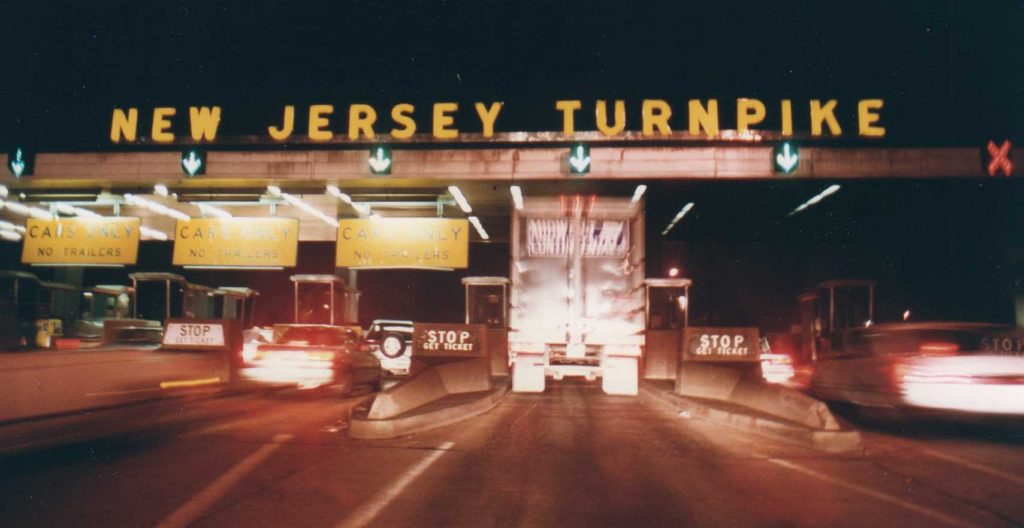
I showed up to Newark airport looking like a civilian, not in my ACU’s or my shiny class A’s like the Budweiser commercials have you believe we all come home looking like. Only pogues wear their uniform at the airport. Nah, I wore a grey fitted tee that felt snug and showed off my brown, ripped arms, and some boot cut jeans I picked up at the Fort Benning PX that were too baggy. It was like I was stuck in the early 2000s. Still, I had this image that Ma was going to be real proud of this new look on me. What I expected was love and admiration for the work I accomplished, the money I made, and the simple truth that I did it all on my own. Grown man now, no Pops needed, no bullshit. But when she saw me at the pickup gate with my assault pack and my Class A’s in a garment bag, she stayed in her ’93 ruby-colored Corolla as if she were a goddamn cab.

Woman who popped me out almost twenty-one years ago wouldn’t even get out of her car. She unlocked the passenger door to let me in and only glanced at me once before she drove off. Ma was about five inches shorter than me, a light-skinned woman with black hair that stopped at the back of her neck. She always wore light turquoise blouses, even when it was shy of being cold as hell. In the winter she’d switch between three turquoise hoodies all the time and never anything else, even if the heat was on blast. Two cars in front of us, this college-aged Latino boy was coming out the gate with his mother, girlfriend, and whole extended family in tow like a Pharaoh had just arrived. I wondered about that dude for half of the ride until Ma spoke up.

“Have you eaten anything, Jason?” First thing she said to me.

“Pretzels–”

“What?”

“I had pretzels on the plane. They gave me that and a Sprite.”

“Sugar they put in those sodas will kill you. Do you want to have your heart burst so young like your father?”

I had no answer for that. The main thing on my mind at the time was this: Big Jason Zobel was back in town, looking the part of a Cav Scout. There was a time when I did the whole college thing for a stint—even tried ROTC once—but enlisting turned out to be the smartest thing I ever did. When I completed Basic I went on Facebook and posted my graduation photo. My Facebook Likes lit up (104 to be exact) from a mix of people I never talked to before: high school people, Ma’s side of the family, and even this one girl, Rebecca, who I crushed on all of my junior year but who never gave me a second glance in the hallways of Saint Barnaby High. Rebecca didn’t just like my pic–she commented. She did more than just say, Congrats! She added: “You look so handsome, Jason.” You best believe I saw that shit and sent her a message. I asked if she wanted to chill at Flannigan’s Pub the day I got back to Jersey. Rebecca messaged back, “sure, let’s hang,” and yo, who am I to turn her down?

“You have to eat, Jason,” Ma said. “I’ll cook adobo for you at home.”

I tried to turn the radio on, but she told me not to touch the dial or the air con. She claimed it would kill the battery. I tried to explain that that wasn’t how cars worked.

“Those crooked mechanics changed my oil, and now half of the things don’t work,” she said.

“This is an eighteen-year-old car, Ma. That’s what happens when things get old.”

Ma immigrated to the Land of The Free in the middle of the Philippine dictatorship: President Marcos, military crackdowns on dissidents, drug violence in Manila—all kinds of shit. When I was about seven, she told me about a dude who owed this other dude a bunch of pesos and was straight up shot on the street. Not to say my family’s blood country is Apocalypse Right-The-Fuck-Now but I’d trade Jersey smog over getting gunned down for bad debt. I’m fifty grand in the hole since I dropped out of undergrad and I ain’t paying shit because Uncle Sam said he’d wash it all away if I went off to War in some place he felt like sending me to. Some men have the option to get their slates cleaned after pushing enough paperwork; others have the option to run away from it and never look back. I chose to give myself up to a cause—if you could call it that—and if I get lucky I’ll never even deploy. If I did, I’d deserve what I signed up for. Right?

When we got home, Ma ordered me to pick up groceries since there were no chicken thighs and vinegar in the apartment for the adobo she promised me. I would’ve said sure and gone off, but I got distracted by the horde of boxes stacked throughout the living room. They stretched from the front door all the way to her shrine of the Virgin Mary facing the parking lot. It was a warehouse. One side near the living room couch was stacked with cardboard boxes labeled by QVC, Amazon, and a bunch of stores I’ve never even heard of before. Cases loaded with questionably-made jewelry cushioned by styrofoam packing peanuts; old hardcovers from libraries across the country that rotted at the spine; vinyl discs from bygone musicians I didn’t even know. A brown maze of receiving and no shipping.

Before Benning, Ma had checked out a bunch of books from the library on entrepreneurship and reselling crap on Amazon to turn a profit. She got really into it, first time I’d seen her happy in years. I didn’t stop her. Her ‘business’ had gone on for so long, I almost felt guilty whenever she told me to just wait until “the money comes in.” But we’re both still waiting.

“Where did you get all of this stuff?” I said.

It had been a little over six months since I drove a civilian car, so instead of going to the Wal-Mart five minutes down the road, I plotted for the Target in Lawrenceville, a good half hour away. Some alone time was in order. First, I went to the Wawa for gas, a hoagie, tall can of Monster, and a pack of Marlboro Reds; wouldn’t be a trip home without the essentials. Pops used to smoke a pack of Reds a day, they turned his heart black. Course he never knew about it until it was too late to quit. Unlike some fathers who change and give it up the day their child is born. I figure if Pops could live until the end of his days with tobacco and bad diets, why shouldn’t I?

All him and Ma used to talk about was me being independent and successful one day because they were hard-working immigrants, but what did that mean? When I dropped out of college and told Ma I wanted to enlist, she pretended like she didn’t hear. Instead she avoided me by praying to Momma Mary’s statue plus her whole holy gang. Sometimes she’d leave me for hours at a time: lost in prayer or driving to different churches throughout the county as she never stayed at one parish for too long. I’m amazed I got through high school without asking for her help—like SAT prep, or which college I should go to, or how to interview for a job. That kind of small shit that adds up to big shit after a while. Sure, physically she was there, and she signed checks and authorized payments on bills (sometimes with my money), but on life advice or what I should be doing—she was a ghost.

As I drove, I tuned the radio until I landed on a public station. Two British women were in the middle of a discussion about troop drawdowns in Iraq and what that meant for Afghanistan. I tuned it up to a sound that was slightly short of max. They spoke in gentle voices about the history of The War on Terror. They sounded as if they were reviewing a television show, and not their topic: the wedding massacre in Mukaradeeb by coalition forces. One of them asked, What happens to our children during a time of War? out of nowhere. The other lady paused for a bit and that’s when my fingers turned the knob left, right, and back again before I tuned it off. I struggled to pull one of the Reds out of the box, but I yanked it out and smoked it until it was a brown stub.

When I got back with fifteen or so bags of groceries wrapped around my fingers, Ma was still on her laptop. As I stocked the groceries, she called me out.

“What took you so long? You’re putting miles on my car.” She clicked away without looking up. “Took your uniform out. So dusty! I cleaned it up a bit.”

My blue Army Service Uniform was unpacked, hung up on the frame of her bedroom. She wanted me to explain it all to her. Last time I’d worn it was for the AIT graduation party.

Ma stood by me and touched the uniform’s lapel. I explained what every trinket stood for: the name tape, the rank, the flimsy ribbons I sort of earned just for being a living soldier. Ma’s head shook once. Twice, maybe? There was a semblance of recognition I needed—balance, I guess. Part of her eyes got really big then super small, staring at the cross and silver on my upper left chest. When I told her it was a marksmanship badge, meaning I was a good with a rifle—the badge that I’m proud of the most, being a small town Jersey boy with no history of handling a gun, let alone an assault rifle—there was no wow or pause to congratulate me. She asked: How did I pay for this (out of my government stipend) and when do I wear it (things graduation, weddings, or military funerals.) Ma wasn’t too pleased with that last statement. She went straight to bed. I put the ASU back and took her car keys.

“I’m going out, Ma,” I called.

“What did you say?”

“I’m going out. See what’s changed around town for a bit.”

“Do not destroy my car.”

I arrived at Flannigan’s off 295 in Ewing shortly after 1800. By the time I got there, happy hour had started, an hour before Rebecca would show up.

Flannigan’s was a remnant of a New Jersey bar that once was—a replica of what could’ve been a local’s hub straight from a television sitcom, but the idea was scrapped after years of just trying to get by. Bartender didn’t even look at me when I sat in a corner section, far from the Rolling Rock lights and the empty crimson red booths cushions that sunk and tore where your ass was supposed to be. Last time I came around, I was just shy of finishing off high school at eighteen. They didn’t have a guard at the front checking ID’s, it was up to the bartender, but everyone in school knew that no one checked; it made ‘em more money that way. Now the staff changed, the only person still around was one of the regulars: a crusty-looking bald dude with blue eyes and dry skin. Didn’t recognize me though. I ordered a High Life on draft and finished half of it before five minutes passed. The bar’s floor hatch opened from below, and a white boy about my age with a short blonde crew cut emerged. He wore a fitted black tee with the pub’s logo on the front and back.

“Kowalski, can you go back and bring up two more Miller kegs,” the bartender said as he changed the channels from ESPN to Fox News, “they’re tapped out.”

The barback didn’t say a word as he marched back down. I tried to listen to his voice to make sure it was him; but when he came back around to face the door, we stared one another down. Ben Kowalski was a junior when I was a freshman and he used to harass me and other kids in school for the fun of it. We were on the wrestling team together but never got along as I was the most out of shape in the group, chugging behind while he led the team in sprints, suicides, and up-downs. Outside of the sport, he’d pick me out in the cafeteria and chide me, asking if I needed any food today or he’d say something to his group in the hallways whenever I’d pass by, something that made them laugh when my back was turned. It went on for a few months until he got a DUI one semester and he couldn’t act a fool anymore, he’d become one.

At the bar we scanned each other for signs of life’s wear and tear. The Marine was three years older than me, but looked twenty more.

“No shit,” Ben said as he leaned against the bar. “Hey sir, I thought you were trying to be an LT? Least that’s what Facebook said.”

“And I thought you were in jail for selling pills,” I said.

“Murray’s dad helped me out on that one. The Corps a hand in it too.”

“Good for you.”

The two of us slapped hands and hugged, like all that past didn’t make a difference. Ben had developed into a sturdy, wood-colored deck of a man, polished with pink along the edges you can expect—the neck, the ears, and the side of arms. Once he got that DUI, he spent his senior year brawling with people over his ex-fiancé and doing pills with a couple of other oxygen thieves who were either in AA, in jail, or on house arrest now. Sometime after he signed up for the Corps and deployed a few months later.

Ben was getting off work in a few, so I told him I’d wait around. Rebecca was late anyway, I figured she was stuck in traffic or something. I thought about texting her or sending her a Snap, but I didn’t. On the TV, a Fox News reporter in Manhattan said that a former Marine fractured his skull at a California Occupy Wall Street Protest and when I finished my third High Life, the bartender shut it off and called them all a bunch of communists who got what they deserved.

It was Ben’s war anniversary, and also around the time he got out of the Corps, so he was thrilled to tell someone about it. After four years and two deployments on him, he got out so he could work a second shift job at Flannigan’s and third shift at the Buffalo Wild Wings on Route 1, slinging boneless fried chicken and watery beer.

“What about your G.I. bill?”

“What about it? Who needs college?” Ben said.

In the Marines, his role was in signal operations between the various services. He claimed to be a master of the phonetic alphabet, and when I called bullshit, he bought three shots of whiskey and drank them in a row—waited five minutes for it to settle—and proceed to utter each letter backward and forwards, twice. It was like putting together Legos for him.

I was so impressed I offered to pay for the shots, but he kept saying no, no. “It’s OK, brother,” Ben said. “Too fucking easy. It feels like tricks like that are the only thing I’m good at anymore.”

I bought us a round of Miller Lights and he talked about Afghanistan, his last deployment. “We dropped so many rounds on the enemy, but I never got to see any of it up close. Pissed me off. They’d relay back to command how many targets they supposedly took out, or the LT’s on the ground would radio back if they could engage a fucker, and I was pretty much the link between the green light and the action and—” Ben stopped to take out a Marlboro Red and offered me one too. “It was all indirect, never up front, you couldn’t see them. I know I got ’em because I’d hear the report on the comms or watch the video a few days later. Every shot hit home. One minute a dude is running for his life in a poppy field and then out of nowhere…his remains are painted all over the flowers. Yeah. Yeah. It was fun. Hey man that’s sick you went enlisted man, you’ll fucking love it and then hate it a few days later. What did you sign up for in the Army?”

I told him about the cavalry.

“You went Cav? Cav? Why the fuck would you sign up to be a bullet sponge, homeboy? You should re-class and go M.I. They got the hottest chicks in the Army. Bar none.”

I offered to drive Ben home but he said, “I’m Good to Fucking Go.”

He got in his green Jeep and swerved out of the parking lot while I waited past twenty-three hundred for Rebecca to show up, except she didn’t. She didn’t text or nothing. About an hour in, ex classmates from high school came into the pub and passed me by—they looked at me, squinted, and walked away. Few people remembered me, can’t blame ‘em. I only had about two hundred or so friends on Facebook, perhaps eighty percent or more of them I didn’t even talk to. It could’ve also been the beer and Ben’s shots that must’ve given me some kind of funk for people to keep their distance, but by midnight the buzz went away, and I started sipping on another light beer minding my own until this brunette approached me to say hi and she called me Eduardo, and when I said I wasn’t him, she apologized, turned, and went to her friends by the pool tables. I finished another pint and drove to Ma’s with the windows down. The night’s chill pressed against my face and tickled my scalp. A Statey followed my ass on Route I-195 from Trenton to Robbinsville until it zoomed around me to pull over a speeding Camaro. An ambulance roared by in the other direction. Where it went, God knows.

I got home a quarter past one. Five thick red candles flickered along the apartment’s window sill. The Venetian blinds swung in a lazy, steady motion, guided by the wind. I unlocked Ma’s the front door and listened to the soft murmurs of prayer in a mix of Tagalog and English. She was in a nightgown, her knees pressed against the carpet, praying to the Virgin statue; tiny candles lit around Mary’s ceramic feet like beggar children. Her eyes remained closed as her index fingers clutched the red rosary beads, her lips lost in the movement of The Lord’s Prayer. She didn’t stop or look over until I locked the door.

“You took my car without permission,” she said.

“You said I could take it.”

“No. I asked where you were going,” she took a deep breath and turned back to the statue. “Come here. Pray with me, Jason.”

My walk must’ve been awkward, gaited even, but I got on my knees next to her. It must’ve been the smell of candles that had me all fucked up still. It had been a while since I’d done this. I tried to recall how to pray and what to pray about; Hail Mary, or Our Father, or The Apostle’s Creed. They all sound the same. Ma tapped my closed fist. “Pray,” she said.

Prayer is an eerie and intimate feeling with another person next to you. When Pops was still around, we went to Saint Barn’s as a whole family. We knelt in the rows at the front, not too far off from big Jesus himself looking down upon us. We recited the rosary, bead for bead. When it was done, Ma went up to the rows of candles and lit one up for her sister, another for her home in Manila, and another for Pops. Come up, Ma said to me, and I lit one up for my future, whatever that looked like. Another for Ma. Another for Pops. The light glowed in front of me as if it were a power that only I could hold; a thing that I could control.

After extinguishing the candles, I helped her to the bedroom. Her body felt grainy against my shoulders, light in weight but uneven and hard. I laid her down upon the mattress, stacking the pile of self-help magazines and business textbooks on her bed to the floor. As I tucked her in, she grabbed my wrist.

“When are you leaving me, Jason?”

“Soon. Back to Texas. Army life. Afterwards, maybe I’ll deploy. I don’t know.”

She rubbed my wrist. “You’ve always had dry skin problems,” she said, “you need to put on some lotion. My boy. God, you’re my only boy. My only boy is going away.” Her hand flowed down onto the bed in a slow, fluid, motion like a fat droplet of Georgia rain water off an up-armored Humvee’s roof. I closed her bedroom door with my body upright, my neck tight and my eyes salty with sweat from the whiskey or the candles or I don’t know. In the darkness of her warehouse, I sat on the couch and wrapped my left hand around the straps of my assault pack and tapped my fingernails against my knee with the other.
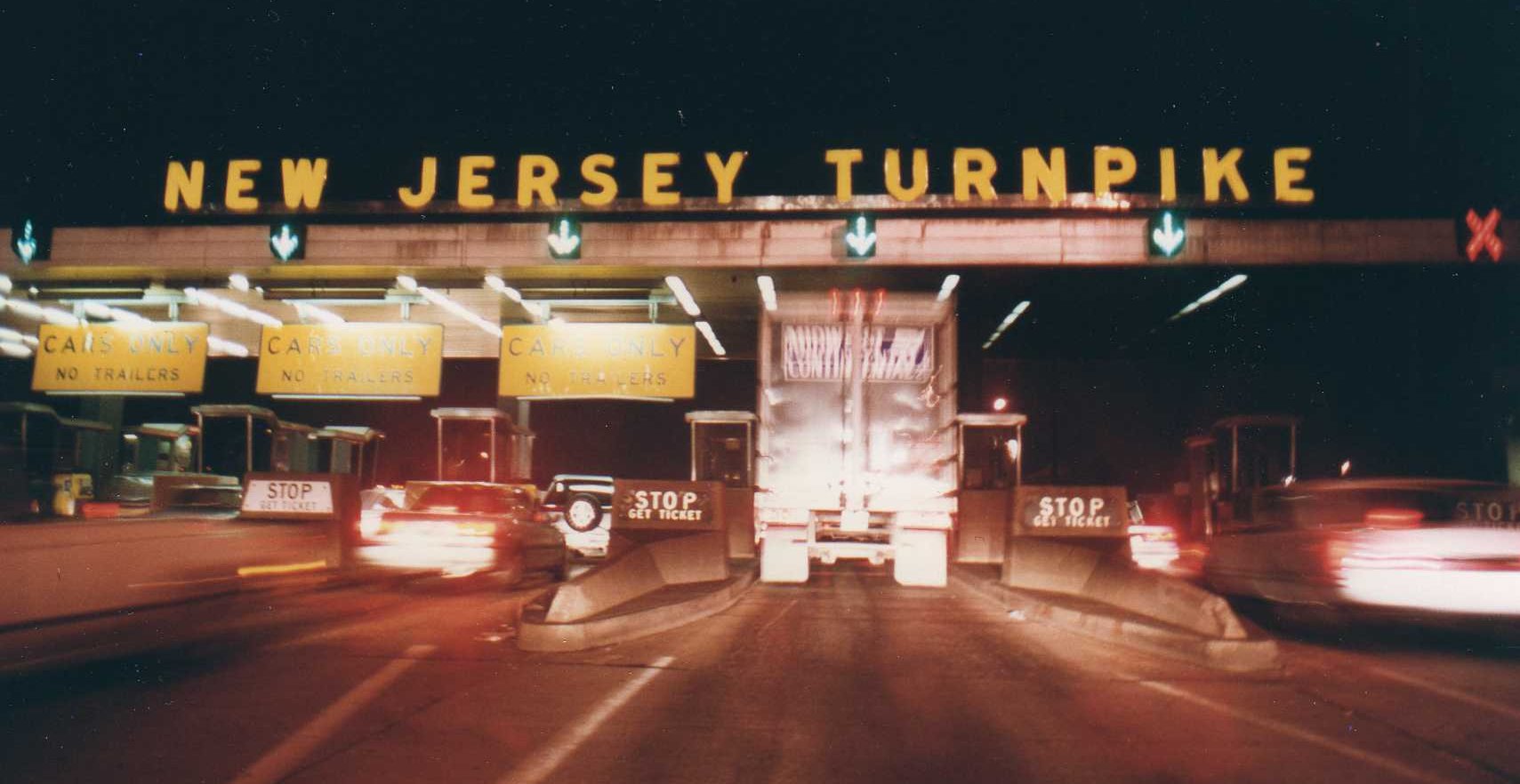
New Poem by Eric Chandler: “The Path Through Security”

my family lived there before it was Maine
before this was a even a country

they still live there so we visit
we fly in and out of the Jetport

we place our shoes in a tray
empty our pockets on the way home out west

the guy asked which one of us was Grace
I pointed to the infant perched on my arm

she was selected for
enhanced security screening


it’s possible that happened in the same tunnel of air
the hijackers passed through

the imaginary tube
the human-shaped ribbon through time

the permanent trace of their movement through space
I could see it all at once

we have repeatedly walked in
the steps of those men

the hotel manager where they stayed
had a nervous breakdown

I flew over the Pentagon and Manhattan
one year afterward

other deployments far away
that all blend together

we drove by that hotel again
as we left Maine this summer

we take off our shoes
in a new part of the terminal

and our departure gate is always next
to the old closed security line

little kids run around under a big toy airplane
that hangs over that spot now

a child-sized control tower and terminal building
instead of x-ray machines

we wait to go home
and I always look over

at the playground
in the path of destruction


New Poetry from Frank Blake

Poet Frank Blake during his Army service.

We came home

And had nothing to do and nowhere to go and too much freedom and money and space and women and cars and booze.

No more mission

Like a marathon runner collapsed at the end of a race and across the finish line and not really sure how to stop running or what to do next.

We missed each other

These other humans didn’t get it and had never been in that place where it was not fun but we had fun anyway because we had the love of combat brothers

We were bored

Because no matter what, nothing we would do in a week back home was even close to being the team with unlimited government funding using state of the art weapon technology

And none of us yearn for combat

But we do wish we could go back to a time where our actions mattered and our friends were nearby and we all had a great goddamn adventure ahead of us.

And now we know

That “in our youth our hearts were touched with fire” and that everything that comes next will probably suck in comparison because life needs us to be paying cable bills and walking dogs

And it’s hard

To find meaning in things of little consequence when we learned so early on that the world is big and scary and violent and can be filled with acts of valor and sacrifice and hate and love.

So our only option

Is to live such a great and full life of found meaning in meaningless tasks as to make the sacrifices of those who didn’t come home and don’t get to walk the dog all worth it.

So we try

To draw as much life out of life and to execute a new mission of a great and purposeful existence

Because not all of us can

Because some didn’t make it back.


Tracer

There is one round among many
Painted with that iridescent color of night time illumination
Designed to mark the path
Of bullets flight in jet black fear fueled midnight battles

Zips towards the enemy
A laser of lead and anger

Ricochet path betrayed by a bright glow

The rule is

That for every one you see

There are many more you don’t

Just like the veterans suffering back home years later
We can see one every so often
Glowing in pain

Tracing the path of alcohol fueled rage and family splits and no jobs and hard times fitting in

But we all know
For the one we see
There are lots more

Descent

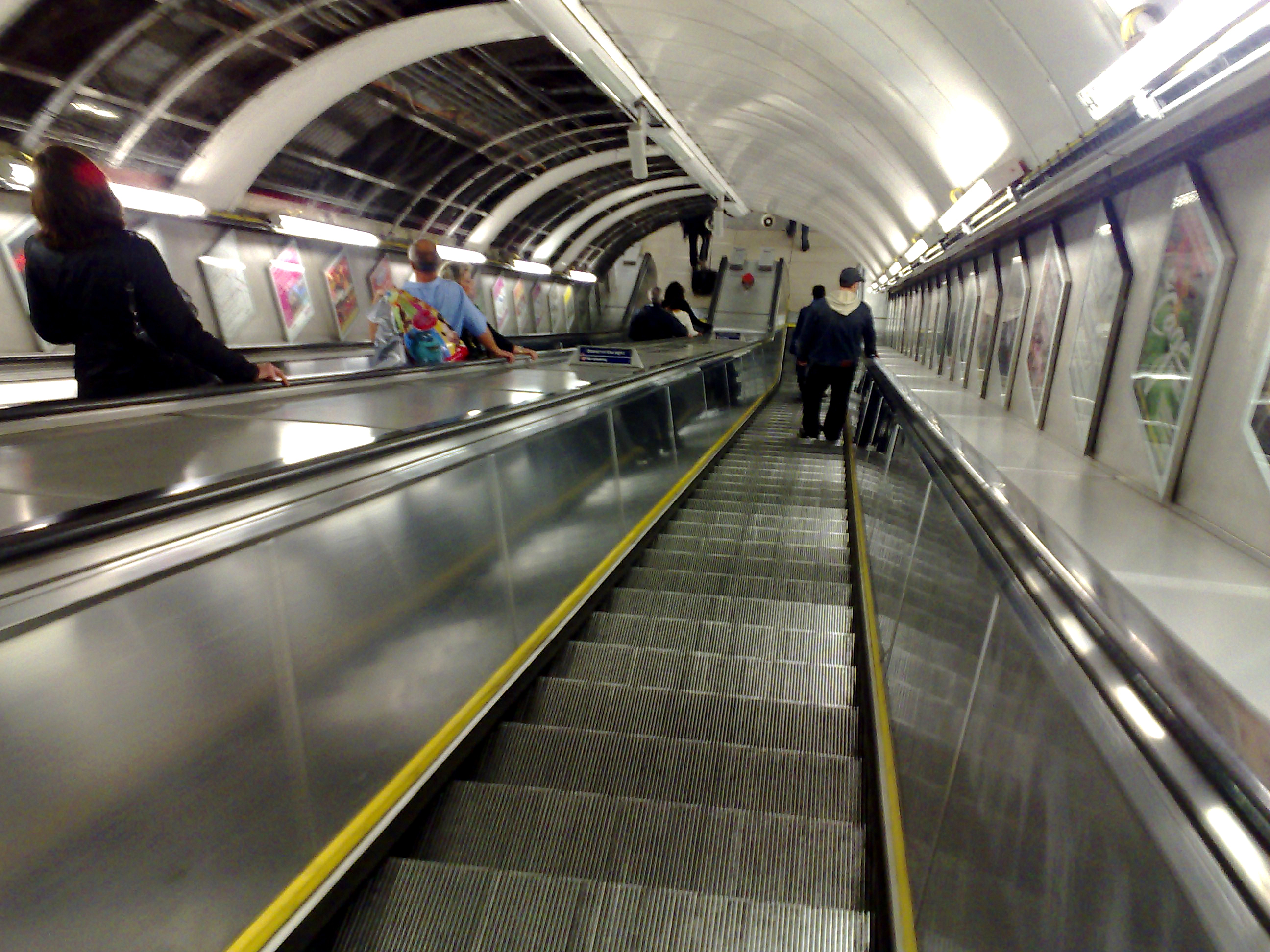
On the escalator at the airport

I saw a young man headed down as I was moving up

He wore that same familiar ripstop nylon rucksack that I knew all too well

It had patches from his units and friends and adventures

It had the same contents as mine

He carried in it lots of sadness for the friends he had lost

And guilt that he had made it back

And fear for what to do next

And memories of things he should not have done

And dreams of little girls dying

And lessons about leadership

And instincts to make his bed

And tears from current day family strife

And resumes to find new jobs

And drinks for when times get hard

And pills from the doctors

But it wasn’t his rucksack that made me know he was a combat veteran

It was the knowing dead look in his eyes that gazed right past me and through me at the same time in that one brief moment where our missions intersected.


New Poetry by Amalie Flynn for the WWI Centennial

Zone Rouge

(for the centennial)

photo by Amalie Flynn

1.
When the land was.

2.
Full of bodies dead. And twisted.

3.
When the fighting was.

4.
Sustained.

5.
With bodies. Dead. Twisted on a riverbank.

6.
Wrist bent. Hand hovers. Over water.

7.
Dead bodies with fingers. Like feathers.

8.
Stretched feathers or the calamus.

9.
Attaching to bird skin.

10.
These are bodies. Bodies of war.

11.
Dead with. Feathered fingers.

12.
Wing of a bird.

13.
300 days of shelling.

14.
The shells were 240 mm. Full of shrapnel.

15.
Mustard gas.

16.
Hitting men and hitting ground.

17.
Making holes. Upon impact.

18.
Shrapnel bursting.

19.
Bloom and rip.

20.
Ripping through dirt and faces.

21.
Ripped skin. Ripping off tissue.

22.
A nose.

23.
Hole in the center of an ear.

24.
Exposing canal and bone.

25.
Missing teeth. One lower jaw is.

26.
Gone. A set of lips.

27.
The chunk of a chin.

28.
And the shells. Shells from Verdun.

29.
Are still there.

30.
Unexploded ordnance. Sunk.

31.
Into dirt pockets. Like seeds.

32.
This blooming. Metal war.

33.
Shrapnel that looks like rocks or.

34.
Smooth egg of a bird.

35.
Soil made of mud and men and metal.

36.
How. Metal leaches and clings.

37.
This soil of war.

38.
Chlorine and lead and mercury and arsenic.

39.
Where every tree and every plant and every animal.

40.
Each blade of grass.

41.
Where 99% of everything died.

42.
Ground stripped raw.

43.
Stripped earth tissue or how this is.

44.
What war also.

45.
Also does.

46.
Damage to properties: 100% 

47.
Damage to agriculture: 100%

48.
Impossible to clean.

49.
Human life impossible.

50.
The government declared it uninhabitable. 

51.
A no-go zone.

52.
Broken skeletons of villages.

53.
And the craters that bombs make.

54.
Deep and round holes.

55.
How the bomb craters filled with water.

56.
Making. War ponds.

57.
This is a place.

58.
Where almost everything died.

59.
But the land.

60.
The land was still alive.

61.
Grass stretching again and.

62.
Grafting itself over the bone.

63.
Bone of what happened.

64.
Stretching over trenches and scars.

65.
Like new skin.

66.
And plants and trees and vines.

67.
Rodents and snails and voles and mice.

68.
Deer. Wildcats with metal stomachs.

69.
Still living I say. To my husband.

70.
Who went to war.

71.
War that he did not want.

72.
Afghanistan.

73.
How he came home with hands and feet.

74.
Covered in blisters. Lesions the doctor said.

75.
Skin burning. Waking up to him crouched.

76.
On the floor and scratching. Saying I don’t know.

77.
And I know.

78.
That this is how war is.

79.
Or later. I will lay in the darkness.

80.
And think about burn pits in Iraq.

81.
Black smoke and jet fuel and fumes.

82.
About Vietnam sprayed. The bare mudflats after.

83.
Defoliation of trees. And birds. Missing mangroves.

84.
How dioxin poisons wind. Sleeps. In a river or sediment.

85.
The fatty tissue of a fish. Atomic blasts in Hiroshima and.

86.
Nagasaki. The incineration of bodies and land.

87.
Tearing skin off people. Tearing trees out of ground.

88.
Tearing everything.

89.
Away.

90.
How black rain fell. Radioactive bomb debris.

91.
Into mouths. Of people and rivers.

92.
How radiation lives. In grass and soil. The intestine of a cow.

93.
About the GWOT. Blood soaked years and streets and.

94.
How many miles of land. Where we left bombs.

95.
Unexploded or forever.

96.
I will think about Zone Rouge.

97.
Trenches like scars.

98.
My husband gardening. The tendons in his arms.

99.
Moving like trees.

100.
Or how war never goes away.


                                                                Amalie Flynn

                                                                October 2018


New Poetry from Randy Brown

victory conditions

My father taught me
to say I love you
every time
you stood in the door

left for school
went to work
flew off to war

it became a habit
a good one
like checking the tires
or clicking your seat belt

but now
every conversation feels
like a movement to contact

we took the same vows
we swore the same oaths
we wore the same uniform
we see the same news

I raise my kids
like he did his
and have the same hopes for them

How is it that we now live
in two countries?


three more tanka from Des Moines, Iowa

1.

The leafblower drone
buzzes into consciousness—
fast cicada hum.
I wave to the new police,
before I close the window.

2.

Yellow Little Bird
hovers near high-voltage lines
conducting repairs
outside my bedroom window,
but I am miles away.

3.

Thunder and popcorn;
a remembered joke about
the “sound of freedom.”
In rain, I stand listening
as rifles prepare for war.


a future space force marine writes haiku

1.

This drop won’t kill you—
terminal velocity
varies by planet.

2.

We spiral dirt-ward,
samaras in early fall,
sowing destruction.

3.

Reconnaissance drones
orbit our squad’s position:
Expanding beachhead.

4.

“Almost” only counts
in horseshoes and hand grenades.
Go toss them a nuke.

5.

If war is still hell,
at least my bounding mech suit
is air-conditioned.

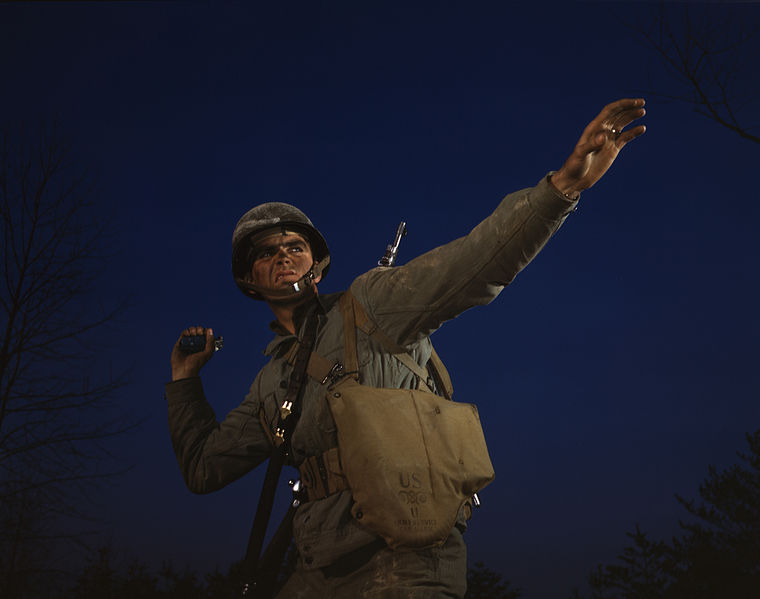
“An American pineapple, of the kind the Axis finds hard to digest, is ready to leave the hand of an infantryman in training at Fort Belvoir, Va, 1944. American soldiers make good grenade throwers.”

This is just to Say All Again After …

after William Carlos Williams’ “This is Just to Say”

I have expended
the “pineapples”
that were in
the ammo box

and which
you were probably
saving
for final protective fires

Forgive me
they were explosive
so frag
and so bold


Most Likely /
Most Dangerous Enemy Courses of Action

what most
threatens my children

social media /
unending war

the rat race /
the daily grind

half-baked policies /
global warming

a lack of hope /
a lack of justice

my constant distraction /
my constant distraction


the stand

if you can’t stand injustice
take a knee

if you pray for others
take a knee

if you believe in freedom, not fabric
let others see

you practice
what you preach


Our Personal Community by Curtis J. Graham

It was in the news. On a bright summer day in Helmand Province, Lance Corporal Wickie did his duty and killed an insurgent. A suicide bomber drove a truck loaded with explosives into the berm of Outpost Shir Ghazay. Wickie returned fire, then applied a tourniquet to someone’s wounded leg. He earned a Combat Action Ribbon, a Commendation Medal, and a Valor Device. He was promoted to Corporal, then Sergeant, and he reenlisted.

Before we deployed, Wickie told me he was getting out as soon as possible, that his contract couldn’t expire fast enough. He would eat the apple, and fuck the Corps.


I first met Wickie at Camp Lejeune, North Carolina. I was a Private First Class with a single chevron on my shoulder. I had orders to report to an office inside a warehouse, and the Corporals told Wickie to show me around. Wickie was small, with a round head and big brown eyes, like someone’s kid brother. He brought me to a wall locker covered in dents and bootprints. He opened the door and pulled out a plastic cowboy hat. “Check out this bad boy,” he said. He dusted it off affectionately and rapped it with his knuckles. “OSHA approved.”

Outside, Wickie led me to the far corner of the lot, where rusty forklifts were parked in a row. He began to tell me about his dad. “Yeah, he was Secret Service for a while, before he got contracted for Blackwater. You know, spec ops. Assassin shit.” He pulled out a camouflage wallet and opened it with a rip. He handed me a black business card with a longhorn skull in the center. It said, Robert P. Wickie, Blackwater Operative, with a phone and fax number.

“There’s no address,” I said. “And why is there a fax number?” The card felt like printer paper.

“Obviously, ain’t no address,” he said, and took the card from me. He stuffed it into his wallet. “Works where he wants, when he wants, my old man.”

“How much does he make, doing that?” I said.

He took a while to answer, like he was making something up. Then he told me twenty thousand a week. “Bull crap,” I said.

Wickie sucked his finger and felt the wind. The sun was setting. “’Bout that time,” he said. We walked to the formation for dismissal, and Wickie realized he’d left his blouse out back. He was wearing a green t-shirt with a toothpaste stain shaped like a lollipop. The Corporals made him stand in his own formation for a while, facing a brick wall.


I’d been in Afghanistan three months, on an outpost called Shukvani. The base was situated in a depression surrounded by hilltops. The day Wickie arrived, he threw rocks at the windshield of the forklift I was driving and shattered it in three places. The Sergeant Major sent him away, to Outpost Shir Ghazay.

In the early months, I photographed things. I had a mattress in a metal bunk frame, a luxury, and I took a picture of it. The previous occupants had left us a mini fridge, a black loveseat filled with knife punctures, and a small TV. I took a picture of the sun setting behind an abutment, helicopters landing at night. A frozen steak grilling on wire mesh over burnt wood scraps. I uploaded the images to my Facebook profile.

One night, a short burst of gunfire woke me up. The noise echoed around the base, then stopped. Everything was quiet. I climbed out of bed and pulled on my flak jacket and helmet. The radio crackled with chatter. “Everyone to the berm, now,” said the voice of the Sergeant Major.

Outside, dust blew in the breeze. The ground was pale blue with moonlight. We sprinted across the packed gravel of the helicopter pads. I imagined I might shoot and kill someone tonight, then I stopped imagining. I racked my bolt while I ran, chambering a round. I reached the berm and lay against the baked earth. I caught my breath. Nearby, I heard a radio. Someone spoke.

They told us that a small convoy operated by the Afghan National Army, our allies, had parked just outside the base. They were on their way to another part of the desert and needed to pass through. They had no radios, so they fired their AK-47s into the air to get our attention. We were not in danger.

I walked alone across the crushed stone, back to the tent. I lay awake on my mattress, and felt nauseated from unspent adrenaline. I listened to mice as they ran around the tent, invisible, chewing holes in things and attacking one another over food scraps. Their tiny screams. I awoke when the sun shone through a rip in the canvas by my eye. The next day, I went to the computer tent and logged into Facebook. I checked my album titled Afghan 2013 for likes. People had commented on my pictures of our small television, the mattress, the single steak. Someone wrote, “Wow, really roughing it over there.” I deleted each of the pictures, then the album entirely.

A month passed before the big explosion happened. It felt nearby and sudden. It was like a punch of breeze, a gentle concussion. Across the desert, at this moment, Wickie was becoming a hero.

When the deployment came to an end, we kicked the sand from our boots and flew home in cargo planes. They searched every other bag for rocks and vials of moon dust. “Leave the country how you found it,” they told us.

Back at Camp Lejeune, I found Wickie sitting in a pickup truck outside the warehouse. He’d used his deployment cash to buy a black Chevy with four rear tires. We got talking about Shir Ghazay. “No one believes me, man.” He reached up and slammed the truck door.

I’d read the official report on the Division website, and I’d heard from others who were there. Private Cody talked about how Wickie just shucked a bunch of rounds from his magazine so that later, it would look like he’d returned fire. Rucker said he saw Wickie crouching beneath a truck, covering his ears during the firefight. Wickie stood in front of me and twisted his toe in the dirt. He told me that, last week, he’d been eating a sandwich at Chick-Fil-A when someone dropped a tray of dishes. He ducked beneath the table and barricaded himself with chairs. People laughed at him, he said.


I’d been out of the Marines for six months. I grew my hair long and wore flannel shirts. I was in college studying literature, and I’d recently signed up for a course in war poetry. On my way to classes, I walked past the campus veteran’s lounge. It was an oversized closet with a computer desk and a silver mini-fridge with Capri Suns for the veterans to drink. The students inside laughed often. I never went inside. I didn’t feel like one of them. Most of them wore combat boots with blue jeans, t-shirts from the infantry units they’d been in. Their hoodies were smattered with graphics of skulls smoking cigarettes. Aces of spades, fanged dogs. They probably had good stories, and I couldn’t think of any of my own.

In the poetry classroom, students took turns reading stanzas from Brian Turner’s “At Lowe’s Home Improvement Center.” The poem was about a veteran walking through aisles and seeing weaponry in household items. The students sat in a circle, reading aloud. They were careful to pause when appropriate, to read with continuity from one line to the next. In the poem, a box tips over, and nails trickle out like shell casings from a machine gun. Paint spills and expands like a puddle of blood.

A student with a combover read a stanza about dead soldiers lying on the conveyor belt at the cash register. I listened to the description of the body. A year ago, I had been standing in a medical tent watching an Afghan civilian dying. He had fainted from blood loss. He was naked, with a catheter inserted. His toes were all crossed over themselves, and he had gashes that peeled and showed the muscle beneath. I watched the Navy Corpsmen bustle around, wearing tied-on paper scrubs over their cammies. At the far end of the tent, a little girl lay on a plywood table. She would soon have her legs removed. She would live. On the wall were x-rays of her femurs and pelvis. I saw the faint gray silhouette of her flesh on the outside, cracked white bone on the inside. She had stepped on a doormat bomb the day before. The man in the bed would die after amputation. The next day, I would drive a forklift and carry a cardboard box containing his legs, and those of the little girl, to the pit where they would be burned. I’d drop them off, and I’d smell them burning as I drove away.

In the poem, none of the shoppers see what the narrator sees. I set my photocopied page on the table because my hand was shaking. I looked around the room and was conscious of my heart beating in my ears. The students kept reading and reading. I grabbed my bag and left the classroom before it was my turn.

I walked down the hallway, touching the wall at intervals. It was cool beneath my fingertips. Billboard flyers fluttered as I walked past them, promoting frisbee tournaments and drag concerts. In the bathroom, I dry heaved. I flushed the toilet with my foot and waited in the hallway for the hour to end.

My next class was American Education. I arrived early. There were two veterans in this class, and they always came in together. The guy was bald and in his late thirties. He wore cargo pants and brown shoes. The girl wore a pink sweater that looked like shag. They didn’t fit in with anyone but each other. They seemed to like it that way.
Today, we were giving presentations about our Personal Community. The guy went first, and he talked about the Army. He had a deep, loud voice. He shook a little, being at the front of the classroom. He spoke in short bursts, like a Sergeant addressing a group of young soldiers. He had to project confidence, because of his rank. He clicked through a slideshow of himself in various states of undress, posing with weaponry outside plywood buildings. The class clapped for him when he finished talking about the camaraderie he knew in Iraq.

The class was mostly queer and transgender students studying music education. The next person to speak was Skye with the green and black hair, the pierced lower lip. She spoke about her friend who leapt to his death from a parking garage. Another friend had opened the passenger door of Skye’s car and rolled onto the freeway while she was driving. The people who understand Skye’s post-traumatic stress, she said, are her Personal Community. Someone turned on the lights, and the classroom erupted with applause.

I stood next. I kept mine generic—my family, my friends. There was no camouflage in my slideshow pictures. I clicked through the photos as I talked. A camping trip. My uncle’s ’78 Nova. I imagined it wouldn’t take much to make them think I was someone, a person of valor. I’d just have to show the right pictures, ones with sand and smoke in them. I could tell them the story of how Wickie became a hero. I could talk about the sound and the blood, and the way it felt afterwards. I could be anybody. I could be Wickie. It wouldn’t have mattered what I told them, really. They would still applaud for me. They might even call me a hero.

I walked down the hall after class and passed the lounge. Someone had just told a joke, and there was an explosion of laughter. I thought about leaning in and knocking on the door. I thought about stepping over the threshold, pulling up a chair. Maybe they’d tell the joke again. Maybe I could hear it, too.


Shining Light on the Darkness: An Interview with Patrick Hicks

Andria Williams: Patrick, thank you so much for taking the time to talk with me. I’ve just finished reading “Into the Tunnel,” the first chapter of your new novel, Eclipse. I was struck as always by what an immersive, detailed world you create, the tension you achieve, and the beauty and specificity of your language.

As the novel opens, we’re accompanying Eli Hessel as he arrives from Auschwitz — where his whole family was lost — to a vast, mysterious Nazi project deep in a mountain. The change does not bring relief. As he’s led into the dark, underground tunnel, observing the familiar cruelty of SS officers and the smells and tastes of punishment and broken bodies and death, he tries to piece together exactly what this horrible and mysterious project is and what it will require him to do.

We are learning along with Eli just what the deal is with this place, and that approach creates not only tension in the story, but an empathetic dread as we cringe along with each new shade of understanding. Did you always know that you wanted to open the novel this way, with the reader learning Eli’s situation along with him, almost in real-time?

Author Patrick Hicks

Patrick Hicks: The beginning came to me very quickly, thankfully. I could see it all in my head: the arrival at night, the huffing train in the background, the gaping mouth of the tunnel, the guard towers. I think there’s something deep inside us as a species that recoils at the thought of going underground, and I wanted to tap into that. Many of our legends and myths revolve around a fear of caves, and the underworld, and buried rivers. That natural dread of journeying beneath the soil must have been amplified a thousand fold for the prisoners of Dora-Mittelbau. Being underground? During the Holocaust? Can you imagine?

AW: No, I cannot imagine.

PH: It must have been a unique horror to be in that concentration camp. Imagine entering that warren of tunnels as slave labor and seeing the high technology of these new things called “rockets”, and now imagine knowing that you could shot or beaten or hanged at any moment. I wanted the reader to feel that sense of horrified amazement.

It also seemed like a good way to get at what I call “the moment of crisis”. That’s what drives all stories—a moment of crisis. It’s that moment in a character’s life when everything could change, the stakes are high, and the outcome is anything but certain. If a writer can find that moment, the tension will naturally follow. I wanted the opening chapter to unfold in real time, as you say, to make everything feel immediate and dangerous. It also makes the reader feel closer to Eli. He’s a likable man. We want him to live.

AW: Yes, from the very first line of Eclipse, the stakes feel incredibly high. My investment in Eli’s safety only grows as I read on.

Partway through the chapter, however–without at all diminishing the momentum–the reader’s granted a small measure of relief from in-the-moment dread when Eli’s narration is briefly replaced by a more authoritative narrator, who explains some of the history of the project inside Dora-Mittelbau. (That relief is short-lived as the nature of the project becomes known.)

“One thing was certain: the idea of a rocket was about to move from the realm of science fiction into the realm of science fact. What would soon rise up from blueprints would not only change the course of the twentieth-century, it would rumble down through the years to come. It influences us still. It threatens us still.”

Can you explain the project at Dora-Mittelbau, and the influence it still has? I’d be interested to hear more.

PH: We forget about it now, but the Third Reich had very sophisticated technology. The Allies had good reason to worry that they were quite literally being outgunned. The Nazis were developing an atomic bomb, they built the first jet plane, they had stockpiles of chemical weapons the likes of which the world had never seen before, and they also created the world’s first mass produced rocket—the V-2. Wernher von Braun, who would later move to America and build the Saturn V that got us to the moon, was the mastermind behind the V-2. He tested his prototypes at a military base called Peenemünde. The Allies bombed this site in 1943—we totally destroyed it—and this led von Braun and others to realize that a secret underground concentration camp was needed, it would be an underground factory that would churn out V-2s at a dependable rate. Hitler hoped it would change the course of the war.

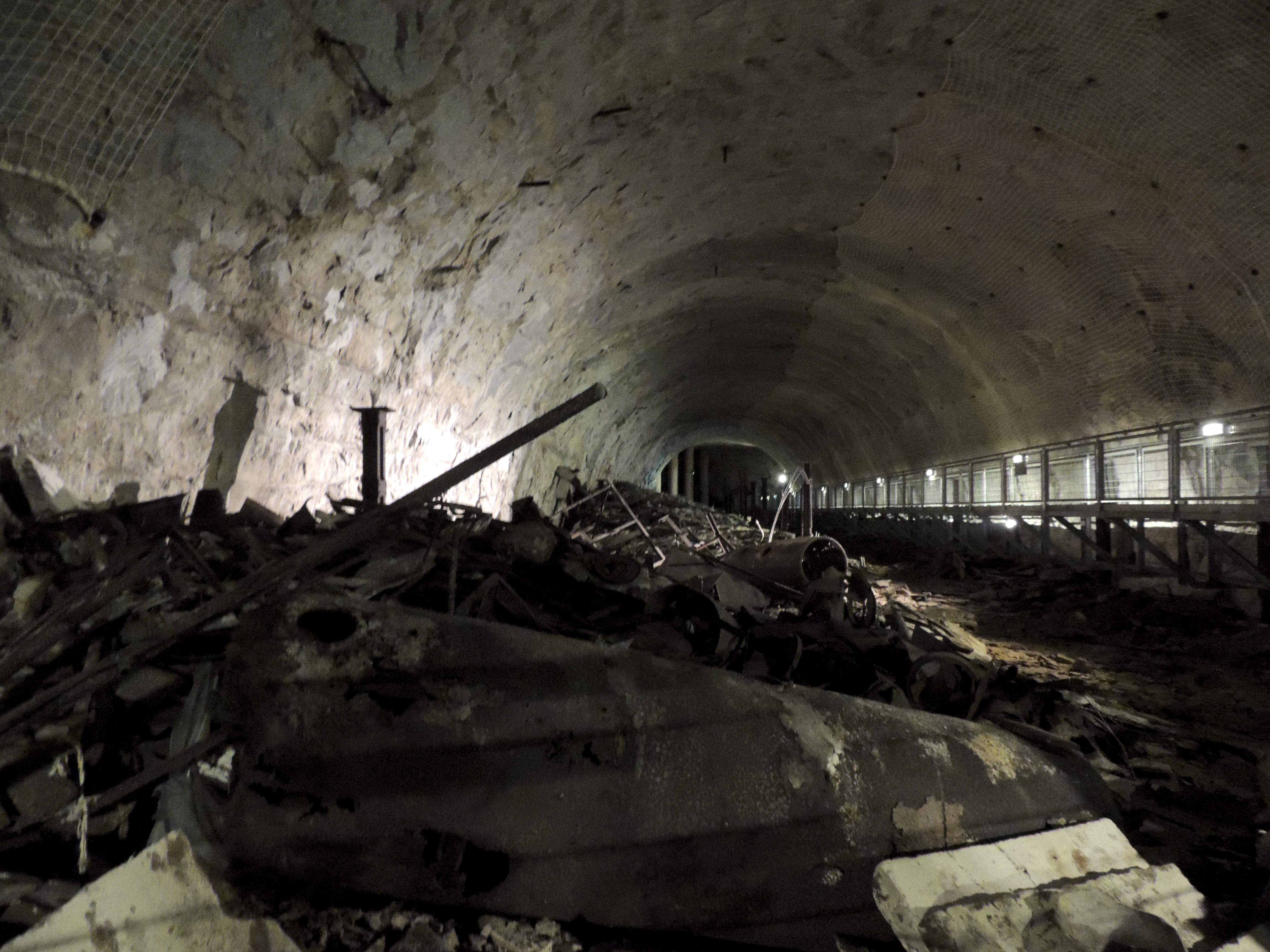
Tunnels where the V-2s were made. Photo by Patrick Hicks.

And so, deep in the Harz Mountains, prisoners had to blast tunnels into the earth to create this factory. Thousands of lives were lost and, today, no one really knows about Dora-Mittelbau because what was built there—the rockets—were top secret when America discovered the camp. It was hidden from the press. We didn’t want the world to know much about the V-2s, so the horrors of this camp weren’t put in the public eye the way that Dachau, Auschwitz, Buchenwald, and Bergen-Belsen were. Even today, the name “Dora-Mittlebau” means very little to most people.

I wanted to change that. I wanted to show that this place created the blueprint of the latter half of the twentieth-century.

Those rockets became the ICBMs that exist today. They were built by German scientists who would go on to work for NASA—they’d get Apollo 11 to the moon—and in return we cast a blind eye on their crimes against humanity. That’s why the novel is called Eclipse. It’s about darkness and light. The horror of the Holocaust is directly tied to the wonderment of the Apollo program, and my main character, Eli Hessel, is involved in both events. While everyone is cheering for a successful moon landing in 1969, Eli Hessel is thinking about what happened in Dora. What would it be like to see your tormentors holding positions of high rank at NASA?

One reason some people think the Holocaust and the moon landings are hoaxes comes down to one irrefutable emotion: they both seem impossible. And yet, they both happened. We as a species did both of these things. There is ash at Auschwitz and there are bootprints on the moon. For me, they represent what we are capable of doing to each other, and they also represent what we are capable of doing with each other. Eli wrestles with all of this, and I’ve rooted everything in strong historical research.
AW: I’d love to hear about your approach to research. Both in this novel and The Commandant of Lubizec, I’ve been amazed by the absolute grounding in place and time you achieve, the attention to specific terms and images (carbide lamps, sodium lights, gypsum, kapo, Tranquility Base). What sort of reading and travel does your research involve?

PH: I really appreciate this question and I’m so pleased you felt that sense of grounding. As you know yourself with The Longest Night, all fiction is rooted in a particular time period, and it was important for me to make the reader feel they were in Nazi Germany. I wanted them to feel this in their bones, but I can only achieve this if I do a lot of research. So, in the case of Eclipse, I went to Dora-Mittelbau on two separate occasions and I spent many hours wandering around the camp, talking with curators, and getting into the ruined tunnels with a guide. I read eyewitness accounts of being at Dora, I did research on von Braun, the V-2s, and the Apollo program. This meant visiting the Kennedy Space Center, the Johnson Space Center in Houston, and the Marshall Space Flight Center in Alabama where von Braun developed the Saturn V. Did you know they have a V-2 on display at Marshall but there isn’t a plaque or really anything that explains the crimes committed at Dora? Those who were murdered have essentially been erased from the story. Seeing that—or really not seeing that—made me want to write about this all the more.

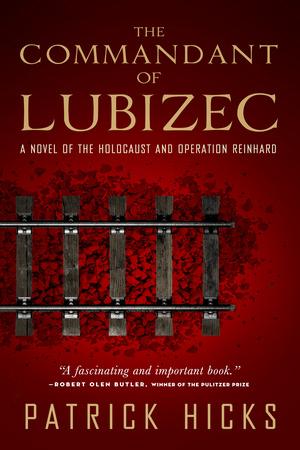
I did the same type of thing for my first novel, The Commandant of Lubizec, which is about a fictitious Nazi death camp in Poland. I did three separate research trips to the real life camps of Treblinka, Sobibór, and Bełżec. I spent over 30 hours in Auschwitz. I interviewed survivors. I have strong feelings that if I’m going to write about the Holocaust, I have to get the history correct. I mean, I just have to. It would be an insult to the survivors and the dead if I didn’t get it right.

AW: What, then, do you think is the relationship between politics and art?

PH: They’re braided together very tightly. Art isn’t created in a vacuum and artists have opinions which invariably come out. If you’re going to write or paint or make music, it’s because you have something to say, and that “something” will be a statement on the world around you. We may not see the politics embedded in Shakespeare today, but they’re there. He was a man of his era and he wrote about the world he saw.

One of my jobs as a literary artist is to shine light into the darkness. If I can illuminate new ideas and nudge readers to consider new things, then I’ve done something that goes beyond just entertainment. Good writing provokes us to think differently. It challenges us to care and it forces us to see the world through the eyeballs of another human being. The act of doing that is immediately political because you have to take in the world from someone else’s perspective, and biases, and joys, and fears. I love how literature forces me to consider the world anew.

AW: Alexander Chee has said that “writing fiction is an exercise in giving a shit—an exercise in finding out what you really care about.” With several books under your belt, have you figured out, or distilled, what you really care about?

PH: Oh, wow, what a great question. A complicated one, too. Writers tend to orbit around the same issues and approach them from different angles in different books. I’m deeply interested in how the forces of hatred and racism can turn into violence, and I feel a responsibility to help readers understand the Holocaust better. How we remember the past matters to me and I’m drawn to the idea that previous generations aren’t that much different from us. I care about cheating time and hauling the past into the present so that we might understand a particular era better, and maybe placing it into dialogue with our own concerns and values. That idea of “giving a shit”…if the writer cares, the reader will probably care too. We tell beginning writers to “find their voice” and while that’s important, it’s equally necessary to find out what you care about. Intellectual passion matters in writing. It’s the energy that propels narrative.

AW: One of the most moving passages in your previous novel, The Commandant of Lubizec, comes right before a group of prisoners decide to attempt escape.

“…As much as the guards wanted these prisoners to be faceless and anonymous, the very opposite was true. The prisoners were all individuals. Some had freckles. Others had crooked teeth…Many of the prisoners had ghostly pink indents on their fingers where a wedding ring once sat. Such a thing proved that they were beloved, once…At some point in time, the hot words of love had been whispered into their ears, and once, long ago, in what seemed like another life, they had all been the center of someone else’s universe. They were the sun. They were the stars and light. They were the molecules of God himself.”

In much of your work, fictional characters are given all the careful specificity and individuality of real people, until we feel that we know them. Why do you undertake this painstaking work, and why do you think it’s important?

PH: In order to write about a death camp, I knew that hundreds of minor characters would vanish into the gas chamber and never be seen again. But of course, they weren’t minor characters in their own lives. These were people just like you and me. During these scenes of mass murder, I wanted the reader to feel wounded that they were being taken from us. I wanted the reader to gasp at the monumental injustice of it all and see these people as fully realized lives. That’s the thing about genocide: it’s often viewed just as statistics, and I didn’t want that for The Commandant of Lubizec. I think that’s one reason why it’s made such a connection with readers. They see people dying in my novel—not numbers—people.

There’s a chapter called “Numbers” in The Commandant where all of these innocent souls are being forced to run towards the gas chamber and, in each case, I wrote pages of notes on who was in that crowd. My feeling was that if I didn’t care about these characters, than how would the reader care about them? In nearly every case, I had more information on these individuals than I put into the novel. I needed to see each of them, and I refused to make them faceless. That’s what the Nazis did. I wanted to see people—mothers, wives, fathers, uncles, piano players, poets, plumbers, book store owners, rabbis, children. They all had lives. And those lives were stolen from them.

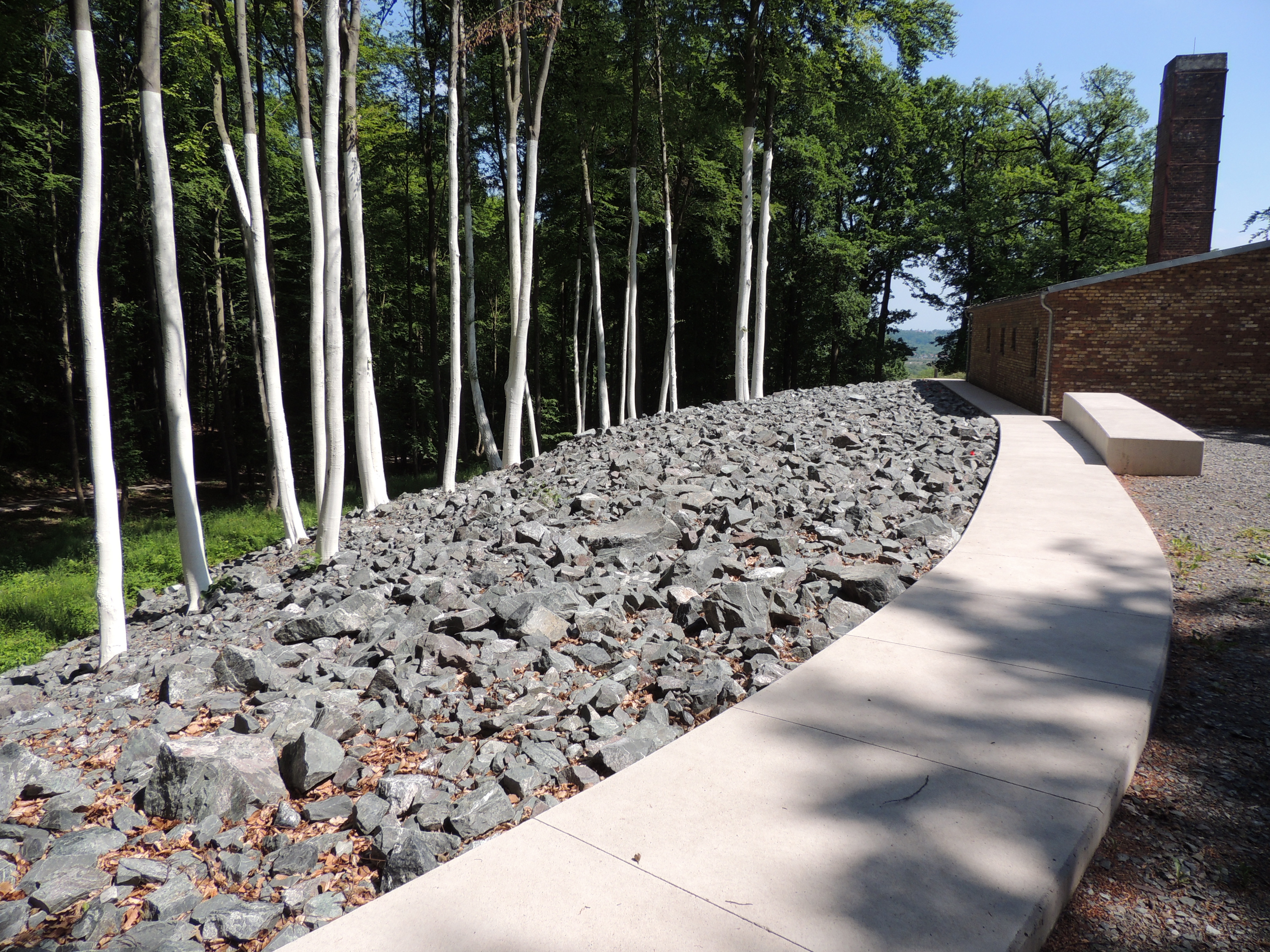
Present-day site of the crematorium at Dora-Mittelbau, where over 20,000 souls were lost. Photo by Patrick Hicks.

AW: How do you maintain perspective, and avoid slipping into despair — if that is possible — when writing about and studying the Holocaust?

(I keep thinking of the way Eli tells himself, “All is well. Yes, all is well,” to cope with the constant threat and strain. Has such an intense working relationship with one of the darkest parts of human history ever felt like too much?)

PH: I’ve done research at ten camps now and…sometimes I feel too close to the Holocaust. When this happens, I back up and focus on the goodness around me. It’s always there though, hanging darkly in my imagination. For example, whenever I see the Yankees play baseball on television, their striped uniforms remind me of the prisoners at Auschwitz. Or whenever I see freight trains clattering across the prairie, I think of Poland. The same goes for smokestacks or crowds shuffling in the same direction. I teach at Augustana University, which is abbreviated on t-shirts as AU. That’s what Auschwitz was abbreviated to. AU. Konzentrationslager Auschwitz. KZ AU. If you go to Auschwitz today, you can see that stamped onto certain items. I don’t know…the Holocaust flits through my brain all the time. At least I’m removed from it by the safety of several decades. How on earth do survivors cope with what they saw? How?

AW: Oh, wow – I never thought that about the Yankees uniforms, and I don’t know enough about the Holocaust to have picked up on the AU reference — but if I had studied it as much as you have, I can see how it might permeate all my perceptions. Like you, I have no idea how survivors are or were able to cope with what they have seen.

Which leads me to my next question, in the hope that we have learned from history: A common refrain, under the current presidential administration, is that many of its messages smack of fascism, or sound eerily authoritarian, or seem to endorse white supremacy. As a scholar of one of the worst eras of white supremacy and genocide human history has known, do these claims ring true for you?

PH: The Trump Administration is one of the most corrupt and reprehensible in our nation’s history. He is certainly a damaged human being who is a racist, a misogynist, and his narcissism—not to mention his unmoored relationship to the truth—all make him an ideal candidate for dictatorial aspirations. This is a man who does not like criticism and demands absolute loyalty. I have no doubt he will go down in American history as a thug and villain to our democracy. After studying white supremacy and fascism for so long, Donald Trump’s language has disturbing echoes with what happened in the Third Reich for sure. These comparisons can only be taken so far, though. Trump’s political savvy and acumen is thankfully well below Hitler’s own rise to power, and I take comfort in the fact that, unlike Hitler, Trump does not have a private army like the SA or SS at his command.

While I’m concerned about the state of our republic, the majority of Americans reject Trump’s toxic viewpoints. We also don’t yet have widespread political violence in the streets with men chanting his name and beating up bystanders. If that happens—if something like Charlottesville happens regularly and routinely—that’s when the claims of Trump being like Hitler take on a more ominous and deadly tone. Nazism was forged in the furnace of post-Great War Europe. Germany wanted a strong leader in the 1930s. Americans? Our nation was founded on rebellion. Sooner or later Trump will be tossed aside. Until that happens, it’s good to study how one man came to power in Germany and what his dark charisma unleashed. One of my favorite quotes is from John Fowles’s novel, The Magus. In it, he says that the tragedy of the Third Reich is “not that one man had the courage to be evil. But that millions had not the courage to be good.”

It’s necessary to keep such things in mind. Raise your voice. Get out there. Demonstrate. Vote. Our nation is greater than one man.

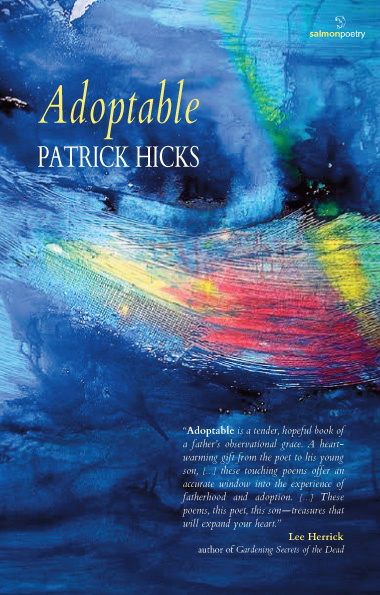
AW: Finally: I am a huge fan of your collection of poetry, Adoptable, about the building of your family: your wife and your sweet son Sean, adopted from South Korea. Each of these poems is so tender, so lovingly observant. You talk about your son’s arrival, as a toddler, and his initial terror; his mastery of the English language; and you imagine very movingly the birth mother who surrendered him mere hours into his life.

You write:

“what catches my eye is the gap

between when he burrowed into this world,
and when he was given to an orphanage.

In these missing hours, I imagine his birth mother
cupping the grapefruit softness of his head.

She breathes in his scent,
kisses his nose, memorizes

the topography of his face.
And then, reluctantly,

she lets him go.”

You’re able to turn your remarkable empathy and gift of language to almost anyone you choose. Can you talk a little about your journey to fatherhood and how it has influenced your writing and your art?

PH: I’m so happy we’re ending on this note, a note of love. I also want to thank you for these thoughtful questions, Andria. It’s been a fun conversation.

I wrote Adoptable at the same time that I wrote The Commandant of Lubizec, and although I didn’t realize it back then, I really needed to do this. I couldn’t write about the Holocaust without occasionally turning away to focus on the good things in my life. Adoption is complicated and beautiful and messy and confusing. My son will have plenty of questions about his birth country and his birth family—I won’t be able to answer these questions—but I’m looking forward to walking next to him as he searches. Aside from all the normal things a father worries about, I’m also thinking about racial issues, and belonging, and what it means to be an American. Since becoming a dad, I’ve realized all those clichés about being a parent are true. They exist for a reason. The toughest job you’ll ever love. Being a parent changes you forever. You don’t know love until you have a kid. They’re all true, at least for me.

I sometime wonder what my son will make of my writing when he’s older. One of the reasons I wrote Adoptable is because I wanted to capture the forgettable moments of his childhood—the day to day stuff. He already has huge missing pieces about background, so the least I could do was write about things he did as a toddler and try to explain how much we love him.

Being a parent has changed me as a writer for sure. I’m now totally aware that my need to write means that I’m not spending time with him. When you’re single it’s okay to be selfish and lock yourself in an office but, when you’ve got a child, that compulsion to get ideas onto the page takes on a new dimension. I’m a more focused writer now. I don’t flaff around like I used to. My writing time is more intense and disciplined. And when I do write about the Holocaust, I now see all of my characters as someone else’s child. I see the timeline of a single life more sharply. Maybe it helps me to remember how fleeting our time on this planet really is. And, when I think about how temporary our bodies really are, it makes the crime of genocide all the more monstrous, all the more important to write about.


“All. art. is. political:” An interview with Roy G. Guzmán and Miguel M. Morales

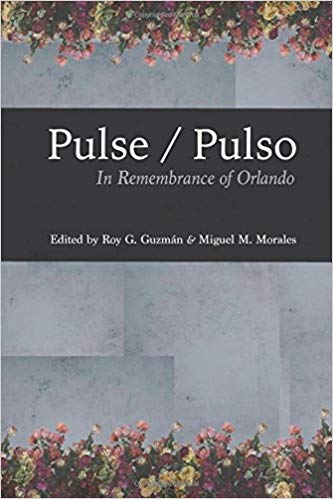
Our two featured poems for the month are selections from Roy G. Guzmán and Miguel M. Morales’s anthology, Pulse/Pulso: In Remembrance of Orlando. Here, WBT editor Andria Williams interviews the two editors about this unique, gorgeous, and necessary passion project. As Morales describes,

The pieces in Pulse/Pulso came from the initial days and months after the shooting. We needed to hold and sanctify those moments so we could have each moment that followed. So we could feel love and pride again. That is the passion I had and still have for this project.

ANDRIA WILLIAMS:  Roy, one entry point into this discussion might be to start with your 2016 poem, “Restored Mural for Orlando.” The poem is beautiful and gutting. You have a masterful way of building the emotional investment with each turn, opening with the shooting itself, and then moving into a fond, pragmatic, and even tenderly humorous portrait of your family on vacation in Orlando. On that trip, you reflect that Orlando is where kids go to “fantasize about the childhood [they] didn’t have;” you’re surprised by the sight of your mother on a rollercoaster (“because she’s always been ashamed of her weight”), and note somewhat humorously that your parents ended up “buying a timeshare by mistake/ not really by mistake….”

As a non-poet but a fiction writer, I was simply impressed by the way you allow the “character” of yourself to guide us through the poem, which somehow, almost counter-intuitively, increases the intensity.

Can you talk a little more about the myth of Orlando for you, as a child, and how this mythos worked its way into your thoughts about the tragedy?

ROY G. GUZMÁN: First of all, thank you for your generous reading of my poem and, as a fiction writer, for noticing these rich aspects about the poem. I think one of the most important things I had to negotiate during the writing this poem was my position in all of this. I kept returning to that image of the club, to the colors, to what the victims and survivors might have been wearing, to the sounds. Those sensory details invited me into that space, but I had to figure out what I’d be doing in the reimagining of that space. I had to turn the gaze on myself. That is when a lot of these autobiographical details suddenly became important to my approach to the poem. I had to honor the victims and I had to be as clear as possible about my relationship to Orlando. As someone who grew up in Florida, I was affected in so many ways.

Pulse/Pulso editor and poet, Roy G. Guzmán.

The mythos of Orlando was important for me to talk about. I can’t remember how many times my friends and I would just drive up from Miami and stay in a hotel and do all kinds of stupid things. Most of us were teenagers. I probably went to Orlando a few times before I even set foot in Disney World. The timeshare event affected my family and me greatly. I’d just gotten my first job out of college and I wanted to treat my parents to something meaningful. I remember being in the info session for that timeshare and running all kinds of figures in my head to possibly work out this possibility. Obviously, I was naive and the people running the info session took advantage of that with false promises. Till this day my mom tells my stepdad and me that she never wanted to sign that contract, that we pushed her to. And she’s right.

2) AW:

In “Restored Mural for Orlando,” you write:

“I am afraid of attending places
that celebrate our bodies because that’s also where our bodies
have been cancelled / when you’re brown & gay you’re always dying
twice”

What was the particular importance to you of publishing an anthology — specifically of Latinx and LGBTQ+ writers — about the shooting?

In their poem “straight partner of ten years and anyone else,” Nicole Oquendo writes,

“do not erase my grief. there is a galaxy of this
spreading out inside my chest.”

Did you feel that the stories, the grief, of members of your community were not being heard in the aftermath of the shooting?

RG:  We were totally not being heard. We still aren’t. It’s appalling how that’s always the case when tragedies affect marginalized communities. Again and again we see scholars and researchers build careers out of Black and brown pain, and whatever money they make hardly ever makes it back to our communities. This year, for instance, marked the second anniversary of the massacre. Instead of promoting queer and trans voices of color that responded with care and tact, most of the writing community decided to promote another cis white writer and what they’ve written about others’ pain or how they want to make the world a better place. I’m tired of this pattern. It’s enough to make me feel cynical. But we’re told to shut up and be grateful we’re still alive. That’s what the writers in this anthology are trying to resist.

MIGUEL M. MORALES: Pulse affected us all in ways we’ll be discovering for years to come. QTPOC weren’t being heard before the shooting, in the aftermath,or even today. But just because we aren’t being heard doesn’t mean our voices aren’t out there.

QTPOC communities across the country immediately felt connected to the shooting because so many times we’ve been relegated to the occasional “Latin Night” and even then, those spaces are filled with others trying to excoticize or fetishize us. No matter how comfortable we try to make those spaces, we are still being policed, attacked, and victimized. But through it all, we always — always — have each other. Honestly, it hurt to see so many commemorations of Pulse exclude our voices but we did what we always do, we buried our dead and made our own space. That’s what we wanted to convey with Pulse/Pulso, we have each other.
3) AW: Miguel, I know that you grew up in Texas and worked as a migrant farmworker beginning quite early in your childhood, that you lead writing workshops for farmworkers in Missouri and Kansas, and that you’re also an accomplished poet and fiction writer. Can you talk about how you initially connected with Roy to work on the Pulse/Pulso anthology, and about your own passion for the project?)
Pulse/Pulso editor and poet, Miguel M. Morales.

MM: I followed Roy on social media, but we didn’t interact much. Not long after the Pulse shooting, my friend and poetry sister, Sarah A. Chavez, asked if I knew Roy because he had a piece about Pulse that was going viral on the internet. It was “Restored Mural for Orlando” and I didn’t even finish reading it before I sent him a message thanking him for the piece. We began chatting and I shared with him how I wished someone would put together an anthology of brown queer voices responding to Pulse. That’s when he said a press approached him about doing that very thing. He said he was wary because he wasn’t sure how much he could commit to it because he was in school. But, like me, he wanted something to happen. I’m not sure who brought up the collaboration first but it was obvious that we were meant to work on this together.
Many of us endured sustained losses of loved ones during the AIDS crisis of the ’90s. Some of us have never come to terms with those losses. I didn’t want that to happen with Pulse. All I could think about in those first hours and days after the shooting were of the names of the victims. I wasn’t prepared for how similar they would look and sound to the names of people I loved. I had to do something even if it was simply to encourage/nag/beg action from more accomplished Latinx writers. As with most forms of activism and leadership, it didn’t come down to big names. It came down to us.
Everyone in this book stepped up when presented with the opportunity to honor the victims. Each of us relied on family, friends, and strangers for help. The enduring legacy of Pulse and of the lives lost is not of grief but of gratitude for the communities that sprung up across the country in the aftermath. The pieces in Pulse/Pulso came from the initial days and months after the shooting. We needed to hold and sanctify those moments so we could have each moment that followed. So we could feel love and pride again. That is the passion I had and still have for this project.

 4) AW: I love the variety of the poems in Pulse/Pulso; some are quiet and sad; others, like Maya Chinchilla’s “Church at Night,” has moments that I would love to hear performed out loud (“Queerly beloved, we are gathered here today to get through this thing called life….”)  How did you decide how and where to place the pieces? Did an order reveal itself as you were editing, or was it more like fitting puzzle pieces together at the end?

RG: The organization of the anthology felt very natural in how it came together. As we accepted pieces, we’d add them to a file. I remember mixing a lot of these pieces and not thinking much about order. What was interesting is when Miguel and I came back to the document, months later, and found that somehow the order we’d put the work in worked. We came up with a lot of reasons for why Chinchilla’s “Church at Night” would go where it ended up and, for instance, why Chen’s work appears where it does. I’d like to believe something greater than us helped us with that order.

MM:I don’t remember us officially having to plan out the order, much less have a disagreement on the pieces we selected. It’s easy for editing teams to agree on which pieces make it into a collection. What really tests the team is when they come to pieces on which they disagree. I was waiting for us to have that disagreement but it didn’t happen. I think that’s because we stayed focused on honoring Pulse and while there are some pieces I wish had made it into the collection, I’m extremely happy with what we curated.

From the beginning, Roy and I worked to have our submissions include new, emerging, and established QTPOC voices. We worked even harder to make sure those voices filled the anthology. Of course we had to examine those terms because someone like Joe Jimenez is seen as emerging but many of us in the community know Joe as an established voice. And since we put out the call in 2016, some of the people who submitted have since become important and emerging voices. We also included writers who have never submitted work anywhere. Including them was essential to the tone of what we wanted to reflect. I’m so proud of everyone who submitted work whether it made it into the anthology or not. They all helped shape Pulse/Pulso into what it is.

5) AW: Julia Leslie Guarch’s poem, “Shh. Shh. Be Quiet” uses the last text messages of victim Eddie Jamoldroy Justice, sent to his mother as he hid from the shooter in a bathroom. (“Mommy I love you./ He’s coming. Im going to die.”) The effect is brutal. But such messages have also become familiar, as one public shooting after another rocks the US. How do you think Orlando fits into the larger discussion of gun violence in this country?

MM: It is clear that so many of us, especially QTPOC, are not safe living our lives, telling our stories, dancing in clubs, shopping, walking, driving, standing, sitting, praying, laughing, or breathing. Gun violence is the focus of so many these days due to the immediate and imminent threat of death that it poses, and it should be. We have to shut that shit down. Gun violence is violence.

The Pulse shooting is just another example, though a rare and extreme one, of the violence queer people, especially queer/trans people of color, face daily. Violence against us is dismissed by the authorities and eventually even by ourselves. Trans women are being slaughtered. Our vulnerable queer youth and queer elderly face violence and threats by those who are supposed to take care of them. We are targeted for sexual violence and other forms of sexual assault that go unreported, unacknowledged, and unrecognized.

In some places queer people are not legally safe in our workplaces or walking down the street or using a public restroom or in our homes. And even in the places where we are legally protected, we’re still not safe.

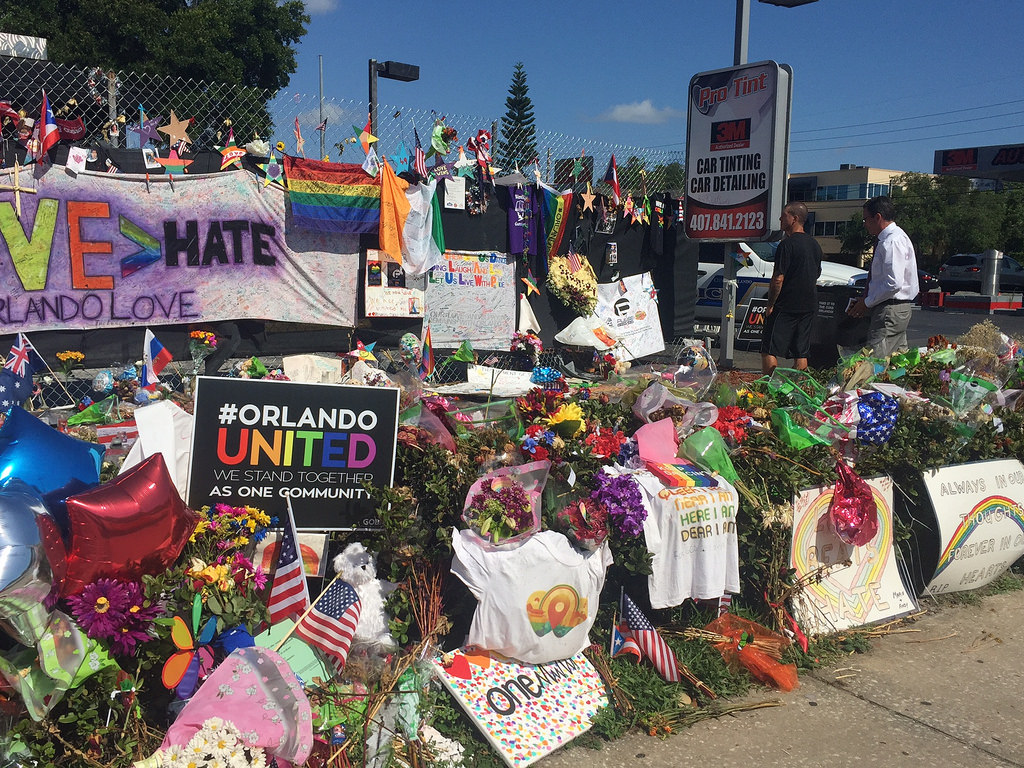
I am not attempting to dismiss the loss of the 49 lives and the injuries of the 53 others that happened on June 12, 2016. I’m saying that our survival is much larger than gun violence. If we only focus on bullets, we ignore the beatings, the bashings, the bullying, and hundreds of other ways the blood of LGBTQIA+ people is spilled every moment of everyday. Ignoring these forms of “everyday” violence gave permission to perpetrate the violence that happened at Pulse.

6) AW: Roy, in an interview in Hayden’s Ferry Review, you have said, “[Intersections of identity] are something that unfortunately in the U.S. [do] not get to exist simultaneously. Either people want you to wave the immigrant flag and that’s it, or wave the student flag, or wave the poet flag, and a lot of institutions prevent people from having all these different identities coexist. And for me it’s like, because I exist, I exist already within all these different identities.”

Can you speak a little more about this? Do you have any insights into how this problem might have developed, and whether any progress is on the horizon?

RG: Thank you for bringing me back to what I said in that interview–for which I remain grateful. I just got back from a research trip in Honduras, so a lot of what I experienced there is going to speak to how I respond to these particular questions. I find that a system built on colonization, classification, surveillance, torture, and power is going to want to control and stratify identity. Although I noticed these problems in Honduras, in a place like the United States, where people care so much about individuality and wealth, you can’t have layers of gray. Complexity isn’t valued because American society wants the world to speak only American English. Privilege isn’t recognized when people obfuscate different levels of hardship. Something that gives me lots of joy is seeing Black women, for instance, run their own successful businesses. But immigrants, at least those from Central America, are still treated like disposables. Our laws continue to see us as barbaric, social leeches, and unable to govern ourselves. The progress I want to see happen has truly yet to come.

7) AW: Miguel, you had a fantastic poem, “This is a Migrant Poem,” a couple of years back in Vol. 29 of The Green Mountains Review.

“This poem is a gift of a strong back, of sturdy legs,
of silence, of patience.

And a never-ending work ethic
a never ending work ethic
a never ending work of ethics.”


We are, as a nation, failing to deal ethically with people trying to enter this country, and now are being led by an administration that seems obsessed with and increasingly hostile to immigrants altogether. Can you talk a little about your understanding of the “zero-tolerance” policy, the effects you’ve seen? Has it been hard to keep writing and making art in a national climate that’s this openly hostile, or do you feel that the hostility has always been there and it’s only the openness that has changed?

MM: I grew up in Texas but I live in Kansas. While the first is a border state, the second acts like it is. They are remarkably similar in their geography and in their approach to immigration and to those they regard as “others.” Kansas is one of the states receiving migrant children forcibly separated from their parents at the southern U.S. border. Like any other community we are doing our best to keep eyes and ears on these children, hold each other up, and push back against those who advocate for this monstrous policy and shame the cowards who keep silent.

Because hate and hostility have always been there, and will always be there, the Latinx community has learned to pick and choose its battles. Though now we’re facing what we thought was far behind us — emboldened, willful, vile ignorance and an increase in extreme anti-brown violence. As an artist, it’s hard to find the moments to create in this environment. But I came of age in the AIDS activism of the 90s and that oppressive, destructive, and deadly time gave us some of the most powerful and creative moments in queer history. That’s the challenge Latinx artists, and all artists, face in these exponential series of crises. We’re also learning to embrace our anger and our rage. We’re channeling it into something positive.

8) AW: Miguel, in a 2014 blog post, after the Ferguson riots in St. Louis, you wrote

“…. there is… beauty in pain. We … have a gift and sometimes that gift requires sitting in our pain, processing it, and putting it through the artist’s lens.

It means taking what’s inside our hearts, inside our heads and on our tongues and putting it in words, on canvas, or in clay — that’s our ability, our gift. It’s our super power. In doing so, we can help others process their feelings. We can stand as examples to young people on creative ways to deal with these difficult emotions that make so many turn to, and live in, rage or to simply shut down.”


I’d like to close with [both of] your thoughts on what it means to write with a political consciousness. What does political art achieve when it is doing what it does best?

MM: All. art. is. political.

People who say otherwise speak from a place of invested privilege where their politics are so deeply inherent that their positions are seen as default and apolitical. Those individuals are deluding themselves and desperately want to conscript you into any and all efforts sanctioning that delusion.

For me, art has the most impact when it meets and merges with activism. As artists, we are tasked with holding a mirror up to society. We reflect its darkness as well as its beauty. Right now, in this moment, we have an abundance of both. Every artist strives for the apex of creativity. We are there. We are standing in a vulnerable sacred space that comes along once in a generation. We just have to be bold.

RG: I’ve been writing poetry consistently for about 6-7 years, though I’ve been reading it for much longer than that. Most of my first poems primarily came from restlessness and a need to heal. I’m not sure how much has changed for me since. I think the best art operates between imminence, urgency, and compassion, as the works in this anthology claim. However, I strongly believe that any kind of embodiment must begin away from the page. If you are not doing the work your words claim you do, then it’s hard for that work to connect with readers. It’s hard for you to even connect with what you’re talking about. I’m not implying that fiction writers engage in fiction because they themselves can’t do the work urged by their words; on the contrary, the best fiction does not come from the “best gaze” but from the best embodiment of those words. You can’t claim community if you’ve never provided community for others. If we are saying that all art is political, what we are also saying is that our words carry all kinds of responsibilities and possibilities.

One time I met with author Jeanette Winterson and she said that anything she writes, regardless of the genre, is an extension of herself, a preoccupation she wants to unpack, the self wanting to grow and learn.

I think about that often. How do we want to grow? What are we consuming? When will you be ready to give back?


New Poetry from Nicole Oquendo and James A.H. White

The following poems are reprinted with permission from the anthology Pulse/Pulso: In
Remembrance of Orlando (Damaged Goods Press 2018), edited by Roy G. Guzmán and Miguel M. Morales.


to be born

by Nicole Oquendo

my spine is queer, curved enough
to hold me up while the news bends
and sways us. every day we die, and
one day it will be me, though statistically,
according to these headlines,
it’s more likely to happen soon.

but there’s new life to look forward to.
last year, my family taught me how
to press my chest and sculpt my own form.
i make love now by giving and taking in equal measure.
my brothers and sisters and those in between
see me standing next to them, signing all of my names.


Stained Glass

by James A.H. White

Fifty–the number of years my mother has lived. The number of paper clips currently
interlocked in a small tin bucket on my work desk. According to motivational speaker
Gail Blanke, the number of physical and emotional ties you should throw out of your
life in order to find it again.

Some say many of them knew each other. It’s often like that in our community. It’s
often like that in a nightclub. We recognize each other. There’s no darkness dark enough
to interrupt that.

The Orange County Medical Examiner’s Office, with assistance from Florida
Emergency Mortuary Operations Response System, identified, notified, autopsied (if
needed) and released all bodies to next of kin within 72 hours of the incident. That
is, all but one victim, whose father wouldn’t claim his gay son.

Phonesthesia is the term for sound symbolism, or, relating shapes to sounds. I see shame
played like tetherball, see it shaped like the tennis ball as it flies, bound, around
that metal pole, hear it on the slap of the child’s open hand or deeper-chorused fist. I see
shame falling on that victim’s burial like the kind of rainstorm written into movie
scripts–dark and heavy. I think of it registering unfairly on the faces of the closeted’s
families when they saw their loved one’s body and recognized it for the first time.

An installation at Chicago’s Contemporary Art Museum featured a row of bodies lined
across a gallery and blanketed by white sheets that peaked at the noses and toes hidden
but assumed molded beneath. A girl nearby says it all makes her sleepy before she falls
to the floor and pretends to sleep–like the dead. On the morning of the shooting, I
think of my brothers and sisters inside, not lined but scattered, sleep I imagine made
clearer to the young as something much nearer, perhaps much whiter.

I break down hearing about the group that hid in the bathroom but were found then
fired on, a couple in a stall injured not only by bullets but shrapnel from the wall and
door. Suppose the bathroom stall like a closet. Do you remember huddling? How about
holding onto yourself beneath a traditional Jibarro straw hat or flower bonnet? How
long did you wait before the car horn outside announced it had come to take you out
dancing?


New Poetry from Janaya Martin

More Than Twice

She said you better hush
before he comes back in here

like she knew who she was
talking to but didn’t

She was me and he was the
mistake you made more than twice

but he gave you a daughter who
gave you trouble, sometimes.

this is what women do, talk
nonsense and make trouble

all about the earth, but only
because no one lets them

keep things nice or clean
or quiet. let us just have

one damn thing.


Aretemisia Gentileschi, “Susanna and the Elders,” 1610.

First Wednesday Sirens

Working from home includes:
day-old coffee heated in the microwave,
snoring dogs and sometimes the desire
to add wine.

Yesterday, July 4, the incessant booming.
Today, Wednesday, the sirens.

Feels like a warning, a dry run, a war inside.
I feel like I should move the canned
goods to the basement, the bottled water too,
build a wall to keep all the crazy white men out.

Maybe I should have titled this poem,
Me + My Uterus = 4-ever.


Odilon Redon, “The Crying Spider,” 1881.

Spider

my head feels heavy
so i let it hang like

a knot in a thread
and i drag it around.

i remember when i was 10
a spider crawled up my leg

i let it, even though i was terrified.
you are that spider.

how do i tell you that you
are that spider?

how do i tell you that i can hear
the words you do not speak?

how do i tell you that sometimes
i sit in the basement and listen

to the house, to the way
each foot plays a different note
across the floor.


The Ghosts Will Not Save You

My mother taught me that no house
is a home. Instead, each room is an opportunity
to be a statistic.
Instead, this is where you hide the pipe,
this is where you keep the bottles
and here, daughter, is where you keep
the secrets. All of them.
Stacked against the door, not as an offering,

but as a precaution or a reminder that you
will not leave here. At least not the way
you came.


New Poem from Jacob Siegel: The Old Gods

The Old Gods (No. 9, 2003)

I.

The towers bloomed up in the dark

Like nails scrolling from dead fingers

While around them a languid curtain fell

In drifts of violet gas that settled on the roofs

All of us honeymooners and mourners

Aware of ourselves as objects in a landscape

That held above the chipped skyline

Bristling in the greater darkness

A dream of New York City


II.

We must have lived inside that dreaming

No more able to escape than words can flee the page

Our old Gods who gave us a magic by which to love


III.

In those days, we could take the D from 59th to 125th in one stop

Or all the way out to Coney Island

Not for the 24 hour pool room where the Russians played snooker a floor above the street

I did not go there with you

One night I had you with nothing between us

You were sat up on a jetty rock

I had the tide at my back

You in the shadow of Astroland

Lit by moon and amusement, a castaway


New Poetry from JD Duff


Night Flash

You’ve been having nightmares again.
The cruel shaking of a body
resisting slumber.
Hands twitching,
chest jerking to beats
of unknown song,
playing over and over
like memories you sold at a tag sale,
buried on the Tuscarora trail,
dumped in a white room
at Bethesda Naval Hospital.

Jules Tavernier, Heart of a Volcano Under the Full Moon, 1888.

I awake to the moon beaming
unto a lonely bed,
find you out back where dreams
smear on a blurry canvas of recollection,
and ghosts rise from wooded corners of truth.

I climb under the poncho liner
that covered you through
countless peaks of ice
and frost, Persian sandstorms,
fighting holes where you used
the cloth to shield you from walls
of claylike dirt.
The June breeze dries the sweat
around your lips.  I lift a rifle
from your chest, place it beyond
the reach of ready palms.
A single leaf rests
on your cheek.
Cicadas cry for their lost
as I hush your silence with a kiss.


The Homecoming

It rained for a week
after our mailman’s son
died in a roadside bomb
attack near Al Karmah.
The sky wept
as half-mast flags
blew gently
on the prairie’s haze.
Signs of well wishes
bowed in store windows,
bellowed from alters of diverse
domes of prayer,
rested in alms of flowers
and fried dough.
A Corps led procession,
thick with mourners,
crowded the lot
of the pearly
mountain church.
Bagpipes sang
for a Lance Corporal
draped in dress blues,
mother betrayed
by dark dismissals
of nightly pleas,
father wilting
to soft hymns
for his broken boy.
The lone sibling
stared at the casket,
wondered why he survived
the trashings of war
while his brother
lay in a box,
waiting for rifles
to speak his praise,
a dark tomb to welcome
another lost Marine.


Seal of God

Foxholes and submarines led you to farm life
where you graze the vast splendor of still land.
Crickets speak to the quiet hush of night
as an elusive sky captures secrets,
spits sins in large chunks of hail,
disrupting the tranquil flight of time.

Faith’s armor shoves you in church
where peace is offered between pews
and sounds of crossfire muffle
the graceful hum of atonement.

William Holman Hunt, Cornfield at Ewell, 1849.

You sneak home through cornfields;
stalks reek with bruised dents
of blistering flesh.
Wounded frogs leap past
thick tridents of reticent thought,
darkness dismantled by the crippled promise
of a swelling cherry dawn.

The euphonies of children
replace cancors of slivered screams
as the wind blows you
toward our kitchen, where we break bread
with an Amish farmer
and wait for God to heal us.


New Poetry from Yuan Changming

[anagrammed variations of the american dream] 

A ram cairned me
In a crammed era [where]
Cameramen raid

A dire cameraman [or]
Arid cameramen
[Becoming]

A creamed airman [or]
A carmine dream
A minced ram ear

[a] maniac rearmed
As freedom turns into a dorm fee
Democracy to a car comedy, and
Human rights to harming huts


D.H. Friston, Scene from The Happy Land (The Illustrated London News, March 22, 1873)


[we have no more statesmen]

They have now become speech actors, working with
Eight classes of words and
Seven syntactic elements
Changing singulars to plurals
Passive into active, or otherwise

A whole set of rules

All as conventional

As idioms per se

Adding some new vocab every year

Their job is to make new sentences
Based on the same old grammar


New Poetry by Sherrie Fernandez-Williams

she be like, damn

she be all tired.
she be like a flattened house shoe
she be full of compunction
she be remembering what was said.
she be told what she deserves.
she be believing everybody.
she be weepin’ in the bathtub
she be like her momma,
she be lying.
she be saying it’s the arthritis
she be talking like it ain’t her head
she be actin’ like hurt don’t bother her.
she be actin’ like she foolin’ somebody.
she be foolin’ no damn body.
she be scattered.
she be slidin’ across marbles.
she be grabbin’ onto nothin
she be almost breakin’ her wrists.
she be lying on the floor
she be holdin’ her stomach
she be trying not to vomit soggy cake
she be wishin’ she ate almonds instead.
she be losin’.
she be wantin’ rest.
she be told she ain’t gettin’ shit she want
and she be still wantin’ shit.


Annibale Caracci, circa 1580s.


juanita

juanita put on her tap shoes and danced in her kitchen,
in her living room, she composed. and into her gilded bathroom
mirror, she gave monologues before powering on
her home recorder that, in those days, weighed a sailor’s duffel bag.
debuted films at thanksgiving, after feeding a houseful.  she, in a
form-fitting black dress made of sturdy garbage bags.

“i am more than wife, mother of ten, church organist.”
then, she started with captain and tennille, followed by neil diamond.
nieces, nephews elated.  her children  feigned embarrassment,
but devotees, nonetheless.

a woman from disbanded and reshuffled peoples. owned by a
garden variety, bearing traces of many countries,
the dominant, the birthplace of black magic.
what might have been if they hadn’t
made us afraid of our gods? she could have
been another brooklyn starlet, sing stormy
weather like lena horne in the movies.  what if we harnessed
the power of our goddesses?

you favor her.  nearsighted. prone to excessive
pounds in mid-life, obsessed with communing
with the dead.  her grandfather, angel, the cuban cigar maker,
joined in the chorus of guantanamera, and when she strummed
like memphis minnie, nada, rocked  back and forth

the way grandmothers do when they are stirred.
all principle and heart–that one. sung time
in a bottle with sam, her second husband.
sam on guitar, juanita at piano.  time was
a real question for those graying lovers.
never enough time for a woman
whose first husband tried to reduce her
like soup stock.  being mad took more time
than she could give. so she produced.

wrote about an urgency for peace,
though we were not the ones who begged for war
but in 1984 she scribbled in “jesse.” argued
about the virtues of speaking one’s mind
to punks who called it a wasted vote.

you hold onto the ways that you might be like
juanita, though you know you are dot’s child.
in a family large enough populate three small towns. you
were never one to be known in these townships.  not like aunty,
who mailed everyone copies of her latest records,
performed at all family gatherings, taught whosoever will how to play.

when there are so many, there are so many  to lose.
juanita weeped the longest over all bodies–ah, yes,
another way you are like her.  your spirit, too, is made
of blown glass. at the last burial before her own,
she warned those within the sound of her voice that she was tired.
you were young but old enough to know the weight of words.

juanita is a starlet. it is time for another moment under glaring lights.
it is quiet on the set, a recreation of 1943. she is small-wasted again,
and in high heels. she looks directly into the camera, then up,
when studio rain hits her face.


hot tea

precious one, emancipate your feet. stretch
your soles from here to far from here,
across acres of african moons.
young dignitary, miles of highway
know the impression of your shoe
by heart. it is tender at your core.
the injured hum their names in
your ear like seraphim. faces soaked
up by the cortex for sight cannot
be unseen like the ground where
they last stood cannot not absorb
a life poured out. this agony, you
haul with all subtle movements
and speak at movements of
national proportions. in squares,
your voice expands beyond
itself and crescendos into a whispers.
hot chamomile with lemon and honey
will help. i have prepared this for you.
sit as we remember our future. rest
until you are well again. and you
will be well again to move us further.


tony

this father’s son is loved not only by this father
but by the holy angels too, and by a few demons
who step to him on the street to give him what-up
jabs on the shoulder. i do not mean to compare
this father’s son to the son of the father, but that is
what this father’s son had been to sisters.

one came to him at night spooked by utterances
in her own head. one saved for him her best jokes.
another came when broken by a boy. the last placed her
report cards on the table just before he sat down to eat.
all waited for his perfect response, better than imagined.

to sisters, this father’s son was close to the son of the father
when this father/a daddy departed. not to be with the father,
but to be with a woman he met in night school.

to sisters, the one who gabs with the unseen, the formerly broken,
now zealot, the first to die, a comedian and especially, the last,
the critic of religious patriarchy, who loved showing off
her report card, this father’s son, a shepherd. for that moment
in time, sisters, not yet knowing what else they could be, were lamb.


inflammation

1.
something almost remembered
then, pushed away for a later date
only to finds its way into the body, dawdle there
and hope to be recognized, assessed, sifted through
for what good it carries, then separated from its waste.

if left alone for too long it splinters
into the convolution gray matter
latching onto cells weakening them

sometimes it arrives as a simple  question
while listening to gossip radio, while not
wanting to be bothered by anything too
onerous like separating sewage from my
cells while driving home from a hard-day’s work

the words link together and i remove them
like a chain from the bottom of my belly,
straight out of my mouth—

“what do i do with the men?”

2.

i know what the question means.
you get rid of them.  i said “rid” motherfucker, rid of you.  praise be to–
well, not all of them, of course.
i love daddy.  he was forty when I was born.
when i turned forty i was the adult daughter.
tenacious. never falling apart for too long, anyway
since enacting my three day rule
three days to be dumbfounded, three
days to panic, three days to flounder
full recovery occurs on the fourth day.
too goddamn much to do to flounder four whole days.

so by the fourth day I  am fortified,
and so daddy shares with
one part regret, one part pride
in his accomplishments of bedding women
sometimes a handful in one weekend.  some
served with him on neighborhood watch. most
were the mothers of the pta, he was president, and
a poor man with classical tones resounding from his
long,, thick cords; like blues from a cello
and, women moved to the sound of him.
bed became a verb that broke my mother.
but she’s dead now, so what does it matter. daddy’s nearly ninety.
growing older provides perspective.  distance
dilutes notions about what to do with the men.

3.

the question is absurd.

4.

there were four of us girls. i was the baby.
the others had me my by eight, ten, and eleven
years so i benefitted from my sisters’ skill in hair braiding
and designing clothes. my favorite was the red jumpsuit with
shoulder ruffles.  i looked like  a five year old disco queen
the day i wore it for my birthday.  one sister picked my hair out.

i do not blame any of them for their lack of warning
about life in a girl’s body;  the ownership some feel they have.
to take without permission.   they never spoke of rape by the
neighbor or by nana’s boyfriend.  “it’s just the way it was,” one sister
told me.  “it was our job to be okay.”

I do not want to answer. I’m done being a traitor
It is difficult to defend this place where I enter the story.
I am middle aged, not a helpless girl.

real women grow up and care for the most devastated among us
and I already decided a long time ago that I would be the giver
not the taker of care.  not the interminably wounded
and, I love a woman so what does any of this matter to an old dyke like me?
feminine discomfort is an act of treason.

5.

I know the forces against my man-child–

6.

the one long gone was the easiest of all.
a stack of papers, a hearing or two, the crack of a gavel
and it was done.   i did not wish a brother dead.
and every day, i am reminded, i forgive him and
every day i am reminded, i am the one who is sorry.

7.

i have chosen the path of the giver.

Shh…i will only say this once. do not repeat this to anyone. the leading cause of death for
young black women between the ages of fifteen and thirty-five is intimate partner
violence.  Four times greater for black than it is for white.  The consequences for
perpetrators of intimate violence is less when the victim is black than when she is white.
shh…  i will only say this twice. the leading cause of death for young black women between
the ages of fifteen and thirty-five is intimate partner violence.
 one last time, i will say, the
leading cause of death for young black women between the ages of fifteen and thirty-five is
intimate–

Brie Golec trans woman of color stabbed by her father,
Yazmin Vash Payne trans woman of color stabbed by her boyfriend,
Ty Underwood trans woman of color shot by her boyfriend
within days of each other—
debbie and i once made soup out of dirt and rain.
as teens, she had ramell.  i had an on again,
off again, thing with jesus.  between debbie and ramell,
were ramell’s hands that behaved any which way they pleased
especially when clenched into spherical solids.
my hands secured notes in white envelopes.
“god loves you,” my hands  told the pen to tell the paper
to tell debbie. no wonder debbie cut her eyes at me
whispered loud enough for me to hear her talk about my
whack old lady clothes to the other girls.   ramell and i both lost
the battle against our powerless hands.  i was outcasted.
ramell and debbie made a baby.
when debbie’s little brother became a teen his hand held heavy
steel to the face of his pretty boo across the street. when the steel
exploded with one motion of a rogue finger little brother’s hand
brought the steel to his own face. however, that time the rogue finger
refused.  it triggered the same dumb ass question.

long before any documents were filed, i recognized
the man i married had hands like ramell,

but the righteous knows what’s up.
race matters.  gender belongs to somebody else.
i know men who want to reclaim their innocence.
deemed guilty without due process.  I will speak their cause,
but speaking mine  would perhaps pose a conflict of interest as
the earth collapses between us.

8.

the body becomes inflamed in the protection
of itself swelling occurs while the question is held in the nerves.
i sit on the floor of my bedroom and in four square breathing
i release the question back out into the air to revisit at a later date
man-child barely knocks.  i struggle to my feet.  open the door.
taller than me, he  lowers his head to my shoulder. “goodnight mom,”
he says.  n four counts, i release the question and hold him.
i hold him as the question finds its way back into my body.

demands to be answered demands to be answered demands to be answered demands to be answered demands to be answered demands to be–shhh…. do not repeat this to anyone.


New Poetry by Liam Corley

A VETERAN OBSERVES THE REPUBLIC AND REMEMBERS GINSBERG

Claes_Moeyaert_-_Sacrifice_of_Jeroboam_-_Google_Art_Project
Claes Moeyaert. Sacrifice of Jeroboam, 1641.


America, I’ve given you all, and now I’m less than one percent.

America, fourteen-point-six-seven-five years of service I can’t characterize
as other than honorable,
three hundred ninety-one days pounding dirt in other people’s countries,
and one hundred seventeen sleepless nights per annum in perpetuity,
September 11, 2017.

America, I’m willing to renegotiate our social contract. I won’t complain about the clean bill of health
charged against me by the V.A., and you can stop involuntarily mobilizing memes of my demise
in support of indecent campaigns. America, believe me when I say
I’m not dead broke, I ain’t so straight, I’m not all white, and I don’t love hate.

America, when will you realize we are peopled with two-and-a-half times more
African Americans than veterans,
discounting three million souls in both tribes? Here I incorporate them all,
the ones hunted and penned in an inglorious spot, survivors whose lives matter,
because we both know the wary grief of looking at a uniform we paid for and wondering
whom the man beneath has sworn to protect and defend.

America, into this veteran poem I will take all the graduates of Columbine and Sandy Hook,
the ones who lived after having no answers for the warm muzzle of a gun, and their teachers,
especially the ones who ran toward shots. The hall of the American Legion
will overflow with such heroes, streaming like the blessed dead of Fort Hood and Chattanooga
across the Styx in Charon’s commandeered craft, the open door of welcome
forced, as always, by warriors still living.

America, let’s rent a cherry picker to take down the F in the V.F.W. sign,
let what is removed drop horribly in the pail. Police will gather in their surplus riot gear
and nod in understanding fashion, their years of service trailing them like a sentence,
arming them with arcane questions of whether civilians we protected yesterday will kill us today.
America, out of the sands of Kandahar and Ramadi, I go with them too.

Furthermore, America, in this election season, I go with righteous immigrants and refugees,
fellow sufferers of long journeys in inhumane transports that leave them in permanent pain.
O, my desperate ones, border-crossers of unwilling countries, you who pay taxes of sweat and fear,
you are not alien to me, or my thirty-five thousand brother and sister dreamers in green and khaki
fighting for something that isn’t wholly ours in dangerous places where we simply do our jobs.

America, when will you give Cyber Purple Hearts to all who have had their lives taken
out of your senile, digital grip,
starting with the twenty-four million whose secrets you’ve let slip into China’s voracious panda pocket?
We shall update and tweet ourselves feverish with the chant, “Uncle Sam is my Big Brother”
in protest of all those Xis and Putins and Snowdens and Kims
and Transnational Criminal Elements stealing our binary essence.
I’m not joking, America: I foresee the day when every iPhone will be issued with a trauma kit,
every laptop with a liability release for unauthorized remote access.

O America, my love, my burial plot, all this I will put in a phantom poem,
my own republic, for you to receive, a sea bag of sights unseen
to tumble down the ramp of a decommissioned C-130,
this empty box,
this absent limb.


New Poetry by Lynn Houston

You Leave for Afghanistan

If I’m writing this, it means I can’t sleep and that
the rain outside my window drops blindly in the dark.

The crops need it, the cashier told me earlier, ringing
me up for a pint of milk, making small talk, making change.

And now the tipped carton has marred the pages
on my too-small desk. I’m trying not to make too much of it—

this mess, the disasters my life and pages gather.
I’m trying to be kinder to myself, more forgiving.

Outside, a leopard moth lands on the screen, shudders
to dry its wings. One touch from my finger would strip

the powdered coating that allows it to fly in rain.
I wish it might have been so easy to keep you

from boarding the plane that took you to war.
In the predawn, my neighbors still asleep, I am the only one

to hear the garbage truck grind to a stop,
its brakes the sound of an animal braying.

The rain has stopped, too. I look over the smudged papers
on my desk. Nothing important has been lost.

When you come home safely to me in six months,
we will be able to say, nothing important has been lost.

 leopard moth


You Send Very Little News

You don’t know all the time I’m killin’.
I watch it pass ‘til nothing’s left . . .
I let my memory carry on.
—Buffalo Clover, “15 Reasons”

I try to imagine where you live now, try to read
beyond what operational security allows.

You say it’s dirty there and hot. There’s sand
everywhere. You have a French press for coffee.

Here, I keep things green for you—lie in the fresh grass
with the dog until we no longer smell like walls,


make entire meals out of honey and peaches. I choose
fields in Connecticut that remind me of the farm,

stare up at the now goatless clouds, imagine that the distant
bird I see is the shape of the plane that will bring you home.

10th_Mountain_Division_soldiers_in_Afghanistan


They Lie Who Don’t Admit Despair

I’m trying not to think about you,
but when this combine rocks and rolls,
it shakes my mind and shakes my body,
the way your leaving shook my soul.
—Chris Knight, “Here Comes the Rain”

I’ve had some dark moments
while you’ve been gone.
Mostly I’ve been okay, having
made up my bullheaded mind
to just get through it.
But last night you said
that in a few weeks you will
ask me to stop sending mail,
because you are that close
to coming home. And I felt
a lightness I haven’t known
since meeting you.
From that first day,
this absence weighed on us.
When you return, we will
be together for the first time
without the threat
of imminent departure.

I imagine you this morning
with warm flatbread, steaming coffee.
I imagine you smiling.
I’m smiling, too, listening
to the house creak.
Imagining you here.


You Call from the Airport to Say You Are Home

When we began, our hummingbird bodies
did a thousand anxious pirouettes midair,
dazzled and unfazed by the sour nectar
we had to drink at end of season.

You are back now, and we will do it
all again, but with sweetness.
All the beauty of bodies in love.
How generous is war
to give us two beginnings.


At the Harbor Lights Motel After You Return

The fish aren’t biting on Key Largo
the morning we spend together
after you return. You nap all day,
sheets spiraled like a carapace
around your torso and legs.

Next to you in bed, I touch your head,
stroke the hair you’ve grown long,
and ask what it was like over there.
But you pull the blankets higher
and turn away to face the wall.

Hours later, I call to you from the doorway
to show you a snapper on my line. You dress,
find me on the dock where we drink beer
as the sun slumps behind the palms.

You sleep through the night, and in the morning,
before you leave for a dive on a coral reef,
you tell me that turtles sleep like humans do—
you’ve seen them at night tucked into the nooks
of wrecks, heads withdrawn into shells;
you’ve seen their eyes blink open in the beam
of your dive light; you’ve even seen one wake
and swim away when a fish fin came too close.
They have nerve endings there, you tell me.
They can feel when something touches their shell.

When you return from the reef, I ask you
again how it was over there, and this time
you begin to tell me what you can.


diving


The Persistence of Measurement

There’ll be a thousand miles between us
when I pass the border guard.
Is that thunder in the distance,
or just the breaking of my heart?
—Chris Knight, “Here Comes the Rain”

The morning he leaves me, my lover buries
a lamb—a runt who’d only lived a few days—
on a hill of the Tennessee farm where we met.

Does he think, as he digs the grave,
as he presses his face to the cold wool
to say goodbye, of the last time he caressed
my hair or pressed his body against mine?
Or are his thoughts already in Memphis, with her?

I wouldn’t know. I was not given the dignity
of a burial, just an email sent after he’d been drinking,
blaming me for asking too many questions, asking
too much of him, for failing to give him space.

In Connecticut, winter refuses to relent.
It is still the season of waiting.
I look out the window of the room
where I waited faithfully for half a year,
where I wrote him daily.
The sky is cruel: clouds still take the shape
of farm animals, and birds become the plane
that never brought him home to me.

Part of me will always be waiting
for the return of the man I met in summer,
before the deployment changed him.
But that man is thousands of miles away.
He will always be thousands of miles away.


New Poetry By Abby Murray

Hercules and Cerberus, 1608. Nicolo Van Aelst, Antonio Tempesta. Los Angeles County Museum of Art.

13 WAYS TO APPROACH A THREE-HEADED DOG

I.

Those who tell you

to carry raw meat

have never met me.

Bones are better,

they last longer,

but if there’s

no bones to be had

bring peanut butter.


II.

In this analogy

I am always Cerberus.

My beloved is inside,

changing.

When he wants me

to sleep in his bed

he comes to me

shaped as a body

like yours.


III.

I grew old here.

Compliment the quartz

mouth of my cave,

my heavy collars,

the bronze of my bark.

Tell me I sound

familiar.


IIIa.

I live to be recognized.


IIIb.

My hearing is spent.

Your language

is a red fruit

everyone loves

to chew.


If we lock eyes

I’ll stand.


V.

I wouldn’t call

human souls

delicious

or even tempting.

I swallow

what I must.


Dogs escape

all the time,

cats too, crows

and wolves.

I let wolves pass

because they sit

a while before

they go,

they don’t trust

this river any more

than I do.

We watch it twist

around itself together.


VII.

What would I buy

with your money?

Lie down. Stay.


VIIa.

I do not know what a changed mind

feels like. Grass? Maybe sun?


VIII.

In this analogy

you are convinced

you are sui generis.

You will be the one

with quick feet.

In this analogy

the ferryman drops

your fare into a sack

with everyone else’s.


Bring water.

I’m not saying

it will buy you

time

but I am thirsty.


In this analogy

you are the one

who thinks you saw

the city shimmer

before it split.

You’re not wrong.


XI.

My beloved

has built a city

where all the bread

is free.


XIa.

His garden

is free of spiders,

nothing

that can be crushed

is sent there.


XII.

Show me what

a sleeping dog

looks like.


XIII.

Are you the moon?

If you are,

make me know it.

I keep a song

in my throat

for you.


Johann David Wyss, The Swiss Family Robinson, George Routledge and Sons.


HOW TO DIE IN PEACETIME


Welcome the cancer cell,

its sense of justice

more twisted than the DNA

inside its rebel membrane.

Welcome its obsession

with reproduction and division,

the way it makes a home

in the left breast and waits

so patiently, still a pearl

within a pearl within a pearl.

Welcome its false history

and family-friendly values,

its desire for more and more

children, the way it butchers

its own meat forgiven

by the prayers it sends abroad,

the way it campaigns for leader

of the immune system

and loses gracefully each time

until it doesn’t, until the first

letter is tied to the first

brick and flies through the first

window of a neighbor’s house.

Welcome its lavish parties,

electrons everywhere,

flags that flicker like emblems

of peace in the bloodstream,

welcome its marksmanship

when it shoots down the doves

who wake it each morning.

Your body is a sovereign

unable to wage war on itself,

your body is a black night

rippling with radiation.

This is peacetime, this is grace,

this is our merciful killer

rising like a star in our bones.

Let us raise our telescopes

and toast to its brilliance,

its speed, its true aim.


ARMY BALL


You’ve outgrown the army ball,

the men I mean, not us, the wives,

who spend hours buffing time

from our necks and faces.

We dazzle in our pearls

and tennis bracelets clipped like medals

to our limbs: my OIF amethyst,

OEF diamond studs, SFAT cashmere.

Some new wives miss the mark,

overshoot the dress code

and show up in wedding gowns.

They pick and pick at the tulle,

the crystals, the ruching.

At our table, your jaw is softened

by gin and a single year,

the one before Iraq

when Blackhawks dropped you

into the unarmed mountains of Alaska

and you floated down like bread.

We toast the dead and drink.

We howl like dogs for the grog.

Men come forward with liquor bottles

so large they contain entire wars,

dark rum for the jungles of Vietnam,

canned beer for Afghanistan.

A bowl the size of a bus tire

is filled with two hundred years

of booze and we serve ourselves

with a silver ladle made in America

but polished last night, too early,

its grooves blushing with tarnish.


RANGER SCHOOL GRADUATION


A cadence is written like so:

wives show up for the mock battle

at Ranger School graduation

in heels and spandex skirts,

some of us threaded into silk thongs

and some bare-assed,

some in black and gold

I heart my Ranger panties,

all of us too late

to hear this morning’s march:

You can tell an army Ranger by his wife!

You can tell an army Ranger by his wife!

Because she works at Applebee’s

and she’s always on her knees,

you can tell an army Ranger by his wife!

This is how we sway like choirgirls:

America oils our hips.

Rope off the wood chips

and call it a combat zone.

When you’re paraded into the lot

beside Victory Pond I pretend to know

which smudge of red is you.

Already I am washing your uniform, your back.

Your mother says oh, oh!

and claps: the sound of deer ticks

kissing your blistered necks

before we can.


New Poetry by J.E. McCollough

Kintsugi

The breaks on my soul

Are only ever repaired

Slowly.

Old pieces

Of the broken bowl,

Fixed

Back into their usual places

With silver. With gold.

Molten laces gleaming

Across my chest,

Across my beard,

And spreading from the corners of my eyes.


New Poetry: “What Great Grief Has Made the Civilian Mute” by Jennifer Murphy

3CR deploys to Afghanistan

To watch soldiers load into planes on television
To ignore veterans who manage to make it home

To cry out when an airman murders four of your friends
To never question the valiance of combatants

To have visions of your father stabbing you to death
To lose your sight in vodka and cigarettes

To flee the western night for that big bright eastern city
To discover there is no such thing as relief in escape

To forget the names of the slain from your hazy youth
To remember in excruciating detail the site of their wounds

To learn there is nothing you can do to raise the dead
To spend your life writing the killed into existence

To read the greatest fear for men is being embarrassed
To understand that for women it’s being murdered

To be the only female in the room of camouflaged men
To befriend the lonely fighter in the city of civilians

To love a Marine who became a decorated firefighter
To lose him in the North Tower that blue September

To watch soldiers load into planes on television
To embrace veterans who manage to make it home


for Deborah, Amy, Melissa, and Heather Anderson
and Captain Patrick “Paddy” Brown


Photo Credit: U.S. Army photo by Maj. Adam Weece, 3rd CR PAO, 1st Cav. Div.


New Poetry by Yael Hacohen

IDF, soldier, military, israel

Fortitude

Seven times I’ve been to the Wall
to scribble my prayers
and fold them into
the seams in the yellow stones.
The walls of Jericho fell on the seventh
so I elbow my way through the crowd
to put my ear to the stones
and hear the horses surround them,
but the wail of sirens drown out the hooves
the herds disperse from the plaza
and I forsake the Wall
to let it stand on its own
an ancient olive tree
straining against its plot in the dirt.


Pre Traumatic

The first time I shot an M-16‎
it was the heat of summer in the Negev. ‎
Gas-operated with a rotating bolt, ‎
five-point-fifty six caliber, ‎
with nineteen bullets a box. ‎
I could shoot like an angel,‎
I could hit a running target ‎
at six-hundred-fifty meters. ‎
I cried the first time.‎
I was eighteen.
Already, my hair in a bun.
You didn’t stand
a chance.‎


Photo Credit: Friends of the IDF


New Poetry by J.J. Starr

cavalry, Prussian, horse, mount, warConcerning whether or not I am a horse

I strap torso & press arms

to diaphragm with breath

deep the distressed
voice of mistress
mumbles wishes
amid plum trees
& white headlight
bum-rushes the alleyway—

Am I a horse

kicking at its leathers?
How many full rides & how should I count?

Thought made in moonlight appearing
cogent, succinct behind glass
what makes a full ride?

Pulling hard & pulling harder, making iron
break soil, dancing in dirt, hooves
wet, mane draping the strength of a neck—

Am I

if no bit made better a turning
head? No harm but tightened
hips? & if my breast hardened by use?
My rump sheened in sunlight


Am I a horse?


Many hands have made my length
& I’ve never been bought.

Many hands have made
my length. Many hands.


God Between Us & All Harm

Lighted hallway, delighted guest,
the television the
lens of it, lends itself to you.
Trump again, brackish, weighted
eyes dilated, throat-moaning

“The beauty of me is that I’m very rich.”

Beleaguered, who can even remember a face
these days? My grandfather used to say things
like you can drown in a teacup of water
if you fall right. He was gladly on his way out.

Sometimes I see his point:

LSU live tiger-mascot dies of cancer at age eleven
his empty cage strewn with flowers, paper cards
a student says, “”nobody else had a live tiger.”

company shares tumble by 8%
top of the news feed
taking so much light
I’ve forgotten there’s war in Ukraine •

Afghanistan • Iraq • Nigeria • Cameroon • Niger •
Chad • Syria • Turkey • Somalia • Kenya • Ethiopia •
Libya • Yemen • Saudi Arabia • Egypt • India • Iran •
Myanmar • Thailand • Israel • Palestine • Philippines •
Colombia • Armenia • Azerbaijan • China • Bangladesh •
DRC • Algeria • Tunisia • Burundi • Russia • Mali •
Angola • Peru • Lebanon • Mozambique •

where &

& where else?


L asks what I think of the song

Listening with ears pricked upon
to Young Thug’s Wyclef Jean
I cannot be sure where I meet it

when he says let me put it
& I think of course not—but then
fingering the hem of my skirt

do I reject his desire to squirt
his cum on my face slick as a ghost
because I’m honestly or dishonestly

deposed? I want my skin touched—
perhaps it’s how he asks,
telling me to deny my desire to bask

In the wet filth & become
part perversion myself. Because it was me
that morning who told

my beloved to do it & yes, I did want
kneeling deep in the tub looking up
all my skin like a socket, drooling mouth

blossomed, filled like a pocket.
L said to me, You don’t think
about the implication, the intention.

I said, I don’t think
of the gesture as blind contravention
or anything more than body & mess

upon mess in the deluge of sex. I confessed
I want to be seen as a canvass.
She said, I don’t want to be mean,

with the swat of her hand, but
he’s no Jackson Pollack.


Photo Credit: Cesar Ojeda


Poetry: “Departure” & “Respite” by Justice Castaneda

cities, hong kong, poetry, departure

Departure


Once upon a time, I know I had a plan.

Going to come back, finish the conversation.

Keep all of the promises,

About how it all connected and why

There was so much there

To dream.


Overwhelming really, even takes the breath away,

Freefalling, I let it subside, and the memories fade;

Lake and Oceanside conversations,

Moments to say

I would never forget or let go.

And I knew I would never come back

So I pretend that I never want to leave.

But I do.


And the coast disappears

And you did as well.

Hidden underneath the fog,

Hiding everything;

The mist came in and set us

Right, and put us all

To sleep.


The trains roll,

And the sirens roar,

Through the morning city;

Urban rooster, setting everything to

Go, and it’s a

Long day ahead.


Relaxed, just

Concentrating on breath.

I leave, I know.

This is what I do.


No permanence,

Or stake to claim or defend.

Just life and the road,

And everyone in between it.

Falling in love in the great cities.


But not all.

Not yet.


Respite


Once I drank

One thousand dollars

In a month.


Bit of beer

And lots of whiskey.

Just to talk myself

to sleep

At night.


And if you’ve been awake

As long as I have

I think you would’ve spent

One thousand-

One.


Photo Credit: Abdul Rahman


Poetry: “Nostos” by T. Mazzara

USMC, Marines, Boot Camp
Photo by Lance Cpl. MaryAnn Hill

i. the deadweight of a crooked hook

we crossed any strange boundary in our youths. all amongst some hitch in what aught-wise (or maddenin) might normally be tattooed the standard trajectory of a set, masculine life. unvigorous, but then: the word appropriate means the same as mediocre. pretend studs, almost in-step, fat ϗ nasty no-names mistakin stiffness for bearin. ϗ anon on prints of warnin paint. warrin paint. the same color as cowardice. the same shape as the souls what’s glued to the bottom our go-fasters. choked back inglorious tears whilst some anonymous civilian, some nasty-ass non-rate, who’s better’n us (ever-body better’n us), gripped our slow nogs ϗ used a dull set of clippers to scrape our empty pates as bare ϗ bumpy as dead stones or pinging, spoonless, hand grenades arced toward fulfilment. ϗ we gots ourselves poplar pants, but they ain’t pants no more, them’s trousers ϗ they’s medium reg, like we’s come to ken our dicks is medium reg thanks to bein told so at decibel. they smelt new like us. new before the smokies got them clubbed mitts, the size’a halteres, deep in our guts ϗ twisted. what kinda fuckin faggot wears a blouse? a query. landed faster’n what’s a country? borders? them lines ain’t shit but bloody illusions drawn in the sand with dead an’en marked by colored fabric. how could we know patriot might well means the same as a narrow mind, but also might mean diomedes. we can’t know that. not that. not what imperialism tastes like (corned beef hash). not what consequences smell like (bad apples ϗ human shit). certainly not while some leather-faced smokey is spittin agro to get in line for chow now, cover now ϗ align to the right. breathe in that coffee ϗ coffin nail breath, his halitosis insides, his hard grit ϗ his life seemin harder still. that stale tobacco, ϗ man. he’s yellin again. why the hell is he yellin again? all so funny to me, but i never smile. i’s secret grinnin somewhere hid from all my non-buddies ϗ all them bosses. i know the deal. i know the fuckin deal. i grew up with the deal. all them e-g-a tattoos ϗ meat tags at the zero club pool ϗ e-club pool. get on my quarterdeck, push now, ϗ side-straddle hop now, push now. side. straddle. hop. ϗ get the fuck off my quarterdeck. get the fuck off my fuckin quarterdeck.

ii. κλέος ϗ νόστος

we was all after hittin a piece of paper downrange. a mob of bolts flyin back. ϗ goddamn if i wasn’t in love with pinchin that slick trigger. worn smooth by other men’s (boy’s) caresses. i groped her long lines ϗ all that warm when i made her go off. my dearest. my colleen. it weren’t all fucks ϗ blowjobs though. sometimes i failed to give her proper attention. like i missed them trainin me to rapid fire, cuz (near enough for me to see) there was this grasshopper chewin on a leaf of clover like it was his last fuckin meal. focused on that instead of listenin to the pith helmet barkin instructions. yeahyeahyeah. got the general gist that we’s supposed to squeeze that pulsin trigger a bunch of times real fast. when she went off, she kicked a little. though they told us not to, thumbed her into burst just to see if the devil would appear. he didn’t. so i clicked her back to semi. but then wasn’t payin attention when they taught us how to tie a hasty sling cuz a pale paper butterfly decided to tic her hairy feet gainst colleen’s front site post. threesome. nice. nothin means nothin. shot expert. up inside my colleen. but not all did. those most in love with touchin that delicate clit. those most in love with the idea of murder with impunity. i suppose. i’s wrong. we moved on. cease·fire, cease·fire, cease·fire.

iii. bad apples ϗ human shit

our lot. sometimes we found ourselves sawin aggregate with dune-shaped skin on our palms, like rolled wales on a grounded ship beside the atlantic. that remembered firth. only remembered cuz it weren’t there. that remembered us. those slips. those lappings ϗ rage. foam ϗ weather. over there. over where? sensed ϗ yearned. smelled, maybe. ϗ we wiped that same wet salt from fore to clean-shaven jawbone ϗ flicked a spray gainst the loam, ϗ greens, ϗ dust, ϗ olivine, as we handled awkward entrenchin tools under hot-ass darkness ϗ still a threat of rain, like some mofo green god what’s born in a distant country was gonna come over ϗ blanket us in cool water. only, just like the devil, he also never showed. we. erect, or bent. thrust fuckin fightin holes en un humedal, en la vieja florida. this earthen bed, these layers. the frogs built this place. then los españoles. ϗ god, ever swingin dick dissemblin our mom-fuckin father’s fetishized imagination of what tough must be. ϗ all whilst we was shattered to pieces twixt kleos ϗ nostos ϗ there is the covert knowin home was always the better choice. my nostos has perished, but my kleos will be unwilting. foreals tho: we’s all just pansies in the groundwork, down to our heels. our youths in hard-on blossom. but—no homo.

iv. love with the idea of murder

we humped. god, we humped. march. run. march ϗ run. that accordion behavior of a ruck run. with alice on our backs ϗ l-b-e ϗ mags ϗ full canteens. ϗ we became individuals when one amongst us shit his pants cuz he was too afraid to ask for a head call. we grateful for the break afforded us as them smokies took shitpants off the dirt path ϗ did godknowswhat to him out past the treeline. we breathed ϗ drank water ϗ thought of her at the end of the line. goin again. run, motherfucker, run. we was troubled dissimulators all, uncolored, uncouth, middlin claimants to whichever (sweet) mary jane (rottencrotch) we might once have seen. smoked. once. upon a time or actual. then clutchin our shafts, cuz we too are afraid to ask for a head call, we hear ϗ agree with the smokies that we is “out there” ϗ double-timin whilst we “waitin for scotty come beam [us] the fuck up,”—up, up—out some godawful, risin regret: ewe signed the muthafuckin contract, brother. we’s in-step now, clenched in vigor, all together: a single, strainin, sweatin, fist—We—forty inches back to chest. so says that make-shift swagger stick, that cut-off broom handle taped ϗ tapped in time gainst steamin cement til, together, we all trek, bangin heels gainst bitumen blacktop, then out—out ϗ through dun salt—salt ϗ sandy basins, out amongst sallow pines ϗ up in this undeveloped estuary, no sign of civilization anywhere beside the red brick lines of covered ϗ aligned bully buildins ϗ all them pressed uniforms. by the end, we, all us, ever swinginfuckindick, would fuck our mothers ϗ off our fathers (we learned how in hittin skills ϗ on the bayonet course) to wear that scratchy blue tunic, to be diomedes, or don them crossed rifles, or the auric fuckin parrot grippin that big, dirty ball we been stompin over for months, that mud globe what’s stabbed through ϗ through with the deadweight of a crooked hook. a small bit of metal what could stop a ship. but what hook ain’t crooked? doing exactly what it’s meant to. we column left ϗ align right ϗ stand at parade rest as moms ϗ dads (who can’t know we’d kill em just soon look at em) cheer ϗ applaud our crossin the shadow-line. we’s dismissed in the heat, in our blue deltas, in our spit-shined leather dress. we’s discarded for a week’s leave, like droppin’a handful of sharpened crow’s feet on the blacktop, about an hour north’a zabana.


New Poetry by Randy Brown

 PHOTO: Marie-Lan Nguyen. Bust of Homer

Toward an understanding of war and poetry, told (mostly) in aphorisms

Poetry is the long war of narrative.

Poetry, like history, is subjective.

If journalism is the first draft of history, poetry is the last scrap.

Poets set the stage of victory. Just ask Homer: Who won the ball game?

Do not make fun of war poets. A war poet will cut you.

War is hell. Poetry is easier to read. But each takes time.

Any war poem is a final message home.

Poetry can survive fragmentation. Irradiation. Ignorance.

Poetry can cheat death. Poetry has all the time in the world. Poetry will outlast us all.

Poetry is a cockroach.

“History does not repeat itself, but it does rhyme.”—Mark Twain

“Twain didn’t actually say that.”—John Robert Colombo

John Robert Colombo is a poet.

______

Notes: While John Robert Colombo incorporated the popular “history rhymes” quotation—which he then attributed to Mark Twain— into his 1970 work, “A Said Poem,” he later privately reported he was uncertain of its origins. And, despite the poetic construction here, Colombo himself never said, “Twain didn’t actually say that.”

In an 1874 introduction to “The Gilded Age: A Tale of To-Day,” co-written with Charles Dudley Warner, Twain apparently did say, “History never repeats itself, but the Kaleidoscopic combinations of the pictured present often seem to be constructed out of the broken fragments of antique legends.”

History prefers Colombo’s version. So do I.


 PHOTO: Spc. Leslie Goble, U.S. Army. A soldier peeks out of the “Death Star.” The outpost overlooks Combat Outpost Najil and is manned by soldiers 24 hours a day.

the bottlefall at COP Najil

in summer sun, a plastic waterfall cascades,

the emptied residue of our Afghan brothers

encamped along the ridge just across from the fortress

we call the Death Star.


above and below, a Scout Weapons Team buzzes up

and down the valley, TIE fighters searching for a truck

full of fertilizer, a bomb waiting for us

to happen.


we have taught the Afghans well: That water

comes only in bottles. That cowboys don’t

care for the desert. That our brand of war

is sustainable.

_____

Notes: The acronym “COP,” pronounced “kahp,” stands for “Combat Outpost.” A “TIE fighter” is a fictional spacecraft—one that is powered by “Twin Ion Engines”—that first appeared in the 1977 movie “Star Wars.”


the homecoming game, a war sonnet

 PHOTO: Jessica Blanton. Navy Petty Officer Jeff Howard surprises his mother and grandmother at a Falcons Preseason Game at the Georgia Dome. Petty Officer Howard’s mother, Tina, thought he was still in Afghanistan. DVIDS worked with the Falcons to coordinate the emotional homecoming.

Friends and countrymen, lend us your eyes

–the half-time tribute our G.I.s deserve!

For patriots’ love, a gladiatorial surprise:

one family’s tears on your behalf observe!

Our man behind curtains will soon appear

to his kids and young hot wife transported

from Afghanistan to home so dear,

their kiss upon a Jumbotron distorted!

Then, attend these soapful sponsored messages:

Your focus on this spectacle so pure

will wash your laundries and your sins in stages

gentle, scent-free, and all-temperature!

    For we, about to cry, salute our troops—

    their sacrifice played in commercial loops.


three tanka from Des Moines, Iowa

Spring 2016

1.

 PHOTO: Spc. Emily Walter, U.S. Army. Cadets file into a Chinook helicopter to begin the Ranger Challenge, Nov. 3 at Camp Dodge, Iowa. The challenge consists of several tactical training events that test the soldiers’ physical and mental capabilities.

A flock of Black Hawks

thudding through our barren trees

announces March drill.

In springtime, comes the fighting,

but we wait for the Chinook.


2.

With ceremony,

Old Man assembles his troops.

It is Mother’s Day;

sons and daughters are leaving

in order to sustain war.

3.

Conex boxes stacked

in the Starbucks parking lot

bring back memories

of making war and coffee.

I miss the old neighborhood.


Randy “Sherpa” Brown embedded with his former Iowa Army National Guard unit as a civilian journalist in Afghanistan, May-June 2011. He authored the poetry collection Welcome to FOB Haiku: War Poems from Inside the Wire (Middle West Press, 2015). His work has appeared widely in literary print and on-line publications. As “Charlie Sherpa,” he blogs about military culture at: www.redbullrising.com.