Hope and Heartbreak in Kyle Seibel’s “Hey You Assholes”

About four years ago I first encountered Kyle Seibel’s work while volunteering with this publication (Wrath-Bearing Tree). He submitted a poignant animated story, “Lovebirds,” which surprised and delighted me. It is unusual to experience surprise let alone delight at my age when encountering new fiction. This was during COVID. A vignette that didn’t beat you over the head with meaning, the story unfolded in a way that allowed the reader to experience the ups and the downs (the hope and the heartbreak) without judgement. I enjoyed it greatly.

So it was that I became greatly excited when Kyle announced that it was part of a book and that the book, Hey You Assholes, had a publisher. That was a couple years later, maybe 2022 or 2023. I bought five copies. The publisher shuttered and I got no books.

Fast forward to early March of this year, when between solicitations for money for progressive and reactionary causes I found an email from Kyle telling me that the book had found a new home and in fact was out in paperback.
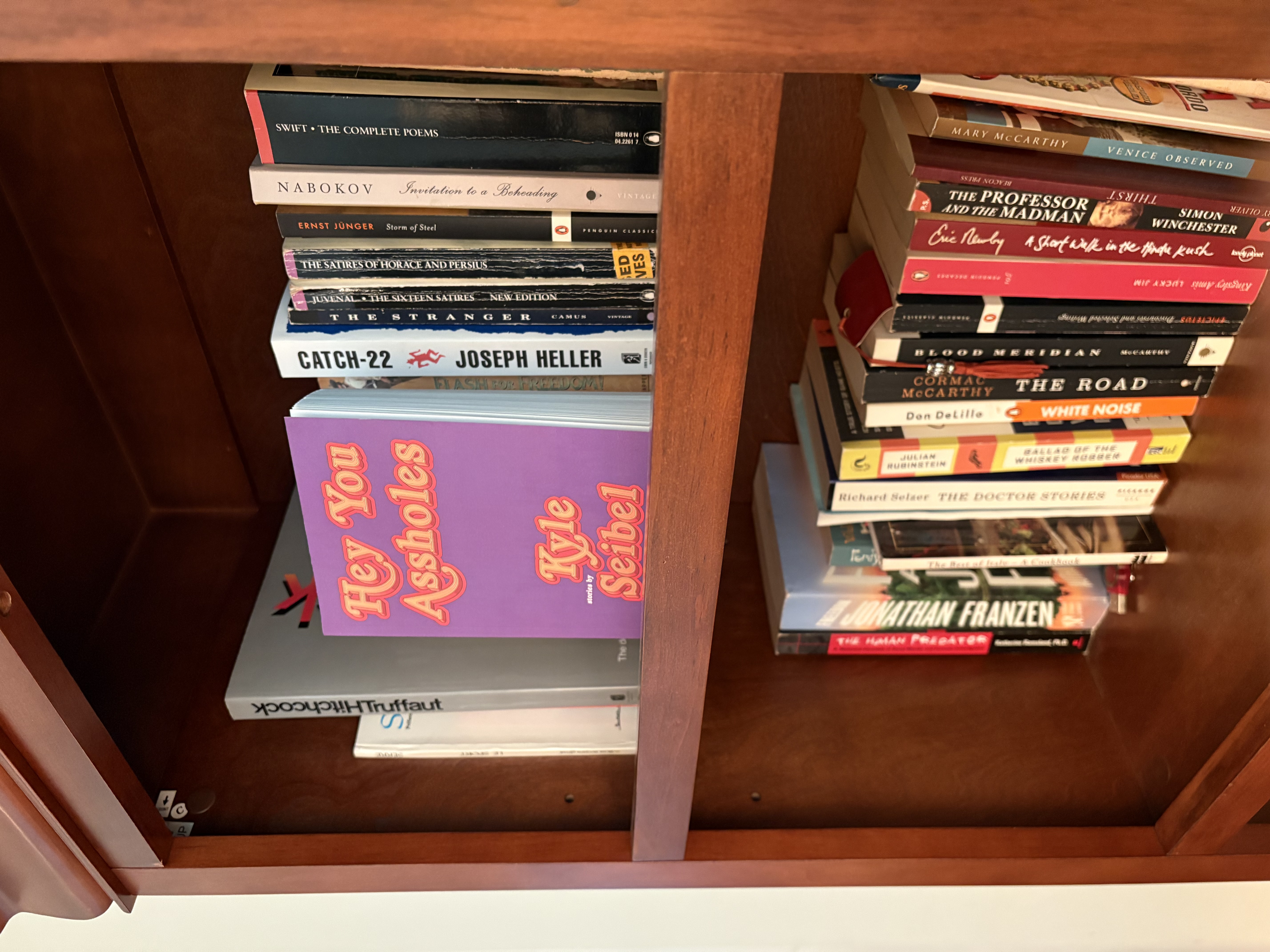
Photo of Kyle Seibel's "Hey You Assholes" on reviewer's book shelfI’m glad that there are still some honorable (and wise!) publishers out there, and that Kyle found one. Kyle sent me a copy of Hey You Assholes, which I read with such pleasure that I was moved to write this review. If some day he ever finds the address of the publisher who stiffed him and me, I only hope that he lets me know and has a seat in the car for when we go on an appropriately misbegotten but emotionally necessary mission of vengeance.

Kyle’s stories have that thing every writer hopes for: a voice, a distinct identity, and a message. Some of the stories in Hey You Assholes are very short, no more than a couple pages, snapshots of some weird or messed up situation. Others are proper short stories with a beginning, middle and end. All of them bang.

He writes the kind of story I prefer in short fiction; snapshots of an emotion or a situation. Usually the situation is confused and involves a professional or personal relationship; someone wants something that another person can’t or won’t give. Ambition and love thwarted. Few of the stories are, like “Lovebirds,” optimistic or encouraging; most of them follow people who derail themselves or who find themselves betrayed. Many of Seibel’s protagonists remind me of the main character and narrator in Denis Johnson’s Jesus Son who just keeps fucking up, no matter how hard he wants to succeed and improve. But they don’t give up.

Why would I review this for WBT? Have we turned into another literary magazine, adrift from our original purpose and mission? Absolutely not; Hey You Assholes was written by a veteran (Seibel was in the Navy) and is full of stories set on ships and in garrison; many characters and interactions are informed by the mechanical logic of the service, which is a time-honored fabric by which to weave the tapestry that is a person’s experience of life. Reading about life on a boat, or on the west coast of California, one cannot help but think that these stories would be just at home in Carthage or Athens; different settings for the wandering, weird life one encounters while navigating a wandering and weird world.

It took me the better part of a Sunday to read Hey You Assholes, and if you like books the way I do, you won’t regret it. If you’re strapped for time, keep it by your bedside and read a story or two before going to bed. It will make you laugh, and it will make you think. It will also support a good publisher, which apparently is an increasingly rare thing in this crazy world. In case you need more reasons to buy an awesome book.
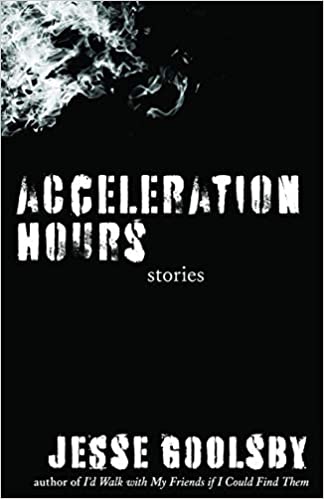


New Fiction from Jesse Goolsby: “Anchor & Knife”

The first time I met you I fought your father in the driveway. He fisted a tire iron, but he’d been drinking and he only clipped my forearm with his looping swing. That’s really where my scar comes from. The afternoon had been nice, your mother made kabobs, but you wouldn’t touch the green peppers, and you wouldn’t speak to me, so your mom brought the soccer ball out and we kicked at it in the small backyard and I pretended to know something about Pelé, and she made you hug me before I left out the front door, running into your dad, who had spied our embrace.

You’re ten. You stood in front of our autumn oak, your white-casted right arm at your side above the rocky ground that shattered your elbow on your fall from the old tree. I warned you about climbing the dead branches, and still I ran to you when I heard your animal groan, your dangling lower arm, inverted, twisting, and I waited to take you to the hospital and belted you first because you never listened to me, a stepfather, and it felt good to whip that leather at your lower back, to hear sharpness in the air, and see your body quiet and stiffen.

Sometimes you’d crawl into our bed and curl into your mother. You looked just like her, and I’d imagine you seeping back into her womb, breathing her liquid, splitting into cells, into her egg, his sperm, but when I’d slip into half sleep I’d feel your fingers on my anchor-and-knife tattoo, tracing the shapes.

You tried me two times when you were sixteen, and each time I let you get the first jab in, just so you thought you had a chance. I remember the living room: the worn gray carpet, little bay window; I remember choosing where to land the next blow, then wrestling you down to the floor, lying on top of you, your mother pulling, yelping, pleading as I took your arms above your head and locked them with one of my hands, feeling your helpless slither underneath me, knowing none of it mattered because you weren’t mine.

You’re twenty. You lifted your sleeve at the dinner table, unveiling your mother’s name on your bicep after your first tour in Iraq. When she asked you if you’d killed anyone, your mouth was full of mashed potatoes and you said I’d go back. And when you volunteered to go your mother refused to see you off, but I was there, standing and cursing you in the midday heat, watching the C-17 take you away, staying until they began folding up the plastic chairs.

When you called before the battle at al-Qai’m you asked for your mother, and she sobbed and shoved the phone at me, so I took it, and you told me you loved me. You thanked me for the fishing trips on the Truckee River, for sitting in the stands at miserable band performances, for toughening you up for the Marines. And after the battle you told me you’d lied, that you didn’t love me, that my belt and fist still filled your dreams, and fearing death had made you say things you thought God wanted to hear.

Your mother and I were pulling weeds in the front yard when the chaplain’s clean blue sedan edged up to the curb. He asked us to step inside, but your mother wouldn’t budge; she took the news on the sidewalk with a fistful of crabgrass. I drove through a lightning storm to the green bridge we used to fish below. It’s where I taught you to smack trout heads against the large black rocks before slicing the guts out.

Once, we tried to catch them with our hands, and I showed you how to reach into the water and rub their soft bellies, lulling them for a moment before the surprise clench and lift. I told you I’d caught hundreds of trout this way, and that my scar was from wrestling a twenty-pounder on the rocks. For all I could tell you believed me.

Your mother fell apart. She locked herself in our darkened bedroom, taking small meals there. She didn’t talk to anyone, but on the third day she came to me: Tell his father, she said. I waited a couple of hours, and after cursing and circling town, I drove to his place by the lumber mill. My hand gripped the car door handle, but I couldn’t pull the damn thing, and I sat there for twenty minutes, his dog barking the whole time. Finally, your father emerged and slowly approached my rusting Ford. He carried a baseball bat in his strong hand. I didn’t fancy up the news. He’s dead, I said, and drove away. I drove until I ran out of gas on a dirt road out by where we shot at clay pigeons. I walked the eight miles back to town.

When I arrived home, your father’s truck rested in our driveway. As I passed the truck I looked inside the cab on the chance that he had just arrived, that maybe he was sitting in the driver’s seat, buying time, but it was empty. I walked up the steps you helped me build and stood at the threshold with an overwhelming urge to knock at my own door.


Excerpted from “Acceleration Hours: Stories” by Jesse Goolsby. Copyright © 2020 by University of Nevada Press. Excerpted by permission of University of Nevada Press. All rights reserved. No part of this excerpt may be reproduced or reprinted without permission in writing from the publisher.