New Nonfiction: The Footsteps of Giants by David James
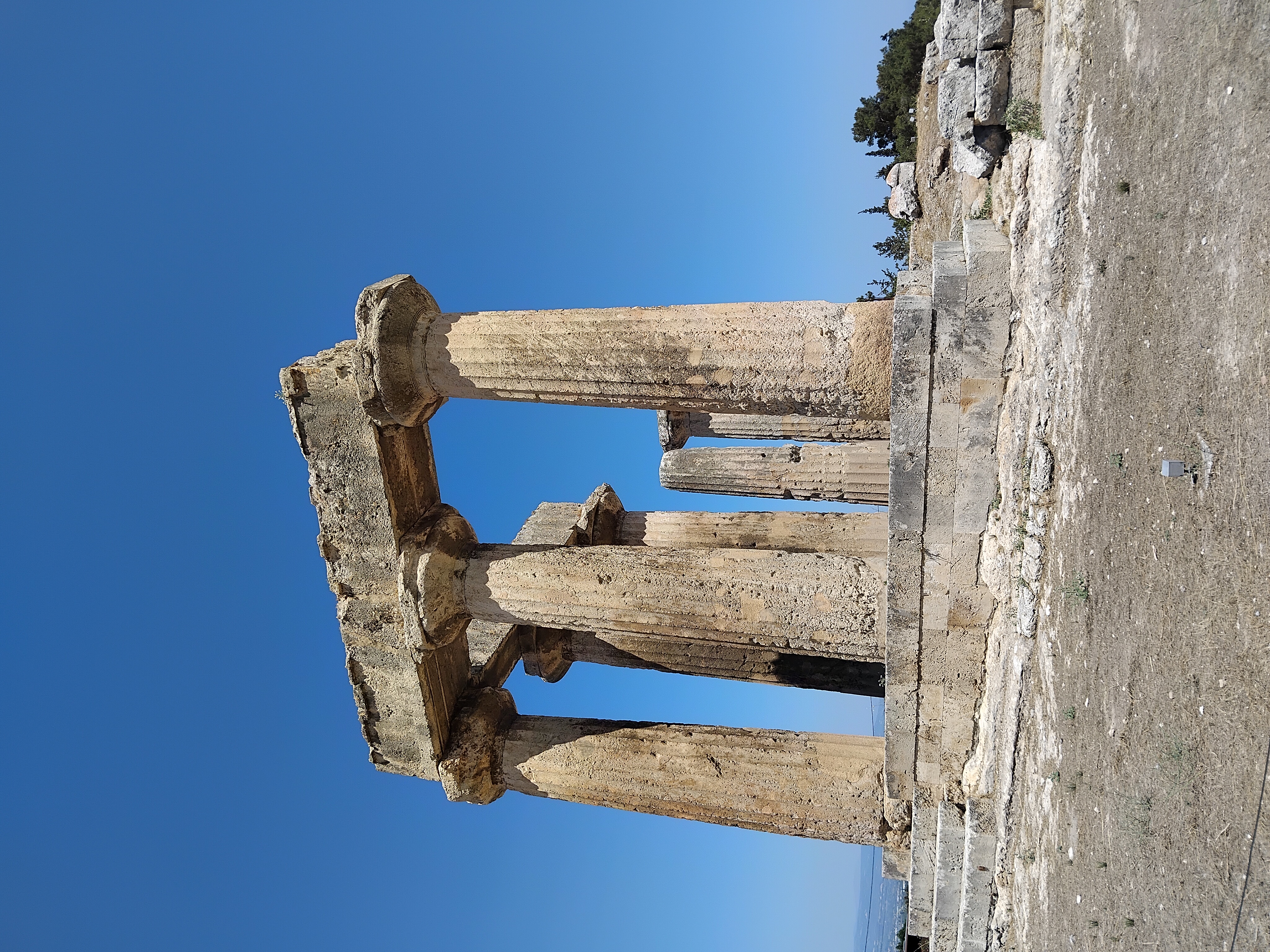
Temple at Corinth

Harold Bloom writes of the anxiety of influence that has afflicted writers going back, in the Western tradition, to Homer. We could stretch the metaphor to include not just writers, or artists, but all classes of people. For military leaders, for example, one recalls Plutarch’s anecdote of a middle-aged Julius Caesar weeping when confronted by a statue of Alexander the Great in the province of Spain. “He had conquered the world by the age of 27. I am 32 and have done nothing!” he said. Alexander himself, during his destruction of the rebellious city of Thebes before launching the invasion of Persia, ordered that only the house of the poet Pindar to be spared the flames. After crossing the Hellespont into Asia he then paid homage to the grave mound of Achilles (his ancestor!) at Troy. Lucian of Samosata in the 2nd century A.D. writes of Greco-Roman tourists visiting the birthplaces of philosophers like Zeno and Epicurus. He also mentions streams of pilgrims to the site in Cappadocia where the thaumaturge Apollonius of Tyana ascended bodily to heaven. Likewise, Suetonius notes that Virgil’s Mantua home or just north to Catullus’ Lake Garda palace were itineraries growing in popularity with well-to-do Romans. Petrarch’s frescoed house in the Euganean Hills near Padua has been visited by poetic disciples since the early Renaissance (I took my students on a school trip two years ago). All this is to say that pilgrimage is not for religious journeys alone, but for any act of traveling that takes us to a place of special cultural significance.

I myself have walked the ancient trail of the Camino de Santiago, visited the holy sites of Jerusalem, and been half a dozen times to Rome, all charged with numinous spiritual energy. Moreover, I have looked upon battlefields dating from the sack of Troy itself, to the Persian and Peloponnesian wars, the Punic wars, to the more modern Napoleonic wars, American Revolution, American Civil War, Italian wars of Independence, and dozens of sites from both World Wars (to say nothing of the two years I myself spent in Afghanistan). Rambling around a Gettysburg, or Waterloo, or the Normandy beaches (not to mention an ancient Thermopylae or Lake Trasimeno) evokes sentiment of strong collective memory and tragic action, but such sites nevertheless remain anonymously hallowed grounds that center around no single individual. Napoleon himself comes closest to a lone evocative “hero” who overpowers the masses of nameless men buried wherever he went, and whose legacy is ubiquitous across Europe and beyond. Seemingly everywhere I go, from Spain, to Egypt and Israel, to Russia, to the Northern Italian plain where I live, Napoleon has walked the ground and left traces to be followed and remembered. I once slept fitfully on the floor of a dilapidated villa over Lake Como which housed a billiard table once played on by the Corsican. Religious pilgrimage, battle and bloodshed, Caesar and Napoleon, these things hold our imagination and compel us to pay respect, even when given begrudgingly. For it can become a respect that is too big, too weighty, almost inhuman. The things that touch us more are the remnants and relics we glimpse of our forebears who were fallible, down-to-earth humans, not deities. Artists, whether writers, painters, musicians, whether giants or geniuses, and of certain kinds and to varying degrees, are all-too-human, and thus allow us to walk in their footsteps, to see ourselves more clearly through them, to be inspired and influenced, even enriched and blessed, by them.

Shakespeare, setting aside Homer, is Bloom’s quintessential artist who was himself uniquely free from the anxiety of influence, while simultaneously creating it in every subsequent writer. Such was not necessarily the case for his earthly estate—his famous Tudor-style birth house in Stratford-Upon-Avon only became a protected property and tourist destination in the mid-19th century due to the efforts of Charles Dickens. It was in fact during this Victorian period when modern tourism at cultural destinations became increasingly popular for the upper classes, and which accelerated again after the end of the First World War for the middle classes. Today, Shakespeare’s house could be considered a model of the overpriced commodification of culture that lacks artistic authenticity. Authenticity is the crucial word here, because it is this that this gives power to the places we seek out, or discover by accident, on our various pilgrimages. I would exchange a simple artifact, or monument, or plaque freely situated in loco for any expensive entrance fee crowded amongst tourists who are often more in search of a momentary escape from boredom than an authentic intellectual experience and its accompanying reverence.

In Venice, for example, there were times during a single day-trip when I wandered without purpose down narrow lanes, away from the sardine-packed tourist routes, haunted by the past, in search of nothing in particular, but open to whatever may come. I glanced up at various times to notice humble marble plaques adorning old buildings: an old palazzo in Cannaregio where Jean-Jacques Rousseau spent a frustrated year as French ambassador; a statue of Carlo Goldoni outside the palace where he was born; another noble palace (which later became the official Casinò of Venice) where Richard Wagner had died. This last contains a poetic inscription written by Gabriele d’Annunzio, who consciously designed his own living tomb and memorial at a sprawling villa over Lake Garda, which serves as both a site for school trips and an ongoing site d’hommage for fascist Mitläufer. In Florence, I once glanced up to find a plaque on the house that Dostoevsky wrote The Idiot while in self-imposed exile after his release from a Siberian prison colony. In Milan, likewise, I espied a plaque outside the old Red Cross hospital near the Ambrosiana where Hemingway recovered from his shrapnel wound, inspiring A Farewell to Arms.

Hemingway deserves his own paragraph, for it is he as much as any other modern writer who has left a solid geographical legacy whence tourists can easily follow. Italy, Spain, France, Cuba, not to mention Arkansas, Florida, Illinois, or Idaho—there are a plethora of houses, bars, and various monuments and specious museums once haunted by Hemingway. His statue is outside the bullring in Pamplona, where one arrives after running with the bulls; Harry’s Bar in Venice charges outrageous prices (and enforces a strict dress code, which is why I was denied entrance) just for visitors to say they drank at the bar where Hemingway sipped copious Bellinis; in Paris there is more than one bar that tries to do the same to cash in on his ‘Lost Generation’ years there; even the town where I work, Bassano del Grappa, has a dedicated Hemingway Museum in the old villa along the Brenta River where his Red Cross ambulance unit was based at the end of the war. His larger-than-life persona (even if this was as much about marketing as reality), and international adventures (big-game safaris, deep-water fishing, multiple wars corresponding, multiple wives left in his wake…) make him a household name and an easily accessible target for mass tourism.

The writer who most warmed to the idea of literary pilgrimage for its own sake is Max Sebald. His novels often consist in his retracing the footsteps of various literary forebears, and investigating the palimpsest of intellectual and architectural history that abounds below the surface of our cities and our lives. In his novel Vertigo, especially, he makes a trip from Venice to Verona, around Lake Garda, and back to Germany. Along the way he writes about the connection to each place of writers like Stendhal, Casanova, and Kafka. In the final section, he reluctantly returns to his tiny hometown of Wertach, where he shares nothing in common with the ignorant villagers. Despite that, playing on the growing fame of Sebald, someone today has newly created a “Sebald path” through the nearby countryside. One of my friends who appreciates Sebald even more than I has made this pilgrimage and confirmed its strange existence.

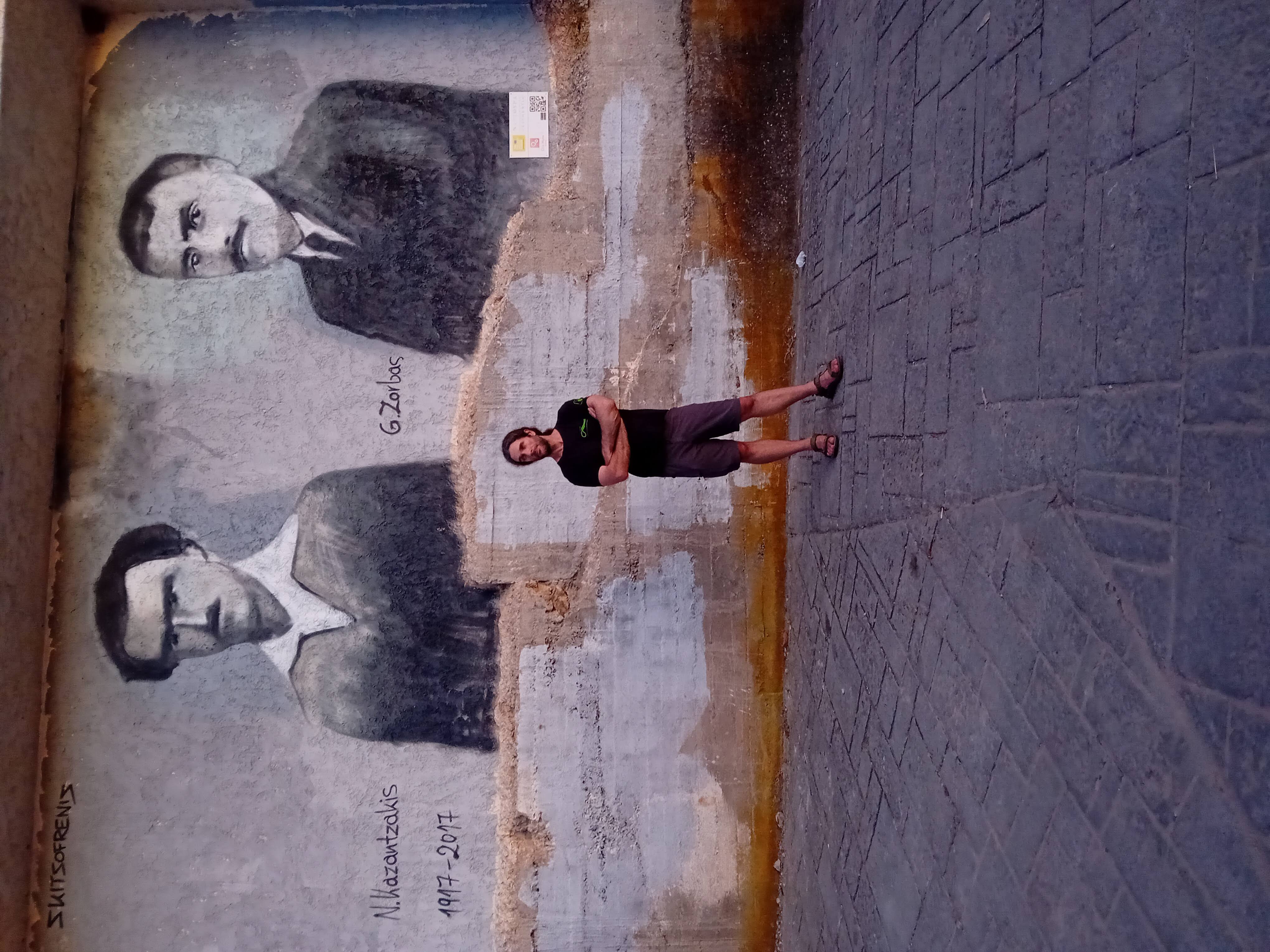
In both Trieste and Dublin, visitors can follow in the footsteps of James Joyce’s life and works, though I’d wager that very few who do so have ever read anything by Joyce. In fact, there is a statue of Joyce along the Grand Canal in Trieste, near the old Berlitz school where Joyce taught English for 15 years, including to the writer Italo Svevo (who has his own statue). In Duino, near Trieste, there is a romantic castle that once hosted the poet Rainer Maria Rilke and inspired his Duino Elegies. There is a beautiful walking path along the cliffs named after him because of his own typical walks overlooking the Gulf of Trieste. On a hill above Bolzano I once found a path where Freud used to take daily walks during his summer visits, when it was still part of the Austrian empire. In Greece, I stayed in a village with a small beach-side cottage that Nikos Kazantzakis lived in for two years (1917-18) with the real-life Georgios Zorbas. The pair tried to establish a nearby coal mine, which became the basis for the later character of Alexis Zorba of the famous novel (and film). Just outside Geneva, one can visit a chateau built by Voltaire in a town now named after the genius philosopher (genius especially for his unique ability amongst philosophers to make himself rich in order to guarantee his own financial, and thus political, freedom).

If we enter Geneva, in the cemetery precisely, we can find the final magically realist resting place of the Argentinian (but Old World in spirit) Jorge Luis Borges. Indeed, it is in cemeteries in general where we often find and reflect on great lives lived. One of their upsides is that they are free of charge, and generally free of tourists (two things I value more than over-priced and over-crowded), not to mention authentic. What could be more authentic than the final physical remains of a once living spirit who lived, created an artistic legacy, and died. Thus does the Pantheon in Rome become more powerful by containing the incongruous tomb of Raphael (for it is only he and the first two kings of Italy who are interred in the Augustan edifice). The most famous cemetery of all is no doubt Père Lachaise in Paris, where one can find the resting place of scores of famous artists of all stripes, from Balzac to Oscar Wilde. Here you can find surely the most touristed tombs in the world, those of Chopin and Jim Morrison, and yet the lingering presence of the monstrous dictator Trujillo desecrates all around him. In Venice, the island cemetery of San Michele is a place for respectful rumination that is not as populous, but just as evocative as its Parisian cousin. Then to Nafplio, in the Peloponnese, we find the final resting place of that most infamous Doge of Venice, Francesco Morosini, who was responsible for the reconquest of Greece from the Ottomans, at the expense of the destruction of the Acropolis on his orders. Back to Kazantzakis, his own tomb is situated on the Venetian ramparts outside Heraklion, Crete, because his excommunication by the Church meant that he could not be buried in a cemetery. The epitaph reads “Δεν ελπίζω τίποτα. Δε φοβάμαι τίποτα. Είμαι ελεύθερος (‘I hope for nothing. I fear nothing. I am free’).”

In Vicenza, where I lived for many years, there is a plaque on a building on the main piazza commemorating one single night that Giuseppe Garibaldi slept there. It was in 1867 after Venice was finally captured from Austria in the Third War of Italian Independence, and when Garibaldi was very likely the most famous and admired person in Europe. The plaque merely reads “Garibaldi, who cried ‘Rome or Death’, stayed here.” Likewise in Torbole, a windy town washed by the northern tip of Lake Garda, there is a low arch equipped with a fountain and a plaque recounting one single night that Johann Wolfgang Goethe slept there in 1786, on the trip that inspired his memorable Italian Journey. A few blocks away in this same small town there is a memorial to Colonel William O. Darby, a US Army Ranger commander who was killed by German artillery on this spot on April 30, 1945. This was the same day Hitler killed himself, and almost the last day of the war in Europe. This same commander gave his name to the infamous obstacle course, the ‘Darby Queen’, that all candidates at Ranger School in Fort Benning will forever remember.

Nearby Vicenza, and Bassano del Grappa, is the picturesque hill town of Asolo, which was where the British adventurer and travel writer Freya Stark made her home until dying there at the age of 100. Stark was one of the first westerners, and certainly the first woman, to travel alone across the Arabian Desert, and recounted some of her earlier adventures in excellent The Valley of the Assassins. Murals about her life can be seen in the town, and one can also visit her tomb, which happens to be next to the tomb of Eleonora Duse, Gabriele d’Annunzio’s muse and lover, and the greatest actress of her day. Further down the Italian peninsula to the Tuscan hills near Siena, we can find the scenic country estate of Gregor von Rezzori, a German-Romanian post-war writer of the memoirs The Snows of Yesteryear. This estate still hosts a retreat for writers including the likes of Bruce Chatwin and Michael Ondaatje. In nearby Orsigna, an Apennine village near the ancient tree-lined border of Tuscany and Emilia, we can visit the home of Italian journalist and travel writer Tiziano Terzani, whose Letters Against the War greatly influenced my thinking during my own participation in the War on Terror. A film was made there based on his last book, The End is My Beginning. Further down the peninsula in Ravello, overlooking the beautiful Amalfi coast, we can visit the Villa Rondinaia, where the great American writer Gore Vidal lived and worked for decades. And yet another nearby villa on the island of Capri is tucked away near the many villas of the emperor Tiberius, a modernist design that was the residence of the WWII-era Italian writer Curzio Malaparte. This setting is so unique and memorable that Jean-Luc Godard chose it for his film Le Mépris (Contempt).

On Corfu, one can dine at an expensive restaurant called the White House that used to be the residence of Lawrence Durrell, where he wrote his many travel books, and part of his underrated masterpiece, The Alexandria Quartet. It was also here that his good friend Henry Miller spent one year, which inspired The Colossus of Maroussi, his favorite (and mine) among his own novels. Further down on Corfu, there is a palace called the Achilleion which was built for the Austrian Empress Sissi, and was later purchased by Kaiser Wilhelm II, who spent much of his post-war exile there, engaging in his passion for hunting (apparently he had not caused enough death already in the first war) and archaeology. The Empress Sissi also left her mark in Merano, where an incredible castle with beautiful gardens markets itself to visitors today as ‘Sissi’s Castle’, even though she only stayed there for one month.

Back to Napoleon, on Elba Island there is a small palace where the former Emperor “ruled” the island during the nine-months of his first exile, and designed the golden-bee flag of Elba (which was itself a version of the old Medici flag of Tuscany). Back to Garibaldi, there is a small island north of Sardinia that was privately owned by the great general himself, and where he spent his self-imposed retirement and exile after single-handedly conquering the Kingdom of the Two Sicilies and gifting it to the new King of Italy, sine ulle conditione. Back to Venice, one finds a palazzo looking out over the lagoon’s northern expanse where Nietzsche resided for seven of his most productive literary years. Then to Turin, we can look around the Piazza Carignano where Nietzsche witnessed a violent horse flogging and desperately went to embrace the horse, his final lucid moment before the final 11 years of syphilis-induced madness and death. If we continue down the Italian coast to La Spezia, we find the beautiful and aptly-named Gulf of Poets, which was famously visited by Byron and the Shelleys. D.H. Lawrence, who loved Italy (Sardinia in particular), as well as Henry James, also visited this Gulf. Back to Venice (for all literary roads lead not to Rome, but to Venice), one can visit the chamber in the Palazzo Barbaro where Henry James lodged and wrote several works, including The Aspern Papers. Moving to Rome, we find another room near the Aventine hill that hosted James while writing Daisy Miller and The Portrait of a Lady. Back to Greece, we can visit a memorial to Lord Byron, whose poetic heart remains interred at Missolonghi where he died of fever while fighting in the Greek War of Independence. Further south in the Mani peninsula of the Peloponnese, we find the charming sea-side villa of the British travel writer Patrick Leigh Fermor, who fought in the Greek resistance against the Nazi occupation in Crete.

Back to my home of Vicenza once more, there is a little-known plaque on a certain palace near Corso Palladio that reveals it to be the birthplace of Luigi da Porto, the little-known original author of the old story of Romeo and Juliet that inspired Shakespeare. And so we end where we began—with the divine Bard. Guided by him, we can let our anxieties rest and our inspirations lead us where they will, rambling amongst cultural artifacts and collective memory, part of a rich history and an infinite world where giants have always walked.
Kazantzakis and Zorba


New Nonfiction from Jon Imparato: “You Had Me at Afghanistan”

“I was lying in a burned‐out basement with the full moon in my eyes. I was hoping for replacement when the sun burst through the sky. There was a band playing in my head and I felt like getting high. I was thinking about what a friend had said. I was hoping it was a lie. Thinking about what a friend had said, I was hoping it was a lie.” —Neil Young

k.d. lang’s voice carries the Neil Young lyrics on a mellifluous ride; notes keep swirling up as I crash to the ground. I’m clutching a wet dishcloth as if it were a rope, thinking about what a friend had said, and I was hoping it was a lie. I’m staring at the fringe tangled on my terracotta‐colored sarong and my beaded anklet. I grab the heavy sweater I am wearing over my tank top to cover my face as I sob. My skin is the darkest it has ever been from traveling in five Asian countries during their summer. Being thrust into cold, rainy weather frightens me. I want to be back in oppressive heat. I am thinking about what a friend had said, I was hoping it was a lie. I have heard those lyrics my whole adult life, but now it means something entirely different. It means the unspeakable.

*

I am a radical on sabbatical. I have been working as the Artistic Director of the Lily Tomlin/Jane Wagner Cultural Arts Center for ten years. When I asked my boss for sabbatical, I was shocked when he said yes. I’m taking three months off from my job. I started out in Thailand, then Cambodia, Laos, Hanoi. (Or, as I like to call it, HanNoise. It is a city without a moment of silence, a never‐ending cacophony of traffic, people, and blaring intrusions of sound.) My final destination is Bali. I have learned on this trip that most of the travel agents have never left the town or village they live in. But for some reason I think I can trust this father‐daughter team. The daughter insists I call her Baby, and she calls me Mr. Delicious.

When I arrived in Bali, one of the first things I was told was that my name, Jon, meant “delicious” in Balinese. I had just come from Cambodia, where I gave a piece of my heart to a man whose long name I had a hard time pronouncing. At one point he was joking and said, “Just call me Delicious and I’ll call you Mr. Delicious because that is what we are to each other…delicious.”  We had a brief four-day affair, a travel affair; they are so transitory and carefree, no one expects anything except the momentary pleasures.

A young girl at the travel agency loves that my name means delicious, and she thinks this is hilarious. When I tell her it also means toilet in English, I then become Delicious Toilet.

“I think you like me, Mr. Delicious, I think you do.” “I like you fine, Baby; I will like you even more if you can get me onto a remote island.” Baby keeps flirting with me and asking me if I like her. She is oblivious to the fact that I am gay, and her flirting seems just to be on autopilot. Her flirting is learned; nothing about it is organic. Baby’s father is watching his daughter flirt. He is in on the game; all he wants is for Baby to make the sale. We are all in on the game; everyone is trying to get what they want.  Nonetheless I find myself charmed by Baby. All I want is a quiet island where I can write and stare at water while I do a slow brain drain. Both Baby and her father have assured me that I will be on a quiet, peaceful island, with a bungalow on the ocean.

I want to be face-to-face with the ocean. I want a wave confrontation. I take an hour boat ride and arrive on an island across from Lombock, Gili Trankang, right next to Bali. This is an island with seven hundred people, no cars, no motorbikes, and no police. This is not a lush resort but a Rasta party island. Visitors are met at the dock by tuk-tuk carriages pulled by very sad horses. There is poverty here, you just can’t escape it. The power goes out several times a day, hot water is never guaranteed, and most bungalows have saltwater showers, very strange to the skin. Imagine someone has spilled a margarita on you and rinsed you off. My bungalow is attached to an open café with a bar painted a bright red-orange, sunshine yellow, and a deep green. The stage faces the most beautiful turquoise, sea-green ocean. Yet trash is piled up on sandbanks. You must turn your head toward the beauty, and there is plenty of it. 

I am hanging out, having lunch with the reggae band and staff. They are quick to tell me that I will do very well on this island because it is filled with beautiful women. I nonchalantly say that I am gay and hope there are also lots of beautiful men. Suddenly I can feel the chill, as if a hurricane’s gust of wind suddenly changed direction. Some of them are cool, but many of them are not. I quickly learn that most of the people on the island are Muslim. I have been in the accepting bliss of Buddhists and Hindus, so for the first time I need to keep a low profile about being gay. In all these travels, this is the first time that I have encountered any homophobia. The Rasta world is full of wonderful male affection—everyone calls you his brother, yet there is a homophobic and sexist element to the Rasta world that can’t be ignored. It is ever-present and inescapable.

Of course, it takes hours for my room to be ready. Ganja is king here; everyone is stoned and moves at a snail’s pace from the herb and the heat. They have two speeds: slow and stop. I get in the water, and I have arrived! This is the ocean I have longed for: crystal clear, warm in a way that requires no adjusting to the temperature, the color is spectacular, and it feels like flower petals on my skin. I have arrived…yet I am not happy. I miss my New York friend Roberta something awful. She longs for water like this too.

We have always shared the ocean in a deep way; when we met, we found as many ways as we could to spend time at the ocean, and I want her here with me. I want to be stupid and silly with her, laugh and splash. The ocean floor is filled with mounds of pure white coral; you can scoop it up with your hands and have little pieces of coral rain down on you. Roberta would freak. The absence of my friend is stinging. I scoop up empty water and pour it over my head as I cry, my sobbing face plunged into the ocean and staring at the coral floor. I remember that I always take a while to get my footing on my first day in a new country. I’m thrilled to get an email from a friend I met in Cambodia, named Mags. Mags is seventy-two. She has short-cropped, maroon-purplish hair. Her hair spikes up like an eighties rock star. She wears long, flowing dresses with wild prints and tons of large jewelry from her travels. She is from Queensland, Australia. She moved to Phnom Penh, in Cambodia.  Mags checked into the gay hotel where I was staying. She convinced the hotel owner to let her live there. The only woman in a gay hotel where she holds court. We exchange our lives over scotch by the pool, and instantly we feel great love for each other. Everyone calls her Mum. Her daughter, Morag, will be arriving in three days. I can’t wait for them to arrive on this magical island. This lifts my spirits and just knowing I will soon have some friends on the island is a comfort.

*

I am at a place called Sama Sama. It means “same-same” but also signifies that we are all just a little bit different, but everyone is the same and welcomed. The Rasta band is really good, and there is a huge dancing-drinking-smoking scene going on. They play mostly Bob Marley covers. They tell me it is the happiest music on earth. Yet I am in my room, I am not happy. I am trying to read or do some writing, but the sound of the band is deafening. I’m mad at the happiest music, mad at Baby and her dad for sending me here, mad at feeling like an outcast, mad at the world. I finally give in and say to myself, “Get out of this bungalow and just embrace this bizarre scene.”

I’d made friends with one of the bartenders, named Zen, that afternoon and he seemed cool. I sit down at the bar and drink my scotch with all this Rasta joy bouncing and swirling around me. I am certain I am the only gay man on the island and feel like I don’t belong, like an island unto myself.

Suddenly, one of the most beautiful men I have ever laid my eyes on sits next to me. He is straight, no question about it. He is trying to get the bartender’s attention. I shout, “Hey, Zen, can you get my buddy a drink?”

The beautiful man says, “Thanks for the hook-up.” I learn he is from Canada. The best people I have met on my journey who aren’t native are Canadians. They are open and sturdy. I will refer to my friend as Huck for reasons I will explain later. We start talking and within a few minutes the conversation is off and running. Our ideas, opinions, and insights are crashing in on us like the waves a few feet away. This guy is smart, insightful, and profound, and we are in deep, exchanging who we are with each other. We talk politics for a good part of the conversation: He can’t stand Bush; Sarah Palin is an unquestionable joke—his views are so liberal. I tell him I often feel like I am what is left of the left, an old Lily Tomlin joke. He laughs and says he feels my pain. About an hour into the conversation, he hits a curveball in my direction that almost knocks me off my seat. He tells me he is a soldier on leave from Afghanistan, and he goes back to war in a few days.

Traveling around Southeast Asia, you can talk to people for the longest time and, unlike in America, they don’t ask you what you do. Your work doesn’t define you. I would never have thought this beautiful, sensitive man was a soldier. That information seems so incongruous to the man I am talking to. I am so thrown and confused by this news. I turn and say, “Okay, let’s break this sucker down.” Like an archaeologist, I keep digging. Who is this guy?

Our conversation goes deep and wide, fast, and furious. It moves with speed and intention but always with grace. We close the bar; he is now even more fascinating to me. It is 4:00 a.m. and I assume I am off to bed. Huck turns to me and says, “Here is how I see it. We are not done with this conversation, and I am not done with you. Let’s go get some weed and smoke a joint on the beach and talk until sunup.” I tell him I am so there.

As we walk on the dark dirt road, following the sad horses’ hoofprints, Huck says, “Where do you think we can score some weed?”

I point to an old man in his eighties with a Marley Rules T-shirt selling bottles of scotch, cigarettes, and Pringles. “I guarantee you he is our best bet.”

Huck turns and says, “Come on, little buddy.”

“Huck, I feel like Gilligan on Gilligan’s Island. Why are you calling me that?”

“Oh, it’s too late, that’s who you are. I like calling you that.”

Scoring takes all of five minutes. Huck returns with this sneaky smile on his face. “I not only got you enough weed for the week that you’re on this island, but I also got you papers and a lighter.”

I turn to him and say, “If you are trying to get down my pants, you had me at Afghanistan.”

Mind you, at this point I have not smoked weed for eight weeks, and this is the first time on my trip I even feel like getting high. We sit by an ocean lit by beach lamps that keep the waves sea-green while the ocean further down is a deep blue-black.

Huck and I continue to share our lives, and I learn that he had an epiphany in Afghanistan that has transformed him. After 9/11 he felt a deep need to fight against the Taliban. Canada never went into Iraq nor would he. But fighting the Taliban was something he felt he had to do. “Little buddy, this is the way I see it. I’m young, strong, and capable. If not me, then who? I don’t know how else to say this, but I had to go; it is my destiny. Believe me,” he said, “it is that complicated and that simple.” I don’t know if I agree with him. All I know is that I want him to be safe.

Now he sees how wrong the war is. Huck explains that we are fighting a losing battle. We will never build the army this country needs. He has developed a deep affection for some of the Afghanistan children, and he no longer thinks it is right to kill anyone. He is hoping for a replacement assignment where he could leave combat and become a search‐and‐rescue expert for the Canadian Army. Every now and then I just burst out, “God, you are beautiful!” He lowers his head, blushes, and says thanks. In return he says, “God, you are great.”

He knows I’m not coming on to him; it’s clearly beyond that. Yet my appreciation for his unquestionable beauty must be proclaimed from time to time. He proclaims how great I am in return, and we laugh.

Neither one of us had known this island existed, and we have no idea how we ended up here. It was never on either of our trajectories. Our conversation just glides from one thought to another. I will show him L.A., and he will show me Canada. We talk about books, his girlfriends, my boyfriends, the demise of the Bush administration, the hope of Obama, saving lives, and living them.

While we talk the night into day, the full moon stares us down, right in my eyes. It is a bluish‐ gray moon that looks as if a prop person hung it between two island trees. The sky begins to turn ever so slightly into its morning yellow as the moon seems to be replaced instantly by the sun. We both have the reggae band playing in our heads. Mine is tossing around over and over a reggae version of “Leaving on a Jet Plane.” Huck’s is “No Woman No Cry.” We joke that we will have the Sama Sama reggae band playing in our heads for weeks. As we say good night, he tells me he will be getting an enormous tattoo tomorrow and asks me if I would stop by the tattoo shack with the huge orange hammock on the porch.

*

Lying in bed, I had been feeling sorry for myself. I have just spent five days at a gay villa, and I am longing to be around my gay brothers. I feel resentful of the homophobia I know is coming at me from many of the straight men. The last person I ever thought would rescue me from that state of mind is a straight Canadian soldier.

I stay up trying to write a short story about the encounter of Huck and Jon. In the morning I finally go to bed at 9:00 a.m. because my encounter with Huck has my mind reeling.

*

I race over to the tattoo shack around noon. My feet can’t get me there fast enough. I want to be with Huck and yet am baffled by the intense urgency I feel. It has been gray and cloudy morning, but as I pick up my pace, the sun bursts through the sky shouting and waving hello, and I can’t wait to let the water feel me again.

At the tattoo shack there is a guy with the longest dreads I have ever seen dangling through a hammock, as if long, black snakes were sweeping the old wooden floor as the hammock sways back and forth. The tattoo artist is older and seems as relaxed as a human can get. Some obscure Tracy Chapman song is playing on a radio. Huck must have told the guy in the hammock that a friend was stopping by because he just points his finger to the back room. Huck is lying on the bed in just his swim trunks. He tells me he is getting really scared because this is going to take about four hours and it’s going to hurt. He is clearly freaked. The design is huge and will be on his left side, a place where people rarely get them. The tattoo artist tells him to be patient and to expect a lot of pain. In twenty-three years, he has never given anyone a tattoo of that size in that area. “It is all bone,” he keeps muttering and shaking his head. “It is all bone.”

I grab Huck’s leg and say, “Okay, Huck, here’s the deal. Do you really want this tattoo? If you do, I will hang out and keep you company. I am a really good nurse.”

He nods yes, then mutters, “Stay, please.” I become the tattoo nurse. I run back to my bungalow and get him some pills that will help him sleep. I make sure he drinks a lot of water, buy him Pringles (they are everywhere). I buy a fifth of scotch, tell him funny stories, put cold towels on his forehead, and basically make sure he is okay, documenting the ordeal with my camera.

The tattoo is of a devil-looking serpent coming out of the ocean. This image gives me chills. As the serpent with its sword rises, a huge splash of water hits the air. The other half is some sort of angel figure carrying a torch of glowing light. He told me it was his personal reckoning of the good and evil inside himself. The never-ending reminder to himself…that he chose to kill. He is utterly motionless. The tattoo artist is amazed, as I am, at Huck’s perfect stillness during four hours of intense pain. I think to myself, this is a soldier’s story. He understands all too well what a false move can mean. He knows how to be a statue or risk being killed.

*

Later, over lunch, I interview him for a short story I plan to write about him. I ask him for examples from combat when he had to be that still or it could cost him his life. He tells me not long ago he was searching a burned-out basement for weapons. He heard footsteps above and hit the basement floor. As he was lying there, he knew that if anyone heard him, he would be dead. It was a soldier’s strength. The determination I witnessed during those four hours while he was getting his tattoo was staggering. I learned once again that the will of the human spirit is indomitable.

The tattoo shack has a back room behind the tattooing room with a mattress on the floor. The room rents out for ten dollars a night. Huck is turned on his side, eyes closed; the drugs are working. The tattoo artist was taking a break to eat his lunch.  The door opens and a beautiful, young, blonde woman who reminds me of Scarlett Johansson walks in, says her name is Daliana, and she wants to rent the back room. Then she looks at Huck, looks at me, and whispers, “He is so hot.” I laugh and agree. She tells me she is from Canada, and I tell her, “Don’t rent that room, you can do better.” Huck turns and says, “Canada, where?” Canadians love meeting other Canadians. I tell Daliana to meet us later at Sama Sama to party.

The moment she leaves I can see Huck is having a really hard time keeping it together. The tattoo artist says, “Get ready for round two,” with this ominous tone in his voice. Huck’s body isn’t moving, but his face tells me he is in severe pain. He turns to me and says, “You are a lifesaver. Do you realize you are saving my life? Do you get that, little buddy?”

I say, “Huck, saving lives, come on. That is what we talked about last night. Isn’t that what this new friendship is all about? You went into the war to kill and had your epiphany that you are here to save lives. Now you have to stop calling me little buddy; it is way too Gilligan on this island.” He shakes his head no. He flashes me that look that says don’t make me laugh; it hurts. I tell him about John Irving’s A Prayer for Owen Meany. It’s one of my favorite books, and I have reread it on this journey. I explain that it is a book about the Vietnam War, God, the act of killing, and destiny. I think it’s an important book for him to read. I know it will speak to him.

He told me the night before that he thinks one of the reasons we’ve met is so I can help him read novels again. I will send him off with this book and hope it has a deep effect on him.

*

I am at a café on the dock with Huck and Daliana, who has become another amazing friend from good old Canada. She has also spent time with Huck. I’ve played matchmaker and set them up for the night. They share their own moments of exchanging their lives. We can hear the boat coming into the dock, dropping off new guests. About fifty people are walking down to the main sandy road. I hear someone yell my name. It’s Mags wearing the brightest orange dress. It looks like the sun is walking towards us, giving new meaning to the word sundress. To her right side is her beautiful daughter Morag.  People always tell you their kids are beautiful, but Morag had a casual effortless beauty. Everyone introduces themselves and they join us for a cold drink. Huck only has about ten minutes until he has to get on that boat, the boat that would begin his journey back to war. Daliana and I are both heartbroken to see our soldier off. As he gets up to leave, I hug him, kiss him on the cheek, and tell him how special he is and that he is the best, most unexpected surprise on my journey.

I am crying. Hard. My dad is a Korean War vet and had to live through the horrors of that war. Several bullets pierced various parts of his body while parachuting into combat. The first five years of my life were spent in and out of VA hospitals in Brooklyn, New York. My ex‐lover, James, was in Vietnam and has had to deal with the horrors of exposure to Agent Orange. I have a lifetime of connections to vets. It suddenly occurs to me that I have never met anyone serving in this current war.

I start to worry about Huck’s safety and think, Okay, gods, you have played with me enough, and it has been great fun, but now PLEASE turn your eyes to my friend. Play with him and keep him safe. If he comes out of this, he could do so much good.

Even thinking the word “if” scares me. Yet his bags are packed and he’s ready to go…and I can’t control what I can’t control. I can only say to my friends on this island: Don’t say a prayer for Owen Meany; say a prayer for my new friend Huck. I tell Huck I want to write about him on my travel blog, but I need to make sure he is cool with what I write. I show him the first entry, and he blushes and said, “It’s all good; just change my name.” It’s the weed. He asks me not to use his name and I tell him I will respect that. I say I am going to call him Huck because I just read The Adventures of Huckleberry Finn for the first time. He looks puzzled and asks why. I tell him that Huck was a character who initially can’t see his compassion for Jim, the runaway slave, as a man, as a human being. But on that raft, he sees him as a man with a full life, finds out he has a wife and kids, and instead of getting him killed, he saves his life. The epiphanies seemed to coincide.

*

I’m back in Los Angeles, and after three months away I could be walking on the moon. The cold weather hurts, the wet rain has no heat in it, and I am a stranger in a strange land—my own.

I can’t sleep so I roam and putter around my home like a visitor getting acquainted with his new surroundings—a sixth country. Lorraine, my oldest and dearest friend since I was fourteen, has come to see me.  She is a tough, smart, gorgeous Italian woman. She has the biggest eyes, brown, almond shaped, and everyone even strangers remark about them. I regale her with stories about the magic that happened. I go on and on about Huck and tell her she will die when she meets him. We are watching the Super Bowl and screaming about one of the most magnificent touchdowns in football history.

My cell phone rings. When I check the message, it is Daliana, there are five messages. She tells me that she needs to talk to me and not to mind her voice, as she has a cold. I tell Lorraine that it was not a “cold” voice but a crying voice. I mutter, “Lo, I’m scared; Lo, I’m scared.” I frantically check my email. She has sent a message saying to call her anytime, and she needs to talk to me.

We shared our love for Huck like two schoolgirls; this must be about him. Lorraine tells me to go into the living room and call Daliana.

When she picks up the phone, I yell “tell me he is okay. Tell me he has no legs. I don’t care if he can’t see, just tell me his brain is intact, tell me he is alive!”

She cries hard. The death cry, the hard, searing cry of sudden loss.
I say, “You got the information wrong somehow. It’s a lie!”

Through her deep sobs she keeps saying, “He is gone, our friend is gone.” 

I fall to the floor and feel grief and political rage collide head on. Like two boxers smashing each other’s brains out, each blow numbing the other.

My friend was killed by a roadside bomb. The term almost sounds friendly, “roadside” seems so harmless.  I am thinking about what a friend had said: I was hoping it was a lie.

I have heard those lyrics my whole adult life, but now it means something entirely different. It means Huck, it means Sean.