New Nonfiction by J. Malcolm Garcia: The Quiet Season
Vietnam


Part I


1

David E. sits at a picnic table across from me at a restaurant/hostel outside of Da Nang. The owner, Hoa Nguyen, a slim, sixty-one-year-old Vietnamese, slouches beside me, his elbows on the table, eyes darting to the street. When he notices surfers sauntering to a beach, he jumps up and waves a hand.

Hey, cold beer right here, man, Hoa shouts.

The surfers pause, check out a sign, Hoa’s Place: Cold Beer Makes You Happy, and a few sit down. Hoa hurries to a refrigerator for their drinks. David E. tracks him with his eyes, a smile playing across his broad face.

That Hoa … , he says.

David E.’s full name is David E. Clark. He grew up in Akron, Ohio, and later lived in southern Illinois and the Tampa Bay area of Florida.  A recovering alcoholic, everyone knew him as Dave, sometimes as Crazy Dave, in his drinking days. He hasn’t touched booze for more than twenty years and goes by David E. now, he tells me, because no one would have liked him as Dave. I take him at his word, and imagine I would not have wanted to mess with him in those days. He’s a big man, seventy-one, a former Marine. His bare head, shaved by a barber, trickles with sweat. When he speaks, his deep voice sounds as if it’s being raked over coals. However, when we met two days earlier, he shook my hand with a relaxed yet firm grip and I judged him to be a gentle man who’d left his difficult days behind.

In 2011, on his second trip to Vietnam—before he moved here for good in 2013—David E. stayed in hotel up the road from where we’re sitting. He stopped here to eat and met Hoa. Over time, he told Hoa he’d served in Vietnam and was stationed close by at the Marble Mountain Aviation Facility. I can see the mountain in the distance, a tourist attraction now where visitors can trek through underground tunnels once used by the Viet Cong (VC).

When he learned David E. was a Marine, Hoa felt an instant connection. When he was a kid, maybe eight or nine years old, the Marines established a hearts and minds program known as the Combined Action Program (CAP) in Hoa’s village. He ran errands for them:

Hey, Hoa, I need a fucking Coke.

Hey, Hoa, I need a fucking beer.

Hey, Hoa, where the fuck are you?

and he learned, among other things, to cuss like a Marine.

Can you imagine being raised by a bunch of goddamn Marines? David E. asks me and laughs.

After Hoa gets the surfers their beers, he returns to our table.

I was telling Malcolm about the CAP unit, David E. tells him. At that time one bottle of Coke cost twenty Vietnamese dong, remember?

I fucking remember, man.

Less than a penny.

Fucking cheap.

David E. pushes back from the table and reaches for a bamboo water pipe sticking out of a bucket. An etching of a dragon writhes from one end of the pipe to the other. Removing tobacco from his shirt pocket, he fills the bowl, lights it and inhales, and I hear a small storm of water churn within the pipe. David E. raises his head, exhales a plume of white smoke and coughs.

I got to quit this shit, he tells me.

Are you a Marine? Hoa asks me.

He’s a writer, David E. says.

Malkin?

Malcolm.

Weird fucking name, man.

David E. takes another hit off the pipe. When he finishes coughing, he turns to Hoa.

I came here to talk to you about two guys coming to Da Nang, he says, his voice hoarse with smoke. They’re veterans. They want to see Hill 65. They say there was a battle there in ’69. Twenty-third of February. Fifty years ago. They want to commemorate two fallen comrades.

Okay, Hoa says.

I want you to go with me. You know the area.

Fuck, I’m there for you, you know that. I miss the CAP unit, man. Even now. It’s always in my fucking mind.

David E. clears his throat. He doesn’t miss the war. He ducked at the slightest sound his first three months in-country. Next six months, he thought, Fuck it. His last three months, when he knew he was going home, he started ducking again. He returned to the States in 1969, landing at LAX, found the gate for his connecting flight to Ohio, sat in a bar and looked at girls in miniskirts. He was twenty-one. Another guy, maybe thirty, sat near him. He wore a suit and said he worked for a pharmaceutical company. He considered David E., eyeballing his uniform.

Just getting back from Vietnam? he asked.

Yes, David E. said.

How many kids did you kill?

David E. stared at him. If he’d had civilian clothes with him, he would have stripped out of his uniform and blended in among all the other suits waiting for flights. But he didn’t have civilian clothes. What could he say? In combat, he fired his weapon and had no idea who he killed. He had not hesitated to point his M16 in the face of any man, woman, or child. Anyone over the age of eight could be Viet Cong. He never knew. If they feared him, he thought his chances of going home were much better. That’s all he wanted. To go home.

He left the bar. He had been back just three hours after thirteen months in combat.


2

I grew up during the Vietnam War. When I was old enough to be drafted, the war ended, but it was my war was as much as World War II was my parents’ war. I can still see newscasters giving body counts and announcing the draft lottery numbers.

After 9/11, I embedded as a reporter with the 82nd Airborne Division in Kandahar, Afghanistan. In April 2003, I flew to Kandahar for my third embed just one day after the press information officer, Army Cpl. Keith Klue, had lost six Air Force friends. They had flown out of the Kandahar base on a Sunday night to help two children with head and eye injuries in a village near Mazar-e Sarif. Their helicopter crashed close to Ghazni, about 80 miles south of Kabul. Mechanical failure.

Keith had introduced me to many of his friends on base on previous embeds. I tried to recall if I had met anyone from the Air Force but couldn’t. They had a memorial service at Bagram Air Base outside of Kabul for the six just before I arrived. I wrote it up, no more than a brief, a few lines for the wires. Had they died in combat, I would have been allowed to make a story out of it. But they didn’t.

I’d just finished a barbecue and playing volleyball with them, Keith recalled after I put my backpack, vest, and helmet in a corner. I didn’t respond, Keith was a young man, much younger than I, in uniform in a place neither of us had any reason to be. I had more than forty years of living behind me. He had just turned twenty-five. If he died like his buddies, what impressions would he leave? How would he be remembered? For serving his country? For how long would that memory linger and be appreciated?

I didn’t know what to say as he tried to articulate his sadness. To lose someone in a war to mechanical failure raises the bar on incomprehension to stratospheric heights of absurdity that I think left him mute with outrage.

My guess is he wished he had been near Ghazni. Had been there to help his friends no matter how hopeless the situation. Going through the wreckage, gripping their hands in his. Something. Instead he was left alone with his laundry and his loss and me.


3

I tell David E. about my embeds as we stand in his house one morning preparing to leave for Hoa’s Place. The house is at the end of an alley where a sign, Ushi’s House, after David E.’s Vietnamese wife, points the way. They met in April 2013 in a restaurant she owns in Hue. When he first saw her, she was wearing a chartreuse dress, long earrings and a matching watch, and large glasses. They later danced in the street to the Beatles’ “Eight Days a Week,” Ushi’s favorite song.

A year later, they married in a Catholic ceremony while wearing traditional Vietnamese wedding clothes. After renting an apartment, they bought a house near the beach in Da Nang and remodeled it to add some Western comforts. David E. enlarged the kitchen and installed shelves, some of which can be raised and lowered to make them easily accessible. A water filter for the kitchen sink allows them to drink straight from the faucet.

You know, I came here as a young man to die for my country, he said as he mounted a motorcycle that would carry us to Hoa’s place. Now I’ll die here on my own terms.


In 2007, David E. got together with a buddy, a guy named Tommy in Naples, Florida, he’d met thirty years before when David E. was a telephone contractor and had installed Tommy’s phone. Tommy, an Air Force veteran, had deployed to Vietnam in the mid-1960s and wanted to go back. David  E. thought, Why not? There were places he’d like to see again, but he didn’t have the scratch to fly halfway around the world. Tommy said he’d cover the cost.

They flew into Ho Chi Minh City—still commonly referred to as Saigon—went through immigration, rounded a corner and walked down a long corridor. David E. felt fine, a little jet-lagged but fine, until he saw Vietnamese in straw hats. Then the humidity hit him and the smell of food and diesel fumes and the noise of people talking, and for a long moment he felt transported back and a fear returned that he’d not experienced in decades. He turned around thinking, I can’t do this.

The moment passed about as soon as it began. Tommy led him outside and they caught a ride to a Hyatt Regency hotel. From their fifteenth-floor room, David E. looked out a window and saw a Kentucky Fried Chicken. You got to be shitting me, he thought. After Saigon, they visited Da Nang and Hills 55 and 65, forward operating bases for the Marines and places where David E. had, at times, been stationed.

He and Tommy returned home after three weeks. In 2011, David E. returned to Vietnam for a year. He climbed Marble Mountain and watched the sunrise. No flares, no artillery, no gunships.

He came back in 2013 to stay. He found peace here. In the U.S., the war tormented him every day and every night, but in Vietnam he saw that the Vietnam he had known was gone; the war was over. With dozens of beachfront hotels, condos, and restaurants, Da Nang had become a mini-Dubai. A bridge in the shape of a yellow dragon crosses the Han River at the Le Dinh Duong/Bach Dang traffic circle. Every Saturday and Sunday night at nine o’clock, the “dragon” breathes fire and water.

David E. had turned twenty-one in Vietnam and vowed not to celebrate one more birthday in a country he called the asshole of the world.  Back home, he drank, worked a job four or five years, quit. Something or someone would annoy him and he’d go off. He didn’t get fired, just pissed off. He had a stick-it-up-your-ass attitude toward anyone who crossed him. Classic post-traumatic stress disorder (PTSD), but he didn’t know it then.

What’re you going to do? he’d snap. Shave my head and send me to Vietnam? I’ve already been there.

Now look, I’ve shaved my head and I’m living in Vietnam.

The U.S. Embassy in Hanoi does not track the number of American veterans living in Vietnam. Some estimates made by the veterans themselves suggest about fifty.

I first heard of American veterans moving to Vietnam from a colleague: reporter and photographer Drew Brown. A veteran of the Gulf War, Drew had lived in Vietnam for three years. He gave me David E.’s name and I reached him through Facebook.

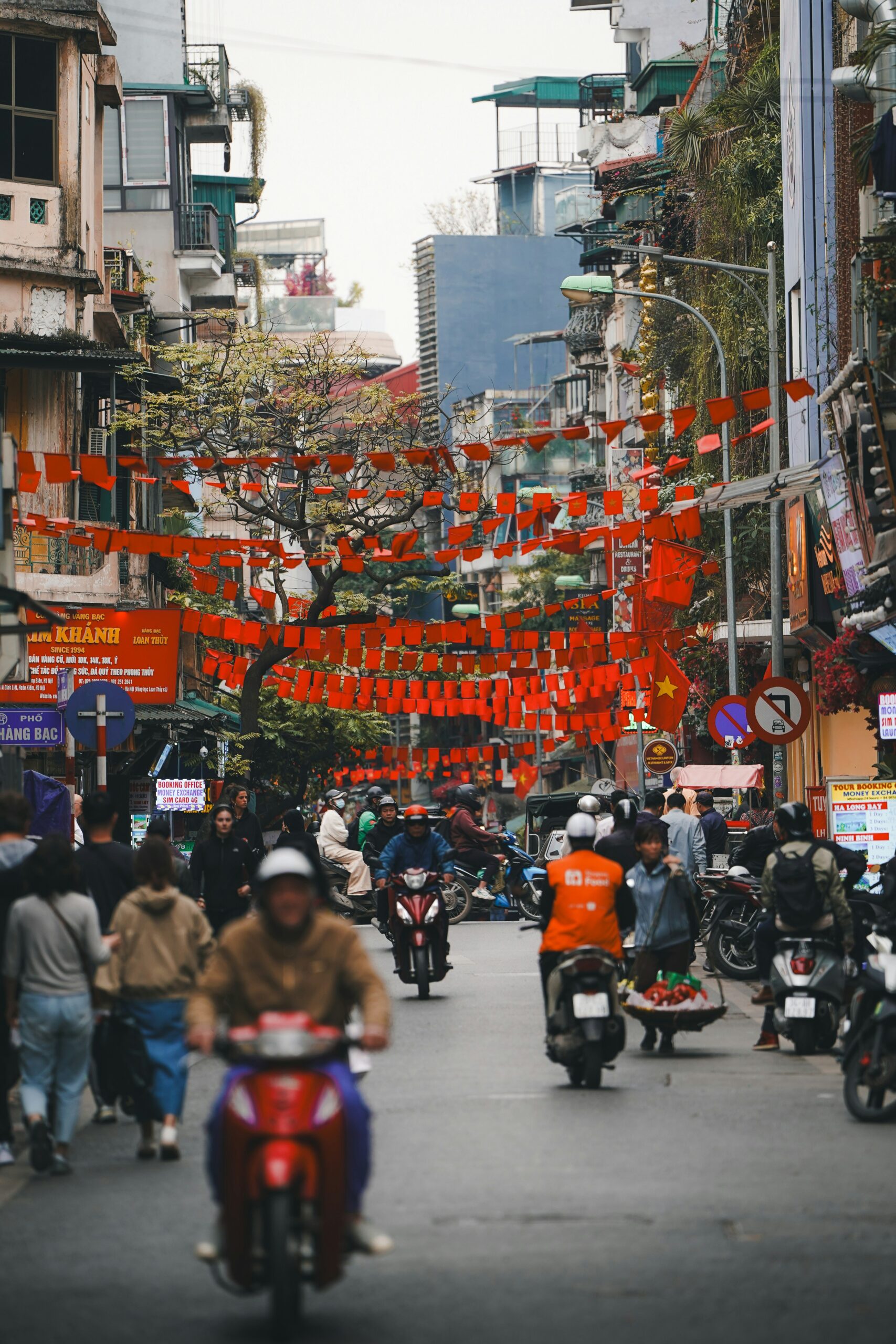
I arrived in Hanoi a little before midnight on February 6, 2019. My hotel stood on a narrow street in the Old Quarter where mildewed colonial buildings erected by the French have been converted into apartments. Laundry hung off balconies and shutters peeling paint. On the street below, the sidewalks teemed with meat and vegetable vendors, and rats scrambled across the pavement before diving into cracks. Motorbikes and bicycles clogged the roads. I saw women in straw hats hauling discarded plastic, and their hats reminded me of the news footage I’d seen as a boy during the war and I thought, I’m in Vietnam. But it was no longer grainy black-and-white film of carnage but a bustling, colorful city that had nothing in common with my memories. The war, called “the American War,” by the Vietnamese, is studied in school, one twenty-year-old staffer at my hotel told me, but no one talks about it. He said he might have had an uncle who fought in the war. He wasn’t sure.

Before I left for Da Nang, I had coffee with Vietnam veteran Paul J. Mooney. Paul, now sixty-nine, served in the Army’s 199th Light Infantry Brigade. A slight man with an eager manner and glasses sliding to the tip of his nose, Paul reminded me of a retired professor. He was, however, an award-winning journalist. Since 1985, he has reported from Burma, China, Taiwan, and Hong Kong. A year earlier, he moved to Vietnam with his Chinese wife to study the language. He also teaches English to the blind three times a week for two hours for the opportunity to give back to men and women he once fought. He enjoys living in Vietnam, but unlike David E. he doubts he’ll ever feel at peace.

Paul enlisted in the Army in 1968, gung-ho about the war. He prayed for it not to end before he reached Vietnam. His mother lit candles for him every day at the Church of Our Lady of Mercy around the corner from their house in the Bronx.

A trailer library on the 199th’s base held, among other volumes, about fifty books on Vietnam. Paul found those accounts offered a depiction of the war unlike anything he’d heard during basic training. One in particular, David Halberstam’s The Making of a Quagmire, offered a blistering examination of American policy in Vietnam. He read it by candlelight.

I read the truth, he said, and it opened my eyes.

However, the Army expected Paul to be a soldier, no matter his changing opinions about the war. He directed artillery and wonders sometimes who he killed. Kids? He saw soldiers put blasting caps in C rations and give them to dogs to blow their mouths off for no reason other than they thought it was funny. At a fire support base, a child picked up an M79 grenade. It blew off his arm. The kid was about six or seven years old maybe.

That was our doing, Paul told me.

He recalled being rocketed in December 1968. He prayed, Dear blessed mother save me I’ll never do a bad thing again, as he crawled for cover.

When he returned home, Paul experienced nightmares. In one dream, the Viet Cong attacked his position and as Paul fired his M16, it melted in his hands. In other dreams, the bullets he fired fell to the ground. He assumes the dreams illustrated his fear of getting killed or maybe a kind of impotency in the face of danger. He’ll leave it to someone else to figure out. Medication for PTSD has prevented further nightmares.

Paul held a number of menial jobs before he chose a journalism career. With the support of Newsweek, he earned a master’s degree in international affairs from Columbia University and a certificate in East Asian studies from the university’s Weatherhead East Asian Institute. He moved to Taiwan and freelanced for Newsweek, Asiaweek, and The Washington Post among other publications.

He especially enjoyed working in China. He faced risks from state authorities who did not want him covering such issues as the AIDS crisis, government abuses in Tibet, and health threats that people faced from exposure to asbestos and heavy metals. Sources called and warned him when the police went looking for him. At those moments, he experienced the sensation he had when he returned from a military patrol. The adrenalin high of almost getting killed. Walking back to base through fields of banana trees ten feet tall. He had survived. He had escaped. As much as he hated the war, he misses that feeling.

In 2015, Paul returned to Vietnam and visited the remains of a fire support base north of Saigon. A row of shops had replaced it, although down a side road he did see an old concrete bunker. Everything looked so different. He experienced a sense of disappointment, as if none of what he and his unit had done mattered. Such a waste.

When he thinks of today’s veterans, he wonders: Who will think of them other than friends and family? Will any trace of them remain after their wars end? Will skyscrapers devour the battlefields where so many died?

He feels a tremendous sadness for the guys who lost their lives in Vietnam. He cries when a Vietnam veteran dies. He has visited the Vietnam Veterans Memorial but not often. He looks at the names, thinks of their parents, and feels overwhelmed by sorrow. A soldier who grew up in the Bronx with Paul, Robert Murray, died in the war. His name is among the more than 58,000 etched on the memorial. Robert was a few years older than Paul. A Medal of Honor recipient. He smothered the blast of a grenade with his body, sacrificing his life to protect the soldiers around him. Paul was in Vietnam at the time but news of Robert’s death came in a roundabout way.

Did you hear about Robert? Paul’s mother asked him in a letter.

Paul thought she felt guilty over her relief that he was alive while another mother had lost a son.

He doesn’t share these and other stories of his military service with the Vietnamese. As a foreigner, he does not want to offend. However, sometimes, and without meaning to, he has revealed his veteran status.

He remembered one instance in particular: While he was snapping photos on a bridge with his iPhone in the city of Hoi An, he saw a Vietnamese man with one leg and they started talking.

Have you been here before? the man asked him.

Yes, Paul answered.

The man soon figured out he was a veteran and started yelling at him.

You owe me! he shouted as Paul hurried away, You owe me!


4

Hoa remembers the bleak years that followed the end of the war in 1975. Vietnamese who had befriended Americans burned photographs and destroyed all evidence of their support to avoid being ostracized and placed in reeducation camps. Hoa paid two dollars to leave by boat but the boat never came. He was fucking stuck in Vietnam. Now, he has his own business, a wife, and children. He’s okay living here, he says, but I hear a note of regret in his voice.

He prefers talking about the CAP unit and the Marines who befriended him. He’d get them cigarettes, clean their rifles, throw empty cans in the air for them to shoot. He helped medics by bandaging little cuts. He shows us a photograph of a Marine in tan shorts and a green T-shirt. Hoa stands beside him, a thin boy, bare-chested, ribs showing, grinning.

This guy, Doc Smith, came back in 2010, Hoa says. He wanted to go to the site where Sgt. Flynn was killed.

Hoa can’t think of Flynn’s first name. One afternoon, Hoa saw him staring at a boat floating past the CAP unit on a river near his village. Flynn, he recalls, looked pissed off, probably because he knew he’d have to check it out. Hoa watched Flynn jump in the water holding his rifle as he waded toward the boat. Then he heard a gunshot and saw Flynn drop. No one, it turned out, was in the boat. It had been a decoy to lure a Marine into the water. Nineteen sixty-six, or early 1967, Hoa can’t recall the date. Everyone cried when Flynn died, including Hoa. Flynn was very smart. He spoke Vietnamese. Twenty-something years old.

I had a dream about the war recently, Hoa says. A very bad dream. I can’t remember it now. I know Marines died in it.

A breeze blows in from the beach and a surfer complains about the quality of the waves. Two men on motorbikes pull up and Hoa stands to get them drinks. The bikers do not look at Hoa as the survivor of a war. He is the proprietor of a guesthouse: four single rooms and one dorm of bunk beds. He does not speak to guests about the war unless they ask. He talks to Marines. He has a Marine money clip and belt, a Zippo lighter, and a rusted M16 cartridge. He remembers shooting an M16 into a river. It was a game, acting like a Marine. Flynn’s death taught Hoa the game had consequences. He never fired a weapon in combat. He never killed anyone. He hung out, did what Marines told him, talked shit, played American football, and attended school. After school, he returned to the CAP unit. It was his home away from home. At night, Marines would visit his mother and eat cakes she had baked. Hoa thinks they were all fucking lucky. They could have been killed like Sgt. Flynn. One time, he jumped in a bunker when four Marines were firing .30-caliber machine guns at the VC. Hoa felt his energy surge, no sweat, keep it coming. He was young and happy. It was just another day in Vietnam.


5

The day after we met with Hoa, David E. takes me to Hill 55, where he was sometimes assigned. I sat behind him on his motorcycle and we weaved through traffic out of Da Nang and onto roads through small villages crowded with men and women picking through the wares of vendors. Then the villages vanished, we passed a cemetery and climbed uphill until David E. pulled to the side of the road. Around us, dense thickets of fir trees rose near a towering monument of a Vietnamese soldier with his left fist raised in the air.

In the First Indochina War, two battalions of French forces were wiped out here in 1954, David E. tells me. When the Marines were here, he adds with a note of pride, we didn’t leave until we were fucking ready.

I look at the trees and beyond them to farm fields and power lines and the hazy blur of  mountains on the horizon. During the war, Hill 55 had been leveled of trees, brush, everything. I saw photographs online. It resembled a desert intersected by clay roads.

Nothing but a big mud patch when it rained and six inches of dust when it didn’t, David E. says.

He notices the outlines of a trench beneath weeds and points out how it zigzags so the VC would not have a direct shot if they got into the trench. He scours the ground, finds an M16 cartridge. Seconds later, he discovers a live round from an AK-47, a weapon used by the VC.

See this? he says. This was supposed to kill your sorry ass.

He points behind me at a patch of yellowed grass.

The LZ (helicopter landing zone) was here, he says.

He continues pacing the ground searching for souvenirs. He enjoys finding remnants of the war. The once lethal but now harmless objects remind him the war is over. He gets this warm feeling when he gives them away, pieces of himself from another time. A small gesture of kindness he hadn’t shown when he was a young Marine. In those days, all he cared about was having enough water and ammo to survive a mission.

I gift you this, David E. says as he hands me the M16 cartridge.

As he looks for more souvenirs, I consider a pagoda with the names of North Vietnamese soldiers who died fighting here. I read some of them:

Le van Bang

Le cam

Tran LY

Nguyen Mien

Pham Choi

Luong Nhat

Beneath the names, partially melted candles honor the dead. Cigarettes and glasses of wine, too, clutter the base of the memorial for the dead to take with them into the spirit world. I walk back to David E. A branch breaks underfoot and he wheels around sharply in a half-crouch. I stop. He sees me and relaxes and resumes his search for souvenirs.


6

That evening, David E. and I sit in his dining room killing time while we wait to pick up the two veterans flying into Da Nang: David Johannes and physician John “Jay” Magner. Both men enlisted as Navy medical specialists, commonly known as hospital corpsmen. Corpsmen provide medical support for sailors and Marines. Today, Jay practices family medicine in southern Illinois. Dave lives in Washington state. He had worked as an emergency medical technician and later as a schooner captain in Key West before he retired.

After David E.’s first visit to Vietnam, he told other veterans they ought to go back. Many of them responded with a look of panic. I’ll never go back, they’d tell him. Now he doesn’t bring it up.  He doesn’t want to induce that fear he saw in their eyes. Many veterans, however, do return. They walk into the jungle and cry in a random spot that means nothing to anyone other than them. David E. remembers the tears he shed.

Years ago, he met a Navy guy, he can’t recall his name, who explained the mental anguish he had lived with for so many years like this: Our minds are like parking lots, he explained. The memory of the birth of your first child, there’s a parking space for that, a little place in your brain where that day can be stored and withdrawn whenever you want. The first time you made love, another parking spot. However, all that shit we did and saw in Vietnam, there’s no parking space for that. It’s too much, too big. It fills our head all the time, like a car going round and round looking for a space to park.

When he returned to Vietnam, David E. found the peace necessary to bury troubling thoughts. Not all the memories though have been entirely laid to rest. One time, when he and Ushi visited her aunt, David E. noticed a patch of bamboo and he was reminded of another clump of bamboo where an infantryman stepped on a booby-trapped grenade. David E. stopped, looked around and saw Ushi. Just a flashback, he told himself.

The grenade shredded the infantryman’s legs and shrapnel pierced David E.’s back. A corpsman bandaged him. A few stitches, that’s all. He received a Purple Heart but for a long time refused to wear it. He didn’t believe he’d earned it. He doesn’t think the infantryman made it and feels bad he doesn’t know his name. He can still hear him screaming, Help me! Now David E wears the Purple Heart to honor him.


Jay and Dave arrive close to midnight at Da Nang International Airport. It takes them a while to get through customs and wend their way past the luggage turnstiles and the glut of drivers for dozens of hotels holding signs with the names of guests to be picked up. David E. and I see Jay first. A tall, lean man with a few traces of gray in his hair, a floppy hat perched loosely on his head, he appears unfazed by the commotion and nearly twenty-hour flight from the States. Dave follows but hangs back. He looks older than Jay although they both are seventy-one. The remaining hair on his balding head has turned gray as has his beard. He walks stiffly, a dazed, hesitant look in his eyes. Holding the arm of his wife, Vickie, he manages a weak grin. I introduce myself and ask how he’s doing.

OK, he says in a voice as distant as the far-off look he gives me.


7

The next morning, David E. and I meet Jay and Dave at their beachfront hotel and drive to Hoa’s Place for lunch. David E. brings topographical maps and spreads them on a table and we all lean forward and David E. points out Hill 65. He’s unsure if he deployed there.

I was on so many missions, I didn’t know where I was, he says.

I was with CAP Charlie 224, Hoa says, pointing to a spot not far from Hill 65.

You remember a bridge here? Jay asks.

Yes.

I remember a little boy Marines shot in the neck, Jay comments, his voice shaking with indignation. They fired at him to scare him away from the bridge and hit him in the carotid artery. He died. I called for a medevac but the dispatcher could not spare a chopper for a gook. He said, “a gook.”

Jay had first been assigned to An Hoa Combat Base west of Hoi An in Quang Nam Province not far from Hill 65. One day, his artillery regiment came under a mortar attack from Viet Cong forces in a nearby village. The Marines warned the villagers they would be annihilated if the Viet Cong did not leave. The mortar fire, however, continued for several more days. F-4 Phantom jets flew in from the U.S. base in Da Nang and dropped bombs and napalm on the village. As huts burst into flames, villagers fled with their children and rice bags on their backs. Marines lined up along a berm started shooting. Jay shouted at a Lt. Zimmerman that the Marines were firing on unarmed civilians.

Doc, the lieutenant said, you don’t understand. They are Viet Cong suspects.

Jay later met a corpsman who told him he could no longer participate in search and destroy missions that arbitrarily razed villages. Jay advised him not to resist. Get through the war, go home, and then tell your story, he advised, but the corpsman was adamant. He could no longer do it. Later, Jay learned that the corpsman had been wounded.

I wonder what happened to him, Jay says. I feel guilty for not trying to find him.

His voice trails off into notes of helplessness. We stare at the map as if it will relieve the discomfort of his despair, but the only sound is David E. shifting it on the table.

I researched Hill 65 to find a reference to the February 23, 1969, battle that brought Jay and Dave back to Vietnam but I found nothing. An obscure little confrontation, Jay calls it. Early that morning, a North Vietnamese Army officer led the assault under the cover of night to assault our 155mm self-propelled howitzers that were in bunkers along this ridge. They destroyed two, he thinks, by throwing satchel charges onto the turrets and damaging the gears. They killed two Marines and injured about a dozen others. Medevac helicopters landed on the south side of the hill. Cpl. James Rice was blown out of his bunker. Dave dragged him up the hill. His chest was peppered with shrapnel.

We started CPR, David says.

I had epinephrine, Jay recalls.

I was pleased you had it. CPR wasn’t working.

James died on the hill. Another corporal, John Shoemaker, also died after he occupied a post abandoned by a soldier high on heroin. John’s M16 jammed and a VC threw a grenade into his bunker. Jay gave him two injections of morphine. He had multiple open fractures. His left foot had been blown off, no boot. That sticks in Jay’s mind. No boot.

Don’t let me die, Doc, John said.

We’re doing the best we can, Jay said. We won’t let you die.

Jay put him on a chopper but he died before he reached Da Nang. Jay doesn’t think more than thirty VC assaulted the hill. Ten were killed. He suspects many others were wounded but made it out. The encounter ended almost as soon as it began. Maybe one, two hours. Soldiers loaded the dead VC in a truck and took them to the bottom of the hill for locals to claim.

Do you want to kick dead gooks off the truck, Doc? a soldier asked Jay.

He walked away without answering.

I was twenty-one, he tells us.

Dried blood on your hands, David says. I remember the smell of dried blood.

I prayed that night we’d all get out alive, Jay recalls.

I don’t know if I had time to pray, Dave says. I pray all the time now. I remember a kid from Kansas. I wish I knew where he was.

Did he survive?

I don’t know. Part of the reason I don’t want to go to the wall. I don’t want to see who died.

Dave had seen men die before. In April 1968, he had been assigned bridge security on Highway 1. He was with seven guys on one bridge while the rest of the company, 120 soldiers, patrolled a larger bridge five miles away. The VC overran that bridge, killing all the soldiers. Dave heard the shouts and screams and gunfire over a radio and saw the flash of explosions on the horizon. He could do nothing about it. Dave and the six other soldiers survived.

That’s how it goes some days, he says. We stayed up all night to make sure we weren’t hit.

Did you go out the next day to retrieve the bodies? Jay asked.

A bus took us out but someone else had removed all the bodies. One hundred twenty died, seven lived. I was so new I didn’t know what was happening. I went from young man to a senior man instantly.

He smiles, the exhausted grin of someone wearied by memories. He takes pills for depression, pills for anxiety. In 2005, when he and Vickie moved from Key West, Florida, to Washington to be near their children, they bought a house next to a military base. The noise of .50-caliber gunfire and helicopters sent him into a depression. When he went out for a meal, he would sit in the back of restaurants for better field of vision and to watch the door. He was diagnosed with PTSD and now sees a therapist.

If I hear a chopper, it takes me back, Jay says.

When I was out on the beach and a chopper came in low over the tree line, Dave says, I about dove in a ditch.

He recalls jungle patrols when he slept with an arm tied to a tree so he would not roll downhill. He saw worms as big as his thumbs. He showered once a month. He smelled like earth and moss and mildew.  When he left Vietnam after nine months and twenty days in-country he felt a great weight  lifted off of him. He never thought he’d escape. Nothing in Da Nang now resembles what he remembers. He worries he’ll get emotional when we visit Hill 65 tomorrow. He wonders if grief will overwhelm him.

I shot my gun a lot in the war but I don’t know if I killed anyone, Dave says. I never knowingly killed anyone but I take medicine for nightmares.

I ask him if he still had nightmares.

Not when I take my meds. , he says.

Jay puts an arm around Dave and hugs him.

When I came back to Vietnam, I had dreams that VC were coming and I knew it but I couldn’t do anything about it, he says. I think my PTSD comes out in anger. I’m still angry about the war.

You felt helpless.

It’s still so fresh. You are who you are until something happens to you, Jay says.

And then you change, Dave adds.


8

I wake early on the morning of February 23rd and meet Jay and Dave in the lobby of their hotel. David E. arrives a short time later. After we drink coffee, we pile into a van and begin the hourlong drive to Hill 65, stopping briefly to pick up Hoa. We pass a vacant field where reinforced bunkers from the war still stand, where the paved roads turn past construction sites for more hotels, where motor scooters burst by us weaving in and out of traffic in an intuitive, chaotic choreography that should result in collisions but never does, and they lead us through a chorus of scrambling roosters as we drive through villages just waking to the heat of this humid morning, and in the dissolving haze of what lingers of the night we keep driving:

This road was nothing but dust, Jay recalls. A corporal I was riding with fell asleep one time and went off the side of the road. I lacerated my forehead.

We took locals to a hospital along here bouncing around and we laughed, no fucking sweat, man, Hoa tells him.

We heard rifle fire one time, Jay says. A sniper? Fuck. No, it was Marines shooting at dogs.

We eventually emerge from traffic into a vacant countryside and we keep driving until we pull off onto a stone and dirt road and park. Dense woods stand on either side of us. Birds call and the heat bears down.

Nothing here announces that we’ve reached Hill 65 but Jay and Dave recognize the area although nothing, they tell me, looks the same.  Photographs from the war show it as a moonscape. Like Hill 55, Hill 65 had been stripped bare of any vegetation in 1969 for Marine operations. Now, it makes me think of a forest preserve.

How’re you doing? I ask Dave.

I was more stressed thinking about coming here. Not too bad now. It’s not like it was. I don’t have a bad feeling about it.

We follow a path uphill to a pagoda in the center of a cemetery memorializing dead North Vietnamese soldiers. We walk around the pagoda and the graves, carrying sticks of incense. David E. tells me the Vietnamese believe smoke provides a conduit to communicating with the dead. We place the incense at the head of each grave.  When we finish, we move back to the pagoda. Jay and Dave move off to one side, their heads bowed. Insects buzz, the air crackling with their activity as Jay takes a deep breath and removes a piece of paper from his shirt pocket. In a determined but shaky voice, he begins reading:

We are here joined by our friends from Vietnam to honor and commemorate the men on both sides that includes National Liberation Front soldiers and United States Marines that engaged in battle on this hill fifty years ago today in the dark early morning hours. Dave Johannes and I will never forget our admiration and camaraderie for Cpl. John Stroud Shoemaker and Cpl. James Rice, Jr., U.S. Marine Corps, and forever will have remorse and sorrow and survivors’ guilt for not having been able to salvage them from their fatal wounds. Additionally, it is my hope that by remembering the inhumanity and immorality of war that future generations will protest orders to engage in endless military violent confrontations as solutions to maintain world order. May these comrades rest in peace.

God rest their souls, Dave adds, in a whisper.

Jay asks if anyone would like to speak.

I want to thank God for letting us be able to be here today, David E. says. For letting us remember our comrades in arms. And I am grateful to God for the peace I feel today in this place of total destruction. And I’m grateful we can share the peace we find on this hill.

He bows his head and a long silence follows. Birds fly overhead and leaves rustle beneath our shifting feet.  The sticks of incense have burned to ash and as the bright light of the sun waxes across the graves, and wind stirs ash into the air. I watch it dissolve and think of what David E. had said one night about Afghanistan war veterans:

I pray they can go back in fifty years and find their peace. I hope that for all my brothers and sisters.

Jay puts the paper back in his pocket. In a brief ceremony that likely would have gone unnoticed by a passerby, profound in its simplicity and economy, Jay and Dave, standing among Vietnamese graves, have done what they came here to do; without tears, with only the raw honesty of their sorrow, they said goodbye.

We did it, Jay says, his voice catching.

We did it, Dave repeats in a whisper.

They embrace, burying their faces in each other shoulders, and David E. and Hoa approach and Jay and Dave pull them into their hug and at that moment, fifty years on, their war ended.


Part II


1

Matt Keenan doesn’t know when he was exposed to Agent Orange, just that he has prostate cancer. He watches his health, takes his medications, and leaves his Da Nang home every three months to see his Veterans Affairs doctor in New York. It’s 2020 and his next VA appointment has been delayed because of the coronavirus. The last thing he needs is to get sick.

A Da Nang clinic will provide the medications he needs while he reschedules. He can talk to his doctor by phone if he has to. What more can he do? He’s on active surveillance, meaning his doctor monitors the progression of the cancer. The stress tugs at him. Sometimes he thinks, Take care of it, get rid of the prostate so you don’t have to think about it, you’re not getting any younger, but then he considers the consequences, the potential pitfalls. A lot of nerves in the area where a surgeon would be cutting. He could end up wearing diapers. He’s heard stories. It’s not easy to think about.


During the Vietnam War, Matt served on bases in Da Nang, his final military post, built directly on contaminated land, cleared by the Army. And the latrines. Think of it. Three toilet seats, the pan beneath each made from empty barrels of a chemical mix dubbed Agent Orange for the orange stripe around the 55-gallon drums. The barrels, containing a herbicide mix that contained the toxic byproduct dioxin, were handled with minimal precautions. Soldiers sometimes filled the empties with water for bathing, and even used them for barbecues. Instead of going to the mess hall, Matt and his buddies would sometimes have a little cookout. No harm in that, right? A break from the war. An empty barrel could also store fuel. Put the gas in a vehicle, rev that baby up, and the exhaust expelled dioxins that can cause cancer, lead to reproductive issues and birth defects, and compromise the immune system. Dioxins also can alter the makeup of DNA, passing health and developmental problems from one generation to the next, decades removed from the family member first exposed.

U.S, pilots sprayed more than thirteen million gallons of Agent Orange in Vietnam at concentrations up to fifty times what manufacturers recommended for killing plants. Protocols were followed. Planes needed to attain the exact altitude, not too close to the ground but not too far above it, either, and had to account for humidity, air currents, topography, and temperature. Too hot and the chemicals would evaporate. A strong wind would carry them from the targeted areas. Drift mist, it was called. Helicopters also were equipped to spray pesticides. Relatively small amounts of Agent Orange were applied with hand-held sprayers and from trucks. Matt served on three bases, each one identified as an Agent Orange hotspot after the war. So many ways he could have been exposed. He doesn’t dwell on it. Knowing where and how won’t change anything.

He lives with a Vietnamese woman, Lan, and wants to marry her. Another reason to make some decisions. Beautiful woman. Long, black hair and a smile that melts his heart. She is forty-six and has two children in Japan. He lived alone for decades and grown comfortable and was not planning to date anyone. It just happened. Met her through the wife of a mutual friend. He was as surprised as anyone that they clicked. At seventy, his sex drive isn’t that of a twenty-one-year-old but with Lan he’s happy to see it’s not entirely dead, either, yet the consequences of surgery might fully extinguish it. Lots to think about. But all that thinking won’t cure his cancer or bring back his best friend, Jimmy “Beevo” Thompson, or cure the mental and physical problems of the Vietnamese children he works with now. So much loss. He tries not to think about that either.

Just days before his death from spinal cancer in 2018, Matt had a final phone conversation with Beevo while in New York for a routine prostate exam. On the morning Matt left to return to Vietnam, Beevo called from his Florida home to wish him a good trip. Matt could hear the pain in his voice. Still he didn’t think he was about to die. Maybe he just didn’t want to talk. Less than twenty-four hours later, shortly after landing at Da Nang, Matt received a text from Beevo’s family—he was gone. Matt had to explain to Lan why he was crying and smiling; grieving his friend, yet joyful to be with her. It was a complex, poignant mixture that perfectly captured the emotional arc of his Vietnam experience.

He can’t remember how Jimmy got his nickname, but as far back as Matt can remember everyone called him Beevo. . Sometimes, when he looks through old photos he stops at pictures of Beevo. One photo shows him in his Army uniform holding a white dog. Beevo looks surprised, with strands of his brown, curly hair hanging over his forehead and the dog half asleep in his arms. He has a thick neck and wide chest. After the war, as he grew older, he gained weight; his hair thinning and turning gray but still flopping across his forehead, with a smile tugging at his mouth.

The weird thing about Beevo: he never recalled seeing Agent Orange. He knew it was stored at Da Nang Air Base, where he served as an intelligence communications specialist intercepting North Vietnamese messages. More than a little appropriate that Matt would learn of Beevo’s death in Da Nang. As if Beevo was saying, I’m still with you. Carry on.


In an odd way Matt’s encounter with Agent Orange, whenever and wherever it was, ratcheted up the odds of him developing prostate cancer, while opening up opportunities he never would have pursued otherwise. He doubts he’d be living in Da Nang. He first returned in May 2015—nearly four decades after he he’d left and a year after his cancer diagnosis. When his plane from Hanoi landed, he expected to see barbed wire. Instead, vacationing families roamed the sidewalks, and women exercised to music on cassette recorders. He had no agenda beyond nostalgia. He spent his time on the beach re-creating photos from his 1971 deployment using the old snapshots he’d packed as a guide.

The Vietnamese seemed to know he was a vet just by looking at him. You don’t hear boom, boom, boom anymore, they told him. Seeing the locals in Western denim and wide-collared shirts hit him with the gut-level realization that the war was over and had been for decades. A friend with Veterans for Peace, a global nonprofit dedicated to abolishing war, ending the arms race, and reducing militarism, suggested he visit the Da Nang Association for Victims of Agent Orange/Dioxin. Better known as DAVA, the school assists Vietnamese children with birth defects caused by the exposure of their parents, and in some cases grandparents, to Agent Orange.

A film crew happened to be there recording the students dancing, and Matt watched them sway and whirl. Some of them had obvious mental health problems, others were physically disabled, and he felt overwhelmed at how the war had hurt them and him, and yet they were laughing and enjoying themselves, oblivious of their limitations. Days later at the airport, as he prepared to return to his home in the Bronx, he stared at the mountains that were home to his old base, Camp Reasoner, and recalled how he had looked down from there at where he now stood, and he decided at that moment to come back. It just clicked. He wanted to spend his remaining time helping the DAVA children and atoning for his role in a morally ambiguous war, one that had damaged them both.

As soon as he reached New York, he rushed to arrange another trip, as if every minute he spent outside of Vietnam was a minute wasted. Back in Da Dang three months later, he asked to volunteer at DAVA. Fine, no problem, an administrator told him. No application. No interview.

This is Matt Keenan, the administrator told the children. He works here now.

Matt knows he could move back to New York, hang out with friends and family and spare himself the long flights to see his doctor, but in no way would that life compare with the one he lives. The boys and girls at DAVA raise his spirits as he hopes he lifts theirs. Children can be so rough. Someone is always crying because one of them clobbered someone else. He wants to develop a skit about being kind.  Something like role-playing being nice. Here’s a ball. Instead of taking it, you give it to another person and let them play with it. Put pictures in a bowl and have the kids make up a character with the one they select. Perform helping someone put on a shirt, or showing them how to brush their teeth, comb their hair, anything. End with everyone hugging. Make life fun while they—and he—can still enjoy it.


2

Matt leaves his studio apartment, mounts his motor scooter, dons a helmet, and drives to DAVA to meet Nguyễn Ngọc Phương, a dwarf, likely the result of a genetic mutation caused by Agent Orange. Since Vietnamese names place the given name last, Matt calls him Phương.

Turning into traffic, he drives across a bridge built in the shape of a golden dragon, and he emerges from the shoaling, nonstop flow of motorcycle traffic into a chaotic downtown neighborhood choking with merchants—cafes and department stores hemmed in by vendors hawking goods from bicycles amid a deafening symphony of shouts and beeps. Matt turns down a side street that dead-ends into a small DAVA compound consisting of three two-story, square, cinder-block buildings: Center One, which holds classrooms, and Center Two, which houses a medical clinic.

Another DAVA school, Center Three, about a two-hour drive from Da Nang in Tam Ky Village, has a small farm and incense shop. Matt first volunteered there. He participated with the children in activities that included arts and crafts, singing and dancing.

Phương smiles when he sees Matt parking his scooter and shuffles down a flight of stairs in Center One. He tells Matt he has growing concerns about the coronavirus. Vietnam has shut its border with China in an attempt to limit the virus’s spread, but he remains worried. With DAVA closed, at least one parent must remain home to watch their children, and the families lose income. Should one of the children get sick . . .Phương stares at the ground, his voice trailing off. Both he and Matt know health issues plague all the boys and girls. Matt remembers the morning in 2017 when one boy died: Troung, maybe early teens, with a sweet and kind disposition. Thin as thin could be, he got around in a wheelchair and never appeared upset about his inability to walk. He enjoyed drawing and painting and attached himself to Matt for no particular reason that Matt knows of, but they always spent time together. Despite his frailty, Troung came to DAVA every weekday. Matt was eating breakfast with friends when he got the call that Troung had died. He drove to the boy’s home and saw his body on a table in front of the high-rise where his family lived. A deep emptiness consumed him as if the humid air blew through his body without hinderance. Matt clung to the memory of Truong’s infectious laughter, a sound that seemed to defy his physical limitations. As the peaks surrounding Camp Reasoner loomed in the distance, Matt could almost hear that same joy reverberating through the canyons

Matt follows Phương into a room used by the children to make incense sticks. Boxes stand unevenly in a corner and a black and yellow bird calls from a cage. Phươngong named the bird Chao May and he feeds it between the wires with his fingers, smiling as it bends toward his hand, trapped in its cage as much as Phươngong is trapped in his body. They can all do this job, Phươngong says of the students, except the most disabled, by filling an ungainly machine with brown incense powder and running thin wooden sticks through a slot. The sticks come out the other end coated with powder. Matt asks for a glass of water to take his prostate cancer medication. Phương reaches for a pitcher. He speaks in a high-pitched voice that cracks from time to time, and his thin, black hair falls against his forehead as he fills a glass. They sit at a table not much bigger than furniture in a daycare center—built for adults Phương’s size.

Phương’s father fought with the North Vietnamese Army in Quang Nam province south of Da Nang. He told his son how the leaves on trees turned yellow after the Americans saturated an area with Agent Orange. Three or four days later, the trees would be bare, their leaves covering the ground.  Phương’s father and his comrades had no idea toxic chemicals had killed the trees, and neither did other North Vietnamese soldiers. After the war people who had fled moved back to rebuild their homes and shops, equally oblivious.

During the war, his father hid in underground bunkers when American troops came through, or when airplanes and helicopters dropped bombs. If any had fallen on his shelter, he would not have survived. After air assaults rocked the ground and filled the air with acrid-smelling smoke, he was a witness to the splintered trees and destroyed houses. Once he was close enough to a mine when it was tripped that he was hit by shrapnel. After the war, he had nightmares, and during the day he would walk around his village as if he were marching. He continued to take these walks until he died at seventy-five. He never disparaged Americans. Americans were nice, he told Phương. They loved other people just like the Vietnamese, but they were told to come here and fight, and so they did.

When his parents realized he was not growing, they took Phương to a doctor, but the doctor could not determine the cause of his problems. Afterward his father spoke to soldiers with whom he had fought and they told him about Agent Orange. Don’t try to fix the problem, they said. There is nothing you can do. Just provide nutrition and nurture him as best as you can. They offered the same advice for Phương’s younger sister, Hieu, who stands no taller than he. Their five siblings, four brothers and a sister, have no health problems.

Why are you so short? children would ask Phương when he was a boy. He considered suicide but decided he would not do that to his parents. One evening, when he was eleven years old, he saw his mother rolling back and forth in bed. What’s wrong? he asked. I am worried about you and can’t sleep, she said. He wanted to ease her concern and contribute to the family so he started his own business: refilling disposable butane lighters. A customer who repaired clocks then offered him work in Ho Chi Minh City. Phương excelled at the job, developing a natural ability for repairing almost anything. Years later, he heard about DAVA and returned to Da Nang in 2010 to work for the school.

Now forty, Phương gets debilitating headaches accompanied by dizziness. His joints ache, especially when the weather changes, and sometimes his legs hurt so much he can’t move. His spine, instead of growing vertically, presses horizontally against his chest. He gets short of breath and his heart beats too fast. Doctors have trouble hearing his heart with their stethoscopes, and they refer him to a hospital for two or three days of rest and then release him. He thinks his heart worsens every year and hopes a team of foreign doctors will visit Da Nang with modern equipment and treat him.

Some people tell Phương he was destined by fate to suffer. Look on the bright side, they tell him, you’re in a better situation than some other people. Phương thinks this is nonsense. These people talk in clichés. Do they have his problems? No. They have wives and husbands and normal children, and Phương knows he never will. He won’t marry and have a family, fearful that his children and their children and generations after them would be born like him.


As Matt and Phương talk Hoàng Kim Uyên, one of Phương’s coworkers, arrives at Center One to practice with a sewing machine so she can teach the children embroidery when the school reopens. Matt offers to help to help her get it out of a closet. She thanks him but quietly declines. She started at DAVA as a volunteer with the help of her mother, who knew an administrator. A junior college student at the time, Uyên did her job without pay for two years before the director offered her a position in 2010. At first she taught basic life skills: how to feed and clean yourself and drink from a glass. Before the coronavirus struck, she helped with an art class and taught the children how to make flowers from tissue paper. Later in the year, she expects to teach a nutrition class.

Uyên’s parents worked as couriers for the Viet Cong and were exposed to Agent Orange near the Da Nang airport. Empty barrels were cleaned in a lake by a park on Dien Bien Phu Street near the city center. Her parents stayed in that area as they waited to receive and deliver messages. Until she was four, Uyên could not walk, and her skin turned dry, dark, and rough as tree bark. She had an irregular heartbeat, too, and severe asthma. At first her parents did not worry. They assumed she suffered from temporary conditions associated with young children, but in 1995, when she was five years old and her health had not improved, they took her to Hanoi where a team of American doctors examined her. Did you fight in the war? they asked her parents. One doctor took a blood and skin sample. A few days later, he said the test results showed Uyên had been exposed to dioxin. Another test indicated that her parents had as well. The doctors knew of no medicine that would improve her conditions.

For much of her childhood, Uyên felt depressed. Children did not want to play or study with her at school, and adults stared at her and hurried away. As she grew older, she met people who could not walk or talk or recognize their parents. Like her, their mothers and fathers had been exposed to Agent Orange, and she decided that compared to them she had been fortunate. Over time her skin improved. Today, light brown blotches cover her body, but her skin no longer feels leathery and its color has paled to a light tan. She works and then returns home to her parents. For a short time she worried about having children, knowing how bad she would feel if they were born looking like her, but she feels confident she will never have to confront that problem. Now thirty

Uyên does not expect to marry. If she does, she would be happy, but teaching makes her content and she suspects she should not hope for more.

She holds no bitterness toward her parents or any one else. No one could have anticipated her problems. At night, she dreams about DAVA children. They consume all of her time even when she sleeps. She had been scared of them when she first started because they were bigger and taller than she was and some of them looked aggressive, but as she got to know them, she found them to be gentle and eager for attention. They bring her candy and call her name, filling her days and nights, and she thinks that is how it should be. Why should she want more?


With no students to teach, Matt and Phương finds themselves with nothing to do, so Phương invites him and Uyên over for tea; Uyên demurs, opting to stay and finish her work on the sewing machines. Phương lives on a narrow, tidy street near Center One in a house he bought in 2015. The cramped road forces Matt to tuck his knees tightly against his motorbike so they do not hit the houses on either side.

At first Phương lived alone, but his solitude made him melancholy so he asked his mother and younger sister Hieu to join him. Her physical abnormalities are similar to Phương’s, and she uses a crutch to help her walk.

Two stools, a chair that rises no higher than Phương’s knees, and a bed about twelve inches off the floor and five feet long take up the front room. A table, the same height as the bed and stools, holds the TV. Hieu prepares dinner in the kitchen beside a sink that rises to her waist and cabinets half an arm’s length above her head. With help from his brothers, Phương designed the kitchen and made the furniture. Someone had thrown away the table, and Phương cut the legs to suit his height. He learned to make furniture with his father and has always enjoyed tinkering. The previous week, he connected two chopsticks with a screw for Matt so he could better manipulate them. The front porch of his house holds a clutter of rice pots, stereo equipment, and odds and ends people want him to fix. Even now, home just a short time, a neighbor has brought him a damaged bicycle frame to mend.

While Phương examines it, Hieu washes a cutting board and knife and heats water for noodles. She moves quickly, no longer the girl who could not walk until she was ten and who began school four years later than the other children. Her classmates teased her. When she asked her parents why she was different, their answers varied. Sometimes they said they didn’t know, or they told her that her mother had fallen while she was pregnant. Only later when American doctors visiting Da Nang examined her in 2000 did Hieu understand her misshapen body was the result of her father’s exposure to Agent Orange. She and Phương never spoke about their physical problems. Instead they discussed school, and as they got older, work. They could see they were different, shorter than everyone else and so much more. What point would be served talking about it? What would change? When Hieu felt dejected, Phương would say, What’s wrong? Do you have the flu? He would encourage her, and she did the same with him.

As Hieu got older, she realized she and Phương were not alone. Many other people had been affected by Agent Orange, and she knew then not to feel sorry for herself. She told herself to be happy. Don’t give up. She used to escape into dreams in which she saw herself with a normal body, but then she would wake up and realize such a thing was not real and never would be, so she stopped dreaming such fantasies and instead dreamed of finding a job and going to work, dreams she could realize.

These days Hieu sells newspapers and clothes for street vendors. Her customers joke with her in a fun, joyful way, unlike teenagers who say mean things. Even small children, ten years old and younger, can be cruel. They ask in sharp tones, Why do you need a stick to walk? Are you an old woman? Why is your motorbike so small? Why are you so short? Their jeers remind her of when she was a girl and ostracized by her classmates, and she pushes these thoughts aside and ignores the taunts until the children leave. Hieu appreciates living with Phương and her mother and has no plan to have a family. She can’t imagine who would marry her, and even if someone would, her children might be born with problems much like her own, and she would never want that. She knows couples with boys and girls who can’t talk, can’t clean themselves. They become a burden to the whole family, not just the parents, and she thinks of those families, now alone with their problems since DAVA has been closed. Why would she put her own family through that?


3

What’s crazy Matt from New York going to do today? Matt would ask the children before the coronavirus struck, his Bronx accent thick as syrup. They wanted to know why he talked funny. He grew up in Stratton Park in a neighborhood dominated by apartment buildings with iron fire escapes. His grandparents and two uncles lived nearby. The main drag was Archer Street. Meat market, dry cleaner, candy stores, cobbler, newspaper stands—Archer Street had it all. Where you from? Archer Street, people would reply, even though they didn’t live on Archer Street, but everyone knew the area. Most of the kids attended St. Anthony’s, a Catholic school. After school, Matt’s mother would ask, Where’re you going? and he’d answer, Out, which meant out on the street. Rough and tumble, kids scuffled but it wasn’t a dangerous neighborhood. He still has a pair of roller skates, steel, heavy metal wheels with clamps that hooked into his shoes. Other games included stickball and skully. Most of his friends came from families with four to six kids and many of them were Matt’s cousins.

In 1968, Matt graduated from high school, at the height of the Vietnam War. Some of his friends enlisted, while others entered college to avoid the draft. He studied political science at Onondaga Community College in Syracuse, New York, but he didn’t pass his classes and dropped out in 1970, about the time of the Kent State massacre. His draft number was 118. Worried he might be called up, he visited Canada, but then decided not to stay because he feared exile. He returned to the Bronx and took a summer job. One morning he couldn’t find his wallet and decided to stop by the Selective Service office for a duplicate draft card to use as an ID. A buddy, John Killen, accompanied him. A woman at the office told Matt she had just sent him his induction notice. You won’t need a duplicate card, she said. Matt stared at her, speechless. You’re not drafting me, he said finally, and left. What are you going to do? John asked. Matt had heard that someone who joined the Army voluntarily had a better chance of avoiding the battlefield than a draftee, so he drove to a recruitment center, enlisted, and became a personnel specialist, military jargon for pounding a typewriter and doing other administrative duties. Better that than carrying an M16.

He deployed to Fort Jackson, South Carolina, in September 1970. He had not been there more than two weeks when a sergeant picked him and eight other guys to participate in a military funeral in a nearby farming community. He doesn’t remember the dead soldier’s name or the name of his hometown, only that he died in Vietnam. His casket rested on a table in a mobile home on a bare lot, and Matt and the other soldiers marched down a dirt road to a church to bury him. A rifle salute, Taps, the folding of the flag, full military honors. Matt thought his death probably touched everyone in that little town. It moved him. At twenty, he was about the same age as the man he helped bury. Matt could have been him.

Determined to remain stateside as long as possible, Matt volunteered for parachute jump school at Fort Benning, Georgia, figuring that his transfer and airborne training would keep him out of Vietnam for at least another four weeks. When he arrived, a first sergeant pulled him aside. We don’t get many guys like you, he said. We get Special Forces guys, infantry, but not personnel specialists. Why don’t you just work here with us and if you really want to go to jump school we’ll arrange that? Sweet, Matt, thought. He expected to ride out the war pushing paper, bought a motorcycle, and considered taking some college courses, but about six months later, on a hot, humid day that seemed no different than the previous days, the war intruded. Matt received orders for Vietnam. He would deploy from Fort Lewis, Washington. Dazed, staring at his orders, Matt called his father. He might have been stuttering, he can’t recall. The Army gave him four weeks’ leave; he returned home overwhelmed by his luck. He knew people from his neighborhood who’d been killed in Vietnam, like Dennis Russo, a year ahead of him in school. Oh, you hear what happened to Dennis? people would say. Things like that traveled fast on Archer Street. Two weeks before Matt left for Fort Lewis, he saw George Harrison at Madison Square Garden on his Bangladesh concert tour. He sang, “My Sweet Lord” and “While My Guitar Gently Weeps,” and Bob Dylan rasped “Blowin’ in the Wind.” Not a bad sendoff, Matt thought.

As he prepared to be deployed to Vietnam, Matt discouraged his family and friends from throwing a party. It was not a time for celebration, just say goodbye and get it over with. An older brother, Tom, lived in Alaska and planned to meet him at Fort Lewis. His mother must have lit every candle in church, Matt exaggerated, sucking up all the oxygen. At LaGuardia Airport, everyone did their best not to cry. His parents remained at the gate when he boarded and from his window on the plane he saw his mother waving and flashing a peace sign. Are you Matthew Keenan? a flight attendant asked. We’re going to be delayed and we know your mother is out there. She would like to say goodbye to you one more time. Matt didn’t want to go through that again. Hell, it was hard enough the first time, but he got up and embraced his mother and father and then reboarded.

He remained three days in Fort Lewis and spent an evening with Tom. Dropping him off at the barracks, Tom took a ring off his finger and put it in Matt’s hands. Here, he said, I want you to have something from me. He teared up and Matt did too. The next day, he flew to Cam Ranh Bay in central Vietnam, an orientation stop for new arrivals. Drills and guard duty took up most of his time. At night, his mind imagined grim possibilities of Viet Cong slipping onto the beach in rafts and cutting his throat. He recalls the intense, humid heat, the tin roofs of the barracks weighted with sandbags and how he and other grunts carried sandbags up ladders, the sand blowing into their faces. Years later he would learn that Cam Ranh Bay was an Agent Orange hotspot, but if he saw anyone spraying, it didn’t register.

After two weeks, Matt flew to Chui Lai, another Agent Orange hotspot, although like Cam Ranh Bay, Matt did not know it at the time. He worked for the brass, preparing correspondence and performing other routine tasks. The officers and grunts played cards and football. In November 1971, four weeks after he arrived in Chui Lai, Matt flew to Da Nang, his last post. He remained a paper pusher and never experienced combat. Instead, he compiled statistics of how many guys were injured, how many were killed in action. He typed the numbers on square cards and tallied the totals. A higher-up would examine the cards and say, OK, we lost this many guys this day, this week, this month. Matt can’t be sure, but he thinks he recorded estimates of enemy dead too. During these moments, he thought of the soldier he helped bury outside of Fort Bragg. He’d once been a number on a card too.

By a happy coincidence, Beevo served on the Air Force base at Da Nang. He and Matt got together once a week, sometimes every two weeks, and hung out. The Air Force had reel-to-reel quadraphonic stereos and black lights. Like being in a New York club, Matt thought. Little did he and Beevo know that the airport held huge stockpiles of Agent Orange. After the war, Matt would hear veterans say, Oh, I was soaking wet with the stuff, but he never experienced that. Neither did Beevo, but they both got cancer.


Matt left Vietnam in May 1972. He had never felt such relief as he did when he flew out of Da Nang. Beyond exhilarating. A feeling like no other. He had survived and could resume his life. When he reached the Bronx, a sign across the front door of his parents’ home and decorated with paper doves, read: Welcome Home: Love, Peace, and Happiness. He and his mother stood beneath it and his father snapped a photo. Matt still has the sign and the doves.

He chilled out for several months, played softball, went to the beach. A half year later, he realized he had to do more with his life than hang out and watch “The Tonight Show Starring Johnny Carson,” so he volunteered with a legal aid society and worked with lawyers representing Rikers Island inmates. Six weeks later, his supervisor offered him a job that eventually led to a career with the legal division of the Department of Corrections.  He enrolled in college, earned a bachelor’s degree in political science and sociology, got married, had children. In 1991, at the age of forty-one, he passed the state bar exam and became an attorney.

About eight years later, when he and his wife divorced, a medical exam indicated Matt had early signs of prostate cancer. Vietnam veterans experience prostate cancer in much higher numbers than the general public and it is considered an Agent Orange-related health problem, but Matt didn’t make the connection until he spoke to Beevo and other veterans. Beevo also was sick. For years, he had been in perfect health and participated in 100-mile bicycle races. Then one morning he woke up and just couldn’t get out of bed. Doctors told him he had spinal cancer. The cancer spread throughout his body and eventually his bones became so brittle he broke a leg just by standing and putting weight on it. Matt couldn’t count the number of medications Beevo took.

Matt, Beevo told him, you put in an application for Agent Orange benefits.

He did. The VA rated him 100 percent disabled and entitled to full health coverage. Matt accepted the diagnosis with equanimity. This is life, he told himself. Take care of it. He researched Agent Orange and how dioxins affect the body and over time decided to visit Vietnam to learn more about it and its impact there. It would be the best way to contribute and learn, he told himself. Don’t get angry. Do the best you can for yourself and others, and spread awareness.

He arranged to volunteer at Friendship Village. The Hanoi-based agency, founded by an American Vietnam veteran in 1992, assists Vietnamese sickened by Agent Orange, mostly children. After a few weeks, he would travel to Da Nang. Rocket City the GIs used to call it because of all the shelling.  What would it look like decades after the war? As he organized his trip  he had more immediate questions: How much cash should I bring? How will I be received? Do I need vaccinations? He bought pants with zippered pockets to secure his passport and money.

When he arrived in what he still thought of as North Vietnam, Matt felt anxious. He was in enemy territory, the headquarters of the North Vietnamese Army. I’ve got to be careful and cautious, he thought. Having known only the brutal realities of Vietnam, he still could not grasp the idea of peace. It wasn’t real to him even as the plane taxied to a stop.

The Vietnamese, however, showed no hostility toward him in the bustling airport. On the contrary, casually dressed university students in blue jeans and T-shirts approached him eager to practice their English by asking him questions: Do you like Vietnamese food? I like the fried spring roll, he told them, but I have a problem I don’t know how to use chop sticks. How do you eat? they asked. I struggle, he said. He told them stories of the war and his friendship with Beevo and his apprehension disappeared.

He stayed at a small boarding house with a large living room. He enjoyed sitting in the rooftop lounge four stories above the swarming avenues. In the mornings he bicycled to Friendship Village, about an hour away. He rode in sweltering heat and in torrential rain and he would lean into the storm, his wet T-shirt and shorts clinging to him, his aching legs pushing him forward. When the sun finally emerged he felt his body steaming. The rush of traffic and the erratic driving reminded him of the Bronx when he worked as a delivery boy for a meat market. About four miles from Friendship Village the roads became almost empty. Chickens flapped their wings to avoid him and vendors sat in stalls and waved.

At Friendship Village he parked his bicycle and walked beneath a hug arch and passed a monument with flags from countries around the world that helped fund the organization. The concrete path of the entrance led far back to a garden. Paths crisscrossed the grounds to classrooms, dormitories and a cafeteria.


On his first day he sat in on a class where one rambunctious boy climbed onto the desks and a teacher, Miss Ann, scolded him but in a gentle way without raising her voice. She showed the same patience with Matt steering him toward children who needed help with coloring books and puzzles.

Over time he told Miss Ann and the other teachers that he used to be a U.S. soldier in the war and they translated for the children. He had never known about Agent Orange then, Matt said, but he understood that whether he knew or not, he had contributed to making the children sick. He felt terrible about that and he was sick too. They had both been affected by the same chemicals. He told them he wished he had never been a soldier. Afterward he sat in a corner and cried and Miss Ann stood beside and spoke in a soft voice that he didn’t understand but that he found soothing.

He felt a growing bond with the children. He entertained them with songs like “The Hokey Pokey” and anything else he could think of.  Despite having no idea why they were kept from regular school, they found as much joy as any other child even though they didn’t understand the words. Some of them could participate more than others depending on their mental and physical conditions but they all loved music and enjoyed the silly faces Matt made when he sang and they made faces back at him and laughed, and he laughed with them. He volunteered for about five weeks before he left. He hated to go but he wanted to see Da Nang.


4

When he finishes his tea Matt leaves Phương’s house and drives to Camp Reasoner for no other reason than to occupy his mind. When he has nothing to do, the reality hits him: I have cancer. It’s easy to forget when he’s at Center One entertaining the kids, but the weight of it, when it comes, leaves him almost immobile, forced to make decisions about surgery. Better to do ride somewhere than to think.

Maneuvering through traffic, he first stops at the airport, wending his way near an employee parking lot behind the terminals where two marble markers commemorate the 2018 dioxin cleanup of seventy-four acres, a joint venture between the U.S. and Vietnam. He had put a photograph of Beevo beneath the markers to commemorate his service and the cause of his death. As he stares at the markers, it occurs to him he can’t remember the flight from Chui Lai to Da Nang. Something he thinks he should remember. It wasn’t long, he knows that. A sign, Welcome to Da Nang Air Base, greeted him, the airport then no more than a shack to process troops. Beevo’s barracks would have been somewhere close by, but they’ve been torn down, of course. Visiting Beevo was the highlight of his time in Da Nang. To have somebody from home meant so much. The Air Force had good intel and knew before the Army when to expect rocket attacks, and Beevo would alert Matt when it was safe to come visit. Mail call was the biggest thing. Guys would get so down if they didn’t receive a letter. Mail or no mail, Matt still had Beevo. He could look down from the hills at where he now stands and know he had a buddy waiting for him. They played ball and drank beer. Beevo served only in Da Nang, so where Matt is standing now, must be the place that killed him. What a travesty.

He gets back on his motorbike and turns onto a highway and follows it toward the mountains. As other drivers pass him, the noise of sputtering engines and the stink of exhaust fumes rise, mingling with the increasing midmorning heat. Outside, coffee shop tables fill with customers and shopkeepers sweep the sidewalks. Matt pulls over to buy a bottle of water. He wipes his forehead and looks at the back of his sunburned hands. Need to buy gloves, he mutters. He applies sunscreen and stares ahead. When he first visited Da Nang, it took him forever to find Camp Reasoner. By then the city was already more developed than it had been during the war, and the myriad roads and alleys and new high-rises and the traffic congestion confused him. Everywhere he turned, it seemed, he met a dead end. Then he saw some trucks turning onto a dirt road that led into the mountains and he noted a gas station at the intersection. You know what, let’s try it, Matt told himself. He followed the trucks and sure enough, two minutes later, he reached Camp Reasoner. A stone guardhouse, a retaining wall, and an entryway with the faded words “Camp Reasoner” remained, but nothing more. Matt can’t imagine why fifty years after the war these few things still stood. The Vietnamese usually removed anything reminiscent of the American presence, but for some reason they had not touched the remains of Camp Reasoner. The last time he visited, someone had put a fence around the guardhouse and the entrance sign. To protect them? Matt wondered. Whatever the purpose, the fence pleased him. Someone wanted to preserve them. They give the hill its significance, at least to Matt.

Finishing his water, Matt drives another few miles until he reaches the gas station and a rock-strewn mess of a road that leads him past hillsides ruined by backhoes and bulldozers, the red clay gouged with mammoth holes excavated for mining and construction projects. A truck ahead of him sprays water to tamp down dust. The wind snaps at his shirt and his thinning gray hair, and he notices more heavy machinery and Chinese sweet gum trees listing over trenches, gnarled roots exposed. Man, they are just digging this place up, Matt mutters. If a monsoon comes, those trees don’t stand a chance.

At the top of a hill, Matt sees the weedy entrance to Camp Reasoner, the guardhouse strangled with vines. He thinks it would be nice if someone put a sign: U.S. military base. This is whats left. Something like that. He takes a path up a hill and looks out at where the mess hall and barber shop had been and the hooches of the upper brass. Six wooden staircases led to Col. James R. McDonough’s headquarters. Resembled a Quonset hut. Odd location, Matt always thought. On top of a hill, a more exposed position. Nothing here now. Those fragile structures never would have lasted fifty years.

Choppers swarming, zipping across the sky. Low. Matt could hear them approaching, four or five at a time, Hueys, all kinds, big and small, even tiny ones that looked like bugs. One- or two-man deals. Escorts. Buzzing around checking things out, surveilling. Some big choppers, too, tandem rotor jobs, Jolly Green Giants, Jesus, how they’d hover close to the ground, whirring toward the LZ, getting lower and lower almost to eye level. Now the LZ’s nothing but a ditch the size of a football field. Another hotel, maybe? Who knows. Da Nang has spread out so. Matt can hear the choppers landing over there by the ditch where it’s still flat. Eerie feeling, everyone running, hunched over, dust mushrooming as the birds lowered to the ground. To this day, Matt has an aversion to ceiling fans.

Nothing lay past the LZ but rice paddies, and in the distance the Lady Buddha at Linh Ung Pagoda on Son Tra Peninsula, the only thing that stands out in Matt’s war photos. Now, Christ, he can hardly see the Buddha for all the houses, hotels, and skyscrapers. He holds his hand over his eyes and squints. Phương’s house would be over there to his left in that pocket of streets, and a jog over should be Center One. He sees the bridge he’ll cross to reach Dien Bien Phu Street. That will take him to Dragon Bridge and then on to his apartment. Blocked by buildings, he can’t make out the airport unless a plane takes off. The North Vietnamese used to shell the airport. Rockets arced over the hills, and Matt would hear them before he saw them and anticipate the explosion. We’re here, the North was telling the Americans. We’re not leaving.

B-52 bombers, wow, he remembers them. They were big, nothing like the fighter jets he’d see more often. A humongous bomber gliding in, amazing something that big could fly. Vietnamese men and women worked on the base doing general cleanup and laundry, and they’d pause and watch the bombers land. The Vietnamese lived god-knows-where. Buses dropped them off. During the day, guys in tanks rolled through. One guy shot himself in the foot with an M16 in a storage unit where the Army kept Claymore mines. Might have been an accident. Might have been loading and a bullet was already in the chamber and boom. It’s possible.

Matt assumes he got exposed to Agent Orange in Da Nang because he spent more time here than any other post. Cam Ranh Bay, Chui Lai, Da Nang. Was it here or here, or here? What does it matter where? Beevo would still be dead and he’d still have cancer.

He walked back to his motorbike, put on his helmet for the ride home. He feels anxious about the years he has left. At times he feels like he did during the war; he wonders, will I be here tomorrow? What will my health be next year? Will I maintain the stamina I have today?


5

On his way home from Camp Reasoner, Matt stops at the home of Linh, a DAVA pupil who meets him every morning at the start of school and carries his helmet. Her father, seventy-year-old Pham Phu Chi, and mother, Nguyen Thi Lien, meet him at the door and lead him to their kitchen table, where Linh brings a pitcher of water. The family lives at the end of an alley and neighbors watch, whispering among themselves in front of their homes as the sun pierces through what little shade remains. Linh begins to fuss and knocks over a flower vase and Matt encourages her to join him at a corner table where he entertains her with his watch until she gets quiet. Although she looks to be about twelve, she is twenty-eight. Linh has Down syndrome and a heart condition. In 2009, she had surgery to implant a pacemaker. The surgeon said her heart was shrinking.

As Matt keeps Linh occupied, her father, Chí, pours him a glass of water. He did not fight during the war but worked as a vendor selling food and other supplies to the Viet Cong. When he and Lien married in 1978, he was unaware he had been exposed to Agent Orange, but years later he experienced severe stomach aches and had two ulcer operations. His cousin, a doctor at Da Nang General Hospital, took blood samples and told him that the test results showed he had been exposed to dioxins.

Linh could not walk in the early years of her childhood. Lien took her to a hospital, but the doctors did nothing to help. A sister-in-law advised Lien to bury her in wet sand. Dig a hole near the water container at your house, she advised, but Lien thought it would be easier to take her to the beach. She doesn’t know why her sister-in-law recommended this treatment. Perhaps she heard about it from a friend, but whatever the reason, Lien tried it. Every morning at sunrise she drove Linh to the ocean and covered her with sand from the waist down. Back home, Linh gripped handrails and practiced walking. A year later, she walked a few steps without help. Ever so slowly she improved until she walked like other children.

Besides Linh, Liên and Chí have two more daughters. One is thirty-nine and has no health issues. The other daughter, now thirty-five, has difficulty talking and can’t concentrate; however, her three children appear normal. In Vietnam, a husband is expected to father a son. Even if he has ten daughters, they don’t count. Only a son can continue the family name. So he and Liên always hoped for a boy and were upset when they did not have sons, but at least they have children. Families without children have nothing. Although Lines condition saddens them, they accept it. What choice do they have? God decided to give them a sick child. What Linh likes to do, she does. She won’t listen. A DAVA teacher told them to teach her housekeeping, so Lien showed her how to wash dishes and put water in a pitcher. Of course she’ll never marry. Who will care for her when we die? Lien wonders. Maybe one of their daughters, but a parent’s love for a child far exceeds that of a sibling’s. When she comes home from Center One, Linh talks about her day making incense sticks. At those times, the house feels warm and cozy and ordinary, and for a moment Linh is like any other young woman. Lien and Chi have been fortunate. After much effort Linh learned to walk. They take comfort where they can. Still, they fret. Chi keeps his thoughts to himself, but at night Lien cries herself to sleep knowing she and Chi will die and Linh will be alone.


Leaving Linh’s house, Matt pulls over at a roadside stall to drink a cold Coke. He sits in the shade of a palm and worries about Phương. He sees how slowly he walks these days, how easily he gets out of breath. Someday Matt will get a call just as he did about Truong, and he will mourn but he will not be surprised. He wonders about the university students who practiced their English with him when he first returned. Like a welcoming thing. He was obviously not Vietnamese. They were so excited to meet him asking questions faster than he could answer. What happened to them? Do they remember him? He hopes they found professional fulfillment and personal happiness.

At seventy, a survivor of war and prostate cancer, Matt feels fortunate to be alive. He thanks God his two daughters and four grandchildren were not affected by his exposure to Agent Orange. So far drugs have kept his cancer under control, but one day his doctor might call for something more drastic like chemo, removal of the prostate, who knows? Every option carries risks. Maybe he’ll develop a skit for the kids about being afraid and how it’s okay to be scared and how to get past it so you lead a fulfilling life.

He told Lan when he dies, he wants to be cremated and have his ashes interred at Center Three. He enjoys the quiet, the nearby farms seared brown from the sun, and the scarecrows swaying in the breeze.

A store owned by Mr. Tom, a veteran of the North Vietnamese Army, stands off the road nearby, its scattered tables catching the sun on an outdoor patio. He waves Matt over to the shade, where they settle in with cold drinks. Mr. Tom’s grandchildren chase chickens and Matt joins them. Afterward, he sits with Mr. Tom. When they speak  of the war, they often fall into a quiet, mutual contemplation of the horrors they wished they had never experienced.

Perhaps DAVA would put up a little plaque: Here lies Matt Keenan. A Vietnam veteran and a friend of the Vietnamese people. Something like that. Love, peace, and happiness. He’d want that in there too.


Afterword

David E. Clark continued his work to alleviate the consequences of war until his death in 2025.

John “Jay” Magner retired in 2024. He returned to Vietnam in 2025 and 2026 with Veterans For Peace.

Dave Johannes lives in Lacey, Washington with his five-year-old Yorkshire Terrier, “Puppy.” He enjoys working on his 1982 Volvo station wagon.

Matt Keenan and Lana married in  2020. He underwent prostate surgery in November 2022 and completed hormone therapy in July 2025. He continues to volunteer at DAVA with  Nguyễn Ngọc Phương
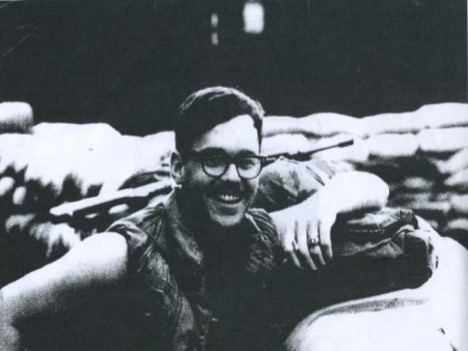


New Interview by Larry Abbott: Doug Rawlings

Doug Rawlings in Vietnam

Doug Rawlings had his life planned out:  graduate school, business school, eventual law school, and a career in business. But then, like thousands of other young men, he received the dreaded SSS Form No. 252, Order to Report for Induction. Future plans on hold.  Rawlings completed Basic Training at Fort Dix, New Jersey, and AIT at Fort Sill, Oklahoma.  After a two-week leave, next stop, Vietnam, where he was stationed in the Central Highlands (about 100 miles east of Pleiku), “B” Battery, 7th/15th Field Artillery, Firebase/LZ Two Bits, with an MOS of 93F20, Ballistics Support.
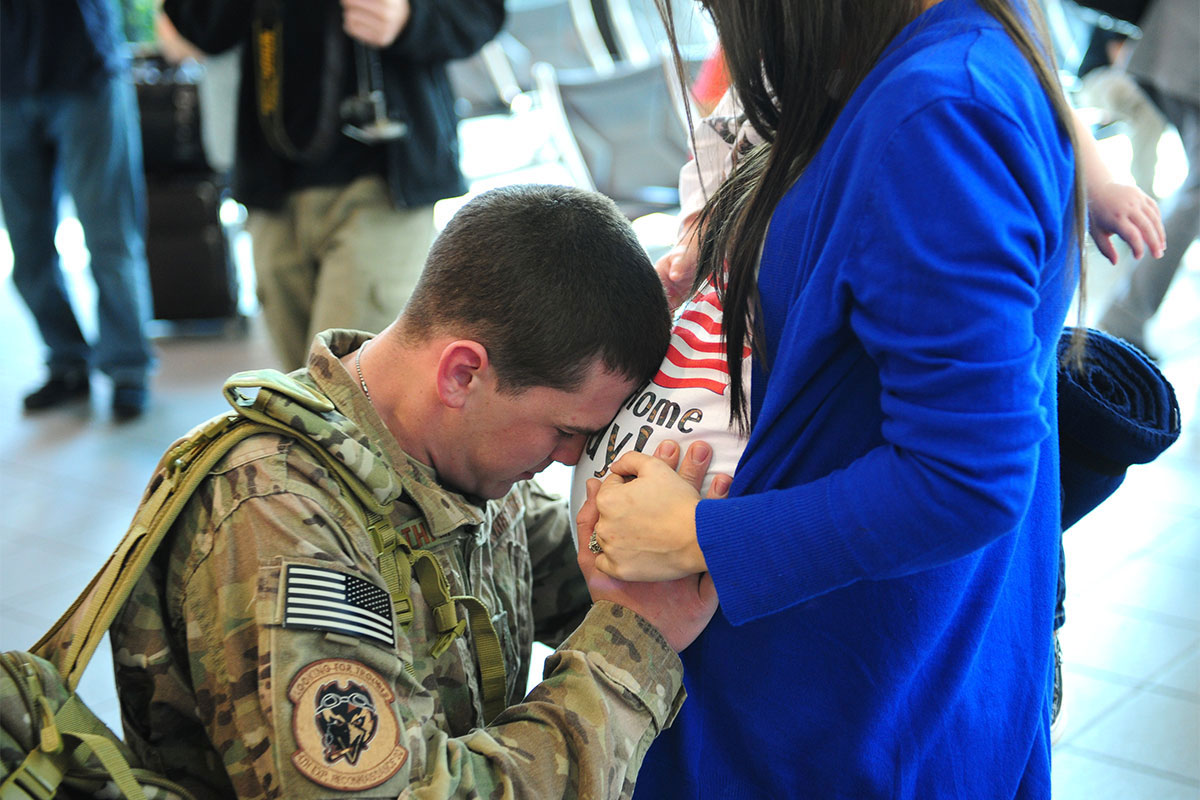
 After his return to the States, he moved to Boston, and discovered the poetry of Denise Levertov and Muriel Rukeyser.  He started writing his own poems, and sent a handful to Bill Erhardt and Jan Berry, who published them in the 1976 Demilitarized Zones: Veterans After Vietnam.  Rawlings’ first book, Orion Rising (2014), opens with two prologues:  the first discusses his reasons for being one of the five founding members of Veterans for Peace, which originated in Maine in 1985 (and now has chapters in all fifty states, England, and Vietnam). In his statement he is especially concerned about the effects of war on children, past, present, and future.  He writes “A group such as Veterans for Peace can offer us, veterans of war, a vehicle to bring our special message to the children of the world.” The second prologue, and the first section of poems, is entitled “A Survivor’s Manual: Out of the Ashes.” In this prologue Rawlings has a running “conversation” with Robert Bly that was touched off by the 1970 Forty Poems Touching On Recent American History, edited by Bly. Rawlings presents excerpts from Bly’s introduction and then he reflects on how Bly’s comments connect to his life and work, especially as they relate to the idea of “political poetry.” Rawlings synthesizes these two apparent opposites, politics and art, when he writes “So I found some kind of comfort, if not inspiration, from Bly’s insistence that poems can be written that would ‘penetrate deeply into the psyche of the nation’ without sacrificing a personal voice.”

Vietnam War Memorial

Many of the poems in the first section of Orion Rising concern the continuing impact of the past on the present, specifically the ways that memories of Vietnam haunt the life of the veteran. For example, in “A Soldier’s Lament,” Rawlings writes about the Vietnamese children who sat “beneath the barbed wire/ . . .  to sell us what they would: . . .  .” Now, decades later, “our souls/blister and burn/across the years/above the bonfires/of children’s curses.” In “Medic” Rawlings pleads with a medic to wash the blood of a wounded soldier off his hands, and then in the present to “come stop his screams/from tearing through/my dreams/my dreams . . .  .”

About section two, entitled “The Maine Poems: Family, Friends, and Place,” Rawlings notes “So it is a life of books and ‘hands-on’ labor that infuse many of the poems in this section. It is no mistake that love of the land, melded with love of family and friends, weaves throughout them.” Poems such as “Homage to the Winter Moon” find solace in Nature by providing a respite from the “strident headlines” of the world; similarly, in “Ice Out Poem: A Quartet,” the cyclical renewal of Nature offers hope for another year. At the same time, the poems about family often have a melancholic tone and hint at the tension between father and son, in “Father Grieving” and father and daughter, in “The Exchange.” In the heart-wrenching “To Jen Turning Sixteen” the writer is forced to come to terms with familial change and loss as his daughter, “The princess I made you out to be” grows into womanhood:  “Yet celebrating you on this day/A new rider on the rhythm of the moon/I must also mourn my own passing/before your eyes . . . .”

The final section of the book, “Fiddleheads: Poems for Children,” contains twelve of the original eighteen poems Rawlings wrote for his young children.  He writes that he and the children, ages five and seven, were “immersed in A.A. Milne, caught up in his poems musicality and utter joy of language play. . . . I carried this musicality into the woods and meadows and followed it where it may.” The poems activate the imagination with whimsical juxtapositions, like “Rainbow Girl,” who “just drank up/a hatful of rain/and gobbled down/a most enormous chunk/of sunbeam . . . .” Likewise, “Gravity Experiment”:  “But what if we took/a moose/and pumped/his antlers/full of air/and then cut him/loose—-  . . . ”

Rawlings' A Baker's Dozen

Rawlings next book, A G.I. in America:  The Government Issue Chronicles and Selected Poems   (2015), comprises two major sections:  “The Government Issue Chronicles” and “Selected Poems.” In the Foreword Rawlings recalls the start of the Full Disclosure project, a program of Veterans For Peace. He includes the text of a flyer he wrote announcing the event, held at the Judson Church in New York City. His basic question is, who gets to tell the truth of war?  “Is it the soldier coming home wounded in body, mind, and soul? Or the farmer whose land is sown with blood and unexploded ordnance? Or the families with loved ones buried in the ground? Or the families with loved ones maimed in body and mind?  Is it, perhaps, all of the above?” His poems attempt to answer all these basic questions by giving voice to those affected by war.  For example, “Working in the Garden” is dedicated to Suel Jones, who returned to live in Vietnam after the war. He finds “solace . . . in the warm soil.” However, the past rises up and any sense of peace is destroyed when the memories take hold: “Until they come at him again — unbidden —/those images of the village children/he was ordered to think of as weeds/as better to be wasted early on/than allowed to grow/into the enemy . . . ” Another poem, “Unexploded Ordnance: A Ballad” (dedicated to Chuck Searcy and his team that scour the country for unexploded materiel), juxtaposes the poet on Christmas Eve, pondering the shells he had sown in the war, with a scene in Vietnam of a grandfather leading his granddaughter into a field: “They trip into a searing heat/brighter than a thousand suns.” The book closes with the poem “The Wall” and an apostrophe to the dead whose names are on the Wall. In the poem he writes “Slipping past the panel where/my name would have been/could have been/perhaps should have been . . . ” The lines indicate both a sense of guilt for surviving and also the randomness of war. Why did he live while others died? In the apostrophe he seeks a connection to those brothers:  “I will touch your names and force myself to swing back through these many years and put myself in the place and time where and when we may have met.”

Vietnam Memorial

In the Shadow of the Annamese Mountains was published in 2020 (hardcover; paperback issued in 2023). The new and selected poems cover work from the years 1974 to 2019.  In their various ways the poems offer a gloss on the book’s epigraph, “Whatever you run from becomes your shadow,” as the poems attempt to confront and erase the shadows. There are poems of resistance and hope, and many of the themes Rawlings explores in his other books are evident here. For example, in “Walking The Wall: A Song” (2014), dedicated to his friend Don Evon, Rawlings notes at the start of the poem:  “My time in Vietnam started in early July, 1969—Wall panel number W21—and ended in early August, 1970—panel W7, line 29—a walk of about 25 paces past the names of around 9800 dead. I call this ‘walking the Wall.’” While the 1986 poem “The Wall” has a more melancholic tone, this poem ends defiantly, angrily, anti-war: “So take a walk with me down the Wall some late evening/Where we can all listen to the ghostly young soldiers keening/But don’t waste your time thanking them for their service/They just might tell you the truth – all your wars are worthless.” Another “Wall” poem likewise has a sense of anger. In “At The Wall for the Memorial Day Service 2015: A Lament” the speaker is at the Wall for a supposedly solemn service but observes nothing but hypocrisy and phony sanctimoniousness (“The beginning does not bode well./A pasty white rent-a-padre/ . . . wants us to know that the young/did not die in vain”). The dishonesty of the ceremony is in contrast to the reality of this “black granite wall/glistening with the entrails of those/poor bastards we left behind . . .  .” The poem ends on a hopeless note:  “How can I possibly abolish war in their good young names/how can I tell them they certainly did not die in vain/when I can’t even stop these clueless clowns/from desecrating this holiest of all grounds?”

The book includes a number of photographs by Rawlings’ fellow soldier, Don Evon, which mainly show village scenes, landscapes, and children, and in some cases offer a counterpoint to a poem, as in “Please Don’t Shoot the Orphans” (2013) and “On the Path of Moral Injury: More Questions Than Answers” (2019). About the photographs Evon writes in the introduction: “My hope is the photos here will trigger good memories for those who were there and will provide some small insight into the way of life of a non-political, non-military Vietnam.”

Relatedly, Rawlings co-edited three volumes of Letters to the Wall (2015-16, 2017-18, and 2019-20).  The letters are from veterans, family members, friends, and others affected by the war.  Some of the most moving letters are from sons and daughters addressed to a parent killed in the war.

Letters to the Wall

Cầu Tre/Bamboo Bridge, Conversations between a Vietnamese Refugee and an American Veteran. Told in Poetry and Prose was published in 2021. The book is a collaboration between Rawlings and Teresa Mei Chuc, and is bilingual, with work in both Vietnamese and English.

Cua Tre

The poems and prose alternate between Chuc and Rawlings. They do not necessarily form a “dialogue” between the two writers but rather create thematic echoes in the book’s five sections.

Most recently, Rawlings journeyed to Vietnam in August, 2023, for the 14th Engaging With Vietnam conference.

Conference

 In his remarks at one session of the conference Rawlings talked about the idea of heritage and noted “that we who were in the U.S. military as part of the American war in Vietnam are now part of Vietnam’s heritage and, through us, American veterans, Vietnam has become part of America’s heritage.” He also read two of his poems in English, “Unexploded Ordnance: A Ballad” and “The Girl in the Picture,” which were then read in Vietnamese by Ms. Tran Xuan Thao, the director of the War Remnants Museum.

Rawlings’ poetry is about the many forms of heritage. There is the heritage of the war and its effects not only on the veteran but also more broadly on society. There is the heritage of family through the generations. Finally, the poems are about the heritage embodied in literature and the arts. In “Song of Myself” Walt Whitman asks “Who wishes to walk with me?” Through the many facets of his poetry we can walk with Doug Rawlings.

In September 2024 Ron Shetterly’s portrait of Rawlings was unveiled at the Common Ground Fair in Unity, Maine, as the 275th in the series Americans Who Tell the Truth (see https://americanswhotellthetruth.org/).

Larry Abbott:

Let’s start by asking how you came to write poetry, starting around 1974, four years after your discharge in 1970.

Doug Rawlings:        

My earlier education was not leaning towards poetry at all. I had received a degree in economics and was working on an MBA at Ohio State University, to go to work at Eastman Kodak, where my dad worked, and become a corporate lawyer. Then I got drafted.

After my war experience, I came home, and my wife and I moved to Boston in the early ’70s for whatever reason. I don’t know. I got a job at a hospital, counting out pills and stuff. But Boston, at that time, had a number of all-night bookstores, and I wandered into one, on Harvard Square actually, and found this collection of poems by Denise Levertov from New Directions Books about her recent experiences in Vietnam, in North Vietnam, with Muriel Rukeyser, another poet. And I was just blown away. These poems were just amazing. They were, to me, the first realistic, honest account of that war that I read. There wasn’t that much out there. A lot of it was the gung-ho crap or really stoner stuff. I have nothing against that. I was a stoner when I was in Vietnam. Trust me – I was. But I just didn’t want to go in that direction. Her poems had a clinical tinge, but they read beautifully. Again, when I talk about political art, political poetry, I always talk about that notion that you have to be really careful about diluting the politics for the art, or destroying the art in favor of the diatribe from the politics.

It takes real skill to walk that line and come out at the other end with a powerful poem, and Denise Levertov did. I was reading her work and I started writing my own. I didn’t have anybody to share it with; I was just writing it for myself. This was before computers and the internet and all that. I started piecing together some poems, and I discovered in about 1975 or 1976, I think it was, these guys down in New Jersey, Bill Erhardt and Jan Berry, putting together a collection of Vietnam veterans’ poems, called DMZ.  I put eight poems in the mail and sent them off to these guys, thinking, what the hell? And they wrote back and said, “We love your poems. We’re going to put all eight of them in this collection.”

Wow. That, for me, was the first time – I like to call it an affirmation. Oh, my God. Maybe my poetry really has some kind of ability to reach others, to work with others. I started writing more poems, back and forth, back and forth, sharing with one or two here, whatever. There was a publication in Maine called The Maine Times. They published a few of my poems, which felt really good. So I continued writing.

Then we moved from Bath, Maine to this old farmhouse, an 1823 farmhouse in Chesterville, Maine. It just so happened that one of the people renting the house across from us was a guy named Jeff Kelly, who was into self-publishing and who had published a lot of books. He connected me with Lulu down in North Carolina, a company that does self-publishing. He, himself, has published 500 books, so he knew what he was doing.

He took me under his wing and started helping me put together these books of poems.

Larry Abbott:

This led to Orion Rising, which has three sections. The first section is more about your war experience, and one of the themes, I thought, was that the past continues to haunt the present, like the poems “Medic” and “Flashback.”

Doug Rawlings:        

Right. You’re making me think about this work I’ve done at Togus Veterans’ Hospital [Chelsea, Maine]. I went up there and volunteered for three years in the psychiatric ward, and we would talk about poems from the Civil War right up through the Afghan wars, looking at Walt Whitman, looking at the World War I poets, various writers like that. I would encourage the patients to take material from their psychiatric journals, which they had to keep, the therapeutic journals which they had to keep, and see if they could pull something from that and transform it into this thing called “a poem,” which is, in a sense, this abstract artifact sitting on the table that we’re talking about.

It’s not you, it’s not your war experience, it’s not your therapy, but it’s this thing called a poem. Can we craft it? Can we do something with this to make it for a particular audience, other veterans, yes, or people who are not veterans? We did that kind of work and it leads to this: my theory is that we can use our war experiences, which we’re never going to forget – they’re going to be with us forever, so forget trying to get rid of them – but we can use them in a positive way, as opposed to them using us. That’s what I was talking to these guys about. We had this one vet, he unfortunately died, who was a sniper in Iraq. He wrote these rhyming couplets about being a sniper, and he called them his Dr. Seuss couplets.

We would sit there and laugh. One time we had a sociology student sitting in there with us, and afterwards she said to me, “I can’t believe you guys were laughing at this stuff.” And we said, “Well, yeah, it’s just another way of dealing with it, quite frankly.” And they were quite explicit, but, again, they were humorous. It’s using that notion of gaining control over your experiences. The nurses said this really helped him sleep at night. He would work on poems and then he’d sleep at night.

Larry Abbott:

That relates to one of the quotes in your book: “Whatever you run from becomes your shadow.” If you confront those things, then you lose the shadow.

Doug Rawlings:        

Exactly right. If I can tie this into Veterans For Peace, when we formed V FP, that’s one of the specific reasons we did it. We are a 501(c)(3) so we’re an educational organization, not a therapeutic one. There were plenty of those and we knew that, but we thought, can we – most of us were Vietnam veterans, but others joined us later – use our war experiences in a positive way?    It was this notion that got us thinking about going to high school job fairs and setting up tables next to military recruiters.  We’d assure people that we are not anti-military, but we also want young people to have a deeper understanding of what military service entails.

We had some very interesting conversations with these guys – which, by the way, gets to the point of Full Disclosure, because people are accusing us of being anti-military, anti-recruiting. We said, “No. We’re all about full disclosure. Young people, if you’re going to join the military, take a look at the reality. Find out about how women are treated in the military, for example, or look at this. Look at that. Read this stuff.” So if you still make that decision to join the military, at least you’re going into it a little bit more informed than you otherwise would be.

Larry Abbott:

Another poem in the book, “The Girl in the Picture,” is about the idea of forgiveness and being forgiven.

Doug Rawlings:        

“The Girl in the Picture” is that famous photo of Phan Thi Kim Phuc, fleeing a village being napalmed. [“The Terror of War” by Nick Ut]. Most of us who are from the Vietnam Era know the photo exactly – I can look at people my age and say, “You know ‘The Girl in the Picture’?” And they know exactly what I’m talking about, that picture. It was iconic. It won the Pulitzer Prize [1973], and it was on, I think, the cover of Time Magazine. But it was a transformative picture for many people. They said, “This is the reality of war. This is what’s happening.”

I was writing this poem about suicide [the 1997 “Formula for a Single Car Suicide (A Tried and True Veteran’s Way Out)”]  – quite frankly, driving down Ridge Road, which is an S-curve, going 70 mph and turning the wheel to the left and to the right and heading into the woods and killing myself. After the war we called those single-car suicides. The VA did not recognize them as suicides, but we did.

A guy all by himself hit a tree, no alcohol involved, no skid marks? This was what he wanted to do. So that was where I was, working on that poem, and I happened to read in a magazine that Kim Phuc, the girl in the picture, was nine years old when that picture was taken, which, at that time, was the exact age of my granddaughter. It just flipped the poem for me, and I started thinking about it in those terms. And at the same time, coincidentally – or, according to Carl Jung, synchronistically, – I was also looking at this collection of poems, a collection from Buddhist texts, and saw that phrase, the shadow phrase, and it flipped the poem for me entirely. I imagined driving down that road and having Kim Phuc appear on the road. What would happen then? Well, I’d have to stop, as I say in the poem, pick her up, and take her home, because that’s what you do when you see a little girl walking down the road: you take her home.

That would happen to be a little village in Vietnam, as I say in the poem, where we could stand at high noon, and there are no shadows. The idea is that, perhaps, forgiveness exists somewhere – and as I say over and over again, I do not have the right to ask the Vietnamese people to forgive me for what we did in that war. But if they offer us forgiveness, we accept it graciously – and gratefully, actually.

I returned to Vietnam in August of 2023 with my son for a conference. I was meeting with a woman, Dr. Tran, who runs the War Remnants Museum in Saigon, or Ho Chi Minh City, depending on what you want to call it. She took me aside and gave me this phrase. She said: “We never forget, but we forgive.” And I thought, that’s exactly where I’m coming from.

Larry Abbott:

The second half of Orion Rising is titled “The Maine Poems: Family, Friends and Place.” This seems to be a counterpoint to the first half, although you do have poems about aging and death, but it seems to have a different tenor from the first section.

Doug Rawlings:        

It does. It makes me recall a poem I wrote for Suel Jones, a vet who chose to live in Vietnam after the war. I was talking to him one day and asked him, “Suel, what do these guys do, these NVA guys?” Because he goes out and gets drunk with his former enemies. “What do they do when they retire?” And he looked at me and he said, “Doug, they don’t use that phrase. They say they’re returning to their gardens.” I said, “Ah, okay.” I didn’t do this consciously; I did it unconsciously when I moved into the farmhouse in a  wilderness area. My wife and I, both raised in the suburbs, we didn’t know anything about living in the willywacks, if you will, heating with wood, plowing snow, and the like, but we made that choice.

We grew organic gardens and we heated with wood for 20 years, 10 cords of wood a year for three woodstoves, and figuring out that whole thing. Now I can reflect upon that and think, okay, that shifted my attention away from the war to the land – raising a family, having my two kids, a son and a daughter, learning how to do all these “outdoorsy” things. They’re both wonderful, amazing human beings now. They’re very connected to the natural world. But it was that reconnection with the natural world – or for me, a new connection with the natural world, I think, which is part of the healing process.

Larry Abbott:

You also have a section entitled “Fiddleheads,” children’s poems, which seem to be another counterpoint.

Doug Rawlings:        

At night, we’d put our kids to bed, they’d be three, four, five, six years old,  and we were reading A.A. Milne’s poems from Now We Are Six over and over and over again, silly kinds of poems, beautiful poems, with wonderful rhymes. My kids loved them.

So I started writing poetry in that fashion, just for them. Actually I put together a collection called A Baker’s Dozen, which is 13 of these poems, which were all written for my daughter and my son. They’re illustrated by my granddaughters. They’re reading a poem written to their mom, like “Rainbow Girl,” and my youngest granddaughter, Iona, does this drawing. So that’s what this collection is all about, sort of connecting the generations. I didn’t want to be known entirely as just a war poet. I wanted to expand if I could.

I was asked this by a student the other day at the university, about being a poet. I say this: I’m not really a poet. I think of people who are, like Denise Levertov, who dedicate their lives to writing poetry. I write poetry, I read poetry, but it’s not my main way of living; it’s sort of another part of who I am.

So I don’t kid myself about thinking my stuff is going to be immortal [laughter] or get on The New York Times’ Best Seller list. But I write it for myself and particular audiences.

Larry Abbott:

One aspect of your writing is that you’re trying to bring the voices of veterans to the page, either in poems or prose.

Doug Rawlings:        

Letters to the Wall, for example, tries to do that to some degree.  As part of Veterans for Peace, we discovered that Obama came up with $63 million to write a history of the Vietnam War. Unfortunately, he had the Pentagon do it. We looked at their website and saw the materials they were using and our reaction was, “Oh, my God, are you kidding me?” So that’s where we really started the veterans full-disclosure idea. What can we do to tell the truth?

Letters to the Memorial Wall

I came up with the idea for Letters as part of full-disclosure. Why don’t we ask people who were adults, if you will, during the Vietnam War, who were directly impacted by the war – not just veterans, but conscientious objectors, friends and relatives of those listed on the Wall, Vietnamese people – write a letter to the Wall, the Vietnam Veterans Memorial in Washington, D.C., and we will deliver those letters every Memorial Day. We did that for six years.

Larry Abbott:

How many volumes were there?

Doug Rawlings:        

Three volumes, about 500 pieces included in the three volumes. There’s a wonderful poem in there written by a student at the university where I taught. I did a little workshop and she came up to me and asked, “Can I write a letter?” And I said, “Sure.” Well, her grandfather was killed in Vietnam, and she wrote this beautiful poem to him, saying, “I wonder what your aftershave would smell like. What would your voice sound like if you held me in your lap?”  Incredibly powerful.

Le Ly Hayslip, a Vietnamese woman . . .  Oliver Stone did a movie about her coming to the United States [Heaven and Earth, 1993]. She’s written two letters to the wall. In one of the letters – it’s a beautiful letter – she said, “I forgive you.” She’s writing to the people who killed in Vietnam, American soldiers who killed in Vietnam. She said, “I forgive you.”

Larry Abbott:

You include your poem “The Wall,” with an introduction. In the poem you write: “Slipping past the panel where/my name would have been/could have been/perhaps should have been/. . . Staring through my own reflection/beyond the names of those/who died so young . . . ” How did that poem come about?

Doug Rawlings:        

We formed Veterans for Peace in 1985, here in Maine, five of us. In 1986, we found out some vets who joined Veterans for Peace were doing a water-only, 40-day fast on the Capitol steps. They were opposing the war in Central America at that time. We chartered a bus to go to D.C. to support them, which, by the way, was seen off by the governor at that time of Maine, who was a veteran and recognized the work that we were doing.

As a side trip we went to the Wall. This is where my friend, Jerry Genesio [a founder of Veterans For Peace], found his brother’s name. He was killed three weeks after I arrived in Vietnam.

I do this thing called “walking the Wall.” When I go to the Wall – and I’ve been there a number of times – I start at the date when I entered Vietnam, July 2, 1969, and I walk it to when I left the country, August 11, 1970. I believe, rough count, there’s about 9,800 names on the Wall from the time that I was there.

Earlier, I had written a poem that was opposed to this memorial. It’s a very angry poem. I had heard, before I saw the Wall itself, I heard that they were going to build this monument in Washington. I thought: Oh, shit. It’s going to be like one of those with a guy on a white horse with a sword and all that crap. And I said, “We spit on/your war memorials” as part of the poem [the 1984 “On War Memorials For My Beloved Friends in VVAW”].

And then I go to the Wall and it’s just beautiful. It’s just striking. I wrote that poem, what it felt like to be walking down that Wall, thinking of the names. I did it at 2:00 in the morning. There’s nobody around. Just thinking of those names, those people in that wall.

Larry Abbott:

Your second book is A G.I. in America. The cover image by Rob Shetterly is entitled The Dog of War [2015]. About the image Shetterly notes: “The greatest threat to the humanity of the soldier may not be the enemy’s weapon, but his own participation in the war. That’s the dog I see.” Does A G.I. in America continue some of the same themes as the previous book?

Doug Rawlings:        

It does. It’s one of those books that has older poems and newer poems in it.  I wrote it because I was chosen to be the first Poet Laureate of Veterans for Peace, which was quite an honor. They give me that at the convention. Over the first year and a half or so, I felt that I had to put together a collection as the Poet Laureate; that’s what this is. It’s got some new stuff in it and it’s got some older stuff in it.

Larry Abbott:          

There is a sense of bitterness, I thought. The poem “Government Issue at the VA Hospital” has a very bitter undertone.  You write about a vet waiting in front of a freight elevator: “what was left of his family/waited downstairs/in the lobby/for what was left/of him.”

Doug Rawlings:        

Actually, a lot of my poems come from actual experiences, like when I’d do my workshops at Togus, which, by the way, is the oldest VA hospital in country; it opened right after the Civil War.

I’d see guys in wheelchairs my age or even younger, and they’re going to be there for a long time, and I’m just walking around, looking at stuff. I saw one vet sitting in front of a freight elevator as I went by. That’s where the poem comes from, that notion like, “Oh, wrong elevator.” No, not really.

Larry Abbott:

Because I’m just freight, stripped of humanity.

Doug Rawlings:        

I’m just freight now, being sent down to see my family, what’s left of me.

Larry Abbott:          

There’s that sense of loss.

Doug Rawlings:        

Absolutely. Real loss. I have a tremendous respect for the staff and the doctors at Togus. I know other guys who go to other VA hospitals that are not so good, but this is an excellent hospital. They’re really caring individuals, but you can’t get away from the fact that some of these guys – I look in the eyes of some of these guys, my age or younger, and their lives are just totally taken over by their condition.

Larry Abbott:

There’s also the idea that the war, any war, is never really over, either back home, or in Vietnam, or any war zone. “Unexploded Ordnance” explores this idea.

Doug Rawlings:        

That’s a poem I wrote for my good friend, Chuck Searcy, who’s lived in Vietnam for 35 years now. He started Project RENEW, which is designed to make the former war zones safer. He trains Vietnamese to go into villages to look for unexploded ordnance, to look for bombs that have not gone off that are killing people now, maiming and killing people. When I went to Vietnam last August, I went to their place. It’s stunning, the prosthetic lab, for example, and all the other things they do. The damage done to the Vietnamese people … even 50 years after the war is over, kids are still getting maimed and killed by these unexploded ordinances.  I wrote that poem from the experience of being in the artillery, having done what we had to do, sending those bombs out there, some of which exploded and some of which did not. They’re still maiming people.

Larry Abbott:

And then, in 2000, you published In the Shadow of the Annamese Mountains, which included both new and selected poems. The image of The Dog of War was on the frontispiece.

Doug Rawlings:        

Oh, yeah. That’s an amazing image. I wish that image was on the cover of Orion Rising [that cover has a portrait of Rawlings by Shetterly]. I didn’t find him until later, but Shetterly is just an amazing artist. I could talk forever about him. But In the Shadow of the Annamese Mountains, what I like about this, it incorporates a number of photographs by Don Evon that were taken when we were in Vietnam. What I like to tell people – we actually did this – I was in country about eight or nine months. I’m in this little fire base in the Central Highlands, supporting the 173rd. Everything’s off-limits. I was never any place on-limits.

We were surrounded by concertina wire and sandbags but we decided that we were going to go into the village of Bong Son. Our little fire base was set up there. Across this plateau, there was a Korean encampment, and then there was the jungle, and then there was the village down in the jungle. We took our helmets off, our flak jackets off, stacked our weapons, had somebody watch our weapons, and we walked into that village unarmed. A lot of the pictures were taken when we met these kids in the village, just walking along without weapons.

A recurring memory about my experience in Vietnam is the damage we did to children. I didn’t have children at the time when I was there, but obviously I had children afterwards. And I realized, walking along with my daughter when she was two years old down a dirt road, the wonder in her eyes . . . we stole that from those kids.

There’s one picture in there of our dope dealer. She was about 10 years old and she sold us marijuana, heroin, opium, and all kinds of stuff. We laughed about it at the time, but that’s what we did to this kid’s childhood.

Larry Abbott:

The idea of the war’s effects on children comes out in the poem “Grandfathers,” where you’re connecting your family in the present to the children’s deaths in war where the grandfather has to measure the three-foot long coffin.

Doug Rawlings:        

I’ve watched a video of a guy with nails in his mouth being interviewed by an American journalist. If you look in the background you’ll see these coffins, just this little, tiny, three-foot-long coffins. I start that poem about how my kids would measure the height of my granddaughters by chalking their measurements on a post. I thought, I know something about feet and inches, so when I saw those coffins, I said, “This guy’s making a whole bunch of coffins for grandchildren.” That just blew me away.

Larry Abbott:

Your most recent book is Bamboo Bridge. It’s in five sections, and seems to be a dialogue with another writer. The sections are: Family, Children of War, When the War Begins, When the War Ends, and Moral Injury.

Doug Rawlings:        

Right. This was, again, another amazing experience. I am the poetry editor of a publication called Peace & Planet News, which we’ve been putting out for a few years. One of my friends, who is now the president of Veterans for Peace, Susan Schnall, lives out in Los Angeles. She suggested that I check out poems by Teresa Mei Chuc for publication in Peace & Planet News.

So I did. I liked them. I wrote to Teresa and said, “I love your poems.” We corresponded back and forth. One of the things I like about poetry is swapping poems. She teaches high school in Los Angeles now, but she came over as a refugee. Her mom was a refugee fleeing Vietnam. Her father fought for the South Vietnamese Army, so he was put into a so-called “reeducation camp” for nine years. She didn’t see her father at all. He finally came to the United States, she writes about this in her book, and he tries to kill her. He’s just crazy. He’s just way out there. She’s just a little girl trying to figure out the world from the perspective of being a refugee. Her mom learned how to speak English and they did the usual refugee things, which is captured by her poetry.

What we decided to do was, say, “Let’s put together a collection where I’m the father of a young girl and you’re the daughter of a father. You include some of your poems to your dad, and I’ll include some of my poems to my daughter, and we’ll go back and forth, back and forth, back and forth that way.”

Larry Abbott:

Were the poems meant to be a dialogue?

Doug Rawlings:

Ideally, yes. But, in actuality, probably not. They were written separately. She wasn’t writing a poem in response to my poetry or vice versa. They were just poems that she had written and poems I had written. When we looked at them, we tried to put them somewhat together so they are not totally distinct from each other. We hoped that they would be related. That format has worked for some people. It captures the idea.

Larry Abbott:

You were in Vietnam in August of ’23 to participate in the Engaging With Vietnam conference What was that trip like? What was the goal of the conference?

Doug Rawlings:

Oh, my God. It was amazing. We were invited over there because of Ron Carver’s book called Waging Peace in Vietnam, which he has translated into Vietnamese. He’d been working with Dr. Tran and the War Remnants Museum for years. He’s been back and forth eight or nine times. Finally, they got this book published. This was the 14th annual conference, looking at the heritage of Vietnam, put on by Vietnamese scholars, for Vietnamese people. She asked if some of us would do a panel discussion at that conference. Ron asked me to join him and do it, and we did. The conference was an amazing experience. I went with my son.

We landed in Hanoi, and ended up in this wonderful little hotel. We wandered around Hanoi for a little bit, and then we fly down to Huế, which is where this conference took place. There were about 500 people there, almost all of them were Vietnamese. There were a couple of people from Scandinavia and a couple Americans here and there, but most of them were Vietnamese. Fortunately, they were kind enough to translate for us. There were workshops on “How can we women in Vietnam overcome the Confucian code of how women are supposed to be treated in Vietnam?” Those kinds of workshops. There was also a workshop on the GI resistance to the war.

I was stunned. I shouldn’t have been. Nobody had heard about this. None of the Vietnamese people. They knew about the American flower children resisting the war, but they didn’t realize that there were veterans who were actually resistant to the war in country and when they got back. So that’s what our part of the conference was. Chuck Searcy, who did the Project RENEW and the Friendship Village was part of the conference, and Dr. Tran herself, and myself, and Ron Carver.

I had the honor, when I was reading my poems, of Dr. Tran translating my poems into Vietnamese after I had completed them, which was really quite special.

Larry Abbott:          

What’s next on the agenda?

Doug Rawlings:        

We’ll just keep on going, I guess. I’m doing presentations now. I do a slideshow of my trip to Vietnam. I’m doing some poetry readings in different places and focusing on political poetry and political art. I think my teaching days are done. I’m 77. If somebody asked me to come back in and teach, I would gladly do it, but with some amount of hesitation because I’m beginning to think: How would I be in front of the classroom now with my memory? Who knows?

I’m still living in the old farmhouse, and I’m going to be there until they carry me away. Yesterday, I was working, planting the garden and cutting the grass and getting the wood ready for next year.

Websites:

 https://kellscraft.com/DougRawlings/DougRawlingsPoetryPage.html

https://www.vietnamfulldisclosure.org/

https://www.veteransforpeace.org/

slideshow:

https://docs.google.com/presentation/d/1rqDODNQ13Hn3jodGLuFR6wJ8BVGdEyoQjZuoyLkdNDg/edit#slide=id.g27eb81cd953_2_18


New Nonfiction from Per-Olof Odman: “Mystery Mountain”

Hoang Lien Mountains

In the remote and forgotten northwestern corner of Vietnam looms the vast, rugged and rain-drenched Hoang Lien Mountains. Here, Vietnam’s tallest summit, the 10,326-foot-high Fan Si Pan, towers above the rest. On the cold morning of March 30, 1994, from the mountainous village of Sa Pa at about 5,000 feet above sea level, I could discern in the distance row after row of the ever-steeper mountains, but dense clouds obscured the higher peaks—among them the mysterious Fan Si Pan.

Shouldering our backpacks and leaving Sa Pa, Ngyuen Thien Hung, my mountain guide, and I set off for our ascent of this surprisingly little-known mountain. Passing the stark ruins of a French villa, we descended into a deep valley and passed terraced rice paddies plowed by Hmong tribesmen. The breaths of the water buffaloes rose in small clouds. A passel of black pigs scattered as we approached.

East of Fan Si Pan at the bottom of the valley, altitude 4,100 feet, we balanced our way along a swaying bamboo bridge above a bouldery rushing river. My guide led me up the other steep side. His backpack and trousers looked familiar; I was later to learn why. After two hours of steady climbing, following a narrow, slippery trail through the low rainforest, and crossing several rapid streams, it was quite evident that Hung was stronger and in better shape than I was. My improvised bamboo walking staff had made the climbing less difficult, though I was glad when we took our first rest stop.

Until now we had not said anything—we could not speak each other’s language. We sat in a cool bamboo glade. I was 50 years old, and Hung was 47. He was courteous, but also private, reserved. Hung was muscular, of medium height; at six feet, I was considerably taller than him. I saw in Hung, as I did in most Vietnamese, a strength I found intriguing.

Hung lit a cigarette, and he started to “talk” using the pencil and paper I had handed him, doing gestures and bodily movements, and uttering sounds. I learned what I had hoped for all along: I was climbing Fan Si Pan with my former enemy, a North Vietnamese Army combat veteran; an NVA. Hung drew a map of Vietnam, wrote place names, dates, and units, and started to “tell” me that he had spent eight years fighting the Americans and the South Vietnamese, often while sick, cold, and hungry. Starting in 1967, he had humped supplies along the Ho Chi Minh trail. From 1971 to 1973, Hung, then an infantry soldier, had fought the Americans in the Central Highlands, and then the South Vietnamese Army. As a junior lieutenant, and a tank commander, with the 12th Regiment, 312th Division, he took part in the final rout of the South Vietnamese Army, and on April 30, 1975, victoriously drove his tank into Saigon. Hung was never seriously wounded. The war was over, but Hung was ordered to continue to serve in the mountainous northwestern part of Vietnam where he was from. When he was discharged in 1984, Hung moved back home to Sa Pa, a small, picturesque trading town near the Chinese border. To me it seemed quite evident that Hung was proud of the fact that he had fought for his country.

Using the pencil and the paper, and my more expressive way of “talking” I tried to inform Hung that I had been born in Sweden in 1943 and had grown up there, that I had dropped out of high school and worked in mines, and that in 1965 I had been drafted into the Swedish Army to serve the usual ten months. I told Hung that I had really enjoyed my life in the military. For the first time in my life, I had been the best at something: assault rifle marksmanship. Shortly before my discharge from the Swedish Army in April 1966 I had decided, solely for adventure, to fight for the United States in the Vietnam war. That I did not foresee much of a future living in Sweden added to my decision.

By drawing a simple world map, writing months and years, and using gestures I told Hung that I had put my war plans on hold when I was offered an exciting job in West Africa to do work with a few Swedish geologists and prospectors in the triple canopy rainforests of the mountainous part of Liberia. In March 1967, after close to one year of colonial style exploits in Africa, I committed myself to fight in Vietnam. I visited the U.S. Embassy in Monrovia, the capitol of Liberia, applied for, and easily obtained an immigrant visa.

My Swedish coworkers in Liberia had tried to talk me out of going to Vietnam; they thought I was crazy. To this day I still carry some of that craziness within me. It made me stubbornly continue to communicate with Hung.

I tried hard to let Hung know more about my life. My impression was that he pretty much understood that in late May 1967 I had flown one-way from Monrovia to JFK. On the same day that I arrived in New York, I went to the Times Square recruiting station and talked to the Marine recruiter about a two-year enlistment. Three weeks later I swore to serve two years in the U.S. Marine Corps. At 3 A.M. the following day I was “welcomed” to Parris Island.

Following six months of boot camp, and infantry and jungle warfare training, I finally arrived in Vietnam on Christmas Eve in 1967. I was assigned to serve as a rifleman with 2nd Platoon, Delta Company, 1st Battalion, 26th Marines in the remote Khe Sanh Combat Base. My regiment and additional Marine and Army units endured the North Vietnamese Army’s death-dealing siege of Khe Sanh which lasted from January 21, 1968, to well into April that year. Hung let me know that he had carried supplies in support of the siege. He acknowledged that the NVAs had lost more than ten thousand killed. I told Hung that the Marines and the US Army had lost close to one thousand killed.

After the siege, my battered battalion fought the NVAs in depopulated areas in the northern part of South Vietnam. At 10 in the morning on June 7, 1968, my platoon walked right into an NVA ambush. Two of us were killed instantly, one third of us were wounded. I wondered what Hung, my “enemy,” thought about the siege and the ambush. Horror? Revenge? I kept in mind that Hung and his army had won the war.

By gestures, body language and uttering sounds, I “explained” to Hung that when the NVAs opened fire I had thrown myself on the ground and rapidly fired my M16 on their muzzle flashes. After firing several rounds, my body was struck extremely hard three times in quick succession. I collapsed, feeling that I was dying. I tried to yell, but soon lapsed into unconsciousness.

I pointed to where on my body I’d been hit, and I think Hung understood that the whole right side of my body had been paralyzed due to seven to ten 1⁄8- to 1⁄2-inch pieces of shrapnel which, with the force of a sledge hammer, had torn open a large hole in the left temporal part of my scull, and penetrated two to three inches deep into my brain. One AK-47 bullet, which had lost velocity when it ricocheted against something hard entered the left front of my neck and punctured my left jugular vein. The profuse bleeding was life-threatening. Other ricocheted bullets had penetrated my upper left chest and pierced my left lung. Nine pieces of shrapnel tore into the back of my neck lodging nearly an inch deep in the traumatized flesh.

Covered in blood, ashen-faced and lifeless, I was dragged next to our two dead Marines. My life was saved by someone who saw that I still might be alive, the crew of the medevac chopper on the fifteen-minute ride to the Naval Field Hospital in Danang, and by the surgeons who operated on me.

I was medevacked back to the United States, and after a good deal of physical rehabilitation during the summer and the fall I managed to regain much of my physical strength, and I continued to stay physically active in spite of the somewhat weakened right side of my body. The Marine Corps retired me due to disability, and the VA rated me 100% disabled. To challenge myself, in late 1970 I began parachuting. In the 1970s and the early ’90s I did extensive backpacking trips, sometimes solo, in arctic wilderness regions, as well as in mountain ranges at lower latitudes.


Letter updating family on Per-Olof Odman's injury

During three weeks in early 1992 I travelled on my own from the south to the north thru the peaceful, picturesque country of Vietnam. Khe Sanh, which I had survived 24 years earlier, was not picturesque; the abandoned American combat base was overgrown and unrecognizable, and, as I had promised my wife, I never stepped on the scattered unexploded ordinance.

Hung nodded his head; the way he looked me in the eye made it clear that he had gotten the gist of my life. I surmised that to Hung, as well as to myself, it was clear that we were not just a poor local guide and his rich Western client–we were two former enemies who shared a violent past, and now fought together to conquer a mountain.

The idea of climbing Fan Si Pan, and the journey to it had attracted me for several years. Its ascent appealed to my love of wilderness and sense of adventure, and it would help me to deal with my physical disability. In the early 90s I had started to get spasms at night in my right leg. To climb Fan Si Pan would also help me to come to grips with my Vietnam war experiences. I became convinced that the ultimate reconciliation between me and Vietnam would be to climb its highest mountain, ideally with a former enemy. In Hanoi in 1992 I had met an English- speaking NVA combat veteran who, sponsored by a group of Vietnam veterans, had visited the United States. He thought that I should try to do the climb.

Four days before Hung and I had set off from Sa Pa, I was resting up in a hotel in Hanoi having just finished a two-week-long, very demanding job in the northern parts of former South Vietnam with a Swedish television crew making a documentary about my war experiences.

I could now begin planning the ascent of Fan Si Pan. Due to weight limitations when traveling from the United States, and while doing the documentary film, I had brought with me only certain necessities; a 1:50,000 US Army non-colored topographic map, a compass, a medium-sized backpack, a Gore-Tex jacket, tough canvas boots, long johns, and a 32-oz. Nalgene bottle. Even though I knew that the nights would be cold I did not bring my summer sleeping bag, figuring I could buy a thick blanket in Vietnam. The blanket I bought was a bit heavy and somewhat bulky, but it sufficed.


Per-Olof Odman and Ngyuen Thien Hung

One plan was to climb Fan Si Pan solo, under the presumption that I could find a path that would lead to the summit. Did that path exist? If so, how could I find it? What about food, water, and shelter? The ascent from the lowest point located to the east of the peak, based on my reading of the map in1994, would be the most logical approach, but more than 6,000 vertical feet and eight steep miles was not a realistic solo climb. Instead, I visited in Hanoi Vietnam Veterans Tourism Services, which was owned by former NVA officers. They put together quite an expensive trip from Hanoi with an unrealistic itinerary. I continued to figure out a workable ascent.

On the morning of March 28, the day I had decided to depart for Sa Pa, I met with the world- renowned ornithologist and environmentalist Dr. Vo Quy in his office at the University of Hanoi. Two years earlier he had climbed Fan Si Pan with a small team of scientists. Dr. Quy encouraged me to try to climb the mountain but warned me that the weather at the peak could be terrible. He told me that the government forestry service in Sa Pa could almost certainly find me a guide. Finally, I had a rational plan for my ascent of Fan Si Pan.

Before my departure from the Hanoi railroad station, I sat at a table in an outdoor restaurant beneath the green leaves of tamarind trees together with a Marine Vietnam veteran who lived in Hanoi. I dined on a large bowl of pho and drank excellent local tap beer before boarding the overnight antiquated steam train that would take me 140 miles to the stop where my adventure would begin.

At dawn, the train stopped about three miles before the city of Lao Cai on the Chinese border. There were no platforms. I paid a young man to give me a short, slippery ride on his motorcycle, and then, after a ferry ride across the Red River, and after much haggling, I secured a ride in a jeep for the remaining 30 miles to Sa Pa. The battered road climbed through a verdant river valley and into the mountain range which the French called the Tonkinese Alps, and the Vietnamese call the Huong Lien Mountains.

From the moment I arrived in Sa Pa, the surrounding mountains were hidden by dark clouds. By late afternoon, Sa Pa itself was enveloped in a very dense fog. With great difficulty I found the office of the government forestry service. A woman official who spoke some English encouraged me to climb Fan Si Pan, and matter-of-factly sent for a guide. I was soon introduced to Hung.

We decided to leave early the next day, and to try to make the ascent and descent in four days. What a relief; I felt gratified—finally I was going to do the climb I so much had longed for. The woman sold me eight packets of dry noodles with shrimp, four small bags of Chinese cookies, and two one-liter plastic bottles of water. Hung would bring our camping gear and more food.

We agreed that I would pay both Hung and the forestry service $15 a day—a lot of money at that time.

*****

By pure luck Hung had become my mountain guide. What we had told each other during our rest stop made me feel even more gratified to do the climb. We agreed to spend our first night at a 7,496-foot crest which was marked on my map. As Hung led our climb up a steep, at first somewhat open valley, I recognized his NVA-issued backpack and trousers which, I presumed, he had worn during the war. In 1968 I had seen my share of fallen NVAs. And now I was climbing Fan Si Pan with a very alive NVA combat veteran wearing the same uniform, carrying the same backpack as those killed soldiers. How bizarre–but before long I got used to Hung’s outfit.

The trail which Hung and I followed went after a while straight up to a densely forested ridge. The tree canopy on the mist-shrouded ridges went on uninterrupted, but the lower, more accessible areas of the mountainsides had been harvested by native Hmong loggers. Thanks to the ruggedness of the terrain, only the most valuable trees had been felled, sawed into short logs, and then carried down to Sa Pa.

Earlier in the morning Hung and I had met a Hmong family, clad in their vibrant indigo homespun clothes, carrying their heavy burden on their backs down the steep, sodden trail. They were the only people we were to see on this haunted mountain. No native people had ventured much higher up than where we met the Hmong—to them Fan Si Pan as well as the higher parts of the whole Hoang Lien Mountain range was evil. The Viets, the ethnic Vietnamese, who make up most of the Vietnamese population, are equally frightened by the same mountains. Hung is a Viet.


Ngyuen Thien Hung and his family

In 1991 Hung was the first Vietnamese in modern history to conquer Fan Si Pan. In 1985 a Soviet team had ascended it. Before that, the last ascendants had been French—in the 1940s. During most of the 1990s Hung was the only guide of Fan Si Pan. I was his first individual client. Before that Hung had guided about half a dozen, mostly foreign teams, up the mountain.

The higher elevations of the Hoang Lien Mountains were among the few areas in Vietnam still covered by old-growth rainforest. The very tall broadleaf trees, fallen tree trunks and branches, smaller trees, brush, and thickets of bamboo, through which Hung and I were forcing our way up, hid two of the world’s most elusive animals, the saola and the giant muntjac, two deer-like mammals discovered in 1993 and 1994. These beautiful animals as well as the Indochinese tiger, the Asiatic black bear, scaly anteaters, civets, macaques, gibbons, flying lemurs, and other mostly threatened, indigenous mammals, eluded us.

The only birds Hung and I saw were hill munas, a dark, medium-sized bird. We saw no reptiles, amphibians, or big insects, and practically no flowers. Did the lack of wildlife signal the suspected evil spirit of this mysterious mountain? Or were the animals simply anxious to keep their distance from us? Following the narrow, sometimes invisible trail through the dense vegetation made it impossible for us to walk quietly. Often, we could not see farther than ten feet ahead. Only rarely did I get a view of our surroundings—the beautiful, but steep and forbidding, dark green mountains. Mist evaporated off the ridgelines; the sheer peaks were hidden by dark clouds.

To follow Hung up the steep mountain I often had to use the utmost of my balance and strength; a slip could have grave consequences. At times we clambered up almost vertical, ladder-like root systems, some twenty-feet-high. Bamboo, tree trunks, vines, and roots all provided grips to pull myself up. The cuts in my hands multiplied. The smell of rotting leaves was pervasive. Hidden by the dense forest, nearby cascades tumbled and roared down the mountain.

It started to rain and Hung and I were hungry. By now we had attained considerable altitude and had reached a surprisingly gentle slope. We stopped to refill our water bottles in a brook and shared bread and cookies. Only our smacks and grunts broke nature’s silence. The colors of the surrounding rainforest were not only myriad shades of green but also white and yellow, as well as the purple and red colors of the few flowers I spotted.

I never knew what occupied Hung’s thoughts as we climbed ever higher up this mysterious mountain. I conjectured that like most Vietnamese who had lived through some of the war, his memories may often have been tortuous, unspeakable. My own thoughts often went back 26 years to those thrilling, frightening times hunting, and being hunted by the enemy. In a way I missed those times. I was glad Hung could not read my thoughts.

Just before dusk, on a small, forested rise about 600 feet below the mile and a half high crest, Hung signaled a halt and began to set up camp. The rain had stopped, but we and everything else was wet. However, the core of some of the fallen branches were dry, and with his battered, but sharp machete Hung cut enough wood to start a fire. He left his wet and only clothes on, while I put on dry ones. For his socks and worn-out sneakers, and my wet clothes, he quickly fashioned a rack of bamboo stems and tree branches which he placed by the fire.

While the rice cooked in Hung’s blackened and dented aluminum kettle, we cut more firewood and small bamboo stems which we laid on the wet, uneven ground to form a somewhat level place to sleep on. Hung had brought a few sheets of worn plastic, and with my help he built a roof over our “bed.” On it we spread the remaining plastic sheet and one of our two, by now damp, blankets.

In addition to rice and bread, Hung had brought a few pieces of bony chicken, tea, a battered cup, and a spoon. The cap of his well-worn four-liter plastic water jug leaked. Tied on to his backpack Hung carried a torn imitation-leather jacket lined with synthetic wool; there was not enough room for it in his relatively small backpack. Steam rose from the cooked rice; its delicate aroma more enticing than any feast. After sharing the rice straight out of the kettle, using his spoon, Hung cooked noodles with shrimp. The taste of the food really comforted me. I knew that Hung could see on my face how satisfied I was. My belching was further proof of that.

Although I was an experienced backpacker, I realized that I had come to Fan Si Pan not prepared enough. However, I trusted Hung; he might have quite simple camping equipment, but he was an experienced and deft outdoorsman. A war corollary strikes me now. Armed with simple, common infantry weapons the NVAs had often defeated heavily armed American troops.

In the pitch-black night, in order not to freeze—it was 39 degrees Fahrenheit—Hung and I had to sleep belly against rump, under the damp blanket. It felt weird, but I soon fell asleep, until my leg spasms woke me several times, and as I turned my body, Hung turned his. Our damp wool blanket barely cut the freeze. As a human being I felt compassion for Hung and that he responded kindly. We certainly had not been brothers in arms, but that night I felt that Hung was my friend.

When we woke up the next morning the rain had stopped. Dark clouds hung low, and it was wet and cold. Soon Hung had our campfire going, and our breakfast of hot tea, noodles and bread tasted delicious. Before long we were on our way, ascending ever higher through steep and gradually changing habitats. There were now more mosses and ferns. Rhododendrons and conifers were mixed in with the lower, broad-leaved trees and bamboo. Sections of the barely visible path had been cleared with a machete.

That gray NVA backpack, those green NVA trousers moving in front of me, the fact that 26 years earlier I had almost ended up in a body bag; all that, and not being able to convey my spontaneous feelings of bewilderment to Hung frustrated me. And I could not shake the contradictory thought that I was struggling up Fan Si Pan together with my trusted “enemy.”

The vegetation and the air up on the ridges are always wet, but to find drinking water we had to clamber down slippery, steep, rock-and-root-tangled slopes, and then struggle back up. Steadily ascending, mostly along steep ridges, we reached a grassy subsummit surrounded by steep, mist- shrouded ridges and peaks, and swirling clouds. Up in that white void lurked the summit of Fan Si Pan. Continuing upwards we traversed below and around several tall cliffs which were too steep to climb.

Nightfall was quickly approaching when Hung found a ledge on which to set up camp. We were now at about 9,600 feet; it was one degree above freezing. Through most of the day the air had been saturated with fine rain, leaving us very wet. Getting a fire going now was crucial. Hung prepared the branches, but we could not find any kindling. The late Lewis Puller, a Marine who had fought in Vietnam, came to our help. I used the first 68 pages of his book, “Fortunate Son”, as kindling. Puller’s Pulitzer Prize winning book is a difficult and graphic description of his devastating combat wounds and his will to live. The book was my travel literature. Hung’s matches were wet, but I had brought two cigarette lighters. The first one failed, and I let it drop among the prepared branches. The second lighter sparked a flame. As we knelt close to our fire, which rose up through the pitch-black night, the precious flames illuminated our faces and warmed our bodies. We savored our hot rice and noodles by chewing in small mouthfuls.

Suddenly! Boom! Incoming! The embers of our fire flew like whizzing tracer bullets. Having reacted as if we were in combat, Hung and I roared with laughter. The lighter I dropped in the fire had exploded due to the heat. It was the first time Hung and I laughed. It was also the last time.

Partly overhanging the steep, rocky slope below us, our uncomfortable bamboo “bed” somehow served us well. Like the previous cold night, we lay huddled in all our clothes beneath the damp blanket, belly against rump. Several times my leg spasms woke me up.

The early morning of April 1 was dark and the mist thick and wet. I heard a strong wind above us. After a quick breakfast in the dark (my flashlight did not work), Hung and I shouldered our backpacks and began the ascent up a rough stony ridge. As usual Hung went first. The height of the vegetation got lower. Suddenly Hung stopped. Had he lost his way? He turned around and motioned me to descend. What was wrong? I felt disappointed—why didn’t we continue upwards?

Hung bounded downhill and disappeared. Obediently I followed him down the steep, barely visible trail. I was confused by this unexpected turn, but I was not afraid. I instinctively knew that Hung understood that I could descend Fan Si Pan on my own. Even so I was constantly on my guard—the sometimes hardly visible trail was slippery, and at times nearly vertical. It began to rain sporadically. I continued to descend. Actually, I preferred this solo descent. On all my previous non-solo wilderness trips I had, as much as possible, tried to experience nature alone.

As the hours passed by, I had the feeling that Hung was far below me or maybe just far enough ahead to be sure that I made it down the steep mountain unharmed. Eventually I got very tired— on some sections of the trail I slid down on my butt. At one point while walking down the steep trail, I fell headlong and badly hurt my chest.

When I finally did encounter wildlife—it tried to trample me. Suddenly coming towards me at a turn of the narrow trail, the leading bull of a small herd of banteng cattle charged. I threw myself backwards into the bushes off the trail and kicked at the bull’s front legs smelling its hot, moist breath. The bull retreated; the herd quickly passed by. Like combat, it was scary, but also exciting. Back home in New York I read that the banteng is a rainforest-dwelling, elusive, almost mystic, bovine.

That evening, exhausted by the downward climb, in a small clearing at about 4,400 feet, I arrived at a Hmong loggers’ shed where Hung was waiting for me. What a relief it was to see him. I sure wanted to “talk” about why we had not continued upwards, and my seemingly endless descent of close to 6,000 vertical feet, but I could not. I did not even try to communicate with Hung—I was dead tired. However, I felt gratified with what we had accomplished in our difficult journey. I was proud of what I had achieved. Had any other Vietnam veteran, combat disabled or not, ever done what I had?

Hung and I ate a good dinner and slept inside the shed on an old musty animal pelt. The next morning, we had an easy, but rainy, two-mile-long hike down into a deep valley, then two miles back up to Sa Pa.

Courteously Hung invited me to his simple home where I met his family. Hung’s son took a photo of him, his father and me; I wore Hung’s NVA pith helmet in celebration of our successful climb. (The NVA soldiers who had almost killed me had worn same pith helmets.) Hung gave me a drawing which he had quickly sketched; it depicted the two of us on Fan Si Pan. I then bade Hung and his family farewell. Hung is a private man, but I could feel that he would miss me, and I would certainly miss him. Would we ever meet again?

Later that day I left Sa Pa for R&R in Hanoi. Despite having been badly bruised and lacerated, and having cut, swollen hands, I felt good about my adventure. To play it safe I saw a former NVA doctor. I had one fractured rib, and the doctor dispensed an antibiotic cream for my inflamed hands.

In time, I came to the following conclusions about our abrupt descent 300 to 500 vertical feet from the summit of Fan Si Pan. At that time of the year the summit can be hit by severe storms, and I had heard strong winds above us. My belief is that Hung had realized that continuing higher would have been dangerous. Hung, my guide, my former enemy, felt responsible for my life.

I could not help but feel that my arduous journey had been more important than its glorified destination. Whether or not Hung and I achieved the summit, together we had climbed Fan Si Pan. It was this partnership of mutual trust and sharing that mattered most to me. Perhaps to Hung as well. Whatever the case, I know that Vietnam is a country, not a war, and that our enemies, then and now, are human beings, just like us.

Sketch by Ngyuen Thien Hung


New Poetry by Cheney Crow: “The Grey Phone”

ON MY STREET / image by Amalie Flynn

The Grey Phone

The Tet Offensive, 1968

Lights on, lights off.

The scrambler phone howled
on my father’s desk
during Vietnam.
Mostly late at night.

Somewhere, the enemy.

A regular sequence
for dads on my street.
First the phones, grey with no dial,
a red light blazing with its siren howl.

Somewhere, the enemy.

Then the ruffle of staff cars
pulling up to collect the men
on our silent, guarded
street. Lights on, lights off.

Keeping us safe.

The deep rumble of inboard motors
at the dock. Three blocks away,
the boat drove the men across the Potomac,
a machine gun mounted mid-deck.
The Tet offensive.

Keeping us safe.

They did their best. It wasn’t enough.
My father shook his head that politicians
would try what the French under DeGaulle
couldn’t manage in twenty years.

Somewhere, the enemy.

One father on our street had two sons:
one went as a pilot. The other, conscientious
objector, chose oceanography.
He loved them equally. We played chess.
One father died. Also one son.

Somewhere, the enemy.

I played guitar and sang folk songs at hospitals,
ward to ward, for air-evacuated wounded,
the most severe. Hard to look at, but
some of them smiled at a teenage girl.


Nixon ended the draft to be more popular.
Politicians do things like that.

Keeping us safe.

All the dads on my street were against the war.
They threatened to resign en masse
unless we got our prisoners back.
Lights on, lights off.

Somewhere, the enemy.

Nixon ended the draft to be more popular.
Politicians do things like that.
All the dads on my street were generals.
They did their best. It wasn’t enough.


New Fiction by Bryan Thomas Woods: “Dirt and Bones”

Somewhere near the Hải Vân Pass, Vietnam, 1969

I found her body tangled among a thicket of vines on the jungle floor. Our patrol stopped for the night, and we were digging into our defensive positions when I tripped over her shoeless feet.

“Grab your e-tool, Private,” the Sergeant said. “Let’s get her buried before sunup.”

I slung my M16 across my back and pulled the collapsible shovel from my rucksack. With the serrated edge, I hacked at the undergrowth snaked around her legs.

“Slowly,” the Sergeant said. “Check for wires.” The Viet Cong, we called them Charlie, booby-trapped the entire jungle. The Sergeant slowly ran his hand along the thickest vine, which wrapped around her shoulders. He followed it to the ground before slicing the root with the precision of a surgeon.

Around us, our platoon recovered from a nine-hour push through an uneven mountain pass. But in the boonies, sleep was elusive. Most nights, we sat back-to-back, resting in two-hour shifts, awaiting Charlie’s arrival. Their sadistic game of hide and seek.

Finally loose from her planted chains, the moonlight illuminated her body. She was short and thin, with calloused hands. Probably from a nearby farming village. The cotton threads that covered her torso were torn and blood-soaked. Her brown eyes peered through a veil of knotted black hair and followed me like Mona Lisa’s gaze. My stomach knotted.

“What are you going to do back home, Private?” the Sergeant asked. With the tip of his shovel, he drew a circle in the mud. A place to start digging.

I wrestled my gaze from hers. “I’d like to write. Fiction, maybe nonfiction. I don’t know.”

“Really, a famous author? Book signings, cafés in Paris, all that crap?”

“Not like that. I wouldn’t even use my real name.”

“Who in their right mind would do that?” the Sergeant said.

“Mark Twain was Samuel Langhorne Clemens.” I slid my shovel into the muck and tossed it off to the side, accidentally splashing across her face. With a rag, I wiped away the mud and pushed her hair from her eyes. In the trees, the nightbirds bellowed like a chorus of trombones.

“Is it one of ours?” the Sergeant asked. The hole in her ribcage was the size of a cherry tomato, but that wouldn’t tell where it came from. Charlie’s AK47 and our M16s made similar entry wounds but exited in different spots.

The AK47’s 7.62 round was powerful enough to blast straight through a femur. Our 5.56 rounds were smaller but faster. The bullet tumbled around inside the body, wreaking havoc on tendons, muscles, and organs before exiting somewhere completely different.

But she had no exit wound.

“Everyone knew who Twain was. He got the money and the fame,” the Sergeant said.

“The Bronte’s didn’t. Sure, they used men’s names because women had a tough time getting published. But Emily hated the notoriety.”

In the distance, the bushes rustled. Then, the jungle went silent. I froze. The Sergeant grabbed my flak jacket and pulled me into the hole. I strapped my helmet, pulled my M16 close, and held my breath.

Her body laid still at the mouth of the hole, staring up at the night sky. For over an hour, we crouched in silence, searching for eyeballs in the brush. But that night, no one came.

“I get it,” the Sergeant said after we went back to digging. “You just want to be broke.”

“No, it’s about the message. Orwell was a pen name to separate himself and his family from his ideology.”

“What kind of man puts ideas like that into the world and won’t stamp his name on it?”

“That’s the point. The story is more important than the name.”

“That’s where you’re wrong. I think that’s just what people say because, in the end, most names will be lost. The story goes on without them.”

We finished the hole and tossed our shovels to the side. It wasn’t 6 feet deep, maybe half that. The Sergeant grabbed her shoulders. I lifted her feet, and we slid her into the muddy ditch.

“Do you want to say a prayer?” I asked.

He shook his head no. “You’re the writer. You say something.”

But I couldn’t find the right words. So, we bowed our heads in silence. Then we picked up our shovels and filled in the hole.


New Fiction by Pavle Radonic: Murder, War and the Dead

An old unsolved murder mystery in a foreign sea-port. Ship Captain the victim, done nobody any harm. Who killed Captain S. Palori and why?

Why was Palori’s mission kept quiet from the populace of the island country that received his cargo three full years? This was the further and larger question, one ultimately of State and international relations.

Poor, unfortunate Palori. Second-Mate Rashid was still grieving the man more than thirty years later, in the midst of his own recent misfortune.

Palori’s misery might have been over instantly with a single bullet, no lingering or hardship. Rashid’s lot on the other hand would be hardship and trouble all the remaining days of his life.

The tale of Palori’s end and Rashid’s own present difficulty were bound up together. You could not have the one without the other.

Usually Rashid kept a fine and sunny disposition. Even eighteen months after his accident he had learned not to complain and irk listeners with his troubles. People could not listen more than a little to tales of woe. That kind of thing could not be endured more than once in a while. Little wonder Rashid adopted that uncomplaining manner.

It’s OK. A nuisance, but you know. Not so bad.

In the first place, Rashid would do himself no good at all moaning and groaning.

How does a man turning sixty cope living suddenly with one half-leg and a half-foot? Eighteen months after his accident Rashid had time to consider and rake over the past. There had been the lying prone in a hospital bed a good time too. Out on the water seamen were tutored in reflection by waves and far-fetched skies. Rashid showed all the signs.

One thing Rashid had surmised was that amputees had a shortened life span. The problem was something to do with the circulation, the truncation bottling up the blood somehow. In his remaining limbs Rashid could feel the change, even in the unaffected arms. The former strength in Rashid’s hands had been lost, his secure, tight clasp never returning. A simple double-knot was beyond Rashid now.


*


Just as Palori and the ship’s story came in segments, the matter of Rashid’s condition and his particular circumstances followed the same pattern. The wheelchair was one thing, presenting the general case plainly enough for anyone to see. Enquiring after details and examining more closely needed a number of meetings.

Vietnam came up somehow without warning. Being a younger man still short of sixty, Rashid seemed an unlikely source for anything touching the war in Vietnam. Developing the account of sailing days, the usual roll-call of countries and ports was tallied. All the old sailors brought out the extensive experience. There were something like two hundred countries visited during Rashid’s career on the water, numerous ports among them. Mombasa, Panama, Texas… Ho Chi Minh was finally included in the list of impressive, out of the way points on the compass.

Following which full circle, Rashid’s last, fateful trip to Vietnam, where he had gone to investigate a business opportunity. First Palori’s fateful trip to Vietnam; followed thirty years later by Captain-in-his-own-right by then, Rashid the Malay.


*


Palori never made it out of Vietnam; Rashid had gotten more than three quarters of the way home. On the Peninsular highway in Negri Sembilan, Malaysia, riding his big Kawasaki 900 through the monsoonal downpour, the rear tray of a Double B it may have been suddenly swinging across in front of Rashid and pulling him under its wheels.

Through the early telling, before we had arrived at Palori, it had been assumed the shoe on the end of Rashid’s good leg enclosed an intact foot. Not the case; therapeutic item.

On the fourth or fifth meeting, Rashid waved a hand at the shoe with its adhesive straps rather than laces, only then observed for the first time.

Though wasted, both arms and hands were whole and undamaged; ribs and shoulders well-healed.

Divorced. An eighty-nine year old Ceylonese mother, who spoke a language unknown to her children, living alone out in Bedok South. Estranged sibling relationships made things harder again.

The former sailor’s grass-widow encountered her first husband across at Geylang Serai Market recently for the first time in twenty years. A small island like Singapore, yet even so the former wife had heard nothing of Rashid’s accident of more than a year and half ago. Their two daughters the same no doubt, ignorant of what had become of their father.

The former wife had asked after Rashid’s new wife and was surprised, shocked indeed, to learn there was none.

(Had Rashid rehearsed what he would tell his wife when they finally, inevitably met? It was impossible to tell and difficult to ask)

I have only one wife. Never another, Rashid told the woman who had divorced him twenty years before.

Pointing at his heart when he delivered the encounter at the Labu Labi table.

It made the former wife cry. Seeing him suddenly in a wheelchair; then comprehending the solitariness on top.


*


Almost certainly, one assumed, Rashid had led the wayward sailor’s life away from home. Rashid himself had been the victim of a port shooting, at a table outside a bar in the Philippines. Jealous husband or boy-friend involved, Rashid had surmised.

In fact, on the contrary, Rashid maintained, the usual seaman’s dissolution did not apply in his case.

A handsome man still, Rashid held to the position. There had been no whore-houses, no girls in any ports, no girlfriends of any intimate kind. An irony for such a Sea-salt to lose the loved one blameless like that.

Rashid’s good leg carried the marks of his earlier lucky escape in the Philippines: one wound from the bullet that went in above the knee and the other grazing the thigh. That incident too had required a period of hospital recuperation. Put in the shade now by subsequent events.


*


Palori had collected his bullet in the head. Early nightfall, Ho Chi Minh City.

Dusk was a strange time in Ho Chi Minh even five years after the war. It was as if the smoke of bombs and chemicals still rose up from the fields despite the intervening years, bringing a premature close of day. Some of it was the peasants burning off, though this was different to what Rashid was accustomed to in Singapore from the Sumatran and Malaysian burn-offs.

Shrouding dusk that rose from the ground in the port of Ho Chi Minh and drew unexpected nightfall in strange, unfamiliar hues.

Even when not on his watch, Captain Palori came up to the bridge, ordered coffee and handed round cigarettes. Palori often sang tunes like the troubadour Malays.

Palori had taken his cigarette over to the port-side window. There beside the bearing compass, at the open window, the Captain blew toward the cranes loading the Seasweep’s cargo. Marines below working in the compound, trolleys rolling over the jetty back and forth.

Second-Mate Rashid was down in the Mess Hall taking an early supper when the shots rang out. After the heat of late afternoon, all the port holes were still wide open.


*


Rashid was scheduled to attend regular medical check-ups for his wounds at two different hospitals. Transport was a problem. One morning Rashid waited from eight until well after noon for the friend who had agreed to drive him. A lift for the appointment would have been a great help. Rashid did not ask that anyone wait for him to finish with the doctors, just drop him.

Without money for cab fare, a few weeks previously Rashid had wheeled himself back from Tan Tock Seng out in Balestier Road. Cars honking behind. Rashid had kept to the kerb and pushed on. Luckily some Bangla boy helped him over the Kallang Bridge. The soon-to-turn sixty former bike enthusiast enjoyed the rush going down on the other side.

Sore shoulders and fingers afterward, thumb and forefinger especially. Three hours in all. Twice now Rashid had returned from the hospital under his own steam.

As Rashid’s story emerged the news-reports of the death of the famous old Viet general Nguyen Vo Giap,  reminded of the figures. Two and one half million Vietnamese casualties during the course of the war; 58,000 Americans on their side, Rashid was told after some doublechecking.

No surprise this for former Captain Rashid. The population of Singapore three decades ago dying in a long, protracted war against the French and then the Americans.

Fifty-eight thousand Americans tallied roughly for Rashid too. A short while Rashid had revolved the latter figure, calculating quietly for himself over some minutes.


*


Second-Mate Rashid signed on from the beginning with Captain S. Palori, in 1979. Full three year term on the Seasweep. After Palori was killed a Filipino Captain was brought in to take command.

The job could not wait; as soon as the Seasweep was loaded, anchors away. Some kind of investigation dragged on for a while behind them at the dock. It was a hopeless, futile endeavour. Palori’s killer would never be found. Five years after the war, not only Ho Chi Minh, but the whole region was awash with guns of all kinds and no end of marksmen.

All the ports were dangerous, Ho Chi Minh particularly. The World Vision International Chief and the Shipping Agent had warned the men never to stray from the compound on the dock. It was highly dangerous. No-one had anticipated the deck or the bridge could prove equally so.


*


Rashid gave the well-known report of the returning sensation of the missing limb. Chuckles at it as if at the captivating play of a favourite child. Funny that.

One evening raking over the details, recapitulating key points, a small, precocious boy happened by and stopped directly before Rashid in his chair. Clearly the pair was known to each other from the footpath outside the kopi shop.

The boy had not forgotten Rashid. Not forgotten and perhaps dubious and unsatisfied at the man’s by-play.

Hey Mister. Where’s your leg?

Again Rashid repeated the tale of his fishing accident that he had told the boy previously.

Hanging over a line, no bite. Waiting. Waiting.

The boy was looking into Rashid’s chair harder than he was listening.

Like a rifle barrel suddenly raised, the stump twitching up from Rashid’s shorts and surprising more than just the boy.

TWANG!

Oh Gee! Fishy got dinner now. The Burger King one. The other leg was too spicy for Mr. Fish’s taste. Chuckle, chuckle, chuckle.

After the theatrics the child was peering closely again. That was what it looked like, alright. But really?

The Grandpa behind the young lad had showed chattering jaws for apology.

You know how it is.

Which was unnecessary for Rashid. No harm done; the boy was understandably curious.


*


It had been assumed Rashid had a flat of his own, rented if nothing else. More than thirty years a seaman; sixteen as Master.

The chaps around Geylang Serai still honoured the former Captain. Local businessmen establishing new ventures picked Rashid’s brain for various particulars.

How had the Captain let all that money slip through his fingers, never thinking of rainy days ahead?

By the mid-‘90s the shipping game had changed, barter trade becoming the norm, which priced Singaporean Masters out of the business. Far cheaper Indonesian and Chinese officers had been readily available. For a number of years Rashid led the local protests for native Masters on Singaporean ships.

In his chair Rashid slept nights there by Labu Labi. When the place closed for the day the old Sea-salt pulled up one of the red plastic chairs for his leg. An improvised sailor’s bunk.

When some money came his way Rashid took a hotel room, washing his clothes and using the aircon for drying. Being always so clean and presentable, one assumed other arrangements.

Luckily for Rashid, there would be money coming from insurance and also CPF, once the paperwork and procedures were complete.


*


A few years on there would come a whiff of the con man about Rashid. After four or five months of regular nightly sits at the kopi shops, Rashid disappeared for a stretch and on return said little about his absence. A hot scheme was afoot, a project that promised rich returns. Only a few thousand was needed, $4-5K for a nice windfall. Timber or sand it might have been, bundled with the usual oil. One of the Javanese Sultans was on board. If you or any of your Australian friends were interested.

A rift with Bee Choo preceded another absence. Surprisingly, Bee, who always pleaded straightened circumstances, had advanced the Captain a thousand or more dollars. A short-term return had been promised; the time blew out and Bee became importunate. Rashid fully intended to repay; Bee would be duly recompensed. But she could not get about making false accusations; Rashid would answer the police, or any other authority. The money had sunk in some kind of hole and Rashid was in no position to produce a sum like that at the drop of a hat.

Another disappearance saw a turnaround—here was the Captain flashing a wallet thickly stacked with fifties, easily over a grand. There was more in hand too. Had you eaten? Could the Captain buy you a meal or drink? Rashid’s numbers had come up on the 4D or Toto.

Rashid’s innocence in the rupture with the wife rang somewhat suspiciously too. Remaining faithful and supportive himself, there had been no reason; the woman had simply abandoned her husband. It was rare in that conservative Muslim milieu. The two daughters “followed” the mother; they had become estranged. One would have liked to have heard the other side.


*


Eight or nine day round trip, depending on the weather. Two voyages a month over three years. Palori was killed around the half-way mark of the cartage.

How many body bags had the Seasweep carried? On one particular trip there had been almost fifty in the hold, Captain Rashid reported over the richly sweetened kopi that he favoured.

Rashid was in a position to know the numbers. Second-Mate’s duty had included going down into the hold with the Marines to verify figures. Numbers correlated with names showing in the clear plastic pockets of the bags, where any personal effects were also placed.

Second-Mate counted off carefully for each delivery, presenting the documents to Captain Palori, and then the relieving Captains after him.

All present and accounted for, Captain.

The ship could not leave port without the clearance.

Verifications could be difficult for the Second-Mate when there was some kind of inconsistency, larger batches usually throwing up problem on top of problem.

So many Browns on numerous occasions, seven or eight not unknown on a large, single loading.

Browns in opaque bags of that colour, zippered tight and tagged.

After the exhumation of corpses that had been in the ground ten years many of them, there should not have been such stench rising from the hold and penetrating the entire ship.

Down in the hold masks were useless and the odour saturated clothing and hair. Some of the sailors took their meals on deck rather than the Mess Hall.

Some of the sailors surmised the chemicals the Americans had dropped infected their dead and possibly posed a threat to themselves now in turn. What might be in store as a result of their work on the Cross and Bones Seasweep?

It was the Devil’s own wages. Long-termers on the job were given cholera shots every three months; special pills were available to help the men cope, one morning and one night. Second-Mate didn’t like the whooziness and only took a single pill at most.

The bags were supposed to be air-tight.

Forklifts pulled pallets from the rear of delivery trucks. Sometimes the ship waited two or three days for a single truck to arrive, the officers on the Bridge watching the marines lounge, play cards and smoke below.

On the dock they carted ten at a time, slowly and carefully on trolleys pulled by motorized carts. Ten was the maximum on the trolley.

From the jetty alongside, the pallets were craned aboard directly into the hold and sorted into racks.

Second-Mate Rashid had needed to stand on his toes to get the particulars of the topmost bags. Occasionally watched by high-ranking American officers, once even a general of some kind, who climbed down into the hold to inspect.

Second-Mate was specifically charged with ensuring each tier was double bound and securely tied against the typhoons and other weathers.

Out on one side of the port the jungle came down almost to the water, tall trees in the midst that became the centre of suspicion after Palori’s killing. Captain Palori’s was not the neat, piercing wound from close range. A sniper awaiting his chance in amongst the lush greenery could have bided his time until Palori presented a clear target.

120-30 metres. Single bullet only ever found, though some of the men reported a hail of fire.

Another body-bag was added for Palori.


*


An easy, mostly uneventful passage down through the Gulf of Thailand, past some of the resort islands. Along the East coast of Malaysia and around into Sembawang.

Same route taken by land-lubing Captain Rashid on the Kawasaki more than thirty years later, not far inland from the coast.

Through the war there was good business from the Americans come down on R&R into the naval base at Sembawang. Like many other ports of the region, Singapore had prospered with the American presence. The soldiers on a break from the jungle were ready to spend up big. The prostitution industry in South-East Asia essentially derived from the Americans in Vietnam.

The trade in living flesh was an open secret in Singapore, well-known even to schoolchildren. That of the repatriation of foreign war dead much more closely guarded.

The matter was so sensitive that there was not a whisper of any kind. No one had heard of the arrangement in Singapore. Three years’ transport to-and-fro.

From Sembawang the bodies were trucked to Changi, where U.S. aircraft took the cargo the last leg home. Local carpenters were engaged for the pine caskets that would present the remains to kin in the States.  Military bands, draped flags and saluting guards of honour.


*


Nothing surprising about the secrecy for the City-State. Nothing shameful about repatriating war dead. On the contrary, it was an honourable, compassionate service performed for an important ally.

A certain prudence was all. The Malaya Emergency was some years before. Soeharto in command in Indonesia. The Near and Far East continued at the time very much full-blush Red.

No need provide information unnecessarily to the public. Why would one do that? No harm occasioned.

The Red Alert at embarkation at Ho Chi Minh ran counter to the usual story of the ready Vietnamese forgiveness and charity toward the former foe. Every war left grizzly, hard-arse tough guys up in the hills or jungles, continuing their private struggle. How could one blame renegade Vietnamese units?

Poor Palori, ni kriv, ni duzan; neither guilty, nor indebted, as the Montenegrins, well-versed in warfare, concluded for such personal tragedies.

For a while there Rashid had been selling the dried and seasoned packets of cuttlefish and cigarette lighters from one of the Labu Labi front pavement tables, earning a few dollars while awaiting his compensation. Smiles and good cheer maintained.

Memorable scenes of the Captain lighting up one of his Gudang Garams beside his eighty-nine year old mother, with her own expertly rolled tabacci.


*


In the first months listening to Rashid’s unfolding of the Seasweep you could not help wondering. A three year operation of that scale, without a whisper. Asking around, combing the newspapers of the period, the parliamentary record—nothing. Men from the marine sector, the army and police quizzed; politically engaged, educated citizens.

Eventually, five or six years after Rashid left the scene for good, it seemed—he had mentioned a plan to retire in Indonesia—an independent source emerged. Mohammed Noor from Joo Chiat Complex had worked a couple of decades at the Seletar airport, where he sometimes liaised with the port at Sembawang. No word in his time of the transport. But in his retirement, at the Haig kopi shops Modh frequented most days, a pal, chap called Man—Osman—an Indian, told of his sewing at Sembawang. It might have been others filling the bags; Man was tasked with the stitching of the fabric, working with industrial machines. Bodies of a single limb, or trunk only; ambiguous bodily segments bundled. Two left arms; a pair of heads. Man saw them go into the bags. They might have been sorted better on the other side. Telling what he had heard from Man at the Haig, Mr Modh swivelled in his chair with a chuckle and grin.


New Fiction by Bob Kalkreuter: “Unhitched”

He remembered that day. God, did he remember it! His worst day in a year of worst days, a day he’d spent the last six months trying to bury. A day he’d regret for a lifetime, even though he himself had done nothing to regret.

Roger White sat on the unscreened porch of sister’s house in North Carolina, watching the morning fog creep up the hillside like a ghost without feet. He held a can of beer and a cigarette.

At first, he told himself that his guilt over the dead girl was karma for everything else he’d done, for the ones he’d killed. And maybe it was.

In Vietnam, they’d all been soldiers, good soldiers, and except for a little luck, his own bones might be there now, rotting in some jungle stream or skewered in a pit of punji stakes on an overgrown trail.

Why feel guilty about one girl? Wasn’t her death a blip? A one-off sin. Who punishes that, an aberration in the chaos of war? Can there even be an aberration in chaos anyway? Isn’t chaos, by definition, well, chaos?

But emotions were indefinite things, not measured like spoons of sugar.

Who was answerable for her death? Al Pfeiffer? For sure. The war, the Goddamn American Army? Probably. But only Al was a real person, and he had no conscience. So, the onus fell to Roger, as the stand-in, as the designated conscience for her death. Somebody, surely, owed her memory some measure of contrition.

“A little early to start drinking, isn’t it?” said Judy. His sister was a small, dark-haired woman, and she peered at him through a screen door off to the right.

“Oh, you mean this?” said Roger, smirking. He raised the beer can and winked. “I found it on the porch when I got up. Didn’t want it going to waste.”

“Don’t be stupid,” she said.

Above, a slight, chilled breeze rattled though the reddish leaves of the Black Oak that stretched across the eastern edge of the roof. Roger wore shorts and a shirt he wore before going into the Army. His feet were bare. There was an ugly red scar on his right thigh.

After going a year without getting shot, he’d been wounded three days before the end of his tour. Shot by a newbie who’d been in country two days, a kid from Maine who’d fired into the latrine, thinking he’d heard a VC sapper sneaking around in the dark.

“I can’t believe you’re wearing shorts. Aren’t you cold?” said Judy.

“I’ve had enough hot weather to last me,” he said.

“I thought you wanted to go back to Florida.”

“Eventually,” he said. “But it takes money, you know.”

“Well, you could get a job…”

“I’ve been looking,” he snapped.

She frowned. “I know it’s hard to adjust. But drinking’s not going to help.”

“Not going to help what?”

“You’ll feel better if you get out and see people. Find something to keep you busy. Have you given up on finding a job?”

“I said I’m looking.”

Through the screen, Judy’s face looked waxy, like a marble bust in a frame of dark hair. “I know I don’t understand everything you’ve been through. But you can’t just give up.”

“Everything I’ve been through? What does that mean?”

“You know. Vietnam.”

“You sound more like Mom every day,” he said, wedging the beer between his thighs. He felt the frosty nip of the can, but he didn’t flinch. Perhaps his fear of weakness died harder than his fear of pain.

Was that something he’d learned in Vietnam, he could have wondered. But didn’t.

“You never listened to her either,” she said.

Ever since he’d moved in with Judy, he’d tried to stay out of sight. The less anyone knew about him, the better. After all, hadn’t Al warned him to be on the lookout for trouble?

Still, he wondered if he’d already listened to Al too much. But loyalty in a combat team was rock hard.

Five months ago, Roger had been lying on a stretcher, his leg wrapped in bloody bandages, waiting for a medevac chopper. Despite his pain, the whomp-whomp of the approaching chopper was sweeter than the Christmas morning he’d gotten his first bike.

“They’re getting close,” Al whispered, bending over him.

Roger grinned. “I hear them.”

“Not the chopper. That whore in Saigon. They’re asking about her.”

Roger froze. “What?”

“Next month, I’m outta here. Three tours are it for me. I’m done. I’m going to find me a cabin somewhere in Idaho.”

“Who’s asking about her?” Roger said, not expecting an answer.

“You better watch out. Remember, they can’t prove a Goddamn thing, no matter what they say.”

Roger waited motionless as two men arrived to lift his stretcher.

Al whispered something unintelligible, but Roger didn’t look at him. Above, white clouds covered the eastern line of trees. The morning sun was already bright and hot. Too hot. Sweat beaded on his naked skin, under his fatigues.

A medic approached, grinning. He tapped Roger’s good foot.

“Doc,” said Roger.

“You’re going to be fine, Rog. You’ll be eating stateside chow in a week.”

“Hey,” said a stretcher bearer. “Stateside? Wanna trade?”

Roger felt himself hoisted.

“Remember,” said Al. “When they come…”

Roger’s trip back to the States was long and tiring. On the way, he tried to imagine himself shedding Vietnam like a snake molting unwanted skin. It didn’t work.

He wanted to go back to Florida. But that would come later, in a few years. Right now, he couldn’t bring himself to do it.

Instead, he moved in with Judy. Later, he’d move to Charlotte or Atlanta. You can get lost in big cities. And lost is what he wanted.

“I’m going to town, if you want to come,” said Judy. “But I’m not going to take you if you’re drunk.”

“I can use a haircut,” he said, running his hand over his head.

“Get ready then,” said Judy, reminding him of the way their mother used to sound when she was irritated.

Roger finished the beer and set the empty can on the porch. Rising, he walked to the rail, showing a slight limp. Judy didn’t want him to smoke in the house, so he took a long drag on the cigarette and flicked it into the upper tendrils of fog.

He changed into a pair of old jeans, unwilling to explain the scar.

“You wearing those?” said Judy, standing beside her Ford Falcon.

“Wearing what?” he said, scrunching across the pebbled path.

“Those sneakers,” she said, pointing. “The soles are coming off.”

“Nothing wrong with them.”

She stared. “Is that how you looked on job interviews?”

He smirked. “You want me to interview the barber for a haircut?”

“Roger, they look awful.”

“They’re supposed to look awful. They were old when I went in the Army.”

“Why don’t you buy a new pair?”

“If I had money for shoes, I wouldn’t be running low on beer and cigarettes.”

She shook her head, climbed into the car, slammed the door.

On the way to town, they rode in silence, descending the narrow asphalt road that cut through the trees and waterless creek beds. Judy drove with slow precision, the way she’d done everything since she was a little girl.

Nothing like the way he did things. As kids, she’d always complained that he didn’t think things through. That he let his friends get him into trouble.

If she only knew.

After he went into the Army, Judy kept him updated on hometown news until she moved to North Carolina with her boyfriend. Regularly, she complained that he didn’t write.

She got a part-time job as a cashier at Greene’s Grocery and invited him to stay with her when he was discharged. By then her boyfriend was in Vietnam too, somewhere in the Delta, and she was having a hard time making ends meet.

At first, Roger thought he’d be able to hide, to jump start a new life. Instead, he felt isolated and alone. The world he grew up in no longer existed. Perhaps never had.

It wouldn’t be long, he realized, before Judy would need more money than he could give her. Yet he didn’t know what to do about it. He hadn’t found a job, even when he’d looked.

He’d been having a hard time adjusting to civilian life. After two years of hating the Army, of wishing himself home, he’d been strangely confused and angry when he got out, as if he’d landed on a distant planet, unable to cope with the new language and customs.

How could he explain that to Judy without sounding paranoid and petty? And crazy.

In Vietnam, he’d saved some money, because he didn’t have many places to spend it. Although he gave her something every week to help with expenses, he expected to be broke in a month. And then…? He didn’t know.

She couldn’t afford to support him.

“I’m going to get my hair done and pick up a few groceries,” said Judy, stopping the car in front of the barber shop. “You want anything?” She stared at him, as if hoping to ferret out his intentions.

“I could use some beer,” he said, glancing at her sideways.

“If you want beer, buy it yourself.”

“I’ve still got a few bucks left,” he said, fishing several bills from his pocket, handing them to her. “And get me some cigarettes too.”

At end of the street, the sun was breaking through a notch in the rippled, gray clouds, panning across the rooftop of an abandoned hardware store and the three dangling balls of a pawn shop. Fog was beginning to stir in the street, warming toward oblivion.

“Pick me up when you’re through,” he said. “I’ll be here somewhere.”

He lit a cigarette before he opened the door of the barber shop. The barber and several customers stopped talking and glanced up in unison. The barber nodded and said “Howdy”. The others stared at him.

By the time Roger stepped outside, sunlight had shredded the vestiges of fog. He lit his last cigarette and stood at the curb, breathing the warming air. He glanced up and down the street. An old Hudson cruised past, burning oil.

Moving slowly to keep the loose soles of his shoes from tripping him, he shuffled along the curb, inspecting the gutter for lost coins.

His leg was hurting, so he stopped at the pawn shop. In the window was a guitar, a set of wrenches splayed like a fan, an old eggbeater drill, somewhat rusted, and a stack of green army fatigue pants.

He entered. A bell tinkled above the door. The room smelled of oiled machinery. Along the back wall was a line of lawn mowers and large pieces of equipment Roger didn’t recognize. Farm gear of some kind, he guessed.

Behind the counter sat a man with a scruffy beard. His left sleeve hung empty. His right hand was large and meaty. He raised it in greeting. “Morning,” he said, smiling.

“Morning,” said Roger, glancing around.

Behind the man was a rack of shotguns and rifles. Under the glass counter were several rows of pistols and knives.

“Looking for anything in particular?” said the man.

Roger stopped at a bookcase, filled with old magazines. “Just looking,” he said, scanning the titles.

“Been back long?” asked the man.

Roger turned. “Back?”

“’Nam. You were there, right?”

“What?”

“You’re Judy White’s brother, aren’t you?”

“Yeah…”

The man laughed, waving his huge hand. “This is a small town. My cousin stocks shelves at Greene’s.” He reached across his body and flipped his empty sleeve. “You get any souvenirs? This is mine.”

“We’ve all got souvenirs,” said Roger, after hesitating.

The man nodded. “I guess that’s right.”

Then Roger grinned. “I got mine sitting on the shitter.”

The man’s laugh was spontaneous, deep and hearty. “You what?”

“Some idiot thought he heard something and fired through the wall. Hit me in the leg.”

Still laughing, the man said: “Well, I never heard that before.”

“I never told it before,” said Roger, moving to the counter so he could see under the glass.

“Next time, say you were surrounded by an NVA division.”

“No use. It’ll come out. Always does,” said Roger.

“Ain’t that the truth,” said the man, extending his hand. “My name’s Joe.”

Roger took the huge hand. In it, he was surprised at how small his own hand seemed. “Roger,” he said.

A door behind the counter scraped open and a Vietnamese woman appeared, carrying a Coke. She wore the dress of her country, an Ao Dai, with a red tunic and black, silk trousers. She had a narrow face, high cheekbones, and long black hair. Glancing at Roger, she looked away.

Roger blinked. Seeing someone from Vietnam was unexpected. But seeing her dressed like that gave him a start. For a moment he thought she had a white scar above her left eye.

But of course, she didn’t.

“This is Thuy,” said Joe, watching Roger carefully. “My wife.”

Roger nodded. She set the Coke on the counter.

“Cảm ơn bạn,” said Joe, smiling at her.

Her eyes lit up. “You well come,” she said slowly.

Roger shrugged and moved toward the door, trying not to limp. “Guess I need to be going,” he said. He didn’t know when Judy would return, but he was sure she wouldn’t find him here.

“Come again, if you need anything,” said Joe, raising his hand. “Or have something to trade or sell.”

Roger stopped and turned. Thuy was sitting on a stool, flipping through the pages of a movie magazine. Her small fingers moved with nimble grace.

“What do you buy?” asked Roger.

“Anything I can sell. If you have something, bring it in and let me look.”

That night Roger sorted through his belongings. The only thing he could find was the Montagnard knife he’d gotten in a trade for two packs of cigarettes and three cans of turkey loaf c-ration cans.

But looking at the knife brought back the image of the girl lying in that filthy Saigon alley, her throat slit and bloody, her head canted sideways, as if unzipped. Above her left eye a tiny, whitened scar. The scar he couldn’t forget.

Al had killed her. Tried to steal his wallet, he’d said. But Roger’s own silence, didn’t that make him complicit? Blemished with guilt?

At the time, Roger convinced himself that he couldn’t say anything. He denied his instincts, buried them deep. During his tour, he’d become cauterized to violence. Death was everywhere. Why shouldn’t it come to a bar girl in Saigon, too?

Still, she wasn’t a soldier. She was a young girl, her life ended before it took good root.

Later, he told himself that rules were different in a war zone, that even sins were different. He balked at judging others, particularly Al, who’d saved his life more than once.

Why did the girl’s memory send out so many ripples? Become so bothersome. Once they’d returned to their unit, Roger never discussed the murder. He covered for Al the way they always covered for each other. He was silent.

The next morning, Judy hollered him awake. Rising, he smelled bacon frying. She was ready for work.

“When are you getting home?” he asked. “I’ve got something to sell at the pawnshop. I should get a few bucks for it.”

“What is it?” she said, as she opened the front door.

“A Montagnard knife.”

“A what?” Outside, heavy rain pelted the porch. “Damn,” she said, distracted.

Later, after eating, Roger heard someone at the front door, knocking rapidly.

On the porch were two soldiers, one wearing dress greens, the other stiff-starched fatigues. The one wearing greens was a Captain with JAG insignia, the other an MP with boots spit-shined to a sparkle. He wore a .45 pistol strapped to his side.

“Goddamn,” was all Roger could think to say.

The rain had stopped, but their uniforms were still damp.

The captain was a small man with one green eye and one blue. He was a foot shorter than the MP. “Corporal White?” he said.

“I’m not in the Goddamn Army,” said Roger.

The captain’s eyes narrowed. “Are you Roger White, recently discharged?”

“What do you want?” asked Roger. He flashed back to Al’s words, before he was loaded into the medevac chopper. They can’t prove a Goddamn thing…

“Please answer my question,” said the captain.

“Yeah. So what?”

“Mind if we come in?” said the captain. The MP stood off to the side, looking large and solid. Beyond them, Roger could see the shadow of the emerging sun against the roof line.

“Yeah, I do mind.”

Pause. “I have some questions. You can make it easy and answer them, or…”

“Why don’t you just tell me what you want?” said Roger.

The MP shifted slightly, glancing along the porch, both ways.

“You served with Corporal Pfeiffer didn’t you?” said the Captain.

“Al? Yeah.”

“And you had passes to Saigon…”

“What’s wrong,” said Roger. “Didn’t we sign out?”

The captain leaned forward, squinted. The MP tensed. “Look, White. We can get the sheriff up here. Your choice.”

Roger felt the need for a cigarette. He reached into his pocket and pulled out a crumpled pack. He opened the screen door. “My sister doesn’t want me smoking inside,” he said, stepping out.

The captain moved to the right, the MP to the left. Roger went to the railing and turned to face them.

“Did you and Pfeiffer go to Saigon?” asked the captain.

“Is that illegal?”

“Did you…”

“Yeah, we went. You know that or you wouldn’t be here.”

The captain nodded. “Did you meet Phan Thi Binh?”

“Huh? Who the hell is that?”

The captain’s face tightened. “She was murdered while you and Corporal Pfeiffer were in Saigon.”

“You think it’s strange for somebody to be killed in Vietnam?”

The captain exchanged a quick look with the MP. “She was murdered. She wasn’t a soldier.”

“What was she then?”

“A civilian.”

Roger pushed himself away from the railing and glanced down the hill, where a breeze rushed through the trees like an invisible train. From somewhere came the odor of cooking food.

“You’ve come a long way to ask me about a… civilian.”

“I assume you’ve heard about Lieutenant Calley,” said the captain. “The Army is concerned about civilians in wartime. They aren’t combatants.”

Roger finished his cigarette while he tried to put his thoughts in order. “So why are you talking to me? Did you ask Al?”

The captain pursed his lips. “Corporal Pfeiffer is dead,” he said.

“Dead?”

The captain nodded.

“What happened?”

“I’m not at liberty to say. That’s not why I’m here.”

“Then why are you here?”

“To find out about Phan Thi Binh.”

“Well, I don’t know who that is,” said Roger, trying to keep his voice steady.

“Look,” said the captain. “I think you know something.”

“I don’t know a damn thing.”

“White, if we wanted to arrest you, we’d have done it already,” said the captain.

“Then what do you want?”

“Information.”

“Information? Well, here’s some information for you: go to Hell.”

For a moment they stared at each other, then the captain stepped back. “We’ll be at the Mountain Arms Motel tonight. Think about it.” He hesitated. “Otherwise, we’ll be back tomorrow. With the sheriff.”

Roger brushed past them and went inside, slamming the door. “Al? Dead?” he muttered, feeling light-headed. “Jesus H Christ.”

When Judy returned, Roger slipped the Montagnard knife into a paper bag.

“I need to borrow your car,” he said.

“Okay, but remember, supper’s at six. I’m fixing pork chops.”

On the ride into town, he drove through sunlight that flickered between the trees like a picket fence.

In the pawn shop, Thuy sat alone at the counter wearing a yellow, western style blouse.

Without thinking, he checked her left eye for the scar that wasn’t there. She smiled.

Joe entered through the rear door and raised his hand. “Good to see you,” he said.

“Ever see one of these?” asked Roger, pushing the bag across the counter.

“Sure,” said Joe, hoisting the knife. “What do you want for it?”

“What about trading for one of those pistols?”

Joe frowned. “Not much market for things like this around here. Nice, but… in Charlotte, maybe.” He edged the knife back toward Roger.

“It ought to be worth something,” said Roger.

“It is. Sure. But most of these pistols…”

“What about that one?” said Roger, pointing to a small derringer with a cracked handle held together by tape.

“That one?” Joe looked from the derringer to the knife, then back again.

“Does it fire?” said Roger.

“Sure. Already shot it. I picked it up in an estate sale. Couldn’t get that clock over there unless I took everything else.” He pointed at a grandfather clock that stood in the corner, tall and elegant, the wood recently polished.

“What about it?” said Roger.

Joe looked at the knife again. “For the derringer?”

Roger nodded.

Joe studied him. He reached under the counter. “Well, we’re vets. We’ve got to stick together, right?”

“Right.”

“Why do you want this one?”

“The derringer? Judy wants something small, to carry in her purse.”

“In her purse?”

Roger shrugged. “Women… you know. By the way, can you throw in a couple of bullets?”

“Sure.”

“There’s been a bear hanging around the house lately,” said Roger, laughing.

As he reached the door, Roger turned. “Say, you ever heard of Lieutenant Calley?”

“Isn’t he the one who massacred those civilians in Vietnam last year? Why?”

“Oh nothing. Somebody mentioned him, that’s all.”

“Well, come back when you get a chance. Thuy and I want to have you over for supper one night, you and Judy.”

It was almost sundown when Roger reached the lake. He’d driven there several times when he’d told Judy he was interviewing for jobs. He stopped the car and pushed back the seat. His leg hurt and he rubbed his thigh.

A cool cross-breeze wafted through the open car windows, carrying the menthol scent of pines needles and the tilting afternoon sunlight that trickled toward winter like inevitable grains in some universal hourglass. As a boy, he’d been calmed by pines like these, growing along the edge of the lake near his house in Florida.

He’d loved to lie on that bank, looking into the branches. Dreaming… of what he couldn’t recall.

Raising up, he peered outside, half expecting to see Judy crossing the field, carrying sandwiches they’d eat together in the autumn twilight, while she listened to his stories of adventure and the distance he’d someday run from home.

A distance he now wished away.

Al, he thought. You bastard. You fucking bastard…

But Roger didn’t know quite how to complete the thought. Had Al been killed on patrol? Was that how it happened? Perhaps, but Al was the savviest soldier in the platoon. Still, luck was always the high card. You didn’t spend a year in ‘Nam without coming to that truth. Or maybe the compound was shelled. That happened on a regular basis.

Another thought crossed his mind, but he put it away, almost in fear. Impossible, he thought. Things like that didn’t happen to Al Pfeiffer.

Not that it mattered anymore. Al’s death left Roger as the only witness to a murder he hadn’t witnessed. Was Roger being convicted by his own silence?

Truly, Al had been right. They were on his trail.

In the end, guilt was a tar baby, beyond the ken of law, of everything, and he didn’t know how to parse it into smaller pieces, ones he could manage.

In this case, a young girl was dead and he… what exactly did he do?

Nothing. But he also knew that nothing could be something. Together, he and Al were guilty. Together…

Looking back, he saw a patchwork of emotions, all pulled to the breaking point, each a failure.

He picked up the derringer and loaded a bullet. Getting out of the car, he went to the edge of the lake. A breeze blew a column of wavelets into the muddy shoreline, making a tiny, lapping sound.

Lifting the derringer, he took a deep breath. Sunlight struck the side of the small barrel, like a spark. His world narrowed to a pinpoint.

Then, on impulse, he heaved the derringer far into the lake where it splashed and disappeared into the dark water.

Damn, he thought. What have I done?

By the time he reached Judy’s house, a quarter moon was hanging over the trees, coloring the tight noose of clouds a faint gray.

“Roger?” she hollered.

“Sorry,” said Roger, coming inside. “I’m late.”

Judy came into the living room and stood arms akimbo.

“I said supper was at six,” she said, her voice strident with irritation. “I already ate, so yours…” She stopped and stared at the front door.

Behind Roger stood two soldiers, a captain in dress greens, and an MP wearing a holstered .45.

“Sorry,” said Roger again.

“What…?” she said.

“I have to leave for a day or two, so I brought back your car.” Saying this, he didn’t feel as bad as he thought he would, rehearsing the explanation all the way from town. Still, he felt queasy.

“What’s going on?” she asked.

“A misunderstanding. It’s okay.”

“Who are…?”

“A girl was killed in Saigon while I was there. The man who killed her…” He hesitated. “He’s dead.”

Her eyes flicked to the soldiers and back to Roger. “Who’s dead? I don’t understand. Who are these men?”

“Ma’am, my name is Captain Tolbert. This is Sergeant Solis. Sorry to barge in like this.”

Judy stared as if they were foreclosing on the house, throwing her into the street.

“Your brother is helping with an investigation,” said the captain.

“An investigation?”

“He’s not under arrest,” said the captain.

“Why should he be under arrest?”

Roger turned toward the captain. “I told you everything I know.”

“I understand,” said the captain. “You’ll be back by Friday. We need to complete some paperwork.”

“Roger,” said Judy. “What’s this about?”

“Nothing. It’s nothing.”

“What did you do?” she asked.

“I fell in with somebody who… well, couldn’t control his temper.”

“Where are you going?” she asked.

Roger hesitated, looking at the captain. “Can’t we finish this here, tonight?”

When the captain spoke, his voice was barely audible. “The Army doesn’t want another front-page story, like Lieutenant Calley. Corporal Pfeiffer’s dead. We need your testimony, properly documented.”

“To cover your asses,” said Roger.

The captain stared at him, silent, stony.

“And if I do what you want?” said Roger.

“Then you’re done. You can get on with your life.”

“I’m done?” said Roger, snorting.

“Absolutely,” said the captain.

“What life is it you think I’m getting on with?”

The captain gave him a puzzled look.

“No, the Army will be done. This is only a job to you. I’ll never be done.”

Roger moved toward Judy and gave her a hug. “When I get back,” he said. “I’m going home.”

“Florida?” she asked, cocking her head. “That’s… wow… You’re ready?”

“Yeah,” he said. “I am.” He wondered which home he would find when he got there, the one he remembered, or someplace new, where he’d have to forge a fresh set of rules for himself,  just to survive.

Either way, he’d have to make room for the young girl he’d found in a Saigon alley.  That wouldn’t change.  He’d made that choice long ago.  She’d live with him forever.

Finally, though, he felt unhitched from Al, from the bond tethering them together.  Sure, he’d made his own mistakes, plenty of them.  And he’d live with them. But Al’s mistakes were not his. Not anymore. He didn’t have to justify them.

“When you get there,” said Judy, looking at him as if she wondered whether he was listening to her. “Remember to write. More than you did from Vietnam.”


New Nonfiction from Joan Stack Kovach: “What He Wore”

He was always a very sharp dresser. Firstborn child, he toddled around in a merino wool coat from Lord&Taylor and a short pants suit from B Altman that would be handed down to his younger brothers. At seventeen he looked “collegiate” in madras plaid shorts and a pastel button-down shirt. He hated to be called “preppy”, but he was. Handsome and preppy.

Years later, after the war, when he worked his way into an office in a high rise down in Boston’s Post Office Square he wore gorgeous suits he’d purchased at a men’s store called Zara. 

But for two years of the time between the madras shorts and Zara suits, he wore jungle camouflage, just like all the other draftees. And when he finally flew back home, exactly 365 days from when he’d landed in Vietnam, he wore the requisite Dress Greens with combat patch and overseas bars on his right sleeve. 

He asked that no one meet him at Oakland Air Force base when he landed, didn’t want to be seen in uniform.  He stashed the gabardine greens and the cotton camouflage in the attic, gave his little brothers his medals to play with, and created a new narrative, one in which the combat never happened. He didn’t speak of what he endured on the commercial flight cross country either. 

Back in the states he tried hard to resume a life in civilian clothes. He married, started a family, bought a boat. On weekends in his khaki shorts, polo shirts with embroidered alligators on the chest, and topsiders, he was surrounded by those who dressed the same and colluded in his denial. It wasn’t hard. Most of America had little to say about Vietnam beyond the horrors of Kent State, and then the tragic beauty of the memorial in DC. When he applied for jobs, there were no Veteran boxes to check, or if there were, nobody smart would check them. 

During the week he sat at a desk wearing button-down shirts and Brooks Brothers suits, until he discovered even better suits at Zaras. There he chose ties that were silk and dreamy, even his socks soft and stylish, and Italian wingtip shoes. He bought his underwear, boxer shorts, for full price at Mr. Sid’s, the men’s store in Newton Centre.

It was thirty years in these lovely suits before the force he’d used to push it all away gave out, before memories from the days of jungle fatigues blindsided him, kept him awake, immobile, defeated. It’s always hard to know for sure what is really the  precipitant for a powerful change. For him was it his sons becoming the age he was when the draft found him? Or the TV flooded with news of a new war, young kids like he was, but in desert not jungle cammo? Maybe simply the loss of the intense and rigid structure of his job that had held him together. But once he left that job, moved abroad for a family adventure overseas, an elective plan to live differently for a while,there were no more desks in a high rise piled high with work to do, no more suits, no more daily conversations with engaging colleagues, or pressing deadlines. But there was plenty of late night TV coverage of men at war. Is that what made his wall crumble?

When he finally went for help at the Vet Center, he dressed down in khakis and loafers, a sweater, and a windbreaker for his intake appointment.  Bearded men in bandana headbands, fellow Vets ahead of him on their journeys, sat in the waiting room. They wore jeans and work boots. Tattoos peeked out from their open leather jackets, flannel shirts. 

“I’m not like them,” he said when he got back home.  “They’re alcoholics or recovered druggies.  They’re on maybe their third wives. They smoke like chimneys. They seem like good guys, but I can’t relate to them. I’m just not one of them.”

“Welcome soldier. You know, you’re one of us, bro,” they repeated, patiently, gently when he joined them in the group. “It’s okay. We get you. You’re one of us.”

He kept showing up to the appointments. He swallowed the meds. There was a six-week rehabilitation program at White River Junction; another two weeks up at North Hampton.  Then weekends. A weekend on grief. Another on guilt. He met one guy who wore tassel loafers and worked on Cape Cod in real estate. “Mark seems more like me,” he said, but Mark didn’t stay with the program. 

He brought out those Zara suits for family events, celebrations, or funerals where he had to show up. He looked dreadfully handsome in them, handsome, calm and in control. Being in a crowd demanded a new kind of courage, especially that one crowded wedding reception in that arts gallery with the low ceilings and unmarked exits.  “I can’t stay” he said, quietly. It was impossible to hang out in a building with no clear way out. It was too much like a clusterfuck, an ambush ready to happen. He waited two hours in the safety of the parking lot until the rest of his family was ready to go.  That’s the kind of guy he was.

He wasn’t working in a high rise anymore, so he worked in the driveway. In work boots, flannel shirts and jeans, he scraped and painted the shutters for the house. On Thursdays he showed up at those group meetings in his boots and jeans, sat and shared thoughts, feelings even with the tattooed men in leather jackets. 

On one of those Thursdays in May, a man dressed up in aviator sunglasses and a flight suit landed on an aircraft carrier for a nationally televised press conference. Surrounded by Secret Service, he stood before a banner that said “Mission Accomplished.” As if some sanitary business deal was completed. As if a photo shoot reinforcing a stylized image of warfare would tie things up neatly. In fact most of the casualties in Iraq came after that speech by a president who, though dressed for the part, had never flown a combat mission.

The President and most of the country were oblivious to the tattooed men in flannel shirts, men with Purple Hearts and Bronze Stars sitting in a circle at the Vet Center that day. They sat and talked about what they’d experienced, maybe wondered what it all had accomplished beyond their disabilities.

Twenty years on, more Veterans, those lucky enough to survive, will follow these men, sit in a circle, maybe wonder the same. This next crew, men and women, might wear tee shirts and desert camo, sweatpants and flip flops, as they talk about what most of us in our busy lives and busy attire don’t know, about what really happens in war.


New Fiction from Michael Loyd Gray: “The Song Remains the Same”

Dalton bought a used F150 in Kalamazoo with oil rig money and drove north to a trailer he owned south of Mancelona. It squatted on ten acres that were his along a creek. It was way out in the boonies, very secluded at the end of a long and winding lane behind a tree line. He let two chucklehead brothers, Dace and Lee Morton, live there. They had been a couple years behind him in high school.

The Morton boys sold weed, but Dalton didn’t give a shit. That was their gig and not his. Live and let live. He was just the landlord. They were good about keeping the place up and if they got caught, it had nothing to do with him. He would just point out that he arranged the rental by phone and took his payments by wire down in Florida.

He hadn’t been there in three years. That was back in 75, just after Saigon fell. Some days, Vietnam seemed like a long time ago. Some days, it didn’t. And some days, but not so many anymore, it seemed like yesterday.

Dalton flashed his headlights on and off a few times. It wasn’t some pre-arranged signal, which the two chuckleheads would have forgotten by now, but he knew not to just barrel up the lane and startle them. He figured they kept a few weapons, and they weren’t the brightest bulbs around. And they were perpetually medicated. Drugs and guns — what could possibly go wrong?

He gave them some time to get sorted and then he eased slowly up the lane, flashing his headlights again for good measure. No cop would come up like that. He knew that and knew they would, too.

Dalton pulled on up to the trailer and got out and stood next to the truck for a moment, to let them get a good look. A flashlight beam from one of those big camping lights got switched on him. It lingered on his eyes. He put a hand over them after a few seconds.

“Okay, dickheads—knock off the fucking searchlight shit.”

“Jesus — that you, Dalton?”

“No – it’s fucking Yosemite Sam.”

 “Yeah, that’s Dalton,” a second voice said.


There were two young, pretty girls inside with Dace and Lee. Both blonds. No surprise there. Barely over eighteen, by the look of them. No surprise there either. They were stoned to the gills. Again — no surprise. Weed dealers always had a pretty girl or two hanging on, mooching weed and speed in exchange for sex. Not quite customers and not quite girlfriends. A sort of entourage born of necessity and practicality.

The trailer reeked of weed, but it was otherwise clean, orderly. An empty pizza carton was on the coffee table. He wondered who delivered this far out. A bong was propped against a sofa. He had been right that the Morton boys would keep the place together. Dace switched the stereo back on. Dalton recognized Zeppelin right off, but it was an older album – Houses of the Holy.

Dalton signaled for Dace to cut the volume some, so he could be heard, and he dialed it back to background music.

 “How are you, Dalton? Long time no see.”

Dalton nodded.

 “That album is, like, five years old,” he said.

“We’re just getting around to it,” Lee said.

The blonds had glassy stares.

Dalton nodded again. Dace passed a joint and Dalton took a hit but declined the second time around. He didn’t mind cutting the edge from the long drive, but he wasn’t interested in getting baked until he had a good lay of the land.

“Lee,” Dace said, “why don’t you fetch old Dalton here a cold brewski.”

Lee smirked and went to the kitchen.

“Don’t mind if I do,” Dalton said.

“Long trip?” Dace smiled.

Dalton leaned back and sighed. Lee came around the corner and handed him a cold Pabst. Dalton took a healthy swig.

“The train up from Florida,” he said and took another swig. “Then the drive from Kalamazoo. Yeah, it’s been a long, strange trip.”

He wondered if they got The Grateful Dead reference.

“New truck?” Lee said.

“A new old one,” Dalton said. “Just bought it in Kalamazoo.”

“Staying long?” Lee said.

“Forever and a year.”

He drained the rest of the beer and Lee got him another.

“You worked up a thirst,” Lee said.

One of the blonds abruptly said, “Can we turn the music up?”

Dace patted her thigh.

“Hold on, baby. We’re having a little talk here with our old pal Dalton.”

“Who’s Dalton?” she said. Dace fired up another joint and handed it to her. The two blonds passed the joint back and forth and giggled.

“I need a place to crash tonight,” Dalton said.

“Well, your casa is your casa,” Lee said, sniggering.

Dalton didn’t like the sound of Lee’s voice. Never had. The boy had always struck him as barely north of retard.

“You come at the right time,” Dace said, a quick frown aimed at Lee.

“Why’s that?”

Dalton leaned forward.

“We’re going on a road trip tomorrow.” Dace grinned. “The four of us.”

“Is his name Dalton?” one of the blonds said. To Dalton, they really did seem interchangeable.

“Where to?” Dalton said.

“Chicago.”

“How long?”

“Four, maybe five days.”

“Pizza at Giordano’s,” Lee said. “Wrigley Field and all that shit. We get to sing Take Me Out to the Ballgame.”

Dalton and Dace rolled their eyes. Dalton knew Lee was an idiot. So did Dace. Still just a happy-go-lucky high school kid, really. But he would probably not grow up beyond assistant weed dealer. And he would probably turn up dead in a ditch someday. Dace was the brains of the outfit, but that wasn’t saying much.

“Taking the train down to Chi-Town,” Dace said. “Like real tourists.”

“So, a pleasure trip,” Dalton said.

“Some business, too. There’s a vehicle to drive back.”

“Of course.” Dalton figured Chicago was their source of supply. It made him think of Seymour, of Vietnam, but he managed to shake the images away. “How much product you got on hand now?”

Dalton was mostly just making small talk, but he was curious, too. It was his trailer.

“Just what we need for recreation,” Dace said matter-of-factly. “We never keep any amount here.”

He had a smug look. Dalton figured that was to let him know he knew his business.

“Smart.” Dalton sipped his beer. “You never know who might pull up the lane.”

You did,” Dace said, grinning.

“Sorry to bust in on you unannounced.”

“Don’t say bust, man,” Lee said, attempting the joke.

Dace glanced at Lee.

“Lee, why don’t you take the ladies outside for a little snipe hunt, so me and Dalton can talk.”

Lee nodded and took them out. They held hands and stumbled, nearly falling to the floor.

“What’s a snipe?” one of the blonds said.

“Bye, Dalton,” the other blond said, waving.

After they were gone, Dace said, “She’ll keep you company, if you like.”

Dalton grinned but shook his head.

“That’s mighty generous of you, Dace. But maybe another time. I’m wrecked from the road.”

“Anything we ought to know?”

“Like what?”

Dace leaned forward.

“Like, why you ain’t on an oil rig in the Gulf, making good bread.”

“I made enough for a while. Three years of it.”

“How much is enough?”

“My needs are simple. And now I have cheap wheels. You ever even seen an oil rig, Dace?”

“Can’t say I have.” He expertly rolled another joint. “But I have bought a few oil filters in my time. Other than Chicago, I ain’t never been farther than Detroit.”

“You ain’t missed much,” Dalton said. He decided he could partake after all. Dace handed it to him and he fired it up. He wasn’t going anywhere. No plans to operate heavy machinery, including his brain. His only tangible plan was to stay off that asshole Seymour’s radar. He didn’t know if that was possible. But it was a theory that needed to be tested. The future—whatever was in it – was limited by Seymour’s radar screen.

After the joint, Dace turned up the music just enough to be heard clearly. Zeppelin was playing “The Song Remains the Same.” Dalton nodded and kept time and thought, yeah, that’s life. It tends to usually stay the same. You had to break out to have a chance at all. Breaking out meant finding a door. If there was one. Life was often just four walls and no door.

“You’re not here for just a joint,” Dace said. “Not after three years.”

Dalton thought a moment, which wasn’t easy because it was primo weed and it cooked inside him pretty well. He could see himself just turn up the knob and groove to Zeppelin rocking the trailer on its foundation.

“I might want to build a little something out here, by the creek,” he said after a long pause. “A cabin, maybe. But livable.”

“You got enough for all that?”

Dalton mulled how much he’d made on oil rigs. And then there was the money from Seymour. The payoff for keeping quiet about something they’d done in Nam involving drugs, which made Dalton indebted to Seymour. Accomplice was a better way to put it, but he was too tired now for that shit.

“Yeah, I reckon I can swing it.”

Dace nodded but looked slightly skeptical.

“How do you figure to make a living? No oil rigs around here.”

Dalton shrugged.

“I could sell a few acres, if I need to. One step at a time.”

“And you don’t need dope dealers as neighbors.”

“It ain’t that.”

“You sure?”

“Yeah, Dace, I’m sure. And I’d do you a deal, for taking care of the trailer.”

Dace thought in terms of deals, related best to deals.

“What kind of deal?”

Dalton went to the kitchen and got a beer to buy time, to make sure he knew what he was doing. He brought Dace one, too.

 “To getting evicted,” Dace said, holding up his PBR.

“I’d give you the trailer,” Dalton said abruptly.

“Say again?”

“Just haul her to a new location out in the boonies somewhere. You could be back in business in under twenty-four hours.”

“For real?”

“Sure. We can put a hitch on my truck to do it.”

Dace eased back in his chair and mulled it. He smiled.

“Mighty white of you, Dalton.”

“Well, shit, I’m feeling especially white, I reckon.”

“When do we do it?”

“Not for a while,” Dalton said. “No hurry.”

“Winter’s coming, Dalton. Comes early here in case you forgot that down in sunny Florida.”

Dalton nodded.

“Maybe I break ground first, before a freeze. Get a foundation down for spring.”

“Cool.” Dace passed the joint to him. “So, what’s Florida really like?”

“Hot.”

Dace nodded and waited to hear more, but Dalton just passed the joint back and leaned back into the sofa, glancing at the ceiling a moment, exhaling smoke.

“Sometimes,” Dace said, “me and Lee think about shifting business down to Florida.”

Dalton raised his head and smirked.

“That would be like opening a McDonald’s on a whole block of McDonald’s, my friend.”

Dace nodded and looked disappointed.

“It was just a thought.”

 “Uh-huh.” Dalton knew Dace lacked enough drive to make such a move. And Lee had no drive at all. They would live and die as the weed kings of Antrim County. And probably in a low, short trajectory.

“But, man — thanks on the trailer.” Dace sipped his beer and then offered a hand. They shook vigorously. “You always done right by us, man. I appreciate it.”

“Esta bien,” Dalton said, not immediately aware it came out Spanish.  “No sweat, Dace.”

“You speak much Mexican?” Dace said.

“Spanish, Dace.”

“Pardon my French.”

“Yeah, I know a little. From the rigs.”

Lee and the blonds came back in, and it took a minute for the blonds to get situated on a sofa and fire up a joint. Dalton partook in that one, too. He figured he was now sort of on vacation. Or something close to it. A lull of some kind. A lull away from that fuck Seymour. Calm before the Seymour storm? He couldn’t discount that. But it was okay to get good and baked and let Zeppelin drill a hole in his head.

“Lee said you got a Purple Heart in Vietnam,” one of the blonds abruptly said to Dalton.

“Did he?”

“That’s what the man said.”

“Must be true, then.” Dalton put his hand over his heart. “But it doesn’t feel purple.”

“Did it hurt?” she said.

Dalton looked at Dace and rolled his eyes. Dace chuckled.

“Naw,” Dalton said. He didn’t think a serious war story was the way to go with the blond. It would just be more than she could relate to. But he rolled up his sleeve anyway and showed her the long scar. He didn’t know why.

“Just a bee sting, really,” he said.

She ran her finger along the scar.

“A bullet did that?”

“I guess so.”

 “You’re not sure?”

She was baked even worse than he was.

“Yeah, I’m sure. A bullet. Bob the bee bullet.”

“That’s gnarly,” the other blond said. Dalton hadn’t heard anyone use that word since he rolled through California on the way back from Nam. He’d spent an interesting week in Frisco with some hippies in Haight-Ashbury. He learned right off that the locals hated the name Frisco. Only outsiders used it. Travel was always an education. Florida was where he learned too much about that bastard Seymour.

The other blond leaned closer for a look at the scar.

“Lee says you got a Bronze Star, too.”

“Lee’s quite the encyclopedia,” Dalton said.

“What’s a Bronze Star?” the blond said.

“A medal, for being brave,” Lee said.

“Were you brave?” she said, grinning. She touched his elbow lightly.

“Not at all,” Dalton said. “It’s just bullshit.”

“If it’s bullshit, why’d you get one?”

“They pass them out like candy.”

“But you must have done something,” she said.

Dalton sipped his beer and studied her face a moment. The lighting was dim, just a soft -bulb lamp in a corner and the lights from the stereo, and he couldn’t quite make out her features.

“I guarded the rubbers,” Dalton said.

Dace and Lee laughed. The two blonds looked confused.

“Rubbers?” one of them said. “Somebody had to guard rubbers?”

“Yeah—we had a whole warehouse of them.”

“Bullshit,” one of the blonds said.

“No, it wasn’t. Couldn’t just let the enemy get them, right?”

“And who again was the enemy?” one of the blonds said.

Dalton realized it no longer mattered which one it was. Keeping track was irrelevant. And history? Fuck history. Americans didn’t know history.

“The VC,” Dalton said soberly. “Victor Charles – the Vietcong.”

“That sounds nasty,” a blond said.

“Didn’t they have their own rubbers?” another blond said.

Dalton and Dace laughed loudly. Lee brought beers from the kitchen.

“What’d I miss?” Lee said.

“Alice wanted to know why the VC didn’t have rubbers,” Dace said.

Dalton looked at the two blonds and wondered which one was Alice. He ought to have paid attention at that point but said to himself, fuck it. We are now all baked in an oven and turning brown. Go ahead and spread cinnamon on us.

A blond squeezed Dalton’s knee and he figured it must be Alice. Or one of the other blonds. He nearly laughed at loud at the notion of a room full of stoned blonds.

“Primo weed,” he said to Dace, who nodded confidently.

“I really want to know why there were so many rubbers,” Alice said. “Is that all you guys did over there?”

Dalton chuckled and then got a few, fleeting images from Vietnam, and it all kind of swept over him suddenly and he shivered.

“We put them over the barrels of rifles,” Dalton said calmly, after a pause. The images had slipped away. He had a swig of beer.

“That’s what you called your cocks – rifles?” Alice chuckled. “You guys always think with your dicks.”

“Wow!” Lee said, shaking his head.

“We put them over the rifles to keep water out, to keep them dry,” Dalton said quietly, seriously.

“You mean real guns?” Alice said.

“Yeah.” Dalton finished his beer. “As real as it gets.”

Silence set in among them for a minute, just Zeppelin low in the background. The album had been started over and Dalton again heard “The Song Remains the Same.” There was a lesson in that if he could think well enough to say it. He stood, a little rubbery in the legs.

“I could use a blanket or two, and a pillow,” he said.

“Lee, get the man some blankets and a pillow,” Dace said quietly. Lee came back from the bedroom with them, and Dalton slipped the blankets under an arm and clutched the pillow. He turned toward the door.

“We got a spare room, Dalton,” Dace said. “It’s your trailer, man.”

Dalton glanced back.

“I want to sleep outside. By the creek.”

“Your call,” Dace said.

“What if it rains?” Lee said and Dalton thought of many nights it rained in Vietnam.

“I want to hear the water rush by,” he said. “And see the moon.”

“Okay, man,” Dace said. “Your wish is our command. Lee, help him with that door.”

Dalton stepped out and walked toward the creek. Crickets performed an amazing symphony, and he was so baked he felt he could reach up and touch the moon.

He dumped his bedding under a tree hanging over the water and he propped himself against a boulder and listened to the riffles in the creek. It was a lovely sound that seemed as strong and loud as Niagara Falls.

“Good damn weed,” he told the creek. “You should try some.”

In a few minutes, Alice showed up and handed him a beer. He figured he had room for one more beer. Just one. She didn’t say anything. She played with a curl of hair next to her ear and grinned, looking down at him for a few seconds, and then she sat beside him.

“So,” she said, drawing the word out like it was taffy,” are you all fucked up from that shitty war.”

She was direct. Dalton liked direct.

“Are you asking if I’m crazy?”

“Well, not insane,” she said. “I didn’t mean that.”

“Good to know.”

“There’s all sorts of fucked up,” she said.

“True enough. Are you asking if I’m a violent asshole —shit like that?”

“Well, are you?”

“Make love, not war,” he said, chuckling.

“That’s just a saying.”

He held a hand up, making the peace sign right in front of her face.

“Peace, love, dope,” Dalton said.

“You’re avoiding the subject.”

Dalton drew his knees up under his chin and listened to the water.

“No, I’m not crazy. Or violent. The first couple years back in the world, I had trouble sleeping but that worked itself out.”

“Nightmares?” she said.

“A few. But they finally went away. Just up and went.”

“Why?”

He shrugged.

“One day I just reminded myself they couldn’t send me back to Nam. That door was closed. Locked. Game over. Things perked up some after that.”

“What did you see?” she said.

“In Nam?”

“No, in your nightmares. What were they like?”

Dalton tried to remember one of them clearly, which was hard at first because it had been a while. Only hazy fragments came to him. Jagged pieces of the puzzle.

“I really can’t remember much now. Maybe that’s for the best.”

“But surely you remember something?” she said.

He sighed and looked up at the moon for a moment. It looked the same as in Vietnam. The moon was the moon was the moon.

“I remember little things.”

“Like what?” she said.

“Smells.”

“Just smells?”

“And the fucking heat.”

“Good,” she said. “This is progress. What else?”

“And how birds stopped talking to each other when someone was coming, and the jungle would go as quiet as a graveyard.”

“Good,” she said. “We’re rolling now. What else?”

“I remember the fucking drippy humidity. It was like a steam bath.”

“Like down in Florida?”

“Yeah, but nobody was shooting at me in Florida. And we had AC.”

“And now you’re home, safe and sound.”

“That’s the rumor.”

They watched the water, moonlight kissing the surface, and for a long time, neither of them spoke. The weed and alcohol and fatigue from the road now weighed him down and he felt himself slipping away. A benign darkness descending. He wanted to talk more with Alice. Lovely Alice. But she was now just a dark face in the moonlight as his eyes fluttered. The booze and primo weed did their anesthetic duty and tugged at him, pulling him deeper, and then he smirked before he sank for a while into the peaceful abyss.

Dalton was reasonably sure he wouldn’t dream about Vietnam.


New Nonfiction from Leah McNaughton Lederman: “Man of Steel”


There’s a solid history of stupid when it comes to fireworks at our family cabin at the corner of Pennsylvania, Maryland, and—as Dad called it—West by-golly-stand-up-and-smile-when-you-say-it Virginia. When we spent weeks of our summers there in the eighties, Dad developed his own sort of bird call: “Careful!” The mountains put him on edge.

In his defense, between the creek, the pool, the fire, the road, the wasps, the bears, and the cottonmouths—and being completely off the grid, forty-five minutes from the nearest emergency room—there was a variety of creative deaths and injuries available. We knew where Dad was when we heard “Careful,” and headed in the opposite direction with our handfuls of bottle rockets.

He always showed up a few days in, and we knew without asking he wouldn’t stay long. My grandmother and uncle had both lamented, over the years, that his trips to the cabin had become less frequent since his return from Vietnam and, back when he still drank, he drank more when he was there. He explained it in simple terms: “I went camping for a year, once. That’s enough for me.”

On her own in the Appalachians with seven kids, Mom used to hand out packets of gunpowder snaps just to get us out of her hair, and we set to snapping them on each other’s bare skin or combining several snaps into one giant snap and throwing it in the fire. My cousins liked to play “who can hold the firecracker the longest,” a game with no discernible winner.

We hadn’t grown out of it and weren’t any smarter three decades later, in the summer of 2010. Our extended households arrived by the carload in the days before the Fourth of July each year, turning the yard into a parking lot. We were there not just to blow things up but to rebuild the cabin, on account of snow having caved in its roof.

Children spilled out from their hours-long imprisonment and sprawled into the surrounding woods to make sure everything was still there: the creek, the pool, the fire, the road, the wasps, the bears, and the cottonmouths. Inevitably one of them discovered an unsuspecting toad and the cousins all fought over who was going to “rescue” it. I joined my siblings barking orders to leave the thing alone so that it could limp away gratefully, albeit bedraggled and panting. Our aunts and uncles had said the same thing to us when we spent summers there leaving hapless amphibians in our wake.

In the midst of all the unloading, my brother Asher crouched near the fire he’d somehow already built, lighting bottle rockets that would flash across the creek. Grandchildren materialized from behind boulders and dropped down from trees, leaving behind half-erected tents and protesting parents, toppling themselves and each other in their frenzy to see which uncle was going to do what next.

The extent of pyrotechnic safety was a quick headcount to ensure the littlest kids were accounted for and seated behind a boulder. Asher and the oldest nieces and nephews took their places behind the behemoth slab of sandstone we’d always called “Grandfather’s rock,” and began their assault. One after another, bottle rockets zipped across the creek and burst, miniature contrails marking their trajectory up the opposite slope and crisscrossing through the trees like a stringboard.

Each explosion drew more cheers from the younger children, and competition between the bottle-rocket-lighters led to the epic discovery that bottle rockets did in fact explode underwater. The submerged blast made a “thworp” sound like a muffled whale fart followed by a satisfying “bloop” as bubbles burst to the surface. Cheers exploded from all directions, each time.

The smoke bombs were next. The grandkids lined up, each year another one old enough to light their first, and tossed a different colored ball into the rushing waters. Tightly coiled smoke unraveled behind each one, releasing a stream of color.  The air in the valley was heavy with moisture that had nowhere to go, so the purples, yellows, reds, and oranges mixed and swirled together, creating a sunset you could walk into.

Those first few days, we filled that valley with gunpowder and with the noise of power drills and hammering. The cabin got a second story and the new roof’s trusses were up. Then on July Fourth, my oldest brother Jim started preparations for his annual fireworks show in the field across the street. With nieces and nephews fetching him tools and beers, he installed an impromptu fence, muttering to himself about safety precautions as he adjusted scraps of lattice fencing and particle board.

There couldn’t be a repeat of last year, when a mortar zipped over the heads of a dozen-odd grandchildren, over the cement pool, and exploded directly above the cabin’s front porch where Grandmother was seated. She’d clapped her hands and asked, “Have the fireworks started?”

This year, Mom planned to sit with Grandma in the relative protection of the car to watch the show.

Dad showed up at dusk and immediately harangued a group of feral grandchildren charging past, “Careful!” My nephew stopped to give him a quick squeeze around the waist then zipped off just as quickly. Dad’s arms were still raised in a startled half hug as he looked down at the little-boy-shaped stamp of mud across the front of his khaki shorts.

“Welp, that didn’t take long,” he said, brushing away the mud.

I snagged a baby wipe from my sister-in-law’s diaper bag and offered it to him. “It’s Maryland. If you’re not dirty in the first five minutes, you’re not doing it right.”

“You know, a little mud never hurt anybody.” He took the wipe and dabbed at his shorts. “We’d spend weeks in the jungle in Vietnam. You know, ate there, slept there, shot and got shot there. Got to a point where the only difference between us and the mud was that we had skin.”

He laughed and handed back the soiled wipe, which I held by the corner and dropped in the cabin’s garbage can before joining my little boy for the fireworks. He and most of the kids were on blankets on the ground, trading glowsticks.

Dad situated himself on the bench just as Jim lit the first of the cakes and occasionally during the show he’d let out an appreciative “Whoa ho ho!” More often, though, he was signaling passing cars to slow down, or repeating “careful” to any grandchild who moved.

The truth was, he didn’t much care for fireworks. He’d seen enough of them for a lifetime during the Tet Offensive, a period of time that supplied a great number of his regular nightmares and the piece of shrapnel from a mortar lodged “Forrest Gump style” just below his butt. He’d stayed in the field the night he was wounded so as not to leave his men. Together they watched the fireworks displays and shot back with their own.

The morning after the Fourth of July, I was washing dishes when Dad came into the cabin. Outside, grandchildren shrieked with glee while bottle rockets discharged at random intervals. Here and there something bigger would go off, and neighbors up and down the road answered with their own explosions. Dad didn’t speak but groaned quietly as he eased himself on to the musty couch and opened his bible, spreading it across one knee. It was a familiar pose. This time, though, he didn’t run his hand down the length of the page while he read. He stared at the book, but he never turned the page.

He’d been on patrol with his platoon north of Quang Tri when there was a tremendous boom. He told me it was like “a thunderclap on steroids.” The earth shook beneath their feet and a gigantic fireball plumed in the distance. They were sure it was a nuclear bomb, and spent the next few hours in the dripping, humid jungle convinced they would never see their homes again. A few hours passed before they learned it was the explosion of 150 tons of munitions at the ammo dump in Dong Ha, about eighty miles away. They were in the clear. Still, Dad didn’t much care much for abrupt, random explosions.

Unless he was the one doing the exploding. Later that afternoon, I joined him back by the fire with my sister Cori and brother Peter. Grandkids swarmed, all waiting their turn to light the next thing. My niece Channin batted at the military-grade mosquitos and groaned when she found the can of bug spray empty.

Dad grinned. “Eh, just chuck it in the fire.” He crossed one arm across his chest and with his other hand, he smoothed his moustache. Starting with his thumb and forefinger pinched in the middle, he ran them towards the opposite ends of the handlebars.

Channin, wary but obedient, tossed in the can. Immediately, we all took backwards strides and found cover behind trees or rocks. Cori shooed the younger grandchildren towards the cabin, promising them bubbles.

I locked eyes with Peter, the man who’d once put leeches on his ears and called them earrings, and the look on his face reflected mine: This is bad. Also, There’s no way I’m going to miss this. Dad stood off to the side of the footpath, the same amused look on his face as when he watched me parallel park: something was about to go wrong and it was going to be funny when it did.

When the can blew, about a quarter of the fire went with it, exploding logs into ember-riddled splinters on a ten-foot trajectory towards the creek. The mini boulders circling the firepit were dislodged and lolled aimlessly in the surrounding sand. After checking ourselves over for shrapnel, we erupted into frenzied cheers and applause. Dad laughed so hard his face was one big crinkle, and then he let out another one of those “Whoa, ho hos!”

Across the fire, I looked at Pete. He was grinning, and when we made eye contact again, he clenched his teeth and raised his eyebrows in a “Can you believe that just happened?” face. We were relieved when Mom rang the dinner bell.

On the day after the annual fireworks show, we blew up watermelons. Why we had declared that war, no one knew. As with most of my brothers’ absurd, and generally-just-plain-stupid ideas—like “Bottle Rocket Badminton”—it was a collective effort.

The boys would huddle together with screwdrivers, hatchets, and cordless drills in hand, discussing geometry and the laws of buoyancy. It took a lot of planning to stabilize the fruit on a makeshift platform so that, after they’d bored holes into it and stuffed it with mortars, it could float downstream without turning over and extinguishing the wick. We couldn’t do it in the yard on account of the exploded bits attracting wasps—a lesson we’d learned the hard way.

“We used watermelons for bayonet practice in Basic Training,” my dad said to me once when I was a teenager. I was doing my best to cut up a watermelon, struggling to pull the blade through its reluctant innards. His arms crossed, he leaned back against the counter and watched with his head tilted to the side, those bushy eyebrows raised, assessing my work. He told me to be careful and then continued, “They mimic the suction of a human body. In the movies, they show ‘em just hacking away at someone with a blade, but it’s not like that. There’s a lot of pressure to pull against.” He snagged one of the pieces I’d already carved and took a bite. “That’s why they use watermelons.”

Once my brothers had constructed the watermelon-stabilizing platform, we began our procession back to the creek, an assortment of cousins and siblings and grandchildren, all of us rating our favorite explosions from previous years. Whoever’s job it was to set the thing in the creek had to get away real fast, which is why we usually left it to Peter. The wick hissed in response to his lighter and we held our breath while he skittered back to shore like a water spider.

The mortar ignited, and the blast lifted the bulbous fruit into the air for a dazzling moment before the rind ripped open and fleshy pink innards plopped all over the stream and the opposite slope. We lost our damn minds. Jumping and hollering, belligerent high fives everywhere. Jesse threw back his head and shouted, “I hate you, watermelon!”

I loved the watermelon war as much as anyone else, for the pure absurdity of it and because blowing up fruit is surprisingly satisfying. Every time, though, I’d watch the chunks of watermelon careening downstream, swirling with the current, and I’d think about the suction of a blade through watermelon, just like the suction of a blade through a human body, exposing pink flesh.


The next morning, my two-year-old son, RP combed the yard for spent bottle rocket sticks, yelling “Boom!” all the while. It was his first word. Even when I stepped inside for coffee, I knew where he was from his onomatopoeic shouts.

Blankie in hand, he marched over to my Dad, bellowing, “BOOM!”  He threw his arms in the air for emphasis. Dad’s eyes lit up and he repeated the motion, answering with his own sonorous “BOOM!” much to his grandson’s delight. Finally, someone who understood.

“I’ve seen that gesture before,” Dad said, smiling. He leaned in a little closer to my little boy. “Means something’s about to go ‘boom’.”

RP stared up at him, grinning, and proffered a handful of spent bottle rockets.

“No thanks,” Dad said.

Unfazed, RP toddler-stomped off in search of someone willing to make things explode. I lingered near Dad, waiting for the story I knew was coming. It was so good my siblings and I often retold it to each other.

“So this one time,” he began, taking a step closer to me and already smiling at his own story, “I was getting dropped off to deliver supplies to some South Vietnamese troops. The pilot sets me down in this little field and the second we land, the guys on the ground start jumping up and down, yelling and doing this”—he repeats RP’s signature movement—“you know, ‘boom.’ Turns out, I was standing in a minefield.”

This was the point in the story where I would raise my eyebrows in surprise.

“I try to get back on the chopper,” he went on, “but the SOB pilot has also put together what’s going on, and he takes off.”

“What did you do?”

“Well, I couldn’t stay out there in the open, it was getting dark. They’re all just watching me, the South Vietnamese guys.” He crossed his arms. “So, I take out a cigar, light it, and walk out of the minefield.”

I scoffed in disbelief and delivered the wows like it was the first time I’d heard it. Dad had even included the story in his letter to the VA requesting compensation for his PTSD and asked me to look over the whole thing for spelling and grammar. I was sixteen at the time.

Every time he told it, at this point, a shadow passed over his face. “The pilot came back to pick me up the next day and I told him I’d rather walk. I guess I can’t blame him for abandoning me in a mine field, but I do. I hitchhiked back.”

The story was finished but Dad lingered, looking at something on the ground and scratching his face in thought. “They all figured I was some kind of man of steel, those guys.” He chuckled on his way past me towards the fire.

No matter how many times he told us that story, he always left out what he’d admitted to the VA in that letter: “I still wake up shivering from that one.”

He stopped about halfway down the path and turned. “You comin’?”


By about the third day of being in the mountains, it was time for a resupply. Most of the grandkids went with my mom and sister to get the Amish Coffeecake and sage sausage in Grantsville, plus a stop at the candy store. My husband and older brothers had driven to Morgantown for lumber to install the cabin’s new stairs.

I stayed behind to get RP down for an overdue nap, then busied myself tidying the front yard, clearing away random tools, old juice boxes and the damp, discarded clothing that I found everywhere—were any of the children wearing clothes? I gathered the towels littered around the concrete pool and began folding. The jumbled terrycloth carried the sun-warmed scent of uncut grass and campfire that was Maryland.

I loved the quiet moments here more than anything, this rare off-the-grid place that allowed me—perhaps forced me—to be nowhere else. The trees were the same trees my father and uncles had climbed; my great-grandfather’s feet walked through this same grass. The valley enveloped me with a sense of belonging.

“Hello there, Sugar Wee,” Dad said, coming out of the cabin. He held a can of pop in one hand and with the other he batted away a loose slab of insulation hanging above the door. He walked slowly towards the wooden bench out by the road, stopping to give me a squeeze around the shoulders. The uneven ground hurt his leg, and with that chunk of metal wreathed in scar tissue, he did a lot of groaning when he moved around. It wasn’t unusual for me to see him stiff-backed in his chair at one or two in the morning when I came in from having campfire beers. He took Vicodin when he was in Maryland.

My brother-in-law Doug and three nephews came rounding the bend in the road, returning from one of their fishing trips at Youghiogheny Lake just down the road. A little town, Guard, sat at the bottom of it after being flooded by a dam. In dry years, you could see the foundations of old buildings rising out of the stinking mud like crustacean braille. Apparently, it made for good fishing holes. The late morning sun glinted on the poles slung over their shoulders. Their tackleboxes, swinging like pendulums, marked the air with invisible grins to match the boys’ happy faces.

Dad didn’t greet them. He whirled around and took quick, choppy steps back to the cabin. Every muscle in his face was taut as though holding fast whatever was inside him, threatening to spill out. He disappeared inside and moments later, through one of the loosened tarps, I caught a glimpse of him seated on the second floor, his head in his hands.

When the fireflies came out at dusk, the kids, pockets filled with candy, made their way back to the fire for s’mores. Dad was seated once again on the wooden bench, looking out at the street. I tugged on a jacket and brought his McNaughton-plaid scarf out to him. Even in the summer, valley evenings were cool.

He acknowledged me by scooting over to give me space, though the bench had plenty, and he thanked me for the scarf, which he spread across his lap so that he could rub the edge between his fingers. We sat quietly together. Eventually he spoke, and his words had a soft, rounded edge to them that I wasn’t used to.

“You know, my whole life I used to go fishing with my dad. Almost every day when we were here. When I first got to Vietnam and saw the streams out there, I thought about him, how nice it would be to have him fishing with me.”

I hardly remembered my grandfather. I used to stare at his waders hanging from the basement ceiling at grandma’s house, suspended in the air like some disembodied fisherman, and wonder how someone could wear boots that were taller than I was. No one had the gumption to take them down.

“I didn’t like streams so much anymore, after Vietnam,” Dad continued. “No cover. And I saw a lot of dead bodies floating in them.”

A truck went by with a boat hitched to it. We waved, and the driver raised his hand in casual, relaxed acknowledgement. I studied the rolling gravel disturbed by the heavy tires. I knew the story from dad’s VA letter. He had been on the radio and didn’t know a VC was creeping up behind him. His platoon sergeant shot the enemy soldier and the body tumbled into the nearby creek bed. I often remember this young VC floating face down in the water with his hair streaming, he wrote.

I stayed silent, giving Dad his room to speak. Another car had driven past, this one earning a “Slow down,” before he finally said, “When I saw those boys coming down the street with their dad and all their gear, I went upstairs and wept. I just—I don’t know. The thought hit me like a ton of bricks: I haven’t been fishing in fifty years.”

Laughter bounced around the campsite, but the weight of his statement settled heavy in the air between us; the space between his words steeped in grief, some sense of loss he hadn’t recognized before and was confronting for the first time.

It  made sense: Fishing was being surrounded by nature, waiting for the bite; war was being surrounded by nature, waiting for the bullet. Sitting silently in the outdoors would be torture for him. My mother told me that while hiking along the creek together, early in their marriage, Dad had looked into the dense forest and whispered, “This is a good place for an ambush.”

Another car drove by, and even though the guy waved, Dad kept his hands folded in his lap. His head was tilted up and his gaze lingered where the sky met the trees. His eyes were glassy.

He’d never hidden that he only showed up at the cabin during our summers out of obligation and that he’d rather be anywhere else. Some years he didn’t even come. I didn’t know what Dad’s childhood there in the mountains looked like and, to my memory, he’d never said a single positive thing about the place, this parcel of land that had been in the family for a century, and never tired of telling us about the time his cousin dunked him in the pool—“I almost drowned!”

But we’d all almost drowned each other in the pool, fought like cats and dogs as children. Hell, a few times even as adults. It didn’t stop us from loving the place.

The image of Dad as a little boy fishing with his father rolled around in my thoughts for the rest of the evening. It was like getting a peek at the little town of Guard when the lake was dry—it was still there, had been there our whole lives, but it had been covered over.

I had sometimes wondered what it would be like if he came to the lake with us or dipped his feet in the creek; what it would be like to take a walk with him down the road where the sun peek-a-booed through the crisscrossed fingers of trees a hundred feet high. Maybe it would release something in him, a cache of fond memories would flood back to him and he’d recaptivate the self that had explored the forests and hiked through the creek, turned up rocks to find salamanders and crayfish. But he didn’t do any of these things, and I mourned for an irretrievable part of him that I had never known.


The next morning after his cup of coffee, Dad announced that he was leaving early to beat the traffic. For most of us, packing up meant an hours-long ordeal of haranguing children, overloading trunks and backseats with soggy clothes and rumpled sleeping bags, stuffing cans of bug spray and kitchen pots in odd corners. Dad dipped into the cabin for a few minutes and  emerged carrying his red overnight bag in one hand.

A few kids had unzipped from their tents and shuffled around in the grass waiting for their cousins to wake up. He kissed their heads on the way to his truck and placed the crisp-looking bag in the spacious, empty backseat. It seemed lonely there. I wondered if he’d think about fishing on his way home, or the things that kept him from fishing. With the driver side door open, he raised his hand in a generic wave to anyone in the vicinity, then started up the truck and drove away.


New Nonfiction by Carol Ann Wilson: “Live Oaks”


‘Tis a fearful thing
to love
What death can touch.
To love, to hope, to dream,
and oh, to lose . . .

by Judah Halevi
12th century philosopher and poet

June 1991. I’m half-way up a seventy-foot rock facing at Camp Hale, Colorado, my body pressed against the hard, cool granite. My fingers search for purchase on what feels like a polished surface. I’m ascending one of the rock towers the Tenth Mountain Division, a unit of 15,000 men, scaled when preparing for mountain and winter warfare during World War II. CIA secret operatives trained here, too, including Tibetan freedom fighters in the late 1950s and early 1960s. Inside me, my own war rages. I took the lead instructor, David’s, suggestion that I climb blindfolded, because I trust him. But under normal circumstances, even trusting an experienced instructor, I wouldn’t climb this giant slab for love or money.

These are not normal circumstances. Yet, a niggling bit of fear keeps me vigilant, which puzzles me, since I know nothing can possibly hurt me now. I’m invulnerable to pain or injury, my heart and soul already shredded. Why would my body matter? My greatest fear is trying to live life as usual when I see only a void in my present and future. Living at all these past few weeks since my sister’s death is hardly bearable. Caught, as I am, in limbo, between life and death. If Susan is dead, how can I be alive? We were so close. Attached at the heart, we liked to say. Yet this little inkling of fear causes me to wonder if something in me wants to win this battle, this struggle for meaning in my life, something to live for.

The shock of the diagnosis, stomach cancer that had metastasized, was all the greater because we’d thought it a benign tumor. That “we” included the surgeon. Like thinking your feet are on solid ground, only to feel that ground fracturing into an infinite abyss, taking you with it. When the doctor told me, I could only stare at him as my whole body began shaking. My teeth chattered, top hitting hard against bottom, jarring my vision, making my words stutter. The shaking wouldn’t stop. A nurse led me to a bed and piled hot blanket after blanket on me. Still I shook.

This hard, bare surface threatens to defeat me, but my fingers find a tiny crevice I can use to pull myself upward. I rest for a moment, surprised by the comfort this small indentation brings. My breath slows, and I begin searching for the next fingerhold.

Through a harness, I’m attached to a rope that’s anchored at the top of this cliff. It will save me from crashing to the ground below, but it will not save me from a terrifying experience of dangling in space, far above the ground—my particular nightmare. Nor will it keep me from bashing against the rockface.

Suspended. That’s how I felt in those early hours of the morning, alone in the deserted Spokane airport. No bustle, no aroma of coffee brewing, not even the airline desks were open. Only a gray emptiness occupied the space. My brother’s call had come only a few hours earlier, fueling my need to get to the closest airport, find the first flight available, get back to my sister, because she was going downhill, and quickly.

A month ago, I was in Idaho as part of a team reviewing the state’s teacher preparation programs, a trip that had been scheduled for months. Susan and I had talked about whether I should go.  Since we thought we had months ahead of us, given the doctor’s prognosis of possibly a year, we agreed I should honor the commitment. I did so reluctantly, weeping all the way to the airport. Our brother, Bruce, was with her, our mother on her way from Florida, and I would be back in a week. We all thought it would work out for that short period.

My foot explores the available area up a notch, in synch with my fingers, to push and pull simultaneously. Actions that could be in opposition with each other, as they are deep within me. But here on the rock, they work in concert, and I’ve gained a few more inches.

Our team had been in Moscow, Idaho when Bruce called in the middle of that dark night. A colleague borrowed a car and drove me to the nearest airport, sixty-eight miles away. We arrived about 2:00. I found a phone booth and called Bruce to tell him I was getting the first flight out, at 6:30. In a voice low and contained, he said, “It doesn’t look good.”

We agreed I would call every hour to check on Susan’s status. I stayed in the phone booth, close to the phone that was my link to Bruce—and to Susan.

My fingers find another tiny indentation and tug to test. The rock crumbles and I pull my hand back, then feel around for another. I hear voices above me, encouraging me on. “You’re really close! Take your time but keep on coming!”

Finding a few more indentations, I hear a voice say, “We’re here if you need us to pull you this last bit.”

At 6:00, I phoned again, the last call before I was to board the flight. Bruce’s voice sounded far away, as if it were coming from some foreign place. “Susan died, minutes ago,” my brother told me. It was ten days, not even close to a year, after her surgery.

My fingers investigate the surface area within reach, find a place to grip, and with a final thrust from my feet and pull of my fingers, I feel someone’s hand touching mine. Balancing against the rock, I take the hand and, with a grunt and a push, I plant my feet on solid ground.

Pulling off my blindfold, I greet my belayers, one of whom gives sweaty me a hug. “Congratulations! You did it!” she says. I smile and hug her back before she says, “Now you can rest until you’re ready to rappel back down.”

I look at the rope and the huge sturdy rock around which it is tied. The anchor. My anchor. It will help me make it back safely to the ground below, to thank the people who have been rooting for me, classmates, friends, and the trustworthy David. But will it help in my effort to climb out of this grief, or at least to accommodate its accumulation?

I hadn’t been particularly excited about this week-long Outward Bound course, the culminating component of a year-long community leadership program. But I’d loved the rest of it, the seminars, the community projects, the other twenty-four people in the group, the coordinators and seminar leaders. Still, knowing some of the Outward Bound activities would include heights, I wasn’t sure I could participate. But when the time came, just four weeks after Susan died, I figured, what the hell? What difference does height make now?

It makes no difference. As I prepare to rappel down, I listen to the belayer review my instructions. Holding the guide rope in my left hand, my right hand ready to work the rope and the carabiners to control the rate of my descent, I step off the cliff backwards. Strangely, it feels like the most natural thing in the world. I am descending and in a controlled way. I know how to do this. I walk myself down the sheer rockface, sans blindfold. It’s exhilarating.

Back on the ground, I join a group of classmates and instructors who cheer and pat me on the back. Then we turn our attention to others making their way up the rock.

We were surrounded by rock formations, some accumulations of dirt, dust particles and magma, some resulting from layers of sediment and sustained pressure. I remember thinking of my own pressure, my own accumulation of grief and heartache. Susan’s death had ignited all that and more. The accumulation, I see now, had threatened to crush me. Would there be a metamorphosis for me, I wondered, as there had been for some of these formations?

While suspended on the rockface, I’d begun to think about what had brought me to that point of despair and hope. Then, with my feet finally on the ground, my mind settled on a particular day, fifty-five years ago, on a landscape populated not with rocks, but with trees.


1966. A November afternoon, outside a small cement-block house near a Florida bay. Wind rustled dead sycamore leaves across a sleeping lawn. It gusted through the trailing Spanish moss growing in the towering live oak’s branches, and soughed through places where songbirds sought refuge from storms. The tree’s limbs plunged to the ground before sweeping upward toward a low gray sky.

Ron and I drifted across the expanse of lawn and sand we called our yard. In our early twenties and married four months now, our hands entwined, we moved slowly, dreamlike. Ron seemed pensive though, distant from his usual buoyant self.

He paused and I paused, too. Looking into my eyes, his own seemed pools of uncertainty, of puzzlement. My breath held itself while I waited for him to break the silence. He did so, slowly, as if he were considering every word.

“I’ve been having strange feelings lately,” he said. “They’re not like anything I’ve felt before, and I can’t seem to get rid of them.”

His tone sent a chill down my spine. “What kind of feelings?” I wanted to know.

“Disturbing ones. Like something bad is going to happen. I can’t think of a way to describe it other than that expression ‘like somebody’s walking over my grave.’”

He ran his hand over his military-short, sandy brown hair before continuing. “I’ve always thought that saying was ridiculous, but now I know what it means. Or worse, how it feels.”

A chill spread throughout my entire body. Fear darted through me like a small animal and, for moments, I couldn’t conjure words, only images—Ron in his flight suit, in his officer’s uniform, in planes—all part of his jet pilot training. There was such danger in all of that, and worse, danger lurking in his almost-certain posting to Vietnam.

Pushing these perils away was a constant in my life. Dislodging the fear with thoughts of his love of flying, the thrill he found in each stage of the training, his sense of duty, all were essential for restoring my peace of mind, so capricious those days. But this? Was this his own grave he was thinking of?

Ron’s voice slipped through my thoughts. “Why don’t you call your dad? To see if he’s alright. If he’s still planning to come for Thanksgiving.”

I was reluctant to leave him, even for a moment. But I turned to walk toward the house and, as if the wind had timed it, a blast hit my back just as my fear found a new target— Dad. My dad who was alone and lonely, with a difficult divorce from my mother only a couple of years behind him. My dad, whose health wasn’t great after two heart attacks some seven years ago. My dad who meant the world to me, with whom I’d always felt a visceral bond.

Twenty-three years into a troubled marriage, my parents separated, then divorced. Wrenching for me, that parting, because it meant parting with Dad, who returned to his small business in the Florida panhandle, our family home during my early years. My mother stayed in Colorado, the place she loved, and where I was in college. But less than two years later, when Ron and I married and moved to Pensacola for the first phase of his flight training, we were only three hours from Dad.

Dialing my father’s number, I tried to push every trace of panic from my mind, not wanting him to hear it my voice. When he answered on the second ring, he sounds strong, expectant. A surge of happiness buoyed me.

“Ron and I wanted to check to see if you’re still planning to come for Thanksgiving,” I said.

“You bet I am,” he assured me. “Do you think I’d miss your first Thanksgiving dinner as the cook?”

I grinned at the phone as I told him Ron and I both had to work on Friday—me at my uninspiring receptionist job and Ron on aircraft carrier landing practice. Dad was fine with that since he could stay just the night.

“A couple others will be here,” I told him. “You remember Steve, Ron’s close friend from college?”

“Sure. Best man at your wedding,” he said.

“Yep. He’s in flight training, too, in helicopters, in the Army. Stationed in Texas. He’s coming over for the weekend to see us and some other friends.”

“That’s great! Who’s the other?”

“John, a newer friend in prop training here.” He and Ron met during the first phases of training and became instant friends. “You’ll like him, too,” I said.

I remember the relief of talking with Dad, how the light-hearted exchange cheered me. Even so, deep down, I knew it was only a momentary respite from the vague but ever-present unease, an abstraction of a war that could instantly come too close, too vivid, if I let it. War. Constantly in the news, often the topic with Ron and friends. Sure, I knew there was a slight chance Ron wouldn’t have to go, that John and Steve could be assigned elsewhere. But the odds were against it. Yet, I still clung to a slim hope.

That dinner was all I’d hoped it would be. I roasted a turkey, prepared mashed potatoes, sweet potatoes, and green beans. The day before, I baked a pumpkin pie. So much work, but my anticipation of the day kept me at it. Excitement in preparing my first holiday meal in my own home interlaced itself with the anxiety of wanting everything to be just right for that singular gathering.

Sitting at the table before the spread I’d conjured, the fragrance of roasting turkey not yet a memory, with my father, husband, and two men whose friendship I treasured, I savored their compliments and light banter. Steve had been a part of my life almost as long as Ron had, since the two were virtually inseparable in their college years. My dad seemed happy getting to know Steve a little better, and he took to John, as well. Ron, he’d always loved.

Leaning forward, light dancing in his eyes, he said, “Seems like you three have us covered in the air. Jets, choppers and props.”

“Yes, sir, I think we do,” John said, raising his glass to Ron and Steve.

Dad was hooked, wanting to know all about flying helicopters and planes.

Flying. The war. We all knew the risks. Sometimes I thought the higher the risk, the heartier the humor in how these three military pilots found ways to make light of danger. In some odd way, I found that reassuring. Joking and laughing could turn a gale into a soothing breeze for me.

I watched my dad and my three pilots smiling and relaxing together. The winds that evening were all warmth and affection.


It was a leap from Thanksgiving dinner to work the next day. Since we had only one car, Ron dropped me off at the office on his way to the base.

At work, the huge office building seemed a ghost town with most people off for the holiday. But someone had to answer the phones, and that someone was low-ranking me. Being a receptionist for a large corporation that made chemical fertilizer wasn’t my idea of rewarding work, but it was all I could find for the short time before we moved for Ron’s next phase of training.

I tackled a stack of filing when the ringing phone broke the silence, surprising me. I was surprised even more when I heard my Aunt Rubye’s voice.

“Carol, I hate to tell you this,” she said in her soft, southern syllables. “Your daddy had a little accident on his way home. He’s at the hospital in Crestview. He passed out driving home, and his truck went off the road,” she said. “Someone from the hospital called me since I’m still his emergency contact.”

“But is he okay?” I asked, desperate for a reassuring answer.

“They said nothing’s broken, but they’re keeping him for tests. Can you get away from work? Do you have some way to get over there?”

I thought for a moment. I could take the bus. Company phones be damned.


I remember staring out the window of the Greyhound, willing the bus to go faster. My eyes took in the passing lives oaks, welcoming the sight of those trees with their almost continuous gift of green. They shed for only a short time in the spring, when their leaves replace themselves. The oaks seemed a hopeful sight, contrasting blatantly with leafless sycamores, cypress and dogwood trees. Those bare branches reflected the starkness and anxiety I felt deep inside— moss clinging to those tree limbs like the worry hanging on my heart.

I inspected the other passengers reading, sleeping, or gazing out the window. They seemed remote, as if I were seeing them through the wrong end of binoculars.

At last we reached Crestview.


The details of how I found the hospital and Dad’s room have blurred, but the image of him in that hospital bed, pale and out of place has never dimmed.

He wore the ubiquitous faded green hospital gown; a blanket covered all but his shoulders. An angry gash on his forehead, possibly from where it hit the steering wheel, accentuated his pallor. Despite that, his face lit up when he saw me, his smile a salve for my anxious self. But his vulnerability took my breath away.

Leaning over to give him a kiss, I felt his warm skin and noted his shallow breathing. He started to speak, but instead began coughing. When the cough subsided, I ask how he was feeling.

“Woozy, I guess. This cough takes over every now and then and saps the little strength I have.”

He told me that the doctor on duty said he had too much sugar in his system, which is what caused him to black out. He had late-onset diabetes. “I think I’ll be okay if I rest a while,” he says.

His pale, injured face, his unsteady voice punched holes in my heart. His vulnerability was mine, too.


That day brought another twist. Given the holiday, the small-town hospital was understaffed and had no one qualified to read the film. Someone in DeFuniak Springs, thirty miles away, could, but the hospital couldn’t spare anyone to take it, so the nurse asked me.

I did as she requested, but on those bus rides, the bewildering string of events pushed my thoughts in a direction I’d been trying to avoid. My mind latched on to old Mrs. Harper, my childhood friend’s grandmother. Mrs. Harper was the first person I knew to die.

As a nine-year old, I had no frame of reference for such a situation. Our family, and the community in general, didn’t discuss difficult matters. Perhaps that was why it made such an impression on me.

I could easily call up the front parlor the day of Mrs. Harper’s viewing. How strange it felt to walk into that dimmed room where my friend and I had spent so many happy hours playing with our tea sets and dolls. The casket rested in front of the bay window at the far wall, the dark, heavy draperies a backdrop to the somber scene. The room felt foreign, and I felt an intruder. I stayed close to the doorway; the thought of seeing Mrs. Harper’s body filled me with dread, and I could not make myself look.

After that, I avoided funerals. Even the thought of going terrified me, made me feel as if I were sinking into the cold dark with the dead.


Ron arrived with the evening. His presence and firm hug reassured me in a way I’d been hungry for all day. Some of the day’s strangeness dissipated as I watch Dad and Ron together.

“Are you feeling any better?” Ron asked.

Dad smiled. “Not enough to dance.”

The warmth of their interaction comforted me until the nurse returned to say visiting hours were over. I kissed Dad goodnight and promised to be back first thing in the morning.

Drained, I slumped in the seat of our little Volkswagen bug as Ron drove us through the thick southern darkness. I saw a few stars through the clouds, but no moon. The cold outside was damp and pierced to the bone. I felt the darkness inside me and the cold settling around my heart. I tried to speak but my words turn to sobs.

“It’s going to be alright.” Ron said. “They’re taking good care of him and you’ll see him in the morning.”

I nodded, but all I could do was cry. I knew I’d never felt that kind of gut-wrenching, uncontrollable weeping. Bending forward, my whole body shook as tears flooded my face. I felt I was drowning in them. Something dark and unfamiliar consumed me.

Finally in my warm bed, exhausted, I fell into a deep, dreamless slumber. I wanted that escape from the nightmarish day. I wanted my life to return to normal. I wanted my dad to be well.

From the depths of sleep, I heard the phone ring. Fighting my way back to consciousness, I looked at the clock, registered that it was midnight and knew immediately what was behind the ringing. Ron handed me the receiver and put his arms around me. I heard only fragments . . . a heart attack . . . sparked by pneumonia not detected.


For months after, fog shrouded my memory. In the midst of that devastating loss, some images stood out: my dad’s funeral in the little church where, as a child, I attended Sunday School, the ride to the cemetery, the emptiness of his house, the endless details to attend to.

My anger seemed endless, too—anger at the world, at the fates, at luck, at whatever took my dad away. And anger at those who tried to tell me I would be okay, because I couldn’t imagine how I would. Anger at those who told me it was part of God’s plan. Anger because I wanted no part of their god.

Anger was an animating force, but I ran out of the energy to sustain it. I didn’t know how to grieve, how to accept what had happened. I can now see I knew only how to push the hollowness away, not realizing how temporary that would be.

Bob Wilson, 1963, Golden, CO


In October, 1968, we’d been in Southern California several months, and Ron was set to go to Vietnam. Steve had been there a month, and John had left a couple of weeks ago. I remember the night before John shipped out. Ron and I were with him and others at El Toro’s officers’ club. A surprisingly festive atmosphere infected our group, and we danced, laughed, and drank as if there were no tomorrow.

Margaritas were favored. After John finished one, he’d slam the bottom of the glass on the tabletop in such a way that the cup would break cleanly from the stem.

“Maybe that’s not a good idea, John,” someone said. “You could cut yourself.”

“What the hell,” John shouted. “I’m going to war.”

Soon everyone was trying it, broken margarita glasses piling up on our table, the glitter of little glass shards sprinkled around like stardust. Caught between visions of stardust and thoughts of John leaving, I watched him break another. The moment the cup parted from the stem, something cracked inside me.

Ron’s departure was quieter, with the two of us spending the afternoon at the beach, then having dinner at home. We talked about the future, about when his commitment to the Marines would be over, and what we wanted to do with our lives.

I remember how Ron suggested I return to Colorado for the spring semester and work on that degree in English literature I longed to finish. He knew how much I needed my time to be productive; how working in the bank’s accounting department was interesting, but only held a space for something more important, something useful. And that without my feeling useful, the bare branches inside me would languish in waiting for their leaves to reappear.

When the time came for him to go, he gathered me into his arms. “I’m already looking forward to being back home with you,” he says. “It’s only thirteen months, and then we have the rest of our lives together.”

I knew I couldn’t trust myself to speak. He told me he wanted me to be happy. That if something happened to him, he hoped someday I could be with someone else. Maybe someone like Steve.

“But I don’t want someone like Steve,” I said. “I want you.”

He smiled, kissed me, and then he was gone.

Carol and Ron Meridian


Our letters sustained us. We planned for the future, chose a simple, elegantly shaped china pattern, and exchanged news of close friends. I wrote about Kimmy, our beloved Siamese cat, and my work in the bank’s accounting department.

What I didn’t tell was breaking the beautiful opal ring he’d sent, how the opal cracked when I slugged an overly friendly coworker when doing inventory in the bank’s vault or how the myth about opals bringing bad luck played out for that guy.

Ron’s letters brought news of his life there, how he sometimes sat around in the drab rainy weather, bored, waiting for the clouds to clear enough for him to fly. At one point he recounted a recent scramble in which his wingman scored a direct hit on a camouflaged truck. A huge secondary explosion indicated it had been loaded with ammunition.

But he also wrote that he hated working targets in that place, the Ashau Valley. “It’s right on the Laotian border and is surrounded by five-thousand- foot mountains. The NVA [North Vietnamese Army] holes up in the mountains and puts up a hail of fire when you fly near one of their hideouts—and you always pass near one when pulling off a target.”

This letter shook me, just as the one in which he told me about the big rocket attack on Chu Lai. His jet, which he’d named Jefferson Airplane, took a hundred-twenty-two-millimeter rocket and was blasted to smithereens. But when it happened, he was in Japan, part of a group flying new aircraft back to Chu Lai.

His letter reminded me that A-4 Skyhawks, those small, nimble jets that carried only the pilot, always flew in pairs. I’d heard more A-4s were shot down than any other jet. That wasn’t something I wanted to know.

I did want to know what his life was like, what he was experiencing, but knowing so much left me full of fear–my stomach in knots and my mind spinning out the worst scenarios. Trust his optimism, I told myself. I thought that would get me through his tour. Knowing that in a few months I would return to Colorado and to school also helped. Meanwhile, I distracted myself with work, my cat, and friends. And I counted the days.


Ron had been in Vietnam only two and a half months that November of 1968 when he wrote telling me to meet him in Hawaii for R&R, the rest and recuperation leave military personnel usually got half-way through their tour. He’d been approved for an early one, hoping that meant he would get a second. Not common, but possible, and Ron loved trying to beat the odds.

I arrived in Honolulu before Ron. The soft, warm air greeted me, and so did a young Hawaiian woman, who placed a lei of lavender flowers around my neck, welcoming me to the island.

Standing at his gate and inhaling the flowers’ fragrance, I felt the minutes doing a slow dance, out of time with my eager self. I’d had too much waiting those last months. I wanted to see Ron. I wanted to hear his voice, its warmth and wonder. I wanted to touch him, to remember he was real. And then, there he was.

We had candlelit dinners under the stars, walks along the beach, playful dunking in the waves, and we held each other tightly in the night.

Our visit to the USS Arizona Memorial at Pearl Harbor turned somber despite the sparklingly beautiful day. Lush foliage met deep blue water, blossoms asserted their splendor as we listened to the guide tell us about that December day when more than a thousand sailors and Marines died. When our small tour group entered the compact submarine on display, I felt I was entering a metal trap. The air close, the contrast to the outside complete. A sense of foreboding stirred in me, which I tried to push away.

Later, in our hotel room, Ron seemed pensive. When I asked what he was thinking, his reply took me aback. “I don’t know if I should talk about this,” he said.

My antenna started to rise. “Please tell me.”

After a long moment, he said, “I guess being at that memorial today stirred it up again.”

Taking a deep breath, he told me, “Most of the guys are great. They know the power of their aircraft, and they take great care with what they do.” He rubbed his forehead and continued. “But some of what I’ve seen troubles me. War itself is more than troubling, but some things make it even worse.”

He spoke of incidents, of bombs and napalm dropped by accident or carelessly, of attitudes, arrogance. Of how Al, a pilot who went through training with him, dropped napalm in error on a village, with horrible repercussions for the people, but little for himself. Of how Al tried to brush it off. Matters both vague and specific weighed on his mind.

“I didn’t know I was signing up for this, and I don’t know what to do about it.”

“I know you’ll do what you think is right,” I said.  His words lay in a lump in my stomach.  “Just take care of yourself. Be careful.”

“I’ll do my best.”

Will that be enough? I wondered. But I did not say it. Seeking reassurance, my thoughts turned to my brother, who had been a Marine and in Viet Nam. On the ground, he’d been in the midst of horrific action and had made it through. And three uncles had fought in World War II, in dangerous situations. All survived. But this war seemed different. Exactly why were we there? Yet, I wanted to believe there was a purpose.


The week flew by. On New Year’s Day we had to part. Ron’s flight left before mine, so we headed for his gate. I tried to be cheerful, to think about new beginnings, but it didn’t feel like a new beginning with our week at an end. Ron, who could read me well, saw through my efforts.

“Everything will be okay,” he told me. “We’ll have another week together in a few months, and after that, it’ll be no time before I’m home.”

That encouragement made a smile possible as we said our goodbyes. But it lasted only until Ron boarded his flight. When I could no longer see him, I was overcome with a sense of despair. That strange, uncontrollable sobbing I knew in Florida, driving home from the hospital that night in our VW bug overtook me. Was this a premonition? The thought that it might be terrified me. I couldn’t stop the racking sobs, yet I had to catch my flight. Knees weak, body trembling, I made my way to the gate, vaguely aware of people’s stares. But I didn’t care.


In January, 1969, only weeks after the Hawaii trip, I moved back to Colorado. Kimmy and I lived with my mom, the three of us settling into a comfortable routine. My classes stimulated and the professors encouraged, and I felt cheered knowing I was making good use of a difficult time. One blustery February day, I returned from class to the ringing phone. The surprise and delight of hearing Ron’s voice were short-lived.

“I have some bad news.”

“What is it?” I asked, my breath on hold.

His words tumbled out, “It’s John. His plane was shot down south of Da Nang. He didn’t make it.”

Reeling, I thought of John, his mischievous grin, his blue eyes, the mountain of broken margarita glasses. Stardust.

I felt broken, too, as if someone had shattered my inner being and shards floated inside me, stabbing my heart. How to think of John dead? I tried to hold together for Ron, but once the receiver was back in its cradle, grief took over.


During that long month after Ron’s call, I found it difficult to focus on my studies. I welcomed new leaves clothing branches in tender green, the fragrance of early lilacs, and air teeming with bird song. Spring signals a new beginning, or so I thought at the time.

The last evening of spring break, my brother and I went to a club in Denver’s Larimar Square to hear a Dixieland jazz band. Revelers jammed the club that Friday evening, but we found a table and ordered drinks. Sound assaulted us—jovial patrons bantering in high decibels, glasses clinking, and strains of “Basin Street Blues” flavored the cacophony. Bruce and I joked and tried to talk above the noise.

A waiter approached, and I thought he was checking on our drinks but, instead, he looked at me and asked, “Are you Carol Layton?”

When I nodded, he told me I had a phone call. I was puzzled. Only our mother knew we were there. My insides knotted as I followed the waiter, but I told myself it couldn’t be anything serious.


The twenty-minute drive home seemed an eternity. My mind spun. My muscles tensed. I tried to breathe as I gripped the steering wheel.

In the living room, my mother sat across from two Marines in uniform. They stood when I entered, and I sank into a corner of the sofa. I knew.

“We’re very sorry Mrs. Layton,” one said, his eyes meeting mine.

My world had ended, yet the other man continued, “Your husband had been flying close air support, protecting his fellow Marines. His Skyhawk came under enemy fire and went down. It all happened quickly. He wouldn’t have suffered.”

The first one again, “Your husband was a brave man,” he said. “A hero.”

No. This was just a script, I thought. My whole body rejected the very notion. A chasm opened and I was falling. But I was frozen and couldn’t feel, couldn’t think. But I knew. I didn’t want to know. But I knew.


Morning came. It took everything I had to drag myself from bed. The day dark, rain poured from the heavens, matching the leaden feeling in me. Scooping out cat food, I heard the phone ring. I was surprised to hear my sister’s voice. In college in Pensacola, she had no phone. Mom and I had wondered how to get in touch with her.

“Carol, are you alright?” Susan asked, concern flooding her words.

“Oh, Susan,” I answered. “No.” Forcing the words, I told her about Ron, about the Marines who were there last night.

I could almost feel her listening. In my mind’s eye, I could see her long, dark hair framing her face, a look of total focus signaling she was taking in every word.

“But are you okay?” I ask. “Why are you calling?”

“I dreamed about Dad last night,” she said. “He was worried about you. He said I should call.”


The days did pass but, too often, I had to force myself into them. Every movement felt as though I were pushing through molasses. My mother was distraught, the light and fire in her eyes had given way to a somber dullness. She loved Ron deeply. His open-hearted, fun-loving nature and his caring for me won her over early in our dating days. He was drawn to her adventurous spirit, a reflection of his own. She felt her own grief, yet she tried to comfort me. Now I realize how shattered she was, both by his death and by my loss.

The military allowed me to request an escort for Ron’s body home, and I chose Steve. With John, then Ron, dead, I wanted Steve out of Vietnam. Two long weeks elapsed before he arrived. But, finally, he did.

Steve called before he came to the apartment, and I could hardly wait to see him. When I opened the door, he opened his arms, and I stepped to fill them. Bound even more tightly through loss, we held each other for a long moment. For an instant, I told myself, when I open my eyes, it will be Ron holding me. Then I felt the disservice to Steve and held him for who he was, my cherished friend, and Ron’s.

Steve’s presence was a comfort. His steadiness steadied me, though he was hurting, too. But there was little he could do when we went to the funeral home and I saw the casket holding Ron’s body. A flag arranged across its curved surface, it was not to be opened. The words of the telegram flashed before me. “Remains are not viewable.” As if I were a feather pulled by gravity, I sank to the floor.


In the mortuary chapel, I sat beside Steve in a special curtained section with Ron’s family and my mother and brother. Despite the somberness of the chapel, inexplicably I felt giddy. I wanted to say something outrageous, defy what was happening. But I suppressed those urges and glanced at Steve. Something in his eyes suggested he was battling the same impulses. Was this a symptom of denial? Or maybe an acknowledgement of Ron’s own impish nature?

I was barely aware of the ride to the cemetery in the funeral limousine that smelled, nauseatingly, of lilies, but I was glad for the clear day. Jets flew in formation overhead and guns fired three volleys. I was numbed by the ceremony, by seeing the casket again, by the jets and the guns. A lone bugler played “Taps” as two Marines removed the flag, folded it, and handed it to me. A confusion of feelings hit me. That flag represented Ron’s death, and I wondered if it was worth it. Yet, I knew I would keep it forever.

Finally home, my mother and I spotted several large boxes by the door. I open one to find the china Ron ordered while in Japan.

A letter from Ron came, too. His clear, bold handwriting told me, “Today is ‘over-the-hump’ day. My tour is exactly one-half over. Now everything is downhill.”


The emotionally fraught days brought a sense of relief when Steve’s orders sent him, not back to Vietnam, but to Monterey, California for his remaining months of service. We stayed close through phone calls and visits. He voiced concern for me and, looking back, I can see why. I’d lost my bearings, felt untethered. Lacking the ability to focus, I dropped my courses, determined to take them up again in the fall at the Boulder campus.

For the most part, my professors showed kindness and understanding. One took me under his wing and advised me on a course plan. He asked me to be his undergraduate assistant in the fall, which encouraged me in a way nothing else had. Another asked me to marry him. Repelled and disoriented, I thought he was untethered.


One day when Bruce and I were out, we saw a funny little car. “What’s that?” I asked.

“It’s a dune buggy,” Bruce said. “It has a Volkswagen engine and a fiberglass frame. I know a guy who makes them.”

“I want one,” I decided on the spot.

My dune buggy was a frosty purple with a yellow and white striped canvas top that folded down. I took it to a nearby area where people rode and jumped motorcycles. Speeding up and down the steep hills, I pressed to see how high off the ground I could get. Danger was nothing to me. What did it matter if I got hurt, or worse? Bruce told me, “I’m not riding with you if your main purpose is to catch air. That’s crazy.”

He was speaking of more than the dune buggy. He knew I was truly uncoupled. I respected his wishes, when he was with me. But when I was alone, I sailed through the air undaunted. It wasn’t a jet, but I welcomed the sense of danger. With each jump, I tried for more air.


Against Bruce’s advice, my neighbor Annie, a young teacher who’d become a good friend, and I decided to drive the dune buggy the thousand miles to California. At the time, I couldn’t understand Bruce’s concern. I’d driven across vast parts of the country alone during Ron’s various phases of flight training. And because Annie I planned to visit friends in my old neighborhood and then go north to Monterey to see Steve, I thought our plan reasonable.

On the way, we drove through Phoenix to visit John’s parents, with whom I’d been in touch. Bunny and Jim Meyer lived outside Phoenix in a modest home.

Annie and I stayed only a few hours, but they were tender, poignant hours. Bunny, Jim, and I shared stories about John and looked at photographs. A deep ache filled me, seeing these shattered parents, seeing myself reflected in them. But, unlike them, I ranged between shattered and defiant. I couldn’t push away the reality of Ron’s death, but neither could I let myself give in to what it meant. I didn’t know how to make a place for the pain, how to let it in, how to accept it. It was too big, too horrible to fully acknowledge, and so I didn’t. I knew, though, I was trying to fool myself, for when I saw someone in a crowd who even remotely resembled Ron, for an instant, I believed it was him, that it wasn’t my husband in that closed casket. Then, crushed again, I’d come to my senses.

Annie and I drove across a desert that was searingly hot and empty. Sometimes it seemed as if we were the only humans for miles. Sagebrush, cacti, and small hills were our only companions, the sage infusing the air with its earthy-mint scent. The dryness and emptiness of that land was a metaphor I didn’t want to recognize, yet I felt as if I were looking in a mirror. A vast blue sky contained only a few small drifting clouds. I wondered, was I drifting toward something, or was I just drifting?

We shared the driving, Annie and I, stopping at the occasional gas station to change drivers and get cold drinks. At one stop, we saw a sign telling us there would be no services for thirty miles. Annie, the more practical of us two, asked the attendant if he would look at the engine given it hadn’t been running all that smoothly.

“Do you think we can make it to Palm Springs?” she asked.

“Probably, if you don’t push too hard,” he said. “Maybe stop every now and then and give it a rest.”

Knowing we were heading into a long stretch without services, Annie suggested we get a bucket of ice to put on the passenger side so it could cool the air coming through the vents. A kind of air-conditioning.”

“Great idea,” I agreed. “We can put some drinks in, too. What shall we get?”

We looked at each other, chuckled, and bought a couple of six-packs of beer. Then we were off again, floating down the highway on waves of heat our bucket of ice mitigated. Annie opened a can of Coors, handed it to me, and opened one for herself. We laughed and sang to the cacti, “We all live in a yellow submarine, yellow submarine . . .”

Before we were half-way through our beers, the buggy gasped to a stop, giving me just enough warning to pull to the side of the road. Since there was nothing to do but wait till someone came along, I raised my beer can to Annie, then to my mouth. The malty liquid slid down my throat, and I relaxed into our wait.

Waiting wasn’t a problem. Time stretched in all directions, as did the vast openness. Heat waves danced in the distance. But for Annie and the beer, I had nothing to respond to in that moment. I had nothing that mattered anyway, that could fill the untethered vastness, the emptiness inside me. Would I find my way out of my desert? I wondered if there were an oasis to be found. I wondered what an oasis would look like for me.

In the distance, I saw shapes moving toward us, and as they came closer, I realized it was a military convoy—eight huge trucks, with big brown canvases covering the back sections. My mind didn’t know whether to recoil from the military reminder or welcome the likelihood that soldiers would help us.

When they spotted us on the side of the road, tall, blond Annie and small, dark me leaning against the buggy, both of us in colorful sundresses, the whole convoy stopped. One of the soldiers jumped out and walked toward us.

“This is a heck of a place to break down,” he said, grinning and eyeing the beer cans in our hands. “Want me to take a look at the engine?”

“Yes, please,” I said. “Thank you!”

He walked back to his truck to tell the driver what was going on. The driver seemed to have radioed the other trucks, because several men climbed out of the vehicles and walked over to where we were standing.

While two soldiers conferred over the buggy’s engine, several others chatted with Annie and me. They couldn’t believe we’d driven the vehicle all the way from Denver, or that we’d wanted to. Just like my brother. In minutes the engine was running again, but they turned down our offer of beer. Not while on duty.

“You should be okay now,” one of them told us. “But just in case something happens, we’ll escort you to Palm Springs.”

The image of our entourage–the little purple buggy chugging along behind two huge dirt-brown Army trucks and in front of six others, still makes me smile. In Palm Springs, saying our appreciative goodbyes to our unlikely rescuers, I understood the world could still offer surprise and kindness—its own kind of oasis.


The trip proved a welcomed adventure, a timely distraction, given the various places we went, from San Diego to Hollywood then me to Monterey, and despite the numerous times the dune buggy broke down. Looking back, I realize it also marked the beginning of the longer search for myself.

Carol with Dune Buggy


I decided to fly to Monterey to see Steve. Greeting me at the small airport, he seemed more relaxed than the last time I’d seen him. Over seafood lunches, he talked about how much he liked this part of California yet was thinking of what would be next. I wasn’t surprised his mining engineering degree had nothing to do with it. “I’d like to keep flying,” he told me. “Maybe cargo planes.”

That evening, while he mixed gin and tonic, I turned the television to the news. War protesters filled the screen, some carrying signs— “Give Peace a Chance.” Next President Nixon began speaking, and I moved to change the channel. But when I heard him say “Vietnam,” I froze, remembering his campaign promise to end the war.

He said, as he’d said before, that we wanted to end the war honorably. But then something shifted. I listened as the president told the world that from now on, the U.S. would begin handing over military defense efforts to the Asian nations themselves. He pledged to complete withdrawal of the first 25,000 troops by the end of August.

It took only a moment to register, “But it’s too late,” I cried. “Why now? Why not earlier?”

Steve hurried across the room and put his arms around me. Gasping from what felt like a gut punch, I moaned, “Why not sooner? Why couldn’t this have come sooner?” A seed I’d barely noticed took root. What did Ron die for? The question only magnified my loss.


I treasured my time with Steve, cherished our years of shared history and that we cared deeply for each other. We were united in our grief for Ron, and that was a powerful bond. Yet, when he embraced me, the unbidden thought returned: it was Ron holding me. And there was confusion in my mind that Ron wanted me to be, not just with someone like Steve, but with Steve himself.

Back in Colorado, I began searching for an apartment in Boulder, dumbfounded when one landlord said she refused to rent to widows. But eventually I found the perfect apartment, a one-bedroom full of light and within walking distance of campus. With each other for company, Kimmy and I settled into our new lives.

I threw myself into the coursework, relieved to be doing something challenging, focusing my energy. And I was beginning to realize a need to make up in some way for Ron’s absence in the world. Finishing my degree would be a start.

One class, Oral Interpretation of Literature, a requirement for English lit majors, involved performing prose and poetry as spoken word, vocally expressing the meaning of a piece, as classmates critiqued performances. The professor handed out short selections for the first readings.

My turn came, and I read Robert Frost’s “Nothing Gold Can Stay.” After I read, a student asked, “How do you feel about this poem?”

Puzzled by her question, I told her that I liked it, I liked Robert Frost.

“I ask because the feeling of the piece didn’t come through to me,” she said.  “Could you read something with more emotion next time? Maybe Amy Lowell’s ‘Patterns.’”

“That’s a good suggestion,” the professor concurred.

I didn’t know the poem but agreed to give it a try. I was stunned when I found it, this poem about a young woman waiting for her lover, her fiancé, only to learn he’s been killed in battle. Though taken aback, I felt I had to read it—if I could.

The next week, as I read, I tried to evoke the scene—a noble-woman walking on a patterned garden path, observing patterns in her richly-figured dress and the garden, thinking of her lover to whom she was to be wed in a month, and the letter she has hidden in her bosom. She longs for him to free her from the stays that hold her in—to make love to her. I focused only on the words, I couldn’t let myself dwell on their meaning. Entering the final stanzas, I intoned:

In Summer and in Winter I shall walk

Up and down

The patterned garden-paths

In my stiff, brocaded gown.

. . . . .

Gorgeously arrayed,

Boned and stayed.

. . . .

For the man who should loose me is dead,

. . . .

In a pattern called war.

Christ! What are patterns for?


The professor asked me to read it again, with more feeling. I looked at the poem, then at him. “I can’t.”

His puzzled look asked for an explanation. “My husband is dead,” I whispered, “in this pattern called war.”

In the stunned silence that followed, I realized I couldn’t loose the stays on my emotions. If I did, they would consume me. Instead, I pulled them tighter. I wondered if I would ever be able to loose them.


On May 4, 1970, during a demonstration at Kent State University, National Guard fatally shot four students. One a young woman on her way to class; another, a young man shot in the back. The shock and horror of it jettisoned any denial of my growing aversion to the war. I joined with students across the nation boycotting classes. One professor dropped my semester grade to a B; I later learned her brother worked for the State Department. I joined every anti-war protest I could. To the bumper sticker, “America. Love It or Leave It,” I said loving it is not enough. Loving it will not prevent unnecessary war, unnecessary death. And I asked, why can’t we learn from what we’ve lost?

Later in the fall, Steve completed his commitment to the Army and took a job in Dallas. He was happy to be flying cargo planes, and he reconnected with a woman he’d dated before he went to Vietnam. Ron and I had met her before Steve shipped out. I liked her, and what I liked best was that Steve seemed happy.

With a full class load, I was home writing a paper for my Shakespeare class when the phone rang. It was Wayne, Steve’s older brother. I heard him say, “I wanted to tell you myself, knowing how close you and Steve were.”

Were? I thought. “What’s happened?” A too-familiar chill seeped through my body as I tried to take in Wayne’s stumbling words.

“His plane went down outside of Dallas,” he said. “Mechanical failure. Steve died.”

He told me he would call when he knew more. “I’m so sorry, but I thought you would want to know right away.”

But I didn’t want to know. I didn’t want to know that Steve, my dear, caring, friend, was gone. Steve, who loved Ron, who loved me and whom I loved, was dead. I wondered, how many times can a heart break?

I mumbled condolences and placed the receiver back in its cradle. Reaching for Kimmy, who was rarely far from my side, I stroked her soft fur. Holding her close, I felt her warm little body breathing in and out, her gentle purr like a small engine. I closed my eyes and was in the Volkswagen again, driving through the cold Florida night and the darkness I could not name—and my father dies. Ron calls from Vietnam to tell me about John. Two Marines stand in my living room. Wayne calls . .  . until I was the only one left from Thanksgiving dinner.


For years I avoided Thanksgiving. I made sukiyaki for family and friends, traveled to San Francisco where Susan and I ate Indian food in a lovely restaurant by the Bay. I went to the movies.

There were other men in my life, men I was attracted to and cared for, men who cared for me and I stayed with for years. But it seemed I could let myself care only so much. I didn’t make the commitment needed for a truly close and lasting connection, I didn’t allow myself to be vulnerable. And so, I kept leaving those relationships.

For the twenty years after my dad died—and then John, Ron, and Steve within the next three years— through therapy and reflection, I worked to chip through the barriers I’d erected. And like water that slowly carves new canyons, time, with its gentle assurances began to help me open.

Then, Susan died. Unimaginable, unthinkable, yet there it was. Two decades after that Thanksgiving dinner, her death broke my heart completely. Her death cratered me, broke me wide open to the grief of all those losses. I was completely defenseless and floundering.

That was when I found myself on the rockface searching for hand holds. It may have been there that I first realized my love for her and the joy I felt when she was alive were worth the heartbreak when she was gone. From there I believe I began to open enough to chance grief again. Open enough to let David, that trusting and trustworthy Outward Bound instructor in, to eventually become my life partner.

In our early years together he and I went on week-long backpacking trips in southern Utah. We carried everything we needed on our backs and hiked deep into canyon country. When it rained, we found an overhang. On clear nights we slept under the stars. When we encountered a swift river, we found solid sticks to balance us as we crossed. On those outings, we took life as it came, and it was a lesson for me, one that took a near-lifetime to learn.

Carol and David-Ticaboo Canyon-2003


Fifty-four years after that Thanksgiving dinner, my first as the cook, I visit that small cement-block house near a Florida bay where Ron and I lived. It has changed slightly. It looks more weathered, a little worn, and the carport sags slightly. But the sky is as I remembered, the gray sky and the Spanish moss hanging from live oak branches.

Those live oaks are larger, fuller now. Rooted in salty soil where little else thrives, they do. They shed their leaves many times, only to replace them again and again. Their graceful branches bend toward the earth before turning skyward for the light.

I’m grateful for what they’ve taught me, the greatest lesson that Susan’s death finally opened me to. Their ability to endure, through storms, through the years, always offering refuge to birds seeking it. The storms I’ve experienced, the many deaths of loved ones, have battered and tested me. But most importantly, what I finally learned was, like those strong, supple branches, rather than resist, to move with the force of the wind, to live more fully by opening myself to all of life’s dimensions. 

These many years on, my heart open and hopeful, I can see myself with Ron, walking across the expanse of lawn and sand we called our yard—and the house where once I made Thanksgiving dinner for four men I adored. I can, finally, welcome that memory.


How does loss shape our lives? Does it cause us to falter or to muster resolve to give the world at least some of what was lost to it? Does the absence of a dear one affect us in equal measure to their presence in our lives? Life after a death changes in countless ways, impossible to predict. Yet, for many of us, some things are inevitable. We flail. We search. We hope. And in our yearning, we turn toward the light.


Susan at Hastings School of the Law circa 1979


New Nonfiction from Philip Alcabes: “Peppina”

1. A Child

A neglected box in the back of my closet contains a contain a collection of items from my father’s apartment, I find. In the midst of a stack of curling black-and-white photo prints there is one that I don’t remember having seen before. About two inches by three, it’s a photo from the war. My father’s war, the one he referred to as “the” war. It’s a picture of a girl of eight or nine or ten, a bow on the right side of her dark hair, her mouth wide, dark eyes squinting slightly into the sun. She’s wearing a pinafore that is just a little too big for her. She is sitting tenuously—posed?—atop a low wall. On the back of the print, written in cursive in a feminine hand, is one word: “Peppina.”

Who are you, signorina?

The photo is clearly from Italy. My father had been a bombardier-navigator on a B24 crew in the 15th US Army Air Force, based at Pantanella, east of the Apennines. It would be 1944, then. In the photo, the sun is shining bright, casting onto Peppina a shadow of the trunk and limbs of a tree that must have been behind the photographer. In the background, an American enlisted man in a flight cap and leather jacket is leaving a building, oblivious to the photographing going on nearby. He’s also squinting against the Italian sunshine.

Who took your photo? Definitely not my father: he hated taking photographs, all his life. From the war, he kept photos of himself, his plane, his crew, some pictures of bombing targets, a few shots taken through the right-side waist gunner’s window of the other B24s of his squadron, up above the Alps.  But why did my father have your photo at all? And why did he keep it for so long—for the sixty-eight years remaining to him?

I wonder if you were one of those poor bambini Pugliese, the ones whose hunger and misery he mentioned often during my childhood, especially when I wouldn’t finish my supper. But in the photo you look clean and your clothes aren’t ragged. You seem healthy.

Were you the daughter of someone who worked at the base, maybe a cook or a cleaner? My father was always at ease with children (far more so than he ever was with adults; he always seemed to feel that adults had some racket going). Children’s openness to the world matched his. Children are ever on their way to becoming something but never there yet.

Or were you the younger sister of an Italian girl he loved? My father grew up speaking Ladino (or Judaeo-Español), late-medieval Spanish with some Hebrew, Arabic, and sometimes Greek or Turkish mixed in. His parents were Sephardim born in the Ottoman Empire, who had come to New York in the 1910s as teenagers. Speaking what his family called Spanyol, he understood enough Italian, and could make himself understood. And he looked Italian: black hair and olive skin, a slim boy with kind eyes (and a handsome uniform). So was there a girlfriend? Other, I mean, than the young woman back home in Queens who would become his wife and my mother. Were you the sister of a Laura, a Rafaella, an Antonella—someone he couldn’t speak of?

Or had your photo originally belonged to an unlucky buddy of my father’s? Did one of the bombers miss the landing strip? Was the photo retrieved after the men of the 777th Squadron brought in the bodies of the dead, after someone went through the pockets of their charred uniforms and gave the snapshot to my father for safekeeping? Did he keep it for so long because it was a memorial to a dead friend?

2. Fate

Early on, I learned that a person in war needs luck. The belongings of the dead signal something about luck in the drama of Fate. To discard what the universe has touched is to play with Fate. When I was growing up, my father had no patience for men who proclaimed their heroism in WWII. His treasure was, forever, a specific commemoration of the play of Fate: eating real (i.e., not powdered) scrambled eggs after returning from a mission. Eating scrambled eggs was not just a pleasure for him, but a kind of celebration of good luck. Call it grace.

My father said he had been lucky to be on a crew whose commander was a competent pilot. The man was a “son of a bitch” (the third most disparaging epithet my father could bestow, after “bastard” and “prick” but before “schmuck”), but he was a good leader. My father was also lucky not to have been a gunner. He was 5 foot 6, there weren’t too many men who were shorter than he was, and the shortest gunner was generally assigned to the ball turret. Even before I read Jarrell’s poem, I knew what happened to ball-turret gunners.

He was lucky that his plane didn’t malfunction, drop out of the air, skid off a runway. He was lucky when cloud cover hid his plane from radar. He was lucky that the flak (he tended to refer to it with the onomatopoeic “ack-ack”) never brought his plane down. He was lucky that, after his crew came back over the Alps into Italy, fighter planes piloted by Tuskegee Airmen—the Red Tails, as he called them, whose record of safely escorting Army Air Force bombers was the best of all fighter groups—brought him back to base safe.

He was lucky that he didn’t fall out through the open bomb bay doors. Sometimes a bomb would get fouled on the rack and fail to drop. It was the bombardier’s job to walk out on the narrow catwalk (no parachute because he couldn’t fit through the hatch with it) and finagle it loose with his boot, the terrain of Czechoslovakia or Romania rushing past a few thousand feet below, just a skinny young man in a lined flight suit, freezing air, wind, gravity, and luck.

He was lucky to be a Jew. The story, which he told more than once, was that a flight-training commander, a Southerner whom he knew to be an anti-Semite, had flunked him out of pilot training after only one trip up in the open-cockpit trainer. You were supposed to get two chances, he said, but this guy (“the bastard”) had learned that he was a Jew and failed him after only one flight. The Army sent him to navigator and bombardier training instead, and then shipped him to Italy. The luck of it, he said, was that if he had become a fighter pilot, he was sure, the Messerschmitt 109s would have made short work of him.

My father’s universe was thoroughly perfused with mystery, although nothing made him like religion, not even being shot at. He never prayed in any conventional way. Religious rites to him were a kind of farce: people put on costumes and bow or kneel, fast or feast—putting on the agony, he always called it, from a 1920’s music-hall song: “puttin’ on the agony/puttin’ on the style.”  Making too much of yourself. As if, for you, the universe cares.

Fate is the universe’s lack of interest in you. You do your best, you live your life, and the universe either looks after you, or it doesn’t. My father’s mother died of a heart condition when she was 23 years old. His mother’s father had a heart attack on the stairs to the Third Avenue Elevated not long after that. He died, too. My father’s aunt Fortunée, who had moved from the ancestral home in Edirne, Turkey, to France in the 1930s, survived the Nazi occupation in Paris by passing for a gentile. Her brother, his uncle Gabriel, died in the camps. My father was not yet 4 when his mother died, but he lived to age 89.

When my father did die, in a hospice in the Bronx, Hurricane Sandy blew into New York. Trees fell. The seas overtopped the land. It has made me feel that he was probably right about the universe and Fate.

3. Children

Even before I knew anything about fighters and bombers, battles, missions, weapons, camaraderie, uniforms, or luck in battle, I learned that war is about children. I learned that I was fortunate beyond measure to live without either war or poverty. I was a child myself, probably 5 or 6 years old, when my father first told me about the ragged children of Apulia. I had decent clothing and I didn’t know real hunger. My father had been poor as a child—raised, as he liked to remind me, in a walkup tenement whose residents shared toilets, one water closet in the hallway on each floor, near the stairs. Those Italian children around his base were even poorer than he had been.

That my father was barely more than a child himself when he flew on bombing missions, that the bombs he dropped from his airplane onto oil refineries or marshalling yards must have injured or killed people and that some of those people were children—those things only dawned on me later. That his airman buddies would also have been barely out of childhood. The girls in Naples, where he went once on leave, must also have been children, too. Sexually knowledgeable, but still children.

When I was in my teens, “the war” was the one in Vietnam. To my view, it involved American children, not much older than me, killing Vietnamese children, as well as adults, with horrific weaponry. The son of my mother’s friend, a boy two years older than me, flew with a Medevac helicopter crew; they shipped his remains home. When I played second base, the shortstop was a classmate whose older brother had died in Vietnam. Among us 9th and 10th graders, arguments for and against that war were so personal. War seems like something that 14- and 15-year-olds shouldn’t have to know about. Yet so often it’s their whole world.

Morally outraged by the war in Vietnam, preoccupied with it, and of course mortally frightened that I might be drafted and forced to fight it, I asked my father what had prompted him to volunteer for the military in his war. At first, the answer was that he had always been fascinated by airplanes, and wanted to be a flier. Another answer was that he didn’t want to be drafted; once the war broke out, he knew that draftees would go into the infantry or a tank unit. Later, he said that he had had to “fight Hitler.” By the time he was in his eighties, the reason had been that he had felt he had to stop Hitler from killing Jews.

I’m sure he meant all of those. Motivations are complex, after all, and elusive. The poignant one, never expressed to me but always evident, was his connection to a universe that was magically full of possibility. America should stand for something—something that Europe had lost, or reneged on. Not freedom, which everyone talks about. Something more like fairness. Or just beneficence, spread as widely as could be. Which amounts, I suppose, to hope. Strange as it sounds, I think my father fought for hope.

I watched the 1968 Democratic National Convention on the TV in our living room with my parents and their friends Stan and June. The set was tuned to CBS; the avuncular Walter Cronkite was in the broadcasting booth in Chicago. I remember the night air, the August humidity, the front and back doors open in hopes of catching a breeze, all of us drinking the lemon-flavored iced tea that my mother let me prepare from a Lipton packet and tap water, poured over ice into tall glasses. Maybe the green floor fan, much older than I was, was moving some air around the room. The adults were talking about Hubert Humphrey and LBJ; about Allard Lowenstein, a friend of friends of theirs and a delegate at the convention; about the war.

The televised coverage cut to scenes on Michigan Avenue, where policemen were pushing young demonstrators to the ground, clubbing them—even the girls, to my astonishment— and hauling them into vans that would take them to jail. Beating American children on live television. Not Black children in Alabama, which my parents decried but seemed to attribute to a system that they were sure would soon collapse, but whitechildren. Kids who looked like me, just a few years older (indeed, some of them were the older siblings of friends of mine). Beating children not in Montgomery but Chicago.

I stood up from the floor, where I had been sitting, my mouth fallen open, speechless. My father stood from the sofa where the adults were seated. “No!,” he cried out in the hot night. “Not in America!! This is America! We don’t do that here! It’s not what we fought for!” Anguish was in his voice, heartbreak on his face.

White kids beaten by police and arrested, Black kids beaten by police and arrested. In our largely Jewish neighborhood of small private homes with neat yards, my father was among the outspoken upholders of civil rights for Black Americans. I know he was furious at the Jim Crow laws down South, lynchings, assaults on civil rights demonstrators. Among all the disturbing news in the papers in the 1960s, it was the brutality of Southerners toward Black citizens to which he always drew my attention. Separate water fountains. Beatings, dogs, and fire hoses. We studied the civil rights movement together, he and I. He explained to my friends the civic and moral value of social programs, why they weren’t just for “freeloading” by “the Negroes.” He complained to our local civic association about their pressuring homeowners in the neighborhood not to sell to Black families. When he finally moved out of the house, he sold it to a Black couple.

Yet, it took police violence against white kids to break his heart. My father and his buddies, all those middle-aged men I knew who, in their late teens or early twenties, had waged the Second World War—Irv on a PT boat, Gene in a tank, Cousin Willie with the infantry landing at Normandy, my father in his B24, and others—they saw the campaign for Black rights as akin to their own. Akin to, but not of.

4. Becoming

I sensed that my father and his friends had always known what they were fighting against in WWII. But if they thought about what they were fighting for—and I’m not sure it was ever a conscious thought, perhaps just a kind of embodied drive—they would have said that they aimed to uphold something that was inchoately American. Hence my father’s anguish at the police riot in the streets of Chicago in 1968. But also something still incomplete. This incompleteness of the American project distinguishes it from the fully fleshed-out process that makes Germany German, France French, or Hungary Hungarian, or can seem to. An Englishman might yearn for the “sceptered isle”; Americans have nothing to yearn for, so we must hope.

I’ve never seen the dialectical nature of hope that white Americans, including those WWII fighters whom I came to know, have so clearly as I do today, with marches for Black Lives Matter. It’s never been so clear to so many white Americans that the double edge of the hope we harbor needs to be examined. We who have been admitted to the club of whiteness are free to wonder whether the political norms, cultural traditions, and economic verities of American life really do constitute progress toward a more justice society, and therefore grounds for hope—or if no republic and no set of mores can withstand the ruthless demolition of civilization by the historical engine of capitalism, and therefore that hope is beside the point. This dialectic is a luxury, however lugubrious the debate sometimes feels.

If hope is the residue of an inner sense that the American project is incomplete, then the failure to extend that project to Black Americans—the unwillingness of the Army to integrate until it was forced by Harry S. Truman; the persistence of Jim Crow in the South despite America’s ostensible victory over tyranny in the war; the even longer persistence (to this day) of unequal opportunities for education, housing, and employment between Black and white Americans; and the mass incarceration of Black men—has amounted to a refusal to include Black Americans as fully worthy of considering hope. That is, as fully American. To say that Black Lives Matter is, in this sense, to assert not merely the simple truth that the count of Black bodies slain by police ought not to exceed that of white or other bodies, but that the meaning of American life, which is supposed to be to question whether there are grounds for hope, has been denied systematically to Black Americans.

I think it was hard for my father and his liberal friends to see how to complete the American project. I think it was hard for them to acknowledge just how excluded Blacks were, and how systemic that exclusion was. They were young, for one thing. My father and many of his friends were highly educated by the time I got to know them in the ‘60s, but back when they had been in the armed forces during WWII, they were just out of high school. Most had never been outside of New York, let alone North America. They thought they wanted the best for everyone, but the “everyone” they knew were Jews who had struggled, Italian-Americans who had struggled, Greek-Americans who had struggled. People who were in the process of becoming white. That Black Americans were still struggling meant, I’m sure they believed, that things would eventually turn out well for Blacks, too, just as things had turned out well for their parents, their friends’ parents, and themselves.

To my father, that was the luck of being born in America: things could work out. You had to be on guard for hate, but the Constitution and the laws would spread justice. The system would work for Black Americans. (The truly unlucky, to liberals of my father’s crowd, were the ones born in Russia, Poland, Czechoslovakia, and so forth: even those who hadn’t been extinguished by the Nazis were impoverished by the broken postwar economies, subjugated by authoritarian governments, sentenced to the Gulag for crimes they weren’t aware of, etc. Theirs was the bad luck of birth.) Black Americans, to them, had been as lucky as they had. Their time would come. “Their,” not “our.”

There is also the naiveté. Not just of those boys fighting WWII who couldn’t quite see that they were not fighting for all Americans, but the necessarily naïve illusion behind the whole American project. There is only one way to accept America as a work in progress: that the country is essentially ahistorical, that America has no historically constituted Truth, only the remnants of yesterday and a weird, often unsatisfying, and hotly debated vision of tomorrow. To include Black Americans means recognizing multiple visions of tomorrow, differently burdened by yesterday. To include all Americans is to act like a small child, making new friends at the beach or playground, naïve to differences of upbringing because of a focus on rebuilding the sand fortress or taking turns on the slide.

To my father, the world was populated by beings who are continuously becoming, never fully complete. Did this come from his experience in WWII? From observing the play of Fate, the universe’s mocking of human self-importance, the seriousness of small children with too little to eat?

Beings who are always becoming. I haven’t known war first-hand. I envisage it as an elemental state, a naked encounter with an unforgiving universe. If you are not becoming something, you are dead. If you are lucky, you are alive. Nobody gets to be who they aren’t, but if they’re lucky they get to keep becoming. You live your best life and the universe does what it will.

Is this why wars are always about children? Because children are always in the act of becoming and war separates becoming from being? I still wonder why my father, believer in Fate, spoke of children and not of death. Peppina, enigmatic child of war, what were you becoming in 1944? Did Fate, in the form of war, deal you a favorable hand? If you had the luck to survive, then you would be 85 years old today, or thereabouts. What do you tell your grandchildren about the war, the American airmen you met, their naïveté, their hope? Knowing what you know, what are you becoming now?


New Nonfiction by James Wells: “Signs”

June 27, 2008

I count between my mother’s breaths: one-thousand one, one-thousand two.

Thirty minutes ago, her breaths were one second apart, and an hour ago, they were less than half a second apart. In the next few minutes, I know the interval between her breaths will become even longer, and soon, they will cease altogether.

My mother’s big, beautiful, brown eyes are now glazed over, her eyelids almost closed. Her mouth is half-open, and her teeth, teeth that had been pearly white for nearly her entire life, have yellowed, most likely because the care staff at the nursing home had not brushed them as often as she once had herself. My brown eyes, which many have said remind them of my mother’s, stay fixated on her mouth and chest as I watch the gap between her shallow breaths grow longer.

As I put my face closer to my mother’s and kiss her forehead, I recognize her smell. It’s Pond’s Moisturizing Cream, mixed with the scent of her hair and skin. The only sounds in the hospital room are my mother’s shallow breathing, the clicking of the I.V. machine pumping antibiotics into her bloodstream, and the occasional whispered conversation between myself and our oldest daughter, Millicent, who was able to meet me here about a half-hour ago.

My mother lived a remarkable yet tragic life. Today is no different.

Despite the attentive care of a nurse and the monitoring of all of the medical equipment, I knew my mother gave up her struggle fifteen minutes before any machine or medical professional did. I was able to detect the very slight change in her breathing before the monitors or staff. As soon as I noticed the difference from what I felt were struggled breaths to more relaxed breaths, I called the nurse. After checking my mother and the monitors, she told me there was nothing different about my mother’s condition. To me, the change in her breathing occurred as clearly as the transfer in sound and rhythm of a muscle car shifting from a lower gear into overdrive. Her breathing, which seems more relaxed now, tells me that she has resigned herself to her death and is coasting on overdrive to eternity.

But this wasn’t the first strange thing to happen today. About five hours ago, I was at a Delta Airlines gate at Bluegrass Airport in Lexington, Kentucky, waiting to board a flight to Fort Lauderdale, Florida. I planned to meet my wife, Brenda, who was at a conference near there, and for us to embark on a thirtieth wedding anniversary cruise. We’d already canceled our trip once before when Brenda’s mother became very ill, and this was our second try.

As I watched the first passengers move toward the gate to board, I received a call from my mother’s nursing home in Versailles, Kentucky. One of the staff there told me, “We think your mother’s bronchitis has flared up again, and to be on the safe side, we’ve admitted her to the hospital for tests.” She suspected that my mother would be fine and back in her room at the nursing home in a few hours. Despite her reassurance and my eagerness to get on the plane, I still didn’t feel right about it. My mother was treated at the same hospital the year before for pneumonia, so I called the hospital and asked for more information. My call was transferred from Reception, to Emergency, and then to my mother’s ward. I was reassured when the nurse informed me she knew my mother from her previous visits. She told me my mother might have pneumonia and that a round of antibiotics should knock it out of her, just as it did the year before. When I told her my predicament and pressed her for more information, she informed me that the worst-case scenario was probably an overnight stay in the hospital, and given my mother’s present condition, I should not cancel my plans to go out of town.  But I still felt uncomfortable about the idea of getting on that plane. I called my daughters Millicent and Emily. I also called my older sister, Kathleen, and my brother, Ora, neither of whom live in the state, and briefed them about the changes with Mother. They all said, “Get on the plane.” I even called our Episcopal priest, Father Allen, who visited my mother at the nursing home. He told me the same thing. “Get on the plane. Do the badly needed, over-due cruise with Brenda.” I called my wife, waiting in Orlando. Only she recommended forgetting the cruise and be with my mom.

I can’t explain it, but as I was about to board the plane after I heard the last call to board, I changed my mind, convinced the Delta agents to get my already checked luggage off the plane, and rushed to the hospital, only twenty minutes away.

Just a few hours later, I am cradling my mother in my arms and watching her die.  I hate to think how I would have felt if I had gotten on that plane and my mother died alone. If that was God’s miracle, I know that it was intended more for me than it was for my mother.

One-thousand one, one-thousand two, one-thousand three.

Mother was a very bright woman, the smartest in her high school class, and graduated first in her nursing school class during World War II. Fifty years later, when my siblings and I admitted her against her will to an alcohol detox facility, the mental health professionals there measured her I.Q. to be very high. The medical and mental health staff there could never convince her that she had an alcohol problem. Sometimes I wonder whether she really did, too.

We never heard my mother slur a word, never saw a stagger or stumble. However, the mountains of empty, opaque green and brown sherry and wine bottles in her basement made us wonder. I suspect the alcohol helped numb the pain of her overwhelming grief. Today, when I see the large trashcans full of empty beer and bourbon bottles and crushed beer cans in my garage, I wonder whether the same demons that haunted her might now haunt me.

She was an introvert, an avid reader, and in the last decades of her life, a hoarder and a recluse. She and my father were polar opposites. She was studious. He was not. She was a good writer and speller. He had to struggle with every word and sentence he wrote. She was always calm. He had a bad temper. She took her time and often made him late. He always had a lot of energy and wanted to get things done right away. They were so opposite that my father often wrote about how he felt he did not deserve to be married to my mother.

My mother was a widow at the age of thirty-eight. After my father’s death in Vietnam, she never dated, went out, or even spoke to or about another man. For years after his death, my siblings and I would wake up in the middle of the night and hear her not crying—but wailing like a wounded animal, for my father. I never thought about the difference between crying and wailing, but those nights, I learned. Her crying and shedding tears in silence could have been a private communication to my father that she had not accepted his fate. But the prolonged, high-pitch scream of her wail was a mournful plea designed to convince the heavens to let my father come back from the dead. We would all eventually fall back asleep, wake in the morning, and pretend that everything was normal.

Despite the yoke of grief she could never escape from, my sister, brother, and I agree that she couldn’t have done a better job raising us. After my father’s death, her only job, her sole motivation in life, was to take the very best care of us and give us the best possible educations. With my father’s life insurance funds, she put us in some of the finest private college prep schools in the South. She helped us with our English, French, Spanish, German, algebra, calculus, and trigonometry lessons. She drove us to band, dance, swimming, wrestling, football, and soccer. She put all of her energy and resources into raising us and did nothing for herself. For example, in the forty-three years separating her death from my father’s, she only bought three cars, the last one in 1972.  By the time my siblings and I all finished college and got our M.A.’s, M.S.’s, M.D.s, and Ph.D.’s, she knew she had accomplished her mission. Left only to the company of her grief, without us being there, she started to go downhill a little faster. My father’s death broke her heart and destroyed her mind; she just kept it all together until we finished our education and started our own families.

We were kids, and awareness of mental illness was not as prevalent as it is today—and so we never recognized our mother’s depression since our father’s death. Had we known what we know today, had we been a little bit older, a little more informed, we would have encouraged her to seek help.  The years of depression eventually led to her self-medicating with alcohol, which years later probably led to her dementia.

A few years ago, we had to put my mother in a nursing home after the assisted living community’s management kept complaining about her behavior. She began acting as if my father was still alive and would do odd things, such as set an extra plate at the dining table and insist it was for Jack. The last straw for the management was when she packed her small suitcase, went down to the lobby, and told everyone she was waiting for Jack to pick her up in his car.

One of the toughest and most memorable days for me occurred when I took her for an eye doctor’s visit. She was holding onto my arm as I helped her up some steps. As she lovingly looked at me with her big, brown eyes, she said, “I’m so fortunate to have a husband as good as you.” I faked a smile back at her and said to myself, “Shit, she now thinks I’m Dad.” My heart broke as I realized that the primary foundation for her existence for over forty years was now cracked and crumbling away right in front of me. After being faithful to his memory, she had forgotten his death and the sacrifices the two of them have made. To this day, I have not made up my mind whether that statement from her was a blessing or a curse, for her, as well as for me.

One-thousand one, one-thousand two, one-thousand three, one-thousand four.

My mother’s death did not begin this afternoon. It started in 1965. I knew what killed her and what haunted her for decades. In addition to her grief and depression, it was not knowing why my father felt he had to do the things he did, as well as the mysterious circumstances behind his death.

It won’t be long. It won’t be long before my mother and father are together again. After being apart for over four decades, within minutes, she will be with him. And in a few days, her casket will be placed directly on top of his in a national military cemetery.

One-thousand one, one-thousand two, one-thousand three, one-thousand four, one-thousand five.

How is she still holding on? Why doesn’t she let go? As my daughter and I hold her and stroke her face, and with tears streaming down both of our faces, we whisper for to her to “Go to Jack, go to Jack.”

One-thousand one, one-thousand two, one-thousand three, one-thousand four, one-thousand five, one-thousand six, one thousand sev….

And still no breath. My daughter calls for the nurse. The nurse comes in, bends over, and places her stethoscope on my mother’s chest. She says that Mother’s heart is still beating. We wait…ten seconds, twenty seconds, thirty seconds. The nurse removes her stethoscope and stands up. Her actions tell us everything.  No words are necessary. My mother is gone.

§

Three days after leaving my mother’s hospital bed, while going through her box of “important papers,” I come across a note she had left among her financial records and insurance policies. There is no date on it, but knowing she wrote it on the back of a mimeographed assignment for a class I have not taught in twenty years, I suspect its date was around 1990. At that time, we lived within a half-mile of each other, and she would often babysit our youngest daughter at our house. I suspect she removed the assignment from the trash can in my home office. She would often leave notes on little scraps of paper all over the house when her memory started to fail.

The note reads:

Jack had written about how furious a certain Vietnamese colonel was at whatever Jack had said to him. I couldn’t help but wonder at the time, when Jack was shot down, if that colonel might have had something to do with it; might have had connections with the V.C. — or somehow been involved — yet of course, perhaps not.

I think again of that moment at the eye doctor’s visit. I now believe that she was telling me that day to assume my father’s role and investigate his death’s actual cause, as he would have, being a career military police officer and criminal investigator. The downing of the CIA plane my father was a passenger in may have been a random act by the enemy. It may have been an assassination order by someone in the National Liberation Front, the South Vietnamese government, or God forbid, the U.S. government.

Signs pointing to what really happened could be anywhere.

I thought of the alcohol bottles in the basement. The screaming at night, when she thought we were all asleep. I thought of the mysterious force that told me not to board that plane, to be with Mother, and not go on vacation with my spouse. I thought of my own future, my own children, the way the past does not go away, and how the crimes and sins of the past persist, and haunt the present.

Right there, holding my mother’s note, the clue she left hidden in the tragic wreckage of our past, I make a promise to myself that I will do everything I can to uncover the truth. I will learn the truth about what killed my father, and that killed my mother—before it kills me, before it kills my family.   


New Fiction from Matt Gallagher: Excerpt, ‘Empire City’

Reprinted with permission from Atria Books.

Mia Tucker woke before the alarm. She usually did on weekdays. She was a person of routine and that’s what routine did. Sleep whispered like a lullaby through the black morning but she pushed it away, sitting up in bed to put her mind in order. If she’d been dreaming, she’d already forgotten what about.

Monday, she thought. Cardio.

A storm had rolled through the city late in the night, leaving the brittle musk of rain. A coldness nipped at the top of Mia’s shoulder. How do they keep getting in here? she wondered, rubbing at the mosquito bite. I shut the screen last night.

Jesse hadn’t come home. He’d sent a few texts, first saying he wasn’t sure when he’d be leaving work, then saying he wouldn’t be. All-nighters during Bureau emergencies weren’t unprecedented. Mia knew the deal. All part of marrying a special agent. Even if waking up by herself in darkness brought on a loneliness she didn’t trust.

Mia ate a yogurt, then changed into light workout gear and fitted her running leg and sneakers. Downstairs, the summer air smelled of metal and moss. Dim streetlights lined the corners like sentries and the sidewalks had almost dried. A garbage truck on an adjacent block groaned through the still while monitor drones pulsed red in the sky. She stretched her left leg and then her core in front of her building, looking up to watch the flag whip around atop the Global Trade. Sixty stars and thirteen stripes, pale against the dark. It didn’t strike her as cluttered, anymore, all those rings and stars in the blue canton.

Mia finished stretching and tapped at her right knee. Her running prosthetic was hard and coiled, like a spring. She appreciated the city most during these early morning runs, because it was empty enough to seem welcoming, even hopeful. It reminded her of the city from her childhood. It reminded her of the America she’d grown up in.

Daybreak always ended the spell.

Cut the crap, Mia thought. These ten miles aren’t going to run themselves. Then she took a deep breath, set the digital green of her wristwatch to 00:00, hit start, and began, the joints of her leg cracking with the motion while the socket of her prosthetic did the same. She headed west, toward the harbor.

Mia had run most of her life, discovering as a girl that she was good at it and being good meant respect, and trophies, and approval. It made an object of her body, but it was a functional object, something that mattered to her even before she’d figured out why. She’d pushed herself to be very good at points in her life, competing in college for two seasons before it interfered with ROTC, and later running the city marathon her first year with the prosthetic to prove that she could. But she’d never crossed into greatness, and for that she’d come to be thankful. Mia lacked the masochism of true runners, the renegade fanatical gene to ignore and ignore all the warning blinkers thousands of years of evolution had instilled in the human brain. Bloody calluses and angry muscles were one thing. Tendons ripping from bone were another.

The baby, or not-baby, entered Mia’s mind. She focused on her breathing. Then came General Collins’s job offer. She focused on her breathing.

The first scratches of sun were tracing the water. Lady Liberty rose in the distance, droopy torch in her right hand. The whole statue needed repair, though how, and when, had become a political hot potato. Decades’ worth of money allotted for national monuments had gone to the Council of Victors, toward honoring the triumph of Vietnam. No one wanted to be the congressperson who redirected funds from that.

A lot of citizens had come to loathe the statue, considering it an eyesore. Mia’s father thought it a sentimental leftover. She sort of liked it, the way a person enjoys a musty childhood blanket found in storage. She remembered climbing to the torch on a field trip as a girl, through a staircase of graffiti and rickety metal, seeing the city from an entirely new angle. A snapshot of old American might, sealed in memory.

They’d closed the torch after the Palm Sunday attacks, then the entire island. Students like her adolescent cousins wouldn’t ever see Empire City as she had. No one could now. The sad, corroding statue was their normal. It was all they knew. In the meantime, Lady Liberty sank slowly into the island it rested on. Turned out it’d been set on sodden ground.

Mia adjusted her sports bra and glanced at her watch. A mile in, which meant her warm-up was over. She lengthened out her strides.

She turned north along a waterfront path, moving into the bike lane to dodge fallen tree branches and loose rocks. Other than the occasional taxi striking through the predawn and a man in rags watching the city from a bench, she was alone. The wharf across the river jutted out like a broken jawbone, suggesting a past when its docks did more than shuttle around office workers and tourists.

The city changed like a photo album, slowly and slowly and then all in a rush. Repair shops became delis. Parking garages became art studios. In the water a flotilla of coast guard barges that’d been restored as restaurants and pubs drifted to and fro. Steel and glass high-rises gave way to the architecture of the last century, rowhouses and squatty brick apartments. The streets narrowed, a few dotted by tidy cobblestone. The waterfront path leveled off, though Mia kept her strides long. She knew an incline awaited. She wanted to meet it in force.

Sunrise arrived somewhere between miles three and four, stained-glass clouds chipping the sky. Mia passed a vomiting young man in a sport jacket too large for him. Probably an intern for one of the banks, she thought, before turning around to make sure it wasn’t one of hers.

“Call in sick!” she shouted. He raised his fist and managed a weak “Defy!” before purging again. The motto of the old radicals’ caucus in Congress. Funny, Mia thought.

Another mile on, Mia ran into a short concrete tunnel. The tunnel lay underneath an abandoned railway line. Sunlight filled it with a fierce yellow shine. Around ten feet long, the sides and top of it had been covered in graffiti, dozens and dozens of circles of different colors and sizes. Just about every inch of available concrete had been tagged, leaving a sort of rainbow mosaic. Each of the circles contained three arrows pointing down and to the left. The job was fresh—Mia could tell by the tint to the spray paint. She came to a stop in the center of the tunnel, her breaths sharp but controlled. She rubbed a hand against a small purple circle. It smeared across her palm.

I know what this is, Mia thought, looking at her palm, then at the purple circle, sifting through her mind to place where. It took a few seconds, but she remembered a course in modern European history, and this shape and question from the final exam. The antifascist sign, she thought. From Nazi Germany.

A gust swept through the tunnel, and Mia smelled storm from the night before. She fought off the urge to shiver. It was going to be a cold summer day.

*

Most mornings Mia turned around and headed home on the same pathway, but the tunnel had spooked her. She pushed east and then south instead, running the sidewalks. The light and the city rose slow, together. A medley of urban noise was beginning to tune and it sounded mostly like construction din. There was order within the mayhem; one just needed to know the refrains. Mia did. She made it back to her apartment building on time, stopping only to remove her running leg before showering and dressing for work. She was back out her front door sixteen minutes later.

The air had turned and smelled of humid dew. Mia decided to walk through Vietnam Victory Square. Under the gaze of the Four Legionnaires sculpture, a couple of kids had waded into the fountain, laughing while splashing water at each other. Across from them, a tour group stood in front of the grand white marble wall with the simple words: “Praise to the Victors/In Honor of the Brave Men who went forth to Vietnam/1955–1981.” The guide was explaining why the inscription stopped there, despite the insurgency continuing after in parts of the north. He was stumbling through the history and Mia wanted to intervene. Because wars have to end, she thought. Just tell them that.

Coffee-charged angst and white-collar id crackled along the streets, bankers and lawyers and digital communications associates hustling to be at their desks before the workday siren sounded. As she turned onto Wall Street, Mia passed the brownstone Trinity Church she attended every month or so. She’d considered herself an atheist since her tour to Albania, but she still appreciated the ceremony of church and the sense of renewal it allowed for. Her family had fled to America in 1620 for that ceremony and sense of renewal. She wouldn’t give up that heritage for something as banal as not believing.

Then there was Jesse. “Jesus’s heroin needle,” he liked calling Trinity’s Gothic steeple. The church’s adjacent cemetery, where a slew of American founding fathers and Union generals from the Civil War rested? “A yard of goy bones.”

And he’s all mine, Mia thought. Trinity was an option for their wedding, though her family wanted it held in Connecticut. One more decision that she needed to make, and soon.

Mia’s bank was located in the Westmoreland Plaza, a mass of skyscrapers bundled together at the end of the island. As she neared it, a vast, bright fire engine came into view, its lights twirling and flashing like a hallucination. A row of police barricades separated the vehicle from the street, uniformed officers turning away confused citizens trying to get to work. Mia joined the crowd.

“No one’s allowed in the plaza today,” a cop was saying, not for the first time. “And yes, that includes you.” His eyes lingered on Mia’s blouse, and she stared at him flatly until he looked away. Her grandmother had taught her how to do that on her fourteenth birthday. It worked in Empire City boardrooms just as well as it had in aircraft hangars along the far edges of the world.

“Ms. Tucker.” A man shaped like a square wearing a rumpled dress shirt and overlong tie called to her from a corner of the barricades, close to a large bronze globe. It was the security director of her bank. He looked wired to Mia, even eager. “Ms. Tucker,” he repeated. “The office is closed today. Your father sent out a message to everyone—work from home, as you can.”

“Hadn’t checked my email yet.” This didn’t make any sense. The office, as far as Mia knew, had never closed. Finance didn’t “work from home.” That was for other people, other jobs. “What’s going on?”

“I shouldn’t say,” he said, in a tone that suggested he very much wanted to.

“Mum’s the word,” Mia promised. “I’ll be finding out, anyhow.”

“A threat,” the security director said, his voice low and hushed. “Whole plaza. Homeland marshals got it last night.”

“Oh.” There’d been a few lockdowns in Empire City over the years, for both real and false alarms, but Mia couldn’t recall any of them shutting down a main cog of the Finance District. “Must be some kind of threat.”

The security director looked out the corner of his eye to make sure no one else was listening, then pulled out his cell phone and read.

WITH FIRMNESS IN THE RIGHT AS GOD GIVES US TO SEE THE RIGHT, LET US STRIVE ON TO FINISH THE WORK WE ARE IN, TO BIND UP THE NATION’S WOUNDS, TO CARE FOR HIM WHO SHALL HAVE BORNE THE BATTLE.

MAYDAY, MAYDAY. FROM THE ASHES, HOLY REDEMPTION.

“Mean anything to you?”

Mia shook her head.

“The first part’s from a speech Abraham Lincoln gave. Used to be the motto of the old Veterans Administration. The second part . . . I don’t know. The distress signal or something.”

Mia contemplated that. “There’s a Council of Victors office down here. Some crazy’s angry about the colonies again?” She tried not to laugh but couldn’t help it. “It all needs to be taken seriously, of course. But shut down the plaza?”

The security director shrugged. “Federals think it means something. The Mayday thing, especially.”

“I see,” Mia said, wondering if this was the Bureau’s emergency, and if so, why Jesse hadn’t said anything to her. He worked intel analysis, not counterterrorism. Though he hadn’t always been behind a desk.

Gallagher, Matt. Empire City (Atria Books, 2020).


Poetry Review: “The Light Outside” by George Kovach

George Kovach’s poetry collection, The Light Outside, begins with a narrator who’s stuck holding open a window.

He’s a little embarrassed about it. The window, that is. He accidentally painted over it a few years past, in a hundred-year-old house, and only just now has gotten it to budge. And so, finally, holding it, he’s not sure that he wants to shut it again.

With the window free a burdened balance replaces
the ease the architect intended. I have to hold it open.

The situation is humorous, humble. It sets the stage for the way Kovach will approach many of his poems: curious, searching, and then decisive. The journey he is about to take the reader on is far from light, and sometimes darkness will overwhelm. But there is a unique resolve to this collection: “I have to hold it open.”

It’s a resolve befitting a poet who has chosen to try to see hard-won light, who has endured the Vietnam war and then, as an artist, worked (through his literary magazine, CONSEQUENCE, and other venues) to highlight and promote artistic voices often very different than his own: prismatic, divergent; contrasts and complements. Like the Rothko painting that graces the collection’s cover—“Dark Over Light (No.7),” in which a charcoal square threatens to overtake the apparent delicacy of a smaller, pale rectangle—or the Sugimoto photograph referenced in the poem “Picture at an Exhibition”–the strength may not be in the encroaching square but in the sliver below that, against all odds, remains open.

*

Hiroshi Sugimoto, “Boden Sea,” 1993.

Kovach’s poems often ring with the language of the sea–coves, moorings, ledges, gulls—though each word holds a far more distilled power than that of a natural world merely-observed. Here, nature observes you–the melded, overlapping nature of the populated Atlantic seaboard, where the human and the wild may have long cohabited but can’t claim to be used to one another, not quite. The gray fog and tides meet low chain-link fences, lilacs, Catholic statuary, paved patios and Coppertone in summer, echoes of Pinsky and Bishop and Lowell.

The legacy of the latter is most overt in “Covenant,” which opens with Lowell’s famous line, “The Lord survives the rainbow of His will,” borrowed from “The Quaker Graveyard in Nantucket.”  Like “Quaker Graveyard,” it is a poem about a shipwreck. Both poems share a rhyme scheme and irregular pentameter as well as a vein of bitterness-in-loss, of grappling with what could easily seem, from the ground, an indifferent Almighty.

Whole families

Left what failed them, but held close to their faith;
boarded the St. John in Galway,
threw sprays of white rock-cress leeward
and watched the green hills fade. October 8th

1849, hard into a gale
Within view of a sheltered cove the rigging
failed, shrouds ripped from the bleeding deck,
voices below screamed in the dark and wailed at God.

Now a statue of John the Baptist stands watch there, over a shoreline that has eroded to his bare, stone feet.

Lowell, a conscientious objector who dedicated “Quaker Graveyard” to a cousin killed at sea in the Second World War, limned that poem with a tense and devastating ask: Why would a creator let so many people perish in such cruel ways, and why do we, as humans, seem hell-bent on heaping even more suffering upon ourselves?

Kovach, contrasting Lowell as a combat veteran of a different, perhaps in some ways more culturally fraught war, uses “Covenant” to ask the same. “Covenant” is subtler and shorter than Lowell’s poem, and equally compassionate, but it maintains its predecessor’s edge, the sharp intelligence that won’t let the reader off easy. If a rainbow must be initiated by massive loss and violence—survived, perhaps, only by the Lord with his iron-and-dew will–then it is a double-edged sword: a promise of an eternal love, and a promise that large-scale loss will happen again. Does it comfort you? In a stunning twist, Kovach’s final line reaches out to another Lowell allusion, this time from “For the Union Dead,” which uses a separate historical event to cast its evaluating eye on modern man. Kovach writes,

Slick cormorants skim
with cruel black wings beyond the harbor’s edge.

and that judgment-by-nature, which may seem at first an easier thing to dodge than the judgment of God or man, is packed with all the horror and human-on-human hurt Lowell alludes to with his own famous final lines, A savage servility slides by on grease.

We are the mourners, of course; and we are the noble lost, the starving faithful. We are also the savage servility. Anyone can slide by, watching.

*

I am not surprised that “Covenant” reads to me like an anti-war poem. Kovach is founding editor of the aforementioned Consequence magazine (along with Catherine Parnell and a masthead of other editors), which focuses on the “culture and consequences” of war and its effects. Consequence is an exceptional journal, wide-reaching and brave, and it has served, for me in my last two years with Wrath-Bearing Tree, as a model of what a real literary, intellectual and artistic effort toward justice, true exchange of ideas, and cooperation might look like. Dedicated to the voices of all people touched by war, the magazine has published a special issue featuring Cambodian writers, and its most recent issue—its eleventh volume—features poet Brian Turner as guest curator of a selection of searing and fantastic Iraqi poetry.

Kovach’s “Editor’s Notes” for each issue read like beautiful small essays in themselves. “Prejudice finds soft targets among the vulnerable,” he writes (Vol. 9, February 2018), making plain his opposition to the Muslim travel ban. The Editor’s Note for Volume 7, three years prior, reads like a mission statement:

For me, reading these works [in the magazine] unfastens the flak jacket of my assumptions and enables me to enter a kind of sacred space where the meaning of suffering and loss become complex, nuanced, spoken in a voice that’s both strange and familiar. The cumulative effect is recognition of our shared humanity and how the experience of war is both different and the same, regardless of where it’s fought.

“Unfastens the flak jacket of my assumptions”: It is this humility–this willingness to make oneself a soft target, on par with everyone else–that sets a journal like Consequence apart, that sets the work it features apart. This is an age where it is so easy to turn away—to slide by, watching; or to dismiss the soul for the show, to over-watch, isolated, judgmental, and gaping.

I like the closing lines of Judith Baumel’s poem “Sputinu in Gerace,” published in Consequence last year. It is a poem about olives the way “Quaker Graveyard” and “Covenant” are poems about shipwrecks. The voice is one of both inclusivity and distinction. Some readers will be the voice of the colonized islander, describing the types of olives, and some will be the invaders. Perhaps this is historical and cannot be helped. Perhaps, being human, we can choose the way we proceed from here.

No. Don’t say. I’ll tell you. The invaders didn’t call these cultivars nocellara etnea e Moresca and Biancolilla as we do now but it is what kept them here, wave upon wave, until we did not know the difference between them and us.

*

Several of the poems in the first half of THE LIGHT OUTSIDE touch on veteran experience. “The Page is Empty,” about the memory of a body—interestingly, the written-down memory of something the narrator claims he cannot remember– is almost too harrowing to read.

He’s uncertain, so he leaves out
the glottal stop of a lung
pulling air through the folds
of a fresh tear; leaves out the snap-
shot-silence of the others, prone
in rank water, transfixed

by a wall of patient reeds (the missing
sound’s the soft sweep of reeds)

It’s followed by an equally unsettling but highly visual, energetic long metaphor, “[Another prose statement on the poetry of war]”:

Imagine war after a fix, gold studded and cuff-linked, prowling the wedding reception, uninvited. He fingers the tip of a rubber tube coiled in his coat pocket…He shakes hands greedily with the wedding party. They beam at his glazed eyes, sallow flesh, acetone breath. The groom’s family thinks he’s a friend of the bride’s, the bride’s family looks at each other as he slides to the maid of honor, the best man….

Each poem in the collection hands off a word, theme, or object to the one that follows it. “Soundings,” for example, a poem about tourists on a whale-watch boat, passes a tour guide (in another time and place) to the curious travelers in “Basilica.” “Basilica” passes a watchful eye, as well as mentions of gods and trees (wood, oak, carvings) to the wonderful three-part poem “Siegmund,” a lively and humorous recounting of Richard Wagner’s “The Valkyrie” from the Ring Cycle.

It’s a wonderful interplay, not just between the lines of each poem but between the poems as partners and showmen, jostling slightly to tell you the story, as if they’re saying, But there’s more, there’s more. You really didn’t think that would be all, did you–that there was only one side to a thing?

I should mention, then, that the poems about war hand off to poems about family, parenthood, marriage—that they lead into poems about love.

*

There is humor in these poems, too. “It’s hard to watch immortal mid-life crisis,” the poet muses in “Siegmund,” as the Norse god Wotan throws a hissy fit. (Surely, Cosima Wagner thought the same thing about Richard a time or two.)

Another god, or demigod, arrives, in a playful rumination on Ansel Adams:

He breathed the tops of hemlocks
spectral oaks and snow above the tree line.
When the aspens silvered, he came down

From El Capitan carrying plated images
of rivers slowly splitting mountains,
his hoarfrost beard brittle in the wind.

Word play is in fine form; the poor, boat-bound tourists in “Soundings” “toggle in dramamine equilibrium between alarm and regret,” and in “Basilica,” there are “hubristic papal bees squatting between olive branches, a profligate pope’s baroque addition.”

More than anything, though, there is the joy and relief of a world filtered through this poet’s searching mind. In many poems we are reminded of what we are not seeing–reminded, gently, to look back—or forward. In “Soundings,” the tourists miss the whale after all: “But we’re looking behind, to where we thought we were.”

Frustrated, the narrator in “Basilica” observes a statue and thinks, “I can’t make out what’s in the pupil’s blurred/geometry.” Later, s/he says,

There’s no sense of scale; every perspective’s
blocked by angles, ages of angles designed
for rapture, built on boxes of bones.

*

The overwhelming mood of the book is one of a tender, intelligent hunger for illumination–to see the world for what it is and our human role in it. What is the point of us, so easily distracted, easily discarded, building our monuments? We rapture on boxes of bones. The stone god won’t look us in the eye. “But why,” Kovach asks, in “Lucifer’s Light,” “do I remember darkness better than light?”

I’d argue that he might not. After reading the collection twice, I’m still thinking of that first poem, “A Burdened Balance,” where the narrator is holding open a window he’s accidentally painted shut.

Years ago, careless and in a hurry to finish at the top
of a tall ladder, I painted it shut from the outside.

Now it won’t budge.

And so the narrator is stuck there, having finally got the hinges to move.

I hear inside the wall the window’s counterweights recoil and clang together,
bang against the wood mullion.

The brittle cord connecting them fails—they fall
and with them what I took for granted, the way things work.

Fresh air flows in, rousing a wasp which has been nesting in the attic. The wasp flies out and the narrator, still indecisive, remains, laughing slightly at himself (the window is getting heavy), but waiting for something. “I’ve no reason,” he thinks, “to keep the hobbled window open.” This admission is funny, self-deprecating, and wry. The poem is about holding a window the same way “Covenant” is about a shipwreck and “Sputino in Gerace” is about olives. We are waiting, like the narrator, stuck, laughing, humbled, to see what will come next—some bit of joy or mercy, some bit of the light still outside. There’s certainly been enough of the opposite. Why not just shut the window?

I’ve no reason, I suppose

To keep holding the hobbled window open. But I don’t
want to let the heft of it drop, to close a way of returning.

Kovach, George. The Light Outside. Arrowsmith Press, 2019.


New Essay from Claudia Hinz: The War at Home

Michael Florez felt called to the Marines. “No greater love than dying for your brother,” the 42-year-old Oregon resident says. In 2004, Florez was deployed to Ar Ramadi, Iraq, with the 2nd Battalion, 5th Marines. He was the point man, the first guy in to clear buildings of Al Qaeda, Taliban and foreign jihadists. These missions scared the hell out of him because he worried about who would be shot; he wanted that bullet if it meant saving his brothers. He’d been warned that the first deaths in combat would be Marines he didn’t know well, but that each successive death would hit closer. “It was always up close and personal for me,” Florez says. At the end of his first deployment, he came home and locked himself in his house. Every day he stared at the walls, his brain replaying the scenes of fellow Marines dying. His wife would come home to find him curled up on the couch crying. 

Fourteen years and two more deployments later, Florez says every day feels like Groundhog Day. Small things, like hearing his children cry, can trigger a flashback, putting him right back in Iraq, lifting wounded Marines into the Humvee. Today, Florez still looks every inch an active duty Marine, clean-cut and shaven. In the past month he’s lost nearly twenty-five pounds. Eating makes him sick. There’s blood in his urine, and he’s worried about a recurrence of bladder cancer (he’s been in remission for more than a year). But it’s the depression that paralyzes him. There are weeks when he doesn’t leave the house, plagued by thoughts of what he might have done to save a fellow Marine and wracked with a physical pain so intense he’s thought about ending his life. 

Veteran Volunteer Kyle Storbokken and COVR Greenhouse Manager Orion Carriger

“You come home,” Florez says, “and you’re fighting a whole other war with PTSD.” He lost fifteen comrades in combat, half of them right in front of him. Since returning from Iraq, eight of his buddies have committed suicide, one in the past month. The numbness Florez experiences is its own kind of hurt: “I love my kids, but the numbness keeps you from the love you should be able to feel, but you can’t because the pain’s too bad.” When Florez physically lashed out a family member, his wife turned to the Central Oregon Veterans Ranch.

Central Oregon Veterans Ranch (COVR), a nineteen-acre working ranch north of the city of Bend, opened in 2015. The Ranch is home to chickens, llamas, a productive greenhouse, and the Honor Quarters, a fully accredited Adult Foster Home that provides specialized end-of-life care to veterans. It is estimated that there are around 20,000 veterans in the tri-county area of Central Oregon—as of 2018, the Ranchhas served nearly one hundred of them. Many veterans find their way to COVR through family members, including Mike Florez’s, who are desperate for help. 

The Ranch is Executive Director Alison Perry’s life’s work. In 2007, Perry, a licensed professional counselor, was working at VA clinics in Bend and Portland and beginning to despair. She saw combat veterans of Iraq and Afghanistan being shuffled through a system that pushed pills and sent them home to families who felt helpless. Many of these veterans were abusing drugs and alcohol; they talked about suicide. In the meantime, Perry’s own brother, a pilot in the Army, was in Iraq, and she worried about him every day. Caring for veterans was a personal and urgent mission, and she felt like she was failing them. She remembers saying offhandedly to a colleague in Portland, “I wish we had a sheep ranch out east where we could send these guys when they got home…where they could work the land, sleep under the stars, and be in a community of other vets.”

During this time, Perry was also counseling combat veterans of Vietnam and Korea and noticing a common theme in their conversations about dying. Time and time again, older veterans spoke to her about their wish to die alone, away from family and friends. These men were afraid of losing autonomy and becoming a burden to their families. Perry’s vision of a refuge and place of healing began to take shape. How could she provide a safe environment for veterans to commune and heal, and, ultimately, to die?

COVR Founder Alison Perry with Warm Springs Vietnam Veteran Larsen Kalama after a Sacred Fire Ritual at the Ranch 

Perry, 46, is an energetic woman whose reverence respect and concern for veterans is palpable. When she refers to the veterans at the Ranch as “my guys,” she touches her heart. In developing the unique model of COVR, Perry considered two of the biggest risk factors for suicide: the lack of a sense of belonging, and feeling like a burden. If the property was going to facilitate healing and nurture a sense of self-worth, it had to be more than just a gathering place for veterans; there had to be opportunities for meaningful work and purpose, and ways for veterans to develop a new sense of identity and self-worth. Since opening the Ranch, Perry has witnessed firsthand the “regenerative energy” of caring for animals and working the land.

The Honor Quarters look out to the snow-capped peaks of the Cascade Range. In the entry way, a sign reads, “Heroes Don’t Wear Capes. They Wear Dog Tags.” The Quarters feel like an inviting family home in the modern farmhouse style. A couch and chairs are drawn in close around the fireplace, which is covered in a distressed wood rendering of the American flag. The dining table is decorated with military challenge coins displaying the seals of different units in the Armed Forces. Each bedroom bears cozy, personal touches, like quilts donated by the local chapter of the Daughters of the American Revolution, and a throw pillow with the word “Dream.” The Ranch is still awaiting grants and additional funding before it can house full-time residents, and as Perry leads me through the empty bedrooms, she expresses both grief and frustration that there are veterans who would benefit from being here right now. 

COVR grows greens, micro greens, and other seasonal produce for sale in local markets

Ed Ford, a veteran of Desert Storm and Iraq, is a familiar face at the Ranch, and one of many veterans who are indispensable to COVR, according to Perry. Ford comes out at least twice a week to cut lettuce in the greenhouse or dig out irrigation ditches. He speaks with a strong Boston accent seldom heard in this small town in the high Oregon desert. At 53, he’s still a burly guy. He wears a tee shirt from a local multi-sport racing event. A tattoo of the Grim Reaper shadows his left bicep. Like all veterans at the Ranch, he is exceedingly courteous. Ford served twenty years in the Marines—he retired in 2004 and then spent the next eight years working for a private contractor doing security detail in Iraq and Afghanistan. In 2011, he was the Director of Operations when the lead vehicle in a convoy returning to Kabul was destroyed by an IED. Five men were killed, among them Ford’s close friend, Ness. “Looking at him there on the slab, confirming his remains, I knew it could be me next.” Ford finished the job and got out.

These days, Ford tries to stay busy. He holds down two jobs but gets out to the Ranch every chance he gets. Working on the property provides“a good workout” and “burns out a day.” He says it is a relief to be around “like minded individuals” who understand what he’s gone through: “No one’s gonna judge you.” And he knows if he needs to talk, the veterans at the Ranch will be there.

Hanging out with the guys at the Ranch is one of the only things that brings Mike Florez some relief. The first time he went out to COVR, he was introduced to Vietnam vets and immediately recognized the look in their eyes: “the thousand-yard stare…they’d been suffering in silence too. It never leaves you.” Florez says it struck him that the older veterans had been struggling for more than 40 years, but they were still there, getting out of the house, and coming to work on the Ranch. 

“Maybe they can show me something that helps,” Florez says, smiling for the first time. “And maybe I can help the younger fighters getting out. They have no idea what they’re coming home to.” 

Contact the Ranch at [email protected] or COVRanch.org


New Poetry from D.F. Brown

So, Who Wants to Walk Slack?

Because we have no home in language
We keep memories there
As if the past were true
And grinning in a grainy b/w
Teenagers posing johnwayned
Twisted into facts
Jungle-wise who knows
What grows there deep
All night knotted in your heart
Form mangles with content
Hear clouds scrape dark
Clutch the claymore clacker like
Life depends on blasting 1000 pellets
Across the muddy path below
Meaning in its meat
As if out there
Our ass sad little war
Had not ended
Is never ever over and
Because it’s history we hold on
And keep sending our children.


Every Meal is a Happy Meal

Let us see the evening as raw meat
Finest Grade A Prime
Spitted ready for the burning

Charred and bloody rare
Leaking on the platter white
As we find our way into this scene

A table offered up with places
And take our portions of the gore
With salt and wines and candle flicker

Let us eat these products
Over faces of the hungry
From the heart range of this continent

The cowboy bounty of hard work
Slice and savor the marbled meats
And rub our full bellies round

And sense ourselves deserving
These cuts and servings
As if it were duty to an economy

That can no longer afford our appetites


Floating Jack’s Fork of the Current River,

Shannon County, Missouri, August 2010

I try to pretend but the wind

gets in my way, night enters and
shadows crawl along the gravel shoals

into the tree line across the water.
At any other campfire they would be
memories called up and spat
into the flames, sizzle for a second
and rise as smoke unto the stars.
But in this dark they crawl

over old sandbags to my heart—
great slobbering ghosts from Viet Nam,
and set their altars

dig out dog tags, cartridges,
belt buckle, buttons
canteen and rations—

ashes, ashes, old bones of heat.

Houston/2018

To read more from D.F. Brown buy Ghost of a Person: Passing in Front of the Flag at Bloomsday Literary.


THE WORDS ON THE INTERNET SAID MICHAEL HERR HAS DIED

Where were you when Michael Herr died in 2016? What were you doing? Did you listen to the opening voiceover of Apocalypse Now? Martin Sheen’s main character said “all I could think of was getting back into the jungle. I wanted a mission and for my sins they gave me one.” Did you watch Stanley Kubrick’s Full Metal Jacket at the helicopter scene when Matthew Modine’s Joker asks the doorgunner “How can you shoot women and children?” “Easy,” the gunner replies, “you don’t lead ‘em so much.” Or did you go right to the original source, a first edition of Herr’s Dispatches from the bookshelf and flip to the passage when Herr overheard a bunch of infantrymen watching a helicopter full of journalists fly off an LZ, leaving Herr behind —“one rifleman turning to another, and giving us all his hard, cold wish: ‘Those fucking guys,’ he’d said. ‘I hope they die.’”

I did none of those things. I was aware of them all, though, when my internet surfing tripped up against the news that Michael Herr had died. The journalist that I, like all my peers who once reported from Iraq, Afghanistan, Panama, Yemen and all the other places, wished we could have been.

It had been a long time since Herr had written anything, the last a short book about his dead friend Stanley Kubrick. The ultimate sin for any writer is silence, and by my reckoning Herr had chosen silence since 2001—an interview in a documentary “First Kill,” and nothing since. The author of Dispatches, the book that is the accepted highest standard for embedded reporting, had nothing to say about 15 years of war in the Middle East and South America in which journalists of all size and stripe broke their backs to emulate his style, approach, and see-it-all mindset. He had nothing to say about any of it— no comment on Sebastian Junger’s calling his own book War, as though it could somehow be definitive; no television commentary on Fox News or PBS, no taking a stand one way or the other; Herr neither boasted nor complained when reporters and freelancers, present company included, aped his surrealistic style in ways much more akin to plagiarism than homage.

I emulated him from my first moment in Iraq as a reporter in 2007. I got off a helicopter at the LZ at Forward Operating Base Summerall and a young captain offered to take my bags. “I packed them,” I told him, “I’ll hump them.” I learned that lesson from Herr, who wrote “I never let the grunts dig my holes or carry my gear.” And I thought of Herr when I first introduced myself to the soldiers at the Bayji Joint Security Station, where I arrived a month after a truck bomb nearly destroyed the place.  The soldiers would look at me with either a scowl or a strange grin. Like Herr said, “It was no place where I’d have to tell anyone not to call me ‘Sir.’”

When I got back, I couldn’t wait to talk about it, sending photos and stories here, there, everywhere, hustling up any publication I could. That was 2007.

Goodbye to all that.

Now, it’s been eight years since my last time in Iraq. I think about it every day. I wonder how my life would have played out, if I hadn’t gone? Would I have been one of the ignorant yahoos yelling at TV, certain that my opinion was the right one?

Maybe Herr’s silence was a form of discipline. If he realized he had nothing left to say, maybe it makes sense. Otherwise it was a sin, for bottling up his wisdom and pulling a Salinger while the world crashed down around him. Call it coping, choosing peace and quiet over the endless cacophony that’s only gotten worse—why demean oneself in such a world? Would his opinion or observation have carried any extra weight because of a book he wrote in 1977? Chances are much better that in raising his voice, he would have only made another more target for revisionist history. What did he make up? Is Dispatches really nonfiction? Composite characters? Is he a fabulist? Did he even go to Vietnam?

Iraq and Afghanistan were chockfull of Pentagon lies, media misperceptions, and first-person “so there I was” memories. What would one more blowhard have added to the mix?

Instead, Herr retreated into the silence—not even mystery, since there was no Salinger-esque clamor for his reemergence. Surely, we was sought out now and then, but those entreaties didn’t reach the public (at least as far as a Google search can find).

Three movies, three books; that was his output, more or less. And hardly full credit for all of them – he wrote voiceovers for Apocalypse Now and The Rainmaker, and co-wrote the screenplay for Full Metal Jacket. Most of Full Metal Jacket’s dialogue came directly from Gustav Hasford’s underrated The Short Timers. R. Lee Ermey took a lot of credit for improvising the drill sergeant’s dialogue—but plenty of his profane monologues are right from the book; anyway, Hasford died in 1993, so he’s not around to correct anybody.

And Hasford’s no saint. I own his personal copy of Dispatches, annotated with quite a few short references, including a few times where Hasford wrote in pencil: “Problem. Did I steal this?” next to scenes that appear suspiciously like moments from Dispatches. Nothing major: a scarf on a character, a description of a spooky night. Maybe the word “spooky” itself, which both Hasford and Herr loved and used in equal measure.

Herr co-wrote the screenplay for Full Metal Jacket with Stanley Kubrick, but Kubrick didn’t have the balls to go for Hasford’s original vision—in the movie, the drill sergeant is killed by Vincent D’Onofrio’s tubby Private Pyle.  It’s the same in the book—with the vital change that the Gunny knows what’s coming, knows Pyle has lost his marbles and is about to shoot him dead—and the Gunny is proud of him. He created a killer and he knows it.

The second change is even starker. In the movie, a sniper kills Joker’s friend Cowboy, and later, Joker kills the female sniper.

In the book, the sniper is never seen, picking off members of Cowboy’s squad one-by-one until finally Cowboy is in the sniper’s sights, shot in the legs so he can’t move. The sniper intends to draw each desperate man in the squad out from cover as they try to rescue their wounded.

Joker knows this, so Joker shoots Cowboy, who knows it’s coming and whose last words are “I never liked you, Joker. I never thought you were very funny.”

In 1987, it’s unlikely a movie audience would have accepted a conclusion where one American soldier mercy-kills another. A lot had changed since 1979’s Apocalypse Now, which ended with Martin Sheen’s Willard decapitating Marlon Brando’s Colonel Kurtz.

The modern version would probably feature Navy SEAL Team Six swooping in at the last minute, rescuing Cowboy and Joker as Mark Wahlberg laid down suppressing fire and Dwayne “The Rock” Johnson karate-chopped whatever faceless Muslim jihadist villain presented a threat. He would probably choke a female Muslim terrorist to death with her own hijab headdress – saying “That’s a wrap, bitch.”

It makes sense that Michael Herr remained silent, given our current culture. He’d lived long enough to see Vietnam demystified and reconstructed—turned into “do we get win this time?” foolishness matched with Vietnam’s real-life economic boom. Vietnamese tourist posters once used the English slogan “A Country, Not a War.” By 2017, it’s doubtful that clarification is even necessary.

Herr became a devout Buddhist, meditating at his home in upstate New York. It certainly sounds like a man at peace with himself, who was coping just fine with everything he’d seen and done.

This generation eof soldiers, journalists, and contractors has just started reckoning with these issues. As a coping method, “silence” is certainly the last choice many of us have made. Dignity, modesty, humility—all surrendered just like the old Iraqi firebases were lost to ISIS, overrun while we weren’t even looking. Who can blame us? This merry-go-round has too many brass rings hanging just within reach: book deals, screenplays, talking slots on news programs and bytes of space in internet columns, essays in collections that might be read, might not. So much to say, and too many years to go before Herr’s perspective is finally attained.

What it comes down too, maybe, is trying to add to the obituary – to overcoming that sense of dismay when one realizes its first paragraph is likely written. Herr got there – he knew what the first paragraph would basically say: “Author of this, screenwriter of that; lauded as a visionary journalist who created a new method of war reporting, who turned the businesslike voice of Ernie Pyle inside out, crafting war reporting as a surrealistic nightmare—and yet so entertaining.” They didn’t say that in so many words, but it would have been honest if they had—and I’m not sure to call it “entertaining” is a compliment. Herr did show that war reporting—embedded reporting, specifically—could capture the soldier’s voice and life while keeping the real focus on the writer. Pyle didn’t, not really. Herr’s prize—and curse—was presenting his story first and foremost. For those of us today writing in first person, third person, it doesn’t matter—it’s a means to an end, and the byline is often the subject.

My bookshelf is full of novels and nonfiction telling war stories from dozens of points of view. There is the patriotic jerkoff next to the self-flagellating regret; the melodramatic tale of a bright-eyed lieutenant rests on top of the cynical observer laughing at his own joke; a detached reporter unwilling to choose a side rests on a shelf full of world-weariness and guilt. My own literary attempt is right there with them—all my reporting packaged in my own self-produced creation, a marketing tool and manuscript to send to publishers back when I had something to say. It doesn’t hold up—my conclusions fall apart, what I think I saw in 2009 revealed as a mirage just a few years later. I’m glad it wasn’t published.

I’m certainly like to hear myself talk like the rest of them—I write reviews of books related to the wars, offering my take on somebody else’s. Now and then, I trundle to a library or small venue where the silverhairs spend an evening, and I narrate my photos and encapsulate my three summers spent in Iraq. It’s a paying gig; I can reuse my script and just make sure to change the venue’s name when I thank them for having me. I know the questions that they’ll ask. It’s all very familiar, and if it’s boring to me, I tell myself it’s maybe new to them, and isn’t that worth something?

I was in the Army, went to Iraq in Desert Storm decades ago. I play the veteran’s card when I can, an easy comeback against the sunshine patriots of this rancid and toxic modern era. But like my presentations, it all starts to feel a little hoary, my version of Fat Elvis creaking out “Love Me Tender.”

Still, in writing classes, I do enjoy using different drafts of my work as examples of revision—to show how the overblown melodrama of the first draft becomes a reasonable conclusion by the final. It’s a form of coping, the drafting and revision that is—working out the absurdities that no audience should be subjected too. But like I tell the students: You don’t know that at the time. I meant it when I wrote it. Nobody sets out to write a bad first draft.

Think of our emotional investment with a first draft as a kind of reverence—we’re so pleased with our words, with our thoughts and with ourselves. The revision process requires us to be—in Lester Bangs’ perfect words—contemptuously indifferent, to be willing to cut things out without passion or prejudice.

In that vein, I have deliberately disconnected with the soldiers I spent that Iraq time with, eliminating our ties on social media—no harm done, no big blowups, just a casualty of their grotesque Trumpian politics and my disinterest in tolerance of the same. We weren’t friends. What was it we spent together in Iraq? A month? Three? In the scheme of my 50 years, no time at all. It’s an edit; a paragraph in my story that doesn’t fit anymore.

If I walked into a classroom and started spouting the virtues of Dispatches, I’d be preaching to a room of those who have never heard the name of the book or the author. I would have to spend time raving about it, and who is interested in hearing some old man run his mouth about the “bad old days of jubilee?” There are so many other books to read, and who says Dispatches is better than any other? I thought it was Michael Herr, you thought it was David Finkel or Sebastian Junger or Clinton Romesha or Siobhan Fallon, or Zero-Dark-Thirty or Lone Survivor or whoever or whatever you thought spoke to what you expected a war experience to read like, to look like, to capture the violence and the chaos in a way that made you say: “they got it.” You wouldn’t believe me if I said there was a time when we agreed on Michael Herr. He’s been copied and parodied and distilled and diluted until he’s just another name from another time, another war, and what’s he really got to do with what we’re talking about anyway?

Elvis Presley died in August, 1977, and Dispatches would be published two months later. In the next 10 years, Herr would then help on Apocalypse Now and Full Metal Jacket—that trio arguably the most iconic creative outputs born from Vietnam. But from 1987 to his death in 2016, nothing of true note. Still, enough that, for a time, Michael Herr was the agreed upon war reporting standard—the center of the spoke from which everything would radiate.

What does Elvis have to do with it? Because Lester Bangs’ 1977 prediction was right: When it comes to rock and roll, my generation has never agreed on anything like our parents once agreed on Elvis. When it comes to war reporting, no future generation of reporters will agree like we once did on Michael Herr. And nobody—nobody—will ever repeat his decision to sit on the sidelines during 15 years of war filled with reportage from so many of his imposters—and say nothing.

I am the most envious of that. His ability to take himself out of the game, to accept that what he had to say was said, in a book on a shelf. If we ever want to know what he thinks, we can always go right there, to words that will not change.

I’ve left behind my own record, of stories here and there, of essays and reviews in this publication or that. In my reporting, I did my part to make these wars palatable for the masses. I feel a hint of moral crime in that participation. And it happened during a war. Put war and crime together, and what do you come up with? Did that thought occur to Michael Herr? Did he see all his copycats and sycophants and think “be careful what you wish for?”

Michael Herr showed us how to cope in a world riven by noise and discontent. Just be quiet. He has been dead for many months, but I need not bother to say goodbye to his corpse. I only wish I could say goodbye to you.

With much respect for Lester Bangs, and Elvis Presley.

Nathan Webster reported from Iraq in 2007-09 as a freelance photojournalist. He is also an Army veteran of Desert Storm. His work appears in many publications.


Noble Accounts: American War Stories, American Mothers, and Failed American Dreams

In the social history of our country, the current cultural moment may seem particularly conducive to division, denial and fear. But in his 1962 essay “As Much Truth as One Can Bear,” James Baldwin exposes what he sees as a specifically American character trait: panic at the idea that our dreams have failed, and the complacency that “so inadequately masks [this] panic.” Discussing the great American novelists up to the time of his writing, he elaborates: “all dreams were to have become possible here. This did not happen. And the panic… comes out of the fact that we are not confronting the awful question of whether or not all our dreams have failed… How have we managed to become what we have, in fact, become? And if we are, as indeed we seem to be, so empty and so desperate, what are we to do about it?” In life, as in fiction, this is an incendiary question.

Baldwin posits that “the effort to become a great novelist simply involves attempting to tell as much of the truth as one can bear, and then a little more.” Living as we now do in what some deem a post-truth society, would a novelist hewing to Baldwin’s definition be noble or naïve?

Acknowledging the prominence of war literature in the American canon, Baldwin takes issue with those who idolize the giants– Hemingway, Fitzgerald, Dos Passos, Faulkner– and complain that the younger generation doesn’t live up to their legacy. “It is inane…” he says, “to compare the literary harvest of World War II with that of World War I—not only because we do not, after all, fight wars in order to produce literature, but also because the two wars had nothing in common.”

As Michael Carson discussed on this site, Sam Sacks, in Harper’s, lately took up the question of war literature and the prominence of the first person account. In “First-Person Shooters: What’s Missing in Contemporary War Fiction,” Sacks echoed Baldwin’s characterization of the American public as complacent, pointing out that the tendency to praise modern war writing “ennobles the account while deploring the event.” Returning soldiers, attempting to process or at least to share their experiences through literature, are met with a “disconnected,” “distractable” public. In Phil Klay’s much-praised Redeployment, Sacks observes, “redemption seems to rely on a shared incomprehension of what exactly [the Terror Wars] were about.”

Does incomprehension, then, become the only thing the narrator and the reader have in common? It is personal experience that gives soldier-writers the authority to attempt to write about war, but it is also this very experience that distances them from their audience.

Sacks takes issue with soldiers’ personal accounts as literature. Citing an argument by Eric Bennett, he says, “Nearly all recent war writing has been cultivated in the hothouse of creative-writing programs. No wonder so much of it looks alike.” (I would argue that there’s something of a post hoc fallacy here, and point out that given the opportunity to use the benefits of the Post-9/11 GI Bill, veterans already inclined toward writing might understandably choose to go for an arts degree that would otherwise seem impractical and/or financially out of reach.)

Sacks asks, “What might the novel be capable of—aesthetically and politically—if it broke out of its obsessively curated pigeonholes of first-person experience?” While this is a tantalizing question, some of the best fictional portraits of twentieth-century Americans were necessarily based on such specific “pigeonholes,” isolated as the characters were by madness, geography, oppression, alienation, or a host of other factors. This was true not only for soldiers, but for women in various circumstances, notably that of the “desperate housewife”. This hyper-personal view through which we filtered literature over the last century paved the way for current trends; some dismiss the primacy of first-person accounts, others criticize the rise of “identity politics,” and the cult of the individual perhaps enforces our general cultural narcissism. Certainly the legacy of individuality, while containing elements we can be proud of, contributed to the rise of social media as both useful tool and scourge (depending on who you’re talking to). We hurtle insults; we troll each other; the more civilized and less anonymous among us agree to disagree. Maybe, as Baldwin implied, what unites us is our shared panic.

Failed dreams and illusions littered the ground in mid-twentieth century America. In Fifth Avenue, 5 a.m.: Audrey Hepburn, Breakfast at Tiffany’s, and the Dawn of the Modern Woman, Sam Wasson observes: “With an unprecedented degree of leisure time, and more media access than ever before, the Fifties woman was the single most vulnerable woman in American history to the grasp of prefab wholesale thought, and by extension, to the men who made it.” These living Barbies in their gilded cages, straining against intellectual stultification, lead us to a generation of characters like Maria in Joan Didion’s Play It As It Lays and, much later, Betty Draper in Matt Weiner’s Mad Men. In one episode of that show, a newly divorced mother moves to the suburbs and is regarded as an alien for, among other infractions, taking long aimless walks. “Where are you going?” a housewife asks, seething with disdain and suspicion.

Didion’s Maria is nearly incapacitated by “the unspeakable peril in the everyday… In the whole world there was not as much sedation as there was instantaneous peril.” This is reminiscent of stories of American soldiers in Vietnam, getting stoned out of their minds or slipping into heroin to numb their terror. Maria lives during the same era, but rather than being on her belly in a jungle, or marching in Mississippi facing down guns, riot gear, and water hoses, she is in L.A. on a vast freeway of loneliness, surrounded by drugs, vapidity and self-deception. After her husband leaves her, she sleeps near the pool, though sleeping outdoors strikes her as the “first step toward something unnameable.” Hers is a very specific and isolated terror, perhaps even its own type of war. Can one human being’s abject fear of annihilation be distinguished from another’s? As readers, we may become irritated by the overly personal account, especially when the speaker is perceived as privileged, selfish, or narcissistic. But, says Baldwin, “What the writer is always trying to do is utilize the particular in order to reveal something much larger and heavier than any particular can be.” Sacks thinks recent war writing has it backward, trying to shoehorn the universal into the particular: “The public’s unprecedented disconnection from the fighting in Iraq and Afghanistan—wars waged by a volunteer army and funded with borrowed money—has made it all the more eager to genuflect before the writing that has emerged from these conflicts. As if in response to this public appetite for artistic redemption, veterans have been producing stories of personal struggle that are built around abstract universal truths, stories that strive to close the gap between soldier and civilian.”

Lucia Berlin’s Korean War-era story, “Lead Street, Albuquerque,” depicts a brilliant young artist who avoids military orders by getting his new wife pregnant. After she has the baby, his wife—another Maria—gazes out of the hospital window and smiles, saying, “How come nobody ever talks about this? About dying or being born?”

The next war, Vietnam, would be the first “television war,” and there would then be plenty of talk about dying. But unlike the men his age who are sent to be killed, Maria’s husband, who “hated the baby’s smells,” is above such earthbound matters. (Except, of course, when having sex with his mistress, as he was doing when the baby was born). At the end of the story, the artist abandons Maria when she informs him that she is pregnant again. He leaves behind his rare, caged birds, which Maria gives to a neighbor. The story could be read as a sly take on McCarthy-era fear of artists and bohemians as morally corrupt and un-American, or it could stand on its merits as a depiction of one woman’s reality.

Berlin tells, in an indirect way, a woman’s experience (or non-experience) of a war. Where, I wonder, is the great American “spouse left behind during wartime” novel? The great one written by a female veteran? Sacks reminds us that “There are more than 200,000 women on active duty in the military, but the female experience of warfare has barely been broached.”

What does it mean for our cultural conceptions of “big ticket items” like war, morality, and artistic authority that we live in a country with a long history of women’s voices being silenced? This history strengthens the case for the centrality of personal experience in fiction. Still, Sacks’s characterization makes sense. We, the somatized public, are supposedly at a safe remove from the dangers of war, praising the accounts of those who return without having to comprehend their realities or condone the act of war itself. “Ennobl[ing] the account while deploring the event.”

It strikes me that we do the opposite with certain women’s experiences. Mothering, for example. The “mommy wars”, in fact, have this as a basic tenet: motherhood is an inherently noble pursuit, the most important job you’ll ever have, etc. ad nauseam, but you’re doing it wrong. Here is a kind of symmetry; men can’t physically experience childbirth, and women have not—historically, officially-—been able to experience combat.

Baldwin said that “The multiple truths about a people are revealed by that people’s artists—that is what the artists are for.” This is interesting, given Berlin’s antagonist artist character, obviously not the kind of artist Baldwin was thinking of. Or perhaps he was including such nasty characters? Maybe our dreams have failed: the American dream of what it is to be a mother, an artist, a soldier, a reader, a citizen. Perhaps they have failed because no American is able to fit these notions as neatly as we would like, now or ever. Baldwin also called this nation one “in which words are mostly used to cover the speaker, not to wake him up.” Is panic and its attendant complacency surprising in a country where your youth doesn’t belong to you, nor your body, your time with a new baby, or your privacy? And why shouldn’t our fiction reflect our personal experiences of these failed dreams?