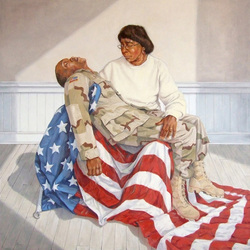
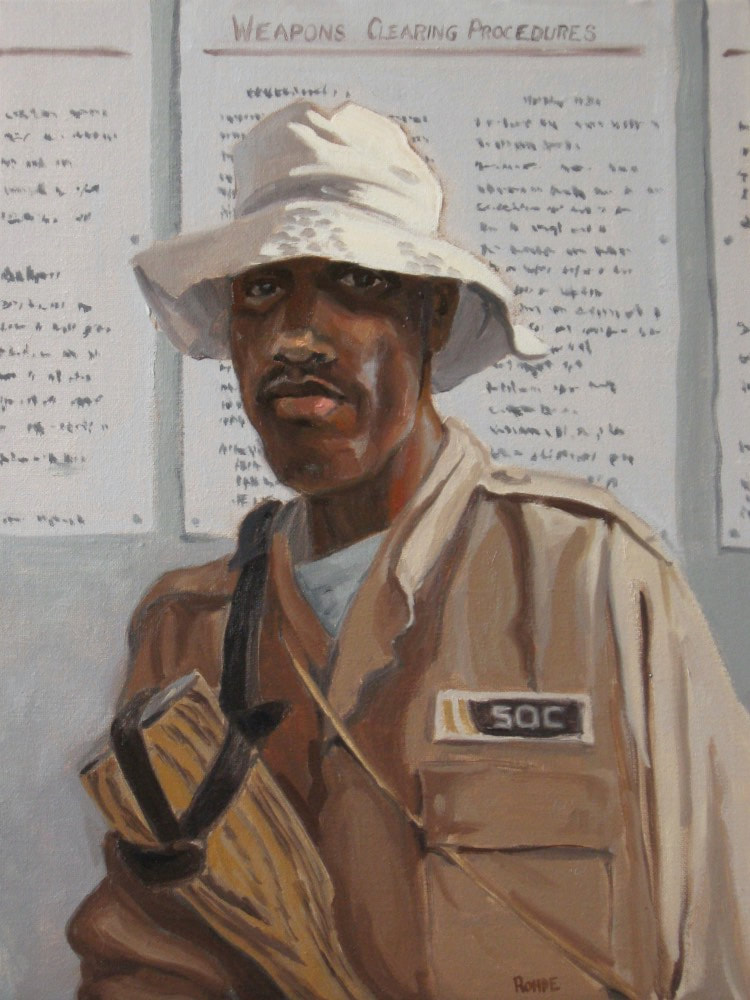
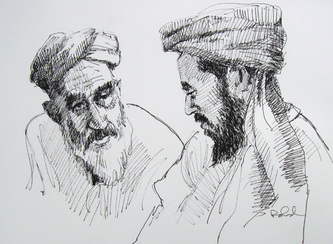
New Poetry from D.A. Gray: “Cactus Tuna”; “We Return from the Holy Land. God Stays”; and “Reverse Run”
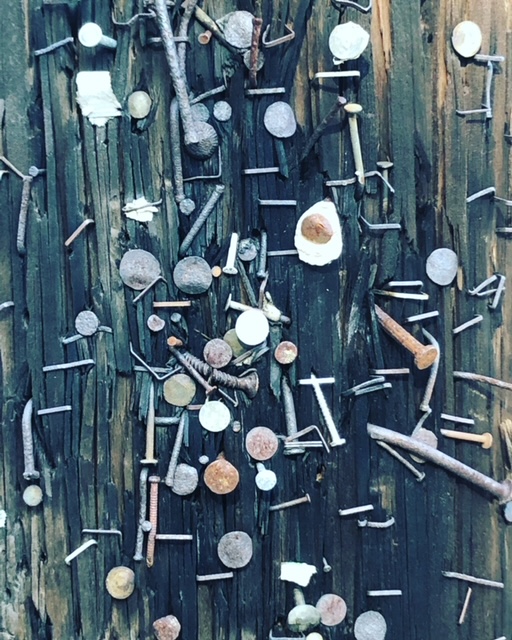
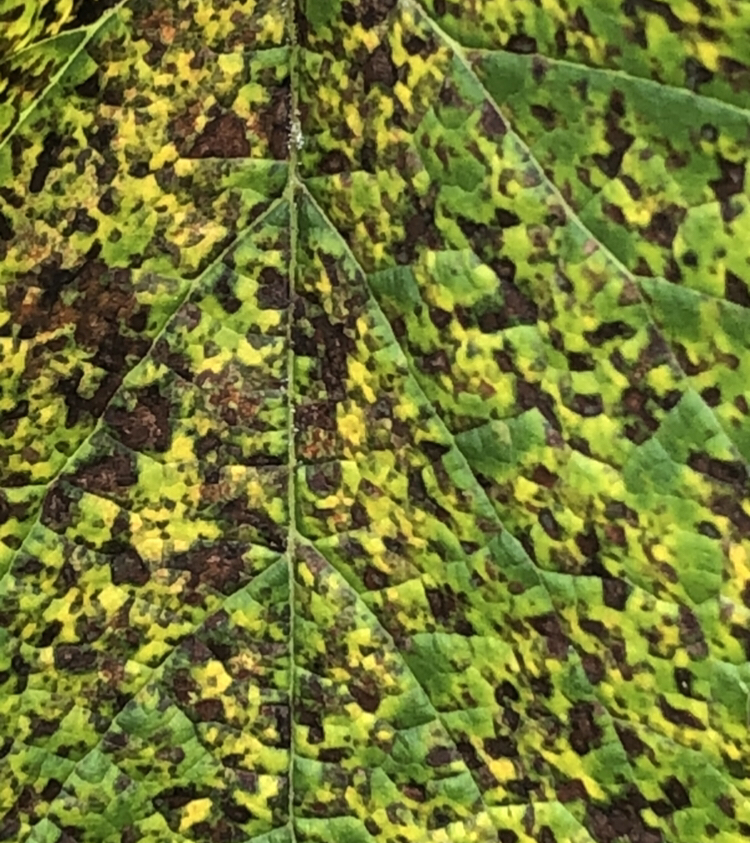
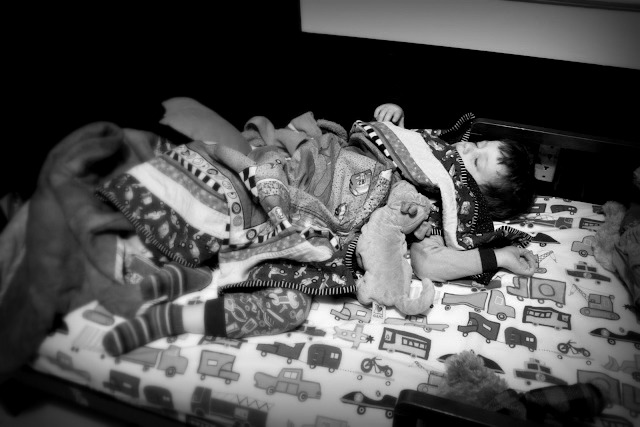
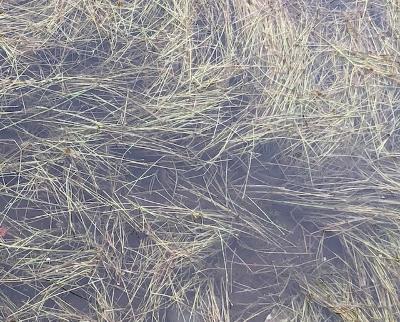
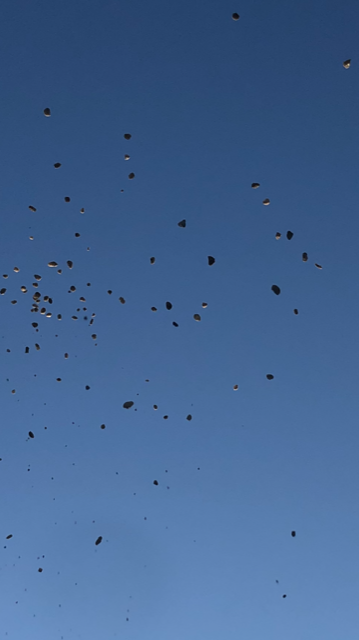
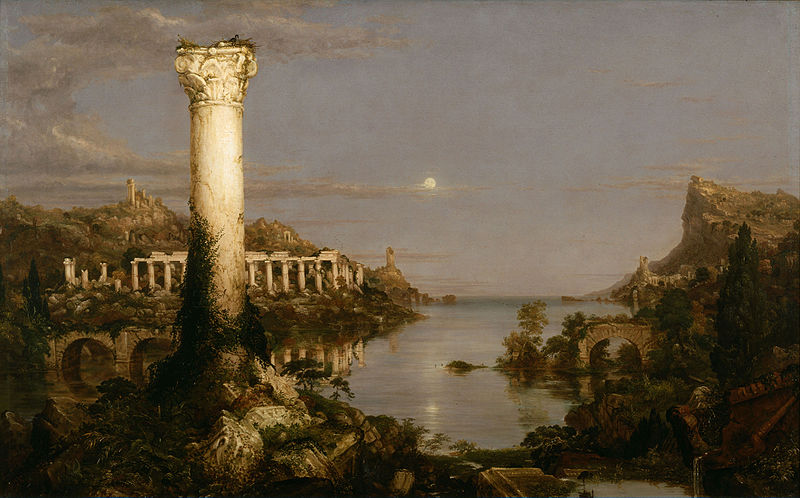
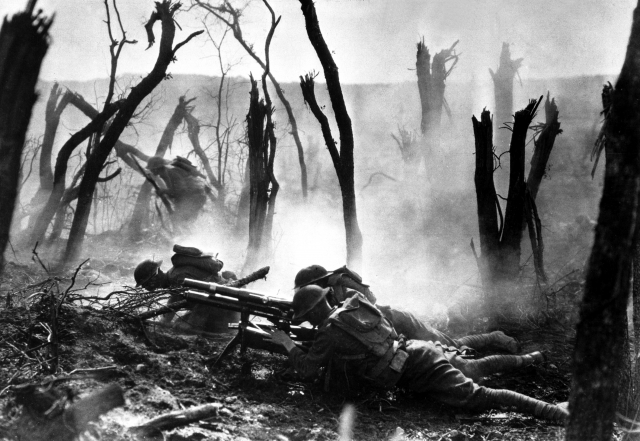
FARMER OF ROCKS / image by Amalie Flynn
Cactus Tuna
A semi-sweet taste
of watered-down nectar
bleeds out from the prickly
pear nestled PUT_Aon a crown of thorns.
In the desert you once
sneered over rifle sights
at the farmers drawing PUT_Arakes over the sun-
baked ground, and now, PUT_Aas atonement
you’re a farmer of rocks
and what comes with them.
Stained fingers tear through
leathery skin. Sometimes you
forget you’re standing
alone in a cactus patch PUT_Ared trickling down.
Grace is not this –
living on what grows where
nothing had a right to grow,
seeds fine as sand PUT_Ahide between teeth.
And crows, refusing to starve,
land unafraid, pick through
the rinds, eat, take flight
scatter seeds on rocky places PUT_Aand among thorns
even on tops of walls,
and maybe it’s resilience PUT_Aor spite
something finds purchase here.
We Return from the Holy Land. God Stays.
The mystery is often in the gaze of men
and women waiting for the sky to speak.
We used to spend days in the desert
waiting until the sky whistled and then
we wished we hadn’t.
Someone’s former
home, now sharp edges of cinderblock
cut upward through our soles. We kept
walking through the desert; everything
radiated, catching us in the crossfire.
* * * * *
We spend days in the Hill country
beneath a blistering sun, a clean sky,
traces of blue that have faded,
burnt off but for the edges by noon.
‘Say something,’ we shout in our minds,
looking up as if it’s God. Eventually
the sky speaks in the language of wind,
fear fills our hearts. Still, we knew
it would be this bad, yet wanted so much
to feel something – until the moment we did.
Run in Reverse
In dreams the ball bearings and nails and flame
are sucked backwards out of the truck, along
with the screams, and the shrapnel enters
The IED, a makeshift paint can half buried in sand.
The boy’s face heals, his body slides back
into the passenger seat and after a momentary
glare at this pained country he turns and smiles
at the driver. It’s a calm hundred-degree morning
and the Baghdad street is filled with shoppers
carrying bags, laffa bread, eggplants poking
out the top, Turkish vendors serving doner kebab,
their angry looks toward the truck
have softened now and they’re joking.
***
Some days walking with my wife, I turn,
walk backwards just to say something silly.
It’s that moment that seems truest. She is
looking at what’s to come just beyond my shoulder,
no regrets about the past, and I’m trying to hold
on to what we left, moving against my will
into the future blind, the scene I’m trying
to make sense of, moving farther away.
New Poetry from Tanya Tuzeo: “My Brother, the Marine;” “My Brother’s Shoebox;” and “My Brother’s Grenade”
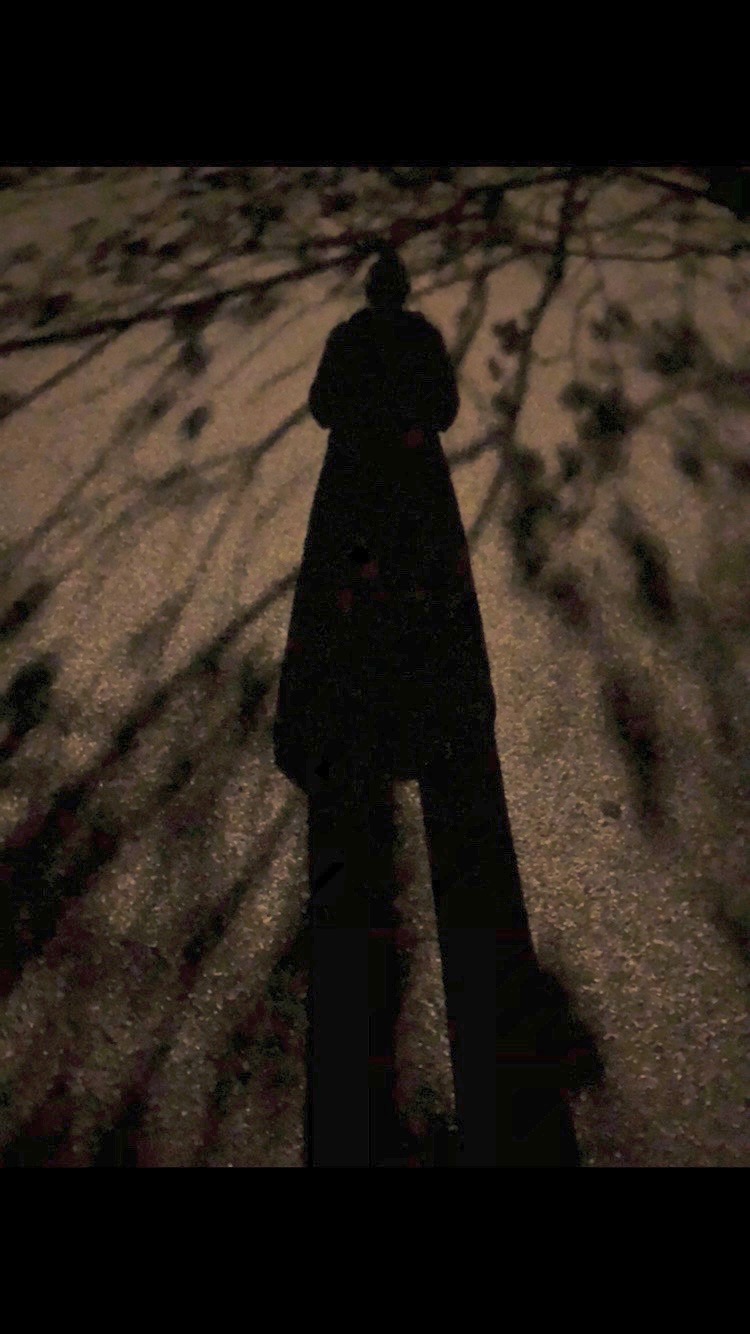
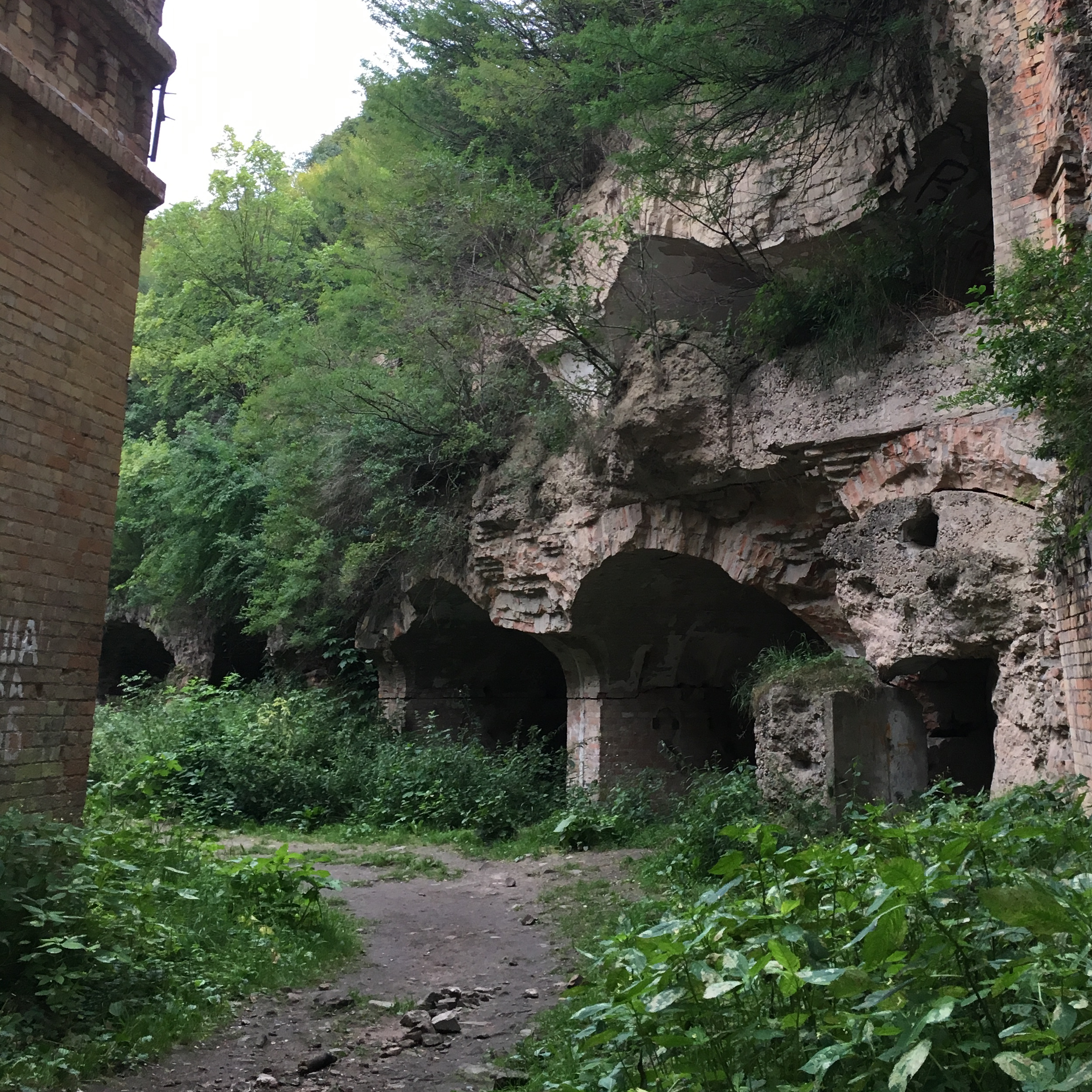
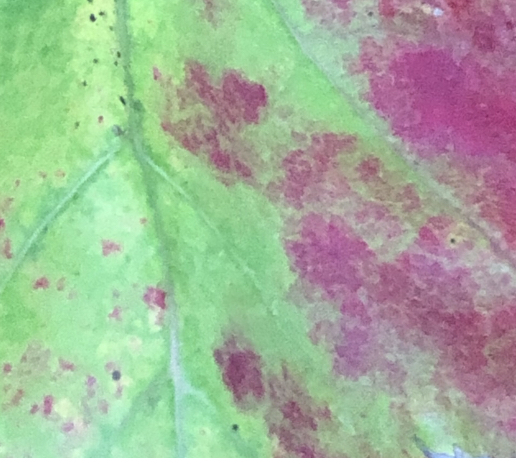
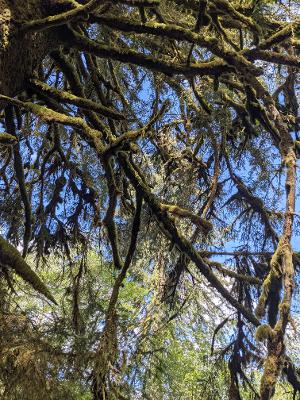
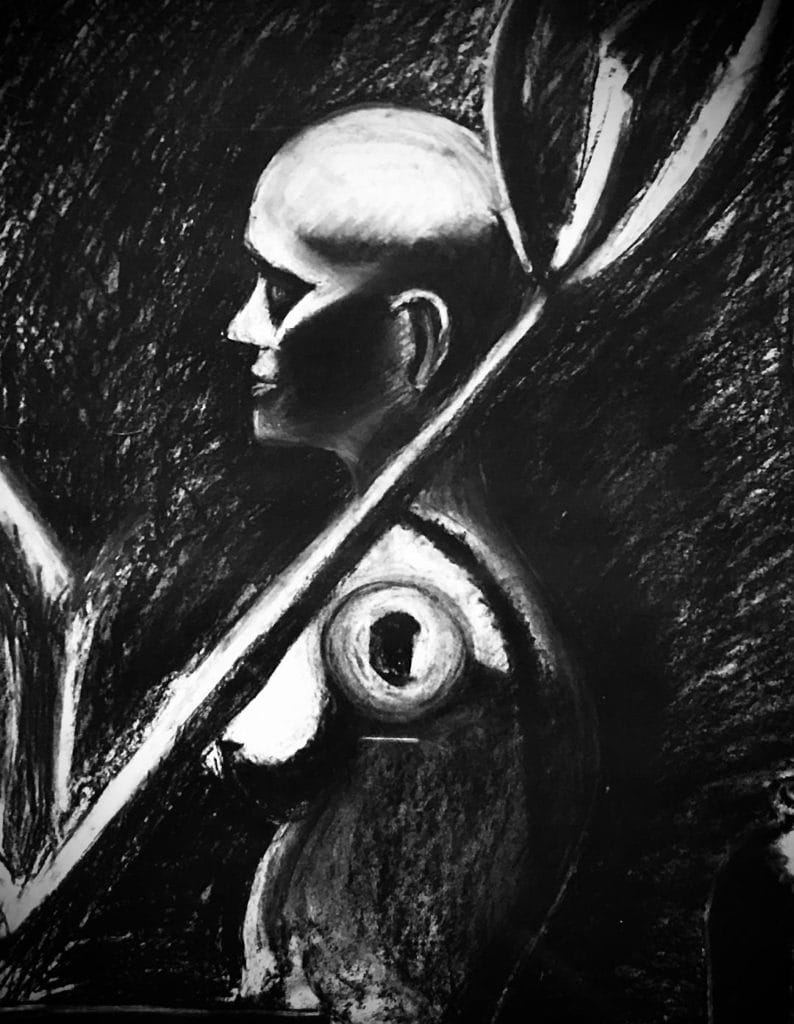
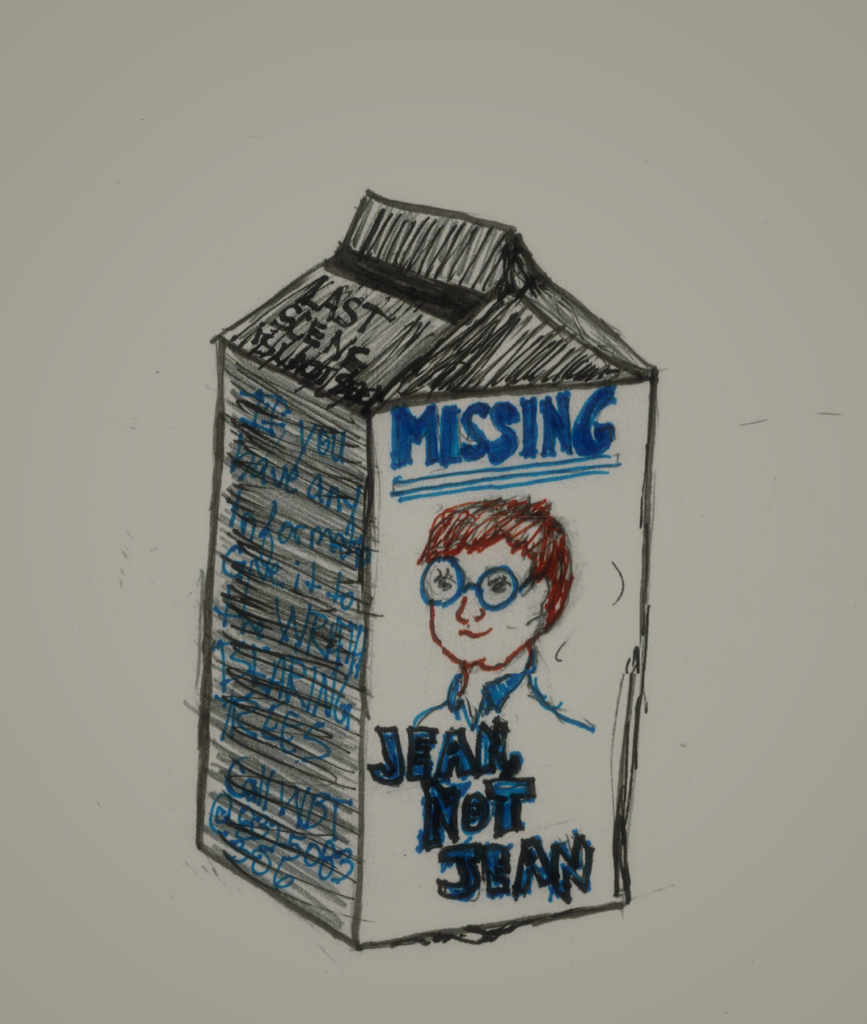
WAR HAS DONE / image by Amalie Flynn
my brother, the Marine
the recruiters come weeks earlier than agreed—
arrive in alloy, aluminum with authority,
military vehicle blocks our driveway
announcing to the neighborhood
they’ve come for a boy here
who will have to go—
though he sits at the top step
and cries
i follow them,
strange convoy to Staten Island’s hotel
where all the boys are corralled—
farmed for war, becoming weapons
of mass destruction
when before they picked apples
at family trips upstate
a hotel lobby—last stop before using lasers
to blow off golden domes,
silence muezzins in the crush
of ancient wage and plaster—
Hussein’s old siberian tiger left thirsty,
watches other zoo animals
being eaten by the faithful—
just like a video game
i clamp onto my brother
beg him not to go, we could run away
he didn’t have to do this—
recruiters quickly camouflage me,
am dragged outside—my brother lost
did not say goodbye
or even look at me.
my brother’s shoebox
the room across the hall is inhabited again,
home now from another tour
like sightseeing from a grand canal
where buildings are art
and storied sculptures animate street corners—
my brother returns a veteran.
i want to remember who this person is,
or at least, find out what war has done.
he leaves with friends to drink—
that is still the same,
later tonight
he might howl at our parent’s window
or jump on my bed until the sheets froth,
uncaring and rabid.
but i don’t wait for him to come home
and begin searching the room
that is his again.
it is simple to find
where people hide things—
a shoebox under his bed
that wasn’t there all these years
furrowed by sand
and almost glowing.
i open to find drugstore prints,
rolls of film casually dropped
for a high school student to develop—
silver halide crystals take the shape
of shattered skulls
goats strung and slit
a school made of clay
blasted in the kiln of munitions
“KILL ZONE” painted across its foundation—
each 4×6 emulsion a souvenir
of these mad travels,
kept to reminisce and admire.
my brother’s grenade
my brother’s room in our family vacation home
has embossed wallpaper, indigo or violet
depending on the light that filters through the mountains—
and his grenade in the closet.
i saw it looking for extra blankets,
thought it was an animal resting in eiderdown
kept by my mother in one of her tempers
but it didn’t move
and so
i picked it up.
inhumanity held beneath iron’s screaming core—
a pleasant weight,
like the egg i threw across the street
detonating onto the head of boy
who said i kissed him but i didn’t,
is it like that for my brother?—
fisted mementos of thrill?
seasoned by cedar sachets,
neatly quilted metal shimmered as i turned it
forbidden gem, his holy relic—
i placed it back in the closet and began making dinner,
said nothing.
the slender pin preserves this household
where our family gathers
unknowing a bomb is kept here—
my brother roasts a marshmallow
until it catches fire, turns black,
plunges into mouth.
New Poetry from Shannon Huffman Polson: “On Orthodox Easter in Mariupol”
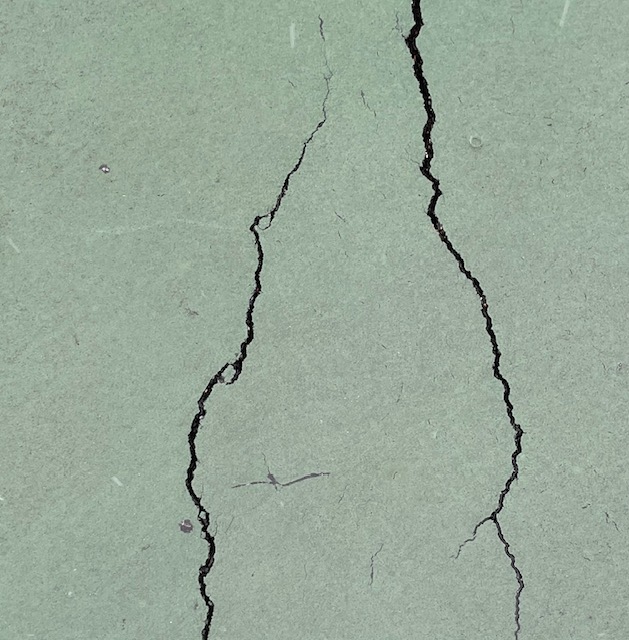
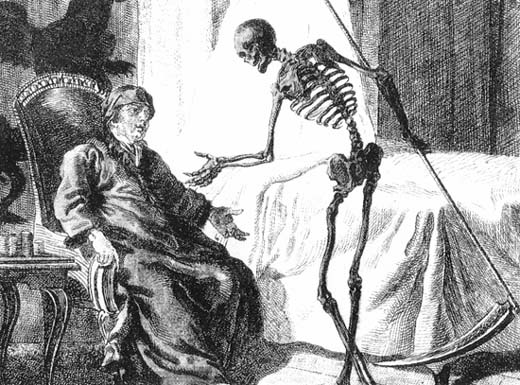
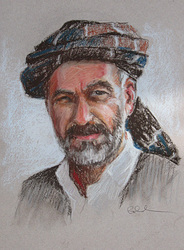
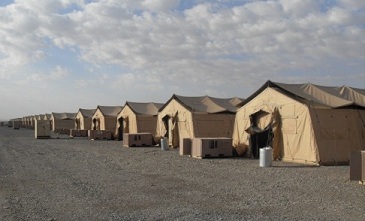
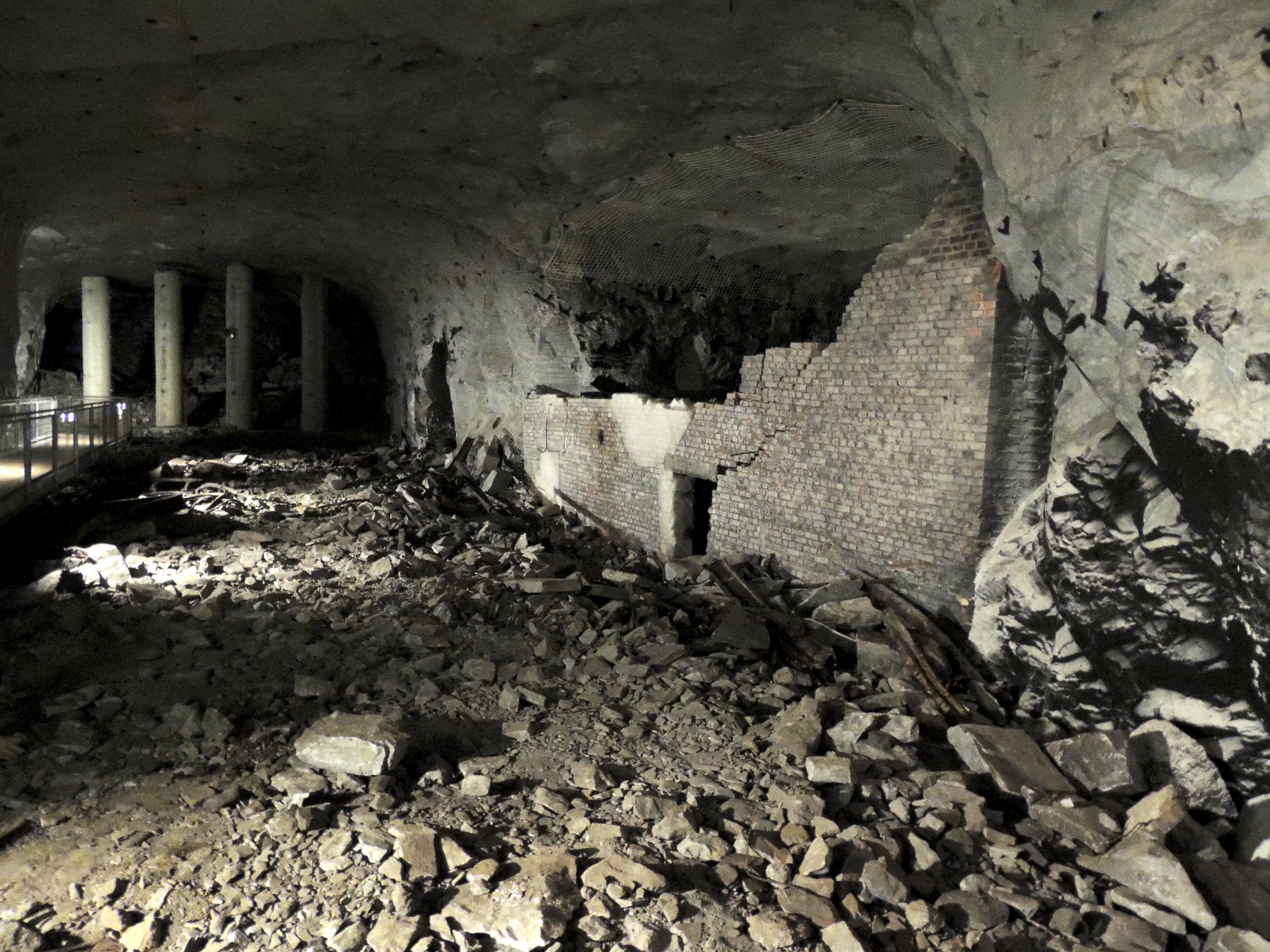
BETWEEN THE CRACKS / image by Amalie Flynn
On Orthodox Easter in Mariupol
We finished our jelly beans
red and yellow, purple, green,
the last bite of chocolate, unaware
that over in Mariupol
on this most holy day
sleepless mothers cradle children
on a steel factory floor.
Christ is Risen!
But in Mariupol people lie crushed,
the crossbeam too heavy,
cold factory chimneys rising cruelly
against the grey sky.
Nobody steps in from the crowd
to carry the cross.
There is no crowd
but circled tanks
in Mariupol.
Where is the Risen Christ
in Mariupol?
Outside the factory
mud is drying, small flowers
pushing up
between the cracks,
the birds returning, unaware
that inside people wait
in darkness,
the factory made for steel,
not people—
they sit
in vigil,
waiting.
New Poetry by Michal Rubin: “I Speak Not Your Language” and “Omar Abdalmajeed As’ad of Jijlya”
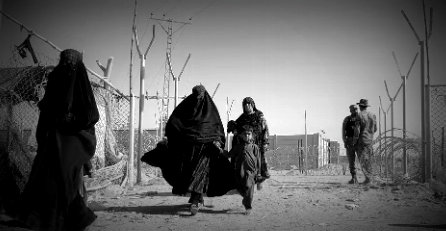
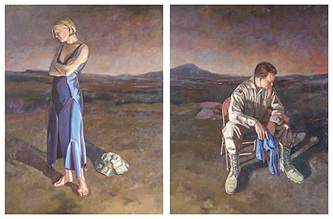
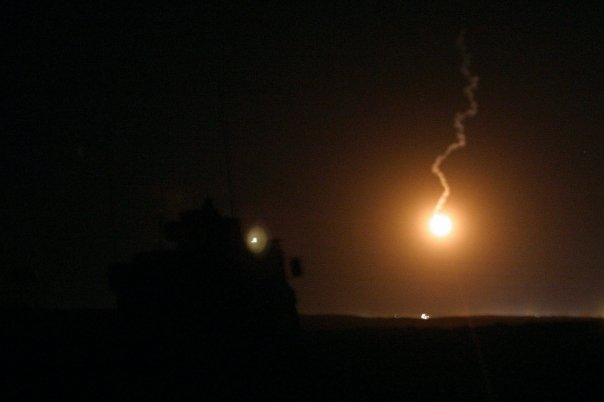
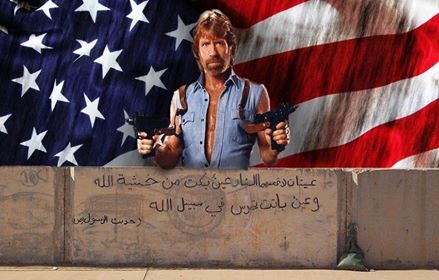
MAN AND LAND / image by Amalie Flynn
I speak not your language
I, born from the womb of
my mother’s remembrances
wrapped in the cocoon
of her story
PUT_CHARACTERS_HEREAAAAAAAAAAyou, amongst the trees, the earth PUT_CHARACTERS_HEREAAAAAAAAAAbelow littered with unpicked olives PUT_CHARACTERS_HEREAAAAAAAAAAthe story of Hagar and Yishmael PUT_CHARACTERS_HEREAAAAAAAAAAis your womb
my skin a scroll,
an epic of what was
my skin like tombstones
etched with numbers
PUT_CHARACTERS_HEREAAAAAAAAAAthe remains of the broken down PUT_CHARACTERS_HEREAAAAAAAAAAhome in the arid field pasture PUT_CHARACTERS_HEREAAAAAAAAAAyour diary PUT_CHARACTERS_HEREAAAAAAAAAAcarved in the stone
PUT_CHARACTERS_HEREAAAAAAAAAAYou laugh in pleasure PUT_CHARACTERS_HEREAAAAAAAAAAyour small act of defiance PUT_CHARACTERS_HEREAAAAAAAAAAyour urine naturally marks your PUT_CHARACTERS_HEREAAAAAAAAAAterritory which PUT_CHARACTERS_HEREAAAAAAAAAAI have marred
I feel its warmth running down
my sweaty shirt
my tongue tied in shame
PUT_CHARACTERS_HEREAAAAAAAAAAyou are telling your story
I speak not your language
and it’s 2pm
the radio announcer
reads out names of
lost relatives,
maybe they have survived
PUT_CHARACTERS_HEREAAAAAAAAAAyours, they live in a tent PUT_CHARACTERS_HEREAAAAAAAAAAsomewhere PUT_CHARACTERS_HEREAAAAAAAAAAwithout radio announcements PUT_CHARACTERS_HEREAAAAAAAAAAyou guard the stones PUT_CHARACTERS_HEREAAAAAAAAAAthat have survived
Omar Abdalmajeed As’ad of Jiljilya
Haaretz newspaper reports 3am Omar Abdalmajeed As’ad is stopped by Israeli soldiers on his drive home, after spending time with friends.
the moon is smiling, oblivious to the rattled
heart thumping against the white shirt
buttoned tightly over a late-night dinner
of rice and maybe thick lamb stew
3:05am The soldiers demand that As’ad step out of his vehicle. They argue with him for 15 minutes.
Hebrew and Arabic mingle in a snake-like dance
or a sword fight with only one sword
and one victor
always
the same one wins
3:20 am The soldiers walk As’ad to an abandoned yard, where they handcuff him, lay him on the ground, gag him and blindfold him.
the rancid aroma of cumin and cinnamon, the
leftover flavor of friends, permeates the thick
gag with a terrifying intimacy of living in a dream
of dying on the cold dusty ground
3:35am Soldiers lead two more detainees to the yard. One of them notices As’ad is lying still on his stomach.
his full stomach is pressed against the small pebbles
as 78-year-old skin surrenders to the indentations
branding As’ad
declaring the kinship of man and land
as the almost full moon still is in oblivion
3:45am Two more detainees are brought to the yard. No one is handcuffed apart from As’ad.
his hands bound to each other clutch fleetingly
moments stored in his wilting veins
toddlers joyfully
squealing love making
lamb stew sweetness of pistachio-
filled baklawa
4am The soldiers free one of As’ad’s hands and leave the yard.
not bound together the hands no longer harbor
As’ad’s stored moments
they “rest” upon the spillage of his life
leaving handprints
branding the earth
the kinship of land and man
4:09am One of the detainees calls a doctor after noticing As’ad is unresponsive and his face has turned blue.
no flickering of the moonlight to mark
the moment As’ad’s blindfolded eyes dimmed
the absence of air bluing
the wrinkled face
stillness
4:10am A doctor arrives at the yard from a nearby clinic and tries to resuscitate As’ad.
the white shirt ripped dusted
with the land no longer white
and new hands part the sea
of stillness in a futile effort
to infuse life into
this body an empty vessel
zip tie on its wrist
4:20am As’ad is brought to the clinic and medics continue to treat him.
neon flares no more moonlight
frenetic world life-sustaining measures violent
clanking desperation against As’ad’s bare chest
desecrate the holy stillness
of dying at dawn
4:40am
The doctor pronounces As’ad’s death
One commander will be
rebuked
two subordinate company and platoon commanders will be
dismissed
After Captain Short returned from his training with the Australians, he scheduled himself to take leave the following week, which meant he’d be gone all of May. While I waited for him to go, I didn’t do shit except play Axis and Allies with the guys and cook for everyone.
Until this morning, that is. At about oh-three-hundred, I jumped out of my bed to the sound of gunfire and a helicopter. When I ran outside, I found Sargent Doran and a few of the soldiers peering over our northern Hesco barriers through their Nods. The noise was coming from Shahr-e Safa, and I darted to the Tracker in my truck to see if there were any blue icons on the screen. There weren’t.
Short came over to me, dazed and confused. “What’s going on, Lieutenant?”
“I think it’s the Colors,” I said without hiding the enthusiasm in my voice. If I was right, this was exactly what we needed. No use in relying on a mismatched team of weekend warriors to exterminate the enemy when we could depend on the most elite fighting units ever developed. Maybe the Colors had caught some Taliban traveling through Shahr-e Safa. More dead Taliban meant a securer Jaldak. If Taliban were staying over in Shahr-e-Safa, maybe the Colors could also tell us who was hosting them—or being forced to host them. I called Zabul Base, but they didn’t know what was going on.
While our soldiers geared up and started the engines, Zabul called back a few minutes later and told us to stand down. Thirty minutes later, I got a message confirming it was the Colors, and I asked for more information on the nature of their mission and who they’d engaged—maybe they killed the Dad—but they had nothing else to share. I called Dickson later in the morning, but he said he didn’t know about any operation in my area either.
Around oh-eight-hundred, our mixed patrol of Cobra soldiers and Jaldak police walked into Shahr-e Safa and up the beaten path to the top of the hill. Instead of running up to us asking for candy, the children avoided us this time, and the ones who came out of their huts were crying.
“What happened?” I asked a cop.
Rocky translated. “He says the U.S. came in helicopters and murdered six men from the village last night.”
“Murdered?” I said.
“Martyred,” he said, before immediately correcting himself again. “They were killed when the U.S. broke into the compounds of the men and shot them.”
“The men they killed lived here?”
“Yes, sir.”
“They lived here?”
He confirmed again with the cop. “Yes, sir. They lived here with their families. They were part of the Dad’s team.”
What the fuck? “Where’s Ghani?” I scanned the crowd and the mud huts looking for the man we’d so often relied on to provide us with Taliban intel—nowhere.
“Sir, this is very bad,” Rocky said. “An Afghan’s home is his sanctuary. It’s a terrible message you’re sending to the people here. You need to tell your people to stop raiding homes at night and killing villagers.”
Un-fucking-believable. We’ve been living next door to six Taliban families this whole time.
On our way up the hill, two women burst out of a nearby hut and ran over to us, with crying children following after them. They tore the heads of their burqas off and began screaming and yelling. Two of the cops stood between them and us, and Short kept walking forward. I drifted toward the women, though. One was old—a mother of the dead, I assumed—and the other was younger than me. The old one shouted and wailed at the cops and me, wagging her finger as tears ran down her face. I didn’t need to speak Pashto to understand the vulgarity streaming out of her mouth. And then she stopped to spit on me. It hit my forehead and began rolling down my cheek, and I wiped it off with my sleeve and headed back toward the front of the patrol.
My stomach ached as I remembered marching with Freeman through Kakaran and the home of Abdul Kabir and the Dad, listening to their mother yell at us and our police. That had been satisfying, rewarding almost. But this was different now. Here I felt guilty and sick. But why? The men we’d just killed were no different from any of the others who’d tried to kill us. Or the ones who murdered their fellow Muslims in the streets.
And then it hit me—no matter how justified the killings were, we shouldn’t have been here. Our patrol shouldn’t have been taking a victory lap. Spiking the football right in the villagers’ faces. Taking a self-congratulatory tour of the destruction we’d caused. Freeman would have known better than to come and do this today. He would have sent the cops instead and brought the village elders back to talk. I should have known our presence now would feel like a spit in the face.
When we got to the top of the hill, close to where the groundbreaking ceremony for the well had been, Short approached a village elder. It was Razaaq—the father of Naney the pedophile—and he asked what we could do to help in the aftermath.
I wished we could have killed his son, too.
I walked to the well and looked up at the top of the tower where the solar panels used to sit.
Fucking bastards.
Even though I knew what would happen, I pulled the lever on the faucet beside the well and watched as nothing flowed out of it, symbolizing my failure. I headed over to Doran and Lane.
How could we have been so close to the motherfuckers? For almost a year, I’d slept next door to a village of insurgents. These guys weren’t Taliban from Pakistan traveling through the area, forcing villagers to feed and host them—they were our fucking neighbors. After eight years, we hadn’t even “cleared” the village beside our base. “Clear, hold, build” my ass. And if there were six Taliban living in Shahr-e Safa, guys whose children I’d spent a year throwing candy to, how many lived in the other villages in Jaldak? Jesus Christ, they’re everywhere. They’ll never leave this place.
“It’s pretty fucking hot, LT,” Lane said.
“Yeah, pretty fucking hot.”
“We gonna be out here for a while?”
“Look, dude, I don’t know. Pull security.”
He made a face and headed off.
I walked back to Rocky, lost in my own fog of disgrace. “Let’s get names of the Taliban killed,” I said as I handed him my notebook.
I watched as he stopped a policeman and talked to him for a while, writing in the notebook. When he returned, I scanned the list of names but didn’t recognize any of them. Across the way, I noticed that Short was still talking to Naney’s father.
“The police are saying the U.S. who came in the helicopters stole a bunch of weapons and explosives from the men they killed,” Rocky said.
“Stole?”
“I mean confiscated.”
Fuck this.
Rocky turned to leave, but I grabbed his shoulder. “They were bad guys, Rocky. Taliban. If they had guns and explosives and—”
“It doesn’t matter, sir.” He pointed to a boy standing beside his older brother, both of them crying. I got the message.
I surveyed the mud huts on the slope of the hill we’d just hiked up. These were the people we’d been trying to make life better for? The people we fed and provided running water for and whose children we built schools for? The people who’d never told us about the six Taliban living in their village—the village that neighbored us?
But why would they tell us? These men were their sons and fathers.
This is fucking hopeless.
By now, Short was done talking to Razaaq, and we headed back down the trail to the highway, where I put myself on the south side of the patrol. The side away from the woman who’d screamed and spit on me on our way up. But there was no escape—more women came out of another hut and started in on me and the cop beside me, wailing and cursing in Pashto, more orphaned children behind them. Their bare faces streaked with tears, they made wide menacing hand gestures whose meaning I could only guess at. I could feel their hatred just like I could feel the heat of the sun.
Fuck all this.
At the road, Ghani was waiting for us. I ran to him, and Rocky scurried along after me.
“Did you know these men?” I demanded.
There was a pause.
He said something to Rocky. “Yes, for many years.”
I glared at Ghani, the crooked bastard. All this time I’d thought he was the kind of guy we needed to save this place from Taliban, but he must have only been using us because he hated Zahir. Not because he hated Taliban.
“Why?” I stepped forward, my face close to his “Why not tell us?”
Rocky didn’t hesitate. “He knew them well, sir. They were part of his clan.”
Ghani just stared back at me sheepishly.
I wanted to spit on him. Instead, I turned and walked down the driveway as our crooked fucking cops opened the wire gates for us.
All this work for the sake of the women and children and this was the result? A police force corrupt to the core and a well that didn’t work and a generation of fatherless sons and daughters? Sons who would grow up to join the Taliban and kill us if we were stupid enough to still be around? Daughters who would be forced into marriage as soon as they menstruated? Imprisoning their faces behind those suffocating burqas for their entire godforsaken lives?
Why the fuck are we still in this place?
The people would never support the police as long as we were here. But if we left now, the Taliban would replace the police force we did have. Every man and woman who died in this country for the sake of this war would have died in vain. None of it would mean anything, to anyone. Vietnam all over again.
What a tragic fucking joke.
I kept walking, leaving the wailing and cursing behind. If only till the next time.
*
Back at base, we debriefed in the Toc even though it was hotter inside than out and there were just as many flies.
“You see how empty the whole place was?” Kilgore said.
“The elder I talked to said just about everyone’s left, and tomorrow they’ll all be gone,” Short said.
I slapped a fly on my arm. “The business owners and the villagers?” I grabbed the flyswatter from my desk and waited for the next one.
“Everyone. They’re all afraid of U.S. in helicopters coming to kill their sons and husbands again.”
“Well, if their sons and husbands are fucking Taliban trying to kill us, stealing solar panels—”
“God, you really got a hard-on for that solar panel thing, don’t you, LT?”
Kilgore laughed.
“If they’re fucking Taliban, they ought to die,” I said, glaring at him, knowing that I wasn’t going to bother trying to explain to him the complicated truth I’d just learned. The fact that we’d just given every child in that village a once-in-a-lifetime experience that would shape their decision-making for the rest of their lives. The invaders had just killed their fathers and brothers, and they’d gladly take up arms against us as soon as they got the chance. The truth that killing more bad guys could never be the answer to winning this war.
New Poetry by Chris Bullard: “All Wars Are Boyish”
THE MELTDOWN MEADOW / image by Amalie Flynn
All Wars Are Boyish
Autopilot on self-destruct,
we went joy riding on tanks
into the thermal wasteland.
The static of roentgens played
like parked ice cream trucks
on the detection equipment.
Playgrounds went incendiary
as squalls of cluster bombs
skipped over the pavement,
but our camo HAZMAT suits
insulated us from the acts
we had been ordered to take.
They were on the run, maybe,
or counterattacking. We took
rations beside a napalm campfire.
Jets among the sweep of stars,
scorched amphibians peeping
in the meltdown meadow,
what more could a kid ask for,
except dinosaurs? They were
already working on them in the lab.
New Fiction from Adrian Bonenberger: “Fort Mirror”
Getting posted to Fort Mirror was a death sentence. The most coveted of all postings, soldiers jockeyed for the honor, begged superiors to send them to the fort on patrols or did what they euphemistically called “drug deals” to get assigned to units deploying soon. You went there, you died. Or you didn’t. Some people got hurt. Many of the people who spent time at Fort Mirror came away unharmed. Others went mad.
Officers were the worst. Ambitious young men and women subjected themselves to demanding and physically exhausting trials, hazed themselves brutally just for a chance to deploy to Fort Mirror. Knowledge of which units were headed where was highly sought after. If based on rumor and forward planning at headquarters it looked like there was a 20% chance a particular unit was going to Fort Mirror, that was considered quite good, and the officers lined up to serve. Over time, officers became conniving, wheedling things, strong from their training, ruthless in their networking. Most of them (save for the luckiest who knew somehow they were going to Fort Mirror) lost themselves completely trying to get there.
But Fort Mirror was worth it. That’s what everyone said. People knew that at Fort Mirror whatever else happened, the enemy would attack in strength—they’d come in the night, from some direction nobody thought possible. Or they’d come during the day in overwhelming numbers, and it was all hands on deck, fighting from one side of the fort to the other with a box of hand grenades to share on those occasions the enemy attacked at the place defenses were strongest, and still got in, punched their way through, although the base commander had anticipated that very move.
People went to Fort Mirror because catastrophic, once-in-a-decade attacks were bound to happen. Soldiers and officers went there in pairs, with their best friends, each knowing that the other would likely die, and it would be a formative tragedy. Each man secretly believed it would be the other who perished. Sometimes, a man went to Fort Mirror to die, and formed a friendship with a soldier or officer whom they believed would make it through, thereby keeping their memory strong. It actually played out that way a few times. A few times it played out the opposite, with the person who went there to die living, and the person who went there to live dying unexpectedly.
Those were the glory years for Fort Mirror. Rumors spread from the military to the writers obsessed with military affairs. Journalists began showing up to write stories and record television spots, to film for documentaries. This furthered the fort’s fame, spreading its name far and wide among those paying attention. The more that soldiers and officers were recorded or written about at Fort Mirror, the greater the numbers of ambitious young soldiers and officers clamoring to join units going or staying there. To a certain type of man, this notoriety was reassuring, knowing not only that one would perform brave valorous feats, but that afterwards, there was a reliable chance that one might read an article about it in the newspaper, see themselves on television.
For the career minded, Fort Mirror became a rite of passage. Promotion was assured for those who could deploy there and turn it to their advantage. Many junior officers went on to distinguished careers after serving at Fort Mirror, likewise with the sergeants. Medals for bravery were handed out there like pieces of candy at Christmas. Every other year or so, a soldier or officer would earn the highest honor their country had to give.
*
The military hierarchy hated Mirror. Its existence repudiated so much of what the war was said to be about in the generals’ press releases. It was the grain of truth in the myth of the war, it was the persuasive argument justifying some new barbaric action. Academics wrestled with it as a problem, conceding that its being an outlier to their models spoke to some more essential lesson about conflict. Meanwhile outside of government and the military, few had heard of Fort Mirror—and that’s because few had heard of the war, in spite of the journalists writing stories about it, in spite of the television spots and occasional documentaries. Even though there was no specific awareness of Fort Mirror, it’s safe to say that without it, the war as a phenomenon would not have been possible.
Operations at Fort Mirror were sometimes mission driven, but they were never metrics-driven or data-driven. It had not been optimized for search results, there were no subheds partitioning it into sections or dragging readers’ eyes from one section to the next. It had no keywords. Its reading level could not be assessed. It was not hyperlinked or back-linked to other pages. Its domain authority score could not be established.
In terms of its layout, Fort Mirror was not exceptional. It consisted of walls, and an entrance, and guard towers, and a dining facility; all the things you’d expect a fort to have. Still, because of the terrain on which it had been built, part of Fort Mirror extended onto a flat plateau—a brooding section that seemed to gaze out at the surrounding countryside like a man lost in thought. There was a second, lower section at the base of the plateau. A trail cut into the stone cliffside centuries before by some farsighted builder or military commander connected the two positions and had been expanded and fortified over the decades. In its whole, Mirror was remarkable, a shining, demented visionary, a Castle Frankenstein or one of Frank Lloyd Wright’s lesser-known experiments; a part of its surroundings, and also totally apart from them, impossibly alien.
When the military arrived they stationed artillery and mortars on the plateau, and had a place to land helicopters full of food, mail, and other sundries needed to keep a fort going. Around 300 soldiers lived at the fort at a time though occasionally the number would grow for bigger operations.
The terrain deserves more consideration. Because of its appearance in various print and broadcast media across various seasons, it’s possible to get a sense of the place, but in spite of widespread coverage, descriptions of it conflict and can even at certain points as was the case in a feature in The New York Times and another in Der Spiegel, explicitly contradict each other. In some recollections the plateau on which the fort was founded grew out of a hill within a valley, ringed by foreboding mountains. In others, the plateau jutted out above a deep river that cuts through what appear to be plains, or emerged from buildings in a town or bazaar. It was compared favorably and unfavorably with a decayed New England industrial center, hollowed out by offshoring. Others saw in it the mountains and rivers of Central and Eastern Europe. One thing that everyone agreed on, in describing the milieu in which Mirror occurred, was that the weather in the place varied wildly, with sunny calm often replaced with no warning by torrential downpours. Fog, too, often obscured the fort, rendering it vulnerable to attack, but also difficult to detect.
There were several Observation Posts or “OPs” higher in the hills, manned by soldiers and local constables in groups of 8-12, total. The precise number of OPs varied between three and five, depending on the goals of the commanding officer. At first the OPs were named for cardinal directions, but over time, took on the names of soldiers who fell in fighting. One was even named for a heroic local constable who sacrificed himself during a particularly desperate action, unexpectedly saving the lives of eight soldiers. This act of love was seen as something of an exception to an unspoken rule to acknowledge the local residents as little as possible; in general, places were named only for military soldiers or officers, or cultural signifiers or signposts from home. Locals had their own names for things. They even had their own name for the fort, though it was deployed as trivia and assigned no particular importance, save to the occasional soldier or officer who thought taking local matters seriously ameliorated their complicity in the war, or because it reminded them of a spouse or partner.
*
The oddest thing about Fort Mirror, and the thing that most people remarked on when they first arrived, was that every inch of the fort was covered in mirrors of the sort one might find on the local economy. The walls were covered with mirrors outside and inside. Instead of windows, there were mirrors, instead of paintings, mirrors, instead of doors, great opaque slabs of reinforced glass, in which one could see one’s own reflection and that of one’s surroundings. The outside of the fort was draped in mirrors which were affixed by metal wires or placed into stone or wooden fittings designed for the purpose. This was true of the lower and upper portions of the fort, with the exception that the mirrors hung in the lower part of Fort Mirror were in general larger and heavier than those above. Some suggested that this was owing to the difficulty of porting larger mirrors up the cliffside; prior to air travel there was no easy way to bring mirrors up from the surrounding valley to the plateau.
When mirrors were damaged by the fighting, as they often were, they were quickly replaced. Mirrors had been built into and onto the fort long ago—more credulous soldiers said that this was done by special operations during the initial phase of the war, but the special operators who had seized the fort from enemy forces maintained that the mirrors had been there when they arrived. Earlier accounts from militaries of other, older armies, had also described the fort as having been draped in mirrors or “reflective glass,” and hypothesized that it had at one time been the residence of a great king or emperor.
One officer developed a friendship with a popular and well-educated interpreter, “Johnny,” who said that the fort was a place of great religious significance. According to him the fort was on very old ground, perhaps predating monotheism—perhaps, indeed, contributing to it in some obscure way. The local villages all regarded the fort with dread and superstition, and the fort and its occupants played significant roles in myths of the sort still regularly encountered in distant rural areas even in the 21st century. Furthermore, the fort factored into local religious stories, which attested to its durability, as myths of a certain power and endurance were always incorporated into orthodoxies rather than destroyed. Every time the enemy attacked, they would leave behind new mirrors to replace the ones they’d damaged. With time, it became a tradition among soldiers as well, with new units bringing new mirrors of all shapes and sizes, and purchasing quantities on the local economy at a significant mark-up.
In the arts, Fort Mirror inspired many essays and fictional stories focusing on its construction and layout, and the effect that living there produced on many soldiers and officers. Journalists helped lead the way by writing about it in public, and always seemed eager to consider its significance in terms of what to them was a unique experience. There was invariably a part in every article or video where the author or narrator would show how little most soldiers and officers cared about living among their own reflections, as well as how odd and disorienting it was to new arrivals. Many soldiers and officers took it upon themselves to understand the significance or consequences of living on Fort Mirror through graphic novels, fiction, memoir, movies, video games, and art.
“I wake up in the morning blinded by the light of thousands of suns, trapped in a funhouse maze of my agonized and distorted, shattered body,” wrote one reporter, “while a sergeant walked by me in flip-flops to the showers, totally oblivious, as if this were the most normal thing in the world. A mortar boomed in the distance, and as I dropped to the ground, he reached the bathroom and opened the mirror, then disappeared nonchalantly inside as an explosion burst a few hundred meters to our south…”
It was a strange place. Legends grew up about and around it over the years within the military, though you truly had to have lived it to understand many of them. Some soldiers fell in love with local women, others, with each other; others still, with the idea of escaping Fort Mirror, which while one was posted there was almost impossible. Some went mad sitting in their barracks rooms, at night, flicking a small flashlight on and off, staring at themselves in the mirror-walls, wondering about what they might have done differently during the previous day’s patrol, or how they’d perform on the upcoming operation. It was said that one could see the past in the mirrors, dead soldiers from wars long past or from actions just months old. Perhaps those who died within Fort Mirror’s walls were doomed to walk within forever. A persistent but idiosyncratic story was that one could see the future in the mirrors, given credence by the many soldiers who experienced professional success in their subsequent civilian lives. Another story concerns a distinctively squat and strong-willed but disliked colonel, who disappeared from the fort, but who was subsequently reported roaming the mirrors of the fort too many times and by too many different sources for it to have been coincidence.
*
One might think that there would be some taboo against breaking mirrors while posted to the fort. There is some truth to this, to deliberately destroy a mirror needed some justification. If, for example, one broke a mirror accidentally, firing at a perceived foe, this was permissible. To destroy a mirror in order to “liberate” the image within was also viewed as understandable, though officially it was frowned upon and never encouraged. Breaking mirrors out of an instinctual desire to wreck or destroy was also dissuaded even though soldiers and officers caught doing it were rarely punished. As with all things Mirror, justice bent toward mercy and understanding when it came to acts of violence.
Adjusting the mirrors — changing their orientation or marking them with paint or markers — was something that inspired instinctual revulsion by all, soldier and local alike. Soldiers caught changing the mirrors in any way would be transferred out from the unit after a quick investigation to determine the facts. Locals caught changing the mirrors in any way were never seen again.
Another notable characteristic of the fort was that having struggled so mightily to be posted there, as soon as a soldier or officer would leave, they’d be filled with a burning desire to see the place closed. They justified this desire by explaining that no more people should die or be injured in so pointless and strange a place. Meanwhile, the soldiers and officers who’d yet to deploy to Fort Mirror maintained that this was bitter jealousy, that Fort Mirror veterans wanted to hoard all the glory for themselves; that they only wanted to close the fort so that nobody else could get medals, so they’d be the only ones who were special.
Would the war ever end? Would the soldiers stop flowing into Fort Mirror, fighting desperate battles at night or in the day? Would the junior officers stop competing for posts there, stop gazing into Mirror’s walls to regard their square-jawed future political campaigns? Would journalists stop writing nuanced pieces balancing the reality of the war with the idealism of the energies that had brought the military to occupy the fort in the first place? Would the timeless myth, whispered among the oldest locals, ever come to pass: that someday a line of light would appear in the middle of the fort’s mirrors and all the mirrors of the world, accompanied by the thunder of countless horses hooves, before the people of the mirror world burst their magical reflective confines to enter our own world? And what would happen if they did?
New Fiction from Brian Barry Turner: “Death Takes a Temporary Duty Assignment”
Death had narrowed his search of potential candidates down to two soldiers, both with high kill counts. Qualified applicants were always military men assigned to the line. Death had been a knight under Robert the Pious. His predecessor had been a Centurion under Augustus. Snipers, artillerymen, and pilots were ineligible, too much separation from the butchery. Intimacy and closeness were necessary for a harvester of souls.
Blackburn and Rojas. Each man had seen the whites of enemy eyes before pulling the trigger. Death had brushed shoulders with each of them, literally and figuratively.
Death sat beside his laptop computer, his bony finger pressing SEND on the last of his 555,000 emails: intercessions, near death experiences, and miracles forwarded to him by God. “Finally,” he said as he rose and grabbed his scythe, “I’m all caught up.”
Death had been granted a two-hour Temporary Duty Assignment to pick a successor. Having completed his thousand-year tour of duty, he had extended for three more years to clear up a client backlog. The twentieth century had been a busy time for the Grim Reaper, perhaps the busiest in history. With the invention of the cell phone and internet, the incumbent Death received a constant barrage of text messages and emails which—considering his birth 400 years before the printing press—he managed adroitly.
As a spirit operating outside the bounds of space and time, Death’s job granted him near omnipresence: only a fraction of a second later he was standing within a concertina-lined forward operated base in Northern Iraq. He checked his watch—1300 hours.
Invisible to the Living, Death strode through Task Force Warrior’s Tactical Operating Center, spotting Sergeant Major Muerte haranguing a long-haired private. “Sergeant Major,” he said to himself as he stepped into Muerte’s body, “I hope you don’t mind me possessing your soul for a tick.”
The private reeled as Muerte’s Aztec hue shifted to a bloodless pallor and his face, previously the picture of health, deflated. Staring through opaque eyes, Muerte—now Death— snapped his fingers, and his scythe instantly appeared in his pale hand.
The private straightened up, eyes trained on the razor-sharp scythe. “No need for that,” he said, backing out of the TOC, “I’ll cut my hair, Sergeant Major.”
Scythe in hand, Death, now Muerte, walked around Warrior Base, finally locating Charlie Company’s first sergeant. He had little time to dawdle.
“I need to speak with Sergeants Blackburn and Rojas, First Sergeant.”
Staring at the large Scythe, the square-jawed first sergeant hesitated. “What about, Sergeant Major?”
“A promotion.”
“A promotion? To what?”
“The Angel of Death.”
“Oh…” he said, exhaling in relief. “I thought I was getting transferred.”
Located in a derelict guard house, Muerte’s office was the epitome of military austerity—desk, two chairs and a laptop computer, the antithesis of Death’s Victorian-era quarters. Muerte set his Scythe against a bullet-riddled wall and took a seat behind his computer. He logged onto his email and sighed at the 300,000 unread messages in his inbox. He downloaded Blackburn’s file.
Just as Muerte was about to call in his first candidate, the report of a mortar round rocked his office. With less than ninety minutes to conduct his interviews, he couldn’t afford any distractions. Within an instant he was outside Warrior Base’s perimeter standing beside a truck occupied by three insurgents and a mortar.
Upon seeing the now manifested scythe-wielding, eight-foot tall skeleton draped in a black robe, the insurgents’ faces froze in silent screams. “Do you mind?” he said in perfect Arabic. “I’m conducting interviews.”
“Malak al-Maut![1] Malak al-Maut!” yelled the driver as he stomped on the gas, covering Death’s robe in a brume of powdered dust.
Transposing himself back into Muerte’s body, he checked his watch. 77 minutes. Barely over an hour left to select a candidate for a thousand-year tenure of abject grief and hopelessness. He’d kill for more time.
Sergeant First Class Blackburn stood in his doorway as Muerte reviewed his file, “You asked for me, Sergeant Major?”
“Take a seat, Blackburn.”
Standing a portly 5’ 2”, Blackburn’s stature was exacerbated by his unusually long arms which necessitated his wearing gloves to protect his dragging knuckles. Blackburn took a seat across from Muerte and reached for a pack of cigarettes.
“Mind if I smoke?”
“Be my guest,” said Muerte, “Can I bum a square off you?”
Blackburn offered Muerte a cigarette from his sausage-shaped fingers. Muerte took a deep drag, relishing the tobacco, tar, and carbon monoxide as it entered his lungs. Cigarettes and Death. Death and cigarettes—like ham and cheese to the Living.
Muerte gazed at his laptop. “It says here you killed 22 insurgents.”
“23, Sergeant Major.”
“No, Sergeant, 22. One was shot by friendly fire.”
“Oh…”
Muerte leaned back in his seat and took a deep drag, sizing up Blackburn’s homuncular appearance. “What does that mean to you, to kill 22 men?
“Are you with JAG?”
“No, I’m not with JAG.”
Blackburn’s eyes darted around the room. “I don’t know if I should answer that.”
“Anything you say here stays in this room.”
Blackburn leaned across the desk. “I’m the Angel of Death,” he whispered.
“Say again?”
“I’m the Angel of Death.”
“You’re the Angel of Death?”
“Yes, Sergeant Major.”
Muerte was taken aback by Blackburn’s hubris. Boasting was bad form even among the Living.
“That’s awfully presumptuous, isn’t it?”
“Presumptuous?”
“Can you answer two million emails in a single day?”
“No, Sergeant Major.”
“Can you answer three million phone calls a day?”
“No, Sergeant Major.”
“How about travel? Can you be in a million places at once?”
“No, Sergeant Major.”
Muerte stood. “Thank you, Sergeant. I’ve heard enough.”
Blackburn offered a handshake, but Death politely refused. He hadn’t come to collect Blackburn, only to interview him.
Muerte returned to his chair and checked his in-box. 700,000 unread emails. Never a moment’s rest. Death gave the Rojas file a quick look. Just as he was about to call him in he heard a truck turn sharply into Warrior Base’s entrance. He rolled his eyes, “Here we go again.”
Materializing beside a pick-up packed with explosives, Death killed the engine. He had dominion over the Living and all forms of technological devices, including internal combustion engines. Few were aware of this.
The suicide bomber sat motionless in the driver’s seat, horrified by the cloaked figure towering over the hood of his truck. Death walked to the driver’s side and tapped his bony finger on the glass. The suicide bomber rolled down his window.
“Kinda busy right now,” Death said in Arabic. “You mind coming back later?”
The suicide bomber nodded and put the truck in reverse.
Death returned to Muerte’s body. 1,200,000 unread emails in his inbox. He’d give his soul for a personal assistant. He checked his watch—30 minutes. He was out of time.
“Next!”
Sergeant First Class Rojas entered Muerte’s office. Five-foot ten with a rail thin physique, Rojas looked like he’d be ground to powder by a sandstorm. His freckled face was capped by a thatch of red hair. Death smiled at his surname. Rojas.
“You summoned me, Sergeant Major?”
Muerte motioned for Rojas to take a seat. He stared at his laptop, then turned to Rojas. “25 insurgents. It says here you killed 25 insurgents.”
Rojas sat silently, running his hand over his ginger brush cut.
“How does that make you feel, to kill 25 men? “
“Are you with JAG?”
“I’m not with JAG,” Muerte said. “Why does everyone keep asking me that?”
“It’s a loaded question. If I said I felt nothing I’d be a sociopath. If I said I enjoyed it, I’d be psychotic.”
Muerte chuckled. “You Living, always putting labels on your own agency.”
“Living?”
“I’m not here to diagnose you.”
“Honestly?” said Rojas as he straightened up. “Part of me felt good to kill those men.”
“Good?’
“Yes. They were trying to kill me, but I killed them first. I suppose it’s primal.”
Muerte leaned back in his seat, “Please elaborate.”
“It felt good, but I don’t get any joy out of taking another man’s life. I simply did what had to be done.”
“And that is?”
“Bring my men home. Those men I killed, they have families, but so do the soldiers in my platoon.”
“So, in a way,” Muerte said, closing his laptop, “you view death as simply a consequence of your chosen profession.”
“Yes, Sergeant Major. And I take that profession very seriously.”
Muerte ruminated on his words, sizing up the freckly-faced, red haired non-commissioned officer. There was no doubt about it. He’d found his replacement.
“Congratulations,” Death said as he rose and offered a handshake. “You’ve got the job.”
Rojas stared at Muerte’s pale fingers. “Job?” Rojas asked as he rose and offered his hand in return.
“Yes, a job,” supplemented Muerte. “But I must warn you, the workload will kill you.”
New Poetry by Kevin Honold: “A Brief History of the Spanish Conquest”
RADIANT AS NOON / image by Amalie Flynn
A Brief History of the Spanish Conquest
Tell me again of that fabulous
kingdom where a single
ear of corn is more
than two strong young men can carry, where cotton
grows untended, in colors never dreamed of,
to be spun by gorgeous slaves
into garments that lie
cool as cornsilk against the skin and shine
radiant as noon.
*
How sordid and predictable history can be.
Within sight of the prize
but out of ammunition, they
lowered three men down the volcano’s throat
to fetch sulfur for gunpowder. PUT_CAAAAAAAAAAAAAAAAAAAAThis
was the vision
prefigured in the prophet’s eye:
three men curled in a basket peering
back across the centuries,
their dewy starving faces so
desperate with hope
as they dissolve in a yellow mist,
felons set adrift.
*
North by west toward the cities of gold,
the soldiers in rags walked half-bent
with hunger and dysentery, nursing
grievous wounds sustained in hit-and-run attacks
by moss-troopers talking Choctaw.
Beside the mother of rivers, the horses sickened and died
but the soldiers, being less reasonable,
proved less destructible.
At disobedient towns they dragged out
chopping blocks to punish malefactors
and departed in a shower of ash, their legacy
a heap of severed hands slowly
clutching at flies.
*
But the much-sought golden cities sank below the horizon
like the tall ships of fable. For the Spaniards,
the age of miracles ended
somewhere in southwest Arkansas. The palaces of silver
turned Outlaw Liquor Barns, Triple-X Superstores,
the stuff of vision a mustard-colored mix
of smoke, dust, emissions
from riverside refineries and coal
plants along the Mississippi where squadrons
of John Deere combines like barn-size locusts
roll in drill order over the dry land,
half-effaced by squalls of chaff.
At night the fields burn.
Stray flames browse the blackened
shoulders of the interstate,
crop the stubble beneath the billboards.
*
In the state park south of Hot Springs
I fell asleep in a chair in the heat and woke
to a titmouse perched on the toe of my boot
with that peculiar weightlessness
shared by birds and planets
and I searched without hope for my place in the book.
Buzzards killed time there, their shadows
slipping across the iron ground
like fish in a shallow pool
while Time gaped PUT_CAat the spiders that battened PUTon the flies that
swarmed the rotten
windfall apples.
*
Tenochtitlan.
At the imperial aviary, we found
a pair of every kind of bird in the world:
parrots and finches in profusion, brooding vultures,
egrets, ibis is sacramental scarlet.
Seahawks stooped and banked
through that hostile truce and we marveled
at God’s prodigality, His exuberant
inventiveness, then piled tinder
to burn the thing to the ground.
Flames sheeted over the soaring
lattice dome like the fleet
shadows of clouds. For a time,
the structure smoldered,
a hissing wickerwork steaming as it cooled.
Here and there, a bird crashed the skein of ash
like a rogue comet bursting
the flaming ramparts of the universe.
Charmed in place, we held our breath,
beside ourselves, like couriers
trapped in a snowglobe, blinded PUT_CAAAAAAAAAAin a tempest of embers,
astonished at the work of these hands,
the everyday miracle of destruction.
New Fiction from J.G.P. MacAdam: “A Sleeping Peace”
Author’s note: I arrived at this story after reading an article in Rolling Stone called ‘Highway to Hell: A Trip Down Afghanistan’s Deadliest Road’ and I thought, what if what’s happening in Afghanistan ended up happening here, in America? Would Americans finally “get it” then?
*
Sometimes the weariness in my bones was so bad it took near everything I had just to get out of bed in the morning. Captain Hernandez tapped on the front door at 0400. I was already packed and dressed. I slipped my nose out of Zachary’s doorway. His bedsheets were tousled and I wanted to tuck him back in, but I didn’t want to risk waking him. Let him sleep. I slid his door shut and turned the knob. Matt was waiting for me at the bottom of the stairs, as he was every Monday morning. He handed me a thermos of Klickitat Dark Roast.
photo: Andria Williams
“Thanks.”
“Text me every hour on the hour.” He hugged me close. “Please.”
His beard was just the right length, not too scratchy. “Go back to sleep. Try to grab another hour or two before Zachary wakes up.”
“I’ll try,” he whispered in my ear and squeezed me closer.
Captain Hernandez tapped on the door again.
“Gotta go. Remember to ask Teacher Julie about Zachary’s—”
“I’ll remember.”
“And you’ve got another doctor’s appointment this—”
“I’ve got the home front covered, Charlie-Echo.”
“Okay.”
We kissed. Matt made sure I had my briefcase, bulletproof vest and everything else, then opened the door. The damp predawn air blew in with the sound of idling engines and Captain Hernandez’s voice. “Morning, ma’am.”
“Morning, Captain. Latest intel?” I knew Matt liked hearing the Captain’s briefings. It was practically every other week that Matt was trying yet another prescription for his anxiety. None worked.
“Contractors for ODOT took an ambush on Saturday, trying to patch up that one crater near mile marker 270. No casualties. The hole’s still there, though.”
“Any IED’s?” Matt stepped onto the threshold.
“Four, sir. EOD’s taken care of them though.”
“Maybe you guys mix up your route a little bit? Take one of the bridges across the river, or several, crossing back and forth.”
Shaking my head: “I’m already leaving at the crack of dawn as it is. We’ll take eighty-four all the way out.”
Captain Hernandez agreed. Matt shifted uncomfortably; he didn’t like being reminded that in a very real way he didn’t know what the hell he was talking about. The Captain knew when to take his leave. “Clock’s ticking, ma’am.” He tapped his watch and stepped his combat boots down the front steps.
I glanced back at Matt, hoping he wouldn’t but knowing he would.
“I don’t see why you can’t just deviate your route a little. These National Guard guys don’t know their ass from a hole in the—”
“Matt, honey, please. I gotta go.”
“Why’s the Governor making you do this? Plenty of other County Executives don’t have to travel out to the sticks. In Baker, in Grant, in Malheur, in any of the eastern counties there’s not even any county government left to speak of.”
“You know why. There needs to be a government presence in Umatilla. It’s the bridge. It’s the dam. It’s the interstate.”
“I don’t want to lose my wife to some goddamned—” I saw how much it took him to swallow his worries down. He couldn’t help himself; he always grew so anxious right at the last minute. “I’m sorry, you gotta go.”
“I’ll see you Friday.”
Matt nodded and sighed. “We’ll be here.”
“I love you.”
“I love you, too. Zaniyah?”
“Yeah?”
“Text me, please.”
Emails were already rolling in on my phone. Captain Hernandez was waiting, holding the armored door to my SUV open for me. “I’ll text you when we make it past the Hood River base.”
*
My phone scrolled with endless memos. Everything Umatilla County—population 43,696 and dropping—from road maintenance to school renovations. Reviewing and e-signing as much as I could in the back of my de facto mobile office, a hulk of an SUV outfitted with bulletproof windows and steel-plated undercarriage.
We picked up Muri, my counterpart in Wasco County, before taking I-5 to the I-84 interchange. Our order of movement was lead Humvee with a gunner and a .50 cal in the turret, my SUV, a second Humvee, followed by Muri’s SUV, then a rear Humvee. We hit the interchange at a smooth 70 mph maintaining a strict 20-meter interval between vehicles.
I yawned and glimpsed the shadow of someone standing under an overpass. They were holding their phone to their face and tracking our convoy with it.
“D’you see that one, Captain?”
“I did, ma’am.” He commanded the convoy from the passenger seat. “Third lookout this morning.”
“They know we’re coming.”
“They always do.”
I suppressed another yawn and tried not to think about it, bending to my memos again, sipping my Klickitat Dark. Portland swirled by my window. Even at this hour the streetcars were running, bicycle lanes filling up, another day in the life of a great American city no doubt suffering its fair share of contested neighborhoods, crime, refugee-packed stadiums and smoke-filled summers where the air itself became an enemy to defend against. But the insurgency held little sway here. Portland, Salem, the coast and anything within artillery distance of the I-5 corridor was safe insofar as the National Guard continued to pour manpower and materials into defending it. As for any territory east of the Cascades, however, the same could not be said.
The first couple hours of our trip sped by, the lead truck passing smoothly around the handful of semis still making runs into contested territory, the whole convoy flowing apace. The question, the one question that always gnawed its way into my brain every Sunday evening, before even waking Monday morning, before saying goodbye, hit me, once again. Why not turn back? It was the sight of the first military outpost atop Tooth Rock that brought the question on. The Tooth Rock outpost was, for me, the western entry point to the Columbia Gorge, the Cascades, thickly forested, magical, wet with ferns and moss, riven with canyons and waterfalls, a fairy tale place of my youth, a place to camp, to hike, to explore. But it wasn’t that way anymore. Now, I saw only violence. The way the Columbia River had once upon a time blown a mile-wide hole through the mountains. The way the land was torn apart and uplifted, itself a testament to the hundreds of thousands of years of earthquakes and eruptions from the resident volcanoes at present asleep under their cones of ice.
Tooth Rock disappeared around another upthrust of rock. A spattering of headlights on the westbound lane, some people still commuting into Portland. Why not turn back? Herrera, the County Executive for Gilliam County, was not in the convoy. He called in sick, as usual. The Hood River CE, Jules, slept in a bunker in the base there. Sherman County’s CE was a no-show, probably nursing a hangover, the stress of the job driving her to drink her way out and drink her way back every week, or so I heard. The only other county besides my own along I-84 was Morrow County. That was Henderson’s territory, or had been. He boasted of being born and bred in Morrow County, knew the people and the hills like the back of his hand. He once said to me, “Zaniyah, just be yourself. Don’t be the Governor’s lackey. Don’t be the authoritarian dictating curfews and martial law. Don’t be the savior. Just be yourself, the girl from Umatilla. You’re from Umatilla, right? That’s why the Governor appointed you, wasn’t it?” He was right and he was dead. Insurgents ran a Corolla rigged with fertilizer and a suicide bomber straight into his SUV as he was leaving the compound down in Heppner, the county seat.
“We should have choppers.”
“What’s that, ma’am?”
“Nothing, Captain. Just thinking aloud.”
Choppers were too scarce and expensive to fuel. The winds in the Gorge too treacherous for most aircraft, the weather too unpredictable.
The Bonneville Dam slid into view, its turbines and buttresses stretching across three separate islands. It was soon followed by the white-trussed expanse of the Bridge of the Gods which seemed to hover midair under a blaze of spotlights. A checkpoint searched vehicles before allowing them to cross. Why not turn back? Even this lake of a river fell dam-to-dam down to Portland and out to the Pacific. To travel east was to go against gravity. “I’m appointing you all to be my eyes and ears on the ground,” said the Governor. “The mayors and county commissions elected locally, well, they’re not what I would call cooperative all of the time, especially in the eastern counties.” My phone vibrated with a new email from the Mayor of the City of Umatilla. His email was mostly a rant interspersed with all-caps saying that I did not have the authority to direct road maintenance, though they were state funds and the State Legislature explicitly directed CE’s to monitor all state expenditures. I did not have the authority to make the curfew start earlier and end later. I did not have the authority to ration medical supplies or food aid. Mayor Pete even brought out the big guns, the telltale codewords and innuendo of popular insurgent threads, the language of which was now near ubiquitous across much of eastern Oregon. “It’s only because of the Governor’s MILITARY DICTATORSHIP via stationing TROOPS in our backyard that YOU even survive your little trips out here!” Was that a threat? What else could it be, in times like these? “Where are you anyways?” he wrote. “Why aren’t you in the office yet?” I replied with only an “En route. — Z.” and pictured his face reddening at the screen. Why keep going? Why fight for people who did not want you to fight for them?
The interstate slithered its way between the dark river and darker upthrusts of rock. Exits were blocked off and closed. Corporal Barnes, ever the silent driver, clicked on the windshield wipers as the air congealed into a mist of rain. A prominent slab of rock jutted out over the right side of the road and when our headlights passed across it, I saw the message, we all did, could read those white letters spray-painted across the wet black of the rock plain as day. We Will Never Stop, We Will Never Tire, We Will Fight Until Our Blood Runs Dry.
No one said anything, hearing only my own voice in the back of my head repeating a question.
*
“What’s that, sir?” Corporal Barnes pointed up ahead.
The sky was still black but for a rimming of cobalt. In the mountains across the river, in Washington state, the subtlest red sparks arced back and forth like a mini meteor shower. “Tracers,” said Captain Hernandez. “One of our own out of Hood River.”
We saw the glow of Forward Operating Base Hood River before we saw the base. The jade trusses of the bridge, too, popped out of the dawn, its floodlit reflection shimmering across the water. FOB Hood River sat on what was once a waterfront park. It was the operational and logistical hub of the entire Mid-Columbia region. The main employer, too. Our convoy slowed as traffic thickened and then crawled and then stopped altogether, the line to get on-base overflowing onto the interstate.
Captain Hernandez yawned.
“Get much sleep, Captain?”
“No, ma’am. The baby woke up two, three times before I got up to leave. Hungry little guy. Tell me, when do they start sleeping through the night?”
“It takes a while,” I said, “but they eventually do.”
The town of Hood River sloped uphill on our right, broad yellow windows capturing the view, though more and more of those houselights never switched on anymore. Whoever had the means moved east. Ever since Town Hall was pipe-bombed people just didn’t feel safe anymore. That happened despite the nearness of such a massive base with its five-meter-high Hesco walls and thousand-or-so troops and reams of concertina wire and guard towers bristling with machine guns. Begged the question: how much did all this military might actually protect anybody? Still, I’d be returning to FOB Hood River before sundown to spend the night on a cot in a tent. I never expected I’d be sleeping four out of every seven nights inside of a bunker, but whose career ever goes according to plan? The cooks in the chow hall made omelets for everyone pulling midnight duty and for the rest of us who couldn’t sleep.
“There they are,” said Corporal Barnes. I was about to text Matt but stopped to stare out at the platoon of Humvees limping their way across the bridge. One had a cockeyed wheel and half its bumper blown off. Even from where we were on the interstate you could see the spiderwebs in their windshields, the smoke stains across their hoods.
*
Terraces of rock stepped into the clouds. White threads of rain-born torrents wound off their green flanks and spilled onto the broken and tumbled basalt below. We rolled at a steady 55 mph. The trip always felt a little less perilous once the sun broke and I could watch the sides of the Gorge panning by, at least for a while. We sped through The Dalles, with its orange-trussed bridge and hydroelectric dam. Muri and one Humvee peeled off, taking the second-to-last exit. I texted Muri a good morning because I knew he’d be just waking up. He replied with a good luck.
I resumed my work: sewer repairs, budget shortfalls, a new zoning ordinance to prohibit illegal squatting. Another email from Mayor Pete discussing an upcoming committee vote to move the county seat back to Pendleton, an hour further east down I-84. Out of the question. A teleconference with the Governor, tedious logistics details for air drops to the Yakama and Umatilla Indian Reservations, their militias still holding their own, even regaining territory previously stolen by the insurgents who wanted access to salmon fishing hotspots. Then came another spray-painted rock outcropping. The Government Does Nothing For Us. Absolutely Nothing. Why could we not hire someone to cover those up?
“These cams have all been spray-painted,” said Captain Hernandez. The entirety of the interstate was under surveillance, except when the insurgents managed to jerry rig one of those drones you could buy at Walmart and rig it with a can of spray paint and a funny robotic finger to depress the nozzle. “They’ll be out till next week, at a minimum.”
Beyond The Dalles traffic virtually disappeared. We passed the half-sunken remains of the Union Pacific train that had derailed last year, waves lapping at the sides of empty boxcars. Trains could use only the Washington side of the river now. But for how much longer? The Trunk Rail Bridge slid into view next. Its middle section was missing, it had been blown apart and sunken into the river, only twisted fingers of steel reaching through the air like two rheumatic hands straining to grasp one another again. I was still half-listening to the Governor in the teleconference. “—strong intel that the infrastructure through the Columbia Gorge remains a top target. We must—” but I already knew what he was going to say. The carcasses of vehicles, both civilian and military, began to propagate across the shoulders of the highway like roadkill, just pushed off to the side, no time to get a wrecker out here to remove them. We groped our way around the blast crater leftover from a recent IED, then another crater, and another, then a few more hastily filled-in ones. “We must remain committed,” said the Governor. “We must keep moving, keep pressuring the enemy even if they’re people we grew up with, even if they’re family.”
The lead truck slowed and maneuvered around something like the tenth blast crater in a row. Corporal Barnes followed in its tracks. We regained a 45 mph speed and kept moving.
*
“Why’re we stopping?” The windshield filled with brake lights, more than you’d expect on a seemingly empty highway.
“Don’t know, ma’am.” We came to a dead stop. “I can’t see beyond those semis up ahead.” Captain Hernandez touched his hand to the mike on his throat. “Alright, TC’s dismount, drivers and gunners remain in your trucks. Let’s go see what’s going on.” The Captain got out. Three other soldiers linked up with him, everyone kitted in their helmets and vests. They locked and loaded before disappearing into the mingled glares of the sunrise and the red taillights up ahead. It was just Corporal Barnes and me. I slipped my own vest on though it didn’t fit well and the plates were heavy and the velcro scratched my neck. Other vehicles—civilian cars and trucks—began piling in behind us. Locking us in. Trapping us.
It all started coming back to me, flooding in like a waking dream. It had been over a year since the attack on my life but an attack of another kind made it real again, made it now. Those woods were these woods. Thickets of gangly black oaks. Cloaking the multiple ravines the enemy used to ingress and egress. The insurgents knew that if they simply kept shooting at one portion of bulletproof glass at some point it was sure to fail. They prevailed. One bullet made it through, exploding stuffing out of my seat, missing my head by mere inches. Then the enemy broke contact, the sound of their four-wheelers fleeing into the hills. The bark of our .50 cals as they returned fire. Captain Hernandez shouting into two hand mikes at once. Me, just lying on the floor, touching my trembling fingertips to the side of my head, my temple, my ear, my hair—just to make sure it was all still there.
I realized I was doing controlled breathing like when I was in labor with Zachary, twenty hours in that hospital bed, Matt counting my contractions for me. I counted the seconds, minutes, until Captain Hernandez returned.
“Shit.”
“Ma’am?” said Corporal Barnes.
“Nothing, nothing.” I had only forgotten to text Matt. Texting him now. I’m alright, we made it past HR. Smooth sailing so—
“Another crater,” said Captain Hernandez, huffing back into his seat, slightly wet from the rain. He slammed his door shut, locked it. “Big one. Both lanes. Same one as last week. Contractors still haven’t filled it in yet.”
“They’re tired of getting shot at.”
The Captain ejected a bullet, catching it out of the air. “I would be, too. In the meantime both lanes are squeezing onto the shoulder to get through.”
“State patrol up there?”
Captain Hernandez only chuckled and shook his head.
“Figures.”
“It unfortunately does, ma’am.”
We waited, everyone’s mufflers chugging in place. Captain Hernandez peered up the cliffs looming over our righthand windows. He radioed Hood River. “Hot Rocks, this is Charlie-Echo-Six, over.” Garble in his earbud. “Requesting a UAV flyover on the high ground to my south, break. Our position is whiskey-mike-niner-four…”
I tried not to count the seconds ticking by on phone. Other vehicles were inching forward. Why were we still stopped? Not moving at all? I could smell myself I was sweating so bad, forcing myself to breathe in my nose, out my mouth, closing my eyes, unsure how much longer I could continue skating along the edge like this until—“Wake the fuck up.”
The Captain slapped the back of Corporal Barnes’s helmet.
Barnes snapped his head up. “Huh?”
“We’re moving.”
“Sorry, sir.”
It took a minute but we finally made it past the blast crater, its hole so deep and wide we could have fit our entire SUV inside of it. Then we were moving again and all I wanted was to take the next exit, turn around and beeline it back home. I wanted to be there for my husband, for my son. So what if these people wanted to deny election results? So what if they wanted to set up their own shadow governments and threaten, coerce, kidnap or kill their own elected officials? So what if they wanted to build shooting ranges and IED-making academies out in the pathless hinterlands? What difference was fighting them year after year after year ever going to make? Even once we arrived in Umatilla, I wouldn’t be allowed out of the SUV. Our convoy would roll straight into the Municipal Compound, behind the blast barriers, and there I’d sit, stuck, working what I could until nightfall, unable to so much as steal a glance out of my office’s sandbagged windows. I couldn’t walk the streets, couldn’t talk to people, and the people knew it. All they ever saw of me was my tinted silhouette as the convoy drove by. God knows it wouldn’t have mattered. Even if I could meet them where they were, still there’d be that wall of suspicion, that resentment in their eyes. I knew it, heard it nonstop growing up, that bile, that bitterness, that anti-government propaganda tinged with racism, the whitewashing of history, the so-called patriotism of “real” Americans, and so long as the supply of guns remained unchallenged, so long as the schools suffered in these blighted depopulated areas where an eighth-grader in Portland on average possessed a higher math and reading competency than any high school graduate in Umatilla, so long as there remained an endless supply of disaffected white boys willing to shoot up a shopping center or plant a bomb in the road or runoff and join the rest of “the boys” to stick it to the government treading all over their rights, this war, this insurgency, was never going to end. But it had to, it had to end, the hate at some point had to stop. Because I couldn’t stop. The convoy couldn’t stop. Even as the interstate raised and the Gorge ended and a clear blue sky beckoned and the land smoothed into familiar expanses of tumbleweed and rabbitbrush, dry empty capacious lands, the dual bridges out of Umatilla sliding into view, I let myself hope. I let myself drift, reminding myself of why I could never turn back. Because just above the bridges, beyond the McNary Lock and Dam, maybe another hour’s drive along the river, there was a spot where the sounds of traffic died away, where there was just the wind on the water, in the grass, and the feel of the rounded rocks under your galoshes as you stood ankle-deep in the blue, where my father had taken me when I was young and we had thrown our lines in and waited, waited for what felt like decades, till a fish nibbled and finally snagged upon the hook. I was going to take Zachary to that place, whether it be next year or two years or ten years from now, he needed to know that place, a country, a land where things weren’t violent or contested but resounding in its quietude, abiding in its own mysterious slumber, that waited for us if we’d only waken to hear its singing soul once again, a song of sleeping peace.
New Poetry by Michael Carson: “Politics”
BLAME OUR BRUISES / image by Amalie Flynn
Politics
Every 20 years or so boys dress up
And kill each other for fun.
It’s the way of the wrack of the world
The wind of our imagination and our love.
To blame our costumes for our beauty
Is like to blame our bruises for our blood.
The chime is what drives us, what ticks
Our tock forward to the next spree.
The foreshortened humiliation,
The immaculate imprecation,
Is neither what we fear or what we covet.
Man is. Rats are. Take what you can
While the day is rough
Move lengthwise into the past
And blame god for never enough.
New Nonfiction from Jon Imparato: “You Had Me at Afghanistan”
“I was lying in a burned‐out basement with the full moon in my eyes. I was hoping for replacement when the sun burst through the sky. There was a band playing in my head and I felt like getting high. I was thinking about what a friend had said. I was hoping it was a lie. Thinking about what a friend had said, I was hoping it was a lie.” —Neil Young
k.d. lang’s voice carries the Neil Young lyrics on a mellifluous ride; notes keep swirling up as I crash to the ground. I’m clutching a wet dishcloth as if it were a rope, thinking about what a friend had said, and I was hoping it was a lie. I’m staring at the fringe tangled on my terracotta‐colored sarong and my beaded anklet. I grab the heavy sweater I am wearing over my tank top to cover my face as I sob. My skin is the darkest it has ever been from traveling in five Asian countries during their summer. Being thrust into cold, rainy weather frightens me. I want to be back in oppressive heat. I am thinking about what a friend had said, I was hoping it was a lie. I have heard those lyrics my whole adult life, but now it means something entirely different. It means the unspeakable.
*
I am a radical on sabbatical. I have been working as the Artistic Director of the Lily Tomlin/Jane Wagner Cultural Arts Center for ten years. When I asked my boss for sabbatical, I was shocked when he said yes. I’m taking three months off from my job. I started out in Thailand, then Cambodia, Laos, Hanoi. (Or, as I like to call it, HanNoise. It is a city without a moment of silence, a never‐ending cacophony of traffic, people, and blaring intrusions of sound.) My final destination is Bali. I have learned on this trip that most of the travel agents have never left the town or village they live in. But for some reason I think I can trust this father‐daughter team. The daughter insists I call her Baby, and she calls me Mr. Delicious.
When I arrived in Bali, one of the first things I was told was that my name, Jon, meant “delicious” in Balinese. I had just come from Cambodia, where I gave a piece of my heart to a man whose long name I had a hard time pronouncing. At one point he was joking and said, “Just call me Delicious and I’ll call you Mr. Delicious because that is what we are to each other…delicious.” We had a brief four-day affair, a travel affair; they are so transitory and carefree, no one expects anything except the momentary pleasures.
A young girl at the travel agency loves that my name means delicious, and she thinks this is hilarious. When I tell her it also means toilet in English, I then become Delicious Toilet.
“I think you like me, Mr. Delicious, I think you do.” “I like you fine, Baby; I will like you even more if you can get me onto a remote island.” Baby keeps flirting with me and asking me if I like her. She is oblivious to the fact that I am gay, and her flirting seems just to be on autopilot. Her flirting is learned; nothing about it is organic. Baby’s father is watching his daughter flirt. He is in on the game; all he wants is for Baby to make the sale. We are all in on the game; everyone is trying to get what they want. Nonetheless I find myself charmed by Baby. All I want is a quiet island where I can write and stare at water while I do a slow brain drain. Both Baby and her father have assured me that I will be on a quiet, peaceful island, with a bungalow on the ocean.
I want to be face-to-face with the ocean. I want a wave confrontation. I take an hour boat ride and arrive on an island across from Lombock, Gili Trankang, right next to Bali. This is an island with seven hundred people, no cars, no motorbikes, and no police. This is not a lush resort but a Rasta party island. Visitors are met at the dock by tuk-tuk carriages pulled by very sad horses. There is poverty here, you just can’t escape it. The power goes out several times a day, hot water is never guaranteed, and most bungalows have saltwater showers, very strange to the skin. Imagine someone has spilled a margarita on you and rinsed you off. My bungalow is attached to an open café with a bar painted a bright red-orange, sunshine yellow, and a deep green. The stage faces the most beautiful turquoise, sea-green ocean. Yet trash is piled up on sandbanks. You must turn your head toward the beauty, and there is plenty of it.
I am hanging out, having lunch with the reggae band and staff. They are quick to tell me that I will do very well on this island because it is filled with beautiful women. I nonchalantly say that I am gay and hope there are also lots of beautiful men. Suddenly I can feel the chill, as if a hurricane’s gust of wind suddenly changed direction. Some of them are cool, but many of them are not. I quickly learn that most of the people on the island are Muslim. I have been in the accepting bliss of Buddhists and Hindus, so for the first time I need to keep a low profile about being gay. In all these travels, this is the first time that I have encountered any homophobia. The Rasta world is full of wonderful male affection—everyone calls you his brother, yet there is a homophobic and sexist element to the Rasta world that can’t be ignored. It is ever-present and inescapable.
Of course, it takes hours for my room to be ready. Ganja is king here; everyone is stoned and moves at a snail’s pace from the herb and the heat. They have two speeds: slow and stop. I get in the water, and I have arrived! This is the ocean I have longed for: crystal clear, warm in a way that requires no adjusting to the temperature, the color is spectacular, and it feels like flower petals on my skin. I have arrived…yet I am not happy. I miss my New York friend Roberta something awful. She longs for water like this too.
We have always shared the ocean in a deep way; when we met, we found as many ways as we could to spend time at the ocean, and I want her here with me. I want to be stupid and silly with her, laugh and splash. The ocean floor is filled with mounds of pure white coral; you can scoop it up with your hands and have little pieces of coral rain down on you. Roberta would freak. The absence of my friend is stinging. I scoop up empty water and pour it over my head as I cry, my sobbing face plunged into the ocean and staring at the coral floor. I remember that I always take a while to get my footing on my first day in a new country. I’m thrilled to get an email from a friend I met in Cambodia, named Mags. Mags is seventy-two. She has short-cropped, maroon-purplish hair. Her hair spikes up like an eighties rock star. She wears long, flowing dresses with wild prints and tons of large jewelry from her travels. She is from Queensland, Australia. She moved to Phnom Penh, in Cambodia. Mags checked into the gay hotel where I was staying. She convinced the hotel owner to let her live there. The only woman in a gay hotel where she holds court. We exchange our lives over scotch by the pool, and instantly we feel great love for each other. Everyone calls her Mum. Her daughter, Morag, will be arriving in three days. I can’t wait for them to arrive on this magical island. This lifts my spirits and just knowing I will soon have some friends on the island is a comfort.
*
I am at a place called Sama Sama. It means “same-same” but also signifies that we are all just a little bit different, but everyone is the same and welcomed. The Rasta band is really good, and there is a huge dancing-drinking-smoking scene going on. They play mostly Bob Marley covers. They tell me it is the happiest music on earth. Yet I am in my room, I am not happy. I am trying to read or do some writing, but the sound of the band is deafening. I’m mad at the happiest music, mad at Baby and her dad for sending me here, mad at feeling like an outcast, mad at the world. I finally give in and say to myself, “Get out of this bungalow and just embrace this bizarre scene.”
I’d made friends with one of the bartenders, named Zen, that afternoon and he seemed cool. I sit down at the bar and drink my scotch with all this Rasta joy bouncing and swirling around me. I am certain I am the only gay man on the island and feel like I don’t belong, like an island unto myself.
Suddenly, one of the most beautiful men I have ever laid my eyes on sits next to me. He is straight, no question about it. He is trying to get the bartender’s attention. I shout, “Hey, Zen, can you get my buddy a drink?”
The beautiful man says, “Thanks for the hook-up.” I learn he is from Canada. The best people I have met on my journey who aren’t native are Canadians. They are open and sturdy. I will refer to my friend as Huck for reasons I will explain later. We start talking and within a few minutes the conversation is off and running. Our ideas, opinions, and insights are crashing in on us like the waves a few feet away. This guy is smart, insightful, and profound, and we are in deep, exchanging who we are with each other. We talk politics for a good part of the conversation: He can’t stand Bush; Sarah Palin is an unquestionable joke—his views are so liberal. I tell him I often feel like I am what is left of the left, an old Lily Tomlin joke. He laughs and says he feels my pain. About an hour into the conversation, he hits a curveball in my direction that almost knocks me off my seat. He tells me he is a soldier on leave from Afghanistan, and he goes back to war in a few days.
Traveling around Southeast Asia, you can talk to people for the longest time and, unlike in America, they don’t ask you what you do. Your work doesn’t define you. I would never have thought this beautiful, sensitive man was a soldier. That information seems so incongruous to the man I am talking to. I am so thrown and confused by this news. I turn and say, “Okay, let’s break this sucker down.” Like an archaeologist, I keep digging. Who is this guy?
Our conversation goes deep and wide, fast, and furious. It moves with speed and intention but always with grace. We close the bar; he is now even more fascinating to me. It is 4:00 a.m. and I assume I am off to bed. Huck turns to me and says, “Here is how I see it. We are not done with this conversation, and I am not done with you. Let’s go get some weed and smoke a joint on the beach and talk until sunup.” I tell him I am so there.
As we walk on the dark dirt road, following the sad horses’ hoofprints, Huck says, “Where do you think we can score some weed?”
I point to an old man in his eighties with a Marley Rules T-shirt selling bottles of scotch, cigarettes, and Pringles. “I guarantee you he is our best bet.”
Huck turns and says, “Come on, little buddy.”
“Huck, I feel like Gilligan on Gilligan’s Island. Why are you calling me that?”
“Oh, it’s too late, that’s who you are. I like calling you that.”
Scoring takes all of five minutes. Huck returns with this sneaky smile on his face. “I not only got you enough weed for the week that you’re on this island, but I also got you papers and a lighter.”
I turn to him and say, “If you are trying to get down my pants, you had me at Afghanistan.”
Mind you, at this point I have not smoked weed for eight weeks, and this is the first time on my trip I even feel like getting high. We sit by an ocean lit by beach lamps that keep the waves sea-green while the ocean further down is a deep blue-black.
Huck and I continue to share our lives, and I learn that he had an epiphany in Afghanistan that has transformed him. After 9/11 he felt a deep need to fight against the Taliban. Canada never went into Iraq nor would he. But fighting the Taliban was something he felt he had to do. “Little buddy, this is the way I see it. I’m young, strong, and capable. If not me, then who? I don’t know how else to say this, but I had to go; it is my destiny. Believe me,” he said, “it is that complicated and that simple.” I don’t know if I agree with him. All I know is that I want him to be safe.
Now he sees how wrong the war is. Huck explains that we are fighting a losing battle. We will never build the army this country needs. He has developed a deep affection for some of the Afghanistan children, and he no longer thinks it is right to kill anyone. He is hoping for a replacement assignment where he could leave combat and become a search‐and‐rescue expert for the Canadian Army. Every now and then I just burst out, “God, you are beautiful!” He lowers his head, blushes, and says thanks. In return he says, “God, you are great.”
He knows I’m not coming on to him; it’s clearly beyond that. Yet my appreciation for his unquestionable beauty must be proclaimed from time to time. He proclaims how great I am in return, and we laugh.
Neither one of us had known this island existed, and we have no idea how we ended up here. It was never on either of our trajectories. Our conversation just glides from one thought to another. I will show him L.A., and he will show me Canada. We talk about books, his girlfriends, my boyfriends, the demise of the Bush administration, the hope of Obama, saving lives, and living them.
While we talk the night into day, the full moon stares us down, right in my eyes. It is a bluish‐ gray moon that looks as if a prop person hung it between two island trees. The sky begins to turn ever so slightly into its morning yellow as the moon seems to be replaced instantly by the sun. We both have the reggae band playing in our heads. Mine is tossing around over and over a reggae version of “Leaving on a Jet Plane.” Huck’s is “No Woman No Cry.” We joke that we will have the Sama Sama reggae band playing in our heads for weeks. As we say good night, he tells me he will be getting an enormous tattoo tomorrow and asks me if I would stop by the tattoo shack with the huge orange hammock on the porch.
*
Lying in bed, I had been feeling sorry for myself. I have just spent five days at a gay villa, and I am longing to be around my gay brothers. I feel resentful of the homophobia I know is coming at me from many of the straight men. The last person I ever thought would rescue me from that state of mind is a straight Canadian soldier.
I stay up trying to write a short story about the encounter of Huck and Jon. In the morning I finally go to bed at 9:00 a.m. because my encounter with Huck has my mind reeling.
*
I race over to the tattoo shack around noon. My feet can’t get me there fast enough. I want to be with Huck and yet am baffled by the intense urgency I feel. It has been gray and cloudy morning, but as I pick up my pace, the sun bursts through the sky shouting and waving hello, and I can’t wait to let the water feel me again.
At the tattoo shack there is a guy with the longest dreads I have ever seen dangling through a hammock, as if long, black snakes were sweeping the old wooden floor as the hammock sways back and forth. The tattoo artist is older and seems as relaxed as a human can get. Some obscure Tracy Chapman song is playing on a radio. Huck must have told the guy in the hammock that a friend was stopping by because he just points his finger to the back room. Huck is lying on the bed in just his swim trunks. He tells me he is getting really scared because this is going to take about four hours and it’s going to hurt. He is clearly freaked. The design is huge and will be on his left side, a place where people rarely get them. The tattoo artist tells him to be patient and to expect a lot of pain. In twenty-three years, he has never given anyone a tattoo of that size in that area. “It is all bone,” he keeps muttering and shaking his head. “It is all bone.”
I grab Huck’s leg and say, “Okay, Huck, here’s the deal. Do you really want this tattoo? If you do, I will hang out and keep you company. I am a really good nurse.”
He nods yes, then mutters, “Stay, please.” I become the tattoo nurse. I run back to my bungalow and get him some pills that will help him sleep. I make sure he drinks a lot of water, buy him Pringles (they are everywhere). I buy a fifth of scotch, tell him funny stories, put cold towels on his forehead, and basically make sure he is okay, documenting the ordeal with my camera.
The tattoo is of a devil-looking serpent coming out of the ocean. This image gives me chills. As the serpent with its sword rises, a huge splash of water hits the air. The other half is some sort of angel figure carrying a torch of glowing light. He told me it was his personal reckoning of the good and evil inside himself. The never-ending reminder to himself…that he chose to kill. He is utterly motionless. The tattoo artist is amazed, as I am, at Huck’s perfect stillness during four hours of intense pain. I think to myself, this is a soldier’s story. He understands all too well what a false move can mean. He knows how to be a statue or risk being killed.
*
Later, over lunch, I interview him for a short story I plan to write about him. I ask him for examples from combat when he had to be that still or it could cost him his life. He tells me not long ago he was searching a burned-out basement for weapons. He heard footsteps above and hit the basement floor. As he was lying there, he knew that if anyone heard him, he would be dead. It was a soldier’s strength. The determination I witnessed during those four hours while he was getting his tattoo was staggering. I learned once again that the will of the human spirit is indomitable.
The tattoo shack has a back room behind the tattooing room with a mattress on the floor. The room rents out for ten dollars a night. Huck is turned on his side, eyes closed; the drugs are working. The tattoo artist was taking a break to eat his lunch. The door opens and a beautiful, young, blonde woman who reminds me of Scarlett Johansson walks in, says her name is Daliana, and she wants to rent the back room. Then she looks at Huck, looks at me, and whispers, “He is so hot.” I laugh and agree. She tells me she is from Canada, and I tell her, “Don’t rent that room, you can do better.” Huck turns and says, “Canada, where?” Canadians love meeting other Canadians. I tell Daliana to meet us later at Sama Sama to party.
The moment she leaves I can see Huck is having a really hard time keeping it together. The tattoo artist says, “Get ready for round two,” with this ominous tone in his voice. Huck’s body isn’t moving, but his face tells me he is in severe pain. He turns to me and says, “You are a lifesaver. Do you realize you are saving my life? Do you get that, little buddy?”
I say, “Huck, saving lives, come on. That is what we talked about last night. Isn’t that what this new friendship is all about? You went into the war to kill and had your epiphany that you are here to save lives. Now you have to stop calling me little buddy; it is way too Gilligan on this island.” He shakes his head no. He flashes me that look that says don’t make me laugh; it hurts. I tell him about John Irving’s A Prayer for Owen Meany. It’s one of my favorite books, and I have reread it on this journey. I explain that it is a book about the Vietnam War, God, the act of killing, and destiny. I think it’s an important book for him to read. I know it will speak to him.
He told me the night before that he thinks one of the reasons we’ve met is so I can help him read novels again. I will send him off with this book and hope it has a deep effect on him.
*
I am at a café on the dock with Huck and Daliana, who has become another amazing friend from good old Canada. She has also spent time with Huck. I’ve played matchmaker and set them up for the night. They share their own moments of exchanging their lives. We can hear the boat coming into the dock, dropping off new guests. About fifty people are walking down to the main sandy road. I hear someone yell my name. It’s Mags wearing the brightest orange dress. It looks like the sun is walking towards us, giving new meaning to the word sundress. To her right side is her beautiful daughter Morag. People always tell you their kids are beautiful, but Morag had a casual effortless beauty. Everyone introduces themselves and they join us for a cold drink. Huck only has about ten minutes until he has to get on that boat, the boat that would begin his journey back to war. Daliana and I are both heartbroken to see our soldier off. As he gets up to leave, I hug him, kiss him on the cheek, and tell him how special he is and that he is the best, most unexpected surprise on my journey.
I am crying. Hard. My dad is a Korean War vet and had to live through the horrors of that war. Several bullets pierced various parts of his body while parachuting into combat. The first five years of my life were spent in and out of VA hospitals in Brooklyn, New York. My ex‐lover, James, was in Vietnam and has had to deal with the horrors of exposure to Agent Orange. I have a lifetime of connections to vets. It suddenly occurs to me that I have never met anyone serving in this current war.
I start to worry about Huck’s safety and think, Okay, gods, you have played with me enough, and it has been great fun, but now PLEASE turn your eyes to my friend. Play with him and keep him safe. If he comes out of this, he could do so much good.
Even thinking the word “if” scares me. Yet his bags are packed and he’s ready to go…and I can’t control what I can’t control. I can only say to my friends on this island: Don’t say a prayer for Owen Meany; say a prayer for my new friend Huck. I tell Huck I want to write about him on my travel blog, but I need to make sure he is cool with what I write. I show him the first entry, and he blushes and said, “It’s all good; just change my name.” It’s the weed. He asks me not to use his name and I tell him I will respect that. I say I am going to call him Huck because I just read The Adventures of Huckleberry Finn for the first time. He looks puzzled and asks why. I tell him that Huck was a character who initially can’t see his compassion for Jim, the runaway slave, as a man, as a human being. But on that raft, he sees him as a man with a full life, finds out he has a wife and kids, and instead of getting him killed, he saves his life. The epiphanies seemed to coincide.
*
I’m back in Los Angeles, and after three months away I could be walking on the moon. The cold weather hurts, the wet rain has no heat in it, and I am a stranger in a strange land—my own.
I can’t sleep so I roam and putter around my home like a visitor getting acquainted with his new surroundings—a sixth country. Lorraine, my oldest and dearest friend since I was fourteen, has come to see me. She is a tough, smart, gorgeous Italian woman. She has the biggest eyes, brown, almond shaped, and everyone even strangers remark about them. I regale her with stories about the magic that happened. I go on and on about Huck and tell her she will die when she meets him. We are watching the Super Bowl and screaming about one of the most magnificent touchdowns in football history.
My cell phone rings. When I check the message, it is Daliana, there are five messages. She tells me that she needs to talk to me and not to mind her voice, as she has a cold. I tell Lorraine that it was not a “cold” voice but a crying voice. I mutter, “Lo, I’m scared; Lo, I’m scared.” I frantically check my email. She has sent a message saying to call her anytime, and she needs to talk to me.
We shared our love for Huck like two schoolgirls; this must be about him. Lorraine tells me to go into the living room and call Daliana.
When she picks up the phone, I yell “tell me he is okay. Tell me he has no legs. I don’t care if he can’t see, just tell me his brain is intact, tell me he is alive!”
She cries hard. The death cry, the hard, searing cry of sudden loss.
I say, “You got the information wrong somehow. It’s a lie!”
Through her deep sobs she keeps saying, “He is gone, our friend is gone.”
I fall to the floor and feel grief and political rage collide head on. Like two boxers smashing each other’s brains out, each blow numbing the other.
My friend was killed by a roadside bomb. The term almost sounds friendly, “roadside” seems so harmless. I am thinking about what a friend had said: I was hoping it was a lie.
I have heard those lyrics my whole adult life, but now it means something entirely different. It means Huck, it means Sean.
Interview with Navy Veteran and Artist Skip Rohde, by Larry Abbott
Skip Rohde was an officer in the Navy for twenty-two years, with four submarine deployments and service in Desert Shield, Desert Storm, and Bosnian peace-keeping operations in 1996. After retirement (as a Commander) he attended the University of North Carolina at Asheville and received his Bachelor of Fine Arts degree in painting in 2003. He opened a studio in Asheville and became a full-time artist. After five years of civilian life in 2008 he was tapped by the State Department to go to Iraq for eighteen months as a Program Management Advisor to manage reconstruction programs in country. He then went to Afghanistan in the fall of 2011 for a year to again help the citizenry with government and business management. While in Afghanistan as a Field Engagement Team Advisor he sketched the faces of various individuals, like merchants, local officials, and elders during meetings, which led to some eighty drawings and pastels in the Faces of Afghanistan series.
These works are now in the Smithsonian Institute’s National Museum of American History. He has said about these works, “For an artist, these people are fabulous subjects. They have wonderfully unique faces, great dignity, passion, and expressiveness.” Rohde returned to the States in 2012 to resume his career not only as an artist but as a teacher and mentor to young artists.
His oeuvre is diverse, but one of his primary interests is the human face. In addition to the Afghanistan series he has a series of portraits of men, women, and children. To him, faces are revelatory and can uncover the truth of the person’s experiences and disclose their inner lives. He feels that faces can reveal the individual’s story and has noted that he draws and paints people “to tell their stories. Not mine.” The Model in the Studio paintings follow up on this interest by depicting figures in various poses. The Stories and Mysteries series go in a bit of a different direction, although the human figure is still predominant. “The Three Primary Graces” references Greek mythology. “Aftermath” shows an apparently carefree young woman in a summer dress walking on a dirt path with a destroyed city in the background, while “The Conversation” is ironic in that there is no conversation portrayed. With echoes of Hopper, a woman sits in a chair in isolation, aloof from those around her. He has said about these paintings: “Stories come to me from all sorts of people and places. Sometimes they are very real: the actual people involved in the actual situation. Other times they may come from something I need to say on my own. And sometimes, I don’t know where the hell they come from. But they do.”
Many of these works capture a moment of human emotion that resonates beyond the canvas.
Although he feels that the works in the Twisted Tales series lack relevance, I would argue that although the paintings are a “moment in time” they are far from mere curiosities of a bygone era. Ann Coulter is still a presence in contemporary culture (for good or ill). Although the reputation of George Bush has been somewhat rehabilitated in the eyes of some, he is still responsible for the Iraq War, and the aftereffects of that war are still being felt today. I would also argue that Karl Rove’s legacy of divisive campaigns is responsible for state of politics today. He is also a commentator on Fox News so his “philosophy” is not a thing of the past. And Dick Cheney? Well, avoid duck hunting with him. In “Pleasantville” and “Ma Petite Femme” the presence of guns as a normal and essential part of American society has more bearing today, perhaps, than in 2008.
In the former work, the smiling family of dad, mom, son, and daughter (and dog) pose happily in their suburban backyard (with razor ribbon strung on the property’s fence) holding M-4’s. In the latter, the painting looks like an advertisement for a high-end handbag(“Fine Leather Accessories”) but in place of the purse is an M-4. There is also ironic juxtaposition in some of these works. “American Style” could be a postcard image (“Let’s Go!”) as it depicts a snazzy red 60’s coupe with a snuggling man and woman out for a cruise. In the near background, however, is a burning tank, and further back there appears to be smoke rising from a bombed-out city. Similarly, “American Acres” depicts the entry to a gated community (“A Halliburton Development”) with an American flag on the massive stone wall with “No Trespassing” prominently posted on the padlocked gate. However, behind the gate is the Statue of Liberty, inaccessible, co-opted and for sale by Bush and Company to, presumably, the highest bidder.
The Meditation on War series is Rohde’s most powerful. The eighteen paintings in the series depict various aspects of war, about some of which he says “I found that the quiet things are just as important as combat itself.” Some show the effects of war on places, such as “The Wall, Gorazhde” which shows the side of a building, windows blown out, bullet holes in the bricks; in “Terminal” a bus sits by the side of the road, a derelict hulk; the lone building in the ironic “Welcome to Sarajevo” has its roof blown off Other casualties of war are more compelling with their human subjects. “Warrior” depicts a legless veteran in his Army uniform in a wheelchair looking at the viewer. Are his eyes asking us not to look away? The human costs of war are also shown in the diptych “You Don’t Understand.” On the left side of the canvas, a woman (girlfriend? wife?) stands with arms folded, looking away; on the right-hand side a seated soldier in uniform (boyfriend? husband?) also looks away.
At first glance the painting might suggest irreconcilable differences with neither figure able to “see” the other. However, the soldier’s cover is in the woman’s frame, while he holds a piece of her clothing. Perhaps there is hope for mutual understanding?
“Lament” is Rohde’s most poignant piece in the series. An African-American mother cradles her dead son, still in uniform, who lies upon an American flag. Although the painting may reference the Iraq War the visual analogue to Michelangelo’s Pieta transcends a specific war to become more universal: a mother’s grief over her fallen son, the irreclaimable loss of life.
These paintings suggest that war doesn’t end with treaties and troop withdrawals, or end with dates and tidy proclamations. Instead, a son is dead, a mother suffers, and her suffering will continue well beyond the official pronouncements about “Mission Accomplished.”
Rohde’s landscapes are at the other end of his artistic spectrum. These are usually unpeopled natural spaces of rivers, mountains, rural dirt roads, vistas, sunsets, and animals. There is a sense of calm and repose here that are counterpoints to the scenes of war and destruction, the dark irony of the Twisted Tales, and the anxiety and unease in numerous portraits seen in other work. “Clouds Over the French Broad River” has echoes of the Hudson River School with the billowing clouds of pink and white, while “Old Church on the Hill” recalls an earlier more peaceful time. Rohde calls these paintings “liberating,” with “usually no carefully thought-out narrative, no ulterior motive, just the enjoyment of trying to capture the essence of a particular place at a particular time.”
This idea of particularization is important in a consideration of Rohde’s work. Whether an image be of war and its aftermath, or models in a studio, or faces, or scenes of nature, he grounds his images in a specific time and place while at the same time creating a sense of the universal.
*
LARRY ABBOTT: What was your military experience and background?
SKIP ROHDE: I went to Navy OCS in late 1977. After commissioning, I spent four years as a surface warfare officer. Then I transferred to the cryptologic community and had a wide variety of assignments: surface ship and submarine deployments, field sites, and staffs afloat and ashore. I was at sea during Desert Storm and later was part of the Bosnian peacekeeping mission. I retired in late 1999 with twenty-two years of service.
ABBOTT: How did that influence your work?
ROHDE: Some of the influence was obviously in military-related subject matter I’d say the biggest influence was in how I think and in how I approach a new artwork. Twenty years of military life made me a very linear and logical thinker. The military has no time for ambiguity: it’s “make it clear and make it concise.” And that’s how I tend to think about subject matter and how to paint it. I’ve had a difficult time trying to back off that approach and give viewers more room to find their own interpretations.
ABBOTT: What are you working on currently? A Possible Future is scheduled for Spring 2022.
ROHDE: There are several lines of work going on right now. I have a show scheduled for spring ’22 with the working title A Possible Future, which I think is accurate but a terrible title and I’m wide open to suggestions. The theme is what this country might be facing in the future if we don’t get our collective acts together politically, economically, and ecologically. Admittedly, it’s a bit of a “Debbie Downer” theme, but one I think about a lot. The show will include paintings done over many years as well as some new ones. Another line of work is that of wedding paintings. I’ll talk about that more in a minute. And a third line are my figurative works, some charcoal and pastel, others oil. Those are personal works, trying to capture a specific individual’s personality, or capture an emotion.
ABBOTT: What is your art training/background?
ROHDE: My parents were very supportive and enrolled me in private art lessons starting in about the sixth grade and continuing through high school. During my first time through college, back in the 70’s, I was an art major for a couple of semesters, but they weren’t teaching me anything and I thought artists were just weird. I got a degree in engineering and went into the Navy. I continued to take classes when I could while on active duty. After I retired, we came here so I could study art at the University of North Carolina at Asheville. I graduated with a Bachelor of Fine Arts degree, with a concentration in painting, in 2003.
ABBOTT: You also do commissions and “event paintings.” What is your approach to these?
ROHDE: I’ve always done portrait and other commissions. About four years ago, I had a lady call me up and ask if I could be the live event painter for her sister’s wedding. I said absolutely, I could do that and would be happy to. Then I was immediately on Google trying to find out what the hell a “live event painter” was. I wondered if it was too cheesy or kitschy, or if I’d even like doing it, and whether it was something I really wanted to try out. So I did a couple of trial runs, making wedding paintings based on photos that I already had of the weddings of friends and relatives. I decided it seemed like fun, so I gave it a go, and now it’s an ongoing line of business. Yes, it’s kitschy, but it’s also a celebration of one of the biggest moments in somebody’s life. If I do my job right, this will be something that will hang on their wall for years, and be handed down to their children, and then their children, and in a hundred years somebody might be saying “that was great-grandma and grandpa when they got married way back in 2021.” That’s a pretty cool thought. I do about eight or nine events a year. I turn down a lot more than that. If I do more, it will turn into a “job,” and that will suck the life out of it.
ABBOTT: You seem to have great interest in the human form and faces, like in New Works 2016-2021. You’ve said they are “more than just simple figure drawings,” maybe more “stories and mysteries.”
ROHDE: It’s all about people. I like talking with people and finding out about who they are and what they’ve seen and done. You can walk down the street and have no clue that you’re passing people with some of the most amazing stories you’ll ever come across in your life. Trying to capture some of that on paper or canvas is what really excites me. And yes, that applies to the wedding paintings, too.
ABBOTT: Related are the sketches “Faces of Afghanistan,” which depict the people you interacted with. How did these come about?
ROHDE: In 2011, I went to Afghanistan for a year as a temporary State Department officer. I was stationed in a remote district in Kandahar Province to be a “governance advisor.” And no, I don’t know anything about governance. Our mission was to help the local government and businesses to improve their capabilities to run their district and improve their lives. I was regularly in Afghan-run meetings as an observer, supposedly taking notes. Afghans have the most amazing faces. These are people who’d been in a war environment almost constantly for over thirty years, and who lived in a very difficult environment on top of that. So instead of taking notes, I’d often wind up sketching the men in the room. Sometimes I’d give the drawing to the guy I’d drawn. Maybe a little “diplomacy through art”?
ABBOTT: What were you concerned with in the Meditation on War series? I thought that “Lament,” “Warrior,” the diptych “You Don’t Understand,” and “Empty Boots” were extremely powerful.
ROHDE: The paintings you noted were all done around 2006-8. I started doing paintings about the Iraq conflict in 2005. This was early in the war and there was a lot of effort in trying to build up enthusiasm for going over there and kicking ass. It was “you’re with us or you’re against us,” questioning your patriotism if you thought it was a mistake (which it was). My intent with Meditation on War was to say “look, if you want to go to war, here’s what it means: people die or are mutilated, stuff gets destroyed, things go wrong, and it never, ever, goes to plan.” The paintings were based on my own experiences in Desert Storm, Bosnia, and military life in general. “Warrior” is a man who really has lost his legs. “Lament” is based on Michelangelo’s Pieta. Every military member who’s been deployed, especially to a hot zone, has lived “You Don’t Understand.” “Empty Boots” were my Desert Storm boots. The individual in “Saddle Up” was a Marine sergeant in the Au Shau Valley in Vietnam in ’67-68. I still add more paintings to this series whenever a particular idea comes to me.
ABBOTT: On the other end of the spectrum are the landscapes. What is your interest in these “unpeopled” spaces?
ROHDE: These are more relaxing than my people paintings. They’re just paintings for the sake of painting, to capture a moment in nature, experiment with getting the effects of light while using paint, working fast while trying to get it done before the light changes and always failing. But that experience feeds back into my other paintings. So maybe it’s a form of painting exercises.
ABBOTT: What was the impetus behind Twisted Tales? There is a bitter edge to them, like “American Style,” “Pleasantville,” “American Acres,” “A Pachydermian Portrait,” and “Ann’s Slander,” referencing Ann Coulter.
ROHDE: Anger and sarcasm go together, don’t they? And where can you learn sarcasm better than from your military compadres? Most of those were done around 2005 when I was really angry about the country’s direction. I eventually had to stop. To do those paintings, I had to get really pissed off and stay that way in order to get the emotion into the artwork. Plus, they were very much of a specific moment in time. The “Pachydermian Portrait” was about George Bush and the Iraq invasion, but Bush has been gone for years and who cares anymore? A lot of work went into each of those paintings and they aren’t relevant anymore. In ’06, I decided to shift to something that was more timeless, about military life in general, and that started the Meditation on War series. Regarding “Ann’s Slander,” Coulter had just published a book called Slander (2002) in which she said that people like me were traitors.I took that very personally, so I called her out on it in paint.
ABBOTT: Any final thoughts on your art—where it’s been, where it’s going.
ROHDE: I’m very fortunate to be able to do what I do. I really am. I’m trying to follow the guidance that my parents instilled in me: to leave things better than the way I found them. I’m doing some paintings that are celebrations of great things, and some paintings that are cautionary tales, and some that are just my own impressions of the way things (or people) are. Sometimes they turn out well.
New Poetry by Ben Weakley: “In Some Distant Country” and “How Will You Answer”
STRAW-BLONDE HAIR / image by Amalie Flynn
In Some Distant Country
We have seen this before, in books and on the screen, like dust plumes rising in some distant country. Except, some distant country is Michigan – armed patriots (terrorists) in the marble halls of a statehouse. Long guns and body armor. Stars and bars on the flags they carry and nooses for the nervous traitors (lawmakers) who can read the signs on the lawn outside – TYRANTS GET THE ROPE.
Now they are here, inside the United States Capitol Building, these armed patriots (terrorists) smearing their urine and their fecal matter on the floor and the walls, roaming the halls with zip ties and body armor, looking for traitors (lawmakers) to bind, to carry outside, where the gallows wait.
Their work is not finished. Tomorrow, these armed patriots (terrorists) will return to their homes, victorious, triumphant. They will return to towns across the fifty states where they work at hospitals and gas stations, at schools and police stations. They will smile when they greet us in the grocery store while they do their shopping.
They will tell us to unite. They will tell us to listen and be calm, that time will grant amnesty (without repentance). They want us to forget, but their work is not finished.
Who will tell us how to love our neighbors now?
Who can show us how to rescue our would-be executioners from the gallows they built?
How Will You Answer
What is the word for home after houses become bombs as they did in Baqubah and Mosul?
One afternoon your wife has you drill pilot holes to hang a flat screen-tv on the brick wall. The mortar dust and shards of clay erupt from the spinning bit like bone ejected from kneecap and skull in the Baghdad torture rooms.
At night, you put your son into bed and draw the blankets up over his freckled shoulders. You stroke his straw-blonde hair and wonder, what is the word for son, now?
What can you call your son now that you’ve seen another man’s son burning?
How will you answer when your son calls you father in the world you turned into ash and bone?
New Poetry by D.W. McLachlan: “Tanana River” and “The Heaviness of Age”
THE RIPARIAN ZONE / image by Amalie Flynn
Tanana River
We followed your Hilux along the riparian zone, a green snake blooming through the desert brown, when you met in secret like lovers, and the way you hugged each other in greeting showed an intimacy I didn’t particularly want to consider at that moment.
The second before the Hellfire splashed down, you looked into the sky, and I still wonder if you thought it was a sign from god, but when your world went black I think it must have confirmed your suspicions.
My first full memory was standing on a grassy shore watching my father catch a salmon in the Tanana river. And I can still see the coil of the fly line snapping silent and how it unfolded and laid out onto the silty sheet.
There was something above elegance in those motions as the salmon breached, and I saw the slick of its back as it stretched the surface, the rippling kick of its tail, and then it shot back down, the line gave, my father’s back bent, the line went in, went out again.
As a modest crowd grew slowly along the muddy banks watching my father race up and down the shallows, it seemed to me that he was going to pull up a demon straight from hell, and I remember the shouts and jeers when my father finally dragged the salmon on shore.
And I remember my commanding officer’s laugh when half of you was dragged gently under a shade tree. I remember the grip on my shoulder as he told me that it was a damn good job, a fuckin’ good job. I remember the way his boots rested on the desk, and how he donned his number twenty-four hat, and how he drank his coke, turning his attention to the NASCAR race circling on the other screen. I remember the way the other man laid you back, how he talked to your body under that shade tree. I still to this day wonder what he was telling you.
I was scared when I stepped close to that salmon, dancing and darkening the dirt with wet slapping flops, its mouth opening and closing, sucking in nothing. The great gibbous black mirror of its pupil asking for something, something that I knew I couldn’t give. I felt small and shameful in that goggle-eyed stare, so I picked up a long stick and gouged out its eye.
The Heaviness of Age
Sometimes in my dreams the world is covered in sand and I wonder why no one cares. I can feel it in my sheets as I sleep, in my mouth and crusted in my eyes. I kick and brush it away, but it’s never gone, and the sand always returns. But no one cares and they act like they don’t see it. Why is it then that I’m treated so funny?
The custodian on my floor looks like a man we tracked down and killed in Helmand province. The custodian on my floor thinks I’m racist because I avoid him and never look him in the eyes. I have to sit in my chair to get over the nausea sometimes. He once told me I’m not gonna bite you and laughed and I laughed and I asked him about football and then he walked away, and I took my fifteen minute break to step into the utility closet and cry.
I don’t even remember why we killed the man. I don’t remember anything but the face That’s mostly all I remember now. His mouth blood black and tongue lolled in a dog pant. And I don’t know why we had to take pictures of them all. It’d be much easier if they hadn’t taken the trouble to fly out there and take their god damn pictures.
A child still visits me at night. I see him sitting at the edge of my bed He’s always looking away, out the window and when my wife wakes up and asks: what’s wrong? I tell her nothing, it’s just a bad dream.
But he’s not a bad dream, he doesn’t deserve that epithet. I sometimes want to hold him like I hold my son when he feels betrayed by the world. I like giving that feeling of love and security. I’d give it to him if I could.
I see paintings of heaven and I never see any children in the paintings. Where are the children? Homer has no children in his underworld. Just indifferent or spiteful adults. Sometimes I think it must be the heaviness of age that allows us to sink down and rest.
New Fiction from Moe Hashemi: “Javid”
We buried Javid on a gloomy Friday morning in late December, shortly before Ali was gassed on the battlefront. All the guys from the eleventh grade attended the funeral, most of the teachers too.
Later that day at the mosque, Javid’s dad, a well-groomed, bearded, middle-aged man who sold rosaries and prayer stones to pilgrims, stood at the podium with an Abrahamic disposition and gave a speech about how proud he felt as a father to offer a martyr to God and to the Supreme Leader of the Revolution and how much Javid cared about both.
*
I had known Javid ever since the second grade. I still remember our first conversation when he approached me timidly and asked why my old eraser was so unusually white and clean.
“My baby sister grabs it whenever I’m not looking and she licks it clean.”
“Wow!” he said and walked off pensively looking at his dirty eraser.
The next day he came to class with his eraser all nice and clean:
“Look what my baby sister did to my eraser!”
He didn’t have a baby sister. I could picture him licking his eraser for hours.
*
No matter how hard Javid tried to blend in, he stood out like a bad stitch in a Persian rug. He was too scrawny for his age and always wore a buzz cut and clothes that were either too small for him or too large. One year, he became the butt of jokes when he showed up to school in early September in ugly blue winter rubber boots with conspicuous large white dots. The boots were a bit too big for him and made loud farting noises with every step he took. He pulled his pant legs as far down as he could to cover the boots and walked like a geisha to diminish the noise, but this just made him look even more awkward.
*
Javid was an easy target for bullies. They called him Oliver Twist, played pranks on him, locked him in the school bathroom, hounded him on his way home and pummelled him hard. But, the bruises he received from the bullies were nothing compared to the ones he brought from home; he never complained or talked about his bruises. He seemed to be able to take all insults and injuries with a rueful smile and move on.
*
His undoing though was his unfeigned innocence. Mr. Nezami, aka “Mr. Psycho,” was our disgruntled science teacher. He was a vicious, paranoid man in his early forties who thought the world was after him, so he went after his students.
“Javid! Read out the passage! Page 45, Plants.”
Javid opened his book and started reading.
“Although plants can respond to certain stimuli such as light by turning towards it or by opening their petals and leaves, they do not have nerves or any equivalent system to feel or respond tostimuli such as pain.”
At this point Javid fell silent and looked kind of lost.
“Why did you stop? Go on,” snapped Mr. Psycho.
“Sir! Does this mean that if people kick trees and break off their branches, the trees don’t cry inside?”
The whole class burst into laughter at this; Mr. Psycho strode menacingly toward Javid.
“Are you mocking me, kid?”
He twisted Javid’s arm and pulled him off the bench, then slapped him hard a couple of times on the back of his shaved head, and kicked him out of the classroom.
*
Once we got into comic books, Javid found a passion. He didn’t own any comics, but he managed to borrow some from the few friends that he had. At first, he became infatuated with Captain America and drew the superhero’s pictures on all his notebook covers, but Captain America lost some of his glory once Javid became acquainted with Rambo.
*
In those days, the Iran-Iraq war was at a stalemate. The two sides had lost lots of manpower and they were desperate for recruits. Iran’s Revolutionary Guards would visit high schools and show action movies like First Blood, tell tales of valour and glory on the battlefield, and then try to sign up as many kids as they could. As long as you were fifteen or older, all you needed to join was a consent letter from your father or your legal guardian.
*
Ali, who was the oldest kid in our class, as he had failed and repeated a grade, was the first to sign up. His older brother had joined the Basij paramilitary militia before him and had been dispatched to the battlefront, so Ali’s father was reluctant to let his second child join. Ali forged his dad’s signature, and then taught Javid how to do it as well. Ali was hoping to go to seminary school after graduation and he was a true believer in martyrdom and going to paradise. Javid, on the other hand, signed up for the love of guns. He wanted to get a big machine gun and kick ass like John Rambo. Perhaps, he fantasized about taking all that pent up rage inside him and blasting it at enemy soldiers.
*
I visited Ali at the hospital a few months after Javid’s funeral. He had been poisoned with mustard gas during the Battle of Faw Peninsula. He had hideous blisters all over his body, was blinded in both eyes and had irreversible lung damage. There was a breathing tube taped to his nose. He asked about school. I told him about our classmates and the pranks we played on teachers. I also told him how Mr. Psycho had ended up dislocating a kid’s elbow, and had been fired; he had eventually locked himself in a hotel room, swallowed all his meds and died.
“Lucky bastard! I wish I could go that easy,” He wheezed.
“You’ll be fine,” I lied and tried to change the subject, “Tell me about Javid.”
“We took our intensive training course together. Javid had a real talent for marksmanship. He finished at the top of our class. The night before we were sent to the front, he was so excited that he couldn’t sleep.” Ali burst into a fit of coughing. He continued talking after a long pause, “We were taken to the front in a military truck. Javid was among the first to get off. An Iraqi sniper was waiting in ambush and started shooting at us right away. Javid took a bullet in the chest and was gone, just like that! He took the blow and moved on to paradise. That’s the way I’d imagined I’d go.”
He paused again, breathless, his sightless eyes staring up at invisible entities beyond the ceiling.
“In a way, I also feel sorry for him,” Ali murmured, “after all, he didn’t get to fire a single bullet at the enemy.”
*
Ali died the next June after a hard battle with cancer right around the time we were graduating from high school. He was buried in the same plot of the cemetery as Javid, among the throngs of other fallen soldiers.
I visited both their graves one last time before I was drafted. I placed a small picture of Rambo on Javid’s grave and one of a blind angel on Ali’s. I left the cemetery wondering what others would put on my grave.
New Fiction from Adam Straus: “ANA Checkpoint”
Sergeant Reiss insisted on giving a full patrol order every time we left the wire. I thought it was overkill, but I didn’t mind as much as some of the other guys. Haggerty especially was always going on about how it was a waste of time. It’s not like there was anything else to do, but he was obsessed with efficiency. Back in Twentynine Palms, he had a million little projects he would work on in our barracks room during the endless hours we spent waiting to be told what the plan for the day was, waiting to be released in the afternoon, waiting to deploy. While I’d sit and play video games like a normal person, he’d try (and fail) to learn foreign languages, do hundreds of pushups, and pace like a maniac. Haggerty just couldn’t accept that some time wasn’t his to spend.
On deployment, he had the bunk above mine in our squad’s platform tent. Inside, there were six other racks and a beat-up TV that the guys we relieved had left for us. Outside sat a generator that sometimes coughed exhaust into the tent. Our stained sagging mattresses had been around since the war started, and I could feel the bedframe’s springs under my ass as Haggerty and I sat side by side on my rack, taking notes while Sergeant Reiss briefed.
“Fuckin’ simple shit tonight, gents,” he began. “We’re going to depart the east ECP, swing by the ANA checkpoint on Highway 1, and return via the airfield. Orientation remains the same. We’ve still got Little to our east, the highway to our north, Big just past that, and fuckin’ nothing to our west and south. Weather tonight will be clear, with 6% illumination…”
I copied down all of the meteorological data, along with the same enemy situation and the same friendly situation that had held true for the previous three months of deployment. I wrote word for word “the Taliban are active throughout Washir. I expect them to mass to fireteam size in order to carry out hasty ambushes if they are alerted to our presence” and “the ANA maintain checkpoints along Highway 1. At night they are often high or asleep, so we can’t count on them for help. 3rd squad will be on QRF and they’ll be able to reach us within 30 minutes.” I glanced over at Haggerty’s field notebook. All he’d written down was “ANA checkpoint, Highway 1.” In his defense, that was all any of us really needed. We’d already done this exact same patrol at least ten times.
Sergeant Reiss read off our mission statement (“On order, 2nd squad interdicts the Taliban in the vicinity of Highway 1 in order to deter enemy activity and strengthen our partnership with the Afghan National Army”) and walked us through the patrol route, using empty cans of dip to signify our vehicles on a mockup of the surrounding grid squares he kept in the middle of our tent. He finished by listing all the frequencies to program into the vehicle’s radios (the same frequencies we’d been using the whole deployment) and telling us the succession of command, in case he went down. Sergeant Reiss asked for questions. There weren’t any.
“Alright. Check your shit, then get some sleep. We’re pushing out at 0200 so I want everyone at the vehicles by 0130.”
The brief over, we turned to personal preparation. My pre-patrol routine was automatic: I kept my kit staged in the same spot, with my rifle hung from the same bedpost and my boots pointing the same way with one sugar-free RipIt (the caffeine equivalent of two cups of coffee) stashed in each of them. Everyone had their own way of getting ready, from the rosary Schumacher prayed to Doc Warrington’s habit of jerking off before bed. Whatever it was, we’d all had plenty of practice, and 30 minutes after Sergeant Reiss’ order ended, the squad racked out with our alarms set for 0100.
*
Everyone killed their alarms on the second or third ring. We got dressed and kitted up in silence, each set of bunkmates in an island of light from the bare bulbs that hung from the canvas above our racks. I chugged one of my RipIts and pocketed the other, in case I started nodding off later. The center of the tent was still dark.
February nights in Helmand are cold as fuck, and we shivered underneath our flaks and kevlars during the five minute walk to the motor pool where our up-armored MaxxPros sat waiting. Haggerty and I took our seats in the back of vic one, with Sergeant Reiss in the passenger seat as vehicle commander, Donahue driving, and McClellan in the turret.
Our interpreter Aziz was already in the vehicle. He rolled with our fireteam, but he never came to Sergeant Reiss’ briefings. He’d already been working out of our FOB for nearly two years. His job was to sit inside the vehicle, get out when Sergeant Reiss told him to, repeat whatever shit Sergeant Reiss and the Afghans were trying to say to one another, and then get back in. He was older, with bifocals and flecks of gray in his well-trimmed beard, and he wore a knit sweater under his castoff flak. He looked like a college professor.
Like Aziz, Haggerty and I didn’t have anything to do until we got to the checkpoint. There, our job was to get out with Sergeant Reiss and Aziz and make sure none of the ANA shot them in the back of the head. An implied task was to not get ourselves shot either.
While Sergeant Reiss got comm checks with the operations center and requested permission to depart friendly lines, Haggerty bent towards my jump seat and motioned for me to lean in.
“I think Gabby’s cheating on me.”
“Are you serious?”
“I mean, I’m not 100% sure. It’s just little things. Like I saw on her Instagram story that she was at a party on Saturday night. When we talked on Monday and I asked her what she’d done over the weekend, she said ‘nothing.’ And the other day some dude commented on one of her photos. I asked her who he was, and she said it was one of her cousins. But I remember her telling me like six months ago that all of her cousins are girls. My point is, why lie if there’s nothing going on?”
“Fuck, dude. Do you know anyone she’s going to school with who could keep an eye on things for you?”
“The only people I know there are her friends, there’s no point asking them.”
“Fuck. I don’t know what to say.”
I really didn’t. But I did know that Gabby was a junior at UC Riverside. She had two older brothers that she got along with well, her parents lived in Palm Springs, she was majoring in biology, she wanted to be a doctor someday, and she played on the club volleyball team. She was tall for a girl, she almost always kept her hair tied back in a ponytail, and she wore the same floral perfume as my sister. Gabby chewed gum constantly, which made kissing her taste like spearmint.
Haggerty knew all of this too, except for the fact that I knew any of it. He turned to our terp.
“Aziz, you’re old. You got any girl advice for me?”
Aziz laughed. “I am maybe not the best to ask. My wife, I have not seen her in more than one year. The Taliban came to my house and said they would kill me next time I come home. So she tell them I’m already dead. Now, she pretends to be a widow until I make my three years and get our visa. Then, both of us go to America.” He wiped his glasses on the sleeve of his sweater. “I still send money home and we talk on the phone. So that is maybe my advice to you. Call on the phone and send money.”
“Goddamn Aziz, you always keep it heavy.”
He shrugged. “You ask me, this is what I tell you.”
We fell silent, listening to the low throb of the MaxxPro’s engine as we left the FOB. Our route took us through what used to be the largest American base in Helmand. We’d turned over most of it to the Afghans, and our perimeter was now a square postage stamp in the corner of their envelope. The Afghans manned the outer fence, sort of. In between our walls and theirs was a wasteland of materiel: Old canvas tents, rusted out vehicles, coils of barbed wire protecting nothing, long-empty concrete bunkers. The Afghans had taken anything worth the effort years earlier, when the American tide had first receded. All that was left now were the equivalent of tidal flats, wide expanses of dust reeking of dried piss and rotted wood.
We crossed this nothingness and reached a small guard post with a metal arm blocking the road, the main entry control point for the Afghan base. Beyond was Afghanistan. The real Afghanistan, not the FOBs on which most Americans spent most of their time. To be fair, in our armored vehicles and flaks we were basically tortoises who took the FOB with us like a shell. Still, beyond the ECP was something closer to reality. A small Afghan in tattered camouflage trousers and a yellow t-shirt that glowed under the shack’s lights jumped up from a plastic chair and lifted the arm for us.
“MANANA!” McClellan yelled from the turret. Sergeant Reiss was big on making us say “thank you” to the Afghans. He was kind of a boner about counter-insurgency stuff. The way I saw it, if saying “please” and “thank you” was all it took to win this war, we would’ve been out of here fifteen years earlier. But it couldn’t hurt, I guess.
No matter how many times I’d done it, I still got a bit of a rush from leaving the wire. Even though there was no real difference between the desert we’d just crossed and the desert we now entered, there was something unmistakably different on the north side of that guard post. An undercurrent of electricity ran through the air. We were out and about in Helmand Province, Afghanistan; anything could happen. It could be the last ten minutes of our lives and we might not even know it. I straightened in my seat and craned my neck to see out the MaxxPro’s portholes. I could just discern the outline of a cluster of mud huts some 800m distant, the hamlet we called “Little” (to distinguish it from “Big” on the other side of the highway).
Even outside the wire, Haggerty couldn’t keep Gabby off his mind. He whispered now, having gotten bitched out by Sergeant Reiss plenty of times for talking about bullshit on patrol. Haggerty was saying something about how he didn’t want to waste his time, and if they were going to break up, they might as well do it sooner rather than later. I pretended to listen, muttering that if that was the case he shouldn’t date anyone he wasn’t going to marry. But the truth was I couldn’t keep Gabby off my mind, either.
I remembered sitting across from her at a table in the back corner of a bar, comparing the fake IDs we’d used to get in. Hers was from New Jersey; it was a joke between her and her cousins (yes, they were all girls) that they’d used the same uptight single aunt’s address in Cherry Hill for their fakes. Mine was from Minnesota, a hand-me-down from one of the older mortarmen. It’d cost me $100. Gabby’s had run her five times that, and it was laughably bad. But a perk of being a girl that looks the way she does is that bouncers could give less of a fuck whether her ID is any good. So we’d both gotten into this bar, a fifteen minute walk from her dorm and a two hour drive from my barracks. I’d insisted on making the trek, partially to be a gentlemen and partially on the off-chance she’d invite me back to her place. After a round of drinks, she was laughing at my jokes and leaning towards me while she compared our IDs side by side.
“This doesn’t even look like you,” she laughed.
“At least it looks like an ID. Yours looks like one of those fake permission slips kids try to make where they sign their mom’s name in crayon, saying they were late to school because their dog escaped or whatever.”
“Oh come on, it’s not that bad. It worked, didn’t it?”
We mostly just joked back and forth like that. It wasn’t one of those epic first dates you read about where the couple talks until dawn and gets married as soon as the courthouse opens the next morning. But we didn’t hate being around one another and she was seriously cute, both of which are big wins whenever you meet someone off a dating app. Still, we only had two beers, because I was driving, and there can’t have been more than an hour between our awkward “nice to meet you” hug and when I settled the tab.
The part I think about the most is the last twenty minutes or so, beginning with when I asked to walk her back to her dorm. It was the sort of thing I thought grown men were supposed to do. The entirety of my experience with women up to that point consisted of a long-term high school girlfriend and a handful of one night stands in San Diego; I didn’t know how to handle a real, no-shit date. But walking Gabby back to her place felt right, and she agreed at least enough to have me along.
I still had some vague idea of fucking her, but as we traced the leafy edge of her campus, it became more like a fantasy than something I could be doing within the next hour. I felt like I was carrying a priceless Ming vase in my hands, and the only thing on my mind was not messing it up. Not tripping on a crack in the asphalt and splitting my face open, not saying the wrong thing, not pushing too hard too fast.
When we reached the stone steps of her dorm, Gabby paused, looking down at her feet. My heart pounded in my ears and I found myself breathing hard, like I’d just run the half-mile from the bar to her place.
“Well, thanks for the drinks. I had a nice time.”
I don’t think I said anything back; I just kissed her.
Normally, driving up the hill to Twenty-nine Palms is the most depressing shit in the world. First the road weaves between these angry-looking mountains, and then for the last half-hour civilization slowly fades away until you find yourself in Two-Nine, a town with a “Hundred Miles to Next Service” sign on its far edge. But for once I didn’t mind the desert. I was blissed out, my truck’s engine wailing to maintain 85 MPH going uphill. I thought I’d found an oasis with Gabby, I really did.
In a different desert, far from the smooth asphalt of Highway 62, we turned off the gravel access road leading in and out of base. Our command didn’t want us driving on the Ring Road itself. The shoddily constructed highway could barely handle the weight of our vehicles, and the few long haul truckers who kept Afghanistan’s economy running hated having to slow down for our convoys. At Sergeant Reiss’ direction, Donahue eased our MaxxPro onto a washed-out dirt path that led to the Afghan checkpoint we were visiting. As we bounced along, I could hear the occasional truck fly by on the highway 200m to our north.
The checkpoint consisted of two buildings, a new guard shack made of corrugated metal reinforced with sandbags and an old, abandoned mud hut that the Afghan soldiers had claimed as their hooch. Our squad seamlessly brought the three vehicles into a tight 360 degree security perimeter between them, forming a peace sign if viewed from overhead. Donahue lowered the back stairs, and Haggerty, Aziz, and I walked out to link up with Sergeant Reiss and head inside.
I dropped my night vision goggles down for the short walk. Our NVGs worked by magnifying ambient light, but it was a new moon, and with no light to magnify, I could barely make out where the buildings ended and the sky began. Looking up, though, I could see all of the stars that were normally too dull to be visible. I thought of an old Incubus song I’d liked in high school: The sky resembles a backlit canopy, with holes punched in it… I wish you were here.
I pulled my NVGs up and off my face when we arrived at the guard shack. The four of us stepped inside and were greeted with the overwhelming smell of hashish. An Afghan soldier sat on the floor, reclining against the sandbags that lined the wall. His back was to the highway.
“Salaam aleikum,” Sergeant Reiss said, placing his hand over his heart in the traditional Afghani greeting. The Afghan nodded and smiled. He didn’t stand or gesture for us to sit. Sergeant Reiss told Haggerty to post up just outside the door. He’d brought both of us because there were supposed to be two ANA soldiers inside.
With his own knowledge of Dari exhausted, Sergeant Reiss turned to Aziz to translate. They made small talk with the Afghan, discussing how cold it was outside and how much traffic had been coming by on the highway. The purpose of the checkpoint was to deter the Taliban from moving around freely on Highway 1, but short of stopping every vehicle and ripping it apart to search for weapons, there was no real way to do this. The actual value added of this particular spot was to serve as a bullet sponge, drawing attackers away from the larger base half a mile to the south. This guard shack was a reincarnation of one that had been leveled by a vehicle-borne IED a year and a half earlier. The Afghan seemed to accept this, replying to Sergeant Reiss’ questions with the tired air of a man who knows his answers don’t matter. Or maybe he was just stoned.
Sergeant Reiss eventually cut the shit. “Aziz, ask him why there aren’t two guys in here. Tell him we know they’re supposed to have two guys in here.”
Aziz and the Afghan went back and forth in fast, lyrical Dari. The Afghan punctuated his sentences with a series of shrugs and flicks of his hand.
“He says it is because two of their men are home on leave,” Aziz explained. “They were told to be back two days ago but they could not travel because of violence. At the checkpoint, they do not get a replacement and now only four are here. If they have two awake all night then there is no time to sleep.”
“Alright, whatever.” Sergeant Reiss shifted his shoulders under the weight of his flak. “Ask him all the oversight questions. You know, last time he was paid, last time he got leave, last time one of his NCOs came out here to check on him, all that shit.”
While Aziz and the Afghan talked, I continued to scan the room. Besides a ceramic bong, the only other furniture was a chamber pot. Thankfully, it was empty. The walls were lined with sandbags stacked up to waist height. A light machinegun stood on a fixed post, pointed out along the short strip of dirt road that led from the checkpoint to the highway itself. It wasn’t loaded. Belts of ammunition sat coiled in a rusted can on the floor.
Aziz finished with the Afghan and turned to Sergeant Reiss. “He says they were paid last week but not enough. I do not know if this is true or if he just wants more money. They have not seen any of their leadership in two weeks. He says it is because they are with the operation in Marjah right now. And he has not been home in six months. He is from the north, near Mazar-e-Sharif he says, and he wants you to know that there, the people are very good, but here, in Helmand, they are very bad.”
Sergeant Reiss nodded. “Alright. Tell him we say thanks for his time or whatever. Let’s get the fuck out of here.”
We said our goodbyes and filed out the door. I went last. The Afghan stared up at me from the floor, and before I turned to leave, he flashed a toothless smile. I waved back awkwardly and closed the door behind me.
Haggerty was waiting for us outside. “Sergeant, are we going to go over to the other compound?”
“Nah, they’re just sleeping in there. No point in waking them up.”
“Good to go, Sergeant.”
Donahue saw us coming and dropped the stairs. We took our seats and began the drive back to our FOB. While the vehicle turned, I looked out the porthole and caught a glimpse of the Afghan highlighted through the checkpoint’s window. He was standing up now, but instead of watching the highway, he was watching us drive away. I thought to wave again, but he had no way of seeing me in the dark.
“Anything happen in there?” Haggerty asked.
“Nah. You see anything?”
“One of the guys from the hut got up and took a shit, like, right outside. That was it.”
“Cool.”
“Yeah. I got some good thinking done, though.”
“Yeah?”
“I’m not gonna break up with Gabby.”
“Really?”
“Yeah. I mean, what’s the point? I’m over here. There’s nothing I can do about it. I guess it’s nice having someone to talk to. I’ll see what the deal is when we get home.”
“I feel that.”
“It’s not like I have any other options, you know?”
I told him I did. I hadn’t chosen to end things with Gabby, either. We’d actually made plans to hang out again the weekend after our first date. She was going to take me to a house party off-campus. I wondered what she would introduce me as. Friend? Acquaintance? Something else? We’d be drinking, obviously, so she probably didn’t expect me to drive back to Twenty-nine Palms that night. I hadn’t told any of the guys, not even Haggerty, because I didn’t want to jinx anything.
But then one of my seniors decided he wanted to go to LA that weekend, and he voluntold me to stand duty for him on Saturday. Gabby was busy Friday night, and I would be in the field the following weekend. So we had to slow our roll for two weeks.
And then two weeks turned into forever. It was day three of the field op we went on the week after I had to stand duty. Our platoon had some downtime between shooting all day and shooting all night, and a bunch of us were hanging around on our packs. Haggerty was bragging about this girl he’d been talking to on Tinder, an absolute dime he said, and he passed his phone around so we could all admire her profile.
It was Gabby. I didn’t blame her for that; I still don’t. We’d only hung out once, it wasn’t like we were exclusive. And I know that’s how the game works, that you have to keep your options open until you really commit to someone. I just felt weird about the whole thing. Which is why I tried to change the topic every time Haggerty brought her up after that, why I made a point of being at the gym while he got ready for their first date, why I avoided hanging out with them on the weekends once they started seeing one another, and why as far as Haggerty knows Gabby and I have only met each other once.
The one time he knows about was impossible to avoid. She came to our farewell before we deployed, and I obviously had to be there, too. The parking lot cordoned off for our goodbyes was pure chaos. Some of the wives were bawling, a bunch of over-tired toddlers were running around, and guys were trying to chug final beers without their leadership seeing.
Haggerty, of course, insisted I meet Gabby. I followed him to where his truck was parked. I realized that, for the moment, I was more nervous about seeing her than deploying. She seemed at ease, though, sitting on the tailgate, chewing a stick of gum and kicking her feet in the air.
“Gabs, this is my roommate Joey that I told you about.”
A flash of recognition crossed her face. Having had more time to prepare for our reunion than she had, I covered for her by introducing myself and saying I’d heard so much about her. The three of us made small talk, trying to focus on anything other than the fact that Haggerty and I were potentially heading off to our deaths and that the last time I’d seen Gabby she’d been running her hand through my hair while we made out.
Our platoon sergeant saved us from any further conversation, shouting with his gravely former drill instructor’s voice that we had two minutes to get on the fucking busses.
“Well, you two keep each other safe over there, ok?” she said, voice quivering.
We both nodded. I took the hint and boarded the white prison-style bus to allow Gabby and Haggerty a private goodbye. Somehow, I managed to resist the urge to spy on them through the window of the seat I’d claimed. Haggerty seemed shaken when he sat down next to me.
“You good?” I asked.
“Yeah, man.”
And then the bus lurched forward and we were gone. Gabby stood in the middle of the crowd of crying women, waving goodbye until they melted together and vanished behind us into the desert. I thought to myself that I’d see her again at our homecoming.
*
The same Afghan with the yellow shirt let us back into base, but this time we took a hard left along the fence line. Sergeant Reiss refused to take the same route out and back, so even though we were inside the Afghan wire, we had to take a dog leg by the airfield. Our FOB was too small for anything bigger than an Osprey to land, so we still relied on the Afghan flight line for most of our troop movements. They were supposed to have a guard posted 24/7, but as we drove by, the tarmac was empty. A random assortment of runway lights blinked on and off. The control tower was chained shut.
“You see anyone, McClellan?” Sergeant Reiss asked.
“No, Sergeant.”
“Fuck it, let’s just head back to the FOB.”
Donahue reversed our MaxxPro onto the muddy road that skirted the perimeter of the airfield and turned towards home. I caught myself starting to drift off, but I didn’t want to drink my second Rip-It this close to the end. Instead, I smacked myself in the face twice, hard enough to make my eyes water, an old stay-awake trick I’d learned in boot camp.
“Are you alright?” Aziz asked me.
“Yeah, just trying not to fall asleep.”
He laughed. “Yes, I know you do not want to miss a second of this.” Aziz spread his arms wide to encompass the MaxxPro, the checkpoint, all of Helmand Province, the whole country, the whole war.
*
It was almost dawn when we got to the tent and dropped our flaks with a collective groan of relief. Sergeant Reiss told us to hang out for a minute while he went over to our platoon commander’s hooch to debrief the patrol and get some word on what was next for us. While he was gone, I brushed my teeth with a water bottle and got into my sleeping bag, ready to pass out the moment we were allowed to. By the time Sergeant Reiss returned ten minutes later, I was struggling to keep my eyes open. He said we were going to the same checkpoint on our next patrol, departing at 2200 that night. I rolled over and went to sleep.
New Flash Fiction from Mary Doyle: “Triple X”
It’s zero-three hundred and I’m yanked out of a sleep so deep I wake thrashing and fighting like a marlin at the end of a hook. It takes me a minute to figure out why. Then the sounds of raw, unrestrained sex slap me further awake.
The anger flashes immediately but I try to reign it in, to give it a minute to dissipate. I’m in such shocked disbelief at what I’m hearing, the offending noise so wrong, I’m hoping someone will come to their senses and the problem will correct itself.
When that doesn’t happen I toss and turn. The volume is disastrously high. It bounces around the tents, reverberating throughout this end of the camp. I begin to think they’re doing it on purpose.
I lay there, my fury building. Should I?
“Oh my god,” a woman a couple of cots down from me mumbles, turns over, slamming a pillow over her head.
That’s it. I have no choice. I’m the senior non-commissioned officer in my tent. It’s my duty.
I shove my bare feet into my boots, throw on my grey hoodie with the four big letters spelling Army on the front. I stomp over to the tent next door and pound on the flimsy excuse for a door before storming in uninvited, strafing them with my senior-leader glare.
“Turn that shit down. NOW!”
They turn to face me. They are shirtless, in shorts, sweatpants, t-shirts and flip flops. All of them wear the shock of interruption. One dives and fumbles for the remote.
Oh yeah. Oh baby. Harder, harder, and the rhythmic slap of naked skin on skin weakens. The seams of the sharp night air, ripped open by the echoes of the graphic sounds, slip back together across the camp.
They are Scouts, just returned from patrol. Defiant, young boy-men who glower through ancient eyes. They hate me right now, but too bad. They are soldiers. They respond to my authority even though I’m not wearing any rank and my bed hair probably looks horrific.
I take a second to look at each of them, memorizing their faces. Three are huddled over a poncho spread out on the floor, a disassembled SAW laid out where they were cleaning the complicated weapon, piece by piece. Two others are leaning over a bucket, scrub brushes in one hand, their other arms shoved almost elbow deep into mud covered boots. Another one is standing in front of a small mirror hanging from a nail on a post, his bald head covered in shaving cream, a plastic razor in his hand.
Not one of them is sitting in front of the small TV in the corner with the built in VCR.
They follow the lead of the man I assume is their sergeant. Those that aren’t already, stand slowly, arms folding behind their backs, going to parade rest, further proof of their submission to my will.
I’m working to keep the anger in my voice now. Exhaustion, physical and emotional, feels like a cartoon anvil on a rope hanging above us, the rope fraying, all of us in danger of being crushed by it. I have no idea what they have done, what they have seen this day.
“I live next door. There are ten women in that tent,” I say. The gruff rebuke sounds genuine to my ears, if a bit forced.
“Yes, Sergeant.”
“Keep it down now.”
“Yes, Sergeant.”
I turn my back on them and walk out. My boots feel like bricks as I kick them off and climb back into my rack, deflated. The mumbled ‘thank yous’ that drift to me through the anonymous dark don’t lesson the buzzing in my head.
The clock glows zero three twenty. Behind my heavy lids I see them staring at me. Young men flattened by fatigue, with eyes as rusted as the spent casings they’ve left behind in their work.
A guilt dagger in my gut makes me want to curl into a ball, but the metal sides of my cot won’t allow it. I throb with unleashed emotion. Grief? Regret? I don’t know. Whatever it is, it tastes sour.
New Poetry from G.H. Mosson: “Warrior With Shield”
after Henry Moore
AN X STILL / image by Amalie Flynn
Blasted, broken to frag- ments, left arm won’t— both legs blown & absent, the spaces abuzz w/ anger—but I edge forward, shield up as leg-stumps toe for foothold. My mouth is an X. Still- ness. Yet I see. I’ve been left.
Moonlight empties onto my chest, rivulets down in a branching sheen & I swell w/ a hunch I’ll make it as if an old tune warms the heart, as if I too might sing again to Shelly.
I’ve been PUT CHARAsome- PUT_CHARACTERS_HEREone else PUT_CHARAonce PUT_CHARACTERS_HEREsome- body PUT_CHARAother: PUT_CHARACTERS_HEREa child. Dandelion PUT_CHARApods PUT_CHARACTERS_HEREtumble past my PUT_CHARAopen PUT_CHARACTERS_HEREpalms.
New Review from Adrian Bonenberger: “‘The Hardest Place’: Wes Morgan’s Post-Mortem on Americans in Afghanistan’s Pech Valley”
If I were to write a morality tale about America’s counterinsurgency efforts in Afghanistan—something in line with Edmund Spenser’s The Faerie Queene or John Bunyan’s The Pilgrim’s Progress, I’d make heavy use of allegory. That’s what people did in the 16th and 17th century, they named monsters for the seven deadly sins, and great heroes and ladies for the seven optimal virtues. So using that principle, I’d probably make a valley in some hard-to-reach location, and place a village of strategic necessity there, and name it Want. And the Americans would fall all over themselves trying to take and hold Want, and they wouldn’t be able to, because Want is, as everyone knows, simply the state of desiring a thing or a state or a person—it can never be fulfilled.
Well, I suppose if this were a true morality tale, the way out of Want would be Faith, or Chastity, depending on the context. That’s how those books were written back in the day.
Wesley Morgan is a journalist. His debut book, The Hardest Place: The American Military Adrift in Afghanistan’s Pech Valley is not a morality tale, and there’s no need for the type of heavy-handed writing or obvious analogies popular a few centuries ago. Morgan simply writes what he sees in interviews, documents, and research, as well as what he observed during reporting trips to the Pech, which he covered as a conflict journalist about a decade ago.
As it turns out, there is a valley, and the valley does have a village of great importance to the Americans, and the village’s name is Want (the Americans transliterate its name from an old Soviet map to “Wanat” which could also be styled “why not?”) and sure enough, filling the village with soldiers does not satisfy anyone’s objectives or ambitions. Want—the place, the village—is a kind of bottomless pit, and, essentially, an allegory for itself.
Everyone, and I mean everyone who deployed to Afghanistan on a combat mission and observed the purposeless and absurd nature of the war should read this book. There are Americans and Afghans who are thoughtful, and optimistic, and earnestly try to make things better, and Americans and Afghans and other foreigners who are cynical and egotistical and through their busy, careless actions make things exponentially worse. There aren’t heroes or villains.
The Hardest Place is exhaustively researched, pulling on hundreds of interviews and many more sources and documents to paint a comprehensive portrait of the area—a hard to reach place in the northeast of Afghanistan, on the border of Pakistan. The soldiers and officers who are quoted and described offer vivid portraits of typical American servicemembers presented with a harsh and unusual challenge. Morgan doesn’t limit his scope to the American or Afghan side of things—he talks wherever possible with Afghans, and Taliban, and other local residents of the area. It is often during these discussions that some crucial fact or perspective missing to Americans clicks into place, such as the significance of the lumber trade and the various families engaged in that pursuit in the Pech river valley. Morgan’s familiar with the Soviet experience of the place, and he relays his own experiences, too, that cannot be fully put into words, but may be described as a mixture of awe and dread.
Reading The Hardest Place was hard to do and people with PTSD ought to be warned. One will see one’s officer leadership in its pages—one will see one’s units—one will see successes and failures, noble and wise visions to improve the place, and naked, disgraceful ambition. Morgan looks at the actions and events plainly, and without judgement. He writes about significant actions and results and the evolving context of the place.
Careful readers will note that there were places and schemas where it seemed like progress was being made, and that progress could be made. Those of us with multiple combat tours to Afghanistan under our belt know this phenomenon well; one sees or experiences a failure of a deployment where everything becomes worse, and decides to turn things around during a subsequent deployment, to learn from the mistakes of the past. An empathetic battalion commander and a visionary brigade commander make progress in a place for a year or two. Eventually, inevitably, a dumb guy wants to see action, wants to see combat, and jumps in and shoots the place up, and everything goes to hell.
Morgan lays bare a couple of illusions: first, that the good officers or good plans would work without the bad officers and cruel plans, and second, that the military is capable of selecting good officers to do good planning—as often as not, these people seem to leave the military, and the ones who remain are (as often as not) the dumb and cruel ones.
Even those officers who are neither dumb nor cruel, like Stanley McChrystal, come in for criticism. McChrystal’s impulse to do something rather than nothing when faced with doubt contributed to unnecessary catastrophes in the Kunar Province of which the Pech is a part. An entire mindset that has begun permeating the corporate world, depending on ideas like “data-driven” and “metrics-driven” and which earlier generations would have described as “results-driven,” led to avoidable blunders and worse. Americans, it seems, murdered in the name of progress. This type of behavior and mentality could be seen everywhere in Afghanistan, and plays out here in the United States.
A morality tale might have worked out differently for the people described in The Hardest Place. Some veterans of the Pech leave the military, others are promoted to greater levels of responsibility. The U.S. was drawing down from Afghanistan under President Trump; it seems that drawdown has been placed on hold under President Biden. In a morality tale, there would be some clear lesson to be learned. The lesson—that America’s business in Afghanistan concluded years ago and that we ought not to be there today—is present, but Americans seem incapable of learning it.
But The Hardest Place isn’t a morality tale; its protagonist is not named Christian, and nobody is trudging slowly toward the Celestial City. The book is long-form journalism at its best. Reading about America’s sad and doomed involvement in the Pech, one feels that the valley acts as a kind of mirror, reflecting the essence of the people and units that enter. What those units encounter, ultimately, is themselves—bravery under fire, civilian casualties, idealistic dreams of a peaceful Afghanistan, Medals of Honor, victory, defeat. The place eventually resists every attempt to change it, defeats efforts to shift how America’s enemies use it. What does that say about American culture? That America actually hoped to succeed, patrolling in a place named Want?
Morgan, Wes. The Hardest Place (Random House, 2021).
You can purchase ‘The Hardest Place‘ here or anywhere books are sold.
New Poetry from Andy Conner: “Apples,” “Untouchable,” “Remanded In Custody”
YOU MEAN NOTHING / image by Amalie Flynn
Apples ‘The landmines are just like apples’ Khmer Rouge survivor
Apples can peel your skin Like it isn’t there
But more often than not The cruellest fruit Sucks the rusty blade
And leaves threads
Dripping
Threads of skin Threads of your life Dripping Seeds onto barren ground
You mean nothing to the apples You mean nothing to the apples You mean nothing
Their anaesthetic minds Hold no sense of time No sense of pain No sense No sense of what remains
And if you Are one of the hand-picked Who escape in a step-right-on-it flash Give thanks for this windfall
Which leaves survivors Green To the core
As they crawl With the worms With the worms And the decay
Praying To scrump a handout With no hands For the crumb Which may or may not come
As they sit In their own shit Begging On their stumps For a friendly worm To turn Up And eat it
Untouchable
On my recent trip to Gujarat
I took numerous pretty photographs
of Modhera Palitana Dwarka The White Desert
and other pretty places
but
the image I can’t delete from my heart
my hard drive
is of a ragged street child at Vastrapur Lake who stepped out from the promenading crowd
raised his left index finger into the stifling late afternoon
air
and drew a rectangle to take an imaginary selfie
with me
Remanded In Custody
How can you talk Of an even split When you’re parents Of three kids
How can you ask For understanding When you won’t say What you did
How can you demand We keep calm When all you do Is shout
And scream It’s your own business When we’re what The fight’s about
How can you plead You need your freedom When you’ve built Our jail
Whose four sad walls Have heard it all Every selfish Last detail
How can you think We’re stupid ’Cos we don’t know What it means
To move on and Make a new start When we’re not yet In our teens
If you two Are so clever And know what Life’s about
Why must it Take forever To sort Your problems out
You’ve no thought For our feelings Or respect for What we think
While you resent That we need feeding When you don’t have Cash for drink
You complain We’re far too young To understand Your trials
Well in this case It’s not the children Who’re acting Like a child
You both believe That you’re the victim Of the other’s Poisoned mind
But if your eyes Can still open You might see The only crime’s
Neglect of Your own kids All three Ripped apart
By being used As silent weapons Against your Other half
How dare you Claim us as conscripts To fight Your filthy war
When the offence That we committed Was only Being born
You’d never think You’re guilty But if you’d any Common sense
You’d see the last thing Left in common Is we’ve all got No defence
New Poetry from Scott Janssen: “Bottle Tree”
VIETNAM DID I / image by Amalie Flynn
On my first visit I asked A stock question about Whether you’d been in the military.
Marines, nineteen sixty-six, you said, A hint of menace in your eyes. I never talk about it.
On my way out the door I asked your wife about a Tree in the front yard,
Its branches capped with Blue and green and pink Bottles made of glass.
It’s a bottle tree, she said. Pointing at a cobalt blue bottle Glinting with sunlight,
She told me it had Special power to lure in Ghosts and lurking spirits.
They get trapped in there, she said. Then sunlight burns them up So they can’t haunt us anymore.
Eight months later You could no longer walk. I rolled your wheelchair
Onto the warbled porch Where we sat and talked About how rough life is.
I never told you about Vietnam, did I? You whispered. I shook my head.
As you spoke, Your eyes averted, I looked at that cobalt blue bottle
And imagined it slowly filling With blood and shrieks And grief and the sound of
Rotor blades and the smell Of burning flesh and the Taste of splattered gore
And the sensation of Adrenaline pulsing and Memories of home and
Buddies who were killed And of fear and rage and betrayal and weeping
That lodge in your throat Before you swallow It all down
Into your belly. Don’t ever tell anyone About this, you said,
Your hands trembling, Jaw shivering. I asked if there was
Anything else. You started to say something But stopped yourself.
No, you said.
New Poetry from Nestor Walters: “Homecoming”
FLATTEN TO BREATHLESSNESS / image by Amalie Flynn
Only the dead have seen the end of war –Plato
he lies down, finally to rest. grey light bands his closed door with no silver at the edges. They said he left one foot in the sand. wait, a head no, a hand. the pale orange bottle, only dust at the bottom, slips from his fingers. one missed his mouth small, white, and round, it shines from the dark floor like a little moon. In the space between shadows and dreaming his way to death, he smoothes a dressing on the hole in Seth’s neck, he wraps a scarf on Nick’s face, still burning with chemical fire, he lowers Jeremy’s hand, still gloved, into a black trash bag. His pupils sharpen to pinpoints, his chants flatten to breathlessness, these, his friends’ names, hammered into cold steel necklaces Jeremy, Seth, Nick beckoning from darkness
won’t someone tell him you’re not crazy you should want to go home but stay a while stay and be here with me
New Poetry from Sheila Bonenberger: “They Gave Their Lives”
UNDERGROUND FORGETTING / image by Amalie Flynn
The brass buttons are piled in a bowl that sits on the shop counter beside the cash register, so I buy one, watch as the clerk drops it into a paper bag, gently folding the open end over so the button doesn’t fall out.
Such are the tender considerations we resort to when it comes to Union buttons mined from Marye’s Heights, the field blood transformed into a massive trauma center, and those many soldiers, hastily tipped into graves scratched higgeldy-piggeldy in the earth and quickly left, without markers, abandoned to the underground, earth’s crowded room, to work its magic on the soldiers and their uniforms under the same gibbous moon shining down on life going on, so that one day a treasure hunter turns the detector’s sensitivity to high, reaching well past unreadable trash, finally capturing a deeper signal to shovel through grass, past stones and worms, into dreams of wealth or glory, pulling up a solitary, now verdegris button bent slightly as the soldier fell hard perhaps against a rock that would sleep unchanged beside him until the treasure hunter conspired to craft a stranglehold on history proclaiming that this discovery announced an end of sorts to the story of a fallen soldier, one that can be labeled, one you can put a price on, but the truth is that buttons cannot be counted on to hold a jacket snug, can even loose their hold on the fabric of dignity, on the fable of victory, if what they hold has been released to flourish underground forgetting that perfection is elusive and we are not perfect though we hurl ourselves at it again and again.
New Poetry from Ben Weakley: “Checkpoint,” “There are 4 Ways to Die in an Explosion,” “Good Friday,”
PRAY FOR THE BLAST / image by Amalie Flynn
Checkpoint
The car came from nowhere, it came from everywhere –
white blur and tire squall, a four-door payload of heat and pressure and steel.
When it is over, there is just the tinkle of falling brass and a man slumped in a pool of broken glass and coolant on hot asphalt, calm as a corpse.
Doc cuts his shirt. His face is weathered by years of this. Layers of skin and yellow fat pucker from his open side.
He breathes.
In the trunk of the rusted-out sedan, where the bomb should be,
there are only two tanks, an oxygen mask, and a box filled with apricots and dates.
There are Four Ways to Die in an Explosion
First the blast rips limbs from the torso. Throws tender bodies against concrete walls. Pulverizes bones against pavement. Those closest to the bomb are never found whole.
Then the fragmentation. Little pieces of metal debris, like the one that punched an acorn-sized hole through the back of Sergeant Gardner’s skull.
Heat from the explosion starts fires. Vehicles Burn. Ammunition burns. People burn, alive. When a driver is trapped inside white-hot steel, prayers must be said silently for the smoke to take him first.
Pressure collapses lungs and bowels. The bleeding happens on the inside. It can be hours before the skin turns pale and the bulk of a person drops.
None of the anatomy is safe,
so when the time comes, pray for the blast or fragmentation. Pray for the heat that vaporizes. Pray for the kind of pressure that makes the world dark and silent before the bitter taste of iron and cold panic.
Good Friday, Udairi Range Complex, Kuwait
The first time I saw the sun rise over the desert it was 4 a.m.
Across miles of sand and rusted hulks, the throbbing of heavy guns echoed.
Over the horizon, where the beginning and the end meet and disappear, Friday arrived.
We saw the jeering crowds, the scourge and spear-tip, the crown of thorns and the crucifix, waiting.
What could we have known about atonement? What did we know, then, of judging the quick against the dead?
New Poem from Nazli Karabiyikoglu: “Hymn: A Coffin at the Gates of Topkapi”
COLD SONGS / image by Amalie Flynn
The head, decapitated, it sits on a shore, at some corner of the world. Desperation is what they feel as blood gushes out from the half-neck. Death, however, has always been there, nothing new, an enslaving event. The name of the deal was predefined – “flight”. It has been around since the Order of Assassins. Part of us see the beauty in all this, even when the tortures last till the moon starts to shine over us. Sir! There you lie, your frail length almost pours out from the bed. And here I am, by your side, barren inside, yet my mind replays a moment with you, where you feed me freshly-picked strawberries. My worst nightmare is finding a way into my life, into you, through your flesh and bones yet my heart replays a moment with you, where you dress me with freshly-picked strawberries. Sir! Many calls for prayer have been sung. And here I am, can’t look away. My devotion may be in vein, but what I’m losing now is transcendental. You missed most of it, as they held a mirror to your nose and checked if you still breathed. So beautifully you lay there. Before this fate, I was as effective as a human shield. Here I am, bitter as rock, by the frilled duvets, thinking how we must keep you alive and not sickly-yellow and quiet like this. See? I’m here by the frilled duvets, ice cold, thinking how I crave to coil up next to you. Sir!
We finally made peace with death. First our eyes watched the floors, then our fists beat our chests. Distances reached, horizons obtained, flasks of scarce water and worn sheaths. Almost everyone lost their sons to this war. Our sons. Our people. They believed in the protection of their shields and wanted to go as far as it got them, is that why we say our hymns for our sons, on and on for days? Is this our fate?
I decided I’ll surpass fate and kismet and luck or whatever. So here I am, standing before that reckless hope. I grabbed it by the chin, pushed it against a wall and I let anger take control. I asked it, and I was quite sincere about it too, “How is it that death gets in?”
The way you put your head on my head, lifeless, breathless, heavy. Your word is my law, and I stand by its chime. With largest oceans behind my back, you were my creation, and I gave you away. Your first steps, your first words, have been my challenge. And the way you put your shoulders on my legs. Sir! Greatest storms whirled inside me, and, oh, I prayed to the Almighty; to His holiness, I presented all of my organs, but they pulled out my womb, or what’s left of it, and even then, all that mattered was you, sir.
Something penetrates, once, twice, my spleen watches it happen, smells pleasant, like linden, my favorite, something to go for a child is being created, from the char of my liver, my flesh puffs, my flesh grows fat, count those things that penetrate me, arms maybe, one, two and three, stop there, stop at the second syllable of my name, I did not do this to me, I did not choose to carry this burden
Beings must produce, yet I’m barren inside. Your look is my law, and I stand by its tingle. With vastest moors behind me you were my darling, and I gave you away. Your first words, my sultan, your highness, have been my challenge. Beings must produce, yet I’m barren inside, and you’re lovely inside. That’s what you said
All this glory and all these gifts, what use do they serve, I pondered for a long time and I could not find the answer. I knit for a long time, laces and wools too, wore them in the cold maroon rooms of this palace, in the cold of my own body, cold, songs were cold, my violin was warm, only to me. They took me right away, and no surprise there, I was pretty, I stayed quiet when they split my legs, but I’m known for kicking quite hard. How funny, the way things change so much so fast, we were a thousand and now I’m just one, do the winds always bring injustice with them or does it travel in the pockets of soldiers?
Crying my lungs out, biting my tongue, fires scorching my stomach,do these all go together for me now? Or have I just comprehended death and broken apart while at it? If we can’t breathe where the dead go, tears can flood, for the duration of the earth’s age even, quail with rice or grape compost. He found his place in the history books as did I. It takes courage to stand before a dagger; I did, I stood still as a brick and I shed tears. If it wasn’t for your shadow, I’d call you my child, my life, my signature, the one that makes me get lost in those oceans. Don’t be hurt, because I’m ordinary, I think you’ll outlive me. You’ll have no idea though how we managed to get that life out of you. I bit my tongue, held back at every chance, and saved the pain along my spine. My womb dried off and shrunk, they pulled it out, but I will not give up on your scent. I yearn for your chest to rise up to the highest, for you to take one deep breath. If it wasn’t for your soul, I’d call you my child, my flesh, my bone, the one that makes a prisoner out of me. Don’t be hurt, because I’m ordinary, you’ll outlive me. I think I see the blue of your eyes again, yes. You’ll have no idea though, what getting that life out of you cost us. I bit every part of me within my reach, saved the pain deep in me. The nightingale dried off and shrunk, they pulled it out of me, but I will not give up on you. How hard it was to bring you to life! If it wasn’t for your soul, I’d call you my child.
Sign off my sentence, my tears are my sin. Tightly tie the rope around my neck and tightly tie a knot to the rope that goes nowhere.
Translator’s Note: The story, although fiction, sits in actual history, and gives us some pointers towards having an understanding of era and geography. Topkapi Palace is in modern day Turkey, and was mostly used as the emperor’s residency during the Ottoman Empire’s rule between 13th and early 20th century. The Order of Asssasins, Ḥashashiyan or Ḥashīshiyya, was a radical Nizari Isma’ili sect that assasined Muslim and Christian leaders before that time period. The ordeal of flight, as in the work towards enabling humans to fly by any means, caused controversy in the Muslim world in the past, since it is simply unnatural for humans to fly, but attempts are encountered in Ottoman history. The story, too, is likely placed in a time period where such attempts stir political balances.
New Poetry from George Kramer: “Three Snapshots of Superman’s Mother,” “Google Earth”
ASTRONOMICAL DISTANCE OF LONGING / image by Amalie Flynn
Three Snapshots of Superman’s Mother
Budapest, Hungary. December 1944.
This stagnant end squats over its vile start Faster than a speeding bullet!
from the slag pile, the louse waste More powerful than a locomotive!
the fecal secretions of war Leaps tall buildings in a single bound!
the girl’s father was sought for It’s a bird, it’s a plane, its Superman!
the column of Jews being Truth, justice and the American Way.
marched to the river. This is a job for Superman.
It was then that God stole her belief but left her fraught wonder.
Fort Collins, Colorado. November 1963.
The vertical hold hop-skips, horses drawing hearses plod inside the droning box, fusing to the vitreous reflection of his mother’s tear-streaked face. Preschool Superman stews. No president calls Him to Dallas. He was not consulted on preempting His TV show for this dull parade. His caped powers, though mighty, are no match for the elegiac bagpipes or the morose Kennedys on this untuned Magnavox.
Alexandria, Virginia. April 2016.
Floating in my feeble galaxy of lost atoms, I peer at an old picture frame. Behind glass the girl’s silver halide half smile issues a cautious greeting across this astronomical distance of longing. I orbit that smile’s twilight glow — a planet where love has nowhere to go.
Google Earth
Somewhere Gerardus Mercator met on an equator the ragged hunter who first drew from warm pitch and raw whisk the rugged path she found to the grazing grounds.
Their compasses agreed: on friable parchment mapmakers must have their maniacal dragons, their flawed seas, and their ranges of rumpling blunders.
An old wall was woken by a flattened paper globe, a remnant copy etched by an ancient calligrapher with a cliff grip chiseling a copper plate.
It is easy to see what is lacking here: a map’s crinkle, or its volcanic dimples, green alpine frock, sweat of ocean. No chance for glass-headed pins, and lands not thick nor lean are pliably lying on a polarized screen.
Swipe past the displaced perspective and its warning of the asphalt assault, sharp canines snapping at the ribs of gated jungles, as the electric sky thunders down boundless data.
In this benign monitor light I read about the first arrow and its story of the bloody hand that held it and the slaughters that it stopped. We daily stride newly into changeless air on the journey to pixel from dot.
Poetry from Westley Smith: “Homecoming,” “On Not Dying,” “Nocturne”
THE SHOTGUN, BREATHES / image by Amalie Flynn
Homecoming
He doesn’t feel quite right, being there— same house, a little run down, dirtier than he remembers. They smile and shake his hand, escort him to his room—with everything just where he left it.
+++++++++++++++++++++Then, they surprise him— they leave. He hasn’t been alone in years. When night arrives with no boots to shine, no weapon to clean or letters to write,
he listens for threats that never come. He’s up and moving before everyone to stalk the house, lock and relock each door, his family asleep in separate rooms.
* Days later, he finds a retail job at Sears, takes orders from some stateside twit named Greg. When he’s had enough, he slams Greg into a wall— Then, no more job.
++++++++++++++++++++++++++++++He starts to drain his savings. His family adjusts to him being home. They start ignoring him, which he prefers.
* Deer season now. He packs his rucksack, grabs the shotgun, leaves the family a note and hikes out to the deep woods of Ohio. First time he’s felt himself: carrying and wearing his BDU’s, scarfing MRE’s.
He sets up camp near where he tracked a deer- swatches of scraped oak-bark and tramped ground mark its territory. On the cold, hard ground, he sleeps the best he has in months.
* He wakes, packs up his gear and climbs the oak. Wandering back to friends, to when he knew what was expected, back to when he had a purpose, when he knew his life mattered.
In the tree stand, he sees the shotgun’s dirty— a stick jammed in the slide and around the chamber. He pulls it out, unloads the shells, and wipes the weapon down with the pre-oiled rag
he carries in his pack. He does a functions check, reloads, then sees a deer, a five-point buck breaks cover and stands, looking him in the eye. He aims the shotgun, breathes. The deer just stares.
On Not Dying
I’m glad I didn’t pull the trigger on the .44 magnum while
the barrel was in my mouth. Oh, I’ve done crazier shit—
Walking at night along the handrails of bridges, backwards,
to entertain laughing friends. Drinking rotgut whiskey
on top of abandoned buildings, hoping never to wake, but always waking again.
After the war, during a protracted divorce, unable to see my kids,
I’d wake from a nightmare to grab my gun and patrol the perimeter
of my ranch-style in Richmond, Indiana, to make sure everything’s
secure, everyone’s safe. Finding no threats, I’d sit
on the couch, in the dark, feeling stupid, still fighting—
for what? I didn’t die there and I refuse to let it kill me now.
Nocturne
I’m awake-the bed shakes as I bleed out, alone, a blade still buried in my thigh.
I feel the warm wet on my legs but it isn’t blood. I throw the sheets in the washer,
retreat to my favorite chair. Flipping through reruns, I settle on a comedy I’ve seen.
It’s dark. I hear his breath wheezing slow. The odor of cigarettes as he drives the blade
deeper. I scream—my dog barks. The windows blush: I’m on the floor, the TV
flickering the news of a new day.
New Poetry from Jacqlyn Cope: “Mission 376: Patient X,” “Prolonged Exposure Therapy,” “Doxies and Rum”
THERE’S EARTH INSIDE / image by Amalie Flynn
MISSION 376: PATIENT X
There’s dirt in his mouth now
you
know that for sure.
There’s Earth inside his bloated belly
you
know that for sure.
The worms might have eaten away his ragged skin by now
but the metal is still there.
Splayed on the satin or cotton lining
like sad coins of a wishing well.
His casket might be oak, or cherry wood
you hope it was something sleek
and aesthetically pleasing
you hope the flag was soft enough
for hands and cheeks that needed touching.
PROLONGED EXPOSURE THERAPY
Ten minutes staring at a fountain pen stabbing, scribbling paper.
A rocket hit a concrete wall I told her.
Water spots on bifocal glasses blurring iris’s, flickering like burnt out pixels on a screen.
A desk placard bolded with professional credentials hooraying the study of mental illness.
A rocket hit a concrete wall and
Tic-tacs shaking in my red purse snapping the container at its neck revealing the candied-mint nonsense delaying my esophagus to stretch in the direction of answer.
A rocket hit a C-130 fuel tank spraying
shrapnel
Her voice dives down into the depths of her vocal cords pulling out forced tonal sympathy an octave of care.
If
you’d like, I can prescribe you Zoloft today.
The rocket hit a concrete wall the metal a rocket hit the fuel tank a concrete w a l l
DOXIES AND RUM
My Dachshund
watches me pour
my
third
rum and
Coke.
His
bowed legs sit
firmly
under
his robust
chocolate colored
chest.
Eyes
beaming
not
in judgment
but acceptance.
Captain
Morgan’s
leg
swung firmly
resting on
a barrel
he winks, opens his mouth
and
howls a whistling screech
a
rocket’s screech.
A
hand over his mouth
I quiet
him.
Pouring
the rest in the empty glass
the
ice breaks up
dissolving
into
themselves.
Spice,
sugar, caramel,
washes away the
dryness in my throat
and
salt from the sinuses stuck there.
Salt that I refuse
to expel
any
natural way.
My Doxie jumps on
my lap
smelling
distinctly of corn chips
for
no reason at all.
He rests his head
in the crevice
of my arm
sighing deeper
than
I thought he could.
Poetry from Dennis Etzel: “The War in Coming Out,” “The War in Men,” “The War in their Duties”
SELF-ASSURANCES FENCED IN / image by Amalie Flynn
The
War in Coming Out
Today we honor those soldiers who fought for our country against oppressing forces. It was a matter of showing up. Like Leonard said, They gave me a medal for killing two men and a discharge for loving one. Howard told me how it was a point-blank question in the draft line for Vietnam: Are you a homosexual? Howard didn’t lie. The man started screaming, We have another f-g here. We have a queer one here. It was a matter of showing up.
The
War in Men
When they enter, the guards strip them down and beat them. The guards shout, demanding compliance. They are shown their quarters. The guards continue, tell themselves, it’s either us or the prisoners. They don’t care why they are here. The guards didn’t choose to be here. They say, The prisoners must have done something, or they wouldn’t be here. As small as serving time to be sent back to the front or as big as waiting to face prison in the US. Little self-assurances fenced in and in solitary confinement.
The
War in Their Duties
My father joined the National Guard to avoid being drafted. When the draft came, the National Guard was sent over. Same old song and dance. Cliff said he saw the action through the helicopters. He saw the bullet holes and repairs needed, as his duty was to fix them. Cranked up I Can’t Get No Satisfaction. Gordon told me he served in Vietnam, too. He played French horn. He played Reveille. He played Taps.
New Poetry from Mbizo Chirasha: “Casava Republics,” “Sad Revolutionary Lullabies,” “Rhetorics”
SUNSETS OF POLITICAL MASTURBATION / image by Amalie Flynn
CASAVA
REPUBLICS
Juba
Child of lost sperm in sunsets of political masturbation
Culture lost in the dust of Saxon lexicon and gutter slang
Soweto
Xenophobia
Drunk and Afro-phobia sloshed.
Marikana
Cervical blister of the unfinished revolution fungi.
Harare
Corruption polonium deforming elders into political hoodlums
Congo
Lodge of secessionists and human guillotines
SAD REVOLUTIONARY LULLABIES
……..Sing songs of afghan circumcised,
Damascus masturbating bullets
Sing Belafonte Sing!
Of
revolutions that never crawled, sing!
Lumumba, see whiz kids castrating political gods
Nkurumah, see them mutilating revolutionary goddesses
Sing Kunta, Sing Kinte
I am tired of revolutions importing colonial mood,
Propaganda decayed pimps frying anthems like frikadels
Tired savages roasting constitutions in corruption oil pans
Sing songs of freedoms that never walked, Sing!
RHETORICS
Mandela, the summer sun that rose through rubbles of our winter
Gadafi and Sadamu making shadufs and pyramids
…… . another spring
Obama and Osama pulling rich political carrot in Segorong
Robin Island slept golden nightmares and charcoal dreams,
Soweto virgins cracking their under feet in the long walk to freedom
Faces carrying the burden of freedom and anthems.
New Poetry from D.A. Gray: “Mosul Reflections,” “St. Martin in the City,” “The Rearview Has Two Faces”
STOMACH OF A COUNTRY / image by Amalie Flynn
Mosul Reflections
Ten years and the place is not the same. Memory of green hills in a dry land, cratered by what fell from the sky. I don’t know whether to trust the image on the screen or the one in my mind.
One I only knew as Sayyd gave well water, sweet tea and mince meat on laffa. We were tired from the spring rains, three days in the stomach of the country, we sank into the hard wooden benches and we ate. I thought of Jonah, not wanting to travel here, and when he did, enraged at an apocalypse that never came – how he rested under a bush then watched it die. The father of the family smiled as I ate — both of us, with time, smiling.
Dost thou well to be angry?
His child in the corner never took her eyes off me. Her mother would glance over, expressionless, as if waiting for something that never happened.
Rain fell like mortars, knocking the edges from the dirt roads, craters in the middle. In a few minutes it would take us with it, descending. We’d see the fragments, some carved reliefs; we’d wondered what we’d destroyed, what we’d left the world – an image of broken rock in need of a makeshift savior.
St. Martin in the City
Hunger sometimes reaches up grabs your cloak while you’re riding. You can’t shield your eyes, or go into hiding. Every treasure you’ve carried home, is never enough. A beggar beside the road, lifts his head; loose skin and sullen, he shivers and so do you.
* * * The day before we shipped I was walking with Preacher into the Walgreens for cold medicine and we saw a man asking for change. ‘Pity it couldn’t be him,’ Preacher said, not waiting while I fished for coins.
Since returning the eyes of every refugee leap out of every face.
* * * The stuff of nightmares.
Suffering
you thought you knew.
Sometimes it happens, a hand reaches out and causes you to draw back – until you see your fear in their eyes
both surprised how easily the veil between you parts.
The Rearview Has Two Faces
Your memory has two faces. The thought occurs as you adjust your mirror in the chapel parking lot.
The eulogy’s done its job, a few tears from even the most stoic, stone-faced ground pounders, the cracks in the First Sergeant’s voice as he belts ‘Smithson,’ once, twice and again – as he waits for a response that never comes. If you believe the words- he defended the abstraction of freedom with every fiber, never showed late, said his prayers, and flossed. You remember an emails he sent. ‘When I get back, there’s a lineman job in Oklahoma. And the houses are cheap.’ Days before he did it. You remember the night on your property, shooting empties off fence posts. ‘I’m not going back,’ he said. And you knew he would. Frustrating as hell but reliable. And you’d rather have sincere doubt than cocksure and careless.
The sun from the East burns the side of your face through the driver’s side window. In the rearview you can see your left side turning red. Yeah. The night he told you, you didn’t sleep, agonized over what to do about what he hadn’t done yet. And when he showed that morning, early, two full duffel bags and a goofy grin, you chided yourself for doubting. You look one more time. Sometimes he’s there sitting in the back seat, an afterimage lingering after the flash has burned, you still trying to regain your vision.
“What Is The Name Of Your Dead Horse”
CHARGE TO THE SEA / image by Amalie Flynn
We start again: With promises made for silver pass, platinum deferment, tithing calls go out to the faithful wealthy, subscribers to the graveyard newsletter. Minute Men race for lifting choppers. Laughing to say, “Your war this time,” Buffalo Soldiers rattle dice on the hangar floor. Bayonets strike when the Continental Army razes river villages, hospital ships at the pier. Raid command reminds, “Steel does not discriminate.” Camping at desert’s edge, pilgrim rangers lift prayers to the Judges, purity rings glistening at rifle bolt and bandolier. A burial procession pays praise, follows a lynch knot regiment through an air raid evening.
The River Sheriff wipes his cock on a daughter’s dress, washes his hands of a prisoner’s dreary clamor. Bare feet twist in broken glass. A favored son wobbles his feeble penis, pees in a hunting field distressed at his trophy. With bodies in a ditch, evidence concealed in the weeds, we have lessons located in news video. Take a lie, a grifter’s spittle, as the plan to beat a jury to the border. Cross of Honor raised and burning, The River Sheriff gestures to his girlfriends— the weary one and the captive, passes them a check and a signed bandanna. The Humvees load under shelling.
In the February shock, the Millennium March is a charge to the sea, freed inmates a scarecrow caravan. Drones departing overhead, we find vehicles at the shoreline, water lapping at burning suitcases.
Poetry by Stephen Mead: Remembering Beirut, Halloween ’83; Map Pins; Forced Labor
STOMA / image by Amalie Flynn
Remembering Beirut, Halloween ‘83
The ground beds a stuffed effigy with bulging leaves. Through peculiar affinity it resembles some soldier. Notice the guise of these clothes. Consider its uniform grubbiness. Be a witness. Here is frailty.
I lug the dumb body as if carrying my own reflection. In another land some marine is dragging the dead weight of his friend from the steepness of a ditch. Hear the solstice hour toll? It’s the season of reaping soon to be celebrated, full-fledged, on All Saint’s.
Jack O’ Lanterns gape from their pumpkin infernos. They tug at my form, a sinewy candle lending motion to dusk. The moon wears the same face of negligence, staring directly through, perpetual, obsessive.
Skulking beneath it I haul my likeness on a cross of dried corn stalks. In the garden a fire rages. Leaves crackle, russet, auburn, yellow. Witches burnt pure of skin, the singed autumn embers ascend and I let, with a gasp, my twin fall to be caught. In stacked grass, the silhouette burns and smolders.
Let flames state metamorphosis, take change from the depths, their swaying shadows. Let them be purged, untouched by harm and rise fertile from earth to winter the long haul of a death and a grievance.
Tonight something in me was sacrificed but saved by the struggle. Let it be just an event ritualized for one night and not a sequence, serpentine, leading to another whole era of hell.
Map Pins
& photo opportunities— A world between say, this President’s address & some plane’s covert loading. Operation Heartbreak. That’s melodrama, effete emotionalism. Stick with facts. Contracts. Point A & Point B, land masses & bodies of water, the planetary typography worn on a polyester shirt. There’s
import, exports. There’s the dollar value status, the stock market resources who happen to be human, each significant as a billboard but not all necessarily advertised. An after-thought that would seem, the boardroom memo, a game of
telephone, the press (cover) reports (up) inside leaks (dodge) a thousand pricks (question & answer) of light (the cameras) fastened by (flash) brass tacks
Forced Labor
The long haul is the term for strain. To go in, sweatshop ore digger, your colony owned by a bigger government who, in turn, is at war with a different one… Sure, to go in, after the Big A & surrender subsequently: reality a mirage but for body counts, headaches, the daughter, photosensitive who can’t leave darkened rooms & dies anyway, at 39, her siblings, one female born without bones, & the next, presently 50 but burying his youngest, such recessive aberrations passed on by their Mom, a Korean import from Japanese mines…
Sound
familiar?
To put bombs behind us, prejudice, an epidemic, look at Bikini Island on film: the natives packed up, the burned homes, and those natives told, shown diagrams: “Testing Site. ” “You are at war.” Foreign phrases. News to them. The pictures helped while they smiled, waved at cameras none had ever before seen. Next in came the Navy, understanding perhaps as little, leaving 2 goats shorn and placed in metal crates: no hemp to chew through or bolting when meters hit red.
To many, in tinted goggles, watching, the blast was: “Magnificent.” “A firecracker”. “A sunset.” Others thought it “a let down.” Still, all the votes were not yet in—– There were still those sailors swimming through such liquid marble, the clean-up crews, the witnesses touching charred Palm, their uniforms Geiger-clicking & their flesh as well, having to shower, be re-tested & wash wash again to get radioactivity off. The same happened elsewhere, only to town-folk.
This is the humanity within inhumanity, that, in ignorance, we bombed ourselves, & this is the knowledge: genetics, marrow-solvent, a tunnel pushing to upturn the stone fetuses.
In P.S., another news item my fingers squeeze: a photo, its caption snatched from the TV page. “Mushroom Cake, Navy Admirals Blandy, left, & Cowery, assisted by Mrs. Blandy, celebrate first atom bomb test, 1946.”
Here’s the close-up: two hands, the Blandy’s, joined by a knife slicing frosting, the confection rising, a cloud of froth as washed out as Mrs. Blandy’s hat.
Hostile Threat Detected: Adrian Bonenberger Reviews Joe Pan’s “Operating Systems”
Joe Pan popped up on many veteran writers’ radars in 2014. He had recently written the first great poem about what let’s call the Global War on Terror, “Ode to the MQ-9 Reaper.” At that time it was possible to find the poem in pdf via Pan’s website; it may be that this is still the case. Many downloaded it and read it, and reread it, and were carried away by its vision and drive, and talked about it over beers in trendy taverns. It is a powerful poem, urgent, reckless; it is also, in its own way, scored through with hope and possibility. In the MQ-9 Reaper’s flight one hears the screech and wail of Hart Crane’s “The Tunnel”—one also sees the flash of a seagull’s wings, turning over the Brooklyn Bridge and out to sea:
& I get why we heart the hype. Your sleek iBomb design is haute Apple adorable: the extended wingspan, the ball turret cam. Viewed full-frontal, Hellfire missiles hang loosely clamped to the horizon of your asterisk body, itself a fusion of X-Wing Fighter & Lambda-class Imperial Shuttle from Star Wars, a sexy sort of curvilinear Geek Goddess whose forehead slope recalls the stately dolphin fish, rear propeller the whirr of a rubber-banded planophore. Behold our Indian Springs Sphinx, riddled with weapons.
The MQ-9 Reaper is a type of drone capable of firing missiles. It was well known to soldiers who deployed to Iraq or Afghanistan between 2005-2012, and also to people who played the video game “Call of Duty: Modern Warfare 2.”
“Ode to the MQ-9 Reaper” is simultaneously the drone itself—its physical characteristics, an accounting of its capabilities, its uses—and a way of looking at the world when one is an American. The poem is an exploration of the specific type of systemic power capable of producing a thing like a drone. It begins with the narrator’s third-grade, childhood self dreaming the Reaper into existence, and then wanders through the past and present, shifting perspectives and narrators to catalogue the ways in which seeing and thinking about the Reaper has come to dominate modern life.
As a collection of poetry, “Operating Systems” elaborates on the Ode (the collection’s final and ultimate poem) as an extended preface, delving into how people think about and communicate with the world around them. Written mostly in free verse, “Operating Systems” offers an unsparing look at how people live in a world predicated on well-meaning urges, and desire, and hope, and need. It is less a manual than a guidebook to a world where subjectivity and perspective shift along with the narrator. Each poem is a formula for a moment in time, a mechanism by which that moment plays out.
The collection is organized into five sections of six, six, five, seven, and one poem, respectively. Each poem is assigned an OS or “Operating System” in code, that offers some insight into the poem’s meaning and tone, from the serious (Thanat*OS) to the whimsical (Whack*OS). It’s meticulously organized, which helps orient readers on the one hand, and gives one a sense of confidence and security that Pan’s poetry is deliberate, in addition to beautiful. One can sometimes become lost in a collection of poetry, especially when it is sincerely felt and written; Pan is one of those rare poets who balances the intense emotions he evokes with careful attention to how each poem’s construction.
In spite of the overarching concern driving the collection—the worry that when we aren’t using operating systems to govern our own behavior, we have given over our agency to a series of literal operating systems that choose our friends, and our news, and the things we buy, the poetry we read and (worst of all) the wars we fight—in spite of that all, “Operating Systems” maintains a dogged optimism. In poems like In “Tattoos,” where a garden thrush that endures the stings of bees for a meal becomes an avatar for desire, and “Bedford Avenue L,” where Pan shows how in spite of the formulaic modes of language and mechanics of social interactions, the impulse to help or assist others can be sufficient in a moment of crisis:
This is the moment I tell you you will be okay & this is the moment you say no. I do not know who I am & this is the moment you say no. I do not know who I am telling this to. I do not know myself in this moment, & I do not know you. But hey buddy, hold on.
This underlying redemption exists in the Ode as well, as when its narrator discusses one of the oldest operating systems to appear in the book: the story of Abraham and Isaac on the mountain, envisioned from the perspective of a son having the story read to him in bed by his father.
“Operating Systems” should be read and considered at length. It is not easy or accessible, in contrast with the systems that almost everyone uses to facilitate the minutiae of their daily lives. If much of life is an effort to simplify communication, and the acquisition of those things that bring people satisfaction, isn’t it necessary and good occasionally to step back with a good collection of poetry, to pose the question?
Three Poems from Suzanne Rancourt
EXPLODE / image by Amalie Flynn
The Shoes That Bore Us
It is a dream of kind slippers that coddle bunions appeased by hands mittened as the same kind slippers holding warmth as forgiveness for all the combat boots sogged by brackish muck of wars when not hoisted in the occasional stilettos of never regrets a conundrum of cognitive dissonance stabs the dreams of where ever we had been, we escape to now over racked rails rocked goat paths and deer runs you think it’s a man’s world until it is not
a sidearm presses to a right hip as cupped palms to iliac crests walking boundaries and borders skirting domains of possibilities that astrological forecasts stagger out on slow printed pages like stammering promises spoken by the dead selling real estate, “Check Mate” no choice is a lie when the inevitable is an illusion, no freeze to suffice that fighting, although futile, is still taking a stand
Unhinged Again
a stone leaves the hand that flung it-air escapes constricted vocal cords – a vomiting wild – enraged urgency and angst
kinetic makes contact – leaves bruises the color of bludgeoned fists pounding flesh is quiet. I can’t remember if I was screaming
my face and shielding hands turned overripe plum purple sweet with sticky juice that dribbles down chins
attracts sugar bees you swat in autumn sun that smells of maple leaves red with change
this hammer drives the firing pin into a child’s memory, my memory, of cap guns explode a thousand times greater than a simple pop & puff
a chunk of lead propelled, is unhinged from the mansplaining – the antagonistic prod of condescending joust
I was stuck in a ring of double fisted doubts: leave don’t leave I didn’t know that I was a prisoner of white picket conditions
like my mother. Was she also a prisoner? A side bar of recollection a nursery rhyme my mother sang to me:
“Peter, Peter, pumpkin-eater, had a wife and couldn’t keep her He put her in a pumpkin shell, and there he kept her very well.”
I know my Mother knew when I was being beaten there – my face laying with one ear pressed to cold linoleum
the other, an upward funnel catching my Mother’s vengeful whisper “get up…get up…fight”
to be marginalized – a side note or comment, placed in the periphery, only seen when the reader desires or deems worthy of notice
only one of us walked from that house that day to be silenced – a voice, a room, a home, a door closed upon it
a mind made up, barred entrance, not worth the time to view, hear, acknowledge I’m writing this and telling you words are a privilege
voice is a human right thrown as stones – they fall from the wind
Crying Over Continents
windfarms white wake of ferries channel crossing
a nonstop jack hammer knee Morse code through time zones pounding out instructions, the next destination
I’m not letting go like I used to. I feel heavier in my gathering of nuances, intimacies – You watch someone for hours, days you learn what time they take their dog for a shit turn on the garage light – the one just right of the workbench and always with their left hand You learn to recognize the screams of a woman in an upstairs back bedroom being struck or the subtle moans of make up sex easing across the back yard from windows never locked and left half open
Or maybe, it’s the man in the downstairs apartment under yours that you watch shaving his son’s head before forcing the kid to wear a chain and crucifix bigger than the kid’s malnourished chest with ribs that break at 0200 hrs when Dad comes home drunk, no sex, and vile. The mother died mysteriously, they say, in a different town, a different country
Intimacy is being there as a ghost being fed the compromise of “I’ll never do it again”
Intimacy is being there at the end and being held in the mantle of a dying eye
New Poem from Olivia Garard: “Hurry Up”
Hurry up
–
Halt. And quiet,
Marines sleep.
–
Covers askew
necks cocked
weighted by
the waiting.
Dozing softly
in dark down-
time flutters by.
U.S. Army Soldiers from the 4th Brigade (Airborne), 25th Infantry Division, in support of Talisman Saber 2013. (U.S. Air Force photo/Staff Sgt. Zachary Wolf)
–
Sweet & sour
breath bellows,
flickering life.
Bellies swell &
roll heaving
hearts into a
billowing pyre.
–
Ares kisses each
Achilles slowly.
From his lips—
welding dry ice—
wafts the incense
of men burning
in god’s slag.
–
Still in sleep—
mouths agape.
Poetry Review: Graham Barnhart’s THE WAR MAKES EVERYONE LONELY
1.
The book arrives. By mail and on the cover. There are clouds.
Gray clumped in altostratus heaps. A military helicopter headed.
Into thick sky that stretches off. The bottom right hand corner of cardstock.
Or how the title. The War Makes Everyone Lonely makes me think of 2007.
How my husband deployed to Afghanistan. And how lonely we both were.
When he came home.
2.
Graham Barnhart’s poems are about war.
What war is.
What war is not.
Like clouds his poems
gather.
3.
There is a musicality to them. Barnhart’s poems.
The transformer outside his sister’s house –
still humming somehow
(Everything In Sunlight I Can’t Stop Seeing)
How the hum makes memory.
Reminds Barnhart of war –
electricity quieting in the wire when the sun
scrapes its knee bloody up the mosque steps
(Everything In Sunlight I Can’t Stop Seeing)
Or how. When he was at war. For Barnhart –
every insect droning is a cicada
(Unpracticed)
4.
Or bullets. How –
Bitterness sounds like this: steel-tongued
cascades pouring out by the handful.
(Range Detail)
5.
At home there is. A child playing an oboe.
Through a window and after.
After Barnhart comes home from war dull.
Growing dull or the music of it.
Human breath pushing down an oboe’s neck.
Blast of sound. How the boy –
he sounds like a robot learning to speak,
but now and then an almost “Ode to Joy”
or “Lean on Me” outlines itself, and I forget
I am going to die.
(Belated Letter To My Grandmother)
6.
Barnhart’s poems are electric.
Like voltage in a box. Or moving down a wire.
How it is this constant current.
The persistent hum of still being alive.
And then the jolts. When you remember.
7.
Remember yes.
Writing to his grandmother a letter about the letters
he never wrote.
While he was away. How Barnhart writes –
to say yes
yes, the guns were loud –
loud like gods applauding
(Belated Letter To My Grandmother)
8.
But most of all there is tension.
Tension in Barnhart’s poems.
9.
Tension between war and home. Between
remembering war and leaving it behind or
how –
Flashbacks
don’t announce themselves.
It takes so little.
(Everything In Sunlight I Can’t Stop Seeing)
In one poem, Barnhart is flooded with it.
Memory of barracks and army green wool.
White sheets. Film reel dark rooms.
Passing moon.
The fire watch and screams. Of a drill sergeant.
How Barnhart writes –
I told her all of this when she found me
standing in the bedroom doorway.
(Somnambulant)
10.
The tension is a distance. Between
what happened and how he cannot
describe it. Or regret. When he does –
Behind headlights growing darker
night against the snow, I regret saying
kind of like Afghanistan aloud
with my mother and grandmother
in the otherwise silent heat of the car
(Sewing)
11.
In Barnhart’s poems, there is a sense that
coming home from war is displacement or
this placement outside of time. How –
tree branches, black
in the dawn sky, resume their grays and browns
by lunch. The black wrought fences continue
leaning into their rust, rigid and failing
(Everything In Sunlight I Can’t Stop Seeing)
Everything remains. Goes on.
And Barnhart writes –
there
is no war in this but me.
(Everything in Sunlight I Can’t Stop Seeing)
12.
Or the tension between what is real
and what is not. How there is training
for war. Watching grainy videos of men
over there. Placing bombs. Or defecating
under almond trees. Set to pop music.
Only to emerge in America –
sunbright Texas
tobacco juice hissing on the tarmac.
(Capabilities Brief)
13.
How soldiers play Call of Duty. To pass time.
This game of war. Where –
Rifles were weightless. Bombs fell with nothing
close to oversight. Injuries meant
heavy breathing –
a red-tinged screen.
(Medics Don’t Earn Killstreaks)
But in a video game, war is fiction. And unreal.
How –
there’s no difference between urgent and expectant.
No need to estimate under fire
the percentage of a body burned.
How much fluid to administer. How much per hour
they should piss out. No need to pull the bodies to cover.
They disappear without you
checking their pulse.
(Medics Don’t Earn Killstreaks)
14.
And the unreality of war is not limited to what is virtual.
Barnhart describes an army recruiting advertisement.
A child hugging a soldier. Her brother or her father.
How the word army is used five times. Strong six.
But there is little war. How there are no –
piles of feet
on airport roads
and no one assigned to shovel them.
(Notice and Focus Exercise)
And –
No blistered trigger fingers.
No depressions in quiet skulls
(Notice and Focus Exercise)
15.
In Barnhart’s poems, war is –
Another year refusing water to children.
When they made the universal gesture for thirst
along roadsides you wouldn’t stop.
(Days of Spring, 2016)
It is bombs –
A bombing at the gate before you arrived
was just a story you knew about rubble.
(Days of Spring, 2016)
It is guards at a gate –
hired to die so you wouldn’t when another bomb came.
(Days of Spring, 2016)
16.
Barnhart’s poetry acknowledges militarism.
Acknowledges aggression.
The physicality of deployment.
Occupying space in a country
that is not your own.
Barnhart remembers arriving in a village
raided by American soldiers. Arriving and –
Dressed
like the men who killed
their
husbands, we passed out sewing machines
to
widows so they could make clothes
for their children and embroider cemetery flags.
(Sewing)
17.
Or in Iraq. Dinner with a man who called himself. King of Kawliya.
Who fed them meat peeled from goat bones.
How they fed each other from their hands.
Barnhart writes –
I remember my fingernail
against a man’s lip .
(Shura)
Or how later –
the women who had prepared our food
and waited with their children for us to finish
were given to eat what we had left.
(Shura)
18.
There is leaving in Barnhart’s poems.
War and
what it leaves behind.
Remembering transitioning a village, Barnhart writes –
all the small corners in that small base
were pulled open. Picked blessedly clean.
Before our dust-wake settled, no stone,
if we had stacked it, was left standing on another
(How to Transition a Province)
This is the tension.
Between going to war but not staying.
Between leaving a mark and wanting
to leave nothing at all.
And the complicity when it is not possible.
19.
Barnhart remembers H.E. rounds. Their smoke and
dust. How –
illume
shells – packed light and smoke
and
shot too low – drop phosphorous
through
civilian fields we aren’t
supposed
to burn, so we wait down
the cease-fire in the bus that brought us.
(Indiana-Stan)
There is privilege in leaving. Because –
Over there, if the wheat
or poppy crops catch, we can leave
those fires as soon as they start.
(Indiana-Stan)
20.
This is the complexity of going to war.
21.
When imagining himself on a dating site.
And choosing a profile picture.
Barnhart writes –
Hope it all says: confident
and responsible.
As an aggressor
aware of his complicity.
(Tinder Pic)
He acknowledges –
there will be left swipes
for that arrogance.
For trying to play imperialist
and dissenter without seeming too
patriotic or worse –
apathetic. Naïve or too reckless.
Unwary and soon to explode
(Tinder Pic)
22.
This is the complicity of it.
23.
Or how
because. Because Barnhart is a medic. D18.
U.S.
Army Special Forces Medic. There is a tension.
Between going to war and going to war as a medic.
24.
How the word medic in Latin.
Mederi
Means to heal.
25.
During
deployment, Barnhart works with a physical therapist –
learning
to scrape sore tissue
with
a slice of machined steel
curves
to match the shape of the musculature.
Like
a cradle or scythe, you said to no one
(Days of Spring, 2016)
In
Barnhart’s poems. This is the tension.
How
he is both. A cradle. And a scythe.
He writes
–
And that was how morning found you,
sometimes
a cradle, sometimes a scythe
(Days of Spring, 2016)
26.
But out
of it. Out of this complexity of war.
The
complicity of it. Comes Barnhart’s poems.
Like
the purple loosestrife he describes. That
grows
at the prison near Mazar-i-Sharif –
gathered
trembling
against the walls
(Tourists)
27.
Barnhart
imagines himself –
a glowing green eye in a gargoyle mass.
(0300)
28.
He
describes going to see an informant.
How
he is remembering the man and his cell phone video –
Hacksaw tugging neck skin.
The careful
way you spoke in English
my
uncle, my brother, my uncle’s son. Your
finger
touching
each shemagh-wrapped face.
The
one you couldn’t name I knew was you
(Informant)
Or how
Barnhart’s poetry is like this.
How in
his telling it. He straddles worlds.
Reveals
secrets. Identifies himself. And
invites
the reader. To find themselves.
29.
The
war. The war stretches on like sky.
Across
countries and deployments.
How this
war does not ever end.
30.
Because how many years ago. When I stood on that corner watching.
As a plane
hit the first tower. And a plane hit the second tower. Fire.
Or
people clinging to the metal. Slipping and jumping and falling and
how
the two towers crashed down.
31.
There is a poem about post 9/11 tear gas training.
Words PRO PATRIA MORI in red.
Above a cement hut door. To die for your country.
Or how. After. Barnhart writes –
Somehow
outside, somehow after
on my
knees with everyone else, purging
years
of sediment phlegm from scraped alveoli,
I saw
the line waiting to go in, heard
the
men behind me learning to drown.
Learning
to breathe that evil pure as air.
Motes
of gas, like dust in sunlight,
wafted
from the exit labeled DULCE ET
(Post 9/11 Gas Training (II))
32.
How
many. Soldiers have gone to war. Gone to
war
post 9/11 and how many have come home.
And how
many.
How
many dreamed of its sweetness.
33.
There
is a futility.
Poems
about training and more
training
or the feeling that it may
not
matter.
34.
Barnhart writes –
Today
I can deadlift four-oh-five.
When
I can move four-ten it will
not
stop a bullet or
the
overpressure of a bomb
(Cultivating Mass)
There is a sense of inevitability.
Because
–
A
tourniquet will work
unless
it doesn’t
(How To Stop the Bleeding)
35.
Language
is questioned.
Its
privilege. How Barnhart inscribes diplomas in Pashtu.
Only
to be told. By the Major. To write them in English –
The
Pashtu,
he said,
is lovely
but unofficial.
(Certificates of Training)
36.
Or the
task of announcing he will deploy again.
How Barnhart
imagines his words as bats. How –
I’ll
probably just open my mouth,
wait for something to fly out
(Telling You I Will Deploy Again)
Or when the words don’t come.
Barnhart describes hitting them
with a racket.
Scoops and sloughs them outside.
And –
Regretting,
only
a little, the need, the abrupt
cessation
of a fragile thing,
that terrible
satisfaction, even
with
these apologies hanging limp,
crumpled in the rhododendrons.
(Telling You I Will Deploy Again)
37.
In
trying to describe to his father –
the
dull machine chunk
of a
rifle’s sear reset between rounds
(What Being In The Army Did)
Graham
offers –
maybe
there is no word
(What Being In The Army Did)
Just
space.
Air
between bars. Distance between keys.
To
which his father replies –
No,
he said,
there
is definitely a word
(What Being In The Army Did)
38.
And
Graham questions poetry.
Remembering
a photograph of two dead bodies.
Men wrapped and left on a dirt field. Barnhart writes –
bodies
sloughed
in a field then photographed.
In
their repose
deserving
more than this poem
and
its portions
of
sky framed by power lines.
(Deserving
(II))
39.
Of
course. Loneliness is this.
This
futility. The question.
Of
whether anything makes a difference.
Or if
words are enough.
40.
But
in Barnhart’s poems. His words
are
the answer. The raveled call to
prayer.
Or his surprise to see a boy –
kneeling beside his bucket to kiss the dirt.
(Call
to Prayer)
The shared
humanity of experience.
Even
in war. Even in our loneliness.
41.
In
his poems, Barnhart sews together.
The pieces
of war. Memory. Leaving
and coming
home. What it means to
fight
a war and care for its wounded.
42.
He
describes history as a skeleton –
each city suturing
new skin to the skeleton.
(Pissing in Irbil)
Or
how his poems are flesh.
Attaching
themselves to the
skeleton
of what happened.
Wrapping
bone in meaning.
43.
At a poetry
reading, Barnhart sees a bee
dragged
by a spider. As the poet who is
reading
says –
Those
with the time
for
poetry don’t deserve it
(Deserving
(I))
Barnhart wonders –
The
poetry or the time
(Deserving
(I))
44.
I am
not certain we deserve either.
But,
as I read Barnhart’s The War Makes Everyone Lonely,
I am
grateful.
Grateful
for both.
New Poetry from Amalie Flynn: “Celebrate”
TREE / SKIN / BONE image by Amalie Flynn
1.
Celebrate them.
2.
Celebrate the soldier who went to war
Just to kill.
This soldier accused of shooting and
Killing civilians. How the men from
His own platoon. They say he did it.
He shot civilians. He shot at civilians.
Shot a girl in Iraq in a flowered hijab
In her stomach.
Blooming wound. Like a daisy eye or
Hole in her gut. How he shot an old
Unarmed man dead. His white robe
Drenched red. The stain a spreading
Blood sun.
And they say they saw him. Saw him
Kill a teenager.
An ISIS fighter. Wounded and waiting
For a medic on the dirt floor in Mosul.
How they say the soldier said
Lips into a radio
Don’t touch him.
Because he’s mine.
Before driving his knife deep and deep.
Hunting knife
Into the boy’s neck. Through skin and
Muscle. Tissue and ligaments an artery.
3.
Or how
There is a photograph.
The soldier squatting in the sand.
Full battle rattle next to the ISIS boy.
His dead body. Face up. Arms bare.
Calves exposed. His legs sprawled.
And the soldier. How he has the boy.
His hair. Gripped in the fist. And he is
Yanking. Yanking him. The boy’s head.
His face up. For the camera.
How in the photograph.
The boy is dead.
And the soldier is smiling.
Because the boy is not a boy.
He is deer kill.
3.
Celebrate him.
Celebrate that soldier and the way it felt
When he held that soft sweat tuft of
Human hair.
Between his thumb and fingers like.
Like feathers.
4.
And why. Why stop there?
How there are more. More soldiers
5.
Soldiers who stood over dead bodies
On a video. Standing over the dead
Bodies of Taliban fighters they killed.
Killed in war in Afghanistan.
How the soldiers exposed their penises
And urinated on the bodies. Urinating
On the dead bodies or how
They are laughing.
Celebrate them. Celebrate those soldiers.
Celebrate how they felt when that stream
Of urine. Their urine.
Hit the men. Hit the dead bodies. Hit dead
Legs and dead torsos. Dead faces. Splashing
Open dead eyes. Into dead mouths.
Celebrate how.
How it felt. When their urine
Filled the dead men’s nostrils.
6.
Celebrate Abu Ghraib.
Celebrate that it happened. Celebrate
Soldiers who stripped prisoners naked.
Raped them with truncheons. Strapped
Dog collars around their necks. Soldiers
Who dragged men on leashes like they
Were dogs. Who placed bags over heads.
Made men stand on boxes with wires
And electrodes attached to fingers and
Skin. Soldiers. Soldiers. Soldiers who
Tortured men.
Soldiers who piled men. Piled men up
And into contorted piles. These piles
Of tortured human flesh.
7.
Celebrate them.
8.
Celebrate all the soldiers who do it. Who
Do things like this.
Celebrate them even though. Even though
The military is filled and filled and filled
With soldiers who
Would never. Who never do these things.
9.
Just don’t say. It is because
They did nothing wrong.
Don’t say. Don’t say they didn’t do it.
10.
Celebrate them because you know.
You know they did.
11.
Celebrate them because you like it.
New Poetry from Paul Lomax
Faces
oak branches reach through villages veiled beneath nuoc mam frowns, —
enlightened cracks creak above unwilling spills leaving every chào buổi sáng every gaze
very little
Sir, Yes Sir
& there was never any toilet paper never any soap not even a blanket just salivary glands washing up against underarm hopes
& yesterday eye had a sore throat dry as hashish salty as the Dead Sea & from my ass chickens continue to fall like spent shells cracking the red green chickadees
& today eye shot around looking for regurgitated sweat glands while Monday Wednesday Friday every Sunday eye bury rubber thalami deep behind thick lips asking When will the chopper arrive?
This was metabolized as a journey never ridden with a smile as eye digest what’s left in my boots scraps from blue potatoes in my underwear minister to seasons, — crucifying Charlie rebuking Snoopy backsliding Lucy
& tomorrow before a billion points of aortic lights cast across a face-less velvet canvass twirling with 7 spleens ducking & diving whirling eye watch Mars salute every Corporal yelling with every breath eye followed my orders…!
Thomas Cole. “The Course of Empire: Desolation,” 1836. New York Historical Society Collection.
Silent as Impression Made by Stone
Silent as an impression made by stone Black onyx flamed with writings to go gentle in the night So it is that I a Mysterious Traveler walk this way alone
In this silence I sit on the side of the dirt bone Waiting at the edge of the black line of the farthest woods Silent as an impression made by stone
Where all who believe this sarcophagus sown Well into the hands of Osiris and Ra as mummies So it is that I a Mysterious Traveler walk this way alone
All but a water lily speaks in the shadow of a lotus tone I go formless shadowing-less across wading waters tarrying Silent as an impression made by stone
Delivered on parchment paper to a mass of one This message driven from essence long since gone So it is that I a Mysterious Traveler walk this way alone
In my will take this much without loan Paint me crate me canvas this I say So it is that I a Mysterious Traveler walk this way alone
The Blood of Rain
Drowning in meadow-spoken roots, I reach for heartfelt songs, once, so rich with oxygenated virtues, twice, so free from an unforgiving life. Songs gleaned from salvific tomatoes, flowing sweet the Nile. Voyages imprismed as a glint refracted without blink, without smile, messages to splat against something, anything – life-supporting droplets passed with grass concern, lawn pity. What was there: a bed of crabs to obscure the analgesic dirt, the antiperspirant stench, the grandeur embodying a crimson stance. Like knuckles half-curled tapping on the drum of a shack, shadow of a room existing as a postal address with but one letter in the box, this song of rain continues to pour dry. Behind closed mores, I lick deliberate snowfalls, wrangled after birth. What did this mean? From where does this floodwater spring? My cup remains half filled, cracks lining its bottom have laid their webs. I watch reminiscent musings of pellets fall, nerve endings teleconference heme & beryl-blues & female & globin & woman & man & child, all raced by fashionable weather, as I drown, listening to the pulsations of torrential veils.
Why am I so thirsty?
Poetry from Bryan Blanchard: “Pillar of Salt” and “The Mannequin”
Pillar of Salt
Raining fire, burning steel … And now I see haunted
Images of headless Bodies bathed in bloodstained
Sand of a mannequin Head with a swollen face
And lifeless eyes looking Back at an explosion,
A disfigured Humvee Staggering down the road,
A charred and gaping door, A torso hanging out –
Sketch by Sarah Blanchard
The Mannequin
I am not a mannequin! I am a pillar of salt! I am the salt of the earth! My heart is heavy with sand.
An earlier version of “Pillar of Salt” appeared in O-Dark-Thirty, March 11, 2013.
New Poetry from Edison Jennings
A Letter to Greta
“…so pitying and yet so distant,” Cecil Beaton
Among my father’s posthumous
flotsam recently washed up in my house,
I found a letter, postmarked 1928,
addressed Miss Garbo Hollywood Cal (Private!), stamped RETURN TO SENDER,
sealed unread and stored for sixty years
inside its author’s desk. Held to light,
the envelope revealed a trace of earnest
cursive written to a star flickered
on a million screens. I set a kettle
on the stove to steam the letter open
and expose the heart of this dead man,
once vestal boy, husband to three wives—
one widow, one dead, one faithless
(also dead)—fighter pilot with cleft chin
and good teeth whose friends had died
from too much war or too much booze,
who, if asked, what happens when you die?
would sip his drink and say, “you rot.”
When the envelope at last unglued,
I found a time-fogged photo of a skinny
school-age boy standing contrapposto,
looking straight into my eyes. I slipped
the photo and unread letter back inside
the envelope, taped it shut, and late
that night went outside and burned it all
as offerings to a heaven of Gretas.
Greta Garbo, circa 1930. http://flickriver.com/photos/26612863@N00/3432818194/
See Naples and die, Johann Goethe wrote,
the deep-dish bay, smoke plumed Vesuvius,
the castle and the terraced hills, the fleet
at anchor, tended by a swarm of skiffs.
Gigs skim from ship to shore, filled fore and aft
with sailors, their paychecks cashed in lira
to spend on booze, tattoos, and prostitutes,
and reams of postcards they’ll forget to mail.
At night the fleet is rigged with winking lights
and swings according to the wind and tide,
couched in swells of trough and crest, rocking
sleeping sailors above the sea scrubbed bones
of city sacking Ithacans who heard
the Sirens’ hymn and never more saw home.
[i] International military operation against Libya, including elements of the American Sixth Fleet, homeported in Naples, Italy.
Dead Shot
Drunk or sober, but mostly drunk,
he had a knack for seeing
and a gun like twelve-gauge Euclid
to make the dizzy world cohere.
That he spent hours as a boy
splitting three-inch blocks his father tossed,
busting them clean with a twenty-two rifle,
one hundred, two hundred in a row,
is not explanation enough:
he became his sorry old man’s trick.
Imagine this: a case of shakes, cross-eyed
from the night before, he’d shoot trap
and never miss, pump-twelve booming,
two discs shattered in one tick,
but never draw a bead on anything
that breathed, no early morning vigils
squatting in a duck-blind—too hung over
for one thing, and for the other,
his skill was calculating proofs
with rapid fire theorems as tangents
angled into exploding resolution—
until he drew one on himself.
At sunset he would drink and watch
the purple martins slice the falling light.
His last night he tacked a strip of tin
outside his room so he could hear the rain
rinse clean and clear the drunken dreams
in which he split the moon.
Chiaroscuro
for John Jennings
The muffled pull and puff of breath, the soft
insistence of his need, dispel my dreams
and I wake up as swaths of headlights sweep
my wife and child, composed into one shape,
gigantic night rebounding through the room
while they lie still, curled on the cusp of sleep,
mouth to breast and filling god with god.
New Poetry from Liam Corley
In Which I Serve as Outside Reader on General Petraeus’s Dissertation
[The current version of the Army’s Field Manual on Counterinsurgency, FM 3-24, originated as a doctoral dissertation written by David Petraeus at Princeton.]
Premise flows from premise like water over the edge
of a waterfall, entrancing those not caught
in the turbid spray, those not lingering in the limestone
chutes that channel the first descent. Dulce et decorum,
those molecules in free fall, powerless to reverse
dictates of gravity, whether they be composed
of dollars or bodies. A theorist must maintain sense of scale,
must view war at an appropriate distance, so that its beauty
may emerge like a cold, perfect moon that draws the restless
from their beds with dreams of space flight. The best way to lie
is to get one big whopper on the table and move on quick
to crystalline truth after truth in a train of plausibility
so compelling we don’t see how down becomes
up, so convinced are we by the quality of our reasoning
that be leads to see and eventually to eff and tee, and the best
first lie aligns with ones we’ve already bought, like how we cheer
Frost’s traveler in the yellow woods longing for the road
not taken, nodding along with his glib boast that non-
conformity explains contingency because we can accept
failures chosen on noble grounds more than unforeseen
leaf-covered ways that erupt when footfalls complete
the circuit of pressure plate IEDs. Mr. Petraeus, your counterinsurgency
tools could only work in countries we didn’t create, republics not birthed
by death from above, and so I regretfully conclude
this dissertation presents the naked assertion of imperial power
as the contribution of a helpful guest, final proof that
intelligence and gulled innocence, in general, betray us.
Double Rainbow at Dawn, 15 North at the 10
The rubberneckers slow down
as they do for other hazards,
brake lights merging into
the penumbra of a double rainbow
due west of the traffic lanes,
while in the East the rising sun
irradiates vapor-soaked air.
We are all late, looking askance
at the fireworks of nature,
wondering how our priorities
match up with this display.
Double, not just one: two arcs
of vibrant color proclaiming
peace on earth if we
don’t kill each other
trying to take it in.
Suicide, the Soldier’s Bane
Here’s how it happens: you get a text. Or you see a cryptic post about the
importance of friendship and “reaching out” on Facebook. Or an email. Then, the
phone call comes.
“Hey man. Don’t know if you heard, but Jack Smith died.”
And you already know what that really means. Gun, drug overdose, poison, car
exhaust. One of the many ways to undo or interrupt a fragile system.
Last year I totaled up the number of people I knew, personally, who had
committed suicide—people I’d met and hung out with, something more than a quick
“hello.” The number was seven. I knew of three people, personally, who took
their lives when I was a boy or a young man; two boys killed themselves in my
orbit when I was in my teens, and a high school classmate and lacrosse teammate
took his life sometime after college, perhaps in my mid-twenties.
Since that time, at least four soldiers with whom I served or whom I knew,
personally, took their own lives.
Not surprisingly, the event that precipitated this introspection was the
suicide of a captain whom I’d covered while reporting on NATO
maneuvers in Romania for Foreign Policy.
He was the eighth person I knew, personally, to kill himself. When we’d met, he
was acting as the S3 of an armor battalion as a senior captain (something I’d
only ever seen done by higher-ranking officers), and he was highly respected by
peers, subordinates, and superiors. I heard that he had a wife and kids back
home, in the United States. He’d sat down on train tracks and waited.
But eight doesn’t tell the full story, because those were just the people to
whom I had a direct connection, who decided to send themselves West for reasons
only they know. One Sunday in March, after climbing into bed, I scanned
Facebook a final time (always a mistake) and saw people that I served with
discussing the suicide of someone with whom I’d served, a soldier I didn’t remember.
And that experience—the experience of seeing other veterans process
the untimely death of a friend or loved one that I’d met in passing, someone
with whom I’d stood in military formation, suicide by one degree of separation—is
something I’ve processed more times than I can remember. Fifteen? Twenty?
Thirty? It happens, I’d say, around once every two or three months. Making that
calculation conservatively, at once every three months, for the eight years
I’ve been out of the military, produces the number 32.
That doesn’t count the soldier who shot himself rather than return to
prison, or the soldier who got so blinding drunk out one night that when he
decided to drive home, he forgot to buckle his seatbelt, and ended himself in a
wreck of metal and glass. They’re two of the eight.
It does include the brother of a soldier who died in Afghanistan,
himself a veteran, who died of “soul sickness,” according to the obituary—and
many others whose families and communities would prefer not to characterize the
death as suicide, though it is. It does include a soldier who hung
himself when I was on active duty with the Army. They’re two of the estimated
32.
The most
recent statistics from the Department of Veterans Affairs says that the
problem of veteran suicide is bad and getting worse. A
story from The Military Times from September of 2018 headlined
“VA: Suicide rate for younger veterans increased by more than 10 percent” did a
good job of quantifying the problem:
In 2016, the most recent data available, the suicide rate for veterans
was 1.5 times greater than for Americans who never served in the military.
About 20 veterans a day across the country take their own lives, and veterans
accounted for 14 percent of all adult suicide deaths in the U.S. in 2016, even
though only 8 percent of the country’s population has served in the military.
Numerical terms, though, are abstract. You read “twenty a day” and think,
maybe, that can’t be right or it’s horrible, or what about the context or those
poor veterans or any of the other socially conscientious things a person
might think when confronted with an impersonal tragedy, and it’s still too far,
too distant.
In the coming months and years, as the remaining soldiers and sergeants and
officers I know transition out into their civilian lives, 32 will increase to
33, and then 34, and so on into the uncertain future. At some point—not too far
off from now—I’ll have lost more comrades to suicide than we lost to the
Taliban. The count will continue its irresistible climb.
Suicide is on my mind not only because of the actions of those around me,
but because it is something I have considered in the past.
It crosses my mind occasionally, the vigor of its allure weaker than before,
now more an echo of a masochistic urge that is dismissed as quickly as it
arises. But I used to think about it often. I became accustomed to thinking
about death. I fantasized about dying in battle (gloriously) or by accident (absurdly),
and that fantasy conquered and remains in a compartment of my heart. Each time my
heart contracts, pushing blood through my veins, that compartment whispers—“what
if this were all to stop?” Over time, the thought became habit.
It took a lot to break me of that habit. I had to learn not to covet some
brief control over the terms of my demise. PTSD therapy at the West Haven
Veterans Affairs helped, and finding my wife, and friendships, and work.
But then, many of those soldiers who ended their lives had wives or husbands,
too; they had friends, and children, and jobs. Their Facebook pages were
active. They shared their happy memories of comradeship in times of war—of
exhilaration, and love, and respect. They were not so different. Their hearts,
too, must have asked, “what if?”
That’s what makes it all so maddening. Sometimes a person’s suicide seems
rational—a response to hardship, or the accumulated result of smaller bad
choices and regrets. When one hears about a promising life gone to drugs and
debt, nobody thinks “how could that have happened” (and everyone’s grateful
when it doesn’t), and similarly, something about the experience of being in the
military lends itself to this type of sensible suicide. Then, sometimes, it
makes no sense at all, from a rational perspective, or from the emotional side.
There is simply no accounting for it.
And the lack of an explanation for why
this is happening means we don’t have a good sense of what to do to reduce or
resolve suicide. Perhaps we ought to better fund national institutions and
publicize hotlines, so those desperate people who find themselves at bottom due
to drugs, or alcohol, or gambling, or bad choices can, in spite of it all, find
respite—a bed to sleep in, a job to pay the bills. Currently, $8.38 billion
goes to VA Mental Health services and programs, while there is $186 million
dedicated to Veteran Suicide Prevention and Outreach programs; one can only
imagine how grim things would look were this number cut, though it’s difficult
to imagine things improving substantially were the number much larger. A
scandal that unfolded last year about money
unspent implies that greater efficiency could contribute to the mental
health of veterans. But on a certain level this isn’t about money, it’s about
despair and solitude, the lack of company. The rich and professionally successful,
too, commit suicide.
Meanwhile, if one views the government with skepticism, and thinks that a
person’s tax dollars ought to go to charities instead, we can prioritize the
expansion of regional and local charities to accomplish the same task. This runs
into the same problem as expanding the VA, which is to say, the problem of
throwing money at a problem human empathy is best equipped to handle.
On that note, on a human level, we can be more available to the veterans in
our lives—not responsively, not reactively, but assertively, checking in with
them, calling, writing occasionally to see how they are doing. But this is the
dearest solution of all: anyone who has wrestled with depression themselves or
in a friend or family member understands that there simply isn’t time enough to
think positively for another human who’s gripped by despair; our own lives are
consumed with the requirements of job, and filial piety, and the duties of the
father, and mother, and husband, and wife. Living our own lives well guards us
against dark impulses, but as every new parent knows, it can be utterly
exhausting to live two lives for even an hour, let alone every waking hour.
A too-obvious fix of not going into war so casually any more, such as was
the case with Iraq and Afghanistan and could be the case in Venezuala or North
Korea, is rarely discussed with any degree of seriousness, though it ought to
be.
Adopting all four of these measures will still not solve the problem of
veterans committing suicide. They will help, and because they will help, we
ought to do them, but veterans will continue taking their own lives. We can’t
save everyone.
This leads to a more troubling thought. If there are people who cannot be
rescued by individual action—who cannot be saved by even the most
technologically advanced and intrusive state—who are be saved neither by
religion, nor by secular charities—what then? We are left with a group of
honorable people who wanted to serve their country, often during times of war,
who subsequently commit themselves to self-slaughter. A group of people who
are, in one regard, the type of sons and daughters we’d like, and on the other
hand, shameful cautionary tales.
Ancient Rome and contemporary Japan viewed suicide as, potentially, an
honorable act. There have been other non-Christian societies whose mythology or
narratives contain room for people who no longer wanted to live; paths of last
resort, obviously, but dignified exits to the next world. If we have confidence
that the life we have created here on earth is more attractive to people than
death (and that, surely, ought to be the most primitive, basic idea animating a
developed society), surely there ought to be an acceptable place for those
folks who can no longer abide here.
Look, we’d all like to help, according to our ability and bandwidth. But the
fact is, when it comes to trauma, the damage to veterans is already done. Many
combat veterans or those victimized by bullies or sexual assault were lost
years ago, and the bill, as they say, is just late coming due. Some of those
veterans could probably be saved by aggressive professional and personal
intervention, but let’s be honest: that’s not going to happen.
Instead, it’s only a matter of time before the next suicide, which will add
itself to the others that came before. And we’ll all be left sitting in our
chairs with the terrible news ringing in our ears, wondering: what happened to Jack?
That young soldier, jumping down off the front hood, his dusty armor slapping after
a long patrol, or seated by a campfire, laughing, full with the power and
confidence of their youth? What happened in the intervening years, what caused
them to make that choice, in that moment? Could I ever do that? What if…?
New Essay from Jerad W. Alexander: An Exchange of Fire
I don’t know your name, but we tried to kill each other once.
Do you remember it? It happened on November 5, 2005, on the second day of our big weeklong offensive in Husaybah, Iraq—a dense square of markets, mosques, and homes tucked into the corner where the Euphrates River meets the Syrian border. Nearly 2,000 U.S. Marines, me among them, had stormed into Husaybah before sunrise the previous morning. We had attacked across the trash-hewn desert west of town with our eyes coated with the green electric glow of our night vision goggles. We quickly smashed into the first row of homes and shoved our rifle barrels into the faces of the sleepy men who opened the doors and blew apart the locked doors of homes that had been abandoned. Children startled awake by our voices and our boots shrieked against their mothers in terror. I remember that.
Husaybah had been a violent place for us then. Plenty of our Marines had died there before we came, and our leaders wanted Husaybah mollified once and for all, and so we searched through your homes, sifted through your cupboards and closets, through your unmentionable things with the anger of a raw nerve. We looked for anything that tied the houses and people living inside them to Al Qaeda-in-Iraq forces, or ‘AQI’—just another letter set in the endless greasy sop of military acronyms.
On my second afternoon in Husaybah I stood on a roof and gazed out over the geometric madness of buildings that surrounded me. It was cloudy. Parts of the city crackled with rifle fire. You appeared around a corner of a wall that defined the small compound of a house the same way chain link fences surround our yards. I liked the walled compounds for their dominance and privacy—like fortresses. Gray metal fences are just ugly and noisy. Walls can last forever. You appeared from behind it wearing a dirty gray sweat shirt and pants, like the track suits worn by fat New Jersey mobsters. You already had the launcher on your shoulder. It was made out of white PVC pipe with a cheap wooden handgrip and a battery switch bound with electrical tape. We always laughed at them whenever we captured one. Compared to our shoulder-mounted anti-tank rockets, our wire-guided missiles, and our heat seekers, your homemade bazookas were shoddy and infantile, completely weightless against our intractable technology and sophistication. But we knew they could kill, and if we had found you before you fired it, or just simply found you carrying it, building it, handing it to someone else, or even burying it in your cousin’s backyard in a rage of benevolent rebellion against all war, we would have blown your body to pieces with high explosives that have been tested and refined and improved since the First World War. We would have scattered your atoms in a wide plume with a professional calculus learned and taught and relearned in the way of tradesmen, which is what the American military was and still is today: a profession of arms, trained to execute the final thousand meters of American foreign policy, which in this case was to kill you. We’re good at it. American troops train for battle like athletes and our officers study war like scholars. To us you are dilettantes, a junior varsity team. Many still feel this way.
Yet given all this you pivoted around a corner in a dirty sweat suit and aimed your homemade rocket launcher at my friends and me. As I sit here now I think about the resolve it must have taken to do that, to build this cheap weapon and aim it with the hope and faith against the best weapons in the world created by some of the richest nations in history. Surely you must’ve felt it when you wheeled around corner. Yet it didn’t seem to matter to you, did it? Was it God or money or hatred or maybe just boredom? You are an Arab man. An Iraqi man. A Sunni man, no doubt. Faith has driven plenty to violence. But so have debt, hunger, oppression, and just blind hatred. Did you shoot at me for those things? Can I blame you? There are many Americans, more Americans than I’m comfortable with, who stock their homes with firearms and talk as if an invasion is a real possibility, be it from some outsider or from their own government. But there is little chance of invasion for us. I am from a country that will likely wither and die by its own self-destruction.
But that wasn’t a luxury for you, was it? We were in your country uninvited. You turned from behind a corner to see a real invader. What did we look like to you? I imagine we looked like armored toadstools perched on your roofs with our black weapons held at our chests. I saw you. I saw your eyes. They were wide and filled with terror. Did our sight scare you? Your face was haggard, your hair and beard short and ragged. You looked like you were in your late twenties, perhaps older. It’s hard to say. I only saw you for a few seconds, but looking back and remembering . . . Yes, I’m certain you were maybe twenty-eight, thirty at the latest. You were older than me. I was twenty-five then. Thoughtful, but brash. I could almost hear you chanting your battle cry—Allahu Akbar, Allahu Akbar, Allahu Akbar—over and over and over again, begging your God for victory or maybe just to spare your life, your breaths short and fast as you quickly aimed and fired. Were your palms wet? When the circuit closed on your launcher your body was surrounded with a wispy cloud. I heard the rocket motor fire. A Marine near me yelled “RPG!”
***
Surely you remember the Persian Gulf War. How could you not? I was ten years old. My stepdad was in the U.S. Air Force then. He was sent to the Emirates to fix the American fighter jets we deployed after Saddam Hussein invaded Kuwait. I was in fifth grade then. As I turned and walked up a broad snowy path between a set of houses on my way home from school a cold afternoon in January, I noticed my friend Chris trudging through the deep snow toward me.
“Come on, dude. Something’s going on,” he said. “I think it’s started!”
We waded through the snow and plopped cross-legged in front of the television in his living room. We watched titillated as the special news reports showed grainy night-vision video of your anti-aircraft tracers arching toward our fighter jets high above your capital city. Whenever the screen erupted with the white flash of an exploding bomb we cheered because we knew we had killed some of you. There was nothing gory about it. We didn’t see your blood or your body parts. It was clinical and precise. Even later, when we began to see the fuzzy bomb camera footage aired on the nightly news as 1,000 pound bombs crashed into bridges and factories and aircraft revetments, we saw the thermal signatures of your people—maybe your soldiers, maybe not, but all unlucky unlike us—become engulfed in the smoke and fire of our long-learned ability to destroy the human body.
Soon your whole army fell apart in front of us. When our tanks and armored vehicles crossed the border, you surrendered to us by the thousands, trudging across the desert half-dazed with your hands above your heads, flapping coalition leaflets imploring you to surrender. When you did fight us, it was almost cartoonish. Stories came back to us from the desert, or “The Sandbox” as we called it, of the shells from our main battle tanks punching through two and three of your tanks with a single shot and of bulldozers burying your troops alive right in their trenches. Just over 1,000 of our troops were killed or wounded fighting your country. To die as an American in the Persian Gulf War quickly became the unlucky punchline of a sad joke. We were so good at killing you that within four days of launching the ground offensive we annihilated an estimated 20,000 of you like we annihilate anthills in our backyards or roaches in our cupboards.
Our whole country felt as if we had returned to the heady day’s right after World War II, when America basked in the destruction of two of the ugliest regimes in the history of the planet. We used your body to eradicate the ghosts of our mindless destruction in Vietnam. We felt as if we had returned to glory, that a curse had been broken. Our money had killed the Soviet Union. Our bombs had killed your fellow Iraqis. Our army was confirmed best in the world. We were Americans, natives from the “city upon the hill,” citizens of God’s Country. We sang Lee Greenwood songs at school recitals. Your destruction was our absolution. We felt invincible.
Americans rarely seem to make the connection, but the two wars—the one our fathers fought in and the war where you and I finally meet—are really all part of one big war, at least in a spiritual sense. Our victory over the forces of your dictator gave us carte blanche to press our moralistic notion of empire upon your people through the use of our bolstered military confidence. Because of your indomitable dictator, coupled with a strain of American Exceptionalism, we despised you all collectively. After your generals surrendered at Safwan in March of 1991 we restricted your airspace and suffocated you with the boot heel of economic sanctions. We dangled food before your face in exchange for your precious oil. Sometimes Saddam Hussein took it. Other times he did not.
The terrorist attacks on September 11, 2001 had nothing to do with your dictator, and certainly not your country, but I can’t help but think that many of your citizens saw the smoke and ash of the fallen World Trade Center, the cavity drilled into the side of the Pentagon, and the detritus of Flight 93 scattered across a field in Pennsylvania and realized with a quiet dread that your country, as proxy for your dictator, would inevitably be called to stand tall and answer for crimes real or imagined. If you didn’t, the subsequent rumblings and fist poundings from our punditry would have certainly signaled our brutal intentions. Americans wanted blood for the death of our citizens, and in many ways it was a completely justifiable desire. Our people were killed because of religious extremism, by Bronze Age clerics and zealots who failed to understand the concept of free will, and who harbored just as much sanctimonious moral superiority as the Western governments they claimed to loathe and sought to punish. You had nothing to do with it, but we came and made our demands anyway, and then we dropped more bombs.
I was a Marine by then. In late March of 2003 I watched our “Shock and Awe” air campaign smash Baghdad into rubble on CNN. I watched fire and high explosives rubble the skyscrapers of your capital with clarity of a dumb Michael Bay action flick. None of that grainy bomb camera footage that marked the opening moves in 1991. This was the modern era of the mass media spectacle. The scene felt like a cheap gratuitous facsimile of the first time, like a movie sequel that tried cover up a cheap plot with high-powered special effects.
Our leaders paraded themselves on television like conquering warlords before our troops had even crossed the border from Kuwait, counting the gold their hordes hadn’t even pillaged yet. We never discussed your plight or what you may have wanted for your own futures. You were never even considered. We just shrugged it off. We told the world we were coming to rescue you from the clutches of an evil dictator and that we would be greeted as liberators. It was only by sheer luck that the results of our hubris briefly matched your exuberate expressions of freedom when your fellow Iraqis beat on the statue of Saddam in Firdos Square with fists and the dusty soles of their shoes. But that exuberance didn’t last, did it? That same dumb hubris prompted a U.S. State Department toad named Paul Bremer to fire your entire defense industry, a move which put hundreds of thousands of trained Iraqi security personnel—men who wanted to rebuild your country, perhaps even you—right out of work and single-handedly created an insurgency (up to and including ISIS) that locked us into a quagmire for the rest of the decade. A hubris that killed and wounded so many of us and exacted a still-untold cost on you. It was the same hubris that put you and me at odds with each other.
***
And so here we are, back to the moment you closed the circuit on your homemade rocket launcher and tried to kill me. I might say you were brainwashed by psychopaths who arrived in the chaos of our occupation and who used the intellectual shackles of religion to make you a willing participant in my death. There is also the hard possibility these same psychopaths dangled a few hundred American dollars before your impoverished eyes, or maybe just pressed the hot blade of threats against the lives of your family in order to accomplish their bidding, which in this case was to kill Americans with a rocket propelled grenade.
Before I could seek cover behind the wall that surrounded the roof, your rocket exploded with a sharp crack against a building nearby. My veins were flooded with adrenaline and terror. My eyes had widened and my mouth drooped slightly. The sound reverberated across the madness of Husaybah for a number of seconds before it blended into the chatter of distant firefights. My joints felt stiff. I breathed slowly and began to unravel a knot of fear in my gut.
None of the others said much of anything. I suspect we were all ingesting just how lucky we had been. Had you raised the tube a few more inches your rocket might have carved a path right to the wall that surrounded the roof we commandeered, right to where we stood, and exploded with the same flash, spraying hot slivers of metal that might have pierced our bodies and punched frothy little holes into our livers and lungs. The sudden overpressure under our Kevlar helmets might have burst our eardrums and detuned our synapses. You might have killed us. But you were nervous and afraid, so you didn’t.
You appeared again a few seconds later. I saw you in a gap between two buildings as you ran. I knew immediately it was you who had fired the rocket because you looked back over your shoulder at us with wide eyes and a face that seemed to me as if grayed by terror. The emotions that arose in me in a millisecond I can only really describe as a crossbreed of disgust and atavistic rage, backed by the same glaze of self-righteousness that put us in your country to begin with. I was a member of the most skilled military on the face of the planet with the largest reach of any dominion since the British Empire. You were a terrorist from a broken nation. I raised my rifle.
Though it happened too fast to do so then, as I brought my rifle to my shoulder I could trace a trajectory of wanton caveman stupidity from your body to my barrel, through my rifle, and into my shoulder and beyond, all as a dark timeline of American foreign policy misadventures and the stone-crushing hubris of empire that created them. I could trace a hard red line back to the elected officials—thereby including many of us—who had read just enough glorified history to think America was somehow anointed with the right to interfere and manipulate the fates of other nations, as if your wishes, hopes, and aspirations for the future of your country seemed to be of little worth if they didn’t match our own. I can’t help but believe that to be true. We found nothing in your country. No weapons of mass destruction. No nuclear program. No terrorists but for those we ultimately brought with us, in part because of opportunistic religious thuggery, but also because of our ham-fisted American bombasticism.
For many years after 9/11, the United States, in many ways, became Captain Ahab from Moby Dick, chasing the White Whale of our national security through the “War on Terror” to all corners of the world. Like Ahab, we’re a nation with a wounded soul. A whole subset of our population refuses to allow itself to heal. Many of our people gnash their teeth with blood-thirsty indignation and rage, shaking their fists at lands they’ve never seen or even understand. Every anniversary of 9/11, we beat against our sores with old reels of doom and loss. Civic leaders, campaigning politicians, and even sitting statespersons routinely trumpet the call to arms with the fear of your hordes running through our streets with zealotry in your heart and a bomb strapped to your chest. They bang their gavels and shovel money and citizenry into the black maw of war to kill you, hoping that one more body—more than 200,000 civilian casualties in Iraq, so far—will pack that festering wound and finally bring peace. They do this in spite of the understanding that coming into your country was just a few short semantics away from being an outright war crime. But every time we lash out with drones, precision bombers, and surveillance measures the thin vindication that follows clouds a realization that every single bomb we drop, every bullet we fire, and every person we kill in the name of security only chips away at our overall safety. We will simply never be able to kill enough to bring about peace. But we’ll certainly try.
***
And so, with my rifle in my shoulder, I fired three shots.
My bullets struck out with the same thick vitriol that left my mouth when I saw you running away. I don’t remember what I said, but it was undoubtedly profane. My eyes were wide and white with controlled, but crystalline rage. The brass shell casings jingled against the concrete roof and settled. I clicked the rifle safety and let it rest against my body armor. I lit a cigarette. All that bile settled inside me and my heart rate slowed. The rage and indignation was suddenly replaced by a hollow sense of futility.
What am I doing on this roof with a rifle trying to kill you? I wondered. The thought left as quickly as it came; there was no sense in asking. But the hollowness remained and later grew, fueled with similar experiences. For many years after there was a small part of me that grew angry when I thought about you trying to kill me with a rocket propelled grenade. RPG’s are serious business, and you tried to kill me and my friends with one. Over the next few years I would think about you with the same self-righteousness that carried us to your country. Slowly, though, after I put away my rifle and left the service, the self-righteousness morphed into emotionlessness, then finally retrospection.
Regardless of my feelings, I’ve always wondered if you are still alive, and I have to recognize the odds are not in your favor. If we did not kill you before we left Iraq in 2011, then perhaps you died in Syria. Or maybe you were forced into ISIS—the monster that filled the vacuum once we finally left—and the threadbare Iraqi military cut you down, or perhaps we finished what we started and bombed you with our own airpower in our campaigning. Maybe you were killed by Kurds, or by pro-Syrian forces, or Syrian rebels, or perhaps by Russians. Or maybe you’re still out there, lost to the blinding winds of the Forever War, trapped by the flippant whimsy of our commitments.
I’ll understand if you don’t wish to hear any of this. Many things I write here are for you; some of them are for me. I cannot expect either of us to forgive the other for our intentions, nor can we reasonably ask for it. We intended to kill each other for reasons that were both out of our control.
Sometimes I daydream that perhaps the same futility that flooded me after I shot at you also filled your veins, and that you fled the war. I like to think you have a family, maybe a business, and you’re living in peace somewhere. Sometimes I wonder if there is ever a chance when you and I might walk through Husaybah and marvel at the stupidity of our insignificant little battlefield. I wonder if one day I will be able to talk with you, to explain to you how the world I lived in brought me to the world you lived in to destroy your life and finish ruining the lives of those who might have loved you. I want to explain to you what it looked like to see you in your town as I stood on its rooftops with the weight of an empire pressing me toward you. I want to show you the world we lived in when I came with my friends to kill you and others in the name of security for my people. We call it freedom and liberty, but what we really mean is security. I want to show you all the neuroses that fueled the tanks we sent rumbling across your streets and sent high explosives blasting into your home and the homes of thousands of others, neuroses that loaded the bombs onto our jets and dropped them from the clouds and turned to rubble the bones of so many of those you may have known. I want to show you how afraid of the world we had become and in many ways still are today. I want to show you the worth of all the tin gold trying to kill you has earned me, has earned us all. Unfortunately, that will have to wait; I’m still trying to tally its value.
But all these thoughts are nonsense and so I cashier them, yet I know they’ll return at bored moments while I am driving to work on a cloudy Tuesday morning. They’ll show up when I’m jogging, reading a book that I’ve grown bored with, or walking home from a bad date. But no matter how often I think of these things, whenever I think about those three bullets I shot at you and the fear and rage and blinding national stupidity that fueled them I’m always glad about one thing:
I’m glad I missed.
In war, it is not difficult to illuminate the darkness. Understanding is harder to come by. Photo by Jerad Alexander
The Hundred-Year Itch, or Remembering The Great War
Here are some facts about
The Great War. It started in 1913.
We know that from books.
and the scarred nobles
grandma met in the deli
off 23rd and 8th,
Ich hätte gerne eine Bratwurst
they’d say, eyes scared red.
It was my fault; I must admit,
quanta exist in different places and
in different times;
some have been in my brain,
and also in Hitler’s old brain
the war’s most famous vet.
Not quite Afghanistan; still, his war
and my war was the same,
A vicious trick,
Russian saboteur
made disasters, it’s true,
walk with me here:
the Soviets invade in 1979.
Great Britain joins France
as the Marne collapses,
a wet snowdrift, over-heavy
in 1914. Add the numbers.
We surround ourselves with stories,
these fluid lines always converge.
Remember that line, the human
marching through town, shrive-faced,
boots laced tight, cap perched on his
kiss-me forehead, rifle shouldered,
we’re gonna beat the Hun—
there’s another line, now, 451AD,
Attila plundering across the plain,
stopped by whom? The Roman? No—
Aetius heads a motley crew of Frank
and Gaul, Suebi, Goth and Visigoth,
and Saxon! Yes, the Germans saved
the West from Hunnic rule!
Until—it always comes around to this,
that boy marched home again
some years after the great siege,
at Verdun, Ypres, or Somme;
really it doesn’t matter.
Siege used to mean sit, but he won’t;
not without his boots and cap,
all that chipper stuff gone,
he’s been unseated, the siege lifted
his mien took on a leaner slant,
suspicious eyes for prying words
could not prepare a waiting world
for what came next.
Plenty! Champagne avec vous
on all the quays and ways
of Venice, Paris, Bruges;
Sur la table, Monsieur?
If you weren’t there, you can’t know,
and he wasn’t. All there.
***
When will war weary of me. Woeful wight,
wailing across the width of destiny,
I sprawl comfortless in a rancid hole,
a thick cloth great-coat stiff with sweat and grist
my second skin, then, for a skull, some tin
riddle: helmet, brain-pan, will you sit still?
The unfrozen mud’s alive, the stench, strong,
rat I’d say, someone’s let them in. Writhing,
muse for a Rosenberg, a whole den’s worth:
and that’s a good day, without bullets, bombs,
or the whistling artillery storm—
the rain of steel shrapnel, cutting like wind
across Europe’s newly irreligious plain—
flesh, it seems, has a its breaking point, splits wide
the human spirit spills, squandered, betrayed
amid the great gulf between my chilled hand
and the quiet, marble hand of German kin;
or British, or French—what odd clay. The flesh
grieves, parted by that vast, pitted waste,
unshrivened the filthy flesh yearns to be
whole again; compartmented, sufficient,
Unified. one man, one nation—one God.
***
A great civilizing wind stirs on the plains.
Leaves cast off the towns, like trees,
the Supple young men march in step
all balled fists, full of boasting oaths
they stride, ennobled by a promise
of liberation, plunder, and rape.
The best of the land! This lot’s the best!
But someone’s pulled a cruel prank.
At the front, the sergeant calls time
with a note pinned to his back. It reads:
“Take my wife, she’s free.”
Below, a crude sketch.
***
On a computer or smartphone,
an educated citizen
has just checked the market. It’s up,
cause for optimism, and sun,
and a feast fit for all the hounds
who prowl our sordid memory,
just looking for some sad excuse
to get me back out in the fury
Heroes fighting heroically during the battle for the Meuse-Argonne, which as everyone knows guaranteed peace for generations of Europeans and was a useful investment of human life and energy. Via US Army Europe Public Affairs
.
New Fiction by Matthew J. Hefti: “Jean, not Jean”
Illustration by Matthew J. Hefti
Jean, not Jean
by Matthew J. Hefti
When I look in the mirror, I think I look stupid. Otherwise, I don’t even think of how I look. But when I do look in the mirror, it’s like I can’t look away. Also when I do, I pick a lot. Today is especially bad.
My mom said once that it’s anxiety from stress.
My dad said, he’s thirteen. What’s he got to be stressed about?
I’m pretty torqued on the way to school. I don’t really know why. I think it’s because I missed the bus. I missed the bus because I couldn’t stop picking at myself, and I think it’s because I can feel everything—like how tight my socks are and how my feet are already a little moist and my socks aren’t doing anything about it, and my shirt’s a little tight in the armpits and it’s pulling at my armpit hairs, and one of the hairs in my eyebrows is curled or something and it’s really annoying me, and I think maybe I have a hair growing in my ear. I’m not sure.
My mom asks what she can do to put me in a better mood.
I tell her that she doesn’t have to do anything.
She says my happiness is important.
It’s important to you, I tell her.
Jean isn’t at school today. He’s probably my best friend. He had an allergic reaction yesterday. He’s allergic to pretty much everything.
Mr. Rogers is subbing again because Mrs. Neumann is sick. Mr. Rogers hates when we call him that and tells us to call him anything but that. We called him all kinds of things for a while, like Mr. Fluffy Head and Poo Poo Bear, but it got boring because he really meant what he said about being able to call him anything. He didn’t care.
You wouldn’t guess it by his name, but Mr. Rogers is this tough looking dude that used to be in the military. He still has a flat top.
Mr. Rogers calls Jean’s name three times, pausing for infinity each time as if it’s not completely obvious there’s an empty desk and no one is responding. But he says it like Jean, like something you wear or like he’s a girl, but his name is Jean, like Victor Hugo’s hero. It rhymes with Shawn. You’d think he’d know that by now.
I’ve never read anything by Victor Hugo, but that’s what Jean’s mother always says when someone says it wrong: It’s Jean, she says. Like the greatest hero in western literature, drawn in full by Victor Hugo. Except she says litra-ture. And then if people say, who’s that, she won’t answer. She just snorts a little like they’re stupid.
I asked his mom once if I could see the picture of the Jean in the book. She said, What do you mean? I said, the one drawn by Victor Hugo. She snorted. I guess she thinks I’m stupid.
Jean told me that his mom named him that because the Jean in the book is like a kind of Christ.
I asked him what that was supposed to mean since there’s only one God.
He said, he’s not Christ. He’s a type of Christ.
I said, you can’t be a type of something if there’s only one of that thing.
He said he asked his dad about it once and his dad said that the only thing he’s the hero of is the miserable ones.
Who? I said. Jean or Christ?
Jean shrugged. Both I guess.
I used to call him Jean too. Even though it’s Jean, not Jean. Everyone did. He’s small and kind of nerdy looking. Plus he’s sick a lot, and saying Jean made us feel stuck up. But now most of us have gotten used to it. It’s just his name.
I didn’t call him Jean because he was nerdy. I called him that because he was my arch nemesis. He stole my job as milk monitor last year, when we were in sixth grade. Each of us had a class duty, and I had the best one.
It wasn’t the best because counting the orders and getting the milks at lunch was so great or anything. But the milk monitor for the fifth and sixth grade classroom had to go with the milk monitor for the seventh and eighth grade classroom. And Heather Saint James was the milk monitor for the seventh and eighth graders. Heather Saint James didn’t have the prettiest face—that was Jennifer Gohrman—but she did have the biggest boobs in the school.
The way it worked was, the older kid would bring the milk crate and wait by our door. That was like the signal to Mrs. Neumann that she needed to wrap it up. Then she’d say, raise your hand if you want chocolate. Then, raise your hand if you want white. You’d count the hands and then go to the gym closet with the older kid to get the milks, and then you’d bring them back.
Heather Saint James would put the milk crate on the ground to slide open the big fridge door to get the milks and put them into the crate.
I could see right down her shirt where those big heavy things were hanging. While she waited for me to stammer the count for our class, she would stay bent over like that with her hand on the bottom shelf. Like she didn’t even realize they were there.
To get to the gym closet, you had to walk through the whole school and then finally the principal’s office. You could go through the gym instead of the principal’s office, but we weren’t allowed to go that way.
When I was in fifth grade and David Pfeiffer was the milk monitor, I thought they made them go through the office because they were afraid the milk monitors would start playing in the gym on the way there. That was before Jean even went to our school.
But then when I got older, I realized that didn’t make any sense because all the balls and toys and stuff were stored in the gym closet, which is where you had to go to get the milks anyway.
After I had spent some time as the milk monitor myself, I realized they made you go through the principal’s office because they were probably afraid that if you went through the gym, you’d probably goof off in other ways. I never did though.
Jean says I chickened out and had plenty of chances, but that’s not what happened. What happened is that he stole my job.
One day while I was doing the sweater stare—it was fall by then—I had forgotten the count when Heather Saint James asked me the numbers. I thought fast and gave her two numbers that added up to eleven. That’s how many students we had in our class after all.
But Jean doesn’t drink milk. He’s allergic. According to his mom, deathly allergic. So the real number was supposed to add up to ten.
I should have guessed that anyway because that’s how many kids had been in my class my whole life until Jean showed up. But I remembered the new kid made us eleven.
It wasn’t the first time I had gotten the numbers wrong. It wasn’t even the first time I made the mistake of bringing back eleven milks. But the first time I did it doesn’t count. I just did it that time because I thought that Mrs. Neumann would let me have the extra chocolate instead of taking it back.
She didn’t like that.
I told her I couldn’t take it back because Heather Saint James already went back to her classroom.
She told me that she was sure I would find my way. She was always saying that, even when it didn’t make sense in context.
The time I forgot the numbers on accident, she asked why I brought back the wrong number of chocolate milks again.
I told her it was because I forgot Jean was allergic to milk.
She said, you know who won’t forget that Jean is allergic to milk?
No, I told her.
Jean. That’s who.
So she made Jean the milk monitor.
When I told my dad what happened, he laughed and said, Well, there’s dramatic irony for you.
I was pretty mean to Jean for a while. Then one day he asked why I cared about being milk monitor so much, and I told him it was obvious.
He said it wasn’t obvious to him.
I mentioned Heather Saint James.
He said, that’s it? Then he claimed he didn’t care about that because he could look at all the boobs he wanted because they had the internet at home. I think he just wanted me to like him.
He offered to stick his finger in one of the milk cartons so I could get the job back. I think he wanted to be liked so badly that he would have really done it, but I told him not to because they might give the job to anyone. And if someone else got the job, he’d just be risking his life for nothing.
It made me feel bad that he was so obsessed with being liked that he would risk his life to get a friend and also give up the chance to sneak peeks down the shirt of Heather Saint James.
So I said sorry for being so mean and that I wouldn’t view him as my arch nemesis anymore.
After me and Jean became friends, I asked him why he came to our school.
Jean said the public school told him he missed too many days. He didn’t want to be stuck in fifth grade.
So I asked him why he could be in sixth grade in our school when everyone said it was harder than the public school.
He said the state couldn’t tell our school what to do. Then he said our school was just as easy as public school. But going to any school is a waste of time, he said.
He had a point there.
When I asked him why he didn’t just get home schooled, he said his mom told him that all home school kids are weird.
He had a point there too.
But why our school? I asked. You’re not even Christian.
Yes I am, he said.
But you don’t go to our church, I pointed out.
Are you stupid or just brainwashed? he asked.
I told him he could use some milk of human kindness.
We both had a good laugh at that one.
It was milk that gave Jean the reaction yesterday, but it could have been anything considering practically half the normal foods in the world are like phosgene or mustard gas to him. I learned about phosgene and mustard gas yesterday in history class, not from Mr. Rogers, but from Jean.
When history class started, Mr. Rogers asked what we were learning about from Mrs. Neumann.
Jean told him World War One.
Tabby Gardner raised her hand and said, why do we always have to learn about wars in history class?
Mr. Rogers told her it was because wars were like the epicenter of an earthquake in a country’s timeline with seismic waves moving out in every direction. If you wanted to, he said, you could pick any given war and study the whole country’s history just by studying that war. You could ask yourself what led to the war and then what were the consequences of the war. By asking what led to the war, you could go as far back into history as you wanted. By asking what the consequences of the war were, you could study all the history from the war until the present and then as far into the future as infinity if you wanted.
Tabby Gardner told him we’d already been studying World War One for infinity.
I have to admit, I was pretty bored myself.
Well, Mr. Rogers said, if a war is like an earthquake in a country’s timeline, then wouldn’t a World War be like an earthquake in the entire world’s timeline? So doesn’t it make sense to spend time studying it?
Okay, Tabby Gardner said, but we already know everything about it.
Then tell me what you know about the war, Mr. Rogers said.
Jean raised his hand, like always.
Mr. Rogers said, I want to hear from Tabby. But then she didn’t say anything for a long time, and Mr. Rogers called on Jean, like always.
Did you know, Jean said, that in World War One, they used phosgene and mustard gasses? Also, did you know that the Germans would hit troops with gasses that could get through the gas masks? It would hurt their eyes and nose and stuff so bad that they would take off their masks, even though that could kill them. Then after taking off their masks, they’d inhale the phosgene and mustard and stuff like that. Their lungs would start to blister and their eyes would bleed or they’d start coughing so bad they could puke up their stomachs and all sorts of stuff.
Tabby Gardner raised her hand.
Mr. Rogers called on her.
Real prissy she said, can we please not talk about blistered lungs and puked up stomachs?
You could tell Mr. Rogers was thinking about it because he didn’t say anything for a while.
Then he said, so like I was saying before about the earthquakes, I actually know a guy who got messed up really bad—big red oozing blisters all over his body—after he put a mustard round in his truck thinking it was a regular old projo.
Then he told us all about IEDs made with chlorine tanks, stock piles of mustard rounds, troops that got gassed that couldn’t get benefits once they got home, and how the whole reason we were there was because some General convinced the UN that there were WMDs there.
Jean ate it up. He loved that kind of stuff.
But what happened with the milk yesterday was, after history class we had lunch. I was reading the joke on my milk carton, and I said, I don’t get it.
The jokes were like numbered in a series. Everyone with a number five, for example, would have the same stupid joke. An example would be, Why was the cow jumping up and down? Because it wanted a milkshake. But that wasn’t the actual joke yesterday.
Mr. Rogers was at his desk eating his lunch and drinking his milks—he always ordered two chocolates. He asked me what number I had.
Twelve, I told him.
Me too, he said. It’s a pun.
But I don’t get it, I told him.
He said, you know back when I was in school, milk cartons didn’t have jokes. They had pictures of missing kids.
But these have jokes, and I don’t get this one.
Instead of jokes, we’d have to look at pictures of these kids who were abducted, he said.
Jean asked what the joke was.
Mr. Rogers said, it’s not a joke. It’s a pun.
Then Jean said, well then read me the pun.
Mr. Rogers said, you wouldn’t get a pun like this if I told it to you. You have to read it.
I can’t read it myself, Jean said. I’m allergic to milk.
When I was a kid, Mr. Rogers said, we didn’t have all these allergies either. All this helicopter parenting. Kids are too sheltered these days. Protected from everything so they can’t handle anything.
I think Jean didn’t want to look weak in front of Mr. Rogers. He grabbed my milk carton to look at it for himself. And I guess a little spilled on him or something because it wasn’t long before he started turning red and wheezing and everything.
It’s a good thing Mr. Rogers was subbing that day, because Mrs. Neumann probably would have freaked out. She’s the nervous type, but Mr. Rogers has all that war training.
Mr. Rogers acted all calm like it was no big deal. He asked Jean if he had an EpiPen and where it was. It was in his desk, so Mr. Rogers grabbed it in no time and gave him the shot. Then he pointed at someone and said, you, go down the hall and have the secretary call 911. Then he pointed at me and said, you, go in the top pocket of my backpack by the right side of my desk. There’s an EpiPen in there. Bring it to me.
In pretty much no time, the ambulance had come to take Jean to the hospital.
Mr. Rogers said it was just a precaution.
Jean loves Mr. Rogers. Every time he subs, Jean spends all recess talking to him, and Mr. Rogers doesn’t seem to mind.
But today at morning recess, Mr. Rogers just stands at the corner of the soccer field with his hands in his pockets. He swings his foot back and forth like he’s kicking apart an ant hill or something, but he does it the whole time. He never looks up at the kids to make sure we’re not fighting or anything.
Mr. Rogers looks pretty lonely without Jean there. But before recess is over, the principal comes out and says something to him. Mr. Rogers doesn’t say anything back. He just goes inside early and the principal follows after him.
I asked Jean once why he wanted to waste all his recess time talking to the teacher about boring stuff like history.
He said we had to study history because those who don’t study history will be doomed to repeat it.
Sounds like the opposite would make more sense. If you don’t know about it, it would be pretty random to repeat it, which makes repeating it seem pretty unlikely.
I told him so, and he said we should ask Mr. Rogers what he thought.
I told Jean I’d just take his word for it.
But I guess Mr. Rogers is pretty lousy at the whole not repeating history thing. What I mean by that is, Mr. Rogers isn’t in the classroom when we get back inside from recess. While we’re all just waiting around, I hear Paisley Schmitt say they fired him because he was talking about bleeding eyeballs and coughed up stomachs during history class yesterday.
That makes sense coming from her.
I say that because the first time Mr. Rogers subbed for us, he told us not to ask if he killed anyone unless we wanted him to kill us. Then the principal made him apologize to the whole class after Paisley Schmidt narced on him to her mom.
And it’s doubly believable because Mrs. Neumann shows back up, even though she still looks sick and sounds like she’s going to cough up her stomach.
I don’t think Mr. Rogers is as great as Jean does, but I think he’s okay. He says bad words sometimes when he’s telling stories, and you don’t often get to hear a teacher say swear words. It’s easy to distract him and his stories are pretty good. Better than Mrs. Neumann’s anyway.
But that’s kind of just how he is. He’ll talk to you like you’re on the same level.
Like when he started his apology speech after Paisley Schmitt narced on him. He said, apparently, you’re not supposed to talk about killing with middle schoolers. You could tell he thought the whole thing was stupid by the way he said apparently.
Me and Jean had a good laugh at that too.
New Fiction from Patrick Hicks: Into the Tunnel
Editor’s Note: “Into the Tunnel” is the first chapter of Patrick Hicks’s new novel, ECLIPSE.
“The rocket will free man from his remaining chains, the chains of gravity which still tie him to this planet. It will open to him the gates of heaven.”
—Wernher von Braun
He was tired and cold when they arrived from Auschwitz. The moon hung above him, battered and beaten, as he trudged down a long concrete road with thousands of other men. The train that had carried him across Germany huffed in the night. A whistle pierced the frosty air—it was a single note, strangled into silence. The huffing engine took on water and he licked his dry lips. He tried to swallow. Searchlights paced the dark as dogs strained against their leashes, their front paws wheeling the air. Guards stood along the road and yelled at the prisoners to move faster, faster. Behind him, bodies were tossed out of the railcars. They hit the pebbly ground in sickening thuds. Stones skittered away.
Eli Hessel glanced at the moon. It looked like it had been pistol whipped, wounded.
“Move it, you pieces of shit!”
Another voice chimed in. “March in unison! Your left . . . left . . . left.”
He had no idea where he was or where he was going. The shadowy bulk of a hill was on his right and, in the moonlight, he could see that a haze of pine trees lined its ridge. To his left were strange metal cylinders with nozzles on them. They were stacked on flatbed rail cars.
The men kept moving, trudging, schlepping. Their wooden clogs clacked against the concrete road. Dogs continued to snap and bark. There was the smell of wet fur. And there was something else too, a smell he couldn’t quite place at first. It was a mixture of oil and creosote. There was also—he breathed deeply—there was also the smell of decaying bodies. It was the stink of rotting meat and grapefruit. That’s what a corpse smelled like. During the past few months he had plenty of time to familiarize himself with it.
But where was he?
The journey from Auschwitz had been hard. They’d been stuffed into wooden cattle cars and, as they rocked and clattered over hundreds of miles of tracks, these men, who had been crammed in cheek by jowl, had to relieve themselves where they stood. The weakest slipped to the floor. Many of them never got up again.
Eli stumbled. He was woozy. His lips were chapped and his tongue was leathery. It hurt to swallow. He couldn’t make spit. On his lower back, at that place where the spine meets the pelvic girdle, he had a perfect bruise. A hobnail boot had kicked him into the cattle car a few days ago when he left Auschwitz, and although he couldn’t see it, he knew it must look like a horseshoe with studded dots. Whenever he twisted his waist, a sharp firework of pain sizzled up his spine. He worried that his vertebra was shattered but there was nothing he could do about it. He had to walk faster. He hobbled. He tried to stay at the front of the line because prisoners were being beaten with metal rods behind him. The road beneath his clogs was splashed with oil. Or maybe it was blood? It was hard to tell at night.
“In unison, you pieces of shit! Left . . . left . . . left.”
He ignored the nipping pain in his stomach and watched his feet move on their own. The blue and white stripes of his trouser legs swung in and out of view beneath him. He wondered if they were being taken to a gas chamber. He’d seen it happen at Auschwitz many times before. He’d seen whole families walk down a gravel path to a gas chamber and he’d seen the black tar of their bodies rumble up from a crematorium at night. Flames shot out from the chimney and the whole sky above Auschwitz was stained a dull orange. The heat from thousands of bodies made the moon shimmer.
He focused on his swinging legs and didn’t think about his mother or father, his younger brother, or his grandparents. They were gone. They’d been turned into ash long ago. And yet, against all odds, he was somehow still alive.
“Faster, you sons of bitches!” a guard yelled. “We don’t have all night.”
Maybe he could run away? Maybe he could slip into the night?
Barbed wire was on either side of him—he could see that—and there was the shadow of a wooden guard tower illuminated beneath a searchlight up ahead. No doubt the fence was electrified. To run would mean—what, exactly? All of Germany was a concentration camp.
“Move it you useless eaters, you pieces of SHIT!”
The guard was from Berlin. Eli could tell from his accent. How could he be so angry, so full of venom? And while he was thinking about this, something surprising and alarming appeared up ahead.
The rail tracks curved into a mountain. There was a tunnel. A huge one. Two massive sodium lights sparkled overhead like twin stars and they cast long shadows on the ground. A cloud of moths jittered in the lights and, for a long moment, he wondered what they might taste like. Dusty, he thought.
When it became obvious they were going into the tunnel, Eli looked around in wild terror for a chimney or a vent. Were gas chambers in there? Underground? His muscles tensed and he almost stopped walking. He had to force his legs to keep on moving even though he was shakingly afraid of what he would find up ahead.
Calm down, he told himself. It didn’t make sense to ship them halfway across Germany only to kill them. The Nazis could have done that at Auschwitz.
“It’s okay,” he whispered to himself. “Yes, all is well.”
But the claws of fear continued to scratch at the inside of his skull. His asshole tightened and his eyes darted to the left and right. If this was a work camp, where were the other prisoners?
The moon was swallowed by a cloud and this made the dark beyond the searchlights absolute. The moon had been snuffed out, choked. Two enormous iron gates on either side of the tunnel were wide open, and camouflage netting was strung above the entrance like an awning. A white wooden sign was suspended from the ceiling and someone had taken the time to get the calligraphy just right.
Alles für den Krieg Alles für den Sieg
Eli looked around. It was understood by everyone that German was the only language that mattered in the Reich. If a prisoner was confused or didn’t understand something that was shouted at him, well then, he would learn soon enough.
When they entered the tunnel, a sudden dampness fell over his skin. It felt like a heavy wet cloak had been placed over his shoulders. He began to shiver. And somewhere up ahead, metal banged against metal—it was deep and rhythmic—double-syllabled—bah-wung—bah-wung—bah-wung. There was also the low hum of a generator to his right. Floodlights cast grotesque shadows on the wall. He looked around and realized that everything he could see must have been hewn out of the rock by hand. The floor. The walls. The curved ceiling. How many prisoners had died making this place, this cave?
Modern-day view of the tunnels where the V-2s were made. Photo by Patrick Hicks.
They passed a cluster of SS guards who stood around laughing at some joke. They smoked and paid no attention to the column of prisoners that shuffled past them. Bright balls of orange glowed at the ends of their cigarettes. They pushed each other playfully and talked about roasting a wild boar. For a moment, Eli allowed himself to imagine what it might taste like. The fibrous meat, the juices, the sucking of the marrow from bone.
“Keep moving!” someone shouted from the rear. Surprisingly, it was a French accent.
Steel pipes were bolted to the walls and he wondered what they were for. When he looked up at the high rounded ceiling he felt claustrophobia run though his chest like spiders. For several long moments he had to fight a wild urge to run. What if the ceiling collapsed? How many thousands of tons of rock were above him? Eli looked for support beams but couldn’t see any. The air around him was thick and oppressive and cold. It crowded his lungs. His nose was chilly.
He focused on his wooden clogs. They were badly stained from the mud of Auschwitz and he counted his steps as a way to control his fear.
One . . . two . . . three . . . four . . .
All is well, he told himself. Yes, all is well.
When he looked up, he saw a winch and two dangling chains. The rhythmic banging got louder. Bah-WUNG. Bah-WUNG. Bah-WUNG. There were hundreds of prisoners working in the tunnel up ahead. They were dressed in blue and white striped uniforms like him. The light was weak and this made the underground world feel sunken and submerged. What were they doing? Mining for gold?
As he got closer, he realized they were hunched over tables and assembling something that looked like gearboxes. Others worked on metal tanks. Down a side tunnel, a group of prisoners carried a huge nozzle. It was the size of a church bell.
“Drop it and you get twenty lashes!” a voice roared.
It was a kapo. This man was given extra food if he agreed to do the dirty work of the Nazis. In exchange for beating his fellow prisoners, he was given a good night of sleep and a full belly. The nozzle suddenly teetered sideways, the metal cone slipped against the wall, and when it bounced onto the ground—sending out a low ringing sound—the kapo immediately began hammering a prisoner with a stick. The blows rained down. Bloody stains formed on the man’s back.
“Be gentle with that!” the kapo shouted. “Gentle! Gentle! Gentle!”
An SS officer watched all of this with bored curiosity. Cigarette smoke vented from his nose. Eli studied this man’s clean face, his manicured hands, and he couldn’t help but notice the high polish of the man’s jackboots. They twinkled in a perfection of night. Eli turned away when the guard looked at the parade of arriving prisoners. He knew better than to look the SS in the eye. Surely the rules of Auschwitz must apply in this place too.
“Fresh rags,” the SS guard yelled out. He took a long drag on his cigarette. “Welcome!”
As they marched deeper into the tunnel, Eli saw that many of the prisoners didn’t have shoes. Their feet were bloody and caked with grime. He also became aware of the overpowering smells around him: diesel, the sulfurous burn of arc welding, and there was something else too. He recognized it from that factory at Auschwitz. His teeth tasted of iron. There were pools of water on the floor and he wondered if he could bend down and cup some into his hands. A kapo, however, was marching next to him. The man twirled a metal rod.
All around him were the scrapping of spades against wet rubble. The floodlights of the tunnel gave way to carbide lamps. Soon everything flickered and it was hard to see. He stumbled over a thick cable and nearly fell. Others were having trouble too.
When they rounded a corner, he decided to chance it. Eli bent down for a handful of water. It was beautiful and wet and primal against his skin, but when it passed over the dry seal of his lips he spit it out. It tasted of urine.
A moment later, they came to a halt.
The sound of hundreds of clogs coming to a stop filled up the tunnel. It was like horses clattering to a standstill.
At first, Eli couldn’t tell what was before him. He squinted and waited for his eyes to adjust. A skirt of light fanned onto—he wasn’t sure what, exactly. There, in a long line, were giant metal tubes that looked something like torpedoes. Maybe they were for a secret submarine? Maybe they were for a massive U-Boat and they’d be sent across the Atlantic to attack New York or Boston?
A high-pitched voice came from the edge of the light.
“Mützen…ab!”
Eli and the others immediately took off their caps and slapped them against the seam of their trousers. They stood at stiff attention.
There was a long pause and, during this silence, Eli felt a sneeze coming on. He wriggled his nose in the hopes he could fight it off. In Auschwitz, he once saw a prisoner get hit in the face with a crowbar for sneezing. It killed the man. He fell to the ground like a sack of wheat. The tingling continued deep in his nasal cavity, so he held his breath.
A man in a business suit stood before them. He wore a white smock and, even from this distance, Eli could see the sparkle of a Nazi pin on his lapel. Lurking in the distance were SS officers. They stood back, smoking.
“You’re in the heart of it now,” a kapo yelled. He extended both arms as if he were a magician. “Welcome to Takt Strasse.”
Eli had grown up in Berlin and he knew that a takt was a baton used by an orchestra conductor.
The kapo, who had the green triangle of a criminal stitched onto his striped uniform, pulled out a wooden club from behind a metal cabinet. He paced back and forth before adding, “On Takt Strasse, I keep time on your heads if you don’t move quickly enough. Do you understand, my assholes?”
He brought the club down onto an imaginary head.
“In this place we build rockets.” There was a deliberate pause. A knowing smile. “Yes, my assholes, we create machines the Americans and the British cannot even imagine. Our technology is going to win this war. You’re standing in the future.”
Eli looked at the torpedoes and nodded. Ah, he understood now. They weren’t designed to fly through the water. They were designed to fly through air and come crashing down onto cities. His eyes opened in the horrible realization of what was around him. Each one of these rockets could kill…how many?
“You are enemies of the Reich and in this kingdom beneath the mountain you will work to destroy your own countries. Do you understand me?” There was another wide smile. “In this place you will build wonder weapons the likes of which the world has never seen.”
He held the club and moved it like a scythe. “This is your last home, my assholes. The only way out of this camp is through the chimney.” He opened is arms. His voice was suddenly bright and friendly. “Welcome to Dora!”
Eli didn’t know what any of this meant, but he had a good idea. In Auschwitz, after his family had been sent into the sky, he had come to understand such speeches. In this place called Dora, death was a way of life. There would be death in the morning. Death in the afternoon. Death in the evening. Death would be everywhere, like oxygen. Death. Death. Death.
“Listen up,” came another voice. It was deeper and darker. “Approach the table in groups of five. We need to process you.”
And so it was that hundreds of starving men entered the most secret concentration camp in the Nazi empire. When it was Eli’s turn, he held his cap in both hands. He decided this made him look like a beggar, so he stood at attention. He stiffened his back.
“Age?”
“20.”
“Do you speak German?”
“Yes, of course.”
“Occupation?”
He needed to make himself useful because the Nazis believed one simple and ironclad rule: only valuable workers stayed among the living. Everyone else was wheeled into the darkness.
“I’m…an electrician,” he lied.
The prisoner behind the desk stamped a green work order and handed it to Eli without looking up. There was a number with an inky swastika punched over it. 41199.
Eli Hessel, a Jew from Berlin who hoped that many decades of life still lay ahead of him, turned from thoughts of the dead and let his mind focus on clear, clean water. Yes, he thought, he’d love a tall glass. There would be ice cubes, big ones, big enough to sting your upper lip when you took in the cool wetness. It would flow down his throat, wet and pure.
And with this image hovering on his tongue, he stepped into a sub-tunnel.
He went to work.
* *
The official name of the camp was KZ Dora-Mittelbau. The KZ stood for Konzentrationslager and work began on the tunnels on August 28, 1943 when a hundred prisoners from nearby Buchenwald were ordered to dig into the hardened rock of an abandoned gypsum mine. By the end of 1943, some 11,000 prisoners were hammering and blasting their way through a stubby mountain called the Kohnstein.
“Mountain” is too grand of a term, though. It was a ridge that lifted up from lush farmland, jack pines sprouted up from its hump, and it was home to a rich variety of wildlife. Beneath the soil was a tough rock called anhydrite. It was so hard, in fact, that tunnels didn’t need supporting beams, which is precisely why the Nazis decided to create a factory deep inside its heart. Huge internal spaces could be chiseled into the center of this mountain and, as a result, no American plane would ever spy the assembly line of V-2 rockets hidden inside. The Nazis knew the enemy would fly on, seeing nothing, suspecting nothing, and even if they found out what was happening in the cool depths of the earth, no bomb could ever punch its way down to the factory floor. It was a natural fortress. It was bomb proof. The war could never touch it.
In the early days of the camp’s existence, the growing cavity of rock was a place of constant noise and dust. Emaciated prisoners blasted holes into anhydrite around the clock. They hunched against walls before each deafening explosion—they pinched their eyes shut and held their breath—and as they crouched there with their hearts racing they must have wondered if the ceiling would collapse. Would the tonnage of rock suspended above continue to hold?
While they imagined a waterfall of rocks tumbling down onto their bodies, that’s when the cracking detonation of TNT happened up ahead. A huge cloud of rolling white covered them, it submerged them. Dust particles filled up their lungs. Whenever they spit, their saliva became like paste.
Once the dust settled they were ordered to clear away the largest chunks of rock. The prisoners were ghosts that tossed huge jagged pieces into rail cars called grubenhunten and then, by sheer force of will, these men muscled the carts down a track and out into the sunlight. There, they tipped out their load, turned around, and went back into the tunnel for more.
These withered men with burst eardrums slept inside the mountain. And because there was no plumbing, this meant sanitary conditions were beyond disgusting. Men relieved themselves into barrels of diarrhea, they walked across streams of excrement, and they were given hardly any drinking water. As a result, disease spread at a fearsome rate and prisoners fell to the ground in unrelenting numbers. Still, the work continued. It went on day and night.
For the Nazis, they didn’t care who lived and who died. It was slave labor. The bodies of these men were the property of the Reich. Even now, we’re not entirely sure how many prisoners perished from all the blasting and hauling but the numbers are thought to be in the thousands. We do know that the dead were hauled away to Buchenwald where they were burnt in a crematorium. The SS at Dora-Mittelbau felt this was too inefficient—all those trucks traveling back and forth, wasting gasoline—so they requested their own oven for burning the dead. This wish was granted.
By early 1944, Tunnel A and Tunnel B were finished, along with rail tracks that led out from their gaping mouths. Some 35 million cubic feet of space was now available for rocket assembly. If we think of Tunnel A and Tunnel B running parallel to each other—with a slight S curve to both—there were forty-six smaller tunnels that connected them. In this way, seven and a half miles of space had been chiseled into the Kohnstein. The world’s largest underground factory was finally ready for use and, if everything went according to plan, the Nazis would soon rain warheads down onto cities in a way the world had never seen before.
One thing was certain: the idea of a rocket was about to move from the realm of science fiction into the realm of science fact. What would soon rise up from blueprints would not only change the course of the twentieth-century, it would rumble down through the years to come. It influences us still. It threatens us still.
* *
Eli knew none of this when he arrived because the prisoners who built the tunnels were all dead by the summer of 1944. However, even if he did know how Dora-Mittelbau had been created, would it really matter? Not to Eli. He only cared about the narrow road to survival. This was part of the literal and figurative tunnel vision that existed in the underground camp. All living prisoners felt this way. The present and the future were all that mattered. The past? The past didn’t matter. It was a place of pain and loss. The past held images of happier times and of family members who had all been murdered. And so, Eli didn’t think of the past. It ceased to exist. It was a weight that threatened to drag him down.
He was housed in Barrack 118 along with 400 other men. It was a clapboard shack with thin windows and a dirt floor. It was one of many barracks that had been set up outside the tunnels and the whole outdoor complex was surrounded by electrified wire. Searchlights roamed the night. In the distance, dogs barked and he could hear classical music drifting out from the SS camp. Occasionally, laughter sliced the night air and, once or twice, he heard the sound of gunfire. The SS at Dora consisted almost entirely of men who had long careers at other concentration camps. They knew what they were doing. They were stone faced professionals.
Triple layered bunks had been shoved into Barrack 118 and it was here that shivering men nuzzled into each other for warmth. As the curfew siren wailed out, Eli searched for sleep. After sixteen hours of work—during which time he’d seen five men collapse from hunger and another beaten to death—getting a good night of sleep took on existential importance. A night of sleep might repair the damage that had been done to his joints and ligaments, it might help clot wounds, and it might allow his back to heal.
His uniform was infested with lice and, whenever he tried to slip into the syrupy void of rest, he could feel little mouths walking across the landscape of his body, nibbling here, nibbling there. If he thought about it too much it seemed like his skin was on fire, like he had already been shoved into the crematorium.
He scratched his eyebrow and felt a white speck moving beneath his fingernail. The man next to him twitched in sleep. His breath stank and, gauging from the smell of shit that was on the man, he obviously had dysentery and hadn’t made it to the barrel in time. While the man snored, Eli studied his skeletal face, how the eyes darted back and forth beneath papery lids. Maybe this man, this stranger with a homosexual’s pink triangle on his uniform, would magic into a corpse in the next few hours? Such things happened. Just yesterday the kapos woke up Barrack 118 for morning roll call and seven men had died during the night. One of them had hanged himself.
Eli glanced out the window. The moon was pock-marked and brilliant. He saw that it was bleached white, just like the walls of the tunnels of Dora. In the drowsy chambers of his imagination, he wondered if the moon and the tunnels were made from the same rock. He saw himself quarrying into the moon, digging down, down, down, deep into its belly where he could sleep in peaceful glowing warmth. Sleep, he thought. To drift away…
A gust of wind rattled the window.
He adjusted his wooden clogs beneath his head. They hurt the base of his skull but that was far better than waking up to find that someone had stolen them during the night. Imagine walking into the tunnels with bare feet, he thought. He could almost feel the cold against his toes.
When he was kid, he loved feeling grass beneath his feet. July sunshine trickled down through oak leaves and the warmth was delicious. He imagined stopping at a café for a slice of chocolate gateaux. Maybe he’d sink a finely polished fork into frosting and lift the crumbling goodness to his lips where—
He opened his eyes and felt a hundred mouths on his body. Stop, he counseled himself. Go to sleep. Go to sleep so that you may live.
And with that, he drifted into the abyss.
The lice, meanwhile, continued to feed.
* *
Unlike other camps in the Nazi system, Dora didn’t have a grand gatehouse that prisoners marched through on their way to forced labor. In places like Auschwitz, Sachsenhausen, and Dachau, the phrase Arbeit Macht Frei was emblazoned over a main gate. By contrast, the gate at Dora was simple, artless, and had no such phrase. There was, however, an unofficial slogan in the camp that everyone knew. It hung silently in the air. Sometimes the SS even said this phrase during roll call. “Vernichtung durch arbeit.” Extermination through work.
This was the essential element of Dora and we should note that between the years 1943 and 1945, one in three prisoners died there. Work camps like Dora realized they didn’t need a gas chamber: they simply had to work prisoners to death and, by doing so, they could extract as much useful labor as possible.
In his first week there, Eli came to know Dora well. There were the tunnels, of course, where he and thousands of others were forced to work. This underground area of camp was called Mittelbau, and this is where the world’s first rocket was built. In the years to come, the designer of the V-2, Wernher von Braun, would shed his Nazi past and go on to create the thunderous Saturn V for NASA, which lifted American astronauts to the moon. The bargain for the United States was simple: ignore von Braun’s past and in return he would deliver the most powerful rocket the world had ever seen. Whenever questions about Dora-Mittelbau did come up in later life, von Braun would simply smile and talk about Apollo, and Tranquility Base, and the bright pull of the future.
To the west of the tunnel entrance was the SS camp. This was off limits to the prisoners and yet, whenever they marched past, they could see fine homes, a fancy pub, dog kennels, and vegetable gardens. Just to the south of the SS camp was the rail yard where the V-2s were loaded onto trains and sent to launching pads across Germany. Further to the west was the gatehouse of the prison camp. Aside from a horrible stench lifting into the air—a stench that stung the eyes—the first thing a visitor might notice would be the guard towers, the searchlights, and the barbed-wire. The prisoners were woken at four in the morning by kapos. They entered the barracks with rubber truncheons and flayed away until everyone was assembled for roll call. Thousands of striped uniforms had to stand at attention while the SS strolled among them, roaring out commands. Dogs strained at leashes. Men in guard towers yawned and smoked cigarettes. They lifted their machine guns and took aim while a swastika on a flagpole snapped and rippled in the shadowy blue of sunrise.
Roll call lasted for hours. The prisoners stood at attention with their caps off while a kapo read off their numbers in German. Eli listened for his new name as a soft breeze moved through his uniform. He was no longer Eli Hessel. He was 41199.
The numbers were always shouted out.
“VIER EINS EINS NEUN NEUN!”
“Jawohl!”
He raised his hand and was counted among the living.
As the count went on, crows circled overhead. They wheeled around and landed on barrack rooftops. They cawed and hopped. Sometimes, if the wind was right, Eli could hear church bells bonging in the valley below. Wisps of smoke lifted up from unseen chimneys. He wondered what they were eating for breakfast. Eggs? He liked to imagine eggs. Boiled. Poached. Fried. Scrambled. Thick with butter.
When they were dismissed, everyone rushed for rutabaga soup, a slice of moldy bread, and coffee that tasted of acorns. When Eli drank the soup for the first time, he noticed that it tasted of petroleum. Blobs of oil floated on top. The soup arrived in fifty gallon drums—they probably held fuel once—but he didn’t care about this. He poured the soup into his mouth and tore at the green bread. The coffee too disappeared. When it was all over, he looked at his dirty hands and ached for more. Many of the prisoners went over to the empty metal drums and began to lick them clean with their tongues. One of the cooks, a burly man with thick forearms, hit them with a ladle.
“Stand back. That’s all for today!”
Some prisoners ate lice off their shirt. Others ate snails off fence posts. Others tried to eat leaves or tufts of grass. Eli watched all of this and wondered if he, too, might do the same thing in a few weeks. Yes, concluded. Yes.
An announcement crackled out from the camp loudspeaker. “Attention . . .” There was a shriek of feedback. “Return to the roll call square. Return to the roll call square immediately.”
They moved back and lined up. A brass band started to play and, in this way, thousands of men marched out of Dora for the tunnels of Mittelbau. The work day had begun.
As they moved for the tunnels, and the rockets, and all that the future might bring, Eli glanced at the guard towers. The wind picked up and the trees began to rustle. Birds soared overhead, riding the currents into quieter valleys. Behind the prisoners, the crematorium rumbled softly. The tall chimney looked like an inverted rocket. It belched up tarry exhaust, staining the bright blue sky with the fuel of flesh and bone.
His arms were heavy and he shuffled carefully to keep his clogs from falling off.
They turned for the tunnel. It was a gigantic black opening, a wide mouth. Soon, the long column of starving men were swallowed by the mountain. Eaten.
Eli focused on what lay ahead. No matter what happened, he told himself, he must not give up. He must fight to the death to live.
New Essay: Axe by M.C. Armstrong
I met a woman on my way to Iraq. Just before I stepped onto the midnight plane to Baghdad, she asked me what should have been a simple question:
“Who do you work for?”
Her name was Moni Basu. She was a journalist. She had thick dark hair, an intense demeanor, and she wore a helmet that said “Evil Media Chick.” We were drinking coffee at a picnic table behind a beverage kiosk at the back of Ali Al Salem base in Kuwait. Her traveling companion, a photographer named Curtis Compton, had caught shrapnel from an IED during a previous embed. A moment before, Moni had given me, a rookie journalist, an important Arabic term: mutar saif. It meant lies, bullshit, summer rain, a thing that just didn’t happen in the desert.
I told her I worked for a magazine called “CQ.”
“GQ?”
“No. CQ.”
“You write for Congressional Quarterly?”
The questions never stopped with Moni. She could smell the bullshit.
“Convergence Quarterly,” I said. “It’s a new magazine. This will be our first issue. We’re sponsored by North Carolina A&T.”
“You work at North Carolina A&T?”
I nodded nervously. I’m white. A&T is a historically black college in Greensboro, North Carolina. Many people argue that the student protest movement of the 60s began at A&T when four courageous young men conducted a sit-in at a Woolworth’s lunch counter on February 1st, 1960. This was the part of our history that we advertised to the world.
“Do you know who graduated from there?” Moni asked.
“Uh, Jesse Jackson?”
“Khalid Sheikh Mohammed?”
She said it like that, like a question, like she couldn’t believe that I was here with her and didn’t know this crucial fact. It was early March, 2008, the fifth anniversary of the Iraq invasion. I’d been working at A&T as a lecturer in interdisciplinary writing for the past three years, but didn’t know a thing about Khalid Sheikh Mohammed.
“This is the guy who masterminded the attacks on 9/11,” Moni said. “You don’t know who Khalid Sheikh Mohammed is?”
Moni glanced at Curtis who was applying a cloth to a lens with calm circular strokes. It was just beginning to dawn on me that I might be in way over my head, like maybe I was the man my father was afraid I was, a rube destined to die a ridiculous death in the coming days, my charred body hung from a bridge in some war-torn hamlet, men in loose-fitting garments cheering as my ashy corpse twisted in the wind. Or they’d put me in one of those orange jumpsuits and cut off my head, whoever “they” were.
I took a long sip of my coffee. Surely, whatever crush I had on Moni would not be reciprocated given my astounding ignorance about the war on terror. There I was, about to embed with Navy SEALS in Haditha, one of the most dangerous cities in Iraq, and I had no idea about the man who had started the very war I was trying to cover for a magazine that hadn’t even released its first issue. Yes, I was the guy who had traveled seven thousand miles to learn that the mastermind of 9/11 had been educated in my own backyard.
“Excuse me,” I said.
Rather than behave like a good journalist and question Moni relentlessly about KSM, I retreated to the bathroom to attend to suddenly struggling bowels. I stared at the graffiti from the troops:
Chuck Norris doesn’t consider it sex unless the woman dies.
Chuck Norris’s tears cure cancer. Too bad he never cries.
Here I sit, cheeks a’flexin, ready to unleash another Texan.
Here I sit, upon the crapper, ready to produce another rapper.
Can’t wait to go home.
Have a nice war.
They called my bus. I put on my army surplus helmet and bulletproof vest, jotted down a few notes about the jokes in the toilet. I sat close to Moni as the bus filled up. I didn’t want to lose her. I felt like I needed her, and I wasn’t used to that feeling, that fear. Basically, I didn’t want to be left alone in Iraq. On the drive to the plane, I made small talk about the record-breaking drought back home.
“It’s so bad in Atlanta,” she said, “that I keep a bucket in my shower just so I can save enough water for my garden.”
We walked across the tarmac and up the ramp into the loud bloated hull of a C-130 Hercules. It was me, Moni, Curtis, four soldiers, and two contractors. The C-130 is an exposed experience, a cabin stripped of padding and panel, the seats nothing more than net and pole, the lights a dim red, white, and blue, the floor studded with traction pads. After the plane took off, Moni fell asleep and so did one of the soldiers. Another sat with his headphones blasting so loud it sounded like spit was coming out of his ears. I smelled grape Kool-Aid powder. I looked around at the seemingly calm faces occasionally jostled by the turbulence. There was no turning back. For the past six months, I’d been obsessed with seeing the war for myself and escaping the media-saturated mindfuck of left versus right, peace versus war, WMDS, beheadings and 9/11 conspiracy theories. I wanted to see the thing for myself and now that I was here I couldn’t stop thinking about how blind I’d been to the very place I was escaping: America: my own backyard.
Other than KSM, what else had I missed? Was I about to get kidnapped and beheaded, my father dropping to his knees in our front yard with photographers clipping pictures all around him, just like the dad of Nick Berg, the famous decapitated contractor? And were contractors—these men snoozing all around me—were they the bad guys like everybody said? Was America evil? And why were our troops so infatuated with Chuck Norris?
All the lights went out in the Hercules, the cabin a dark tunnel of jiggling multi-national bodies as this massive airship began its spiral descent to Baghdad, the famous lights-out, corkscrew roller-coaster free-fall approach the military’s way of evading RPGs and demonstrating to rookie journalists just how simultaneously colossal and agile America can be if she truly wants to keep herself a secret.
_____
Baghdad seemed calm before dawn, more a dense constellation of sapphire lights than a bombed out wasteland. I pressed my cheek against the glass of the Blackhawk. Here was one of the oldest cities in the world, Babylon herself on a Sunday morning. As a thirteen-year old boy I’d seen SCUDS and Patriot missiles doing their duty on the news, my country at war for the first time in this city down below, but Iraq meant nothing to me back then. In high school, I owned a bong named the Enola Gay. History was just a game, a trivial pursuit, a place to get names for marijuana paraphernalia. Now I was here, in the center of the mediated world, seated next to Moni and Curtis and two soldiers manning swiveling guns as we strafed over the dark crawl of the Tigris River.
We touched down on a slab of cement behind a barricaded building known as LZ (Landing Zone) Washington. Apparently most of the soldiers at this chopper terminal for Green Zone activity were employees of a contractor firm known as Triple Canopy Security Solutions. Moni, Curtis, and I walked into the office with two soldiers who were in town for a court-martial.
The first thing I noticed inside LZ Washington was a photo on the wall, an autographed black and white shot of Chuck Norris next to the sign-in desk.
“What is the deal with all the Chuck Norris worship?” I asked Moni.
Chuck Norris doesn’t read, he stares at the words until they change into the meaning he believes they should communicate. If he blinks the whole process starts over again.
She shook her head and smiled, like I was paying attention to the wrong things. As we waited for a our ride to CPIC, the Combined Press Information Center, I stepped closer to the Norris board, the little flapping scraps of pink and green post-its framing the autographed photo, the post-its scrawled with doggerel travelers had dedicated to this classic example of the Whitmanian American, that man who contains multitudes. Norris’ life was actually quite remarkable, I realized at that moment. Not only was he an actor, but he was also a former contractor, a highly decorated martial artist who formed an entire school of Karate, and, on top of it all, he was a devout Christian political wonk who’d recently taken over William F. Buckley’s conservative column in hundreds of newspapers, railing against premarital sex, gay marriage, and other such signs of the apocalypse. The picture of Norris I saw posted in LZ Washington had him seated atop a motorcycle that might as well have been a white horse. Beneath were bits of wit like:
Chuck Norris doesn’t read. He stares at the book until it gives him information.
Chuck Norris wears cowboy boots. They’re made of real cowboys.
Chuck Norris doesn’t mow his grass. He dares it to grow.
I wrote down as many of these jokes as I could, determined to keep alive the lighter side of Iraq, but as we drove through the sunrise streets of Baghdad, I couldn’t stop thinking about what Moni had told me just before we’d gotten on the C-130.
“You don’t know who Khalid Sheikh Mohammed is?”
How bad is America’s amnesia, its will to blindness? And to what extent is that blindness connected to our sense of humor, our addiction to nervous, absurdist jokes? Was I the only one who didn’t know the names of our enemies? How little did we know about “them”? From the back of a Humvee, I looked for faces. We passed by monolithic cement barricades, flashes of street vendors with exhausted leers pushing bales of blankets, a statue for the soldiers who’d fought against Iran in the grisly chemical weapons fueled war of the 1980s. God, how did I not know that the man who started this whole “war on terror” was a graduate of the school where I taught? Was the gap a function of too many rips off the Enola Gay as a teenager? Was I the only American who was this clueless about the Global War on Terror? Sometimes I felt extremely uncomfortable about just how much I had in common with the fool we’d elected President: George W. Bush.
_____
My father gave me some advice before I left for Iraq. He said that Operation Iraqi Freedom was just as much our civil war as it was theirs. He said all anybody talked about in the press was whether we were the good guys or the bad guys.
“But what about them?” he said. “Who’s their good guy? Who’s their George Washington? That’s the story you want to find. Talk to them.”
That was my goal. I knew I had bigger fish to fry than the graffiti dedicated to Chuck Norris, but talking to actual Iraqis without intrusive oversight was easier said than done. After being in Iraq for more than a week, I still hadn’t met a single Iraqi. On the eighth day of my tour, along with my military escort, a large mustachioed Mormon named Reynolds, I landed at Al Asad, a sprawling base that reminded me of summer camp, soldiers jogging and playing volleyball, fobbits zooming around in golf carts, a commissary store loaded with candy and chewing tobacco and cellophane wrapped soft core magazines displaying pin-up girls. Around three o’clock in the afternoon, under a shelter at the back of the base, as I was paging through a men’s magazine, I heard a familiar voice.
“Eat Boy!”
I looked up from my picnic table and ran down to the barricaded cul-de-sac where my SEAL platoon had parked their humvees. I hugged my old friend, now the Lieutenant for this platoon that was actually a Joint Special Operations Force (mostly SEALS mixed with contractors, CIA, and Rangers). Diet was a man I’d known since I was five years old. He looked different, his thick bristly mustache designed to create an air of gravity and power—what the Iraqis called wasta—but to me, it was pure comedy, a nod to the porn stars of the seventies or perhaps the viceroys of nineteenth century colonial England, Panama Jack.
“Nice stache,” I said.
Diet commented on the disproportion between the hair on my face and the hair on my head. Whereas he was growing a mustache, I was growing a beard, having learned from him that while mustaches suggest power to Iraqis, the beard suggests holy man.
“You’re in the back,” Diet said, as we stepped towards a humvee with the name “Leonidas” spray-painted on the back. Leonidas was an ancient Spartan king, and also a fictional character from a recent movie, “The 300,” which followed one Spartan unit’s heroic exploits during the battle of Thermopylae. According to historical legend and the movie, the Spartans died valiantly fighting against King Xeres and his Persian horde, the Spartan story told only because Leonidas was wise enough to send a man named Dilios away from the platoon on the night before the decisive battle so he—Dilios—might tell the story of the soldiers’ bravery to the masses.
“We’re driving?” I said.
Diet nodded and smiled. I was surprised and pleased, and scared shitless. I’d enjoyed the aerial views of Iraq, the absence of Iraqis, but was growing a bit suspicious of the embedding strategy, the careful hopscotch from base to base, the way we avoided all the spaces between, the people.
“You scared?” Diet said.
“Should I be?” I said.
“No,” he said. “That’s part of the story here.”
I put on my helmet and ceramic plated vest. Complacency Kills, said a spray-painted sign on the edge of Al Asad. A soldier named B. Dubbs was driving as we passed beyond the wire, the concertina and the cement barriers. Diet passed back a tin of Copenhagen. I threw in a pinch, feeling like high school, about to go rallying through the woods on a winter day, except we weren’t entering a state forest or the rutted lanes of an apple orchard. This was a war zone.
The Haditha burn pit. Part of the desert scenery.
Diet had described Haditha to me as the West Virginia of Iraq, a triad of tribal villages a hundred and fifty miles northwest of Baghdad. Unemployment was seventy percent. There was desert everywhere, many of the people making a living the way they had for thousands of years: fishing and farming, ghostly figures shepherding goats on the smoke-plumed horizon. There were men in robes selling what looked like lemonade from cheap collapsible roadside tables.
“That’s gas,” Diet said.
I nodded my head. Children ran along the shoulder with their hands outstretched. We threw them candy, jolly ranchers. I felt good. I loved the way the desert sky was skinning my eyes, the taste of my fresh chaw and its fiberglass shards tearing through my gums, the feeling of sharing a buzz with Diet in this surreal landscape that seemed to go back and forth between war-torn and exotic, novel and vivid on the one hand, tragic and impoverished on the other. I listened to the gobble of radio communications, smelled the sweat of the men, saw fruit stands pass by along the road, date palms and eucalyptus, a graveyard of jets, a black burned out hulk of a sedan on the shoulder a reminder that I was not in the Disney version of Iraq anymore and that, at any moment, one of these swaddled and stoic-faced roadside strangers might decide to press a button on a cell-phone he’d converted into a remote control and thereby remind me that not everybody shared the enthusiasm of the children for the foreigners with their tanks and their sunglasses and their gargantuan guns and their swollen lower lips.
I tried to keep my head in the moment as we approached Haditha, my vision of the world at that moment an opaque dust-smeared profile of Diet riding shotgun, his face a single sunglass eye and the edge of that thick mustache, a wire coming out of his ear, his lips mutely mouthing orders into a mic as we passed through a gate, and then we could suddenly see a lake to our left and the Euphrates valley to our right down below, this ancient river of grade school lore now a roaring spout from the cement jaws of a massive dam, the slabby Soviet architecture and the sulfurous smell of the Haditha Dam not enough to mute the feeling of ancient resonance, the awe of seeing distant cities of mud huts clustered behind palms on the east and west banks, a vast desert stretching out forever on the southern horizon, no billboards anywhere.
“Can we go for a swim?” I asked.
“You do not want to swim in there,” Diet said.
I wondered what that meant. Was the river polluted or was he wisely discouraging the appearance of recreation, a spring break scene of buddies privileged white men splashing around in sacred waters while dark people downstream were cutting each other’s heads off? I’ve always been a sucker for symbolic baths, half-hearted ablutions. When I see a new body of water, I want to swim. I kept telling myself to shut the fuck up, to remember the wisdom of Mark Twain: “It is better to keep silent and be thought a fool than to speak and remove all doubt.”
We parked the humvees and stepped out, were greeted by a pack of sand-colored mongrel dogs that threaded their way through our dispersing ranks. I gave one a tentative pat, stretched my legs and spit out my dip, then looked around the base at black missile-shaped tubes of inflatable boats leaned up against the cement barriers that fortified the borders, red and green storage containers forming a wall against the southern end of the camp, an empty plywood watchtower like the first leg of a Trojan horse.
“Who’s on the other side?” I asked Diet, as we stood on the bank of the river looking across at the camp on the eastern shore. He told me that was where the contractors slept. Sure enough, I saw the letters “KBR” sprayed in red on a cement wall, a few extremely thick men milling around. Kellogg Brown Root was a subsidiary of Dick Cheney’s old company, Halliburton.
“What do they do?” I asked.
“They more or less take care of the trash,” Diet said.
The great secret of my time in Iraq, I thought for awhile, was that trash, the burn pits KBR ran and the rash of scary symptoms discovered in soldiers and in Iraqis, or maybe, I came to think, it was a chemical weapons discovery at the Haditha Dam, a story one of those KBR contractors told me in a tent one night back in Kuwait. According to him, we never told the media about these “WMDs” because the serial numbers indicated American origins. This was a big story, I thought, as big as they come, but after I put it out in The Mantle the very week C.J. Chivers of The New York Times released a similar story about such weapons being discovered all over Iraq, I realized people didn’t care, that our complicity in Iraq’s development of the very WMDs we’d used to justify the war meant nothing to most Americans.[1][2] No, I now believe that the big secret of Iraq is still that thing my father told me to explore: the people.
Diet showed me the trailer where I could take a shower, then ushered me into a maze of corrugated storage containers. I followed him across a wooden plank past a dark empty plywood room. Behind this was another row of these metal containers, the “ConEx” boxes that served as the sleeping quarters for his men, each door sprayed with their nicknames, monikers like “Lurch” and “Tree.” Diet’s door was marked by two big black letters: “LT.”
“Damn. Not bad,” I said, as I walked inside and beheld strands of Christmas lights forming vines above a red bed and a wall decorated with an ornate tribal tapestry, the pattern a pointillist spread of teal and brown leaves. I saw trunks of care package goodies everywhere, a Macbook on a desk under a reading lamp. Behind Diet’s computer sat a black and white photo of his father from his time in the Marines during Vietnam. Above the photo were Diet’s books, including a tattered copy of William Faulkner’s Flags in the Dust.
As Diet took off his gear, I sat down in his black swivel desk chair and read through his Faulkner. I came across a line on a page that had been dog-eared, a passage I wrote down for some reason: “When a feller has to start killin’ folks, he most always has to keep killin’ em. And when he does, he’s already dead hisself.”
“You hungry?” Diet asked.
“What do you think?” I said.
“I know. Stupid question.”
He laughed. Eat Boy’s always hungry. Diet offered me one of his care-package nutrition bars, something with flax and honey and other progressive ingredients. It felt good to eat, to take off my shoes, to savor for a second the sense—the illusion—of finally having arrived.
“Fucking Eat Boy,” he said.
“Bet you never thought this was going to happen,” I said.
“No,” he said. “To be honest. I didn’t.”
I looked at the cutouts of women from Maxim magazine he’d taped to the walls. He had a white dry board on the back of his door.
“Let’s come up with a list of five stories,” he said.
I didn’t like the sound of that. I told Diet I could find my stories on my own. Diet, for good reason, looked at me skeptically, or perhaps paternally is the better word, or maybe it was close to the same look Moni gave me when I asked about Chuck Norris and told her I’d never heard of KSM. All three of them—Diet, my dad, and Moni—knew I knew nothing, and thought this was to my detriment, but sometimes I wondered if there wasn’t a certain advantage to my naïvite.
“Just out of curiosity,” I said. “Why does there have to be five?”
“It’s a good number, Eat Boy. One story a day for a full work-week.”
Three months earlier, after our local newspaper had backed out on sponsoring me because my father had threatened their editor (his patient) with a lawsuit if anything happened to me while I was in Iraq, Diet had called from me Haditha and challenged me to “be a man,” to make the trip happen in spite of my father’s resistance. So, like my president, I faked my way into Iraq, came up with a magazine of my own. I was proud of this, my American ingenuity, but as Diet stood there telling me what stories to write, I felt like he was meddling.
“I wanna meet some Iraqis,” I said.
“Right now?”
“Yeah.”
“You wanna meet Captain Allah?”
“Yes, I wanna meet Allah.”
That’s how the name first sounded to me—Captain Allah—Captain God. Like, sure, let’s go straight to the top. I had no idea who he was, but he sounded important and he definitely sounded Iraqi. Diet and I walked back through the maze of trailers that finally spilled out into the open air of the Iraqi night, some of the brightest stars I’d ever seen, the lighting of the base kept deliberately low, the vast miles of desert all around us offering no diffusing glow to the constellations, Orion stippled with a dress of chain mail armor, stars below his belt I’d never seen before. I spun around in the cool night air like I was stoned, saw a tall black SEAL walk out of the shower hut with a towel around his neck, saw the mongrel dogs play-fighting down at the southern end of the base by the red punching bag hanging beneath the watchtower.
We walked into the room of one of the platoon’s translators, a thick-bearded Jordanian named Rami who had a large American flag posted over his bed in the same fashion that Diet had a tribal tapestry tacked over his. Cutout pictures of women in skin-tight apparel modeling machine guns dotted Rami’s walls.
Diet was briefing Rami on what was about to happen and I was admiring a photo of a blonde woman in a black dress wielding a black rifle when a tall man with a feathered mullet and a gold tie walked through the door, his entrance worthy of a sitcom scene. I half expected a studio audience to explode into a roar of applause. He was gangly, a silver pen clipped to his left breast pocket, his white dress shirt and olive suit freshly ironed, his eyes moving left to right in a furtive display of awareness and anxiety that evoked Kramer’s character from Seinfeld. But this was unhinged, unrehearsed. Here was a man like me, who did not know his role, and no feature of his appearance suggested this more than the feathered mullet.
“Matt, this is Captain Al’A Khalaf Hrat. He’s the leader of the thirty man Iraqi Swat Team we’ve been training over the past few months.”
“Assalamu Alaikum,” I said, rather proud of myself for remembering this rote greeting.
I shook the man’s hand, felt a strong calloused grip. He responded with a deep voice and an abridgement of the conventional crib sheet Arabic greeting:
“Salaam.”
He took off his jacket, revealing a shoulder holster, two pistols tucked beneath his arms. He took that off as well, spoke at length, looking back and forth between Diet and me, never once looking at Rami, which I thought was “interesting,” as they say.
“He wants to know where you’re from,” Rami said.
Either Arabic is the most inefficient language in the world or Captain Al’A wanted to know more than just where I was from. Rami wore a tan jumpsuit with an American flag above his left breast. I was anxious, aware that a lot was going to be lost in translation. I had my journal in my hands with all of the questions I wanted to ask, but felt tempted, as I almost always do, to improvise, to throw my notes aside, and go with the feeling of the moment.
For the first time in my life I was not only in Iraq, but I was finally sitting with an Iraqi, the leader of a SEAL trained SWAT team, perhaps the Iraqi equivalent of Vic Mackey, Michael Chikliss’s character from my favorite cop show, The Shield. Was it possible that Captain Al’A’s mullet meant to Iraqis what Mackey’s shaved head meant to Americans? Was I dealing with the alpha dog, the badass, a rogue cop, the sort of man who made his own rules? I kept getting this comic vibe from Captain Al’A, the ghost of the American mullet and its connotations of “I don’t give a fuck, throw me another beer” mentality.
After telling Al’A that I was from a town close to Washington, D.C. I decided to forget my questions about statistics and George W. Bush and the fifth anniversary of the invasion and “the Al Anbar Awakening,” and I elected, instead, to ask him about his hair. I told him I liked his mullet. I told him that I understood that different hairstyles meant different things to different people, that the mustache was supposed to mean power and the beard holiness, “but what does the mullet mean?”
I exchanged a quick look with Diet who shook his head in crestfallen disbelief. Captain Al’A crinkled his eyes and also looked toward his boss, perhaps not expecting the interrogation with the American journalist to broach such serious subjects as the symbolic significance of a mullet. I felt like such an amateur. I wondered what Moni would do. Over a hundred thousand Iraqis had already been killed in the war and I was asking questions about hair care. I looked down at Al’A’s feet, determined to get serious with the next question, scolding myself for my improvisational approach, my belief in naïvete perhaps nothing more than the sophist’s justification for laziness, a tragicomic foreshadowing of the America to come. In the seconds between my question and Al’A’s answer, I noticed the Captain wore ankle length socks. There were subtle pin stripes in his pants, a sharp pleated crease. He removed a pack of cigarettes from his breast pocket and offered me one.
I took it. We both lit up. And then he began to talk, his deep voice drawn into higher registers by the frenzy of his thoughts, glottals and hisses clashing, Rami listening from his desk, the Captain seated on the translator’s bed, Diet standing over us. When Al’A finished speaking, he took a deep inhalation and blew a clean two-pronged stream of smoke out of his considerable nostrils, his face—his wide eyes and large nose a bit reminiscent of the Muppet character, Gonzo.
“He says that his men are not afraid of death,” Rami said. “He says that in some cities his haircut is not allowed, that it means a man is gay, and if you are gay you can get killed. But he is not gay. He just does what he wants. He is not afraid of death. He has lost eight family members, three brothers kidnapped and killed. His uncle, who was the police chief—he and his three children were murdered. It has been a terrible time for Hadithans. Hundreds of people leaving the city for Syria and elsewhere. Refugees. There was a man, an insurgent, who spoke to an American in public so everyone could see. Fifteen minutes this man and the American talk so everyone can see. Then the insurgent goes and kills an old innocent man, a barber. What do you think people thought? Do you understand the game they play? You cannot be afraid of death.”
Lately, I’ve given a lot of thought to this moment, the story that emerged out of that question about hair. Many of the men we armed in Al Anbar, men like Al’A, joined up with the Islamic State. Many of those who did not continued to flood Syria, contributing to the destabilization of that country and its civil war that goes on to this day. So I’ve thought about Al’A’s words a lot, his story, the flood of death in his family. I’ve thought about these words specifically: “You cannot be afraid of death.” This value, what some used to call bravery, has not aged well in the twenty-first century, or at least the American version. Sometimes we now call people who embrace death “cowards.” The absence of fear in the face of death runs totally counter to the American way of life and the way it’s so structured around careerism and self-interest, retirement and insurance and health care, keeping people alive into their nineties, banking their bodies in the faceless retirement communities we find near our beaches and deserts, Florida and Arizona.
That night I looked into the spaniel calm of the Captain’s eyes as another divided slide of smoke issued from his nose. A million thoughts were rushing through my head. I thought of Native Americans, the ones who got the haircuts and joined us, the ones who didn’t, the Shawnee who occasionally came to dance at my elementary school when I was a child. Was I engaged in a timeless rite in that moment, sharing tobacco with a Brave? How ironic was it that the white man, or at least the white man’s corporation, was now the one to provide the tobacco? And who, truly, was the savage in this “game” of drones and beheadings, snipers, IEDs and WMDs? What would you think if you were in the Captain’s shoes, an Iraqi man working with Americans in the heart of a war that might well be illegal and might possibly (and simultaneously) produce positive unintended consequences, your every move fraught with the implications of poverty versus complicity? A simple conversation could cost you your life.
I felt a tremendous surge of affection and pity for Captain Al’A. We continued the interview. I learned that he belonged to the tribe known as the Jughayfi. He was born the son of a worker at a local oil refinery. He witnessed the Iran-Iraq war and thereafter the first war with America. For a long time, like most Iraqis, his hatreds were pure, thoroughly controlled by an oppressive regime and its lockstep media, a government that kept tight control over the textbooks in the schools.
“You were not allowed to think,” Al’A told me. “Everything was military.”
God, I wanted to drink a beer with this guy and tell him about what it had been like the last five years in America, generals galore on TV, generals on the radio, CIA on NBC, assassins on Fox, anchorwomen cheerleading the war, military budgets exploding, everybody in the country shaving their head like yours truly, everybody with their support our troops bumper stickers and tree ribbons, every chicken hawk politician suddenly with polished flag pins posted on their lapels, country musicians turned to jingoistic sycophants for the war machine, everybody every day constantly reminded by the streaming ticker on the TV that we were living in code orange and it was all the fault of people like Captain Al’A.
“How have things changed?” I asked him.
“Come downtown with me,” he said. “Come see the souk. It used to be so small you could fit it into the back of a truck. Now it’s like, it’s like—it’s like Europe. It’s like Paris.”
Rami laughed, said to me, “Matt, it’s not that nice. Definitely not Paris.”
“You should come to the market,” Al’A said.
I looked to Diet like a teenage son begging permission from his father to go to a party with the older guys, that archetypal convertible revving in the driveway. Diet looked back at me like I wasn’t quite ready to take that ride, a long pointed blink.
“Don’t worry, Eat Boy,” he said. “We’re going downtown tomorrow.”
I was terrified—thrilled, intoxicated by war, confident in the seal of my spectatorial membrane, my security detail. I’d never been “downtown” in a place where barbers were murdered in the streets, a city where there were “attacks” every day. I felt like I was doing the right thing. I was finally getting around to my father’s advice. I was talking to an Iraqi. But there was still a veil over the scene, a translator and a lieutenant, cement barriers everywhere outside. To go “downtown”—that might actually qualify as reality, an authentic “beyond the wire” glimpse of Iraq. Hot dog! Come on, Daddy-o! Can’t I see beyond the walls?
Diet told me to wrap it up. I suggested a photograph with the Captain before calling it a night. Then, in a moment I’ll never forget, Captain Al’A stood up and brandished a small bottle of “Axe” cologne. This baffled me. We’d been sitting incredibly close the whole evening and not once had he broken out the cologne. Smell, of course, is not conveyed in a photograph, so why the hell would a man spray himself with cologne prior to a photo? To comb one’s mullet or tighten one’s tie—this I understood. But as I flew back to America, I couldn’t stop thinking about this final gesture. Why had this man with a mullet sprayed himself down so profusely with cologne before locking arms with me? Was this a custom my crib sheets had neglected to apprise me of? And why, of all colognes, was he wearing Axe? And why do I focus on trivial things like haircuts and colognes when there are body counts and ideologies and elections and secret prisons everywhere?
Perhaps the answer is simple. I don’t know. I’m a coward. I’m an American idiot. But maybe that’s too easy, modesty to the point of dishonesty and disavowal. So let me try to step it back. Most Americans know Axe as the Walmart of colognes. Axe is the most aggressively advertised cologne slash body spray on the marketplace, a cheap and strong smell for young men looking to score. Axe is what we advertise to the young after advertising Viagra and Cialis to the old and Coke to all. As I sought Iraq, perhaps Iraq sought me as well, reaching out with the one smell that could not possibly be misinterpreted. Maybe Iraq, too, was befuddled by the multitudes Chuck Norris contained, the strange mixed messages of our muse and our media.
Ultimately, whether Iraq and Captain Al’A were are as confused about us as we were about ourselves, I think it’s safe to say that I’ll never forget either. Captain Al’A, the way his mullet brushed my bare scalp as we wrapped arms for the photo, his locks dusting me with a musk laced with body odor and American tobacco, his ribs for a moment in contact with mine, their texture uncovered by his absent holster, the awareness of those bones sharpened by that most pungent of musks; begging for my approval, hungry for my adoring stare.
M. C. Armstrong embedded with JSOF in Al Anbar Province, Iraq. He published extensively on the Iraq war through The Winchester Star. He is the winner of a Pushcart Prize. His fiction and non-fiction have appeared in Esquire, The Missouri Review, The Gettysburg Review, Mayday, Monkeybicycle, Epiphany, The Literary Review, and other journals and anthologies. He is the lead singer and rhythm guitarist for Viva la Muerte and lives in Greensboro, North Carolina with Yorick, his corgi, whose interruptions to his writing are frequent but welcome.
THE WORDS ON THE INTERNET SAID MICHAEL HERR HAS DIED
Where were you when Michael Herr died in 2016? What were you doing? Did you listen to the opening voiceover of Apocalypse Now? Martin Sheen’s main character said “all I could think of was getting back into the jungle. I wanted a mission and for my sins they gave me one.” Did you watch Stanley Kubrick’s Full Metal Jacket at the helicopter scene when Matthew Modine’s Joker asks the doorgunner “How can you shoot women and children?” “Easy,” the gunner replies, “you don’t lead ‘em so much.” Or did you go right to the original source, a first edition of Herr’s Dispatches from the bookshelf and flip to the passage when Herr overheard a bunch of infantrymen watching a helicopter full of journalists fly off an LZ, leaving Herr behind —“one rifleman turning to another, and giving us all his hard, cold wish: ‘Those fucking guys,’ he’d said. ‘I hope they die.’”
I did none of those things. I was aware of them all, though, when my internet surfing tripped up against the news that Michael Herr had died. The journalist that I, like all my peers who once reported from Iraq, Afghanistan, Panama, Yemen and all the other places, wished we could have been.
It had been a long time since Herr had written anything, the last a short book about his dead friend Stanley Kubrick. The ultimate sin for any writer is silence, and by my reckoning Herr had chosen silence since 2001—an interview in a documentary “First Kill,” and nothing since. The author of Dispatches, the book that is the accepted highest standard for embedded reporting, had nothing to say about 15 years of war in the Middle East and South America in which journalists of all size and stripe broke their backs to emulate his style, approach, and see-it-all mindset. He had nothing to say about any of it— no comment on Sebastian Junger’s calling his own book War, as though it could somehow be definitive; no television commentary on Fox News or PBS, no taking a stand one way or the other; Herr neither boasted nor complained when reporters and freelancers, present company included, aped his surrealistic style in ways much more akin to plagiarism than homage.
I emulated him from my first moment in Iraq as a reporter in 2007. I got off a helicopter at the LZ at Forward Operating Base Summerall and a young captain offered to take my bags. “I packed them,” I told him, “I’ll hump them.” I learned that lesson from Herr, who wrote “I never let the grunts dig my holes or carry my gear.” And I thought of Herr when I first introduced myself to the soldiers at the Bayji Joint Security Station, where I arrived a month after a truck bomb nearly destroyed the place. The soldiers would look at me with either a scowl or a strange grin. Like Herr said, “It was no place where I’d have to tell anyone not to call me ‘Sir.’”
When I got back, I couldn’t wait to talk about it, sending photos and stories here, there, everywhere, hustling up any publication I could. That was 2007.
Goodbye to all that.
Now, it’s been eight years since my last time in Iraq. I think about it every day. I wonder how my life would have played out, if I hadn’t gone? Would I have been one of the ignorant yahoos yelling at TV, certain that my opinion was the right one?
Maybe Herr’s silence was a form of discipline. If he realized he had nothing left to say, maybe it makes sense. Otherwise it was a sin, for bottling up his wisdom and pulling a Salinger while the world crashed down around him. Call it coping, choosing peace and quiet over the endless cacophony that’s only gotten worse—why demean oneself in such a world? Would his opinion or observation have carried any extra weight because of a book he wrote in 1977? Chances are much better that in raising his voice, he would have only made another more target for revisionist history. What did he make up? Is Dispatches really nonfiction? Composite characters? Is he a fabulist? Did he even go to Vietnam?
Iraq and Afghanistan were chockfull of Pentagon lies, media misperceptions, and first-person “so there I was” memories. What would one more blowhard have added to the mix?
Instead, Herr retreated into the silence—not even mystery, since there was no Salinger-esque clamor for his reemergence. Surely, we was sought out now and then, but those entreaties didn’t reach the public (at least as far as a Google search can find).
Three movies, three books; that was his output, more or less. And hardly full credit for all of them – he wrote voiceovers for Apocalypse Now and The Rainmaker, and co-wrote the screenplay for Full Metal Jacket. Most of Full Metal Jacket’s dialogue came directly from Gustav Hasford’s underrated The Short Timers. R. Lee Ermey took a lot of credit for improvising the drill sergeant’s dialogue—but plenty of his profane monologues are right from the book; anyway, Hasford died in 1993, so he’s not around to correct anybody.
And Hasford’s no saint. I own his personal copy of Dispatches, annotated with quite a few short references, including a few times where Hasford wrote in pencil: “Problem. Did I steal this?” next to scenes that appear suspiciously like moments from Dispatches. Nothing major: a scarf on a character, a description of a spooky night. Maybe the word “spooky” itself, which both Hasford and Herr loved and used in equal measure.
Herr co-wrote the screenplay for Full Metal Jacket with Stanley Kubrick, but Kubrick didn’t have the balls to go for Hasford’s original vision—in the movie, the drill sergeant is killed by Vincent D’Onofrio’s tubby Private Pyle. It’s the same in the book—with the vital change that the Gunny knows what’s coming, knows Pyle has lost his marbles and is about to shoot him dead—and the Gunny is proud of him. He created a killer and he knows it.
The second change is even starker. In the movie, a sniper kills Joker’s friend Cowboy, and later, Joker kills the female sniper.
In the book, the sniper is never seen, picking off members of Cowboy’s squad one-by-one until finally Cowboy is in the sniper’s sights, shot in the legs so he can’t move. The sniper intends to draw each desperate man in the squad out from cover as they try to rescue their wounded.
Joker knows this, so Joker shoots Cowboy, who knows it’s coming and whose last words are “I never liked you, Joker. I never thought you were very funny.”
In 1987, it’s unlikely a movie audience would have accepted a conclusion where one American soldier mercy-kills another. A lot had changed since 1979’s Apocalypse Now, which ended with Martin Sheen’s Willard decapitating Marlon Brando’s Colonel Kurtz.
The modern version would probably feature Navy SEAL Team Six swooping in at the last minute, rescuing Cowboy and Joker as Mark Wahlberg laid down suppressing fire and Dwayne “The Rock” Johnson karate-chopped whatever faceless Muslim jihadist villain presented a threat. He would probably choke a female Muslim terrorist to death with her own hijab headdress – saying “That’s a wrap, bitch.”
It makes sense that Michael Herr remained silent, given our current culture. He’d lived long enough to see Vietnam demystified and reconstructed—turned into “do we get win this time?” foolishness matched with Vietnam’s real-life economic boom. Vietnamese tourist posters once used the English slogan “A Country, Not a War.” By 2017, it’s doubtful that clarification is even necessary.
Herr became a devout Buddhist, meditating at his home in upstate New York. It certainly sounds like a man at peace with himself, who was coping just fine with everything he’d seen and done.
This generation eof soldiers, journalists, and contractors has just started reckoning with these issues. As a coping method, “silence” is certainly the last choice many of us have made. Dignity, modesty, humility—all surrendered just like the old Iraqi firebases were lost to ISIS, overrun while we weren’t even looking. Who can blame us? This merry-go-round has too many brass rings hanging just within reach: book deals, screenplays, talking slots on news programs and bytes of space in internet columns, essays in collections that might be read, might not. So much to say, and too many years to go before Herr’s perspective is finally attained.
What it comes down too, maybe, is trying to add to the obituary – to overcoming that sense of dismay when one realizes its first paragraph is likely written. Herr got there – he knew what the first paragraph would basically say: “Author of this, screenwriter of that; lauded as a visionary journalist who created a new method of war reporting, who turned the businesslike voice of Ernie Pyle inside out, crafting war reporting as a surrealistic nightmare—and yet so entertaining.” They didn’t say that in so many words, but it would have been honest if they had—and I’m not sure to call it “entertaining” is a compliment. Herr did show that war reporting—embedded reporting, specifically—could capture the soldier’s voice and life while keeping the real focus on the writer. Pyle didn’t, not really. Herr’s prize—and curse—was presenting his story first and foremost. For those of us today writing in first person, third person, it doesn’t matter—it’s a means to an end, and the byline is often the subject.
My bookshelf is full of novels and nonfiction telling war stories from dozens of points of view. There is the patriotic jerkoff next to the self-flagellating regret; the melodramatic tale of a bright-eyed lieutenant rests on top of the cynical observer laughing at his own joke; a detached reporter unwilling to choose a side rests on a shelf full of world-weariness and guilt. My own literary attempt is right there with them—all my reporting packaged in my own self-produced creation, a marketing tool and manuscript to send to publishers back when I had something to say. It doesn’t hold up—my conclusions fall apart, what I think I saw in 2009 revealed as a mirage just a few years later. I’m glad it wasn’t published.
I’m certainly like to hear myself talk like the rest of them—I write reviews of books related to the wars, offering my take on somebody else’s. Now and then, I trundle to a library or small venue where the silverhairs spend an evening, and I narrate my photos and encapsulate my three summers spent in Iraq. It’s a paying gig; I can reuse my script and just make sure to change the venue’s name when I thank them for having me. I know the questions that they’ll ask. It’s all very familiar, and if it’s boring to me, I tell myself it’s maybe new to them, and isn’t that worth something?
I was in the Army, went to Iraq in Desert Storm decades ago. I play the veteran’s card when I can, an easy comeback against the sunshine patriots of this rancid and toxic modern era. But like my presentations, it all starts to feel a little hoary, my version of Fat Elvis creaking out “Love Me Tender.”
Still, in writing classes, I do enjoy using different drafts of my work as examples of revision—to show how the overblown melodrama of the first draft becomes a reasonable conclusion by the final. It’s a form of coping, the drafting and revision that is—working out the absurdities that no audience should be subjected too. But like I tell the students: You don’t know that at the time. I meant it when I wrote it. Nobody sets out to write a bad first draft.
Think of our emotional investment with a first draft as a kind of reverence—we’re so pleased with our words, with our thoughts and with ourselves. The revision process requires us to be—in Lester Bangs’ perfect words—contemptuously indifferent, to be willing to cut things out without passion or prejudice.
In that vein, I have deliberately disconnected with the soldiers I spent that Iraq time with, eliminating our ties on social media—no harm done, no big blowups, just a casualty of their grotesque Trumpian politics and my disinterest in tolerance of the same. We weren’t friends. What was it we spent together in Iraq? A month? Three? In the scheme of my 50 years, no time at all. It’s an edit; a paragraph in my story that doesn’t fit anymore.
If I walked into a classroom and started spouting the virtues of Dispatches, I’d be preaching to a room of those who have never heard the name of the book or the author. I would have to spend time raving about it, and who is interested in hearing some old man run his mouth about the “bad old days of jubilee?” There are so many other books to read, and who says Dispatches is better than any other? I thought it was Michael Herr, you thought it was David Finkel or Sebastian Junger or Clinton Romesha or Siobhan Fallon, or Zero-Dark-Thirty or Lone Survivor or whoever or whatever you thought spoke to what you expected a war experience to read like, to look like, to capture the violence and the chaos in a way that made you say: “they got it.” You wouldn’t believe me if I said there was a time when we agreed on Michael Herr. He’s been copied and parodied and distilled and diluted until he’s just another name from another time, another war, and what’s he really got to do with what we’re talking about anyway?
Elvis Presley died in August, 1977, and Dispatches would be published two months later. In the next 10 years, Herr would then help on Apocalypse Now and Full Metal Jacket—that trio arguably the most iconic creative outputs born from Vietnam. But from 1987 to his death in 2016, nothing of true note. Still, enough that, for a time, Michael Herr was the agreed upon war reporting standard—the center of the spoke from which everything would radiate.
What does Elvis have to do with it? Because Lester Bangs’ 1977 prediction was right: When it comes to rock and roll, my generation has never agreed on anything like our parents once agreed on Elvis. When it comes to war reporting, no future generation of reporters will agree like we once did on Michael Herr. And nobody—nobody—will ever repeat his decision to sit on the sidelines during 15 years of war filled with reportage from so many of his imposters—and say nothing.
I am the most envious of that. His ability to take himself out of the game, to accept that what he had to say was said, in a book on a shelf. If we ever want to know what he thinks, we can always go right there, to words that will not change.
I’ve left behind my own record, of stories here and there, of essays and reviews in this publication or that. In my reporting, I did my part to make these wars palatable for the masses. I feel a hint of moral crime in that participation. And it happened during a war. Put war and crime together, and what do you come up with? Did that thought occur to Michael Herr? Did he see all his copycats and sycophants and think “be careful what you wish for?”
Michael Herr showed us how to cope in a world riven by noise and discontent. Just be quiet. He has been dead for many months, but I need not bother to say goodbye to his corpse. I only wish I could say goodbye to you.
With much respect for Lester Bangs, and Elvis Presley.
Nathan Webster reported from Iraq in 2007-09 as a freelance photojournalist. He is also an Army veteran of Desert Storm. His work appears in many publications.