New Poetry by Jess Avelno Flores:

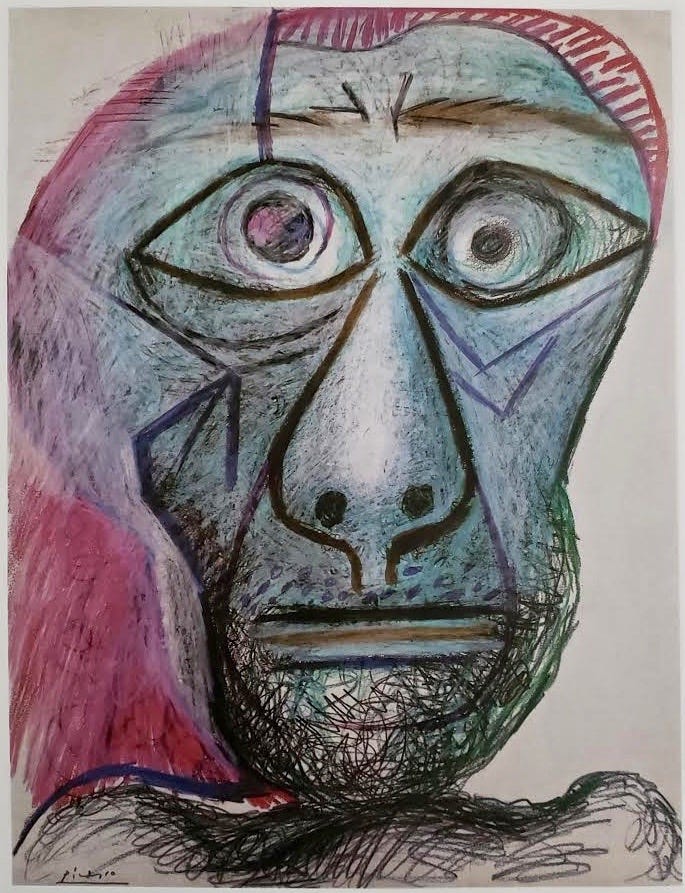
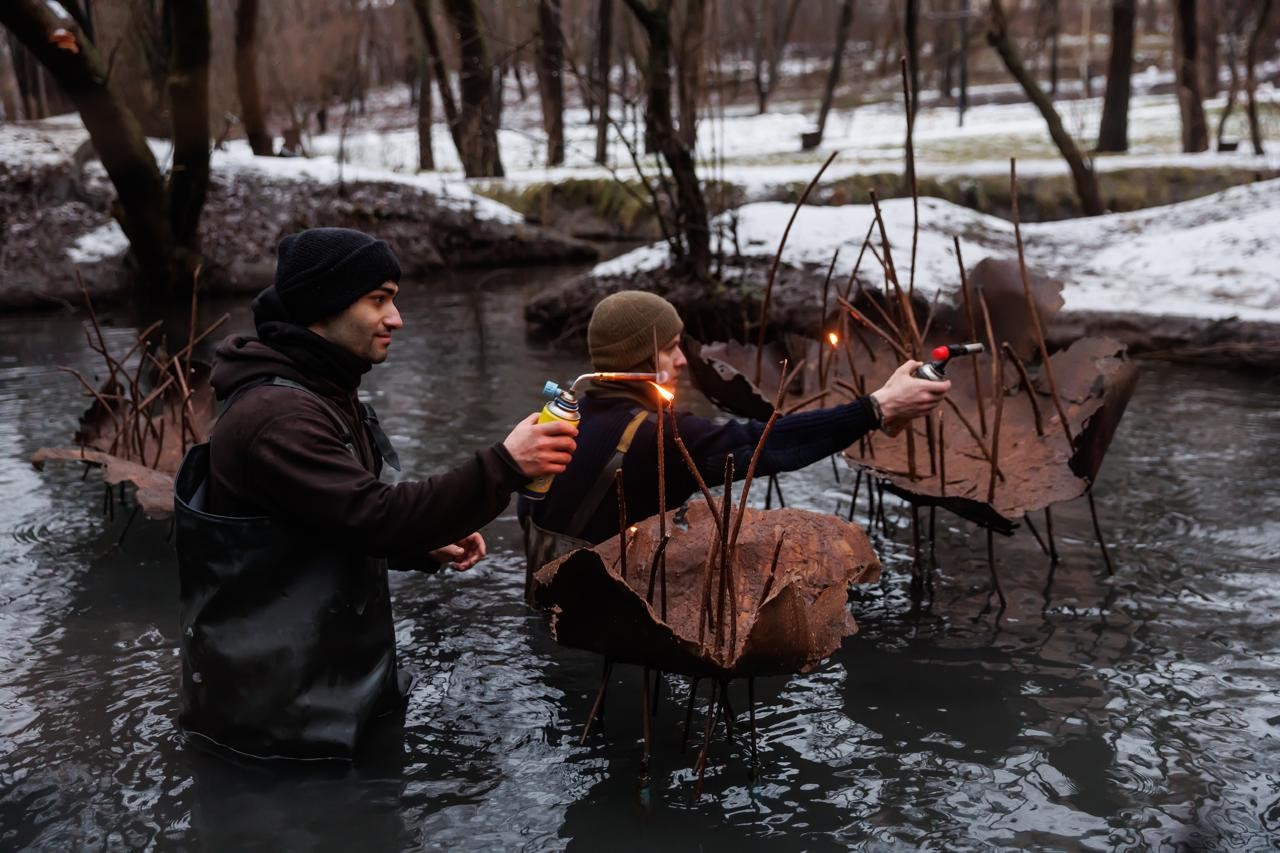
FREEZING IN THE RANCHO / image by Amalie Flynn

this year

i heard it’s freezing in the rancho
saw the fog in the pictures
i’m on the wrong side of the border this year
for dia de los muertos
trying to channel my grief
into arranging vivid orange cempasuchil
homemade móle on a hand embroidered Mexican cloth
for my bedroom ofrenda
this time it’s personal that i’m so far away
now i know first hand there’s nothing therapeutic
about sending money to buy velas P flores P alcohol

everyone is bundled against the cold
huddled around the fire
i mouth the words of the rosario
along with the video call
as i sip my cafe de olla
they pass around a bottle of homemade mezcal
not enough room for all the flowers in the family plot
it’s one person fuller este año
our departed are much beloved

i’m warm inside
pero pagaría con mi alma para estar alla
como el año pasadoPU wrapped up in a blanket
stumbling home on numb feet as the sun rises

are there seasons
where you arePUUUU Tío
is it raining tonight in Mictlan?


New Poetry by Jason Green: “Winter Haiku,” “Spring Haiku”

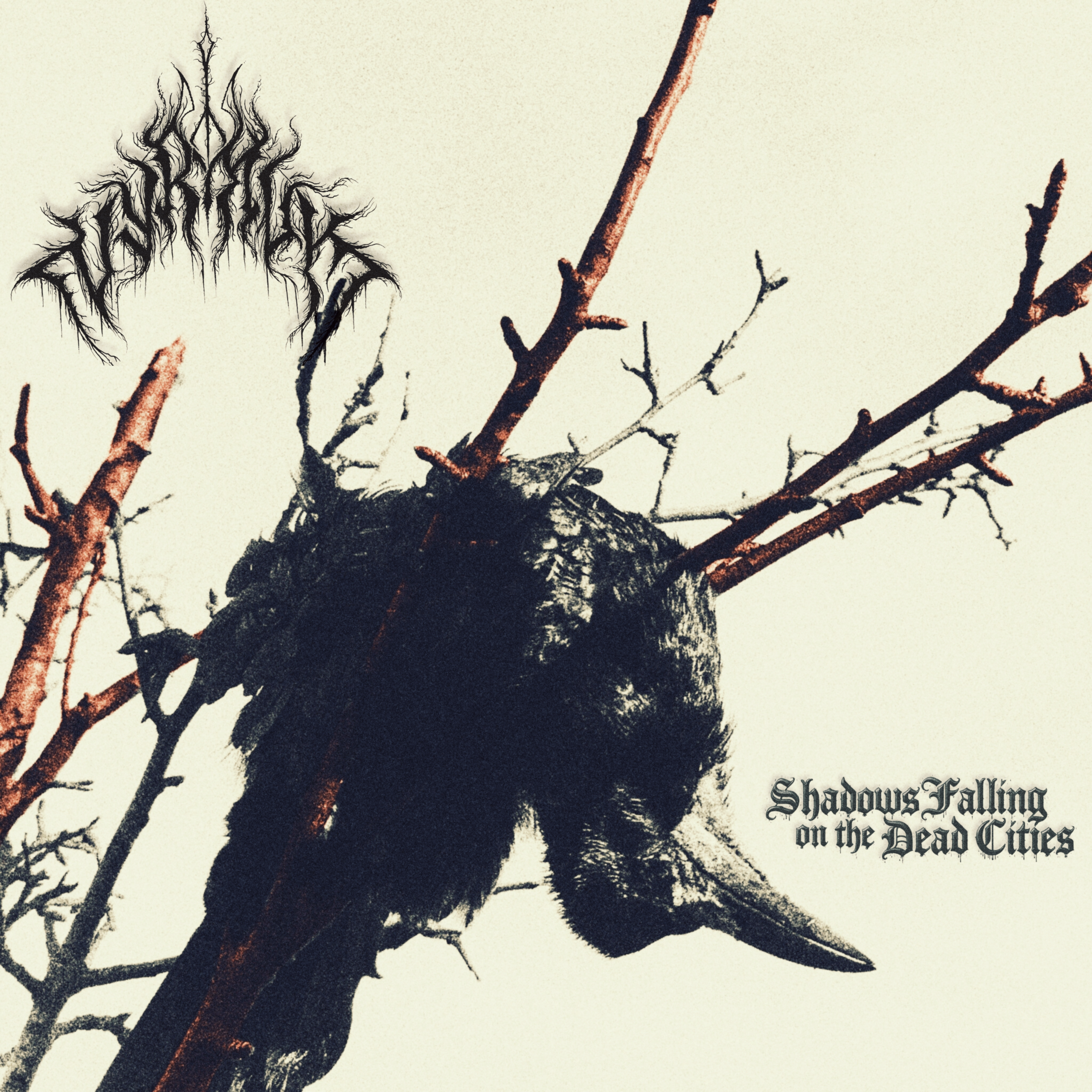
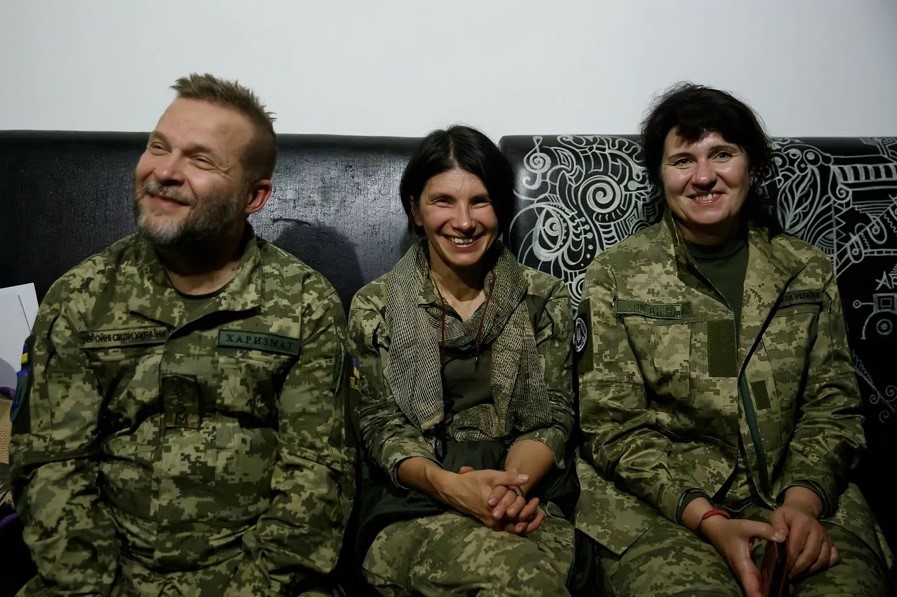
HAZE OF DESERT / image by Amalie Flynn

Winter Haiku

Seventy degree
December morning. God, I’d
love some cold weather.
——————————————–
The north wind brings a
layer of black smoke over
the camp each evening.
Sometimes we cough and
sometimes our eyes get red. We
just keep on breathing.
Who woulda thunk that
years later we’d still be out
here coughing and shit?
Not the congressmen
who fought against the burn pit
bill. America!
——————————————–
Hindu Kush mountains,
snow-capped and rising above
Mazar-i-Sharif.
At any other time,
this would be one of the most
beautiful scenes ever.
Instead, all I can
think about is my hatred
for President Bush.
——————————————–
We cough because we
sleep next to always burning
tires and chemicals.
Years from now we’ll drop
like flies and Congress will be
confused as to why.
——————————————–
Desolation is
not even the word I would
use to express this.
Flying over what
used to be Fallujah is
heartbreaking for us.
By “us,” I mean those
soldiers who can empathize
with the citizens.
There is no way that
every person down there
doesn’t hate us now.
——————————————–
It’s like Groundhog Day.
You wake up. You guard your small
piece of Afghan land.
You go to bed. Then
wake-up and do the same damn
thing, every single day.
Never gaining an
inch and never giving back.
Just biding our time.
——————————————–
I like to read books
on Oysters and steak. Then go
eat gray chow hall eggs.
——————————————–
New Year’s Day marks the
midway point of our Iraq
deployment. Jesus.
——————————————–
First sunrise brings a
flight to Tallil. I see a
small boy waving up.
I wave down in hopes
that my gesture will keep him
from hating us all.
——————————————–
I got a popcorn
machine for our movie nights.
Now we need butter.
Why dodge mortar fire
all day, then watch films about
war? What is going on?


Spring Haiku

Lengthening days and
darker mornings. More dust storms,
more rockets coming.
——————————————–
We pretend that at
home there was tranquility,
while in our bunkers.
——————————————–
Sand sticks in places
the balmy breeze takes it to
and showers don’t help.
——————————————–
I hear the whistle.
Through the haze of desert
sand, their death prayers.
——————————————–
The spring moon lights my
path as a camel spider
hides in my shadow.
——————————————–
Spring rains bring mud so
deep it could suck the boot right
off your fucking foot.
——————————————–
Muddy fields of sand
the rainy season is here
fuck this fucking place.
——————————————–
Watching from the sky
the balloon shows them setting
up a mortar. Shit.
Send out QRF
find out it was a hookah
glad we didn’t shoot.
——————————————–
He’s planting his fields
while carrying an AK.
Why is he shooting?
I’d be mad at us
too if I was just trying
to work and then this.
Maybe mad enough
to shoot randomly at three
soldiers in a truck.
——————————————–
Miry fields are more
than a nuisance to pissed-off
troops. Synecdoche.
——————————————–
We crossed the spring hills,
in a tiny CIA
plane flown by a dude.
He wore a backwards
baseball cap and wouldn’t look
ahead at the “road.”
We skirted the heights
of the Hindu Kush, barely
making it over.
This shit ain’t fun no
more. I’m ready to leave this
FOB, maybe by car.
——————————————–
We fly higher than
the kites they fly below us.
I’m bored, so I wave.
They don’t wave back up
at the infidel. Maybe
it’s the big rifle?
——————————————–
Chris died just a week
before Memorial day.
Irony. That’s all.
——————————————–
The poppies are in
full bloom and I’m popping pills.
Please help ease my pain.
A hole in my gut,
medics, wet gauze to dry gauze,
I need my morphine.
The shakes, not shitting,
but I’m feeling amazing.
Thank god for poppies.
——————————————–
Maple syrup doesn’t make
cardboard pancakes taste any
better. Fuck this place.
——————————————–
Powdered eggs and a
rubberized sausage make up
our Easter breakfast.
——————————————–
Flooded rivers and
muddy fields and all day we
stay wet and angry.


New Poetry by Wayne Karlin: “What Binds Us”

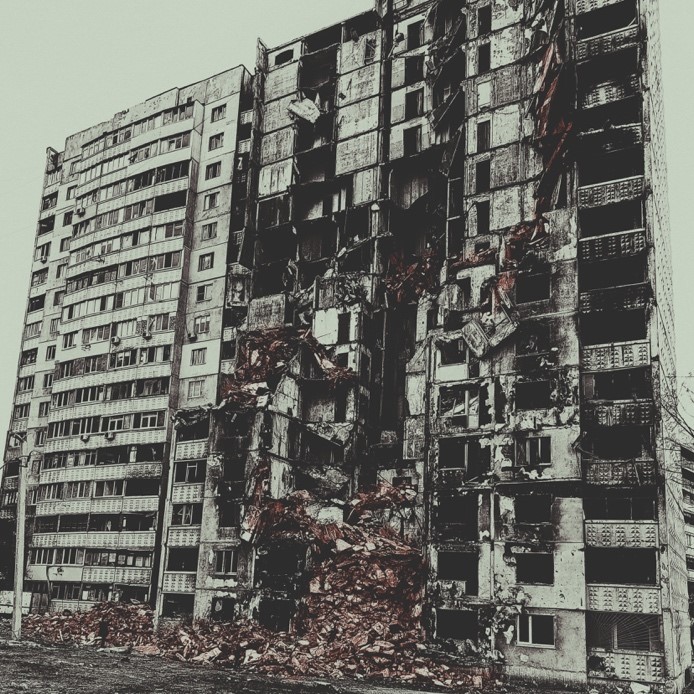
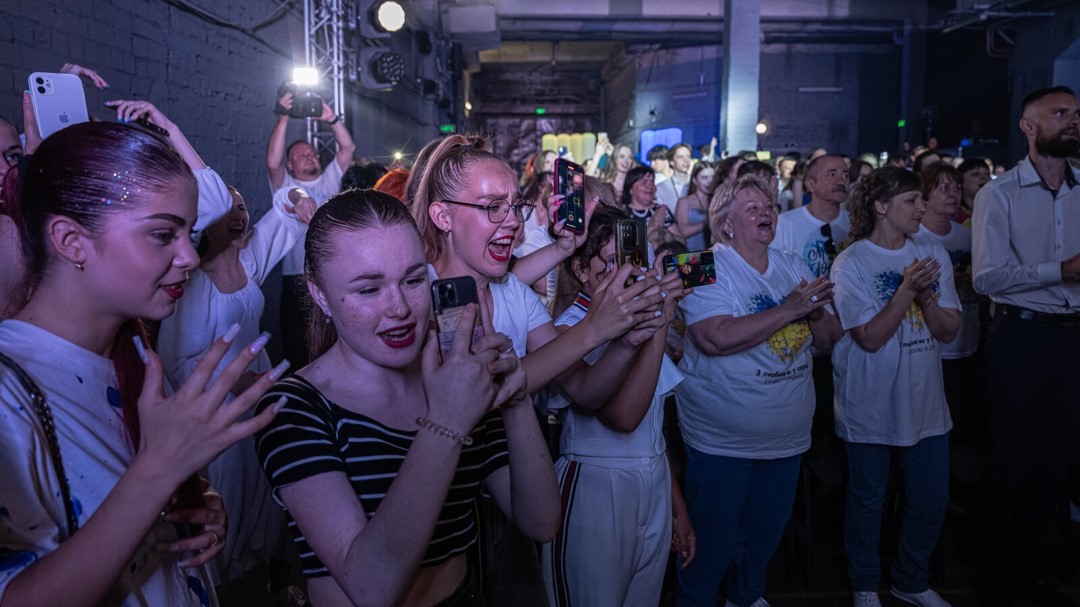
FROM THE BOMBS / image by Amalie Flynn

What Binds Us

I spent twenty-six years
in the jungle;
I was thirty years old
before I kissed a woman,
the Vietnamese poet said
and stared at
the American veterans
as if amazed at
what he had kissed instead.

In the war, he said,
his comrades had covered
his body with their own
to protect him
from the bombs
so he could finish
writing his poem,
although now
in his country
he fears there’s no one
who will understand
the language
in which it was written.


New Nonfiction by Jen Dreizehn: Anticipation

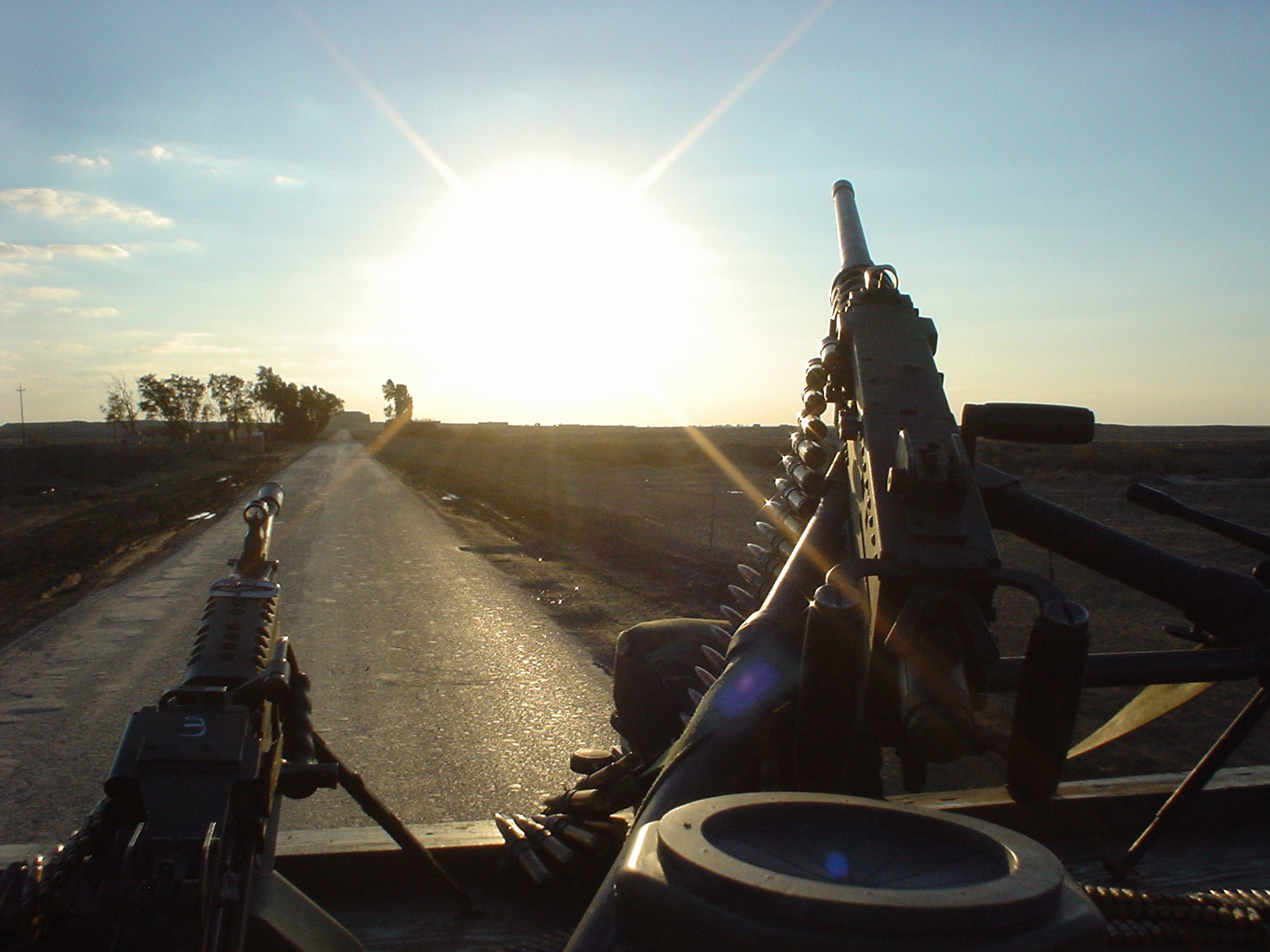
road and humvee


As a reserve unit we had a different family dynamic than the regular army. Since there were only three platoons in our company, the commander wanted to even out the women per platoon. My best friend and I were only two of ten females in our company. She was purposefully assigned to my squad. As a squad leader, this put me in an awkward position. Not only did Caitlin assume she’d receive special treatment in getting out of guard duty, but our friendship had been teetering since Matt proposed to me two months prior. He was young, dumb, and full of cum, but I loved him. These were my people; Caitlin with her buzz cut blonde hair and tall athletic frame and Matt with his dark skin, black hair, and very large…muscles.

March 19, 2003, I watched the bombings on CNN and on MSNBC I watched a Maintenance Company become prisoners of war. I heard President Bush declare cease fire on the radio. All of this happened while my army reserve unit waited in Fort Lewis, Washington. We missed the kickoff to the big game.

I arrived in Kuwait with 130 transportation soldiers on April 20th. We should have been in Turkey, but their country wouldn’t let us infill to Iraq from their southern border alongside the Kurdish Christians. Instead, we were attached to 4th Infantry Division in southern Iraq. Once in country, 4th ID never heard of us, didn’t need us – didn’t want us. We were assigned to provide convoy security and transportation of supplies to the other unwanted bastard children of Dick Cheney’s oil war: Czechia, Poland, Spain, El Salvador, and Mongolia.

Every day soldiers were killed in Iraq and convoys were the number one targets. Our enemy wasn’t the Iraqi Army nor was it ever the Iraqi people. Once Saddam Hussein was captured on December 13, 2003, insurgents traveled from Syria, Saudi Arabia, and Iran to flood Iraq with the opportunity to join the terrorist organization Al-Qaeda so they could attack US targets without needing a plane ticket or pilot’s license.  The enemy used these so-called “snipers.” They were untrained men with AK47s hiding behind a berm 200 meters from the road. Some used RPGs to penetrate armor. Others used IEDs. The first six months they would throw sandbags stuffed with car batteries from overpasses until they realized batteries don’t explode on their own. Once cellphone service was brought to Iraq at the end of 2003, explosive technology advanced rapidly. Dead animals were stuffed with mines and initiators while being placed on the side of our main supply routes and detonated by someone standing close enough for a cell signal. Up until this point I had only seen goats stiff with rigor mortis and unexploded mortar shells protruding out their ass.

A mission came down for twenty-four cargo trucks, three humvees, and a maintenance wrecker. It required sixty-one of our soldiers. Caitlin and Matt were also going. The mission was scheduled to leave in two days. We were picking up equipment in Kuwait and dropping it off at Al Taqaddum Airport, an airbase west of Baghdad that was referred to as TQ. Our two passenger cargo trucks were enormous. They could self load and offload connex boxes from a palletized load system. Ten tires, as high as my chin, pushed this beast over every terrain possible. When standing outside the turret manning a machine gun my torso would be eight feet off the ground. None of our vehicles had been uparmored yet. All of our humvees had soft tops like a convertible Corvette. My soldiers mounted plywood over each cabin and ratchet strapped tripods so we could attach a .50 caliber machine gun or M19 and call them gun trucks.

Seven of us rolled out Monday morning to pick up broken down humvees in Camp New York, Kuwait, a remote makeshift base ten miles south of the Iraq border. A captain there warned us that the unit we were supporting would ask us to take the equipment further north, but to leave it in TQ. The rest of our convoy picked up connexes in Camp New Jersey and we met up at Nav Star. This was a fuel point on the northern Kuwait border. It’s also a check point for convoy commanders and the MPs to give safety briefings. All sergeants and officers went to the briefing. I packed into the small trailer with other leaders and stared at the map on the wall. Due to the large size of our convoy, we had two clowns leading us. Manny from first platoon and Toro from third platoon. They were both platoon commanders and lieutenants, but didn’t command enough respect to be addressed by rank.

We listened to the speech heard many times before. “Wear the proper uniform. No driving in the dark. Do not pull over unless at a check point or for ten minutes for maintenance emergencies. Lock in a magazine, but don’t chamber a round. Watch out for black BMWs, red sedans, and white suburbans. No passing out food or water. Do not stop for children. Keep a look out for IEDs.”

Then the MPs gave their security brief of the area west of Baghdad. The MP pointed to the map as she explained recent attacks in each town we would pass. “Nav Star to Scania is amber alert. Most attacks are on civilian supply trucks and are from 21:00 – 06:00. Your main threat will be getting caught in the crossfire as MPs protect civilians. From Scania to Baghdad is red alert with most hits from 18:00 – 09:00 targeting military convoys. An intersection of the two supply routes MSR Jackson and ASR Tampa, just south of Baghdad International Airport, is the latest location of the majority of fatalities. From Baghdad to Fallujah red alert is also in effect. The only difference is that the insurgents don’t care what time of day it is. They don’t want us there and they will use all force to keep us from coming back.”

The MP warned us to stay alert because we need to be ready to get out of every situation. She reminded us to go over our recovery procedures because we “will” lose trucks. Everyone in the room laughed, not out of disbelief, but nervousness. This meeting could have only lasted five seconds and been summed up in just two words, “You’re fucked.”

The sun had set so we couldn’t leave until morning. A berm surrounded the compound in a bowl of dust and diesel. Our vehicles were staged in convoy order at the center. Fifty meters away, a line of engines rumbled, waiting to quench their thirst at the fuel point. I wiped a muddy mixture of dirt and sweat from my chin. The 115° heat cooled to 95°. Across the lot, behind rows of blue port-o-johns, Burger King staked their land, monopolizing soldiers’ hunger for home.

I went back to my truck to find Matt. I climbed on top of the warm cab and thought about what I’d say. Darkness descended beyond blaring stadium lights. The stars hid and the moon refused to shine. As I thought about what the MP said, I got scared. I didn’t want to die out here. I didn’t want anything to happen to Caitlin or Matt. What would I do if they were hit? How could I protect them? How could I stop them from bleeding out? I wanted their trucks right in front of me so I could see them at all times.

Frustrated with his absence, I got off my truck, walked up and down the lines of our convoy and found Matt hunched over a steering wheel, sleeping. I was so scared about what could happen that I got angry with him. I blamed him for not being there to panic with me. I apologized and explained what came out of the briefing. We slept on top of a connex together. Every night before we went to sleep, we prayed. It was my turn to pray, but I couldn’t. The Old Testament was written across the very sand I stood. They say there are no atheists in war, but the longer I stayed in Iraq the further I wanted to distance myself from a god who came from this land.


***


We rolled over the border at 06:00, Tuesday. Manny led the convoy in a gun truck with Caitlin standing outside the back manning a .50 cal. I drove first shift as Rodríguez, my driving partner, stood outside the turret and manned our SAW. I named our truck “George” and our SAW, “Jorge.” I don’t know why we always named our equipment. Perhaps personifying them made them a reliable member of our team?

We stopped at a check point in Talil for fuel. This is next to Ur, which is the birthplace of Abraham, the patriarch of Jewish, Christian, and Muslim faiths. Toro was in the humvee behind me.  As we waited for everyone to finish fueling, I walked back to talk.  We could see Matt six trucks back standing about 10 feet off the road. Toro asked me what I’d do if Matt stepped on a land mine. He’s always full of drama. He made a smartass remark and said I’d just flip through my little black book and say “next.”

I looked at Matt, then at Toro and said, “I wouldn’t be with anyone. All of you guys are idiots.”


***


We continued north on MSR Jackson and pulled over so one of the trucks could change a tire. Everyone got out to pull security. Toward the end of the convoy an Iraqi civilian walked up to a soldier and tried to take his weapon. The call came over the radio, so I alerted Manny in the lead vehicle. I asked the soldiers if they shot the Iraqi and they said no. When Manny arrived to assess the situation, the Iraqi was pinned to the ground and his ankles were duct taped together. As Manny tried to take over, the man kept trying to grab his rifle and knife. His valiant act turned to sobbing and rubbing sand in his face and mouth. We heard shots in the distance, but couldn’t tell if they were being fired at. Manny had us move the convoy five miles up the road as he took care of the Iraqi. Caitlin later told me that Manny looked scared and she thought he was going to crap his pants. He told them to get the humvee ready as Iraqi police were taking over. Manny jumped off the man and into the humvee and sped off.

Our speed picked up to 50 MPH. This time I manned Jorge while Rodríguez drove. I knew the intersection of MSR Jackson and ASR Tampa was coming up. I kept lookout as we passed through layers of overpasses, on ramps, off ramps, and underpasses, like a pretzel. The sides had ditches that could easily be used as fighting positions. The road had craters and patches of burnt metal. Most of the dividers were crushed. Once we got through, there was a convoy of marines guarding the other side, waiting for the first bullet to fly, but it never came.

It only took us another fifteen minutes to get to Baghdad International. Just outside the gate we stopped due to traffic. I sat on top of George and looked at a small boy standing next to our truck. He was about four, wearing a long white robe without shoes. In his arms he carried peanuts, soda, and candy that others had thrown to him in passing convoys. He looked up at me and said “water, water.”

I had a stack next to me so I tossed him a liter. He placed all the junk food into his robe and folded it up like a basket. Then he picked up the water and stumbled off. I looked at him and thought, my children would never have to beg for food or water. They would never be without shoes. Does this little boy know what toys are? Does he have someone that hugs him and tells him he is loved?

We didn’t want to risk driving at night, so we stayed in BIAP. Toro convinced Manny that we should leave at 04:30, drive to the edge of Fallujah, wait on the side of the road until the sun came up, then drive as fast as we could through town. We all knew that the sun comes up at 06:30. We also knew that TQ was only 50 miles away. The logic was not working for any of us.


***


The next morning, we rolled out of BIAP at 04:30. As I manned Jorge, I turned on my night vision goggles. There was no moon, so vision was limited. All I could see was barren farm land. Both Matt and Caitlin were in front of me, so I could keep an eye on them. We pulled over as planned. All lights and engines were off. Everyone dismounted and pulled security. I stayed on top of George for a better view. No one spoke.

Caitlin broke the silence and whispered, “Hey Sergeant Schick. Are Manny and Toro writing a book?”

“About what,” I asked.

“Ten Ways to Get Killed in Iraq. Let’s review what we’re doing wrong. We’re driving in the dark at prime ambush hours. We’re now sitting targets on the side of the road. As we sit here, each vehicle that drives by can warn Fallujah that we’re on our way.”

All we could do is laugh. I suppose that’s what soldiers do, laugh in the face of adversity. A group of three white suburbans passed.

At day break we moved forward, into Fallujah. On the right were gorgeous condos two stories high with balconies. Trees lined the front of the buildings. On the left were run down apartments, street vendors, and shops. We drove down the four-lane road with no traffic. Men stood along the street glaring at us. I looked from side to side expecting someone to jump out and say “boo!” but the only sound was engines rumbling. The men remained still. They didn’t walk. They didn’t talk. They didn’t shake their fists. They stood there as if someone had snapped their fingers and time froze.

I wanted to take a picture of the beautiful mosque in the center of town, but I was afraid they might snap out of it and decide to shoot. There was a mural in the middle of the road of Saddam. His face had been scraped off and spray painted black. Someone pasted a poster of Saddam’s head on top of it. A bridge crossing the Euphrates River was in sight. Shortly after, our maintenance wrecker called over the radio, the last truck had made it through. That’s it? We did it! No RPGs, no shots fired.

As we entered TQ airbase, four Apaches flew by. They patrolled the base all day. All the trucks offloaded except our seven from Camp New York. My cargo wasn’t supposed to be left there. Instead, it belonged to a base ten miles north on the other side of RPG Alley. We waited around for hours while Manny did everything to have our load dropped here instead of at the next camp. We parked next to a building painted with twenty black silhouettes. We didn’t know what it was used for, but it looked like a firing line. The field next to us was filled with broken down MiG fighter jets. They had been dug up months earlier when someone found them buried in the desert. Their long, angular fuselage, painted in a dull, radar-deflecting gray, could cut through the air like a blade. One of the jets had a penis drawn on the cockpit glass covered in grime. This product of the Cold War’s arms race had a sleek and menacing silhouette. I was amazed that some of the most powerful jets in the world were sitting there, useless.

Manny directed us to drive over to the airstrip and drop our load. Rodríguez stood behind our truck signaling as I lowered the equipment to the dirt. A bright light flashed in my mirror. Then – boom. Our truck shook and I looked out the window to see a huge fireball turn into a thirty-foot tall mushroom cloud  next to the We never found out what caused the explosion, but one thing’s for sure, we weren’t in it.

We dropped our load and joined the rest of the convoy. There was plenty of sunlight and we had a long drive back to base camp, yet Manny insisted we stay here for the night. It didn’t make sense. We wanted to get the hell out of there. Later we found out that we weren’t supposed to drive through Fallujah. The town was off limits. Instead, the MPs could guide us through an alternate route connecting to MSR Jackson. The problem was the MPs weren’t going to take us for two more days.

Manny didn’t want to sit around, so he decided we’d leave in the morning at daybreak and drive through Fallujah. With the sun directly above us we wanted to get it over with now, but Manny stood his ground and we stayed. TQ sits on top of a hill with Habbaniah Lake on one side and Fallujah on the other. As I looked out over the city, gun shots erupted. Another convoy had left ten minutes ago and now they were fighting for their lives. The shots went on till 02:00 the next morning. Matt and I continued with our nightly prayer. We prayed for the protection of the other convoys leaving, for our safety as we slept, and thanked God that we didn’t leave. Matt pointed out that the flares looked cool, like fireworks, but there wasn’t anything to celebrate. Someone could have been dying.


***


05:00 wake up was silent. No more shots. No more flares. As we got ready to leave, I put my arms around Matt and held him for five minutes. We didn’t say a word, yet in our silence we told each other things words can’t describe. I gave him a kiss and climbed into the turret. Rodríguez drove again. As we lined up our trucks I put on my bullet proof vest. The 200-round drum that holds ammo for Jorge was busted open. I didn’t have any way to strap the additional SAW ammo to me, so I pulled it out in rows of 100 links and strapped it across my chest like Rambo. I looked ridiculous, but if I had to jump out of my truck, I would have plenty of ammo.

I grabbed a Red Bull out of the cooler and passed one to Rodríguez. It’s the closest thing to a beer we were allowed to drink. I sat on top of George and sipped. On our right was a convoy of tanks parked in the dirt. The soldiers looked at us as we got ready to leave. They stared at me with my links of ammo around my chest. I know what they were thinking, but I had no way of conveying my ammo carrying situation, so I took the stares, the pointing, and the laughs.

We left the gate and the guards waved goodbye to each of us with fake smiles and a “give them hell” fist in the air. I stood outside the turret with Jorge clenched in my fists. I looked down at my hand and realized I was losing circulation in my arm. I loosened my grip and tried to relax. I flicked off the safety and pointed the barrel toward the ground.

I squinted at the wind then adjusted the bandana across my face to keep debris and bugs from tearing into my skin. Caitlin stood in back of the humvee in front of me manning the .50 cal, with her blank stare toward the horizon. I knew what she was thinking and feeling.

My mind started racing. I wanted to snap my fingers, freeze time, put us in Kuwait, and feel safe again. Cars zoomed by, going against traffic parallel to us with their hazard lights flashing. I imagined them warning the town of our arrival. Staring at Caitlin caused tears to well up in my eyes. Then I finally snapped out of it. What’s wrong with me? I don’t panic. I don’t cry. I am always in charge. God has taken care of us through every foolish situation we’ve gotten ourselves into. Why would He stop now at the end of our mission? I quickly prayed, “God protect us and don’t leave us now.”

We came to the bridge over the Euphrates. The sun was rising and a beautiful orange sparkle reflected off the water. Mist was in the air, engines roared, the wind blew harder, our wheels raced, and a Christmas song was stuck in my head. Our trucks were so loud I knew no one could hear me, so I went ahead and sang the chorus to “O Holy Night:”

“Fall on your knees.

O hear the angels voices.

O night divine.

O night when Christ was born.”

It felt odd singing this Christian song, by someone who didn’t want to be a Christian, in a nation that didn’t celebrate Christmas.  As we entered town, I took off my bandana to show my face and I pulled my hair out of its bun to show my long blonde hair. The insurgents hate women who show their face, so I wanted to make sure they knew I was a woman as I looked them straight in the eyes.

Just as before, the men froze next to the road. My eyes panned up and down each building. Every window was empty, each balcony vacant. I could see Matt had already made it to MSR Jackson and was out of the town. Another 500 meters and it would be over for me. A man stood at the very end of the town with his hands behind his back. He wore blue oil-stained pants and a filthy white shirt. The hate in his eyes beamed past his rugged beard. Our eyes locked onto each other as our convoy slowed for the turn. I stayed focused, waiting for him to make the first move. He stood there, watching, as I exited town.

Free at last I looked back counting each truck that turned onto MSR Jackson. As the last gun truck made its way into the turn a man threw a rock at the driver and hit him in the neck. Toro laughed loudly and teased, “Dude, you got stoned in Fallujah!”


***


We made it back to base. The guys couldn’t wait to joke around and share the near misses with death. Outside every tent you could hear shouts:

“Oh my god!”

“What the hell?”

“How is that possible?”


New Nonfiction from Jerad W. Alexander: An Elegy for Videotape

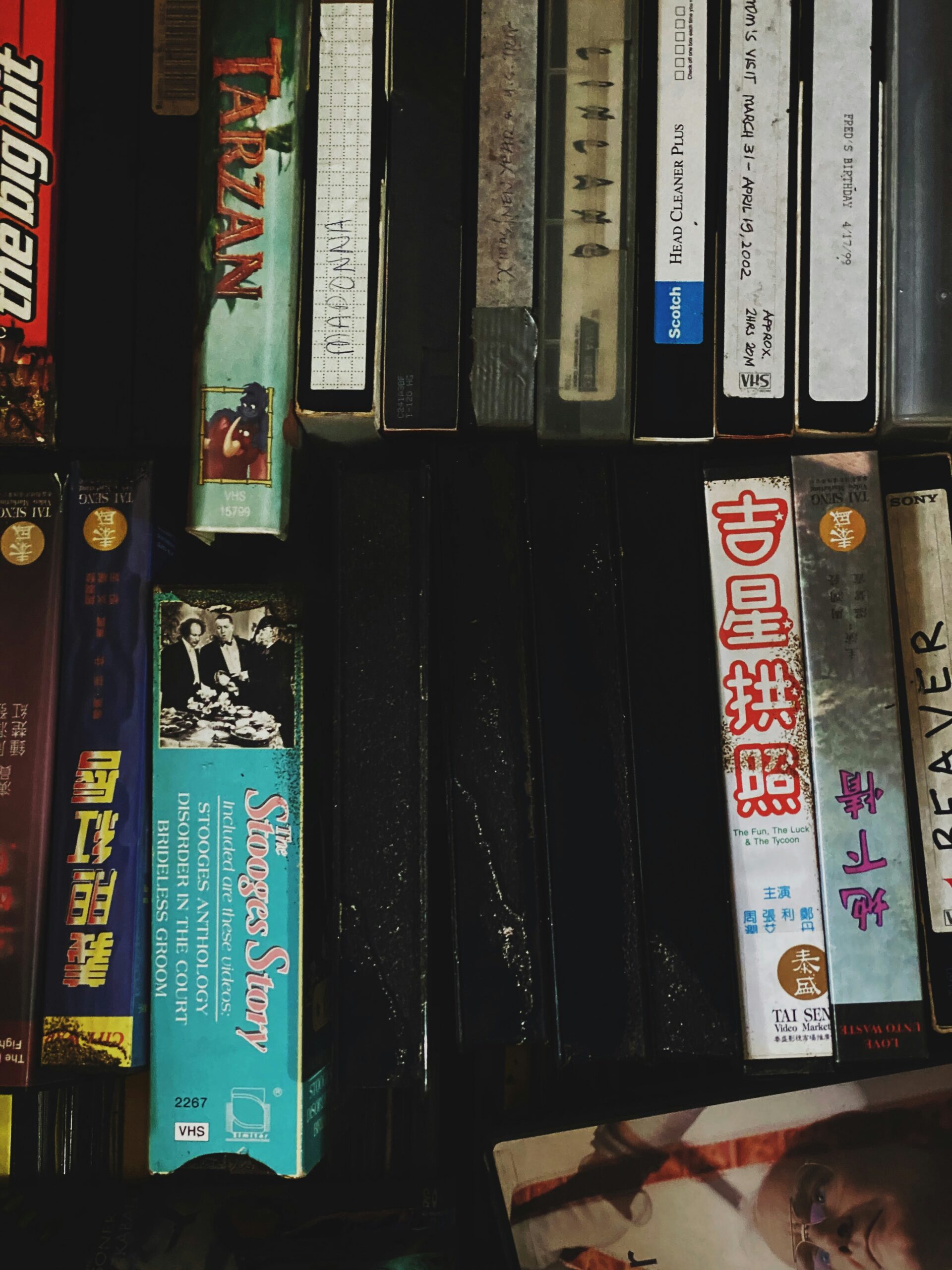
video tapes


Scott found the videotapes in his garage and brought them into the kitchen. We stacked the VHS in a wine box and the little Hi8 tapes in a gray shoebox for a pair of boots that belonged to his wife Tiffany. The wine box was mine. I’d given him the last three bottles—a syrah, a cabernet, and a red blend. Party gifts I meant to give away to others but didn’t for reason I couldn’t remember.

We could have labeled the boxes “before” and “after.” Before the end of childhood and after. When Doug was around and after he was gone.

I folded the flaps of the wine box one over the other until they made a big plus sign and carried the boxes across the brown front lawn to my car. Then we played Uno in the kitchen, gossiping about a friend we don’t see any more but rarely reach out to either. Call it one of those things.

~

I learned how to digitize videotapes after my dad died. He had bins full of them—Super Bowls, old HBO films, an odd double feature of Full Metal Jacket and The Piano, midnight docs on alien conspiracies and mystery tapes with no labels at all; jarring cuts in the middle of Mad About You to an episode of The X-Files, the artifacts of someone who didn’t want to spend money or time buying a new tape. I bought a VCR and all the cables and software and learned the procedures. I figured saving the media would preserve him in some small way and trashing them just seemed wrong in the moment somehow. I don’t know.

I must have digitized three dozen tapes. It took weeks, but it wasn’t all-consuming. Just put a tape in, start the recording on a laptop connected to the player, and let it work in the background. I’m not sure I would have finished it otherwise. I threw out the tapes afterward but kept the double feature. I remembered the tape from the shelves in the den of his California duplex where I lived before I met Scott and Doug. It’s sitting in my closet unwatched.

~

There were five of us: Scott, Billy, me, David, and Doug. I met Doug in English class at the start of my junior year of high school. He had black hair and mild acne. My memory pulls up a wardrobe of grays and browns over standard-issue jeans, but old pictures show him in white t-shirts or in cheap ball caps. Such is memory. He was fit, but by no means a jock. He liked science fiction and computers and comics, but you’d never know it at first glance. He hid his personality behind taciturn walls—emotionless and rigid, projecting a subtle air of disinterest or even mild annoyance. But sometimes the mortar would crumble and a light would emerge from his eyes as his voice warmed into questions about one thing or another—maybe about Star Wars or an old war film he’d recently watched, or into some casual observation about a girl in class he liked punctuated with meek laughter uttered as a hiss through his teeth, his eyes narrowing and cheeks erupting red as if he just told a secret and had become instantly embarrassed by it.

Doug’s dad was a career soldier who always seemed to be elsewhere. He missed his dad and spoke about him with a kind of pride mixed with subtle despair, as if his absence was causing unsaid wrongs to go on being wrong. He had a brother who lived with an uncle in Pennsylvania. There was a story there somewhere, maybe even a scandal—my guess was always shoplifting—but he never elaborated. He talked to me about his mother only once. She had died in Korea when they were little. He lived with his stepmother when I met him, a woman with dirty-blonde hair who smoked cigarettes from a La-Z-Boy in their living room. She had a daughter from a previous marriage. A popular girl. A cheerleader. I had a crush on her briefly, but I knew better.

I met Scott through Doug one Saturday night in October. Doug invited me to a laser-tag place behind the mall. After we blew our money, he phoned Scott from a payphone for a ride home. I remember a lot of begging, lots of “Come on, man,” his trademark sighs whispered into the black phone handset. Scott pulled up about ten minutes later in his ’88 four-banger Mustang complaining about all the rides he was giving out. He had the double-edged fortune of being the only one of us with a car and Doug had apparently blown through a lot of favors. To his credit, Scott had a hard time saying no.

I called shotgun and was surprised no one complained. I never considered the possibility Doug might have wanted the front seat or was at least owed it by virtue of knowing Scott, who I didn’t know at all. It was a decision made subconsciously. Call it a flex of teenage arrogance, or a lack of manners. But Doug never said a word either. He seemed was resigned to it, or even expected it, the manifestation of a lack of confidence, an unwillingness to take up his own space, embarrassed by the notion.

My friendship with Scott had formed on its own terms by New Years and I found myself with him more often. Call it a polarity shift. I rode to school and back with Scott for the rest of high school, always up front. We didn’t always know how Doug got home. We often stopped to pick him up if we saw him walking home. When we parked in front of his house he’d trudge to the front door with a tense mouth and sad eyes, slipping through the front door to prevent his stepmom’s Pomeranian from bolting into the fresh air from the secondhand smoke of their living room. We joked that the dog was begging us, anyone, to set it free. Sometimes Doug laughed; more often he didn’t. Other times he insisted with a flat voice, the walls up strong, that he wanted to walk home alone.

~

The earliest recording on Scott’s VHS tapes is of a birthday party at a Showbiz Pizza Place, a kitschy arcade and pizza parlor. The camcorder timestamp reads July 6, 1989, but who could ever remember how to set those things? Scott looks to be about ten or eleven. He has the cherubic face of a kid who’d fit perfectly in a spinoff to The Goonies.

The next recording was much later. New Year’s Eve 1996. Our first one. Scott always brought out the camera on New Year’s. For him the holiday seemed like a moment in time when some rare magic in the night might shift our world in grand ways and he wanted to capture it as it happened. I suppose I could say I felt the same. I miss that optimism. I find footage of at least a half-dozen New Year’s Eve parties; I’m in most of them. I haven’t seen the footage in over a decade or more but remember that first one well. I recognize the soft living room of Scott’s mothers’ house in the suburbs. That Christmas tree. Those green couches. His parents were divorced by then, his sister off to college. I see myself on the couch—sixteen and skinny, a narrow chin, a thick mop of dark brown hair, a slouching awkwardness and dark eyes. Billy is there too. Round eyeglasses. Braces. A reedy voice that hadn’t quite broken into adulthood yet. A prep school wardrobe that hid his future in the arts. Billy is the friend we gossiped about later, the one we don’t see much of anymore.

Shawn arrives but doesn’t stay long. A class ahead of us, it always felt like Shawn had a foot aimed at a better party elsewhere. I suppose that’s probably true. Scott and I were stunningly tame teenagers. We had no vices. Shawn would get us banned from the local mall for three months after yelling profanity at the employees of the Disney Store as a prank. Bored suburban cops and mall security surrounded us like we were soldiers of some local gang they’d spun themselves into believing was real. We joke about it now. Some years ago, I called mall security to get the Polaroid mugshots they took of us. The call didn’t last long.

JoAnn and Katie appear in the video a little later. Friends of Scott and Billy, though I think Scott had something more in mind with JoAnn—a crush he was too shy or scared to act on. Their hair was almost identical: blonde, straight, and cut to bobs just above their shoulder. This was the mid-90s, the era of “The Rachel.” Katie was the softer of the two, more thoughtful. JoAnn could be blunt and impetuous, as if it was JoAnn’s world and we were all just living in it. Esotropia canted her left eye toward the bridge of her nose. I was always amazed by how little it seemed to matter to her, though I know now that couldn’t possibly have been true. In the video they sit together and watch some concert for one song while No Doubt’s “Don’t Speak” plays on the stereo. Billy mouths the lyrics from a bean bag chair nearby until JoAnn kills the music to listen to the television. No one has the guts to complain. Their friendship with JoAnn wouldn’t last the summer, dying on some petty teenage vine.

And there’s Doug. See the slightly baggy polo shirt. The striped one with the browns and greens locked in my memory. He seems happy at first, almost manic. He arm-wrestles Billy with one hand while eating a Rice Krispie treat with the other. But he drifts into melancholy sometime later, after we had counted down the last seconds of the year; his eyes aimed at the floor as if caught by some old inner criticism made new. Watching him, I remember the mornings at school where he’d stand waiting for the bell dead center in a mob of kids who were strangers to him, his eyes aimed at the floor in the same way. Scott or I would try to coax him to join us, his friends, but he wouldn’t. Eventually, we rolled our eyes and called it Doug being Doug. We stopped trying.

The tape ends. I put in another.

~

I have to admit this: Sometimes we didn’t stop at all if one of us spotted Doug trudging hopelessly toward home after school. “There’s Doug,” one of us might say. But we would tool past anyway and leave the sentiment lingering unsaid, his eyes unacknowledged in the sideview mirror, his depression unbearable.

~

Scott, David and I had dinner at a bougie burger place the night before I picked up his tapes. David wasn’t in the first video, but he would appear in many others. We called him Spock back then, his high school haircut not far from the Star Trek character. He has long hair and a thick beard and about twenty pounds of added muscle now, but we still call him Spock occasionally.

We don’t get together or even talk as much as we used to. I live in New York; David and Scott live outside Atlanta. Even though they live relatively close to each other, they both have careers and wives and so little time, becoming comfortable with the general home-body inertia of their 40s. It’s probably why we don’t talk to Billy much anymore. Or maybe why he doesn’t talk to us.

Whenever Doug arrives in conversation, which he invariably does, we talk about him as if blowing on the embers of a fading campfire. Twenty-five years have passed since we last saw him, and yet we’re still trying to examine the channels of his life, of what we know and remember of it, of what we were incapable of seeing then. Such is the hold he has. But memory is fickle and time is cruel. Sitting at Bob’s Burger Bar, what we remember about of Doug’s life, the fading impressions of a teenage boy’s troubled inner self, has been attritted by the passage of our own stories. We try to apply the wisdom we didn’t have then to memories we barely retain now.

We speculate that—

He suffered from depression but had no means of identifying or treating it compassionately.

He blamed himself for every perceived rejection.

He treated love as if it was a gift purchased through conformity. I tell them that Doug once told me he wanted to be a doctor, then later a lawyer, two fields he expressed no real interest in. “But that’s what people want,” he said bitterly.

He had no space to learn about himself without judgement.

His stepmother treated him like the unwanted spare child and his father wasn’t around enough to provide a balancing force.

He lived in a house where he felt very alone.

Scott tells us he visited a psychic some years back where he showed her a picture of Doug while offering no context. She looked at the photo a moment and seemed troubled by it.

“This person is very angry,” he said she said. “He keeps saying ‘why did he marry that woman.’”

David and I don’t know what else to say.

~

Along with the tapes, Scott gave me a few dusty albums filled with photos of us from our teens to our early twenties, stopping abruptly around 2002 or so. Wondering why we stopped taking photos, we immediately blamed it on the evolution of digital media superseding the physical. But even then, none of us have folders of photos of us on hard drives anywhere. I explained maybe we stopped seeing our lives as novel and worthy of capturing. I also wonder if maybe a jadedness didn’t take hold, but this feels precious.

In the albums, I find a photo of the last time I saw Doug—New Year’s Eve of 1998. Another party. I was in a Marine private first class by then. Doug was an ROTC cadet at North Georgia College. In the picture, I’m carrying him across my shoulders in a fireman’s carry like I might carry a wounded comrade. I apply special meaning to the photo, a final tribute. But I realize later it’s not the last time I had seen Doug. That had happened at a lake trip the following summer; I find evidence of it in Scott’s albums. I can only dig out vague memories of the trip—a humid weekend where I had managed to flee the Marines for a few days. I can’t remember a thing that was said between us, there aren’t enough photos, but I know it’s in there somewhere. Maybe if I only stare at them hard enough.

~

I bought an old Hi8 camcorder to digitize the second box of tapes. Footage of Doug’s final New Year’s Eve, Y2K, was on one of them. I sifted through lots of birthdays and road trips to Florida and Scott’s college girlfriend Sonja. I was in a lot of it, shy and foul-mouthed in equal measure. It was hard to watch myself.

Doug’s appearance in Scott’s videos diminishes over time. I suppose we could judge ourselves for the distancing, but that only works in the context of what comes. We could not predict the future. We could not see inside Doug’s heart, the perceptions he must have felt of being unworthy of acceptance. Where does our responsibility to a friend begin? Where does it end? I think it’s fair to say we were leaving him behind. Maybe he felt he didn’t know how to keep up.

I find the party footage. I wasn’t there; I spent that night drunk on a pier in Naples, Italy. But Doug is there. I watch him drift around the edges in a white t-shirt and holding a blue Solo cup. He doesn’t interact with anyone, nor does he acknowledge it when Scott lingers on him with the camera. There’s a finality to his expression, but it’s one I recognize only after-the-fact, as if I believe he’s already accepted the ugly narrative within him which none of us are capable or brave enough to challenge.

Later, on the green couch in his mothers’ living room, Scott records a year-in-review with David and his girlfriend Alicia. Silly riffing as nineteen- and twenty-year-olds reached for unearned introspection. Doug’s last recorded words are there, but even then he remained unknowable, uninspired, his voice soft and powerless behind the walls. I had to tilt my head to the speaker to hear him.

Scott: What do you have to say?

Doug: Ninety-nine was… I learned a lot.

Scott: Such as?

Doug: Stuff. 2000… Just another year.

Scott: Expectations for next year?

Doug: Same… It’ll be just the same, really.

He sits back and crosses his arms, finished. Spock asks him if he’s going to finally get his license this year. Even Spock knew of Doug’s endless need for rides. But Doug doesn’t respond and the scene ends. The walls would allow us nothing more.

~

David learned about it first three weeks later. He was a freshman at Georgia Tech. A high school acquaintance attending North Georgia College with Doug reached out by email to say that Doug was dead. David called Scott right away. Scott tells me later that he broke down on the phone.

David emailed me the news. I was at sea, steaming for Crete from Naples. At first I thought it was a dumb prank, but David wasn’t one for jokes. At least none that crass. I printed the email and called David from a bank of phones just off the mess deck.

David doesn’t remember this conversation, which briefly makes me doubt my own memory, but I know it happened. I remember the obnoxious delay in the call where I’d have to pause to let his responses reach me before asking another question, otherwise the call would fall out of sync and we’d step on each other’s sentences.

After the call, I went to the ship’s smoking area, a long ramp that led from the hangar bay to the lower storage bay. The hangar smelled like grease and exhaust. It was night; the ramp was lit with a dim red light. I sat on the rough black ramp with my knees up and my boots out in front of me and smoked myself hoarse. Eventually, I learned Doug had gotten into some hazy minor trouble with the ROTC cadre, then his grades slipped and the National Guard pulled his scholarship. With no means to pay for college, at least any means known to him, he was staring down the prospect of returning to his stepmother’s house and the embarrassment of failure.

On January 12, a college friend asked him to go skeet shooting. On the way, they stopped at a Wal Mart in town and his friend went inside. Doug remained behind with the shotgun. Rejection and helplessness intersected rotten opportunity.

~

I returned home in March just after my twentieth birthday. I rolled into town after sunset and drove straight to Scott’s house, spinning donuts in the cul-de-sac and honking the horn until he came out. There’s no video of it, but I so wish there was. I was happy to be home.

Scott took me to the cemetery near the interstate. He told me he was angry over not being asked to be a pall bearer. “They got a bunch of strangers to do it; they never even bother to ask us. It should have been us. We were his friends.” He said he found his stepsisters’ tears disgusting. Unfair or not, it was how he felt. He’s still angry. “They treated him like shit,” he said over his burger years later.

I went back to the cemetery one sunny day a few days later. Something propelled me that direction. Call it a need to speak unheard. I touched the grass and spoke to the headstone. Confusion and grief converted into shallow anger and disgust and bravado. I called him a coward. “What the fuck are you doing here?” I asked. I’m not sure I like who I was then, but I’m not sure I was wrong either. It’s something I wrestle with even now. Perhaps it was wrong of me to have berated his choice as an act of cowardice, especially considering the cold brutal calculus he made in that moment in a car outside a Wal Mart in winter rural Georgia. I suppose in the moment I figured the cowardice lived in not facing himself directly. I suppose that despite all the rides he bummed, he couldn’t ask for the ride that mattered, the one that offered a way out. Going through Scott’s tapes, though, I’m scared there’s a scene where he asked for it between the lines. I hope I never find it. I’m scared of what it might mean if he had and we were just too cowardly to answer.

~

I finished transferring the tapes about a week after the New Year’s 2025. The tapes run from late 1996 to about 2005 or 2006, maybe a little after, but not by much. I see a lot of bad cuts, the places where Scott had replaced one moment with another, too cheap or broke or just too rushed to buy a new tape. I see an old girlfriend, a lot of dark bars. Before I went through them, I joked that I’d probably find most of it cringy. I wasn’t wrong. I do. Some of it, anyway. Mainly I see myself now in contrast to who I was then. I want to tell myself to be different, but I’m not sure in what way. I’m hard on myself. I want to hide from the flaws I see in the gaps of my clumsy late teens and early twenties. I haven’t watched them since.

I put all the tapes into the wine box and mailed them back. I shared a link to a cloud folder with the files with Scott and David. Scott told me he got them; David didn’t respond, but I wasn’t surprised. He isn’t much for nostalgia, and I’m still not sure anyone wants to see how young we were. I don’t have an email for Billy. I asked Scott, but he didn’t have one either. I thought about finding an email for Doug’s stepmother or stepsister and sending them some of the videos, the ones that matter. I’ve thought about it, but I haven’t done it. I won’t.

I won’t.


New Review by Adrian Bonenberger: Fury, The Tank, and Forgiveness

One of the first things I published on Wrath-Bearing Tree was a negative review of the movie Fury, based entirely on its two minute preview. How early in the publication’s history was the review published? I refer to WBT as a blog.

The negative review I can say with the benefit hindsight is average as negative reviews go; not as witty as I thought I was being at the time, insightful but only on a superficial level (there being different levels of insight). I wasn’t being edgy for clicks, I wasn’t trying to do something noble, I just figured out based on the sort of war movie I’d seen before that Fury was going to be a particular type of film, and it ended up being that film, about exactly as I’d called it. So what! Big deal.

A lot of people who like the sort of movie Fury was supposed to be seem to have enjoyed Fury. No surprise there. Few of them probably appreciated my too-clever-by-half review. Nevertheless it remains one of the most-read pieces on the site, year in and year out, because — and this is key — as I based the review on a two minute preview, it was one of the first reviews published about the movie, and therefore established itself via SEO (and lord knows what else goes on deep in the caverns of Alphabet/Google) as one of the foremost reviews on the subject. It’s also probably one of the few negative reviews about the movie extant, so viewers who are not inclined to watch the movie or have a bad reaction to it likely end up gravitating to what I wrote.

Should you read this negative review of Fury? No, I don’t recommend it. Not my finest work. Not bad, but not funny or clever enough to spend a few minutes of your precious time on earth with it. If you’re in the market for a funny negative review of a movie, check out Christopher Orr’s review of The Happening instead.

What a tiresome prelude! What could this possibly be building up to. Well, folks, I saw another tank movie set in WWII recently. I enjoyed it. I want to recommend it. It confirms what I wrote at the end of my mediocre review of Fury, which was that to produce a truly original, extraordinary, and truly anti-war movie about WWII, one would need to make a film about the Wehrmacht and from their perspective. Ladies and gentlemen, I present The Tank, available online. In the end, Hollywood didn’t have the guts to make it. The Germans (emerging for better or for worse from their decades long pacifist slumber) did.

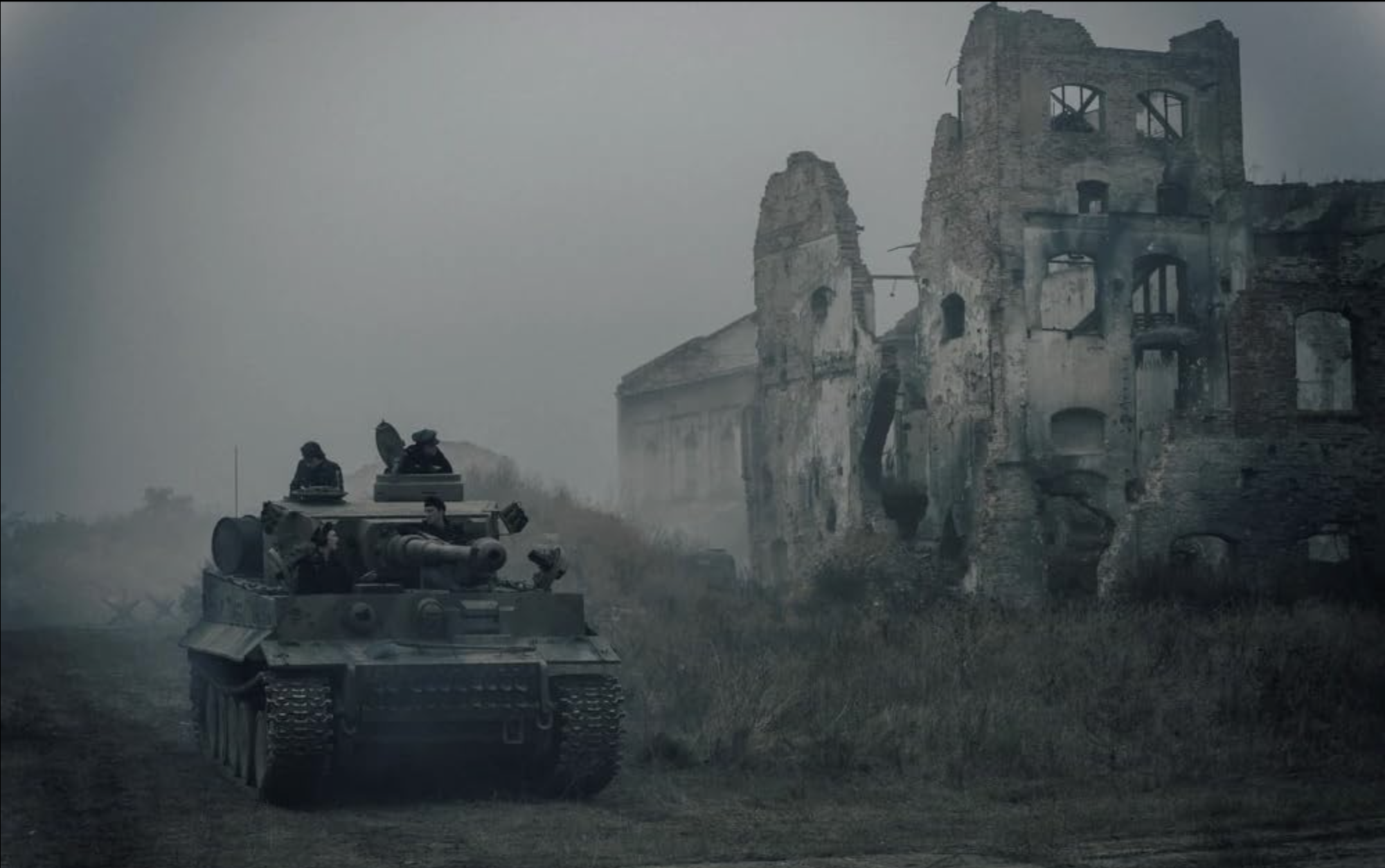
A Tiger tank from "The Tank" passes a ruined building on the Eastern Front
Characteristically haunting shot of the titular Tiger in “The Tank” passing a ruined building on the Eastern Front. Photo via Amazon Prime website.

In the opening minutes, you take the perspective of a Tiger tank crew on the eastern front during the Wehrmacht’s retreat from Stalingrad. This scene is remarkable and unpleasant and will probably deceive war movie aficionados into drawing conclusions about the rest of the film. This Tiger crew is precisely what you’d expect — disciplined, skilled, and ruthless. They mow down Soviet troops by the dozen. They are fired upon by antitank guns and T-34s, and they knock out each of their adversaries with yells of “fire!” and “Jawhoel!” You root for them. You want to see them valiantly and bravely defending the retreat of their comrades, while dispatching the wicked enemy. This is the camera’s perspective, the film’s perspective, and one adopts it with little trouble — trouble offered by the fact that it is, in fact, not an American tank with American soldiers inside, but a Nazi Tiger tank, the apex predator in the WWII tank world.

Based on this opening most sensible viewers will be tempted to give up on the movie immediately. No point watching Nazi propaganda. Especially now, in this fraught age. I was curious so I continued — not because I enjoy Nazi propaganda, but because I wanted to know if the Germans, who had made their own Band of Brothers (it’s called Generation War in English) and made Babylon Berlin and generally appeared to be moving into a kind of renaissance of viewing WWII in rosier terms than we’re used to had actually just gone for it and made their own version of Fury.

No spoilers here: they didn’t. They made their own tank movie all right, but it’s also not a tank movie at all; it has more in common with Dead Man than Das Boot. It’s really quite good; evocative, melodramatic (do I need to write melodramatic? This is a German film). It’s surreal, it’s horrific, it manages to give Ukrainians agency in a way no movie outside Ukraine has even attempted, as far as I’m aware. It’s an eastern and central European ghost story, a story about the witching hour — and a story about a tank; the folks who crew it, and (most importantly) its commander.

More than anything else, The Tank is about the total and complete ruin of Germany; its destruction, its defeat, its moral collapse. It is also about the impossibility of forgiveness for certain crimes — the impossibility of redemption. The tank commander reminds his troops about what they’re fighting for — their families, their homes. Throughout the movie, the audience learns that the crewmembers have nothing left to fight for — their own families and homes have been destroyed in Allied bombing raids. They themselves are nothing, they stand for nothing, and they have nothing. Imagine such a film. Only the Germans could have made it, because they were Nazis, and they lost WWII in spectacular fashion.

This is the sort of movie I think Fury (a perfectly decent war film. I’ll shut up about it after this review) probably thought it was going to be. Where or how it got lost along the way, who knows. Nazis make such contemptible and attractive foes. You can’t kill too many of them. I think that’s likely where Fury went wrong — it became so intent on killing Nazis that it had trouble coming right out and declaring its protagonists villains — that these men were not different from the Nazis save by chance. It stars Brad Pitt. There was too much at stake, Fury could never take the kind of risks it needed to be the kind of tank movie or war movie I would have wanted it to be — the movie it could have been. A war movie with protagonists who were going to hell.

The Tank on the other hand delivers. The sort of person who enjoyed watching Fury will I feel confident enjoy The Tank as well, especially veterans who have experience with tanks. The sort of person who didn’t enjoy Fury will also probably enjoy (or at least appreciate) The Tank — this is the measure of a good movie, one that’s enjoyed by different sorts of viewers.

I did end up watching Fury in the theaters in late 2014. After the review I’d written it felt like the right thing to do. It was a rainy night, and the movie was part of a dinner and movie date with a woman I’d met online, a nurse at the VA. The date went well, and we made plans to see each other again. I realized, when I returned to my car, that I’d lost my cell phone and had to drive 20 minutes back to the theater. The cinema’s employees were cleaning the theaters and preparing to close, and let me look around. I was in luck. My phone was there, beneath my seat. It had fallen out of my pocket. The next day I had a fever, and ended up developing pneumonia that had me bedridden for weeks. I never saw the VA nurse again. Fury had taken its revenge. Probably, I deserved it.


New Fiction by Lacie Grosvold: Tora Bora Bargain

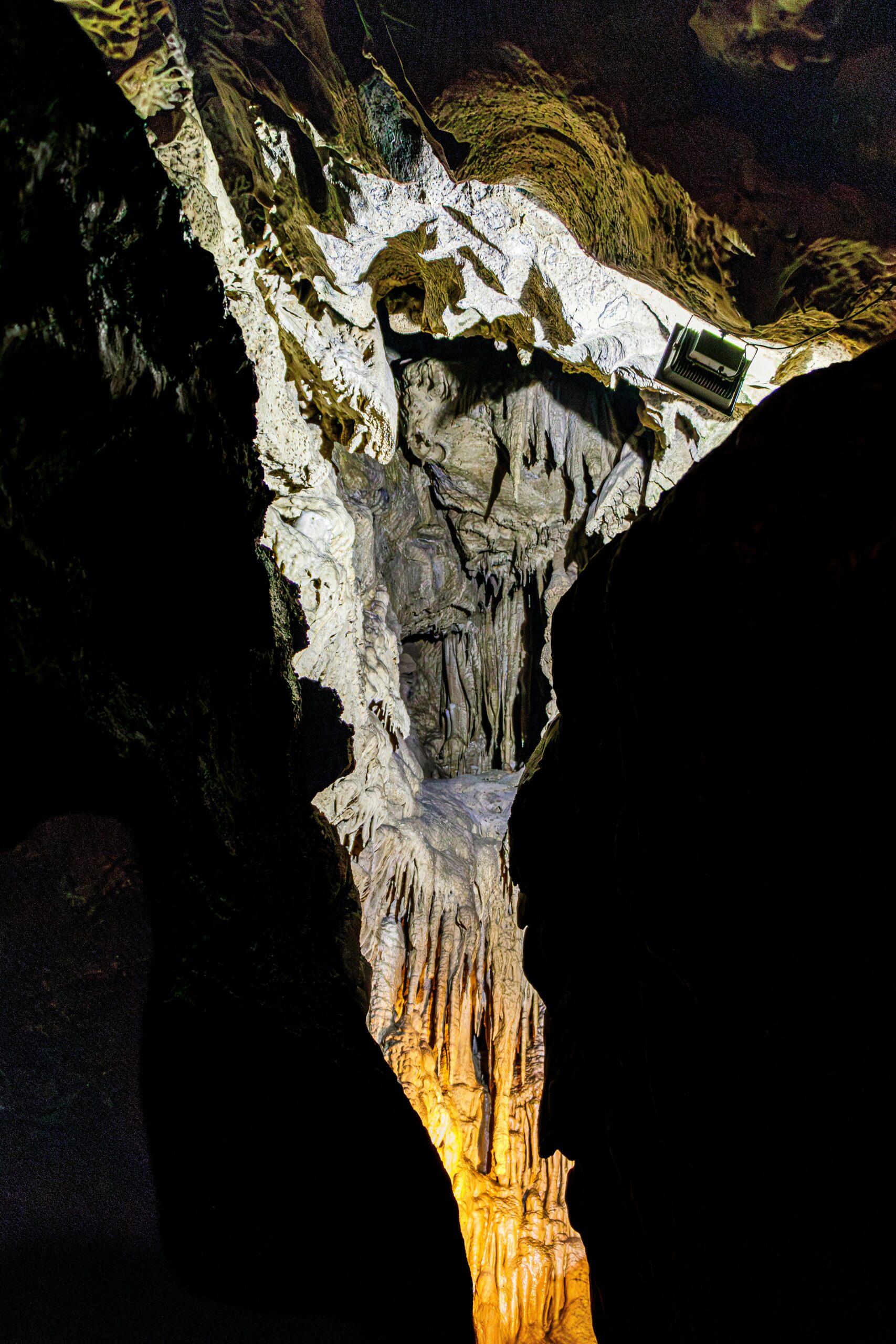
Caves

It started, and it ended, with a bad bargain in the mountain caves of Tora Bora. I have nothing but time now for the what-ifs and the whys, but every trail I follow leads back here. So long ago, our unit swept through the sprawling tunnels, seeking Taliban. Conlin and I were the youngest in our squad. Back home, his age didn’t stop him from getting into bars, and the broken tooth he got from fighting didn’t stop him from grinning. Our lieutenant always put us together, thinking my cautious nature would temper his wild one. Conlin called me “Dad,” then the whole squad did.

After days of not seeing an enemy, the light on my helmet caught the eyes of a cowering Afghan boy. He held something out, as if in offering for my mercy: a pottery lamp so small it would fit in my hand, ornamented with intricate blue and green swirls. I was mesmerized.

“Clear!” I yelled as I backed out of his dark corner, pocketing the lamp.

As we exited the cave complex, a staccato of shots scattered shrapnel from the rocks. Conlin slumped against me. I turned and saw the boy holding a gun just as he took a bullet. As the boy fell, his eyes bored into mine. In the pocket of my fatigues, the lamp shuddered. On the ground, Conlin’s last smile still played on his lips.

I accompanied Conlin’s flag-draped coffin to his hometown. His mother and kid brother hugged me hard like family. Mama Conlin sent me home with a handmade quilt and made me promise to write. I can’t say exactly why I never did it, but it could have been because of the shadow.

A man’s shadow, unfaded by light, followed me since Conlin’s last day. Only I could see it. I thought that if I could ditch the lamp, the shadow would leave too.

On the way to rejoin my unit, I threw the lamp from a Black Hawk. It disappeared into the scrub. It was back in the foot of my sleeping bag that night launcher, but it was sitting on my meal tray when I got dinner on the base.

When I was discharged from the Army, I traveled the world, hoping to leave the lamp behind, convinced that the shadow would not follow me if I didn’t have it. I dropped the lamp in an Indonesian volcano only to find it between the threadbare sheets of my hostel bunk. I chucked it off Tower bridge in London, but it was back in my pocket when I paid for my drink at a pub.

Every time I found it, it quivered under my touch. The shadow lingered nearby.

I told a monk outside a temple in Bangkok about the shadow dogging me.

“Make peace with your sorrow and guilt,” he advised, blind to the shadow lounging in the grass at his feet.

That monk was right. It was time to stop running and set down roots. I bought a house and a few acres in a backwater town, moved in with two duffels, and made my thrift-store bed with Conlin’s mom’s quilt. The county hired me to work road maintenance. My second summer there, every man between eight and eighty was in love with the girl from the feed store, but nobody so much as me.

Jennifer Day was lemonade in the heat and sunshine after a storm. She glittered with magic when she laughed. She wore her strawberry blonde hair in long braids, and I never saw her have a bad day. When she rang up my order, being close to her burned off a little of that dark fog that hovered over me.

In hopeless moments of intense longing, I had an intuition that the lamp held answers. Since I was settled, the shadow didn’t follow me so much; it seemed to lurk inside the lamp. Jennifer had her choice of men. I was shy, surly and serious. Why would she choose me? I held the lamp close and thought of her. That was when the shadow emerged, thickening from a light shade to a smoky form to something like a real man. His robes were dust-colored, and above his head a hat floated like a plume of smoke.

“What are you?” I asked, knowing it sounded rude. I didn’t know what else to say to a man made of smoke.

“I am a djinn,” He said as if it were obvious.

“Like a genie?”

“Something like a that, yes,”

“What’s your name?”

He shook his head.

“Okay, I’m gonna call you Jack.”

“How may I serve you?” he asked in a rich baritone.

“I get three wishes?” I asked, remembering a cartoon genie.

“Three, or ten, or none.” He grinned like it was a joke. I set the lamp down and turned away, not wanting to tangle with this dark being. Out of the corner of my eye, Jack faded to shadow then disappeared into the lamp.

Nightmares of Jennifer falling for Dean Ratliff from the next town over kept me from sleeping. Jack was the answer to my angst. Knowing the consequences, I made the wish anyway.

She blushed and agreed. The date was magical. Her smiles evaporated my self-doubt. For once, I felt at ease, like myself. She even seemed to think I was funny. I dropped her off with an electric kiss. That night, pain tore from my neck through my spine to my fingers and toes. I fell to my knees and tried to keep breathing. I knew it had something to do with Jack; I pulled myself to the mantle to grab the lamp and summon him.

“Jack, what is happening?”

“Every wish has a price.”

“Why didn’t you tell me?”

“You never asked.”

“Is it always pain?”

“The price depends on how difficult it is for me to acquire. She liked you, but you could not have captured her heart without my magic, so it was a little bit of pain.”

A little bit of pain. I convulsed on the floor.

Once we were in love, the memory of the agony seemed more than a fair price. We married within the year. Our Fern was born first, then baby Brooke. Jack faded to “the djinn,” which faded to a mist in the corner of my eye. The lamp no longer gravitated to my hand. It became a dusty relic on a shelf, from another time and another place. I thought of it less and less.

Happiness was sweeter since it had taken an unnatural intervention to make it mine, but the thought of the bargain brought a bitter aftertaste. I felt that I lived my life in the time between the lightning that lit up the sky and the thunder that would come crashing.

One late summer day, Jennifer hosted a party and invited our friends and family. I was never much for socializing, but something about her made it easier for me to be around all those people. She and our girls wore matching cornflower-blue cotton dresses. They looked like storybook fairies, spreading good cheer to all our friends who saw them. Jennifer made sure everyone had enough to eat and someone to talk to. A parade of sticky-handed children followed her around like little ducks, asking for treats or fetching things she asked them to bring to guests. The They held hands, singing

Ring around the rosie

Pocket full of posies

Ashes, ashes,

We all fall down!

After three rounds, Jennifer fell to the ground on cue, but didn’t get up. I thought she was teasing the kids. Her long hair was splayed in the soft grass, her dress laid out around her. I ran toward her and realized she’d passed out. That sweet summer evening turned to panic. In a daze, I carried her to the car and raced to the hospital.

The next hours were a blur. I only clearly remember my Jennifer, still in her cotton dress and loose hair. My fae queen, confined to the sterile, scratchy sheets and stark neutral tones of the hospital room. She eventually woke up. They transferred us around and around the hospital, running test after test.

A doctor in a white coat with a solemn face told us they’d found a tumor in her brain. It was far gone. There was little they could do. His black eyes betrayed no pity; his practiced way of delivering devastation didn’t allow me to rage or cry. I couldn’t breathe. Jennifer looked away as tears streamed down her cheeks. I knew she was thinking of the girls, but I could only think of how I could not lose her.

Jennifer was quiet on the way home, staring out the window. I wanted to fix this, to offer reassurance that she shouldn’t despair. It’s crueler to make a promise before you’re certain you can deliver.  The thought of asking the djinn for anything more felt hopeful but desperately dangerous.  But he’d brought us together. What wish-price could be worse than losing her?

At home, Jennifer went to bed. I ran to the den to retrieve the lamp, its swirling design warming under my fingertips. Jack’s ghostly shadow emerged. I could barely make out his eyes, but a wisp of a smile haunted his face.

“What’s your wish, my master?”

“Will Jennifer die of this cancer?”

“Yes.”

“Can you make her better?”

He floated from the corner and glided around the room like a puff of smoke, relishing the freedom of movement, the intensity of my attention.

“I could. Is that your wish?”

“What will it cost?”

“One child.” My throat tightened, preventing me from yelping in a panic.

“No,” I rasped.

He swooped to the other side of the room.

“A fire will kill your neighbors,” he responded, calculating with lives like coins.

“Which ones?” I was disgusted at myself for asking.

He wafted to the window and looked down the street. “The blue house.”

My friend Bill lived there. I thought of Conlin’s broken smile. I felt sick for considering it. My conscience couldn’t bear another death.

“I will pay. Not them.”

The smoky form expanded, then settled on the recliner next to me.

“Of course, master.” He grew thick with thought, his form coalescing.

“What do you want?” I asked him, my voice cracking.

“Your pain.”

“I’ll take any pain.”

He puffed up, doubling in size.

“Make the wish.”

“I wish for Jennifer’s cancer to go away.”

I caught the hint of a smile as he nodded into a puff of smoke and whooshed back into the lamp.

The next few days, I wondered if I’d imagined my conversation with the djinn. But within a week, the color was back in Jennifer’s cheeks. She read the girls from Grimms’ Fairy Tales with more narrative enthusiasm then I’d seen for months. When she cackled as the evil witch, the girls’ squeals and giggles reached me in the next room. When they fell asleep, she asked me to take a walk with her in the moonlight. We strolled hand-in-hand around the yard and looked at the stars. She felt warm and alive and full of optimism. Any price is worth this.

“You’ve got an angel watching out for you,” he said. The lamp vibrated in my pocket. Jennifer squeezed my hand.

I was flooded with relief, yet my jaw grew tighter, and my fists stayed clenched. I braced for agony, and when it didn’t happen, dread grew and knotted me up like a vine.

My Jennifer didn’t die, but surviving gave her a thirst for things I couldn’t provide. She started with a glass of wine at dinner. Then a bottle. I read the girls to sleep so they wouldn’t see her stumble into bed. Maybe this was a phase. I’d seen soldiers overindulge after deployment; many of them went back to normal. But some never did.

Within a year of cancer recovery, Jennifer got a job evenings waiting tables. She said she needed to get out of the house more. Her new coworkers liked to party. I didn’t like that she experimented with drugs, snorting coke with 21-year-old dishwashers, but she laughed off my concerns and soon blew my paychecks on harder highs. She insisted that she was just having a little fun, living out a little youth now that she had a second chance at life.

On Brooke’s twelfth birthday, I brought home our favorite three-cheese pizza. There was no cake, just Funfetti box mix on the counter and no Jennifer in sight. I wished for Brooke to cry. Instead, she calmly suggested we drive downtown, where her mom had said she needed to meet a friend. We passed the picturesque main street for a rundown row of abandoned buildings.

After searching for an hour, we found her asleep in a condemned store’s entryway. Without complaint, my daughters helped load her in the car and rode home silently. We were all lost for words in our own ways. When Jennifer sobered up enough to realize what she had done, she was clean for three weeks. Brooke forgave, settled for a late grocery store cake, and held on to hope.

A few months later, I came home from my night shift to strangers sleeping on my couch. The living room was strewn with bottles, takeout boxes and used ashtrays. My girls huddled in their room eating cereal with sour milk to avoid the party outside. I cleared out the living room of the trash, literal and figurative. I made breakfast and invited the girls out for a warm meal. Seeing them come hesitantly out of their room made me realize they weren’t little girls anymore. Fern, who had been a boisterous small child, grew to a cloistered young woman, her big eyes watching like a deer ready to bolt to safety.

I summoned the djinn but knew speech would push me over the edge. Not wishing to cry in front of him, I stared into his smoky form and said nothing. He hovered nearby. Was there an expression of sympathy in his shadowed face? For so long, my dearest ambition was to rid myself of him. Now he was the only one who really knew me. As my silence persisted, he faded to smoke and hovered over my discontent, my one true companion.

Jennifer withered until she was skeletal and grey. One rare evening when she wasn’t high or hungover, she darkened the doorway of my den. She wore the blue cornflower dress, but the effect was the opposite of what I’m sure she’d intended. The dress hung loose and wrinkled. Her once vibrant skin was sallow and gray, her once strong arms, bony. Her hair was lank and dirty.

“I know you can make it stop.” My gaze slid to the little lamp on the mantle, but I knew she didn’t really know.

She knelt at my feet, eyes red with tears.

“I never wanted to be this. I wish I had died of cancer!”

She stared into my eyes, and I wondered if on some level she knew it was my fault. Why else would she ask this of me?

I stroked her head as she sobbed in my lap.

Any words I thought of seemed meaningless. The truth, too unbelievable. Guilt choked me. My own selfishness, my fear of losing her had turned her into this. On the mantle, the lamp quivered.

When she left, I grabbed it. It fluttered erratically like a bird caught in a net.

Jack unfurled from the spout, expanded, and settled in an easy chair.

“You didn’t tell me I’d pay with emotional pain.”

“You didn’t ask,” he responded.

“Can I undo any of this?” He morphed into a large face.

“You can undo it all,” he said, opening his mouth and swallowing me. I entered the dense fog of his form as scenes took shape:

A few months after the cancer diagnosis, my Jennifer lies in a hospital bed, wilting like the vase of curling pink roses at her bedside. My daughters are beset by grief. I can’t comfort them. I am helpless and heartbroken, and my love isn’t enough to heal them.

We travel back again, before I dated Jennifer. She smiles at Ratliff down at the feed store. She says yes, she can go out with him when she gets off of work. I am alone. 

Back further. I’m back in the cave with the boy. We both look so young, probably less than five years apart. The boy offers me the lamp. I ignore him and call for backup. A gunshot. Pain in my back. A second boy with a weapon. 

Then we were back in my den, the djinn reduced to human size, nearly solid with a curling mustache. His robes gathered their dusty color, and the tinge of his reddish hat deepened.

“Your wish is my command,” he said. I had it now: a path for preventing all the suffering, from the start.

“Take me back to the caves.”

Smoke and sweat fill my nostrils. I’m eighteen again, staring in the eyes of another scared boy. Instead of the lamp, I take a bullet.

It’s not like the vision he showed me. I am fully present yet still know what could and will be. I have a sense of the futility of the battle we are fighting here. I haven’t met Jennifer yet, and I also know she will have a good life without me. My girls will never exist. The grief for them, not the wound, is what is killing me. Conlin will accompany my flag-draped coffin, hug my mother. I’m barely aware of my unit rushing the cave where I lie.

I close my eyes and imagine the faces of my children. Conlin, panicked, kneels by me and kicks the lamp the boy dropped when he was shot. It clatters across the stone and dirt floor.

As I die, my soul unstitches from my body and lingers nearby. My spirit doesn’t fade. Shadow threads tie me to another vessel. I am pulled towards the lamp, into the corner where it came to rest. I watch headlamps moving through the dark, sweeping the cave, pausing on my body. After all these years, I no longer feel the weight of Jack’s shadow. He is free, free to die, free to rest. Now I am the shadow.

Every wish granted has a price due.

I ache for the lamp to catch someone’s eye on this dark cave floor.


New Fiction by Eldridge Thomas III: Glitter

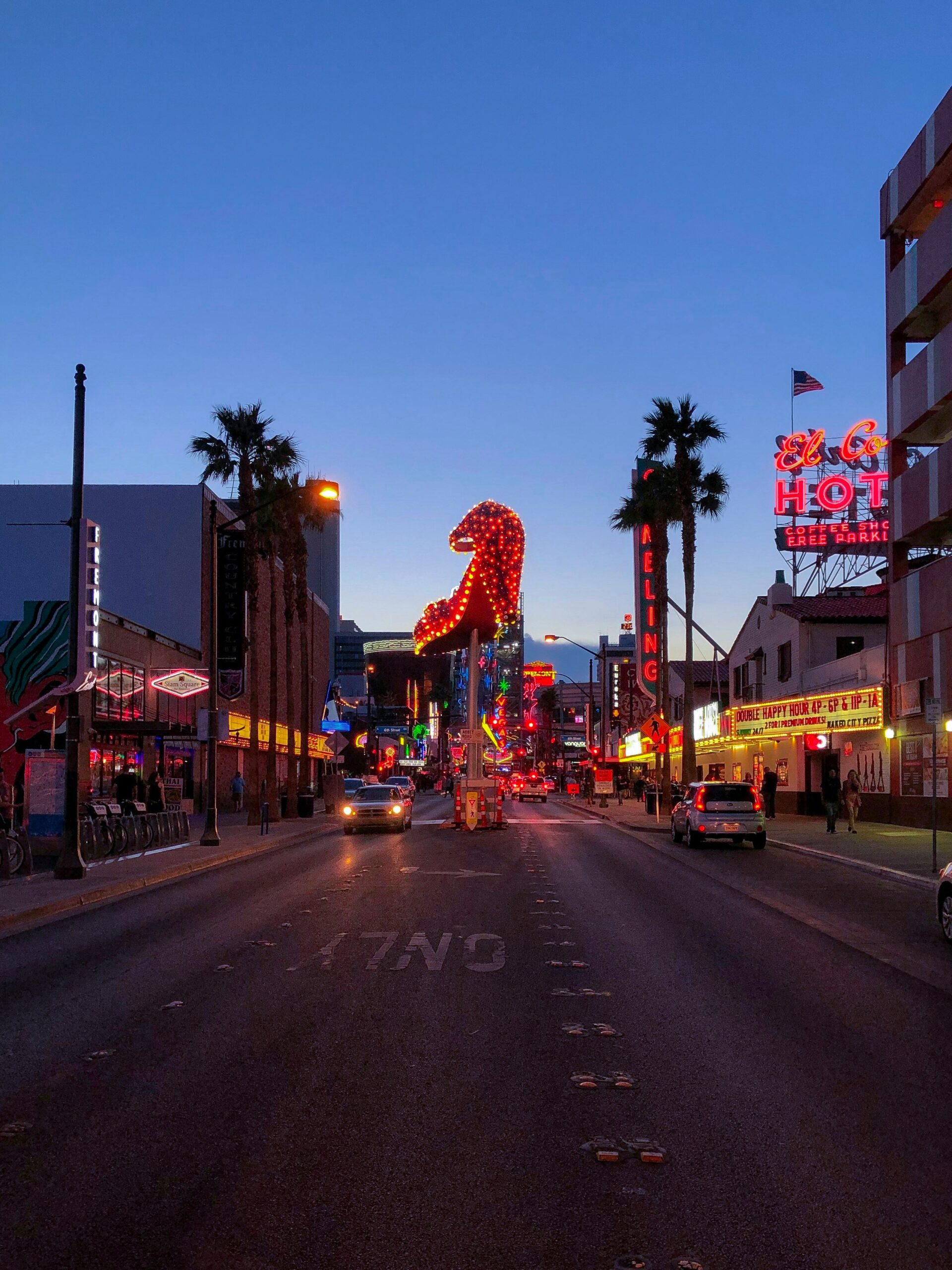
Vegas

Sometimes I wonder if there’s more Elvis in Vegas at Christmastime or if it’s just my daddy getting to me again.

They got him on electronic billboards wishing everybody happy holidays. He sings “Silent Night” or “Silver Bells” everywhere you go. You can’t walk the Strip without seeing ten Elvises in red coats and pointed hats on a unicycle or skateboard or making giraffes or big-boobed girls out of balloons.

Each year, they put out a twelve-foot Elvis in front of the Westgate. He’s hunched, arms out, stuck mid hip shake. He’s got on Santa’s suit and pom-poms, but no white bushy hair or beard, and his coat’s unbuttoned enough for everybody to see his muscled mannequin chest. His pom-poms and gold buckle bedazzle. Little red-nose Rudolph stands over to the side and stares up at him meekly, waiting for a pat, some kind of kindness.

I do the same: stare at him, not so much as twitch an eye, while tourists roll luggage around me or head out to wherever they’re going, wherever that might be.

It’s Christmas Eve, the only time there’s a quiet, warm hum in the ER. Somebody’s got hot chocolate. Somebody brought candy canes and sugar cookies with sprinkles. The overheads are at half-mast. Elvis sings “Jingle Bells” somewhere down the hallway. Hattrup is hanging lights in a window. He’s only got one string, which isn’t enough for anything, but I don’t chastise. Today, I’m letting the spirit in.

“Georgia Boy is back,” Hattrup says. He has a high, wispy voice and aluminum-colored eyes that flicker, making him seem anxious at every second.

“We call state troopers Georgia Boys,” I correct him. “Where?”

“Four.”

“Thank you.”

“You visit Elvis today?”

I walk, don’t answer.

Georgia’s asleep when I find him. With his hair and beard and bird chest, he looks like Gregg Allman Jesus. He’s shirtless—left arm blue, blotchy, swollen—and hooked to an IV and air. He’s from Valdosta, about an hour from Waycross, where I’m from, and we’re only a few years apart, so we got connections.

Georgia’s a frequent flyer and has already been told he’ll lose the arm to sepsis if he can’t keep it clean. It’s hard for him, because he lives on the Strip, plays 90s alternative, hoping passersby will toss money into his guitar case. He sang “Come as You Are” for us once. His whole shtick was rasp. Hattrup didn’t think much of it. I thought it was fine.

I pull his chart, and he stirs.

“Hey, Georgia,” he says.

“When’d you come in, Georgia?” I ask.

“Last night.”

“I was on last night.”

“Tonight, then? Is it Christmas?”

I tell him there’s about five hours yet.

“It always feels like Christmas,” he says. “They keep the lights up year-round in these parts.”

“We had some neighbors like that.”

He giggles, says “Us too.”

“At least the weather’s Christmasy,” I say. It’s the only time of year South Georgia and South Nevada share a similar temperature, a frigid fifty/sixty degrees.

“Did it snow Christmas Day,” he asks, “when you were about thirteen, fourteen?”

“Heck yeah. We got at least six, seven flakes.”

“Us too.” He smiles. “It was magical.”

Winter is the time for clouds in the desert, when I sometimes drive ninety miles to lie on my car’s hood and watch the sky. I get there at least a full hour before sunset, when the earth’s the color of Spanish moss in October and the sky old beat-up jeans, and the chunky clouds billow up like skyscrapers, and the thin ones stretch across quilt-patterned, each bumping into the next. It’s just like home, just right there, like you could touch them if only your arms were three times as long.

In swampy flat Waycross, you can see a storm’s advance miles away with its gray showgirl’s curtain.

Then the glittery night. They always said you can go into the Okefenokee and see the Milky Way with your own bare eyes, but I never did.

I miss the pines, how their branches hide with the moonlight, except for those at the tippy top. Under the moon, they smell like wood and mint and look like stick figures with triangle heads that lean with the wind, threatening to break.

At ten, the ER is called to attention, and Col. Mihata arrives to wish everybody a merry Christmas. Col. Mihata’s husky, wears wire eyeglasses, and comes across as friendly even though he smiles with gritted teeth. When he leaves, Hattrup is in my ear.

“You can’t,” he says. “Not safe.”

“Mission already accomplished.”

I walk back to the nurses’ station with him on my heels.

“I don’t mean the plane ticket.”

“He doesn’t have an ID, so I got him a Greyhound.”

“To Georgia? How long is that?”

“Two and a half days.”

“He’s an addict. He won’t make it.”

“He says he’s got enough stash for a few days.”

“Jesus Christ.”

“The reason for the season.”

I open Georgia’s songbook. He doesn’t remember his dad’s number, and he’s scared to talk to him anyway. He said call his Sunday school teacher: the number’s scribbled somewhere in the book. I learned this when we talked about how, growing up, we both liked Sunday school but hated church. His teacher was a gentle man who also taught him guitar.

“You can’t drive him to the airport, a bus station, or anywhere. What if he has a flashback and kills you?”

“He’s a heroin junkie.”

“He was in Iraq and Afghanistan and wherever the hell else. Put him in an Uber.”

“You’re free to come with.”

The songbook is a mixture of random ink and pencil sentences and lyrics, his handwriting sometimes large and curvy, sometimes tiny and all caps. There’re sketches of objects throughout: a fire hydrant, a traffic light, a Coke can.

“No, I’m going home to my sweet thing.”

I find the number on the third page, at the bottom. He literally wrote out Sunday School teacher, then a colon, then the guy’s name, Carl Thornton, then the ten-digit number. He drew a little guitar beside the digits.

“Call me and leave your phone on speaker the whole way.”

“He’s harmless.” I turn to Hattrup, to his fluttering tin foil eyes. “It’s Christmas. Let me do some good in the world.”

I dial before he can say something else.

It’s just after midnight when I hear a radio voice down the hallway. Spend Christmas right here with Elvis. Put a country ham in the oven, an angel on the tree, and the King’s songs—White Christmas or Blue—

Georgia’s awake, stares blankly at the TV, flips channels.

I tell him I talked to Carl, and he sits up. I tell him I talked to his daddy, too, and he rubs his face one-handed, hides his eyes. I tell him: Both men will be there when his bus pulls in. They’ve looked for him, knew he was in Vegas, even flew out a couple times, never could find an address.

I tell him the hard part: His momma died last year. Heart attacked her. She worried every day for him.

His shoulders heave. I hand him a box of tissues. He smacks it away, pulls out the IV, pulls off the nasal tube. He jumps up and bangs a leg against a chair, tumbles headfirst into the wall, clinches a fist, wants to punch the wall, needs to punch something, slaps the wall open-handed instead. Slaps it a few times.

He turns to face me.

“What happened in Iraq,” he says, “he never understood I couldn’t be normal after that.”

I wait for him to say something else. He doesn’t. I ask if I can give him a hug. He thinks on it, his eyes droop then blink, then he says please.

It’s just after seven when we walk outside, where the sun already blazes, and I remember Hattrup saying we might set a record.

“Hot damn,” Georgia says. “You know how many times I wore shorts on a Christmas?”

His bus doesn’t leave until nine something, so I say let’s go see Elvis. He nods, doesn’t even ask.

We stare and listen to slot machines beep and chime their way across the Westgate’s breezeway, hear someone win a jackpot.

Georgia’s shirt hangs over his shoulders like a cape. He took a shower at the hospital, but his clothes are still filthy. Tourists make a point to walk around us.

“You dig the King?” he asks, finally.

“My daddy did,” I say. “Liked him so much he wanted to be him. Had the wave haircut, the sideburns. Even impersonated him.”

Georgia sniggers.

“Back home, the ladies’ auxiliary put on a Hee-Haw-type show every Christmas. The mayor dressed up like a woman, and everybody thought that was funny. They set a pig loose, and some idiot chased him through the audience. Some beauty queen sang, and Daddy did Elvis.”

“Something happened to your old man?”

“I came home from bootcamp and told him I who I was, and he told me I was no child of his, and that was that.”

“Deep South strikes again.”

“So, I actually hate the King.”

He laughs.

“What you’re doing for me,” he says. “Thank you, Georgia.”

“You gone make it, Georgia?”

He shrugs. He’s honest.

He says he needs his music to live, so he has to keep his arm. I can’t tell if he really wants to get clean.

I just know he wants to get home.


New Poetry by Kyle Hanton: “Deployment, 2017”

Eternal Dusk Sun
ETERNAL DUSK SUN / image by Amalie Flynn


The stars in the North Atlantic hide
for months behind an eternal dusk sun.
I can’t take comfort that we see the same stars
if I can’t see them at all; time passes
even though we’ve been apart for months
and the calendar says the days do, too.
Without the stars flickering or the hint
of clouds gliding through moonlight, I can’t tell.

I left Norfolk months ago and yesterday;
tomorrow, the next day, or ten years from now,
I’ll be home, greeted like Odysseus by Eumaeus:
a king returns to Ithaca and strings his bow.


New Poems by Rachel Rix: “Experimental Simulation of Joint Morphology During Desiccation;” “Second Deployment;” and “CO’s Canon”

HAIR OF THE WOMAN / image by Amalie Flynn


Experimental Simulation of Joint Morphology During Desiccation

In the dried-up river bed of the Helmand the body of a husband lies dead on the

hot cracked dirt. The hair of the woman married to the husband hasn’t been

washed in days. Her arms flex and hook the husband’s lower limbs. Dragging

him makes each step the woman takes heavier than the last. Vultures hover her

salt trail. Vast is what they see surround her. The daymoon watches too. Night

never comes only more heat magnified by the hours, searing the thin flesh

between vertebrae C-6 and C-7. The woman knows she’s blistering. Letting go

of her husband is not an option she thinks of.


Second Deployment

Our agreement was
only one. I have
difficulty carrying myself,

I—weightless. Rising
to the crags. Old world vulture
alone I sail for hours in the sky.

I eat my home. A pile of bones.
I’ve learned to crack open
what I cannot swallow,
a lamb’s femur. I am

bone breaker. Soft tissue drinker.

I eat his words.
I’m now dust bather.
Silent blood tracer.

I am burial maker.
Tossed knuckle
scraper. Someday he’ll find me
by the bed
in a pile.

There will be a hovering
and a hollowing.
No welcoming home.


CO’s Canon

If the cadence may be regarded as the cradle of tonality, the ostinato patterns can be considered the playground in which it grew strong and self-confident.

His green duffel bag
could have carried two of me inside.

Near the opening a faceless angel,
I try: Dearest,

because I’m tumbleweed,
but he never reads me.

There are more important things
to do, shake hands with soldiers

going out on mission,
because when you’re the commander

it’s about survival.

I didn’t need to take
that last glance.

Suddenly tyrannosaurus.
Angel’s sepia teeth baring.


New Poem by Nathan Didier: “Hearts and Minds”

Spilling Our Blood / image by Amalie Flynn

Hearts and Minds

We came to provide help that you didn’t want.
We came to provide security you didn’t need.
We came to provide schools that you didn’t care about.
We came to provide a government that didn’t work.
We came to provide democracy you didn’t understand.
We came to provide infrastructure you wouldn’t take care of.
We came to provide a better life that you didn’t ask for.
And we kept spilling our blood and couldn’t understand how you could be so ungrateful.


New Fiction by Adrian Bonenberger: Calvary Hill

ancient port


Captain Abibalus was troubled. Walking up the dusty, cypress-lined path from Kyrenia’s harbor, Abibalus’ practiced eye took in the worn marble buildings. Much had changed since the last time he’d been here. A decade go, trade had been harder; less settled, but more profitable for the enterprising trader. It had been the same story in Alexandria. Old associates gone. Dead, driven out of business, or resting easy on the fruits of their labor. Dilapidated warehouses and fields gone to seed. At every corner, some gaudy new shop hawking poorly-made trifles. Rome had seen to it. Its gods were supplanting the old gods, its ways, the old ways.

Maybe he should have stayed in Iberia, Abibalus thought. The weather was worse, but there were more opportunities for a crafty and hardworking merchant like himself. Trade with the surly Gauls, and the taciturn British. Construction in that part of the Empire was booming, which meant an insatiable lust for materials, tools, and skilled labor. It created an energy very different from the one he could see in this aging port town.

Then he thought about dying in a foreign land, buried in the cold, wet soil without funeral rites. He shuddered. No, his people were from this area. He wanted to be mourned by a son or grandson when he passed, not years later, word of his passing carried by Rumor. He’d returned for good reason.

This glum mood couldn’t last long. Even after decades’ worth of journeys, the return to land always impressed Abiblus, whether it was to a faded backwater like this one whose glory days were long past, or to mighty Rome. The urban breeze was not pleasant — burning trash, burning wood from the smithies, burning, burning, burning — and occasionally, a small respite, the breeze carrying along a whiff of those crocuses Abibalus had never seen anywhere else. The sum of all these smells was commerce. For that, Abibalus had a nose like few others.

Meanwhile, strolling along the beaten dirt path he savored the way the solid earth didn’t sway the way his ship deck did while riding the Mediterranean’s waves. His body still felt the swaying; it would for a while to come. There was a time when he’d been able to absorb the transition from land to sea and sea to land effortlessly. Recently he’d noticed that it took longer to adjust. He’d experienced enough of life to understand that even this mild discomfort and disorientation was a kind of blessing. Like drinking too much. Another way for his body to navigate a strange and restless world.

Their journey from Alexandria had been smooth — Rome’s fleets effectively curtailing the activities of pirates. Now, his ship’s disposable cargo was in the process of being hauled out of the hold, to be turned into profit. At this stop it meant unloading ivory he’d taken on in Alexandria that had itself been ferried, carried and dragged from deep in the Egyptian interior. With the proceeds, he’d take on a load of copper before they continued to Syracuse. Later they’d finish at Ostia and unload the grain at the great city for which the Empire was named and on which so much depended. Even though the trade routes weren’t as profitable as they once were, certainly not for a small family outfit like his own, they were much more reliable. Grain shipments to Rome were an unostentatious way for a merchant like Abibalus to guarantee a prosperous journey, while making some deals on the side.

The Egyptian port city named for the great Greek conqueror had left a sour taste in Abibalus’ mouth. Not because of the trade; Abibalus had ferreted out a choice deal, though there were fewer of those than there had been a decade ago and took more effort to track down. No, because the city was so developed. A culture was settling over the Empire, a kind of complacency, expressed in new types of commercial activity. The vibrancy of Rome’s Republic was being replaced by a stultifying certainty. 100% returns on investment had shrunk to steady, stable 10% returns, barely enough to cover expenses unless one dealt in scale. Individual contractors were being replaced by guilds and associations. No more handshakes, no more personality.

And everything was getting cleaner and more expensive, transmuted by the magic of privilege and collective prosperity. Well, Abibalus thought, at least there was still one thing he could depend on, a rock of in an ocean of changeable novelty: Demetrius’ tavern. Each shaking step brought Abibalus closer to the tavern, where he could buy a fresh plate of roast lamb, and a cup of that good, fresh Cypriot wine they served. The tavern’s owner, a monumental figure named Demetrius who had settled down after making good on a lifetime of trades, had connections from the hills and mountains inland, he’d often boasted about it. The stuff the Cypriots didn’t ship abroad. It was dark, sweet, and rich; a flavor unlike anything Abibalus had ever found. It was a treasure in itself. There, with good wine, among other traders, Abibalus would see about prices in the area and get the latest news and rumors.

Although he’d passed away a few years ago, Demetrius left behind a wife and a large family. She and their youngest son ran the establishment. It was a popular gathering place and a convenient fixed point for striking deals or storing goods. A second opportunity to make a deal if for whatever reason, a shipment or agreement fell through. Especially with smaller projects. A few dozen crates of oranges you picked up on spec, a small shipment of olive oil you took a gamble on to maximize your profit. Having secondary markets on which to offload various speculative investments was a key to success — at least, Abibalus found that to be the case. 3% profit here and 7% there added up. And a small loss was better than a disastrous reversal.

Abibalus had sailed with Demetrius decades ago when starting out; the Cypriot had taken Abibalus on as a sailor, and then when he’d demonstrated a capacity for numbers, had helped stake him a share in the growing Roman-Iberian trade. After he’d paid Demetrius back for that investment, Abibalus had gone further, traded near the edge of the Empire.  Abibalus had considered the man more than a mentor — he’d been a friend. Demetrius had run a tight ship and taught Abibalus many of the nuances of shipping in this area, as well as the principles of trade. Family was the most important thing in business, but friendship counted for a lot too. Especially a friendship borne of the oaths men swore while steering into a wave taller than their ship’s mast, and praying to the various gods the ship’s crew venerated when a storm blew up unexpectedly in the Aegean. In fact word of Demetrius’ death was one of the reasons Abibalus had returned to this region: he’d left originally when striking out on his own, out of respect for the man and his legacy, and a desire not to compete with him.

As he walked past warehouses and small dwellings, Abibalus thought more about his old comrade. Beyond the pleasant memories of shared sea-battles, Abibalus held Demetrius in high esteem because he’d been charismatic and kind. Some of that magic had rubbed off on his establishment. Abibalus didn’t think much of his erstwhile captain’s wife, or his sons — nothing bad, but nothing good, either, he regarded them much the way he regarded anyone else — but the place endured in part because of the goodwill the man had accumulated over the course of his life, and the many connections that had subsequently been forged at his establishment. If Abibalus had any instinct for settling down, perhaps he’d look more closely at emulating Demetrius. But the sea called to him; a life on land was not in his soul. He had the money to settle many times over, and he was old, but he knew, deep in his bones, that he’d die in a boat, under the benevolent and crafty gaze of Melqart. His goods, his little network, would go to his sons, some of whom would prosper — his eldest, and his third — some of whom would probably squander it. Such was the way of the world.

With these uncharacteristic musings about legacy stirring his thoughts, Abibalus arrived at Demetrius’ tavern. The place had changed; they’d widened the front, and put up a wooden sign outside advertising themselves with a picture of a wine jug and a loaf of bread. Planters of small white and pink roses were placed tastefully on the windowsills, which had been spruced up with new planks of clean pinewood from the island’s mountainous interior. The establishment didn’t look quite so rough as it had under Demetrius. Abibalus scowled instinctively. It was happening here, too, in sleepy Kyrenia — everything was getting nice and clean.

The interior confirmed Abibalus’ fears. Formerly dark and dirty, the tavern had been painted brightly and filled with new wooden furniture: tables and benches, a few of which were occupied by patrons. Rather than the boisterous and rowdy tumult of years past, the conversation was being held at a respectful and quiet murmur more appropriate for diplomatic delegations and scribes than for merchants. The layout had changed, too; the dining area was shortened. Where in the past there had been a long bar over which Demetrius used to lean and shout business and affectionate if insulting nicknames at the various travelers and traders who’d stop in, all of whom he knew by sight, there was now a clay brick wall. A pretty slave lounged behind a wooden stand, twirling her long black hair with cultivated disinterest. When she saw Abibalus enter, she guided him to one of the unoccupied tables and began listing the types of food and wine they offered. This was new, and Abibalus didn’t care for it — he’d been to many establishments like this, and it wasn’t why he’d come to Demetrius’. He could overpay to be served by slaves anywhere.

He resolved to leave. During previous visits to Cyprus he’d missed the island’s other eating options owing to his friend, and then more recently the loyalty he bore to the memory of his friend. Abibalus was just about to thank the slave for her time when he saw a small group of traders from Tyre. He knew this because he’d done business with their captain before, a crafty but trustworthy man named Phelles. He made his way over to their table, where a young man, one of Phelles’ crew, appeared to be holding court.

“Captain Phelles, my good fellow. How goes it?”

Phelles looked up warily, then recognition lit his eyes. “Captain Abibalus! Well met old friend. I didn’t realize you were back in this area. Here to pick up some of our old friend Demetrius’ slack?”

“Precisely right. We’re just in from Alexandria,” Abibalus said. “Stuffed with grain for Rome. But I had a chance to acquire some choice ivory from far up the Nile, and happen to know of a group of blacksmiths who are always eager for copper near Syracuse, so made a quick detour here. The grain will keep. What are you up to?”

Phelles grinned. “Stopped over here on a short hop from Tyre. Heading back with copper and timber from the interior, then who knows.” He waved the slave girl over and ordered her to bring food and wine for Abibalus. “Sit, sit, join us. We were just discussing politics.”

“Politics and religion,” said one of the men sitting next to Phelles.

“My first mate, and son-in-law,” Phelles said. “Kyriakos. He was telling us about some new god he follows.”

The Greek carefully wiped his mouth with a piece of linen he procured from his clothes, then cleaned his hands with the same. “Not some god, the God,” Kyriakos said. “Jesus Christ, son of our lord and father.”

“God the father? The sky God?” Abibalus said.

“No,” Kyriakos said, his brow furrowing. “No, God, Jesus Christ, not a god, or the sky god.”

“Easy friend, I meant no disrespect,” Abibalus said. He’d been in thousands of conversations over the course of his life and could see this one was in danger of heading totally astray. He resented having to diffuse what looked like it might turn into a trying meal, with him shoveling his energy and effort into the maw of this young man and his religious devotion to — to what? Some new god or gods. Meanwhile they were both part of the same old empire. People were losing out on economic opportunity, were missing the prosperity of the previous generations, and it seemed like every month there was some new cult or sect springing up as people invented new spiritual spaces to make up for their lost shot at wealth or social mobility.

On the other hand, all things considered, it never hurt to learn a bit more about a new god. And better to risk a little offence here, where the stakes were low.  This way, when Abibalus met a trader who followed the new god he’d know how to avoid putting his foot in his mouth. “Tell me more about this god. Excuse me, God.”

“Hope you enjoy the food,” Phelles said, laughing and elbowing Abibalus in a comradely fashion. “You’ve been away for too long. You’re in for a real story.”

Kyriakos looked at his father-in-law with annoyance, then launched into an improbable tale with the fervor and conviction of a new convert while the other people at the table ate or drank, obviously having heard this many times. Abibalus understood immediately how it was — this was probably the influential eldest son of someone Phelles wanted to be connected to, some Greek, and either had always been fervent or had recently converted. You live long enough you see all sorts of things like this. Abibalus was relieved it hadn’t happened to any of his children, becoming enamored of a god, but there wasn’t anything dishonorable about it. It was just sort of inconvenient — being dogmatic about a religion would certainly make life as a trader difficult.

“Hang on,” Abibalus said when Kyriakos got to one point. “Did you say the crowd released a murderer and crucified the King of the Jews?”

“That’s right,” Kyriakos said. “The Roman governor asked the crowd who to pardon, Jesus Christ or Barabbas, a common murderer, and the crowd elected to release the murderer. The blood of God is on their hands.”

“Jesus Christ is your God? And you say he was crucified?”

“That’s right,” Kyriakos said with conviction. “Then ascended to heaven where he is seated at the right hand of God the father.”

Abibalus looked at Phelles for tacit permission — this was, after all, his son-in-law, his business associate. He didn’t want to injure the man. “You know I was there. I was in Jerusalem when this happened. I guess it was about a decade ago. I saw it all.”

“You saw the crucifixion!?” Kyriakos was astonished.

“Sort of. It didn’t happen the way you said. I’m not saying your man Jesus is a god or not, but it didn’t happen that way. Would you like to hear how the thing transpired?”

Kyriakos was quiet. He looked intensely at Abibalus, and, apparently satisfied that the man was telling the truth, he nodded.

“So I was in Jerusalem on business. Normally I stayed with shipping routes, “do the trade you know,” as they say, but Demetrius was looking for opportunities to expand. I offloaded a shipment of armor and joined a caravan to Jerusalem to deliver them to the Roman garrison. This was a priority shipment and I was to be paid in coin. Good silver. Back then, Tiberius was emperor, and one had to take extra steps to ensure things like that were solid. Demetrius had a contact in Rome, the husband of a very good friend of his wife’s and this was a good deal. So it was decided that I’d travel further inland to see if there was other business to be done, other opportunities.

Well when I got there, of course, there was some kind of festival. And this was a Jewish city, and the Jews are a very devout people about their god, and the Romans had got hold of a man for preaching insurrection against the empire. The man’s name was Jesus, though sometimes he went by Jesus Bar Abbas. Some people claimed he was the Messiah. I can’t say how he saw himself.

I’d dropped off the shipment and was awaiting a meeting with the governor for payment, a man named Pontius Pilate — a quiet man, I can’t say I was impressed by him — when a great crowd gathered to demand the release of this rabble-rouser, whose name was Jesus Barabbas, or that’s how they called him. The crowd prevailed upon Pilate to release the man and Pilate agreed. Pilate said that if the city would take responsibility for him, that Jesus Barabbas would be released to them, but that if Jesus continued to preach insurrection, Rome’s troops would move to detain him again, and there would be bloodshed. This seemed to me quite proper.

So Jesus Barabbas was released to the crowd, and they were happy. The crowd headed off to watch the crucifixion.

Later, when collecting my payment, I asked Pilate about the episode and he said that this sort of thing wasn’t unheard of. The Jewish people would occasionally produce charismatic individuals claiming to be their messiah, their savior, a harbinger of the end-times. He said that he’d talked to this Jesus while the man was in custody, and helped him see reason. Then he did something remarkable to me; he asked if I’d do him, and Rome, a favor.”

The table were all watching Abibalus intently. Nobody had heard this story before, not because he hadn’t told it, but because when he was telling it before nobody had assigned it any significance. Abibalus felt that it was better not to dabble in politics, or in religion, save to make offerings to the sea gods of whatever country he was in. Crossing gods — or God — was terrible for business. Crossing their acolytes was just as bad. But — this is how things had happened and Abibalus felt obligated to see the matter through.

“Pilate asked if I’d take this Jesus of Barabbas out of Jerusalem and bring him where ever he wanted to go. He said, when I paused, that he’d give me a hundred silver pieces on top of what Rome owed me for safe transport. I agreed.”

Kyriakos snorted. “This is outrageous.”

“Easy son, Abibalus isn’t a liar. Finish your tale,” said Phelles.

“That evening, I collected Jesus Barabbas, and his woman, a woman named Mary. She was with child and he was a tall, good-looking man with fair skin, piercing blue eyes and the sort of ruddy brown hair you see sometimes in Ionian Greeks. We brought them with us out of the city. The caravan took two days to reach Jaffa at the coast. We encountered and defeated a small group of bandits along the route, which helped warn me off mixing land with sea trading. Then we prepared to set sail. I asked Jesus where he wanted to be taken and he said Marsillia. Said his father had taken him north of that place, to Britainnia, to trade tin, and that he’d try to get there to start over.”

“We took on oil and cedar at Jaffa and made our way west, stopping at several cities along the way. I found Jesus Barabbas to be a very decent person, a charismatic storyteller, a lousy sailor, and overall a model traveler. He was also good luck; everywhere we landed, prices were a little higher than I expected, and there was something available I knew I could offload at the next port for a profit. It was a good trip, and I was sad to see the man go when we finally reached Marsillia. I gave him and his wife 30 of the 100 silver pieces I’d received to bring him away, and wished him good fortune. And that’s the last I saw of him.”

Phelles nodded. “Quite the tale. Well worth the price of the food and wine I’m treating you to.”

“I don’t believe it,” Kyriakos said. “I know the story of Christ. The Son of God wasn’t some common criminal. And he wasn’t married!!”

“Two thieves were crucified, and some Jewish terrorist who’d cut a Roman Legionnaire’s throat. Jesus Barabbas was not. You can probably meet him, if I had to guess he’d be in his forties by now, with at least one child. Start in Gaul, work your way up toward Britannia.”

“No, the Romans released the murderer, because the crowd demanded”—

“Look,” Abibalus said, interrupting him. “Don’t be ridiculous. The Romans have never released anyone who killed a Roman soldier. Never. If it had happened the way you said, Jerusalem would be in the past tense, now, Tiberius would have ordered the massacre of the entire city, like they did Carthage. I’m not saying your man Jesus isn’t the Messiah, or if he is or isn’t a God. Or the God. Gods walk the earth all the time, and we mortals do what we can to get their favor and avoid their anger. I don’t know what happened to him after I left him, or what significance he has. I’m just telling you what I saw.”

Abibalus felt as though something had broken inside him, some dam that had been holding back a reservoir of anger about the world that people were making, this younger generation with their certainty, their fastidious habits, and their new gods.

“I took that man, Jesus, across the Mediterranean. That’s what happened. Whatever unfortunate they crucified was also a man like any other, just another sad body grabbed by the Roman Empire and put to death. If you want to ground your faith in a lie, that’s up to you, but you can’t tell me what I saw, what I know.”

“And besides, why can’t a murderer be a god? Murders happen every day. Who’s to say it isn’t part of your god’s plan? It must be, if there’s only one of god. Think about it.”

“Now,” Abibalus said collecting himself and turning to Phelles, “what news of Tyre? How’s the harvest looking this year? Rumor is the rainy season lasted a little longer than people expected… I can tell you the grain harvest in Egypt is shaping up to be about what people projected…”

The rest of the meal progressed well. Demetrius’ kitchen was still producing good food, and whatever connection he’d made with the interior in the Troodos Mountains seemed as bountiful as ever — the wine was uniquely delicious. And Phelles was a font of knowledge about the region, as well as the nuances of developing political (and as Abibalus now knew, religious) issues. It seemed that there was a lot more instability under the surface. And instability, of course, meant opportunity.

Finished with his food, Abibalus thanked Phelles for the hospitality, and absented himself from the group. He made his way back down the path toward his ship, where he’d bed down in his quarters. For some reason, he could never sleep soundly on shore.

The ship was nearly done unloading when he returned. The buyer for the ivory was waiting for him; he concluded their negotiation, haggling a little over the final price before settling on a sum a little higher than Abibalus expected. Tomorrow he’d make his way over to the smith district to hunt down name he’d been given in Alexandria and find the smelted copper ingots, hand over the coin, and arrange for its transport to his ship.

Then, off to Syracuse.

Abibalus walked across the deck of his ship to his quarters. Inside the small room, his thoughts drifted back to that strange trip years ago, with Jesus Barabbas and Mary. He’d forgotten all about them, yet here they were, before him again as though it had happened yesterday. Jesus had made an impression. There was no denying it. Was the man a god, like the Greek said? If the priests and prophets were right occasionally gods walked among mortals, descending from their mountains or clouds, or rising from the deep. Perhaps Jesus had been sent by the Sky God, or by the Jewish God. Why not? Abibalus remembered his eyes clearly, the cerulean blue, a blue like he’d never seen before or since, not even in northern lands where that color eye was common. And what a story it made, he thought, stripping off his shoes and clothes before easing down to rest his weary body in bed. Him, humble Abibalus, the ferryman to a great God. Perhaps there were parts of the ship where Jesus had walked… a blanket from where he’d slept with Mary. As he laid his head on a pillow, Abibalus could already see the opportunities opening before him the way they had when he was a young man, and the future was bright and limitless. The sun coming up in the east, over the horizon. The ship creaking, low in the water, its hold full of cargo. In the distance, the approaching port.


New Fiction by David James: The Infiltrators

Planet

Barabbas walked hurriedly down a dusty side alley in the old city of Jerusalem, glancing side to side before furtively ducking into a low doorway of a house where he was finally able to drop his uncomfortable human disguise and assume his true form. His size and shape remained roughly the same, but his skin changed to something akin to scales of a metallic green hue, and his face flattened and slightly elongated with completely black eyes and mere slits for nasal and auditory apertures. His mouth became a toothless oval, fishlike. For though he clearly was not a creature born of this earth, his own planet was mostly marine, and the intelligence that developed there were originally aquatic. Human biologists would lately describe the phenomenon as convergent evolution, and it applied equally to interplanetary organic life. He had actually come to Earth from a planet orbiting the star that would eventually be named Theta Herculaneum. He had not come alone, however, but as the leader of 17 emissaries that were to meet their foe on neutral ground for negotiations to a possible peace treaty of a war that had lasted nearly 100,000 years.

Across the empty room from Barabbas sat a curious structure: two dark metallic cubes sitting one on top of the other, with a third much smaller cube placed on top. This smaller top cube slowly turned a quarter of a rotation and back again, as sound emanated from it.

“Barabbas, I assume,” came the voice from the cube. “You are ten minutes late from the time agreed upon.”

“I was stopped by two of the humans. Soldiers of the Roman faction, apparently. They tried to detain me and were holding their iron blades as if to strike.”

“And what did you do?” Asked the cube.

“I killed them, of course. It takes so little for these fragile creatures. I merely used a charged neutrino stream and they never knew what hit them.”

“That may have been unwise,” replied the cube.

“What do I care? I disagreed with the council’s decision to come to this planet, and I don’t understand what we should have to do with these mammalians. It’s revolting seeing their absurdly primitive society dragging itself around in the dust, using organic labor to pile up rocks to live in. They haven’t even figured out the periodic table on their own yet!”

“Perhaps you should judge not lest you also be judged. Where do you think your species came from? Or mine, for that matter. We, too, started out as organic, carbon-based matter. We infiltrators, too, had to take the long, hard road to hyper-enlightenment and transmorphosis. From what I have intuited from the archives, my own original world was not dissimilar to this one. That world which perished in a supernova 500 million years ago. Yes, these humans are a primitive, barely stage one intelligence. But your own species, Barabbas, is not much older from my perspective, and still merely at stage three. Still dependent on solid organic matter, still stuck in slower than light speed travel.”

“Fine, you made your point. Let’s get on with things, shall we? We both came a long way for this meeting, after all. By the way, what shall I call you?”
“The name I have been using here is a common one in the local dialect: Jesus.”

“Do you have a real name?”

“Not one that can be conveyed aurally.”

“I heard some talk from the local humans about someone named Jesus that has been putting on displays of breaking the laws of physics as they understand it. Something called miracles, apparently. What exactly have you been up to?”

“Nothing you need worry about. Our terms for peace are simple. We will agree not to destroy your species and to let you maintain your influence over all systems within 50 lightyears of the Theta quadrant. All we require is that you leave the Sol system and all its planets, including this one, and never return.”

Barabbas, normally an acute thinker and decision maker, took a moment to process the shocking offer he had just heard. It made no logical sense to his evolved ichthyic brain, nor could he compute what permutation of game theory the infiltrators were pursuing.

“What is so special about this world? And what makes you think we’re interested in it anyway? We have plenty of our own, with much more promising species under development,” replied Barabbas.

Jesus maintained his same equanimous tone, his machine intelligence never betraying a hint of anything resembling emotion or sentiment, “Our terms are clear. If you agree, we will cease the dismantling of your star systems effective immediately. You must closely follow my instructions before leaving this world never to return. The rest we will be under our purview.”

Barabbas felt unable to raise any objections, though he still did not totally trust the machine, or understand what factors had changed recently to cause such an unexpected outcome. Yet he hesitated momentarily once more, warily and wistfully, before replying, “Agreed.”

The next twenty-four hours Barabbas spent on the planet before leaving were unusual, but remained forever mysterious to the aquatic Thetan. He sent a message via a quark stream to his diplomatic counterparts located around the globe telling them to exfiltrate immediately. He was then led outside the house by Jesus, into the busy streets of the primitive human city of Jerusalem. Both had obviously shifted their outer appearance back to that of local humans of the Judean tribe. Ironically, they shared a close resemblance at this point despite their almost infinite divergence of mind. They both had short, dark wiry hair with thick black beards, dark olive wood complexion, and wore loose linen robes with leather sandals. If not twins, they might have almost been mistaken for genetic siblings.

Jesus led Barabbas to another nearby house where he ingested some bits of plant and animal food with a small group of human followers. After leaving, Barabbas was suddenly beset by a larger group of Roman soldiers and arrested. He resisted the urge to neutralise them all instantly due to Jesus’ strict instructions to cause no harm to any human. He was subsequently released by an apparent local leader of the humans less than six hours later. As he ambulated towards the exit of the palace courtyard, he saw Jesus under guard by the same group of soldiers. Jesus glanced at his former adversary briefly before silently continuing his entrance to the prison. Barabbas left and walked out of the city, preparing for his departure according to the terms of the treaty.

He could not overcome his innate curiosity, however, and he delayed his escape to learn more about the Infiltrator’s plan. He waited on a small shrubby hill south of the city throughout the night. In the morning, he witnessed a slow procession approach in his direction centered around Jesus. He appeared dirty and covered in liquid blood of the human type. On one part of the hill a piece of dead wood was raised vertically to which Jesus was attached with ropes. At a certain point he lifted his head to the sky and said something in the local dialect, which Barabbas interpreted as “My progenitor, how have you forgotten me?” His head drooped down, seemingly lifeless. Almost imperceptibly, however, his eyes looked directly at Barabbas in the distance, as if signalling he knew the terms of the agreement were being broken by his lingering presence.

Barabbas felt fear for the first time in centuries, and immediately vanished from the city. He soon reappeared in his vessel orbiting the planet, where he briefed his companions on the demands of the Infiltrators, and the decision he had made on all their behalf. “If he leaves our sector of the galaxy alone, let Jesus have his plans for his human planet,” he thought to himself as they accelerated toward their 50-year journey home.


New Fiction by Michael Carson: The Childhood of Barabbas

Cave


My first memories are of the hills outside Judea. A small lizard, with a black stripe and black eyes, staring at me and I at it. I knew then if I looked away first, I would die, so I did not look away. It disappeared behind a rock, and I turned around, back toward the caves.


Antonius and Deborah appeared around this time. I see them clearly as I see that lizard. Antonius’s arm, wrapped around Deborah’s shoulder, pulled Deborah’s close as they stepped down into the shadows. Her feet, bound with bloody cloth, felt for a rock that hurt them less. Once far enough into the black, they unbound the cloth from their hands and face and touched each other gently. Deborah sobbed. Antonius used the side of his thumb to pull her chin up near his and pressed his lips against the pale gray patch of skin beneath her eye.

These are not their real names. They don’t have real names. They aren’t real and they made me understand this as soon as they reconciled themselves to the fact that I would not keep away from them because I had nowhere to go. Outside the law no one is, said Antonius. How I was able to understand them is beyond me. Deborah imagined the caves conceived me, this gap in the earth, and the earth knows all languages all minds because it came before us and is inside us.

I enjoyed staring at their faces. They reminded me of the melting rocks far back into the caves tipped with beads of dark water. At first Antonius grew angry at me, cursed me when he found me watching Deborah sleep, the only time she removed the cloth. But I told him I had never known anything could be so beautiful.

Do you know what you look like? he asked.

I didn’t know what he meant. I shook my head.

He laughed and threw a small rock down toward the far back of the cave and it fell and fell and made no noise because he thought it didn’t have a bottom, but I knew it did and heard it crack against itself somewhere far away and Deborah woke up with a start as if from a dream.


We lived together as we could for several years or months. They were dying but we were all dying. Antonius believed that those who behave as if they are dead are closer to God. He laughed sometimes when he said this and looked at me as if he were asking me a question. Deborah would only hug her chest as if trying to crush her own life out of her. I believed she was God and told her so and she told me you can’t be God if you don’t believe in Him and Antonius said maybe the little bastard is right, maybe that’s exactly what God is.

Eventually the disease that ate their flesh ate it faster than it could reproduce itself and a sore on Antonius neck grew and grew. I believed it would burst and he would be saved but it stilled like a rock and interfered with his breathing and two days later he had become no more than a stone with blue eyes staring up at the stone milking water above us. Deborah screamed through the night, a curdled broken sound I have never heard before or since. I went to her and touched her back and she shuddered and stopped the noise at once. We looked at each for a long while until she told me to go away.

I found her at the bottom of the gorge the next morning. She had pushed Antonius’s body off and threw herself after. She had little life in her but enormous strength. She could not reconcile herself to what the sun demanded. I arranged their graves in the crevasse where she had wanted to be, not in the caves, which she could never love, and covered them both with dirt and stones and a wreath of spiked plants.

That night, I searched for the rock Antonius threw down into the cave. It turned out not to be a rock at all but a small wooden coin with a wax image of Deborah before she had grown beautiful. I thought to burn it but mastered my anger and placed it under the earth where their bodies lay. A snake eagle watched me. I screamed and cried and threw clumps of dirt until it flew away.


Days passed. Years. I’m not sure. I started to go down towards the side of the cliffs where the sun disappeared, to get water at the black lake. I didn’t need it as I had the moisture from the rocks, but I liked seeing myself in the flat, sunlit expanse. The image of me would change shape, and I would touch it and it went away, blurred. The sunlight would begin to hurt my eyes. I would admire this pain in me, wonder if it was me, or another me, and I would not look away until the dark came alive with the sound of gray birds hidden inside the invisible.

One day in the colder months I climbed down from a vigil at Deborah’s cliff and found shadows all around the lake’s edge. I immediately fell to the earth in the manner of a lizard, as Antonius had instructed me. He said that the only other people who come to these hills are soldiers who would kill us in a heartbeat because we were outside the law, and we offended the law by merely existing. Thieves and murderers live here too, Deborah said. Thieves and murderers are just the inverse of soldiers, said Antonius. They would all disappear like smoke without the law. Deborah rolled her eyes and Antonius laughed.

Perfectly still, my chin against the warm earth, I watched the shadows descend into the water one by one, by turns, embracing a taller, gaunt shadow at the lake’s center. They did this until the light turned the black water the color of blood. Then they climbed up onto monstrous jackal-like animals and disappeared into the further distance.

They returned the next day and the day after that. I crept closer at each appearance. On the fifth day, I saw the man in middle of the lake clearly, his long raggedy beard and a calf skin on his towering, bony shoulders. I could see his eyes like those of that lizard from even that distance and his eyes did not look away from me even as he pulled yet another body from the water.

I would not look away. I stood and walked the last hundred or so meters, through the crowd of ugly, wax faces. They parted easily, like flesh pulling back from Antonius’s sores, and I stopped at the shoreline. A young man who had been in the water with the tall one, staggered out of the lake far away from me as he could. The tall one watched me, and I could see he was afraid and unsure of himself because he had never before been afraid in his life.

All are welcome, he said.

His words had no meaning to me outside the shape they made in my own mouth as I repeated them back and thought of Deborah’s eyes when I touched her that one time and the noise stopped for a moment inside her. This man did not have long for this world either. Death had already crawled inside him to die. The crowd around me breathed as one. I would come across many crowds in the years to follow, but they never could be more to me than this first one, waterfowl making noises to each other for the sake of making noise, unsure, terrified, as willing to worship this man as to cut off his head.

The man flinched, pressed his fingers to his eyes, and waved at a woman near the large animals. This woman put aside the small bowls she had been filling with red water and approached me, brushed my hair from my eyes and asked how I came to be all alone in the desert.

If I knew the answer, I wouldn’t have told her. People don’t deserve answers just because they ask questions. But they think they do, and this is why they are unhappy. I walked out from under her small, cool hand and through the small crowd of shepherds and fisherman and tax collectors, all bound in bright rags and half blind with sunlight.

When I passed beyond their last larval head, the entire mass moved all at once, contracting like a muscle, but I did not look back. I ran for my life, as fast as I ever did in my life, until my head swam with bright dots, and I found Deborah’s cliff and held my knees to my chest and rocked.


The soldiers came one day at noon. I’m not sure if they did so because they had heard about me or if a new administration had simply ordered the hills cleaned of undesirables. This is language I would hear later, in different cities, and have never been able to make sense of what it means. Only in the hills and mountains have I ever felt clean, pure, and filled with my own desire.

Their Captain ordered the cave searched. They made their way into the dark clanking their swords against rock and cursing the gods and the officer to disguise their fear. I hid deep down in the pit that Antonius believed had no bottom, in an opening no man could ever fit, and listened to the voices that I could sometimes hear down there, scratching sounds mostly but sometimes something more, a whisper, a song of some sort that set my heart on fire.

This went on for hours. I heard new noises up above, the echo of them leaving. I waited several hours or what I imagined to be hours and crawled out into the moonlight. It was a half-moon that night, my favorite. I liked to go to Deborah’s cliff and stare up into the gap where the white light disappears into absence. The longer I stared the more the light around it moved and then too the entire landscape and Deborah and Antonius sat up among the rocks. Deborah adored the moon. The sun lies, she said, but the moon guides us through the world’s nightmares into our dreams. Antonius agreed. I did too. You could hold its divots and pits and bruises in your eye for as long as love is insofar as it is love.

The soldiers were waiting. They must have found my footprints in the dust near the grave or Antonius’s portrait of Deborah, that mewling image of her before she became God. They laughed and shouted names at me and I stared down the Captain, who only had one eye and the sad frown of men deranged by pity. I held myself in the shape of a bat and tried to only hear, to not see, to go beyond seeing into pure noise and sound like the noise far down below but it was no good and I smelled one of the horrible ones creeping up behind me. Maybe I could have saved myself, but I would not look away from the Captain who was afraid like they are all afraid together.


I woke up inside the thudding noises of sprawling Jerusalem. Ancient criminals watched me from the corners of a barred room, near a fouled cistern, hiding in their human stink. I would be in many dark rooms like this in the years to come. The drunks and liars around me moaning and begging God for mercy. They didn’t mean to hurt anyone, they say in one breath and wish horror and hell on their enemies in the next.

It’s always the same, but I prefer it. I like the dark. I like the honesty. I can think of Deborah’s face, hear Antonius’ laugh. No one can take the memory away from me here, and I tell the others about it the only way they understand, through fists, insults, pain. I’ll burn down Rome! I scream at the guards, when they open the door, carrying spiked clubs and metal chains. I’ll set fire to the waters of Babylon!

The old men in the corners, who have been here the longest, who have managed a life in these holes pocking the bright ugly life above, beg me to play along, to just be polite to the soldiers, to keep everyone out of trouble. Shut your mouth, they say. Keep it down. Don’t be a fool. They’ll put you on the cross.

You think I’ll blink? I shout back, my mouth weeping blood. You think I’ll look away?


New Nonfiction by Blake Rondeau: Smile

Aircraft Carrier

I remember the smell of the plastic blue gym mats under my face as I grappled another Marine in the hanger bay of the USS Boxer. What felt like a youth indoor football field, except grey non-skid instead of turf, two huge accordion sliding doors which opened up to the elevators to take aircraft to the top deck of the ship. In reality, in our day to day the doors just let in all the weather from outside into the bay. Today, the humidity was somewhere between eighty percent and Satan’s asshole and our polyester-blend uniforms did absolutely fuck-all to absorb the sweat—no one even bothered to wear skivvy shirts anymore because all it did was create more laundry.

I was training for my Green Belt in MCMAP (Marine Corps Martial Arts Program). I was a two-year Corporal and had been on leave when our grey belt class was offered, so now I was working back-to-back courses to avoid getting left behind on the Marine Corps standard.

Today, the Staff Sergeant (SSgt) running the program thought it would be funny to pair me with the fat-fuck LCpl. LCpl Cox outweighed me by easily 50 pounds—you were supposed to be partnered with people similar in stature in order to do body weight exercises and carries with your partner. Instead, I had a SSgt with a grudge against me for being the office clerk and not just a “gun bunny” (artilleryman) who decided today was the day he’d screw me over.

We’d been training for about an hour and a half, covered in sweat and face stuck on the mat. My Direct Report came running into the hangar bay and told me that First Sergeant (1stSgt) was looking for me. Having been the Battery Clerk for some time now, this was not an unusual request because my job was to generate reports for him. In fact, I had been training Stueland, my LCpl, to be my replacement, but it seemed he liked spending less time in the Battery Office than I did, and I would frequently get calls from the 1stSgt asking me where the hell his clerks were.

“Did he say what he wanted,” I asked.

Stueland just shook his head and said, “All the Brass are up there though.”

Great. I thought as I walked through the ship. There was nothing like an ass-chewing from everybody. First Sergeant knew I was in MCMAP—he had insisted upon it—so he wouldn’t send for me unless something was wrong.

I walked through the mess hall, down the passageway, up a flight of stairs, and took a right at the exercise bikes. I paused in front of the flimsy, white door of the Battery Office, took a deep breath and entered.

When I opened my mouth to say good morning to 1stSgt, I was eye to eye with Chaps.

Chaps was the Battalion Chaplain, who, in an earlier life was a college football player. He now stood in front of me, large shoulders slumped, fidgeting with his wedding ring as he did when he thought. He looked down and quietly told me to shut the door. A SSgt from beside me slid a chair into the back of my legs.

“Sit, please,” Chaps said. I did. As I sat down it started to dawn on me what was about to happen. It also dawned on me how many men were standing in the smallest company office I’d ever been in.

The Navy provided offices for the Battalion around the ship’s gym. Each infantry company had an office and then all the attachments, like our artillery battery, got the smaller rooms. Inside the small room was my CO, XO, my LT, 1stSgt, my Gunny, Company Gunny, my Platoon Sgt, and HQ Platoon Sgt all off to the sides of the office, and Chaps in front of me on a little metal chair. Ten grown men in a 10×10 room furnished with desks on both sides and two filling cabinets shoving us all into an even smaller, more uncomfortable 8×8 foot space to talk about whatever bad news Chaps was about to lay on me.

That’s when he picked it up off the desk. The red folder. Two things in the military come in red folders: Secret Material and Red Cross messages. Chaps wouldn’t be here to deliver an Intel brief—I may be a Marine, but I’m not a complete fucking moron.

“We received word today that your grandmother passed away.” Chaps said slowly.

“Which one?”

“Uh…” He fumbled the folder open again and looked, “uh…both, I’m afraid.”

“Both.” I repeated. “So, Nancy and Marylynn?”

Chaps looked again, wanting to make sure he got this right.

“Yes, I’m afraid,” he repeated his salve.

“When?”

“Marylynn on the 24th and Nancy…” he checked the record, “The 11th.”

I took it all in for a moment. God love her, but Nancy—my mom’s mom—was kind but in a depressive state for most of my life and we never had much of a relationship.

But Marylynn; she was a third parent. She had my sisters and me over for sleepovers, holiday weekends, and birthdays all the way until we were in our teens. She did all the grandma things: She let us stay up late and watch movies, order pizza, eat too much ice cream, play pool in the basement, and in the winters, would always have my grandpa make a fire for us to roast marshmallows for s’mores.

My sisters and I would read books or magazines, play with new toys, or play Chinese checkers with my grandma in the living room. Grandpa would sit in his chair at the back of the room and Grandma would take her time-outs to have a cigarette and let us continue to play.

She would often tell me I had a beautiful smile. She’d just watch me laugh and play with my sisters, never commenting on if a joke I said was funny or if a story I told was interesting—she had no mind for the substance of our adolescent prattle—but she would stare at us; happy to see our smiles. A form of currency, as a grandparent, to know you’re fostering happy moments in your grandchildren, a confirmation of love.

The last time I can remember her commenting on my smile was when I stopped by my grandparent’s house on my 10-day post bootcamp leave. I had graduated some ten pounds lighter than when I left and, according to her, hadn’t had ten pounds to lose in the first place.

I had worn my uniform to church and then driven over to her house to say hello and check in after being away three months. She smoked her GPCs at the kitchen table and greeted me with a turn of her shoulder and an, “Oooh hiiii,” as I knocked and walked in the door.

“Hi Gram,” I said as though no time passed.

“Look at you! Looking sharp. Say, what a nice uniform.”

“Thanks, Gram.”

“Oh, there you are,” she said as the smile had broken across my face. “So handsome.”

I was hoping the compliments would die down before my grandpa heard and came into the room. He had been in the Army, my dad had been in the Army, they all were in the Army. So, me being in the Marines was a point of needling for my grandpa.

“So those are your dress blues,” he said, entering the kitchen from the living room.

“Yes.”

“Look pretty sharp,” he said with his subtle inflection that let me know he was a little proud.

“But remember,” he changed to a would-be serious tone, “You ain’t shit unless you’re Airborne,” he chuckled.

I laughed and felt at ease knowing I was still just their grandson. I wasn’t a warrior, a devil dog, a hard charger, Jarhead, Killer, Hero, or any other bullshit name given to Marines. I was just a kid.

***

But now I wasn’t at ease. Nor was I laughing or smiling. Nine men avoided eye contact with me. One man, Chaps, who had been like an uncle to me since I moved to this Battalion and started going to church regularly, stumbled through the details, out of love and empathy of course, but nonetheless, there I was sitting like a fool, getting factoids from inside a fishbowl. Alongside men I didn’t want to drink a beer with let alone be completely torn open; none of these men knew me, none of them cared. We’d shared nothing more than pleasantries in two and a half years and now I sat in a cold room, on a metal chair, sweat freezing against my body, as my blood congealed inside me and my mind reeled from the idea that when I do get to finally go home, the woman who had made my family a family was no longer there. No more drawn out “hi’s” when I walked through the door, no more soft hugs, and no more holidays in her house where the petty family squabbles died, because she said so, and we just got to be a family and enjoy the food and decorations she made.

Now, looking up, and seeing them look back at me, that was worse. Everyone looking for me to react, waiting with vacant faces for me to tell them it was okay and that they could go back to their own lives and fuck off about my own issues. My tongue felt fat and heavy in my mouth. My mind was screaming at me to just say something and get out of there.

“Can I… go?” I asked. I felt like a child asking for a snack, but what the hell else was I to say.

“Sure.” Said Chaps, “But before you go…” I felt whatever energy I had that was trying to lift me off my seat, slump back down again.

“Let’s pray quickly”

Fuck. Me. Hard. The thought screaming in my head. Chaps, buddy, as much as I appreciated this gentle gesture, I just needed to leave.

But he prayed. He prayed that they be at peace and other such things. I’m sure it was sweet. He was being so kind. But until he said, Amen, I didn’t hear a word of it. I was biting my lips and repeating, Do. Not. Cry. in my head until he finished.

“Thank you,” I said clumsily after the prayer was over. As I stood up to leave, I finally made real eye contact with my LT and Platoon Sgt who were both nodding their heads slowly in an attempt to be consoling, but only looking stiff and uncomfortable as their weight shifted, brushing against one another. I gave them a nod back and opened the door and closed it with a crack.

I was back into the gym next to the empty exercise bikes, walked forward only a few paces, before my favorite Sgt appeared,

“Did you hear if we were going out tonight?” he said to me.

I didn’t hear him. I didn’t understand the words until later when I was back at my rack with the shades pulled. But at that moment, I reached out to hug him and he hugged me back. And I cried. I cried hard. In total the hug probably lasted 15 seconds. But it felt like an hour. When we separated, he asked me if I was okay. I didn’t respond directly or even to him. I simply straightened up, wiped my tears, and said aloud that I was sorry.

I was sorry I wasn’t with my family. I was sorry for crying on a grown man. I was sorry for getting myself stuck out here in the middle of the ocean, so I couldn’t go home. There was a great deal I was feeling sorry for—not least of which was being there for my grandma. Not holding her hand, sitting in a hospital room, trying to ease the pain by telling her a joke. I have thought many times that, had I been home, maybe I could have made her laugh and maybe even myself laugh, and we would be sharing, “I love you’s,” and making a final memory with laughter.

Or perhaps it could be some other happy cliché I could have on replay inside my memory bank like saying goodnight and turning the lights off for her to pass blissfully in her sleep. But that doesn’t happen in real life. There are no perfect hospital-scene endings. No holding her hand while the music fades and the lights go out. No whispering a final message into her casket.

It’s been fifteen years since then, and I haven’t smiled the same way since. Oh, I can laugh. Some days, I can feel truly happy. But it never seems to feel the same and I find it’s an all-too-common practice to remind myself: Smile. There you are.


New Review by Larry Abbott: Surviving the Long Wars

Surviving the Long Wars

Surviving the Long Wars: Creative Rebellion at the Ends of Empire. Chicago: Bridge Books, 2024.

The 4-day 2023 Veteran Art Triennial and Summit in Chicago, held from spring into the summer of 2023, coinciding with the 20th anniversary of the US invasion of Iraq, was held in various venues in Chicago. A variety of exhibitions at such venues as Newberry Library, Hyde Park Art Center, Chicago Cultural Center, featured the work of over fifty artists. Surviving the Long Wars developed out of the summit and the exhibitions.

The editorial collective which oversaw the book, Aaron Hughes, Ronak Kapadia, Therese Quinn, Meranda Roberts, and Amber Zora, reflects various perspectives: veteran, non-veteran, feminist, Indigenous, and queer. They have put together an expansive volume that highlights the “profound connections between the two most protracted military conflicts in US history: the ‘American Indian Wars’ of the eighteenth and nineteenth centuries and the twenty-first century’s ‘Global War on Terror’ (GWOT)” (1).

The roughly sixty contributors, vets and non-vets, are represented with photographs, installations, paintings, essays, poetry, and performance. There are also historical artifacts which illustrate the connections between the two “long wars.” The book gives broad exposure to writers and artists who may be unfamiliar to the general reader.

There are four major sections in the book, each with a brief introduction, a poem, essays and related artwork. “Residues and Rebellions,” for example, includes contemporary work by Monte Little and Miridith Campbell, among others, that are paired with selections from Akwesasne Notes and The Black Panther newspapers from the 1970’s and with Kiowa and Black Horse ledger drawings from the late 1800’s. The visual correlations are made explicit with a Black Horse ledger drawing displayed with a photograph from Notes, gouaches by Pakistani-American Mahwish Chishty, and a 2022 ledger drawing, “Enlistment,” by Marine Corps vet Darrell Wayne Fair. “Enlistment” is one panel in a series of ledger drawings depicting key events in his life. Also included in this section (and in later sections) are Miridith Campbell and Melissa Doud’s contemporary take on traditional dresses. Campbell’s Marine Corps Dress—Southern Style (2022) integrates items such as vintage Marine service buttons on tanned buckskin. Campbell served in three branches of the military and the dress reflects her service and Kiowa heritage. Her Counting Coup (2002) uses a Civil War cavalry coat with “Kiowa-style beadwork” replacing the epaulets. Similarly, Melissa Doud, an Army vet, created Bullet Dress (2016), placing 365 bullet casings on a dress made from an Army uniform. The casings replace the jingles on a powwow dance dress. (Likewise, Monty Little’s poem from his chapbook Overhang of Cumulus reveals hidden similarities between apparent disparate images through juxtaposition, thus creating unexpected connections:

Bullet shells drop on splintered
floors to mother’s
cadence in her jingle dress).

Roxanne Dunbar-Ortiz’ essay, “Why is the United States the Most Militaristic State in History,” takes a long view of American wars, while Meranda Roberts takes a close look at the major works in the exhibition.

These interrelationships are further explored in “Reckon and Reimagine,” the second section. Rijin Sahakian’s essay “Embedded Horizons” focuses on the Iraq War and the work of Iraqi artists Ali Eyal and Sajjad Abbas in particular. She is critical of the barriers to the broader exposure of Iraqi art in the West. She writes that “The works of Eyal and Abbas are acts of defiance against conditions designed to force surrender.  . . . But will the art world, informed by and participating with war’s image making and financial structures ever take the risk of remaking the rules of engagement?” (134). Amber Zora’s essay “Disrupting Business as Usual: Transforming Bureaucracy into Art” surveys the ways that artists “have utilized the detritus of the military machine—the mountains of bureaucratic paperwork, the ephemera, the piles of surveillance materials—to illuminate dark and forgotten aspects of militarism” (137). The artworks in “Reckon and Reimagine” exemplify her view. Gerald Sheffield, an Army vet, uses pages from the Army Field Manual to create fm-05.301 (2016), which exposes “the underlying machinery of psychological warfare” (141). Other works in the section include Chitra Ganesh and Mariam Ghani’s Index of the Disappeared: Parasitic Archive (2014) and Hanaa Malallah’s She/He Has No Picture (2019-20). The former is an installation with a huge filing cabinet behind a desk, suggesting impersonality, where everyone is just a card among thousands or millions of other cards. The latter memorializes the hundreds of victims of the bombing of the Al Amirayah shelter in 1991 by “featuring portraits of the victims crafted from burnt canvases” (142).

The third section, “Unlikely Entanglements,” focuses on “visual parallels [which] surface between artworks by civilians impacted by the US long wars and BIPOC veterans critiquing the military they once served in” (154). Laleh Khalili’s essay “Tomahawks, Chinooks, and Geronimo: Settler-Colonial Fantasies of US Navy Seals” analyzes the ways that Navy Seals, and the military generally, have adopted in various forms the names and symbols of Indigenous people. Junaid Rana’s “Life During War on Terror Time” discuss both individual artists and the ways that art sees “things anew when before they were unseen” (209). The strength of the section lies in the art. At first glance Bassim Al Shaker’s series Moment of Silence (2022) appears to depict the creation of the cosmos. However, a closer look reveals “an unfamiliar sky in the minutes of silence following explosions” (159) that Al Shaker survived. “‘I saw body parts in the sky. The paintings show what the sky looked like at that time. The works describe death and loss, but also a new life after a loss’” (159). Ruth Kaneko’s Sutured (2023) uses remnants of her time in the Army to cover a box that connotes a sense of the futility of war. Army vet Rodney Ewing’s “Faded,” from a series on silk-screened ledger paper, Planned Obsolescence (2022), takes an image of Black prison laborers and superimposes an outline of wheels and gears, suggesting how the machinery of society abuses and exploits Blacks. A work from another series from 2022, Come the Mean Times, depicts a Black man with arms raised on the top part of the canvas; superimposed on the figure is an outline of a biplane with a naming of parts, like “elevator flap” and “right aileron.” On the bottom half of the canvas, upside down, like a mirror image, is a Native figure holding a child. Superimposed on this lower part is a map of the Trail of Tears. In this series “Ewing creates a dialogue about the harm done to Indigenous and African American peoples by the interconnected histories of colonialism and white supremacy” (186).

The first part of the fourth section, “Surviving the Long Wars Summit,” is comprised of numerous photographs of the various exhibitions, workshops, discussions, and performances that were part of the summit. There is also documentation of the Iraq War Memorial Activation, in which participants lay flowers into the waters of Lake Michigan. The section concludes with a short essay, “A Sweeter Future,” two longer essays, “’When Black People Are Free, All People Will Be Free’: Black Freedom, Indigenous Sovereignty, and the Limits of Reparations Discourse,” and “The Summit: Then and Now,” and a conversation between Army vets Kevin Basl and Anthony Torres. Torres curated the performances in Triennial, and as he explains to Basl, his “vision was to create collaborative opportunities among performers and attendees and help build a community that would exist beyond the Triennial” (286).

Aaron Hughes’ essay in the Conclusion, “Sowing Seeds of Resistance,” discusses the life and work of White Mountain Apache artist Frederick Gokliz as a springboard to a broader consideration of the work of contemporary artists such as Monty Little, Mariam Ghani, Ruth Kaneko, and Darrell Wayne Fair. Hughes sees in these and other artists “a web of interconnected exploitation” (313). He follows this up later in the essay when he writes: “However, I believe that when veterans move away from identities solely rooted in military service and American exceptionalism and instead embrace solidarity grounded in shared experiences of exploitation, new possibilities emerge” (321). His comment reflects the theses in some of the other essays, which call for the creation of new communities.

The concluding section, “Afterword,” includes an essay by Ronak K. Kapadia, “Afterword: Meditations on Survival and Rebellion,” which examines “three defining moments” during the three years of planning for the Triennial: the withdrawal from Afghanistan, the continuing U.S. role in the Palestinian War, and the self-immolation of Aaron Bushnell in protest of that war. For Kapadia these events are intertwined and “prompt a deeper meditation on the concept of ‘surviving the long wars.’” The compelling writers and artists in the Triennial, along with dozens, if not hundreds of others in the U.S. and throughout the world, such as Indigenous artist Richard Ray Whitman and Afghanistan War veteran Henrik Andersen of Denmark, are instrumental in prompting this meditation.


New Poetry by Elisabeth Lewis Corley: “An Loc”


THE CHOPPING BLADES / image by Amalie Flynn


Someone is running, there,
just out of call.
We all hear the air beaten into waves,
the chopping blades. I am afraid
I will see a face, I will fall.
As it is the hand, small with distance
claps the air.

Listen, a bitter churning,
lungs roar, ragged like yours
on your morning run.
You are out of breath, we are out
here.

From blank distance the helicopters
return for another pass. I say,
Welcome back. Facts are your only friends,
they say. There is nothing
I wish to forget.


New Nonfiction: The Footsteps of Giants by David James

Temple at Corinth

Harold Bloom writes of the anxiety of influence that has afflicted writers going back, in the Western tradition, to Homer. We could stretch the metaphor to include not just writers, or artists, but all classes of people. For military leaders, for example, one recalls Plutarch’s anecdote of a middle-aged Julius Caesar weeping when confronted by a statue of Alexander the Great in the province of Spain. “He had conquered the world by the age of 27. I am 32 and have done nothing!” he said. Alexander himself, during his destruction of the rebellious city of Thebes before launching the invasion of Persia, ordered that only the house of the poet Pindar to be spared the flames. After crossing the Hellespont into Asia he then paid homage to the grave mound of Achilles (his ancestor!) at Troy. Lucian of Samosata in the 2nd century A.D. writes of Greco-Roman tourists visiting the birthplaces of philosophers like Zeno and Epicurus. He also mentions streams of pilgrims to the site in Cappadocia where the thaumaturge Apollonius of Tyana ascended bodily to heaven. Likewise, Suetonius notes that Virgil’s Mantua home or just north to Catullus’ Lake Garda palace were itineraries growing in popularity with well-to-do Romans. Petrarch’s frescoed house in the Euganean Hills near Padua has been visited by poetic disciples since the early Renaissance (I took my students on a school trip two years ago). All this is to say that pilgrimage is not for religious journeys alone, but for any act of traveling that takes us to a place of special cultural significance.

I myself have walked the ancient trail of the Camino de Santiago, visited the holy sites of Jerusalem, and been half a dozen times to Rome, all charged with numinous spiritual energy. Moreover, I have looked upon battlefields dating from the sack of Troy itself, to the Persian and Peloponnesian wars, the Punic wars, to the more modern Napoleonic wars, American Revolution, American Civil War, Italian wars of Independence, and dozens of sites from both World Wars (to say nothing of the two years I myself spent in Afghanistan). Rambling around a Gettysburg, or Waterloo, or the Normandy beaches (not to mention an ancient Thermopylae or Lake Trasimeno) evokes sentiment of strong collective memory and tragic action, but such sites nevertheless remain anonymously hallowed grounds that center around no single individual. Napoleon himself comes closest to a lone evocative “hero” who overpowers the masses of nameless men buried wherever he went, and whose legacy is ubiquitous across Europe and beyond. Seemingly everywhere I go, from Spain, to Egypt and Israel, to Russia, to the Northern Italian plain where I live, Napoleon has walked the ground and left traces to be followed and remembered. I once slept fitfully on the floor of a dilapidated villa over Lake Como which housed a billiard table once played on by the Corsican. Religious pilgrimage, battle and bloodshed, Caesar and Napoleon, these things hold our imagination and compel us to pay respect, even when given begrudgingly. For it can become a respect that is too big, too weighty, almost inhuman. The things that touch us more are the remnants and relics we glimpse of our forebears who were fallible, down-to-earth humans, not deities. Artists, whether writers, painters, musicians, whether giants or geniuses, and of certain kinds and to varying degrees, are all-too-human, and thus allow us to walk in their footsteps, to see ourselves more clearly through them, to be inspired and influenced, even enriched and blessed, by them.

Shakespeare, setting aside Homer, is Bloom’s quintessential artist who was himself uniquely free from the anxiety of influence, while simultaneously creating it in every subsequent writer. Such was not necessarily the case for his earthly estate—his famous Tudor-style birth house in Stratford-Upon-Avon only became a protected property and tourist destination in the mid-19th century due to the efforts of Charles Dickens. It was in fact during this Victorian period when modern tourism at cultural destinations became increasingly popular for the upper classes, and which accelerated again after the end of the First World War for the middle classes. Today, Shakespeare’s house could be considered a model of the overpriced commodification of culture that lacks artistic authenticity. Authenticity is the crucial word here, because it is this that this gives power to the places we seek out, or discover by accident, on our various pilgrimages. I would exchange a simple artifact, or monument, or plaque freely situated in loco for any expensive entrance fee crowded amongst tourists who are often more in search of a momentary escape from boredom than an authentic intellectual experience and its accompanying reverence.

In Venice, for example, there were times during a single day-trip when I wandered without purpose down narrow lanes, away from the sardine-packed tourist routes, haunted by the past, in search of nothing in particular, but open to whatever may come. I glanced up at various times to notice humble marble plaques adorning old buildings: an old palazzo in Cannaregio where Jean-Jacques Rousseau spent a frustrated year as French ambassador; a statue of Carlo Goldoni outside the palace where he was born; another noble palace (which later became the official Casinò of Venice) where Richard Wagner had died. This last contains a poetic inscription written by Gabriele d’Annunzio, who consciously designed his own living tomb and memorial at a sprawling villa over Lake Garda, which serves as both a site for school trips and an ongoing site d’hommage for fascist Mitläufer. In Florence, I once glanced up to find a plaque on the house that Dostoevsky wrote The Idiot while in self-imposed exile after his release from a Siberian prison colony. In Milan, likewise, I espied a plaque outside the old Red Cross hospital near the Ambrosiana where Hemingway recovered from his shrapnel wound, inspiring A Farewell to Arms.

Hemingway deserves his own paragraph, for it is he as much as any other modern writer who has left a solid geographical legacy whence tourists can easily follow. Italy, Spain, France, Cuba, not to mention Arkansas, Florida, Illinois, or Idaho—there are a plethora of houses, bars, and various monuments and specious museums once haunted by Hemingway. His statue is outside the bullring in Pamplona, where one arrives after running with the bulls; Harry’s Bar in Venice charges outrageous prices (and enforces a strict dress code, which is why I was denied entrance) just for visitors to say they drank at the bar where Hemingway sipped copious Bellinis; in Paris there is more than one bar that tries to do the same to cash in on his ‘Lost Generation’ years there; even the town where I work, Bassano del Grappa, has a dedicated Hemingway Museum in the old villa along the Brenta River where his Red Cross ambulance unit was based at the end of the war. His larger-than-life persona (even if this was as much about marketing as reality), and international adventures (big-game safaris, deep-water fishing, multiple wars corresponding, multiple wives left in his wake…) make him a household name and an easily accessible target for mass tourism.

The writer who most warmed to the idea of literary pilgrimage for its own sake is Max Sebald. His novels often consist in his retracing the footsteps of various literary forebears, and investigating the palimpsest of intellectual and architectural history that abounds below the surface of our cities and our lives. In his novel Vertigo, especially, he makes a trip from Venice to Verona, around Lake Garda, and back to Germany. Along the way he writes about the connection to each place of writers like Stendhal, Casanova, and Kafka. In the final section, he reluctantly returns to his tiny hometown of Wertach, where he shares nothing in common with the ignorant villagers. Despite that, playing on the growing fame of Sebald, someone today has newly created a “Sebald path” through the nearby countryside. One of my friends who appreciates Sebald even more than I has made this pilgrimage and confirmed its strange existence.

In both Trieste and Dublin, visitors can follow in the footsteps of James Joyce’s life and works, though I’d wager that very few who do so have ever read anything by Joyce. In fact, there is a statue of Joyce along the Grand Canal in Trieste, near the old Berlitz school where Joyce taught English for 15 years, including to the writer Italo Svevo (who has his own statue). In Duino, near Trieste, there is a romantic castle that once hosted the poet Rainer Maria Rilke and inspired his Duino Elegies. There is a beautiful walking path along the cliffs named after him because of his own typical walks overlooking the Gulf of Trieste. On a hill above Bolzano I once found a path where Freud used to take daily walks during his summer visits, when it was still part of the Austrian empire. In Greece, I stayed in a village with a small beach-side cottage that Nikos Kazantzakis lived in for two years (1917-18) with the real-life Georgios Zorbas. The pair tried to establish a nearby coal mine, which became the basis for the later character of Alexis Zorba of the famous novel (and film). Just outside Geneva, one can visit a chateau built by Voltaire in a town now named after the genius philosopher (genius especially for his unique ability amongst philosophers to make himself rich in order to guarantee his own financial, and thus political, freedom).

If we enter Geneva, in the cemetery precisely, we can find the final magically realist resting place of the Argentinian (but Old World in spirit) Jorge Luis Borges. Indeed, it is in cemeteries in general where we often find and reflect on great lives lived. One of their upsides is that they are free of charge, and generally free of tourists (two things I value more than over-priced and over-crowded), not to mention authentic. What could be more authentic than the final physical remains of a once living spirit who lived, created an artistic legacy, and died. Thus does the Pantheon in Rome become more powerful by containing the incongruous tomb of Raphael (for it is only he and the first two kings of Italy who are interred in the Augustan edifice). The most famous cemetery of all is no doubt Père Lachaise in Paris, where one can find the resting place of scores of famous artists of all stripes, from Balzac to Oscar Wilde. Here you can find surely the most touristed tombs in the world, those of Chopin and Jim Morrison, and yet the lingering presence of the monstrous dictator Trujillo desecrates all around him. In Venice, the island cemetery of San Michele is a place for respectful rumination that is not as populous, but just as evocative as its Parisian cousin. Then to Nafplio, in the Peloponnese, we find the final resting place of that most infamous Doge of Venice, Francesco Morosini, who was responsible for the reconquest of Greece from the Ottomans, at the expense of the destruction of the Acropolis on his orders. Back to Kazantzakis, his own tomb is situated on the Venetian ramparts outside Heraklion, Crete, because his excommunication by the Church meant that he could not be buried in a cemetery. The epitaph reads “Δεν ελπίζω τίποτα. Δε φοβάμαι τίποτα. Είμαι ελεύθερος (‘I hope for nothing. I fear nothing. I am free’).”

In Vicenza, where I lived for many years, there is a plaque on a building on the main piazza commemorating one single night that Giuseppe Garibaldi slept there. It was in 1867 after Venice was finally captured from Austria in the Third War of Italian Independence, and when Garibaldi was very likely the most famous and admired person in Europe. The plaque merely reads “Garibaldi, who cried ‘Rome or Death’, stayed here.” Likewise in Torbole, a windy town washed by the northern tip of Lake Garda, there is a low arch equipped with a fountain and a plaque recounting one single night that Johann Wolfgang Goethe slept there in 1786, on the trip that inspired his memorable Italian Journey. A few blocks away in this same small town there is a memorial to Colonel William O. Darby, a US Army Ranger commander who was killed by German artillery on this spot on April 30, 1945. This was the same day Hitler killed himself, and almost the last day of the war in Europe. This same commander gave his name to the infamous obstacle course, the ‘Darby Queen’, that all candidates at Ranger School in Fort Benning will forever remember.

Nearby Vicenza, and Bassano del Grappa, is the picturesque hill town of Asolo, which was where the British adventurer and travel writer Freya Stark made her home until dying there at the age of 100. Stark was one of the first westerners, and certainly the first woman, to travel alone across the Arabian Desert, and recounted some of her earlier adventures in excellent The Valley of the Assassins. Murals about her life can be seen in the town, and one can also visit her tomb, which happens to be next to the tomb of Eleonora Duse, Gabriele d’Annunzio’s muse and lover, and the greatest actress of her day. Further down the Italian peninsula to the Tuscan hills near Siena, we can find the scenic country estate of Gregor von Rezzori, a German-Romanian post-war writer of the memoirs The Snows of Yesteryear. This estate still hosts a retreat for writers including the likes of Bruce Chatwin and Michael Ondaatje. In nearby Orsigna, an Apennine village near the ancient tree-lined border of Tuscany and Emilia, we can visit the home of Italian journalist and travel writer Tiziano Terzani, whose Letters Against the War greatly influenced my thinking during my own participation in the War on Terror. A film was made there based on his last book, The End is My Beginning. Further down the peninsula in Ravello, overlooking the beautiful Amalfi coast, we can visit the Villa Rondinaia, where the great American writer Gore Vidal lived and worked for decades. And yet another nearby villa on the island of Capri is tucked away near the many villas of the emperor Tiberius, a modernist design that was the residence of the WWII-era Italian writer Curzio Malaparte. This setting is so unique and memorable that Jean-Luc Godard chose it for his film Le Mépris (Contempt).

On Corfu, one can dine at an expensive restaurant called the White House that used to be the residence of Lawrence Durrell, where he wrote his many travel books, and part of his underrated masterpiece, The Alexandria Quartet. It was also here that his good friend Henry Miller spent one year, which inspired The Colossus of Maroussi, his favorite (and mine) among his own novels. Further down on Corfu, there is a palace called the Achilleion which was built for the Austrian Empress Sissi, and was later purchased by Kaiser Wilhelm II, who spent much of his post-war exile there, engaging in his passion for hunting (apparently he had not caused enough death already in the first war) and archaeology. The Empress Sissi also left her mark in Merano, where an incredible castle with beautiful gardens markets itself to visitors today as ‘Sissi’s Castle’, even though she only stayed there for one month.

Back to Napoleon, on Elba Island there is a small palace where the former Emperor “ruled” the island during the nine-months of his first exile, and designed the golden-bee flag of Elba (which was itself a version of the old Medici flag of Tuscany). Back to Garibaldi, there is a small island north of Sardinia that was privately owned by the great general himself, and where he spent his self-imposed retirement and exile after single-handedly conquering the Kingdom of the Two Sicilies and gifting it to the new King of Italy, sine ulle conditione. Back to Venice, one finds a palazzo looking out over the lagoon’s northern expanse where Nietzsche resided for seven of his most productive literary years. Then to Turin, we can look around the Piazza Carignano where Nietzsche witnessed a violent horse flogging and desperately went to embrace the horse, his final lucid moment before the final 11 years of syphilis-induced madness and death. If we continue down the Italian coast to La Spezia, we find the beautiful and aptly-named Gulf of Poets, which was famously visited by Byron and the Shelleys. D.H. Lawrence, who loved Italy (Sardinia in particular), as well as Henry James, also visited this Gulf. Back to Venice (for all literary roads lead not to Rome, but to Venice), one can visit the chamber in the Palazzo Barbaro where Henry James lodged and wrote several works, including The Aspern Papers. Moving to Rome, we find another room near the Aventine hill that hosted James while writing Daisy Miller and The Portrait of a Lady. Back to Greece, we can visit a memorial to Lord Byron, whose poetic heart remains interred at Missolonghi where he died of fever while fighting in the Greek War of Independence. Further south in the Mani peninsula of the Peloponnese, we find the charming sea-side villa of the British travel writer Patrick Leigh Fermor, who fought in the Greek resistance against the Nazi occupation in Crete.

Back to my home of Vicenza once more, there is a little-known plaque on a certain palace near Corso Palladio that reveals it to be the birthplace of Luigi da Porto, the little-known original author of the old story of Romeo and Juliet that inspired Shakespeare. And so we end where we began—with the divine Bard. Guided by him, we can let our anxieties rest and our inspirations lead us where they will, rambling amongst cultural artifacts and collective memory, part of a rich history and an infinite world where giants have always walked.

Kazantzakis and Zorba


New Nonfiction: Interview with Adam Kovac

Adam Kovac The Surge

You wrote and published a version of THE SURGE in 2019. I read and enjoyed it, but didn’t go back to reread and compare with the 2025 edition. What was the thought process behind that, and what changes did you make in the intervening years?

Publishing the second edition of THE SURGE happened somewhat by accident. I knew Jerry Brennan, publisher of Tortoise Books, had read the novel not long after it debuted and liked it. Few years back, on Veterans Day, he and I were posting on social media about what I can’t remember and I shot him a DM basically daring him to republish the book. And, to my surprise, he thought that was a great idea and now here we are. I’d reread my novel a few times after first publication, mainly to see if I’d made a mess of it. But did I think about changes, jot down notes about revisions? No. I never imagined it’d ever be republished. Aside from minor, stylistic and editorial tweaks throughout, very little is different from the 2019 edition published by Engine Books. That’s not to say readers shouldn’t check out the reboot, which in my opinion is stronger and more meaningful, largely due to Jerry’s deft editing. I started writing this novel as my MFA thesis at Northwestern University. One of my advisors was John Keene–he’s a real smart guy–and he told me the goal wasn’t to simply write the best book about the Iraq War, but to write the best book about any war, ever. So that’s what I did. I sat down and attempted to write The Great American War Novel. I wouldn’t have sent the manuscript out on submission if I didn’t think I’d come as close as I was able to actually accomplishing that.

In my review I wrote about The Surge (both the book and the campaign) as central events in post-9/11 America. Do you view that year-plus as definitive, impactful, important? Do you think America achieved success due to The Surge? Despite of it? Not at all?

A journalist interviewed me on the day of the so-called fall of Afghanistan and asked a similar question. We almost got into a heated argument before steering the conversation back on topic. Did the surge make a difference? Short term, based on the stated objectives, I think so. Although being a part of it felt batshit crazy and bizarre at the time. I arrived in Iraq in 2007, a few months after the campaign kicked off and soldiers already downrange described the country, insurgent activity, as “quiet.” I also took part in the early months of Afghanistan’s version of the surge in 2008-2009, but can’t speak to whether it had any success. Like OIF, every sector in OEF was different. But, personally, while submerged in those moments, I truly thought we–America–stood a real chance of turning things around in both theaters. For lack of a better word, you could say I believed in the mission. But THE SURGE is simply the title of a work of fiction that happens to be set in a fixed point in time largely because the story needed it to be. This really isn’t a book about the surge offensive, the Iraq War, or even a war novel at all. When trying to decide on a title, I went back and forth between The Listening Post and For a Piece of Colored Ribbon. But my agent, Kevin O’Connor–he’s great–recommended THE SURGE, and I didn’t hate it and also didn’t want him to think his new client was a diva. In hindsight, if I’d titled the novel something like, The Grocery Store Owner’s Foster Son, it might’ve been a bestseller.


In reading THE SURGE, I saw what felt like a lot of allusions and references. Is that me imagining them, or was that deliberate? (One I’m particularly interested in: the scene with Gibson, Vogel, Witkowski, and the Widow Makers having their “party” – felt like something out of PLATOON or APOCALYPSE NOW.)

I’m not sure anyone returns from a deployment without having done, seen or heard about some weird shit, inside or outside the wire. And I feel the wartime experience tends to mirror those preceding it, both in reality and works of art. Example: I know I’m not the only vet who’s heard a wounded soldier say to the medic, “Tell my wife, I love her.” Yup. That’s straight outta the movies. And there’s a logical, psychological explanation for why that phenomenon occurs. But everything in THE SURGE is deliberate. I tried not to have a single scene, line of dialogue, word, or even punctuation mark that wasn’t there for a purpose. It’s one of the reasons the novel has such a short length. Which I feel is a good thing, despite what big publishing thinks. Best I can say is that there’s meaning and intent everywhere in THE SURGE that might not immediately or consciously manifest itself on the page. Another reason why calling it a war novel, to me, feels just a tad inaccurate. Gonna name drop again but I was fortunate enough to take a writing workshop at Northwestern taught by Stuart Dybek. I’m paraphrasing, but I’ll never forget when he said the job of the writer, and the only job of the writer, is to create compelling characters and then navigate those characters through plot points A, B, C and D, until the story reaches a satisfying conclusion for the reader. Everything else: theme, imagery, what the story’s even about? That’s for the English professors.


For me, the strength of war stories comes in large part from the “supporting cast.” Two that stand out to me here: Sergeant Parker and First Sergeant Flowers. They both had depth, added a lot to the story and Chandler’s characterization, and just felt “real” to me. How do you go about populating a story with one main character but lots of others, some of whom we only see briefly?

Absolutely. One of the hallmarks of all great combat novels is the prevalence of what I can only describe as ensemble acting. James Jones was great at it. There’s a whole infantry company populating The Thin Red Line and some characters appear more often or carry more weight than others. There’s those essential to advancing the story and unlucky others bumped off in the early pages. It boils down to making tough choices, which is easier if the writer understands why the character even exists in the story at all. In THE SURGE, everyone’s on the page for a reason. Tricky part, for me, when developing these characters, was to try to push back against or perhaps more deeply examine what it means to be a hero. Of military service. Or even being an American. I used to spend a lot of time in the chow hall, eavesdropping. What fascinated me most were the men and women who’d been previously wounded and still volunteered for another tour. Why? That’s something THE SURGE attempts to explore. I can’t say most service members I encountered were motivated by patriotism–it was like everyone had an agenda. And that’s what I mean when I sometimes say THE SURGE is more accurately a novel about greed. Why the characters are all somewhat loathsome. They’re con artists, bigots, misogynists, fanatics and even child molesters. As for Parker and Flowers? Well, they’re the only two characters into which I intentionally injected aspects of myself.


Also, was Flowers “right” when he said “We’ll never leave. The army might pack it up and roll out in a few years, but America? We’re not going anywhere. Not all the way.”

Shrug emoji.


Do you think literature “from” our wars in Iraq and Afghanistan will ever see the resurgence in interest given to Vietnam War literature?

No. I hope I’m wrong, but I don’t see that happening at all. I’m fairly certain if all the authors who’ve published contemporary war books in the past decade got together and commiserated about our sales numbers, it’d be a pretty sad affair with a massive bar tab. THE SURGE received dozens of rejections. Among them was a note from an editor who said they enjoyed the manuscript but were an imprint of [big publisher] and since they’d already published [awesome book] were unable to acquire similar titles. I also recall one of my pieces being workshopped while working on my MFA and a classmate commenting about how it was difficult to find sympathy for the main character because they were an “invader.” Another didn’t like an early version of THE SURGE because it was “genre fiction,” not literature. And in the past year, I even read a social-media post where [respected-literary author] essentially accused [respected-veteran author] of only writing about the war to sell books and get famous. Look, I’m all about breaching the civilian-military divide. And the last person you’ll ever hear screaming, “Thank me for my service.” But from a publishing standpoint, I detect very little interest among the reading public in our Forever Wars, and the industry clearly knows this, too. And no, I don’t feel the so-called literary establishment has fully accepted veteran writers and poets into the club. Perhaps all that’ll change in later years but for now, I can only quote Hemingway. “Isn’t it pretty to think so.”


What are your other writing endeavors? Anything more in the “war lit” scene? How does working outside of it help you write inside the war?

Despite essentially being told I’ll never publish another book, I’m still at it. Too stubborn and I need an outlet for the goofy stories roaming in my head. I’ve written a crime/mystery novel I’m really proud of–probably better than THE SURGE–that’s been shopped to death and still doesn’t have a home. I also wrote a clever but very short science-fiction/horror novel I truly think would be a great fit for several presses. But both of those markets are tough rackets. Loaded with talent. What’s crazy is I’ve found unexpected success recently writing adventures for science-fiction tabletop role-playing games. I even launched my own publishing imprint: Boondock RPG Adventures. It’s been a lot of fun developing characters, starships and short scenarios that there’s a market for and people seem to enjoy. I’m grateful for all the interest and support. And I still get to use the craft techniques I learned while pursuing my MFA. It’s very similar to writing flash fiction, but imagine combining it with a Choose Your Own Adventure book, with other outcomes influenced by a roll of the dice. Will I ever write another war novel? Highly doubtful. I never intended to write about the Forever War in the first place. I’m even uncomfortable with the term, “veteran author.” After I was wounded, I tried to bury my deployments to Panama, Haiti, Iraq and Afghanistan. But the nightmares make that impossible. So, it’s not that I wanted to write THE SURGE. The story wouldn’t let me walk away.


New Poetry by Patricia Hastings: “Dad”

SLOWLY IN THE DARK / image by Amalie Flynn

Dad

1950s father. Family man
as best he could.
Provided everything but
stories of his life.

I played army with his old canteen,
green backpack, wore his sergeant’s cap
in open fields, running bush to bush
avoiding bullets fired by Rick and Neil.

Nothing real about my war
No blood unless a briar scratch
Grass-stained jeans, home for supper
Pork chops, mashed potatoes, apple pie.

We liked Ike and flew our flag
Memorial Day and on the Fourth
No mention ever of the War
less than a decade past.

Eighth grade social studies essay question:
Did your soldier/father see combat?
I scrawl, No, he never left the states.
Didn’t watch men die. Or kill them. Not my dad.

He died of too much drink
Earnest citizen/father turning mean
though never loosening his tongue
to tell tales of army days.

Turns out you did see combat in the war.
Watch men die. And kill and kill again.
Your job: to fire fire into tunnels
where Japanese holdouts hid.

Creep slowly in the dark
nerves shriek, sweat stings.
Something moves! Throw your flames
Then hear screams and smell the burning flesh.

Did you sleepwalk through your life
wife and children just a dream,
stare at fireplace, Scotch in hand
while other ashes floated into focus?


New Poetry by Faye Susan: “I am the Daughter of a Storyteller”

The Deadlift Static / image by Amalie Flynn


The conversations I treasure with my father are when life is thick,
calibrated for someone with muscles, a la Arnold, circa 1970.

I don’t ask about the years sweating through C130 jet jammies,
the adrenaline squint and salt crusted glass like blinds, ripping lives
from frothing canines of rabid Bering Sea. The Memorial Day knells
and widows brine that drove him to coax groans from floorboards
into photographic memory of drab morning.

He doesn’t ask about the seams, healed to spiderweb white,
where the man who bound my finger in gold and stone, pressed
caustic knowledge into me until I driveled rust. Shrieks buzzing
like flies on pink fleshed roadkill, fermenting in oversized hoodies,
to manifest in sage half moons, under darting gaze.

We don’t talk about those things. We swirl coffee and cream.
We talk about the Boston cabby, with the bent nose and worse fender.
The enigmatic professor of poetry, who couldn’t say what anything means.
A poem is a poem. It means what it does.

In the deadlift static, we do nothing, curating mundanity.


New Fiction by Tod Denis: “Drilling Position”


gym

Brendan always felt smaller than the other guys in the locker room. Probably it was their triceps, military tats, and/or their ability to call each other “bro” and sound natural. It didn’t help that the locker room was cramped with guys who paid no mind to the “Please Change In The Stalls” sign and took off their street clothes to put on their rash guards, grappling shorts, and gis. Nobody made any bones about walking around with their cock out, either. “Look at the floor. Look down in your gym bag. Look anywhere else,” he told himself when he caught sight of someone’s penis. Even so, he couldn’t help but make a note of how big many of them were. Even the guys with smaller ones seemed totally at ease as they changed. It wasn’t that he himself was that small; he was tall enough, broad enough in the chest and shoulders. These guys were big big, though. He wagered that most of them were at least 6’2. Chest hair covered their impressive pecs. Rippling veins traced up their arms to their pronounced biceps. The width of their backs and torsos narrowed into tight waists, which then thickened out into massive thighs.

Being the only one changing in the dressing room felt like calling attention to himself, but stripping in front of everyone was out of the question. He hadn’t even sparred with anybody yet, and he figured somebody was going to call him out for it at some point. Hopefully not tonight. All this said, any potential risk of exposure was out of the question. He stood silently in the cramped room, attempting to look anywhere but at the mirror. Once again, he asked himself: What am I doing here? With these guys? It was, admittedly, a little bit that he wanted to fuck them. More than that, he wanted to be them deep down. These men looked impenetrable, unbreakable, and he wanted people to see that in him. When Coach asked why he decided on jiu-jitsu in the first place, Brendan said he wanted to learn a new skill and step out of his comfort zone. He wanted to push his body and expand its capabilities. When Coach asked if he had any previous combat sports experience, Brendan mentioned that he did taekwondo for a few years as a kid, even reached brown belt, though he felt that hardly counted. That was more like a participation trophy. It’s not like he remembered any of the moves. It’s not like he felt stronger.

“Hey, I wouldn’t fuck with you,” Coach said. He was probably just being nice. He might as well have said, “Oh, that’s cute.”

Brendan left out that he wanted to feel safer in his own skin. He didn’t want to appear any weaker to Coach than he already did. Hell, Brendan was too anxious to meet guys on Grindr, let alone hold his own in a fight. He’d heard about guys getting catfished and beaten up after going over to someone’s apartment. With his luck, he’d be another of those stories. He thought maybe if he learned how to fight and physically hardened up in the process, he’d be less afraid of putting himself out there. There was also, of course, the sheer contact of the sport – close, sweaty, intense contact with other men. At least here, he could get some of that energy out of his system, even if it wasn’t quite fucking. Maybe he would even meet somebody. Maybe things would be nice, for once.

Brendan put on his gi and worried about how it hugged his stomach but billowed at his chest. He always had a hard time figuring out what he looked like, if he was actually skinny or actually chubby or actually built, and a surefire way to send that confusion into a full-blown spiral was to put on clothes that accentuated the inconsistency of his features. As he stepped onto the mat, he wondered if everyone else could tell how uncomfortable he felt. If they could, they did a good job of not letting it show. Daniel stretched out his hips and cracked his joints so loud that Brendan heard it from the other side of the mat; he hoped his flinch wasn’t visible. Jose did push-ups and grunted his count out loud. Kelley bowed to everyone and shook their hand.

“Oss,” said Kelley when he shook Brendan’s hand.

“Huh?” asked Brendan.

“We say it to show respect. Not really sure what it translates to. Guess it means whatever you want it to mean,” Kelley replied.

“Oh. Oss.” Brendan worried that his palms were too sweaty, but also gripped hard to show that he, too, gives Firm Handshakes.

Standing in the corner was Coach, tall and broad. His traps and shoulders seemed to want to burst through his gi. His hair was cleanly buzzed and his face was flecked with salt-and-peppery stubble. He stood clutching at his black belt, striped with four pieces of worn white tape wrapped over the red rank bar. Brendan found him outright terrifying; he could have sworn that his eyes turned obsidian black at certain angles when he was observing drilling and sparring. Coach’s face was steely and angular, hard and shark-like. Brendan generally had a hard time reading people’s faces, but Coach’s in particular gave him nothing. He imagined that to hit the mat with Coach was the only way to know him, and to understand him likely required submitting to him.

Coach instructed everybody to start jogging, which felt pretty easy for Brendan. He never liked running before, but found the pace easy, the mat soft on his feet and shins, and his body uncharacteristically loosened. The class went through the motions, switching from light jogging to side-shuffling to karaoking in and out. They practiced hip escapes across the mat. Brendan lay on his back, brought his left foot up as close to his buttcheek as possible, and jutted his hips towards the left, scooching backwards. He repeated the cycle, alternating left and right, until he stood up and immediately had to steady himself. Only fifteen minutes of the ninety-minute class had gone by, and Brendan was spent.

The idea of drilling different positions made his anxiety about his, well, everything significantly worse. Most jiu-jitsu positions were extremely close and intimate and sweaty and, therefore, kinda gay. Though Brendan was also kinda gay, he didn’t feel aroused when drilling, even when partnered with someone he found attractive. He did worry that he was breathing too hard or sweating too much or might let out a fart while his partner practiced “knee-on-belly” on him. No, drilling positions didn’t turn him on, but he also secretly wanted to be the most fuckable training partner on the mat, whatever that meant. Sure, most of the other guys were straight, married with kids, cops, Republicans, etc. He knew that he shouldn’t want to be desirable to them, as he knew there was no realistic scenario in which anything would ever happen. Besides, he had Good Politics, and many of them had Bad Politics. He shouldn’t have wanted them anyway. They’d probably beat him up if they found he was queer anyway.

“Get your hooks in, put your hands on my belt, push me up, and then bring your knees to your chest.” Brendan felt that it should be easy enough; his training partner (“Big Henry”) had just repeated the position several times and even regained his guard from it. He arched his feet under his partner’s thighs, “hooking” them in, put his hands on his belt, pushed him up, and brought his knees up to his chest. As soon as he stretched his legs to the side to lock him into his guard, he dropped Big Henry back onto him. Big Henry’s knee fell directly into Brendan’s crotch. Brendan thought he might vomit. A bead of sweat from Big Henry’s brow dripped into Brendan’s eye. He heard Coach say one word: “Again.”

After several more attempts to trap Big Henry in his guard, Brendan was granted a reprieve when Coach called for a water break. He picked up his dented Hydro Flask, adorned with a singular sticker that announced “This Machine Kills Fascists.” It occurred to him that his sticker potentially identified him as a Woke Liberal to his Probably Fascist peers. Despite the proclamations of his water bottle, he did not have the confidence in his convictions to debate with a Scary Stronger Straight Guy about them. He knew he didn’t have the courage to punch his local nazi. Could everybody see through his posturing? Did they want to teach him a lesson? To shove him into the proverbial locker? He couldn’t focus on drinking his water like a normal person while his mind raced. In turn, his water went down the wrong way, and he coughed it out onto Big Henry’s chest.

“Oh fuck. Oh fuck. I’m so sorry,” Brendan said. He grabbed someone’s sweaty towel and tried to dab the water off of Big Henry’s gi.

“All good, brother,” said Big Henry. “Happens to the best of us.” Big Henry patted Brendan on the shoulder. “You know what this means, though?”

Brendan’s stomach tightened. He rubbed his palm down the side of his leg, as though to massage some pulled muscle in his outer thigh. Whatever humiliation Big Henry had in mind for his punishment was going to be painful and likely public. The idea of it kind of turned him on, which made him feel dirty.

“You owe me a roll now!” said Big Henry. This was the worst thing he could have said. A roll meant six unbroken minutes of sparring. He had seen guys get submitted multiple times in one match. No matter how much it hurt, how many times they tapped, how close they came to being choked unconscious, how exhausted they were, they were expected to get back up and kept fighting. The guys used rolls to experiment with different positions and try out what they’ve practiced for real, met with actual resistance. Real competition. Brendan knew the application would be harder than the trial run.

“This is only my fifth class.” Just saying “fifth” was humiliating.

“Five classes and you haven’t rolled yet?” Brendan shook his head.

Big Henry squinted and looked over at Coach, who was pouring seltzer water on a spot where someone had cut themselves and bled out on the mat. “Better save that seltzer water for after rolling,” Brendan thought, as Big Henry was likely going to drop the nice guy act and disembowel him right there. The other guys would watch, laugh, probably call him a few slurs, and then bow and shake each other’s hands and say “oss.” Out of respect, obviously.

“Coach, is this guy good to roll tonight?” shouted Big Henry, putting a friendly arm around Brendan’s shoulder.

“Yeah, it’s about time. Can’t keep holding out, Brendan. You’ve got to dive in at some point,” Coach said. The driplets of blood mixed with the bubbling seltzer in a grotesque melange. Brendan wondered how much of the blend was composed of sweat as well.

“I’ll go nice and easy. We’ll flow roll,” said Big Henry. Brendan couldn’t tell if he was just saying that to appease him, or if he was genuinely trying to make him feel more comfortable. He searched desperately for some excuse to bail himself out, but people were pairing up and starting to take their positions on the mat. This was happening.

“Let’s do it, ” Brendan said.

“Hell yeah, brother!” Big Henry laughed and stuck his fist out to be bumped. Brendan managed to miss most of Big Henry’s knuckle. As they walked to find a spot on the mat, Brendan attempted to convince himself that this was a good thing, actually. He knew that the expectation was that new guys would spar after their first or second class, even if just to go over the few positions they’d learned so far. It was, frankly, impressive that Brendan had been able to avoid it for five classes. He usually feigned an upset stomach and hid in the bathroom, figuring if he put on enough of a show, Coach wouldn’t push him on it. Nobody wanted anyone to shit themselves all over the mat. The gym had only recently reopened after a nasty staph infection, so there was a vigilance in the air that Brendan could typically capitalize on. Tonight, however, he was stuck.

“If you’re not rolling this round, keep an eye out and make sure nobody gets their heads cracked open,” said Coach. Brendan imagined Big Henry throwing him down headfirst from a standing position, his skull smashing into someone else’s. He considered what the rest of his life would look like with a traumatic brain injury. His parents would have to change his diapers and wipe his drool. Were the waivers he had to sign after his trial class not a strong enough deterrent against getting folded like laundry by a guy named “Big Henry” and risking permanent disability or death?

“Once the timer starts, shake hands and get to work,” announced Coach. There were six other pairs of guys getting ready to roll. Brendan noticed how many of them were laughing with each other. He wondered if anybody else felt paralyzed with terror. He expected the colored belts to be comfortable, but even the other white belts seemed right at home.

“Oss.” Big Henry stuck out his fist for knuckle bumping.

“Oss,” replied Brendan, laser-focused on not missing this time. He pounded Big Henry’s fist and then mimed it exploding back. What the fuck was that? Big Henry didn’t seem bothered; he chuckled and then grabbed Brendan’s hand for a quick handshake.

“Do you have any injuries I should be aware of?” asked Big Henry. Brendan gave it some thought. He had never broken a bone before, but the scene where James Franco broke his bones to cut his arm off in 127 Hours did make him pass out in the theater. He wanted something to say though, just to have some battle scar under his belt.

“I got my appendix taken out a year ago,” he replied.

Big Henry nodded. “Ok. I’ll keep that in mind.” He gestured to his left knee. “I tore my ACL on the mat back when I was a first stripe white belt. I did physical therapy and everything, so I should be fine. Just try to be careful.” This struck Brendan. For one thing, he didn’t consider an ACL tear as a potential outcome here; now he had another thing to worry about. He felt stupid for not thinking this through. For another, his feeling that this brought Big Henry back down to Earth was quickly replaced by an awe that Big Henry would come back and keep training after that. Big Henry, now a two stripe blue belt, had overcome his injury, and that both amazed and frightened Brendan.

“For sure, bro,” said Brendan, cringing at himself for how unnaturally “bro” came out.

“Awesome. Again, I know it’s your first real roll. We’ll go easy. Just practice what you can remember, and I’ll let you work. If you screw up, though, I’m gonna show you what you did wrong. Don’t worry. We’ll have fun,” he said with a smirk. Brendan didn’t feel good about whatever that meant, but he also wondered if maybe this was some straight guy version of negging. What if Big Henry was flirting with him? What if Big Henry actually wanted to see how hard Brendan could go in his first roll? Maybe they’d get so worked up from the roll that they’d both excuse themselves from the mats and have sweaty, rough locker room sex. That could be interesting.

Coach clicked a button on his remote: six minutes on the timer. Big Henry sat back on his butt, hunched up his shoulders, and immediately grabbed Brendan’s lapel. Big Henry scooted in towards Brendan and hooked his feet under his thighs. Brendan felt one of Big Henry’s toes briefly stroke his crotch. Before he could think too much about it, Big Henry pulled at Brendan’s lapel, bringing him closer. He then used his feet hooks to sweep Brendan from his guard and pin him down into side control. Brendan was stunned by how quickly Big Henry pulled a butterfly sweep on him, and frustrated by how easily he gave up his position.

“Breathe, breathe, breathe,” said Big Henry, as he hooked an arm under Brendan’s head and held tight. Part of the “fun” of side-control, Coach had said in an earlier class, is using your chest to exert as much pressure on the person on the bottom as possible. Big Henry, with his massive chest, was very good at applying pressure and was, therefore, very good at making sure that Brendan couldn’t breathe. “Make a frame and shrimp out,” Big Henry whispered to Brendan. Brendan squeezed his left arm out from between their two chests to frame his wrist against Big Henry’s giant, hulking neck. He then repeated the hip escape process from warm-ups: brought his left foot up to his buttcheek and the scooched out toward the left. To his surprise, he slid out from Big Henry’s side-control. Feeling uncharacteristically confident in his abilities, he grabbed Big Henry’s lapel, pulled him in, and wrapped his legs around his waist. He had Big Henry in a full guard. He couldn’t believe it.

“Nice! Now start attacking!” Big Henry said.

Brendan remembered what Coach instructed him to do during his trial lesson to perform a cross-collar choke successfully. Reach up to your opponent’s lapel and grab the back of the collar so that your thumb touches the back of their head. Repeat the process with your other hand on the opposite side. Flex your wrists out so that the bones jut into their neck. Pull them down towards your chest. Try to keep your elbows as tight and straight as possible. They should tap out in seconds.

Big Henry was not tapping.

Despite Brendan’s best efforts, he clearly missed a step in executing his cross-collar choke. Big Henry, for his part, was beet red and spittling at the mouth. But he was breathing. Brendan, having come so close to landing a submission, felt himself adrenalized by the intensity of competition. His breaths quickened. His grips tightened. He was going to tap Big Henry at least once this round, even if it killed him. Big Henry grabbed at the opening of Brendan’s gi just above his belt and slowly began to stand up, Brendan’s legs still wrapped tightly around his waist. Soon enough, Big Henry was standing up, albeit slightly hunched over Brendan. Brendan held on stubbornly, tightening his lock onto Big Henry’s hips. Suddenly, Big Henry grabbed Brendan’s lapel and effortlessly pulled Brendan up off the ground. They were nearly face-to-face. Brendan was stunned at Big Henry’s strength. Almost as soon as Brendan could process the fact that he was airborne, Big Henry slammed him onto the mat, immediately destroying the strength of his guard.

The impact knocked the wind out of him. Brendan wheezed as he looked at the timer: 4:49. 4:48. 4:47. It had barely been more than a minute, and he was totally gassed. Slowly, he crawled onto all fours, noticing droplets of sweat hitting the mat under him. He sat back on his haunches, looked at the ceiling, closed his eyes, and gasped “Fuck me” to no one in particular. To add insult to injury, Big Henry sat in a casual half-guard, slightly on his side, with his hands forming a frame in front of his chest.

“Breathe. You don’t need to go 100%,” Coach called out from the wall. Brendan took a deep inhale through his nose and let it out of his mouth. He repeated the process two more times and then looked back at Big Henry. Big Henry smiled. Brendan thought he had really nice teeth, but then wondered if both of them should have been wearing mouth guards.

“‘Atta boy! Let’s start from side control. You get on top,” said Big Henry, as he lay down on his back. Brendan hooked his arm under Big Henry’s head and held it tight. He pressed his chest hard down perpendicular to Big Henry’s, flexing his hips into the ground. “Good pressure!” grumbled Big Henry from down under. Brendan felt ravenous. He was going to prove that he belonged on the mat. Big Henry was going to tap and tap quickly. He felt so focused that he didn’t even notice his pulsing boner.                                                                                                                        In order to stay heavy against Big Henry, Brendan continued driving his hips into the mat, up and down and up and down. It felt good to hold him down so tight. He reached an arm across Big Henry’s chest and gripped palm to palm with the hand coming out from under his head. Big Henry kept bumping up his hips to break Brendan’s hold, but Brendan held him down. Brendan noticed that Big Henry’s left arm was open. He realized he was in a perfect position to try out an Americana. Trap his forearm between yours in a triangle. Grab your wrist. Keep it tight. While dragging the arm down towards his hip, bend it upwards. If you do it right, he’ll tap in no time.

Brendan worked through the steps in his head. He grabbed Big Henry’s forearm and quickly trapped it between his arms in a triangle shape. He gripped his wrist, flexing it over like he was revving a motorcycle engine. God, it felt good to hold him down like this. He kept driving his hips into the mat. His toes curled. He was vibrating all over. He dragged Big Henry’s arm down towards his hip and then bent it upwards. Brendan felt so good, he didn’t even feel Big Henry tapping on his back. Oh fuck. Oh fuck. I’m gonna tap him. Oh my god. Oh my god. I’m gonna do it. Oh fuck. Oh fuck!

Snap.

Brendan rolled over on his back. Everything looked and sounded fuzzy to him. He noticed his pants were wet. He heard someone crying out. He sat up and saw Coach, among others, crowding over Big Henry.

“Breathe, Henry. You’re going to be okay. Just breathe,” he heard Coach saying quietly while Big Henry sobbed.

Brendan wept on the toilet. He was sure that his classmates would start pounding down the door any second now. It was one thing to accidentally crank a submission too hard in a roll. It was another thing entirely to crank out a nut while obliterating your opponent’s shoulder. He catalogued every humiliation he’d ever been through. Nothing came close to this. He felt like a monster, like a predator. Big Henry had been so kind to him, and Brendan didn’t just hurt him, he violated him. It was stupid to think that jiu-jitsu would fix his shit, make him feel strong again. He wanted to die.

He heard a soft knock on the door.

“Brendan, everybody else has left. Please come meet me in the office so we can talk.” It was Coach’s voice.

Brendan sat down in a rolling chair across from Coach. The office was small. The desks were cluttered with paperwork. Lined up on the walls were boxes of gis, t-shirts, and other merchandise branded with the gym’s logo for sale. He wondered if he should buy Big Henry a new gi as penance. He then considered whether he should buy himself a new gi; he was fairly confident that the stain would come out in the wash, but couldn’t bear the thought of training in it again. Then again, he figured he wasn’t going to be training again regardless. Coach had changed out of his gi and into a blue flannel shirt and jeans. He was scarier in regular clothes.

“The other guys are going to kill me, aren’t they?”

Coach looked at him. “A few of the guys drove Henry to the ER. The others went home. He’ll probably have to take a few months off, at least.”

“I didn’t realize he tapped.”

“That was some serious shit you pulled. You need to be present and listen to what your training partners are telling you. You could seriously fuck someone up if you don’t respect the tap. Imagine choking someone out. Imagine me choking you out. All you’ve got is the tap. The tap is the line between total control and blacking out your opponent. We’re in the business of control here. This happens again, we expel you. People don’t come here to fuck around. We have a reputation to keep up. If word got out that we kept someone around who couldn’t control himself, people would find another gym.”

Brendan’s leg stopped bouncing. He unhunched his posture and looked up at Coach. He realized he hadn’t seen Coach blink once during this meeting.

“All that said,” Coach leaned back in his chair and folded his arms. “That was a damn good submission. Very clean.” He gave Brendan another once over, up and down. “Very strong pressure.”

Brendan couldn’t tell what Coach’s angle was. He figured if Coach didn’t use this private meeting to give him a taste of his own medicine, he certainly wasn’t going to spend the time praising him. Coach had him locked in a full guard, and he didn’t know how to break it.

“What’s kept you coming back here?” Coach asked. Brendan would have been lying if he said he wasn’t thrilled by the ways his muscles ached after the trial lesson. How he had stretched parts of his body he didn’t even know could move that way. How much he liked being pinned so tightly to the ground that he had no escape.

“I guess I just wanted to try something new. Step out of my comfort zone,” Brendan replied.

Coach nodded. “You never grow from a place of comfort.” Brendan still couldn’t read Coach’s attitude. “I think you should keep training.”

Brendan looked down at the soiled gi folded up at his feet. “I don’t think I can do that here.”

“Not if you keep ignoring taps. But Henry once choked someone unconscious in a roll. There’s a reason he went easy on you tonight. Everybody is just figuring it out while they’re training. That’s why you shouldn’t go 100%. You’re not competing.”

Brendan felt a conflicting mixture of relief and further embarrassment. It helped to know that he wasn’t the only one who’s gotten carried away with a submission, but he had to imagine he was the first to cum while doing so. He wanted an out; he didn’t want to show his face around the gym anymore, but he also didn’t want to fess up to his “accident.” More than anything, he wanted Coach to stop staring at him. He took a sip from his water bottle.

“What’s that sticker say?”

Brendan slowly swallowed, remembering how coughing up on Big Henry’s gi incited all of this.

“It says, uh, ‘This Machine Kills Fascists,’” said Brendan. He felt heat travel up his body and sit right in his forehead just behind his eyes.

“You a Woody Guthrie fan?” asked Coach.

“Who?”

“Woody Guthrie.”

“Oh. Not really. I just like the sticker.”

“You should listen to Woody.” Brendan supposed it was reasonable to listen to the artist responsible for the political declaration on his water bottle.

“Ok, I’ll check him out.” He wasn’t sure what else to say at this point. What he wanted was to go home, eat something unhealthy for dinner, take an edible, and melt into his couch. Coach kept looking at him, eyes blank. His mouth sat open, enough that Brendan could see through his rows of teeth.

“You know. You don’t need to drive your hips down as hard to keep the pressure heavy.” Coach leaned back in his chair and put his hands behind his head. “I bet it felt good, though. Real good.” A droplet of cold sweat fell from Brendan’s right armpit. His mouth was dry as hell. His knee started bouncing up and down again. Coach would not break eye contact with him. Brendan looked everywhere else in the room. At the stacks of gis for sale. At the trophies. All the while, he could feel Coach’s gaze drilling into him. In that moment, he realized that despite, or perhaps because of, his fear of Coach, he was hard again.

Brendan picked up his gi. “Put it on the desk,” instructed Coach. When Brendan put it down, he noticed his hands were shaking. Coach locked his gaze on Brendan as he obeyed the order. “I’ll see you back here next week.”

“Yes, Coach.” He stood up, bowed, and shook Coach’s hand.

Coach held the grip for an extra second. “Oss,” he said.

“Oss.”


New Review by Travis Klempan: Adam Kovac’s The Surge

Adam Kovac The Surge

Whether we wanted it or not, America was – up until this very moment, perhaps – truly the indispensable nation. Put another way, from the end of World War II to the point we reelected a man bent on dismantling everything, the United States of America served as a sort of nexus; hardly anything happened in the early part of the 21st century without America exerting influence on it, for good or bad. If that’s the case, then our decision to invade Iraq in the spring of 2003 was the fulcrum on which our credibility balanced. And the pivotal moment (really, a series of moments a year and a half long) of the Iraq War would be the Surge.

The simple name, the complex problem and series of problems it sought to solve, the half-effected solution: the Surge colors everything before and after, just as the war itself inflects pre- and post-2003 America. Books written or set before the Surge prefigure and foreshadow what’s to come; those written and set after exist only in the shadow of what was achieved or what failed to happen.

The Surge was large enough to exert pressure even on a young officer in the Navy. My first deployment on USS Princeton changed overnight, our carrier strike group no longer headed to Palau and Australia but now to the waters off Iraq, the airplanes from the USS Nimitz now tasked with supporting soldiers and Marines on the ground in places like Anbar, Diyala, and Muqdadiyah. My first novel is set in the events of the Surge, the men of a real but deactivated infantry battalion likewise caught up in the vortex that sucked in the past, present, and future.

I lay all this out not to brag, boast, or establish credentials, but to set the scene of Adam Kovac’s The Surge, a novel that, upon reading, I realize is the nexus novel of the nexus event of the nexus war of the nexus country. A republished version of his previous work that caught my attention in 2019, I did not compare this edition to its previous iteration. How could I? For those soldiers and others who deployed to Iraq more than once, how could they compare the first to the second (or third, fourth, ad nauseum)? Instead, I embarked on this reading with the intent to review…which itself changed the way I read it.

How could it not?

Larry Chandler is a veteran of the war in Afghanistan, sent through a series of unfortunate events to lead National Guardsmen in an almost-forgotten corner of the Iraq War. The specifics of the story ring true to someone with vicarious and informed knowledge of what happened, but like any good war story the technical minutiae neither bog down the reader nor distract from the real purpose. The events are told largely chronologically, flashbacks to Afghanistan notwithstanding, but the bigger picture and key details emerge slowly, deliberately, and at times shockingly.

And that’s the real rub. There are enough things in here that caught my attention as I read, jotting down things like “Lemon from The Things They Carried,” “inverted identities,” “Groundhog Day but deadly,” and “catharsis, in a way.” I underlined “the brilliance of another boy’s phony universe,” “the sleep he couldn’t fight,” and this exchange:

“People need their heroes.”

“It’s a sham,” Chandler said.

“It’s a war.”

“Still a sham.”

There are echoes of the Vietnam War and its literature, turns of phrase like “Cool as the other side of the pillow” that would ring as true coming from the mouth of a draftee as it does a Midwestern National Guardsmen. There are echoes of Tim O’Brien and Joseph Heller (“You’d sleep in a dead person’s bed?”), Band of Brothers and Shawshank Redemption, prefigurations of The Militia House from John Milas, and parallels to contemporaneous accounts like Matt Gallagher’s novel Daybreak and the film Warfare.

Indra’s net, as remembered from a summer writing program I attended in 2016 and verified on Wikipedia, is a metaphor illustrating the interconnectedness of all things, a net with a jewel at each vertex that reflects every other jewel. Taking the figurative literally, that reduces complexity to meaninglessness; if everything reflects everything else, so what? Taking the figurative figuratively, though, it’s only in examining the reflections and considering their import that we can start to travel the strands of the net, sussing out the connections without deviating from the paths.

Kovac clearly knows how to conserve and employ words. Nothing is wasted here, everything written to maximize utility and impact. The sentences and context amount to more than what’s on the page often enough that I started looking for meaning and finding it everywhere. A casual mention of the Detroit Red Wings evoked curiosity; was the author seeking to invoke Operation Red Wings, a similarly influential nexus event of the Afghanistan War (sufficient to generate movies, memoirs, and a book about demons haunting survivors)? Chandler’s experience at Michigan State reminded me of another Army vet writer who studied there; the protagonist’s very surname is the same as an Air Force vet poet. The Chuck Norris meme – historic in the year 2025, very much of the moment in 2007 – makes an appearance in a port-a-john, and portable shitters have been memorialized even on the walls of the Pentagon. “Fucking Fobbit” = David Abrams. Camp Victory…that’s where I lived for a year. Al Faw Palace…

“Pathetic monument that won’t stand the test of time.”

I wrote that in the margin. I asked myself in blue ink if any of our camps (Camp Tucson, Camp Cleveland, Camp Atlanta) if any of those names have survived. Alexander conquered worlds and cities named for him still exist, even where he never marched; our names have likely been wiped away already.

But a book like The Surge – that might stand the test of our time, at least, if enough people read it. I want people to read it. They need to read it. How can I make them read it?

I mentioned the movie Warfare, which I haven’t seen and don’t intend to. From all accounts it’s an accurate, blow-by-blow, nearly real-time account of an actual event. Great. So what?

The combat at the end of this novel might not have happened, but it happened all over Iraq, it’s happening in Ukraine, and it could happen here. I hope it doesn’t happen here. If enough people read Kovac’s work, it might not. Who knows.

In addition to Indra’s net, the searing and lingering image left to me after reading The Surge is “cyclical and crescendo,” another scribble in the margin calling forth a widening gyre, a dynamic feedback loop that, for now, is out of control but not all-consuming.

One last quote from Kovac, not from me: “The surge, it changed all the rules.”


New Nonfiction by Karie Fugett: Excerpt from Alive Day


Alive DayExcerpted from ALIVE DAY. Copyright © 2025 by Karie Fugett. Used with permission of The Dial Press, New York. All rights reserved.

Chapter 5: Alive Day

March 13, 2006

Dillon crawled in circles on the carpet, the TV behind him glowing with reports of destruction and death. Though it had been only days since the boys left, it felt much longer.

“Three people died in Iraq yesterday,” Brittany said as she watched the news and flipped through a People magazine, her gaze switching from page to screen and back. “I wonder how long it takes them to call the families.”

“How can you watch that shit?” I asked as I passed through the room.

“If I don’t know what’s actually happening, my brain just makes stuff up and that’s always worse. Oh no!” Brittany jumped out of her chair and ran to her son. “That’s not for you, baby boy.” She took a picture frame from his hand, then picked him up over her head to sniff his diaper. She kissed him on the cheek and placed him in his playpen.

“You just haven’t found good enough distractions,” I said. Cleve’s unit had been sent to fight the Battle of Ramadi. It was dangerous: fighting in the streets, virtually no law and order. Cleve called it the most hostile place in Iraq. His unit’s job was to secure the city center, and it was very likely that someone would die or be wounded. “Cannon fodder,” I once heard someone call units like Cleve’s. The units that were young. Uneducated. Replaceable. Expendable. The idea that these men were simply pawns, meant only to put a barrier between the enemy and the higher-ranking Marines who were considered more valuable, made me sick. I was starting to wonder if this had been part of our country’s plan all along: let poor people struggle to survive so that when the time comes, they can be lured into the military by the promise of food and healthcare and shelter in exchange for using their bodies to protect the rich and powerful.

Watching the news was like watching the sun set: the result was inevitable. Someone in Cleve’s unit was going to get hurt. Someone would die. The news reported seven service members had died in Iraq since the day our husbands deployed. I knew because Brittany was keeping me updated. Watching all the world’s pain and suffering on a tiny screen from the safety of my home has always been difficult for me, a reminder of how small I am, of how little power I have. There was nothing I could do about any of it. If something was going to happen to Cleve, something was going to happen to Cleve. For my own sanity, I needed to focus on things I could control.

I sat down at the computer Brittany kept in her bedroom and wiggled the mouse. The screen came to life. Firefox still had all the tabs I’d pulled up the day before: Monster.com, Coastal Carolina Community College, a list of things to do in the area. I had even looked up guitar lessons. I’d wanted to learn to play since childhood. Lessons were too expensive, but a girl could dream.

“How are those distractions working out for you?” Brittany asked that night with a smirk on her face. She was sitting across the dining room table from me, eating a bowl of macaroni and cheese. Brittany had tried to avoid thinking about the war during her husband’s first deployment, but it didn’t work. She wasn’t convinced I’d be any more successful at it than she’d been.

“Shut up,” I said. “How long before they can contact us, though, for real?”

“Last time, it was sometime in the second week. They’ll probably have computers. I’m not sure if they’ll have Myspace, but they had AIM last time.”

While I waited, I wrote Cleve letters. I mailed him a letter every day so that once they started arriving, he’d have something each night to cheer him up. I printed off pictures of him and placed them around my room, including one under my pillow. At night, I would pull it out and stare at it, wondering where he was, what he was doing, and if he was okay. Boredom and loneliness have a way of making time stretch. Com- bine the two, and you might be stuck in a single moment forever. This deployment had only just begun, and it already felt unbearable. On the fifth day, he finally called.

“It’s not pretty out here,” he said. “I sure miss those pretty eyes of yours.”

“I miss you, too. Are you okay?” I could hear voices in the background.

There was a long pause before he answered. “Yeah, I’m fine. Y’all doin’ all right?”

“Yeah. I think there’s a lag. Something’s wonky. Our power got turned off a couple days ago, but we—”

“Yeah. It’s always like that,” he interrupted. “Ah. That sucks.”

“What, your power was turned off?” he said.

“The lag is so annoying.” I laughed uncomfortably. “But yeah, the power’s fine now. We figured it out.”

There was another long pause, then Cleve said, “Okay, good. We’ll get paid soon. It’ll be more ’cause I’m deployed. Help Brittany with bills or whatever you need.” He’d given me access to his bank account before he left, and because we chose not to live in on-base housing, he had some extra money from getting married that he insisted I use while he was gone. We’d talk about money again when he got back.

I waited a second until I was sure he was done.

“Thanks, babe. I applied to a bunch of jobs, too. I also applied to the dental hygiene program. Then I’ll be the moneymaker taking care of you.”

Pause. “You goin’ to be my sugar mama?” Pause. “I can be your sugar mama.”

Pause. “Hey. Gotta run,” he said. “I love you. I’ll try to call ev . . .” “Oh, okay. I . . . damn it, this lag. I love you, too.”

Pause. Cleve laughed. “Bye, baby.”

Cleve called every day at first, sometimes multiple times a day, and he always seemed relieved when I answered. I learned to keep my phone on me so I didn’t miss him. When I slept, my cellphone sat next to my pillow with the volume turned all the way up. By the end of the second week, Cleve called less, and when he did, he didn’t say much.

“I’m just busy s’all,” he said when he called for the first time in four days. I’d asked him if anything was wrong. His answer made sense—of course he was busy—but it didn’t explain the shift in tone. There was a heaviness I couldn’t pinpoint. Something was being left unsaid. He’s at war, I told myself. 7is isn’t about you. But I couldn’t help feeling like something else was going on. The way we’d gotten married left me feeling insecure. I’d wondered from the moment he proposed whether he’d felt obligated to do it because I was living in my car. I wondered if he regretted making such a huge decision so hastily. I heard an explosion in the background, but he didn’t react.

“Well, I love you,” I said, and he said it back. “When will you call again?”

“I dunno,” he said, and that was that.

When I told Brittany I was feeling insecure, she was careful but honest.

“You need to take care of you,” she said. We were drinking beers on her bed. We’d just put Dillon to sleep. “I know him, and he’s going to take care of himself.”

When I asked her what she meant, she shrugged and shook her head. “I didn’t expect to be close to both of you. I just want you both to be happy.”

Brittany and I had become inseparable in the few months since we’d met. We did everything together. We did each other’s laundry. We cooked each other food. We cried and laughed together almost every night over bottles of wine. She was the closest friend I’d had in years. But despite our budding relationship, she’d known Cleve longer than me. She was conflicted about who she should be most loyal to.

“I need you to promise me you won’t say anything to him,” Brittany said quietly.

“I won’t,” I promised.

“Well, you aren’t the first girl he’s brought here.” “What do you mean?” My heart was starting to race.

She sighed and took a swig of her beer. “He proposed to his ex like six months before you two got together. She said no and they broke up, or maybe they weren’t even actually together, the story changed a few times, but I’m pretty sure they keep in touch. That’s all I know for sure,” Brittany said. She exhaled. “You okay?”

When I tried to respond, I just cried. Cleve hadn’t mentioned this ex before, even though he’d asked her to marry him not long before he messaged me on Myspace. I was already afraid he’d only wanted to marry me because he felt bad that I was living in my car, and now I wondered if he was looking for any wife at all to get the extra benefits from the military. I wondered if he even loved me. Was I just a rebound? “I know he loves you. It’s not that,” Brittany said. “I don’t know what

it is, really. He’s just . . . Kinsey. You know how guys are.”

I knew how guys were. I thought about the twenty-year-old who took my virginity when I was sixteen; the shadowy figure who molested me when I was six; the Tampa men; the married pilots who were always trying to hook up with the young flight attendants. Now Cleve was keeping secrets from me, possibly even using me as a rebound. What is this game I’m playing? I wondered. Where is the rule book?

“What do I do?” I asked, but I already knew what I would do if I had to.

I could feel the instinct I’d learned from my parents kicking in: I wanted to run. I was already going over escape plans in my mind before Brittany could answer. But I didn’t have a lot of options. Cleve was financially supporting me until I could find a job.

“I don’t know,” she said. “But I’ll help no matter what you decide.” Two days later, the phone rang. When I picked up, silence. “Hellooo?” I said a second time.

“I just don’t know what I’m doin’ in this life anymore,” Cleve said finally.

A knot grew in my chest. It was happening, I thought. He could have been talking about anything, but I knew in my gut he was gearing up to say getting married had been a mistake. He’d been so quiet with me, and now the news about his ex. Something just wasn’t right. Unsure of how to respond, I waited to see if he’d say anything else. When he didn’t, I asked if he was okay.

“Some days I feel like this is it, ya know? Like, maybe I’m not comin’ back this time. This is my destiny or some shit,” he said.

That was not what I’d expected. I’d been so distracted by what Brittany had told me and by how quiet he’d been that I almost forgot where he was. I grappled with asking about the other girl. Who is she? Do you call her, too? I wanted answers, but I decided to wait. He needed me to comfort him.

“Please don’t say that,” I said. “Just get through the next few months. Then you’ll be home with me, and this will be behind you. I’ll take care of you,” I said. “I love you.”

“Thanks,” he said. “I’m just all in my head. It’s fucked-up out here.” “What can I do?” I asked.

“Just somethin’ I have to deal with on my own,” he said. There was a prolonged pause and a deep sigh, and then, “I don’t think I can keep doin’ this relationship.”

There it was. So quiet. A whisper, almost. Infuriatingly quick and straightforward.

“What do you mean?” I asked. “Please don’t say that.”

“We shouldn’t have gotten married, Karie,” he said. “I messed up.”

I begged him to take it back. It was the war, I tried to convince him, something in that hot, foreign place, something temporary that was clouding his judgment.

I pleaded. I begged. All he could say was sorry. I cried into the phone for too long, then heard a sigh and a click. I spent the rest of the day in bed, crying and cursing at pictures of him. What was it about me that made me so easy to leave?

When I woke up the next morning, I decided I wouldn’t let the sadness

keep me from being productive. If there was one thing I’d learned from moving so frequently as a child, it was how to adapt quickly. I pulled myself together and began planning my next move. Brittany said I could live with her no matter what happened with Cleve, and I was grateful. I had some interviews lined up, and to my surprise, I’d been accepted to the dental hygiene program at the local community college. The plan seemed solid. I could breathe now.

“What a mess,” Brittany said one night as we sat on our back porch, drinking wine and smoking cigarettes. “The boys changed in Iraq last time. Who knows what will happen with Nick and me.” Nick was Carson’s first name. Everyone except for spouses called the guys by their last names. Brittany shook her head, rolled her eyes, and took a sip of wine. “He hardly even pays attention to his son. It’s probably because I had him when he was deployed. There’s no connection there. Nick left when I didn’t look pregnant at all, then boom, he comes back to a baby screaming in the back room.”

“I’m sorry,” I said. I’d gotten the sense that she felt stuck. I knew what that was like. I had felt that way for most of my life. “I’m glad we found each other.”

She raised her wineglass. “It’s hard not to be bitter sometimes. I was dragged out here for love, then left in the dust of war.” She took a drag of her cigarette. “You know Nick and I met in high school? He chased me. I kept saying no, but finally I gave in. I fell hard after that. Life is crazy. Now it’s two years later, I have a baby, and I’m the one waiting.” I thought about Brittany—the way her shoulders slumped, the way her hair hung stick-straight at her shoulders, her calming voice, her half

smile. She was only twenty years old and already so tired, so resigned. “You think this is a phase?” I asked. “Maybe they’ll go back to nor-

mal after they get out?”

She shook her head, her hair glowing the color of wheat under the porch light, june bugs winding in the air and slamming their bodies into the sliding glass door as if they’d been drinking, too—clink, clink . . . clink.

“Who knows? The best thing we can do is look out for ourselves and each other and hope they get their shit together.”

I nodded. “Cheers to that.”


Cleve called back, apologizing. He still wouldn’t promise anything about the future of our marriage, but he did say he loved me. There was a lot of silence, then he said, “Burns shot himself in a porta-john yesterday.”

Suddenly the space between us seemed infinite. “My God. Cleve. I’m sorry.” I felt like such an asshole for acting like my own issues were life-or-death when he was across the world fighting a war. “I wish I could hug you.”

“I . . .” he gasped. “I had to clean out his fuckin’ body. I had to put him in a . . . I had to put him in a fuckin’ body bag,” he sobbed.

Helplessly, I listened as Cleve’s sobs turned to wet, heavy breaths, then to silence. And then he had to go.

Cleve was a big dude: six foot three and 225 pounds. I’m not sure I had ever seen a man cry, so it was difficult for me to imagine his eyes producing tears, his large male body heaving as he fought to catch his breath.

Over the next three days, Cleve called at least twice daily, always ending with I love you. This time, I tried not to overanalyze the conversations despite my insecurities. Meanwhile, Brittany and I made care packages for Cleve and Carson. We filled two boxes with snacks, socks, drinks, and anything else we could think of that might cheer them up, including Listerine bottles filled with whiskey.

“Military wives’ trick,” Brittany said. “You don’t think someone’ll notice?” “They didn’t last time . . .”


It was April Fools’ Day when I got a message on Myspace from Cleve’s brother, Nathan. He was the only person in his family who knew Cleve and I had gotten married, but we rarely spoke, so I knew something was up. The message was quick and to the point: Cleve’s hurt. if you don’t know, call me.

The nausea was immediate. I yelled for Brittany to come as I dialed the same number I’d memorized in high school. She pushed the door open with Dillon on her hip.

“What’s going on?”

The phone was still ringing. I put my hand over it and whispered, “Cleve’s hurt.”

“Oh my God! Hurt hurt or is he . . .”

I waved my hand at Brittany and mouthed, Hold on! Hold on! Someone was picking up the phone. It was Nathan, thank God, but he didn’t have much information. The military was looking for me because I hadn’t had an address or phone number to give them when we submitted paperwork for my military ID. Cleve was alive, but his foot was hurt bad enough that he might lose it. A bomb, Nathan thought. While his parents were mostly scared for their son, they were also upset about the marriage. They had only found out about it when the Marine liaison called them trying to find me. They didn’t want to talk to me. I was okay with that.

I stayed up through the night smoking cigarettes and telling stories about Cleve with Brittany as if he’d died. The military liaison officer called me the next day. He didn’t give me much information. He confirmed Cleve was alive and well. An improvised explosive device had hit his Humvee, and his foot was severely injured. He was in Germany, getting ready to be flown to the States. He’d be at Bethesda Naval Hospital in less than twenty-four hours. He gave me an address and a phone number.

“Is there anything else I should know?” I asked. “Sorry, ma’am, that’s all the information I have.” “Will I have a place to stay in Bethesda?”

“Yes, ma’am. Someone will meet you at the hospital with all that information.”

“And I just call that number when I know I’m coming?”

“Yes, ma’am, so they can meet you. We have someone there all hours.”

“Well.” I paused to be certain I had no more questions, biting at my thumb’s cuticle as I thought. I couldn’t think of any. “Okay, then. Thanks so much.”

“Very welcome.”

I closed my phone, tucked it into my back pocket, turned to Brittany, and shrugged. She’d been standing next to me, listening to the phone call.

“That’s it?” she said. “Thaaaat’s it.”

“It’s really just his foot?”

“I guess so? I’m not sure that guy really knew what happened.

Sounded like he was passing on info from a piece of paper.” “Damn. This is crazy town.”

“Right? Cleve was hit by a bomb. At war. After only three weeks. I mean . . .” I shook my head, mouth agape.

“Well, I can drive you so you don’t have to fly,” she said. “I want to see him, anyway.”

“Can I hug you?” I asked.

She looked at me like, Well, obviously, and opened her arms.


Cleve called during our drive to Maryland. It was quick. He’d been flown from Ramadi to Baghdad, then Baghdad to Germany. In Germany, doctors performed surgery on his leg to stabilize him for the flight back to the States. He said he’d be in Maryland a few hours before me.

“I’m okay,” he said. “They got me, but I’m okay. I love you.”

That should have confirmed that he expected and wanted me to come be with him, but I couldn’t shake the words I can’t do this anymore. I wondered whether he felt obligated to call: wounded men are supposed to call their wives. It didn’t matter now. Whether he liked it or not, I was coming. I’m gonna love the shit out of you until you love me back, I thought.

Brittany and I arrived at Bethesda Naval Hospital sometime after midnight. The hospital was asleep except for the liaison officer who waited for us, his office a fluorescent sore in an otherwise low-lit and shadowy space. I was delirious from lack of sleep, too many energy drinks, and the anticipation of seeing Cleve again. The liaison officer— who introduced himself as Addair—was just a little older than me, in his early to mid-twenties. He was tall and thin with piercing hazel eyes, a sarcastic attitude, and a subtle limp. I wondered if he always worked in the middle of the night or if he was only there for me. He handed me a stack of paperwork to fill out. I’d had a headache for hours now, and the brightness of the paper, the tiny words covering each page, made me feel like my head might pop. Brittany sat patiently in the corner, holding Dillon, who’d fallen asleep on the ride over.

“What’s all this for?” I asked, gesturing to the forms.

“Just some red tape,” he said. “Non-medical attendant pay, info we’ll give to the Navy Lodge where you’ll be staying, stuff like that.”

The military would pay one non-medical attendant, or a primary caregiver, just under two thousand dollars a month as long as the patient had to be away from their duty station (in our case, Camp Lejeune) while receiving treatment. I got stuck on the word month. The dental hygiene program started in four months. I wondered for a moment if I’d still be able to go, then shooed the thought away. Cleve. I’ve got to get to Cleve.

When I finished, Addair told us the baby wasn’t allowed in Cleve’s room. Because he’d just gotten back from Iraq, he could be contaminated with who knows what, and it wasn’t safe.

“I don’t mind waiting,” Brittany said. She kissed Dillon on the head. “As long as he’s asleep, I’m fine.”

Though I hadn’t known Brittany long, she’d shown me a kind of friendship—one of kindness, patience, and selflessness—that I hadn’t found in many people before. I put my hand on her shoulder, careful not to wake Dillon. “Thank you. Seriously.”


Addair’s and my footsteps echoed in the hospital lobby as we made our way to the elevator. When we reached Cleve’s room, Addair instructed me to put on a yellow paper gown, a mask, and gloves. I opened the door. A lamp in the far corner draped the room in soft light. Cleve was in the bed closest to the door. At first, I thought he was asleep. I was afraid to walk toward him, afraid of what he would say when he realized I was there. But then, he moved. His eyes opened, and he turned to look at me. For a split second, his face was blank, and I swore he was mad and would tell me to leave. But then, he smiled.

“There she is.” He reached out his good arm—the other had been hit by shrapnel and was being held by a giant piece of foam that looked like Swiss cheese—for a hug, and my uncertainty melted away. “Come here. I missed those freckles of yours.”

I walked over to him and kissed him on the forehead. “What the hell did you let them do to you? I told you to be safe,” I said.

He looked down at his leg. “War takes what it wants, I guess. I was just along for the ride.”

It was apparent he was high on pain meds. His movements were a little too fluid, his words slurred.

“Can I see it?”

“Sure. They got me good,” he said, lifting the sheet from his left leg. It looked like something you might find at a butcher shop, a large chunk of bloody meat wrapped in what looked like cellophane. I gasped.

“They said your foot. That’s your whole damn leg.”

“Oh, yeah. The whole damn thing. They put rods in my thigh before I left Germany. The bottom half ’s goin’ to take a little more time to figure out, but they said I should keep it.”

Addair walked into the room.

“I hate to break this reunion up, but it’s well past curfew, and I need to get you and your friend checked in to your hotel room. Visiting hours start at eight in the morning. You can continue catching up then.” “Aw, come on, Addair. You can’t give a broken man some time with

his wife?” Cleve said.

I smiled.

“Trust me, you’ll have plenty of time together in the next few months,” Addair said. There was that word again. Months.

“Will we be going back at all before then? Are people usually here that long?” I asked.

“It depends on the injury,” he said. He looked at Cleve and made a clicking noise with his tongue. “I’m no doctor, but I’d get comfortable if I were you.”

I sighed. I would have to forget about college, at least for now. “Okay,” I said, nodding. “I’ll get comfortable, then.”

As Addair left the room, he tapped his hand on the wall and said, “Happy Alive Day, man,” over his shoulder. Later, Cleve would tell me that every wounded service member celebrated what they called an alive day. It was the day they almost died at war but survived—the day they were given a second chance. I wondered what Cleve’s alive day meant for me.


New Interview with Karie Fugett

Karie Fugett

I was first introduced to Karie Fugett through her gorgeous, heart-wrenching 2019 Washington Post article “Love and War,” where she detailed her husband Cleve’s injury in Iraq, which ultimately led to an amputation, addiction to his prescribed painkillers, and multiple overdoses—including one that ended his life. Karie was widowed at age 24. I was taken with her story, her vulnerability in laying her grief bare, and also with her willingness to call out the institutions that failed Cleve as a wounded veteran and her as a full-time caregiver.

After several years spent writing and advocating (and navigating a pandemic and a few other things), Karie published her memoir, Alive Day, this spring with The Dial Press. She was gracious enough to speak with me from the airport on the way to a book event. We chatted about military life, caregiving, writing, parenting, politics, pandemics, the fickle publishing industry, and, of course, her marvelous book.


Lauren Kay Johnson: Congratulations, first of all! Huge accomplishment. It’s been a long time coming for you, right? This has been in the pipeline for quite a while.

Karie Fugett: It has been. I haven’t been writing it, like, every day since I started thinking about it or anything, but I did start thinking about it pretty seriously in like 2012. I didn’t know what I was doing, and at that point I was just kind of trying to record memories and practicing putting memories into scenes and just learning how to do creative writing. And then from there it started to get bigger and bigger.

Lauren Kay Johnson: What was it initially that got you started writing? It sounds like you were doing some blogging during Cleve’s experiences. Did that kind of naturally transition into just writing to process?

Karie Fugett: Yes, I hadn’t really written before that other than, like, moody middle school poetry. Nothing serious. Just emotions. And then when I was in the hospital, I met some other caregivers. A couple of them were writing blogs. We were able to keep in touch that way, and keep tabs with what each of us were going through. So I jumped on that bandwagon and very quickly found that it was a really great outlet for a lot of the things that I was feeling, because being in the hospital was really isolating. And even when I met other caregivers they would be moved to different hospitals, sometimes they’d be sent back home for a while, would be moved to different bases. So it wasn’t like we saw each other every single day, and this was kind of a way for us to keep in touch. And also to just feel like we were being heard, because we were in this weird situation that I had never heard of. All these things I was seeing. I was like, Oh, my God! I didn’t know that people lived like this. This is crazy to me. It kind of helped me blow off some steam. Keep in touch with people. When I didn’t have therapy, it was kind of my therapy.

Lauren Kay Johnson: So was there a moment where you realized—You were kind of writing for yourself, and then there was a shift to Hey, there’s something here beyond me, whether as a means of sharing information or finding human connection, getting your voice out in the world. Was that a cognitive shift for you?

Karie Fugett: When I first started writing it was just kind of a diary-type thing honestly, and the only people who were reading it were other caregivers, people that I knew. But after a few months, it was crazy; I would get up to 10,000 views a day. I was getting all these followers and emails. This was after a year or two. It just kind of blew up. And then there was a military spouses’ website [that] offered to feature my blog on their website along with a few other military wives. And I was like, Oh, people are interested in what’s happening here!

I wasn’t familiar with essays, op-eds, whatever. I just immediately was like, maybe I should write a book about it. But I really didn’t know what I was doing or take it that seriously. [I] just noticed people were paying attention, and that there might be something to the story.

Lauren Kay Johnson: The gestation period for a book is much longer than the gestation period for a baby.

Karie Fugett: For sure. I mean for me, anyway. I feel like I have some friends that are like, “Book idea!” And then a few months later they’re turning in a manuscript. But I’m not like that.

Lauren Kay Johnson: Oh, I hate those people.

Karie Fugett: I do too. I really do.

Lauren Kay Johnson: Mine was 12 years. And same thing: not, like, actively working on it eight hours a day every day, but the thinking about it, and the writing, and the rewriting, and the submitting, and then the rewriting again, and then submitting and rewriting, and then the crying and banging my head against the wall and wondering what I’m doing with my life.

Karie Fugett: Right. There was a lot of existential dread, staring at walls, not doing anything productive. Probably more of that than writing If I’m being honest.

Lauren Kay Johnson: So how does it feel now that it’s out in the world? How is this first—not even a month. It’s still really new for you. How has it been?

Karie Fugett: It feels like a relief at this point. There’s so many unknowns. How are people going to respond? Especially with a memoir—is someone I write about going to recognize themselves, even though I changed all these details, and are they going to be upset? Which did happen once already, but I survived it, and it was fine. So now, a month out, people generally are responding well to it. And even the ones who don’t; it’s fine. We’re continuing on with our lives. It’s really not that big of a deal.

I guess for a long time it was like that was the peak for me. It just felt like this really, really big deal, which also came with a lot of stress. And also I was unsure if I was even going to be able to finish it. There were points where I was like, Nope, not happening. I cannot do this. I’m burning it all. I’m gonna go be a flower farmer and hide in the country somewhere. But I did it! So, I’m proud of myself. I feel relieved.

Right now I’m just kind of giving myself permission to relax for a minute. Because, too, after writing this, it became very clear to me that I haven’t had a lot of time to relax in my life, and part of that, especially recently, is self-imposed. So I’m like, you don’t always have to be productive, Karie! You don’t always have to be proving yourself. I’m taking a lot of naps right now and trying to spend time with my daughter. Thinking about where I want to live, maybe a business that I want to own.

Lauren Kay Johnson: Good for you. You have earned that, absolutely. Not that anyone needs to earn the right to take care of themselves and sleep. You mentioned that there were points where you felt like, Ahhh! And I don’t want to put words in your mouth, but I imagine—I mean, this is such emotionally wrought content that you’re writing about. And living it was such a huge part of your life—physically, mentally, emotionally. And then in writing it, you have to go back there in so many ways. Can you talk a little about what that process was like? You discovered I have this book thing, and then you got into the writing of it. What did that feel like once you actually kind of comprehended what that meant

Karie Fugett: It depended on the chapter or the story that I was writing. Sometimes it was a lot of fun. The parts in the book that are funnier or sillier or weirder I really enjoyed. The moments of joy between me and my husband I enjoyed thinking about in writing, because it felt like there wasn’t that much of it in the story, because all this other stuff was going on. And learning how to write creatively was really cool to me. I love turning memories into scenes and writing characters.

But then there was a lot for me, especially from my childhood and when I was younger, that I realized I was still carrying a lot of shame over. Decisions I made that I blamed myself for; I just really wasn’t letting go of those things. I think it forced me to really look at those things again and think about them in a way that I hadn’t really. I’d been pushing it away and just too afraid to look at it. That was one of the reasons why it took so long, because there were certain parts of my life that I felt very stuck and wasn’t sure how to go there again. Luckily the end result—once I was able to do that, get it on paper and get past it—was actually very healing. I was able to forgive myself. I think I was able to visualize this—the word journey kind of makes me cringe—but in this journey that I went on and have a better understanding of why I made the choices that I made. And also it helped me remember I was a kid. I was so young. I think, as adults, sometimes we remember our past decisions. We hold on to them because that’s still who we are, still a decision we would make, and we carry that shame with us.

Overall I think it’s been good for me. It’s helped me forgive myself, view myself with more compassion, and let go, which has helped a lot with this compounded trauma from over my life.

Lauren Kay Johnson: I always talk about memoir as, like, a really long, in-depth self-therapy session. It’s often not comfortable to go back into those spaces and dig through the skeletons in your closet. But if you can do that effectively, not only does it make for compelling writing, vulnerable writing; it also can have that catharsis. And it sounds like it had that effect on you, too?

Karie Fugett: It did. And what’s funny is that when I went to the MFA program—I think, when nonfiction writers, memoir writers, especially once you’ve been doing it for years, they really want to emphasize the craft of it. And as soon as you start talking about how it can be therapeutic, they get a little weird about that conversation for some reason. But I really think that’s a huge part of the process. Because if you’re going to access what you need to access for it to be a story that connects with people, you’re going to have to dig into some things that otherwise you could have ignored for the rest of your life. And that does something to you. That can change you if you’re honest with yourself and are willing to look at those things square in the face and analyze them and try to figure out what happened and try to understand yourself and the people around you, beyond the action.

And that was the other thing—looking at people in my life that maybe upset me in the past and really sitting down and thinking: Why were they acting the way they were? What was going on in their life that caused them to treat me the way they did.

Lauren Kay Johnson: You mentioned you were so young. You and Cleve both were in your early twenties going through this horrific experience, and an experience that put so much weight on both of your shoulders to just kind of, like the military says, suck it up and deal with it, figure it out. You carried this expectation that it was your job to be a caretaker, and you were doing your duty. You were doing your service to this country in taking care of Cleve, and he was doing his duty fighting, getting injured in the line of duty, and then focusing on recovery. Can you talk more about that that dynamic, and particularly what that meant, being so young and feeling the weight of that, and being in this community where everybody was trying to do this impossible thing?

Karie Fugett: I was 20 when he was wounded. So, I’d only been an adult for a couple of years. And then I find myself in this situation—because of decisions that I made, but in this situation that is still just what I did not expect. And at that point, because I was married to him, it felt less like decisions I was making, and I was just sort of being told what to do. Which in some ways at that age, because I didn’t know what I was doing anyway, was a relief. I’m like, just tell me where to go! I don’t know what I’m doing right now. Then I would end up in these situations, though, because I was just sort of blindly following.

You know how you hear stories about people following a GPS into a lake? How did you not see the lake? That’s how it felt. Like: go right, go left, go backwards. And you’re just trying to please these people that are kind of scary and intimidating and control your paycheck and your housing and everything in your life and just seem way smarter than you. So, why would you ever question what they’re saying? But months go by, and suddenly you’re looking around, and you’re like, something is not right. How did I get here? And not having the brain—literally not having the brain cells—to figure out how to get back out of it. Who to ask, what to ask. Especially when it came down to PTSD, TBI, and addiction. Where does one end and one begin, and how do you fix it? How do you even have time to think about it when you’re worrying about a leg that is infected or being amputated. It was just . . . it was a lot.

I think at the time I was just kind of following my orders. And then, by the time I was thinking something’s wrong, I was so in it that I just kept following. It really took a couple of years before I started getting angry, but at that point it was kind of too late. He was overdosing. At that point I was like, He’s going to die. He almost died. What is going on?

Lauren Kay Johnson: That’s in so many ways representative of the way that the military operates. It’s this “We’re gonna tell you what to do!” You’re joining the community; your life is dictated by us, and there’s not a lot of encouragement of free will. They set it up in this environment and then if you get into uncharted territory—like you were in relatively early in the post-9/11 conflicts—there’s not a manual for how to handle that. There’s resources available, but it requires proactivity to seek them out and advocates to help connect you with the right resources, and that all just sounds like it wasn’t there in any kind of accessible manner for you.

Karie Fugett: I don’t know if it’s still the case, but there was this sort of underlying assumption that if you told them too much was wrong, you could get in trouble, and it was hard to know where the line was. Like, if you say you’re addicted—What kind of details can I give you before you start saying it’s my fault? There was this underlying thing that we kind of knew they were there to help us—mostly. But if we said the wrong thing they could absolutely ruin our lives. So it was scary to really be open and vulnerable and really talk about how bad things felt.

Also, you just want to prove yourself. You want to prove that you’re strong enough, capable. At least that’s how I felt. My husband did, too. He wanted to prove he’s a Marine. He joined the Marine Corps. He can handle it. He’s fine. He wasn’t fine, nor was I, and by the time we realized neither of us were fine it was an absolute chaotic mess.

Lauren Kay Johnson: One of the things I loved about your book is we get all of that raw emotion, and the sense of overwhelm, and also the call to do your duty and to support this person that you love however you can. It’s heavy stuff, but you do have these moments of levity. And a lot of that is based around really beautiful relationships that you’ve had in your life, the kind of transient life that you’ve led through childhood and the military. Not in the traditional military sense; you weren’t moving around from base to base, but you were hospital to hospital, in kind of these micro communities. Can you talk about the role that that friendship has played in your life, particularly your healing process?

Karie Fugett: It was huge. Not just friendships, but mentorship later on. Really, when I think about the moments in my life where I saw a beam of light, hope that I could get out of this darkness that I was in, it always involved someone being in my corner helping me out of it. I don’t think there’s any point where I saved myself on my own. I’m not going to discredit myself and say that I didn’t make decisions and work hard and all of that. But all along the way, I just got so freaking lucky with human beings who were just dropped into my life and were exactly what I needed in that moment. Everything from during the deployment—The wife that I lived with while they were deployed, she was just exactly who I needed to help get my feet wet in this military wife life. Even though it was only a couple of months, all the things that you hear about military wives, how they’ll drop everything for each other, how they bond so quickly—it’s all true, at least with her. As soon as we started connecting, it was like, this is my best friend; we’d do anything for each other. I’m helping raise her baby while our husbands are overseas. It just happened so quickly, and she, without question, packed her baby in the car and drove me to DC [to be with Cleve in the hospital].

I’ve needed to crash on people’s couches because I just could not do the basic things it takes to survive for periods of time. And I just needed someone to take care of me for a little bit. The [military] widows—They came into my life right when I needed them. I needed to feel less alone. I needed to see other people doing things that I was afraid to do. It’s all been relationships.

Even once I got to college, it was the teacher who was the mentor and said that she saw something in my writing. I really just saw myself as a high school dropout. I felt like a wannabe. I wasn’t sure if I had it in me to do this, and I could tell that she was serious. That was huge for me.

Lauren Kay Johnson: Reading the book it felt like, in a lot of ways, where the military in an ideal world was supposed to be there to support you, it was these relationships that were meeting that need. And also you give a big shout out to nonprofits that have historically really filled that gap in care and support, both financially and emotionally.

Karie Fugett: Yes, those nonprofits keep people alive. End of story. There’s a point in the book where I’m talking to someone about moving. And he’s like, “Oh, you might as well just go through the nonprofit because it’s gonna take longer if you go through the military.” I wrote that casually. People bring that up so much now, though; they’re like, “I cannot believe they were like, let’s just dump it on the nonprofit!” But everything did take really long. And a nonprofit, they’d be like, what do you need? Sign your name on this piece of paper, and we’ll process it in a couple of days. They understood that there were real urgencies and they were really quick to respond. They, at least back then, really didn’t ask a lot of questions. They just wanted to help, and it was huge.

Lauren Kay Johnson: Particularly thinking about the moment that we’re in right now, where people are in need of extra support in a lot of ways. If folks read your book and they’re like, “I want to do something!”—What is your call-to-action for them? Is there a nonprofit that you would direct them to? Somewhere where they can get informed and provide support?

Karie Fugett: I actually think that the smaller nonprofits I prefer, the local nonprofits. Especially these days when it feels like there’s so much going on, it feels very big and hard to know how to help. For me, personally, what I’ve realized is when you’re trying to question how you can make a difference, you should look at your own community. There’s veterans everywhere. There’s probably a nonprofit in your community, or a VA, VFW, something like that. Reach out to them and see what they need and start there. None of us can fix everything, but it’s those community-level things that I think individuals can make the biggest difference at. And they’re the ones who really need that help.

Lauren Kay Johnson: I’ve been following you for a while, since the Washington Post piece. One of the things that I connected to on your journey, because it paralleled mine in a lot of ways, is thinking about writing a memoir, writing about your life, when your life is still very much being lived and comes with these big shifts in external things and personal things that inevitably change your perspective—like becoming a parent and going through a global pandemic. All these big things. Did you feel that as you were writing? Since this has been a pretty long haul for you, did you have an experience where you felt like, I want to maintain the original rawness of this, but now I have this older, wiser perspective where I can reflect back. Were there things you changed, things you added?

Karie Fugett: I definitely did probably feel the biggest shift during COVID, partly because of the pandemic, but also because I was pregnant with my first and only child. So those were two sort of monumental things. I was in Oregon. We were isolating. My kid’s dad—we had a farm, I had to stay in an apartment 45 minutes away. We weren’t able to be together a lot. So I literally isolated by myself for days and days and days at times.

It was weird. My baby shower was via zoom. It was all weird. So, I wasn’t writing. I was just sitting around thinking, I’m never going to write this because it felt like my brain was changing. It just felt like there was no way my brain was going to be able to do it ever again. And then I came out the other side, and I was changed, and having to continue writing this thing.

Interestingly enough, though, once I was able to get back to it and I realized, oh, my brain can make sentences again, and I started to get into the groove, it was actually easier. I don’t know if it was that I had been sitting around by myself obsessing over this for two whole years—because at that point I had already sold it, too. I sold it February 25th or something, 2020, and then I went to Kenya March 4th, and then everything started to shut down while I was overseas, and it was terrifying. But then I came back and was talking to movie producers, and everything was this big, cool, exciting thing. Then everything started to shut down, and then I got pregnant, and then I got depressed, and then I was just like, Do you want your money back? Because I’m not going to write this book. There’s no way I can do this. It just felt so impossible.

But my editor was like, No, just take two years off. There’s a pandemic, and the whole industry is completely fucked right now. It’ll be fine. So I did that, and worried the whole time. And then when I came out the other end, it was actually easier to write some of it. What I was saying earlier about how writing it helped me forgive myself in a lot of ways, let go of a lot of shame—I think having a daughter also helped with that. I looked at her, and I was like, Oh, my God! I was a baby once. I started to think about all the mistakes she’s going to make, and all of the things that she’s going to regret at some point. And it was just like, I’m still going to love you unconditionally. Nothing you could do could ever make me stop loving you. And then I realized, why can’t I give myself that? All of us deserve that. So that took some of the weight off and allowed me to write some of the things that felt really hard before that to even just admit and put on paper.

I will say, too, at that point, because I was a mom, I wasn’t overthinking it, either. I was just like, I’m breastfeeding, and I’m writing a book, and there’s a pandemic. Take it or leave it. I sent it to my editor. She ended up loving it, and I was like, Are you sure? So yeah, having a kid will definitely change you. So will a pandemic, apparently.

Lauren Kay Johnson: I feel like we should get a panel together of people who have had a book project interrupted by the pandemic and having kids. That’s two major, epic universal shifts. It’s weird.

Karie Fugett: It is. Even the way it affected my book publication. When it was originally sold, they were like, this is the next Educated. This is the next Wild. They were really blowing it up, and it went to auction with 15 editors. It got a huge advance for what it is. It made no sense to me, but they were really blowing it up. Producers were calling. It felt like this really big thing. The pandemic just squashed the shit out of it. And part of it is because memoir kind of just fell in popularity and was replaced with things like romance, fantasy.

Lauren Kay Johnson: Because life sucks! Nobody wants to read about real life!

Karir Fugett: Right? Who wants to read about my depressing-ass life when they could be reading about fairies having sex? That’s basically what it came down to. And I think, too, TikTok really blew up and that started to shape the industry in a way that nobody expected. So, just that timeline—selling it and then publishing it five years later and seeing how the book industry can morph in a matter of years based on politics and pandemics and social media.

Lauren Kay Johnson: Yes, the political realm is a whole other layer of that too. There’s so much pummeling us all the time. It’s so hard to rise above the noise. There was a bit of a buffer time for you to kind of recalibrate your expectations, and also you had a few other things going on in your life, like raising a small human. Are you happy with how things turned out? Do you wish those producers would call you back?

Karie Fugett: I mean, I do. You know, everybody’s motivated by something. Some people are motivated by money. Some people are motivated by popularity. For me, I think I’m motivated by feeling like I was successful at doing whatever I did. The problem with that, though, is my idea of success is, like, best-of-the-best-of-the-best, which is ridiculous. I’ve never been able to be the best of the best, and to hold myself to that standard is insane. But it’s just hard for me to accept less than that, always, even though it’s easier now that I’m getting older, because I know it’s ridiculous.

But yeah, there was definitely a moment I could see what was happening in the industry. The publishing industry pushes books, right? They choose what’s going to be the next big thing, at least to an extent. They’re going to put all their resources behind certain books and not others. I could tell that mine was being bumped down on the list, and it hurt. I was like, Oh, God, I probably wrote it wrong! I’m a shitty writer. I knew it! I started to beat myself up. I ended up talking to my agent and editor about it, and they helped me understand that the industry is different. And this is just how things are now. Wild and Wrangled, that cowboy romance series—That’s the hot shit at our press now, and that’s fine. That’s what people want.

Lauren Kay Johnson: Is that your next project, in that realm?

Karie Fugett: I’m not saying that I didn’t think about it. I was like, Well, how much money do you all get for that? Sounds really fun. Well, not fun—I would be totally awkward with it. But, like, low stakes. You just write it and have a nice sleep that night. That’s not my experience with the memoir.

I will say, though, after a month or so I am happy with it. I mean, did I expect it to be more successful? Do I get bummed when I go into a bookstore and it’s not there? Sure. However, I have gotten so many messages from people saying how much it meant to them, for all different reasons. And even just saying, like, this is my favorite book this year. What more could I ask for? That’s such a huge deal to me, even if it’s just a couple of people. I’m also trying to remind myself where I came from, and none of this was anything within the realm of possibility for me at one point. Mostly I just feel really lucky.

Lauren Kay Johnson: Is there a particular message or element of your story that you hope people will latch onto or take away from reading your book?

Karie Fugett: I’m thinking about how we might be going war again soon. And the way that there tends to be very specific views on what a soldier is or what a soldier’s wife is, and [people] kind of put them in this box. I hope that the people who read this, especially the ones who have never been in the military, when they think about going to war, that they are now thinking about who is being sent. That it’s a very specific population in our country. And of course that’s not everybody, but it is true that recruiters go into poorer towns. They go into places with military bases. They go into places where they have a higher chance of recruiting people, and you’ll have a higher chance of recruiting people if they need things like healthcare and housing and livable wage, because then they don’t have access to that otherwise.

If we do end up going to war, I just hope people remember that it’s just kids. It’s these kids that often didn’t have other options. And they’re trusting their government to take care of them and then sending them to these bullshit wars. And their only options are to either do it or to say fuck you, and then go back to where they came from, where they didn’t have any options. That’s what I’m thinking about a lot right now. I’m angry about it. I’m sad. I hope that people who read it humanize the people fighting.

Lauren Kay Johnson: One of the lines that that really stuck with me is: “Cleve had to sign up for war to get the things he needed to live.” That just says so much. It was fascinating to me—fascinating in a horrible way. It’s a cyclical thing: You look at people who join the military, and they’re much more likely to join if they have a relative who served as well. Parents and siblings. While you didn’t fit that exact mold, your dad was in the military as well.

Karie Fugett: And my grandfather.

Lauren Kay Johnson: And your grandfather! And part of the motivation was to be able to support a family. But then it also ended up not being compatible with family life. So, there’s this weird push-and-pull dynamic that happens in there too.

Karie Fugett: Yes, there is. And that’s actually something I didn’t even really recognize until I started getting closer to the end of the book and started really probing, like, what am I trying to get across? Because I had a lot of things that I was like, You need to hear this! You need to know this! I need to say this! But then I was trying to distill exactly why I needed people to hear this, and I started doing more research and looking at the history of this war and the history of the military. I didn’t know that there are certain communities where recruiters don’t go. I just thought they went everywhere. They were at my school, so I just assumed they’re in all the schools. It’s not true. Some schools, kids never see a recruiter. It’s just not part of their life. That blew my mind. And then things like the ASVAB [military aptitude test]—certain schools make kids think that they have to take it, even though they don’t. I have a lot of friends who went to schools like that, where they were like, “Everyone, go to the cafeteria and take the ASVAB!” And they thought they just had to.

That’s another example of the major difference between the haves and have-nots—people who have access to all the things they need to survive pretty easily and then people who know growing up their whole life, I’m not going to be able to get that unless I make the right decision. That could lead individuals down paths that they otherwise never would have had to go down. That’s one of the things I learned about myself when I was writing the book, too. I was like, Okay, what decisions could I have made? And I’m thinking of the other decisions, and those very easily could have just ended up down some other crappy path. You’ve got these kids that are like, here’s three options that all suck, pick one.

Lauren Kay Johnson: Or maybe you don’t know the extent of the suck of them. You’re making decisions based on the knowledge that you have at that particular time of your life—which as a 17-year-old is not generally a ton of worldly knowledge. Especially when the story that you’re getting is from a recruiter or from a particular news channel. The value of stories like yours is in presenting another perspective and a rounder picture of what that means. I consider myself fairly informed when it comes to military and veterans’ issues, and I learned a ton from your book. I just want to say how much I appreciate all that you shared, being willing to be vulnerable. It blows my mind some of the things, like having to fight for the disability rating. I knew on some level that is a fight for a lot of people, but Cleve’s in particular. It just seems so asinine that you had to justify that these were service-connected things. I was getting so angry reading it, and I think that’s a good thing. I want people to get angry.

Karie Fugett: Yeah, I do, too. I think one of the best moments that I’ve had since writing it is the first reader who wrote me, like: I don’t know anyone in the military. I have no experience with the military. I’m not connected to the military at all. And I picked this up for XYZ reason, and I wasn’t really even sure if I’d like it. But she was like, I have a whole new perspective on people who serve. I have new respect for them. I didn’t realize how privileged I was to be completely detached from it. That “why” that I was searching for—this is why, so that people like this can have access to this world and have a better understanding of the military industrial complex, the way certain groups of people just kind of get sucked into it. And how, in my opinion, that’s all part of a bigger plan. They know what they’re doing. If everyone had healthcare, if everyone had enough money to live, if everyone had a beautiful home, who the fuck would join the military? Very few people.

Lauren Kay Johnson: We wouldn’t need a warrior class.

Karie Fugett: No, especially not grunts. Cannon fodder, honestly. They know that these are people with no education. Their purpose is to have a gun, be a body on the ground. They need as many of those as possible that aren’t going to ask a lot of questions and are just going to do as they’re told and hopefully even feel excited about it. And proud of it. It takes a certain sort of person from a certain background. That’s depressing. I started to get so depressed the more I researched it. I was so clueless when I was in it.

Lauren Kay Johnson: It is depressing, and it’s kind of one of those unspoken secrets of America. You reveal that in such an emotional—and just human—way. And then also the because the carryover of that into the promises that are made when people make this commitment to be that cannon fodder that are then not always upheld. There’s barriers in the way of getting access to benefits.

Karie Fugett: Fucking take care of them well, without them having to beg for it.

Lauren Kay Johnson: I don’t think that this was explicitly mentioned in your book, or if it was in an article, but you can’t get remarried and maintain your survivor’s benefits. Is that correct?

Karie Fugett: Correct. And now that I have a daughter, too, it just puts me in a weirder position. Because it’s a lot of money. [It’s] one of the things that me and another widow were talking about, how fucked up it is. People have argued with us like, well, why would they keep giving you money if you get remarried? There’s a lot of different reasons I just don’t think that it should depend on whether or not you’ve got another man in your life. It just feels very sexist, because widows are more often than not women. So that’s usually who it’s affecting. But not just that; these are women who very often are widowed so young, and during that time that they were adults, they were focusing their lives around their husband’s work.

I just had military wife, very young, at a reading come up to me, and she was like, “How do you prioritize yourself when you’re a military wife?” I didn’t really have an answer, because I also just feel like that’s something that women in general struggle with, especially once you become a mother and you’ve got all these other things going on and it’s so easy to prioritize literally everything but yourself. So, you have to constantly just choose it, I guess.

But anyway, you’ve got these women who are that young. Their whole life has been about supporting their husband, and then their husband died. Their sense of purpose, everything went with it. And now they are starting from square one. Do they go to school? Do they start a business? Do they, whatever? But how many years does it take for them to do that? And then you add in the grief and any trauma that was involved. Therapy costs money! Even with health insurance, it costs money. And I guess in my opinion, as long as I have to be in therapy for the shit I went through. Y’all can pay me.

Lauren Kay Johnson: I mean, that’s a significant chunk of your life and your soul that was dedicated to the military.

Karie Fugett: And it takes a long time to get back on your feet. I would argue that just now I’m starting to feel normal-ish, or like my own person. I found my own path. But it took so much work to get to this point, to where I feel stable enough. I finally feel like I think I’m gonna be okay.


New Fiction by Josh Bates: Excerpt from The Baghdad Shuffle


The patrol was unsettling. The initial ‘liberation’ euphoria had soured. It was all bad vibes from the second we exited the Country Club. Hard brown faces casting the evil eye. Old men sitting in front of shuttered store fronts, sizing us up. We still didn’t have an interpreter, but I tried to press a few locals anyway. I showed them Izzat’s photo. I gauged reactions. No hints of recognition. Just hard stares and brusque wave-offs.

The sun blazed. This weather was the first taste of what lay in store once the real summer arrived. The midday streets were largely deserted. The city folk opted for rooftop siestas to beat the heat. Nothing shaking. Nothing brewing. It dawned on me that a quiet, uneventful patrol should be considered a good thing. I couldn’t dig it. The platoon needed action. Grinding away in the heat like this would melt morale for good. Also—I wanted some leads on this Izzat fucker.

We rolled into the last leg of the patrol route. Babil District. Previously home to the Regime elite. Gaudy mansions nestled along the Tigris. Miami Vice gone rococo. Call it ‘Lifestyles of the Rich and Tasteless.’ The ‘hood was abandoned. The previous occupants no longer welcome. Even those that managed to keep their faces off the ‘Deck of Cards’ knew that sticking around meant a death sentence, either at the hands of infidel invaders or uppity Shi’a looking for some payback. A couple of the homes had been looted, but surprisingly most of the mansions looked unbothered.

We were about to head back to the Country Club when Benny popped up on the radio. “Sir, we’ve got some cops waving at us back here. Trying to get our attention.”

“Go see what they want, Benny,” I said. “Stay alert. Lots of bad guys out here impersonating cops.” The image of Izzat in his police uniform was burned into my eyelids.

Benny dismounted and approached Baghdad’s finest with one hand on the butt of his Berretta. O’Reilly and Blanky pushed out on Benny’s flank, ready to help him dump the cops at the first hint of chicanery. Benny jabbered back and forth with the tallest cop. Benny only knew two words in Arabic so the tall cop must have had some English. Benny gestured towards the river and then walked back to his truck.

“Sir, this cop told me there’s something we need to see in one of these houses,” Benny said. “He says its bad. I don’t think he knows what to say in English.”

I huddled with Benny and the Iraqi cops. The tall cop said his name was Ali. That was a good sign. No self-respecting Sunni would ever use ‘Ali’ as an alias. It would be like an Irishman naming his kid Oliver Cromwell. So that lowered the odds of Ali being Mukhabarat in mufti. Ali pointed to a house sprawled out on the bank of the Tigris. Ali said he wanted to show us something inside. The crib had a distinct ‘80s vibe. All white walls and glass brick. Suitable digs for a proper villain. Benny posted security and followed me and Ali through an unlocked door.

The inside of the house was cluttered. Kid’s toys on the floor, dishes in the sink. Weirdly normal and domestic. Ali led us through a large TV room. Stacks of DVDs on the recessed bookshelves. The DVD collection boasted a high percentage of ‘Skinemax’ style soft porn. Those UN import sanctions must’ve been tougher than I thought. I reckoned you had to take what you could get in a nominally ‘Muslim’ country. On the far end of the bookshelf was a metal door that looked like it belonged in a bank vault. Ali shouldered the door open and motioned for us to follow him inside.

Death funk. Strong enough to gag a maggot. I should’ve known we wouldn’t make it one full patrol without stumbling across some sort of mutilation-torture caper. Ali flicked on an overhead fluorescent light. Apparently, the generators still had some juice. The room was small and windowless. An empty safe in the corner. A large desk with a computer, several notebooks, and a money-counter. A dead guy seated behind the desk. He was bound to the chair, his face pulped. Dude didn’t go easy. Both of his eyes had been burned out. All the fingers from his right hand were lopped off. The severed digits formed an ersatz Stonehenge on the floor.

Judging by the smell, the dead guy had been here a few days. Long enough for advanced decomp. Whatever had gone down, it was worth documenting. I sent Benny back to the trucks to grab a camera.

Ali pointed to the dead man. “This man. Saddam man. Very bad.”

“Mukhabarat?” I asked.

“No. No Mukhabarat,” Ali said. “Money man. His name Saeed Hasan.”

“Money man? Did he work for the Finance Ministry?”

“Yes. This man work Finance Ministry.”

Finance Ministry. The Oil-for-Food skim. Linkages re-linked. My mind raced. I forced myself to breathe deep and stay quiet. I scanned the room. There—under some papers next to the money-counter. A satphone. Add it up with the safe and the money-counter.

“Was this man a hawaladar?” I asked.

Ali side-eyed me. “You know hawala?”

“Yes,” I lied. I didn’t know anything beyond what Fuad told me. “Was this man involved with hawala?”

“Maybe hawala. I don’t know.” Ali frowned. He looked eager to explain but lacked the words.

“Ali, how did you find this room? How did you know this man was here?”

Ali’s frown turned to worry. “Bad smell. Man told us bad smell. Show us.”

It seemed unlikely that a random citizen called Ali off the street and led him to the scene. My guess is that Ali and his two cop buddies were casing houses door-to-door to see what of value might have been left behind by their erstwhile masters. That would explain the empty safe. Snatch the cash and then notify the Americans to make it seem like you weren’t involved. I didn’t blame him. With the regime kaput, Ali would be shit-out-of-luck in the pension department. I was willing to chalk up anything Ali scored from the safe as reparations for future funds denied.

I pulled Izzat’s photo out of my cargo pocket and showed it to Ali. “Do you know this man?”

Ali studied the printout. Instant recognition. Ali swallowed a couple of times. “Yes. He is bad man. Saddam man.”

“Mukhabarat?” I asked.

“Yes.”

“How do you know him?”

“My boss. He give my boss money.”

“Do you know his name?”

“No. No name. Colonel. Rank is Colonel.”

“Why did he give your boss money?”

“I don’t know. Before America come Baghdad. He give boss money. But no policeman. This man Mukhabarat.”

Benny returned with the camera. We photographed everything. I made Benny roll the dead guy’s fingerprints. Benny hit me with the ‘why am I always on corpse duty?’ stare. I ignored him and bagged up everything we could carry. I thought about dragging the body back to the Country Club but decided against it. The prints and the photos would have to suffice. The Country Club didn’t have room for any more dead Iraqis.

I asked Ali to come back with us to the Country Club. I wanted Souza and Staff Sergeant Kinney to take a run at him in the mother tongue. Ali became visibly nervous. He probably thought the Country Club was just a layover en route to Guantanamo. I assured him he wasn’t being detained and said he could bring his two cop buddies. Ali’s comrades didn’t seem to dig that idea, but we talked them into it. The three Iraqi cops squeezed into the gun trucks and we headed back to the Club.

I walked into the HUMINT Exploitation Team’s hooch. Souza was still asleep. Probably the first shut-eye he’d had in almost three days. Normally I’d have let him sleep it off, but I was too amped on the possibility of Ali leading us to Izzat. Kinney was awake, typing fast into one of those small rubber laptops. Souza had a poncho liner pulled over his head despite the heat. I kicked his boot. Souza bolted upright, confused eyes tried to focus. He recognized me after a beat and tried to lay back down. I lit a Miami and stuck it between his knuckles.

“Rise and shine,” I said. “We got work to do.”

We sat in the HET hooch and chain smoked while I brought Souza and Kinney up to speed. Kinney got Ali and his comrades set up in separate rooms and worked out an interrogation plan. Souza monkeyed around with Hasan’s satphone. Eventually he pulled out another piece of vintage-looking spook kit and hooked it up to the phone. Within a few minutes he’d downloaded the numbers and call log. Souza speed-typed a report and sent the phone numbers up to the signals intelligence boys. Once the numbers were on task, we’d have a good shot at geolocating the phones. In the meantime, Souza ran the call numbers against an existing intelligence database. Lots of international calls. Jordan, Syria, Lebanon, France, South Africa. Lots of calls to Mexico. Two calls to numbers in the US. It felt congruent with Fuad’s take on the hawala networks, but it still wasn’t the concrete proof we needed to get CIA to bite.

Kinney returned from the interrogation booth. Ali provided some additional info on his boss. The boss’ name was Thamir al-Tikriti. Thamir was related to Saddam. A second cousin maybe. Ali seemed certain that Thamir served in the Mukhabarat back in the early ‘80s. Sometime after DESERT STORM he’d transferred to the Special Republican Guard where he retired as a Brigadier General. Recently, he’d been brought out of retirement to serve as the Chief of Police in Baghdad. Ali said that up until Thamir fled a couple of weeks ago, he and Izzat met regularly at Police HQ. Ali didn’t know the exact purpose of those meetings, but claimed Izzat regularly delivered large attaché cases that he assumed held money or other important financial documents. Ali wasn’t sure where Izzat or Thamir were now.

Saeed Hasan remained a mystery. Ali and his buddies confirmed that Hasan worked for the Finance Ministry, but they couldn’t provide any details. Ali didn’t think the mansion was Hasan’s house. Apparently, he wasn’t high enough on the food chain to rate a sweet Babil crib.

I fired up my third Miami and closed my eyes, trying to assemble a possible narrative. Proper nouns danced through my brain-housing group.

“OK, so we have Izzat the spy potentially serving as some sort of bagman for Thamir the Police Chief,” I said. “Thamir disappears, but Izzat stays behind in Baghdad to hit the bank. We know Izzat met with Fuad at least once, and I’m betting it wasn’t just to buy black market whiskey. Fuad alluded to the fact he was gathering info that night we caught him at the souk. Then we get a kid witness saying a guy matching Izzat’s description was circling Fuad’s crib the same night Fuad leaves us a note saying he’s going off the grid. Fuad also hips us to the Oil-for-Food skim-hawala caper. We find Hasan tortured to death in a room that fits the bill as a hawaladar’s office. Hasan was probably killed a day or so before Fuad goes to ground, but we don’t have anything to connect Hasan to Fuad, Izzat, or Thamir. Does that about cover it?”

“Pretty much,” Souza replied. “We know Fuad and Izzat are connected, and we know Izzat and Thamir are connected. Hasan is still a wild card. We can’t be certain of how or even if he’s connected to the skim. All that said, we don’t have the dope on the call-log analysis yet. If we get lucky maybe the calls will link Hasan to the Finance Ministry, the Police, or maybe even the Mukhabarat. But don’t hold your breath. Establishing linkages from satphones to those organizations is one thing, but sussing out any useful context is gonna be a long shot.”

Staff Sergeant Kinney jumped in. “In the meantime, we’ve got Ali and his buddies in play. We set up a comm plan to keep in touch. Unfortunately, the cell network is still down hard and we don’t have the budget or the inventory to start outfitting every Omar with a satphone. That said, the cops know to come back here to the Country Club according to the schedule I gave them. Normally I’d never want to ‘group date’ sources like that but under the circumstances, it was all I could do.”

Souza and I nodded in agreement. Now came the hard part. The waiting.


Purchase a copy of The Baghdad Shuffle here.


New Poetry by Celeste Schueler: “In Oklahoma, Another Air Force Spouse Tells Me Starlings Are An Invasive Species” and “I First Compared You To A Blue Jay”

THE STARLINGS SWOOP / image by Amalie Flynn


In Oklahoma City, Another Air Force Spouse Tells Me Starlings Are an Invasive Species

The starlings swoop and
Fly in a union

To land on red dirt and
Daddy told me blackbirds

Carry disease and the images
Of my turbulent mood swings

Are blackbirds swelling
Their feathers in my chest

And I read that Females are
more likely to experience rapid

cycling and mixed states and
How come my disease does

Not swoop and fly in unison
But movements breaking my brain

Yet the starlings land like an
Electric current and a therapist friend

Tells me that ECT is different
Than The Bell Jar but the

Only sacrifices I’m willing to
Make are swallowing pills every-

Day and therapy twice a week
And according to the DSM-5

30% show severe impairment
in work role function and is

That why every job I’ve ever had
Gave me panic attacks and I

Watch the starlings fly
In a beautiful drove and I write

An essay about my moodiness as
Birds and another military spouse

Tells me that Pacific Northwest
Corvids are the smartest and

I wonder if the crow playing
With a yellow tennis ball

Is stability and the flock of
Starlings is what my pilot husband

Tells the passengers is
Rough air and if my

Brain will always be in
Flight when all I want is

To root in dark clay along the
Banks of the Mississippi and

Bury these moods in the swamp
And Carson McCullers wrote A most

mediocre person can be the object
of a love which is wild, extravagant

and beautiful as the poison lilies
of the swamp. And I realize

The learned love for my brain
Is growing like the annual

Peonies in the backyard and this
Brokenness is sinking into the Puget Sound.


I First Compared You to a Blue Jay

Three years before we met,
Friends tell me to stop reading
Virginia Woolf after my suicide
Attempt and an ex-boyfriend
Gifts me a burned CD of
The Beatles at Easter––

I delete and block all my exes
But I keep The Complete Tales and Poems
of Edgar Allan Poe and the Drew Brees
Jersey and tell my therapist I want to
Be a writer and my psychiatrist still
Won’t diagnose me––

In Oklahoma City, you sit quietly in the
DBSA meeting with me and count out
My pills and I keep all the voicemails from
Your deployments and now in this
Future I still question your apologies because
I can’t believe you still love me––

I watch crows rifle through an overturned
Garbage can and a woman in a DBSA
Meeting says not to tell anyone your
Diagnosis because they will use it against
You and the ice split parts of the mimosa
Tree in Altus and I tell you I won’t be
Going back––

Your hands find mine as the word
Disabled sits between us and the
Invasive bamboo is growing in our flowerbeds
Again and I confess the guilt because I
Need you more than you need me and
I’m reminded of the blue jay diving into
Trees and the lone cardinal is locked inside
Me and you have the keys.


New Poetry from Galen Cunningham: “Winter of Discontent” and “War Games”

OUR PINK FLESH / image by Amalie Flynn

Winter of Discontent

When in the winter of discontent, we disenthrall the houses
entombing our pink flesh; having too long embalmed peace;
and make war on the money for the money that is war:
when our liveries of weighted disconcert shake off their
Judas fears, taking greedily to unholy plots of murder—
when these “Sons of Liberty” burst their bombs into air—
then will all cower like we were destroyers from the Abyss;
then will our gallop into sun be the light’s last remiss.

No delight to pass away the time, unless to sport at people
who never ask from right to left; who never look before
crossing the roads to meet the devil and weigh their second
option as a whirlwind comes down to hiccup debris, leaves,
houses, schools, hospitals, monuments, and the places of
worship where the holocaust is never taught, dissected,
and avoided by those inglorious sons of flammable history:

Nothing to be but apathetic in this clime of ours;
nothing too great, too small, too precious for us.
War is a necessary casualty; and if said enough,
like magic, like hypnotism, the masses soon agree.

Since they cannot love, they will waste the pipes of song
on rhetoric, war propaganda, and budgets to pass before
parliament, senate; through pentagon corridors; through
corporate arms that build the muscle;
and then into the hands of friends who need the bells and
whistles to break the enemy’s spirit. Since we cannot pass
away our time with undisguised deformity, we shall wear
the mask of destruction, making all the world
our mangled, hideous shadow.

The best way to deform is to conflagrate the area, eradicate
the densities, and chemicalize their rivers, their tears,
their blood. This is also how you make terrorist: you destroy
their homes, their lives, their childhood, their parents, their
memories, and bring grief, loud clapping like a thundering army;
like democracy obscuring, choosing what to dictate or who.
You begin by dashing their infants not with sticks or stones,
but words like bombs away, martyrdom, or liberation.


War Games

He wanted to play the game of sizzle,
spittle, rump and womp;

a game of catch the snake in the grass
before it blows its pesticide—

of sonic missiles from Cape Canaveral;
games of marooning ships.

The hide and seek of people and missiles,
of the occasional burning hospital.

Fox in the chicken coop, quick game of
tag; maybe capture the flag:

capture the people, the sky, the water,
and all those ideal steeples—

those idyllic tundra’s, ideological tools—
like democracy to defend the weak

from the strong, and the strong from the
weak; from all of us from ourselves.

Our modern world replete with modern
religions, those throes of liberty

they wash down the poison with; that
colonizes their capital bundles lined

in island bungalows, chauffeured notes;
pleasure to steal the sting of thinking

the thinking that is crunching, corrupting
numbers; laws, taxes to winnow

all the wrong places. It’s a game of fierce
manipulation of rune and language.

A game to see what conscience is or what
of it be consequence, if any.

Cheating, winning; who is counting? If
it be not I, then why not gripe;

but if it be I, let I become a monster fang;
indifferent, with visage ragged—

a mountebank of bust like Rushmore,
fearless because I am powerful—

a begetter of detonation, destruction; of
Palestinian desolation;

like Angels of Kuwait breaking the dry
spell with dessert rending storms:

if pacifism makes little of my destiny, let
the pathos of the great game inform me.


New Fiction by Neil Allen: The Scar

The two boys creep towards the edge of the crater and stare across. Its opposite rim seems an impossible distance away. The Geiger counter clipped to William’s hip rapidly clicks an unending warning. He absentmindedly runs his thumb over the device.

“Can we please go back home,” he begs his friend.

As usual, James ignores him and inches forward until his toes hang over the edge. He has waited too long to see this, and he didn’t go through all the trouble of sneaking out just to turn around. He will touch the heart of this thing.

James runs a hand through his close-cropped hair, takes a step down into the crater and disappears. For reasons William doesn’t quite understand, he follows.

The slope of the crater is so steep it’s almost vertical. The boys can barely stay upright. Gravity, along with their own momentum, forces them to half run, half stumble the whole way down. The boys can barely keep from tripping over their own feet. James laughs, impressed with his own speed, while William puffs out his chubby cheeks and holds his breath. He knows one wrong step means a matching pair of broken arms and legs.

The incessant clicking of the Geiger counter keeps pace, increasing its speed and volume the deeper they go.

“That thing is so annoying,” James pants once they reach the bottom. He’s a scrawny kid, a full head shorter than William, but he’s still always bossing him around. “Turn it off.”

William is bent over with his hands on his knees, wheezing. He unclips the old device and holds it in his palm. It was a hand-me-down from his big brother. Everyone is supposed to keep one with them, but James always conveniently forgets his.

“My dad told me to always leave it on,” William breathlessly protests.

James groans, “I already know we’re not supposed to be here. I don’t need that thing yelling at me the whole time.”

William hesitates with his thumb on the switch for several seconds before flicking it to off.

Silence.

“Thank God,” James says, already walking away, “Now, hurry up. It’s a long way to the center.”

William’s breathing is almost normal again. He forces himself to stand up straight and looks back at the incredible slope they have just run down. The curve of the crater wall is so great, the rim curls over their heads. “Hey James, how are we supposed to get back up?”

“I’m not worried about that yet,” James answers without turning around.

Unsatisfied, but with no other direction to go, William trots after his friend.

There isn’t much to see. Save for the two boys, the crater is devoid of all life. Birds fly around instead of over, and they never land nearby. No worms or insects make their home in the dead soil. The lifelessness here is matched only by the stillness. There is no breeze to cool their hot, sweating faces.

William looks up at the sky, thankful to see it’s still blue. His parents have always been very clear, gray skies mean run. Find shelter. Head for the nearest public restroom or abandoned subway tunnel or knock on strangers’ doors if it means keeping dry. Anything more than a drizzle and he should pick up a rock and smash a car window rather than get caught in the rain. They constantly remind him it isn’t safe to splash around in puddles like they did growing up, and the crater would be nothing but one huge puddle.

If it rains, would they drown or disintegrate? Would their parents find their bodies or their skeletons? Would even their bones be left?

#

It was his brother’s birthday when William’s parents first sat him down and told him about the bomb that dug this hole. He was old enough to remember the day it dropped, but his parents told him things other kids his age still didn’t know, such as why the bomb was built in the first place, and why some people still called it a miracle.

The country that invented the bomb sure was proud of it. Their leader used to get on TV just to brag about all destruction this one bomb could cause. It was peerless. It could wipe away all their enemies, like cleaning smudges from a map. It was all the armies of Atilla and Alexander packed into a tin can. And, most miraculous of all, it guaranteed peace.

William had watched the leader on the TV promise that everyone would lay down their arms and fall to their knees before facing the threat of his miracle bomb. The leader loved to show off how closely his finger hovered over the big red button. Enemies beware. All he needed was an excuse. Any excuse. He swore again and again he wasn’t afraid to use it.

And he wasn’t.

Maybe he thought the other leaders were bluffing when they said their fingers were caressing buttons the same size and same shade of red as his own. Hard to say, but the crater James and William are strolling through is not unique.

The leader was disappointed to be whisked away by his security detail to a remote bunker where he couldn’t see any of the flashes or hear any of the booms. It was all he ever wanted.

No one knows where he’s hiding, but they’re sure it’s someplace safe. Somewhere he doesn’t have to worry about guns or bombs or rain. He still speaks to his public through the rare broadcast. With a voice made of static, he thanks his citizens for all the work they’re doing rebuilding the beautiful nation, and he always reminds everyone how many lives the bomb saved. It’s thanks to him the war ended. It’s thanks to him there’s peace. Thanks to him.

Thanks to him.

#

William has no idea how far he and James have walked, but his feet are starting to blister and his clothes are already dark with sweat. The sun seems to be focusing all its attention on him, so he tells himself he’s lucky when a wisp of a cloud drifts overhead to offer some meager shade.

“I bet the one we dropped on the other guys was twice as big.” James says, stretching his arms out at his sides like he’s trying to push the walls of the crater farther apart. “Have you ever been to a city?” He asks William.

“Once.” It’s the most William has said in hours.

“Was it this one?”

“No.”

“I heard this one was all cement and steel. Was the city you went to like that?”

“Yeah.”

“With people everywhere?”

“Yeah. There wasn’t enough room on the sidewalk for everyone and we all bumped into each other.”

“Were the buildings as tall as they say?”

“Some of them.”

James surveys the empty space surrounding him and nods his head, appreciating a job well done. He bends down, scoops up a handful of dirt and pours it slowly from his hand. “How awesome is it that so much stuff can be gone like that?” He snaps his dirty fingers.

“Yeah. Awesome.”

James marvels for the rest of their long walk. They’re so deep into the Earth he bets if he dug a little further down he could reach whatever country rests on the other side of the planet and launch a surprise invasion.

While James daydreams about conquering his foes, William wonders what was inside the bomb. What could do this? His face is burning, but most of the heat seems to be coming up from the ground. The sun isn’t even visible from behind the clouds. Those aren’t the storm kind, are they?

They pass the next several minutes walking quietly. Each of them too engrossed in his own thoughts to speak. When the boys finally reach the crater’s center, neither one can help but frown a little. They don’t know what they were expecting to find, but they thought it would be something more than a circle of charred dirt. James thinks it looks like a period at the end of a sentence. This war is finished, but one day maybe he can start the next.

James grabs a handful of the black dirt, admires it for a moment, then stuffs it in his pocket, surprised to find the layer underneath is just as black. The layer under that looks just the same. So does the layer under that. He holds out his hand, offering some to William. “Souvenir?”

William shakes his head. It’s nothing but an old wound, a scar as deep as the Earth’s core.

James shrugs and shoves it into his pocket with the rest. “It’s a little disappointing though, isn’t it?”

William thinks his friend is talking about the dirt and agrees.

“Before the bomb,” James continues, “People got to actually run onto a battlefield and fight each other face to face.” He wraps his hands around a make-believe machine gun and aims it at William. Spit flies from his mouth with every ratta-tat-tatta and imaginary bullets spray from his fingertips. Usually when they play war, William will throw his hands over his heart, spin around and collapse with his tongue stuck out to the side. Today, however, he doesn’t feel like playing corpse.

James unloads his magazine and his shoulders sag. If William doesn’t feel like pretending then there’s no point in reloading. He drops the invisible gun, and leaves it there forever.

A moment later, James asks, “Did your brother get to shoot anyone, before he, you know, got shot?”

“I don’t know. I didn’t get to ask.”

“Bet you wish they’d dropped the bombs before he died. If the war had ended sooner, he might have been able to come home for good.”

“I guess.” William doesn’t want to talk about his brother with James. Not right now. “I think we should go.”

“Seriously? It took forever to get here. Let’s stay a little longer.”

“I want to go home.”

“We can leave in a few minutes.”

“Stay then. I’m going home.”

“Fine,” James groans and follows William.

Neither of the boys say much of anything on the return trip. James tries to ask a few hypothetical questions, like if William thinks they’ll ever have the chance to be soldiers themselves. William only ever shrugs in response, so James gives up trying to talk. William is walking faster than he has all day. The walk back to the crater wall takes half the time it took to reach the center, but the slope isn’t nearly as simple to go up as it was to go down.

It isn’t long before the boys reach a point where the slope’s curve becomes unclimbable. They hunch forward until they are scrambling on all fours, kicking and clawing, driving their fingernails as deep into the earth as they’ll go, but it’s pointless. There’s nothing to hold onto except a few loose rocks. Regardless of how hard they struggle, the boys barely manage to stop themselves from sliding all the way back to the bottom. Sweat carves trails through the dirt on their faces. Their clothes are so filthy they will have to be thrown away. Eventually, after sunset, they are so tired there is nothing left for them to do except sit down and give up.

William closes his eyes and hugs his knees to his chest. “Do your parents know where we are?”

“Nope,” James answers. “Do yours?”

William buries his head in his arms, “No. You made me swear not to tell them.”

“No worries,” James says. “We’ll get out.”

“How?”

“We just have to wait for rain.” He points up. They can’t see the stars. At night, the clouds make the sky look dark and empty. “The crater will fill up and we can float to the top,” James laughs.

William does not. He keeps quiet and rubs his thumb up and down the device at his hip. He flicks the switch. It seems louder than before.


New Fiction by David James: Oxenstone

Palladio Life and Works

“Is that an ox skull?”

The tourist guide looked up at the carved stone symbols I indicated and said, “I think so, yes.”

“Why is it there?”

“I’m not sure actually,” she said, before adding, “Perhaps it was part of the coats-of-arms of a rich patron.”

The answer was unsatisfying, and we continued the tour into the ship-like interior of the Basilica Palladiana. Walking up wide flat steps to the upper terrace revealed a view of Vicenza that gave a bird’s eye view of the grid of narrow streets I had been gradually learning the past two months. Dark clouds were building over the mountains to the north, like Giorgione’s Tempest. I bought a glass of red at the rooftop bar and stayed to enjoy the view. The tour was over.


In the piazza below the people were scurrying to and fro. I sent a text to my friend and fellow Army officer, Rachel, asking her to come up a join me. She said she was on her way. I pulled out my book but had to read each sentence three or more times. I was too distracted by people-watching to absorb the prose. There is always something seedy or secretly shameful about being alone at bar or restaurant with no apparent diversion. At least that’s how it feels to me; the families and couples at the other tables probably didn’t care if there was a young man sitting alone at the neighboring table. The book, like a newspaper-reading pensioner on a park bench, gave me an alibi. The wine and late afternoon sun relaxed me to the point that I entered a trance-like state for a few moments.

I looked up and saw Rachel approaching my table with her big, white, American teeth smiling. My heart beat faster.

“Hi, Drew. What a great place!” she said, turning her head to take in more of the panorama. “I’ve never been up here.”

“It’s my first time, too,” I said nonchalantly. “Did you just finish work?”

“Yeah, I had to sit through an interminable staff meeting.”

“Sounds like more fun than mine. I had to do a sensitive-items inventory all afternoon with the supply sergeant.”

Did any of the items get their feelings hurt?” she said with a little giggle.

“Ha ha.”

What are you hiding down there?” I lifted up the book’s cover to show her.

Oh, I loved that book!” she exclaimed.

“It’s alright I guess. I checked it out of the library because I liked the cover. It seems a bit childish so far.” I was keeping my cards close to my chest, as they say.

“It’s really good. Wait till you get to the ending. It’s so powerful that it actually helped me make up my mind to join the army.”


“Was it in English?”

“Obviously. I’m starting to learn a few words of Italian slowly. Ciao. Grazie. Vino Rosso. Anyway, apparently this Palladio guy was a really big deal. His buildings are all over town, and in Venice, too.”

“I know, I’ve heard a lot about him since I’ve been here. I love art but I’m not really into architecture too much.”

“Same here, but I am into history and cultural stuff. Did you know that Thomas Jefferson designed Monticello based on Palladio’s Villa Rotonda, which is just outside town?”

“That’s cool.”

“I’m going to go take a look at it later if you want to come,” I mentioned casually.
“Sure. Might as well see the sights.”

“Maybe this weekend then?” I inquired.

“Sure!”

I was feeling confident now, especially after having already finished half the carafe of a robust local wine.

“Look at those stone carvings up there.” I pointed at the friezes encircling the top of the building.

“What is it? A cow skull?”

“I think it’s an ox.”

“Really? How did you get to be an expert in bovine skeletal patterns?”

“I asked the tourist guide about it but she didn’t have any idea.”

“Not surprised.”

“What do you think it means?”

“I don’t know. It could be a secret symbol for something.”

“Obviously. There’s no point in just surrounding the top of a great Renaissance building with ox skulls.”

“Now that I think about it, I remember something from my art history class in college. There was an Italian artist whose name had something to do with oxen. Cimabue, I think it was.”

“Never heard of him.”

“He was the teacher of another artist, Giotto. His name meant ox-head, if I recall.”

“Giotto I have heard of. In fact, I think he did some famous paintings not too far away, in Padova. We should go see those, too,” I proposed.

“Ok, I’m going to try to see as much as possible in this country. And there sure is plenty to see around here.”

“Thanks for the tip on Cimabue, by the way. I’ll look into it.”

“So you’re really into this ox mystery.”

“I don’t know why, but it’s just striking. It gives me something to explore. It’s like a treasure hunt.”

“Hey, I know: maybe it’ll end up like a Dan Brown book where the ox was the symbol of some secret society that tried to assassinate the king,” she said giggling again. I couldn’t help but smile and break my cool facade to play along with the joke.

“The doge of Venice, possibly. Or the Pope. There was no king of Italy back then. Maybe Marco Polo was a member of the society and he brought back mystical knowledge of the cult of the ox from China. That book sounds even better than this one.”

“Don’t joke like that,” she teased.

“You want to go and find a pizza place? There’s a really good one just down the street” I queried  hopefully.

“Let’s do it!”


The streets around the center of town were almost empty at this hour, except groups of army soldiers running in formation. My platoon was doing squad-level training around the inside of the base, so I took the opportunity to do a long run outside with the company executive officer, First Lieutenant Mark Brodie.

As we left the asphalt and entered the cobblestone section of the old city center, I saw occasional signs of life in the form of street cleaners wearing high-visibility vests, a businessman in a three-piece suit holding a briefcase, and a delivery man on a bike pulling a cart full of packages.

“Let’s do a detour here towards the main square,” I said through my heavy breathing. We finished the last slight incline that opened onto the biggest open space in the city, surrounded by palaces, high-end shops, colonnades, loggias, and the Basilica Palladiana. We came to a stop next to a pair of columns in the middle of the square.

“How about a pushup contest?” asked Mark suddenly. I agreed and we dropped to our hands and knees on the dewy flagstones of the piazza.

“You ready?”

“Yeah.”

“Go.” We started pushing ourselves up and down in unison while counting out the numbers. At forty I was really starting to slow down while my colleague was still going strong.

“Forty-five…forty-six,” he said, while at this point I dropped to the ground and ceded him the victory. He did four more to make an even fifty. We were both gasping for air for a couple minutes as we shook out our arms and legs.

“Nice work, man. I’m out of shape, I guess.”

“No worries. You want to get back to the run now?”

“Let’s take another minute to stretch out here. It’s nice having this whole square to ourselves. I came through here a few mornings ago after P.T. and it was absolutely packed full with the weekly market.”

“Sounds like fun. Did you buy anything?”

“No way. It’s all a bunch of Chinese crap. Anyway, look up there,” I pointed up to the stone carvings. “What does that look like to you?”

“Stone carvings.”

“Of what?”

“Some kind of animal skull. Maybe a bull, or an ox.”

“I think it’s an ox.”

“What’s the difference between a bull and an ox, anyway?”

“I believe oxen are just castrated bulls. Probably made them easier to control when they had to do all the hard field work.”

“Sucks to be them.”

“And it also makes you wonder about the phrase, ‘strong as an ox.’ I doubt any well-built men would find it a compliment if they knew that oxen had no balls.”

“Let’s start saying ‘strong as a bull’ instead. I just won the push-up contest because I’m strong as a bull. You, on the other hand, are strong as an ox.”
“Thanks.”

“Alright, let’s keep going.” We started again at a moderate pace.

“I just thought of something,” said Brodie after a minute. “I’ve been reading up on Afghan history to get ready for the next deployment. They’ve got this fierce, independent streak that goes back to the time of Alexander the Great; it seems that they’ve never been conquered. Greeks, British, Russians, nobody could fight the mountain tribes in their own territory. I wonder if that’s what’s going to happen to us Americans next?”

“Who knows? Anyway, let’s not forget the Mongols. They conquered the hell out of Afghanistan and everyone else they encountered. They just slaughtered everybody and moved on.”

“Maybe that’s what we’ll have to do, too.”

“More like building schools and hospitals. We are trying to ‘nation-build,’ not burn everything down, Genghis-style.”

“The thing I wanted to mention was that Alexander the Great’s famous horse was called Bucephalus. Do you know what the name means?”

“No, but it sounds like a good name for a rapper.”

“It means ox-head.”

“Wow, that’s strange. Last night I showed Rachel the same stone carvings and she mentioned an Italian artist named ox-head.”

“So you’re seeing a lot of Rachel lately? Anything going on with you two?” he joked, half-seriously.

“Let’s race up to the top of this hill. If you win, I’ll tell you. If I win, you’re an ox-head.”


Later that evening I stopped by my apartment to change clothes and go out for another pizza. I met my landlord, Giulio, in the stairwell.

“Ciao, Giulio.”

“Ciao, Andrea!”

“Just call me Drew.”

“Everything is working in your flat?”

“Yeah, everything’s great. I’m almost never at home though.”

“Yes, I notice. You leave early in the morning and you come back late at night. Sometimes I see no lights in your flat for many weeks.”

“We do a lot of training events at other bases. Sometimes in Germany.”

“You take a drink upstairs with me?”

“Sure, thanks.”

“You help me practice my English.”

“I need to learn some more Italian, too.”

“Yes, you do! You drink red wine?”

“I love red wine. It’s so good and cheap here.”

“This is homemade, by my uncle in the country.”

“It’s delicious. Fruity, almost spicy.”

“It is called a new wine. The grapes were picked only last month.”

“Giulio, you must know a lot about Vicenza.”

“I am born here.”

“Have you ever noticed those stone carvings at the top of the Basilica?”

“Hmm. Yes, I think so.”

“What do you think they mean?”

“I am not so sure. Probably they are symbols for something.”

“That’s what I thought. The tour guide said maybe they were symbols of a rich patron.”

“I think not. Those would be different, more personal to each family. On the loggia going up to Monte Berico you will find many of those, for example.”

“We run up there at least one morning a week, but I never looked so closely. I’ll check it out tomorrow.”

“These animals were very important for ancient peoples, you must understand. It could represent something mythological.”

“Probably, like how Zeus turned into a bull to rape some mortal woman.”

“Yes, these metamorphoses were famous stories in Italy also. They inspired many great painters, like our Tiziano or Tintoretto. You have seen them in the Accademia in Venice?”

“I haven’t been yet. But I was just telling my friend yesterday that we should go see Giotto in Padova.”

“Oh, yes, of course. It’s very nice. You will like.”

“Do you know a lot about art, then? It seems like Italians are way more into art than Americans, or maybe any other country.”

“No, I studied letteratura. Literature. But we study many years of art in school.”

“Well, this was the center of the Renaissance.”

“Italy has a unique history. It has only been a united country since 1860, you know? Before that it was many different kingdoms and independent cities. There was much competition to make the best art.”

“I guess so.”

“And there was a different language and culture in each region. In fact, most people here today still speak Venetian dialect. Maybe you should learn this instead of proper Italian!”

“I don’t know about that. Maybe if I stay here for 10 years and become fluent in Italian, then I’ll start working on the dialects.”

“Yes, you should. That reminds me of a famous indovinello—that is, a type of mysterious word game.”

“A riddle.”

“Yes, so this riddle was the first written record of modern Italian language. That is, not Latin but the vernacular tongue. It comes from Verona and is about oxes working in the fields.”

“Plural is oxen, not oxes.”

“Ah, yes, of course. Oxen, like children.”

“Or women,” I joked.

“Anyway, the riddle was written by a monk who was describing the process of writing like plowing fields with oxen. There was even a type of ancient writing called boustrophedon, which means something like turning the ox. Instead of lines of text always left to right, the scribes would finish one line left to right and then start the next one on the right and move back left.”

“Wow, that’s interesting. And weird how oxen keep coming up. My friend this morning just told me that Alexander the Great’s horse was called ox-head, and there was an Italian artist also named ox-head. The teacher of Giotto, I think.”

“Yes, Cimabue.”

“Oxen were all the rage back then.”

“All the rage?”

“It means they were popular.”

“Certainly. Without them the people would probably die.”

“You’re probably right,” I said and gulped down the last of my glass. “Thanks for the wine. I’ve got to go get some dinner now. I’m meeting a friend.”

“You’re welcome and enjoy your evening,” he paused, and then added, “And don’t work like an ox!”

“Ha, nice one, Giulio. See you later.”


Two days later, a Friday, I found myself in the company headquarters on base, doing paperwork, shooting the shit with the platoon sergeant, and waiting for the company commander to give the weekend safety brief so we could all go home.

“Sir, did you see that leave request that Hunt and Faust put in for next weekend?” asked Sergeant First Class Rollins.

“Yeah, the commander already signed it,” I replied.

“What in the hell do two 19-year-old privates want to do in Greece?”

“Faust is twenty. I heard the plan was to visit Sparta. They’re part of the Spartan warrior fan club, I guess.”

“Ha! Hunt could barely pass sit-ups on the last APFT. Couple of knuckle-heads if you ask me, sir.”

“I don’t think they’ll find much to see there. They should stick to Athens.”

“I suppose you and the other LTs already been there on one of the last three-day weekends?”

“Yeah. Last November. What about you? Got any travel plans for the weekend?”

“I don’t get that big officer paycheck.”

“Come on, Sergeant. You must have plenty saved up from all those deployments.”

“It don’t go far after child support. Besides, got no interest in seeing more of this third-world country. Two years from now I’ll be back in Bragg.”

“You’re telling me you prefer backwoods North Carolina to this beautiful Mediterranean country with its ancient ruins and world-class art?”

“I didn’t go to college, sir. And I seen plenty of ancient ruins after we jumped into Iraq. This place ain’t much better.”

“What’s so bad here?”

“Roads are tiny, cars are tiny, coffees are tiny, buildings falling apart, shops never open, can’t find anything you want, nobody speaks English.”

“Yeah, but the food’s good.”

“I don’t go out to eat.”

“Not even to get pizza?”

“Had it once when I first got here. The crust was too thin and I had to cut my own slices.”

“You ever looked at the big building in the main square when we run by that way in the morning?”

“Sir, I ain’t got time to look at the architecture. I’m trying to keep tabs on my platoon, most of which are still half-drunk during P.T., including the squad leaders,” he said looking at me, and then after a brief pause, “And probably the officers.”

“What else are soldiers gonna do between deployments when you send them to Europe?”

“It’d be better if they weren’t allowed to leave the base. Stop a lot of the drunken fights downtown with locals every week.”

At this point the platoon’s four squad leaders walked into the office. “The guys are all in formation, sir,” said Staff Sergeant Garcia.

“Thanks, Sergeant,” I said.

The platoon sergeant sat back in his chair and propped his boots up on the table and said, “What’s the hurry? You boys don’t got nothing better to do than wait.”

“Listen, Sergeant Rollins and I were just discussing weekend plans and the relative merits of seeing the local sites. Let’s conduct a little survey: has anyone noticed any of the architecture in the main square?”

“I sure as hell know the bars!” said Staff Sergeant Courtney. “Galleria 15, Settimo Cielo, Grottino, Borsa.”

“There’s also those two columns, one with a lion or something,” added Garcia.

“Lots of gelaterias, too,” said Staff Sergeant LeBeau.

Sergeant First Class Rollins was smirking from his laid-back position of authority, and commented, “Bunch of jokers, sir. That’s an 11B for you.”

“Nobody ever noticed that huge building lined with columns and statues taking up, like, a third of the square?”
“Oh yeah, something with a ‘b’,” said Courtney.

“Big-ass building,” said LeBeau.

“Baghdad bomb shelter,” attempted Garcia, weakly.

“Basilica Palladiana,” said the previously silent Staff Sergeant Monroe.

“That’s it,” I said, while the other NCOs eyed him warily. “Have you ever noticed those animal figures carved along the upper level? Bulls or possibly oxen?”

“Not really. But carving animals on old buildings used to be pretty common. The Ishtar Gate of Babylon was full of lions and aurochs, which are the ancestor of modern cows and oxen, for example.”

Now everyone, including me, stared at Monroe for a long moment, mouths slightly agape. “Sometimes you seem dumb as an ox, Monroe,” exclaimed Rollins. “And then sometimes you come up with some shit like that.”

“Where did you learn that?” I asked.

“There was a replica of the Ishtar Gate in Baghdad built by Saddam. I saw it when we were there.”

“I was too busy trying not to get blowed up,” said Courtney.

“That’s it. Drop down and give me fifty,” said Rollins, dead serious though he was still smirking.

“Let’s all knock ‘em out,” I said. Everyone in the room occupied six feet of floor space in the cramped office and started doing pushups.

Just then, the First Sergeant walked by and said in his usual screaming voice, “What are you second platoon idiots doing in here?”

“Trying to get in some extra P.T. while we wait for formation, First Sergeant,” said Garcia, happily.

“Well when you finish, get outside and join the ranks. The C.O.’s coming to give the safety brief in five minutes.”

“Got it, Top,” I said.

“Don’t call me Top, LT,” said the First Sergeant as he left the building.

“Let’s go then, men,” I said. We all brushed off our hands and straightened our uniforms and started filing out of the room. I said to the group in general, “So, anybody going away this weekend?”

“I’m going back to Florence to try to find some American college girls,” said Courtney.


I met Rachel the next morning and we started a walk up a seemingly endless sets of stone steps outside Vicenza.

“Do you ever run up here during P.T.?” I asked.

“Sometimes. At Brigade HQ we don’t do as much training as you hard-charging Infantry types,” she said.

“We did five laps sprinting up and down these steps on Monday,” I said between increasingly heavy breaths.

“Sounds like fun,” she said flashing the wide smile I had been thinking about all week.
We finally reached the top landing where the path levelled off. From here there was a panorama of the city.

“It’s nice up here,” she said. “You can see all the way to the mountains up north.”

“Yeah, still snow on some of them.”

“I bet there are some great places to walk up there. Have you ever been?”

“We did a battalion staff ride up to Asiago last summer. It was mostly a chance for everyone to get drunk at the restaurant at the end,” I said. The intended joke didn’t come out as smooth as I had intended.

“You Infantry guys also seem to drink a lot,” she said still smiling, but with a more serious undertone.

“Can’t dispute that. Helps us feel better about being on the sharp end of the spear, I guess,” I said, before changing the subject. “Let’s keep going. We turn left up ahead to get to the Villa Rotonda.”

We followed a narrow cobble-stoned path down a gentle slope for a few minutes.

“Listen to this: yesterday I was asking my NCOs if they knew anything about Vicenza. It turns out that they only know about the bars, and probably strip clubs, to tell you the truth. Some of them never even really leave the base.”

“It’s probably intimidating for young guys who have never left their own towns and don’t know much about the world. From what I’ve seen, most of the guys in the army are more immature and naive than you would think, even the ones in their teens and early 20s,” she said while shooting me a quick side-eyed glance.

“Well, one of them, a silent, serious guy, knew all about the Basilica Palladiana and even started talking about the Ishtar Gate in Babylon. Apparently it was full of carvings of animals, including something called an aurochs. I had to look it up and it’s an extinct type of ox.”

“Maybe not all enlisted men are as dumb as you think, just because they signed their lives away in the army. No one forced us to sign up either, even if we’re officers.”

“Right. Seemed like a good idea at the time,” I joked, falling back on yet another tired cliche. “Anyway, I just remembered something about aurochs from Caesar’s De Bello Gallico. We had to read it in Latin at West Point. He talked about how the soldiers hunted them and used their horns as drinking cups. That’s what made me remember it.”

“Fascinating,” she said sarcastically. “I see you’re still into that oxen thing. You’ll be happy to know I solved your mystery with five minutes of research on the internet.”

“What is it?”

“The carved ox is called bucranium. It was common on ancient buildings to symbolize sacrifices to the gods. It was brought back during the Renaissance by neo-classical architects like Palladio.”

“Incredible, thanks.” I was fairly speechless and didn’t know how to continue the conversation, which seemed to be hopelessly stalling. “That just goes to show, I guess.”

“What?”

“I don’t know. Something. Anyway, you learn something new everyday,” I responded stupidly.

We arrived at a closed gate through which we could see the perfectly symmetrical Villa Rotonda sitting upon a grassy hillock under an azure sky.

“It’s beautiful,” she said sizing up the impressive edifice. “Too bad we can’t go inside.”
“I think it’s better-looking from outside,” I said quietly while looking at her. She was still looking up at the building.

We slowly circled around the stone wall to get a better view. There was silence for several minutes.

“So do you have any plans for the long weekend next month?” I asked.

“Actually, my boyfriend’s coming for a visit.”

I kept my stride and expression intact, while my brain furiously processed this new information.

“Oh. So what does he do?”

“He’s doing an MBA at Harvard Business School.”

“Wow.”

“That’s probably where my parents wanted me to be by now, too. It’s pretty boring hearing about business case studies all the time.”

“Right.”

“Anyway, he doesn’t want to go into the corporate world. He wants to work for an NGO.”

“Great.”

Silence again for a long moment.

“It’ll probably be hard to maintain a long-distance relationship while you’re deployed for a year or more,” I ventured.

“I’m not deploying to Afghanistan, Drew,” she said. I stopped walking and turned towards her to check if she was being serious. “As a logistics officer I’ll be on the rear detachment pushing supplies back and forth.”

“That makes sense,” I said as I resumed walking and looking straight ahead. “So you’ll have plenty of time to keep seeing the local sights.”

“I would imagine.”

“When we get back you’ll definitely know much more than me.”

“Most likely,” she said in a deadpan, before flashing her smile one more time.

“I must be dumb as an ox,” I added in a subdued tone.

“I wouldn’t say that,” she laughed. “Maybe just an ox-head.”


Review of Sheila Dietz’s The Berry and the Bee

The Berry and the Bee

Reading Sheila Dietz’s The Berry and the Bee is like biting into a delicious pie of luscious words, imagery, and pregnant subtext. The chapbook explores enduring themes of joy, loss, health, and more, through an expert handle on the use of line, word choice, and imagery.

Her poetry is rarely sentimental or wildly emotional, but rather steady, wise, and quietly observational. Even when writing about a near sexual assault by a stranger while hitchhiking as young girls in “Desert Stargaze (1970),” Dietz takes the approach by narrating the scene rather than delving into the emotional and psychological impact of the experience – a distance that broadens a space for the reader to have their own experience while reading the poem. And yet, when one begins to really sit with the poems, one begins to realize that the calm cadence and measured unfurling of details actually belie a turbulent, violent, and tragic world. In “Ecosystem Disruption – as a haibun,” Dietz writes about how a new building irrevocably changes the natural landscape she has grown quite familiar with, describing the “Styrofoam cup, some soggy matchsticks,” and how the water “bleeds” out into the sea.

Dietz’s poems call us to ponder the magic in the everyday, such as in her poem “Hidden Shoes,” which beautifully paints an image familiar to many of us – “A shaft of sunlight angled low crawls/across a wooden ledge that holds/a house sparrow nest” where a pair of shoes are found during a home repair project. Dietz muses on the origins of these shoes in a playful unraveling of thoughts, ending with – “who knows whether these shoes dance at night./I think they might.” Such musings are much needed in a time when information enters our attention at a lightning speed, barely allowing us to register what is right in front of us.

The Berry and The Bee is a jaunt through the mind of a writer for whom place and objects vibrate with meaning, and this reader thoroughly enjoyed the opportunity to reconnect with the world through this lens.

Purchase a copy at Itasca Books.


New Fiction by Kevin M. Kearney: Freelance

Freelance Cover

Excerpt from FREELANCE: A NOVEL

The HYPR Dryver Manual was clear: a Dryver should not, under any circumstances, touch a customer. Simon read and re-read the line on his phone, looking for an exception, something like a loophole that might help him remove the snoring man from his back seat.

They’d arrived at the destination two minutes earlier, but the man’s eyes were still shut tight, his head still leaning against the rear window. “Excuse me,” Simon said from the driver’s seat. He glanced at the phone on the dash to double-check the man’s name. “Thomas?”

The man coughed a few times, sounding like he was working through a winter’s worth of mucus, but never opened his eyes. Drool ran down a gin-blossomed cheek. In the few weeks Simon had spent working as a Dryver, he’d had to deal with drunk people; getting shitfaced was one of the main reasons people called a HYPR. Before Thomas, though, that reality had never been a problem. None of his previous alcoholics had fallen asleep.

Simon considered checking HYPRPPL, the forum he’d been lurking on since starting the job, but he knew it would probably offer little help—its users tended to talk tougher than they acted in real life. If there were an answer, it’d be in the Manual. He tapped “Find in Page,” typed “problem with a passenger,” and watched as his phone jumped to a possible solution: “If you have a problem with a passenger and feel like you are in danger,” it said, “contact the local authorities.” Simon imagined calling the cops, the smirks on their faces as they jotted down his concerns. This fat drunk scares you?

He didn’t need Thomas arrested; he just needed him out of the car. He needed to grab another fare. He needed to stop wasting time. “Thomas,” he said again. “Ride’s over.” The man shook his head and rolled onto the headrest, slathering it with his spit.

Simon returned to the wheel and stared at the crowded city just beyond his windshield, at the 2100 block of Market Street and its towering glass buildings. The people passing by his car were well-dressed. They were moisturized and manicured. They spent their days in cubicles, talking about slide decks and KPIs. He knew they couldn’t relate.

He took a deep breath, closed his eyes, and counted to 10. The day before he’d watched a YouTube video called “Calm Down QUICKLY” that suggested these techniques created positive delusions; even if things were spiraling, the woman in the video had said, controlling your breath would tell your brain all was well.

When he reached 10, though, he didn’t feel any different. Thomas was still passed out and he was still stuck at the corner of 21st and Market. He would have to wait for the man to wake up on his own. He imagined the lame excuses he’d offer: something about a restless newborn at home, an early morning at the gym, a long and trying history of incurable narcolepsy. Simon gripped the steering wheel and took out some of his aggression on the worn gray rubber.

Some passengers left tips as penance for their bad behavior, acknowledgments that Simon’s job was inherently shitty, that having to deal with this many people every day deserved more than what the algorithm paid. He wondered if telling Thomas about all the fares he’d missed out on while the man had been napping might subtly suggest one of these generous tips was in order. He knew that might be too soft, though. Maybe what the situation really called for was a threat. Thomas would be banned from the app—immediately, and permanently—unless he forked over a 50% tip. No, Simon thought, go bigger. It would have to be 60%. 50% sounded like a gamble, but 60% sounded assertive. 65% sounded even better. It would be 65%. The number was more arbitrary and, as a result, more official.

Now he just needed him to wake, then he would begin the blackmail. Unfortunately, he saw himself saying, there’s only one way out. He looked at the man in the rearview. He was still out, but he began shifting in the seat, a move that Simon thought might be the early start of his entry back into the waking world. Instead, he let out a titanic fart.

Simon squeezed the wheel tighter, until his knuckles ached. He stared at the flesh between them, amazed at how his white skin turned even paler than usual.

Then his eye caught the Subaru logo. The horn. Of course.

He pressed hesitantly at first, worried he might startle one of the office workers on their way to lunch. The car let out a soft chirp and Simon eyed the rearview mirror, hoping to see the man’s eyes creak open. It didn’t work. In fact, Thomas looked rather peaceful in his newfound California King.

It would have to be harder. It would require some real force. Simon leaned all his weight into his palm and held it there, determined to get the thing screaming. He began working the horn like a mound of dough, kneading it into an atonal mess. He smiled as people on the sidewalk stopped and stared.

Thomas shot up in a panic, demanding to know where he was.

Simon pulled back from the horn. “2100 Market,” he said. “Your destination.”

“Good,” Thomas said, and took a tin of mints from his breast pocket. He threw a handful in his mouth. Simon could see imprints of the headrest across his face.

“You were out for a while,” Simon said. He was laying the groundwork for the tip. The man would feel guilty, indebted. “It ate a lot of my time.”

The man stared at him for a beat. “And?”

“It cut into my other fares. I lost money.” Simon decided he would go with 40%. It was the more reasonable number.

“That right?”

Simon nodded. “And as a result of your actions—”

“—sounds like a shitty business model,” Thomas said, cutting him off. He left the car without another word, slamming the door behind him.

Simon took a deep breath and started counting to 10. He saw the woman from YouTube encouraging him to find the origin of his breath, to locate it deep within his chest and hold it there.

“Always, always, always place courtesy and hospitality above everything else,” the HYPR Dryver Manual said. He knew he would need to disregard Thomas’s words. He knew he could not afford to be in a bad mood for the next passenger. He would forget the entire experience. He needed to.

Simon’s phone vibrated in its dashboard holster. He assumed it was a notification from HYPR, an offer for a new passenger, an opportunity to make more money. The woman from the YouTube video would’ve told him to ignore this, to tune out the rest of the world until his brain was at peace, but he didn’t need to be Zen, he just needed to be calm. Calm enough. Calm enough to drive without jeopardizing any more fares.

The notification was from HYPR, though there was no mention of a new passenger. “Your Dryver Score has been updated!” the app informed him. For all his efforts with Thomas, he’d been awarded a single star. It had been the confrontation, he knew. If he had kept quiet, if he had just waited for the man to wake up on his own, he wouldn’t be dealing with a tanked average.

He put the phone back in its holster and took another deep breath. This time, he decided, he would count to 100.


Order a copy of Freelance here.


New Fiction by J. Malcolm Garcia: Pleasantries

San Diego

Wasi couldnt sleep. He looked at the wall clock: four in the morning. He rubbed his stiff neck, wincing at a dull, persistent headache. He sat up in the dark, kicked off his blankets, stretched, and looked out the window to guess what the coming day would be like, sunny or cloudy, but he saw only stars, which he thought predicted a cloudless day. He listened to the rising chorus of birdsong as he felt the back of his head. The gauze bandage had come off in his sleep, and he touched a bare patch of warm skin and the tight line of ten stitches with the tips of his fingers. He was conscious of the wound, its need for protection. His naked scalp beneath the gauze, its exposure now with the gauze off. Healing will take time, the doctor had told him.

He walked into the bathroom, chips of paint from the water-stained ceiling sticking to his bare feet. He opened a drawer in the fractured vanity, pulled out a square piece of gauze, covered the stitches, and taped it as the nurse had done. Then he took two ibuprofen. Mindful of the doctors warning not to get the stitches wet, he washed his face and body with a washcloth instead of showering. He held a plastic baggie against the gauze with one hand to keep the wound dry while he shampooed and rinsed his hair. Glancing out the bathroom window, he noticed the stars had dimmed. Light frayed the farthest reaches of sky.

Coming into the kitchen, he adjusted the cracked blinds above the sink. He heated water for green tea, and put two slices of bread in the toaster. By the time he finished eating, the sun had risen, revealing a clear blue sky—just as he had thought—and he put on sunglasses and walked out of his apartment, pausing to put a mask over his nose and mouth. Shirts and pants hung over railings above him and he heard the voices of people from Syria and Iraq, who like him were refugees placed in the apartment complex by Interfaith Ministries of San Diego.

He opened a gate to the sidewalk and waited for a garbage truck to pass. It stopped and picked up a black trash bin with a mechanical arm, dumped its contents into the hopper behind the cab, and set it down. The noise bothered him. Wasi pressed a hand against his bandage to make sure it was secure and hurried across the street. A small dog yapped at him from behind a fence and its owner screamed at it, but the dog ignored her and the noise vibrated up Wasis spine until he thought he might burst. He clenched and opened his fists. The humid air weighed on him and fallen palm leaves, gray and dry on the sidewalk, broke underfoot and that noise, too, bothered him. 

He walked a few blocks into a neighborhood of single-story, ranch-style homes and noticed an elderly man sitting in his kitchen by an open window. The man waved. Wasi hesitated, and then waved back. In Kabul, he had done his best to avoid his neighbors. They would often stop and ask him what sort of work he did that took him from his home for weeks, sometimes months, at a time. Construction, he would answer. A company out of Dubai. It has a big project in Ghazni. He presumed some of his neighbors didn’t believe him, perhaps because they would overhear him speaking English when he received calls from the Americans at Bagram Air Base, and mention their suspicions to the Taliban. How else did the insurgents suspect him of being an interpreter? The pipe bomb he found outside his house one morning had malfunctioned, sparing him. He knew he had been lucky, but he also was certain he had been found out.

I see you every morning, the old man shouted.

I walk before I go to work, Wasi said. I drive for Lyft. Its good to walk because Ill be sitting most of the day.

Im stuck in the house because of COVID. 

Are you sick?

No. Just social distancing.

Wasi removed his sunglasses and mask to show his face and not be rude.

I used to have a lot of business at the airport but now it is too slow, he said.

COVID, the old man said.

Yes, Wasi said, COVID.

He knelt to tighten the laces on his left shoe. The old man watched him.

What happened to your head?

Wasi looked up and then returned his attention to his shoe.

Im sorry but I noticed the bandage. 

Accident, Wasi said, standing up.

I see. Something fell on you.

Yes, Wasi said. Something fell on me. 

Where are you from?

Why?

The old man shrugged and smiled.

Yours is not a Southern California accent. 

Does it matter?

Not at all. Im sorry if I upset you.

Afghanistan. I was an interpreter for U.S. forces but I had to leave. The Taliban found out about me and it became too dangerous for me.

I am sorry.

I miss my country. In Afghanistan, the Americans paid me seven hundred dollars a month. I thought that was so much money but here it is nothing. Where are you from?

Touché, the old man said and laughed. Im from here. I’ve lived in San Diego all my life. I’m retired now. My grandparents were Japanese. They emigrated from Japan to Hawaii, where my mother and father were born. When they married, my parents moved here. My grandparents spoke about Japan all the time.

The old man pushed up from his chair and stood.

Do you mind if I walk with you? I cant stay in the house all day, every day. My wife wants me to, but I cant just hate sitting here around.

Wasi shrugged. He preferred to be alone but he did not want to be impolite. He waited and put on his sunglasses and mask again. He recalled Kabul’s winters, when he would cover his nose and mouth with his hands to warm his face. He would stand still, watch his breath spread like gray smoke from between his fingers.

After a moment, the old man walked out the front door.  He paused on the porch and removed a mask from his pocket. Wasi pressed his bandage. He again felt the bump of stitches beneath the gauze and the warmth of the wound. The old man approached him, stopping a few feet away. 

Im Mark Sato, he said. Id shake your hand but we aren’t supposed to with the pandemic.

No problem, thank you. Wasi covered his heart with his right hand and bowed. Good morning. I am Wasi Turtughi.

Good morning, Mark said.

He put on his sunglasses and mask.

No one can see our faces, he said. We could be anybody.

Wasi started walking and Mark fell in behind him. Wasi listened to his steps, the steady pace of his shoes striking the pavement, and when he couldnt take it anymore he stopped and told Mark he would prefer to follow him. 

I think you walk faster than me.

I dont think so.

Please, Wasi said, waving him forward.

From time to time, Wasi and Mark got off the sidewalk to keep their distance from other pedestrians. They said hello, raised their hands, and some of those they met did the same while others hurried past or crossed to the other side of the street. When they reached the end of the street, Mark paused to decide which direction to take. I always go left, Wasi said. They began walking up a hill. A canyon of dry brush stood off to one side. Wasi leaned into the hill and stared into dry, rocky streambeds choked with weeds. Someone had used chalk to write, We Miss Seeing Our Neighbors and Smile This Will Be Over Soon, on the sidewalk. He stopped walking when Mark sat on a guardrail to catch his breath.

Do you always do this hill? Mark asked him. Its steep.

Every day, Wasi said. It reminds me of Kabul. Just a little. The mountains outside the city and the fields beneath them where wed fly kites and play fútbol.

Voices rose from the canyon. Three young men sauntered down one of the streambeds. They fanned out in a clearing and began throwing a Frisbee. They did not wear masks. They cursed without concern about who might hear them, mocking one another when one of them missed a catch. Wasi stiffened and felt his heart race. His breath got short and he couldnt move. Then he stood and told Mark he had to leave. Without waiting for an answer, he began walking back the way they had come. 

What is it? Mark asked, hurrying after him.

Wasi didnt answer. He pulled his mask down to his chin and wiped his face and sucked in air as if he had been holding his breath. He kept walking, finally stopping by a tree. A wrinkled, faded flyer with a picture of a lost cat hung nailed to the rough bark. Black and gray tabby. Whiskers. Call 619-874-2468 if you see her. Reward. Mark wheezed behind him. Leaning forward with his hands on his knees, he sucked in air.

What is it? he gasped.

I recognized those men, Wasi said, their voices. 

What about them?

I was walking last week, this walk, Wasi said. No one was around so I took off my mask. Id gone up and then down the hill. I followed a nice little side street. Then I heard people running behind me. I thought they were joggers. I moved over expecting them to go by and I started putting on my mask. They started shouting, You fucking Arab! and thats all I remember. I woke up in the hospital. A doctor told me I had been hit in the back of my head with something very hard, maybe a pipe or a bottle. I had a concussion.

Mark stared at his feet. He wanted to say, Im sorry, an automatic response he knew would mean nothing. But he was sorry, sorry and grateful that these same men had never assaulted him on those rare days when he left the house. They might have. Many people blamed China for the pandemic. They considered—more like accused—every Asian person of being Chinese. They were someone to hate. Mark knew they wouldn’t care that he was born in San Diego. He would be Chinese to them because they would need him to be.

Im sorry, he said finally, unable to think of anything better to say.

Afghans are not Arabs, Wasi said.

I’m sorry, Mark said again. Do you want to call the police?

No. I spoke to the police in the hospital. They said it would be difficult, too difficult to catch them without a witness because I did not see their faces.

I’m sorry.

I want to go home.

They began walking. It was hard for Mark to believe that such horrible people played Frisbee. Nothing was what it seemed. Poor Wasi. Mark felt bad for him while at the same time he could not escape a sense of relief that so far he had been spared.

When they reached his house, Mark stuck his arm out to shake Wasis hand and then stopped.

Sorry, he said. I always forget.

In Afghanistan, if we want something to happen, we say, Inshallah. It means, If God wills. Inshallah, these strange times will pass.

He covered his heart with his right hand, bowed, and said goodbye.

Mark watched him leave. Tomorrow, he would probably see Wasi again taking his daily walk. He would wave and say, Good morning, but he would keep his distance and not ask to join him. He did not want to catch Wasi’s bad luck. There would be no harm in saying hello, however, no harm in being pleasant.


New Poetry by Sara Shea: “Customs”

To U.S. Soil / image by Amalie Flynn

Coming through US Customs from Ecuador
the passport agent asks if I have anything to declare.

I know he doesn’t mean the duty free,
exotic perfume or rare cigars.
He isn’t referring to bitter cacao or
sun-sweetened coffee beans.

Granted, I’ve stashed a few seeds in my pocket.
Granadilla seeds, wrapped in foil-
that last snack I ate in the courtyard
with my grandparents in Guayaquil.
This isn’t his concern.

Coming through US Customs from Ecuador,
the passport agent asks if I have anything to declare.

I envision my grandparents sipping sangria
along El Malecon in the 1940’s,
dreaming of a fortune in rice, bananas, oil-
running those early tankers through
the Panama canal. It was a marvel then!
They were betting on a love that would outlast
malaria, revolutions, temptations, typhoons.

Coming through the Department of Homeland Security
from Ecuador, into Miami International Airport,
the passport agent asks if I have anything to declare.

I should declare the apologies. The explanations.
The what-if’s. The missing photographs.
The heartaches that have haunted
my grandparents, their parents, their children.

Coming through customs on to US soil,
I could declare that the actions and decisions
of one generation stretch exponentially
through families for decades to come.
Instead, I shrug, knowing seeds easily drift
from their roots in winds of change.

The passport agent asks my reason for travel.
I reply, “family.”
He nods, calls me an American and
stamps my passport.


New Poetry by Benjamin Bellet: “What Was It Like?”; “Zero Five Thirty”; “West Point”

Once Again Spreading / image by Amalie Flynn


What Was It Like?

Over-lit airport terminals

or the rifle range at night,
the first tracer

crackling in night vision
over pale green hills. Or—

a group of souls
preparing

to die together,

the plane shuddering
in its evasive bank,

our eyes knowing

for once
each other. Or—

relation based
not on preference

but direst need.

The livid explosion
we invited,

then flinched.

Thousands of miles.


Cadet
(West Point, N.Y.)

On restriction to barracks

for dereliction of duty
(otherwise known

as sleeping through classes),

you look beyond
the window.

Clad in gray
Civil War-era uniforms,

a broken succession

of nineteen-year-olds
walk through the snow

at right angles,

flinching at the chill
across their razor-burn,

the wind off the Hudson.

West of the river
atop Battle Monument

stands winged Fame,

her bronze pinions cut
into the overcast.

In your room
sits you.

A bit too warm,

the floor fresh-cleaned
with Mop & Glo,

dry-cleaned wool pants
hanging over

stacked tins
of shoe polish

in the congestion of New York
midwinter air.

You loved back then

to sleep, hovering
in un-location,

absolved until
the dread summed to

the impossibility

of being again
late for formation,

running cold water
then the razor

over that same
old rash—Now, somewhere

down the hallway

the boot-squeak,
hoot and snicker

of men making
their weekend exit

for nearby Newburgh,
the last door-slam,

that triumph

of silence
once again spreading


Zero Five-Thirty
(Fort Riley, KS)

From the hilltop down,

the base is rimmed by a crust
of bluish signs

glowing somewhat
appealingly at dawn—

pawn shops, strip clubs,
quick-cash stores.

The fragmented receptacles
for the nightly outflux

of dirty dollar bills,

leftover sand,
hard-ons and sweat.

Flitting between
blackout shades,

the vague milky secretions

of our half-drowned
dull and brightest, now

making their way back up
to formation.

Their bass-notes drift

across endless plains
of identical duplexes

where their families still sleep.

Sunrise comes soft
as a bloody nose.

Groups of men
jog past in squares.


New Review and Interview by Larry Abbott: James Wells’ Because

Because CoverVietnam: The War That Keeps on Giving . . . and Taking

Because: A CIA Coverup and A Son’s Odyssey to Find the Father He Never Knew, by James B. Wells, Milspeak Books, 2025. Hardcover and paperback.

On September 27, 1965, Jack Wells, a World War II Pacific Theatre veteran, Army captain in Vietnam (“MAAG Counter-Insurgency Expert and Battalion Weapons Advisor with the 24th Civil Guard Battalion, III Corps, Vietnam”), and senior advisor in the Public Safety Division of USAID, with two tours in Vietnam in 1962-63 and 1965, was killed in a crash of an Air America twin-engined Beech C-45 as the plane approached a small airstrip in Bao Trai. Wells was on his way to implement a pilot program to “improve security and reduce corruption in the U.S.-funded Refugee Processing Program.” He was 39 years old at the time of his death, and left a wife, Betty and three children, Ora, Kathleen, and the youngest, nine-year old James.

Family

From the outset, there were some details about the crash that didn’t add up. There were supposed to be just two pilots and Wells in the plane, but there is evidence that there were two additional, last-minute passengers. Government officials who arrived at the Wells’ home in Georgia the day after the crash told the family that the plane was shot down by enemy small-arms fire. However, there is proof that the shooting originated inside the plane. Further, it was officially noted that seven South Vietnamese policemen were killed by Viet Cong while trying to help the casualties escape the wreckage. Yet there is no documentation, or recollections from villagers whom Wells interviewed, that anyone was killed on the ground.

The effect of the death on the family, especially Betty, was devastating, but it might have been viewed as just another tragedy in the fog of war, except for James’s discovery in 1991 of some 400 letters from Jack to Betty during his time in Vietnam.

The letters trigger the desire, which became an obsession, to find the truth about his father’s death, and form the centerpiece of the narrative. The book interweaves the personal story of James Wells’s search for the truth of his father’s death and thereby obtain a sense of peace, the family story centered on the life and legacy of Jack Wells, and the national story of the war that seems never ending. James Wells’s desire to uncover the truth leads him to research in seven archives in the U.S. and two in Vietnam and multiple interviews with Jack Wells’s supervisors and colleagues in USAID, CIA operatives, Air America pilots, and Vietnamese on both sides of the conflict. While the archival research discloses “factual” material, Wells also utilizes what he calls “triangulated research” to create “evidence-based imagined scenes . . . so even when an event or conversation is imagined, it is emotionally true.” However, he provides copious notes and sources for these scenes and they read seamlessly. Nothing seems false or forced in his telling.

Jack Wels at Bon Don
Jack Wells (left) at Bon Don on November 26, 1962; the inscription
Reads: “Merry Christmas my Darling Wife, Because.”

The letters recount such mundane events as lodgings and dinners, Wells’ day-to-day activities and travels in Vietnam, and his interactions with both American officials and Vietnamese allies and villagers, and, understandably, they express the longing to be back home with his wife and family. But the letters are also quite pointed about the corruption he witnesses in his travels. As early as June of 1962, Wells writes, “the government here is not the best in fact a dam police state, with a R.C.  . . . heading it, corruption you’ve never seen the half.”

Wells's Letter

The situation did not change by 1965. In a July letter written from Hau Nghia, about two months before his death, Wells again talks about his daily activities and hopes that when he gets to Saigon he can have a better place to live. He also gently chastises his son James: “Now it is your turn James are you keeping the trash emptied and picked up around the outside. If not Why, Ha.” At the same time there is the concern, and anger, about corruption. He writes, “There are as many dam crooks in this country as before I am not sure we are not training them. Ha. If not we sure a allowing them to grow and multiply. Every one but every one has his hand in some ones pocket . . . ”

In another letter dated August 28, 1965, Wells wrote his wife: “Didn’t accomplish a dam thing. Perhaps another day. Oh Well, try I must, mad I do get however I told an American Lt. Col and a VN Major they weren’t worth a dam and they were giving the VC more service by not doing their job than if they were real VC.”

By all accounts, Wells maintained a high standard of honesty and morality for himself and expected others to follow that standard. His ethical commitment was evident early in his military career. After serving in the Pacific theatre, at 21 years old he acted as a “provost sergeant in charge of a special confinement unit at the war crimes trials in Nuremberg.” In letters written from Germany from 1946 to 1948 he indicates that American soldiers were selling contraband to prisoners. He turned them in. In an episode in Vietnam recounted by James Wells, Jack suspected that an ARVN captain was illegally transporting ammo and C-rations through a checkpoint, most likely for delivery and sale to VC. An armed standoff occurred but was de-escalated; Jack decided that the lives of his policemen were more important than stopping every suspect vehicle at the checkpoint. As a result, however, his father was called in by his supervisor, John Kesler, to discuss some recent reports. The upshot was that Kesler wanted the reports to be rewritten to falsify events and eliminate criticism. Jack’s response was that he would not be silenced.

Wells's Letter 2

James Wells’ search for the truth takes him to Vietnam in 2017, over fifty years after his father’s death, with the hope that he will find the site of the 1965 crash. Through a series of coincidences (which may not have been coincidences) he meets a number of Vietnamese people who remember, as children, the day in 1965. He talks with “a top-ranking communist official” at the time of the crash who “contradicted what the U.S. authorities told us. . . . I started to feel vindicated, knowing that a tiny hunch, a slight suspicion my mother had years ago, had grown exponentially into what looked more and more like a coverup and conspiracy.” After some false starts he finds the location of the crash, and on March 6, 2017, James and his siblings have a resurrection service. He connects his personal story to the family story to the national, really international, story of the war: “I thought of all those lost in this war and those that preceded it, who may have suffered and died here, perhaps even near this very spot we were standing in.”

The penultimate chapters take the reader further into the spiritual nature of James’ search for truth and closure, and raise issues that are relevant to anyone seeking a sense of peace after the unresolved death of a loved one. His tentative realization is that “‘Like Odysseus and Telemachus, my father and I have been searching to find each other to complete each other’s lives.’” There are echoes here of Hamlet’s search for the father cut off in the prime of life under circumstances that are purported to be true but are actually false. Hamlet’s quest is to find the truth and thus put his father finally at ease.

In a recent essay, “How Photography from the Vietnam War Changed America,” Damien Cave notes that “Long after wars cease, the happiest ending you can hope for is survival and the continued search for understanding. As Viet Thanh Nguyen, the Vietnamese American author, wrote: “All wars are fought twice, the first time on the battlefield, the second time in memory.’” In James Wells’ decades-long odyssey seeking the truth about his father’s death, and to come to some sort of understanding about both his and his father’s lives, perhaps the best he can hope for is psychological survival with the understanding that there will never be a final absolute truth.


Larry Abbott talks with James Wells

LA: What was the genesis of the book?

JW: The book began when I found approximately 400 of my father’s letters, 26 years after his death, back in 1991. Since I was only nine years old when he was killed, and had been gone on a year-long tour prior to that when I was five, I didn’t know the man, so of course I began to study the letters to learn as any son would want to know about their father.

LA: What was the basic content of the letters?

JW: Incredibly, the letters are a timeline of mid-20th century U.S. history, since the first letters are from a 17-year-old runaway delinquent infatuated with the most intelligent girl in school prior to joining the Army in WWII, and the last letter is from a 39-year-old warrior turned humanitarian the day before he is killed in Vietnam.

17-year-old Jack Wells during basic training

At first, I thought I would just publish the letters since they were so interesting and revealing of my father’s character. Granted, many of the letters are love letters, but what was most telling was that it came across that he was a very moral, righteous, and religious man, obsessed with the truth, and highly critical of those around him who did not perform their roles as they should. As a criminologist and familiar with whistleblowing, I suspected, and later confirmed, that his actions and words did meet the definition of a whistleblower.

In addition to often expressing his love of God, family, and country so eloquently, my father had a unique gift of writing to my mother as if she were sitting across the table from him as he spoke to her. Just like we engage in multiple conversations with our loved ones each day, he would continuously share his thoughts with her throughout the day, starting before breakfast, then at midday, then at night, and sometimes after waking in the middle of the night. Although they were polar opposites, I don’t believe a couple more in love ever existed.

I got caught up in that, feeling like he is communicating with me. The ring I wear—the same ring that belonged to the hand that wrote those letters, and that I scraped the burnt flesh off of when I found it in his personal effects—and whose inscription inside its diameter contains the title of my book, adds to the impact his letters have on me as I read them.

In my book, I describe how, through counseling, I learned how my story parallels Homer’s Odyssey. Like the Odyssey, mine doesn’t begin with the exploits of our fathers; instead, it starts with Odysseus’ son, Telemachus, who, like me, is languishing in pain and grieving for his father’s return. Meanwhile, on the other side of the world, or perhaps in another realm, our fathers are struggling and battling to return home to reconnect with their sons.

I want to remind you and the reading audience that, initially, my siblings and I generally believed what we were told about our father’s death. However, his letters prompted me to question what really happened to him and inspired me to embark on a quest for the truth through archival and field research across two continents, and as a consequence, reveal a CIA coverup. I consider that a miracle.

This wasn’t the only miracle I experienced. While in Vietnam, my siblings and I encountered countless wonders that left us in awe. I write about several of these miraculous events in the book. With respect to what drove me to write and finish the book, what initially drove me was simply wanting to get to know my father. Over time, and after counseling, I came to realize that it was about both of us getting to know each other and finding peace with what we learned and may never know. Keep in mind the CIA sent me a response this past April, eight years after my appeal of their 2017 denial, saying they will continue to withhold information due to national security, foreign policy, and personal privacy concerns. I’ve appealed again, but my siblings are now 75, 73, and I’m 69. We may not even be around when we hear from the CIA again. To tell you the truth, I now suspect it will remain forever classified. I think I’ll eventually be okay with that, since I write in my book about what I believe really happened, and what it will take for my father and I to find peace.

LA: What was the most challenging part of writing this book?

JW: Researching and writing faced many obstacles and challenges. In addition to the countless hours and expense of the research, traveling across the U.S. and Vietnam, the most significant challenge was the toll it took on my family, especially my spouse, Brenda. Ever since finding the letters in 1991, I’ve been obsessed with them. In addition to interpreting, transcribing, digitizing, and uploading them to an archivist website, I’ve spent years studying them to better understand my father’s actions and how they may have led to his death. On top of that, I spent a few years taking private writing classes, and after that, decided to get an MFA in Creative Writing, my fifth university degree. At least once during each of those years, my wife confronted me with that obsession that has taken so much time away from her. It has taken a toll on our marriage; I write about that in the book. For obvious reasons, the book is dedicated to her.

LA: How did you come up with the title?

JW: My father closed and signed many of his letters with simply the word “because.” I found out that it was a popular love and wedding song for much of the 20th century [see https://en.wikipedia.org/wiki/Because_(Guy_d%27Hardelot_and_Edward_Teschemacher_song].

My mother told me it was their song, ever since they were a couple. That, combined with the fact that my father’s wedding band contains the word “because” as part of its inscription, is another reason I discuss in the book. I devote part of a chapter to that discussion, and close it with what I think the word means to them.

In addition to Because being my parent’s song from high school, its single word communicates something much deeper and more revealing than just love. Though difficult to explain, it is a word that attempts to answer whatever questions its recipient might have had, no matter how emotional, sensitive, complex, and difficult they might be. No explanation or reason was needed. It was simply … “because.”

LA: Why do you think the CIA has refused your FOIA requests, especially after appeals and nearly 60 years after your father’s death?

JW: On one hand, I suspect that the CIA may not even know exactly what happened, and they are embarrassed about it, which is why the crash investigation report remains classified. As readers will discover, I confidently confirm that there was a coverup and a false narrative surrounding his death. In some respects, I may know more than they do. Unlike them, I had the opportunity to interview former NLF guerrillas and their leaders, who all insisted they had nothing to do with the plane’s crash. They were just as puzzled as everyone else about why it happened.

In addition, there is substantial evidence indicating that corrupt officials with a history of misconduct, including murder, particularly related to the refugee processing program and its coverup, may have been involved in his death. On the day he was killed, he was actively pursuing his initiative to reduce corruption within that program. We also know that the U.S. military often tolerated corruption because those often involved were competent military commanders who could assist U.S. forces. Ask almost any veteran of the recent wars we’ve been involved in in the Middle East and they will tell you this is a common occurrence with our allies.

As I mention in the preface of my book, I informed the CIA of my research agenda in May 2015 and initiated a Freedom of Information Act (FOIA) request for information related to the crash investigation of the Air America C-45 in which my father died. Nearly two and a half years later, in October 2017, the CIA responded, denying my FOIA request. After appealing the decision in December 2017 and seeking support from five different congressional representatives, I have seen no progress until now.

In fact, just recently, eight years after my appeal and 60 years after my father’s death, I received a final response from the CIA. They stated that information about the crash investigation of the Air America C-45 will continue to be withheld under FOIA exemptions b1, information kept secret in the interest of national defense or foreign policy, b3, protection of information prohibited by laws other than the FOIA, and b6, withholding information that would constitute a clear unwarranted invasion of personal privacy.

Through my study of President Obama’s Executive Order 13526, I learned that classified information over 50 years old should be declassified. However, “extraordinary circumstances” can justify maintaining classification beyond that time frame. My investigative memoir outlines those extraordinary circumstances for the reader.

Believe it or not, I have been anticipating this news from the CIA, which further validates my story.

One appealing aspect of the book is its whodunit nature, which allows readers to formulate their own theories about what might have happened to him and why.

LA: You are quite clear that there has been and continues to be some sort of coverup. Do you think there will be any type of retaliation for writing this book?

JW: Ha! Thats the question I get asked most often. I now joke about it and respond, “Well, if I were found dead one morning with a 22-caliber bullet in the back of the head, that would really increase book sales.” But no, I don’t fear retaliation, especially now since the book is out. The story about me writing it has been public for over a decade, with probably thousands of social media posts by me and reposts by others. I’ve personally notified veterans from all sides of the war, and the U.S. Army, the State Department, the CIA, and even Congress are aware of my actions and desire to write a book. If somebody wanted to retaliate, they would have done it before the book went to press. What would it accomplish now? Nothing!

James Wells

James Wells has had a prolific career. He’s written or co-written over 65 books, chapters, and essays, and has authored some 150 reports for local, state, and federal agencies. His work has appeared in Military Experience and the Arts, Wrath-Bearing Tree, and Proud to Be: Writing by American Warriors. In addition to his writing, he was a corrections officer in a maximum-security prison and later assisted architects in prison design. He holds an M.S. degree in Criminal Justice, a Ph. D. in Research, and a creative writing M.F.A. He is a retired criminal justice professor at Eastern Kentucky University and currently lives in Lexington, Kentucky. Further information on his career and current activities can found at: jamesbwells.com.

Letters are copyrighted by James Wells and used by permission.


New Interview with Kevin M. Kearney

broken phone

Genre-wise, there’s a lot at play here. I would call it a coming-of-age novel, but also kind of an “anti-bildungsroman,” in that Simon doesn’t so much find himself as quite literally lose himself. There are also science-fiction elements as well as horror ones. How would you break it down? What are some of your inspirations, in this vein? Do you think it’s horror and science-fiction—or is this just our lives at this point?

I’ve described the book as a “speculative Philly noir,” because I think it captures the vibe, sounds intriguing, and people tend to like compact descriptions like that. That being said, I don’t know what it is beyond a novel. To your point, I think writing about technology requires the tools of (at least) science fiction and horror. It helps that I’m drawn to writers who intentionally blur the lines between genres, so it felt natural for me to try to do the same.

Early on in the writing I was leaning into science fiction, reading stuff like Neuromancer and the novelization of 2001: A Space Odyssey. I also read a handful of Raymond Chandler books, like The Big Sleep and The High Window, because I knew that I wanted there to be this simmering tension, a kind of uncertainty about HYPR and its intentions, and Chandler is the master of that. I’m also very cognizant of the reader’s experience—I’m terrified of boring someone—and all of those books are really engaging texts that make you keep turning the page.

I don’t know how much those books are reflected in the text, but I like assigning myself potentially inspirational reading while I’m working on a project because I like to believe the moves of these great works find their way into my brain, even if I’m not totally conscious of it. If nothing else, it’s fun.

Philadelphia seems like a perfect setting. It’s trite to phrase it this way, I know, but the city feels like a “character.” It also feels like a ripe setting for a particular kind of juxtaposition (between old and new, perhaps) you draw in the novel. Why do you think that is? What are some of these tensions? Why is this novel set in Philly and not in, say, New York or Los Angeles?

I lived in Philly as an adult for 12 years, right out of college into my early 30s. I grew up in South Jersey, about 20 minutes outside the city. It was close enough that I went to high school in Philly rather than Jersey.

I started writing the novel almost immediately after moving from Philly to California, back in August 2022. I was pretty homesick, I think, maybe a bit culture-shocked, and found that writing about the city was a good way to process a big life change. So, I think that’s the most immediate answer: I was trying to figure out where I was by exploring the place I’d left behind.

I also just think it’s a beautiful city, despite all its problems. I lived in the house at 8th and Washington where Simon lives and, because I was in my early 20s when I did, I was enamored with the possibility of the city, in spite of the sidewalks being lined with trash and something in the air always smelling like shit. It felt alive, you know? Like you’d sit down on the stoop and it’s mostly just cars passing by, but you still feel like you’re taking in this beautiful scene. I guess maybe that’s a lot of cities, but Philly was my city for so long, so it felt right for me.

But, to your question about bigger cities, Philly is decidedly not New York or Los Angeles. People in Philly don’t want it to be New York or Los Angeles. Unlike other major American cities, it’s still possible for normal people to have respectable lives with modest jobs in Philly. My wife and I were both teachers and were able to buy a house in the city by 31. As far as I can tell, that’s not possible in New York or L.A.

So, I think that aspect made the story feel more realistic: Someone really could make rent doing rideshare in Philly. It wouldn’t be easy, but it could be possible. If FREELANCE were set in New York, Simon would have to live in, like, Newark.

The flow of passengers in Simon’s Subaru (a good alternate title) is a very effective narrative “vehicle.” I notice the voice—his voice—has a particular penchant for classifying customers into “types” and judging them based on certain sociocultural markers. What do you make of this kind of reduction? Is it something a social-media-fueled service economy does to us?

The internet classifies its content as well as its users. Whether you use social media or Google or almost any other popular piece of the modern internet, your keystrokes are being collected and used to frame your experience. Your data is your identity. So, the short of it is: The internet classifies us in the same way Simon classifies his passengers.

I thought of Simon, and a number of other characters in the book, as someone who’s been taught to view the world through data and metadata, because I think we’re all being taught to do the same.

Simultaneously I’m drawn to and repulsed by the Dylan character. He seemed to embody an important symbol, or carry an important frequency. I didn’t find him particularly redeeming; in fact, he seemed to be the target of a good deal of venom. He represented to me a historic truth: that often disaffected privileged people take up the battles of the working class, whether earnestly, symbolically, as a means to virtue, or as some kind of aesthetic or intellectual exercise or game (“Catan” is a symbol of this). In a way, though, he feels like the novel’s villain but also its truth-teller. I’m reminded of his line: “we’re accepting the machine’s warped versions of ourselves!” What is at the heart of that contradiction, that venom? Are we all bourgeois at this point?

Dylan was a fun character to write because I think he’s a very contemporary, very real type-of-guy, at least in certain parts of the country. He is an avowed socialist, yet can’t help talking over working class people. He has read a lot of theory on intersectional solidarity, but is still just a loud know-it-all. He’s interested in labor issues, though he’s never seen working.

I don’t think he’s a villain, necessarily, because as you pointed out, he actually makes some good points about HYPR, technology, and surveillance. He’s not an idiot, even if he’s annoying. And I think almost everyone in their early 20s talking about politics, and I include my 20-something self here, is insufferable.

Overall, though, Dylan’s worst trait is not that different from the American Left’s: he has great ideas but dogshit delivery. So, no, he’s not a villain exactly, but I definitely aimed to make him a foil for Simon. Not that Simon is a hero. Both of them are just younger dudes trying to figure out their place in the world. Their pasts are what cause them to do that in such different ways.

This novel feels particularly interested in thematic concepts of “SEO” and the ambiguity of whether, when algorithms are involved, anything is actually “chance.” I’m thinking of when the algorithm puts Cassie in Simon’s car (a rich allegory for dating apps).  I’m drawn to the line on page 74: “It wasn’t that robots were spying on humans; it was that humans were just glorified robots.” What was the inspiration here; how far has it gone; and to what extent do you think it’s true, that we’re essentially pre-programmed for robothood?

I was working for an SEO-focused website when I started writing the book and was amazed at how it changed my perception of the internet. I quickly realized how much of Google’s search results were just shoddy, recycled (often imprecise and sometimes outright incorrect) information tailored to rank high on the page and earn clicks. Once you learned a few things the algorithm was rewarding, you could quickly rejigger a page with some keywords, new-fangled headers, and a few lines of code to make it jump to the top of the results. It didn’t have to be good, it just had to match what Google had deemed “good.”

SEO is now in sort-of a death spiral thanks to AI. But AI is being fed millions of web pages that were written explicitly for SEO—the same pages that were constructed from recycled, shoddy information.

So, the information isn’t any better, but people assume it is because it has the appearance of authority. It’s AI! But that’s just not true. Unfortunately, that might not matter. The more people defer to the internet/AI for answers, the more they begin to see the world in the way the internet/AI sees or wants them to see the world.

Am I rambling? Maybe.

Probably stating the obvious here, but Google (and most popular websites/apps) are collecting massive amounts of data and then using it to spit content back at you. Apple recently paid $95M in a lawsuit related to Siri listening to user conversations. Years ago, people who said their phones were spying on them were seen as paranoid. Now, we’re aware that all these things are happening, but we passively accept them as the cost of having such amazing technology.

But it’s still disappointing, for me at least, when I realize that I can be pinned down so easily. It’s pathetic that I’m such a clean marketing demographic, you know? Not that I’m a particularly unique person, but it’s depressing to know that what I perceive as the complexity of my brain, past experiences, desires, and interests can be categorized so easily by an algorithm.

I take solace in the fact that there’s still a lot of things I do offline. I don’t track my exercise, I listen to a lot of physical media, and I almost never rate things I consume. The YouTube algorithm is mostly serving me live Ween videos, so I think that’s probably a good sign.

I love Simon’s parents. What is it about Gen X parents that begets this kind of depiction—at once kind but something also naïve about them? Can we talk about this?

Thanks for saying that.

I don’t know what it’s like to be a parent, but I can imagine it must be really difficult to watch your child seemingly become someone you don’t recognize. I taught high school for 10 years and got to know lots of parents like Simon’s. Good, decent people trying to get a handle on why their kid was suddenly failing out of school. Earnest, well-meaning parents just trying to get through the work week and feeling frustrated that their teenagers were making that so difficult.

And I think people, parents and non-parents alike, often look for easy answers for complex problems—and the internet is happy to provide those for them.

The image of the unseen damage Cassie is accruing over years of standing next to an X Ray is a particularly affecting image, especially when coupled with that she says software will eventually do it, and all that matters materially is the paycheck. Would you call this novel “anti-work?”

No, I wouldn’t, but that’s mainly because I’m leery of classifications like that. In general, I get uneasy categorizing anything I write as explicitly political. I’m interested in storytelling above all else. I don’t pursue a narrative to execute a theme or an agenda. A lot of times I’m not even concerned with having “a point.” I just want to follow a story and see where it goes.

Of course, some people might say, “Okay, but pursuing that story is really just delving into your unconscious, which is filled with the signs and symbols of your belief system.” (They might say it exactly like that.) And that’s fair. It’d be disingenuous for me to say that the book doesn’t comment on work. It does. It pretty clearly criticizes work that aims to dehumanize people, in ways both overt and subtle. So, I don’t know if it’s “anti-work” but it’s definitely “pro-human.”


There are people in the novel, mostly poor or working class, who are outside of its ire. The bearded man with the capped tooth (until he’s revealed to be a plant from a rival ride-share app) functions as a kind of Diogenes the Cynic. Cassie’s daughter, Maya, seems to get it, when she says, when asked what she wants to do when she grows up, is just “be Maya.” What is the way out, in your opinion, beyond smashing our phones?

I think Simon proves that smashing your phone won’t fix the problem. The boring answer is that the tech industry needs to be regulated. It won’t fix the deeper problems, but it’s a start. And it’s one of the few bipartisan wins in this country.

But on a personal level, I don’t think there is an easy way out. I think the real answer is you need to go the other way—you need to change your mind. If you believe that tech is intentionally trying to rewire your brain, then that should frame everything you read on a device. Why was this fed to me? And what is it trying to make me feel?

I’m glad the scene with Maya resonated with you. That’s kind of the crux of the book, I think. I left teaching after the pandemic and struggled a little with that departure: for so much of my life, I had thought of myself as “a teacher” and assumed that signified things about my values, my identity, and how I treat others. Suddenly, when I no longer had that shorthand (“I’m a teacher!”), I was left wondering…well, am I still someone with values, an identity? Do I still treat others well? Was I ever that person? And I had to try and prove that to myself, outside of a readymade job title. It was difficult but ultimately really healthy; it forced me to confront who I am versus who I say I am.

Around that time, my wife and I were babysitting our nieces, and I helped the older one with her bedtime routine. When she went to brush her teeth, she was so focused on the task at hand. It seemed like there was nothing else floating through her mind—she wasn’t worried about the next day’s tasks or regretting something she’d said earlier. She was fully present for this totally mundane activity in a way that a lot of woo-woo adults wish they could be. And I found that really beautiful. She’s not caught up in her professional identity or even her social one. She’s just there. She’s just herself. It’s something I’m striving for every day.


New Nonfiction by Matt Eidson: Binge

Cooper's Rock

The trails in Coopers Rock State Park range from wide and flat to narrow and steep. My eyes scan the path just in front of me to make sure the ground is clear of any tripping hazards. I’m four laps into a five-lap race, a 50k put on by the Robin Ames Foundation. And as it stands right now, I’m not just winning the race, I’m on pace to break the course record.

It’s late October, a beautiful time to be outside in West Virginia. Massive moss-covered boulders surround the winding dirt path. The trees are somewhere between green and brown and yellow and red. Fog lingers, reflecting the sunlight and keeping the air cool and thick. I almost never look around and enjoy scenes like this when I’m racing because my mind is totally committed to the task at hand. Have I eaten enough calories this hour? Should I stop and change into dry socks? Have I been drinking enough electrolytes and water? Am I maintaining my pace? There are so many things to consider that by the time I think to look beyond the two or three feet in front of me, I’ve run another five miles.

The fact that I hardly ever stop to admire the scenery makes me wonder why I’m so drawn to long runs in pretty areas. I’ve spent hundreds of dollars registering for races across the country—races in National Parks, races along massive rivers, races that loop around mountains. For the most part, I don’t remember any of the scenery because I was too busy looking at the ground right in front of me.

I’ve heard other ultrarunners talk about how grateful they are that their bodies can do things like this—propel them along beautiful trails through remarkable scenery. I sometimes hear them chatting with each other after the race, talking about views they stopped to photograph with their phones. They show off the photos and describe an overwhelming sense of clarity found on the trail—one that brought them to laughter, and then tears, all in a matter of minutes. I can understand feeling grateful for the opportunity to exist in these beautiful areas, even if I don’t stop to take photos of the scenery. But I’m not sure I’ve ever felt grateful for my body.

I’ve always been critical of it, though.

Every ounce of fat and every acne scar and duck-footed step is logged in my mind. My critiquing of my body is constant, but it does die down a bit when I’m out on the trail. Again, probably because I’m too busy looking at the path in front of me.

In Coopers Rock State Park, I bound from spot to spot on the way down a massive hill, taking care to avoid the rocks and roots trying to trip me. I reach the bottom of the incline and suddenly I’m running on a flat piece of trail next to a creek. I let myself look up and admire the woods around me. It’s taken me a really, really long time, but I think I’m finally starting to see what all those other runners are talking about.


It all started at the dinner table when I was nine years old. My mom,dad, and sister had just finished dinner. My parents told my sister to go play. They told me to stay.

We need to talk to you, they said. They sat side-by-side and put their arms on the table and cupped their hands together in unison.

Your dad isn’t your real dad, my mom told me.

My dad, “Ron” now, kept his eyes down. I looked down at the floor too. I don’t remember why, exactly. I might have felt ashamed. I might also have wanted to mirror Ron, as if to say “No, you’re wrong, he’s definitely my dad, look at how we’re both looking at the floor at the same time.”

Ron would like to adopt you so you could have his last name, my mom said. I looked up to see my mom staring straight at me. Ron was still staring at the floor.

I thought “Eidson” was my last name already.

Would you like that? Would you like it if Ron adopted you and gave you his last name?

I picked at the bits of food still on my plate and took them up on the offer. It was the only name I’d ever known, after all. Somewhere in my little brain, “food” and “comfort” latched onto one another gently. Over the years the bond would grow stronger, more entrenched. There would come a time when I wouldn’t be able to distinguish between physical hunger and emotional hunger. There would come a time when I’d have to stop and listen to hear if my stomach was growling, so I could determine whether or not I needed that extra slice of pizza.

The evolution didn’t happen overnight. It was slow and subtle. An extra cookie here, another plateful there. My body grew taller and wider. At nine years old I was skinny—a string bean, a noodle. By the time I got to Junior High, I was obese.


The 50k race is a 10k-distance loop repeated five times. Each loop is roughly 6.2 miles and has about 687 feet of elevation gain. The main climb, the last few miles before you reach the start/finish line, has an average grade of 3.4 percent and 429 feet of gain. After completing four loops, my body is screaming at me. One more lap, I tell it. Suck it up, we got this. I look down at the path and focus and get to work.

The first few miles of the loop follow a well-maintained trail that runs alongside the main road into the park. I pass a couple aid stations where friendly volunteers offer high-fives and water and snacks, like bananas and oranges. They recognize me by now and yell out encouragement: keep it up and you’re CRUSHING it and great job man. Eventually the course hangs a hard left and starts a slight decline deeper into the park. The trail seems to never let you fully embrace a long incline or decline; it wavers back and forth mile after mile. At least it’s a well-marked path, which isn’t rare exactly, but it’s not a given.

During my first 50k, in Minnesota, one other runner and I found ourselves ahead of the pack, but due to a bad trail marking, we ended up running two miles in the wrong direction. We went from first and second to seventh and eighth. When we realized the mistake, we had opposite reactions. He slowed down, changing from the “I could win this thing” mindset to the “just finishing would be cool” mindset. I got pissed off and knuckled down. I pushed my body, keeping my eyes on the trail just ahead of me, ignoring the aid stations and refusing to eat for the entire 33-or-so miles of the race, and only stopping for water once or twice. I ended up in third place. For the next two weeks, I could barely walk, let alone run.

When you do the math and drop the two extra miles I ran, I could have taken first. I think about that often. Not for egotistical reasons though. I think about it because on that Minnesota run, for the first time, I realized my body was more than a decoration for praise and admiration. It was also capable of doing incredible things. Years later, running in Coopers Rock and about to take first, I don’t mind the mistake I made years ago. I embrace it; it lit a fire in me.


I first shoved my index finger down my throat when I was a teenager. This was after my best friend, Jake, joined the wrestling team and lost a bunch of weight. Before he got rid of his love handles and gut and the extra-puffy skin below his jawline, we used to joke about our fatness. We owned it. We were fat, sure, but we were funnier than all the fit boys. That was why they kept us around, because we were so funny. Or Jake was funny, anyway. And I was Jake’s best friend. So, I could hang around too.

We still played football like all the other boys in our tiny hometown. Most of the kids seemed to love it. To me though, it felt like a requirement. In my mind, Jake and I stood just outside the typical high school experience. We accepted that things like sex and love were not afforded to us in our small town. We were the jesters, the comedic relief. We were the chubby,  goofy, acne-scared teenagers who made the fit and smart boys laugh alongside their girlfriends. We couldn’t earn attention with our bodies, so we did it with our jokes.

In college we would shine, though. That’s how I imagined it, anyway. But then Jake and I got busy and didn’t talk to each other for a few months. The next time I saw him, he was skinny and dating a beautiful girl from one town over. I was still fat and alone.

Soon after I saw Jake’s skinny body, I binged more food more quickly than I ever had before (and I’d binged plenty of times). I snuck upstairs, went into the pantry, and took two of everything—Pop Tarts and Chewy Granola Bars and Ding Dongs and Little Debbie Brownies and those sugary little cakes in the shape of Christmas trees. I washed down thousands of calories with Dr. Pepper and pinched the fat rolls on my stomach harder with every bite, imagining a smaller body. I was a nice kid, I reasoned. A good kid. I didn’t have the best grades, and I wasn’t good at football, and I didn’t enjoy hunting or working on cars. But I didn’t deserve this body, this appendage latched to a brain that only had space for movies and pop punk music.

I don’t know if I cried in my room that night. But I do know that something in me snapped. I snuck back upstairs and locked the bathroom door behind me. Kneeling in front of the toilet in my boxers, I shoved my finger into my mouth. My fingernail scraped the back of my throat, drawing blood. The muscles in my throat lurched and throbbed and tried to push my finger away. I didn’t budge. My stomach turned over and promised me it would rid itself of the garbage inside. I pulled my finger out just as thousands of calories launched into the toilet. I cried and puked, snot pouring from my nose. I emptied my stomach until hot, black stomach bile had thoroughly acid-washed my tastebuds. I flushed the toilet and wiped my face. For probably the first time in my life, I felt I was in control.

Months passed and I ate only what I needed to survive. Like Jake, I joined the wrestling team. Each practice started with a 30-minute run. I would shuffle up and down the hallways leading to the high school gymnasium, bent over and sweaty and breathing heavy, while all the skinny fit boys flew by me, their backs straight while they talked and laughed with each other. I learned not to make eye contact. Something about the lack of effort or concern in their eyes rubbed me the wrong way. I’d keep my head down and keep my eyes to the ground.

I wasn’t good at wrestling, but I was good at losing weight. And losing matches. Still, I found that losing weight brought me things I’d never had much of before: attention, compliments, praise. The smaller my body got, the more people could see me.

I became addicted.

More months passed and the number on the scale crept lower. I started at 240 pounds and gradually dropped to 215. Then 200. Then 190. Eventually I was wrestling and losing matches at 189. By the time the season ended, I was as skinny as I’d ever been. And I had a real girlfriend for the first time. I still didn’t love running, but I understood it as a thing to give me the body and praise I craved. I could keep up with the skinny boys during our 30-minute run. I could even beat them sometimes. I learned that if I starved myself until an hour or so before practice, I’d have just enough energy to run with the fit kids.

Running wasn’t just a way to earn attention with a smaller body, it was a way to earn attention through action. Plus, I didn’t have to try to be funny all the time.


Years later, I decided to kick off the 50k in the Coopers Rock State Park differently than any race I’d ever run. On a fun little trail race a month before—the Run Wild 20-Miler in Barboursville, West Virginia—I figured out that a strength of mine was maintaining a consistent and quick pace for long periods, no matter how tired or worn out I felt. For the Coopers Rock 50k, my plan was to push as hard as I could for the first half lap and then settle into a steady pace, the idea being that I’d destroy any chance the other runners might have in overtaking me.

I took off faster than usual. But there was a wrinkle in the plan right away—someone else seemed to have the same goal.

I took off at a fast-for-me clip of 7:20-7:30 pace per mile, hoping I’d be propelled right to the front. Instead, I found myself in the dust of a young woman who was easily running 6:50-7:00 PPM. She was booking it. Seeing my chance at finally winning a race slip through my fingers, I quickly considered my options.

Her pace—my pace, even—was not sustainable for a 50k. Not unless you’re an elite runner with sponsors. The chances were good that she’d have to slow down eventually. And while I couldn’t match her pace on flat ground, I knew I could at least keep her in eyesight. Then, when we hit an incline, I’d break out another ability I discovered at the Run Wild 20-Miler—I’d run, not hike, the inclines.

Most runners choose to conserve their energy and start hiking when the grade shoots up. I figured out that I could overtake a lot of runners by fighting that urge. No matter how worn out I was when I reached the top, I could will myself to keep running.

When we hit the first incline in Coopers Rock, I made my move and sped up when the young woman began hiking. I overtook her. I ran all the way to the top and then kept running. I’d pulled it off. I had a little celebration in my head and then settled back into my 7:20-7:30 PPM. But I couldn’t enjoy the victory for long. The next thing I knew, the young woman was right on my tail.

In trail running, the paths are usually narrow. Passing another runner can be tricky. But one of my favorite aspects of trail running is the comradery and respect. Yes, we’re competitive, but we’re not assholes. Any trail runner in my position could easily keep their pace and block the path. But to the vast majority of trail runners—every runner I’ve ever met—that thought wouldn’t even occur. As the young woman caught back up to me, it didn’t occur to me either. I side-stepped off the trail and let her pass. Thanks, she said. Good work, I replied.

For the next couple miles, longer than I planned, I fought like hell to keep the young woman in sight, hoping she’d get tired and slow down. Sometimes I’d pass her, but then she’d quickly pass me. We were both getting tired. I got the feeling, though, that she, like me, would rather pass out on the trail than lose the friendly back-and-forth. I could also tell she was more experienced than me. So, I did the math—I had meant to go faster than usual, for longer than usual, but not like this. This young woman, whoever she was, had whooped my ass as far as I was concerned. I started to settle back into the pace I had originally planned. Good work, I thought, as I watched her widen the gap between us. Then I realized something: This young woman wasn’t wearing a pack. Which meant she wasn’t carrying snacks and electrolytes and water. If you’re running the full distance, that’s not sustainable. (Not to most, anyway.) Was she just a total badass, more than I already commended her for, or was she…

Shit, I thought. She’s part of a relay team.

Part of the Robin Ames Foundation 50k was a 50k relay. In other words, you and however many friends you wanted to bring along could split the distance and run sections individually. This young woman was basically sprinting the first 6.2-mile loop because that was likely all she had planned for the day. I had nearly exhausted myself on the first of five loops trying to overtake someone I wasn’t even competing against.

I laughed quietly to myself. You dork, I thought. Calm down and run your race. As the young woman left my eyesight, still going strong, I grinned and shook my head. “Goddamn,” I said out loud. “Good work.”


Toward the end of my junior year in high school, I began to receive compliments and praise from women other than my girlfriend. My body was smaller, trim, tan. It garnered attention like a delicate ornament on a Christmas tree. I broke up with my girlfriend and began binging sex and love.

Somewhere along the line, “sex” and “intimacy” unlinked in my head. Sex was a performance, a chance to show off the body I’d beaten and starved. Intimacy required feeling vulnerable in front of another person. The last time I had felt vulnerable in front of other people was at nine years old at a dinner table. And in that moment, food had been the comfort. Not people.

I didn’t need intimacy; I learned how to replace that. Sex, on the other hand, was hard-earned validation, a compliment to my body.

The routine was to go on a date or two with someone new, have sex, and feel like everything was going just fine. It lasted for years—from high school to well into my thirties. At 36 I met a pretty stranger at a brewery with two shots already in me. She was nervous and sweet. She wore a long, flowery skirt and a black tank top. Her hair had streaks of gray because she’d decided to embrace it, not try to hide it with color. I liked that about her. We hit it off right away. We talked about music and the difference between a lager and an ale and what’s actually at the center of a black hole. We watched people sing karaoke. I told her my song would be Taking Back Sunday’s Cute Without The ‘E’ and she tried to get me to sing it and I said I didn’t like the stage. We had sex that night and made plans to hang out again soon. But as the second date got closer, staying the path got harder.

As with many women, I started to feel nervous or stressed or upset about something. The second I start getting nervous or stressed or upset, I crave food. Sugar in particular. I knew I’d fight the urge but eventually lose, binging thousands of calories in minutes. Then I’d be ashamed of myself, my lack of will, my body. Then I’d punish myself. Sometimes by eating until my stomach was so full I would throw up, sometimes by punching or slapping myself across the face, sometimes by adding miles to my run the next day. But always, always by canceling the date I had planned.


The last third of the loop at Cooper’s Rock, the incline is brutal. Rocks and roots and slippery logs cover the path. I jump carefully. The last thing I need is to land on a slippery log and face-dive into the ground. Eventually I reach what will become my favorite section of the race: Rock City.

Out of nowhere, a sign points downward from the dirt path to a narrow passage that can best be described as a crevasse, with steep rock walls on either side. The trail drops 30-40 feet, widening out to three yards at most. At the bottom, it’s an entirely different world. I look up beyond the few feet in front of me and try to take it all in.

A thick layer of autumn leaves blankets the ground. A few trees have managed to sprout along the path and reach skyward, and massive rocks pile up along the path. I pass little stone hallways to my right and left and find myself wishing I wasn’t in the middle of a race, so I could explore the area. The sun slips in through the tree branches, creating slices of orange light across the ground, and fog still hangs in the air. It’s like I’ve slipped off the path and into a fantasy novel—now I’m on a quest to toss a ring into the fiery depths of Mordor. Rock City is no more than 80 yards long, but it’s enough to distract me from the pain in my legs and keep me going.


A few years earlier, while the pandemic was in full swing, I would wake up at 4 a.m. for my morning run through the streets of Kansas City. I’d gotten into the habit of rolling off my cot the second the alarm went off, not allowing myself the opportunity to fall back asleep. I would stand up and stretch and imagine how my stomach might look in the mirror. Sometimes the sight of my body disappointed me, sometimes it didn’t. Keeping my eyes down to avoid the mirror, I would walk into the bathroom to take a piss—imagining that emptying my bladder would shave off a few millimeters. I didn’t want the sight of my piss-bloated stomach tainting the first glance of how my body actually looked. I’d pee and go over the previous night’s numbers in my head—at 6’1” and 194.2 pounds and 33 years old, my body mass index was at the top end of “Average.” I knew I could do better. There were still little bulges of fat hanging just above my hip bones. After pissing, when I was confident I’d be at my lowest possible weight, I would step onto the scale—192.5 pounds. Better, but not there yet. Only then would I look into the mirror. And whether the sight of my body disappointed me that morning or not dictated how much I’d eat that day—or if I would even eat at all.

According to the Center for Disease Control and Prevention, 192.5 pounds is considered “Overweight” for my height. That’s why my long-term goal was 180 pounds—that would just barely put me in the “Healthy Weight” category. But according to the CDC’s body mass index calculation, I could drop down to 140 pounds before I’d cross the threshold from “Healthy Weight” to “Underweight.”

As I write this today—years after Kansas City and the 50k in Coopers Rock State Park—people say I’m skinny at 180 pounds and that I should eat more. “140” is a number that would terrify them if I ever mentioned it. So, I keep it to myself.

Five years before my 4 a.m. runs in Kansas City, I was in the Marine Corps—lifting twice a day and avoiding running at all costs. I left the Corps a bulky 232.1 pounds. My final physical told me I had high cholesterol and high blood pressure. So, when I moved to begin college I started running every day and avoided eating meat. A few months later, someone said I looked really good, thin. I ran more and started skipping meals.

When I’d finally face the mirror in my apartment in Kansas City and examine my body, I was almost always disappointed. I’d put my hands on my sides and push through to the sharp hipbone underneath. The mushy pulp between my hands and the bone had to go. I’d grab it and squeeze and stretch it out, pinching and bruising the area, punishing it for existing. Sometimes I’d imagine that compressing the areas of fat would break apart the tissue and allow it to dissolve into my body. In my downtime, I would knead the fat to a pulp.

In front of the mirror, I’d turn to the right and check my side profile. I’d force myself to relax, so I could get an honest sense of how far my gut stuck out. The bulge between my chest and waistline needed to go too. I’d angle my body slightly, observing my love handles—the bubbles of fat dripping off my hipbones and bulging just above my ass. I had a long way to go. Every morning I’d tell myself that today was the day I’d achieve perfection with my diet and exercise routine. No mistakes. Follow the plan exactly.

The thing about demanding perfection, though, is that when you trip up even a little bit, the day feels ruined. Countless times I’d stray from my diet one millimeter—a candy bar, a cheeseburger, a glass of milk—and end up calling the day a waste and punishing myself by eating twelve donuts or two boxes of cereal. It’s like I was walking on the side of a cliff with a bag of M&Ms, testing my resolve by promising myself that I’d hurl my body into the void if I even thought about eating one of those little pieces of chocolate. Staying on the cliff takes incredible focus—eyes down, no mistakes, don’t fuck up.

I had to earn every calorie I consumed. At the time I ate mostly salads and limited my dairy intake to shredded cheese. I only ate complex carbs like whole grains because they break down more slowly in the stomach, making you feel fuller longer. I’d only eat between noon and 8 p.m. because of intermittent fasting. The desire to avoid food until noon was so deeply ingrained that my stomach didn’t even grumble until midday.

Sometimes I’d tighten my eating window to 2-6 p.m. Sometimes though, I’d test my resolve and only eat dinner. Sometimes I didn’t eat at all. Once I didn’t eat for three days. They say it’s good for you, fasting. Supposedly there’s anti-aging benefits; when you starve your body, you force it to attack the older cells and generate new ones. I’d never spoken to a nutritionist about any of that, though. I still haven’t.

When I avoided food, I’d sometimes stare at my body and tell myself the second I ate or drank water, I would no longer be as skinny as I was right then. With every bite and every sip, my mind would weigh the calories and calculate my stomach expansion to determine the number of miles I’d need to run or the amount of pull ups I’d need to complete to rid myself of the food. I’d finish the equation and process the thoughts and motivate myself to run.


Time on the trail is slow time, and the Coopers Rock 50k is no different. There are long stretches when everything’s clicking and there’s nothing to occupy your mind. In those minutes, sometimes hours, your mind has a tendency to ruminate on anything and everything.

I keep my eyes on the trail in front of me and sink into my memory.

I joined the Marine Corps when I was 20 years old. All my friends had gone to college, but I didn’t have the grades for it, so I got a job at a factory instead. When I got fired, I had to call my mom to ask for rent money. She cried on the phone and said okay. I hung up and drove to the recruiting office. A couple months later I was on my way to the Marine Corps Recruit Depot in San Diego, California.

The Marine Corps loves running. Over the course of my seven-and-a-half-year career, men with more rank and power than me would relish in lining me and my fellow junior Marines into formations and running us for miles while singing cadences about Marine Corps history and killing people. I despised it. Running was a power flex for officers. My buddies and I rebelled by hitting the weight room and spending hundreds of dollars on Bodybuilding dot com, lifting heavier and heavier while we drank protein shakes and pre-workout and popped multivitamins and creatine and pills meant to increase your testosterone.

Lifting was another way to hyper-focus on my body. My body weight increased with the amount I could lift. In what felt like no time, I weighed approximately 230 pounds. I could bench press 305 pounds, deadlift over 400 pounds, and squat nearly 500 pounds. To maintain strength and size like that means eating. A lot. I ate thousands of calories a day—pretty much whatever I wanted—and lifted heavy and scoffed at officers with their trim runners’ bodies. Then I got out of the military and went to college.

For nearly eight years I was in a field where I was well-trained and disciplined. I held a job that prompted respect from folks I had never met—thank you for your service. Then suddenly, I was 27 years old, surrounded by 19-year-old young adults who, though nice enough, had totally different perspectives than mine. I didn’t fit in, and there weren’t many people I could relate to. I quickly felt othered, ostracized. I grew depressed and anxious. I felt like I was a failure who couldn’t make it in the real world.

I also dragged around a not-yet-realized PTSD diagnosis. Eventually I’d see a therapist and start to heal, but I didn’t feel like I had that option at the time because I was drowning in comparative suffering. In my mind, I wasn’t allowed to have PTSD or depression or anxiety because I had several friends who’d gone through so much worse than me. What would they think if I claimed to have PTSD? In my mind, they’d call me a faker—a phony, looking for some extra disability money every month. So, I did what I always did when I was depressed and frustrated: I took it out on my body.

I got out of the Marine Corps in 2015. By 2018, I was running for 30 minutes a day and still lifting. Soon after that, I was running for an hour every day and fitting in a lifting session when I felt like it. By the time I ran my first 50k in Minnesota, I had stopped lifting altogether.

Running was a way to occupy my body so I could process the thoughts plaguing me. It was a way to leave people and responsibility behind and enjoy some peace and quiet. It was a way to keep my weight in check while I began binging again. It was also a way to rebel against my Marine Corps identity, which I had grown to hate. I didn’t want to be seen as a Marine anymore; I just wanted to be another guy nobody looked twice at. So I ran off the size and strength and grew my hair out—the calling cards of my military self, left in a puddle of sweat somewhere behind me.

On the Coopers Rock trail, I trip and catch myself before I fall, pulling myself out of my thoughts. I check my gear and look around quicky to get my bearings. Refocused, I put my eyes down again and keep running.


After I left Kansas City, I moved into an apartment in Grand Forks, North Dakota across the street from an 8.6-mile loop called the Greenway. I ran the loop once or twice every morning without eating any food or drinking any water. (I ran early in the morning, which wasn’t in my eating window, after all.) I’d take off after my 4 a.m. wake-up, then I’d shower, pack my lunch, and walk one block to the brewery where I worked. I wouldn’t even think about touching food until noon. Stay the course, eyes down, focus.

Around this time, I began to consider bumping up from marathons to ultramarathons. I’d completed four or five marathons, mostly without eating or drinking anything the entire 26.2 miles. I realized I would never be fast enough to run a sub-three-hour marathon, which had been my goal. But I knew I could maintain a decent pace for a long period. I began to research what it took to run an ultra. One of the first things you learn when looking into running 30+ miles is that runners eat while they’re running. And not just gel packs and gummies. Some of them eat whole meals.

Fasting as an ultrarunner is almost unheard of. When you’re on the trail for 30 or 50 or even 100 miles, the body depletes its glycogen stores quickly. You have to eat a lot while you’re running to replace it, otherwise you’ll “bonk”—a silly word for “hit the wall,” when your body exhausts all of its glycogen and has to shift from burning the sugary fuel to burning fat. And fat breaks down much, much slower than glycogen. If you want to keep going the distance, you have to give your body simple sugars while you’re running. Which presented a unique dilemma for me, and my body.

I avoided sweets because even one cookie or ice cream cone would derail my carefully planned diet. One taste of something I “shouldn’t” have would lead to me binging over 10,000 calories in a matter of minutes. But now, if I wanted to be good at ultrarunning, I’d have to address my eating habits head on. I’d have to live with food I considered “bad,” not avoid it.

I started slowly, buying what I considered to be healthier versions of sugary snacks. I’d take off for long runs and tuck the snacks into a tiny storage belt I bought from the local running store. When I’d get close to 30 minutes on the trail, I’d pull out a snack and tell myself it’s okay, you need this, it’s okay and take careful bites. I began thinking of those snacks as fuel, not sweet treats that cheated my diet. Because I now needed these things, I didn’t feel the urge to binge like I had before. Before long, running wasn’t just a way to check out from the noise in my head—it was a way to eat really good food without feeling guilty or feeling the need to punish my body.


During the 50k at Coopers Rock State Park, I reach the base of an impossibly steep hill—the last segment. The path swoops left and right to lessen the grade, but it’s still steep enough to slow my run down to an open-stride hike. The rocks and roots are damp and slippery, so I keep my head down and my eyes peeled. After surviving four clean laps, it would be a real shame to have to drop from the race for a stupid fall only minutes from the finish line.

I check my watch—I’ve been running for just over four hours. I need to eat something every 30 minutes. I reach into one of the pockets of my Black Diamond running pack and pull out a blueberry Nature’s Bakery Fig Bar. The tiny snack is perfect for ultrarunners. It’s 200 calories, 38 grams of which are carbs, and it fits in the palm of your hand. I rip open the pack and start eating the bar.


When choosing the right running snacks, carbs are the name of the game. Your body needs simple sugars that break down into fuel quickly. I’ve always looked for snacks that have the highest number of carbs per calories.

Eating on the run is a science. Since you’re chewing, it’s tough to breathe through your mouth. You have to run slow enough to breathe through your nose—but not so slow that you’re no longer competitive. On top of that, your mouth is usually super dry because you’re constantly on the verge of dehydration. So, you have to sip water or electrolytes. My pack has holsters for two 16-ounce collapsible water bottles on my chest. Between chewing I crane my neck down so I can take a sip of orange Gatorade—80 calories and 22 grams of carbs per scoop, three scoops of powder mixed between two water bottles.

I finish the fig bar, stuff the trash into a pouch in my pack, and keep hiking up the incline.


After years of on-and-off dating and failed relationships, I finally met my wife, Becca, a Physician Assistant in Pittsburgh. When she was in her mid-twenties, Becca had become pregnant while working as a hairdresser in Nashville. She decided that she wanted more for her son, so she went back to school and got her degree. Then she got into a PA degree plan, a highly competitive, two-year program that only allows its students to miss two days of class. Through two degrees, she endured the judgmental stares of fellow students whose eyes would linger on her tattoos as they passed by her in the halls, on the little boy in her arms with toys to occupy him while she sat through college lectures.

To say I love and respect and admire my wife doesn’t even scratch the surface. She’s everything to me. She’s the only person I’ve ever been completely honest with when it comes to my disordered eating and body image issues.

And one of the many, many things she loves to do is cook.

Many nights I stand with her in the kitchen and offer to help. She always gives me a small task—quartering potatoes, washing rice, stirring sauce. Cooking is relaxing for her. She’s calm and confident as she spins from the oven to the sink and back in our tiny kitchen. She mixes and slices and samples the food, piecing together the puzzle step-by-step. Sometimes she stops to give the food a taste test. If it needs something, she’ll wrinkle her nose. If it’s perfect, she does a little dance in celebration. I watch and laugh and learn from her. She likes having me there, and I like witnessing food as a form of love and meditation.

Before I met Becca, I always managed to hide my food issues behind a veil by telling friends and family I was just eating healthy, or on a diet. It made sense to them; I’ve been an active and competitive person for years, so it stands to reason that I’d be careful about what I eat. But I always hid the struggle behind the supposed control. My disordered eating was the thing I wouldn’t, or couldn’t, talk about. And because I didn’t talk about it, it would disrupt my relationships with family and friends and potential lovers. But that all stopped when I met Becca.

As much abuse as I level against my body, I’ve learned to trust it when it comes to other people. Your body reacts when you meet someone new. We call it “instinct” or a “gut reaction,” but it all means the same thing. Your mind tells a story; your body tells the truth.

Becca and I hit it off right away. As we grew closer, I found myself being honest—insisting to myself that I be honest—when I’d have an eating episode. I started slowly by just being truthful about my disordered eating and addressing her questions or concerns. Then I’d tell her if I binged. She’d ask the right questions, questions that required vulnerability on my part, like, what were you feeling or thinking about when you started binging?

One night we were in her kitchen, playing around, when I made a joke about my weight in high school. I don’t remember what I said. I probably called myself a “fat boy” or something. But the joke flipped a switch in Becca. Her face went from happy and playful to concerned. What do you mean by that? she asked. I told her everything. I watched her heart break from the other side of the kitchen. These things I’d been carrying were dense and scary. But I was so used to them that it didn’t occur to me how awful they were. It took seeing Becca’s reaction to realize how entrenched the negative thoughts about my body had become. It was as if I’d been running for years through a treacherous crevasse, my eyes and attention wholly-focused on the two-or-three feet ahead of me. And it wasn’t until I found Becca that I thought to look up and marvel at the beauty around me.


The last one hundred yards of the last Coopers Rock loop is finally in sight. A stone and log staircase, with a sign that says, “Stairway to (Almost) Heaven,” is the last obstacle before the finish line comes into view. I’m not ashamed to walk up these stairs, head down and eyes scanning for any last-minute roots trying to snag me on the homestretch. I widen my stride and give the muscles in my calves a break. When I hit the top of the stairs, I bend over, take in a huge breath, and push on to the finish line. People cheer and wave me in and say things like hey man good job and you got the course record and congrats. I’m too tired to respond to them, but I’m grateful for their praise. I’m grateful that a few friends came to meet me at the finish line. And I’m grateful that the race is finally over.

I catch my breath and rub my stomach, imagining only for a moment how flat it must be after so much exertion. I grin from ear to ear, take a look around, and soak it all up. There are no mirrors out here, no scales to tell me how much I weigh, and no urge to punish my body—no urge to punish myself. Because my body is not an appendage separate from my mind, or a thing to focus my frustrations on. It’s the greatest instrument I’ll ever have, and it’s capable of extraordinary things. In this moment, I’m truly grateful for it.

I walk over to a table serving free burrito bowls to runners. One with everything, I say pleasantly. They load up a bowl with beef and cheese and lettuce and sour cream and salsa. I stop them right before they try to add the last ingredient though—crushed up Doritos. No thanks, I think to myself. I don’t eat that shit.


New Nonfiction by Evan Balkan: In Praise of Awe

I was floating through the Milky Way when a cat jumped on my lap. Slammed back to earth—in this case, the backyard of a modest adobe home a few kilometers outside San Pedro de Atacama, Chile—I had to concede that at least I’d gotten my daily allotment of awe. For the previous hour, I’d watched the arc of shooting stars piercing Orion’s belt and skittering through the perpendicular lattice of the Southern Cross; after a short time, the shooting stars had been too numerous to count, an extraordinary thing considering that where I live spotting any shooting star at all is virtually impossible. When I go camping a few hours west of my home, if I see one shooting star I consider myself lucky. But I am in the Atacama Desert, staring straight up until my neck protests.

Here, time compresses. Not just the millions of years it’s taken to create this landscape. But my own eye-blink personal history, too. Here, I can bring a foundational evening from some forty-five years ago to precise recall: the smell of the summer night, a certain softness in the breeze. My father has woken me from deep sleep. There’s a meteor shower, he tells me. As he carries me to the open window, I ask him what that means. He points skyward in response. A flash of blue, and then another, reddish, then yellow. A night sky was black with little points of white. I hadn’t known until then that there were colored things there, too, nor things that streaked across the sky. Nor the fact that the sky is curved. I have never seen enough of it to know these things. We watch, silent, counting, thrilling. I’ve been chasing that feeling ever since.

It’s hard to define, awe. But certainly we know when we feel it. It’s a rare thing, buried under the onslaught of daily routine and the indignities of, say, a red traffic light when we’re late for work. Our ego—that most human of qualities—screams at us: “I am the universe. The universe is me.” How dare an obstacle be thrown at my plans? Awe, ironically, slingshots us to the polar opposite sentiment which, it turns out, has precisely the same endpoint: I am the universe. The universe is me. But this time, such as in this place, with a cat burrowing into my lap as I turn my gaze from the sky, it’s an acknowledgement of my own insignificance even as I know that I am part of this great cosmos, made up of the same stuff: me, star, cat. We are all of a piece, denoting our limitlessness while also reinforcing our infinitesimal nature, both at once.

I am two months removed from my fiftieth birthday. I have endured a difficult year and so for this milestone birthday, I’ve requested of my family only one thing: time and space to explore on my own, to drop myself in one of earth’s most forbidding landscapes to allow it to subsume all that ails me. I want to know that my problems are very small. I want to return home a gentler person. I want to stand on a precipice or plop myself into the sand and gaze out over the millennia, to listen to the sound of the desert silence, to be changed. I want to stare into a sky unobstructed by light and cloud and humidity and see the heavens, just as I did that night so many years ago.

*          *          *

This part of the world demands superlatives, true, but it also, perhaps inevitably, invites cliché. Otherworldly, alien, lunar: these are the easy and ready-made adjectives for the Atacama. It is here, after all, where NASA tested its Mars rover, reckoning there was no better place on earth to replicate the Martian surface. We never outrun what troubles us, yes, though one imagines Mars an effective distance to try. I can’t survive on Mars, though. The Atacama is easier. Still, while traversing a place that defies easy description, the pull toward the overused becomes great. I am not immune to this and I find myself spouting such unimaginative phrases before I even touch the ground. Staring out the plane window on the flight from Santiago to Calama, my eye follows the forbidding brown and tinges of orange as they ripple toward the far horizon, a haziness in the air that I will soon come to understand is from the constant churning of dead sand whipped into funnels and sheets by the ever-present wind. Indeed, I’ll spend most of my days here clogged to the hilt, my inhalations a rhythmic whistling.

From the air, Calama is uninviting, an impression that doesn’t change much upon landing at its tiny airport. The moment I walk outside to my rental car, I can feel that there’s literally something in the air. The dust and wind, yes, but also a sensation as if I am little more than an ant desperately fleeing a cosmic magnifying glass, held without mercy by an unseen hand shifting its concentrated laser to bore into me no matter how scattershot my movements.

The drive to San Pedro only reinforces the feeling that I’ve landed on some other planet. Just outside the city, the horizon is studded with gargantuan turbines, looming creatures piercing the sky in slow, ominous turns—dozens of them, so close to the road you can see the lettering stenciling their columns. Coupled with the trajectory and speed of my car, the effect is to completely disorient. But this is a mere warm up to the disorientation from the vast bowl of desert that awaits: it’s almost impossible to make out distance and direction between here and San Pedro. Several times I’m convinced that my car is dying and only after panic do I realize I’m steeply climbing in altitude. A waypoint on the horizon, a beacon to measure progress, appears to stay fixed no matter how long one drives. Then it disappears into a shimmer of white, seemingly sucked into the sky, or the desert floor, and I become acutely aware of my own smallness, before it magically reappears and I try to reorient myself. But all the mechanisms for doing so, second nature back home, are obliterated here. I’m in a different universe. It’s thrilling, and terrifying, all at once.

After I arrive at the house where I’ll stay during my time in the Atacama, I immediately set out again. I get on Ruta 27, connecting this part of Chile with the pass at Jama into Argentina. The road climbs. The air thins. I haven’t seen anyone else for some time. I’m unsure how long; I haven’t yet made a habit of gauging how long a wait it might be before someone comes along should my rental car break down. I don’t yet realize that it’s not wise to simply consign myself to the terrible fate that awaits one dependent upon machine first, fellow human second, and then, ultimately, the cold indifference of the stars.

Eventually, I do see other people. But they’re inside a white van with a tour company logo emblazoned on it. And this van, I can’t help but note, has multiple, full-sized spare tires and is carrying containers on its roof: no doubt extra food, water, and other necessities should things go wrong. Should they, the driver most likely has the capability of calling co-workers for rescue. I, on the other hand, am armed only with a flip phone in a place that pulls no reception anyway. But this is all part of that awe thing again: throw yourself out there, give in to the grand places, breathe in a limitless sky. Easy in theory. In reality, in the Atacama, it’s not easy. I’ve come here precisely to feel insignificant, to be subsumed by vastness and emptiness. I’ve gotten that. But I’ve gotten it to such a degree that it’s terrifying, and I have to wonder now at my own recklessness.

Nevertheless, I pull off the paved road for the unpaved, drawn by the “Bolivia” sign and the fact that straight up, at 14,700 feet, in the shadow of snow-capped volcanoes, sits the border. I turn off my engine and step out. The ground crunches below my boots. I pick up a handful of pebbles and listen to the wind and the sand and the space between. My ears sting with the cold while my face burns from the sun. I walk. I am the only human on the planet. I am part of this and yet completely apart. I look up, see the snow on the tops of the volcanos, while the valley below blisters at almost one hundred degrees and so thoroughly desiccates the landscape that nothing grows or lives. And yet where I stand, there is life, the altiplano studded with tufts of grass, herds of vicuñas wandering the plain. Vicuñas have comically cute faces but can appear arrogant in their unthinking and unblinking adaptability. The searing heat, the thin air, the blinding cold; these elements are little to these animals, and their loping away from my car in vast herds is sweet and wonderful but a stark reminder of their utter indifference to any plight I might have to endure.

I know the mechanics of this. The snow up there is no different from the snow I get at home. Intellectually, I get that. But here intellectualism is a lodgepole at the back of my brain, a thing that gets in the way. Here, I live in the real, the actual, a liminal space usually inhabited only by infants and animals. Here, I absorb. I do not intellectualize. But I cannot help myself: it is snow. I know snow. Its miraculous wonders remain in my earliest memories: of stilled cities, of mundane shapes—car hoods and winter-denuded bushes. But I sit in a desert. I have thrown myself into elements before: ocean, jungle, banks of snow and driving rain. Each reminds you that you are a visitor, a granule to be buffeted. You steady yourself, try not to impose, let your body move with the rhythms of elements much bigger and stronger. You ask permission. All here, too. But this is different. I try to meld myself with this sere landscape. I gleefully allow its passage into my pockets and ear canals and nasal passages. But it remains elusive: how can this place host two such opposables simultaneously?

Some of my favorite memories involve days of damp and cool fog in sodden, gray places; the Vigeland sculpture garden in Oslo, for instance: nude gray figures in various tormented poses speckled with rain and snow. Or the Place Royale in Brussels, in muted colors, the sky the color of a battleship’s hull and the cobbles beneath my feet offering variation only in their pockets of accumulated rain; the way they reflect barely perceptible shading in the slithering sheet of cloud. Or a rock beach on the North Sea when everyone wears sweaters and the wind whips and the sky and sea are the same slate color, rendering it impossible to discern where one ends and the other begins. Why do these appeal to me so much? I realize now, here in the Atacama, that those places carried life in their wind and skies—literally. Distended clouds and air swollen with moisture hold fecundity. We seek life, obviously and understandably, in the most rudimentary way. Deep within us, embedded by thousands of years of evolutionary thrust. But it is psychological and emotional as well: we respond to the laughter of a child and the bullhorn yellow of a flower asserting itself from a sliver of cracked cement. So why then my attraction to the barren Atacama? Back home, if I were to plunge my fingers into cool soil and drop a seed, the black earth set deeply beneath my fingernails, the elements will cohere and life will come. Here, amidst air with no moisture, on sand with nothing but more of itself, there will be none of that. It has taken millions of years to transform this place to what it is now. Everything here suggests it will still be like this in another million years. We look to life, for life. We look to transformation. But when there is none? Just maybe that, ironically, is the most life-affirming thing imaginable.

I trace my finger in the rocks and sand, carving my name. No different than scratching in wet cement: an impress to prove that I was here, some highly ineffectual shot at immortality. But then I watch as my name sweeps away in a gust. I am small. Here, I simply am. There is no reckoning. No figuring things out, I tell myself. The mind goes empty. Time disappears. I want to stay, perhaps never leave.

There are times and places when pulling away, giving it up, feel almost impossible—the embrace of a first love or the lap of waves replicating our first sentience; the womb itself. We get so few of these moments, so we cling to them, and it’s why the decision to leave is such a difficult one. It’s an acknowledgement that all things—beauty, comfort, excitement, love—are fleeting. I don’t know how many minutes or hours have elapsed when I float back to my car and make my way again.

The next day, staring at 10,000-year-old petroglyphs, it’s the same thing, and also very different. Yes, I am fleeting. We all are. And yet the record exists. This is another way the Atacama both strips and preserves. What ekes its way here can remain—a bleached bone, perhaps, or a preserved mummy or, in the case of the petroglyphs at Yerbas Buenas, a canvas of art and message: alpaca, llama, flamingo, monkey (despite there being no monkeys in this area; never have been). Back home, water will oxidize and transform and traces will be obliterated in short time. Here, the picture stays just as it was when it was created, a span as inconceivable as the beginning of time and yet as near to me as the first night I looked into the sky and saw what was really there.

Yerbas Buenas is reached after a forty-minute drive from the main road on an aggressively unpaved one. A steady climb above 11,000 feet. Luckily for me, the growling machine that has taken me to Yerbas Buenas has done its work, allowing me to beat back the lingering fear that the engine, hammered by unrelenting sun, taxed by high altitude and dizzying inclines, jarred and rattled by roads seared into undulating chunks of cement, will simply quit. There’s the matter of the brakes, too: after white-knuckling straight up a mountain or volcano, eventually I plateau and that means coming down the other side—narrow, curving roads where one wrong turn can send me hurtling out of control. I have to mash those brakes hard and I’m assuming all that coursing adrenaline is somehow felt by this car to the point where it, too, shaken and terrified, decides it will simply give it all up and conk out.

But to my immense relief, I’ve made it, just as the Atacamenos who created these glorious petroglyphs had been here, back sometime around 8,000 B.C. Again, I tell myself: I don’t matter in the face of this, and that is a good thing. If I don’t matter, what then of the problems that have pushed me to seek solace here? There is no invisible barrier in the desert to keep them out. It’s just that this austere and limitless place acts as a sort of shrinking serum, taking those problems and troubles and squeezing them into something much smaller and concentrated, as opposed to living, breathing elements that back home expand to fill every corner of one’s familiar life and surroundings. Just as I had discovered earlier at the confluence of Chile, Bolivia, and Argentina, here, too, I am the wind. I am the sand. And I am, ultimately, the stars as well.

I will leave. Here. Chile. Earth. I’ll be gone. And that is fine.

In the expanse of a lifetime, you show up, you leave an impress of some kind (or hope to, like the makers of this art I gape at now) and then you exit.

It’s what happens in between in that very finite space that defines whether we are simply screaming into a void, mere vibrations that dissipate without ever reaching another’s ears or heart or soul. Or, if we are lucky, our utterances find a landing spot, no matter how fleeting. Next to a carving of a very pregnant llama, a deep cream-colored groove of line hewn into the red rock, I speak a wish into the wind, unsure if it will reach the ears of another, shuttled across this red earth along the icy breeze. The weather dictates all in these parts: heat, cold, wind—all the unrelenting elements that carve this landscape, and I think yet again about my internal landscape, also carved and sculpted by forces that still feel larger than I am but that are shrinking by the moment.

But now, back in my rented space outside San Pedro, as I prepare my dinner with all the windows open, I’m not sure I can feel more profoundly grateful and content to be in this place at this time. The wind rattles through, slaying the last remnants of daytime heat. I’m pleasantly buzzed from a bottle of Chilean red, product of one of the vineyards I passed through just a few days earlier from Santiago to the coastal city of Valparaiso. After a satisfying meal, and the temperature dropping considerably, it’s a return to the backyard to take in the overhead light show. But it’s not nearly as spectacular this evening. Orion’s belt still shines from its prominent position, but to the west, the wash of reds and oranges of the Milky Way appears smudged. I wonder if the periodic flashes of light on the far horizon are in some way related. Unless I’m going mad, they look very much like lightning flashes. But is such a thing possible here, in the driest place on earth? I know that the Licancabur Volcano, stretching just shy of 20,000 feet elevation and straight ahead to where I’m staring, is snow-capped just about all year. But these flashes look like the product of a serious rainstorm.

It’s the next day, when I investigate, that I find out that what I had been seeing were in fact lightning flashes, residue of massive storms originating from the humid exhalations of the Amazon, sent sweeping over La Paz and Sucre to here, yanked toward the line of the Andes and the coast by the Humboldt Pacific current to thrash against the snow-capped cones and burn themselves out in torrents. In most years, the volcanic stretch of the northern Andes keeps its formidable line intact and renders these storms little more than the flashing I’ve observed. Indeed, a mere forty miles away, lifetime precipitation has been measured in millimeters, with only three years in the last half century measuring any precipitation at all. In some years, however, the storms manage to snake their way over the line of demarcation near San Pedro and pour their contents into the valley, making mud of the sand and filling homes with water. But it’s never long before the dust devils are active again, choking the otherwise crystalline sky with fine particulates that embed their way into every crack and crevice.

*          *          *

The next night, I head into San Pedro and walk the dusty streets to Las Delicias de Carmen, a small restaurant off the main drag: low-slung, whitewashed adobe buildings melding in a long view with the valleys and volcanoes that ring it. I know when I enter that I’m in good hands: a woman at the stove, a crescent of black sweat-soaked hair adhered to her forehead—Carmen, I am guessing. She looks like every mother everywhere: a woman who sustains, who does it from recipes handed down through generations. I am venerating a stereotype, I know, and yet in this one is something every human being, stripped to the essentials, needs to harbor in some deep recess. She is nourishment incarnate.

I order choclo, a mishmash of seemingly incongruous ingredients in a crock—corn pudding, chunks of chicken and pork, an egg cooked to a hard yolk, a single black olive. The food is so perfect, as is the cool breeze shooting through the rafters, setting the stuffed vicuñas hanging from the ceiling to sway, underscored by the indigenous music piping through the speakers. It’s a meal I will never forget. I need not tell myself that I was here, for I am here. Right now. And I cannot forget that. It’s a gift.

I can’t resurrect being five years old, looking into the night sky for the first time while my father holds me. I realize now that I don’t need to. I have this meal. I have this place. I can go back home.

Yes, I am small, and in that smallness, I am the universe.


New Poetry by Loretta Tobin: “In the Dead Man’s Seabag” and “River City”

Condition River Shitty / image by Amalie Flynn


In The Dead Man’s Seabag

On top of clean uniforms,
his Bible rested,
a well-worn photo
of his wife and two sons,

tucked inside with a letter—
We love you
and miss you.
Hurry home.

A blue ribbon marked
First Thessalonians,
where he had underlined—
Be joyful always;

pray continually;
give thanks.


River City

As you wait
for my promised letter,
I count the slowly flooding
minutes of condition river shitty,
like a meteorologist watching
a crest stage gage, helpless
to stem the overflow
as it breaches. I can’t reach
through this void, extend
my fingers to brush yours,
can’t lift and spin you in a hug.
An AH-64 Apache helicopter
encountered hostile fire,
casualties confirmed.
Waiting as the Army notifies
next of kin, I thank God
they’re not coming to you.
I pray for those in the way
of fate, grateful my destiny,
today, is only to make you wait.


Hope and Heartbreak in Kyle Seibel’s “Hey You Assholes”

About four years ago I first encountered Kyle Seibel’s work while volunteering with this publication (Wrath-Bearing Tree). He submitted a poignant animated story, “Lovebirds,” which surprised and delighted me. It is unusual to experience surprise let alone delight at my age when encountering new fiction. This was during COVID. A vignette that didn’t beat you over the head with meaning, the story unfolded in a way that allowed the reader to experience the ups and the downs (the hope and the heartbreak) without judgement. I enjoyed it greatly.

So it was that I became greatly excited when Kyle announced that it was part of a book and that the book, Hey You Assholes, had a publisher. That was a couple years later, maybe 2022 or 2023. I bought five copies. The publisher shuttered and I got no books.

Fast forward to early March of this year, when between solicitations for money for progressive and reactionary causes I found an email from Kyle telling me that the book had found a new home and in fact was out in paperback.

Photo of Kyle Seibel's "Hey You Assholes" on reviewer's book shelfI’m glad that there are still some honorable (and wise!) publishers out there, and that Kyle found one. Kyle sent me a copy of Hey You Assholes, which I read with such pleasure that I was moved to write this review. If some day he ever finds the address of the publisher who stiffed him and me, I only hope that he lets me know and has a seat in the car for when we go on an appropriately misbegotten but emotionally necessary mission of vengeance.

Kyle’s stories have that thing every writer hopes for: a voice, a distinct identity, and a message. Some of the stories in Hey You Assholes are very short, no more than a couple pages, snapshots of some weird or messed up situation. Others are proper short stories with a beginning, middle and end. All of them bang.

He writes the kind of story I prefer in short fiction; snapshots of an emotion or a situation. Usually the situation is confused and involves a professional or personal relationship; someone wants something that another person can’t or won’t give. Ambition and love thwarted. Few of the stories are, like “Lovebirds,” optimistic or encouraging; most of them follow people who derail themselves or who find themselves betrayed. Many of Seibel’s protagonists remind me of the main character and narrator in Denis Johnson’s Jesus Son who just keeps fucking up, no matter how hard he wants to succeed and improve. But they don’t give up.

Why would I review this for WBT? Have we turned into another literary magazine, adrift from our original purpose and mission? Absolutely not; Hey You Assholes was written by a veteran (Seibel was in the Navy) and is full of stories set on ships and in garrison; many characters and interactions are informed by the mechanical logic of the service, which is a time-honored fabric by which to weave the tapestry that is a person’s experience of life. Reading about life on a boat, or on the west coast of California, one cannot help but think that these stories would be just at home in Carthage or Athens; different settings for the wandering, weird life one encounters while navigating a wandering and weird world.

It took me the better part of a Sunday to read Hey You Assholes, and if you like books the way I do, you won’t regret it. If you’re strapped for time, keep it by your bedside and read a story or two before going to bed. It will make you laugh, and it will make you think. It will also support a good publisher, which apparently is an increasingly rare thing in this crazy world. In case you need more reasons to buy an awesome book.


New Fiction by Matthew James Jones: Excerpt from Predators, Reapers, and Deadlier Creatures

Predators, Reapers, and Deadlier Creatures

I’d been in Afghanistan for three months when I saw the woman in the marketplace die. Thirty or forty men haggled the price of fruit as she skirted a low stone wall in her burka, stomach swollen in late pregnancy. Our drone was hovering overhead, studying the Pattern of Life, when the woman triggered the bomb, which exploded in a white flash. The screen dimmed; we saw her legs had been severed, nearly at the hip.

Commotion: the men in the market scrambled to aid her, pouring water in her mouth, and we sent a helicopter, which landed in the marketplace a few minutes later. The men formed a protective circle around the dying woman. When the medics climbed from the chopper with their kits and stretchers, the villagers didn’t let them get close.

Minutes passed. The medics arguing with the villagers as the woman’s mouth stretched into a black ‘O’ and blood seeped into the sand and we sipped coffee and cracked cruel jokes until she died.

And I didn’t even want to go here, because you can’t make sense of the stupid awful waste of it no matter how you try. But back then I hadn’t yet grown wise; after my shift, I stumbled back to the barracks in the pre-dawn fog and sat on the steps outside in the rear of the building to be alone.

I heard a whimper. A muted cough.

Pulled a little sailor’s flashlight from my pocket, spun around, and poked my head under the steps. A black cavity yawned—more than large enough for a person to crawl into the building’s underbelly. I inched forward, flashlight piercing the darkness, and discovered the Bigfoot.

On closer inspection: this was not a military-issued Bigfoot. It had wormed its way into the corner beneath the shower room where the floor got soggy and sagged. Shining my little light up and down its hulking body, dozens of greasy frogs hopped deeper into darkness. The creature huddled next to a drainpipe, where marks in the fungi suggested it’d been slurping the nourishing scum.

At first I had no idea what I was seeing: a bulkish white man-shape snuffling in the dirt, enormous hands pressed over its brow like the light was a welding torch. Thick fur tufts, filthy and matted with sweat and frog oil. Some kind of tremendous gorilla-bear, eyes glittering with intelligence, whimpering and seeming to mouth language—what other word but Bigfoot applies?

The flashlight nearly slipped in my sweaty palm. A voice in my head told me to run, run far, sprint all the way back to Canada. Another voice said, get your pistol out, fool, and I complied, pulling my rusty 9mm from the holster, and flicking off the safety.

The creature, seated in the cellar’s muck, peeked at me through its fingers, big pooling blue eyes, fuzzy eyebrows furrowing low, two great canine tusks jutting over a wolf-like muzzle. It grovelled: the saddest Bigfoot I’d ever seen, yet also the happiest, since it was my first.

I tried to keep my voice steady, but it cracked anyway. “Are you… with the Taliban?”

To my surprise, it responded in a twangy English with a voice deeper than a bear’s. “Shit, man. I ain’t with anythin’ ‘cept a hundred frogs, and ‘bout four thousand fleas.”

“You’re obviously not from around here.” I was looking at his thick fur, orange and matted, with patches of white, freckled skin peeking out. Summer in Kandahar the heat rises halfway to boiling, and just a bit cooler at night. “How the hell did you get onto the base?”

The Bigfoot hung its heavy head and sighed. “Took a nap on the wrong plane.” It picked at a few rags that clung to its shoulders, that might have once been a woolen scarf. “I’m havin’ a pretty shitty day on toppa whole stack of other shitty days. I know ya gotta job to do, but please don’t shoot me. Please.” He closed his eyes, waiting for the bullet, and clasped his hairy- knuckled hands. “I know how I look but I never wanted to hurt nobody.” His lower lip trembled.

It could not know that it was pleading for mercy from a drone operator. That in the last month, I had seen eleven people killed by missiles and bombs. I hadn’t ordered any of the strikes, but I had facilitated each one by lining up assets and passing information. If I hadn’t seen that woman die in the marketplace, I would have wasted the freak. But watching without being able to do anything had been the absolute worst feeling, like a fabric in the chest tearing. Here was a living creature who needed my help, and a chance to prove to myself I was still capable of a good deed.

I took a whole sleeve of Saltine crackers, which my mother had sent me in a morale box, and slid it, and two bottles of water, into the crack at the back of the barracks, where his eyes glittered in the dark.

I felt for him, the big bastard. He was hot in his pelt and chomping the heads off frogs. “Don’t let anyone else hear you crying,” I said. “I can’t protect you. Avoid discovery. Preserve water.”

The Bigfoot nodded its huge head in thanks.

I made a promise to tell this story, even if it hurts. There will be drone strikes, monsters, barbed wire, and forbidden love in bunkers. Once I was a giant but now I sit in the wake of strength with the cripples. I have taken innocent life and nearly destroyed myself in grief.

But the story starts with a kindness, and that matters.


Predators, Reapers, and Deadlier Creatures is available for purchase on Amazon.


New Interview with Matthew James Jones

Black and White Noah

Predators, Reapers and Deadlier Creatures (PR&DC) is unafraid to be funny about serious subjects. Can you tell us some of the books that inspired you to write something as unsettling and wry as PR&DC? Or do you see it as a unique book in the history of military literature? Or is “military literature” even a genre of literature?

The humour of PR&DC has been one of the hardest things to pitch – the cover looks like a conventional war story; the back cover makes it sound like a surrealistic thriller. And it is those things. But it’s also a profoundly satirical book. All of the officer class is lampooned. I’m pretty sure the Colonels merge in a blur of light, transforming into a four-headed snake, which slithers up a vent. The pranks, the teasing, the playful barbs: we had to make war funny to survive it. Naturally, the humour darkens until it feels like violence. Naturally, the laughing makes us ache and feel like grabbing a shower after. Naturally, this was a thing we all needed to undo when we got home, so that sacred things could become sacred again.

One of my inspirations here is Slaughterhouse V, where Vonnegut uses the device of “getting unstuck in time” to undermine the chronology. Once he even erases the war altogether, briefly. This makes perfect sense to me. Our psyches circle traumatic experiences like unflushable turds whirling. You’re figuring out which brand of smoked tofu you prefer when your body decides it’s back in the war, seizes up; everyone’s too close; you can club your way past six or seven civvies easy, using a jug of maple syrup for a mace, leap the checkout and dodge the police by scurrying up a tree. Right there in that hippie organic supermarket, your breathing has gone apeshit and your heart is hammering out of your chest. So yeah, trauma is your very own fucking time machine so why not put one into the story, in the interest of telling the truth?

Naturally, I could point to Catch 22 as the classic military satire, again with its loops and loops. The bureaucracy forever pushing the yardsticks back. There’s one scene in PR&DC, an interrogation, which is basically an homage to Catch 22, though I don’t have the patience to circle around so much as Heller circled, and I inverted the logic: the main character Yossarian doesn’t want to embark on another bombing run since he wants to be free of the fear of death. Jones, in my book, fears death (the rocket attacks, the Taser Rapist, the Shit Beast) but not as much as he fears killing. Both Yossarian and Jones are pulled inexorably into deeper complicity with the war, and so lose their agency to the bureaucratic mechanisms that give the war its shape.

All that to say PR&DC is part of a longer humanist conversation about war, which will and must continue so long as war distorts us. So, forever.


PR&DC is uncannily prescient when it comes to our current fitness moment, to somehow appreciate its outsize role on military installations and Global War on Terror (GWOT) culture. What role do you see physical fitness playing in this novel? How does this connect to your own experiences with mental health?

On one hand there’s the Army conditioning, exemplified by the “Herculean abs” of the General himself, who promotes fitness as the means to better, saner, stronger soldiers, who can work longer hours, with worse food and less sleep. Others train to boost personal power, dominate others, never feel like a victim again. Another lifts because he feels like his head is cracking apart, to numb and exhaust the body, to sleep without dreams. There’s a lot of moving pieces in war – a lot of force flowing. The civilians and soldiers both get swept up into the momentum, become part of the mechanism, or its output. So we train to feel in control of something even if our dominion extends no farther than our grasp. One problem with the War On Terror is we often felt we were fighting shadows. No wonder we needed to lift literal concrete.

Ask my comrades who killed themselves how inextricable fitness is from mental health. It still isn’t enough, naturally, but even the most testosterone-poisoned soldier, girded with fantasies of invincibility, permits himself to train the body. Meanwhile he scoffs imperiously at therapy, believing the mind is the only muscle born strong. Nagging feelings follow after the war – he drinks. To avoid his rages, his wife takes the kids away. Alone, he drinks harder – life becomes a wheel of grinding mirrors. He takes a long long bath and stuffs the shotgun in his mouth.

In a distant forest, we hear the recoil of our comrade’s death – birds leap from their branches. So I started to train with the fallen logs. No matter the cascade of bark chips and centipedes. Lunge and circle the maple with a knobby trunk on the shoulder – squat a stump. I lined the logs up side by side like fallen soldiers. Other veterans started to join me on these workouts, and so the log gym was born, a shrine.


Why do you think so much military fiction tends to be strictly realistic or tend toward realism?

Because military service prunes creativity. That explains why my students at the École Militaire are trying to develop it so hard – a necessary skill for high leadership, but scandalous for underlings. If the purpose of art is to create emotions, than who is less qualified than the soldier, whose culture demands swift emotional amputation, often self-administered? They worked hard to make us machines. The problem is it doesn’t always take, or the life force cracks the sidewalk, like a stubborn flower. This is why the war-poet is a rare thing: the soldier who insisted on remaining whole.

I can expand further: you can describe horrors in detail but only the ones who’ve also seen horrors know how it feels. Naturally, in describing the emotions too obviously the writing gets heavy-handed, showing. If you want to tell a story with larger-than-life emotions, than you may have to break the rules. And how boring, anyway, to create a world entirely from your mind, like a book, and bind yourself in the same constraints as our tedious earth. Imagination is for breaking cages. That’s one of the ways we took ourselves out of the war, by living it half in our heads. So, in my book I wanted the reader to be always wondering, “is this the real part or made up?”


You remember that scene in Full Metal Jacket where the soldiers, so callously, dress up (and even name) one of the fallen enemies? Soldiers often engage in this type of macabre puppetry, yet the war-writer wants to work with a bit more respect and self-awareness than this. All this realism makes things feel more solemn, more like Hemingway. But soldiers aren’t solemn.


The current American vice president dismissed the role of other, non-U.S. countries in GWOT. The current American president dismisses Canada as a sovereign nation. How do you see PR&DC as part of this conversation? Or do you?

Once upon a time, America was the light. You intervened all over the world and stood against dictators, mashed democracy down throats because, ironically, freedom mattered. We forgave you that part of the American dream where you all wanted to be idiot billionaires who lived without consequence – there’s always someone else to blame. Now I slap anyone who cracks a 51st state joke. Nobody’s fucking laughing. My people went to war when the planes struck the towers and America called on us. I fought alongside my American brothers in Afghanistan – fully integrated into an international force. I sent helicopters to pick up your wounded.

The news never reached Vance that other countries fought in your wars, despite the fucking Wikipedia article. Or pick up a copy of my book if you want to feel it. Make America Curious Again – you can start by learning who lost legs when those roadside bombs burst. How we lost friends and it cracked our minds like overpriced eggs. How, when we watered the desert with our blood for more than ten years, we killed for you over and over. And we died again and again.

America has suffered history’s greatest con – only the idiot billionaires will escape consequence – the rest will pay the price. The meeting with President Zelensky showed the world that Trump is Putin’s ass-puppet. Only the dimmest refuse to see this. Meanwhile, that great light that once lit the world has guttered.

I know American veterans still cling to honour. The world sorely needs your leadership to overthrow your ludicrous pirate-king, who so gleefully sold your country to Russia. Meanwhile, the idiot-billionaire class divvies the spoils, and, in a climax of irony, calls the working people “parasites.”

Ask any Canadian, particularly the veterans who fought in your wars, how they feel.

It’s quite simple. You betrayed us.


I especially enjoyed how PR&DC captures the sense that we already know what is going to happen in a war story, but knowledge of the event beforehand doesn’t make it any less surprising. It also is stuck on one of the central facts of war: We kill people in them. Why do you think this is difficult for people to get their head around? What does it say about people? Should we celebrate our willful ignorance or condemn it?

Yes, the killing isn’t the surprise. It’s what happens after the killing, when the killed don’t stay properly dead. We developed all these tools so that we wouldn’t feel the grief: they weren’t even humans, just blurry, pixelated blobs. So sure, foreshadow is one of the tricks up the sleeve, but I wanted a proper haunting, rainbow handkerchiefs for miles, a ghost that plagues the story and the point of telling. The killing isn’t the surprise at all. The grief is the surprise.

I remember when I came back from Afghanistan and went back to school for my MA. Many of my colleagues in peaceful Ottawa questioned my service, like there was no way military service of any sort could be honourable, even to aid a then-staunch ally. “What’s the point of having a military?” they wondered. “The US will protect us.” Some bleated that they believed in peace. I shake my head – no one wants peace harder than a soldier.

Now our old protector is gone and Canada eats the bitter pill of its own weakness. I personally don’t believe in war but I went to make tough choices that only a feeling human could navigate, not a killbot. After, I helped create training modules for officers on the ethics of drone war.

Certainly, wars for oil or precious minerals are an abomination of morality. Afghanistan, though? After 9/11, overthrowing the (ruthless, backward) Taliban for sheltering Al-Qaeda was justified. Only after a year or two in the war did things start to get fucked up, when the war became a bizarre act of post-colonial nation-building. We should have left that place long ago. Or stayed forever.

All that to say, keeping your hands clean in life is a tremendous privilege. Everyone who has a problem with my service can go fuck his hat.


We noticed a lot of word play and fascination with naming throughout. Can you expand on the importance of nick names and naming in art and the military? Why did you choose to include boxes that include the definitions of words not usually defined in military manuals?

The book functions as a sort of geometric proof on the theme of dehumanization. So when the narrator meets Noah, the “monster,” the steps towards shared humanity are small: first, gender. Second, name. Third, an exchange of stories. And so forth, in little nibbles, until Jones must accept Noah’s humanity (and indeed, friendship).

The honourable Major, concerned that killing is becoming “too easy,” insists that all “targets” be given human names. At the beginning, the name-game achieves its purpose, with semi-plausible names chosen for the drone-strike victims. But soon these names devolve into the names of famous betrayers, and eventually, in the hyper-sexualized language of the killing, the targets are all given “fuckable” names, like pornstars.

Your pirate king, Putin’s ass-puppet, plays the name-game very well. He knows the power of the cruel, undermining nickname, or the facetious sub-title, savage soundbytes. The bully’s oldest trick: these names plant seeds in people’s minds.

You may also notice the fun I have with my own name. For the last decade, this shitty, ubiquitous name has done me no favours getting traction as a writer. Indeed, it’s hard to compete on Google with Matt Jones, NFL quarterback or Matt Jones, cancer researcher or Matt Jones, homicidal madman. So I had to own it, in the book – my common-ass name becomes a way for me to speak for an experience beyond myself. We are everyone. We are legion.

I enjoyed writing those little flash-fiction boxes, allowing me to unpack complex issues like “rules of engagement” or “escalation of force” for a civilian reader in a way that appeared, visually, bureaucratic, like a military memo. I also appreciate that my readers, like me, have an attention span of twelve seconds so those formal interruptions give the mind a pause, and allow me to dodge a boring info-dump. Finally, this also became a place I could subvert – the boxes, through edits, became wildly poetic spaces, sometimes confessional, meta-narrative critiques, and/or zones of play.


Monsters play a large role in PR&DC, different kinds of monsters, robotic, human, and monster monsters. Where did this interest in the monstrous come from? Do you see it as an allegory or as part of a certain literary tradition? Why Sasquatch?

I think it’s a bit too tidy to reduce my Sasquatch to an allegory or hallucination – Noah needs to be all these things and also more. One of my most enjoyable games I played writing this book was to prolong this debate as long as possible: is he real?

The funny thing is – none of the characters in books are real. I made everyone up; even the Jones character is a composite of better, gentler humans, with a slice of a younger Matt thrown in. I took the Major’s beauty from a friend who killed herself; her drive from a soldier I admired; her ethics from another officer. Literally every character in every novel is a word-puppet dancing on sentence strings, so let’s not get it twisted.

The danger of a non-human character is naturally that it will break the suspension of disbelief and readers will pop out of the book with sour looks on their faces like they smelled a fart. I say, if you want to write a character that doesn’t seem real you have to double, nay triple, your efforts to make them real. Noah has a voice, a history, a mythology, a minutely described body.

And indeed, without him, it would just be a grizzly war story with scene after scene of heartbreaking ultraviolence. It’s not the kind of book I’d like to read and I doubt I would have survived writing it. I wrote Noah to tell the story honestly. I wrote Noah because he’s real.

Hold onto your asses: Jung writes about “the shadow” as the part of our own psyche that we frantically repress. So, as dudes we might repress our weakness or our cowardice or our kinks, or anything else culture said was wrong. Our efforts to hide our terrible qualities backfire; the things we flushed into the poo pond resurface; Guantanamo Bay lurks just over the horizon.

You might say the post-colonial legacy is a shadow of America. You might say Canada’s is a smug, sanctimonious pacifism. You might say the fact they got conned is a shadow of MAGA. Noah takes it one step further – his shadow threatens to overwhelm him constantly, but this is simply life. That is me writing this and you reading this. Individual level but also our nations and institutions.

It’s the denial of the shadow that fucks us up. It’s the successful integration that indicates we’ve grown wise and let me argue this is the challenge of veterans everywhere. Our massive shadows, that deep world-weariness, the cynicism, the black humour, the contempt for softness: it’s nearly impossible to integrate. That’s why coming home is so hard.


The deployment no-fraternization policy plays a large role in PR&DC. So does sex. Why have there been so few military books concerned with sex? Or willing to talk about it in the honest ways that PR&DC does?

“Killing was quotidian, but touch was taboo.” Killing was right and just and true, something that “made a difference.” Meanwhile, even married couples, deployed together, were expected to maintain professional distance, Kevlar chastity belts. Not even allowed to soothe each other.

Science says monkeys fed from bottles dangling from wire frames will always prefer the metal skeleton wrapped in fur over bare steel. History says every time we dam the life-impulse it explodes into something nastier – the chastity of some infamous Catholic priests.

When I wrote PR&DC, it was under the working title “Drones.” On one hand, yeah, I was nodding to Unmanned Aerial Vehicles. On the other, it was to us – the humans – who weren’t actually bees or ants in a hive, not controlled by the hive queen’s megamind. A drone follows orders; a soldier, often, doesn’t. A drone can kill without grief; a soldier, can’t.

Military culture strives to silence those empathy-producing nodes in our minds that inhibit the killing. A human being is more than a bundle of memorized processes that make murder easy. We are more than complex weapons, speaking in a sanitized language, feeling nothing. That’s how lovemaking became a radical act. How it became sacred.


PR&DC makes use of glossaries and helpfully defines military terms throughout, but also seems to be caught on an essential failure to communicate on the part of all the characters, maybe starting with the drones themselves. Everyone often feels very lonely even though they are together all the time. Why? How come many veterans tend to remember deployments as moments when they were not lonely?

Some soldiers can’t get enough of war. They keep running back to it, like a rat to electrified cheese. Perhaps because the civilian world is constantly screaming at soldiers to expose their emotional worlds, and by the time the soldier has a tour or two under his belt there’s a whole iceberg of pain under the surface. But one can continue to incubate in the cocoon of the war, surrounded by other numbed-out dudes, and so feel nothing forever. Or this is the fantasy, until the soldier’s personal life finally intrudes on his working life, the family stands in for the shadow, embodying the repressed parts of self, and spills into the waking world.

Or I’m projecting the loneliness thing. Maybe I was lonely in war because I was an empath who got lost, took the wrong plane, and ended up on Afghanistan by mistake. So naturally, being surrounded by shut-down humans is lonely. Or maybe I was lonely in war because I spent most of my twenties physically enormous and so loneliness is a wound I carry everywhere. Or blame the no-fraternization policy and the way we starved for touch for no reason. The walls they set up between us. Or maybe I worked the night shift, so the day-worker infrastructure didn’t accommodate. Or maybe the most acceptable pastimes – video games, drinking, gambling, porn – are profoundly numbing and disconnecting.

I always feel stupid saying “trigger warning” as I promote this book, since there’s a freakin’ drone on the cover, but there is also non-sacred sex: a brutal predator who preys on men. There’s one character who seems to go willingly into this situation, showing up a certain place and time, Stockholm syndrome. That probably seems impossible until you take a good look at America as the idiot billionaires busily dismantle the protections for the working class. I saw on the news last week they shut down the Department of Education. Because the stupefaction of the people was only mostly complete, so I guess you needed a little shove. The MAGAs are right on the cusp now of realizing they’ve been duped, but look how they cum so obligingly, and beg for a second and then a third round, and shout down anyone who tries to intervene in their ongoing rape.

Did I mention Canada has no interest in joining your idiocracy?


I too have been haunted by the image of blurry bodies running away from our drones on Tactical Operation Centre (TOC) screens. Thank you for having the courage to see through this story of one person on the far side of the screen. It couldn’t have been easy to write something as human and delightfully strange as PR&DC after a deployment experience you yourself describe as “an empty lake with jagged edges where nothing grows.” Do you have any words of advice for any writers just starting out on this journey? Whether back from a war long ago or at the front line (or screen) of one right now?

For veterans who want to write: any new craft takes seven years for mastery – there are no shortcuts. I don’t give two shits if your Commanding Officer praised your Progress Evaluation Reports, or your boss gave you a hundred attaboys for your incisive memos. Attend workshops (mine is monthly, international, by-donation) and read books on craft. Bounce your ideas off other writers and take their feedback. Go back to school. Read every book in your genre. Stop flexing in the mirror and try to look yourself in the eyes. Maybe you keep sliding away from yourself. Maybe along the path you became an emotional cripple, too. Water your withered wit with therapy, meditation, time in nature.

The goal, at some point, is to transition from being a veteran who writes, into a writer who veterans. Somewhere along the path you’ll find that writing, like any form of creativity, is one of the paths to protect and foster your mental health, too. You’ll get so used to working through the knots in your mind that when you finally sack up and sit in front of the therapist, you’ll chunder a spray of trauma, half-digested hotdog, and pure healing. I used that last oxford comma because I’m still pissed off at America.

You don’t go into war with just a grenade, or just a sniper rifle – you want the best tool for the situation. Grammar is the same. Read “Eats Shoots and Leaves” and master the whole grammar toolbox; thank me after. Stab yourself in the leg with a ballpoint pen whenever you stumble into a comma splice, or let a lazy double hyphen replace a dash. When you read a book let a part of your mind hang loose, watching, observing, noting, and carefully stealing twigs. Soon you will discover all of life is a book and a sneaky magpie within builds a nest.

I mentioned Noah, in PR&DC, is the only character who’s real. He’s also one of the main storytellers. Finally, he suffers enough and gives up the craft. He throws a soggy, severed arm at the narrator and growls: “Stories don’t bring people back to life.”

If you’ve lost some friends to war or suicide or whatever else, let me repeat that it doesn’t matter how good you get in craft – those friends are gone. “But I just want to see them one more time,” you say. Fine, do whatever the fuck you want. I know from experience you’ll be lonelier after. Maybe you gotta dig your friend up a few hundred times and bury them over and over to accept they’re gone. Maybe you need to make a shrine like I did.

Don’t let your writing give you an excuse not to heal. Stories don’t bring people back to life.


Predators, Reapers, and Deadlier Creatures is available for purchase on Amazon.

flag


New Poem by John Thampi: “Ad Memoriam”

AM A PART / image by Amalie Flynn


Here’s to not killing yourself
P with DA issued narcotics
with Deer Hunting Rifles
PRecreation what life left
in forest PUUUin sand
Pin the White Throne Room
where you sat among
Pblood & brothers
and the Valkyrie your sisters
Pwhen you raised up your call
sign like a prayer
Pand called down hell
fire in our age
Pwhere our every battle is
ragnarok and you wept
Pwithout shamePU in salute
and the throng of well wishers

I am a part

the kind you met
at the arrival gate
shook hands and welcomed back
visitors
if there is anyone
Welcome Back
the kind that could mark
your wounds by
your inabilities
to speak to speak to listen
in anything but blast fragments
the kind that never knew
the certainty of steel
and the strength of the wild flowers
as you patrolled with men
and ate alone
for what company
is there in men?

leaving the divided house
Pand the black tent
the cry of the delivery room
Pand the shout of the bedroom
racing into the crackling fire
Pthat you mistook for sunrise
the distant moon
Pthat you mistook for friend
the laughter of wolves
PWe allowed to circle us in
and lay to rest
PWe refuse to rest

warring till our company arrives
Pwarring till our company arrives
warring for our company who holds the line
in blood and breath and life itself
here’s to not killing
yourself.


New Poetry by Ben White: “Cold” and “Cold II”

JUST SPILLED FUEL / image by Amalie Flynn


Cold

In the tracks
The heaters never worked –
They just spilled fuel
All over our gear,
PUUUUUUUUSo, winter maneuvers
Were saturated
With the depressing smell
Of diesel
That put the cold
PUUUUUUUUIn the Cold War.


Cold II

We didn’t have the chance
To become
Household heroes
As the battlefield games
PUUUUUUUUWere played out
In Cold War villages
With routine maneuvers,
So we weren’t individualized
Into a series
PUUUUUUUUOf celebrated
PUUUUUUUUAction figures –

We just stayed molded
Out of plastic –
PUUUUUUUUGreen and generic,

In the same
Old postures.


Learning to Fly: The Army and The Airborne Mafia

Sometimes in life, one experiences a shock or a revelation so powerful that it stays with you for years. For me, one such shock occurred at the Yavoriv training area in Western Ukraine, in June of 2015, embedded with the 173rd Airborne Brigade, which was training about 2,000 members of Ukraine’s National Guard. The shock was seeing Ukrainian troops (many of whom had been rotated back to training from the front lines) performing at a level of competence equal to or even exceeding what I’d seen in U.S. forces during my time as an airborne infantry officer (from 2006-08, with the 173rd).

Adrian and a former colleague from Afghanistan catching up at Yavoriv circa 2015. Photo by Jack Crosbie.

The Ukrainians were unafraid of speed. Going door to door clearing a village of “separatists” they demonstrated a violence of action I hadn’t seen in years. These weren’t tier 1 units, they weren’t Delta or Rangers, they were regular units, albeit those who’d already seen some combat. Their practice runs were filled with the type of urgency and energy every commander hopes for in troops on the offense. For the first time, an assumption I had about Ukraine and Russia — essentially, that Russia would inevitably win — was challenged. Moreover, an assumption I’d had about American military formations was challenged. When I tested that assumption of mine, that the U.S. military was there to train the badly equipped, demoralized, hapless Ukrainians, many paratroopers with the 173rd confirmed my suspicion, stating that they’d learned as much from the Ukrainians as they’d taught them. Some paratroopers went further, saying that the only thing Americans were really good for was as a delivery mechanism for bullets, that this was all the Ukrainians needed.

That was a bit much; Ukrainians I spoke with were deeply grateful for the training provided by the 173rd. More than the bullets, they were also grateful for the process that American paratroopers used to approach training — backward planning, the deliberate design of a program from the end result (outcome) to the beginning inputs. That process, that ability to project out desired results and carefully and methodologically build up to them in a way that took the trainees capabilities and desired end state into account, was not something that was part of most Ukrainians’ experience. The extent to which serious and deliberate training had ever been part of the Red Army once upon a time had withered over years of corruption and disuse. The 173rd, for its part, put the lessons it learned from Ukrainians to excellent use, compiling a remarkable document covered by author and journalist Wesley Morgan in 2017.

There in Yavoriv, watching the Ukrainians train, and the 173rd Airborne Brigade train them, I thought about how suitable it was for my former unit to be offering the training. It occurred to me there that an effective military reflects the culture and society of the country it serves, and also that a culture and society supports a military that reflects its values. There is a kind of virtuous harmony between the two. I also thought then, remembering my own service with the 173rd, how perfectly appropriate the airborne infantry (which prizes decentralized authority for decision-making and mission accomplishment) is for a people who prize democratic values and value as much political and economic authority as possible pushed down to the individual citizen level. Historically, those armies have always punched far above their weight.

Rob Williams, a former paratrooper with the 173rd — who, incidentally, deployed to Afghanistan at the same time that I did (2007-2008) though with the Brigade’s 2nd Battalion (I was in its 1st Battalion) — has written an excellent book describing why and how that came to pass. The Airborne Mafia, out this March through Cornell University Press, covers the evolution of airborne operations from WWII to the present moment. It also examines how a small group of airborne leaders who emerged from WWII had an outsize effect on the shape and culture of the U.S. Army (and indirectly, on the military) after WWII.

Cover of Rob Williams' "The Airborne Mafia" book; paratroopers jump from the back of a C-130 Hercules.
Rob Williams’ new book explores how airborne leaders during and after WWII shaped the Army, and the military.

The history isn’t simple, but the connective tissue is clear. Astonished by what it saw the Nazi military accomplish in WWII with airborne power, from the Wehrmacht’s key (and tactically unimpeachable) deployment during the initial blitzkrieg of Belgium and the low countries to German paratroopers’ Phyrric seizure of Crete, U.S. war planners became obsessed with fielding their own airborne capabilities. Williams catalogues the development of those forces in training and in war, highlighting key lessons in combat from Salerno to Normandy and beyond. These experiences formed the “seed” of the Airborne mafia.

Over the coming decades, that seed, carried by those leaders who had practiced airborne warfare in WWII (names with whom military aficionados and airborne infantrymen are familiar, including Gavin, Taylor, and Ridgeway) guided and advocated for the evolution of that force within the Army even as they defended it from hostile and competing influences, including (I was surprised to learn) a recalcitrant Air Force that wanted full control over all air assets but was actively hostile to serving as a ferry for Army combat power it believed technology had rendered obsolete.

Through Korea, Vietnam, and the Cold War, the key principles of the airborne infantry (radical decentralization of mission control down to the individual soldier level) were emphasized and spread, until the active-duty military became, on a certain fundamental philosophical level, indistinguishable from an airborne unit. This was the case when I was in the military on active duty, and as far as I can tell — again, on a fundamental level — is the case today.

Moreover, though he doesn’t put too much weight on this assertion (his focus is the airborne), Mr. Williams also makes a credible case for the importance of the airborne and the Airborne Mafia to the birth and growth of special operations. Both formally in terms of capabilities, and also culturally in the infusion of airborne noncommissioned officers into Rangers and Special Forces during Vietnam (the sort of career path described in Apocalypse Now), which in turn led to the development of CAG and other elite formations that form the heart of what people think of as America’s warrior elite, the airborne was a vehicle that carried special operations forward into the modern era.

The Airborne Mafia is a necessary work. Not only because it’s always necessary to lay out important information that’s visible with complete clarity in retrospect, but because in describing how the Army came to embody the ideals of the airborne infantry, Williams also offers a compelling defense for the airborne going forward in the 21st century. No force save the Marines has come in for as much criticism as the airborne; no force save the Marines has been faced with extinction as many times. The critics of Marines and the airborne are legion: too expensive, strategically unnecessary, tactically wasteful, worse than useless. But those same critics rarely (if ever) consider the upside. That upside: that decentralized 21st century warfare is most effectively trained by the airborne, in the airborne, and is most effectively prosecuted by leaders who have been raised and trained in that “paratrooper” mentality. Paratroopers embody combined arms warfare as much as they depend on it for survival; they are at the heart of a modern and effective combined arms force just as much as their leaders helped build that force. Without them, that force will crumble; without that combined arms military, the future of the United States becomes uncertain.

I will take it a step further. While Mr. Williams does not say it in the book, I believe the Airborne still has a role in the conventional Army for the 21st century as the airborne — that 20,000 or 30,000 paratroopers, descending from the sky by parachute, can ruin an enemy’s defensive plans or blunt or parry an enemy’s dangerous offensive operation. Recent hyper fixation in certain quarters on special operations “Sicario” style strike teams and the usual chorus of voices claiming that technology (drones, missiles, etc.) have changed warfare forever notwithstanding, I believe — I know — that so long as the U.S. fields a healthy and capable airborne arm, that the military is in good shape, and reflective of the democratic values and principles our country still — for the moment — holds dear. When we cannot take to the sky to descend at a time and place of our choosing, it will be one more sign that the days of the United States are numbered.


New Nonfiction by J. Malcolm Garcia: And This Is No Matter What

Which of us is not forever a stranger and alone?
Thomas Wolfe


Grants Pass

Part One

Helen

The temperature on this Tuesday morning in Grants Pass, Oregon, is edging up to ninety degrees as Helen Cruz and Justin Wallace enter the J Street Camp. The cloudless sky is a glazed, pale blue. Not surprising weather for late August, Helen knows. She pulls a black wagon carrying sixty sack lunches and a shopping bag of plums provided by the St. Vincent de Paul Society, where she volunteers once a week to distribute food to the homeless people quartered here. Justin, a tall, corpulent forty-year-old with a shaved head, carries himself with the muscular stride that hints of his high school sports years, before his first psychotic episode. He takes a handful of sacks from the wagon and offers them to whomever he sees, squinting against a dust-laden wind blowing across the camp. Want a sandwich? he says in a nasal tone. Helen watches him. They were both homeless when they met in 2020 outside the BottleDrop, a recycling center frequented by homeless people on Rogue River Highway, across the street from where they live at a Pentecostal church, the Bethel Christian Center. The BottleDrop processes only 350 aluminum cans or bottles from any one person per day. That afternoon, Justin had many more than that. He recycled what he was allowed and then asked Helen to redeem the rest. When she came out, she handed him his money and they began to hang out.

She feels proud of him today. Normally, he doesn’t like to leave their room. Helen can’t imagine being in his head and dealing with whatever crazy thoughts are there. When they were homeless together, Justin would just walk and never stop until the soles of his shoes wore off, his feet bloody. He heard voices and strange sounds, saw faces he thought were ghosts. The meds he takes now have reduced the hallucinations but they knock him out and increase his appetite. He weighs more than 200 pounds. His lethargy drives her to distraction. She works cleaning houses and barely makes enough to support herself. She can’t continue providing for him and his cousin, thirty-four-year-old Jessica, who lives with them and their two dogs. Jessica doesn’t work, but she helps around the church and sometimes goes out with Helen to clean houses.

A woman shouts Helen’s name. Hi, hon, Helen yells back in a scratchy, sandpaper voice. She has a determined stride despite her bad knees. The wind tosses her thick brown hair. Her eyes sweep the camp. She notices the wire fence surrounding it. Only one way in. Isn’t that a fire hazard? she wonders. A lone police camera atop a pole surveys everything beneath it. Sun-bleached tents pitched on dead grass and stony ground rise above a turmoil of blankets, empty plastic water bottles, buckets, crates, bicycles, plastic bags, and whining puppies—the chaos of untethered lives holding onto scraps. Bits of burnt aluminum from fentanyl users. A dog nicknamed Fenty licks a scrap. A tall, lean man carefully rakes the ground outside his tent, a task he once might have taken for granted in the yard of a house he owned.

Helen notices that most of the tents stand against the fence. She gets that. A lot of these people have been in prison. They don’t want to be exposed and have someone walk up behind them. The fence covers their back. When she lived on the street she knew whom to be with, whom to trust, absolutely. Word of mouth. She knew. She approaches a man wearing a dusty pair of blue jeans slung low on his hips. No shirt, a patchwork of beard along his jaw and chin. Lean, deeply tanned, ribs showing. His fingers a roadmap of tobacco stains.

Are you guys hungry? I got sack lunches, Helen tells him. Ham and cheese.

Of course, thank you.

You’re very welcome. Got some plums here.

Heat hasn’t changed.

Supposed to cool off tomorrow, Helen says.

You know what we’re calling this place?

What?

The JCC. The J Street Concentration Camp.

Helen smirks. One of the wagon tires sinks into a hole and she jerks it forward. She wonders where she would pitch a tent here. By the fence like everyone else. She never wants to find out, but after this morning who knows? A blank slate of a man—a big dude with short hair and glasses—blew a hole in her day. He spoke to her in a steady, reedy voicethat revealed nothing more than the words coming out of his mouth, none of them good. Told her that she, Justin, and Jessica had to leave the church where they have worked as live-in caretakers for almost three years, and find other accommodations. The man, an overseer with the Pentecostal Church of God headquarters in Drain, Oregon, more than an hour north of Grants Pass, said church bylaws do not allow anyone other than the pastor to live on the property. The pastor, Thomas Moore, had made an error allowing them to stay, the man said. A hint of annoyance crept into his voice. Before he left, he told Helen to clear out an old stove and assorted plastic containers outside her room that Pastor Moore himself had asked her to put out for garbage pickup.

Helen watched the man drive off. She always understood that she, Justin, and Jessica couldn’t live in the church forever. Sooner or later she knew they’d have to leave, especially after Pastor Moore left to live with his new wife in her house fifty miles outside of town. They had met at the church earlier that summer. She sings in the choir. Neither one youngsters. Pastor Moore is seventy-three years old and his new wife is close to that. A widow, and then she met him. Married quick aware that at their age they had nothing to gain by waiting. Grinning and laughing all the time now like kids. A little too preoccupied, Helen imagines, to worry about her, Justin, and Jessica.

She doesn’t know what to do. Jessica has no one but a bunch of ex-boyfriends worth no more than the air they breathe. Justin has three daughters; one of them lives in an apartment near the church. One thousand dollars a month for a one-bedroom apartment. Her husband works, and she has a part time job. Car payments. Electricity and gas. It’s hard. They earn too much to receive food stamps but not enough to get by. They rely on the food bank. Maybe they’d take Justin in. Grants Pass has been home since Helen was a child but she can sense a change, and it sure feels like the city and now even the churches want the homeless out.

Situated in Josephine County in southern Oregon, Grants Pass is an eclectic mix of flag-waving conservatives and Black Lives Matter lawn-sign liberals. The lumber industry collapsed in the 1980s, and Grants Pass turned itself into a tourist destination for backpackers, anglers, and boating enthusiasts drawn to the Rogue River, a 215-mile waterway that cuts through town and is known for its salmon runs, whitewater rafting, and rugged scenery. Antique stores, coffee shops, fashionable clothing outlets, and trendy restaurants occupy refurbished brick buildings in the eighteen square blocks of the historic downtown.

Prosperity has come at a cost. According to Oregon Housing & Community Services, nearly twenty-nine percent of renters in Grants Pass spend over half of their income on housing, a situation classified as “severely rent-burdened.” A lack of affordable housing has contributed to the town’s homeless population, estimated to be about six hundred souls.

The relationship between Grants Pass and homeless people has seldom been better than strained. For years, residents complained of people sleeping on the street and, more recently, in the town’s seven parks. The drug addicted, in particular, intimidated families and made them feel unsafe in the parks. Compounding the problem, the city had no homeless shelter other than one faith-based program that prohibited nicotine, alcohol, and other drugs. In response to residents’ concerns, the City Council passed ordinances prohibiting people from sleeping outside in public using a blanket, pillow, or even a sheet of cardboard. The fine for a first offense was $295, which increased to $537.60 if not paid on time. Repeat violations could result in penalties of up to $1,200 and thirty days in jail.  Other sanctions included temporarily banning repeat offenders from the parks and a maximum of thirty days in jail for further violations.

In 2018, a lawyer representing a group of homeless people sued the city, asserting that the ordinances criminalized homelessness.  A federal judge found in favor of the plaintiffs, in part because the city had no shelter. The U.S. Court of Appeals for the Ninth Circuit, relying on its ruling in an Idaho case from 2018 that held that “the Eighth Amendment prohibits the imposition of criminal penalties for sitting, sleeping, or lying outside on public property for homeless individuals who cannot obtain shelter.” It affirmed part of the trial judge’s ruling and remanded the case. The city then appealed to the U.S. Supreme Court. In June 2024, the justices reversed the lower courts. In a 6-3 decision divided along ideological lines, Justice Neil Gorsuch wrote that the Eighth Amendment “serves many important functions, but it does not authorize federal judges” to “dictate this nation’s homelessness policy.”

Two months after that ruling, the Grants Pass City Council established two fenced sites for homeless people: a half-acre lot downtown near the police station and a one-acre parcel on J Street in an industrial section of the city slated for a water treatment plant. At first, the homeless were only allowed to stay at either camp for three days at a time but eventually that was extended to one week. Now the homeless rotate between the two camps every seven days for no stated reason other than to remind them, as if they needed reminding, that nothing permanent exists in their lives.

Neither site provides social services or any kind of supervision or support staff for the homeless residents, most of whom suffer from drug addiction, mental and physical disabilities, and other problems. If a homeless person doesn’t have a tent, they do without shelter.

Water? a man asks Helen.

She shakes her head.

I wish I had water. Grab some plums. They have water in them.

Thank you.

Helen hears the sound of unzipping tent flaps and sees tousled heads of hair emerge above worn, lined faces. Foam trays and cups being brushed aside. Eyes squinting in the bright light. Hands hauling out shoes from beneath heaps of dirty clothes. Dogs raising their heads, barking. Men and women stumbling past. Throats dry, fingers caressing crushed cigarettes to eke out one more puff. The sound of a porta potty door slamming shut. More dogs barking. Coughing, clearing of throats. Beyond the camp, a freeway emerges from a thinning haze, the swell of traffic, the moan of engines at rush hour. Angry words filled with condemnations issue forth through open car windows, get swept up in the backdraft, and descend faintly but fiercely: Find a fucking job!

Helen cocks her head, shrugs off their damning, pulls her wagon. A woman fusses among the tumult of discarded plastic bottles behind her tent, for what she can’t say. Something, she mutters. Helen offers her a sack lunch. The woman looks at her, the paper bag suspended between them like an offering, and starts to cry. Helen sets the bag down and holds her.

I know honey, she says. We’ll figure it out.

The woman sniffs, holds the sack against her chest. Helen walks on. The wagon wobbles on the uneven ground past tents and listing wheelchairs. She offers an elderly man a sandwich. He swipes at strands of thinning hair plastered against his forehead

If we tie our tents to the fence we’re in violation, he says.

Violation of what?

The rules, I guess. We’ll get cited. Can’t have anything attached to or on the fence.

Take some plums, sweetheart.

Helen moves on to the next tent and the next and the next, emptying the wagon. Justin walks up to her and takes the few remaining plums and offers them to anyone who catches his eye.

What do you have left? a man asks Helen.

Nothing. Justin is taking plums around.

I don’t know him.

Helen points in Justin’s direction.

There’s me, my girlfriend, and two kids, and I only got two sack lunches.

I’m sorry.

We stayed in the parks. My question is: Who would want kids here in this place?

There is no shade, no water, no nothing.

Yeah, Helen says. No tables to sit down at. Not enough bathrooms for all these people.

The man shakes his head. Justin walks over and offers him two plums. After the man takes them, Justin turns his palms up.

I have nothing more, he tells Helen.


Brock

Brock Spurgeon parks his green Jeep near the entrance to the J Street Camp, shuts off the ignition, and steps out.  Lean, muscular. Tile contractor. Owns his own business. His gray hair tied back in a short ponytail. Trim goatee. Straight posture. He considers the homeless people hanging out in cars outside the entrance. Men and women in the front and back seats amid a jumble of clothes. Smoking, watching Brock. He walks through the gate glancing down at the rock-strewn ground. He passes two porta potties. Clothes dry on the fence in violation of camp rules.  The woman who wept in Helen’s arms sorts through pants outside her tent. She talks as people walk around her, still conversing with herself but open for anyone to join in. A black-and-white dog with curly hair lies beside her panting. With every breath its ribs are visible. Tongue lolling, it observes Brock.

The trash, the needles, the pipes, the woman says. I’m a fenty but I clean up after myself. If my dog swallows one of those needles I’m going to kill somebody. I’ll go to prison over my dog dying.

She gives Brock a harried look, fingers her pants like she is searching for something.

This one kid—he’s gone now—he would just drop his needles.

One of the reasons I’m here. I’m looking for my son, Brock says.

Name?

Jack. Jack Spurgeon.

She shakes her head.

No, I have not seen Jack. I have not. Does he look like you?

Ah, maybe a little bit.

She faces Brock and studies his face.

I think I may have seen him. I didn’t know his name but I may have seen him once or twice.

They call him Drifter, Brock says. He’s thirty-nine.

Drifter, OK, I gotcha.

He’s got a girlfriend, so he has a place. If they’re not fighting, he’s with her.

Gotcha.

Brock has always seen homeless people in Grants Pass but he remembers seeing many more of them starting in 2021. He used to walk through the parks and find tinfoil and needles all over the ground. The same shit he’d find in Jack’s room. In or out of the house, Brock’s life was surrounded by this crap. He started collecting what he found in large, black trash bags because no one believed him. Needles just lying in the grass. City workers cleaned the parks but when Brock followed trails down to the Rogue River or walked under bridges—places a little kid might want to explore—he’d find drug paraphernalia everywhere. He spoke at City Council meetings but didn’t think anyone listened even when he showed them his bag of discarded drug gear. He got on Facebook and expressed his concerns. Brock bought a small body camera, positioned it above his left ear and walked through the parks among homeless people. Hey, how’s it going? he’d say, and take footage of drug use. He posted the videos on social media. Got a lot of traction. Brock developed a following that evolved into Park Watch, a volunteer group that began cleaning and patrolling the parks every Sunday. Park Watch also held rallies. Its members waved signs, Take Back Our Parks. Drivers honked, signaling their support. Now that the parks have been cleared, Brock thinks the city needs to distinguish the drug addicts from the homeless people who have problems unrelated to addiction. Got to help both groups but in two different ways. Addicts need treatment. The other homeless need a place to live and a job. He hopes this woman with the dog gets the assistance she needs.

Even though we’re in such close quarters and we can watch our stuff, people aren’t leaving their tents because people are so used to having to stay with their stuff so it doesn’t get stolen, she says. And that’s the problem now. People are in that rut of sitting with their things and not leaving to take care of business.

My son won’t put a Coke down in our house when he comes by even if he’s falling asleep.

Afraid someone will take it?

Yeah, Brock says. That’s why he sometimes sleeps standing up.

I don’t sleep a lot. I’m afraid someone will take my dog.

He looks at her kneeling on the ground surrounded by the ruin of her life.

Take care, he tells her.

He walks deeper into the camp. The sun bears down. He shakes his head at the lack of shade and no water. That’s crazy. The town has been so pissed off for so long about the homeless that they don’t want to give them anything. Why have anything for these people? Camps with shade and water? Hell, why don’t we just get them out of town?

You got to realize, Brock tells them, that many of the people who were in the parks are not bad people. They have mental health problems; some of them are veterans. How do you say they don’t deserve shade, water, and a place to stay? Brock once wanted people out of the parks just like most everyone else, but he doesn’t hate them. He feels he has flipped to the other side and become an advocate for the homeless. He’s like, Cool your jets, man. We got to treat people the way we want to be treated. Brock has a motto: Beat the drug, love the user.

He doubts Jack would stay at J Street. Maybe come by to see if anyone’s dealing but not stay. Jack has been doing drugs for almost twenty years. Brock hasn’t spoken to him in at least five months. They go through cycles. Brock and his wife try to help him. Then they feel they’re enabling him and pull back, and Jack gets mad and they stop talking to one another. But Brock knows Jack is out here. Somewhere.

A woman walks past Brock, gives him a hard look.

Oh, it’s you. Bully time, she says.

He doesn’t recognize her but assumes she has seen him in one of the parks. Perhaps he caught her on his camera or she saw him picking up trash and jotting down observations in his notebook. He chuckles, dismissing the comment. He has been called worse, a lot worse. He knows Park Watch makes addicts feel bad, embarrassed. He has no problem with that. They were in a public park doing drugs. Some people have accused Park Watch of being a vigilante group. Brock wrote a mission statement and gave it to the police chief to review. He had no problem with it. The chief introduced him to nonprofit groups that assisted the homeless. Brock installed a tile floor for one organization. He’s not against anyone. He and his wife have taken in many homeless people over the years; the average stay is about five months. Help them find a job and a place and move on. At one time they had a family of five. They were old friends and had moved to Grants Pass without a place to stay.

Brock wants to help people, but he also wants drugs off the street. He believes the two are not mutually exclusive. He believes unemployment and drugs drive people into homelessness and not necessarily in that order. He tells people, My son is homeless. He lives on the streets. But in a strict sense, he’s not homeless. He can return home anytime if he enters a drug program. He’d have a room and a full-time job with me tomorrow if he wanted it. Brock has given him work before. On paydays, Brock would give Jack fifty bucks and hold the rest so he wouldn’t blow it. But he always needed money. He could never wait two weeks for his check. Brock worried that if he paid him in full he’d never see him again. A contractor caught Jack nodding out one day. I can’t have him here, he told Brock.

Brock has allowed Jack back home a few times since he moved out at nineteen, but he always screws up. Police have removed him on several occasions because he got crazy. Did too many drugs, stayed up too many nights, lost his mind. Turned his room into a drug den. He had fifty bags full of garbage. Brock asked him, Why don’t you throw this crap away? There might be something good in them, Dad. Or, I lost something and it might be in one of the bags. But he was too messed up to sort through them. After he kicked Jack out, Brock cleaned his room in half an hour and found nothing worth keeping.

He sees guys walking around like zombies and wonders how many other fathers and mothers suffer like him and his wife. How many people on the street would have a home if they stopped using? Parents contact him through Facebook and ask him to look for their kids. They think they might be in Grants Pass. They send him photos of smiling, good-looking kids—images from another time. Please, let us know. He found one young woman. Her parents were thrilled she was alive. He knows that feeling.

Jack doesn’t want to quit using drugs or can’t. Get some rehab, Brock tells him. Ain’t going to happen, Dad. Fentanyl, meth, alcohol, Jack uses all of it.  Benzodiazepine, an antidepressant, affected him worse than anything else he tried. Just wiped him out. Brock can’t deal with him when uses that.

Brocks wipes his forehead. The din of heavy machinery from Copeland Sand & Gravel, a paving company next door, interrupts the noise of freeway traffic, and a man from R&M Lumber Sales across the street shouts at someone driving into the business’s lot, their possessions piled on the car’s roof, You can’t park here! A Home Depot stands on a hill above the camp and customers amble in and out oblivious of the men and women below. Mountains covered with fir trees rise behind it like a painting on a postcard. Brock watches a man kneeling outside an orange tent sorting through a shoulder pack. He recognizes him as someone who has attended City Council meetings. During public comments, this man urged the council members to visit the camps and meet the people staying there to understand their problems. Brock approaches him.

Good morning, Brock says. I’ve seen you at City Hall.

The man glances at him.

Get a job! someone yells from the freeway.

The man turns in the direction of the shout and then turns back to Brock.

We deal with that all day long, the man says. People screaming obscenities.

He stands and brushes his hands against his red plaid shirt and blue jeans. He has a goatee tied into a braid. His hair falls to his shoulders.

My son is out here, Brock says. They call him Drifter. And he told me once how much it hurts, the insults. Junkie and other names.

More shouting from the freeway, the words indistinguishable.

Water off a duck’s back, the man says. Takes a toll on some folks. I’ve had a bunch of death threats. So that’s why I don’t share my name. I go by a street name, Lion Heart.

Brock nods. Dogs start barking and two people scream at them to shut up. Men and women sitting outside their tents follow the commotion.

At the beginning, Brock says, everyone was pissed off. Now that we’ve cleared the parks, we should see how we can help. We can’t disappear people. Drugs get in you, it’s like a little devil in their head. It tells them they don’t need rehab. My son, the only time he comes close to stopping is when he’s been in jail one month to three months.

Lion Heart doesn’t comment. Brock hopes Jack will get hauled into jail again. He becomes a different person then. Coherent. Gets released and tries to stay straight. Brock can work him eight hours a day but not twenty-four hours. When Jack gets time on his hands, that’s it.

There’s nothing to distract my son after work, Brock says. I’m a tile contractor.

Cool, Lion Heart says, I worked in the trades. A lot of years.

Keeps me out of trouble, Brock says. I know the allure. I did drugs.

I didn’t, Lion Heart says.  I had cancer for ten years. Chemo.

Better now?

Still living with it.

Brock looks at the haggard faces peering at him and Lion Heart from nearby tents. As a boy, Jack hung out with about half a dozen kids who experimented with OxyContin. They got torn up on it and went straight to heroin when the original Oxy formulation was taken off the market. High school friends. All of them went off the rails.

They came out of the shadows when they came to the parks. Creepy people and nice people. Addicts and nonaddicts.  People like my son, he’s choosing this life. I have a full-time job for him and a home if he goes to rehab.

Lion Heart looks at the ground, tugs at his goatee. He offers Brock an enigmatic smile.

Begs the question doesn’t it? he says. Choosing. Delve deep enough, you might find something that happened.


Helen

Helen and Justin leave the J Street Camp in her battered, blue Toyota Corolla. Pastor Moore gave it to her when they moved into the church in 2021. She owned a Mitsubishi Eclipse at the time, small as a Smart car that a former employer had given to her. It had no functioning brakes other than the handbrake. When she and Justin were homeless, Pastor Moore let her park at the church because the registration had expired, and Helen worried the car would get towed if she left it on the street. You can’t be driving that, Pastor Moore told her after he saw its condition. He insisted she take the Corolla. He preferred driving his pickup and didn’t need it. The Corolla wasn’t in much better shape than the Eclipse, but the brakes worked.

Helen and Justin camped behind the church with half a dozen other homeless people Pastor Moore had allowed to stay on the property. Garbage began to accumulate: discarded cans, bottles, fast-food cartons, and soiled clothes. Helen and Justin took it upon themselves to clean it up. They carted five loads of trash to the dump. Tired of the mess, Pastor Moore asked everyone but Helen and Justin to leave. He offered them the use of a small room in back of the church in exchange for maintaining the property. He didn’t object when Jessica moved in. The cramped quarters barely contain the three of them and the dogs. Helen and Justin share a bed; Jessica sleeps on a cot by the door among a loosely organized pile of clothes, coats, shoulder packs, fans, sleeping bags, and bathroom supplies.

When Helen was homeless she acquired what people discarded: shirts, sweaters, shoes. Each little thing had its uses. If not for her, for someone else she knew. Even though she has a place to stay and enough clothes, she has trouble restraining herself from picking up odds and ends. Can I use this? Yeah, yeah, I can use it and at the same time she thinks, No, no, I don’t need it. Old habits, survival instincts, Helen doesn’t know the reason but she continues to collect stuff.


Justin

As a boy, Justin suffered a lot of head injuries, the first one when he was four years old. He ran out of a mobile home through a door where there were no steps and smacked his head on the concrete. His mishaps didn’t stop him from playing sports. Baseball, wrestling, football. Justin could do them all. He especially loved baseball. He was a left-handed pitcher, a southpaw, but then his mind snapped. At sixteen he suffered a panic attack at a carnival. He saw dragons rising out of the sky and freaked out. Doctors diagnosed him with agoraphobia, schizophrenia, bipolar and paranoid personality disorders. Medications helped but often left him feeling apathetic and somnolent.

He dropped out of school and didn’t do anything for about two years until he met a girl and got her pregnant. He earned his GED and attended Rogue Community College but didn’t graduate. He drank, used meth, and sold pot. He split up with his girlfriend, started seeing another woman and got married. They had two daughters but they divorced over his drug use. His family didn’t tolerate it either, and he began couch surfing from party house to party house. He was in and out of jail for drugs and parole violations. After he met Helen, he joined her on Devil’s Slide, a mountain on the outskirts of town above G Street. They shared a two-room tent. No one messed with them. Justin maintained the camp. He still used drugs but not as much. He built an outhouse, an accomplishment he still takes pride in. He had purpose on the mountain; there was always something to do. He doesn’t have purpose now. Maybe it’s the meds. He prefers to be left alone.

He has considered applying for a job at a gas station. Self-service gas pumps are not universal in Oregon. Pumping gas isn’t hard and he wouldn’t have to talk to people much. He should receive disability but he can’t figure out the paperwork. Even his doctor says he’s eligible. Justin thinks he should help him. He knows he gets on Helen’s nerves and feels bad about it. His brain tells him to help her around the church, but his body doesn’t respond. He lies on their bed like a turtle on its back with no desire to get up. He understands a man told Helen they have to move. He knows he has to do something.


Helen

Before they began staying at the church, Helen and Justin lived in Morrison Park, a few blocks away by some tennis courts. A city ordinance allowed camping in one spot for up to seventy-two hours in public spaces. Violators were ticketed. Helen figures she has close to $5,000 in fines. She has received letters threatening her with jail if she doesn’t pay. No way she can come up with that kind of money. She earns about $800 a month cleaning houses. Her pay varies from week to week depending on the number of houses she cleans. One elderly woman, Miss Sandy, pays her fifty dollars for two hours of work every other week. She has another client who pays her about $120 for four hours of work twice a week. This client owns a big house, more like a farm, really, that’s home to five German shepherds, two alpacas, five tortoises, five chickens, and one sheep. It amazes Helen how people spend their money, but the woman always has work. Yeah, come over, Helen, she’ll say. I got this, this and this to be done. Helen enjoys cleaning. She’s good at it. Doesn’t pay much but she doesn’t need much living at the church. She was never one of those nine-to-five people, and she doesn’t want to be an average person doing an average job that they hate. Not a burger flipper, for sure. She couldn’t even work for her mother, an assistant manager at a Wendy’s restaurant back in the day. Helen took orders at the drive-through window but she didn’t have the temperament for rude people, and when someone gave her grief she returned it in kind. Her mother fired her.

That’s it, Helen, she said. Go home.

Helen wants her own house. Maybe when Grants Pass builds affordable housing. Yeah, right. She can dream. Pastor Moore will vouch for her with the church hierarchy, she feels sure. Maybe they’ll change their minds and let her stay. Pastor Moore loves her cooking. She caught him in the kitchen one night eating black-eyed peas and Vienna sausages from a frying pan and still hasn’t gotten over the shock. Oh my God, that’s not going to happen, she said. You gotta eat better’n that. She made him a camp breakfast and now he wants it all the time. Nothing complicated: Bacon or sausage mixed with onions, tomatoes, and potatoes. Fry it all up in a cast iron pan, crack two or three eggs on top of it and mix. Her friend, Miss Colleen, used to make it every Fourth of July. They’ve known each other for years. Helen attended the same school as Jesse Firestone, the older of Miss Colleen’s two sons. She was a dietary cook at an old folks home for the longest time and can be a real kick in the pants. Helen first met her when she was hanging out with Jesse and his friends after school. Don’t call me mom, aunt, or grandma because you’re not kin, she told Helen. OK, Miss Colleen, Helen said, and to this day she has never called her anything else.

Miss Colleen’s husband, Howard, worked as a logger. Helen would help him clean around the house after work. He had a heart attack about three years back. Helen found him slumped in his recliner, car keys in hand, holding the phone, a 911 operator on the other end, but he couldn’t talk. Helen shouted, He needs an ambulance. Howard rolled out of the chair to the floor. Helen started CPR, then watched the light go out of his eyes. An ambulance arrived forty-five minutes after he died.

If she must move, Helen knows Miss Colleen would help her. She stayed with her before when she needed a break from the streets. Miss Colleen has her own life, and Helen doesn’t want to impose more than she already has. But what about Justin and Jessica? Where would they live?


Laura

Laura parks outside the gate of the J Street Camp and reaches for her cane. She has lived in her 2012 Subaru in Riverside Park in the heart of the city since her husband, Michael, died in 2021 of a pulmonary embolism. They met over a pool game. Laura can play some pool.

As long as she remains in her Subaru and doesn’t camp, the police don’t bother her.  She parks near a boat ramp. It’s hot enough today that she might float on the river in an inner tube. Hate to do it alone. Last time she floated, she stayed in the water until eight o’clock at night. Started at Hog Creek and got out before she reached Cove Creek. Rough water after that. Class II, III rapids.

A disorganized mass of clothes and boxes fills her vehicle, cartons of photos and old jewelry she collected over the years too. Whatever memories she has left from living in a house are buried somewhere in the backseat.

She gets out of the Subaru. Her knees ache. She wears a sweat-stained floor-length, tan dress. Her hair is pulled back in an uneven ponytail. Sandals on her swollen feet. She leans heavily on the cane, shuffles forward, moving inches at a time. The gravel does not make for easy walking. Volunteers with the Mobile Integrative Navigation Team, a nonprofit that assists the homeless,  have collected in the center of the camp to serve coffee and scrambled eggs. Boxes of fruit and bread sit on the tailgate of a pickup for people to sort through.

Hi Laura, says a woman serving coffee and juice.

I know you, Laura says. Eileen?

Right. How’s everything?

OK.

Yeah?

Up and down on the normal homeless rollercoaster.

What can I get you?

Coffee and a little bit of juice.

Okey dokey.

Laura points to a can of V8 juice and Eileen gives it to her with a cup of coffee. The other night Laura had wondered, What can I do for dinner? She had bruschetta from the food bank. She drove to Safeway and got one bell pepper, one onion, one tomato, and a packet of provolone cheese. She diced and sautéed the onions and peppers with a big chunk of provolone cheese and cooked it all up until it was crispy. Took hoagy rolls and put some butter and Italian seasoning and parmesan cheese and grilled them on a Coleman stove. Put some canned meat over that. Not supposed to cook outside. One girl blew up her tent with propane. Laura was terrified she might get caught, but it was a good meal.

She steps away from the coffee line for the egg line. She looks over the heads of the men and women, listens to the noise coming off the freeway. Grants Pass has changed dramatically since she was a child. It was much more rural then. She couldn’t ride her bicycle on her family’s gravel driveway. Couldn’t roller skate or use a skateboard except on the road because there were no sidewalks where she lived.

She was born in Sonoma, California, to parents who were Jehovah’s Witnesses. Two families they knew moved to Grants Pass when she was a toddler. One night her father came home and said to her mother, Come on Barbara, get the kids, we’re going for a drive. Dick, where are we going? her mother asked. He didn’t answer, or at least Laura didn’t hear him. They got in the car and drove until dark. They stopped at a McDonald’s for dinner and continued driving. More than five hours later they arrived in Grants Pass and stayed with one of the families that had moved before them. They remained for the weekend, just long for her parents to find a house, and then returned to Sonoma. They sold their home and settled in Grants Pass. Her father started a roofing business. When jobs became scarce he would return to California and work with his brother at Cascade Natural Gas Company, a job he had held before.

Laura used to think she had a terrible life. Because of her parents’ religious beliefs, they did not celebrate birthdays or most holidays. Oh, if only her life now was so simple that those things were her only disappointments. She and Michael had been married almost twenty-eight years. He could be pretty self-involved. He was a carpenter and obsessed about work. He fixated on his truck and his tools. Laura should have died before him. Overweight, a smoker, high blood pressure, diabetes. Michael was healthy. She had been a stay-at-home mom, taking care of the three children, two of whom had different fathers from previous relationships. The kids grew up, moved out, and the plan had been for Laura and Michael to focus on themselves. Their marriage was off-and-on rocky like any couple after decades of being together, but nobody lives with someone as long as she lived with Michael and not remain in love with them in some way. They never fought, raised their voices or disagreed in the first years of their marriage but drugs got in the way. Michael used meth and liked to drink. He also gambled. Laura gambled too, playing pool, and they both lost money.

Despite their problems she assumed they’d grow old and sit on the porch and watch the cars go by. She never thought he’d die and she would need to support herself. Laura has looked for work but suffers from anxiety and depression and a host of health issues. When doctors diagnosed her with diabetes, they took her off the anti-inflammatory drugs she used to dull the pain in her knees. She spent two months in a hospital with pneumonia and upper GI problems. When a potential employer sees her with a cane or a walker, they question her abilities. Can you sweep this facility, mop the floor? She knows little about computers and doesn’t type. Makes finding a job tough.

Would you like scrambled eggs? a woman asks Laura.

Yes, please.

Salsa on the eggs?

Yes, please.

Good idea to bring salsa, a man says behind her. Sometimes she has avocado.

I know, Laura says and smiles. Once I get money, I’ll get ice and an ice chest. Keep what I don’t finish covered with foil and ice. I buy ice every day when I can.

That sounds right, the man says.

The woman fills a clear plastic cup with scrambled eggs, tops it off with salsa, and gives it to Laura. She stuffs a plastic bag with two loaves of bread, fresh peaches, and a box of cereal. Laura reaches for that with her free hand. She holds the cup of eggs in her other hand and begins the long, slow shuffle back to her car, leaning on her cane, the bag dangling at her side, bouncing off her left leg as she moves.

After Michael died, Laura had no place to live. The house they shared belonged to his grandmother. She had left the house to his brother, Steven, when she died. As long as Michael was alive, Steven never laid claim to the house. He was unemployed and Michael provided for him. But when Michael died, Steven told Laura to pack her things and move out. Her parents wanted nothing to do with her because she smoked and gambled. She found refuge in her car.

Her three grown children know she lives on the street. Jeez, mom, her oldest daughter told her, I’ve been down and out too. Get over it. Just find a job. That stung. She ran into a friend of Michael’s the other day, Merl. They had worked together. Merl married and divorced. Now he’s dating his ex-wife again. Go figure. After Michael died, Merl told Laura, If you need anything just call. She thinks he doesn’t understand her circumstances, or if he does he has chosen not to ask questions. Friends treat her like a leper. She avoids people she once knew.

Laura reaches her car and leans on the hood to catch her breath. Her knees pulse with pain. She opens the door and backs in plopping down in the driver’s seat. Swings one leg in and then the other. She places the cup of eggs on the dashboard and hefts the bag onto the littered passenger seat. As she closes the door, she notices a skinny young woman in a torn yellow blouse and blue jeans, her dirty blond hair sprouting off her head like a fern.

Hi Baby Girl, How are you? How’s your mom?

Baby Girl turns, scrutinizes Laura and then smiles, exposing a row of fragmented teeth.

Hey, Momma Bear. I haven’t talked to her.

Young people call Laura by the nickname Momma Bear. She provides for them. She gives them food and offers bandages for their cuts and scrapes. She carries Narcan in case one of them OD’s.

Well, if you do see her, say I said hello.

Laura used to babysit Baby Girl. Laura had attended school with Baby Girl’s mother, who had mental health problems that weren’t recognized when Laura knew her. Bipolar, schizophrenia, something like that. Laura isn’t entirely sure, just remembers her being a little off. And then about twelve months ago, maybe longer, she ran into Baby Girl. Addicted to fentanyl. Used to be three times her current size. Lost a baby, Laura isn’t sure when. Just thirty-four years old. Has mental health issues like her mother, like ninety-nine percent of the people out here. Like herself.

Are you staying here? Laura asks.

I don’t stay here, fuck that, Baby Girl says. Things have to change in this town. It’s a prison here.

A police cruiser passes them and parks outside the camp.

There’s a cop, Laura says. I can’t have him see me behind the wheel. My driver’s license expired. I have to take the test again.

Baby Girl watches the cop get out of his vehicle and walk into the camp.

I got to go, Baby Girl says.

OK, honey. Me too.

Laura starts the car. She wants to live on her own again. She wants a kitchen and a bathroom and a bedroom. Not being able to cook, not having responsibility and pride in her own home drives her to distraction. Too reliant on strangers for everything. Being homeless isn’t living on your own.


Missing Persons


Part Two

Helen

Helen parks at the church. Shadows extend down the walls as the day settles into afternoon. A placard above the front door reads, Expect a Miracle. She opens a gate, drives through, stops and closes the gate. Justin gets out and goes to their room. Helen walks to the kitchen to see what she has to make pizza for dinner. Justin complains about his weight and blames her for cooking too much fattening food. Well, don’t eat it, she tells him.

She checks the refrigerator. Pork sausage, mushrooms. Good pizza toppings. She pours a glass of water and looks out the window. Hot as it is doesn’t make her forget winter will be along soon.  When it snows, the mountains will turn white as sheets. Wait five minutes, and the snow will become rain. No telling how long winter will last. She has seen it snow in July. Crazy weather.

The snow can be so wet and heavy it collapses tents. Very, very cold, a penetrating cold, but when she was homeless Helen figured out a way to stay warm. Take a roll of toilet paper, soak it with rubbing alcohol, set it in a coffee can, light it, and it’s a heater. Cops caught on and that too became illegal. Anyone found burning anything received a ticket.

She learned to survive as a child. She was born in Granada Hills, California, and grew up with two siblings, an older sister, Dawn, and a younger brother, John. Dawn had guts. Or maybe just  a mind of her own. She’d sneak out of the house, and didn’t care about the consequences—and there were consequences. Their father didn’t think anything of smacking them around if they got out of line. Helen ran into Dawn three weeks ago. She had an opportunity to stay at the church but she was on fentanyl and not interested.

Their mother supported the family. She worked, fed them, kept money coming in, and made sure they had what was necessary. Her father held jobs here and there as kind of a shade tree  mechanic. He took work when it came to him but didn’t break a sweat looking for it. He didn’t like to pay rent and he would pack his family up before the landlord came to collect. Helen always knew it was moving time when her father backed the station wagon up to the front door. Time to go. He handled the stereo and his collection of Johnny Cash, Merle Haggard, and Waylon Jennings albums, in addition to at least 500 other records. Her mother stuffed bags with clothes.

Both parents drank. A kid’s birthday party provided an opportunity for the grownups to get drunk and fight. A birthday cake, balloons, and a knock-down-drag-out. Helen, Dawn, John, and their friends would flee to the bedroom. One time her father fell against the door and it collapsed on top of them. The next morning, they crept out to survey the damage. Will today be like yesterday? they wondered. They cleaned up broken glass and chairs and ignored the bruised faces of their parents.

One morning after a night of drinking, Helen’s mother and father picked up where they had left off and laid into each other with all the hungover fury they could summon. Her father stormed outside to the car, swiping glasses off of a table and against a wall on his way out. Shards of glass struck Helen’s mother. When she realized she was bleeding, she started screaming. Helen’s father heard her and got out of the car without applying the parking brake. The car rolled against the house breaking the porch. That was in Van Nuys, California.

Helen never roused her parents after they passed out, but she broke up their fights. They’d be thick in the middle of it, and she had to decide which parent to block, pissing them off even more. Who’s side are you on? Oh, you’re daddy’s little girl? Oh, you’re your momma’s girl? Fine, you go with your momma. Fine, you go with your daddy. Helen didn’t want to go with either one of them. She didn’t want to go anywhere. She just wanted them to stop fighting.

She learned that “I don’t know” was not an acceptable answer to a question. It resulted in a slap to the mouth. Why didn’t you put the dishes away? I don’t know. Slap. Where’re my shoes? I don’t know. Slap. What did you say? I don’t know. Slap.

When Helen was four, they left California for good and headed north to Grants Pass where Helen’s mother had family. Only 14,000 people lived there in those days. Friendly. No one locked their doors. Helen liked to ride her bike to Rogue Community College and wander around the campus. Her father and mother told her not to go that far but she didn’t listen. One night, her father took her bike and threw it on the roof. When she really pissed him off, he’d grab by her hair.

The first time she slept with a boy, Helen got pregnant. Her sweet sixteen birthday party was a baby shower. She gave birth to a son, Michael. Her father at the time had been busted for burglary and other charges and sentenced to ten years in prison. After his conviction, the family lost their rental and Helen lived with her mother in a trailer on Redwood Highway. In 1997, her mother was struck by a car walking home from a bar, the Pine Tree Tavern, and died. Helen was twenty-three. Her world crashed. The loss of her mother unmoored her. She had been the foundation of the family. Helen blamed her death on her father. Had he been home instead of in prison, she thought, her mother never would have gone out that night.

Helen grieved. She started drinking and got into meth. She didn’t have a job and could not afford the trailer. She gave up custody of Michael to his father and bounced from couch to couch. She and a boyfriend eventually quit Grants Pass for Wyoming, where her father had moved to join members of his family. Helen’s boyfriend drove trucks for oil rigs and left her alone for days at a time. After three years, she broke up with him when he started cheating on her. Told her father she was leaving for Oregon. A few days later, she showed up on Miss Colleen’s porch.

The bottle became her best friend. Booze put her in the hospital when she began vomiting blood. She was hospitalized a second time in 2016 when she broke her right foot riding a bicycle and developed an infection. Her boyfriend at the time never visited her. You’ve left me with just the clothes on my back, she told him over the phone. Well, that’s a start, he said.

When the hospital discharged her, she had nowhere to go. A drug charge had put her brother in prison, and Dawn was using meth and living on the street. She offered Helen a tarp. Here you go, she said. There’s a tree. Helen had no idea what to do. She put the tarp on the ground and rolled up in it like a burrito and lived under that tree for a year. Food banks provided her with meals, blankets, and other survival gear. She owned one backpack and filled it with two pairs of jeans, two sweatshirts, a lot of socks, one pair of shoes, two T-shirts, and blankets. Carried it with her wherever she went. Always stocked up on toilet paper and feminine hygiene supplies.


Jessica

Jessica knows Helen is making a pizza but she isn’t hungry. Doesn’t eat much, sleeps less. Doesn’t sleep for crap. Most nights she walks to Morrison Park around midnight and smokes pot. She has been clean for three, maybe four months. Hates it. Hates being off meth and heroin. Drinks here and there. She has a lot of stuff in her mental closet, and it all comes out when she’s not using drugs, making her sick. She has dizzy spells and blackouts. She should take meds for schizophrenia, anxiety, depression, and bipolar disorder but she won’t because she can’t function on them, can’t move. Her brain screams, Get up! but she can’t. She doesn’t think they work right, but without them, without meth and heroin, without something, her memories run riot, painful stuff, all these tormenting thoughts tripping and tumbling inside her head, jabbing her brain like little thorns, and when she tries to verbalize them, the words spill out of her mouth with the speed of an auctioneer and no one understands her.

Honey, Helen always tells her, slow down.

I’m sorry, I’m sorry, I’m sorry, I’m …

Honey, Helen says, it’s OK. Just slow down.

Jessica remembers looking for her dealer one day when she was still using. He wasn’t around and she started getting sick from withdrawal. She crouched behind a dumpster, shaking. Some lady found her and took her home for the night. She had a daughter in college and gave Jessica some of her clothes. Weren’t her size but close enough, and then she drove her back to her mother’s house. She and Jessica’s father had split up by then and she had a boyfriend. When he saw the shape she was in, he got her a fix.

She got into drugs after the uncle of a cousin raped her—and not just once—when she was twelve. She was out with her younger sister and he threw her in the back of his car. Your mom wanted me to pick you up, he said, and he took off and left her sister behind. She told her cousin and broke down crying and he said he wouldn’t mention it, but he lied and told her mother and she then told just about everybody she knew. Some members of the family, aunts and other uncles, accused her of lying. Her father wouldn’t look at her. Like she had done something wrong. She ran away for the first time after that. She went out one weekend and didn’t go back home. Walked to Riverside Park and slept in a tunnel slide on the children’s playground. A lady came by and asked if she was OK.  Jessica fibbed and said her parents knew where she was. The lady came by the next day to feed the ducks. She saw Jessica had on the same clothes as the day before and got worried and called the police. They took her home, and she ran away again. Her friends were like,  Hey look out for the cops. She wasn’t worried about the cops. Instead she kept her eyes peeled for a big red hippie van her cousin’s uncle drove. Cops were nothing. As soon as they dropped her off, she’d walk out again.

Her mom and dad used meth, drank, and smoked pot. Jessica’s baby sister cried when she found out. You’re all drug addicts! she screamed. Jessica said, I know it. It wasn’t all bad. Sometimes her mom would drive them to Medford, Oregon, for lunch at JJ North’s Grand Buffet. Jessica stood in the backseat and pretended to surf. It was fun. Her dad had a blue 1960s-vintage Chevy lowrider pickup. He liked old cars. He died in 2012. Part of Jessica thinks he’s still alive although she understands he’s dead. She knows that sounds really stupid. She isn’t good at dealing with things like death. She locks away bad memories in her mental closet, smokes pot, and numbs out.

She wants a goal to strive for but nothing clicks. She has applied for jobs but no one hires her. She has cleaned houses and watched kids, but she doesn’t have the phone numbers of the people she has worked for and can’t provide references. Helen tries to help her. She hooked her up with an old woman who needed assistance but the lady must have weighed 300 pounds. Jessica didn’t want to work for someone that big. She might fall and crack her head open and Jessica wouldn’t be able to lift her, and that would be on her conscience for the rest of her life.                              This evening she decides to walk to Riverside Park. There, that’s a goal and something she knows she can accomplish. The park doesn’t close until ten o’clock. Go to the side near the boat ramp and see who might be there. Jessica never has money but she has street friends.

She walks out of the church and into the night. To Rogue River Highway, past a general store and the BottleDrop. Homeless men stand beneath a tree, their silhouettes hunched in shadow, moths flitting above their heads, manic in the glow of streetlights. Jessica follows Parkdale Drive to the park. The expansive sky is a dome of black. She walks past a tennis court and toward a dock. A woman everyone knows as Blond Dawn stands beside a white Dodge SUV beneath trees. Jessica likes the swirl of colors on her tie-dyed T-shirt. The threads of her torn blue jeans snake against her knees.

Jessica? she says.

Hey. Cops letting you stay here?

So far.

Dawn lights a cigarette. She has been homeless off and on for fourteen years. She grew up in San Diego but hasn’t been back since 1981 when she got married. A long time. She has lived in Grants Pass since 1991. She and her now ex-husband ran a cabinet shop. Her father-in-law owned a winery in town. Between them they had two businesses up and running until her husband asked for a divorce. Dawn didn’t hire an expensive attorney like he did. Her ex took everything. She got the van.

They’ve moved everyone out of Baker Park, Dawn says.

Yeah, I know, Jessica says. Moved everyone out of everywhere.

Dawn leans against the van and rolls her head to unknot a kink in her neck. A dog barks and her gray pit bull sits up, ears perked. Shh, she tells it. She lets out a breath. Her dog chased a lady walking a chihuahua this afternoon. Not very good public relations. She owes $3,500 in camping violations and needs to set up a payment plan to get her driver’s license back. Right now she’s OK. But if the city closes parks to people living in their vehicles, she’ll be on the streets looking for another place to stop for the night. More fines, maybe jail if the police stop her and see that her license is expired.

You can be in parks but not in tents, Jessica tells hers, but you have to be out of the park after hours.

They haven’t run us off yet.

I heard different, Jessica says.

You heard wrong. We’ve been able to stay after the park closes. I didn’t expect this. I’m a hard worker. I like to carry my weight. I agree we shouldn’t be in the parks. A lot make a mess of it.

A lot do, Jessica agrees.

I don’t think that the city should just make us move out, though. We’ve been here for years.

Jessica rocks on her feet. She remembers one day, high on heroin, she passed out on a street near downtown. When she woke up, Helen’s sister, Dawn, and a homeless guy named Timmy were carrying her. Middle of the day. No one asked them nothing or stopped them. Carrying an unconscious woman and everybody’s like, OK. Dawn lived in a four-story building decorated with murals of blue sky and smiling people. Jessica woke up in her room on a mattress on the floor. In the days that followed, Dawn helped her kick heroin cold turkey.

She hasn’t seen Dawn for a while. About four months ago, she mistook Helen for Dawn one night at a 7-Eleven. They look alike but Helen is a little heavier. Helen told Jessica she was living at the church. Jessica started stopping by. After a few days, Helen asked Pastor Moore if she could stay.

Police take your stuff, Jessica tells Dawn. I’ve seen them sweep up everybody’s things and put it in the back of a truck and when everybody gets back to camp it’s like, What happened to my stuff?

Police do let you pick it up, though, Dawn says.

Have a cigarette?

No, no I don’t. This is my last one.

Jessica sighs. She looks up at the stars, how they crowd the sky.

The night has teeth, she says.

What?

Nothing, just my mind, Jessica says.


Helen

Helen puts the pizza in the oven and walks to her room for a glass of wine. She considers herself a functioning alcoholic. Just because she has a half gallon of vodka doesn’t mean she has to drink it all at once. She used to do that, plus a fifth or so of something else. Now, she’s OK with a glass of wine. A shot of vodka with it doesn’t hurt.

One day not that long ago, Helen pulled into an Arco station just over the bridge on the way into town and saw an old man approaching her. Tall, slender, black cowboy hat, black boots, bell-bottom pants. Long gray hair. Then she recognized him: Her dad. She hadn’t even known he was in town. These days they have an uneasy truce. Helen can’t see the point in staying mad at him forever. He experienced pain and guilt over her mother’s death just like she did. He misses her too. God made him who he is. It wasn’t his choice to be a violent drunk. I’m sorry for everything, he has told her many, many times. She tries not to talk about the past. He’s the only parent she has now, and she won’t lose him while he still lives. He rents a trailer home but won’t tell her where. She makes him uneasy, Helen thinks, because she looks so much like her mother.

She visits with him about once a month. He’ll call: I’m going to Wal-Mart. Alright Dad, I’ll meet you there if I have time. It works out. They’ll chat in the parking lot. She got a call from him the other day. Helen. Your Aunt Judy called me. She said you were on TV. What are you doing, Helen? I was at city hall meeting advocating for the homeless, Dad.

Her son, Michael, turned out well.  He lives in Portland and manages a chain grocery store. They don’t talk. His father poisoned him toward her, Helen believes, and Michael wants nothing to do with her. She follows him on Facebook. His father lives in Grants Pass and Helen runs into him every once in a while, long enough for him to give her a hard time. He had been working at a fence manufacturer. She doesn’t know what he does now but run his mouth. Michael is thirty-three and a father. Helen has a grandson. That makes her feel old. And she sort of is, she reminds herself. Shit, she’s lucky to have made it this far.


Mark

Mark Collier, a retired Navy pilot, is a friend of Brock Spurgeon’s. They have coffee about once a month. This morning he decides to drive to the J Street Camp. He has stopped by before and was shocked by the conditions. No water, not enough porta potties. He doesn’t see much coordination. People come in, try to help an individual or two, and leave.

He has lived in Grants Pass for twenty years, maybe more if he thinks about it. He was raised a Catholic and carries a lot of, if not guilt, a feeling of I-should-do-something-to- help-others-more. He’s read the French existential philosopher John Paul Satre who believed that every individual is fully responsible for their actions and choices, including the good deeds they choose not to perform. Fuck, Mark thought. That’s heavy. Jesus!  He began serving meals at a Grants Pass warming center during the winter. Cold, miserable homeless people came in off the streets, washed up, ate, and slept. Their most basic needs met, they then thanked him. The experience humbled him.

On his way to the camp, he notices a parked car. Rope holds plastic bags to the roof. A man sits on a basket behind the car. Another man leans against a pickup parked across the street. Duffle bags and a rolling suitcase by his feet. The two of them, Mark assumes, are living out of their vehicles. They’ll be told to move along. Or maybe not. As long as a vehicle doesn’t leak or make a mess, people won’t complain too much.

He imagines their lives: married and young, one person working, one person staying home taking care of their kids and pets. Maybe these two once worked. They were both happy until they weren’t. They divorced. Whoever had the better job kept the apartment. The other one moved out and lived in a motel but soon ran out of money. They didn’t have the wherewithal for the first and last month’s rent and a security deposit for an apartment. Rental history, letters of reference, none of that. Property managers interviewed them, required proof of income. Yeah, this guy doesn’t earn enough. No one in their family wants them, so they retreat into their car. The new normal. Cars have become mobile tent cities. Even Sartre would say, What the fuck?

Mark presumes most of the homeless are from Grants Pass. Why should that matter? They’re here now. He wasn’t born in Grants Pass. He grew up in Portland, moved to Medford, attended college, and served in the Navy before moving here.

He began seeing increasing numbers of homeless on the street around 2017 or 2018. Then tents started taking over the parks. Drug use fouled the bathrooms. Needles and syringes were scattered on the floor beside people passed out in the toilets. That really got everyone worked up. Concerts in the park got canceled both by COVID and the homeless.

Mark drives downtown passing Evergreen Federal Bank. The bank owner built Taprock Northwest Grill right along the Rogue River. Mark hears jet boats racing up and down the water, the high-pitched engines drowning out all other noise.

He parks outside the camp gate near a police cruiser, the officer inside looking at his phone. A young pregnant woman steps out of a dented Toyota hatchback and approaches him. A man about her age, two small children, and a terrier watch her from the front seat.

Hi, the woman says.

Hi, the officer responds.

His sunglasses catch her reflection and the image of the camp behind her.

I’m Lisa. I was told me and my boyfriend and two kids can’t drive into the camp. Where can we park?

Park for? the officer asks.

For overnight. We drove our car into the camp in front of our tent but were told we couldn’t do that.

It’s not for parking, and out here is private property.

I understand that.

You can park on a city street and walk here.

Mark watches her return to her car and drive a block away and park. He enters the camp, passes a sign outside a tent; She got the house, I got the shaft. New to town sleeping in my tent need a job anything will help. He smiles. He is divorced. He moved into a Motel 6 after he and his wife separated. Oh, this won’t be so bad, he thought. Well, after six days in a Motel 6, it was bad. She got the house and he took a five-gallon bucket and some tools. But he was fortunate. He had been a Navy pilot for eight years, then flew for the Coast Guard and later the Forest Service before retiring in 2011. He had been frugal and paid off his home. He had a military pension and collected Social Security. He got entrepreneurial. Took a lease on a building and turned it into a medical marijuana dispensary. Hired two of the sharpest guys in the business and got all his money back.

He surveys the camp and estimates it holds at least seventy tents, with at least two people in most of them. He kicks at the ground, considers the stones at his feet. Decomposed granite. It sucks in the heat. At the moment, the temperature hasn’t risen above sixty but according to weather forecasts it’s supposed to reach ninety and even higher in the coming days.

He approaches a sandy-haired woman with a dog and two sleeping puppies. They sit in a sliver of angular shade amid a jumble of sleeping bags.

How long have you been here? Mark asks.

She squints at him. Her leathered face etched into a landscape of years.

About a week.

Have you thought about going to the Gospel Rescue Mission shelter?

No. I have medication. Cannabis for PTSD.

Do you have to tell them you do cannabis?

Yep, she says, you have to sign off on the medical.

You don’t believe in lying?

No. I can’t even steal.

That’s honest.

Grants Pass Councilwoman Valerie Lovelace, who represents Ward 2, enters the camp. She holds a small dog and picks her way forward. Her blond hair falls around her ears. She wears a white blouse and blue jeans and adjusts her wide sunglasses.

Good morning, Valerie, Mark says.

Hello, Mark, she says. She puts the dog down. It stays close to her feet.

I wanted to walk my dog, get my dog out for a little bit, she says. He got skunked.

We got seventy some people here, Mark says. And their closest drinking water is a mile and a half away.

Is that really where it is?

The parks weren’t the answer but the city has made the situation worse with these camps.

Well, that’s why I’m here, Valerie says, her voice light and cheerful.

A man emerges from his tent, sees the councilwoman’s dog and squats beside it.

Hi puppers, he says.

He’s a friendly dog, Valerie says. He got skunked.

I’m Darren. What kind is he?

My dog is a cockapoo and skunk smell covers his fur. It’s really hard to get it out. He’s gone through two baths today.

I see, Darren says.

I’m using a homemade remedy to get the smell out but I may have to try something else.

I’m sorry, Mark interrupts, the whole dog discussion doesn’t do it for me.

Darren laughs.

I think you have a humanitarian crisis, Valerie.

How about we call it an emergency instead of a crisis, she says. Should we get them some tents?

Something for shade, Darren says. We have tents.

Ninety degree heat coming, Mark says.

We hear the message, Valerie says. This is happening everywhere.

People here have no food, no water, Mark says.

The guy next to me got put in a motel for two nights and is now getting into a program because he’s not doing well, Darren says. Lymphedema. He’s in a bad way.

They need shelter, Mark says.

Shade would be nice, Darren says.

Things take time, Valerie says. Nobody could anticipate this.

The moment it went to the Supreme Court we could have anticipated this, Mark says.

More homeless people gather around Valerie. She coos to her dog to behave.

This camp isn’t much of a plan, Mark says.

This is a plan after the fact, Valerie says.

Lisa, the young pregnant woman, walks back into the camp with her children and her boyfriend. She sees Mark and Valerie and the homeless people gathered around them. She walks up and asks Mark if he has any leads on housing. Before he can answer she tells him she has been homeless for two years. The fathers of her two children want nothing to do with them or her. Her boyfriend is the father of the child she now carries. They had stayed with his father but the old man couldn’t deal with her kids and kicked them out. The boyfriend’s uncle and sister and her little girl lived in a trailer, but they had no room for them so they left and camped in the mountains around Gold Beach, west of Grants Pass. With winter only a few months away, and knowing they needed a place indoors, they drove here. Lisa found work housekeeping but just two days a week, barely enough for two packs of diapers and wipes. She knows no one in Grants Pass. Her father lives in Wyoming. He shattered an ankle in the oil fields and has applied for disability. Her mother has thyroid cancer and lives with a sister in Texas. If it weren’t for her health, she’d let them stay with her. Her father not so much. He wouldn’t be keen on her kids what with his ankle and all.

You can stay in the Gospel Rescue Mission, Mark tells her.

She shakes her head.

I’m pregnant and I got kids to care for.

They’d help with that, Mark says

I’m not leaving my kids with just no one.

Well, you want someplace safe. It’s going to get a lot hotter. There’s no food or water here. Your kids won’t do well. The Gospel Rescue Mission may not be perfect, but it gets you out of here in a secure location, Mark says. Now, it won’t take dogs.

I won’t give up my dog.

It’s your kids’ welfare or your dog, Mark says. His voice agitated, rising. Which comes first?

I won’t give up my dog.

So is your dog more important?

I’m not saying that. He’s family. I just want some help. Why do I have to give up anything?

Mark throws up his hands and walks away. Get rid of the dog and take care of her children. Simple. But where would she take the dog? And maybe her kids are attached to it. Maybe she is. He has seen homeless people with teddy bears. A security sort of thing? he wonders. Why do I have to give up anything? Good point. Mark doesn’t know. He sees the police officer outside the gate and consults with him.

That couple with kids, Mark says and points into the camp. They don’t have a place. They won’t stay in the Gospel Rescue Mission. Which would take them and the kids but not the dog. But no, they won’t give up the dog but they might lose the kids, right? That’s Child Protective Services  stuff, right? You can’t keep a kid here.

The cop leans back. He takes a deep breath, lets it out slowly.

It’s tough, he says. We used to call CPS all the time, but if the family is in a tent and taking care of the kids they won’t do nothing.

That’s insane. Not you guys, them.

I don’t know what happens. It’s sad.

I don’t know if moving them is helping but moving them gets them out of the parks, I guess, Mark says. I don’t have a solution.

This is all decided by city hall, the officer says.

I think it should be declared a humanitarian crisis.

I don’t know, the officer says.

Mark walks back to his Jeep. He sees Lisa leave the camp. She holds one of her children. Her boyfriend holds the dog and the other child.

You OK? Mark asks her.

I’m sorry but the Mission would not be good for my child, Lisa tells him. My daughter is autistic. A shelter has way too many people. It would be way too much stimulation for her.

But on the female side, I heard it was half full, Mark says

So they’ll split us up? the boyfriend asks.

I think you’d be together.

Thank you for wanting to help, Lisa says.

Good luck.

 Wanting to help wouldn’t be good enough for Sartre. Mark doesn’t have an answer.  Wanting to help wouldn’t be good enough for Sartre, Mark thinks. He doesn’t have an answer. People rise to their own level of incompetence. I’m on a dog walk and thought I’d drop by. No, Valerie, you need to put a system in place. Everyone blames the homeless. It’s not about fault. It’s about misfortune and in many cases the bad choices that come from that. The parks provided shade and people could sit on the grass so they wouldn’t bake. Now the parks have been cleared. But, Mark wonders, at what cost?


Brock

On a Sunday afternoon, Brock meets Park Watch volunteers at Riverside Park near a gazebo. Sunny day. Green, leafy trees cast shadows dappling the grass with moving shapes. About ten people are gathered together.

I found three needle caps and a needle just now before we even started, Brock says.

One man, Del Aldridge, a retired cable TV technician begins the meeting. A green hat complements his red T-shirt and jeans. He wears a pin, We Love Our Parks.

We’re not against the homeless, he says. We’re against drugs and the trash. That’s what we’re here for: to clean the parks.

I love the parks. I want to see them safe and clean, Brock says.

Del asks everyone to introduce themselves. A few of them are first-time volunteers. When they finish speaking, he points to a wagon. It holds gloves, plastic bags, metal trash pickers, and bottled water. He didn’t bring ice for the water, he explains, because it was stolen the last time.

Don’t touch anything. Use the pickers, Del says.

I’ve been coming through this park at night for the past week, Brock says, and I see people looking like they’re lost. They’re looking for their friends and stuff, but they’ve all been cleared out. There’s a group at the upper gazebo every night, however. Lower gazebo, it’s hit and miss.

Baker Park hasn’t seen that many people since the parks were cleared, Del says.

It’s getting less, Brock says. Depends on what time. They still lock the gate at ten at night, and then people go around it to get in.

They’re not stupid, Del says.

We’re going to the steps near the river’s edge and the second bridge and on to the grassy area to the left beyond the bridge, Brock says. Lots of trash behind there. I just start looking around in the bushes. Never know what you’ll find.

A jet boat races past drowning out further conversation. The volunteers fan out.

Brock wonders if he might run into Jack. Doubts it but he never knows. Brock was at a city hall meeting the last time Jack came to the house. He called his mother a fucking bitch and threw a chair. She called the police and he left. With Jack it’s all or nothing. Help me or I’ll take off. He lived two years in Portland, two years in Medford, and five months in San Francisco’s Tenderloin district. Went down there to score some dope and got stuck in the Bay Area. Tough place but he can survive anywhere. Brock can’t believe he’s still alive. He has been resuscitated half a dozen times at least.

Brock’s father abused meth and cocaine; Brock’s older brother, Brad, became a drug addict; and now Jack is one too. It seems like someone falls into addiction in every generation of his family. He lived with his father after his parents divorced. By the age of six he knew certain drugs made you happy, mean, sleepy, or a little of each. He understood that if his father didn’t have drugs he’d get mad, and if he had drugs he’d be happy. He got money from him by comprehending his moods. When he was happy Brock would receive his allowance. He freebased with his father at nineteen. One night his father’s girlfriend fell and had convulsions. Brock and his father thought she might die, but she came to and they helped her to a couch. They had a three-gram rock of cocaine cooked up and ready to go. Brock looked at his dad and they went into the kitchen to finish it. He still carries an image of his father in the barren kitchen leaning against a table, hitting the pipe, wearing  nothing but his underwear. Brock understood then. Really understood. I don’t want this life. He quit drugs, broke clean from all of that.

His father was just forty-eight when he died in a garage his mother provided for him. Meth killed him. Brad died in a Medford homeless camp. Alcohol and meth did him in too. Jack has lived in the same camp off and on. A cop knocked on Brock’s door and told him about Brad. He’ll never forget the sad, discomfited look on the cop’s face. The police discovered his body floating in a creek on a midsummer afternoon six days after he died. Brock had heard news reports about a body being found, but he didn’t know until the cops showed up two weeks later that it was Brad.

Brock has one other sibling, John, who lives in Florida. He tried drugs. Partied then got serious with life just like Brock. But Brad took a different path. His brain didn’t quite work right. Good guy. Everyone loved him. His mother would put him up in apartments when he was younger. Only reason he wasn’t homeless then. But he became too much for her. I’m running out of money and I’m scared, she told Brock. I can’t keep doing this. You can’t take any more money from Mom, Brock told Brad. Got to hit the rocks, buddy. That ruined their relationship. Created a lot of hostility and bitterness. The same thing with his father. He had nothing good to say about Brock because he had a place, a family, a job, and a nice car. Resentment hooks an addict as much as drugs. They hold bad feelings toward anybody who has something they don’t. Like happiness and satisfaction.

Brock has been dealing with other people’s drug problems for most of his life. He was born in Petaluma, California. He met his wife in high school. They married and had two sons, Jack and Nick. The boys grew up in a drug-free home, but drugs were a problem in Sonoma County and the Bay Area, and Brock decided to move to Grants Pass where his mother had family. But drugs were a problem here too. A lot of meth in those days, the early 2000s. Then it went away for a bit. Then fentanyl came in.

Nick feels nothing but disgust toward Jack. They don’t talk. Jack has two boys, fourteen and seventeen years old. They live with their mother. Jack doesn’t see them unless Brock makes the arrangements. Doctors have diagnosed the fourteen-year-old with bipolar disorder. He drinks and uses drugs. His mother does everything she can to straighten him out, but nothing has worked.

I found a ton of burnt foil, Del shouts from behind a stand of trees. You would not believe how much. I’m picking up all this stuff, cans, plastic cups, clothes. Shoes. We cleaned this area up a month and a half ago. Wasn’t this bad then.

I hate it when it’s near the water, Brock says. Polluting our waterways. I love our rivers here.

Here’s another needle cap.

Right on.

I wonder what that is? Dell asks, examining something in the grass.

USB port, Brock says.

Another volunteer, Bryan Weldon, picks up a piece of twine.

This is how they tie off their arms, he says. Slipknot at the end. I find these everywhere.

He drops it into a bag.  Bryan is seventy and a recovering alcoholic. Twenty-five years clean and sober. A doctor told him to quit drinking after he suffered two mild heart attacks. Change or you’re dead, he said, but it took Bryan’s wife to convince him. She threw a phone book at him one night and said she’d had enough. If he didn’t find an AA meeting or something, he’d never see her or their three boys again.

The homeless are going to take over our town, Bryan says. They should go to immediate, mandatory detox lock up and rehab. Can’t smack them around anymore. I’m too, I don’t know, extreme. I shouldn’t open my mouth. I believe in the old ways.

He picks up another needle cap and drops it in his bag. He wears a floppy hat, T-shirt and baggy shorts. A Sig Sauer pistol hangs off his right hip. He doesn’t go near the parks without it. He  thinks carrying a gun deters people who might want to mug him. A large man, he strides forward commenting nonstop about addiction and recovery. Busted for drugs, that old three-strikes-and-you’re-out, he believes in that. No one can make someone get sober. By providing camps for the homeless, the city has removed any incentive to stop using. They don’t need food and social services. They need to bottom out in the gutter to get clean. Over the years he has tried to help dozens of men beat alcohol. Today, four have been clean and sober for more than one year. Six are dead. He doesn’t know what happened to the rest of them. If it wasn’t for AA, he’d be in the grave.

Brock appreciates Bryan’s opinions but he isn’t convinced that one approach can or should be applied to everyone. Not all people quit cigarettes or lose weight the same way. A homeless woman rode her bicycle past a Park Watch cleanup one weekend and thanked them. Not all of them are doing fentanyl.

Staring at the ground, Brock searches for used needles. He’s the hands-on guy in his family, out in the parks with Park Watch and looking for Jack. He knows Jack wants nothing to do with him, but if he could put his eyes on him it would make Brock feel better. It’s the worst thing in the world for a parent to watch their child slowly kill themselves. Even worse when he doesn’t see it.

Park Watch has been his therapy. Before the group formed he carried an all-consuming anger. He has been in one fight. The person wasn’t homeless but he was in Riverside Park buying drugs from a guy everyone called Wheelchair Johnny. The buyer drove up onto the grass and spun a wheelie near where Brock was wiping down picnic tables. Brock walked a little distance away and called 911. When he got off the phone he noticed the buyer had snatched his bucket. Hey, that’s my bucket, man. The buyer shoved him and they exchanged blows. One of the buyer’s friends grabbed Brock from behind. Oh, gosh this is getting bad, Brock thought. He jumped away and sprayed them with mace as three police cars raced up, sirens blaring. For a moment Brock was no longer in the park but back in his house on one of those nights he had called the cops on Jack. I need you to remove him but not beat him up. They didn’t. They’ve been really good just as they were with Wheelchair Johnny, the buyer, and his buddy. They did their jobs and took them in. Period.

Jack was a good kid but Brock had a nagging feeling he would be susceptible to addiction. He always overindulged. He would consume candy or eat at a buffet until he got sick. Anything that made him happy he overdid, and that made Brock think if Jack got into drugs he’d be screwed. Brock prayed. He wasn’t religious but he sought out God, a higher power, whatever anyone wanted to call it, to spare his son. Please don’t let Jack fall into drugs like my father and brother. Brock knows all of Jack’s lawyers, probation officers, doctors, counselors, therapists. He has been right there with him but none of them have persuaded Jack to confront his addiction.

One night, Jack told Brock, Dad, I’m a responsible drug user. What do you mean? Brock asked. I won’t go to sleep without something to wake up to, a fix in the morning. He had always wanted to be the party kid. He was disruptive in school, and Brock and his wife would meet with all of his teachers. They liked him, he was smart, but he distracted the other kids. By the time he was seventeen he had been kicked out of high school, continuation schools, all of them.

Drinking worked for me for a lot of years, Bryan says, picking up more twine. I liked to party. In San Francisco I met The Doors and The Grateful Dead. Phil Graham had the best concerts. I met what’s her name. She OD’d. Janis Joplin. Here take some acid. Fun times.
The other volunteers chuckle. After an hour of scouring the park, they regroup and dump the drug paraphernalia they found into a sack in the wagon.

Who needs something to drink? Dell asks.

He offers bottles of water. Brock takes one.

Aren’t you afraid of overdosing, he asked Jack one day. No, I can never get enough money to OD, dad. But Jack did worry, worried enough to have Brock watch him shoot up one morning. He was staying at the house. Brock stood in the kitchen ready to leave for work. He grabbed his lunch and was about to walk out the door when Jack called, Dad! What? Come here. Brock hurried to Jack’s bedroom and looked in. He saw Jack about to insert a needle in his left arm. I’ve got some new stuff, he told Brock. I don’t know how strong it is. I need you to get some Narcan and watch me for ten minutes. He injected the drug before Brock could respond and lay back on his bed. Stunned, Brock grabbed a can of Narcan and stood outside the door and called Jack’s name every twenty seconds. Jack! Yeah. Jack! Yeah. Jack! Yeah, until he finally said, You can stop. I’m OK, Dad. Brock could barely move. He put the Narcan away, got in his car and cried all the way to work. He was furious, sad, terrified. How could you make me watch you shoot up? What was I going to do? Not watch you? Fuck you, I’m leaving for work? Wonder all day if you died and carry that guilt for the rest of my life if you did?

It’s been shit like that with Jack for he doesn’t know how long.


Bethel Christian Center


Part Three

Helen

The fans in Helen’s room stir the warm night air. She stares at the ceiling, unable to sleep, Justin beside her, Jessica out somewhere. Pizza wasn’t bad. Plenty left over. She hears the dogs panting. She could survive on Devils Slide again. If she had to. Built a minihome out of twenty-six wood pallets when she lived on the mountain. Pulled them apart and built a frame and walls. Nailed boards across the back to keep it stable. Like a house built out of Popsicle sticks.

She loved the solitude of living in dense woods. Like a homesteader. Camped not far from some train tracks. Five in the morning, every morning, the Central Oregon and Pacific Railroad would send a long train blasting by and wake her up. Her personal alarm clock. She washed in a creek, dressed, and walked her bicycle down a beaten path to the tracks shiny with dew. Followed them to a cut in the trees and emerged onto a neighborhood street and peddled furiously. At the time, she was employed by Miracle Workers, a housecleaning business owned by an elderly lady everyone called Miss Bonnie. She found the job through a friend. I need help cleaning a house, she told Helen. I’ll give you a few bucks. Helen had no idea people cleaned houses for a living. Miss Bonnie liked how she worked and hired her. Helen told her she lived on Devils Slide but Miss Bonnie didn’t care as long as she was dependable. Had to be on time. Clients have a schedule, Miss Bonnie told her. She allowed Helen just two hours to clean each house. Miss Bonnie sold Helen her Mitsubishi Eclipse for one dollar. It was a piece of junk and not worth fifty cents, but it ran and was an improvement over the bicycle. After work, she parked on Upper River Road by a trail that led to the mountain.

Helen earned $13.25 an hour. Take-home pay varied depending on how many houses Miss Bonnie sent her to. After work, she stopped at the food bank and filled her backpack with supplies. She bought alcohol and meth too. Some days she showered at Miss Colleen’s house before hiking  back up the mountain. Leftover food spoiled after two days in an ice chest. In winter it froze and lasted longer. She and Justin stayed on Devils Slide for four years until her body could no longer take the daily trek up and down the mountain.

When they left Devils Slide, Helen stopped using meth and slowed her drinking. She had become too much likeher sister. The mountain had ruined her knees, and the booze and drugs had taken a toll on the rest of her. Something had to give. Miss Bonnie retired and the business closed. Helen continued working for a few of her clients and they referred her to friends. Then she met Pastor Moore. They’d still be on the street if it wasn’t for him. Life has a way of working itself out. She hopes that will be the case again if she has to move.


Darren

In the morning when he emerges from his tent in the J Street Camp, Darren peers out at the cool mist fingering the air before the day’s heat begins to press down. He rolls a smoke. He wears a blue cap. A thin beard wreaths his gaunt, pale face. He licks the cigarette, sealing it and strikes a match. He is doing OK. A doctor told him he was somewhat bipolar. He’s not sure what that means, “somewhat” bipolar. He thought it was all or nothing. He never served in the military. The same doctor told him he had PTSD and suggested it might be from the stress of life. If that’s the case, Darren figures damn near everyone he knows has PTSD.

Maybe the doctor thinks his health problems caused his mental health issues. He has had trouble with his back since he was young. Two lower discs affected by arthritis, two other lower discs disintegrating, the middle of his back herniated, and the upper half with scoliosis. In addition, he has asthma and ulcers. I got slammed, he told the doctor. The doctor didn’t disagree. Darren has applied for disability but has not been approved.

Like many people in Grants Pass, Darren was born in California. Town of Riverside. He never knew his father. Never shook his hand, spoke on the phone, looked him in the eye. He and his mother moved up and down California—Fresno, North Fork—places like that. Never could quite get settled. His mother worked in a factory making carbonate drill bits. She did that for years. Nasty, dirty job. Darren remembers her coming home covered in black dust.

He has been dependent on his family for most of his life. Had trouble keeping jobs because of his health problems. As an adult, Darren lived with his mother and two aunts in a rental unit. Within seven years they all had died. Darren knew the day would come when he’d have to leave. No one offered to take him in. When the time came, he packed his duffle bag, tent, and some other things and stayed in Baker Park. Fifty-eight and homeless. Life had taught him to have reduced aspirations, and this was about as reduced as he could get. He thought in a week or two he would be stripped bare, stabbed, and left rotting in a gutter. Never happened. He feels good about that. Unlike other homeless people, he doesn’t own much. Some people have way too much stuff. Stuff, stuff, stuff, they need their stuff. He has a good tent. More than enough room for him, his clothes and a few other items. Other than things he wishes he had, like cigarettes,which he shouldn’t smoke because of his asthma, he has all he needs. He’ll never go back to Baker Park. It was the worst. All the druggies. He stayed in Tussing Park close to the river, and then moved to the J Street Camp after the Supreme Court ruling.

So far the “less desirables,” as he calls some of the people in the camp, have not bothered him. He has never argued or fought with anyone or had anything stolen. Hey old man, how’s it going? people ask him, and that’s about it. He finds it strange when he sees a house. He wonders what the owners might be doing. Are they watching TV? Having dinner? Sitting around? He thinks about it. Must be nice to sleep on a bed. To have a couch, watch a movie, or play cards.

He had been on the street for a few months when a girl—nineteen years old he’d guess—with a big shit-eating grin came skipping and jumping over to his tent and plopped her ass down. Can I help you? he said. Look at my knives, she said. What? Darren said. She showed him three big fucking bowie knives. Nice knives, he said. She seemed displeased by his response. Like he hadn’t expressed enough enthusiasm. What was he supposed to say? Please don’t kill me?

Fifteen minutes later she got into a fistfight with another young woman and beat her ass. Holy crap, Darren said. She looked at him with that big shit-eating grin, came back over, and they talked for a good half hour about her life on the street and how she became homeless. She gave him tips too. Mostly just watch your butt. And don’t associate with strangers carrying knives. Thanks for that advice, he told her.

Hey old timer, a man says.

What’s up?

Nothing. I’m on the rotation. Have to move Thursday to A Street. It’s a lot smaller. Less than half the size of here. But I can come back in 24 hours.

Makes no sense, Darren says.

Won’t let you leave your stuff. Gotta take it with you.

Oh, I doubt that. You’ll be able to leave your stuff. They don’t expect you to tote tents all day, do they?

It’s inconvenient, the man says.

I agree with you on that, Darren says.

The knife girl still comes around. Gives him hugs and tells him about her day. Sometimes he doesn’t see her for weeks. Darren thinks she has a place to stay and but won’t tell anyone. Maybe she gets back with her family and tries to work things out. Maybe from time to time she tries to do right by herself. Good for her, but he misses her. She calls him her favorite old man. He doesn’t know why but it pleases him. He has no one else.


Helen

Helen loads her car with cleaning supplies, bucket, mop, vacuum. She checks to make sure she has gray pads she found in the drywall section of Home Depot. Amazing little things. Remove soap scum on shower walls just like that. Window scraper, got that. Good in showers too.  All the little cleaning tricks she figured out on her own. To unclog a sink she applies three effervescent denture tabs and three tablespoons of bleach. Works on teeth, she thought, should work on drains. Made sense. It bubbles up and plows right through the clog. She has a good technique for cleaning ovens too. She doesn’t like harsh chemicals so she uses a brush. Not a brush exactly. Like a Brillo pad but not as abrasive. She carries Windex and Mr. Clean. Screwdrivers in case she has to be Miss Fix It. Carpet Fresh for the rug.

She turns onto Rogue River Highway and drives to Country Estates, a mobile home park where eighty-one year old Sandy Gallo lives. She parks, hauls out her supplies, and walks up the wooden porch steps, pausing to catch her breath. Then she knocks on the metal screen door and lets herself in, careful not to let it bang shut behind her.

Hello, Miss Sandy. I made it, she says, stepping into the carpeted living room. How are you doing?

Miss Sandy smiles at Helen from a leather recliner.

I knew you would be here. I’m better.

Looking forward to your doctor’s appointment?

Yeah.

I got you down on my phone for the twenty-fifth, Helen says. I’ll pick you up and take you.

Yes, thank you.

Miss Sandy sighs. She has a bruised right knee, curvature of the spine, and struggles with her weight but she’s feeling better. The good news, according to her doctor, is that the knee should heal itself, however he can do nothing for her spine. She can stand, but not for long, and uses a walker. Simple tasks like reaching into the refrigerator hurt. Sometimes she just gives up and food spoils.

Anything in particular or just the usual? Helen asks her.

Well—Miss Sandy pauses—the fridge needs to be cleaned. I didn’t eat the oranges. There’s tuna I haven’t eaten too; that needs to go. When in doubt, ask; but most of it needs to go.

OK.

The bathroom, I dropped some trash.

I won’t vacuum it up. I’ll pick it up.

Dropped some pills. A cap on a pill bottle needs to be put on. Clean it out.

Yes, of course, Helen says.

When you make the bed, fold my towel. The kitchen is a mess

Should have seen mine this morning.

You cook?

Yes, but I cleaned it.

Miss Sandy has known Helen for two years. A friend referred her. She couldn’t maintain the house without her.

When I used to walk, I’d prep before you came.

Helen laughs.

Most people do. Clean the house before the cleaner gets here. Makes my job easier.

Helen approaches each house differently depending on what the owner prioritizes. It keeps the work interesting. Miss Sandy’s will be a two-hour house. The home with the alpacas is much bigger and takes longer. Helen usually starts at the back of a house, but here she’ll begin in the kitchen because Miss Sandy has dishes in the sink. Helen doesn’t clean dishes in everybody’s home. That costs extra but Miss Sandy has only a few dishes so she’ll start there, put them in a bucket to soak, and then move on to the bedroom. She has been to houses where the owners don’t do dishes at all. When Miracle Workers employed her, Helen cleaned the house of a lady who owned a pot farm. Workers ate in the kitchen and stacked their dirty dishes in the sink. You’re not paying us enough, Helen and her two coworkers thought. They would draw straws. The loser got the dishes.

Are the clothes in the dryer dry, Helen?

I’ll check.

She leaves the kitchen and stops in the laundry room.

Yes, ma’am. Dry.

She removes the clothes and folds them. Certain things she’ll do for Miss Sandy she won’t do for other people because they aren’t disabled. Like taking her to the doctor. A friend normally drives her but sometimes she can’t and Helen fills in. She also removes the garbage and picks up the mail.

My pajamas and robe, just hang on my door,  Helen.

OK.

Thank you.

Miss Sandy, which drawer would you like your nightgowns in?

Second one.

Helen walks into the bedroom. She strips the bed and applies clean sheets. She folds the corners and tucks in a blanket on top of the sheets and hangs a robe on the closet door and shuts it. Picks up bits of trash and wipes down a night table.

She feels tired. Justin wouldn’t take his meds this morning. Why did she just pick up his new depression prescription if he won’t take them? He saw a psychiatrist the other day. The doctor told him, You’re not active, you eat the wrong food. He blames Helen. Like a two-year-old. The doctor said, Don’t pay attention to what he says and see if the new meds work.

Miss Sandy, do you need water?

I’m fine, thank you.

Helen walks into the bathroom and cleans the shower. Miss Sandy listens to her work. She worries she might have to move. The trailer park owner has decided to sell. Some tenants have discussed buying it. If they don’t, another company will, and Miss Sandy feels sure the monthly fees will increase. She already pays eight hundred and some odd dollars in fees every four weeks. She may leave for a place where she’d get more help, assisted living, something like that. She’d prefer to stay. Everything is just so expensive.

I noticed you had a little water left in your breathing machine, Helen says. I threw the water out.

Oh good, thank you.

It amazes Miss Sandy the things she asks Helen to do, things she used to do without thinking. Cleaning the refrigerator. Folding her clothes and putting them away. Normal stuff. In the fall, Helen rakes the leaves and puts them in bags. She cleans windows without being asked. Never did Miss Sandy think she’d need this kind of help. I’m still upright, she reminds herself. Better than the alternative.

Helen?

Yes ma’am

In the spare bedroom there’s a plastic bag for the mail.

I got it

And would you put a towel on my chair?

I gotcha.

Helen grabs a brown towel from the laundry room. She wouldn’t know what to do with herself if she didn’t work. Stew about Justin probably. She folds the towel over the chair in the spare room and takes the garbage from beneath the sink. She walks out to her car,  puts it in the backseat and drives to a dumpster in the mobile home park. Nearby stand a row of mailboxes. She retrieves Miss Sandy’s mail and drops it on the passenger seat. She hopes Miss Sandy can stay here. Imagine having to move at her age. Just thinking about leaving the church exhausts her, and she’s almost thirty years younger than Miss Sandy.


Brock

Some nights Brock leaves his house between 9:30 and 10 o’clock and walks through Riverside Park with a body camera and a flashlight. The grass, wet from sprinklers, dampens his shoes. Only a few months ago tents filled the park. Now not one. A soothing, summer quiet fills the empty spaces. He sees a man with a blanket wrapped around his shoulders. They greet each other and keep moving. Probably homeless but he has a right to be in the park like anyone else as long as he doesn’t camp.

Brock steps off the grass and onto a walk and stomps water off his shoes. He walks down a hill that opens into a wide field. He smells the leafy scent of the grass, hears a car turn down a street, sees the long sweep of its headlights. He shines his flashlight but sees nothing but the trees and the frantic darting of a squirrel. He walks on.

Jack stole a pistol from Brock in 2016, 2017, somewhere around then. He wanted to sell it to his heroin dealer for dope, then sell some of the dope, get the gun back, and return it before Brock noticed. That was his plan, but Brock knew immediately his gun was missing. He called Jack and told him if he didn’t see that firearm back in his house that minute he was going to call the cops.  Jack didn’t comply and Brock pressed charges and testified before a grand jury. Jack served eighteen months in prison. Brock believes he can be compassionate and still hold Jack’s feet to the fire. Actions have consequences. No coddling. Send someone like Jack to jail and it might save their life. Forced rehab. Bryan’s right. Brock believes in that. Most addicts would not take rehab if it was offered to them. Lock them up for a month, then ask them. Brock is convinced they’d say, Thank you.

Streetlights illuminate the swings and a slide of a small playground. Twigs break beneath Brock’s feet. He sees the boat ramp. A woman with dirty blond hair stays down here with a pit bull. He’s never had a confrontation with her, but he did with one of her friends, a woman in a white Dodge SUV. She started screaming at him, Get the fuck out of the park. Her boyfriend joined in and before Brock knew it they were standing chest to chest. He walked away. The woman had two kids and they were screaming at him too. Like feral animals.

He meanders up a hill, the dark enveloping him. Tents once were pitched all over here too. Got the tents gone but Brock still sees people hanging around late at night. Can’t very well call the cops on a guy sitting on a bench. But if he sees a tent going up, he’d say something. He notices vans in the shadows and assumes people are asleep in them. Only a few and not doing any harm. He’s not out to get anyone. He wants the parks to be used for what they were intended, nothing more or less. The other day when Park Watch did a cleanup, he noticed a family having a picnic. They had balloons. The weekend before, he saw a mother playing with her four kids. It made him feel good.

A breeze rustles his shirt. He walks between trees, their long shadows extending into the dark. He has probably spent three-hundred-and-some hours with Jack in methadone clinics. Every morning, fifteen to twenty minutes for more than three years, seven days a week. Jack would quit methadone for a while and then reenroll in the program. All sorts of people stopped at the clinic. Men and women in business suits on their way to work and people casually dressed. A few hung out but most got back in their cars and left. Sometimes Jack would have a take-home dose for the next day. He’d sell it. Brock watched him scam everybody. His counselors never comprehended the true Jack. They saw what he allowed them to see. He convinced a doctor to take him off benzos— benzodiazepine—and put him on another drug.  Jack didn’t want to quit drugs, however. He was just looking for a better high. He knew how to take what the doctor gave him and mix it with something else for that special kick. He was smart. Most of those guys are.

Brock used to feel ashamed and wouldn’t talk about Jack. He doesn’t feel ashamed now. Exhausted, frustrated, and scared, yes, but no shame. He expects that call one day, that knock on the door, but if Jack died tomorrow, he would know he’d done everything he could for him. He never shunned him. Some addicts haven’t spoken to their families in years. Brock and Jack have their angry moments but he has never pushed his son away.

He takes one final look around. Porch lights shimmer beyond the park. Nothing moves. In the tranquility of night that allows for moments of reflection, Brock considers his life. He has survived where others in his family have not. He will never give up on Jack. When he was a baby, a newborn, Brock held him for hours. I will be here for you no matter what, he whispered. Jack is still his son. And this is no matter what.


Helen

Memories:

First camping ticket: Around the time her mother died. Helen lay down in Riverside Park, a backpack beneath her head. A police officer told she was illegally camping.

Hope and Miracle: In 2022 she ran into a homeless dude with a shopping cart walking two dogs. Helen heard whimpering from the cart. He showed her nine, white-and-brown eight-week-old puppies covered in feces. A mix of Labrador and pit bull. She directed him to Morrison Park. It had hot water and he could clean the puppies. I’m looking to sell them to get a ticket to Texas, he told her. She met him later. He had cleaned the puppies but Helen saw they were all underweight. She scooped up one, a male. There was something about holding him. The comfort his soft body provided. The dude said, Keep it. She took the puppy back to the church. He’s staying, Justin said. They named him Hope. Helen returned to the park,  gave the dude a pizza and picked up another puppy, a female. She’s staying, Justin said. They named her Miracle.

Pajama Guy: He always ran around in his pj’s. He was very reserved. Kept to himself. So many homeless people do. He left his Morrison Park camp for the corner store one afternoon and on his way back collapsed and died. Temperatures were almost 100 that day.
Annabel: Helen loved her to death. Walking her bike down Devils Slide one morning, she saw Annabel laying on the ground. Pink hair, blue lips. At first Helen thought she was dead. Nineteen years old. She said she had been drugged and raped. Helen helped her file a police report. Annabel stayed with her on the mountain for months. She has a house and a husband now and lives near Eugene, Oregon. She must be about twenty-four.


Joseph

Joseph pitches his tent not far from the entrance to the J Street Camp and next to the tent of a woman and her brother. Her name is Laura and his name is Phil. Turns out he knew Joseph’s father. Laura and Phil read James Patterson novels. Joseph sits with them but doesn’t say much.

When he was sixteen and still in high school, he suffered a traumatic brain injury. He’s twenty-six now so that would be what? Ten years ago? He thinks so. He and some friends got high and drunk and one of them took his mother’s Winnebago and they all piled in and raced down the street. Joseph no longer remembers which one of them got it in their head to swing a baseball bat out of the passenger window and knock off mailboxes. Joseph leaned out a back window to watch. Bat boy hit more than a few mailboxes before he missed one and struck a telephone pole. The bat ripped out of his hands and smashed into Joseph’s face. He collapsed unconscious, and his friends freaked out. They rushed him to a hospital and left him outside the emergency entrance and sped off. Joseph suffered fractures in three places that required the removal of part of his skull. He received eight metal plates and thirty-six screws in his head, and he lost his hearing in his left ear. He was sent by air ambulance to a Portland hospital where he stayed for two months. A judge sentenced the driver of the Winnebago to five years in prison. His mother said he stole the vehicle.

Lion Heart was being chased by three dogs over there, Laura tells Joseph, nodding her head toward the far end of the camp. She puts her book down. They need to get those dogs fucking tied up.

That’s why Lion Heart walks around with a stick, Phil says.

Someone left three dogs in a van and one died of heat stroke, Laura says. I mean how stupid. It’s 102 outside.

Joseph owns a seven-year-old husky named Marley. He would never let anything happen to him. Goes wherever Joseph goes. Church people give him food. When he has seizures, Marley sits on him and licks his face. Joseph wakes up covered in piss. That’s how he knows he had a seizure. He wouldn’t piss himself otherwise.

When the Portland hospital discharged him, his mother took him home and told him to pack his stuff. She was pregnant with her boyfriend’s child. He didn’t want to take on another man’s son, especially one so banged up. Not his problem.

Joseph’s father was in a drug- and alcohol-rehab program at the time, so Joseph couch surfed until his father returned to Grants Pass and then he roomed with him off and on. He and his father look alike and share the same first name. They have birthdays in November one day apart. His father was born on November 12 and Joseph on November 13. He thinks that’s pretty cool. Despite the rehab program his father never stopped using. When the cops busted him for possession Joseph stayed on the street and watched his stuff. When his father wasn’t in jail, he worked. Handyman stuff, construction, field work. He’s back in rehab now.

Joseph has been denied disability and works when he can. Fast food joints usually, but he has trouble concentrating and remembering orders. He speaks in a nasal monotone that sometimes rises to a shout for no reason. Words get caught in his throat. He can stare at a wall for hours and not know why. Customers trip out trying to get his attention.

Phil works a few days out of the month, Laura says, and I get disability so that’s income. Not enough but it’s income.

I’ve been collecting cans to get fifty bucks, Joseph says.

Did you ever do fentanyl?

No, but I did other drugs, Joseph says.

I smoke weed, Laura says. I used to drink but that got me in trouble and almost dead.

Joseph settles in his chair. He met a chick about a year after the accident and they had two daughters but she got into fentanyl and Joseph left her. He didn’t handle their breakup in the best way but he didn’t want to be around her anymore. When he finds a place, he’ll see his kids. They must be six and five now. One was born in May 2018 and the other one sometime in October 2019. They stay with their mother’s father. She lived on his property in a trailer until he threw her out for leaving them to buy dope. He put a chain on the gate and said, You’re not coming back; stay the fuck away. Joseph got along with him and wants him to know he’s trying to do right.

Me and Phil hope to be in a place soon, Laura says. Depending on how fast HUD moves. The owner of a building we looked at has worked with HUD. All the light switches work. Smoke detectors work. There’s hot water.

I’m on a HUD list, Joseph says. I don’t know why I’m not getting disability. I just need a place. Just me and my dog.

I haven’t been in a bed for almost six months bouncing back and forth between the parks, Laura says.

She resumes reading. Joseph feels himself drifting and closes his eyes. He texted his mother the night of the accident. I’m playing Xbox at my friend’s house, he wrote. Last thing he remembers. Then he woke up in a hospital room. He looked out a window and saw skyscrapers. Wow, Grants Pass has gotten big, he thought. A doctor told him he was in Portland. Oh, Joseph said. He fingered a cold sore on his lip. Other than that he thought he was all right.


Helen

Pastor Moore arrives at the church in his pickup on a Tuesday morning in early September. He wears a suit and tie, his gray hair combed to one side. He has come to meet with two church administrators. They arrive shortly after him. Helen recognizes one of them as the man who told her two weeks earlier she had to leave. When he looks at her, she tells him she removed the trash as he had asked. He doesn’t respond. He peers inside her room, at Hope and Miracle barking at him, and makes no comment.

Pastor Moore takes the men through the kitchen and down a hall to the vestibule to talk. The man Helen recognizes says that she, Justin, and Jessica must leave. Their presence, he insists, violates the bylaws. Pastor Moor objects.

Where does it say in the Bible we put people out on the street? he asks. Where does it say a church can’t have a caretaker? Just because I no longer live here, doesn’t mean they can’t.

What would Jesus do? Put them out on the street?

He quotes from the book of Matthew: And the King shall answer and say unto them, Verily I say unto you, Inasmuch as ye have done it unto one of the least of these my brethren, ye have done it unto me.

The two men remain unmoved. The discussion gets heated. Pastor Moore folds his hands behind his back and looks at the floor. He won’t get drawn into a shouting match. The three of them walk out the front door and continue talking. Fifteen minutes later, Pastor Moore walks into the kitchen, where Helen has been waiting. She hears a car leaving the church.

Well, Pastor Moore says.

Well, Helen says. We don’t have to go nowhere?

Not today, anyways. They’re going to send a formal notice of eviction.

He looks at Helen, his face somber. He has pastored at the church since 2018. He presumes he will be called to church headquarters. If it becomes a grilling, if he is asked to step down, he doesn’t know what he’ll do.

They want you gone, Helen.

He stands. He remembers when Helen and Justin showed up at the church. He could see in their eyes that they were good kids. At seventy-three he looks at everyone as a kid. He doesn’t understand why the church leadership wants them out. They make it sound like he has violated every rule by letting them stay. There are some people, even within a church, who simply don’t like the homeless. They seem to forget the teachings of Christ and lean into those things in the Bible that suit what they want to believe. Pastor Moore doesn’t care for that.

Giving Helen, Justin, and Jessica a room had been a gesture of kindness. He didn’t think of bylaws. If he is asked to resign, he can refuse. Then it would be a dogfight, lawyer versus lawyer. Or he could leave on his own and resign before they ask him. Pull out, and spare himself the trouble. Spend more time with his beautiful new wife. He thinks the world of Helen. One way or the other it will work out. God is the one in control. Whatever shot God calls, everyone will have to live by. I adore these kids, he has told his wife. But in a church that professes the love of God but dislikes the homeless, he suspects his love won’t be enough.

They want you gone, Pastor Moore says again, and probably me too.

Helen sighs. She has St. Vincent de Paul sandwiches to pick up and deliver to J Street, a distraction she looks forward to. People have gotten meaner, she thinks, grown hard. She considers the possibility of losing what little she has. She needs to speak to Justin and Jessica. The other day Jessica told her she’d camp on Devils Slide if worse came to worst. Justin said nothing. He lay on the bed out of it.

Helen finds her sandwich wagon and puts it in the trunk of her car. Justin doesn’t offer to join her. What will she do with him? What will she do without him? She won’t abandon him or Jessica. He’s a big baby sometimes but he’s her big baby. They’ve been through so much together. If nothing else, the street creates a bond. Love and friendship. The basics still matter.[1]


[1] The Pentecostal Church of God headquarters in Drain, Oregon, would not comment for this story. In January 2025, the Grants Pass City Council voted to close the J Street Camp and limit the smaller camp to overnight stays only. Disability Rights Oregon filed a lawsuit later that month to stop the city from forcing disabled homeless people to live without adequate shelter in life-threatening conditions. A temporary restraining order now bars Grants Pass from enforcing most of its homeless camping regulations.


New Poetry by Layle Chambers: “Becoming a Lighthouse #1;” “You Find Wonders;” “Pilot Air”

LAPS THE SHORE / image by Amalie Flynn


Becoming a Lighthouse #1

cold laps the shore
no choice but to step in
stride out, stake my place
transmute into tower

two minutes since I looked
no longer 12:59 now 1:01
I count the difference
between my night and your morning

losing you on the Caspian Sea
where signal ends and I
set my clock to wake when
you are expected to land

how should I feel
when you are flying over
Turkmenistan?

I make my feet melt
into bedrock, desire me
into mortar and stone

I strobe the
surface of the earth

I send a beacon
to your soul

should it be jolted free

then you send pictures of the Hindu Kush
mountains I will never see


you find wonders

I’m glad you broke in Aqaba not Benghazi
resort style hotel, manmade island
with security

your voice uneasy wanting to be home for thanksgiving
stranded, describing the intense blue green
of the Red Sea

shards of unsaid stuck in my hand

then your pilot eyes find the nearest wonder
and you walk me
to Petra

where a rose canyon gives you
tea to drink in a cave and I see
the men who made it


Pilot Air

A.I.B. and
consequent
articles
lead off:

pilot error

so easy

to say, slips so
easy off

so
easy
off the side
nose over tail

so easy
to say: who knows?

what happens

in the air
where

when thinking fails
there is training
when training fails
there is sky
when sky fails
there is

g r o u n d


*These poems are part of a larger collection titled Blue Stars.


New Poetry by Kathleen Murdough: “He Signed Up”

Are My Midnights / image by Amalie Flynn


“This is what he signed up for,”
my mother says when
my brother graduates from West Point.
He always wanted to be a soldier,
so she and I pin the bars on his shoulders.
He’s twenty-two, we’re fighting two wars,
and one will come for him in the end,
but first it comes for our friends.
Kills one in the summer, and then
it comes for my brother, too, and
takes all
the light with him.
His dawns are my midnights.
We talk over the noise of firefights.
For an entire year
I don’t sleep or write
because poetry can’t abide the war-
not yet-
The phone rings at 2AM, and
at first, I think he’s dead.
He’s not.
But he’s not coming home.
He’s going to Baghdad instead.
This is the moment I don’t forgive.
120 days of moments come after,
and years I spend trying to
recapture his laughter.
Sometimes, I look at him
and still see the war
that I never signed up for.


New Fiction by Eugene Samolin: Narcissus Mask

Frame

Olly stood on a chair in his studio with a noose around his neck. “I’ll never love again,” he moaned. He stared at the blank canvas in front of him. I love my paintings, he thought. But they can’t love me back.

The empty canvas whispered: “Olly…”

He sniffed and slipped off the noose, deciding that he’d do the right thing by the canvas and paint it before he died. A last work to say goodbye to the world with. He trudged to his bedroom, tucked under the covers, and drifted off to sleep…


It was night in the forest. He looked around. How did I get here?

The sound of a lullaby echoed toward him from somewhere off in the distance. Now he was moving through the foliage towards it, and he came to a clearing in the woods, where a woman sang the childlike hymn while sitting by a pond which reflected the moonlight.

“Hello?” he asked.

Her song stopped; she turned around, revealing her face. Olly gasped and sat upright in bed. He looked around his darkened bedroom as he regained consciousness and the dream faded from memory. The sound of the lullaby persisted, though, echoing into his bedroom from down the hall.

He untangled himself from his sheets, followed the tune to his studio and switched on the light. A woman strolled around inside the empty canvas, singing the same song that had serenaded him in his sleep.

Olly was astonished. “Hello?”

She turned toward him, revealing a white mask with piercing eyes and red lips over her face. “Hello?”

“How’d you get in there?” he marveled.

“I don’t know,” she said.

“What’s your name?” he asked. “I’m Olly.”

“Olly,” she said slowly. “Sounds familiar. I’m Ella.”

“Ella,” said Olly, scratching his head. “I think I remember you, too. But I’m not sure where from.”

“What do you look like?” asked Ella. “I can’t see you.”

“What can you see?”

“I can see myself,” she said. “Through your eyes.”

“So we’re both looking at you…” Olly pondered. “Can you take off that mask?”

Ella struggled with the mask. “It’s stuck. What’s going on, Olly?”

“I don’t know. But don’t worry—I’m an artist. We’ll figure something out.”


Olly was at the exhibition opening the next day. The portraits of heroes from Greek myth adorned the walls. Orpheus, Aphrodite and Apollo stared into the room. Their eyes twinkled triumphantly, pompously, mocking the frail imperfections of their human onlookers from deified perches of immortality.

“What is it that inspires you to paint?” asked a journalist from the local arts intelligentsia.

“I paint in order to know myself,” said Olly. The journalist scrawled away in her notepad. “With every painting, I reach inside and take a piece of myself and transmute it through my paintbrush and onto the canvas.”

She laughed. “Nice metaphor.”

He nodded in all sincerity. “I’m serious. I picked up the technique by accident when I did my portrait of da Vinci, and apparently he used it on the Mona Lisa to paint a part of his soul onto the paint, and that part is still alive today, looking out at the crowds who come every day to admire and adore her.”

The journalist pointed at Aphrodite. “So, is there a piece of you inside this painting here?”

“As a matter of fact there is. There are several pieces, actually, comprised of both organic and ethereal materials, which—”

“Olly!” bellowed Bruno, lumbering boisterously in. He gripped Olly’s hand and gave it a shake. “Keeping well?”

Olly nodded. “I’ve got a new piece coming along.”

Bruno roared. “A new piece!” He smiled at the journalist. “Good for your head, but not for your soul. I asked about your soul. You, Olly, you. Are you keeping well? How is your soul?”

“That’s the thing I’m saying about this piece. I think I may have raised the transmutation process to a whole new level.”

Bruno laughed incredulously.

“I’m serious, Bruno, there is something about this new portrait. Otherworldly powers are at work.”

“That’s good,” said Bruno. “Now don’t forget, the Art Monthly interview’s next week, yeah?”

Olly lit up. “Yes!”

“Then the Arts Festival fortnight after.”

“Oh, yeah, I forgot about that,” said Olly, beaming. “My mind’s been wandering, lately.”

Bruno clapped him on the shoulder. Rolled up shirt revealed strong biceps, he smiled nonchalantly, unsympathetic to Olly’s mental alienation. “Olly, my good man, step back and smell the roses once in a while, eh?”

Olly nodded. “Okay, I will. Thanks, Bruno.”


Olly burst into the apartment and raced into the studio.

“Olly!” cried Ella happily, and she danced a jig. “You’re home!”

Olly looked at her, still amazed at her appearance in his canvas. He’d half-expected her to not be here when he got home, that she was a figment of his imagination, created by his ego to counterbalance his manic depression and prevent the loss of hope. But here she was, right before his eyes in the canvas, with a mind of her own, completely outside the range of his influence. He looked at her in amazement. “I figured it out,” he said, slinking off his jacket.

“Hooray!” said Ella. “So tell me, what’s going on here?”

“Well, I learned this trick, see, where I can take a part of myself, like an emotion, or an ideal, and transmute it into the paint as it hits the canvas when I’m painting a picture of something, or someone.” He pushed the canvas containing Ella into a position where he’d be able to look at her and another portrait of Orpheus simultaneously. “See that portrait of Orpheus?” he said, looking partially at Orpheus, who was plucking his lute, and Ella, as he said it.

“Wow. Incredible,” said Ella softly.

“I’m going to put you right up next to him so you can hear it.” Olly turned the canvas around and put it against the canvas containing Orpheus so that they almost touched.

“Listen closely,” he said, pressing his ear up to the canvas as he held Ella close to Orpheus. Ever so faintly the music played; Orpheus plucked surreal melodies from his lute.

“Is that real?” asked Ella.

Olly nodded. “As I painted, I channeled my creative juices through a filter of musical inspiration and released them into every brush-stroke on that canvas. And as the painting emerged, I could see those bits of myself, those parts that I had infused into, over and on top of the actual paint, and I listened closely and could hear the basic tone of the lutes sound, the general rhythm of the melodies. And with that feedback it became easier and easier to tap into that same part of myself and get it out and onto the canvas, and so the music emerged.”

“What did you imagine when you painted me?” asked Ella.

“Nothing, that’s the thing, I never painted you. But the other night, I interacted with the canvas you’re now a part of. I loved it, in a way, loved it more than myself, which isn’t much, but it was enough to keep me going another day. Even though it was a canvas and incapable of love, and I’m a human, we were nevertheless equal.”

She walked around in circles in the canvas, processing what he’d said. “You’re brilliant,” she muttered, then she stopped. “So I’m the part of you that loves.” She spread her arms: “The best part of you!”

“I don’t think so,” said Olly.

“You said it yourself,” said Ella. “You put your last shred of love into me. Beyond me, there’s no love left in you.”

Olly searched his feelings. He raised his eyebrows. The pain was gone. And so was the love. There was nothing left of him on the inside. No more creative juices. He was empty. All that remained was his body, his outer shell. He patted his chest to make sure it was there. “You might be right,” he said.

Ella nodded sympathetically. “You must feel horrible right now, without me, without any of the good left in you. But even though it seems to you like you’re all bad, it’s not the way it is, because I’m the better part of you, and I love you more then you love me. See?”

“Are you talking in riddles, now?”

She smiled self-indulgently. “I’m good, aren’t I?”

Olly chuckled. “You are good,” he said, looking up at her shiftily, aware that she was watching him through his own eyes; she couldn’t see the evil expression growing on his face. “But the thing is, Ella, the thing is…everything happens for a reason, yeah? I think the reason this has happened is because, it’s like Bruno said, I need to focus on my soul. Do some soul work. And now that my feelings are gone, and I no longer care, believe it or not, strange though it may seem to you, I think I like it better this way. I freed you, that’s what I did―I freed us, both of us.”

“What are you saying?” she asked.

“I think we’re better off apart. It’s not you; it’s me.”

She was incredulous. “I am you. You are me. Which means that by loving you, you’re loving yourself. And by denying me, I’m denying me.”

He furrowed his brows. “That doesn’t make sense.”

“Trust me, it’s true,” she said firmly. “You’re in denial. And besides, what about me? Spare a thought for me, Olly. What am I to do? Trapped in here, all alone, full of love, nothing to do.” She watched herself through Olly’s eyes as she tried to scratch away the canvas as a way of escape, to no avail.

“It’s not my fault you got trapped in there,” he shrugged. “Besides, you’ll be okay. I’ll take care of you, entertain you, like a pet. We’ll hang out together, I swear.”

She flushed with anger, furious at the turn of events. “It’s your fault!” It took all her will, went against all her instincts, to commit an act of emotional abuse against Olly and deliberately turn away from him and ignore him. As she did so, she lost her sight and simultaneously disappeared.

A lump caught in Olly’s throat. “Hey! Where’d you go?” She didn’t respond, and Olly felt queasy, on the verge of fainting, as parts of his soul were sucked into the empty space left by his unanswered question and forever lost in the void. Some kind of metaphysical connection existed between himself and Ella in the canvas, now. In order for him to be happy, Ella would need to be happy, too.


After a sleepless night, Olly entered his studio and approached the canvas, which he tapped with his finger. “Ella? Come out, come out, wherever you are!”

Silence. “I’ve figured out a way to fix this situation,” he said.

Ella turned around and appeared again. Despite the mask, she was beautiful. “Really?”

“Sure. I don’t know how to get you out, but I think I can transmute the rest of myself into the canvas as well.”

“You would do that for me?”

“I’ve realized that if you’re not real, then I’m crazy. And if you are real, then this way we can live together in perpetual bliss, untroubled by the cares of the world. Either way, it’s a win-win.”

Ella thought about it. “For you it’s a win-win. But I’ll be stuck here, inside the painting,” she said. “And it won’t be true love. We’ll only be loving our self.”

“You’ll be loving me, actually. I’m going to paint myself in as the landscape around you. I’ll be your whole world, your everything.”

“But it won’t be real!”

“Relax. You won’t know the difference. It’ll be like a dream for you, a beautiful dream.” Olly picked up his paintbrush and began filling in the landscape around Ella. He decided to paint her in a clearing in the forest by a pool. As he painted, his body was transported into the canvas. He started with the ground, and as it appeared on the canvas, his feet disappeared from the studio.

“There has to be a better way,” said Ella, panicking. “A way for me to get out of here and become a part of you again.”

“Isn’t this what you wanted?” said Olly. “To be together again?”

“Not at the cost of our identity! Don’t do it, Olly! You’re only trapping yourself.”

“I’ve thought about it,” he said as he painted away his legs into the painting. “And I’m happy to settle for ignorant bliss.” He began painting, singing the lullaby as he did, to help ease Ella into a state of narcosis.

Tears welled in Ella’s eyelashes as she watched herself through Olly’s eyes running around the canvas, looking for a way to escape. Before long the foreground, replete with a deep pond, was finished, and Olly began working on the thick foliage of the forest in the background. His legs had all but disappeared, and all that was left of him was his torso, floating in the air. He sang happily as he brushed away.

Ella couldn’t help forgetting what was going on; the world became more and more like a dream. She began to weep. The tears that fell down her face began to wash away the mask she wore in the painting, and her vision shifted from Olly’s eyes to her own, gradually immersing her into the world of the painting, where it seemed to her as if she was awakening from a dream that she couldn’t remember.

Olly’s arms had disappeared, now, and there was nothing left but his head. He put the paintbrush in his mouth to paint the last of himself into the canvas.

Ella looked around at the forest, dimly aware that something wasn’t right, that she had to do something, to take some action, to get out of here. The distant echo of Olly’s voice singing the lullaby momentarily triggered her memory, and she realized what must be done. She calmly went to the pond and knelt over it, seeing her face for the very first time. As she peered at the reflection peering back at herself in the pond, it all came flooding back, and she remembered how she’d gotten here in the first place, how she’d come to set the trap so she could be free, and it had gone according to plan. She smiled. She was no longer afraid. She leaned into the pond and waited till the final notes of the lullaby were being sung before falling in and immersing herself into the loving embrace of her own reflection.


Bruno swung his convertible around the corner and skidded to a halt out the front of Olly’s building. He grabbed his crowbar, marched up the stairs to Olly’s apartment and knocked. “Olly? You missed the Art Monthly interview, and the Fine Arts Festival. What’s going on?”

The light of the hallway flooded into the darkened apartment as the door burst open and Bruno stepped in. “Olly?” The apartment was silent. He turned down the hallway and marched into the bedroom. Empty.

He went to the studio, switched on the light, and was struck numb by the sight of Olly’s large face, which stared into Bruno’s very core from the reflection of a pond within the canvas.

Bruno clutched at his heart and dropped to his knees as Olly’s penetrating gaze pierced through the shell of Bruno’s frustration and wrenched every last shred of empathy from him. The air caught in his throat, rendering him incapable of breath, and he kneeled there on the studio floor suffocating for several interminably long seconds as his mind grappled with the painting’s incomprehensible beauty. Olly wore a singular look of sublime love that captured everything good in humanity. His eyes twinkled triumphantly, mockingly, from a perch of immortality, down upon Bruno, humbling him into a crumpled lump of self-loathing that trembled piteously on the studio floor.

Try as he might, he was unable to tear his eyes away. Tears came unbidden to his eyes as he saw how impossibly short humanity fell of the ideal represented by the integrity of the young man’s face in the painting. He thought about how he’d used Olly, how he’d taken him for granted, how he’d secretly despised him, when all Olly had ever tried to do was inspire people to build a better world for everyone. He was wracked with a bout of guilt that shuddered over him in heaving sobs, and he was swept away, far away from the present, carried across an ocean of forgotten emotion, and finally washed up on some distant shore, never to be the same again.

Bruno tore his eyes from the canvas and looked back upon the ordinary world, which appeared bland, lifeless, grim in comparison to the timeless splendor of the painting. He wheezed and wiped his tear-stained face with his sleeve as he took the necessary time to compose himself before taking out his phone and calling the authorities. “Hello, police? I’d like to report a missing person.”


Weeks later, Olly’s self-portrait hung on the wall of an expensive restaurant overcrowded with fancily dressed people who chattered gaily.

Looking out from beneath the surface of the pond and into the world beyond, he could see them all, dressed in their cocktail suits and dresses, oblivious to all that lay outside the boundless egotism of their own self-absorption. He heard the timbre of their voices, but the words were all the same: “Olly,” they mocked. “Olly-Olly-Olly-Olly-Olly.” Their faces, too, were unknowable to him—every single one wore Narcissus’ mask.

He called out to them, trying to help them to see true beauty, to know the real love that was here for them in these layers of paint, so they could escape from themselves and not need to hide their true faces behind the grandiose facades they wore. But the water muffled his screams, and the people laughed all the harder at their own wit, their joy increasing inversely in proportion to his suffering. He thrashed about wildly, trying to move, trying to change, trying to do something, but it was no use: he was unequivocally trapped beneath this watery grave, irrevocably framed within the borders of this canvas, immortalized indefinitely with this heroic expression on his face, unable to ever close his eyes, to look away.

He wailed in unfathomable agony, “Ella!” and yearned with all his might for the people he saw to give him even a cursory glance, to take in just a portion of his quintessence, and save him and themselves both. But they were so engrossed in themselves, so taken in by their own quintessences, that even when a pair of eyes chanced to look in his direction, they saw nothing of him beyond the parts that reflected themselves.