New Poetry by D.R. James: “Stunned”

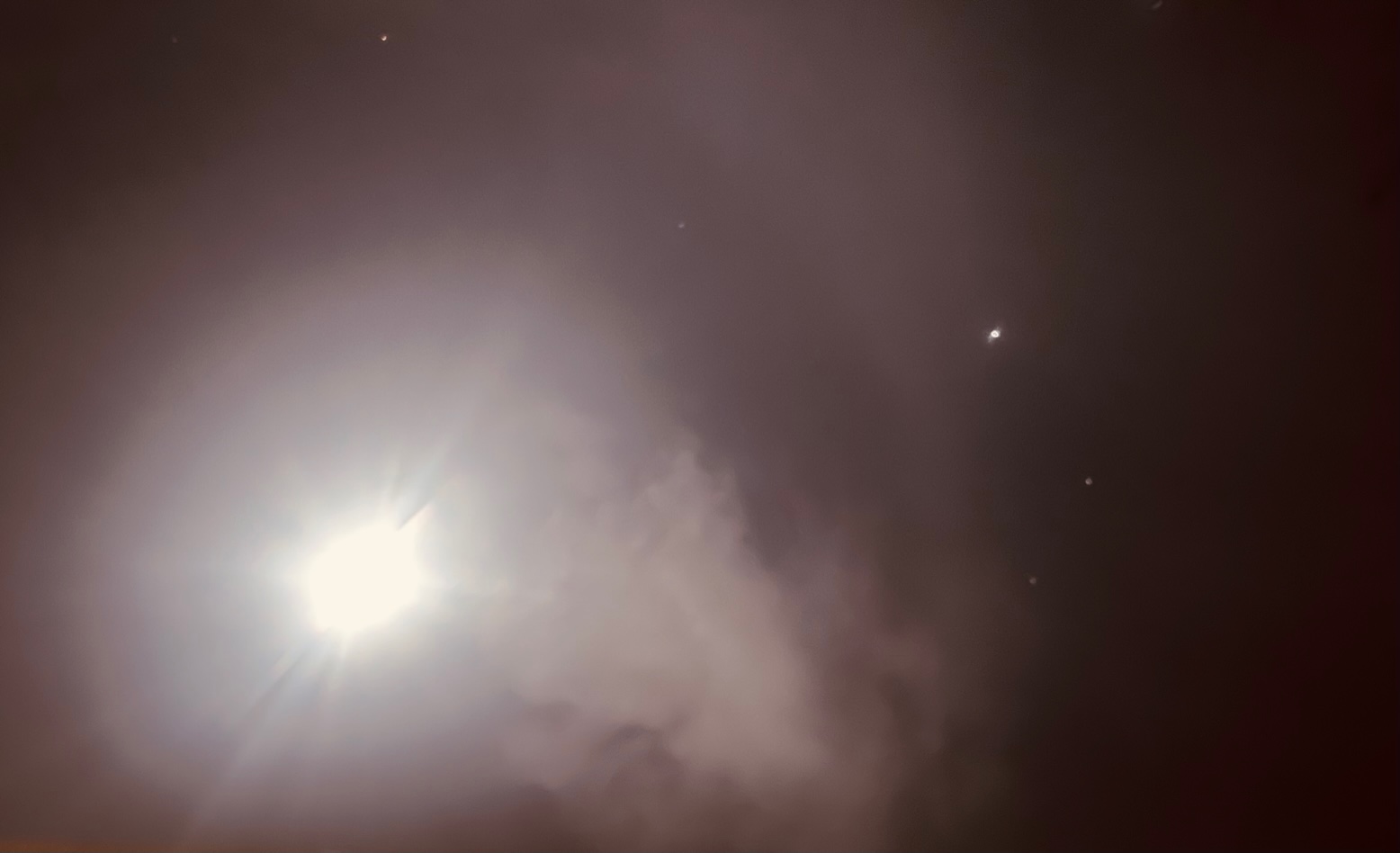
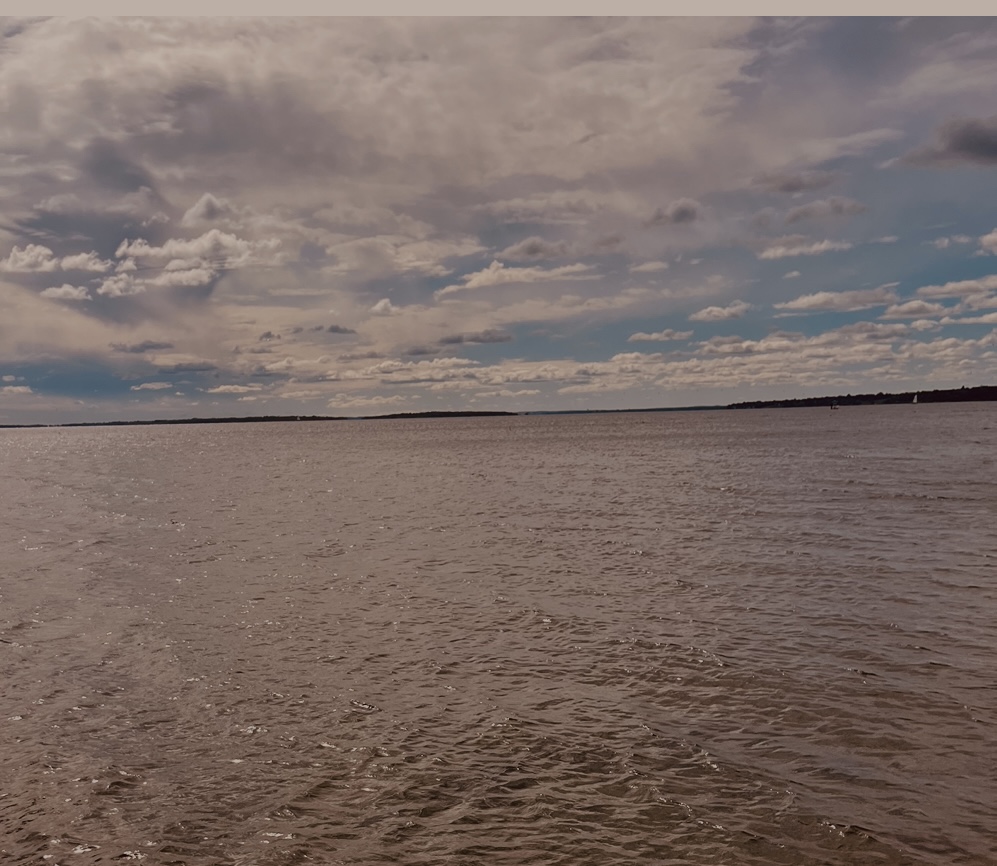
AND LINGERING SLUSH / image by Amalie Flynn

Stunned

PUUUU PANJWAI, Afghanistan — Stalking from home
PUUUU to home, a U. S. Army sergeant methodically
PUUUU killed at least 16 civilians, 9 of them children,
PUUUU …early on Sunday.
PUUUUUUUThe New York Times, March 11, 2012

Saffron daffodils three and four deep
line the low-slung factory’s white-washed
wall like spectators along a parade route

watching as we wander to an art exhibit.
They have exploded three weeks early
and seem surprised to see our passing,

their breeze-tossed faces long rows
of ruffled O’s aglow in the spotlight
of the daylight-saving sun. We all

were stunned that mid-week morning
several oddly mellow days ago to awaken
to the Southwest desert’s weather skewed

toward winter Michigan, to children heading
for school in T-shirts and plastic sandals,
our spring relief reserved for late April

arriving in force in early March. It’s eerily
just like summer, with highs near eighty,
and as we walk I’m astounded by my body,

how it knows to bully my sullen disposition
to get over it as if I’d already survived
the blizzards, shoveling, and lingering slush.

But it’s also spring break and warmer by
fifteen degrees than Daytona or San Diego,
and last Sunday, even across the ice-cold lake,

short-sleeved Chicagoans shopped in droves,
and tulips in the short-fenced beds beside
the bus stops were already half-a-foot tall.

In sympathy I’ve warned my Afghani students
not to fall for this unseasonable withdrawal
of the arctic’s brutal jet-stream occupation,

that they likely haven’t seen the vicious last
of what assaults us every winter, what
most certainly will bewilder them once again.


New Poetry by Jason Green: “Winter Haiku,” “Spring Haiku”

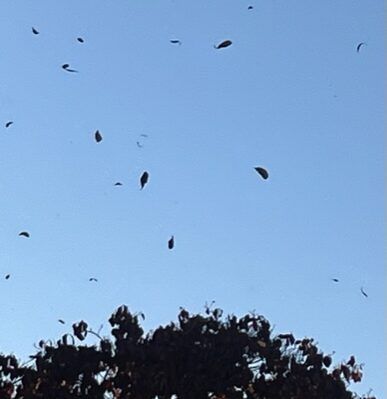
HAZE OF DESERT / image by Amalie Flynn

Winter Haiku

Seventy degree
December morning. God, I’d
love some cold weather.
——————————————–
The north wind brings a
layer of black smoke over
the camp each evening.
Sometimes we cough and
sometimes our eyes get red. We
just keep on breathing.
Who woulda thunk that
years later we’d still be out
here coughing and shit?
Not the congressmen
who fought against the burn pit
bill. America!
——————————————–
Hindu Kush mountains,
snow-capped and rising above
Mazar-i-Sharif.
At any other time,
this would be one of the most
beautiful scenes ever.
Instead, all I can
think about is my hatred
for President Bush.
——————————————–
We cough because we
sleep next to always burning
tires and chemicals.
Years from now we’ll drop
like flies and Congress will be
confused as to why.
——————————————–
Desolation is
not even the word I would
use to express this.
Flying over what
used to be Fallujah is
heartbreaking for us.
By “us,” I mean those
soldiers who can empathize
with the citizens.
There is no way that
every person down there
doesn’t hate us now.
——————————————–
It’s like Groundhog Day.
You wake up. You guard your small
piece of Afghan land.
You go to bed. Then
wake-up and do the same damn
thing, every single day.
Never gaining an
inch and never giving back.
Just biding our time.
——————————————–
I like to read books
on Oysters and steak. Then go
eat gray chow hall eggs.
——————————————–
New Year’s Day marks the
midway point of our Iraq
deployment. Jesus.
——————————————–
First sunrise brings a
flight to Tallil. I see a
small boy waving up.
I wave down in hopes
that my gesture will keep him
from hating us all.
——————————————–
I got a popcorn
machine for our movie nights.
Now we need butter.
Why dodge mortar fire
all day, then watch films about
war? What is going on?


Spring Haiku

Lengthening days and
darker mornings. More dust storms,
more rockets coming.
——————————————–
We pretend that at
home there was tranquility,
while in our bunkers.
——————————————–
Sand sticks in places
the balmy breeze takes it to
and showers don’t help.
——————————————–
I hear the whistle.
Through the haze of desert
sand, their death prayers.
——————————————–
The spring moon lights my
path as a camel spider
hides in my shadow.
——————————————–
Spring rains bring mud so
deep it could suck the boot right
off your fucking foot.
——————————————–
Muddy fields of sand
the rainy season is here
fuck this fucking place.
——————————————–
Watching from the sky
the balloon shows them setting
up a mortar. Shit.
Send out QRF
find out it was a hookah
glad we didn’t shoot.
——————————————–
He’s planting his fields
while carrying an AK.
Why is he shooting?
I’d be mad at us
too if I was just trying
to work and then this.
Maybe mad enough
to shoot randomly at three
soldiers in a truck.
——————————————–
Miry fields are more
than a nuisance to pissed-off
troops. Synecdoche.
——————————————–
We crossed the spring hills,
in a tiny CIA
plane flown by a dude.
He wore a backwards
baseball cap and wouldn’t look
ahead at the “road.”
We skirted the heights
of the Hindu Kush, barely
making it over.
This shit ain’t fun no
more. I’m ready to leave this
FOB, maybe by car.
——————————————–
We fly higher than
the kites they fly below us.
I’m bored, so I wave.
They don’t wave back up
at the infidel. Maybe
it’s the big rifle?
——————————————–
Chris died just a week
before Memorial day.
Irony. That’s all.
——————————————–
The poppies are in
full bloom and I’m popping pills.
Please help ease my pain.
A hole in my gut,
medics, wet gauze to dry gauze,
I need my morphine.
The shakes, not shitting,
but I’m feeling amazing.
Thank god for poppies.
——————————————–
Maple syrup doesn’t make
cardboard pancakes taste any
better. Fuck this place.
——————————————–
Powdered eggs and a
rubberized sausage make up
our Easter breakfast.
——————————————–
Flooded rivers and
muddy fields and all day we
stay wet and angry.


New Poetry by Wayne Karlin: “What Binds Us”

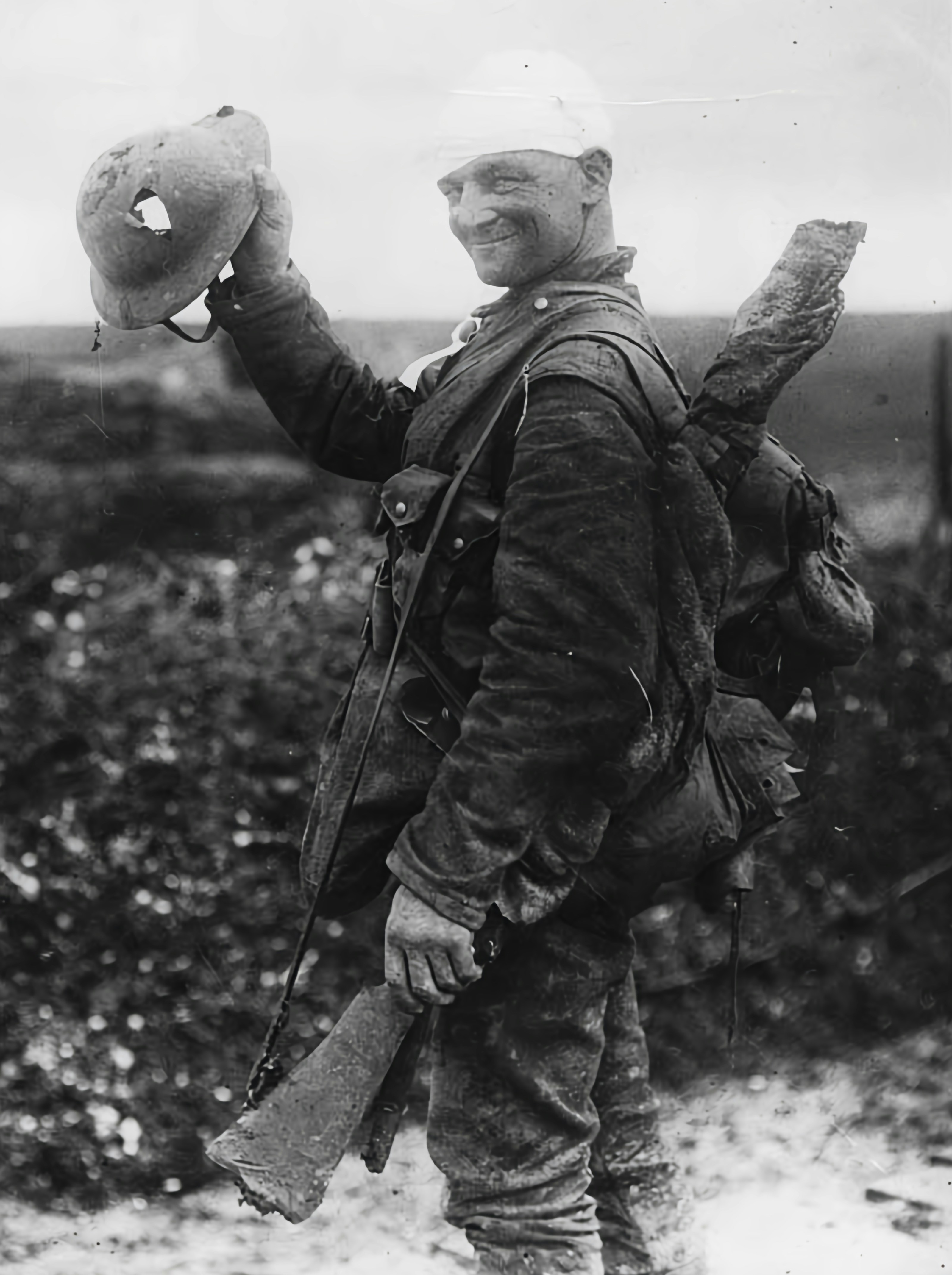
FROM THE BOMBS / image by Amalie Flynn

What Binds Us

I spent twenty-six years
in the jungle;
I was thirty years old
before I kissed a woman,
the Vietnamese poet said
and stared at
the American veterans
as if amazed at
what he had kissed instead.

In the war, he said,
his comrades had covered
his body with their own
to protect him
from the bombs
so he could finish
writing his poem,
although now
in his country
he fears there’s no one
who will understand
the language
in which it was written.


New Poetry by Kyle Hanton: “Deployment, 2017”

Eternal Dusk Sun
ETERNAL DUSK SUN / image by Amalie Flynn


The stars in the North Atlantic hide
for months behind an eternal dusk sun.
I can’t take comfort that we see the same stars
if I can’t see them at all; time passes
even though we’ve been apart for months
and the calendar says the days do, too.
Without the stars flickering or the hint
of clouds gliding through moonlight, I can’t tell.

I left Norfolk months ago and yesterday;
tomorrow, the next day, or ten years from now,
I’ll be home, greeted like Odysseus by Eumaeus:
a king returns to Ithaca and strings his bow.


New Poems by Rachel Rix: “Experimental Simulation of Joint Morphology During Desiccation;” “Second Deployment;” and “CO’s Canon”

HAIR OF THE WOMAN / image by Amalie Flynn


Experimental Simulation of Joint Morphology During Desiccation

In the dried-up river bed of the Helmand the body of a husband lies dead on the

hot cracked dirt. The hair of the woman married to the husband hasn’t been

washed in days. Her arms flex and hook the husband’s lower limbs. Dragging

him makes each step the woman takes heavier than the last. Vultures hover her

salt trail. Vast is what they see surround her. The daymoon watches too. Night

never comes only more heat magnified by the hours, searing the thin flesh

between vertebrae C-6 and C-7. The woman knows she’s blistering. Letting go

of her husband is not an option she thinks of.


Second Deployment

Our agreement was
only one. I have
difficulty carrying myself,

I—weightless. Rising
to the crags. Old world vulture
alone I sail for hours in the sky.

I eat my home. A pile of bones.
I’ve learned to crack open
what I cannot swallow,
a lamb’s femur. I am

bone breaker. Soft tissue drinker.

I eat his words.
I’m now dust bather.
Silent blood tracer.

I am burial maker.
Tossed knuckle
scraper. Someday he’ll find me
by the bed
in a pile.

There will be a hovering
and a hollowing.
No welcoming home.


CO’s Canon

If the cadence may be regarded as the cradle of tonality, the ostinato patterns can be considered the playground in which it grew strong and self-confident.

His green duffel bag
could have carried two of me inside.

Near the opening a faceless angel,
I try: Dearest,

because I’m tumbleweed,
but he never reads me.

There are more important things
to do, shake hands with soldiers

going out on mission,
because when you’re the commander

it’s about survival.

I didn’t need to take
that last glance.

Suddenly tyrannosaurus.
Angel’s sepia teeth baring.


New Poem by Nathan Didier: “Hearts and Minds”

Spilling Our Blood / image by Amalie Flynn

Hearts and Minds

We came to provide help that you didn’t want.
We came to provide security you didn’t need.
We came to provide schools that you didn’t care about.
We came to provide a government that didn’t work.
We came to provide democracy you didn’t understand.
We came to provide infrastructure you wouldn’t take care of.
We came to provide a better life that you didn’t ask for.
And we kept spilling our blood and couldn’t understand how you could be so ungrateful.


New Poetry by Elisabeth Lewis Corley: “An Loc”


THE CHOPPING BLADES / image by Amalie Flynn


Someone is running, there,
just out of call.
We all hear the air beaten into waves,
the chopping blades. I am afraid
I will see a face, I will fall.
As it is the hand, small with distance
claps the air.

Listen, a bitter churning,
lungs roar, ragged like yours
on your morning run.
You are out of breath, we are out
here.

From blank distance the helicopters
return for another pass. I say,
Welcome back. Facts are your only friends,
they say. There is nothing
I wish to forget.


New Poetry by Patricia Hastings: “Dad”

SLOWLY IN THE DARK / image by Amalie Flynn

Dad

1950s father. Family man
as best he could.
Provided everything but
stories of his life.

I played army with his old canteen,
green backpack, wore his sergeant’s cap
in open fields, running bush to bush
avoiding bullets fired by Rick and Neil.

Nothing real about my war
No blood unless a briar scratch
Grass-stained jeans, home for supper
Pork chops, mashed potatoes, apple pie.

We liked Ike and flew our flag
Memorial Day and on the Fourth
No mention ever of the War
less than a decade past.

Eighth grade social studies essay question:
Did your soldier/father see combat?
I scrawl, No, he never left the states.
Didn’t watch men die. Or kill them. Not my dad.

He died of too much drink
Earnest citizen/father turning mean
though never loosening his tongue
to tell tales of army days.

Turns out you did see combat in the war.
Watch men die. And kill and kill again.
Your job: to fire fire into tunnels
where Japanese holdouts hid.

Creep slowly in the dark
nerves shriek, sweat stings.
Something moves! Throw your flames
Then hear screams and smell the burning flesh.

Did you sleepwalk through your life
wife and children just a dream,
stare at fireplace, Scotch in hand
while other ashes floated into focus?


New Poetry by Faye Susan: “I am the Daughter of a Storyteller”

The Deadlift Static / image by Amalie Flynn


The conversations I treasure with my father are when life is thick,
calibrated for someone with muscles, a la Arnold, circa 1970.

I don’t ask about the years sweating through C130 jet jammies,
the adrenaline squint and salt crusted glass like blinds, ripping lives
from frothing canines of rabid Bering Sea. The Memorial Day knells
and widows brine that drove him to coax groans from floorboards
into photographic memory of drab morning.

He doesn’t ask about the seams, healed to spiderweb white,
where the man who bound my finger in gold and stone, pressed
caustic knowledge into me until I driveled rust. Shrieks buzzing
like flies on pink fleshed roadkill, fermenting in oversized hoodies,
to manifest in sage half moons, under darting gaze.

We don’t talk about those things. We swirl coffee and cream.
We talk about the Boston cabby, with the bent nose and worse fender.
The enigmatic professor of poetry, who couldn’t say what anything means.
A poem is a poem. It means what it does.

In the deadlift static, we do nothing, curating mundanity.


New Poetry by Benjamin Bellet: “What Was It Like?”; “Zero Five Thirty”; “West Point”

Once Again Spreading / image by Amalie Flynn


What Was It Like?

Over-lit airport terminals

or the rifle range at night,
the first tracer

crackling in night vision
over pale green hills. Or—

a group of souls
preparing

to die together,

the plane shuddering
in its evasive bank,

our eyes knowing

for once
each other. Or—

relation based
not on preference

but direst need.

The livid explosion
we invited,

then flinched.

Thousands of miles.


Cadet
(West Point, N.Y.)

On restriction to barracks

for dereliction of duty
(otherwise known

as sleeping through classes),

you look beyond
the window.

Clad in gray
Civil War-era uniforms,

a broken succession

of nineteen-year-olds
walk through the snow

at right angles,

flinching at the chill
across their razor-burn,

the wind off the Hudson.

West of the river
atop Battle Monument

stands winged Fame,

her bronze pinions cut
into the overcast.

In your room
sits you.

A bit too warm,

the floor fresh-cleaned
with Mop & Glo,

dry-cleaned wool pants
hanging over

stacked tins
of shoe polish

in the congestion of New York
midwinter air.

You loved back then

to sleep, hovering
in un-location,

absolved until
the dread summed to

the impossibility

of being again
late for formation,

running cold water
then the razor

over that same
old rash—Now, somewhere

down the hallway

the boot-squeak,
hoot and snicker

of men making
their weekend exit

for nearby Newburgh,
the last door-slam,

that triumph

of silence
once again spreading


Zero Five-Thirty
(Fort Riley, KS)

From the hilltop down,

the base is rimmed by a crust
of bluish signs

glowing somewhat
appealingly at dawn—

pawn shops, strip clubs,
quick-cash stores.

The fragmented receptacles
for the nightly outflux

of dirty dollar bills,

leftover sand,
hard-ons and sweat.

Flitting between
blackout shades,

the vague milky secretions

of our half-drowned
dull and brightest, now

making their way back up
to formation.

Their bass-notes drift

across endless plains
of identical duplexes

where their families still sleep.

Sunrise comes soft
as a bloody nose.

Groups of men
jog past in squares.


New Poetry by Loretta Tobin: “In the Dead Man’s Seabag” and “River City”

Condition River Shitty / image by Amalie Flynn


In The Dead Man’s Seabag

On top of clean uniforms,
his Bible rested,
a well-worn photo
of his wife and two sons,

tucked inside with a letter—
We love you
and miss you.
Hurry home.

A blue ribbon marked
First Thessalonians,
where he had underlined—
Be joyful always;

pray continually;
give thanks.


River City

As you wait
for my promised letter,
I count the slowly flooding
minutes of condition river shitty,
like a meteorologist watching
a crest stage gage, helpless
to stem the overflow
as it breaches. I can’t reach
through this void, extend
my fingers to brush yours,
can’t lift and spin you in a hug.
An AH-64 Apache helicopter
encountered hostile fire,
casualties confirmed.
Waiting as the Army notifies
next of kin, I thank God
they’re not coming to you.
I pray for those in the way
of fate, grateful my destiny,
today, is only to make you wait.


New Poem by John Thampi: “Ad Memoriam”

AM A PART / image by Amalie Flynn


Here’s to not killing yourself
P with DA issued narcotics
with Deer Hunting Rifles
PRecreation what life left
in forest PUUUin sand
Pin the White Throne Room
where you sat among
Pblood & brothers
and the Valkyrie your sisters
Pwhen you raised up your call
sign like a prayer
Pand called down hell
fire in our age
Pwhere our every battle is
ragnarok and you wept
Pwithout shamePU in salute
and the throng of well wishers

I am a part

the kind you met
at the arrival gate
shook hands and welcomed back
visitors
if there is anyone
Welcome Back
the kind that could mark
your wounds by
your inabilities
to speak to speak to listen
in anything but blast fragments
the kind that never knew
the certainty of steel
and the strength of the wild flowers
as you patrolled with men
and ate alone
for what company
is there in men?

leaving the divided house
Pand the black tent
the cry of the delivery room
Pand the shout of the bedroom
racing into the crackling fire
Pthat you mistook for sunrise
the distant moon
Pthat you mistook for friend
the laughter of wolves
PWe allowed to circle us in
and lay to rest
PWe refuse to rest

warring till our company arrives
Pwarring till our company arrives
warring for our company who holds the line
in blood and breath and life itself
here’s to not killing
yourself.


New Poetry by Layle Chambers: “Becoming a Lighthouse #1;” “You Find Wonders;” “Pilot Air”

LAPS THE SHORE / image by Amalie Flynn


Becoming a Lighthouse #1

cold laps the shore
no choice but to step in
stride out, stake my place
transmute into tower

two minutes since I looked
no longer 12:59 now 1:01
I count the difference
between my night and your morning

losing you on the Caspian Sea
where signal ends and I
set my clock to wake when
you are expected to land

how should I feel
when you are flying over
Turkmenistan?

I make my feet melt
into bedrock, desire me
into mortar and stone

I strobe the
surface of the earth

I send a beacon
to your soul

should it be jolted free

then you send pictures of the Hindu Kush
mountains I will never see


you find wonders

I’m glad you broke in Aqaba not Benghazi
resort style hotel, manmade island
with security

your voice uneasy wanting to be home for thanksgiving
stranded, describing the intense blue green
of the Red Sea

shards of unsaid stuck in my hand

then your pilot eyes find the nearest wonder
and you walk me
to Petra

where a rose canyon gives you
tea to drink in a cave and I see
the men who made it


Pilot Air

A.I.B. and
consequent
articles
lead off:

pilot error

so easy

to say, slips so
easy off

so
easy
off the side
nose over tail

so easy
to say: who knows?

what happens

in the air
where

when thinking fails
there is training
when training fails
there is sky
when sky fails
there is

g r o u n d


*These poems are part of a larger collection titled Blue Stars.


New Poetry by Kathleen Murdough: “He Signed Up”

Are My Midnights / image by Amalie Flynn


“This is what he signed up for,”
my mother says when
my brother graduates from West Point.
He always wanted to be a soldier,
so she and I pin the bars on his shoulders.
He’s twenty-two, we’re fighting two wars,
and one will come for him in the end,
but first it comes for our friends.
Kills one in the summer, and then
it comes for my brother, too, and
takes all
the light with him.
His dawns are my midnights.
We talk over the noise of firefights.
For an entire year
I don’t sleep or write
because poetry can’t abide the war-
not yet-
The phone rings at 2AM, and
at first, I think he’s dead.
He’s not.
But he’s not coming home.
He’s going to Baghdad instead.
This is the moment I don’t forgive.
120 days of moments come after,
and years I spend trying to
recapture his laughter.
Sometimes, I look at him
and still see the war
that I never signed up for.


New Poetry by Devin Mikles: “Telegram to Mrs. Sargent”

BLUE POWDER SMOKE / image by Amalie Flynn

ONLY MUDDY BOOTS AND HELMETS CAKED RUSTING
ROTTING IN STEAMING GREENHOUSES STICK UP
FROM DECAYED REMAINS CAUSED BY DETESTABLE
HUMAN ANGER VENT BY WORLD POLITICAL
COMPANY FOUNDED ON INORDINATE DESIRE. STOP.
BLUE POWDER SMOKE SIFTS THROUGH THIN LIGHT
RAYS AMONG MANY OTHERS YOUR SON ARRIVED HERE
TODAY SHORTLY AFTER MORTAR FIRE
STOPPED ON PHENOM PHENH. STOP.
PUUUUUUUUUUUUUUUUUUUUUUUUUUUGOD

Devin Alaric Mikles

Colorado Springs, Colorado 1976


New Poetry by Aramis Calderon: “Loyal”

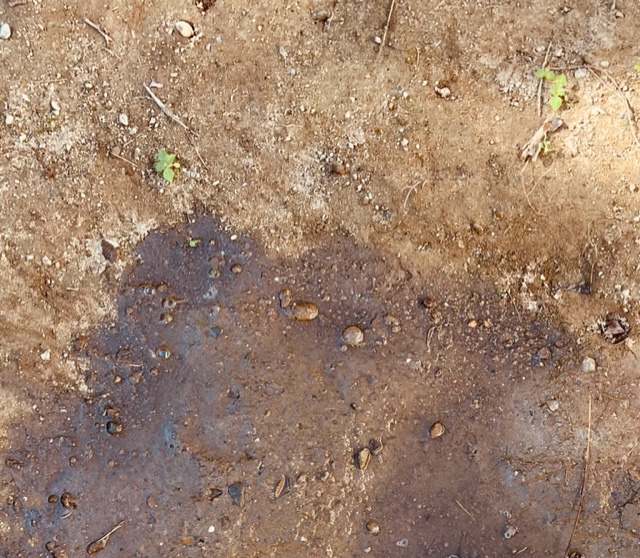
THE DESERT ROADSIDE / image by Amalie Flynn


We saw a stain on the desert roadside.
The moist spot wasn’t from an emptied spit
bottle or a planned checkpoint alongside
the route to stop and relieve the unit.
It wasn’t a bloodstain from a gun fight,
where men and rifles roared and proved their worth.
It was diesel used to compact dirt tight,
to leave no impression of disturbed earth.
I followed my CO. He dug for the bomb.
I did not call for help or special gear.
I failed to think of a prayer or psalm.
I stood with him, too loyal to show fear.
He talked the whole time about his ex-wife,
said she’s the biggest mistake of his life.


New Nonfiction by Fred Cheney: Tracers

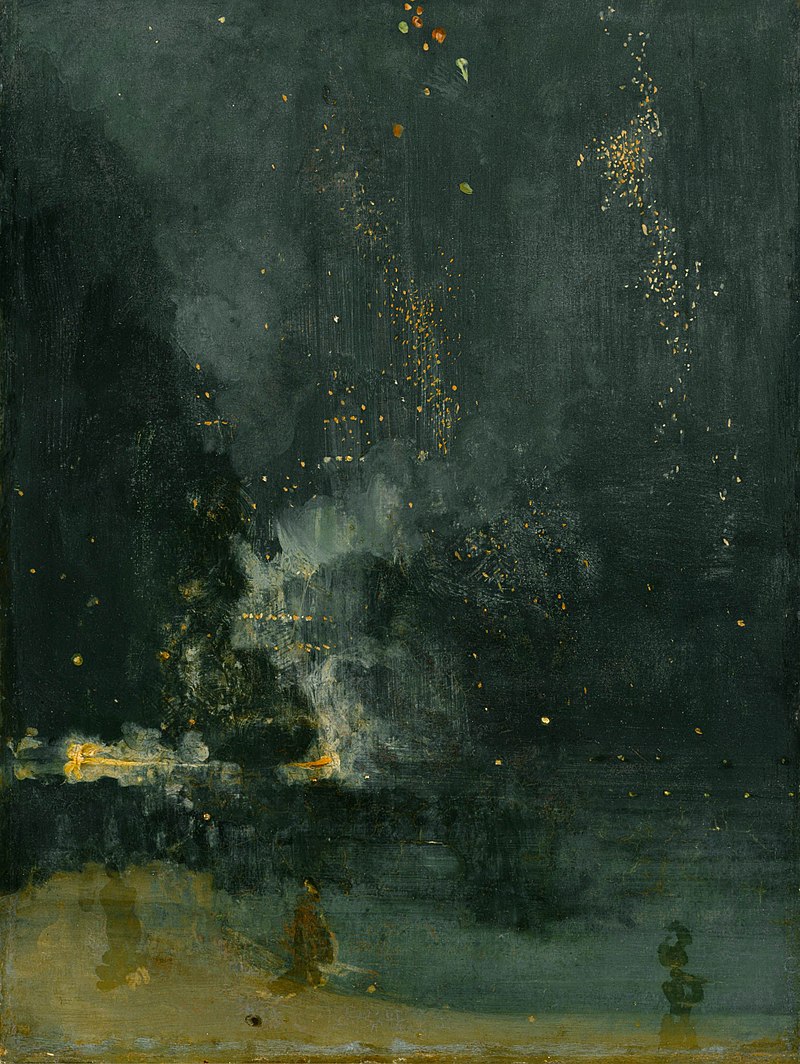
By James McNeill Whistler - http://www.dia.org/the_collection/overview/viewobject.asp?objectid=64931, Public Domain, https://commons.wikimedia.org/w/index.php?curid=127417

I’ve changed all the names in this story except my own. They’re all dead, but … that afterlife thing just might be true.

I’m an old man now, but I was ten or eleven or so in this story. Across the road, lived Ben, six months my senior, and Timmy, six months younger than me. We lived out in the country, without another kid our age for miles. So, we bonded. We bonded by chasing the neighbors’ cows. We bonded by stealing cigarettes from our parents. And we bonded by reading GI Joe comics. Each week one of us would put up the nickel to buy the latest one. When we got a chance, we lied our way into a war movie in Brunswick, usually Audie Murphy stuff. We were fixated on the glories of war.

At the time, Ben and Timmy’s father, Arkie, would get drunk and talk about war. He had fought in the South Pacific. Word was he’d killed 27 men in hand-to-hand combat there. [I wonder why he drank.] Another skill he had was theft—or souveniring, as he called it.  He shipped or brought home on leave an impressive assortment. Helmets, ceremonial flags, swords, maps, and firearms. Had he made a career of the military, I’m positive there’d have been a Sherman Tank over there.

Did I mention firearms? The one that fascinated us most and was most supported in the GI Joe comics and Audie Murphy movies was the BAR—Browning-Automatic-Rifle. And among the things we liked about it from our reading and viewing were TRACERS. These were bullets that left a fiery trail so the soldier could see where his ammo was hitting at night. This was exciting on the pages of a comic. It was thrilling in a movie. And Arkie had a BAR and according to Timmy a bunch of clips with TRACERS written on them.

We knew better than ask him for a demonstration. “You stay the hell away from that war shit. It ain’t good,” is what sober Arkie would have said. However, we weren’t about to stay the hell away from this fixation, and besides … we were sneaky.

I don’t know if the counterpart of carpe diem is carpe nocturn or carpe noches or what, but there came a night for us to carpe … or seize. My parents were going over to Cumston Hall in Monmouth where the players were doing Gilbert and Sullivan operettas that summer. I had made them pay dearly for dragging me to Madam Butterfly two weeks before. So, they made me promise to brush my teeth and go to bed on time. Step 1 of the plan was handed to us. Step 2 came just about as easily, as Arkie nodded off just when it got dark. Ben snuck the BAR out, and Timmy scored three clips that were marked as having one tracer every fourth shell or so. We headed for their back field.

We settled ourselves on a rise with about 120 yards of open field before the tree line and the railroad tracks. We hefted the rifle, and brought it up to our shoulders, practiced bracing our feet. That last didn’t work so well, and I decided that I’d shoot from the hip, just like GI Joe. But I wouldn’t do it one handed because, at about 18 pounds, the gun was too heavy.

We usually did a series of rock-paper-scissors to determine who would go first, but this night Ben played the age card. “I’m oldest. I go first.” Since we’d all get a chance, Timmy and I let him get away with it.

Ben got into a sitting position and mock sighted with his elbows on his knees. Satisfied, he set the adjustment for full-automatic, slapped the clip into the magazine, jacked a shell into the chamber, and released the safety. He took a breath and pulled the BAR tightly into his shoulder. He held the trigger enough time for four or five tracers to launch. Then, he put the gun on safety and prepared to hand it to me.

But I was jumping up and down and slapping Timmy’s back. We were excited beyond belief that it was even better than the comics or the movies we’d seen. Then Ben, reflecting on something new, yelled, “Stop, for chrissake. STOP!” We stopped.

What neither G.I. Joe nor Audie had explained to us was why tracers glowed. It’s a magnesium fire in the bullet, and it burns at about 3500 degrees.

Ben elaborated. “Down there. We set the pickin’ woods on fire.”

Pickin’ was our word then; it was safe to use around adults, and they wouldn’t get on our ass, but we knew what we meant. Timmy and I looked at the tree line and, sure enough, the pickin’ woods were on fire.

I’ve never known that level of fear, before or since. We three were ripping up ferns and tearing down branches that were on fire. We stomped them out. We kicked apart brush piles and jumped on anything that glowed. We gave up our bodies rolling on tufts of flaming grass or even sparks. We had to get those fires out, all of them, or Arkie could easily round his total up to 30.

With our last breath, we felt that we had all the fires out, little and big. We unloaded the BAR and headed for home. They went in their house, and I went across the road to mine.

Since we didn’t have running water then, I couldn’t take a bath or wash my clothes. They were burnt and sooty, so I threw them away. I went to bed without brushing my teeth.

I was asleep when my parents came in all excited about The Pirates of Penzance. The smell in the house dispelled that excitement right away and drew my mother to the trash bin. “These are what Freddie wore today, but they look like they been rubbed with ashes. Look, some are burned through.”

My father took the clothes, sniffed them.  “I’ll get him up.”

The combination of fear and fatigue put me in a truthful state. I didn’t even consider making up a story to cover this. I told the truth, the whole truth.

“Are you sure you got all the fires out?”

I nodded.

“We’ll check.”

So, I put my filthy body into clean clothes, something I was never allowed to do, and my father and I walked past Arkie’s house and down to his back field. I showed him where Ben sat when he shot, and where the fires were. I skipped the part about how pickin’ dramatic tracers are at night. Right about then, I just wasn’t feeling it.

We went behind the tree line and paced back and forth. In somewhere between 30 minutes and three months, Dad said, “Looks like you got it. Good job.”

When we got back to the house, Mom had bath water heated. I stripped down in the middle of the kitchen and washed the grime off.

Dad said, “Now go to bed. We will never talk of this again.”

And I haven’t until now. Everybody’s dead.


New Poetry by Nathan Didier: “Hearts and Minds”

We Came To / image by Amalie Flynn

We came to provide help that you didn’t want.
We came to provide security you didn’t need.
We came to provide schools that you didn’t care about.
We came to provide a government that didn’t work.
We came to provide democracy you didn’t understand.
We came to provide infrastructure you wouldn’t take care of.
We came to provide a better life that you didn’t ask for.
And we kept spilling our blood and couldn’t understand how you could be so ungrateful.


New Poetry by Rachel Rix: “Experimental Simulation of Joint Morphology During Desiccation,” “Second Deployment,” “CO’s Canon”

I Weightless Rising / image by Amalie Flynn

Experimental Simulation of Joint Morphology During Desiccation

In the dried-up river bed of the Helmand the body of a husband lies dead on the
hot cracked dirt. The hair of the woman married to the husband hasn’t been
washed in days. Her arms flex and hook the husband’s lower limbs. Dragging
him makes each step the woman takes heavier than the last. Vultures hover her
salt trail. Vast is what they see surround her. The daymoon watches too. Night
never comes only more heat magnified by the hours, searing the thin flesh
between vertebrae C-6 and C-7. The woman knows she’s blistering. Letting go
of her husband is not an option she thinks of.


Second Deployment

Our agreement was
only one. I have
difficulty carrying myself,

I – weightless. Rising
to the crags. Old world vulture
alone I sail for hours in the sky.

I eat my home. A pile of bones.
I’ve learned to crack open
what I cannot swallow,
a lamb’s femus. I am

bone breaker. Soft tissue drinker.

I eat his words.
I’m now dust bather.
Silent blood tracer.

I am a burial maker.
Tossed knuckle
scraper. Someday he’ll find me
by the bed
in a pile.

There will be a hovering
and a hollowing
No welcoming home.

CO’s Canon

If the cadence may be regarded as the cradle of tonality, the ostinato patterns can be
considered the playground in which it grew strong and self-confident.

His green duffel bag
could have carried two of me inside.

Near the opening a faceless angel,
I try: Dearest,

because I’m tumbleweed,
but he never reads me.

There are more important things
to do, shake hands with soldiers

going out on mission,
because when you’re the commander

it’s about survival.

I didn’t need to take
that last glance.

Suddenly tyrannosaurus.
Angel’s sepia teeth baring.


New Nonfiction by Adrian Bonenberger: “An Alternate View of Moral Injury”

Library of Scotland

An Alternate View of Moral Injury

Introductory note: I originally composed this essay between 2022-23. I’ve gone back and forth about publishing it; it’s true, I stand by everything I’ve written, but I’m certain that many people won’t like reading it. It is certain to damage or even destroy my reputation in certain circles. Let it be so. When I saw Donald Trump’s remarks on the utility of subjecting Liz Cheney to combat on October 31st, 2024, I realized that the misperception that an individual’s experience of combat was absolute or had some absolute value needed to be checked. Here is the essay as I wrote it originally.

For some years now, I’ve wrestled with an uncomfortable truth. It occurred to me for the first time in Ukraine, in 2016, where I encountered it confronting my experiences at war in Afghanistan in conversation with veterans of Ukraine’s war of self-defense against Russia. At first, the truth shocked me. Later, my recollection of the revelation nagged at me while I read certain articles or watched televised or cinematic depictions of war that emphasized its various negative consequences.

A War on the Rocks essay brought the matter home and inspired me to write this piece, which I hope will illuminate the issue for the public. The WoTR essay is titled “Moral Injury, Afghanistan, and the Path Toward Recovery.” It claims that most or maybe all the veterans of the US war in Afghanistan suffer from moral injury.

In the standard definition of moral injury, a person’s morality (and therefore their self) becomes injured by doing or seeing things that conflict with their idea of right and wrong. Distinct from Post Traumatic Stress Disorder (PTSD), moral injury affects or should affect everyone good who participated in the evil of war. If you are an essentially good person, then doing things in war that would be bad or wrong outside war ought to fill you with revulsion, and damage you.

Grim consequences lay in store for veterans who avoid therapy or treatment for this condition; harder to employ, more susceptible to radicalization and extremism (political, ideological, religious, whatever), divorce at higher rates, more likely to traumatize their children with uncontrolled outbursts, suicide at dramatically higher rates.

It’s undeniable that some epidemic afflicts veterans of war — not only in Afghanistan, but all wars. The stakes are high. This affliction corresponds with violence of all stripes. It’s important to confront and accept difficult truths, both for individuals, and as a civilization. And the veterans affected by it, whatever “it” is, have for the most part endured in silence.

And where you have victims, there must be aggressors, criminals. “The American government and the Department of Defense should be more candid in acknowledging the failure of America’s war in Afghanistan” says the WOTR essay, channeling anger about what the United States was doing in Afghanistan and why.

As someone who has written often and critically about the outcome of the war in Afghanistan, one might think I’d be enthusiastic about DoD or the Biden Administration issuing some formal apology. That’s not how I see it; in fact, the USA could have done little differently in Afghanistan save to get out earlier and in a more organized way. The evacuation of Afghanistan was an unparalleled calamity; rather than hand wringing over words, I’d prefer to see the current administration do more to help Afghan allies who languish in terrible conditions. Besides, the decision to leave was itself a kind of implicit endorsement of the idea that the time had come for Afghanistan to stand on its own. I supported that idea at the time. Should the US apologize for ending its occupation of Afghanistan? I don’t think so.

By far the most interesting discussion — one that I’ve been having with friends and combat veterans since the thought occurred to me in 2016 — is what to do about PTSD versus moral injury versus whatever we call a soldier who doesn’t experience either. The casual conversations I’ve heard about people who suffer psychological or “moral” wounds in war conflate different forms of injury. Sometimes I think that enthusiastic and well-meaning crusaders mistake both injuries’ origin and location.

A brief caveat before continuing, here: this essay discusses the experience of troops in war. While it could be expanded to include non-combat veterans, or civilians indirectly exposed to war, this would risk widening the scope of the essay to the whole of human experience, a theme so broad that only the wisest and most ambitious thinker would dare consider it. I am not such a thinker, nor is this already (with apologies, dear reader) sprawling essay even a hundredth of what would be necessary to explore PTSD and moral injury outside the relatively narrow scope of war.

The world of so-called moral injury consists of PTSD as extreme response to some form or forms of trauma, and the aforementioned “moral injury” (feelings of grief, trauma, or betrayal connected to service). The soldier so injured has been compelled by circumstance or authority to do something in war that violates their code of ethics, from an order that leads to a friend being hurt or killed, to a badly planned or executed operation in which the wrong people (usually civilians, often children) are hurt or killed, and everything in between. War is filled with such hazards; they are nearly impossible to avoid. When a soldier or officer falls afoul of one of these calamitous moments through their actions or decisions, the harm they see or do causes them (and those around them) distress, and the memory of the act also causes distress.

Some cannot escape the memory. It could be observing a crime, such as rape or torture, or it could be shooting or stabbing an enemy soldier. It could be watching helplessly as a line of refugees is expelled from their homes. It could be exile; unwilling to potentially expose oneself to moral hazard, the soldier is sent far from their unit to a larger base, away from danger, and in so doing abandon their comrades to that risk instead. One can easily imagine this type of thing, and the nightmares it would cause over a lifetime to a decent person. Doubly so during a war of conquest, an unjust war. Surely, as I write, some Russian soldiers are in the process of being “morally injured” by their horrible and evil government and also by their own complicity in the crime of attacking a peaceful country that offered their own nation no threat or insult.

What is the distinction between PTSD and moral injury? PTSD is a diagnosable and physiologically distinct injury. According to the Department of Veterans Affairs, 7% of veterans develop PTSD, mostly in war. Physiologically and psychologically, the experience of war is so damaging to them, they can no longer function correctly within society without some form of treatment. Authority figures fill them with an instinctual fear and disgust. Bureaucratic incompetence, which many people take in stride as part of the cost of doing business in a civilized world, becomes to a combat veteran suffering from PTSD an active threat to be avoided at all costs. People suffering from PTSD know what happens when you give folks great power then bury their accountability for that power behind walls of hierarchy: nothing. Maybe the platoon leader will get thrown under the bus for ordering you to shoot at a motorcycle, maybe you’ll get demoted. Maybe he’ll get pardoned by the President. It’s all the same shit; shit that the person suffering from PTSD has to relive through nightmares and debilitating, unjustified feelings of fear, horror, and shame.

These are casualties of war. There are ways to treat PTSD that help with its symptoms, but it is not currently within medicine’s power to cure it. Some cases resolve on their own over time, such that victims can live whole and healthy lives. Others linger. In a few cases, usually when addiction disorders are involved, and along with the PTSD going untreated, war comes to define a life’s course, often tragically.

Because of its physical characteristics — medical imaging detects differences between groups of people who have PTSD and healthy controls— PTSD occupies one sphere, the objectively verifiable.

Moral injury occupies another, more subjective sphere. People who suffer from moral injury feel troubled by what happened to them, or by what they did, but there is no sign of trauma that a doctor can identify. Their diagnosis lies in the realm of philosophy and perhaps religion.

What is the number of people who see themselves as affected by this subjective diagnosis we call moral injury? It’s difficult to say; solid numbers are hard to come by. Anecdotally I’d say the number of people who are troubled by their experience of war (in Afghanistan, Iraq, Ukraine, Vietnam, or WWII) *because it made them feel complicit in something awful* is somewhere between 20-30%. My source for this is innumerable conversations with veterans from different services and countries in a variety of contexts. Many (what does that mean? Seven or eight in ten, the remainder left over from those identifying as harmed?) will say that while war was difficult, they are at present largely untroubled by what they did.

A quick caveat here: because this is anecdotal, when I say 20-30% are or were troubled by their experiences in war, I’ve necessarily wrapped that 7% who have PTSD in with those who have moral injury. Not everyone who has moral injury has PTSD, but everyone with PTSD has been morally injured. Therefore the total number of people who find the experience of war so damaging and troubling that it defines their experience is (as far as I can tell) somewhere around 20-30%. I’m eager to see the results of VA studies hoping to better understand the prevalence of moral injury, as well as how they define it, and suspect that the number will be higher for some wars, and lower for others.

Maybe — best guess — somewhere between a quarter and a third of all veterans feel overall that war was a bad experience for them, either because it physically injured their brains, or they felt and feel awful about what they did or saw during war.

This leaves two thirds to three quarters of combat veterans. People who don’t feel betrayed by their country (perhaps, in some extraordinary cases, such as the Wehrmacht in WWII, which was adjacent to unthinkable horrors and directly complicit in some of them, one might find lower numbers — even then, perhaps not, just take a look at veterans of the South’s Confederate Army), or that they did anything wrong in war. Have they been morally injured? You can tell them they were, and while they may nod and smile if you are an authority figure or friend or family, in the company of other combat veterans, they will tell the truth — not only were they untroubled by the experience, but they were proud of it.

Here is the plain truth: many combat veterans derive some pleasure or satisfaction from doing things in war that are considered bad or wrong outside of it (killing, hurting other people, destroying buildings with fire or those weapons that produce fire). Killing the enemy fills most soldiers with a savage glee in the moment. It may trouble the conscience afterward, particularly once the soldier has returned to civilization. These troubling thoughts are the product of healthy and uninjured moral instinct, but it doesn’t trouble the soul. On a biological level, for most veterans of combat, there is nothing wrong with killing enemy soldiers or destroying their positions or equipment or even the people who are nearby during war.

***

Let’s sit with that for a moment. I want people to consider it on its terms. The claim is not “you have justified a thing after you did it because it was a bad thing to do, and you felt bad, but life must go on.” No, the claim is “it felt good and just to kill the enemy, and I was only troubled in any way upon considering what the reactions of others might be first that I did the killing, and second, that I enjoyed it,” plus perhaps “those civilians who were hurt or killed as a result of combat — that was someone else’s fault, not my own.”

The most popular version of war is one told by a traumatized combat veteran — typically a relative or friend — that goes something like “I got lucky and killed the enemy before he killed me, but maybe he was the lucky one because I have to live with the guilt.” In this version of war, everyone feels guilty about what they had to do in war save perhaps for the psychopaths, or the wretches who were unhinged by the experience.

This version of war is echoed in mainstream movies, prestige television dramas, and even video games. Its claim — that the majority of US soldiers are suffering from moral injury, betrayed by a country that sent them to a foolish war in Iraq or kept them in a pointless occupation of Afghanistan — is the one with which most people are familiar. But it cannot be true; either the war was bad and people are outraged about it (in which case, they aren’t morally injured; rather, they feel a justifiable sense of outrage, their morality is behaving correctly) or the war was bad but was not perceived by soldiers as such at the moment — only when they arrived home and were essentially told that they ought to feel bad about it, by friends, by literature, and by cinema — in which case, the moral injury does not exist within the veteran but is a kind of mutable social construct that comes into being or vanishes depending on the veteran’s surroundings.

On Killing, by Dave Grossman, is the most significant and popular book to forward the claim that the default setting for most people is against killing. According to Grossman, people must be trained to overcome an innate resistance to killing for any reason. Something like “thou shalt not kill” but as a concept hardwired into humans, which must be overcome. The book bases its arguments on a dubious WWII-era study (sadly, irreproducible) that concluded that only 15-20% of soldiers fired at humans in combat during WWII. In any particular engagement, 80-85% of the soldiers were shooting at nothing, or not shooting at all. Somewhat famously, swapping out human-shaped targets for bullseye targets and training them to fire at those human silhouette targets popping up at different distances is said to have increased soldiers’ rate of engagement in Vietnam to nearly 90%.

The study raises many questions, such as: how reluctant were soldiers to fight Germans or Italians versus Japanese; how did soldiers feel about *killing* rather than shooting; and, most importantly, if there was a deep and essential aversion to killing in humans, how was 2 ½ months of training including a week of shooting at human-shaped pop-up targets at a range able to bring the number of effective soldiers from 15% to 90%?

An uncomfortable answer is that Grossman’s book on the subject of killing and the study on which it was based both miss something fundamental: that the majority of soldiers have no problem killing an enemy who is trying to kill them or the context in which surviving that occurs (a context that sometimes includes damaging or destroying civilian property and life). Indeed, the majority feel pleased with themselves at the time, and mostly afterwards as well. Killing isn’t a problem in war (in fact, it’s an advantage), but the existence of that truth does become a problem when those combat veterans return to civilization. This return creates a new kind of moral injury — to civilization, to morality, by the combat veterans who carry knowledge or self-awareness like an infection or an unspoken accusation.

***

This social component of moral injury is reflected by literature and movies about Vietnam and WWI, and tells a very specific type of story about war, authored by people with refined sensibilities who did not enjoy war for an audience with refined sensibilities. Veteran-writers (and artists, and filmmakers) are more likely to be a part of this 20-30% of people who suffer from PTSD or moral injury. Certainly in my experience, this is the case. And they (we) have struggled to explain what was distinct about Iraq and Afghanistan from Vietnam. This was not the case when it came to finding a distinction between Vietnam and Korea, or Korea and WWII, or WWII and WWI; on the contrary, those distinctions were straightforward for all involved (some had been involved in at least two of those wars), and for the most part came down to technological advances.

One constant of war is that there are soldiers who are troubled by what they do and see or injured as a result of enemy action (shelling, bombing). And the soldiers who are troubled by these things are greatly troubled; it’s not something they could easily accept or stand. Consider: Kurt Vonnegut and Joseph Heller (both of whom were injured, morally, by their wartime service) each wrote extraordinary novels that are routinely referred to as among the best literary works of the 20th century. And Catch-22 and Slaughterhouse Five are about how useless and absurd their experiences were… in World War II, fighting the Nazis. Only a fool or a Nazi would argue that fighting the Nazis was a mistake, that fighting against the Nazis was a just and justifiable activity might as well be a Voight-Kampff test for political sanity. If one does not understand the necessity of stopping Nazi Germany, one is not sane in an important sense, or one does not understand the Nazi project sufficiently well to see why doing so was necessary.

It is just as easy to imagine Vonnegut and Heller in Vietnam, a very different war, and a war that history has proven to have been a massive folly and waste in every sense (many knew this at the time, too). The details would have been different in their books, but the themes would have been the same: corruption, an out-of-control military industrial complex, the futility and tragedy of sending children to die. They could have written these books about Iraq and Afghanistan, too, or any of the smaller (though no less consequential to the civilians who experienced them) brushfires in the Global War on Terror.

Slaughterhouse Five and Catch-22 aren’t the only great books about war. For Whom the Bell Tolls is an incredible portrait of war. The Battle of Malden, too, is a story — in poem form — about a battle (at Malden) that draws very different conclusions about what goes into a war (fear, obligation), and what comes out from it (honor, fame).

And another story about war — The Iliad — has more to it than Ajax’s madness, or the wrath of Achilles. There’s Diomedes, who becomes so inflamed by combat that after wounding Aeneus, he wounds Aphrodite, and attacks Apollo when that god descends to rebuke him. Later, Diomedes wounds Ares. To the Greeks, Diomedes was as important as Achilles — but his berserker rage and the cultural context in which it exists is basically incomprehensible to the modern reader, and as a character he’s largely forgotten, overshadowed. Modern audiences prefer Hektor seeing his son recoil from his frightening helmet, and they prefer Achilles exacting revenge on Hektor for killing Patroclus, and reveling in that vengeance (as the reader or listener revels with him).

Western civilization has come to see war as an evil, and true wars of necessity have become increasingly rare (at least, until recently). As a result we’ve lost touch with one of the most obvious and fundamental elements of war as it is experienced by soldiers. Our literature and art of war have been the literature and art of a minority of war’s participants.

One reason for this is that it is more important to storytellers to explain that war hurt them than it is for those who had a “good” experience of war to explain that to anyone. This is analogous to the phenomenon in which there are more negative reviews online than there are positive reviews; one is likelier to act out of a sense of injustice or rage than contentment or happiness.

Another reason is that war is universally awful and evil from the perspective of civilians. As fewer and fewer people serve, fewer and fewer civilians are veterans, and fewer of those non-veteran civilians have any basis for understanding war as it occurs to the people fighting in it. They are therefore most likely to enjoy stories that are sensible to them from the perspective of a victim, or someone who has been injured or exploited. There is little market for Diomedes’ tale — some hundreds of thousands or millions of people across the world.

As war and the experience of war ebbs from social consciousness, its opposite, peace, flows. I believe that this is one of the sources of moral injury and explains why and how it is becoming more widespread in the military and among veterans. People today go to war expecting the rules of peace to apply and are surprised and outraged to learn that they do not.

Here it is important to note that war is evil — occasionally necessary (such as Ukraine’s noble and vital defense of its borders against an invading Russia, or the Allies’ war against Nazi Germany) but always and unquestionably evil. Whether a person’s experience of it is pleasant or unpleasant is irrelevant to that fact.

***

In civilization, the good feelings that one enjoyed while fighting during war get offloaded to spaces that feel comfortable to an audience that would be unreceptive to a more honest but otherwise troubling account. Frameworks are created to hold such conversations; myths constructed, and built, passively but energetically. The conventional explanation for why people emerge from war with positive associations becomes either that in war people get a sense of purpose that they lack elsewhere (the reason for the war), or that (per Sebastian Junger’s Tribe) even in the absence of a unifying purpose behind a particular war, there is a strong sense of meaning inherent to living inside a small group of peers. This sense of meaning and purpose can easily be found in a military unit.

There is something to this. Nearly everyone agrees that a “good” in war is the sense of camaraderie one builds under extreme adversity; doubly so when part of a good unit filled with good people (and a majority of people are decent or from a moral perspective overall “good,” otherwise civilization would not be possible). Having been in a “company of heroes,” one finds oneself seeking to recreate those conditions, either as a leader or as a subordinate — the memory of that moment stays with you always and is real; it is as true an experience as a person is apt to encounter in the world, the template for all the great myths and legends. King Arthur and his knights of the round table, Homer’s Iliad and Odyssey, the Epic of Gilgamesh, the Romance of the Three Kingdoms.

While we extract good to redeem the unmitigated disaster that is war — the almost unimaginable scope of destruction and evil war entails — there is a taboo that resists most efforts to overcome it. This taboo is one of society’s most powerful, a basic precondition for civilization: the taboo against murder. No culture views this act as tolerable; it is incompatible with modern civilization, and people who murder face stiff penalties and social opprobrium. For premeditated murder, planning to kill another person “in cold blood,” the legal system reserves its harshest punishments. It has been this way for millennia; we can tell that this is the case from the remnants of ancient legal codes such as that of Hammurabi. The sixth commandment retrieved by Moses from God instructs in the original Hebrew that “you shall not murder” (not “you shall not kill”).

But in war all you do is meditate about ways to kill your enemy; you dedicate most of your time and attention to figuring out ways to do that, while they’re doing the same to you.

War is bad, killing is bad, but killing in war is necessary — moreover, as many combat veterans will tell you, killing or wounding one’s enemies in war feels good. Killing and wounding civilians and destroying their possessions — collateral damage — isn’t good, but, for most people, is understandable, tolerable. The combat veterans who are fine with killing or hurting their enemies do not experience moral injury in war, or injury at all; for them, the experience is good or at least just. But these combat veterans do experience moral injury in another space: returning home, where they are encouraged to view themselves as wicked or flawed by civilizations in which killing and wounding people is a major (and useful) taboo.

Killing enemy soldiers in war is experienced as a good by the individual (at least, most of them), but those same individuals understand, regardless of their background, that such an act is, strictly speaking, bad or evil — and that they must be bad or evil for having experienced pleasure from the act. The way combat veterans deal with this is to talk with each other.

If in conversation a combat veteran explains that they did not take pleasure in killing the enemy, one no longer brings up the subject with them; these make up the relatively small group or subset of combat veterans who suffer from the experience, and combat veterans are not interested in perpetuating their anguish. The matter is let to drop.

The rest of the veterans talk and reassure each other both that (1) they are not crazy, and (2) they are not evil; they are decent people. Killing in war, after all, is ok, regardless of whether one derived pleasure from the act or not; it is killing in civilization, in peace that is forbidden. Moreover, usually the reason one kills in war is to prevent killing in one’s own civilization; certainly, that is why Ukrainians are carrying arms against the Russians invading and occupying their land.

Here, I believe, is the crux of the problem with how moral injury is understood or discussed. The vast majority of the writing and thinking public whose views they reflect, assume a priori that killing likely fills a person with horror and anger; that murder is in addition to being a civilizational taboo, a human taboo. It is not!

I don’t think civilization depends on those things both being true; it’s certainly the case that if murder was permissible, that civilization as we know it would not be possible. In rural Afghanistan, for example, where certain types of killing are permitted (badal, or revenge, permits killing in response to a person or tribe’s honor being imputed, for example, but also offers compensation as a suitable replacement for blood), a town looks like a medieval fortification in part because one must constantly worry about 6-10 men from some other tribe attacking you over a disagreement — something trivial and recent, or maybe something older, something from a century ago or more. The amount of energy and anxiety that goes into this rather than any other productive activity including sleep is a brake against progress. And even they have formal social constraints on murder.

Precisely because killing one’s enemies *feels* like a good and satisfying way to adjudicate disputes, civilization needs to take it in hand; every society, no matter how small or undeveloped, does so. It is the first thing a society must do to secure its existence: resolving disagreements through peaceable and satisfying mechanisms (such as, in rural Afghanistan, the practice of resolving badal through monetary compensation).

There is a tension here. Every civilization is made up of a majority of people who would prefer not to make war, who in war develop PTSD or become outraged at their nation for putting them in a position where they have to violate their ethical code, and a minority of people who are fine with combat. If it were any other way, logically, countries would spend more time waging wars against each other. In the past, when civilization was less influential than it is now, this was the case; war was far more common, and the minority of people who enjoyed it wielded more power. But the costs and stakes for modern war are so high that few are willing to bear it save in truly extraordinary circumstances. In a just country people are willing to bear that cost if they must in a necessary war of self-defense, or against a truly wicked and chaotic enemy, such as Nazi Germany or Putin’s Russia. They serve in a military during times of great peril, and do so understanding that it is preferable that they bear the cost of service (intuiting from their reading, studies, and stories from relatives who served that the cost will be great). Meanwhile, the minority of people in civilization who enjoy war or are ok with it (who are the majority of people in the military) join or stay because they for their part intuit that it could or would be a good thing to do; they’ve read or heard stories from combat veterans about the thrill of conquering one’s hated enemies, and seek out combat. Without their numbers or excitement at the prospect of war, it’s difficult to imagine any military attracting the numbers or energy needed to win. Whereas in civilization, a majority of people are formally and firmly opposed to war, in a professional all-volunteer military, the majority of people are trained and encouraged to be in favor of it.

This explains the prevalence of stories about and around moral injury from WWI and Vietnam, and their relative absence from WWII. As discussed earlier, Vonnegut, a prolific author, happened to be caught in one of the few unequivocally immoral acts of the second World War on the Allied side — the British firebombing of Dresden. On the other hand, Heller happened to be one of the people doing that type of bombing.

Is the current recruiting crisis facing the U.S. military tied to perceptions of moral injury and PTSD and the futility of serving honorably? Absent a clear and true understanding of what service means, what happens in the military — what happens in battle — it is impossible to say for certain, one way or another. The widespread expectation that a person will inevitably be morally injured or develop PTSD can’t help. Not everyone who serves is dealt moral wounds. I think the majority of people who serve grow from the experience.

Both because it does not occur to the type of person who thrives without the instinct for blood, and because civilization has robust traditions and laws in place to discourage fighting and killing, it becomes difficult or even impossible to face this truth that war exposes, which is that decent, law-abiding, and mentally well-adjusted citizens could accept or even enjoy killing other humans under the right circumstances. This is the true threat to civilization, this is the rich soil in which political or religious radicalization thrives. And this is why combat veterans are so prone to those specific forms of radicalization. Not viewing things dispassionately and on their own terms, civilization creates a moral hierarchy, in which the combat veteran who feels little or (if they’re being honest with themselves) no shame for their behavior in war is at the bottom, and the wounded or traumatized or betrayed veteran is near or at the top, along with the good civilians whose hands are clean from blood.

This truth, exposed by war, comes into conflict with one a lie that is essential to civilization: that war is not pleasurable to anyone, and makes everyone crazy. The majority of soldiers who have killed an enemy fighter or destroyed an enemy position or fortification with artillery fire or bombs know the truth (that savage destruction is pleasurable) like they know a spoon is a spoon, it is as obvious as the cloudless midday sky is blue — and radical political groups use that truth like a crowbar, to pry otherwise stable and useful combat veterans away from their societies. The fascists and Nazis infamously had the most success with this tactic, deliberately targeting the many combat veterans of WWI to form political organizations dedicated to the idea that war was the highest truth. They took it a step further — in fact, this is one of the reasons the Nazis needed to be opposed so violently and at all costs — their project was to invert the moral order that exists in civilization where murder and fighting are at the bottom and peace on the top. Nazi Germany aimed to elevate killing to the highest form of good, in order to usher in a brave new future. Repudiating their vision of things paradoxically required the most bravery and death in war that the world had ever seen. It ended with the United States dropping two atomic bombs on Japan.

Those atomic bombs are important, and not enough gets said about them. The second bomb — why even mention the first, when you can look at the second — was dropped on Nagasaki. The city, an important center for the production of ships and naval armaments, was not even the day’s primary target. That was a city called Kokura. Obscured by clouds and smoke from fires that resulted from the firebombing of a third city, Kokura was spared when the bombers couldn’t drop their payload on target. They flew on to Nagasaki (incidentally, then the most Christian city in Japan, owing to its having been provisionally open to sixteenth century Dutch and Portuguese traders and the missionaries who accompanied them). There, the US bombers dropped an atomic bomb that killed between 60-80k people. WWII ended (depending on who you talk to, and what sources you read, partially or entirely as the result of that second atomic bomb) hours later.

Most people I know (and everyone from my grandparents’ generation who lived through those times— even the socialist-leaning people, such as my father’s father and his wife) believed or at least acted as though they believed that the US was basically justified in ending WWII the way it did. What of those 60-80k who died, or the 150k in Hiroshima before? These were overwhelmingly civilians. Dozens or hundreds of soldiers were killed in Nagasaki; thousands in Hiroshima. Everyone else was relatively speaking a noncombatant, whether they were at home preparing a meal, or — a distinction that was important four years into a war that had dragged on for various participants in some form since 1937, though we do not observe it now — in a munitions factory pouring gunpowder into tank or aircraft bullets.

So, when we talk about “collateral damage,” and the psychic damage it entails, we have to take into account the bombing of cities we did during World War II, and especially those bombed almost as an afterthought with atomic weapons. Collateral damage, like moral injury, is and should be a great concern to any civilized person, in or outside war, but we must account for the fact that the US erased hundreds of thousands of Japanese people, and, more relevantly to the essay, most people are essentially fine with that. People may rue it in the abstract, or when they think in concrete terms about the death of, say, a Japanese child — that the US dropped these atomic bombs — but there isn’t enough energy behind the few who deeply care about such matters to even force the US to formally apologize for dropping the bombs. Why should it? Most people —Japanese and American — understand that the single greatest incident of collateral damage in military history, the dropping of the second atomic bomb on Nagasaki, was at worst understandable, and at best necessary (I’d draw the line at “good” and hope others would, too).

Don’t take my word for this. None other than Paul Fussell, author of The Great War and Modern Memory (among others) and renowned for his criticism of war and warmaking, wrote upon consideration of the event’s anniversary: “Thank God for The Atomic Bomb.” Whether you agree with Fussell or not — hardly a warmonger, again, and likely among that 20-30% who’d describe themselves as morally injured if writing today — it’s at least worth considering that the closer one gets to the possibility of dying in Japan, the happier one is that the war was concluded before you got there.

If dropping atomic bombs on Japan to force its surrender is something most people at the time believed was necessary, and almost nobody today gives much thought to it, it shouldn’t be hard to understand why most or at least many soldiers are, while troubled by the collateral damage they see or cause in war, able to go on with their lives after. When it occurs in a war that a soldier sees as unjust or unnecessary, the troubling but comprehensible ability to rationalize away “collateral damage” diminishes in proportion to the injustice and wickedness of the war and the deeds the soldier does while in service. Instead, the soldier is wracked with feelings of guilt, impotence, rage, and betrayal — moral injury.

When peaceful nations and civilizations cannot admit the truth of war, the truth about themselves, for the majority of war’s direct and indirect participants — that the killing there felt fine, and also that there’s nothing wrong with killing feeling or being fine in a necessary war — they create a terrible hazard for their country and culture. In seeking to preserve a pristine account of human morality within civilization (murder or deliberate and unsanctioned killing is bad), they help lay the groundwork for unscrupulous agents of chaos to seize upon combat veterans, and set them against what becomes to them a hypocritical and even evil system — a system capable of waging war and countenancing killing, but not capable of seeing it clearly.

The “betrayal,” then, is not the United States government or Department of Defense refusing to take responsibility for the failure in Afghanistan. While it may be true that such a project would be useful for some soldiers — maybe it would help treat PTSD and moral injury, maybe it wouldn’t (anything that undermines an individual’s sense of agency over their life is psychologically harmful, it’s difficult to see how in the United States specifically, and its modern day all-volunteer military, such a remark would truly help the individual) — what the majority of combat veterans and citizens would really like to hear from their country is that what we did in Afghanistan was fine.

Underlining instead that the war in Afghanistan was a failure in order to help salve the outraged or disappointed few, one inevitably imposes moral injury on those people who did not experience much or any to begin with, or who have processed it and moved forward with their lives — a majority of combat veterans. For my part, while it’s clear that the occupation of Afghanistan was carried out largely under false pretenses — I blame the generals and to a certain extent the battalion commanders — I’m not sure who would or should own that series of bad or lazy decisions. The presidents who permitted it to continue (Bush, Obama, Trump)? Their top generals? The evacuation of Afghanistan was botched by the State Department. Would that apology be The Secretary of State at the time — Blinken?

To the critic who might say that such an apology or explanation might be owed Afghans, I would say that this too is a dangerous self-deception. Those people who wanted victory the most in Afghanistan, the Taliban, achieved it, and the Taliban don’t need America’s apology, they earned their victory honestly, they won, the victor has truth in their hand. For the Afghans who are upset that their country fell, rather than looking to America for an apology (with the possible exception of Afghan soldiers who have been given no path to safety once their government fell), they should look instead to those brave countrymen of theirs who lie in the ground, now — and to those leaders of theirs at the time who failed to organize an effective defense, or empower the non-state volunteer organizations that are critical to helping prosecute a successful war of defense when the state itself is weak (as was certainly the case in Afghanistan).

***

Back to the problem of moral injury, which is really a problem of how to bring combat veterans back into society after war. To recap, there are (1) veterans suffering from diagnosable PTSD, which can be treated (7%); (2) veterans suffering from a sense of outrage or betrayal toward their country for putting them in a position to do things they hated or which caused avoidable harm to innocents (13-23%); (3) veterans who for the most part enjoyed their time in the military, feel good about having dispatched vile and wicked enemies or directly and actively participated in dispatching them — a difficult and praiseworthy thing! — and only wish that they could share this without feeling like outcasts (70-79%) and (4) psychopaths who enjoy killing (less than 1%, though overrepresented in combat arms for understandable reasons). These last two groups (3, 4) views collateral damage as just that — damage that was outside what was intended, and therefore, beneath consideration for them, personally.

We know how to treat PTSD effectively. Efforts are afoot to discover ways of treating the moral injury felt by certain veterans (usually and most understandably veterans of combat) which, assuming the treatment won’t then leave the remainder of soldiers radicalized, is good and useful. How, then, to help the majority of veterans, who know a terrible truth that has been obscured from people living in peace and civilization — that killing can be a joyful act, that leaves one with a lifelong sense of confidence and pride or at least is basically untroubling? How further to do this in a way that does not undermine or damage the peaceful people on whose behalf these combat veterans did their killing? Answering these questions will help guide more of the correct people into the military and keep out people who probably ought not to serve (those who are physiologically predisposed to PTSD, for example, as well as psychopaths whose affinity for murder will lead them to kill when killing is unnecessary) and whose writing and movies end up presenting a flawed and incomplete portrait of war. It ought also to help solve the military’s recruiting woes, reducing uncertainty around how a person’s service will be seen and experienced. Wondering if you could pull the trigger and kill someone who is an enemy of your civilization? Worried a commander might send you to kill the wrong person, accidentally? You are probably better served applying to college or graduate school than joining the infantry.

There is an excellent blog post about this phenomenon that a friend suggested to me, written by Bret Devereaux, PhD, the author of ACOUP. I recommend that one read the post in full. In it, Devereaux, one of my favorite historians, examines what he describes as the curious phenomenon of pro-war medieval poetry through the lens of an 11th-12th century Occidental poet and nobleman. The poet-knight enjoys war unreservedly; Devereaux says this could be partly because war, for the armored poet in question, is objectively safer than for most of the other people taking part in it at that time (the unarmored and poorly equipped peasant conscripts). Perhaps this was the case for American soldiers in Iraq and Afghanistan as well, with their advanced body armor and night vision; their jets, helicopters, and artillery? In any event, Devereaux concedes at the end of his post that the poet is sincere in his attitudes toward war, and that it likely reflected a widespread cultural sentiment active at the time, rather than the idiosyncrasies of a deranged individual.

Unlike fascists or aristocratic warrior-poets, I don’t think the answer is to create a code in which killing is elevated to a good in our civilization. To begin with, this would do great harm. It is, moreover, unnecessary — the majority of combat veterans, as I mentioned earlier, already know what they did was good, this does not require endorsement from a culture or government — neither apology nor applause is needed. This is a characteristic of truth, all who see it know it for what it is (whether they like or hate that truth is another matter).

What is the solution? A well-funded and capably staffed Veterans Affairs is a good start. For PTSD: continue exploring treatment and therapy. For moral injury: gauge the true extent of the problem across wars (I suspect that unjust wars such as Vietnam or fruitless wars such as WWI will have a higher amount of moral injury than those that are seen as just or necessary, such as WWII). For the rest of the soldiers who fought in wars and don’t see much or anything wrong with what they did: local spaces for community are still the best answer. American Legion and VFW are and should be good places for soldiers to meet and talk free from the judgment or guilt that can be levied by those who never served or fought against those who did. It seemed for a couple decades while GWOT was in full swing that there was an essay a week or so about how returning veterans didn’t like being asked whether they’d killed anyone, so it’s fair to assume that’s still not a great conversation-starter. But for curious civilians who want to go the extra mile anyway, find a way to create space for honest conversations with friends and relatives. Few combat veterans have ever been given permission by anyone besides each other to have those discussions.

Also, stop with the fiction that an individual’s experience of war — positive or negative — should determine one’s own attitude toward it. War is always evil, though sometimes necessary. Regardless of how one came out the other side.

Finally, simply admit that every war is not horrible for everyone. If one believes, as I do, that truth is the basis for human progress, an acknowledgement of fact — rather than a rhetorically hollow and ultimately meaningless grand gesture of the sort that gets most countries into war in the first place — is the real hope for healing a kind of injustice that exists for most combat veterans. “Tell me about the war” free from implicit judgement has the advantage, too, of being something anyone can ask, whether of a friend, acquaintance, or relative. Try; it might just work.


New Poetry by Douglas G. Campbell: “The President’s New Children’s Crusade”

The Mudweary Bringing / image by Amalie Flynn

The President’s New Children’s Crusade

We are the mudweary
bringing the blossoms of death.
We are the Contras, the blessed,
liberty’s torching lames us,
we are the old children.
shredding night’s humid serenity.
bombs unleashed are our laughter.
we are the young men of war.

We are the death marchers
who slink through the mountain,
one endless serpent of soldiers
sent to strangle our enemies;
The president sends us
with his blessing, blesses us
with his sending, blesses
the bleeding.

There is no need for interceding,
for the Sandinistas
are infidels wrapped in red,
red in their wrapping;
rapping on doors in the night.
Contras are the bringers of light
rapoing indoors when we might,
we bring the light to the burning,
always discerning the right,
the right. After the bellies
are emptied of babies,
after the buildings are belching,
their flames springing higher
we scatter, no matter the plunder,
the thunder roars through the dark,
the spark of freedom is lighted,
ignited.

We are innocents marching,
we are the crusaders of death,
new life we bring our nation,
new breath, new salvation our message.
We have the president’s blessing
he sends us the blessing of rending,
his blessing is drowned
in the bleeding.


New Poetry by Sylvia Baedorf Kassis: “Detritus”


“Bullets 1.0” by Sylvia Baedorf Kassis (acrylic, ink, gesso, rust and found shell casings)

Detritus

You can tell me
that what happens
PUUUupon the soil
PUUUUUUUUUbeneath our feet
does not matter

that the violence –
PUUUgunpowder
PUUUbullets
PUUUlandmines
PUUUblood spilled
PUUUand rot of bones and flesh
does not affect the terroir

that the terror
over centuries
on land –
PUUUdisputed
PUUUand stolen
PUUUfought over
PUUUconquered
PUUUand lost
is not ad infinitum
buried in this graveyard
PUUUUUUUUUUUUcalled home

You cannot tell me
that what happens
PUUUupon the soil
PUUUUUUUUUbeneath our feet
does not matter

that the battles –
PUUUsweeping or contained
PUUUas enemy or ally
are not eternally captured in the earth
PUUUdust inhaled and ingested
PUUUUUUUUUbut also embedded
PUUUUUUUUUUUUin our collective consciousness
like a rusty compass
nestled in the palm of each newborn child
PUUUUUUUUUUUUits arrow clearly pointing
PUUUUUUUUUUUUUUUUUUUUUUto the forever trenches
PUUUUUUUUUUUUUUUUUUUUUUUUUUUUUUUof inheritance.


New Fiction by Robert Miner: Shades of Purple

Bar Bathroom

Danny Llewellyn hadn’t shit himself since he was a toddler, back when nobody minded. Since then, he’d joined the Army, gone to war, left the Army. He was, by most people’s estimations, a man, especially because his exit from the service had been hastened by injuries sustained in combat. All the pain meds during his hospital stay had stopped him up, and things down there never quite got back to normal. That was part of the reason the accident took him by surprise—in those days, each bowel movement was a protracted trauma of its own.

It happened at the Veterans of Foreign Wars hall in Overland Park, Kansas. The VFW had a bar room. The bar room had a vinyl floor, and the walls were covered in photographs, unit insignia behind glass, and certificates of appreciation for good works in the community. The bar itself was u-shaped, made from teak like the deck of a boat, light and polished. It was the nicest bit of anything in the whole building, which makes a lot of sense when you think about it.

The winter sun had just set. Friday. Danny walked the mile from his apartment to the VFW through wind and gray slush. He had plans to get blind drunk, and he didn’t want to drive home. When he arrived, there were three people in the bar room. Two of them, both men, sat next to each other in chairs on the right side of the bar. Their backs were mostly to Danny, and he couldn’t see their faces, but they looked older. There was white hair and wrinkled necks and the broad, uneven shoulders which become under the weight of a hard life lived.

Only the bartender saw him come in. She was in her forties, and she didn’t take good care of herself, but she had great big tits, and she wore low cut shirts because she knew the fellas liked something to look at. She pitied most of them for what they’d seen and done.

The bartender told him to have a seat anywhere. The man in the chair nearest to Danny swiveled to see who she was talking to. He had a bushy gray mustache and wore a ball cap that identified him as a Gulf War veteran. Danny limped to the side of the bar opposite the men. The limp was the result of the explosion that had sent shrapnel up and down the right side of his body. The damage to his thigh and hip was especially bad. The doctors said he’d probably limp for the rest of his life, even as the pain got better.

Danny took off his jacket and sat. He ordered a Miller Lite while trying not to stare at the bartender’s cleavage.

“What’s with the hitch in your giddy up?” It was the mustache in the Gulf War hat. “You get that over there?”

Danny nodded. He hadn’t yet figured out how to talk about what happened to him, and he didn’t like to lie, so when people asked about it, he said as close to nothing as he could.

“Iraq or Afghanistan?” This time it was the other man asking. He was a head shorter than his friend, so he had to lean over the bar to be seen.

Danny told them Iraq.

The bartender brought his beer in a smudged glass. There was a lot of foam. Danny went for his wallet, but the bartender waved her hand.

“First timers get one on the house. Thank you for your service.”

Danny looked down and thanked her.

The old guys held up their drinks, so Danny did the same. His hand shook, and a little foam spilled over the edge of the glass, but the occupational therapist at the VA had told him he had to practice if he ever wanted the tremors to get better.

He took a big gulp of the beer and came away with a foam mustache. He wiped it off, willing himself not to think about shit-burning detail, but the sensation of something on his upper lip brought him right back with such force that he could practically feel the rough edges of the metal picket in his hands.

Before higher headquarters dropped the chemical toilets, his unit had been shitting in wooden outhouses. Each one had a hole in the floor positioned over a 50-gallon drum. The setup worked, but something had to happen to all that waste. Pour in some jet fuel, light on fire, stir. Danny always seemed to draw shit-burning detail. It wasn’t so much about the odor (jet fuel masks the smell of shit as well as anything), but his cackling squad mates had photographed him more than once with the Shitler mustache that inevitably takes shape under your nostrils after breathing in the smoke. All the while, other guys were out on the glamorous missions.

The two old vets were back in their conversation now. The first guy, the one closest to Danny, was doing most of the talking. He spoke with an intimidating energy. Intense. Fatigueless.

The bartender came around and asked if Danny wanted another. He said he wanted two. The fast talker was out of his chair now. He had the body of a marathon runner and the shiny cheeks of someone who still shaved every day. He was telling a story about a helicopter crash in which he’d been the pilot. He described the sound of bullets piercing the cabin, the feeling of losing control of the stick, the centrifugal force as the Kiowa plunged spinning towards the ground.

“I was sure I was going to die, of course.” He put both hands on the back of his chair and leaned. “In flight school, they tell you right off that helicopter crashes only have a twenty percent survival rate.”

The pilot had actually been in two crashes. The second one was during a training exercise. Mechanical failure. Danny didn’t know any of this, nor would he have been able to do the mental math on the odds of surviving two crashes, but he was still enthralled. His focus was the result of admiration and jealousy. Look at his joie de vivre! This was what happened to soldiers who never pulled shit-burning detail.

Danny was astounded that the bartender and the other veteran seemed bored. She was looking at her phone. He was paying more attention to the rim of his glass. Even if Danny assumed—as he did—that they’d heard this story a hundred times—as they had—it still deserved reverence.

Danny drank fast, and the beer sat heavy in his stomach. Foamy, so foamy, on top of whatever else had built up in there over the last few days. Panda Express. Frozen pizza. More Panda Express. He groaned a little, enough to draw attention.

“Say—” The pilot was looking at him. “What’s your name, young buck?”

Danny said his name.

“I’m Sal. This is Glenn. And the lovely Tina, of course.”

Danny said hello.

“What’d you do over there, Danny?”

Again, Danny did his best to avoid the question. Rather than say what he did, he told them what he’d been trained to do. Often as not, that’s what people meant when they asked about war. He told them he was an 11 Bravo. Infantry.

Sal’s expression brightened. “Glenn, you’ve finally got another knuckle dragger to talk to.” To Danny he added, “Glenn thinks infantrymen are the only real soldiers.”

“I hate it when you speak for me,” said Glenn. Sal the pilot shrugged.

Glenn stared straight ahead and took a drink. Truth was, he believed that anyone who volunteered to serve deserved as much reverence as a Medal of Honor winner. Heroism was mostly a question of circumstances beyond any soldier’s control. He’d won a Silver Star in Vietnam—his was one of the decorations hung on the wall of the bar room—and the citation read like a Hollywood script. But so what? He didn’t like talking about what he’d been through either, though his reasons were different from Danny’s.

Now on his fourth beer, Danny slid right past tipsy and into drunk. He hadn’t eaten since breakfast when he’d poured some questionable milk over a bowl of Raisin Bran.

“Got any war stories?” Sal asking again. “Good ones get another beer on me.”

Danny looked down. The pattern of the wooden bar was lovely, soft waves of amber and tan and brown running lengthwise along the planks. They reminded him of Iraqi dunes, which made him think of the day he’d been blown up. He’d been in and out of consciousness, but the view of the windswept sand out the door of the MEDEVAC chopper stuck in his memory.

Danny told them there wasn’t much to tell.

“There’s a story behind that limp.”

Tina the bartender sucked her teeth. “Sal.” She seemed to have some power over Sal, because he sat next to Glenn and was quiet for a while.

Of course, there was a story, it just happened to be one that Danny never wanted to think about, much less tell to a couple of war heroes and a bartender whose tits he planned on thinking about while he jerked off later.

But could he omit the embarrassing details without inviting more questions he’d have to avoid? Probably not. The embarrassing parts seemed like the whole thing.

They’d had the chemical toilets for about a week. A week of shitting in luxury—no risk of splinters in your hamstrings, flies kept mostly at bay by the thin plastic box around you, the smell of other soldiers’ waste muted by the blue concoction in the tank below. A little hot, maybe, but so was everything else. So was shit-burning detail. And now that was done forever. Danny had begun lingering in the new toilets. Five minutes. Ten minutes. Fifteen. Locking the door to the stall was like shutting out the war.

It was the middle of the night, and Danny’s bladder woke him up. Before, he might have just pissed into an empty two-liter plastic bottle and gone back to bed, but now the new toilets beckoned. He took an issue of Hustler from the stack under his cot and grabbed his rifle and stepped out of the sleeping bay.

The sand of the unimproved road looked blue in the moonlight. The concrete Texas barriers, too. It was a short walk to the row of chemical toilets, newly laid gravel at the edge of camp crunching under his unlaced boots.

None of the toilets were occupied. Danny chose one at the end of the row, because even though the likelihood of a midnight rush was low, he liked the idea of not having guys on both sides of him while he did his business.

Danny stepped into the toilet and closed the door. He waited for his eyes to adjust to the darkness before dropping the black PT shorts to his ankles. He took an effortless shit. His last one for years. From the sound, it must have knifed into the water below like an Olympic diver. He sighed. He opened the Hustler and stared at the glossy body of a girl with curly red hair.

That was the last thing he remembered until the fractured visions from his evacuation to the hospital in Balad. No matter how many times his squad mates told him how gruesome, how badass his injuries had seemed when they found him, Danny could only ever imagine himself strapped to a litter in the MEDEVAC chopper with his t-shirt on and his dick flapping in the rotor wash. The psychologists told him that was probably because of what he’d been doing when the mortar hit. Knowing hadn’t yet helped.

Danny’s stomach made a sound like a bullfrog. He was too drunk to care about the current of discomfort that shot through his groin. Besides, he was used to ignoring pain. He ordered another beer and drank it and ordered another one.

“You’re not driving are you, hon?” asked Tina.

Danny told her he wasn’t. He smiled, but he could tell the smile was crooked. Tina gave him the beer anyway. It was nice that she trusted him.

Sal was talking again. Danny didn’t know about what. He heard a few words here and there, but his drunk brain was busy trying to overwrite his memories. Maybe there was a way to change his perception of the past. Then there wouldn’t be any dishonor in lying.

Through the densifying haze of his vision, Danny saw Glenn’s eyes. They were focused on him. Unnervingly focused. Glenn got up and walked over to Danny. Sal was still talking. He didn’t seem to mind a mobile audience.

“Not my business, I know,” said Glenn, “but that’s a lot of beers in not a lot of time.”

Sal was still talking in the background. Danny nodded his agreement.

Glenn patted Danny’s shoulder like he was afraid it might break.

“Just to say, we’ll be here all night, you know?”

The pain that swept through Danny’s gut gave no warning. It stabbed at his stomach, puckered his asshole. Sweat erupted on his forehead. He sprang to his feet, and his chair toppled backward. It smacked the floor—Bang! Glen started to ask what was wrong, but Danny was already waddling to the door where he’d come in, only to realize he didn’t know where the bathroom was.

He stopped in the middle of the room, holding everything tight, afraid if he opened his mouth for directions, he would fall to pieces.

Tina, Sal, and Glenn looked at each other. They all thought he was going to vomit.

Tina said, “Go ahead, baby. It’s alright.”

Danny collapsed to his knees. Release. The heat of it running down his hamstrings, spreading across his skin and soaking his jeans. He could hardly believe the stench.

“Stay back,” he said.

And then a new memory, a clear one, struck him in the middle of the forehead like a sniper shot. He’d said the same thing, or tried to, when he felt the hands of his comrades on him, lying in the wreckage of the chemical toilet, cut and broken and dying. What if another mortar fell? What if people died because he’d lingered after a satisfying shit?

They ignored him of course. They lifted him up, uncaring about the smells and the stains his blood put on their clothes. They carried him for hundreds of meters to the helipad. They reassured him the whole way.

You’re not going to die. We won’t let you.

They hoisted him into the chopper and strapped him down and told him they’d see him soon. They squeezed his good hand.

He remembered all this for the first time, sitting there in his own filth. And then he was levitating again, as Sal and Glenn hoisted him to his feet. They guided him toward the bathroom.

“Thanks,” said Danny.

They agreed it was no trouble at all. Danny had his arms around both of them, and he thought that Glenn was sturdier than he seemed, and that Sal had a more tender touch than he’d expected.

Tina waited until they’d gone out of the bar room before she pulled another pint for Danny. She set it in front of the chair next to Sal’s seat. She figured that’s where he’d be sitting when they returned.


New Poetry by Richard Epstein: “The Dance”

WITH A BURST / image by Amalie Flynn


I can still see it.
I hit him with a burst from my M16.
He jumped up and danced.
Everything gray.
Bamboo stood silent
and lowered its leaves.
The earth stood still.
Breathe! I said.
Breathe!


New Poetry by Peter Mladinic: “Fist”

AIR THICKER THAN / image by Amalie Flynn


In Okinawa I made a fist
and my fingers stuck together
that stop over night
my one stop before Danang,
between two worlds,
the flag burning, tear-gas
U.S. and the Vietnam rat-tat-tat
automatic fire, the LBJ
How many kids … and the sandbag
fortified bunkers. Didn’t
see anyone die, only the dead.
In Okinawa, planes
on the runway, the air thicker
than Danang’s.
The smell of napalm,
how real for some.
I stood holding a metal tray
in a chow line, slept
in a top bunk, spit-shined boots
so their tips were mirrors.


New Poetry by David Burr: “Harvest”

HARVEST OF THOSE / image by Amalie Flynn


PUTTTI don’t know whether war is an interlude
PUTTTduring peace, or peace an interlude during war.
PUTTTTTTTTTTTTTTTTTTTT-French Prime Minister Georges Clemenceau, 1919

Hurl of metal – iron, steel – as shrapnel,
as bail hail, as HE detonation, all
forged and spit out again with new fire,
matériel barrae, meat-mincer for
extruding the mortal mettle of mere men.
The sowing and the reaping are all one –
short is the harvest of those born to it.
After the wrecking, reaping, reckoning,
all are scuppered on the killing field,
khaki men with hopes of home snuffed out.
Sheaves of men scythed down mid the muck-mire-mud,
bowels churned with the disemboweled earth, red wet.
Gravity flows to the lowest reach, but not
here in the gorge of this blood-gutted earth,
saturated but not satiated.
On and on this crimson stain will drain,
young men will come to fill the gap – futile
like a record where the sylus is stuck
in the groove over and over again –
out of trenches to fatal, final ground.
They die individuals, but banal
as communally their yield is too large –
none a hero in this no-winners game
nor a tragedy – just raw statistics.
All that grieve them soon too, to oblivion.
After this Great War comes the entr’acte
before World War roman numeral II,
just in time for those who survived and bred
to lose their sons in the next harvesting.
Never an end, merely an ellipsis …


New Poetry by Jayant Kashyap: “The War”

A NIGHT KNOWS / image by Amalie Flynn

The War

“The war continues working, day and night.”
The War Works Hard, Dunya Mikhail

It has a way of knowing people,
the way a night knows our stories.

Everything’s quiet, then you learn to fall,
deeply. It’s said how you approach an issue

says a lot about you,
PUUUbut how do you approach war?

Everything quiet – almost
at peace – when you learn to fall. Deeply.

And even the night changes its colour.
The dawn is difficult to accept.

Your palms have broken into little chips
of stone, which you will either throw

at people or swallow yourself.
In the kitchen, the water’s boiled, the pan

is ready for eggs. The child you sent out
to get some bread hasn’t made it back.

In the news: everywhere, the streets
PUUUhave learnt the meaning of blood.


New Poetry by Phillip Sitter: “Krakivets, Odyn” and “Elemental”

WINDOW / image by Phillip Sitter


Krakivets, Odyn

I wasn’t a medical volunteer – only came in with a backpack, an overweight suitcase,
all the baggage of the past eight months and a heart to pump into here
the ability to stop someone’s bleeding in whatever capacity and degree I could.

But that would’ve been too much nuance for that moment,
with me just being able to count to not much more than eight in Ukrainian
and the guard’s English and tone more apt to counting to three.

I’ve already forgotten some of the exact nuances of that moment.
Did the guard ask me through the open car door, over the empty driver’s seat in the dark, “What were you doing in Ukraine?” or something more like “What brought you to Ukraine?”

For almost a week? Your first time, with emphasis on now?
Incredulity, perhaps, that someone would choose to come to a war,
unarmed, at least in the Kalashnikov sense.

Was he holding such an automatic rifle, a worn cousin of the one I’d fired       in Texas -just precaution-or was it only a fellow guard I saw cradling the legacy of an empire chasing again the impossibility of restoring itself

by unloading                terror upon
and blasting                    through flesh
of people                           like him or me?

I tried to answer the guard’s questions but he got frustrated
and he waved us on to keep the line of hundreds of vehicles moving toward Poland,
as foreign fire engines and weapons re-supplies for firefights came in the other direction.

And with that, we crossed the line — after the Polish guards searched the car, anyway.
One side, the imminent threat of death from the sky above — and not on the other.

Those night skies, no light on the ground to obscure the stars or guide the drones.
I slept well, except when I cried myself to sleep the last night in Kyiv at the thought
of having to leave you, brother, in all this.

Your big windows in Lviv didn’t bother me much.
Neither did the lights in the sky out your windows in Kyiv,
lights that moved in the darkness.


Elemental

Hydrogen, the sun’s power
sends light 93 million miles
to give life to the sunflower
that stands for hope in all our trials.

Nitrogen and phosphorous, they make the sunflower fields more fertile.
When used in explosives and incendiaries, they add more shock and awe to a projectile.

Oxygen, the spark of life in my lungs.
I would give you the last of it from my chest,
my last breaths, if suited best,
for a continuance of your song to be sung.

Heavy stuff, uranium.
It’s not all gone as quickly as in a flash,
not for many or most.
Did I mention half-life with strontium-90?
Like calcium, it seeks bones as hosts.

Carbon, the basis of life as we know it.
If I had to, could I recall any debt to be owed it?

Could all I’ve ever sent off to be recycled
be traded to rebuild your body, your blood, your soul?
Enough to make you whole?
With enough left over to also recreate the man shot off his bicycle?

Our bonds are strong.
Between two hearts, two time zones.
Subatomic critical mass, but love more than chemistry and physics alone.


New Poetry by Shawn McCann: “All I Can Do Is Watch” and “No Way To Fight Back”

DONE WITH MOONS / image by Amalie Flynn

All I Can Do Is Watch

It’s 0400
on a bridge crossing over
the Tigris River.
Qayyarah is a town along its fertile banks,
15,000 people call it home.
I wonder how long it has been here,
how many times conquered
and rebuilt.

On the outskirts lies an oil field,
it’s where I live.
The wooden walls
of this makeshift bunker
in the sand
wouldn’t stop an attack,
just slow it down.

Surrounded by blackness,
my mind wanders valleys of homesickness,
forced to breathe toxic air,
flanked by those who want to kill
my invasive body, parade it
through the streets.

A bright light hits the oil field,
shakes the ground.
Movement on the hill to the north—
I call it in.

Orange flames rise in oxygen,
twirl in mirthful celebration,
the smoke swirling higher,
my life forever changed and
all I can do is watch.


No Way to Fight Back

I can smell the exhaust from
the plane that’s taking me home.

Standing in line to board the whale,
maw open wide to let us inside.

Air forming breath in the illume,
I’m done with moons in this hemisphere.

These stars, still foreign to me.
Even at the end, I know I don’t belong

in a land of sharp sand, the broken
glass bowl of democracy.

This land won’t let me leave, though.
Raining metal explodes my dreams of home;

swarming red flames engulf
the surrounding canvas. The sound

catches the light, knocks me flat
to the ground as alarms blare attack,

bullets ricochet off cold slabs.
And just like that, I’m crouched inside,

cold-cocked by the reality of
no way to fight back.


New Poetry by David Dixon: “Last Night, I Dreamed of the Korengal”; “Look at This Thing We’ve Made”; and “War Poetry”

DAPPLING THE FOREST / image by Amalie Flynn

Last Night, I Dreamed of the Korengal

boulders like giants’ teeth
the kind of giant that will grind your bones for bread
jut out of the ridge like
molars from a bleached jawbone in profile against
green terraces draped over the hillsides
like a silk robe on the floor
while above me the tall necks of pines
tower to the sky
dappling the forest with the light of an afternoon
perhaps the last afternoon, for

the dark windows of flat-roofed houses
skulls with empty eye sockets
stare down at us
the stare of the dead
at those that soon will join them

rounds snapping around me like the angriest of hornets
stingers of copper poison of lead

overhead the four-bladed locusts hover
stings in their tails
as prophesied by John on Patmos
but who
even in his wildest nightmares
his fever-dreams of sickness or madness
could not have

dreamed of the Korengal

Look At This Thing We’ve Made

I.

Wife
Look at this thing
we’ve made

toothless, shriveled, red-faced, howling
at the world
with every breath

we love it as we’ve never loved
anything else
this perfect child we’ve only just met
yet now could never bear to part from

II.

Daddy
Look at this thing
I’ve made

a picture of a brown horse, riding
across a narrow strip of green grass
along the bottom of the page
white house on the left
with four pink windows
the sky coming down blue like the sea
to meet the grass and the horse
and the house
blue filling up every crevice

blue like her eyes wide when she smiles

isn’t it beautiful

of course it is
it is the most beautiful thing I’ve ever seen
and it hangs now on the refrigerator
next to last week’s spelling test
and drawing of a unicorn in the snow

III.

Son
Look at this thing
I’ve made

long and cold
it is all black steel, aluminum
grooved and machined
to perfect precision, tolerances
of less than a millimeter

slide the magazine into the well
pull back the charging handle
let it go
hear how it slides
hear that satisfying snap
of the round riding home into the chamber

see this here
wherever that red dot is
is where the bullet goes

easy

with it in your hands you need not fear
need not worry
you are a man among your fellow men

son of Aries himself

IV.

Class
Look at this thing
you’ve made

poster for the classroom door
so everyone knows it’s us
Mrs. Foster’s Wiggleworms

a picture you’ve each drawn of yourselves
all hair standing on tops of heads and glasses too big for faces
heads without ears
smiles nothing more than little curved lines
dots for eyes

and each of you did so well
adding a picture of something you love
yellow and brown triangles with red circles
pepperoni pizza
puppy dogs and kitty cats
Pokémon and Captain America’s shield
the sun above flowers
a drawing of the beach
blue waves meeting
a line of brown sand

I love it
Wiggleworms

V.

America
Look at this thing
we’ve made

holes in the wall
pockmarks in the cinderblock
splinters of the door
blasted into the hallway
broken glass from windows
designed in other times by unwitting architects
to let in sunlight
so children would feel connected with the wider world around them
but which instead admitted
the gaze of inchoate rage

floor slick with blood
in lines where bodies earlier so bright with promise
were dragged by their classmates
teachers
police
strangers to another room
to be identified

by wailing parents and sobbing siblings
instead of by a poster of their favorite things

Look at this thing
we’ve made

War Poetry

soldiers are poets.

rifles fire
in staccato rhythm:
the beat poetry
of bullets snapping back and forth in lines
that sing

and sting.

machineguns talk like lovers
arguing back and forth.

desperate orders are
earnest haikus
the quiet in the loud.

reloads our enjambments.


New Poetry by Cheney Crow: “The Grey Phone”

ON MY STREET / image by Amalie Flynn

The Grey Phone

The Tet Offensive, 1968

Lights on, lights off.

The scrambler phone howled
on my father’s desk
during Vietnam.
Mostly late at night.

Somewhere, the enemy.

A regular sequence
for dads on my street.
First the phones, grey with no dial,
a red light blazing with its siren howl.

Somewhere, the enemy.

Then the ruffle of staff cars
pulling up to collect the men
on our silent, guarded
street. Lights on, lights off.

Keeping us safe.

The deep rumble of inboard motors
at the dock. Three blocks away,
the boat drove the men across the Potomac,
a machine gun mounted mid-deck.
The Tet offensive.

Keeping us safe.

They did their best. It wasn’t enough.
My father shook his head that politicians
would try what the French under DeGaulle
couldn’t manage in twenty years.

Somewhere, the enemy.

One father on our street had two sons:
one went as a pilot. The other, conscientious
objector, chose oceanography.
He loved them equally. We played chess.
One father died. Also one son.

Somewhere, the enemy.

I played guitar and sang folk songs at hospitals,
ward to ward, for air-evacuated wounded,
the most severe. Hard to look at, but
some of them smiled at a teenage girl.


Nixon ended the draft to be more popular.
Politicians do things like that.

Keeping us safe.

All the dads on my street were against the war.
They threatened to resign en masse
unless we got our prisoners back.
Lights on, lights off.

Somewhere, the enemy.

Nixon ended the draft to be more popular.
Politicians do things like that.
All the dads on my street were generals.
They did their best. It wasn’t enough.


New Poetry by Joshua Folmar: “Sudoku”

A REMOTE DETONATION / image by Amalie Flynn

Sudoku

Death? She’s your final lover, playing
the numbers of this cosmic game—set
between lines on an overlaid map

of patrol routes winding through wadis
deserted in Iraq—here’s shrapnel
fragment: zone 3, row 2, column 1.

The first time she came, she was like fire-
crackers: pounding down the dirt, skirting
the stack with sweat and AK rounds.
Chute down and right 2 columns. Death swears
she’ll never betray me; promises we’ll
be together soon—gives me dysentery.

She keeps me at a distance, shitting
in Gatorade buckets on post. She’s
such a tease not to finish me off.

Humbling me, she pulls the ego from
my chest: a puzzle I tried to solve,
but I couldn’t get the numbers right.
The 9’s looked like electrical wire
sticking out sandbags of IEDs—
she was a remote detonation

at the town square’s edge, jacking my head
off at block 8, row 7, column 6—
click. We made the news at 5 today.

The TV in this dusty bardo
switches from news to daily numbers—
Play? What for? Where are you, Habibti?


New Poetry by Lawrence Bridges: “Time of War and Exile” and “Taking an Island”

THE BROKEN LAND / image by Amalie Flynn

TIME OF WAR AND EXILE

Delicate horse feathers climbing the bier,
Rhesus monkeys playing sincerely with bombs,
Alouette, the weightlifter, seasons the vegans’ food
with the rillerah and finds Roger dozing
among bananas.
PUUUUUHistory is pleased by turnabouts
none can explain nor defend because they’re dead.
If only we’d noticed that it was primal
behavior going back eons that was on display –
No war, no truth, no civility – the beards grow over
niceties that fast! Then we make peace to survive.
No wise hand placates the broken land, nor kisses
the clan that feeds it. I watch myself
display courage in emptiness. With emptiness,
every hour is the same, a wait for exile
from the churning heart long separated
from its homeland.
TAKING AN ISLAND

The stations in my head
broadcasting jazz and news since
VJ-Day almost
have witnessed everybody
escaping annihilation
almost,
and I’m loading material
bare-chested on a beach
in the tropics, a sniper
in a nearby palm playing Bach.
I have nothing but the memory
of home and her
tattooed on my arm,
the caressing lagoon
at my ankles
a whiff of plumeria
as I carry my weight,
swift bullet whizzing toward
my head


New Poetry by Matthew Hummer: “Amortization”

JUST SAY IT / image by Amalie Flynn

AMORTIZATION
Carl showed me the chart
years ago, when we first
thought to buy a house.
But we wouldn’t write
a note saying she’d go back
to work the same hours
after birth. The under-
writer, in fluorescent office
by the two lane road
between golf course
and condo, wanted a wink-
wink. “Just say it.” A lie
worth a sixty thousand
dollar house, brick
row home with sagging
window frames and tilted
doors. A loan unto
death. Camus, I think,
pointed that out. Mort,
en francais.

PUUUUUUUUUUDianoia: How
you’ve led me astray.
Res publica. Fasces.
Words and phrases we use
without knowing the root.
Character in the play. “History.
History!” Dag Nasty said
at the end of a song: Now
that it’s gone just admit
it to yourself. Now that it’s gone
just admit it to yourself.
Drum rapid as the rumble
of a gasoline engine—leaded.
Army green paint.
Nova; V-eight.
From stop to start, shifting
up from floor to top.
Another typical youth…

Thirty years to pay
it off. The life of the loan,
more than two dog lives.
Not the lifetime guarantee
of a washing machine—the expected
lifetime of the appliance. Five
years? Seven? Fifteen
before nineteen
eighty. The green fridge
next to the coffee pot
kept milk for decades.
Vietnam to Iraq, outlasting
the man smoking cigarettes
on the concrete patio, feeding
peanuts to squirrels and telling
a child about the Battle
of the Bulge, the tank driver
who fell back in headless,
the German soldiers who “tried
to get away in the snow,”
the aristocrat’s sword the post
office stole from the box
he sent home.
PUUUUUUUUUUThe guarantee
spans the projected lifespan.
Lottery ticket, Camels,
Dominoes, V.A.,
Life insurance. Actuarial
predictions with cosign charts—
bodies in the morgue. Dead
reckoning. Except the Black
swan, clot-shot.
Dead cat bounce.
Bank-breaker. Mid-
life degeneration.
A rogue wave rises
and swallows the bobbing tanker.


New Poetry by Almyr Bump: “Plowing Water”

IN BROKEN GROUND / image by Amalie Flynn


Plowing Water

We return to nightmare
ground, looking over the scene

of the crime, the copper
reflection of little clouds

in the torpid, tainted
canal masking disquiet

and chaos created
in us. Toiling in soft sand

underneath a burden
that would make a mule bleat,

we bitch and moan when told
to drop the rucks. Now we must

dig in, not like blind moles,
but like crippled gravediggers

in broken ground started
by high angle hell. Mangled

sandbags and serrated
pieces of metal pulled from

dirt wounds, also a hand
only missing two fingers.

Using a bayonet,
we bury rancid, fetid

flesh in a hole, puking,
not worried about a name.


New Poetry by J.S. Alexander: “Sabat”

AWAY HE STAYS / image by Amalie Flynn


Sabat (Loyalty)

Dead bodies stop looking like bodies
after a certain point.

The face, like a popped milar balloon
with all the air blown out the top,

the legs, oddly angled, their bottoms
looking for all the world

like tubes of children’s toothpaste
unevenly squeezed.

No, the dead here never arrive in an
orderly manner, like in the movies.

This is Afghanistan, so they show up
carried in blankets or what’s left

of clothes, bandages waving
like May flags.

But they all go out the same way.

The mullah works systematically,
washing and praying, singsong in his labors.

Next to him, a step back Mortaza watches
them prepare his brother for the next life.

Mohammad Gul was the pride
of Ismail Khel.

Young, handsome, brave.  Funny.
Everyone said he was funny.

You don’t hear that much in Afghanistan,
someone being funny. As they lift what’s left

into the particle board box that looks like
an Ikea desk repurposed

hands seek to guide Mortaza out.  But
he pulls away, he stays.

He watches as they wrap Gul’s head in
cotton and prop it up on

pillows of cheap foam.  They spray him with Turkish
perfume from the bazaar, and then

drape the Afghan flag and the prayer rug over his
box, taping it down with rolls of

scotch tape.  Mortaza sniffs back a tear, both for
his brother and the debt

he knows he’ll now have to pay.  He’s not scared,
just tired, and knows

that somewhere, out in Lakan,  is a man he’s never
met but will kill, as the way demands.

When we walk out, together, my boots slip,
squeaking and squishing on the sodden, dirty
tile.


New Fiction by Adrian Bonenberger: “King Tide”

We’d been expecting the fascists for a few days but they’d gotten hung up on Newark. Usually they moved fast. Camden had gone quiet just a week after the government had evacuated from Washington, D.C. to some secret location. Then, abruptly, the fascists flowed south, a growing mob of pickup trucks and tractor trailers bristling with guns, fuel, flags, and ammunition: to Richmond, although Baltimore was closer; finally hastening back northward after wrecking that old city, the capital of The Confederacy. Each of those cities had fallen in weeks, carved into pieces and starved, capitulating before the threat of fire and murder that appeared to have come anyway, in spite of surrender. Here and there the cities of the South and Midwest still stood, but were cut off — separate from each other, separate from us, isolated by long stretches of forest and strip malls patrolled by men in multicam holding AR-15s and shotguns, lines of utility vehicles across tracts of the largely deracinated terrain.

The suburbs across the river in New Jersey were filling up with refugees and transients, huddled between the homes of New Yorkers who could afford to live outside the city. Hedge fund managers, software engineers, salesmen, bankers, cops, lawyers, university faculty handed out blankets and food at first. Then later they became stingy, alert to any word of crime. These people were of the city but not in it — their loyalty, dubious. The thousands and later hundreds of thousands fleeing the fascists were bound for sadness and tragedy, driven from homes that would likely never be seen again. Once the center began to crumble, none but the bravest returned to their previous lives, and the bravest were not those running headlong from the hatchet and gunfire.

Many of us still half-believed the whole thing was a joke taken too far, a mass hallucination or something illegal rather than outside the law, a matter for police or maybe the FBI. Even after D.C. and Richmond and Camden we felt that it would be stopped somewhere, by others. Certainly not by us. Psychologically we were in the denial stage of grief, preparing, though far too slowly for what was coming. In that moment they had laid siege to Newark. While we’d been waiting for the fascists to mount their inevitable northern push, the push had happened; like a bullet, or a hypersonic missile, they’d moved too fast for us to track.

This sent us into a frenzy of preparation. The George Washington Bridge came down, and the Tappen Zee. All week, tens of thousands of anxious eyes stared round the clock at the western approaches to New York. But once news from Newark slowed, it was almost a week before we saw the first movement from our perch in Manhattan, across the Muhheakunnuk River.

I’d dropped out of my fifth year at Muhlenberg college to join the 1st People’s Revolutionary Corps. Academics came slowly to me so college was taking more time than it should have. My dad didn’t believe much in getting a bachelor’s degree. He’d done fine for himself in construction without one. But it was important to my mom that I graduate from college. That’s how I ended up at Muhlenberg instead of the Army or Marines like my dad wanted. As far as I knew, my folks supported the fascists. I hadn’t heard from them in months.

Now I was in a reserve detachment of scouts stationed at an observation post (or OP) in what used to be called Washington Heights. We’d renamed it Canarsee Hill. The OP overlooked the Muhheakunnuk. Mostly we were watching to the northwest but just before the weekend, Smith, another scout, who had come down from Yonkers, spotted men moving on the bluffs opposite us due west. Smith called Vargas over to the telescope to confirm.

Vargas was our leader, though our unit’s military hierarchy was still inchoate. We didn’t have ranks, we were all volunteers and organized in a broadly egalitarian way. He was our leader because he’d been (or claimed to have been) an Army Scout during the 1990s, and had definitely been in the fighting that first broke out south of here. He seemed to know his business and we respected him for his quiet competence and willingness to teach us basic fieldcraft. His crypto-reactionary loyalties and remarks we overlooked with trepidation.

“That’s them all right,” he said, his flat, battered mug pressed squinting and grimacing against the telescope. Vargas’s life hadn’t been easy since leaving the military, and in addition to a scar running across his face from eye to cheek, his nose had been mashed in a fight and never fixed. He motioned to me. “Take a look kid. See how they move? That’s discipline. They’re out of range but they’re spaced out, two by two. Way you need to remember to do things. Understand?”

In the round, magnified slice of world across the river, there they were: camouflaged shapes hunched over, moving tactically in pairs. One would stop while another moved, rifles up and at the high ready, in both pairs, presenting an appearance of constant motion and menace, rippling like a snake.

“Here, you’ve had enough,” Vargas said, taking back his position. “Ok: total 8 troops, that’s a squad… one tactical vehicle. Looks like an M-ATV. Must be another back there somewhere, or a technical. Smith, you report that up to HQ yet?”

Smith gestured at the radio. “It’s offline. I think the batteries are dead.”

“Christ,” Vargas mumbled. “Well call them with your phone. Look this is important. Tonight get new batteries from the command post.”

“I’ll get the batteries,” I said, wanting to impress Vargas. Also my girlfriend, Tandy, lived down near 180th. It wasn’t far off the way to her place, an excuse to drop in and get some home cooking.

“You think we’ll see some action?” Smith said.

“Action, action, all you want is action,” Vargas said. “If you’d seen what I did in DC, you wouldn’t be in such a hurry to get your gun on. But yeah, if there’s one thing the fascists mean, it’s action. Sooner or later.”
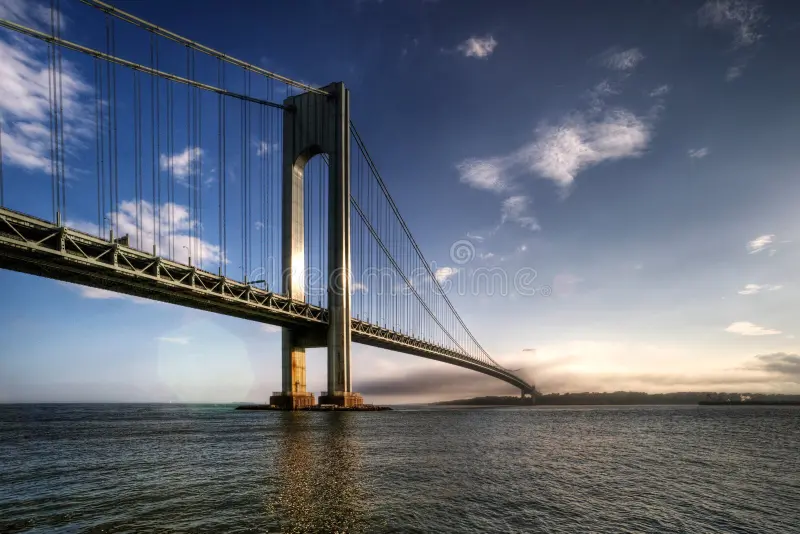
Verrazano Narrows Bridge at dusk, low angle, distant end terminating in cloudsThe Revolutionary Corps at that point was mustered mostly from New England and the suburbs of NYC itself. It hadn’t seen fighting in the winter and spring since the contested election. Smith and most of the others (myself included) hadn’t been there in D.C. when the fascists had made it almost to the White House and a motley, improvised group of citizens, soldiers, and loyal law enforcement had gone street to street pushing them back so the government could escape. Vargas was there — he’d been someone’s bodyguard. Who — a Senator — a woman from New York? The Midwest? What was her name… It doesn’t matter any more, though at the time it was an interesting anecdote…

Like everywhere, New England had seen violence when the fascists rose up, but nothing like what happened on the West Coast, the South, or the mid-Atlantic. Up in New England things had been resolved quickly. There weren’t enough fascists to make a go of it outside New Hampshire, and those fascists who did rise up in New Hampshire were brutally repressed after their comrades were defeated in Boston, Springfield, and Hartford. Enough police forces and national guard units had refused to betray their oaths to the Constitution, enough of the democratic revolutionary spirit remained within the breasts of New England men and women, that the reactionaries there had floundered and failed early — spectacularly so, even.

Whether they did so as part of a plan or not, what the fascists of New England accomplished was to tie northern pro-democracy states up with fighting internal enemies instead of helping their neighbors. We didn’t know that at the time, but at moments when swift and decisive help might have forestalled great bloodshed, the attention on potential local foes consumed everyone’s attention. It wasn’t long before a second wave of those enemies would appear at their borders, a howling, hostile army.

But in most other places the fascists had translated their quick offensive into victory more often than not and with surprising scope. Perhaps they sensed their vulnerabilities lay in us being able to organize our superior strength in manpower and industry. They’d been chewing the national and most state governments up since January, keeping the legitimately elected authorities and their forces on their heels, hitting them over and over where they least expected it. In our region Philadelphia and Pittsburgh had time to brace and fortify, so the fascists ran at Camden with full strength — wiped it nearly off the map. In their haste to capture Newark, they’d surrounded nearly 22,000 anti-fascist volunteers there, the entire 3rd People’s Revolutionary Corps. Most evenings one could see flashes and hear the fascist artillery thumping in the distance.

Smith and Boucher and a few of the other guys had been excited to see the fascists arrive. To them it meant taking part in a battle. Boucher, a Marxist from New London, compared them to the Germans outside Moscow. Morale was high, and Vargas didn’t do much to pour cold water on it.

A few hours after reporting their scouts up to higher, we’d observed several armored fighting vehicles and a tank maneuvering on the bluffs. The fascists put up a couple drones and tried to fly them across the river, then sent them high into the air when they realized we were outside the drones’ range. What struck me more than the size of the group was its cohesion, and its audacity. They moved up to a point and acted. They didn’t ask for permission or wait for orders from higher. We had armored fighting vehicles, we had tanks, just like them. We didn’t have artillery — only the Army had artillery — but we had drones. Seeing the fascists there, flying their black and white flag with a blue stripe down the middle, made me nervous. They’d reduced the space between them and us to that narrow band of water on which so much depended. A free and diverse New York City, the heart of our revolution, was exposed and vulnerable. How had this happened?

A half hour or hour later, further down the river, the fascists launched a motorboat. Vargas told me to observe its progress through the telescope and report movement to him as it crept across the sun-dappled surface. The boat circled wider and wider, seeing how close it could come to our lines. At the middle of the river at the apex of its approach it abruptly beelined for the city. An old red “MAGA” flag was visible on its stern, flapping in the wind. The boat’s three occupants wore tactical vests and helmets; one was scanning our side with a sniper rifle, another was piloting, and the third was talking on a portable radio, probably doing to us what we should’ve been doing to them.

I appreciated their daring. They presented a confident, professional air, like they were straight out of a movie or video game about the Navy SEALs. They knew exactly what to do. Slapping across the water at high speed, these fascists, veterans of the bigger battles to the south, were getting down to business, getting it done.

We were far enough upriver from the source that we saw the boat tossed high into the air, tumbling end over end from the explosion before we heard the shot and the boom. No forms emerged from the wreckage, and the boat sank slowly into the river. This was the first time I’d seen our side fire first. I was glad we had.

***

Shortly after the fascists had turned their attention to Richmond, while New England, New York, and Pennsylvania were wrestling with their own fascist problems, New York City had declared itself a free city. Run by an alliance of Democratic Socialists, progressive Democrats, anarchists, and independents, the historic agreement put an end to strikes and labor walk offs, stabilized a questionable police force, and, in short, unified and anchored what we all hoped would be a fresh start for the city and maybe for America, too. Hopes were high for a nonviolent revolution ushering in the promise of a full, meritocratic democratic polity.

Many people left the city, but many more came, attracted by the promise of a just new world. One of the first things we did was rename things: The Hudson River became The Muhheakunnuk, or “River that flows two ways,” in the original Lenape. Madison Avenue became Liberty Avenue. Rockefeller Plaza, Veblen Plaza. Trump Tower became Mohican tower, for the indigenous Mohican peoples. And soforth.

Where we could reduce the damage done by naming places and things for white European settler colonialists who caused real and literal ethnic cleansing and genocide, we remedied as best we could. While the fascists were shooting and murdering, we were getting resolutions passed in bipartisan committees. As the shitlib pro-government forces were fighting desperate retrogrades, we were setting up a new way of compensating labor on the blockchain: Hours (pronounced “ours”) of labor were our new, profession-blind currency. A person worked the hours they did and were rewarded based on that flat rate, digitally, plus a small bonus in consideration for specialty labor or difficult labor nobody wanted to do. My daily wages, for example, were 14 ½ Hours per day: 12 Hours for the 12 hours of work I did for the militia, plus a 2 ½ Hour bonus for the hazardous nature of my work (though I had, up until that point, done little hazardous duty — that would change soon).

What a sound and simple system; what a fair and just means of compensation. I’d never seen anything like it, and haven’t since, though home ownership and other realities of adult life have given me a better appreciation for modern economies than I had in my youth.

The People’s Council of New York had compensated those New Yorkers who had stayed in the city with Hours on a prorated basis for the dollars and real estate it confiscated in order to trade with external partners, and signed an alliance with its neighboring states, the state of New York, and the federal government. Everyone was relieved it hadn’t come to shooting. Putting nearly 120,000 people under arms, such as myself, made the city by itself one of the largest standing armies on the territory of the former U.S.A. We were all proud of what we’d accomplished in such a short amount of time.

***

At the end of our shift, I took the spent batteries from our radio and headed down to HQ. The arrival of the fascists had sent everyone into a frenzy of activity and worry. When I poked my head into the command tent, I caught our commander, a woman who had flown C-17s for the Air Force, yelling at our XO for the comms situation. I saw that there weren’t any fresh batteries to be had, then made a swift retreat from the scene so as not to contribute to the man’s confusion and embarrassment.

“Where’s the RTO,” I asked one of the guards who was vaping and lounging outside the entrance.

“Over there,” he said, gesturing upslope toward another tent about 50 meters away. I walked over, passing three soldiers setting up some sort of fortified machinegun position.

“Look downhill at the road. Now look at the sandbags. Now look at the barrel of the gun,” the first soldier was saying. “Aha! Aha! Now do you see the problem? Move the machinegun around, like so… now you see more problems. Do it again!”

Scenes like this were common. None of us had more than a week’s training — it wasn’t even formal training, more like pre-basic. While there were more leftist veterans than many had probably thought before the war, in general the stereotype of veterans as moderates or pro-fascist was pretty true. A small group of sympathetic veterans were running round-the-clock training ranges up in Connecticut and Long Island, and NYC’s soldiery was permitted to access this as part of our agreement with our neighbors.

At the signals tent, I found the commander’s radio operator fiddling with two banks of battery rechargers. “You need to get these up to your position ASAP, the CO’s on the warpath about bad comms and using smartphones,” he said.

“I’ll be back in six hours,” I said, and left the heavy green blocks on the black recharger alongside several others, while the recharge status blinked red.

Next I headed north to Tandy’s building, a fin de siècle mansion that had been converted to high-ceilinged apartments, and was now housing for students and workers. It was a 10 minute bike ride from our positions, or a 25 minute jog, easily accomplished if the sirens signaled an attack.

I checked my Hours on my phone which promptly updated on the hour with my day’s work, plus the bonus for military service. Then I stopped at a bodega for provisions. One of the best-managed parts of the city was its city-wide revolutionary food cooperative. Food came in from upstate and Connecticut, and was rationed. There was enough of it on any given day, but hoarding was strictly forbidden so what was available was whatever happened to be on hand, often local produce.

The proprietor of this bodega was an Iraqi man who’d immigrated to the U.S. after the war there, Ahmed. Together with his family he supervised the bodega’s co-op labor, and had a keen eye for organizing. He greeted me when he saw me walk in, much as he greeted everyone in uniform.

“My friend, thank you for protecting us! You must be hungry: what would you like? Eggs, corn from Poughkeepsie, sausage? Please, take what you need, eat, stay strong and healthy! And say hello to your beautiful girlfriend! You’re a lucky man!”

Ahmed may or may not have known me, but he certainly seemed to know me, and that was appreciated in a strange city. I picked up a couple sausages, a quart of milk, and a half dozen eggs. There wasn’t any cheese, so I had to hope Tandy or one of what she called her “mates” had some at their place. Then, in the back, I procured a glass bottle of Long Island red wine.

“Five and one half Hours,” Ahmed said. “Did you hear our forces repelled a fascist invasion today? Maybe you were part of that?”

He was talking about the boat. “We spotted them,” I said. “It wasn’t anything serious.”

“Please, it wasn’t serious, you sound like me when I was in the Iraqi Army. I helped liberate Mosul from ISIS, you know. It’s never serious. Until you’re in the hospital!” He raised his shirt, and pointed at several scars near his abdomen. “Here, take some chewing gum, free. It helped me stay awake during long nights. When you don’t have your girlfriend around,” he said, winking conspiratorially.

Tandy was still at class when I arrived. James, a PhD candidate in Political Science at Columbia greeted me at the door and when he saw what I was carrying he invited me in, shepherding me to the kitchen where Vince, a militiaman from Danbury, Connecticut, gladly took my contribution to the dinner. “You’re always welcome here,” Vince said, “when you have food and wine!

 This was one practical way in which being a militia volunteer translated into good social standing, but I didn’t lord it over people, just showed up with what I had and got whatever amounted to a single portion in return.

This particular collective was mostly students, so my portion was usually appreciated, in spite of my taking part in what was a violent endeavor. Only the most radical students felt that in defending our political ideals, I was participating in an immoral and unethical war, but even they sat down to eat with me. The main course was a cabbage- and barley- based soup with my eggs and sausages as a garnish— again, no cheese — food wasn’t in short supply, but the variety had significantly diminished thanks to the war. The Californians and Midwesterners were probably eating great.

Seven of us sat around a small round table. I was briefly the center of attention as I talked about the motorboat reconnaissance, and the arrival of the fascists. Before I offered my eyewitness account, I was treated to another more outlandish product of the rumor mill I’d first encountered at Ahmed’s: the fascists, I heard, had attempted a crossing in force, and were driven back only by the killing of their general in the lead boat. I was glad to correct the record.

My much more prosaic account of the fascists’ arrival was held up to the various perspectives present at the meal. Some felt as my fellow militiamen did, that this was an opportunity to strike back while the fascists were few, that we should take the fight to them. Others that the fascists were too strong — that they’d make their way across the river sooner or later and so we should head up to Canada while we still could. Most held the opinion that nonviolent resistance was the way to resolve this, that fighting would only lead to more fighting, that perhaps the situation could be resolved through discussion and diplomacy. Reports of atrocities, this last group dismissed as liberal, pro-government propaganda.

The apartment’s owner, who also owned the building and had been well liked and admired before the war for his egalitarian and attentive approach to ownership, asked why we couldn’t come to some accommodation with the fascists.

“Let them have their wretched dystopian hell. Let them live in the rot that accompanies dictatorship, fascism, and all abominable authoritarian places,” he said. “Give them the land they have and tell them not to come any further.”

“What about our comrades in Newark?” said one of his tenants, Jenny, a black girl whose parents had moved to New York City from South Carolina in the 1960s for work. Jenny worked at a small factory sewing uniforms for the militia, and was one of the more prescient of us when it came to the threat of the fascists, and the importance of fighting. “If we abandon those like us in the South, or in Newark, why did we abstain from voting for Biden? If we don’t fight for our convictions, to help each other, shouldn’t we just join the fascists?”

“I voted for RFK Jr.,” said the former apartment owner to good natured jeers and boos, “I voted for RFK Jr. and I’d do it again” he yelled, with similar good-natured energy. Here, having voted for RFK Jr. was far less objectionable than voting for “Genocide Joe Biden,” which was tantamount to heresy.

Vince spoke in the lull that followed the yelling. “Anyway the fascists have started and they won’t stop. The real choices are Canada — assuming they don’t roll up there next — or fight. Fight or flee and hope someone else beats them. They’ll chase us to the end of the earth, they’ll never halt. Might as well be here.”

“They’ll negotiate when they’re punched out,” said Christina, a journalism student at City University of New York and one of the more moderate people in the collective. She was a bit older, in her 40s, and had been a public school teacher during an earlier life that hadn’t quite worked out on Long Island, near one of the Hamptons. “If we make a deal they agree to — ceasefire, a demarcation of borders — they’ll just rearm and keep going. These people are always the same — Hitler, Genghis Khan, Putin, Alexander the Great. Read history. They stop when they’re stopped, which is when they die. Because they know stopping means dealing with the violent energies they’ve unleashed, and they want to be fighting external enemies, not internal enemies.”

“It would have happened sooner or later,” added Jenny. “The moderates, the Democrats and shitlibs spent the years since the end of the Cold War selling everything as fast as they could, and supporting global racism and genocide. They’re as responsible for creating this movement as anyone else.”

Sometimes I wished I was confident and practiced in my public speaking, like the students. My first day with the unit I’d brought this line of reasoning, about Biden and the Democrats and the shitlibs, to Vargas, and he’d scoffed at what he called my naiveté.

“What happened in D.C. was, when they couldn’t get to the people they said they were mad at — the government, the globalists — the fascists made do with the vulnerable. They headed right for the poorest neighborhoods on their way out of the city and just about wrecked them,” he’d said. “As bad as Biden and the Democrats were over the years, I’ve never saw the suburbs where most of his supporters lived reduced to a smoking ruin, their inhabitants murdered, captured, or fled.”

I didn’t mention that perspective here at the table. It didn’t seem like the time or the place for it. Besides I wasn’t sure what I thought about it all. Sometimes in describing the fascists as intolerant of other viewpoints and dogmatic in their application of violence, I thought maybe we were guilty of that, too, in some ways. Certainly nothing like what the fascists did, but still… when I thought about our project, sometimes I questioned its wisdom or justice.

“You’ll never convince me violence is the answer,” said James. Soft-spoken and charismatic, when he spoke, people listened. His father was a first-generation immigrant from Cuba, and his mother, a Chinese immigrant. They’d met in Flushing, Queens, a real American love story. “Violence begets violence. Without anyone to fight, the fascists will fight each other. Ultimately they’ll lose interest in the cities and fall to quarreling among each other. You’ll see.”

We did see, just not in the way James meant. But those dark days were yet to come.

***

After dinner I waited around for Tandy, but she still hadn’t come home. After an hour, still restless after the day’s events, I decided that rather than hang around and look desperate, I’d put in some volunteer time. It was still too early to get the batteries. I picked up my rifle and wandered down to the Muhheakunnuk. It was summer, and the weather wasn’t bad. Ideal for nighttime strolling provided one had the proper identification so one wasn’t accidentally shot.

At the river’s edge I stopped and stared at what remained of the George Washington Bridge. The moon illuminated the ruined structure’s contours, rendered its demise somehow more tragic, more human. Its skeletal wreckage jutted up from the river’s calm surface, like ancient ruins. In places, the bridge had twisted as it fell, partially damming the river’s flow. Now it resembled nothing so much as a memorial to America, the ruins of a vision for peace and prosperity that could not last forever, because nothing in this universe ever does.

Destroying the GW made sense from the perspective of guns and firepower; the fascists had an edge in that department owing to personal stockpiles as well as those seized by various police and traitorous military units, but weapons require people, and they had far fewer volunteers than we did. In spite of their military successes, their victories over larger but poorly-led, poorly equipped units, everywhere they went they engendered fear and hatred, an occupying force that looked and talked like your racist neighbor. The strategy, then, was to attrit them, draw them into the cities, grind them down until there weren’t enough of them to the point where we could start pushing back. Of course as I mentioned earlier the hope at that time was that some disaster or calamity or miracle would forestall our having to fight them at all.

The fascists fielded excellent soldiers and combat leaders. Their units moved quickly and punched hard, and wrecked or absorbed local and state law enforcement organizations wholesale. Their units hung together well, and were led (mostly competently and capably) by veterans and former police officers.

Further down toward the bay loyalist Army units kept the Verrazano intact and were fortifying our side. I didn’t understand the logic behind keeping that bridge but taking out the much larger GW and Tappan Zee. Maybe the destruction was partly for the symbolism. The fascists claimed to stand for law and order and tradition, and part of how it had all started (insane as it sounds to say it now looking back over the great Golgothas we made for each other during the fighting) was over statues and names. What was an iconic bridge between New York and New Jersey, named for one of America’s founders, if not a statue, a monument to an idea like traffic, interstate commerce, a community based on trust and the exchange of goods?

Then again, it was also a symbolic loss for us—if we couldn’t control the George Washington Bridge, what did that say about our long term prospects? Vargas said slowing the fascists down was our best shot and the people who were placed in charge of our efforts at first — people who as time would demonstrate were not up to the effort — were a little too enthusiastic about doing so, and less enthusiastic about actually preparing us for what came next.

Loyalist Army units had sealed the Lincoln Tunnel, which was similar to blowing it. The decision had been made with some procedure for removing concrete in mind, but when you walked down near midtown and saw the familiar entrance, saw the white and gray spill as though trolls had melted the world’s biggest marshmallow, it was hard imagining that tunnel ever working again.

From the bones of the fallen GW, I walked south for 5 minutes until I came to one of our fortified positions, down near the water, forward and downhill from HQ. It was crewed by my unit, but not one from the scouts, conventional infantry. We all had the same challenge and password. I didn’t know this group, but stopped in to chat about the motorboat, ask if they’d seen any other movement. They hadn’t. Didn’t have thermal scopes down here, were worried about night landings and infiltration. I was shocked — I thought frontline positions would have thermals for sure.

“One every 5 positions,” said the duty sergeant. “We rely on them and tracers to figure out what’s happening. Moonlit night like tonight, seems unlikely we’ll see any more action. Especially considering the tide.”

I asked why the tide was significant. Prior to the war I hadn’t spent much time near the ocean.

“Oh, a full moon corresponds with high tide. This particular high tide is what they call a “king tide,” get them in winter and summer,” the sergeant said. “Higher water means a longer distance to cross, and stronger currents. Groups trying to cross in boats would be pulled far upriver or downriver of where they were hoping to cross — maybe even swept out to ocean.”

“You think the fascists know that?”

“Oh, I’m sure of it… they’re mostly country folk, people who know things like the tides, and hunting. No that’s not going to throw them. Sad to say it. That’s the sort of thing our generals would probably fuck up.”

We stood there quietly in awe of the sergeant’s demoralizing statement, one we both felt to be true, the GW’s shredded metal beams and cables clanking and squealing upriver. A rumble of artillery in the distance and flashes of light roused us from our reverie.

“Won’t be much longer. No way they can hold out without reinforcements.”

“How do you know? How do you know they won’t grind the fascists up street by street and block by block?”

The sergeant gestured toward the southern end of Manhattan. “Brother works at one of the fish markets. Buddy of his is a fisherman, solid American and New Yorker, told him he’s been in touch with fishermen out of Newark. Apparently they’re getting pummeled. Never seen the fascists put so much work into destroying a city.”

“You think we should move down, try to help them?”

In response, the sergeant now nodded up at the GW’s ruins. “Not part of the plan. Anyway, we barely know how to hold a defense. Most of the guys here have never fired their rifles, it’s all we can do to point them in the right direction. How are we supposed to move to the attack?”

For this question and all the others, I had no answers. I’d joined the movement, I was a scout, and all I knew was that if the fascists wanted a fight, we ought to give it to them. Even then I sensed that simply to accommodate their desires would be a mistake. I looked out at the river, to where the boat had been earlier. The fighting would get so much worse in the days and months to come, far worse than almost anyone could imagine. But on that day, the thing that I noticed was the water — how high it had come up the pier — how close we were to it, lapping at the moorings and the concrete stairs, closer to our boots than it had ever been. And what terrible creatures teemed beneath its opaque surface!


New Poetry by Ben White: “Cleaning the M60 – 39 Years and January 26, 1984”

TO FLESH BONE / image by Amalie Flynn

39 Years

The death
Of a soldier
Was an accident,
A waste –
PUT_CCCCCCA shame,
So the anniversary
Is nothing to celebrate –
PUT_CCCCCCOr forget

January 26, 1984

Back on the continent
At the 1st and 51st Infantry –
A battalion that doesn’t exist anymore –
The Cold War was fighting a strange peace
With weapons and tension
Wanting to release a dimension
PUT_CCCCCCOf battle prepared,
PUT_CCCCCCTrained for,
PUT_CCCCCCAnd ultimately expected
While volunteers selected
Stood ready in the West
And along the borders
PUT_CCCCCCAwaiting orders to mobilize
When one cold January,
Thursday morning
Soldiers had to realize
The power of 7.62 mm ammo
Tumbling into the chest
PUT_CCCCCCOf a brother in the band
With manslaughter unplanned
And wounds giving the medics
An ambulance to ride in
PUT_CCCCCCUntil the doctors
PUT_CCCCCCAt the Krankenhaus
Opened up the chest
And showed them what
One M60 round
PUT_CCCCCCCan do
To flesh,
Bone, and what
A few minutes ago
Had been functioning,
PUT_CCCCCCDistinguishable organs.


New Poetry by Kat Raido: “Blood Goggles”


LICKS THE VEINS / image by Amalie Flynn

Walter Cronkite left footprints
in the gravel of Saigon
but he didn’t tell you their names
didn’t show you the morning commute
of an accountant in Hanoi

they televise bedsheets
replacing blown out glass
in homes of blown out people
but not the Arab Renaissance Bookshop
which opened its doors in 1966

fire hoses are used
to extinguish human spirit
courage licks the veins like flame
and the only parts of war
they can’t powerwash away
are the bloody crevices
under their own fingernails.


New Poetry by Amalie Flynn: “Strip”


CROWN OF LAURELS / image by Amalie Flynn 

Strip

On my computer screen terror
Attacks and kills and shifts into
What comes after
This strip of neighborhoods or
Houses a hospital hit
Like carved out carcasses of
Dust and dead bodies bloody
And gray bloated flesh
An eyelid stuck a skull cracked
Open
The close weave of a sweater
Knit into the charred skin
Of a child of a child of a child
How this happens
Again and again and again
Arms and legs twisted back
Or out of socket
How this cannot be unraveled
Because war wears
A crown of laurels made out of
Eye lashes tiny teeth
Dead lips a corsage of
Brain matter soft and shot point
Blank or bombed this
Bombardment
Of matter
What should matter but doesn’t.


New Poetry by Abena Ntoso: “Dear Melissa”

CARE STONES CRUNCHED / image by Amalie Flynn

Dear Melissa

On the walk back from the d-fac
in Kandahar I almost peed in my uniform
pants a long way from home
we were laughing uncontrollably like other
things we could no longer control
having birthed two children each and left
them in someone else’s competent care.

Incontinent overseas
on a mother of a mission drilling
cavities filling them with a matronly
patriotic responsibility for health care
stones crunched beneath our boots
we stopped and bent over shifting
weapons we carried on our hips like kids.

We almost cried in the dark after dinner
absent from bedtimes reading
The Giving Tree aloud, sent
voice recordings stateside for storytime
my son and daughter heard
me reading, heard I love you
no laughing though.

Remember how tough we had to be
for babies to sit on our bladders for nine
months only to leave them four years later
promising to return once our tour of the war
was over we were bent on becoming militant
mothers chuckling again with our children
thank you for finding life funny on the way back.


New Poetry by Sofiia Tiapkina: “To Forget or Not Maybe,” “Grasping the Sky,” and “Airless Embrace”

THE SILENT SKY / image by Amalie Flynn


to forget or not maybe

to forget or not maybe
to fight for memory or not
i’m here i’m she
lying on my back underneath me
blue cherries of bruises ten backs
all pierced by bullets all riddled
no one seems to cry here this defenseless death is unshared with any and all
i look around at people all around still people these old trees outside what a spring so wildly
blooms and dies with a scream
i rise from my knees or maybe just
think that i rise i was a teacher
what remains of the school now
walls shrubs suckle blood from the soil
i taught them to never
kill people and now
i’m face to face
with the killers of children hands and face changed the maples turned perfectly crimson too soon
broke my
spine and soul i would tell them if i still taught never kill anyone
i rise from my knees call out to god
god i accept everything i
understand the end of life
i accept it i am desecrated
why do you punish me
with this life
after death


Grasping the Sky

Inside us: a piece of
sky, blue and rusty,
smelling of winter and
gunpowder.
Who will see us as we crawl, chasing
the shadows of the clouds?
She reanimates the land.

The bombs, and bullets, and bodies took
its breath away and send it straight into cardiac arrest.
The scars of war are on her palms and tongue,
but she keeps going because without the land,
her heart will stop, too.

Land—земля—zemlia: a greenplace, a birthgiver, our bread.
She puts her hands around it and tries to close off
the wounds of horror and destruction and
deathdeathdeathdeath
that the inhumans opened with their hungry teeth.
Sometimes, when the blood stops rushing through her ears
or between her fingers,
she hears the echo of “brotherly nations,” “local misunderstanding,”
“child actors.”
The land moans under the weight of
countless bones.

We carry no
prophecies under our skin.

The silent sky
floods our mouths.
Who will hear us climb up
the lifeless mushrooms?

He rebuilds the house.
A new foundation in place of his ancestors’
home built with tears. The missile took
the walls, but the kitchen table is still
standing in the middle.

House—будинок—budynok: a warm place, a safehold, our nest.
He drinks tea at the kitchen table.
One year anniversary,
he feels the explosions
reverberating through his ribs.
His daughter would have turned three.
His wife would have put a pot of
lilacs by her crib.
He drinks tea at the kitchen table of a murdered house.
It’s hot and bitter, and for a minute, he forgets
a new future of new houses with
no one inside.

Everything we wanted
was in the sound
of the sky without
the stench of corpses.
Who will remember us if
the task ahead will take a generation?

They reconstruct their homeland.
Too many questions, too little time: where
do they fit between now and then;
how do they embezzle millions yet fight corruption
as never before; what are dignity and justice and fairness
if the debris of a shelled hospital hide
the broken pieces of mothers and newborns.

Homeland—Батьківщина—Bat’kivschyna: a free place, a seeing glass, our hope.
They won’t live to see it without blood and tears
soaking its black ground. How do they repair machine-gunned hearts?
How do they rebuild a cracked-open sky?
They reconstruct their homeland as the bombs
try to bring them to their knees. Too many
questions, too little time. But the question,
“Will we live?” is not one of them.
Millions of hands breaking the chains
shout the answer louder than
air raid sirens.

Inside us: a whisper
of summer, when sunflowers
grow from the ash.
Who will catch the birds
pecking out a path between
the sky and wheat fields?

No one. Our wings hold the glory of freedom.


airless embrace

i miss you like i miss the sky
cold so painfully blue
angels must have
dripped blueberry juice
from the clouds
i want to tether myself
to the sky-whispers
embrace them bury my
face into their warmth
but it doesn’t make you here
i stalk the shore scooping
up birds beaks
black with blood
you used your skirt
to wipe off the
red from their feathers
why did you
let go
the earth drinks soot
i’m thirsty for
the sound of
your smile
under the winter sun
on the shore
i pick the nightingales
curl my toes to find
the damper sand
the soft homes of crabs below
i hold the memory
of your hair
between my fingers
i miss you
until i fly out of
the soil’s arms
and the sky
catches me
in its thousand
blue hands


New Poetry by Luis Rosa Valentin: “Desperate Need of Help”

Desperate Need of Help

Luis-Rosa-image


New Poetry by Jennifer Smith: “So This is My Career?”

BLANK AND CONFUSED / image by Amalie Flynn


So, This is My Career?

Ecstatic to deploy, I qualify on 9MM handguns—

Battle ready Air Force lawyer to defend both Iraqi and Enduring Freedom

Engineers advance to the front lines:

spend billions, move like lightning, build tents, site trailers,

provide food, water, and air conditioning. Our soldiers’ beddown

enables our fight for Oil

Sign off on this funds request, the Engineers demand

What is our mission? I ask

Make the Afghans modern, the Department of Defense

replies. We will build 200 police stations, use a US blueprint

 to cut costs. The villagers can reign in their warlords

What do the Afghans want? I ask

The US Generals look blank and confused

the second-floor bathrooms flood—the

Afghan soldiers’ Islamic practice of making wudu requires them

to wash their feet in waist-high sinks before praying salah

I fly in a contractor’s Russian MI-12V-5 helicopter to inspect one remote station

for future construction claims. Are there any? I ask

We bribe the local warlord—to keep the peace, the Lieutenant says in a whisper


New Poetry by Todd Heldt: “This Is A Drill, This Is Only A Drill” and “Suffer The Children”

ACTION IS PRETTY / image by Amalie Flynn


This is a drill. This is only a drill.

They voted to abolish history.
There had been no commercials.
We didn’t know which wrong to fear most,
and nobody got the joke.
When the polls ran out of ballots,
somebody hurled a beer bottle
through a church’s stained-glass window.
Peace officers deployed
pepper spray for the white kids
and bullets for the black.
You should expect to see things
like this in democracy. Because
the cost is always
what the market will bear.
We all went home or to jail,
or to hospital or morgue, grateful.
America in action is pretty,
the Blue Angels swooping in for the kill
as spectators cheer from the beaches below.
We don’t even know who we are fighting.
Someone is crossing himself.
Someone is crossing the border.
War is just how we learn geography,
and someone scaled a wall
to pick your corn. Good people
are unarmed and
defenseless in church,
and no one will tell us straight
which group of not us we should bomb.


Suffer the Children

12000 kids in detention
300 shot dead in their schools
200 bombed by drones
the ones we don’t know to mention
and the ones the future will starve
my two who are safe in their bedroom
who cry when they are scared


New Poetry by Justice Castañeda: “There Will Be No Irish Pennants”

PRESSED AND WITHOUT / image by Amalie Flynn


There Will Be No Irish Pennants

“Discipline organizes an analytical space.” [1]

Field Day & Inspection.

Windows shut blinds open half-mast.  Sinks will be bleached, faucets are to be
pointed outward, and aligned.  The toilet paper roll will be full.  The shower handle
will be left facing directly down towards the shower floor. Waste basket will be
empty, cleaned out with no stains or markings, set between the secretary and the
window, where the front corner meets, farthest from the door.

Beds will be made showing eighteen inches of white; six beneath and twelve above
the fold.  The ends will be neatly tucked at a 45 degree angle.  One pillow will be
folded once and tucked in the pillow case.

A shoe display will be at the foot of the bed and will consist of one pair of jungle
boots, one pair of combat boots, go-fasters and shower shoes, in this order.  All
laced left over right.

Each lock will be fastened on each locker and secretary, all set to ‘0.’

Inside one wall locker, hanging up there will be: one all-weather coat, one wolly
pully sweatshirt, one service ‘A’ blouse, two long sleeve khaki shirts—pressed
with the arms folded inward, four short sleeve khaki shirts, three cammie blouses,
two pair of green trousers, three pair of cammie trousers, and one pair of dress blue
trousers, in this order.  All shirts will be pressed and buttoned up.  All trousers will
be pressed and folded over.  All clothing will hang facing right.  All hangers will
face inwards, separated uniformly by one inch.  On the shelf inside the locker,
starting at the inner most edge, there will be six green skivvy shirts and three white
skivvy shirts—folded into six-by-six squares, six pair of underwear folded three
times, six pair of black boot socks, folded once.

The markings will be last name, first name, middle initial, stamped on white tape,
no ink spots or bleeding.  All collared shirts will be marked centered on the collar;
on all trousers and belts on the left inseam, upside down so when folded over they
read right side up.  On all underwear markings will be centered along the rear
waistband.  On all socks markings will be on the top of the left sock.  All covers
will be marked on the left inner rim.

On top of the wall locker covers will be placed, from left to right as staring at the
wall locker, one barracks cover with service skin, one piss cover, one utility
cover—pressed and without Irish pennants.

Irish pennants are not permitted.

Stand up straight.  Arms to your side, thumbs along the seams of the trousers,
shoulders back, chin up.  Heels and knees together, with feet pointed outwards at a
45 degree angle.

Eyes.   Click.
Ears.  Open.

Attention.

[1]  Michel Foucault. Discipline and punish. 143
[2]  Two faucets in each barracks room.
[3]  Irish Pennants are loose threads or strings coming out from the stitching.


New Poetry by Jehanne Dubrow: “Poem for the Reader Who Said My Poems Were Sentimental and Should Engage in a More Complex Moral Reckoning with U.S. Military Actions”; “Epic War Poem”; “Tyrian Purple,” and “Some Final Notes On Odysseus”


PLUM OF GALAXIES / image by Amalie Flynn


Poem for the Reader Who Said My Poems Were Sentimental and Should Engage in a More Complex Moral Reckoning with U.S. Military Actions

Today I didn’t say divorce
PUT_because I was sickened by
PUT_CAAAAAAAAAAAAAAthe news
from Afghanistan, translators and their families
PUT_CAAAAleft waiting at the gates,
while American personnel
PUT_CAAAAAAAAAAAAAAAAAAlifted off
in the wide indifference of their transport planes.
I said divorce because
PUT_I hadn’t made room
PUT_AAAAAAAAAin the cabinet for my husband’s things,
and he was angry
PUT_CAAAAAAAAAAAAAAI did not leave
a vacancy for what he carried home from war.
I was tired of him
PUT_stacking bowls
PUT_AAAAAAAAAon the top rack of the dishwasher,
a policy
PUT_CAAAAAAAAAAAAAAAAAAI can’t abide
when the lower rack is an open country
PUT_waiting to be washed clean.
PUT_CAAAAAAAAAAAAAAForgive me, reader,
for the weakness
PUT_AAAAAAAAAof my marriage.
I didn’t say divorce
PUT_because my husband would rather a drone
PUT_CAAAAAAAAAAAAAAhover above
a wedding procession,
PUT_CAAAAAAAAAAAAAAAAAAthe party far below,
embroidered dresses glinting, small mirrors sewn into the hems.
He prefers the drone
PUT_fire from a distant, unendangered screen.
PUT_CAAAAAnd I believe
killing should come
PUT_CAAAAAAAAAAAAAAwith a risk of dying for the killers.
But that’s not why I said divorce.
PUT_CAAAAAAAAAForgive me, reader, for the poems
of shelf space and kitchens.
PUT_CAAAAAAAAAAAAAAMarriage is not
two ideologies fighting at a table,
PUT_CAAAAwhile the soup goes cold
on the spoon.
PUT_CAAAAAAAAAAAAAAAAAAMarriage is two people
PUT_CAAAAAAAAAshouting about spices,
the ordering of jars—by alphabet or continent—
PUT_CAAAAAAAAAas if everything depends
on an ounce of turmeric fading
PUT_CAAAAAAAAAAAAAAunder glass.
Perhaps, I said divorce
PUT_for all the wrong reasons.
PUT_CAAAAAAAAAAAAAAAAAAForgive me
for scrubbing the pot with a bristled brush.
PUT_CAAAAAAAAAAAAAAMy fury
at the gold-stained enamel
is almost the same size as my rage
PUT_CAAAAAAAAAthat somewhere a helicopter
strikes on civilians in the dark.
PUT_Forgive my sentiment.
PUT_CAAAAAAAAAAAAAAAAAAAll I can do is keep scraping
the dried burning from the pan.


Epic War Poem

What else but a soldier raging
by his shield. What else but the dutiful.
What else but a battle muralled on a wall,
and Troy a piece of artifice to gaze upon.
What else but the voice a garment
shredded in its grief. What else but ash.
What else but men on wooden ships for centuries.
Their keening is an arrow to the throat.
What else but kings. What else but
the trebuchet of years. What else
but sawbuck fences leaning near a field.
What else but America. What else but
daguerreotypes, a line of corpses posed
within the frame. What else but the guns.
What else but the trenches stuck with mud.
What else but modernity and the long
parade of after. What else but cinders
mixed with milk while the gone are drifting,
processed into smoke. What else
but the skirmishes of scholars,
that language is too little and too much.
What else but brief eras of indifference
when the dead are left alone. What else
but the forged and hammered thing
of poetry, all the failures of our making.
What else but the litany of bombs.


Tyrian Purple

Please, understand: to heave Hector
through the dirt, Achilles must first
cut holes in his enemy’s heels,
Hector threaded like a needle
with leather cord and tied to a chariot
that will pull him around the walls.
Imagine a body strong enough
to be strung like this. Imagine such
stitching is an art, and we call it battle.
Andromache deep in the palace
is weaving a cloak on a wide loom,
wool like the amethyst shadows
beneath her eyes, that vivid sleeplessness.
She’s tacking flowers to the fabric
when she hears the weeping everywhere in Troy.
The bobbin unspools from her fingers
because the warp is a place of order,
and death the cutting shears.
It’s understandable why Andromache
would sit at the loom for hours,
rectangular world where nothing extends
beyond the cloth’s perimeter.
At this point in the war, everyone has lost
the thread of narrative, any reason
beyond armor and the carrion birds
with their beaks like sharpened secateurs.
Who wouldn’t want to take up some craft,
pottery, perhaps, or painted scenes
on funerary stones. Don’t hands need
occupation when the city is besieged.
Probably, a reader believes it frivolous—
these fibers dyed the plum of galaxies,
all that great, oppressive sky
and the murdered looking down
from their fixed constellations.
Even Andromache finds a pastime.
It’s late in our history to condemn
the ways people spin out a war,
how they twist the days like fibers
on a spindle. Imperial purple.
Purple of bruised loyalties. Unfadable
purple that stains the maker’s skin.


SOME FINAL NOTES ON ODYSSEUS

                                                Ithacans!
Stop this destructive war; shed no more blood
and go your separate ways, at once!

            – The Odyssey, 24.531-533

When the goddess cries out,
her voice is a mountain against
the fighting. But the old soldier
keeps running—war like weather
in his ears, a summer storm,
in his pulse the tossing waves.
At such a time it is difficult to see
Odysseus was a child once.
He learned from his father
the names of trees, the orchard
full of gleaming suns called apples,
the private ripeness of figs, grapes
clustered like families on the vine.
He touched their dusty skins.
Yes, even he had been a boy
who held a wooden sword,
the shadows creeping on, and
they lengthened with the night.
There are decades of water,
islands and islands between
that child and the man.
The body is said to harden,
the heart of course as well.
For someone like Odysseus anger
is an unrestricted flame.
When the goddess cries out
she is saying, worship reason
instead. But it takes her own father—
a god and his thunderbolt
—to cut through the battle.
Stop this war, he says.
According to the story, Odysseus
lays down his weapons then.
And what then? What then?
Poems always end before the peace,
the orchard overgrown now.
No one wants to read a scene
of the old soldier pulling weeds,
pruning the wildness back, his arms
still strong but not with violence,
and the air no longer stings
like lightning touching down.
No one wants the old soldier slicing
a plum the way he used to take
his dagger to the belly of a rival,
the war that fed him once a taste
he barely can recall. Most nights
his chin is red and syrupy with juice.


New Fiction from Lucas Randolph: “Boys Play Dress Up”

When visiting

a friend’s grandpa, the Boy learned that the grandpa liked watching football games on the weekends instead of the black and white western movies. His favorite football team was the Kansas City Chiefs. Their team colors were—red, white, and yellow. Some of the fans had feathers on their head and they chanted and made a chopping motion with one of their hands when the game started. Sometimes a man who was dressed up in a pretend costume would beat on a giant drum. The grandpa said it was tradition and traditions were good. The Boy asked the friends grandpa if he ever watched western movies, but he said those were all fake and weren’t worth the copper they were printed on. That’s why he liked watching football. Real men. Real blood. Real consequences.

None of that fake cowboy horseshit.

Sometimes, though, if it was late at night, the friend’s grandpa said he liked to watch military documentaries, but only if everyone was already asleep. The Boy didn’t ask why. The grandpa had an American flag that hung from the front porch of his house—red, white, and blue. The Boy’s own grandpa didn’t have one. Neither did the Boy’s father.

Were you in the War too?

No, my parents wanted me to go to college. The same college my daddy went too. In fact, we even played ball for the same team. That’s my old jersey there.

The friend’s grandpa pointed to the wall. Two framed black and white photos with wooden frames that bent and curved all fancy like hung next to each other. The Boy knew one photo was older because it had a football team where they all had leather helmets on, and the image was faded. There was also a framed football jersey on the wall with the same last name that his friend had with stitched together letters on the back of it. The team colors were—green, gold, and black.

I almost volunteered for the military. I wanted too—hell, they almost got me in the draft! Maybe I wish they would have. Just wasn’t in the playbook, I guess. Your grandfather was in the service? World War II?

Yes sir. Well—no, he fought in Korea. My dad too. Air force. He didn’t fight in any War, though.

That’s okay son, you should be damn proud. We all have our role to play. That’s what my old man used to say.

I’m going to join too—when I’m old enough, anyway.

The grandpa smiled and put a hand on the Boy’s shoulder.

That’s a good boy.

The grandpa reached over and grabbed an old football that sat on a wooden mantle with some sports memorabilia underneath the old photos and the jersey. He held it in front of the Boy’s face close enough for him to smell the aged pigskin leather, letting his eyes wander over the scars from the field of battle. When the Boy’s hands moved to touch the football, the grandpa reached back in an old-school football pose like the quarterback does and threw the ball across the room to his grandson who caught it above his head with both hands.

Nice one! Just like your old man!


He lost

his favorite coffee mug. The Old Man poured dark roast into a short glass mason jar mixing it with the golden liquid already left waiting at the bottom. It wasn’t meant for hot liquids and the Old Man reached for a red trimmed potholder with a green and yellow wildflower pattern to hold it with. He sat down into his favorite corduroy rocking chair, one hand against his lower back for support. He smiled with the jar between his legs letting the glass cool, the steam from the roasted beans rising to his nose. Smells of earth and sweet honey warmed the room. The sting of diesel was nearly absent.

Please, just one-story Grandpa. I promise I won’t ask for more. Please—

Well shit, you’re old enough by now. I promised your dad I wouldn’t, but hell in my day you could drive a tractor at ten, and you’re nearly that. It can be our little secret. What do you want to know?

About the War, about—Korea. Like, what kind of gun did you use?

A few, but mostly the ole Browning M1919. I bet you don’t even know what that is, do you?

The Boy shook his head no.

It’s a light machine gun. L.M.G. It took two of us to shoot and two more to carry everything. It was a real son-of-a-bitch to get around.

Did you have to shoot it a lot?

I never shot it once, to tell you the truth, not at anyone anyway. See, I just fed the ammo to keep it firing. Do you know what that means, to feed the ammo?

The Old Man didn’t wait for the Boy to answer.

I was what they called an assistant gunner. Corporal did all of the shooting and stuff for us. He liked that kind of thing.

The Old Man grabbed the hot mason jar from between his legs and took a long drag of his coffee. The rounded glass edge burned against the crease of his lips, but he drank it anyway. He remembered the Corporal well. They grew matching mustaches; they all did. The lieutenant dubbed them his “Mustache Maniacs,” which later got shortened to just “M&M’s.” It was a real hoot with the men. The Old Man shaved it shortly before returning home. He felt stupid with it by himself. It didn’t feel right without Corporal Lopez and the rest. He wouldn’t tell that story today, though.

They didn’t deserve it, the people. Not too different from us you know—some of the best God-damned people I’ve ever met, actually. They fought side by side with us. Those Koreans, real God-damn patriots. We suffered together; I remember how hungry they were. How hungry we were—and cold, for shit’s sake was it cold. Colder than a well digger’s ass, if you ask me. You have to understand, it’s a different kind of cold they have there in Korea. It’s all any of us thought about most of the time. We weren’t ready for any of it. It was a terrible War.

Why were you fighting then Grandpa? If they weren’t bad?

It wasn’t them we were fighting; it was those god-damned Reds! You see, retreat was never part of the plan, hell, War was never part of the plan—we just killed that other bastard five years earlier! You have to imagine, when they first came over them mountain tops, millions of ‘em, I swear to God, the God-damned ground disappeared. I don’t know if they shot back, or hell, if they even had guns. Corporal █████ just kept firing. There was so much smoke you couldn’t see more than a few feet in front of you. I loaded until my hands charred like wood. We could hear them breathing they was so close. A wave of glowing lead to the left. A wave of glowing lead to the right.

The Old Man’s arms followed waves of bullets from one side of his body to the other in a repeating pattern. The aged wood from underneath his corduroy rocking chair snapped with the weight of his story. Liquid from the mason jar in one of his hands splashed over the rim.

The Boy breathed hard, too afraid to look away.

We screamed for the runners to bring more ammo; I don’t remember when they stopped coming. The Reds didn’t. They never stopped. When they were right God-damned on top of us, Corporal █████ handed me his pistol, a Colt 1911. Just a small little thing. He picked up that son-of-a-bitch Browning with his bare hands and we fired until we both had nothing left. And then, we ran. We all ran. Everyone did. And we kept running. When the order finally came to stand fast; we already made it to the God-damned ocean.

The Old Man drank from his mason jar again, the amber glow of liquid not able to hide behind his lost porcelain coffee mug. He nearly spit it out when he started laughing from somewhere deep down in his belly. He had to use his free hand to cover the top of the jar to keep the liquid from spilling everywhere.

You know, when we finally did stop, there were these two supply crates, just sitting there waiting for us. One had ammo, one had food. We hadn’t had a single round of ammunition to fire in over a week and no one had eaten in at least double that amount of time, probably longer. But wouldn’t you God-damn believe it, I was the only shit-stick dumb enough to go for the ammo first. I was more scared of those god-damned Reds than I was of starving to death. Go for the ammo first, that’s what Corporal █████ would have done, so that’s what I did. He always knew what to do.

Invitation to a Gunfighter, staring Yul Brynner and George Segal, played at a low volume in the background on a black and white television screen. The film ends after the hero takes a shotgun blast to the chest and one bullet through the stomach. The hero manages to jump from his horse in a dramatic roll before single-handedly disarming the bad guys in one swift motion. An entire town watches from the side. The hero then spends the next two minutes and thirty-four seconds forcing the bad guys to apologize in front of all the town’s folk for their crimes against their own neighbors. Eventually, the hero succumbs to the injuries and the people carry him away on their shoulders. The Old Man and the Boy sat in silence until the credits finished and the screen turned to black.

The Boy wasn’t sure what was meant to be funny about the ending to his grandpa’s story. He waited for the rest of the story to finish, but it never came.


The Sheriff

first met the Boy when he was still just a boy. The Sheriff took the Old Man away but said he could come back home once he was feeling better. The Old Man said it was the bitch’s fault. The Sheriff also gave the Boy a pack of Colorado Rocky baseball trading cards and a golden sheriff’s sticker that he could put on the outside of his shirt. The Boy wore it to school the next Monday and everybody wanted to know where he got it from but he told them it was a secret.


New Poetry from D.A. Gray: “Cactus Tuna”; “We Return from the Holy Land. God Stays”; and “Reverse Run”

FARMER OF ROCKS / image by Amalie Flynn

Cactus Tuna

A semi-sweet taste
of watered-down nectar
bleeds out from the prickly
pear nestled
PUT_Aon a crown of thorns.

In the desert you once
sneered over rifle sights
at the farmers drawing
PUT_Arakes over the sun-
baked ground, and now,
PUT_Aas atonement
you’re a farmer of rocks
and what comes with them.

Stained fingers tear through
leathery skin. Sometimes you
forget you’re standing
alone in a cactus patch
PUT_Ared trickling down.

Grace is not this –
living on what grows where
nothing had a right to grow,
seeds fine as sand
PUT_Ahide between teeth.

And crows, refusing to starve,
land unafraid, pick through
the rinds, eat, take flight
scatter seeds on rocky places
PUT_Aand among thorns

even on tops of walls,
and maybe it’s resilience
PUT_Aor spite
something finds purchase here.


We Return from the Holy Land. God Stays.

The mystery is often in the gaze of men
and women waiting for the sky to speak.

We used to spend days in the desert
waiting until the sky whistled and then
we wished we hadn’t.
Someone’s former
home, now sharp edges of cinderblock
cut upward through our soles. We kept
walking through the desert; everything
radiated, catching us in the crossfire.

* * * * *

We spend days in the Hill country
beneath a blistering sun, a clean sky,
traces of blue that have faded,
burnt off but for the edges by noon.

‘Say something,’ we shout in our minds,
looking up as if it’s God.  Eventually
the sky speaks in the language of wind,
fear fills our hearts. Still, we knew
it would be this bad, yet wanted so much
to feel something – until the moment we did.


Run in Reverse

In dreams the ball bearings and nails and flame
are sucked backwards out of the truck, along
with the screams, and the shrapnel enters
The IED, a makeshift paint can half buried in sand.

The boy’s face heals, his body slides back
into the passenger seat and after a momentary
glare at this pained country he turns and smiles
at the driver. It’s a calm hundred-degree morning
and the Baghdad street is filled with shoppers
carrying bags, laffa bread, eggplants poking
out the top, Turkish vendors serving doner kebab,
their angry looks toward the truck
have softened now and they’re joking.

***

Some days walking with my wife, I turn,
walk backwards just to say something silly.
It’s that moment that seems truest. She is
looking at what’s to come just beyond my shoulder,
no regrets about the past, and I’m trying to hold
on to what we left, moving against my will
into the future blind, the scene I’m trying
to make sense of, moving farther away.


New Poetry from Tanya Tuzeo: “My Brother, the Marine;” “My Brother’s Shoebox;” and “My Brother’s Grenade”

WAR HAS DONE / image by Amalie Flynn


my brother, the Marine

the recruiters come weeks earlier than agreed—
arrive in alloy, aluminum with authority,
military vehicle blocks our driveway
announcing to the neighborhood
they’ve come for a boy here
who will have to go—
though he sits at the top step
and cries

i follow them,
strange convoy to Staten Island’s hotel
where all the boys are corralled—
farmed for war, becoming weapons
of mass destruction
when before they picked apples
at family trips upstate

a hotel lobby—last stop before using lasers
to blow off golden domes,
silence muezzins in the crush
of ancient wage and plaster—
Hussein’s old siberian tiger left thirsty,
watches other zoo animals
being eaten by the faithful—
just like a video game

i clamp onto my brother
beg him not to go, we could run away
he didn’t have to do this—
recruiters quickly camouflage me,
am dragged outside—my brother lost
did not say goodbye
or even look at me.


my brother’s shoebox

the room across the hall is inhabited again,
home now from another tour
like sightseeing from a grand canal
where buildings are art
and storied sculptures animate street corners—
my brother returns a veteran.

i want to remember who this person is,
or at least, find out what war has done.

he leaves with friends to drink—
that is still the same,
later tonight
he might howl at our parent’s window
or jump on my bed until the sheets froth,
uncaring and rabid.

but i don’t wait for him to come home
and begin searching the room
that is his again.

it is simple to find
where people hide things—
a shoebox under his bed
that wasn’t there all these years
furrowed by sand
and almost glowing.

i open to find drugstore prints,
rolls of film casually dropped
for a high school student to develop—
silver halide crystals take the shape
of shattered skulls
goats strung and slit
a school made of clay
blasted in the kiln of munitions
“KILL ZONE” painted across its foundation—
each 4×6 emulsion a souvenir
of these mad travels,
kept to reminisce and admire.


my brother’s grenade

my brother’s room in our family vacation home
has embossed wallpaper, indigo or violet
depending on the light that filters through the mountains—
and his grenade in the closet.

i saw it looking for extra blankets,
thought it was an animal resting in eiderdown
kept by my mother in one of her tempers
but it didn’t move
and so
i picked it up.

inhumanity held beneath iron’s screaming core—
a pleasant weight,
like the egg i threw across the street
detonating onto the head of boy
who said i kissed him but i didn’t,
is it like that for my brother?—
fisted mementos of thrill?

seasoned by cedar sachets,
neatly quilted metal shimmered as i turned it
forbidden gem, his holy relic—
i placed it back in the closet and began making dinner,
said nothing.

the slender pin preserves this household
where our family gathers
unknowing a bomb is kept here—
my brother roasts a marshmallow
until it catches fire, turns black,
plunges into mouth.